Blue Cheese Broccoli Salad


Date Published: August 17th, 2020 | Last Updated: August 17th, 2020
Author: Abby |Category: salads, vegetarian
Serves: 4-6 | Prep time: 15 mins | Cook time: 20 mins

Jump to recipe |

In many Chinese households raw vegetables are not very common – if at all. When we moved to Canada it was really strange watching my classmates eat raw carrots and celery as a snack. It was even stranger that someone would bring a platter of uncooked vegetables to a party as their contribution. To this day I’m still not a big fan of raw veg on their own but when it’s paired with a delicious creamy dip or in a flavourful salad, sign me up!…Except for celery. I still can’t eat that shit raw.

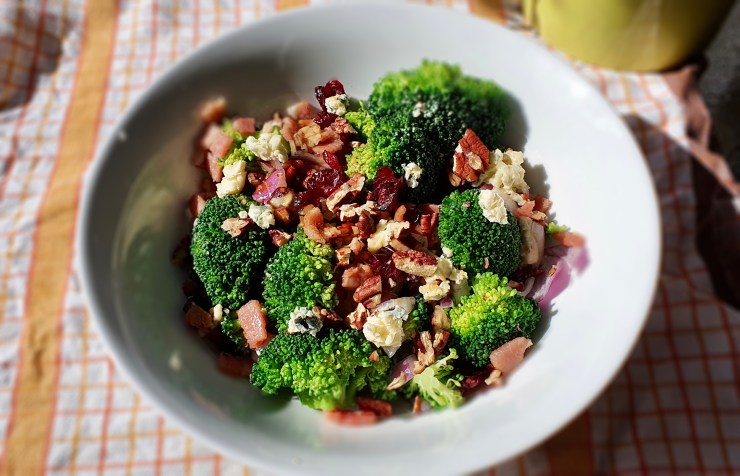
Broccoli was one of the last few veg I came to terms with eating raw. I’ve always loved steamed broccoli especially with some garlic and black pepper, but crunching on it raw just felt so wrong…until I came upon this amazing salad that a friend brought to a party a couple years ago. I was going to call this “Jess’ Broccoli Salad”, but I went with a more descriptive title instead for those of you that don’t know Jess 😜 (who’s also a super amazing baker). If you’re a fan of blue cheese, this salad is definitely for you! The bold blue cheese is offset by the sweet and tart cranberries and juiciness of the red onions, then mellowed out with crispy bacon and toasted pecans, all transported by the humble crunchy broccoli for a super flavourful mouthful.

The ingredients list seems long, but most of it is the balsamic dressing. A freshly made balsamic vinaigrette really does make a difference to tie all the flavours of the salad together, but if you’re in a rush, feel free to take a shortcut and use a store-bought version. There are also a few other shortcuts in the recipe marked as “optional” steps, but I encourage you to take the time to toast the pecans, blanch the broccoli and sauté the bacon to bring out the maximum flavours of the ingredients.

Anyways, without further ado, here’s the recipe! If you have any comments or suggestions, I’d love to hear from you in the comment section! You can follow me on instagram, youtube and facebook to see all the recipes I post!

Happy cooking!

Ingredients you’ll need:
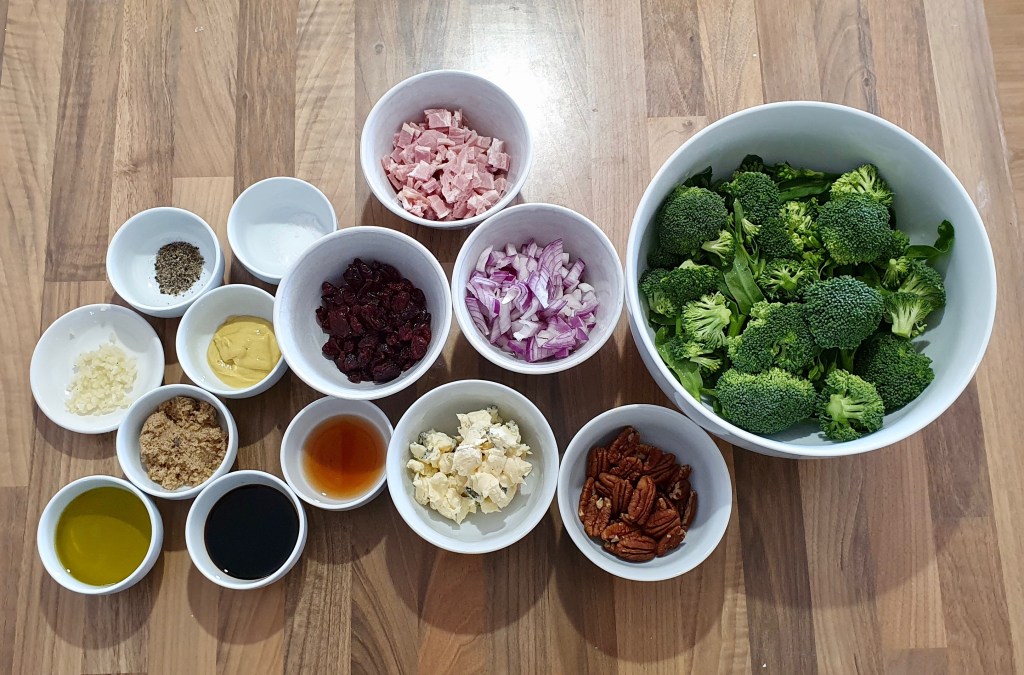
  • Balsamic Dressing:
    • 2 Tbsps balsamic vinegar
    • 1 Tbsp red wine vinegar
    • 1 Tbsp dijon mustard
    • 2 Tbsps brown sugar
    • 1/4 cup olive oil
    • 1/2 tsp salt
    • 1/2 tsp pepper
    • 2 cloves garlic, minced
  • Salad:
    • 6 cups broccoli, chopped (roughly 3 middle-sized broccoli heads or 2 large ones)
    • 1/2 cup pecans
    • 1/2 cup bacon, chopped
    • 1 cup red onion, sliced or diced (personal preference)
    • 1/2 cup blue cheese, crumbled
    • 1/2 cup dried cranberries

Directions:

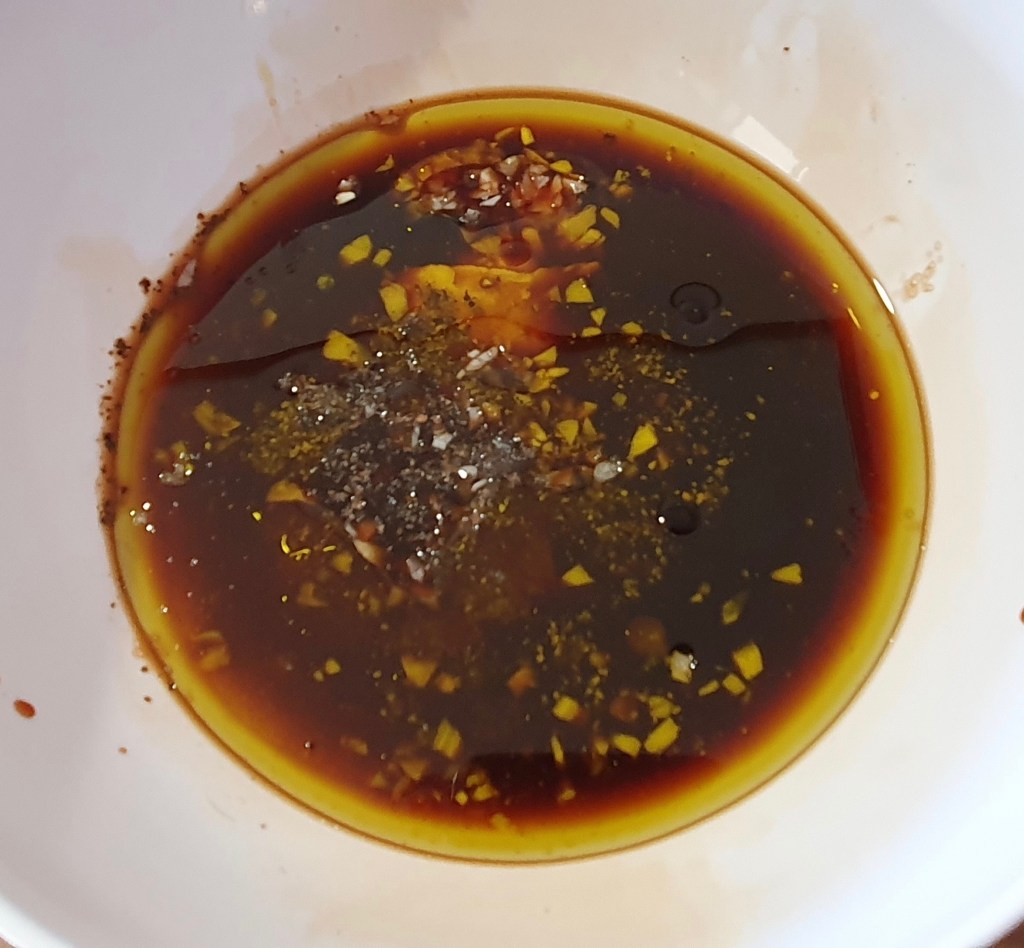
Make the dressing: put all the ingredients for the dressing in a bowl (balsamic vinegar, red wine vinegar, dijon, brown sugar, olive oil, salt, pepper, garlic) and whisk until it becomes a homogenous mixture. Set aside.
(Alternatively, you can put all the ingredients in a mason jar and shake well until all the ingredients are combined.)
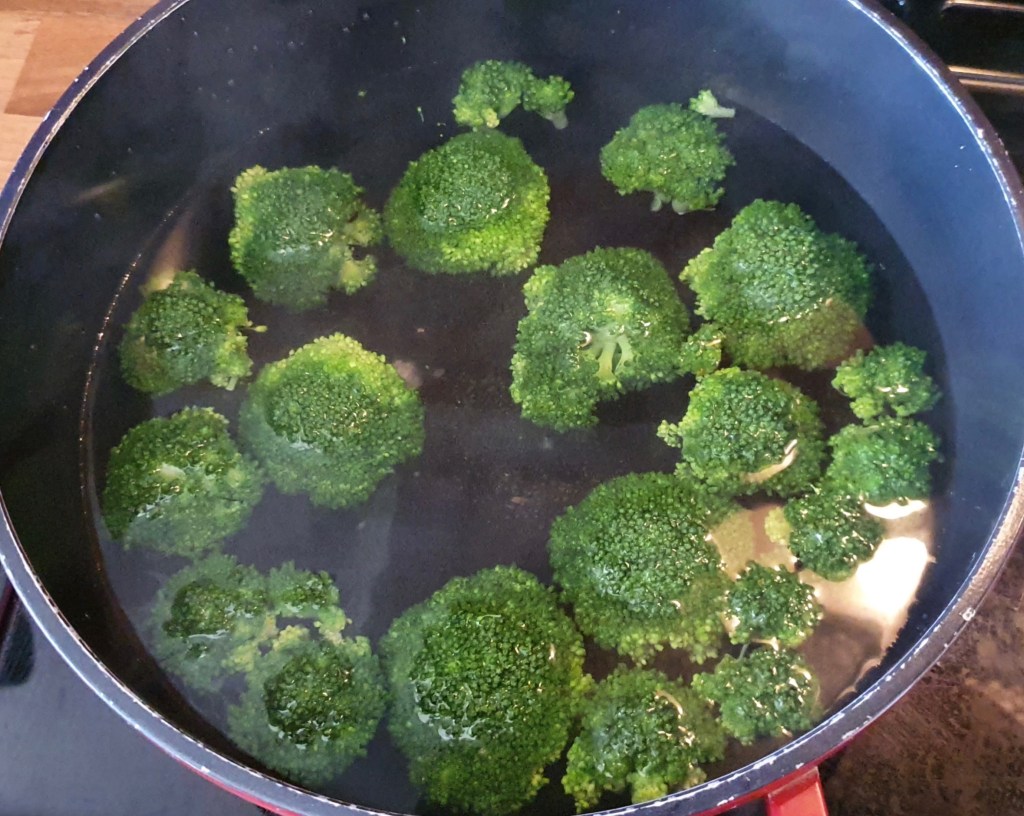
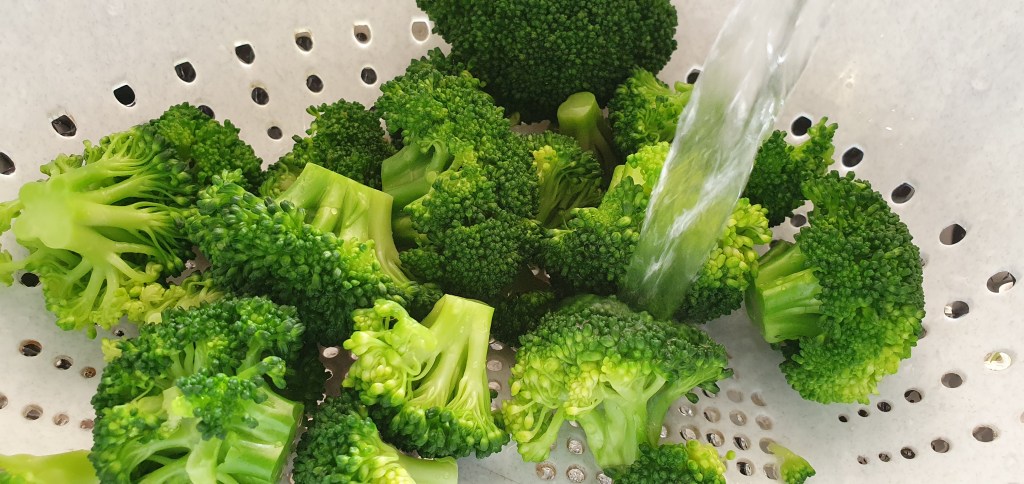
Blanch the broccoli: place the broccoli in a pot of boiling water for 1-2 minutes then drain and run under cold water. Use a salad spinner to get rid of excess water on the broccoli. Set aside.

This step is optional but it helps soften the broccoli a little but and bring out the bright green colours. If you prefer your broccoli raw and crunchy, feel free to skip this step. You can also boil the broccoli a little longer if you prefer it softer.

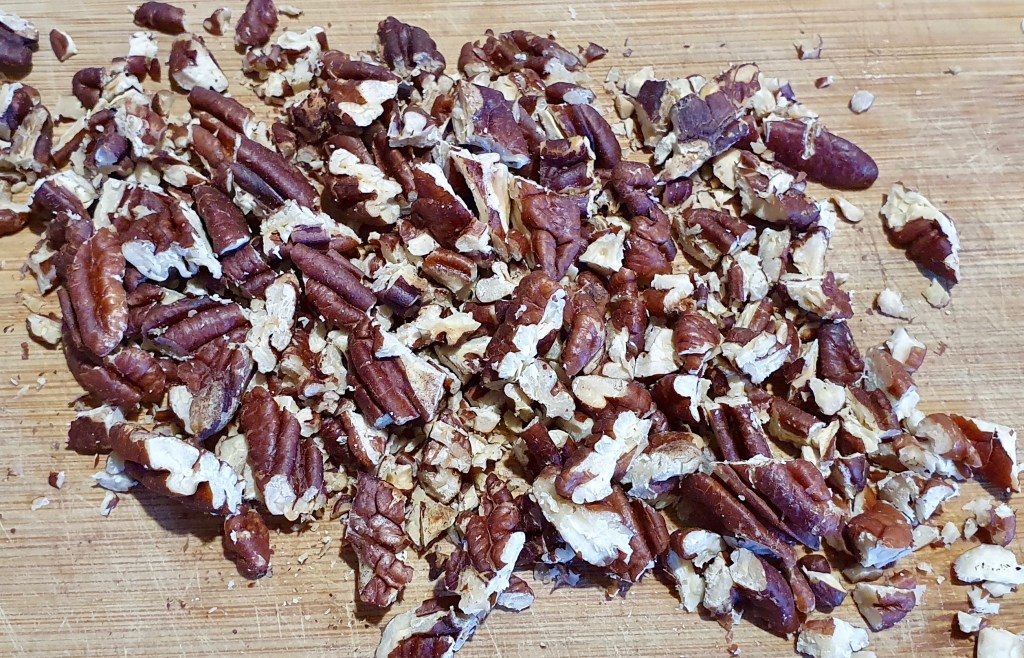
Toast the pecans: Preheat the oven to 180˚C and toast the pecans for 10-15 minutes until fragrant and darker brown, then roughly chop it and set aside.

This step is also optional, but I find toasting the pecans bring out a lot more depth in the flavours of the salad.

Sauté the bacon: While you’re waiting for the pecans to toast, sauté the chopped bacon until light brown and crispy. Set aside.

Assemble the salad: In a large bowl, mix together all the salad ingredients: broccoli, pecans, bacon, red onions, blue cheese, and cranberries. Pour the dressing over and mix well. Serve and enjoy!

Summarized Recipe:

Blue Cheese Broccoli Salad

Date Published: August 17th, 2020 | Last Updated: August 17th, 2020
Author: Abby |Category: salads, vegetarian
Serves: 4-6 | Prep time: 15 mins | Cook time: 20 mins

Ingredients:

  • Balsamic Dressing:
    • 2 Tbsps balsamic vinegar
    • 1 Tbsp red wine vinegar
    • 1 Tbsp dijon mustard
    • 2 Tbsps brown sugar
    • 1/4 cup olive oil
    • 1/2 tsp salt
    • 1/2 tsp pepper
    • 2 cloves garlic, minced
  • Salad:
    • 6 cups broccoli, chopped (roughly 3 middle-sized broccoli heads or 2 large ones)
    • 1/2 cup pecans
    • 1/2 cup bacon, chopped
    • 1 cup red onion, sliced or diced (personal preference)
    • 1/2 cup blue cheese, crumbled
    • 1/2 cup dried cranberries

Directions:

  1. Make the dressing: put all the ingredients for the dressing in a bowl (balsamic vinegar, red wine vinegar, dijon, brown sugar, olive oil, salt, pepper, garlic) and whisk until it becomes a homogenous mixture. Set aside.
  2. Blanch the broccoli (optional): place the broccoli in a pot of boiling water for 1-2 minutes then drain and run under cold water. Use a salad spinner to get rid of excess water on the broccoli. Set aside.
  3. Toast the pecans (optional): Preheat the oven to 180˚C and toast the pecans for 10-15 minutes until fragrant and darker brown, then roughly chop it and set aside.
  4. Sauté the bacon: While you’re waiting for the pecans to toast, sauté the chopped bacon until light brown and crispy. Set aside.
  5. Assemble the salad: In a large bowl, mix together all the salad ingredients: broccoli, pecans, bacon, red onions, blue cheese, and cranberries. Pour the dressing over and mix well. Serve and enjoy!
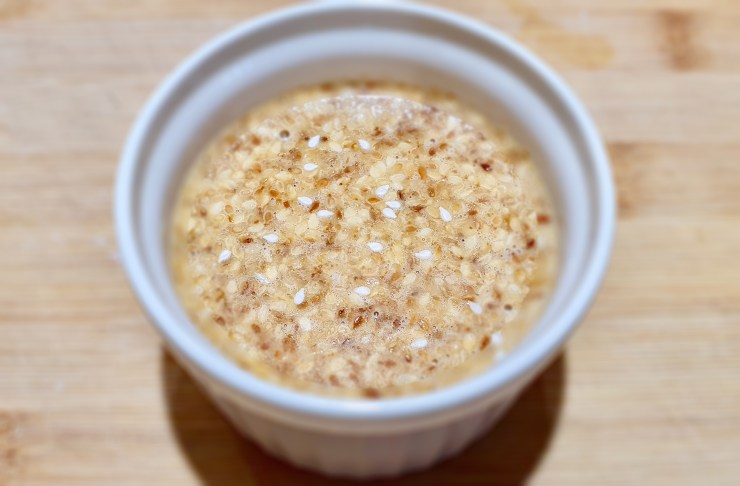
Roasted Sesame Dressing


Date Published: August 16th, 2020 | Last Updated: August 16th, 2020
Author: Abby |Category: sauces, dips, asian, easy
Serves: 1 cup | Prep time: 5 mins | Cook time: 30 secs

Jump to recipe |

I set out a goal for myself last week: to try and recreate Toby’s beloved Kewpie roasted sesame dressing. I’ve been making a lot of things from scratch lately and thought I’d give this a try. Toby was first introduced to the Kewpie brand of the dressing by our friend Laeticia who brought it to hotpot night. I’ve seen people use a lot of different sauces during hotpot, but this was the first time I saw roasted sesame dressing as a dip! She converted Toby that night and funny story, when the new Asian grocer we had been waiting for months to open near our home last year finally opened, they gave away a small gift with every purchase on their grand opening day – it was a mini bottle of Kewpie dressing! The bottle didn’t last long at all. When we moved to the farm a few months ago, we introduced Kewpie sesame dressing to Toby’s parents and it has since replaced the go-to 1 litre bottle of caesar dressing in the fridge – I think they approve.

Sesame dressing is a very common salad dressing used in Japanese restaurants, often served on top of the small salad in a bento box. It’s creamy, rich and full of sesame flavour. Kewpie or Wafu are one of the more popular brands of roasted sesame dressing you’ll see in the shops. We don’t live near an Asian grocer anymore which is another one of the reasons why I wanted to try and recreate it. Welp, I didn’t achieve my goal, but I did end up making a sauce that’s even stronger in sesame flavour than Kewpie and abandoned the original plan when I decided I liked my version better (sorry, not sorry). The freshly roasted sesame seeds in this recipe really shines through and gives it a deeper sesame flavour than the bottled versions and what’s best is that you can easily tweak the recipe to your own liking if you prefer it more sweet, salty, sour, savoury…etc.

Anyways, without further ado, here’s the recipe! If you have any comments or suggestions, I’d love to hear from you in the comment section! You can follow me on instagram, youtube and facebook to see all the recipes I post!

Happy cooking!

Ingredients you’ll need:

  • 4 1/2 Tbsps white sesame seeds
  • 5 Tbsps Kewpie mayonnaise (Japanese whole egg mayonnaise)
  • 2 Tbsps rice wine vinegar
  • 1 1/2 Tbsps soy sauce
  • 2 Tbsps sugar
  • 2 tsp sesame oil
  • 2 tsp mirin
  • 2 egg yolks
  • 1/2 Tbsp neutral oil

Directions:

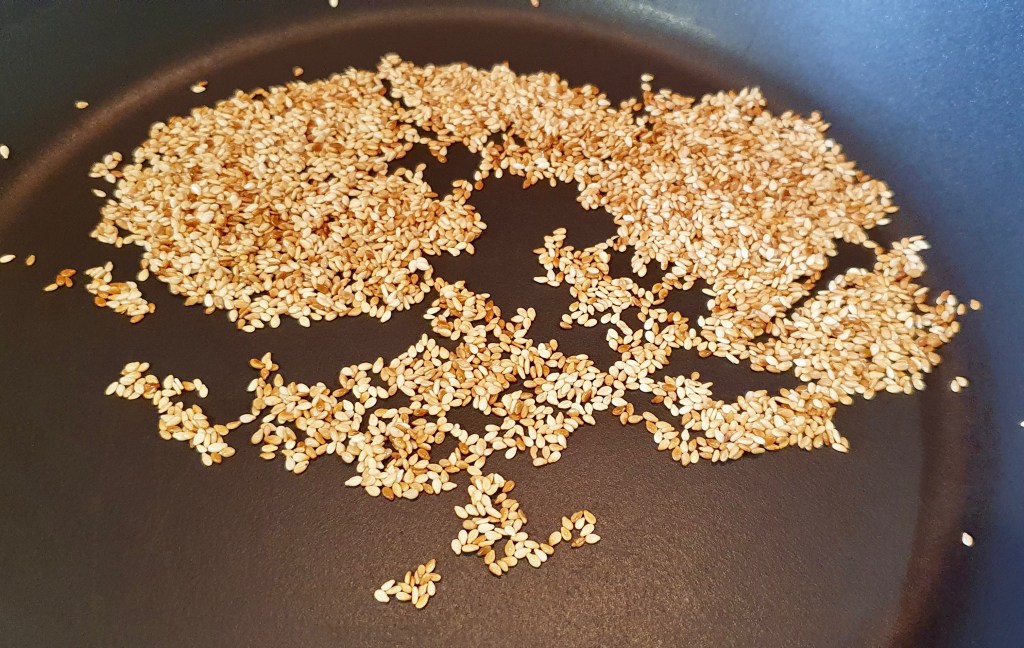
In a dry skillet on a low-medium heat, toast the sesame seeds until golden brown.

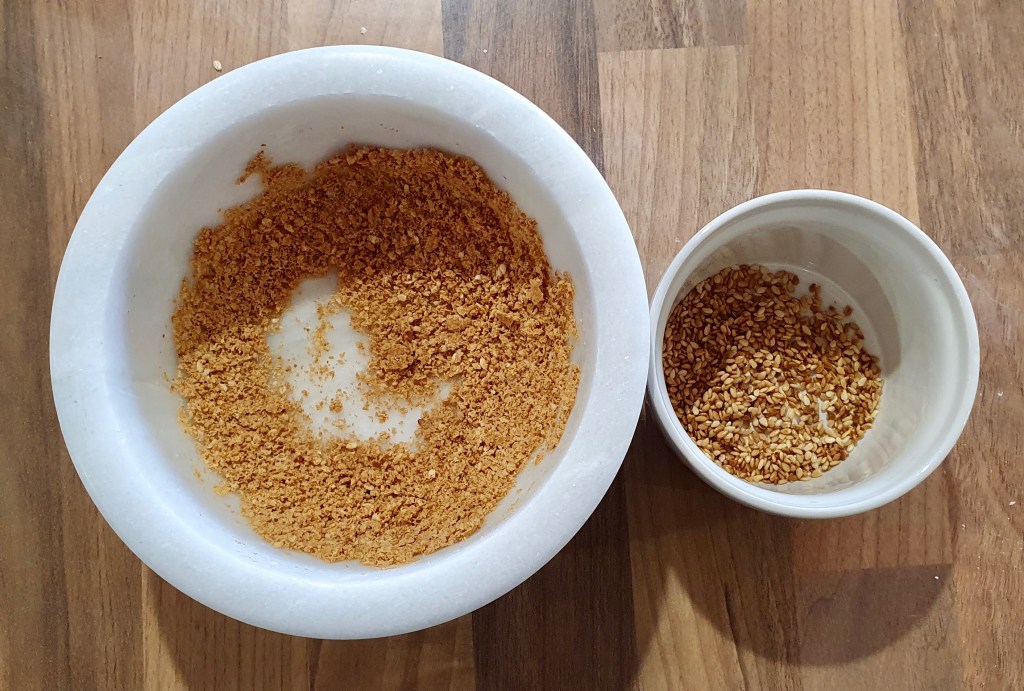
Set aside 1/2 Tbsp of the toasted sesame seeds and grind the rest in a pestle and mortar.

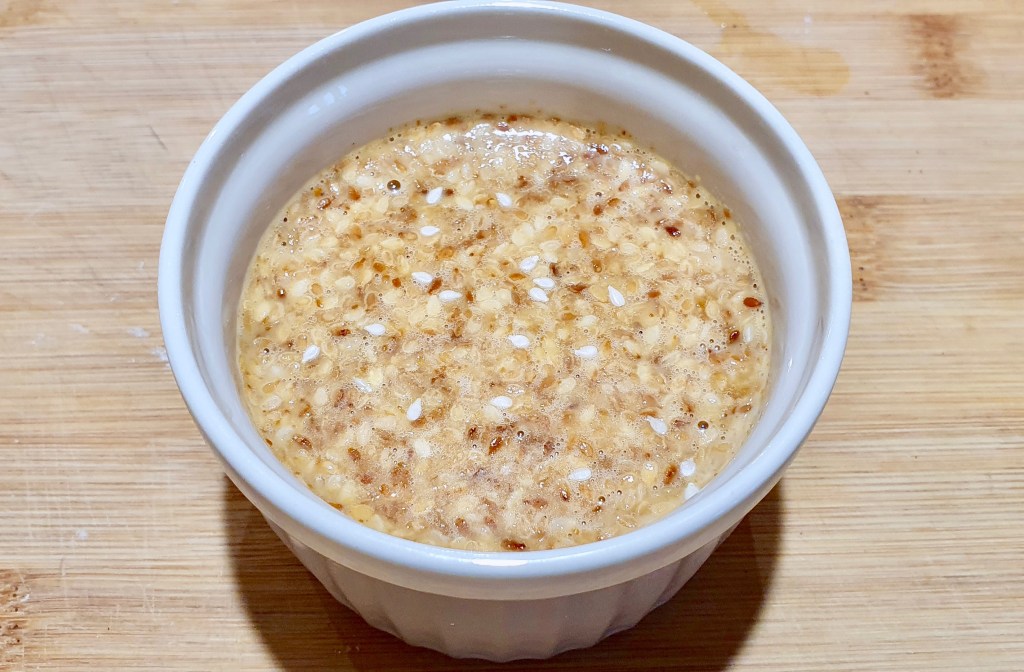
In a bowl, combine all the ingredients and mix: ground sesame seeds, reserved toasted sesame seeds, mayonnaise, rice wine vinegar, soy sauce, sugar, sesame oil, mirin, yolks, and oil. Whisk them together until combined. Taste and adjust flavours as needed. Done!

Summarized Recipe:

Roasted Sesame Dressing

Date Published: August 16th, 2020 | Last Updated: August 16th, 2020
Author: Abby |Category: sauces, dips, asian, easy
Serves: 1 cup | Prep time: 5 mins | Cook time: 30 secs

Ingredients:

  • 4 1/2 Tbsps white sesame seeds
  • 5 Tbsps Kewpie mayonnaise (Japanese whole egg mayonnaise)
  • 2 Tbsps rice wine vinegar
  • 1 1/2 Tbsps soy sauce
  • 2 Tbsps sugar
  • 2 tsp sesame oil
  • 2 tsp mirin
  • 2 egg yolks
  • 1/2 Tbsp neutral oil

Directions:

  1. In a dry skillet on a low-medium heat, toast the sesame seeds until golden brown.
  2. Set aside 1/2 Tbsp of the toasted sesame seeds and grind the rest in a pestle and mortar.
  3. In a bowl, combine all the ingredients and mix: ground sesame seeds, reserved toasted sesame seeds, mayonnaise, rice wine vinegar, soy sauce, sugar, sesame oil, mirin, yolks, and oil. Whisk them together until combined. Taste and adjust flavours as needed. Done!

Best French Onion Soup


Date Published: August 16th, 2020 | Last Updated: August 16th, 2020
Author: Abby |Category: soups
Serves: 4-6 | Prep time: 10 mins | Cook time: 1 hour

Jump to recipe |

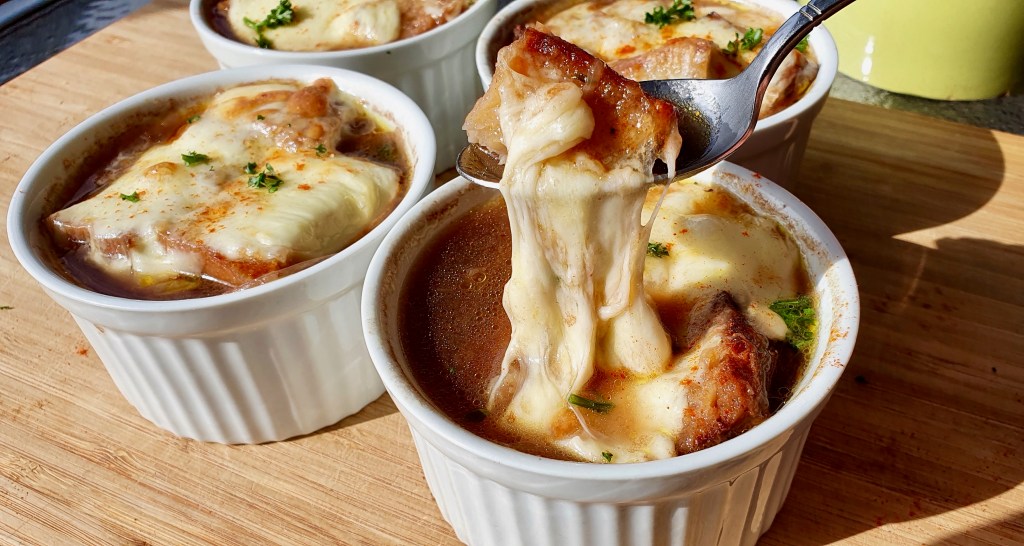
I’ve loved French onion soup for as long as I can remember – what’s not to love about caramelized onions and ooey gooey cheese? This soup has been in my recipe box for at least the past decade. In fact, it’s the first soup I can remember ever attempting to make in my mom’s kitchen back in Canada with a couple of friends after school. The results were bang-on but we didn’t know how to work the broiler (and neither did my mom – who uses a broiler in Chinese cooking?) so we didn’t get the classic bubbly cheese on top but it was still sooooo good. It was a long shopping list for us back in the day since none of these ingredients are in my mom’s traditional Chinese cooking arsenal, but now looking back at this ingredient list in preparation for today’s post, I had pretty much everything already in my pantry and picked the herbs from the garden!

This soup is pretty easy to make, but you’ll need a little patience at the start to caramelize the onions. After that, it’s just adding the rest of the ingredients then simmer and done! You can choose to top the soup with a slice of toasted bread or make your own quick chunky croutons by toasting bread cubes in the oven with some olive oil. I prefer croutons because I find it easier to eat when you don’t have to cut through a thick slice of bread and I also don’t have to worry about whether my slice of bread will fit perfectly into the bowl (plus, munching on extra croutons while the soup simmers is always a bonus). The serving size says 4-6, but when I make this soup I always end up having 4 bowls, so realistically it serves me and maybe one other person. 😜

Recipe adapted from AllRecipes.

Anyways, without further ado, here’s the recipe! If you have any comments or suggestions, I’d love to hear from you in the comment section! You can follow me on instagram, youtube and facebook to see all the recipes I post!

Happy cooking!

Ingredients you’ll need:

  • 1/4 cup (55g) butter, unsalted
  • 2 large red onions, sliced
  • 2 large yellow/sweet onions, sliced
  • 1 tsp salt
  • 6 cups (1.5L) low sodium chicken broth – the combination of the chicken and beef broth with the salt needed to caramelize the onions and the rest of the ingredients tend to make this soup on the saltier side so I suggest using low sodium chicken broth in this soup and adding your own salt in at the end to your liking.
  • 1 cup (250ml) beef broth
  • 1/2 cup red wine
  • 1 Tbsp Worcestershire sauce
  • 2 sprigs fresh parsley
  • 2 sprigs fresh thyme leaves (or a pinch of dried thyme)
  • 1 bay leaf
  • 1 Tbsp balsamic vinegar
  • salt & pepper to taste
  • 4-6 thick slices of French or Italian bread
  • A few slices of cheese per bowl
    • A milder tasting cheese is recommended since the soup itself has a very robust flavour and can be salty – ie. Asiago, mozzarella, Gruyere or Swiss. You can do a mix of these cheeses!
    • Tip: If you don’t have any oven-safe bowls, you can use shredded cheese so it melts easier over the hot soup and bread.
  • pinches of paprika for garnish

Directions:

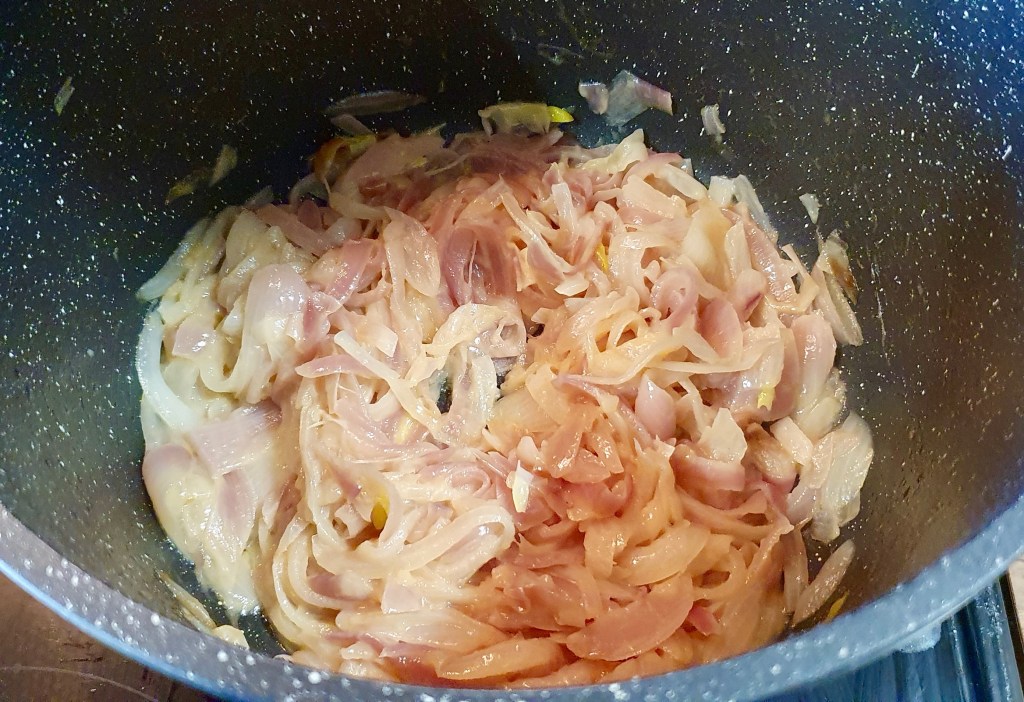
In a medium pot, on medium heat, melt the butter and cook the onion with the salt until they’re caramelized and syrupy – stir frequently and scrape the bottom of the pot so it doesn’t stick and burn. This is the most time-consuming process and takes about half an hour.

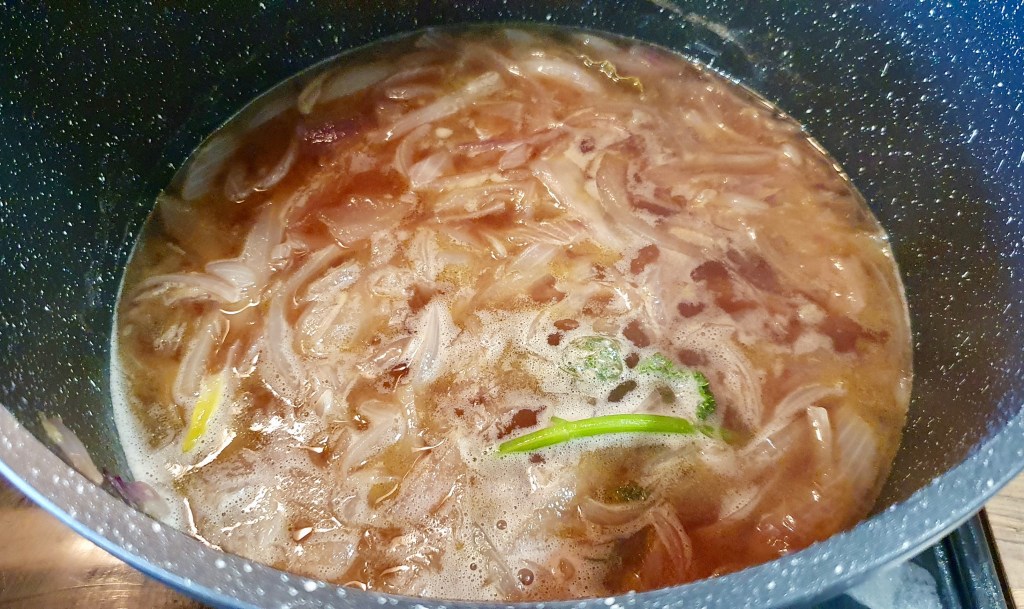
Once onions are ready, add into the pot: chicken broth, beef broth, red wine, Worcestershire sauce, parsley, thyme and bay leaf. Simmer on medium heat for 20mins without the lid, stirring occasionally.

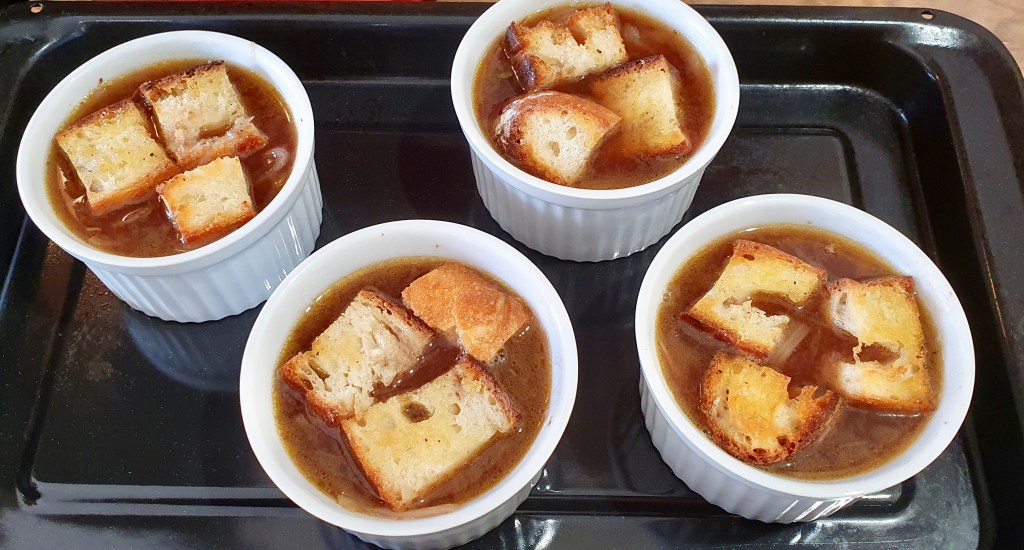
While the soup simmers, prepare the bread: toast the bread slices until golden and crispy or alternatively you can make them into croutons by cutting them into cubes, drizzle with a bit of olive oil and toast them in the oven at 180˚C for 10 minutes until golden and crispy.

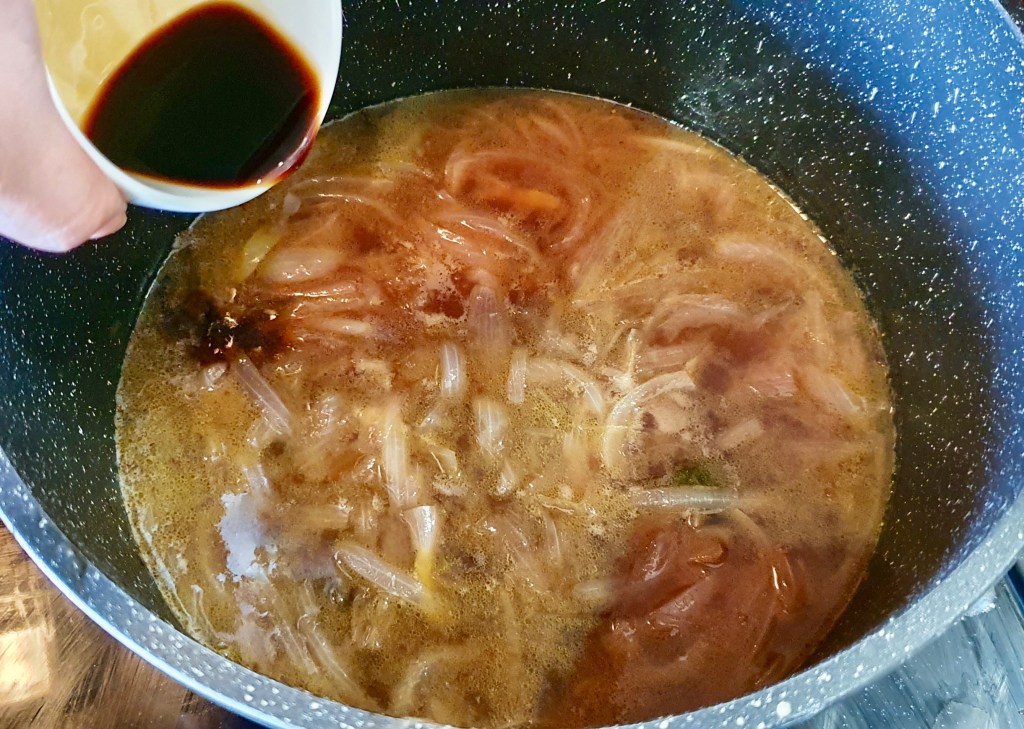
When soup is ready, remove the herbs and add in the balsamic vinegar. Season with salt and pepper to taste.

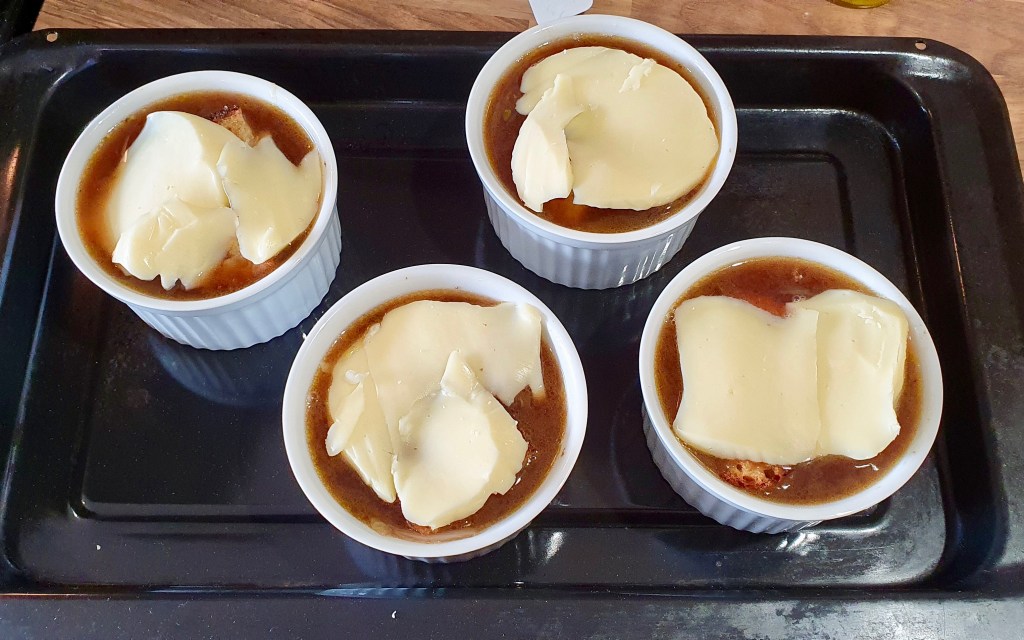
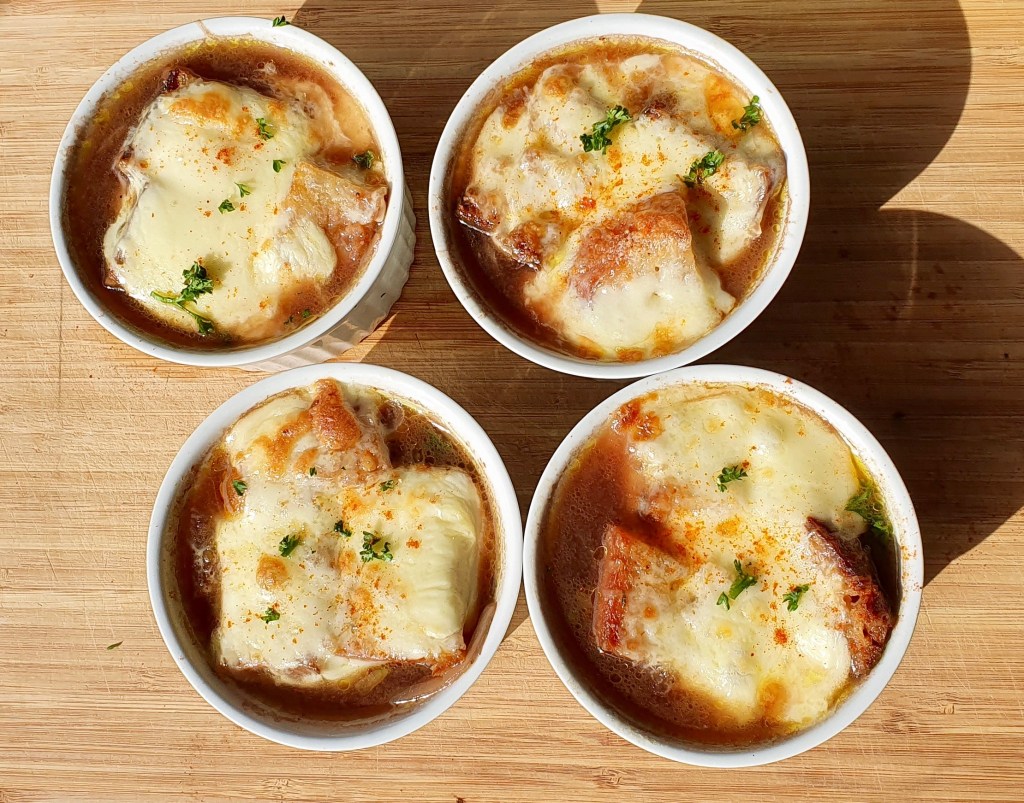
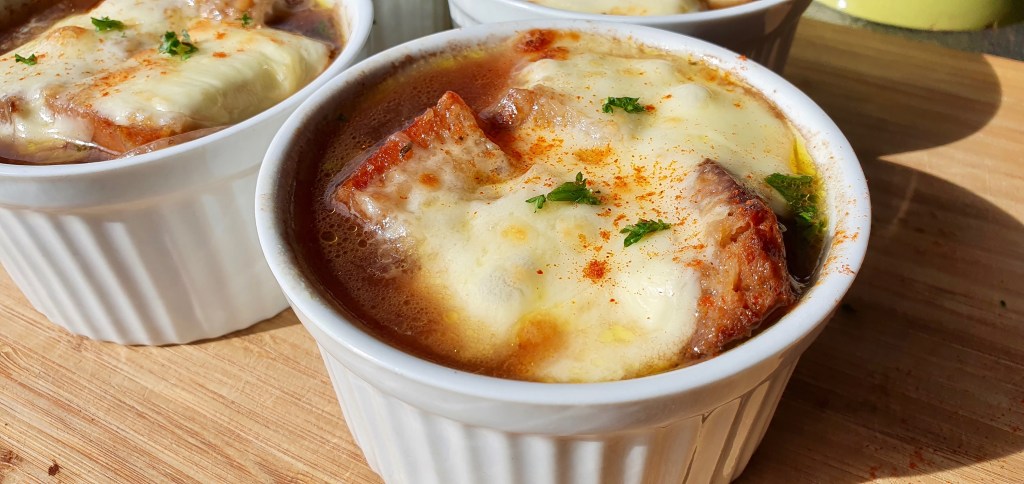
Spoon the soup into oven-safe bowls and place the crispy toasted bread into each bowl then topped with slices of cheese. Put the soup bowls in the oven and broil on HIGH until the cheese is bubbly and golden brown. Sprinkle some paprika over each bowl and serve. Enjoy!

Summarized Recipe:

Best French Onion Soup

Date Published: August 16th, 2020 | Last Updated: August 16th, 2020
Author: Abby |Category: soups
Serves: 4-6 | Prep time: 10 mins | Cook time: 1 hour

Ingredients:

  • 1/4 cup (55g) butter, unsalted
  • 2 large red onions, sliced
  • 2 large yellow/sweet onions, sliced
  • 1 tsp salt
  • 6 cups (1.5L) low sodium chicken broth
  • 1 cup (250ml) beef broth
  • 1/2 cup red wine
  • 1 Tbsp Worcestershire sauce
  • 2 sprigs fresh parsley
  • 2 sprigs fresh thyme leaves (or a pinch of dried thyme)
  • 1 bay leaf
  • 1 Tbsp balsamic vinegar
  • salt & pepper to taste
  • 4-6 thick slices of French or Italian bread
  • A few slices of cheese per bowl
    • A milder tasting cheese is recommended since the soup itself has a very robust flavour and can be salty – ie. Asiago, mozzarella, Gruyere or Swiss. You can do a mix of these cheeses!
    • Tip: If you don’t have any oven-safe bowls, you can use shredded cheese so it melts easier over the hot soup and bread.
  • pinches of paprika for garnish

Directions:

  1. In a medium pot, on medium heat, melt the butter and cook the onion with the salt until they’re caramelized and syrupy – stir frequently and scrape the bottom of the pot so it doesn’t stick and burn. This is the most time-consuming process and takes about half an hour.
  2. Once onions are ready, add into the pot: chicken broth, beef broth, red wine, Worcestershire sauce, parsley, thyme and bay leaf. Simmer on medium heat for 20mins without the lid, stirring occasionally.
  3. While the soup simmers, prepare the bread: toast the bread slices until golden and crispy or alternatively you can make them into croutons by cutting them into cubes, drizzle with a bit of olive oil and toast them in the oven at 180˚C for 10 minutes until golden and crispy.
  4. When soup is ready, remove the herbs and add in the balsamic vinegar. Season with salt and pepper to taste.
  5. Spoon the soup into oven-safe bowls and place the crispy toasted bread into each bowl then topped with slices of cheese. Put the soup bowls in the oven and broil on HIGH until the cheese is bubbly and golden brown. Sprinkle some paprika over each bowl and serve. Enjoy!

Baked Chicken Katsu Parma


Date Published: August 15th, 2020 | Last Updated: August 15th, 2020
Author: Abby |Category: mains
Serves: 4 | Prep time: 15 mins | Cook time: 30 mins

Jump to recipe |

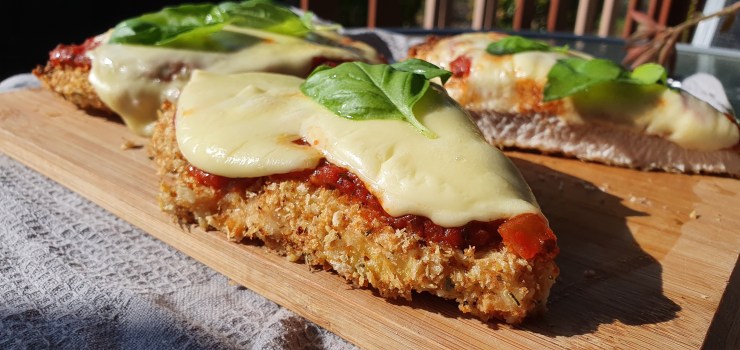
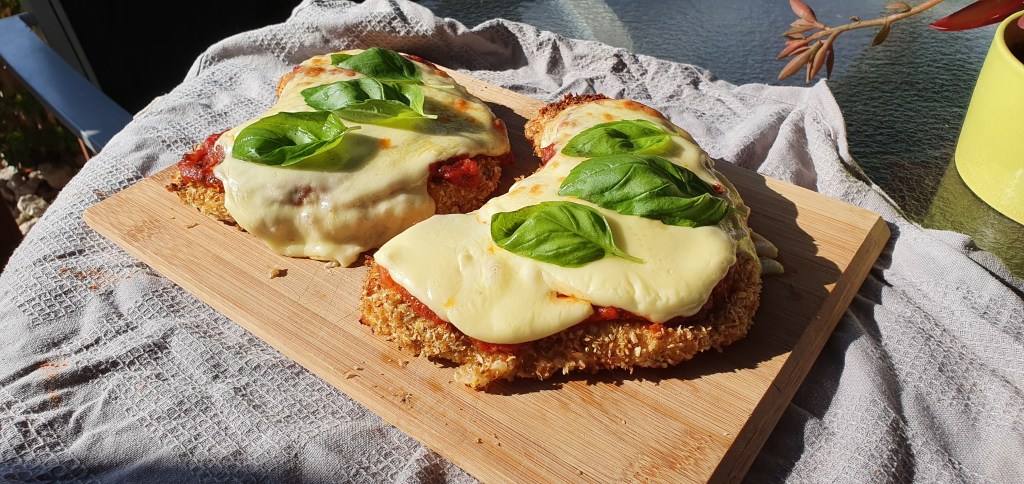
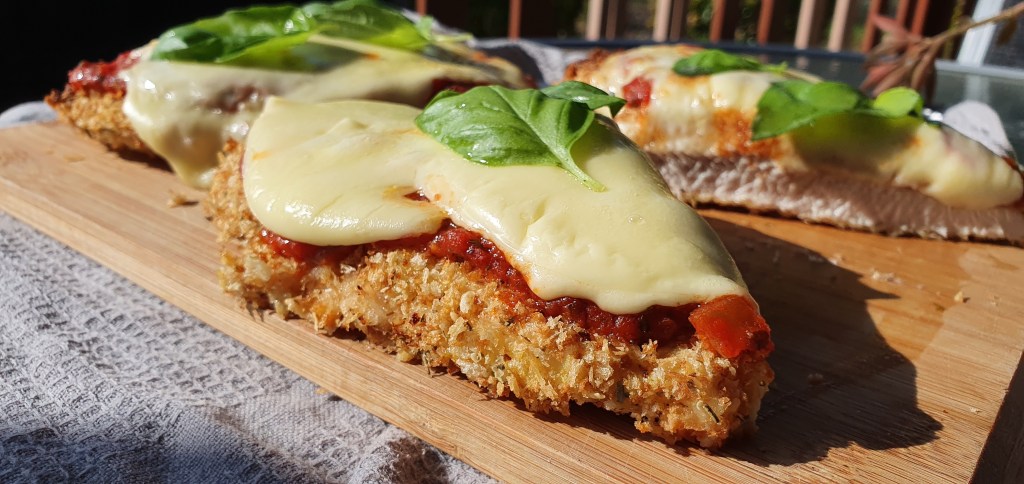
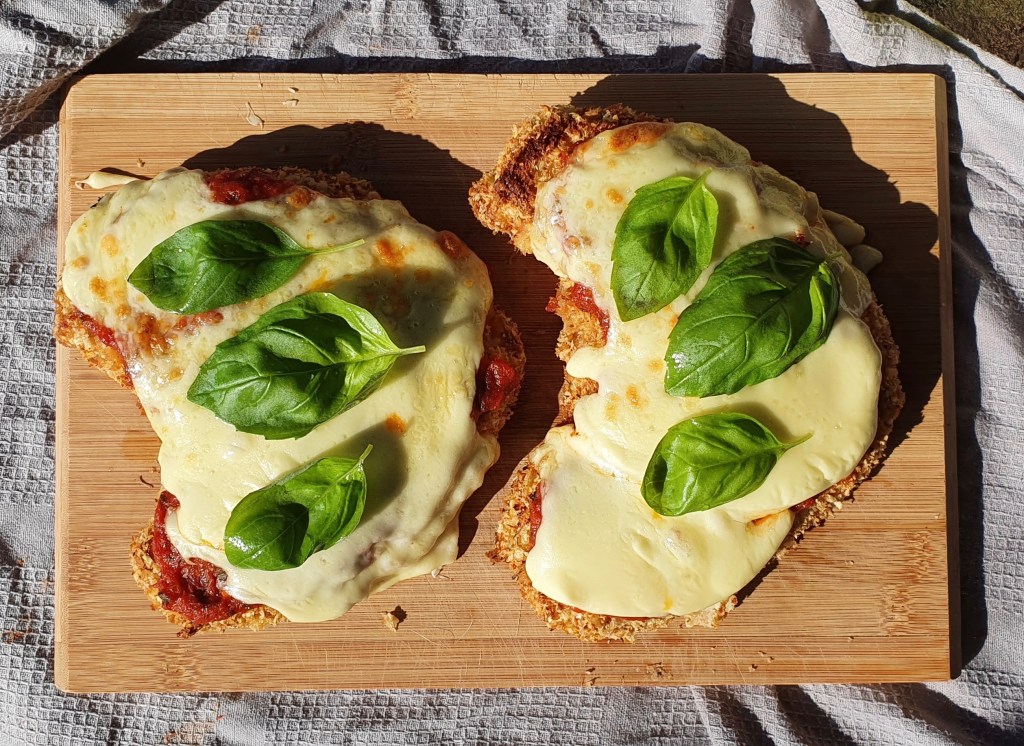
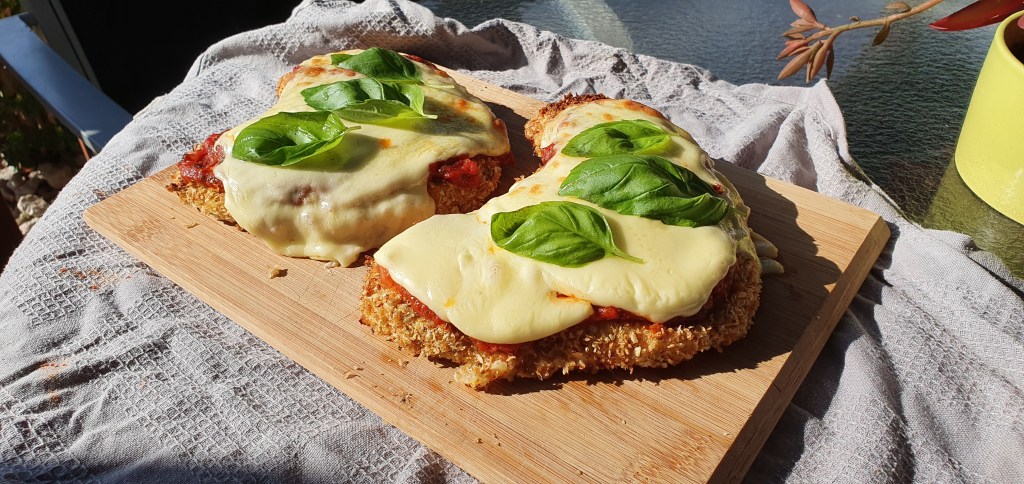
This past week we’ve been using more eggplant in our cooking, a vegetable that we previously never really touched. We’ve actually made some pretty tasty dishes with eggplant including sweet chilli eggplant and a few more dishes that I’ll be posting soon. I found a popular recipe for an eggplant parmesan from Jamie Oliver and decided to give it a go. Toby LOVES a good parma, so you can imagine his disappointment when he thought an eggplant parmesan was a chicken parma with eggplant on top, rather than an eggplant-style lasagne. In the end our eggplant parmesan turned out well, but I felt bad that Toby never got the parma he was so excited for so we put parma on this week’s menu. We decided to use the baked chicken katsu recipe to make it a healthier (and crunchier) alternative and topped it off with our own marinara sauce. It was SOOOOO good. Toby said it was one of the best parmas he’s ever had, especially with the homemade marinara.

Anyways, without further ado, here’s the recipe! If you have any comments or suggestions, I’d love to hear from you in the comment section! You can follow me on instagram, youtube and facebook to see all the recipes I post!

Happy cooking!

Ingredients you’ll need:

  • 2 cups panko (Japanese breadcrumbs)
  • 2 Tbsp extra virgin olive oil
  • 1/2 cup parmesan cheese, grated
  • 2 Tbsps Italian seasoning (or dried oregano)
  • 4 chicken breasts, butterflied
  • salt & ground black pepper
  • 4 Tbsp all-purpose flour (plain flour)
  • 2 large eggs, beaten
  • 2 cups marinara sauce
  • A few slices of mozzarella cheese per parma
  • Basil leaves (for garnish)

Directions:

Cooled toasted panko with parmesan and Italian seasoning

On a pan on medium heat, toast the panko with the olive oil. Stir to combine and toast until golden brown. Then put your panko in a large bowl and set aside to cool. Once cooled mix in parmesan cheese and Italian seasoning.

Preheat oven to 200˚C.

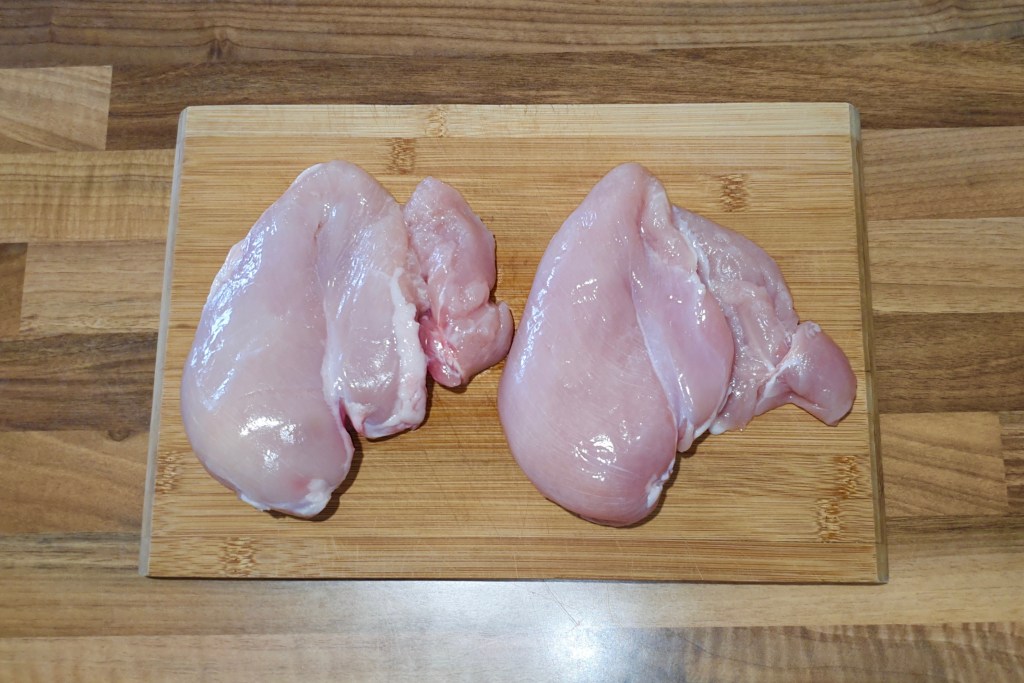
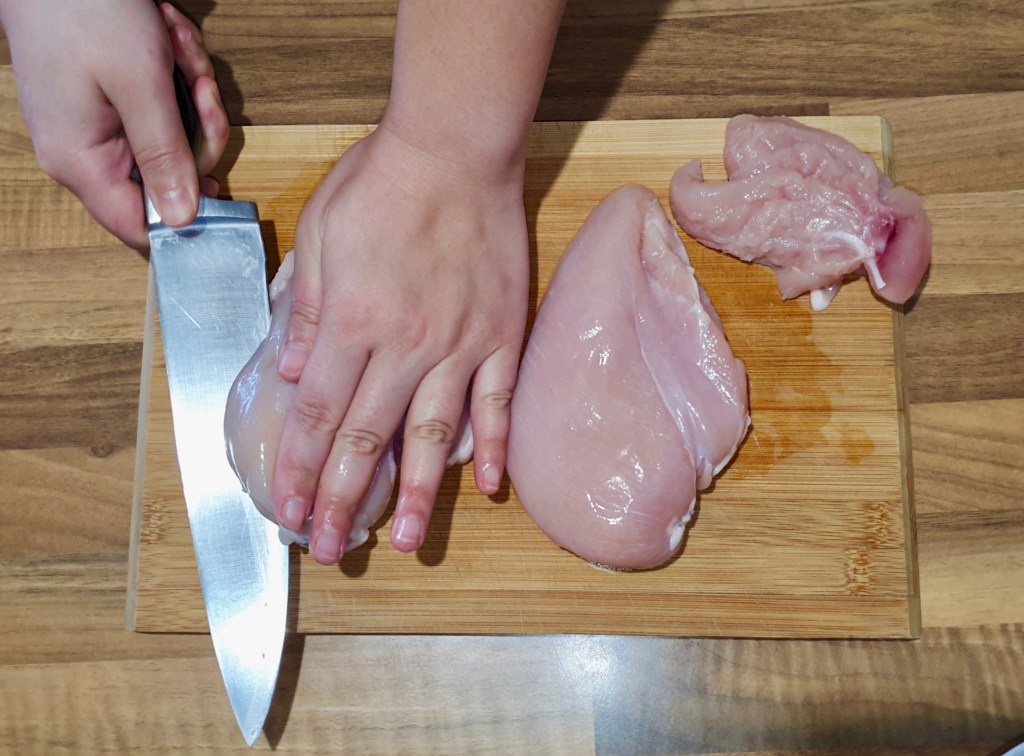
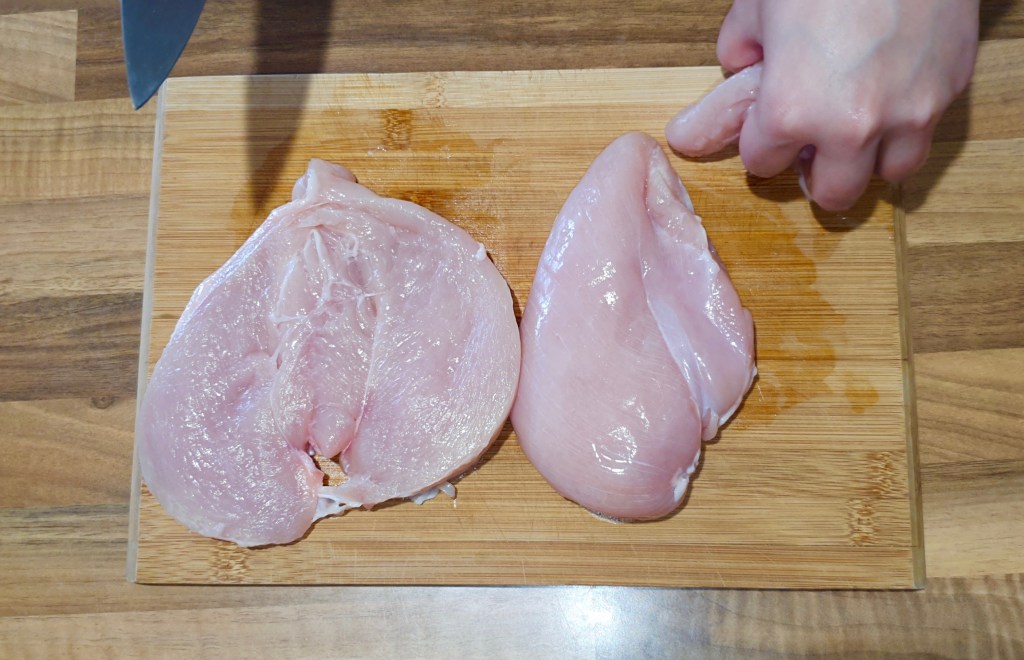
Rinse your chicken and pat dry. Butterfly the chicken breasts and season with salt and pepper on both sides. Follow the photos above to butterfly the breasts or click here for a more descriptive tutorial.

In two large bowls or plates, place flour in one and beaten eggs in the other.

Now bread your chicken in this order:

  1. Dunk the chicken breast in the flour bowl to cover both sides. Shake off any excess flour.
  2. Next coat it in the beaten eggs.
  3. Finally coat it in the toasted panko parmesan mixture, pressing the crumbs in slightly to help them stick.

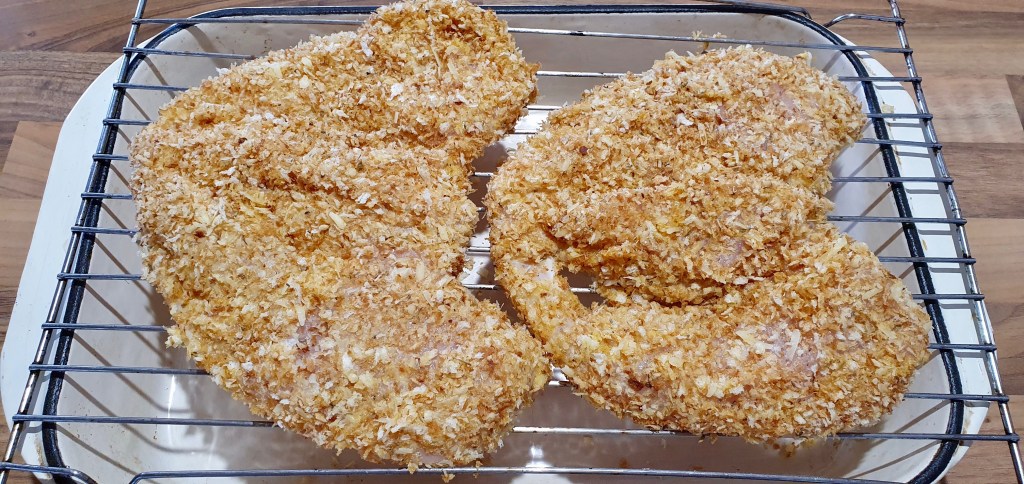
Place the katsu onto a wire rack over an oven tray. Bake for about 20-25 minutes on the middle rack until the chicken is no longer pink inside. If you have an oven thermometer, your chicken should be about 74˚C.

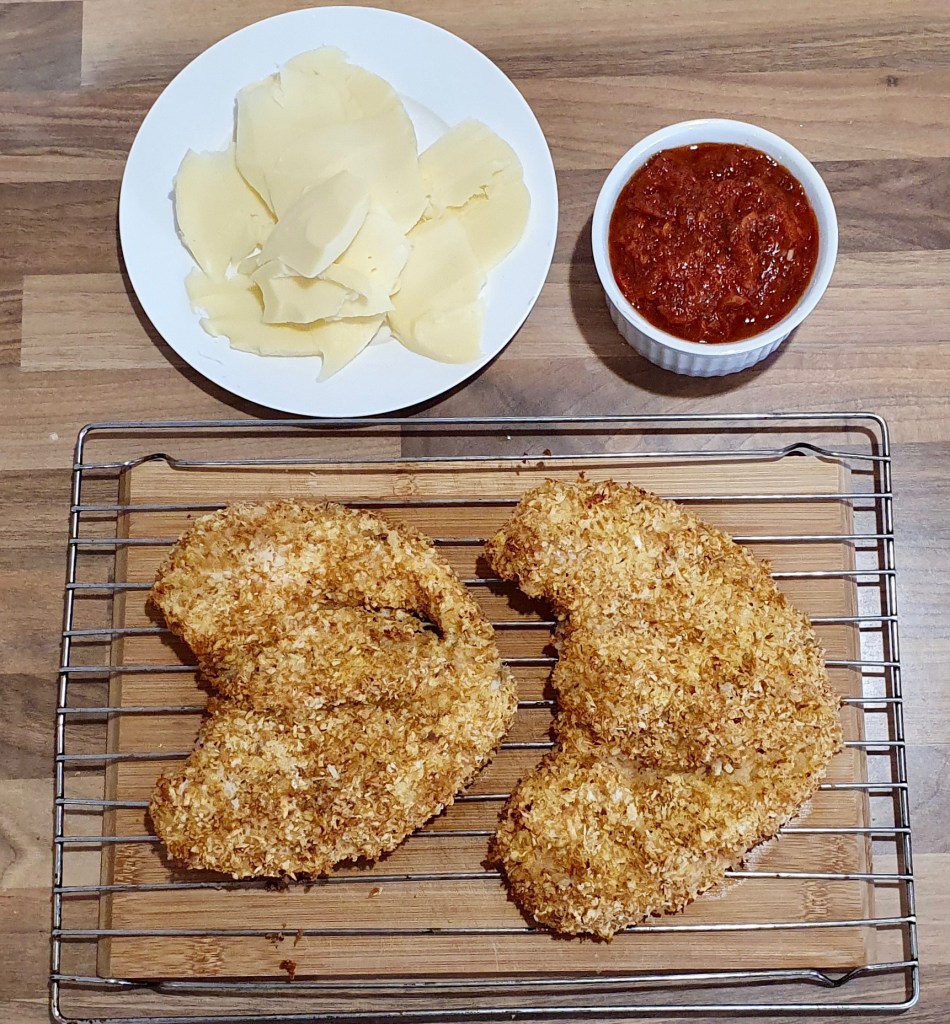
When the chicken is cooked, put a few spoonfuls of marinara sauce over each katsu then top with mozzarella cheese. Put it back on the oven and broil on HIGH until the cheese is bubbly and melted (~1 minute).

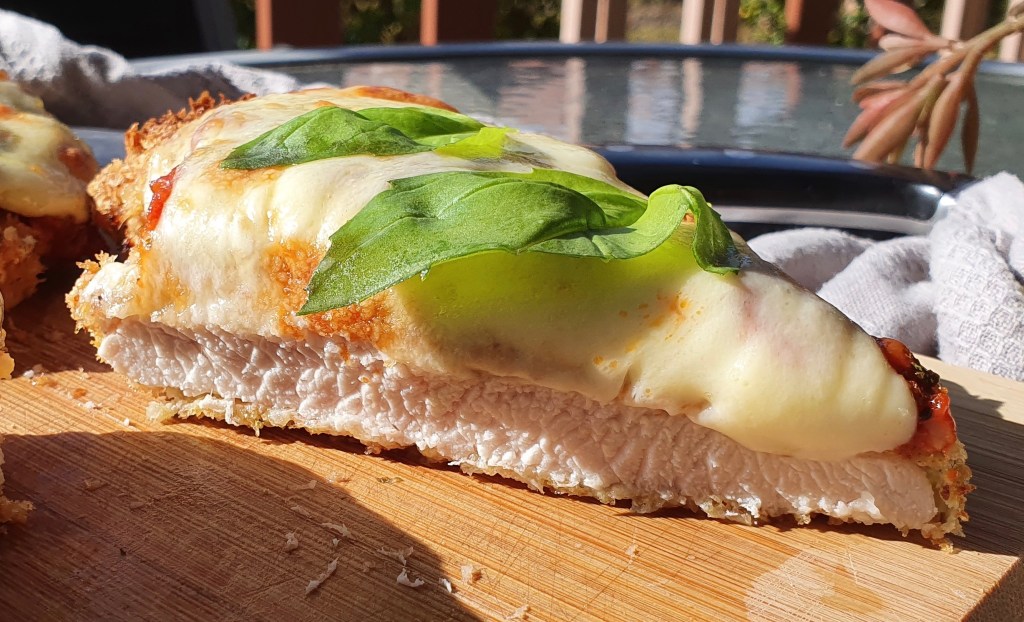
Top each parma with a few slices of fresh basil and serve immediately. Done!

Summarized Recipe:

Baked Chicken Katsu Parma

Date Published: August 15th, 2020 | Last Updated: August 15th, 2020
Author: Abby |Category: mains
Serves: 4 | Prep time: 15 mins | Cook time: 30 mins

Ingredients:

  • 2 cups panko (Japanese breadcrumbs)
  • 2 Tbsp extra virgin olive oil
  • 1/2 cup parmesan cheese, grated
  • 2 Tbsps Italian seasoning (or dried oregano)
  • 4 chicken breasts, butterflied
  • salt & ground black pepper
  • 4 Tbsp all-purpose flour (plain flour)
  • 2 large eggs, beaten
  • 2 cups marinara sauce
  • A few slices of mozzarella cheese per parma
  • Basil leaves (for garnish)

Directions:

  1. On a pan on medium heat, toast the panko with the olive oil. Stir to combine and toast until golden brown. Then put your panko in a large bowl and set aside to cool. Once cooled mix in parmesan cheese and Italian seasoning.
  2. Preheat oven to 200˚C.
  3. Rinse your chicken and pat dry. Butterfly the chicken breasts and season with salt and pepper on both sides (click here for tutorial).
  4. In two large bowls or plates, place flour in one and beaten eggs in the other.
  5. Now bread your chicken in this order:
    1. Dunk the chicken breast in the flour bowl to cover both sides. Shake off any excess flour.
    2. Next coat it in the beaten eggs.
    3. Finally coat it in the toasted panko parmesan mixture, pressing the crumbs in slightly to help them stick.
  6. Place the katsu onto a wire rack over an oven tray. Bake for about 20-25 minutes on the middle rack until the chicken is no longer pink inside. If you have an oven thermometer, your chicken should be about 74˚C.
  7. When the chicken is cooked, put a few spoonfuls of marinara sauce over each katsu then top with mozzarella cheese. Put it back on the oven and broil on HIGH until the cheese is bubbly and melted (~1 minute).
  8. Top each parma with a few slices of fresh basil and serve immediately. Done!

So Good Classic Marinara Sauce


Date Published: August 15th, 2020 | Last Updated: August 15th, 2020
Author: Abby |Category: sauces, easy
Serves: 3-4 cups | Prep time: 10 mins | Cook time: 30 mins

Jump to recipe |

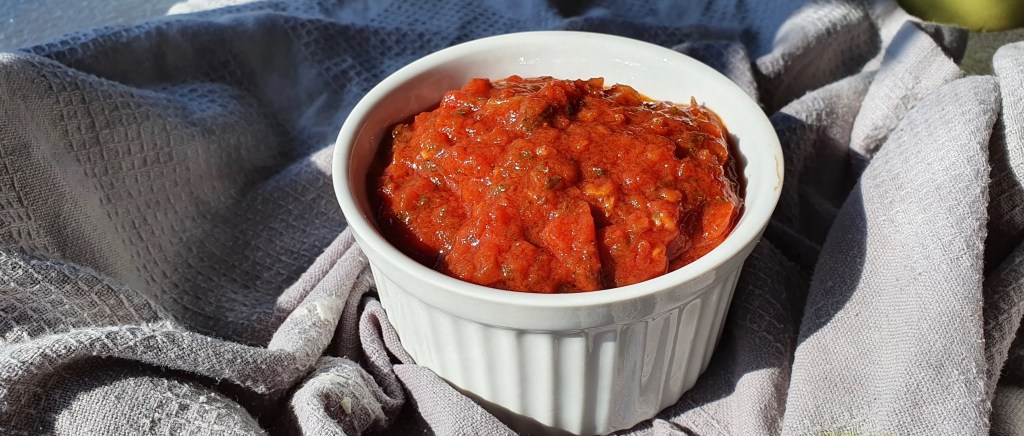
This classic thick and rich red sauce is SO good and easy to make. Most of the work is done in a food processor and then just sauté and simmer it in some onions, garlic and white wine. Easy, huh? It’s a great go-to recipe for pasta, parma, or even a dip for some gooey mozzarella sticks mmmmmm. We had this with a baked chicken katsu parma for lunch today which was the perfect place to use this sauce! I’ll be putting up that recipe shortly as well. 🙂

Cute story: Toby only recently learned that marinara sauce and “red sauce” were the same thing. He always thought marinara sauce was a specific sauce you cook seafood marinara in, which is a popular dish in Australia (seafood pasta cooked in marinara sauce). He was a little confused when I told him we didn’t need any seafood to make this sauce. I would have to give him credit on his reasoning though: “marine” is similar to “marinara” which is why he thought the two were related. I had to look up marinara sauce to double check I was right because his reasoning was so logical.

If you make this sauce, let me know in the comments what you think! Follow me on insta (@polyphagicabby) or Facebook to get the latest recipes and updates!

Happy cooking!

Ingredients you’ll need:

  • 2 cans (800g) diced tomatoes
  • 1 can (140g) tomato paste
  • 4 Tbsps fresh parsley, chopped
  • 1 tsp dried oregano
  • 1 tsp dried basil
  • 1/2 Tbsp brown sugar
  • 1 tsp salt
  • 1/4 tsp ground black pepper
  • 2 Tbsps olive oil
  • 1/3 cup finely diced onion
  • 2 cloves garlic, minced
  • 1/2 cup white wine

Directions:

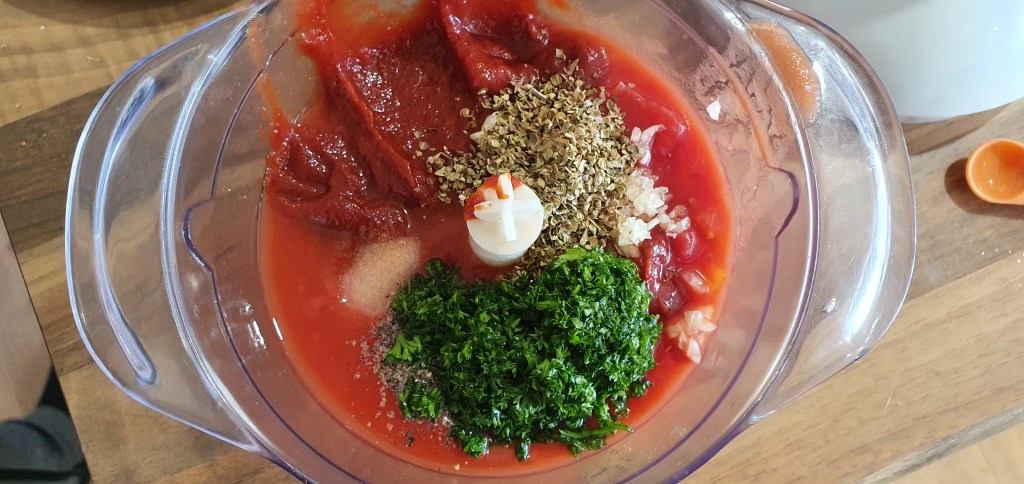
In a food processor, add the: diced tomatoes, tomato paste, parsley, oregano, basil, brown sugar, salt and pepper. Blend until smooth.

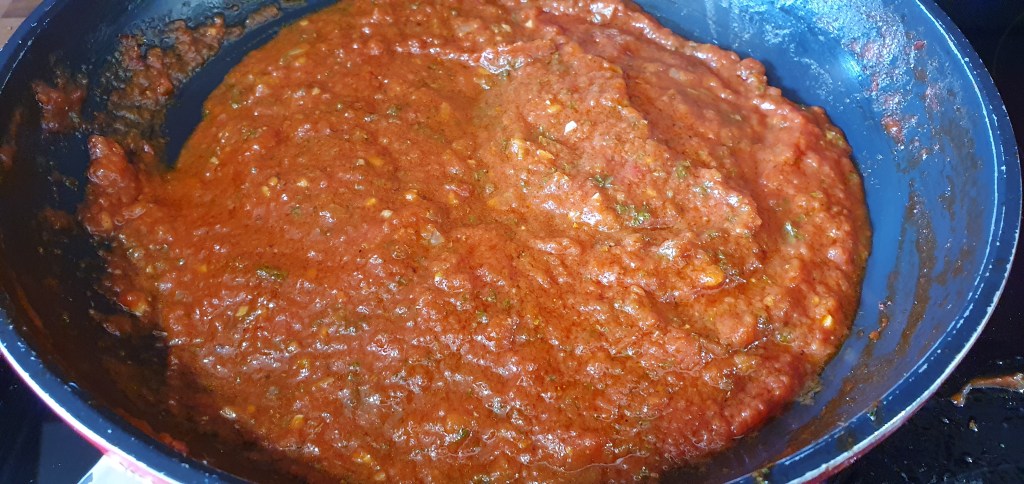
In a large skillet over medium heat, sauté the finely chopped onions and garlic in 2 Tbsps of olive oil until soft and turning translucent. Add the blended tomato sauce and white wine to the skillet and simmer for 30 minutes or until desired consistency (simmer longer for a thicker sauce to be used as a dip or parma). Taste and adjust according to taste. Done!

Summarized Recipe:

So Good Classic Marinara Sauce

Date Published: August 15th, 2020 | Last Updated: August 15th, 2020
Author: Abby |Category: sauces, easy
Serves: 3-4 cups | Prep time: 10 mins | Cook time: 30 mins

Ingredients:

  • 2 cans (800g) diced tomatoes
  • 1 can (140g) tomato paste
  • 4 Tbsps fresh parsley, chopped
  • 1 tsp dried oregano
  • 1 tsp dried basil
  • 1/2 Tbsp brown sugar
  • 1 tsp salt
  • 1/4 tsp ground black pepper
  • 2 Tbsps olive oil
  • 1/3 cup finely diced onion
  • 2 cloves garlic, minced
  • 1/2 cup white wine

Directions:

  1. In a food processor, add the: diced tomatoes, tomato paste, parsley, oregano, basil, brown sugar, salt and pepper. Blend until smooth.
  2. In a large skillet over medium heat, sauté the finely chopped onions and garlic in 2 Tbsps of olive oil until soft and turning translucent. Add the blended tomato sauce and white wine to the skillet and simmer for 30 minutes or until desired consistency (simmer longer for a thicker sauce to be used as a dip or parma). Taste and adjust according to taste. Done!

Curry Mayo


Date Published: August 14th, 2020 | Last Updated: August 14th, 2020
Author:
Abby |Category: sauces, dips, easy
Serves:
1 cup | Prep time: 30 secs | Cook time: 30 secs

Jump to recipe |

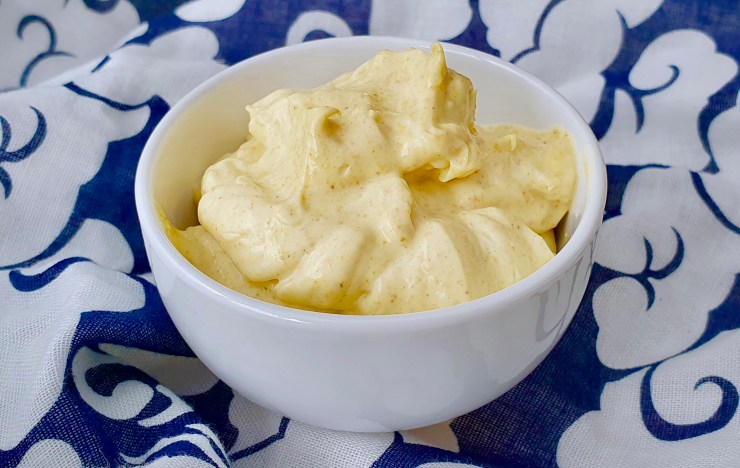
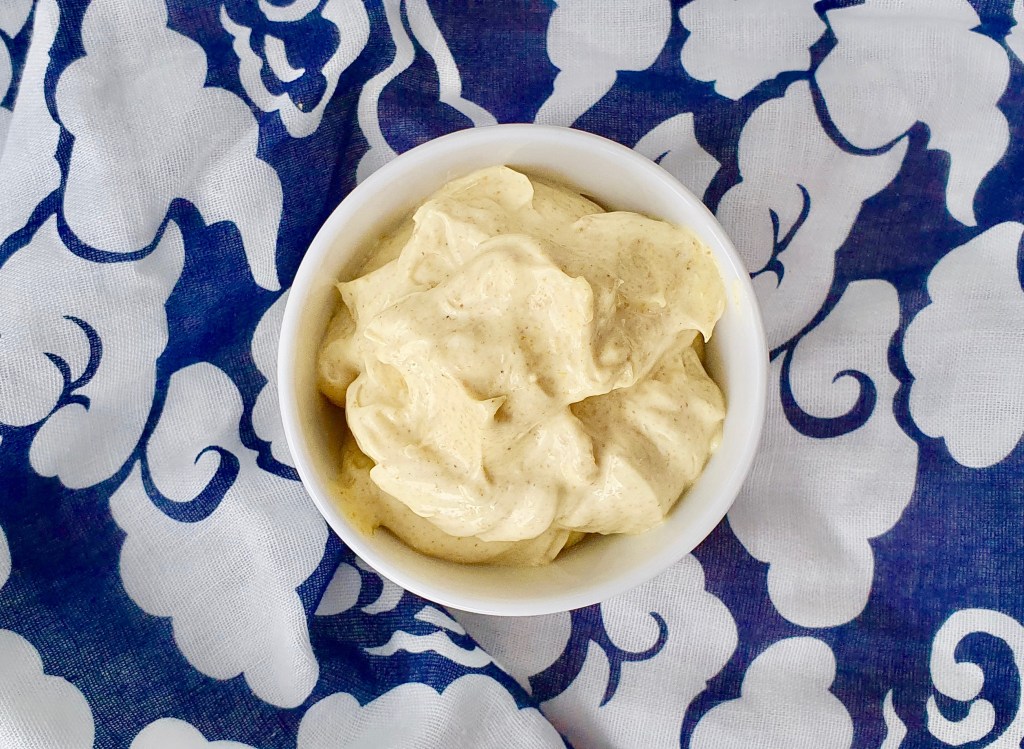
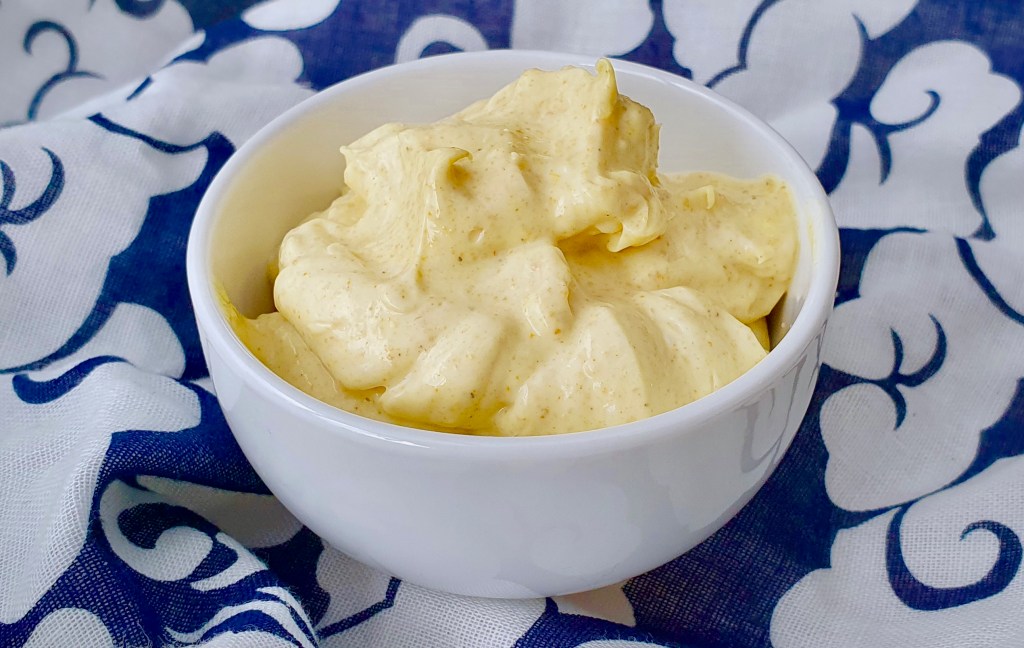
This is one of my favourite dips for anything deep fried: sweet potato fries, hashbrowns, potato cakes, fish and chips…the list goes on. It’s also fantastic in all kinds of mayo-based salads: potato salad, egg salad, tuna salad…YUM! I’m a firm believer that curry powder makes life better ❤️. This 30 second recipe is ridiculously simple. If you can scoop mayo out of a jar, you can make curry mayo!

Anyways, without further ado, here’s the recipe! If you have any comments or suggestions, I’d love to hear from you in the comment section! You can follow me on instagram, youtube and facebook to see all the recipes I post!

Happy cooking!

Ingredients you’ll need:

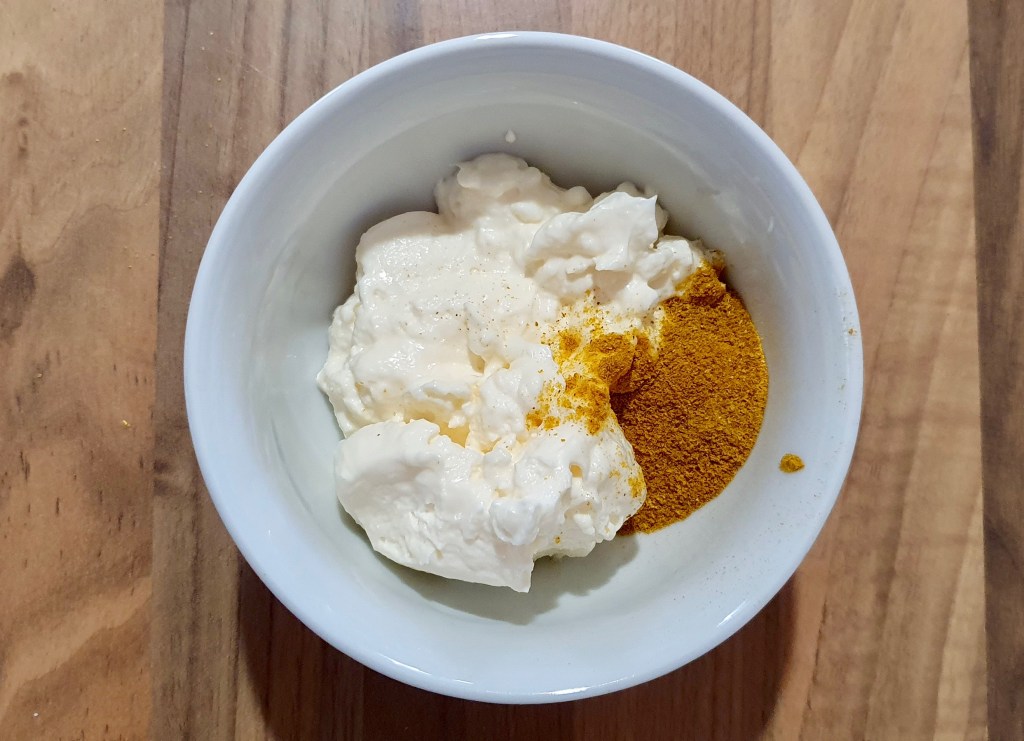
  • 1 cup mayonnaise
  • 1 tsp curry powder

Directions:

  1. Mix curry and mayo together. Taste and add more curry if you prefer if stronger. Done!

Summarized Recipe:

Curry Mayo

Date Published: August 14th, 2020 | Last Updated: August 14th, 2020
Author: Abby |Category: sauces, dips, easy
Serves: 1 cup | Prep time: 30 secs | Cook time: 30 secs

Ingredients:

  • 1 cup mayonnaise
  • 1 tsp curry powder

Directions:

  1. Mix curry and mayo together. Taste and add more curry if you prefer if stronger. Done!

Taiwanese Sweet Mayonnaise 沙拉醬


Date Published: August 12th, 2020 | Last Updated: August 12th, 2020
Author: Abby |Category: sauces/dips, asian
Serves: 2 cups | Prep time: 2 mins | Make time: 10 mins

Jump to recipe |

I was SO excited when I learned how to make Taiwanese sweet mayonnaise. It’s the back bone and not so secret sauce to so many classic Taiwanese dishes (usually snack foods): pineapple shrimp balls, breakfast triangle sandwiches, burgers, salads…etc. I’m actually not 100% sure if this originated in Taiwan but anecdotally I’ve only seen Taiwanese brands of this mayo and I’ve never been able to find it outside of Taiwan nor have I seen it used in any dishes outside of Taiwan so therefore I’m dubbing it Taiwanese – prove me wrong!

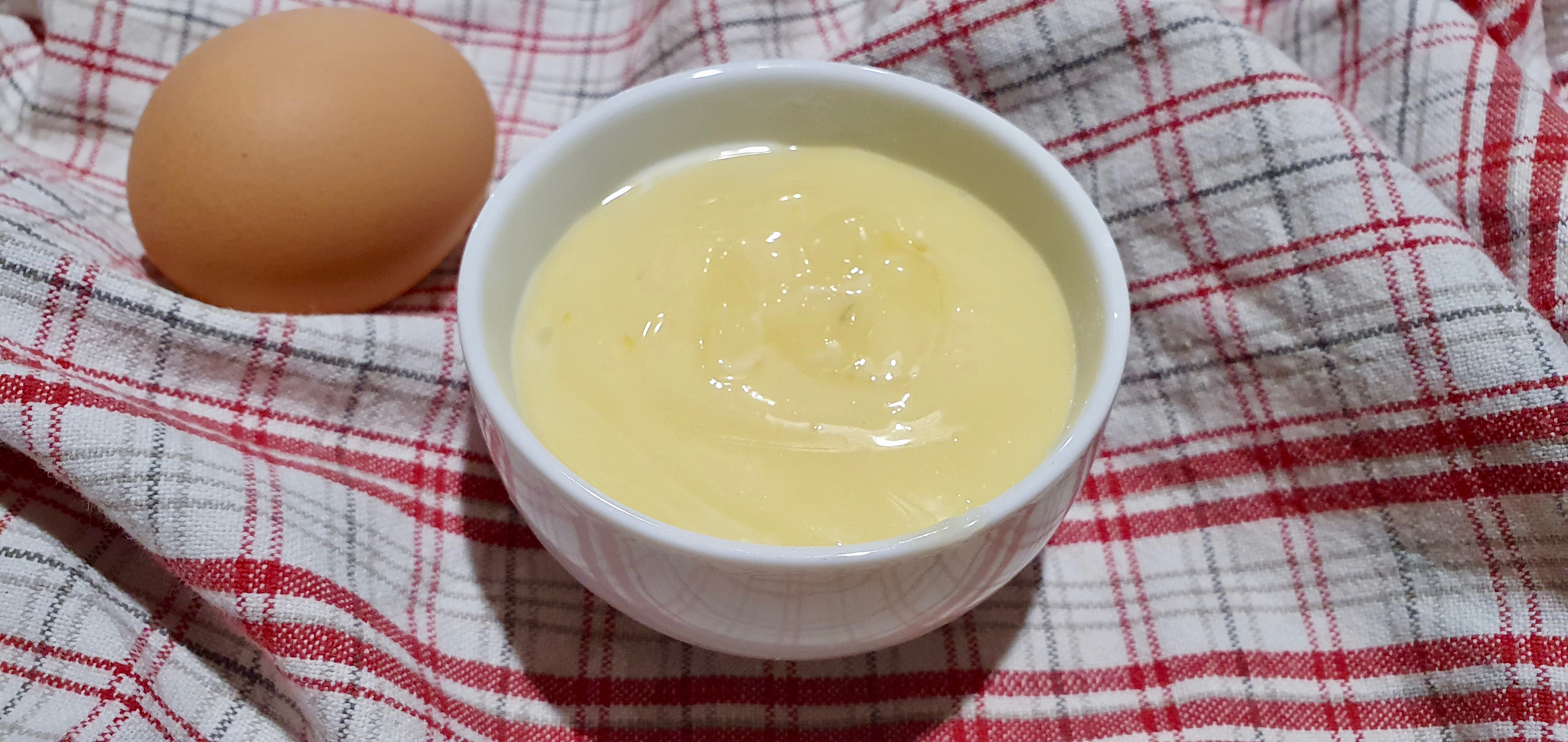
This mayo is a common staple in many Taiwanese households and it usually comes in a tube-shaped plastic bag where you snip a corner off and squeeze it out over your dish. Taiwanese people don’t eat many raw veggies such as a traditional leafy greens salad but instead we tend to cook our veg (usually blanched or boiled) and in Taiwan you’ll commonly see them squeeze this mayo over the plain veggies for a quick “salad”. Sometimes there’s more mayo than actual veg (I’m looking at you, grandma 😂). I’ve had it over boiled potatoes, asparagus, bamboo, carrots, boiled eggs…etc, all served cold. The direct translation of the common name for this sauce is literally “salad sauce/dressing” (but lots of people call it mayonnaise as well). In fact, when you talk about mayonnaise in Taiwan, most people will think of sweet mayo rather than the tangy version Western countries are used to.

There are only a few ingredients to this recipe and it’s pretty straightforward, but it will help immensely if you’ve got a stand mixer or an electric whisk. It takes a little patience to ensure the sauce doesn’t split but it’s worth it! This recipe makes about 2 cups (which is a LOT), feel free to halve it but it also stores really well in the fridge.

Anyways, without further ado, here’s the recipe! If you have any comments or suggestions, I’d love to hear from you in the comment section! You can follow me on instagram, youtube and facebook to see all the recipes I post!

I’ll be posting some recipes where you can use this mayo, so keep your eyes peeled!

Happy cooking!

Ingredients you’ll need:

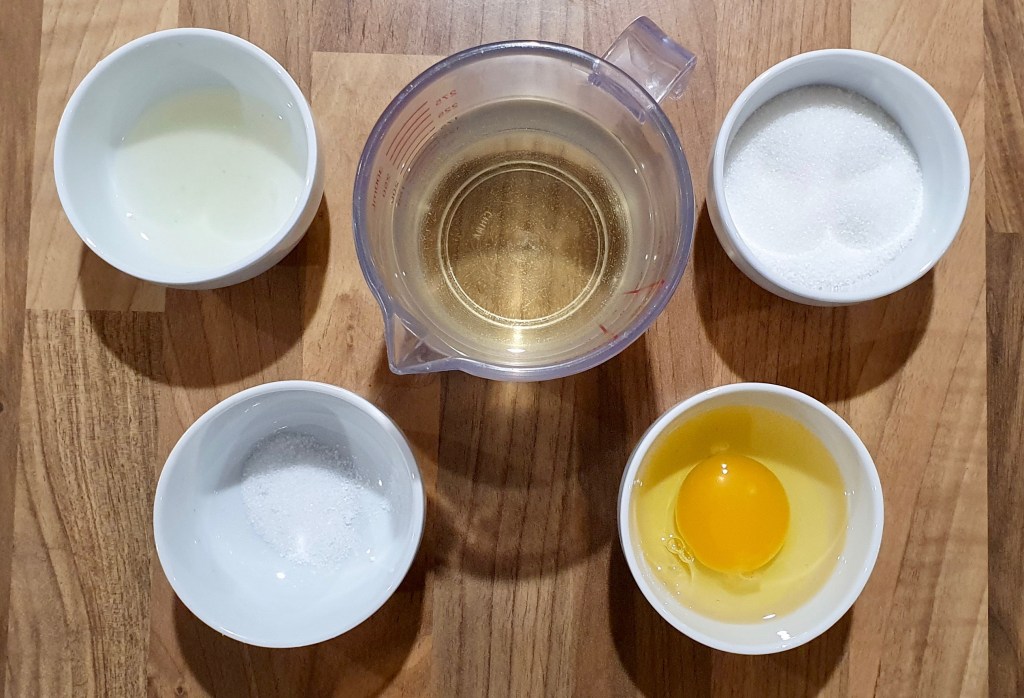
  • 80g sugar
  • 4g salt
  • 1 large egg
  • 400ml neutral oil
  • 3-5 tsps lemon juice (or more to taste)

This makes roughly 2 cups of sweet mayo which is actually quite a lot! It stores well in an air tight container for about a month but feel free to halve the recipe to make a smaller portion. I find it easiest to halve an egg by whisking it first then weighing it out and divide the weight by two.

Directions:

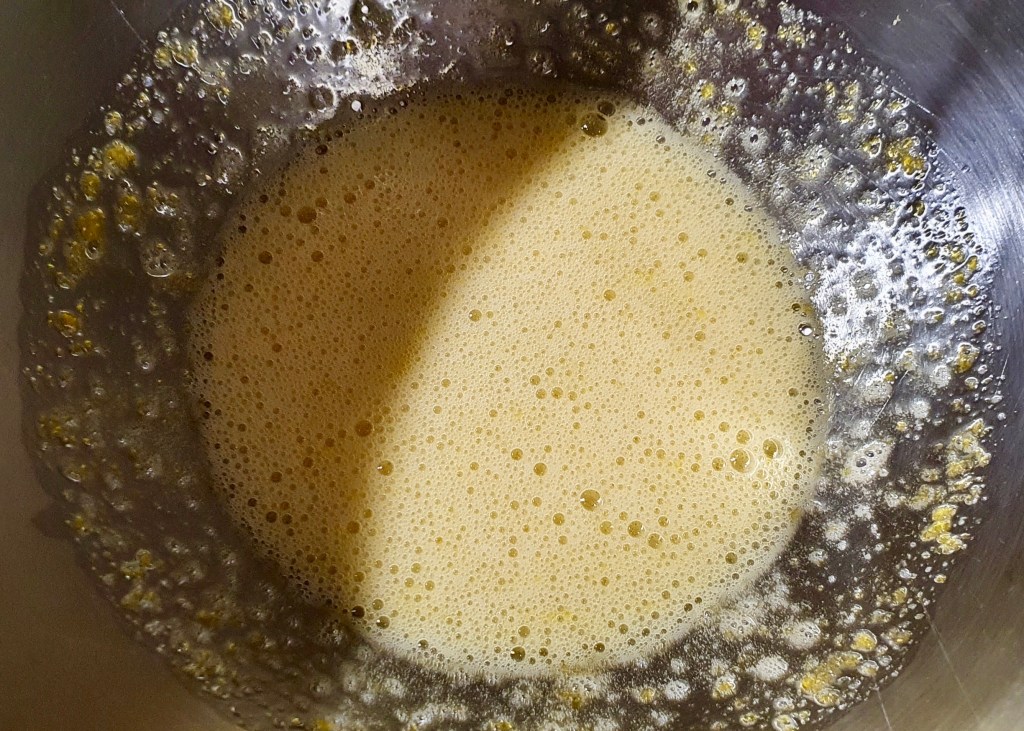
In a stand mixer bowl, add the sugar, salt and egg. Whisk on high speed until it’s combined with small bubbles (see photo above). You can use a hand mixer as well but it’ll take some coordination when you drizzle in the oil.

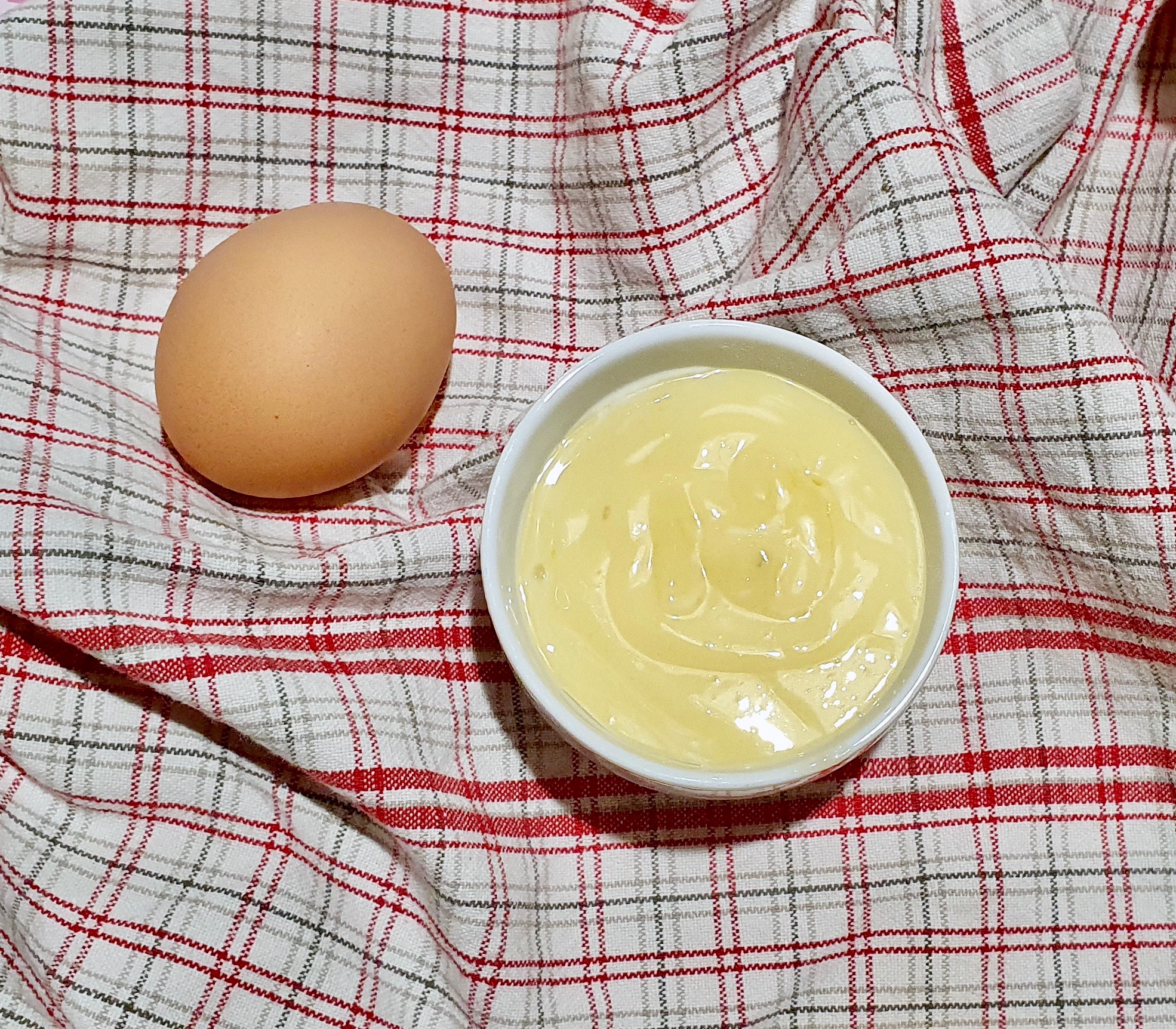
Continue to mix on high speed and drizzle in 1 tablespoon of oil. Once the oil has been incorporated, then start drizzling the rest of the oil VERY SLOWLY with the mixer on HIGH speed the whole time. When I say slow, I mean painfully slow where you’re pouring in a very thin stream (almost drops). If you’ve ever made hollandaise sauce before, you’ll recognize this pain. If you pour the oil too quickly, it won’t combine properly and your sauce will end up being a separated oily mess. Better to pour the oil too slow than too fast! If you see your mixture thickening and no separation of oil, you’re on the right track!

As you continue to add the oil, you’ll get a thicker and thicker smooth sauce. Once you’ve finished adding the oil, drizzle the lemon juice while still whisking on high speed. Once it’s all incorporated, stop the mixer and taste. You should have a smooth sweet mayo with a tang from the lemon. Add more lemon juice if needed since different lemons can vary on their sourness. Done!

Store in an air tight container (ie glass jar) for a few weeks to a month!

Summarized Recipe:

Taiwanese Sweet Mayonnaise 沙拉醬

Date Published: August 12th, 2020 | Last Updated: August 12th, 2020
Author: Abby |Category: sauces/dips, asian
Serves: 2 cups | Prep time: 2 mins | Make time: 10 mins

Ingredients:

  • 80g sugar
  • 4g salt
  • 1 large egg
  • 400ml neutral oil
  • 3-5 tsps lemon juice (or more to taste)

Directions:

  1. In a stand mixer bowl, add the sugar, salt and egg. Whisk on high speed until it’s combined with small bubbles (see photo above). You can use a hand mixer as well but it’ll take some coordination when you drizzle in the oil.
  2. Continue to mix on high speed and drizzle in 1 tablespoon of oil. Once the oil has been incorporated, then start drizzling the rest of the oil VERY SLOWLY with the mixer on HIGH speed the whole time.
    • When I say slow, I mean painfully slow where you’re pouring in a very thin stream (almost drops). If you’ve ever made hollandaise sauce before, you’ll recognize this pain. If you pour the oil too quickly, it won’t combine properly and your sauce will end up being a separated oily mess. Better to pour the oil too slow than too fast! If you see your mixture thickening and no separation of oil, you’re on the right track!
  3. As you continue to add the oil, you’ll get a thicker and thicker smooth sauce. Once you’ve finished adding the oil, drizzle the lemon juice while still whisking on high speed. Once it’s all incorporated, stop the mixer and taste. You should have a smooth sweet mayo with a tang from the lemon. Add more lemon juice if needed since different lemons can vary on their sourness. Done!

Store in an air tight container (ie glass jar) for a few weeks to a month!

Sweet Chilli Eggplant


Date Published: August 12th, 2020 | Last Updated: August 12th, 2020
Author: Abby |Category: sides, asian, easy, quick, vegetarian
Serves: 4 | Prep time: 5 mins | Cook time: 10 mins

Jump to recipe |

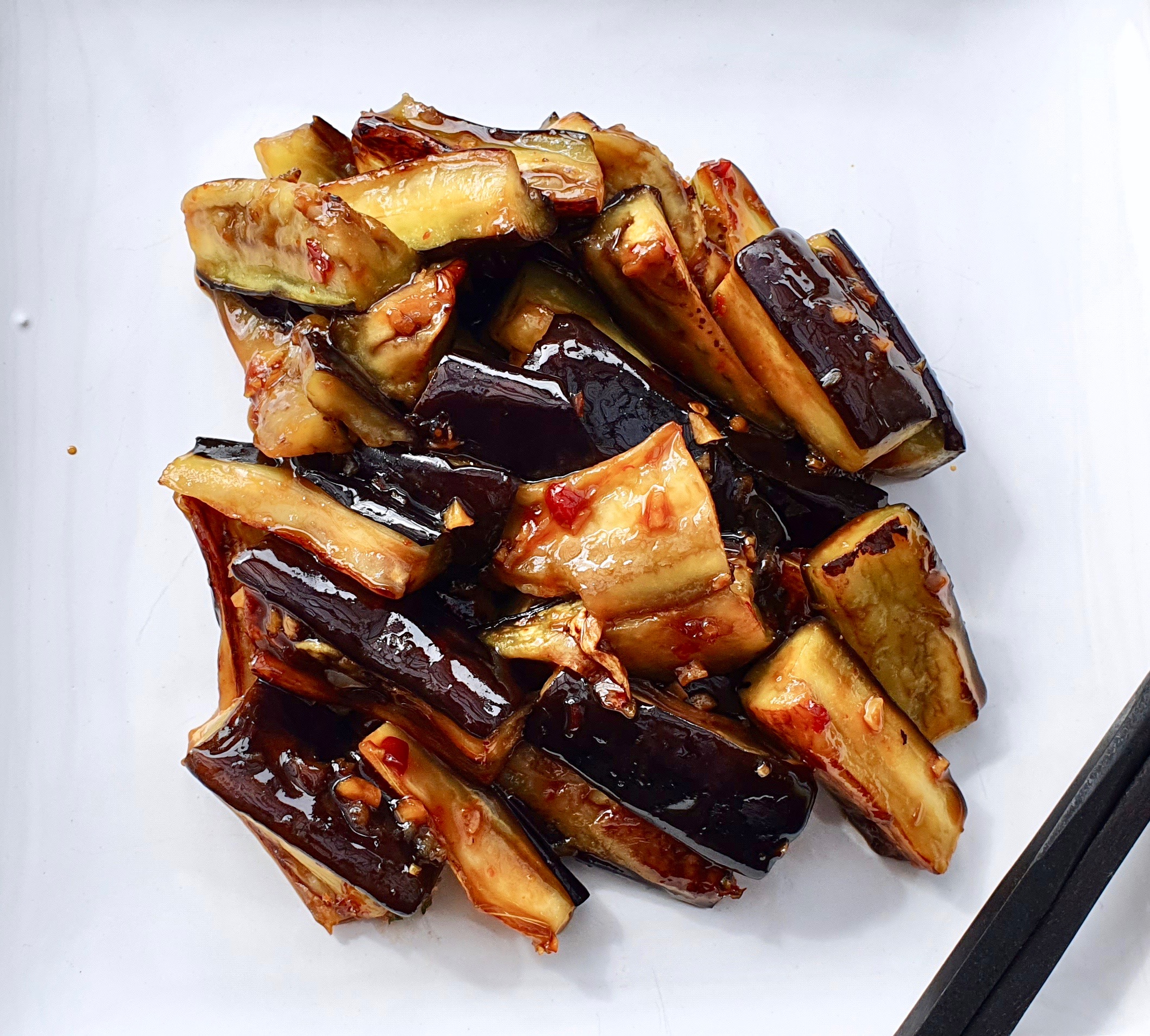
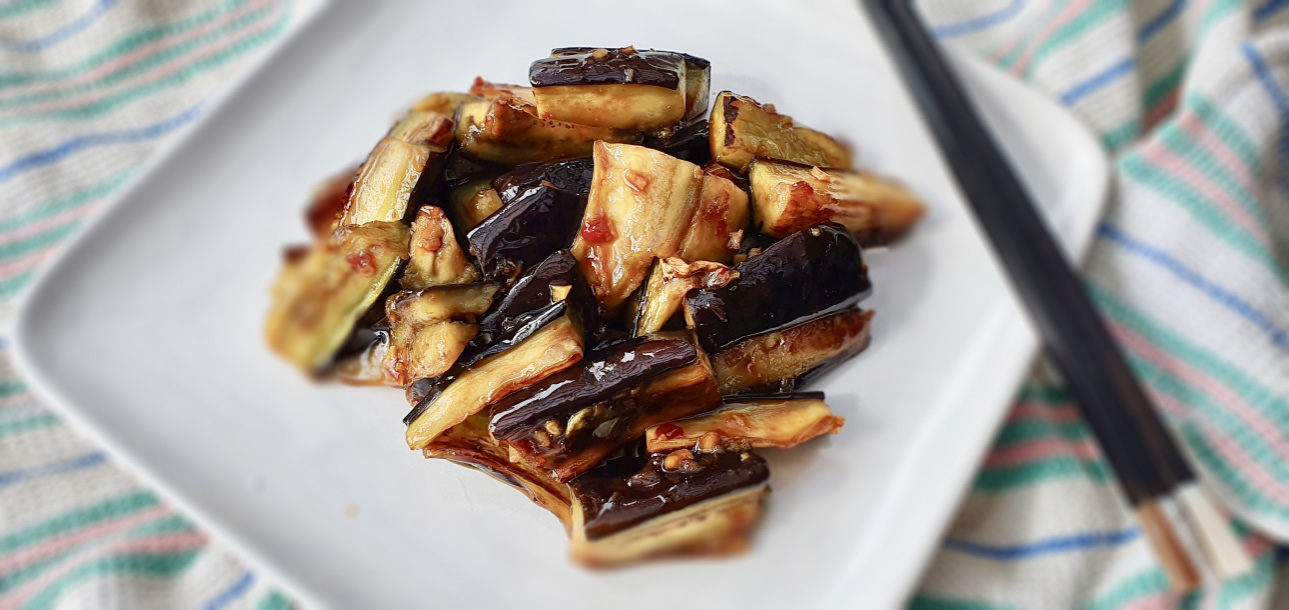
Australians really like their sweet chilli sauce. I had no idea until I moved here nearly 6 years ago. It’s most commonly used as a dip for deep fried foods (especially with chicken salt potato wedges and sour cream – YUM) and it’s also widely available as a condiment in many takeaway shops. Sweet chilli sauce isn’t a very common ingredient in Chinese cuisine so I didn’t have much exposure to it growing up but since moving to Australia I’ve increased my sweet chilli intake by 200% 😅.

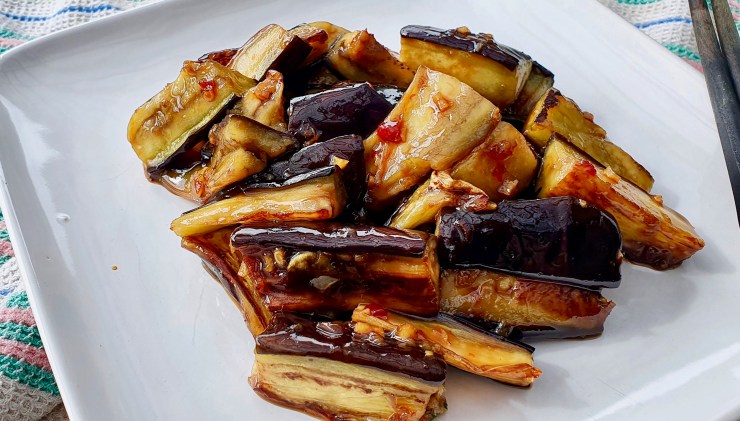
This recipe came from my good friend Anita. We had dinner at her place one day back in the vet school days and she wanted to recreate a dish she had at a restaurant with eggplant steaks. After a dash of this and that, she concocted a delicious sweet and savoury sauce that the eggplant steaks were bathed in. It was SO good. There wasn’t a written recipe since she didn’t measure anything (like a true OG Asian cook, eh?) so I’ve recreated it based on the ingredients she used and the result is bang on. I know the serving size says 4, but I could seriously eat a whole plate of this myself over a bowl of rice. I actually wasn’t a fan of eggplants until that day, surprisingly, and now I can’t get enough of it! I’m currently working on a few more eggplant recipes at the moment so keep an eye out!

Anyways, without further ado, here’s the recipe! If you have any comments or suggestions, I’d love to hear from you in the comment section! You can follow me on instagram, youtube and facebook to see all the recipes I post!

Happy cooking!

Ingredients you’ll need:

  • Sauce:
    • 1/4 cup sweet chilli sauce
    • 1/4 cup Chinese cooking wine
    • 2 Tbsps kecap manis (Indonesian sweet soy sauce)
    • 1 Tbsp soy sauce
    • 1 Tbsp black vinegar (I like the Chinkiang brand)
    • 2 cloves garlic, minced
  • 2 Tbsps neutral oil
  • 2 medium eggplants, diced in roughly 4cm pieces (I just use regular eggplants but you can use the Chinese variety if you like)
  • 1 Tbsp cornstarch

Directions:

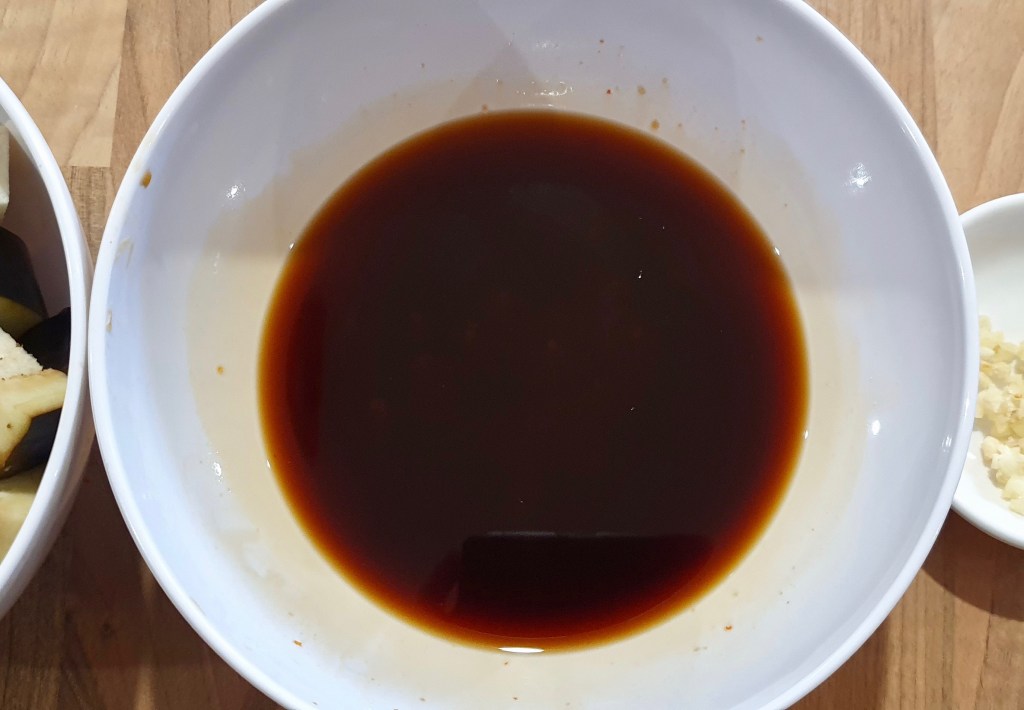
Make the sauce by mixing all the sauce ingredients in a bowl: sweet chilli sauce, cooking wine, kecap manis, soy sauce, black vinegar, and garlic. Set aside.

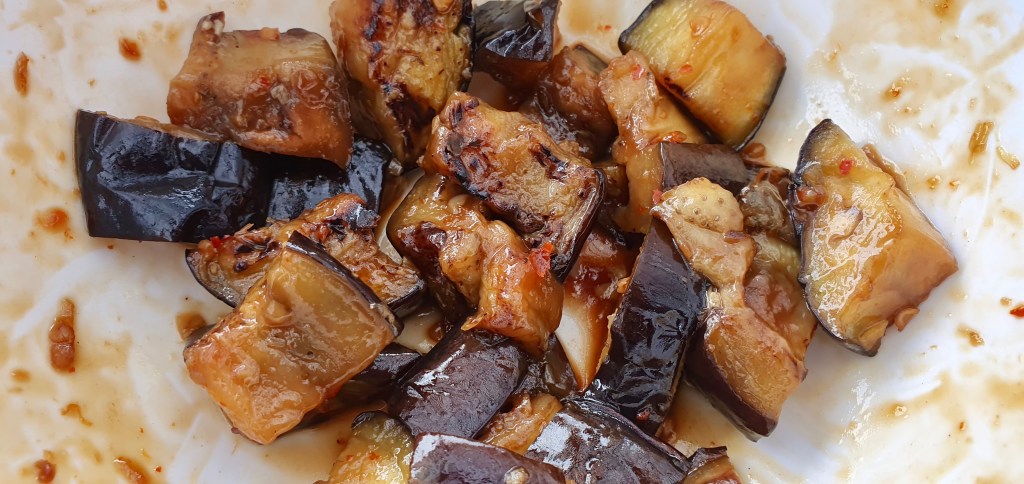
Heat a skillet on MED-HIGH heat and drizzle 2 tablespoons of oil into the skillet and swirl around to coat. Add the eggplants in batches (don’t overcrowd the pan, only sear one layer of eggplant at once) and sear them until the centres are soft and the skin blisters or wrinkles.

The eggplant will absorb the oil right away so don’t worry if your pan looks dry because the eggplants will release some oil and liquid as it cooks. Remove from the pan and set aside.

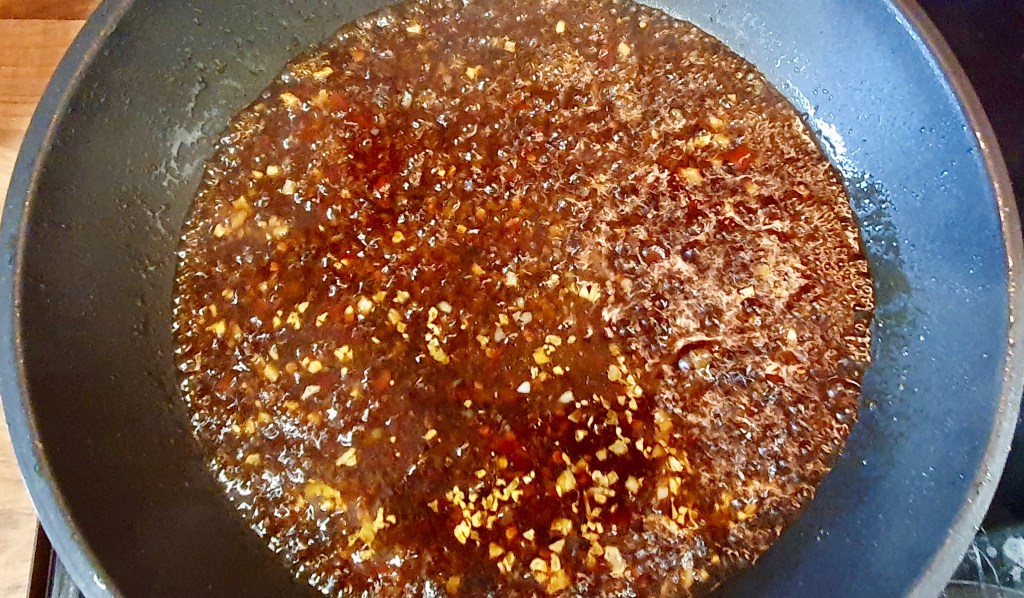
In the same skillet, turn the heat down to MEDIUM and add in the sauce. Stir-fry the sauce for 30 seconds, then scoop out a couple tablespoons into a bowl and mix it with the cornstarch then add it back into the skillet with the rest of the sauce and stir. Let the sauce simmer and bubble for a minute and continue stirring until the sauce thickens (the consistency should be gloopy, similar to sweet chilli sauce). Taste and adjust flavours as needed.

Pour the sauce over the eggplants and mix. Done! Serve immediately.

Tip: You can make these into eggplant steaks by slicing the egg plants into 3cm thick slices and follow the recipe exactly the same way and pour the sauce over before serving.

Summarized Recipe:

Sweet Chilli Eggplant

Date Published: August 12th, 2020 | Last Updated: August 12th, 2020
Author: Abby |Category: sides, asian, easy, quick, vegetarian
Serves: 4 | Prep time: 5 mins | Cook time: 10 mins

Ingredients:

  • Sauce:
    • 1/4 cup sweet chilli sauce
    • 1/4 cup Chinese cooking wine
    • 2 Tbsps kecap manis (Indonesian sweet soy sauce)
    • 1 Tbsp soy sauce
    • 1 Tbsp black vinegar (I like the Chinkiang brand)
    • 2 cloves garlic, minced
  • 2 Tbsps neutral oil
  • 2 medium eggplants, diced in roughly 4cm pieces (I just use regular eggplants but you can use the Chinese variety if you like)
  • 1 Tbsp cornstarch

Directions:

  1. Make the sauce by mixing all the sauce ingredients in a bowl: sweet chilli sauce, cooking wine, kecap manis, soy sauce, black vinegar, and garlic. Set aside.
  2. Heat a skillet on MED-HIGH heat and drizzle 2 tablespoons of oil into the skillet and swirl around to coat. Add the eggplants in batches (don’t overcrowd the pan, only sear one layer of eggplant at once) and sear them until the centres are soft and the skin blisters or wrinkles.
    • The eggplant will absorb the oil right away so don’t worry if your pan looks dry because the eggplants will release some oil and liquid as it cooks. Remove from the pan and set aside.
  3. In the same skillet, turn the heat down to MEDIUM and add in the sauce. Stir-fry the sauce for 30 seconds, then scoop out a couple tablespoons into a bowl and mix it with the cornstarch then add it back into the skillet with the rest of the sauce and stir. Let the sauce simmer and bubble for a minute and continue stirring until the sauce thickens (the consistency should be gloopy, similar to sweet chilli sauce). Taste and adjust flavours as needed.
  4. Pour the sauce over the eggplants and mix. Done! Serve immediately.

Tip: You can make these into eggplant steaks by slicing the egg plants into 3cm thick slices and follow the recipe exactly the same way and pour the sauce over before serving.

Khao Soi (Thai Coconut Curry Noodle Soup)


Date Published: August 11th, 2020 | Last Updated: August 11th, 2020
Author: Abby |Category: mains, soups, asian, quick and easy
Serves: 4-6 | Prep time: 5 mins | Cook time: 15 mins

Jump to recipe |

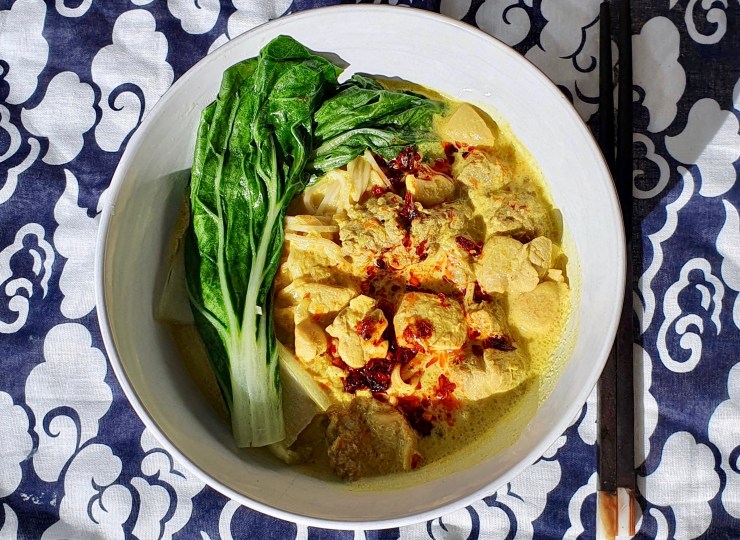
Khao Soi? Oh boy! If you’ve never had Khao Soi before, you’re about to have your taste buds obliterated because this dish is THE BOMB (I’ll see myself out). It uses an intense curry paste that’s similar to red curry but with the addition of curry powder (like a yellow curry paste) which is then simmered with coconut milk that results in a luxe creamy coconut curry soup with some heat. This northern Thailand dish is commonly served with egg noodles, chicken, and topped with crispy noodles. There are many variations of this dish and you can easily customize it yourself with extra veg, tofu puffs, fish cakes…etc.

I’m going to admit something here. I’m actually pretty new to Khao Soi and only heard about it a month ago on Masterchef (when Jess made it in the ramen challenge) and I haven’t been able to get it out of my mind since. I LOVE curries, especially Thai curries for their aromas so it’s no surprise that Khao Soi instantly made it straight to the top of my (long) list of dishes to make. Since I’ve never had Khao Soi from Thailand I can’t attest to how “authentic” my recipe is to the real thing but I can guarantee that this recipe is f*cking delicious. I ate two bowls in one sitting the first time I made it! Move over green curry, I actually think this may be my new favourite Thai curry. Since I’m a novice to Khao Soi, I came up with this recipe by reading through a LOT of highly rated “authentic” recipes and compiled all the best parts together. I’m surprised I pulled it off!

I’m a huge advocate of homemade curry paste because it just has so much vibrant flavours that you can’t get from a can without “freshening it up” with aromatics. I used my pre-made homemade Thai red curry paste for this recipe which saved SO much prep work and made this recipe infinitely easy and fast to come together (I haven’t tried this with canned paste so apologies to anyone that was hoping to use it. If you try it, let me know how it turns out!). This dish takes about 15-20 mins from start to finish. The only thing you need to chop is the chicken! So quick and easy for something SO full of flavour.

Hopefully one day when this pandemic is over I’ll be able to travel to northern Thailand and have Khao Soi to see how it compares. It’s a shame because I was actually in Chiang Mai last year for 3 weeks volunteering at an animal shelter desexing stray dogs and cats. The whole time I was there no one mentioned Khao Soi but I did have some pretty amazing green curry. Ah well, another excuse to travel! 😊

Anyways, without further ado, here’s the recipe! If you have any comments or suggestions, I’d love to hear from you in the comment section! You can follow me on instagram, youtube and facebook to see all the recipes I post!

Happy cooking!

Ingredients you’ll need:

  • 4 portions of egg noodles
  • Khao Soi paste:
  • 1kg chicken thighs (or breast), diced into large pieces (or to preference on how big you prefer your chicken pieces)
  • 4 cups (1 litre) reduced salt chicken stock (or vegetable stock)
  • 600ml (1 1/2 cans) coconut milk
  • 2 Tbsps fish sauce (or more to taste)
  • Optional: any additional veg you like

Directions:

Cook the egg noodles according to package instructions. Drain and rinse under cold water. Set aside.

In a bowl, make the khao soi paste by mixing the red curry paste, curry powder and turmeric powder together. Set aside.

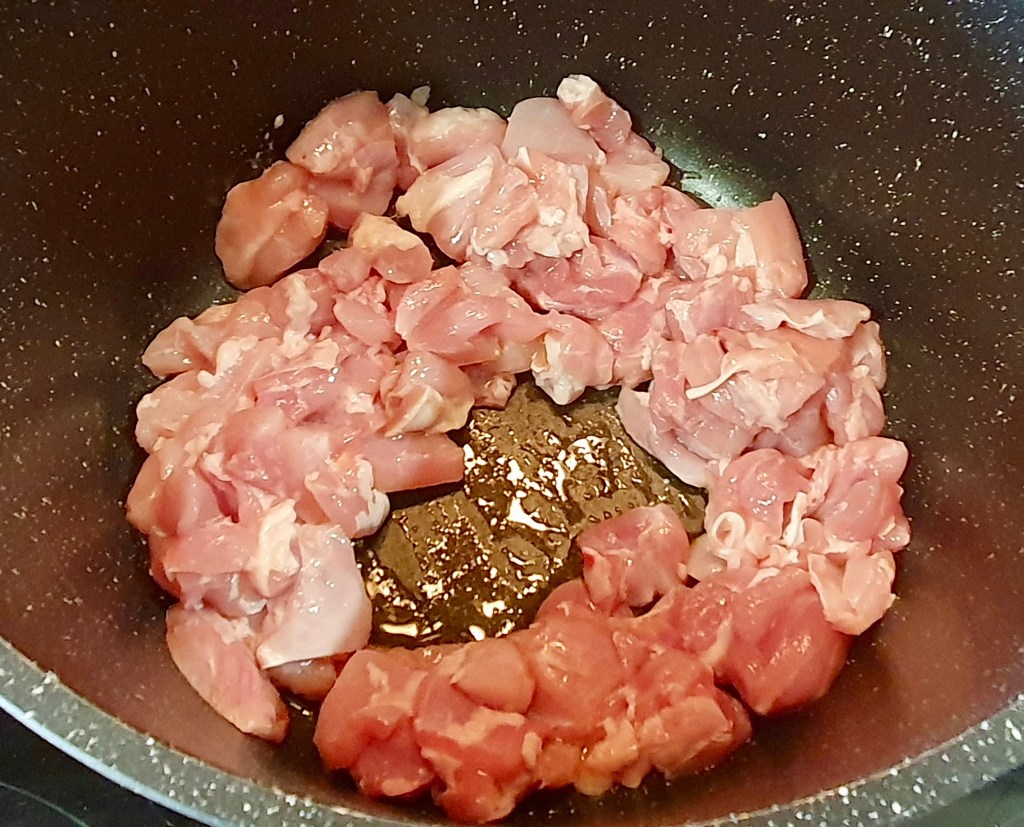
Warm a pot on MED-HIGH heat, add 1-2 Tbsps of oil and sauté the chicken pieces until browned (don’t worry about cooking it all the way through – it’ll finish cooking in the soup). Remove from heat and set aside in a bowl.

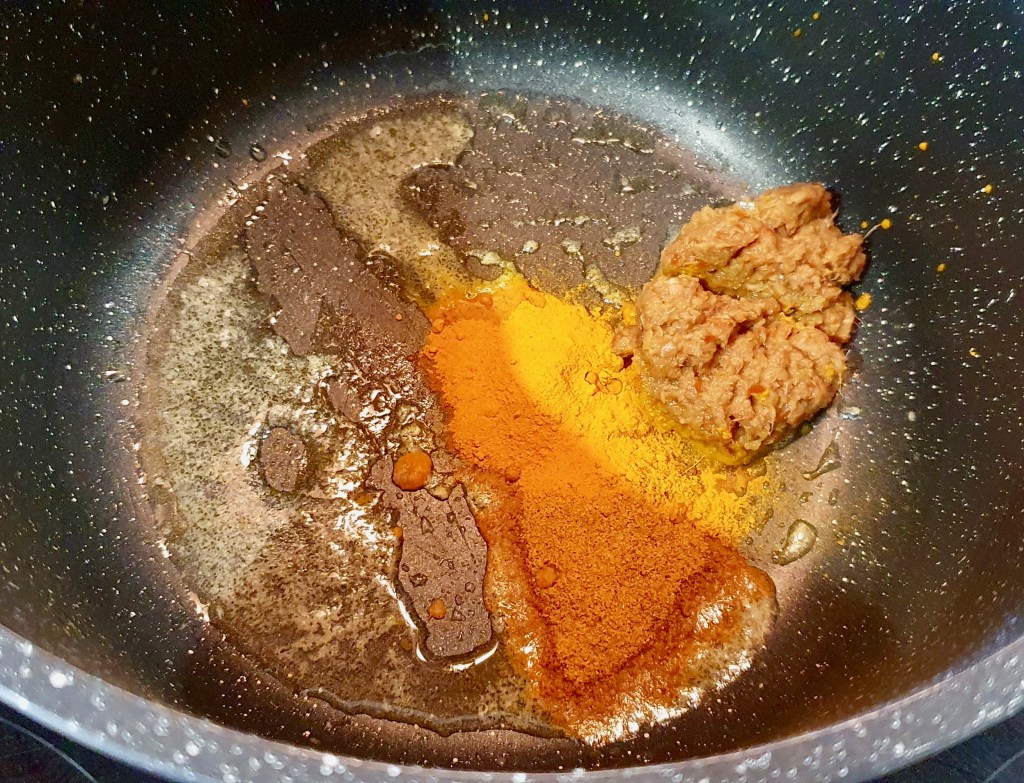
In the same pot, use the leftover oil from the chicken (or add more if there’s not much left) and add the khao soi paste (red curry paste, curry powder and turmeric powder). Quickly sauté for a couple minutes until the paste dries out a little and becomes fragrant.

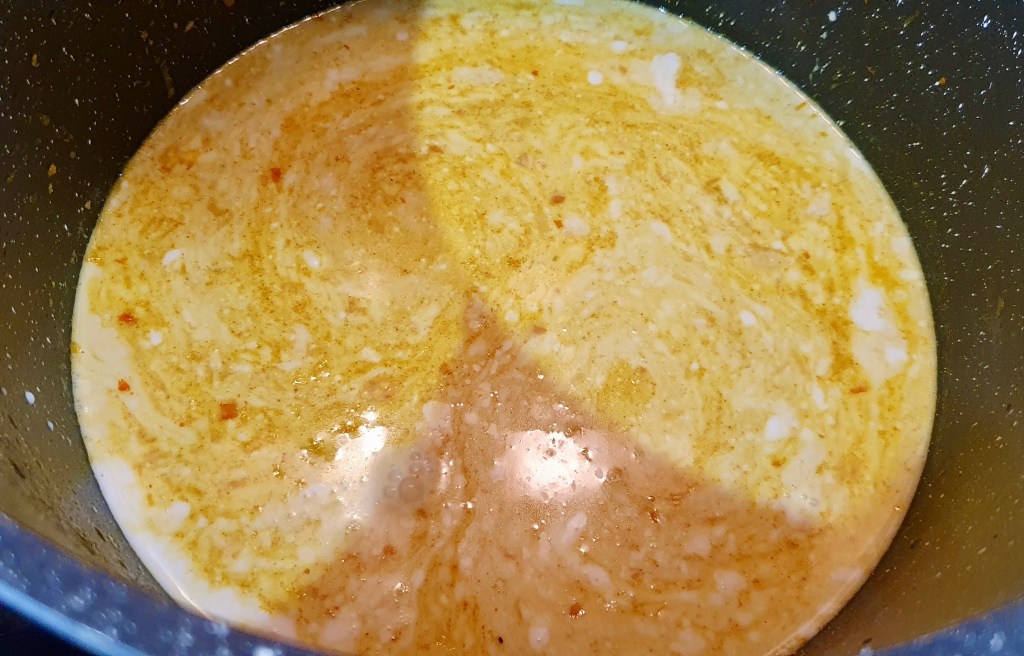
Add in the chicken stock and coconut milk. Stir until no clumps remain from the paste. Simmer the soup for 5 minutes then add in the browned chicken pieces (and any additional veg you like). Simmer for another 5 minutes (or until veggies have cooked – if using). Add the fish sauce. Taste and adjust flavours as needed (if it’s not salty enough you can add more fish sauce or salt, if you prefer your soup creamier add more coconut milk).

Divide the egg noodles into 4 bowls and ladle the soup with ingredients into each bowl over the noodles. Done!

Summarized Recipe:

Khao Soi (Thai Coconut Curry Noodle Soup)

Date Published: August 11th, 2020 | Last Updated: August 11th, 2020
Author: Abby |Category: mains, soups, asian, quick and easy
Serves: 4-6 | Prep time: 5 mins | Cook time: 15 mins

Ingredients:

  • 4 portions of egg noodles
  • Khao Soi paste:
  • 1kg chicken thighs (or breast), diced into large pieces (or to preference on how big you prefer your chicken pieces)
  • 4 cups (1 litre) reduced salt chicken stock (or vegetable stock)
  • 600ml (1 1/2 cans) coconut milk
  • 2 Tbsps fish sauce (or more to taste)
  • Optional: any additional veg you like

Directions:

  1. Cook the egg noodles according to package instructions. Drain and rinse under cold water. Set aside.
  2. In a bowl, make the khao soi paste by mixing the red curry paste, curry powder and turmeric powder together. Set aside.
  3. Warm a pot on MED-HIGH heat, add 1-2 Tbsps of oil and sauté the chicken pieces until browned (don’t worry about cooking it all the way through – it’ll finish cooking in the soup). Remove from heat and set aside in a bowl.
  4. In the same pot, use the leftover oil from the chicken (or add more if there’s not much left) and add the khao soi paste (red curry paste, curry powder and turmeric powder). Quickly sauté for a couple minutes until the paste dries out a little and becomes fragrant.
  5. Add in the chicken stock and coconut milk. Stir until no clumps remain from the paste. Simmer the soup for 5 minutes then add in the browned chicken pieces (and any additional veg you like). Simmer for another 5 minutes (or until veggies have cooked – if using). Add the fish sauce. Taste and adjust flavours as needed (if it’s not salty enough you can add more fish sauce or salt, if you prefer your soup creamier add more coconut milk).
  6. Divide the egg noodles into 4 bowls and ladle the soup with ingredients into each bowl over the noodles. Done!

Thai Red Curry Paste


Date Published: August 11th, 2020 | Last Updated: August 28th, 2020
Author: Abby |Category: sauces, asian
Serves: 1.5 cups | Prep time: 30 mins | Cook time: 5 mins

Jump to recipe |

There’s no doubt Thai curries are jam packed with big bold flavours which is what I’m all about when I’m in the kitchen. Thai curries come in a wide variety, but the most common ones you’ll see are red and green curries. Traditionally the main difference between these two are the colour of the chillies that are used. Red curries tend to be spicier with a bolder flavour whereas green curries use the more mild green chilli peppers and use more aromatics which result in a more mellow but fragrant curry (check out my green curry paste recipe here). Both curry pastes have similar ingredients but in different proportions that result in very different flavours.

Making a delicious Thai curry with complex flavours isn’t actually complicated at all as long as you have the curry paste, which is where most of the flavour comes from (but also the most effort). I’ve always liked making things from scratch so I know what goes in my food and I have complete control of the flavours and ingredients (and bonus no preservatives and additives I can’t pronounce). Since I started making my own curry pastes I’ve never looked back. Although it’s more effort compared to using the canned version, the end result is SO worth it. A homemade curry paste has so much more vibrant fresh flavour that you just can’t get from a can, which is why you’ll often find that a lot of curry recipes will have you sauté the canned paste in aromatics (ie garlic, lemongrass, ginger…etc.) to “freshen up” the paste and bring the flavours out. When you use homemade curry paste you can skip all those extra steps and use it directly. In my opinion making your own curry paste actually SAVES you time in the long run. Think about it: you can either spend 30-40mins today chopping and preparing all the ingredients for this paste and have enough to use for the next 3-4 curry dishes (or more if you double the recipe) or you can buy the canned stuff and spend an extra 10-15mins before each meal to chop and prepare all the additional ingredients you’ll need to “freshen up” the canned paste with more clean up and don’t forget the extra shopping time needed to gather all the ingredients each time. Have I sold you on making your own curry paste?

The actual process is pretty simple – just chop and blend, but since this paste does require a bit of effort and time to gather and prep all the ingredients, I’ve adjusted the recipe to yield enough for 3-4 meals (at 4 servings each) so you’ll only need to make this once and be able to use it again and again. Feel free to double the recipe to make more. It stores well in an air tight container (ie glass jar) for about a week or you can freeze it for months.

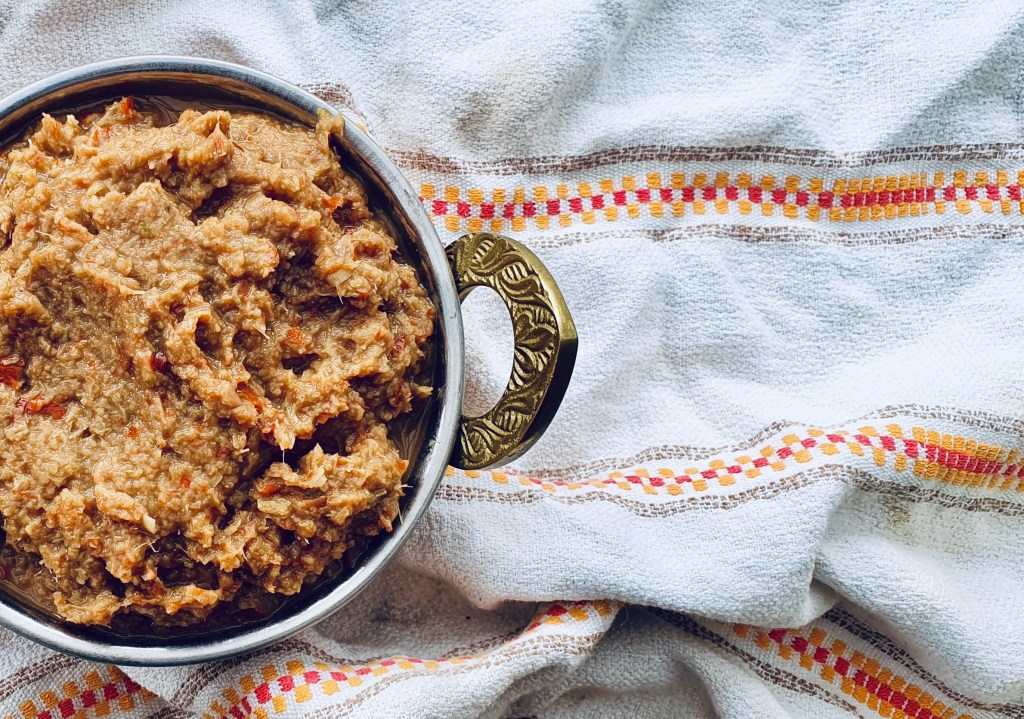
Disclaimer: This homemade paste isn’t as dark red as the canned versions so your curry won’t turn out as red but I promise it will be every bit as flavourful!

Once you’ve got a good curry paste ready, making a good curry is as easy as mixing it into a broth and/or coconut milk and adding veggies and a protein. Easy!
The credit to this recipe goes to RecipeTinEats who did the hard work figuring out the proportions for this delicious paste. I’ve made slight tweaks and changed up the methods a little and added some personal notes.

Anyways, without further ado, here’s the recipe! If you have any comments or suggestions, I’d love to hear from you in the comment section! You can follow me on instagram, youtube and facebook to see all the recipes I post!
Happy cooking!

Ingredients you’ll need:

(I started soaking my chillies before I took this photo – oops!)
  • 30 dried red chillies (you’ll usually find them in big packs at Asian supermarkets)
  • 4 Tbsps (1 large) lemongrass, sliced with tough outer skin removed
  • 4 red shallots (or 1 medium brown onion, roughly chopped)
  • 2 tsps lime zest
  • 2 Tbsps galangal, peeled and grated (or 2 Tbsps peeled and grated ginger + zest of 1 lime)
  • 8 garlic cloves, peeled whole
  • 2 Tbsps chopped coriander/cilantro roots (or 1 Tbsp coriander/cilantro stems)
  • 2 tsps (20g) belachan (shrimp paste)
  • 1 tsp ground coriander
  • 1 tsp ground cumin
  • 1 1/2 Tbsps brown sugar

Directions:

Red curry is meant to be spicy, but the level is up to you. Taste the chillies without the seeds to determine how spicy it is (chillies grown in different seasons and regions can differ on spiciness even if they’re the same species!). You can decrease the amount of chillies for this paste if it’s too spicy but keep in mind this is a cooking paste and will dilute out to a degree when cooking with other ingredients. Note: If you cut out too many chillies, the paste might not be as flavourful since this paste draws a lot of flavour from the chillies.

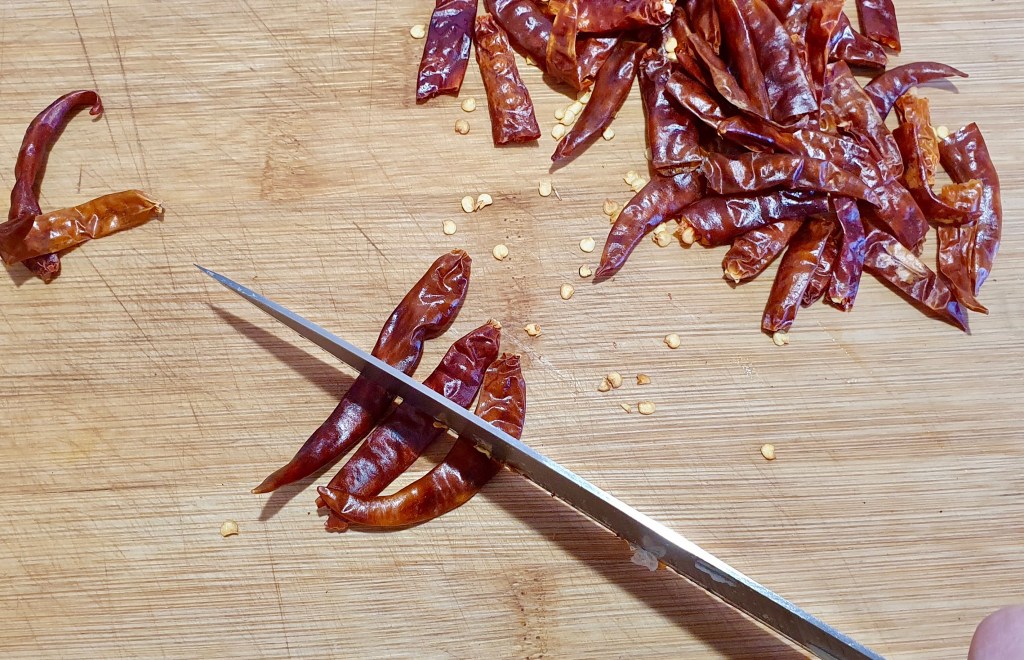
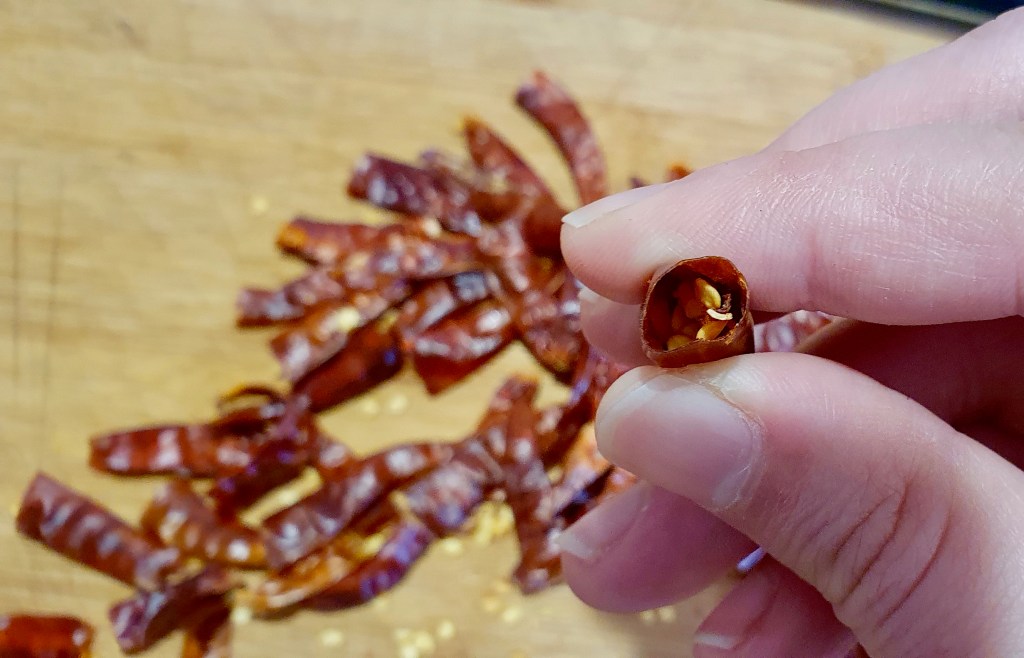
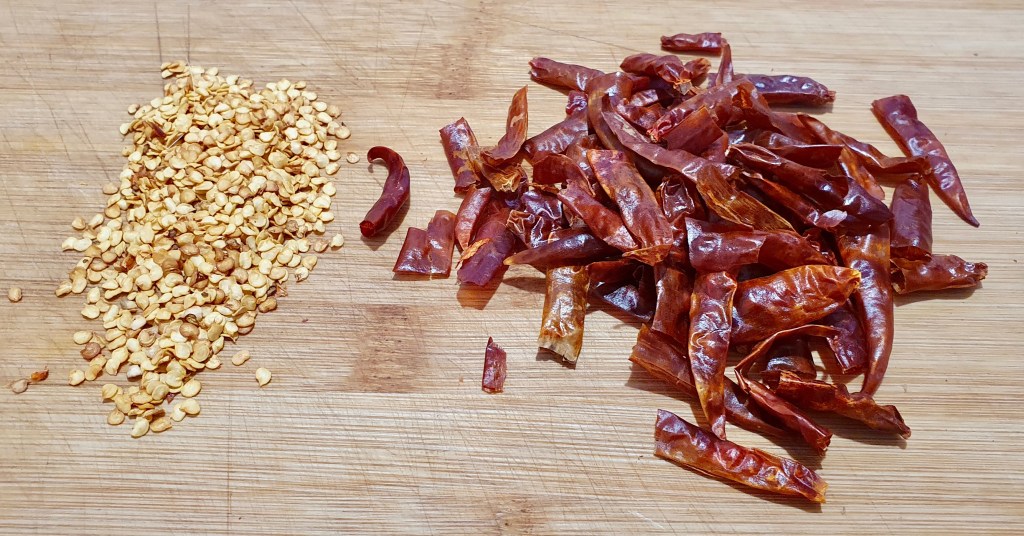
Roll the dried chillies between your fingers to loosen the seeds then cut them all in half and shake out the seeds. Discard the seeds (or if you prefer your curries really spicy, you can add some seeds back in). Place the empty chilli pods in a bowl with 2 cups of boiling water to soak for 30 mins.

While you’re waiting for the chillies to soak, prepare the rest of the ingredients.

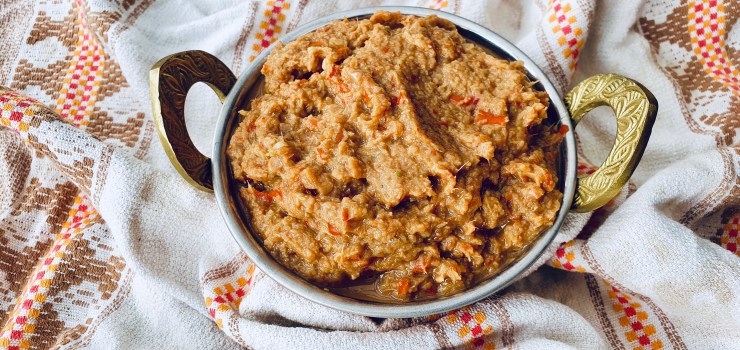
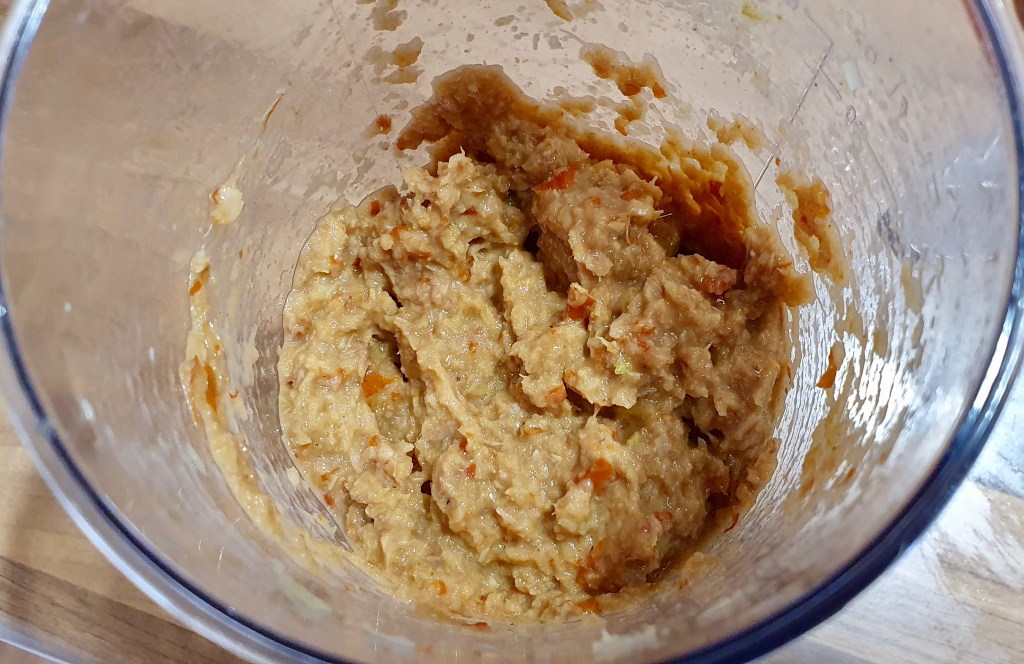
When the chillies have finished soaking, strain them (keep the chilli water) and add it with the rest of the ingredients to either a blender, food processor or container for a stick blender to blend all the ingredients until you get a smooth paste. I prefer using my stick blender for easier clean up and I can get a smoother paste compared to a food processor. If your mixture is dry and difficult to blend, add 1 Tbsp at a time of the reserved chilli water (or regular water or coconut milk if you’re afraid of making it too spicy) into the mixture and continue to blend until you get a smooth paste (I didn’t need any extra chilli water in my paste in the photo above). Done!

Storage: Keep in an air tight container (ie. glass jar) for up to a week or freeze it for a couple months. You can freeze it in an ice cube tray and defrost to use as needed.

Recipes that use this paste:

Summarized Recipe:

Thai Red Curry Paste

Date Published: August 11th, 2020 | Last Updated: August 11th, 2020
Author: Abby |Category: sauces, asian
Serves: 1.5 cups | Prep time: 30 mins | Cook time: 5 mins

Ingredients:

  • 30 dried red chillies (you’ll usually find them in big packs at Asian supermarkets)
  • 4 Tbsps (1 large) lemongrass, sliced with tough outer skin removed
  • 4 red shallots (or 1 medium brown onion, roughly chopped)
  • 2 tsps lime zest
  • 2 Tbsps galangal, peeled and grated (or 2 Tbsps peeled and grated ginger + zest of 1 lime)
  • 8 garlic cloves, peeled whole
  • 2 Tbsps chopped coriander/cilantro roots (or 1 Tbsp coriander/cilantro stems)
  • 2 tsps (20g) belachan (shrimp paste)
  • 1 tsp ground coriander
  • 1 tsp ground cumin
  • 1 Tbsp brown sugar

Directions:

  1. Taste the chillies without the seeds to determine the spice level. You can decrease the amount of chillies for this paste if it’s too spicy but keep in mind this is a cooking paste and will dilute out to a degree when cooking with other ingredients.
    • Note: If you cut out too many chillies, the paste might not be as flavourful since this paste draws a lot of flavour from the chillies.
  2. Roll the dried chillies between your fingers to loosen the seeds then cut them all in half and shake out the seeds. Discard the seeds (or if you prefer your curries really spicy, you can add some seeds back in). Place the empty chilli pods in a bowl with 2 cups of boiling water to soak for 30 mins.
  3. While you’re waiting for the chillies to soak, prepare the rest of the ingredients.
  4. When the chillies have finished soaking, strain them (keep the chilli water) and add it with the rest of the ingredients to either a blender, food processor or container for a stick blender to blend all the ingredients until you get a smooth paste.
    • I prefer using my stick blender for easier clean up and I can get a smoother paste compared to a food processor. If your mixture is dry and difficult to blend, add 1 Tbsp at a time of the reserved chilli water (or regular water or coconut milk if you’re afraid of making it too spicy) into the mixture and continue to blend until you get a smooth paste. Done!

Storage: Keep in an air tight container (ie. glass jar) for up to a week or freeze it for a couple months. You can freeze it in an ice cube tray and defrost to use as needed.