Sweet Chilli Eggplant


Date Published: August 12th, 2020 | Last Updated: August 12th, 2020
Author: Abby |Category: sides, asian, easy, quick, vegetarian
Serves: 4 | Prep time: 5 mins | Cook time: 10 mins

Jump to recipe |

Australians really like their sweet chilli sauce. I had no idea until I moved here nearly 6 years ago. It’s most commonly used as a dip for deep fried foods (especially with chicken salt potato wedges and sour cream – YUM) and it’s also widely available as a condiment in many takeaway shops. Sweet chilli sauce isn’t a very common ingredient in Chinese cuisine so I didn’t have much exposure to it growing up but since moving to Australia I’ve increased my sweet chilli intake by 200% 😅.

This recipe came from my good friend Anita. We had dinner at her place one day back in the vet school days and she wanted to recreate a dish she had at a restaurant with eggplant steaks. After a dash of this and that, she concocted a delicious sweet and savoury sauce that the eggplant steaks were bathed in. It was SO good. There wasn’t a written recipe since she didn’t measure anything (like a true OG Asian cook, eh?) so I’ve recreated it based on the ingredients she used and the result is bang on. I know the serving size says 4, but I could seriously eat a whole plate of this myself over a bowl of rice. I actually wasn’t a fan of eggplants until that day, surprisingly, and now I can’t get enough of it! I’m currently working on a few more eggplant recipes at the moment so keep an eye out!

Anyways, without further ado, here’s the recipe! If you have any comments or suggestions, I’d love to hear from you in the comment section! You can follow me on instagram, youtube and facebook to see all the recipes I post!

Happy cooking!

Ingredients you’ll need:

  • Sauce:
    • 1/4 cup sweet chilli sauce
    • 1/4 cup Chinese cooking wine
    • 2 Tbsps kecap manis (Indonesian sweet soy sauce)
    • 1 Tbsp soy sauce
    • 1 Tbsp black vinegar (I like the Chinkiang brand)
    • 2 cloves garlic, minced
  • 2 Tbsps neutral oil
  • 2 medium eggplants, diced in roughly 4cm pieces (I just use regular eggplants but you can use the Chinese variety if you like)
  • 1 Tbsp cornstarch

Directions:

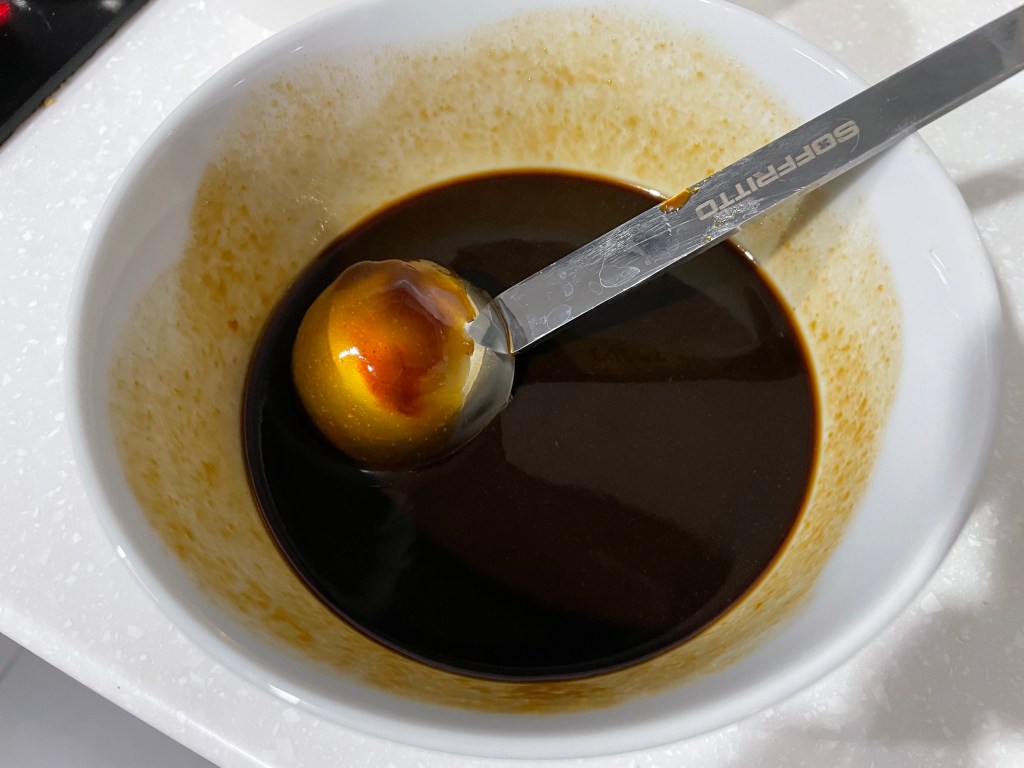
Make the sauce by mixing all the sauce ingredients in a bowl: sweet chilli sauce, cooking wine, kecap manis, soy sauce, black vinegar, and garlic. Set aside.

Heat a skillet on MED-HIGH heat and drizzle 2 tablespoons of oil into the skillet and swirl around to coat. Add the eggplants in batches (don’t overcrowd the pan, only sear one layer of eggplant at once) and sear them until the centres are soft and the skin blisters or wrinkles.

The eggplant will absorb the oil right away so don’t worry if your pan looks dry because the eggplants will release some oil and liquid as it cooks. Remove from the pan and set aside.

In the same skillet, turn the heat down to MEDIUM and add in the sauce. Stir-fry the sauce for 30 seconds, then scoop out a couple tablespoons into a bowl and mix it with the cornstarch then add it back into the skillet with the rest of the sauce and stir. Let the sauce simmer and bubble for a minute and continue stirring until the sauce thickens (the consistency should be gloopy, similar to sweet chilli sauce). Taste and adjust flavours as needed.

Pour the sauce over the eggplants and mix. Done! Serve immediately.

Tip: You can make these into eggplant steaks by slicing the egg plants into 3cm thick slices and follow the recipe exactly the same way and pour the sauce over before serving.

Summarized Recipe:

Sweet Chilli Eggplant

Date Published: August 12th, 2020 | Last Updated: August 12th, 2020
Author: Abby |Category: sides, asian, easy, quick, vegetarian
Serves: 4 | Prep time: 5 mins | Cook time: 10 mins

Ingredients:

  • Sauce:
    • 1/4 cup sweet chilli sauce
    • 1/4 cup Chinese cooking wine
    • 2 Tbsps kecap manis (Indonesian sweet soy sauce)
    • 1 Tbsp soy sauce
    • 1 Tbsp black vinegar (I like the Chinkiang brand)
    • 2 cloves garlic, minced
  • 2 Tbsps neutral oil
  • 2 medium eggplants, diced in roughly 4cm pieces (I just use regular eggplants but you can use the Chinese variety if you like)
  • 1 Tbsp cornstarch

Directions:

  1. Make the sauce by mixing all the sauce ingredients in a bowl: sweet chilli sauce, cooking wine, kecap manis, soy sauce, black vinegar, and garlic. Set aside.
  2. Heat a skillet on MED-HIGH heat and drizzle 2 tablespoons of oil into the skillet and swirl around to coat. Add the eggplants in batches (don’t overcrowd the pan, only sear one layer of eggplant at once) and sear them until the centres are soft and the skin blisters or wrinkles.
    • The eggplant will absorb the oil right away so don’t worry if your pan looks dry because the eggplants will release some oil and liquid as it cooks. Remove from the pan and set aside.
  3. In the same skillet, turn the heat down to MEDIUM and add in the sauce. Stir-fry the sauce for 30 seconds, then scoop out a couple tablespoons into a bowl and mix it with the cornstarch then add it back into the skillet with the rest of the sauce and stir. Let the sauce simmer and bubble for a minute and continue stirring until the sauce thickens (the consistency should be gloopy, similar to sweet chilli sauce). Taste and adjust flavours as needed.
  4. Pour the sauce over the eggplants and mix. Done! Serve immediately.

Tip: You can make these into eggplant steaks by slicing the egg plants into 3cm thick slices and follow the recipe exactly the same way and pour the sauce over before serving.

Khao Soi (Thai Coconut Curry Noodle Soup)


Date Published: August 11th, 2020 | Last Updated: August 11th, 2020
Author: Abby |Category: mains, soups, asian, quick and easy
Serves: 4-6 | Prep time: 5 mins | Cook time: 15 mins

Jump to recipe |

Khao Soi? Oh boy! If you’ve never had Khao Soi before, you’re about to have your taste buds obliterated because this dish is THE BOMB (I’ll see myself out). It uses an intense curry paste that’s similar to red curry but with the addition of curry powder (like a yellow curry paste) which is then simmered with coconut milk that results in a luxe creamy coconut curry soup with some heat. This northern Thailand dish is commonly served with egg noodles, chicken, and topped with crispy noodles. There are many variations of this dish and you can easily customize it yourself with extra veg, tofu puffs, fish cakes…etc.

I’m going to admit something here. I’m actually pretty new to Khao Soi and only heard about it a month ago on Masterchef (when Jess made it in the ramen challenge) and I haven’t been able to get it out of my mind since. I LOVE curries, especially Thai curries for their aromas so it’s no surprise that Khao Soi instantly made it straight to the top of my (long) list of dishes to make. Since I’ve never had Khao Soi from Thailand I can’t attest to how “authentic” my recipe is to the real thing but I can guarantee that this recipe is f*cking delicious. I ate two bowls in one sitting the first time I made it! Move over green curry, I actually think this may be my new favourite Thai curry. Since I’m a novice to Khao Soi, I came up with this recipe by reading through a LOT of highly rated “authentic” recipes and compiled all the best parts together. I’m surprised I pulled it off!

I’m a huge advocate of homemade curry paste because it just has so much vibrant flavours that you can’t get from a can without “freshening it up” with aromatics. I used my pre-made homemade Thai red curry paste for this recipe which saved SO much prep work and made this recipe infinitely easy and fast to come together (I haven’t tried this with canned paste so apologies to anyone that was hoping to use it. If you try it, let me know how it turns out!). This dish takes about 15-20 mins from start to finish. The only thing you need to chop is the chicken! So quick and easy for something SO full of flavour.

Hopefully one day when this pandemic is over I’ll be able to travel to northern Thailand and have Khao Soi to see how it compares. It’s a shame because I was actually in Chiang Mai last year for 3 weeks volunteering at an animal shelter desexing stray dogs and cats. The whole time I was there no one mentioned Khao Soi but I did have some pretty amazing green curry. Ah well, another excuse to travel! 😊

Anyways, without further ado, here’s the recipe! If you have any comments or suggestions, I’d love to hear from you in the comment section! You can follow me on instagram, youtube and facebook to see all the recipes I post!

Happy cooking!

Ingredients you’ll need:

  • 4 portions of egg noodles
  • Khao Soi paste:
  • 1kg chicken thighs (or breast), diced into large pieces (or to preference on how big you prefer your chicken pieces)
  • 4 cups (1 litre) reduced salt chicken stock (or vegetable stock)
  • 600ml (1 1/2 cans) coconut milk
  • 2 Tbsps fish sauce (or more to taste)
  • Optional: any additional veg you like

Directions:

Cook the egg noodles according to package instructions. Drain and rinse under cold water. Set aside.

In a bowl, make the khao soi paste by mixing the red curry paste, curry powder and turmeric powder together. Set aside.

Warm a pot on MED-HIGH heat, add 1-2 Tbsps of oil and sauté the chicken pieces until browned (don’t worry about cooking it all the way through – it’ll finish cooking in the soup). Remove from heat and set aside in a bowl.

In the same pot, use the leftover oil from the chicken (or add more if there’s not much left) and add the khao soi paste (red curry paste, curry powder and turmeric powder). Quickly sauté for a couple minutes until the paste dries out a little and becomes fragrant.

Add in the chicken stock and coconut milk. Stir until no clumps remain from the paste. Simmer the soup for 5 minutes then add in the browned chicken pieces (and any additional veg you like). Simmer for another 5 minutes (or until veggies have cooked – if using). Add the fish sauce. Taste and adjust flavours as needed (if it’s not salty enough you can add more fish sauce or salt, if you prefer your soup creamier add more coconut milk).

Divide the egg noodles into 4 bowls and ladle the soup with ingredients into each bowl over the noodles. Done!

Summarized Recipe:

Khao Soi (Thai Coconut Curry Noodle Soup)

Date Published: August 11th, 2020 | Last Updated: August 11th, 2020
Author: Abby |Category: mains, soups, asian, quick and easy
Serves: 4-6 | Prep time: 5 mins | Cook time: 15 mins

Ingredients:

  • 4 portions of egg noodles
  • Khao Soi paste:
  • 1kg chicken thighs (or breast), diced into large pieces (or to preference on how big you prefer your chicken pieces)
  • 4 cups (1 litre) reduced salt chicken stock (or vegetable stock)
  • 600ml (1 1/2 cans) coconut milk
  • 2 Tbsps fish sauce (or more to taste)
  • Optional: any additional veg you like

Directions:

  1. Cook the egg noodles according to package instructions. Drain and rinse under cold water. Set aside.
  2. In a bowl, make the khao soi paste by mixing the red curry paste, curry powder and turmeric powder together. Set aside.
  3. Warm a pot on MED-HIGH heat, add 1-2 Tbsps of oil and sauté the chicken pieces until browned (don’t worry about cooking it all the way through – it’ll finish cooking in the soup). Remove from heat and set aside in a bowl.
  4. In the same pot, use the leftover oil from the chicken (or add more if there’s not much left) and add the khao soi paste (red curry paste, curry powder and turmeric powder). Quickly sauté for a couple minutes until the paste dries out a little and becomes fragrant.
  5. Add in the chicken stock and coconut milk. Stir until no clumps remain from the paste. Simmer the soup for 5 minutes then add in the browned chicken pieces (and any additional veg you like). Simmer for another 5 minutes (or until veggies have cooked – if using). Add the fish sauce. Taste and adjust flavours as needed (if it’s not salty enough you can add more fish sauce or salt, if you prefer your soup creamier add more coconut milk).
  6. Divide the egg noodles into 4 bowls and ladle the soup with ingredients into each bowl over the noodles. Done!

Thai Red Curry Paste


Date Published: August 11th, 2020 | Last Updated: August 28th, 2020
Author: Abby |Category: sauces, asian
Serves: 1.5 cups | Prep time: 30 mins | Cook time: 5 mins

Jump to recipe |

There’s no doubt Thai curries are jam packed with big bold flavours which is what I’m all about when I’m in the kitchen. Thai curries come in a wide variety, but the most common ones you’ll see are red and green curries. Traditionally the main difference between these two are the colour of the chillies that are used. Red curries tend to be spicier with a bolder flavour whereas green curries use the more mild green chilli peppers and use more aromatics which result in a more mellow but fragrant curry (check out my green curry paste recipe here). Both curry pastes have similar ingredients but in different proportions that result in very different flavours.

Making a delicious Thai curry with complex flavours isn’t actually complicated at all as long as you have the curry paste, which is where most of the flavour comes from (but also the most effort). I’ve always liked making things from scratch so I know what goes in my food and I have complete control of the flavours and ingredients (and bonus no preservatives and additives I can’t pronounce). Since I started making my own curry pastes I’ve never looked back. Although it’s more effort compared to using the canned version, the end result is SO worth it. A homemade curry paste has so much more vibrant fresh flavour that you just can’t get from a can, which is why you’ll often find that a lot of curry recipes will have you sauté the canned paste in aromatics (ie garlic, lemongrass, ginger…etc.) to “freshen up” the paste and bring the flavours out. When you use homemade curry paste you can skip all those extra steps and use it directly. In my opinion making your own curry paste actually SAVES you time in the long run. Think about it: you can either spend 30-40mins today chopping and preparing all the ingredients for this paste and have enough to use for the next 3-4 curry dishes (or more if you double the recipe) or you can buy the canned stuff and spend an extra 10-15mins before each meal to chop and prepare all the additional ingredients you’ll need to “freshen up” the canned paste with more clean up and don’t forget the extra shopping time needed to gather all the ingredients each time. Have I sold you on making your own curry paste?

The actual process is pretty simple – just chop and blend, but since this paste does require a bit of effort and time to gather and prep all the ingredients, I’ve adjusted the recipe to yield enough for 3-4 meals (at 4 servings each) so you’ll only need to make this once and be able to use it again and again. Feel free to double the recipe to make more. It stores well in an air tight container (ie glass jar) for about a week or you can freeze it for months.

Disclaimer: This homemade paste isn’t as dark red as the canned versions so your curry won’t turn out as red but I promise it will be every bit as flavourful!

Once you’ve got a good curry paste ready, making a good curry is as easy as mixing it into a broth and/or coconut milk and adding veggies and a protein. Easy!

The credit to this recipe goes to RecipeTinEats who did the hard work figuring out the proportions for this delicious paste. I’ve made slight tweaks and changed up the methods a little and added some personal notes.

Anyways, without further ado, here’s the recipe! If you have any comments or suggestions, I’d love to hear from you in the comment section! You can follow me on instagram, youtube and facebook to see all the recipes I post!

Happy cooking!

Ingredients you’ll need:

(I started soaking my chillies before I took this photo – oops!)
  • 30 dried red chillies (you’ll usually find them in big packs at Asian supermarkets)
  • 4 Tbsps (1 large) lemongrass, sliced with tough outer skin removed
  • 4 red shallots (or 1 medium brown onion, roughly chopped)
  • 2 tsps lime zest
  • 2 Tbsps galangal, peeled and grated (or 2 Tbsps peeled and grated ginger + zest of 1 lime)
  • 8 garlic cloves, peeled whole
  • 2 Tbsps chopped coriander/cilantro roots (or 1 Tbsp coriander/cilantro stems)
  • 2 tsps (20g) belachan (shrimp paste)
  • 1 tsp ground coriander
  • 1 tsp ground cumin
  • 1 1/2 Tbsps brown sugar

Directions:

Red curry is meant to be spicy, but the level is up to you. Taste the chillies without the seeds to determine how spicy it is (chillies grown in different seasons and regions can differ on spiciness even if they’re the same species!). You can decrease the amount of chillies for this paste if it’s too spicy but keep in mind this is a cooking paste and will dilute out to a degree when cooking with other ingredients. Note: If you cut out too many chillies, the paste might not be as flavourful since this paste draws a lot of flavour from the chillies.

Roll the dried chillies between your fingers to loosen the seeds then cut them all in half and shake out the seeds. Discard the seeds (or if you prefer your curries really spicy, you can add some seeds back in). Place the empty chilli pods in a bowl with 2 cups of boiling water to soak for 30 mins.

While you’re waiting for the chillies to soak, prepare the rest of the ingredients.

When the chillies have finished soaking, strain them (keep the chilli water) and add it with the rest of the ingredients to either a blender, food processor or container for a stick blender to blend all the ingredients until you get a smooth paste. I prefer using my stick blender for easier clean up and I can get a smoother paste compared to a food processor. If your mixture is dry and difficult to blend, add 1 Tbsp at a time of the reserved chilli water (or regular water or coconut milk if you’re afraid of making it too spicy) into the mixture and continue to blend until you get a smooth paste (I didn’t need any extra chilli water in my paste in the photo above). Done!

Storage: Keep in an air tight container (ie. glass jar) for up to a week or freeze it for a couple months. You can freeze it in an ice cube tray and defrost to use as needed.

Recipes that use this paste:

Summarized Recipe:

Thai Red Curry Paste

Date Published: August 11th, 2020 | Last Updated: August 11th, 2020
Author: Abby |Category: sauces, asian
Serves: 1.5 cups | Prep time: 30 mins | Cook time: 5 mins

Ingredients:

  • 30 dried red chillies (you’ll usually find them in big packs at Asian supermarkets)
  • 4 Tbsps (1 large) lemongrass, sliced with tough outer skin removed
  • 4 red shallots (or 1 medium brown onion, roughly chopped)
  • 2 tsps lime zest
  • 2 Tbsps galangal, peeled and grated (or 2 Tbsps peeled and grated ginger + zest of 1 lime)
  • 8 garlic cloves, peeled whole
  • 2 Tbsps chopped coriander/cilantro roots (or 1 Tbsp coriander/cilantro stems)
  • 2 tsps (20g) belachan (shrimp paste)
  • 1 tsp ground coriander
  • 1 tsp ground cumin
  • 1 Tbsp brown sugar

Directions:

  1. Taste the chillies without the seeds to determine the spice level. You can decrease the amount of chillies for this paste if it’s too spicy but keep in mind this is a cooking paste and will dilute out to a degree when cooking with other ingredients.
    • Note: If you cut out too many chillies, the paste might not be as flavourful since this paste draws a lot of flavour from the chillies.
  2. Roll the dried chillies between your fingers to loosen the seeds then cut them all in half and shake out the seeds. Discard the seeds (or if you prefer your curries really spicy, you can add some seeds back in). Place the empty chilli pods in a bowl with 2 cups of boiling water to soak for 30 mins.
  3. While you’re waiting for the chillies to soak, prepare the rest of the ingredients.
  4. When the chillies have finished soaking, strain them (keep the chilli water) and add it with the rest of the ingredients to either a blender, food processor or container for a stick blender to blend all the ingredients until you get a smooth paste.
    • I prefer using my stick blender for easier clean up and I can get a smoother paste compared to a food processor. If your mixture is dry and difficult to blend, add 1 Tbsp at a time of the reserved chilli water (or regular water or coconut milk if you’re afraid of making it too spicy) into the mixture and continue to blend until you get a smooth paste. Done!

Storage: Keep in an air tight container (ie. glass jar) for up to a week or freeze it for a couple months. You can freeze it in an ice cube tray and defrost to use as needed.

How to Make Brown Butter


Date Published: August 10th, 2020 | Last Updated: August 10th, 2020
Author: Abby |Category: how-to, basics
Serves: — | Prep time: 2 minutes | Cook time: 5-8 minutes

Brown butter is literally butter than has been “browned” by cooking it down. The process is as easy as placing butter on a skillet and waiting until it’s brown. No other ingredients needed other than butter itself. The end result is this beautiful fragrant nutty magical brown liquid that adds amazing flavour and depth to a dish. Although it’s very easy to brown butter, there is room for error so that’s why I’ve written a step-by-step guide with photos on what to look out for to ensure you get a perfectly browned butter every time.

Butter itself is not only fat. It’s composed of 1) fat, 2) water, and 3) milk solids and all 3 of these will separate during the process of browning butter. In a nutshell when you brown butter, you melt it down and the water content will evaporate as the mixture sizzles. Once the water has evaporated, you’re left with fat and milk solids. The milk solids will toast during the process which is what gives us the nutty bold flavour so make sure you scrape as much milk solids out of the pan when transferring! The water content of butter is roughly 13-17% (thanks Google), which means that the amount of brown butter you end up with will be 13-17% less than the amount of better you started with (ie. 100g of butter will result in 83-87g of brown butter) so make sure you calculate properly how much butter you need to start with for your recipe.

Anyways, without further ado, here’s the recipe! If you have any comments or suggestions, I’d love to hear from you in the comment section! You can follow me on instagram, youtube and facebook to see all the recipes I post!

Happy cooking!

Ingredients you’ll need:

  • Butter (either salted or unsalted)
    • I like to use unsalted butter which is what most baking recipes call for and I add my own salt at the end for savoury dishes.

Directions:

Cut the butter into even sized cubes so they melt evenly.

Heat a skillet (ideally one with a silver and white bottom so you can easily see the colour changes) on MEDIUM heat and add the butter to the skillet.

The butter will go through several stages during this process. Make sure you’re frequently stirring during this whole process to keep everything moving:

  1. Butter blocks will all melt to a liquid state and sizzle.
  2. The butter continues to sizzle and you’ll start to notice white foam forming. These are the precious milk solids.
  3. The foam will start to subside a little and the mixture will start to brown (timing will depend on how much butter you put in the pan, but usually 5-8 minutes). You will notice that some of the milk solids will have sunk to the bottom of the pan and start to turn brown. KEEP AN EYE ON THESE MILK SOLIDS AT THE BOTTOM OF THE PAN!
  4. Once the milk solids at the bottom of the pan turns toasty brown, the brown butter is done and quickly transfer the contents to a heat-safe bowl. Done!
    • DO NOT leave it in the pan, otherwise the heat from the pan will continue cooking the butter. There are only a few seconds between brown butter and burnt butter, so once those solids are toasty brown, you’re done! There should be a a delicious nutty aroma that fills the air. Make sure you get all the milk solids out of the skillet when transferring because that’s where most of the flavour is!
Done! Beautifully browned butter

Recipes that use brown butter:

Apple Chicken Goat Cheese Salad


Date Published: August 10th, 2020 | Last Updated: August 10th, 2020
Author: Abby |Category: salads, healthy, easy, < 30 mins, mains
Serves: 4 as mains, 6-8 as side salads | Prep time: 20 mins | Cook time: 5 mins

Jump to recipe |

This is my ALL TIME FAVOURITE SALAD. Seriously. Back in Canada I used to go to Montana’s a lot with my friends and I almost never order salad when I’m eating out because I always think it’ll never be as good as a warm cooked meal and not way could it be as flavourful. One night I wasn’t particularly hungry and I was trying to be a bit more healthy since I was training for a marathon so I decided to browse their salads section and ordered the ‘Apple Harvest Salad’. I only chose this one because it had goat cheese in it (and I LOVE goat cheese). When the food arrived, my salad portion was HUGE with dressing served on the side. I was skeptical, but ohhhhh boy was I wrong. That salad changed my world and it actually became my new favourite thing on their menu (other than the goat cheese stuffed chicken breast and Kapow Shrimp). I’d actively go to Montana’s just to get this salad – which doesn’t sound like me at all! Now that I live in Australia, there’s no Montana’s in sight and I decided to recreate it myself! I’d say I did a pretty good job because this salad is FANTASTIC. If you love goat cheese, this is the salad for you! The juicy crisp apple pairs so well with the warm nutty toasted pecans and the creaminess of the goat cheese all tied together in a homemade balsamic vinaigrette.

I’ve only ever eaten this salad as a main dish because it’s THAT good and there’s no way I could eat it as just a small side dish so I’ve categorized this in both the mains and sides section. If you want to serve it as a side, you might want to consider skipping the chicken so your meal isn’t too bulky. If you’re packing it for lunch, keep the salad dressing separate and pour it on when you’re ready to eat.

Anyways, without further ado, here’s the recipe! If you have any comments or suggestions, I’d love to hear from you in the comment section! You can follow me on instagram, youtube and facebook to see all the recipes I post!

Happy cooking!

Ingredients you’ll need:

  • Salad:
    • 1 cup pecans
    • 4 cups cooked chicken breast or thigh, chopped to bite-sized pieces – you can use leftover chicken from a roast or make it fresh the way you prefer (see my preferred method to cook chicken breast here)
    • 12 cups of lettuce or mixed greens (enough for 4 main salads)
    • 1 red bell pepper (aka capsicum), sliced (I ran out of peppers in the house and used cherry tomatoes instead in the photos)
    • 1 large apple, sliced
    • 1 cup dried cranberries
    • 140g goat cheese, crumbled
    • Fresh ground black pepper
  • Balsamic vinaigrette dressing:
    • 1/2 cup olive oil
    • 1/4 cup balsamic vinegar
    • 1 clove garlic, minced
    • 1 tsp dijon mustard
    • 1 tsp honey
    • salt and pepper to taste

Directions:

Toast the pecans: Preheat oven to 180˚C (~350˚F) and bake the pecans on the top rack for 5-10 mins and flip over and continue to bake until fragrant and toasty darker brown (another 5 mins). When done, set aside and let them cool then roughly chop.

Optional step: if you haven’t made your chicken breast, you can pop them in the oven with the pecans (see my preferred method). When cooked, slice into strips or bite-sized pieces and let cool.

Assemble the salad: In a large bowl, add all the salad ingredients together: pecans, chicken, lettuce/mixed greens, red pepper, apple, cranberries, goat cheese, and fresh ground black pepper. If you want to be fancy you can place the ingredients on top of the salad and serve the dressing on the side.

Make the balsamic vinaigrette: Combine all the ingredients for the dressing (olive oil, balsamic vinegar, garlic, dijon, honey, salt and pepper) in a bowl and whisk until you get a homogenous mixture. Drizzle half of the dressing over the salad and toss to combine. Taste and add more dressing as needed. Enjoy!

Summarized Recipe:

Apple Chicken Goat Cheese Salad

Date Published: August 10th, 2020 | Last Updated: August 10th, 2020
Author: Abby |Category: salads, healthy, easy, < 30 mins, mains
Serves: 4 as mains, 6-8 as side salads | Prep time: 20 mins | Cook time: 5 mins

Ingredients:

  • Salad:
    • 1 cup pecans
    • 4 cups cooked chicken breast or thigh, chopped to bite-sized pieces – you can use leftover chicken from a roast or make it fresh the way you prefer (see my preferred method to cook chicken breast here)
    • 12 cups of lettuce or mixed greens (enough for 4 main salads)
    • 1 red bell pepper (aka capsicum), sliced
    • 1 large apple, sliced
    • 1 cup dried cranberries
    • 140g goat cheese, crumbled
    • Fresh ground black pepper
  • Balsamic vinaigrette dressing:
    • 1/2 cup olive oil
    • 1/4 cup balsamic vinegar
    • 1 clove garlic, minced
    • 1 tsp dijon mustard
    • 1 tsp honey
    • salt and pepper to taste

Directions:

  1. Toast the pecans: Preheat oven to 180˚C (~350˚F) and bake the pecans on the top rack for 5-10 mins and flip over and continue to bake until fragrant and toasty darker brown (another 5 mins). When done, set aside and let them cool then roughly chop.
  2. Optional step: if you haven’t made your chicken breast, you can pop them in the oven with the pecans (see my preferred method). When cooked, slice into strips or bite-sized pieces and let cool.
  3. Assemble the salad: In a large bowl, add all the salad ingredients together: pecans, chicken, lettuce/mixed greens, red pepper, apple, cranberries, goat cheese, and fresh ground black pepper.
  4. Make the balsamic vinaigrette: Combine all the ingredients for the dressing (olive oil, balsamic vinegar, garlic, dijon, honey, salt and pepper) in a bowl and whisk until you get a homogenous mixture. Drizzle half of the dressing over the salad and toss to combine. Taste and add more dressing as needed. Enjoy!

Classic Basil Pesto


Date Published: August 10th, 2020 | Last Updated: August 10th, 2020
Author: Abby |Category: sauces, easy, quick, < 15 mins
Serves: makes 1.5 cups | Prep time: 5 mins | Cook time: 5 mins

Jump to recipe |

Of all the herbs out there, basil is my absolute favourite so it’s no surprise that I’m obsessed with pesto. I would have an entire veggie patch of just basil if I could, but sadly growing basil has always been my achilles heel when it came to gardening. Basil on its own is so bright and flavourful, best when paired with a bocconcini and sun dried tomato with some fresh ground black pepper in my opinion mmmm. It’s also great on top of a pizza or pasta to freshen it up. Pesto opens up a whole new ball game and is so versatile – you can use it as a rub, marinade, sauce, dip…etc. I love using it as a pizza sauce with some garlic and olive oil brushed onto the dough or stirred through a creamy pasta sauce for a quick dinner. Ohh boy I could go on forever on all the ways I would use pesto. I’ll probably ramble on more about my love of pesto in future posts on how to use it (of which I’m sure there will be many) so keep your eyes peeled for pesto recipes! Here is my version of a classic basil pesto. It’s insanely easy and you don’t even need to do any chopping. If you can press a button, you can make pesto. Presto pesto!

Anyways, without further ado, here’s the recipe! If you have any comments or suggestions, I’d love to hear from you in the comment section! You can follow me on instagram, youtube and facebook to see all the recipes I post!

Happy cooking!

Ingredients you’ll need:

  • 1/4 cup pine nuts, toasted
  • 3 cups fresh basil leaves
  • 3 cloves of garlic (you don’t need to chop it)
  • 1/2 cup olive oil
  • 3/4 cup parmesan cheese

Directions:

If you haven’t already, toast the pine nuts until golden brown. You can either toast it on a dry skillet on medium heat or in the oven at 220˚C until golden brown.

Put all the ingredients into a food processor and blend until it forms a smooth paste. Done! Easy, eh?

Storage:

  • Store in an airtight container for up to 1 week or freeze them in ice cube trays or a bag.

Summarized Recipe:

Classic Basil Pesto

Date Published: August 10th, 2020 | Last Updated: August 10th, 2020
Author: Abby |Category: sauces, easy, quick, < 15 mins
Serves: makes 1.5 cups | Prep time: 5 mins | Cook time: 5 mins

Ingredients:

  • 1/4 cup pine nuts, toasted
  • 3 cups fresh basil leaves
  • 3 cloves of garlic
  • 1/2 cup olive oil
  • 3/4 cup parmesan cheese

Directions:

  1. If you haven’t already, toast the pine nuts until golden brown. You can either toast it on a dry skillet on medium heat or in the oven at 220˚C until golden brown.
  2. Put all the ingredients into a food processor and blend until it forms a smooth paste. Enjoy!

Storage:

  • Store in an airtight container for up to 1 week or freeze them in ice cube trays or a bag.

Easy Moist Chicken Breast


Date Published: August 10th, 2020 | Last Updated: August 10th, 2020
Author: Abby |Category: basics, how-to, healthy, easy
Serves: 2 | Prep time: 5 mins | Cook time: 30 mins

Jump to recipe |

Chicken breast is one of the things I always have in my freezer. It goes well with so many things and it’s so easy and quick to make. You can have it as part of a healthy meal seasoned with simple spices and paired with a veg or pack it full of flavour with a kickass sauce and toppings. The most common way I like to use it is in salads. It’s amazing how you can turn pretty much any side salad into a main dish just by adding chicken breast.

Chicken breast often get a bad rep for being dry and bland which is why some people avoid it. There’s not much fat on the meat and thus it’s easy to dry out when cooking. Follow this basic tutorial and I’ll show you how I like to prepare chicken breast so it comes out moist and perfect every time! I use a combination of baking and steaming to ensure the chicken stays moist.

If you have any comments or suggestions, I’d love to hear from you in the comment section! You can follow me on instagram, youtube and facebook to see all the recipes I post!

Happy cooking!

Ingredients you’ll need:

  • Chicken breast – as many as you like, but try not to crowd them too much in a pan so they cook evenly.
  • Olive oil – roughly 1 tsp per breast. You don’t need much oil since you’re steaming.
  • Water – enough to fill 1 cm of the pan
  • Salt & pepper
  • Optional: any seasoning you like – I keep it plain with just salt and pepper if I’m using it as a base with a sauce, but if I’m adding it to a caesar or garden salad, I rub some Italian seasoning or oregano over it.

Directions:

Preheat your oven to 180˚C (~350F) and arrange a rack in the middle of the oven.

Rinse your chicken breasts and place them in a baking tray. Add a drizzle of olive oil, a sprinkle of salt and pepper, any additional spices you like, then rub it all over the chicken breasts on both sides.

Pour 1 cm of water into the pan (it doesn’t have to be exact).

Cover the tray with aluminum foil and make sure the edges are sealed (otherwise steam will escape while baking and could result in a dry chicken). Bake in the oven on the middle rack for 20-30 minutes. You can check the doneness of the chicken by either cutting the thickest part and if the juices run clear, it’s finished. If it’s pink, then put the foil back on and bake for another 5 minutes. Alternatively you can use a thermometer and poke it into the thickest part of the breast until it reads 65˚C.

*Caution: HOT steam will escape when you unwrap the foil so please be careful when checking on your chicken!

Once your chicken is cooked, serve it on a plate immediately or rest them for 5 minutes before slicing. It’s VERY important not to slice them when they’re steaming hot, otherwise the juices inside the chicken will evaporate and your chicken will be dry. By allowing them to rest, it lets the juices redistribute throughout the meat.

Enjoy!

Tip: if you’re adding this to a leafy salad, wait until the chicken comes to room temperature before adding it in otherwise the heat might wilt your salad leaves.

Summarized Recipe:

Easy Moist Chicken Breast

Date Published: August 10th, 2020 | Last Updated: August 10th, 2020
Author: Abby |Category: basics, how-to, healthy, easy
Serves: 2 | Prep time: 5 mins | Cook time: 30 mins

Ingredients:

  • Chicken breast – as many as you like, but try not to crowd them too much in a pan so they cook evenly
  • Olive oil – roughly 1 tsp per breast. You don’t need much oil since you’re steaming.
  • Water – enough to fill 1 cm of the pan
  • Salt & pepper
  • Optional: any seasoning you like – I keep it plain with just salt and pepper if I’m using it as a base with a sauce, but if I’m adding it to a caesar or garden salad, I sprinkle some Italian seasoning or oregano over it.

Directions:

  1. Preheat your oven to 180˚C (~350F) and arrange a rack in the middle of the oven.
  2. Rinse your chicken breasts and place them in a baking tray. Add a drizzle of olive oil, a sprinkle of salt and pepper, any additional spices you like, then rub it all over the chicken breasts on both sides.
  3. Pour 1 cm of water into the pan (it doesn’t have to be exact) and cover the tray with aluminum foil. Make sure the edges are sealed (otherwise steam will escape while baking and could result in a dry chicken). Bake in the oven on the middle rack for 20-30 minutes. You can check the doneness of the chicken by either cutting the thickest part and if the juices run clear, it’s finished. If it’s pink, then put the foil back on and bake for another 5 minutes. Alternatively you can use a thermometer and poke it into the thickest part of the breast until it reads 65˚C.
    • *Caution: HOT steam will escape when you unwrap the foil so please be careful when checking on your chicken!
  4. Once your chicken is cooked, serve it on a plate immediately or rest them for 5 minutes before slicing. It’s VERY important not to slice them when they’re steaming hot, otherwise the juices inside the chicken will evaporate and your chicken will be dry. By allowing them to rest, it lets the juices redistribute throughout the meat. Enjoy!

Tip: If you’re adding this to a leafy salad, wait until the chicken comes to room temperature before adding it in otherwise the heat might wilt your salad leaves.

Taiwanese Crystal Dumplings 水晶饺 (Shuĭ Jing Jiao)


Date Published: August 9th, 2020 | Last Updated: August 9th, 2020
Author: Abby |Category: asian, mains, easy, soups
Serves: 24 dumplings | Prep time: 30 mins | Cook time: 10 mins

Jump to recipe |

[Warning: Long foreword to this post. If you want to skip ahead to the recipe, click on the link above.]

Taiwanese Crystal Dumplings!!! I don’t think I’ve been more excited or proud to share a recipe! These hold the ultimate nostalgia for me. My maternal grandparents live in Miao Li which is a county ages away from Taipei (where we lived) and it takes roughly 2.5 hours train ride to get there and then we’d have to hail a cab to get to their house because their public transport system isn’t the most efficient. Although the journey to visit them is laborious, it was always so nice to see them, especially when it was only once a year when we’d visit Taiwan. It was even better when ‘wai po’ (grandmother on my mother’s side) would visit us in Taipei and stay for a few weeks at a time. She’d always make such delicious food (steamed egg (chawanmushi), fried fish and sesame chicken soup was her specialty). Back to crystal dumplings: she never made them for us but there was a special shop in Miao Li that would sell them frozen and she’d always buy a big bag of them when she visited. Those crystal dumplings were Miao Li’s best kept secret. I’ve had crystal dumplings in Taipei from various shops, but none compared to the ones she’d bring from Miao Li. Now in her later years she doesn’t travel to Taipei anymore, but every time we’d visit Miao Li with my aunt, we’d be sure to pick up a bag before heading home.

Crystal dumplings were always this special treat that we’d only get if wai po visited or if we made the journey to Miao Li. There was no other way to get them and no one else makes a good substitute (I guess you could say I have very high crystal dumpling standards 😜). However since the pandemic, I’ve had a lot more time on my hands and I’ve been delving deeper and deeper into the cooking world. I was a self-taught cook in the kitchen and only made Western dishes in the early days roughly 8 years ago. Asian food is familiar territory when it came to ordering from a restaurant, but cooking it was completely foreign to me – I had no idea where to start (so many sauces!). Over the years I became more competent in the kitchen and started cooking more Asian food. During this pandemic and with the release of Polyphagic Abby, I found myself gravitating towards more and more traditional Taiwanese and Chinese dishes. Perhaps I’m missing my family from so far away in all this craziness or maybe it’s because there’s no decent good Chinese food out here in the Aussie country. Whatever the reason, it makes me so happy when a recipe turns out perfectly and I’m transported back to the days eating with my family again.

I’ve had a few victories so far recreating my childhood dishes such as cheese dan bing, Vietnamese pho, and Taiwanese cold noodles which I’m all really proud of, but I’m especially proud of this crystal dumplings recipe because this brings me back home. A lot of dishes make me revisit my childhood in Taiwan, but this one in particular makes me think of wai po. This is a photo of wai po and wai gong back in 2016.

Taiwan has a LOT of popular dishes but for whatever reason the reputation of the crystal dumpling didn’t cross into the Western world so it was impossible to find any recipes on these bad boys. I searched high and low and couldn’t find any english recipes for this dish so after watching multiple Taiwanese youtube cooking videos, compiling different methods and ingredients together with a lot of taste-testing and trial and error (I still have a 500g bag of failed pork filling in the freezer that I didn’t want to throw away 😂), I think I’ve successfully created a recipe that is just like the ones in Miao Li (I haven’t been to Miao Li in a few years, but I’ll have to have them side by side to be extra sure) 👏 👏 👏 (is it weird to applaud myself? I’m just that proud)! Crystal dumplings are one of my mom’s favourite foods so I’ll have to let her be the judge when we can be together again. This is the reason why I’m so proud and excited to share this recipe with you. Not only because it’s so sentimental to me, but also because I feel like I’m introducing crystal dumplings to the Western world and it’s a Taiwanese secret that the world needs to know about.

Taiwanese crystal dumplings have an outer casing that’s made with potato starch which becomes translucent when the dumplings cool down after being cooked (hence “crystal”). The starch gives it a distinct chewy texture. The casing itself doesn’t have much flavour but serves more as a textural component. The real flavour is in the pork filling which is sautéed in fried shallots and soy sauce, making a little flavour bomb. The intensity of the flavours in the filling carries the bland casing with it to create a wonderful balanced mouthful of savoury chewy goodness. There are multiple ways to eat a crystal dumping. My favourite way is to have it in a bowl of warm chicken soup with fried shallots but you can also eat it on its own or throw it in a hotpot. Scroll to the end of the recipe and I’ll show you how to eat them in different ways! I’ll be uploading a video on how to make them shortly so keep an eye out!

Anyways, thanks for reading my story and without further ado, here’s the recipe! If you have any comments or suggestions, I’d love to hear from you in the comment section! You can follow me on instagram, youtube and facebook to see all the recipes I post!

Happy cooking!

Ingredients you’ll need:

  • Filling:
    • 200g pork mince
    • 1 1/2 Tbsps soy sauce
    • 1 1/2 Tbsps fried shallots
    • 1/2 tsp ground white pepper
  • Crystal Dumpling Skin:
    • 1 cup (165g) potato starch
    • 1/4 cup boiling water
    • 3 Tbsps (45ml) cold water + more if needed
    • 2 tsp sesame oil
  • Bowl of cold water + 2 tsp sesame oil

Directions:

Make the filling: Heat a skillet over MED-HIGH heat and sauté 1/3 of the pork mince in some oil until cooked through. Add in the soy sauce and stir until fragrant. Turn off the heat and mix in the fried shallots.

Put all the contents from the skillet in a large bowl and mix in the remaining pork mince and white pepper to the bowl. You should now have a sticky filling mixture. Set aside.

Make the dumpling wrappers: In a wide base bowl (you want a wider base for a bigger surface area), add in potato starch and pour the boiling water over the potato starch and mix with a spatula until combined/clumped together. When the dough is cool enough to handle, continue mixing with your hands. THIS STEP IS CRUCIAL! The boiling water cooks the starch and it’s what gives the dumpling the chewy texture so you want to mix it all together as best as you can before adding the cold water. Once you’ve mixed it as well as you can (you’ll end up with a rough dry dough (second photo)), add in the cold water 1/3 at a time while using your hands to mix the dough until you get a smooth ball (you might not need all of the water, just add enough until it’s smooth). Roll the dough around the bowl to ensure you’ve incorporated all of the potato starch into the dough. Add in 2 tsps of sesame oil and mix it into the dough. You should have a smooth, easily pliable dough ball similar to soft play-doh.

Oil your hands and roll the dough out into a roll and cut it into 24 equal pieces (you can keep dividing the dough into halves until you reach 24 pieces). Then using your hands, flatten each small dough ball into a flat pancake roughly 2-3mm thick and place 1 tsp of filling in the middle. Bring the edges together to form a triangle shape and press together the edges to seal it.

Tips:

  • Be careful not to overfill the dumplings! This dough is not like typical dumpling dough and does not stretch well – it can easily break if you stretch it too much or overfill the dumplings. If you can see the filling through the skin, you’ve stretched it too much and it will have a higher chance of breaking while cooking.
  • If you’re worried you’re wrapping them too thin or thick, you can always wrap a few and cook them first as a test to see if the thickness is right for you.
  • While you’re wrapping the dumplings, keep the rest of the dough covered so it doesn’t dry out. By keeping your hands oiled during the wrapping process it helps keep the dough moist and easier to work with.

Cook the Dumplings: Once you’ve finished wrapping all your dumplings, bring a pot of water to a hard boil and gently drop the dumplings in one at a time. Traditionally when dumplings float to the top they’re considered cooked, however with these dumplings I found that they need a little longer to cook the skin to get the ultimate chewy texture. These dumplings will pretty much float to the top in the first 30 seconds, but they aren’t done cooking until the skin looks a little puffy/squishy and the edges are a little translucent (see photo above – it’s hard to describe it!), ~5-8 mins to cook.

Strain from the hot water and dunk them into a bowl of cold water with sesame oil (the oil stops them from sticking together and the cold water stops the cooking process, firms up the skin, and also makes the dumplings more translucent). When cooled, drain them (don’t let them soak for too long in the water or they can get soggy and fall apart).

Choose Your Eating Adventure:

In a broth (my favourite way!!): Add some fried shallots and chopped spring onion to a bowl and pour hot chicken stock into the bowl, topped with a few dumplings and serve. You can also add in some noodles and shredded chicken if you like to make it a full meal.

Eaten alone: If the dumplings have cooled, put them in a pot of boiling water to warm them up and then drain and serve with any sauce you like. Lao gan ma crispy chilli oil would be my go-to choice! You can alternatively also eat them directly as they come out of the pot after boiling instead of dunking them in cold water but make sure you add some sesame oil on them or else they’ll stick together when you serve it.

Storage: Drain the dumplings well and place them in a plastic bag with a teaspoon of sesame oil and mix them around. You can refrigerate them in the bag for a few days but I’d recommend eating them soon

In a hotpot: Dump them directly in your hotpot soup! They only take a couple minutes to warm up and be ready to eat.

Summarized Recipe:

Taiwanese Crystal Dumplings 水晶饺 (Shuĭ Jing Jiao)

Date Published: August 9th, 2020 | Last Updated: August 9th, 2020
Author: Abby |Category: asian, mains, easy, soups
Serves: 24 dumplings | Prep time: 30 mins | Cook time: 10 mins

Ingredients:

  • Filling:
    • 200g pork mince
    • 1 1/2 Tbsps soy sauce
    • 1 1/2 Tbsps fried shallots
    • 1/2 tsp ground white pepper
  • Crystal Dumpling Skin:
    • 1 cup (165g) potato starch
    • 1/4 cup boiling water
    • 3 Tbsps (45ml) cold water + more if needed
    • 2 tsp sesame oil
  • Bowl of cold water + 2 tsp sesame oil

Directions:

  1. Make the filling: Heat a skillet over MED-HIGH heat and sauté 1/3 of the pork mince in some oil until cooked through. Add in the soy sauce and stir until fragrant. Turn off the heat and mix in the fried shallots. Put all the contents from the skillet in a large bowl and mix in the remaining pork mince and white pepper to the bowl. You should now have a sticky filling mixture. Set aside.
  2. Make the dumpling wrappers: In a wide base bowl, add in potato starch and pour the boiling water over the potato starch and mix with a spatula until combined/clumped together. When the dough is cool enough to handle, continue mixing with your hands to pick up as much starch as possible (you’ll end up with a rough dry crumbly dough (see photo above) – THIS STEP IS CRUCIAL! Next add in the cold water 1/3 at a time while using your hands to mix the dough until you get a smooth ball (you might not need all of the water, just add enough until it’s smooth). Roll the dough around the bowl to ensure you’ve incorporated all of the potato starch into the dough. Add in 2 tsps of sesame oil and mix it into the dough. You should have a smooth, easily pliable dough ball similar to soft play-doh.
  3. Oil your hands and roll the dough out into a roll and cut it into 24 equal pieces. Then using your hands, flatten each small dough ball into a flat pancake roughly 2-3mm thick and place 1 tsp of filling in the middle. Bring the edges together to form a triangle shape and press together the edges to seal it (see tips and photos above). Don’t overfill or stretch them too much and keep your remaining dough under cover so it doesn’t dry out.
  4. Cook the Dumplings: Once you’ve finished wrapping all your dumplings, bring a pot of water to a hard boil and gently drop the dumplings in one at a time. They’re done when the skin looks a little puffy/squishy and the edges are a little translucent (see photo above – it’s hard to describe it!), ~5-8 mins to cook.
  5. Strain from the hot water and dunk them into a bowl of cold water with sesame oil. When cooled, drain them (don’t let them soak for too long in the water or they can get soggy and fall apart).

Choose Your Eating Adventure:

  • In a broth (my favourite way!!): Add some fried shallots and chopped spring onion to a bowl and pour hot chicken stock into the bowl, topped with a few dumplings and serve. You can also add in some noodles and shredded chicken if you like to make it a full meal.
  • Eaten alone: If the dumplings have cooled, put them in a pot of boiling water to warm them up and then drain and serve with any sauce you like. Lao gan ma crispy chilli oil would be my go-to choice! You can alternatively also eat them directly as they come out of the pot after boiling instead of dunking them in cold water but make sure you add some sesame oil on them or else they’ll stick together when you serve it.
  • Storage: Drain the dumplings well and place them in a plastic bag with a teaspoon of sesame oil and mix them around. You can refrigerate them in the bag for a few days.
  • In a hotpot: Dump them directly in your hotpot soup! They only take a couple minutes to warm up and be ready to eat.

Spicy Garlic Miso Green Beans


Date Published: August 9th, 2020 | Last Updated: August 9th, 2020
Author: Abby |Category: asian, sides, vegetarian
Serves: 4 | Prep time: 5 mins | Cook time: 15 mins

Jump to recipe |

I love cooking with green beans. They’re a common ingredient in a lot of Asian cooking and there’s so many ways you can make them. The flavour of green beans are relatively subtle so I find them fantastic when paired with a bold and flavourful sauce, like in this recipe! These beans are steamed to tenderize, then sautéed in a miso, ginger, and garlic sauce to pack a punch. This recipe is super easy and makes a great quick side dish to pair with a salmon (like my popular maple salmon recipe – click for recipe ) or steak. It only takes 15 minutes to make with minimal clean up :).

Anyways, without further ado, here’s the recipe! If you have any comments or suggestions, I’d love to hear from you in the comment section! You can follow me on instagram, youtube and facebook to see all the recipes I post!

Happy cooking!

Ingredients you’ll need:

  • Sauce:
    • 2 Tbsps soy sauce
    • 1/2 Tbsp miso paste
    • 1/2 Tbsp chilli pepper flakes (makes it medium spicy)
    • 4 cloves garlic, minced
    • 1 tsp fresh ginger, finely minced
  • 1 Tbsp sesame seeds
  • 1 Tbsp oil
  • 600g fresh green beans, trim off ends

Directions:

In a bowl, make the sauce by mixing together the soy sauce, miso paste, chilli flakes, garlic and ginger. Set aside.

In a dry pan on medium heat, add the sesame seeds and toast it until light brown. Remove from heat and set aside.

In the same pan, add 1 Tbsp of oil and add in the green beans. Stir-fry for a couple minutes then add in enough water to cover 1cm of the pan. Put the lid on and steam the beans until they’re tender (~5 minutes).

Once tender, remove the lid and bring the heat up to MED-HIGH and continue to stir-fry until the beans are lightly browned. Turn off the heat and add the toasted sesame seeds and the sauce to the pan. Stir quickly to combine. The residual heat from the pan should cook off any liquids. Serve!

Summarized Recipe:

Garlic Miso Green Beans

Date Published: August 9th, 2020 | Last Updated: August 9th, 2020
Author: Abby |Category: asian, sides, vegetarian
Serves: 4 | Prep time: 5 mins | Cook time: 15 mins

Ingredients:

  • Sauce:
    • 2 Tbsps soy sauce
    • 1/2 Tbsp miso paste
    • 1/2 Tbsp chilli pepper flakes (makes it medium spicy)
    • 4 cloves garlic, minced
    • 1 tsp fresh ginger, finely minced
  • 1 Tbsp sesame seeds
  • 1 Tbsp oil
  • 600g fresh green beans, trim off ends

Directions:

  1. In a bowl, make the sauce by mixing together the soy sauce, miso paste, chilli flakes, garlic and ginger. Set aside.
  2. In a dry pan on medium heat, add the sesame seeds and toast it until light brown. Remove from heat and set aside.
  3. In the same pan, add 1 Tbsp of oil and add in the green beans. Stir-fry for a couple minutes then add in enough water to cover 1cm of the pan. Put the lid on and steam the beans until they’re tender (~5 minutes).
  4. Once tender, remove the lid and bring the heat up to MED-HIGH and continue to stir-fry until the beans are lightly browned. Turn off the heat and add the toasted sesame seeds and the sauce to the pan. Stir quickly to combine. The residual heat from the pan should cook off any liquids. Serve!

Parmesan-Crusted Cauliflower Steak


Date Published: August 8th, 2020 | Last Updated: August 8th, 2020
Author: Abby |Category: vegetarian, mains, sides, healthy
Serves: 4 | Prep time: 10 mins | Cook time: 38 mins

Jump to recipe |

Ohhhhh boy. Get ready to have your mind blown. I had never heard of cauliflower steak before until a few weeks ago when the whole family was trying to eat a little lighter. After a couple hours of googling for some food inspo, I came across this recipe from Epicurious and I instantly knew we had to make it. The result came out fantastic albeit a little salty (and I usually love my salt so that’s saying something!). The crunchy parmesan panko crust with the dijon mayo ontop of the roasted cauliflower was so delicious and adds warmth to a miserable cold day (much like today). This easy recipe is definitely a must-try! It’s going straight up to my top 20 dishes to make! I’ve adjusted the recipe to lessen the salt and made some adjustments to have this as a standalone dish with any sides of your choice.

PS: Try to get the biggest cauliflower you can find because I could eat two of these in one sitting! Or make smaller steaks and serve this as a side dish.

Anyways, without further ado, here’s the recipe! If you have any comments or suggestions, I’d love to hear from you in the comment section! You can follow me on instagram, youtube and facebook to see all the recipes I post!

Happy cooking!

Ingredients you’ll need:

  • 2 large heads of cauliflower
  • 1/2 tsp fresh ground black pepper
  • 3 Tbsps mayonnaise
  • 1 tsp dijon mustard
  • 1/2 tsp sugar
  • Parmesan Crust Topping:
    • 3 garlic cloves, minced
    • Zest of 1 lemon (~1 Tbsp)
    • 1/3 cup fresh parsley, chopped finely
    • 1/2 cup parmesan cheese, grated
    • 6 Tbsps olive oil
    • 2/3 cup panko (Japanese breadcrumbs)

Directions:

Preheat oven to 220˚C (425 F).

Remove the outer leaves of your cauliflower heads and keep the core intact. If the bottom of the core is thick and fibrous, you can trim it off. Cutting along the widest part of the cauliflower (so you get the biggest slices), cut the cauliflower in half then slice one 3cm thick cuts from each half. Reserve the rest of the cauliflower to be used another day. Repeat for the second cauliflower.

Gently rub olive oil over and black pepper to both sides of the steaks and bake for 10-15 minutes on each side at 220˚C. You want the cauliflower to be tender and browned on the edges.

While the cauliflower is baking, combine the mayonnaise, dijon mustard and sugar in a small bowl and set aside.

In another bowl combine all the ingredients of the parmesan crust in a bowl except panko (garlic, lemon zest, parsely, parmesan, olive oil) and set aside. Don’t add the panko to this mixture until your cauliflower has cooked and you’re ready to use it, otherwise the panko can get a little soggy sitting in the bowl.

Once the cauliflower steaks have cooked on both sides, take it out of the oven and spread the mayonnaise/dijon mixture over each steak. Add panko to the parmesan crust mixture and combine then spread it ontop of the steaks. Bake the steaks for another 5-7 minutes until the panko crust is lightly browned. Serve!

Summarized Recipe:

Parmesan-Crusted Cauliflower Steak

Date Published: August 8th, 2020 | Last Updated: August 8th, 2020
Author: Abby |Category: vegetarian, mains, sides, healthy
Serves: 4 | Prep time: 10 mins | Cook time: 38 mins

Ingredients:

  • 2 large heads of cauliflower
  • 1/2 tsp fresh ground black pepper
  • 3 Tbsps mayonnaise
  • 1 tsp dijon mustard
  • 1/2 tsp sugar
  • Parmesan Crust Topping:
    • 3 garlic cloves, minced
    • Zest of 1 lemon (~1 Tbsp)
    • 1/3 cup fresh parsley, chopped finely
    • 1/2 cup parmesan cheese, grated
    • 6 Tbsps olive oil
    • 2/3 cup panko (Japanese breadcrumbs)

Directions:

  1. Preheat oven to 220˚C (425 F).
  2. Remove the outer leaves of your cauliflower heads and keep the core intact. If the bottom of the core is thick and fibrous, you can trim it off. Cutting along the widest part of the cauliflower (so you get the biggest slices), cut the cauliflower in half then slice one 3cm thick cuts from each half. Reserve the rest of the cauliflower to be used another day. Repeat for the second cauliflower.
  3. Gently rub olive oil over and black pepper to both sides of the steaks and bake for 10-15 minutes on each side at 220˚C. You want the cauliflower to be tender and browned on the edges.
  4. While the cauliflower is baking, combine the mayonnaise, dijon mustard and sugar in a small bowl and set aside.
  5. In another bowl combine all the ingredients of the parmesan crust in a bowl except panko (garlic, lemon zest, parsely, parmesan, olive oil) and set aside. Don’t add the panko to this mixture until your cauliflower has cooked and you’re ready to use it, otherwise the panko can get a little soggy sitting in the bowl.
  6. Once the cauliflower steaks have cooked on both sides, take it out of the oven and spread the mayonnaise/dijon mixture over each steak. Add panko to the parmesan crust mixture and combine then spread it ontop of the steaks. Bake the steaks for another 5-7 minutes until the panko crust is lightly browned. Serve!