Taiwanese Cheese Egg Crepe 起司蛋餅 (Cheese Dan Bing)


Date Published: August 7th, 2020 | Last Updated: August 7th, 2020
Author: Abby |Category: asian, snacks
Serves: 4 crepes | Prep time: 5 mins | Cook time: 30 mins

Jump to recipe |

I’m SO excited to share this recipe with you guys! This is my ALL TIME FAVOURITE Taiwanese breakfast item. I would eat this dish nearly every day in Taiwan for breakfast from Hong Ya Hamburger which is a breakfast shop just outside the alleyway of our home. There are many varieties of dan bing, but NOTHING beats the cheese dan bing. I remember when I was a kid, this one time my mom accidentally ordered a dan bing without the cheese and the shitty younger me threw a hissy fit and refused to eat breakfast that morning (sorry mom, love you!). I also remember my mom trying to make dan bing for us in Canada from pre-packaged wrappers that she found at the Asian grocer, but unfortunately it just wasn’t the same. Trying to recreate a cheese dan bing on my own seemed like a daunting task. I had never had a good dan bing outside of Taiwan. Dare I challenge the Taiwanese street food gods and try it myself where far better cooks have failed? And from scratch?? I guess this is why they call it quarantine cooking. What have I got to lose? After a few attempts from different recipes and many failed gloopy bings, I came across ChooChoo-ca-Chew‘s recipe and it came out near perfect! This recipe is going straight into the top 10 list. I owe this recipe to her blog and I’ve rewritten it with tweaks and notes from my experience cooking these so they can come out perfect for you every time – and of course, lots of pictures to guide you through the process. It’s actually pretty quick and easy to make, but the tricky part is getting your crepe spread out evenly to the right thickness. Once you get the hang of it, it’s a breeze.

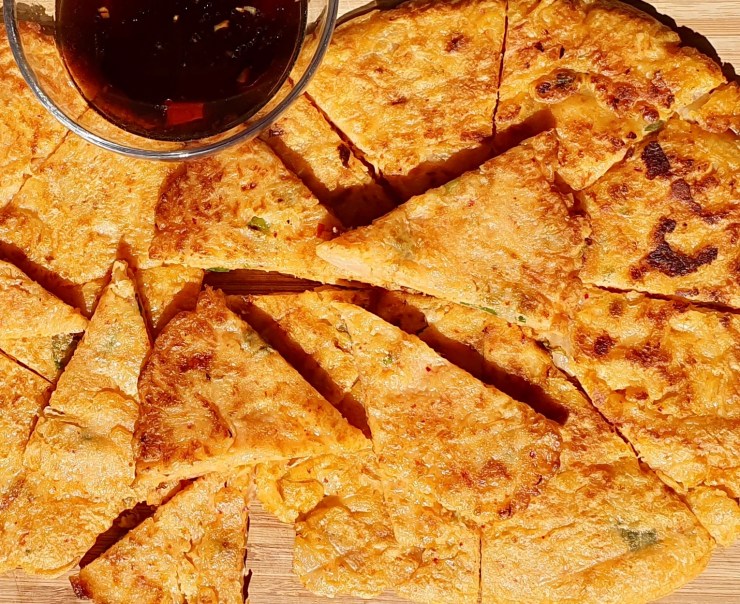
What is a cheese dan bing? The direct translation is cheese egg “crepe”. It’s essentially an egg with melty cheese wrapped up in a crepe-like wrapper topped with soy sauce paste. Kind of like a cheesy omelette wrapped in a ‘bing’. Chinese people use the term “bing” as an overarching word for pretty much anything round and flat. Whether it’s cakes, pastries, sweets, or savoury spring onion pancakes, as long as they’re that shape it’s a bing! I’ve used the word “crepe” in the title translation to replace “bing” because in this recipe, this version of a bing is most similar to a crepe. However when I think of crepes, I think of sweet french crepes with chocolate, fruit and whipped cream which, although delicious, just doesn’t fit in here so I’ll continue to call them “bings” for the rest of this post.

Anyways, without further ado, here’s the recipe! If you have any comments or suggestions, I’d love to hear from you in the comment section! You can follow me on instagram, youtube and facebook to see all the recipes I post!

Happy cooking!

Ingredients you’ll need:

Batter ingredients
  • Bing Batter:
    • 110g (3/4 cup) all purpose flour
    • 30g (1/4 cup) tapioca flour (or potato starch)
    • 1/2 tsp salt
    • 1 egg
    • 280ml (1 cup + 2 Tbsps) water
  • 2 spring onions, chopped
  • Assembly:
    • shredded cheese (~1/3 cup per crepe)
    • 1 egg per crepe
    • ground white pepper
    • soy sauce paste to drizzle
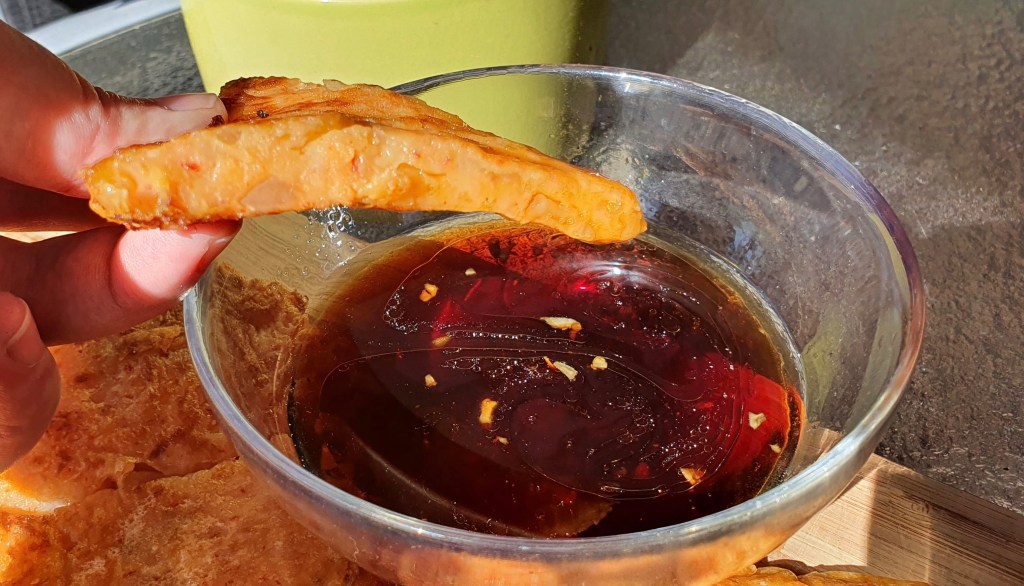
      • Soy sauce paste is CRUCIAL to this dish. Soy sauce paste is essentially a thickened and sweeter version of soy sauce that pairs beautifully with the cheesy egg. I always ask for extra sauce when I order dan bing. You should be able to find it from most Asian grocers. It’s on my to-do list to try and recreate soy sauce paste at home, so keep a look-out for the recipe when it’s uploaded!

Directions:

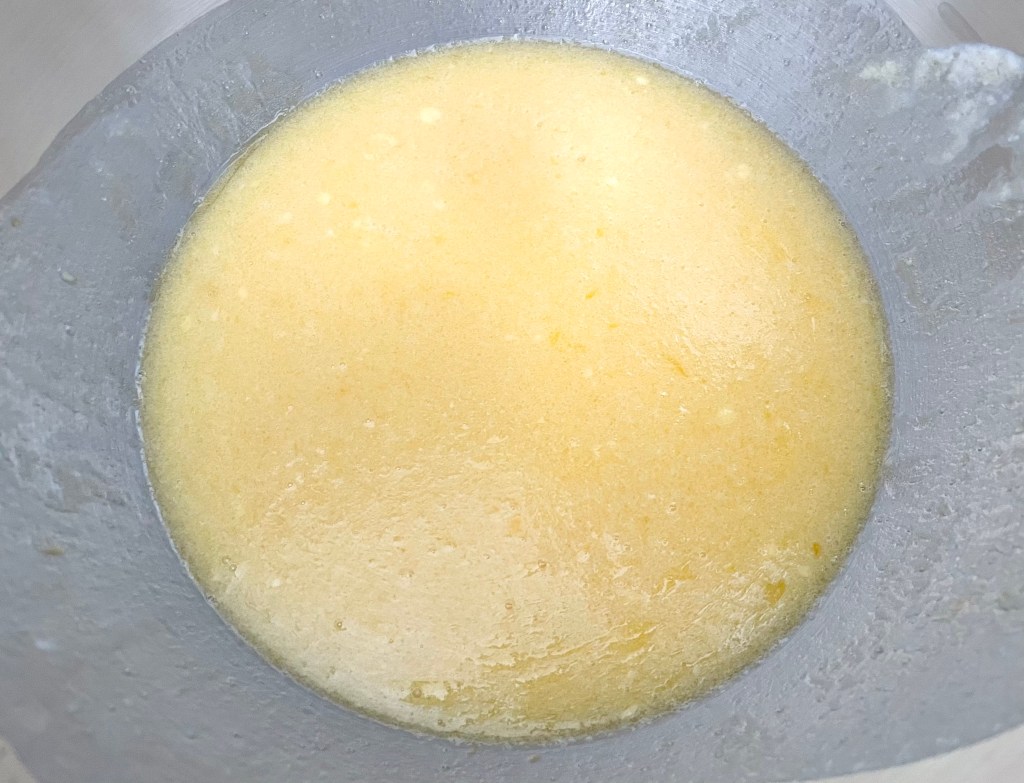
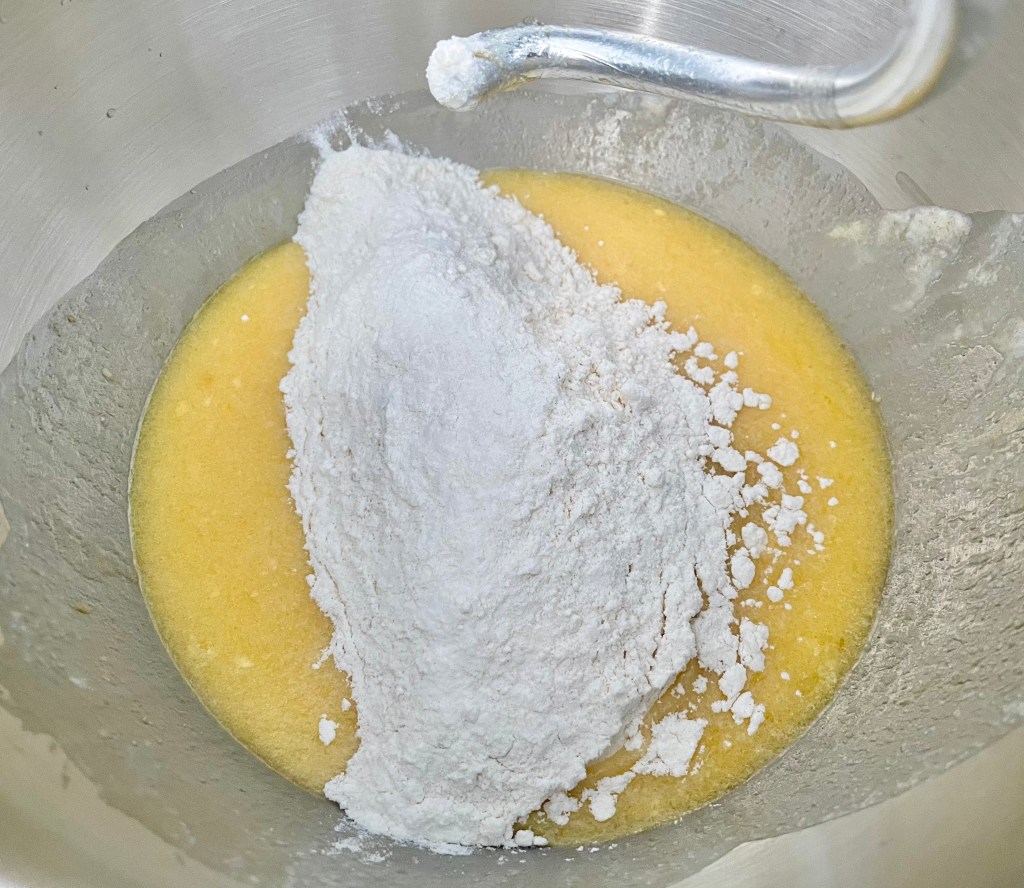
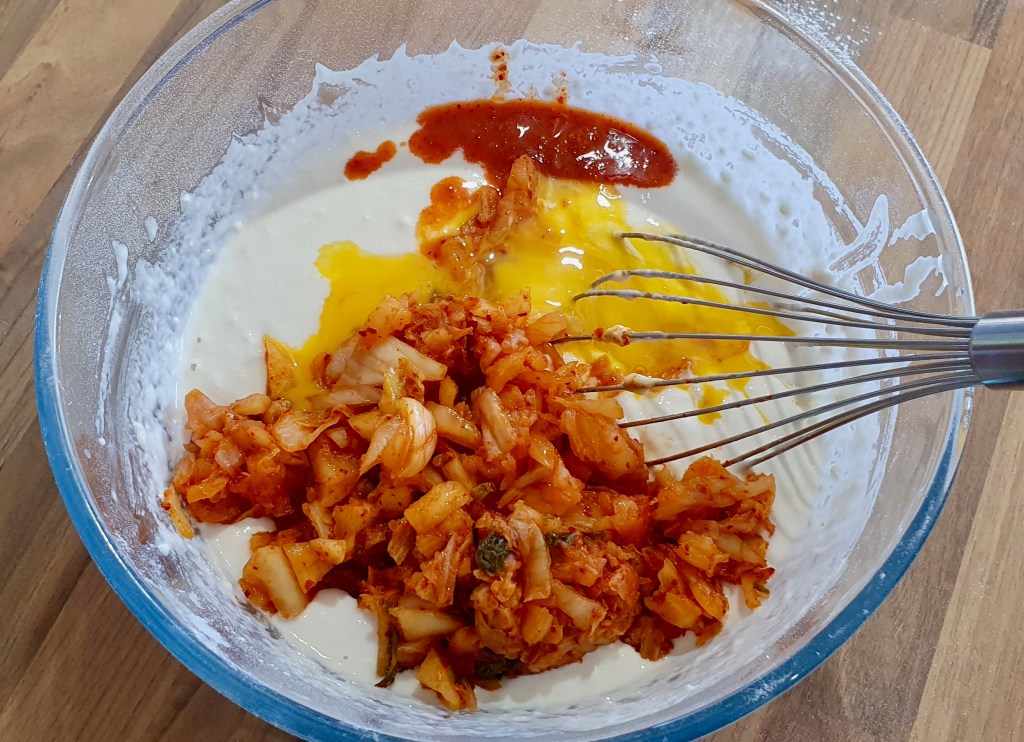
Make the batter: in a bowl, mix the all purpose flour, tapioca flour, salt and egg in a bowl. Add in 1/4 of the water and mix until there are no clumps then add the rest of the water and continue to mix. Set aside.

Note: you can add the spring onions to the batter as well, but I always have trouble having them distribute evenly when cooking so I choose to keep it separate and sprinkle it on instead.

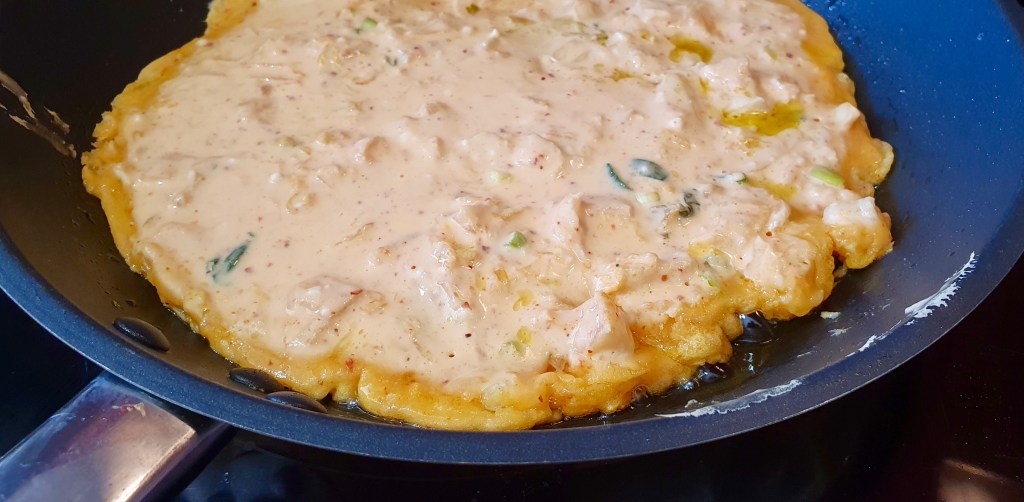
Cook the Bing: Heat a non-stick skillet over medium heat and add 1 tsp of oil and swirl your pan around to coat it in oil. Once your skillet is hot enough, add 1/3 cup of batter into the middle of the pan and quickly swirl your pan around to let the batter distribute around the pan evenly. Sprinkle spring onions over the batter.

Once the edges of the bing are lifting from the pan edges (see second photo), flip it over and cook the other side. Continue to cook until you get small toasty brown spots on the bing on both sides. You can use your spatula to compress down areas that are taking longer to cook. Transfer to a wire rack to cool. Repeat this step to finish cooking the rest of the bings. Don’t worry if they’re not perfectly round or if your spring onions aren’t perfectly distributed – you’re rolling them up in the end anyway!

Note: Like pancakes, the first one might be a dud to get the temperature of the pan right. Don’t get discouraged!

Tip: If you’re making multiple dishes for a meal, you can make the bings first and set them aside until you’re ready for the next step. The next step goes fairly quickly (roughly 1-2mins each to assemble) and you want to serve these hot so I suggest not starting this next step until all your other dishes are ready.

Assemble the Dan Bing: In the same skillet (still on MED heat), pour in one lightly beaten egg into the centre then quickly place one bing ontop of the egg while it’s still undercooked (it’s very important you put the bing on the egg while it’s still undercooked so it sticks together. If you let the egg fully cook, the egg will separate from the bing). Let it cook for about 30 seconds until you’re able to lift and flip the egg with the bing together without it falling apart.

Once flipped over, add shredded cheese in a line in the middle of the egg, then top with a small drizzle of soy sauce paste then a dusting of white pepper. Fold up both sides of the dan bing towards the middle. Press it down lightly for the cheese to stick the layers together then transfer to a plate. Repeat to make the rest of the bings.

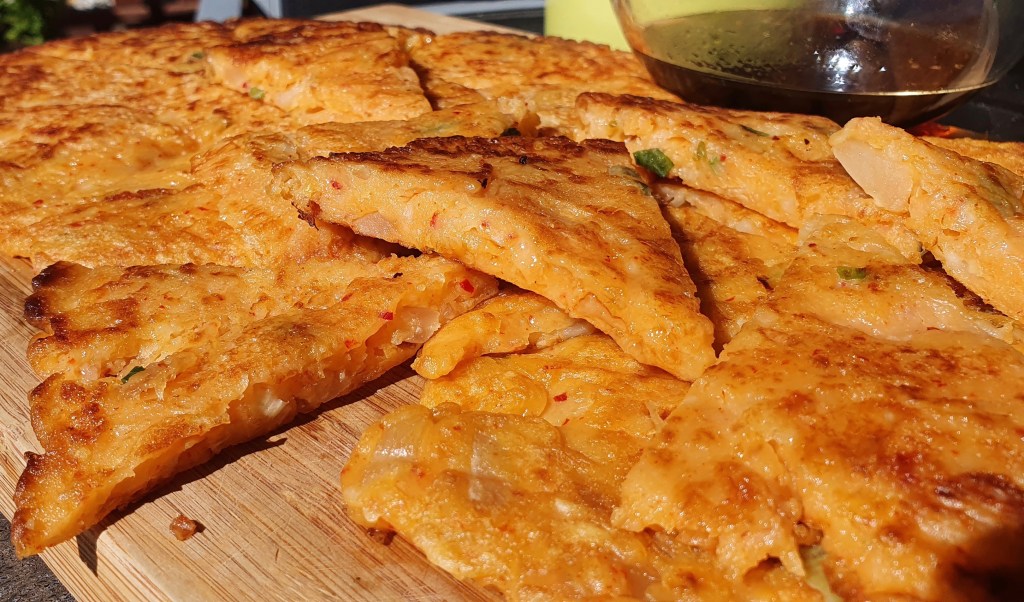
Slice into 1 inch pieces and serve with extra soy sauce paste for dipping if needed. Enjoy!

Tip: You can also add additional toppings other than the cheese. Some popular options in Taiwan: corn, ham, pork floss…etc.

Summarized Recipe:

Taiwanese Cheese Egg Crepe 起司蛋餅 (Cheese Dan Bing)

Date Published: August 7th, 2020 | Last Updated: August 7th, 2020
Author: Abby |Category: asian, snacks
Serves: 4 crepes | Prep time: 5 mins | Cook time: 30 mins

Ingredients:

  • Bing Batter:
    • 110g (3/4 cup) all purpose flour
    • 30g (1/4 cup) tapioca flour (or potato starch)
    • 1/2 tsp salt
    • 1 egg
    • 280ml (1 cup + 2 Tbsps) water
  • 2 spring onions, chopped
  • Assembly:
    • shredded cheese (~1/3 cup per crepe)
    • 1 egg per crepe
    • ground white pepper
    • soy sauce paste to drizzle

Directions:

  1. Make the batter: in a bowl, mix the all purpose flour, tapioca flour, salt and egg in a bowl. Add in 1/4 of the water and mix until there are no clumps then add the rest of the water and continue to mix. Set aside.
  2. Cook the Bing: Heat a non-stick skillet over medium heat and add 1 tsp of oil and swirl your pan around to coat it in oil. Once your skillet is hot enough, add 1/3 cup of batter into the middle of the pan and quickly swirl your pan around to let the batter distribute around the pan evenly. Sprinkle spring onions over the batter.
  3. Once the edges of the bing are lifting from the pan edges, flip it over and cook the other side. Continue to cook until you get small toasty brown spots on the bing on both sides. You can use your spatula to compress down areas that are taking longer to cook. Transfer to a wire rack to cool. Repeat this step to finish cooking the rest of the bings.
    • Note: Like pancakes, the first one might be a dud to get the temperature of the pan right. Don’t get discouraged!
  4. Assemble the Dan Bing: In the same skillet (still on MED heat), pour in one lightly beaten egg into the centre then quickly place one bing ontop of the egg while it’s still undercooked. Let it cook for about 30 seconds until you’re able to lift and flip the egg with the bing together without it falling apart.
  5. Once flipped over, add shredded cheese in a line in the middle of the egg, then top with a small drizzle of soy sauce paste then a dusting of white pepper. Fold up both sides of the dan bing towards the middle. Press it down lightly for the cheese to stick the layers together then transfer to a plate. Repeat to make the rest of the dan bings.
  6. Slice into 1 inch pieces and serve with extra soy sauce paste for dipping if needed. Enjoy!

Tip: You can also add additional toppings other than the cheese. Some popular options in Taiwan: corn, ham, pork floss…etc.

Taiwanese Cold Noodles 涼麵 (Liang Mian)


Date Published: August 7th, 2020 | Last Updated: August 7th, 2020
Author: Abby |Category: asian, mains, easy, vegetarian
Serves: 4 | Prep time: 10 mins | Cook time: 2 mins + time to cook noodles

Jump to recipe |

If you’ve ever been to Taiwan in the middle of summer, you’ll know that not only does it get hot, it gets HUMID AF. What’s better on a hot sticky day than a refreshing bowl of cold noodles? This dish is commonly found everywhere in Taiwan – you can even pick them up from most convenience stores, pre-packaged in a lunch box and ready to eat – just add the sauce! The direct translation of “liang mian” is “chilled” or “cold” noodles and it’s served as a bowl of cold white noodles mixed with a savoury peanut sauce and topped with cucumber and carrot slices, occasionally a sliced egg. It’s delicious, filling and crazy easy to make! It’s also a great lunch to pack to eat on the go or to avoid the microwave queues at work or school 😉.

Anyways, without further ado, here’s the recipe! If you have any comments or suggestions, I’d love to hear from you in the comment section! You can follow me on instagram, youtube and facebook to see all the recipes I post!

Happy cooking!

Ingredients you’ll need:

  • Sauce:
    • 6 Tbsps crunchy peanut butter (smooth is okay too but crunchy gives it better texture)
    • 2 Tbsp soy sauce
    • 2 tsp garlic, minced
    • 2 tsp sugar
    • 2 tsp black vinegar
    • 1 tsp sesame oil
    • 3 Tbsps warm water (or more)
  • White Noodles (any brand you like)
  • 1 Tbsp sesame oil
  • 1 cucumber, julienned
  • 1 carrot, julienned

Directions:

Make the sauce by combining all the sauce ingredients together except for the water. Once combined, add 1 Tbsp of warm water at a time to the sauce and mix until you get a thin runny sauce but not overly watery (only add as much water as you need).

Make the noodles according to package instructions. Drain well and rinse under cold running water until the noodles are cooled. Drizzle 1 Tbsp of sesame oil on the noodles and mix it around so they don’t stick together.

Assemble the noodles by adding the sauce to the noodles with the cucumber and carrots. Mix until combined. Taste and adjust flavours as needed. If you’ve made too many noodles (as I always do because I’m terrible at judging how much noodles to cook), make more sauce for the noodles until you’re happy with the intensity of the flavours. Serve cold!

Tip: If you’re making this ahead of time, I’d suggest you pack the sauce separately and pour it on the noodles when you’re ready to eat to avoid the noodles getting too soft from sitting in sauce for too long.

Summarized Recipe:

Taiwanese Cold Noodles 涼麵 (Liang Mian)

Date Published: August 7th, 2020 | Last Updated: August 7th, 2020
Author: Abby |Category: asian, mains, easy, vegetarian
Serves: 4 | Prep time: 10 mins | Cook time: 2 mins + time to cook noodles

Ingredients:

  • Sauce:
    • 6 Tbsps crunchy peanut butter (smooth is okay too but crunchy gives it better texture)
    • 2 Tbsp soy sauce
    • 2 tsp garlic, minced
    • 2 tsp sugar
    • 2 tsp black vinegar
    • 1 tsp sesame oil
    • 3 Tbsps warm water (or more)
  • White Noodles (any brand you like)
  • 1 Tbsp sesame oil
  • 1 cucumber, julienned
  • 1 carrot, julienned

Directions:

  1. Make the sauce by combining all the sauce ingredients together except for the water. Once combined, add 1 Tbsp of warm water at a time to the sauce and mix until you get a thin runny sauce but not overly watery (only add as much water as you need).
  2. Make the noodles according to package instructions. Drain well and rinse under cold running water until the noodles are cooled. Drizzle 1 Tbsp of sesame oil on the noodles and mix it around so they don’t stick together.
  3. Assemble the noodles by adding the sauce to the noodles with the cucumber and carrots. Mix until combined. Taste and adjust flavours as needed. Serve cold!
    • If you’ve made too many noodles (as I always do because I’m terrible at judging how much noodles to cook), make more sauce for the noodles until you’re happy with the intensity of the flavours.

Tip: If you’re making this ahead of time, I’d suggest you pack the sauce separately and pour it on the noodles when you’re ready to eat to avoid the noodles getting too soft from sitting in sauce for too long.

Curry Tuna Salad


Date Published: August 6th, 2020 | Last Updated: August 6th, 2020
Author: Abby |Category: snacks, easy, <15mins
Serves: 4 | Prep time: 10 mins | Cook time: 30 secs

Jump to recipe |

This is by far my favourite version of a tuna salad. The addition of dill and curry with the crunch of the pickle all infused into the creamy mayo brings this to the next level. You’ve got to try it. It’s packed with flavour and so easy and quick to put together for a quick snack or lunch. Serve it in a sandwich, in a tuna melt, or even as a dip with some crackers. (Recipe adapted from Allrecipes with changes to ingredients and proportions.)

If you have any comments or suggestions, I’d love to hear from you in the comment section! You can follow me on instagram, youtube and facebook to see all the recipes I post!

Happy cooking!

Ingredients you’ll need:

  • 200g (~2 cans) tuna in springwater , drained very well (the drier the tuna the better, otherwise you’ll have a sludgy tuna salad)
  • 1/3 – 1/2 cup mayonnaise (depends on how creamy you prefer it)
  • 3 Tbsps parmesan cheese
  • 5 Tbsps (36g) pickles, finely chopped (or 3 Tbsps sweet pickle relish)
  • 1/2 tsp curry powder
  • 1 Tbsp dried parsley
  • 1 tsp dried dill weed
  • 1/2 tsp garlic powder
  • Fresh ground pepper to taste
  • 1/4 tsp dried minced onion flakes (optional)

Directions:

Mix everything together and taste. Adjust salt and pepper as needed. If you prefer a creamier tuna salad, add more mayonnaise. If you want it crunchier, add more chopped pickles or even some cucumber or red bell peppers/capsicums.

Chill for 20 minutes before serving to let the flavours infuse. Done!

Summarized Recipe:

Curry Tuna Salad

Date Published: August 6th, 2020 | Last Updated: August 6th, 2020
Author: Abby |Category: snacks, easy, <15mins
Serves: 4 | Prep time: 10 mins | Cook time: 30 secs

Ingredients:

  • 200g (2 cans) tuna in springwater , drained
  • 1/3 to 1/2 cup mayonnaise (depending on how creamy you like your tuna salad)
  • 3 Tbsps parmesan cheese
  • 5 Tbsps (36g) pickles, finely chopped (or 3 Tbsps sweet pickle relish)
  • 1/2 tsp curry powder
  • 1 Tbsp dried parsley
  • 1 tsp dried dill weed
  • 1/2 tsp garlic powder
  • Fresh ground pepper to taste
  • 1/4 tsp dried minced onion flakes

Directions:

  1. Mix everything together and taste. Adjust salt and pepper as needed. If you prefer a creamier tuna salad, add more mayonnaise. If you want it crunchier, add more chopped pickles or even some cucumber or red bell peppers/capsicums.
  2. Refrigerate for 20 minutes before serving to let the flavours infuse. Done!

Serve in a sandwich, as a tuna melt, or with crackers!

Creamy Dill Tartar Sauce


Date Published: August 5th, 2020 | Last Updated: August 5th, 2020
Author: Abby |Category: sauces
Serves: makes ~1.5 cups | Prep time: 10 mins | Cook time: 30 seconds

Jump to recipe |

You’ll never buy tartar sauce again after trying this recipe! Have it on fish and chips, tuna patties, crab cakes, fish fingers, chicken tenders…etc. The possibilities are endless! Just chop up some ingredients and mix it all together. Easy peasy! Add a can of tuna to this recipe and you’ve got yourself a fancy tuna salad!
I’ve recently conjured up this recipe to make a tartar sauce to go with our fried tuna patties (recipe coming soon) since we don’t usually keep any at home (I’m more of an aioli gal). After multiple taste tests, this recipe was the result and it is sooooo good! I may be jumping ship to team tartar.

The best thing about making our own tartar sauce is that we’ll never need to buy bottled sauce again and have it expire before we finish it and we can make as little or as much as we need. Also, we’ll never need to pay 50cents for a packet of tartar sauce at the fish and chips shop again (which is the real winner)!

Anyways, without further ado, here’s the recipe! If you have any comments or suggestions, I’d love to hear from you in the comment section! You can follow me on instagram, youtube and facebook to see all the recipes I post!

Happy cooking!

Summarized Recipe:

Creamy Dill Tartar Sauce

Date Published: August 5th, 2020 | Last Updated: August 5th, 2020
Author: Abby |Category: sauces
Serves: makes ~1.5 cups | Prep time: 10 mins | Cook time: 30 seconds

Ingredients:

  • 1 cup (200g) mayonnaise
  • 2 Tbsp (30g) capers, drained and finely chopped
  • 1 cup (180g) pickles, finely chopped
  • 1/2 Tbsp lemon
  • 2 Tbsps fresh dill, finely chopped (or 1 tsp dried dill)
  • 1 tsp Worcestershire sauce
  • 1 tsp sugar (or more to taste)
  • Fresh ground black pepper to taste

Directions:

  1. Mix everything together in a bowl. Adjust salt and sugar as needed.
  2. Refrigerate for half an hour before serving for the flavours to infuse. Done!

Tip: If you want a thinner runny sauce, you can pulse everything in the food processor. To keep it thicker, chop all the ingredients finely and mix it by hand.

Crème Caramel (Egg Custard Pudding)


Date Published: August 5th, 2020 | Last Updated: August 5th, 2020
Author: Abby |Category: dessert, asian
Serves: 4 | Prep time: 5mins | Cook time: 50mins

Jump to recipe |

Crème caramel is a Delicious (capital D intended) dessert with a custardy delicate egg base topped with a caramel syrup. I find this dessert especially addicting because it just melts in your mouth and it’s not too sweet so you don’t feel like you’re overloading yourself by having too many (at least that’s what I tell myself). You only need a few simple ingredients to put this together and although it’s a pretty easy recipe, it can be a little finicky at times so if you’re making it for the first time so I recommend you read through the step-by-step guide with the photos to help you along. The recipe is pretty wordy because I’m trying to describe everything as best as I can to minimize room for error, but once you start making it you’ll see it’s not difficult at all! (A video tutorial is on my to-do list so keep your eyes peeled.)

There are so many different names for this dessert that I had trouble picking a title for this recipe. I settled on crème caramel which is probably the most common name it goes by. Other common names are flan, purin (Japan), caramel custard, caramel pudding…etc. This dessert has been widely adapted around the world and with so many variations of flavours, sides, toppings, and cooking methods. Some bake it, others steam it; some use condensed milk, others use cream; some prefer a higher egg content, others prefer a higher dairy content; some prefer the texture stiffer, while others aim for delicate silky smooth…etc.

I grew up in Taiwan knowing it as ‘egg pudding’ (it HAD to be the Uni-President brand) and it was one of our favourite desserts. You can buy it from any convenience store and it came packaged in a plastic cup with a foil cover and a little plastic spoon. It was always a treat when mom would buy some for us and the dark brown caramel part at the bottom was gold. It’s also widely popular in Japan and they pride themselves on having their ‘purin’ to be silky smooth and creamy (kind of like a panna cotta or silken tofu). I’m pretty sure I ate at least 1 or 2 every day when I was in Japan because it was THAT good. This recipe is based on the Japanese version (adapted from Chopstick Chronicles) and I’m using evaporated milk to achieve the creamy flavour.

You can serve this dessert hot or cold, in a cup or inverted on a dish. My favourite is to refrigerate it overnight and then eat it directly out of the cup so I can scoop up the caramel syrup with every bite! I find the texture to be silkier and the flavours to be creamier when served cold. If you’re looking to impress, it looks much prettier inverted on a small plate.

Anyways, without further ado, here’s the recipe! If you have any comments or suggestions, I’d love to hear from you in the comment section! You can follow me on instagram, youtube and facebook to see all the recipes I post!

Happy cooking!

Ingredients you’ll need:

  • Caramel:
    • 70g granulated sugar
    • 50ml water
  • Pudding:
    • 3 large eggs
    • 60g granulated sugar
    • 1/2 tsp vanilla extract
    • 300ml milk – whole milk is better but light will work
    • 100ml evaporated milk – can use regular milk if you don’t have it, just won’t be as creamy

Equipment:

  • 4 small ramekins (or any small bowl/cup that can withstand heat on a stove)
  • A pan with a lid (the pan should be deep enough that you can fit the ramekins in with the lid on)
  • A small saucepan for the caramel
  • Dry tea towel
  • Whisk

Directions:

Grease 4 small ramekins with either butter or any neutral oil (ie vegetable/canola oil). Set aside.

Note: you don’t need to use ramekins if you don’t have one. Any cup/bowl will do as long as it can withstand heat on the stove.

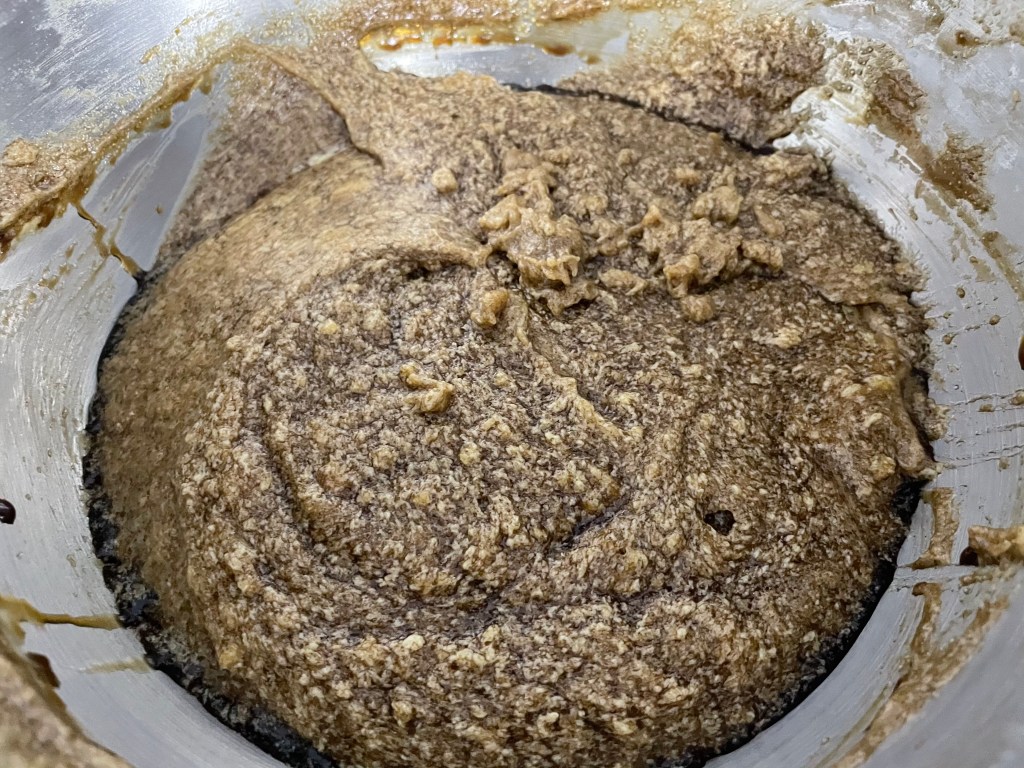
In a small saucepan (ideally one with a white base so you can see the colour changes easily – we just moved onto the farm and unfortunately there are only black base pots here for the photo), make the caramel by combining the sugar with water over MEDIUM heat and swirl the mixture around until the sugar has dissolved. Let the mixture simmer until it turns into an amber caramel colour (15-20mins). Do NOT stir during this process. Gently swirl it to even out the colour changes if needed. Stirring will cause the sugar to stick to the sides of the pot and crystallize (like in the photos above – I didn’t learn about this until it was too late!). Don’t worry if you accidentally stir the mixture and get crystals (I do it all the time. I feel like I have an impulse to stir anything that’s been on the stove for a while). Your caramel will still turn out fine.

This is the longest step and you must be patient. The mixture will first start bubbling as the water evaporates and once the colour starts changing, the bubbles will disappear and you’re left with a thick caramel – but don’t take it off the stove until you get that deep amber colour like the photo above. Once the caramel starts changing colour, the colour changes will happen faster so watch it closely so it doesn’t burn. If you take off your caramel too early, the colour will be lighter and the overall pudding will be too sweet since the caramel hasn’t caramelized enough. The darker it is, the more robust the caramel flavour (and slightly more bitter) – but be careful not to take it too far and burn it.

While you’re waiting for the caramel, you can make the pudding filling (but keep your eyes on the caramel so it doesn’t burn). In a large bowl, whisk together the eggs, 60g sugar, and vanilla extract until combined.

In a separate bowl, combine the milk and evaporated milk and microwave for about 1-2 mins until it’s warm (you don’t want it hot otherwise it will cook the eggs!). Add this milk mixture to the egg mixture gradually while whisking. Strain to remove any clumps.

Once the caramel is ready, quickly distribute it evenly into the 4 ramekins. The caramel hardens very quickly once it’s off the stove and will make it very difficult to pour into the ramekins if you let it cool. Try to swirl the ramekins as you pour so the caramel evenly coats the bottom of the ramekin. Don’t worry if the caramel hardens in the ramekin before you get to swirl it evenly – it’ll even out when it cooks (just try not to have a giant clump of caramel in the middle). Distribute the egg milk mixture evenly over the caramel into the ramekins.

Place your ramekins in a pan and add about 2cm of water into the pan around the molds. Turn the heat on high and when the water boils, wrap the pan lid with a dry tea towel (this avoids condensed water from dripping on your puddings) and put the lid on. Turn the heat down to LOW-MED (#3 on my induction stove) for 15mins then turn the heat off and leave it to steam for 15mins (do not open the lid during any of this process otherwise the steam will escape!)

Note on cooking time: it can differ greatly depending on what you put the pudding in (ie a glass mold will be faster to cook than a thick ceramic ramekin). These times are based on ramekins, so adjust as needed. It may be a bit of a trial and error at first. If you’re using a glass jar or a container with thin walls, check the mixture after 5 mins of cooking on low-medium heat. If it’s still very liquidy, then bring the water back up to a boil then cover with the lid and cook on low-med heat for another 5 mins and recheck. Keep doing this until the pudding looks slightly thickened, then bring it up to a boil and cover and cook for another few mins on low-medium heat and then turn heat off and let steam for 15 mins. I’ll admit figuring out the correct cooking time is the most finicky part of this whole process, but once you figure out what works best for you, it’ll be easy next time.

After 15 mins, the pudding should be set with a good jiggle (but not liquidy!) – a toothpick should be able to stand up on its own when you poke it. Take the ramekins out of the pan and allow it to cool. Refrigerate it for at least an hour (preferably overnight), then serve. You can either serve it in the molds or cut around the edges with a butter knife and invert the molds onto a plate and serve upside down (tip: if you sit the ramekin in hot water for a few minutes before inverting, it’ll melt the caramel and you’ll get more syrup released when you invert). You can also serve this dish warm, but I find the creamy flavours more prominent when served cold.

Summarized Recipe:

Crème Caramel (Egg Custard Pudding)

Date Published: August 5th, 2020 | Last Updated: August 5th, 2020
Author: Abby |Category: dessert, asian
Serves: 4 | Prep time: 5mins | Cook time: 50mins

Ingredients:

  • Caramel:
    • 70g granulated sugar
    • 50ml water
  • Pudding:
    • 3 large eggs
    • 60g granulated sugar
    • 1/2 tsp vanilla extract
    • 300ml milk – whole milk is better but light will work
    • 100ml evaporated milk – can use regular milk if you don’t have it, just won’t be as creamy

Equipment:

  • 4 small ramekins (or any small bowl/cup that can withstand heat on a stove)
  • A pan with a lid (the pan should be deep enough that you can fit the ramekins in with the lid on)
  • A small saucepan for the caramel
  • Dry tea towel
  • Whisk

Directions:

  1. Grease 4 small ramekins with either butter or any neutral oil (ie vegetable/canola oil). Set aside.
    • Note: you don’t need to use ramekins if you don’t have one. Any cup/bowl will do as long as it can withstand heat on the stove.
  2. In a small saucepan (ideally one with a white base so you can see the colour changes), make the caramel by combining the sugar with water over MEDIUM heat and swirl the mixture around until the sugar has dissolved. Continue to simmer the mixture until it turns into a deep amber caramel colour (15-20mins) (see notes above for tips). Do NOT stir the mixture. Gently swirl it to even out the colour changes if needed.
  3. While you’re waiting for the caramel, you can make the pudding filling (but keep your eyes on the caramel so it doesn’t burn). In a large bowl, whisk together the eggs, 60g sugar, and vanilla extract until combined.
  4. In a separate bowl, combine the milk and evaporated milk and microwave for about 1-2 mins until it’s warm (you don’t want it hot!). Add this milk mixture to the egg mixture gradually while whisking. Strain this mixture to remove any clumps.
  5. Once the caramel is ready, quickly distribute it evenly into the 4 ramekins. Try to swirl the ramekins as you pour so the caramel evenly coats the bottom of the ramekin. Distribute the egg milk mixture evenly over the caramel into the ramekins.
  6. Place your ramekins in a pan and add about 2cm of water into the pan around the molds. Turn the heat on high and when the water boils, wrap the pan lid with a dry tea towel (this avoids condensed water from dripping on your puddings) and put the lid on. Turn the heat down to LOW-MED (#3 on my induction stove) for 15mins then turn the heat off and leave it to steam for 15mins (do not open the lid during any of this process otherwise the steam will escape!)
    • Note on cooking time: it can differ greatly depending on what you put the pudding in (ie a glass mold will be faster to cook than a thick ceramic ramekin). These times are based on ramekins, so adjust as needed. It may be a bit of a trial and error. If you’re using a glass jar or a container with thin walls, check the mixture after 5 mins of cooking on low-medium heat. If it’s still very liquidy, then bring the water back up to a boil then cover with the lid and cook on low-med heat for another 5 mins and recheck. Keep doing this until the pudding looks slightly thickened, then bring the water back up to a boil and then cover and cook for another few mins on low-medium heat and then turn heat off and let steam for 15 mins.
  7. After 15 mins, the pudding should be set with a good jiggle (but not liquidy!) – a toothpick should be able to stand up on its own when you poke it. Take the ramekins out of the pan and allow it to cool. Refrigerate it for at least an hour (preferably overnight), then serve.
    • You can either serve it in the molds or cut around the edges with a butter knife and invert the molds onto a plate and serve upside down. You can also serve this dish warm, but I find the creamy flavours more prominent when served cold.
    • (Tip: If you sit the ramekin in hot water for a few minutes before inverting, it’ll melt the caramel and you’ll get more syrup released when you invert)

Thai Green Curry (Chicken, Beef, Fish or Veg)


Date Published: August 5th, 2020 | Last Updated: August 5th, 2020
Author: Abby |Category: mains, asian, < 30mins
Serves: 4-6 | Prep time: 15 mins | Cook time: 20 mins

Jump to recipe |

I can never pass up a good curry no matter the cuisine. I just love the creaminess and the intense flavours. Thai curries hold a special place in my belly, especially the green curry. The green colour comes from the use of the milder green chilli pepper, kaffir lime, cilantro/coriander and sometimes basil. I love the aroma and the fact that I can pack it full of veggies and have it all swim around in the aromatic coconut sauce.

Although the flavours are complex, making a Thai curry is actually really straight forward and simple as long as you have the green curry paste, which is where most of the flavour (and effort) comes from. I was surprised how quickly it all came together when I made it for the first time. You can buy pretty decent packaged Thai curry pastes from pretty much any supermarket these days and for pretty cheap too, but if you’re like me and have the need to conquer seemingly complex recipes, you can make your own with the green curry paste recipe. I’ve written this recipe for the intention of using the homemade curry paste, however if you want to use the canned pastes, you’ll have to “freshen” it up by sautéing in some garlic and ginger to bring the flavours out.

This recipe is easily customizable with any veggies and protein you like and in any proportion. I’ve written it based on my favourite veg to put in this curry but feel free to change it up to your liking. The beauty of this curry is that because of its strong flavours, you can also put in whatever protein you like. I’ve colour-coded the recipes so it’s easier to follow if you want to make chicken, beef or fish. The other great thing about this recipe is that it’s all done in one pot so there’s minimal clean up!

Anyways, without further ado, here’s the recipe! If you have any comments or suggestions, I’d love to hear from you in the comment section! You can follow me on instagram, youtube and facebook to see all the recipes I post!

Happy cooking!

Ingredients you’ll need:

  • 1.5 Tbsp coconut oil
  • Meat of choice: (optional)
    • Chicken: 400g (~4) skinless boneless chicken thighs (or breast), diced into bite-sized pieces or sliced thinly (depending on how you like it)
    • Beef: 400g, sliced thinly. Any steak cut will be good.
    • Fish: 400g, diced into chunks. Use whatever fish you like. I tend to like using salmon or a white fish.
    • Vegetarian: no need for meat, just add more veggies!
  • 1 Tbsp coconut oil
  • 3/4 cup homemade Thai green curry paste (click link for recipe)
    • Please note: this recipe was written to be used with the homemade Thai green curry paste. If you want to use canned Thai green curry paste (Maesri is the go-to brand), you’ll need to “freshen” up the paste to bring out more flavour by sautéing one can (114g) it in 3 cloves of garlic and 2 Tbsps of minced ginger. I do recommend making the curry paste yourself if you’ve got time – it’s so much more aromatic.
  • 1 cup chicken stock (or vegetable stock)
  • 800ml (2 cans) coconut milk
  • Any veggies you like in your curry. I’ve written this recipe based on my favourite veg, but feel free to change it up and do you. Just keep in mind their proportions to the chicken, otherwise you may end up with a veggie curry (which is fine too if you prefer less chicken). These are what I usually add:
    • 1 1/2 cups King oyster mushrooms, roughly chopped
    • 1 1/2 cups green beans, trimmed and snapped in halves
    • 1 cup baby corn
    • 1 1/2 cups eggplant, diced and seared first for extra flavour
    • 1 1/2 cups red bell peppers/capsicum, chopped
    • 10 Thai basil leaves
  • 1/2 Tbsp fish sauce (or more to taste)
  • Sea salt + black pepper to taste
  • Sugar to taste

Directions:

Prepare your protein (if using):

If using chicken:

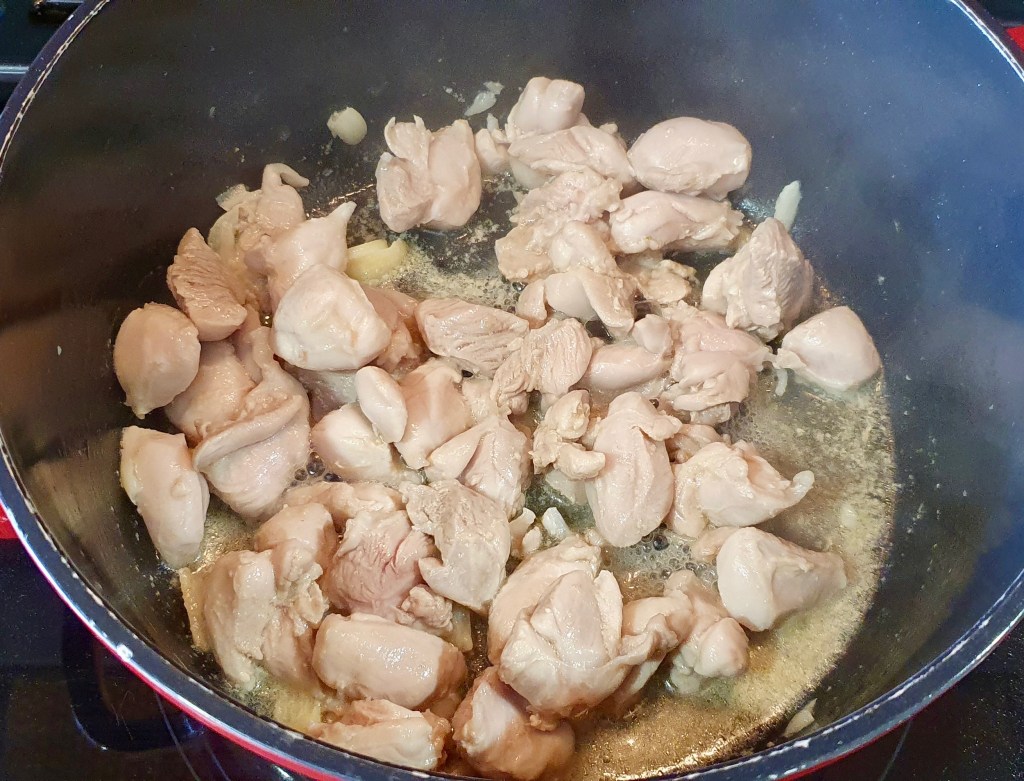
In medium pot on MED-HIGH heat melt the coconut oil and add in the chicken pieces (you may have to do this in batches if they’re too crowded – see tip*) and cook until lightly brown on the outside. Don’t worry about it cooking all the way through – it will finish cooking in the curry.

*Tip: You want to put the chicken pieces in the pot in a single layer to sear the outside. If you overcrowd the chicken or are overlapping them, you will likely have too much liquid released and end up boiling the chicken. Depending on the size of your pot, you may have to cook it in 2 or 3 batches.

After you’ve browned all the chicken pieces, remove them from the pot and set aside.

If using beef:

In medium pot on MED-HIGH heat melt the coconut oil and add in the beef pieces and quickly cook for a few minutes until lightly brown on the outside. Don’t worry about it cooking all the way through – it will finish cooking in the curry.

After you’ve browned all the beef pieces, remove them from the pot and set aside.

If using fish:

You don’t need to do any cooking beforehand. Just have it cut up in bite-sized pieces and add it later on with the veggies.

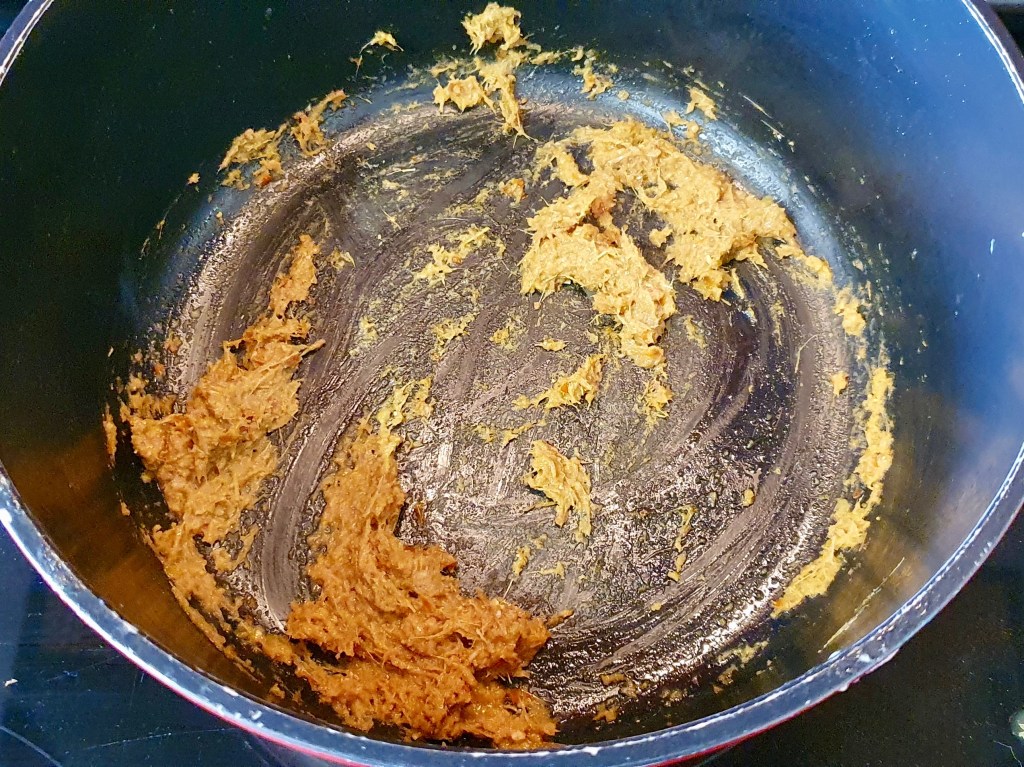
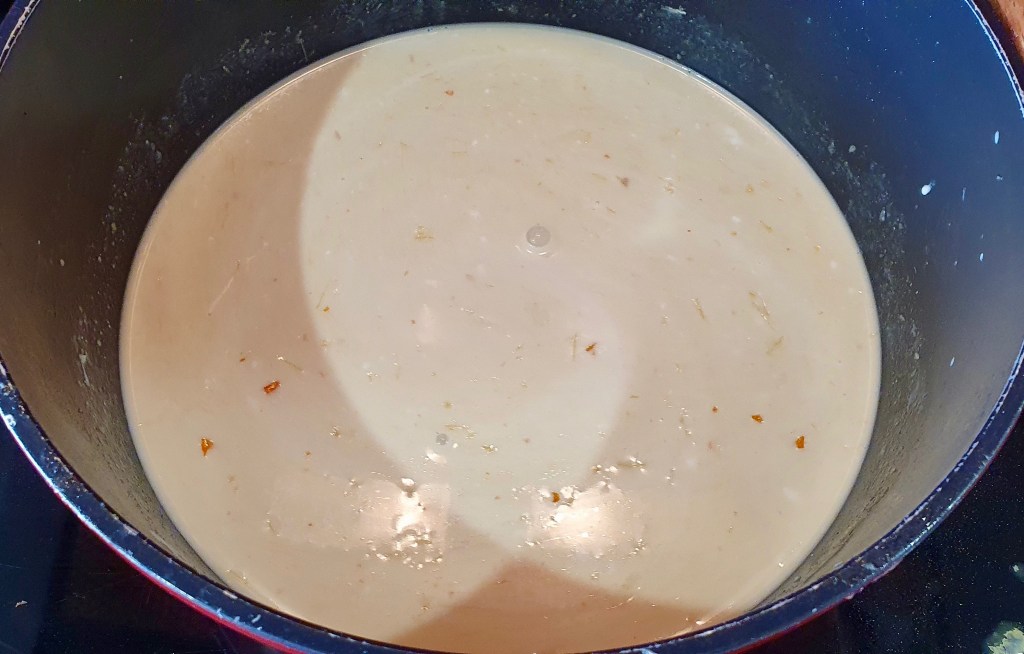
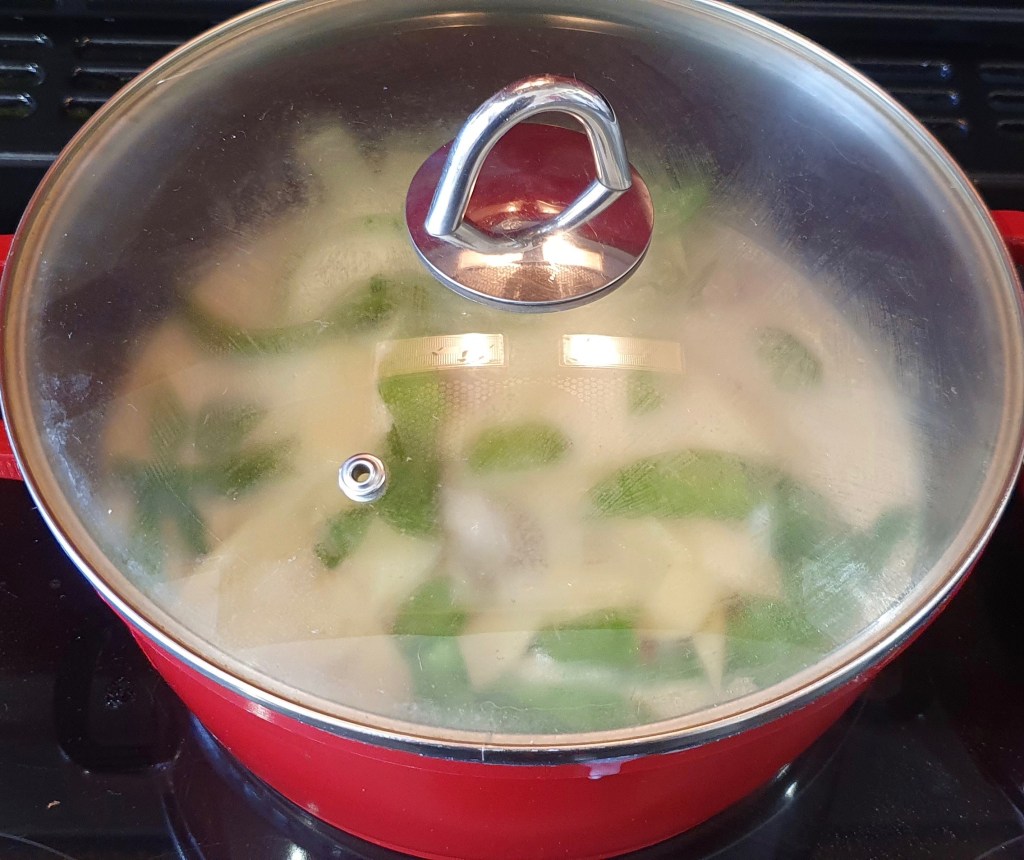
In the same pot still on MED-HIGH heat, discard any excess liquids and melt 1 Tbsp coconut oil. Add the green curry paste and stir for a few minutes to toast the paste. When the excess liquid has evaporated and you’re left with a semi-dry paste (see photo above), add in the chicken stock and coconut milk. Reduce the heat to MED, put a lid on and let the mixture simmer for 5 minutes.

Add in your veggies and chicken, beef or fish and continue to cook the curry without the lid for another 5 minutes or until all your protein and veg have cooked. Add in the fish sauce. Taste and adjust flavours as needed. If not salty enough add more salt, add sugar if not sweet enough. Serve!

Tip: If you want to turn this into a soup, add in 1 extra cup (250ml) of chicken stock. Feel free to add in some noodles too!

Summarized Recipe:

Thai Green Curry (Chicken, Beef, Fish or Veg)

Date Published: August 5th, 2020 | Last Updated: August 5th, 2020
Author: Abby |Category: mains, asian, < 30mins
Serves: 4-6 | Prep time: 15 mins | Cook time: 20 mins

Ingredients:

  • 1.5 Tbsp coconut oil
  • Meat of choice:
    • Chicken: 400g (~4) skinless boneless chicken thighs (or breast), diced into bite-sized pieces or sliced thinly (depending on how you like it)
    • Beef: 400g, sliced thinly. Any steak cut will be good.
    • Fish: 400g, diced into chunks. Use whatever fish you like. I tend to like using salmon or a white fish.
    • Vegetarian: no need for meat, just add more veggies!
  • 1 Tbsp coconut oil
  • 3/4 cup homemade Thai green curry paste (click link for recipe)
    • Please note: this recipe was written to be used with the homemade Thai green curry paste. If you want to use canned Thai green curry paste (Maesri is the go-to brand), you’ll need to “freshen” up the paste to bring out more flavour by sautéing one can (114g) it in 3 cloves of garlic and 2 Tbsps of minced ginger. I do recommend making the curry paste yourself if you’ve got time – it’s so much more aromatic.
  • 1 cup (250ml) chicken stock (or vegetable stock)
  • 800ml (2 cans) coconut milk
  • Any veggies you like in your curry. I’ve written this recipe based on my favourite veg, but feel free to change it up and do you. Just keep in mind their proportions to the chicken, otherwise you may end up with a veggie curry (which is fine too if you prefer less chicken). These are what I usually add:
    • 1 1/2 cups King oyster mushrooms, roughly chopped
    • 1 1/2 cups green beans, trimmed and snapped in halves
    • 1 cup baby corn
    • 1 1/2 cups eggplant, diced and seared first for extra flavour
    • 1 1/2 cups red bell peppers/capsicum, chopped
    • 10 Thai basil leaves
  • 1/2 Tbsp fish sauce (or more to taste)
  • Sea salt + black pepper to taste
  • Sugar to taste

Directions:

  1. Prepare your protein (if using):
    • If using chicken:
      1. In medium pot on MED-HIGH heat melt the coconut oil and add in the chicken pieces (you may have to do this in batches if they’re too crowded – see tip*) and cook until lightly brown on the outside. Don’t worry about it cooking all the way through – it will finish cooking in the curry.
        • *Tip: You want to put the chicken pieces in the pot in a single layer to sear the outside. If you overcrowd the chicken or are overlapping them, you will likely have too much liquid released and end up boiling the chicken. Depending on the size of your pot, you may have to cook it in 2 or 3 batches.
      2. After you’ve browned all the chicken pieces, remove them from the pot and set aside.
    • If using beef:
      1. In medium pot on MED-HIGH heat melt the coconut oil and add in the beef pieces and quickly cook for a few minutes until lightly brown on the outside. Don’t worry about it cooking all the way through – it will finish cooking in the curry.
      2. After you’ve browned all the beef pieces, remove them from the pot and set aside.
    • If using fish:
      • You don’t need to do any cooking beforehand. Just have it cut up in bite-sized pieces and add it later on with the veggies.
  2. In the same pot still on MED-HIGH heat, discard any excess liquids and melt 1 Tbsp coconut oil. Add the green curry paste and stir for a few minutes to toast the paste. When the excess liquid has evaporated and you’re left with a semi-dry paste, add in the chicken stock and coconut milk. Reduce the heat to MED, put a lid on and let the mixture simmer for 5 minutes.
  3. Add in your veggies and chicken, beef or fish and continue to cook the curry without the lid for another 5 minutes or until all your protein and veg have cooked. Add in the fish sauce. Taste and adjust flavours as needed. If not salty enough add more salt, add sugar if not sweet enough. Serve!
Tip: If you want to turn this into a soup, add in 1 extra cup (250ml) of chicken stock. Feel free to add in some noodles too!

Sriracha Mayo


Date Published: August 4th, 2020 | Last Updated: August 4th, 2020
Author: Abby |Category: sauces/dips, easy, asian, < 15mins
Serves: 1/2 cup | Prep time: 1 minute | Cook time: 30 seconds

Jump to recipe |

If you can scoop mayonnaise out of a jar and squeeze sriracha out of a bottle, this recipe is for you. This 30 second sriracha mayo is your new go-to sauce. Think fries, burger, fish and chips, fritters, prawn toast, tuna salad, chicken salad…etc. Pretty much anywhere you use mayo you can substitute it with sriracha mayo for an extra kick!

If you have any comments or suggestions, I’d love to hear from you in the comment section! You can follow me on instagram, youtube and facebook to see all the recipes I post!

Happy cooking!

Summarized Recipe:

Sriracha Mayo

Date Published: August 4th, 2020 | Last Updated: August 4th, 2020
Author: Abby |Category: sauces/dips, easy, asian, < 15mins
Serves: 1/2 cup | Prep time: 1 minute | Cook time: 30 seconds

Ingredients:

  • 1/2 cup (125g) mayonnaise
  • 1 Tbsp sriracha chilli sauce

Directions:

  1. Mix the mayonnaise and sriracha together and serve! Easy, huh?

Chicken Udon Stir-Fry


Date Published: August 4th, 2020 | Last Updated: August 4th, 2020
Author: Abby |Category: healthy, asian, mains
Serves: 4-6 | Prep time: 15 mins | Cook time: 20 mins

Jump to recipe |

Japanese udon is one of my favourite type of noodles. There’s so much chew compared to regular noodles and makes it more satisfying to eat. This is a quick and easy stir-fry packed with chicken, cabbage, carrots and udon noodles. The crunchy cabbage and carrots with the chewiness of the udon cooked in a savoury sauce makes this dish so yum and healthy too!

This was actually one of the first things Toby made for me when we were in Bairnsdale together on a vet student placement. We agreed that we’d both start eating healthier and he surprised me with this dinner when I came home from my shift. It was the best thing to come home to especially after a long cold day. ❤️

Anyways, without further ado, here’s the recipe! If you have any comments or suggestions, I’d love to hear from you in the comment section! You can follow me on instagram, youtube and facebook to see all the recipes I post!

Happy cooking!

Ingredients you’ll need:

  • 500g udon noodles, cooked and drained
  • 1/3 cup light soy sauce
  • 1 Tbsp soy sauce
  • 1/3 cup mirin
  • 2 Tbsps ketchup
  • 1 Tbsp caster sugar
  • 1 Tbsp vegetable oil
  • 3 garlic cloves, minced
  • 3cm piece of ginger, peeled and minced
  • 1 large (2.5 cups) brown onions, diced
  • 500g chicken mince (or pork mince)
  • 1/4 small green cabbage, diced to 2cm pieces
  • 2 large carrots, julienned or chopped finely
  • 2 Tbsps sesame oil, to drizzle
  • White sesame seeds, to sprinkle

Directions:

If you haven’t prepared you udon noodles yet, cook them according to package instructions, then drain and rinse the noodles under cold water. Set aside.

In a small bowl, make the sauce by combining: soy sauce, light soy sauce, mirin, ketchup, and sugar. Don’t worry if you have small clumps in the sauce.

Heat up a wok over high heat and add 1 Tbsp of vegetable oil and sauté the garlic, ginger and onion (in that order) for a few minutes until the onion starts to turn translucent.

Add the chicken mince to the wok and use your spatula to break up any lumps and sauté it until the chicken is mostly browned. (You do not have to cook the mince all the way through. It will finish cooking as you add the other ingredients in).

Add the cabbage and carrot to the wok. Sauté for another few minutes until the cabbage is wilted.

Add in the noodles and the sauce. Mix until combined and most of the liquids have cooked off. Turn heat off, drizzle sesame oil over the noodles and mix.

Serve noodles out and sprinkle sesame seeds over top. Enjoy!

Summarized Recipe:

Chicken Udon Stir-Fry

Date Published: August 4th, 2020 | Last Updated: August 4th, 2020
Author: Abby |Category: healthy, asian, mains
Serves: 4-6 | Prep time: 15 mins | Cook time: 20 mins

Ingredients:

  • 500g udon noodles, cooked and drained
  • 1/3 cup light soy sauce
  • 1 Tbsp soy sauce
  • 1/3 cup mirin
  • 2 Tbsps ketchup
  • 1 Tbsp caster sugar
  • 1 Tbsp vegetable oil
  • 3 garlic cloves, minced
  • 3cm piece of ginger, peeled and minced
  • 1 large (2.5 cups) brown onions, diced
  • 500g chicken mince (or pork mince)
  • 1/4 small green cabbage, diced to 2cm pieces
  • 2 large carrots, julienned or chopped finely
  • 2 Tbsps sesame oil, to drizzle
  • White sesame seeds, to sprinkle

Directions:

  1. If you haven’t prepared you udon noodles yet, cook them according to package instructions, then drain and rinse the noodles under cold water. Set aside.
  2. In a small bowl, make the sauce by combining: soy sauce, light soy sauce, mirin, ketchup, and sugar.
  3. Heat up a wok over high heat and add 1 Tbsp of vegetable oil and sauté the garlic, ginger and onion (in that order) for a few minutes until the onion starts to turn translucent.
  4. Add the chicken mince to the wok and use your spatula to break up any lumps and sauté it until the chicken is mostly browned. (You do not have to cook the mince all the way through. It will finish cooking as you add the other ingredients in).
  5. Add the cabbage and carrot to the wok. Sauté for another few minutes until the cabbage is wilted.
  6. Add in the noodles and the sauce (made in step 2). Mix until combined and most of the liquids have cooked off. Turn heat off, drizzle sesame oil over the noodles and mix.
  7. Serve noodles out and sprinkle sesame seeds over top. Enjoy!

Legit Vietnamese Pho


Date Published: August 3rd, 2020 | Last Updated: Jan 5th, 2025
Author: Abby |Category: asian, mains, soup
Serves: 4-6 | Prep time: 20 mins | Cook time: 4-8 hours

Jump to recipe |

Pho (pronounced ‘fuh’) is a traditional Vietnamese dish. It’s a delicious flavourful beef (or chicken) broth stewed for hours and served with rice vermicelli, bean sprouts, Thai basil, and beef slices. It’s not super traditional, but I always eat pho with a HEALTHY amount of hoisin sauce. I had a friend put hoisin directly into the broth, but I like to make a perfect spoonful of broth, noodles and then dip a slice of beef in hoisin sauce and eat it all in one delicious bite. The beef slices are usually served raw and the hot broth cooks it when ladled into the bowl. [Side story: Every time I order pho, my mother would always immediately tell me to quickly dunk the beef slices and bean sprouts to the bottom of the bowl so it can cook right away before the broth cools. We’ve ordered this dish for years and she’ll still say it every time without fail – now I hear this every time I eat pho.] You can order other versions of pho served with chicken, pork balls, brisket, tripe…etc, but raw beef pho will always be my go-to.

Side story: Pho is very nostalgic for me. When my family immigrated to Canada, my parents made my siblings and I go to “Chinese school” every Saturday morning continue our Asian studies. I hated going. The school was nearly an hour drive away and we had to get up crazy early every Saturday morning for 3 hours of lessons. Class finished at 12pm and I was always SO hungry counting down the hours until lunch. The only good thing about driving so far was the food afterwards. In our hometown there wasn’t a very big Asian population, which translates to not a lot of good Asian food – but in Mississauga (the city where the classes were), the majority of the population was Asian which meant legit good Asian food EVERYWHERE. We’d most often go to this Vietnamese restaurant in a shopping mall where my mom would pick up some groceries and a free weekly Chinese newspaper. Their pho was insanely good and they had melt-in-your-mouth brisket. I’d always forget to ask for no coriander so I would spend 15 minutes picking out every little piece of finely chopped coriander before I would start eating – but it was worth it even if my soup was a little cold. A few years later a Vietnamese restaurant opened up near our home and we pretty much went there all the time – what’s even better was that there as also an Asian grocer in the mall where my mom could continue to do her shopping and get her weekly Chinese newspaper. Now that we’ve all gone our separate ways, every time I eat pho it transports me back to those days with my family.

Strap in, because this soup takes a long time to make. The majority of the work is waiting to let the soup simmer but the actual process is really quite easy. The longer you cook the soup, the stronger the flavours will be. I’d recommend even starting this recipe the evening before and let it simmer overnight so it’ll be ready for lunch the next day (warning: make this on a full stomach because the amazing aromas of this soup will make you hangry). There are lots of quick shortcut versions of this soup out there, but I feel like I won’t do this dish justice if I don’t put in the extra effort and make it legit for maximum flavour. I’ve adapted this recipe from RecipeTinEats and made some changes in regards to ingredients and cooking times, but the gist of it is similar.

Anyways, without further ado, here’s the recipe! If you have any comments or suggestions, I’d love to hear from you in the comment section! You can follow me on instagram, youtube and facebook to see all the recipes I post!

Happy cooking!

Ingredients you’ll need:

Beef Mix: You’ll need a good mix of beef meat and bones to create the wonderful flavours of the broth. Each type of beef has their role:

  • 2kg beef brisket – the most important player which adds the most beef flavour to the broth (top left in the photo)
  • 1kg meaty beef bones (ie vertebrae, ox tail) – you can use any bones that have a decent amount of meat attached to them. This adds additional beefy flavours and richness (bottom left in the photo)
  • 750g marrow bones (ie femur/leg, knuckle) cut into fist-sized pieces to reveal the marrow (your butcher can do this for you) – the marrow cooks out into the broth and gives it a fatty richness (too many marrow bones will result in a greasy broth) (right side of the photo)
    • Note: the marrow bones in the top right corner of the photo are too big. I forgot to ask the butcher to cut them smaller and didn’t realize until I got home, heh. You want pieces similar to the bottom right corner with marrow exposed.

Spices, Aromatics & Seasoning: these give the broth the signature pho aroma and flavour.

  • 10 star anise
  • 4 cinnamon sticks
  • 4 cardamon pods
  • 3 cloves
  • 1.5 Tbsp coriander seeds
  • 2 tsp fennel seeds
  • 2 large onions, halved and peeled
  • 150g ginger, sliced and unpeeled
  • 2 Tbsp white sugar
  • 1 Tbsp salt
  • 2 Tbsp fish sauce (or more, to taste)

  • The Rest:
    • 375g (1 package) of rice sticks/vermicelli
    • 300g beef tenderloin, raw, very thinly sliced – or any steak cut will do since it can be pricey
      • This will be plated raw in the bowl with the rest of the toppings and the heat of the soup will cook the tenderloin to a perfect med-rare to medium, therefore it’s very important to slice it as thin as you can, otherwise it won’t cook enough. Keeping it in the freezer for 30 mins before slicing will make it easier to slice. Alternatively if you’re struggling to slice it thin or prefer not the serve raw beef, you can slice it thicker and cook it in the broth for 10-20 seconds before serving it in the bowl.
    • Beansprouts, handful per bowl
    • Thai basil, 3 – 5 sprigs per bowl
    • Lime wedges
    • Hoisin sauce
    • Sriracha chilli sauce (or any chilli sauce)
    • Optional: finely sliced red chilli (for garnish)
    • Optional: chopped cilantro/coriander (for garnish) – confession: I hate coriander with such a passion that I debated whether or not I should mention it in this recipe. I decided to include it for the sake of authenticity. It’s nasty AF so every time I make this for people, I never include coriander 😜.

Directions:

Clean the meat: (two methods) Cleaning the beef and bones gives you a clear broth and rids the impurities.

You’ll be amazed how much scum comes off in just 5 minutes! Strain and wash all of this away for a clear broth.

Method 1: Place the brisket and bones in a large pot and boil them in water for 5 minutes then drain to remove all the scum/impurities. Rinse each piece of meat and bone with tap water before replacing back in a clean pot.

Method 2: Turn your oven to 220 (usually the highest it’ll go) and bake your bones for 10 minutes, then rinse each piece under running water before putting it in a clean pot.

Toast the spices: In a dry skillet over HIGH heat (no oil needed), toast your spices (cinnamon stick, coriander stick, star anise, fennel seeds, and cardamom pods) for a few minutes until lightly brown and fragrant. Remove from pan and set aside.

Char the onion & ginger: Then in the same pan on HIGH heat (still no oil needed), char the onion and ginger for a few minutes until you get black charred bits on both sides (see photo). Remove from the pan and set aside. If your char is excessively black, scrape it off so it doesn’t discolour your broth.

Make the broth: in a large clean pot, add the cleaned bones and brisket, toasted spices, charred onion and ginger, sugar and salt. Add enough water to just cover all the ingredients. With a lid on, bring the soup to a boil then let it simmer for 3 hours until the brisket is tender, flakey and falls apart easily (see video below).

When the brisket is tender, remove it from the soup and set it aside (you can slice up the brisket to be served in the pho later on or refrigerate and use it for another recipe later).

Continue to simmer the broth with the lid on for another 2-6 hours (the longer you simmer the broth, the richer the flavour – you can even simmer it overnight on low heat). Skim away any scum as they float to the top.

Slice the tenderloin: While the soup simmers, you can thinly slice your raw tenderloin. Remember, this will be plated raw in the bowl with the rest of the toppings and the heat of the soup will cook the tenderloin to a perfect med-rare to medium, therefore it’s very important to slice it as thin as you can, otherwise it won’t cook enough. Keeping it in the freezer for 30 mins before slicing will make it easier to slice. Alternatively if you’re struggling to slice it thin or prefer not the serve raw beef, you can slice it thicker and cook it in the broth for 10-20 seconds before serving it in the bowl. After slicing, keep it covered in the fridge until you’re ready to serve.

Cook the rice noodles: cook the rice noodles according to package instructions half an hour before you’re ready to serve then strain and rinse under cold water. Set aside.

Reduce the broth: After simmering, taste the broth. If you’re happy with the flavours, you can turn off the heat now and skim off any excess oil and scum floating on top. Don’t remove too much oil because this also adds richness to the broth. If you want it more concentrated, remove the lid and continue to simmer the soup until it reduces by 1/3 (~ another 45mins).

Strain the broth: strain the soup in a mesh strainer to remove all the bones, ginger, garlic, spices…etc. You should be left with a beautiful broth. Taste and add extra fish sauce (or salt) or sugar to taste. Put the broth back in a clean pot and bring it to a boil before you serve it. You want the broth to be really hot so that it cooks the raw beef when ladled over it.

Assemble the pho bowl: in a bowl, put in one serving of rice noodles, a few slices of the beef brisket, a few slices of the raw tenderloin, small handful of raw bean sprouts and a sprig of Thai basil (6-is 8 leaves). Make sure your soup is hot (if not, then bring to a boil over the stove) before you put it in the bowl over the ingredients. You can alternatively cook the tenderloin for 10-20 seconds in the broth first then place it in the bowl instead of serving it raw.

Serve it with a lime wedge, hoisin sauce and sriracha sauce on the side.

Summarized Recipe:

Legit Vietnamese Pho

Date Published: August 3rd, 2020 | Last Updated: Jan 5th, 2025
Author: Abby |Category: asian, mains, soup
Serves: 4-6 | Prep time: 20 mins | Cook time: 4-8 hours

Ingredients:

  • Beef Mix:
    • 2kg beef brisket
    • 1kg meaty beef bones (ie vertebrae, ox tail)
    • 750g marrow bones (ie femur/leg, knuckle) cut into fist-sized pieces to reveal the marrow (your butcher can do this for you)
  • Spices, Aromatics & Seasoning:
    • 10 star anise
    • 4 cinnamon sticks
    • 4 cardamon pods
    • 3 cloves
    • 1.5 Tbsp coriander seeds
    • 2 tsp fennel seeds
    • 2 large onions, halved and peeled
    • 150g ginger, sliced and unpeeled
    • 2 Tbsp white sugar
    • 1 Tbsp salt
    • 2 Tbsp fish sauce (or more, to taste)
  • The Rest:
    • 375g (1 package) of rice sticks/vermicelli
    • 300g beef tenderloin, raw, very thinly sliced – or any steak cut will do since it can be pricey
    • Beansprouts, handful per bowl
    • Thai basil, 3 – 5 sprigs per bowl
    • Lime wedges
    • Hoisin sauce
    • Sriracha chilli sauce (or any chilli sauce)
    • Optional: finely sliced red chilli (for garnish)
    • Optional: chopped cilantro/coriander (for garnish)

Directions:

  1. Clean the meat: (two methods) Cleaning the beef and bones gives you a clear broth and rids the impurities.
    • Method 1: Place the brisket and bones in a large pot and boil them in water for 5 minutes then drain to remove all the scum/impurities. Rinse each piece of meat and bone with tap water before replacing back in a clean pot.
    • Method 2: Turn your oven to 220 (usually the highest it’ll go) and bake your bones for 10 minutes, then rinse each piece under running water before putting it in a clean pot.
  2. Toast the spices: In a dry skillet over HIGH heat (no oil needed), toast your spices (cinnamon stick, coriander stick, star anise, fennel seeds, and cardamom pods) for a few minutes until lightly brown and fragrant. Remove from pan and set aside.
  3. Char the onion & ginger: Then in the same pan on HIGH heat (still no oil needed), char the onion and ginger for a few minutes until you get black charred bits on both sides. Remove from the pan and set aside. If your char is excessively black, scrape it off so it doesn’t discolour your broth.
  4. Make the broth: in a large clean pot, add the cleaned bones and brisket, toasted spices, charred onion and ginger, sugar and salt. Add enough water to just cover all the ingredients. With a lid on, bring the soup to a boil then let it simmer for 3 hours until the brisket is tender, flakey and falls apart easily.
  5. When the brisket is tender, remove it from the soup and set it aside (you can slice up the brisket to be served in the pho later on or refrigerate and use it for another recipe later).
  6. Continue to simmer the broth with the lid on for another 2-6 hours (the longer you simmer the broth, the richer the flavour – you can even simmer it overnight on low heat). Skim away any scum as they float to the top.
  7. Slice the tenderloin: While the soup simmers, you can thinly slice your raw tenderloin (tip: freeze it for 30 mins will make it easier to slice). Alternatively, you can slice it thicker and cook it in the broth for 10-20 seconds before serving it in the bowl. After slicing, keep it covered in the fridge until you’re ready to serve.
  8. Cook the rice noodles: cook the rice noodles according to package instructions half an hour before you’re ready to serve then strain and rinse under cold water. Set aside.
  9. Reduce the broth: After simmering, taste the broth. If you’re happy with the flavours, you can turn off the heat now and skim off any excess oil and scum floating on top. Don’t remove too much oil because this also adds richness to the broth. If you want it more concentrated, remove the lid and continue to simmer the soup until it reduces by 1/3 (~ another 45mins).
  10. Strain the broth: strain the soup in a mesh strainer to remove all the bones, ginger, garlic, spices…etc. You should be left with a beautiful broth. Taste and add extra fish sauce (or salt) or sugar to taste. Put the broth back in a clean pot and bring it to a boil before you serve it. You want the broth to be really hot so that it cooks the raw beef when ladled over it.
  11. Assemble the pho bowl: in a bowl, put in one serving of rice noodles, a few slices of the beef brisket, a few slices of the raw tenderloin, small handful of raw bean sprouts and a sprig of Thai basil (6-is 8 leaves). Make sure your soup is hot (if not, then bring to a boil over the stove) before you put it in the bowl over the ingredients. You can alternatively cook the tenderloin for 10-20 seconds in the broth first then place it in the bowl instead of serving it raw. Serve it with a lime wedge, hoisin sauce and sriracha sauce on the side.

Za’atar Manakish (Lebanese Flatbread)


Date Published: August 2nd, 2020 | Last Updated: August 2nd, 2020
Author: Abby |Category: breads, easy, snacks, vegetarian
Serves: 8 (or 4 large ones) | Prep time: 1.5hrs (from start of dough) | Cook time: 10 mins

Jump to recipe | Watch the video

This is mine and Toby’s go-to snack. We divide a batch of basic dough and freeze them ahead of time and when we feel like snacking, we’ll defrost it for a couple hours, roll it out then spread za’atar over it and bake. It’s so quick and simple – in under 15 minutes we have freshly baked za’atar manakish. If we’re feeling a little more indulgent, we’ll sometimes use our defrosted dough to make halloumi cheese pies out – which is also super easy (click here for the recipe)!

If you’re unfamiliar, Za’atar is a blend of Lebanese spieces that usually include oregano, sumac, thyme, and sesame seeds. It’s packed full of earthy flavours with a lemon-y acidity from the sumac. I’ll admit when I first I tried it, I didn’t think too much of it, but Toby kept buying the manakish and after a few sneaky bites here and there over time, now I can’t get enough! Lots of shops sell za’atar but everyone has their own ratios of spices so they can taste vastly different depending on the brand. Our favourite brand is called “Za’atar extra” (pictured above) where we buy from A1 bakery in Dandenong. It’s on my to-do list to try and recreate their spice mix just incase we move and can’t find this brand anywhere else (I’ll post it if I’m ever successful).

Side story: This dish has sentimental value to me. When I first started dating Toby (my now fiancé), he took me to a small Lebanese bakery shop in Werribee called A1 bakery and ordered two cheese pies and an “oregano pizza” as he called it. Between the two of us, I’m usually the one introducing him to good restaurants and new foods. This is the first place he took me to that really impressed me. The halloumi cheese pies were to die for but the “oregano pizza” was just okay for me. As time went on, we’d keep going back to the bakery and the “oregano pizza” really grew on me (which we later learned the proper name was: za’atar manakish). After we moved out of the Werribee area, we had to drive 40mins to the closest A1 bakery in Dandenong to get the cheese pies and manakish, but it was worth it. It was magical every time. At our last trip, Toby surprised me with a packet of za’atar seasoning that the bakery sold and suggested we try making it at home during quarantine for some fun. After reading through a handful of recipes online, I made a compilation of them all and combined it into this recipe. We made it for the first time a few months ago and it came out A-MAZING! We’ve made it countless times since.

Back in 2018: Toby would take me to A1 Bakery for Za’atar Manakish and cheese pies all the time when we lived near Werribee

The recipe is a bit word-y but it’s actually super easy once you make it. The dough is made from the basic dough recipe which gives it a beautiful fluffiness if you roll it out thick and a nice crispy crunchy texture if you roll it out thin. I hope you enjoy it as much as we do! If za’atar isn’t your jam, you can always turn the dough into halloumi cheese pies :D.

Anyways, without further ado, here’s the recipe! If you have any comments or suggestions, I’d love to hear from you in the comment section! You can follow me on instagram, youtube and facebook to see all the recipes I post!

Happy cooking!

Ingredients you’ll need:

Directions:

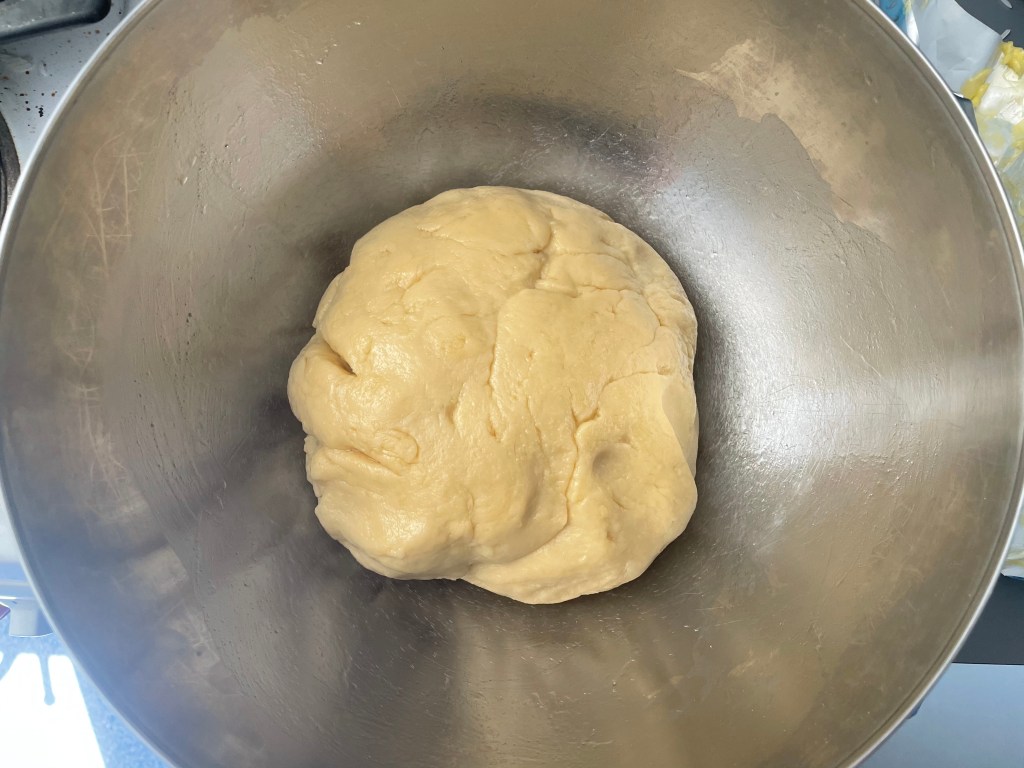
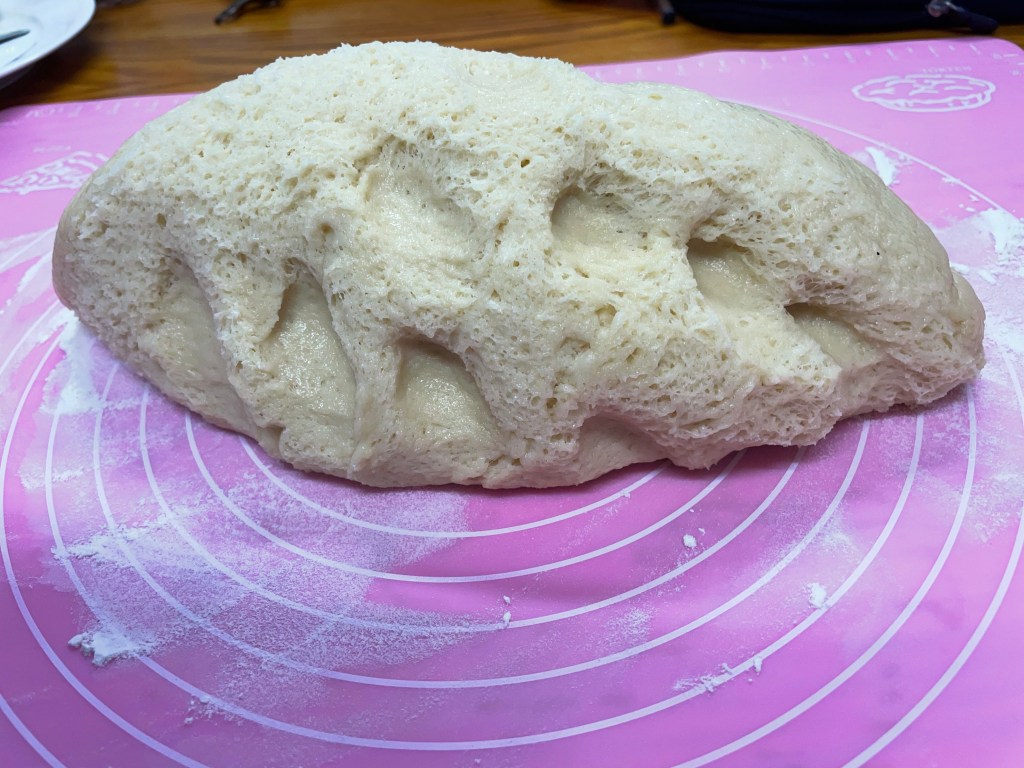
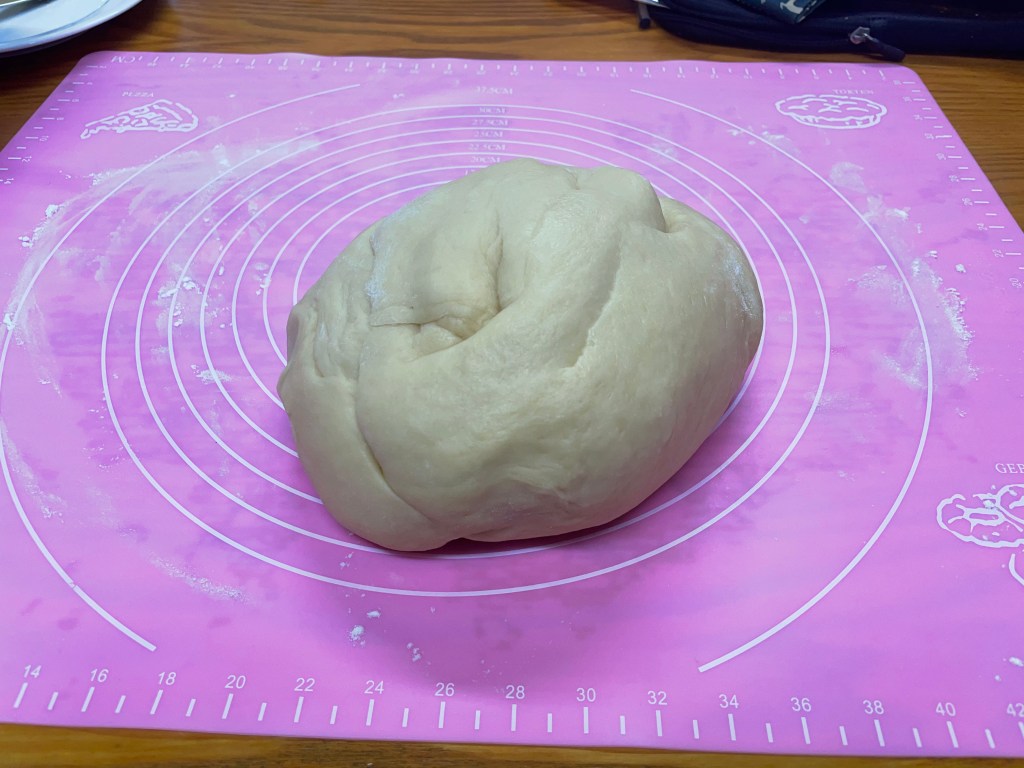
Make one dough ball from the basic dough recipe and let it proof for 1 hour until doubled in size (click here for tips on how to proof your dough in the oven). Once risen, punch the dough and knead a couple times on a floured surface to get rid of any air pockets. Divide the dough into 8 equal pieces (or bigger if you prefer your manakish larger) and let it rest for 10 minutes.

Preheat the oven to 200˚C.

In a bowl combine the za’atar with the olive oil and mix.

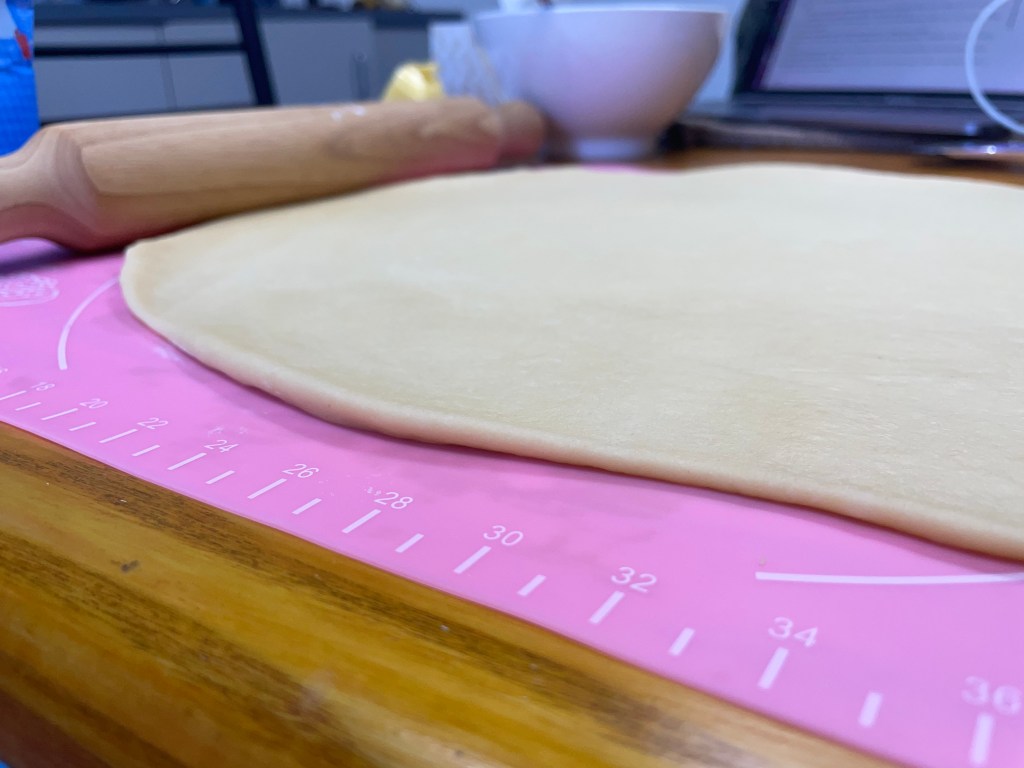
After the dough has rested, knead each ball a couple times on a floured surface then roll it out to 5mm thick (or to preference – the thinner you roll it, the crispier your flatbread and the thicker it is, the more fluffy it will be). Transfer the dough onto a greased baking tray. (It’s important to transfer the dough to the tray FIRST before spreading the za’atar otherwise it may get a little messy!)

I prefer mine a little crispy so I roll it out thinner here. If you want it fluffier, roll it thicker.

Mix and spread your za’atar mixture over the dough and bake in the oven at 200˚C for 7-10 minutes until the edges are golden. Let it sit for 5 minutes before serving so the olive oil gets soaked into the bread. Enjoy!

Tip: If you don’t want to make an entire batch, you can freeze the divided dough balls by wrapping them in cling wrap and just defrost the dough a few hours before you want to use it. You don’t need to rest it, just roll it out and spread za’atar over it (use roughly 2 Tbsps of olive oil + 2 Tbsps za’atar per flatbread). This makes a quick and easy late night snack!

Did you try this recipe? I’d love your feedback or any comments on what you thought! Leave a message below and follow me on facebook and instagram (@polyphagicabby). 🙂

Watch the Video Tutorial!

Summarized Recipe:

Za’atar Manakish

Date Published: August 2nd, 2020 | Last Updated: August 2nd, 2020
Author: Abby |Category: breads, easy, snacks
Serves: 8 (or 4 large ones) | Prep time: 1.5hrs (from start of dough) | Cook time: 10 mins

Ingredients:

Directions:

  1. Make one dough ball from the basic dough recipe and let it proof for 1 hour until doubled in size (click here for tips on how to proof your dough in the oven). Once risen, punch the dough and knead a couple times on a floured surface to get rid of any air pockets. Divide the dough into 8 equal pieces (or bigger if you prefer your manakish larger) and let it rest for 10 minutes.
  2. Preheat the oven to 200˚C.
  3. In a bowl combine the za’atar with the olive oil and mix.
  4. After the dough has rested, knead each ball a couple times on a floured surface then roll it out to 5mm thick (or to preference – the thinner you roll it, the crispier your flatbread and the thicker it is, the more fluffy it will be). Transfer the dough to a greased baking tray.
  5. Mix and spread your za’atar mixture over the dough and bake in the oven at 200˚C for 7-10 minutes until the edges are golden. Let it sit for 5 minutes before serving so the olive oil gets soaked into the bread. Enjoy!

Tip: If you don’t want to make an entire batch, you can freeze the divided dough balls by wrapping them in cling wrap and just defrost the dough a few hours before you want to use it. You don’t need to rest it, just roll it out and spread za’atar over it (use roughly 2 Tbsps of olive oil + 2 Tbsps za’atar per flatbread). This makes a quick and easy late night snack!