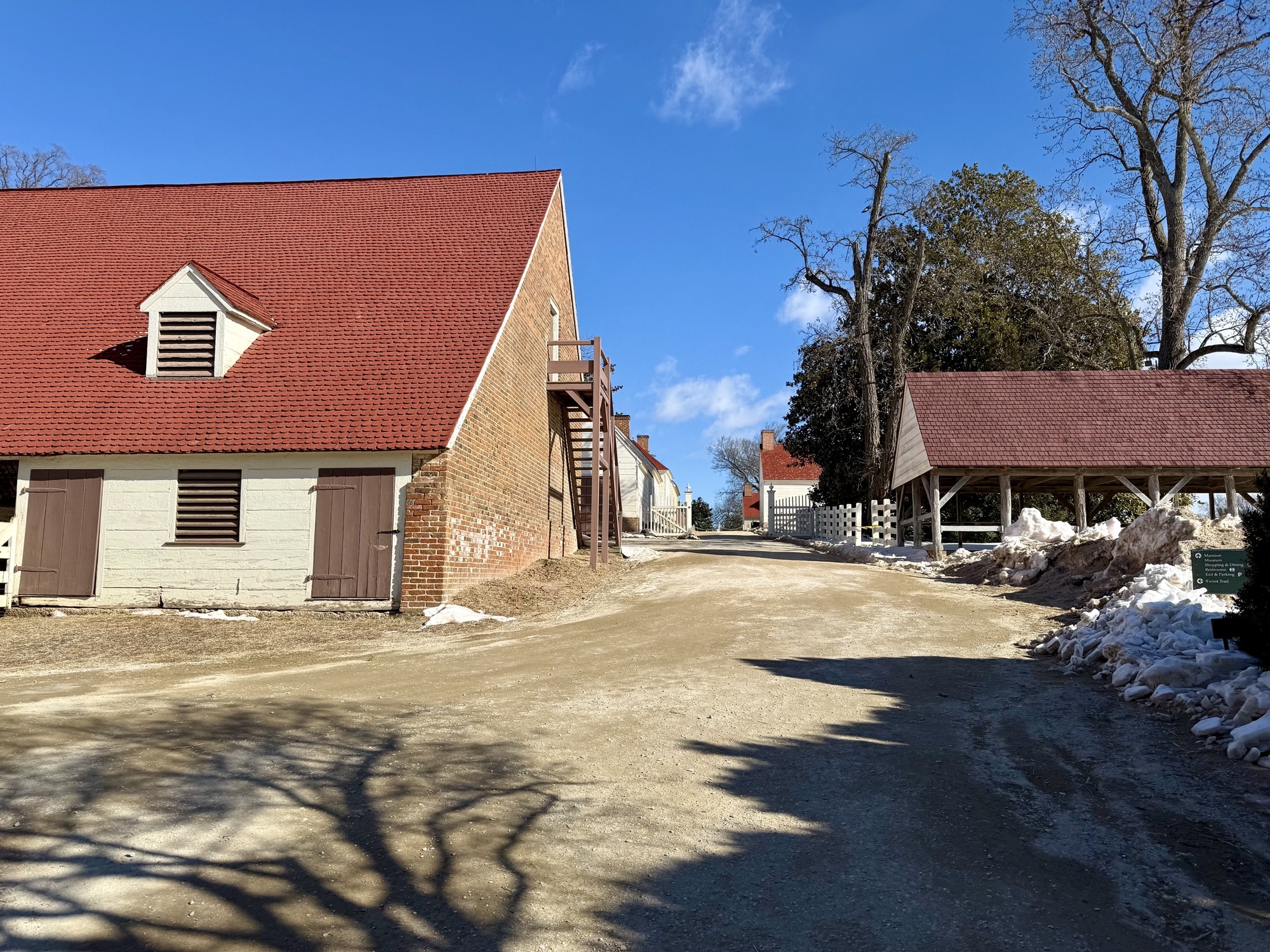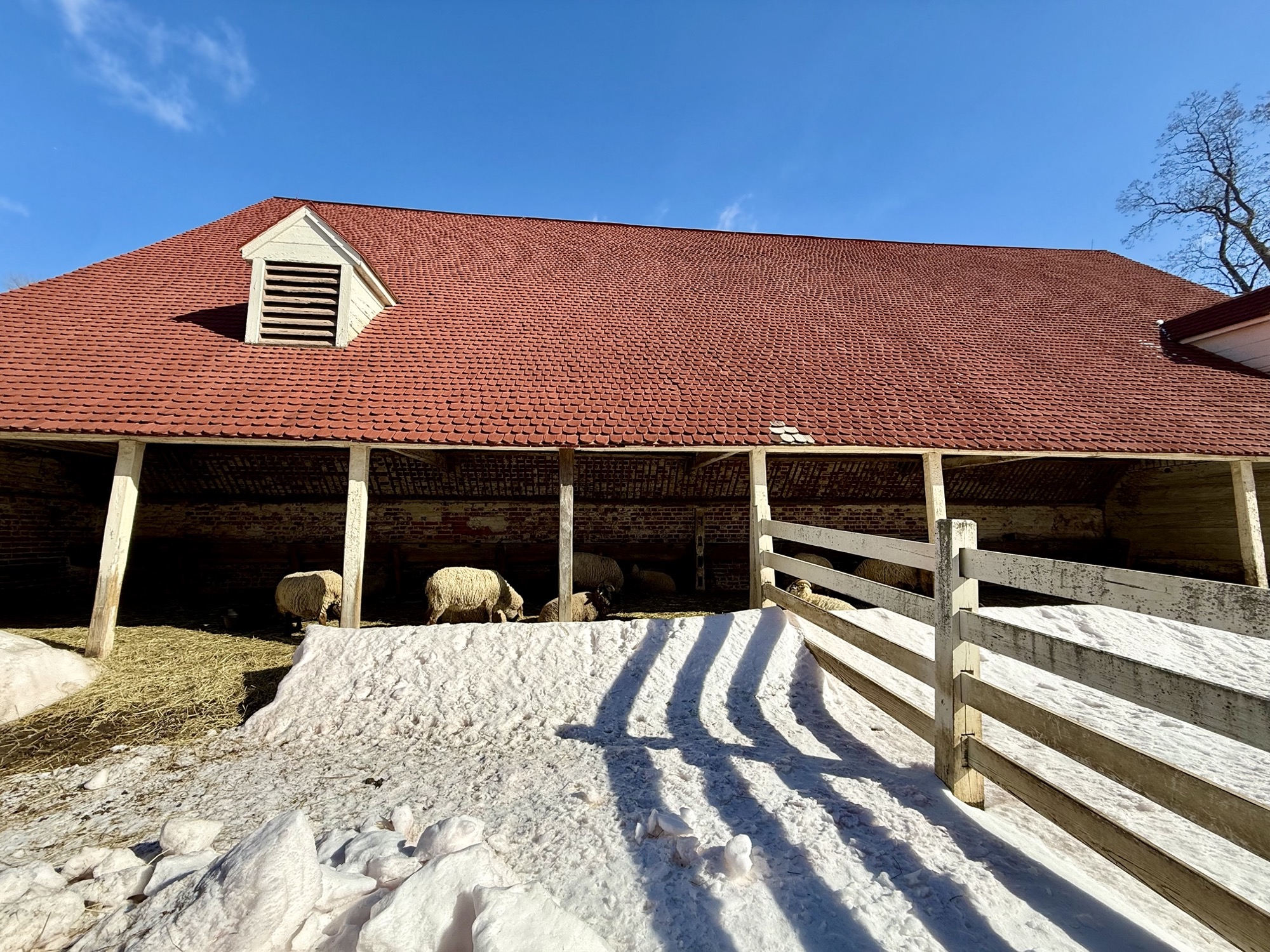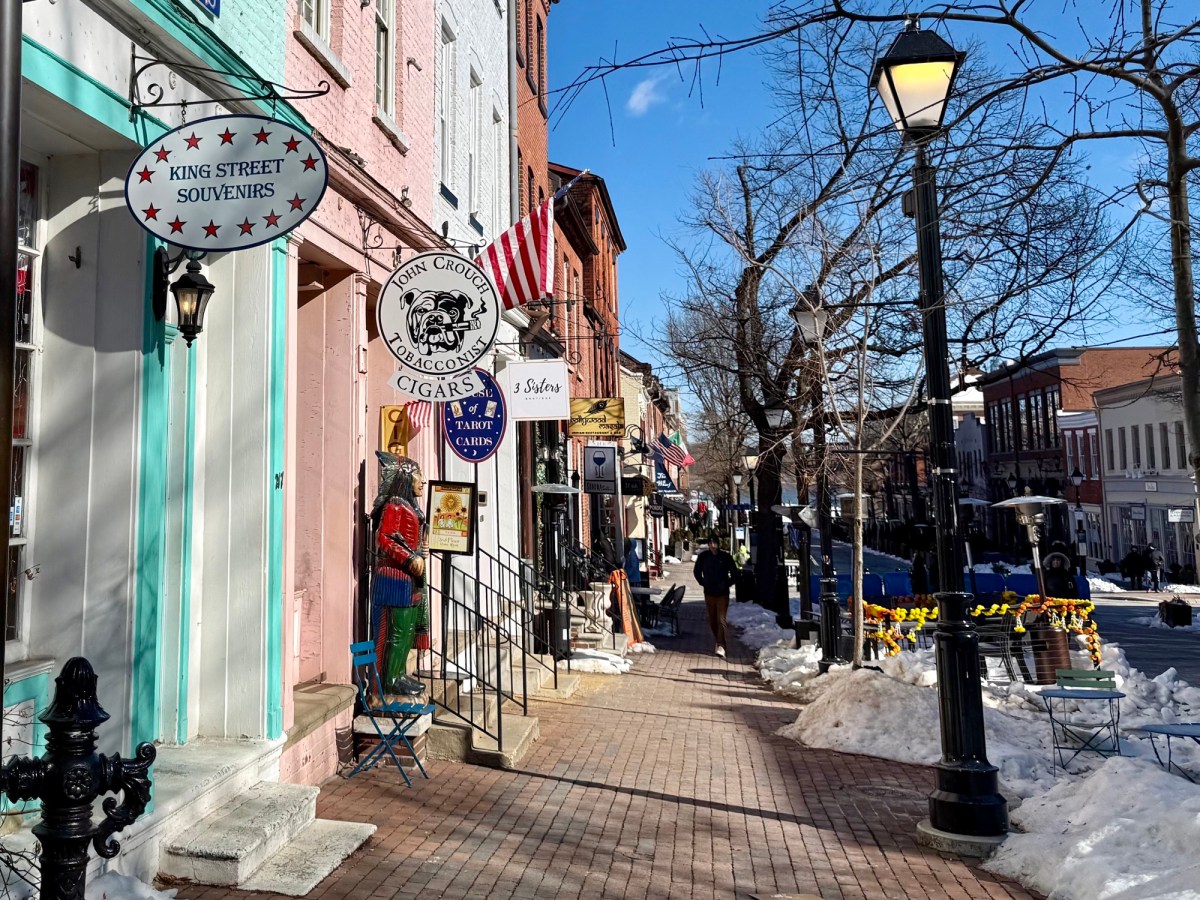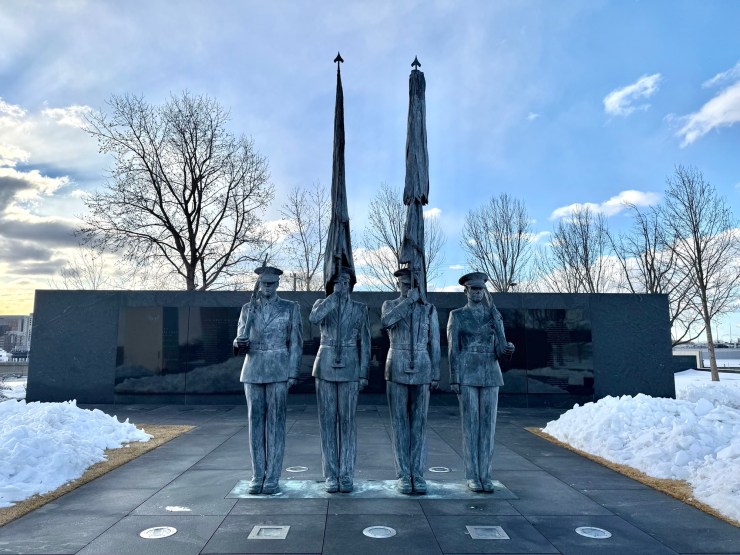
The Battle of Fredericksburg: The Deadliest in the American Civil War


Date Published: May 25th, 2026 | Last Updated: May 25th, 2026
Author: Abby | Category: Travel, USA
Date of travel: Feb 8th, 2026

Fredericksburg and Spotsylvania National Military Park is a massive historic park operated by the National Park Service. It commemorates four major battles in the American Civil War: Fredericksburg, Chancellorsville, The Wilderness, and Spotsylvania. Of these 4, the most notable one is the Battle of Fredericksburg at Sunken Road, which will be the focus of this article.

Note: To be honest, if you’re not into American history and you have limited time, then you’re probably going to find this kind of boring. We’re not history buffs, but we found it pretty cool to walk amongst this place and seeing the stone wall along the Sunken Road.

Visitor Info:

Location: 1013 Lafayette Boulevard, Fredericksburg, VA 22401 (takes you to the visitor’s center)
Hours: sunrise to sunset, the visitors center is open 9am-5pm
Website: https://www.nps.gov/frsp/planyourvisit/directions.htm
Cost: free

A little background info:

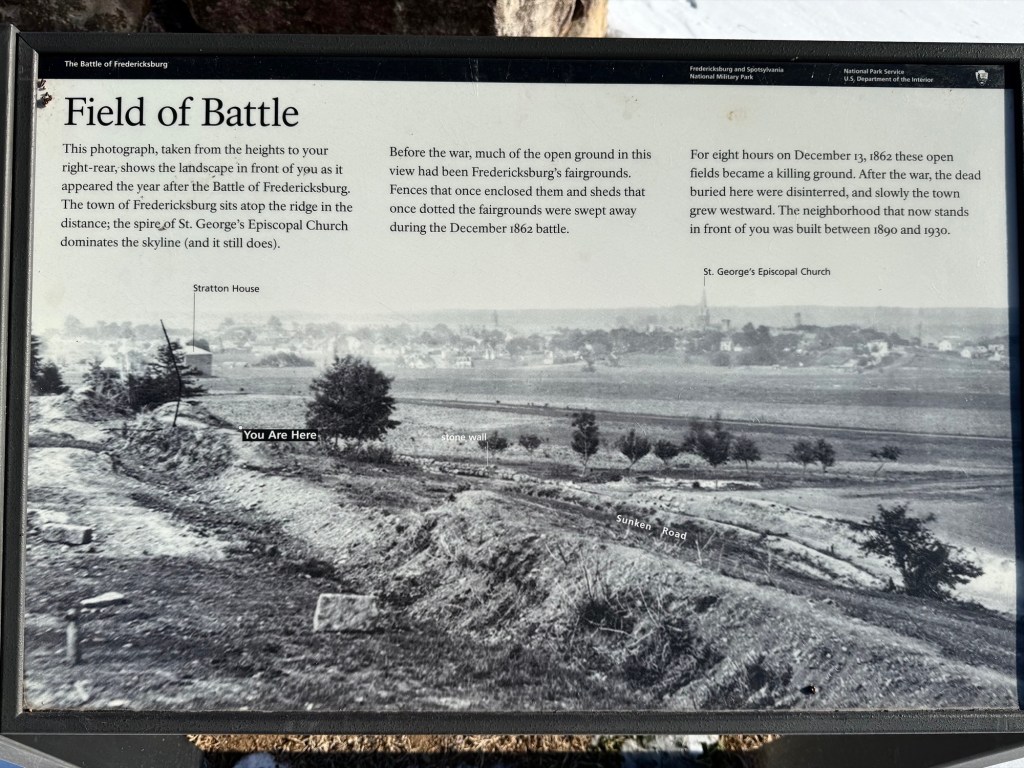
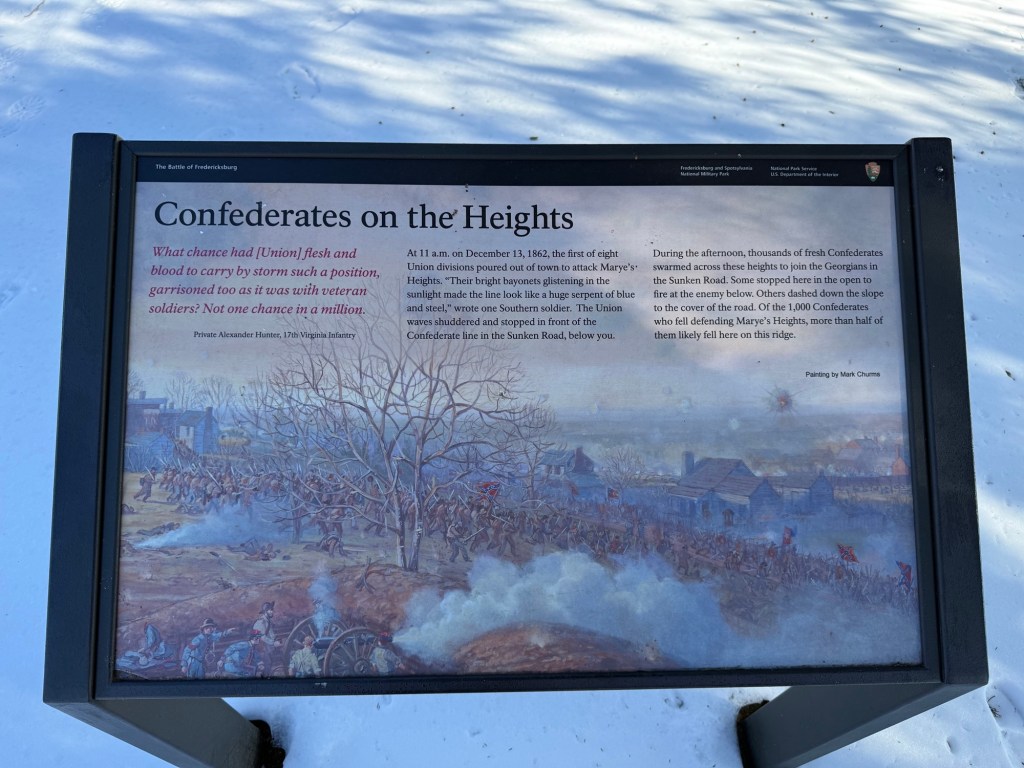
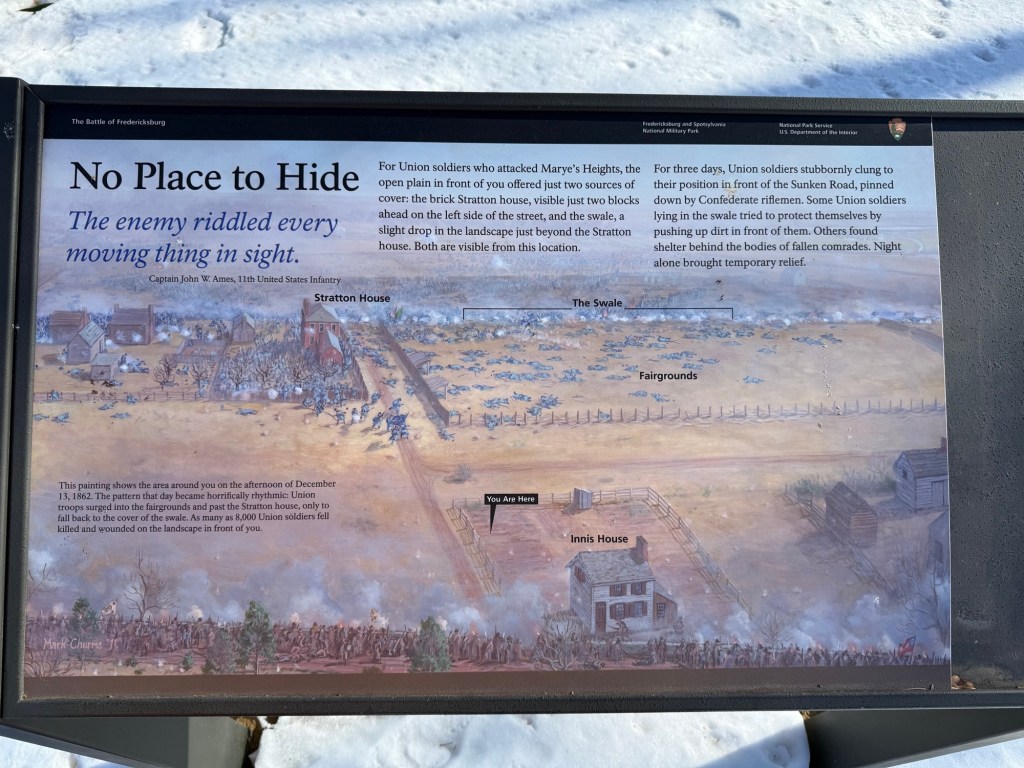
The Battle of Fredericksburg at Sunken Road lasted 4 days and is known as the largest and deadliest battle of the American civil war. It was a massacre of the Union forces. Here, the confederate army occupied ‘Marye’s Heights’, a hill that overlooks the town of Fredericksburg. This site gave them the advantage of height as well as cover on the “Sunken Road” which was a road with a small stone wall. It was literally an uphill battle for the Union soldiers who had very little to no cover climbing up the hill while being targeted. It was estimated that 20,000 soldiers died here (at least 13,000 of them being Union soldiers), but only 3000 were able to be identified.

Check out this short 4 minute video of a park ranger that explains more about the background surrounding this battle: https://www.britannica.com/video/overview-Battle-of-Fredericksburg-American-Civil-War/-224645

How much time do I need?

Fredericksburg and Spotsylvania National Military Park is a massive historic park. We only visited the Battle of Fredericksburg site at Sunken Road which is the main highlight of this park. It took us 2 hours to walk through the Sunken Road trail (see map further down this article) and read all of the information plaques. If you just walk the trail without reading anything, you’ll be done in less than 1 hour. We then spent another 15-20 minutes driving through the small town of Fredericksburg to see some of the other historic sites on the map, but the signage wasn’t very clear and the spots were easy to miss so we didn’t stay very long.

If you want to visit the other 3 battlefields in the massive Fredericksburg and Spotsylvania National Military Park (Chancellorsville, Spotsylvania, and Wilderness), I can’t say exactly how much time you’ll need for them since we didn’t visit, but I’ve heard some people say 1-2 days to see everything. I’ve attached a picture of the overall park map you can pick up from the visitors center to give you an idea of how big this place is. You can also find a pdf version of it here: https://www.nps.gov/frsp/images/FRSPmap1_1.jpg.
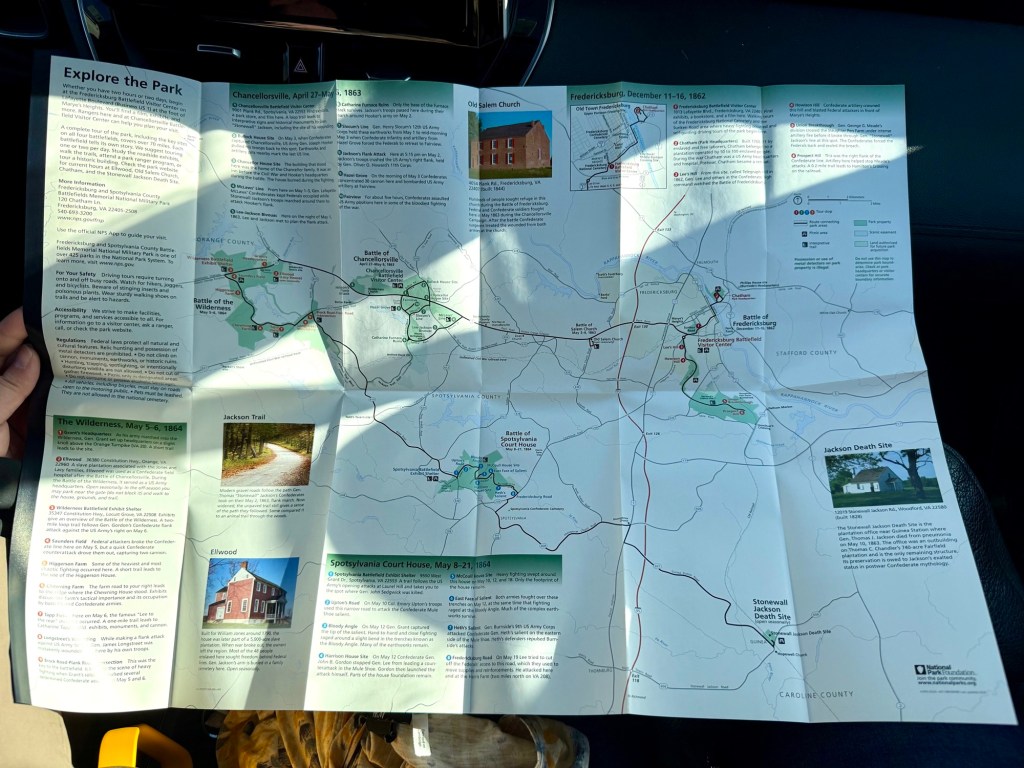
Overview Park Map of all 4 Battle Sites

Best time of year to travel?

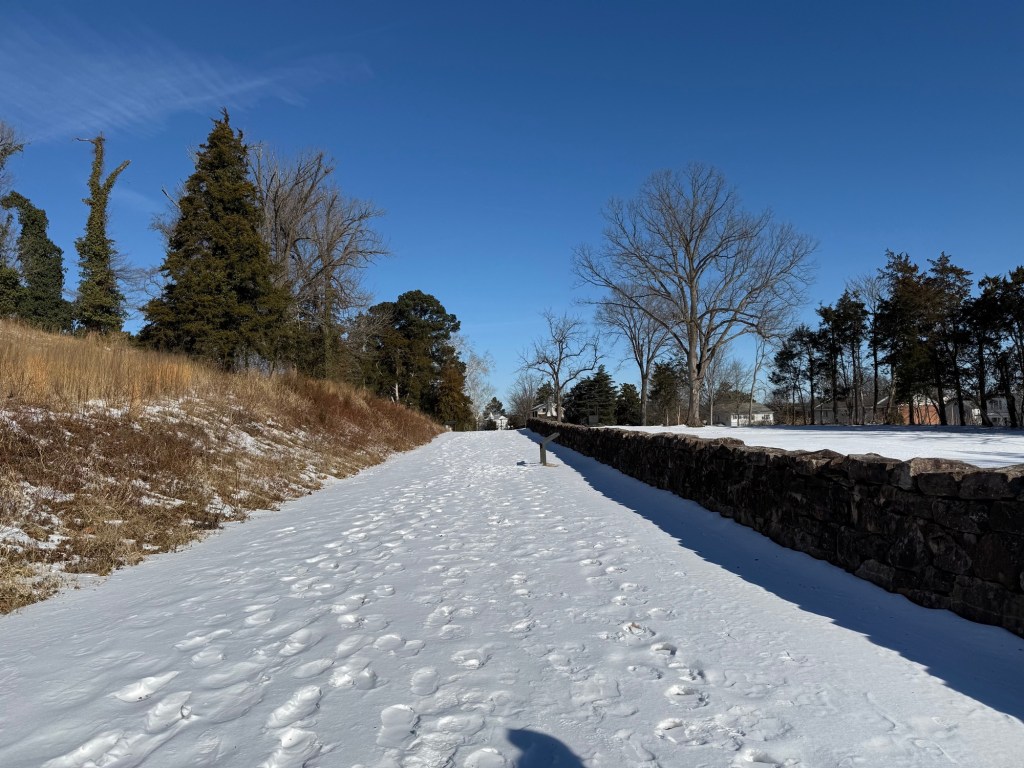
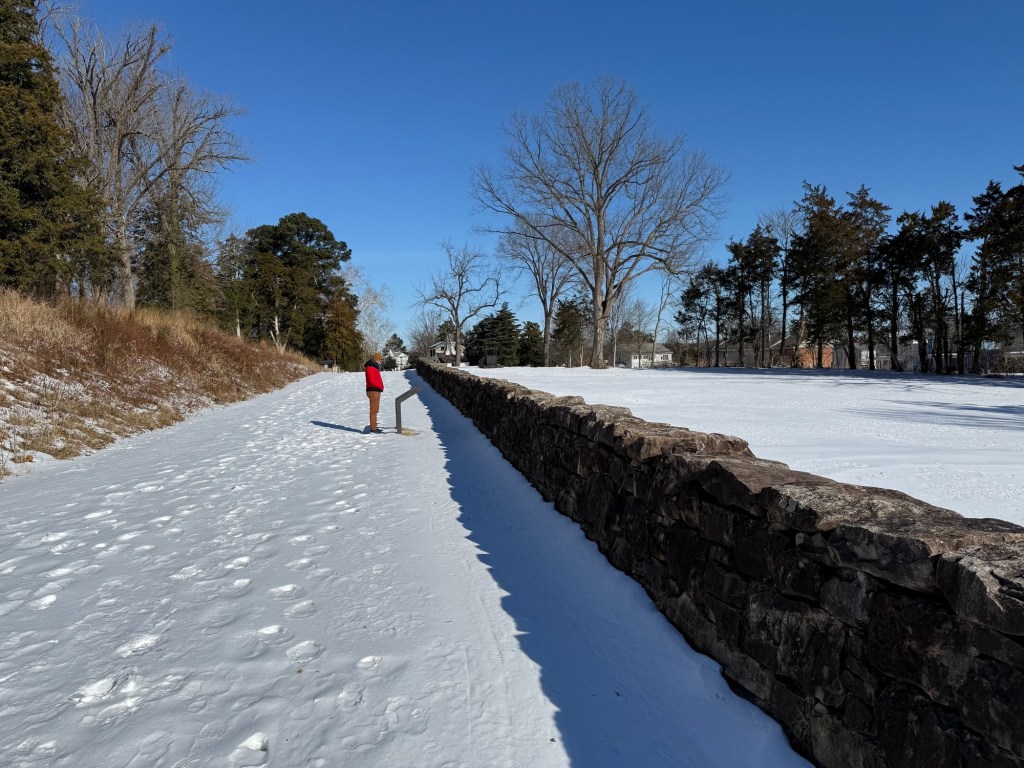
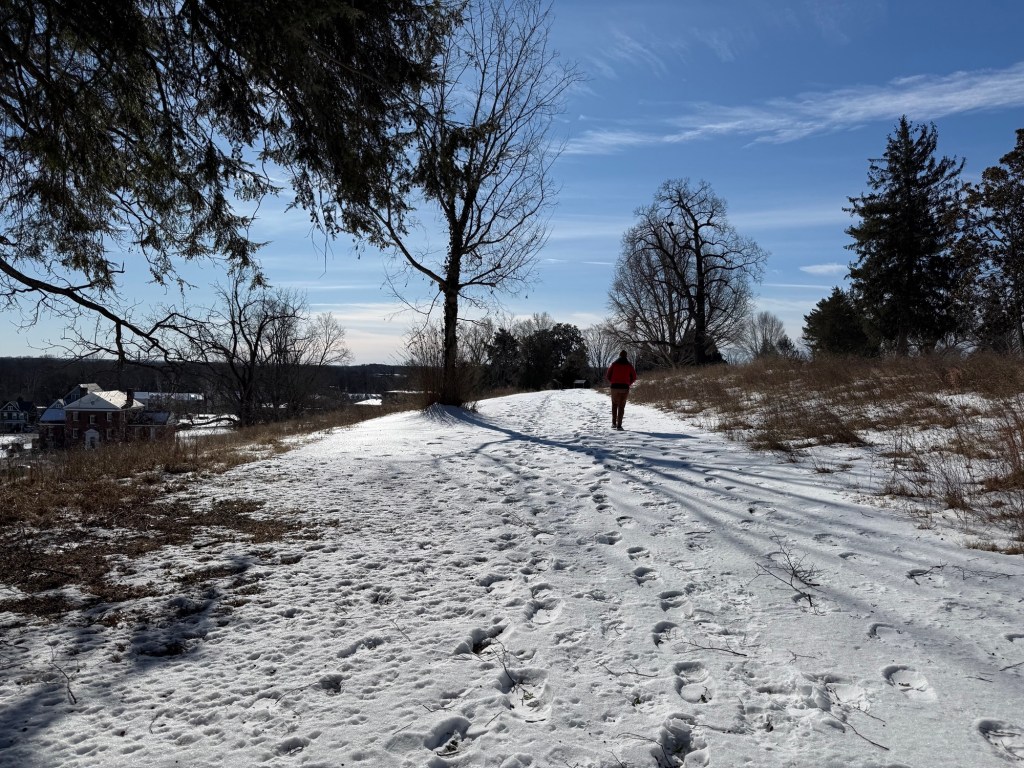
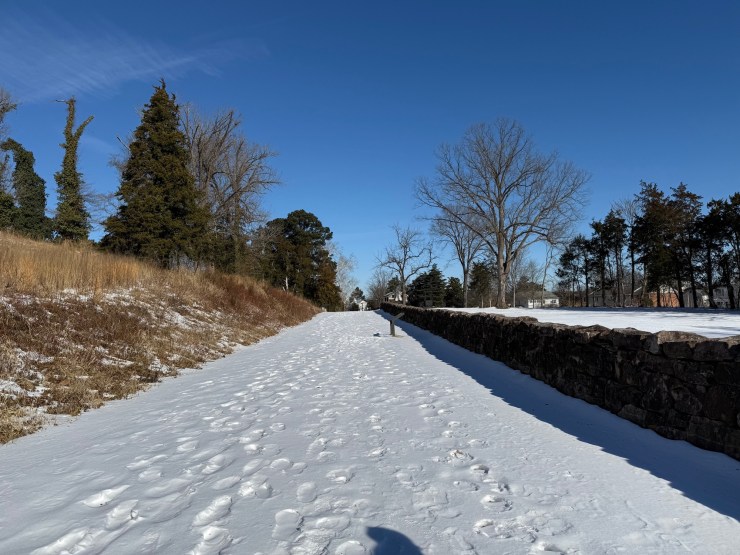
The historic park is open year-round, however the walking paths are not very well maintained in the winter, so keep that in mind if you’re visiting in the colder months. We visited in the middle of winter and had to walk over icy snow on the Sunken Trail and stepped in other people’s snowy footprints to make it up Marye’s Heights hill.

The best time to come is anytime where there’s no snow or ice cover on the ground.

Getting Around & Parking

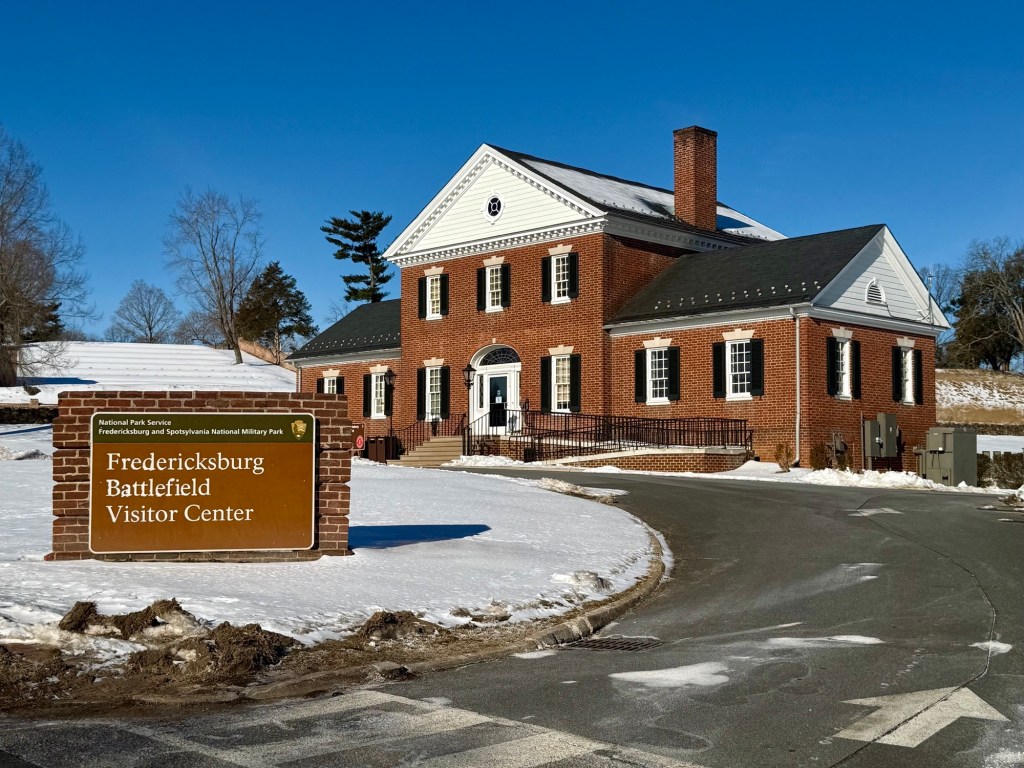
Driving is the best way to get around. Park your car for free at the Ferdericksburg Battlefield Visitor Center (1013 Lafayette Boulevard, Fredericksburg, VA 22401) and the historic Sunken Trail path starts just behind the building.

What to Expect

Start at the Fredericksburg Battlefield Visitor Center (1013 Lafayette Boulevard, Fredericksburg, VA 22401) where you’ll park your car. The main visitors center is temporarily closed until further notice for renovations, however they relocated into the smaller bookstore building next door. Here, there is a souvenir shop, bathrooms, and staff members you can speak to about the area and pick up a map. It’s open 9am-5pm. On the park website it says that they offer ranger tours at 10am, 11am, and 2pm (we weren’t here at the right time so we did a self-guided walk following the map).

Here’s a link to the park website for more pdf maps incase you can’t get your hands on one: https://www.nps.gov/frsp/planyourvisit/trails-brochures.htm
Below is a walking map of the Sunken Road Trail which is your guide to explore the battlegrounds. The path starts behind the visitors center on the “Sunken Road” where you parked your car. In this guide, I’ll walk you through this path and the things you’ll see along the way.
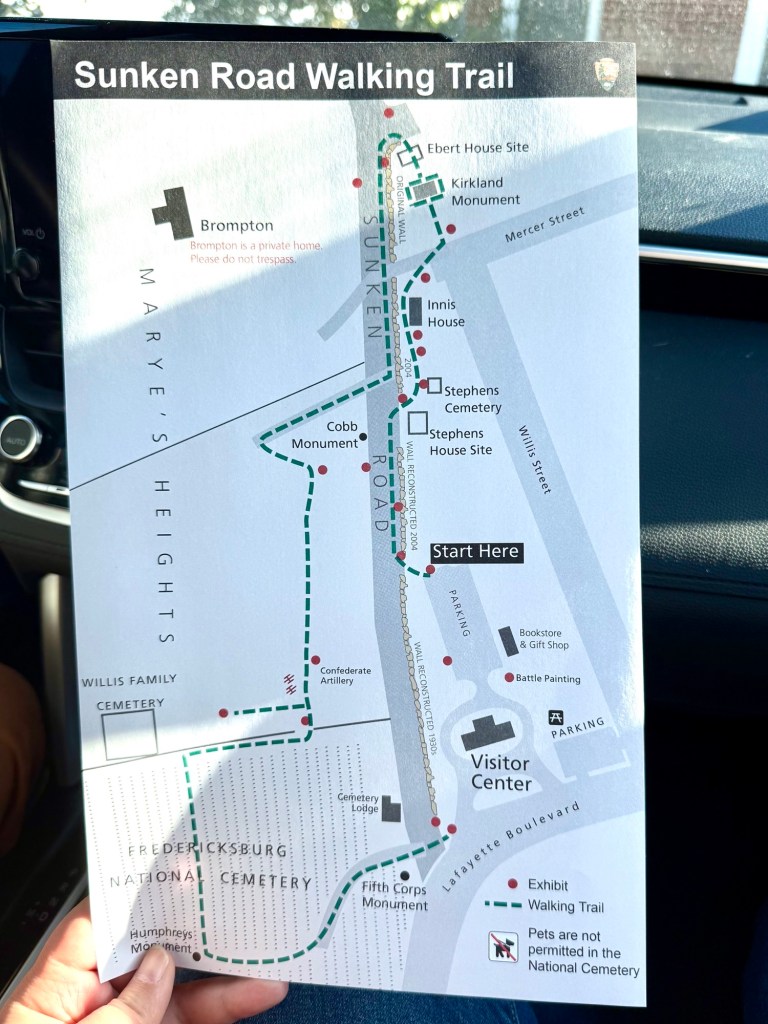
Walking map of the Sunken Road Trail (white squares = where buildings used to be; filed in squares = where a current building stands)

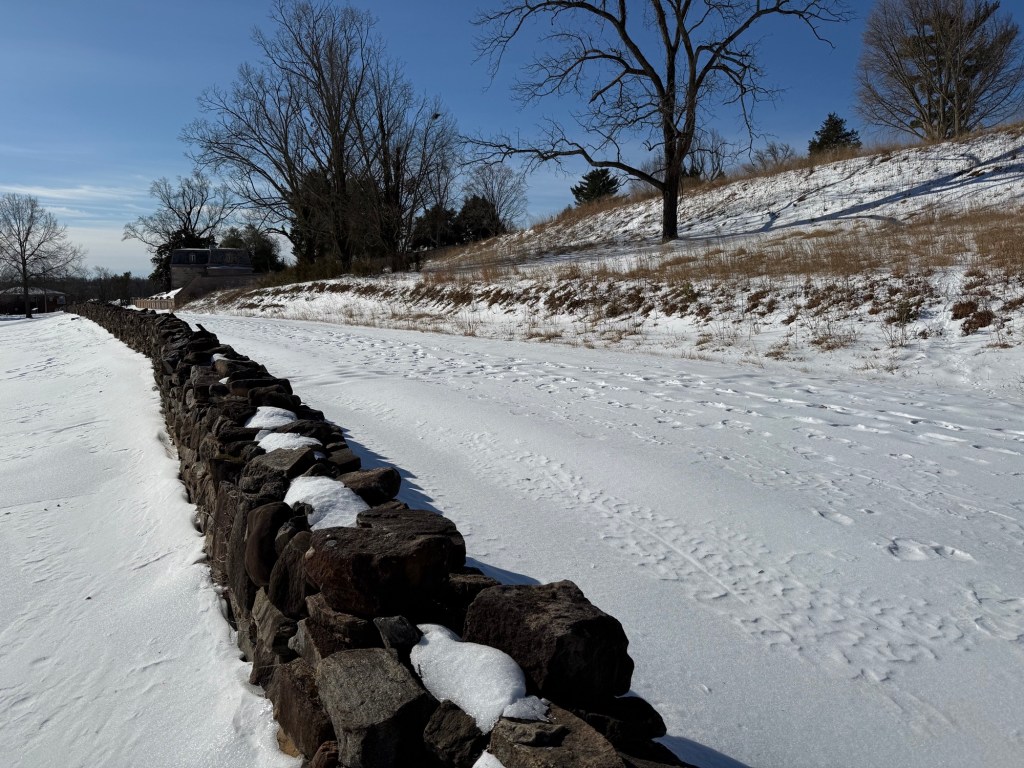
The Sunken Road was originally called ‘Country Road’ or ‘Telegraph Road’ and was a normal everyday road used by farmers to transport crops into town and locals to visit neighbours. This road had a short stone wall and was built along the side of ‘Marye’s Heights’ hill. Sunken Road was the perfect position for the confederate soldiers to take cover by the shield of the stone wall while taking aim at the charging Union soldiers to defend the hill.
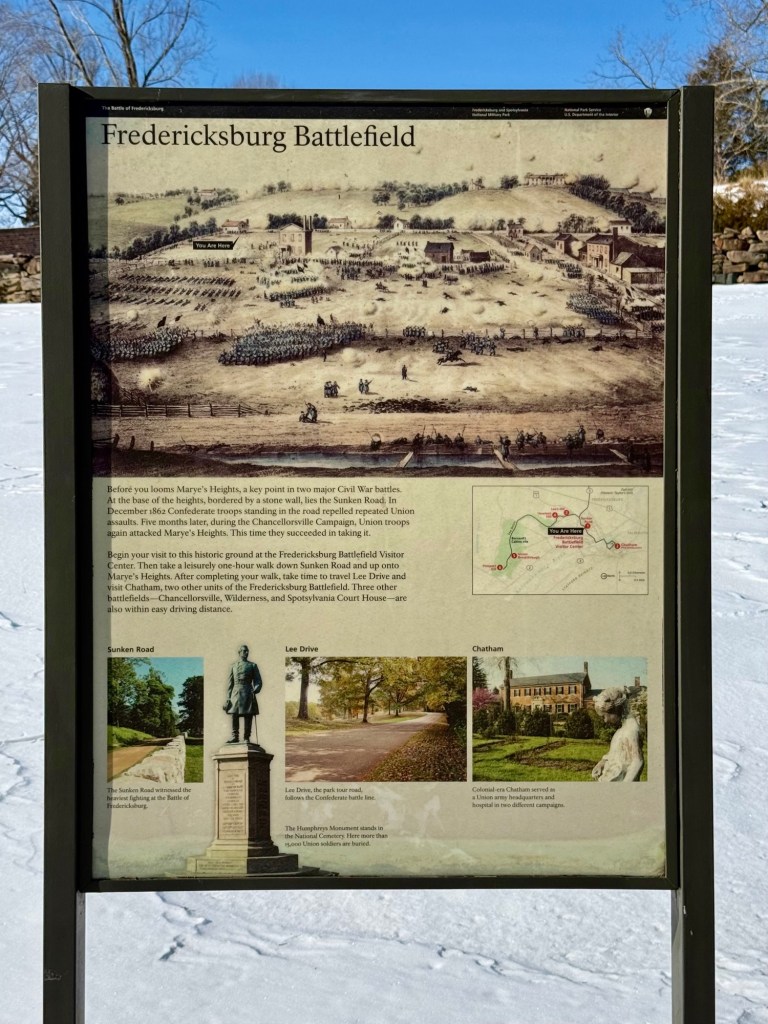
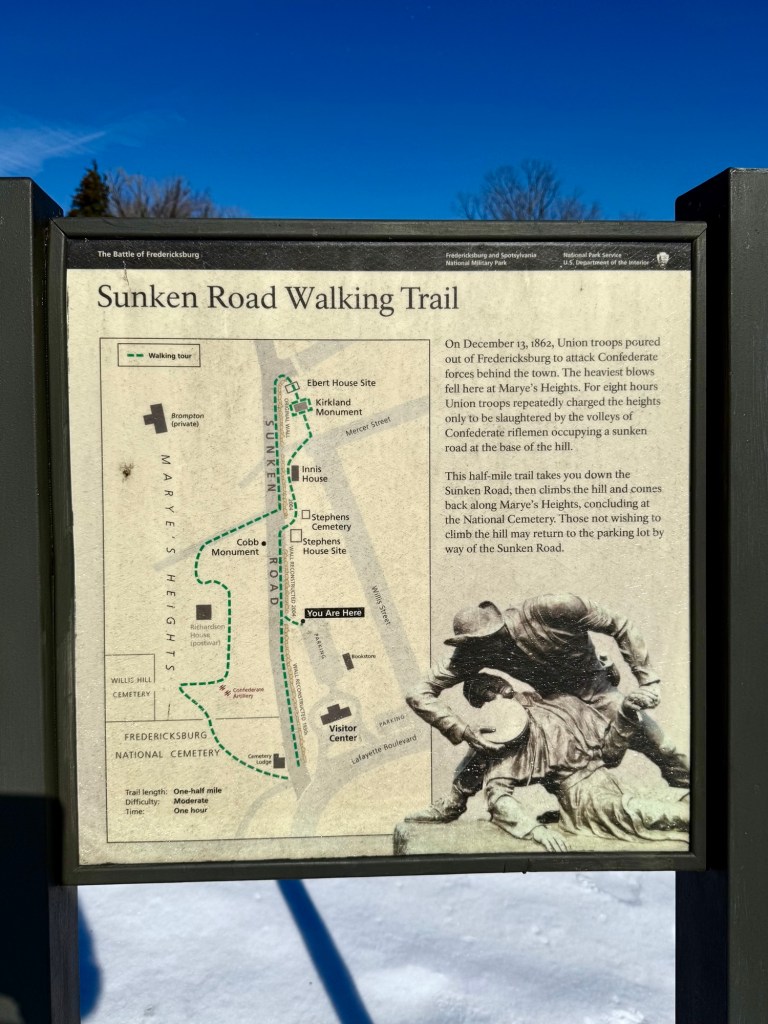
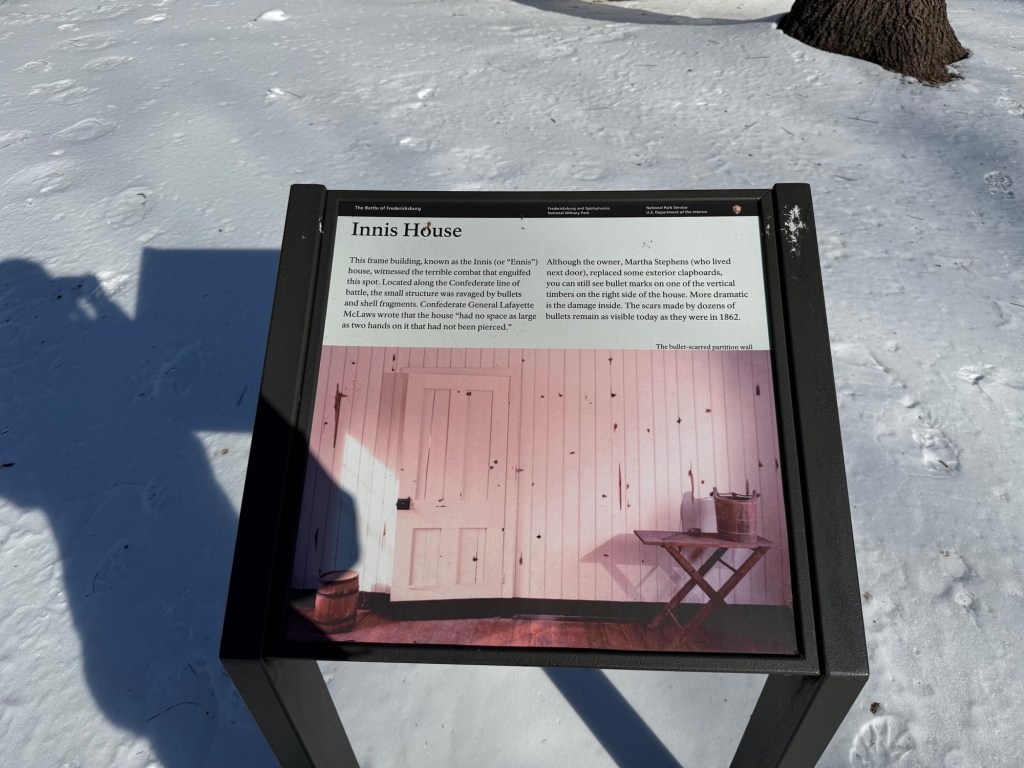
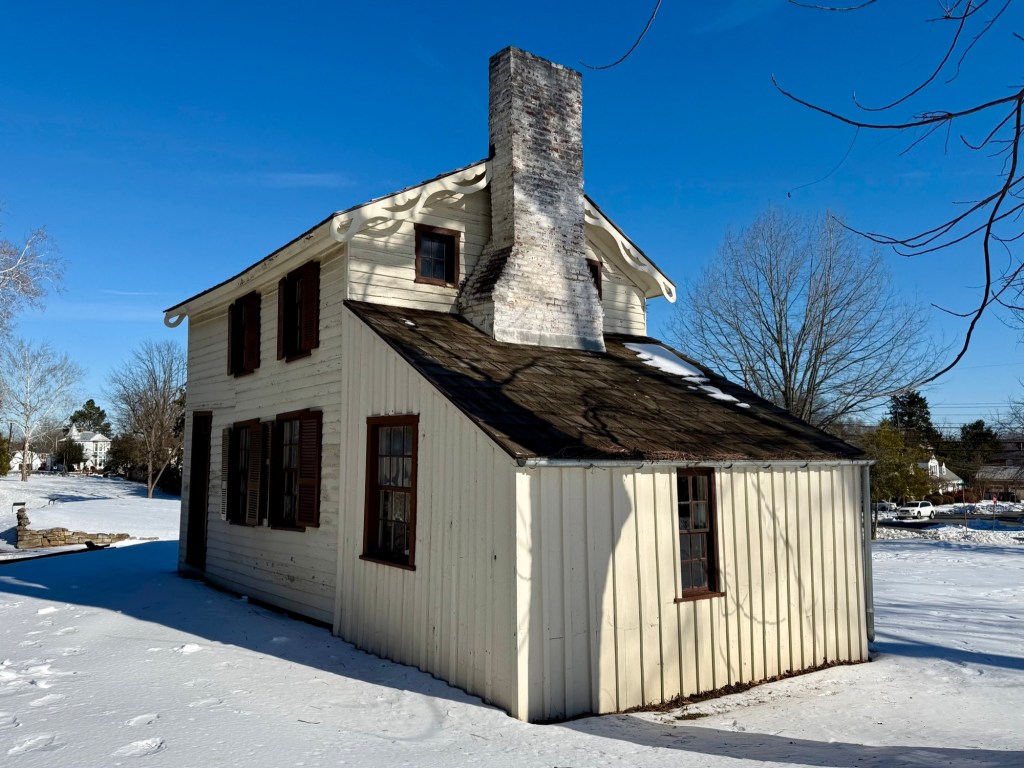
As you follow the walking trail map, you’ll pass by the Innis House. This house was present during the roaring Battle of Fredericksburg and you can see evidence of bullet holes and shell fragments on the walls! The outside panels have been replaced overtime, but you can peek your head in the window and see all the bullet holes on the interior walls.
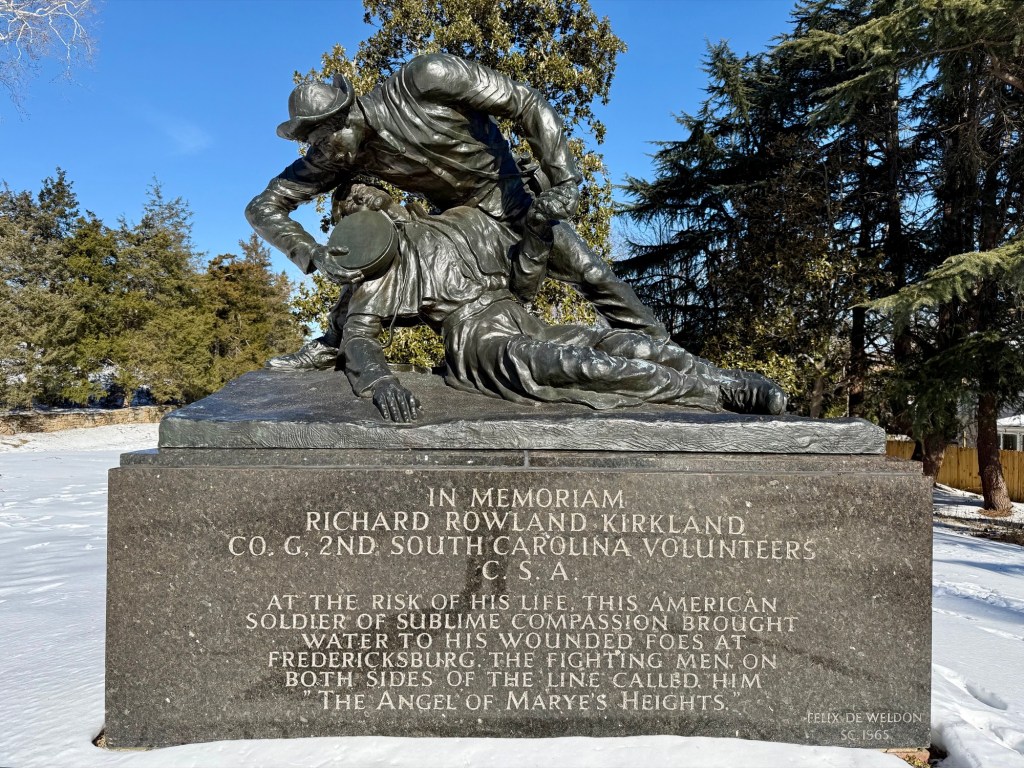
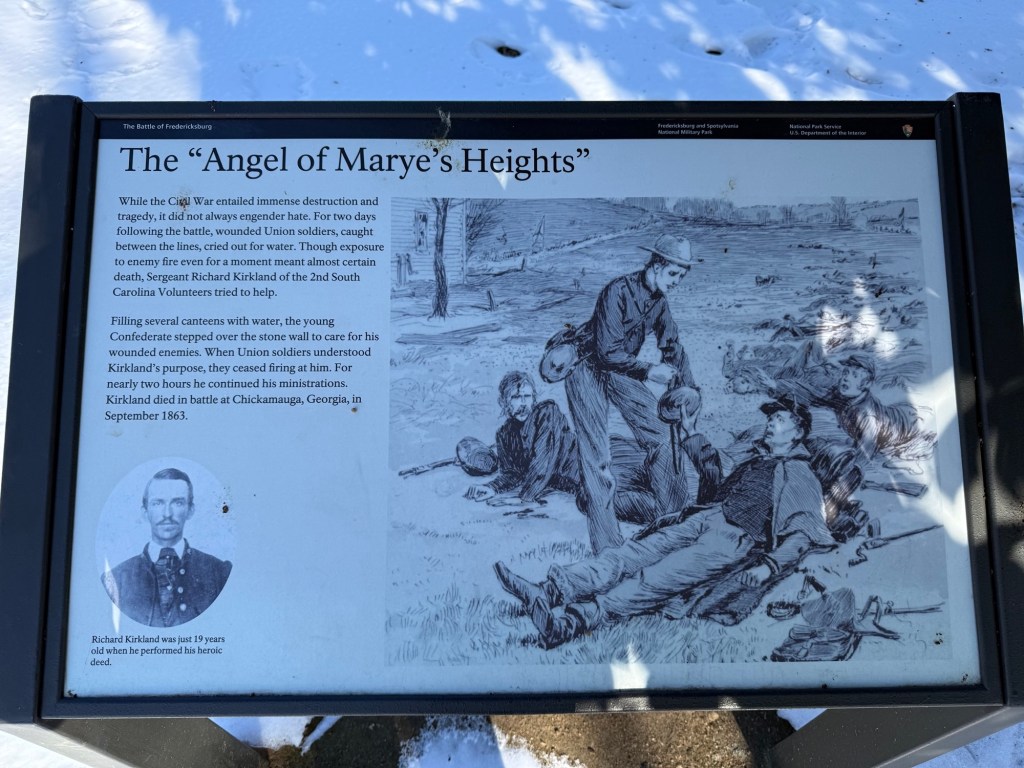
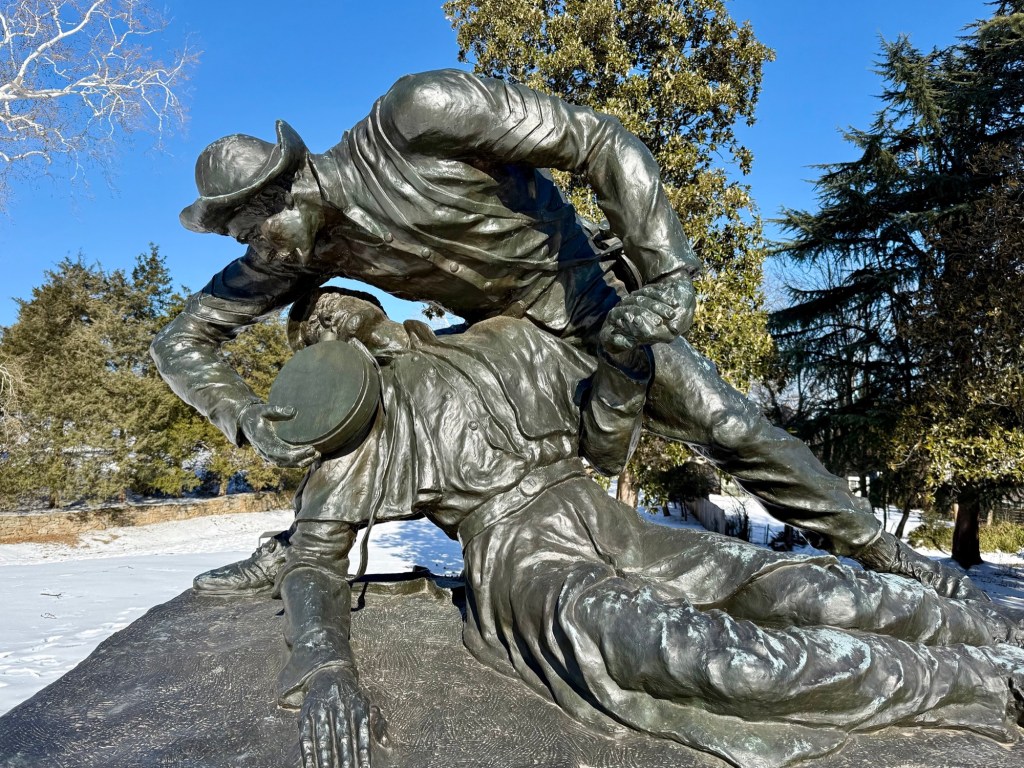
Next you’ll pass by Kirkland Monument, which is a large statue dedicated to “the angel of Marye Heights”, Seargent Richard Kirkland. This young confederate soldier heroically crossed over the Sunken Road walls to aid wounded enemy Union soldiers.
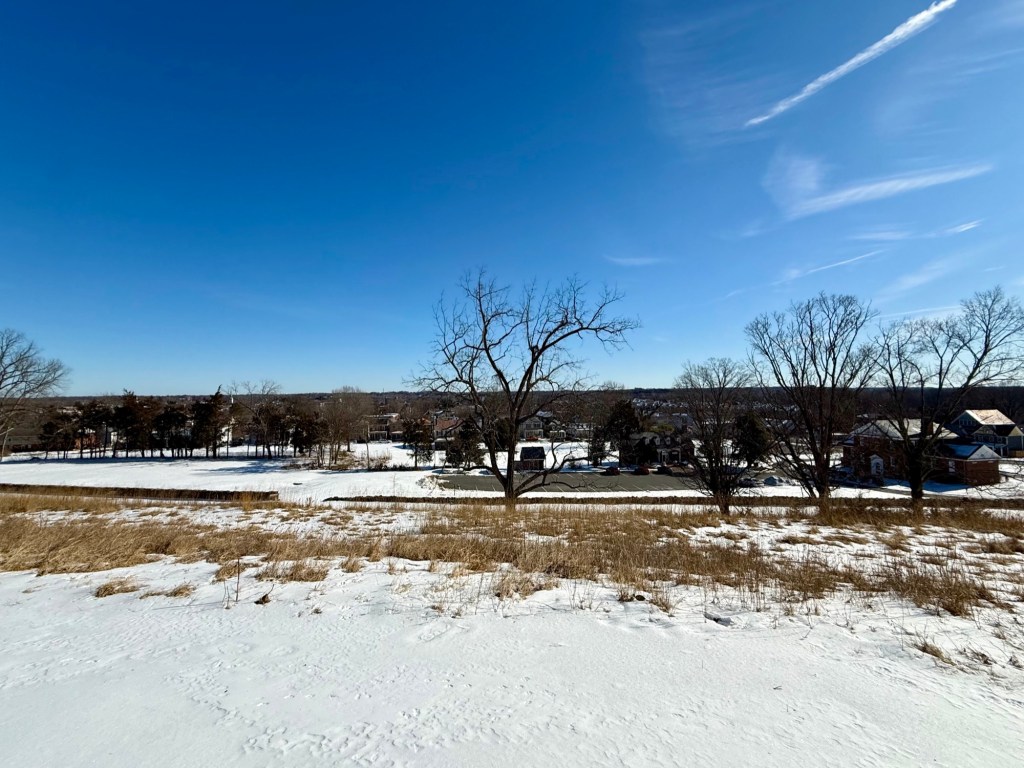
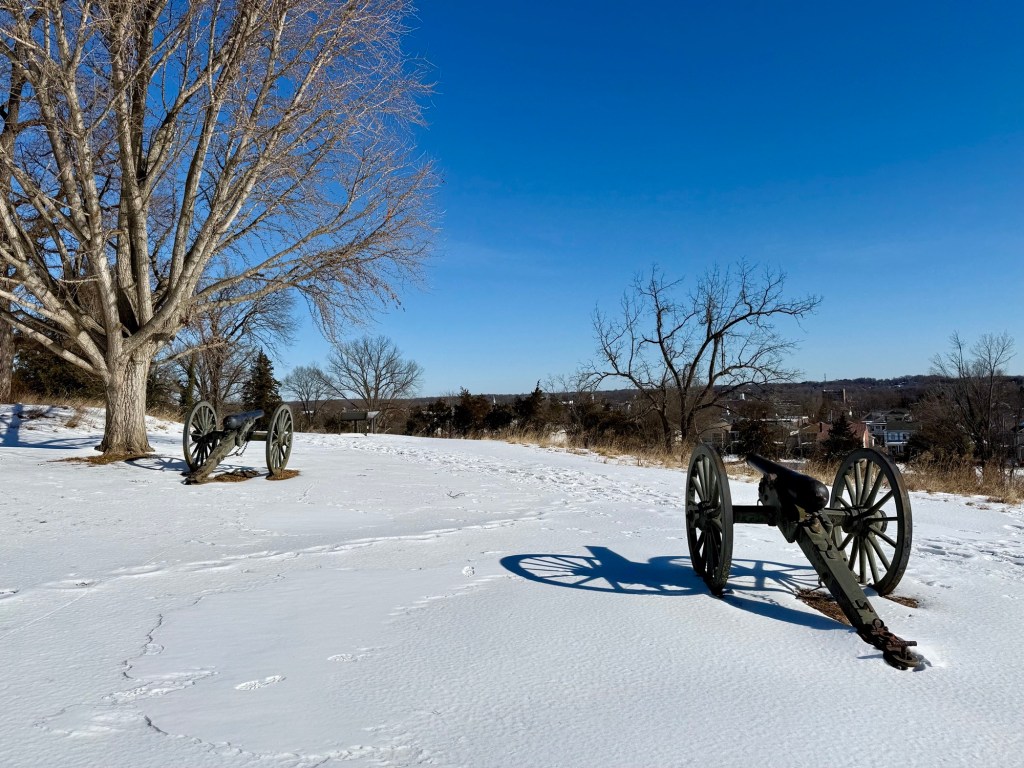
Next you’ll continue to path and U-turn up towards the top of Marye’s Heights. Here you’ll get a view of the land below and what it would’ve been like to be a confederate soldier looking down below towards the Union soldiers charging uphill. There was minimal cover for them and it was no wonder why this was a massacre.
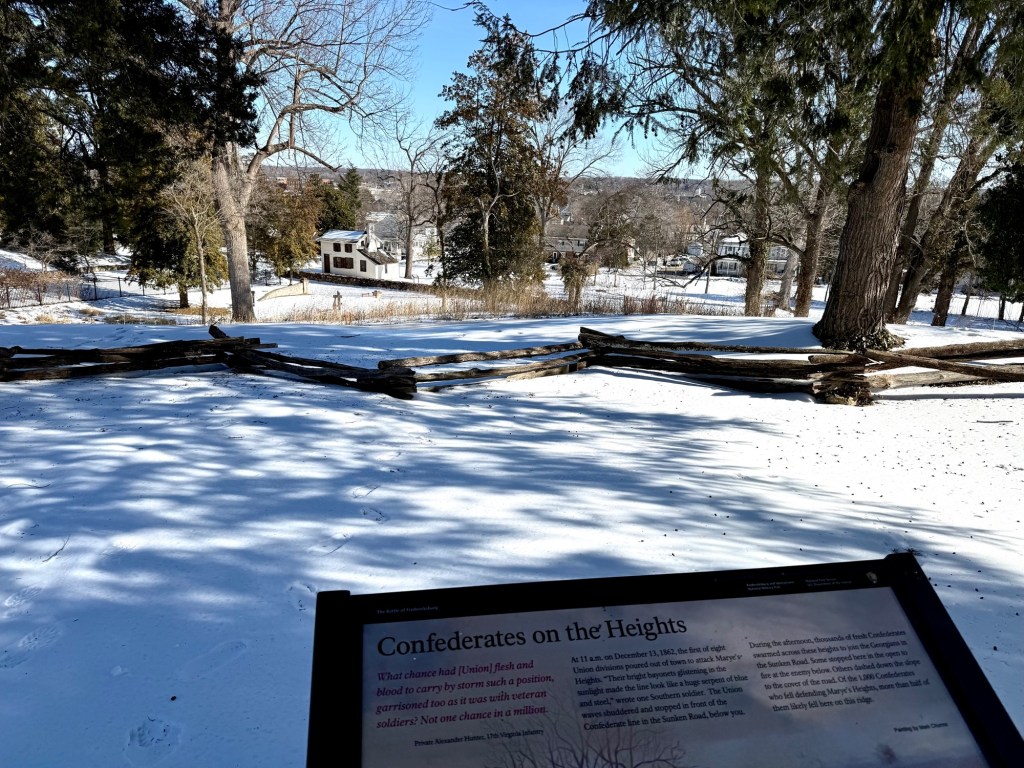
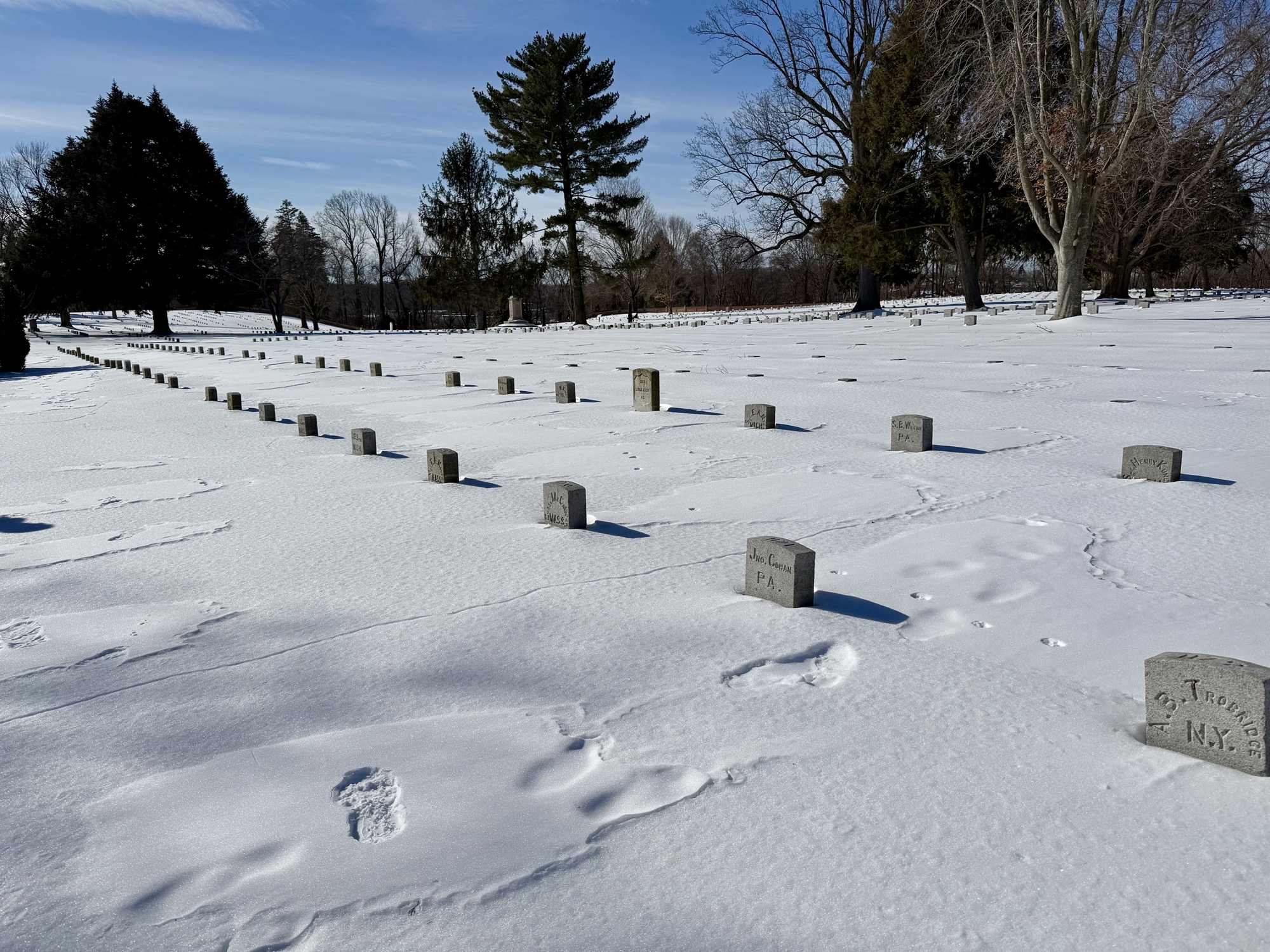
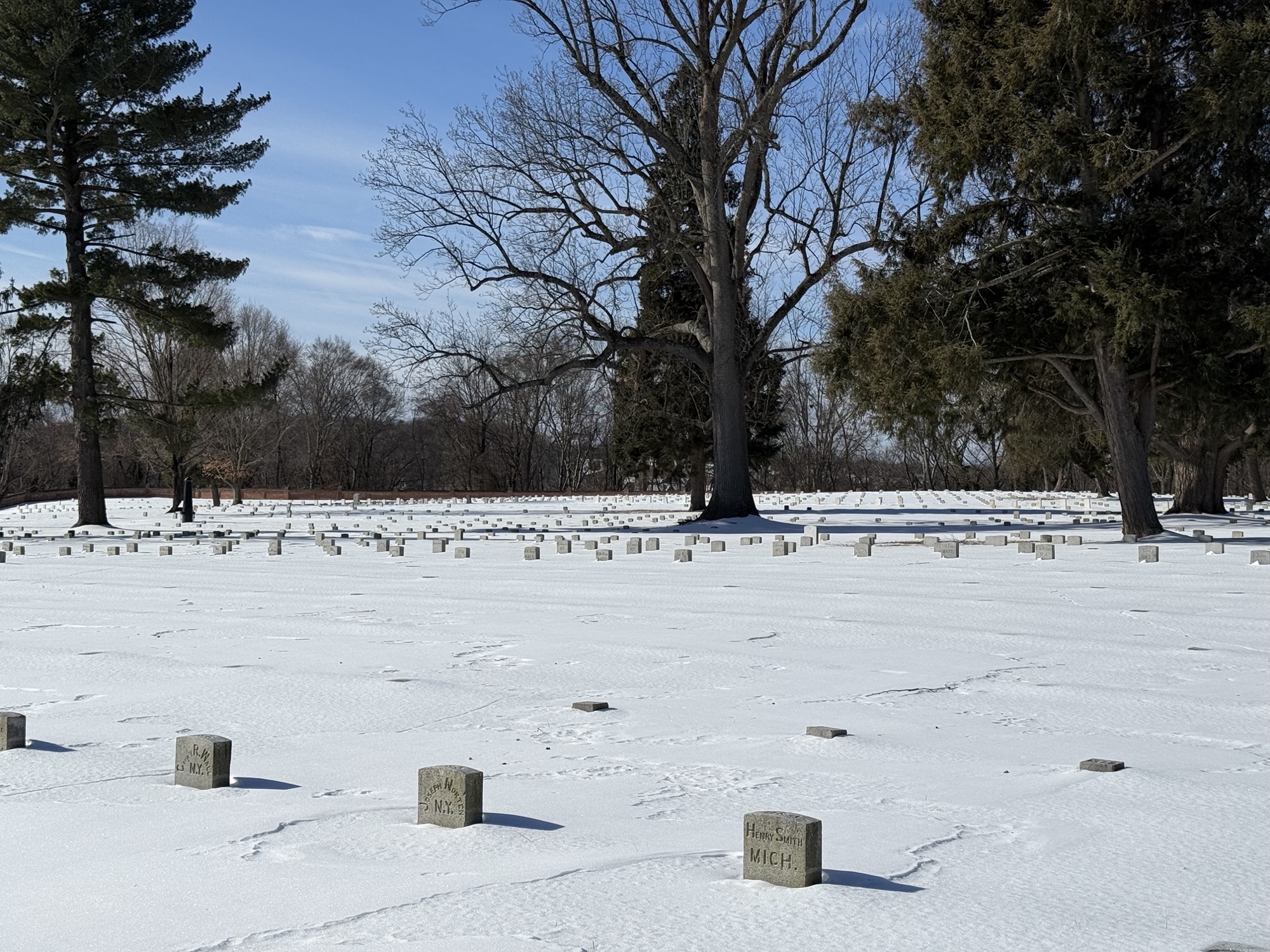
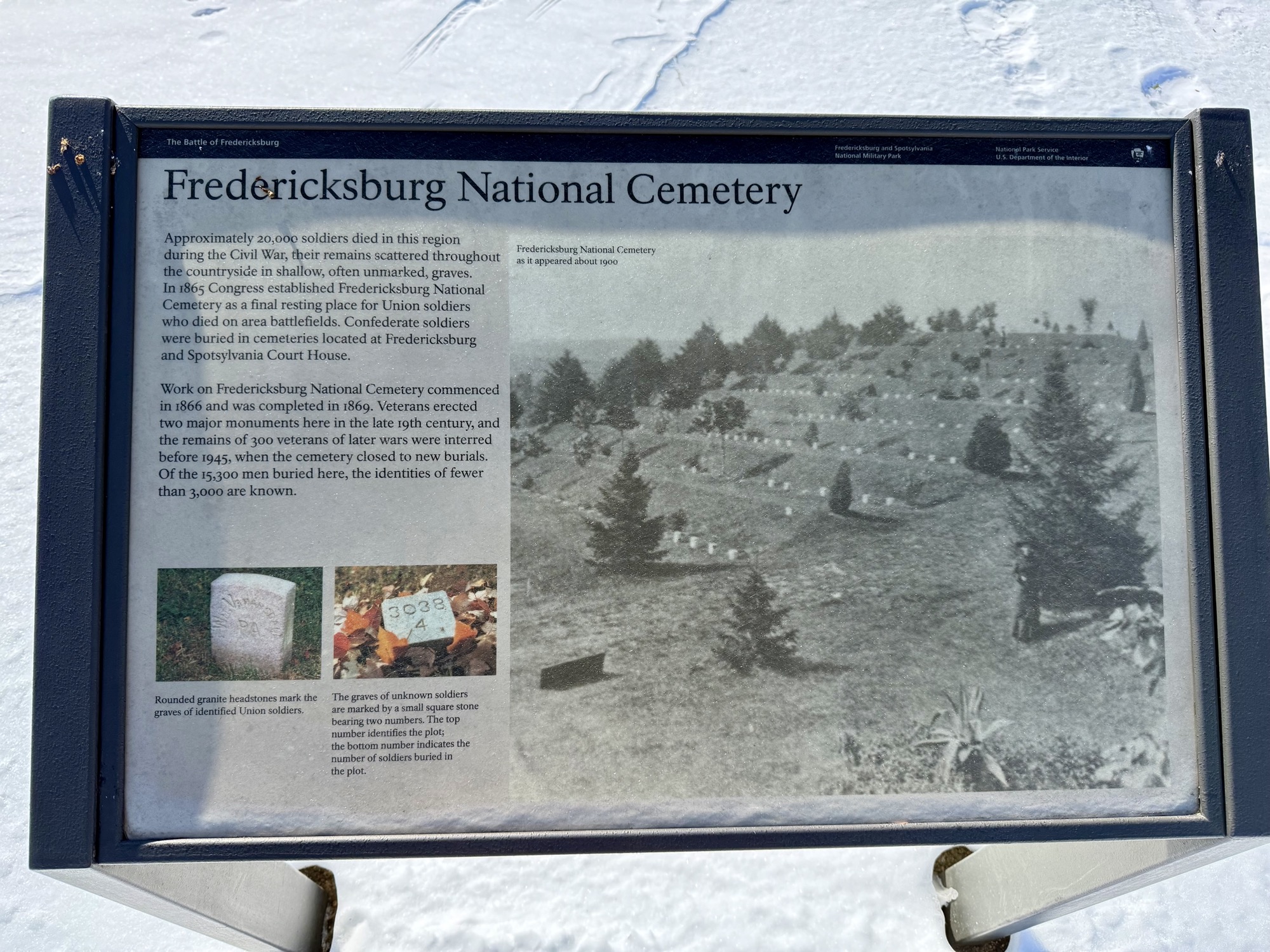
At the end of the walking path, you’ll come across the Fredericksburg National Cemetery with thousands of small granite headstones that mark the graves of both identified and unknown solders.
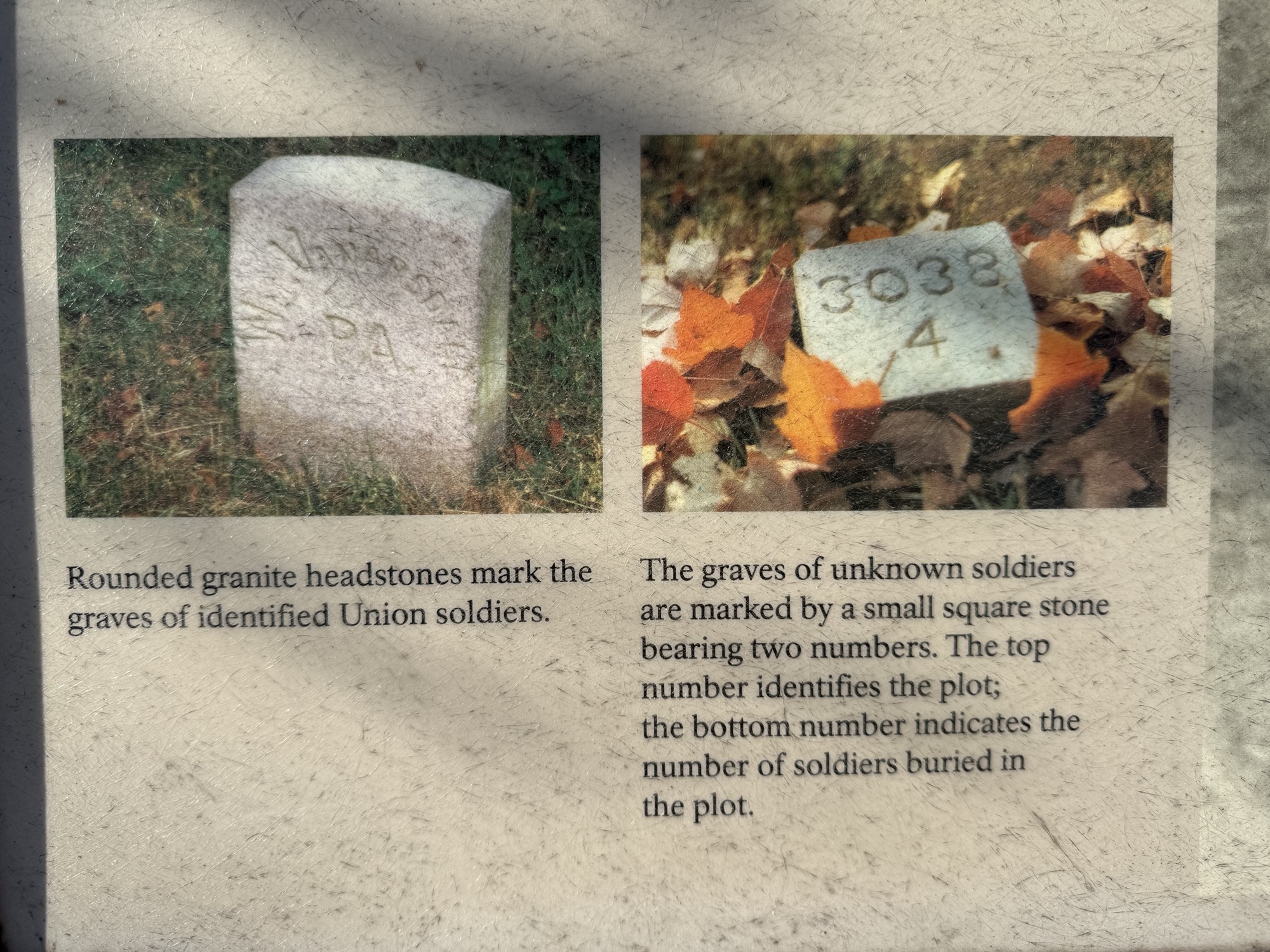
After the cemetery, you’ll intersect with the Sunken Road again briefly before heading back to the parking lot at the visitors center.
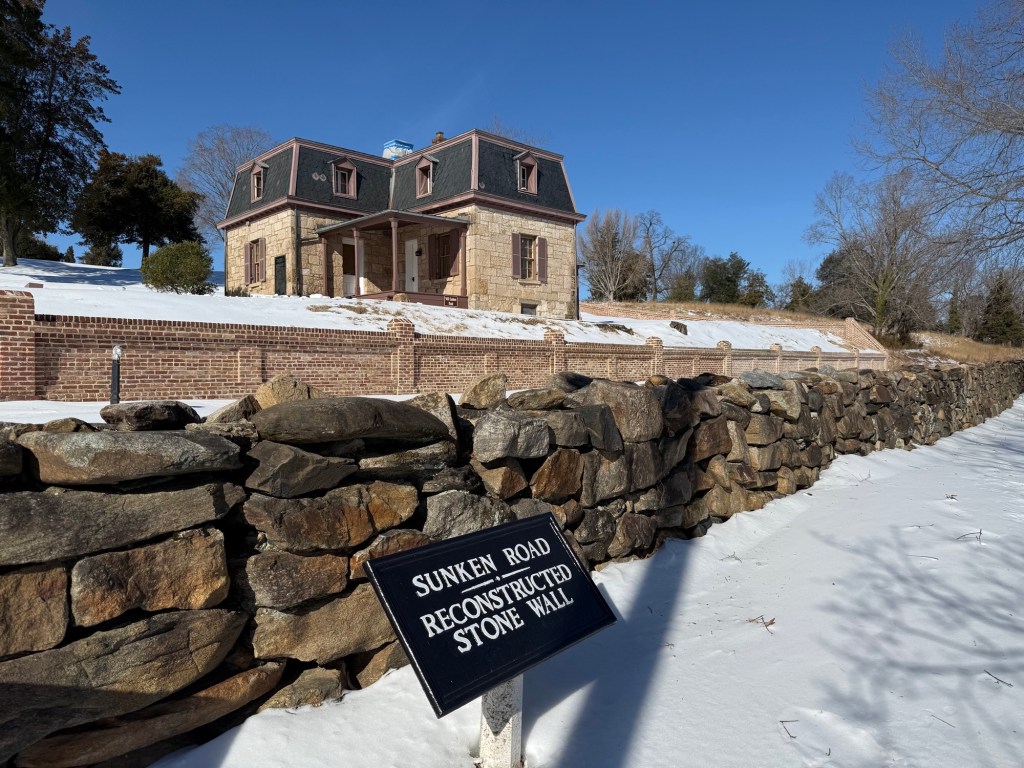
Sunken Road with the reconstructed stone wall and view of the Cemetery Lodge behind it

After Sunken Road, we did a mini self-guided driving tour of a few historical battle spots around town – see the map below. The sites weren’t very well marked and was easy to miss so we didn’t spend much time at them.
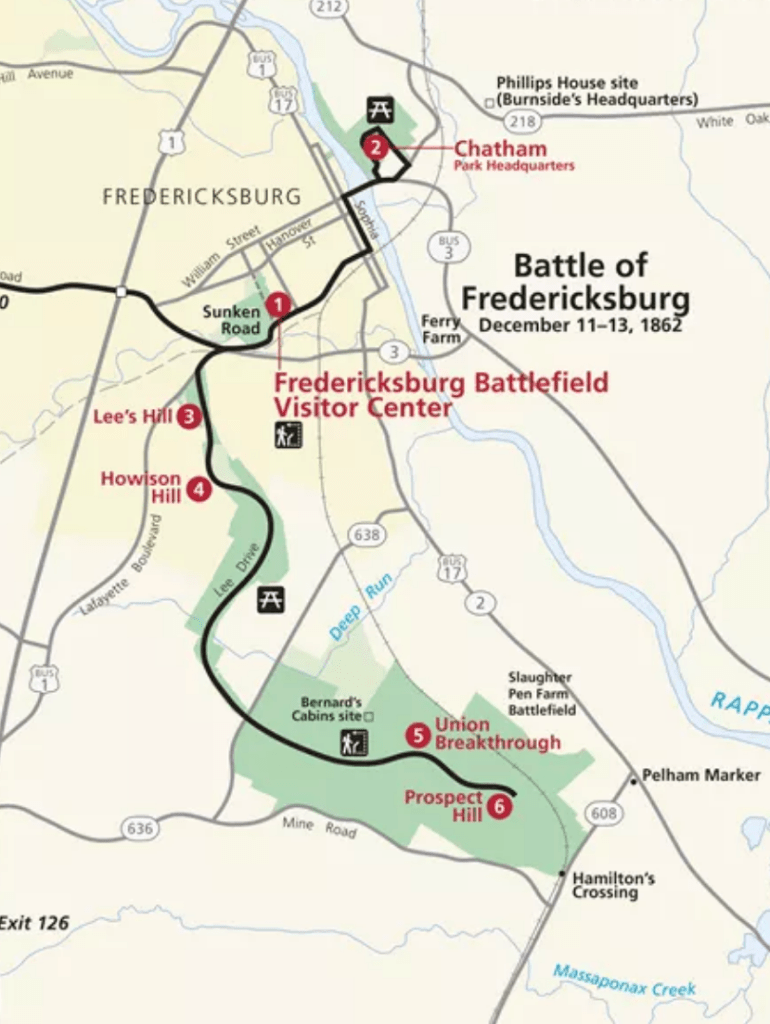
Driving map around Fredericksburg: https://www.nps.gov/frsp/planyourvisit/directions.htm

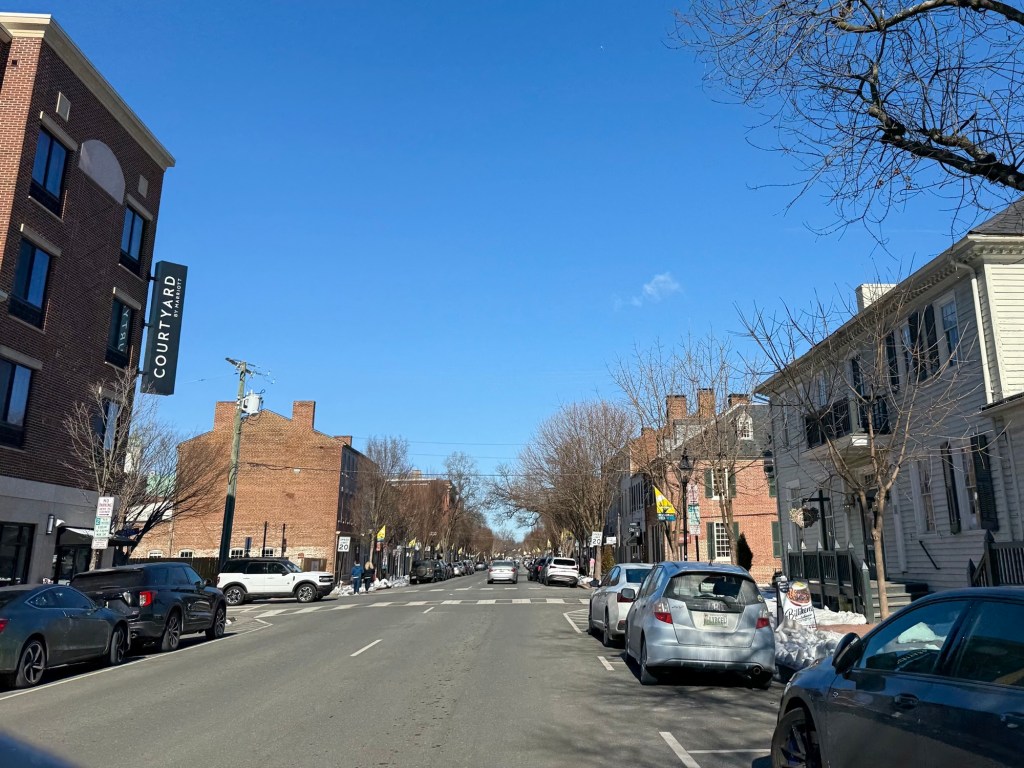
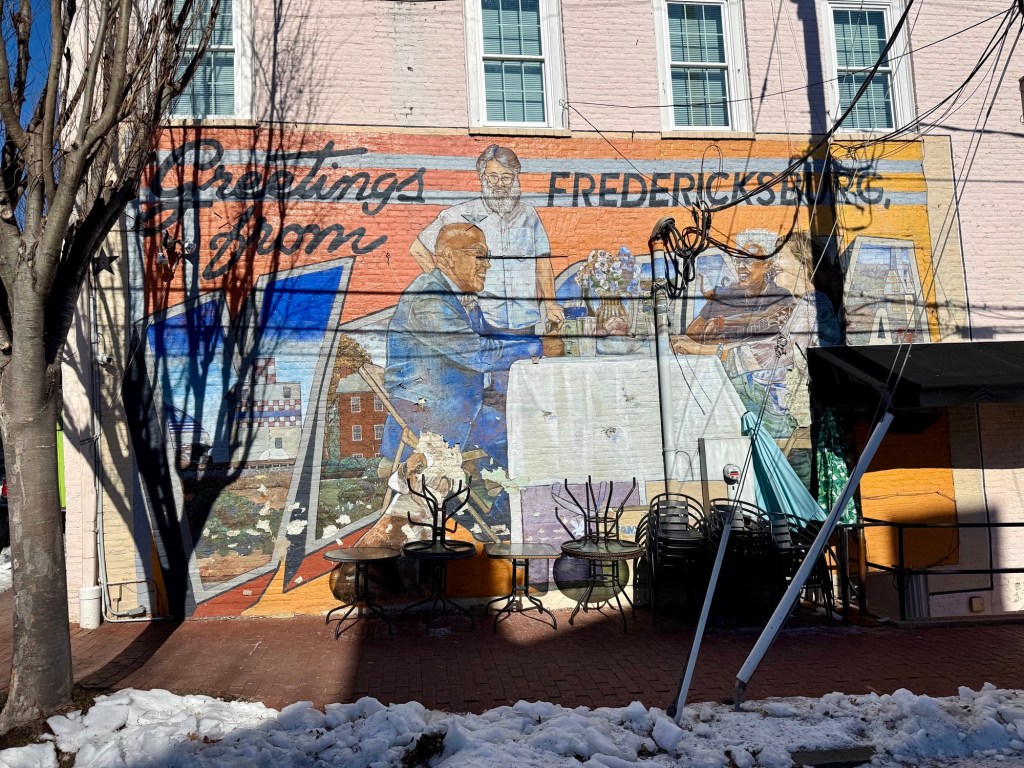
We also drove through downtown Fredericksburg which wasn’t all that exciting – many of the shops were closed or for rent.
Some Final Thoughts

  • The historic site at Sunken Road marks one of the bloodiest battles in the civil war. If you’re not that into American history, then maybe give this a skip. We’re not history buffs, but we enjoy visiting historical places to learn about significant events that helped shape this nation.
  • Consider a guided tour at the posted times if you want to avoid reading the information plaques.
  • Have proper footwear if you’re going to visit in the colder months since the trails are not very well maintained.
Your Ultimate Day Trip to Alexandria, Virginia: What to See and Do


Date Published: May 23rd, 2026 | Last Updated: May 23rd, 2026
Author: Abby | Category: Travel, USA
Date of travel: Feb 7th, 2026

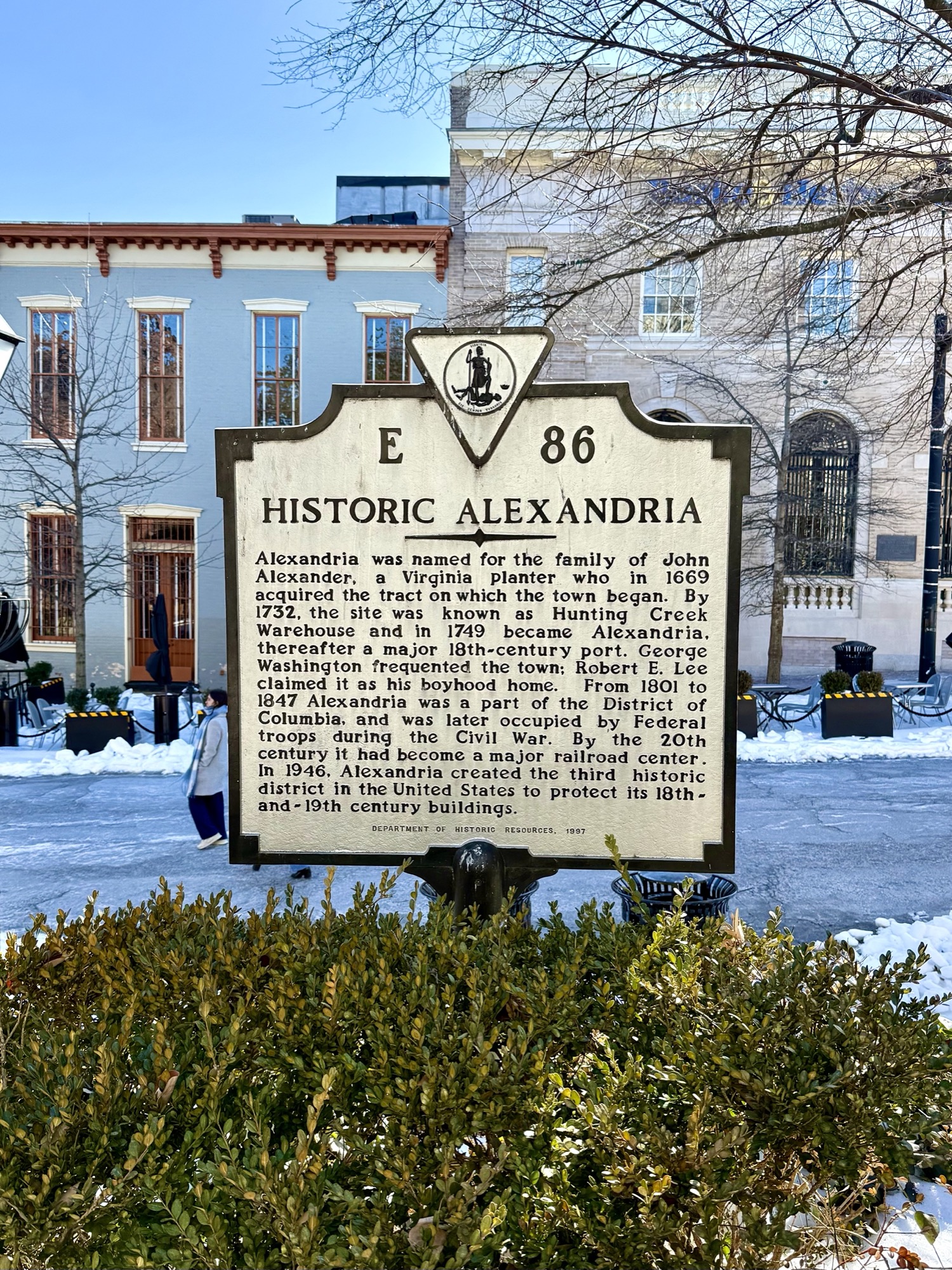
The town of Alexandria, Virginia, is a historically rich city on the Potomac River that originally started as a tobacco trading post in the mid 1700s and became one of the busiest ports in America. It is famously known as George Washington’s hometown. He surveyed the land at the age of 16 and was a part of the foundational planning of this town and maintained a close relationship until his death in 1799. He lived, dined, worshipped, and conducted business through these historic streets of Alexandria.

Today, the main things to do here is to explore the preserved streets and buildings of Old Town, take a short stroll along the waterfront, check out the converted Torpedo Factory, and visit a masonic temple dedicated to the memorial of George Washington.

Best time of year to travel?

You can visit any time of the year, but the best time to visit will be in Spring or Summer when the weather is warmer and it’ll be nicer to walk around. We came in the middle of winter and a lot of streets were covered in snow.

Where to stay?

Although a very cute lively town, there’s not a ton of nightlife in Alexandria, so it’s not imperative to stay in the middle of old town, unless you really want to be within walking distance to a few restaurants or bars. We chose a cheaper option about a 10 minute drive away off the side of the freeway and just drove into Alexandria to save on hotel costs.

Getting Around & Where to Park?

Driving will be your best option to explore the main sites around Alexandria. Old Town will be the main attraction and is a very walkable town. We found the cheapest parking to be in the underground parking garage at Market Square underneath City Hall (address: 108 N. Fairfax Street Alexandria, Virginia). It was $2/hour, maximum $10 per day. You can also park on the street, but parking is limited and has limited hours.

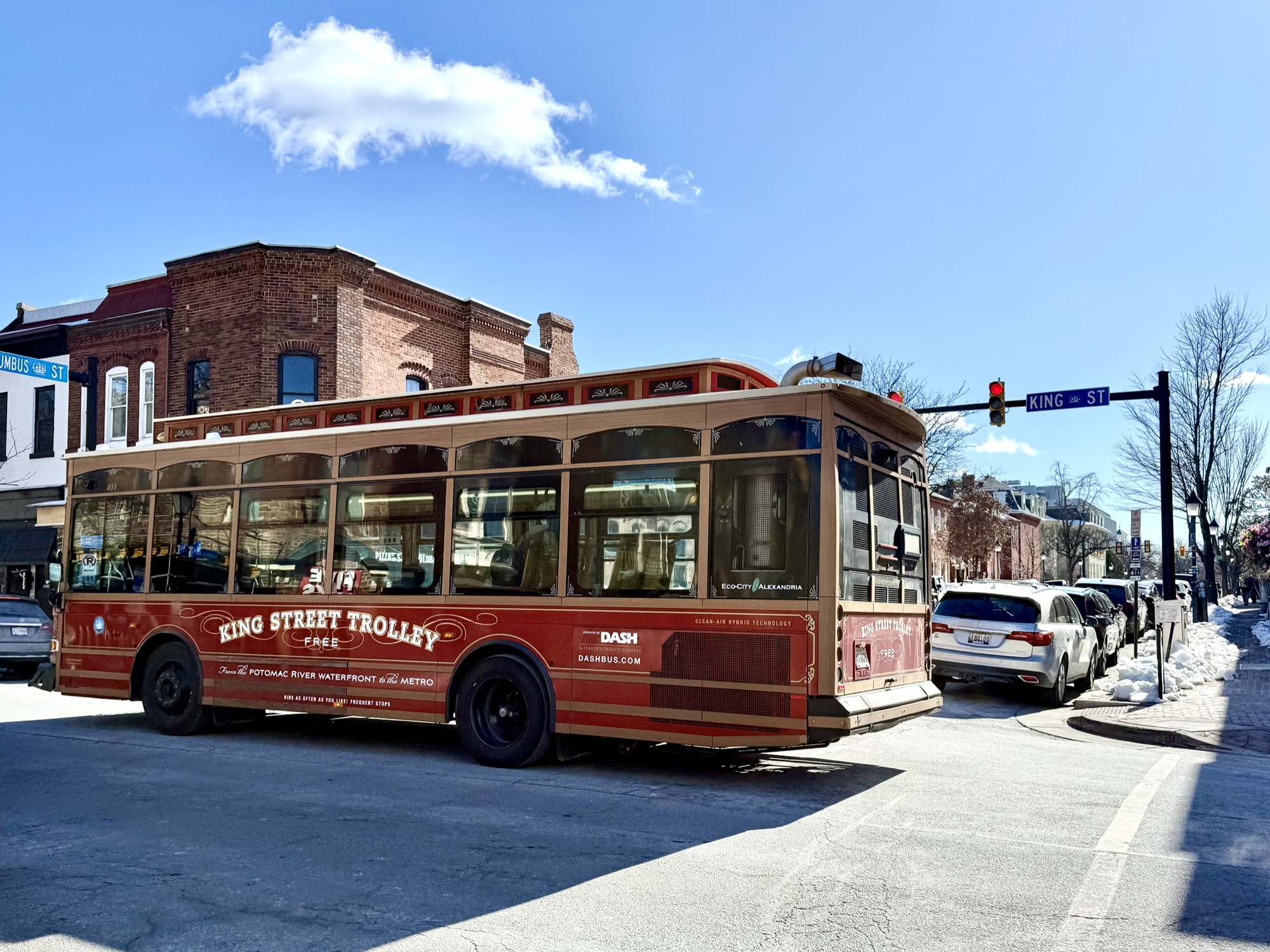
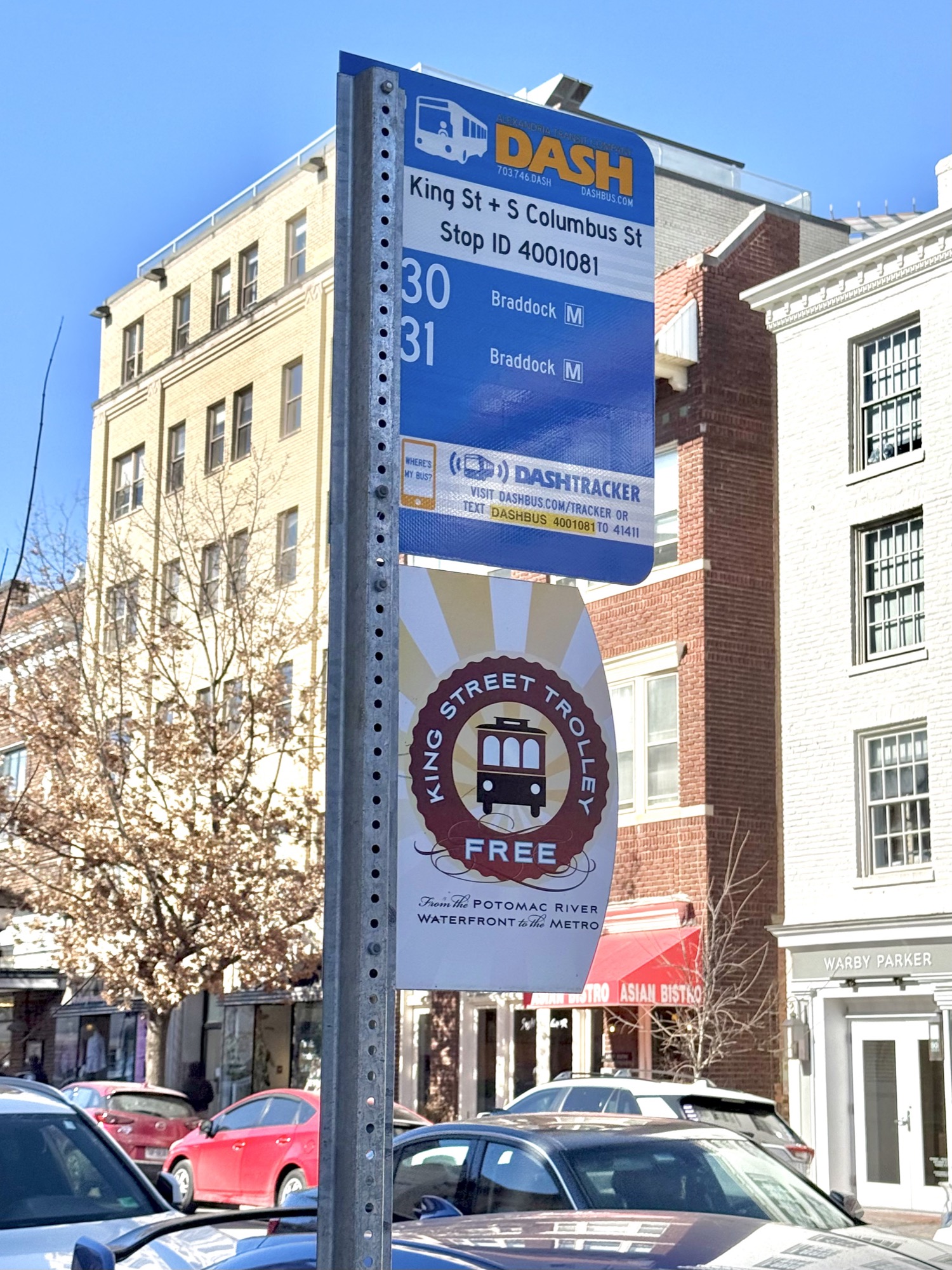
There is a free “King Street Trolley” that you can take around town. We didn’t take it because the places we wanted to visit were relatively close together and very walkable within Old Town. You can find out more about the trolley service and routes here: https://visitalexandria.com/plan/king-street-trolley/ .

How many days do I need?

Alexandria is a pretty small town and it only takes about 20 minutes to walk from one end of the main street to the other, but there are plenty of restaurants, shops, and a few historic sites to keep you busy. 1 day will be enough time to see all the highlights here. Check out the sample itinerary below to help plan your day.

If you haven’t already, consider visiting the nearby Mount Vernon (the historical home of George Washington) – it’s only about a 30 minute drive North:

A Comprehensive Guide to Visiting Mount Vernon, George Washington’s Home


Mount Vernon, George Washington’s estate, offers a glimpse into the life of the first president. Visitors can explore the mansion, museum, and gardens, with many tour options available. Follow this comprehensive guide on visiting this vast estate and how to get the most out of your visit!

Sample Itinerary to Hit All the Alexandria Highlights in 1 Day:

  • 9am -11am – Start at the George Washington Masonic National Memorial since it opens the earliest at 9am (remember they’re closed Tues and Wed). Book the 9:30am tour that lasts 1 hour and then explore the floors and museum displays.
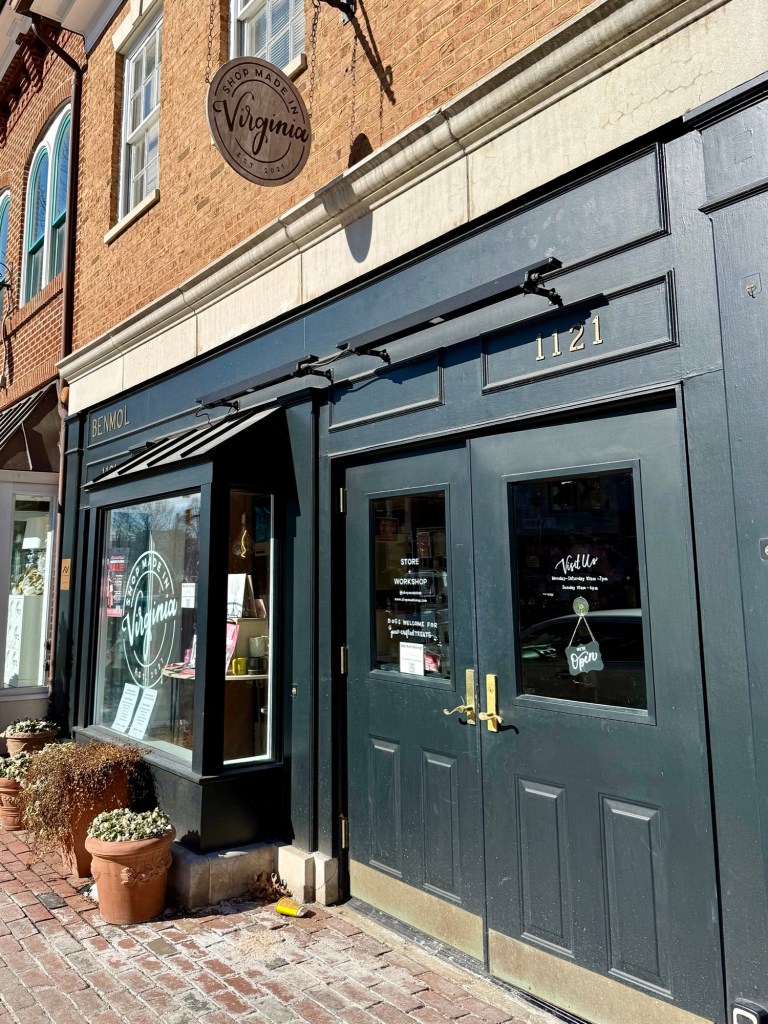
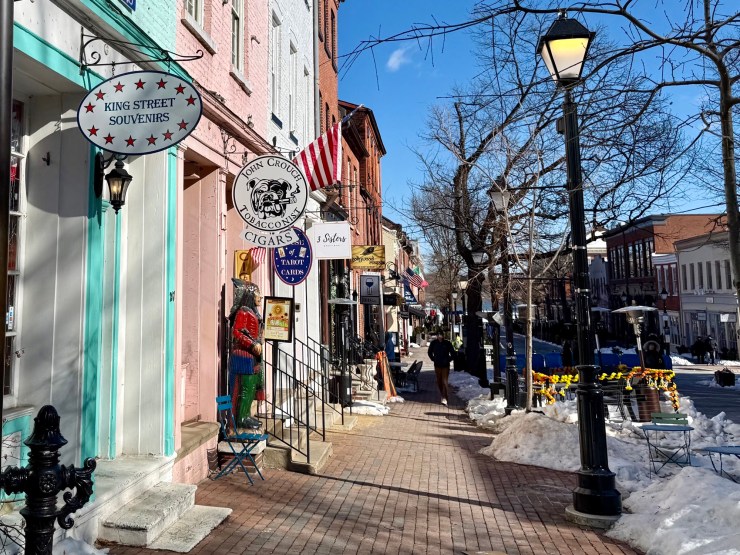
  • 11am – 3pm – Explore Old Town Alexandria: follow a self-guided tour to check out the historical buildings including Spite House, Captain’s Row, Carlyle House (remember it closes at 4pm and not open on Wed), Christ Church (also closes 4pm most days, closed Monday). Walk down King Street and have lunch in one of the many restaurants in town, go shopping and make sure to visit “Shop Made in VA” for unique souvenirs made by Virginian artists.
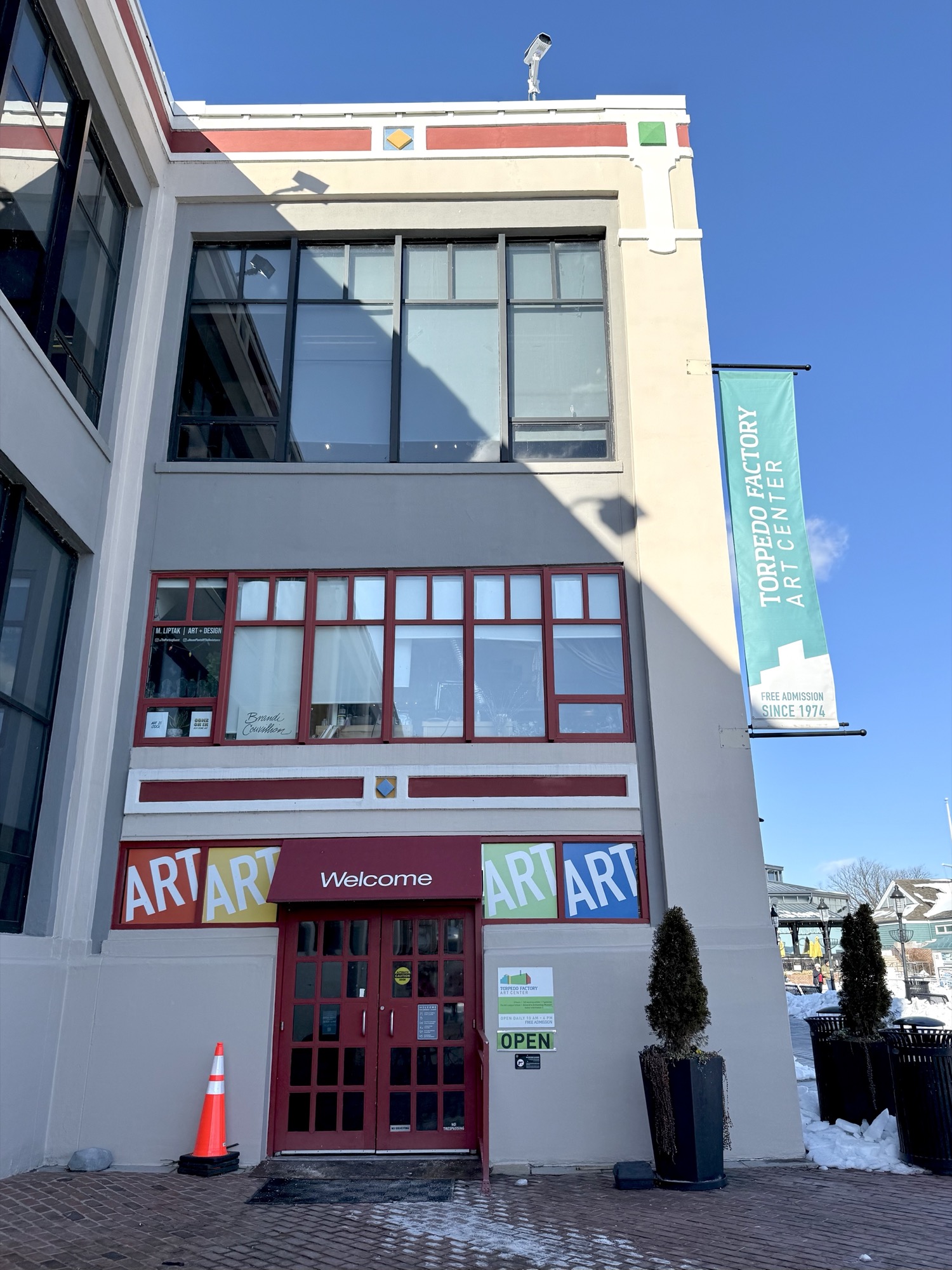
  • 3pm – 6pm – From King Street, walk towards the waterfront and take the waterfront walk to the Torpedo Factory Arts Center and browse through 3 levels of artist studios and maybe do some shopping.
  • 6pm onwards – Do a quick stop by the Jones Point Lighthouse if you have time for more waterfront views and to check out this small lighthouse. Then have dinner back in Old Town before heading out!

Things to Do:

The main things to explore in Alexandria, Virginia are: the streets of historic old town, the waterfront walk, the torpedo factory, and the George Washington Masonic National Memorial. If you have time you can also visit the Jones Point Lighthouse.

The George Washington Masonic National Memorial

Address: 101 Callahan Dr, Alexandria, VA 22301, United States
Hours: 9am-5pm Thursday through Monday, closed Tuesdays & Wednesdays
Tour times (1hr long, included in admission cost): 9:30am, 11am, 12:30pm, 2pm, 3:30pm (check the website to reserve tickets and updated hours)
Admission: $20 per person (pretty steep if you ask me)
Parking: Free, on-site
Website: http://gwmemorial.org/
How much time to spend here: roughly an hour to go through everything

I will preface this by saying that you absolutely must have a reserved tour time if you plan to visit. Unfortunately we didn’t know about the tours and we came just after the last tour finished and couldn’t go up the tower where some of the exhibits are and missed a lot of what was offered including the grand views from the observation deck at the top. We paid full price admission ($20) for essentially a self-guided walk-through of the main floor and a small museum room. It didn’t feel worth it for the admission cost, but when you look on their website, there were a lot more things we could have seen. Check it out here: https://gwmemorial.org/pages/tours .

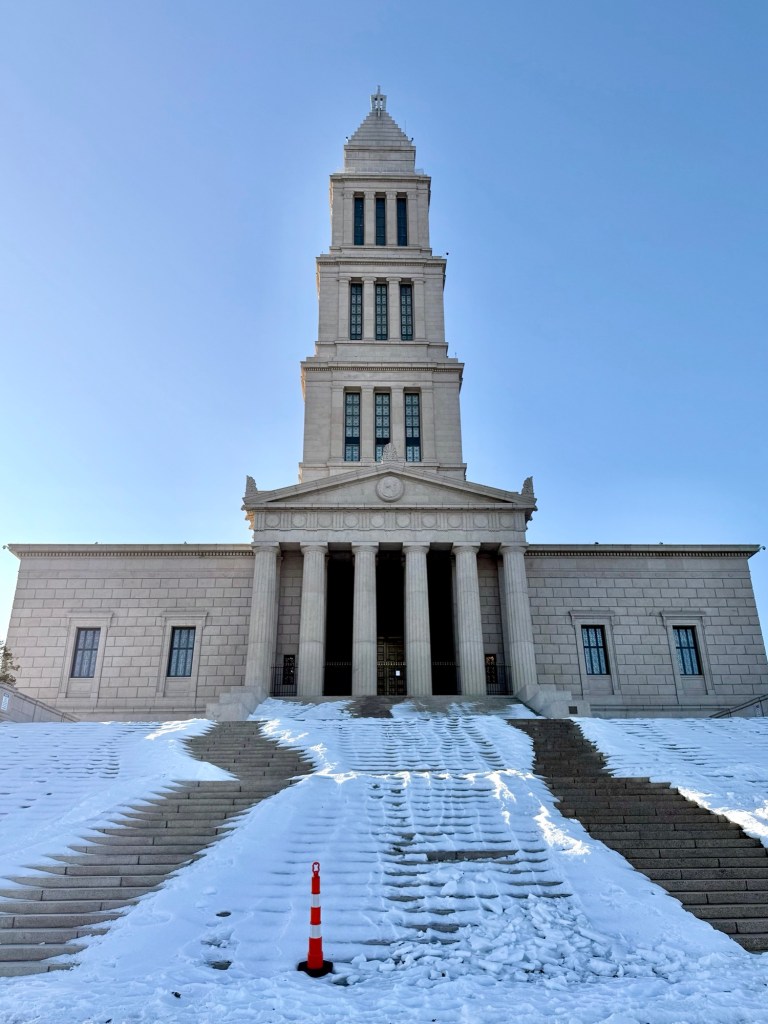
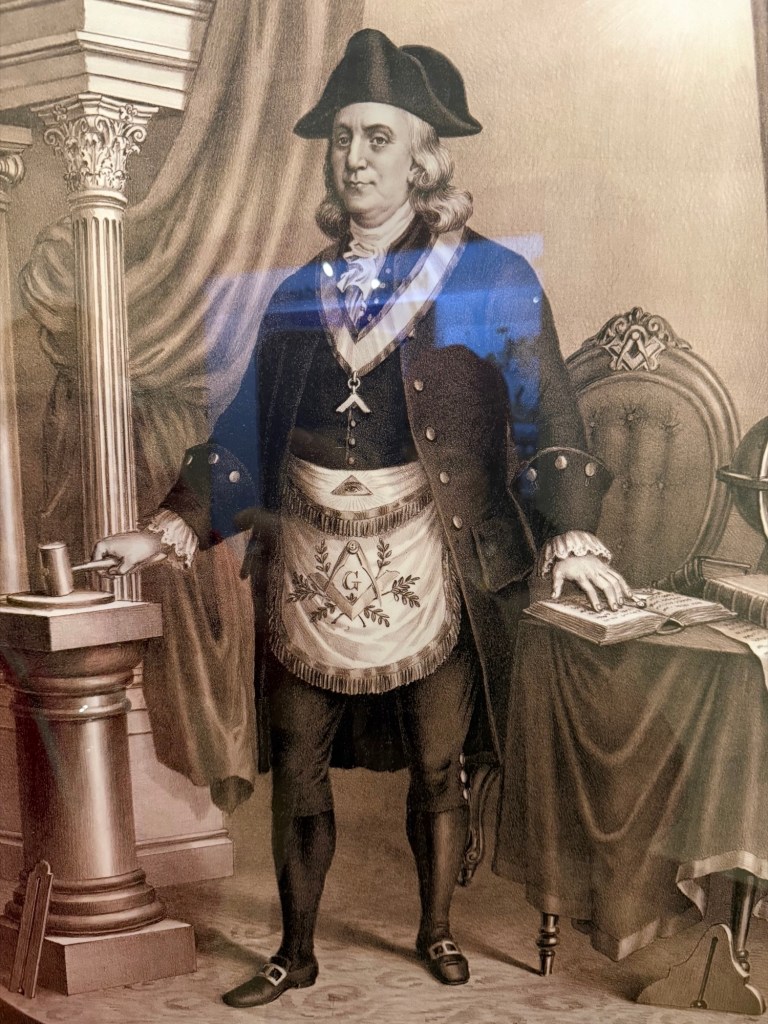
The George Washington Masonic National Memorial is an active Freemasons temple that also incorporates a memorial to George Washington, one of their most notable and famous historic members. They have deemed him the ultimate example of a freemason:

To American Freemasons, George Washington’s life symbolizes the reward of virtue and morality dedicated to public service. He is the culmination of striving to overcome the rough human nature to be perfect in service to family, neighbor, nation and God. His life exemplifies the transition from rough to perfect ashlar.

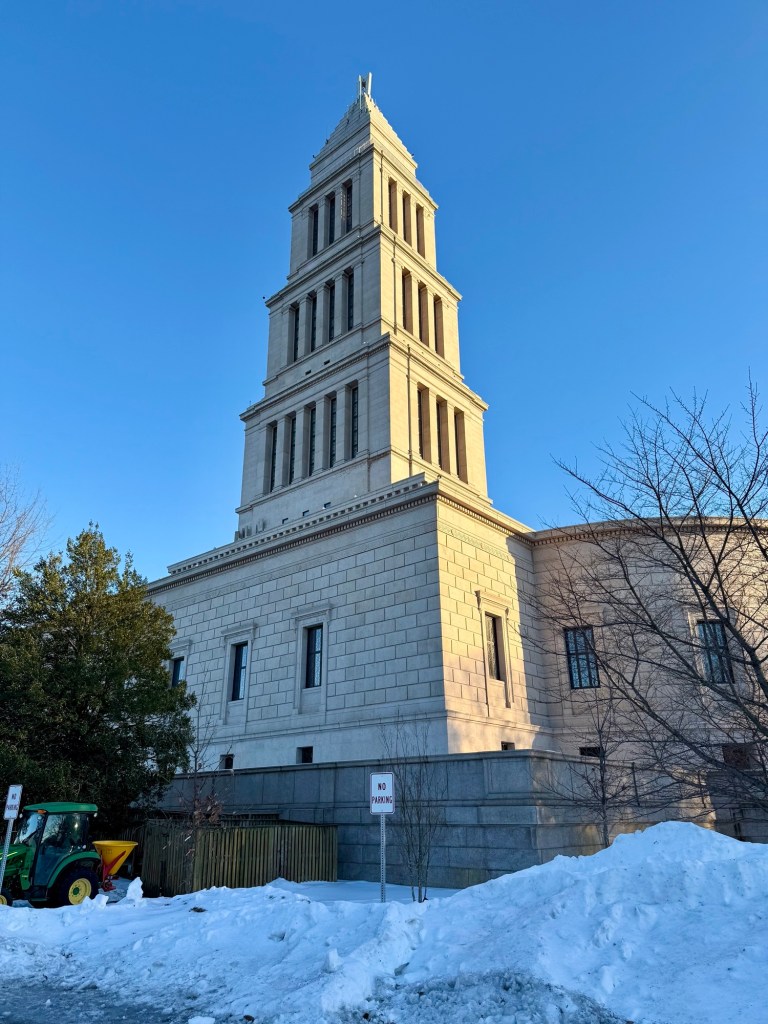
We’ve driven past many masonic lodges in our travels, some looking like a small shack, but this is the most grand one we’ve come across. This building has mutiple purposes not just a Masonic temple, but also a research library, a cultural space, and a performing arts center. You can walk here from Old Town Alexandria (roughly a 30 minute walk from the Torpedo Factory Arts Center) or drive here (free parking on site).

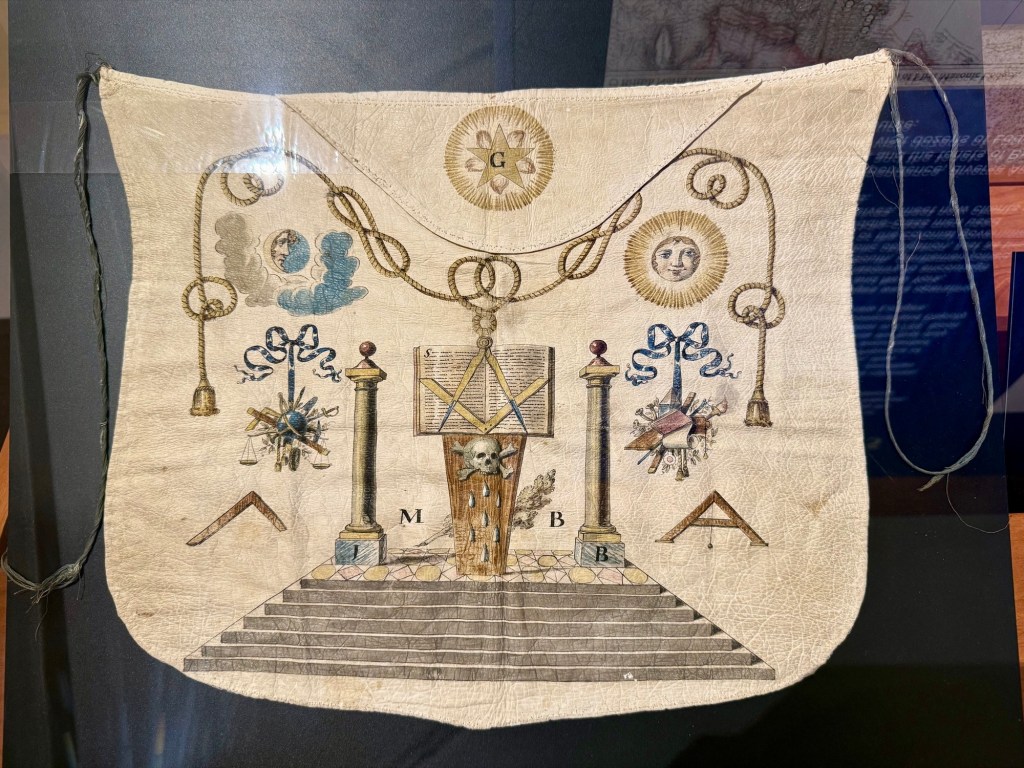
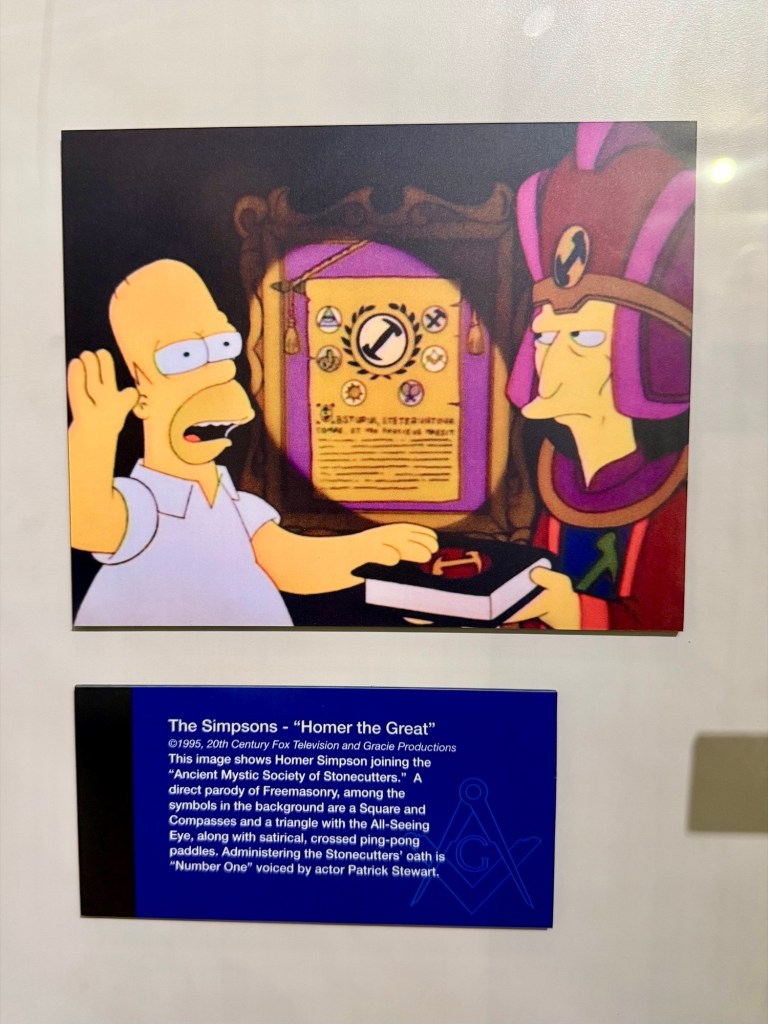
What is Freemasonry? That’s a loaded question. Honestly, I had always assumed it was some sort of secret cult like they depict in that episode of the Simpsons where homer joins the Stonecutters. In being exposed to it more over the years and coming across a few masonic lodges and reading about historic Freemason members, the best I can simplify and summarize my understanding is that it’s an adult men’s club where their “primary purpose is to improve men”. I think of it like Boy Scouts but for adults and without the wilderness training 😅 – that’s probably a bit too simplified. They meet, they discuss, they plan in the goal of “self-improvement, moral discipline, and brotherhood”. They have deep roots that started in Britain as far back as the 1600s. It’s not so much a secret society, but the rules, rituals, and traditions they follow are kept a secret from non-members. Here’s another excerpt from the museum that may help explain it a little more:
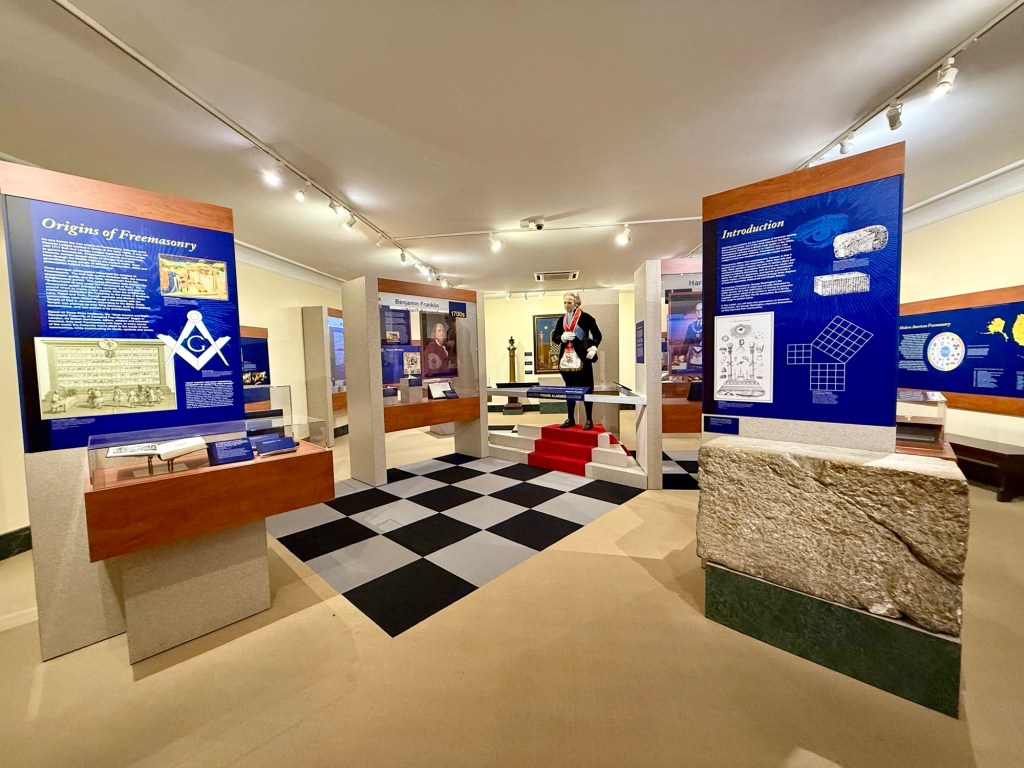
Freemasonry differs from stonemasonry, however, in that it teaches men virtues and moral truths, rather than arts and skills. While operative masons use tools to fashion stone and construct buildings, speculative Freemasons use rituals and symbols to improve themselves. Just as a new stonemason learns his craft as an apprentice, journeyman and finally a master mason, a Freemason is initiated through three degrees of Entered Apprentice, Fellowcraft and Master Mason.

When you first enter the building, there’s a reception desk where you can purchase tickets and get more information. The whole building is 9 floors high, but without a tour, you cannot enter the tower portion and only have access to the first 2 floors. The first floor has a (relatively) small museum of the history of the Freemasons in America. The information here is quite dense and took us some time to get through it all. It covers historical members and their morals and beliefs.

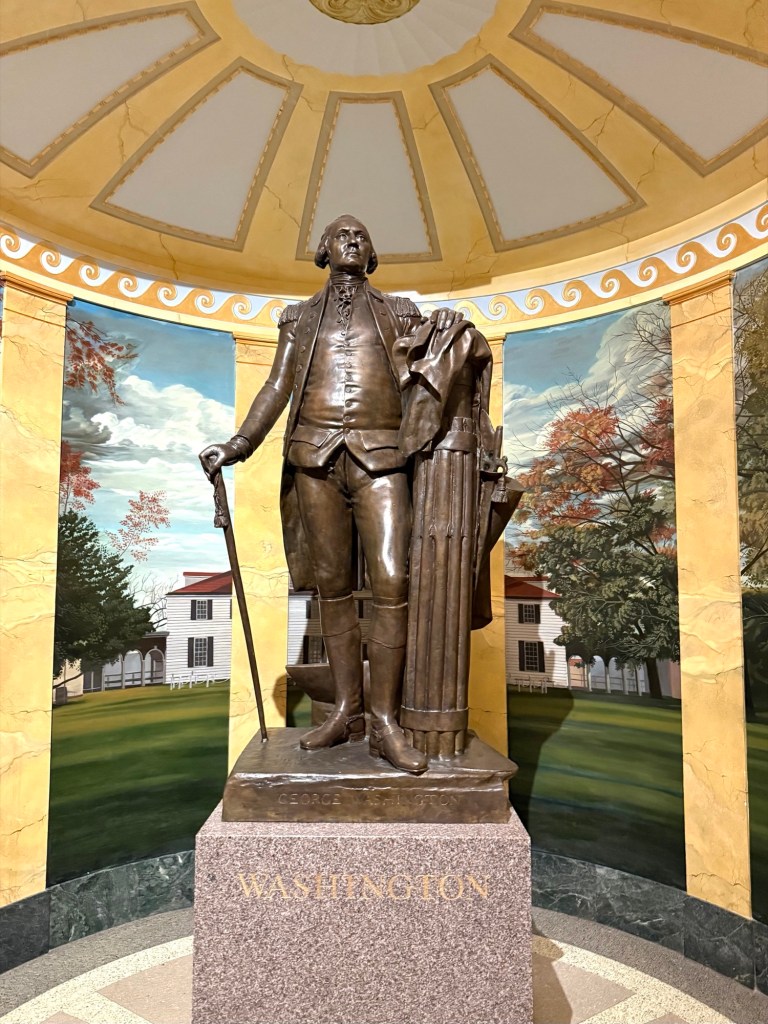
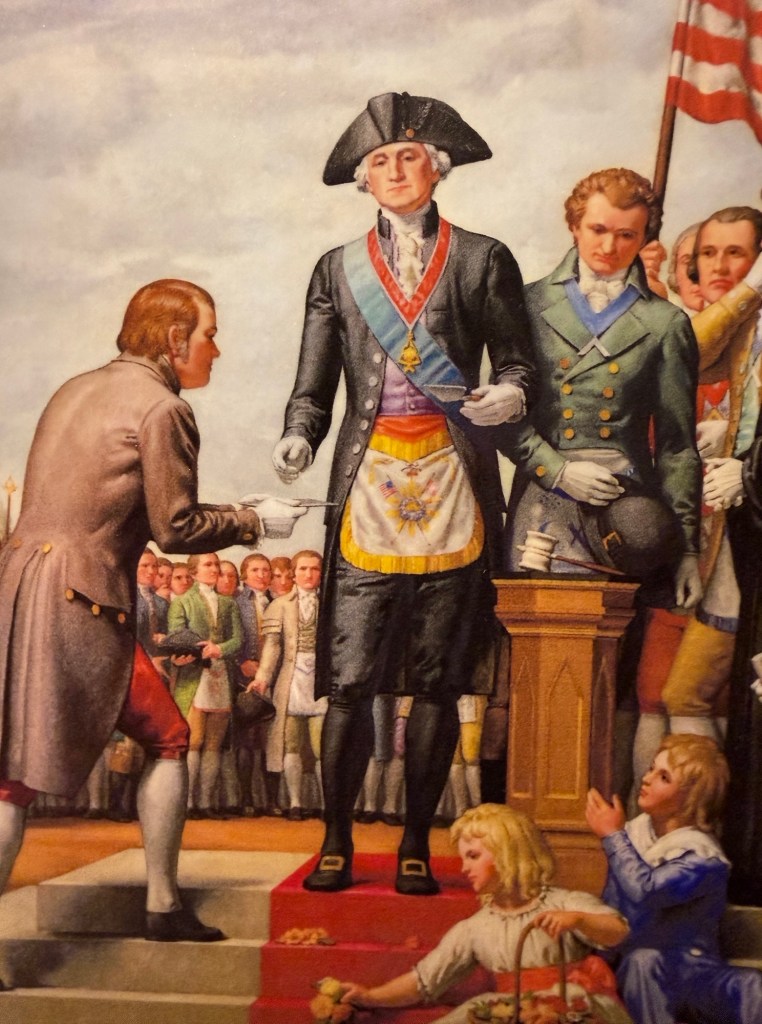
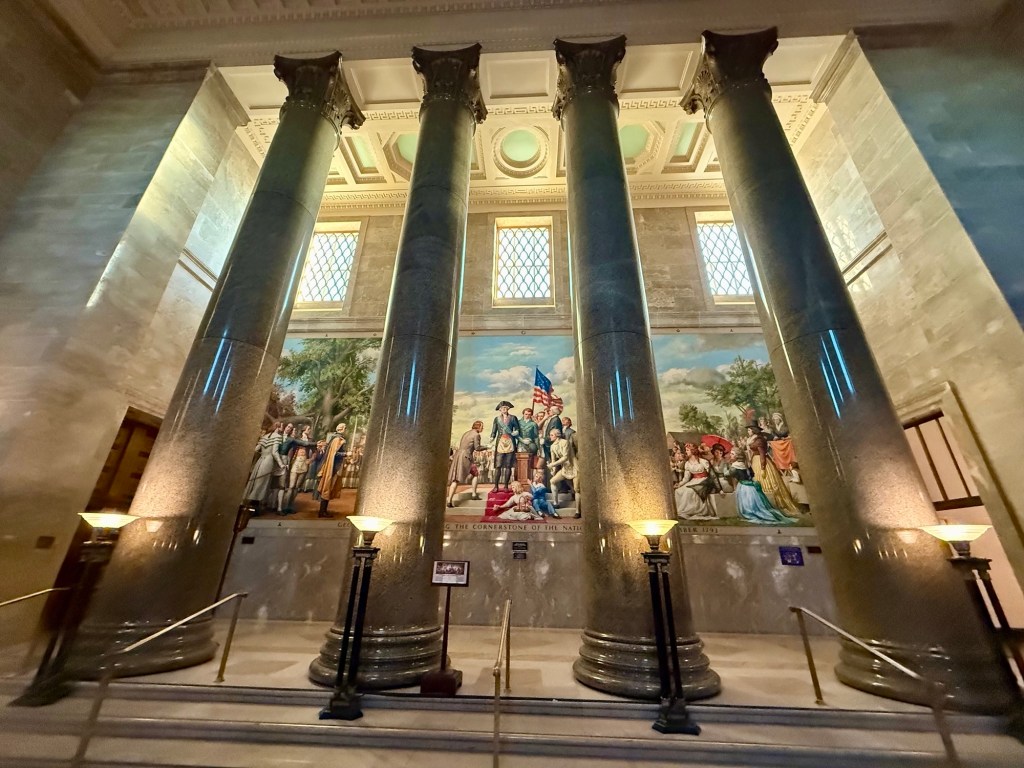
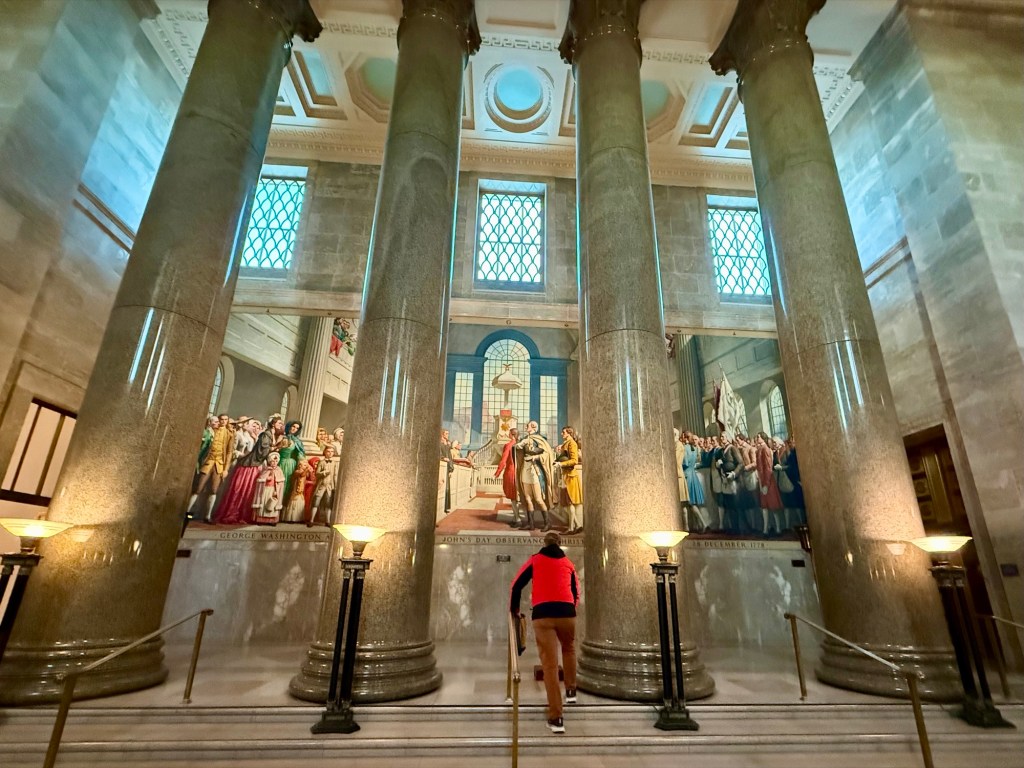
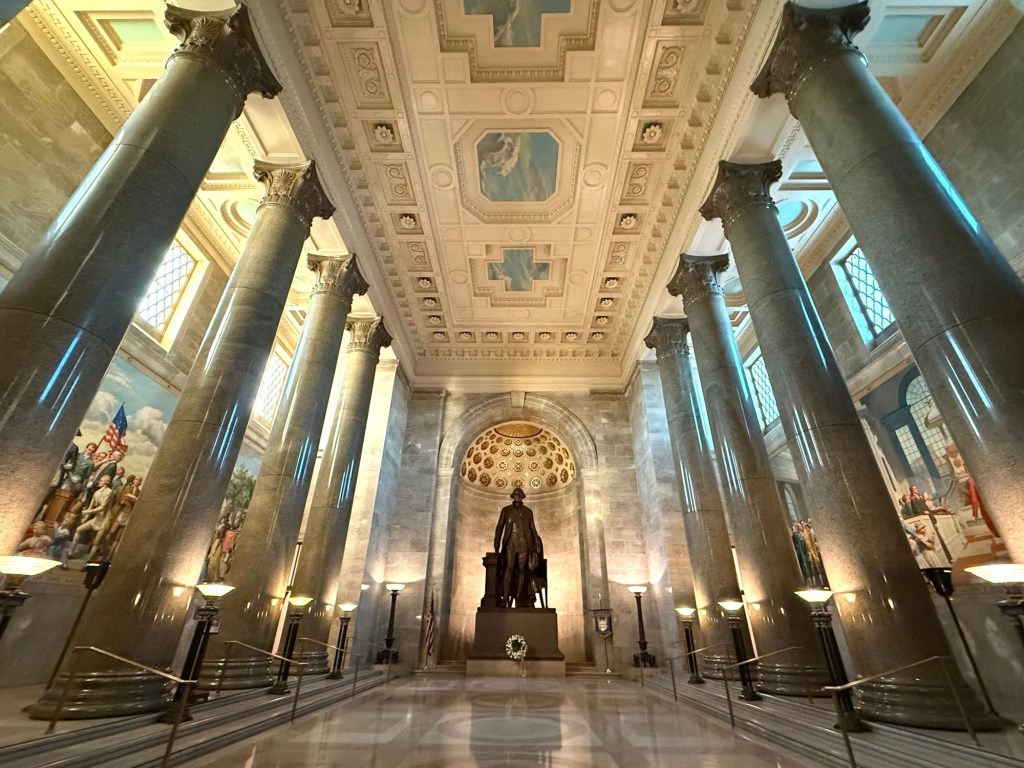
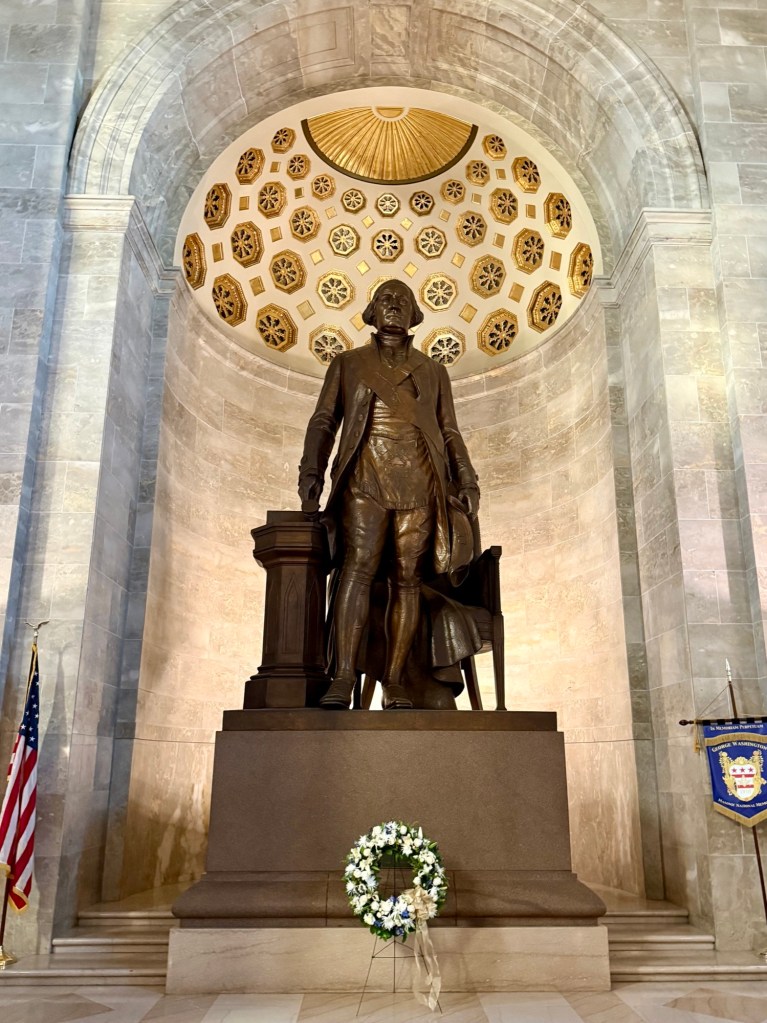
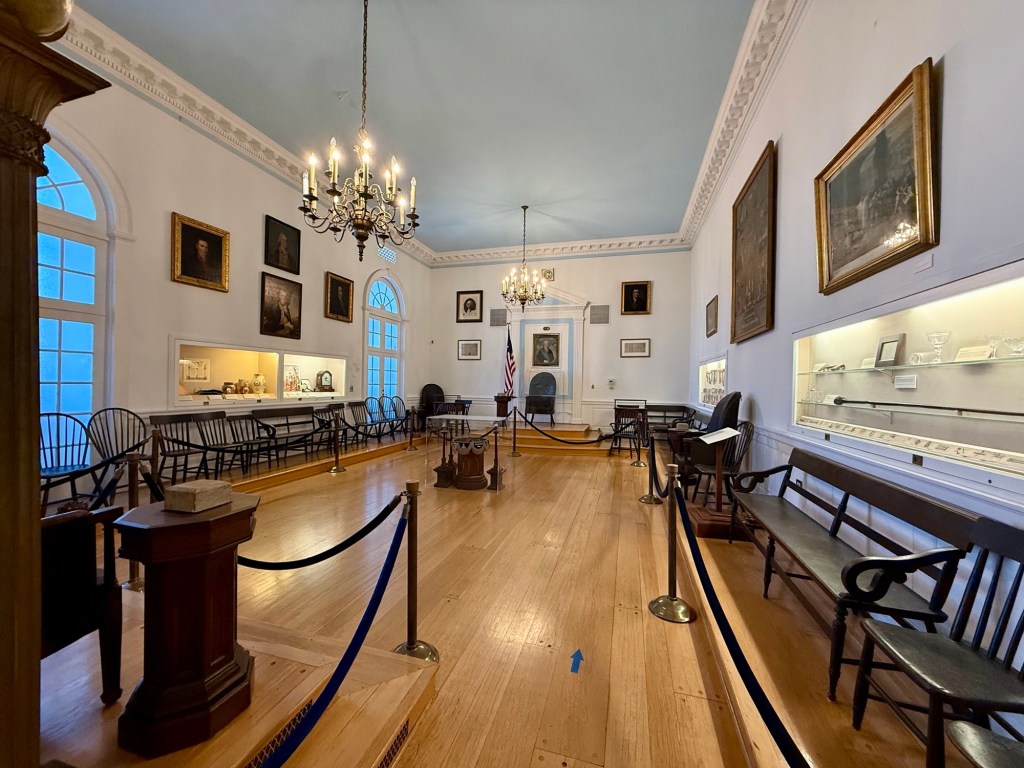
The second floor has a big statue of George Washington with 2 large murals and a replica meeting room for the Freemasons.

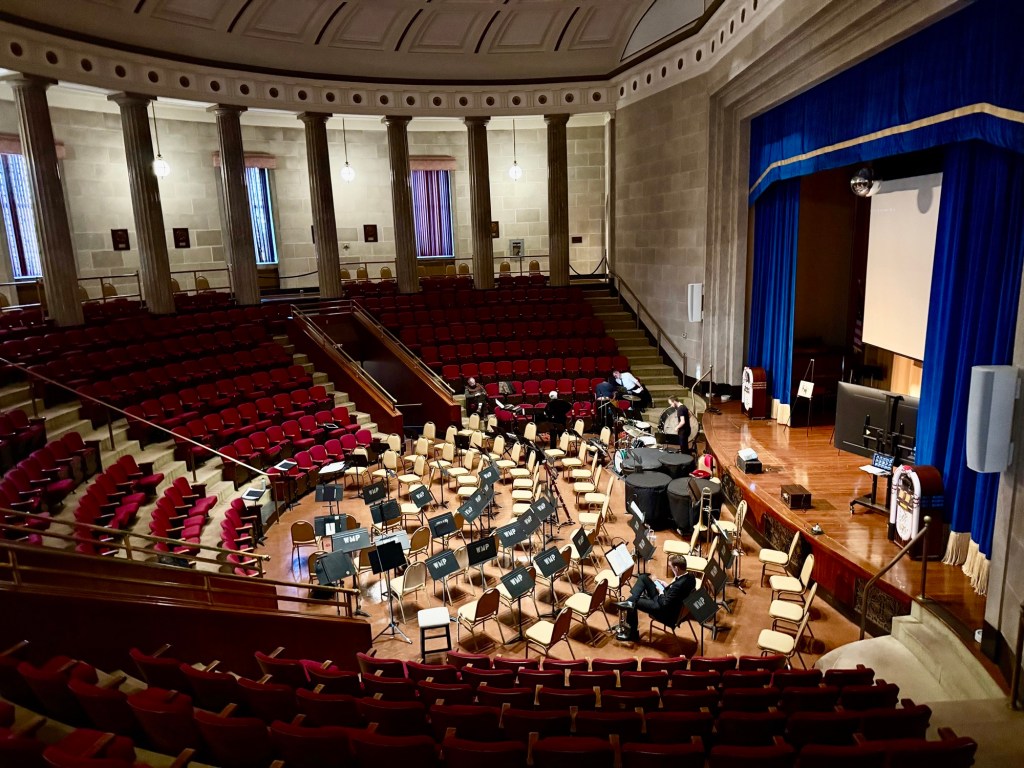
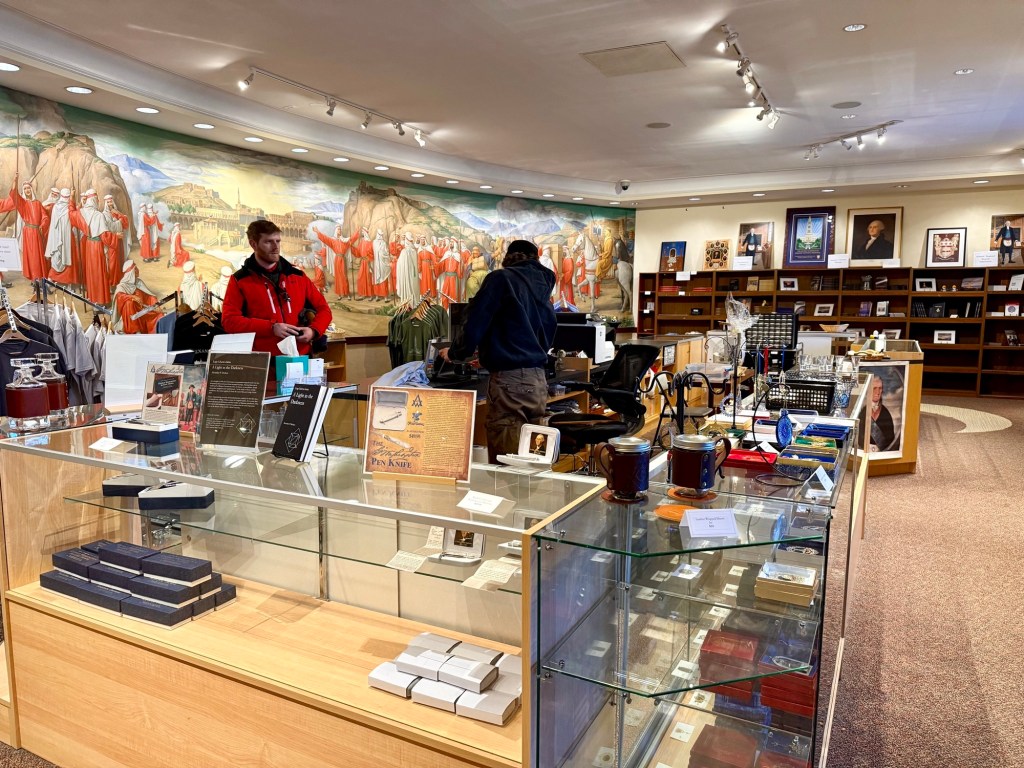
There’s also a theatre for the community and a decent sized Freemasons gift shop before you exit, which was surprising for this secret but not so secretive club!

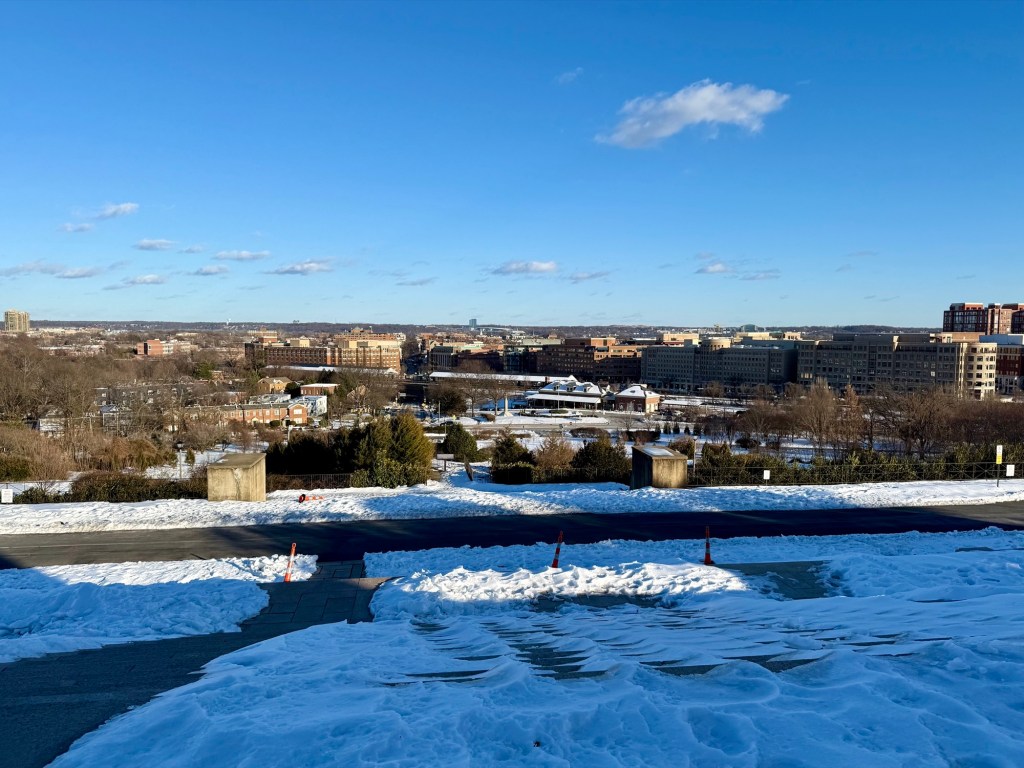
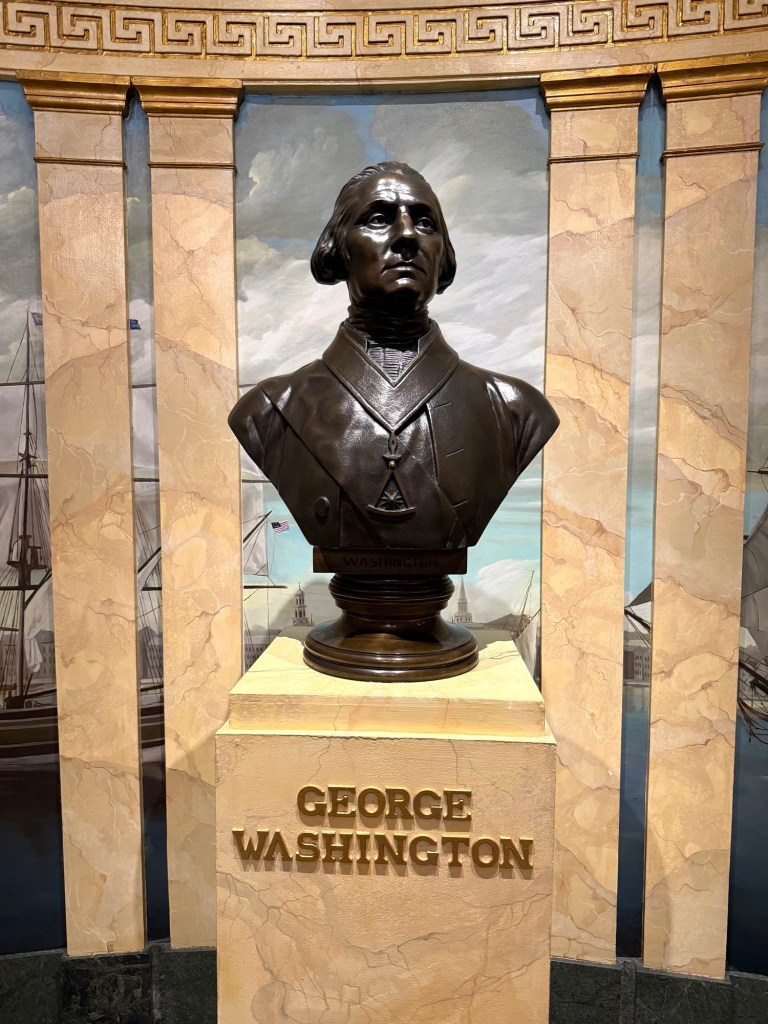
In summary, if you’re into learning about the Freemasons and see some cool murals and a statue of George Washington in his masonic clothing, then come for a visit. If for nothing else, come to get a great panoramic view of the town of Alexandria from the top floor of the temple (but remember that you can only get access to the tower with a guided tour)!

Historic Old Town

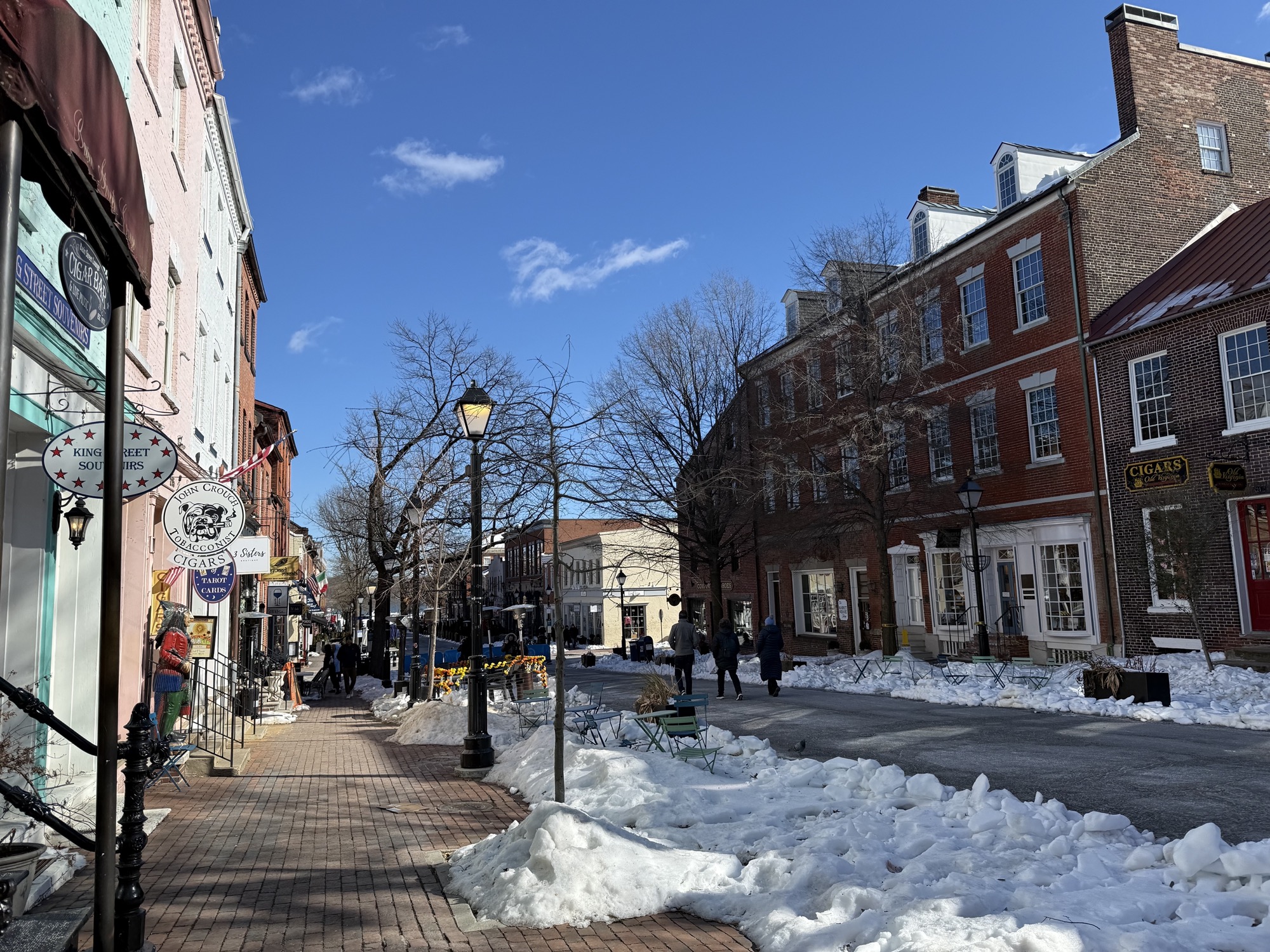
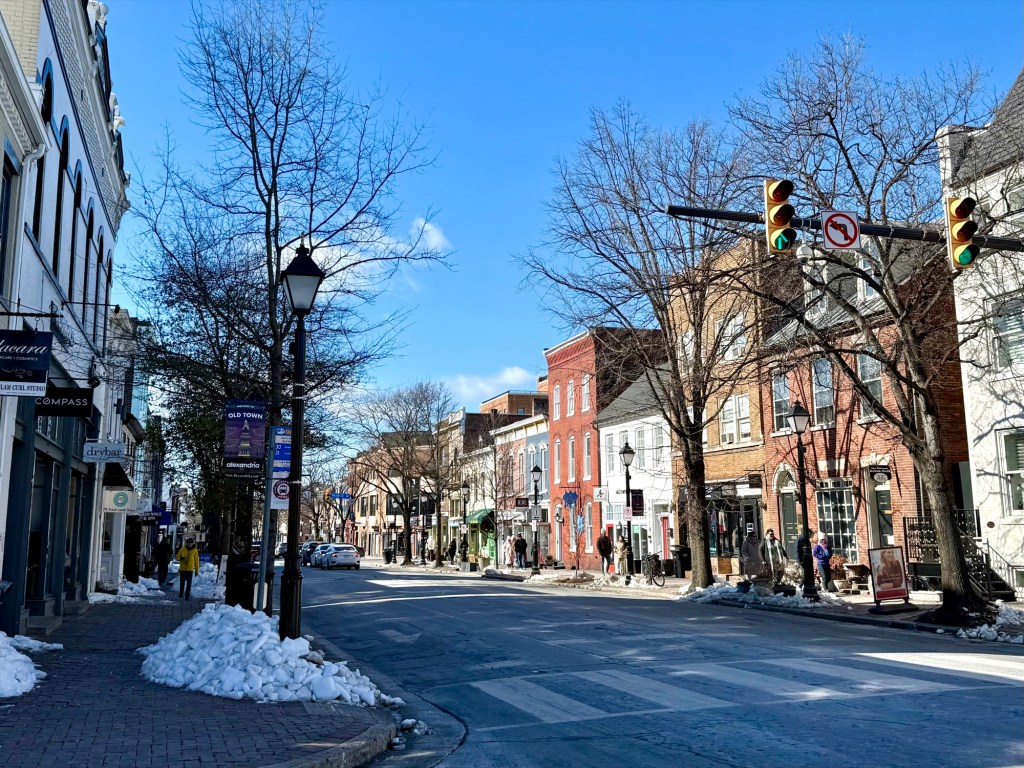
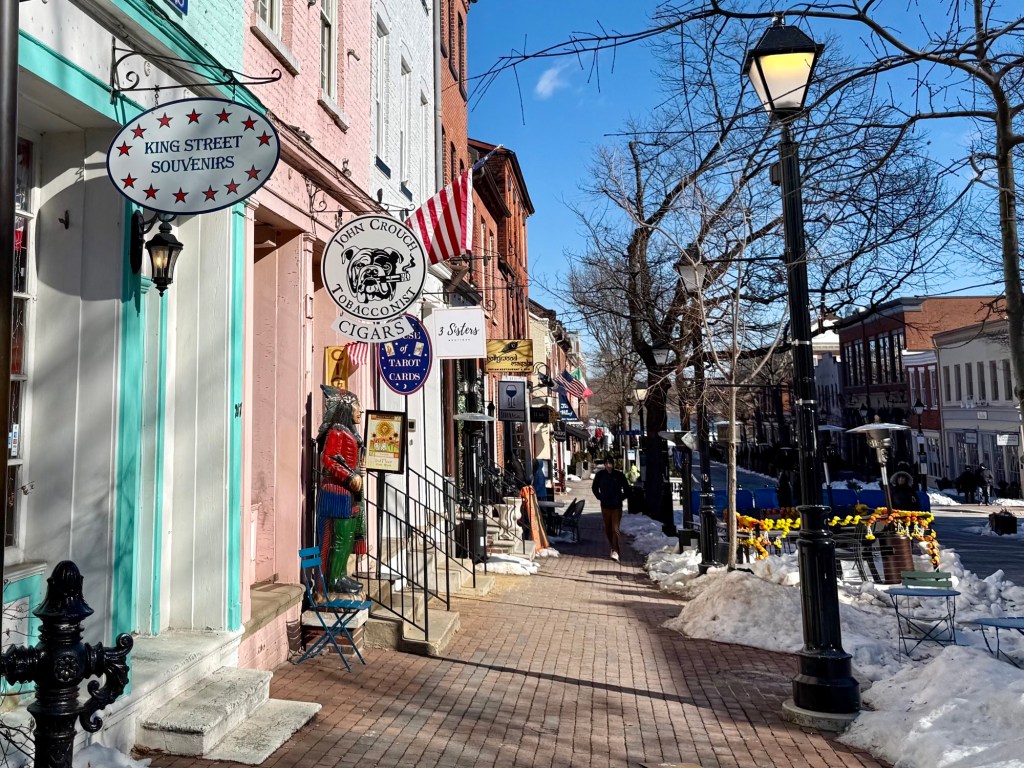
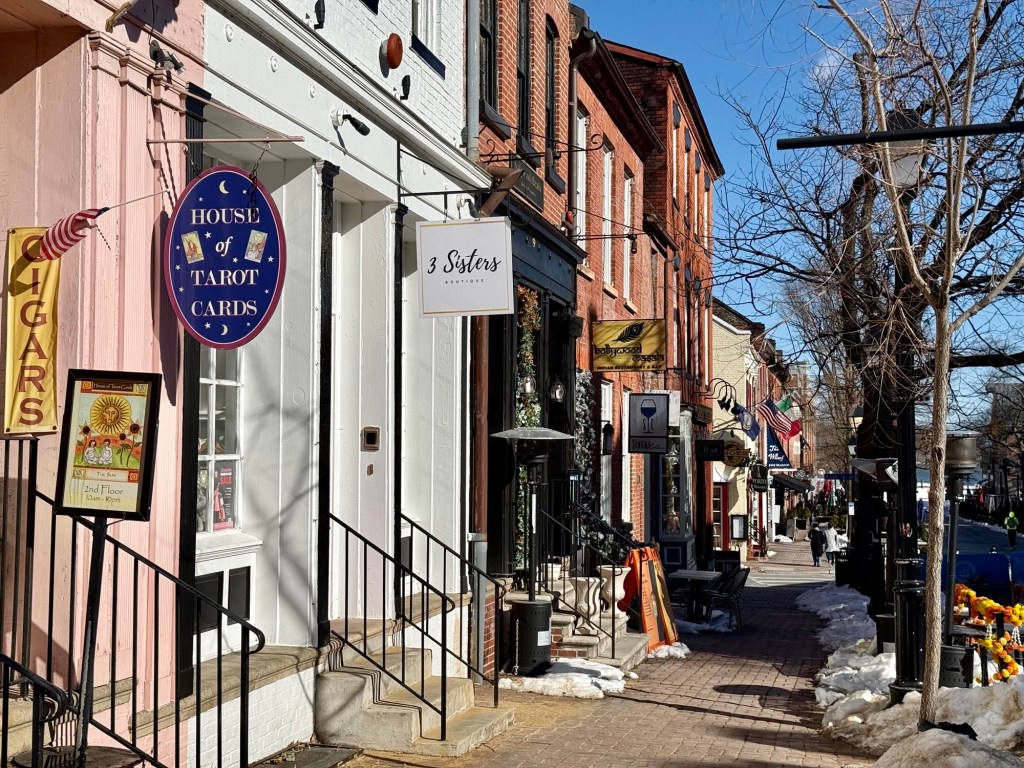
Historic Old Town is a very walkable area. The main street to explore is King Street, with the most exciting area between West Street and the Waterfront. It takes about 15-20 minutes to from one end to the other.

Although it’s not a large area to explore, there are a ton of historical buildings and sites here that can be easy to miss. Check out this website from the town of Alexandria for self-guided tours/maps: https://www.alexandriava.gov/SelfGuidedTours#WalkingToursofOldTownHistory

Tip: There’s a scavenger hunt map in the link above. If you complete it and bring it back to the visitors center, you get a free prize!

If you’re here for George Washington history, there’s also a map in the link above that focuses just on notable places where George Washington lived/worked/dined/worshipped.
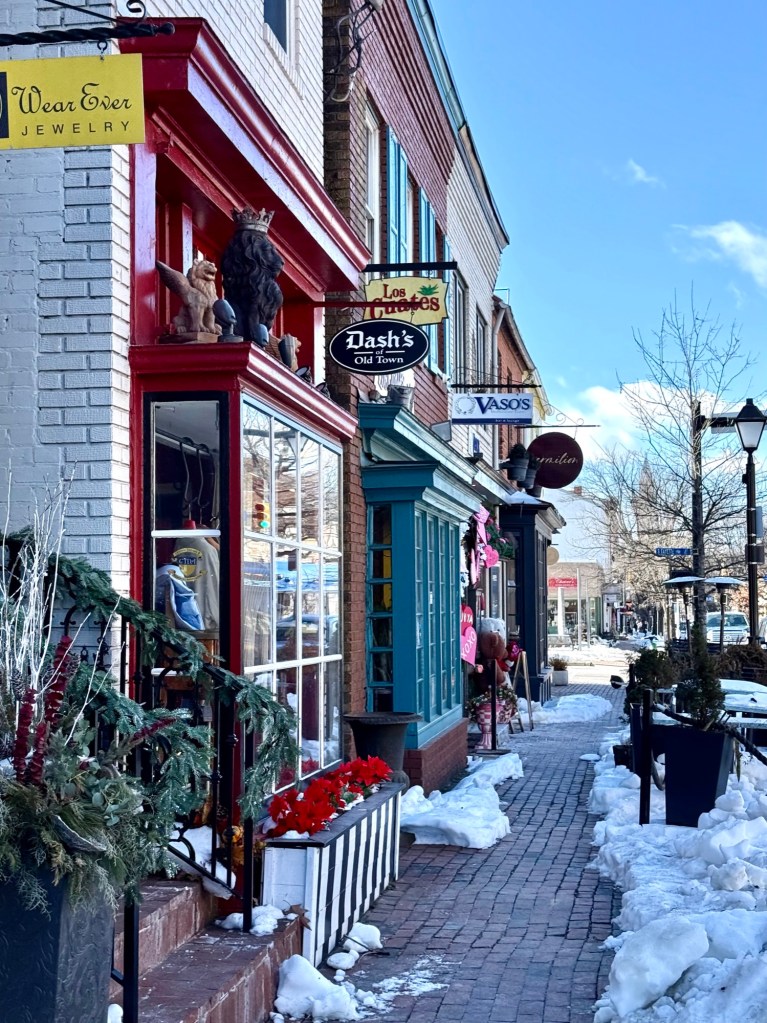
Shopping on King Street:

There are tons of shops on King Street to explore. My favourite was “Shop Made in VA” which had unique souvenirs made by local Virginian artists!
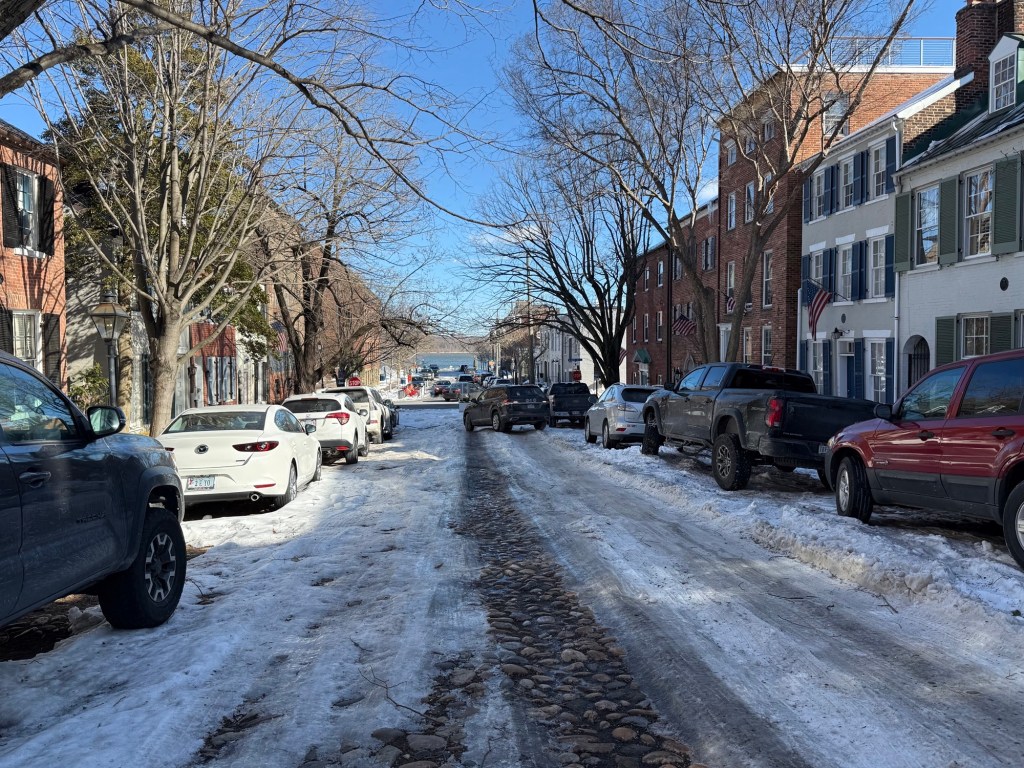
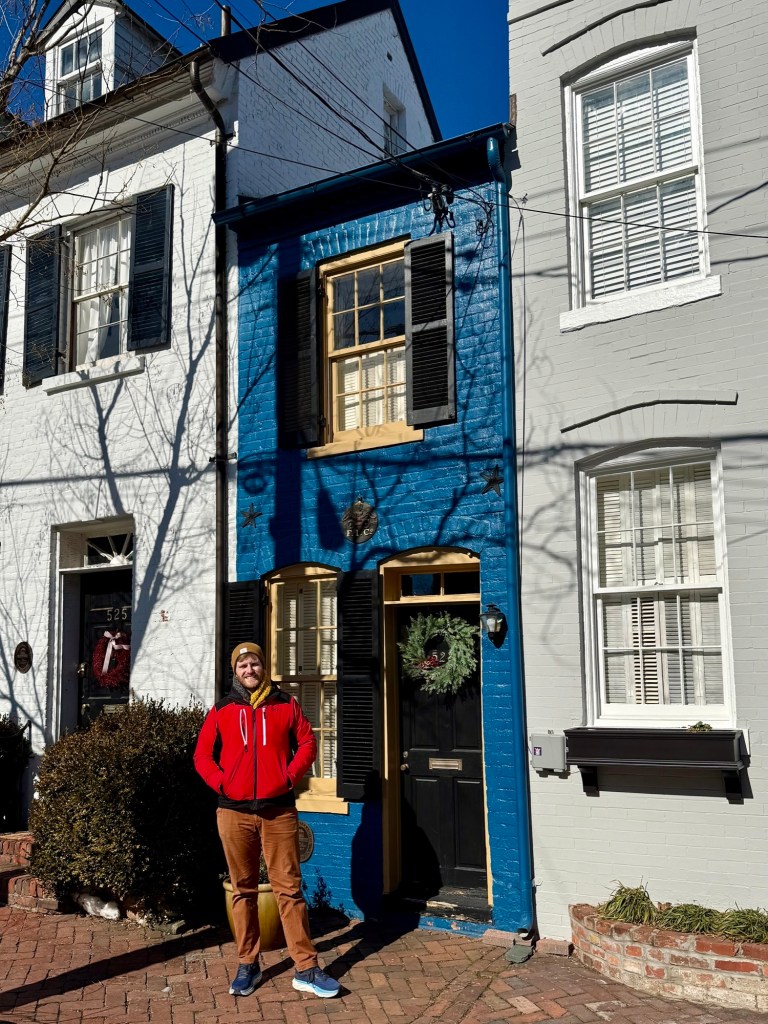
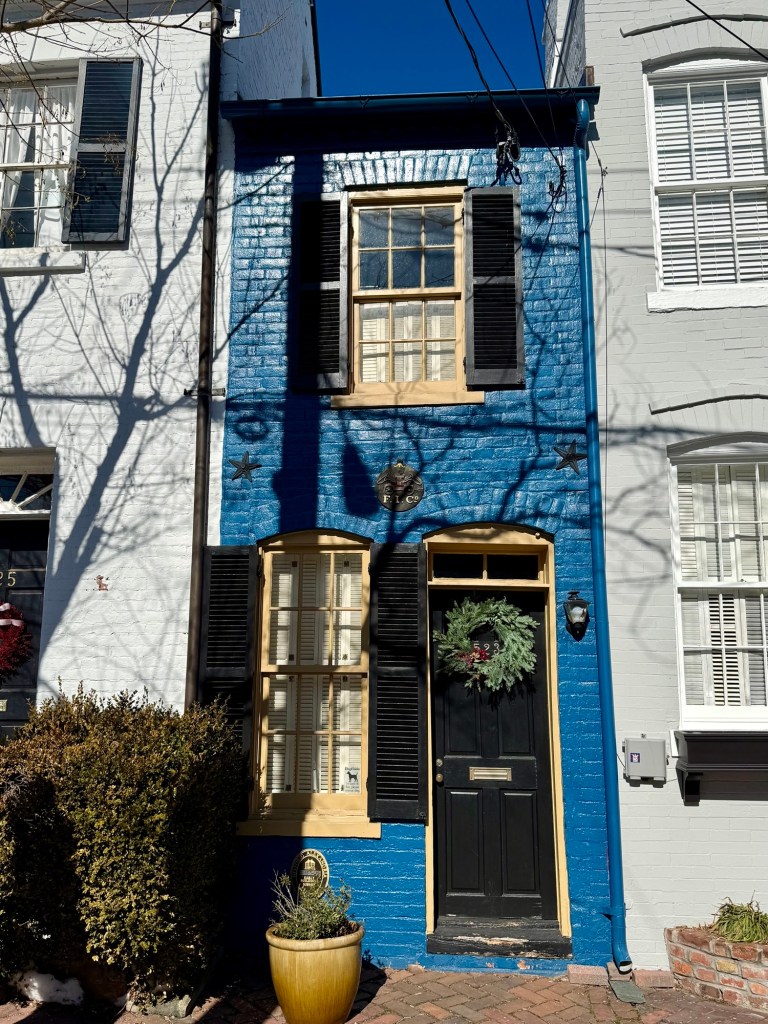
The Hollensbury Spite House

Address: 523 Queen St, Alexandria, VA 22314, USA

The Hollensbury Spite House is the skinniest historic house in the US, measuring at just 7ft and 6 inches wide (229cm) and 325 square feet! Why is it called a spite house, you ask? Prior to 1830, this place was an alleyway and local brickmaker, John Hollensbury, owned the buildings adjacent to the alley. He was tired of people loitering here and the horse and wagons scraping against his buildings and damaging the brick, so his solution was to purchase this narrow alley (for a little over $45!) and built this house to block the walkway.

This spite house is located at 523 Queen Street. There’s no signage and can be easy to miss, so just punch the address into Google maps to guide you. It’s currently a private residence (so don’t go knocking) – which probably explains the lack of signage.

Fun fact: Although the Hollensbury Spite House is the most famous for being the most narrow, there are actually 3 other spite houses in Alexandria – check out this article here: https://alexandrialivingmagazine.com/home-and-garden/queen-street-spite-house-alexandria-va-historic-alley-homes/

Christ Church

Address: 118 N Washington St, Alexandria, VA 22314, United States
Hours: closed Mondays, 9am-4pm most days except Wed and Sun (check the website for updated hours)
Website: https://www.historicchristchurch.org/
Admission: free, also free tours available, donations accepted

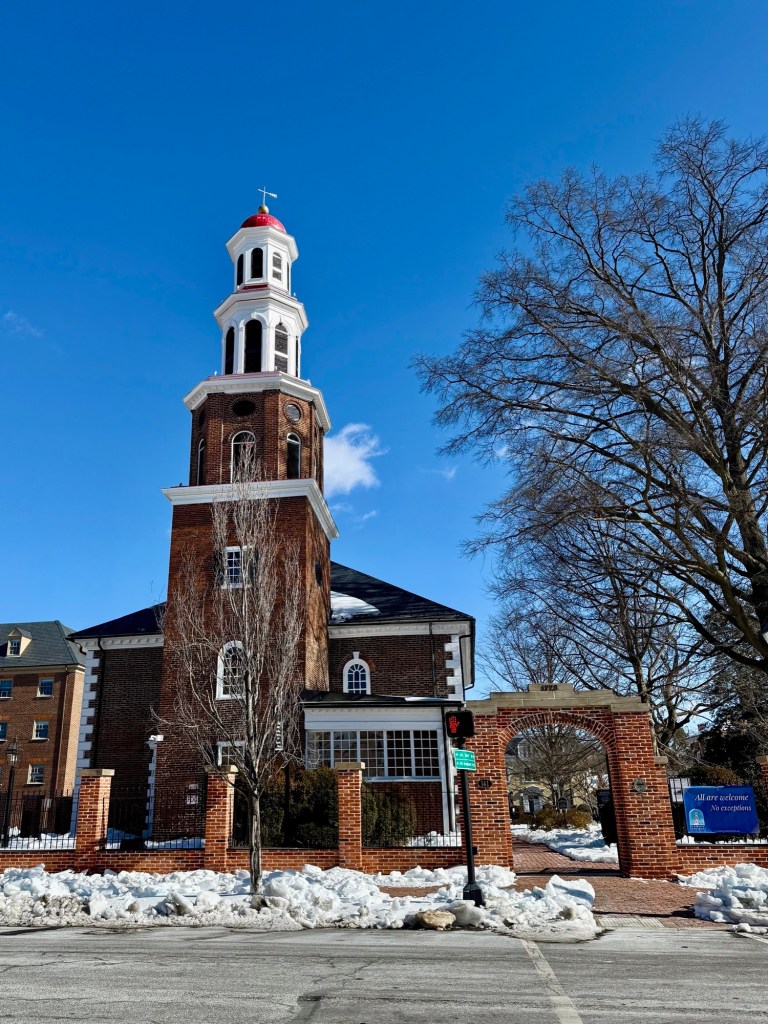
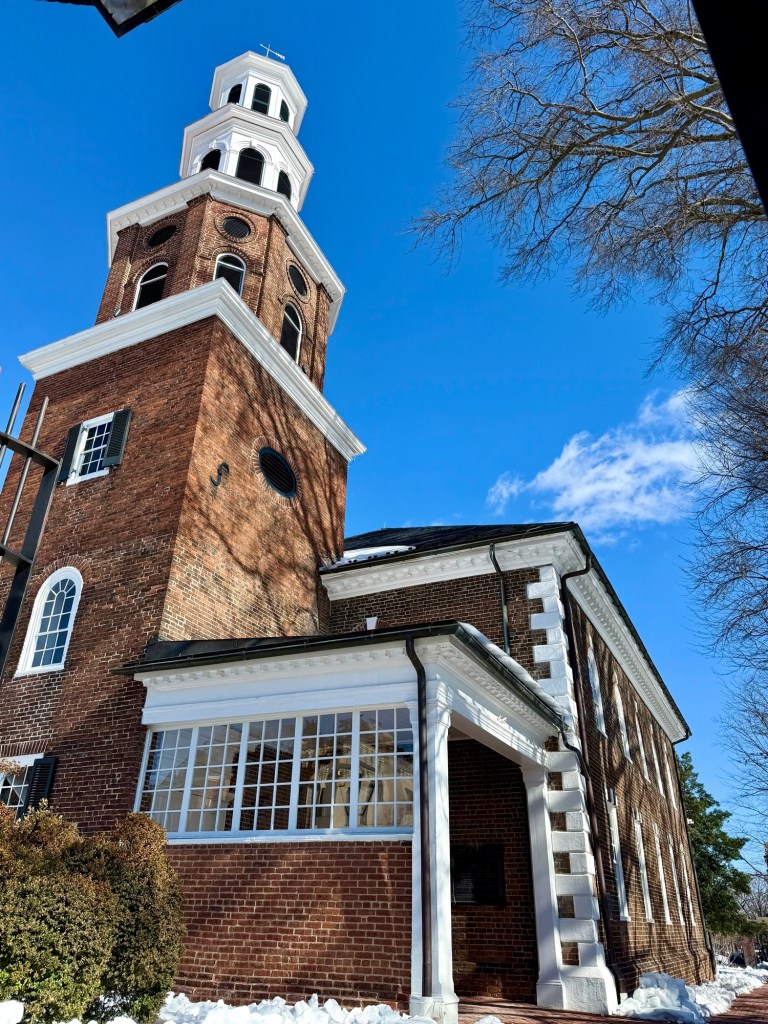
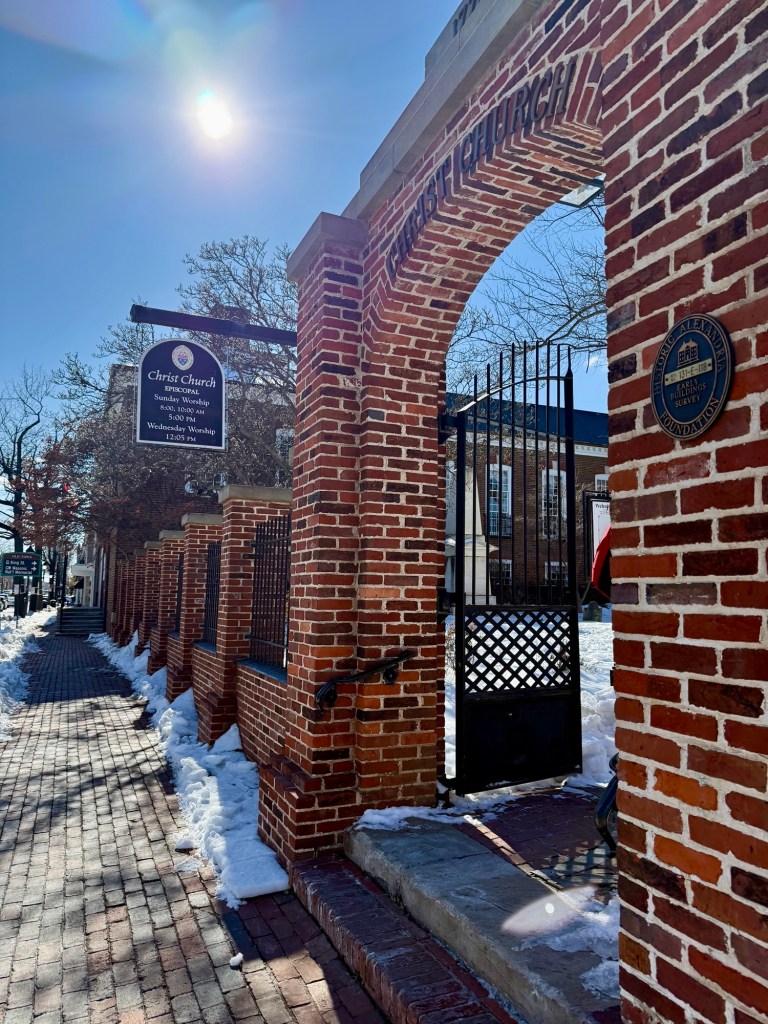
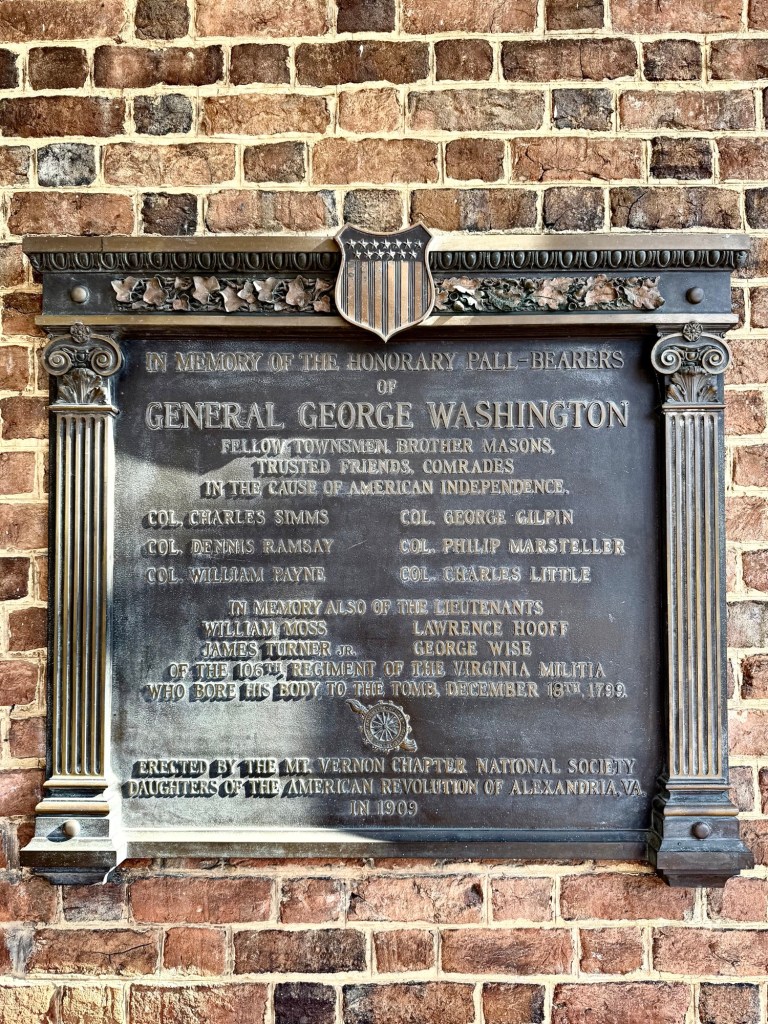
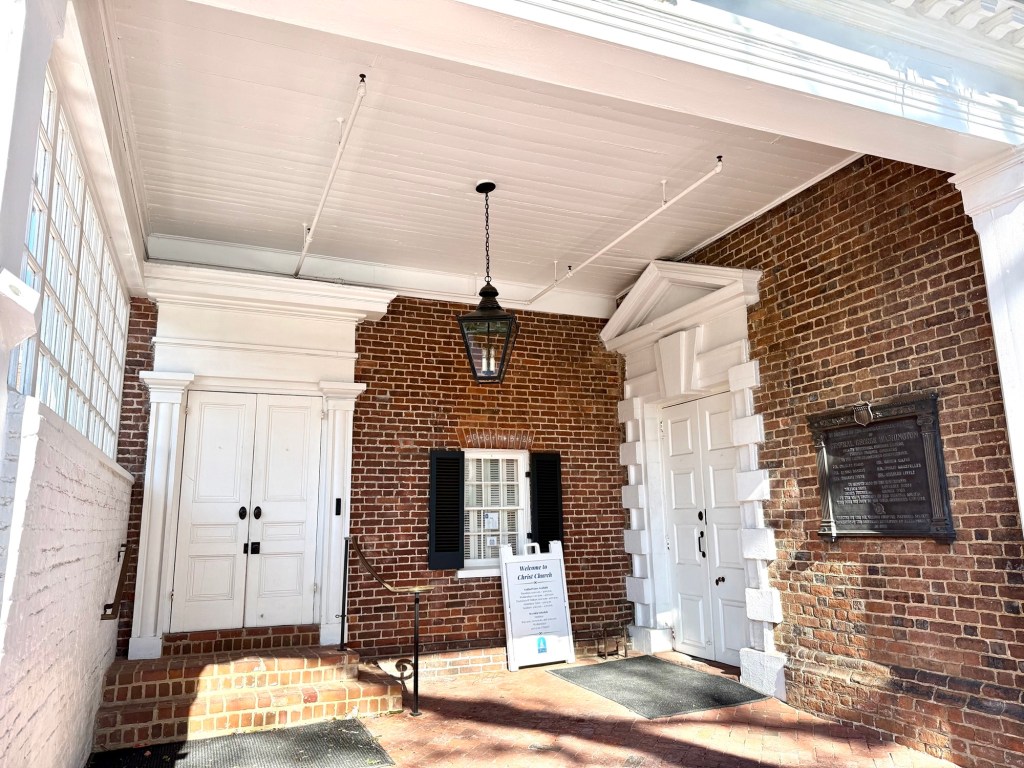
Christ Church was built in 1773 and is still operating today. There is no charge for admission and they also offer free tours daily (check website for updated hours). This is where George Washington came to worship and he even purchased his own pew box (back in the day, the pews were inside boxes and you can purchase a box to ensure that your family members could sit together). Another notable parishioner was Robert E. Lee, whoever later became the general of the Confederate army.

The church is a walkable distance from King Street, but you can also drive here with free street parking in the vicinity.

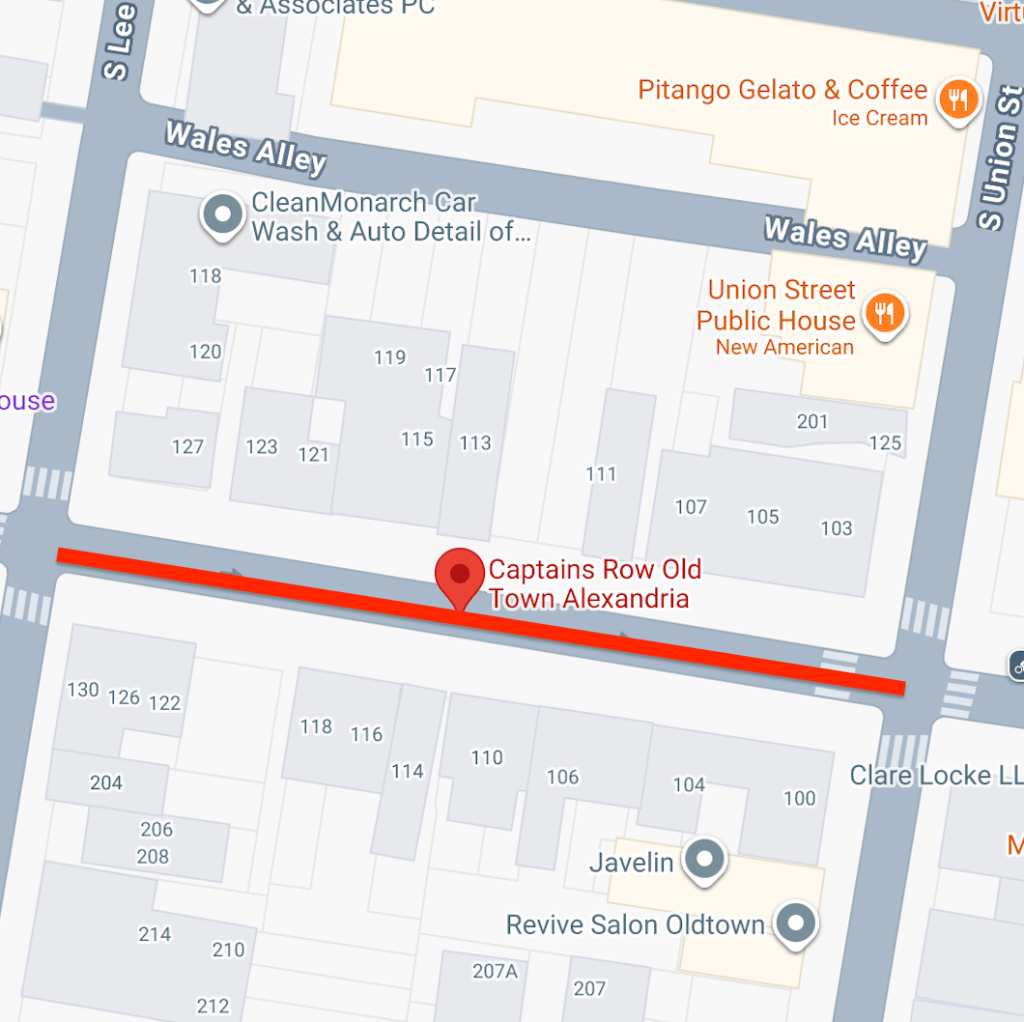
Captain’s Row (cobblestone road)

Address: no exact address. It’s located at the 100s block on Prince Street (houses in the ‘100s’) between S. Union Street and S. Lee Street (see map below). You can type in ‘100 Prince Street, Alexandria’ in Google Maps and it’ll take you to the corner of S. Union Street.

No exact address – it’s at the 100’s block of Prince Street between S. Union St. and S. Lee St. in Old Town Alexandria

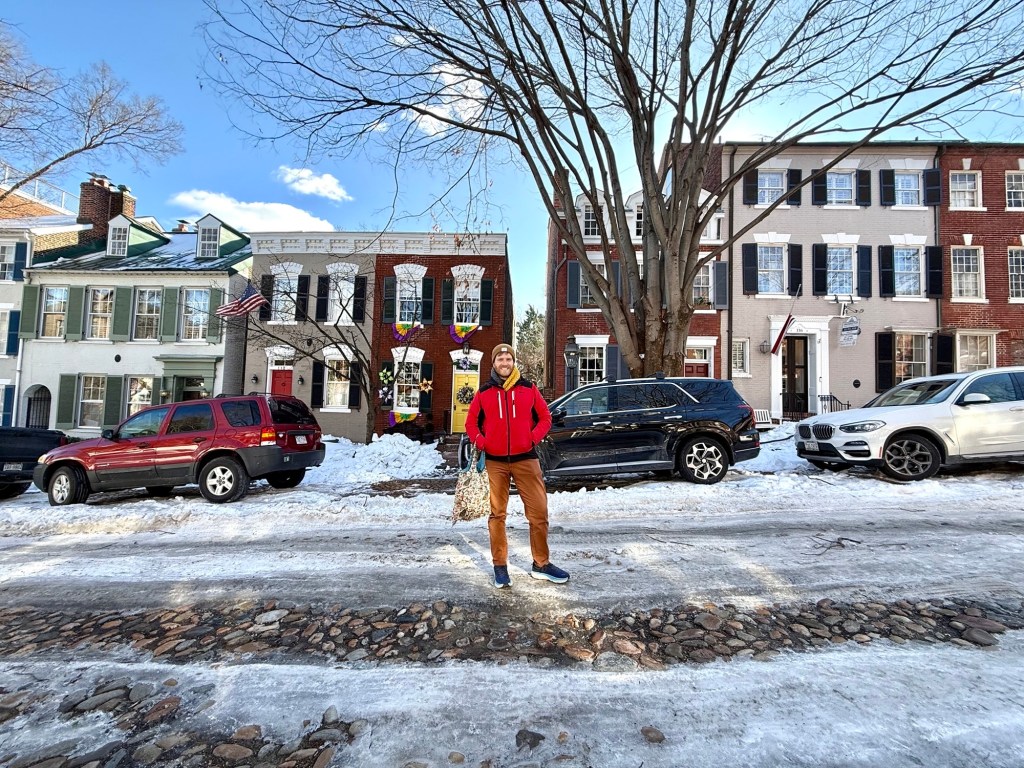
Captain’s Row is a section of perfectly preserved cobblestone road on Prince Street in Old Town Alexandria. It is the town’s most iconic and historic block, renown not only for its 250 feet of original cobblestone road but the preserved 18th century homes. It is named after Captain John Harper who built many of these homes in the late 1700s and is one of the few surviving surviving blocks of land in Alexandria that represents early American and European style architecture.

Unfortunately for us, since we visited in the middle of winter, only part of the cobblestone road was exposed so we couldn’t quite appreciate the historic picturesque scenery.

Carlyle House

Address: 121 N Fairfax St, Alexandria, VA 22314, United States
Hours: 10am-4pm most days, closed Wednesdays, 12-4pm Sundays (check the website for updated hours)
Admission: $8 per adult, $3 per child
Website: https://www.novaparks.com/parks/carlyle-house-historic-park

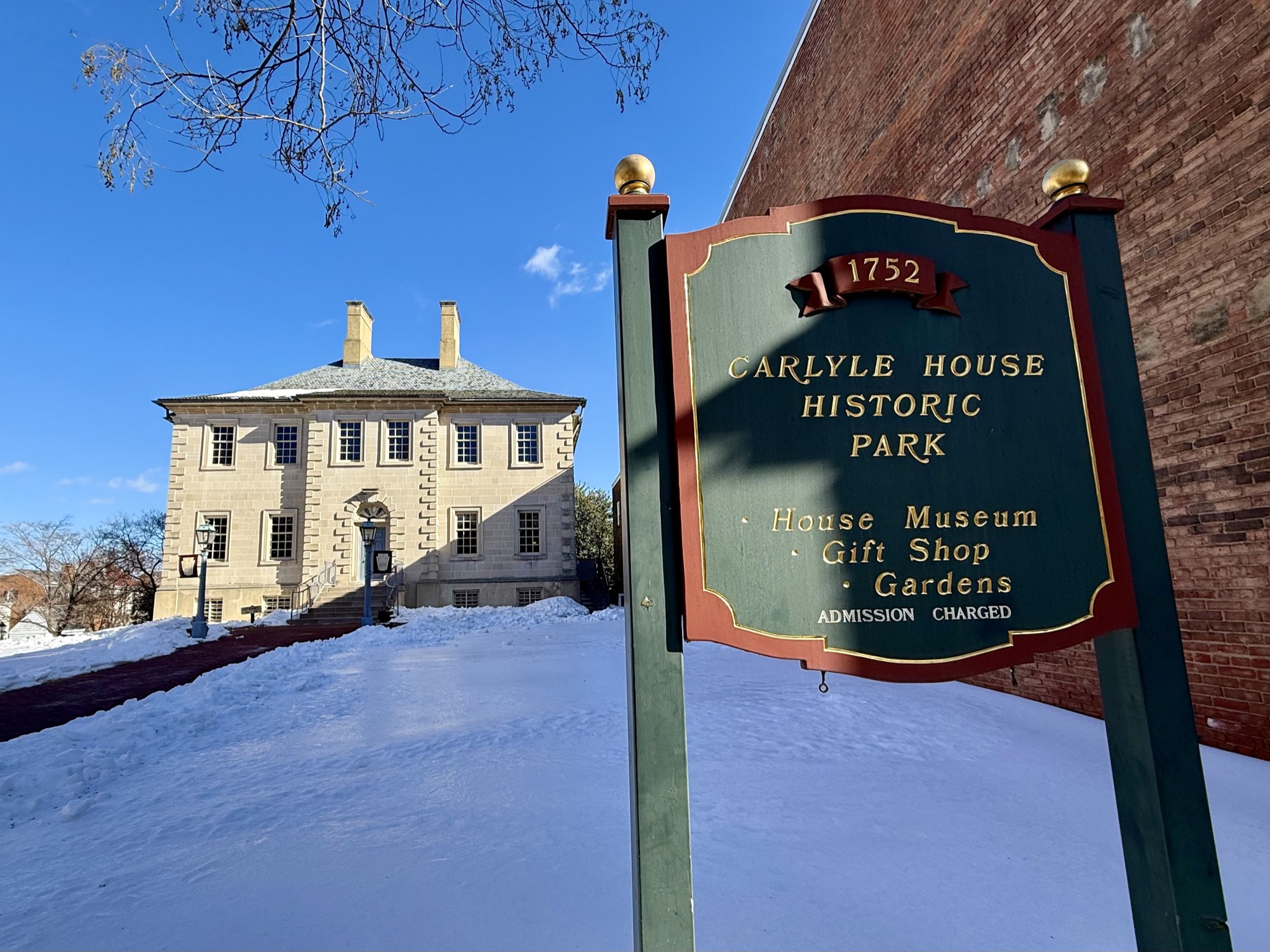
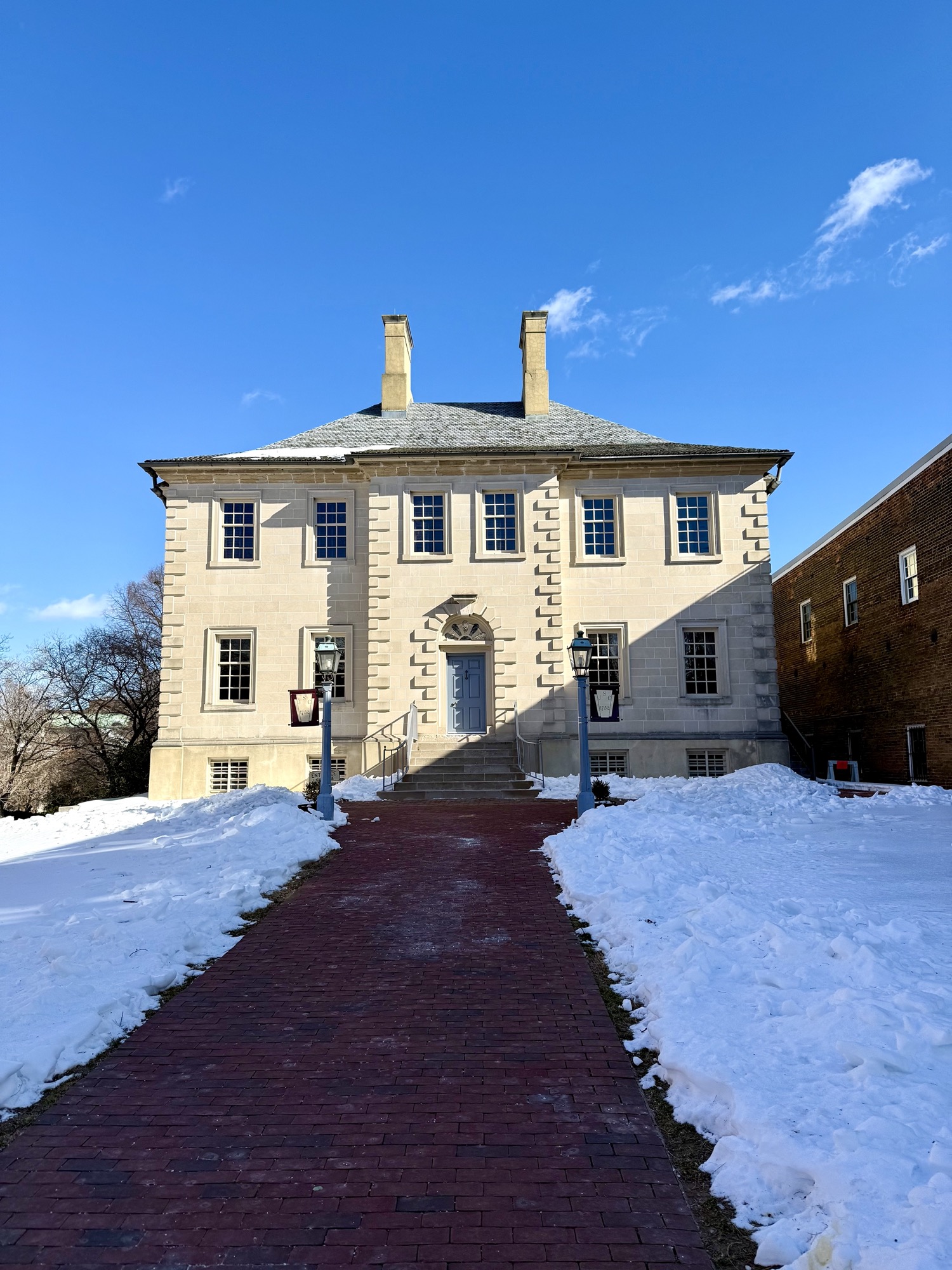
Carlyle House is a historic mansion completed in 1753 by wealthy Scottish merchant, John Carlyle, one of the founders of Alexandria. It is one of the most prominent homes in Old Town Alexandria and is architecturally unique. Built in Georgian residential-style architecture with simple but bold features around the windows and doors, the home itself is symmetrical in layout with a central hallway and the left and right sides of the house mirror each other.

Apart from unique architecture, this home also has a lot of historical value. England’s involvement in the French and Indian War was planned at the Carlyle house. The result of that war made young George Washington a hero. The house was also later the site of a hotel and hospital. Check out this cool website for more interesting facts about the Carlyle House: https://ourhistorymuseum.org/blog/the-top-5-most-interesting-facts-about-carlyle-house-in-alexandria-va.

Due to the weather and timing, we didn’t go inside, however just seeing the home from the outside was quite impressive.

Waterfront Walk

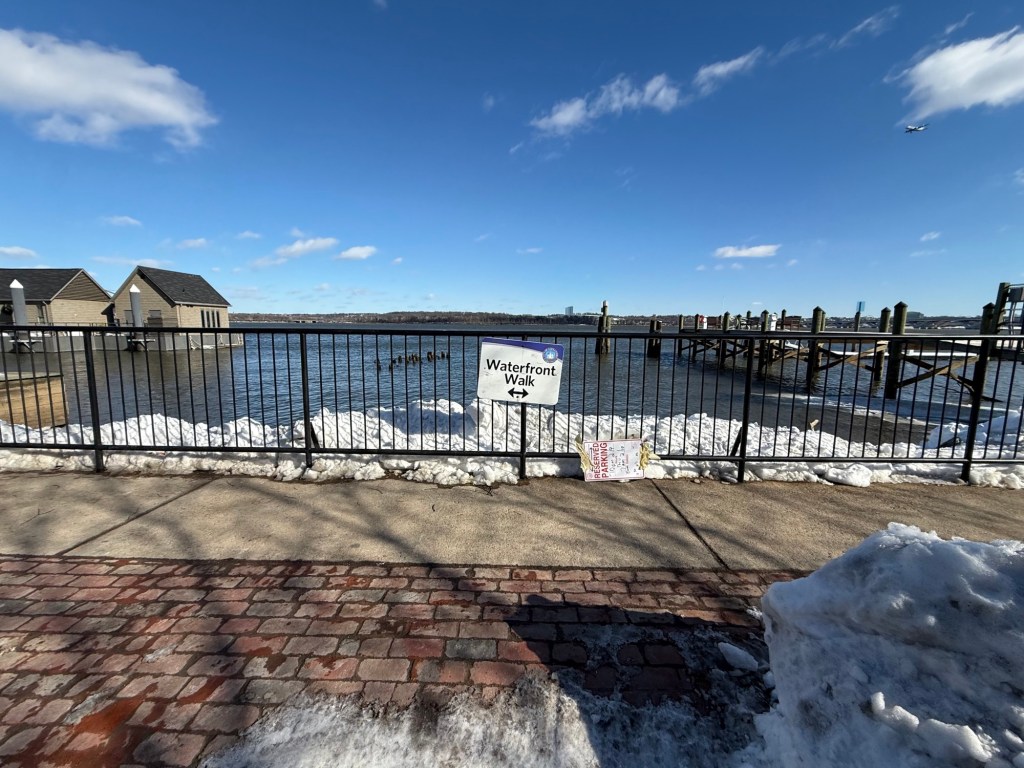
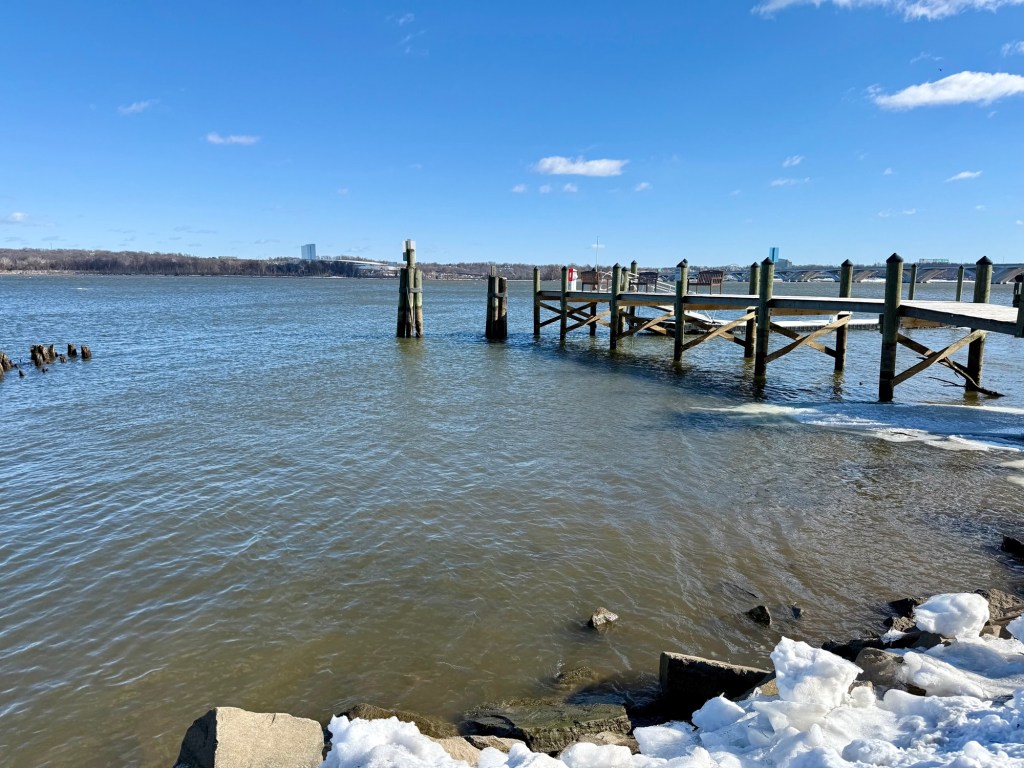
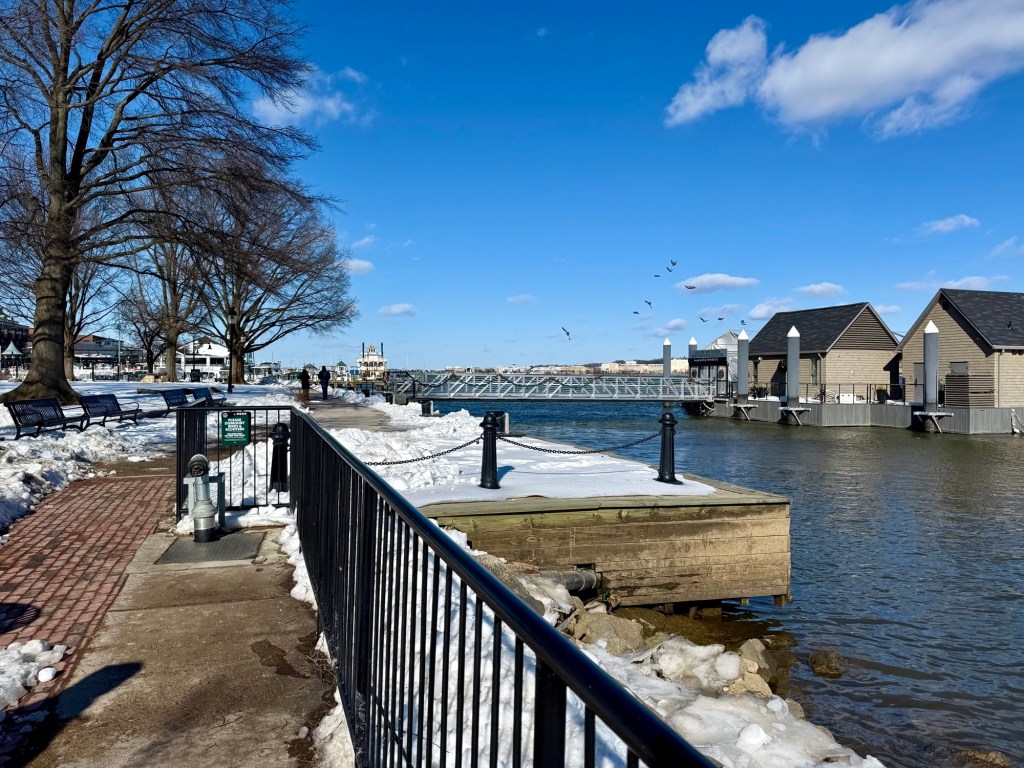
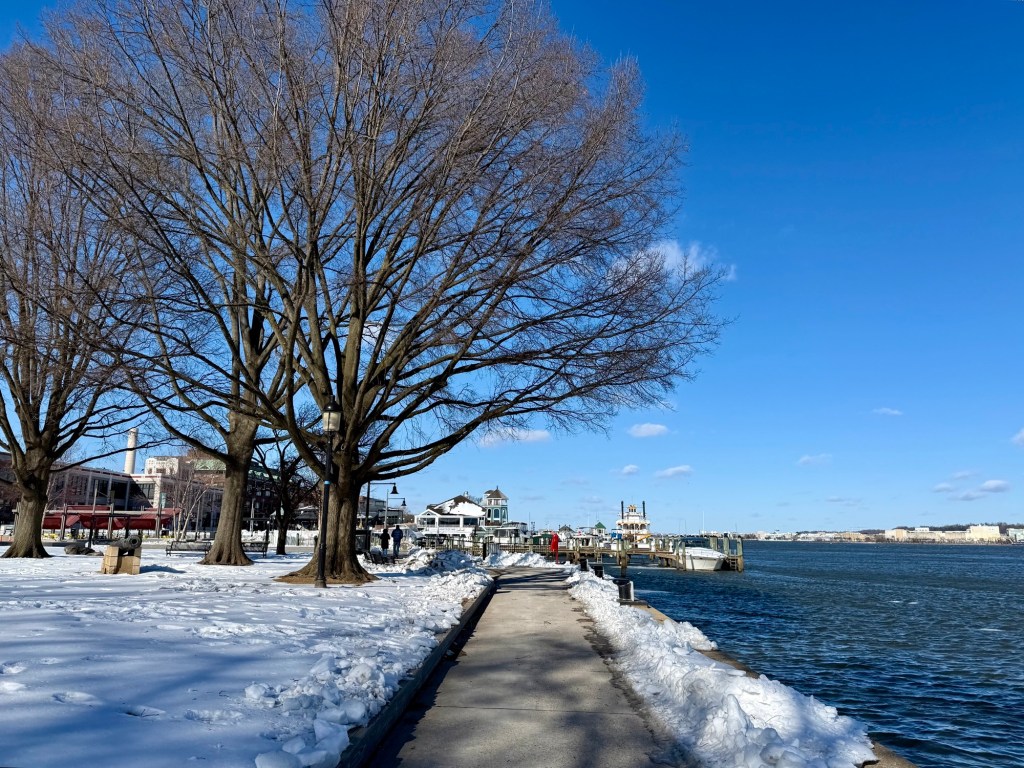
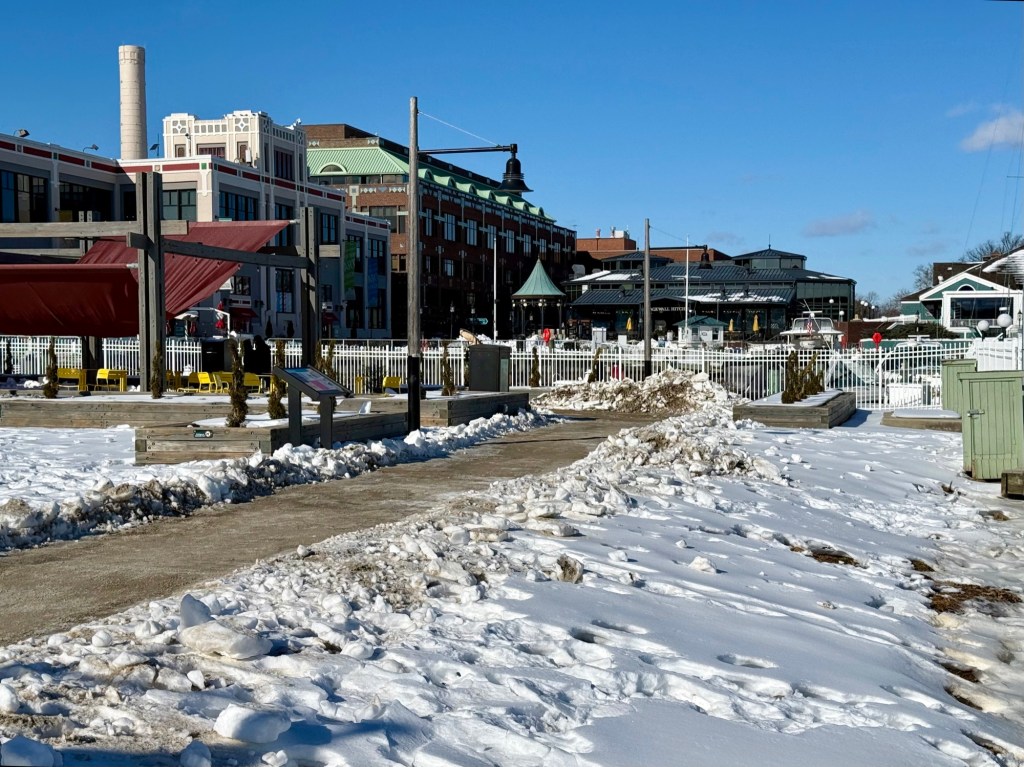
This short path along Alexandria’s waterfront gives you views of the dock and provides some greenery (or snowery in our case). Although short, it was a nice quiet little walk that led us to the Torpedo Arts Center from King Street. There are some shops and restaurants around the area as well.

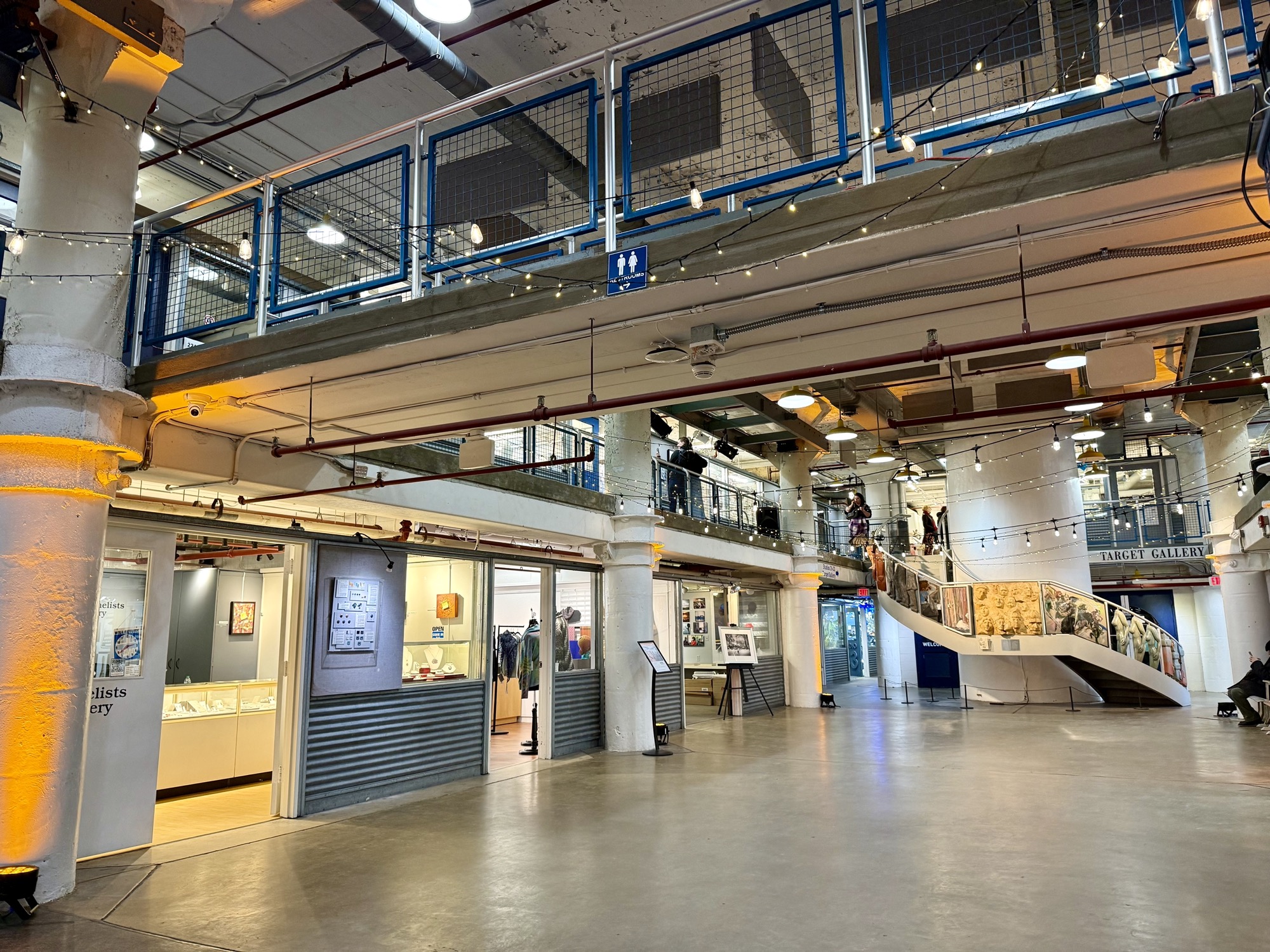
Torpedo Factory Arts Center

Address: 105 N Union St, Alexandria, VA 22314, United States
Hours: 10am-6pm, daily
Admission: free
Website: https://torpedofactory.org/
How much time to spend here: roughly an hour to go through all the shops

The Torpedo Factory Arts Center was one of my favourite places in Alexandria. This 100+ year old building houses the nation’s largest collection of working artists’ open studios all under one roof!

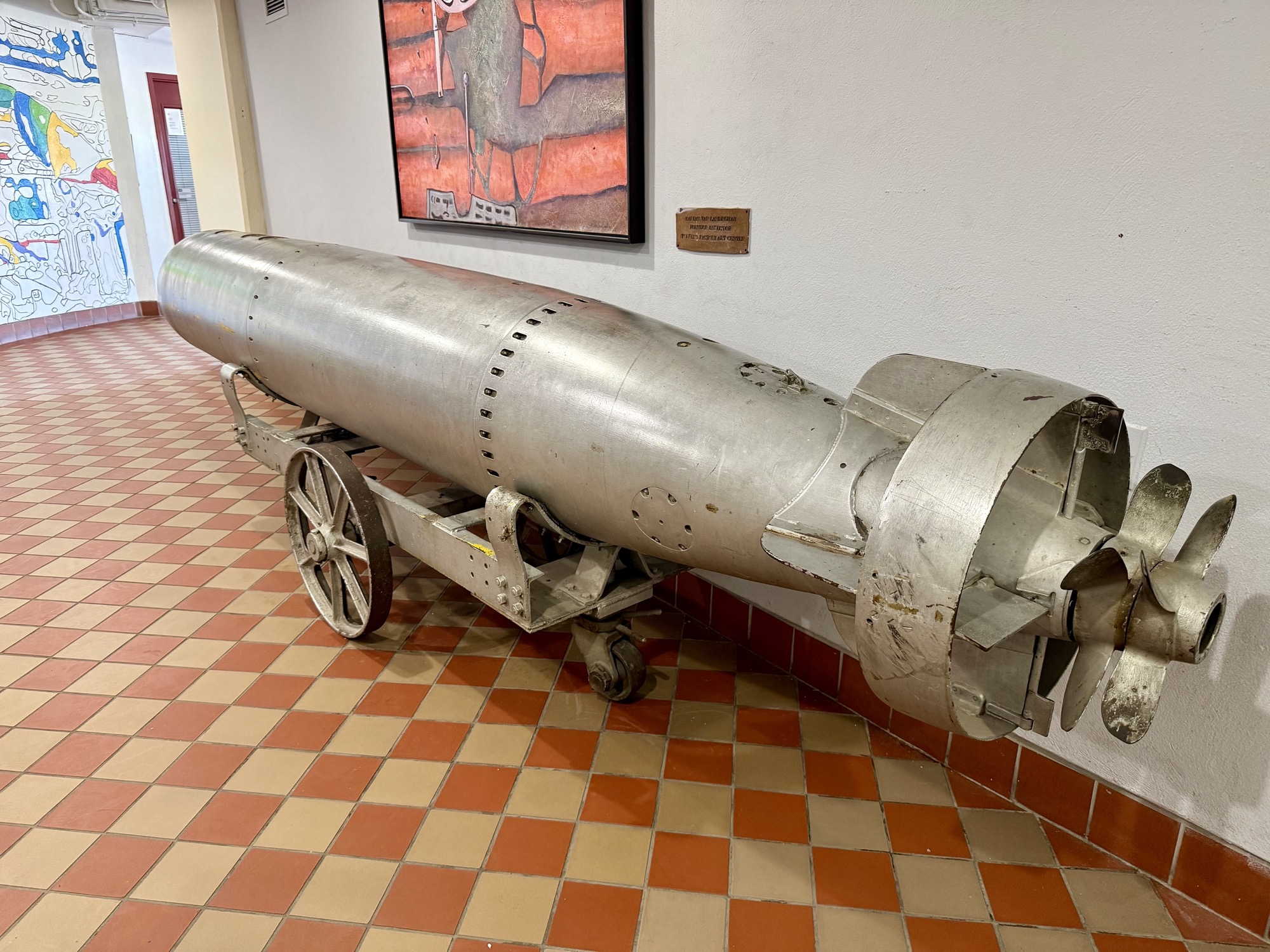
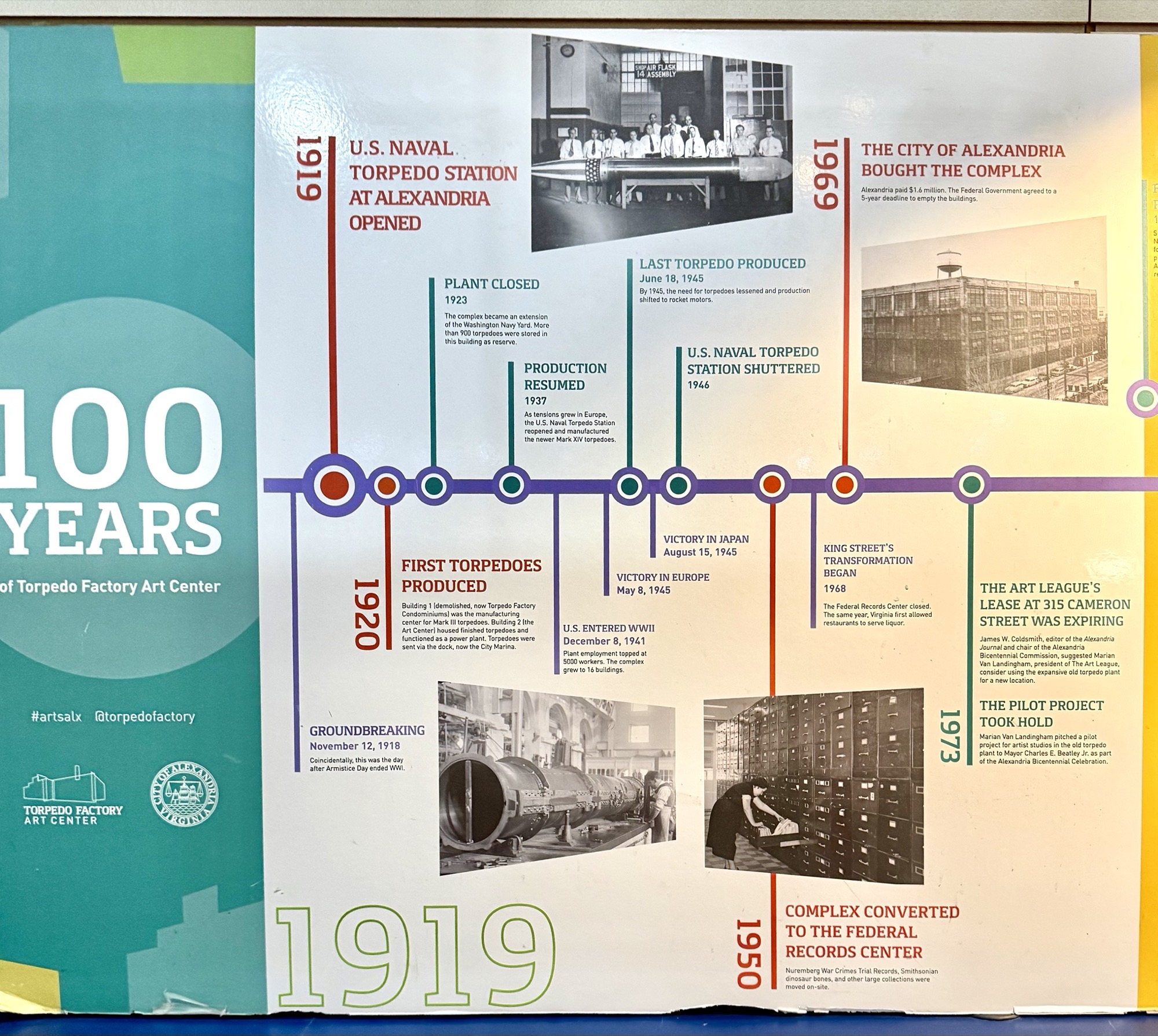
As you may have guessed from the name, this building used to be a torpedo factory that was constructed at the end of World War I in 1918. It produced Mark III torpedos for about 5 years until production stopped during peacetime, but then resumed leading up to the start of World War II. After the war ended, this factory made rocket engines briefly before shutting down permanently in 1946. It was then the Federal Records Center that stored documents, records, and artifacts.

In 1969 the city of Alexandria purchased the building. It took the government a few years to vacate the premises, but by 1973, The Art League had an expiring lease and sought the old torpedo factory as the new site for their plans. After years of planning and renovations, it officially re-opened in 1983 as an artist studio and still continues on today!

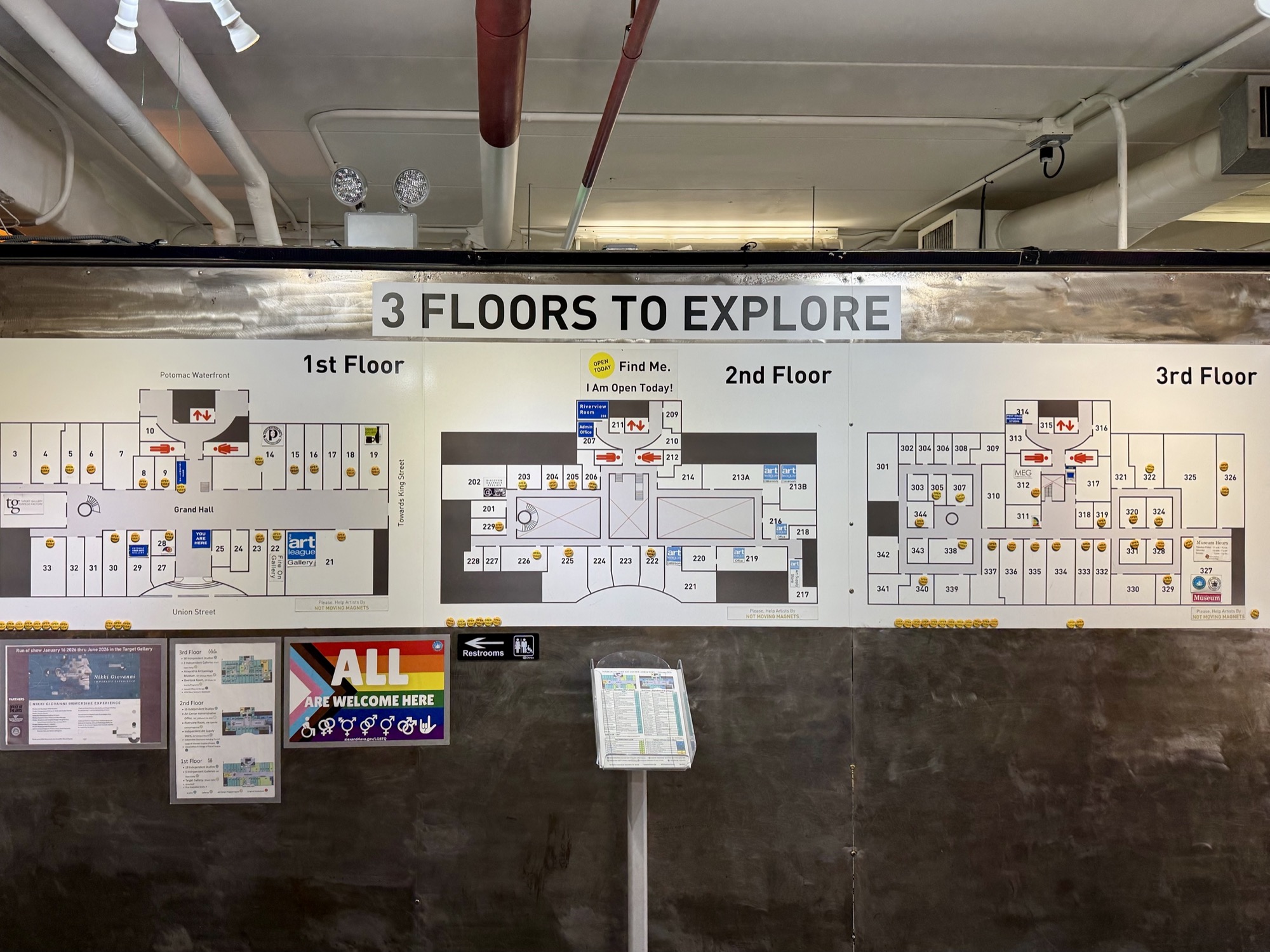
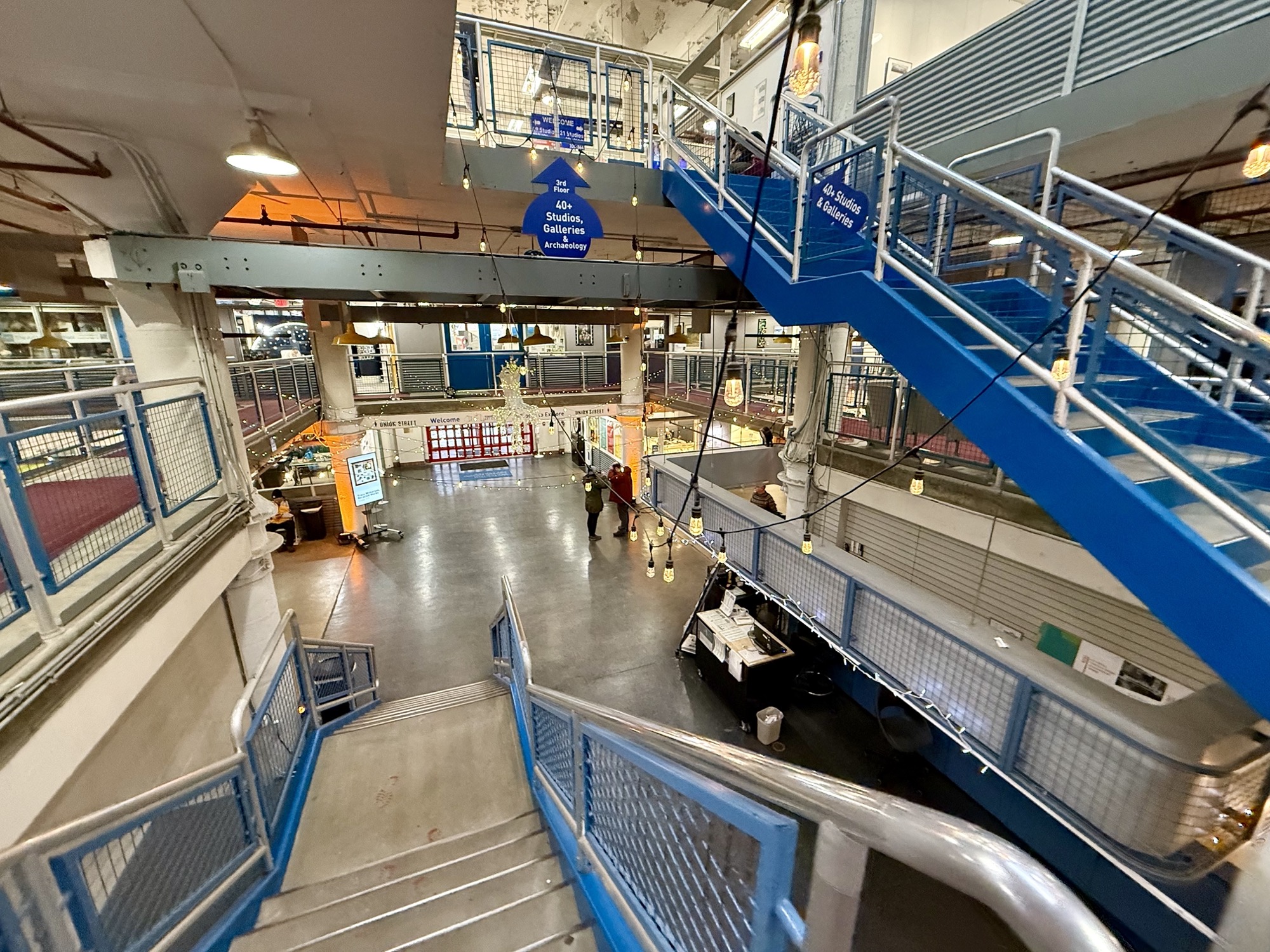
The Torpedo Factory Arts Center is like no place we’ve ever been before. It’s an impressive 3 floors of artist studio space where they work and sell their art all in real time. There are artists from different backgrounds making all types of art – painters, sculptors, jewellers, mixed media…etc.- it was really cool to watch them work. Toby got a really cool ring here and the great thing about being in the artist studio is that some of these pieces can be customizable since you’re buying direct from the artist in their shop! It’s definitely a treat to walk around this space and get inspired by all the amazing art around you.

Jones Point Lighthouse

Address: 100 Jones Point Dr, Alexandria, VA 22314, United States
Hours: 6am-10pm, daily

If you have some extra time, The Jones Point Lighthouse in the southern part of town has some far away views of Washington, DC across the river. It’s located within a park setting and you can follow the trail here as part of the riverfront walk and take you all the way up to the Torpedo Factory Arts Center and lead you into Old Town.

We didn’t end up stopping here because the weather was extremely windy and cold so we decided to skip it. The lighthouse looks cute from online pictures.

Some Final Thoughts

  • Old Town Alexandria is pretty cool. Lots of shops with many historical sites to see. Follow an online self-guided tour if you want to make sure you don’t miss anything.
  • The Torpedo Factory Arts Center is definitely a MUST!
  • Book a tour if you’re going to visit the Masonic Temple so you can get to the top of the temple.
  • Don’t forget to check out Mount Vernon, the home of George Washington if you’re into more historical places!

A Comprehensive Guide to Visiting Mount Vernon, George Washington’s Home


Mount Vernon, George Washington’s estate, offers a glimpse into the life of the first president. Visitors can explore the mansion, museum, and gardens, with many tour options available. Follow this comprehensive guide on visiting this vast estate and how to get the most out of your visit!

A Comprehensive Guide to Visiting Mount Vernon, George Washington’s Home


Date Published: May 20th, 2026 | Last Updated: May 20th, 2026
Author: Abby | Category: Travel, USA
Date of travel: Feb 7th, 2026

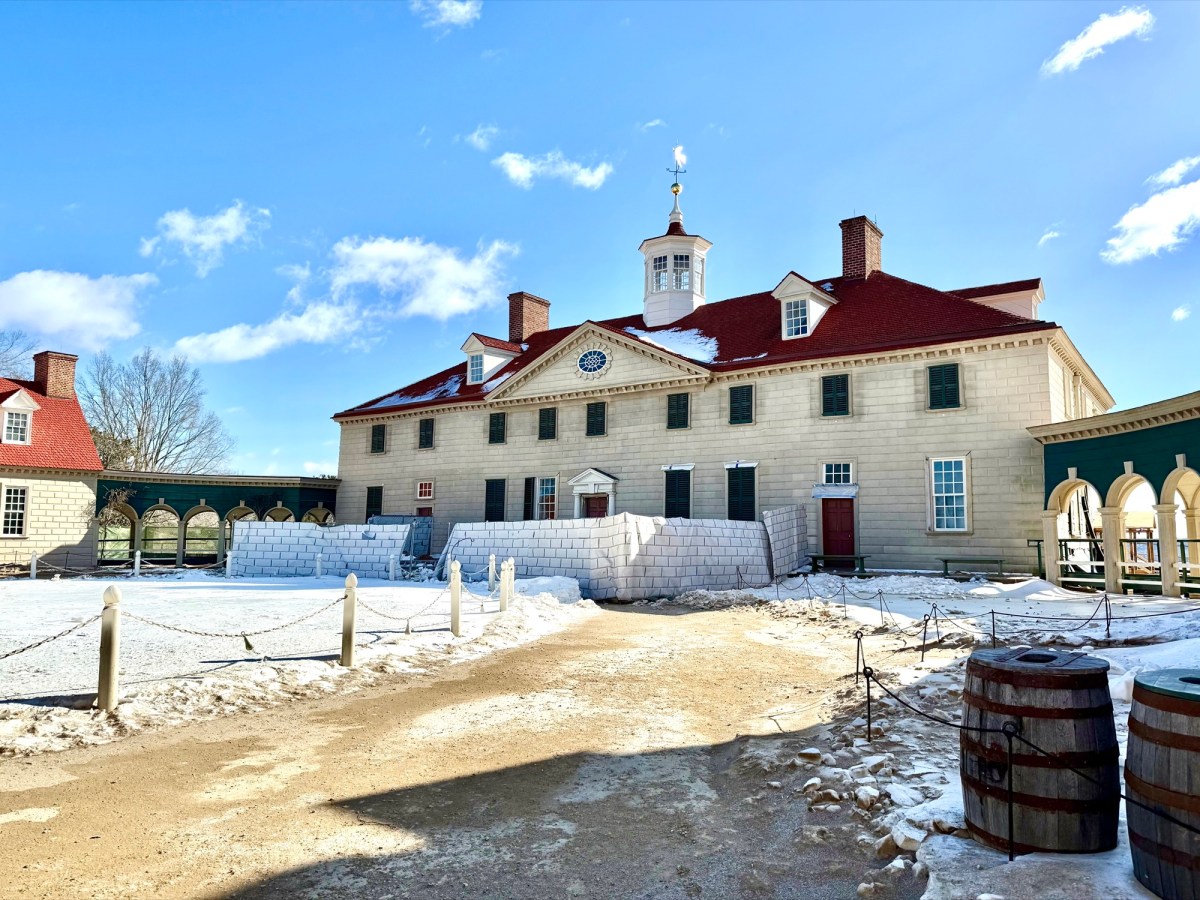
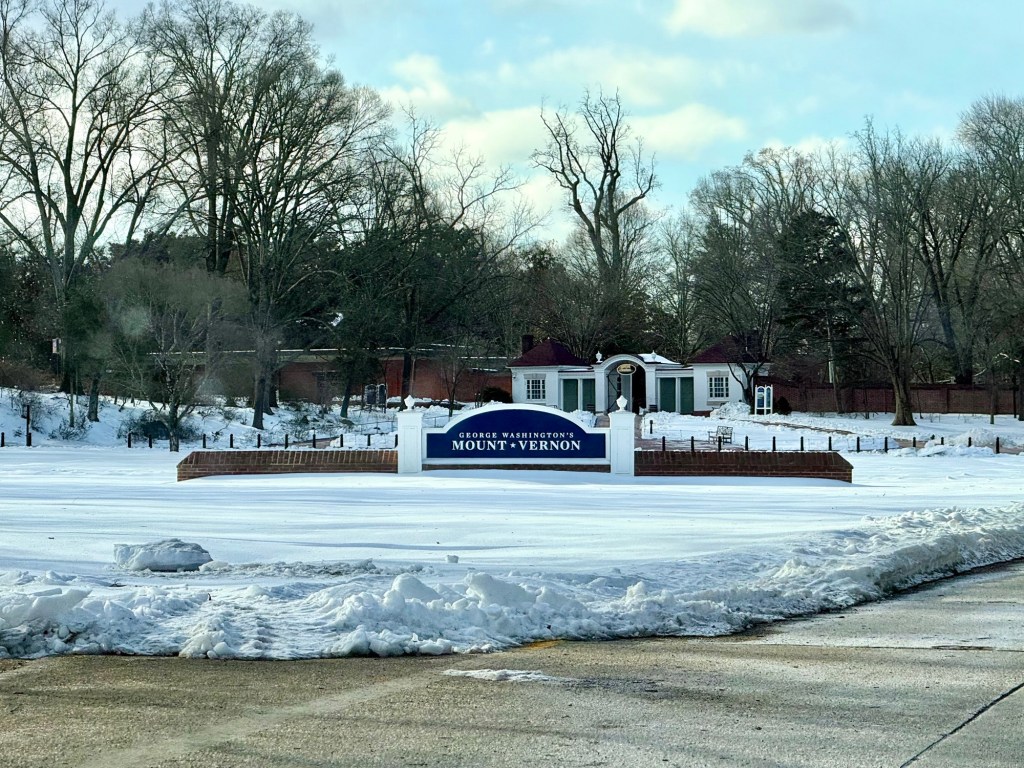
Mount Vernon is the famous home to the first president, George Washington. It’s a top highlight landmark when visiting Virginia, especially if you’re into American history. It’s open year-round but gets especially busy in the summer. Follow this guide for a comprehensive overview of the property and what to see here!

Tip: Watching the musical Hamilton prior to coming to become a fangirl/boy of George Washington first is highly recommended so you can have the songs stuck in your head as you walk around and intermittently shout “Here comes the general!”.

Address: 3200 Mount Vernon Memorial Hwy, Mt Vernon, VA 22121
Hours: 9am-5pm April – October; 9am-4pm November – March (double check the website, hours may vary depending on weather)
Website: https://www.mountvernon.org/
Cost: $28/adult; $14/child for admission – cost of tours extra (see below)
Parking: Free on site, plenty of parking available

A little background information on Mount Vernon

Mount Vernon is the famous estate and home of the first president, George Washington. The property was originally called Little Creek Hunting Plantation and was owned by his father, Augustine Washington. After his father’s death, the property was left to his older half-brother, Lawrence Washington, who renamed it ‘Mount Vernon’ after his old commander from the British navy, Admiral Edward Vernon (Vernon was a bit of a celebrity at the time and Lawrence felt that associating himself with Vernon’s name would elevate his social status).

After Lawrence passed away from tuberculosis in 1752, the property transferred over to his only surviving daughter, Sarah Washington. However, Sarah passed away just 2 years later and Lawrence’s widow Anne Fairfax inherited the property. By this time, Anne had already remarried and no longer lived at Mount Vernon. She leased it to George and when Anne passed away in 1761, George inherited the property outright as outlined in Lawrence’s will.

George and Martha lived on the property for the remaining 45 years of his life. Martha was already quite a wealthy woman when they married after inheriting the vast estate of her late husband. Together, her and George renovated the mansion and expanded the estate to include 5 surrounding farms – at its peak, Mount Vernon was 8000 acres!!

Today, Mount Vernon estate is renovated and preserved after what it looked like in the period when George and Martha lived here.

Scroll to the end of the page to continue the story of Mount Vernon ownership after George and Martha passed away.

Best time of year to visit?

You can visit any time of the year, however the best time to visit will be in the spring or summer when the plants and flowers in the gardens are in bloom. If you’re just here for history and to see the home of George Washington, then any time of the year will be fine.

Getting Here/Where to park?

The easiest way to get here is by driving. There are parking lots on the East and West sides of the George Washington Memorial Parkway as you approach the entrance. There is plenty of parking available at no additional cost, however the parking lot is a small distance from the visitors center that requires about a 5 minute walk. If you have people in your party that need a little extra time or assistance walking, consider dropping them off at the front gate before heading to the parking lot.

You can also get here by public transport, a shuttle bus, by boat from Washington, DC, or by bicycle. Check out their website for the most up to date and comprehensive instructions on how to get here: https://www.mountvernon.org/plan-your-visit/directions-parking-transportation .

How much is admission?

The cost to visit Mount Vernon can get quite pricey depending on whether you want to add on additional tours. I’d recommend buying tickets online early since the tours are timed and can sell out early. Mount Vernon gets very popular in the warmer months. Be warned: the online checkout process is like booking a ticket on a cheap airline – there are seemingly never-ending add-ons, so set aside a few extra minutes to make sure you’re buying tickets for what you want.

I’ve broken down the cost and the MANY tour options below:

  • Base admission cost (grounds pass): $30 per adult, $16 per child ages 6-11
    • Includes an audio tour, self-guided access to the historic area (including outbuildings, gardens, tomb, farm), and the museum. It does NOT include access to inside the mansion, which can only be seen with a guided tour.
    • On Saturdays and Sundays from April through October, you also get access to the distillery & gristmill.
    • The
  • Mansion tour (20 mins): +$2 per person
    • I don’t know why they don’t just include the tour in the price of the ticket since it’s only an additional $2.
    • If you join an in-depth tour, it will include the mansion tour as well so you don’t need to purchase it again.
    • These are timed tours, so you’ll have to select a time slow when booking your tickets.
  • The Enslaved People of Mount Vernon Tour (60 mins): FREE, but tour times very limited
    • A 60-minute walking tour that explores the lives and contributions of the many enslaved people that worked on this estate as well as the 5 surrounding farms that made up Washington’s 8,000 acre plantation.
    • This is a free tour, however the available times for the tour are very limited and books up early. We unfortunately couldn’t get a spot since there was only 1 tour time available the day we visited in the middle of winter. There should be more tour times in the warmer seasons.
  • Through My Eyes Tour (60 mins): +$10 per person
    • A 60-minute walking tour of the estate that is given by a character interpreter (Washington’s granddaughter, personal secretary, farm manager, or enslaved valet). They will go about their daily activities and make stops along the way.
  • In-Depth Tour (75 mins): +$60 per person
    • A 75-minute walking tour of the estate grounds including the mansion, the farm, old tomb, and a bit of the trails. It also touches on the subject of the enslaved people that worked on this estate and surrounding plantations.
    • This is the most in-depth and comprehensive tour. This is also the only tour where you can look inside the old tomb where George Washington was originally buried.
    • Although pricey, choose this option if you want to get the best understanding of the estate, but keep in mind that you also get free audio guides with a standard admission.
    • This is the tour we chose. We had limited time to spend here and we decided that a walking tour would be the best way to get the most of Mount Vernon!
  • Photo Cruise Tour (45 mins): +$7-$11 per person (warm seasons only)
    • A 45 minute cruise on the Potomac River about the history of the river and how it contributed to Washington’s business ventures.
    • Offered in warm seasons only – check the website for updated times
  • Gardens and Landscape Tour (60 mins): +$10 per person (warm seasons only)
    • A 60 minute tour of the gardens and landscape of Mount Vernon
    • Offered in warm seasons only – check the website for updated times
  • Hamilton the Musical Tour (60 mins): +$10 per person
    • A brand new tour on offer.
    • Although there’s no record of Alexander Hamilton visiting Mount Vernon, this 60 minute tour explores Washington’s views on many of the themes that the musical addresses.

If you want to keep costs to a minimum, I’d recommend just booking a general admission ticket which will come with a free audio guide that you can do at your own pace, a $2 mansion tour, and reserve a spot for the free enslaved people tour. The general admission gives you access to the entire estate that includes the museum, outbuildings, film, and both old and new tomb.

If you’re looking for the most comprehensive experience with a guide, book the In-depth tour which includes a short walk around the grounds and a tour inside of the mansion, then take the free enslaved people tour to get more behind-the-scenes insight, although the in-depth tour will also touch on this subject. Consider adding on the gardens tour if you’re into the landscape and the flora of the estate and the photo cruise tour if you want a different view of the property.

*NOTE: It takes at least 10 minutes at a good pace to walk from the parking lot, through the entrance, out the back garden to the actual mansion itself, so book a tour time at least 20 minutes after your intended arrival time to give yourself plenty of time!

How much time do I need here?

It depends on whether you want to do a tour and how thorough you are. You can split up your visit into 3 parts:

  • Film: A 22 minute video at the visitors center
  • Museum: A decent size George Washington museum where you can learn about him, his family, and see artifacts that belonged to him
  • Estate Grounds: Where you can wander on your own or with a guided tour. The estate includes his tomb, the home, and small buildings where the enslaved worked

If you want to do everything thoroughly, plan for at least 5 hours here (depending on which and how many tours you book). We were in a bit of a time crunch and spent about 3 hours here where we were able to fit in the 75min in-depth tour, walking around the grounds on our own, and going through the museum at a moderate pace. We didn’t have time to watch the film.

What to expect at Mount Vernon:

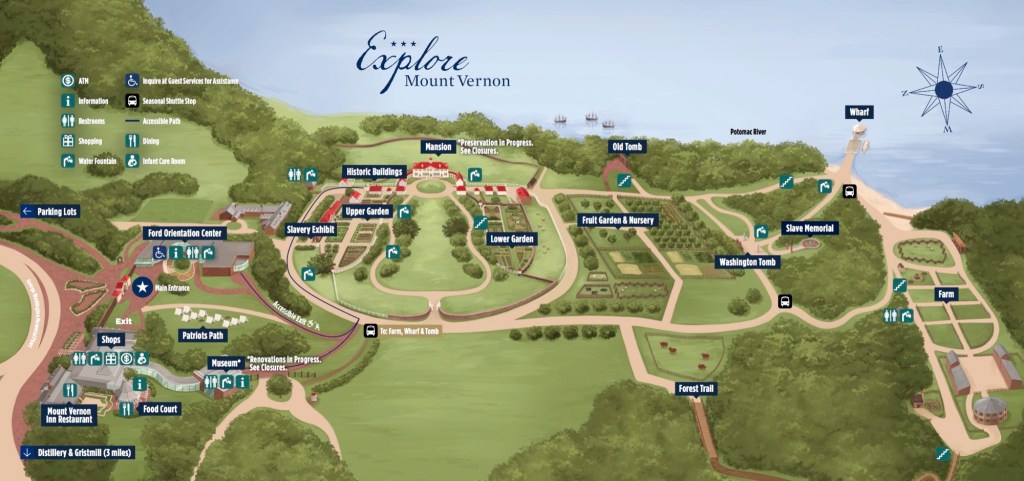
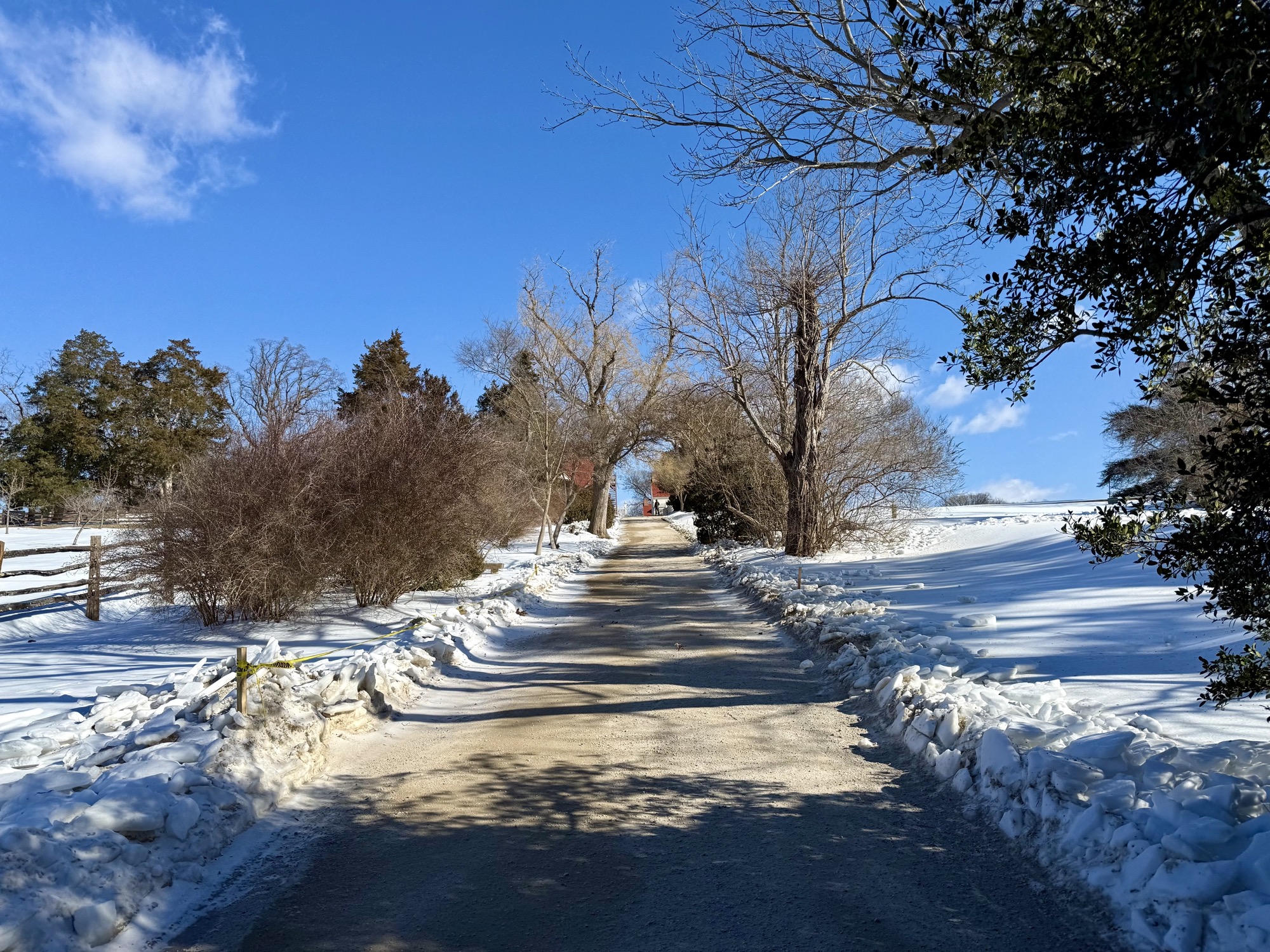
The grounds to Mount Vernon are massive. I’ve attached a map below to give you an idea. The main things to do are concentrated around the visitor center/museum area and the mansion and the surrounding small buildings and gardens. There are walking paths that will lead you to the old and new tomb as well as the Slave Memorial.

There’s an attached farm, forest trail, distillery, and wharf that are further out from the main part of the property that we did not visit and was not highlighted by the staff.

Parking & The Visitors/Orientation Center

There is plenty of parking available at no additional cost, however the parking lot is a small distance from the visitors center that requires about a 5 minute walk. If you have people in your party that need a little extra time or assistance walking, consider dropping them off at the front gate before heading to the parking lot.

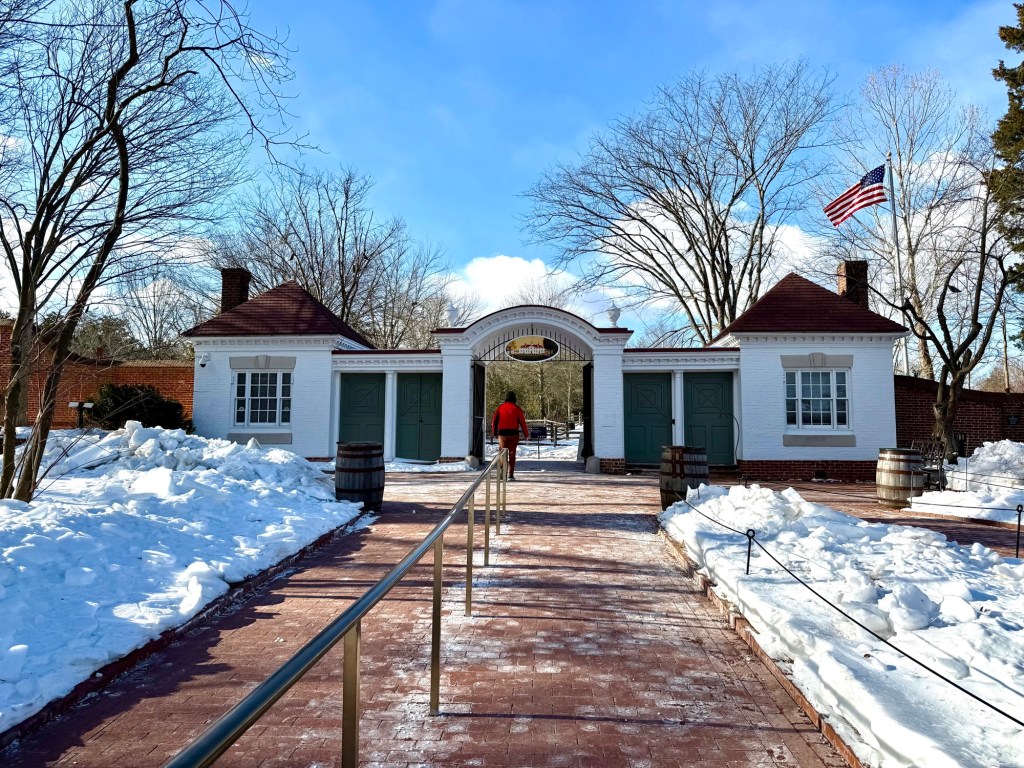
Once you reach the front gate, continue walking and you will see the visitors center where there will be security screening before you can enter the property.

Inside the visitors center:

Revolutionary War Theater

The Revolutionary War Theater is attached to the visitors center. It shows a 22 minute 4D film (yes, with special effects) called Washington’s War. It highlights George Washington’s role in the Revolutionary War that led to the independence of America.

The film plays every half hour starting at 9:30 a.m. with the final showing at 5:30 p.m.

Admission to the film is included in the ticket price.

George Washington Museum

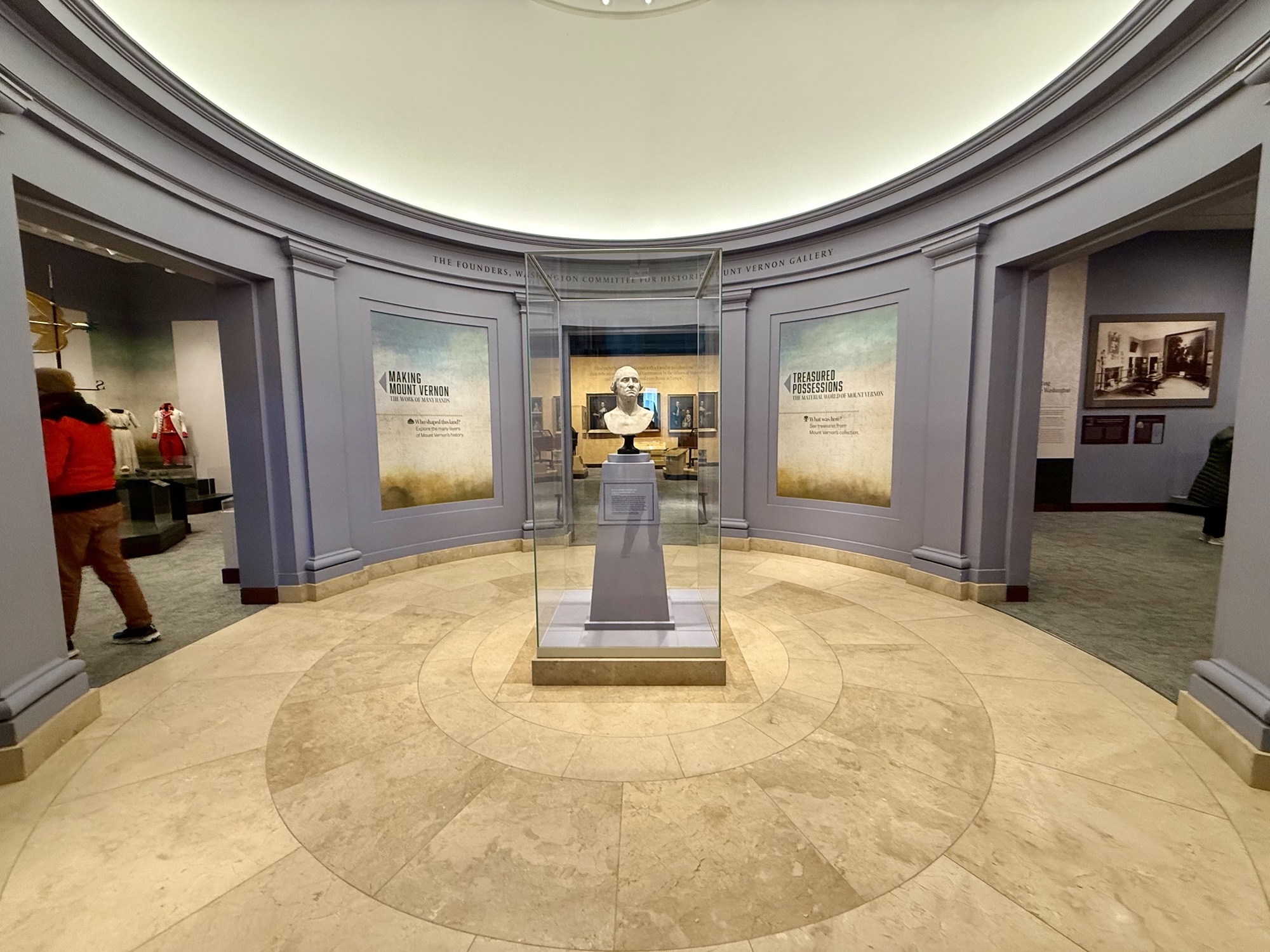
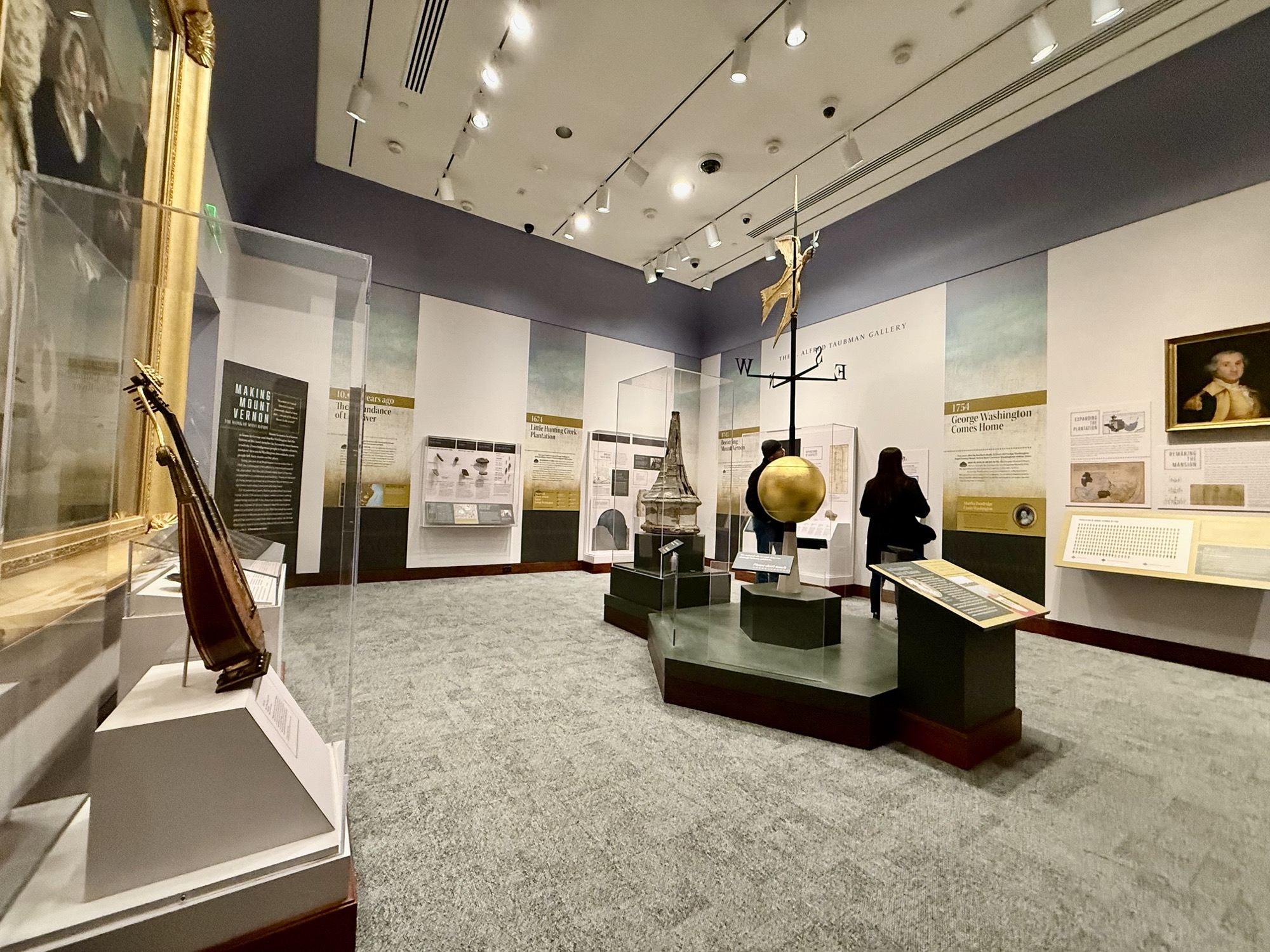
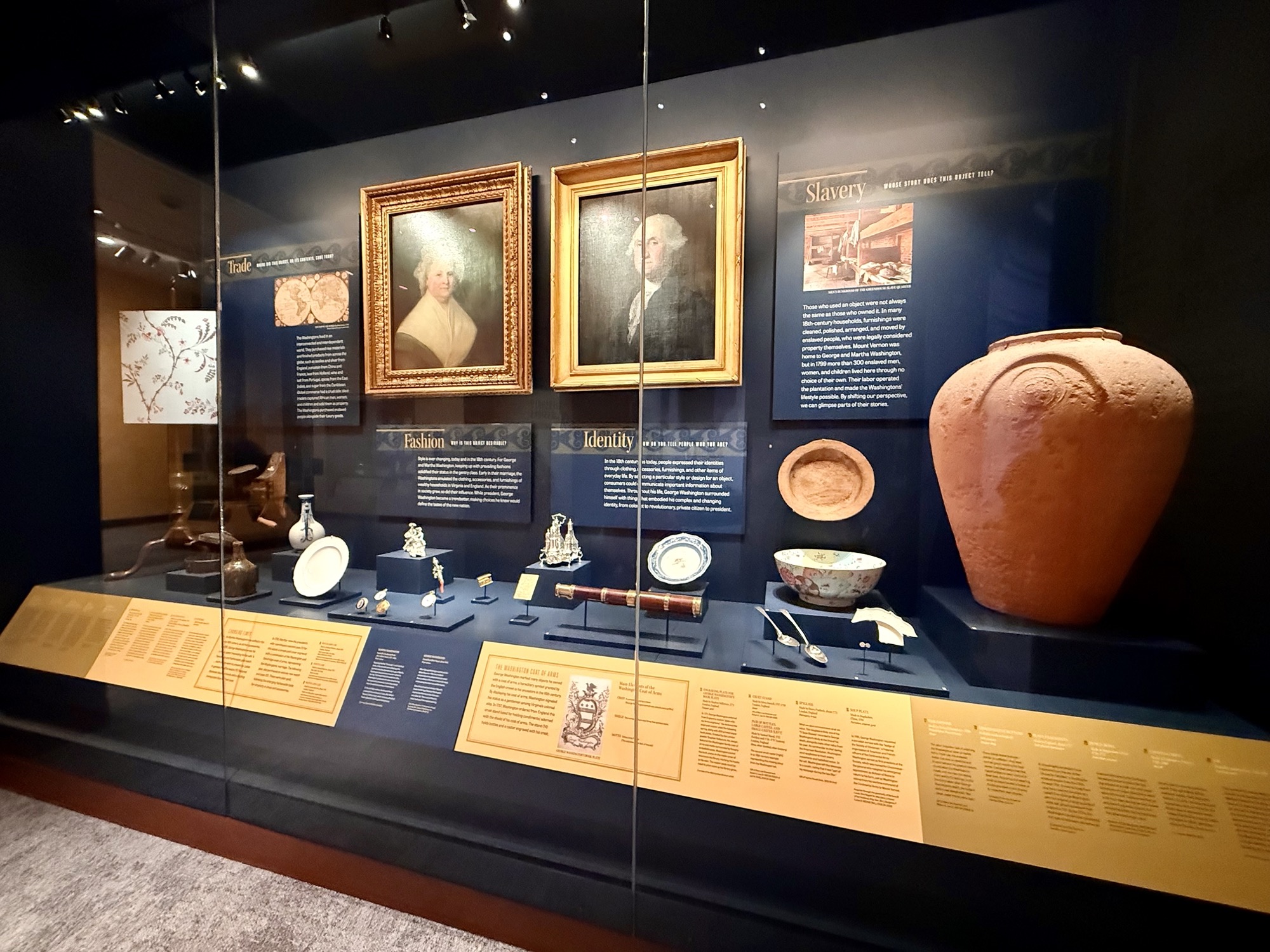
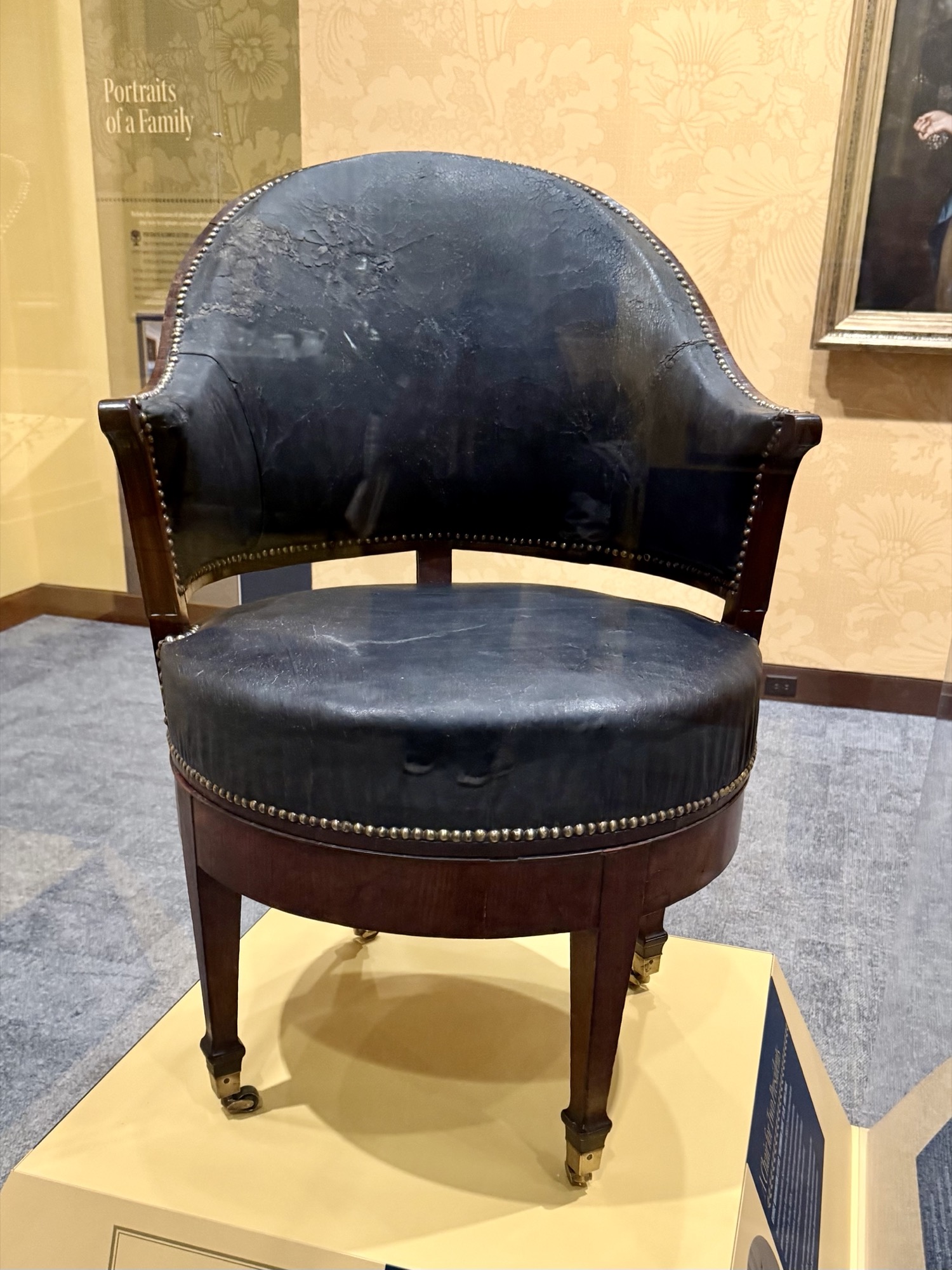
The George Washington Museum is also attached to the visitors center. This is where the bulk of the information lies about the life of George Washington, his estate, and his family. There are artifacts here that he owned and there’s a lot of interesting information here. I’d recommend coming here first before heading up to the estate for background information to appreciate the grounds better.

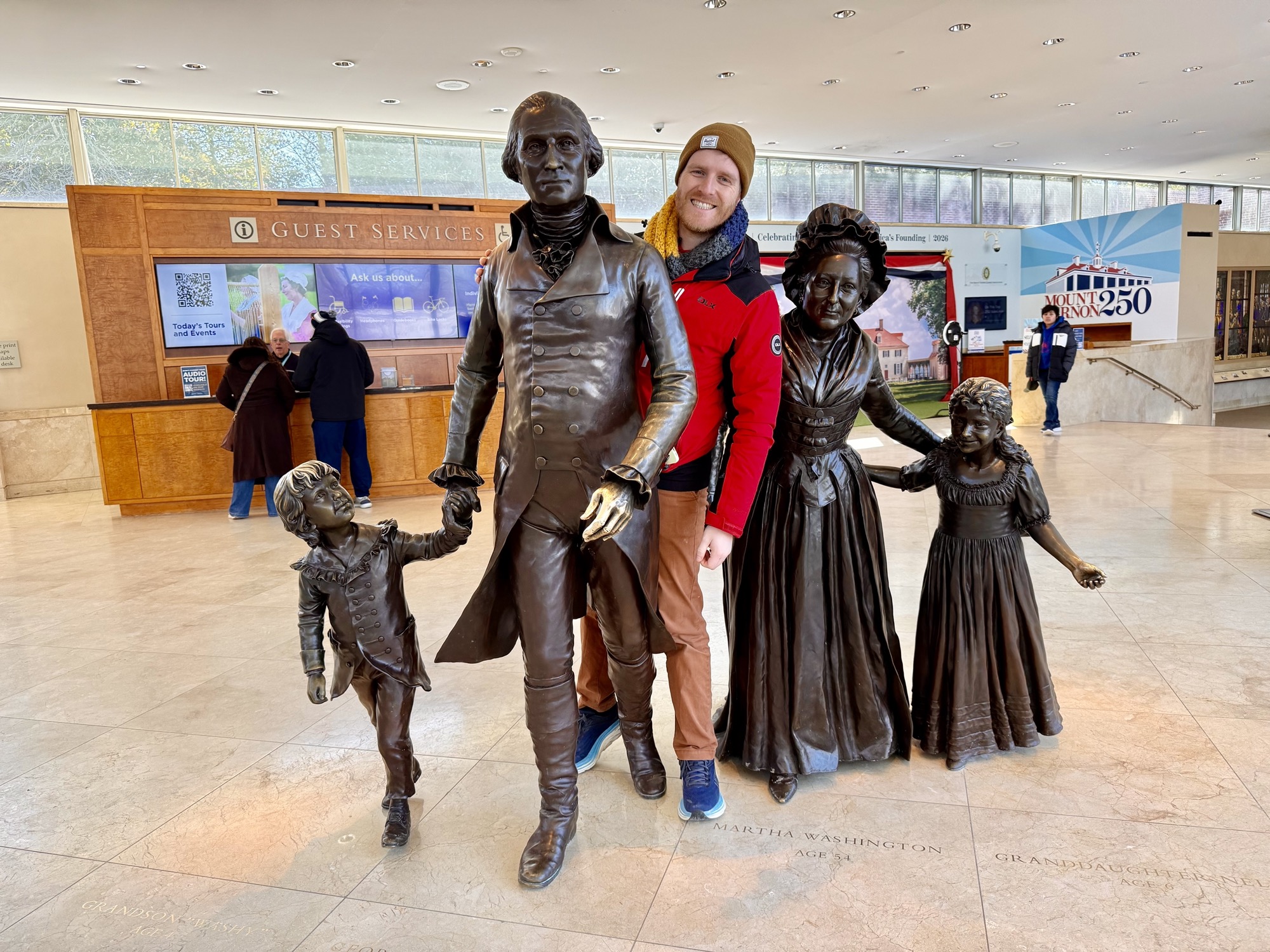
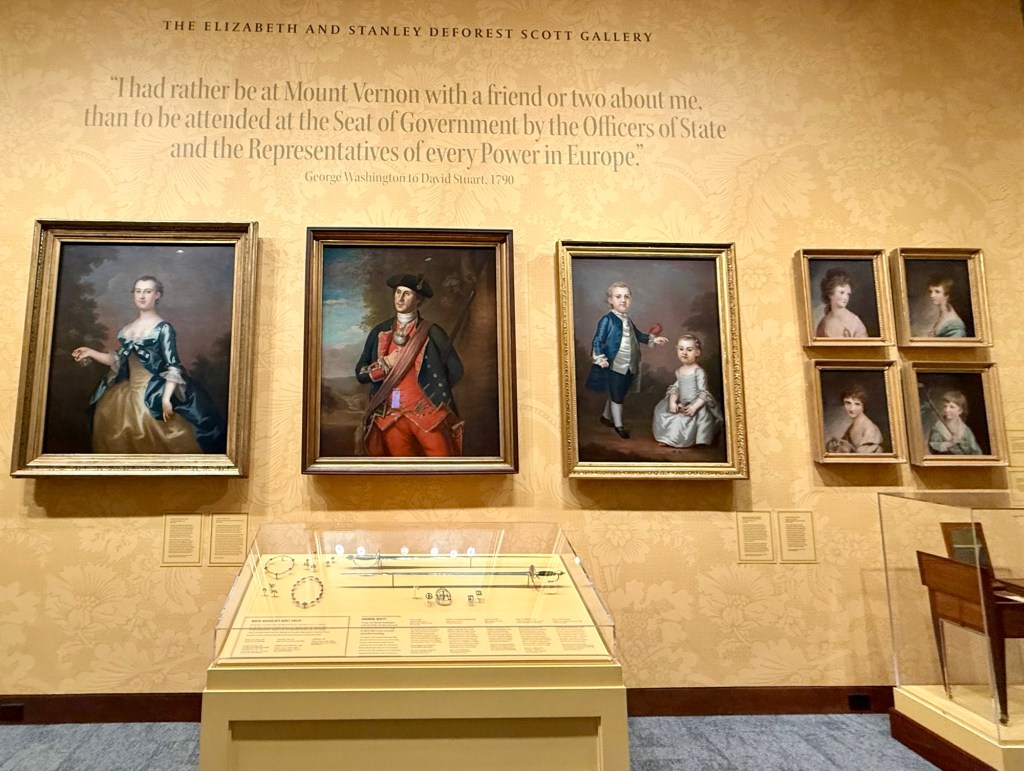
Portraits of the family from left to right: Martha and George. They never had children together. The two children in the portrait beside them are from Martha’s previous marriage. One of them passed away early and the other had 4 children (grandchildren to George and Martha) depicted on the far right.
Mansion and Estate

The mansion and the rest of the estate is about a 10-15 minute walk from the back of the visitors center (see the attached map above for reference). If you have a timed tour, be sure to give yourself extra time to walk to the top where the tours start. It’s a slight uphill walk through the gardens on a paved pathway.

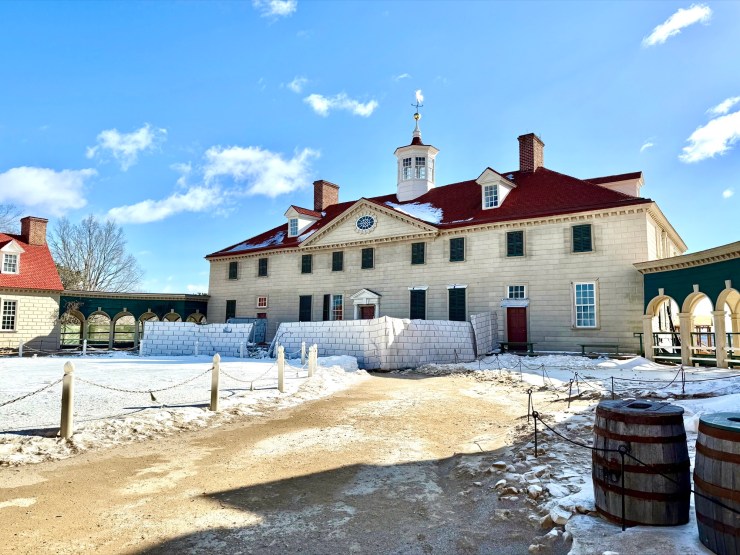
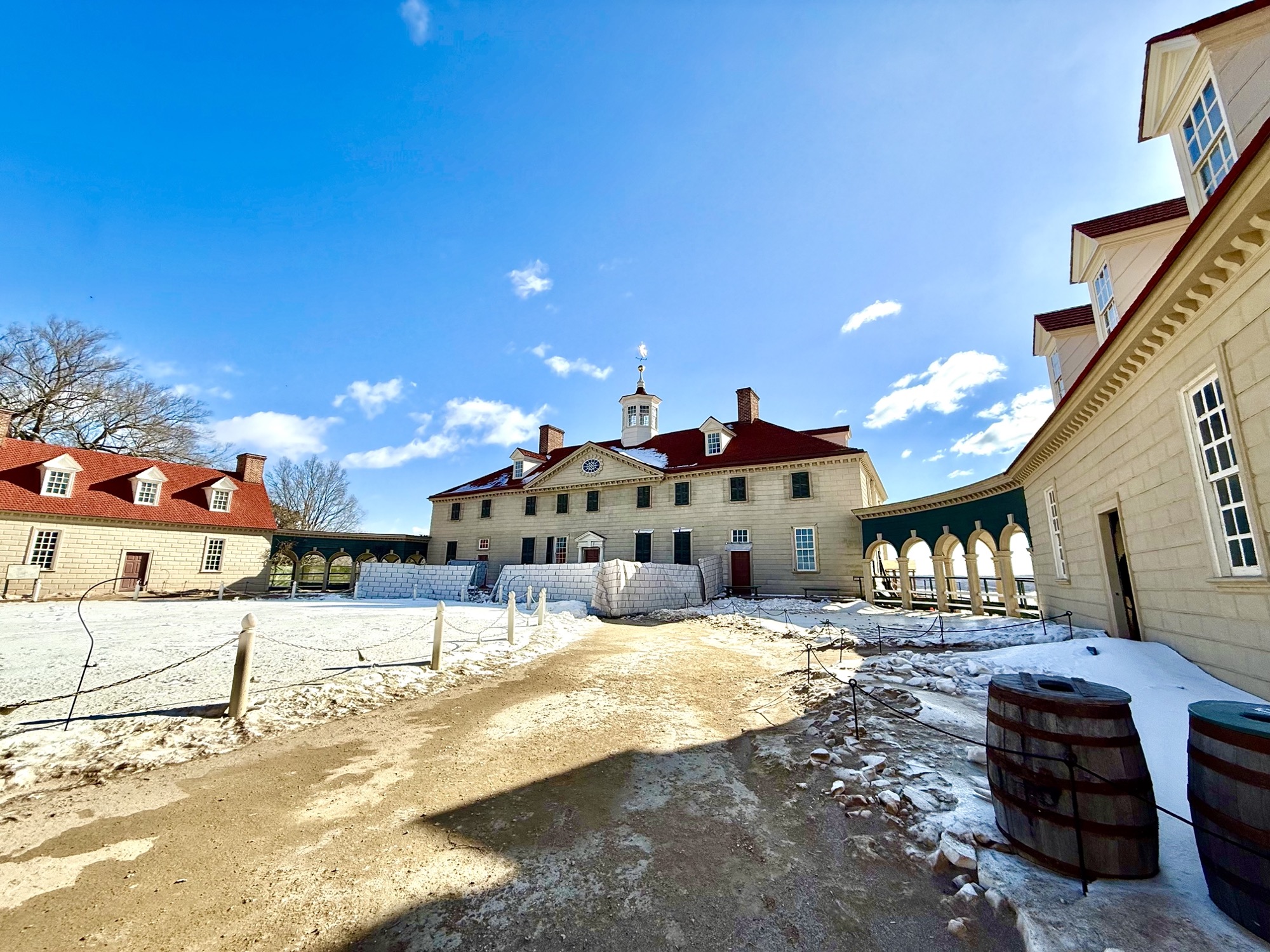
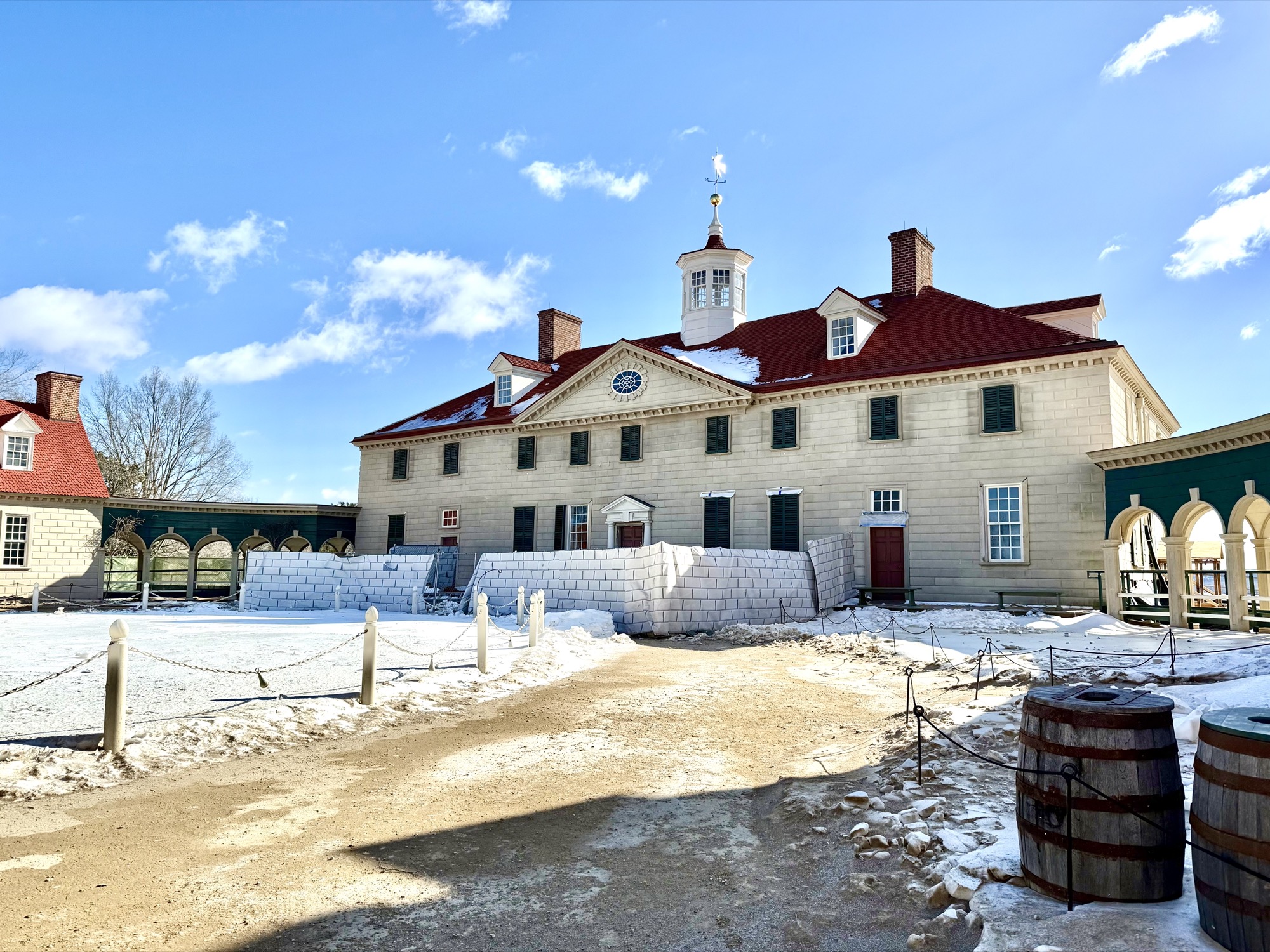
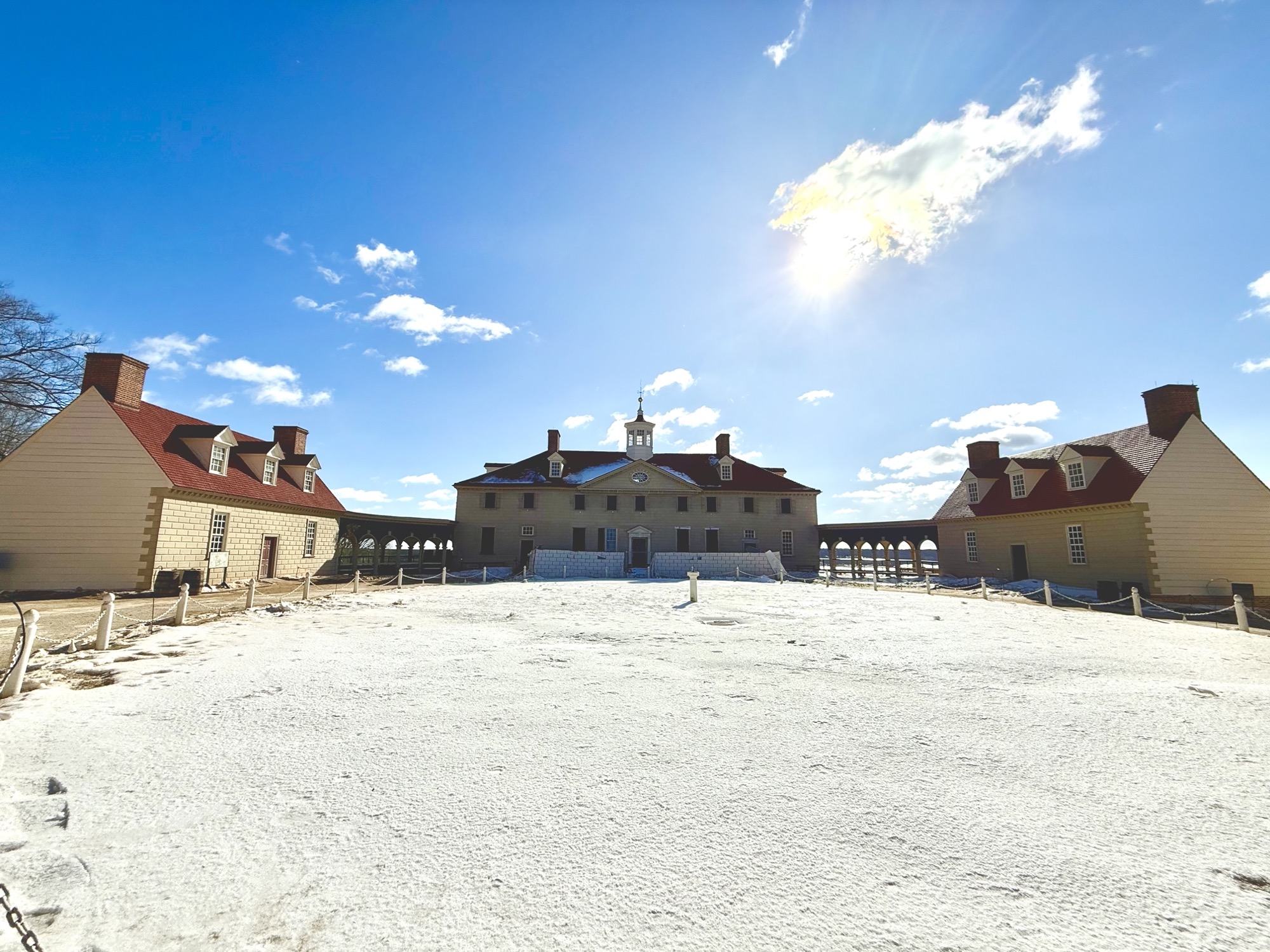
The outside of the mansion was partially under renovations when we visited. They were doing some upgrades around the property as well as the gardens in preparation for America’s 250th anniversary this year and the peak summer tourism.
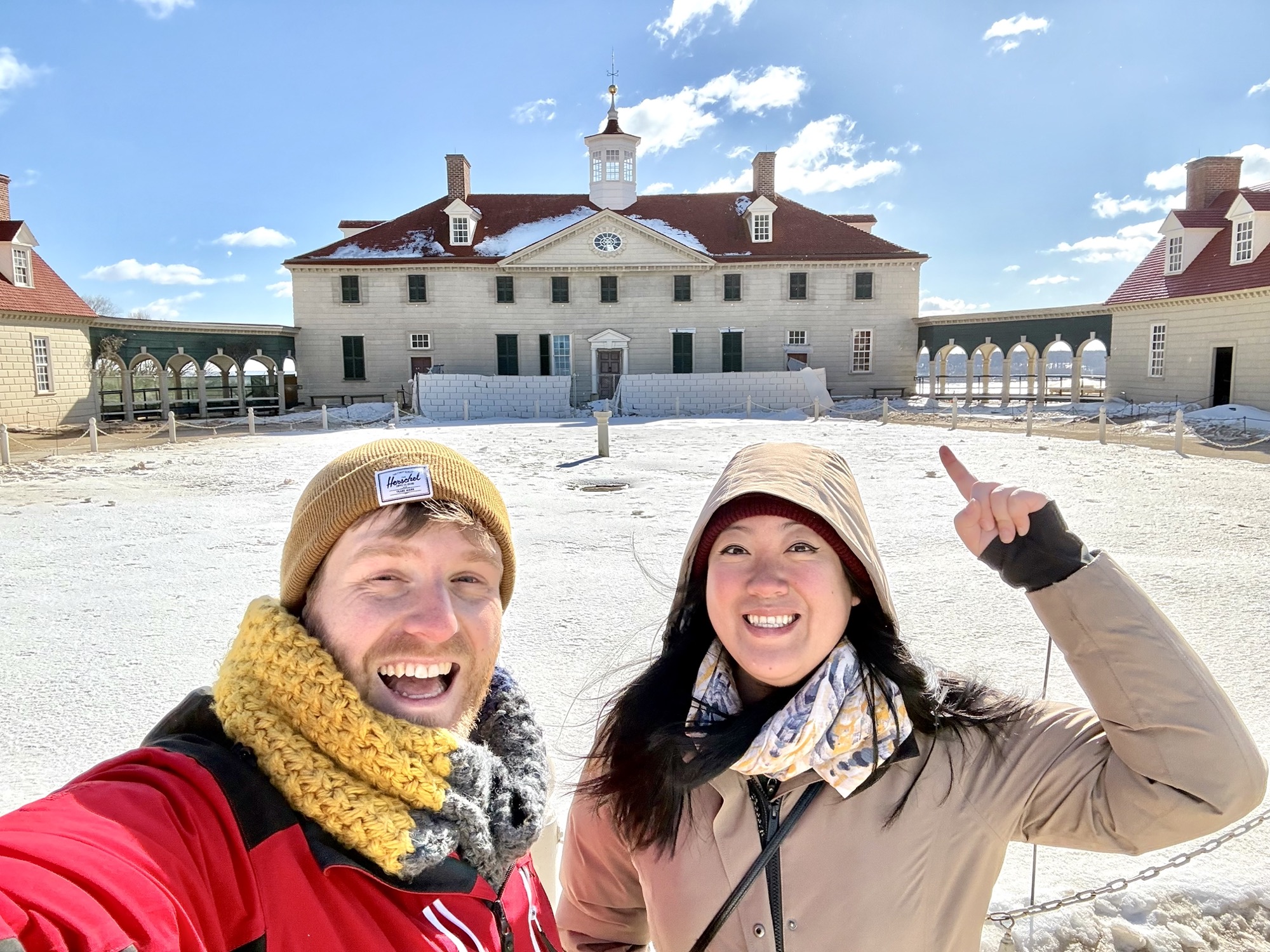
The main mansion is in the center and is flanked by smaller buildings on either side. To the left is ‘Servants Hall’ where it was used by visitors’ servants and to the right is the kitchen which is separated from the main building in case of a fire.

You need to book a guided tour to get access inside of the buildings. It’s an additional $2 on top of your admission fee and tours are timed. If you ask me, they should’ve just charged an extra $2 to the admission fee to include the mansion tour to make it easier for people rather than having to book a separate ticket. Most people come here to see the mansion anyway. If you don’t have a ticket, you have to go all the way back to the visitors center to reserve one and hope there are time slots left. 😒

*The mansion tour is included in the “In-depth Tour”.

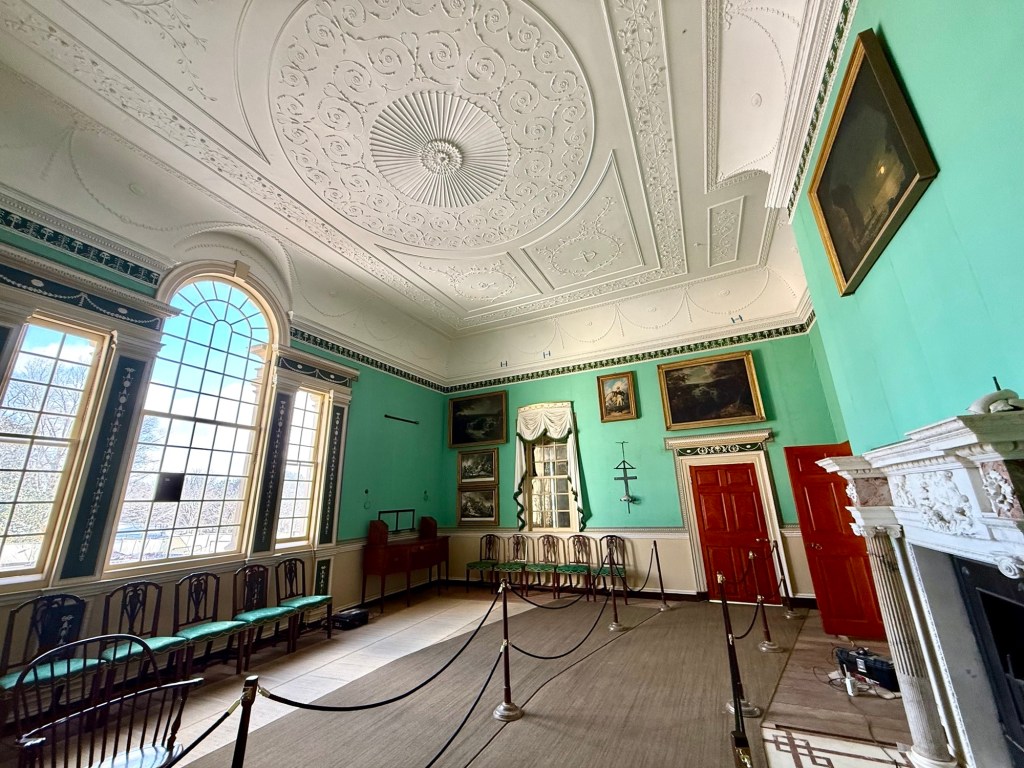
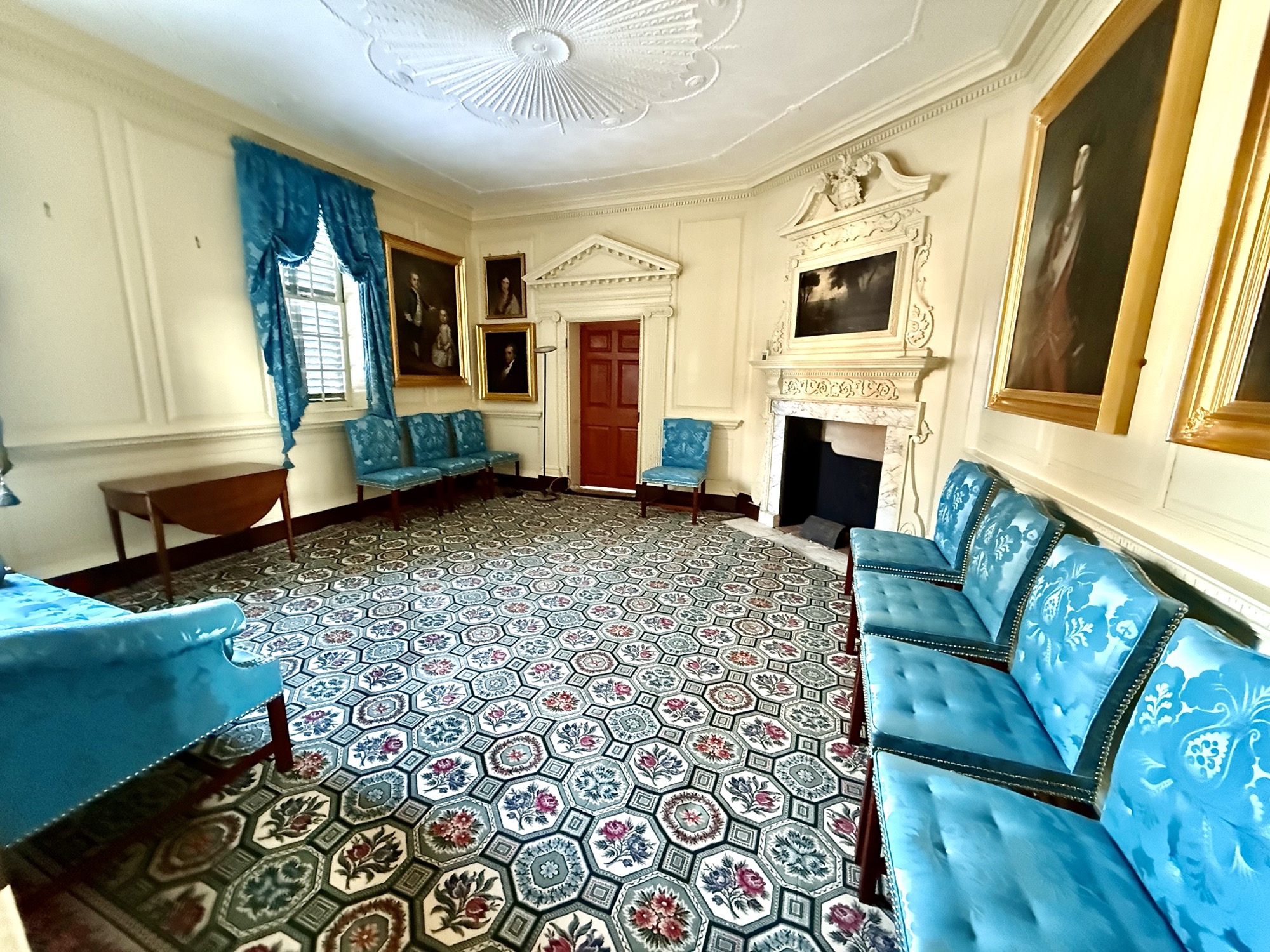
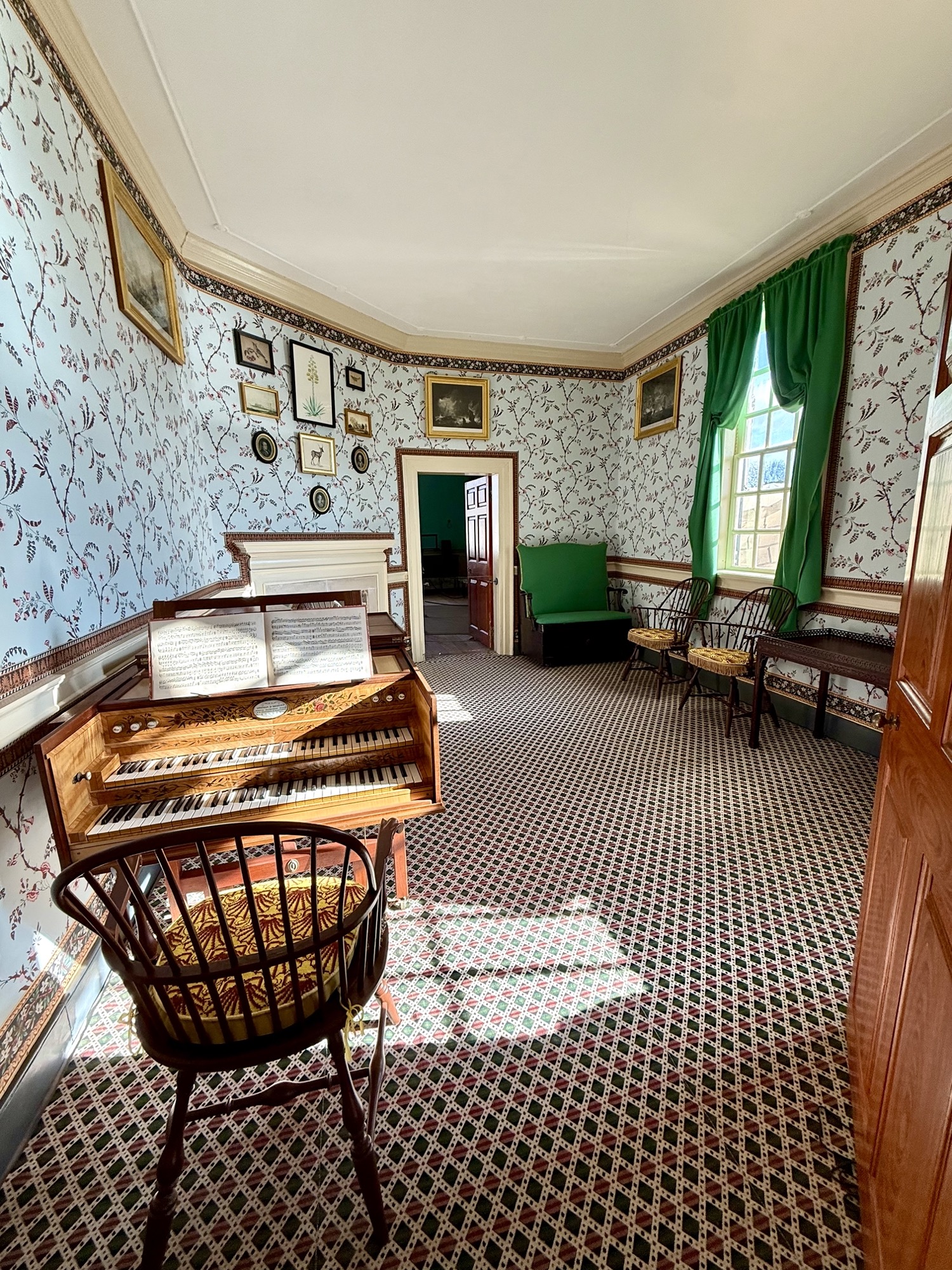
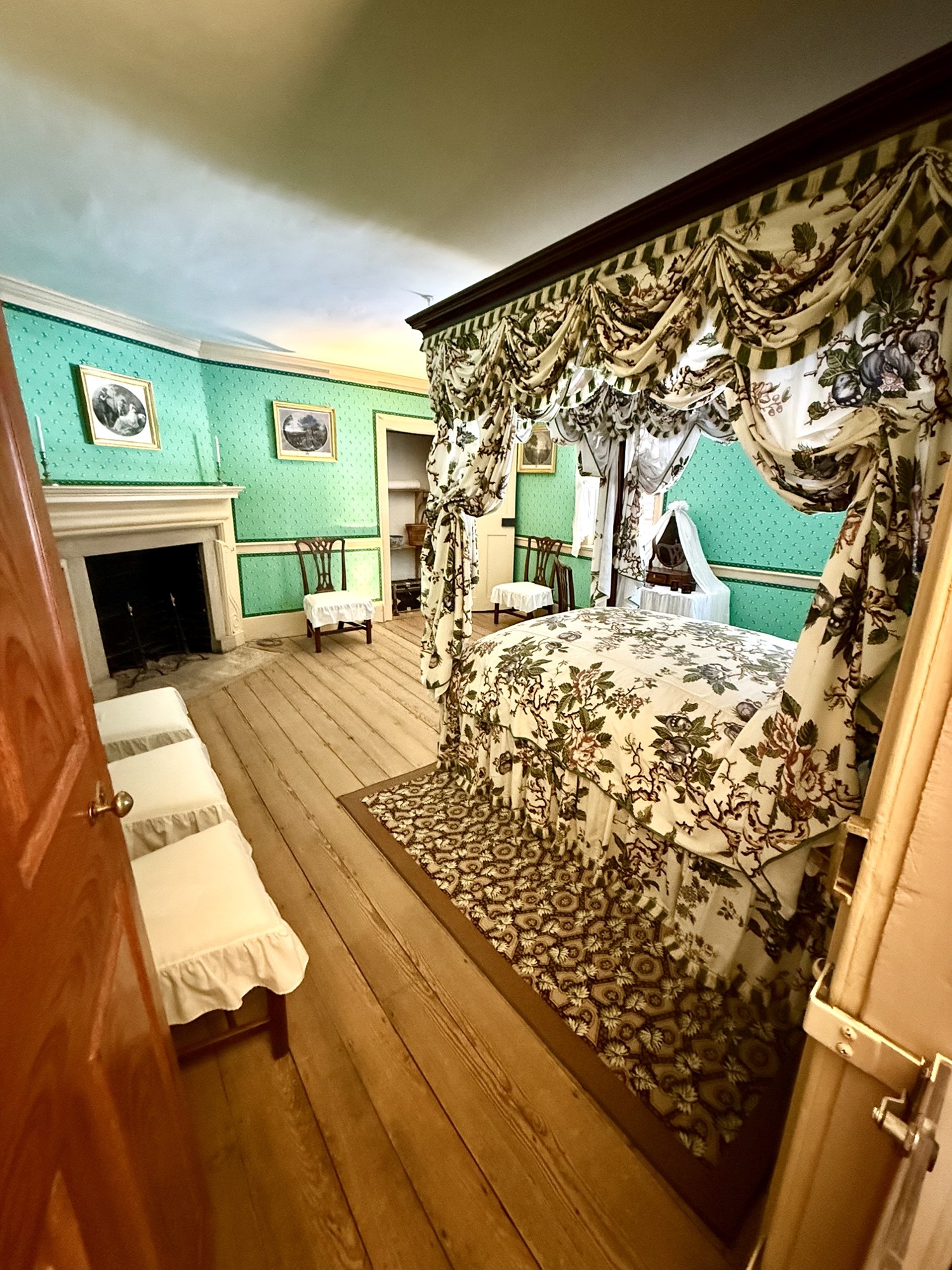
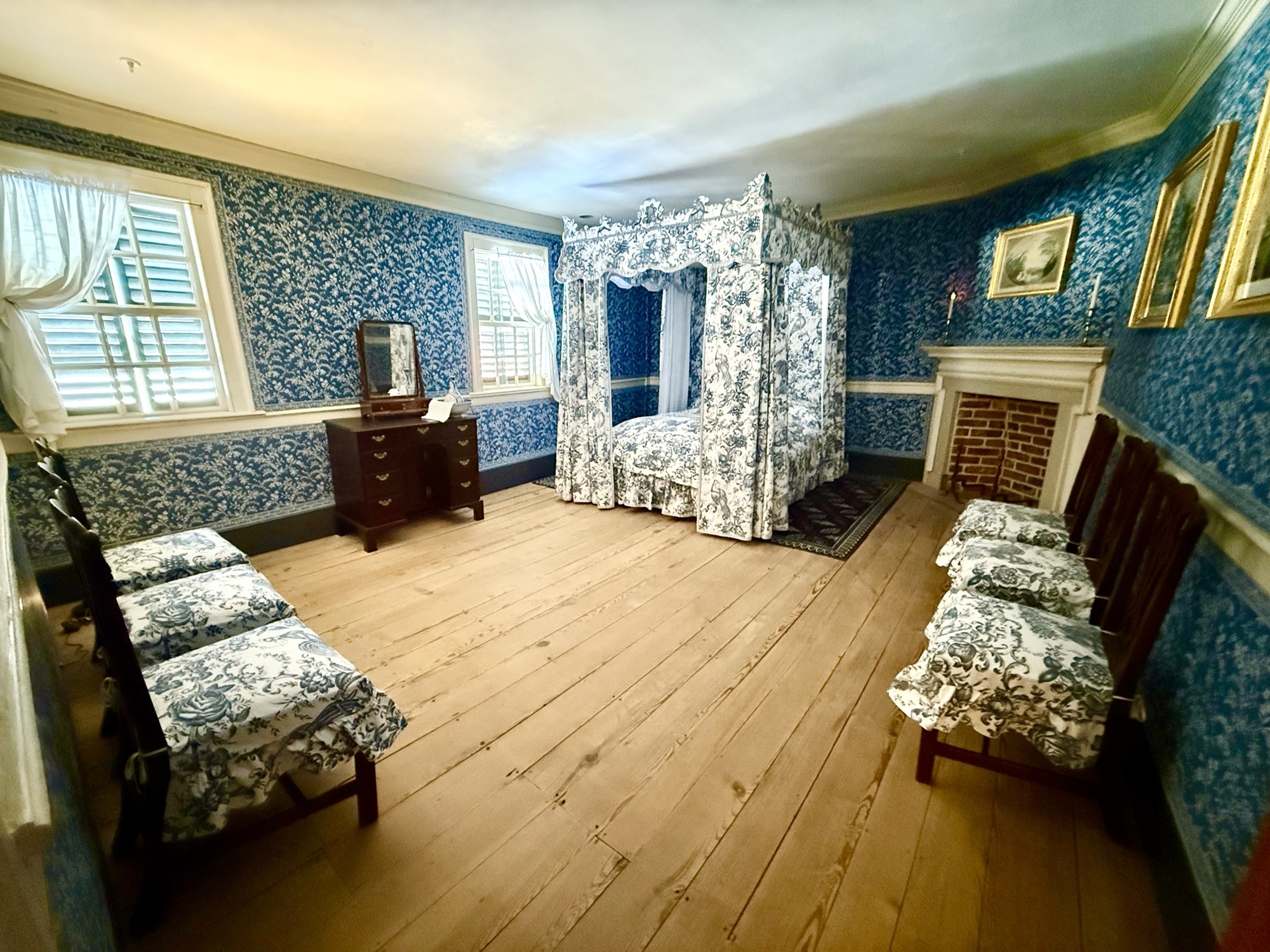
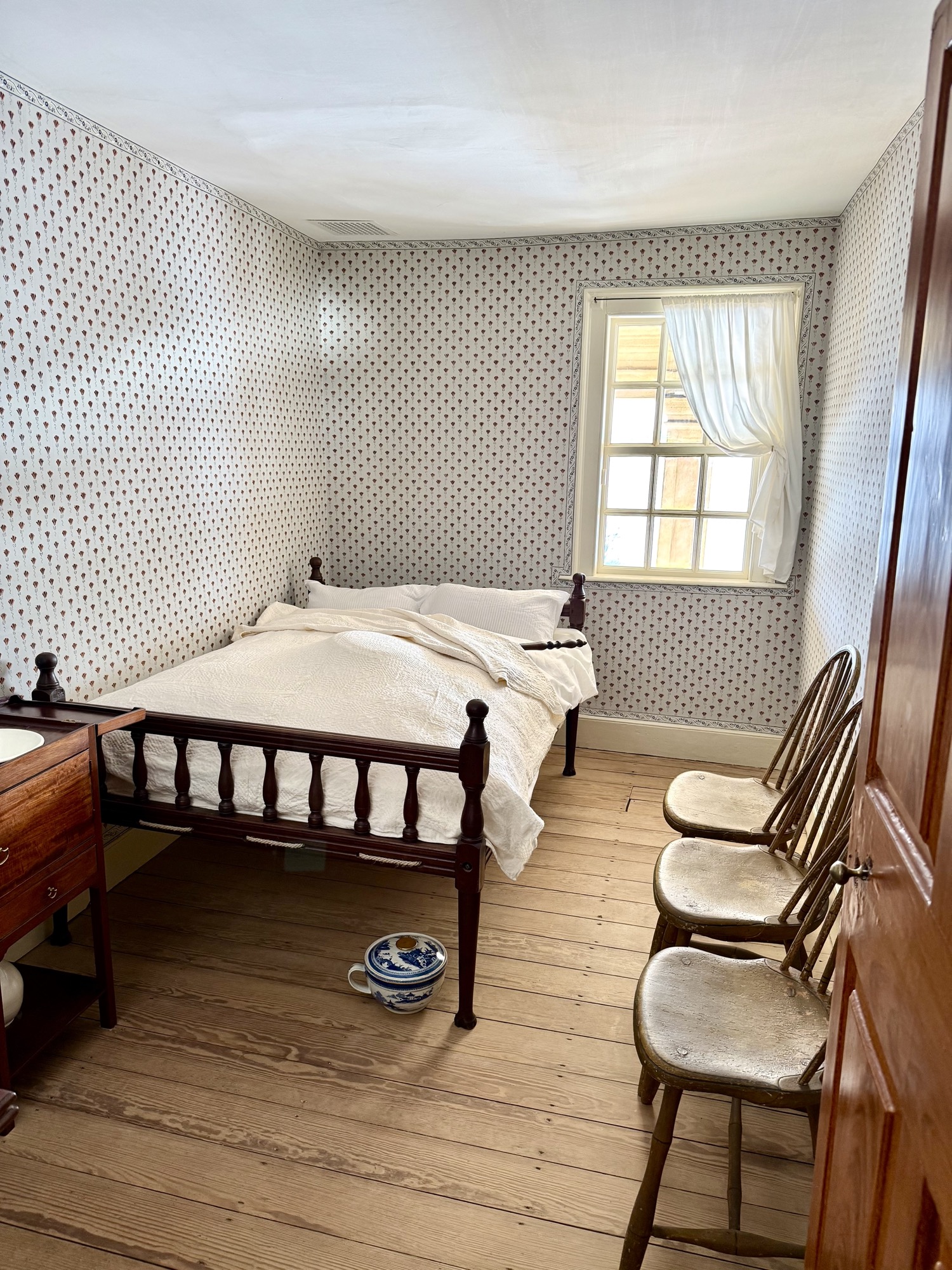
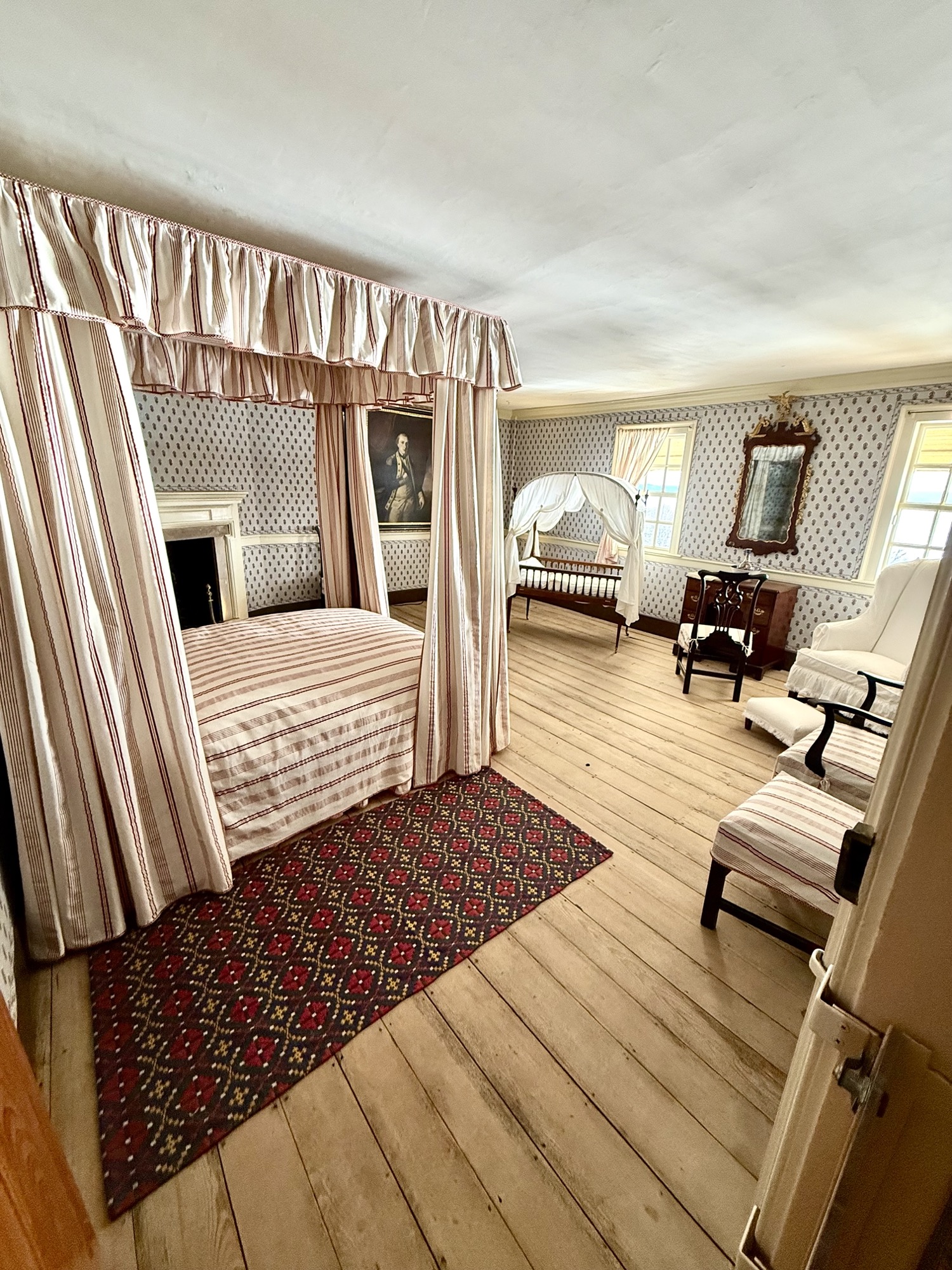
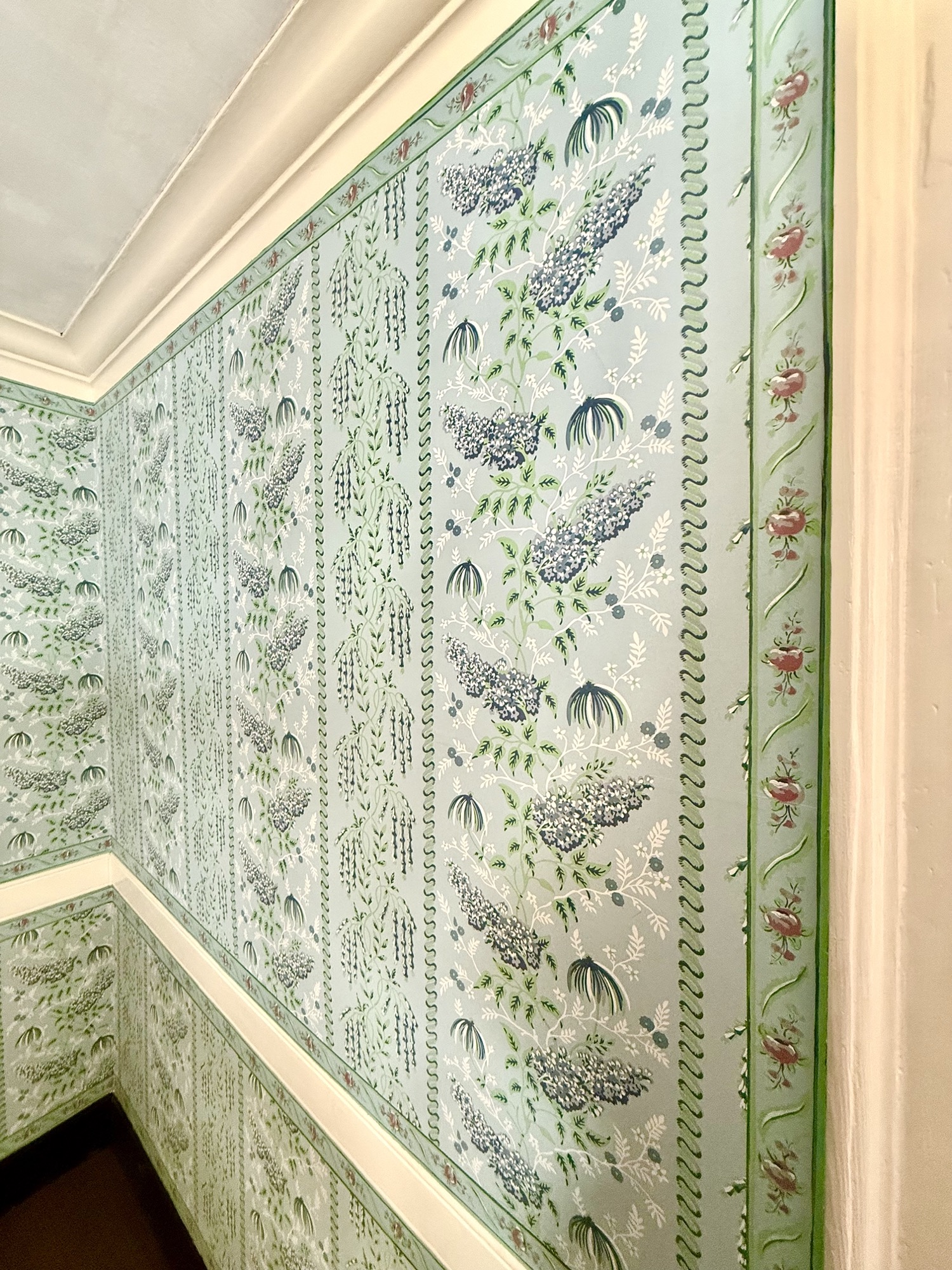
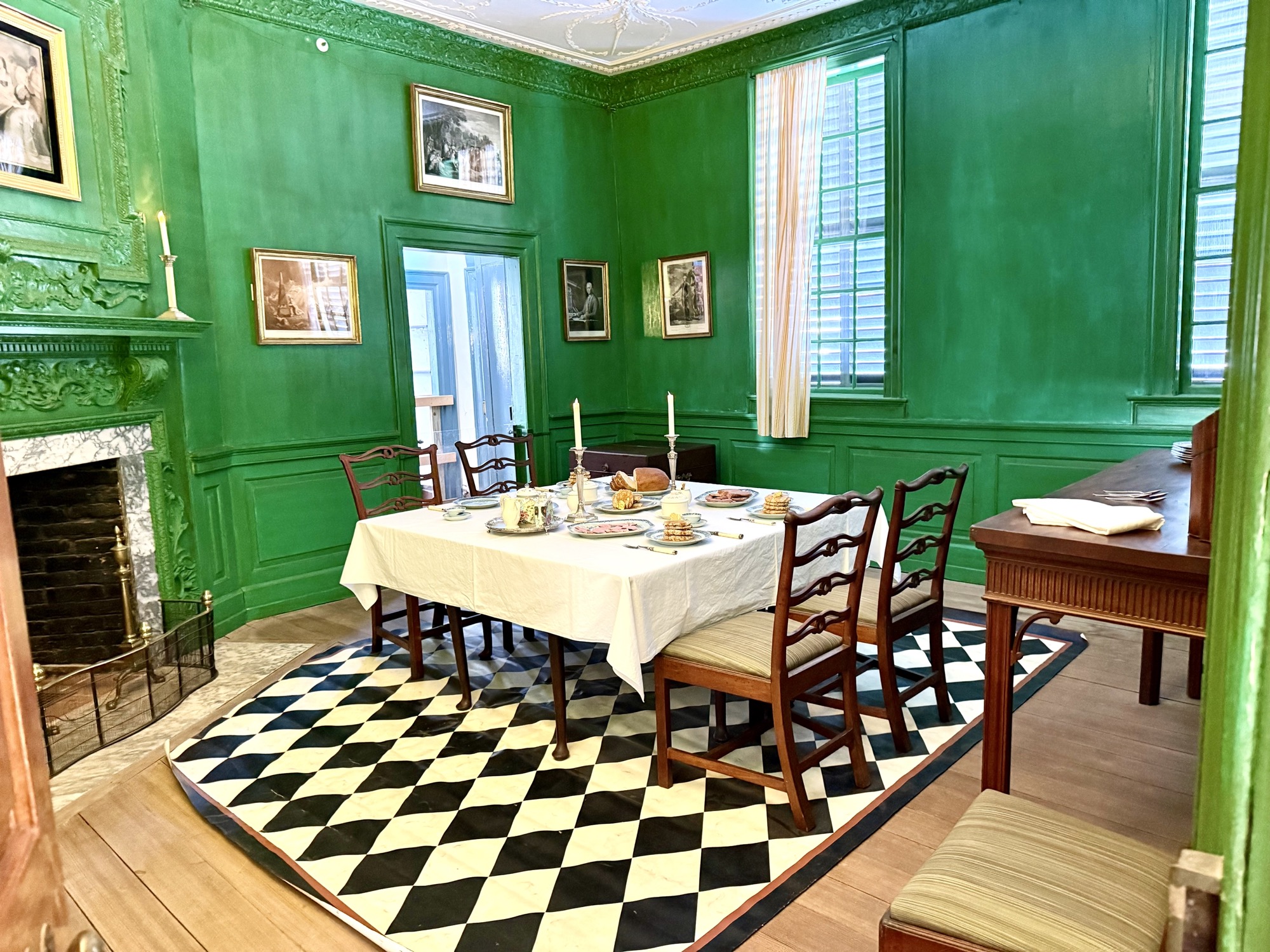
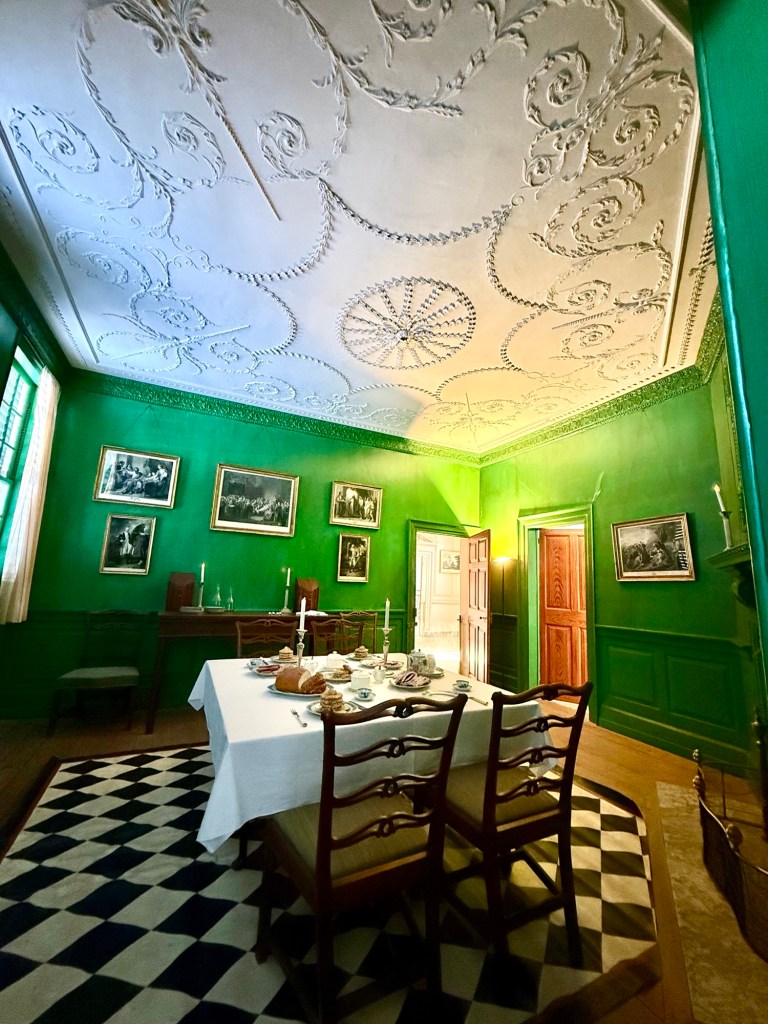
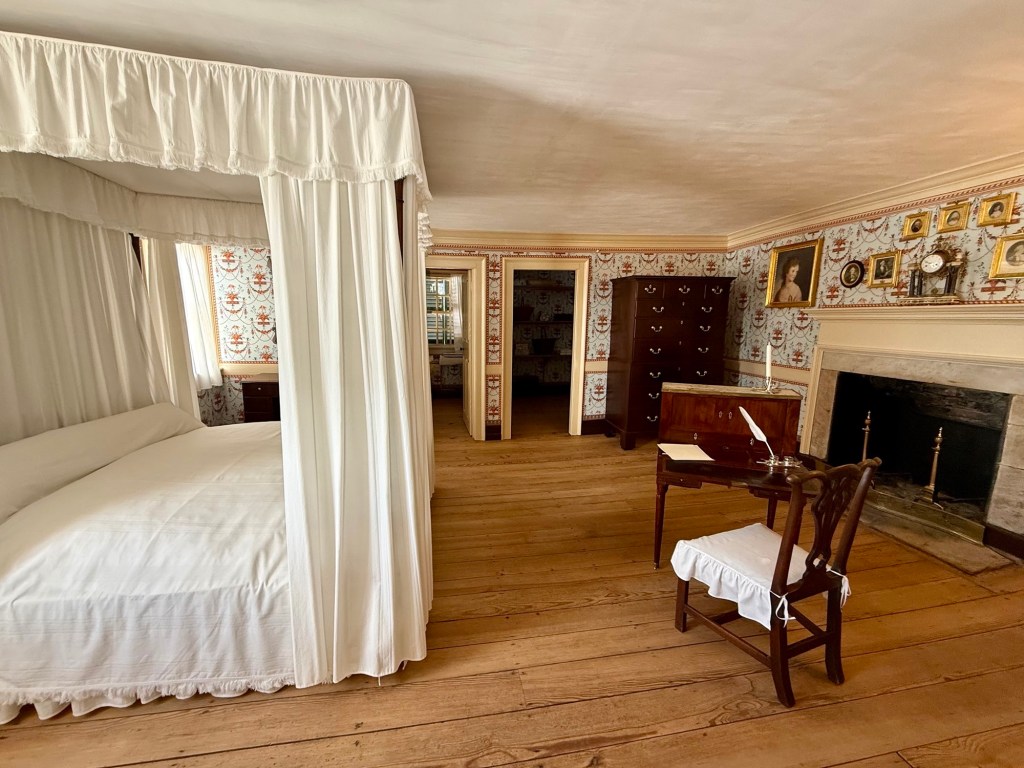
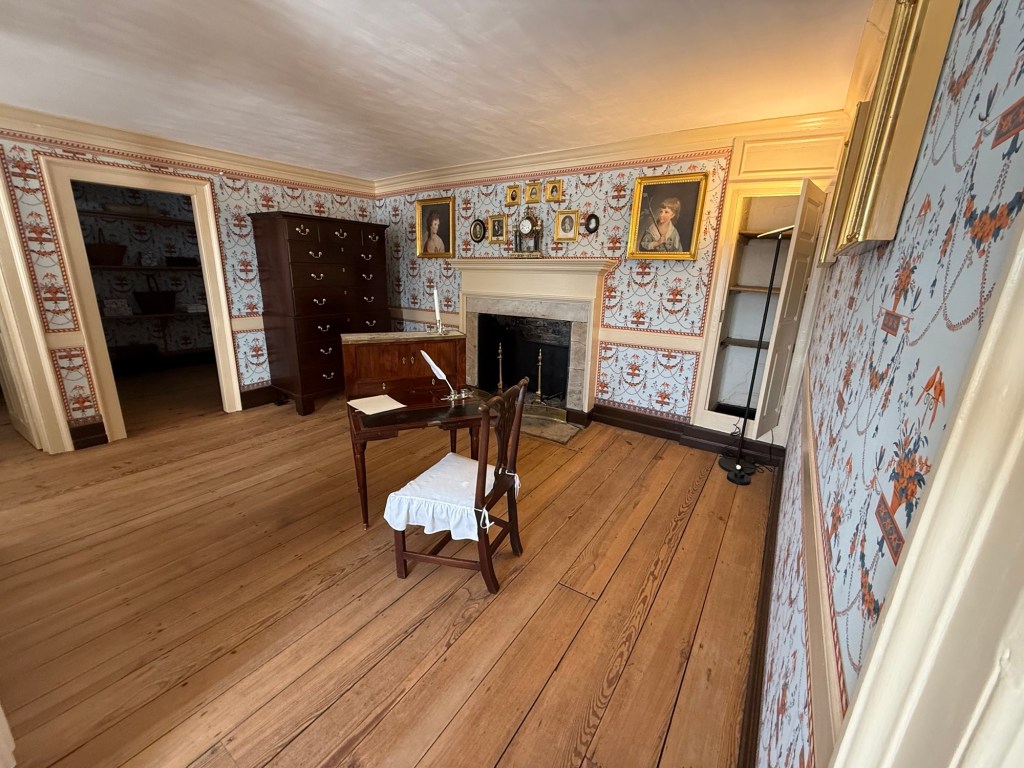
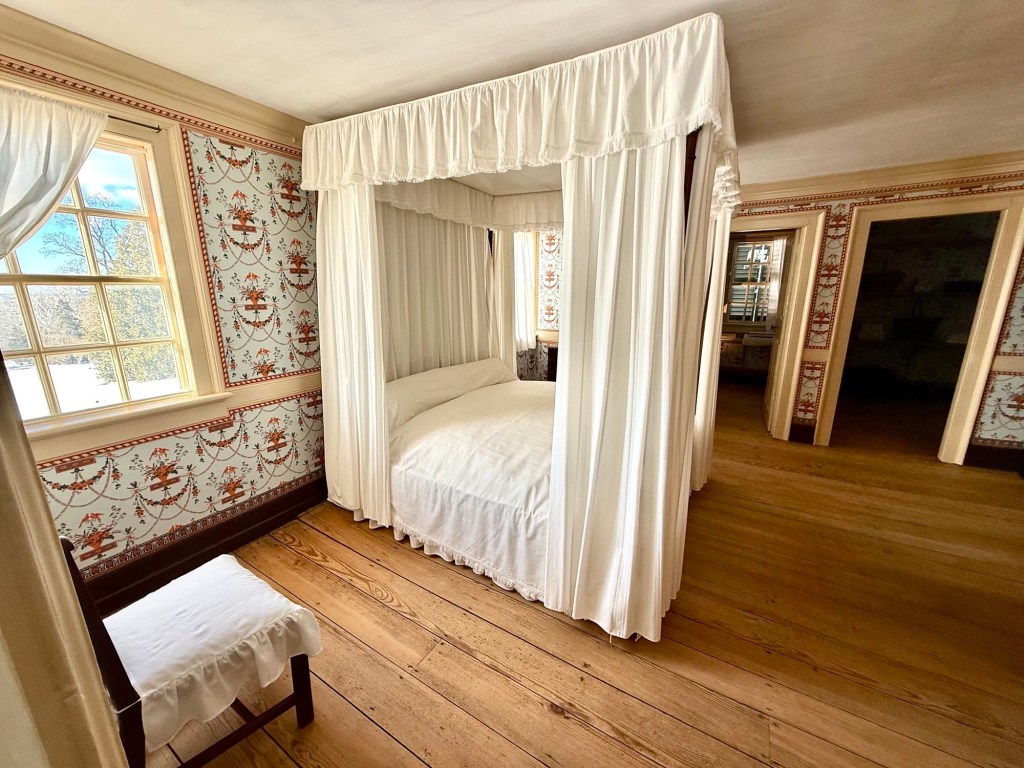
The mansion has 21 rooms over 3 floors, including multiple bedrooms for the many guests they would have, some showing up unexpectedly. Here’s a collection of photos of the beautiful rooms I took on the tour. I especially loved how bright and colourful the paint/wallpaper is in some of the rooms.

This green was the most expensive at the time. The ceiling is also one of the last remaining stucco ceilings in the US.

There is also a Piazza/deck on the outside of the building that overlooks the Potomac River where they would sit outside to enjoy the views and tea, but unfortunately it was the middle of winter and that part was under renovation at the time of our visit.

To find out more about these rooms, check out this link to their website for a breakdown of each room as well as a virtual tour: https://www.mountvernon.org/the-estate-gardens/the-mansion/the-mansion-room-by-room

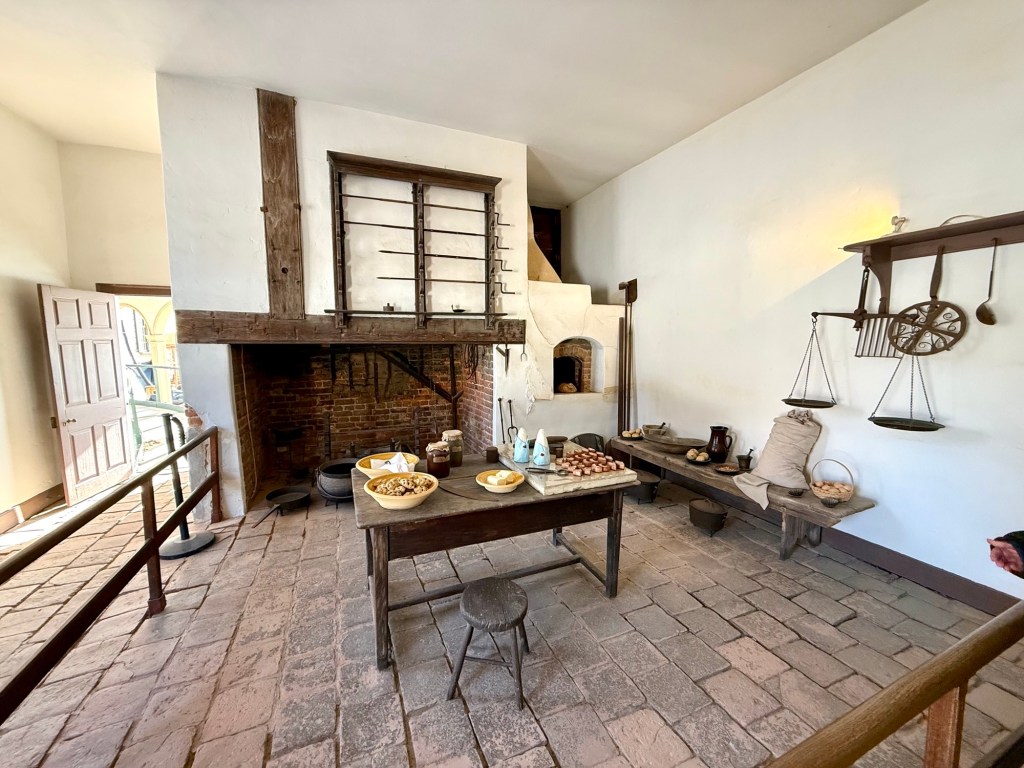
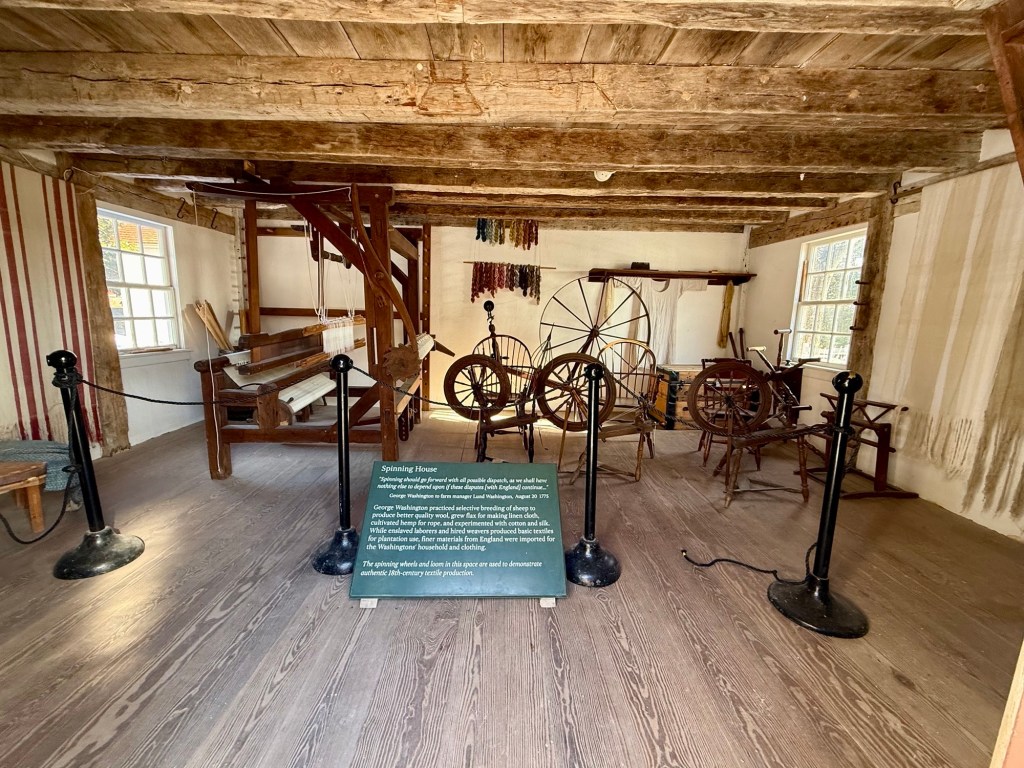
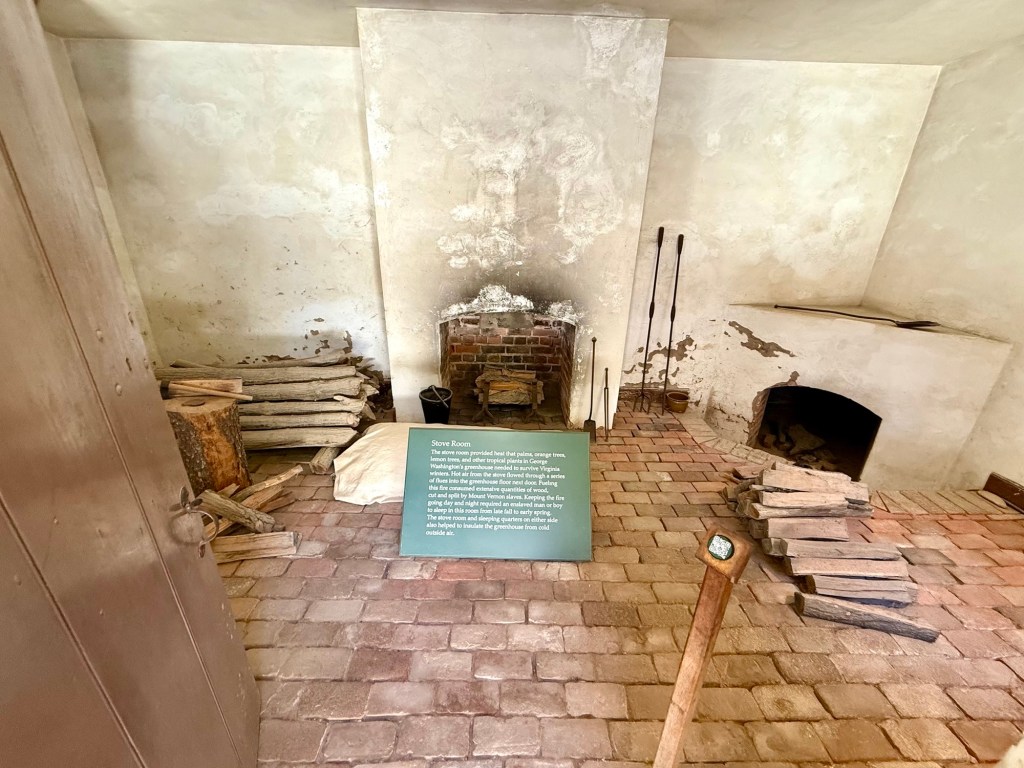
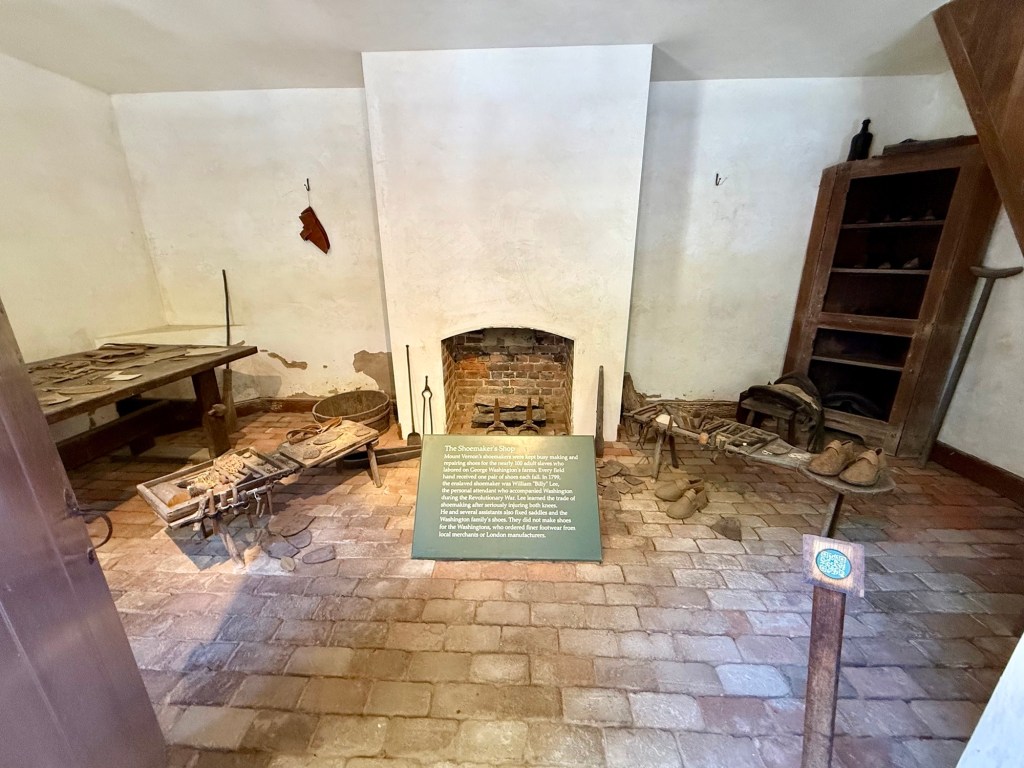
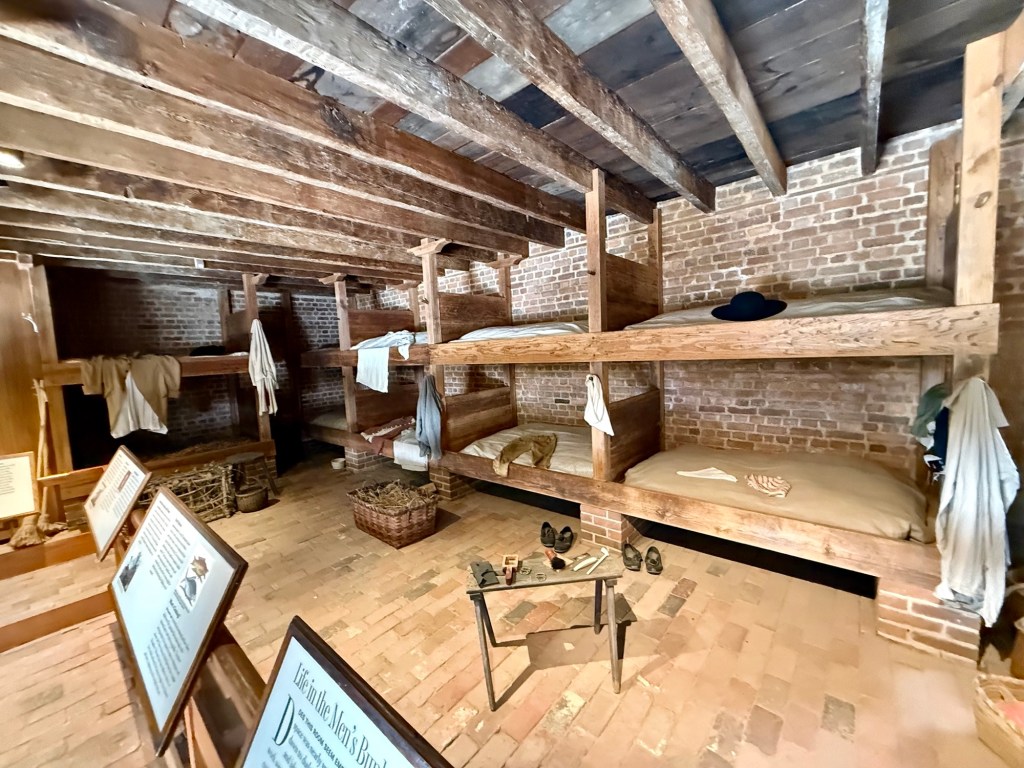
Outbuildings (greenhouse/enslaved quarters/Stove Room, shoemaker shed, blacksmith shed, spinning House)

Mount Vernon estate was massive which included surrounding farmland. They had 319 slaves in their time here with varying roles on the property. You can walk into the surrounding outbuildings around the mansion to get a glimpse of the roles the enslaved had here. There is a free tour that focuses on the lives of the enslaved people, however you need a timed ticket and spaces are limited, so I’d recommend reserving your ticket early!

Old Tomb

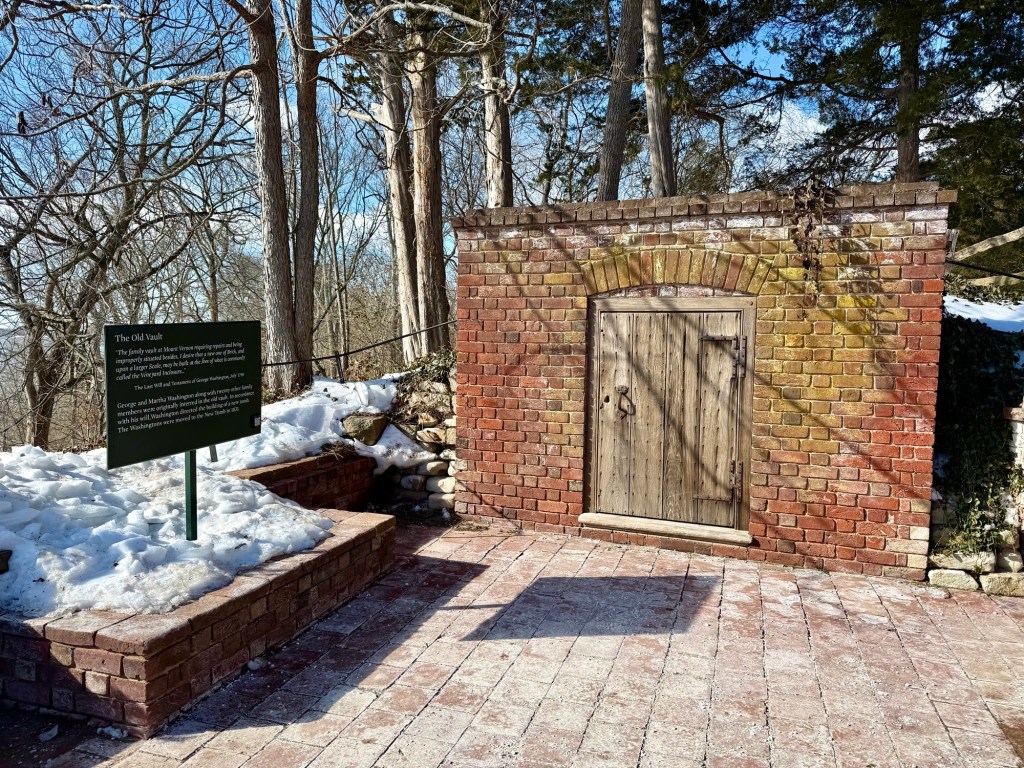
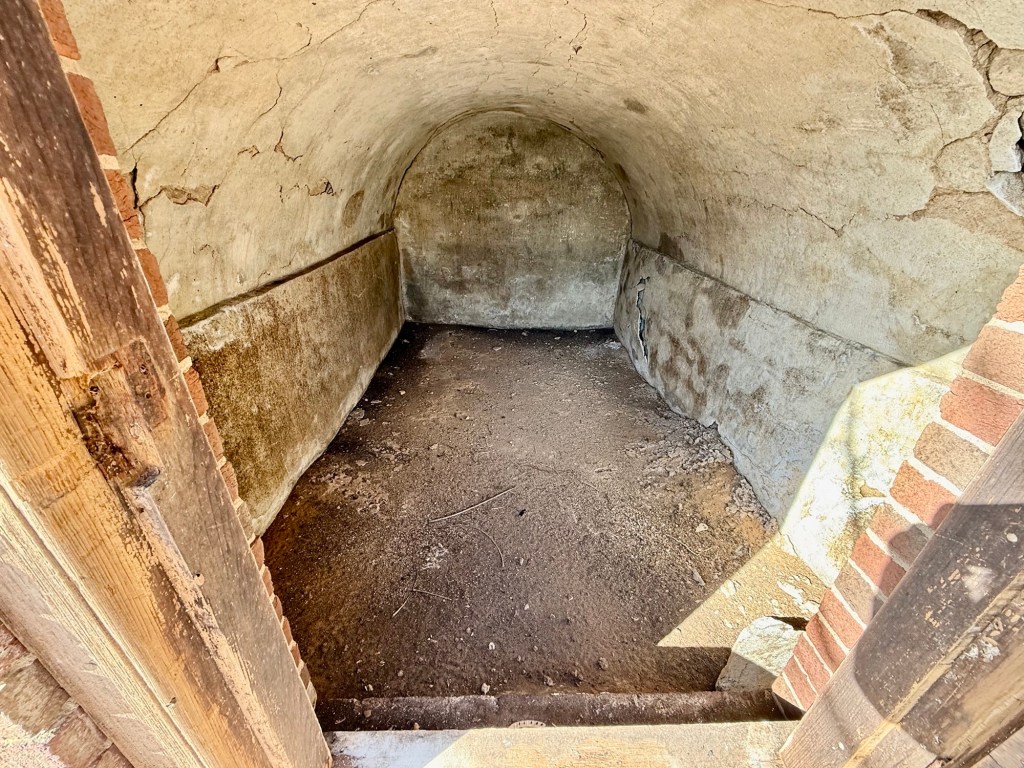
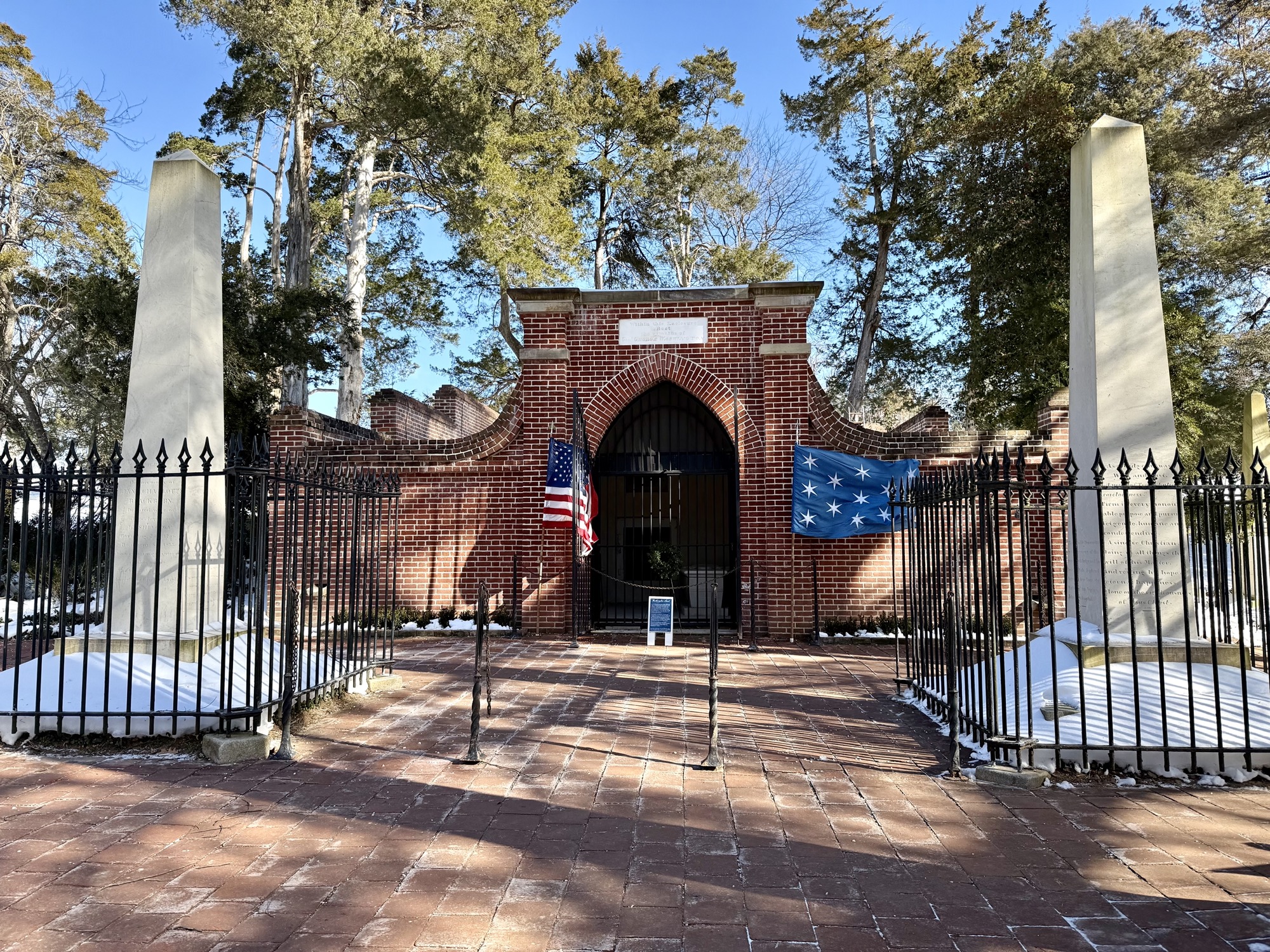
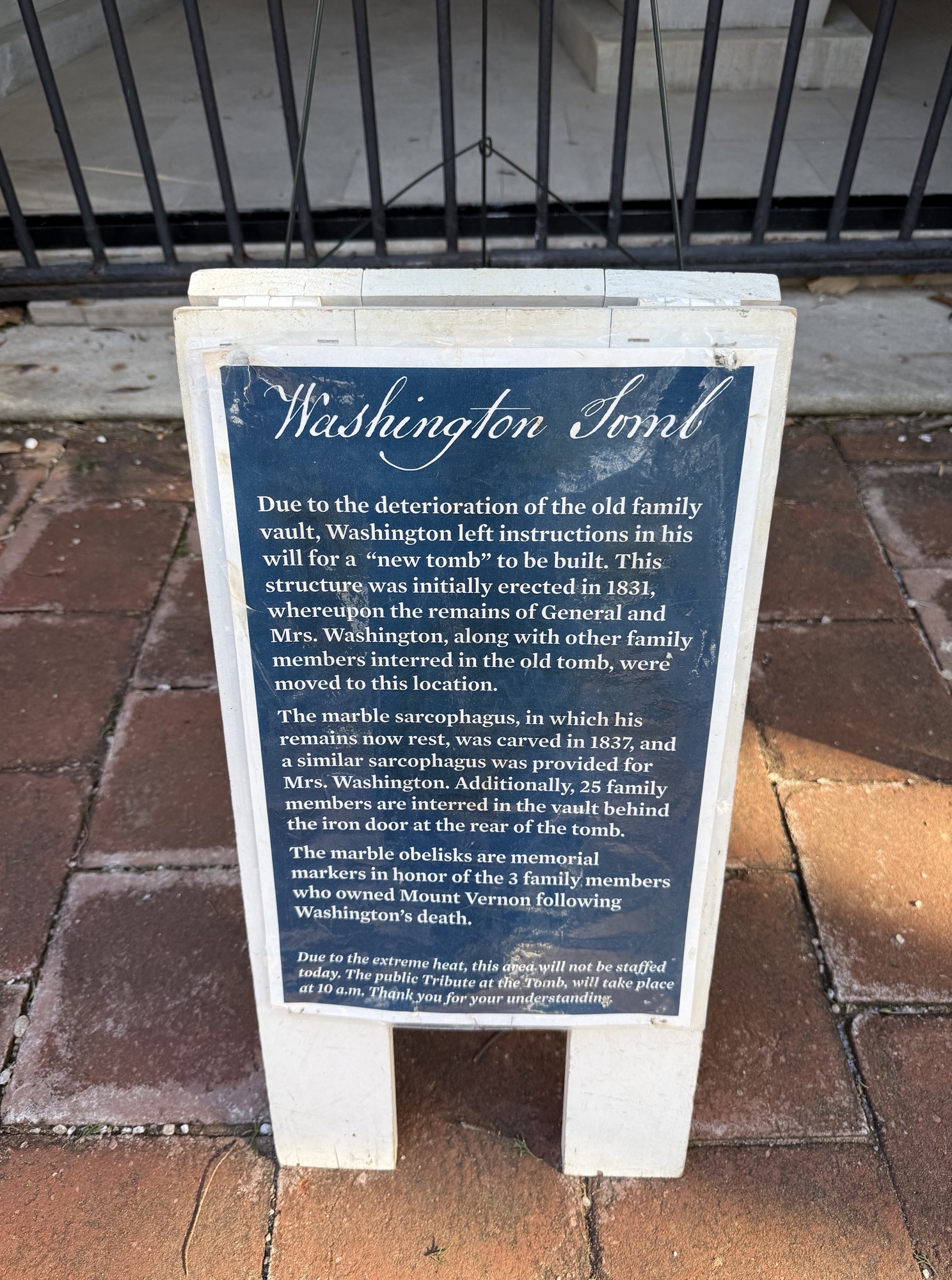
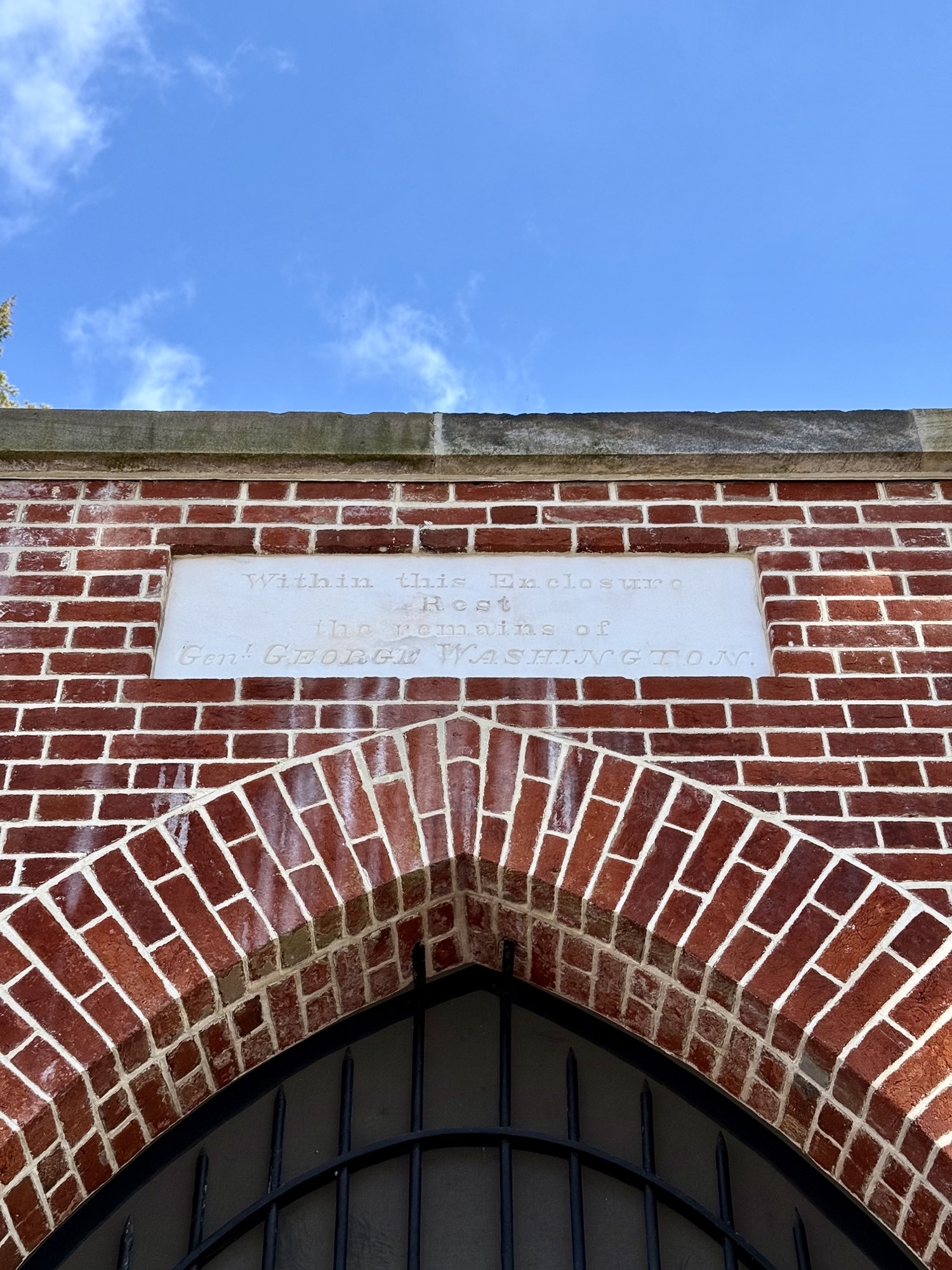
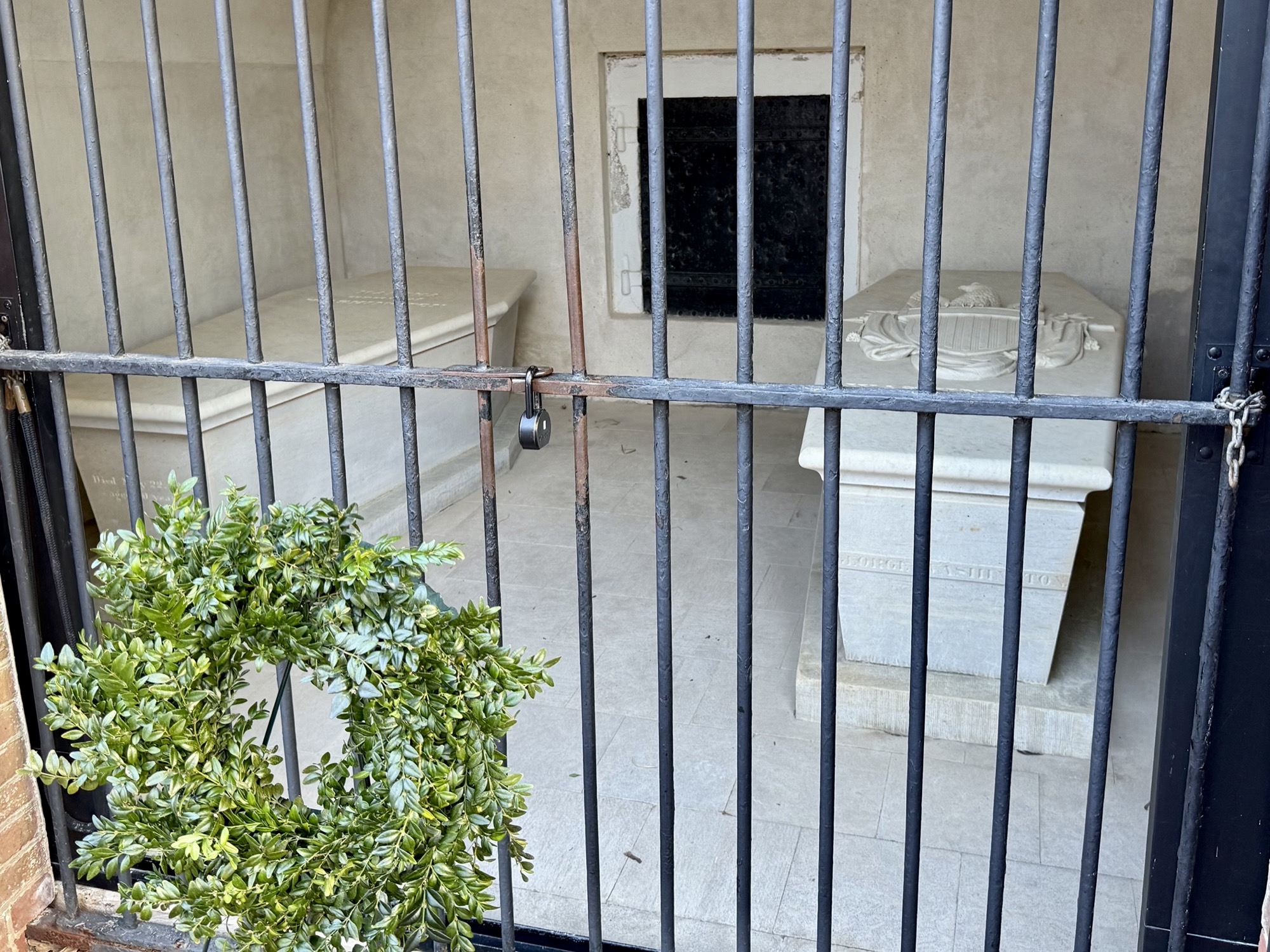
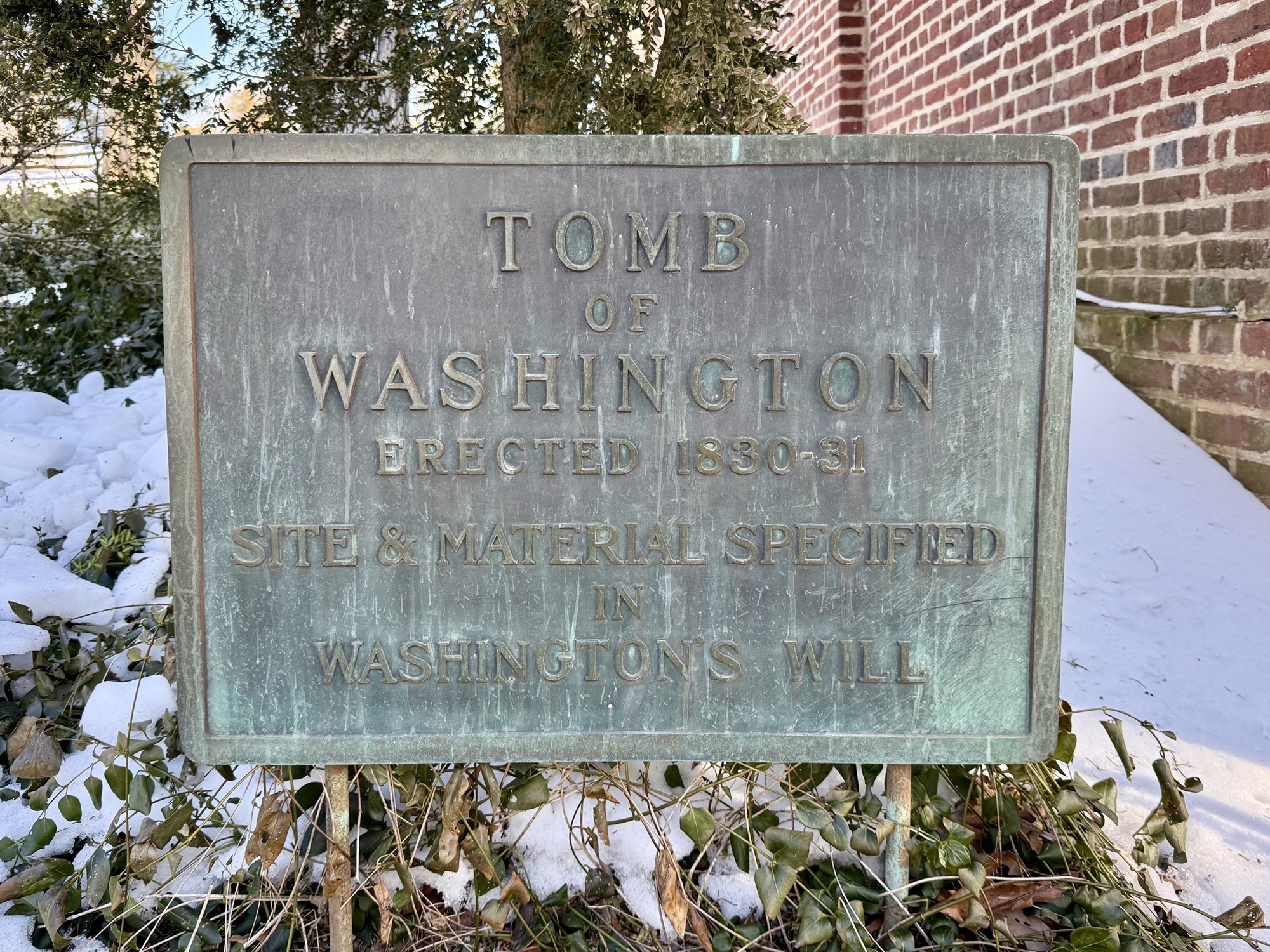
There are two tombs on the estate. The first one is the old tomb where George Washington was originally buried along with other people in his family. In his will, he stipulated building a second tomb where he wished to be buried. This new tomb wasn’t completed until after his death where he was moved later.

You can walk up to the old tomb, but you can’t see inside unless you’re on the In-depth Tour. I took a photo of the inside when our tour guide opened it. It is surprisingly small!

New Tomb

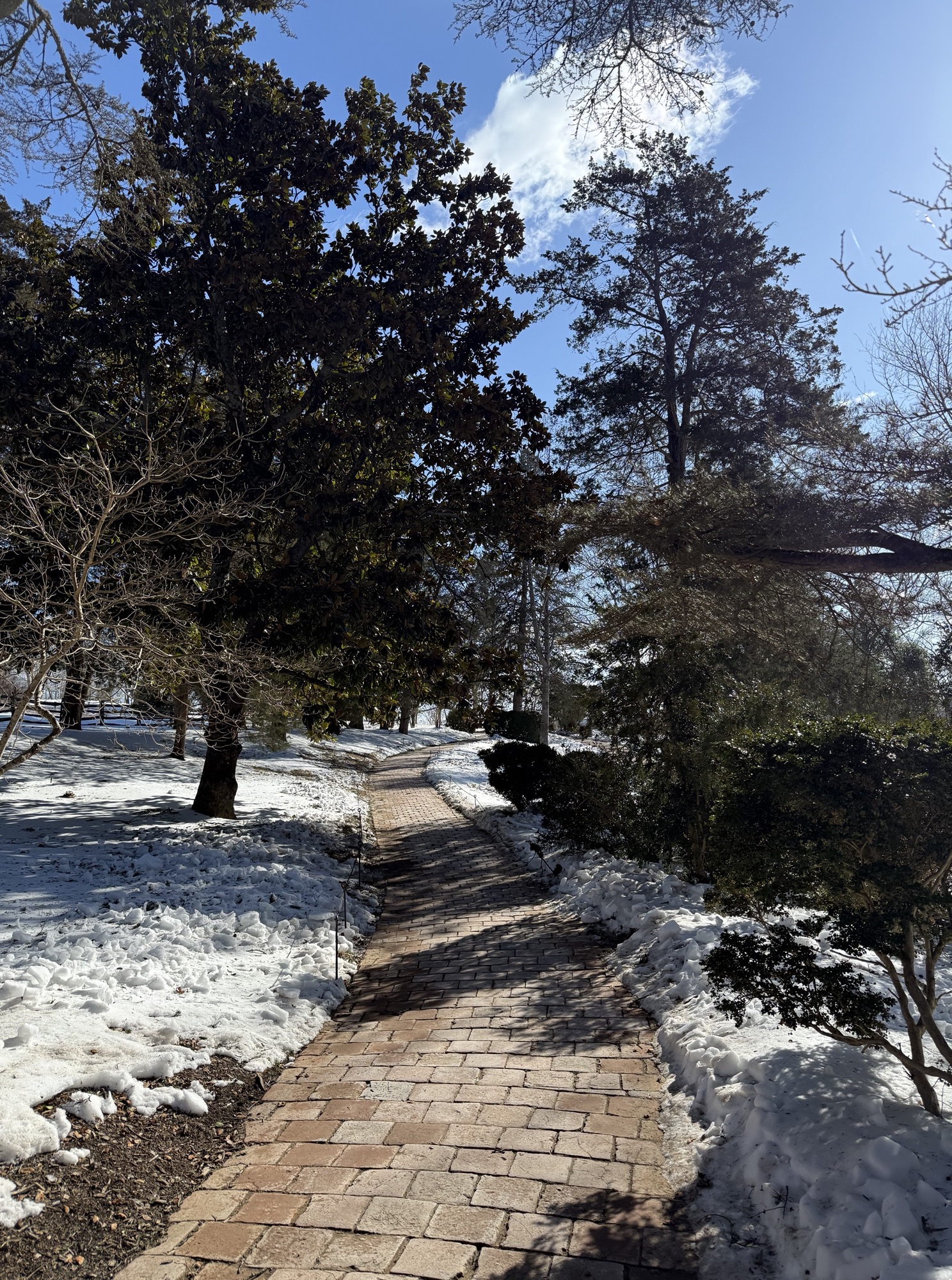
The new tomb is located a bit further away from the house. Walk through the tree-lined paths to get to the tomb.

Grounds (Trails, cemetery of the enslaved people, Farm)

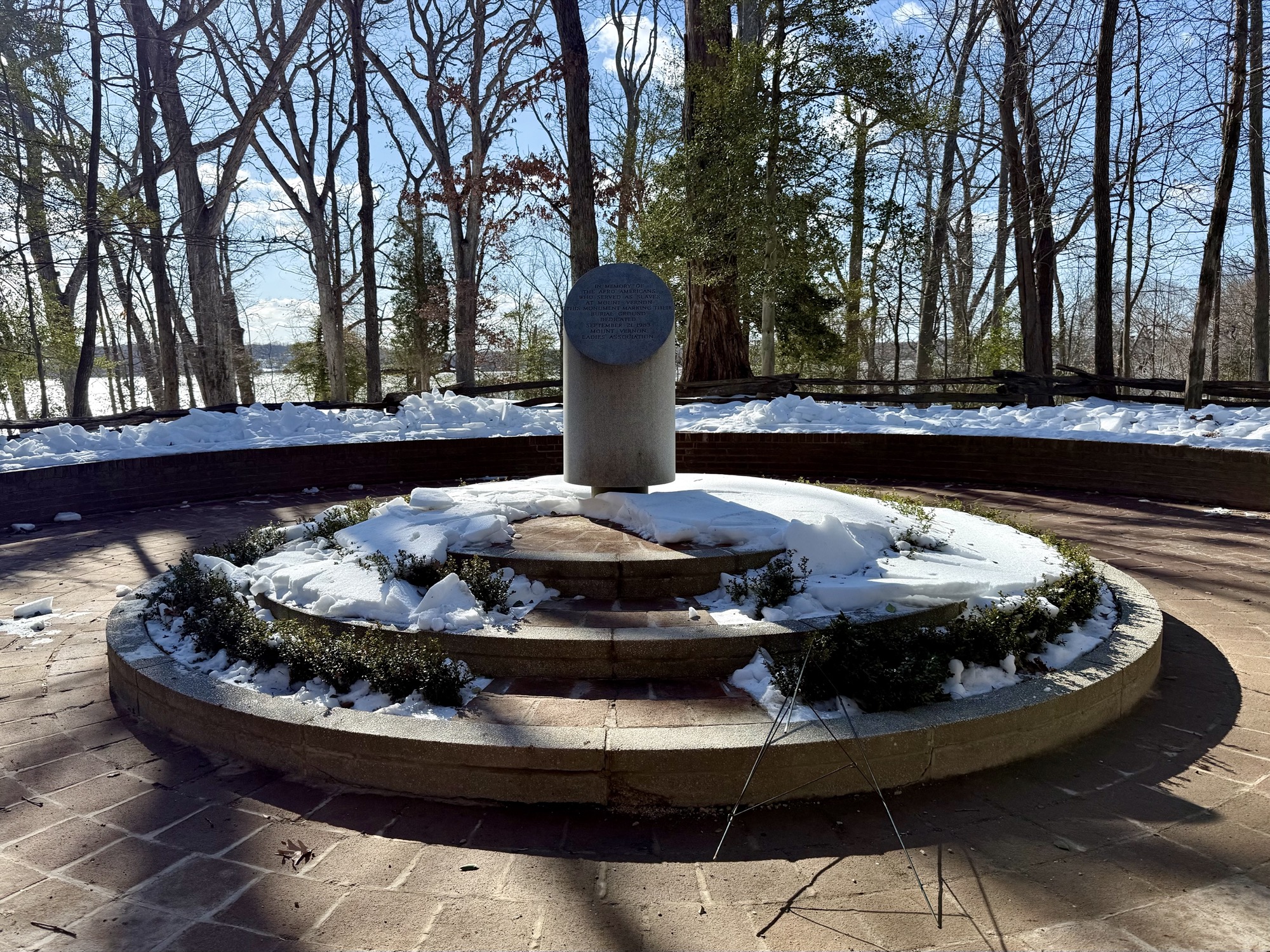
There are multiple tree-lined paths around the estate. It’s a lovely peaceful walk around. There are a couple of small buildings with barn animals around the property. There is also a cemetery of the enslaved people with a memorial statue and plaques that outline where some of the known gravesites are.

What happened to Mount Vernon after George Washington passed away?

After George passed away, the property was transferred to Martha where she lived until her death. Since they had no children together, the property was then inherited by Bushrod Washington, George’s nephew. He had no passion or skill for farming and it was also a time of Virginia’s agricultural decline. Under his ownership, the property started to fall into disrepair.

Bushrod Washington had no children, so after his death the property was inherited by his nephew, John Augustine Washington II. During his ownership, he built the new tomb as outlined in George Washington’s will. Upon his death, his widow Jane Charlotte Blackburn Washington inherited the property then subsequently leased it to her son John Augustine Washington III for five hundred dollars per year in 1841.

Unfortunately by the 1850s, John Augustine Washington III (George’s great-grand nephew) was struggling to make Mount Vernon profitable due to soil exhaustion and poor harvests of the farms. The once vast 8000 acre farm was now down to 1200 acres and was still insufficient to sustain the family’s needs and maintain upkeep of the estate. John tried to bring in money by opening the property to tourists, however this only led to increase deterioration to the property and damage from souvenir-hunters wanting a piece of this historical property. He unsuccessfully attempted to sell the property to the state of Virginia and the federal government. In 1858, the Mount Vernon Ladies’ Association purchased the property and became the last owner.

For more information on the owners and ownership timeline, check out their website here: https://www.mountvernon.org/the-estate-gardens/the-mansion/owners-of-mount-vernon

Some Final Thoughts

  • Allow yourself enough time to get through everything.
  • It gets very busy during the summer months, so book tickets and timed tours ahead of time before they sell out.
  • Seriously, watch Hamilton the musical if you haven’t already. It’s only a 5 hour drive to Times Square (or stream it, but it will be less exhilarating).

That’s a wrap! If you’ve visited Mount Vernon and think I’ve missed something or have any information to share, I’d love to hear about it in the comments!

Looking for more George Washington history? Check out the town of Alexandria, only a 30 minute drive south from Mount Vernon!

Your Ultimate Day Trip to Alexandria, Virginia: What to See and Do


Alexandria, Virginia, founded in the mid-1700s as a tobacco trading post, is rich in history, notably as George Washington’s hometown. Key attractions include Old Town’s preserved streets, the Torpedo Factory Arts Center, and the George Washington Masonic National Memorial. Follow this guide for a one-day itinerary that covers all the highlights!

Essential Guide to a Day Trip in Arlington, VA


Date Published: May 20th, 2026 | Last Updated: May 20th, 2026
Author: Abby | Category: Travel, USA
Date of travel: Feb 7th, 2026

Arlington, Virginia offers many memorials and is home to the famous Arlington Cemetery. It is a just across the Potomac River from Washington, DC. There’s not a *ton* to do in Arlington, but I’d recommend visiting as a stopover trip if you’re visiting Washington, DC. It’s only about a 10-15 minute drive and connected via multiple bridges.

Check out my Washington, DC post below if you need some of where to go in the area:

3 Days in Washington, DC


In June we spent 3 days in Washington, DC seeing the historic site, visiting a few really cool museums, and finding the good food!

How much time do I need?

All of the memorials are quite close together, so you can visit them all within a couple hours. I’d make this a day trip rather than an overnighter.

Best time of year to travel?

The memorials are open year-round, but there are limited hours in the winter time. Double check the websites before going.

Where to stay?

There’s not a ton of things to do in Arlington, but no doubt hotels will be cheaper here compared to Washington, DC. I’d recommend staying in the Pentagon City area in Arlington, or across the river in DC for more walkability and things to do.

Getting Around

Driving or ride-sharing will be the easiest way to get around to these memorials. Parking is free for these sites but some areas can have limited parking. Look for free street parking as well.

Things to Do:

Here is an overview map of all the points of interest in Arlington:

National 9/11 Pentagon Memorial (at the Pentagon)

Address: 1 N Rotary Rd, Arlington, VA 22202
Opening hours: 24 hours, 7 days a week
Cost of entry: free
Parking: free on site
Time needed here: 5-30 minutes
Website: https://www.pentagonmemorial.org/visitor-resources/

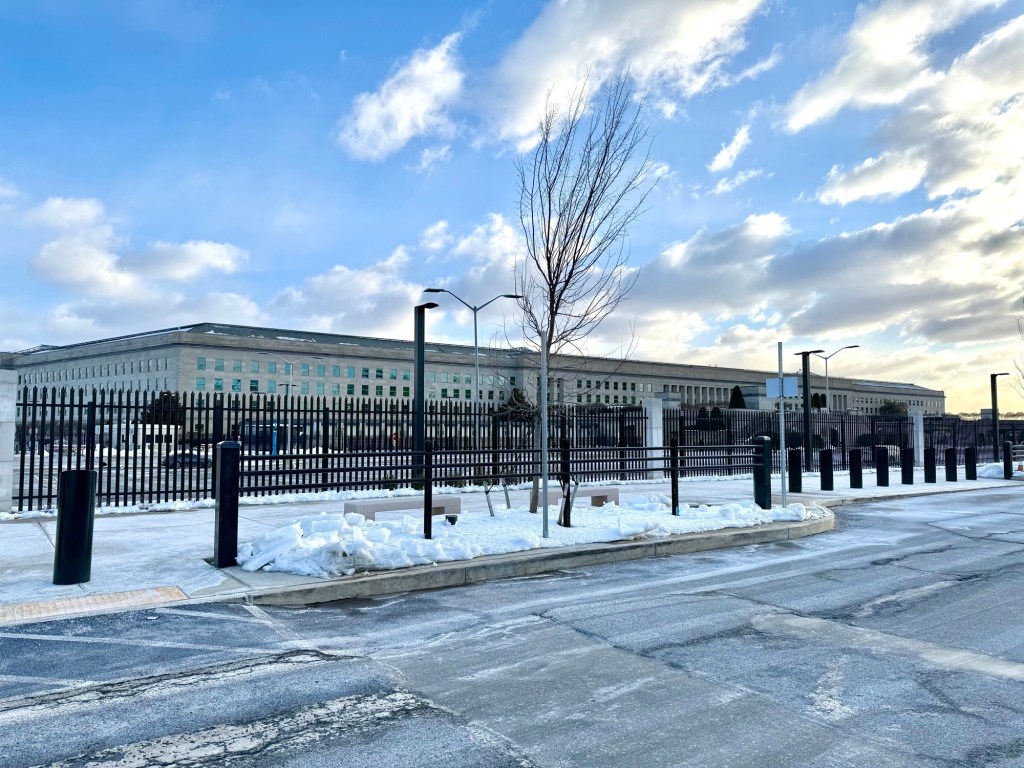
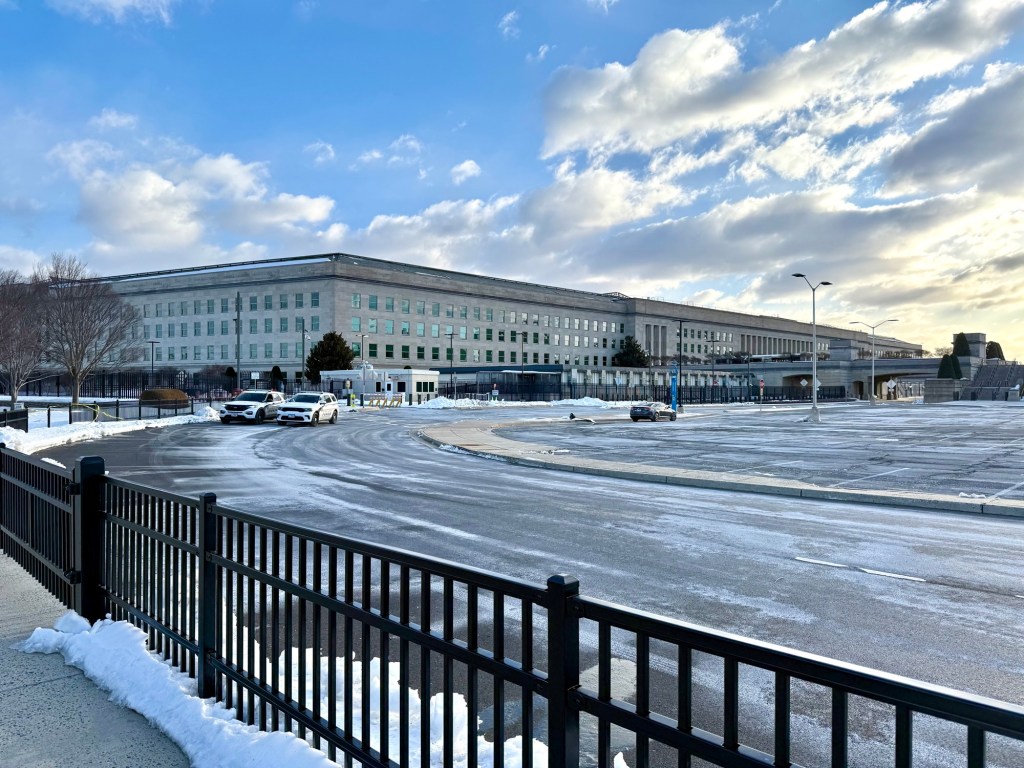
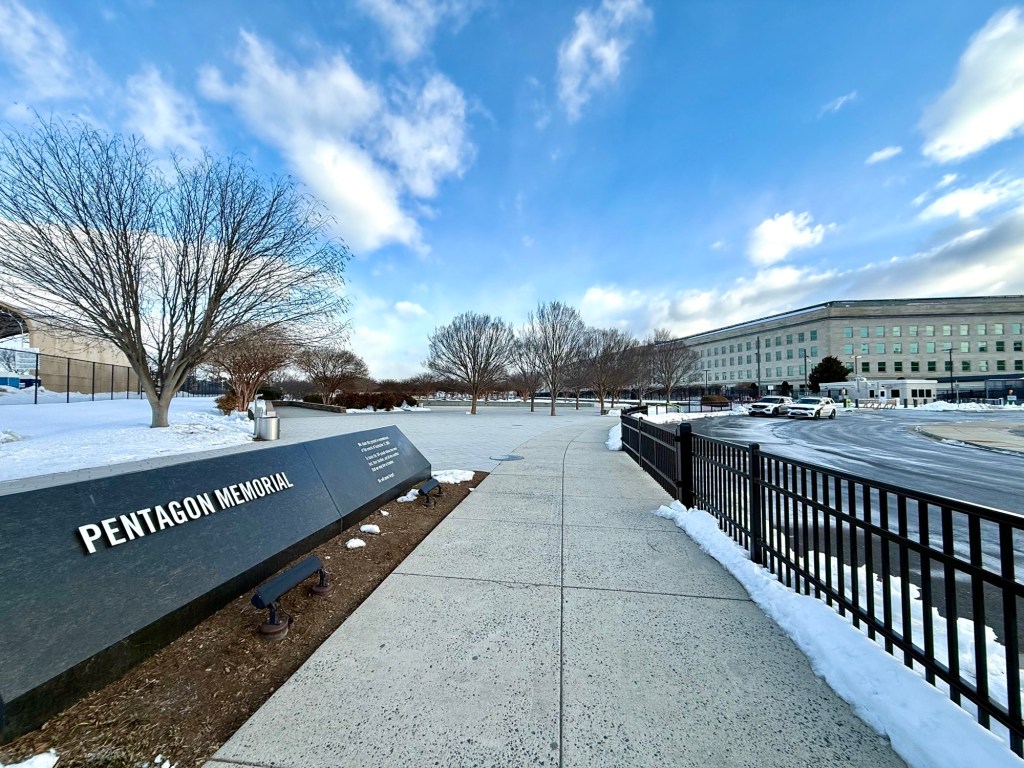
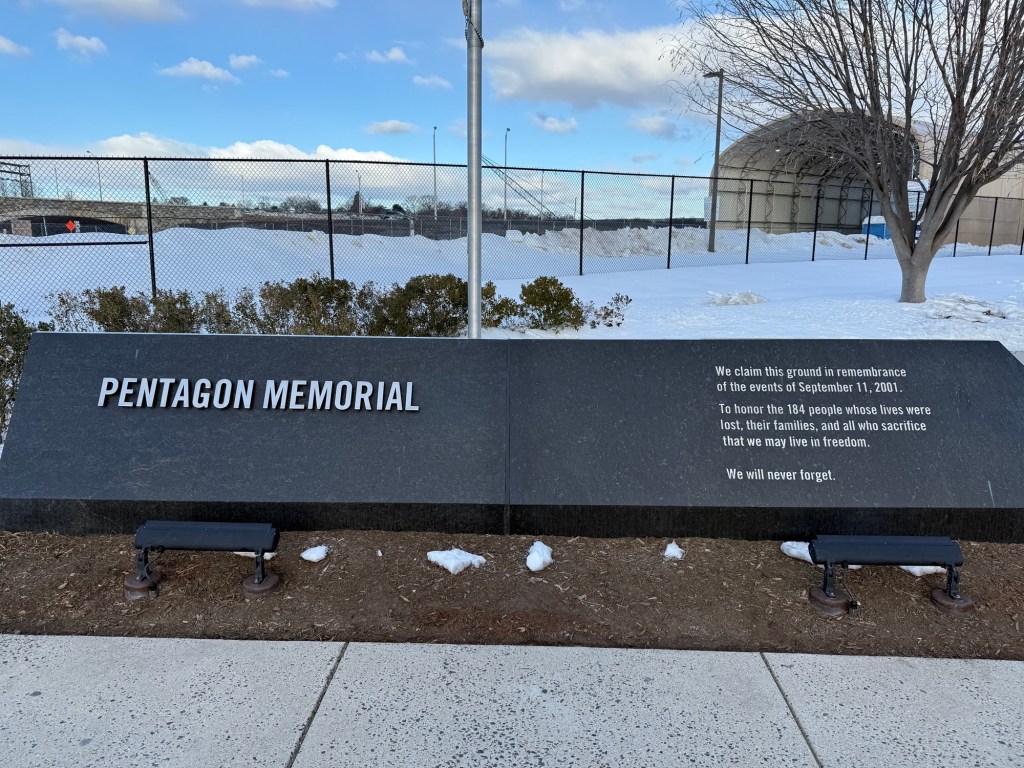
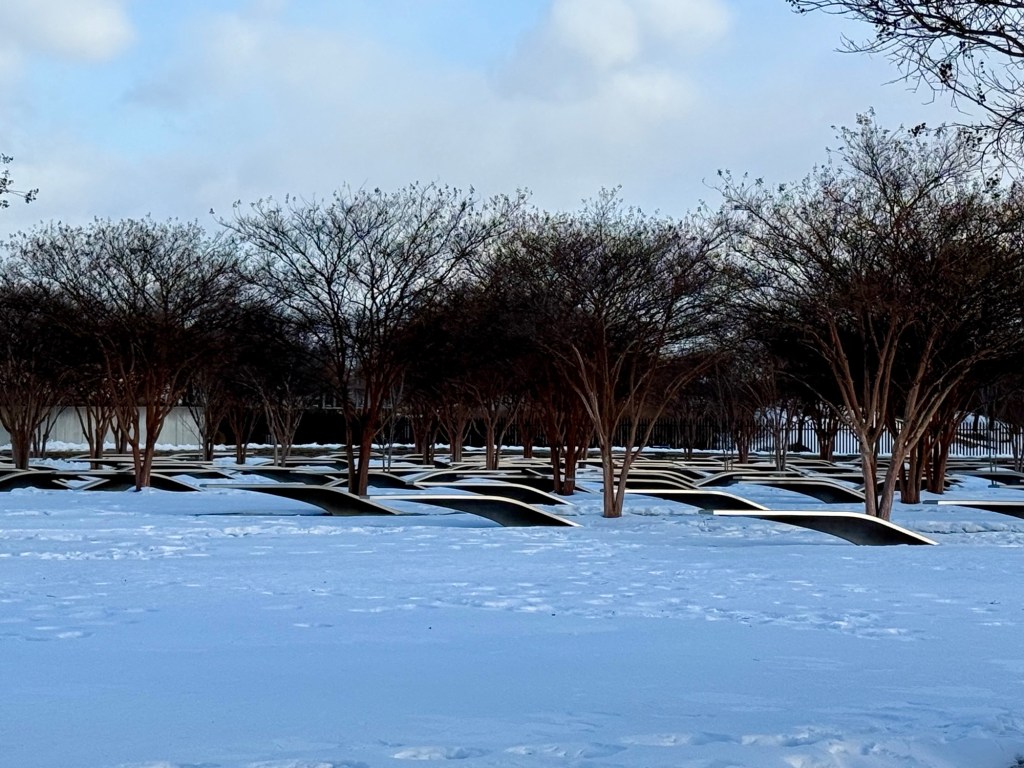
The National 9/11 Pentagon memorial is a permanent outdoor memorial to the 184 lives that were lost when the hijacked American Airlines Flight 77 crashed into the Pentagon on September 11th, 2001. The memorial commemorates the lives of those that were in the building and also those on the flight.

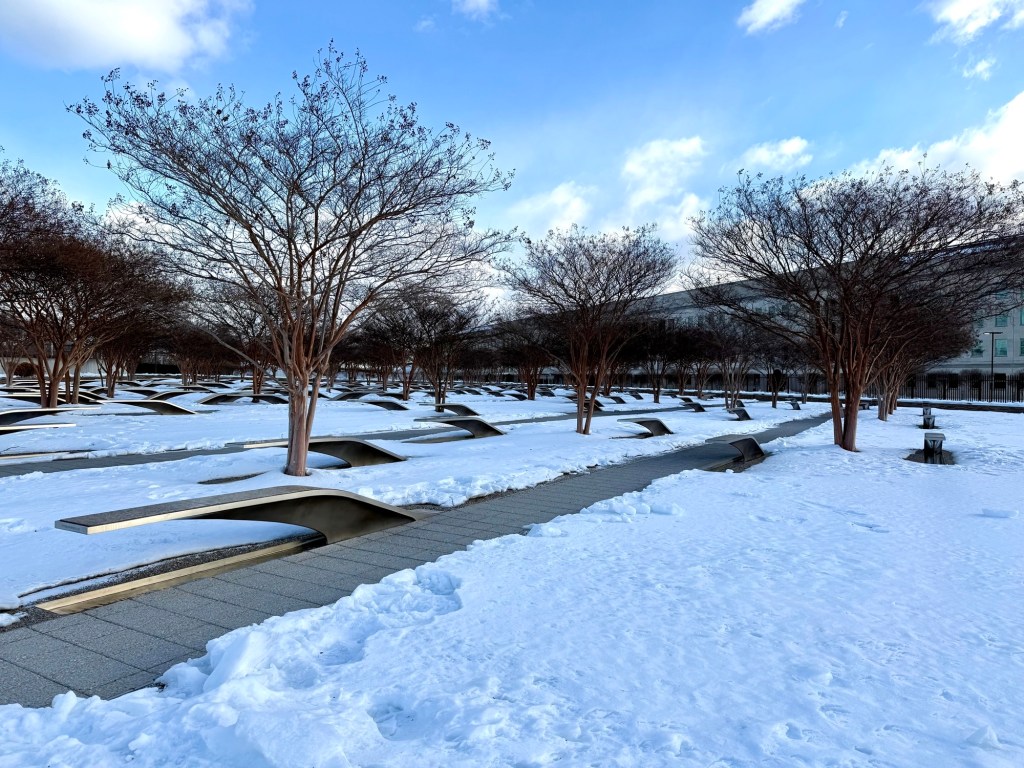
There are 184 granite benches here, organized in a specific purpose. You read more about the aspects of the monument here: https://www.pentagonmemorial.org/design-elements/

The memorial is located just beside the pentagon. To get here, you can either drive and park at the big outdoor parking lot (parking is free) then enter by foot through a side entrance, or you can take public transport (see the website for directions for public transport).

The memorial is open 24 hours a day, every day. There are no security checks, you can walk freely in and out.

You can spend as much or as little time here as you like. To walk through the entire memorial takes about 5-10 minutes, but you can certainly stay longer and read through the memorial benches and enjoy the peaceful setting. There’s an online audio/video tour you can access on their website here: https://vimeo.com/23906742?fl=pl&fe=sh

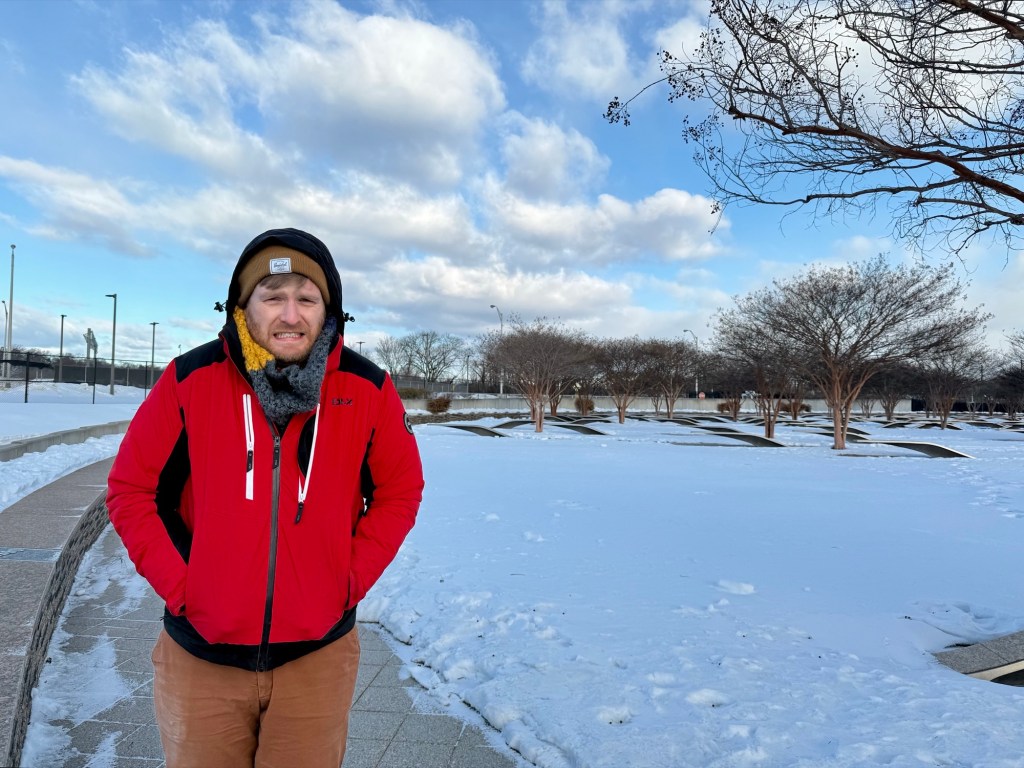
It was an extremely cold and windy day when we came in the middle of winter, so we just did a quick stopover, but it was indeed very peaceful here.

US Air Force Memorial

Address: 1 Air Force Memorial Dr, Arlington, VA 22204
Opening hours: 8am – 6pm (7pm in the summer – check the website for up to date opening times)
Cost of entry: free
Parking: free on site and side of the road
Time needed here: 5 – 30 minutes
Website: https://www.afdw.af.mil/afmemorial/

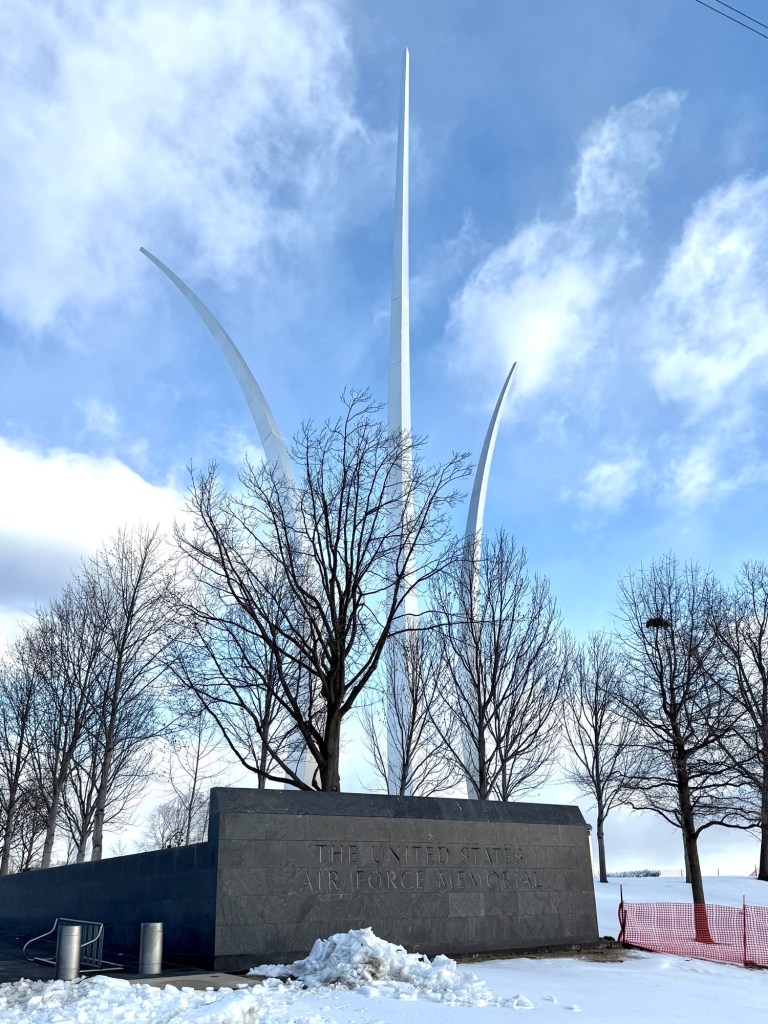
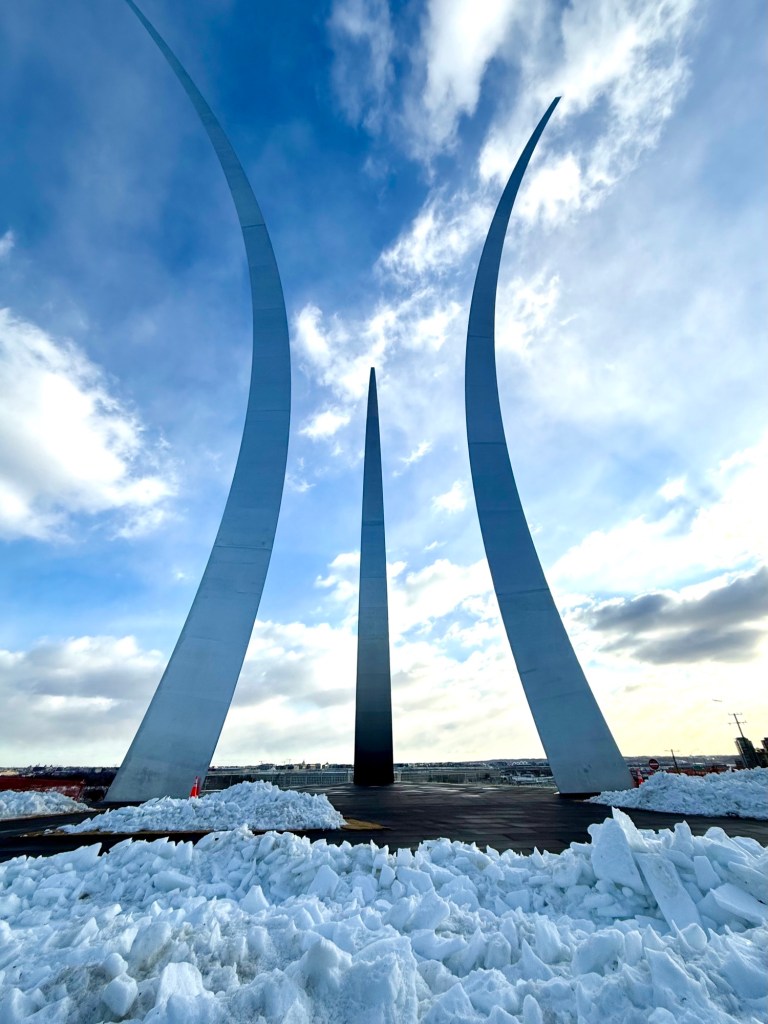
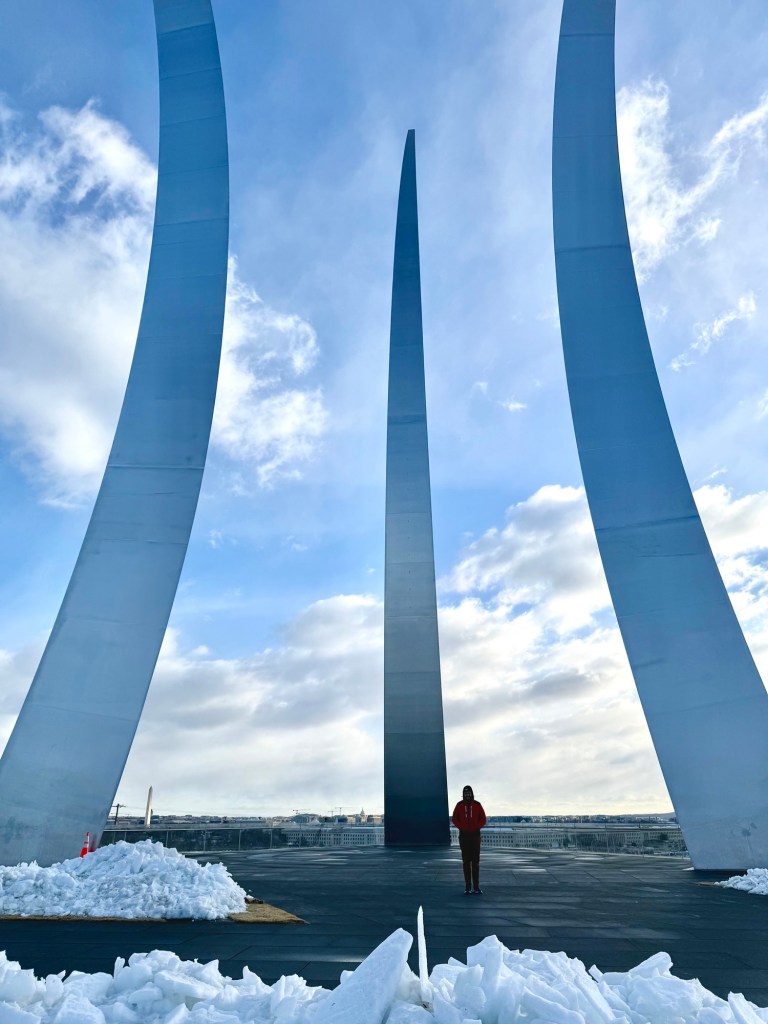
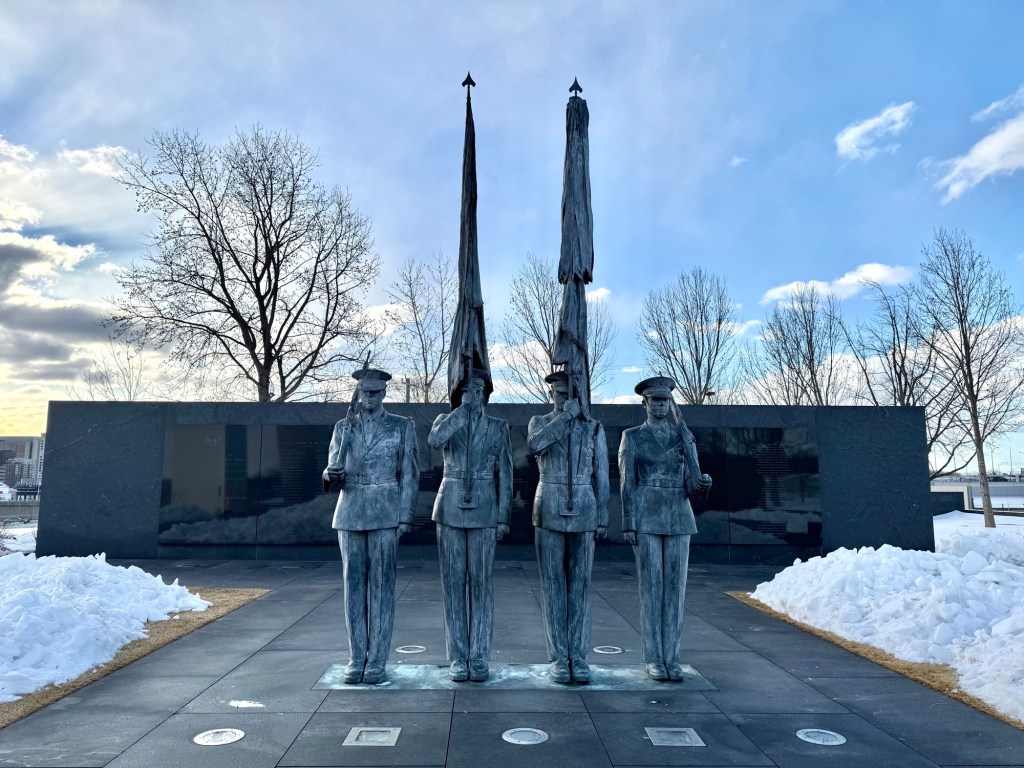
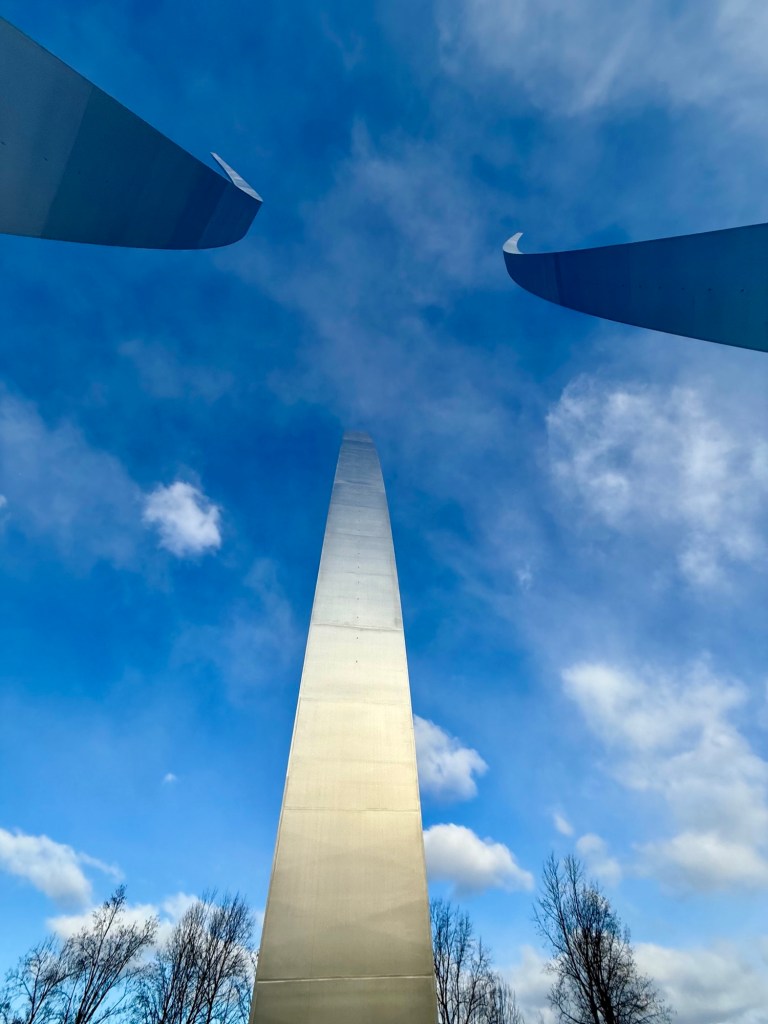
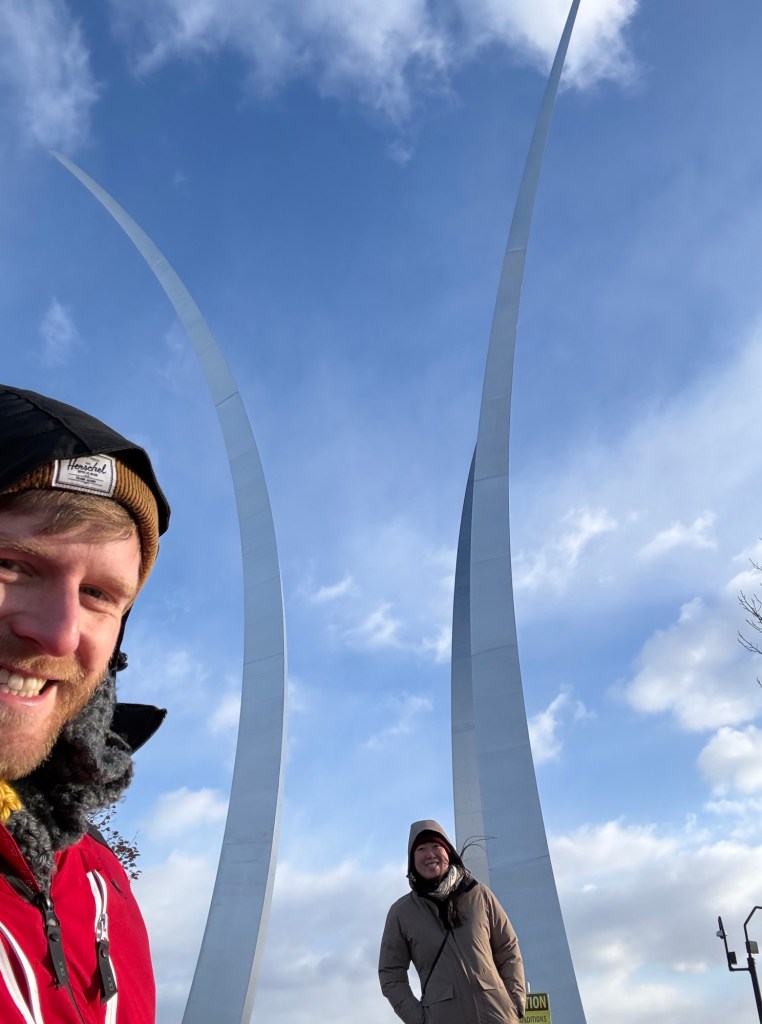
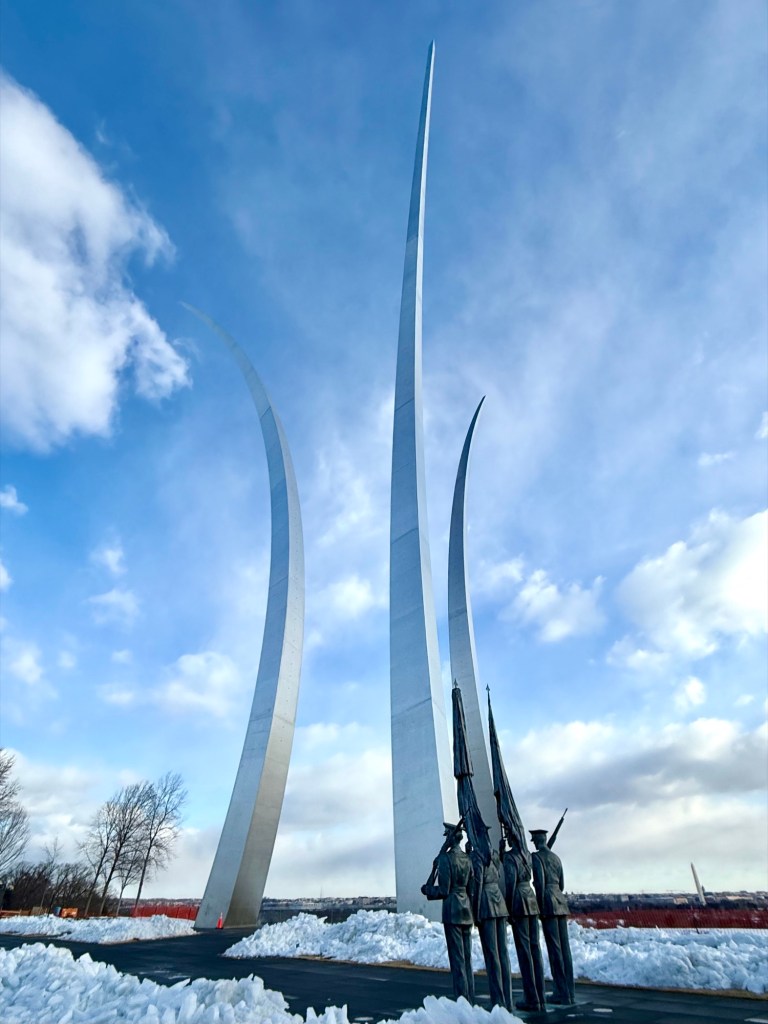
The US Air Force Memorial honours the men, women, and heritage of the US Air Force. It’s a structure made of 3 tall stainless steel spires that represents “jet and space vehicle flight”. Surrounding the spires are granite walls with inscriptions dedicated to the people of the Air Force.

It is easiest to get here by car. Parking is free at the side of the road. You spend as little as 5 minutes here or longer if you want to read through the inscriptions on the granite walls.

Gravelly Point Park

Address: George Washington Memorial Parkway, Arlington, VA, 22202 (no specific address, GPS coordinates: 38.865734, -77.040231)
Opening hours: 24/7, however gates for parking lot closed 10pm-6am – you can park on the street
Cost of entry: free
Parking: free on site (limited parking lot) and side of the road

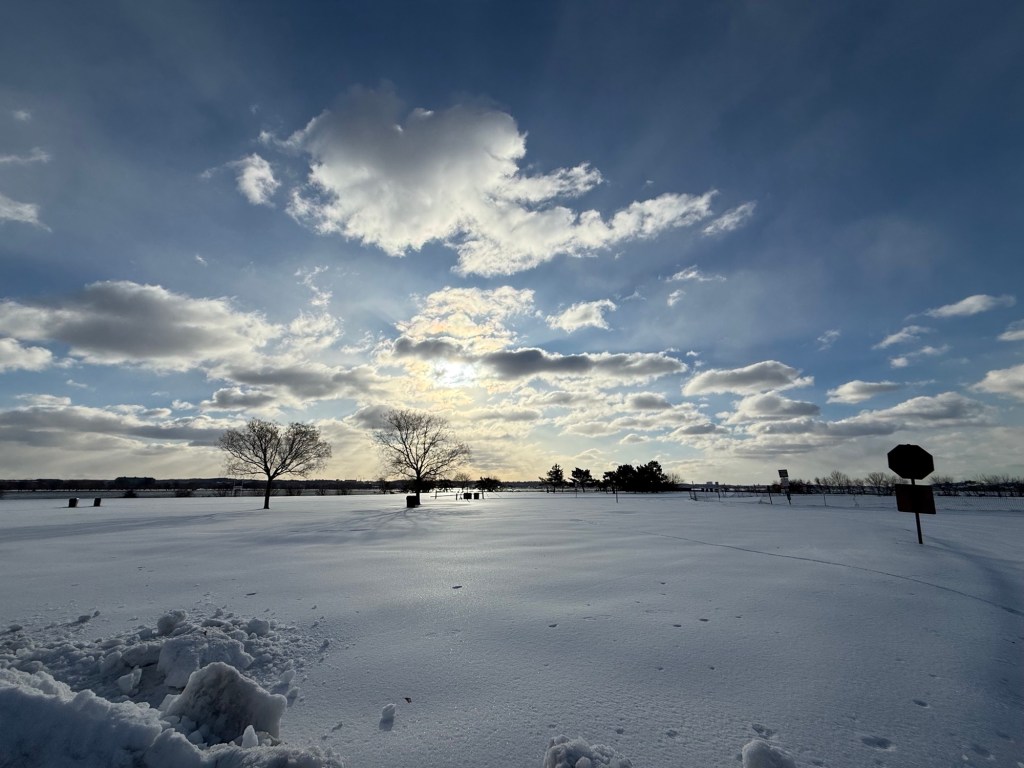
Gravelly Point is a public park just off the George Washington Memorial Parkway. It’s not a must do for a busy itinerary, but if you’ve got some time to spare, it’s a nice open field with views of the Potomac River and you can see planes taking off nearby. It’s not overly scenic, but it’s a nice place to have a picnic or relax on the grass.

There’s a small parking lot here, but when we visited it was covered in snow and ice, so we parked on the side of the road.

Arlington National Cemetery

Address: 1 Memorial Avenue, Arlington, Virginia
Opening hours: 8am – 5pm, every day
Cost of entry: free
Parking: Dedicated parking area, $3 per hour, maximum $12 for the day (parking lot closes promptly at 6pm)
Time needed here: 2-3 hours to visit the highlights
Website: https://www.arlingtoncemetery.mil/

The Arlington National Cemetery is an active military cemetery and is THE main attraction for tourists. Unfortunately they closed the cemetery when we were in town due to poor weather and icy conditions, so we’ll have to come back on our next trip 😔.

Entry into the cemetery is free. No guided tours are offered, but there are multiple self-guided trails with tons of information available through their website: https://education.arlingtoncemetery.mil/Tours .

A few notable areas inside the cemetery include:

  • The Tomb of the Unknown Soldier: A monument that honours the unidentified fallen US soldiers. This tomb is guarded 24 hours a day, 365 days a year. The Changing of the Guard ceremony is an iconic experience to watch at the time. The changing of the guard ceremony schedule is as follows:
    • Summer (April 1 to September 30): Every 30 minutes
    • Winter (October 1 to March 31): Every hour on the hour
    • After Hours (When the cemetery is closed): Every 2 hours
    • You can find out more about the changing of the guard and verify the times on their website here: https://www.arlingtoncemetery.mil/explore/changing-of-the-guard
  • John F. Kennedy Eternal Flame: The gravesite of John F. Kennedy, marked by an ongoing flame that overlooks Washington, DC.
  • Arlington House (The Robert E. Lee Memorial): A historic mansion located at the top of a hill with views. This mansion was the former home of the confederate general, Robert E. Lee before it was seized by the Union army during the civil war.

Note: the cemetery is massive and is all outdoors. Make sure you wear comfortable walking shoes and a hat and water bottle on hot days!

US Marine Corps War Memorial

Address: no street address, but type in “US Marine Corps War Memorial” in Google maps and it’ll direct you to it
Opening hours: 6am – midnight, every day
Cost of entry: free
Parking: free, but limited to 1 hour
Time needed here: 5 – 30 mins
Website: https://www.nps.gov/gwmp/planyourvisit/usmc_memorial.htm

The US Marine Corps War Memorial is an iconic statue that is based on the famous photo of six Marines erecting an American flag on Iwo Jima during World War II. This memorial is dedicated to “the Marine dead of all wars and their comrades of other services who fell fighting beside them”.

Fashion Centre at Pentagon City (shopping mall)

Address: 1100 S Hayes St, Arlington, VA 22202, United States
Opening hours: 10am – 9pm most days, (closes at 6pm on Sundays)
Cost of entry: free
Parking: $4 for the first hour, then increases. Maximum $21/day. Parking garage operated by Denison parking. Find out more about the rates here: https://denisonparking.com/fashion-centre-pentagon-city-ar/
Time needed here: as long as you want – it’s a massive mall
Website: https://www.simon.com/mall/fashion-centre-at-pentagon-city

This isn’t a touristy must-do, but Fashion Centre at Pentagon City is a HUGE mall. So if you’re looking for some time to kill or just enjoy walking around malls and need to do some shopping, Fashion Centre is a good choice!

Everything You Need to Know to Witness the Incredible Horseshoe Crab Migration


Date Published: Nov. 12th, 2025 | Last Updated: Nov. 12th, 2025
Author: Abby | Category: Travel, USA
Date of travel: June 9-10, 2025

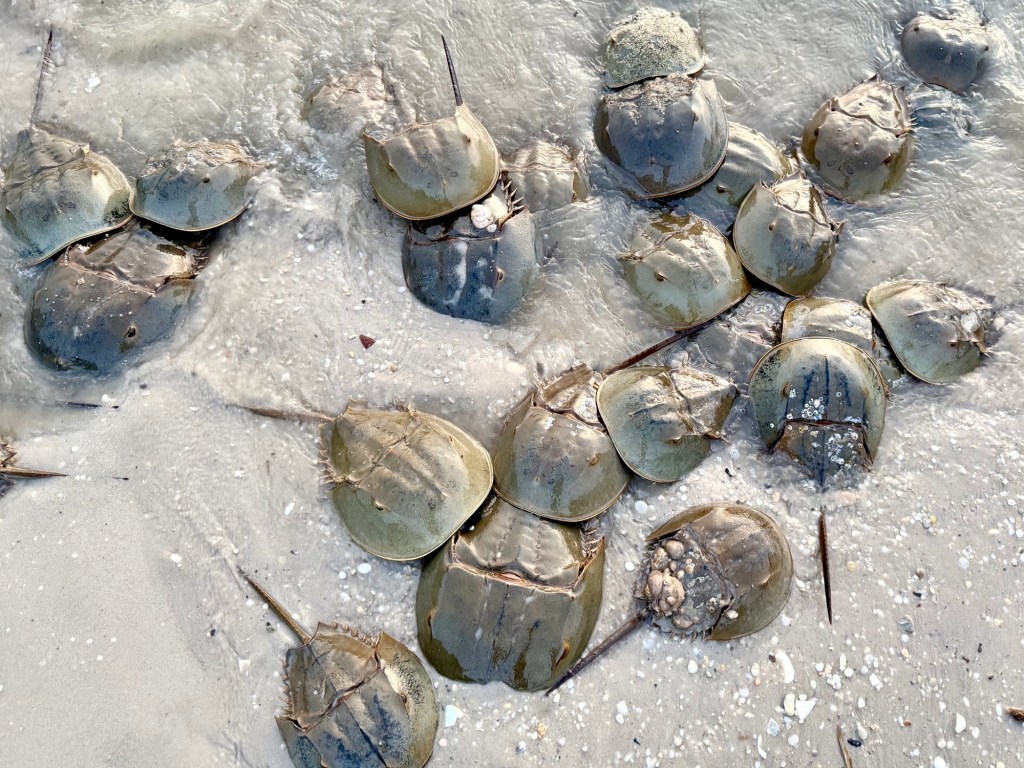
Being veterinarians, Toby and I get super excited about nature and different species of wildlife so of course when I found out about the horseshoe migration in Delaware, we just had to go! Toby had actually never seen a horseshoe crab in person before until last year at the New Jersey Science Centre and it blew his mind (they don’t have them in Australia)! The chance to see thousands of them in their natural habitat was something we just couldn’t pass up.

Horseshoe crabs are an amazing ancient species with fossils dating as far back as 445 million years – predating the dinosaurs! Despite the name, these incredible “living fossils” aren’t actually related to crabs at all! They’re related to the extinct trilobites and more closer related to spiders. They have fascinating anatomy and look unlike anything else on this planet – they kind of remind me of a Pokémon 😅.

When we were planning for our Delaware trip, there was surprisingly very limited information available on seeing the horseshoe crab migration. I thought this would’ve been a big tourist attraction for this amazing once a year event, but apparently not! After scouring the internet, I managed to piece together enough information for our trip and I’m sharing it here with you all!

If you want to learn more about horseshoe crabs, I found this website very helpful and informative in our research and education on the horseshoe crab, I highly recommend checking it out: https://horseshoecrab.org/

What is the Horseshoe Crab Migration?

Once a year, millions of horseshoe crabs make the journey from their natural habitat in the deeper ocean to the shallow coastal areas to spawn. This is one of the world’s oldest and largest wildlife migrations – it’s like witnessing a Planet Earth special in real life!

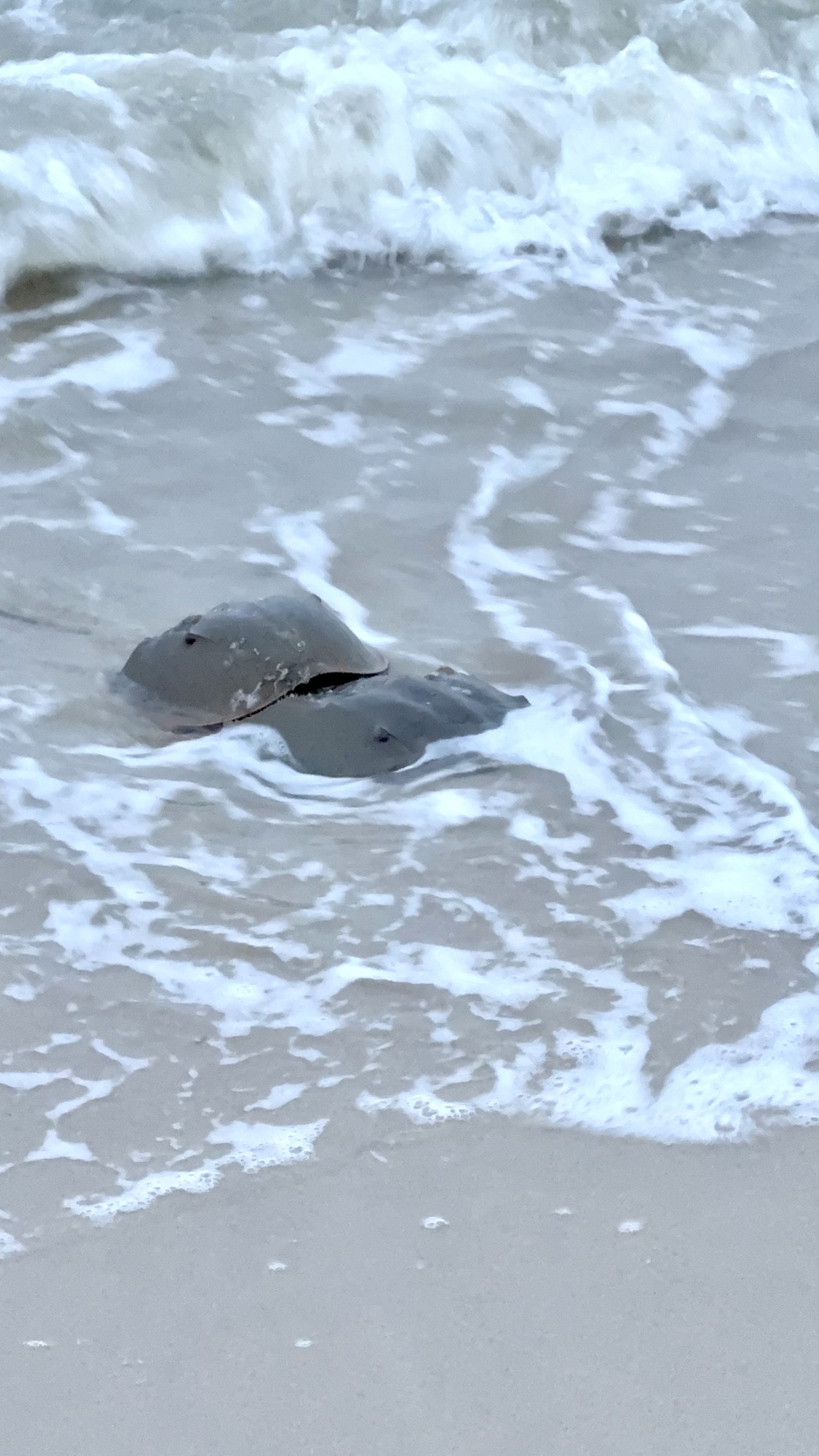
During spawning, the egg-laden females emit pheromones to attract the males and a single male will attach to the back of the female with special clasps. Once attached the pair will make the journey to the shore (pretty much a free piggy-back ride for the male who is usually much smaller in size than the female) where the female will deposit her eggs in the sand and the male will externally fertilize the eggs at the same time she deposits them. Although there can only be one male that attaches, often there are “satellite males” that huddle around one female in hopes of also fertilizing the eggs.

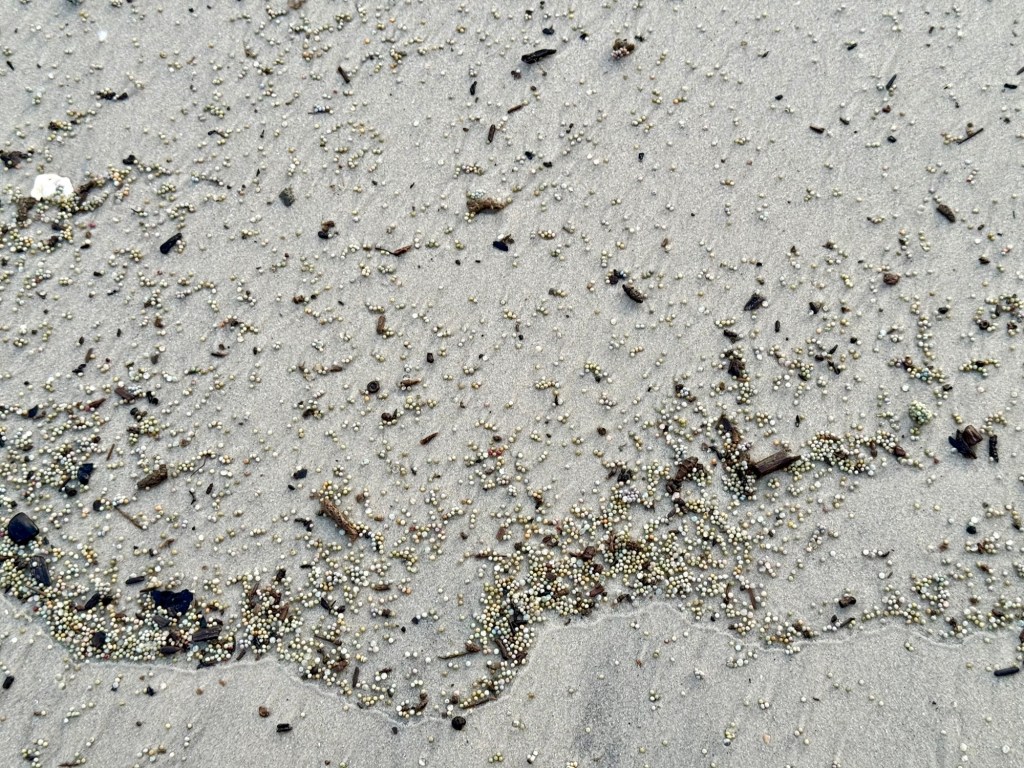
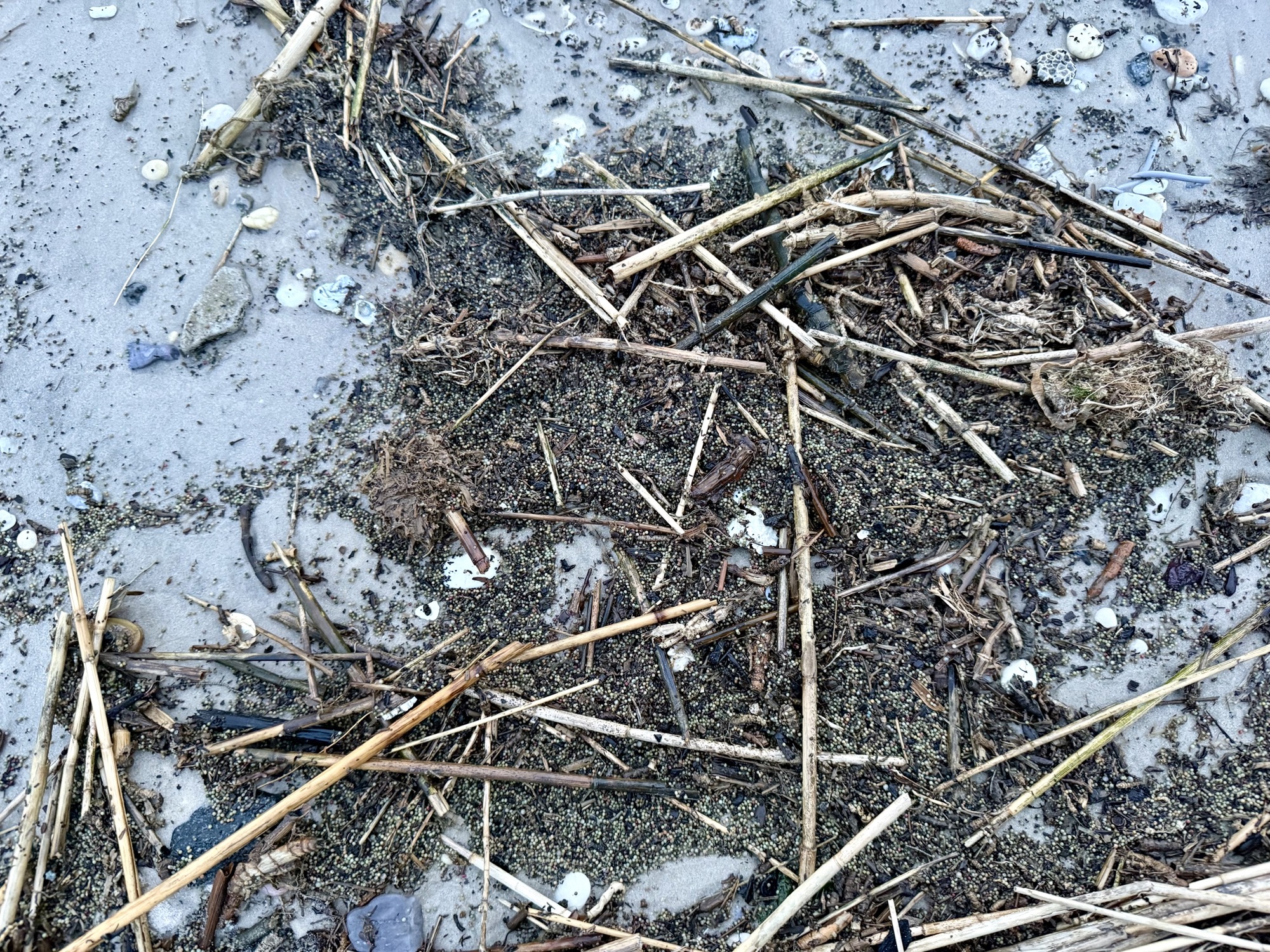
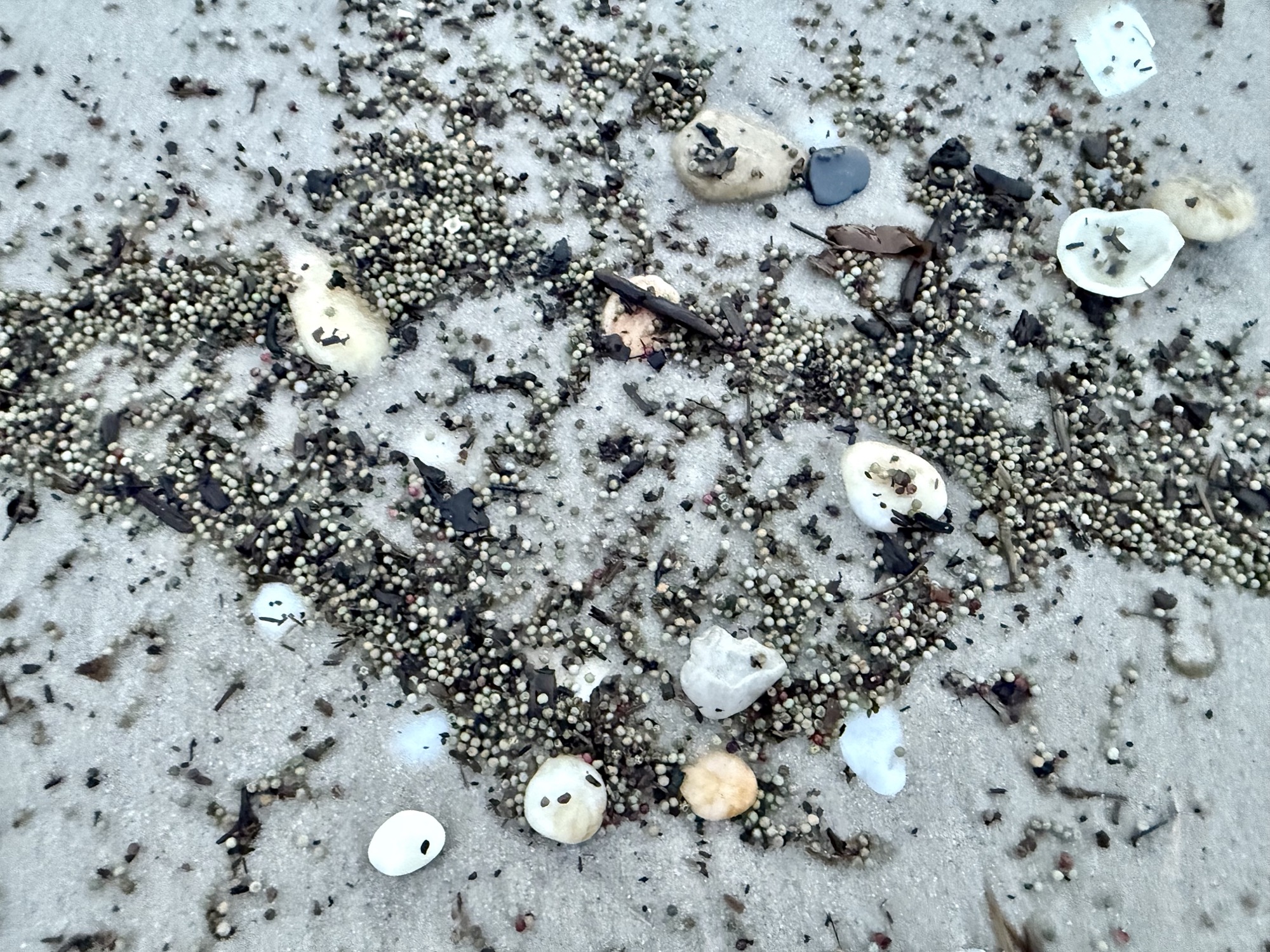
Incredibly, one female can lay 80,000 eggs in one season!!! 🤯🤯🤯 You’ll see millions of little tiny dark green eggs on the shore during the migration. These eggs provide a nutritious source for migratory birds, so you’ll also see tons of signs for migrating birds in the area at the same time.

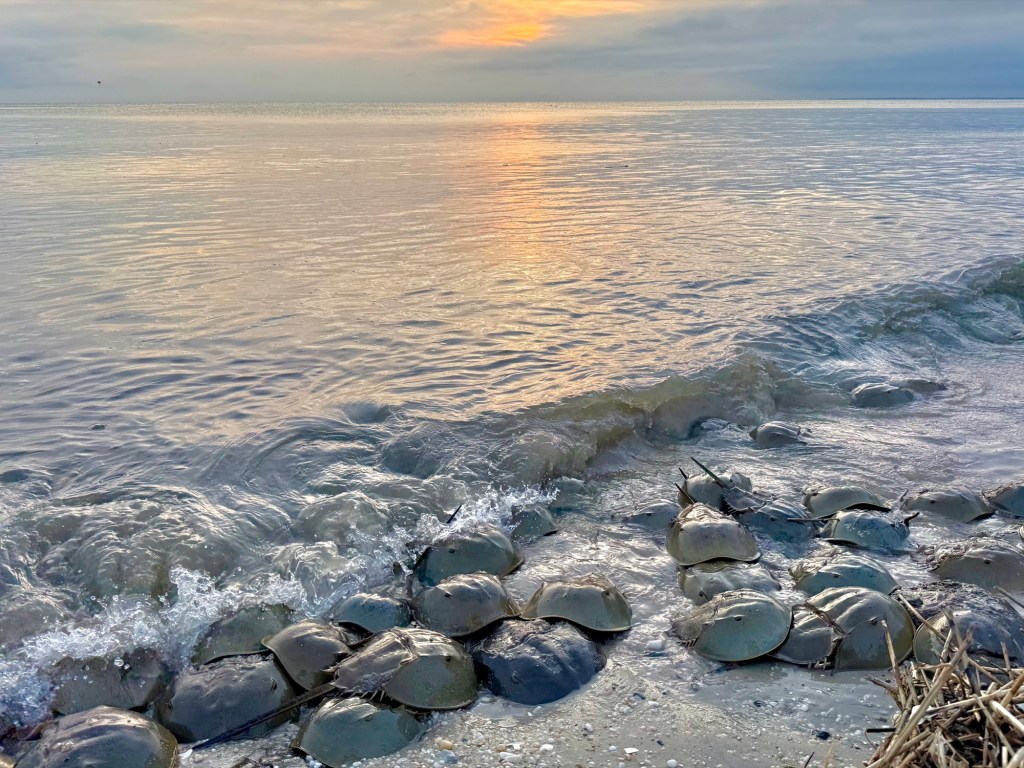
Look at all the eggs getting washed around the shore! 🤯

Where to see the Horseshoe Crab Migration?

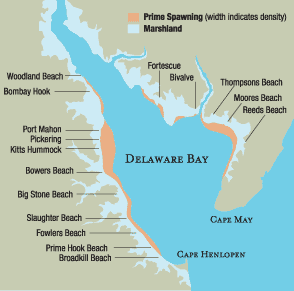
Map of spawning habitats of the Horseshoe Crabs (https://www.horseshoecrab.org/nh/habitat.html)

The Delaware Bay is the most popular place to see the horseshoe crab migration due to its location and protection from large ocean waves as well as sandy beaches. The states of Delaware and New Jersey surrounds the Delaware Bay so you should be be able to see them on either the Delaware side or the New Jersey side. Luckily there is a ferry that connects Lewes/Cape Henlopen and Cape May so you can check out both sides if you have the time (trip takes 1.5 hours one-way)! We had better luck on the New Jersey side this year but we were also two days away from the full moon on the Delaware side and only one day away from the full moon on the Jersey.

Selection of the perfect spawning site can depend on a number of factors including how coarse or fine the sand is, how quickly the sand drains, sediment of the beach…etc. The most preferred sites are usually next to large intertidal sand flat areas. Thankfully horseshoecrab.org provides a map of the popular spawning sites with the highest densities on their website seen above.

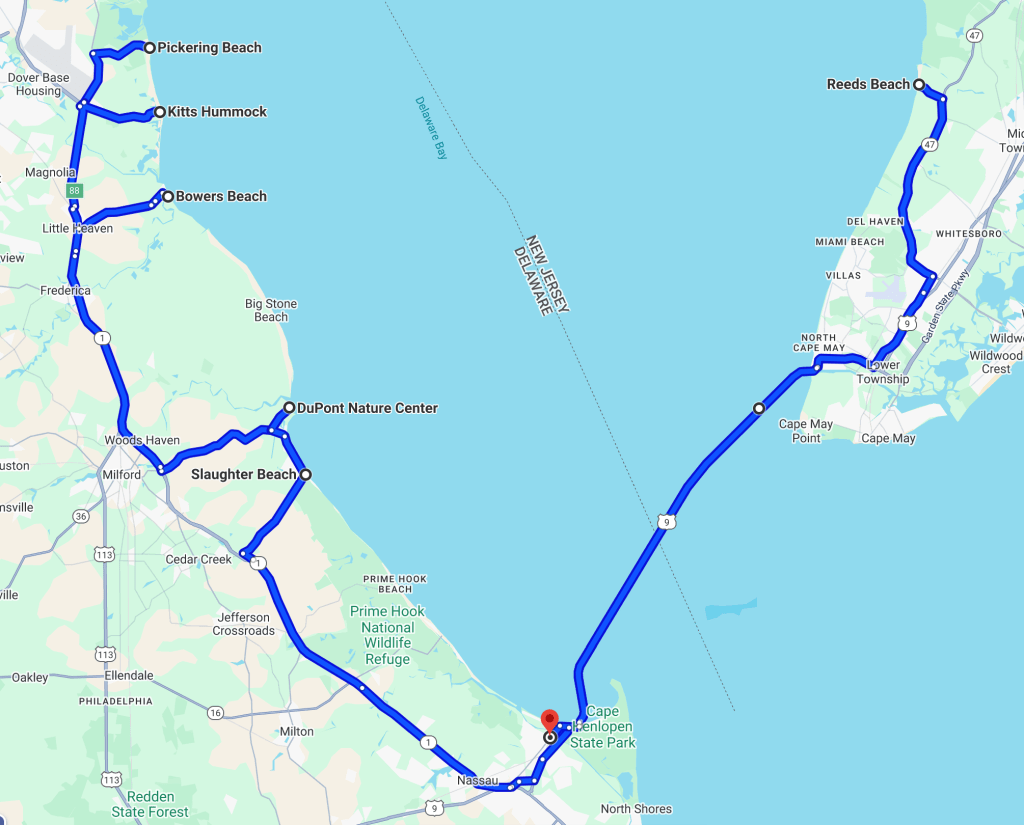
You can try your luck at any of these beaches, but since there’s only so much time between evening high tide and last light, you won’t be able to visit all of them to see the crabs before the sunset. Here are a few recommended beaches that I came across in my research:

A map of the popular beaches to see the horseshoe crab migration

Pickering Beach, DE: An official horseshoe crab sanctuary with limited public parking spaces along the road near the public access to the beach. Roughly 15 minutes south of Dover.

Kitts Hummock, DE: Another official horseshoe crab sanctuary, also with limited public parking spaces along the road near the public access to the beach.

Bowers Beach, DE: A public beach within a small bay community. There’s plenty of beach parking in a public lot on South Flack Avenue a block away (type in “Bowers Beach Parking Lot” on Google Maps or 102 South Flack Avenue, Frederica).

DuPont Nature Center, DE (2992 Lighthouse Road, Milford): This is NOT a place to see horseshoe crabs in their nature, but instead it is an education centre with interactive exhibits if you want to learn more about the horseshoe crabs!

Slaughter Beach (354 State Road 15, Milford): One of the most popular hotspots, has plenty of parking.

Reeds Beach, Middle Township, NJ: One of the more popular spots on the New Jersey Side to see the migration due to its closer vicinity to Cape May.

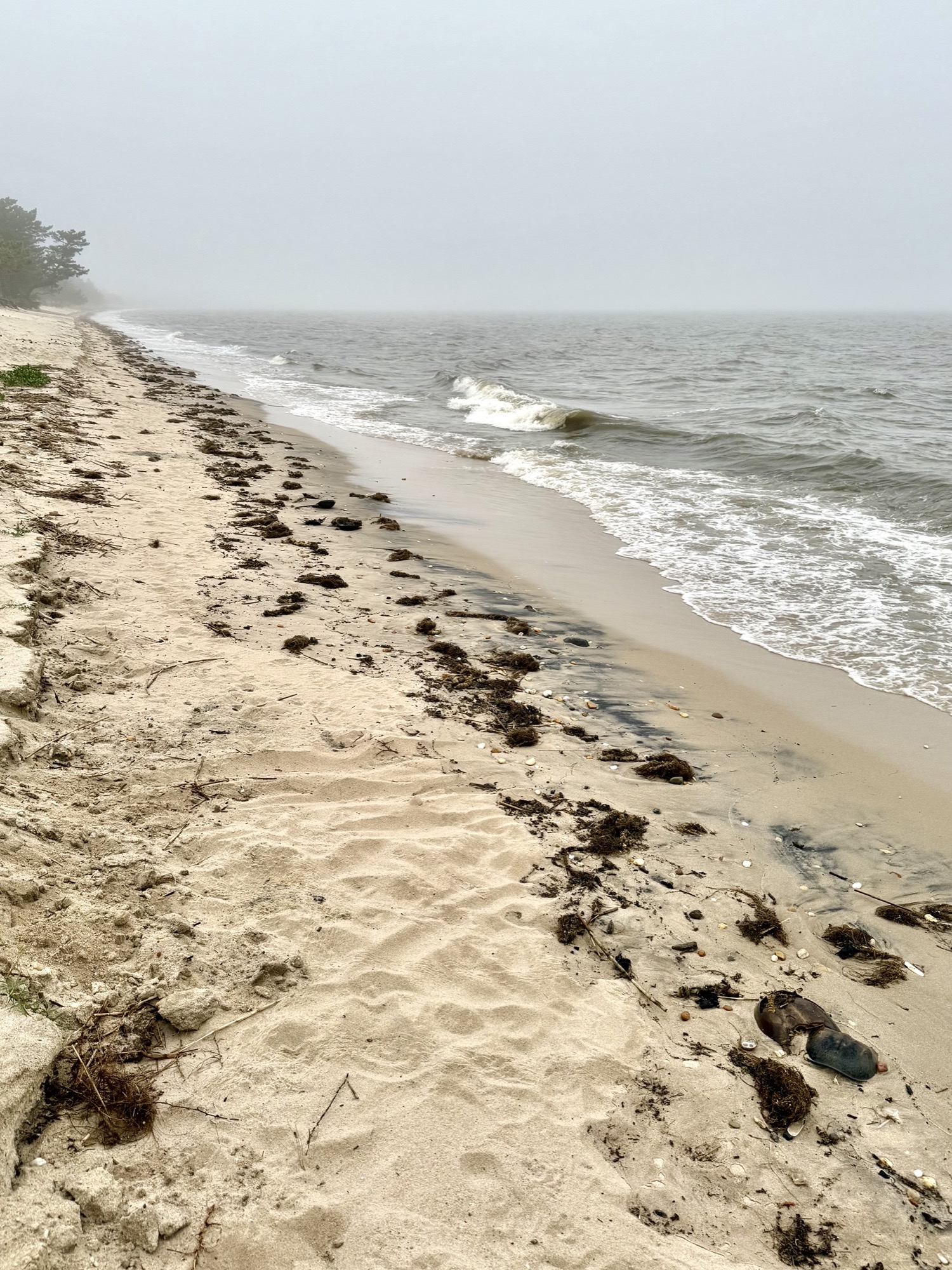
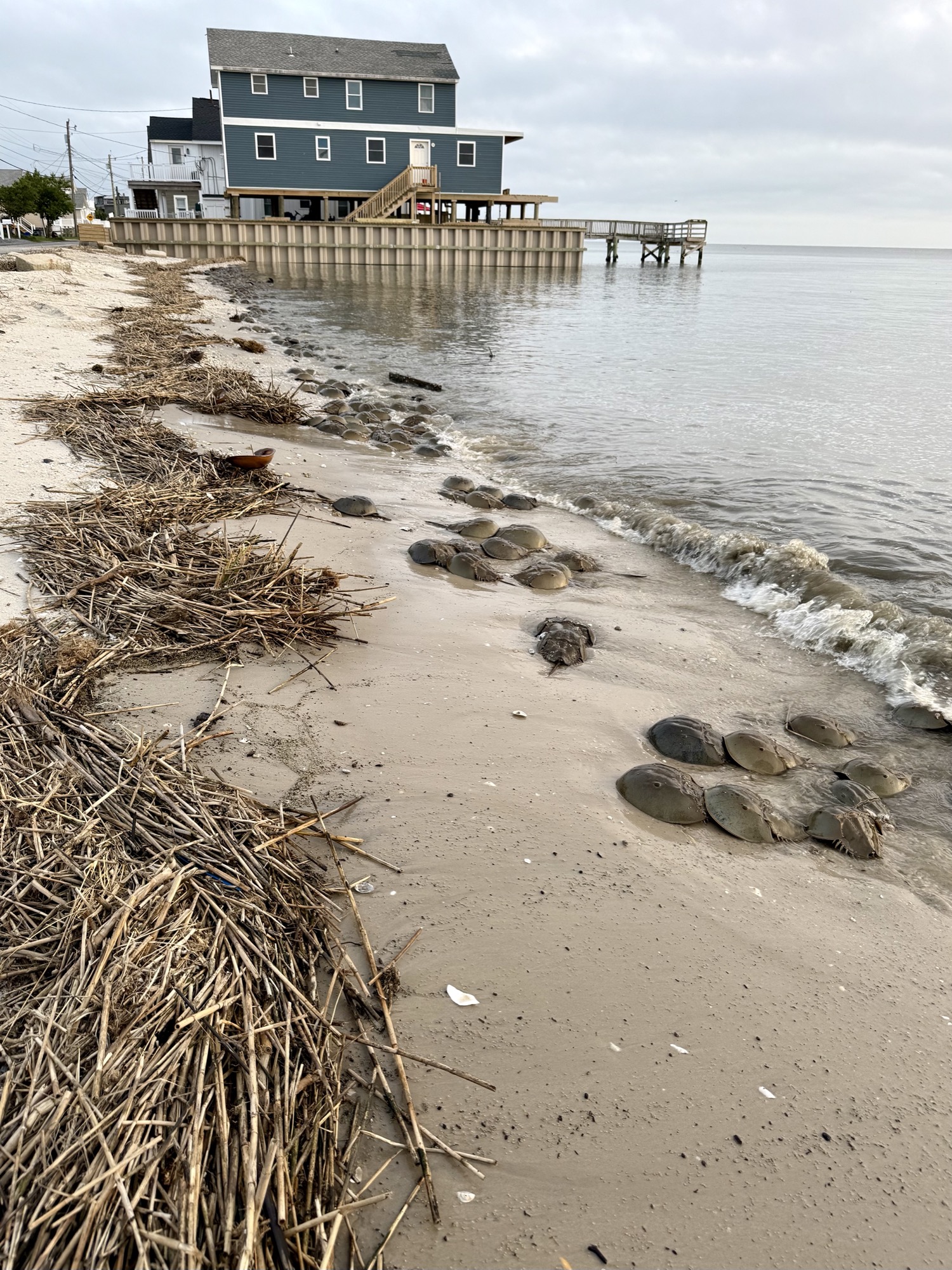
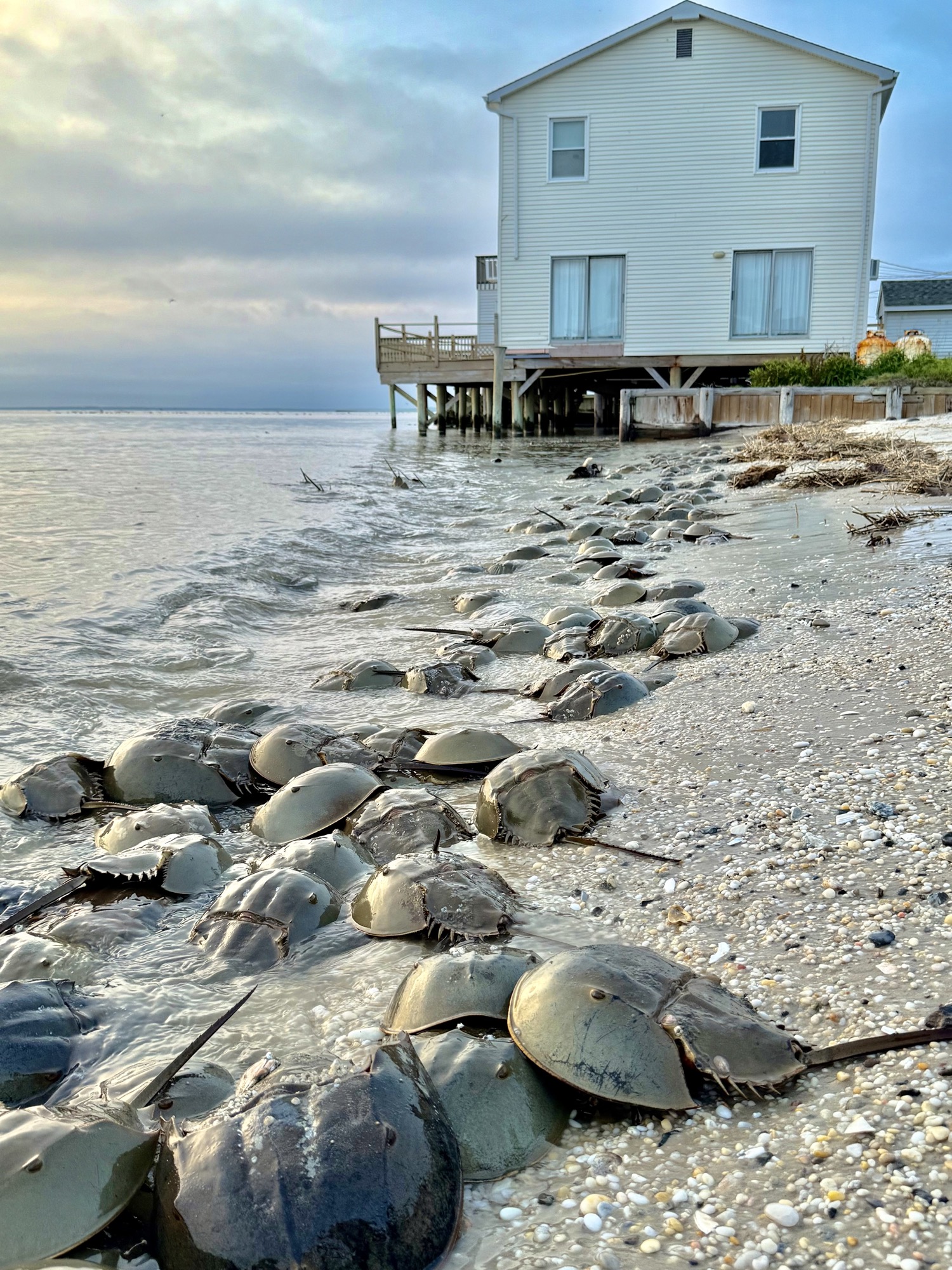
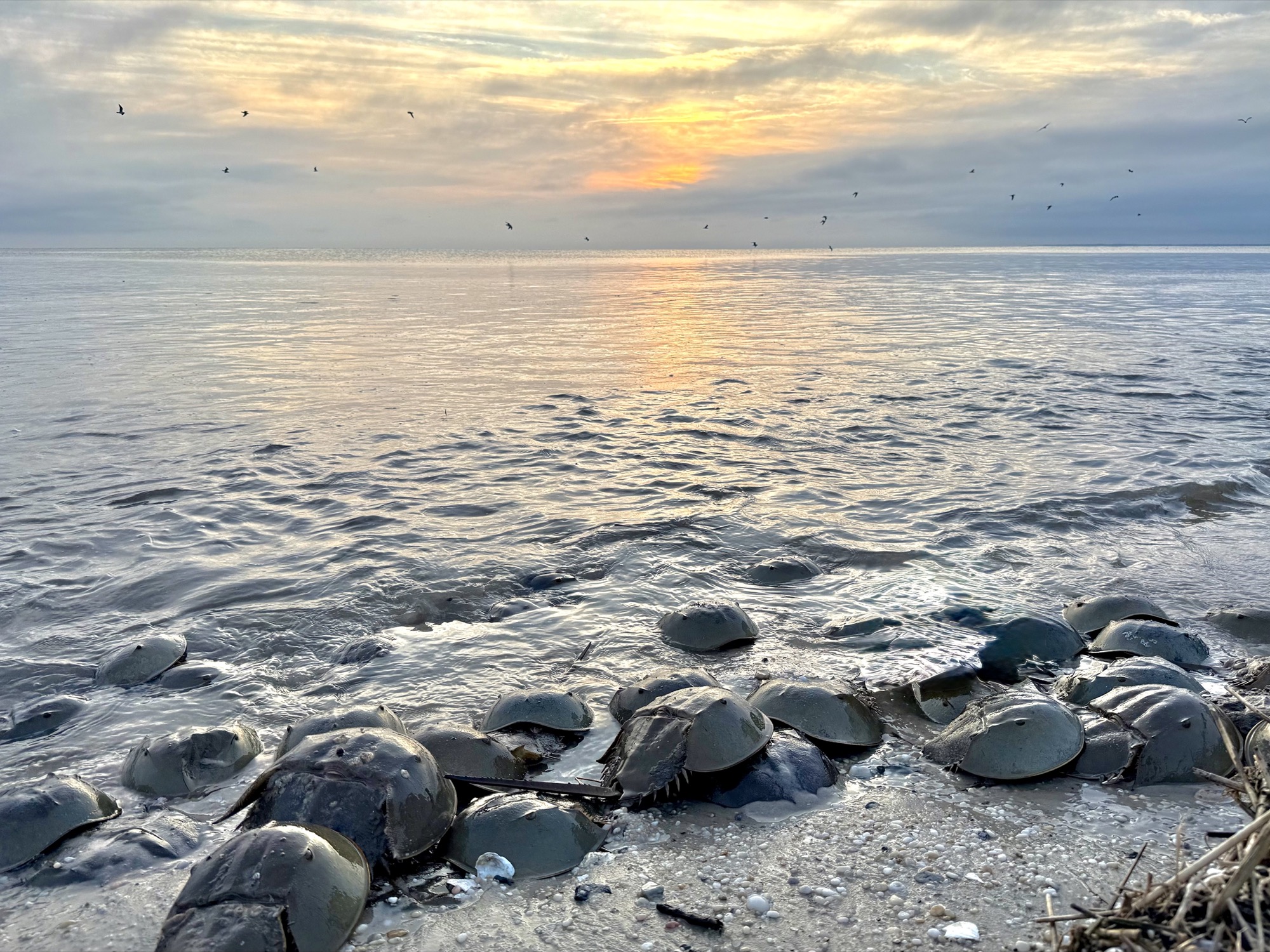
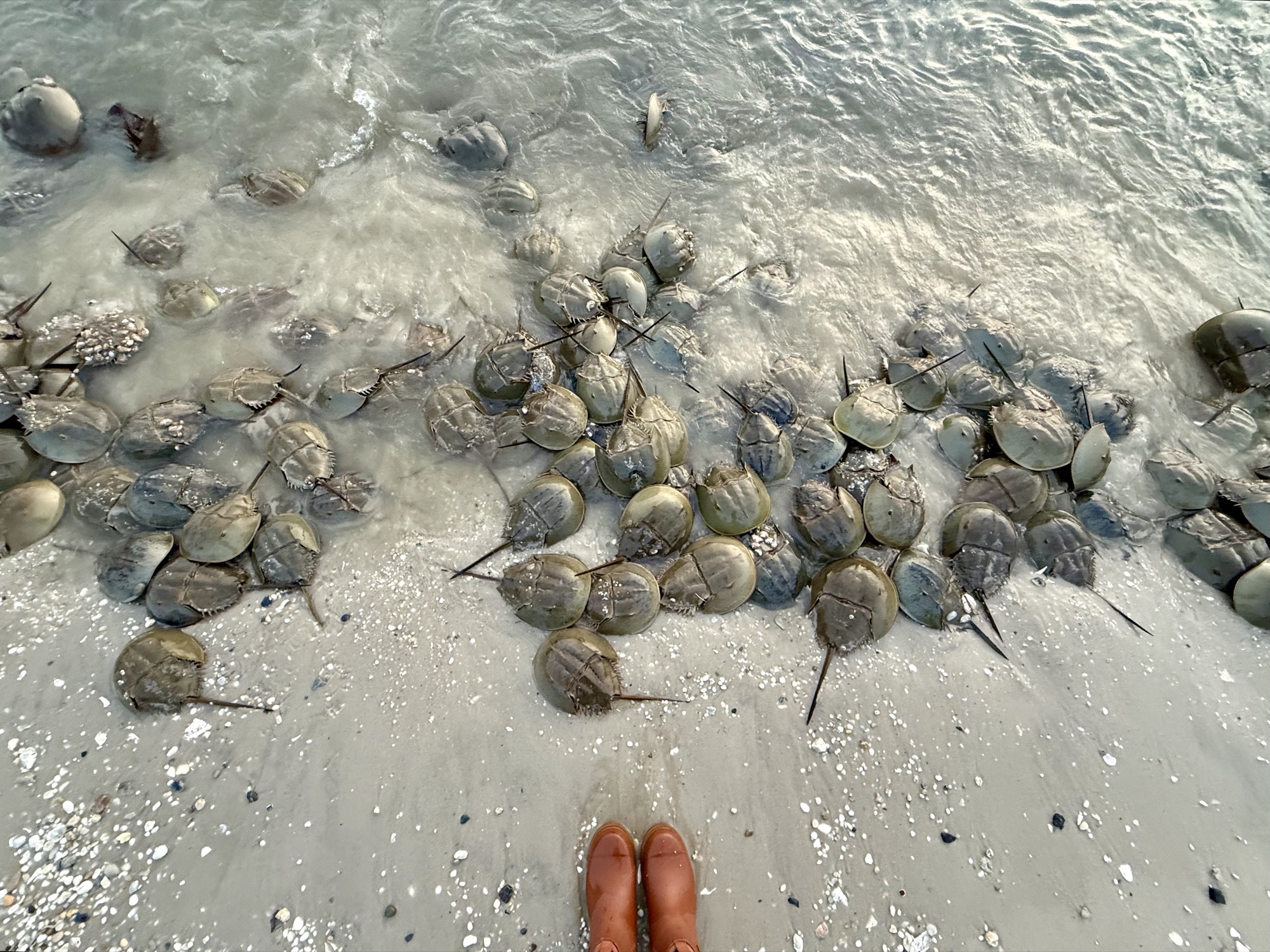
Our actual experience: Due to timing and our travel itinerary, we chose Slaughter Beach as our beach of choice to see the migration. Even though we went at the perfect time of day, unfortunately being that it was the end of the season and we were still 2 days out from the full moon, we only saw one mating pair. I was really disappointed after all of the effort we took to plan our trip around the migration. Luckily we had already planned to take the ferry to Cape May the next day to continue our road trip, and decided last minute to try our luck on the New Jersey side at Reeds Beach. On our way to Reeds Beach, there was a small tiny beach between a few houses on the side of the road that had TONS of horseshoe crabs!! I was ecstatic! After spending a good half an hour or so here, we headed up to Reeds Beach which surprisingly, although was a MUCH bigger beach, the number of horseshoe crabs here were a lot less (but definitely more migratory birds), so we went back to the original tiny beach 2 minutes away. My take on this experience is that if you don’t see many crabs, try driving around the area along the waters to see if there’s a pocket of beach with more crabs! (But also more importantly, try to go on a full moon or new moon unlike us to increase your chances at seeing them.)

Here are some photos of our experience at Slaughter Beach (Toby found a HUGE female that was unfortunately dead but super cool to see the anatomy up close):

Here are some photos of the little beach we found between some houses on our way to Reeds Beach in New Jersey:

Here are some photos of Reeds Beach, NJ – not as many horseshoe crabs but TONS of eggs on the shore and migratory birds in the distance:

Timing is Crucial to Witness the Migration!

The horseshoe crab migration happens every year in the spring between the end of April to the start of June, with the peak season in mid May-June. We were late to the migration when we went on June 9th-10th 2025 and although we didn’t see as many on the Delaware side, we saw plenty on the New Jersey side (more on this later).

Peak spawning occurs on a full moon or new moon and in the evening at high tide. You want to arrive at least 30 mins before high tide (it actually lines up nicely with sunset to make it all the more magical!).

The monthly tide charts on the US Harbors website is useful when picking a date and time since it has both the moon phase and the tide times in their charts. Check it out here (I have it set to Bowers Beach, but you can always google more specific tide times depending on which beach you choose to go): https://www.usharbors.com/harbor/delaware/bowers-beach-de/tides/#monthly-tide-chart

Here is a sample of the May 2026 tide chart from the US Harbors website. In case you’re unfamiliar with reading their tide chart, I’ve circled the important areas in blue and red:

To read the chart to pick the best day:

1) First look at the Moon column on the right and determine which dates are full moon and new moon. From the chart, the full moon is on Sat May 2nd and the new moon is on Sun May 17th.

2) From those dates, find the PM high tide time of the day. From the chart, it’s 10:49pm on May 2nd and 10:38pm on May 17th (circled in red).

3) Since you want to arrive 30 minutes ahead of the high tide, your ideal time to witness the migration in May 2026 would be on either May 2nd 10:19pm or May 17th at 10:08pm. (I’m writing this post in November 2025, so double check the charts before you go to ensure this forecasted information is still accurate if you’re going in May.)

Don’t worry if you can’t make it exactly on a full moon or a new moon, we were 2 days early before a full moon and still saw tons of them on the New Jersey side, but we did have to drive up and down the coast a little to find a good spot to see them.

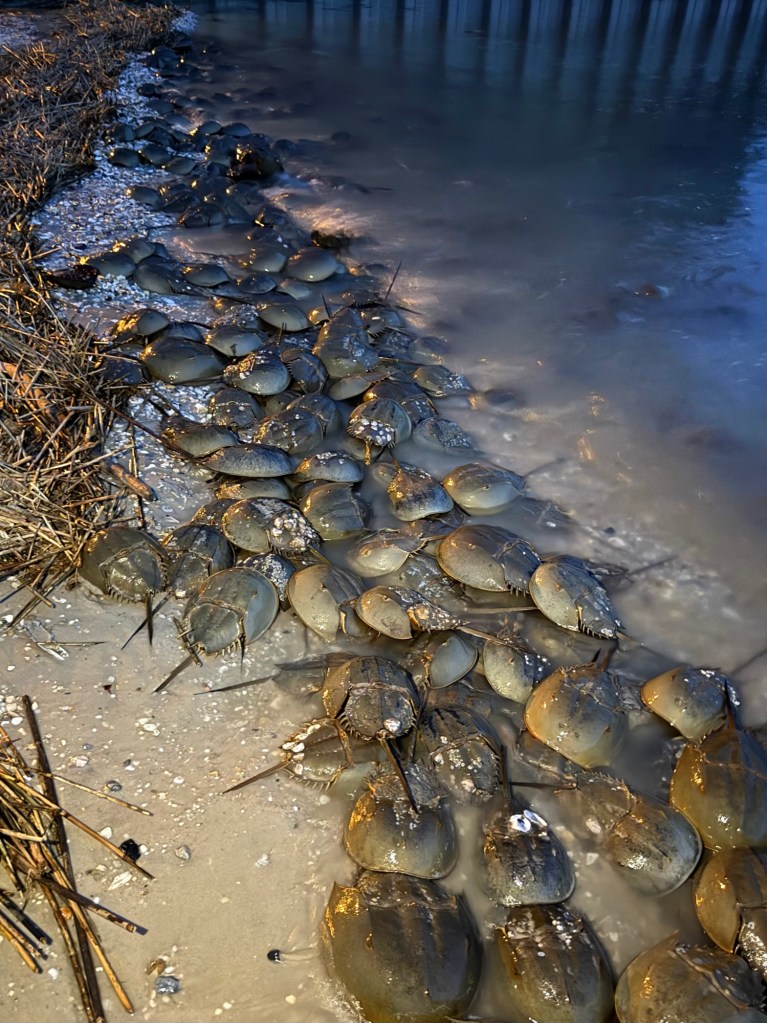
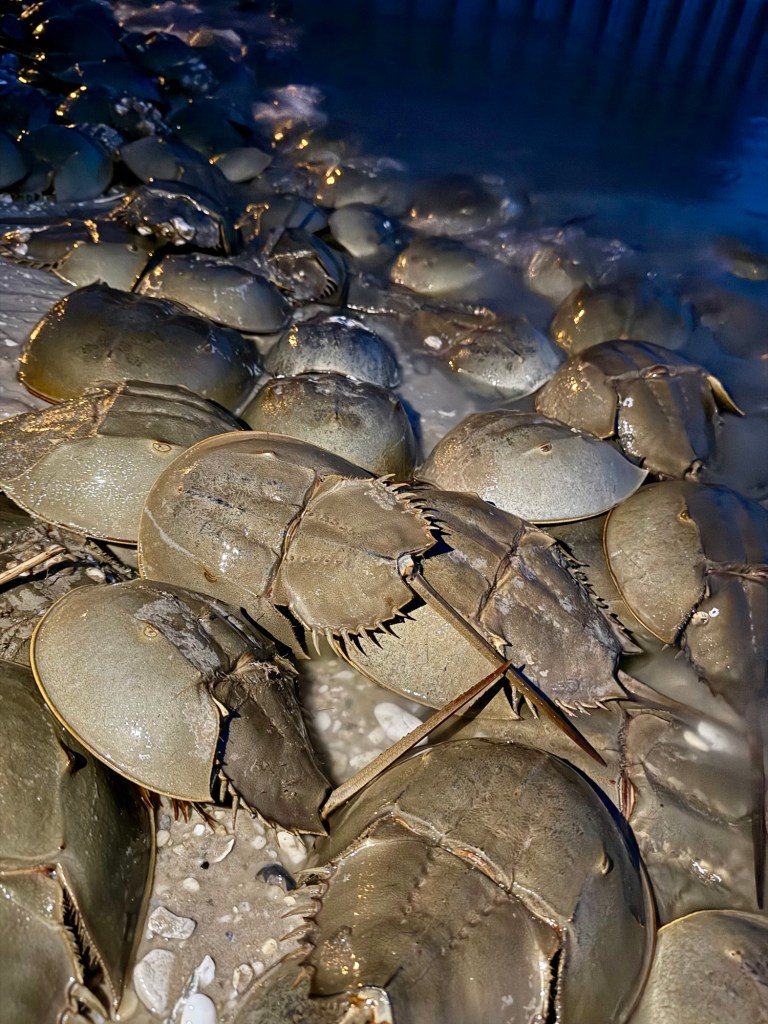
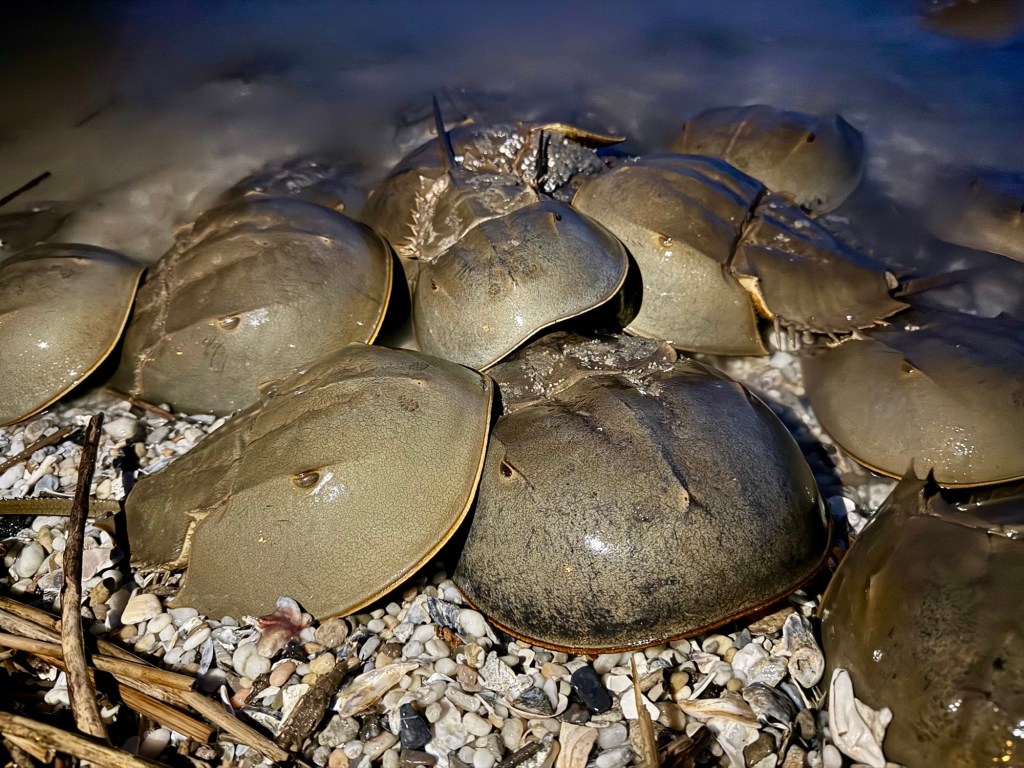
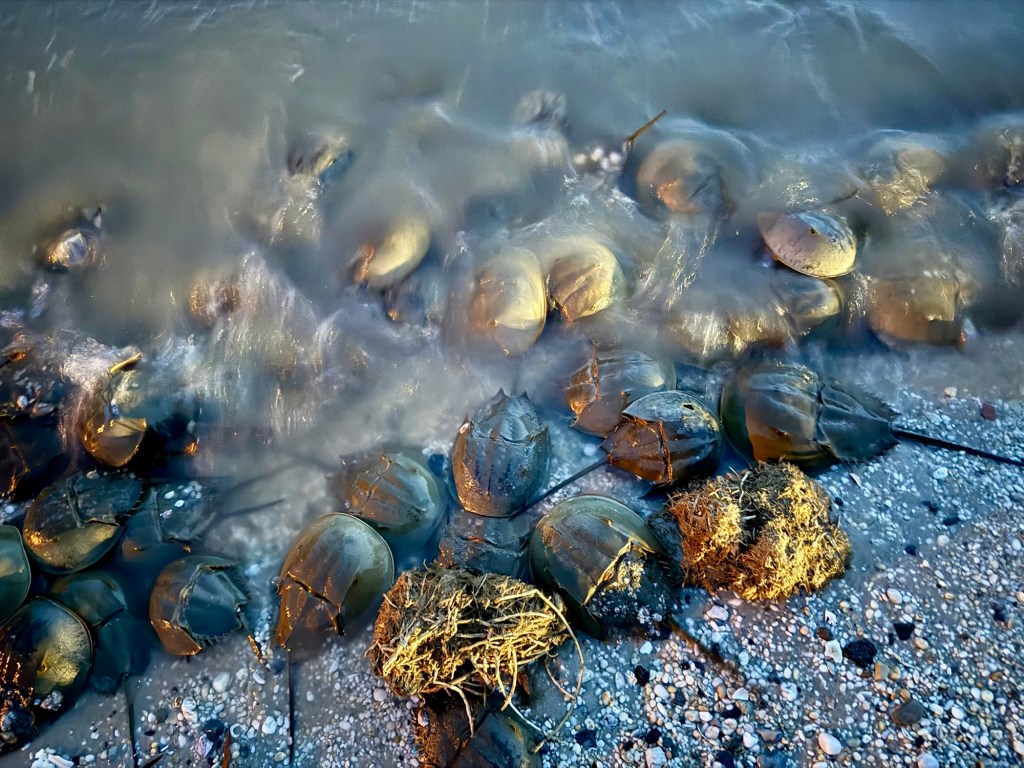
As beautiful and amazing as this event is to witness, know that once the sun goes down, the horseshoe crabs will continue to come to shore and can get to horror movie-level numbers. I still found it really cool, but realize that it may not be for everyone – one of my coworkers was not a fan of my night time migration photos at all 😂.

Here are some night time photos of the migration so you know what to expect:

If you get all 3 things correct in terms of timing (1. season, 2. full moon or new moon, 3. evening high tide), you should be able to see hundreds if not thousands of horseshoe crabs!

If you come back to the beach early next day, you may be able to see the migratory birds feeding on the eggs!

What to Bring to See the Horseshoe Crab Migration?

  • Sturdy waterproof shoes (ie. rain boots or waterproof hiking shoes)
    • The horseshoe crabs will hang out just on the shoreline where the water and the beach meet, so if you want to get up close, waterproof shoes are recommended to avoid your shoes from getting wet.
    • Depending on the beach, there can be a lot of debris, sticks, and dead horseshoe crabs that didn’t quite make it, so a sturdy pair of shoes will be best to walk through it.
    • I’d recommend rain boots as the shoe of choice because it can smell a little fishy on the beach (after all, they are spawning), so you want to wear shoes that are easy to rinse off afterwards.
  • Bug spray or covered clothing
    • We learned this the hard way. There were so many teeny tiny flies and although I wore leggings (albeit thin), they managed to bite through and around my uncovered ankles. Although not painful, I was hella itchy for a few weeks. I counted 14 bites on both legs when we got back to our hotel. 😫
  • Headlamp or flashlight
    • Depending on the day, if the evening high tide occurs after sunset, you’ll want a light source to see these guys best. The most abundant numbers occur at night and a headlamp will keep your hands free if you’re walking through debris or taking photos.

Now you’re ready!

Now that you know the season (spring, May-June), the day (full moon or new moon), the time (30 minutes prior to the evening high tide), and the location (beaches within the Delaware Bay), you’re now ready to see the amazing horseshoe crab migration! I’d love to hear about your trip in the comments!

One more thing, if you see any overturned horseshoe crabs…Just flip ’em!

Due to their wide anatomy and the rushing waves, unfortunately you’ll more than likely see a few overturned horseshoe crabs. Sometimes they’ll be able to correct their own position with the right tide or passerby, but more often than not many of them will die stranded. So if you see an overturned horseshoe crab, just flip them over! Although they can look a little scary and pointy up close, horseshoe crabs are very gentle creatures and they do not sting nor bite. The best and gentlest way to flip them over is to grab them by the edge of the shell and flip them over. Do not grab them by the tail! Although it doesn’t look like it, they actually have very delicate tails and can damage easily.

Spread the word! Save the stranded overturned horseshoe crabs!

The ERDG (Ecological Research & Development Group), a non-profit wildlife conservation that focuses on the conservation of the world’s four horseshoe crab species, has a “Just flip ’em program” that promotes flipping stranded horseshoe crabs (https://www.horseshoecrab.org/act/flipem.html) and has made a fantastically catchy song that can be found on the website or directly linked here: https://www.horseshoecrab.org/poem/img/makinmusic/justflipem.mp3. The lyrics are amazing and I’ve literally already listened to it 3 times back to back while writing this post 😂. I wish it was on Spotify.

PS: Horseshoe crab numbers are declining due to habitat destruction and you can volunteer to be a part of the horseshoe crab survey to keep an eye on the numbers: https://www.delawarebayhscsurvey.org/.

Their website has posted volunteer survey dates every year which is a good guide to when you should go see the horseshoe crabs. I’ve attached a copy of their 2025 dates top the left.

Some Final Thoughts

  • Horseshoe crabs are super cool.
  • The annual mass migration will blow your mind 🤯 and is 100% worth it.
  • There are only 2 “perfect” days every month (new moon and full moon), so make sure you plan ahead!
  • Wear good shoes you can wash – yes, it will smell fishy.
  • Flip over any stranded overturned horseshoe crabs!

Green Curry Mussels


Date Published: Sept 21st, 2025 | Last Updated: Sept 21st, 2025
Author: Abby |Category: mains, Asian, <15mins, <30 mins, easy
Serves: 2 | Prep time: 10 minutes | Cook time: 10 minutes

Jump to recipe |

This Green Curry Mussel recipe has been on the back burner since I started this website during COVID. I’m glad to finally be able to publish it! Back during the lockdown pandemic era (seems like so long ago now!), like many, I was really into experimenting in the kitchen and I had just recently discovered how to make my own Thai Green Curry Paste from scratch! From that recipe, I became more and more adventurous in ways I could use up that curry paste. Toby’s favourite recipe from that adventure is the fried prawn toasts (see the posts below). Mine is this recipe. I would have never thought to pair green curry and mussels together until I saw it on the menu at the mussel stand in Queen Victoria Market one day and it was mind-blowingly delicious!

This is my take on green curry mussels. This recipe uses the bold and rich flavours of a traditional Thai Green Curry paste, cooked together in coconut milk, then tossed together with fresh mussels to give an aromatic and creamy mussel dish. I hope you enjoy!

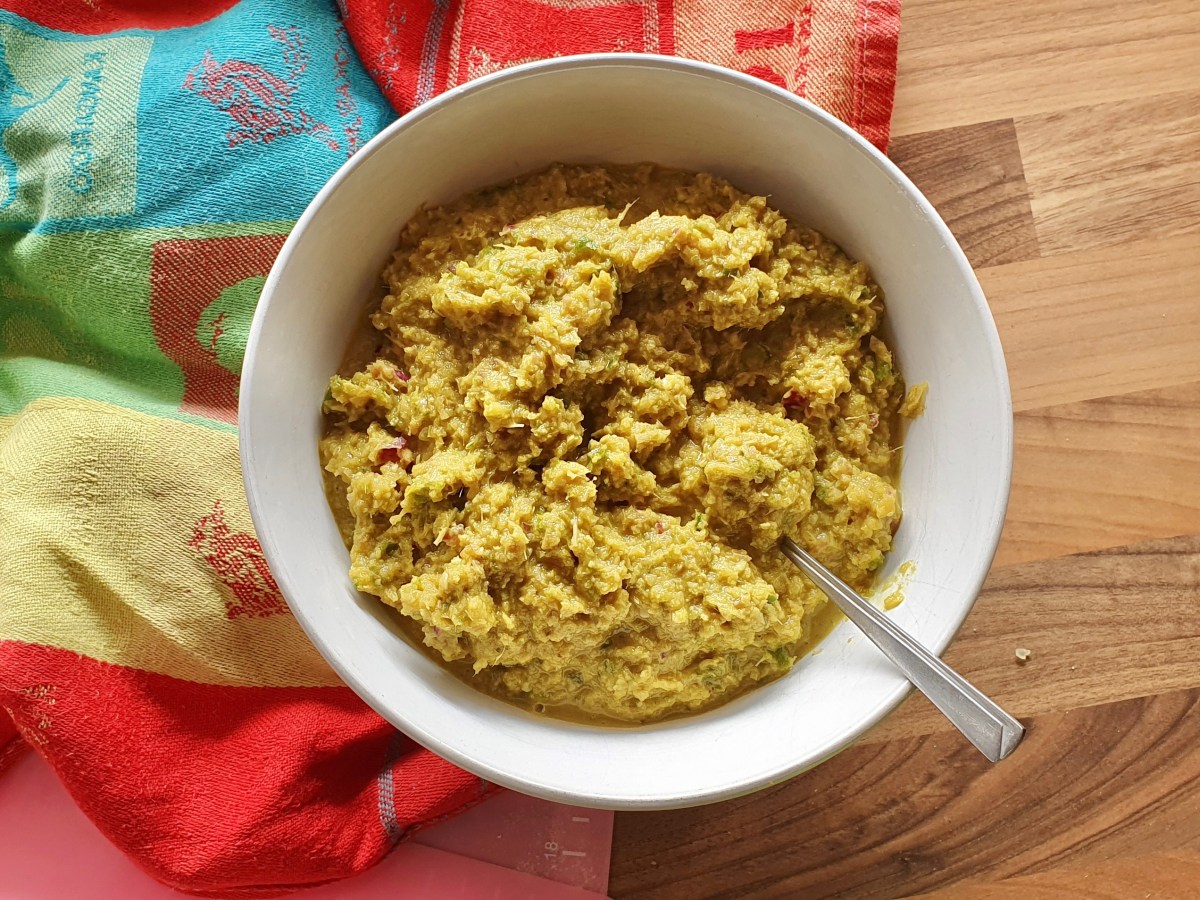
Thai Green Curry Paste


Brace yourself. There are a BUTTLOAD of ingredients that go into this Thai green curry paste (17 to be exact) but it’s packed with flavour and beautiful aromas. It does…

Keep reading

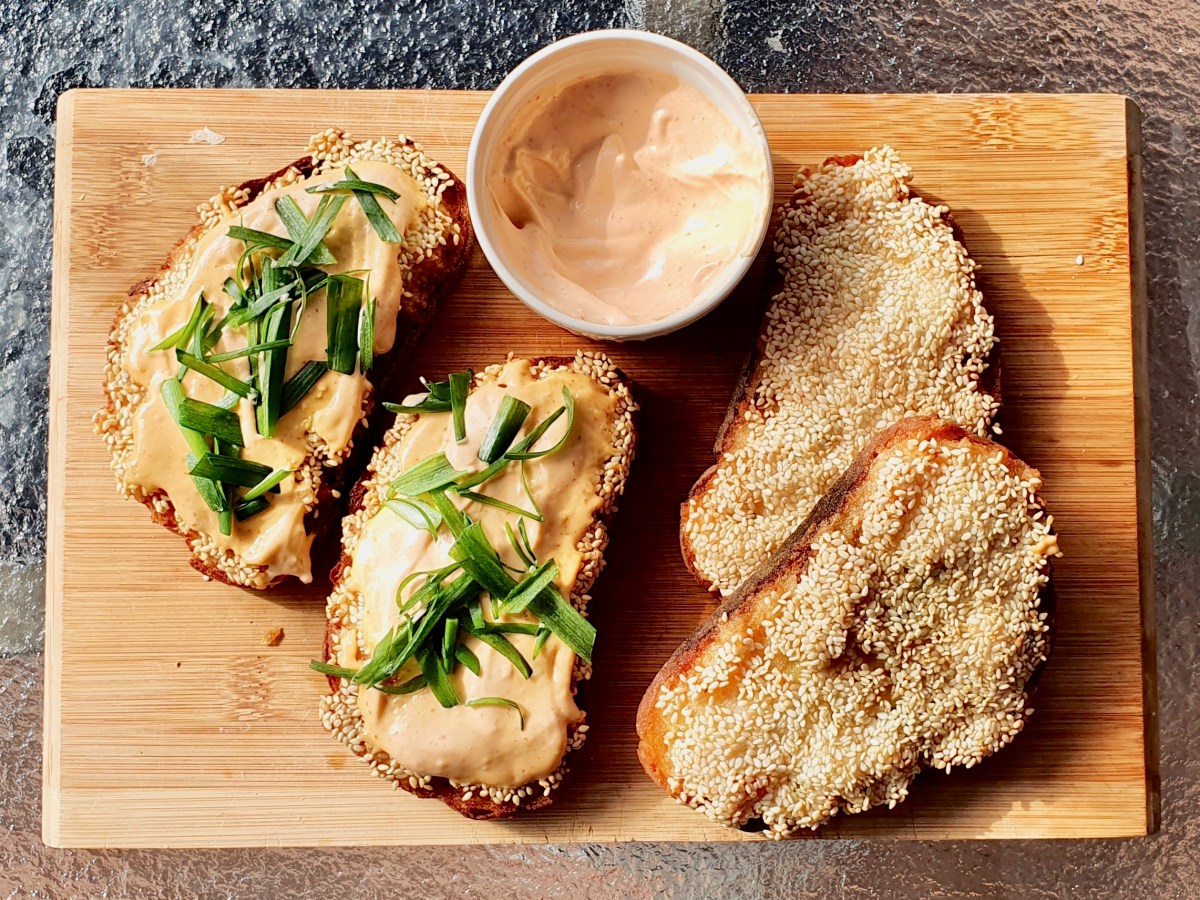
Green Curry Prawn Toast


These prawn toasts are so easy to make! You can serve it as an appetizer or a snack for a party. They make good use of the homemade Thai green…

Keep reading

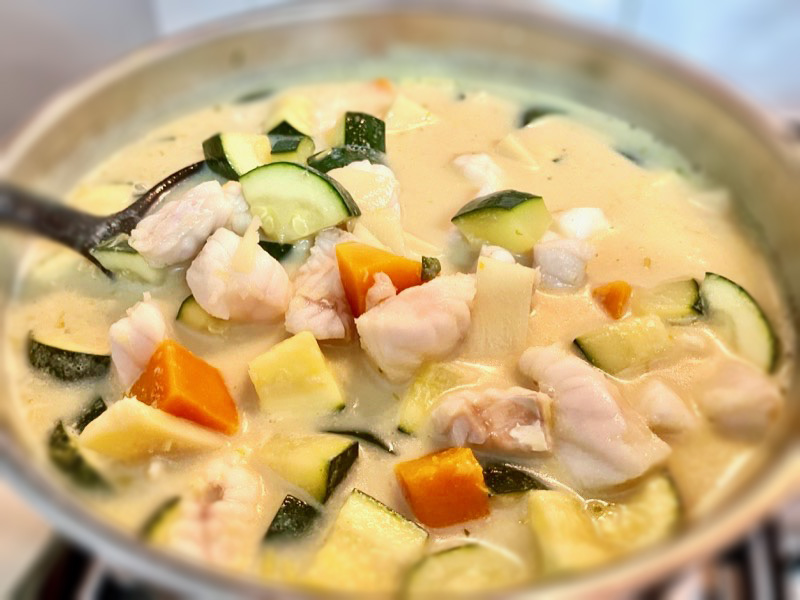
Green Curry Fish Soup


This healthy green curry soup uses soy milk and fresh green curry paste for maximum flavour and minimum calories and fat. It’s so quick and easy to whip this up…

Keep reading

This recipe is easy and cooks up quickly!

Anyways, without further ado, here’s the recipe! If you have any comments or suggestions, I’d love to hear from you in the comment section! You can follow me on instagram, youtube and facebook to see all the recipes I post!

Happy cooking!

Ingredients you’ll need:

Directions:

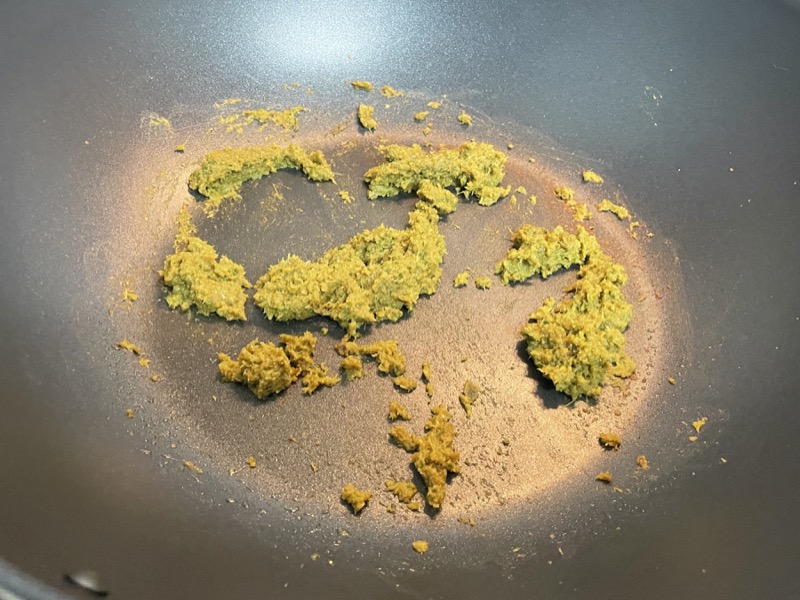
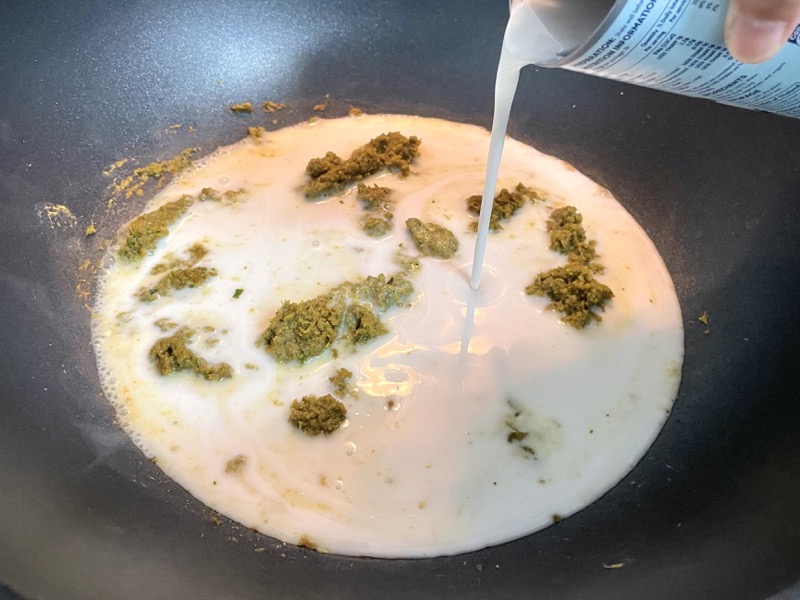
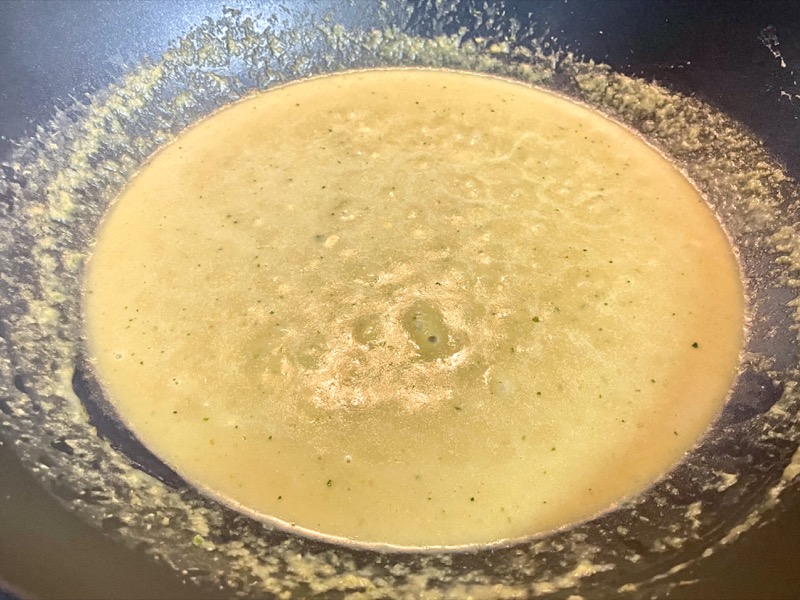
Heat a large pan or wok on MED heat and sauté the green curry paste in a drizzle of oil until the paste dries out a bit and turns slightly brown (2-3 minutes). Add in the can of coconut milk and mix it all together. Let the sauce simmer until you get a thickened sauce.

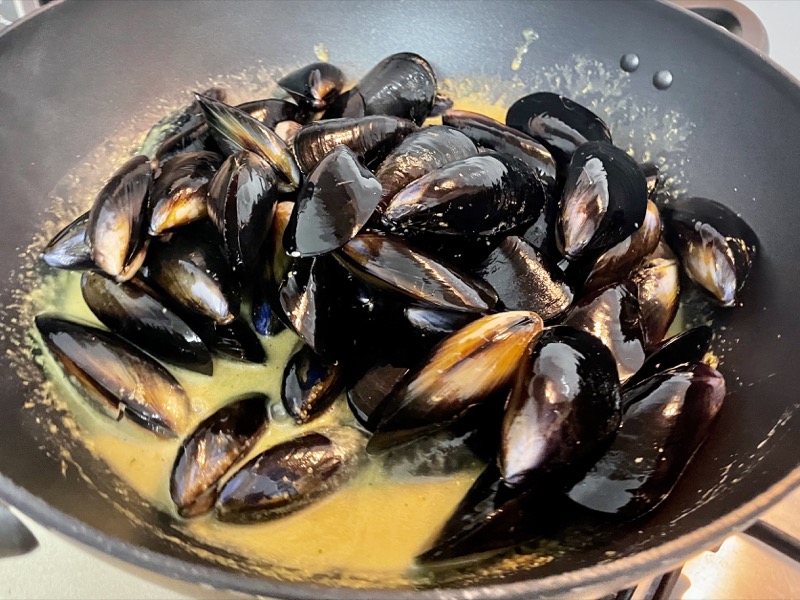
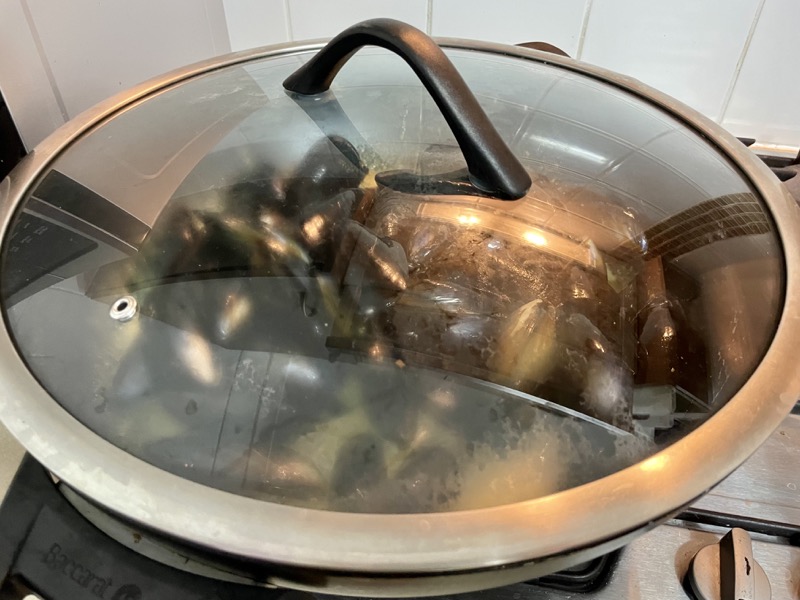
Add in the mussels and stir. Put the lid on and let the mussels steam for 4-5 minutes until they all open up. Turn off the heat and serve!

Summarized Recipe:

Green Curry Mussels

Date Published: Sept 21st, 2025 | Last Updated: Sept 21st, 2025
Author: Abby |Category: mains, Asian, <15mins, <30 mins, easy
Serves: 2 | Prep time: 10 minutes | Cook time: 10 minutes

Ingredients:

Directions:

  1. Heat a large pan or wok on MED heat and sauté the green curry paste in a drizzle of oil until the paste dries out a bit and turns slightly brown (2-3 minutes).
  2. Add in the can of coconut milk and mix it all together. Let the sauce simmer until you get a thickened sauce.
  3. Add in the mussels and stir. Put the lid on and let the mussels steam for 4-5 minutes until they all open up. Turn off the heat and serve!

Golden Diner Honey Butter Pancakes


Date Published: Sept 9th, 2025 | Last Updated: Sept 9th, 2025
Author: Abby |Category: breads, dessert, snack, easy, vegetarian
Serves: 4 pancakes | Prep time: 1 hour | Cook time: 5-7 minutes per pancake

Jump to recipe |

The Honey Butter Pancakes at Golden Diner in NYC has been the latest viral craze. My friend back home in Canada was the first to show me the TikTok and since seeing the video, I’ve been hearing about this place non-stop. Although I’m not a huge fan of pancakes, I am however OBSESSED with the honey butter chips that this dish was inspired from. If you’ve never had the chips, you should definitely try it before going – it’s sweet, it’s savoury, it’s umami, it’s everything!

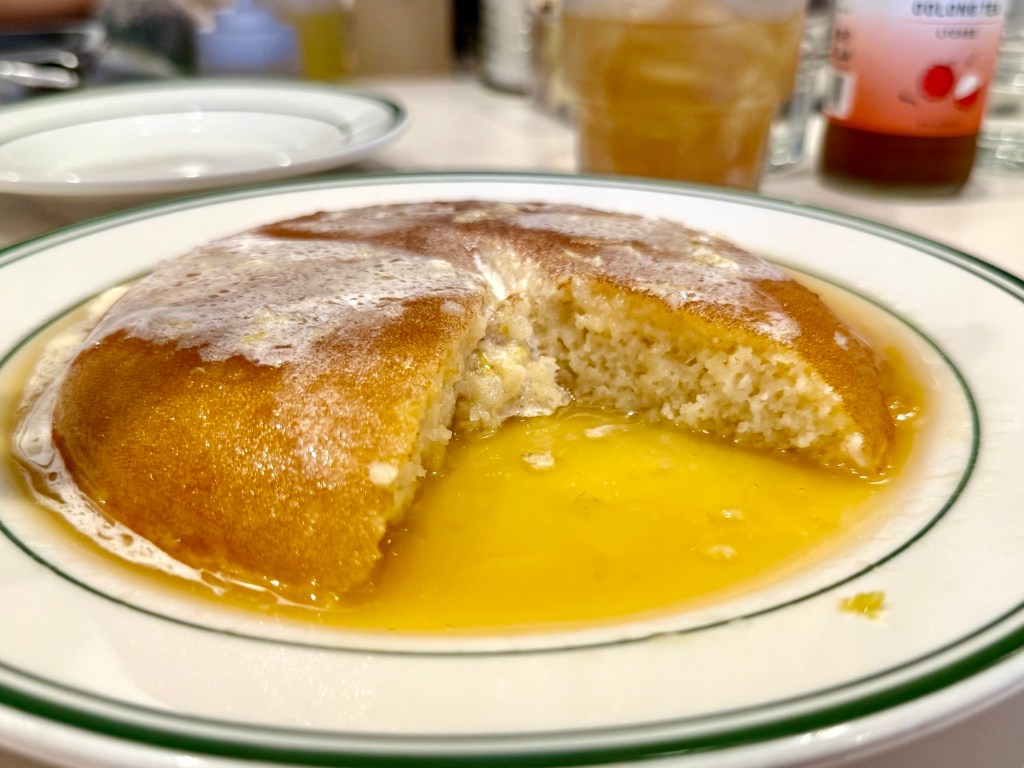
After getting off two trains and waiting 2 hours for a table on a weekday, we were finally seated. I’m glad to report that their Honey Butter Pancakes were indeed worth it. The honey butter syrup really does taste just like the chips and the thick but light and fluffy pancakes were the perfect texture to carry the heavy syrup. It comes in a single or double serving. I’d recommend the single – it’s quite heavy and after a while it can be a bit much if you don’t have a sweet tooth. You can read the rest of my review on the diner and some other local Manhattan Chinatown eats here.

The Ultimate Guide to a Manhattan Chinatown Food Crawl – bring cash!


Manhattan Chinatown is full of amazing authentic Asian food but in a neighbourhood full of Chinese signage and shop keepers that barely speak English, it can be daunting to find the best food spots amongst the literal hundreds of restaurants in this neighbourhood. This food guide highlights some of my favourite places to eat in Chinatown…

Since visiting Golden Diner, I added the Honey Butter pancakes on my list of things to try and recreate, but lucky for me, chef and owner Sam Yoo already shared his recipe through NYT Cooking. After following his recipe to the tee, I made a few adjustments to streamline the cooking process and also dissected out the ingredients list for more clarity. I’ve shared them in this recipe below.

A Breakdown of the Golden Diner Pancakes:

There are 4 components to the pancakes at Golden Diner:

  1. The pancakes, of course – these are beautifully light and fluffy pancakes that perfectly soaks up the honey butter syrup. The batter goes through a fermentation phase (called the preferment) that gives it an extra depth of flavour and also a better rise.
  2. The Honey Butter Syrup – this is the star of the show. The genius combination of maple syrup, honey, and soy sauce makes the perfect blend of sweet, umami, and savoury.
  3. Maple Honey Butter (optional) – this topping is made using similar ingredients as the honey butter syrup, minus the soy sauce. It’s easy to make, but honestly, the honey butter syrup is already so flavourful with the same flavour profile that it masks the taste of this maple honey butter. Unless I’m eating this butter alone, I can barely notice it. I’ve included it in this recipe anyway to keep it true to how they serve it at Golden Diner, but regular butter would suffice in my opinion, so I’ve noted this as an “optional” component in the dish.
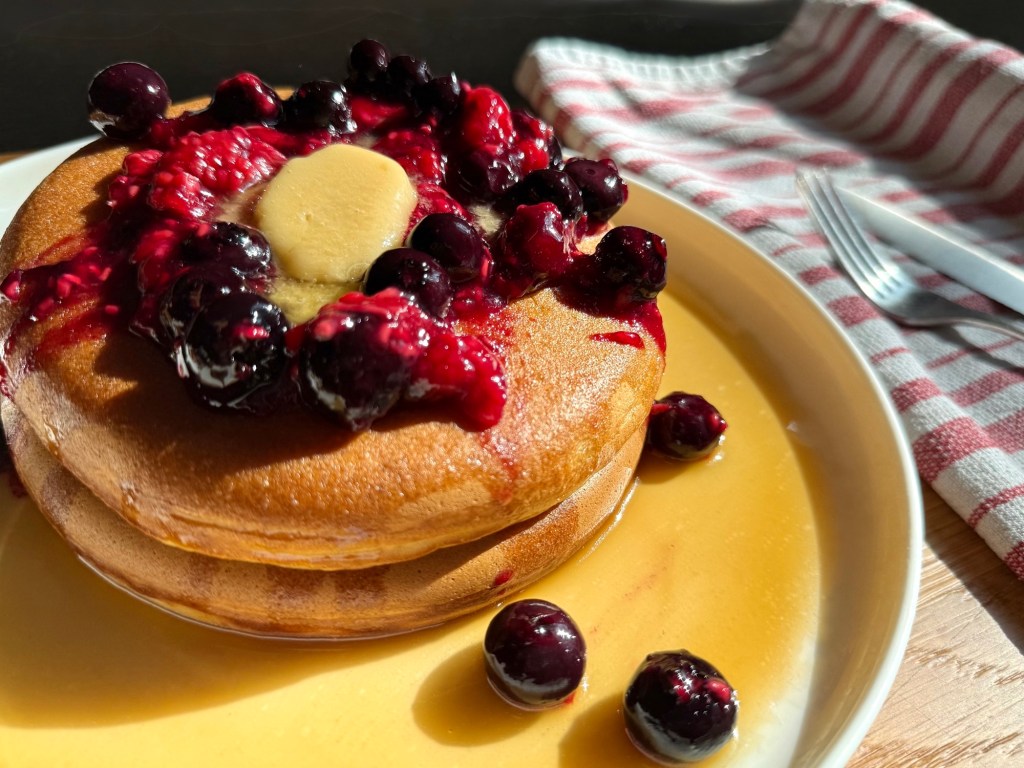
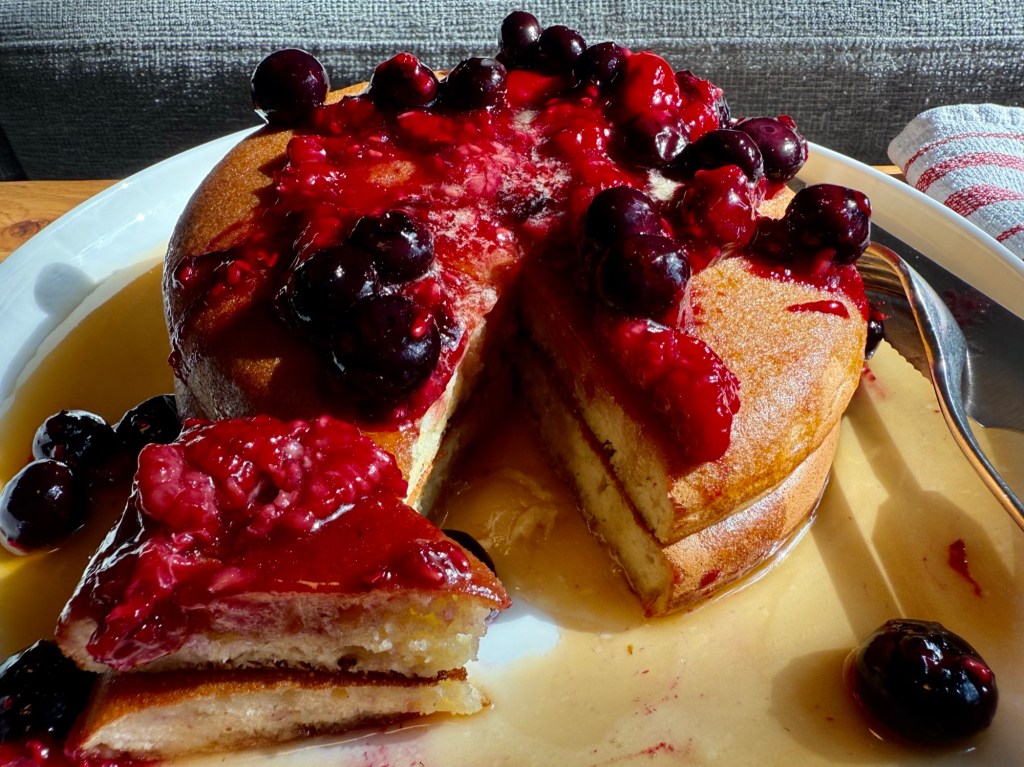
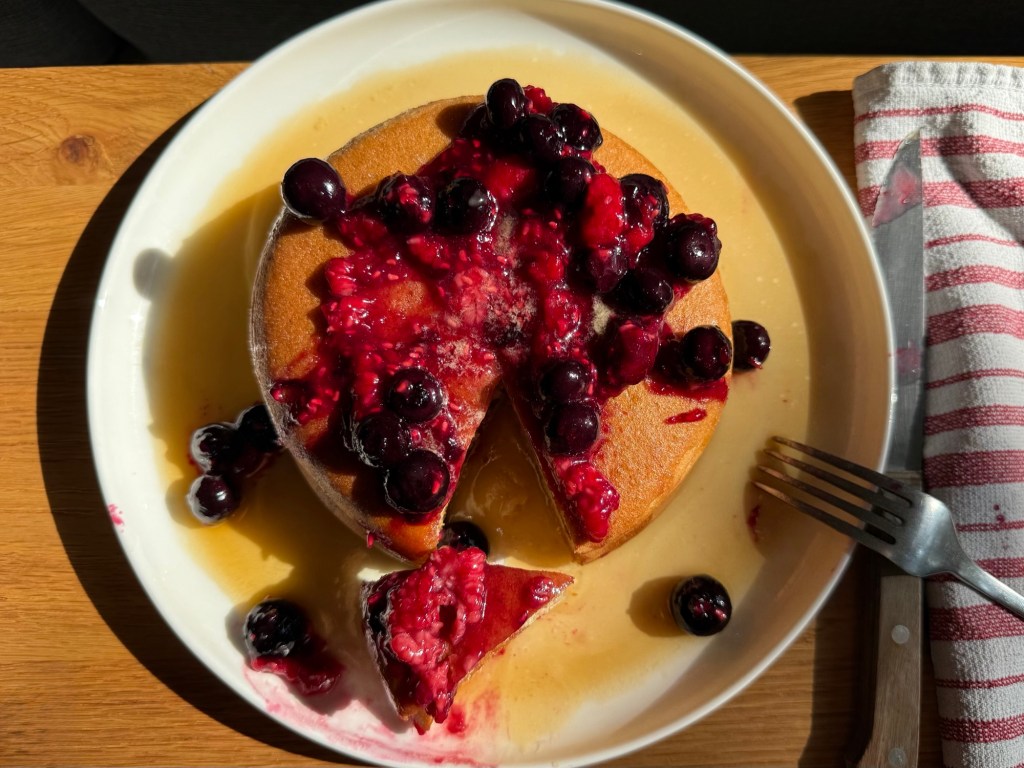
  4. Berry Compote (optional) – this is an optional add-on at Golden Diner for an extra $4. We didn’t have it originally but after making it at home it was a good choice to omit it. Although the Berry Compote is delicious, I found that the bold berry flavours completely masks the flavours of the honey butter syrup, which is the whole point of this dish. If you’re going to add the Berry Compote, you might as well just use regular maple syrup on the dish.

In summary, although there are 4 components of this dish, I find that the only essential two are the fluffy pancakes and the honey butter syrup. I tend to skip making the maple honey butter and just use regular butter instead and if I’m making the berry compote (which is Toby’s favourite part), I’ll pair it with regular maple syrup.

Anyways, without further ado, here’s the recipe! If you have any comments or suggestions, I’d love to hear from you in the comment section! You can follow me on instagram, youtube and facebook to see all the recipes I post!

Happy cooking!

Equipment you’ll need:

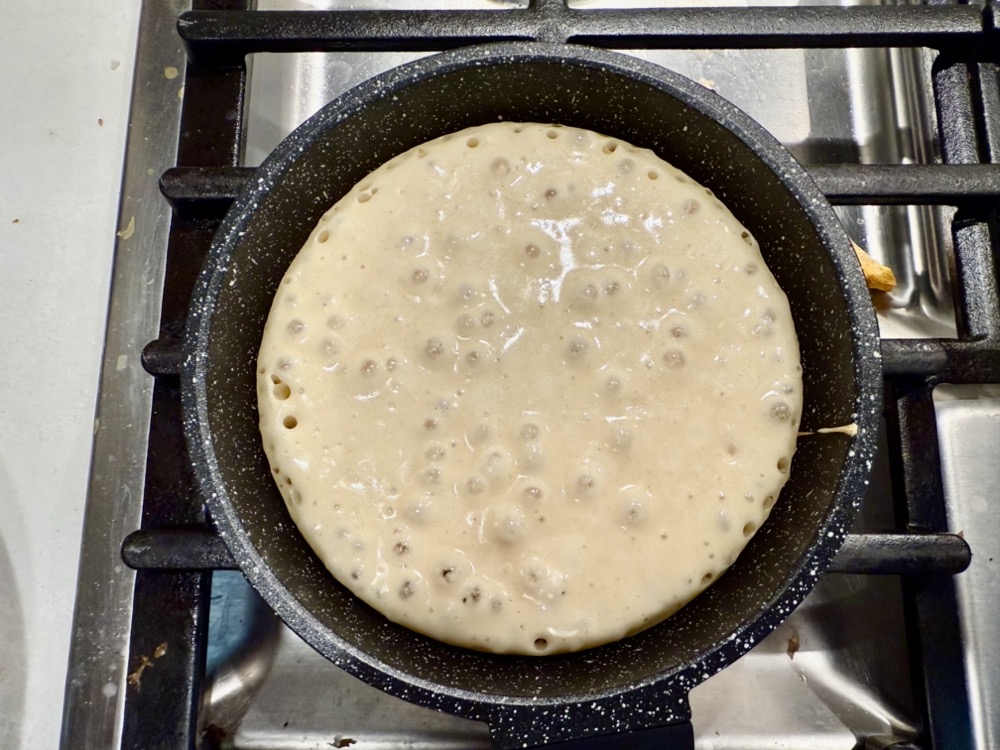
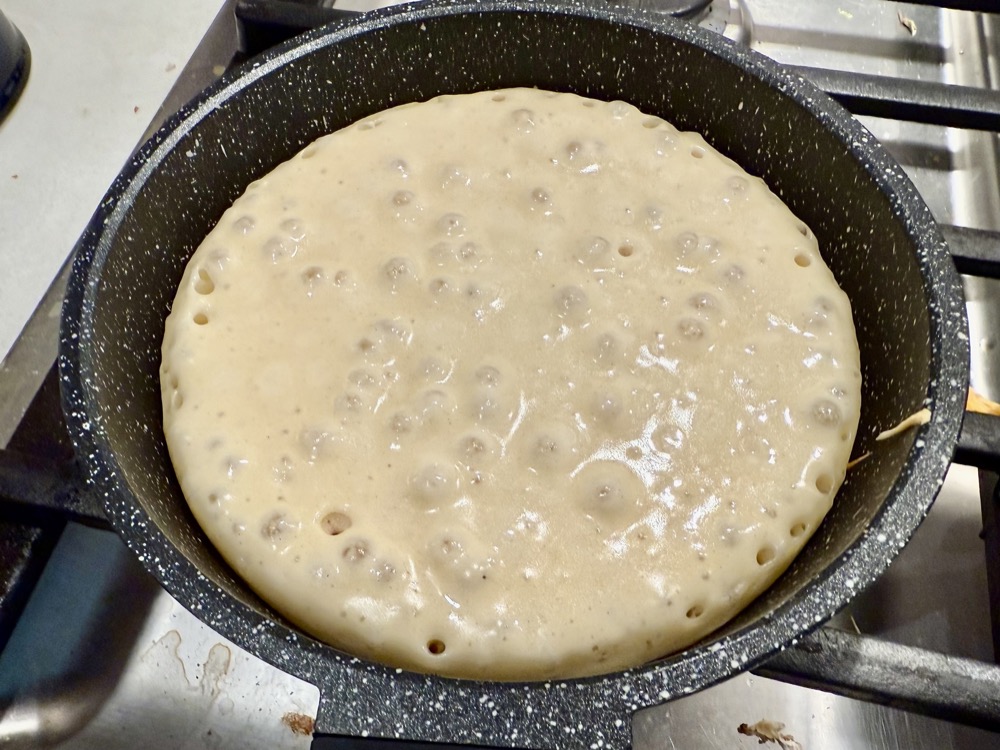
  • One or two small non-stick pans (16cm/6.5-7 inch diameter)
    • Two will make your life easier and cook the pancakes faster, but one is enough if you don’t care about speed.

Ingredients you’ll need:

  • Pancake Batter:
    • Pre-Ferment:
      • 2.25 tsps (7g or one 1/4 oz packet) active dry yeast (instant yeast is fine too)
      • 1 cup (130g) all-purpose flour
      • 1.25 cups (300g) buttermilk (or mix 1.25cups whole milk + 1.25 Tbsps lemon juice, let it sit for 5-10 minutes until it lightly thickens)
      • 1/4 cup (60ml) water
    • 1 cup (130g) all-purpose flour
    • 2 Tbsps (28g) granulated sugar
    • 3/4 tsps (5g) baking soda
    • 1/2 tsp fine salt
    • 2 large eggs
    • 1/4 cup (60g) neutral-tasting oil (ie. canola, vegetable…etc.)
  • Maple Honey Syrup:
    • 1/2 cup (113g or 1 stick) unsalted butter
    • 1/3 cup (100g) honey
    • 1.5 Tbsps (22g) maple syrup
    • 1 tsp soy sauce
    • 1/2 tsp fine salt
    • 1.5 Tbsps water
  • Maple Honey Butter (optional):
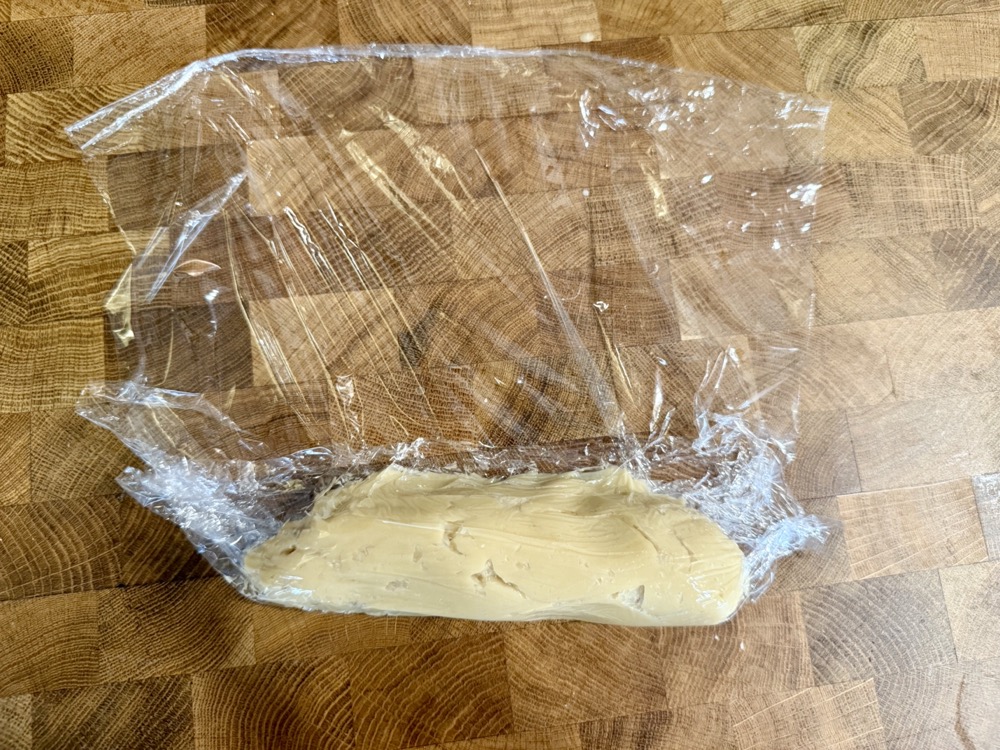
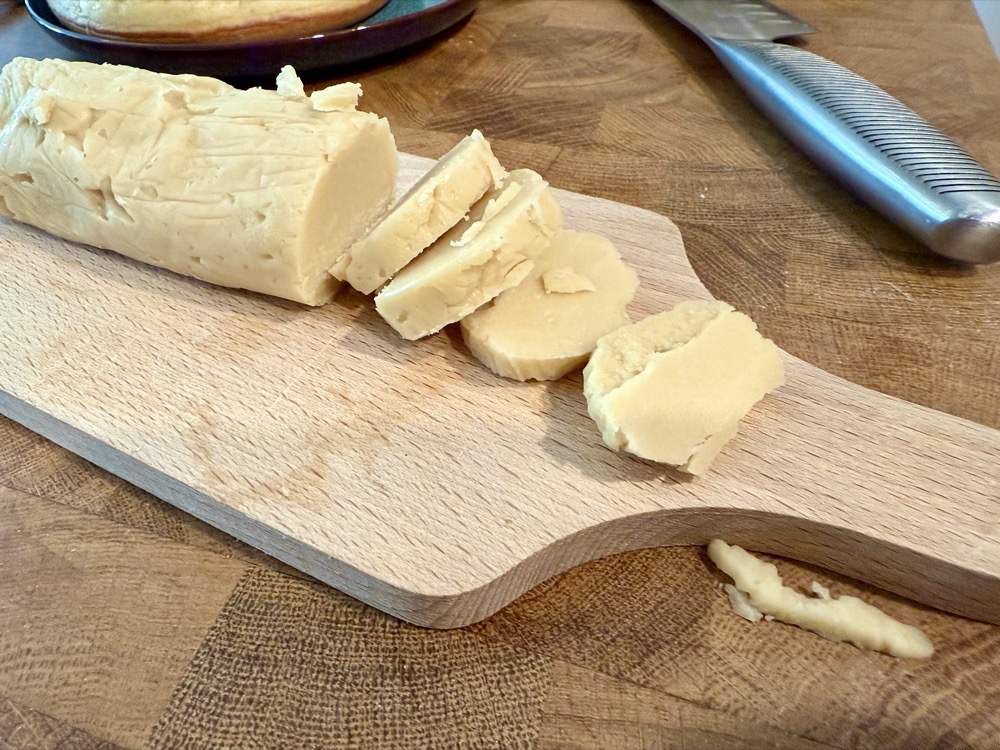
    • 1/2 cup (113g or 1 stick) unsalted butter, softened
    • 3 Tbsps (57g) honey
    • 2 Tbsps (28g) pure maple syrup
    • 3/4 tsp fine salt
  • Berry Compote (optional):
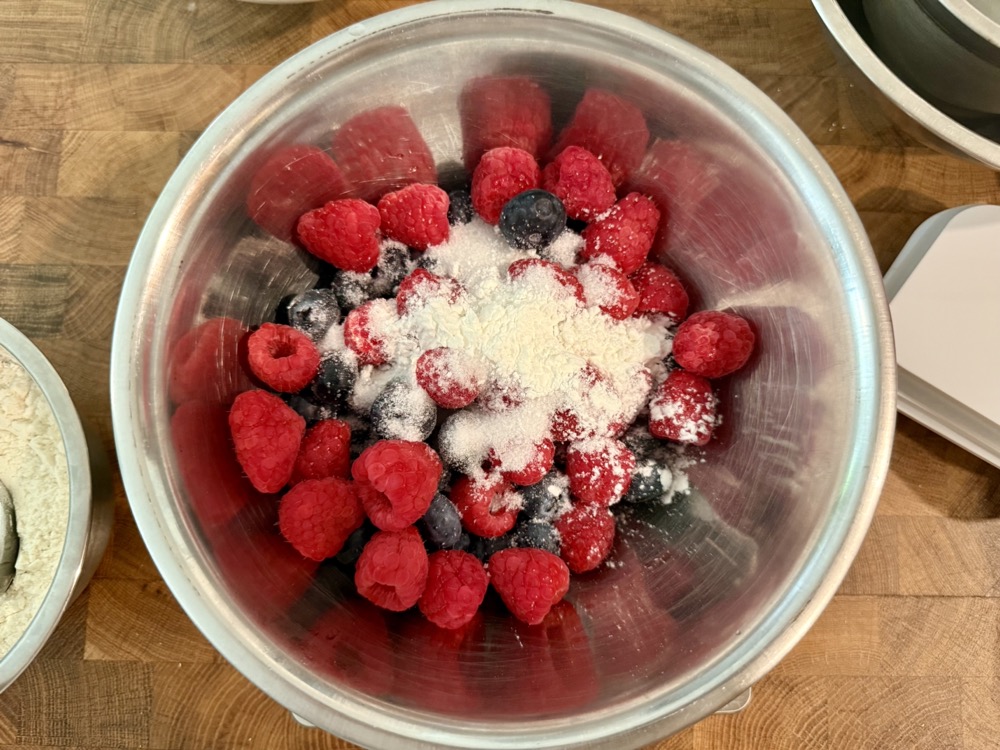
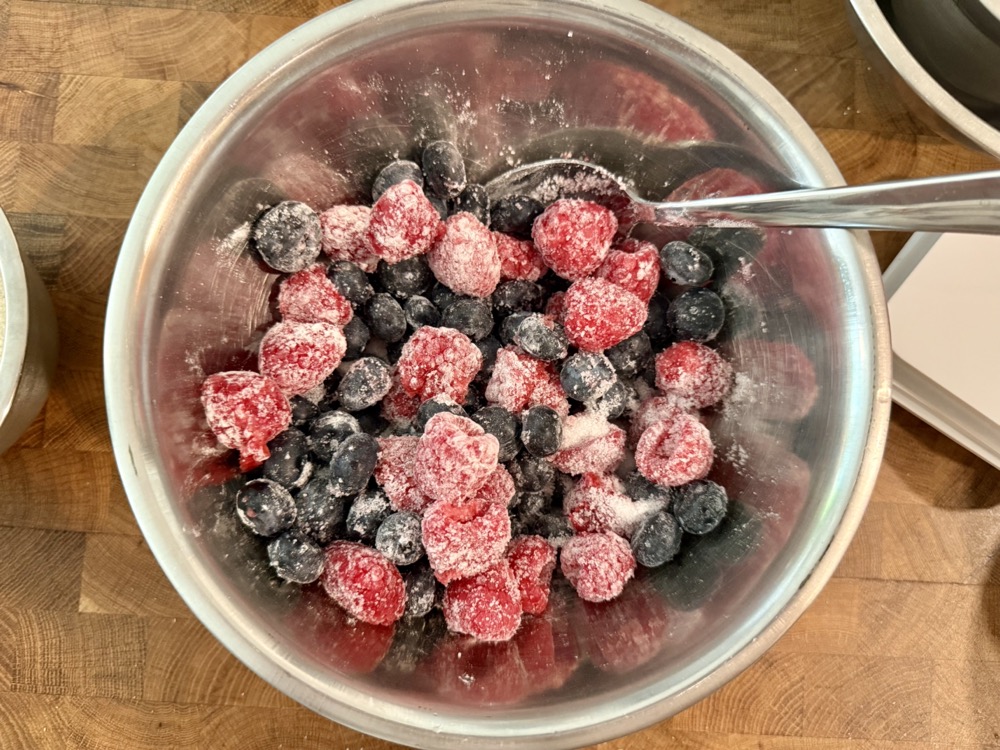
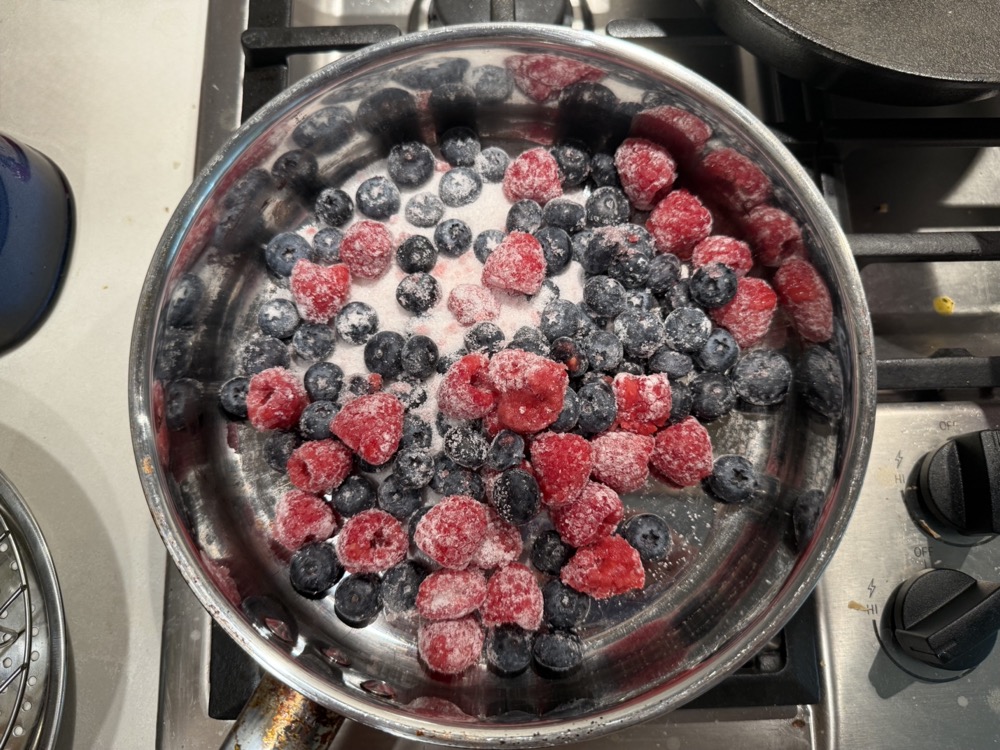
    • 14oz (400g) mixed berries (ie. blueberries, raspberries, strawberries), cut to the same size as the small berries
    • 1/3 cup (67g) granulated sugar
    • 1.5 tsps cornstarch
  • Zest of 1 lemon for garnish

Directions:

A) Make the Pancake Batter:

Pre-Ferment the batter (this step helps the pancakes have better rise, with deeper flavour by a fermentation process):

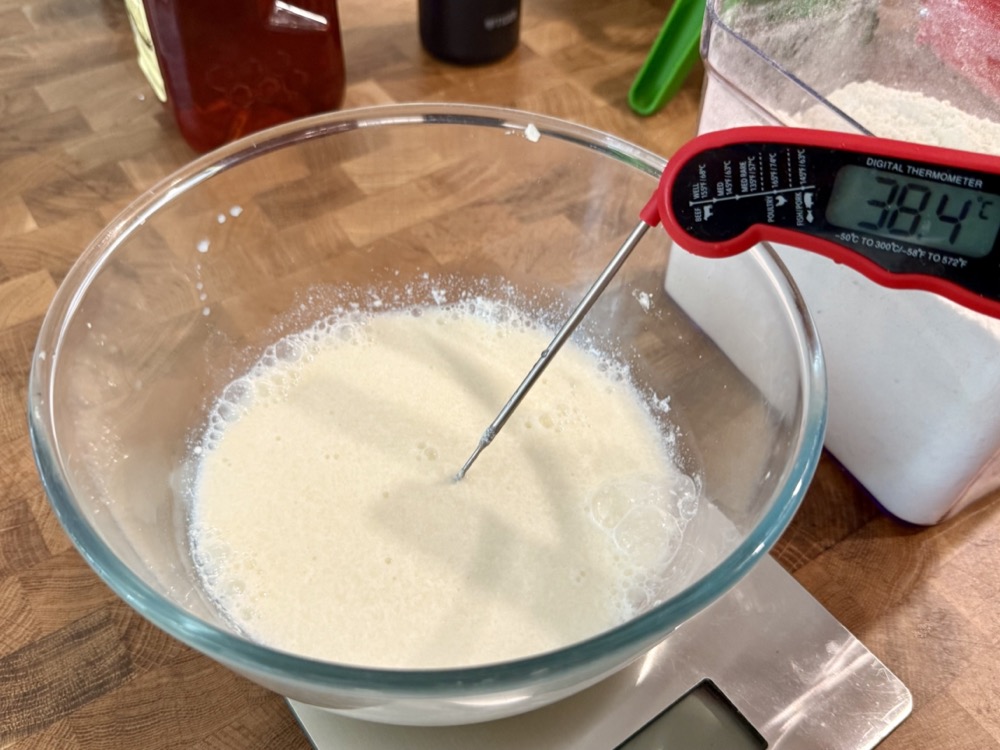
1. In a large microwave-safe bowl, add in the 1.25 cups buttermilk with 1/4 cup water. Microwave for 30 seconds at a time until lukewarm (~38-40˚C/100-104˚F). (If you don’t have any buttermilk on hand, mix 1.25 cups of whole milk with 1.25 Tbsps of lemon juice and let it sit for 5-10 minutes until it slightly thickens/clumps.)

You can also do this in a small saucepan on LOW-MED heat and heat until it becomes lukewarm.

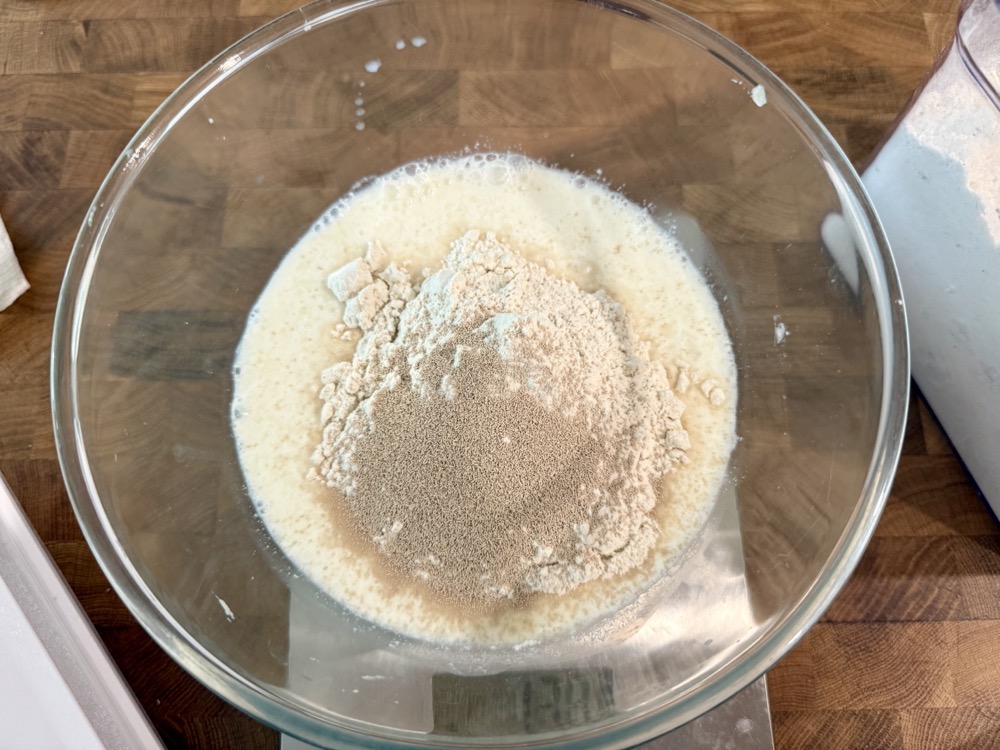
2. Whisk the 2.25 tsp yeast and 1 cup (130g) flour into the warmed buttermilk/water mixture until smooth.

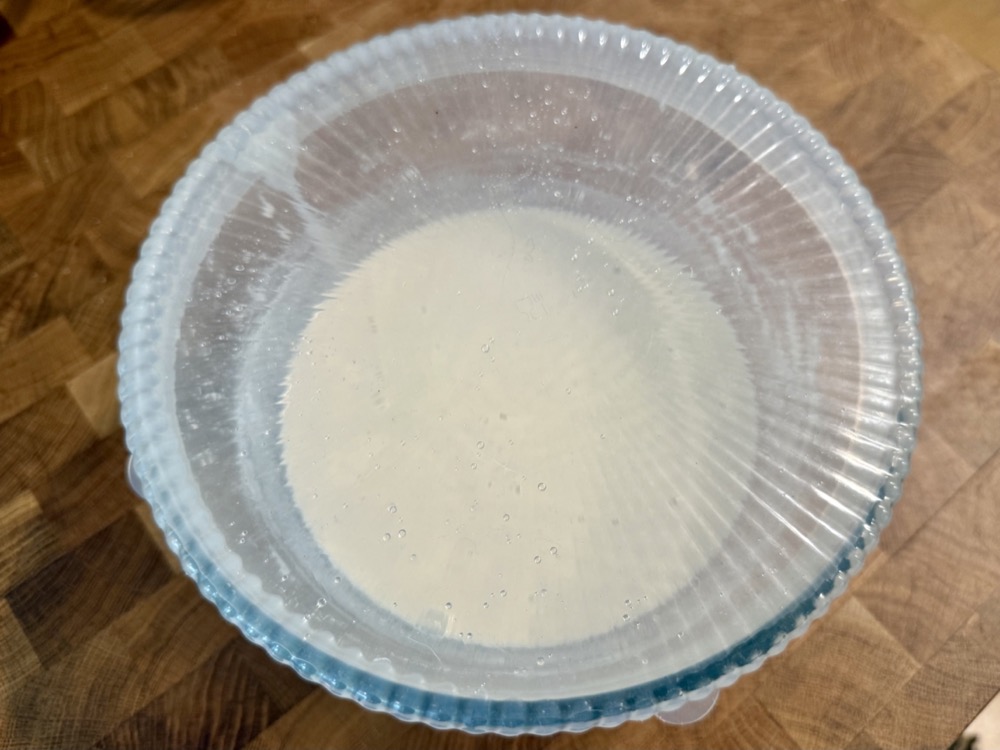
3. Cover with plastic wrap and let it sit for 1 hour at room temperature.

You can make the maple honey syrup, butter, and berry compote in this time.

Finishing off the batter:

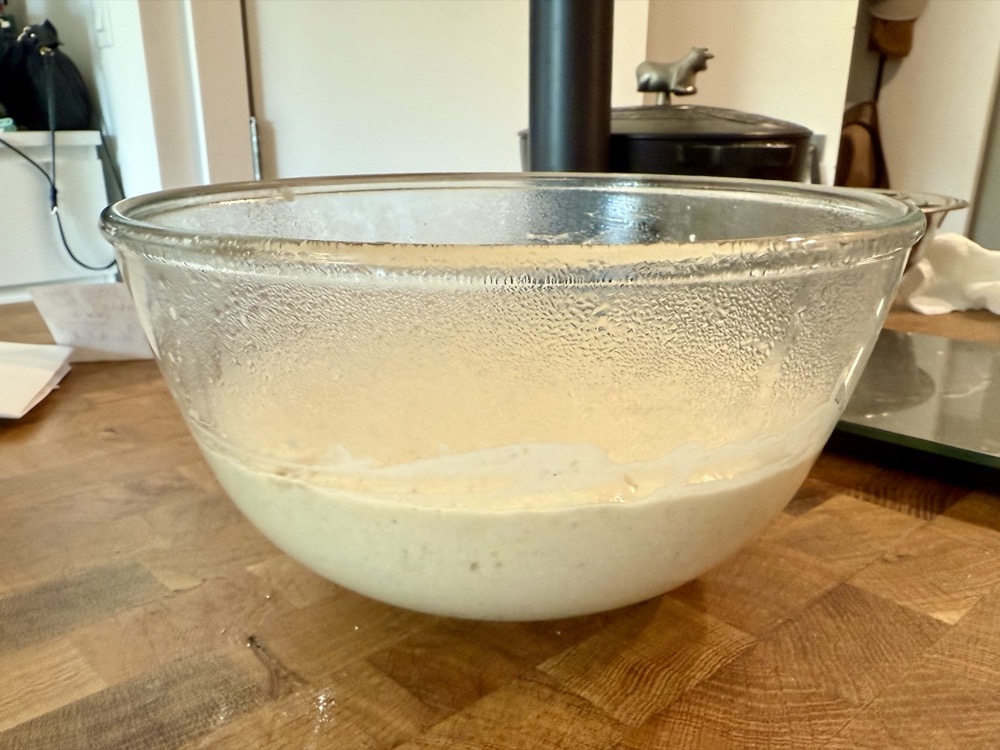
4. After 1 hour check on the batter and give it a stir. It will have risen a little and formed clumps.

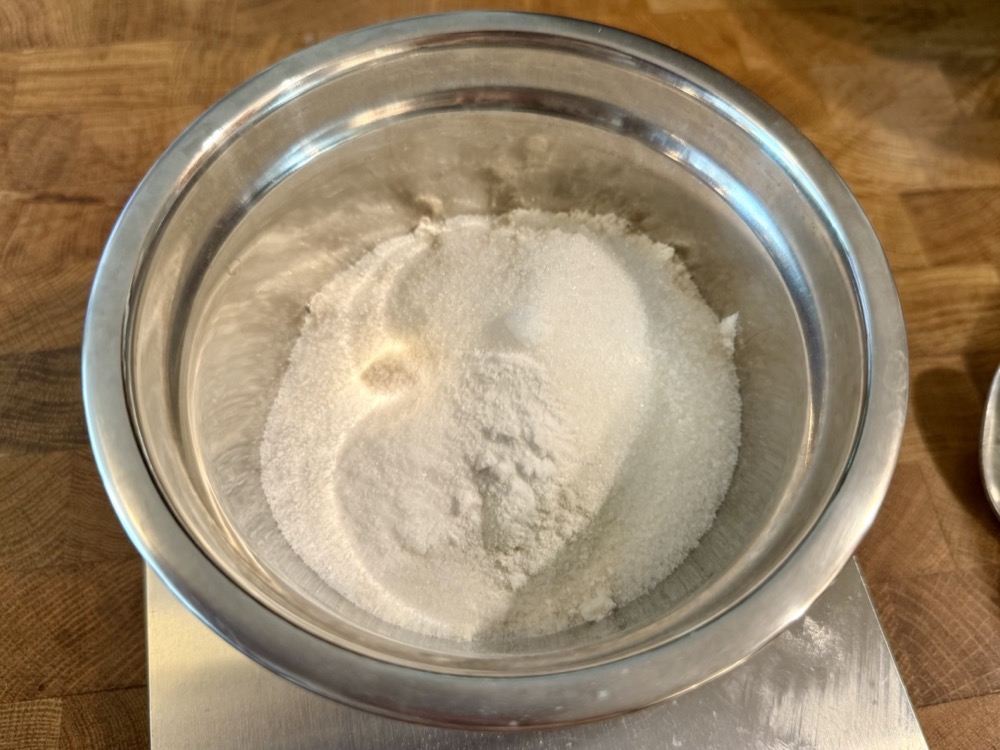
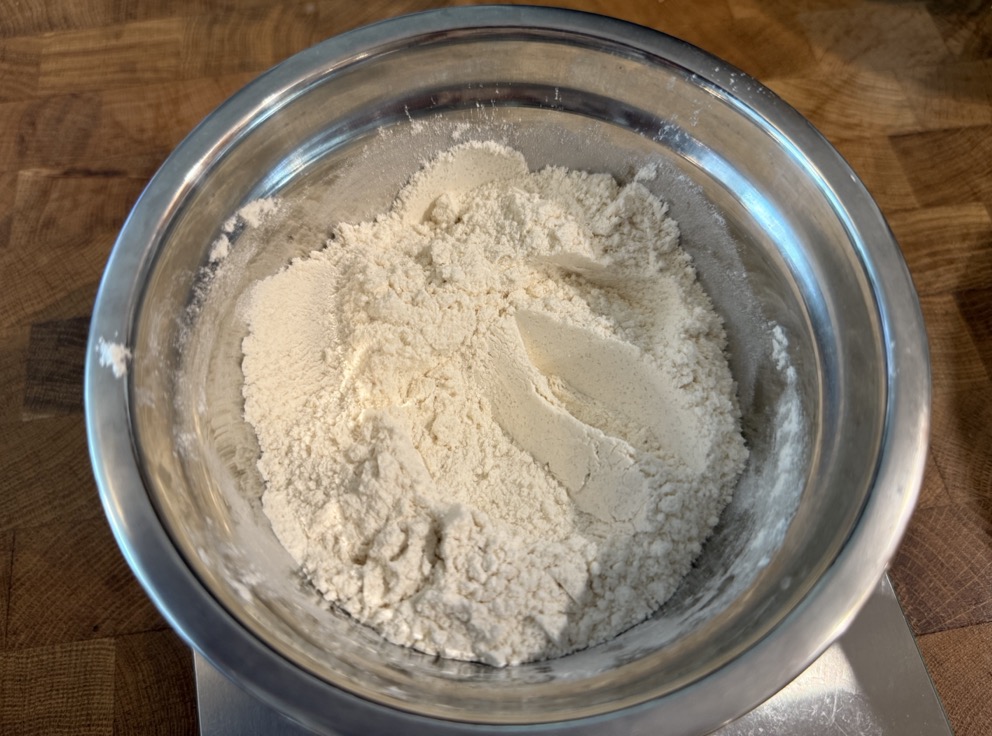
5. In a separate small bowl, mix together the remaining dry ingredients for the batter: 1 cup (130g) of flour, 2 Tbsps (28g) sugar, 3/4 tsps (5g) baking soda, and 1/2 tsp salt. Set aside.

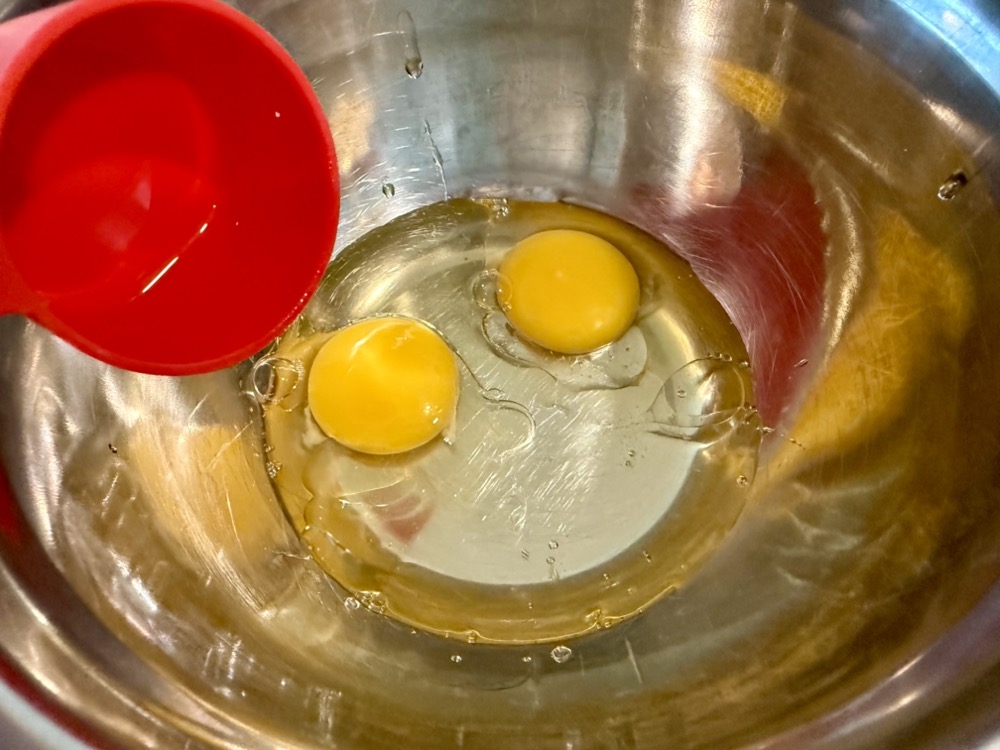
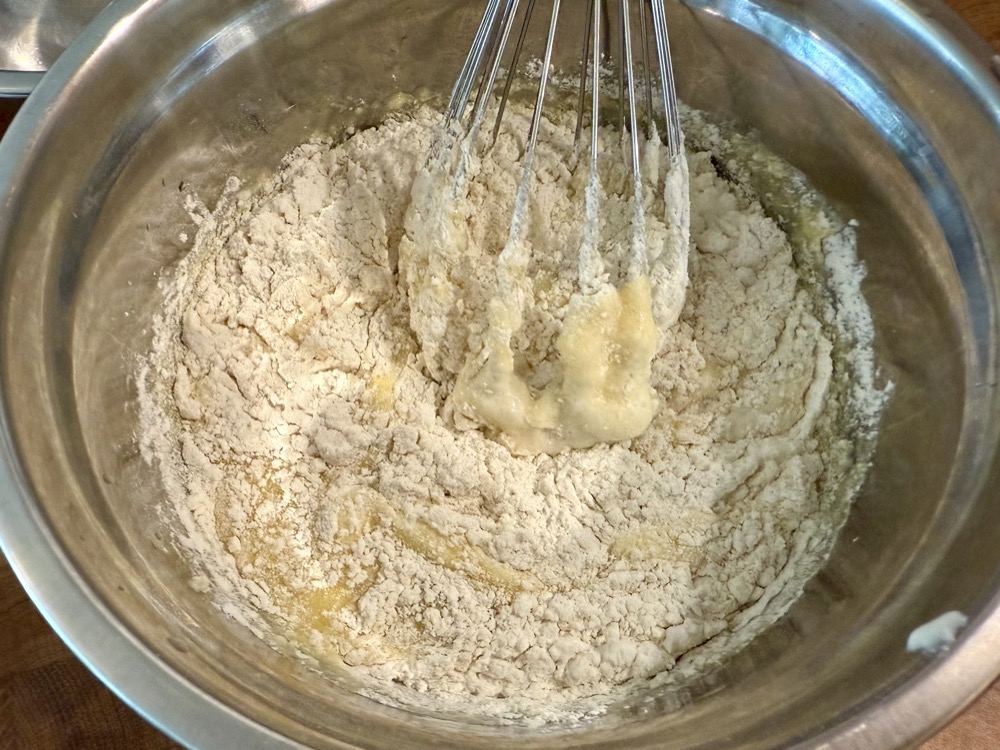
6. In another larger mixing bowl, whisk together 2 large eggs and 1/4 cup neutral oil until smooth. Add in the pre-ferment batter into the egg/oil mixture, then slowly add in the combined dry ingredients prepared in the previous step (flour, sugar, baking soda, salt). Gently stir with the whisk until the dry ingredients are incorporated, it’s okay if the batter is lumpy.

B) Make the Maple Honey Syrup:

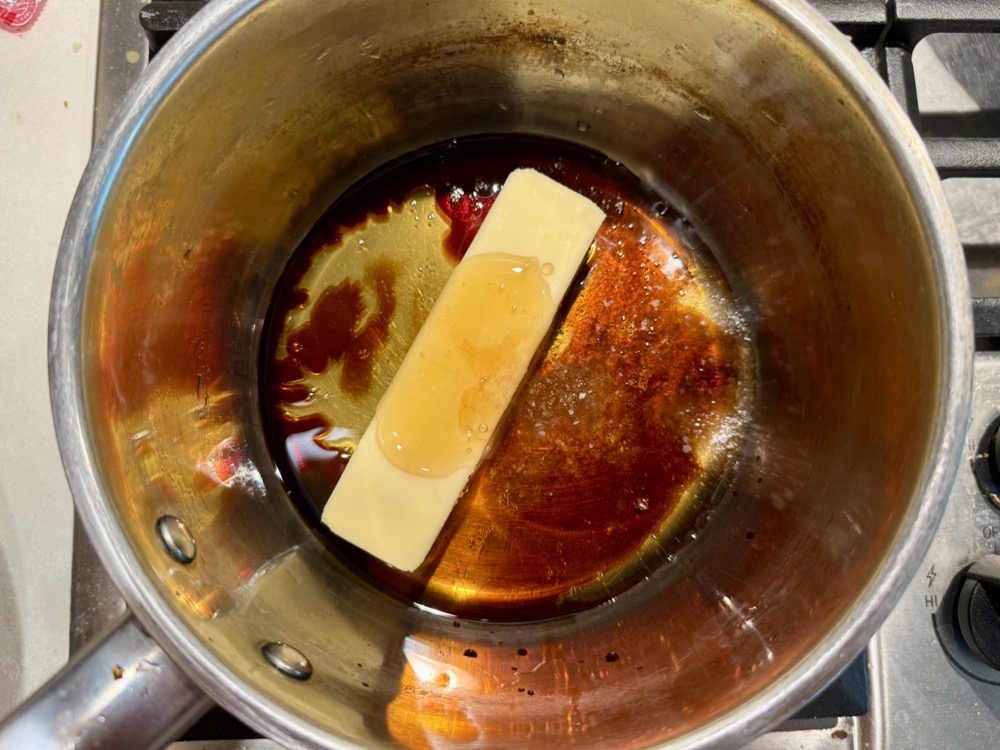
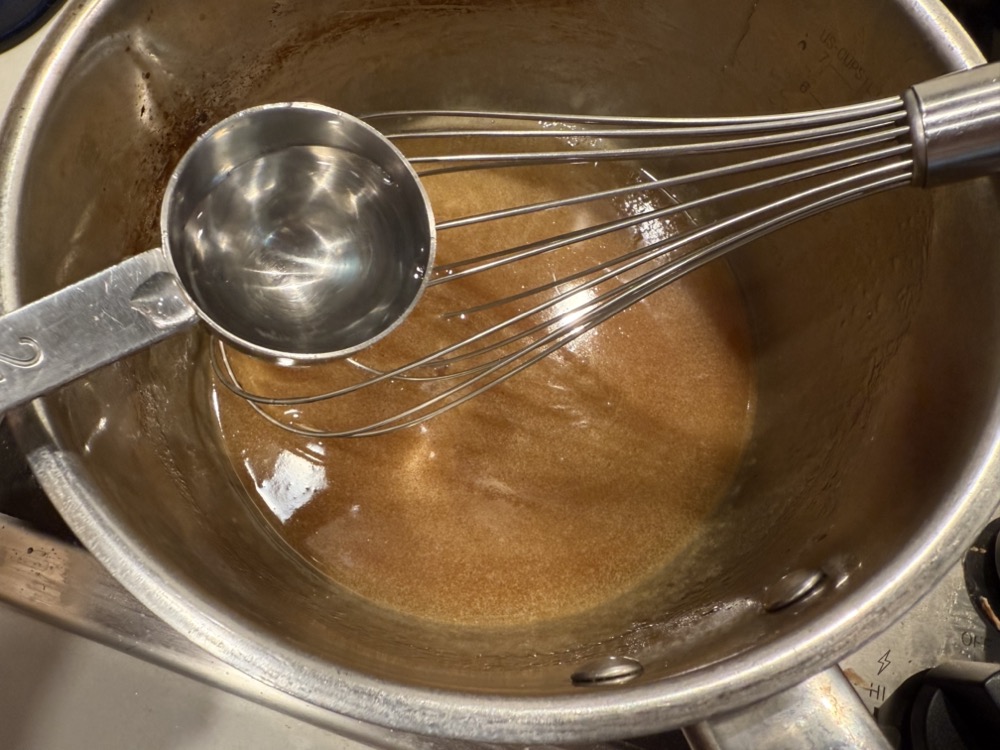
In a small saucepan on LOW-MED heat, add in the 1/2 cup (113g) butter, 1/3 cup (100g) honey, 1.5 Tbsps (24g) maple syrup, 1 tsp soy sauce, and 1/2 tsp fine salt. Whisk until the butter melts completely.

Add 1.5 Tbsps water and continue whisking until emulsified then reduce the heat to the lowest setting to keep warm until ready to use.

C) Make the Maple Honey Butter (optional):

In a bowl, whisk together the 1/2 cup (113g) softened butter, 3 Tbsps (57g) honey, 2 Tbsps (28g) maple syrup, and 3/4 tsps salt. Keep at room temperature if using within a few hours, or refrigerate in an airtight container for up to 1 week.

Pro-tip for storing leftover butter: spoon out the butter onto plastic wrap and roll into a log then refrigerate. Once the butter firms up, you can slice it and use as needed!

D) Make the Berry Compote (optional):

In a bowl, add in the mixed berries, 1/3 cup (67g) sugar, and 1.5 tsps cornstarch. Gently mix until the berries are evenly coated.

Heat a deep pan on HIGH heat. Splash a drop of water onto the pan and if it sizzles right away, then the pan is ready. Add the berry mixture from the previous step and cook until the blueberries are soft and easy to squish (~3-5 minutes), stirring occasionally. Remove from heat and set aside.

E) Cook the Pancakes:

Heat one or two small non-stick pans (16cm/6.5-7 inch diameter) on MED heat.

Once the pan has heated up, pour in 1 ladle of batter into the pan, which should fill up about 1/3 of the depth of the pan.

Let the batter cook for 2-3 minutes until the edges are cooked (see photo), then gently loosen the pancake from underneath and flip it over. Turn the heat down to LOW and continue to cook for another 3-4 minutes until the center is cooked (the internal temp will by 31-32˚C/88-90˚F).

Pro-tip: It can be tricky to flip a pancake when it’s in a small pan, so here are a few cheat ways to make it easier:

Method 1: If you have two of the same size pans, you can loosen the pancake first, then place the other skillet over top and directly flip it into the other pan and continue cooking.

Method 1: Use two small pans and flip onto each other (make sure to loosen the pancake first!)

Method 2: You could alternatively flip it into a large base non-stick pan and continue to cook since the pancake should hold its shape from the first pan. Tuck in any loose batter into the pancake.

Method 2: Flip the pancake onto a larger heated pan

Method 3: If your small pans are oven/broil-safe, you can just pop the pan under the broiler on LOW until it cooks through without having to actually flip it. I haven’t tried this method before, but this was how I saw them do it at Golden Diner for a perfectly shaped pancake each time.

Repeat this process for the remaining pancakes, ensuring you heat up the pan each time between pancakes.

F) To Serve:

Place 1 or 2 pancakes onto a plate and evenly drench the maple honey syrup over top right away. Spoon the berry compote on top (if using) then a dollop of the maple honey butter (if using) over the berries. Sprinkle some fresh lemon zest over top and serve immediately! Enjoy!

Summarized Recipe:

Golden Diner Honey Butter Pancakes

Date Published: Sept 9th, 2025 | Last Updated: Sept 9th, 2025
Author: Abby |Category: breads, dessert, snack, easy, vegetarian
Serves: 4 pancakes | Prep time: 1 hour | Cook time: 5-7 minutes per pancake

Equipment you’ll need:

  • One or two small non-stick pans (16cm/6.5-7 inch diameter)
    • Two will make your life easier and cook the pancakes faster, but one is enough if you don’t care about speed.

Ingredients you’ll need:

  • Pancake Batter:
    • Pre-Ferment:
      • 2.25 tsps (7g or one 1/4 oz packet) active dry yeast (instant yeast is fine too)
      • 1 cup (130g) all-purpose flour
      • 1.25 cups (300g) buttermilk (or mix 1.25cups whole milk + 1.25 Tbsps lemon juice, let it sit for 5-10 minutes until it lightly thickens)
      • 1/4 cup (60ml) water
    • 1 cup (130g) all-purpose flour
    • 2 Tbsps (28g) granulated sugar
    • 3/4 tsps (5g) baking soda
    • 1/2 tsp fine salt
    • 2 large eggs
    • 1/4 cup (60g) neutral-tasting oil (ie. canola, vegetable…etc.)
  • Maple Honey Syrup:
    • 1/2 cup (113g or 1 stick) unsalted butter
    • 1/3 cup (100g) honey
    • 1.5 Tbsps (22g) maple syrup
    • 1 tsp soy sauce
    • 1/2 tsp fine salt
    • 1.5 Tbsps water
  • Maple Honey Butter (optional):
    • 1/2 cup (113g or 1 stick) unsalted butter, softened
    • 3 Tbsps (57g) honey
    • 2 Tbsps (28g) pure maple syrup
    • 3/4 tsp fine salt
  • Berry Compote (optional):
    • 14oz (400g) mixed berries (ie. blueberries, raspberries, strawberries), cut to the same size as the small berries
    • 1/3 cup (67g) granulated sugar
    • 1.5 tsps cornstarch
  • Zest of 1 lemon for garnish

Directions:

A) Make the Pancake Batter:

  • Pre-Ferment the batter (this step helps the pancakes have better rise, with deeper flavour by a fermentation process):
    • 1. In a large microwave-safe bowl, add in the 1.25 cups buttermilk with 1/4 cup water. Microwave for 30 seconds at a time until lukewarm (~38-40˚C/100-104˚F).
      • (If you don’t have any buttermilk on hand, mix 1.25 cups of whole milk with 1.25 Tbsps of lemon juice and let it sit for 5-10 minutes until it slightly thickens/clumps.)
      • You can also do this in a small saucepan on LOW-MED heat and heat until it becomes lukewarm.
    • 2. Whisk the 2.25 tsp yeast and 1 cup (130g) flour into the warmed buttermilk/water mixture until smooth.
    • 3. Cover with plastic wrap and let it sit for 1 hour at room temperature.
      • You can make the maple honey syrup, butter, and berry compote in this time.
  • Finishing off the batter:
    • 4. After 1 hour check on the batter and give it a stir. It will have risen a little and formed clumps.
    • 5. In a separate small bowl, mix together the remaining dry ingredients for the batter: 1 cup (130g) of flour, 2 Tbsps (28g) sugar, 3/4 tsps (5g) baking soda, and 1/2 tsp salt. Set aside.
    • 6. In another larger mixing bowl, whisk together 2 large eggs and 1/4 cup neutral oil until smooth. Add in the pre-ferment batter into the egg/oil mixture, then slowly add in the combined dry ingredients prepared in the previous step (flour, sugar, baking soda, salt). Gently stir with the whisk until the dry ingredients are incorporated, it’s okay if the batter is lumpy.

B) Make the Maple Honey Syrup:

  1. In a small saucepan on LOW-MED heat, add in the 1/2 cup (113g) butter, 1/3 cup (100g) honey, 1.5 Tbsps (24g) maple syrup, 1 tsp soy sauce, and 1/2 tsp fine salt. Whisk until the butter melts completely.
  2. Add 1.5 Tbsps water and continue whisking until emulsified then reduce the heat to the lowest setting to keep warm until ready to use.

C) Make the Maple Honey Butter (optional):

  1. In a bowl, whisk together the 1/2 cup (113g) softened butter, 3 Tbsps (57g) honey, 2 Tbsps (28g) maple syrup, and 3/4 tsps salt. Keep at room temperature if using within a few hours, or refrigerate in an airtight container for up to 1 week.
    • Pro-tip for storing leftover butter: spoon out the butter onto plastic wrap and roll into a log then refrigerate. Once the butter firms up, you can slice it and use as needed!

D) Make the Berry Compote (optional):

  1. In a bowl, add in the mixed berries, 1/3 cup (67g) sugar, and 1.5 tsps cornstarch. Gently mix until the berries are evenly coated.
  2. Heat a deep pan on HIGH heat. Splash a drop of water onto the pan and if it sizzles right away, then the pan is ready. Add the berry mixture from the previous step and cook until the blueberries are soft and easy to squish (~3-5 minutes), stirring occasionally. Remove from heat and set aside.

E) Cook the Pancakes:

  1. Heat one or two small non-stick pans (16cm/6.5-7 inch diameter) on MED heat.
  2. Once the pan has heated up, pour in 1 ladle of batter into the pan, which should fill up about 1/3 of the depth of the pan.
  3. Let the batter cook for 2-3 minutes until the edges are cooked (see photo), then gently loosen the pancake from underneath and flip it over. Turn the heat down to LOW and continue to cook for another 3-4 minutes until the center is cooked (the internal temp will by 31-32˚C/88-90˚F).
    • Pro-tip: It can be tricky to flip a pancake when it’s in a small pan, so here are a few cheat ways to make it easier:
      • Method 1: If you have two of the same size pans, you can loosen the pancake first, then place the other skillet over top and directly flip it into the other pan and continue cooking.
      • Method 2: You could alternatively flip it into a large base non-stick pan and continue to cook since the pancake should hold its shape from the first pan. Tuck in any loose batter into the pancake.
      • Method 3: If your small pans are oven/broil-safe, you can just pop the pan under the broiler on LOW until it cooks through without having to actually flip it. I haven’t tried this method before, but this was how I saw them do it at Golden Diner for a perfectly shaped pancake each time.
  4. Repeat this process for the remaining pancakes, ensuring you heat up the pan each time between pancakes.

F) To Serve:

Place 1 or 2 pancakes onto a plate and evenly drench the maple honey syrup over top right away. Spoon the berry compote on top (if using) then a dollop of the maple honey butter (if using) over the berries. Sprinkle some fresh lemon zest over top and serve immediately!

Best Places for Crab Cakes in Maryland: A Complete Guide to Local Favourites


Date Published: Sept 6th, 2025 | Last Updated: Sept 6th, 2025
Author: Abby | Category: Travel, USA

First things first: Why Maryland?

If you were to pick one food ingredient that perfectly encapsulates Maryland cuisine, it would be blue swimmer crabs (with Old Bay Seasoning as a close second). Due to the abundance of these crabs in the Chesapeake Bay that runs right through the Eastern half of the state, the crabbing industry in Maryland has been an important part of the Maryland economy and culture dating back centuries! You can find all sorts of crab dishes in Maryland, including steamed crab, crab soup, crab dip, crab egg rolls, and of course the famous crab cake.

The peak crab season each year is between April to December, with the largest crabs on offer in the fall season between September to mid-November.

What is a Crab Cake?

A crab cake is a delicious savoury type of fishcake that is made up of crab meat and a variety of fillers traditionally bread crumbs, eggs, mayonnaise, mustard, and a variety of seasonings. It’s either baked, fried, or pan-cooked. You can find crab cakes around the world, but a Maryland crab cake hits different. Maryland crab cakes are seasoned with Old Bay Seasoning and the best cakes use jumbo lump crab meat.

What is jumbo lump/colossal crab meat you ask? Jumbo lump crab meat is the most prized and highest grade of crab meat that comes from the swimming fins of the crab – unsurprisingly, it’s also the most expensive. This piece of meat should be unbroken and come in large chunks compared to regular lump crab meat which are in smaller pieces and extracted from smaller swimming muscles of the crab. The best Maryland crab cakes (and the most expensive) are the ones made with jumbo lumb crab meat which results in large chunks of crab in every bite rather than smaller broken and stringy pieces of crab you see in regular crab cakes. It’s certainly an experience, especially for my fellow crab lovers!

For the visual learners like me, I’ve included a photo and diagram of the different types of crab meat:

Comparison of where Jumbo Lump Crab meat is from and how it compares to other parts of the crab.
Image from: https://www.seacoreseafood.com/product/Blue_Crab
Packed containers of jumbo lump crab meat – one of these containers can run you $60-70!

Accompaniments: Crab cakes are almost always served with a small packet of saltine crackers. This is to add texture to the overall softness of the crab cake. Toby prefers not adding it at all, but I like to crumble mine over the crab cake for a bit of extra crunch with every bite. Many people will also order a side of tartar or cocktail sauce to go with their crab cake for an extra kick.

What Makes a Good Crab Cake?

Fillers: The one and only golden rule of a good crab cake is that is should be maximum crab and minimal filler. I’m talking about 85-90% of the crab cake should be just crab meat and the filler should only really be there as a binder to hold the shape and for seasoning (read: Old Bay). No chopped veggies, no fancy herbs – maybe parsley.

Seasoning: Old Bay is a must for Maryland crab cakes and you’ll often taste celery salt as well. It is because of the simplicity of the Maryland crab cake that you’ll find most of them pretty similar in flavour. Some cakes are more heavily seasoned than others but this will be due to personal preference. I prefer mine on the less-seasoned side to not over power the delicate flavour of the crab and most places in Maryland will have a spice shaker of Old Bay so you can add extra seasoning if you like.

Without further ado… here are some of the top places to grab a crab cake in Maryland!

Much like my unexpectedly popular post on The Ultimate Guide to Philly Cheesesteaks in Philadelphia, this post is my personal take on these popular spots. I know there will be a lot of differing opinions and I’ve seen heated debates on who has the best crab cakes, and at the end of the day the answer will depend on individual preference. There’s no one right answer – it’s like asking a New Yorker who has the best pizza. Everyone will have their own favourite and this post highlights some of my favourites and thoughts on these popular joints. The places that we tried were all due to research from locals but this is in no way a comprehensive list. Let me know in the comments if you think I’ve missed a popular spot!

In this post, I’ve reviewed Pappa’s, Faidley’s, Koco’s, G&M, and Jimmy’s.

* Please note that the cost of crab cakes are often seasonal and can change regularly depending on market price. The prices I’ve listed below are from our trip in July of 2025.

Pappas Seafood Co. (carry out only):
Address: 8801 Belair Rd, Nottingham, MD 21236
Hours: 11am-8pm daily
Cost per crab cake: $27.50+tax (market price) for 11oz large jumbo lump crab cake, $25 for Imperial
Website: http://www.pappascrabcakes.com/

Pappas Restaurant and Sports Bar (sit down dining):
Address: multiple locations around Maryland (we went to 6713 Ritchie Hwy, Glen Burnie, MD 21061)
Hours: hours vary by location, usually 11am-9:30pm daily (check the website for more details)
Cost per crab cake: $28.99 for 8oz jumbo lump crab (extra $2 for a platter with 2 sides)
Website: http://www.pappascrabcakes.com/

Pappas was recommended time and time again throughout my internet research, but everyone always just called it “Pappas”, rather than the full name, so when we typed in “Pappas” on Google maps, it directed me to “Pappas Seafood Co.”. When we arrived, it was a big warehouse-like building that only had carryout options and nowhere to sit. We thought it was strange that so many people would recommend a carryout place until we spoke to the cashier who told us that they have multiple restaurants that have dine-in options but the location we came to was their distribution center. Ahh. We were super hungry at the time and didn’t want to make the further trek to their restaurant after driving 3 hours from NYC so we just ordered carryout. Luckily they had pretty much a full menu and there was one picnic table out back so we didn’t have to eat in the hot car.

For those of you who are like us and never seen a “carryout” before, it’s a type of food service where you park your car in a designated number spot in the parking lot, go inside to order, and they’ll bring out the food to your car. Neither Toby and I had encountered a ‘carryout’ service before coming in Maryland – we thought it just meant takeaway. When we arrived, we thought the numbered lots were for reserved parking so we chose a spot without a number (which ended up being for employee parking – we thought it was strange why we had to park so far away from the main door 😂). When they asked us what our car spot number was, we just told them which car it was 😅.

There was an option of the size of crab cake you want: small, medium, or large. We of course got the large because we were so hungry. It was a whole 11oz and very filling. It was delicious from the very first bite! There was no skimping on the crab meat and minimal filler. It was lightly seasoned – just the way I like it and it was even better paired with their tartar sauce.

We also ordered the Imperial Crab cake that is made with their imperial sauce. The Imperial was more moist with more seasoning and eggy in flavour. It’s a gluten free option without a binder so it was also more sloppy looking. I thought it was good but not as good as the regular jumbo lump crab cake but Toby LOVED it way more.

This crab cake was the one to beat but just incase we were biased because we were starving when we tried it, we tried it again at one of their restaurants on our way back home from DC. The restaurant looked like any other sports/family restaurant (we went to the location in Glen Burnie). We sat at the bar and we ordered both the jumbo lump and the imperial crab cake again. I can confirm that this was still our top pick for favourite crab cake after trying 4 other places. (Side note: I also ordered the recommended cream of crab soup and it was super salty – would not recommend. Stick to the crab cakes.)

Address: 119 N Paca St, Baltimore, MD 21201 (inside Lexington Market, level 1)
Hours: 10am-5pm most days, closed Sun
Cost per crab cake: $25 + tax (market price) for 6.5oz jumbo lump crab cake
Website: http://faidleyscrabcakes.com/

Faidley’s is an institution in the Baltimore area. Open since 1886, they have the reputation as being one of the oldest seafood purveyors in the Chesapeake Bay region. It also has the best location for tourists (right in downtown Baltimore!) compared to all the other places in this post. It’s roughly a 15 minute walk from Oriole Park baseball stadium or a 30 minute walk from the Baltimore waterfront. Located in Lexington Market, Faidley’s has food-court style service where you go up to order and they put your food on a tray. They also have a separate area for a raw bar and takeaway raw seafood/meat (including raccoon and muskrat meat!).

There’s standing room only here at the high tops or there’s a few picnic benches on the patio outside. The first time we went it was on a Monday afternoon in March during game day. It was pretty busy but not crazy. The second time was in July which was a lot less busy but the food was still consistent.

There’s only one size of crab cake here, which is a 6.5 oz for $25 (market price), smaller than the standard 8oz size at other restaurants. The food was served very quickly (almost immediately!) and on first impressions, it had a lot more browning compared to other cakes but also had more filler. Despite this, it was well-season and the roasted browned flavour gave the crab cake more depth that the other cakes didn’t offer. It was like having thanksgiving stuffing out of the oven, crab-cake style! If this crab cake was larger with less filler, it would’ve easily taken the number one spot for best crab cake for me!

We also got a “Coddie” which is a fried cod and potato ball (not bad), the crab dip (amazing!), and the cream of crab soup (I thought it was okay, but Toby liked it).

You can actually watch them make the crab cakes while you wait for your food. I saw celery salt, Old Bay, and crushed crackers go into the mix!

Address: 4301 Harford Rd, Baltimore, MD 21214
Hours: 11am-9pm on most days, closed Sun & Mon, evening only Tues (check their website for up to date hours)
Cost per crab cake: $39+ tax (market price) for an 11oz crab cake
Website: http://www.kocospub.com/

Of all the crab cake joints we’ve visited in Maryland, Koco’s pub had the most character with great vibes. It’s situated at the end of a quiet street – you can’t miss it, it’s the bright yellow house! Although a little farther out from Baltimore (15 minute drive), Koco’s reputation of great crab cakes seem to fill the place again and again. When we arrived without a reservation, there was only seating at the bar available (which was a bit uncomfortable since the table top doesn’t extend out as much as it should and we had to lean in to eat – you can probably notice it in one of the photos below). The interior of the restaurant made you feel like you were in a tropical family restaurant/pub with more brightly coloured walls and decor.

From the reviews, apart from their crab cakes, others have recommended the Koconut shrimp and the cream of crab soup, so we ordered all 3!

  • Crab cake: Although their standard crab cake size is the same 11oz as Pappa’s large, it seemed much smaller when it arrived (there are also larger and smaller options available that’s not on the menu). The crab cake was overall good, however we felt that it was a bit heavy on the Old Bay seasoning and the crab meat was more shredded in the crab cake rather than large chunks of crab meat which made it a softer texture that I didn’t prefer.
  • Koconut Shrimp: This was our favourite. It’s shrimp covered in koconut shavings and deep fried, served with a jalapeño raspberry sauce. The sauce sounded weird but interesting and it was delicious!
  • Cream of Crab Soup: Unfortunately, I wasn’t a fan of it. It was too thick and floury with minimal to no crab flavour. It if weren’t for the clumps of crab meat in the soup, I wouldn’t have known it was crab soup.

Overall, although the ambience of the place was fantastic and there was lovely service, the food fell a little short for us (except the Koconut shrimp) and we found it expensive compared to the others.

Address: 804 N Hammonds Ferry Rd, Linthicum Heights, MD 21090
Hours: 11am-9pm daily
Cost per crab cake: $29+ tax for an 8oz crab cake + 1 side, or $58+tax for two 8oz crab cakes + 2 sides
Website: https://gandmcrabcakes.com/

G & M Restaurant is about a 15 minute drive south of Baltimore and is a very large restaurant tucked away in a quiet plaza just off the freeway. The outside of the restaurant feels like you’re about to walk into a warehouse, but the ambience of the place inside I would describe as old school grand – a bit outdated with a dash of fancy. There’s wooden floors, wooden chairs, folded fabric napkins, and tall ceilings. When we arrived on a Tuesday afternoon around 3pm, the restaurant was pretty empty so we sat at the bar.

They had a decent sized menu and also a Ballpark Special menu. We ordered the crab cake, cream of crab soup, and the pretzel crab dip.

  • Crab Cake: The standard crab crake size here is only 8oz (for $29 with one side, or two crab cakes for $58 with two sides). There’s also an a la cart 4oz crab cake option for $19. The crab cake was good and lightly seasoned, not too heavy on the Old Bay with good chunks of crab meat in the crab cake without too much filler. However, although it ticks the boxes on a good crab cake for me, the overall taste of the crab didn’t seem as fresh as some of the others.
  • Cream of Crab Soup: This was the BEST cream of crab soup we’ve had on our trip – I was starting to lose hope after being disappointed again and again. Unlike most cream of crab soups, the flavour of the crab actually penetrates into the soup with good chunks of crab meat. You can also tell they use wine in the recipe which gives it great flavour. I started off with a cup of soup, but it was so good that I ordered a bowl to go at the end of our meal (it was indeed still delicious the next day)!
  • Pretzel Crab Dip: This was a game day special that I couldn’t resist because I love pretzels. It was a huge portion with lots of crab and the dip was great. Toby especially liked it because it was similar to the Imperial Crab Cakes at Pappa’s.

Overall, the food was great. The crab cake is smaller and a little more expensive than Pappa’s, but it comes with a side, so I guess it evens out. Had the crab cake tasted fresher, it would’ve taken the #3 spot over Koco’s for me. The cream of crab soup is definitely a must-try here and that alone I feel is worth the drive out from Baltimore.

Address: 6526 Holabird Ave, Baltimore, MD 21224
Hours: 11am-2am, daily
Cost per crab cake: $34+tax for 8oz
Website: http://www.jimmysfamousseafood.com/

Jimmy’s Famous Seafood is a HUGE restaurant outside of Baltimore that has a restaurant section and a bar/lounge section. We weren’t sure which area to go in, so we went into the first door closest from the parking lot and was in the bar section. It seemed like a pretty modern venue with nightclub vibes (they are after all open until 2am daily). We arrived on a Friday afternoon around 3pm and the were only 2 other tables seated around the bar. Eventhough it wasn’t busy, service was very slow. Someone gave us menus and seated us right away, but no one came back to acknowledge us after 10 minutes of waiting so we went up and ordered at the counter. While we were waiting, I scrolled through some Google reviews of this place and realized that many poor ratings were due to a mandatory 21% gratuity! Low and behold, as I scanned the menu more closely, right at the bottom in small print it states “Jimmy’s reserves the right to add an 18% gratuity because we love our employees”…”We add a 3% labor of love service charge to all checks at Jimmy’s Famous Seafood.” Wuuuuut? Pardon my language, but fuck that. Coming from NYC, we’re used to tipping a lot more, but a restaurant that has mandatory tipping just didn’t sit well with me. It screams cheapskate owners that don’t want to pay the employees a decent wage so they take that expense out on the customers. No way were we being forced to pay 21% gratuity just for sitting down (and at the bar!) without being told about it beforehand, especially with no service and we had to order at the counter. Toby went back to the counter and told them that we’re going to take away our food to avoid that mandatory tip – they still charged us the 3% labor of love fee 😒. Super shady. If you’re going to add on a charge, at least inform your customers beforehand instead of letting them find out on their own.

Tipping frustration aside, they had a huge menu with plenty of choices that sounded delicious, but unfortunately at this point of the day we were getting pretty full so we only ordered a crab cake and also the crab egg roll that was highly rated from the reviews.

It was another 15 minutes before our food was ready, but it seemed much longer. We were seated infront of a TV screen that had a non-stop video loop of the owner/chef doing things in different poses. It was as if he made a commercial of himself, rather than the business. This, on top of the mandatory tipping gave me douchey vibes.

Overall the crab cake was decent and well-made but it didn’t stand out from the other crab cakes. It did come with 3 different sauces though which was nice. I wasn’t a fan of the egg roll but Toby liked it. Overall the food was okay, but the mandatory tipping and the douchey vibes with poor service tainted the whole experience for us.

Even after leaving the restaurant, I was still raging about the shadiness of this place, so I did some googling and I’m gonna leave this here: https://www.reddit.com/r/maryland/comments/1luywvj/in_a_move_that_surprises_no_one_jimmys_seafood_is/

In Summary:

  • Pappa’s takes #1 for us for the best crab cake. It just ticks all the boxes and is also the best-priced!
  • Faidley’s has the best location with more depth of flavour of their crab cakes, however it was also the smallest and most expensive for the size.
  • G&M’s has the best cream of crab soup.
  • Koco’s has the best atmosphere for a restaurant.

I hope you enjoyed reading my take on the best Maryland crab cakes! Leave a message in the comments if you feel that I’ve missed a restaurant that should be on this list!

Looking For More Ultimate Food Guides? Check out these below!

The Ultimate Guide to a Manhattan Chinatown Food Crawl – bring cash!


Manhattan Chinatown is full of amazing authentic Asian food but in a neighbourhood full of Chinese signage and shop keepers that barely speak English, it can be daunting to find the best food spots amongst the literal hundreds of restaurants in this neighbourhood. This food guide highlights some of my favourite places to eat in Chinatown…

The Ultimate Guide to Top Philly Cheesesteak Spots


This is my ultimate guide to Philly Cheesesteaks in Philadelphia! I’ve made it my personal mission to try as many popular cheesesteak spots as I can find through online research, word of mouth, and local reviews. This post is my personal take on these popular spots!

New South Wales Coastal Drive


The Great Australian Road Trip part II

*Note: this post is still in progress, but I’ve published it for anyone who’s interested in continuing the drive from the Victoria border up the NSW coast 😊*

New South Wales is the neighbouring state to Victoria (follow our trip from Eastern Victoria here). Crossing the NSW border from Victoria during COVID times was pretty uneventful. We travelled during the pandemic and at the time there were no restrictions to leave VIC and enter NSW so there wasn’t any border security (however on the opposite side of the road there were 2 police cruisers and a bus checking for permits to enter Victoria from NSW). There was only a small lit up sign at the border that warned us that if we left, we wouldn’t be able to return without a permit – a little daunting that we couldn’t turn back, but onwards with our adventure!

Dates we travelled: Jan 8th – 16th, 2021

Sample Itinerary

Day 1: Leave Lakes Entrance in the morning, arrive in Eden around noon. Head over to the visitor’s centre for some recommendations then off to the Killer Whale Museum. Spend a few hours at the museum then drive to Merimbula to spend the night and seek out some fresh seafood restaurants.

Day 2: Do an oyster tour in the morning at Merimbula and have some oysters for lunch. Continue driving north and hike to Horse Head Rock in Bermagui. Take a stroll in Tilba Tilba and check out the cute shops. Stop at Bodalla Dairy Shed for a snack and milkshake (or early dinner). Continue the drive to ACT and stay overnight (or onwards north).

Eden

Eden is the most Southerly town in NSW and sits right on the coastline, making it the first town we stopped in after leaving Victoria. It’s a 2 hour 45 min drive from Lakes Entrance, VIC and a half hour drive from the actual border between VIC and NSW. This small town has a rich history with whales and has some great whale watching spots during the whale migration season (May – November). We were only here for half a day and didn’t come during the whale migration season, but we absolutely loved the Killer Whale Museum!

Eden Visitor’s Centre

Address: Weecoon Street, Snug Cove, Eden NSW 2551
Opening times: Mon-Fr 9am-5pm, check the website for weekend hours
https://visiteden.com.au/visitor-information-centre/

Since this is the first town you’ll encounter in NSW, it’s a great place to stop at the visitor’s center for nearby recommendations. The ladies here were super helpful with recommendations of not only Eden but surrounding areas as well. There’s places to snorkel, beaches, hikes…etc. There’s plenty of brochures and pamphlets if you want more information. There’s also a toilet here if you’ve been holding it in since Lakes Entrance ;).

(They also had this random cool stuffed animal couch on display while we were there.)

Killer Whale Museum

Address: 184 Imlay Street, Eden, NSW 2551
Opening times: 7 days a week (check website for times)
Cost: $15/adult
https://killerwhalemuseum.com.au

This is the top attraction of Eden and we can see why! We didn’t think much of it at first, but the museum was full of so many interesting information of this industry. Eden had a rich whaling industry and the amazing part is that the local fishermen worked together with the wild killer whales (orcas) to hunt for whales. Old Tom was the most famous killer whale that helped with whale hunting. The locals would harvest the blubber and leave the tongue and offal for the orcas. This museum details the background of the whaling industry back in the day as well as highlights orcas and their natural history. There are also beautiful views from the upper level platform! You could easily spend a couple hours here. It’s definitely worth a visit!

Eden Lookout Point and Rotary Park

Address: 263 Imlay Street, Eden, NSW 2551
Opening times: 24hrs

Just up the street from the Killer Whale Museum is Eden Lookout Point, where the we were told is the best place in Eden for whale watching. Unfortunately whale-watching season is between May – November and at the time we were just at the start of January We still decided to check it out anyway for any scenic views, but disappointingly there’s not much to this lookout other than open water so I’d probably give it a miss if it’s not the right season.

Merimbula

Half an hour north from Eden is Merimbula, a coastal town deemed “The Heart of the Sapphire Coast”. When we arrived, the visitor’s centre was annoyingly closed even though they were meant to be open according to their website, so we relied on google searches to tell us what was popular in the area. Merimbula is another popular whale watching location and is advertised to have great local seafood and home to the famous Merimbula Oyster. Disappointingly, I actually struggled to find a well-rated seafood restaurant despite all the ads for fresh seafood. We ended up eating at a tapas bar which wasn’t bad but it was overpriced. The town was small and it took about 15mins to walk the majority of the main street. We did enjoy a nice evening stroll on the boardwalk though, which was probably the most memorable part of this town for us. We only stayed one night which is enough time if you’re looking for main tourist activities. If you’re looking to spend more time, there’s an aquarium in town, some beaches, and fishing charters that we saw advertised but didn’t attend. It was a busy time of year when we travelled so we couldn’t find any affordable hotels or AirBnBs in town so we booked a small camper van AirBnb at the next town over in Wolumla roughly 15mins away.

The Merimbula Boardwalk

Address: Market Street, Merimbula, NSW
Open 24hrs
https://www.visitnsw.com/destinations/south-coast/merimbula-and-sapphire-coast/merimbula/attractions/merimbula-boardwalk

Our favourite part of Merimbula – a lovely boardwalk that hugs the Merimbula Lake. We had a nice evening stroll here after dinner and walked amongst the mangroves and spotting mini crabs and puffer fish!

Book an Oyster Tour!

One thing I regret during our trip was not attending an oyster tour. I didn’t even realize it was something we could do until the morning we were set to leave and by then all the tour tickets were sold out. 😦 The Merimbula Oyster (Sydney Rock Oyster) is one of the most well-known oyster in Australia and is served in many gourmet restaurants around the country. There are a few farms that offer tours and the ones that stood out were Wheelers Oyster Farm and Captain Sponge’s Magical Oyster Tour. If we ever come back around during the right season, we’ll be sure to book a tour!!

Bermagui

Continuing North on the coastal drive, you’ll pass by many small coastal towns with beautiful beaches. A few of them had caravan parks right in front of the water where lots of people were gearing up for a surf. After a while all of these towns start to seem similar. We only stopped in one of these coastal towns: Bermagui, to check out Horse Head Rock.

Horse Head Rock/Camel Rock

Address: Camel Rock Surf Beach
https://www.sapphirecoast.com.au/attraction/horse-head-rock

Horse Head Rock wasn’t a big advertised attraction nor was it highlighted in road trip itineraries, but pictures of it in passing made it look too cool to pass up. Access is at Camel Rock Surf Beach where there’s a big rock that kind of resembles a camel. Continue left following the beach over the rocks to get to Horsehead Rock. Warning, the hike does get a bit treacherous with lots of jagged rocks and uneven footing. Wear appropriate footwear such as hiking shoes or sturdy water shoes (you may get your feet wet at times). At the time we had no idea what we were in for so I had Birkenstocks on and Toby had flip flops (or as the Aussies call it: ‘thongs’ 😉) and it was a real struggle to get over the many MANY jagged rocks. But in the end, the hike was SO worth it. We climbed up a few rocks to get beautiful rugged views of the rocky beach and the actual horsehead rock looked just like a horse head, complete with a mane made of moss! We sat here for a bit just marvelling at how accurate the rock was. Definitely recommend! This hike is only accessible at low tide, so plan ahead!

The walk starts on a pristine quiet beach. You head left of the beach towards the rocks – you can see Camel Rock in the background
Camel Rock in the background to the right
Camel Rock
Beautiful rocky beach scenery along the way
We hiked up a few high rocks to get better views – wear study shoes!
Horsehead rock!
His model pose
Little pools to check out some cool creatures

Tilba Tilba

This little town wasn’t actually on our list of places to stop by, but as we continued our drive on the A1 highway North, we saw a big sign for a cheese factory so of course we had to detour. We followed the signs and ended up in an adorable little town called Tilba Tilba. This town is one main street with lovely houses and boutique shops (pictured below, but it was hard to capture the cuteness of the town). The cheese factory wasn’t actually that exciting and the cheeses were average, but the town itself was just so cute that it was worth the little detour. Also, I bought a hat.

Bodalla

We only stopped by this small town for the Dairy Shed that a friend recommended us. There was a nearby bakery that looked cute but we didn’t stop by. Maybe next time?

Bodalla Dairy Shed

Address: 52 Princes Hwy, Bodalla NSW 2545
https://www.bodalladairy.com.au/

This place was recommended by one of our old classmates who worked in the area. She told us of their incredible milkshakes and good food. We’re SO glad we stopped here. Not only were their milkshakes spot-on, they had AMAZING cheese toasty (grilled cheese) sandwiches with delicious chutney. We weren’t that hungry and only ordered one sandwich, but after a couple bites we just had to go back to get a second! They also had some great products you can bring home and a selection of cheeses and ice creams. There are also a few farm animals on site with set feeding times if you’ve got little ones. If you’re in the area, you definitely NEED to stop here.

Bateman’s Bay

From Bodalla we went straight to Canberra, ACT, passing through Bateman’s Bay. Although we didn’t stop here, it’s worth mentioning for next time since this place looked pretty cool from the car window!

Continued to Canberra, ACT

From Bateman’s Bay we detoured inland and headed for Canberra, ACT. If you’re going to go to Canberra, this is the time to detour inland. Continue onto the Canberra page (in progress) for more information on things to do there or continue reading this post for more of the NSW coast!

Skipped Sydney

During our first road trip in 2021, Sydney was in lockdown and isolation due to COVID outbreaks so we decided to skip it in fear of being stuck in a hotel room the whole time and not be able to explore, so we drove 5 hours straight from Canberra to Newcastle. We did return to Sydney for a locum job in 2022 – see the separate Sydney post (in progress).

Newcastle

Newcastle is a harbour city 2 hours north of Sydney or 5 hours northeast from Canberra. It’s a small city with a few major streets to explore. We reached Newcastle just before 2pm and had a late lunch at a nearby popular burger place called Rascal. Their burgers were indeed pretty good and their Bailey’s milkshake was A+. We stayed at the Clarendon Hotel (https://clarendonhotel.com.au/) which was a lovely place central to the main part of town. The main floor of the hotel was a popular bustling pub.

The main attraction here is the Newcastle Memorial Walk and the beaches. To be honest, there isn’t all that much “to do” here in terms of tourist things, but it seems like a nice place to live with so many beautiful beaches around. We only stayed one night here, which was enough time for us to explore the city, but you’d need more if you wanted to add on some beach time. After seeing the local sights we headed back to the hotel for a little rest and ordered dinner from the pub downstairs to our room 😜.

Newcastle Memorial Walk

The Newcastle Memorial Walk is a beautiful scenic walkway that commemorates the “100th anniversary of the ANZAC landing at Gallipoli in 1915 and the commencement of steel making in Newcastle” – fact plagiarized from their website (https://newcastle.nsw.gov.au/explore/things-to-do/walking-and-cycling/newcastle-memorial-walk) 🙃. It’s high up on the cliffs so it was pretty windy when we went, but the views were absolutely stunning. We started at Strzelecki Lookout where we parked our car, and the path led us southwest along the coast where it connects multiple beaches with walkways that lead to beach level. We didn’t end up walking the entire path since it can go quite a long way.

Walk along the Esplanade

From the start of the Newcastle Memorial Walk at Strzelecki Lookout, you can continue walking north to the Shortland Esplanade for some more beautiful ocean-side views including a popular local swimming hole called the Bogey Hole. This walk will end near Newcastle Beach where you can continue on, or head back into the main part of town (see map below of our walking path).

Our walking route from the Newcastle Memorial Walk to Shortland Esplanade
The Bogey Hole – a popular swimming spot right by the ocean
Newcastle Beach in the distance

Explore the City Streets of Newcastle

There’s not a ton to do in downtown/CBD Newcastle, but there a few streets with some shops if you feel like exploring. Lunch at Rascal was great and it was a nice little stroll by the wharf, but not a must-do if you’re short on time.

Address: 17 Bengal St, Coolongolook NSW 2423, Australia

Andy’s Cherry Pie Cafe is a big beautiful yellow building off the side of the highway that screamed ‘Cherry Pies!’ so loudly that we had to pull over and give it a try. The building was big on the outside but the inside was less than exciting so we sat outside. Neither Toby or I have any strong feelings towards cherries or fruit pies and wasn’t really expecting much, so we bought one slice to share. This pie was so damn good that immediately after the first few bites, we went back in and bought a second slice.

Note: When we visited this place in 2021, there was a big ‘for sale’ sign of the business. From my recent Googling, it appears that this business is still up and running, now also serving kebabs and burgers. I have no idea what the pie tastes like these days since changing owners, but I hope it’s just as good as when we had it a few years ago!

Coff’s Harbour

(in progress)

Grafton

Grafton is not the most exciting town. In fact, unless you’re coming for the annual Jacaranda trees, there’s really not much to do here and would be a miss on most people’s road trip itineraries. The main streets are not that exciting with half the shops closed, and every now and then you’ll run into some dodgy characters. Toby and I were hired as relief vets to work at a clinic here for a couple of months. We had no idea what kind of a place Grafton was and probably should’ve done more research when we signed on, however the recruiter made it sound like such a lovely place with beautiful spectacular purple trees (failing to let us know that they only bloom a few weeks in a whole year). Nevertheless, we arrived and saw for ourselves that there wasn’t much to do here, however the people we worked with were amazing and so lovely that we ended up having a fantastic time and loved working here.

There are some local gems we did discover though, like the swimming area. There are also nearby towns and cities that we’d fill our time with mini road trips (see separate posts in progress).

Jacaranda Trees (early Oct – Nov)

The most well-known feature of Grafton are the Jacaranda trees that burst with beautiful purple flowers every year. Sadly, Toby and I didn’t get a chance to experience this when we lived in Grafton due to a mismatch of the season. The recruiter that hired us in Grafton used the trees as a selling point for us to come here, but they conveniently left out that it wouldn’t be the right season when we arrive 😒.

We’ve heard that people flock from all over the country to come see these beautiful trees every year. They’re only at peak bloom for a few short weeks (usually starting in October and by November many of the flowers will be carpeting the ground). Coming back to Grafton for the Jacaranda trees are definitely on my bucket list.

There’s even an annual Jacaranda Festival – https://www.jacarandafestival.com/

Fig Tree Avenue

Address: Breimba St, Grafton NSW 2460, Australia

This avenue is lined with gorgeous enormous fig trees in the middle of Grafton. It’s surreal to walk amongst these 17 giant trees and makes a perfect photo-op!

Sherwood Nature Reserve – Scouts Falls

Location: No actual address, but enter Scouts Falls into Google maps to get a general location. There is a small car park on Sherwood Creek Rd near the Sherwood Nature Reserve sign immediately past the bridge over the Middle Creek.

Nestled in the Sherwood Nature Reserve, Scouts Falls is a hidden gem known to locals as a popular swimming spot. The drive to reach this area is via a hilly dirt road with limited road parking and the walk itself is a bit treacherous with uneven ground, slanted steps, and exposed tree roots as a tripping hazard. Definitely bring some reliable shoes for this walk, especially if there was a recent rain to make the rocks slippery and the ground muddy. We saw a woman slip in her flip flops and get her foot cut up by the rocks (however in the same walk, we also saw children running around in their bare feet at full speed 😯). There’s limited signage so you just have to trust the trail and try not to trip on something. After all this, you’re rewarded with a beautiful waterfall that you can swim right up and under, as well as a pool that’s deep enough for some proper swimming. We’ve done this hike twice – the first was during a busy long weekend and we sadly didn’t think to bring our swim suits (we thought this would just be a waterfall viewing hike), so we sat on the edge of the rocks envious of all the people having fun in the water. The second time we came during a weekday and came prepared with our swimming gear. There was no one there the second time we went and it was so peaceful there to swim around under the waterfall.

Maclean

Maclean is a cute small town that we spotted on the map when I was looking for Asian grocery stores around the Grafton area. They did indeed have an Asian grocer, but it was super small and didn’t have what I wanted, however I’m glad we ventured out here because this town was small but cute. The main street had some nice coffee shops and stores to walk through. Maclean is also on the way to Iluka if you’re planning to go to Bluff Beach.

Iluka – Rainforest Walk & Bluff Beach

Iluka didn’t pop up on our radar when we were researching things to do around the area when we stayed in Grafton, however one of our co-workers recommended the rainforest walk connecting up to Bluff Beach. It was about an hour drive northeast of Grafton and we rented some snorkel gear at a local fishing shop. We parked our car at the side of the road and started the Iluka Rainforest Walking Track. It was an easy walk through the rainforest but it was a bit monotonous and not the most exciting scenery. It took just under an hour to reach Bluff Beach.

The beach was empty when we arrived and it was a lovely quiet spot with lots of small sea shells. We set our things down and went for a snorkel. The waters unfortunately weren’t that clear but we did see a few cool fish. I tested out my new Iphone in saltwater for the first time and it was indeed waterproof! This was the start to all my underwater photography for the rest of our Australia trip.

Thoughts on Iluka: Unless you’ve got lots of time, I’d recommend skipping Iluka. Although it’s a nice and quiet small town, the overall views weren’t mind-blowing. However, if you’re into nature walks and a quiet beach, then by all means pack a picnic lunch and a snorkel. You can actually drive to Bluff Beach instead and skip the rainforest walk if you’d rather just enjoy the water views.

Byron Bay

(in progress)

Top Things to Do in Birmingham, Alabama & Surroundings: A Travel Guide


Date Published: July 13th 2025 | Last Updated: July 13th 2025
Author: Abby | Category: Travel, USA
Date of travel: June 16th, 2025

Birmingham, Alabama is the state’s largest city by metro area (but only second to Huntsville by population). It was a major industrial centre in the 1800s known for iron and steel production that lead to rapid growth and earned the city’s nickname “The Magic City”.

Coming from NYC, Birmingham seemed like a pretty small town, but it’s home to a fascinating history, a giant bare-bottomed statue, and some of the best BBQ around! Nearby around Birmingham there’s a motorsport museum that can’t be missed (even if you’re not into motorcycles), a statue of liberty replica, a national park, and a grotto of miniature holy places.

How many days do I need?

Although you could definitely fit everything within a 12 hour day, but because the museums all close around 4-5pm, it’s impossible to hit them all before closing time. Therefore, you’ll need 1 day for everything in Birmingham (Civil Rights Museum, Vulcan statue and museum, Sloss Furnaces, and the Botanical Gardens), but add on an extra day to do things around Birmingham such as the Barber Vintage Motorsport Museum (HIGHLY recommend!) or some hiking – plus, an extra day also lets you try out more local BBQ!

Best time of year to travel?

You can visit Birmingham any time of the year, but it gets quite hot and humid during the summer months, so spring (March – May) or autumn (Sept – early Nov) would be the best times to go, especially if you plan on doing some outdoor hikes. If you plan on only sticking to the museums, then any time of year would be suitable.

Getting Around

The best way to get around Birmingham and the surrounding areas is by car.

Where to stay?

As you can see from the map below, everything is a little spread out so it doesn’t really matter all that much where you stay. The “central downtown” area isn’t really worth paying extra to stay near since there wasn’t much in terms of street shopping, nightlife nor a collection of restaurants. We stayed at a cheap Quality Inn off highway 280 for $90 a night and it was actually pretty decent.

Things to Do

Map of things to do in the area. Blue = inside Birmingham, Orange = outside of Birmingham

Vulcan Park and Museum

Address: 1701 Valley View Dr, Birmingham, AL 35209
Hours: 10am-8pm Sun to Thurs, 10am-9pm Fri & Sat (gift shop closes at 6pm)
Cost: $6 per person
Time needed here: ~ 40 minutes
Website: https://visitvulcan.com/

Vulcan, named after the Roman god of fire and forgery, is a colossal 56 feet (17m) tall iron statue that sits on top of a 124 feet (37.8m) pedestal that overlooks the city of Birmingham. Weighing in at 50 tonnes (100,000 lbs), it is the largest cast iron statue in the world and the largest metal statue ever made in the US!

Vulcan was made for the 1904 World’s Fair in St. Louis, Missouri to promote the city’s abundant iron and steel industry. After the fair it was brought back to Birmingham (after sitting on the side of the railroad for 18 months due to unpaid freight fees 😳) but his spear was lost during transport (how do you even lose a giant spear? 🤔). Vulcan sat at the Alabama State Fairgrounds with nothing to hold and companies used this to their advantage. Over the years he held a Coca-cola bottle, ice cream cone, and even Heinz pickles! In 1936 they found Vulcan its current home on top of Red Mountain where he has stood atop his pedestal ever since. In 1946 they made Vulcan hold a temporary light-up torch to bring awareness to traffic safety, and in 2001 they finally made him a new spear and hammer.

You can drive right up to the Vulcan statue where it’s $6 to enter the park which includes admission into the small museum and access to the observation deck at the top of the pedestal right at the base of the statue. Unfortunately when we went, the elevator was out of order so we climbed 159 steps to the top…only to be mooned by Vulcan. The statue faces towards the city, but from the parking lot and the exit of the observation stairs, all you see is his bare bum 😂. I can’t tell if he’s wearing skin-tight pants or they’ve just decided that he should be bare-assed. It seemed like every angle was of his bum.

The view from the top over Birmingham was nice. Your ticket is actually good for the whole day and the staff recommended coming back for sunset views over the city – a lovely thought, but no way we were climbing these stairs twice in this heat 😅.

The small museum covers the history of the construction of Vulcan and the history of Birmingham’s industries. It doesn’t take long to walk through. Overall we spent a total of 40 minutes here including the observation deck and climbing those stairs.

Sloss Furnaces

Address: 20 32nd St N, Birmingham, AL 35222
Hours: 10am-4pm Tues-Sat, closed Sun & Mon
Cost: Free for a self-guided tour; for a 1 hour guided tour: $10/adult, $5/child – book early, only 2 tours a day at 10:30am and 2pm
Address: https://www.slossfurnaces.org/

Established in 1881, Sloss Furnace was a huge blast furnace plant where iron was made from 1882–1971. Due to vast deposits of coal, limestone, and iron ore in the area, it was once the largest crude iron producer in the world! It provided thousands of jobs for people from all around the Southern states, including former slaves and European immigrants, but it also had an ugly history of racial injustice, union busting and dangerous working conditions. Sloss played a role in the history of civil rights in Birmingham and it is said that the history of Sloss is the history of Birmingham and the industrial age.

Sloss Furnaces was a major source of air pollution and it was closed permanently in 1970 due to a combination of pressures from environmental regulations and the availability of more efficient and profitable ore sources in other regions. Today the site is a national historic landmark and is the first industrial site in the US to be saved and converted for public use. It is currently a museum, an education centre, and a venue for concerts and festivals.

You can tour the furnaces for free as a self-guided tour with information plaques to read, or you can book a $10 guided tour that walks you through the grounds (book early, only 2 tours a days at 10:30am and 2pm). Unfortunately, as cool as this place looked (it’s huge, you can see it from the highway!), we weren’t able to visit because it was sadly not open on Sundays and Mondays when we were in Birmingham 💔. I’ve included it in this post anyway for anyone else that is planning a trip to Birmingham and may want to check it out!

Birmingham Civil Rights Institute

Address: 520 16th St N, Birmingham, AL 35203
Hours: 10am-5pm Tues – Sat, closed Sun & Mon
Cost: $15 per adult
Website: http://www.bcri.org/

Birmingham was known as one of the most segregated cities in the US. It had a notorious history for police brutality and the local KKK was the most violent. The Birmingham Civil Rights Institute is a museum that depicts the struggle for black equality and highlights the civil rights movement in Birmingham in the 1950s and 60s, including the Birmingham Campaign and the Children’s Crusade that included boycotts, sit-ins, marches, and other non-violent protests that were met with brutal violence that shocked the nation and received widespread attention. The events at Birmingham shaped the fight for equality.

Unfortunately this museum was also closed on Sunday and Monday, so we weren’t able to visit when we were in Birmingham, but I’ve included here as another noteworthy place to visit when in town.

Birmingham Botanical Gardens

Address: 2612 Lane Park Rd, Birmingham, AL 35223
Hours: 7am-6pm, daily (hours change seasonally, check the website for the most up to date info)
Cost: Free
Website: https://www.bbgardens.org/

With only one day in Birmingham, we sadly didn’t make it to the botanical gardens before it closed – it didn’t help that it also started raining. I’ve included it in this post because it came highly recommended by a few people in our research and it also has a great online rating. It seems pretty big, so I’d allow at least 2 hours here!

Food

Saw’s BBQ/Saw’s Soul Kitchen

Address: 6 locations, Homewood location is the OG, we went to the Avondale location (215 41st St S, Birmingham, AL 35222)
Hours: Mon – Thurs 11am-8pm, 11am-9pm Fri & Sat, 11am-4pm Sun
Website: http://www.sawsbbq.com/

This Carolina-style BBQ has been voted the best BBQ in Alabama. Although Toby and I didn’t have time to try out the many BBQ joints on offer in Birmingham, we’d agree that Saw’s did indeed serve up some amazing BBQ! There are 6 locations around the Birmingham area, but the OG is the Homewood location. Each location serves the main popular items on the menu, but each one also offers a little something different, according to our server.

We went to the Avondale location which was closest to us. At first glance we weren’t sure if we were in the right place. The sign was barely visible – half faded on the side of the wall – but once we entered, the unmistakable smell of BBQ assured us this was it. Unlike a traditional BBQ joint where they slice the food by weight in front of you and you self-serve your sides, this joint was fast-food style where we placed our order at the counter/bar, grabbed a number and the food was brought out to our table.

True to our nature, we ordered a bit of everything that’s popular (sadly, no brisket):

  • Smoked chicken thighs – AMAZING. Perfectly cooked, juicy, slighty crisky and smokey. The sauce was delicious!
  • Pulled pork and grits – my favourite of the meal. It was hearty and tasted like a home-cooked Southern meal. Goes great with their table BBQ sauce.
  • Sweet tea chicken sandwich – this was Toby’s all time favourite. Although the bun sucked and kept falling apart, but the flavour of the fried chicken was SO GOOD. I’d come back just for this chicken!
  • Fried corn, fried green tomatoes, and banana pudding were just okay.

For everything above we dropped $61 which we thought was pretty reasonable! They also had a pretty good red sauce and white sauce on the table that they sell at the local Piggly Wiggly if you wanted to bring some home.

If you’re into BBQ, there are tons of other BBQ places around Birmingham also with very high reviews. Next time, I’d stay an extra day or two just to try out more places!

Just outside of Birmingham

Barber Vintage Motorsports Museum

Address: 6030 Barber Motorsports Pkwy, Leeds, AL 35094
Hours: 10am-5pm Mon to Sat, 12pm-5pm Sun (check the website for the most up to date info)
Cost: $20 per adult, $15 per child
Time needed here: at least 2 hours
Website: http://www.barbermuseum.org/

If you’re into motorcycles and the motorsport industry, this is the place for you! If you’re not into motorcycles, you should come here anyway!

The Barber Vintage Motorsports Museum has the largest collection of motorcycles in the world. There are over 1000 mint condition motorcycles on display from every era. Neither Toby and I are into motorsports, but this place was so highly reviewed in our research that we had to put it on our list to see what all the hype was about. We’re so glad we did because this is hands down one of the most aesthetically pleasing museums we’ve ever been in. Right from the beginning you’re faced with a shit ton of motorcycles, all perfectly lined up and shiny. The reflection off of all the chrome is mesmerizing. Not only was it cool to see all the motorcycles throughout the years, they also had sections of different type of motorsports such as drag racing, speed racing, dirt biking so you can compare the difference between the different types of motorcycles.

Apart from racing, our favourite part of the museum was actually the history of the invention of motorcycles. They had a steam-operated bicycle that is said to be one of the earliest models of the motorcycle. Back in the day, motorcycles were made by literally adding a motor attachment to a bicycle and as time went on, it became more and more custom and a separate machine on its own. They have war time bikes, Arnott’s biscuit bikes, holiday side car bikes, snowmobile bikes…etc. If you can think of a type and era of bicycle, they’ll probably have it on display! It was honestly such a cool museum to visit and I highly recommend everyone to go! It took us about 1.5 hours here to walk through everything, but if you’re a motorcycle enthusiast, you could easily spend much longer, reading through all of the information plaques.

A little bit of Czech ❤️
A little bit of Australia ❤️
Teeny tiny bikes that Toby remembers from his childhood

Statue of Liberty Replica

Address: 516 Liberty Pkwy, Vestavia Hills, Alabama, 35242
Hours: 6am-9pm? I can’t really find a direct source on the opening hours apart from what’s listed on google maps
Cost: Free
Time needed here: 10 minutes

View from the parking lot walking up to the statue

Something totally random and unexpected to find in Birmingham is a Statue of Liberty replica that’s one-fifth the original size. This statue was commissioned by the Liberty National Life Insurance Company as their symbol and sat on top of their building in downtown Birmingham from 1958. In 1989 the statue was moved to its current location (I couldn’t find a reason why).

There’s not much to do here apart from gaze at this statue – it actually is a pretty good replica compared to the real lady liberty. You don’t need to spend much time here and if you’ve seen the real thing, it’s pretty much just a smaller version so feel free to skip it if you’re on a time crunch. There’s a small parking lot you can park your car, then it’s a 30 second walk to the statue.

Toby for size reference

Oak Mountain State Park – Kings Chair Overlook Hike

Cost: $5 per adult for admission into the state park
Hours: 7am-8pm, daily
Park Website: https://www.alapark.com/parks/oak-mountain-state-park

Length: 5.4km total
Elevation Gain: 360m
Trail type: Out & back
Difficulty/Terrain: moderately strenuous, mostly uphill with a moderate incline, nice walking terrain
Estimated duration: 2 hours total
Starting point: North Trailhead Parking Lot (975W+43, Pelham, AL 35242)
Things to bring: water bottle, sunscreen & hat (most of the trail is shaded with some sunny area), good hiking shoes, tick/insect repellent depending on season, screenshot of the trail map
More Trail info: https://www.alltrails.com/trail/us/alabama/king-s-chair-overlook-loop (we didn’t do the full loop, just the out and back on the blue trail)

Located just 30 minutes outside of Birmingham, Oak Mountain State Park is Alabama’s largest park and offers recreational activities such as hiking, fishing, camping, horseback riding, and biking.

There are numerous hikes in this state park, but due to timing, we only went on the most popular hike, the King’s Chair Overlook. You can reach the overlook through a few different trail paths and make it into a loop, but we took the most direct route by starting on the blue trail and followed the trail left until we reached the overlook (I’ve highlighted our path in the map below) then turned back the way we came.

Overview of the path (blue trail) we took to get to King’s Chair Overlook in Oak Mountain State Park

The trail starts at the North Trailhead Parking lot. It’s pretty easily accessible with enough parking for at least 20 cars. We started at 8am to try and escape the heat and there was only one other car there when we arrived. It was a little busier when we left but still plenty of parking.

Overall the hike was moderately strenuous with a pretty consistent moderate incline almost all of the way. It took us about 2 hours total. It was a lovely walk through the forest and the views at the top were great with an overlook of the tree canopy below, but if I’m being honest, it wasn’t a unique view with interesting structures or special scenery. It was like any other overlook in any other state or country. So if you’re short on time and you’ve done overlook hikes before, I’d probably give this one a miss.

Ave Maria Grotto

Address: 1600 St Bernard Dr, Cullman, AL 35055
Hours: 9am-5pm Mon-Sat, 11:30am-5pm Sunday
Admission: $10 per person
Time needed here: 20 – 30 minutes
Website: http://www.avemariagrotto.com/

If you’re looking for something a little out of the ordinary, the Ave Maria Grotto is a garden area outside of the Saint Bernard Abbey that is home to handmade miniature replicas of famous religious places around the world.

Created by Brother Joseph, a Benedictine monk of the abbey for nearly 70 years, he built his first miniatures in 1912 and at first they were placed near the monastery, but the large number of visitors that would come to see them resulted in them being moved to their current location in the grotto. The current collection includes 125 small stone and cement structures and is built out of stone, concrete, and unwanted donated materials (e.g., broken plates, costume jewelry, ceramic tile, beads, marbles, seashells, etc.).

The Ave Maria Grotto is located 1 hour north of Birmingham. It’s $10 admission per person and will take you roughly 20-30 minutes to walk through the winding garden of miniature scenes. If you’re really into miniatures, then check this place out – if not, then it won’t be quite worth the 1 hour detour just to get here. We stopped by on our way from Birmingham to Huntsville.

A Sample Itinerary

Double check all opening days and times before going! Some places are not open every day.

Day 1:

Day 2:

Some Final Thoughts

  • The Barber Vintage Motorsports Museum was one of the highlights of the area!
  • Saw’s BBQ is AMAZING. I still dream about the pulled pork and cheesy grits.
  • Book tickets in advance for Sloss Furnaces.
  • Not all the attractions and museums are open everyday. Double check the opening times before planning your trip!
  • Will I ever know why Vulcan doesn’t have pants???