A Comprehensive Guide to Visiting Mount Vernon, George Washington’s Home


Date Published: May 20th, 2026 | Last Updated: May 20th, 2026
Author: Abby | Category: Travel, USA
Date of travel: Feb 7th, 2026

Address: 3200 Mount Vernon Memorial Hwy, Mt Vernon, VA 22121
Hours: 9am-5pm April – October; 9am-4pm November – March (double check the website, hours may vary depending on weather)
Website: https://www.mountvernon.org/
Cost: $28/adult; $14/child for admission – cost of tours extra (see below)
Parking: Free on site, plenty of parking available

A little background information on Mount Vernon

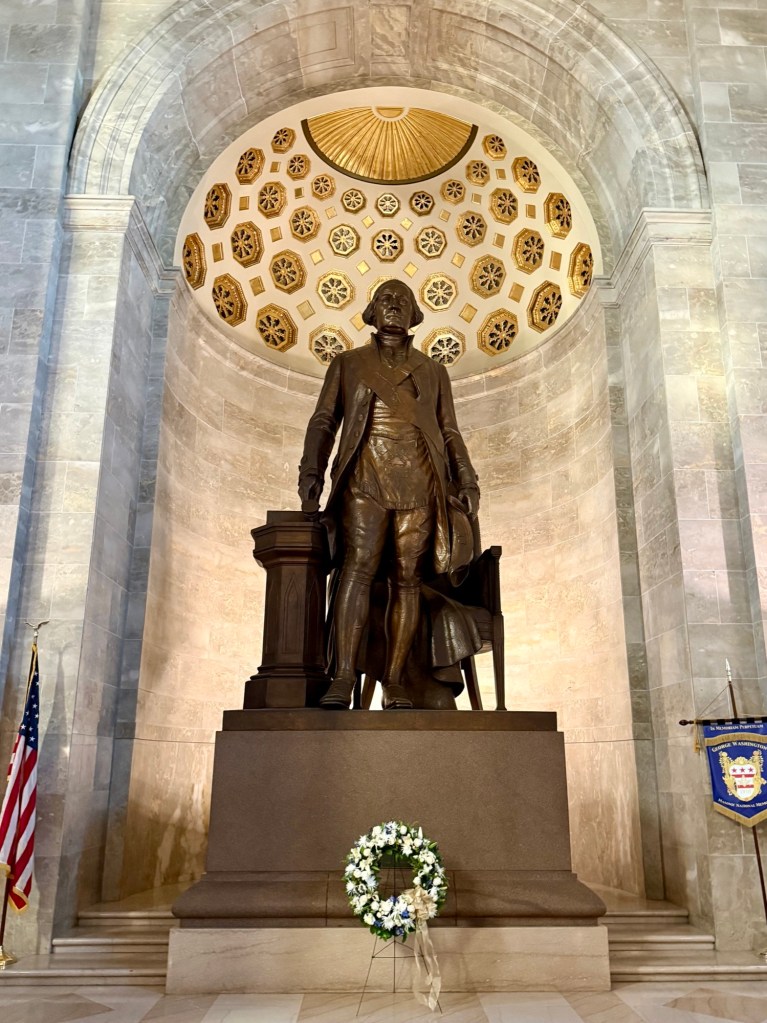
Mount Vernon is the famous estate and home of the first president, George Washington. The property was originally called Little Creek Hunting Plantation and was owned by his father, Augustine Washington. After his father’s death, the property was left to his older half-brother, Lawrence Washington, who renamed it ‘Mount Vernon’ after his old commander from the British navy, Admiral Edward Vernon (Vernon was a bit of a celebrity at the time and Lawrence felt that associating himself with Vernon’s name would elevate his social status).

After Lawrence passed away from tuberculosis in 1752, the property transferred over to his only surviving daughter, Sarah Washington. However, Sarah passed away just 2 years later and Lawrence’s widow Anne Fairfax inherited the property. By this time, Anne had already remarried and no longer lived at Mount Vernon. She leased it to George and when Anne passed away in 1761, George inherited the property outright as outlined in Lawrence’s will.

George and Martha lived on the property for the remaining 45 years of his life. Martha was already quite a wealthy woman when they married after inheriting the vast estate of her late husband. Together, her and George renovated the mansion and expanded the estate to include 5 surrounding farms – at its peak, Mount Vernon was 8000 acres!!

Today, Mount Vernon estate is renovated and preserved after what it looked like in the period when George and Martha lived here.

Scroll to the end of the page to continue the story of Mount Vernon ownership after George and Martha passed away.

Best time of year to visit?

You can visit any time of the year, however the best time to visit will be in the spring or summer when the plants and flowers in the gardens are in bloom. If you’re just here for history and to see the home of George Washington, then any time of the year will be fine.

Getting Around/Where to park?

  • Drive, walk, bus, subway…etc.
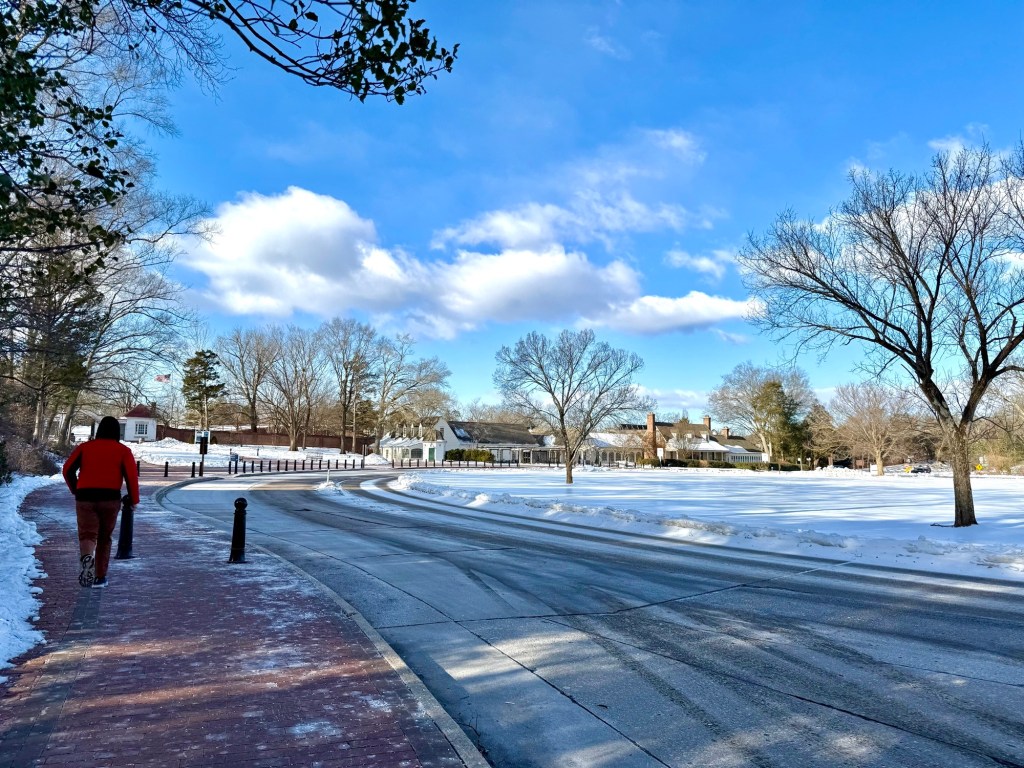
  • note: parking is not directly infrtont. At least 5 min walk. Plus another 10-15min walk to house to start your tours. Make sure you plan ahead of time!

How much is admission?

The cost to visit Mount Vernon can get quite pricey depending on whether you want to add on additional tours. I’d recommend buying tickets online early since the tours are timed and can sell out early. Mount Vernon gets very popular in the warmer months. Be warned: the online checkout process is like booking a ticket on a cheap airline – there are seemingly never-ending add-ons, so set aside a few extra minutes to make sure you’re buying tickets for what you want.

I’ve broken down the cost and the MANY tour options below:

  • Base admission cost (grounds pass): $30 per adult, $16 per child ages 6-11
    • Includes an audio tour, self-guided access to the historic area (including outbuildings, gardens, tomb, farm), and the museum. It does NOT include access to inside the mansion, which can only be seen with a guided tour.
    • On Saturdays and Sundays from April through October, you also get access to the distillery & gristmill.
    • The
  • Mansion tour (20 mins): +$2 per person
    • I don’t know why they don’t just include the tour in the price of the ticket since it’s only an additional $2.
    • If you join an in-depth tour, it will include the mansion tour as well so you don’t need to purchase it again.
    • These are timed tours, so you’ll have to select a time slow when booking your tickets.
  • The Enslaved People of Mount Vernon Tour (60 mins): FREE, but tour times very limited
    • A 60-minute walking tour that explores the lives and contributions of the many enslaved people that worked on this estate as well as the 5 surrounding farms that made up Washington’s 8,000 acre plantation.
    • This is a free tour, however the available times for the tour are very limited and books up early. We unfortunately couldn’t get a spot since there was only 1 tour time available the day we visited in the middle of winter. There should be more tour times in the warmer seasons.
  • Through My Eyes Tour (60 mins): +$10 per person
    • A 60-minute walking tour of the estate that is given by a character interpreter (Washington’s granddaughter, personal secretary, farm manager, or enslaved valet). They will go about their daily activities and make stops along the way.
  • In-Depth Tour (75 mins): +$60 per person
    • A 75-minute walking tour of the estate grounds including the mansion, the farm, old tomb, and a bit of the trails. It also touches on the subject of the enslaved people that worked on this estate and surrounding plantations.
    • This is the most in-depth and comprehensive tour. This is also the only tour where you can look inside the old tomb where George Washington was originally buried.
    • Although pricey, choose this option if you want to get the best understanding of the estate, but keep in mind that you also get free audio guides with a standard admission.
    • This is the tour we chose. We had limited time to spend here and we decided that a walking tour would be the best way to get the most of Mount Vernon!
  • Photo Cruise Tour (45 mins): +$7-$11 per person (warm seasons only)
    • A 45 minute cruise on the Potomac River about the history of the river and how it contributed to Washington’s business ventures.
    • Offered in warm seasons only – check the website for updated times
  • Gardens and Landscape Tour (60 mins): +$10 per person (warm seasons only)
    • A 60 minute tour of the gardens and landscape of Mount Vernon
    • Offered in warm seasons only – check the website for updated times
  • Hamilton the Musical Tour (60 mins): +$10 per person
    • A brand new tour on offer.
    • Although there’s no record of Alexander Hamilton visiting Mount Vernon, this 60 minute tour explores Washington’s views on many of the themes that the musical addresses.

If you want to keep costs to a minimum, I’d recommend just booking a general admission ticket which will come with a free audio guide that you can do at your own pace, a $2 mansion tour, and reserve a spot for the free enslaved people tour. The general admission gives you access to the entire estate that includes the museum, outbuildings, film, and both old and new tomb.

If you’re looking for the most comprehensive experience with a guide, book the In-depth tour which includes a short walk around the grounds and a tour inside of the mansion, then take the free enslaved people tour to get more behind-the-scenes insight, although the in-depth tour will also touch on this subject. Consider adding on the gardens tour if you’re into the landscape and the flora of the estate and the photo cruise tour if you want a different view of the property.

*NOTE: It takes at least 10 minutes at a good pace to walk from the parking lot, through the entrance, out the back garden to the actual mansion itself, so book a tour time at least 20 minutes after your intended arrival time to give yourself plenty of time!

How much time do I need here?

It depends on whether you want to do a tour and how thorough you are. You can split up your visit into 3 parts:

  • Film: A 22 minute video at the visitors center
  • Museum: A decent size George Washington museum where you can learn about him, his family, and see artifacts that belonged to him
  • Estate Grounds: Where you can wander on your own or with a guided tour. The estate includes his tomb, the home, and small buildings where the enslaved worked

If you want to do everything thoroughly, plan for at least 5 hours here (depending on which and how many tours you book). We were in a bit of a time crunch and spent about 3 hours here where we were able to fit in the 75min in-depth tour, walking around the grounds on our own, and going through the museum at a moderate pace. We didn’t have time to watch the film.

What to expect at Mount Vernon:

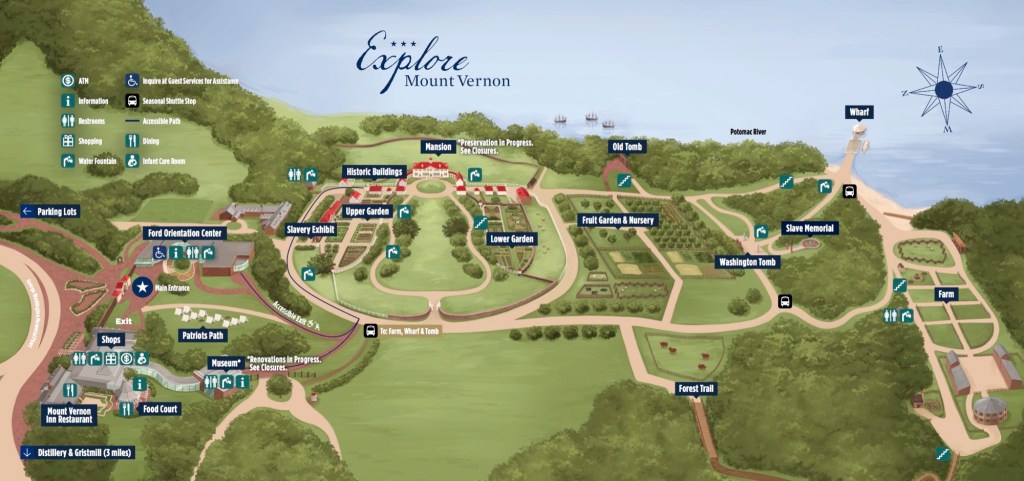
The grounds to Mount Vernon are massive. I’ve attached a map below to give you an idea. The main things to do are concentrated around the visitor center/museum area and the mansion and the surrounding small buildings and gardens. There are walking paths that will lead you to the old and new tomb as well as the Slave Memorial.

There’s an attached farm, forest trail, distillery, and wharf that are further out from the main part of the property that we did not visit and was not highlighted by the staff.

Parking & The Visitors/Orientation Center

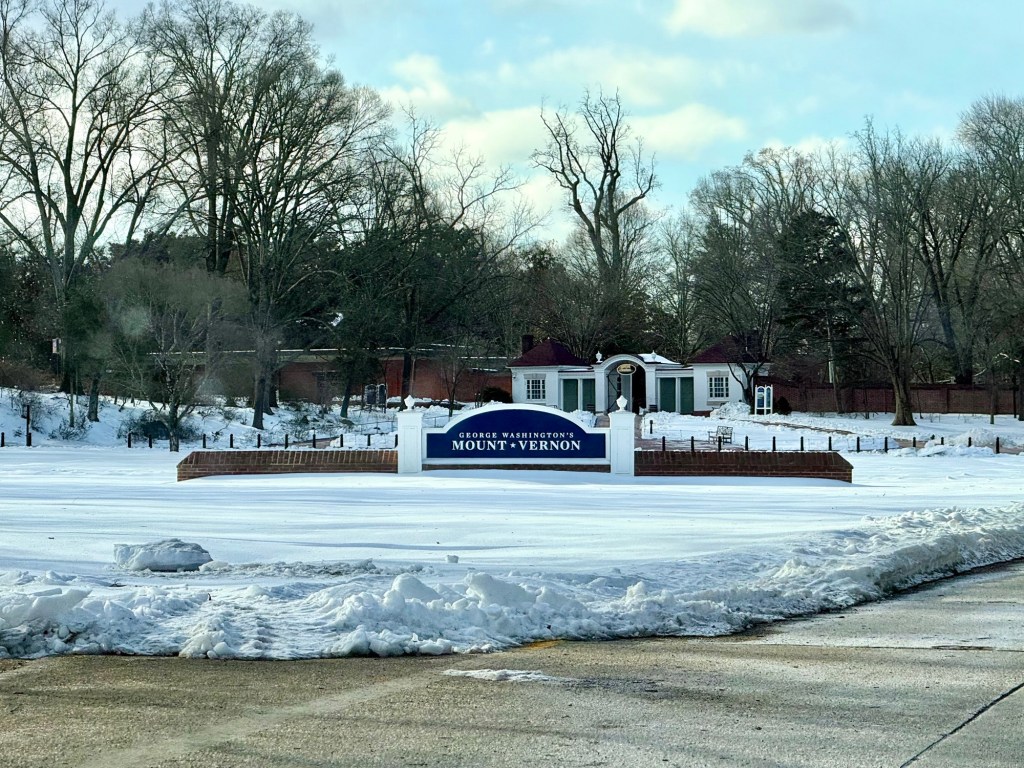
There is plenty of parking available at no additional cost, however the parking lot is a small distance from the visitors center that requires about a 5 minute walk. If you have people in your party that need a little extra time or assistance walking, consider dropping them off at the front gate before heading to the parking lot.

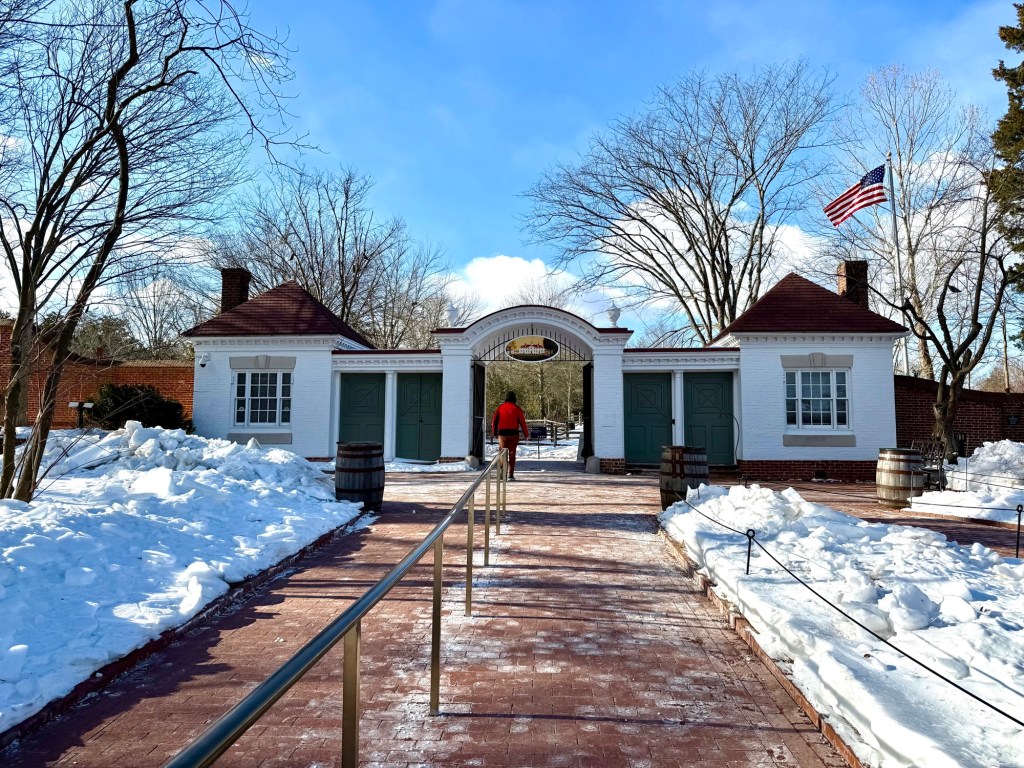
Once you reach the front gate, continue walking and you will see the visitors center where there will be security screening before you can enter the property.

Inside the visitors center:

Revolutionary War Theater

The Revolutionary War Theater is attached to the visitors center. It shows a 22 minute 4D film (yes, with special effects) called Washington’s War. It highlights George Washington’s role in the Revolutionary War that led to the independence of America.

The film plays every half hour starting at 9:30 a.m. with the final showing at 5:30 p.m.

Admission to the film is included in the ticket price.

George Washington Museum

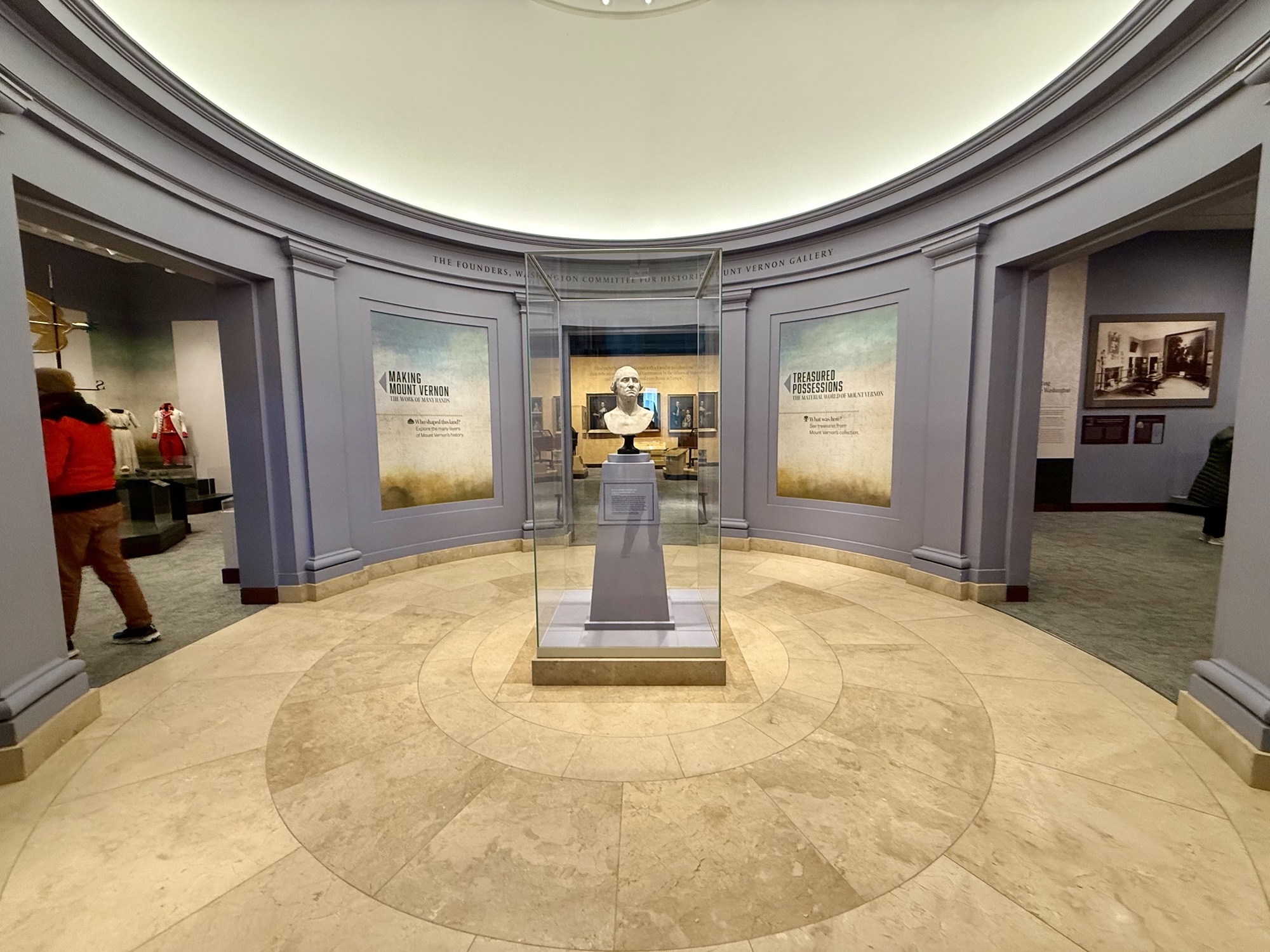
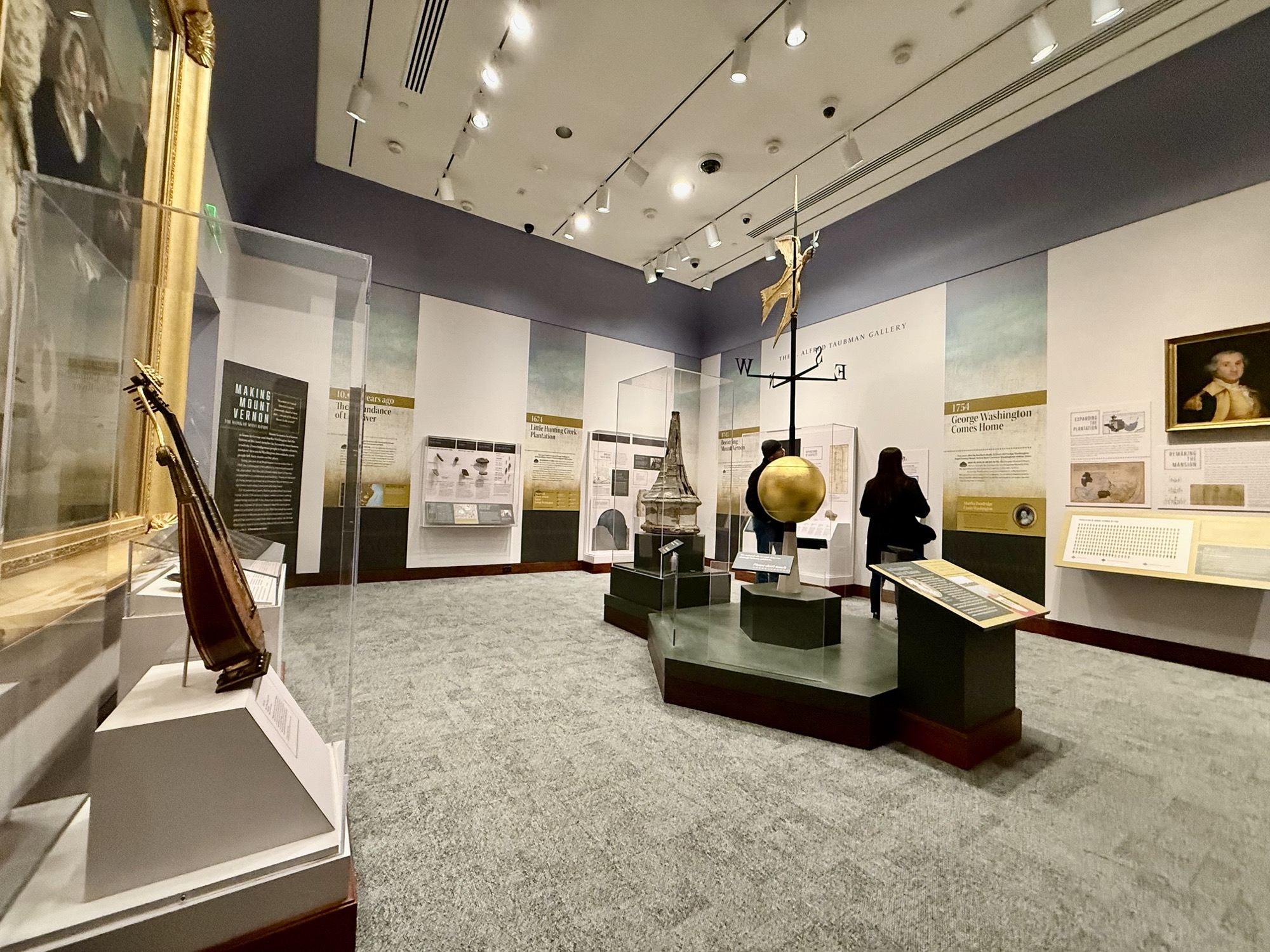
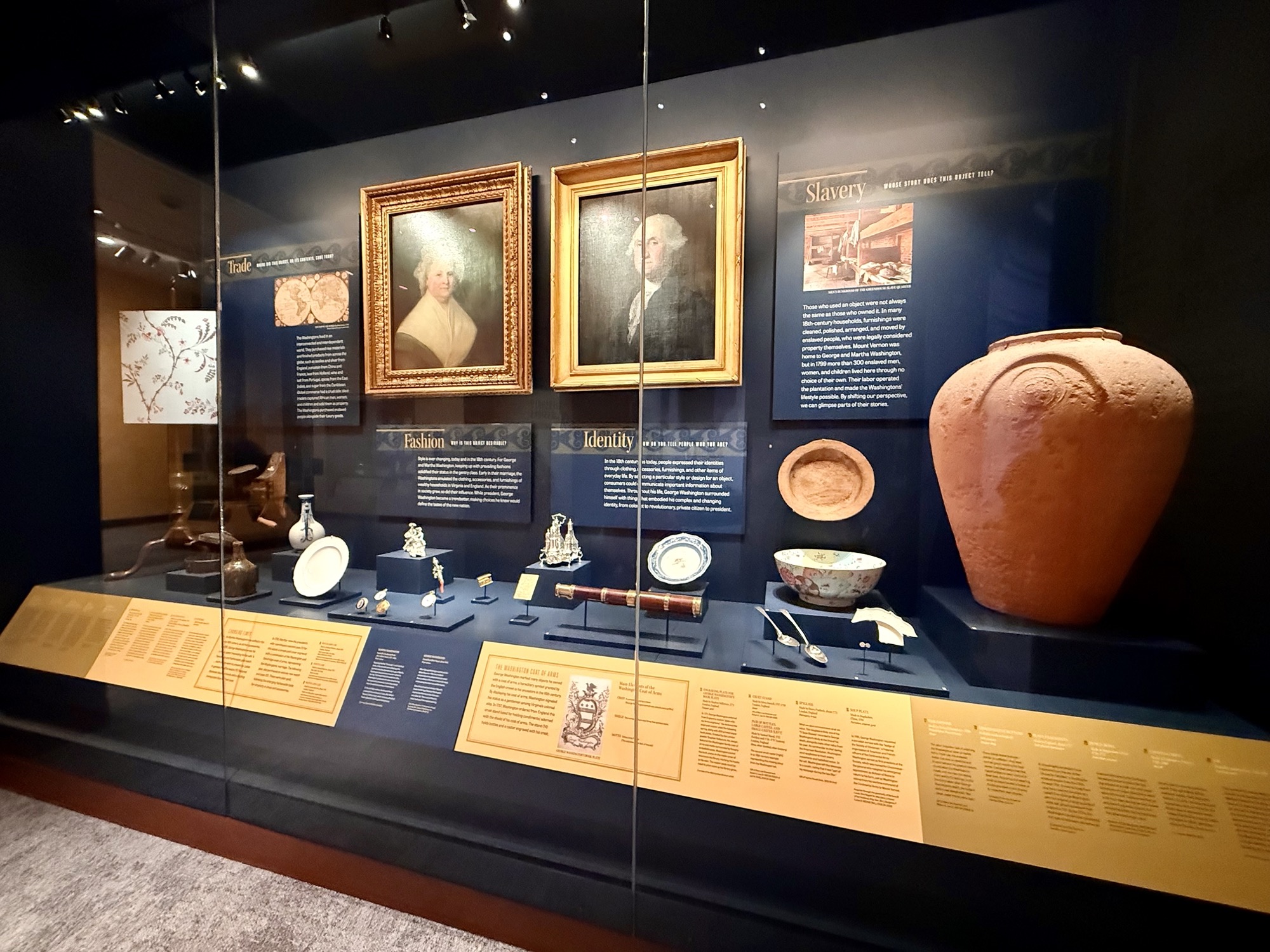
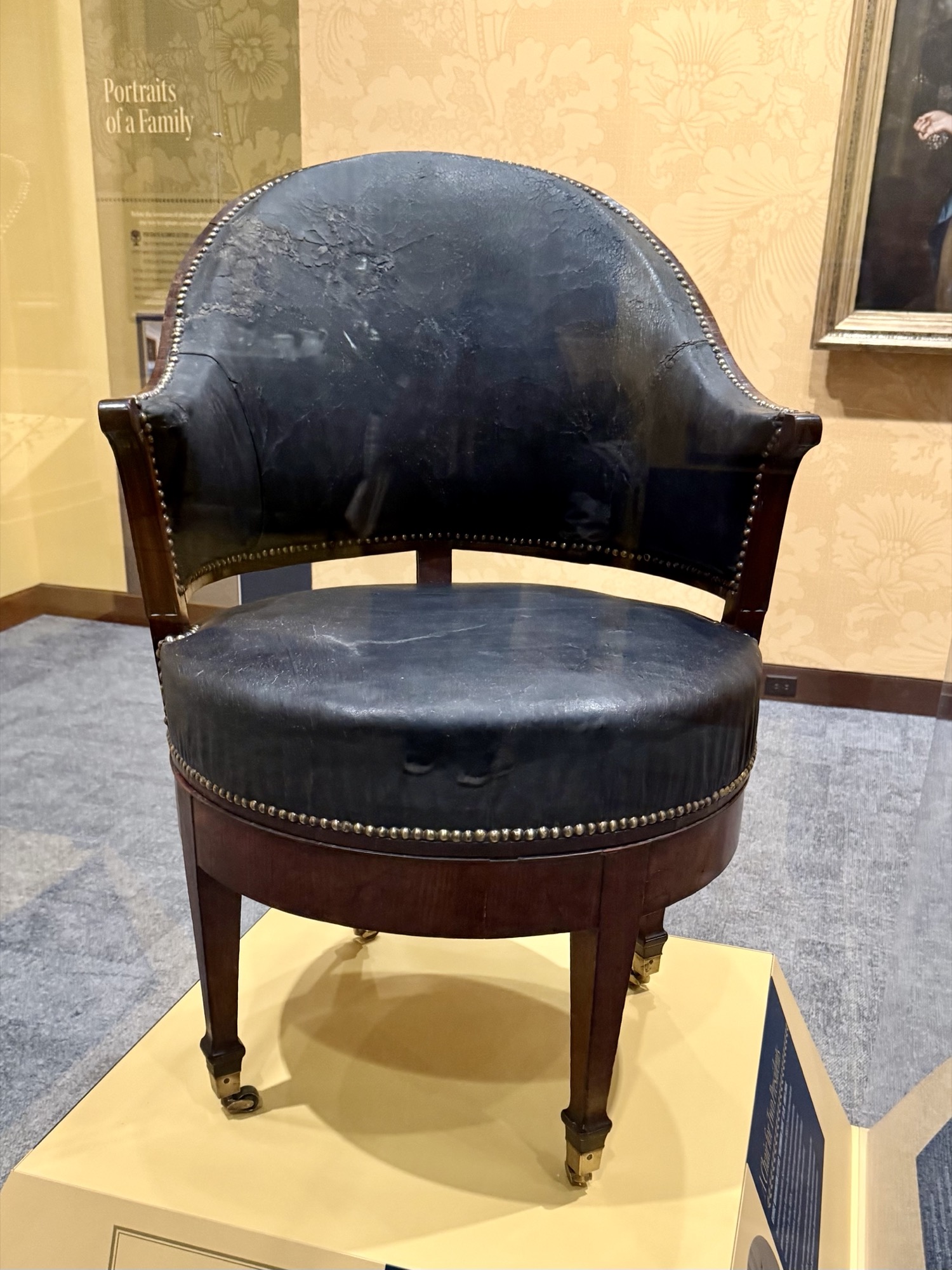
The George Washington Museum is also attached to the visitors center. This is where the bulk of the information lies about the life of George Washington, his estate, and his family. There are artifacts here that he owned and there’s a lot of interesting information here. I’d recommend coming here first before heading up to the estate for background information to appreciate the grounds better.

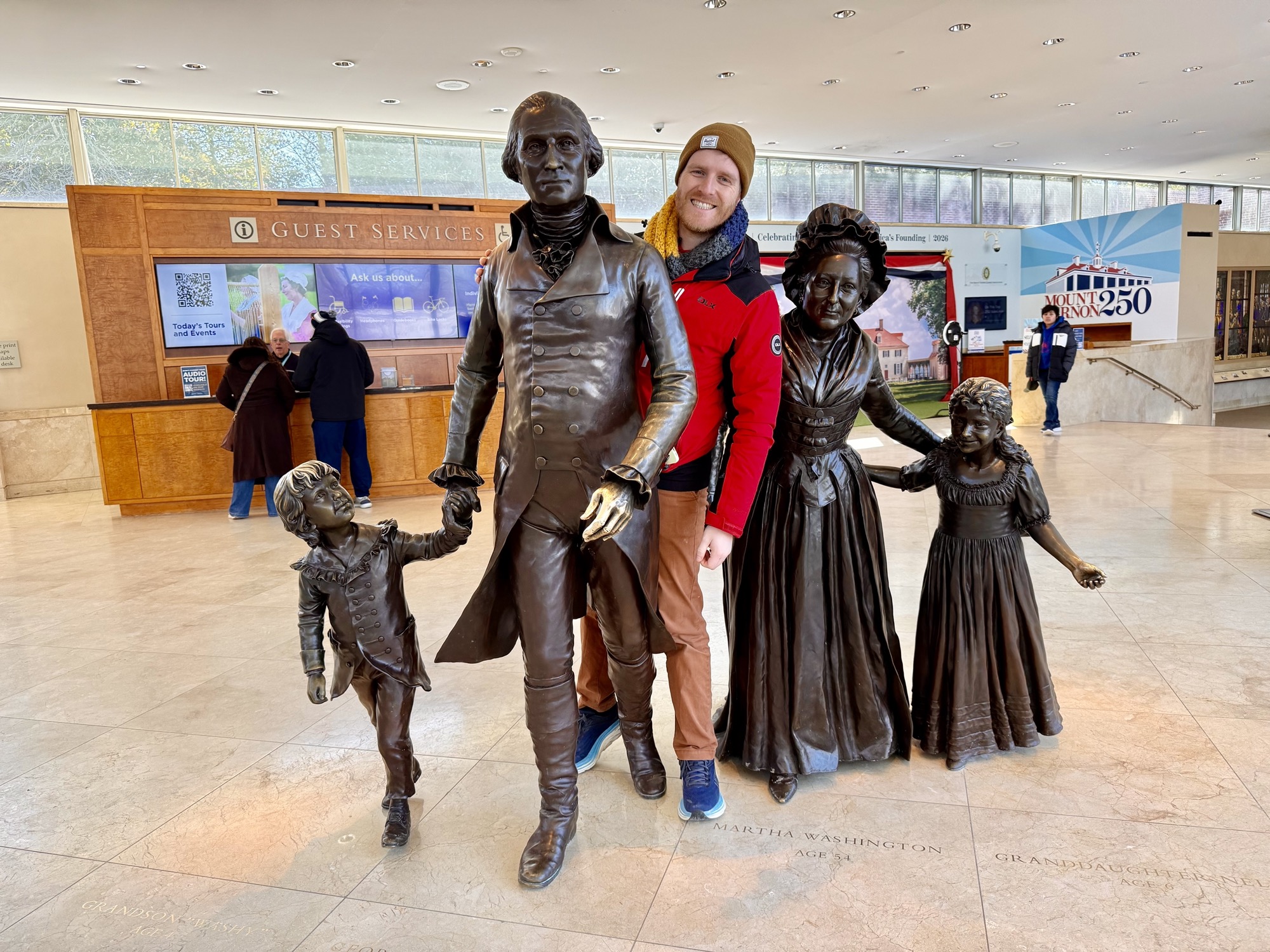
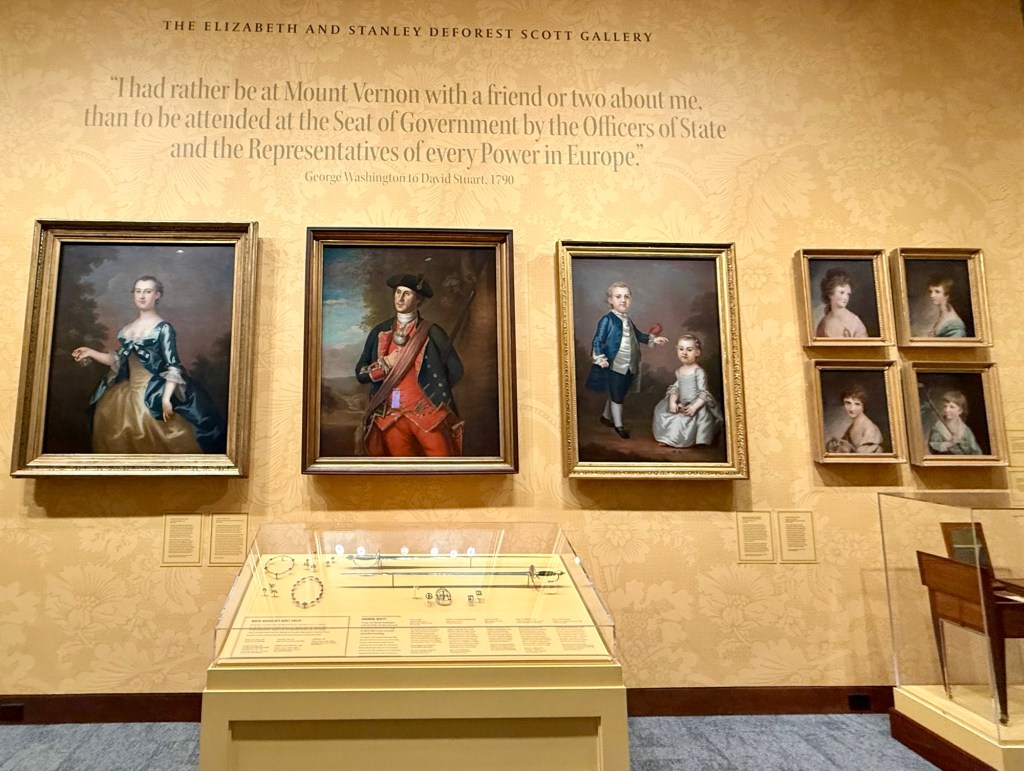
Portraits of the family from left to right: Martha and George. They never had children together. The two children in the portrait beside them are from Martha’s previous marriage. One of them passed away early and the other had 4 children (grandchildren to George and Martha) depicted on the far right.
Mansion and Estate

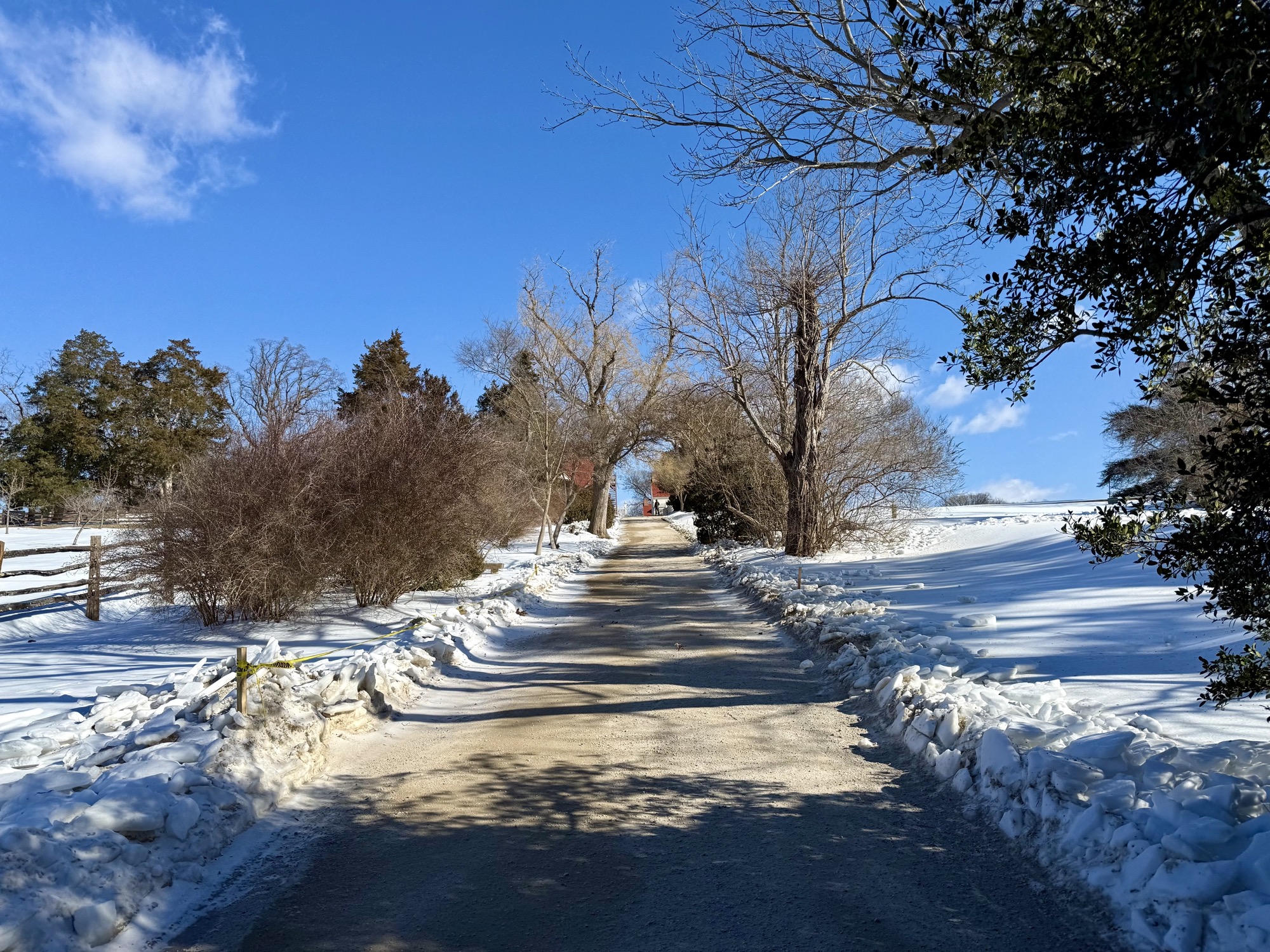
The mansion and the rest of the estate is about a 10-15 minute walk from the back of the visitors center (see the attached map above for reference). If you have a timed tour, be sure to give yourself extra time to walk to the top where the tours start. It’s a slight uphill walk through the gardens on a paved pathway.

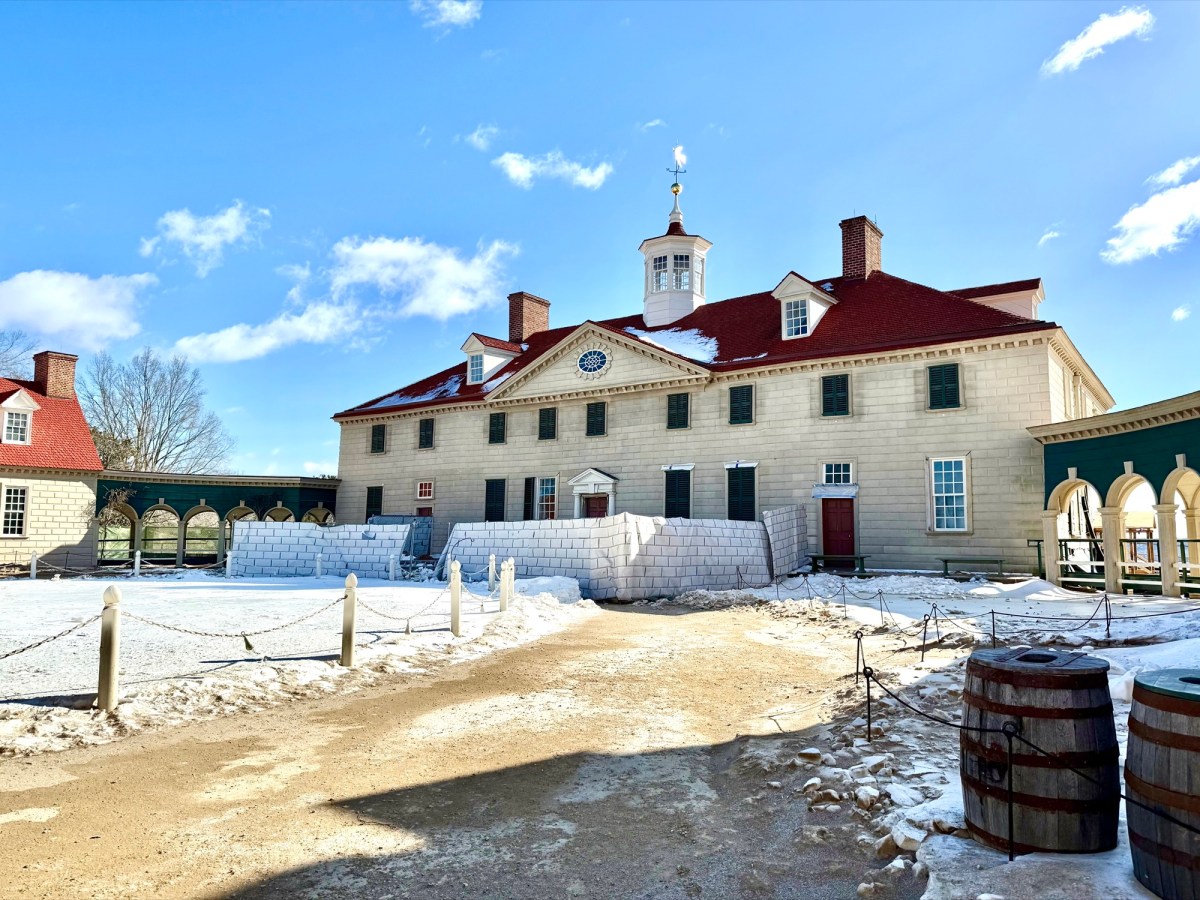
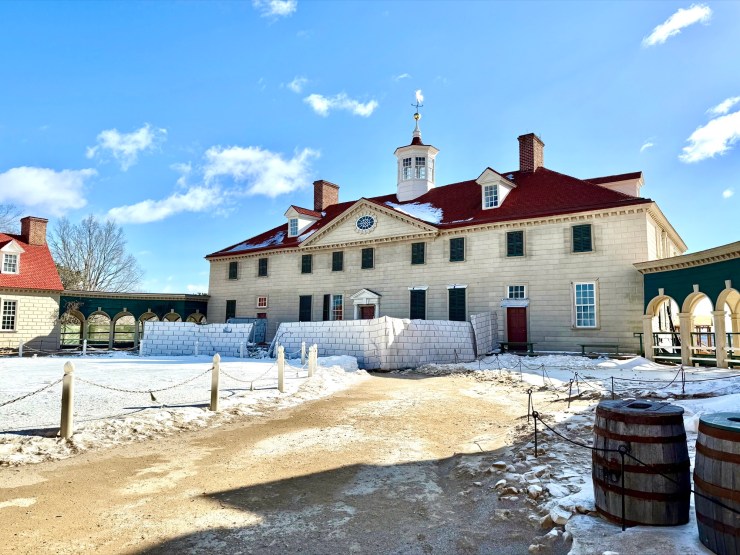
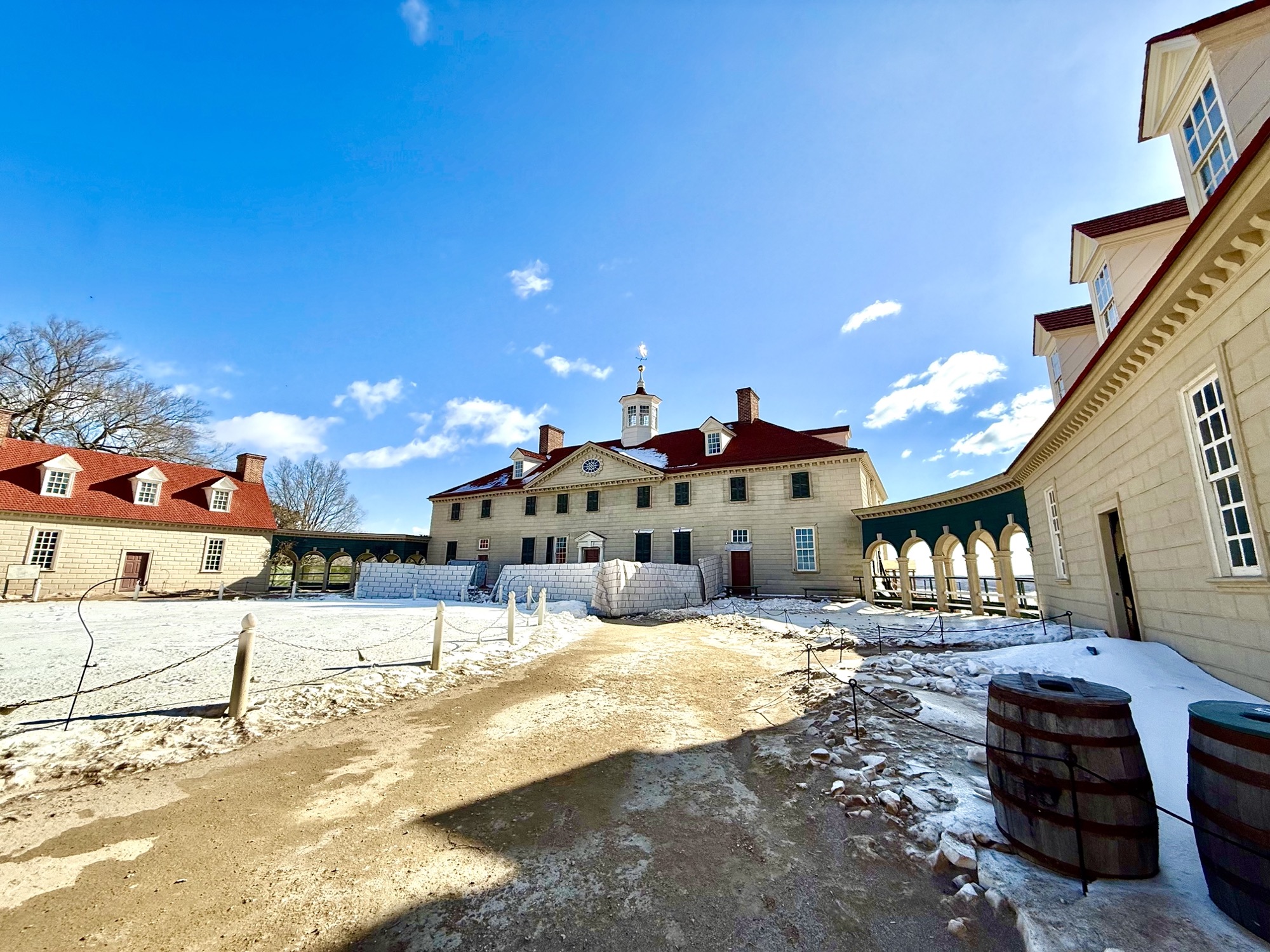
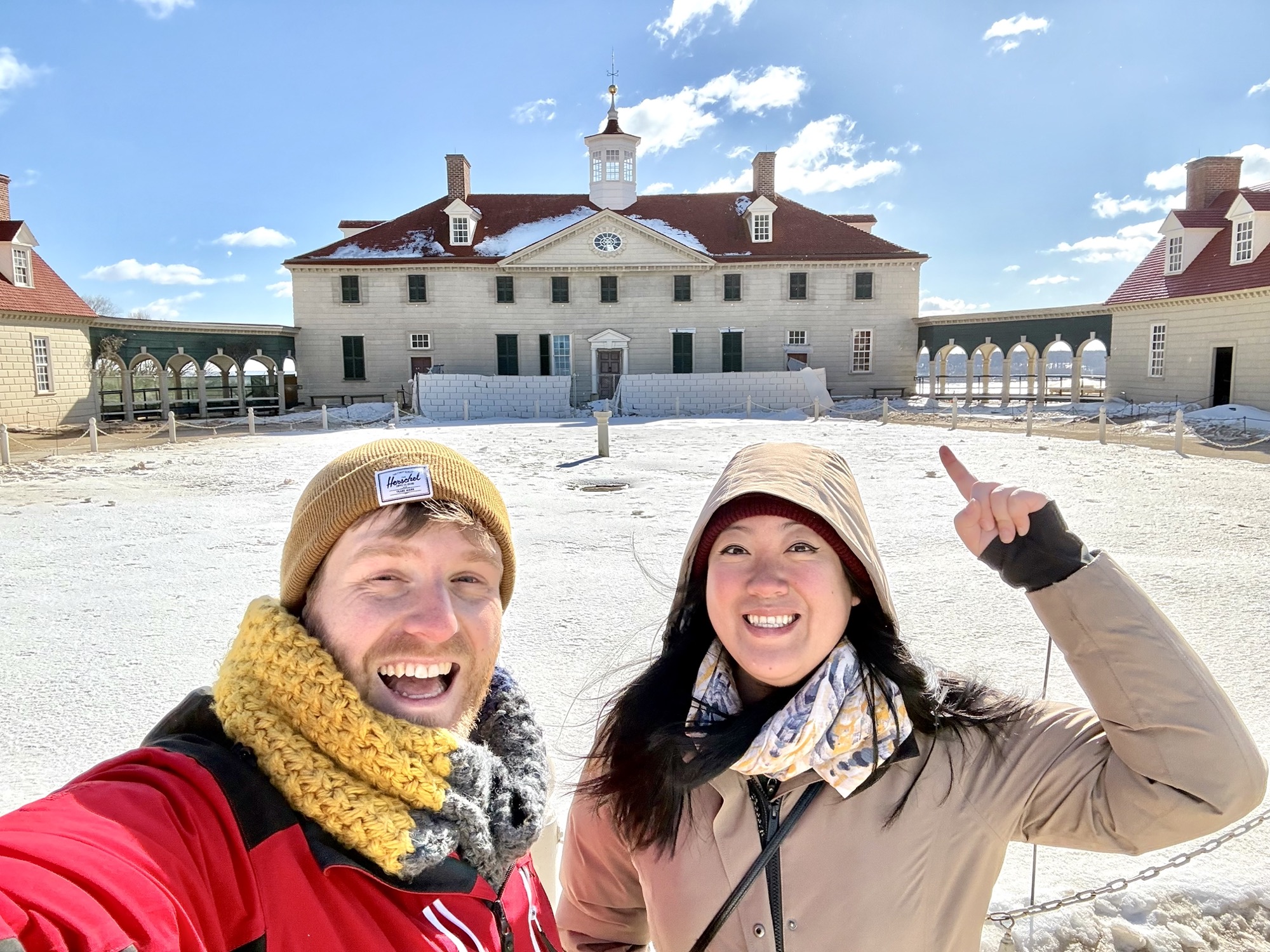
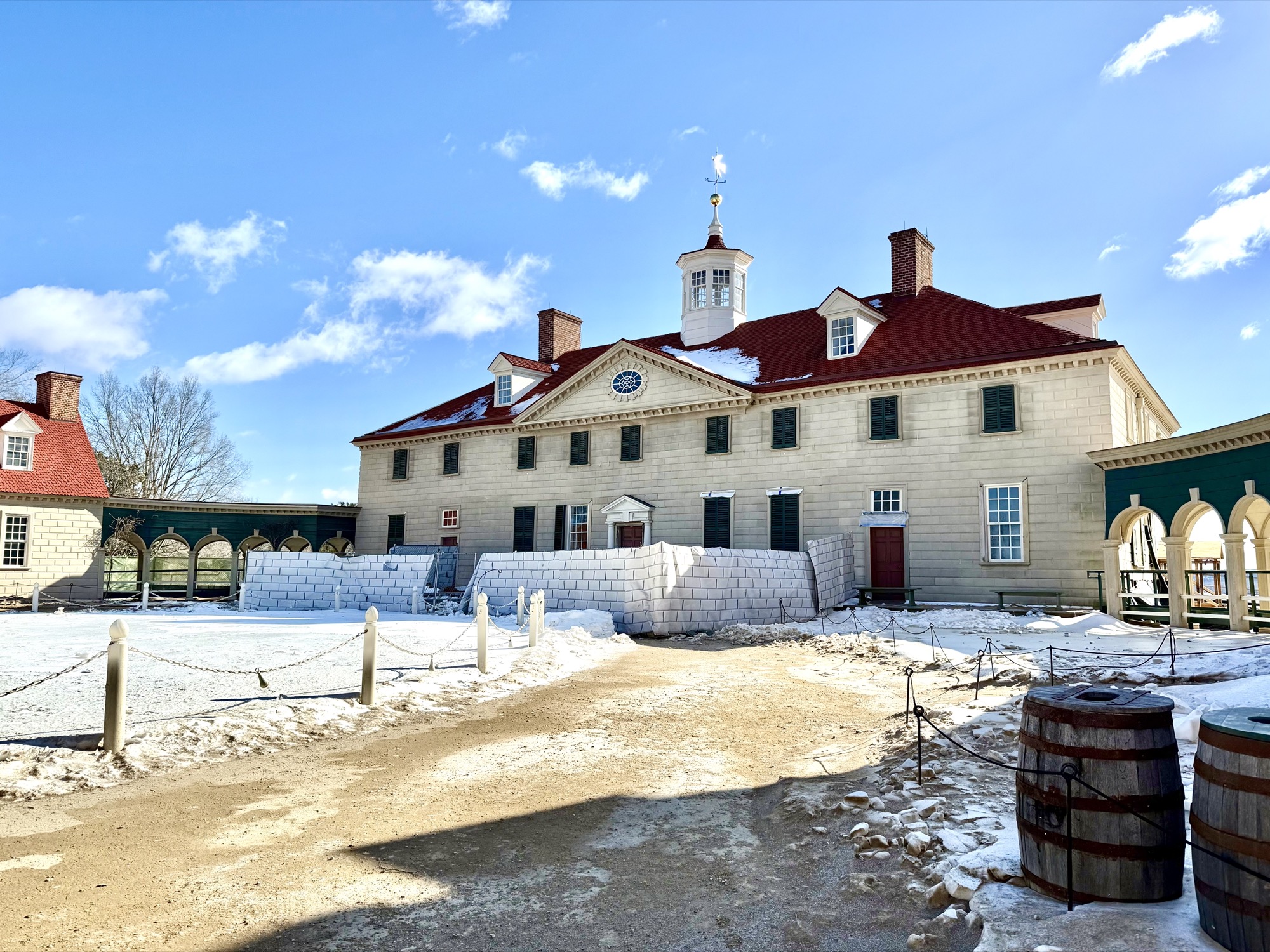
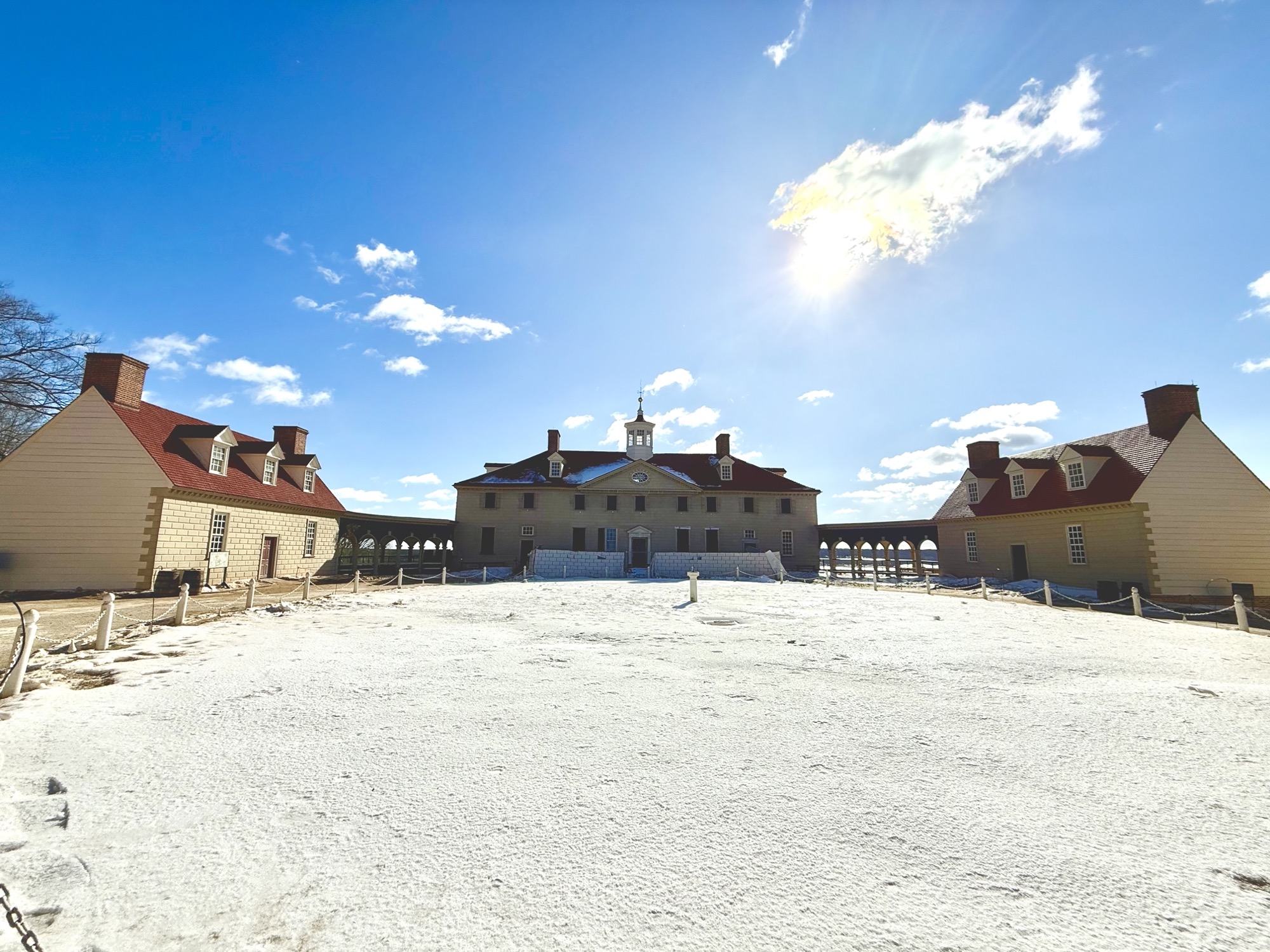
The outside of the mansion was partially under renovations when we visited. They were doing some upgrades around the property as well as the gardens in preparation for America’s 250th anniversary this year and the peak summer tourism.

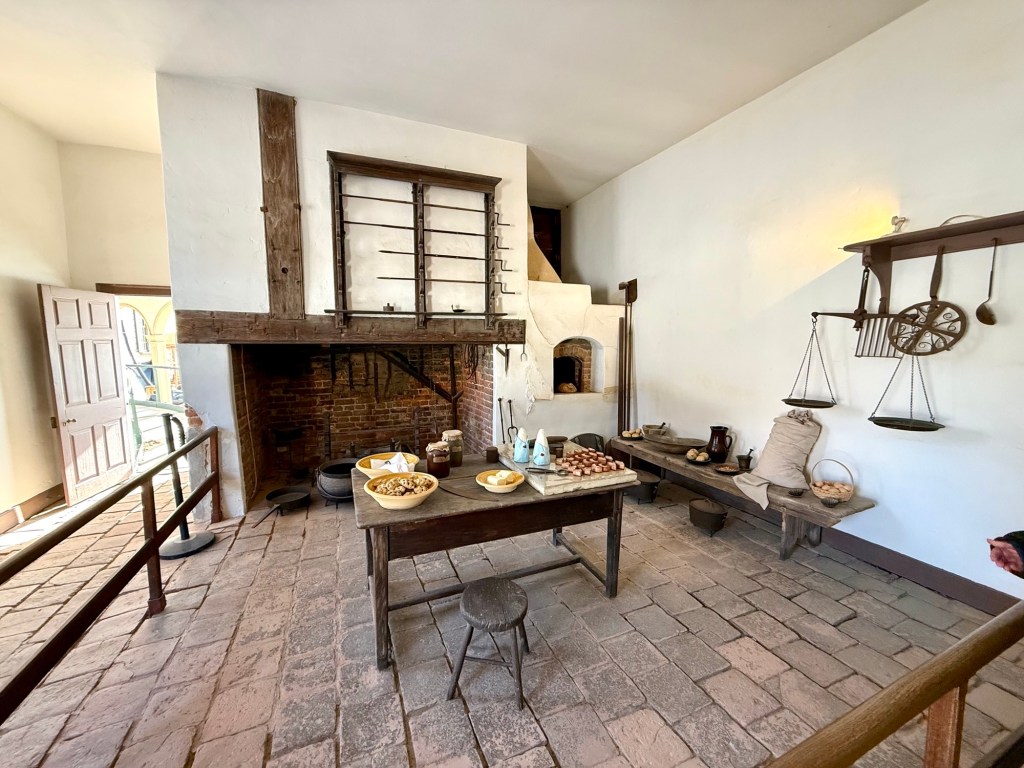
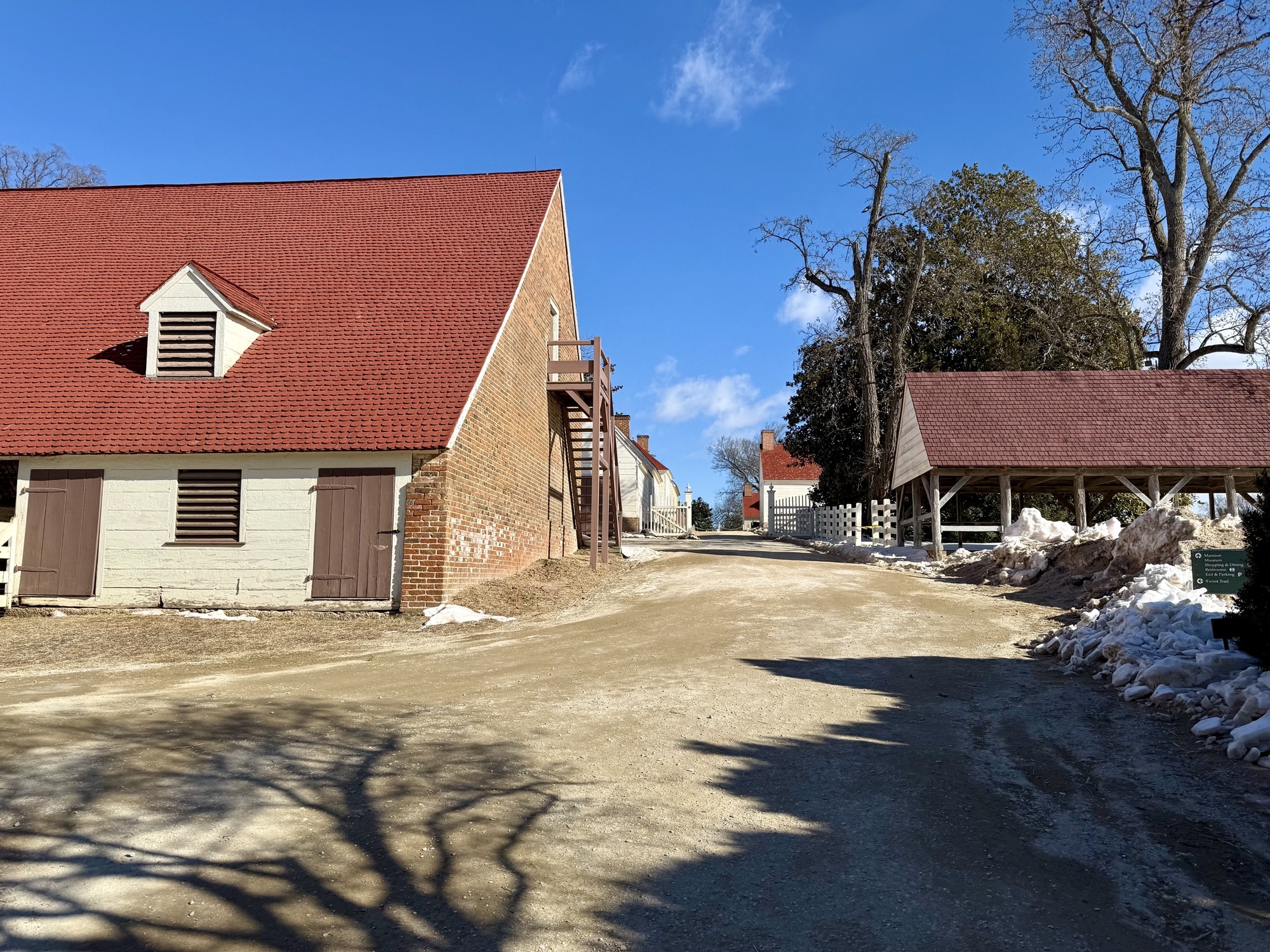
The main mansion is in the center and is flanked by smaller buildings on either side. To the left is ‘Servants Hall’ where it was used by visitors’ servants and to the right is the kitchen which is separated from the main building in case of a fire.

You need to book a guided tour to get access inside of the buildings. It’s an additional $2 on top of your admission fee and tours are timed. If you ask me, they should’ve just charged an extra $2 to the admission fee to include the mansion tour to make it easier for people rather than having to book a separate ticket. Most people come here to see the mansion anyway. If you don’t have a ticket, you have to go all the way back to the visitors center to reserve one and hope there are time slots left. 😒

*The mansion tour is included in the “In-depth Tour”.

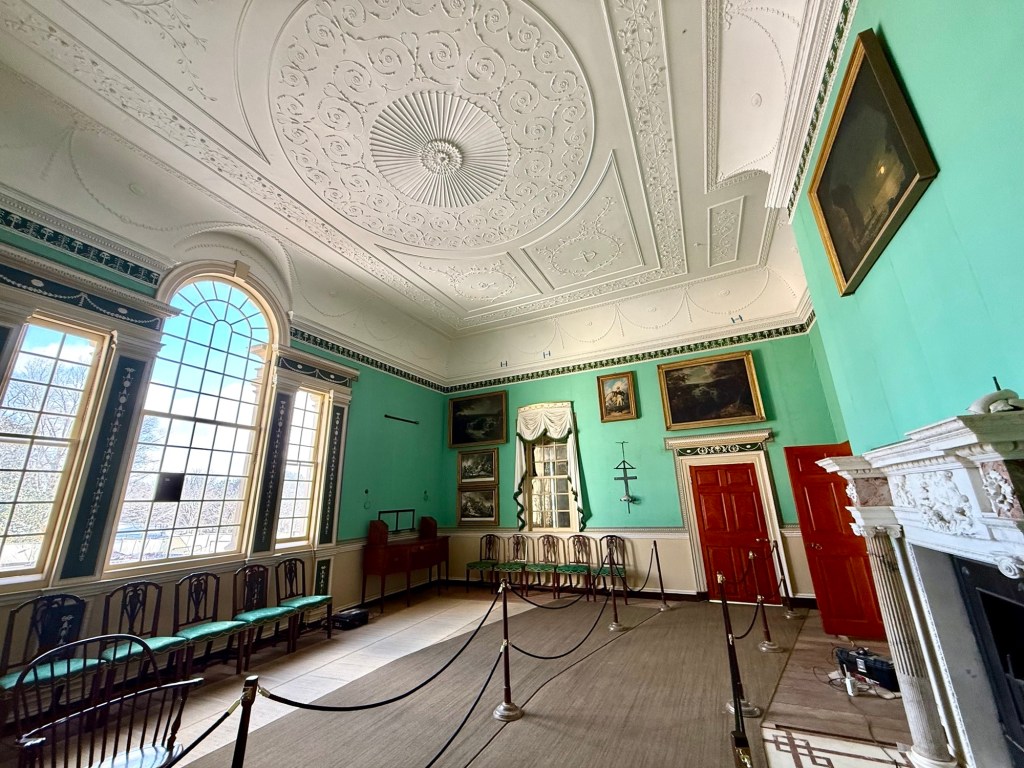
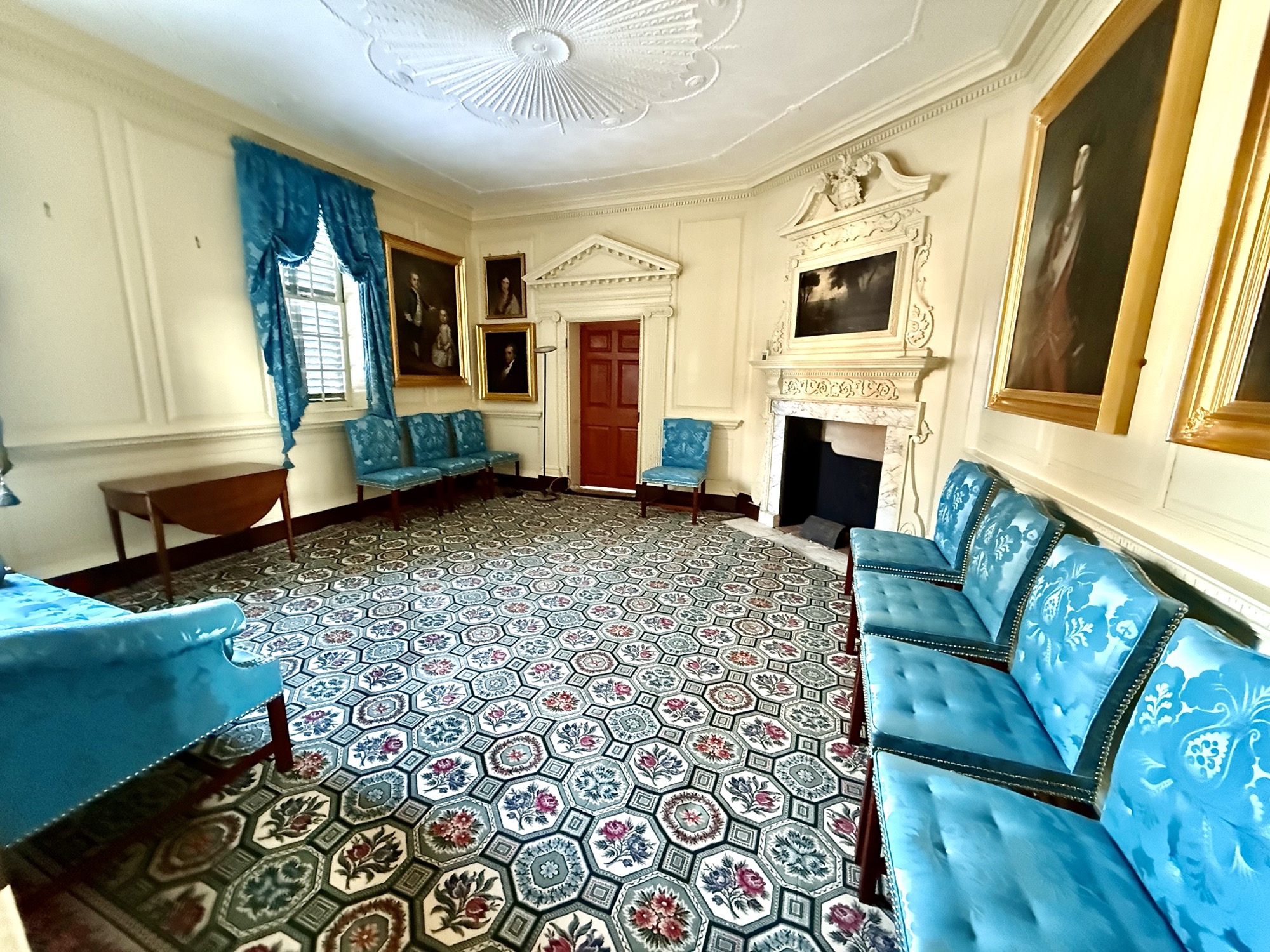
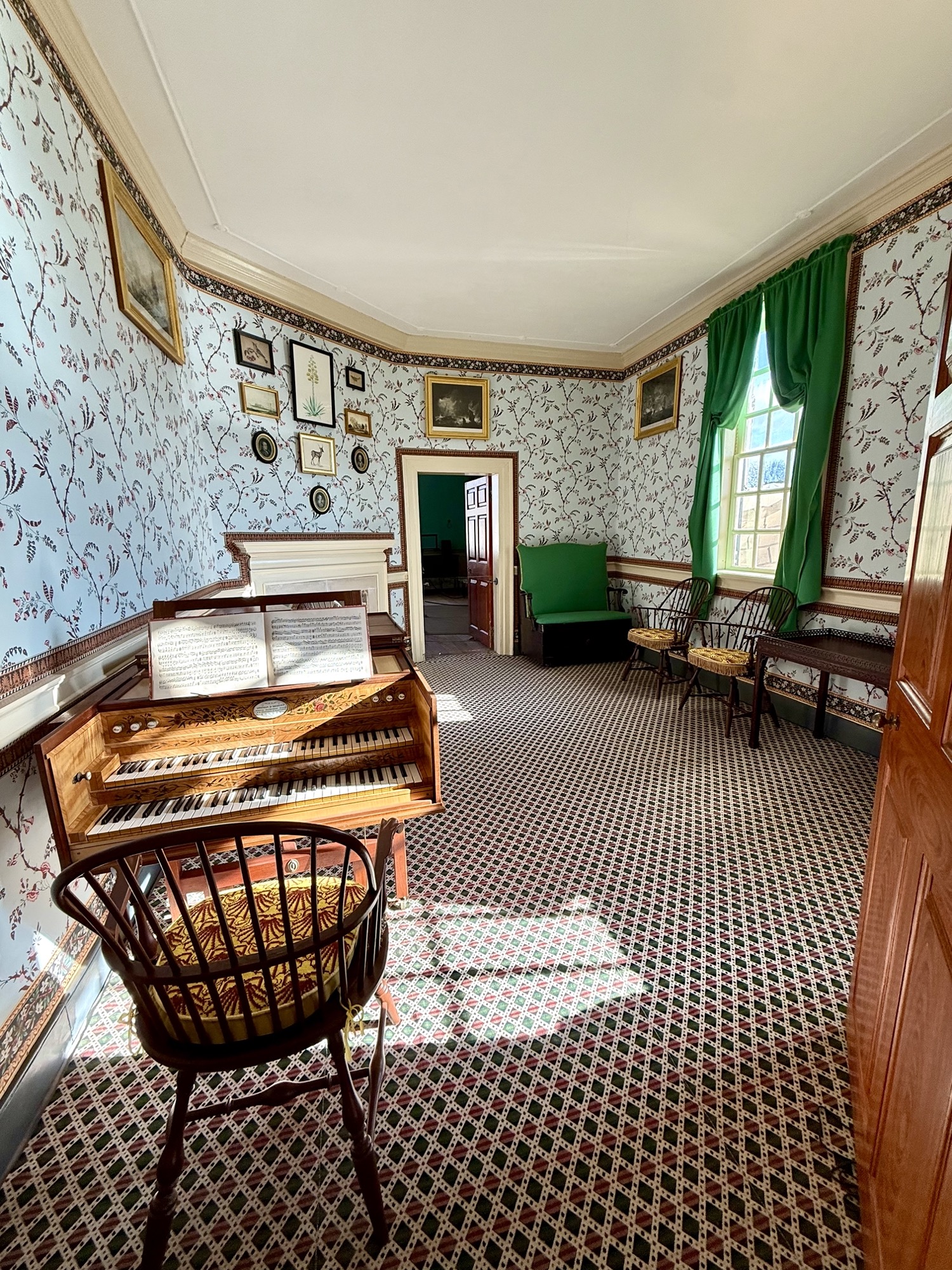
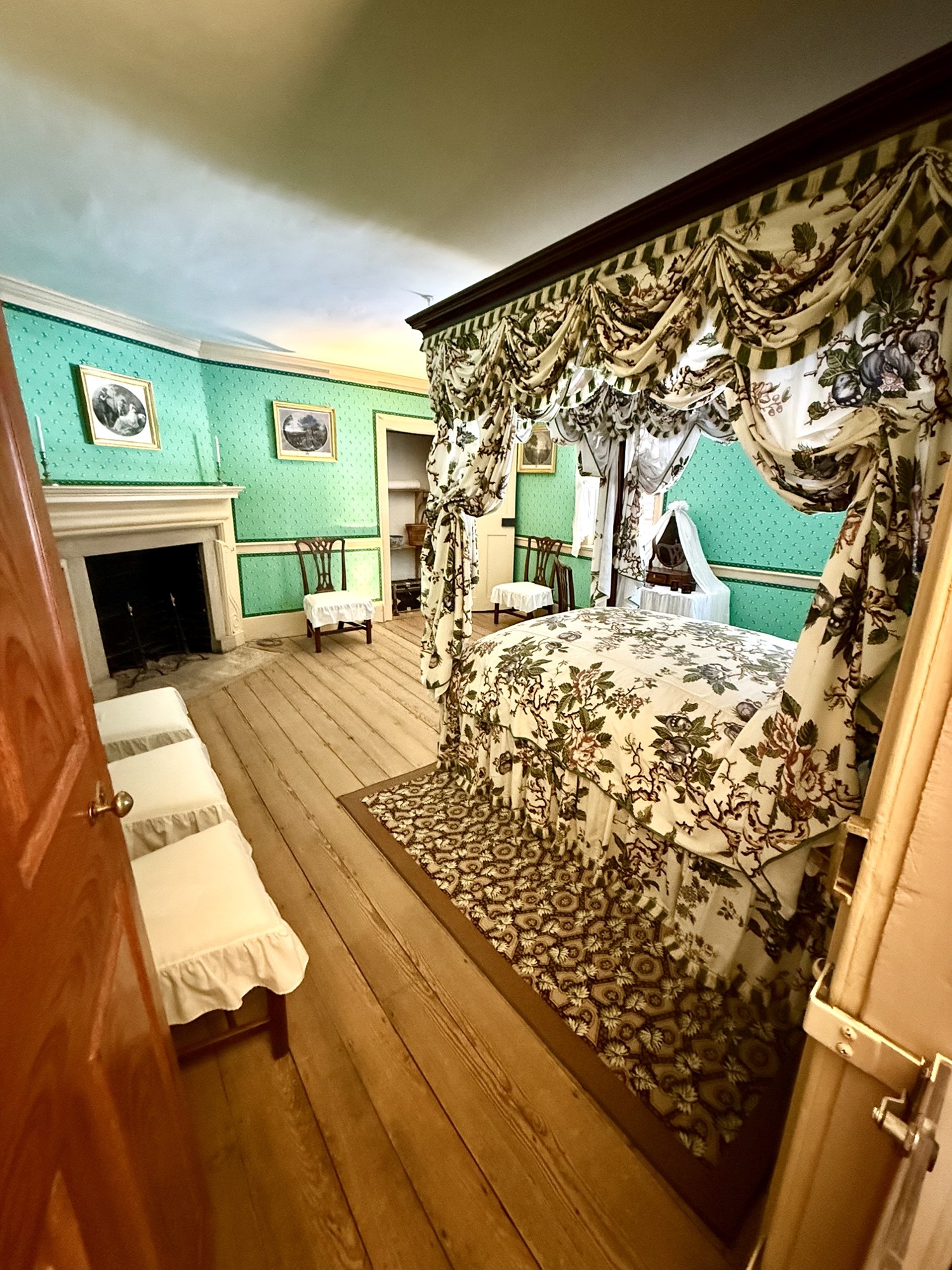
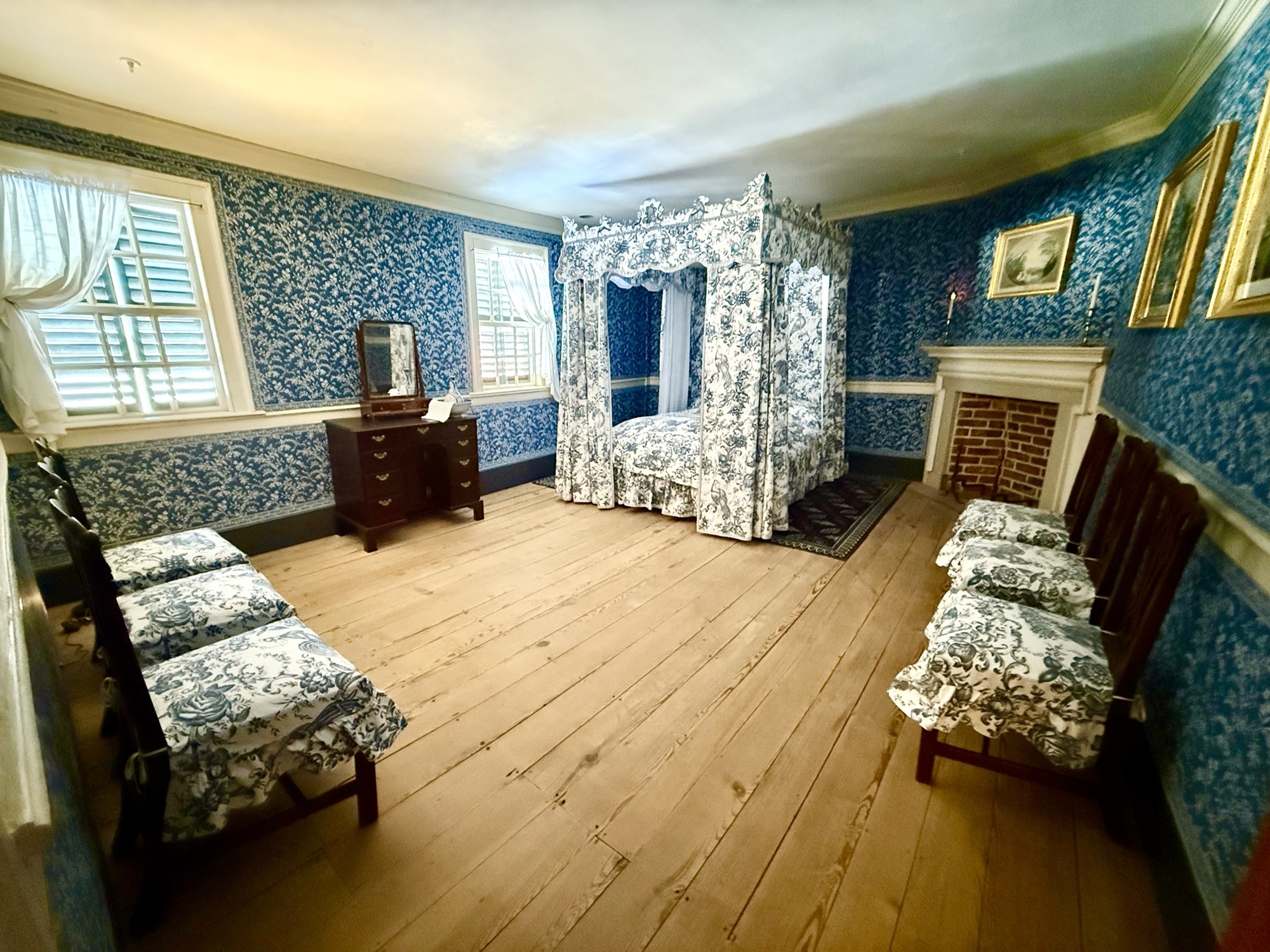
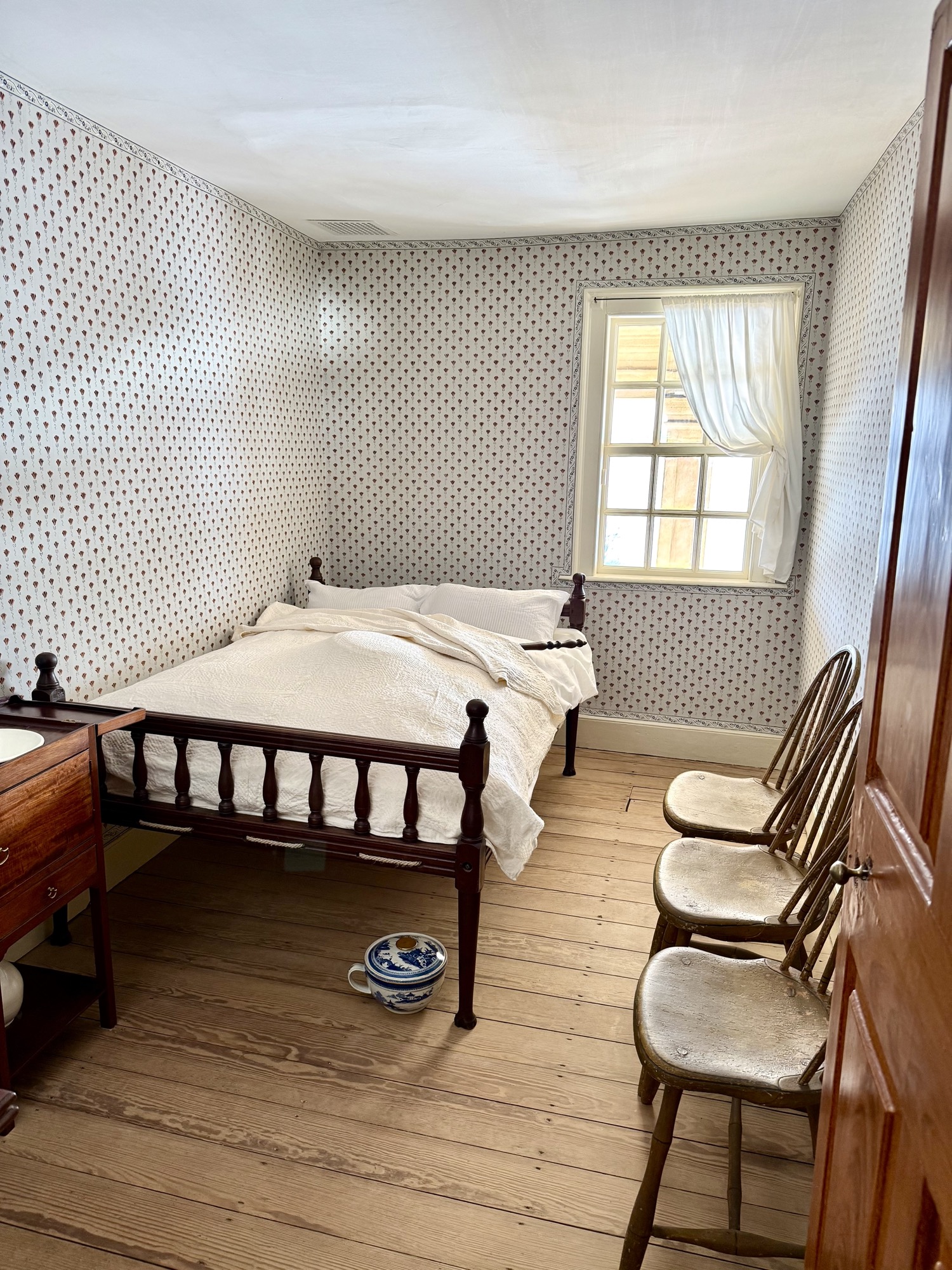
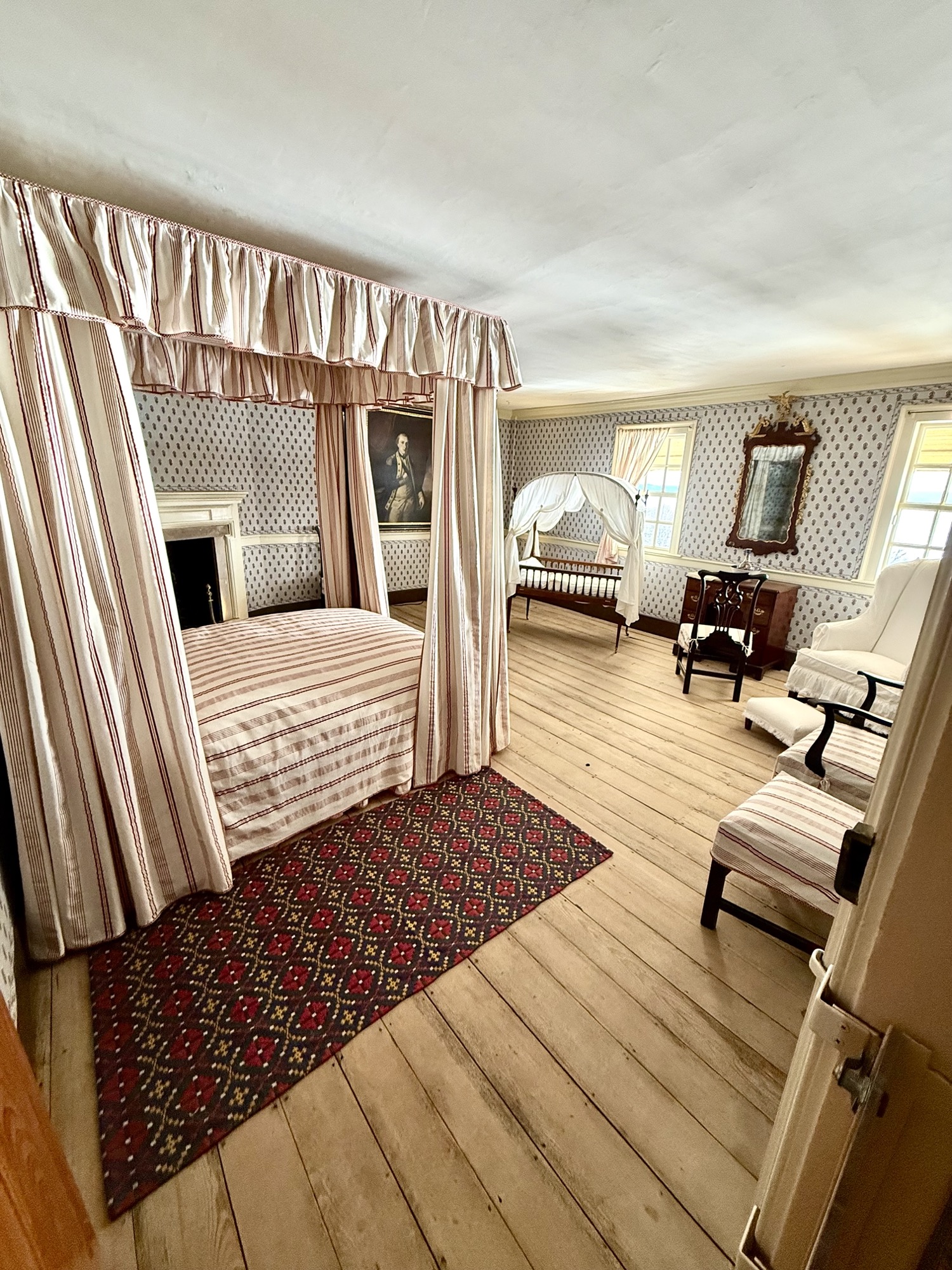
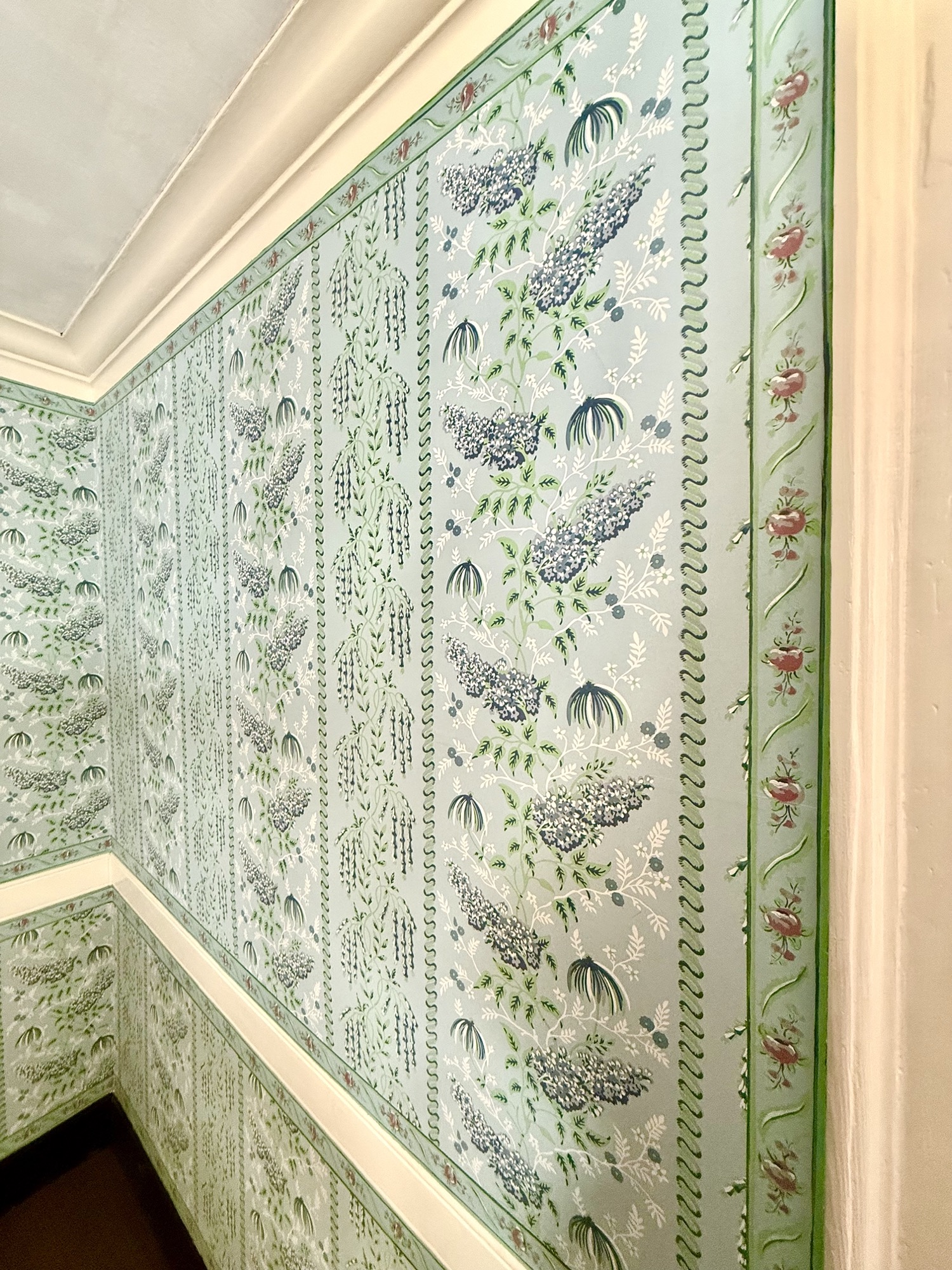
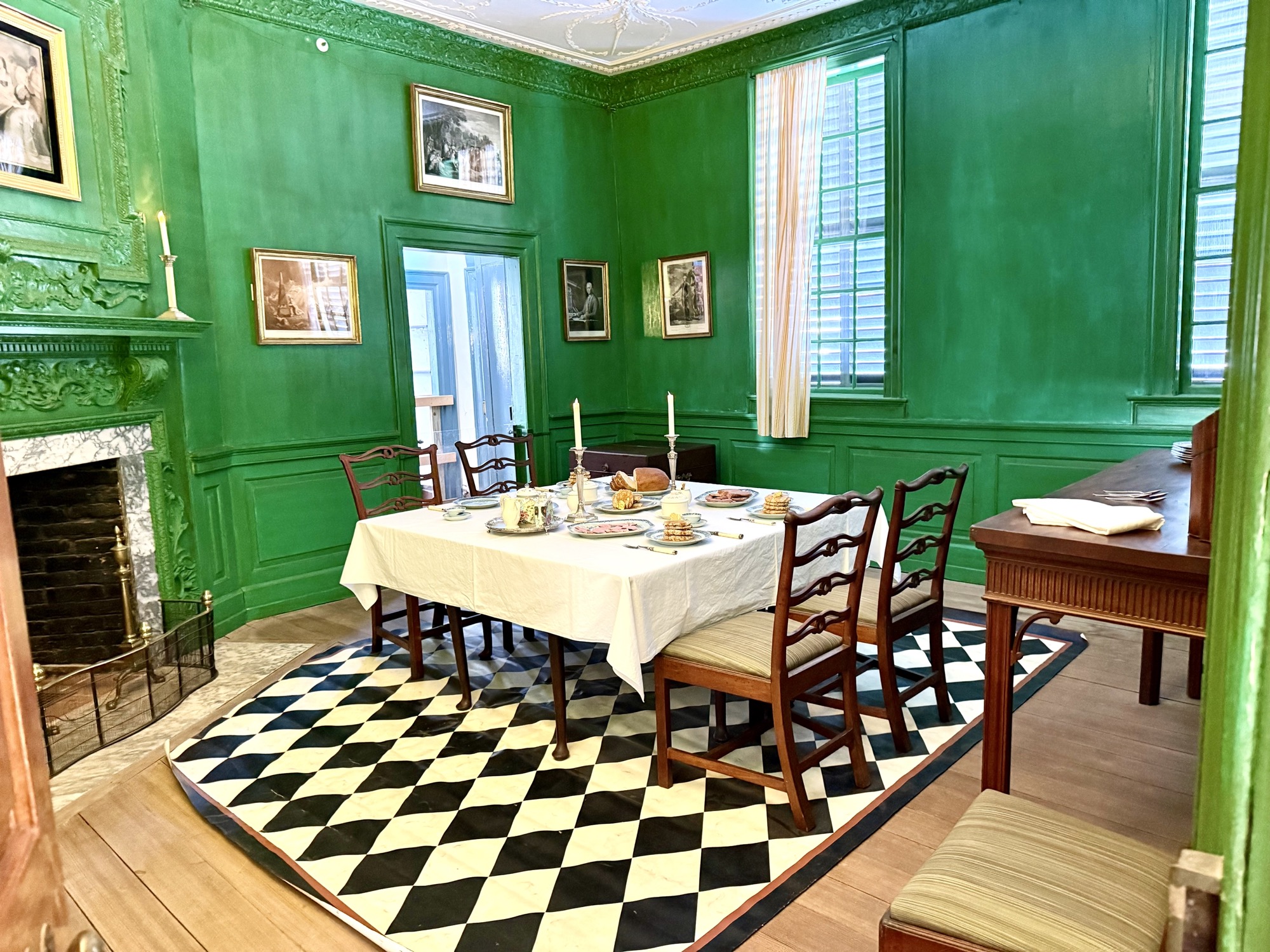
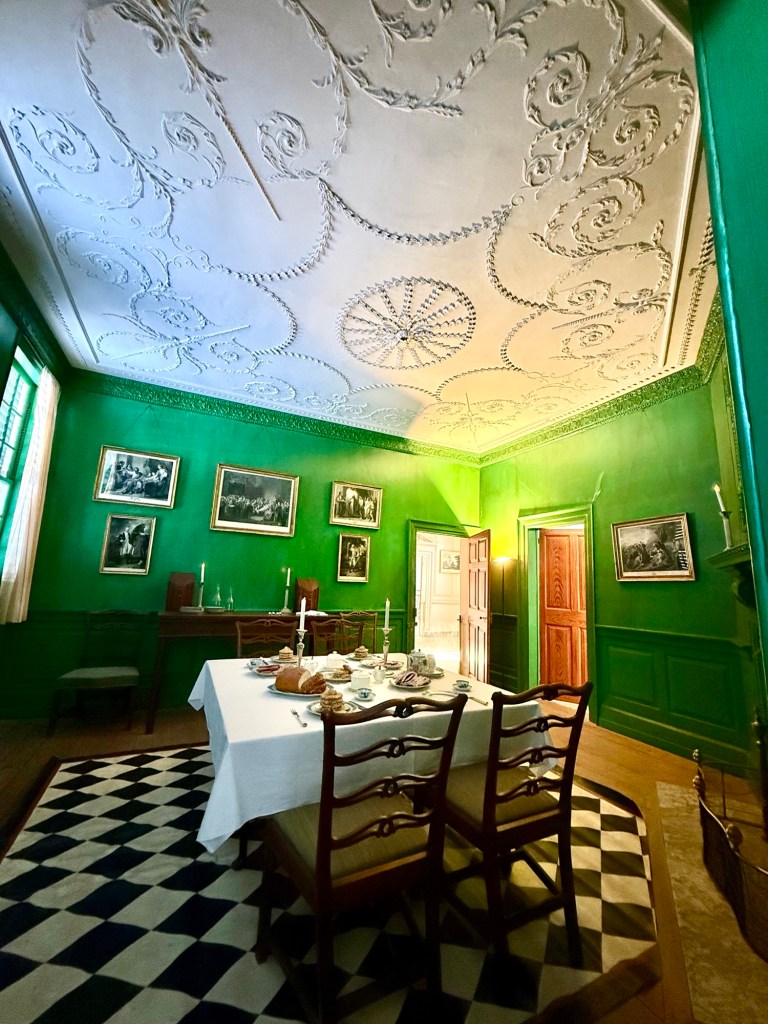
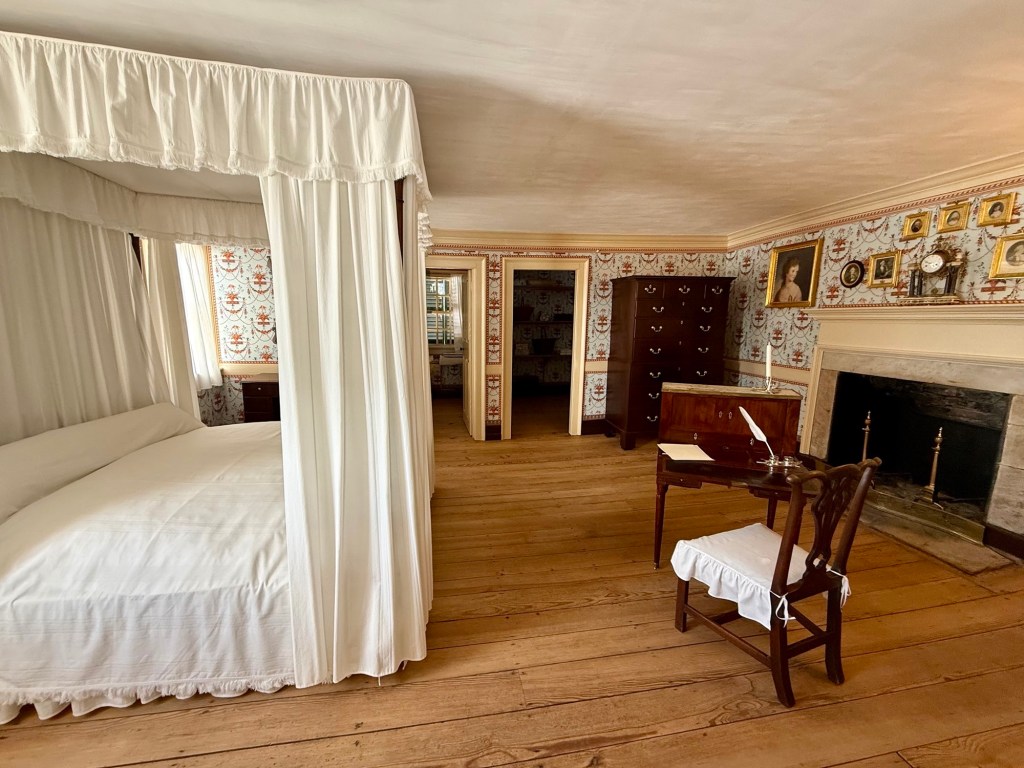
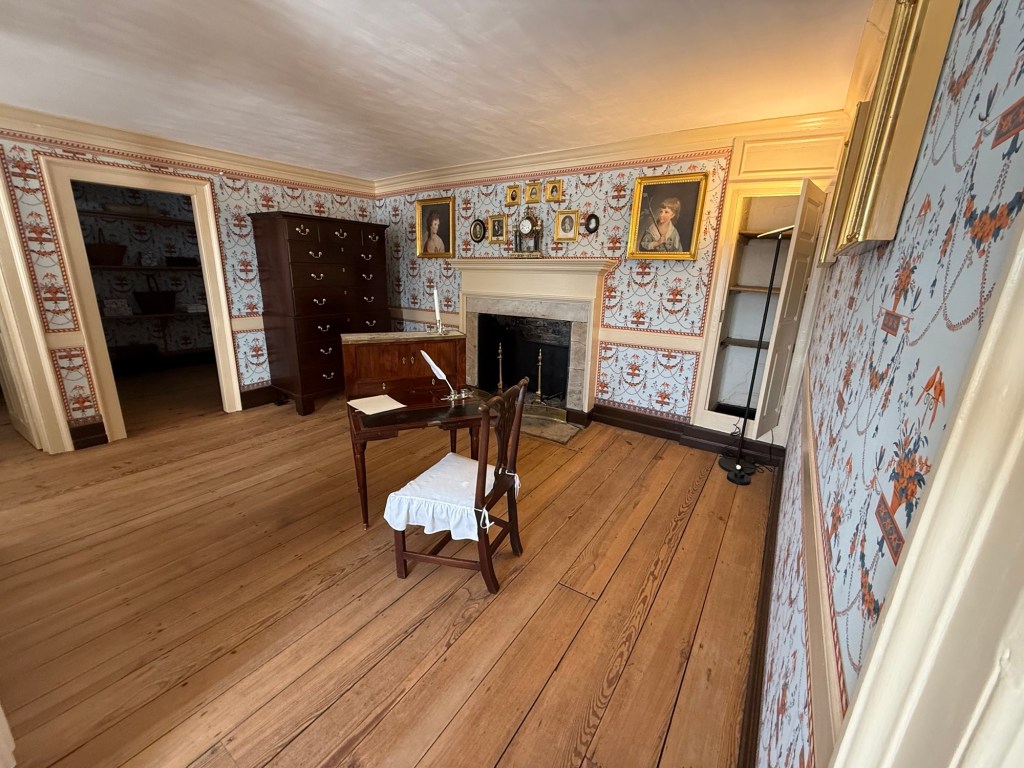
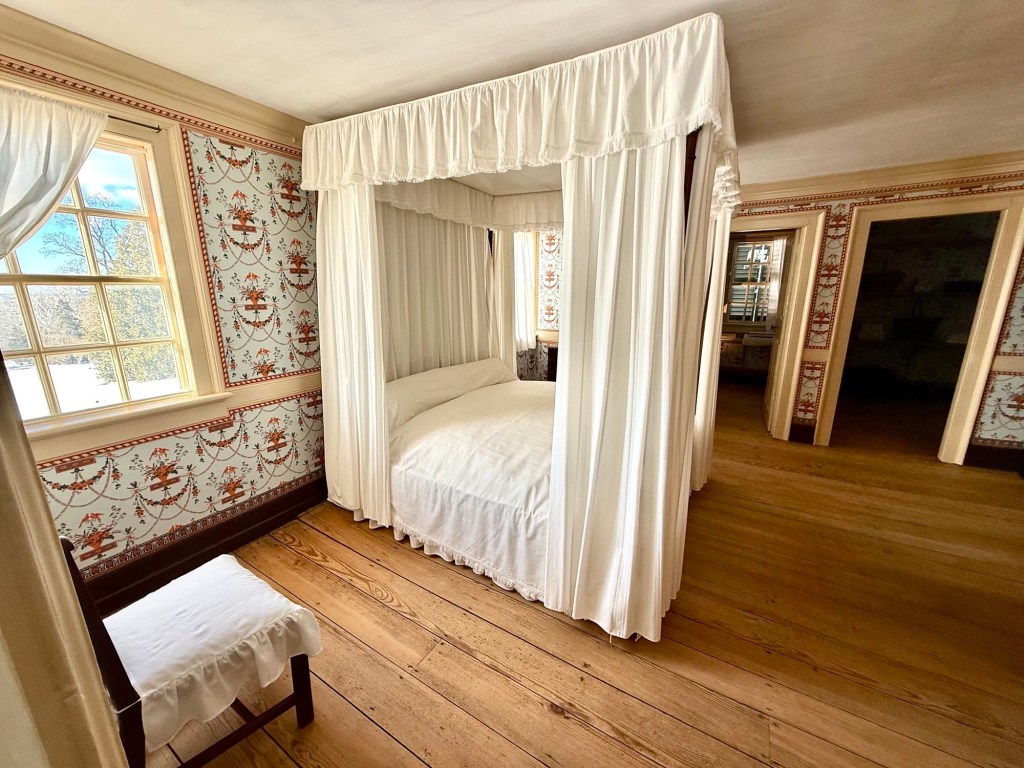
The mansion has 21 rooms over 3 floors, including multiple bedrooms for the many guests they would have, some showing up unexpectedly. Here’s a collection of photos of the beautiful rooms I took on the tour. I especially loved how bright and colourful the paint/wallpaper is in some of the rooms.

This green was the most expensive at the time. The ceiling is also one of the last remaining stucco ceilings in the US.

There is also a Piazza/deck on the outside of the building that overlooks the Potomac River where they would sit outside to enjoy the views and tea, but unfortunately it was the middle of winter and that part was under renovation at the time of our visit.

To find out more about these rooms, check out this link to their website for a breakdown of each room as well as a virtual tour: https://www.mountvernon.org/the-estate-gardens/the-mansion/the-mansion-room-by-room

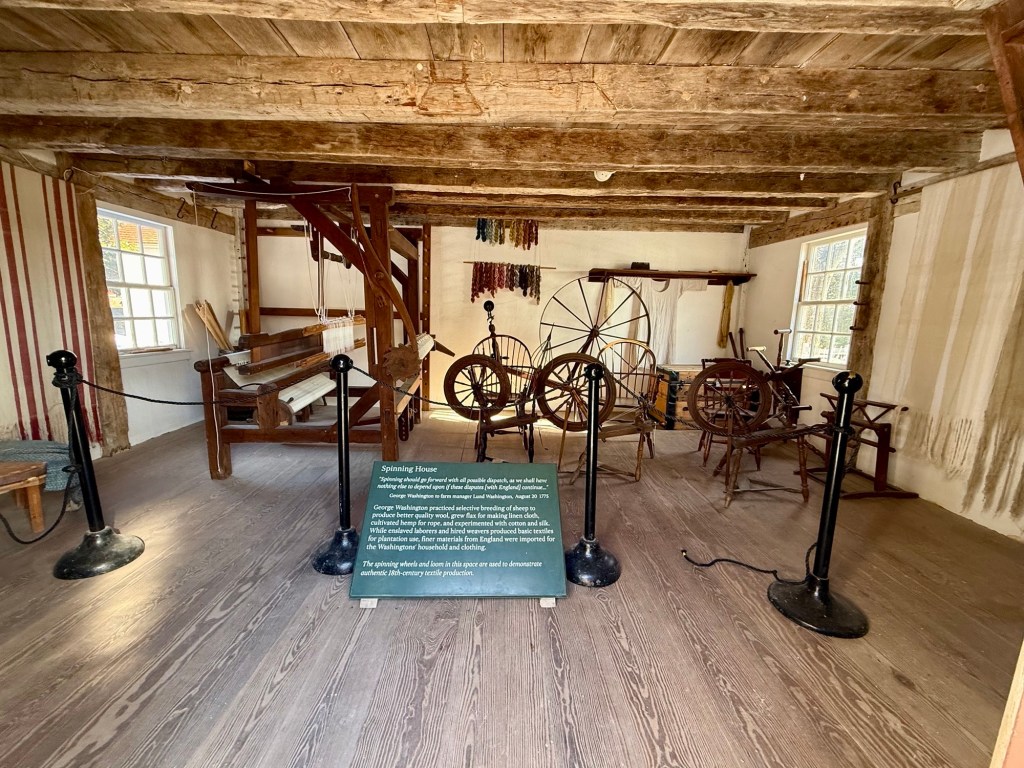
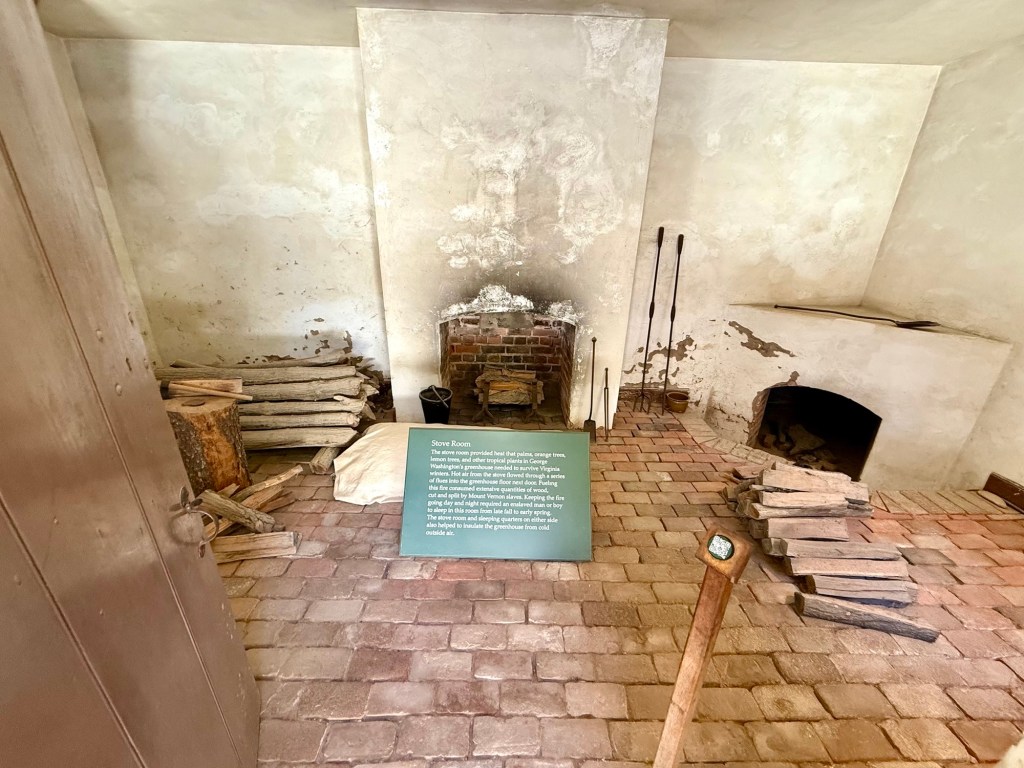
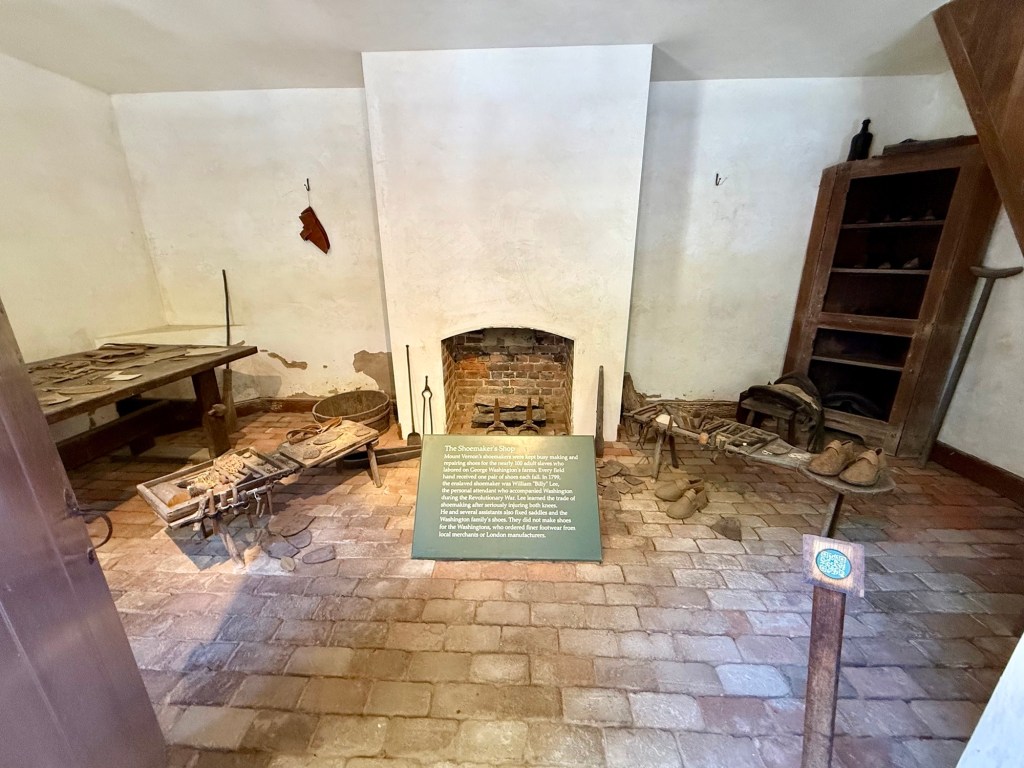
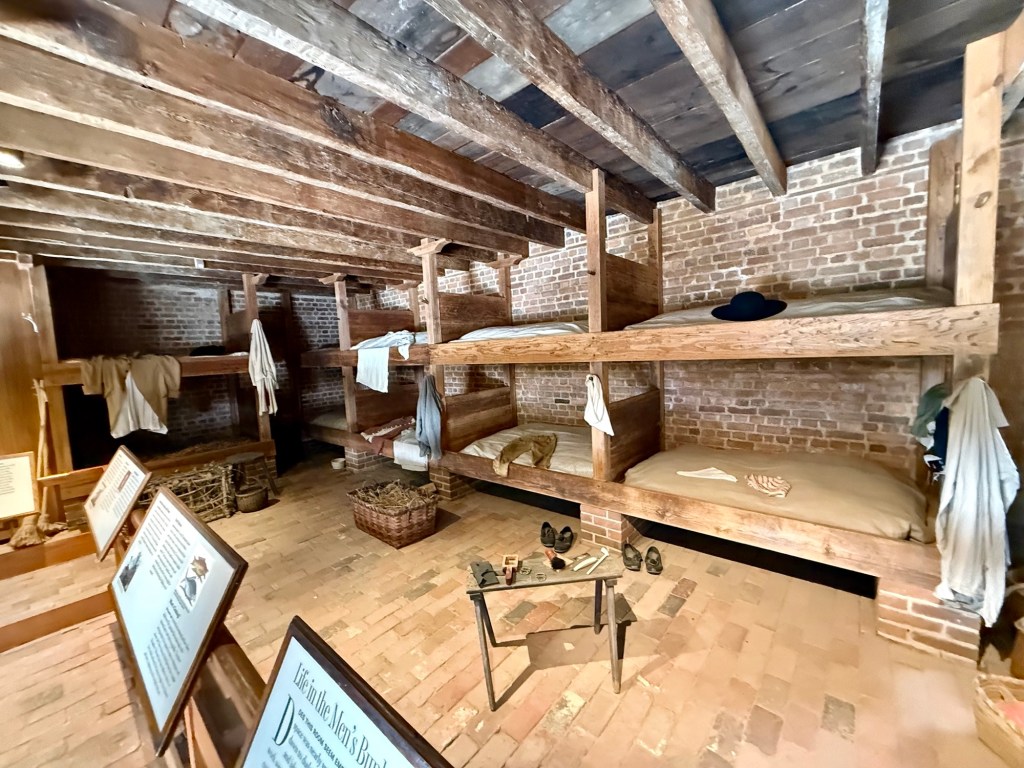
Outbuildings (greenhouse/enslaved quarters/Stove Room, shoemaker shed, blacksmith shed, spinning House)

Mount Vernon estate was massive which included surrounding farmland. They had 319 slaves in their time here with varying roles on the property. You can walk into the surrounding outbuildings around the mansion to get a glimpse of the roles the enslaved had here. There is a free tour that focuses on the lives of the enslaved people, however you need a timed ticket and spaces are limited, so I’d recommend reserving your ticket early!

Old Tomb

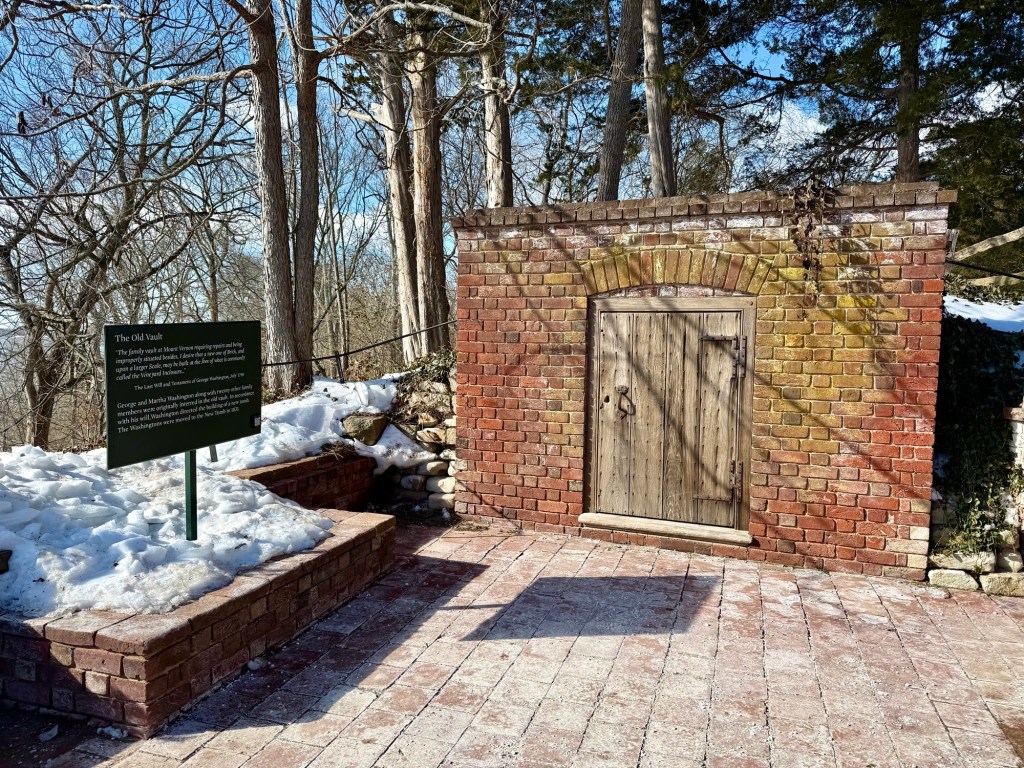
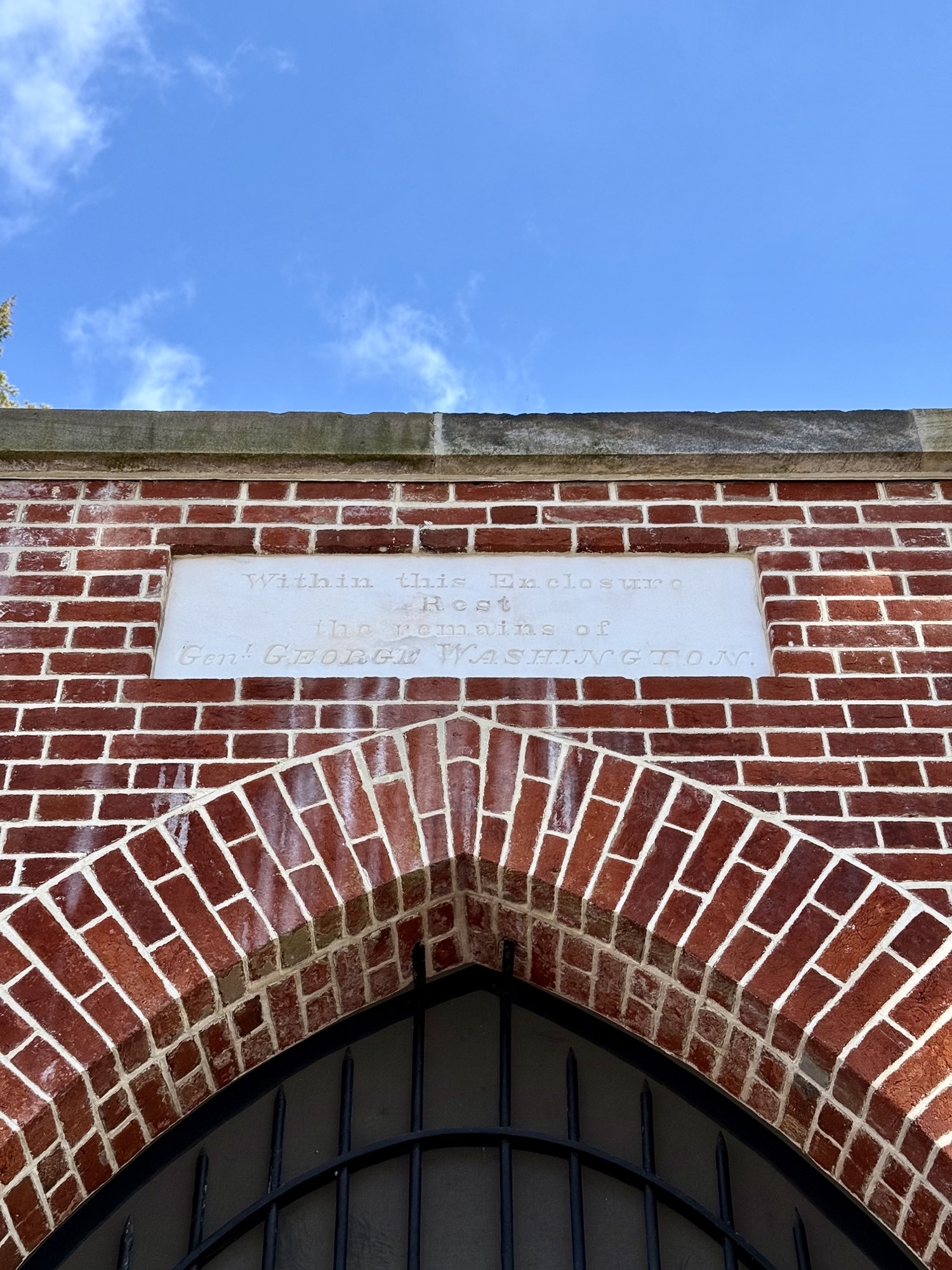
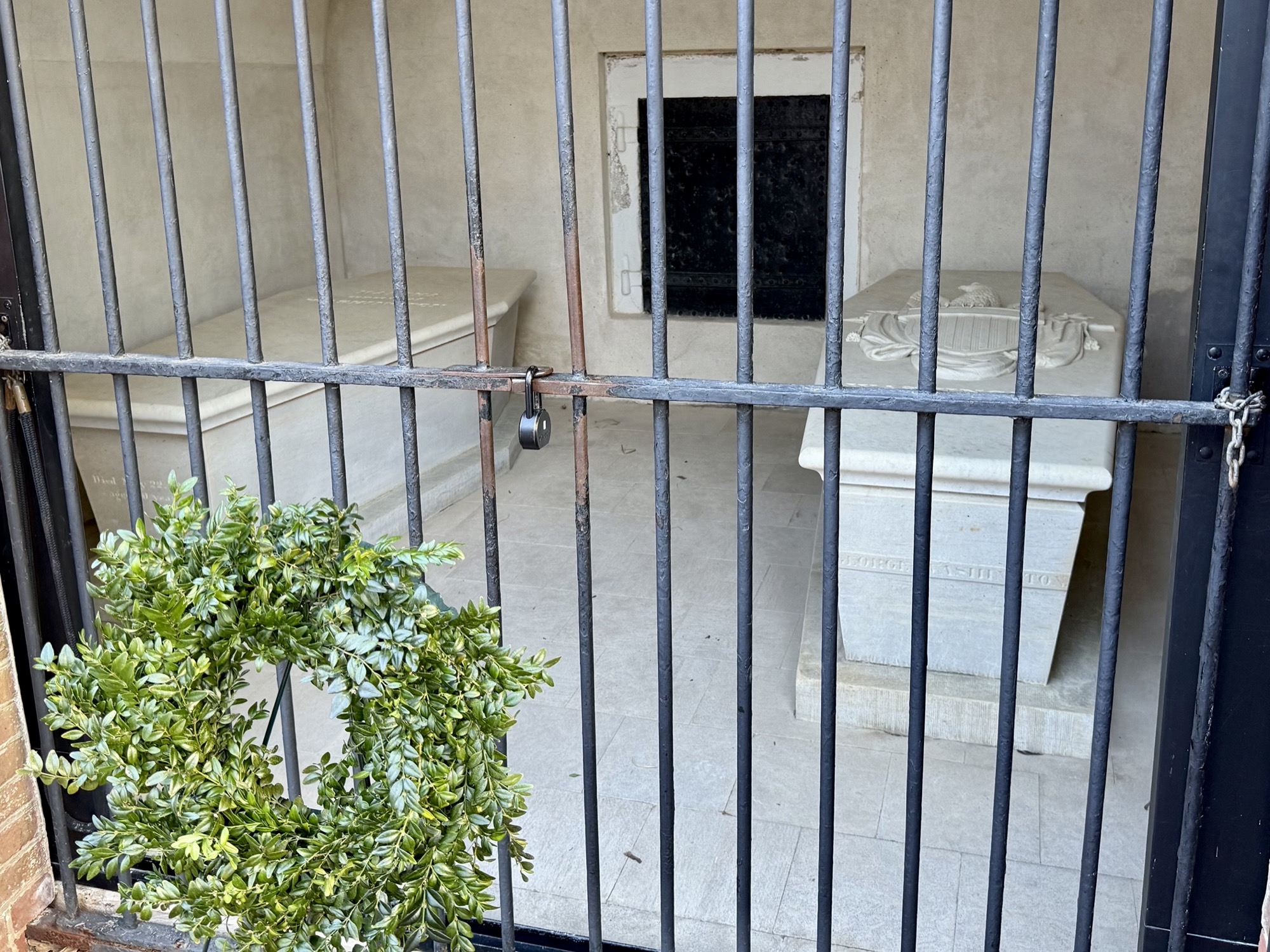
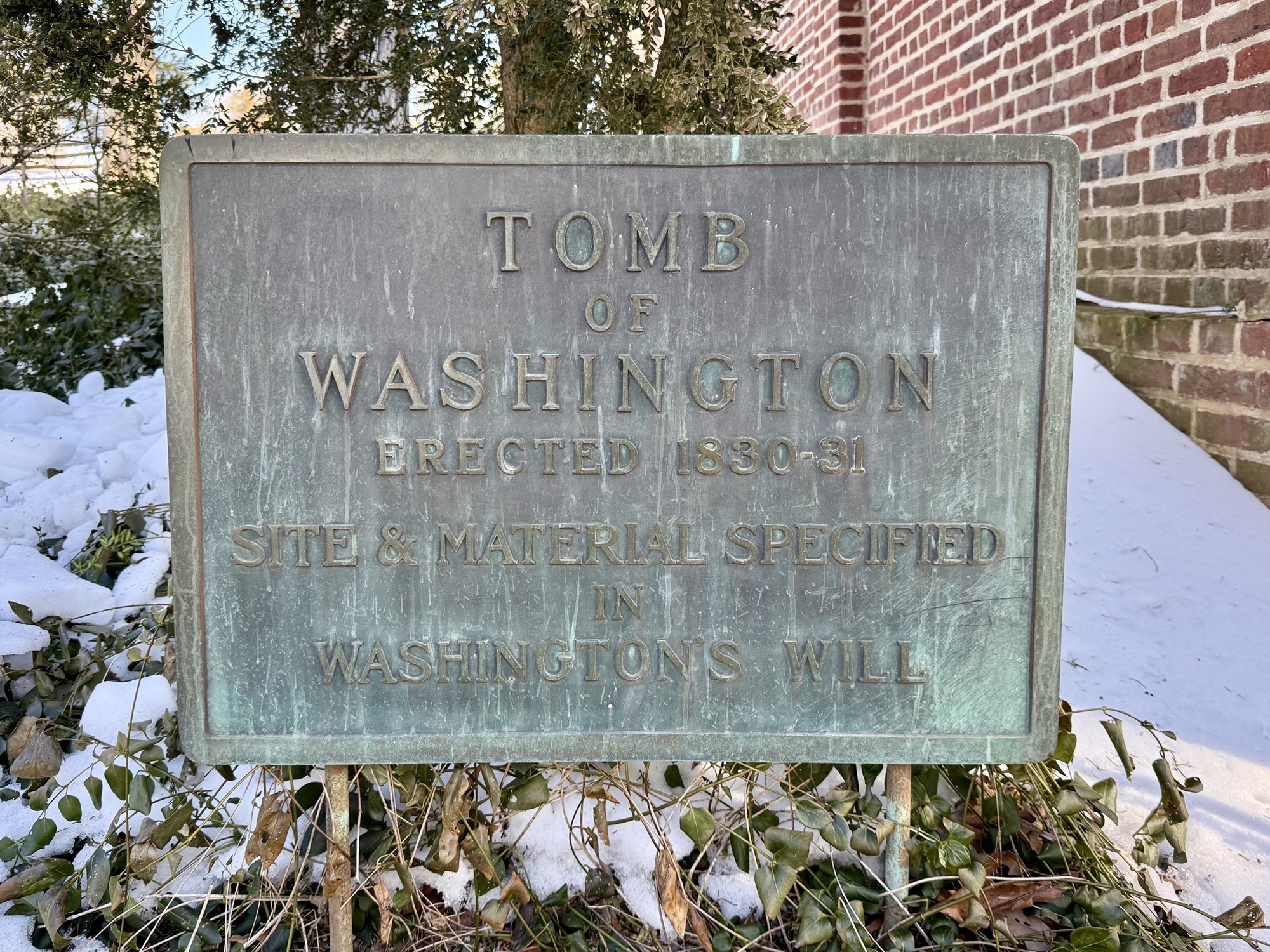
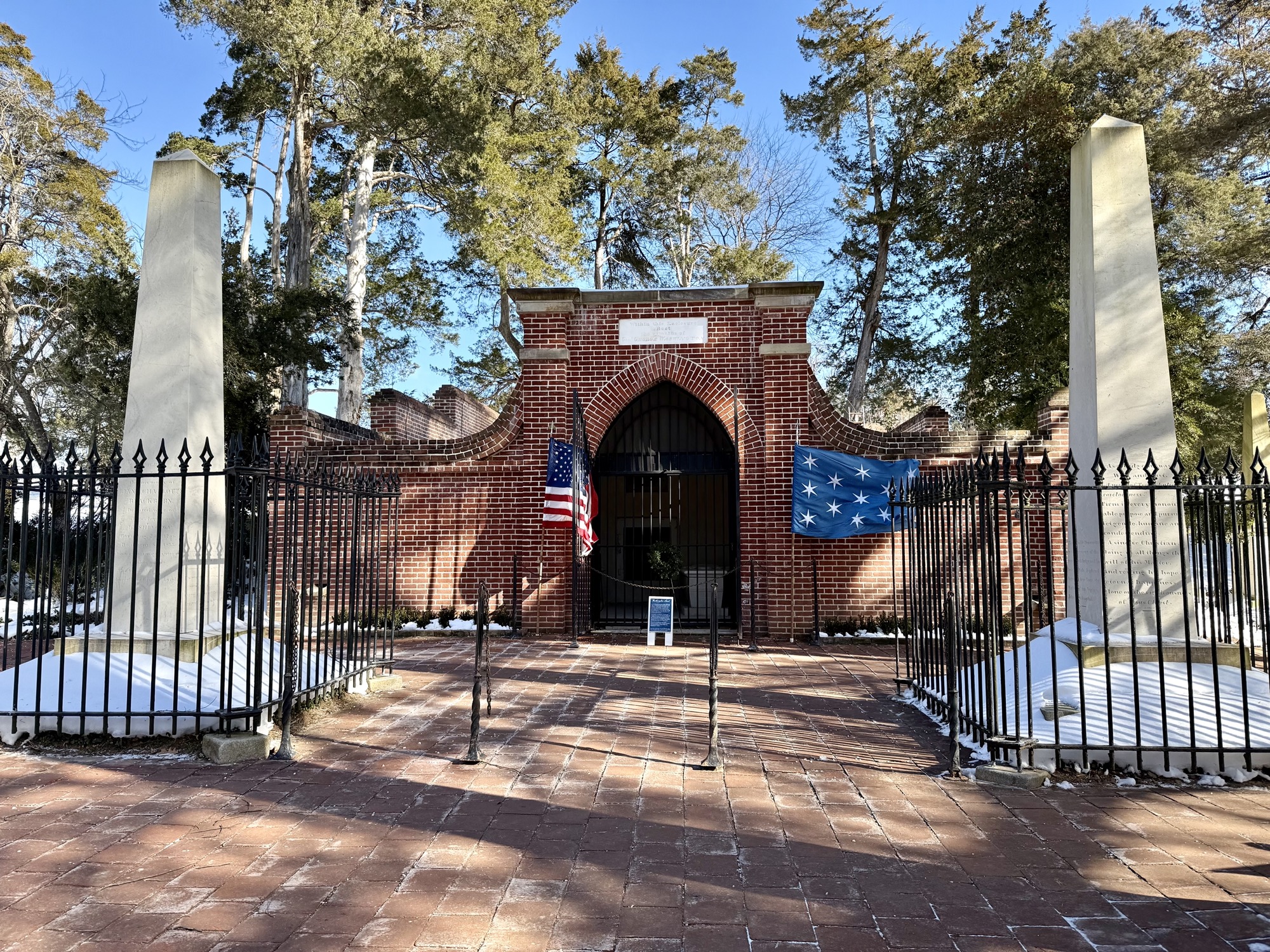
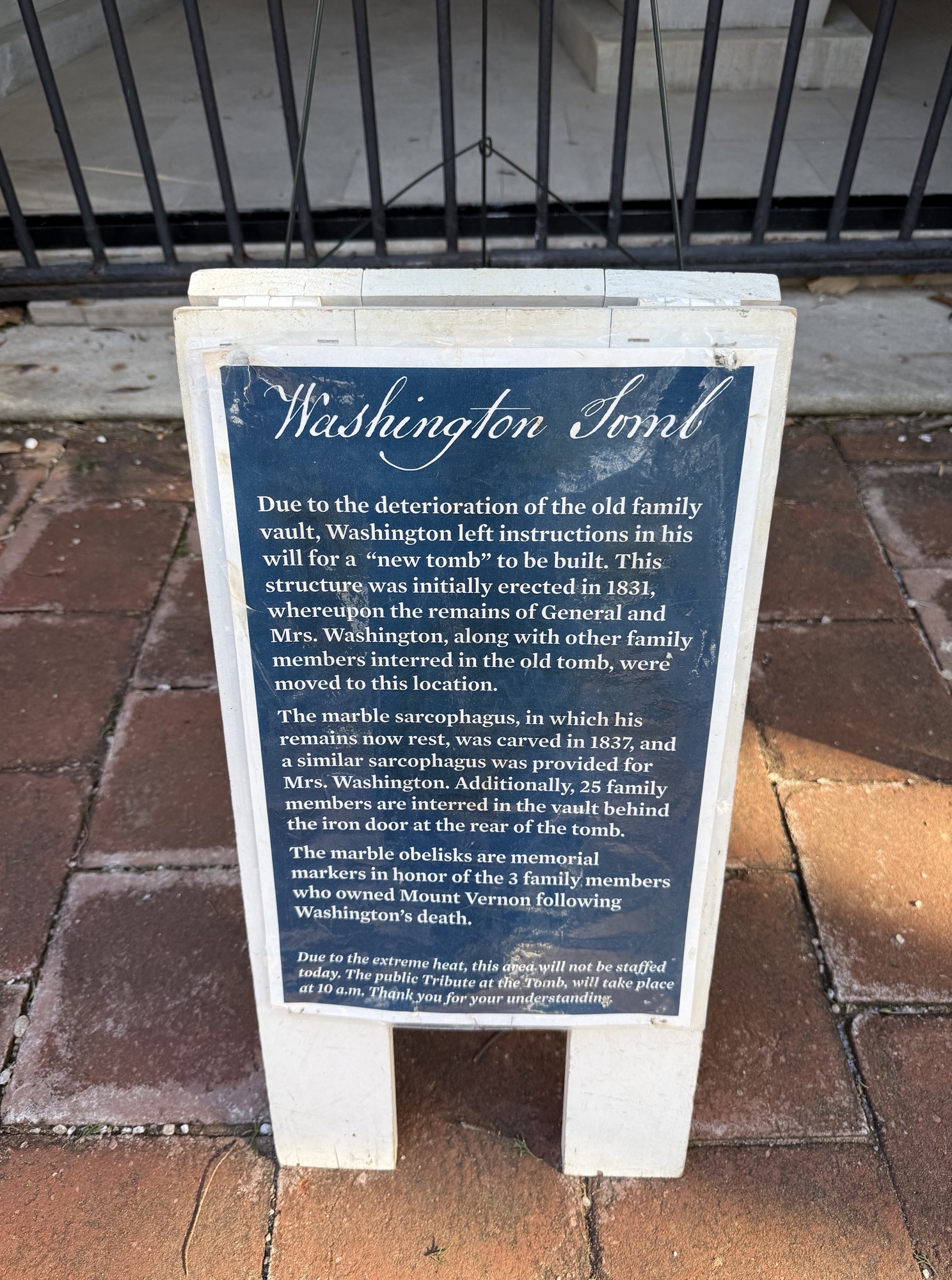
There are two tombs on the estate. The first one is the old tomb where George Washington was originally buried along with other people in his family. In his will, he stipulated building a second tomb where he wished to be buried. This new tomb wasn’t completed until after his death where he was moved later.

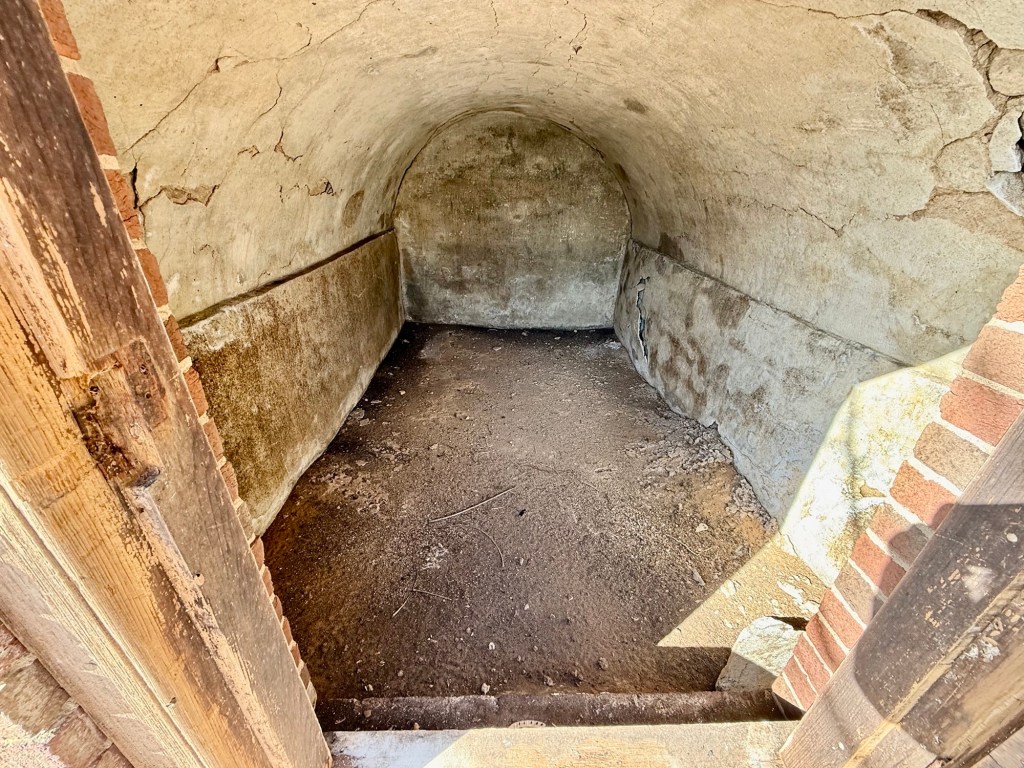
You can walk up to the old tomb, but you can’t see inside unless you’re on the In-depth Tour. I took a photo of the inside when our tour guide opened it. It is surprisingly small!

New Tomb

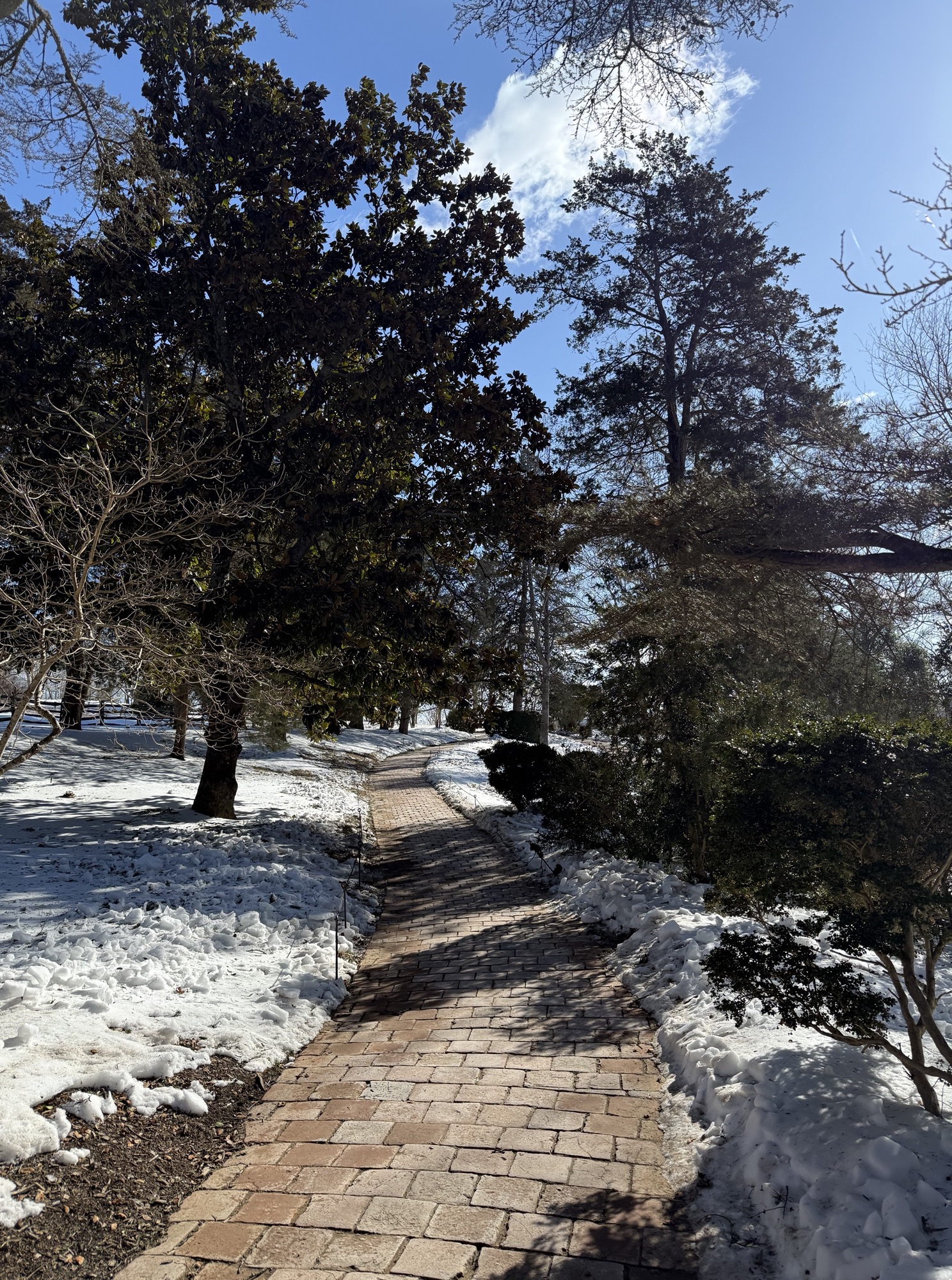
The new tomb is located a bit further away from the house. Walk through the tree-lined paths to get to the tomb.

Grounds (Trails, cemetery of the enslaved people, Farm)

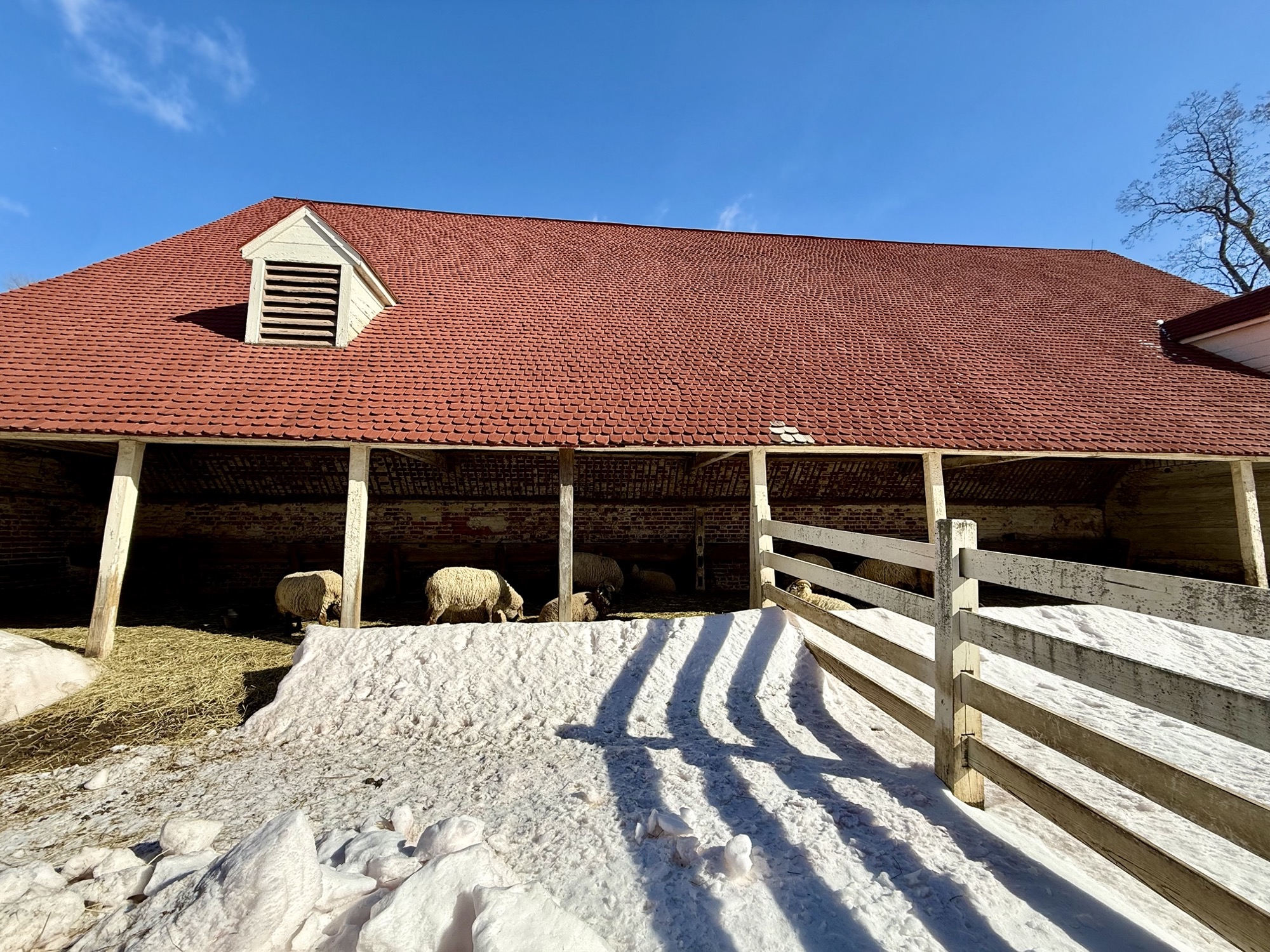
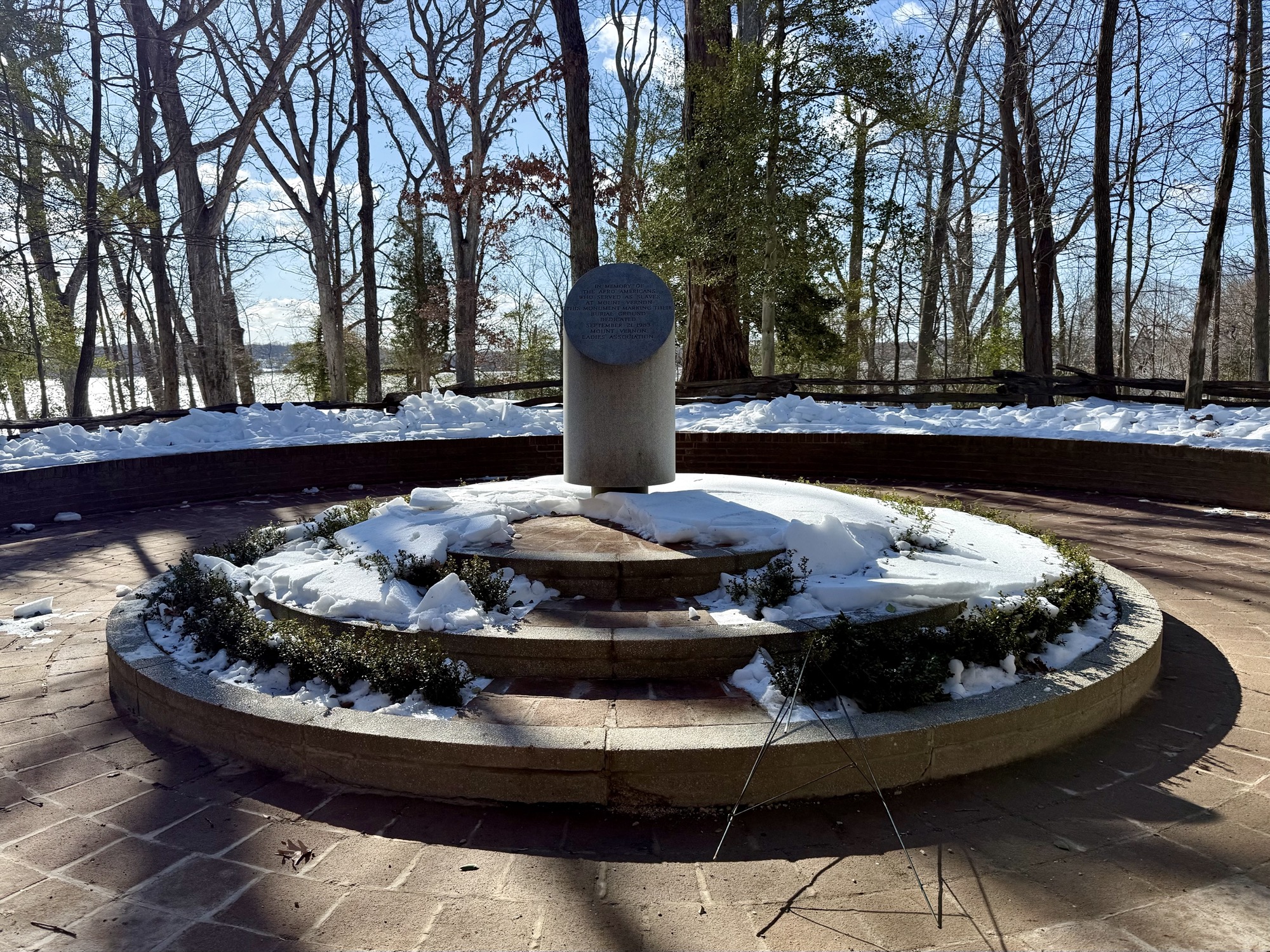
There are multiple tree-lined paths around the estate. It’s a lovely peaceful walk around. There are a couple of small buildings with barn animals around the property. There is also a cemetery of the enslaved people with a memorial statue and plaques that outline where some of the known gravesites are.

What happened to Mount Vernon after George Washington passed away?

After George passed away, the property was transferred to Martha where she lived until her death. Since they had no children together, the property was then inherited by Bushrod Washington, George’s nephew. He had no passion or skill for farming and it was also a time of Virginia’s agricultural decline. Under his ownership, the property started to fall into disrepair.

Bushrod Washington had no children, so after his death the property was inherited by his nephew, John Augustine Washington II. During his ownership, he built the new tomb as outlined in George Washington’s will. Upon his death, his widow Jane Charlotte Blackburn Washington inherited the property then subsequently leased it to her son John Augustine Washington III for five hundred dollars per year in 1841.

Unfortunately by the 1850s, John Augustine Washington III (George’s great-grand nephew) was struggling to make Mount Vernon profitable due to soil exhaustion and poor harvests of the farms. The once vast 8000 acre farm was now down to 1200 acres and was still insufficient to sustain the family’s needs and maintain upkeep of the estate. John tried to bring in money by opening the property to tourists, however this only led to increase deterioration to the property and damage from souvenir-hunters wanting a piece of this historical property. He unsuccessfully attempted to sell the property to the state of Virginia and the federal government. In 1858, the Mount Vernon Ladies’ Association purchased the property and became the last owner.

For more information on the owners and ownership timeline, check out their website here: https://www.mountvernon.org/the-estate-gardens/the-mansion/owners-of-mount-vernon

That’s a wrap! If you’ve visited Mount Vernon and think I’ve missed something or have any information to share, I’d love to hear about it in the comments!

Exploring Memphis: From Graceland to Beale Street


Date Published: June 30th, 2025 | Last Updated: June 30th, 2025
Author: Abby | Category: Travel, USA
Date of travel: April 13th-14th, 2025

Memphis, TN is credited for being the birthplace of rock n’ roll and home of the blues. I’ve heard so much about this iconic city and expected it to be huge, but surprisingly it actually wasn’t all that big nor all that much to do here apart from museums and checking out live music. Overall Memphis seemed very geared toward tourists, but it’s still worth checking out to visit the historic places such as Graceland, Elvis’ home, Sun Studio where so many artists started, and Lorraine Hotel which is the site of the National Civil Rights Museum and also where MLK Jr. was fatally shot. It’s worth a visit at least once to walk through the historic places, especially if you’re a music fan!

How many days do I need?

Although you only need 2 days to see the highlights, most museums will close by 5pm and each museum takes a few hours to get through (especially Graceland where you’ll need at least half a day), so leave yourself 3 days if you want to get through all the places. I’ve highlighted the main attractions in this post with a rough amount of time you’ll need at each place to help you plan your trip.

Best time of year to travel?

Apart from Beale Street and outdoor exhibits, the main museum attractions are indoors, so the time of year isn’t all that important when visiting Memphis.

April to May will be the best season to travel before it gets too hot, but it will also be the busiest season.

June to August will have more outdoor music and festivals, but it’ll get very hot, so be prepared and have plenty of sun protection!

Budget travel times with the cheapest hotel rates: November to February – it’ll be colder and off-peak season but winters in Memphis tend to be mild compared to other states.

Where to stay?

Stay closer to the downtown area/Beale Street for better access to live music at night and you’ll be within walking distance home afterwards. Most attractions in Memphis are not within walking distance, so unless you plan on taking an Uber everywhere, try to find a hotel with reasonable parking rates or a parking garage nearby.

We stayed here:

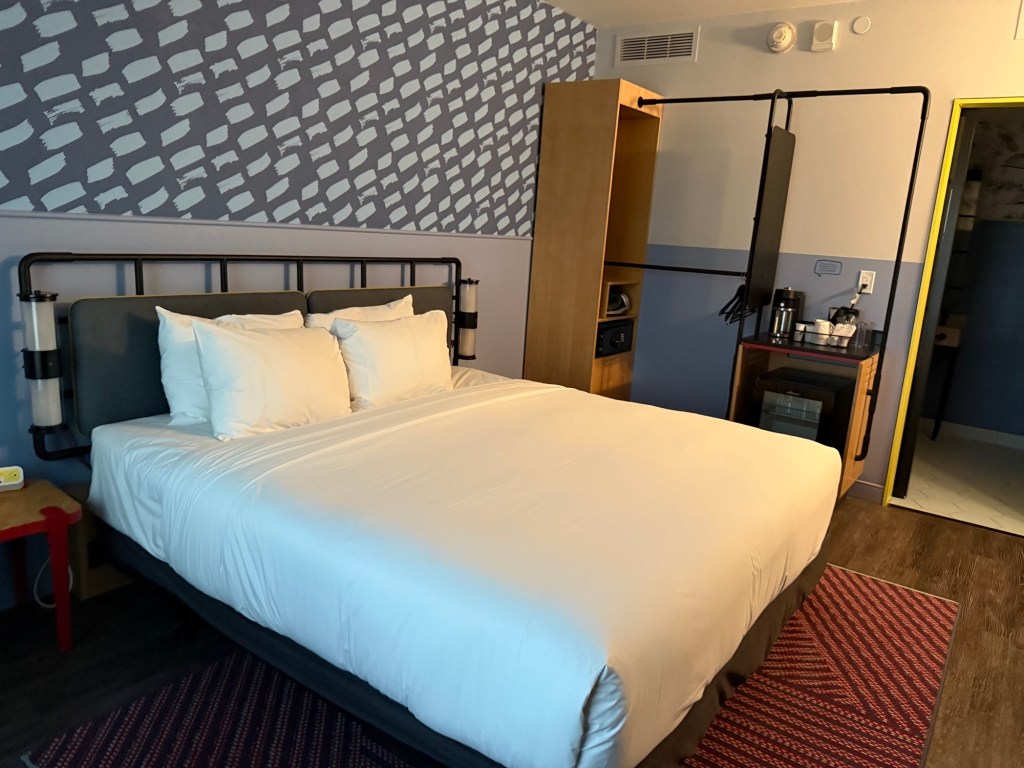
Caption By Hyatt Beale Street Memphis
Address: 245 South Front Street, Memphis, TN 38103, United States
Website: https://www.hyatt.com/caption-by-hyatt/memcp-caption-by-hyatt-beale-street-memphis

It was a great location, clean, and a modern hotel. It cost us about $130/night in April but there are definitely cheaper options around if you’re looking for a low cost option. The valet parking here was super expensive and not worthwhile but the parking garage across the street had great rates and was easily accessible.

Getting Here and Getting Around

The closest airport is the Memphis International Airport, which is only a 20 minute drive away from downtown and less than 5 minutes away from Graceland.

Side story: We didn’t find many flights coming into Memphis from NYC that suited our schedule (most flew in the middle of the day and we like to either fly super early or super late to get the most out of our days) so we actually flew into Nashville, TN which had more flight options, stayed around for a few days to check out the country music scene, then made the 3 hour road trip to Memphis. If you’ve got time to spare, I’d highly recommend checking out Nashville!

Downtown Memphis is not very big, but most of the bigger attractions such as Graceland or Sun Studio aren’t walkable and will require some sort of transport. Driving is the best option to get around with free parking at most tourist areas, but you can also choose to use ride share such as Uber or Lyft to save on driving.

We parked here overnight:

MLGW Parking
Address: 234-238 S Front St, Memphis, TN 38103
Google maps: https://maps.app.goo.gl/oNvR92fhjKV7Dh1AA

This parking garage was directly across from our hotel and is also a great location near Beale Street. The prices are reasonable and overnight parking is available.

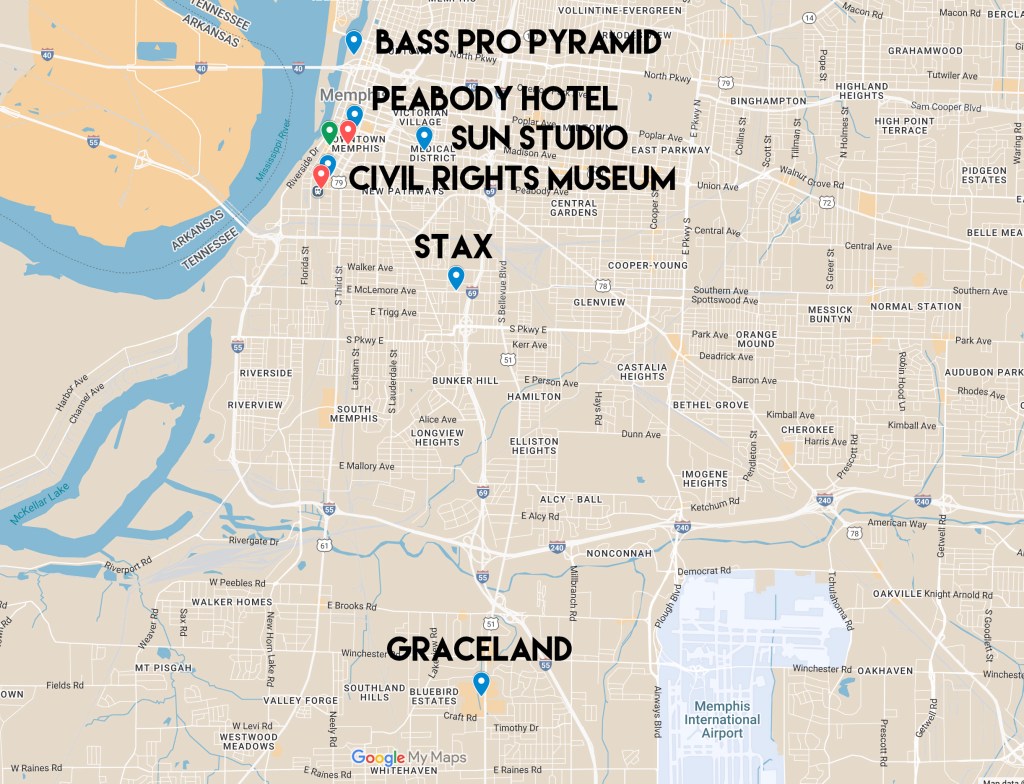
Map of Memphis

Overview of Memphis with the main attractions labelled (blue = attractions, red = food, green = our hotel)
A zoomed in view of downtown Memphis with Beale Street highlighted in Pink (blue = attractions, red = food, green = our hotel)

A Word on Safety

Memphis was listed in the top 3 most dangerous cities in the US. We actually didn’t know this until we arrived on a Sunday night and immediately experienced some wild behaviour from people erratically swerving their cars, yelling on the streets, and grown ass women screaming and crying in a hotel lobby while laying on the ground all within the first 30 minutes of arriving in downtown Memphis. A quick google search highlighted the ugly side of Memphis and put us on our guard for the rest of the trip.

It turns out that the first night when we arrived there was a food festival in town and drew in all sorts of crowds that led to the insane behaviour, but for the rest of the trip we mainly felt pretty safe and just steered clear of any suspicious areas.

To be on the safe side, I’d recommend exploring during the day and stick to the touristy areas and not venture too far off on your own, especially at night. Park your car in reliable parking garages with good security, and stay in hotels closer to the main attractions. Just be on your guard, stay clear of any drama, and avoid sketchy areas and you’ll be fine.

Things to Do:

The top 2 attractions in Memphis are Sun Studio and Graceland. There’s just so much to talk about that I’ve made a separate post for each of them, see below for the links:

Sun Studio

Explore Sun Studio: Rock and Roll’s Birthplace


Sun Studio in Memphis, founded by Sam Phillips, is a historic recording studio where legendary artists started out, including Elvis Presley, Johnny Cash, B.B. King, Carl Perkins, and Jerry Lee Lewis. This guide is an overview of everything you need to know before visiting.

Graceland

Graceland: A Complete Guide to Visiting Elvis Presley’s Home


Graceland is the home of Elvis Presley and his family and is the number one tourist attraction in Memphis. My guide contains everything you need to know about visiting Graceland with tons of pictures to help you plan your visit.

Memphis Pyramid: Bass Pro Megastore + Observation Deck

Address: 1 Bass Pro Dr, Memphis, TN 38105
Website: https://stores.basspro.com/us/tn/memphis/1-bass-pro-dr.html
Hours: 9am-9pm most days (check the website for updated information)
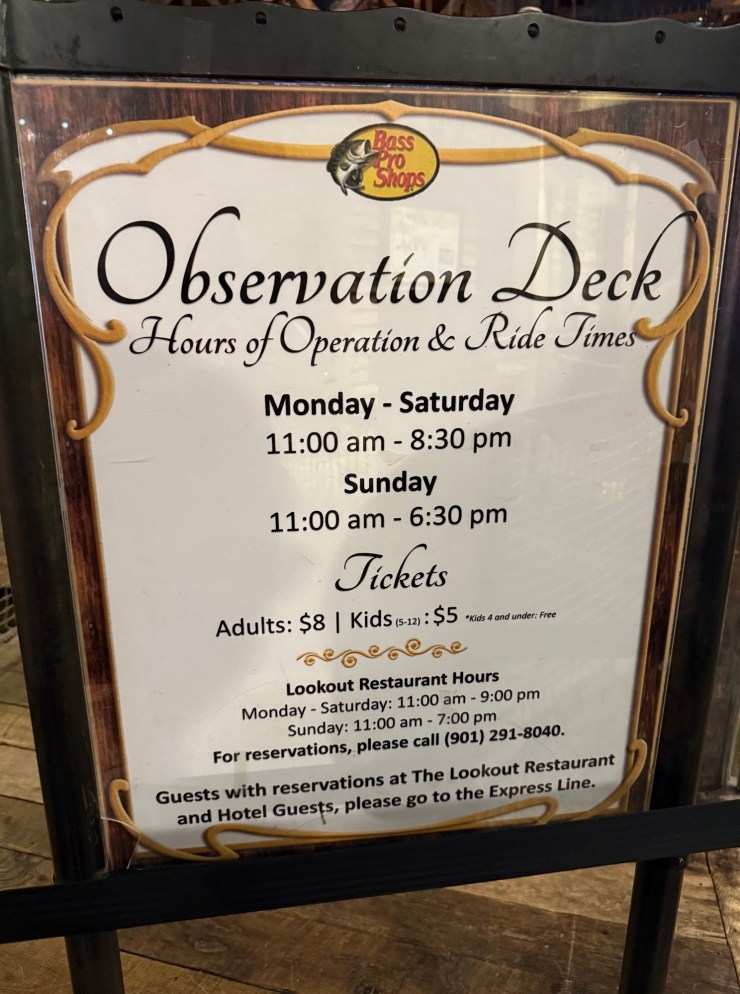
Cost: Free entry into the pyramid, it’s $8 to go up the elevator to the observation deck

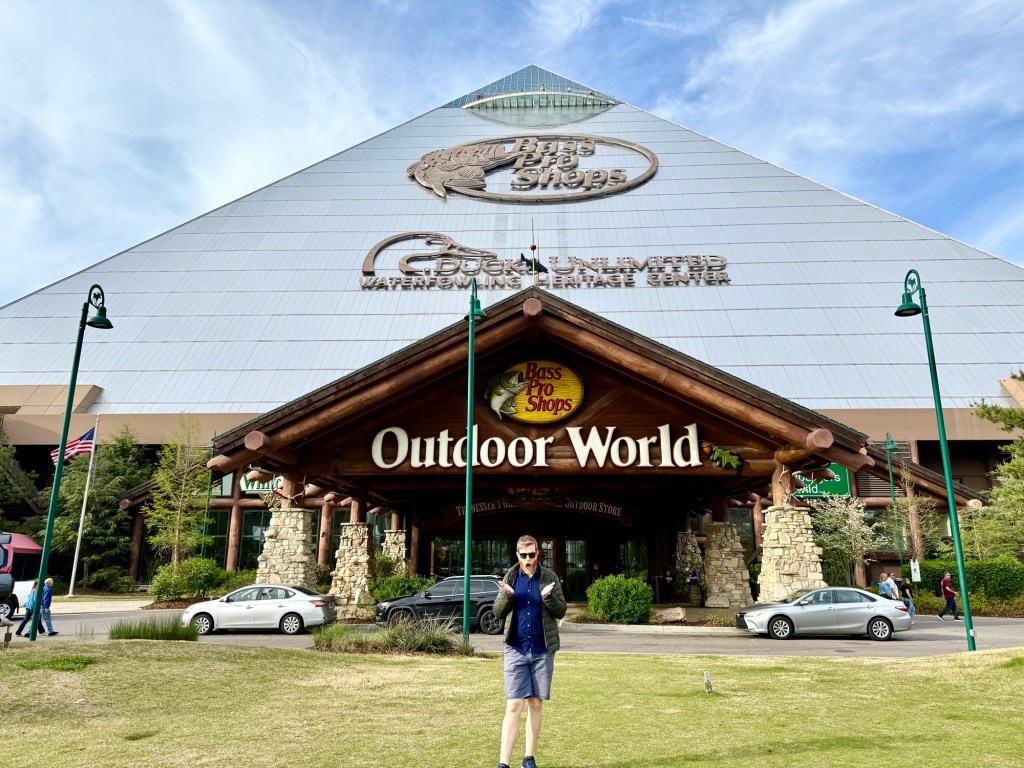
The Memphis Pyramid was built in 1991 and was originally used as a sports arena/entertainment venue. The pyramid shape was to pay homage to the city’s namesake to an ancient city in Egypt that was known for its pyramids. It was closed for some time in the early 2000’s but then re-opened in 2015 as a Bass Pro Shops megastore.

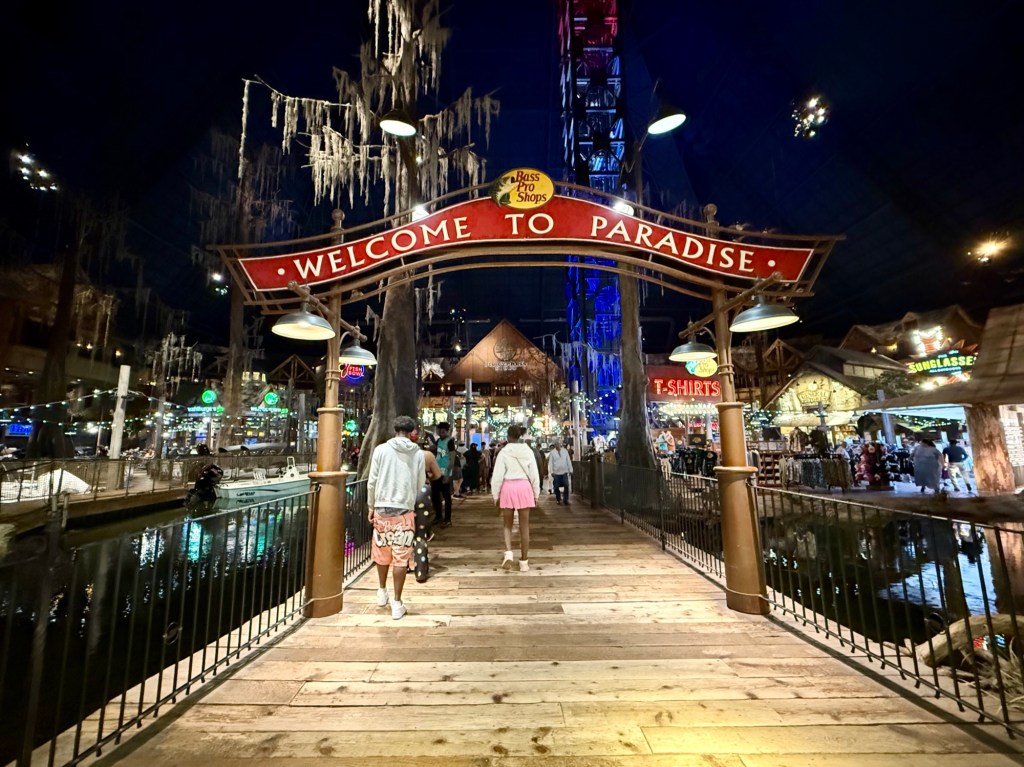
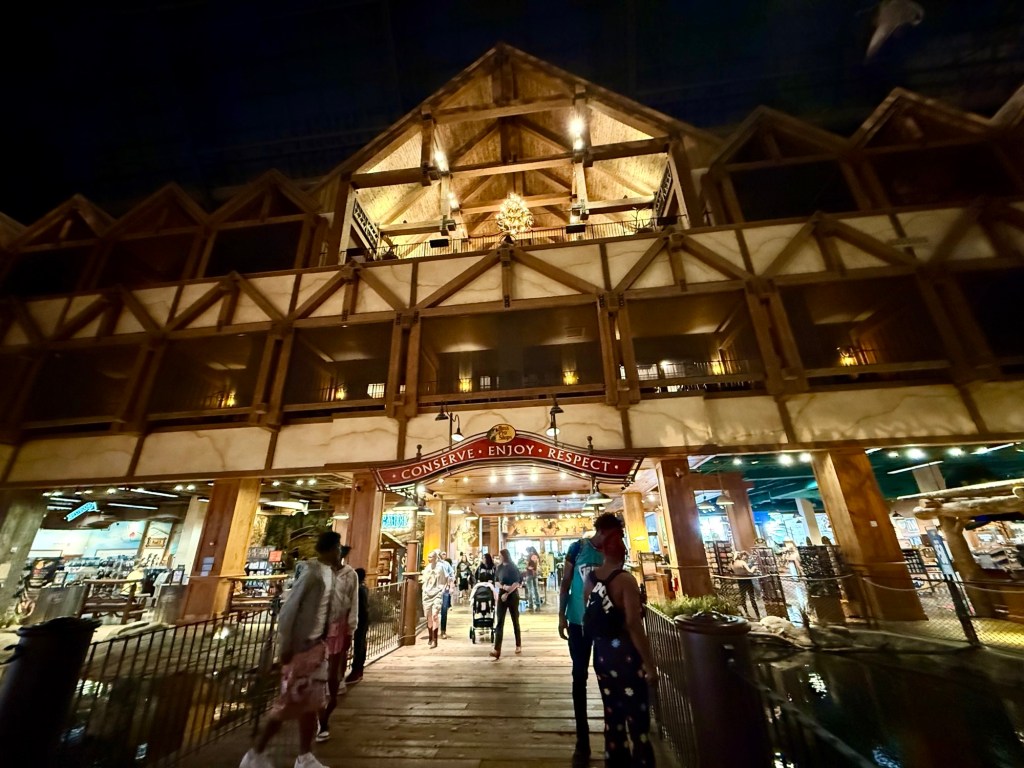
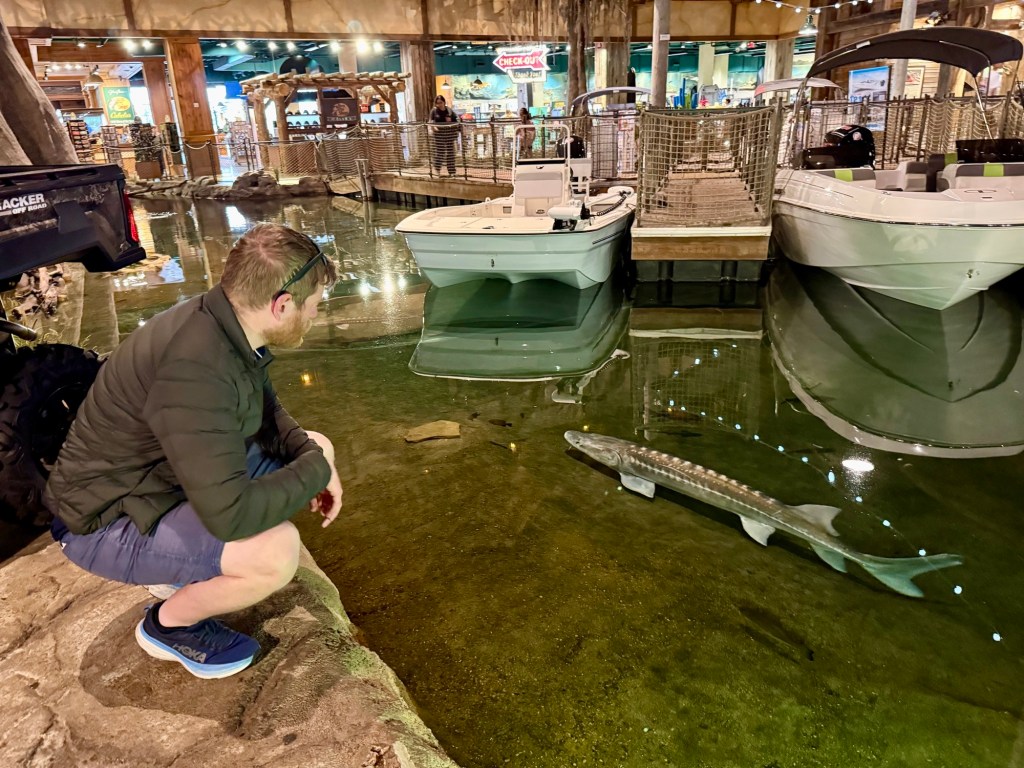
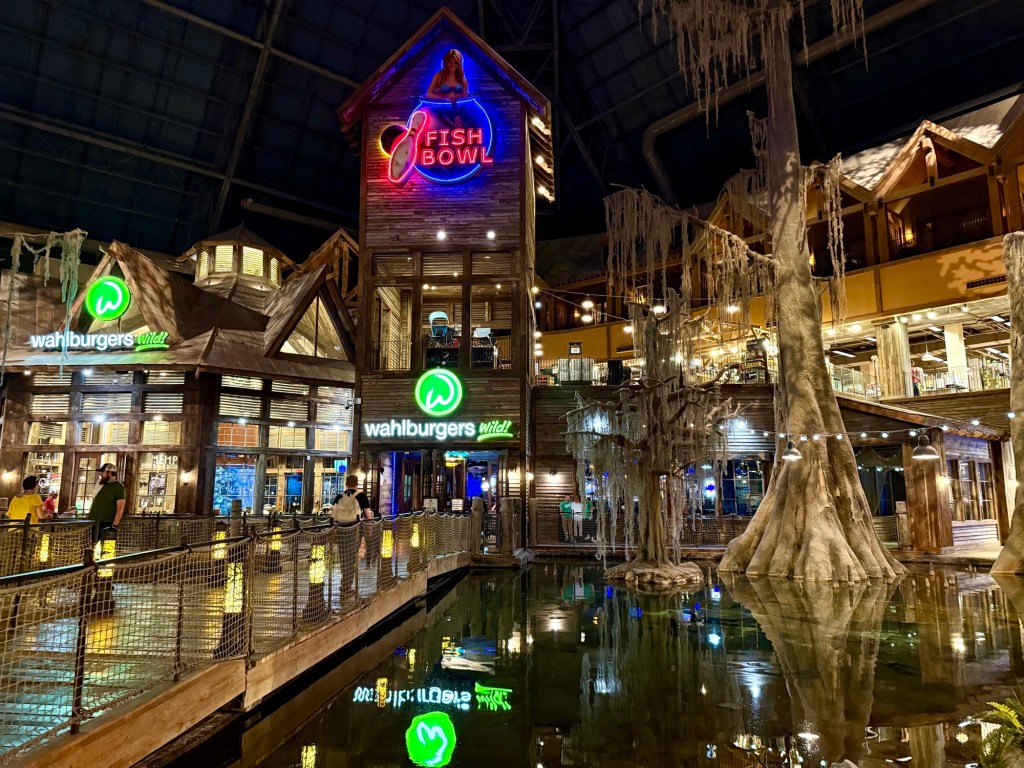
This is the largest Bass Pro Shop and like most Bass Pros, the inside is decked out to look like a wilderness scene, but this is to the next level. They’ve got alligators, a large indoor body of water with large fish, restaurants, and even a hotel on the upper level where you can rent rooms with balconies overlooking the store or even rent an entire small cabin! So if you’re REALLY into Bass Pro, or just a fan of pyramid-shaped buildings, here’s your chance to live in one. 😉 If you’re not into either, there’s an elevator in the middle of the pyramid that takes you to the top for views of Memphis and the waterfront.

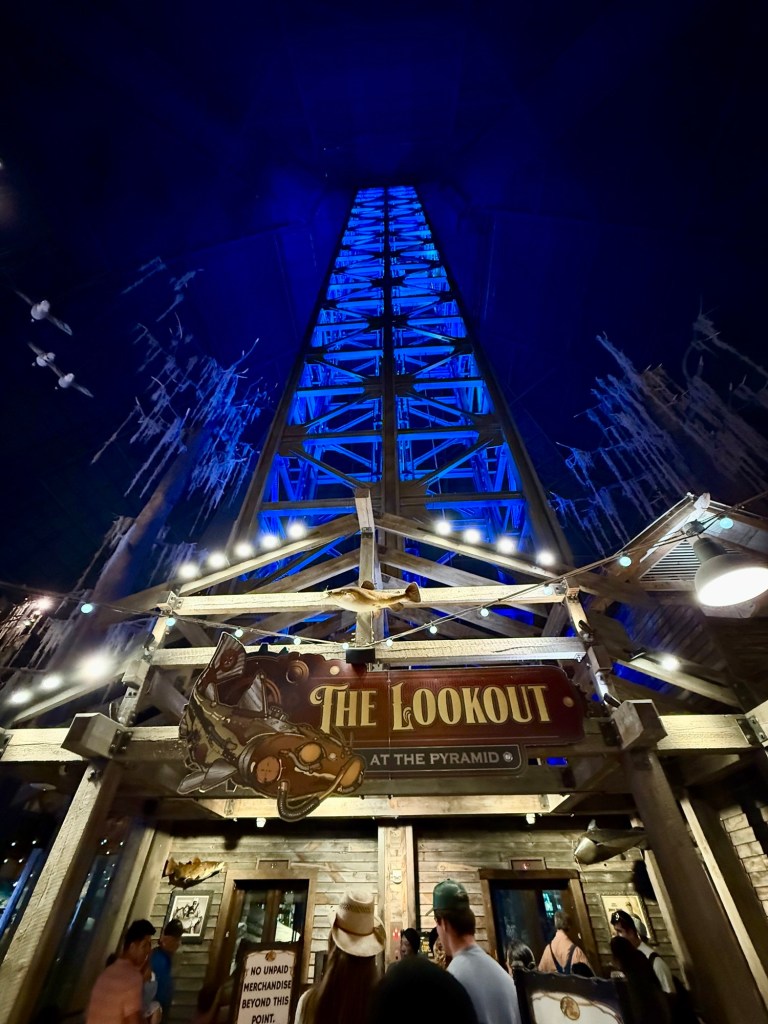
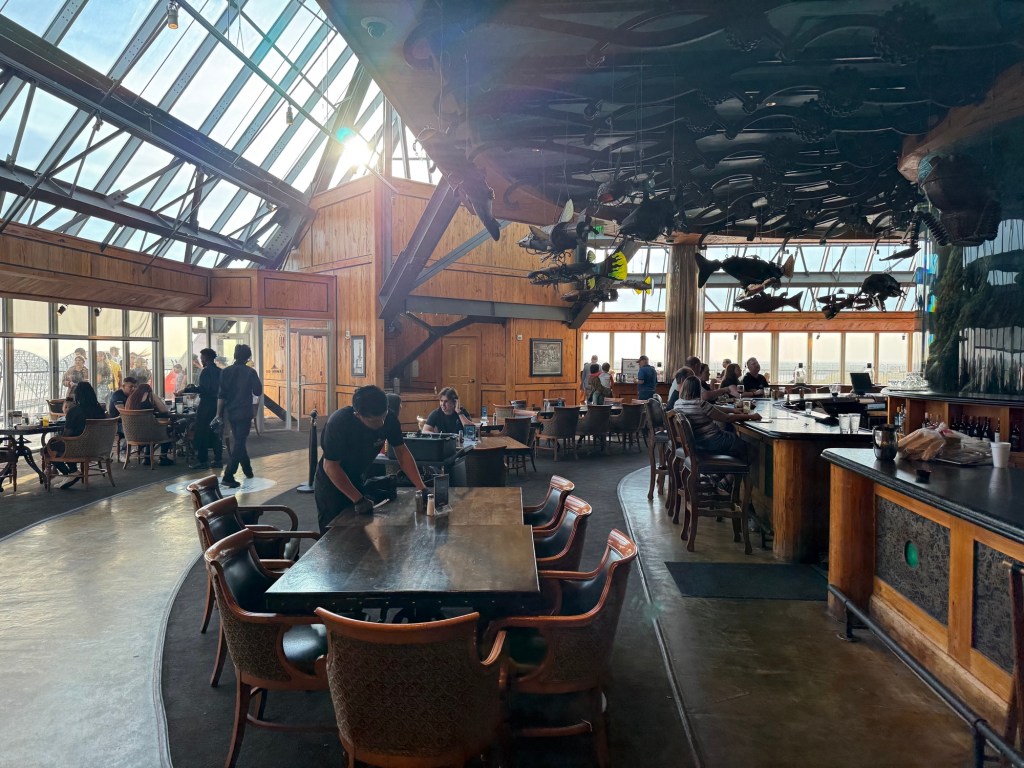
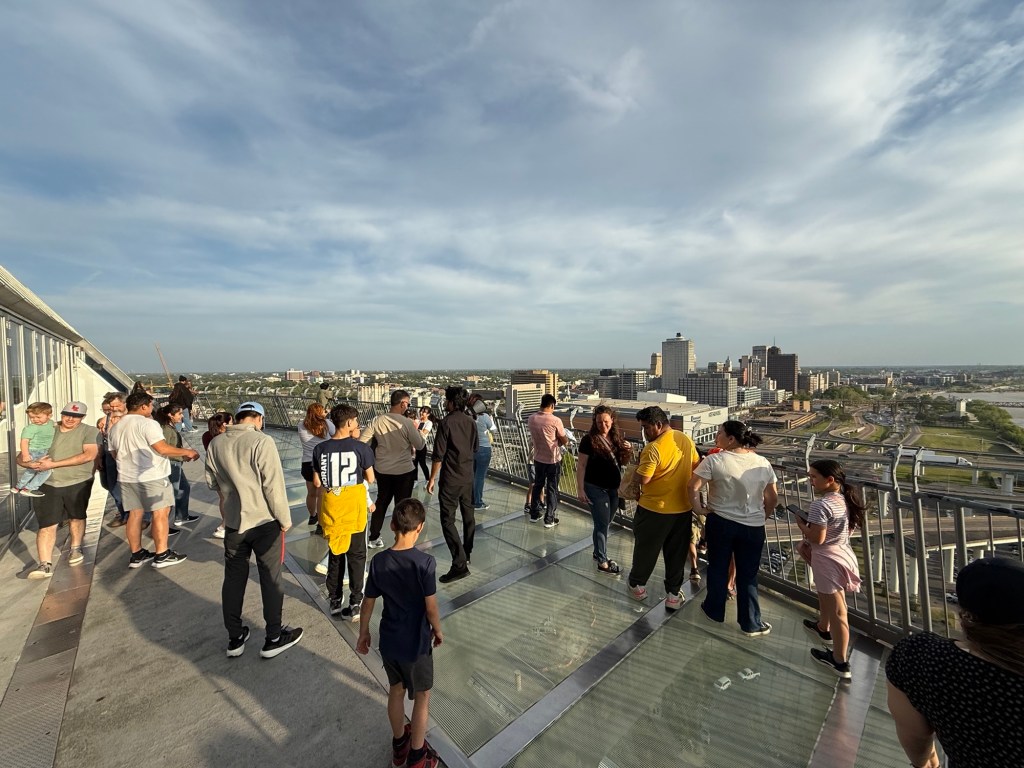
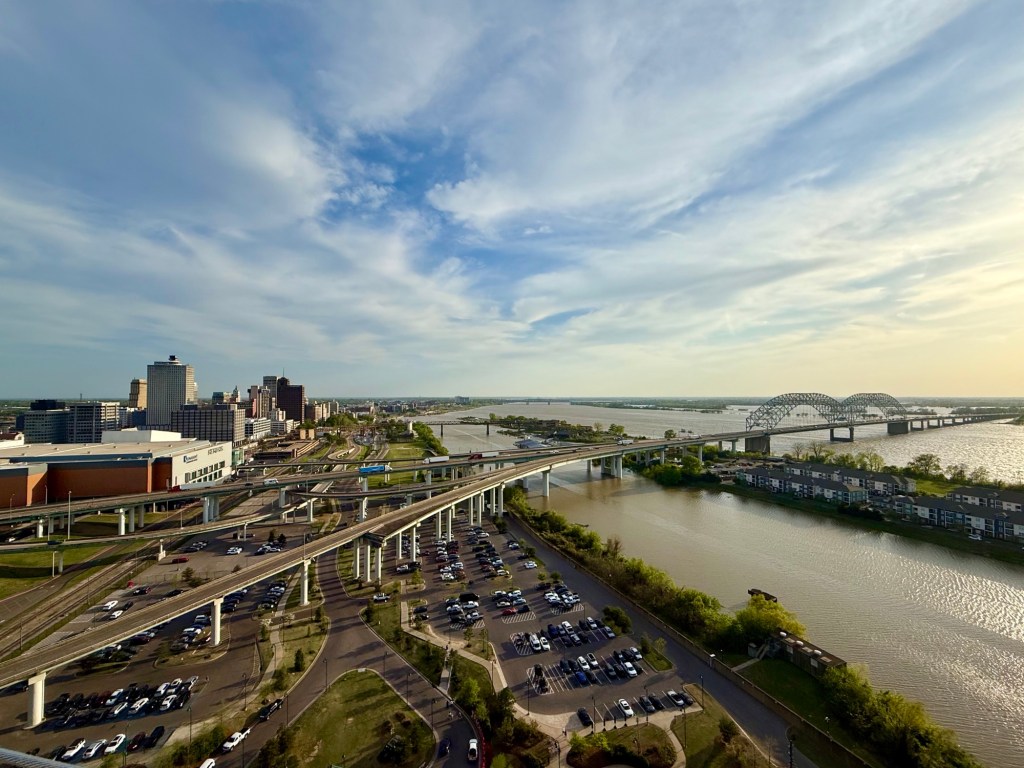
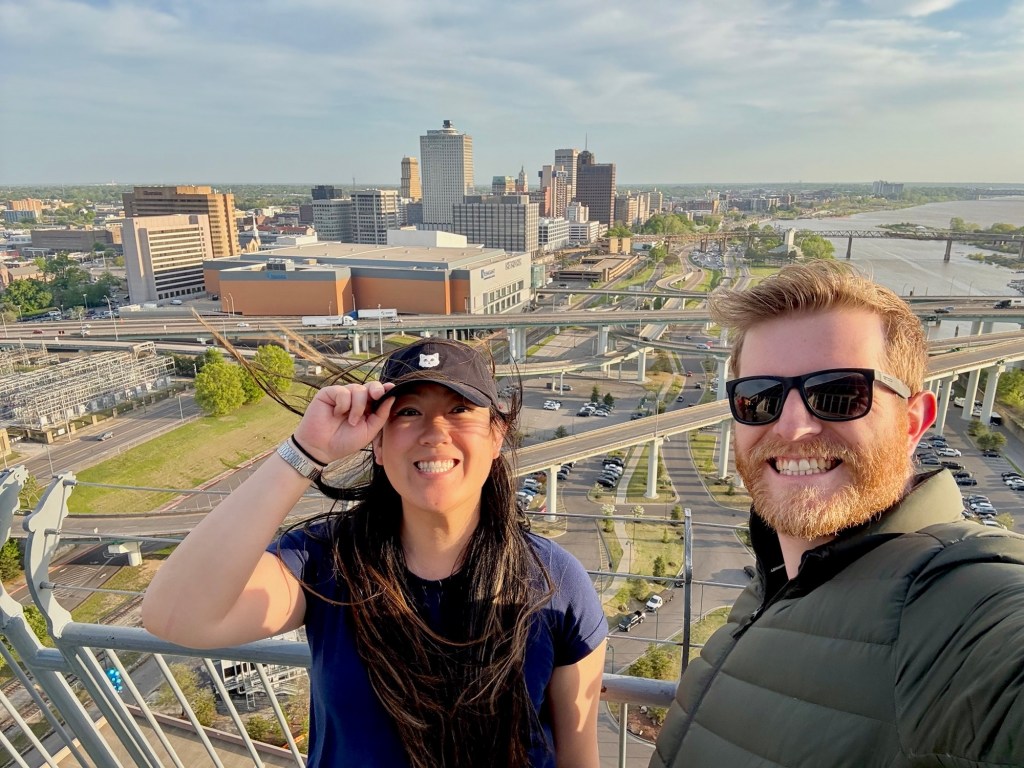
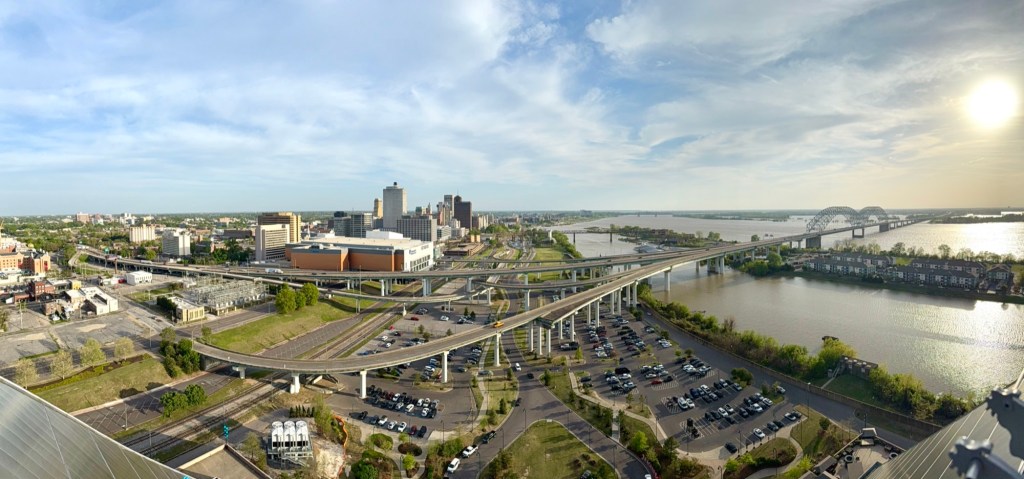
In the middle of the pyramid is the tallest free-standing elevator in the US and stands 28 stories/300 feet high. It costs $8 to go up and at the top it opens into a restaurant with an outdoor observation deck with sweeping views of downtown Memphis and the Mississippi River. The line can get pretty long, but it moves quickly. Definitely worthwhile to go up for the price!

Bus Tour of Memphis

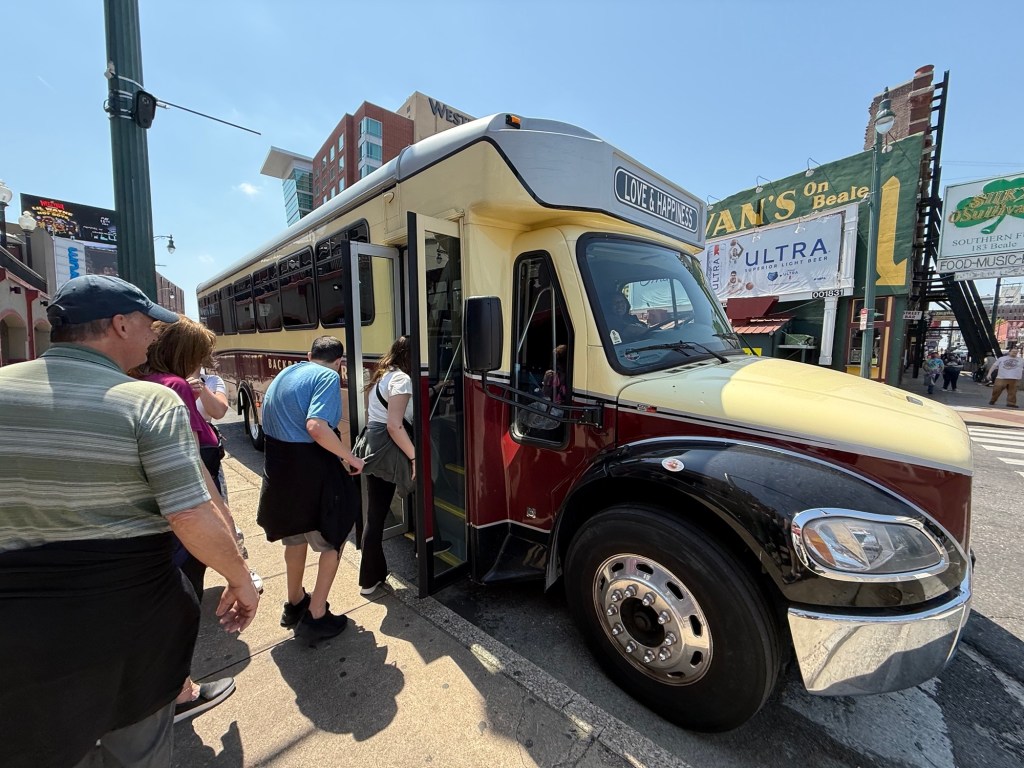
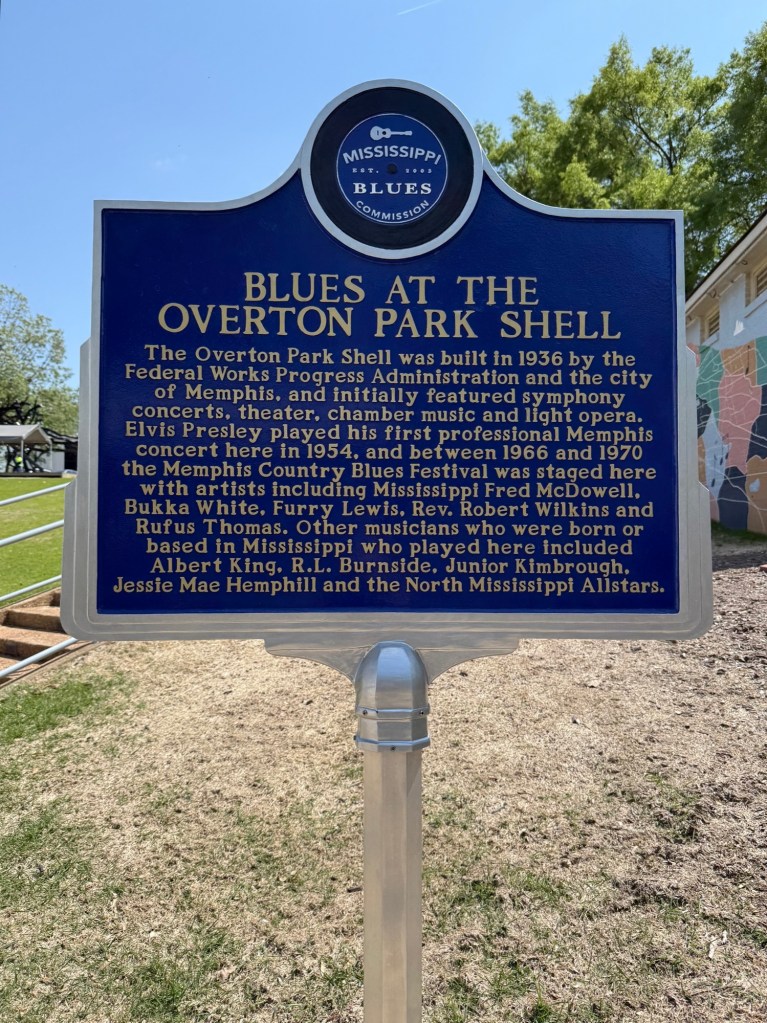
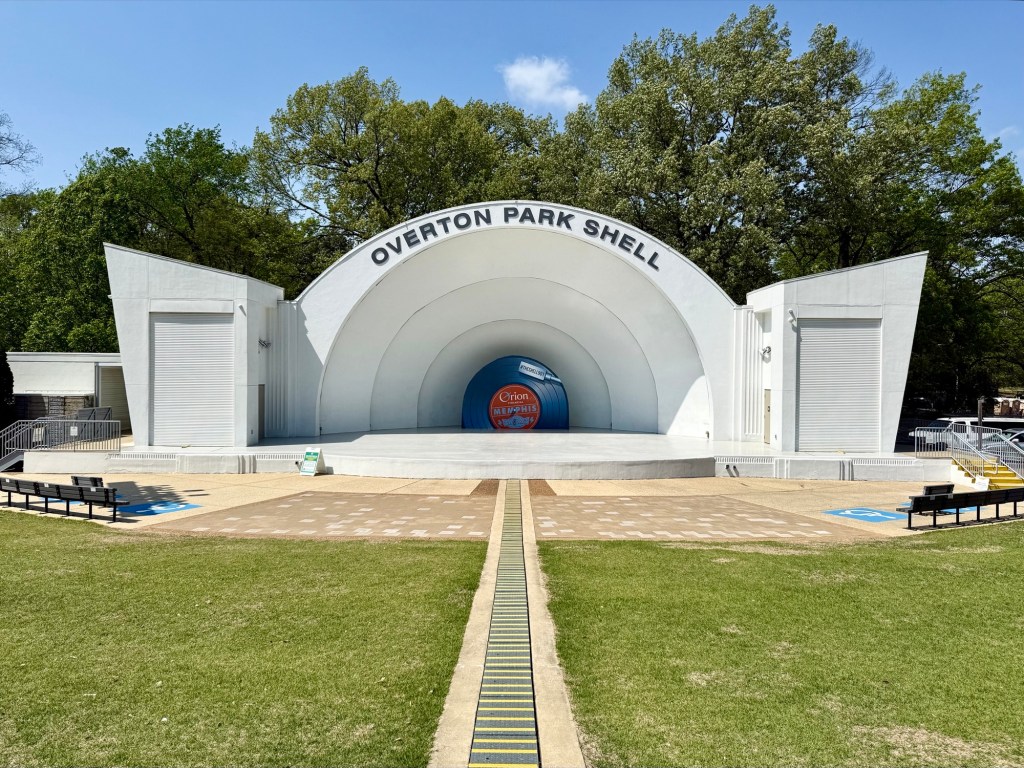
For an overview of Memphis, we took a musical bus tour with Back Beat Tours. It was a great tour that drove around the city and pointed out historical sites such as the small apartment where Elvis and his parents lived before he made it big and the Overton Park Shell – THE outdoor performance stage where so many have started their careers. The tour guide was a musician and would sing famous songs that was significant to the area as he talked us through the Memphis music history. There’s an option to get dropped off at Sun Studio at the end of the tour if you haven’t visited yet.

Apart from the bus tour, there’s also an option of a walking tour to get more of an overall history of Memphis rather than a focus on music. We had a great time and I’d highly recommend checking them out!
National Civil Rights Museum

Address: 450 Mulberry St, Memphis, TN 38103
Website: https://civilrightsmuseum.org/
Hours: 9am-5pm, closed on Tuesdays (check website for updated hours before going)
Cost: $20/adult

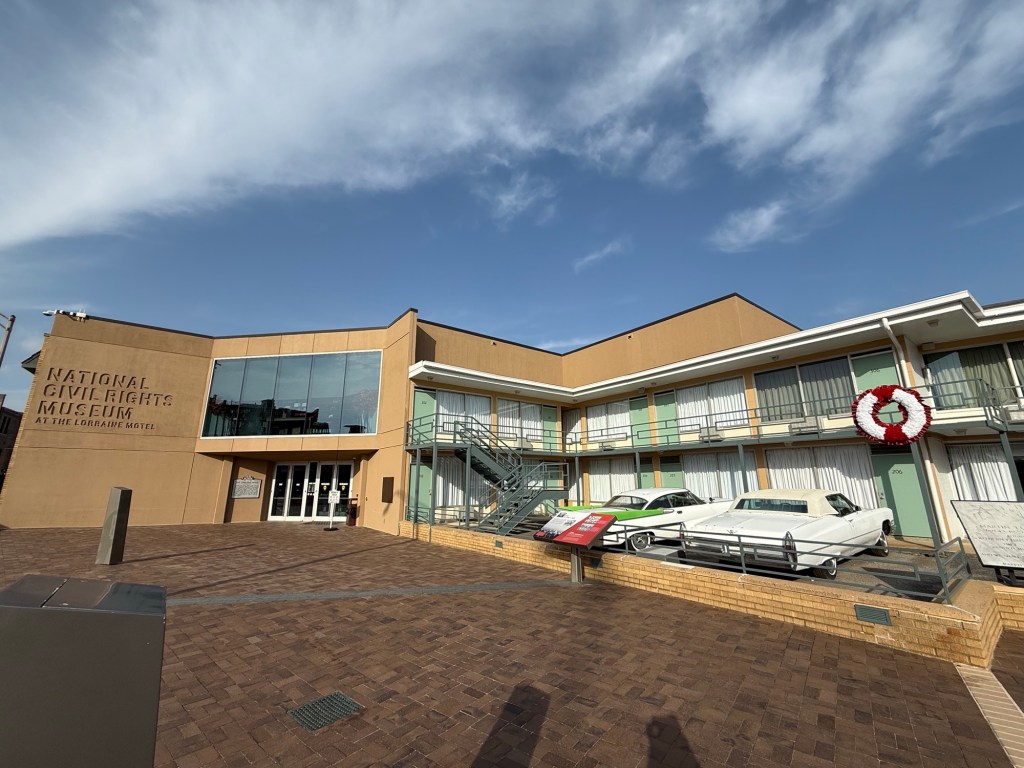
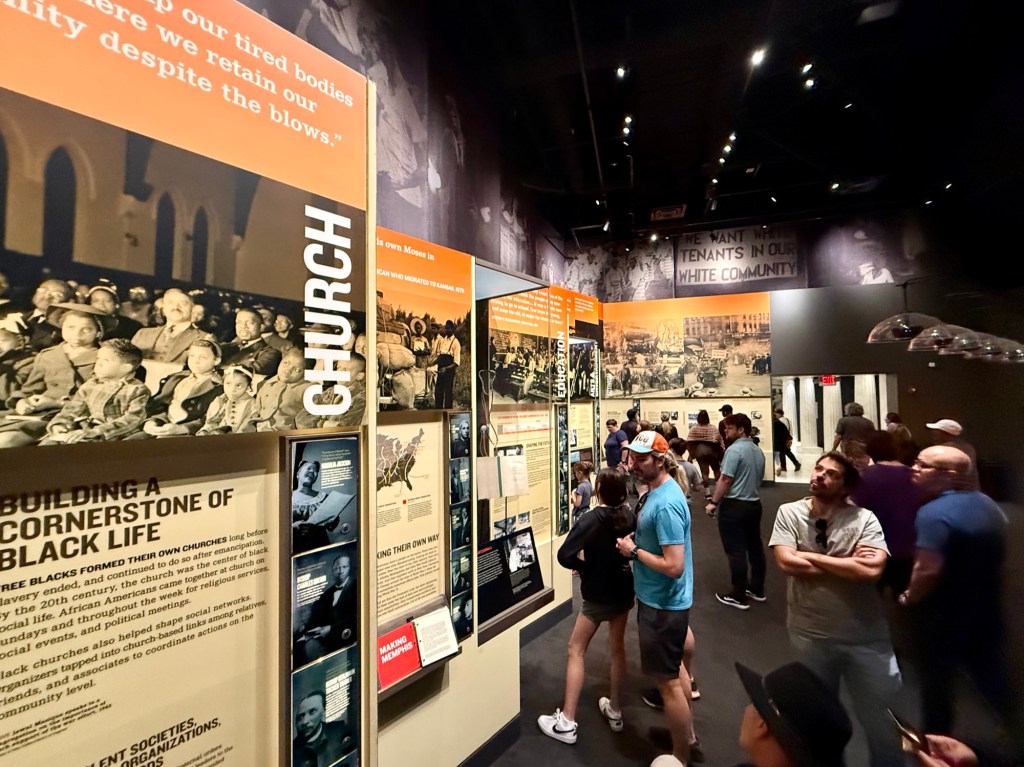
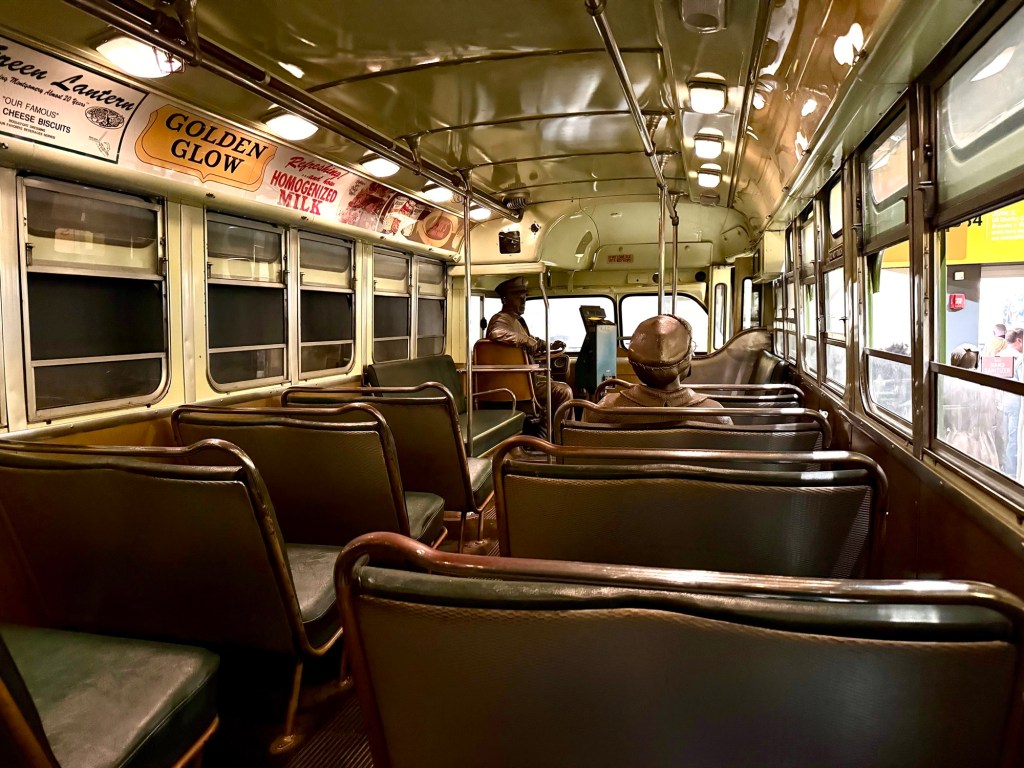
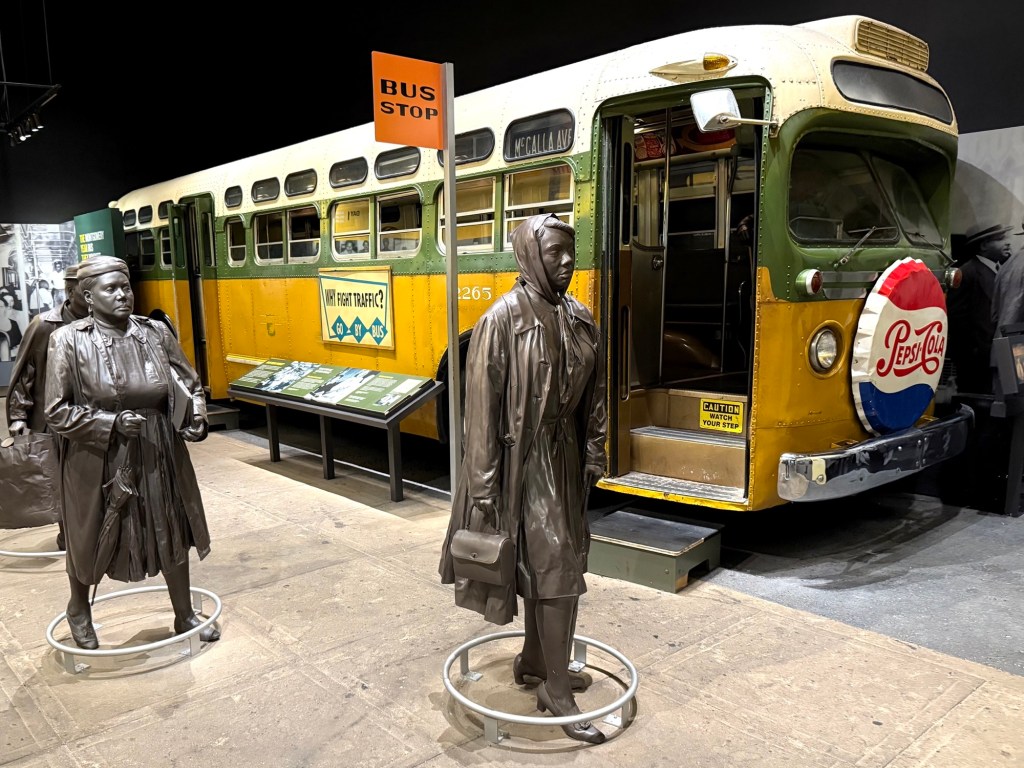
Although there are many civil rights museums around the US, the National Civil Rights Museum in Memphis is considered one of the best ones. You’ll need at least 2 hours to get through most of it here, but set aside 3 hours if you want to read everything (there’s a lot to read!).

If you’re visiting internationally and don’t know much about American history, a VERY basic summary that you should know before visiting is that the American civil war was a significant war from 1861-1865 between the Northern and the Southern states over slavery. The Southern states heavily relied on slaves for cheap labor on their industry such as cotton plantations, whereas the Northern states wanted to abolish slavery and make slavery illegal. Spoiler: the North won and slavery was abolished, however as significant as this win was, racism continued and the struggle for black rights continued for decades to come. This museum is a comprehensive coverage through time of the complicated past and the fight for equality. The exhibits starts off with how slavery came to be in America and ends with the assassination of Dr. Martin Luther King Jr., highlighting significant events along the way and important figures.

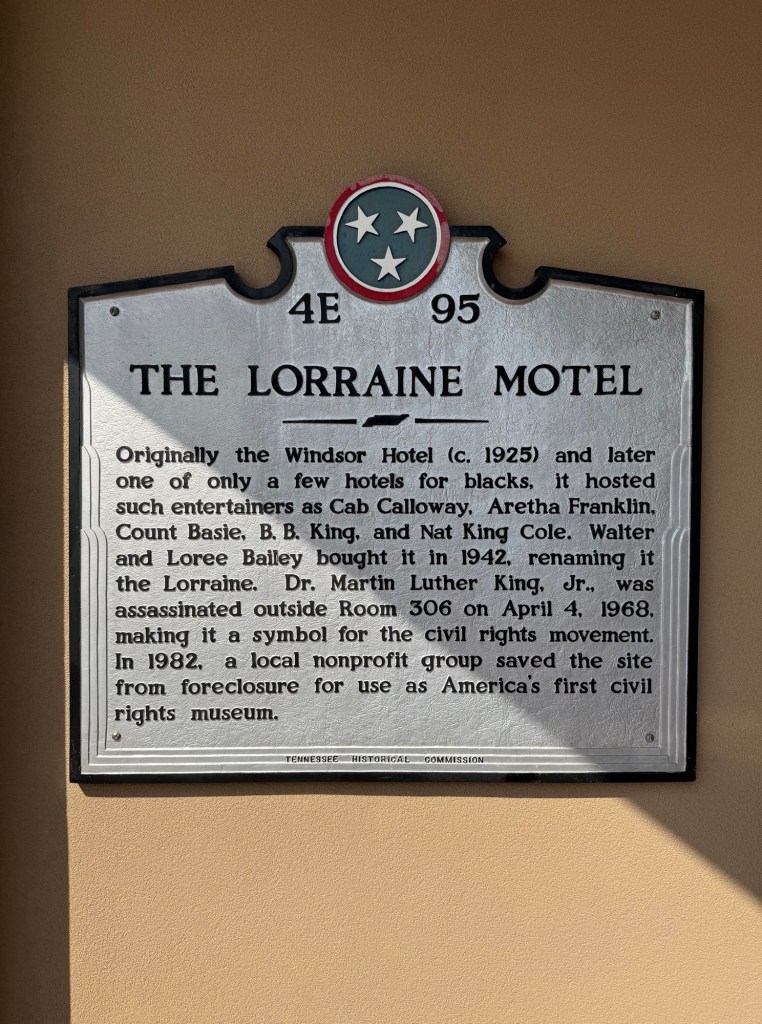
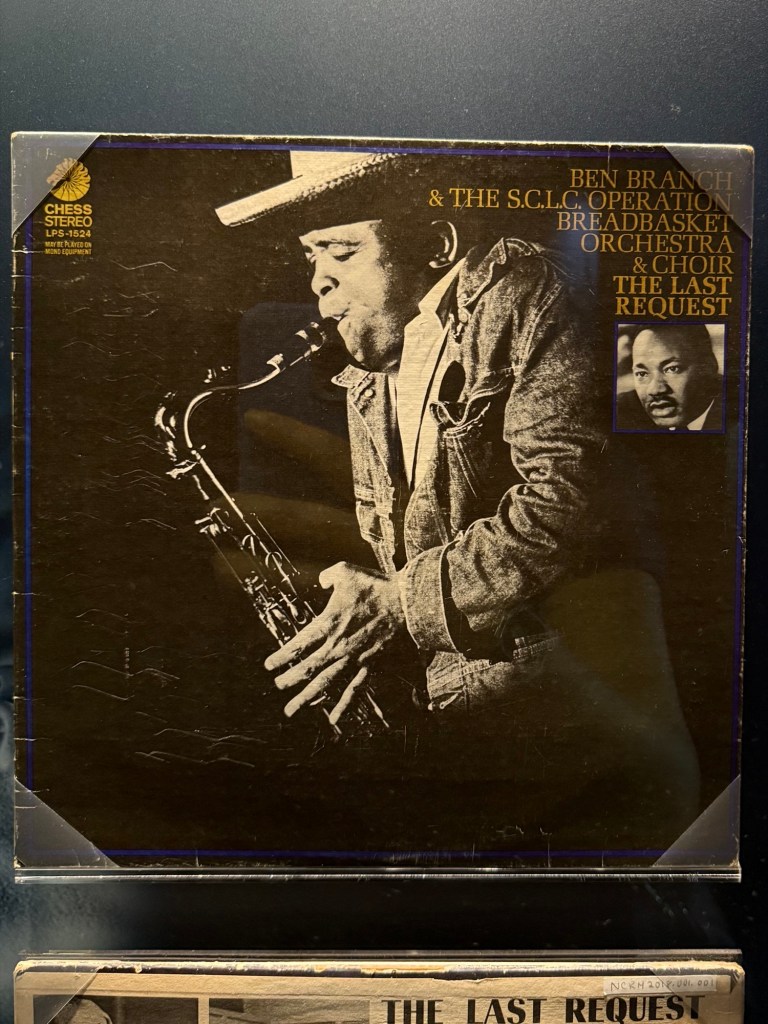
The museum is actually located at the site where Martin Luther King Jr. was fatally shot, outside of his hotel room at the Lorraine Hotel. The Lorraine Hotel has since closed down but the outside of the hotel has been preserved, as well as his hotel room. The inside of the hotel is renovated into the museum and it’s actually a pretty cool-looking building from the outside – even if you don’t have time to go to the museum, it’s worth checking out the outside of the building and seeing the site and memorial for Dr. Martin Luther King Jr. – it’s free for everyone.

Stax Record Company – Museum of American Soul Music

Address: 926 E. McLemore Ave, Memphis, TN 38106
Opening Hours: Tues to Sun 10am – 5pm (tours stop at 4pm), closed Mondays (double check the website for the most updated information)
Website: https://staxmuseum.org/
Admission: $20/adult, $16 for children and seniors

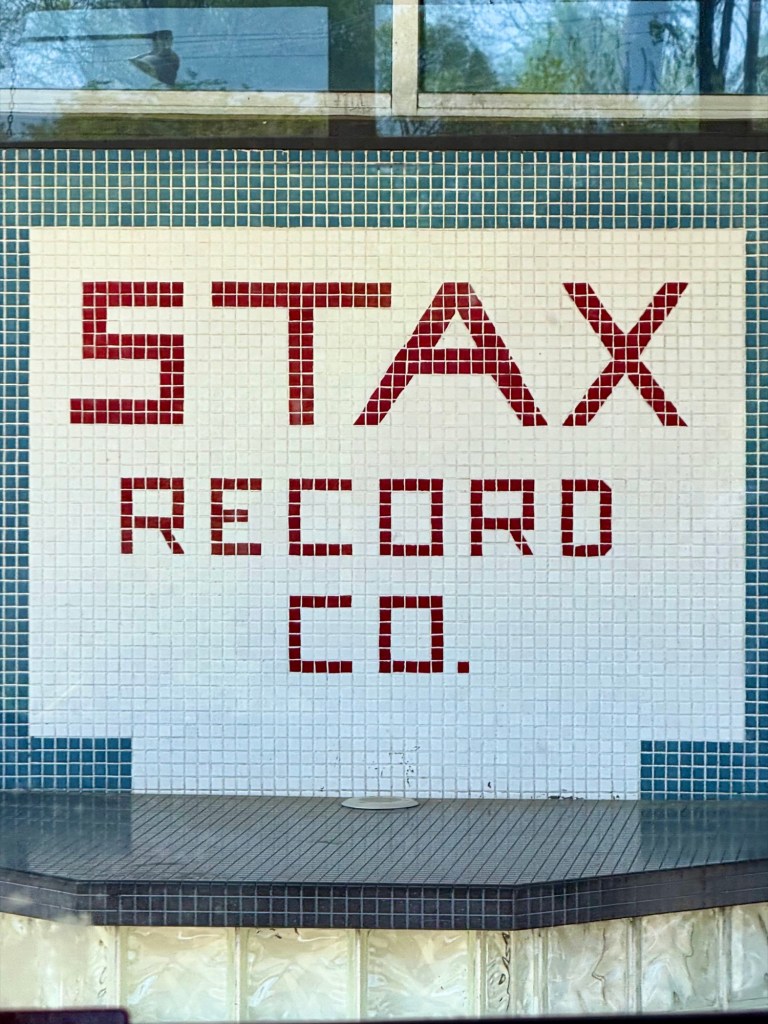
Founded in 1957 by two siblings, Jim Stewart and Estelle Axton, Stax Record Company (named by combining their last names) became a powerhouse for soul music. They’re known for blending rhythm and blues styles and influential in creating the “Southern Soul” or “Memphis Soul” sound. They are one of the most popular soul music record labels of all time and launched the careers of legendary artists such as Otis Redding, Sam & Dave, Rufus & Carla Thomas, Booker T. & the M.G.’s, among numerous others. You can read more about their history here: https://staxmuseum.org/1957-1968/

Although the original recording studio no longer exists, you can visit the Stax Museum and learn all about the history of soul music in Memphis. Unfortunately we didn’t have time to fit this into our itinerary but it was highly recommended by our music tour guide.

The Peabody Duck March at The Peabody Hotel

Address: 149 Union Avenue, Memphis TN 38103
Website: https://www.peabodymemphis.com/
Time: daily at 11am and 5pm, it is recommended to come 30 minutes prior
Cost: Free

Alright, this isn’t a “must do”, but it’s mentioned time and time again by internet reviews so I thought I’d include it for the people that want the “full” Memphis experience.

The Peabody Hotel is a luxury hotel in downtown Memphis that was originally built in 1869 at a location 1 block away from the current location. It housed several historic figures including presidents and generals back in the day. It closed down and re-opened in 1925 one block away and has retained its historical status. Apart from it being a fancy hotel, there’s a long-standing tradition since the 1930s of marching the resident ducks that live on the roof top of the hotel to the fountain in the lobby, called the ‘Peabody duck march’. It’s a 1 minute “show” where people line up along a red carpet and watch these ducks get ushered from out the elevator and to the fountain. I’m told it gets pretty busy, but you can sit at the bar for a better view if you buy a drink. Honestly, it’s not the most exciting, but it’s something different!
Toby didn’t actually tell me about this when he planned this trip because he didn’t think it was that exciting, but I got curious when the tour guide was talking about it and looked it up myself. Here’s a POV youtube video that someone filmed of the march in case anyone’s interested: https://www.youtube.com/watch?v=zCLMZ_6DSpg. He was right, it didn’t seem that exciting, especially since we had limited time in Memphis.

If you’re REALLY into ducks, for $434, you can book a “Ducky Day” package that includes a 1 night stay and duck-themed souvenirs 😂.

Beale Street

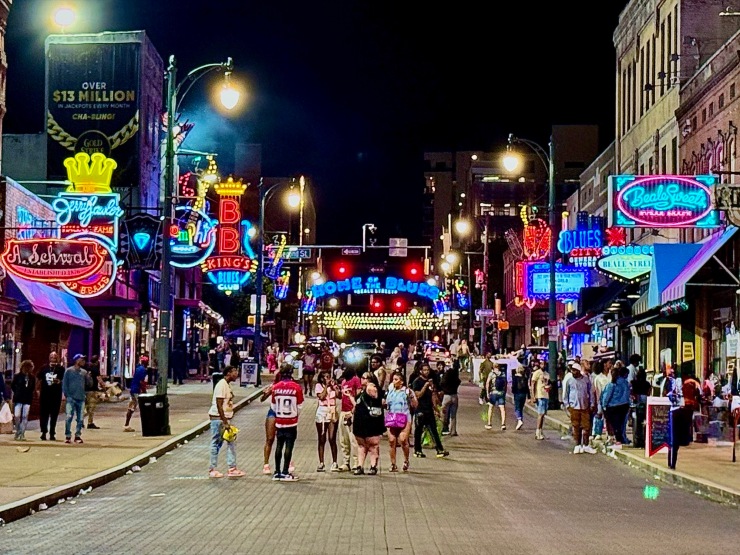
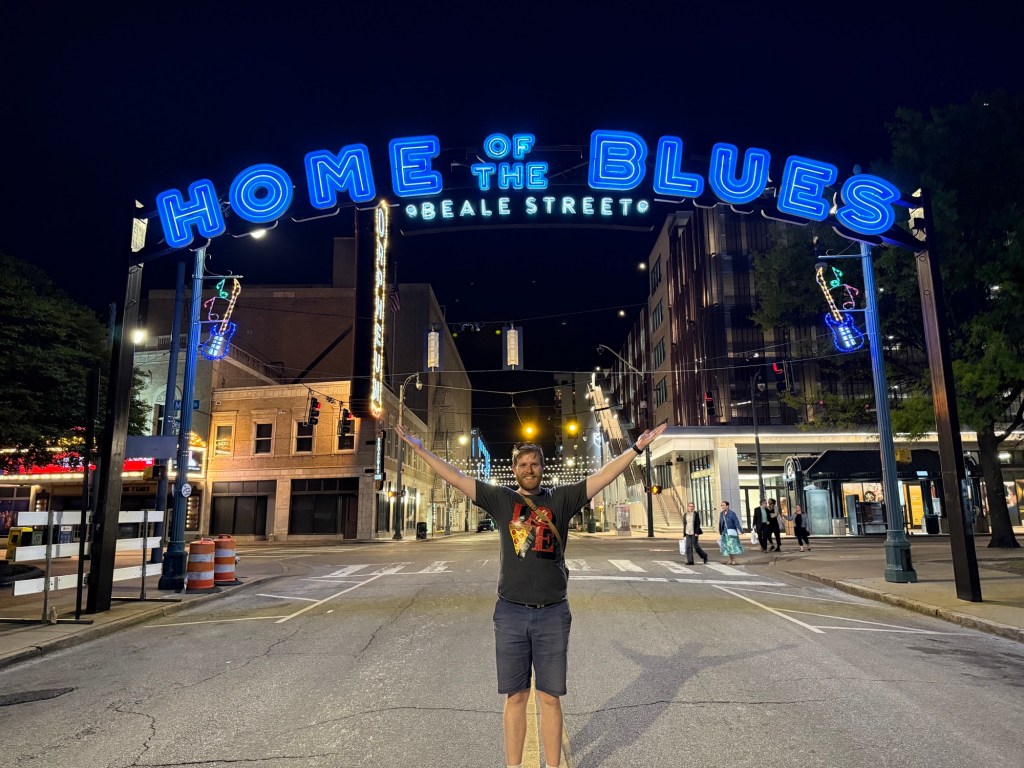
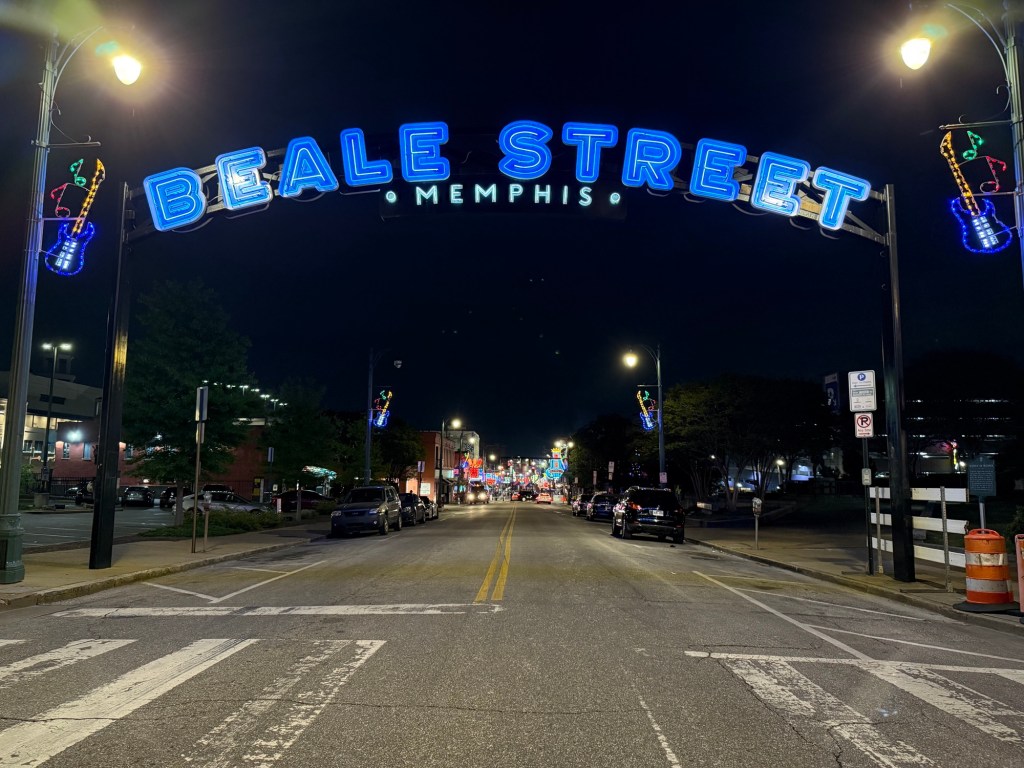
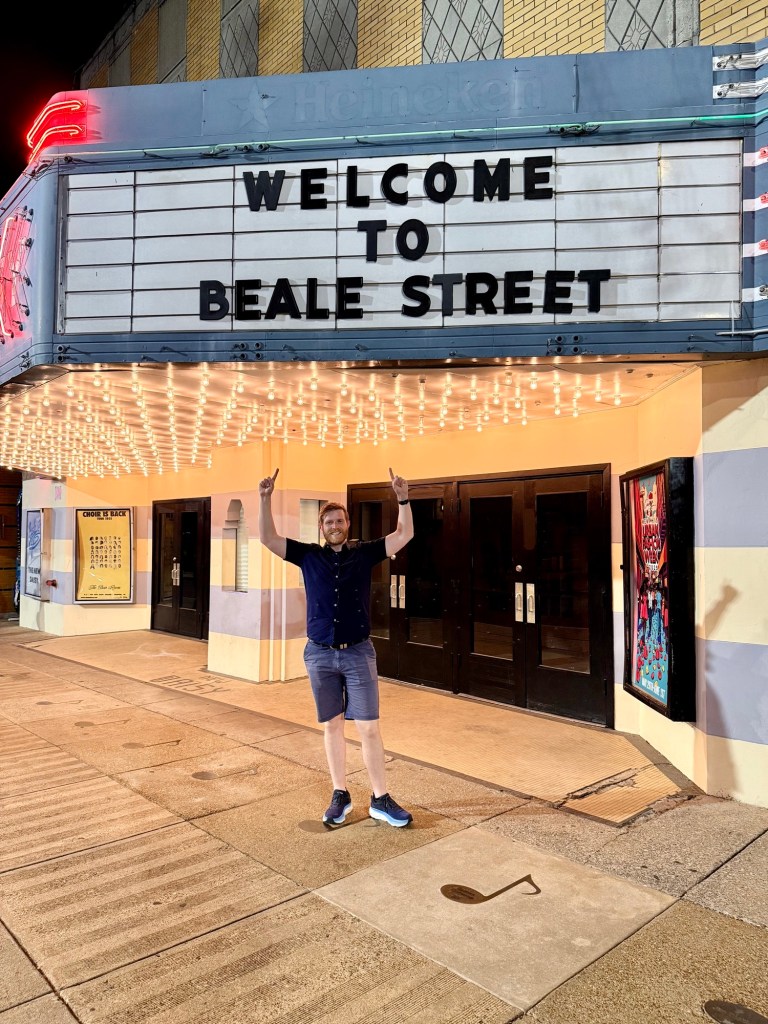
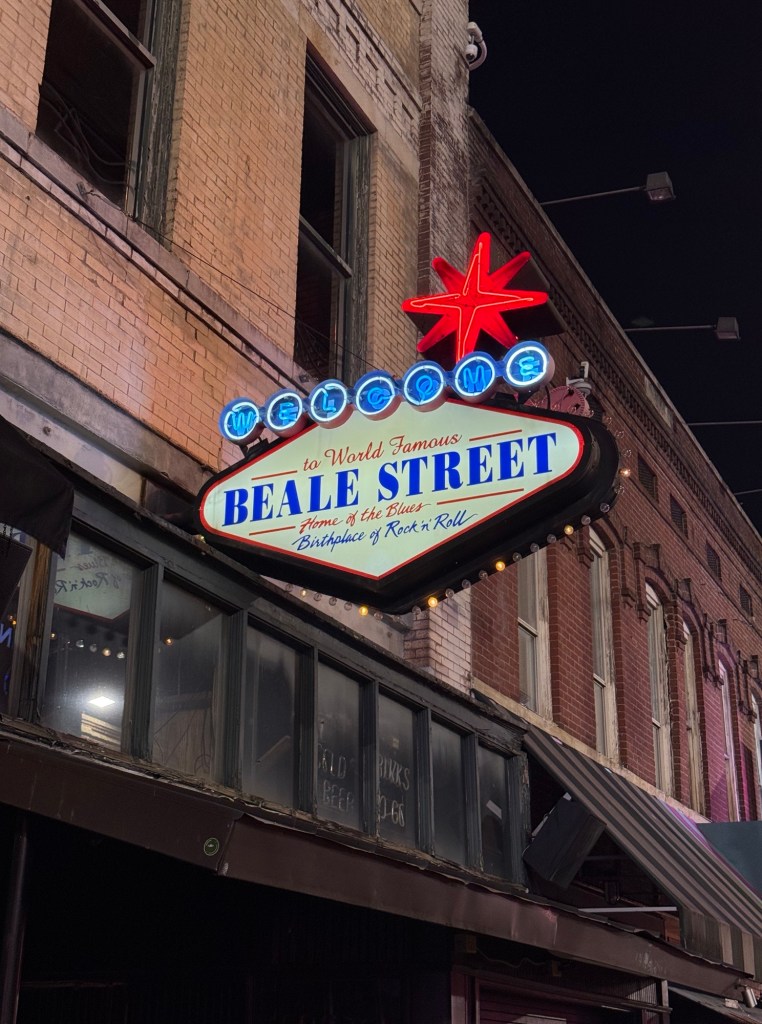
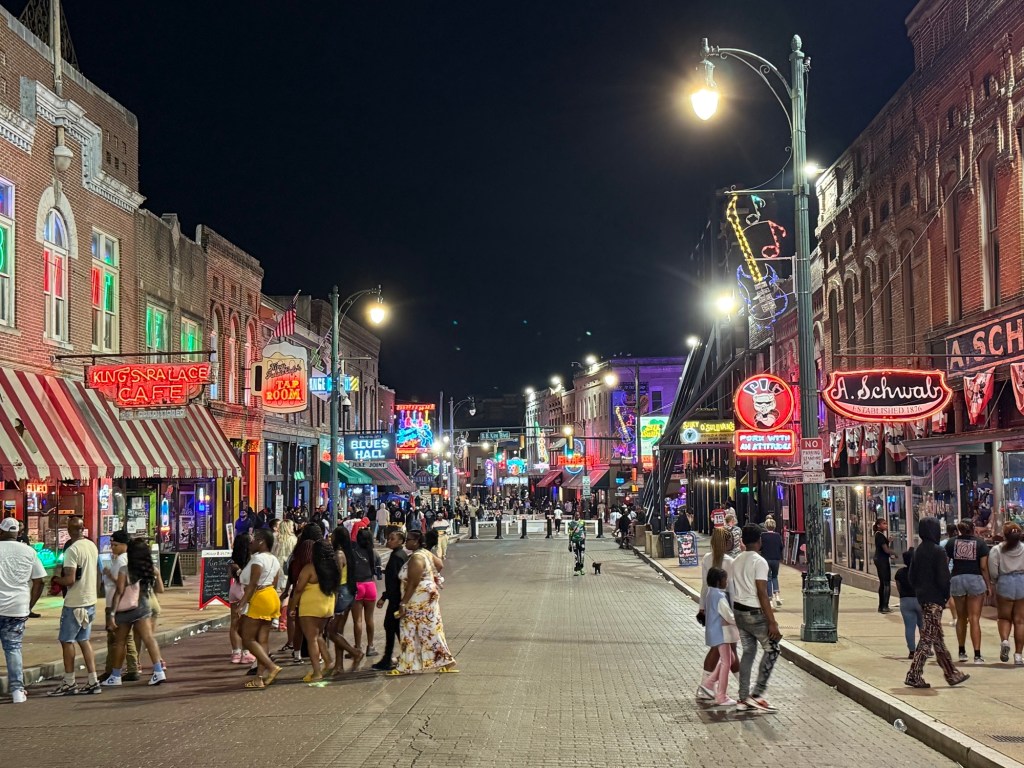
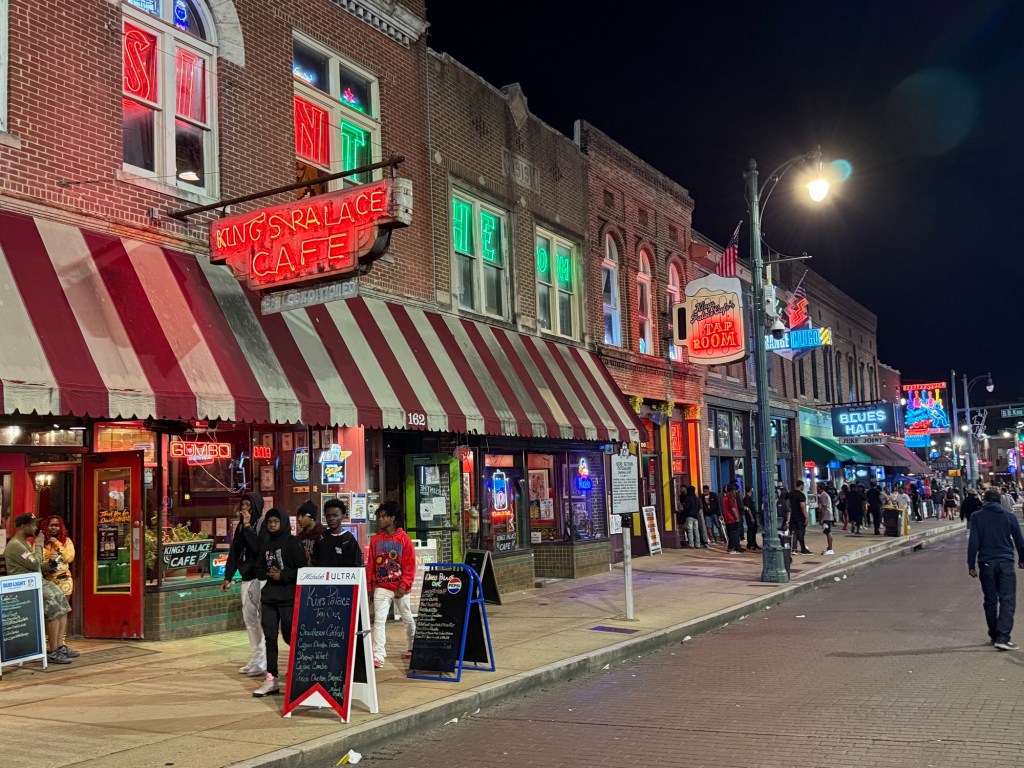
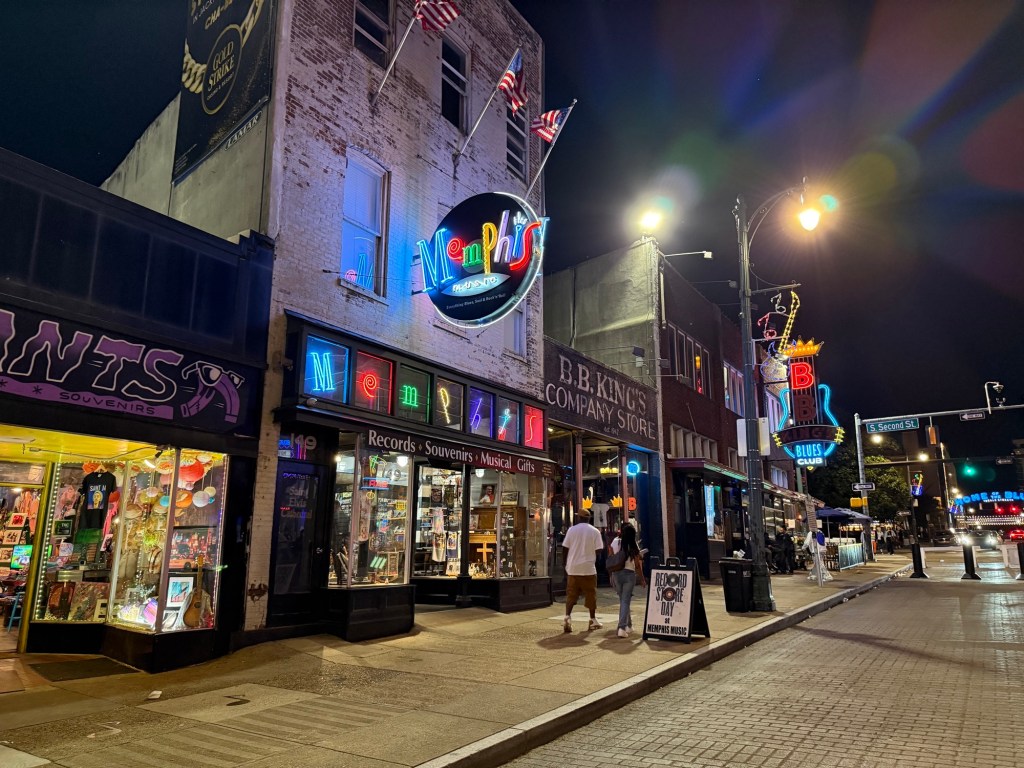
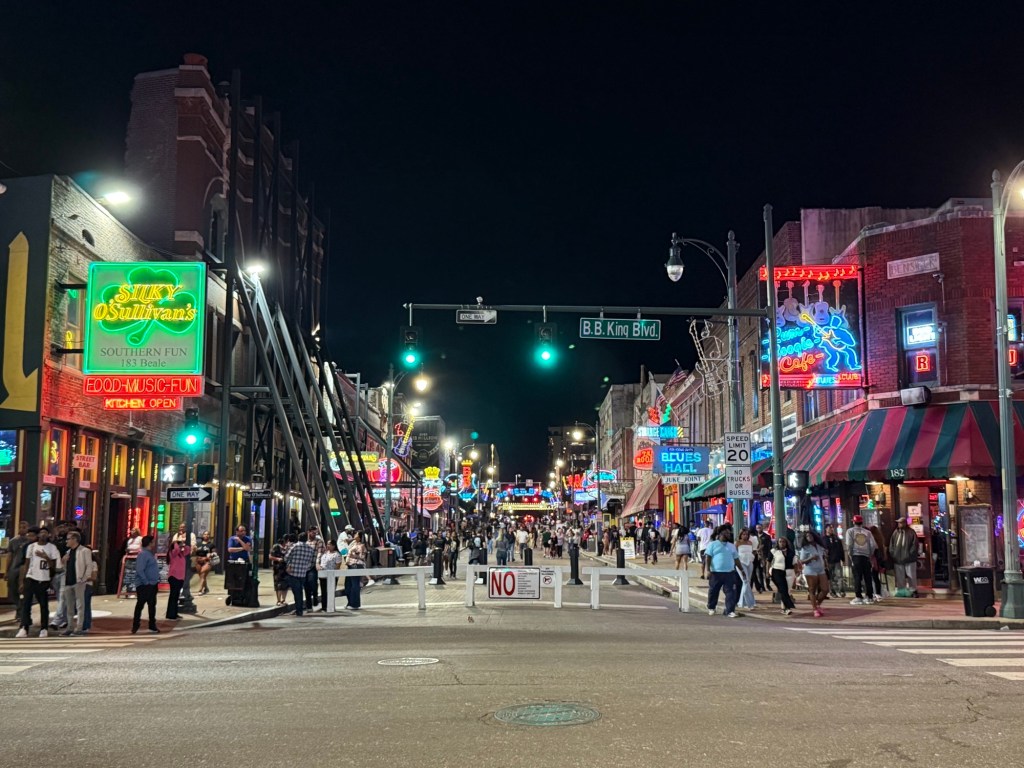
Beale Street is a historic street in downtown Memphis known for live music, restaurants, and shops and is considered the heart of Memphis. If you came to Memphis for some live music, this is the place to go. The entertainment part of Beale Street only runs two blocks between S. 2nd St. and S. 4th St. (highlighted in pink in the map above) with about a dozen restaurant/bar/live music venues scattered between the many souvenir gift shops.

Take a stroll down during the day and check out the shops and restaurants. Read the historic information plaques, check out a statue of Elvis’, get an old school milkshake at A. Schwab, or take a walking tour to learn more about this historic street.

Come in the evening for the iconic experience when the neon lights are lit up and the live music pours out of these venues. We’ve asked multiple locals on what their favourite place is for live music, but it really depends on who’s playing that night and what kind of music you’re into. Some musicians will be seasoned pros, whereas others may just be starting out. Instead of seeking out a specific place, I’d recommend just taking a stroll down Beale Street with open ears and see which artists you enjoy. Although Beale Street is known as the “Home of the Blues”, we not only heard different styles of Jazz, but country music and even a mini orchestra band while walking down!
On our last night in Memphis we settled in at Rum Boogie Cafe and listened to Baunie & Soul perform for a few hours before returning home.

Although a very touristy area, be a bit cautious when walking around downtown Memphis at night. When we arrived on a weekend night, there were some rowdy crowds around with a few suspicious characters, but during the weekday it was a bit quieter and we felt completely safe.

Food

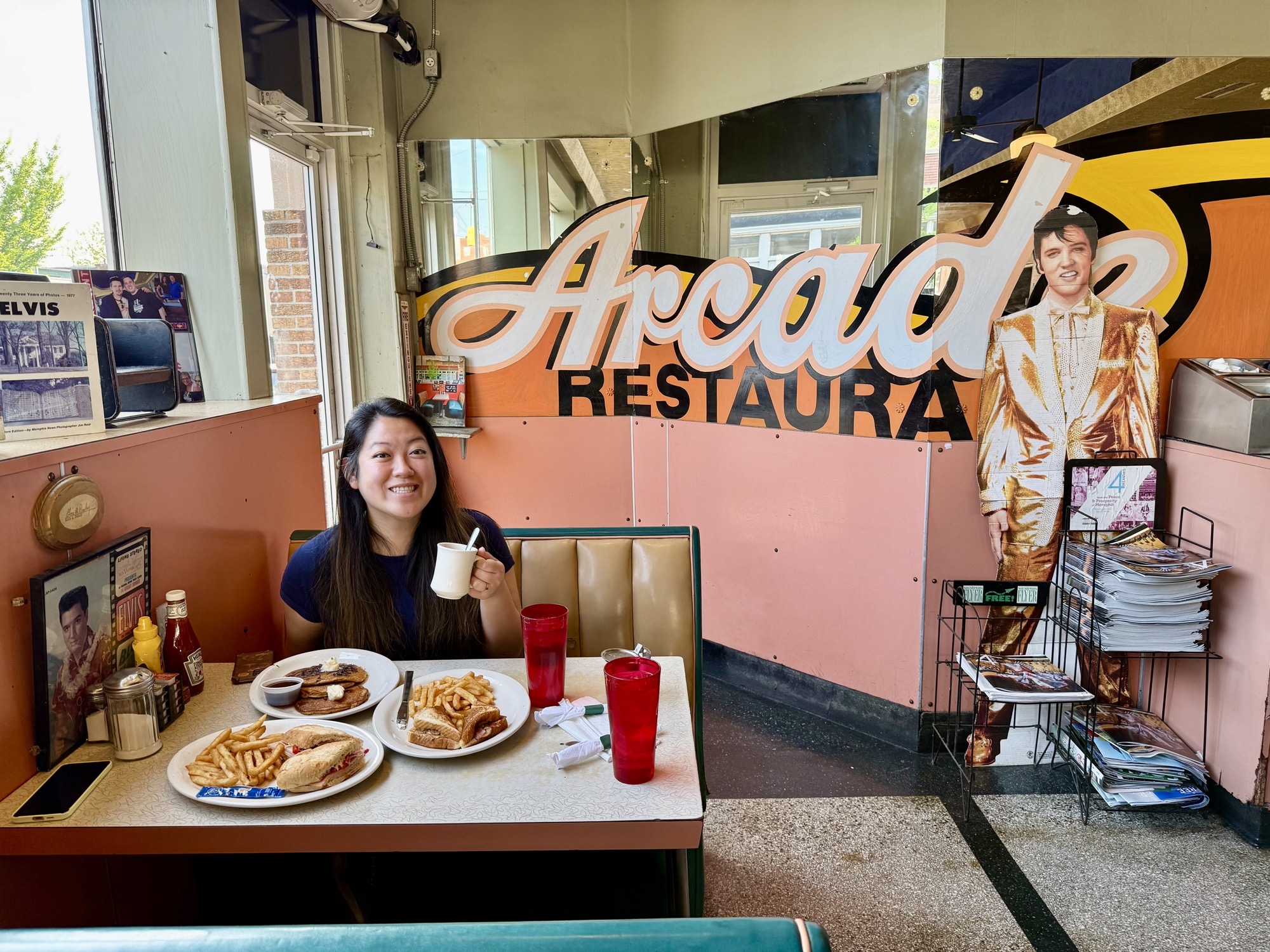
Arcade Restaurant – Memphis’ Oldest Cafe

Address: 540 S Main St, Memphis, TN 38103
Hours: 7am – 3pm daily
Website: http://arcaderestaurant.com

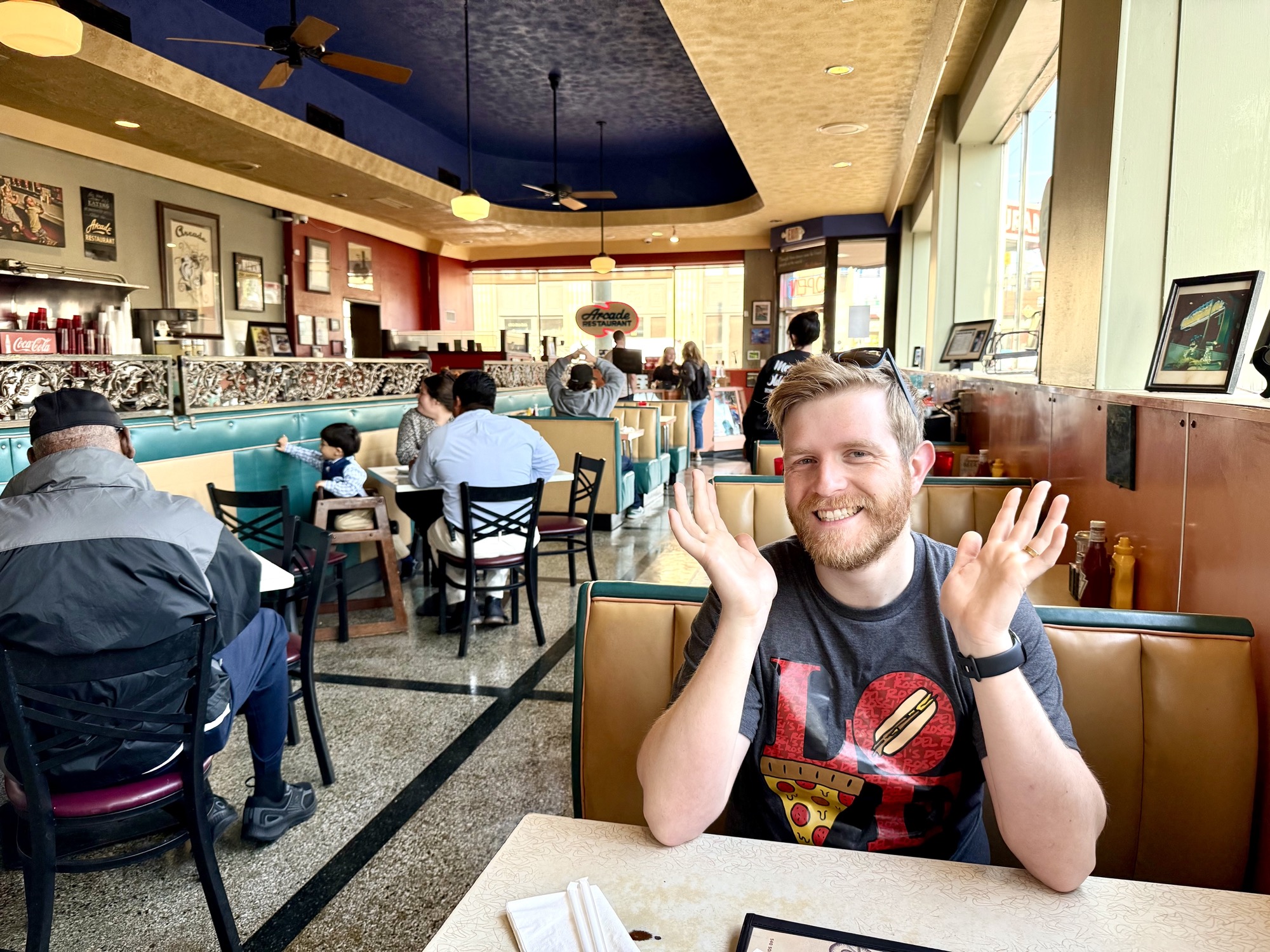
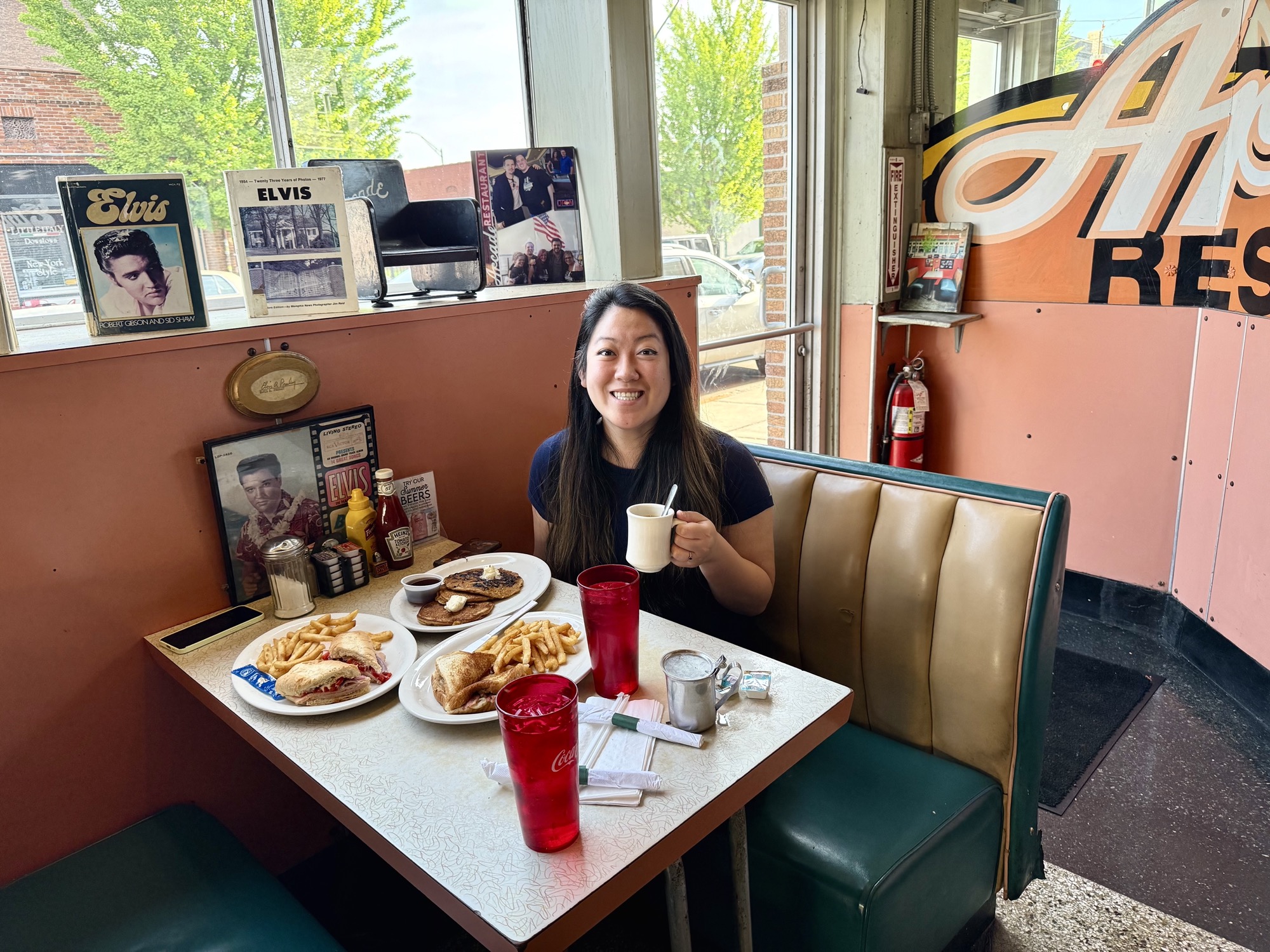
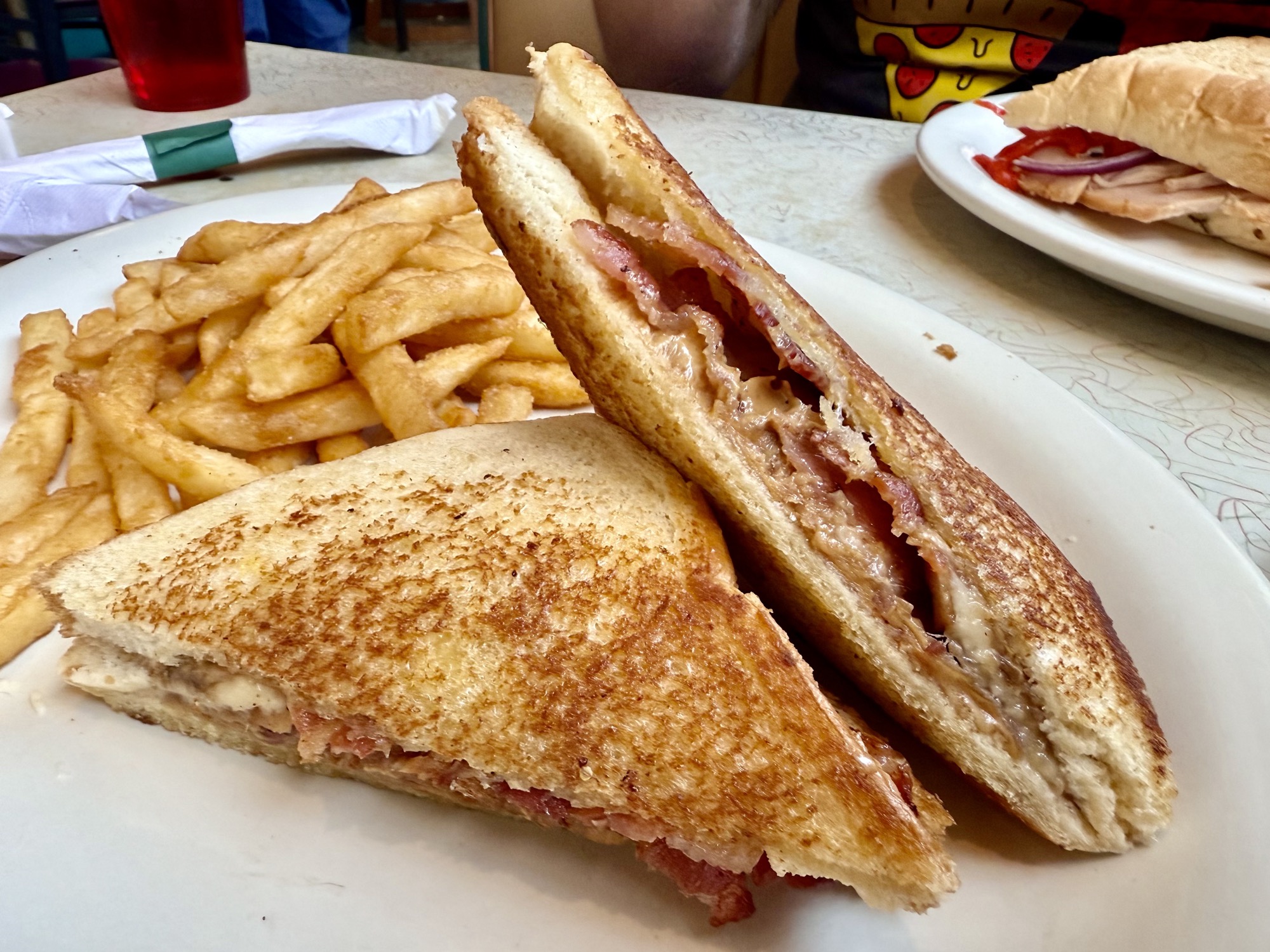
Arcade Restaurant is Memphis’ oldest cafe, open since 1919! Back in the heyday when Memphis was a bumpin’ place to be, the Arcade was open 24/7, catering to the many resident musicians at the time, including Elvis Presley! It is known that Elvis was a regular at the Arcade and would always order a fried peanut butter and banana sandwich at his preferred booth beside the back door in case he ever needed to make a quick escape from crazy fans! You can actually sit at ‘the Elvis booth’ if you’re lucky enough for it to be free when you’re there!

Even without the Elvis popularity, the Food Network listed the fried PB sandwich on their top 100 sandwiches in the US. We came here early in the morning for breakfast before our day at Graceland to experience this retro-style arcade and to ‘eat like The King’. We got to sit at the Elvis booth! The fried PB and banana sandwich tasted exactly as it sounds – two slices of bread with peanut butter and sliced banana in the middle, then pan-fried on the outside until golden. It was a fine sandwich, but not mind-blowing, something you could easily make at home. They had some pretty good sweet potato pancakes though and the smoked turkey and brie sandwich wasn’t half bad either!

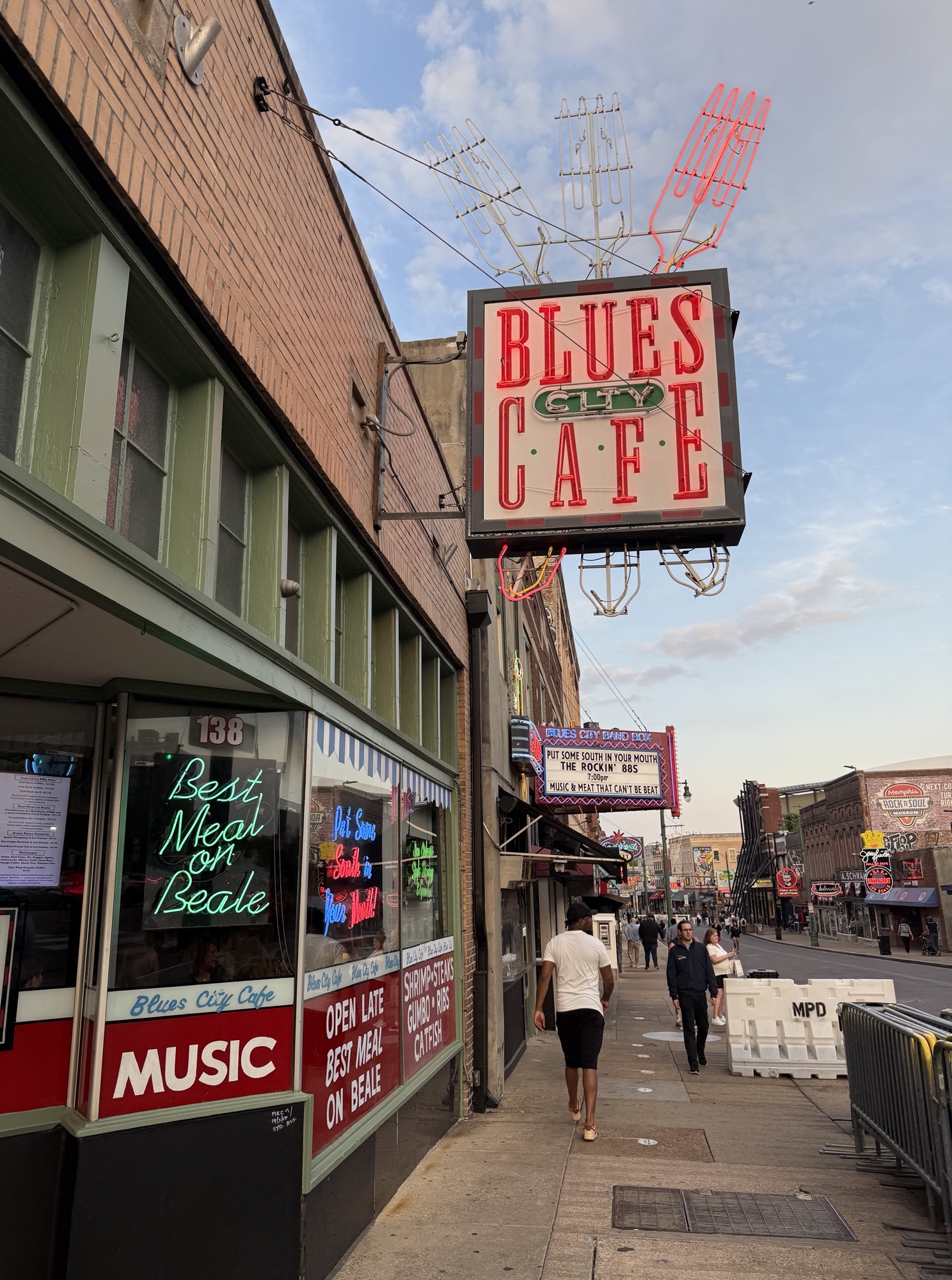
Blues City Cafe (on Beale Street)

Address: 138 Beale St, Memphis, TN 38103
Hours: 11am-1am most night, open until 3am on Fri and Sat nights
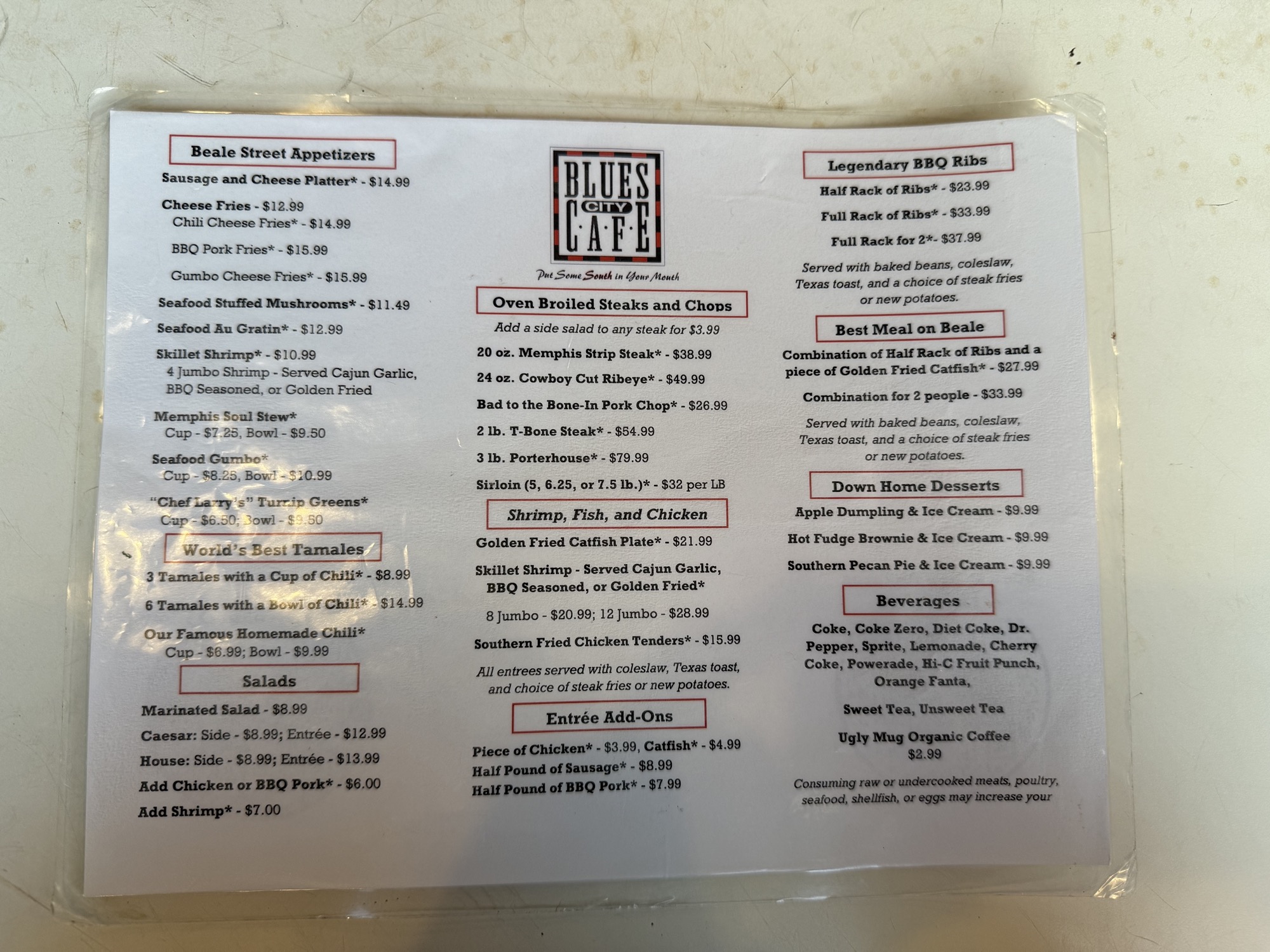
Website: https://bluescitycafe.com/menu/our-menu/

This restaurant was recommended by our tour guide for some good classic southern food. It is conveniently located right on Beale Street, perfect for grabbing dinner then strolling down the street for some live jazz music.

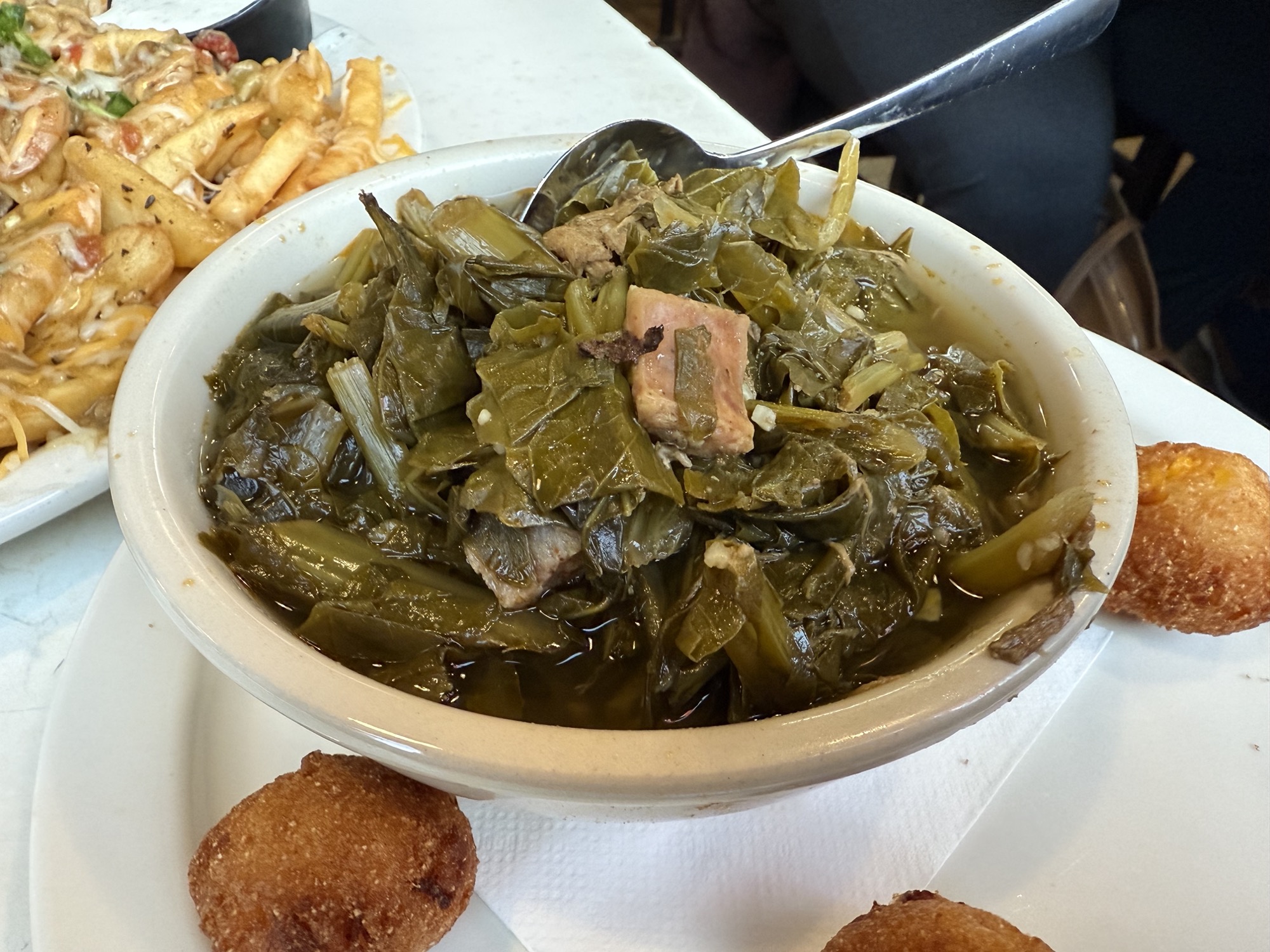
Being our first time in the South, we wanted to try a bit of everything. Their gumbo cheese fries and BBQ ribs were just okay, the fried catfish was beautifully fried and super fresh, the collard greens were pretty good, but my all time favourite was the gumbo. I originally got a small cup but it was so good that I immediately ordered a full size bowl 😅. They will usually have live music in the back, but we must have just missed them when we were there 🤷🏻‍♀️.

Gus’s World Famous Fried Chicken

Address: 310 S Front St, Memphis, TN 38103
Hours: 11am-9pm most days, until 10pm on Fri and Sat night
Website: http://gusfriedchicken.com/downtown-memphis-tennessee-location/#menu

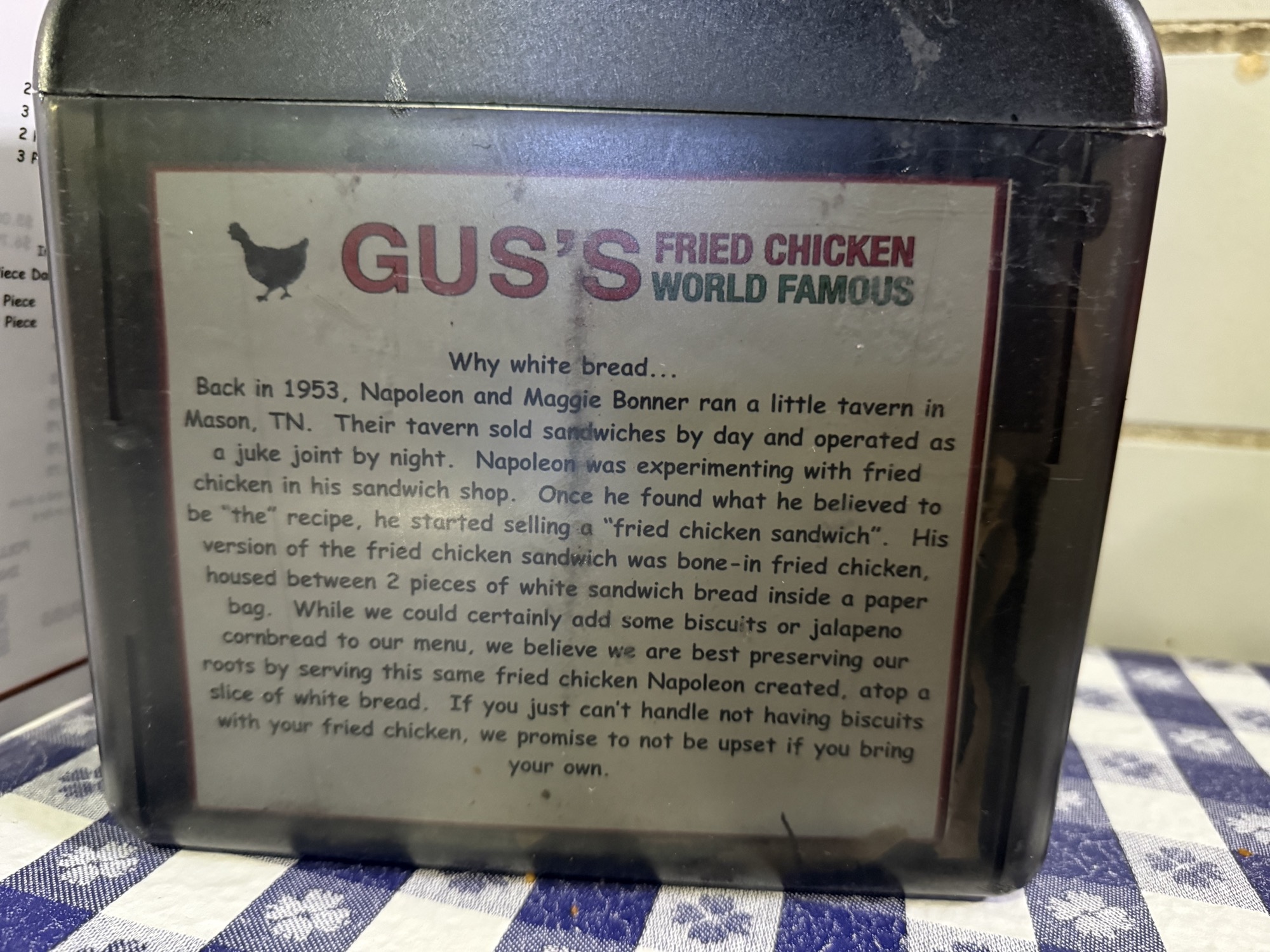
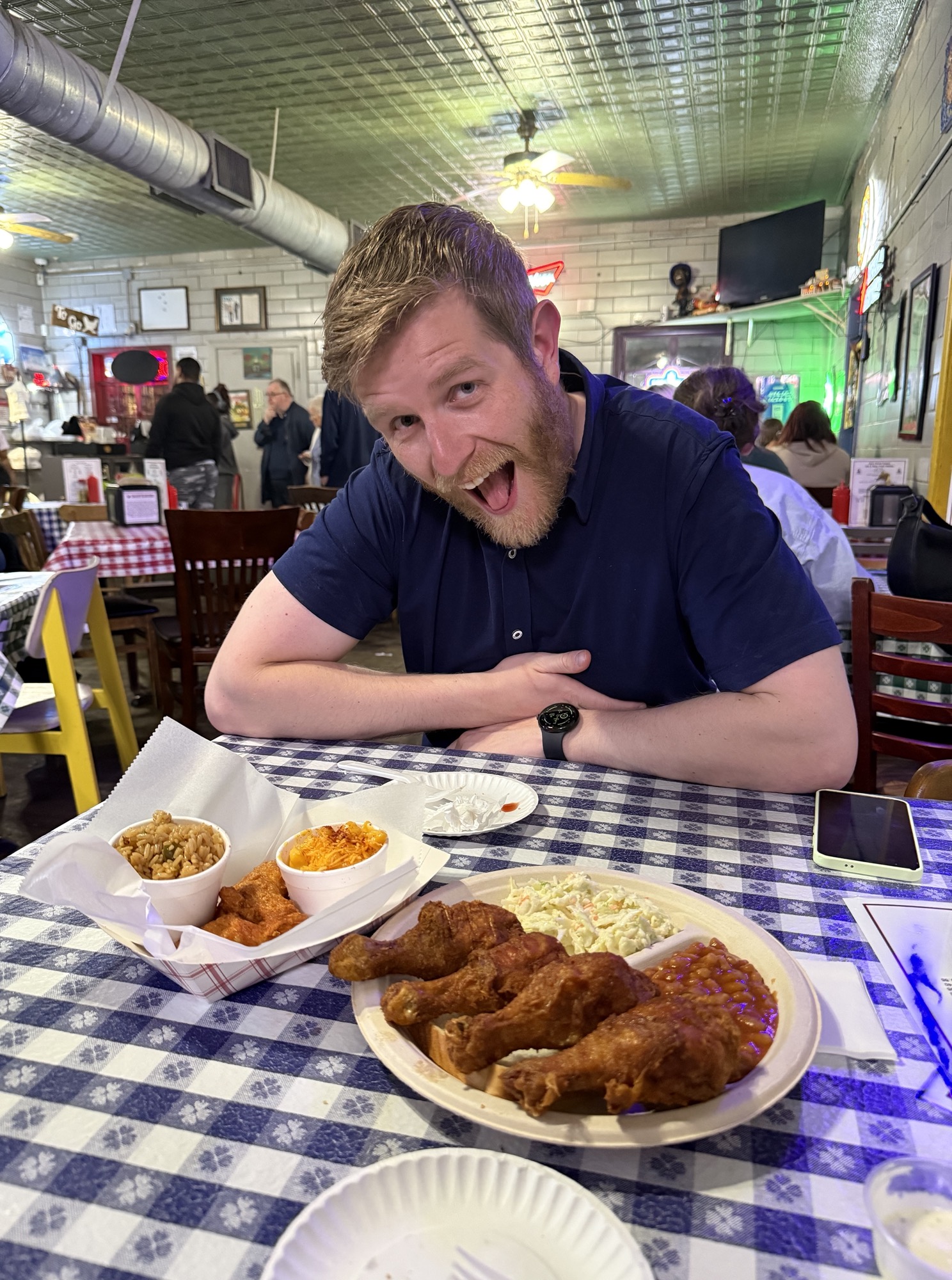
We arrived in Memphis pretty late in the evening and many restaurants were already closed, but we found Gus’s that was only a 2 minute walk from our hotel with a ton of positive Google reviews so off we went, excited to try our first fried chicken in the South!

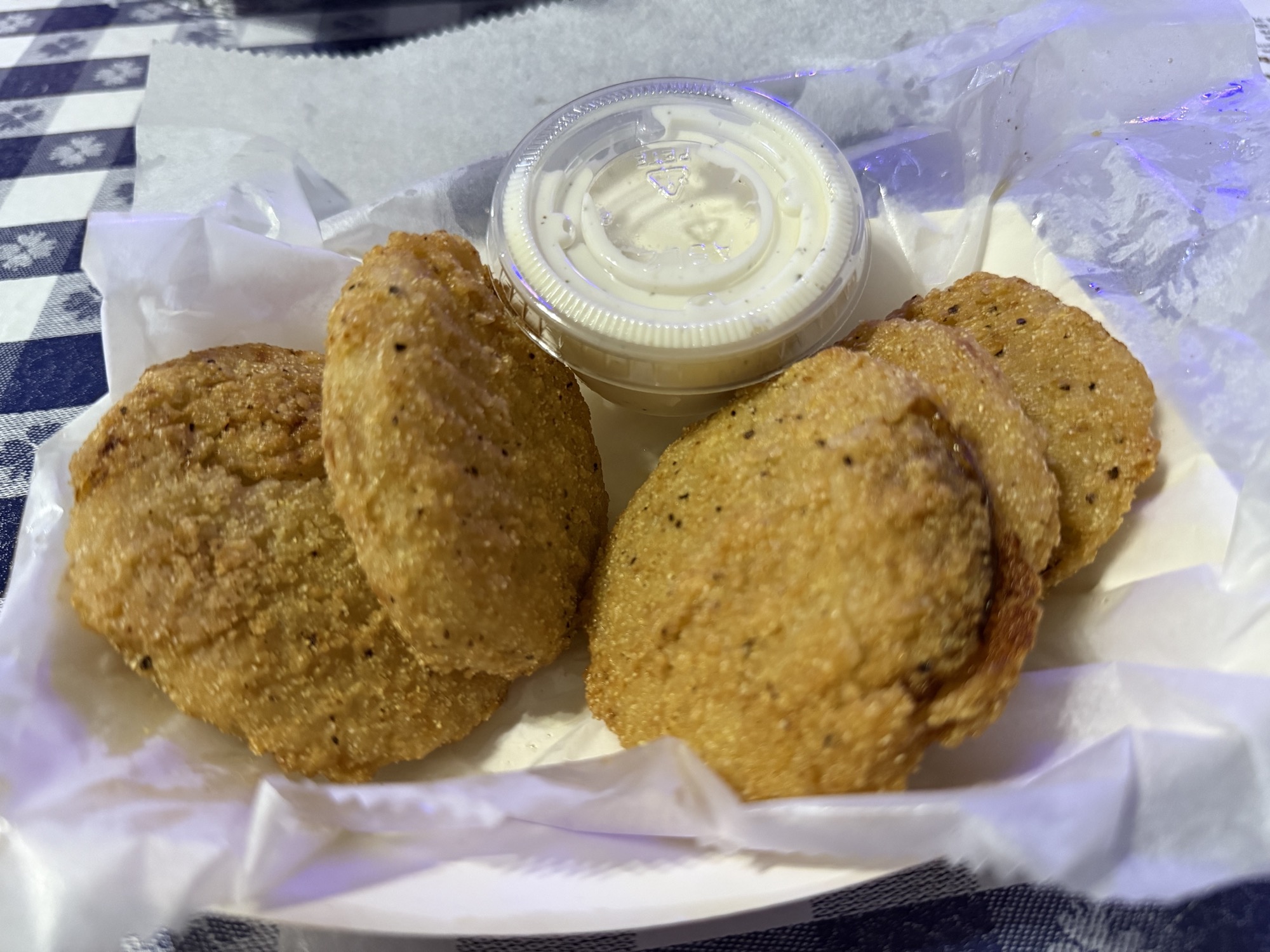
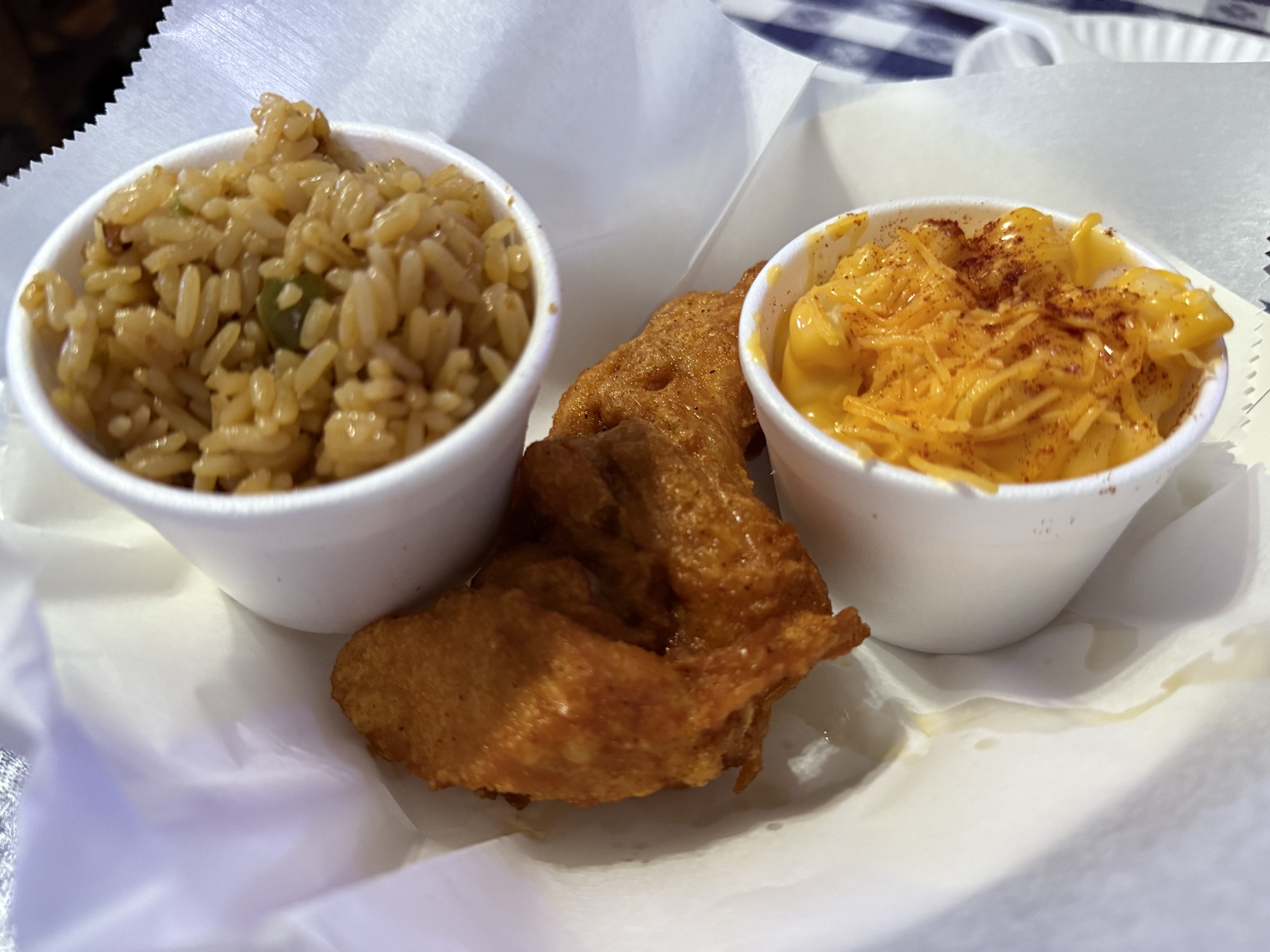
This joint was indeed busy and as usual, we ordered a bit of the most popular items to try it out. Apart from the fried green tomatoes, sadly the rest of the food was very underwhelming. The spicy fried chicken that so many people online rave about was just okay. It was cooked well, but the flavours were lacking. We really wanted to like it 💔.

Memphis BBQ

We’ve heard so much about Memphis BBQ, but unfortunately most of the popular BBQ spots weren’t open on the days we were there so we never got to experience true Memphis BBQ, apart from the okay ribs at Blues City Cafe. Memphis BBQ is predominantly pork-based, although some restaurants also serve beef cuts. From what I can tell, Memphis-style BBQ offers pork ribs that are served either “wet” (with a sauce covering) or “dry” (cooked with a dry rub).

Here’s a list of popular Memphis BBQ places we’ve come across in our research incase we ever head back to Memphis again or if anyone is planning a trip (as you can see, most are closed Sunday & Monday, the only 2 days we were in Memphis 😭):

Charlie Vergos’ Rendezvous
Address: 52 S 2nd St, Memphis, TN 38103
Hours: 11am-9pm most days, closed Sun & Mon
Website: https://hogsfly.com/

Cozy Corner Restaurant
Address: 735 North Pkwy, Memphis, TN 38105
Hours: 11am-8pm most days, closed Sun & Mon
Website: https://cozycornerbbq.com/menu/

The Bar-B-Q Shop
Address: 1782 Madison Ave, Memphis, TN 38104
Hours: 11am-8:30pm most days, closed Sun & Mon
Website: https://thebar-b-qshop.com/

Central BBQ
Address: 147 E Butler Ave, Memphis, TN 38103 (2 locations)
Hours: 11am-9pm daily
Website: https://eatcbq.com/pages/downtown

Some final thoughts…

  • Memphis is very touristy, especially Beale Street
  • Be cautious of safety and suspicious characters
  • Graceland and Sun Studios are the two main attractions in Memphis
  • Don’t visit on a Sunday or Monday if you want to have good Memphis BBQ
  • Civil rights museum is worth visiting for its historical significance
  • Check out the bigass Bass Pro Pyramid, if not for the shop, then for the observation deck at the top
  • If you like ducks, head to The Peabody

A Day in Princeton & Beyond – University, Grounds for Sculpture, & Trenton


Date Published: April 21st, 2025 | Last Updated: April 21st, 2025
Author: Abby | Category: Travel, USA
Date of travel: March 1st, 2025

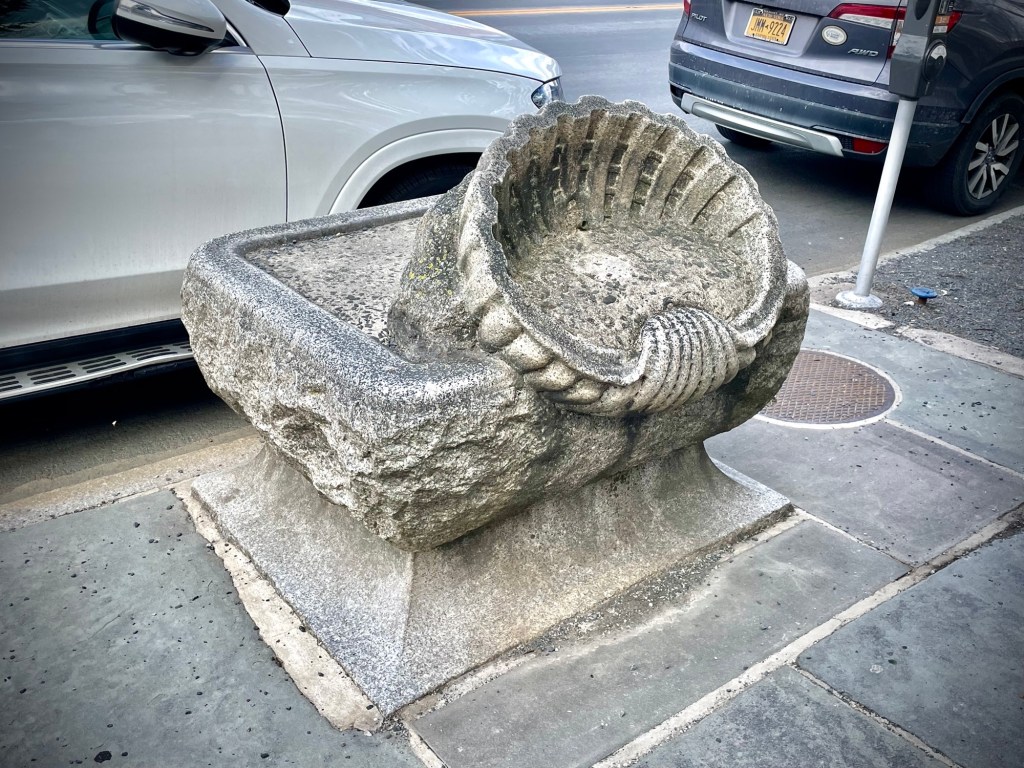
Princeton, New Jersey is roughly a 1.5 hour drive from NYC which makes it a great day trip away from the big city. In fact, it is exactly halfway between Philadelphia and New York, which were the two wealthiest cities back in the days and as a result, Princeton was a popular stop for stage coaches to let their horses rest. You can still find old stone horse troughs still around town!

Princeton is of course home to the famous Princeton University. The main highlight of this town is to tour the campus but there are some cool shops around this town as well to check out. This post will highlight a tour around the college campus, some famous houses, and the nearby Grounds for Sculpture and Trenton, the capital of New Jersey.

How many days do I need?

There’s not all that much “to do” in Princeton, so a half a day will be enough to see the highlights and check out the campus. Make it a full day if you want to visit Grounds for Sculpture.

Parking:

The best parking will be at Spring Street Garage (24 Spring St, Princeton, NJ 08542) which has very reasonable rates and is conveniently located in the middle of town.

Book a walking tour

Booking a walking tour is the best way to explore both the town of Princeton and Princeton University. There are so many notable buildings with a unique history that it’s easy to miss if you walk around yourself. The university campus is also quite large and can be easy to get lost. In this blog post I’ve highlighted some notable places, but they were all covered on our walking tour.

We booked our walking tour with this company. It was reasonably priced and informative. The guy that did our tour seemed to be new 😅 but we still hit all the spots.

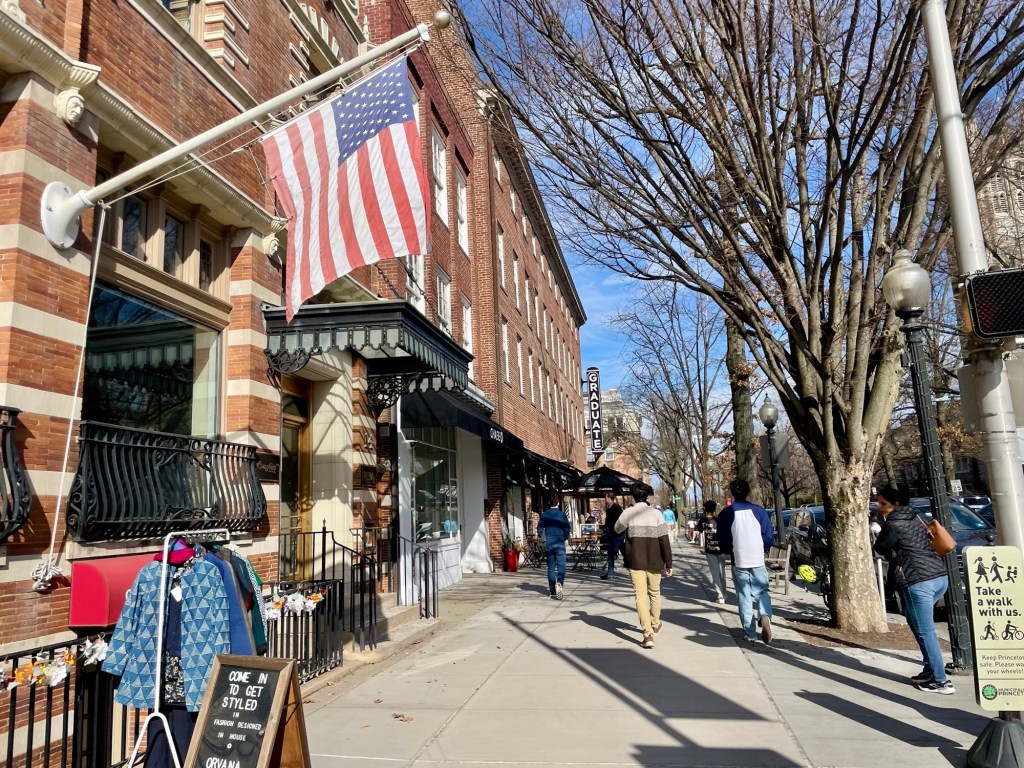
Nassau Street is the main street of Princeton with shops and restaurants. Although we didn’t have time to grab a bite, our tour guide recommended Winberie’s Restaurant & Bar and Triumph Restaurant & Brewery off of Palmer Square.

Apparently most of the nightlife here is targeted to the undergrads.

Nassau Street
An old stone water trough for stage coach horses back in the day (now filled in with concrete)

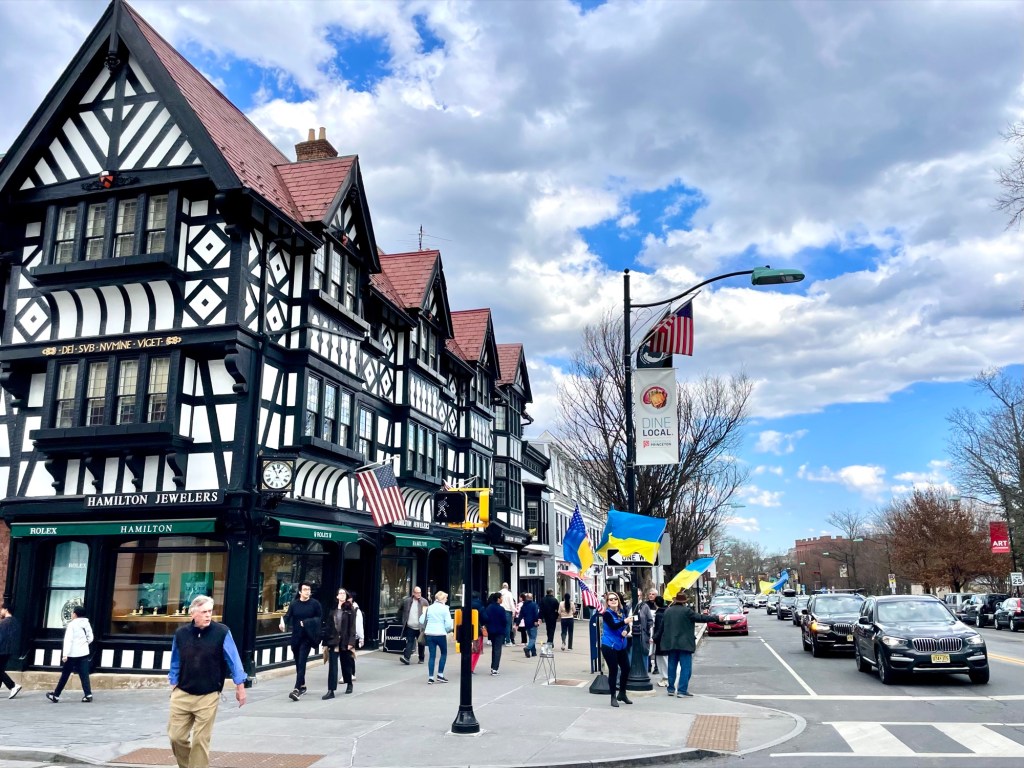
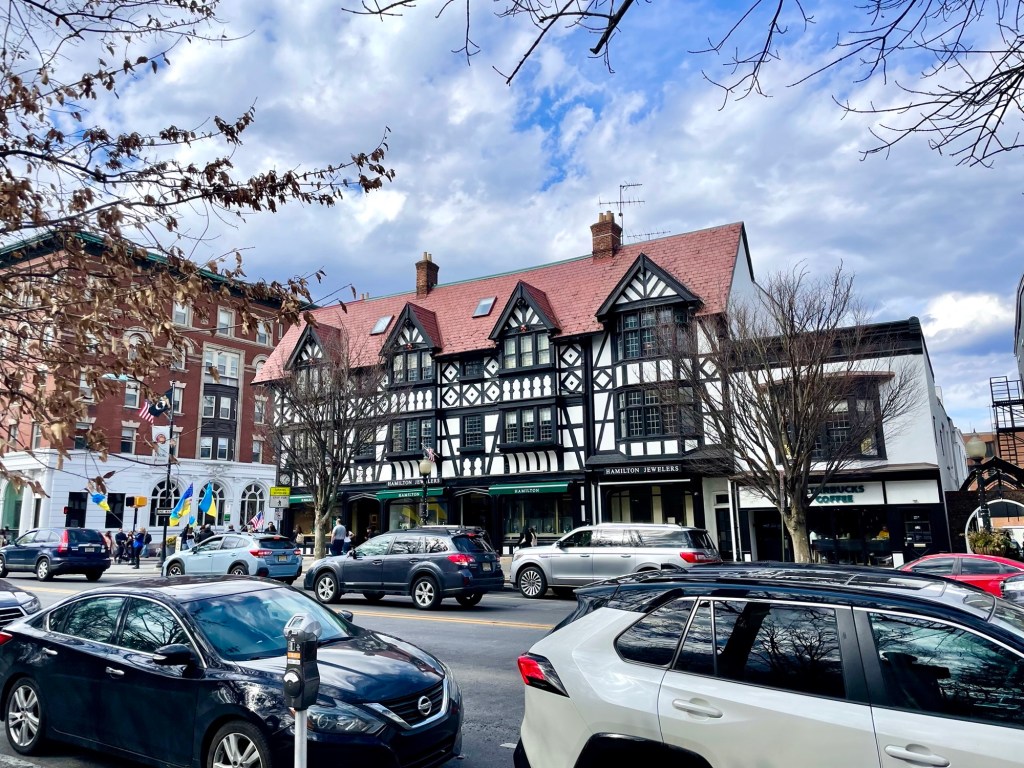
Across from Princeton University at the corner of Nassau Street and Witherspoon Street is a tudor style building called Lower Pyne (now home to Hamilton Jewelers). This beautiful building was built in 1896 and was used for commercial shops on the ground level and student dormitories above. In 1950 the dormitories were converted to office spaces. You’ll see this iconic building on many post cards of Princeton.

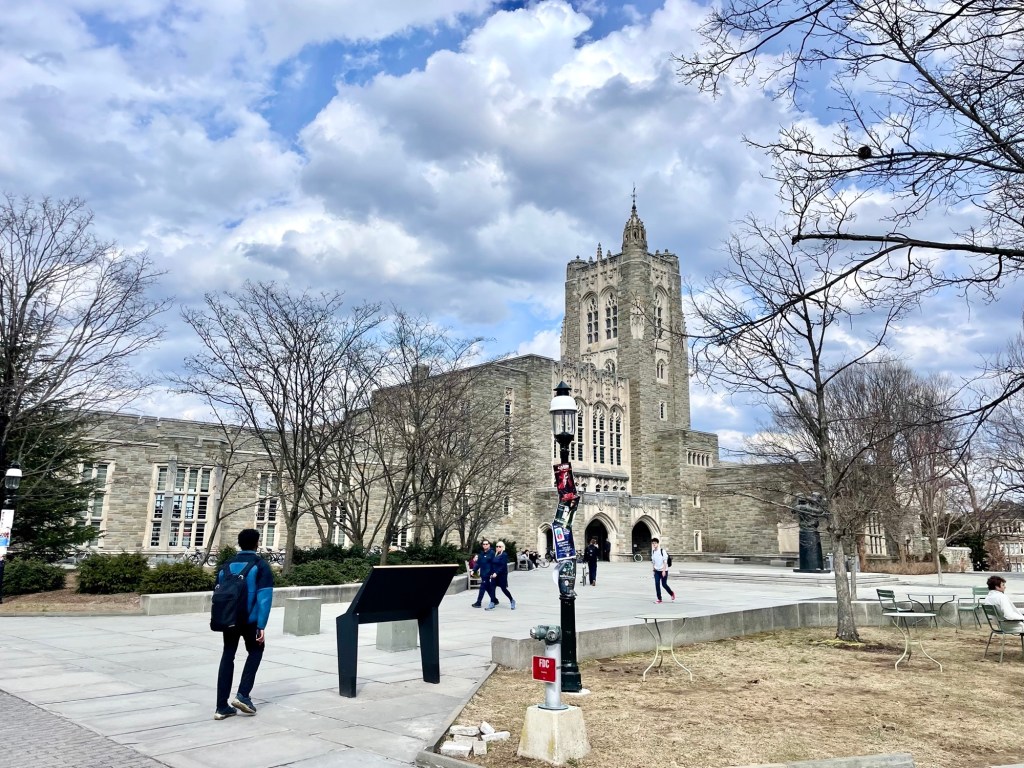
The campus grounds of Princeton University is open to all and you can freely walk around and explore, but access into the buildings is restricted.

For prospective students, you can book a free university tour with admissions information.

For tourists that just want to learn the history of this famous campus, the university runs historical tours with limited dates in the fall or you can book a third party tour company like we did that will not only explore the campus but around the actual town as well.

I’ve highlighted some interesting spots around campus below:

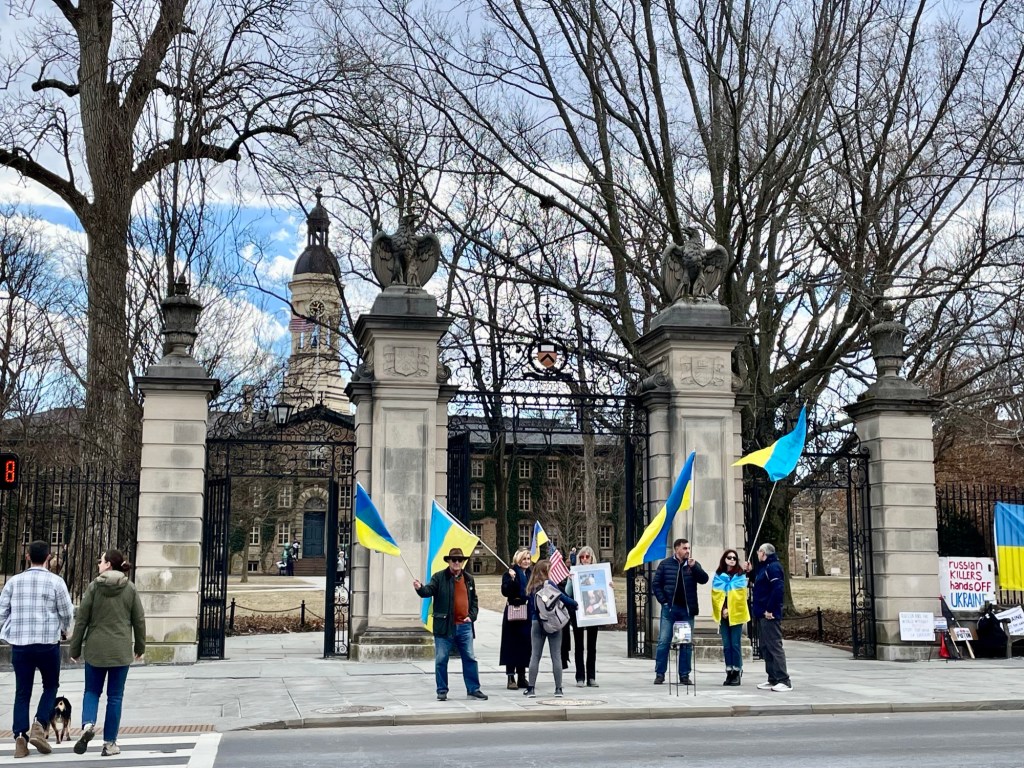
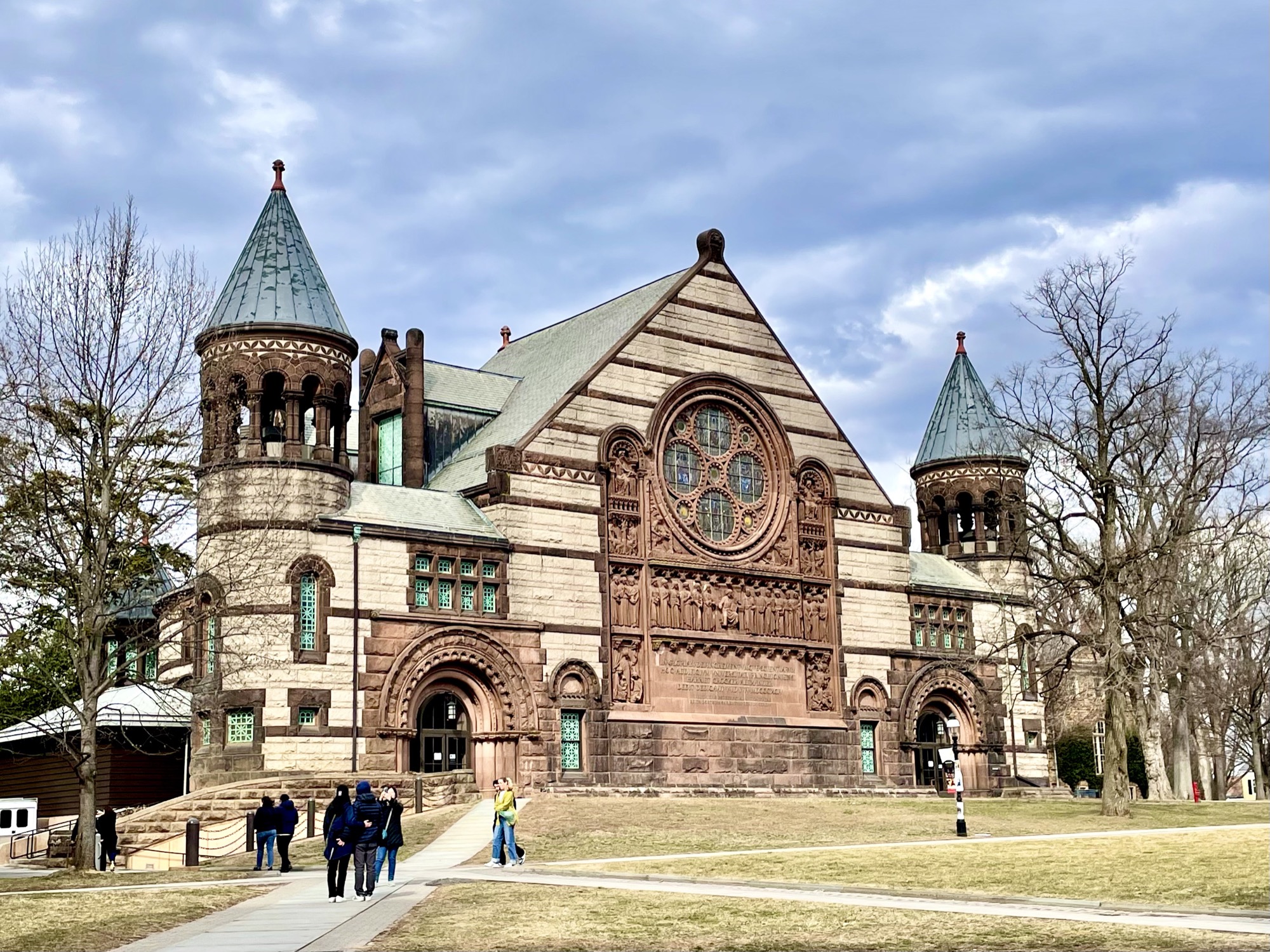
FitzRandolph Gate is located just off of Nassau Street, across the street from the Lower Pyne building and infront of Nassau Hall. It is the official entrance to the Princeton University campus. It was erected in 1905 and named after Nathaniel FitzRandolph, who was instrumental in raising the money and land needed to build the college.

The gate was originally always kept closed and locked except for special occasions such as graduation, but the class of 1970 ensured that the gate would always remain open “in a symbol of the University’s openness to the local and worldwide community”.

There is a local superstition that if you exit from FitzRandolph Gate before graduation, you will never graduate from Princeton. You can enter the campus through the gates, but not leave unless you’ve graduated. This includes babies and children that may wish to attend Princeton in the future 😂. Our tour guide was a graduate of Princeton and says that this superstition is still very much alive to this day.

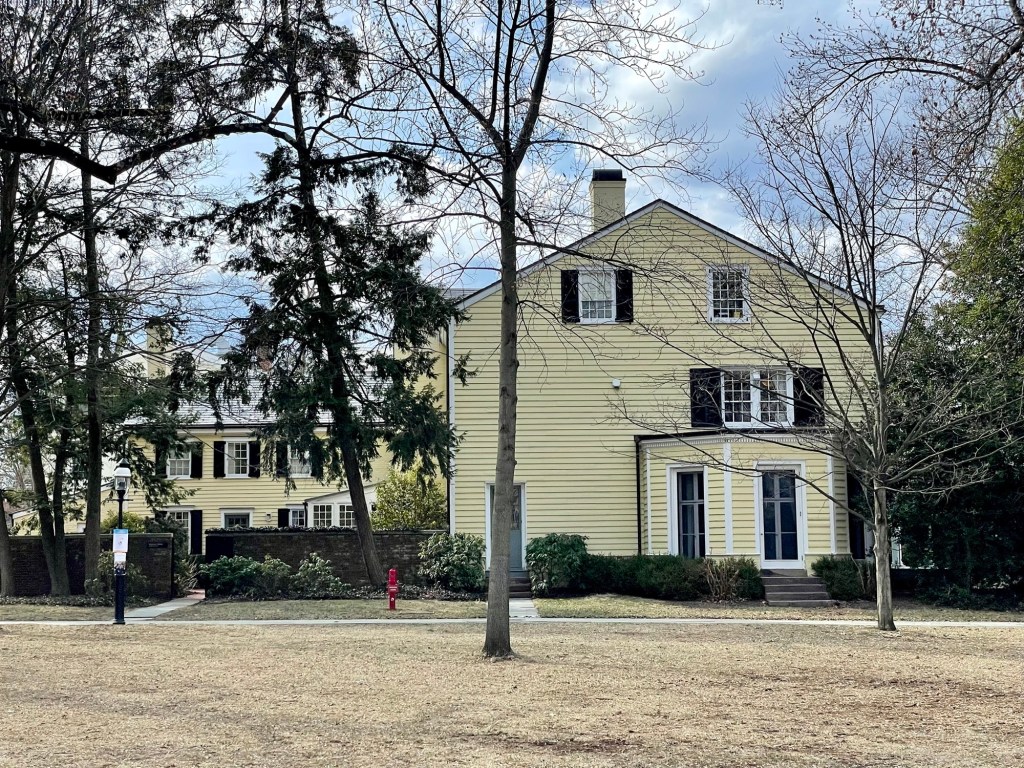
Princeton University had a couple of different locations (including Newark, NJ) before settling into its current location. At the time, Aaron Burr Senior (father of Aaron Burr Jr. – the guy who shot Alexander Hamilton, for you Hamilton fans) was the president of the college. The small yellow building below is where Aaron Burr Sr. lived at the time as he oversaw the building of this new campus.

Where Aaron Burr Sr lived

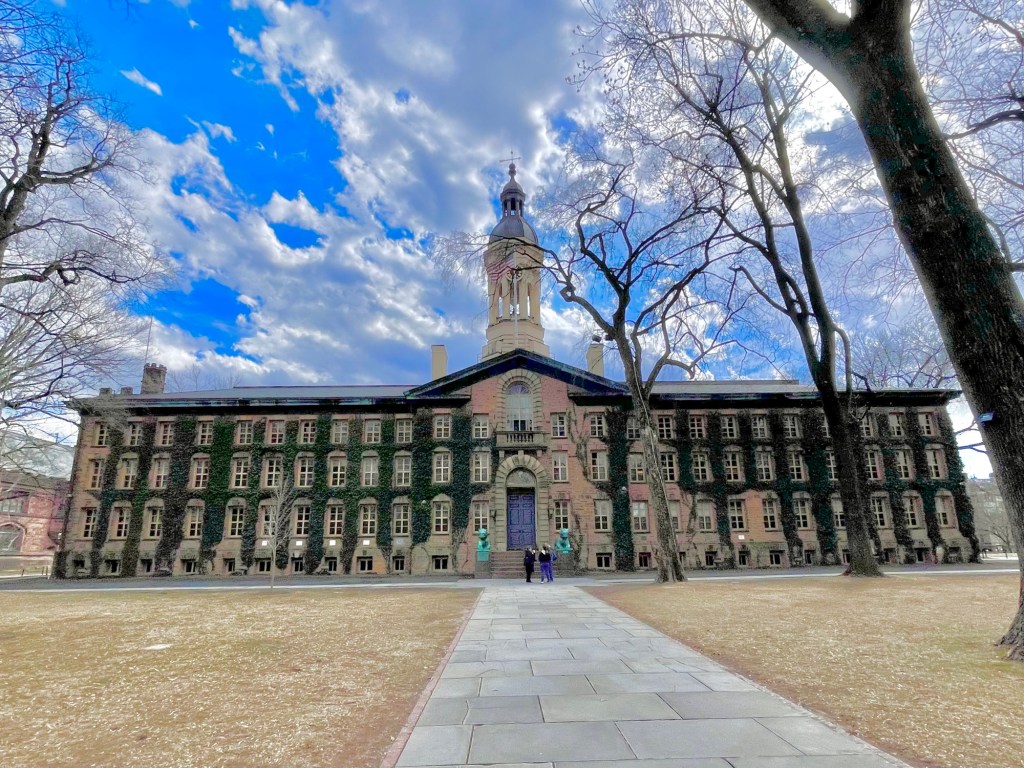
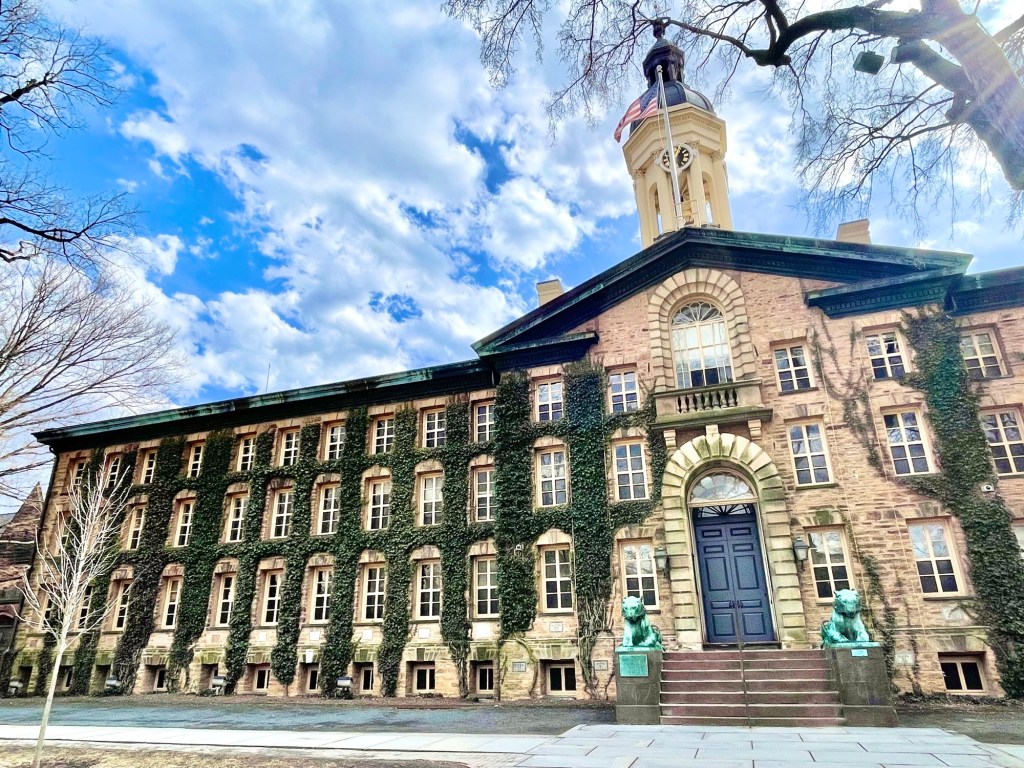
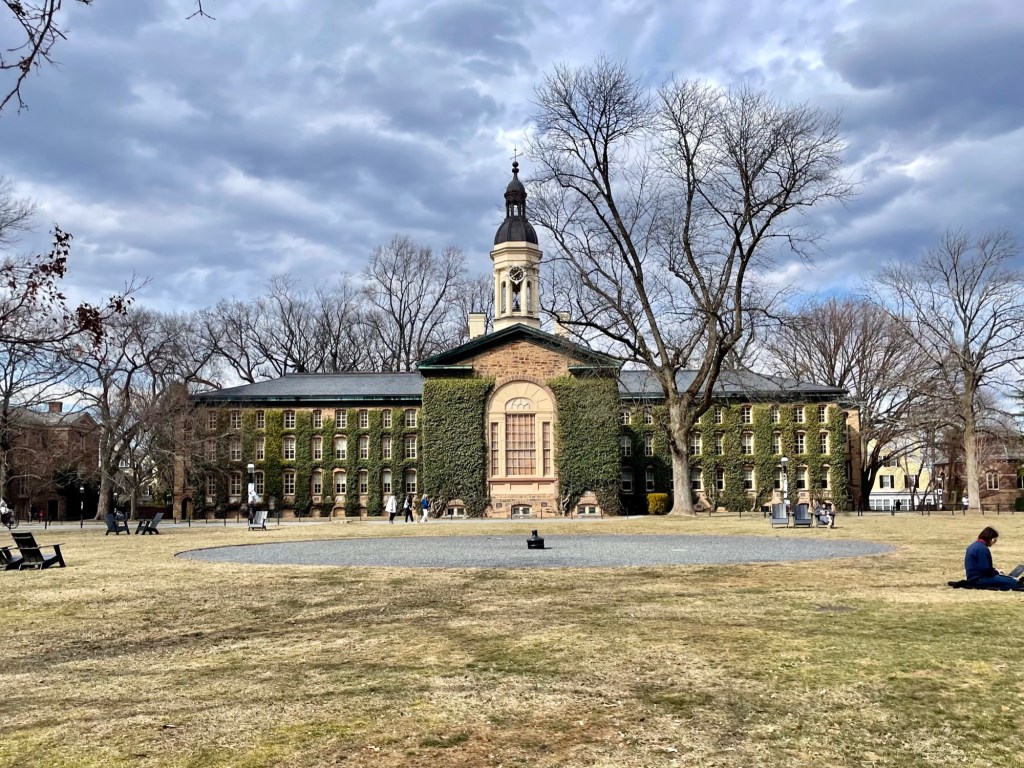
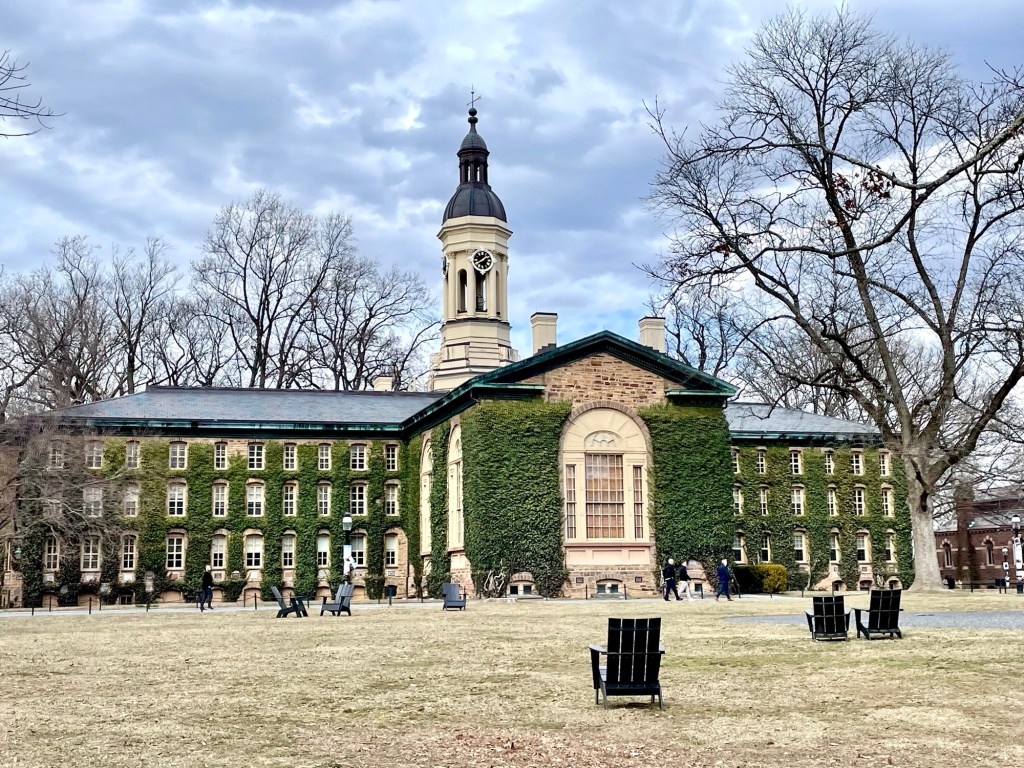
Nassau Hall is the first building of the college and also the oldest building on campus. It’s the first building you’ll see through FitzRandolph Gate and its covered with ivy around the majority of the building.

Throughout the years they’ve had many university presidents that kept dying from random things. The university was in a poor state with debt and poor instruction. John Witherspoon came on as the university’s 6th president and was monumental in saving the school from closing down. He travelled to New England and the South and recruited the wealthy to join the school. He updated the curriculum and turned Princeton from a place that predominantly trained clergymen into a place equipped to produce the future leaders of tomorrow.

Although Witherspoon is credited for the expansion and progression of the university, his racist roots in slave ownership has been a topic of heavy controversy. There have been petitions to remove his statue outside of East Pyne Hall, pictured below.

Statue of John Witherspoon in front of East Pyne Hall

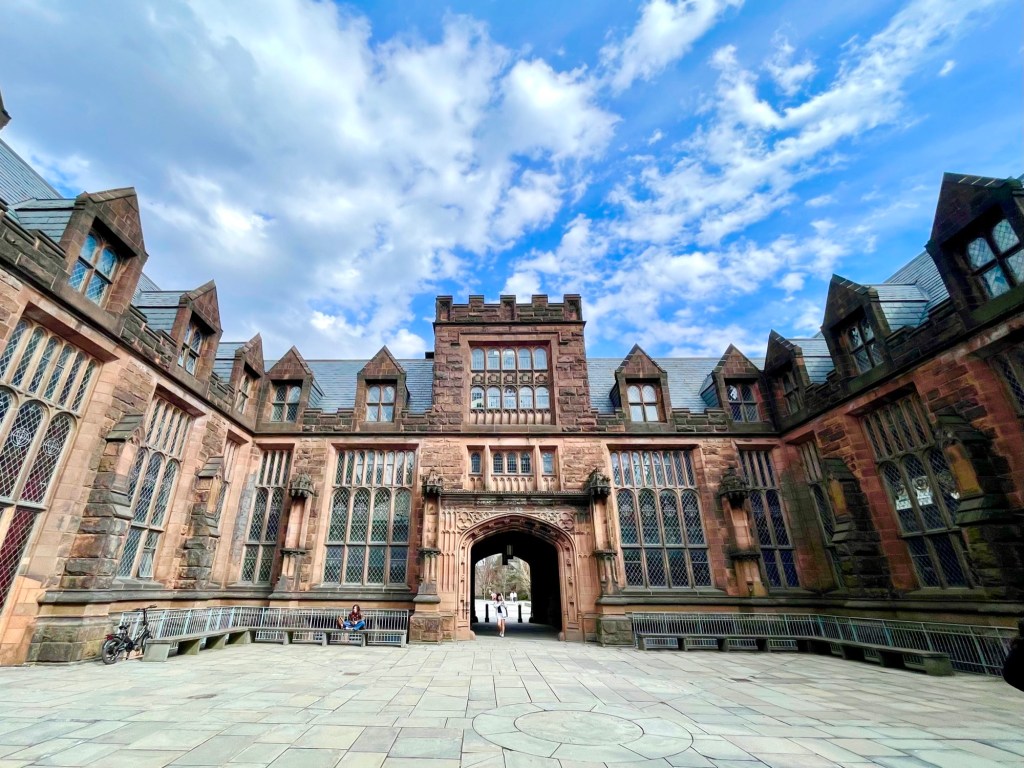
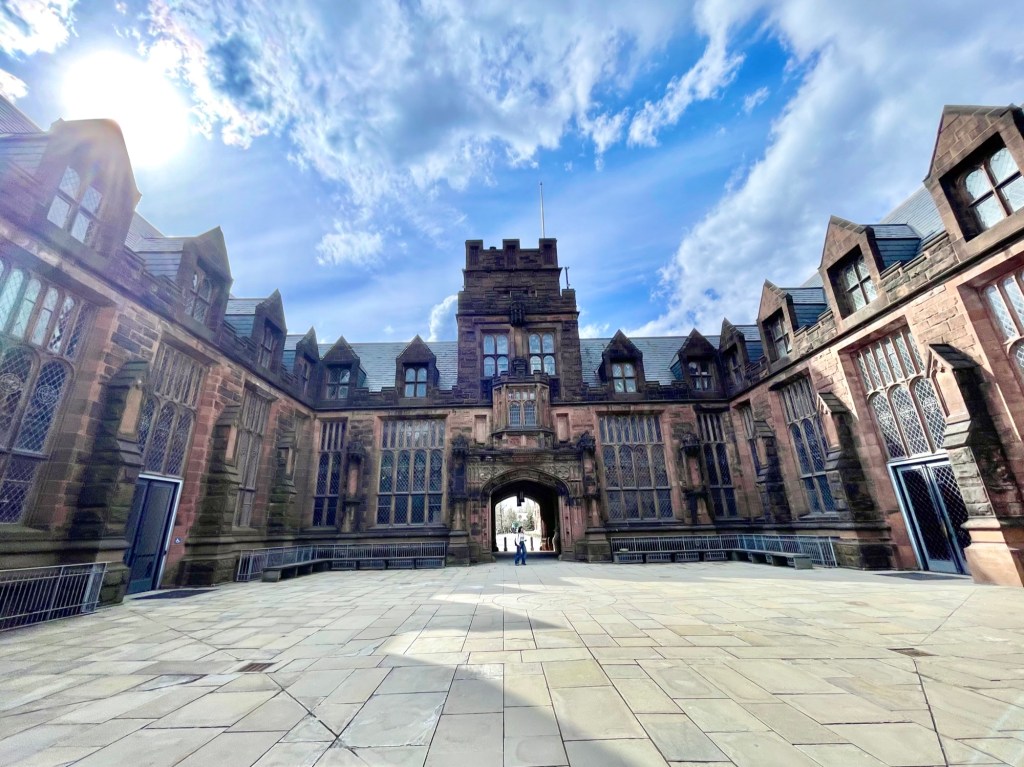
East Pyne was built in the late 1800s as an extension to the Chancellor Green Library next door. When entering the middle gates, you’re inside an enclosed square with beautiful architecture surrounding you. This site has been a popular choice for filming movies including the latest movie Oppenheimer.

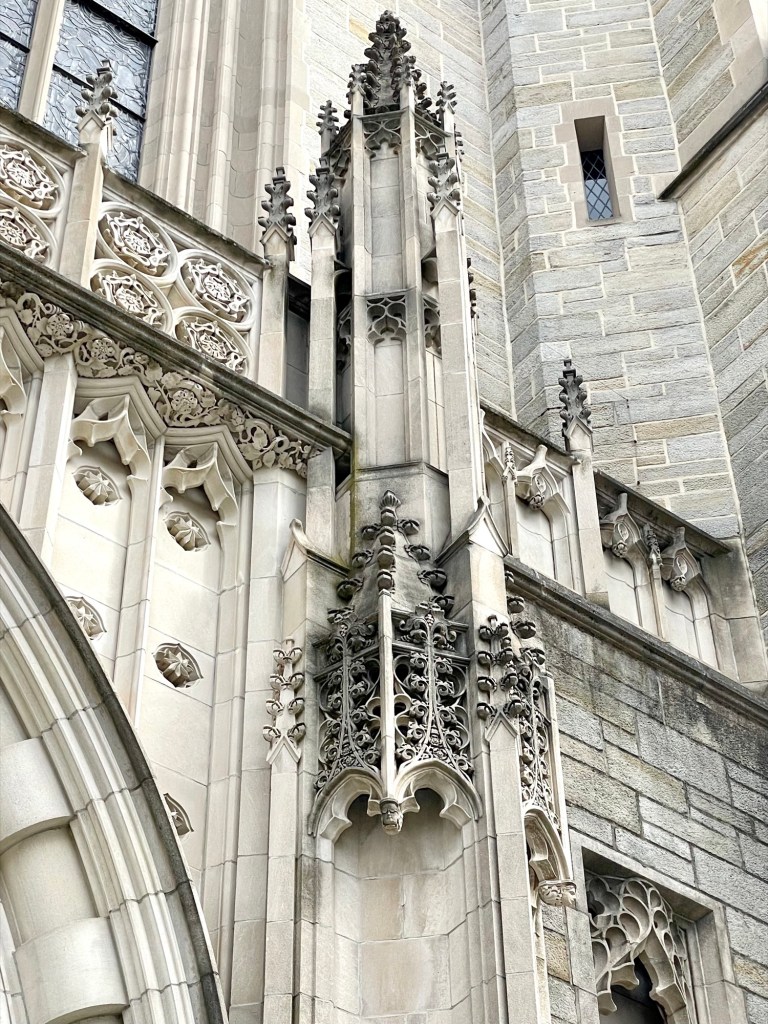
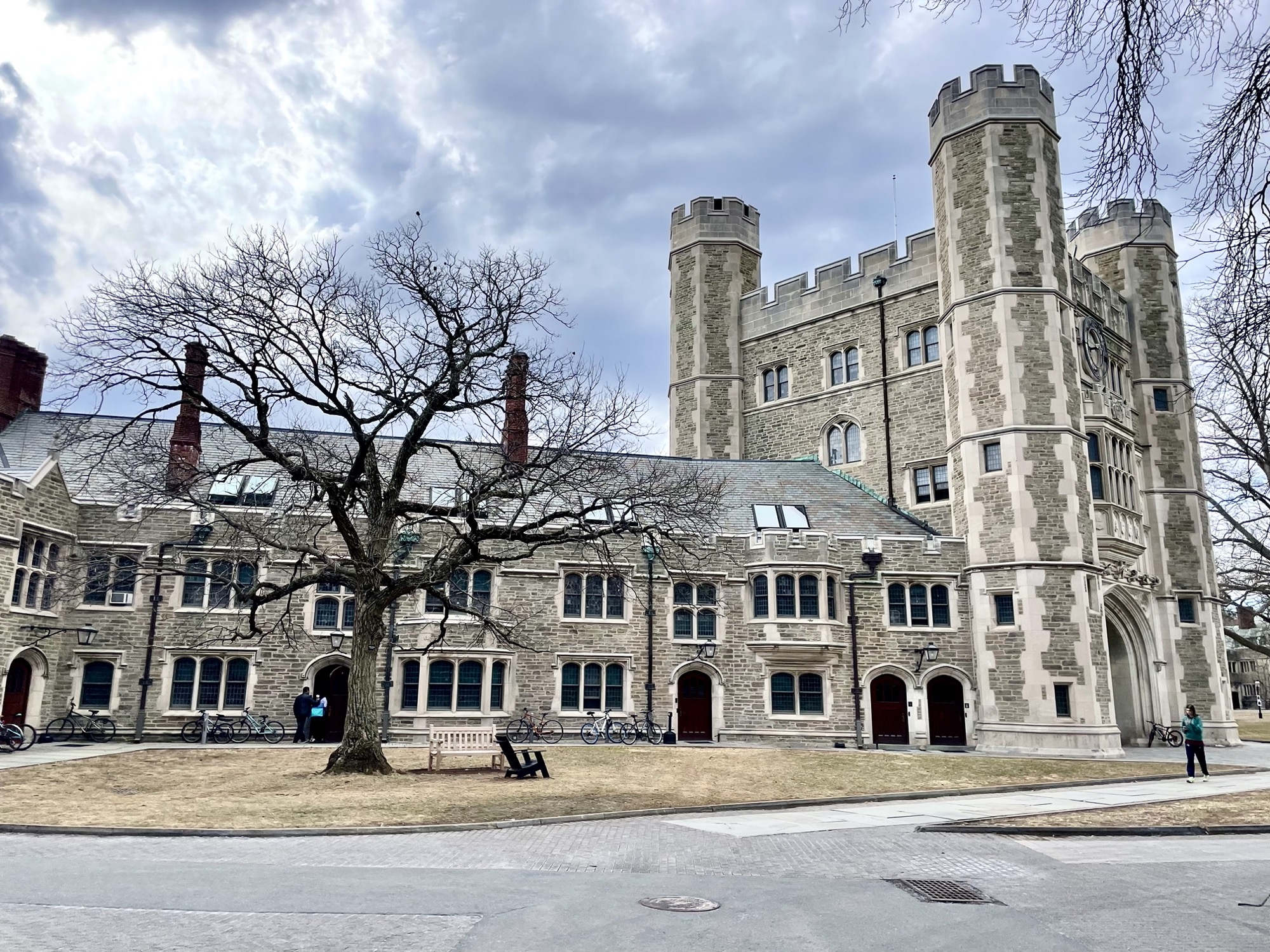
The Princeton University Chapel sits in the middle of the campus and was built in the 1920s to replace the previous chapel that had burned down. Its gothic architecture has a hidden surprise – the 5 stone makers hid their faces into the outside of this building (see if you can spot one in the photos!). Inside this beautiful building are impressive stain glass that lines the walls and is said to be the most valuable stain glass in the Western Hemisphere! The pews are carved from wood that was intended for Civil War gun carriages.

It’s a highly sought after place to get married. Our tour guide told us there’s about a 5 year waiting list to get married here! 😮

Across the chapel is the Princeton University Library. This enormous library holds over 7 million books including many rare books. It is one of the largest libraries in the world by number of volumes. There’s no public access to the library.

Across the chapel is Prospect House, built in 1851 and housed the university’s presidents for about 100 years, until they were relocated to the Walter Lowrie House (which was originally used as a guest house). I can’t quite find the exact reason why they relocated from this beautiful mansion, but online sources say it coincided with renovations to the building and turning it into a faculty club. Our tour guide says that in the 60s there were protests that a president shouldn’t live so lavishly in the centre of the campus. Whatever the reason, it’s currently the staff and faculty dining area. It’s a pretty nice building. People who get married at the chapel will usually also have their wedding reception here. There’s also a nice garden in the summer.

Witherspoon Hall was the most modern and elegant dormitory when it was first built in 1877. It was the first to have electricity and indoor plumbing. This is the first building you come upon when entering the campus by stage coach and has been purposefully made to attract a more “affluent” student population (aka them rich kids to bring their money to the school). There are even dumbwaiters and special corridors and rooms for servants!

Witherspoon Hall

The Princeton University Art Museum has an impressive collection that has been mentioned time and time again as a “must do” when visiting Princeton. Unfortunately they are currently in the works of opening up a new building that’s not set to open until October 2025. It’s located near Prospect House.

Princeton University Art Museum

Address: 112 Mercer Street, Princeton, New Jersey

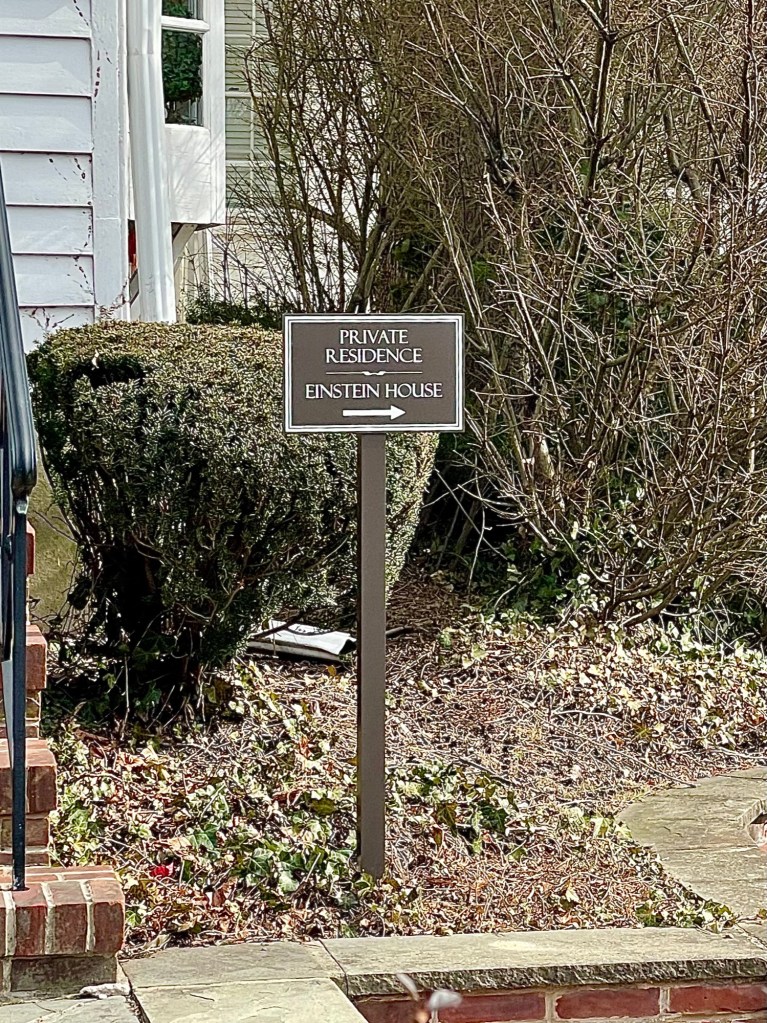
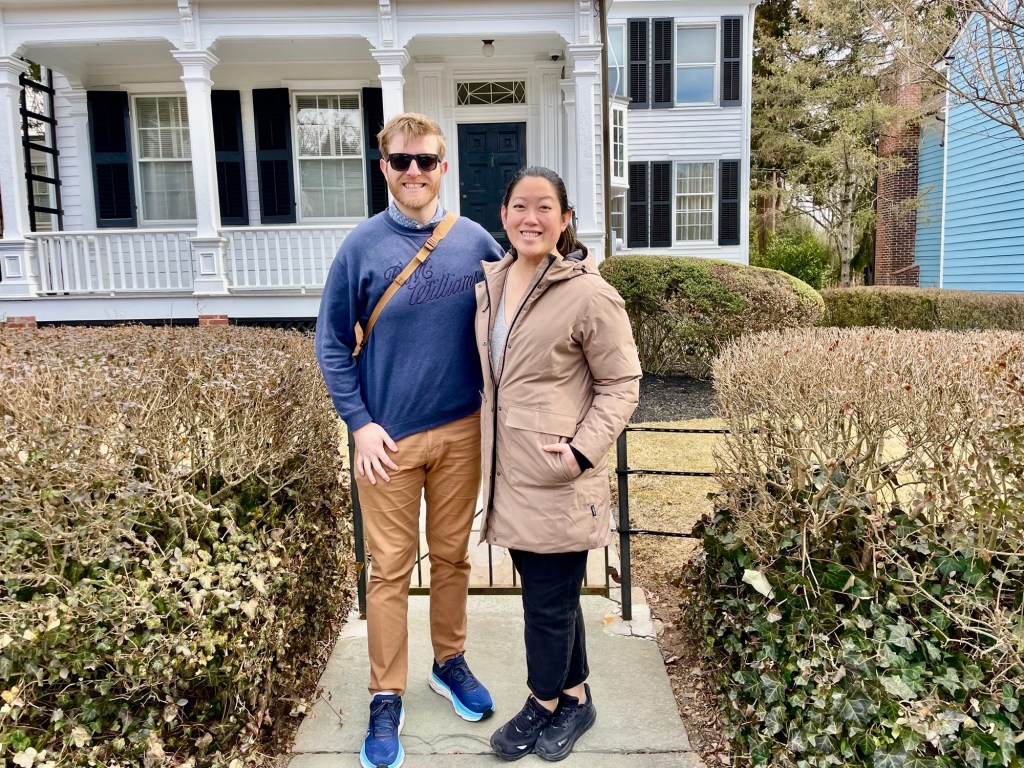
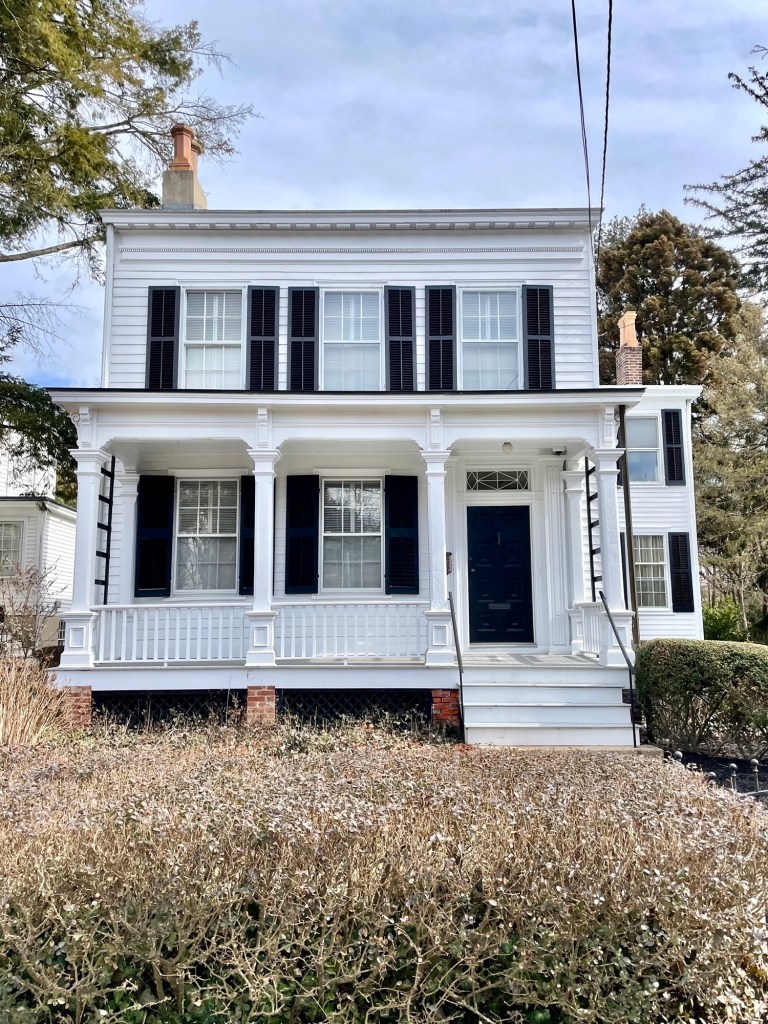
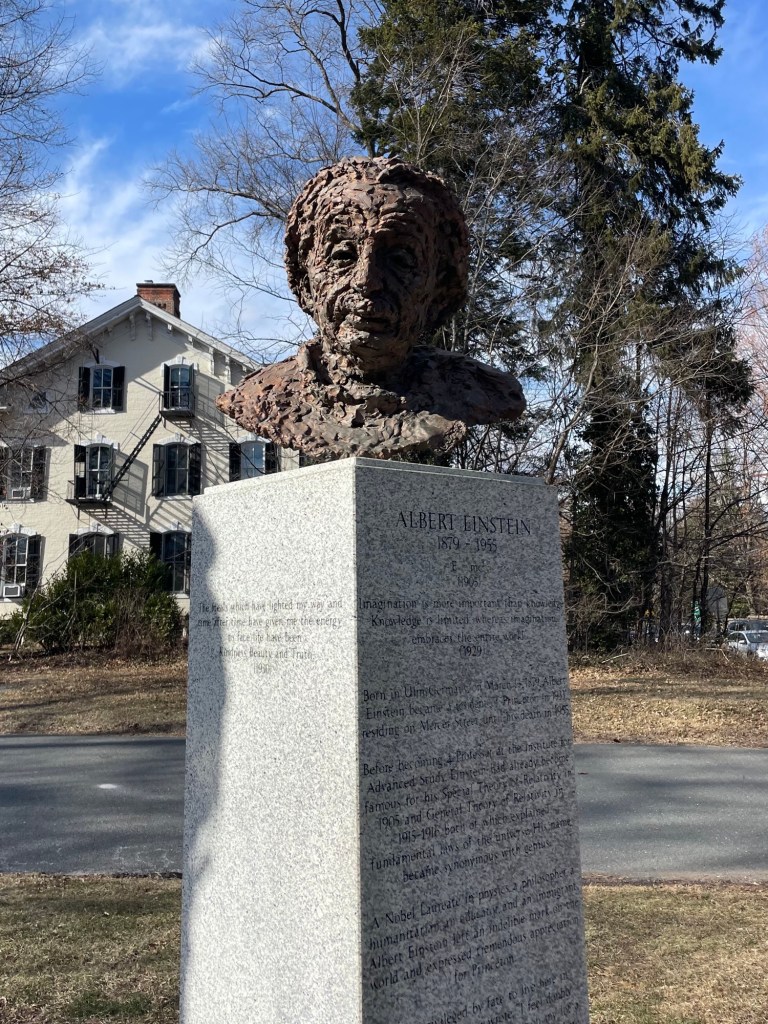
Albert Einstein lived here in the final 22 yrs of his life. He was invited to Princeton to be the first to join a think tank – the Institute for Advanced Study (IAS, the one they featured in Oppenheimer). He was never employed by the university while he lived in Princeton. The house is now a private residence even though it is owned by the IAS. There’s no place markers for this house, but the home next door has a sign 😉.

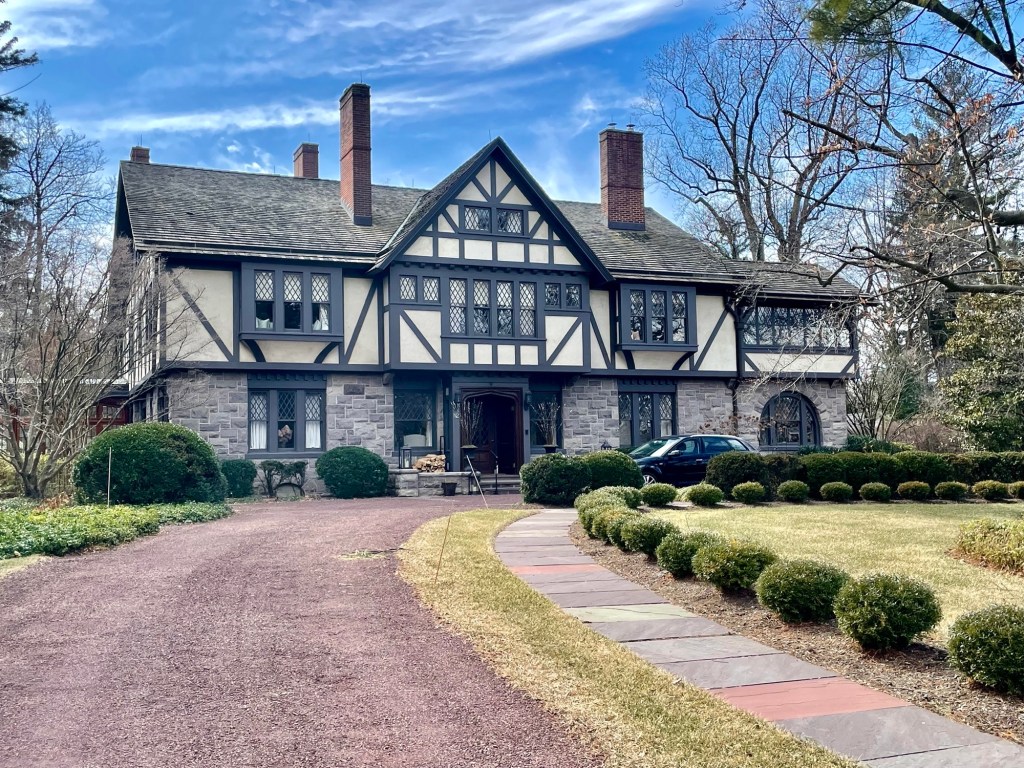
Library Place is a street where all the fancy houses are with many of them belonging to celebrities or have had a famous person live there. It’s a lovely quiet street to walk down and gawk at all the beautiful houses. 82 Library Place was the former home of President Woodrow Wilson. This man was super racist even for his time, but his house was damn beautiful. There were a few other famous houses on this street, but this was the only one I could remember 😂.

Woodrow Wilson’s house

On Boudinot Street sits Peter Benchley’s former home, the author of Jaws. It sold for 2.5 million in 2012.

Benchley Home

Morven Museum & Garden on Stockton Street was the home Richard Stockton, a signer of the Declaration of Independence. This home is now a museum and garden.

Morven

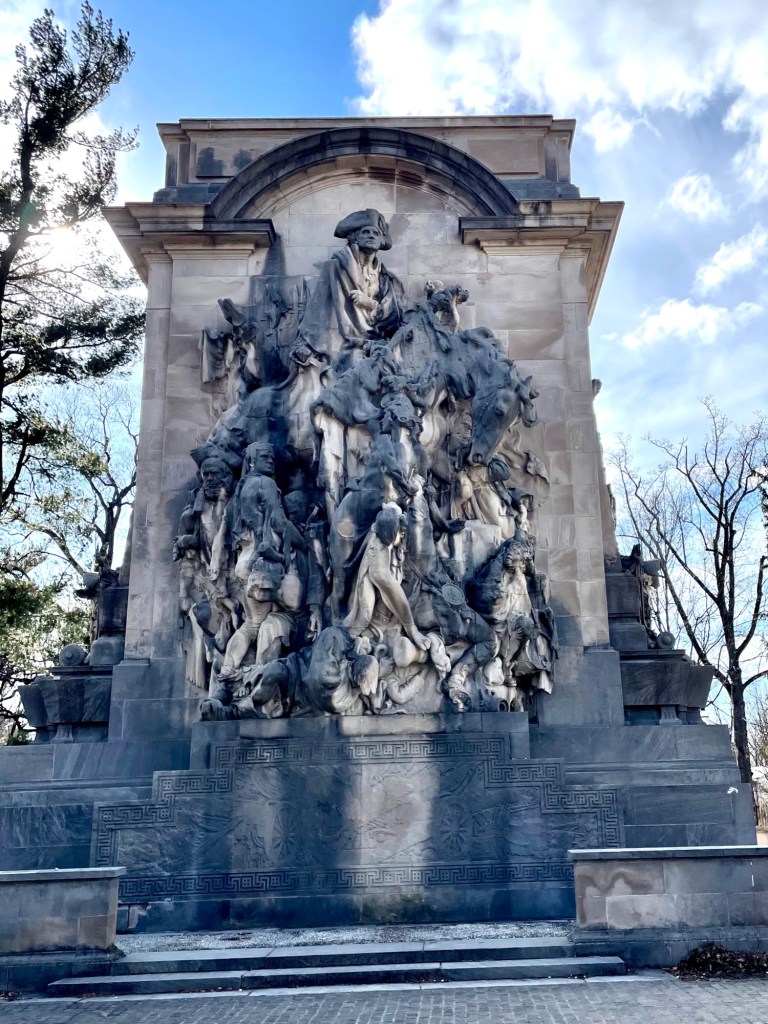
This park is just outside of town. It’s a big field with a monument and is the site where the Battle of Princeton was fought. Unfortunately we didn’t have time to stop here.

Address: 80 Sculptors Way, Hamilton Township, NJ 08619
Cost: $25 per adult

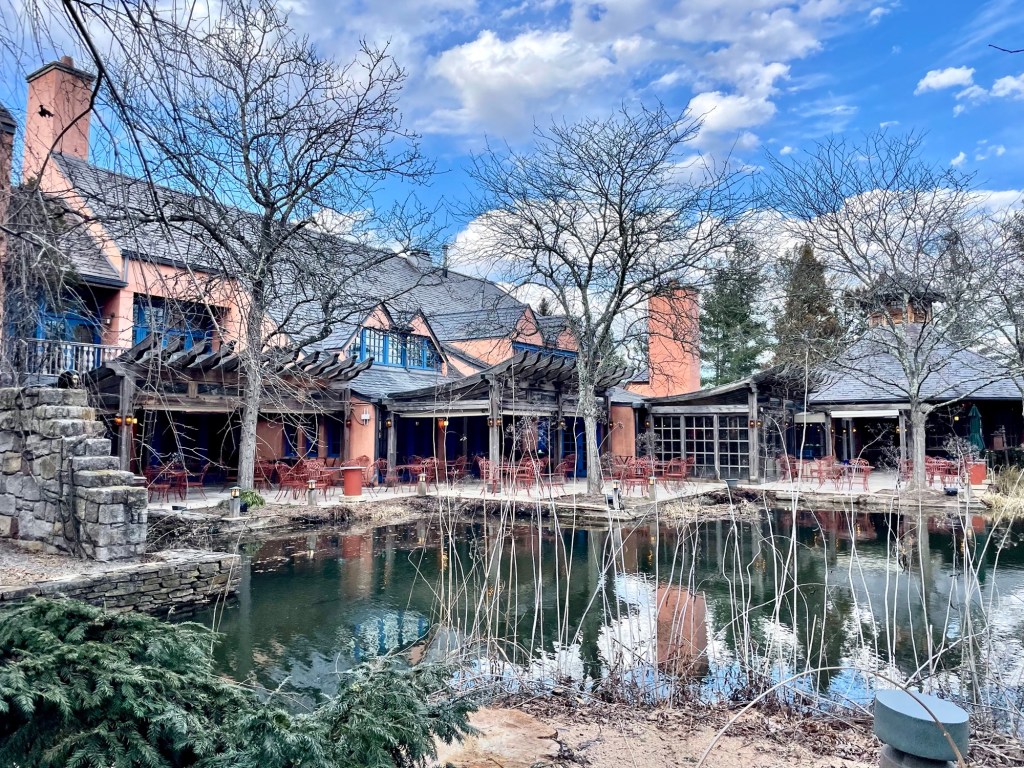
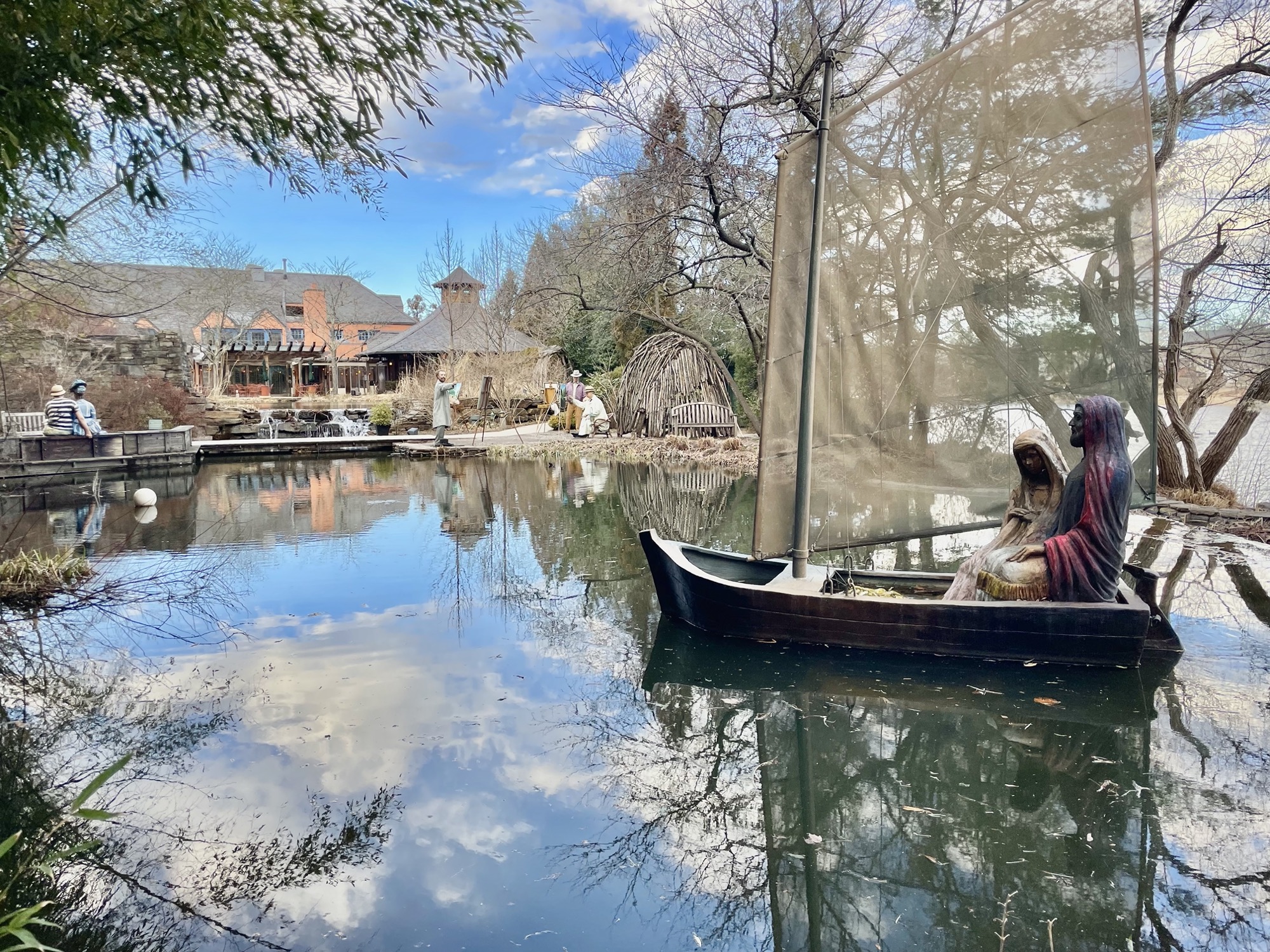
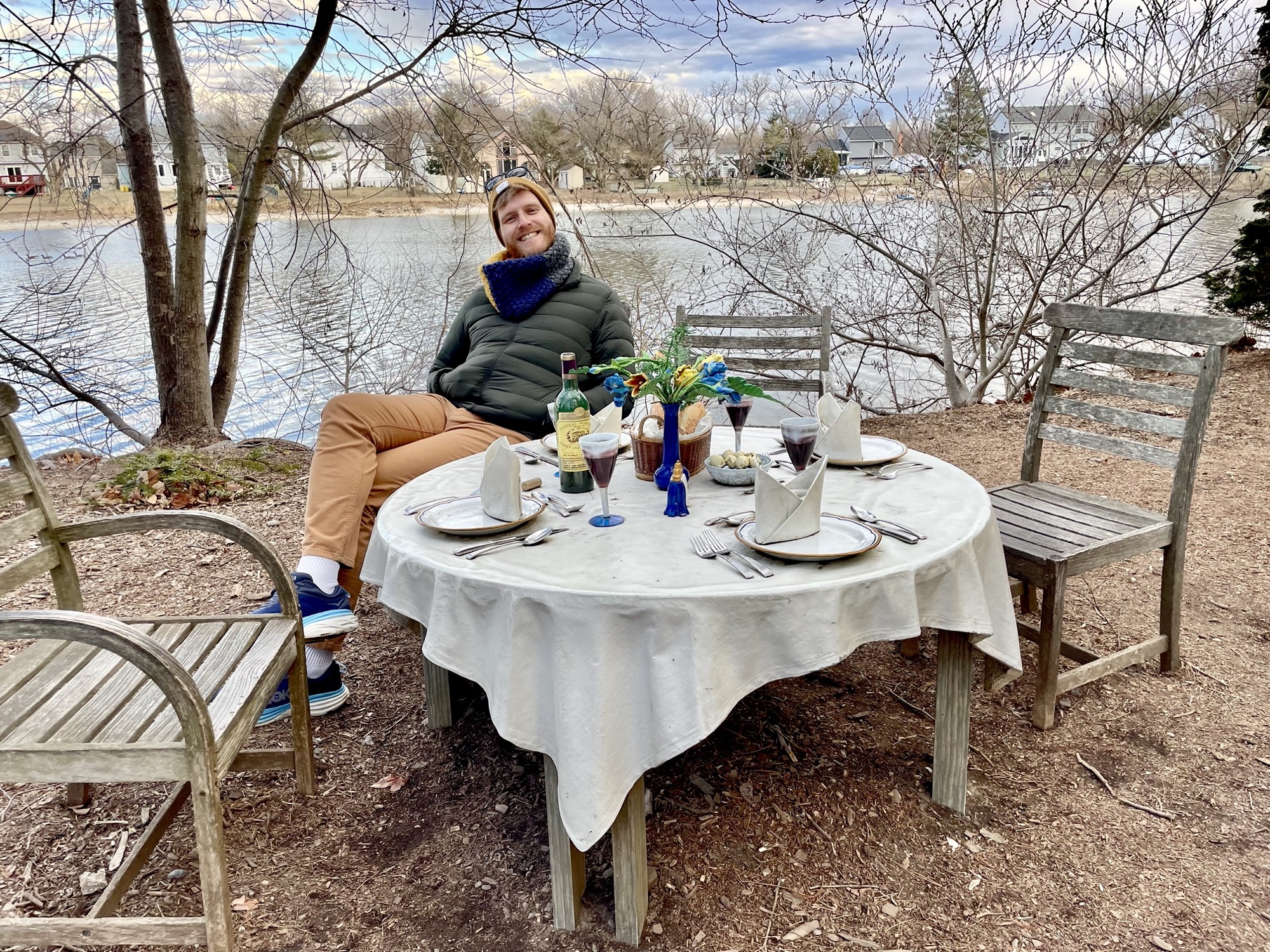
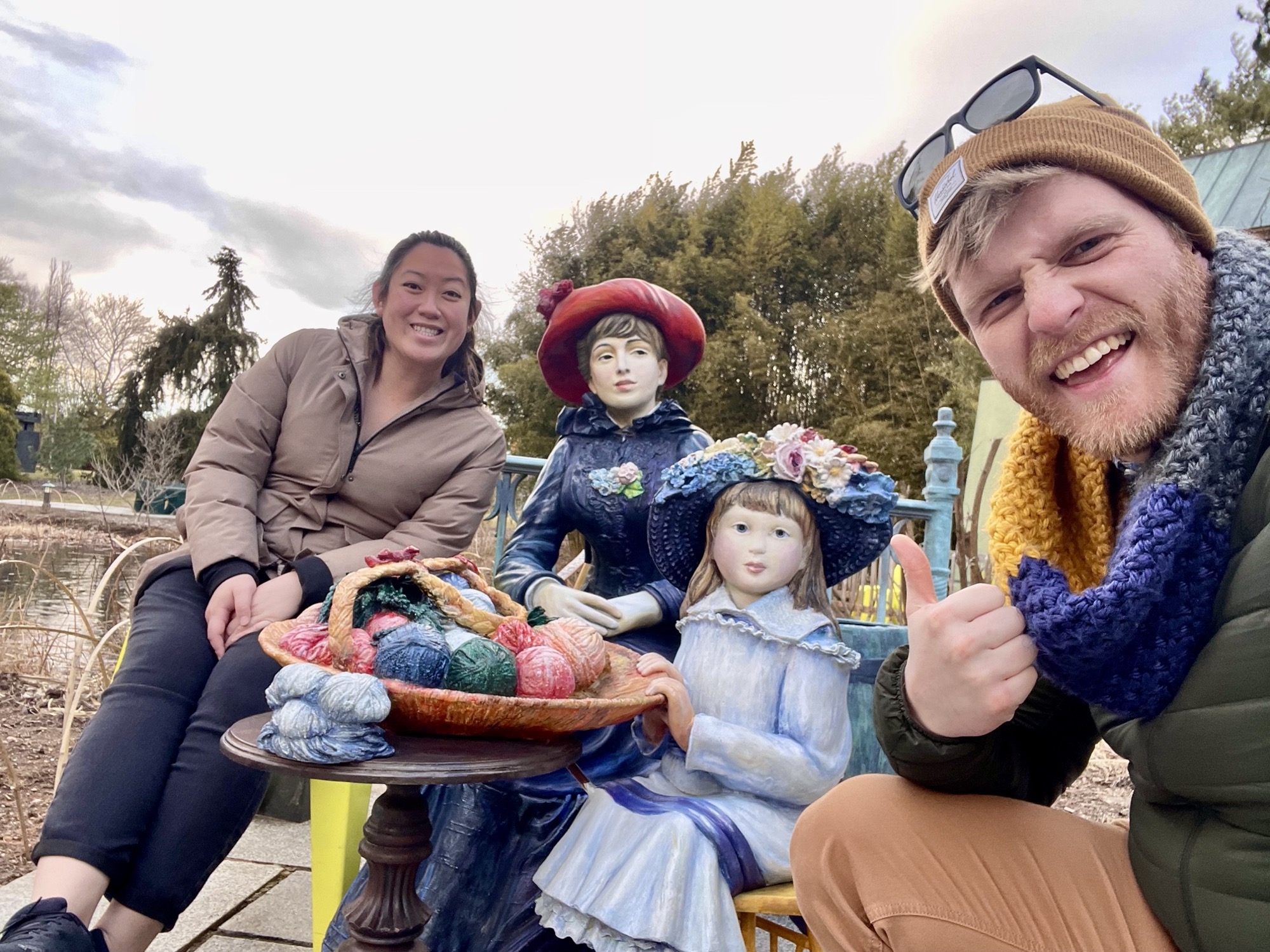
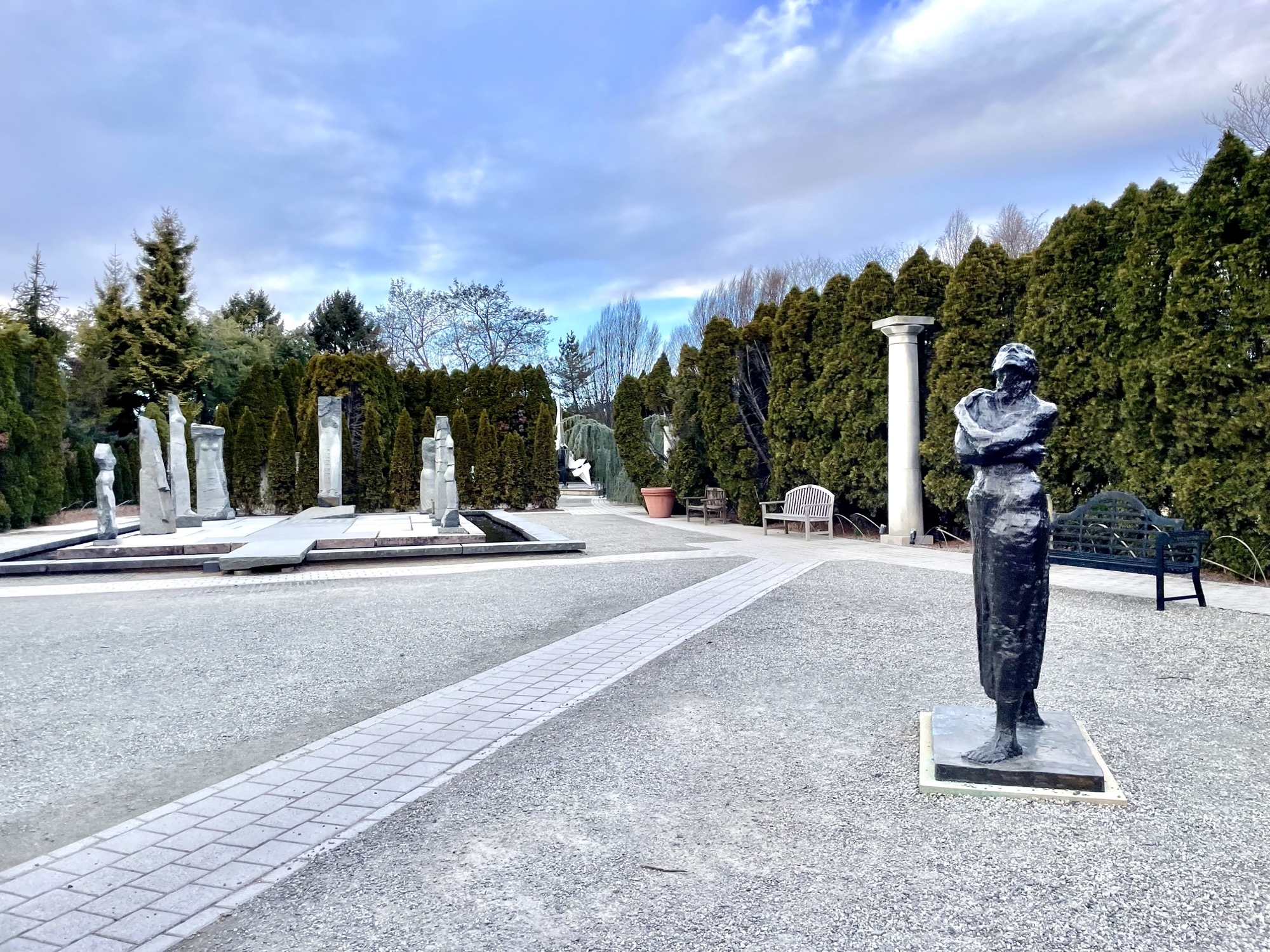
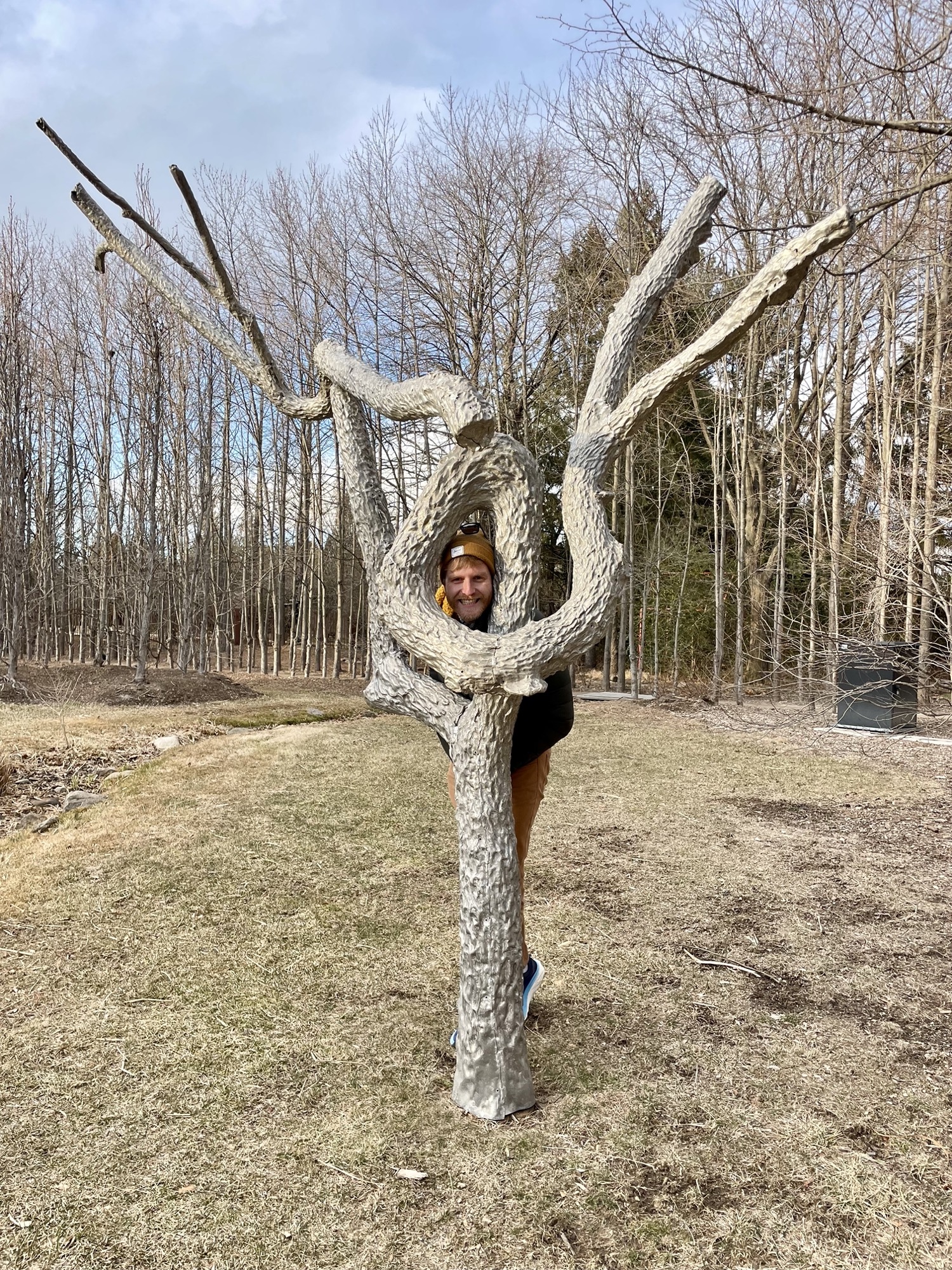
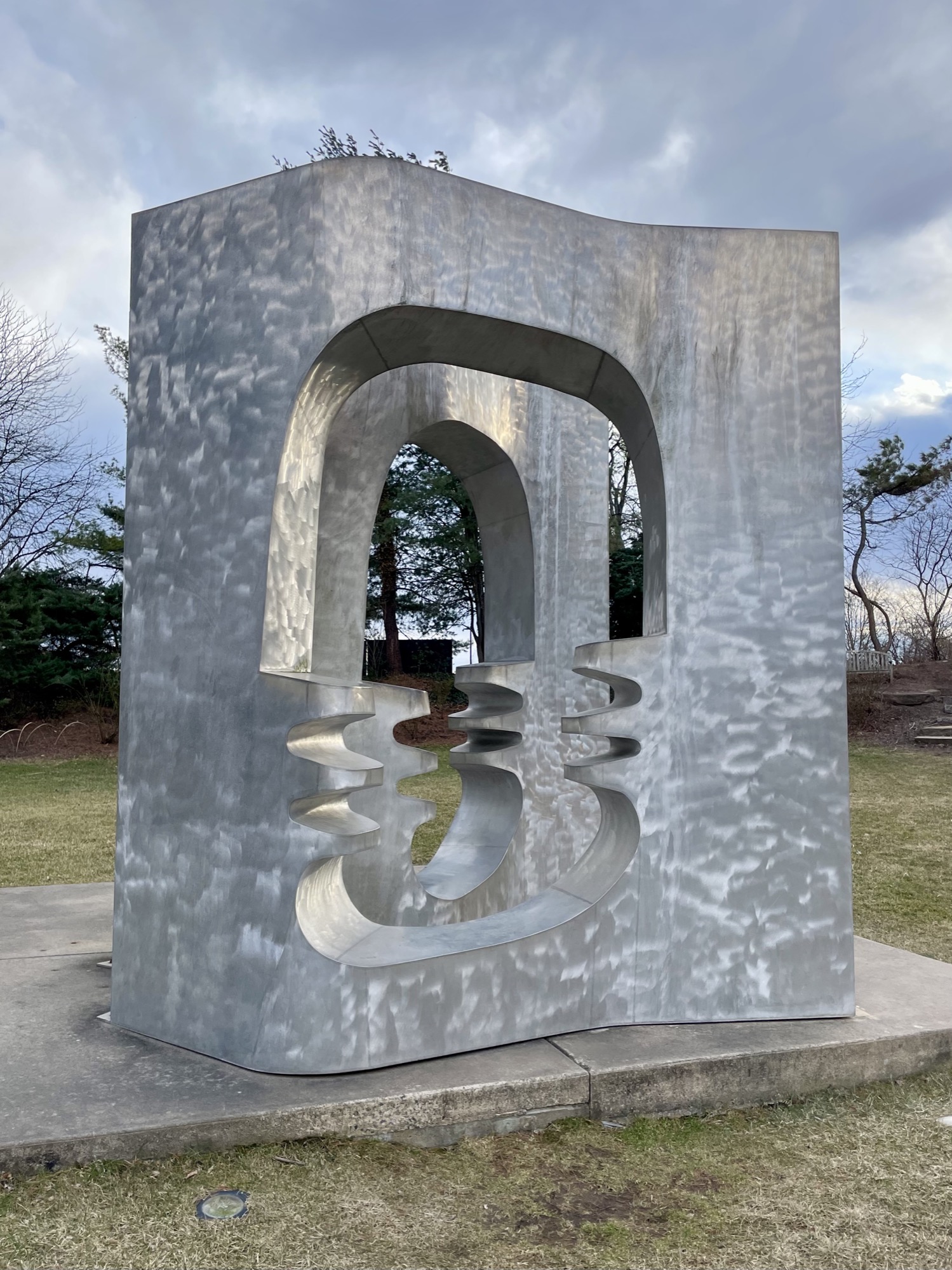
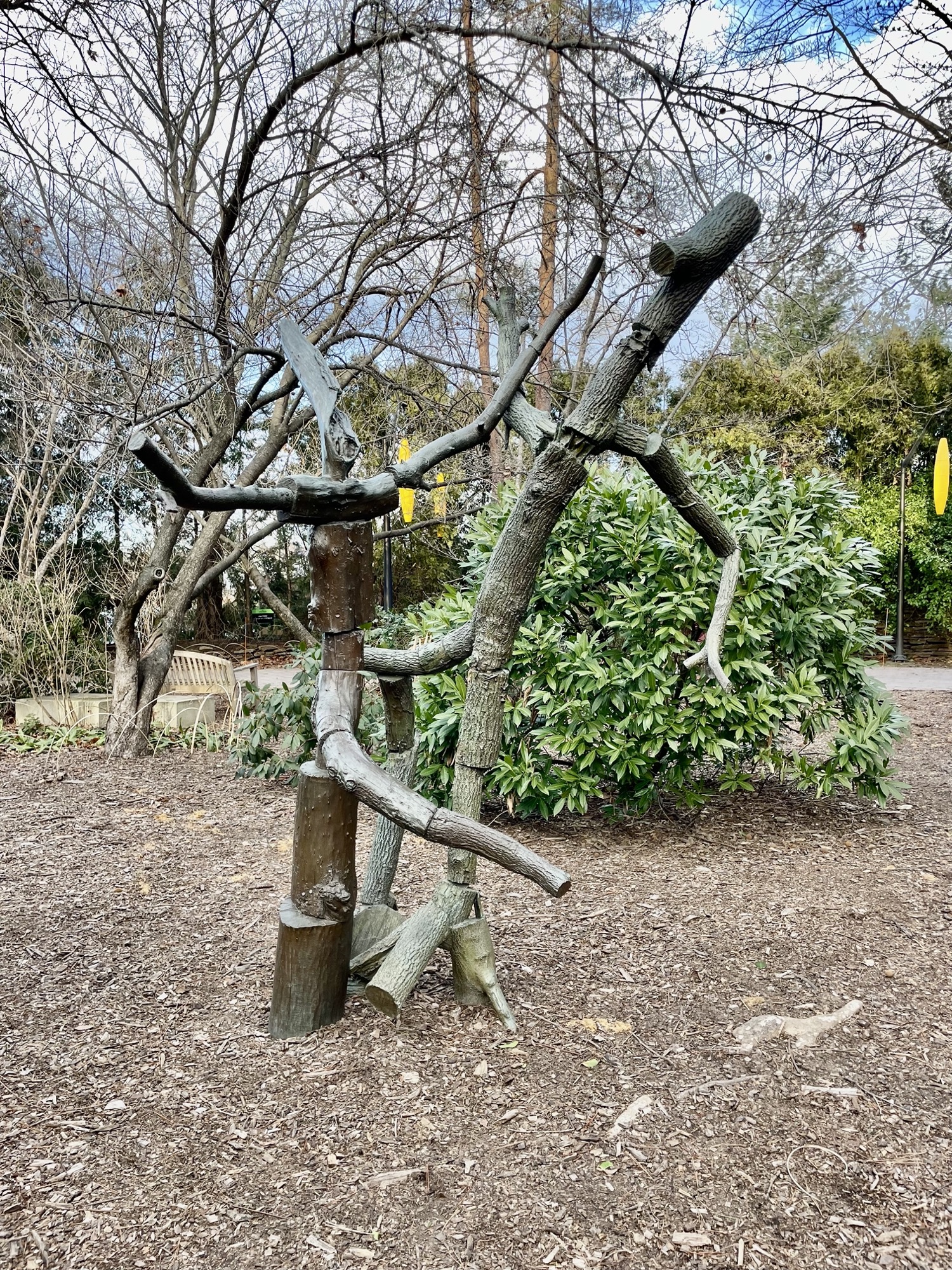
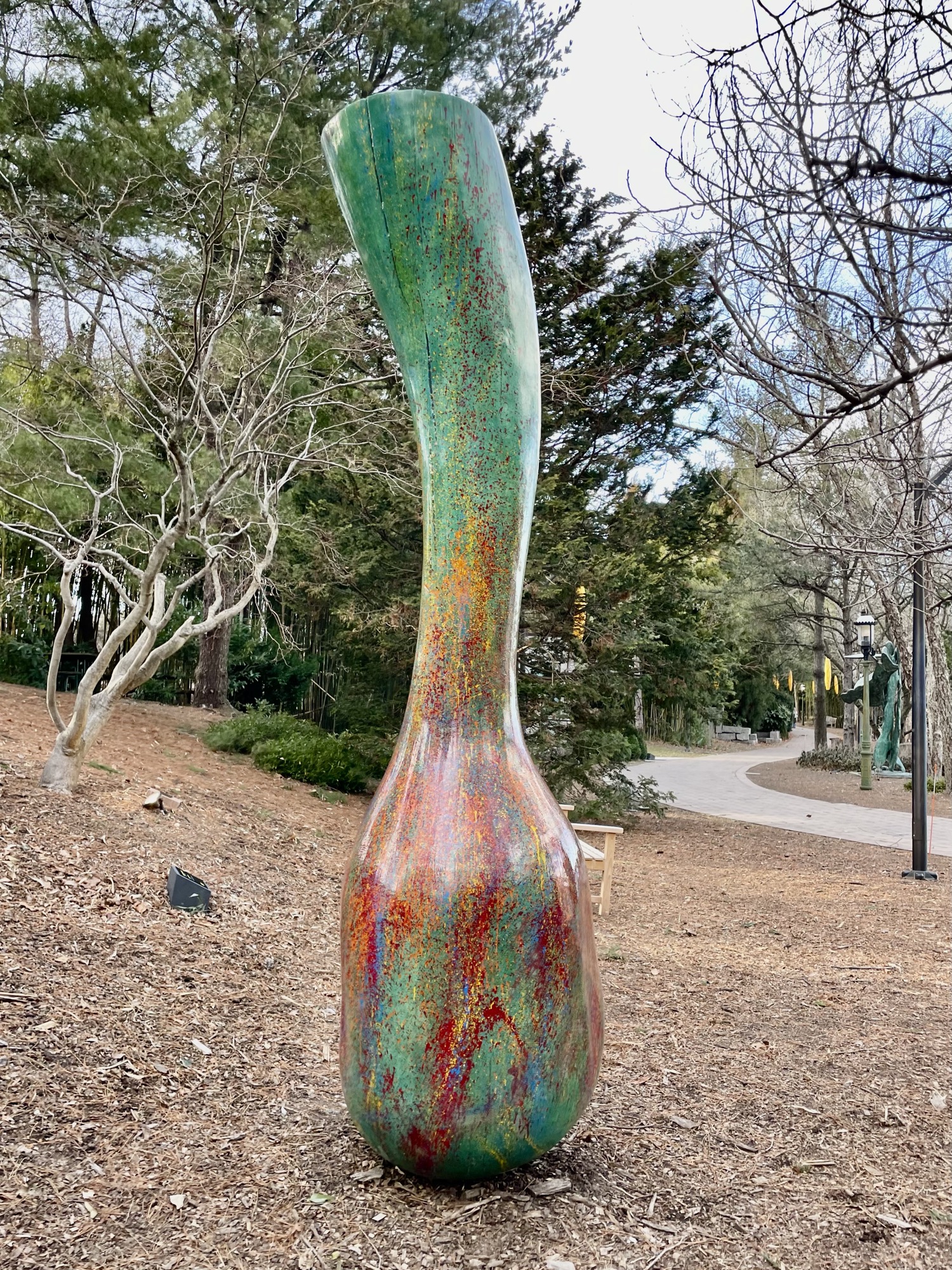
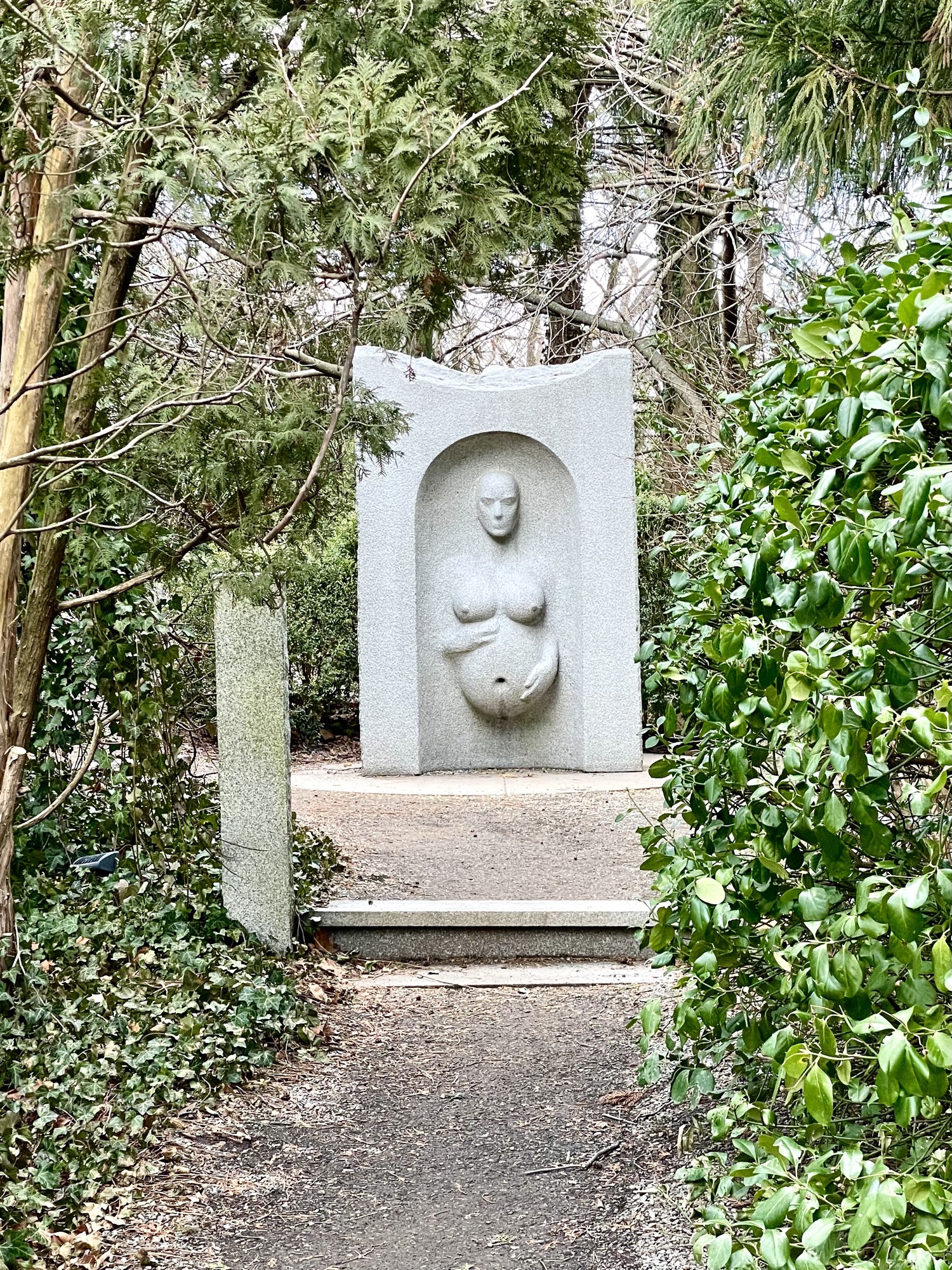
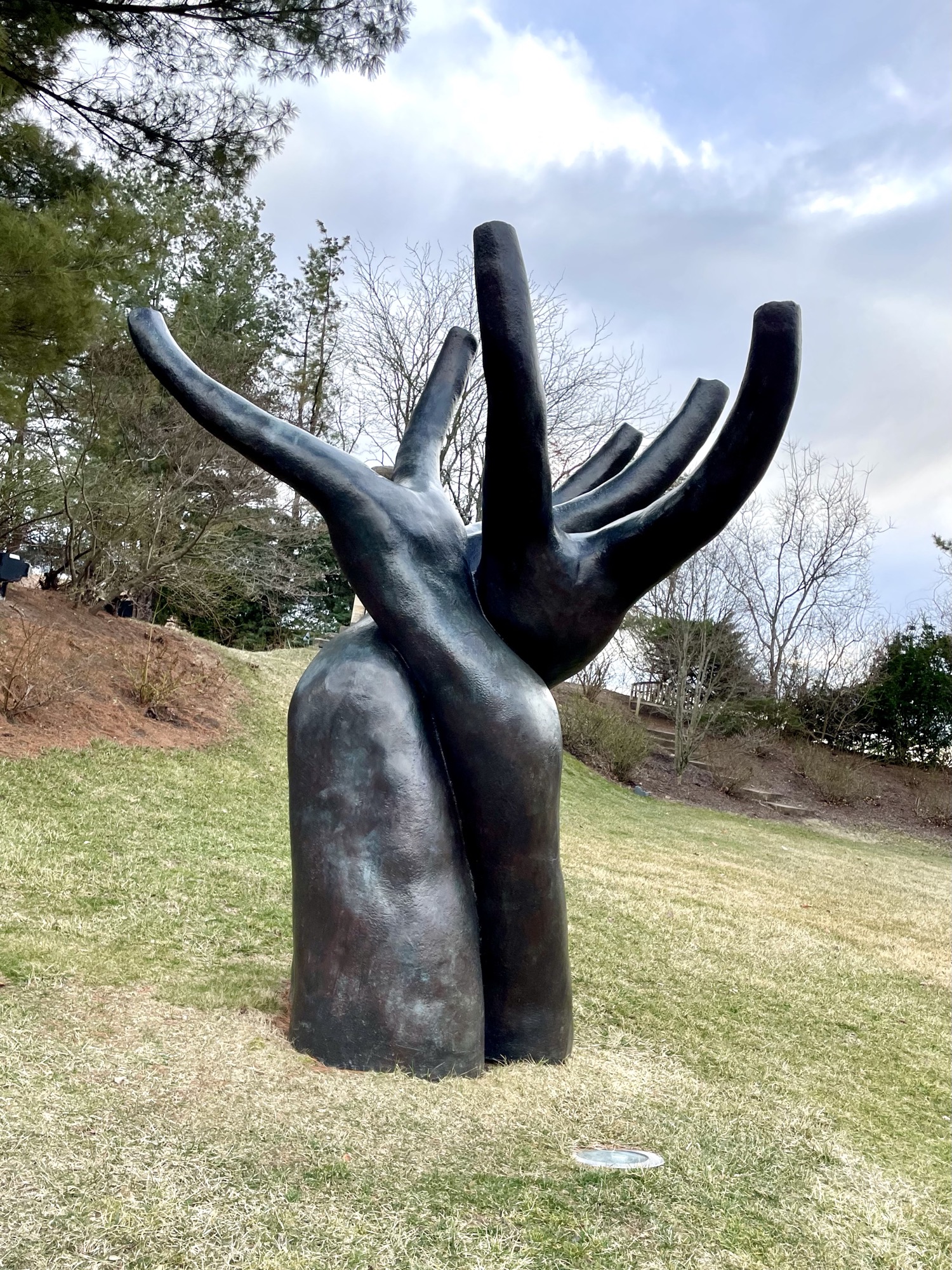
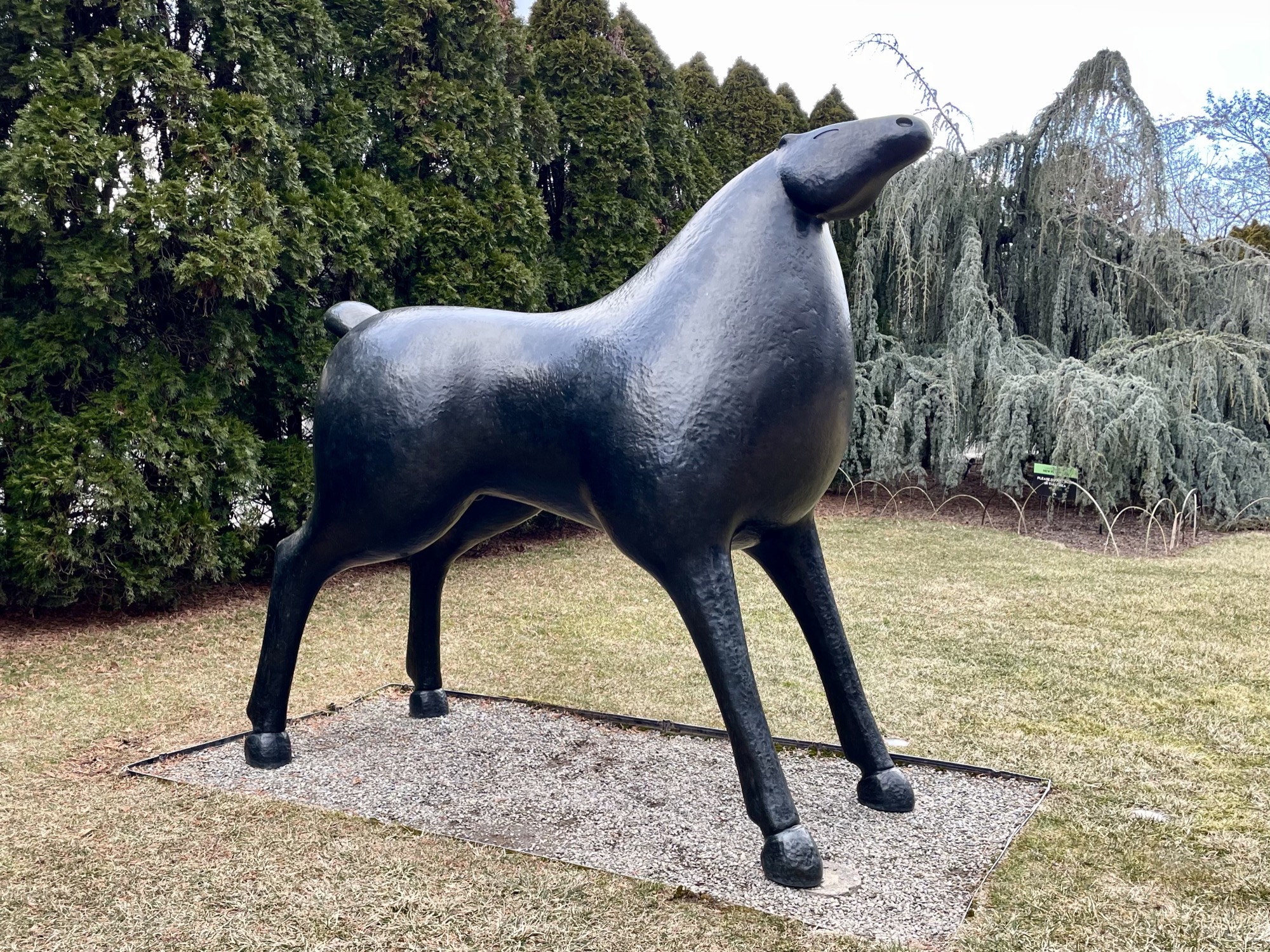
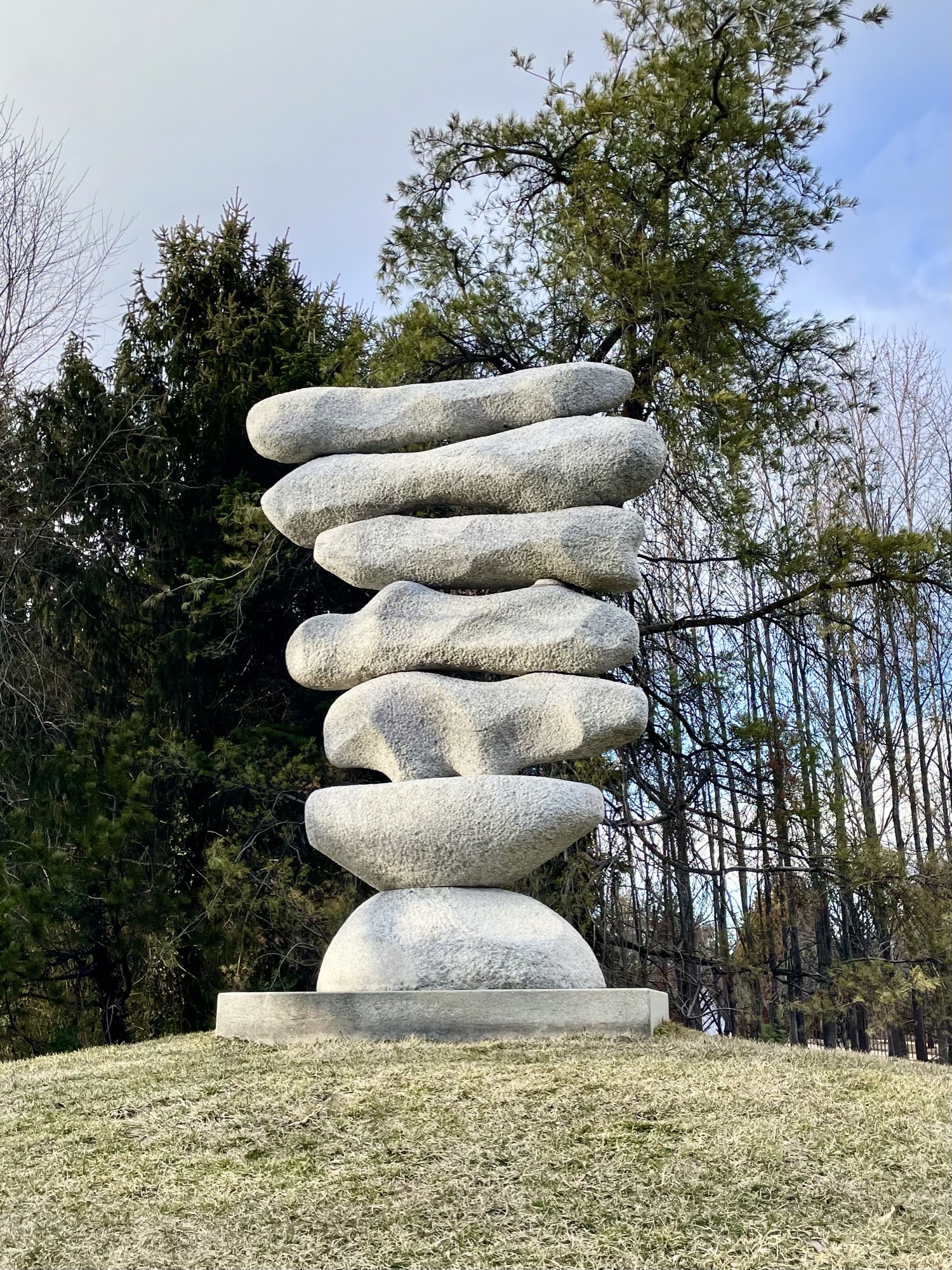
A 15 minute drive from Princeton is Grounds for Sculpture. It is a massive outdoor area with multiple small trails that lead to random sculptures. It’s a pretty cool place with some nice scenery along the water and amongst the tress. Toby and I aren’t big sculpture people but we found some that were pretty neat. There’s a restaurant here called Rat’s Restaurant that has good reviews – we didn’t have time to go, but it looked like a cool place to hang out by the water. It took us about 1 hour to walk through it all, but some people recommend spending at least 2-3 hours, especially if you plan to go to the cafe (reservations recommended).

Trenton is New Jersey’s capital city. We’ve made it our goal to try and hit as many capital cities as we can, even if they’re not that popular. Trenton is only a short 20 minute drive away from Princeton so we figured we’d check it out. The downtown area looked decent with tree-lined streets and nice shop front buildings, but on closer look many of them looked suspicious or run down and none of them were any I’ve ever heard of and many were vacant. There were also many questionable characters around town. I’ve read that there are some nice museums and restaurants in the area, but the few streets we drove down didn’t make us want to get out of the car.

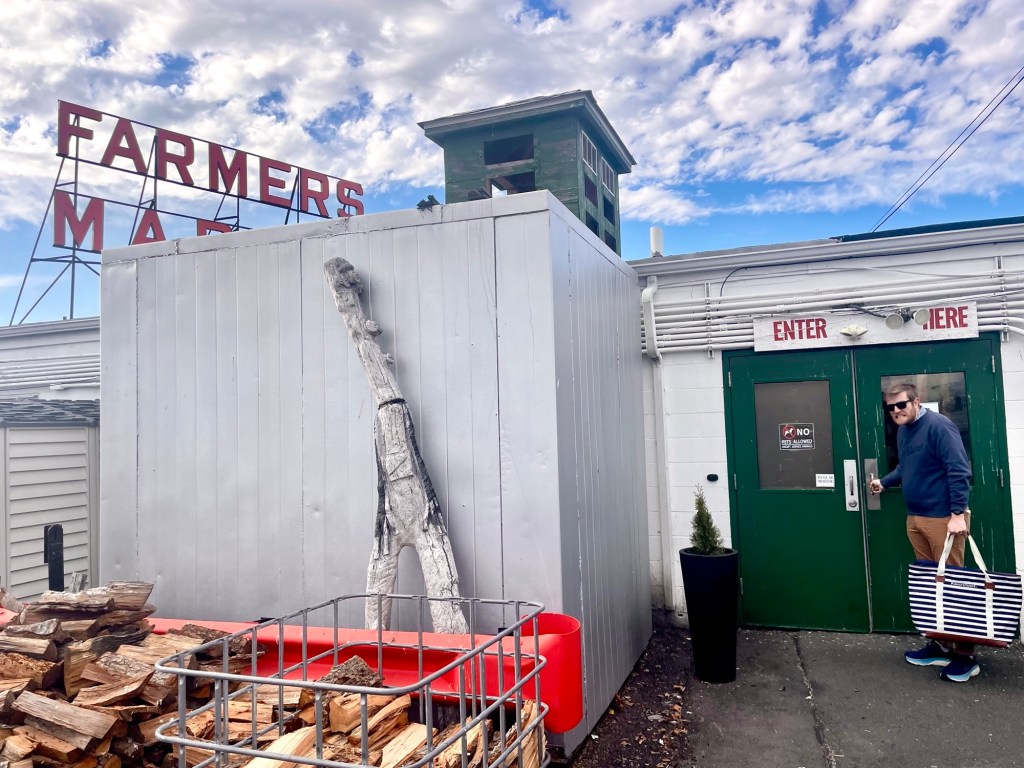
Trenton Farmer’s Market: I love a good farmer’s market, so we headed to the Trenton Farmer’s Market that was only a few minutes away. The outside did not look nice at all. Unfortunately the inside wasn’t much of an improvement either. The market barely had any produce (perhaps we were in the wrong season) and the produce they did have did not look great and some were more expensive than prices in Manhattan! The shops were kinda junky, with old “antiques”, some handmade items, and a few homemade jam stalls. It took us 10 mins to walk through it all. Although I will say, there were a couple of decent looking meat, sausage and cheese shops, but that was it.