A Comprehensive Guide to Visiting Mount Vernon, George Washington’s Home


Date Published: May 20th, 2026 | Last Updated: May 20th, 2026
Author: Abby | Category: Travel, USA
Date of travel: Feb 7th, 2026

Mount Vernon is the famous home to the first president, George Washington. It’s a top highlight landmark when visiting Virginia, especially if you’re into American history. It’s open year-round but gets especially busy in the summer. Follow this guide for a comprehensive overview of the property and what to see here!

Tip: Watching the musical Hamilton prior to coming to become a fangirl/boy of George Washington first is highly recommended so you can have the songs stuck in your head as you walk around and intermittently shout “Here comes the general!”.

Address: 3200 Mount Vernon Memorial Hwy, Mt Vernon, VA 22121
Hours: 9am-5pm April – October; 9am-4pm November – March (double check the website, hours may vary depending on weather)
Website: https://www.mountvernon.org/
Cost: $28/adult; $14/child for admission – cost of tours extra (see below)
Parking: Free on site, plenty of parking available

A little background information on Mount Vernon

Mount Vernon is the famous estate and home of the first president, George Washington. The property was originally called Little Creek Hunting Plantation and was owned by his father, Augustine Washington. After his father’s death, the property was left to his older half-brother, Lawrence Washington, who renamed it ‘Mount Vernon’ after his old commander from the British navy, Admiral Edward Vernon (Vernon was a bit of a celebrity at the time and Lawrence felt that associating himself with Vernon’s name would elevate his social status).

After Lawrence passed away from tuberculosis in 1752, the property transferred over to his only surviving daughter, Sarah Washington. However, Sarah passed away just 2 years later and Lawrence’s widow Anne Fairfax inherited the property. By this time, Anne had already remarried and no longer lived at Mount Vernon. She leased it to George and when Anne passed away in 1761, George inherited the property outright as outlined in Lawrence’s will.

George and Martha lived on the property for the remaining 45 years of his life. Martha was already quite a wealthy woman when they married after inheriting the vast estate of her late husband. Together, her and George renovated the mansion and expanded the estate to include 5 surrounding farms – at its peak, Mount Vernon was 8000 acres!!

Today, Mount Vernon estate is renovated and preserved after what it looked like in the period when George and Martha lived here.

Scroll to the end of the page to continue the story of Mount Vernon ownership after George and Martha passed away.

Best time of year to visit?

You can visit any time of the year, however the best time to visit will be in the spring or summer when the plants and flowers in the gardens are in bloom. If you’re just here for history and to see the home of George Washington, then any time of the year will be fine.

Getting Here/Where to park?

The easiest way to get here is by driving. There are parking lots on the East and West sides of the George Washington Memorial Parkway as you approach the entrance. There is plenty of parking available at no additional cost, however the parking lot is a small distance from the visitors center that requires about a 5 minute walk. If you have people in your party that need a little extra time or assistance walking, consider dropping them off at the front gate before heading to the parking lot.

You can also get here by public transport, a shuttle bus, by boat from Washington, DC, or by bicycle. Check out their website for the most up to date and comprehensive instructions on how to get here: https://www.mountvernon.org/plan-your-visit/directions-parking-transportation .

How much is admission?

The cost to visit Mount Vernon can get quite pricey depending on whether you want to add on additional tours. I’d recommend buying tickets online early since the tours are timed and can sell out early. Mount Vernon gets very popular in the warmer months. Be warned: the online checkout process is like booking a ticket on a cheap airline – there are seemingly never-ending add-ons, so set aside a few extra minutes to make sure you’re buying tickets for what you want.

I’ve broken down the cost and the MANY tour options below:

  • Base admission cost (grounds pass): $30 per adult, $16 per child ages 6-11
    • Includes an audio tour, self-guided access to the historic area (including outbuildings, gardens, tomb, farm), and the museum. It does NOT include access to inside the mansion, which can only be seen with a guided tour.
    • On Saturdays and Sundays from April through October, you also get access to the distillery & gristmill.
    • The
  • Mansion tour (20 mins): +$2 per person
    • I don’t know why they don’t just include the tour in the price of the ticket since it’s only an additional $2.
    • If you join an in-depth tour, it will include the mansion tour as well so you don’t need to purchase it again.
    • These are timed tours, so you’ll have to select a time slow when booking your tickets.
  • The Enslaved People of Mount Vernon Tour (60 mins): FREE, but tour times very limited
    • A 60-minute walking tour that explores the lives and contributions of the many enslaved people that worked on this estate as well as the 5 surrounding farms that made up Washington’s 8,000 acre plantation.
    • This is a free tour, however the available times for the tour are very limited and books up early. We unfortunately couldn’t get a spot since there was only 1 tour time available the day we visited in the middle of winter. There should be more tour times in the warmer seasons.
  • Through My Eyes Tour (60 mins): +$10 per person
    • A 60-minute walking tour of the estate that is given by a character interpreter (Washington’s granddaughter, personal secretary, farm manager, or enslaved valet). They will go about their daily activities and make stops along the way.
  • In-Depth Tour (75 mins): +$60 per person
    • A 75-minute walking tour of the estate grounds including the mansion, the farm, old tomb, and a bit of the trails. It also touches on the subject of the enslaved people that worked on this estate and surrounding plantations.
    • This is the most in-depth and comprehensive tour. This is also the only tour where you can look inside the old tomb where George Washington was originally buried.
    • Although pricey, choose this option if you want to get the best understanding of the estate, but keep in mind that you also get free audio guides with a standard admission.
    • This is the tour we chose. We had limited time to spend here and we decided that a walking tour would be the best way to get the most of Mount Vernon!
  • Photo Cruise Tour (45 mins): +$7-$11 per person (warm seasons only)
    • A 45 minute cruise on the Potomac River about the history of the river and how it contributed to Washington’s business ventures.
    • Offered in warm seasons only – check the website for updated times
  • Gardens and Landscape Tour (60 mins): +$10 per person (warm seasons only)
    • A 60 minute tour of the gardens and landscape of Mount Vernon
    • Offered in warm seasons only – check the website for updated times
  • Hamilton the Musical Tour (60 mins): +$10 per person
    • A brand new tour on offer.
    • Although there’s no record of Alexander Hamilton visiting Mount Vernon, this 60 minute tour explores Washington’s views on many of the themes that the musical addresses.

If you want to keep costs to a minimum, I’d recommend just booking a general admission ticket which will come with a free audio guide that you can do at your own pace, a $2 mansion tour, and reserve a spot for the free enslaved people tour. The general admission gives you access to the entire estate that includes the museum, outbuildings, film, and both old and new tomb.

If you’re looking for the most comprehensive experience with a guide, book the In-depth tour which includes a short walk around the grounds and a tour inside of the mansion, then take the free enslaved people tour to get more behind-the-scenes insight, although the in-depth tour will also touch on this subject. Consider adding on the gardens tour if you’re into the landscape and the flora of the estate and the photo cruise tour if you want a different view of the property.

*NOTE: It takes at least 10 minutes at a good pace to walk from the parking lot, through the entrance, out the back garden to the actual mansion itself, so book a tour time at least 20 minutes after your intended arrival time to give yourself plenty of time!

How much time do I need here?

It depends on whether you want to do a tour and how thorough you are. You can split up your visit into 3 parts:

  • Film: A 22 minute video at the visitors center
  • Museum: A decent size George Washington museum where you can learn about him, his family, and see artifacts that belonged to him
  • Estate Grounds: Where you can wander on your own or with a guided tour. The estate includes his tomb, the home, and small buildings where the enslaved worked

If you want to do everything thoroughly, plan for at least 5 hours here (depending on which and how many tours you book). We were in a bit of a time crunch and spent about 3 hours here where we were able to fit in the 75min in-depth tour, walking around the grounds on our own, and going through the museum at a moderate pace. We didn’t have time to watch the film.

What to expect at Mount Vernon:

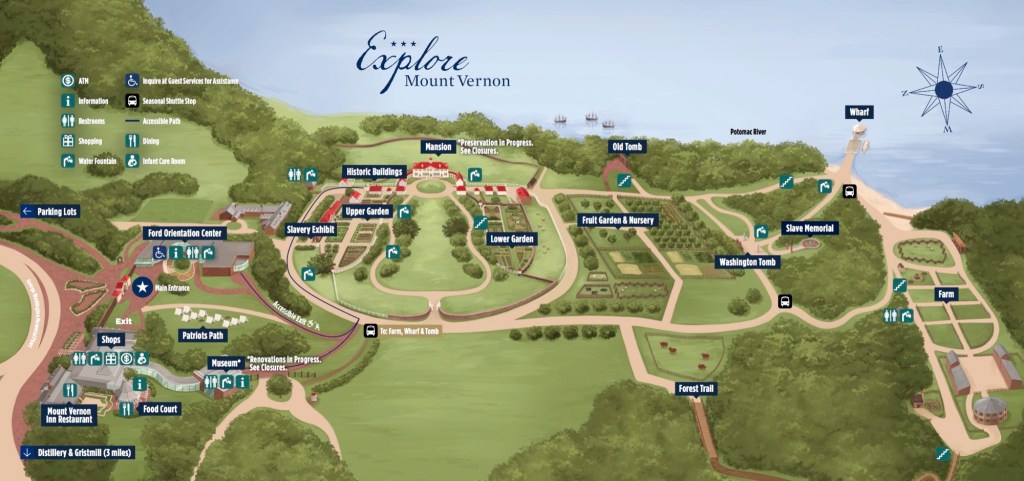
The grounds to Mount Vernon are massive. I’ve attached a map below to give you an idea. The main things to do are concentrated around the visitor center/museum area and the mansion and the surrounding small buildings and gardens. There are walking paths that will lead you to the old and new tomb as well as the Slave Memorial.

There’s an attached farm, forest trail, distillery, and wharf that are further out from the main part of the property that we did not visit and was not highlighted by the staff.
Parking & The Visitors/Orientation Center

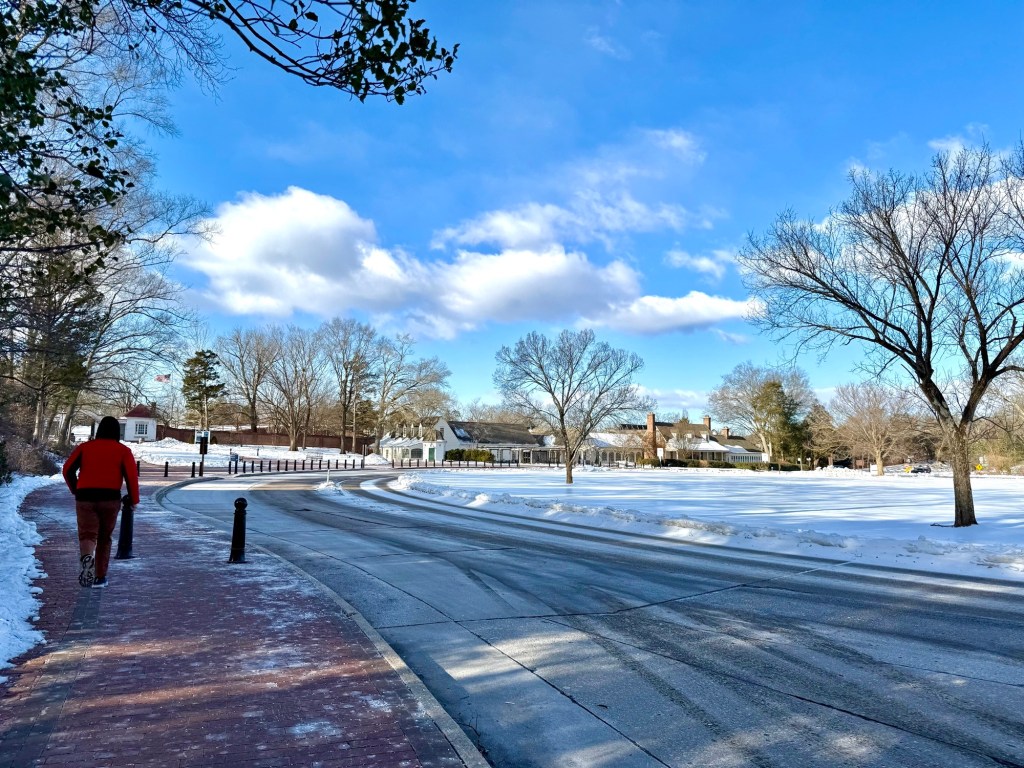
There is plenty of parking available at no additional cost, however the parking lot is a small distance from the visitors center that requires about a 5 minute walk. If you have people in your party that need a little extra time or assistance walking, consider dropping them off at the front gate before heading to the parking lot.

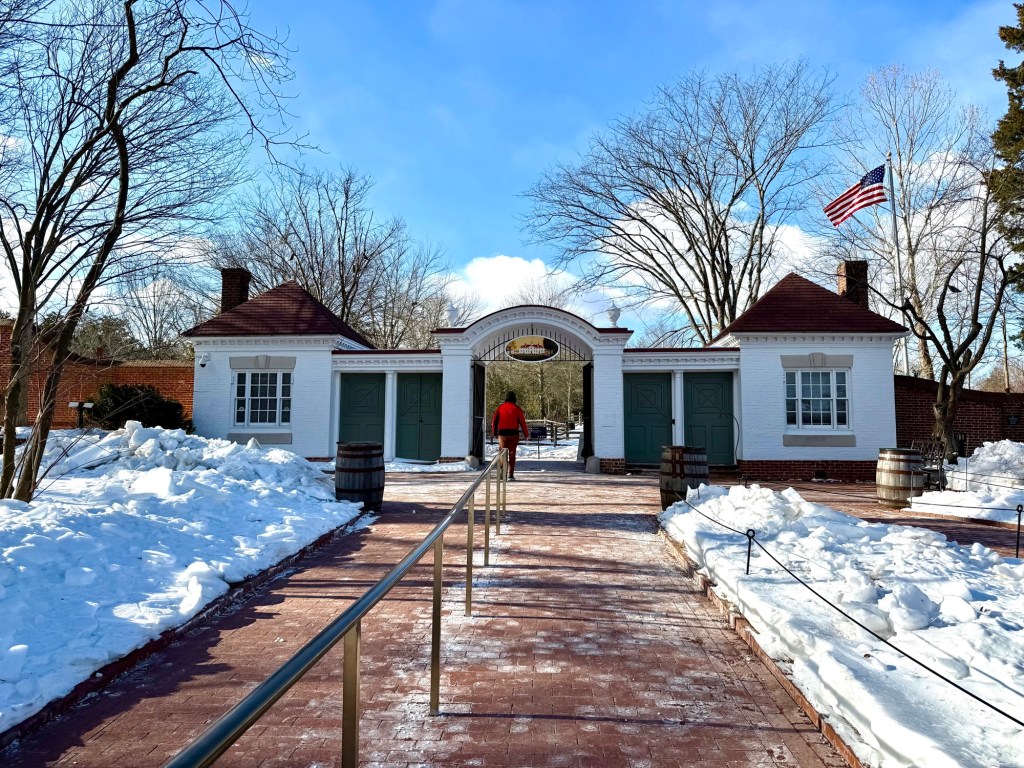
Once you reach the front gate, continue walking and you will see the visitors center where there will be security screening before you can enter the property.

Inside the visitors center:
Revolutionary War Theater

The Revolutionary War Theater is attached to the visitors center. It shows a 22 minute 4D film (yes, with special effects) called Washington’s War. It highlights George Washington’s role in the Revolutionary War that led to the independence of America.

The film plays every half hour starting at 9:30 a.m. with the final showing at 5:30 p.m.

Admission to the film is included in the ticket price.

George Washington Museum

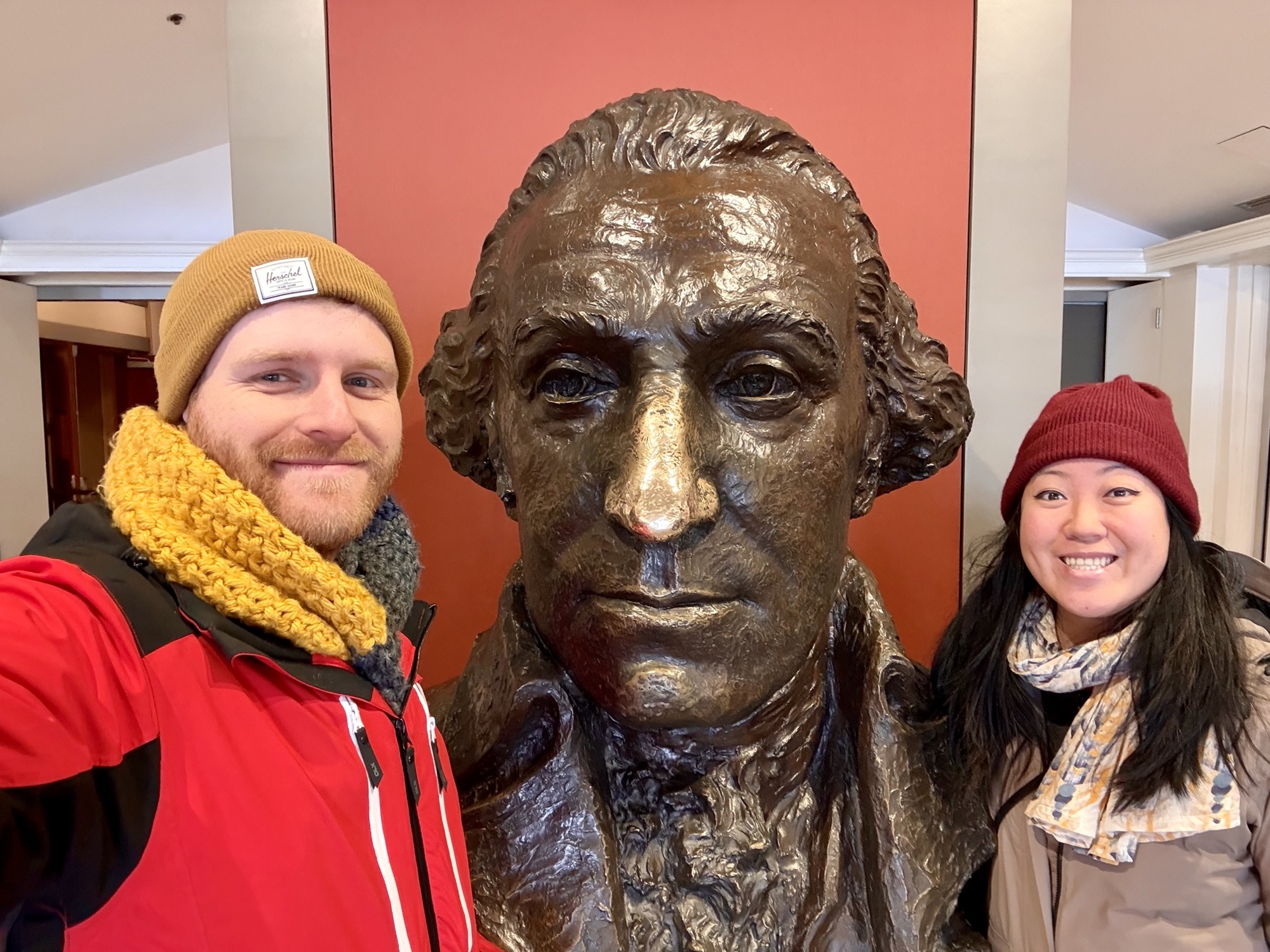
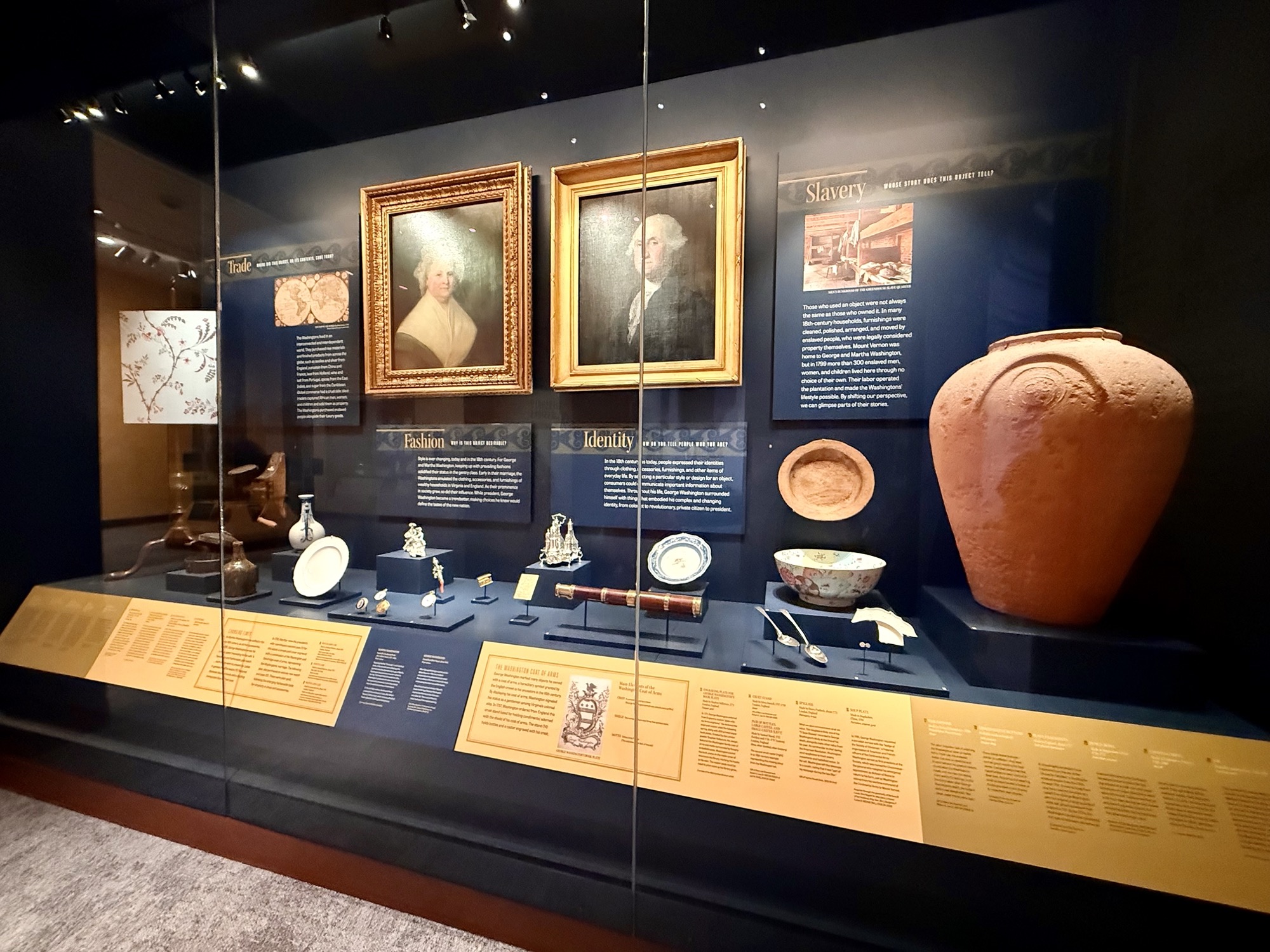
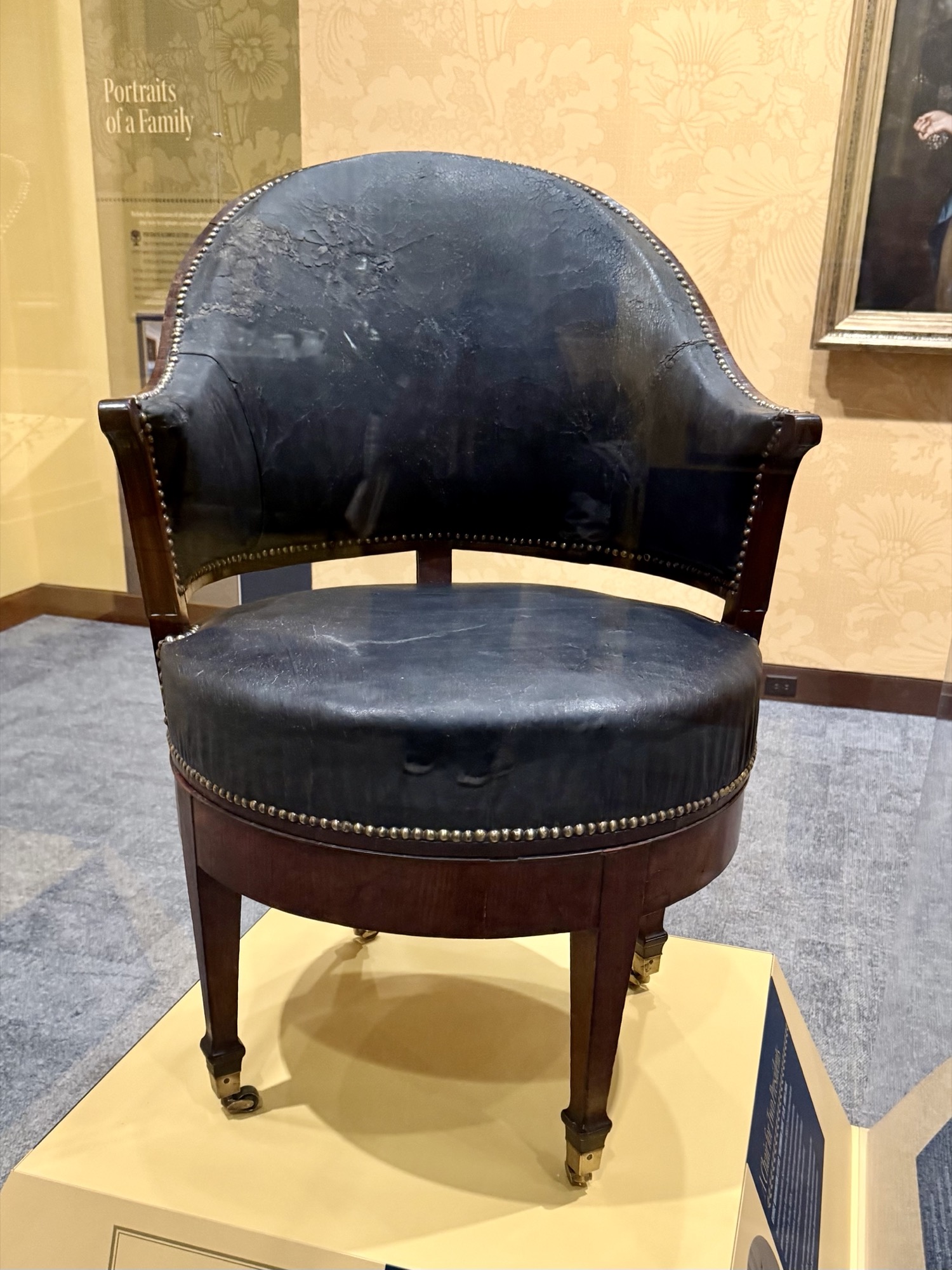
The George Washington Museum is also attached to the visitors center. This is where the bulk of the information lies about the life of George Washington, his estate, and his family. There are artifacts here that he owned and there’s a lot of interesting information here. I’d recommend coming here first before heading up to the estate for background information to appreciate the grounds better.
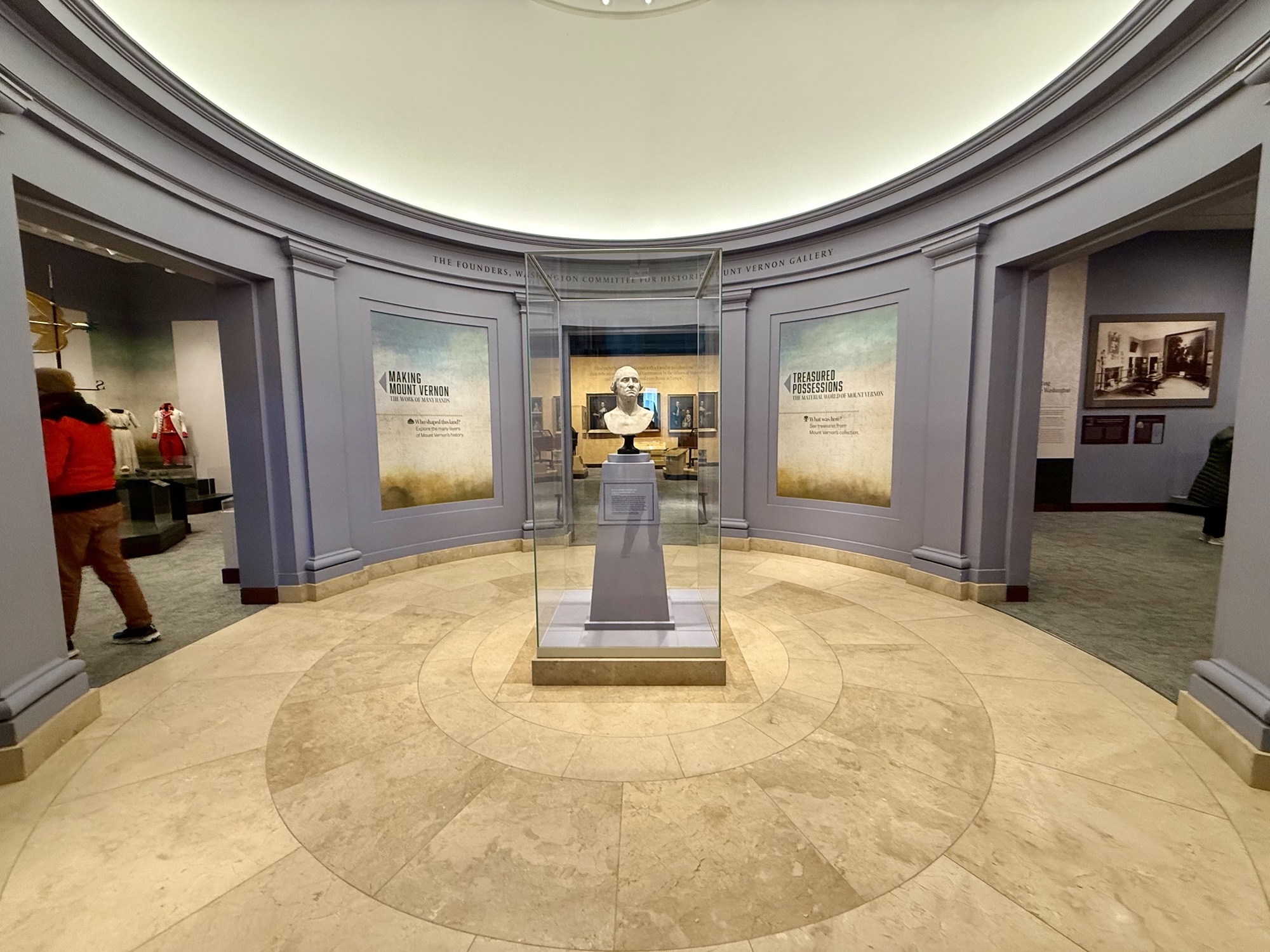
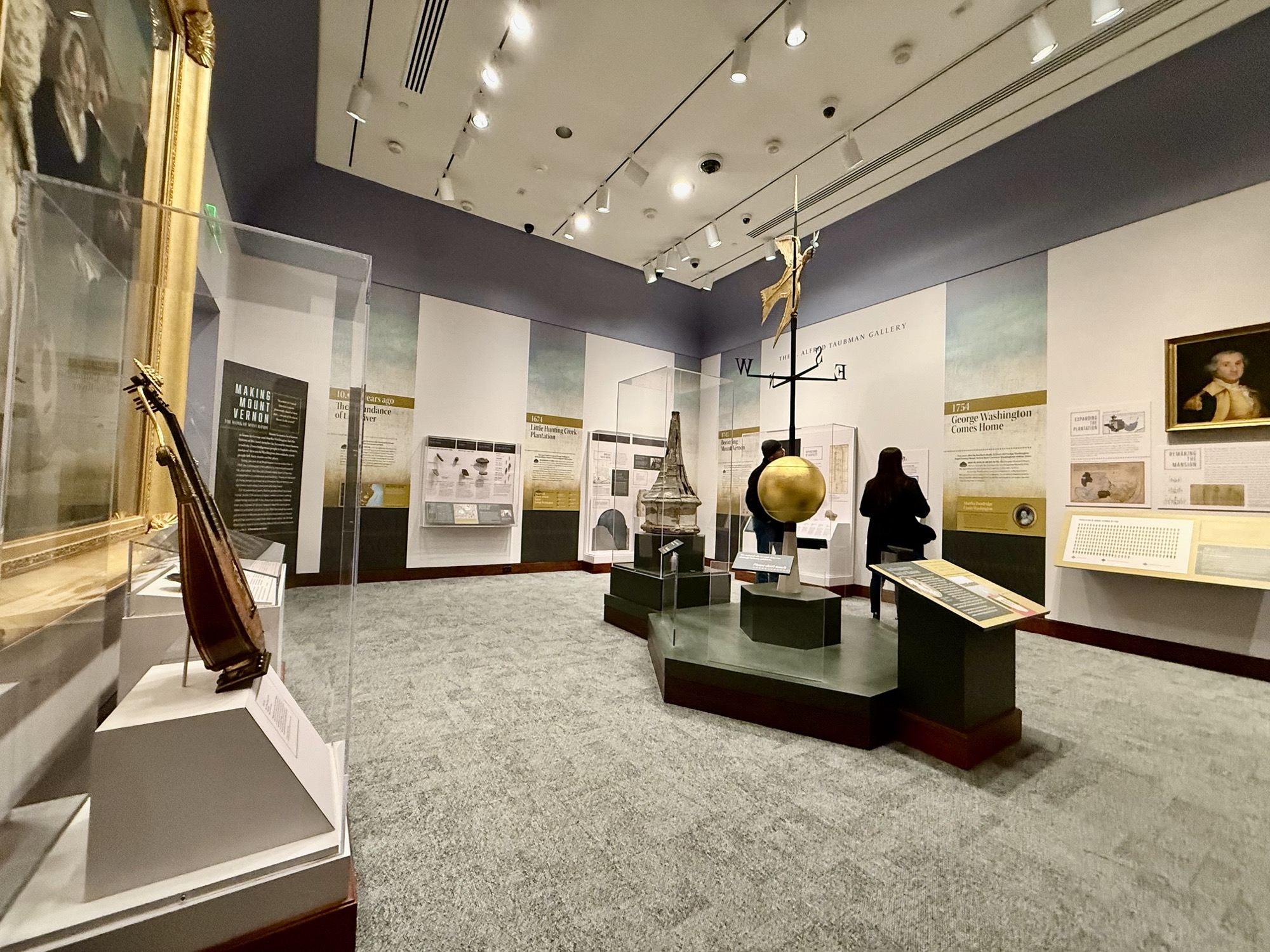
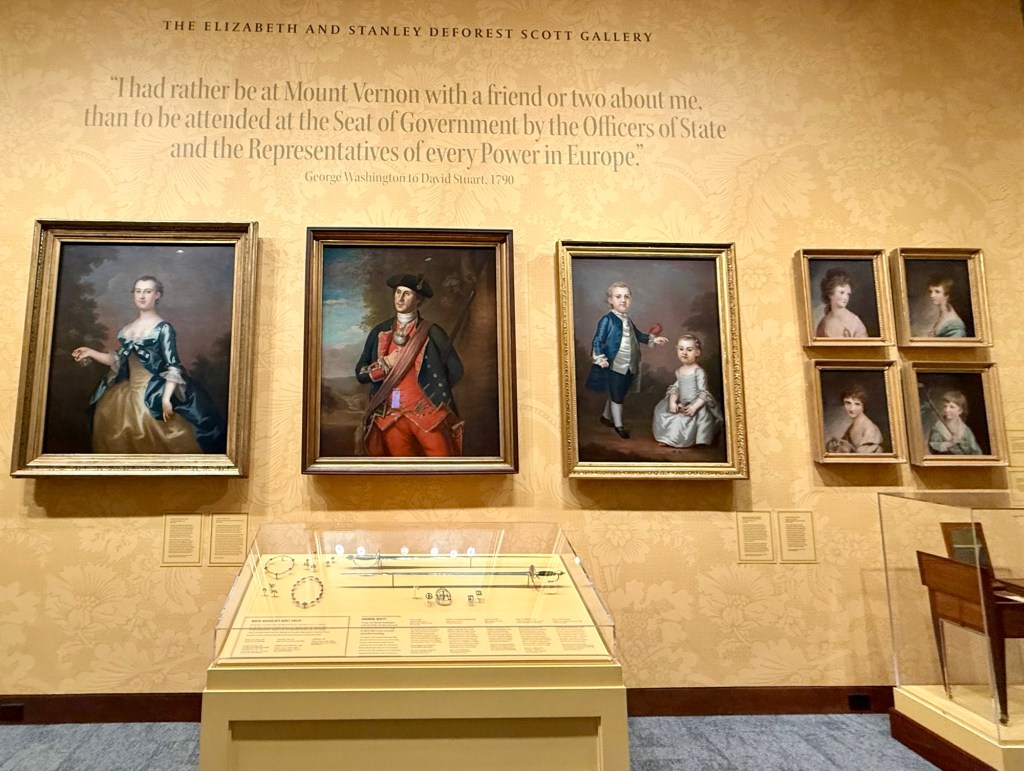
Portraits of the family from left to right: Martha and George. They never had children together. The two children in the portrait beside them are from Martha’s previous marriage. One of them passed away early and the other had 4 children (grandchildren to George and Martha) depicted on the far right.
Mansion and Estate

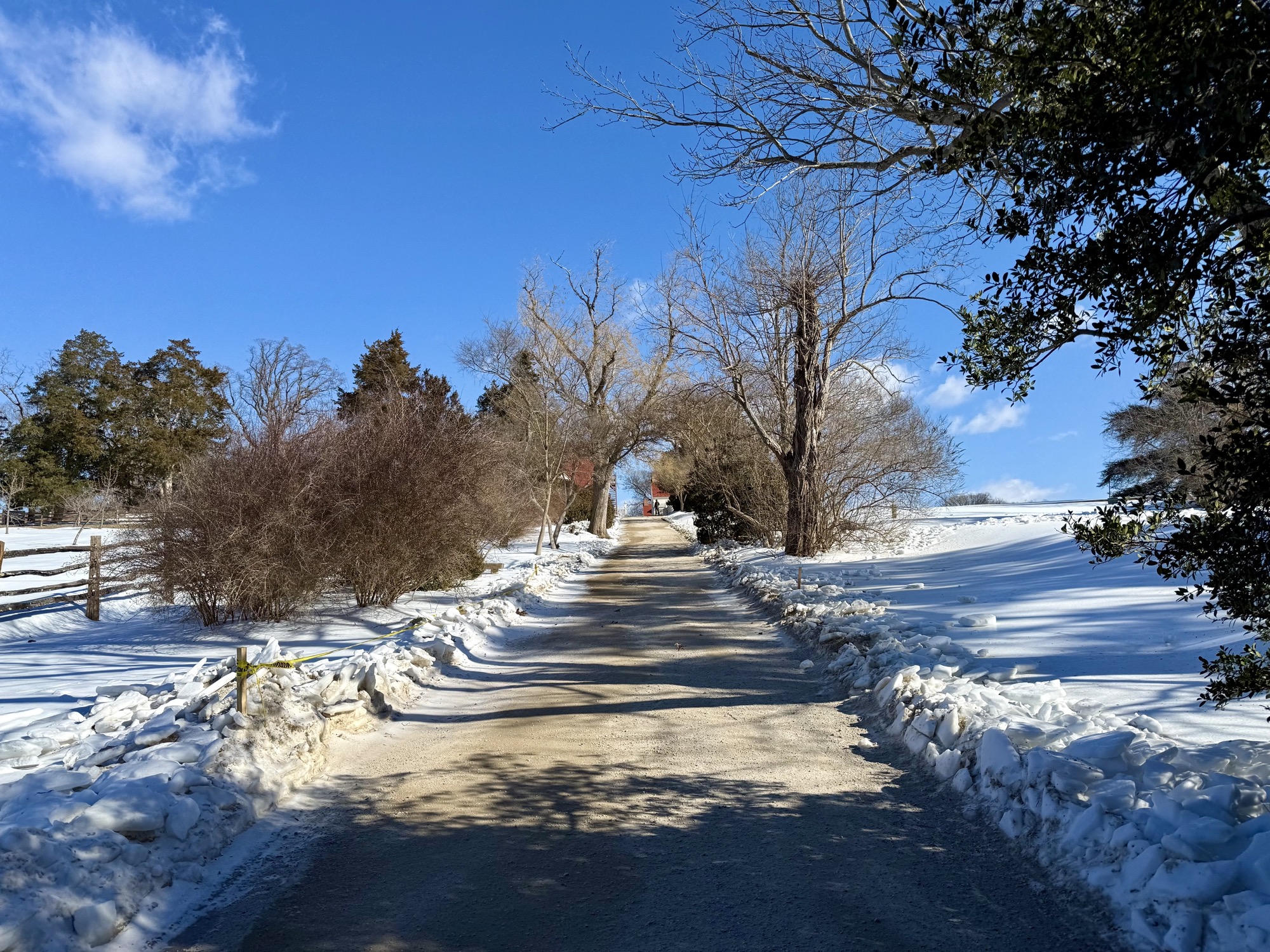
The mansion and the rest of the estate is about a 10-15 minute walk from the back of the visitors center (see the attached map above for reference). If you have a timed tour, be sure to give yourself extra time to walk to the top where the tours start. It’s a slight uphill walk through the gardens on a paved pathway.

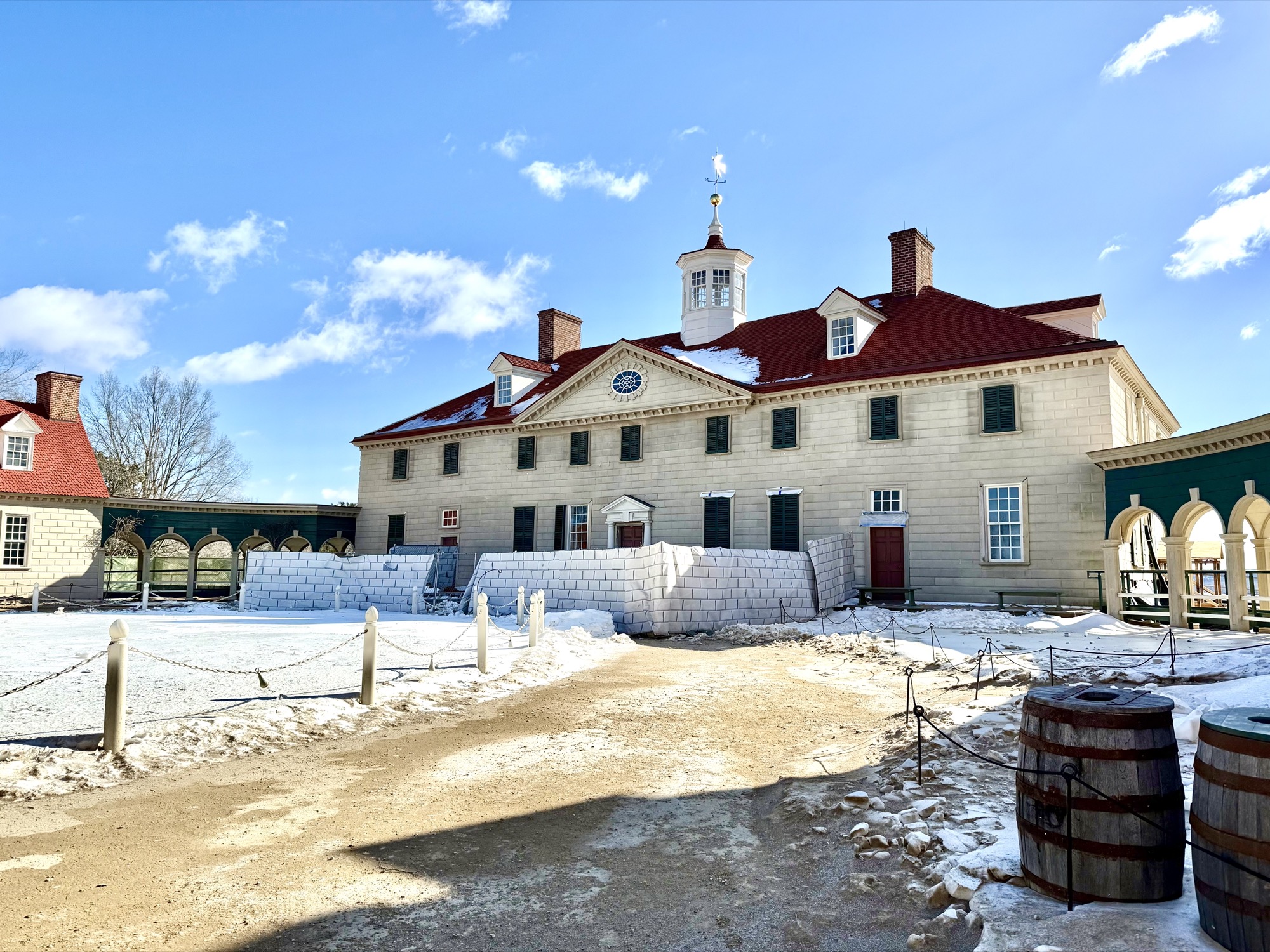
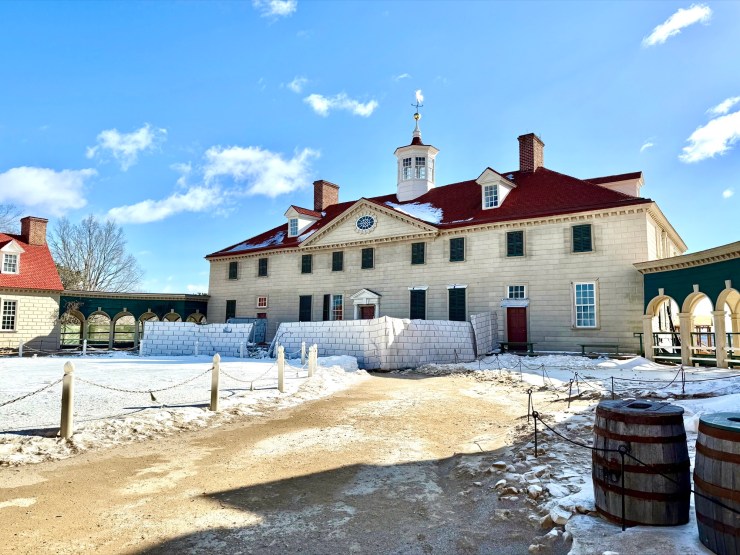
The outside of the mansion was partially under renovations when we visited. They were doing some upgrades around the property as well as the gardens in preparation for America’s 250th anniversary this year and the peak summer tourism.

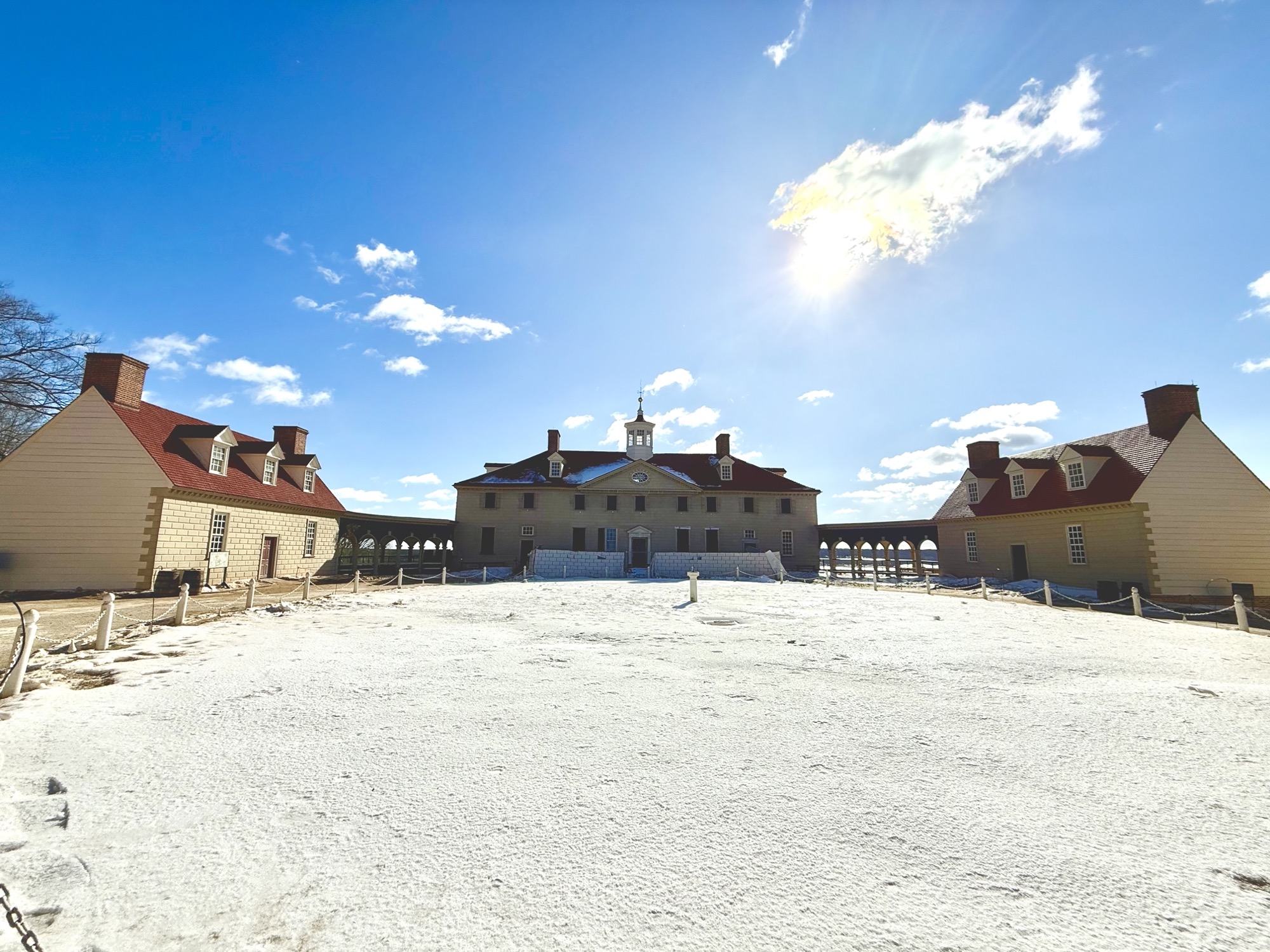
The main mansion is in the center and is flanked by smaller buildings on either side. To the left is ‘Servants Hall’ where it was used by visitors’ servants and to the right is the kitchen which is separated from the main building in case of a fire.
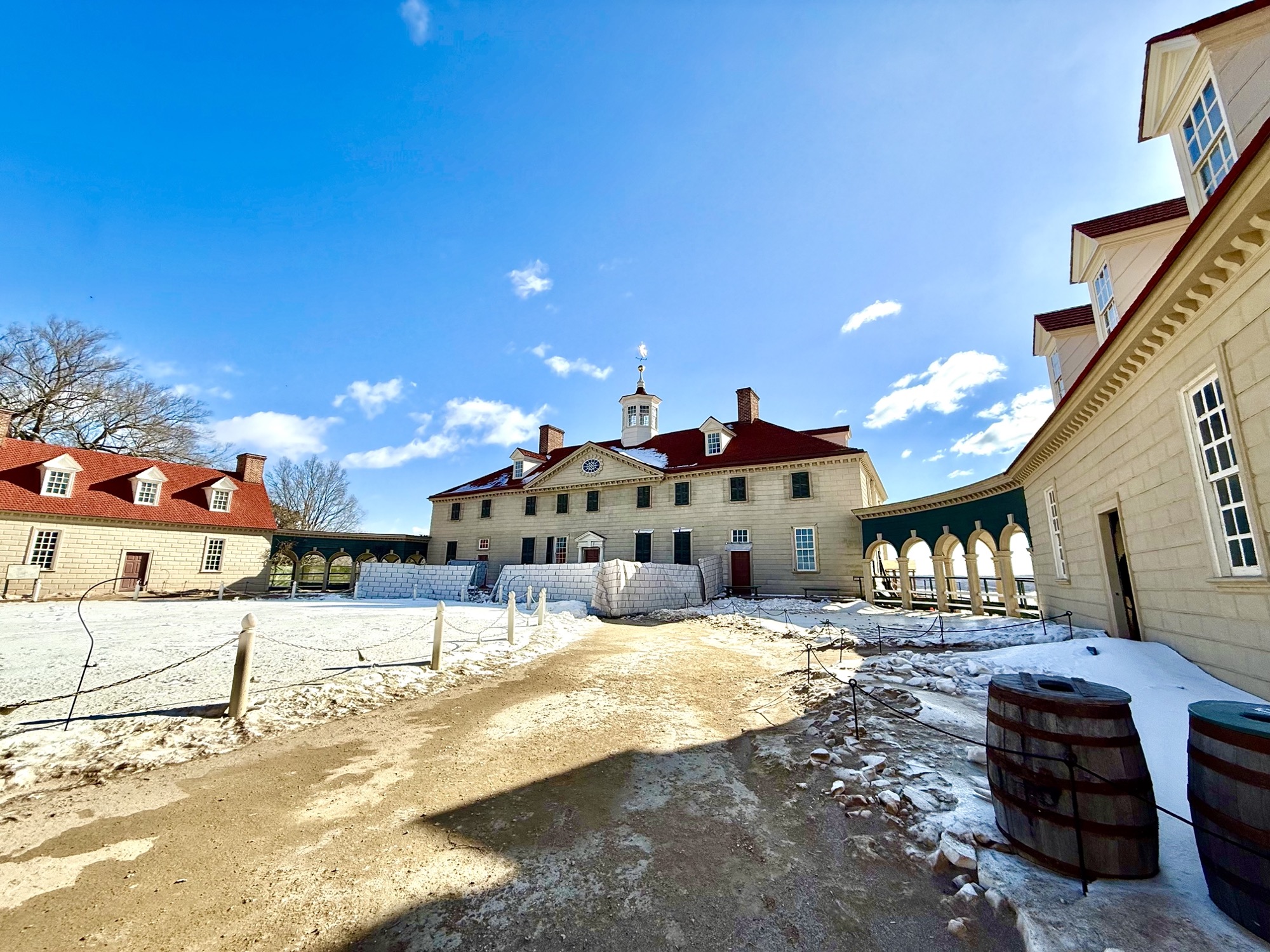
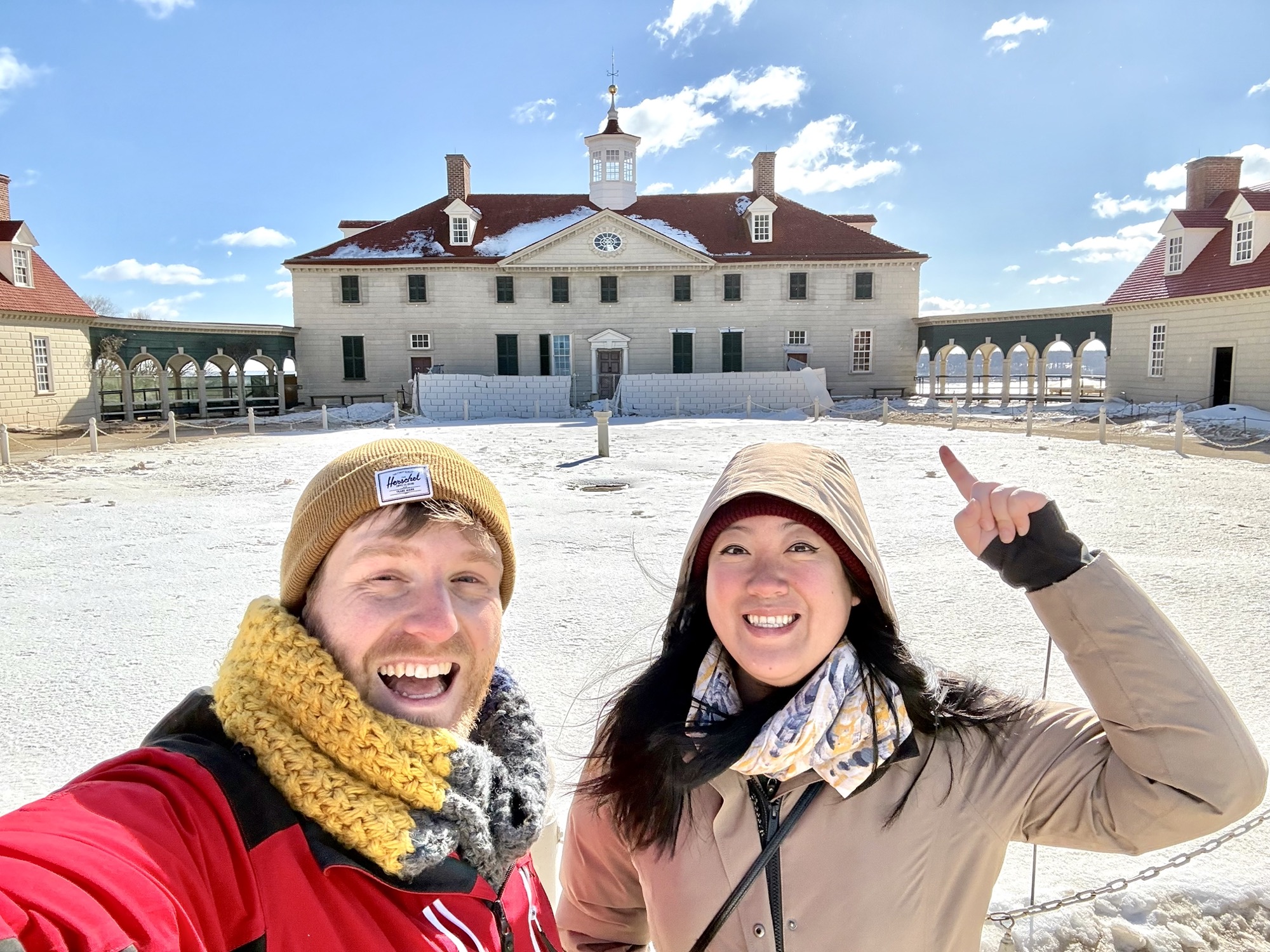
You need to book a guided tour to get access inside of the buildings. It’s an additional $2 on top of your admission fee and tours are timed. If you ask me, they should’ve just charged an extra $2 to the admission fee to include the mansion tour to make it easier for people rather than having to book a separate ticket. Most people come here to see the mansion anyway. If you don’t have a ticket, you have to go all the way back to the visitors center to reserve one and hope there are time slots left. 😒

*The mansion tour is included in the “In-depth Tour”.

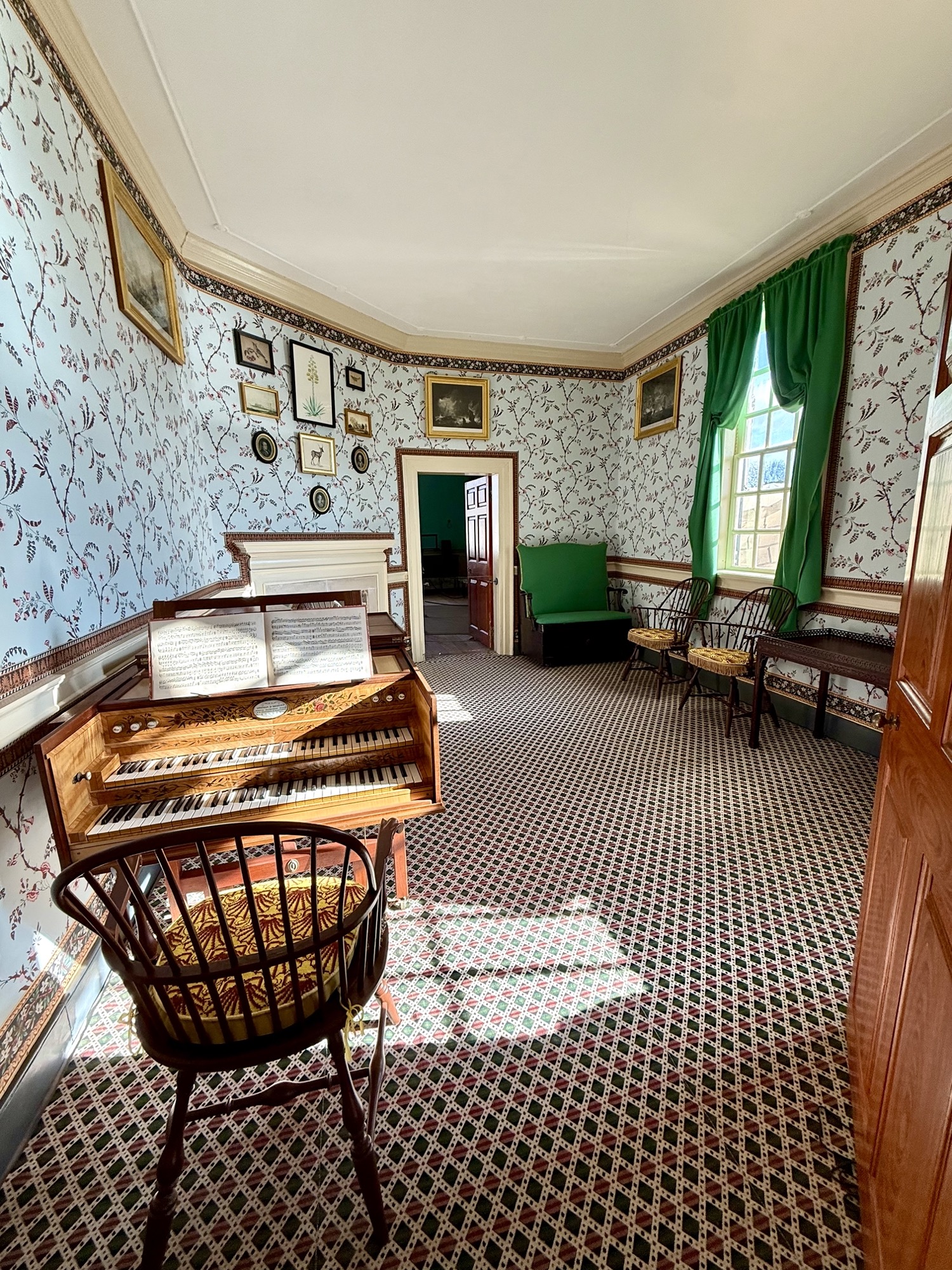
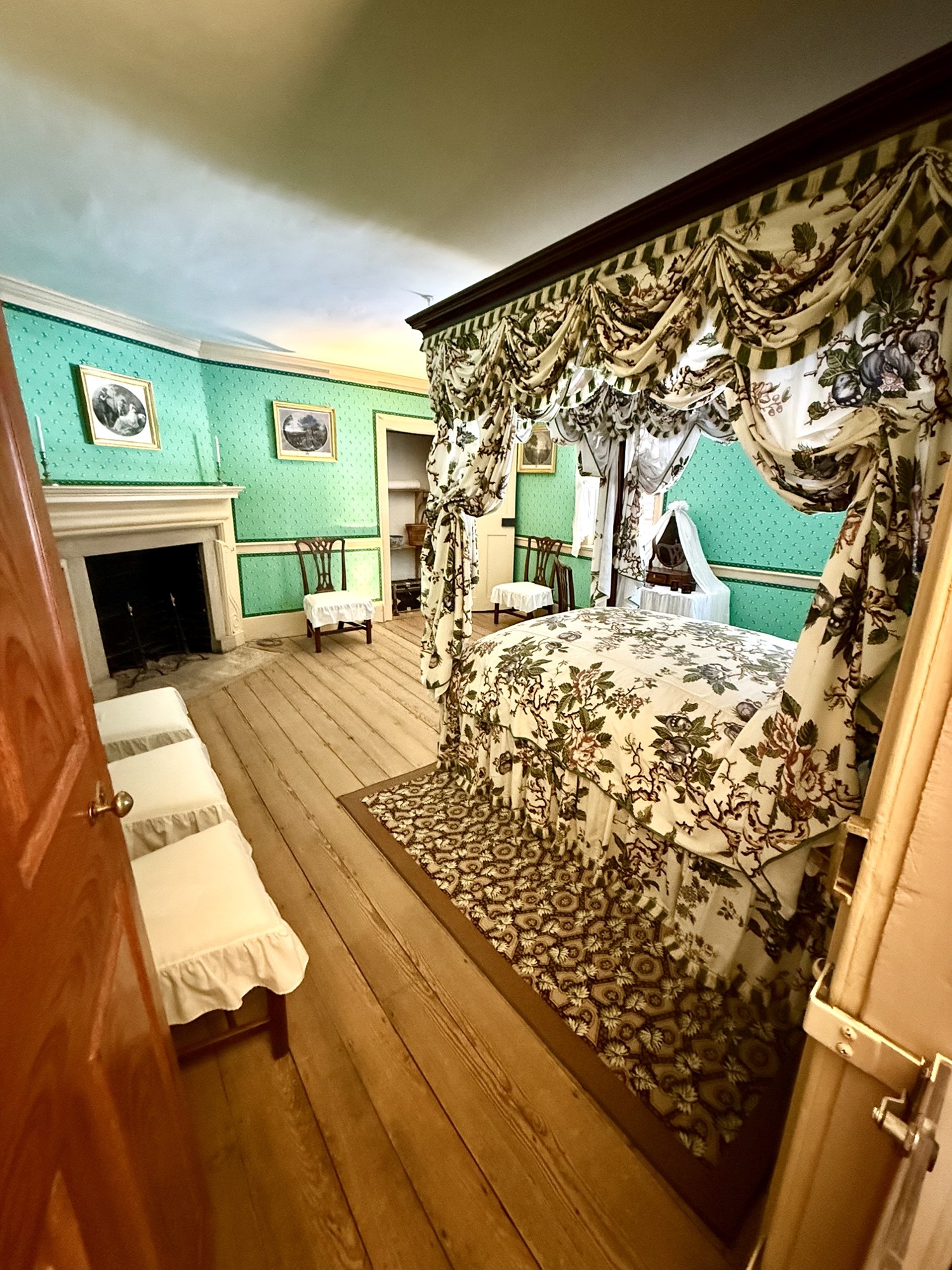
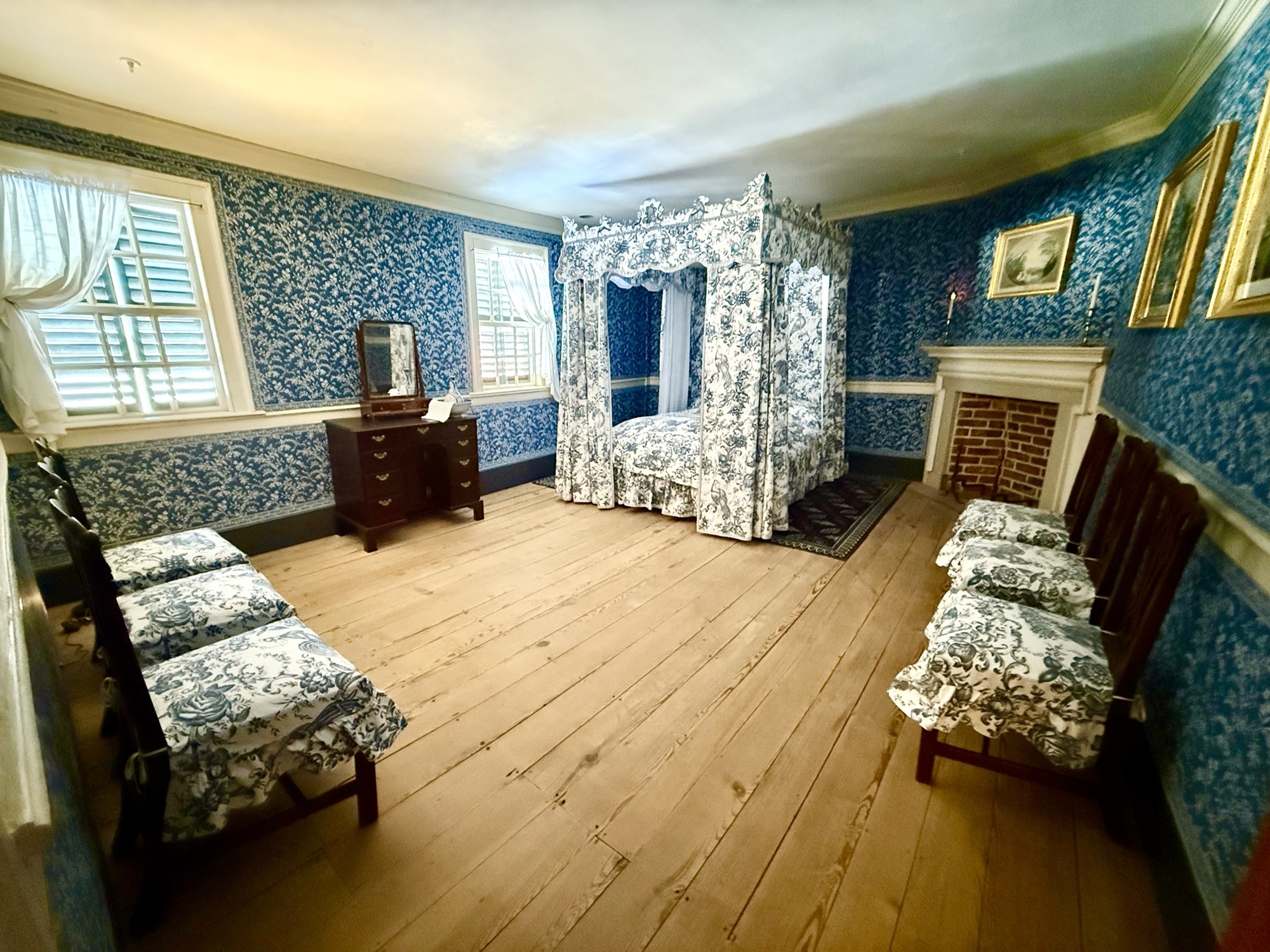
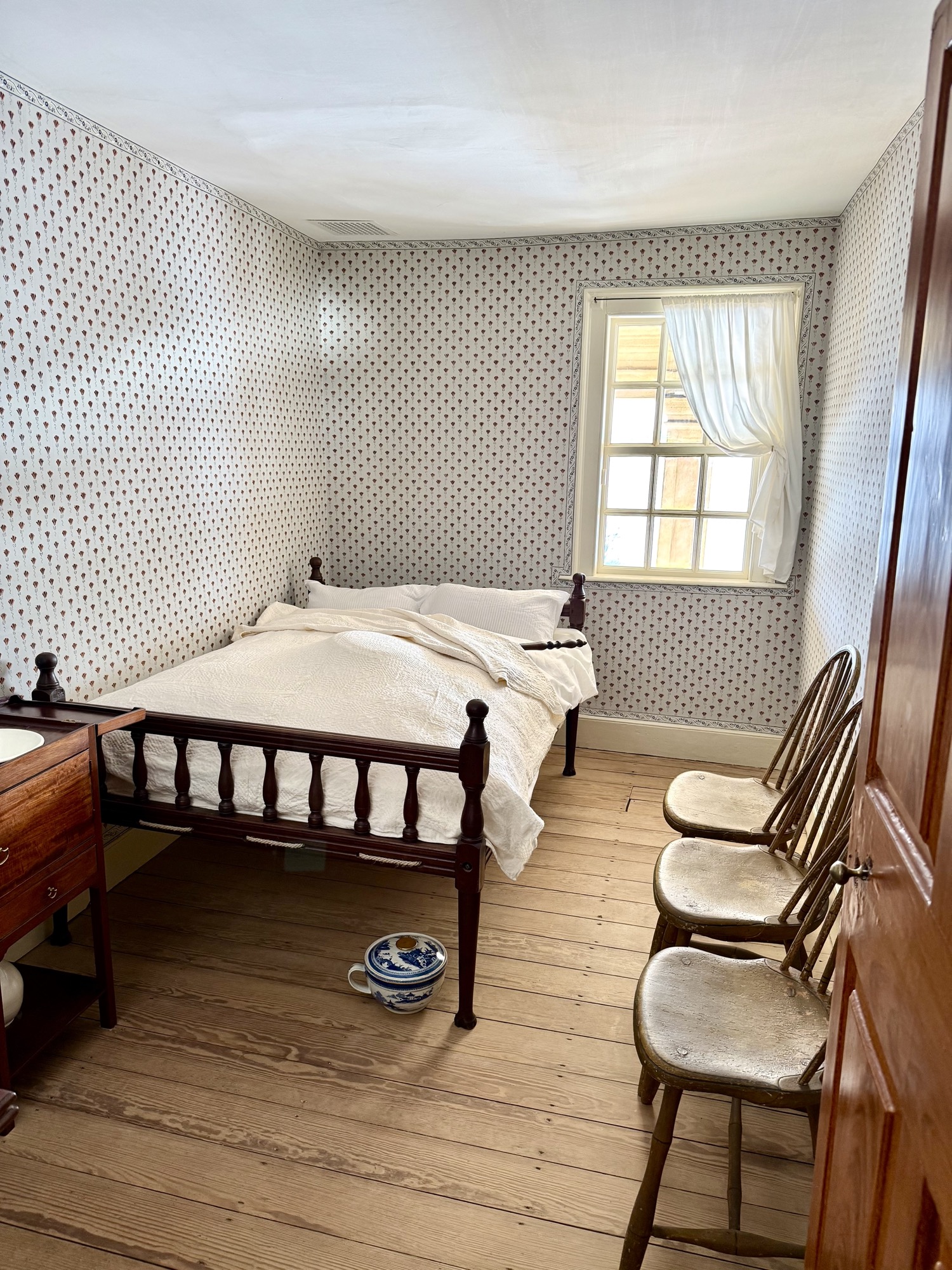
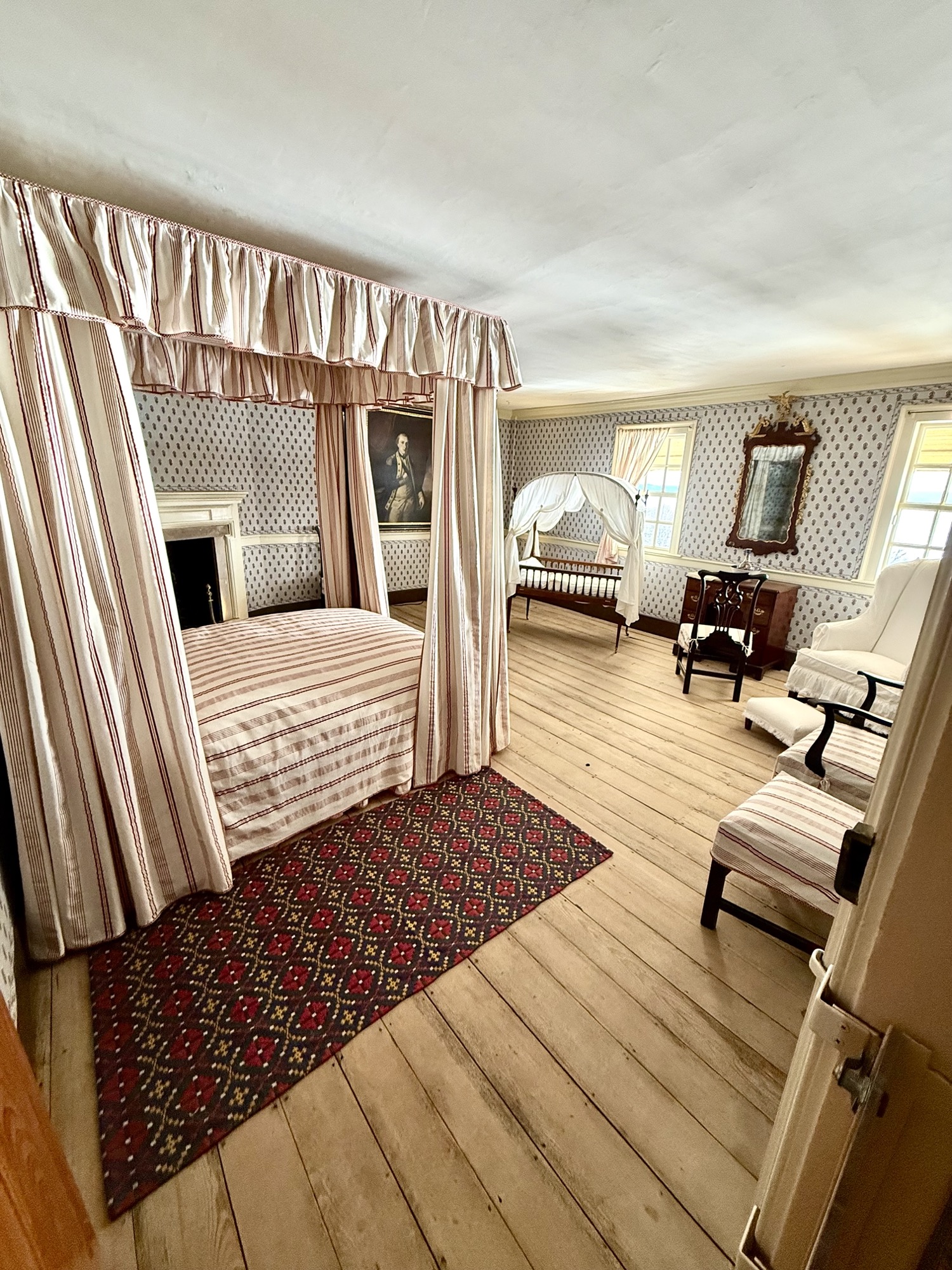
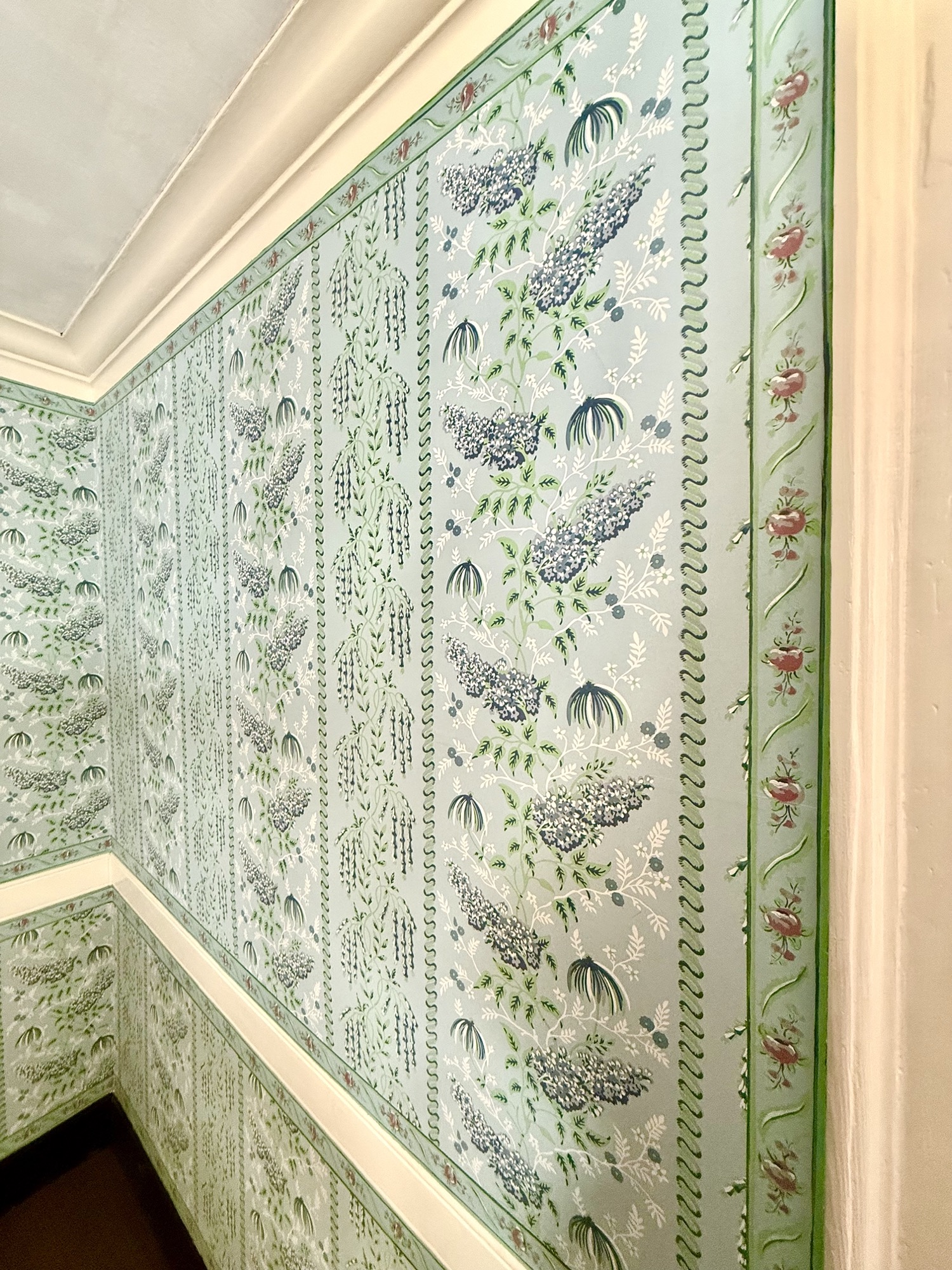
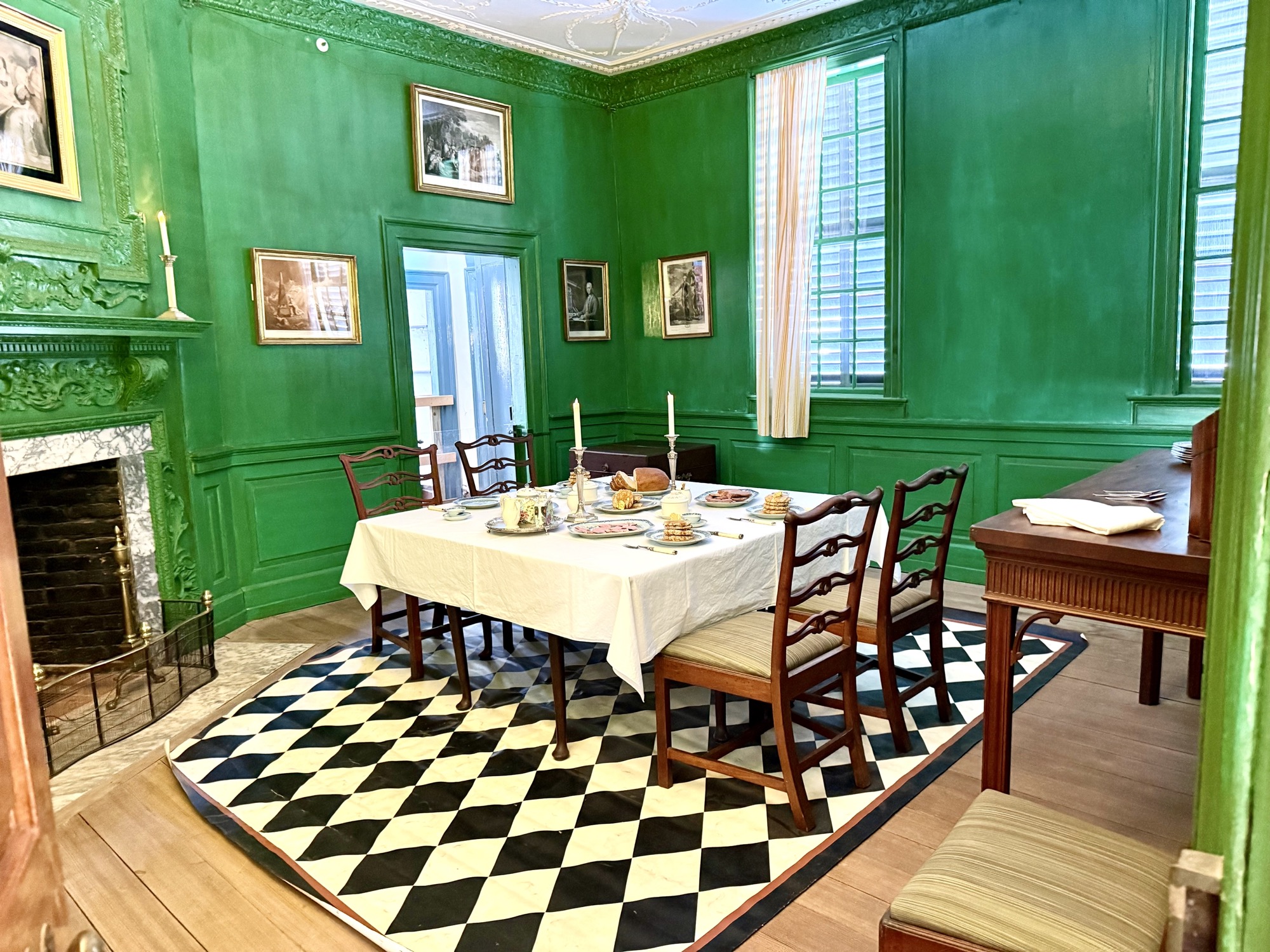
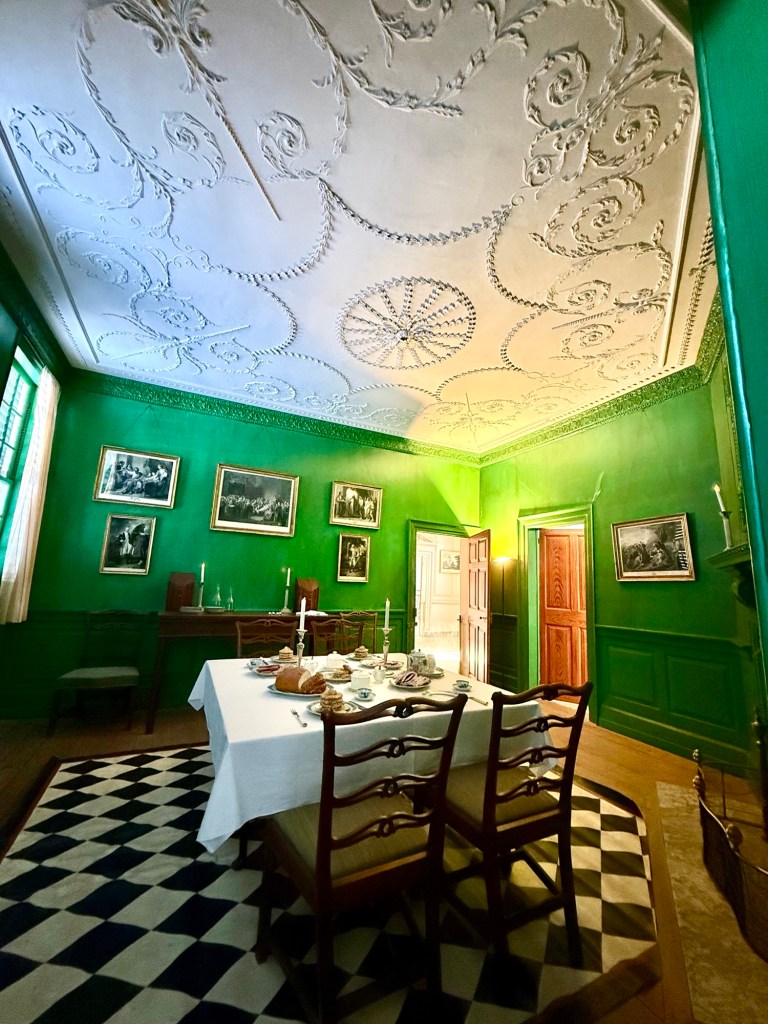
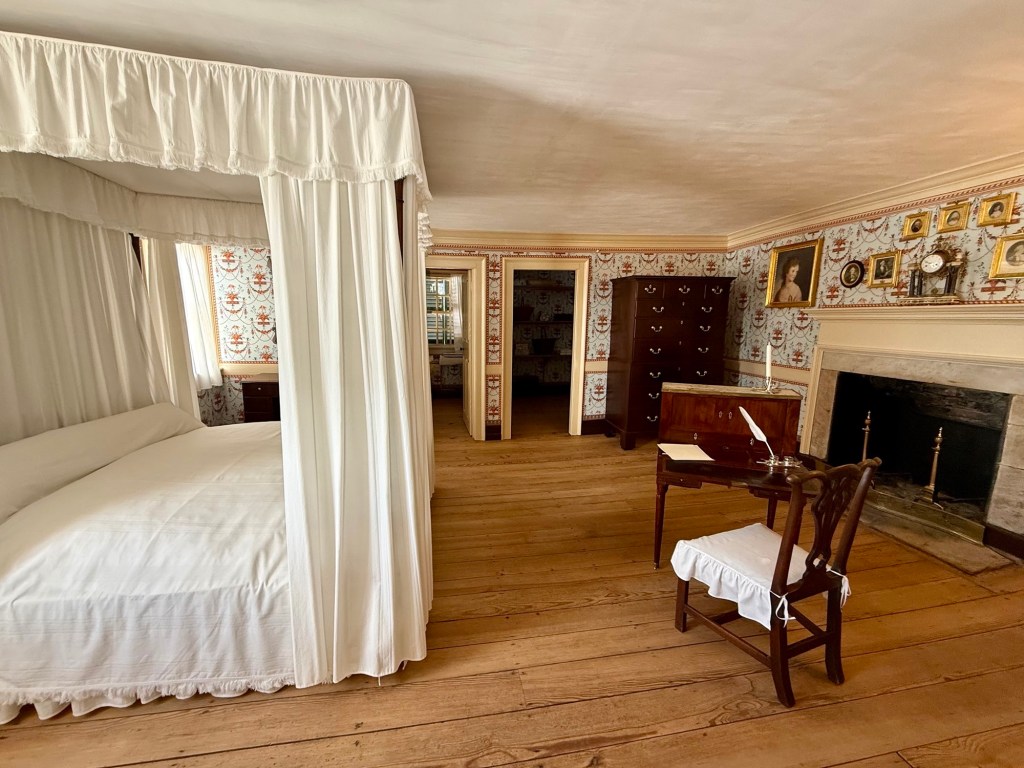
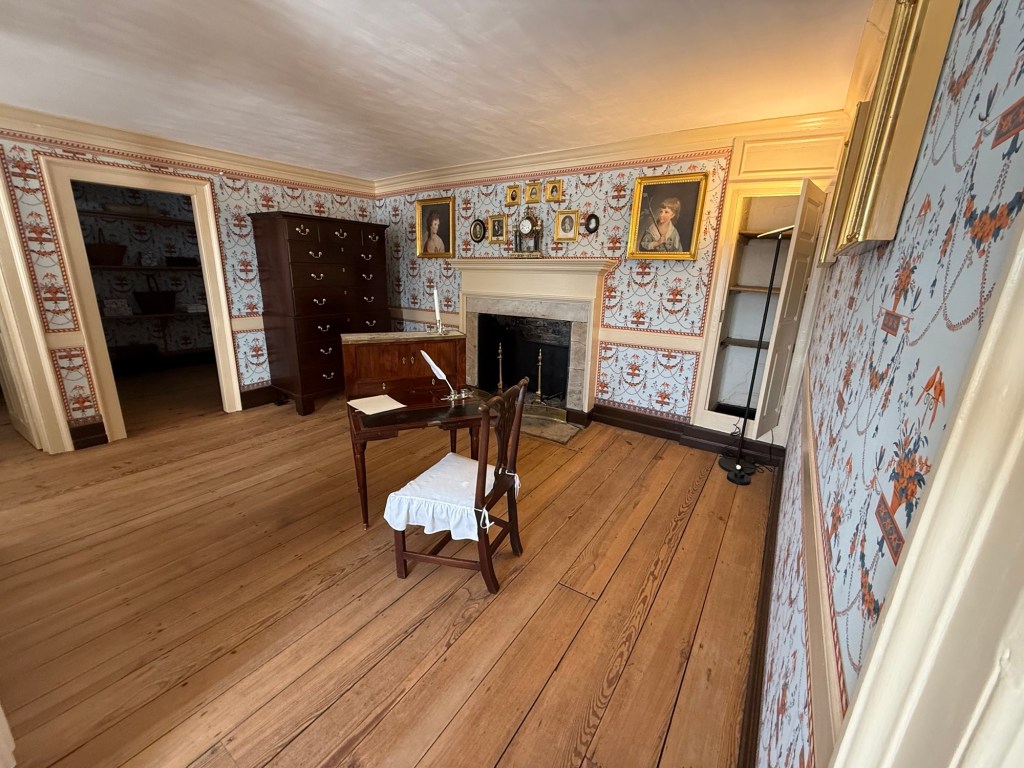
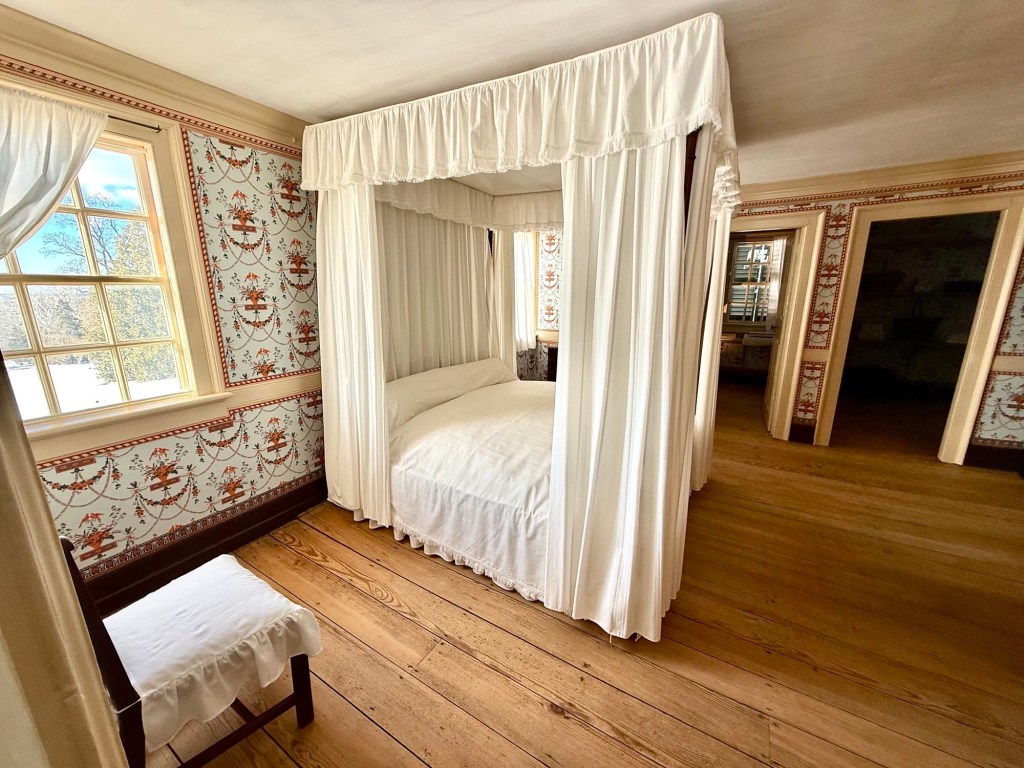
The mansion has 21 rooms over 3 floors, including multiple bedrooms for the many guests they would have, some showing up unexpectedly. Here’s a collection of photos of the beautiful rooms I took on the tour. I especially loved how bright and colourful the paint/wallpaper is in some of the rooms.
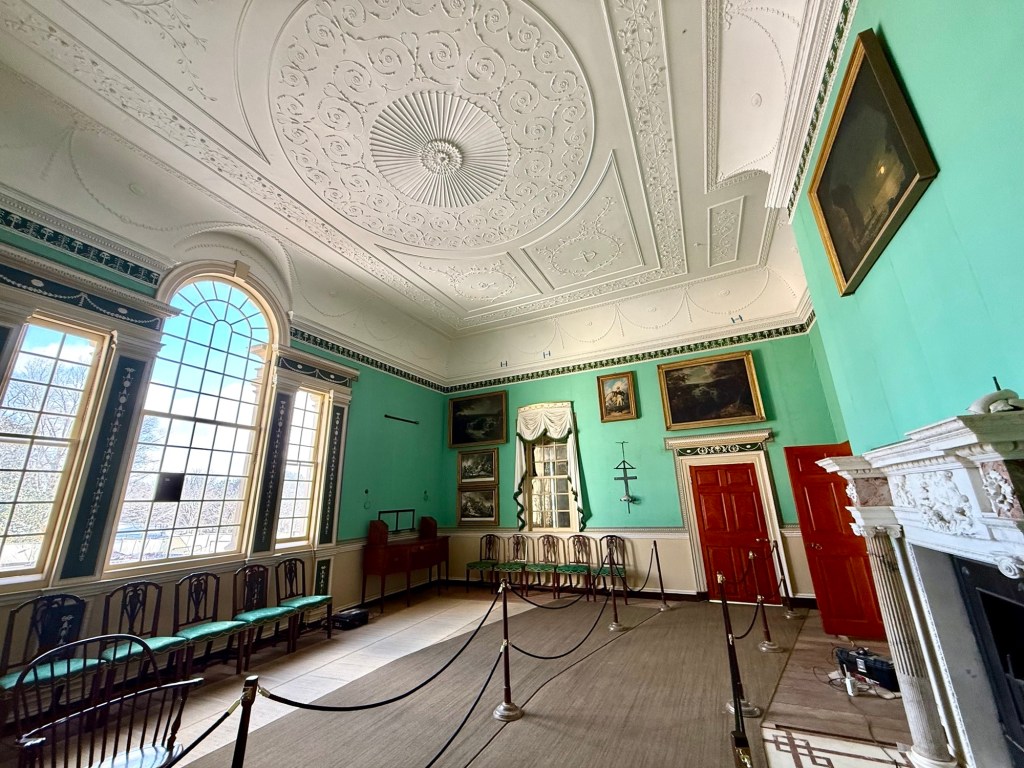
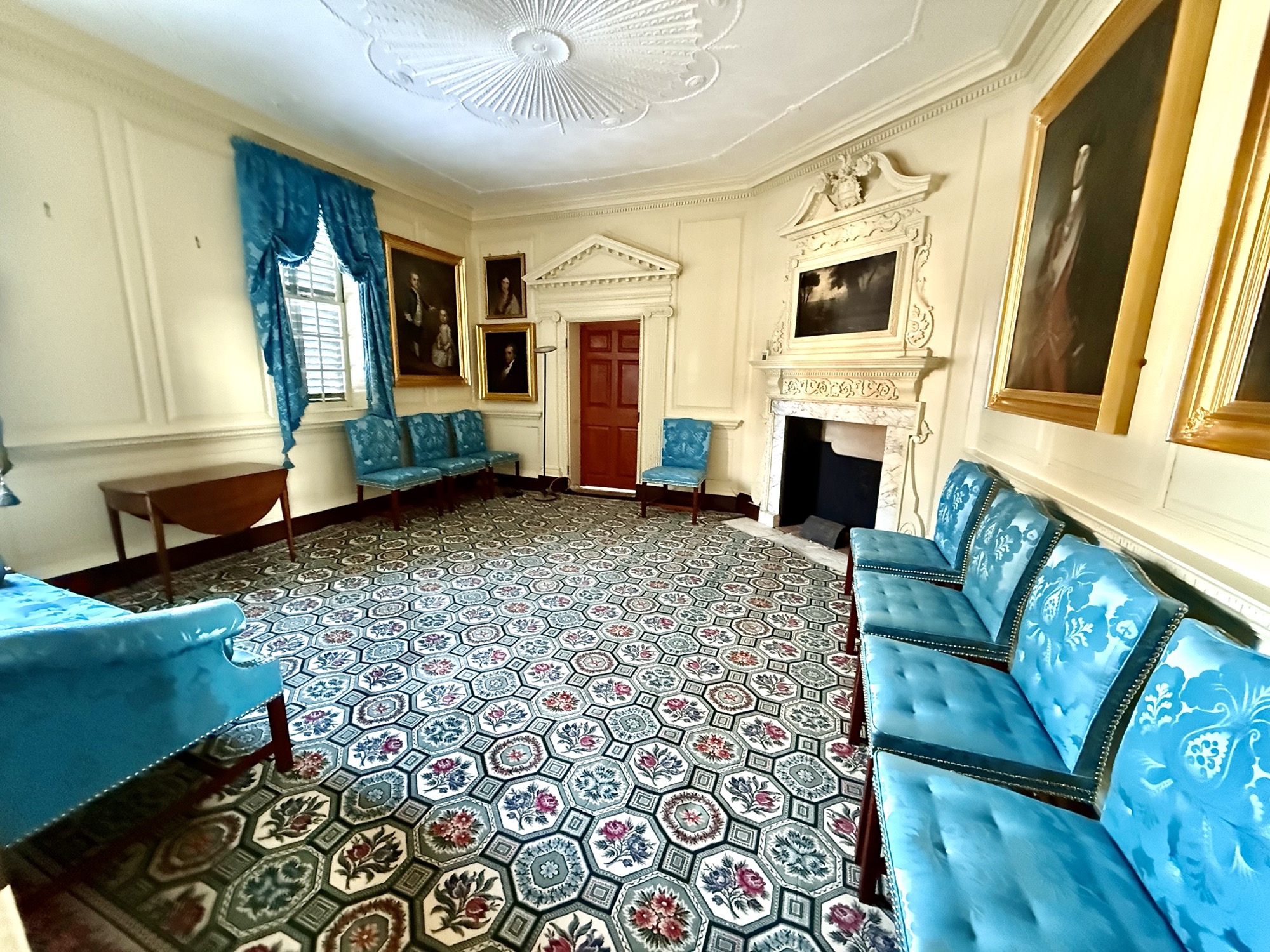
This green was the most expensive at the time. The ceiling is also one of the last remaining stucco ceilings in the US.

There is also a Piazza/deck on the outside of the building that overlooks the Potomac River where they would sit outside to enjoy the views and tea, but unfortunately it was the middle of winter and that part was under renovation at the time of our visit.

To find out more about these rooms, check out this link to their website for a breakdown of each room as well as a virtual tour: https://www.mountvernon.org/the-estate-gardens/the-mansion/the-mansion-room-by-room

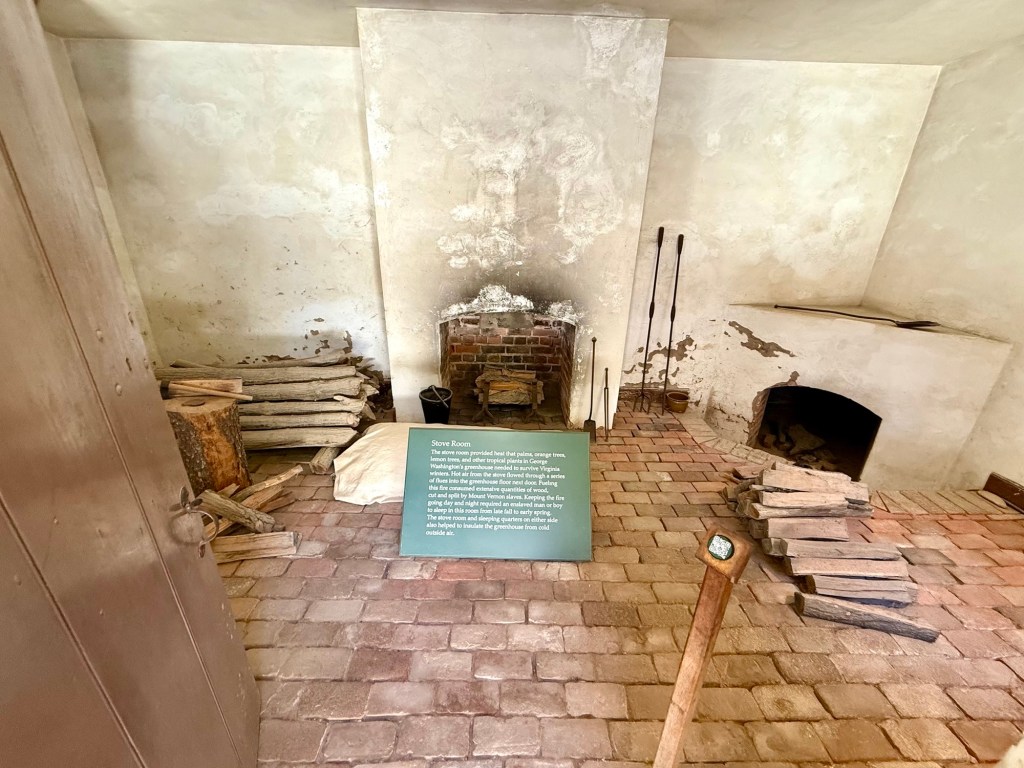
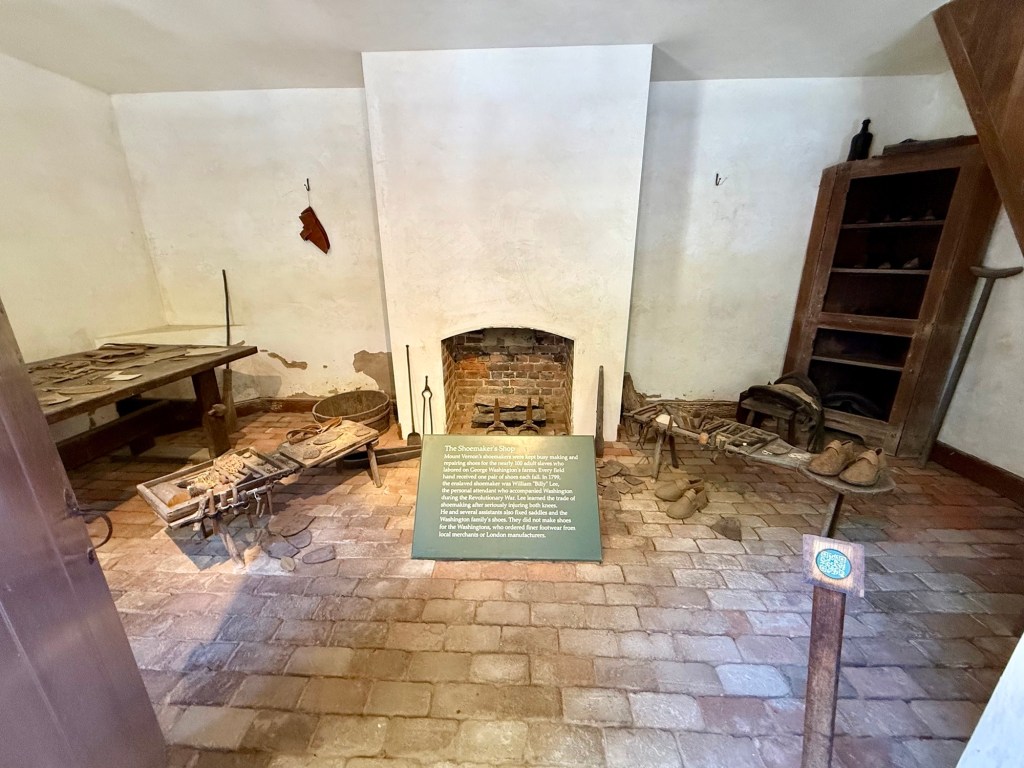
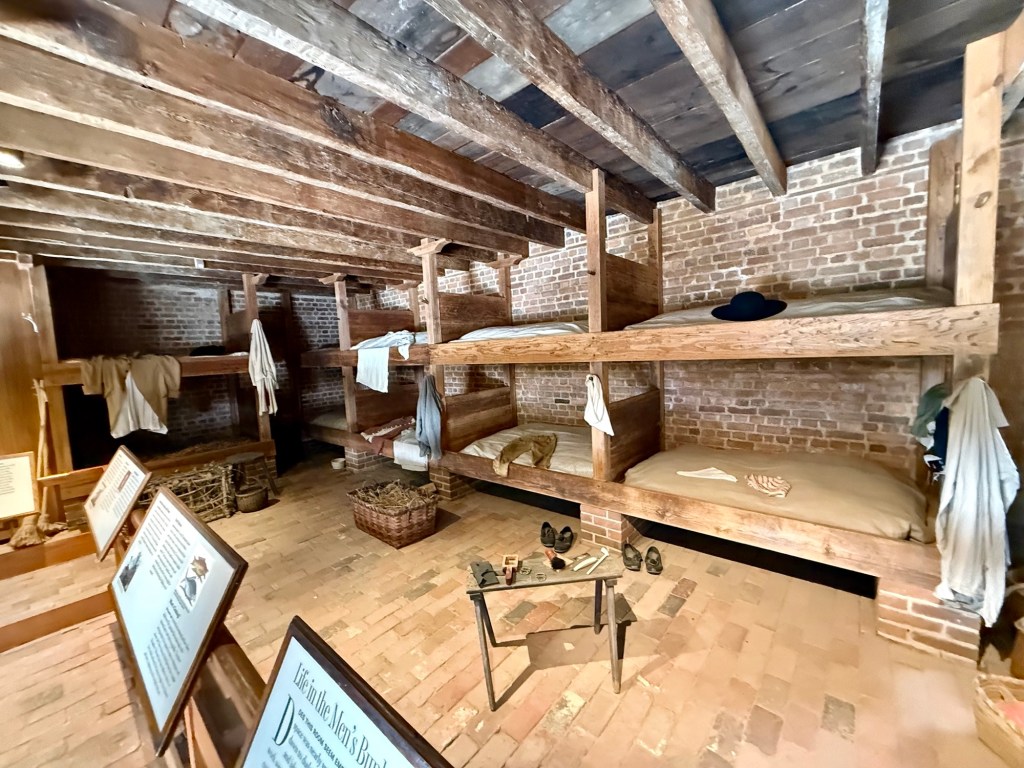
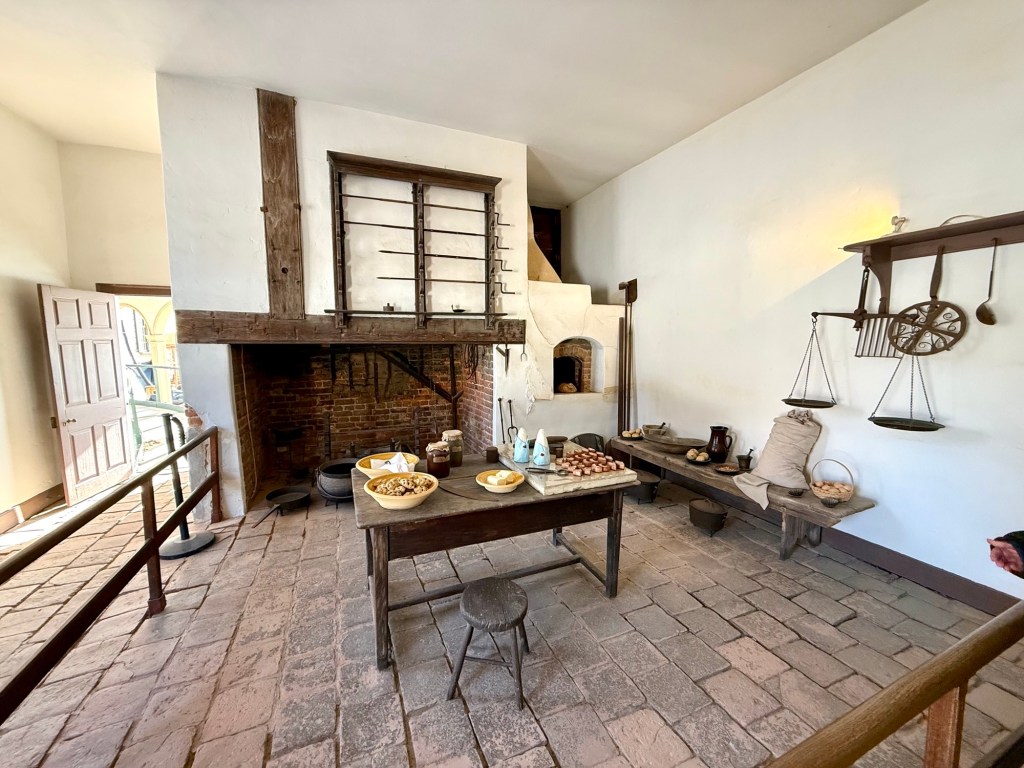
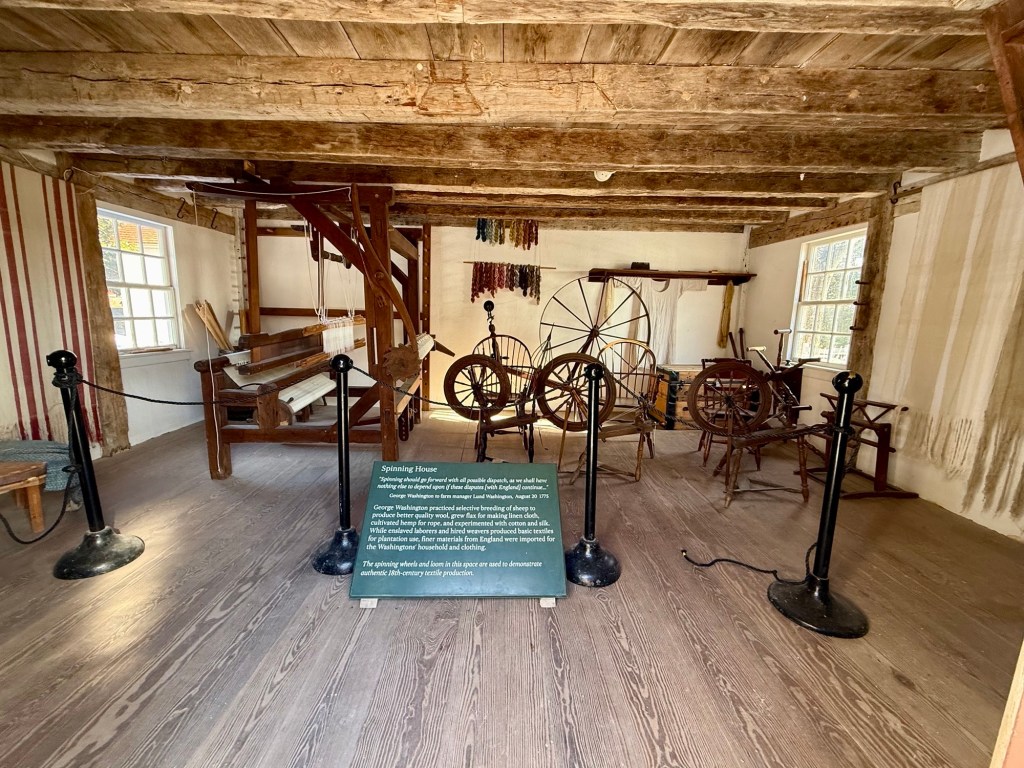
Outbuildings (greenhouse/enslaved quarters/Stove Room, shoemaker shed, blacksmith shed, spinning House)

Mount Vernon estate was massive which included surrounding farmland. They had 319 slaves in their time here with varying roles on the property. You can walk into the surrounding outbuildings around the mansion to get a glimpse of the roles the enslaved had here. There is a free tour that focuses on the lives of the enslaved people, however you need a timed ticket and spaces are limited, so I’d recommend reserving your ticket early!
Old Tomb

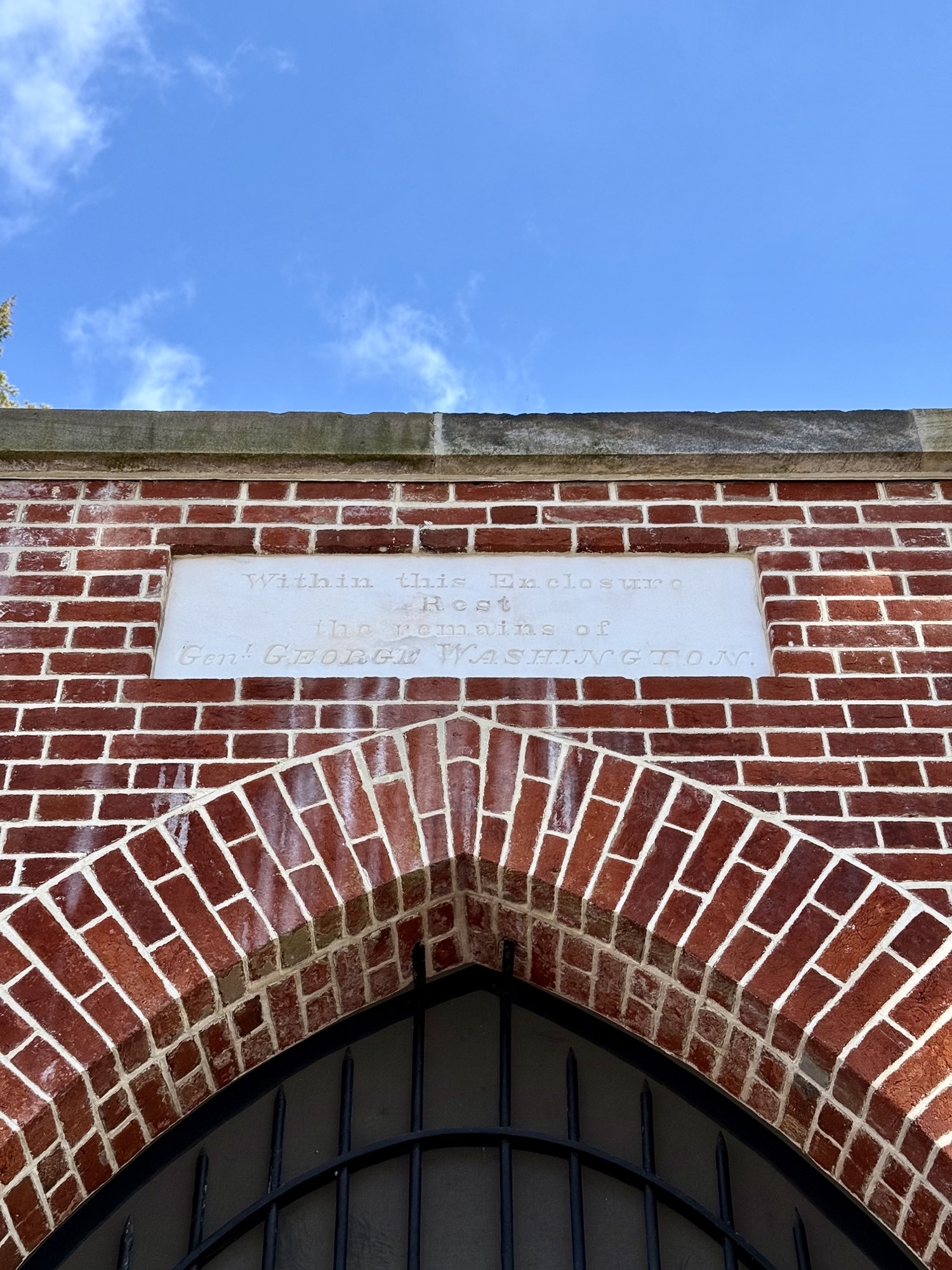
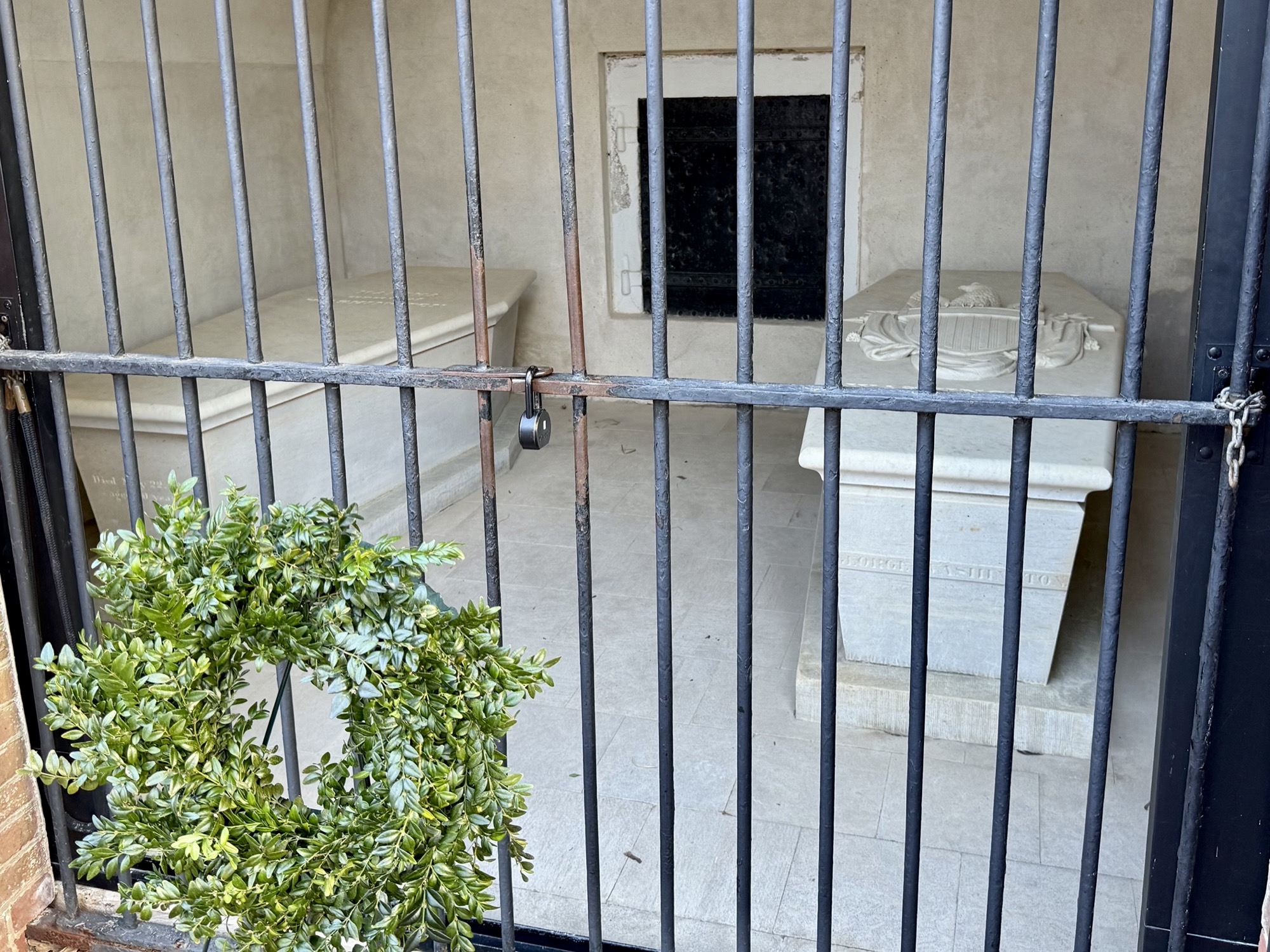
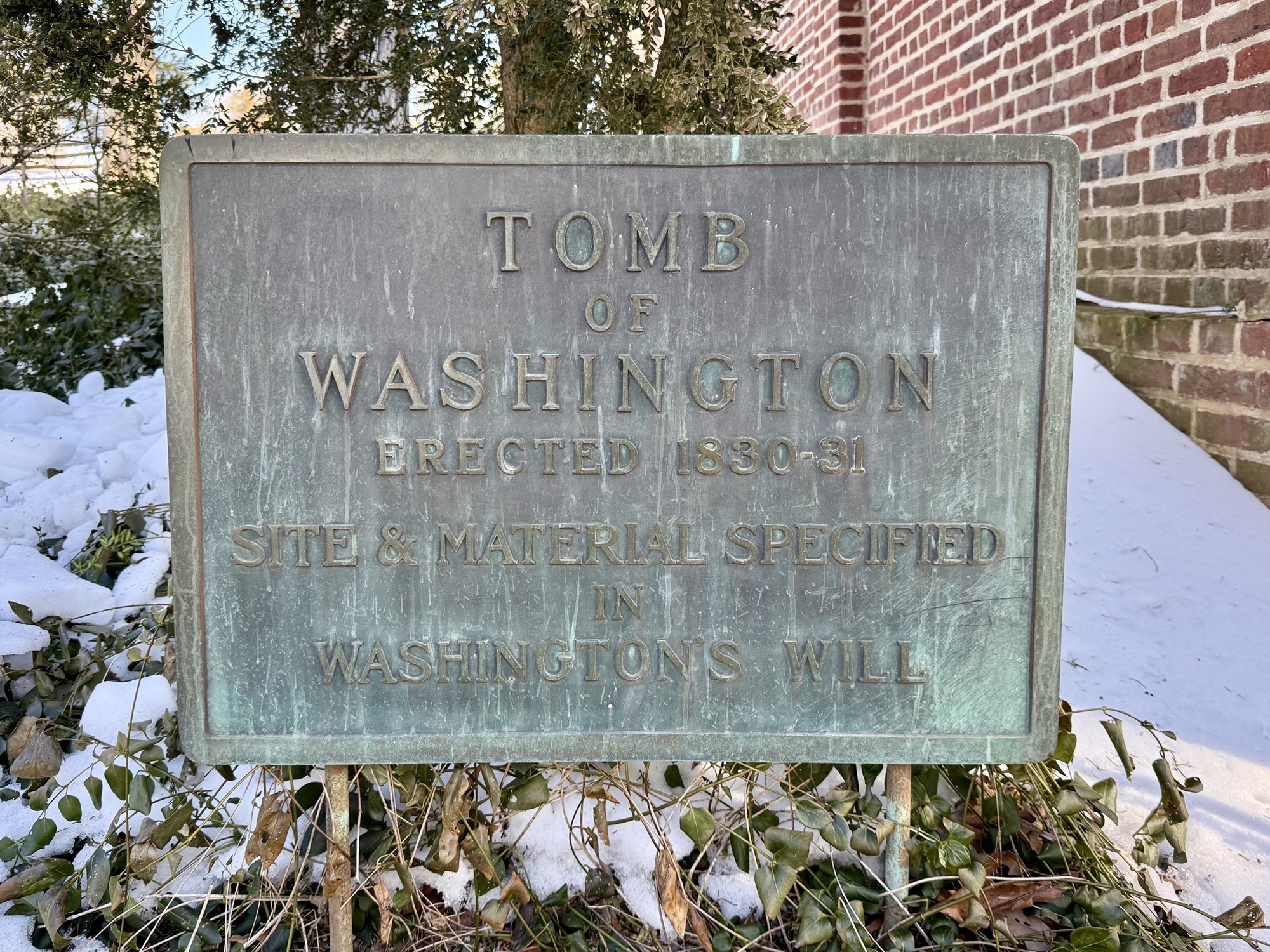
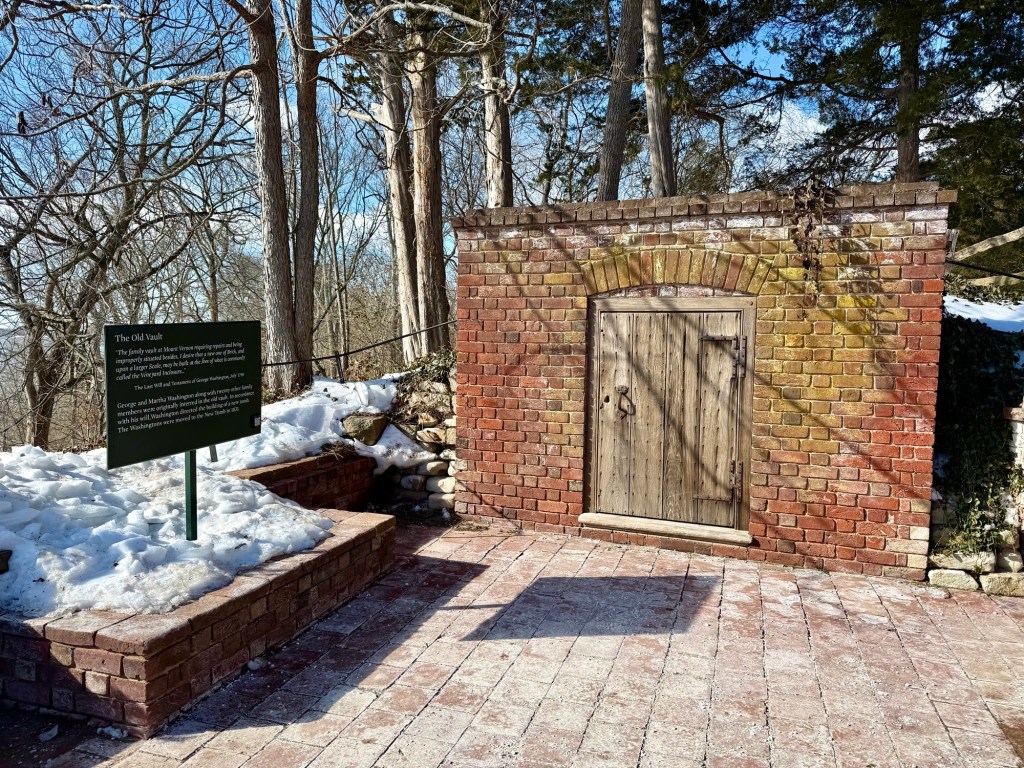
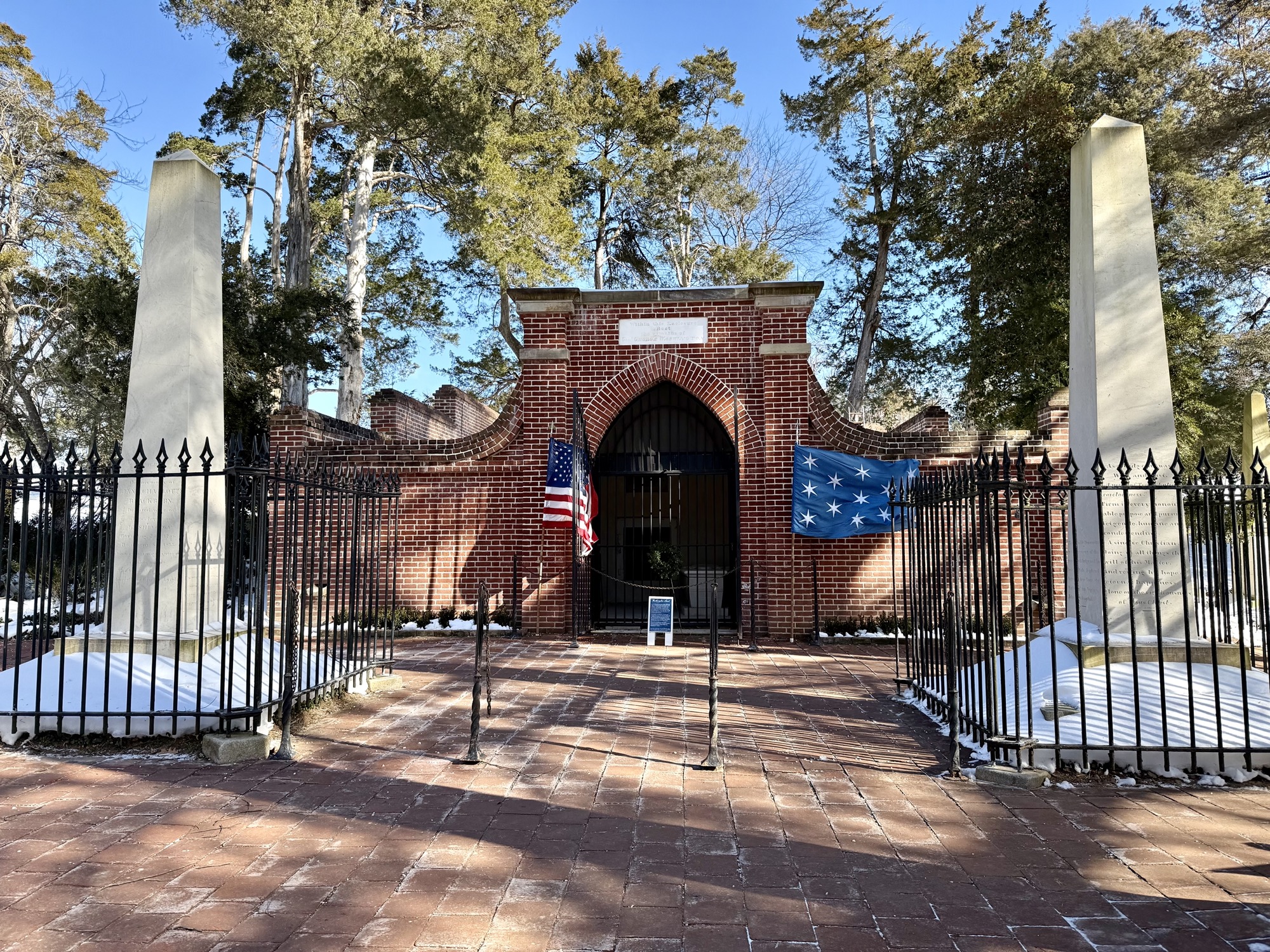
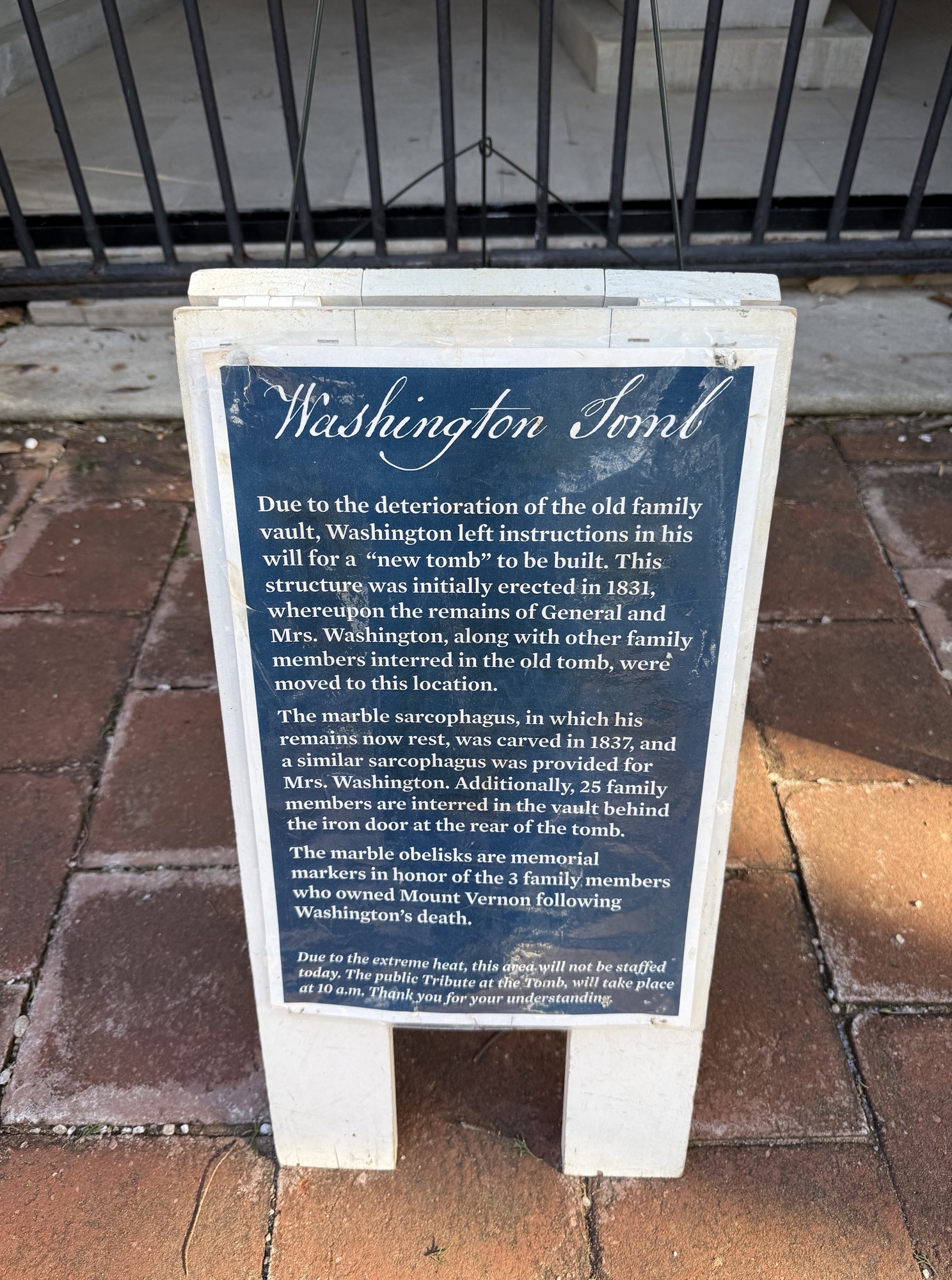
There are two tombs on the estate. The first one is the old tomb where George Washington was originally buried along with other people in his family. In his will, he stipulated building a second tomb where he wished to be buried. This new tomb wasn’t completed until after his death where he was moved later.

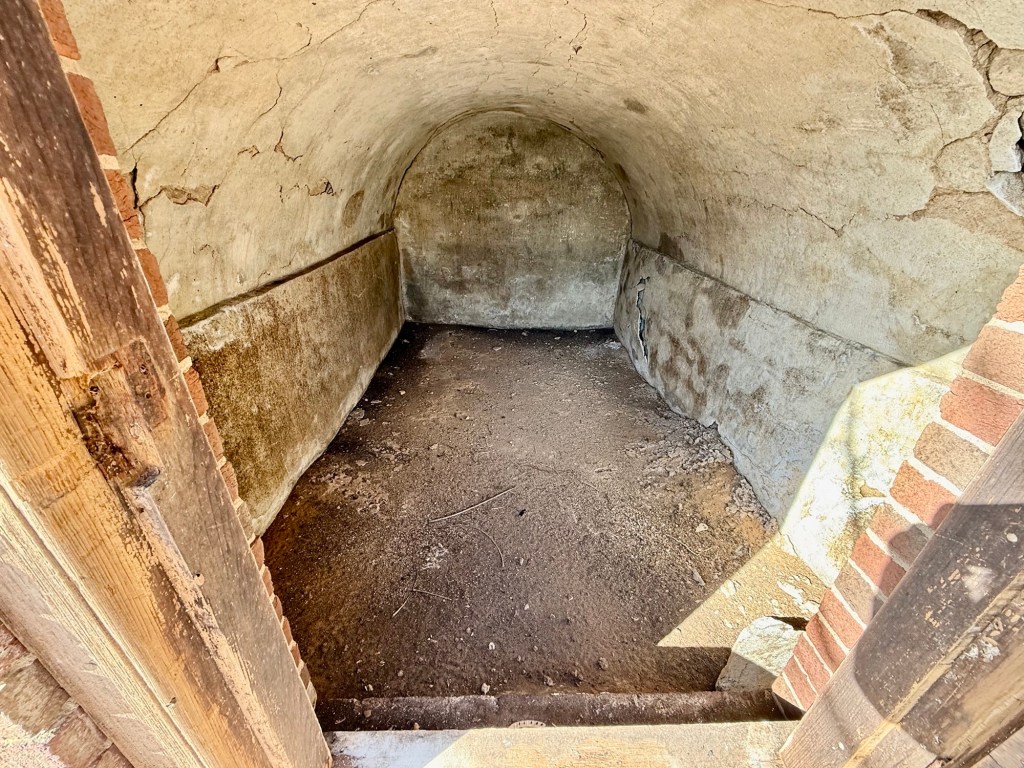
You can walk up to the old tomb, but you can’t see inside unless you’re on the In-depth Tour. I took a photo of the inside when our tour guide opened it. It is surprisingly small!
New Tomb

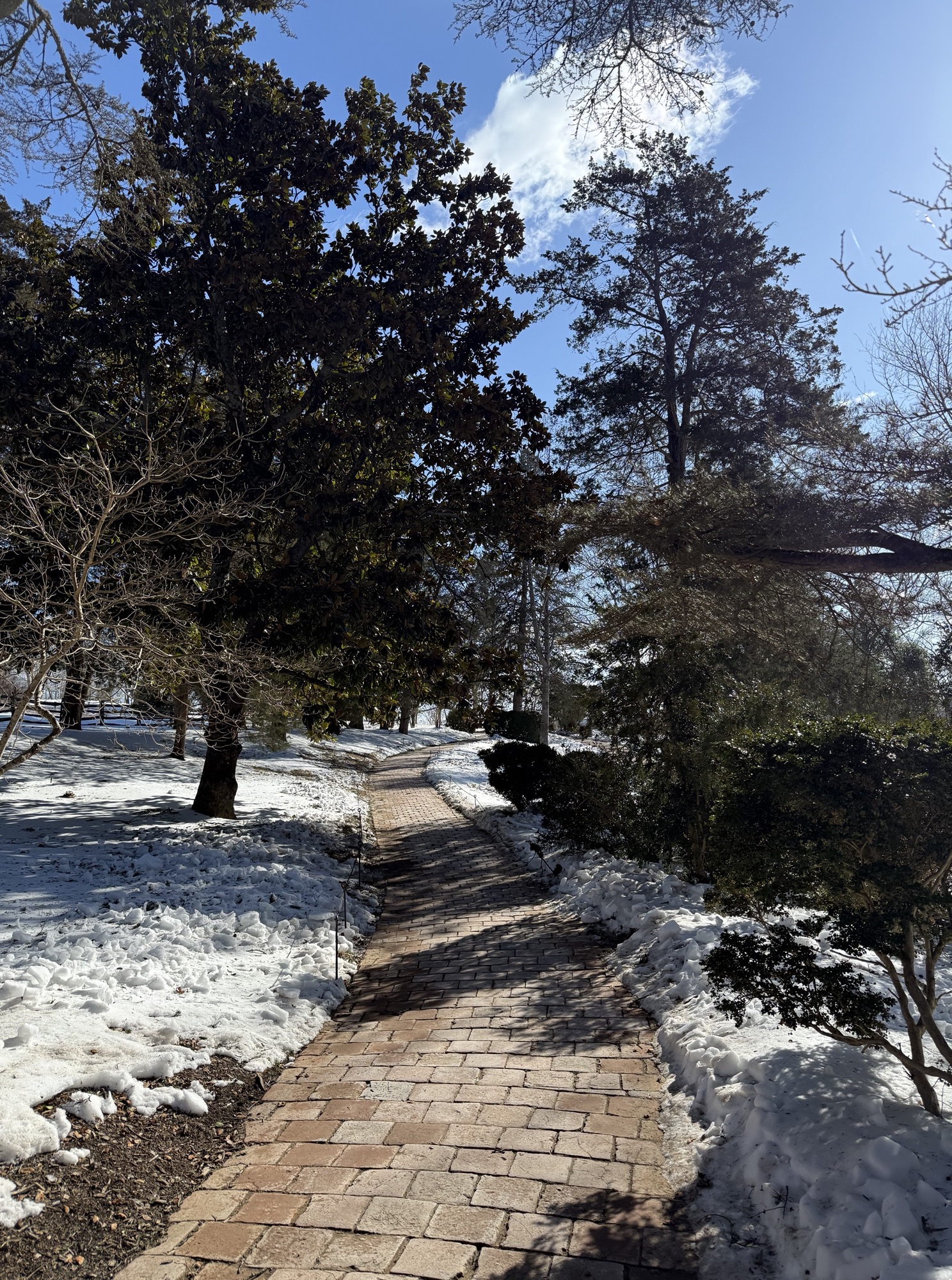
The new tomb is located a bit further away from the house. Walk through the tree-lined paths to get to the tomb.
Grounds (Trails, cemetery of the enslaved people, Farm)

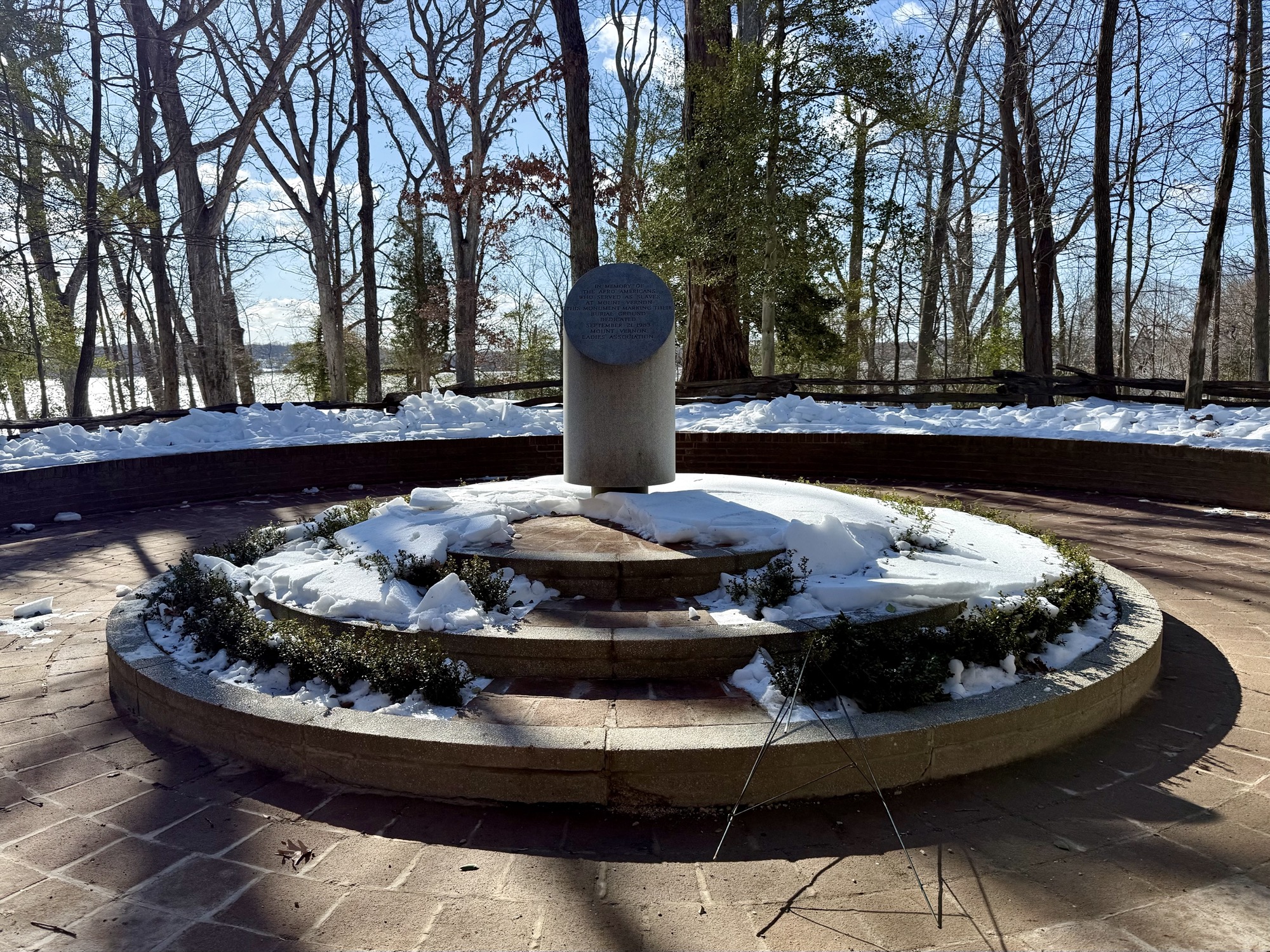
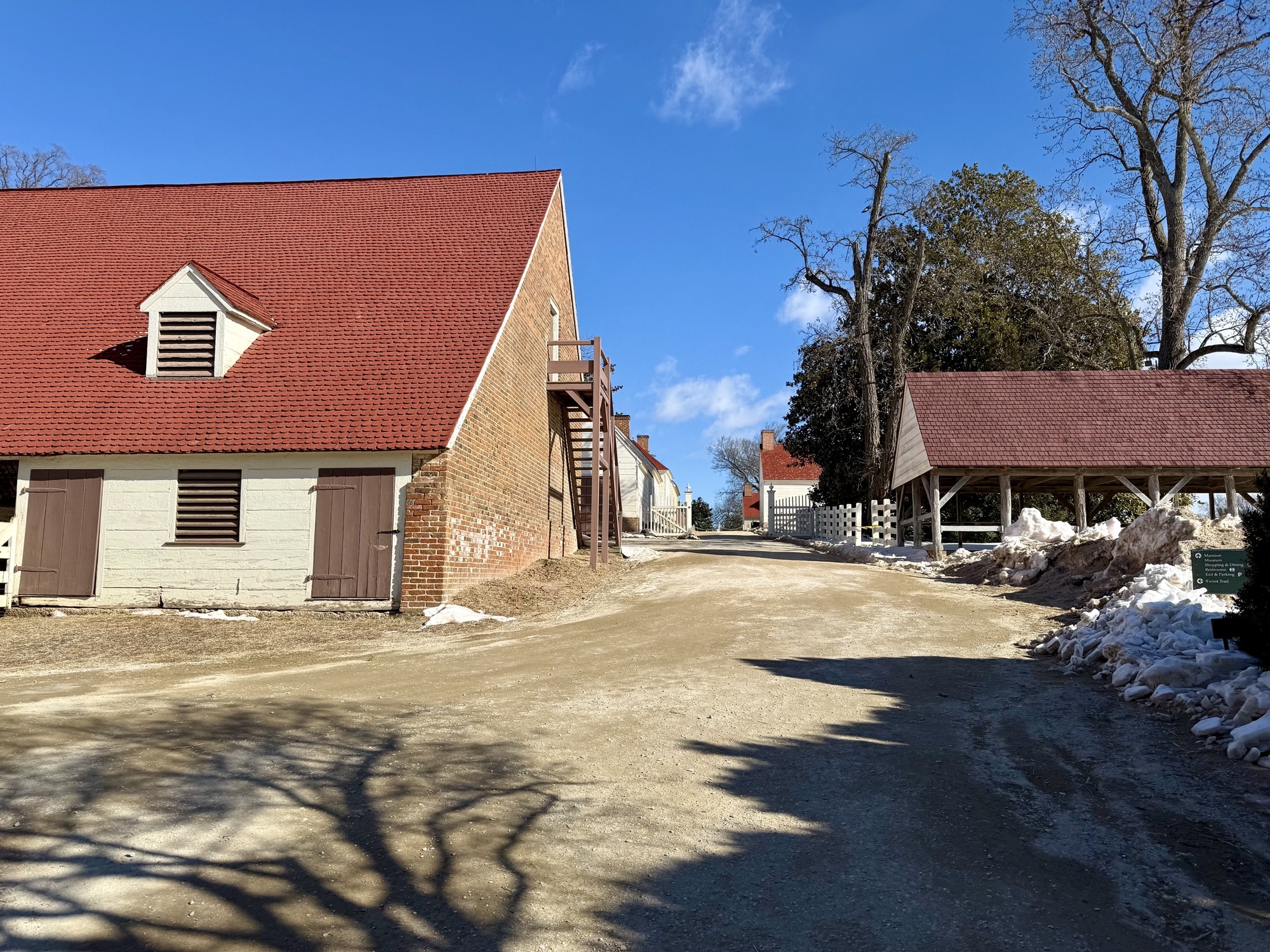
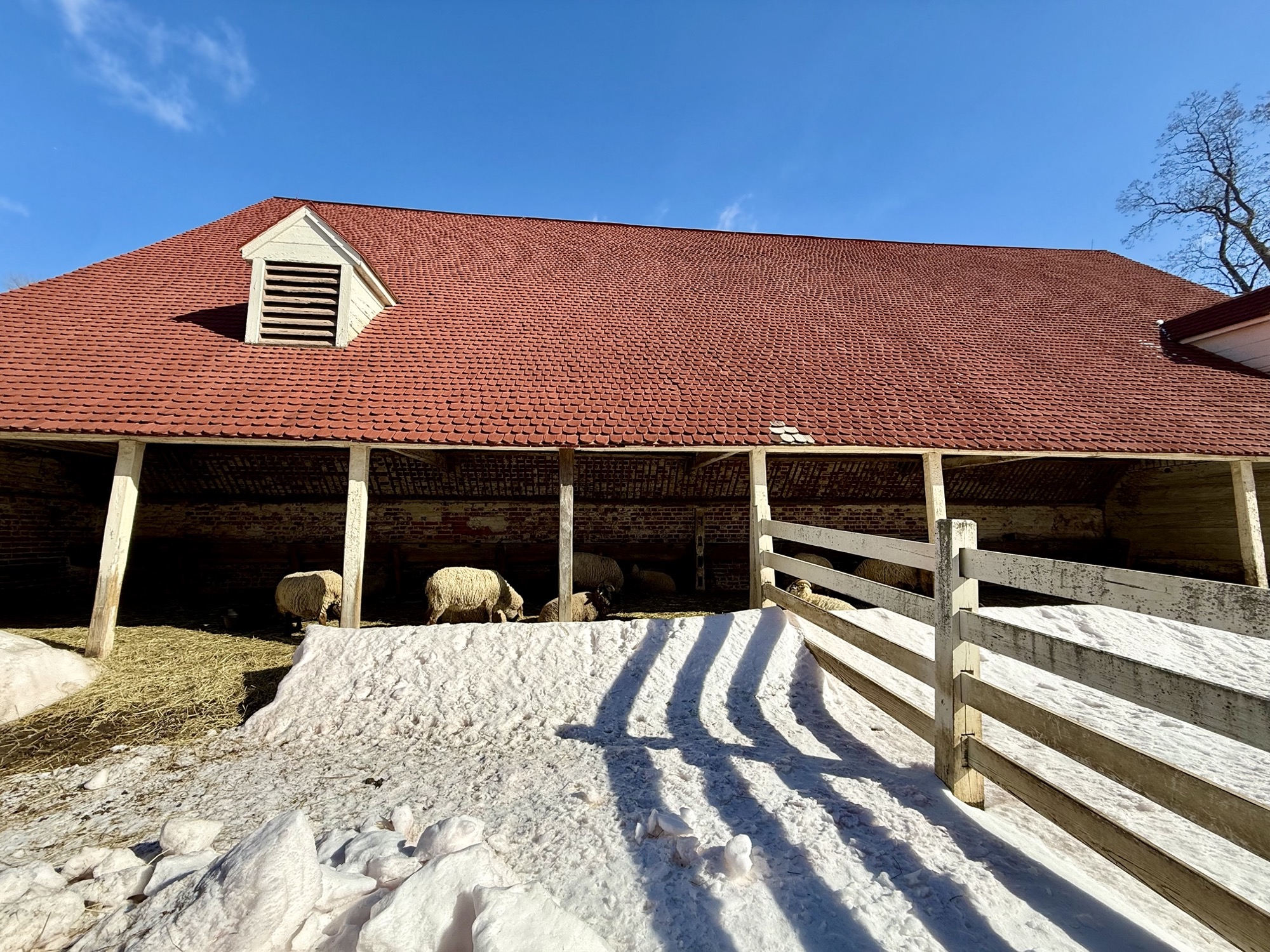
There are multiple tree-lined paths around the estate. It’s a lovely peaceful walk around. There are a couple of small buildings with barn animals around the property. There is also a cemetery of the enslaved people with a memorial statue and plaques that outline where some of the known gravesites are.
What happened to Mount Vernon after George Washington passed away?

After George passed away, the property was transferred to Martha where she lived until her death. Since they had no children together, the property was then inherited by Bushrod Washington, George’s nephew. He had no passion or skill for farming and it was also a time of Virginia’s agricultural decline. Under his ownership, the property started to fall into disrepair.

Bushrod Washington had no children, so after his death the property was inherited by his nephew, John Augustine Washington II. During his ownership, he built the new tomb as outlined in George Washington’s will. Upon his death, his widow Jane Charlotte Blackburn Washington inherited the property then subsequently leased it to her son John Augustine Washington III for five hundred dollars per year in 1841.

Unfortunately by the 1850s, John Augustine Washington III (George’s great-grand nephew) was struggling to make Mount Vernon profitable due to soil exhaustion and poor harvests of the farms. The once vast 8000 acre farm was now down to 1200 acres and was still insufficient to sustain the family’s needs and maintain upkeep of the estate. John tried to bring in money by opening the property to tourists, however this only led to increase deterioration to the property and damage from souvenir-hunters wanting a piece of this historical property. He unsuccessfully attempted to sell the property to the state of Virginia and the federal government. In 1858, the Mount Vernon Ladies’ Association purchased the property and became the last owner.

For more information on the owners and ownership timeline, check out their website here: https://www.mountvernon.org/the-estate-gardens/the-mansion/owners-of-mount-vernon

Some Final Thoughts

  • Allow yourself enough time to get through everything.
  • It gets very busy during the summer months, so book tickets and timed tours ahead of time before they sell out.
  • Seriously, watch Hamilton the musical if you haven’t already. It’s only a 5 hour drive to Times Square (or stream it, but it will be less exhilarating).

That’s a wrap! If you’ve visited Mount Vernon and think I’ve missed something or have any information to share, I’d love to hear about it in the comments!

Looking for more George Washington history? Check out the town of Alexandria, only a 30 minute drive south from Mount Vernon!
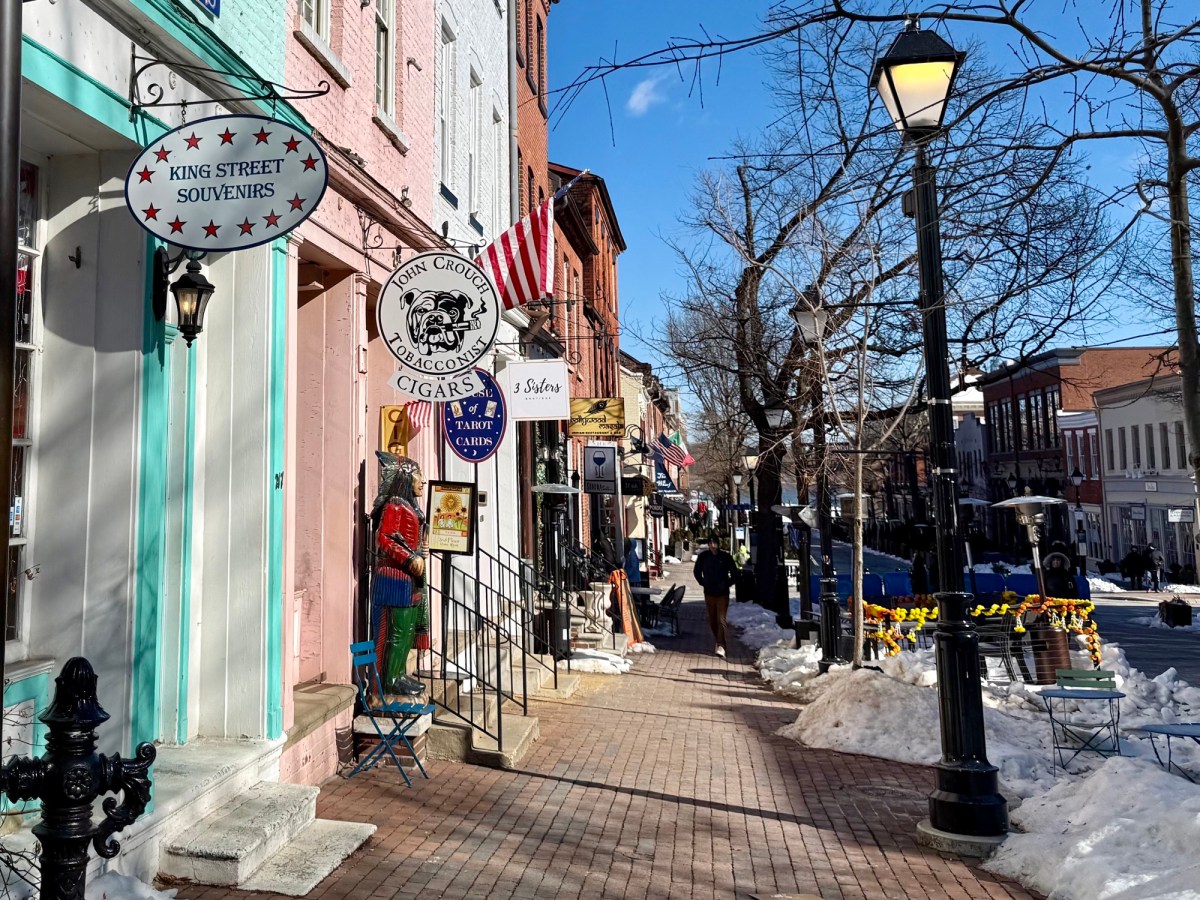
Your Ultimate Day Trip to Alexandria, Virginia: What to See and Do


Alexandria, Virginia, founded in the mid-1700s as a tobacco trading post, is rich in history, notably as George Washington’s hometown. Key attractions include Old Town’s preserved streets, the Torpedo Factory Arts Center, and the George Washington Masonic National Memorial. Follow this guide for a one-day itinerary that covers all the highlights!
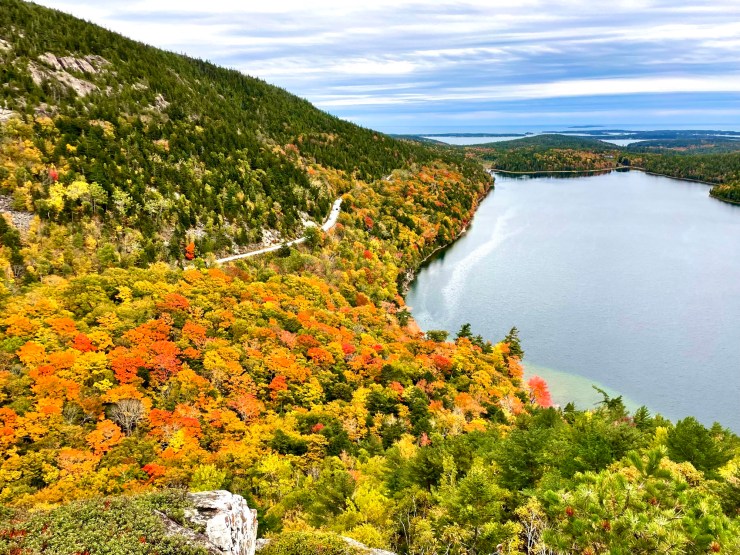
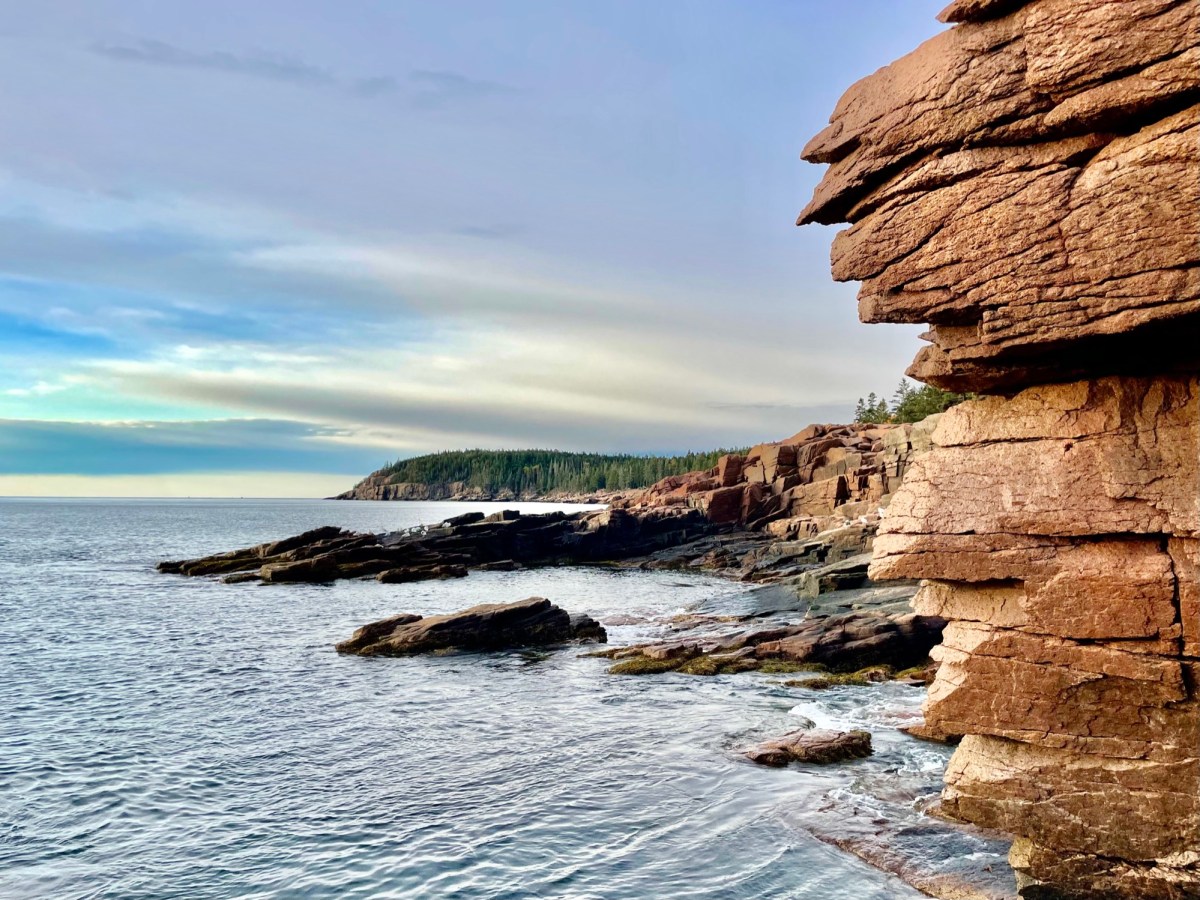
Explore Acadia’s Jordan Pond: Most Popular Trails & Jordan Pond House Restaurant


Date Published: Nov 12th, 2024 | Last Updated: Nov 12th, 2024
Author: Abby | Category: Travel, USA
Date of travel: October 13th, 2024

If you haven’t checked it out yet, here’s a post of an overview of Acadia National Park if you need more info about where to stay, where to eat, getting around, and other travel recommendations.

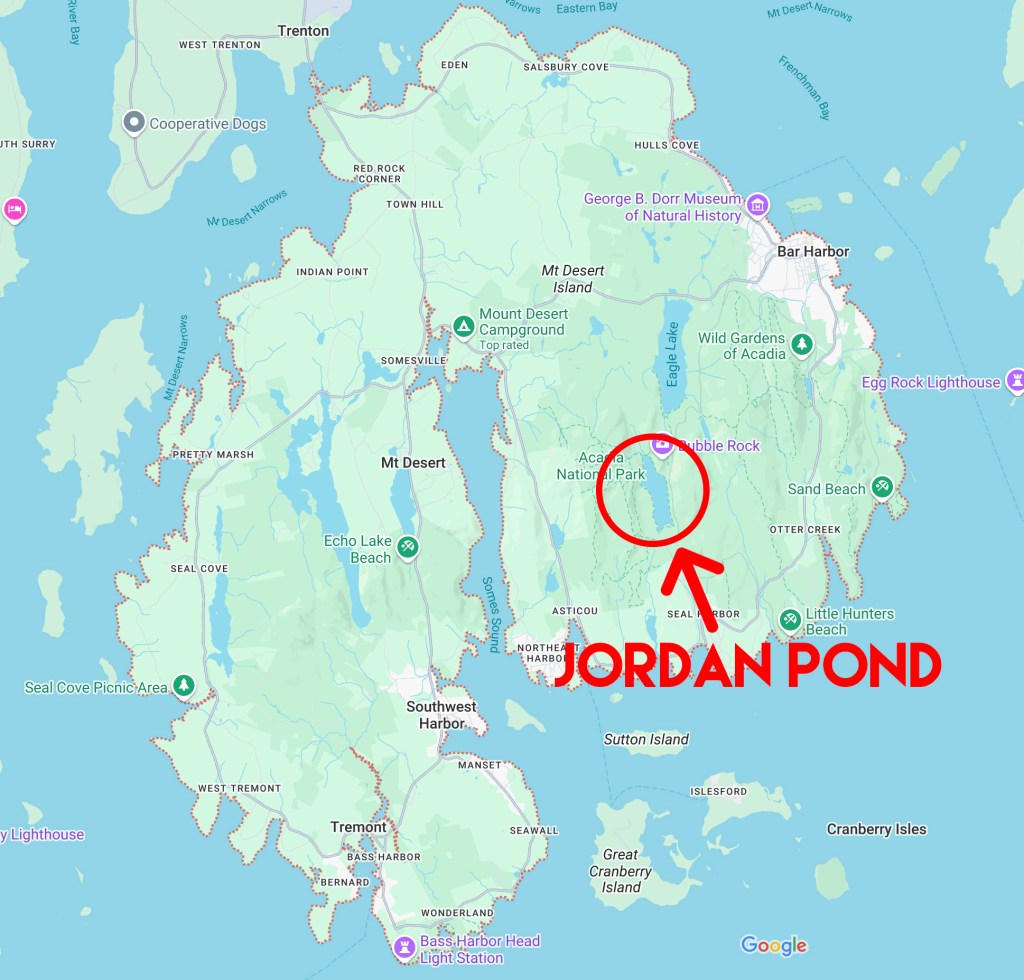
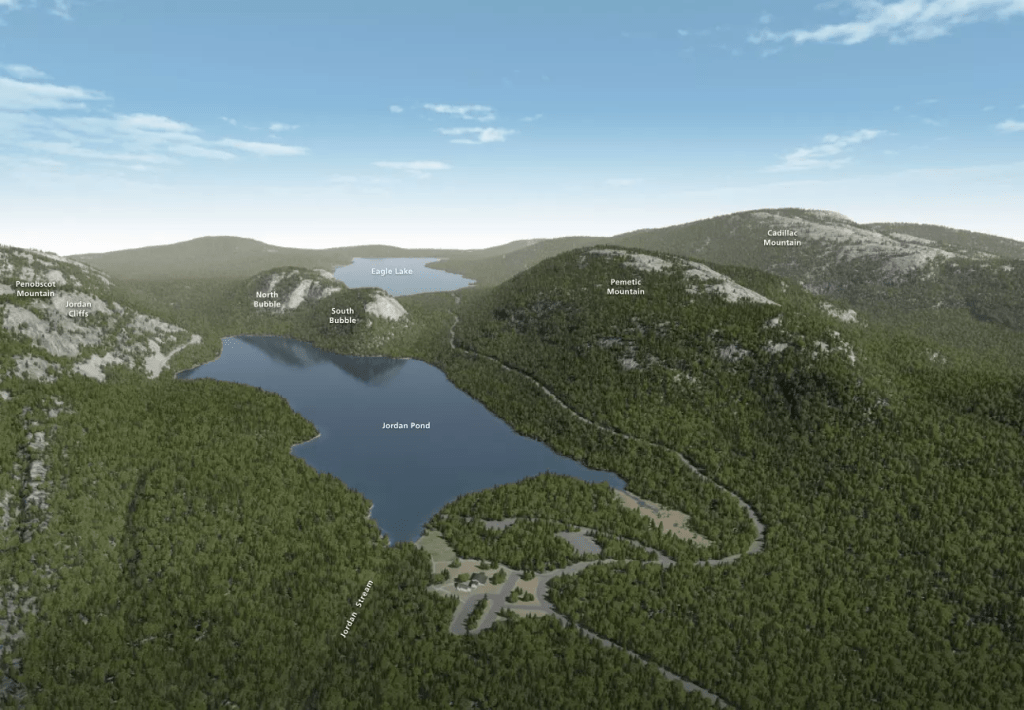
Besides climbing the Beehive Trail, Jordan Pond is one of the most popular places to visit in Acadia National Park due to its numerous trails, beautiful views, and the ever so popular ‘pop overs’ served at the Jordan Pond House Restaurant. Jordan Pond is situated in the centre of Mount Desert Island in Acadia National Park (see map below for reference).

It gets extremely busy here, so I’d recommend coming here super early to get a good parking spot near Jordan Pond House Restaurant, spend your morning hiking (keep scrolling for a list of suggested hikes), then finish your hike at Jordan Pond House Restaurant for some lunch (make sure you have a reservation, or arrive before they open – see more tips below).

Note: The cellphone service here is very spotty and limited. There is free wifi at Jordan Pond House if you need to last minute download maps or send a message before embarking on hikes in this area.

Map of Acadia’s Mount Desert Island and location of Jordan Pond

Where to Start?

Start at Jordan Pond House Restaurant (2928 Park Loop Rd, Seal Harbor, ME 04675). This is one of the very few restaurants in Mount Desert Island (apart from Bar Harbor) and is also the start to many trails. There is very limited parking here and once lots are full, park rangers will block it off so you can’t just sit and circle waiting for a spot to open up. Most people park along side Park Loop Road once the parking lots fill up.

If you don’t get here early enough, try to find parking at a lot farther away and take the free Island Explorer Bus to Jordan Pond House (runs every 30 minutes). We didn’t realize we could’ve taken the free bus and ended up walking an extra 30mins to our car after our 4 hour hike 😭 – learn from our mistake!

Hiking the Jordan Pond Trails

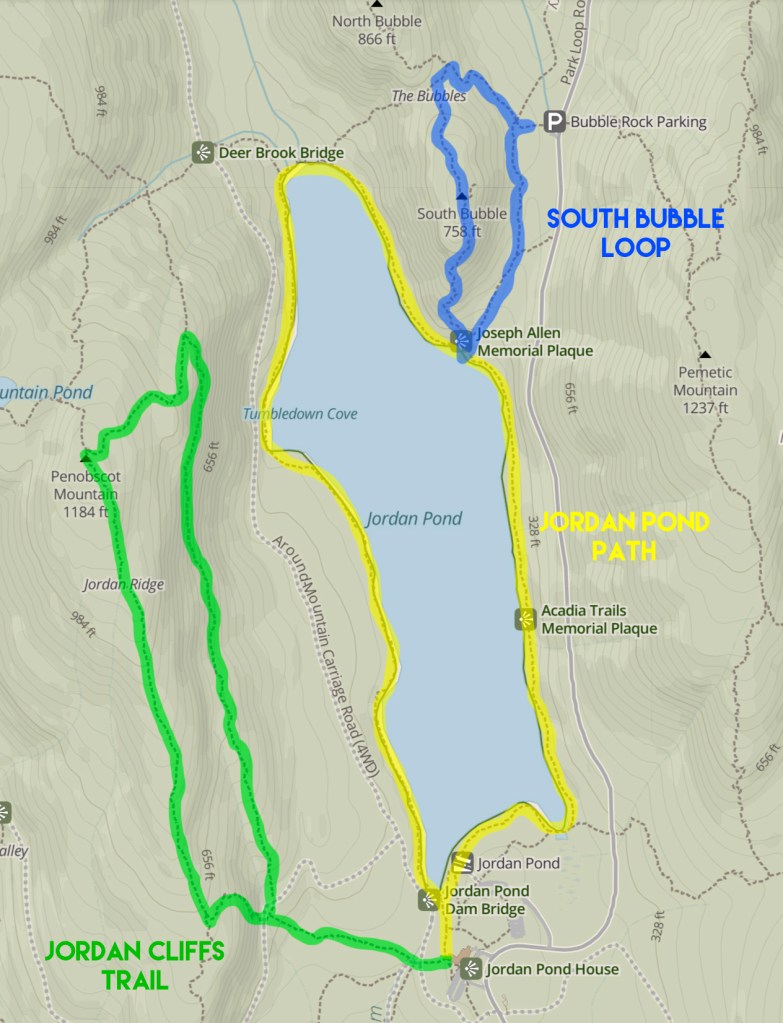
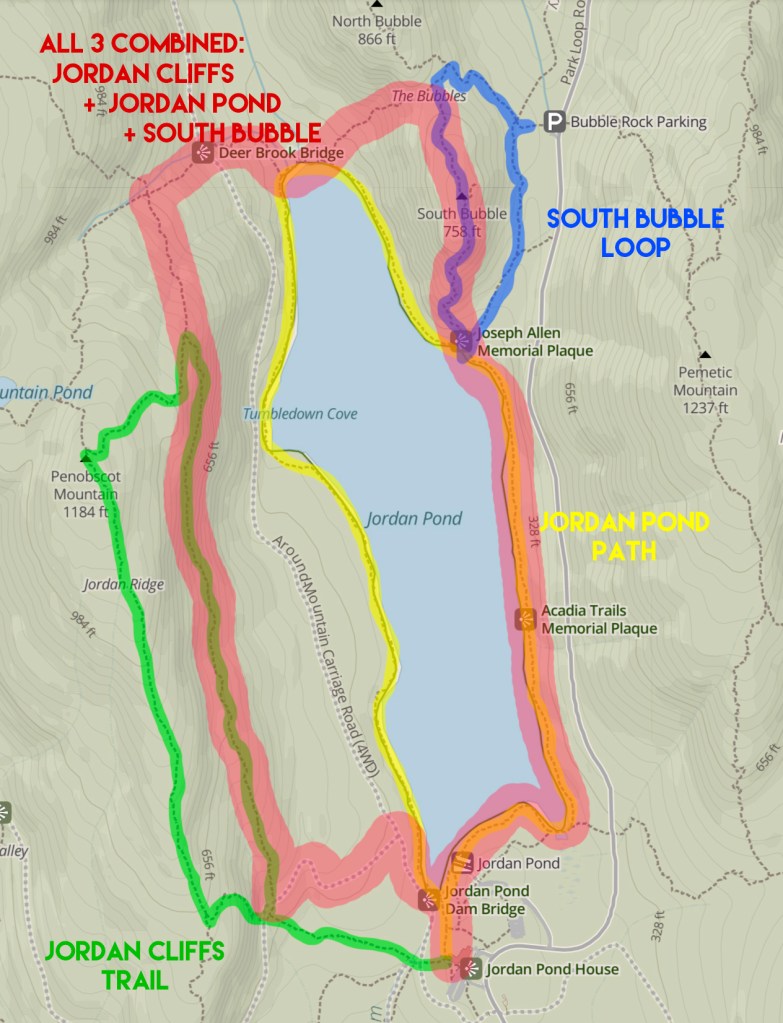
There are numerous trails you can hike around the Jordan Pond, and many of them conveniently start at Jordan Pond House Restaurant. I’ve highlighted the 3 most popular hikes in the map below (Jordan Pond Path, Jordan Cliffs Trail, and Bubbles Trail), but you can also combine all 3 hikes to get the best of all of them (highlighted further down in red) – which is what we did!

(South Bubble Loop doesn’t technically start at Jordan Pond, but many people will start at the restaurant and walk the Jordan Path then join up with the Bubbles Trail to go up the South Bubble).

Here’s a topographical map of the Jordan Pond area for reference:

Map from Acadia National Park: https://www.nps.gov/acad/planyourvisit/maps.htm

Jordan Pond Path (yellow)

Distance: 5.3km
Elevation: 19m
Difficulty: Easy
Estimated time: 1 hour
More info: https://www.alltrails.com/trail/us/maine/jordan-pond-path

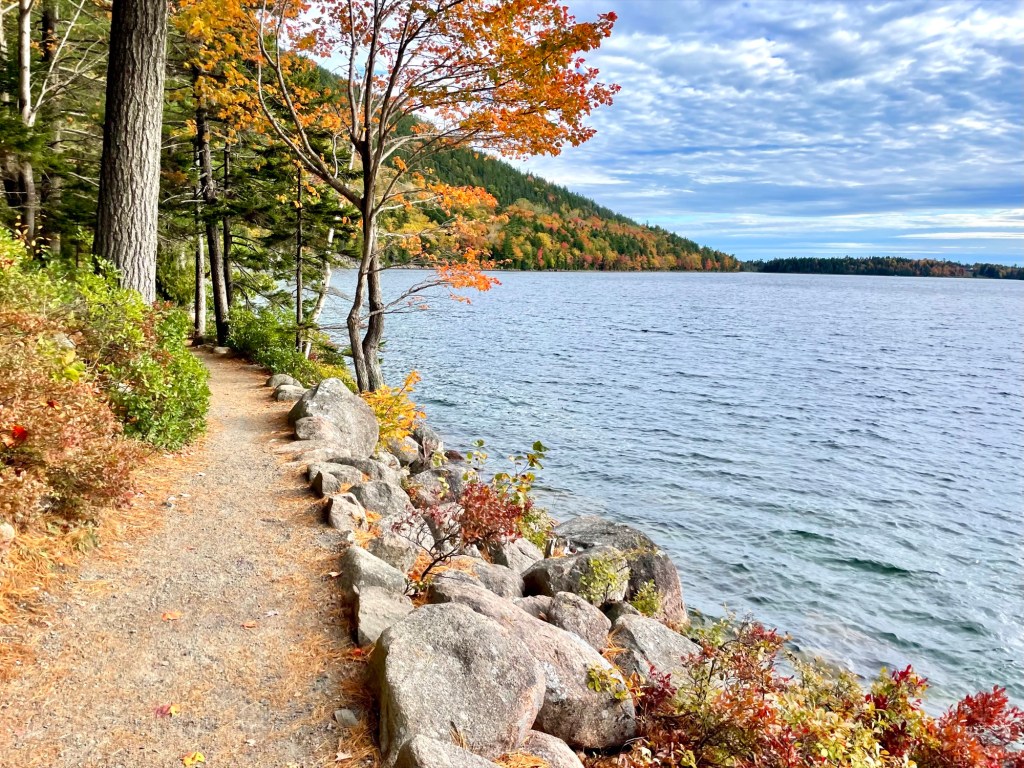
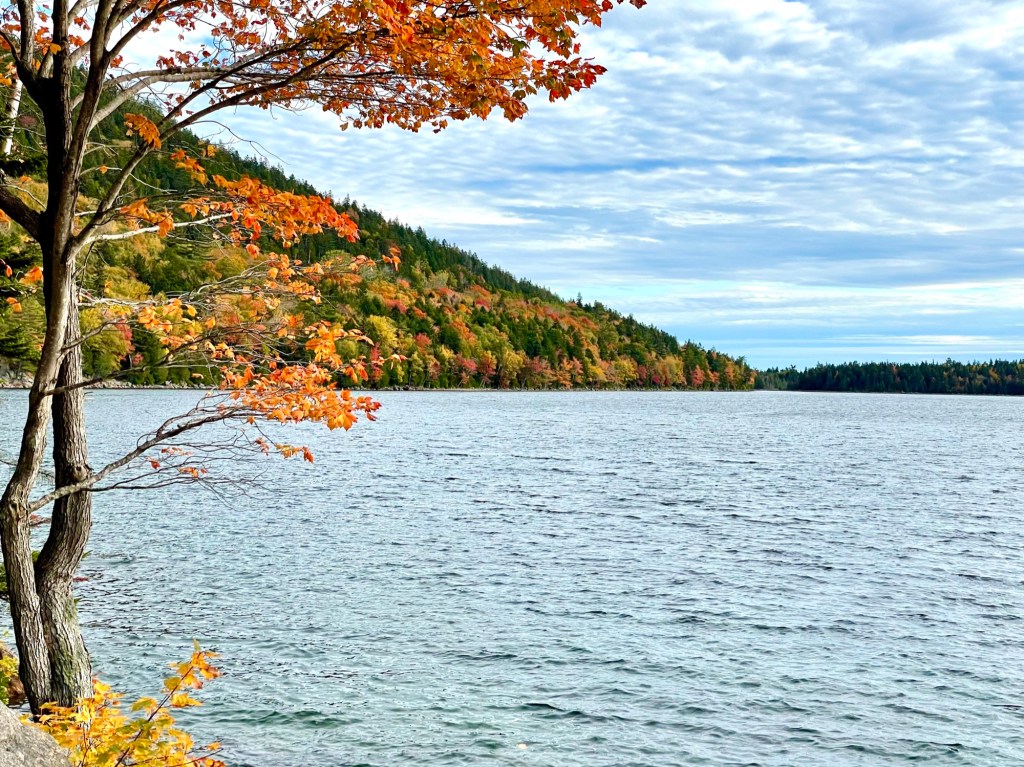
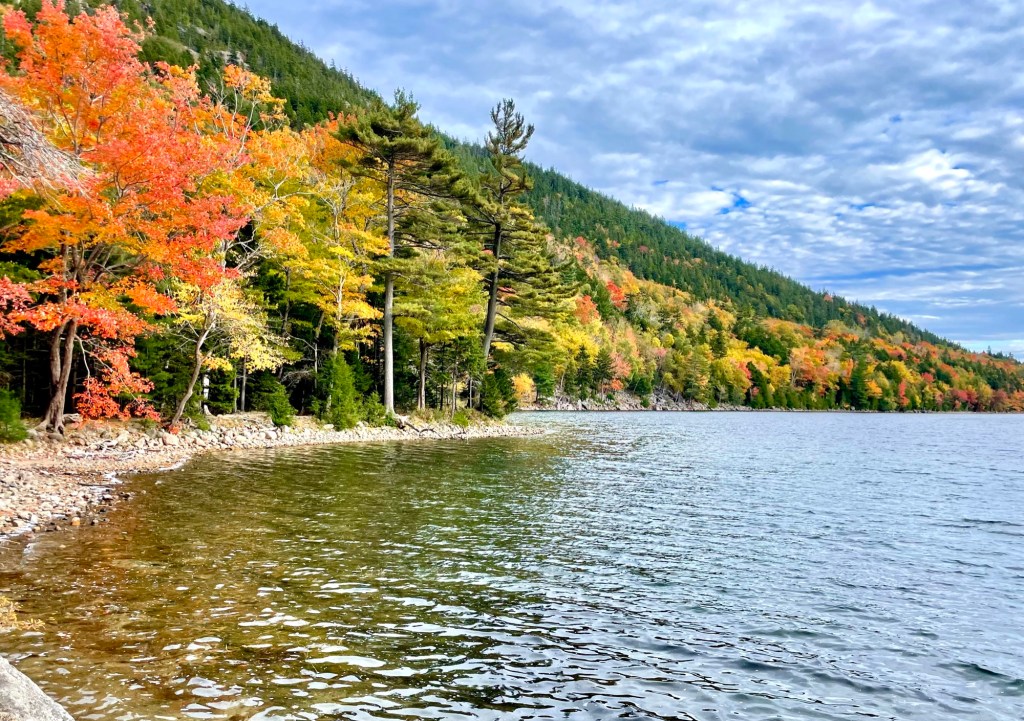
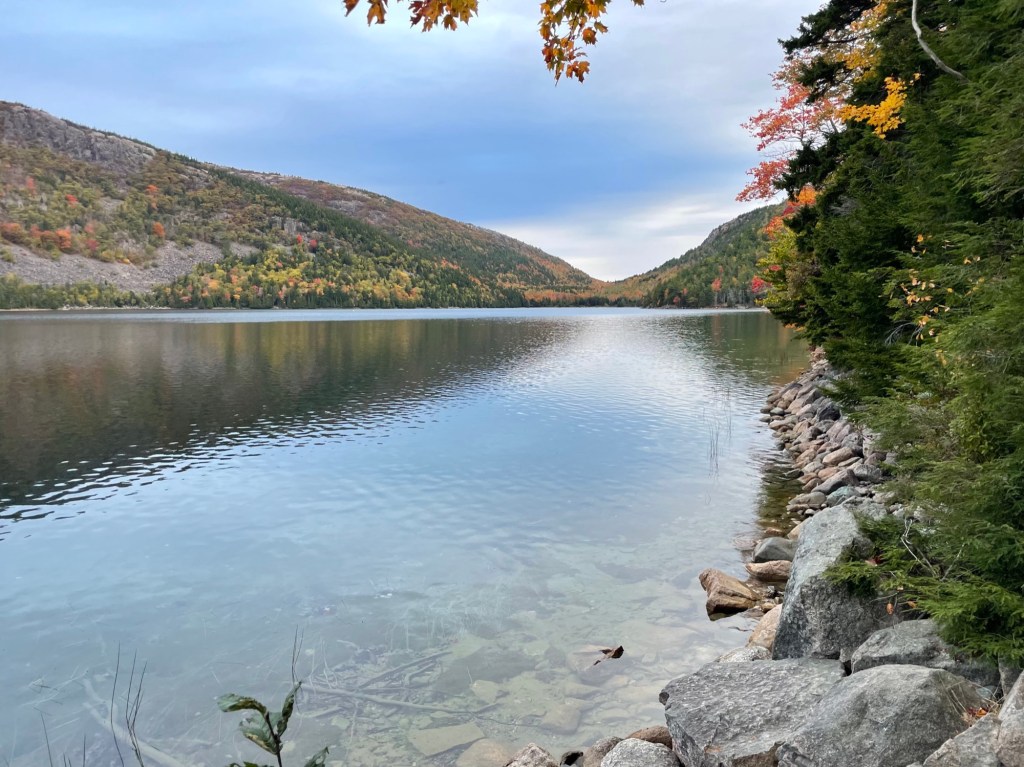
This easy around-the-pond path is one of the most popular hikes in the Jordan Pond area. It takes roughly 1 hour to complete and the path is relatively flat and easy to walk on. You start at the Jordan Pond House Restaurant with iconic views of the Bubbles, then follow the trail around the water the entire way.

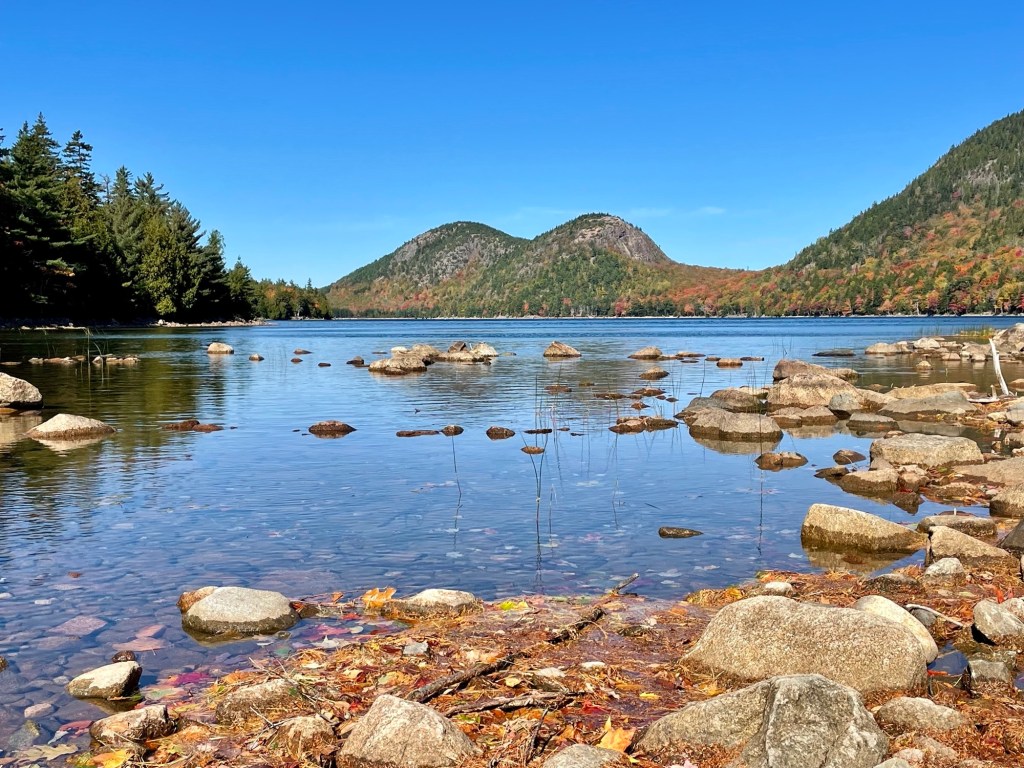
Jordan Pond Path

Jordan Cliffs Trail (green)

Distance: 4.8km
Elevation: 316m
Difficulty: Hard
More info: https://www.alltrails.com/explore/trail/us/maine/jordan-cliffs-trail-to-penobscot-mountain

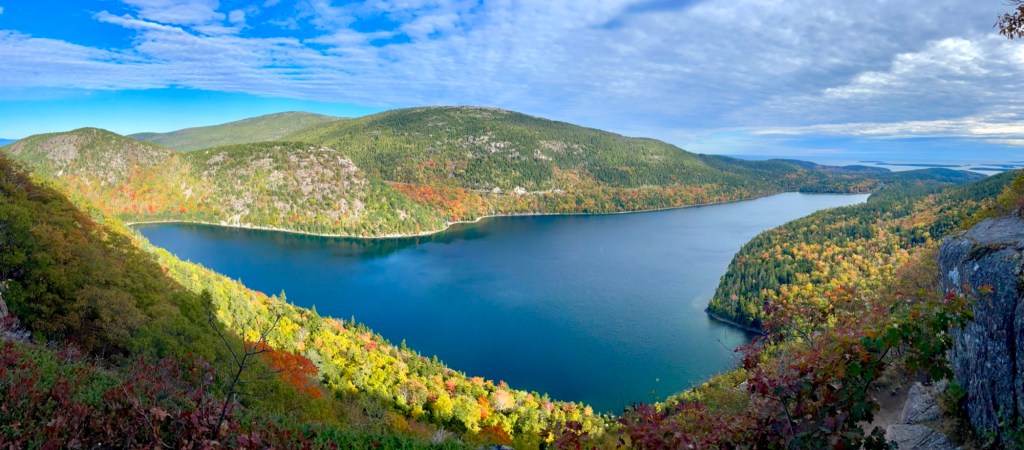
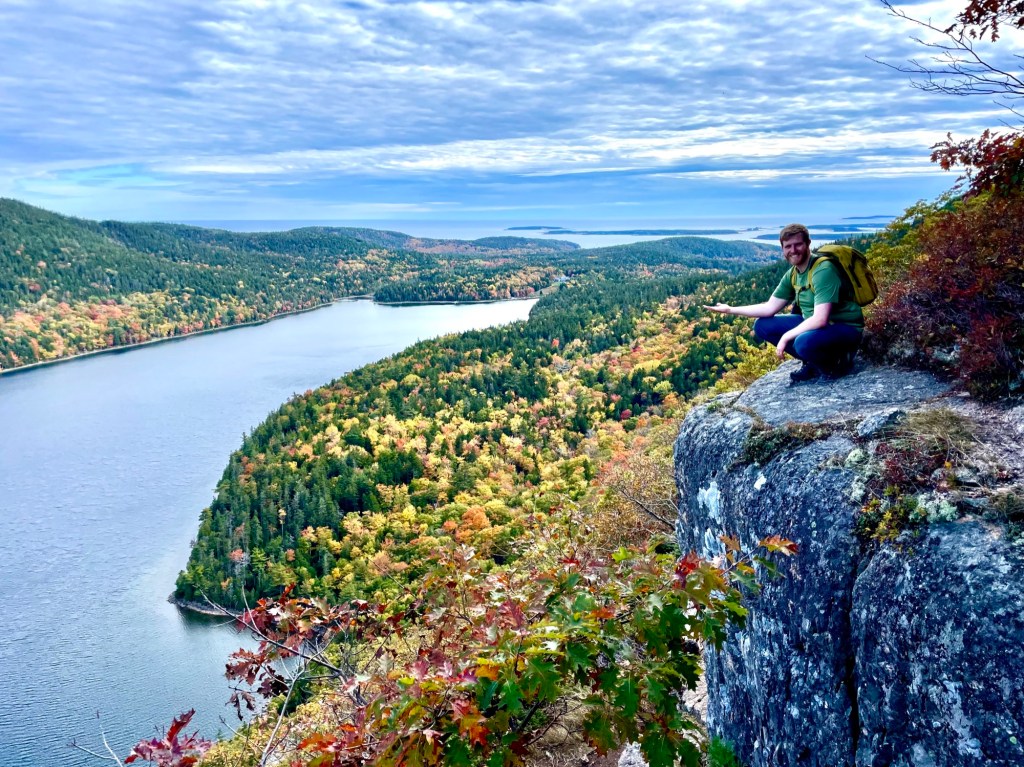
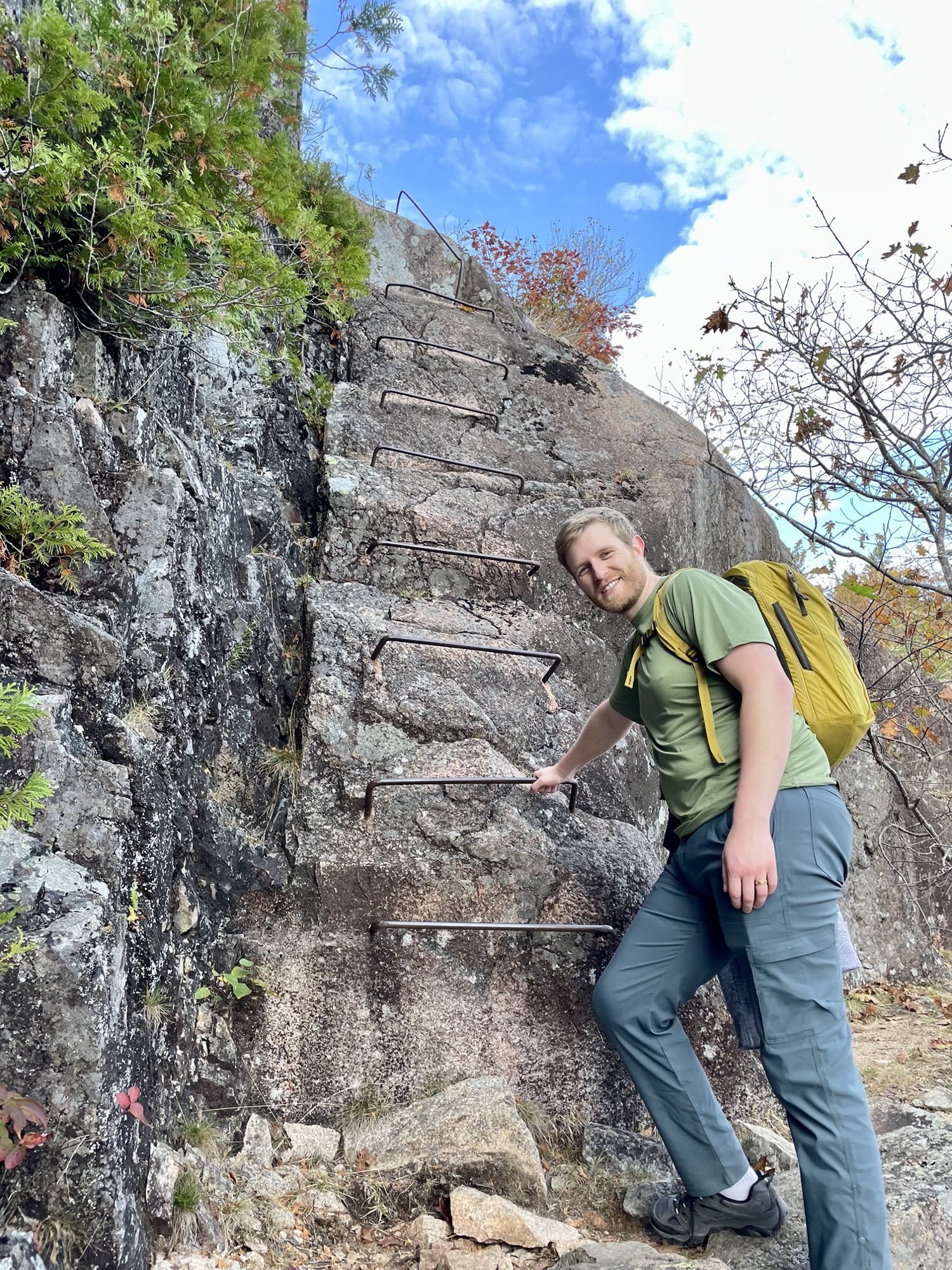
This is an exhilarating loop trail that takes you via the exposed cliffs along Jordan Pond for gorgeous views. It starts off at Jordan Pond House then through Amphitheatre Road where it joins the Jordan Cliffs Trail. Continue on the Jordan Cliffs Trail for the views, then turn left onto the Penobscot Trail to the Penobscot Mountain Summit, then back via the Penosbscot Mountain Trail to Jordan Pond House. This is considered a very difficult hike with rock scrambling and iron rungs. You can then loop back via the summit of Penobscot Mountain and the Penobscot Mountain Trail.

Jordan Cliffs Trail

South Bubble Loop/Bubble Trail (blue)

Distance: 2.3km
Elevation: 150m
Difficulty: Moderate, steep
More info: https://www.alltrails.com/trail/us/maine/south-bubble-mountain-and-jordan-pond-loop

The South Bubble Summit is another place for iconic views of Jordan Pond. There’s also “Bubble Rock” here which is a large boulder that sits on the edge of the cliff, brought here by a glacier thousands of years ago. You can either reach the summit via the ‘Bubble Rock Parking Lot’ as pictured in the map above, or you can combine it with the Jordan Pond Path and make it an out-and-back hike to the summit then back down, skipping the rest of the Bubble Loop. The path up to the South Bubble summit is very steep with lots of rock scrambling, so be prepared with a good pair of hiking shoes!
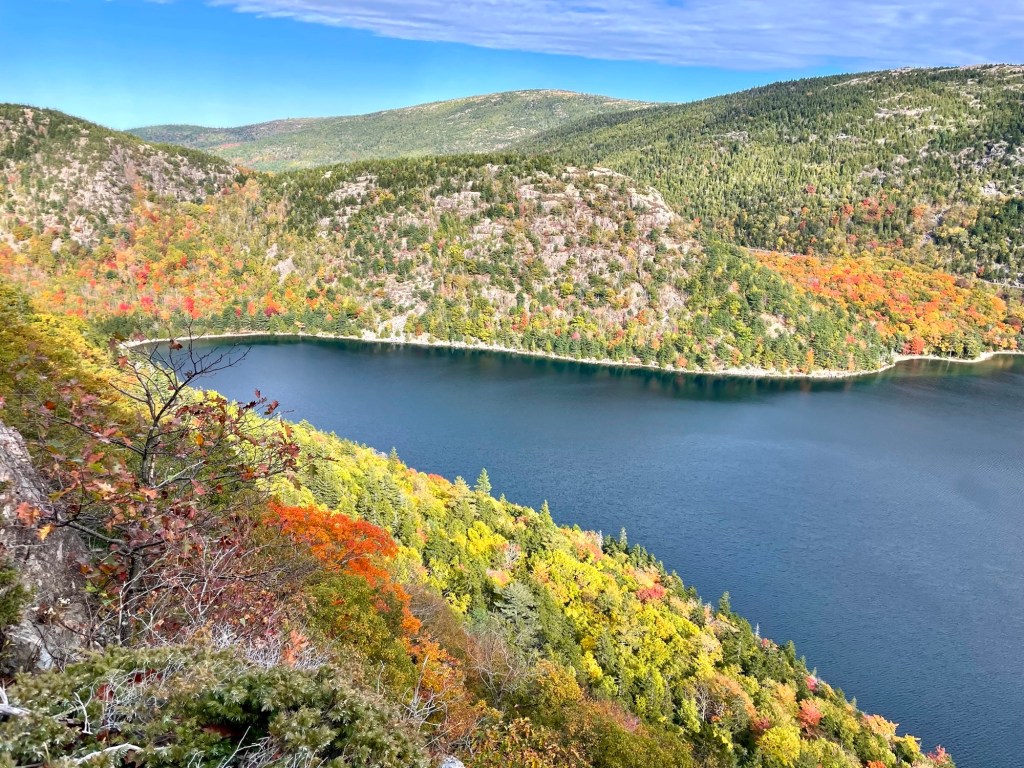
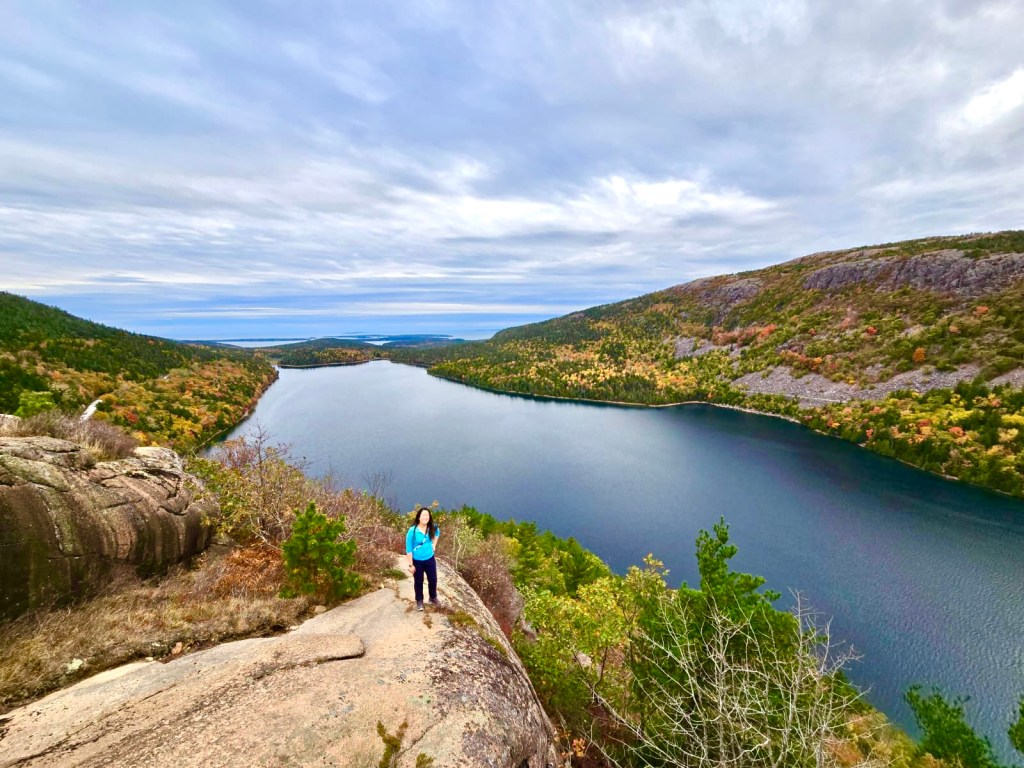
If you’re short on time, this is the hike with the best views around Jordan Pond (in my opinion, anyway).

Bubbles Trail/South Bubble

All 3 hikes combined: Jordan Cliffs Trail + Bubbles Trail + Jordan Pond Path

So many trails around Jordan Pond intersect each other so you can mix and match and make up your own trail as you like. The most popular mix of trails is the Jordan Cliffs + South Bubble + Jordan Path trail. You get the best elevated views of the Jordan Pond from the Jordan Cliffs Trail, with the iconic panoramic scenery of the Bubbles Trail/South Bubble Summit, and the serene easy flat water-side trail of the Jordan Pond Path. This combination of paths is the hike that we chose to do and is what I’ll focus on in detail for this post. 😊

Length: 7.2km
Elevation Gain: 358m
Trail type: Loop
Difficulty/Terrain: Moderate to Hard with exposed cliffs, iron rungs to climb, rock scrambling, and steep ascents
Estimated duration: 2.5 – 4 hours, depending on your level of fitness (we took 4 hours due to a road closure and also multiple stops for photos 🙃)
Starting point: Jordan Pond House Restaurant
Things to bring: water bottle, sunscreen & hat, good hiking shoes, tick/insect repellent depending on season, screenshot of the trail map
More Trail info: https://www.alltrails.com/trail/us/maine/jordan-cliffs-trail-to-bubbles-trail-to-jordan-pond-path

A Detailed Hiking Guide:

You’ll want to start this hike clockwise to make it easiest on yourself. Some of the rock scrambling on the Jordan Cliffs Trail can be a bit dangerous if you do it counter-clockwise.

Red is the combined path of all 3 trails. We had an unexpected road closure and had to do slight detour (outlined in pink dots)

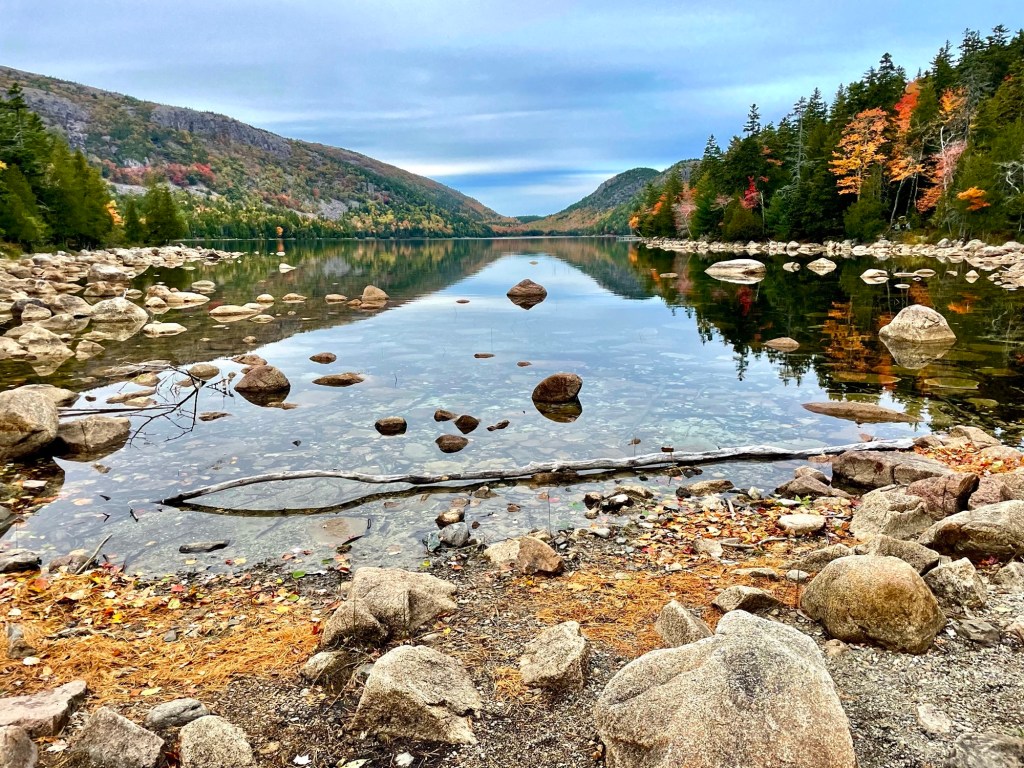
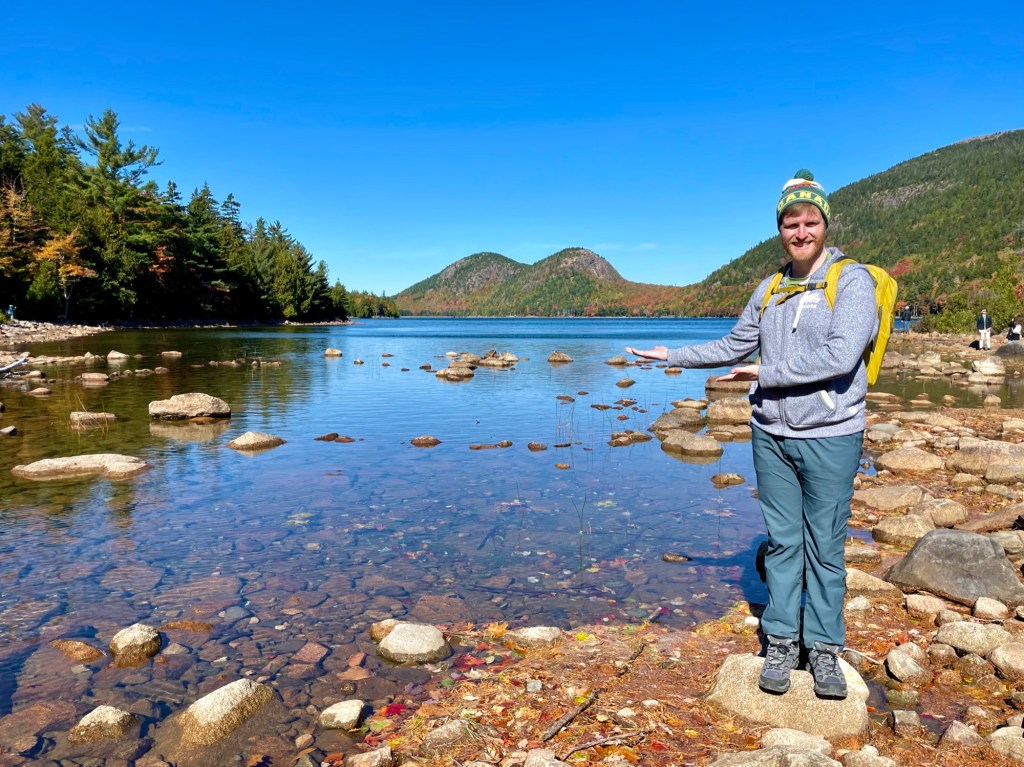
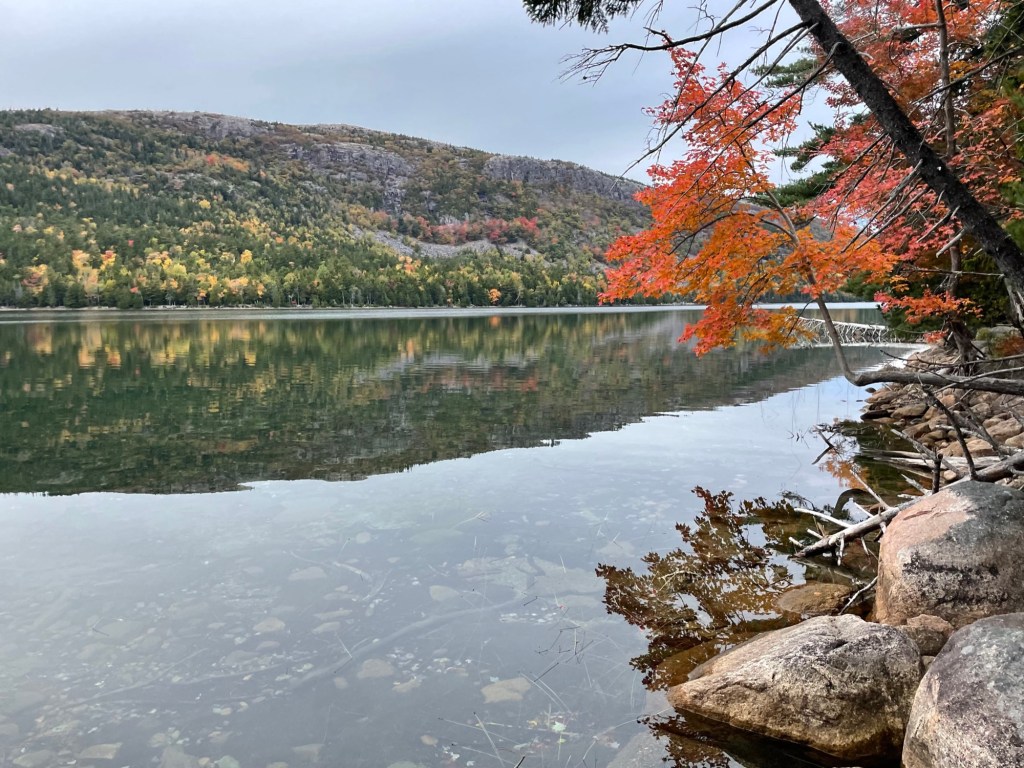
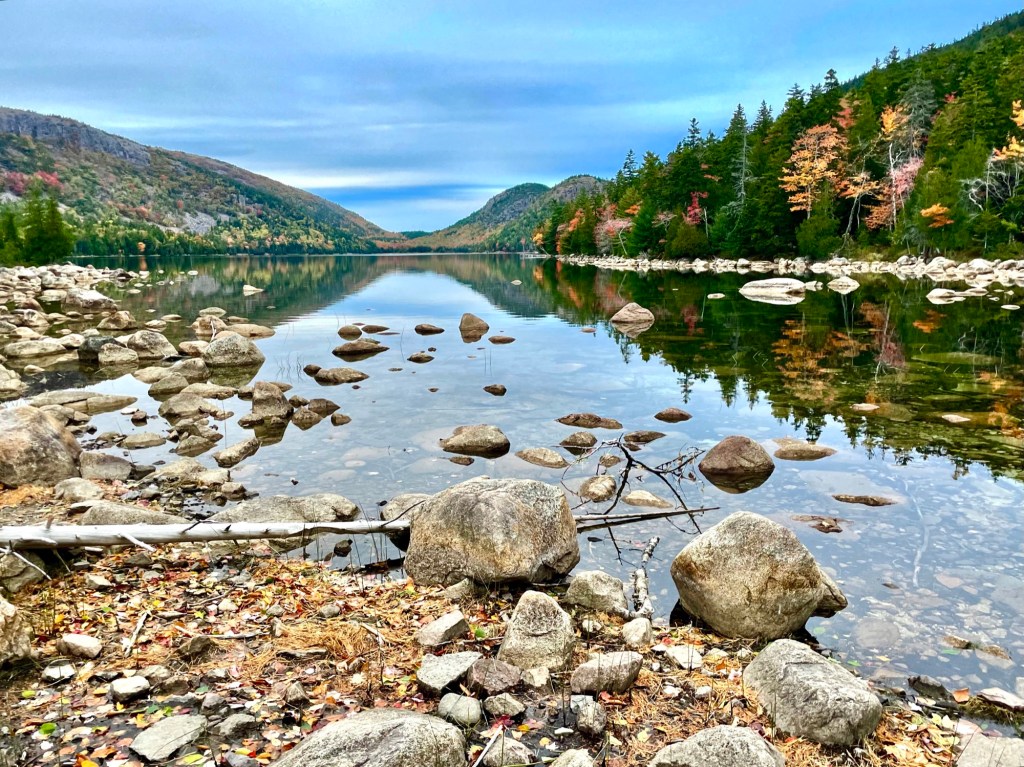
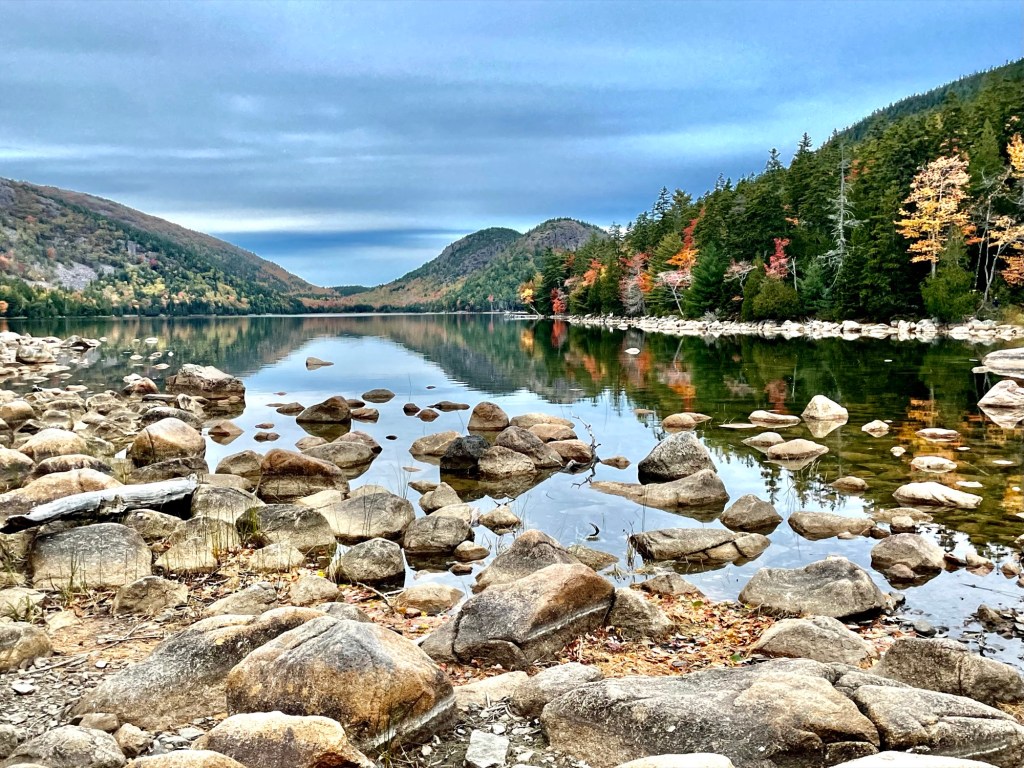
A) Start at Jordan Pond House Restaurant. From the back of the restaurant, walk towards Jordan Pond and start by enjoying the calm of the Jordan Pond waters with views of the North & South Bubbles in the distance (aka the geological boobs – you were thinking it too).

B) Continue briefly left onto Jordan Pond Path and walk over the mini bridge then make a right onto ‘Carriage Road’.

C) Carriage Road will then split – take the left uphill (Amphitheater East Carriage Road) and continue on.

Take a left when Carriage Road splits

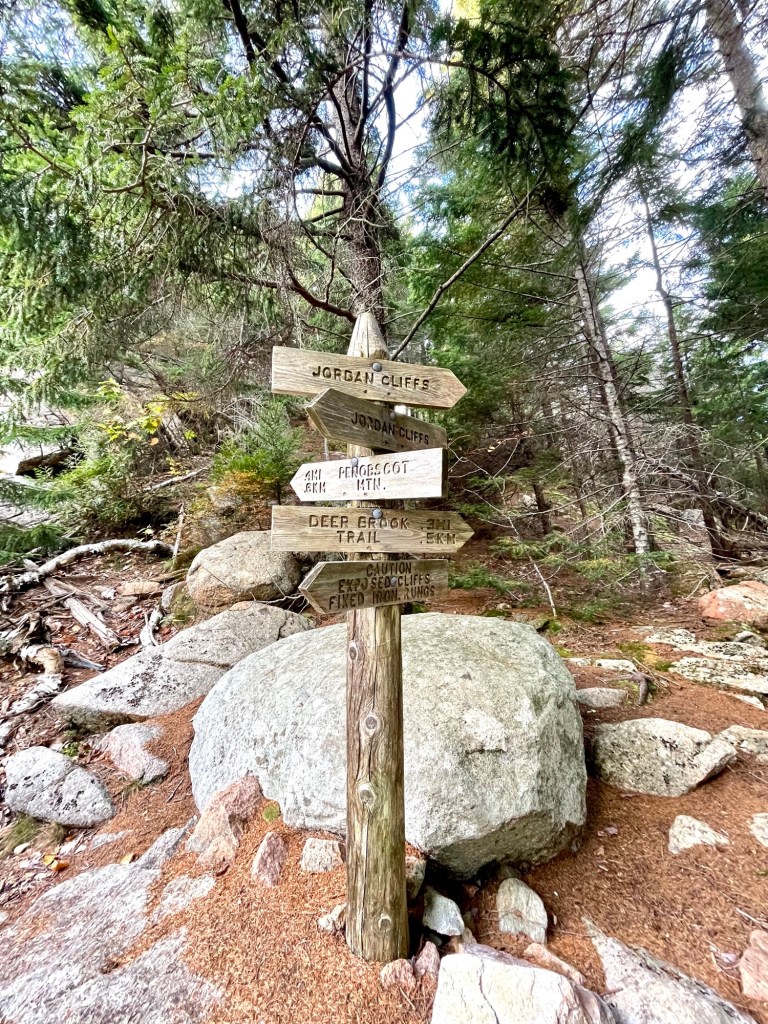
D) You will eventually see a small sign that points to the start of Jordan Cliffs Trail on the right side (pay attention, the sign is small and easy to miss).

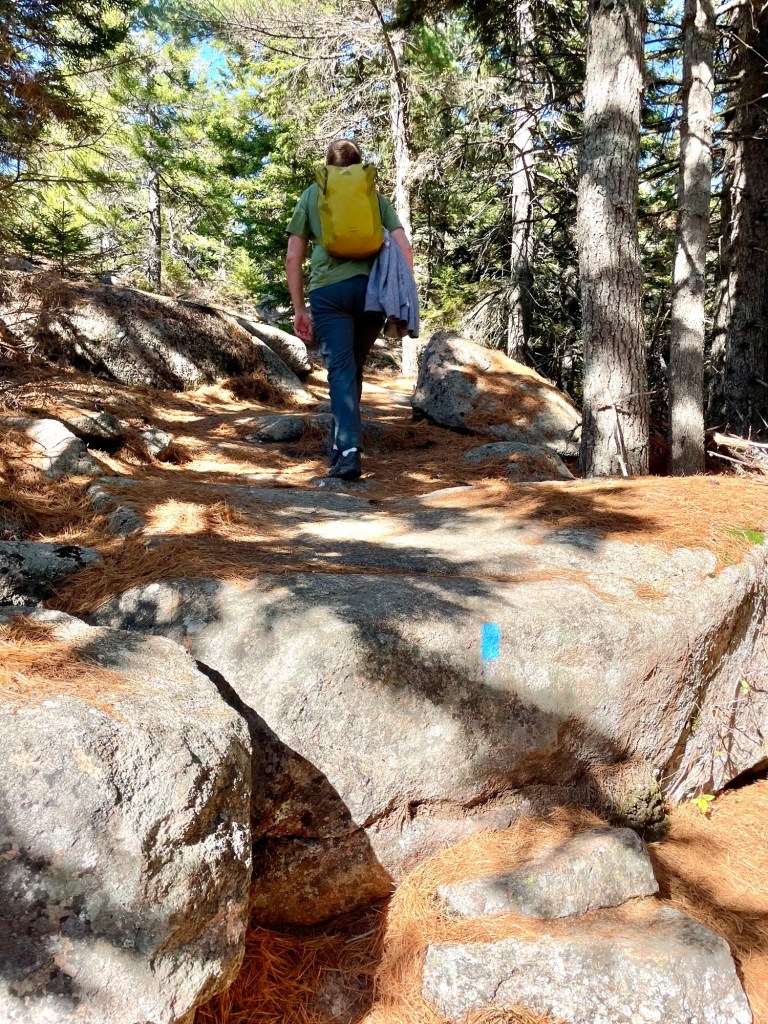
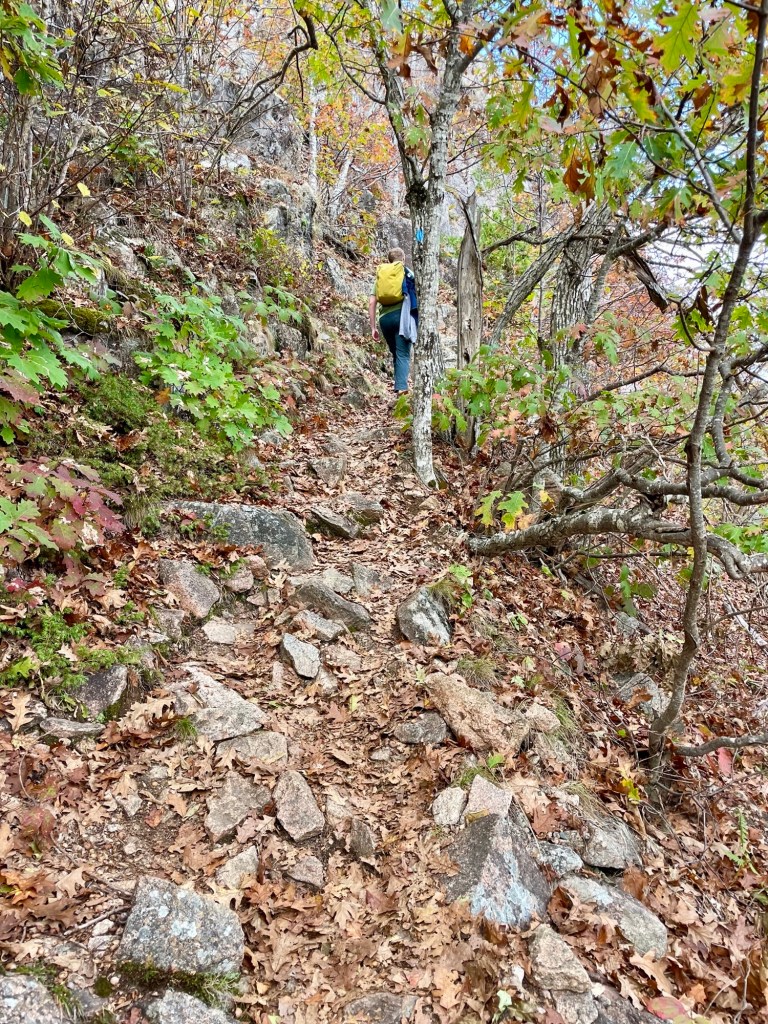
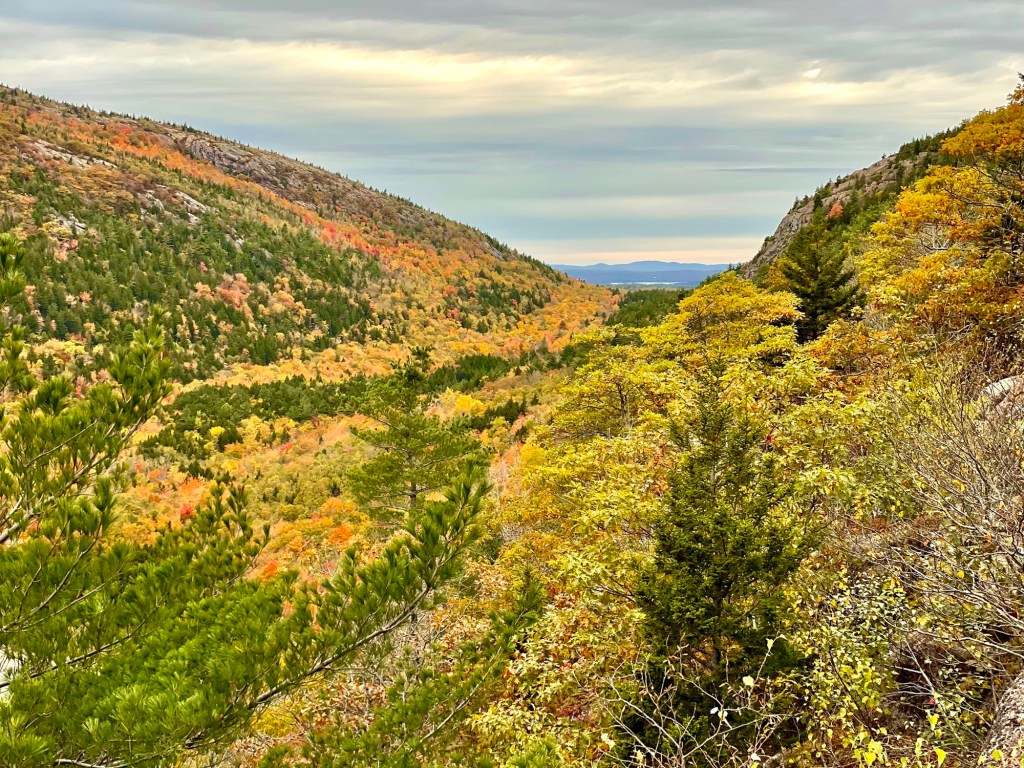
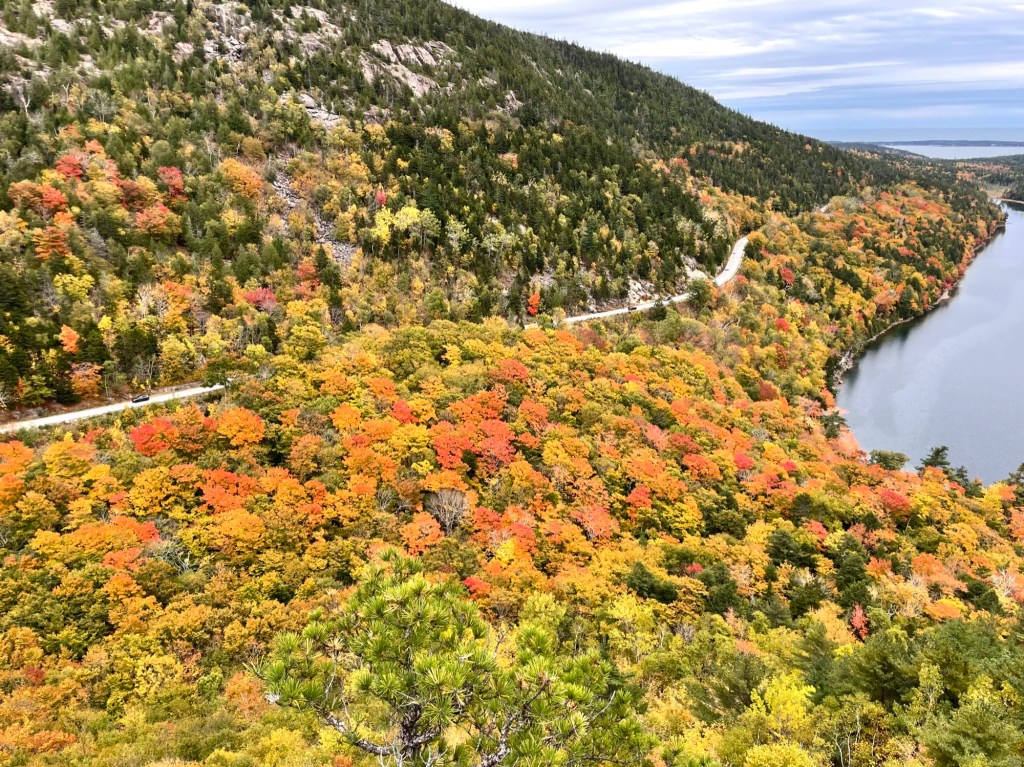
Follow the Jordan Cliffs Trails through the trees. The path will become more and more rocky until you eventually emerge from the trees and onto the cliff-side views of Jordan Pond.

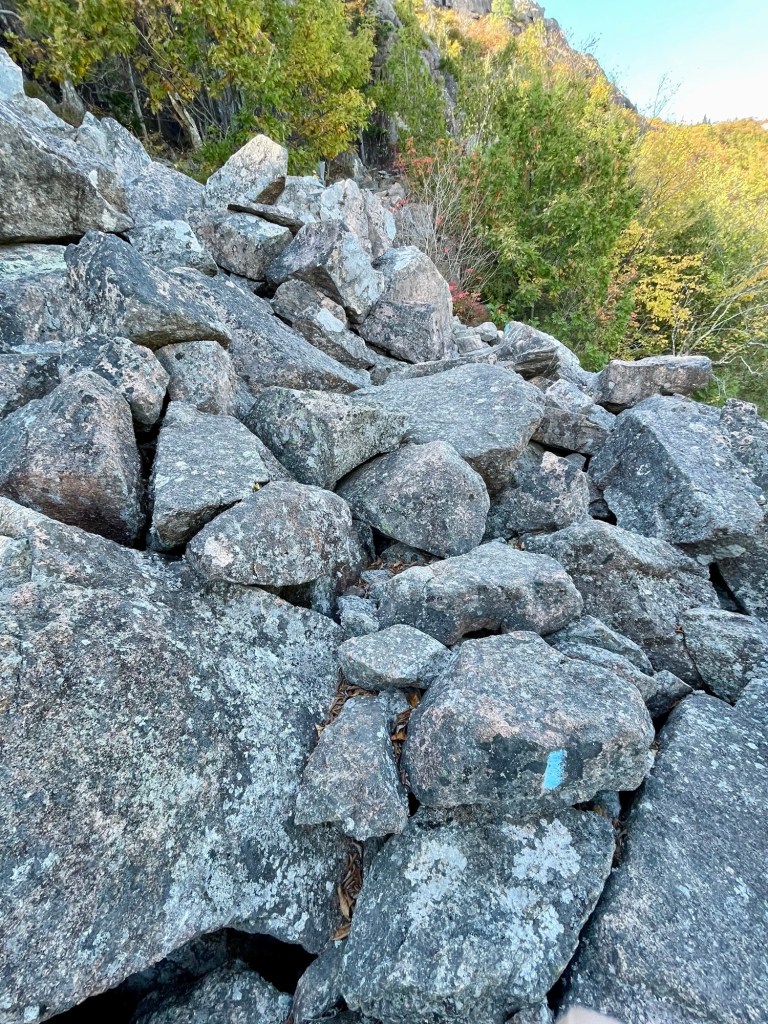
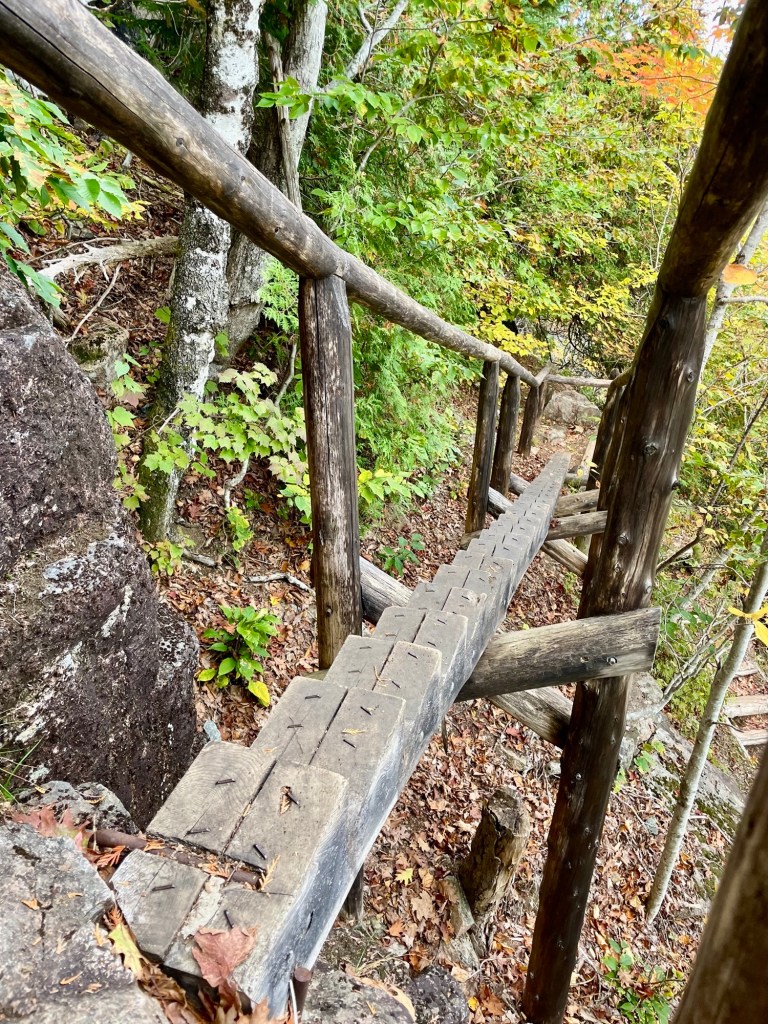
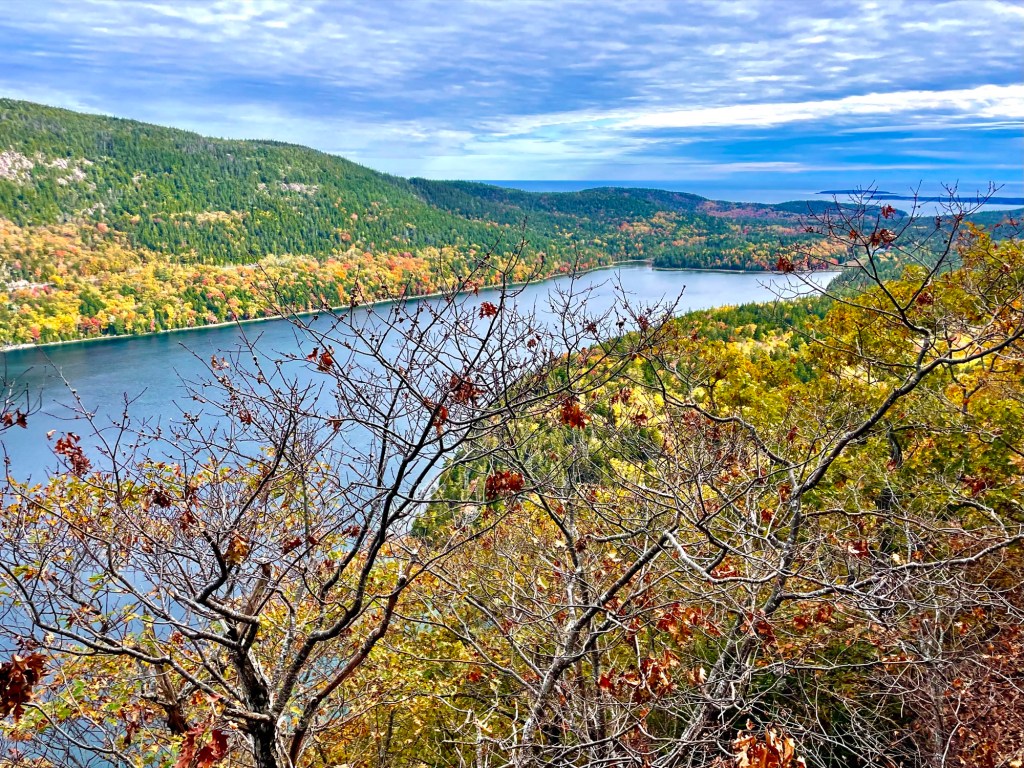
Continue on the cliff-side trail with iron rungs and rock scrambling while enjoying the views for the next 2km. This was the most difficult part for us and involved getting on our hands in some parts to get down a large step or climb up a big boulder. It’s tiring, but take your breaks and drink plenty of water. We actually ran into a few people doing this trail backwards and while doable, many were struggling to get down the iron rungs. I wouldn’t recommend it. Also, keep your eyes peeled – some hikers reported seeing a porcupine in this section!

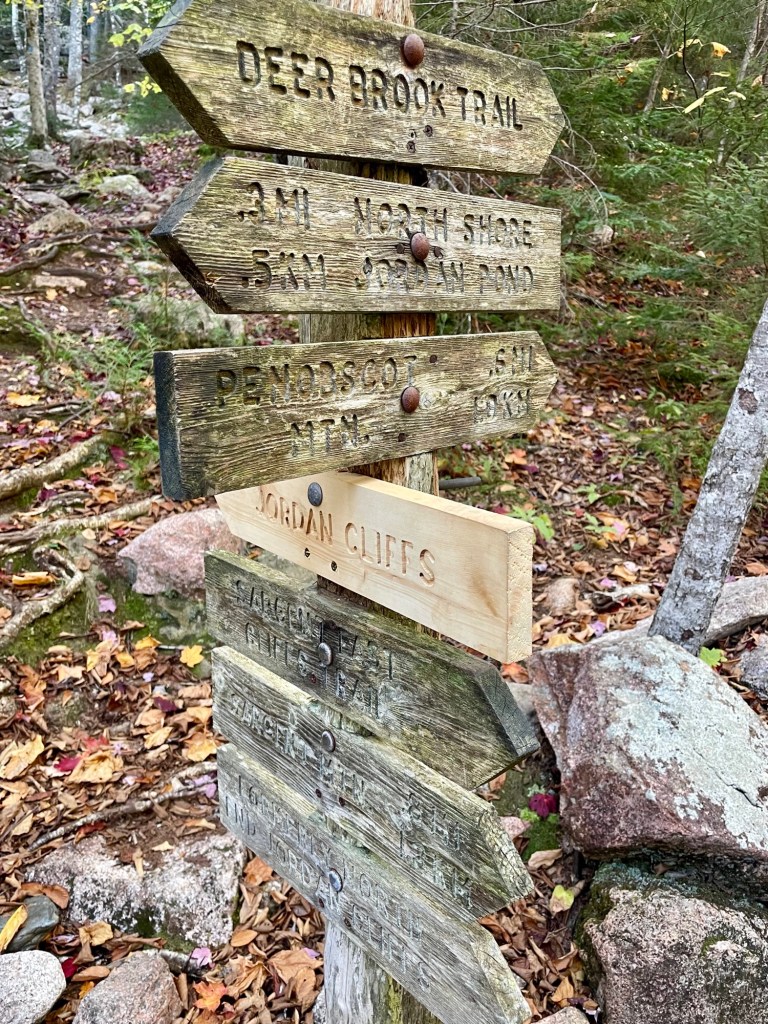
E) The path will eventually lead you back into the trees where the cliff-side views stop for now. You’ll see a sign – continue to follow the Jordan Cliffs trail downwards where you’ll meet up with Deer Brook Trail. This part is a sharp descent, so make sure you’re wearing shoes with good grip.

F) Turn right and continue downwards on Deer Brook Trail.

G) You’ll cross over ‘Carriage Road’ again briefly then continue the rocky scramble down where you’ll pass by Deer Brook Bridge, a cool double arch historic bridge built for carriages in 1925. Continue the rocky descent towards the beach at the North end of Jordan Pond.

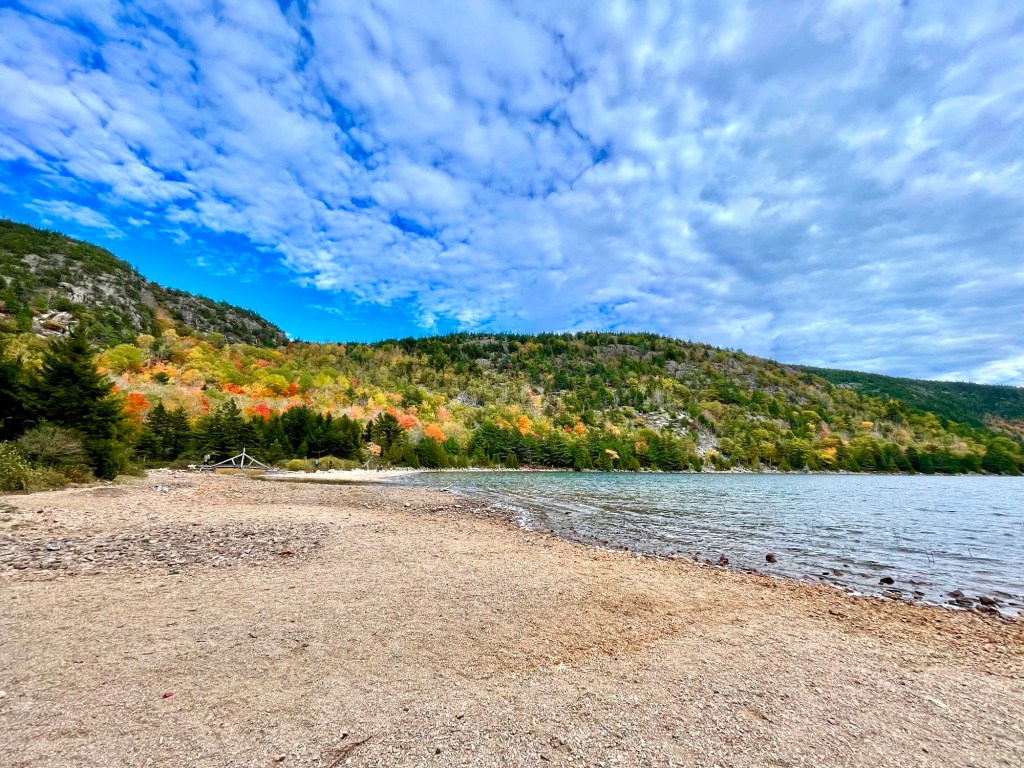
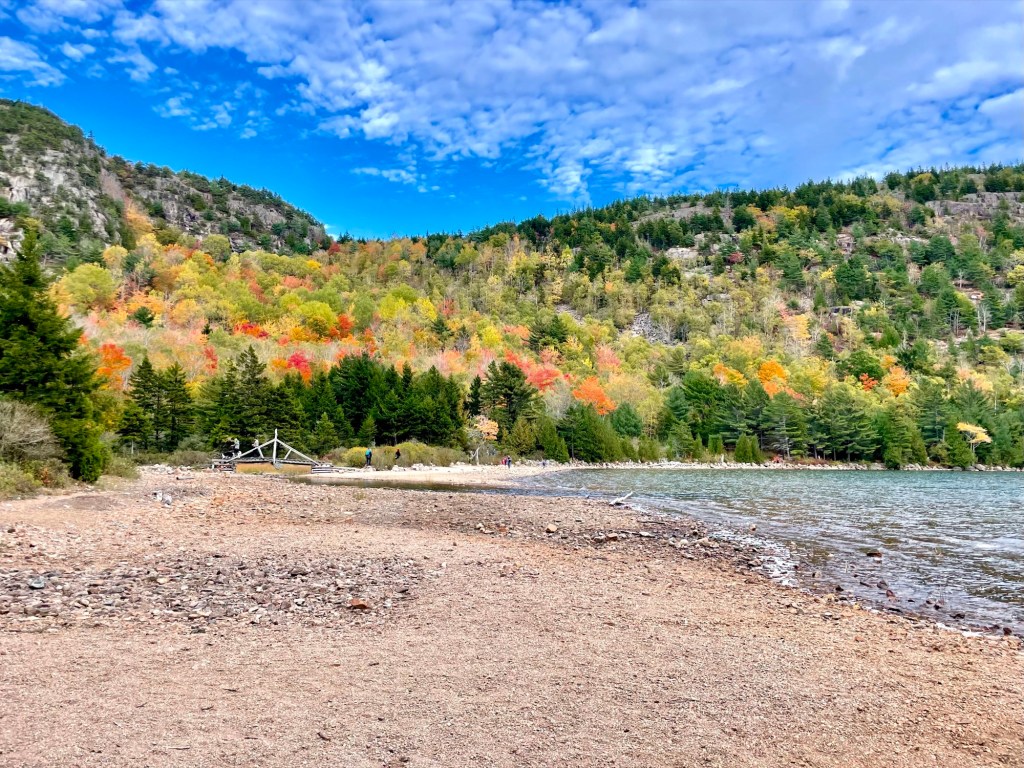
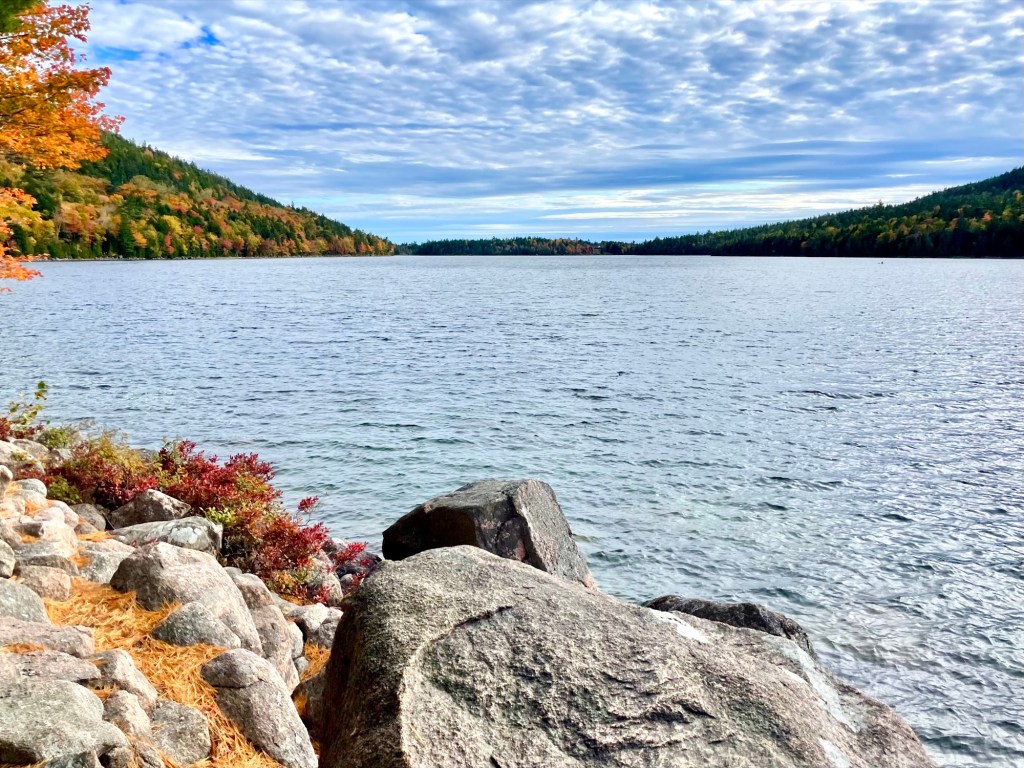
H) Once you’re at the beach, take a breather and appreciate the flat easy-walking terrain along the beach.

Follow the beach and you’ll reach a sign on the left that points to the Bubbles Divide Trail where you’ll make your way up again. Note: this trail was under construction when we went, so we continued on the Jordan Pond Path along the water until we reached the Bubbles Trail, where we did an out-and-back to the South Bubble summit (our detour is shown in pink dots on the map).

We had an unexpected road closure and had to do slight detour (outlined in pink dots)

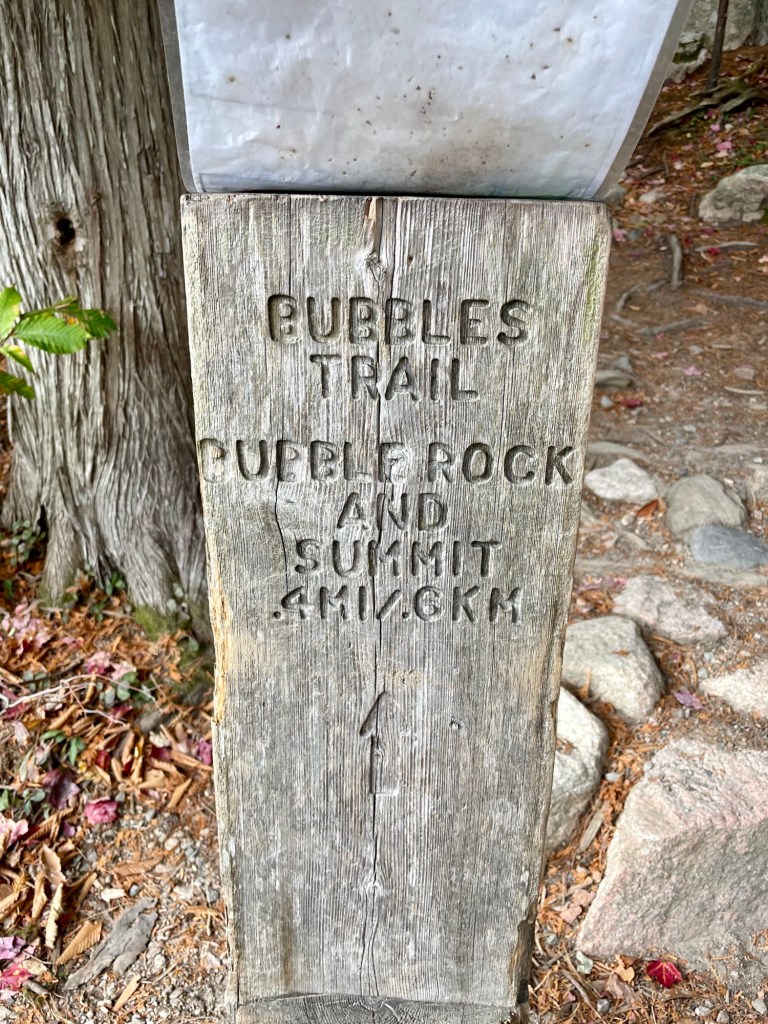
I) Turn right onto the Bubbles Trail towards South Bubble.

J) This where ‘Bubble Rock’ sits – the iconic glacial boulder that rests on the edge of the cliff.

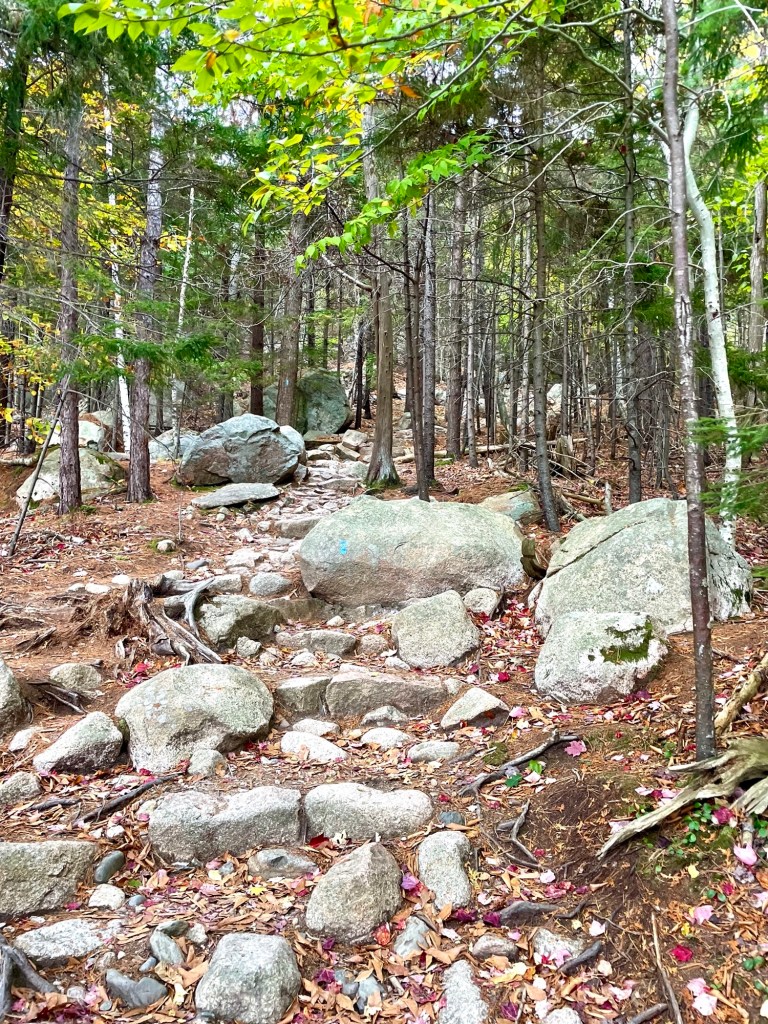
K) Due to the road closure, we ascended the Bubbles Trail from this point. The climb up to the South Bubble summit was no easy feat. It’s a steep ascent with lots of rocks to climb and uneven footing, and it gets more difficult the closer you are to the top.

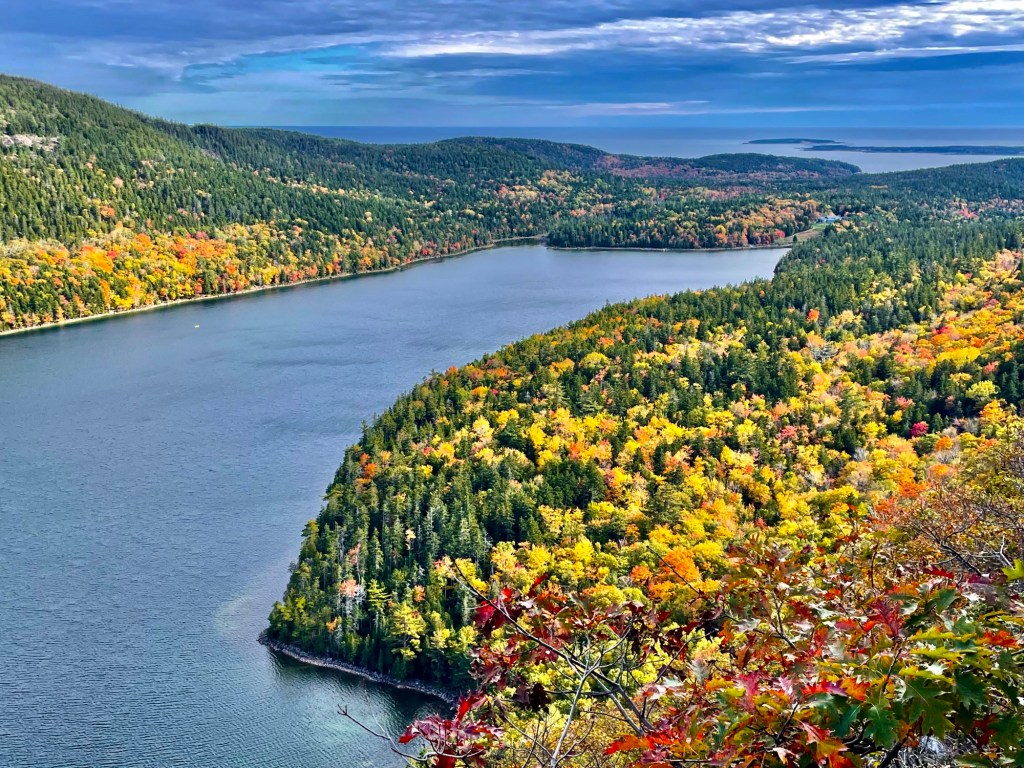
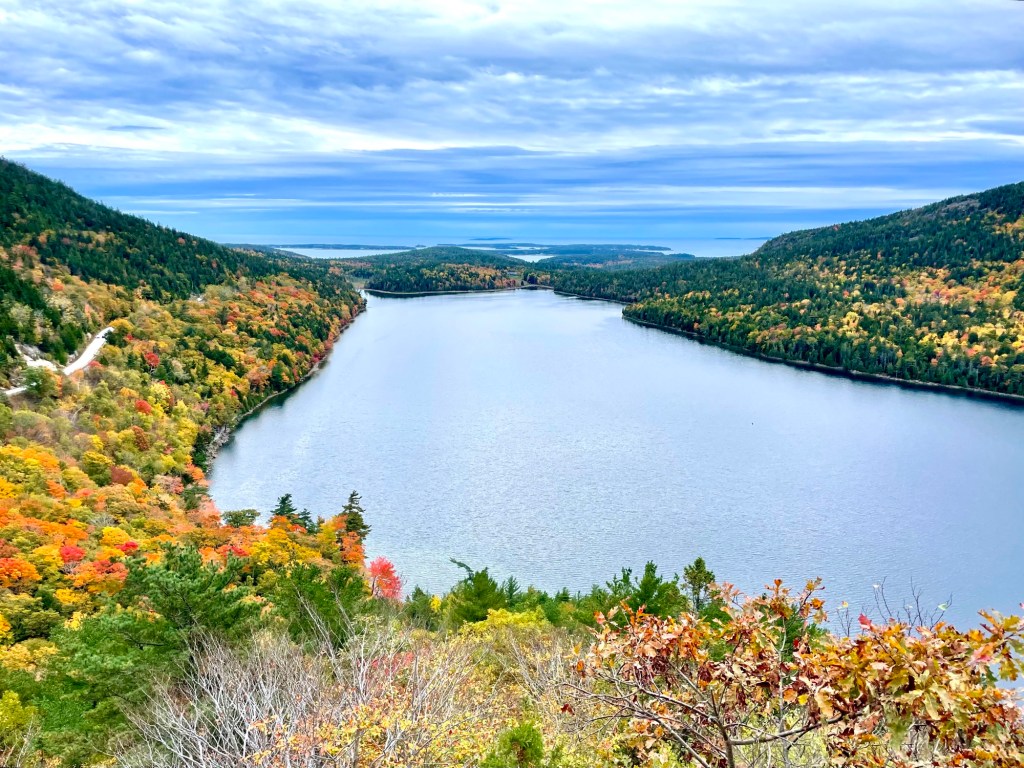
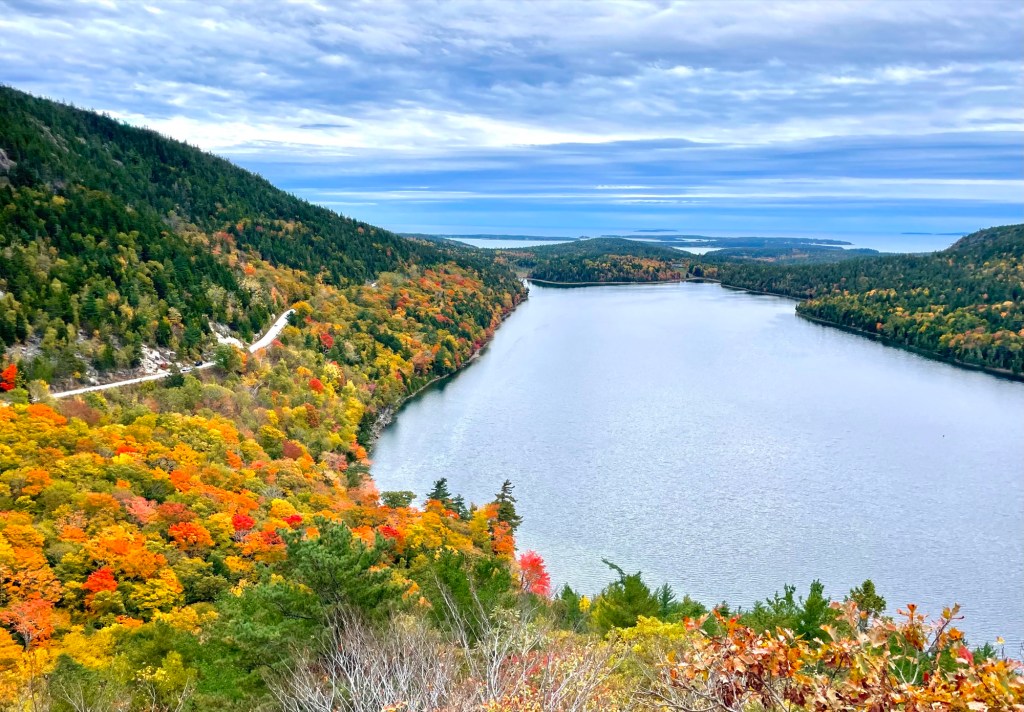
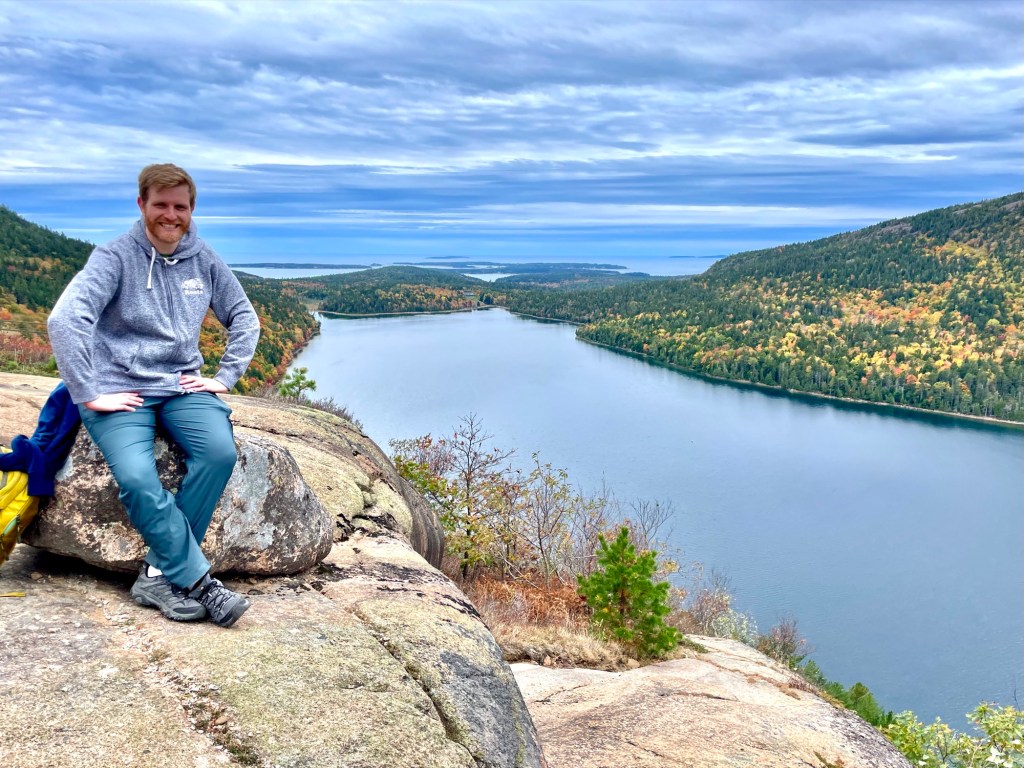
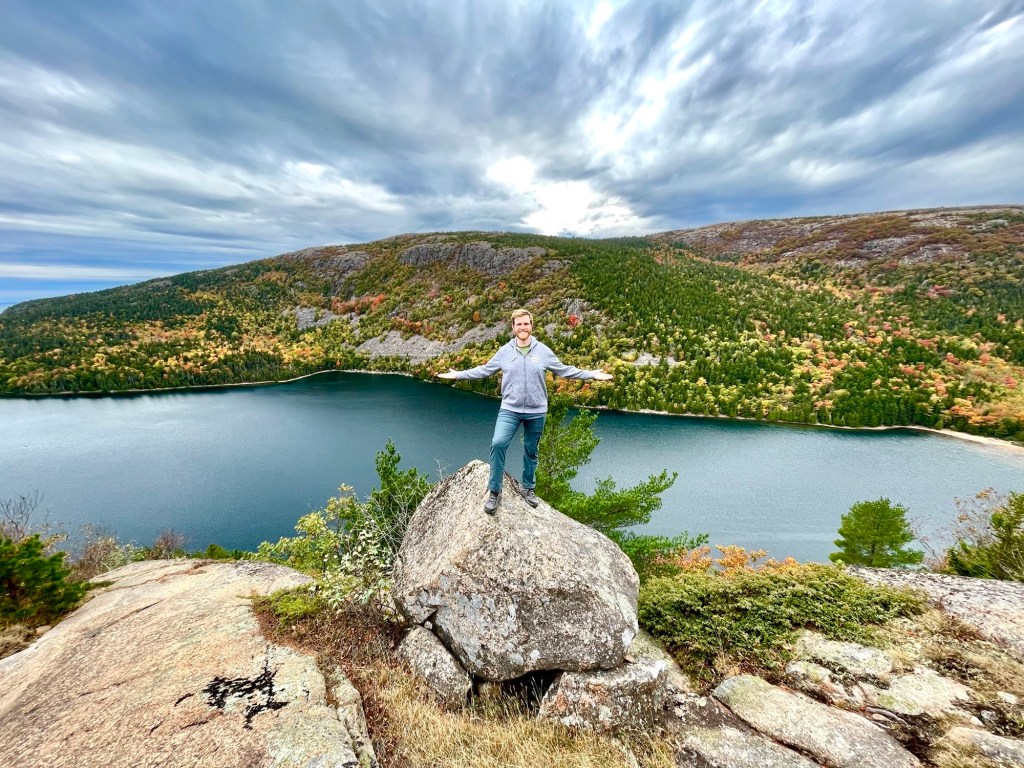
I’ll admit, our legs were getting pretty tired at this point that we almost didn’t want to climb back up a mountain that we just came down on, but I’m glad we pushed ourselves and did it. It was a tiring climb up boulders the whole way, with some tricky areas where long legs were helpful, but after all the climbing over scraggly rocks, the view at the top was 100% worth it. Second to the Beehive Trail, it’s another iconic picturesque view that everyone seeks. It was too bad that the clouds started rolling in so there wasn’t much sun when we got to the top, but it was still so beautiful that we spent some time just sitting and taking it in.

Take a break here and enjoy the panoramic views and be in awe at how far Jordan Pond House is in the distance, where you started this journey.

Scramble back down the steep rocks on Bubbles Trail to Jordan Pond Path. For reference, it took us 1 hour to get up and down the Bubbles Trail from the Jordan Pond Path including resting and photo time at the top. So although it is a difficult climb, it’s not very long!

Scrambling back down the Bubbles Trail the same way we came up due to the detour

Continue following Jordan Pond Path and enjoy the flat even ground all the way back to Jordan Pond House (roughly another 30-40 minutes).

Overall it took us 4 hours to do the whole thing (including the detour from the road closure) at a slow-med pace and stopping for photos and taking intermittent rest breaks.

Jordan Pond House Restaurant – make reservations!

Address2928 Park Loop Rd, Seal Harbor, ME 04675
Website: www.jordanpondhouse.com
This restaurant has seasonal hours – refer to their website for updated information.

Outside of Bar Harbor, there is a very limited selection of restaurants on Mount Desert Island in Acadia National Park. Jordan Pond House Restaurant is the most popular choice not only because of their good food, but also because of its convenient location where many trailheads are located – most notably Jordan Pond Loop, South Bubble Trail, and Jordan Cliffs. The back patio of this restaurant also offers views of Jordan Pond and the North and South “bubbles”.

It gets EXTREMELY busy here and finding parking is no easy feat. Toby dropped me off while he went to look for parking and he had a LOT of trouble finding parking. Every single lot was full but luckily he eventually snagged a spot in a small lot…a 30 minutes walk away! It was INSANE. Next time, I’d recommend coming here super early and do some hikes, then make it back in time for lunch.
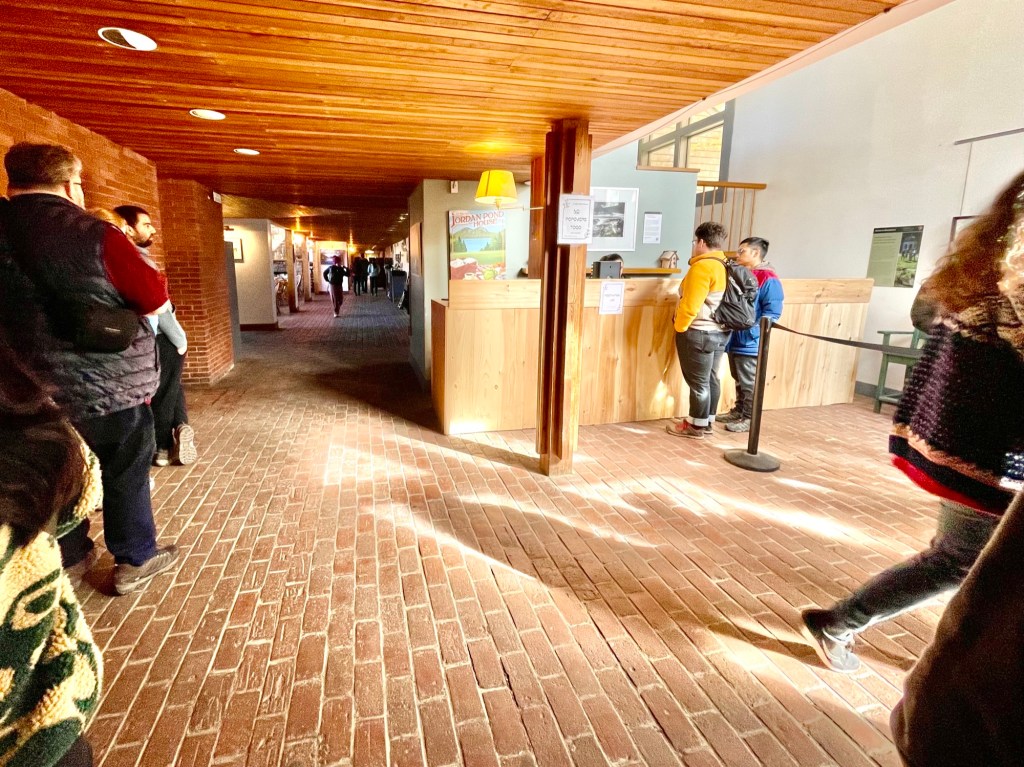
Note: there’s very limited cellphone reception in this whole area, but the restaurant does have free guest wifi so keep this in mind if you’re planning on communicating with each other when waiting for seating or coordinating with parking.

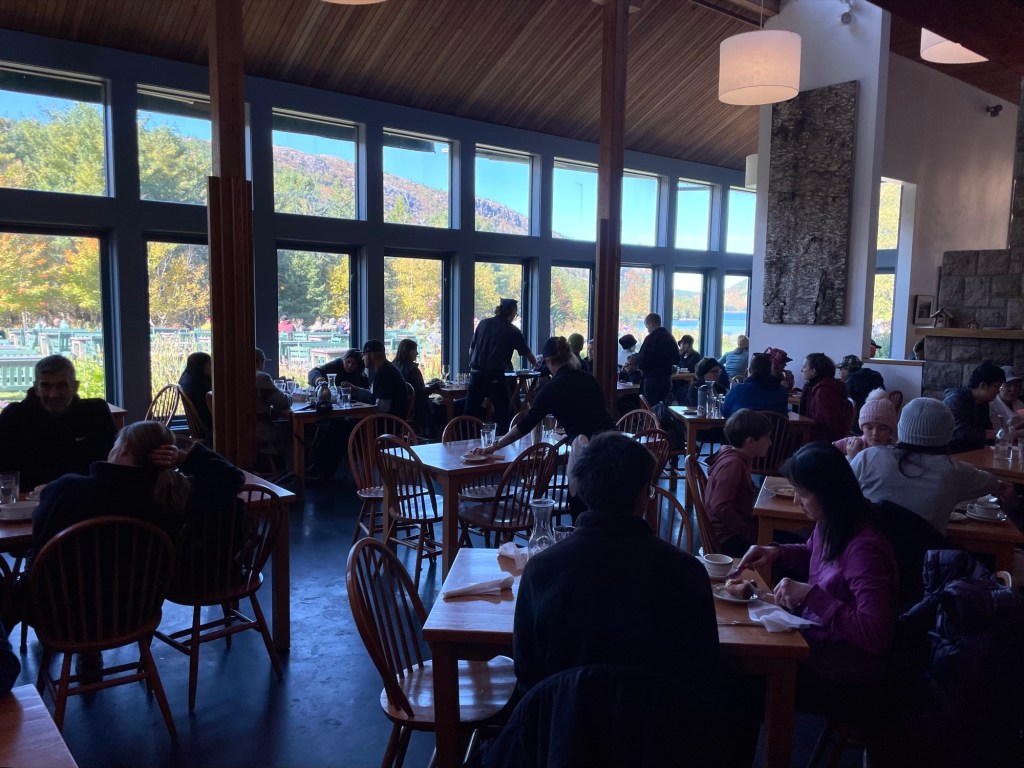
I would highly recommend making a reservation at Jordan Pond House as early as possible. Their reservation book is usually booked out a couple of MONTHS in advance. You may have some luck calling in person to check for cancellations, but their online reservations were completely full everyday. If you haven’t planned ahead, then I would recommend showing up a little before they open to try and get a spot. We didn’t have reservations and I arrived 3 mins before opening time and there were already at least 30 people standing in line! When 11am hit and the doors opened, the line started moving as they slowly filled up the large restaurant. I got to the front of the line 20 minutes later and they put me on the waiting list, where I only had to wait 10 minutes before I was seated. If you had a reservation, you could skip right to the front of the line where there was a separate check-in counter for reservations. When we finished eating, it was about 12:30pm and on our way out Toby had overheard that there was going to be a 1.5 hour wait to be seated!

For the only restaurant in the area, the food was actually surprisingly good! A little pricey, but hey, they’re the only place around.

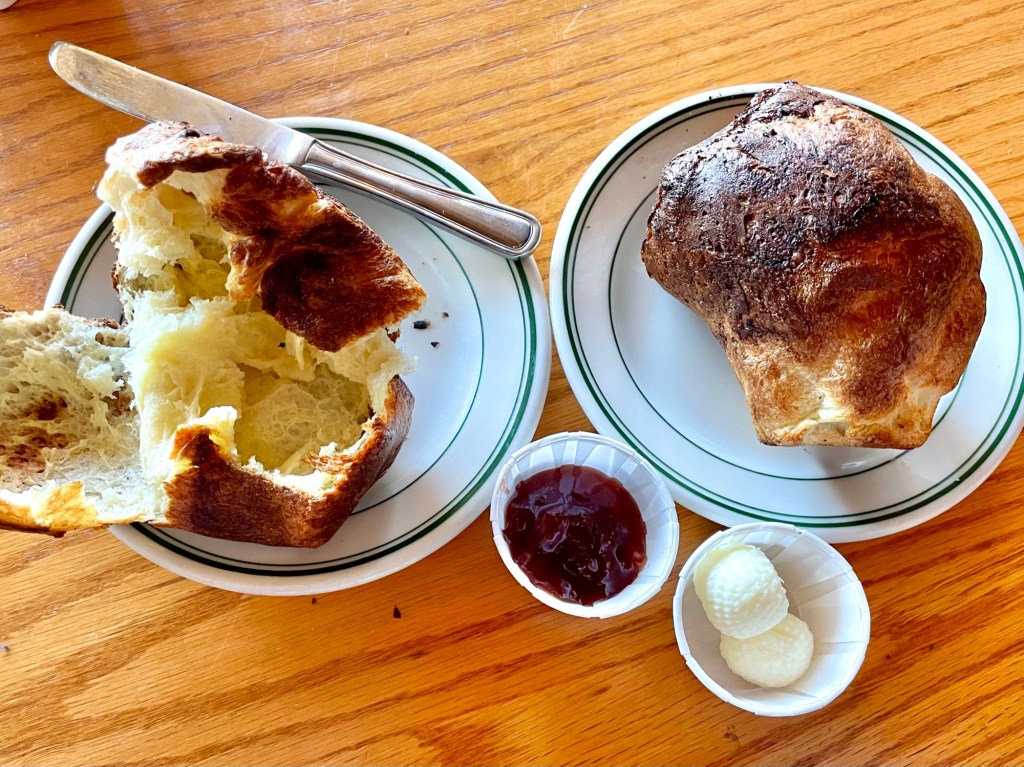
They’re known for their popovers, which is kind of like a hollow muffin made with a thin batter, served with butter and their local-made jam. It was good, but not mind-blowing.

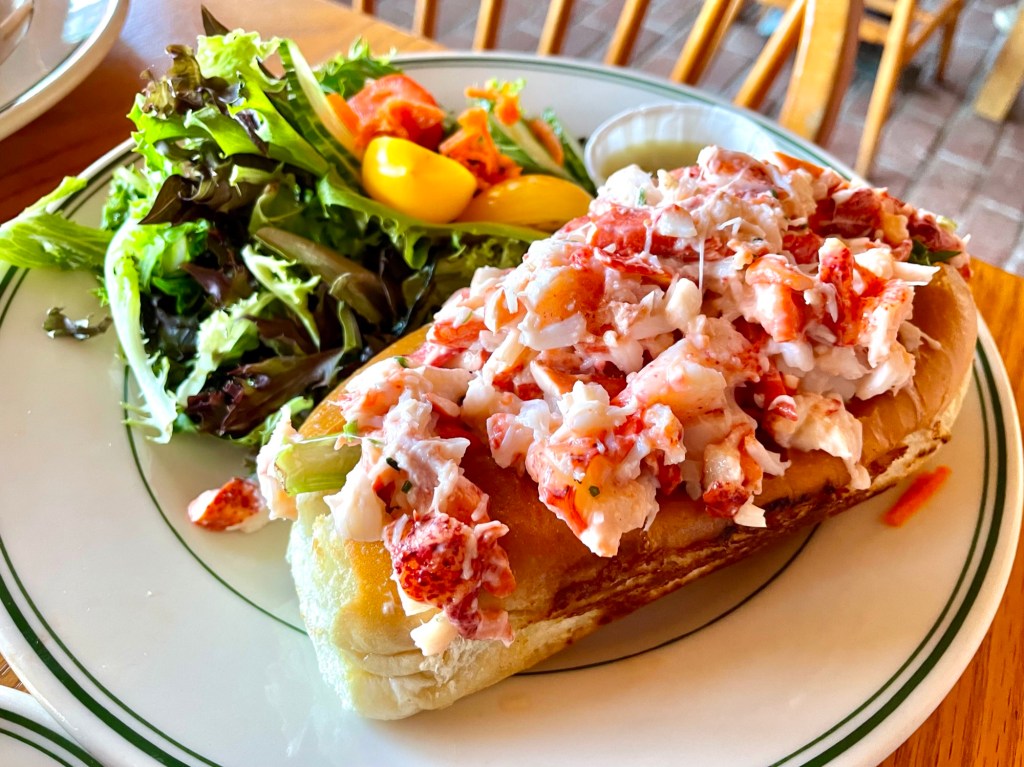
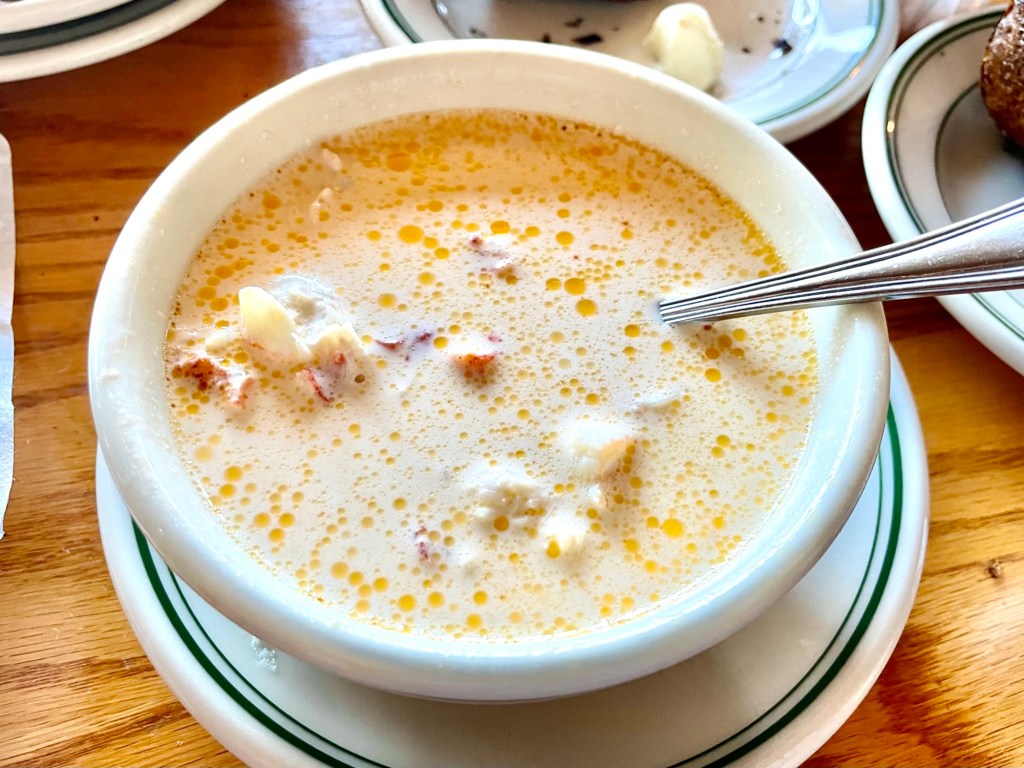
We also had a meatloaf sandwich which was delicious and a $40 lobster roll (when in Maine…) which was average but they were VERY generous with the amount of lobster meat. I also couldn’t help but also order the lobster stew which was also pretty decent and Toby had a flourless chocolate cake for desert (which was average, but he liked it).

If you didn’t have a reservation and don’t have time to wait in line for walk-in seating, there’s an upstairs “grab and go” area for takeaway food. The menu here is a little more limited and I don’t believe you’ll be able to get popovers for takeaway, but there’s outdoor seating upstairs and also plenty of picnic tables on the grass to enjoy the view of Jordan Pond and the Bubbles without having to wait in line.

Some Final Thoughts:

  • Start your day early!
  • Finding parking is a bitch here – start early!
  • Make reservations ahead of time if you can, or show up before they open
  • Try the meatloaf sandwich – you won’t regret it.
  • Bring a pair of good hiking shoes for all the rock scrambling

Exploring Cape Elizabeth: Iconic Lighthouses and Lobster Rolls


Date Published: Oct 29th, 2024 | Last Updated: Oct 29th, 2024
Author: Abby | Category: Travel, USA
Date of travel: Oct 12th, 2024

Cape Elizabeth is a quiet coastal town located just south of Portland, Maine. It’s home to a few lighthouses, including the most iconic and famous lighthouse in Maine: Portland Head Light. Between Portland and Cape Elizabeth sits Bug Light, a uniquely small lighthouse that’s also worthwhile a visit. But apart from lighthouses, there are a couple of popular places to get lobster rolls along the coast. I’d recommend spending half a day exploring both of these lighthouses and snacking on some lobster!

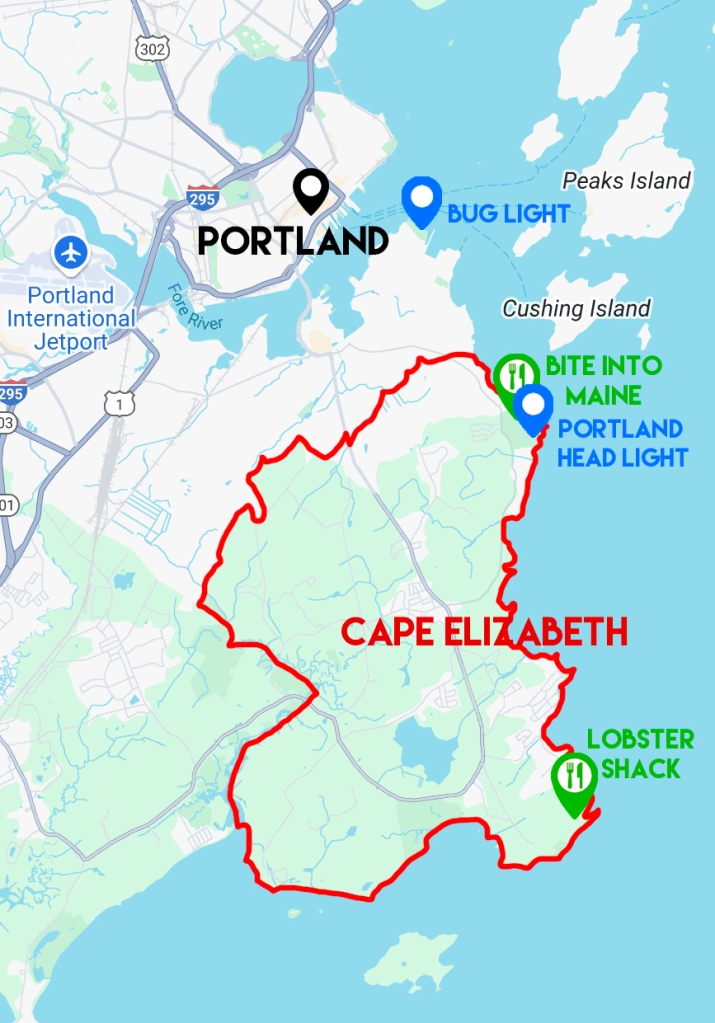
I’ve made a map below to outline the main places to see in this area to get your bearings:

An overview of the most popular places in Cape Elizabeth

How much time will I need?

You can visit both lighthouses and lobster roll places in half a day. The lobster roll places don’t open until 10:30/11am, so if you’re coming from Portland, I’d recommend starting at Bug Light first then work your way down the coast. You only need 5-10 minutes at Bug Light since there’s not much else to do here other than snapping some photos of the lighthouse. From there, it’s a 15 minute drive to Fort Williams Park where the Bite Into Maine food truck is and Portland Head Light. Try to get to Bite Into Maine right as they open at 10:30am, before the lines start, then afterwards head over to Portland Head Light and check out the museum and do the Cliff Walk. Lastly, drive another 15 minutes south to Lobster Shack at Two Lights Park and enjoy a second lunch (or dinner, depending on how long you’ve taken at Fort Williams) to finish off the trip.

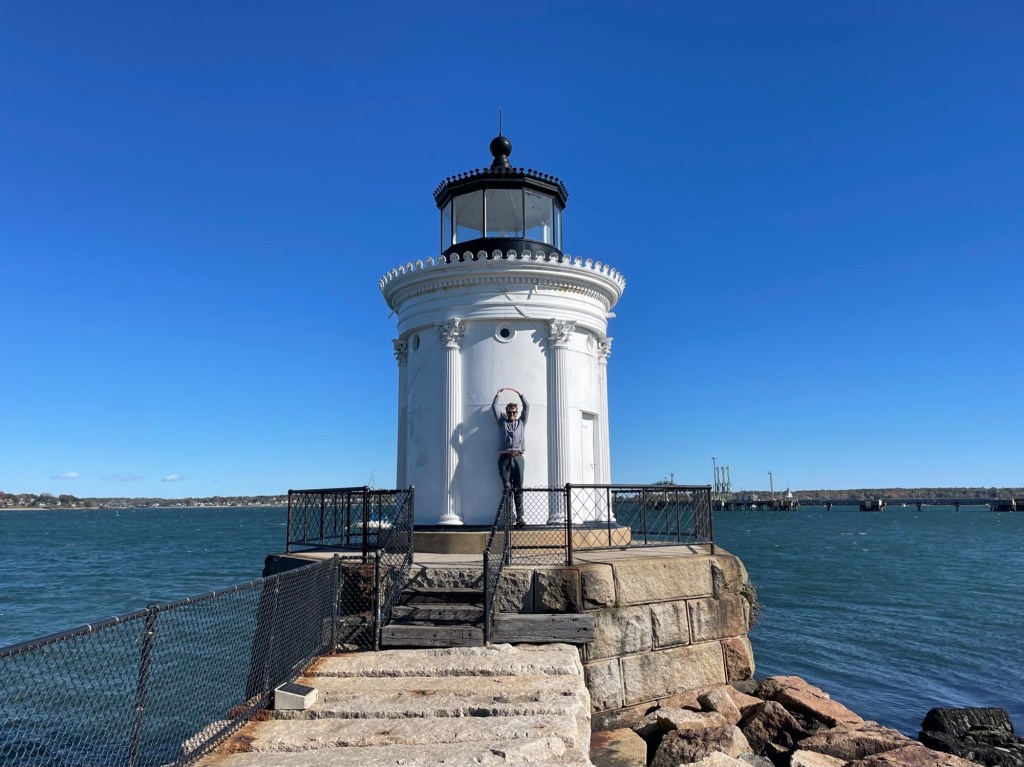
Portland Breakwater Light aka “Bug Light”

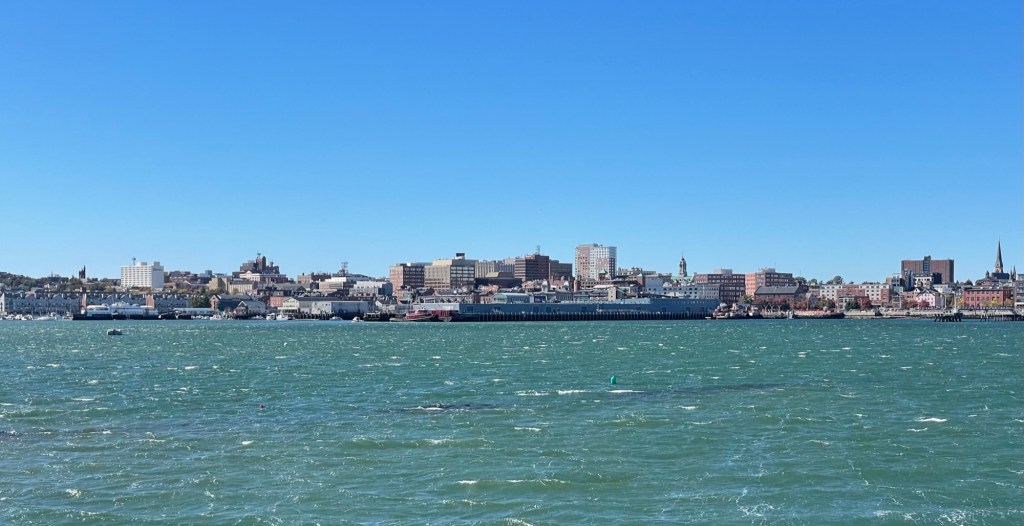
Located in South Portland, outside of Cape Elizabeth, “Bug Light” is a small lighthouse that sits within Bug Light Park. There’s not much else here other than the lighthouse but this uniquely small tower was worth a stopover. Parking here is free and is only a few minutes walk to the lighthouse. Like Portland Head Light, the lighthouse tower is only open once a year on Maine Open Lighthouse Day. You can see views of the Portland in the distance and there’s a Liberty Ship Memorial here as well, commemorating the 274 Liberty Ships that were built in South Portland during WWII that carried important supplies across the Atlantic. You can read more about its history here.

Portland Head Light – the iconic lighthouse

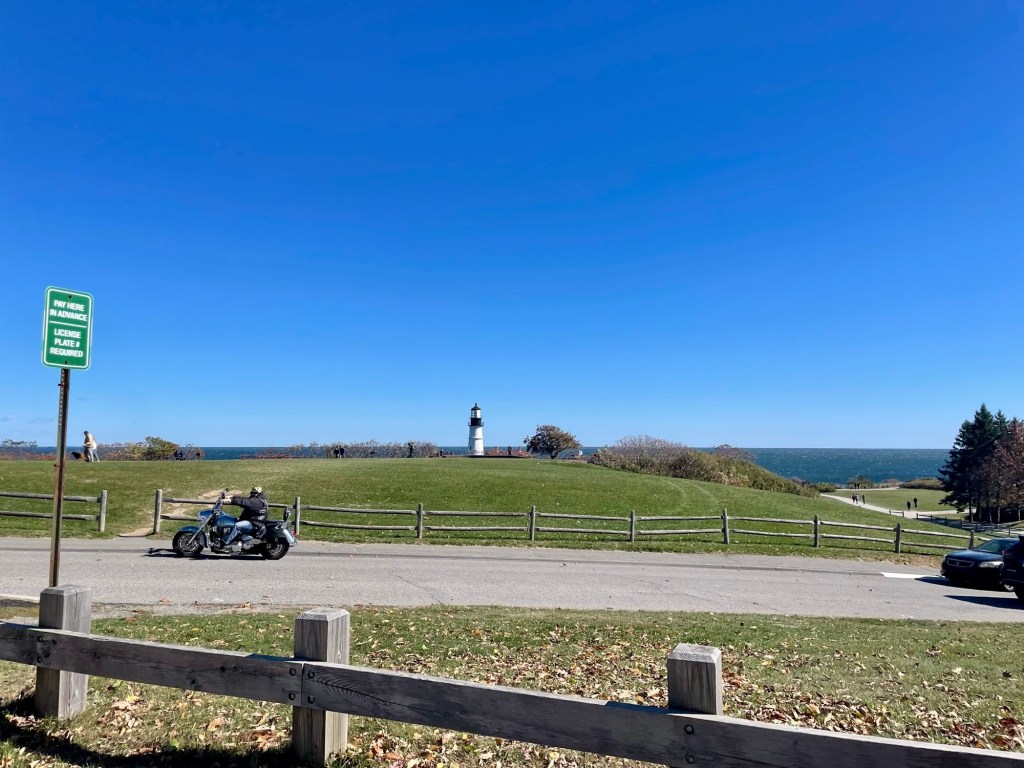
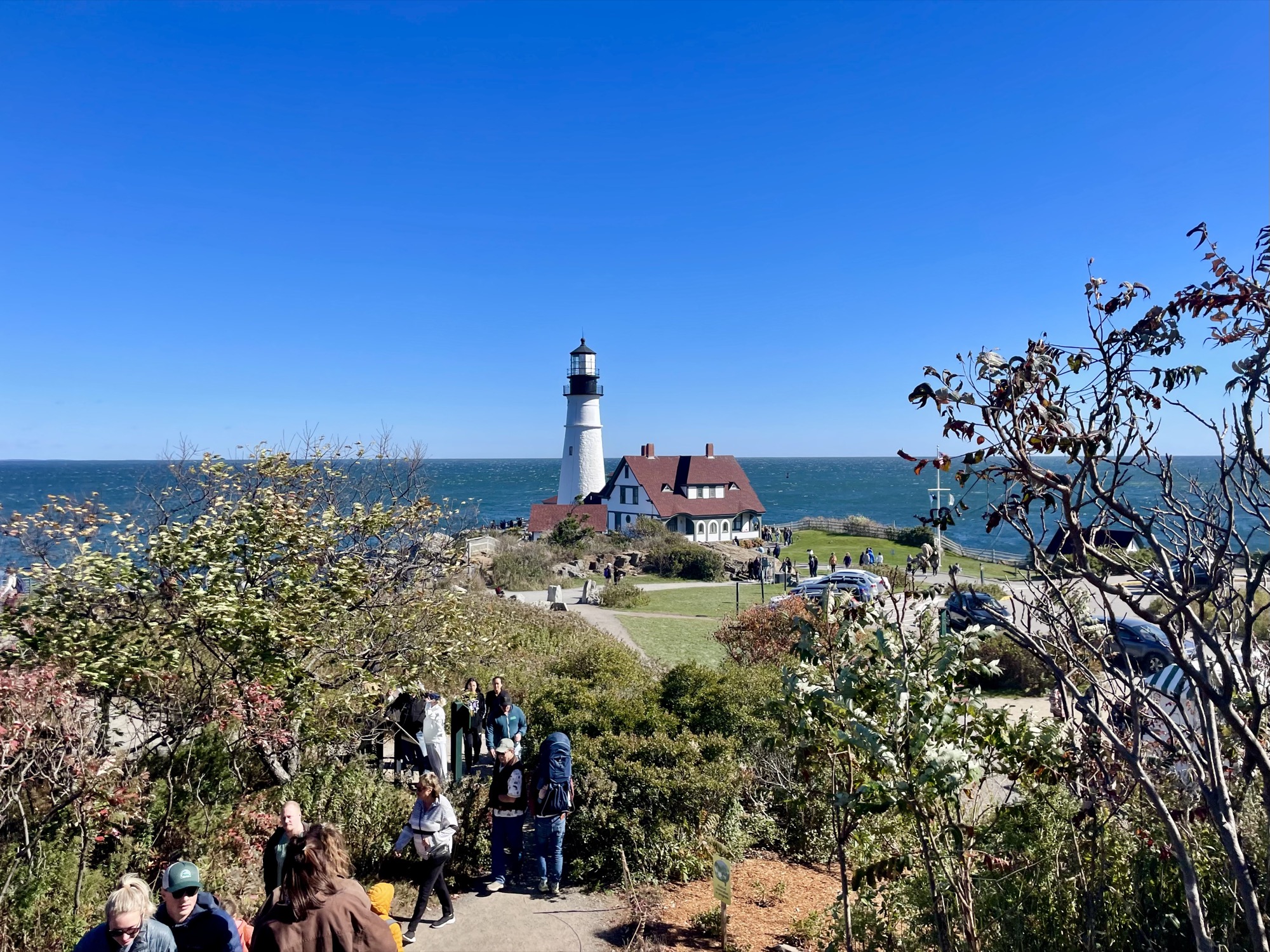
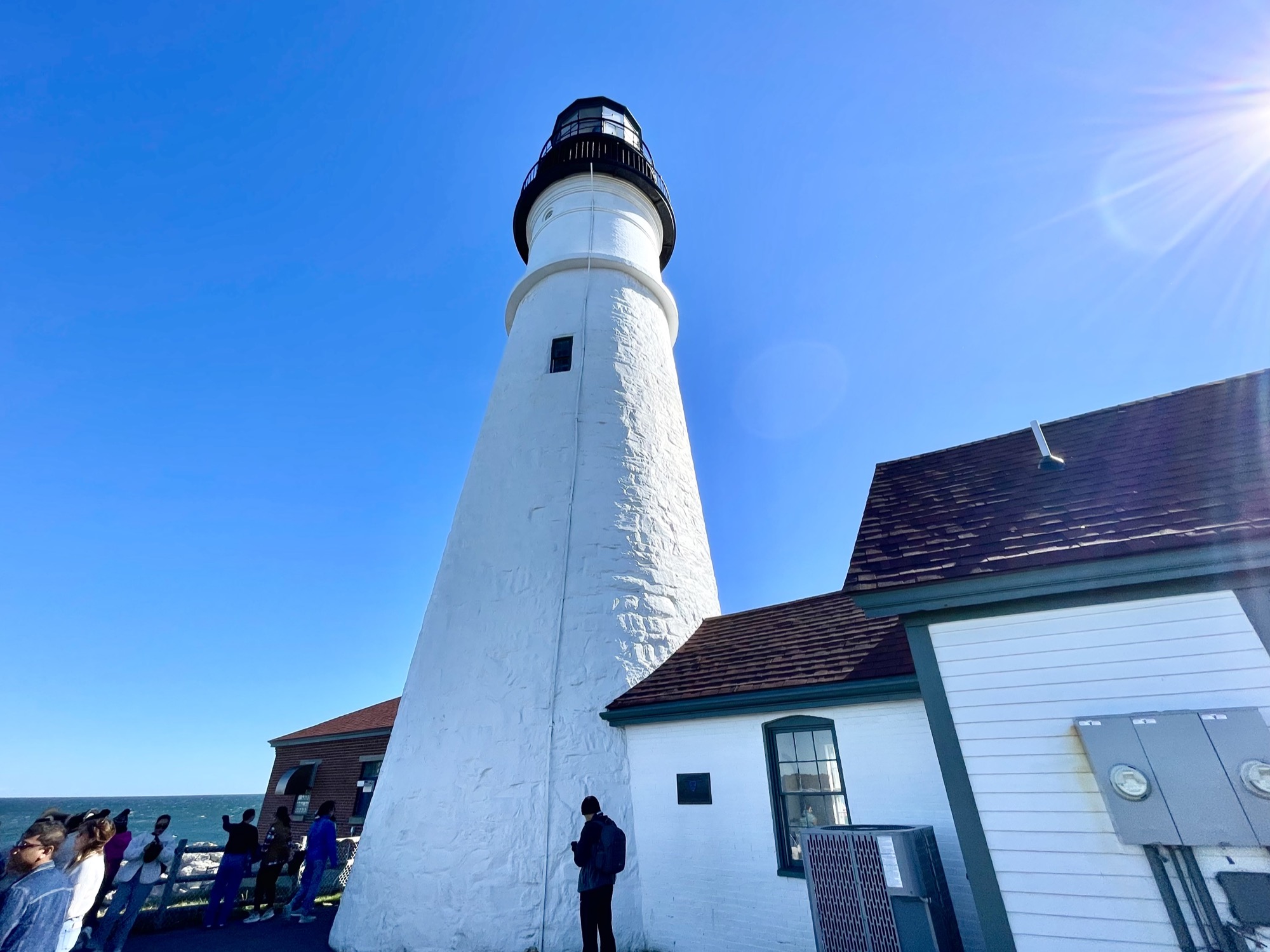
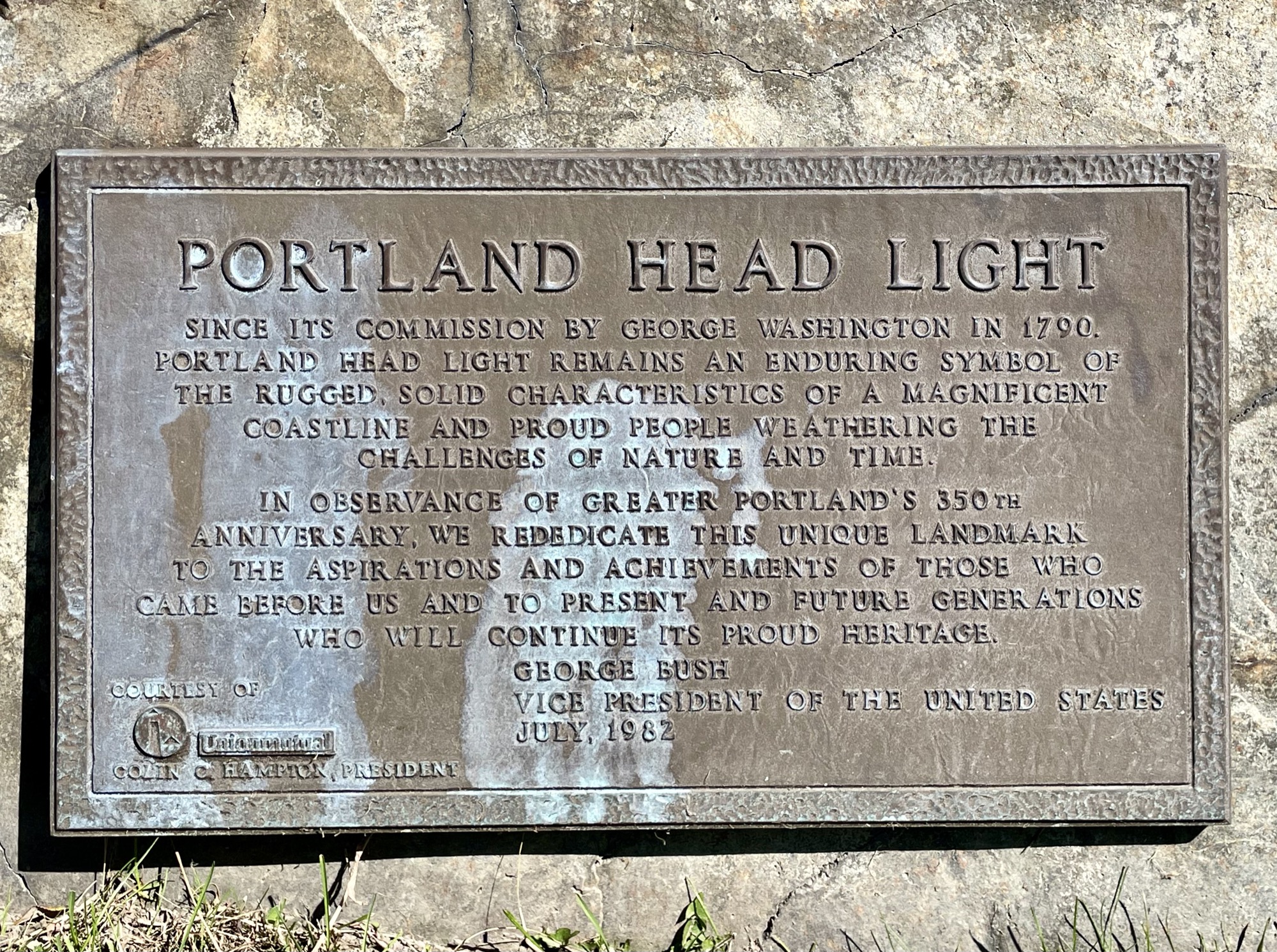
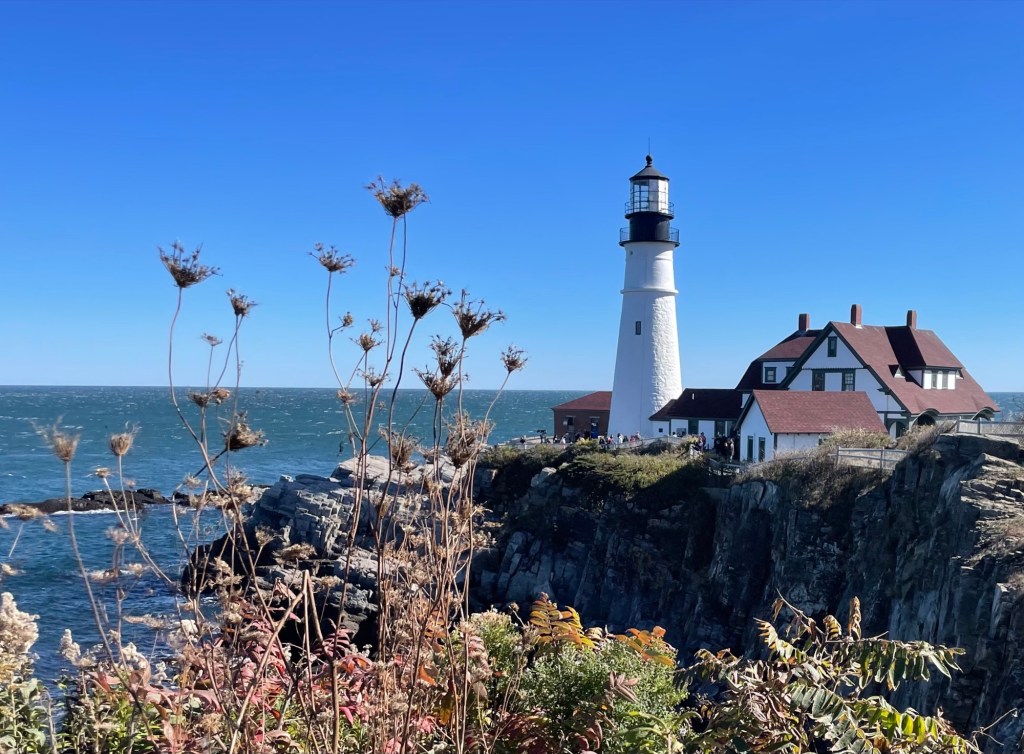
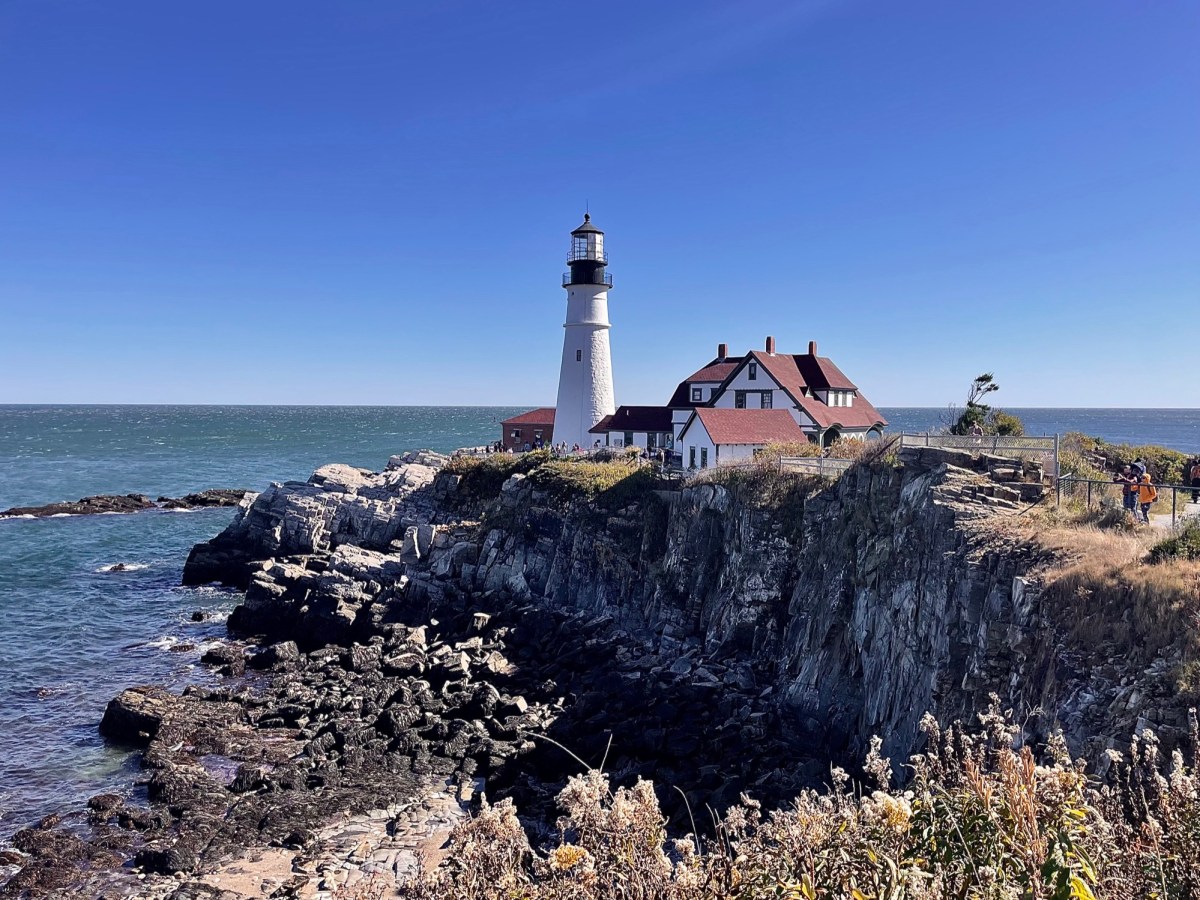
Located in Fort Williams Park, Cape Elizabeth, Portland Head Light is the oldest, most popular and iconic lighthouse of Maine. It’s the lighthouse you see in all the ads of Maine. This lighthouse was commissioned by George Washington in the 1770s to warn citizens of incoming British attacks.

Portland Head Light attracts a lot of visitors daily, but thankfully the Fort Williams grounds are large with multiple parking lots available (see map). Parking is $5 for 2 hours, paid through a machine. From the parking lot, it’s a short 2-3 minute walk to the lighthouse. You can also book a trolley tour from Portland to get here instead of driving yourself.

Here’s an overview map that shows where the parking lots are, the cliff walk (highlighted in orange), the view points, Portland Head Light, and the popular Bite Into Maine food truck.

Map edited from: https://www.mainetrailfinder.com/trails/trail/fort-williams-park-cliff-walk

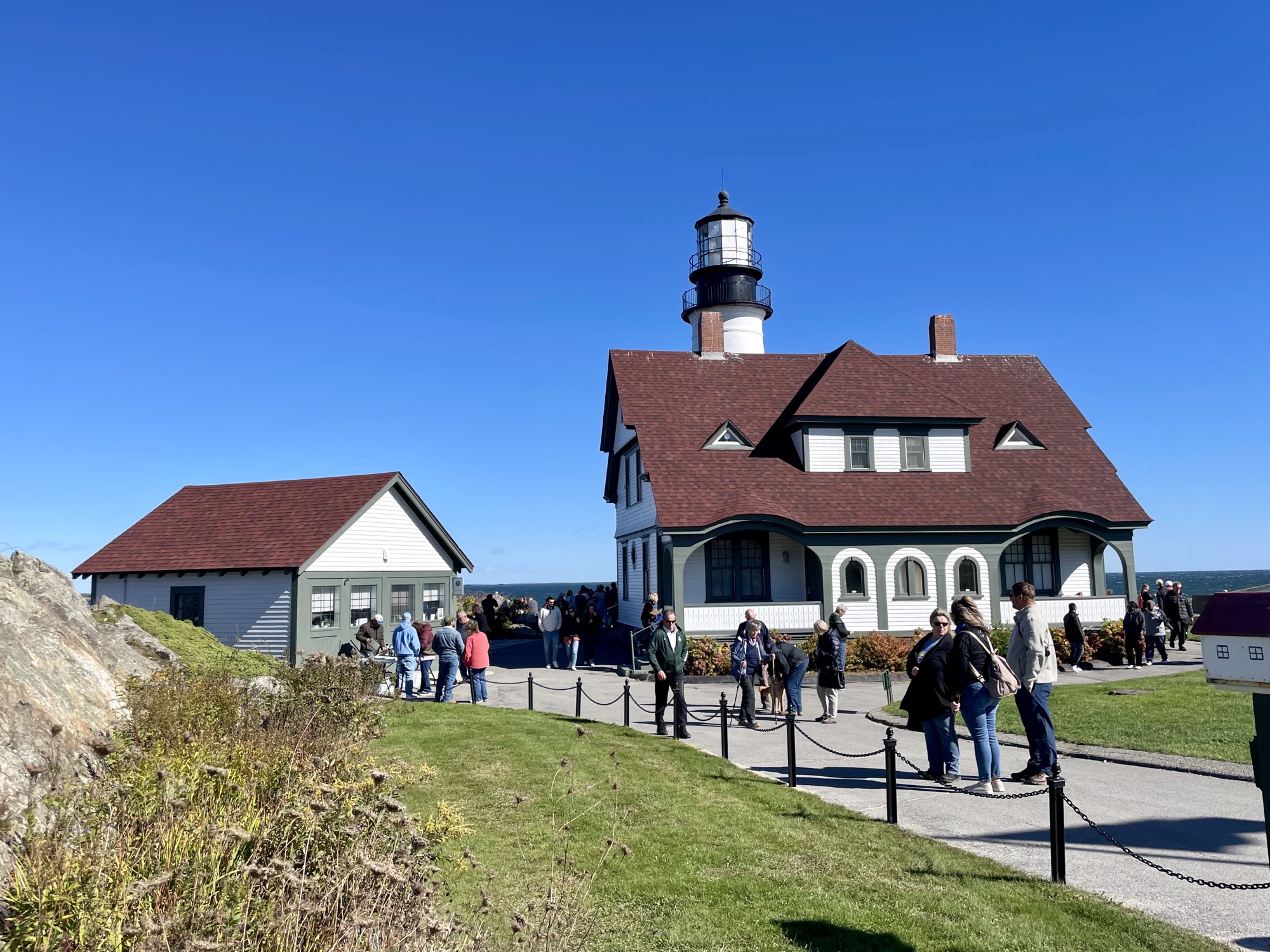
When you reach the lighthouse, you’ll see that it’s made up of the lighthouse tower itself, the keeper’s house beside the tower, and another small building beside it that’s the gift shop. The lighthouse tower is only open one day a year, on Maine Open Lighthouse Day where lighthouse towers across the state are open to the public. More information here: https://lighthousefoundation.org/maine-open-lighthouse-day/. The keeper’s house is a museum with more information of this historic landmark. Entry into the museum is $2.

Just before you reach the lighthouse, you’ll see some signs that point towards a Cliff Walk where you can follow the coast and enjoy views of the lighthouse and the rocky coast from different view points (see map).

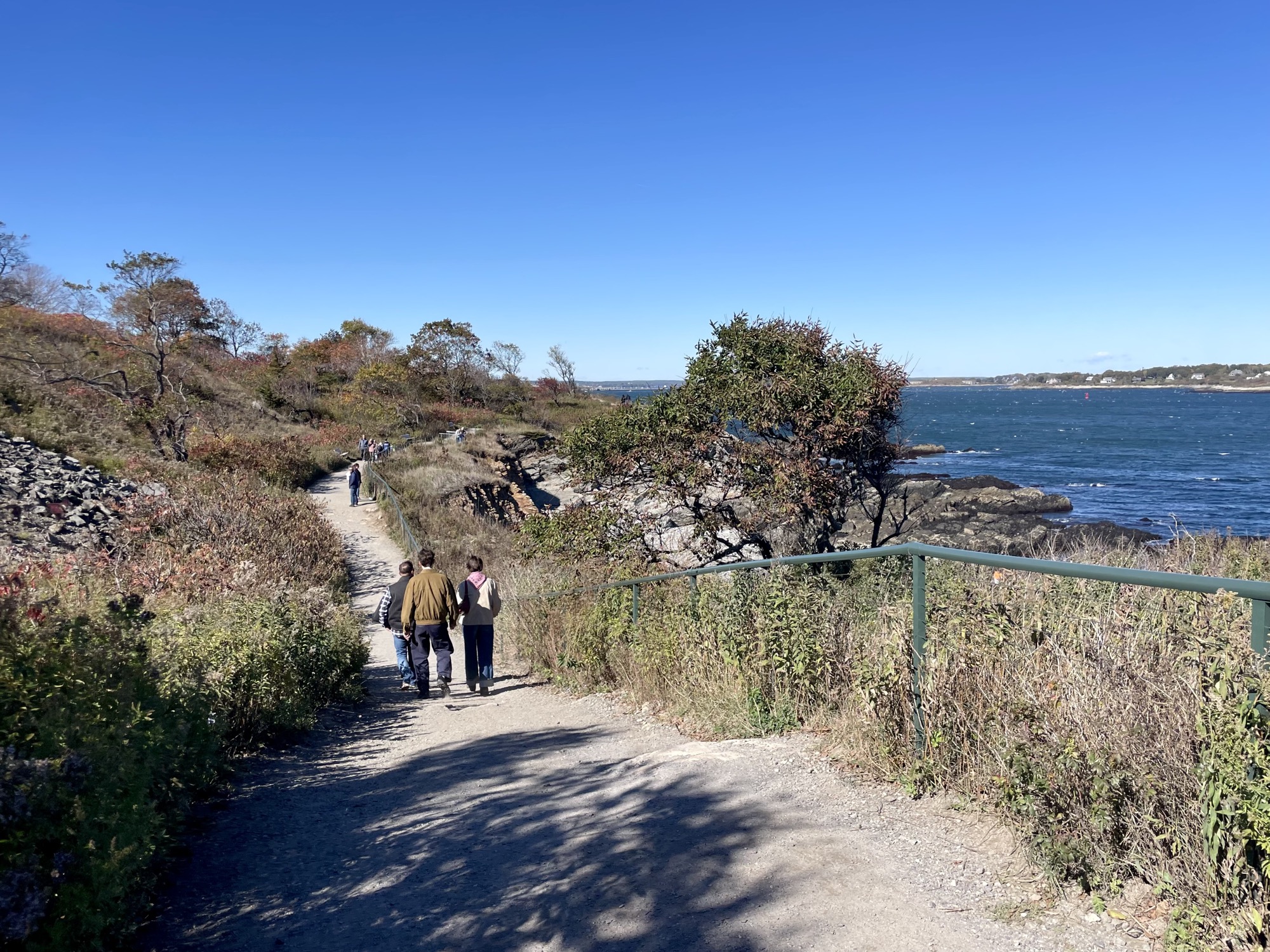
We only had time to do the start of the Cliff Walk to snap some photos of the lighthouse from the side.

As you can see from the map below, there are multiple walks you can around Fort Williams Park, but the most popular is the Cliff Walk.

The walking paths at Fort Williams Park – the Cliff Walk is the most popular. Flip this map 90˚ to match the satellite map above.

Bite Into Maine 🍴 (food truck within Fort Williams)

Address: 1000 Shore Rd, Cape Elizabeth, ME 04107

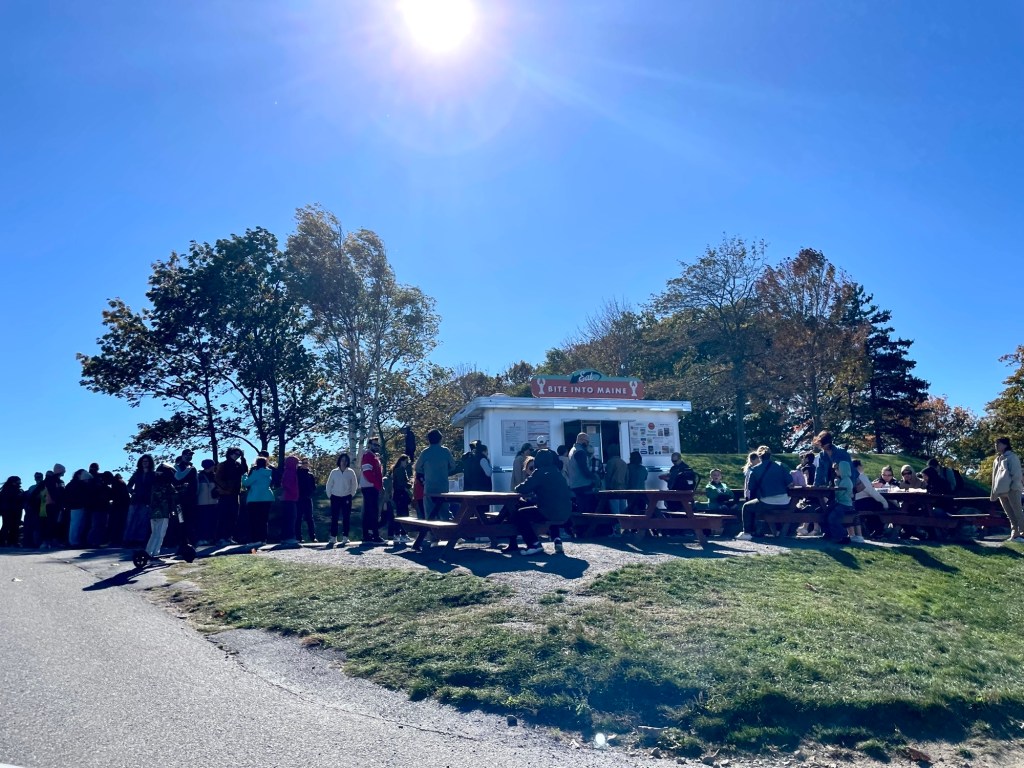
Bite Into Maine is a VERY popular food truck that is parked near Portland Head Light, beside one of the parking lots (I’ve circled it on the map above). This place was featured on an episode of ‘Somebody Feed Phil’ where he highlighted the curry lobster roll and the picnic style lobster roll (drenched in butter 🤤). When we drove past it looking for parking, there was a HUGE line of people around the truck. Unfortunately due to our tight schedule and the fact that I had no idea the line would be so long, we didn’t have time to wait.🙁 The menu looked pretty good. 💔

Lobster Shack at Two Lights 🍴

Address: 225 Two Lights Rd, Cape Elizabeth, ME 04107

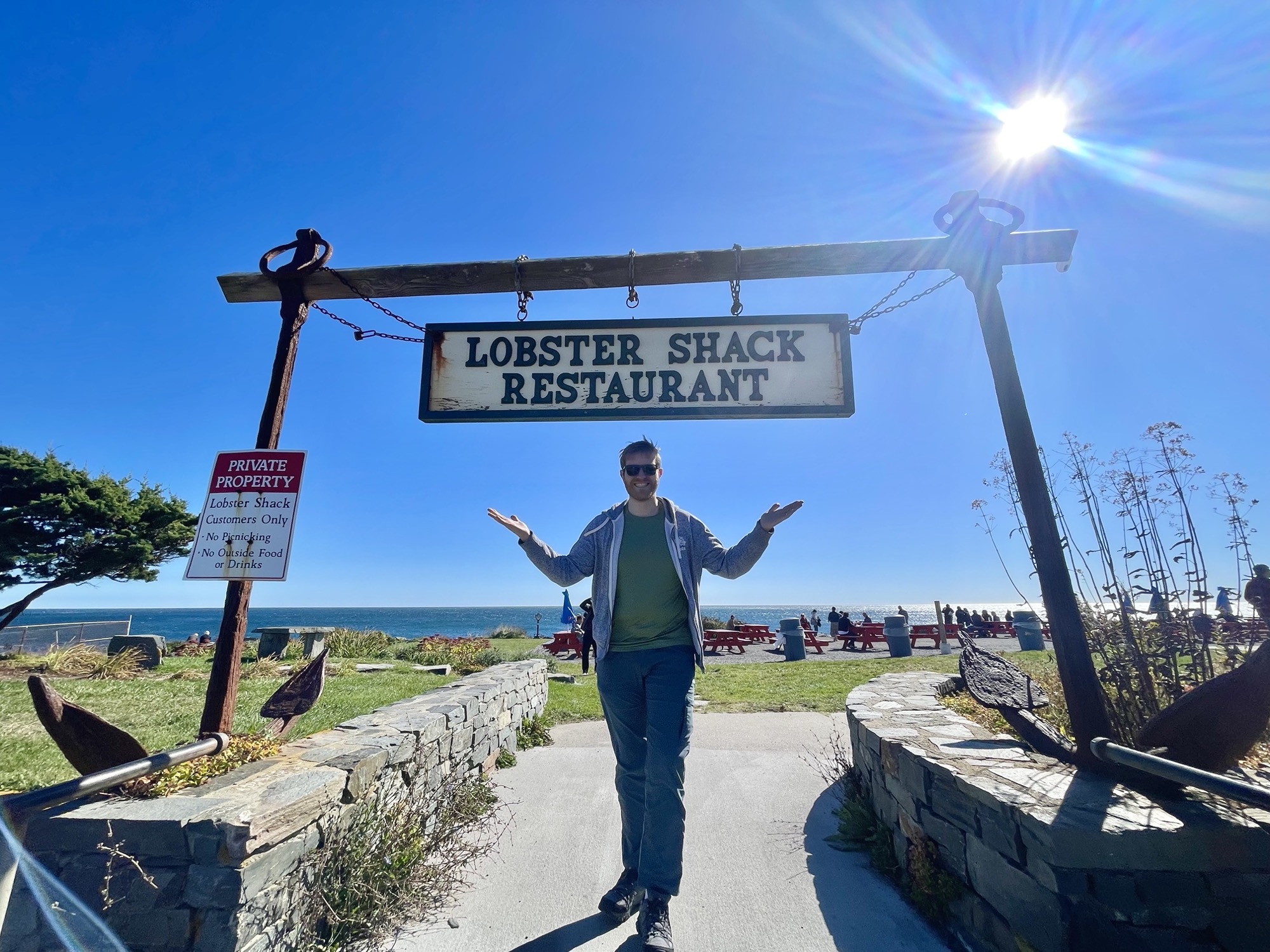
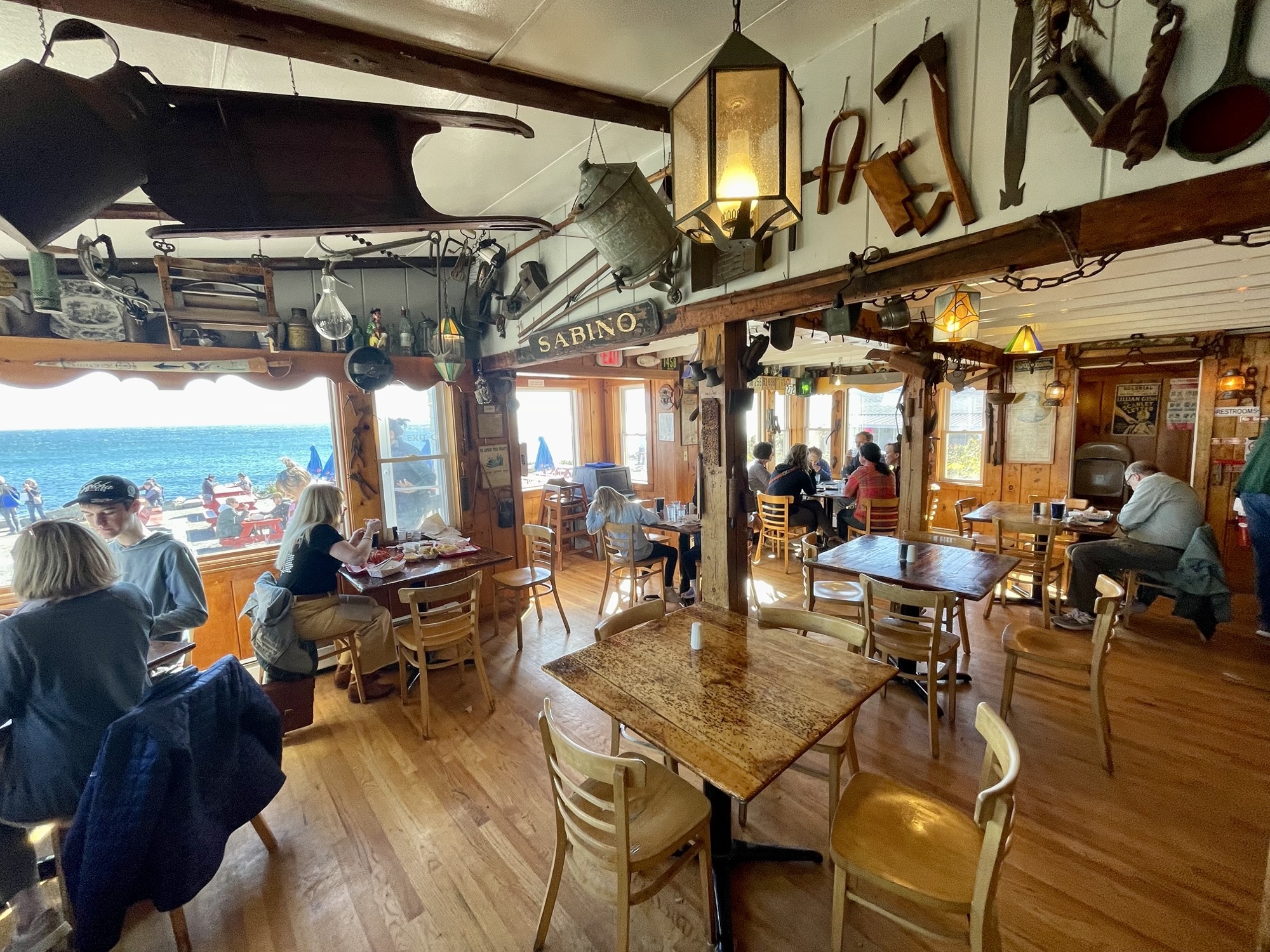
At the Southern end of Cape Elizabeth lies Two Lights State Park. This coastal park offers views of the ocean with a rocky waterfront terrain. The most popular part of the park is the Lobster Shack, which is a seafood restaurant located right beside the waters with views of the rocky beach from their abundant red picnic tables.

There’s free parking available here and plenty of seating, but it definitely gets busy. We arrived around 12:40pm and luckily we caught a gap in the lunch rush and only had 1 person in line ahead of us. By the time we finished ordering, there were at least 15 people lining up out the door.

The Lobster Shack is known for their lobster roll, fried clams, and clam chowder – of course we ordered all 3. The lobster roll was fresh and generous with the lobster meat, but at the end of the day it was still just lobster and mayonnaise – good, but nothing too special from other lobster rolls. The clam chowder was average, but the fried clams were great (get the medium size, they really pack it on). It was our first time trying fried clams and we surprisingly liked it way more than we expected!

Apart from the food, the main attraction of this place is the location with a view of the beautiful calm coast right beside you. The seafood is just a bonus!

Some Final Thoughts:

  • Prepare to wait in line if you want to dine at Bite Into Maine food truck.
  • Start your day hungry so you have space to try out both lobster places.
  • Bug light is super cute.

Hiking Acadia’s Beehive Trail: A Complete Overview


The Beehive Trail in Acadia National Park is one of the most popular hiking trails known for its stunning panoramic views and challenging vertical climbs. This guide has all the information you need to tackle this trail.

Exploring Cape Elizabeth: Iconic Lighthouses and Lobster Rolls


Cape Elizabeth, Maine, is a serene coastal town featuring iconic lighthouses, including the famous Portland Head Light and the nearby smaller Bug Light. Visitors can explore both lighthouses and enjoy renowned lobster rolls at local spots like Bite Into Maine and the Lobster Shack at Two Lights, all in half a day.

Top Things to Do in Portland, Maine: Eat, Shop, Explore


Portland, Maine, is a charming coastal city known for its vibrant shops and seafood, particularly lobster rolls. Visitors can enjoy its historic streets, numerous dining options, and attractions, including the iconic Portland Head Light. A few hours is sufficient for a quick visit, but extending to a few days allows for deeper exploration.

Mount Battie and Megunticook: Your Camden Hiking Guide


Camden Hills State Park sits just outside the small coastal town of Camden, Maine. This park has a number of hiking trails with the most popular ones being Mount Battie and Mount Megunticook. Both of these trails offer panoramic views of the ocean coast and sweeping colourful fall foliage trees below. If you’re driving through the…