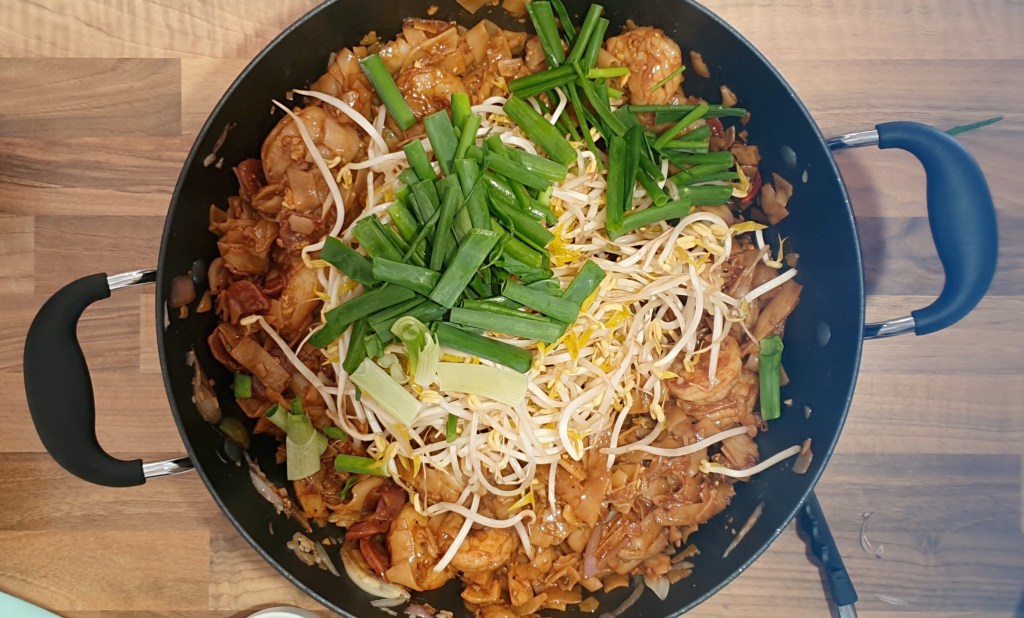
Thai Green Curry (Chicken, Beef, Fish or Veg)


Date Published: August 5th, 2020 | Last Updated: Feb 15th, 2025
Author: Abby |Category: mains, asian, < 30mins
Serves: 4-6 | Prep time: 15 mins | Cook time: 20 mins

Jump to recipe |

I can never pass up a good curry no matter the cuisine. I just love the creaminess and the intense flavours. Thai curries hold a special place in my belly, especially the green curry. The green colour comes from the use of the milder green chilli pepper, kaffir lime, cilantro/coriander and sometimes basil. I love the aroma and the fact that I can pack it full of veggies and have it all swim around in the aromatic coconut sauce.

Although the flavours are complex, making a Thai curry is actually really straight forward and simple as long as you have the green curry paste, which is where most of the flavour (and effort) comes from. I was surprised how quickly it all came together when I made it for the first time. You can buy pretty decent packaged Thai curry pastes from pretty much any supermarket these days and for pretty cheap too, but if you’re like me and have the need to conquer seemingly complex recipes, you can make your own with the green curry paste recipe. I’ve written this recipe for the intention of using the homemade curry paste, however if you want to use the canned pastes, you’ll have to “freshen” it up by sautéing in some garlic and ginger to bring the flavours out.

This recipe is easily customizable with any veggies and protein you like and in any proportion. I’ve written it based on my favourite veg to put in this curry but feel free to change it up to your liking. The beauty of this curry is that because of its strong flavours, you can also put in whatever protein you like. I’ve colour-coded the recipes so it’s easier to follow if you want to make chicken, beef or fish. The other great thing about this recipe is that it’s all done in one pot so there’s minimal clean up!

Anyways, without further ado, here’s the recipe! If you have any comments or suggestions, I’d love to hear from you in the comment section! You can follow me on instagram, youtube and facebook to see all the recipes I post!

Happy cooking!

Ingredients you’ll need:

  • 1.5 Tbsp coconut oil
  • Protein of choice: (optional)
    • Chicken: 400g (~4) skinless boneless chicken thighs (or breast), diced into bite-sized pieces or sliced thinly (depending on how you like it)
    • Beef: 400g, sliced thinly. Any steak cut will be good.
    • Fish: 400g, diced into chunks. Use whatever fish you like. I tend to like using salmon or a white fish.
    • Vegetarian: no need for meat, just add more veggies!
  • 1 Tbsp coconut oil
  • Any veggies you like in your curry. I’ve written this recipe based on my favourite veg, but feel free to change it up and do you. Just keep in mind their proportions to the chicken, otherwise you may end up with a veggie curry (which is fine too if you prefer less chicken). These are what I usually add:
    • 1 1/2 cups King oyster mushrooms, roughly chopped
    • 1 1/2 cups green beans, trimmed and snapped in halves
    • 1 cup baby corn
    • 1 1/2 cups eggplant, diced
    • 1 1/2 cups red bell peppers/capsicum, chopped
    • 10 Thai basil leaves
  • 1 cup homemade Thai green curry paste (click link for recipe)
    • Please note: this recipe was written to be used with the homemade Thai green curry paste. If you want to use canned Thai green curry paste (Maesri is the go-to brand), you’ll need to “freshen” up the paste to bring out more flavour by sautéing one can (114g) it in 3 cloves of garlic and 2 Tbsps of minced ginger. I do recommend making the curry paste yourself if you’ve got time – it’s so much more aromatic.
  • 800ml (2 cans) coconut milk
  • 1/2 Tbsp fish sauce (or more to taste)
  • Sea salt + black pepper to taste
  • Sugar to taste
  • Serve with Jasmine rice

Directions:

Prepare your protein (if using):

If using chicken:

In medium pot on MED-HIGH heat melt the coconut oil and add in the chicken pieces (you may have to do this in batches if they’re too crowded – see tip*) and cook until lightly brown on the outside. Don’t worry about it cooking all the way through – it will finish cooking in the curry.

*Tip: You want to put the chicken pieces in the pot in a single layer to sear the outside. If you overcrowd the chicken or are overlapping them, you will likely have too much liquid released and end up boiling the chicken. Depending on the size of your pot, you may have to cook it in 2 or 3 batches.

After you’ve browned all the chicken pieces, remove them from the pot and set aside.

If using beef:

In medium pot on MED-HIGH heat melt the coconut oil and add in the beef pieces and quickly cook for a few minutes until lightly brown on the outside. Don’t worry about it cooking all the way through – it will finish cooking in the curry.

After you’ve browned all the beef pieces, remove them from the pot and set aside.

If using fish:

You don’t need to do any cooking beforehand. Just have it cut up in bite-sized pieces and add it later on with the veggies.
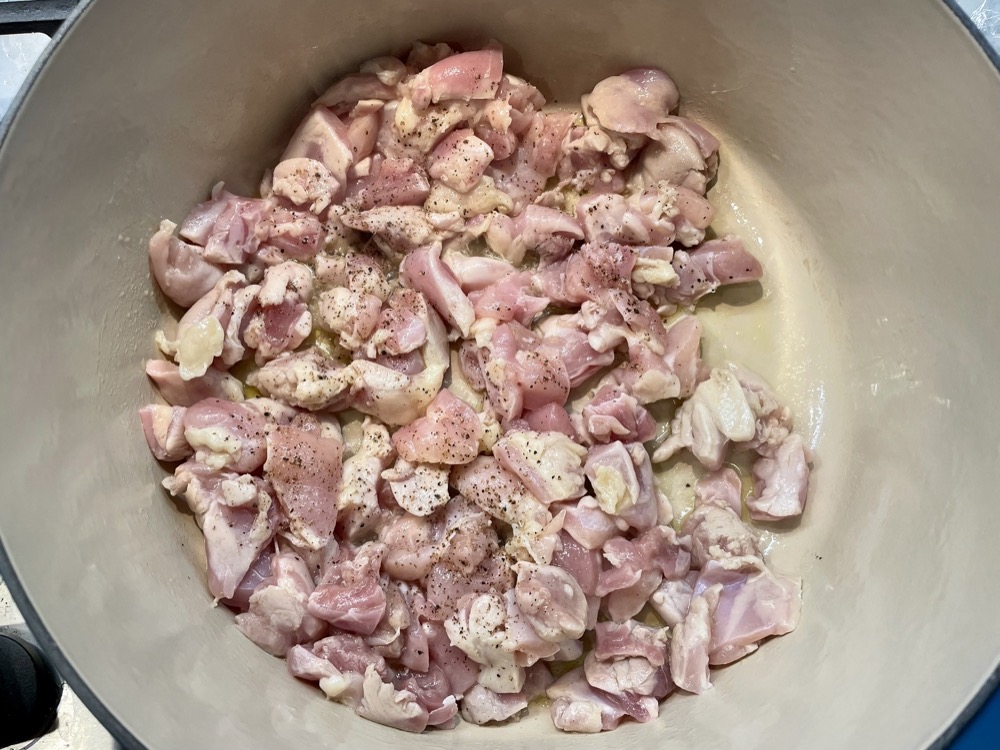
I tend to use chicken as my protein of choice

Cook your veggies: In the same pot, cook each of your desired veggies separately and set aside.

Once all your vegetables are cooked, still in the same pot on MED-HIGH heat, discard any excess liquids and melt 1 Tbsp coconut oil. Add the green curry paste and stir for a few minutes to toast the paste. When the excess liquid has evaporated and you’re left with a semi-dry paste, add in the coconut milk. Let the curry come to a boil then reduce the heat to LOW and simmer for 15 minutes.

Next, add in your cooked veggies and choice of protein (if using) and continue to cook the curry without the lid for another few minutes until your protein has fully cooked through. Turn off the heat and taste. If not salty enough add more fish sauce, add sugar if not sweet enough. Done! Serve over a bed of Jasmine rice.

Tip: If you want to turn this into a soup, add in 1 extra cup (250ml) of chicken stock. Feel free to add in some noodles too!

Summarized Recipe:

Thai Green Curry (Chicken, Beef, Fish or Veg)

Date Published: August 5th, 2020 | Last Updated: Feb 15th, 2025
Author: Abby |Category: mains, asian, < 30mins
Serves: 4-6 | Prep time: 15 mins | Cook time: 20 mins

Ingredients:

  • 1.5 Tbsp coconut oil
  • Protein of choice:
    • Chicken: 400g (~4) skinless boneless chicken thighs (or breast), diced into bite-sized pieces or sliced thinly (depending on how you like it)
    • Beef: 400g, sliced thinly. Any steak cut will be good.
    • Fish: 400g, diced into chunks. Use whatever fish you like. I tend to like using salmon or a white fish.
    • Vegetarian: no need for meat, just add more veggies!
  • 1 Tbsp coconut oil
  • 1 cup homemade Thai green curry paste (click link for recipe)
    • Please note: this recipe was written to be used with the homemade Thai green curry paste. If you want to use canned Thai green curry paste (Maesri is the go-to brand), you’ll need to “freshen” up the paste to bring out more flavour by sautéing one can (114g) it in 3 cloves of garlic and 2 Tbsps of minced ginger. I do recommend making the curry paste yourself if you’ve got time – it’s so much more aromatic.
  • 800ml (2 cans) coconut milk
  • Any veggies you like in your curry. I’ve written this recipe based on my favourite veg, but feel free to change it up and do you. Just keep in mind their proportions to the chicken, otherwise you may end up with a veggie curry (which is fine too if you prefer less chicken). These are what I usually add:
    • 1 1/2 cups King oyster mushrooms, roughly chopped
    • 1 1/2 cups green beans, trimmed and snapped in halves
    • 1 cup baby corn
    • 1 1/2 cups eggplant, diced
    • 1 1/2 cups red bell peppers/capsicum, chopped
    • 10 Thai basil leaves
  • 1/2 Tbsp fish sauce (or more to taste)
  • Sugar to taste
  • Serve with Jasmine rice

Directions:

  1. Cook your protein (if using):
    • If using chicken:
      1. In medium pot on MED-HIGH heat melt the coconut oil and add in the chicken pieces (you may have to do this in batches if they’re too crowded – see tip*) and cook until lightly brown on the outside. Don’t worry about it cooking all the way through – it will finish cooking in the curry.
        • *Tip: You want to put the chicken pieces in the pot in a single layer to sear the outside. If you overcrowd the chicken or are overlapping them, you will likely have too much liquid released and end up boiling the chicken. Depending on the size of your pot, you may have to cook it in 2 or 3 batches.
      2. After you’ve browned all the chicken pieces, remove them from the pot and set aside.
    • If using beef:
      1. In medium pot on MED-HIGH heat melt the coconut oil and add in the beef pieces and quickly cook for a few minutes until lightly brown on the outside. Don’t worry about it cooking all the way through – it will finish cooking in the curry.
      2. After you’ve browned all the beef pieces, remove them from the pot and set aside.
    • If using fish:
      • You don’t need to do any cooking beforehand. Just have it cut up in bite-sized pieces and add it later on with the veggies.
  2. Cook your veggies: In the same pot, cook each of your desired veggies separately and set aside.
  3. Once all your vegetables are cooked, still in the same pot on MED-HIGH heat, discard any excess liquids and melt 1 Tbsp coconut oil. Add the green curry paste and stir for a few minutes to toast the paste. When the excess liquid has evaporated and you’re left with a semi-dry paste, add in the coconut milk. Let the curry come to a boil then reduce the heat to LOW and simmer for 15 minutes.
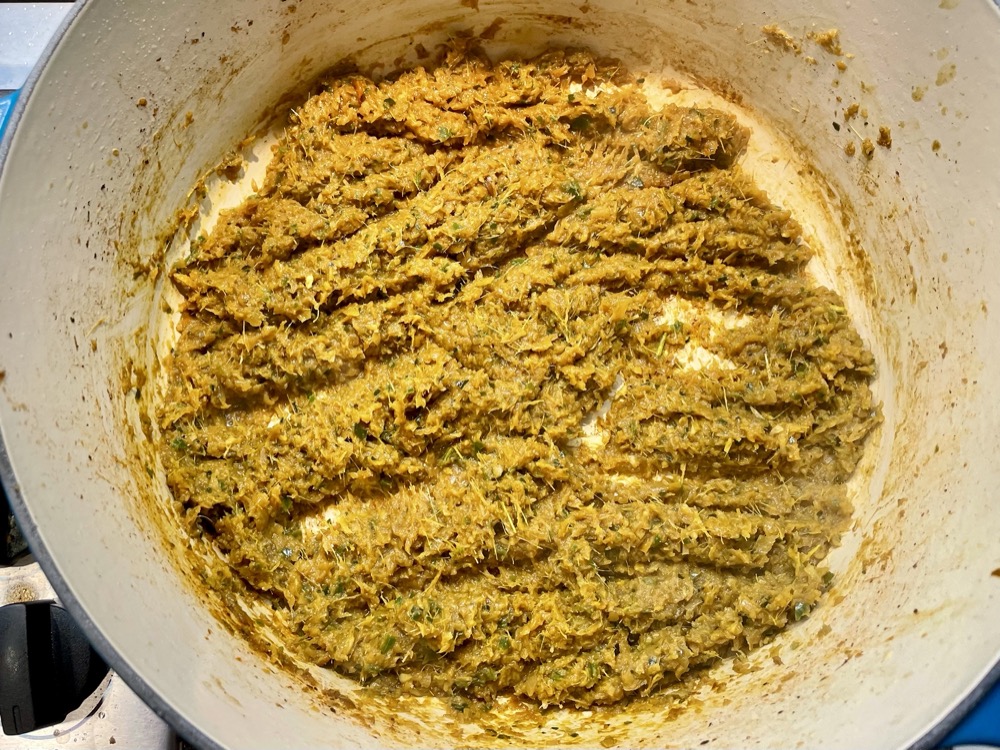
  4. Next, add in your cooked veggies and protein (if using) and continue to cook the curry without the lid for another few minutes until your protein has fully cooked through. Turn off the heat and taste. If not salty enough add more fish sauce, add sugar if not sweet enough. Done! Serve over a bed of Jasmine rice.
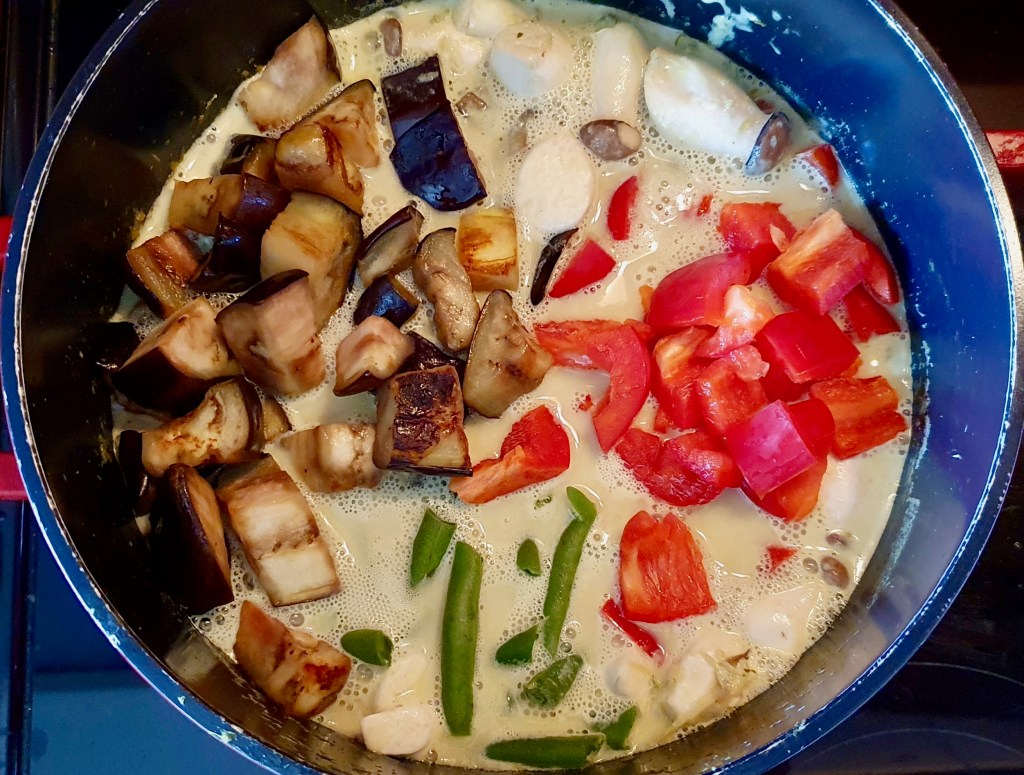
Tip: If you want to turn this into a soup, add in 1 extra cup (250ml) of chicken stock. Feel free to add in some noodles too!

Chicken Udon Stir-Fry


Date Published: August 4th, 2020 | Last Updated: August 4th, 2020
Author: Abby |Category: healthy, asian, mains
Serves: 4-6 | Prep time: 15 mins | Cook time: 20 mins

Jump to recipe |

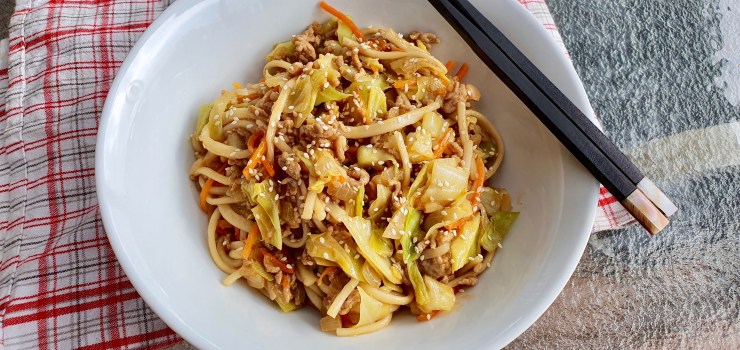
Japanese udon is one of my favourite type of noodles. There’s so much chew compared to regular noodles and makes it more satisfying to eat. This is a quick and easy stir-fry packed with chicken, cabbage, carrots and udon noodles. The crunchy cabbage and carrots with the chewiness of the udon cooked in a savoury sauce makes this dish so yum and healthy too!
This was actually one of the first things Toby made for me when we were in Bairnsdale together on a vet student placement. We agreed that we’d both start eating healthier and he surprised me with this dinner when I came home from my shift. It was the best thing to come home to especially after a long cold day. ❤️

Anyways, without further ado, here’s the recipe! If you have any comments or suggestions, I’d love to hear from you in the comment section! You can follow me on instagram, youtube and facebook to see all the recipes I post!

Happy cooking!

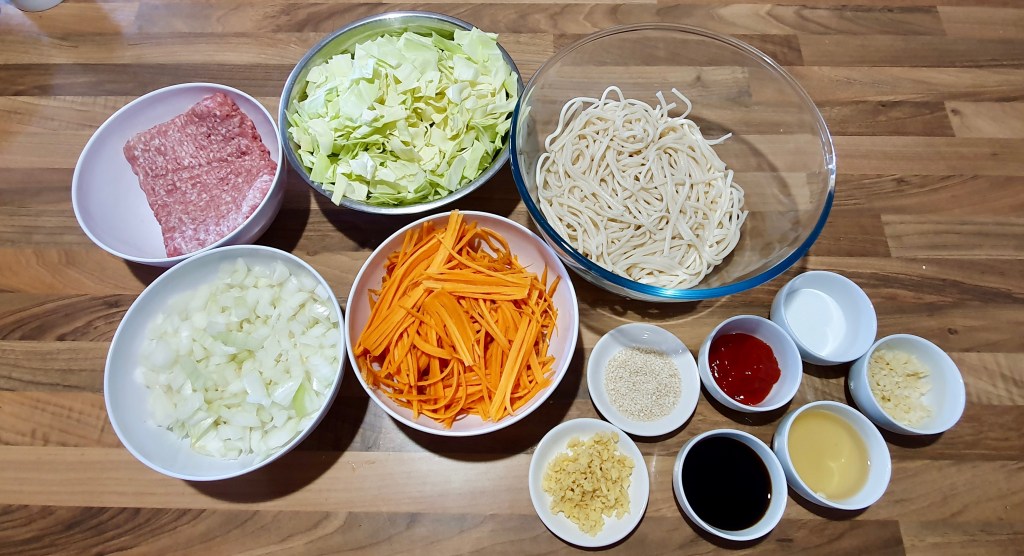
Ingredients you’ll need:

  • 500g udon noodles, cooked and drained
  • 1/3 cup light soy sauce
  • 1 Tbsp soy sauce
  • 1/3 cup mirin
  • 2 Tbsps ketchup
  • 1 Tbsp caster sugar
  • 1 Tbsp vegetable oil
  • 3 garlic cloves, minced
  • 3cm piece of ginger, peeled and minced
  • 1 large (2.5 cups) brown onions, diced
  • 500g chicken mince (or pork mince)
  • 1/4 small green cabbage, diced to 2cm pieces
  • 2 large carrots, julienned or chopped finely
  • 2 Tbsps sesame oil, to drizzle
  • White sesame seeds, to sprinkle

Directions:

If you haven’t prepared you udon noodles yet, cook them according to package instructions, then drain and rinse the noodles under cold water. Set aside.

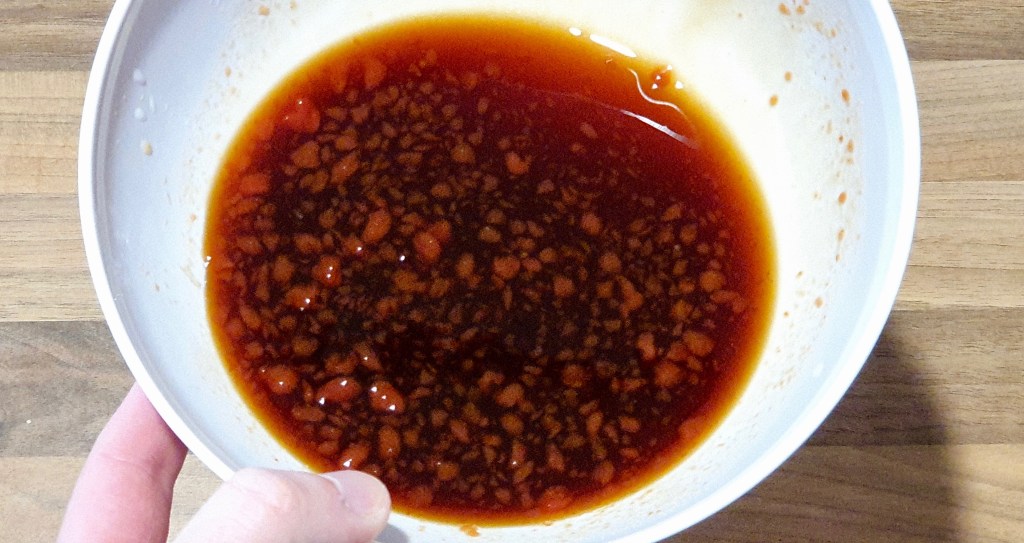
In a small bowl, make the sauce by combining: soy sauce, light soy sauce, mirin, ketchup, and sugar. Don’t worry if you have small clumps in the sauce.

Heat up a wok over high heat and add 1 Tbsp of vegetable oil and sauté the garlic, ginger and onion (in that order) for a few minutes until the onion starts to turn translucent.

Add the chicken mince to the wok and use your spatula to break up any lumps and sauté it until the chicken is mostly browned. (You do not have to cook the mince all the way through. It will finish cooking as you add the other ingredients in).

Add the cabbage and carrot to the wok. Sauté for another few minutes until the cabbage is wilted.

Add in the noodles and the sauce. Mix until combined and most of the liquids have cooked off. Turn heat off, drizzle sesame oil over the noodles and mix.

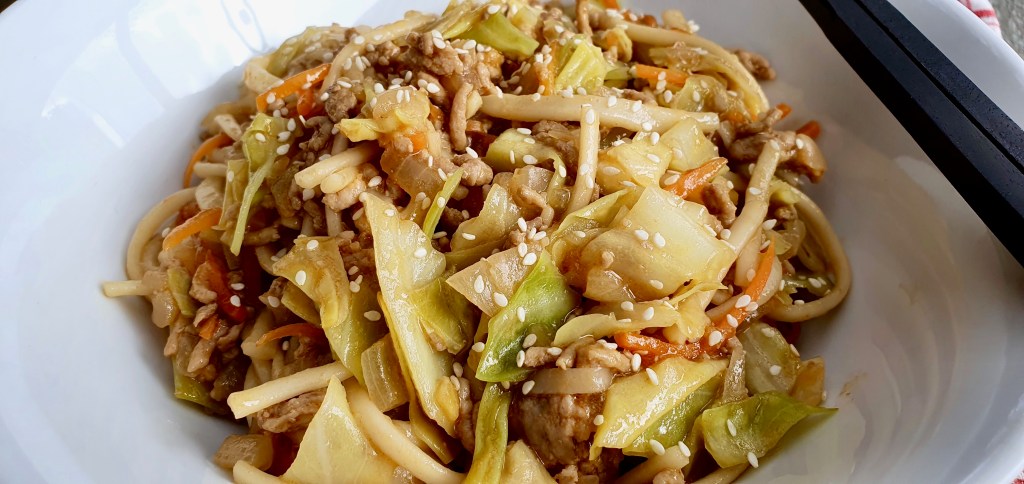
Serve noodles out and sprinkle sesame seeds over top. Enjoy!

Summarized Recipe:

Chicken Udon Stir-Fry

Date Published: August 4th, 2020 | Last Updated: August 4th, 2020
Author: Abby |Category: healthy, asian, mains
Serves: 4-6 | Prep time: 15 mins | Cook time: 20 mins

Ingredients:

  • 500g udon noodles, cooked and drained
  • 1/3 cup light soy sauce
  • 1 Tbsp soy sauce
  • 1/3 cup mirin
  • 2 Tbsps ketchup
  • 1 Tbsp caster sugar
  • 1 Tbsp vegetable oil
  • 3 garlic cloves, minced
  • 3cm piece of ginger, peeled and minced
  • 1 large (2.5 cups) brown onions, diced
  • 500g chicken mince (or pork mince)
  • 1/4 small green cabbage, diced to 2cm pieces
  • 2 large carrots, julienned or chopped finely
  • 2 Tbsps sesame oil, to drizzle
  • White sesame seeds, to sprinkle

Directions:

  1. If you haven’t prepared you udon noodles yet, cook them according to package instructions, then drain and rinse the noodles under cold water. Set aside.
  2. In a small bowl, make the sauce by combining: soy sauce, light soy sauce, mirin, ketchup, and sugar.
  3. Heat up a wok over high heat and add 1 Tbsp of vegetable oil and sauté the garlic, ginger and onion (in that order) for a few minutes until the onion starts to turn translucent.
  4. Add the chicken mince to the wok and use your spatula to break up any lumps and sauté it until the chicken is mostly browned. (You do not have to cook the mince all the way through. It will finish cooking as you add the other ingredients in).
  5. Add the cabbage and carrot to the wok. Sauté for another few minutes until the cabbage is wilted.
  6. Add in the noodles and the sauce (made in step 2). Mix until combined and most of the liquids have cooked off. Turn heat off, drizzle sesame oil over the noodles and mix.
  7. Serve noodles out and sprinkle sesame seeds over top. Enjoy!

Legit Vietnamese Pho


Date Published: August 3rd, 2020 | Last Updated: Jan 5th, 2025
Author: Abby |Category: asian, mains, soup
Serves: 4-6 | Prep time: 20 mins | Cook time: 4-8 hours

Jump to recipe |

Pho (pronounced ‘fuh’) is a traditional Vietnamese dish. It’s a delicious flavourful beef (or chicken) broth stewed for hours and served with rice vermicelli, bean sprouts, Thai basil, and beef slices. It’s not super traditional, but I always eat pho with a HEALTHY amount of hoisin sauce. I had a friend put hoisin directly into the broth, but I like to make a perfect spoonful of broth, noodles and then dip a slice of beef in hoisin sauce and eat it all in one delicious bite. The beef slices are usually served raw and the hot broth cooks it when ladled into the bowl. [Side story: Every time I order pho, my mother would always immediately tell me to quickly dunk the beef slices and bean sprouts to the bottom of the bowl so it can cook right away before the broth cools. We’ve ordered this dish for years and she’ll still say it every time without fail – now I hear this every time I eat pho.] You can order other versions of pho served with chicken, pork balls, brisket, tripe…etc, but raw beef pho will always be my go-to.

Side story: Pho is very nostalgic for me. When my family immigrated to Canada, my parents made my siblings and I go to “Chinese school” every Saturday morning continue our Asian studies. I hated going. The school was nearly an hour drive away and we had to get up crazy early every Saturday morning for 3 hours of lessons. Class finished at 12pm and I was always SO hungry counting down the hours until lunch. The only good thing about driving so far was the food afterwards. In our hometown there wasn’t a very big Asian population, which translates to not a lot of good Asian food – but in Mississauga (the city where the classes were), the majority of the population was Asian which meant legit good Asian food EVERYWHERE. We’d most often go to this Vietnamese restaurant in a shopping mall where my mom would pick up some groceries and a free weekly Chinese newspaper. Their pho was insanely good and they had melt-in-your-mouth brisket. I’d always forget to ask for no coriander so I would spend 15 minutes picking out every little piece of finely chopped coriander before I would start eating – but it was worth it even if my soup was a little cold. A few years later a Vietnamese restaurant opened up near our home and we pretty much went there all the time – what’s even better was that there as also an Asian grocer in the mall where my mom could continue to do her shopping and get her weekly Chinese newspaper. Now that we’ve all gone our separate ways, every time I eat pho it transports me back to those days with my family.

Strap in, because this soup takes a long time to make. The majority of the work is waiting to let the soup simmer but the actual process is really quite easy. The longer you cook the soup, the stronger the flavours will be. I’d recommend even starting this recipe the evening before and let it simmer overnight so it’ll be ready for lunch the next day (warning: make this on a full stomach because the amazing aromas of this soup will make you hangry). There are lots of quick shortcut versions of this soup out there, but I feel like I won’t do this dish justice if I don’t put in the extra effort and make it legit for maximum flavour. I’ve adapted this recipe from RecipeTinEats and made some changes in regards to ingredients and cooking times, but the gist of it is similar.

Anyways, without further ado, here’s the recipe! If you have any comments or suggestions, I’d love to hear from you in the comment section! You can follow me on instagram, youtube and facebook to see all the recipes I post!

Happy cooking!

Ingredients you’ll need:

Beef Mix: You’ll need a good mix of beef meat and bones to create the wonderful flavours of the broth. Each type of beef has their role:

  • 2kg beef brisket – the most important player which adds the most beef flavour to the broth (top left in the photo)
  • 1kg meaty beef bones (ie vertebrae, ox tail) – you can use any bones that have a decent amount of meat attached to them. This adds additional beefy flavours and richness (bottom left in the photo)
  • 750g marrow bones (ie femur/leg, knuckle) cut into fist-sized pieces to reveal the marrow (your butcher can do this for you) – the marrow cooks out into the broth and gives it a fatty richness (too many marrow bones will result in a greasy broth) (right side of the photo)
    • Note: the marrow bones in the top right corner of the photo are too big. I forgot to ask the butcher to cut them smaller and didn’t realize until I got home, heh. You want pieces similar to the bottom right corner with marrow exposed.

Spices, Aromatics & Seasoning: these give the broth the signature pho aroma and flavour.

  • 10 star anise
  • 4 cinnamon sticks
  • 4 cardamon pods
  • 3 cloves
  • 1.5 Tbsp coriander seeds
  • 2 tsp fennel seeds
  • 2 large onions, halved and peeled
  • 150g ginger, sliced and unpeeled
  • 2 Tbsp white sugar
  • 1 Tbsp salt
  • 2 Tbsp fish sauce (or more, to taste)

  • The Rest:
    • 375g (1 package) of rice sticks/vermicelli
    • 300g beef tenderloin, raw, very thinly sliced – or any steak cut will do since it can be pricey
      • This will be plated raw in the bowl with the rest of the toppings and the heat of the soup will cook the tenderloin to a perfect med-rare to medium, therefore it’s very important to slice it as thin as you can, otherwise it won’t cook enough. Keeping it in the freezer for 30 mins before slicing will make it easier to slice. Alternatively if you’re struggling to slice it thin or prefer not the serve raw beef, you can slice it thicker and cook it in the broth for 10-20 seconds before serving it in the bowl.
    • Beansprouts, handful per bowl
    • Thai basil, 3 – 5 sprigs per bowl
    • Lime wedges
    • Hoisin sauce
    • Sriracha chilli sauce (or any chilli sauce)
    • Optional: finely sliced red chilli (for garnish)
    • Optional: chopped cilantro/coriander (for garnish) – confession: I hate coriander with such a passion that I debated whether or not I should mention it in this recipe. I decided to include it for the sake of authenticity. It’s nasty AF so every time I make this for people, I never include coriander 😜.

Directions:

Clean the meat: (two methods) Cleaning the beef and bones gives you a clear broth and rids the impurities.

You’ll be amazed how much scum comes off in just 5 minutes! Strain and wash all of this away for a clear broth.

Method 1: Place the brisket and bones in a large pot and boil them in water for 5 minutes then drain to remove all the scum/impurities. Rinse each piece of meat and bone with tap water before replacing back in a clean pot.

Method 2: Turn your oven to 220 (usually the highest it’ll go) and bake your bones for 10 minutes, then rinse each piece under running water before putting it in a clean pot.

Toast the spices: In a dry skillet over HIGH heat (no oil needed), toast your spices (cinnamon stick, coriander stick, star anise, fennel seeds, and cardamom pods) for a few minutes until lightly brown and fragrant. Remove from pan and set aside.

Char the onion & ginger: Then in the same pan on HIGH heat (still no oil needed), char the onion and ginger for a few minutes until you get black charred bits on both sides (see photo). Remove from the pan and set aside. If your char is excessively black, scrape it off so it doesn’t discolour your broth.

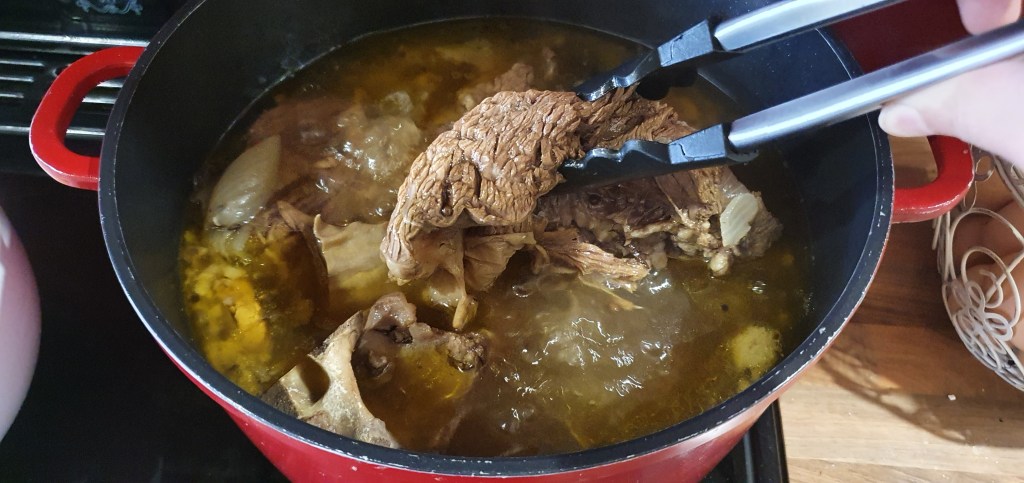
Make the broth: in a large clean pot, add the cleaned bones and brisket, toasted spices, charred onion and ginger, sugar and salt. Add enough water to just cover all the ingredients. With a lid on, bring the soup to a boil then let it simmer for 3 hours until the brisket is tender, flakey and falls apart easily (see video below).

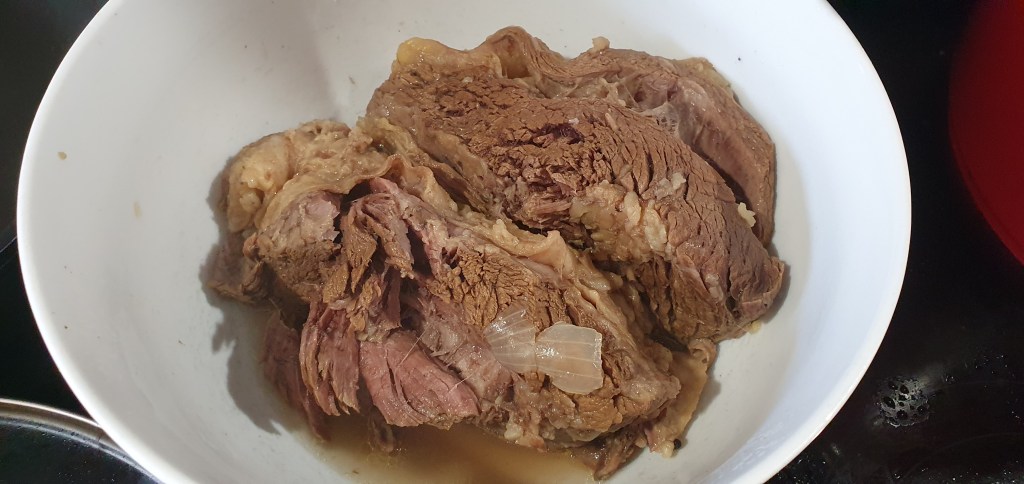
When the brisket is tender, remove it from the soup and set it aside (you can slice up the brisket to be served in the pho later on or refrigerate and use it for another recipe later).

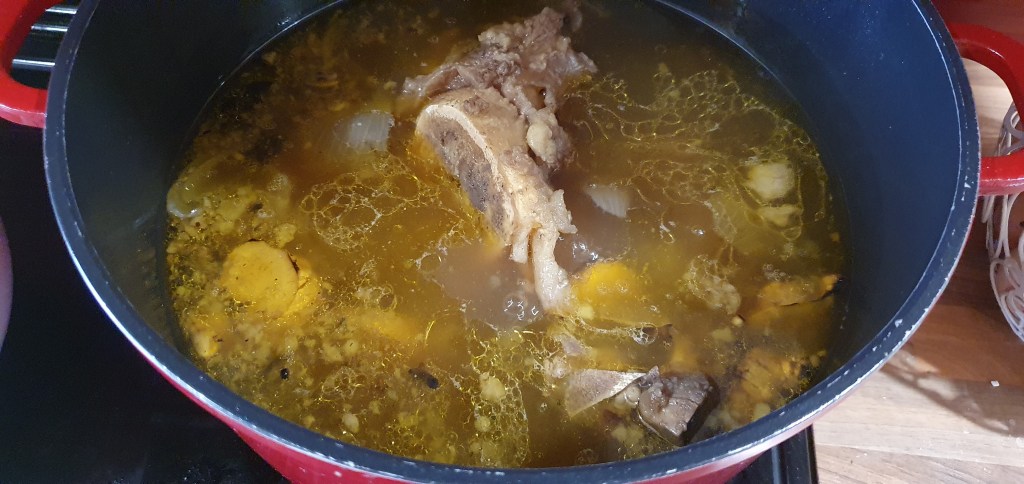
Continue to simmer the broth with the lid on for another 2-6 hours (the longer you simmer the broth, the richer the flavour – you can even simmer it overnight on low heat). Skim away any scum as they float to the top.

Slice the tenderloin: While the soup simmers, you can thinly slice your raw tenderloin. Remember, this will be plated raw in the bowl with the rest of the toppings and the heat of the soup will cook the tenderloin to a perfect med-rare to medium, therefore it’s very important to slice it as thin as you can, otherwise it won’t cook enough. Keeping it in the freezer for 30 mins before slicing will make it easier to slice. Alternatively if you’re struggling to slice it thin or prefer not the serve raw beef, you can slice it thicker and cook it in the broth for 10-20 seconds before serving it in the bowl. After slicing, keep it covered in the fridge until you’re ready to serve.

Cook the rice noodles: cook the rice noodles according to package instructions half an hour before you’re ready to serve then strain and rinse under cold water. Set aside.

Reduce the broth: After simmering, taste the broth. If you’re happy with the flavours, you can turn off the heat now and skim off any excess oil and scum floating on top. Don’t remove too much oil because this also adds richness to the broth. If you want it more concentrated, remove the lid and continue to simmer the soup until it reduces by 1/3 (~ another 45mins).

Strain the broth: strain the soup in a mesh strainer to remove all the bones, ginger, garlic, spices…etc. You should be left with a beautiful broth. Taste and add extra fish sauce (or salt) or sugar to taste. Put the broth back in a clean pot and bring it to a boil before you serve it. You want the broth to be really hot so that it cooks the raw beef when ladled over it.

Assemble the pho bowl: in a bowl, put in one serving of rice noodles, a few slices of the beef brisket, a few slices of the raw tenderloin, small handful of raw bean sprouts and a sprig of Thai basil (6-is 8 leaves). Make sure your soup is hot (if not, then bring to a boil over the stove) before you put it in the bowl over the ingredients. You can alternatively cook the tenderloin for 10-20 seconds in the broth first then place it in the bowl instead of serving it raw.

Serve it with a lime wedge, hoisin sauce and sriracha sauce on the side.

Summarized Recipe:

Legit Vietnamese Pho

Date Published: August 3rd, 2020 | Last Updated: Jan 5th, 2025
Author: Abby |Category: asian, mains, soup
Serves: 4-6 | Prep time: 20 mins | Cook time: 4-8 hours

Ingredients:

  • Beef Mix:
    • 2kg beef brisket
    • 1kg meaty beef bones (ie vertebrae, ox tail)
    • 750g marrow bones (ie femur/leg, knuckle) cut into fist-sized pieces to reveal the marrow (your butcher can do this for you)
  • Spices, Aromatics & Seasoning:
    • 10 star anise
    • 4 cinnamon sticks
    • 4 cardamon pods
    • 3 cloves
    • 1.5 Tbsp coriander seeds
    • 2 tsp fennel seeds
    • 2 large onions, halved and peeled
    • 150g ginger, sliced and unpeeled
    • 2 Tbsp white sugar
    • 1 Tbsp salt
    • 2 Tbsp fish sauce (or more, to taste)
  • The Rest:
    • 375g (1 package) of rice sticks/vermicelli
    • 300g beef tenderloin, raw, very thinly sliced – or any steak cut will do since it can be pricey
    • Beansprouts, handful per bowl
    • Thai basil, 3 – 5 sprigs per bowl
    • Lime wedges
    • Hoisin sauce
    • Sriracha chilli sauce (or any chilli sauce)
    • Optional: finely sliced red chilli (for garnish)
    • Optional: chopped cilantro/coriander (for garnish)

Directions:

  1. Clean the meat: (two methods) Cleaning the beef and bones gives you a clear broth and rids the impurities.
    • Method 1: Place the brisket and bones in a large pot and boil them in water for 5 minutes then drain to remove all the scum/impurities. Rinse each piece of meat and bone with tap water before replacing back in a clean pot.
    • Method 2: Turn your oven to 220 (usually the highest it’ll go) and bake your bones for 10 minutes, then rinse each piece under running water before putting it in a clean pot.
  2. Toast the spices: In a dry skillet over HIGH heat (no oil needed), toast your spices (cinnamon stick, coriander stick, star anise, fennel seeds, and cardamom pods) for a few minutes until lightly brown and fragrant. Remove from pan and set aside.
  3. Char the onion & ginger: Then in the same pan on HIGH heat (still no oil needed), char the onion and ginger for a few minutes until you get black charred bits on both sides. Remove from the pan and set aside. If your char is excessively black, scrape it off so it doesn’t discolour your broth.
  4. Make the broth: in a large clean pot, add the cleaned bones and brisket, toasted spices, charred onion and ginger, sugar and salt. Add enough water to just cover all the ingredients. With a lid on, bring the soup to a boil then let it simmer for 3 hours until the brisket is tender, flakey and falls apart easily.
  5. When the brisket is tender, remove it from the soup and set it aside (you can slice up the brisket to be served in the pho later on or refrigerate and use it for another recipe later).
  6. Continue to simmer the broth with the lid on for another 2-6 hours (the longer you simmer the broth, the richer the flavour – you can even simmer it overnight on low heat). Skim away any scum as they float to the top.
  7. Slice the tenderloin: While the soup simmers, you can thinly slice your raw tenderloin (tip: freeze it for 30 mins will make it easier to slice). Alternatively, you can slice it thicker and cook it in the broth for 10-20 seconds before serving it in the bowl. After slicing, keep it covered in the fridge until you’re ready to serve.
  8. Cook the rice noodles: cook the rice noodles according to package instructions half an hour before you’re ready to serve then strain and rinse under cold water. Set aside.
  9. Reduce the broth: After simmering, taste the broth. If you’re happy with the flavours, you can turn off the heat now and skim off any excess oil and scum floating on top. Don’t remove too much oil because this also adds richness to the broth. If you want it more concentrated, remove the lid and continue to simmer the soup until it reduces by 1/3 (~ another 45mins).
  10. Strain the broth: strain the soup in a mesh strainer to remove all the bones, ginger, garlic, spices…etc. You should be left with a beautiful broth. Taste and add extra fish sauce (or salt) or sugar to taste. Put the broth back in a clean pot and bring it to a boil before you serve it. You want the broth to be really hot so that it cooks the raw beef when ladled over it.
  11. Assemble the pho bowl: in a bowl, put in one serving of rice noodles, a few slices of the beef brisket, a few slices of the raw tenderloin, small handful of raw bean sprouts and a sprig of Thai basil (6-is 8 leaves). Make sure your soup is hot (if not, then bring to a boil over the stove) before you put it in the bowl over the ingredients. You can alternatively cook the tenderloin for 10-20 seconds in the broth first then place it in the bowl instead of serving it raw. Serve it with a lime wedge, hoisin sauce and sriracha sauce on the side.

Baked Chicken Katsu


Date Published: August 1st, 2020 | Last Updated: August 1st, 2020
Author: Abby |Category: asian, mains, easy, low-cal
Serves: 4-6 | Prep time: 15 mins | Cook time: 30 mins

Jump to recipe |

NOM NOM NOM I LOVE KATSU. When Toby and I head out to a Japanese restaurant, katsu is usually one of our go-to items to order (second to ramen, of course).

If you’re not familiar with katsu, it’s essentially a Japanese version of a schnitzel topped with an iconic tonkatsu sauce. A katsu is made with either chicken (breast or thigh) or a pork cutlet (called tonkatsu). The breading is made with panko (Japanese breadcrumbs) rather than traditional breadcrumbs which results in a lighter, flakier, and crispier texture.

I’m not a fan of deep-frying things at home because a) you need to use so much oil, b) it pains me to waste all that oil for one dish, c) health reasons, and d) the clean up afterwards from oil splatters. Don’t get me wrong, I love having the occasional take-away fried foods, but I just really dislike deep-frying things at home. This was the reason why I never tried to make katsu at home and save it for restaurant outings until now! I stumbled across this recipe from Just One Cookbook (which is filled with amazing Japanese recipes btw and defs worth checking out) and I was skeptical if it would be as good as the real deep-fried thing. For the sake of science, experimentation, and the quest to making great food, I made both versions: one deep-fried one and one baked.

I’m VERY happy to report that the baked version was unanimously favoured over the deep-fried version. Who would’ve thought!? The baked version had a crispier texture with better crunch and was (obviously) less oily than the deep-fried version. The colour wasn’t as dark, but that’s easily solved by pre-toasting the breadcrumbs for the baked version.

Overall this recipe was surprisingly easy and quick with very minimal prep work. It’s rare that I can cook up a dish without having to do any chopping. Best of all, it’s also relatively low in calories too (under 300 calories per serving!). This recipe definitely makes the top 20 list in my books.

Anyways, without further ado, here’s the recipe! If you have any comments or suggestions, I’d love to hear from you in the comment section! You can follow me on instagram, youtube and facebook to see all the recipes I post!

Happy cooking!

Ingredients you’ll need:

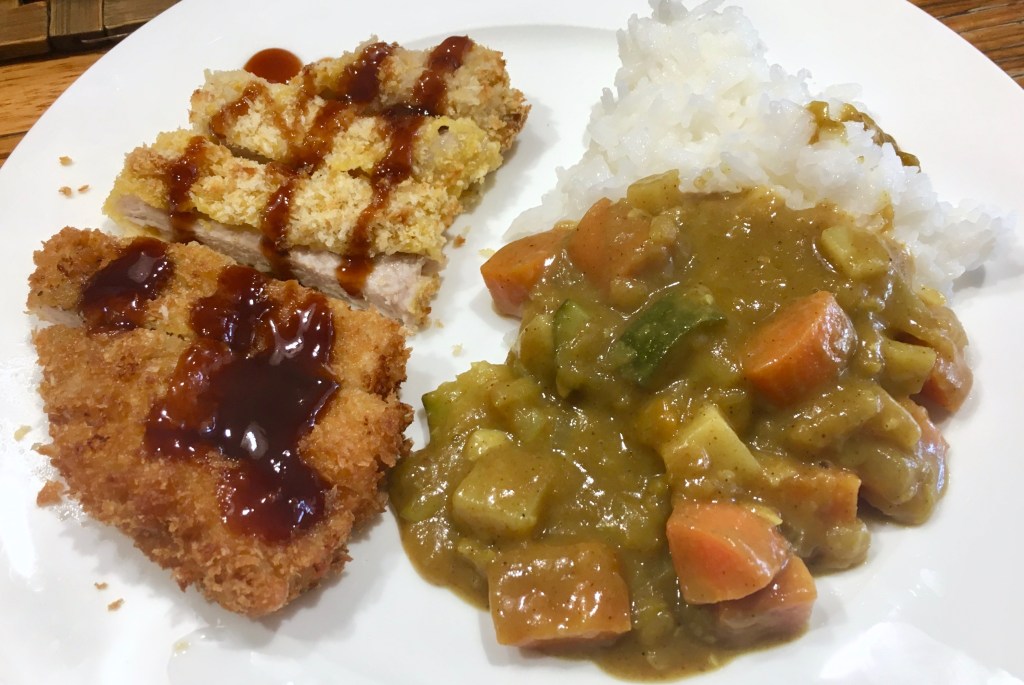
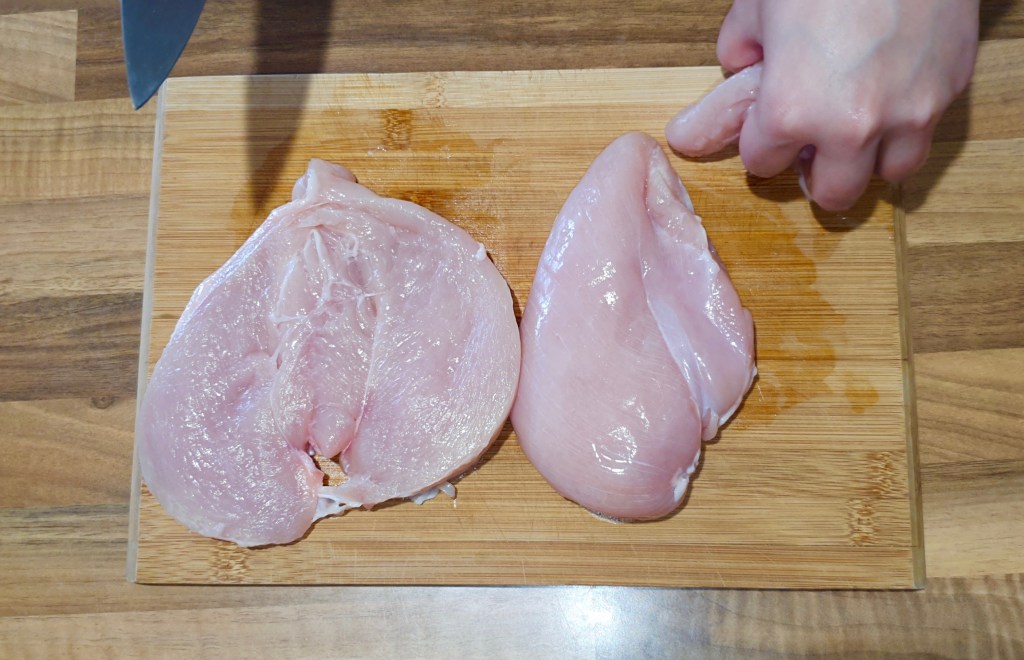
  • 4 chicken breasts, butterflied (note: one chicken breast makes a pretty large portion once you butterfly it (see finished photo) so I usually aim for 3/4 of a breast per person (unless you’ve got a big appetite) which is why I’ve written 4-6 servings for this recipe)
    • This recipe works well with chicken thighs or boneless pork loin chops as well (pound the chops to ~1.2cm thick)
  • salt & ground black pepper
  • 2 Tbsp extra virgin olive oil
  • 2 cups panko (Japanese breadcrumbs)
  • 4 Tbsp all-purpose flour (plain flour)
  • 2 large egg, beaten

Directions:

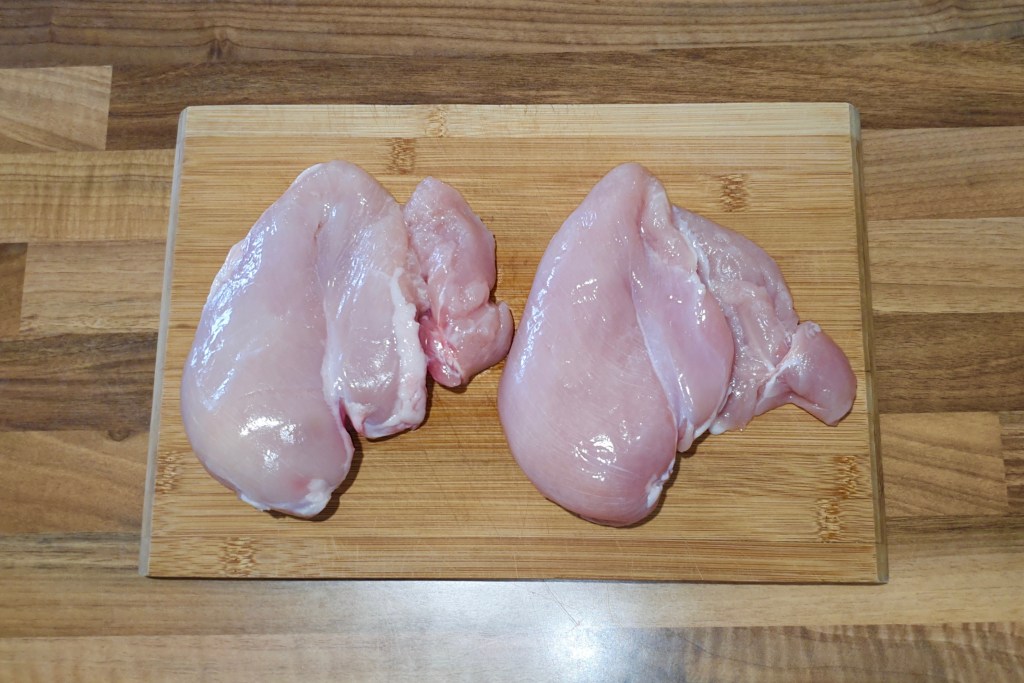
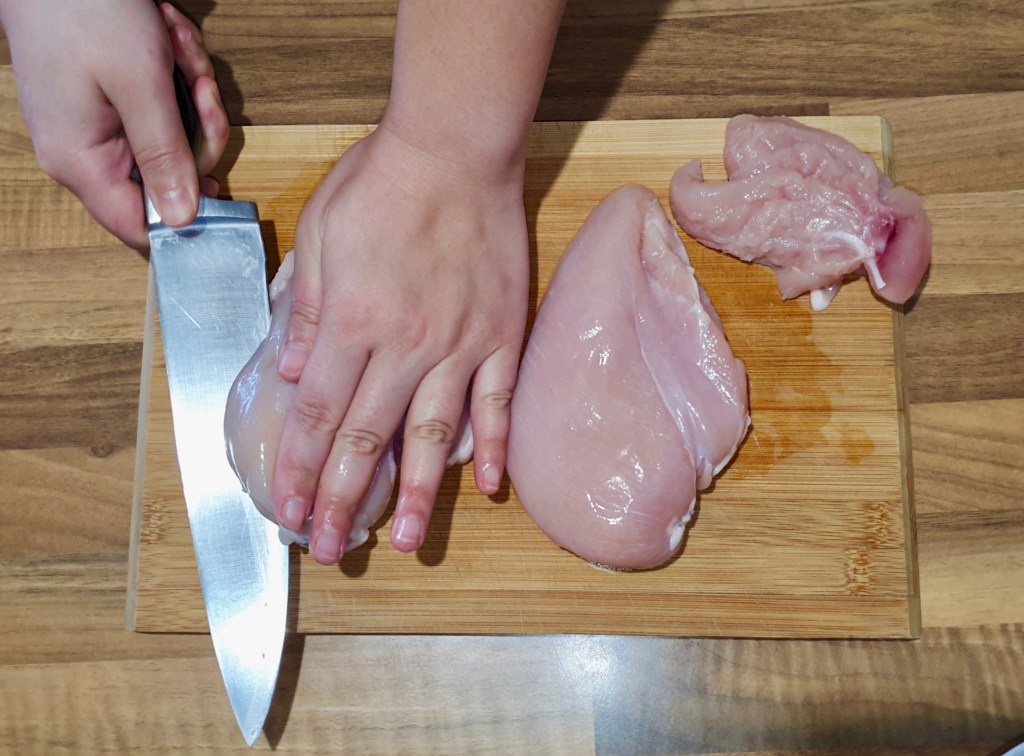
Rinse and pat the chicken breasts dry. If you haven’t already, butterfly your chicken breasts (see photo tutorial below on how to do this or click here for more detailed instructions). Season breasts with salt and pepper. Set aside.

(If you’re using pork cutlets, score the edge where the fat and the meat meet to ensure your cutlet doesn’t curl when cooking and use a meat tenderizer mallet to pound the cutlets to about 1.2cm thick.)

Preheat oven to 200˚C.

Heat a skillet on medium heat and add olive oil.

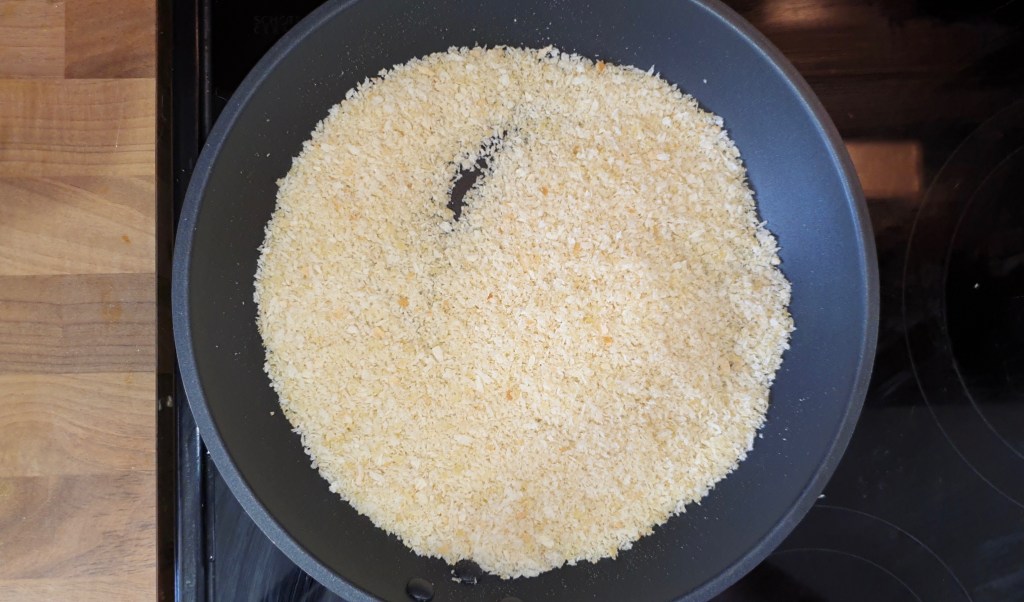
Add in the panko breadcrumbs and stir to combine with the oil and toast the panko until golden brown. Put the crumbs in a large bowl and set aside to cool.

Note: When you bake a katsu, the colour of the breadcrumbs doesn’t change much in the oven compared to deep-frying, which is why this step is important to get that delicious toasty crumb.

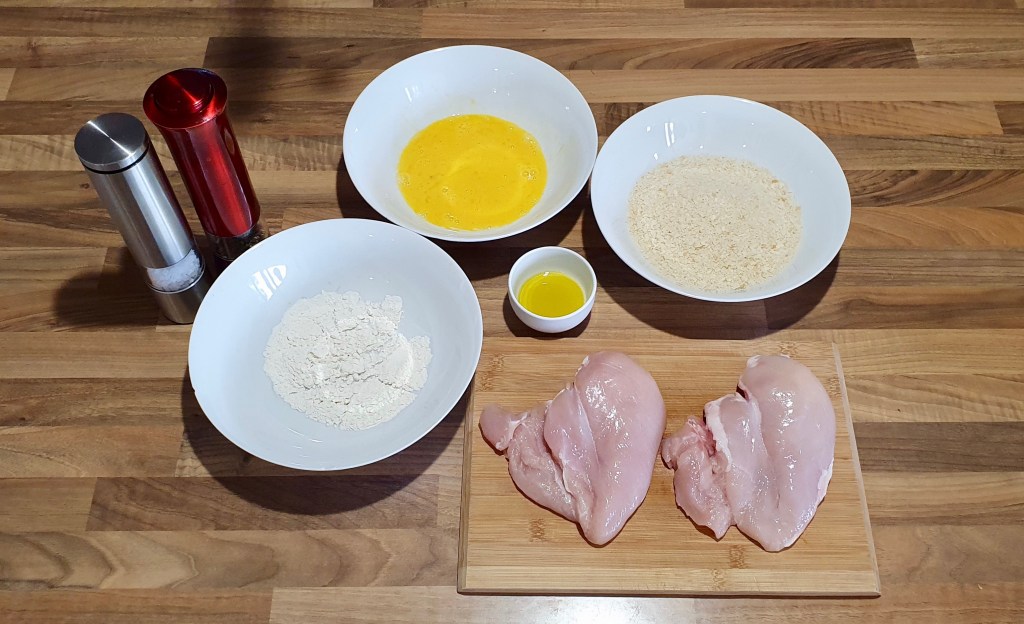
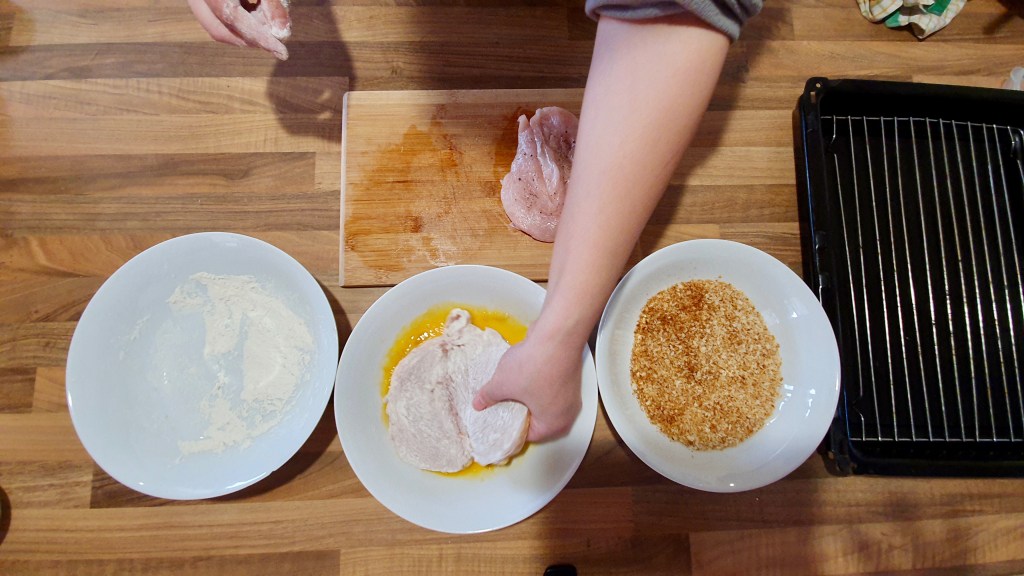
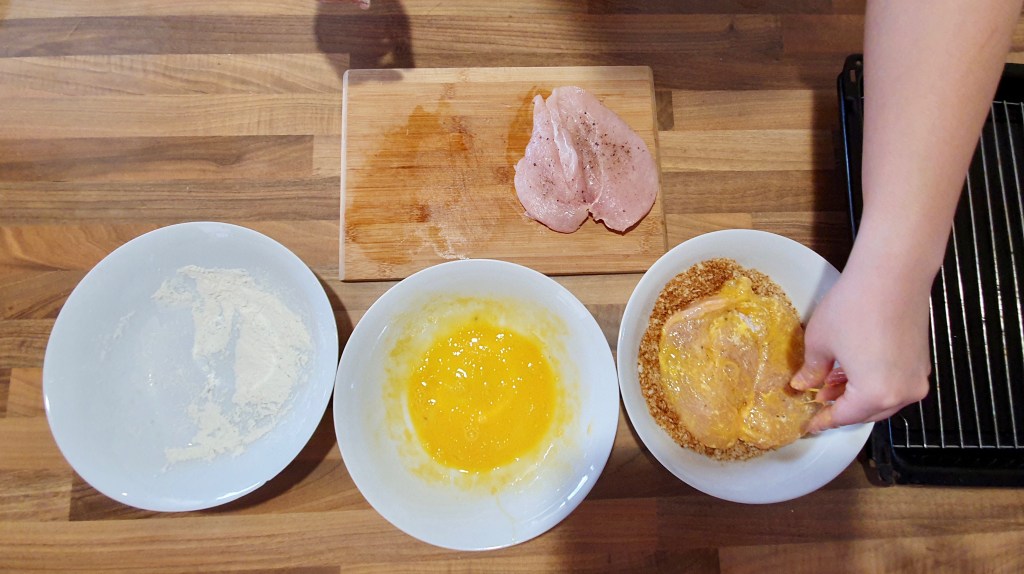
Prepare three bowls: 1) Flour, 2) Beaten eggs, 3) Toasted panko

Dip your butterflied chicken breasts first in the flour on both sides and shake off any excess flour. Make sure sure you cover every crevice. Then dip it in the beaten egg and finally in the toasted panko, pressing the crumbs in slightly to help them stick.

Set your chicken breasts on wire racks placed ontop of a baking tray and bake in the oven at 200˚C for 20-25 minutes, until the chicken juices run clear or a thermometer reads 74˚C in the thickest part of the breast.

Ready to bake! We made both chicken breast (top rack) and chicken thighs (bottom rack). Both came out perfectly. The breasts were more dense and steak-like whereas the thighs were more moist and chewier. Toby liked the thighs better whereas I liked the breasts. I guess to break the debate, chicken breast is healthier 😜.

While your chicken bakes, you can make the tonkatsu sauce (click to follow link to recipe).

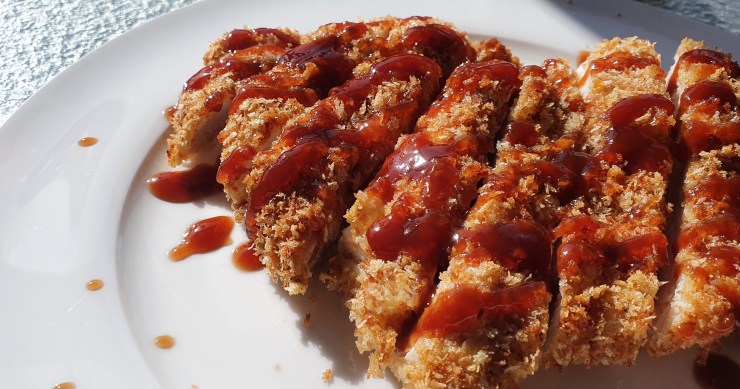
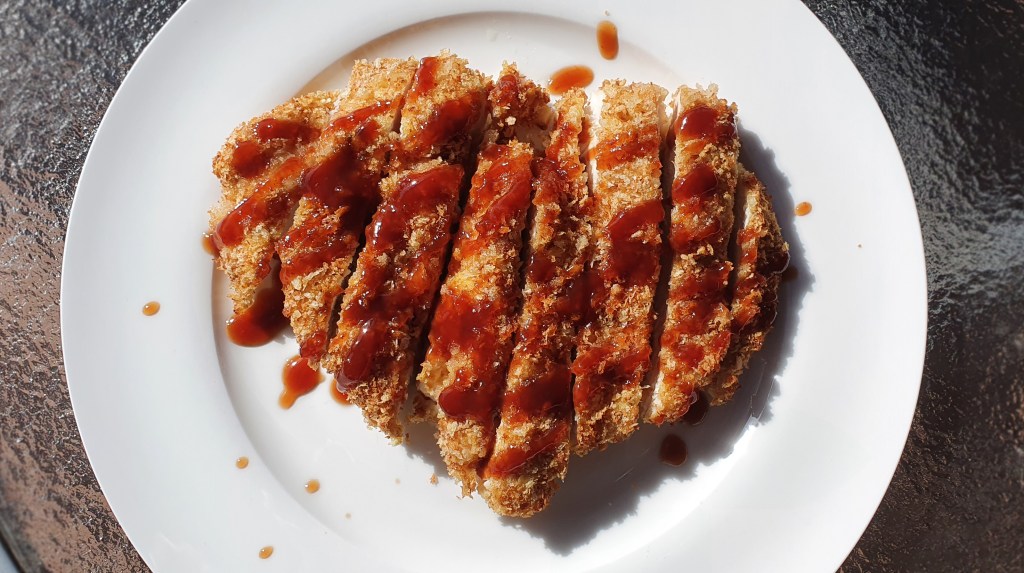
Once your chicken is cooked, let it cool for a couple minutes on the wire rack and serve immediately as whole cutlet or slice it into strips, drizzled with tonkatsu sauce.

Summarized Recipe:

Baked Chicken Katsu

Date Published: August 1st, 2020 | Last Updated: August 1st, 2020
Author: Abby |Category: asian, mains, easy, low-cal
Serves: 4-6 | Prep time: 15 mins | Cook time: 30 mins

Ingredients:

  • 4 chicken breasts, butterflied (or chicken thighs or boneless pork loin chops (pound chops to ~1.2cm thick))
  • salt & ground black pepper
  • 2 Tbsp extra virgin olive oil
  • 2 cups panko (Japanese breadcrumbs)
  • 4 Tbsp all-purpose flour (plain flour)
  • 2 large eggs, beaten

Directions:

  1. Rinse your chicken and pat dry. Butterfly the chicken breasts (see photo tutorial above) and season with salt and pepper on both sides and set aside.
    • If you’re using pork cutlets, score the edge where the fat and the meat meet to ensure your cutlet doesn’t curl when cooking and use a meat tenderizing mallet to pound the cutlet until about 1.2cm thick. Season with salt and pepper on both sides and set aside.
  2. Preheat oven to 200˚C.
  3. On a pan on medium heat, toast the panko with the olive oil. Stir to combine and toast until golden brown. Then put your panko in a large bowl and set aside to cool.
  4. Place your flour on a large plate or bowl for easy dipping and do the same with the beaten egg.
  5. Now bread your chicken:
    1. Dunk the chicken breast in the flour bowl to cover both sides. Shake off any excess flour.
    2. Next coat it in the beaten eggs.
    3. Finally coat it in the toasted panko crumbs, pressing the crumbs in slightly to help them stick.
  6. Place your katsu onto a wire rack over an oven tray.
  7. Bake for about 20-25 minutes on the middle rack until the chicken is no longer pink inside. If you have an oven thermometer, your chicken should be about 74˚C.
  8. While your chicken is baking, you can make the tonkatsu sauce (click on this link for the recipe).
  9. When your chicken is ready, serve immediately either as an entire cutlet or you can cut them into strips, drizzled with tonkatsu sauce.

Hainanese Chicken Rice 海南雞飯


Date Published: July 31st, 2020 | Last Updated: July 31st, 2020
Author: Abby |Category: asian, mains
Serves: 4-5 | Prep time: 15 mins | Cook time: 45 mins

Jump to recipe |

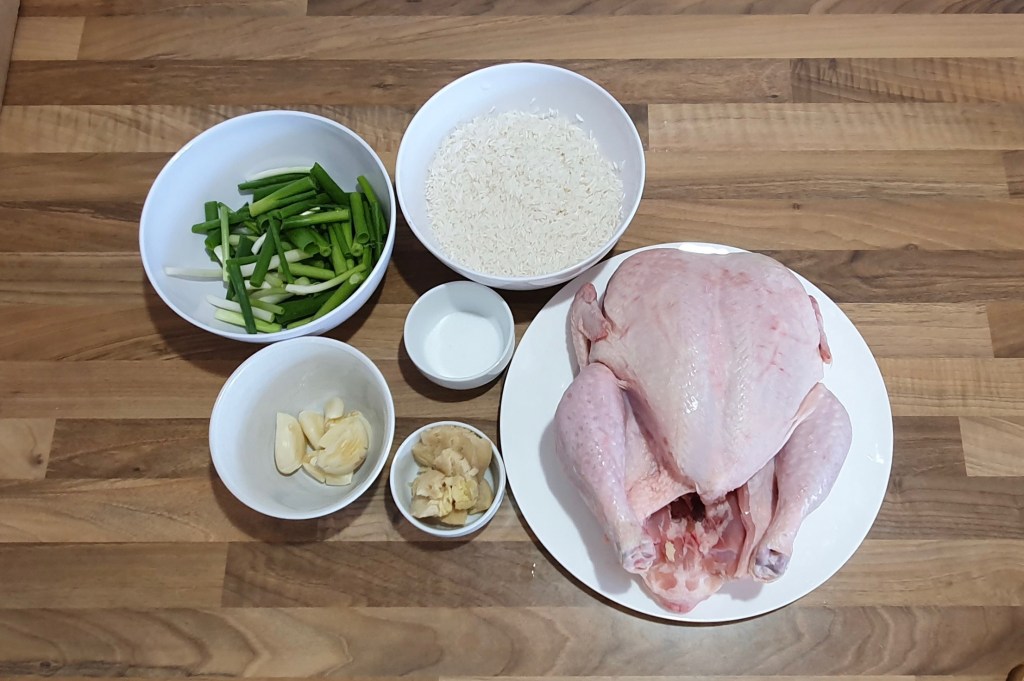
I LOVE Hainanese Chicken Rice (I feel like I’m starting too many of my posts like this – I guess that’s no surprise since I only upload dishes I love to eat heh heh). I know I say this with a lot of recipes, but this dish is pretty simple and you only need 6 ingredients: chicken, ginger, spring onion, garlic, salt, and rice. These 6 ingredients make up the chicken, the rice and the soup. Add some oil and you can make the dipping sauce too! Since there are a few components to this dish, the recipe is a little lengthy, but once you start cooking you’ll realize that there’s not much difficulty at all.

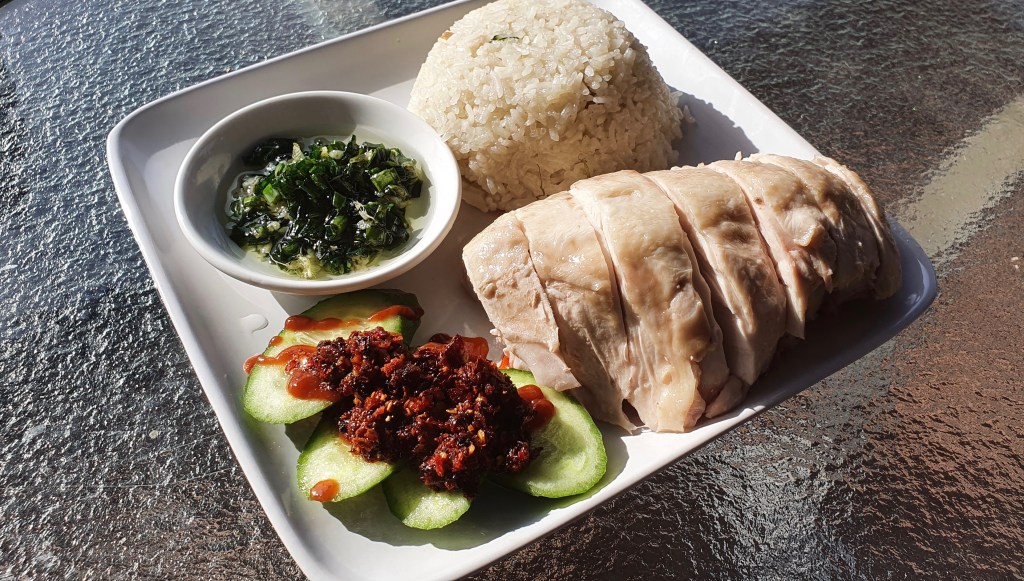
If you’re unfamiliar with what this dish is, Hainanese chicken rice has many variations but the most commonly seen version is usually composed of 5 components: 1) poached chicken, 2) rice cooked in chicken fat and broth, 3) dipping sauce (like spring onion ginger oil, a soy sauce based sauce and/or a chilli paste), 4) chicken broth, and 5) sliced cucumbers as a refresher from the rich flavours. The chicken is meant to be light and let the flavours of the sauces take over accompanied by the rice.

I’ve adapted this recipe from Sarah Tiong’s (mine and Toby’s favourite Masterchef Australia 2020 contestant) new cookbook Sweet, Savoury, Spicy. I’m usually not one for buying cookbooks and also not usually a Masterchef fan, but since the pandemic started this show has been our weekly constant, 4 days a week at 7:30pm. Sarah was known for her bold Asian flavours on the show and we’d always be salivating to whatever dish she whipped up so naturally when her cookbook came out I bought it right away. The recipe is more or less the same but I’ve changed up some minor cooking methods, added photos and rewrote it to make it easier to follow for myself (and you!). I’ve also recorded a video but it’ll take me a little while to edit the footage so sit tight. I’d definitely recommend checking out her cookbook – there’s some really good recipes there like Char Kway Teow!

Anyways, without further ado, here’s the recipe! If you have any comments or suggestions, I’d love to hear from you in the comment section! You can follow me on instagram, youtube and facebook to see all the recipes I post!

Happy cooking!

Ingredients you’ll need:

Every time I look at this photo it surprises me how little you need to make this dish!
  • 1 whole chicken (~1.6kg), rinsed
  • 4cm piece of ginger, unpeeled & crushed into pieces
  • 10 cloves garlic, peeled & crushed
  • 8 spring onions, cut into 7cm pieces
  • 1 Tbsp salt
  • 2 chicken stock cubes
  • 2 cups uncooked jasmine rice
  • Optional: 2 pandan leaves, bruised and tied into knots
  • 1-2 Tbsp toasted sesame oil
  • Cucumber slices to serve (optional)
  • Chilli paste/oil to serve (optional)
  • Optional: Spring Onion and Ginger Oil
    • 1 Tbsp ginger, grated
    • 2 cloves garlic, finely minced
    • 6 spring onions, thinly sliced
    • 1 tsp salt
    • 1 cup (250ml) neutral oil (canola, vegetable…etc.)

Directions:

Render the chicken fat: (This is an optional step. You can alternatively buy already rendered chicken fat called Schmaltz from the shops.) The rendered chicken fat will be used for the chicken rice.

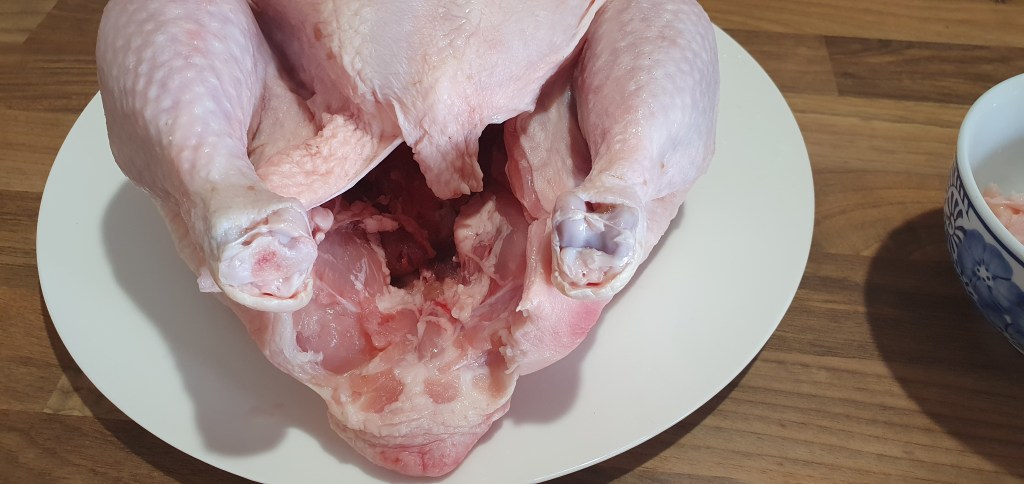
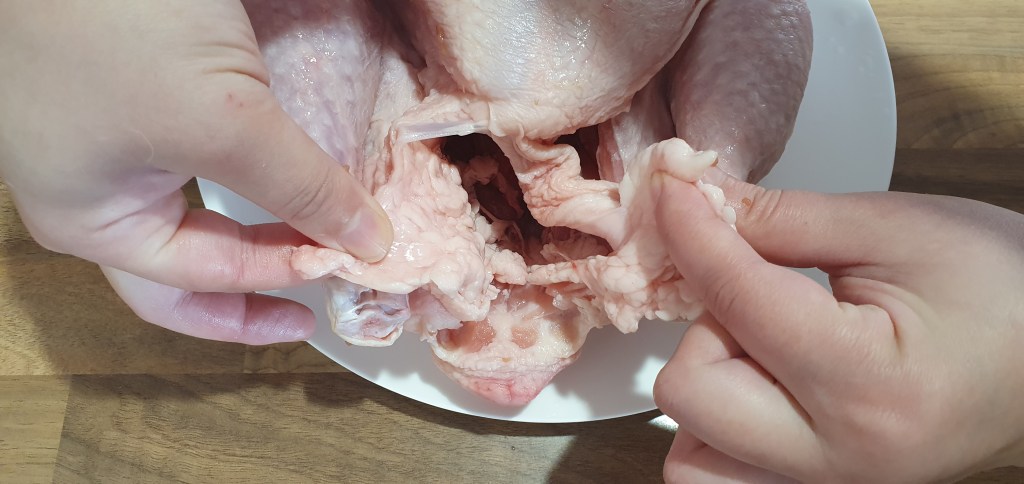
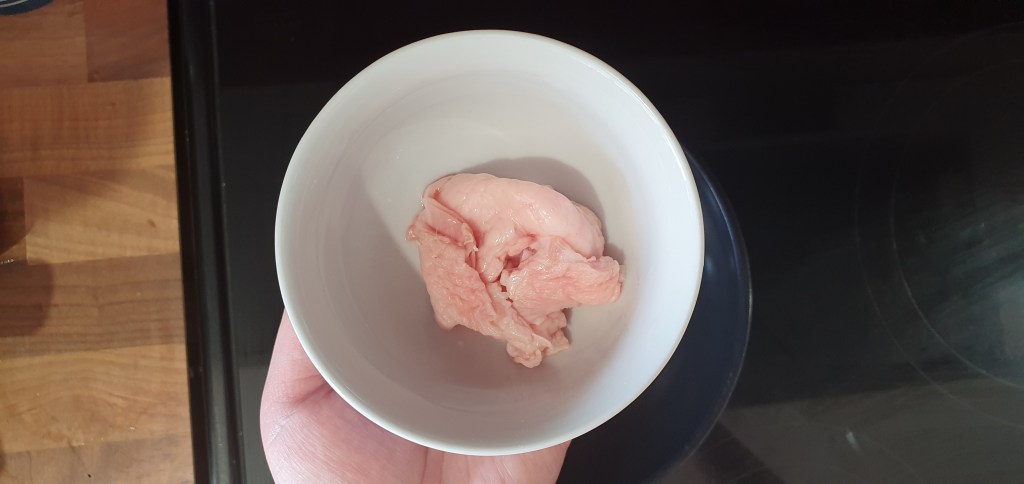
There are two pieces of chicken fat at the entrance of the chicken cavity. Remove this fat and the accompanying skin by pulling or cutting it out. It doesn’t need to be pretty, you’re just trying to harvest as much fat as you can from this area with the skin. Don’t worry about taking too much skin – you won’t miss it.

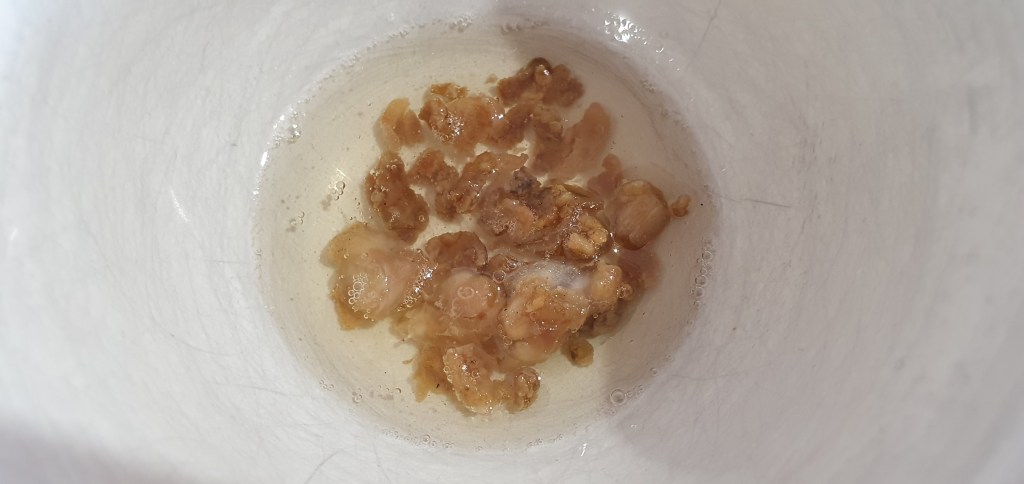
Chop the acquired fat and skin into small pieces and put it in a dry non-stick pan on low-medium heat until the fat melts and the pieces become crispy and brown (see photo below). Be patient. This is a slow process and can take about 20-30mins. While you’re waiting you can start on the chicken.

Finished rendered chicken fat with crispy brown pieces

Cook the chicken: Place the whole chicken in a big pot and fill the pot with cold water until it just covers the chicken. Add the ginger, 5 cloves of garlic, spring onion, salt, and chicken stock cubes to the pot. Stir.

Put a lid on the pot and bring the water to a boil over high heat then reduce the heat to low and simmer for 15 minutes (for larger chickens, cook for 20-25mins). After 15mins, turn off the heat and leave the chicken to poach in the soup for 20 minutes.

While the chicken is cooking, you can prepare the spring onion and ginger oil (follow the link for more thorough step-by-step instructions). (Don’t forget about the rendered fat if it’s still going!)

  • In a bowl, mix together ginger, garlic, spring onion, and salt. Set aside.
  • In a skillet, heat the oil on med-high heat until it just starts to smoke. Add in the ginger, garlic, spring onion and salt and stir for 20 seconds then turn off the heat. Let the ingredients steep in the hot oil and serve when cooled.

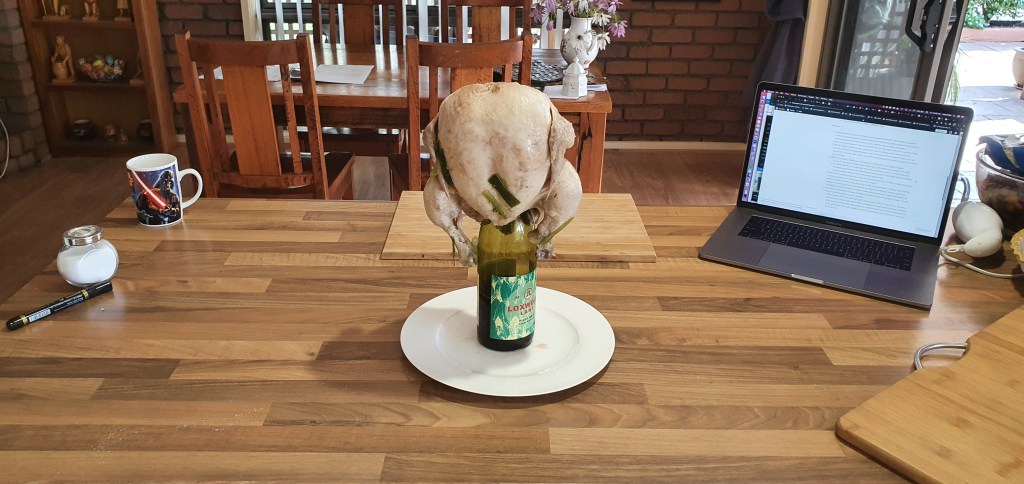
After 20mins, carefully remove the chicken from the broth and rest it for 20mins (ideally hanging off a hook or propped up to let any juices drip off into a bowl).

I didn’t have anywhere to hang my chicken so I got creative and used a wine bottle to prop it up. You can use tin can or glass jar as well. 😂

Chicken rice: While the chicken is resting, make the rice by heating the rendered fat (or 4 Tbsps of schmaltz if you haven’t rendered your own fat) in a medium sized pot (big enough to cook the rice in) on med-high heat and add in the remaining 5 cloves of garlic and uncooked rice. Stir fry the rice in the fat and garlic for a couple minutes until it’s completely coated in the chicken fat and fragrant.

Then cook the rice as normal using the broth that was used to poach the chicken in instead of regular water. You can do this step in a rice cooker or in the same pot over the stove:

I like to add in a few spring onions from the broth to the rice for a little extra flavour, texture and colour.

How I usually cook rice on the stove by using the same pot: add 3 cups of broth to the rice (and pandan leaves if using) and cook the rice with a lid on over low-medium heat until the broth is absorbed. Once all the liquid has been absorbed, taste and if the rice is still undercooked, add in half a cup of broth at a time and continue to cook with the lid on until cooked. Once rice is ready, turn off the heat and take off the lid and fluff up the rice with a fork.

Once the rice is cooked and the chicken has cooled, rub the chicken all over with sesame oil then carve it into pieces. Done! Serve with sliced cucumber, rice, chilli sauce and the spring onion ginger oil. Enjoy!

Optional: you can serve the chicken broth as a side dish to take advantage of that delicious flavour! Bring it back to a boil and adjust with salt and pepper. If it’s too salty, add boiling water to dilute it. Alternatively, you can put the bones back into the broth from the leftover carcass/bones and simmer on low heat for several hours to create a rich chicken stock that can be used in any other recipes in the future or served as a basic stock. This stock can easily be frozen by straining out all the ingredients first. It’s perfect to use next time you make Hainanese chicken rice and use this concentrated stock instead of chicken stock cubes to poach the chicken and use it to make the rice.

Summarized Recipe:

Hainanese Chicken Rice 海南雞飯

Date Published: July 31st, 2020 | Last Updated: July 31st, 2020
Author: Abby |Category: asian, mains
Serves: 4-5 | Prep time: 15 mins | Cook time: 45 mins

Ingredients:

  • 1 whole chicken (~1.6kg), rinsed
  • 4cm piece of ginger, unpeeled & crushed into pieces
  • 10 cloves garlic, peeled & crushed
  • 8 spring onions, cut into 7cm pieces
  • 1 Tbsp salt
  • 2 chicken stock cubes
  • 2 cups uncooked jasmine rice
  • Optional: 2 pandan leaves, bruised and tied into knots
  • 1-2 Tbsp toasted sesame oil
  • Cucumber slices to serve (optional)
  • Chilli paste/oil to serve (optional)
  • Optional: Spring Onion and Ginger Oil
    • 1 Tbsp ginger, grated
    • 2 cloves garlic, finely minced
    • 6 spring onions, thinly sliced
    • 1 tsp salt
    • 1 cup (250ml) neutral oil (canola, vegetable…etc.)

Directions:

  1. Render the chicken fat (optional*): There are two pieces of chicken fat at the entrance of the chicken cavity. Remove this fat and the accompanying skin by pulling or cutting it out. Chop it up into small pieces and put it in a dry non-stick pan on low-med heat until the fat melts and you get crispy pieces (see photo above). This step can take 20-30mins.
  2. Cook the chicken: While you’re waiting for your fat to render, place the whole chicken in a big pot and fill the pot with cold water until it just covers the chicken. Add the ginger, 5 cloves of garlic, spring onion, salt, and chicken stock cubes to the pot. Stir. Put a lid on the pot and bring the water to a boil over high heat then reduce the heat to low and simmer for 15 minutes (for larger chickens, cook for 20-25mins). After 15mins, turn off the heat and leave the chicken to poach in the soup for 20 minutes.
  3. While the chicken is cooking, you can prepare the spring onion and ginger oil (follow the link for more thorough step-by-step instructions). (Don’t forget about the rendered fat if it’s still going!)
    1. In a bowl, mix together ginger, garlic, spring onion, and salt. Set aside.
    2. In a skillet, heat the oil on med-high heat until it just starts to smoke. Add in the ginger, garlic, spring onion and salt and stir for 20 seconds then turn off the heat. Let the ingredients steep in the hot oil and serve when cooled.
  4. After 20mins, carefully remove the chicken from the broth and rest it for 20mins (ideally hanging off a hook or propped up to let any juices drip off into a bowl).
  5. Chicken rice: While the chicken is resting, make the rice by heating the rendered fat (or 4 Tbsps of schmaltz if you haven’t rendered your own fat) in a medium sized pot (big enough to cook the rice in) on med-high heat and add in the remaining 5 cloves of garlic and uncooked rice. Stir fry the rice in the fat and garlic for a couple minutes until it’s completely coated in the chicken fat and fragrant. Then cook the rice as normal using the broth that was used to poach the chicken instead of regular water. You can do this step in a rice cooker or in the same pot over the stove:
    • How I usually cook rice on the stove by using the same pot: add 3 cups of broth to the rice (and pandan leaves if using) and cook the rice with a lid on over low-medium heat until the broth is absorbed. Once all the liquid has been absorbed, taste and if the rice is still undercooked, add in half a cup of broth at a time and continue to cook with the lid on until cooked. Once rice is ready, turn off the heat and take off the lid and fluff up the rice with a fork.
  6. Once the rice is cooked and the chicken has cooled, rub the chicken all over with sesame oil then carve it into pieces. Done! Serve with sliced cucumber, rice, chilli sauce and the spring onion ginger oil. Enjoy!
  7. Optional: you can serve the chicken broth as a side dish to take advantage of that delicious flavour! Bring it back to a boil and adjust with salt and pepper. If it’s too salty, add boiling water to dilute it. Alternatively, you can put the bones back into the broth from the leftover carcass/bones and simmer on low heat for several hours to create a rich chicken stock that can be used in any other recipes in the future or served as a basic stock. This stock can easily be frozen by straining out all the ingredients first. It’s perfect to use next time you make Hainanese chicken rice and use this concentrated stock instead of chicken stock cubes to poach the chicken and use it to make the rice.

Sloppy Joes


Date Published: July 31st, 2020 | Last Updated: July 31st, 2020
Author: Abby |Category: mains, healthy/low cal, kid-friendly
Serves: 4 | Prep time: 15 mins | Cook time: 40 mins

Jump to recipe | Watch the video

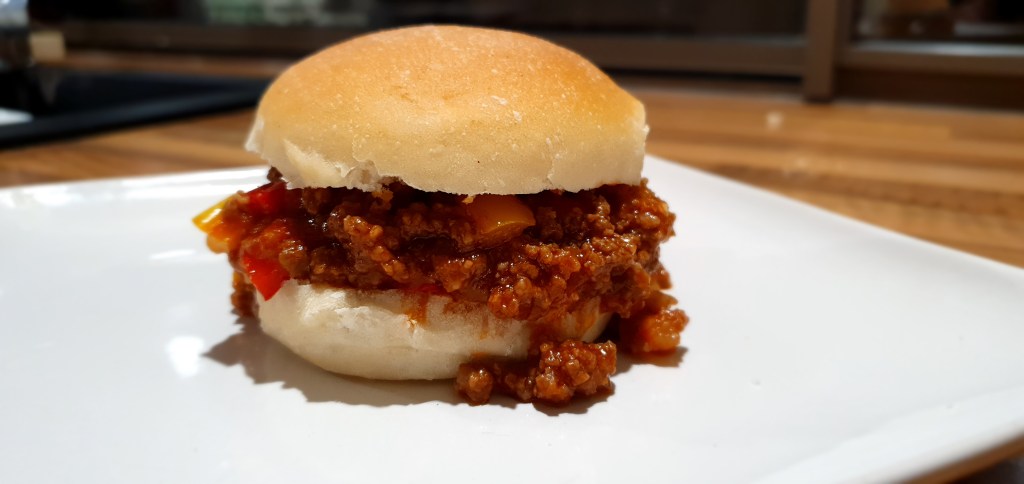
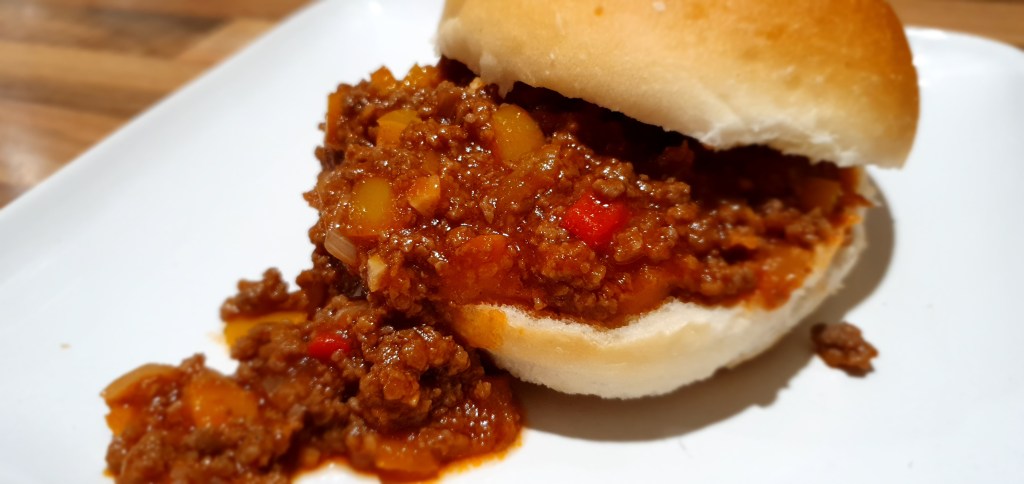
Sloppy Joes – a classic American dish made of beef (or pork) mince, onions, green peppers/capsicums and a buttload of ketchup. This recipe is super easy, doesn’t need any fancy ingredients, and only requires one pot. The best part about this recipe is that it’s also surprisingly low in calories (roughly 200 calories per serving without the bun) yet still filling.

If you’ve never had a sloppy joe before, it’s kind of like a sweeter spaghetti bolognese but without the spaghetti, sandwiched between a hamburger bun. You can’t eat it without making a mess – hence the “sloppy” in the name. It’s a popular dish in North American and is commonly served to kids and picky eaters due to its simple flavours. It’s not the dish for date night nor a dish to impress foodies, but it’s easy, filling and satisfying. It would actually be really good to bring to a BBQ lunch and you can cook up a big batch in no time.

It’s a pretty straight forward recipe but you can watch the video below to guide you through if you need any help.

Anyways, without further ado, here’s the recipe! If you have any comments or suggestions, I’d love to hear from you in the comment section! You can follow me on instagram, youtube and facebook to see all the recipes I post!

Happy cooking!

Ingredients you’ll need:

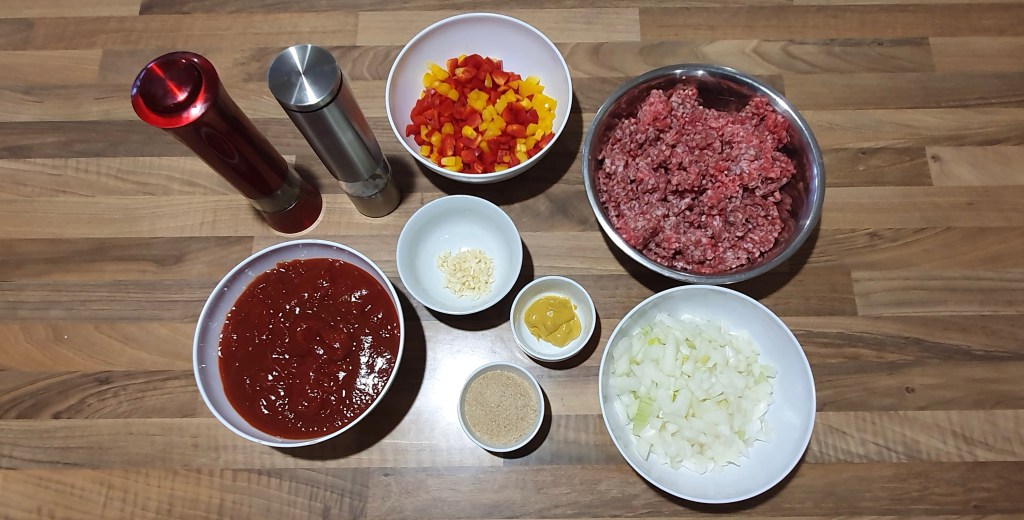
I doubled the recipe in the photo so it’ll look much more than what you need
  • 500g lean ground beef
  • 1 small onion, chopped
  • 1 green bell pepper/capsicum, chopped
  • 1 clove garlic, minced
  • 2 tsp yellow mustard
  • 1.5 cups ketchup
  • 1 Tbsp brown sugar (optional)
  • 1/2 tsp Worcestershire sauce
  • salt and pepper to taste
  • 4 hamburger buns

Directions:

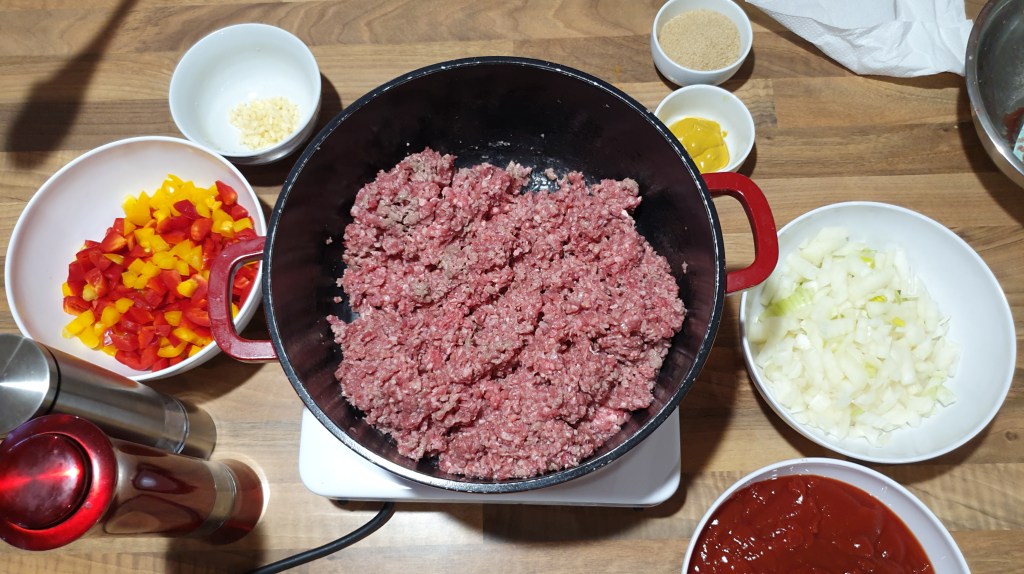
Brown the ground beef in a pan over medium heat. Drain off any excess liquids.

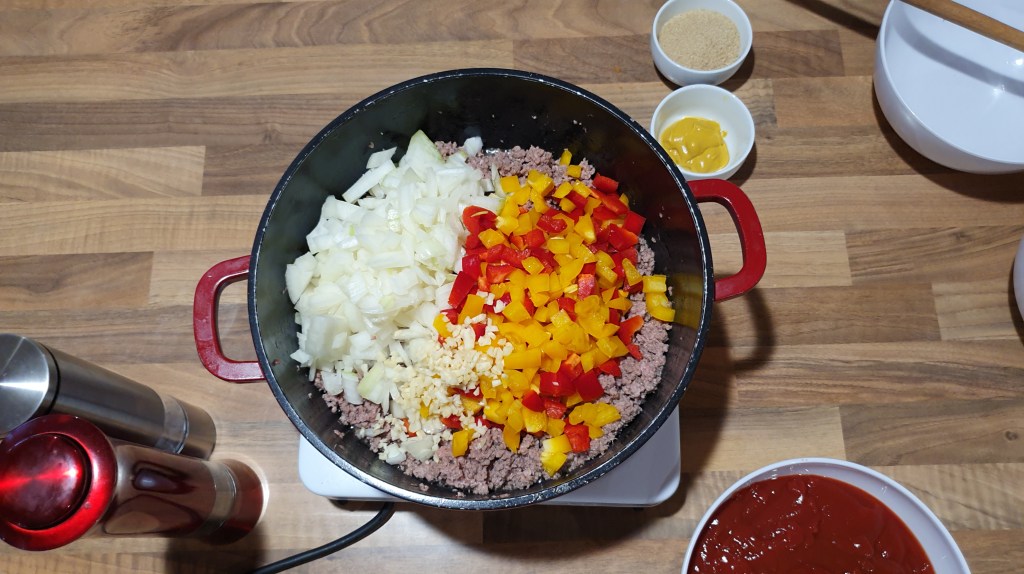
Add in the onion, garlic, and bell pepper/capsicum. Cook until soft.

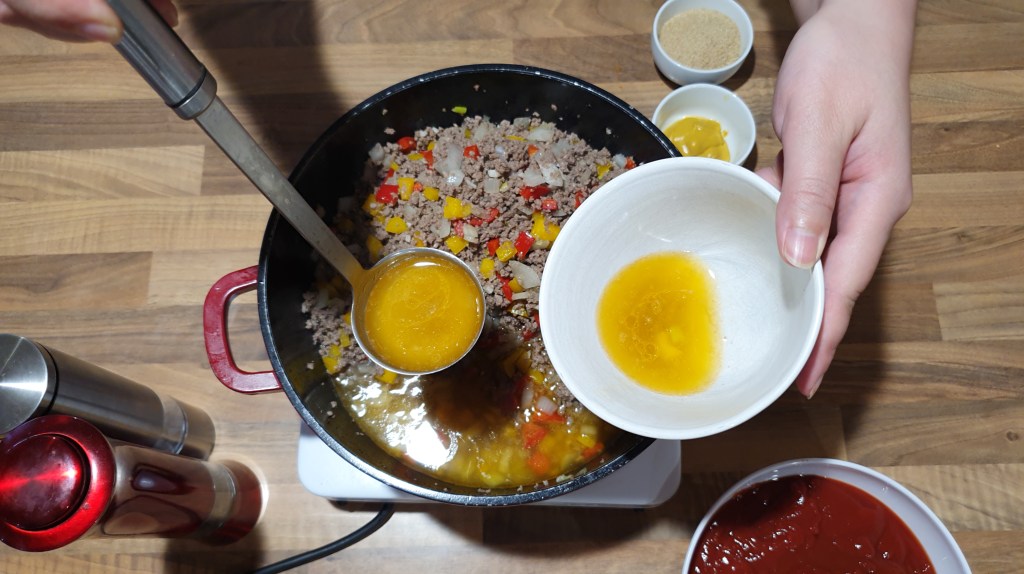
Drain out as much liquid and oils as you can. I only had regular mince meat in my freezer rather than lean so I had quite a lot of fat to strain!

Drain off any excess liquids and oil.

Mix in garlic powder, mustard, ketchup, Worcestershire sauce and brown sugar. Reduce heat and simmer for 20 mins.

Season with salt and pepper, add more sugar or ketchup if you prefer it “sloppier”.

Serve over hamburger buns. Done!

Watch the Video Tutorial!

Summarized Recipe:

Sloppy Joes

Date Published: July 31st, 2020 | Last Updated: July 31st, 2020
Author: Abby |Category: mains, healthy/low cal, kid-friendly
Serves: 4 | Prep time: 15 mins | Cook time: 40 mins

Ingredients:

  • 500g lean ground beef
  • 1 small onion, chopped
  • 1 green bell pepper/capsicum, chopped
  • 1 clove garlic, minced
  • 2 tsp yellow mustard
  • 1.5 cups ketchup
  • 1 Tbsp brown sugar (optional)
  • salt and pepper to taste
  • hamburger buns

Directions:

  1. Brown the ground beef in a pan over medium heat. Drain off excess liquids if any.
  2. Add in the onion, garlic, and green pepper/capsicum. Cook until soft. Drain off excess liquids and oil.
  3. Mix in garlic powder, mustard, ketchup and brown sugar. Reduce heat and simmer for 20 mins.
  4. Season with salt and pepper, add more sugar if needed or more ketchup if you prefer it “sloppier”.
  5. Serve over hamburger buns. Done!

Maple Salmon


Date Published: July 17th, 2020 | Last Updated: July 17th, 2020
Author: Abby |Category: mains, healthy, easy
Serves: 2-4 (serves 4 if you have sides) | Prep time: 35mins | Cook time: 25mins

Jump to recipe | Watch the video

If you ever need a quick and easy dish to impress, this is it. Seriously. This recipe always gets rave reviews and it’s so SO easy and there’s minimal clean-up – perfect for a last minute dinner party or a fancy night-in! Serve it with whatever sides you want. The sauce is sweet-savoury (kind of like a teriyaki sauce, but not?) and a little on the heavy side so I tend to pair it with a lighter side dish such as a salad or some steamed veg and mashed potatoes.

This recipe is easy and cooks up quickly! You can watch the video below to guide you through the recipe.

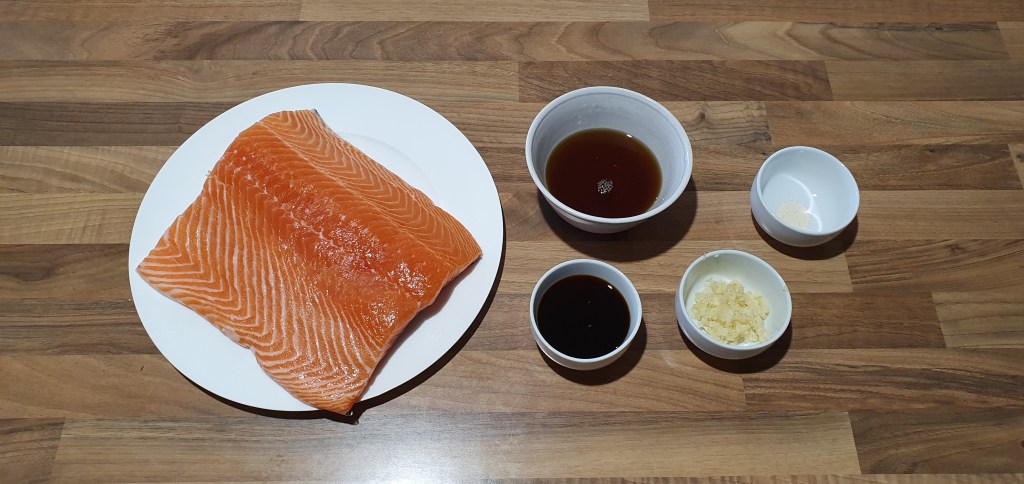
Ingredients you’ll need:

  • 1/2 cup maple syrup
  • 1/4 cup soy sauce
  • 2 garlic cloves, minced
  • 1/4 tsp salt (or garlic salt if you’ve got some)
  • 1/4 tsp black pepper
  • 1kg salmon fillet – this would serve about 3-4 people with side dishes (or two people because Toby and I LOVE this salmon so much we would devour it every time). If you’re not planning on serving any sides, then I’d probably double it. The fish doesn’t shrink much when cooked, so you can just eyeball how much you think each guest would eat and shop accordingly

Directions:

Combine all the ingredients (except the salmon) into a bowl to make the sauce and mix well.

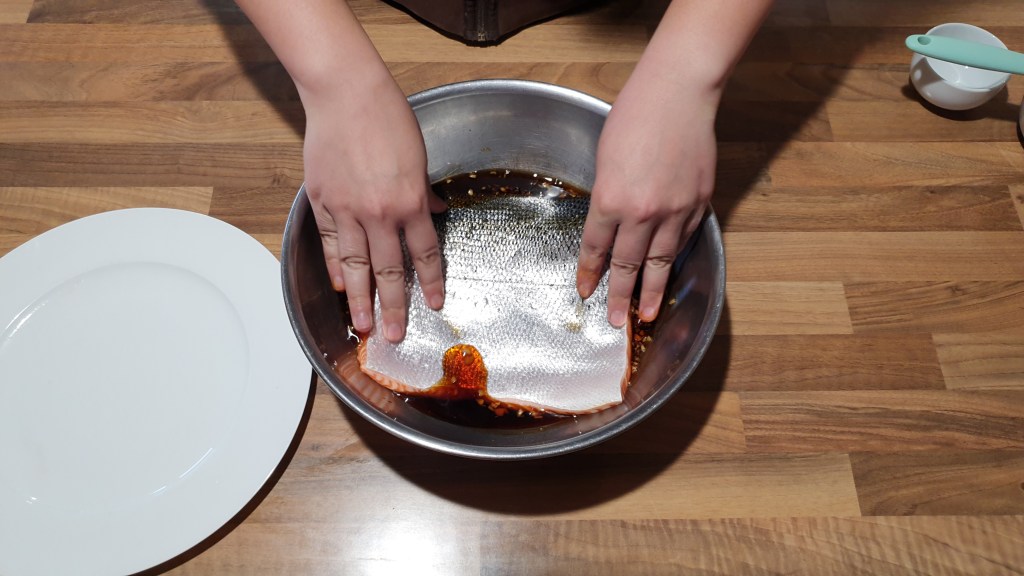
Place the salmon flesh side down into the sauce (try to submerge as much of the flesh into the sauce as possible). Refrigerate for half an hour to marinate the fish.

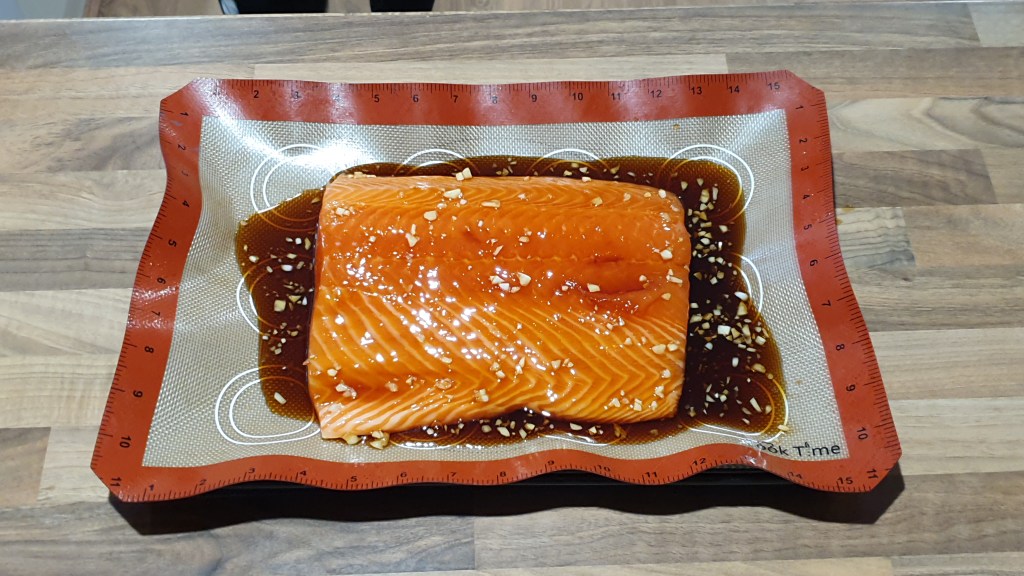
After half an hour, take the salmon out of the fridge and place it skin side down on a baking tray and pour the sauce over the salmon.

Bake the salmon at 200˚C for about 20-25 mins (cooking time will depend on how big and thick your fillet is) until the salmon is easily flaked with a fork. You can spoon the sauce over the salmon halfway through cooking.

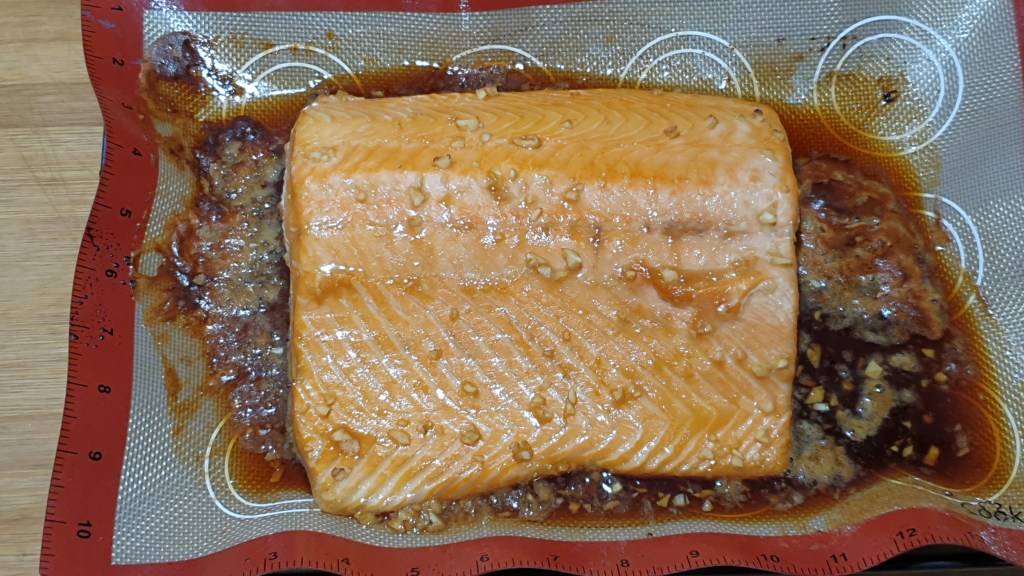
Once the salmon is cooked, serve it immediately and drizzle the sauce over it. Alternatively, if you like your sauce thicker, you can put the sauce back in the oven (minus the fish) and let it simmer until it thickens then drizzle it over the fish. Serve!

Ta-da!

If you have any comments or suggestions, I’d love to hear from you in the comment section! You can follow me on instagram, youtube and facebook to see all the recipes I post!

Happy cooking!

Watch the Video Tutorial!

Summarized Recipe:

Maple Salmon

Date Published: July 17th, 2020 | Last Updated: July 17th, 2020
Author: Abby |Category: mains, healthy, easy
Serves: 2-4 (serves 4 if you have sides) | Prep time: 35mins | Cook time: 25mins

Ingredients:

  • 1/2 cup maple syrup
  • 1/4 cup soy sauce
  • 2 cloves garlic, minced
  • 1/4 tsp salt (or garlic salt)
  • 1/4 tsp black pepper
  • 1kg salmon fillet

Directions:

  1. In a large bowl, combine all the ingredients (except the salmon): maple syrup, soy sauce, garlic, salt, black pepper. Stir well.
  2. Place the salmon flesh side down into the sauce and refrigerate for 30mins to marinate.
  3. Preheat oven to 200˚C.
  4. Once the salmon has marinated, place it skin side down on a baking tray and pour the sauce over it.
  5. Bake for 20-25mins until the flesh is easily flaked with a fork. Spoon the sauce over the fish halfway through cooking.
  6. Once cooked, serve immediately with sauce drizzle, OR alternatively, to thicken the sauce you can take out the salmon and set aside and put the sauce back in the oven for another 5mins until it thickens (you can do this over the stove in a saucepan as well). Enjoy!

Creamy Salmon Chowder


Date Published: July 2nd, 2020 | Last Updated: July 2nd, 2020
Author: Abby |Category: soups
Serves: 6-8 | Prep time: 30mins | Cook time: 30mins

Jump to recipe | Watch the video

I LOVE chowders. The first chowder I ever had was a Boston Clam Chowder when I was kid and it blew me away. From then on I will always choose a chowder over any other kind of soup. It’s creamy, rich, hearty and warms you up on a cold day – what’s not to love? It’s comfort food at its best. If chowders weren’t so dense in calories, I’d definitely be having this every day.

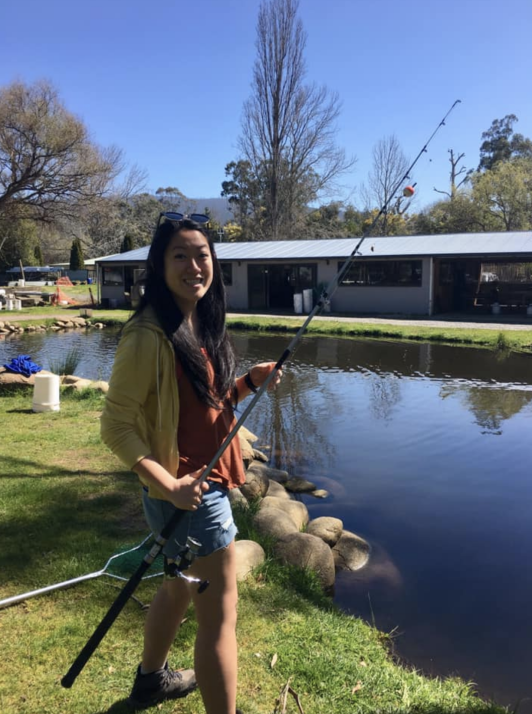
I always thought chowders were difficult to make so I never attempted it. However, when Toby and I went salmon fishing (on a small fishing farm where you fish out of a small pool…) last year, I caught my first ever salmon! It just also happened to be the largest one in the pool, coming in at a whopping 3.5kg! We ended up with 1kg of fish fillet and I was scrambling to find new recipes to use up raw salmon (other than my go-to maple salmon recipe) before it went off since our freezer was too small. This recipe was the best thing that came out of the fishing experience (other than the excitement of catching a big fish)!

The great thing about this recipe is that you can actually use any meaty fish you like. In fact, we went tuna fishing with Toby’s dad earlier this week and we collectively caught 4 tuna, each averaging about 10-15kg! I made this soup for Toby’s parents yesterday to use up some of the tuna fillets and they’ve already requested it again for their dinner party tomorrow! The strong flavours of the soup does a great job masking the overly fishy taste of tuna.

I hope you enjoy this recipe as much as we do! This recipe is easy and cooks up relatively quickly compared to some soups. You can watch the video below to guide you through the recipe.

Anyways, without further ado, here’s the recipe! If you have any comments or suggestions, I’d love to hear from you in the comment section! You can follow me on instagram, youtube and facebook to see all the recipes I post!

Happy cooking!

Ingredients:

  • 3 Tbsps butter (or olive oil to reduce the calories)
  • 2 cloves garlic, minced
  • 2 cups onion, chopped (roughly 1 large onion)
  • 2 cups celery, chopped (~4 stalks)
  • 2 cups carrots, diced (roughly 2 large carrots)
  • 2 cups potatoes, diced (~2 large potatoes)
  • 3 cups chicken broth
  • 1 tsp salt
  • 1 tsp ground black pepper
  • 1 tsp dried dill
  • 450g of fresh salmon (or any fish), cut to 2.5cm chunks (you can used canned fish as well, drained)
  • 1 can (375ml) evaporated milk
  • 1 can (420g) creamed corn
  • 1 can (420g) corn kernels, drained
  • 200g cheddar cheese, shredded (~1 large handful)

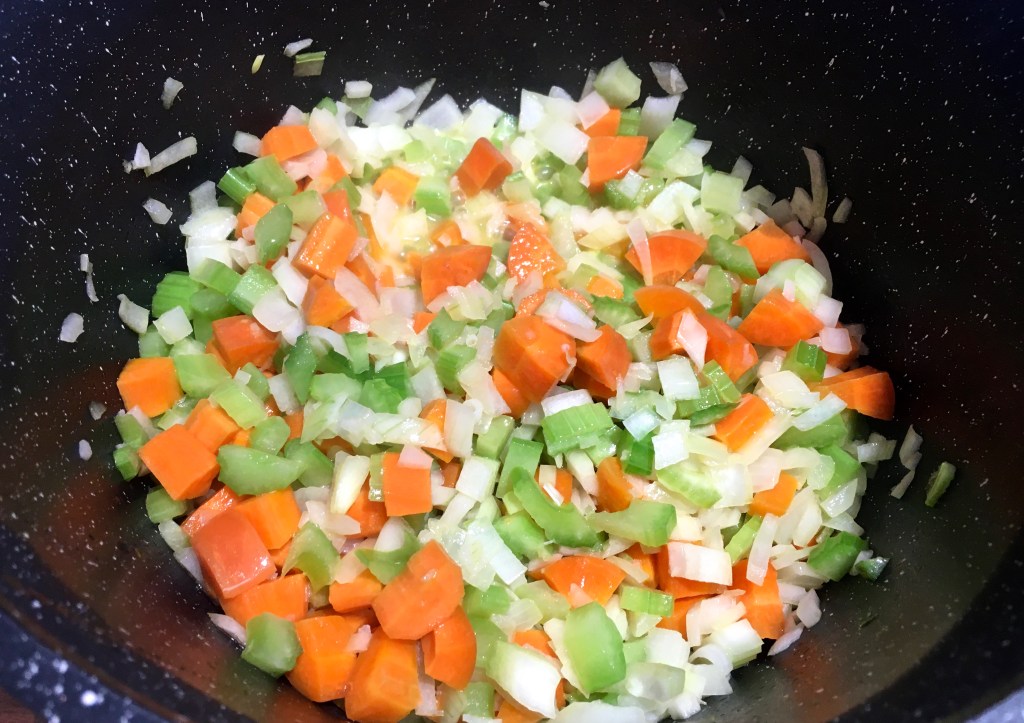
It takes a little time to chop up all the veggies, but once that’s done, the cook goes by pretty quickly.

Directions:

Melt the butter in a large pot over medium heat. Sauté the garlic, onion, celery and carrots for a few minutes then put a lid on the pot and steam the veggies until the carrots are soft enough to break with your spatula (~5-8mins). You can alternatively keep cooking the veggies without the lid if you like but it takes much longer for the vegetables to soften.

Once the carrots and celery are soft enough, add in potatoes, chicken broth, salt, pepper, and dill. Turn up to high heat and bring the soup to a boil. Once boiling, reduce the heat to medium and let the soup simmer with a lid on until the potatoes are soft enough to break with your spatula (~15-20mins).

Note: I used tuna in the video to try and use up our fillets

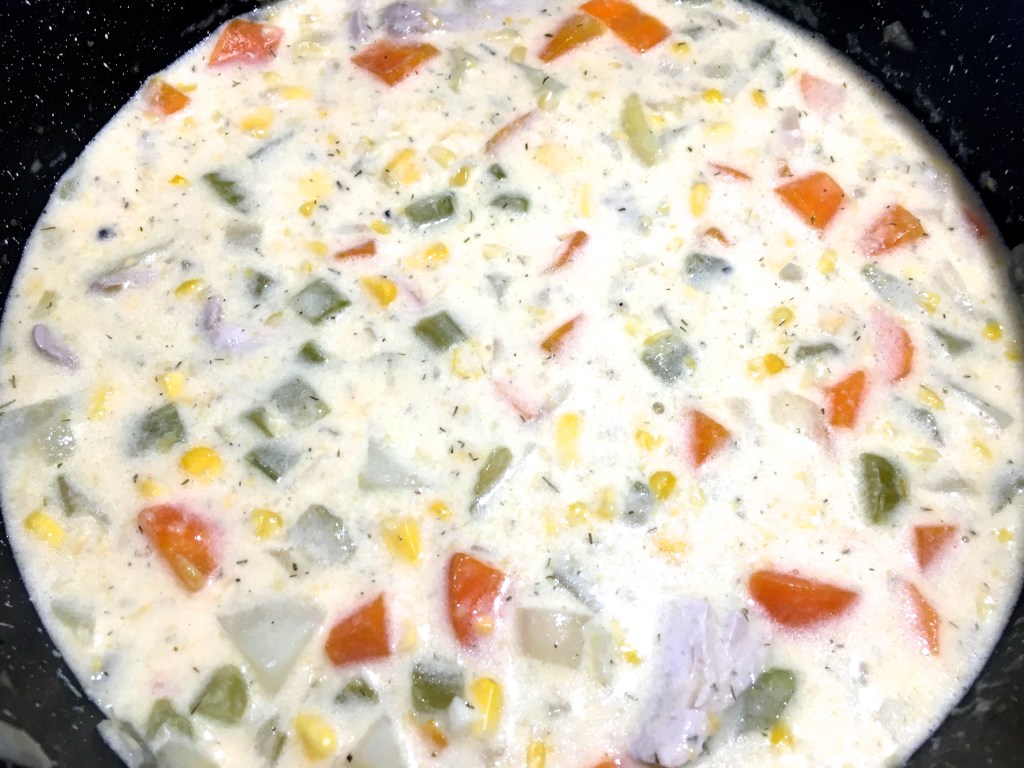
Once the potatoes are soft, add in the salmon, evaporated milk, and corn. Put the lid back on and bring the soup to a boil then turn the heat down and simmer until the salmon is cooked.

Once cooked, turn the heat off and mix through the shredded cheese until melted. (If you’re using canned fish, then just mix until heated through and add the cheese. Serve when the cheese has melted.)

Adjust salt and pepper to taste. Serve!

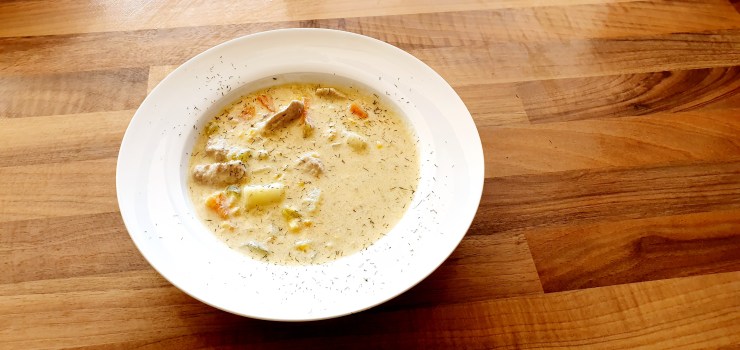
You can serve this as a side dish or a main soup with some toasted bread or crackers. I love curling up on the couch on a cold day and hugging a bowl of this creamy soup while binge watching something… then unknowingly end up eating 3 bowls because it’s JUST. THAT. GOOD!

Watch the Video Tutorial!

Summarized Recipe:

Creamy Salmon Chowder

Date Published: July 2nd, 2020 | Last Updated: July 2nd, 2020
Author: Abby |Category: soups
Serves: 6-8 | Prep time: 30mins | Cook time: 30mins

Ingredients:

  • 3 Tbsps butter (or olive oil to reduce the calories)
  • 2 cloves garlic, minced
  • 2 cups onion, chopped (roughly 1 large onion)
  • 2 cups celery, chopped (~4 stalks)
  • 2 cups carrots, diced (roughly 2 large carrots)
  • 2 cups potatoes, diced (~2 large potatoes)
  • 3 cups chicken broth
  • 1 tsp salt
  • 1 tsp ground black pepper
  • 1 tsp dried dill
  • 450g of fresh salmon (or any fish), cut to 2.5cm chunks (you can used canned fish as well, drained)
  • 1 can (375ml) evaporated milk
  • 1 can (420g) creamed corn
  • 1 can (420g) corn kernels, drained
  • 200g cheddar cheese, shredded (~1 large handful)

Directions:

  1. Melt butter in a large pot over medium heat. Sauté the garlic, onion, celery and carrots. Put a lid on the pot and steam the veggies until the carrots are soft enough to break with your spatula (~5-8mins).
  2. Stir in potatoes, chicken broth, salt, pepper, and dill. Bring to a boil, and reduce heat. Cover and simmer until the potatoes are soft enough to break with your spatula (~15-20mins).
  3. Stir in the salmon, evaporated milk, and corn. Put on the lid and bring the soup to a boil then turn the heat down and simmer until the salmon is cooked. Once cooked, turn the heat off and mix through the cheese until melted. (If you’re using canned salmon, then just mix until heated through then serve.)
  4. Adjust salt and pepper to taste. Serve!

Char Kway Teow (Stir-fried flat noodles)


Date Published: July 1st, 2020 | Last Updated: July 1st, 2020
Author: Abby |Category: mains, Asian
Serves: 4-5 | Prep time: 15mins | Cook time: 10mins

Jump to recipe | Watch the video

WOOHOO!! The inaugural post of Polyphagic Abby! Welcome welcome. I’m so excited to share my favourite recipes with you!

I won’t muddle this recipe post by going into the hows and whys of starting up this food blog project in this post but if you’re interested, you can read about it here.

I’m new to the video blogging and food photography game, so don’t mind the occasional questionable camera work. We’re still working out the kinks. We’ve ordered a tripod that’s coming in the mail but I was too excited to start this blog to wait! I also got too excited taking videos of recipes that I forgot to take photos of the process as well, so don’t mind the video screenshots as part of the post for the first few recipes. heh heh.

My partner Toby rigging up the camera for my first recipe video hahaha. This is why the start of the video is a little shaky. Only 1 more week until our tripod arrives!

Toby and I have been religiously watching Masterchef 2020 lately. We’ve never watched a show so intently together before. Our favourite contestant Sarah Tiong was recently eliminated. I’ve always loved watching her put together amazing flavourful Asian dishes on the show and to my luck, she has just released a cookbook! I’ve been wanting to cook closer to my Asian roots lately and her cookbook was the perfect gateway. It’s full of amazing recipes. I absolutely recommend getting her cookbook “Sweet, Savoury, Spicy“. This char kway teow recipe was actually adapted from one of hers.

Char kway teow is a popular Malaysian/Singaporean dish. It’s a dish made from flat rice noodles (banh pho) and sautéed in Chinese sausage (lap cheong) and prawns. You can substitute the protein with anything you like and add in any extra veggies you like. This recipe is easy and cooks up quickly! You can watch the video below to guide you through the recipe.

Anyways, without further ado, here’s the recipe! If you have any comments or suggestions, I’d love to hear from you in the comment section! You can follow me on instagram, youtube and facebook to see all the recipes I post!

Happy cooking!

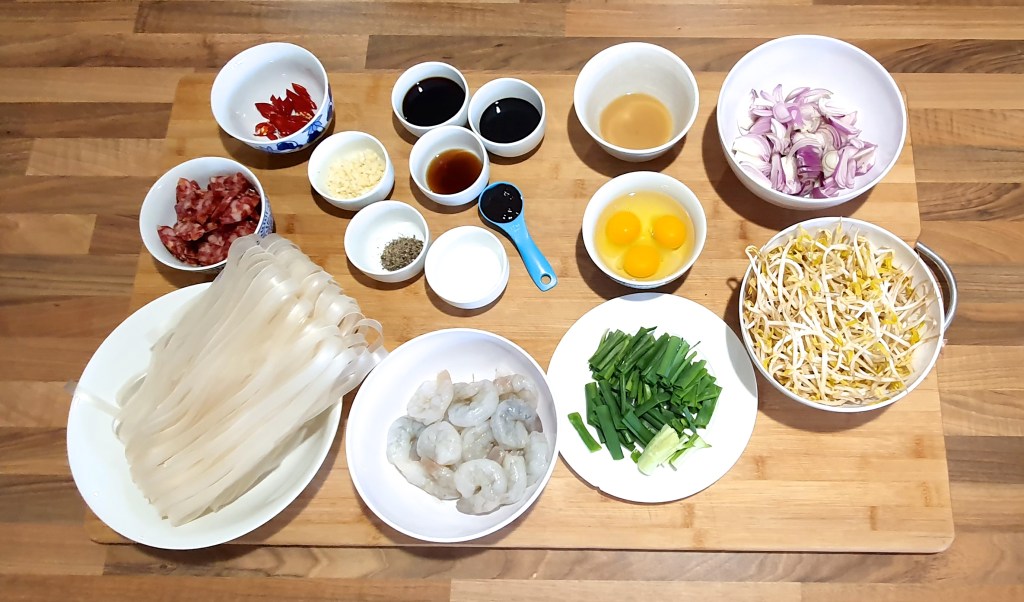
Ingredients you’ll need:

  • 1 packet (1kg) of cooked flat rice noodles (banh pho) – (375g uncooked packet = ~1kg cooked)
  • 1/3 cup (90ml) of any neutral tasting oil (you can substitute with pork lard for extra flavour)
  • 4 cloves garlic, minced
  • 2 large red shallots, finely chopped (can substitute with 1 red onion instead)
  • 2 medium red chilis, thinly sliced (optional)
  • 130g (~4 medium) lap cheong sausages, thinly sliced
  • 15 large fresh shrimp/prawns, shelled and deveined
  • 4 Tbsps (60ml) light soy sauce
  • 2 Tbsps (30ml) dark soy sauce
  • 1 Tbsp (16ml) oyster sauce
  • 1 Tbsp (16ml) fish sauce
  • 2 tsp sugar
  • 1 tsp ground black pepper
  • 2 large eggs
  • 2 cups (200g) fresh bean sprouts
  • 2 large spring onions, cut into 2.5cm lengths

Directions:

I’d recommend having all of your ingredients prepped and ready within arm’s reach before starting this recipe. This recipe is quick and you’ll need everything one after another to ensure things don’t become overcooked since you’ll be cooking on high heat for the majority of the cook!

Cook the rice noodles according to package instructions. Different brands may differ. I bought the XL banh pho/rice stick with the three-headed elephant brand which instructed to cook the noodles in boiling water for 6-8 minutes then drain. Whatever the instructions may be, it should be fairly similar. Always taste the noodles before straining incase you need to keep them in a little longer. There’s nothing worse than tough noodles! Drain the noodles and set aside. You can add a little oil to the noodles to keep them from clumping together and easier to work with later or run them under cold water to stop them from cooking. Be gentle with the noodles so they don’t break apart.

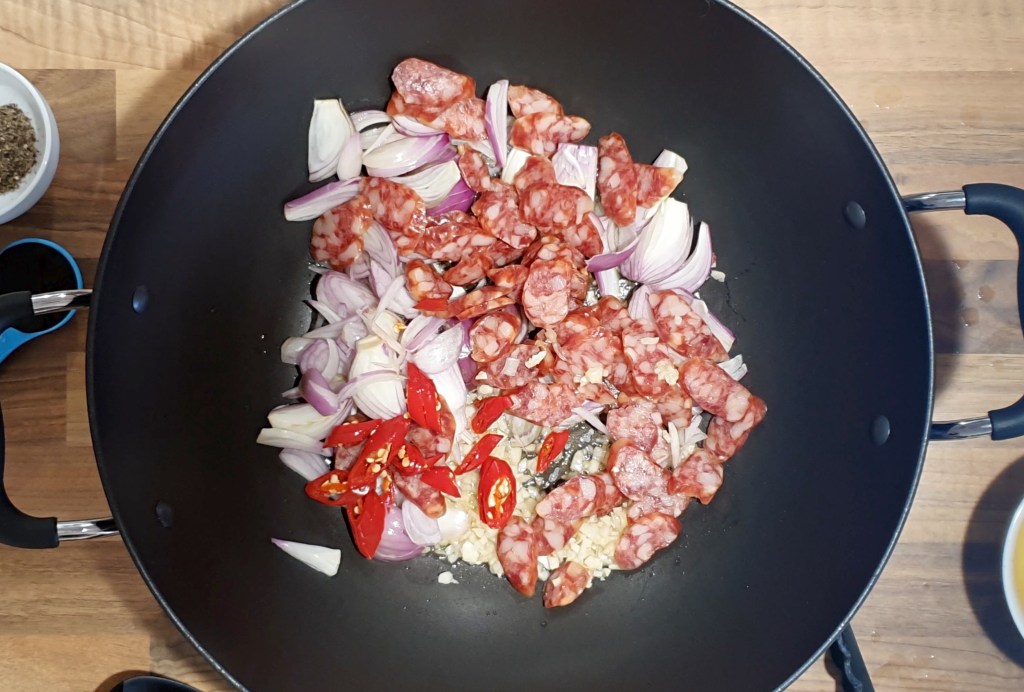
In a large wok or skillet over high heat, add the oil (or lard) until the oil starts to smoke. Then add the garlic, shallots, chili and sausage. Stir-fry for about 30 seconds.

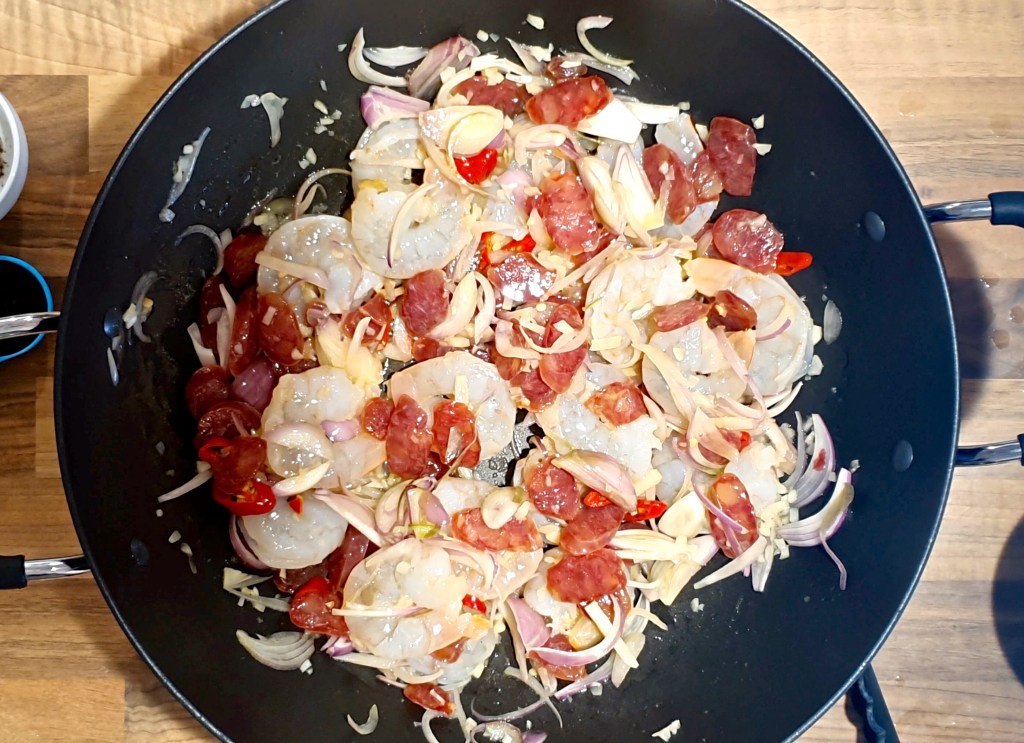
Add the prawns/shrimp to the pan and stir-fry for 1 minute. Shrimp cook very quickly. Don’t worry about cooking your shrimp all the way through at this stage. We just want to mix all the ingredients together. The shrimp will finish cooking once you reach the end of the recipe.

Add in the rice noodles to the pan and mix with the other ingredients while gently breaking up the noodles. Take your time making sure the noodles are mixed thoroughly and clump free without breaking them.

Once mixed, add in: light soy sauce, dark soy sauce, oyster sauce, fish sauce, sugar and black pepper (you can combine these ingredients into a bowl first and then toss it all into the wok at once for ease). Stir-fry until combined.

Make a well in the centre of the pan and add the egg. Scramble it quickly until the egg is a little lumpy (~20 seconds), then mix it together with everything in the pan to continue cooking the egg.

Notice the little clumps of cooked egg in the centre? If you like to have more visually obvious eggs in your char kway teow, you can scramble the eggs further by leaving it in the well longer before mixing it in with the rest of the ingredients.

Add bean sprouts and green onion and mix for another 2mins. Turn off the heat and serve immediately. Enjoy!

Yum!!!

Watch the Char Kway Teow Video Tutorial

Summarized Recipe:

Char Kway Teow (Stir fried flat noodles)

Date Published: June 27th, 2020 | Last Updated: June 27th, 2020
Author: Abby |Category: mains, asian
Serves: 4 – 5 | Prep time: 15mins | Cook time: 10mins

Ingredients:

  • 1 packet of cooked flat rice noodles (banh pho) – (375g uncooked packet = ~1kg cooked)
  • 1/3 cup (90ml) of any neutral tasting oil (can substitute with pork lard for extra flavour)
  • 4 cloves garlic, minced
  • 2 large red shallots, finely chopped (can substitute with 1 red onion instead)
  • 2 medium red serrano chilis, thinly sliced (optional)
  • 130g (~4 medium) lap cheong sausages, thinly sliced
  • 15 large fresh shrimp/prawns, shelled and deveined
  • 4 Tbsps (60ml) light soy sauce
  • 2 Tbsps (30ml) dark soy sauce
  • 1 Tbsp (16ml) oyster sauce
  • 1 Tbsp (16ml) fish sauce
  • 2 tsp sugar
  • 1 tsp ground black pepper
  • 2 large eggs
  • 2 cups (200g) fresh bean sprouts
  • 2 large spring onions, cut into 2.5cm lengths

Directions:

  1. Cook the rice noodles according to package instructions. Drain and set aside. You can add a little oil to the noodles to keep them from clumping together.
  2. In a large wok or skillet over high heat, add the oil (or lard) until the oil starts to smoke. Then add the garlic, shallots, chili and sausage. Stir-fry for about 30 seconds.
  3. Add the prawns/shrimp to the pan and stir-fry for 1 minute.
  4. Add in the rice noodles to the pan and mix with the other ingredients while gently breaking up the noodles.
  5. Once mixed, add in: light soy sauce, dark soy sauce, oyster sauce, fish sauce, sugar and black pepper. Stir-fry until combined.
  6. Make a well in the centre of the pan and add the egg. Scramble it quickly until the egg is a little lumpy (~20 seconds), then mix it together with everything in the pan to continue cooking the egg.
  7. Add bean sprouts and green onion and mix for another 2mins. Turn off the heat and serve immediately. Enjoy!