Taiwanese Oil Rice/Sticky Rice 油飯


Date Published: March 13th, 2025 | Last Updated: March 13th, 2025
Author: Abby |Category: Asian, mains, Taiwanese
Serves: 4-6 | Prep time: soak rice overnight + 30 mins | Cook time: 40 mins for rice + 10 mins for stir-fry

Jump to recipe |

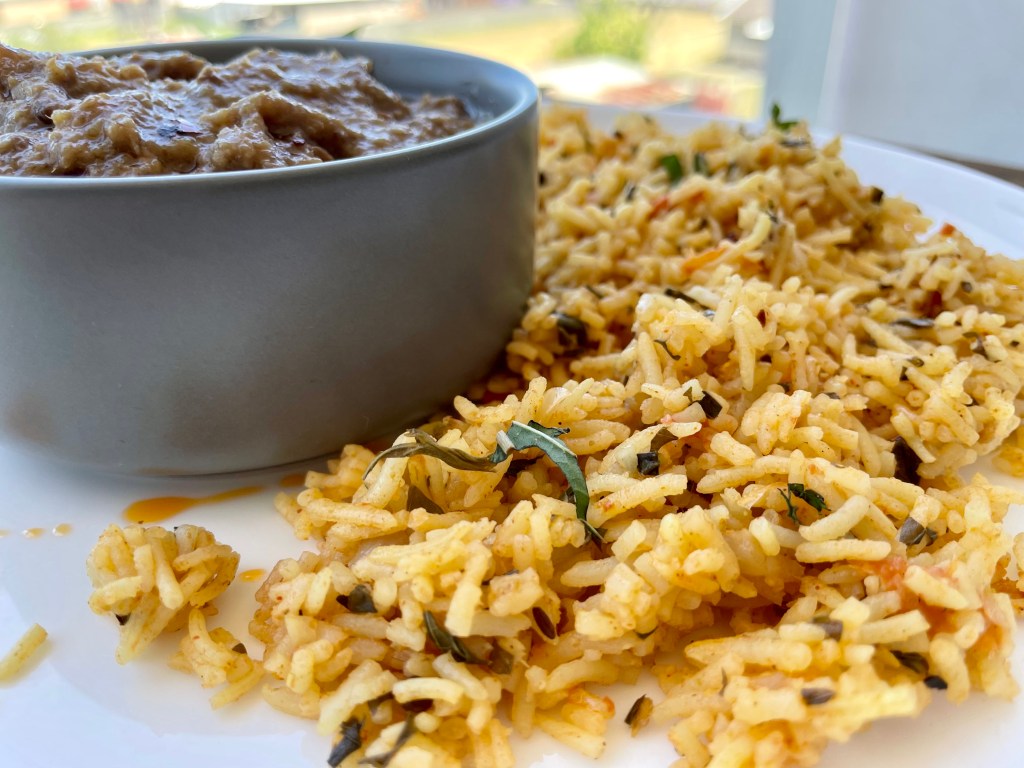
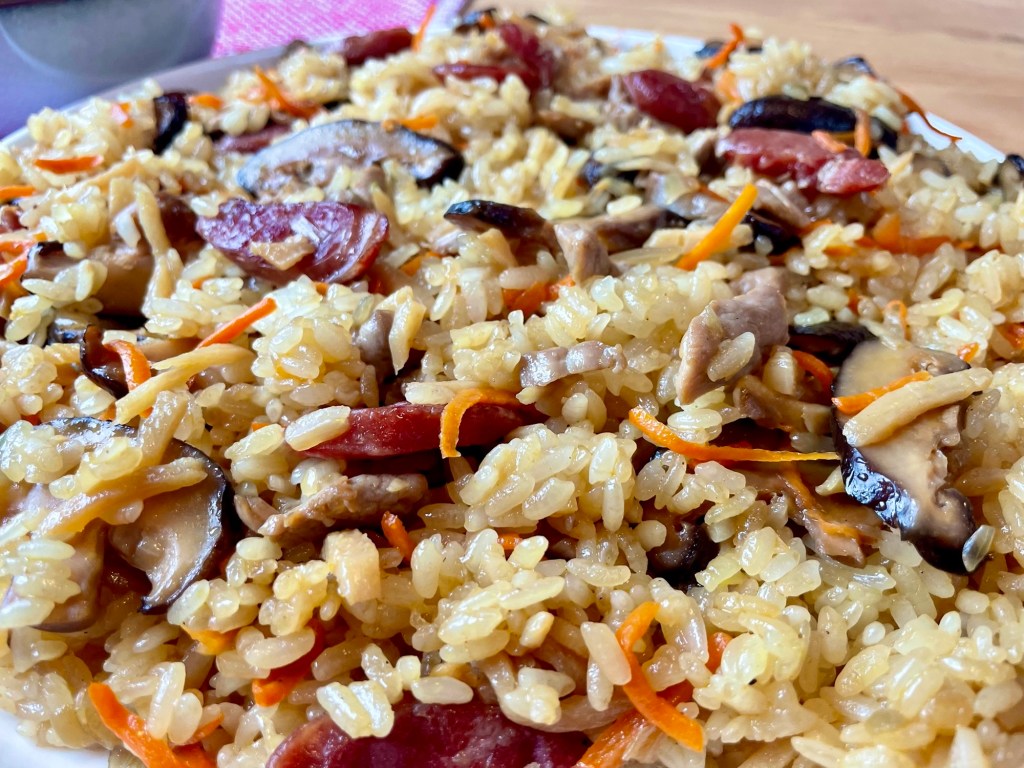
油飯 (Yoú Fàn) is a Taiwanese dish comprised of glutinous rice sautéed in a sauce and various add-ons (most commonly pork, shiitake mushrooms and small shrimp). This is a dish that can be found served at special occasions, restaurants, or made at home for a fancy night in. The name directly translates to “oil rice” because the rice is sautéed in a decent amount of pork fat (1/4 cup, to be exact in this recipe), but don’t worry the end result won’t be overly greasy. The pork fat gives it extra flavour, but you can substitute it with another neutral oil if you wish. You can eat the rice on its own or serve it with a drizzle of sweet Haishan sauce.

The cooking process for this dish is quite quick, so before you turn on the heat, make sure all the ingredients and sauces have been prepped and portioned out, ready to go!

Anyways, without further ado, here’s the recipe! If you have any comments or suggestions, I’d love to hear from you in the comment section! You can follow me on instagram, youtube and facebook to see all the recipes I post!

Happy cooking!

Ingredients you’ll need:

  • 2 cups (400g) glutinous rice (sometimes called ‘sweet rice’)
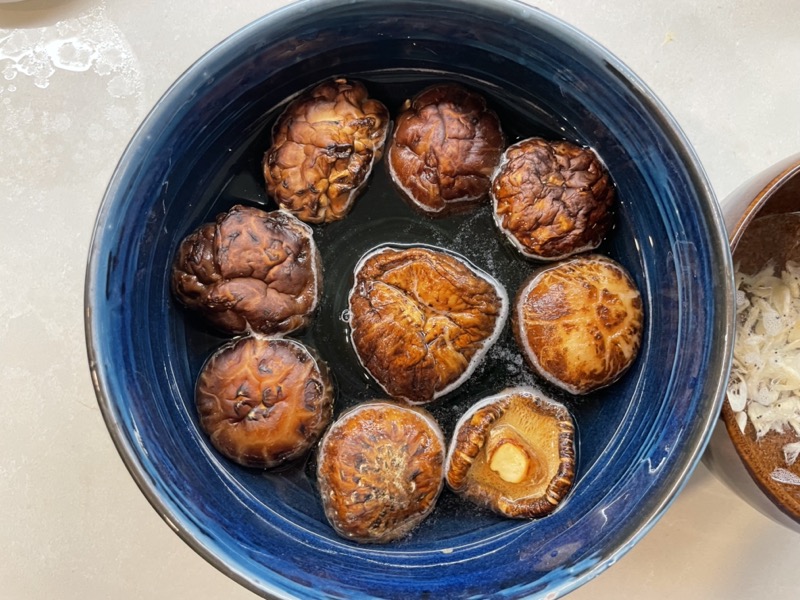
  • 8 dried shiitake mushrooms
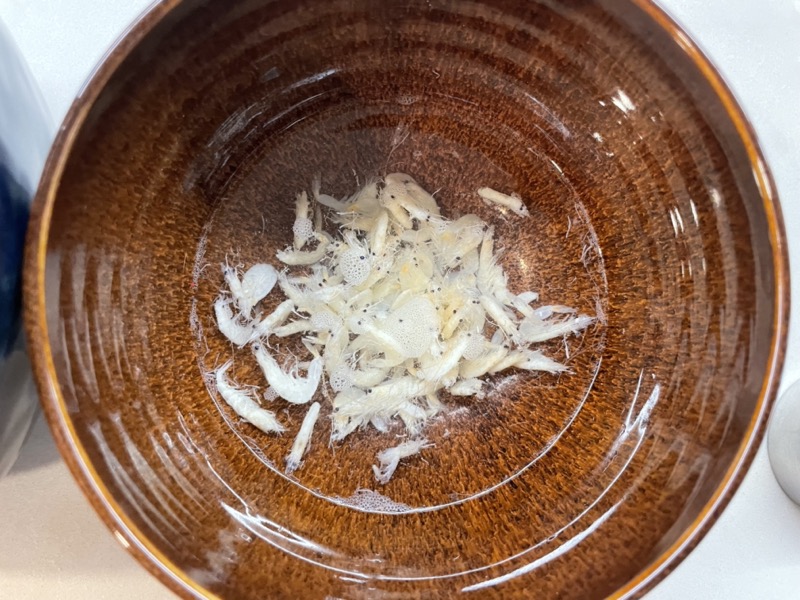
  • 1.5 Tbsps small dried shrimp
  • Pork marinade:
    • 1.5 Tbsps soy sauce
    • 1/8 tsp ground white pepper
    • 1 tsp sesame oil
    • 200g pork tenderloin, cut into thin 2cm strips
  • Sauce:
    • 1/4 cup (60ml) soy sauce
    • 1 Tbsps granulated sugar
    • 2 tsps rice wine vinegar/michu
    • 1 tsp black vinegar
  • 1/4 cup (60ml) lard (or neutral oil)
  • 3 large (~1.5 cups) shallots, finely diced
  • 3 garlic cloves, minced
  • 2-3 sticks (85g) of lap cheong (Chinese sausage)
  • 1 medium (~100g) carrot, peeled and julienned
  • 1 can (280g) sliced bamboo shoots, sliced into sticks
  • Optional: haishan sauce

Directions:

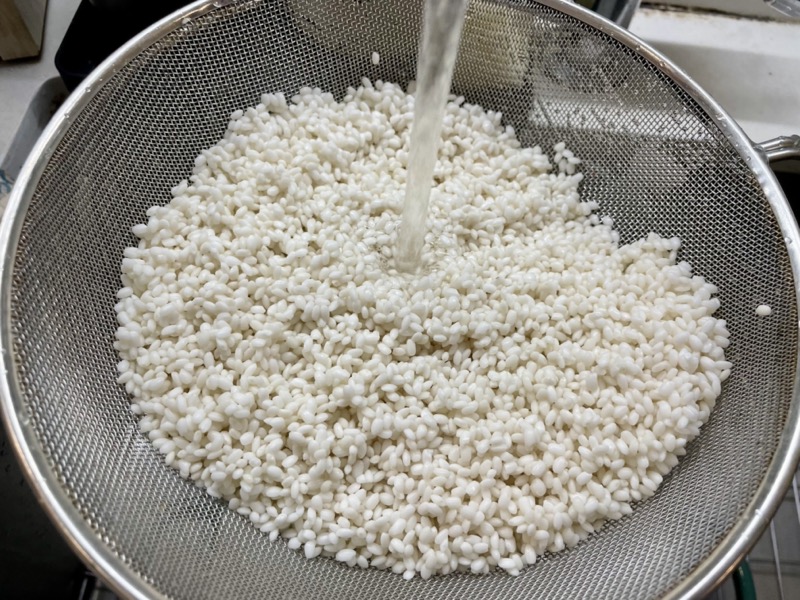
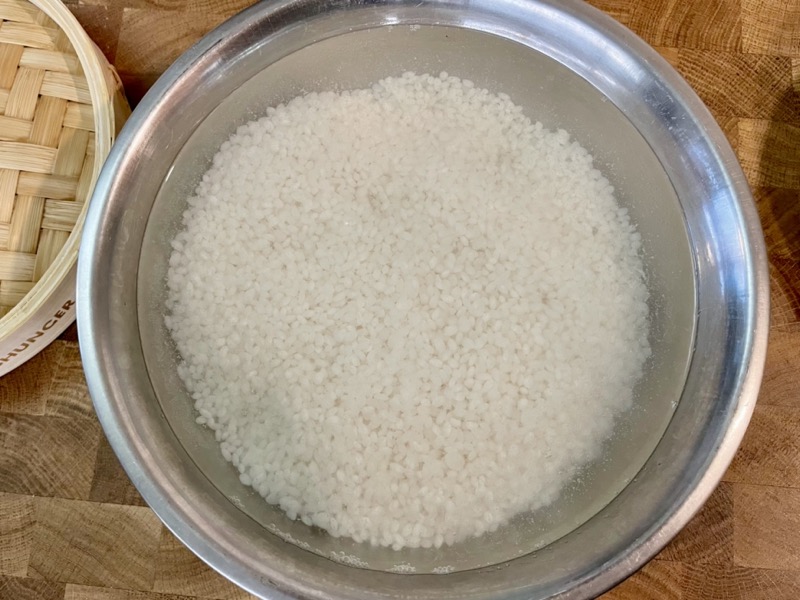
Soak the rice the night before: Wash the glutinous rice in a colander a few times then transfer to a large bowl and add enough water to cover 2-3 inches above the rice. Let it soak overnight.

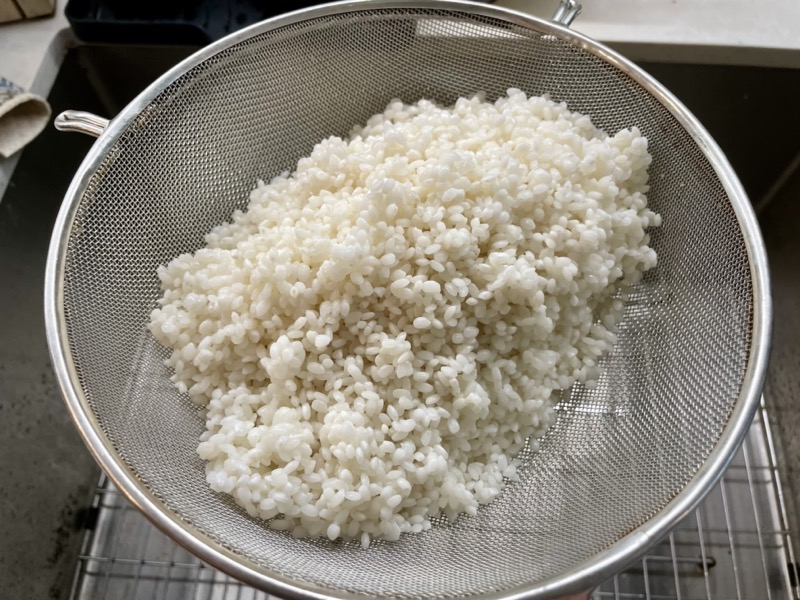
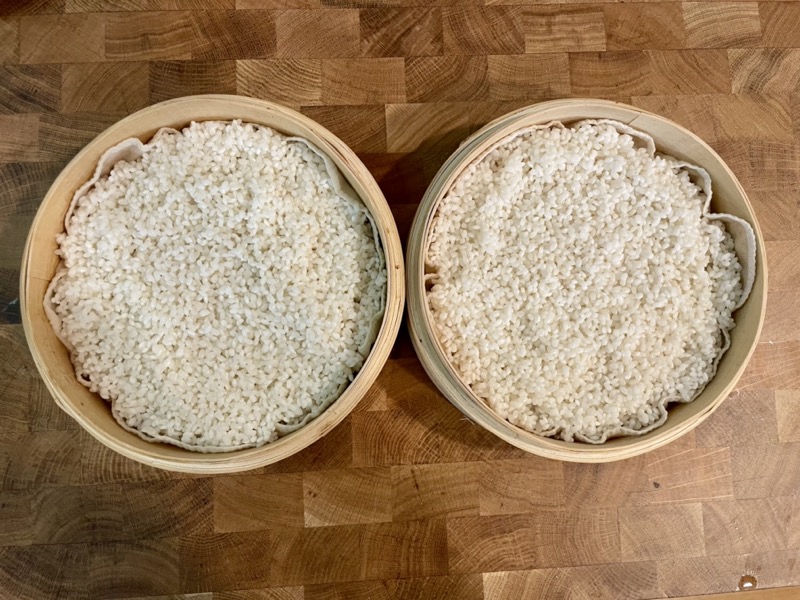
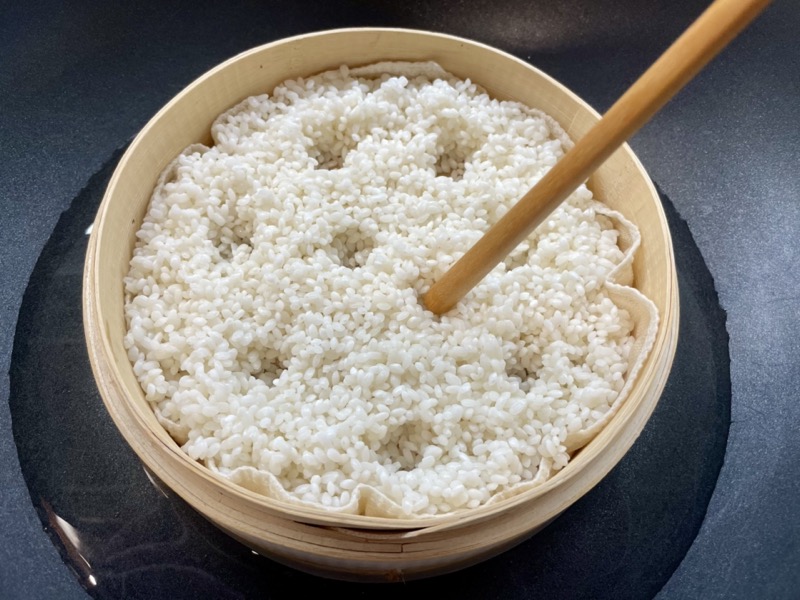
Cook the rice: The next day, strain the rice. Prepare a large steaming basket with a moistened liner. Add the rice into the steaming basket and use the back of a chopstick to create holes in the rice help it cook evenly. Note: I used two smaller bamboo steaming baskets stacked since I didn’t have a large one. Steam for 30-40 minutes until the rice is cooked (a little chewy but not too tough or mush). Once finished, turn off the heat and set the rice aside.

You can steam it however method you wish. I put my steaming baskets with a lid on into a wok with a couple inches of boiling water and let it simmer until the time is up. Add water as needed to the wok when it evaporates.

Prepare the mushrooms: In a bowl, add the dried shiitake mushrooms and enough warm water to cover. Let it soak for at least an hour (or overnight) until the mushrooms have softened. Once softened, reserve 1/3 cup of the mushrooms soaking liquid and strain out the rest. Cut off and discard the thick stems and slice the mushrooms thinly. Set aside.

Prepare the shrimp: Add the 1.5 Tbsp dried shrimp into a small bowl and soak in warm water for 10 minutes then strain.

Marinate the pork: Add all of the pork marinade ingredients into a bowl: 1.5 Tbsps soy sauce, 1/8 tsp white pepper, 1 tsp sesame oil, sliced pork. Mix together and set aside to marinate for at least 15 minutes.

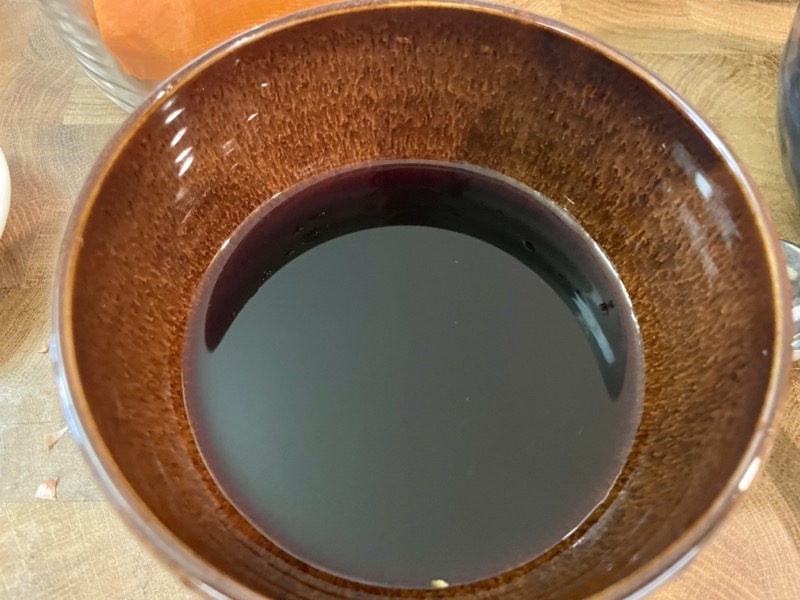
Prepare the sauce: Mix together the 1/4 cup soy sauce, 1 Tbsp sugar, 2 tsps rice wine vinegar, 1 tsp black vinegar, and the reserved 1/3 cup of the mushroom soaking liquid. Set aside.

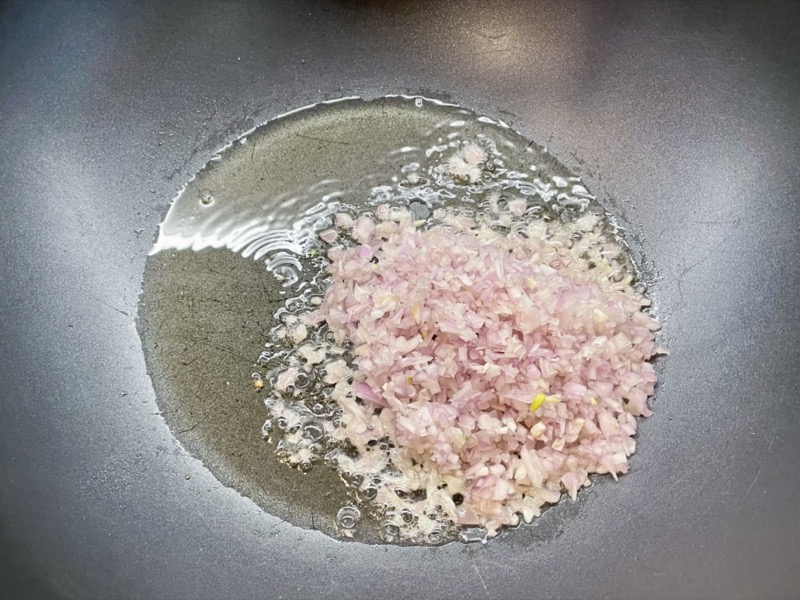
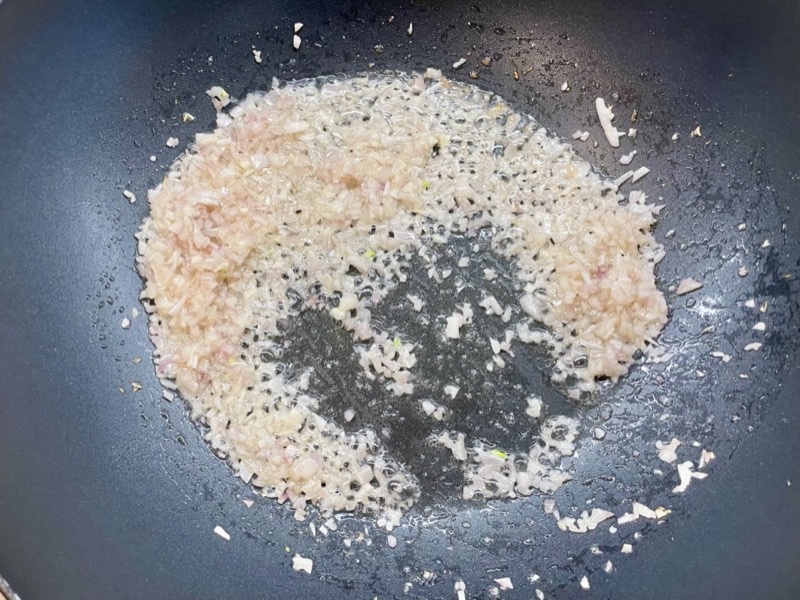
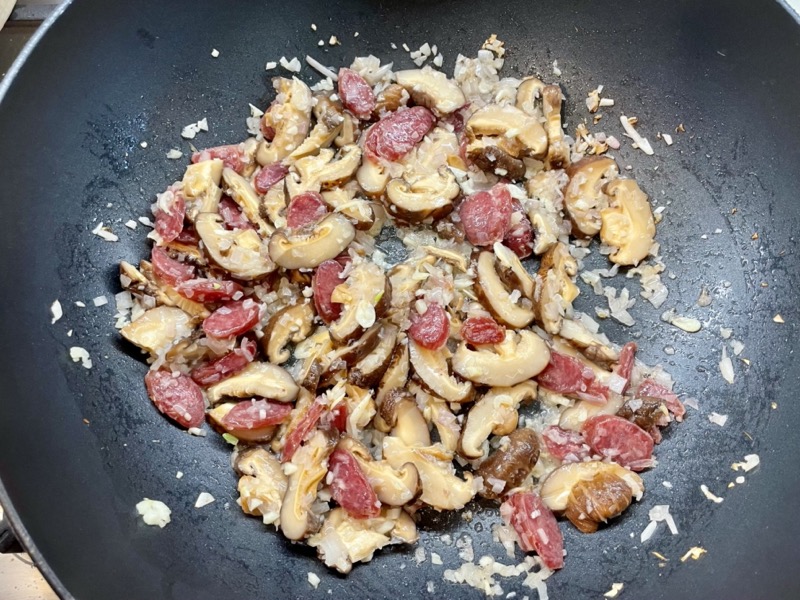
Putting it all together (make sure all of your ingredients are chopped and ready – this will be a quick process): In a wok on MED-HIGH heat, add the 1/4 cup of lard. Once it starts to sizzle, add in the shallots and sautée for 1-2 minutes until softened, then add in the garlic, shrimp, shiitake mushrooms, and lap cheong. Continue to sautée for another 1 minute until fragrant.

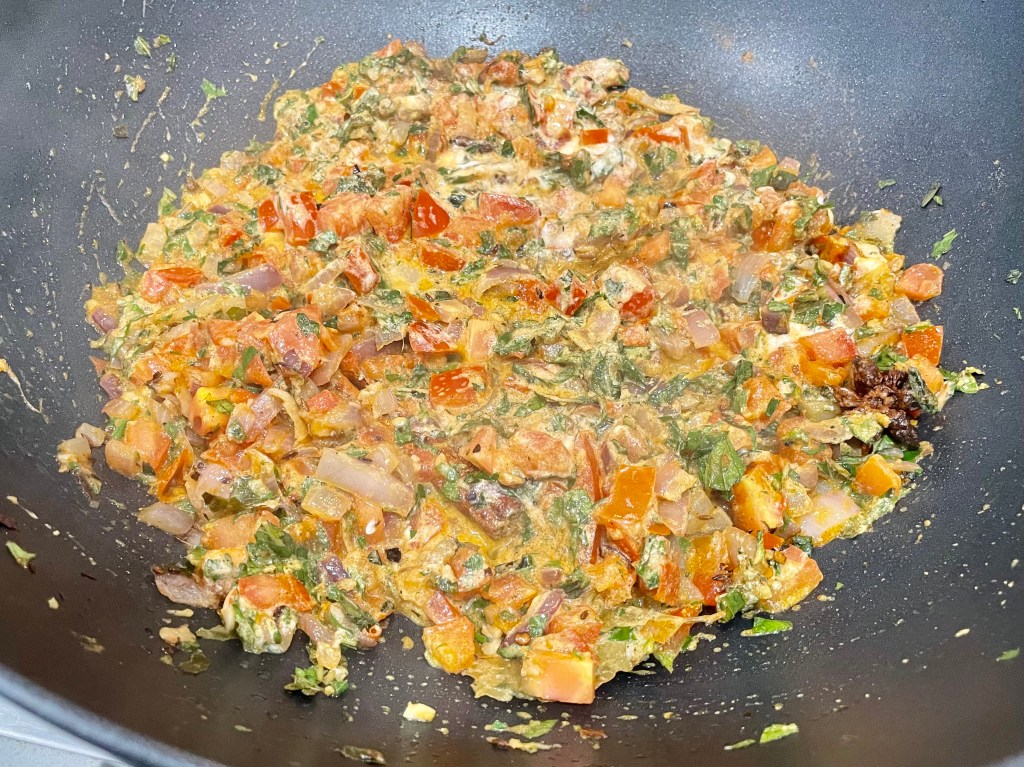
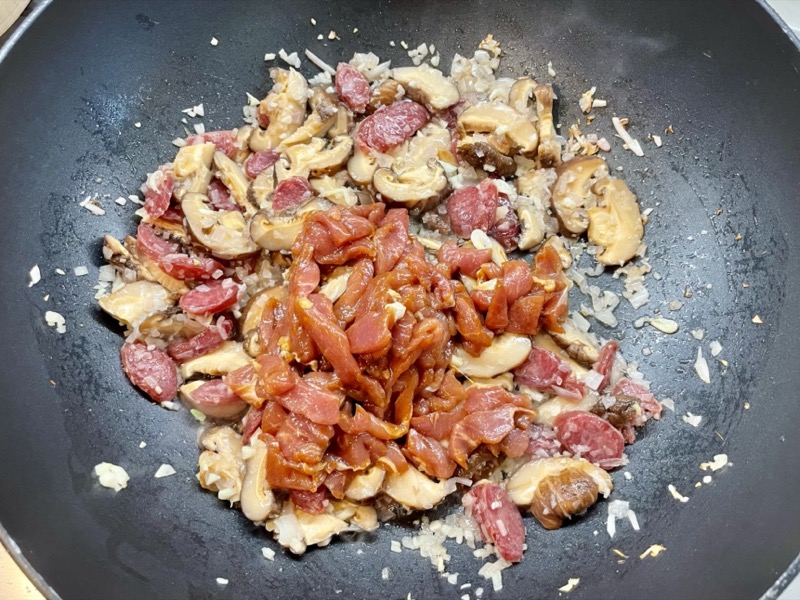
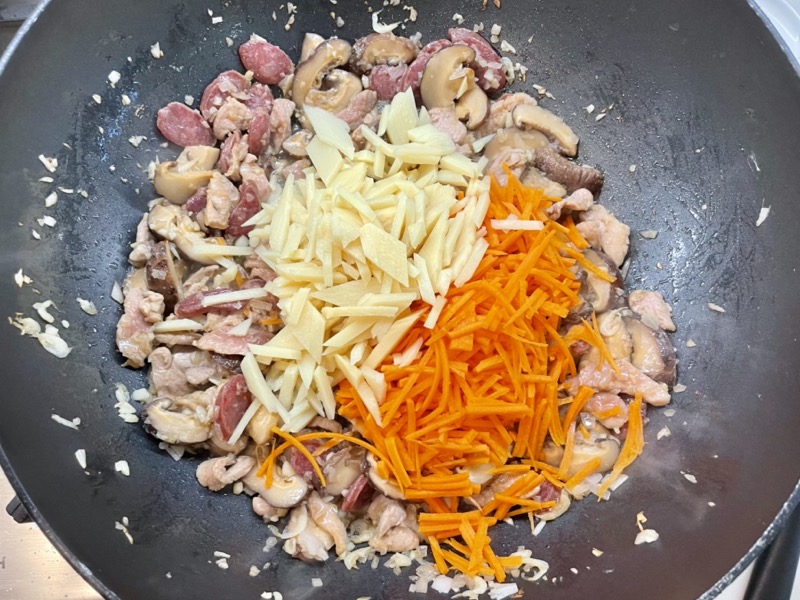
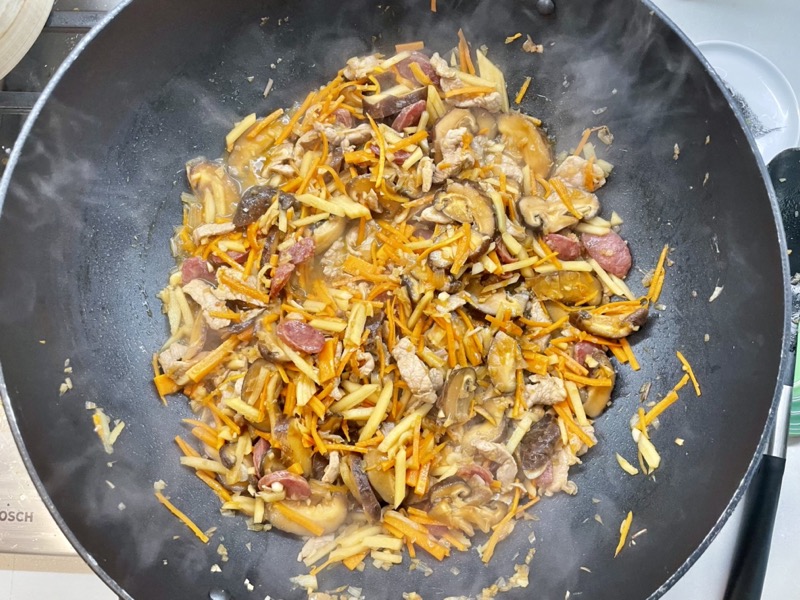
Add in the marinated pork (from step 5). Cook for 1-2 minutes until the edges of the pork turns opaque then add in the carrots and bamboo. Cook for another 2-3 minutes until the carrots have softened and the pork is completely cooked. Add in the sauce (from step 6) and mix everything around for 30 seconds.

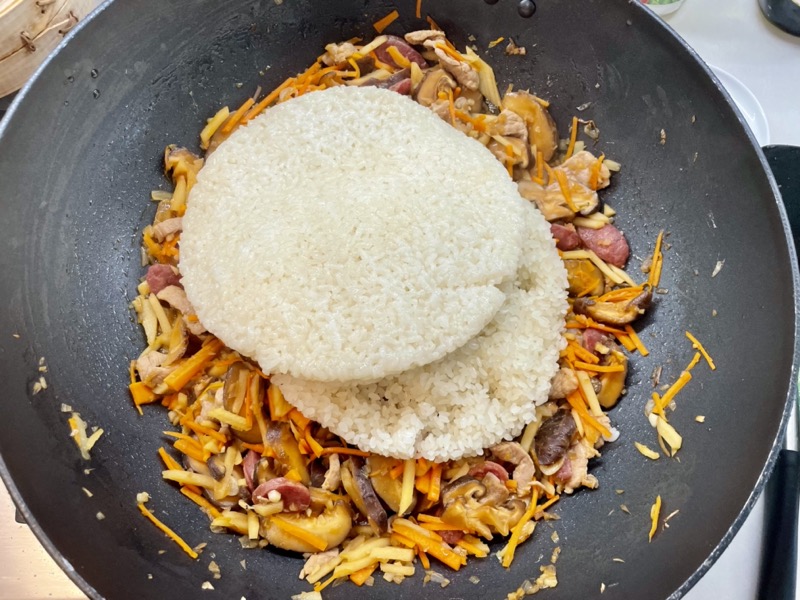
Turn off the heat and add in the cooked glutinous rice (from step 2). Gently mix it all together until the rice absorbs all of the liquid. Taste and adjust salt as needed. Serve immediately with an optional side of Haishan sauce.

Summarized Recipe:

Taiwanese Oil Rice/Sticky Rice 油飯

Date Published: March 13th, 2025 | Last Updated: March 13th, 2025
Author: Abby |Category: Asian, mains, Taiwanese
Serves: 4-6 | Prep time: soak rice overnight + 30 mins | Cook time: 40 mins for rice + 10 mins for stir-fry

Ingredients:

  • 2 cups (400g) glutinous rice (sometimes called ‘sweet rice’)
  • 8 dried shiitake mushrooms
  • 1.5 Tbsps small dried shrimp
  • Pork marinade:
    • 1.5 Tbsps soy sauce
    • 1/8 tsp ground white pepper
    • 1 tsp sesame oil
    • 200g pork tenderloin, cut into thin 2cm strips
  • Sauce:
    • 1/4 cup (60ml) soy sauce
    • 1 Tbsps granulated sugar
    • 2 tsps rice wine vinegar/michu
    • 1 tsp black vinegar
  • 1/4 cup (60ml) lard (or neutral oil)
  • 3 large (~1.5 cups) shallots, finely diced
  • 3 garlic cloves, minced
  • 2-3 sticks (85g) of lap cheong (Chinese sausage)
  • 1 medium (~100g) carrot, peeled and julienned
  • 1 can (280g) sliced bamboo shoots, sliced into sticks
  • Optional: haishan sauce

Directions:

  1. Soak the rice the night before: Wash the glutinous rice in a colander a few times then transfer to a large bowl and add enough water to cover 2-3 inches above the rice. Let it soak overnight.
  2. Cook the rice: The next day, strain the rice. Prepare a large steaming basket with a moistened liner. Add the rice into the steaming basket and use the back of a chopstick to create holes in the rice help it cook evenly. Note: I used two smaller bamboo steaming baskets stacked since I didn’t have a large one. Steam for 30-40 minutes until the rice is cooked (a little chewy but not too tough or mush). Once finished, turn off the heat and set the rice aside.
    • You can steam it however method you wish. I put my steaming baskets with a lid on into a wok with a couple inches of boiling water and let it simmer until the time is up. Add water as needed to the wok when it evaporates.
  3. Prepare the mushrooms: In a bowl, add the dried shiitake mushrooms and enough warm water to cover. Let it soak for about an hour (or overnight) until the mushrooms have softened. Once softened, reserve 1/3 cup of the mushrooms soaking liquid and strain out the rest. Cut off and discard the thick stems and slice the mushrooms thinly. Set aside.
  4. Prepare the shrimp: Add the 1.5 Tbsps dried shrimp into a small bowl and soak in warm water for 10 minutes then strain.
  5. Marinate the pork: Add all of the pork marinade ingredients into a bowl: 1.5 Tbsps soy sauce, 1/8 tsp white pepper, 1 tsp sesame oil, sliced pork. Mix together and set aside to marinate for at least 15 minutes.
  6. Prepare the sauce: Mix together the 1/4 cup soy sauce, 1 Tbsp sugar, 2 tsps rice wine vinegar, 1 tsp black vinegar, and the reserved 1/3 cup of the mushroom soaking liquid. Set aside.
  7. Putting it all together (make sure all of your ingredients are chopped and ready – this will be a quick process):
    • In a wok on MED-HIGH heat, add the 1/4 cup of lard. Once it starts to sizzle, add in the shallots and sauté for 1-2 minutes until softened.
    • Add in the garlic, shrimp, shiitake mushrooms, and lap cheong. Continue to sautée for another 1 minute until fragrant.
    • Next, add in the marinated pork (from step 5). Cook for 1-2 minutes until the edges of the pork turns opaque.
    • Add in the carrots and bamboo and cook for another 2-3 minutes until the carrots have softened and the pork is completely cooked.
    • Add in the sauce (from step 6) and mix everything around for 30 seconds.
    • Turn off the heat and add in the cooked glutinous rice (from step 2). Gently mix it all together until the rice absorbs all of the liquid.
    • Taste and adjust salt as needed.
  8. Serve immediately with an optional side of Haishan sauce.

Avocado Salsa Verde


Date Published: March 2nd, 2025 | Last Updated: March 2nd, 2025
Author: Abby |Category: dips, vegetarian, easy, healthy, snacks
Serves: 3 cups | Prep time: 15 mins | Cook time: 15 mins

Jump to recipe |

Since moving to the US 2 years ago, Toby and I have had a lot more exposure to Mexican/Latin cuisine. There’s a severe lack of good Mexican food in Melbourne and Toby’s mind has been blown away by all the amazing choices within arms reach. Our South Slope neighbourhood is full of so many authentic Mexican restaurants that sometimes we need a Spanish translator app just to order our food (seriously, once we asked one of our Spanish-speaking co-workers to order our food for us 😅). We joke that every new shop is either going to be a cannabis dispensary, bodega, or Mexican restaurant.

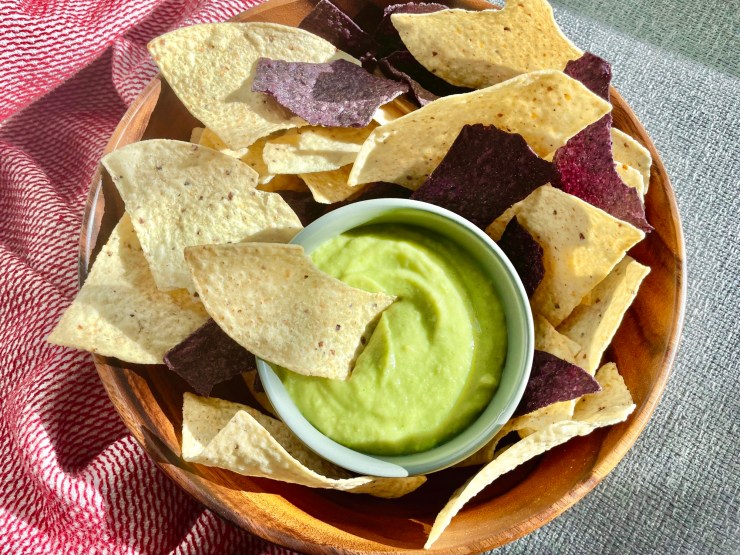
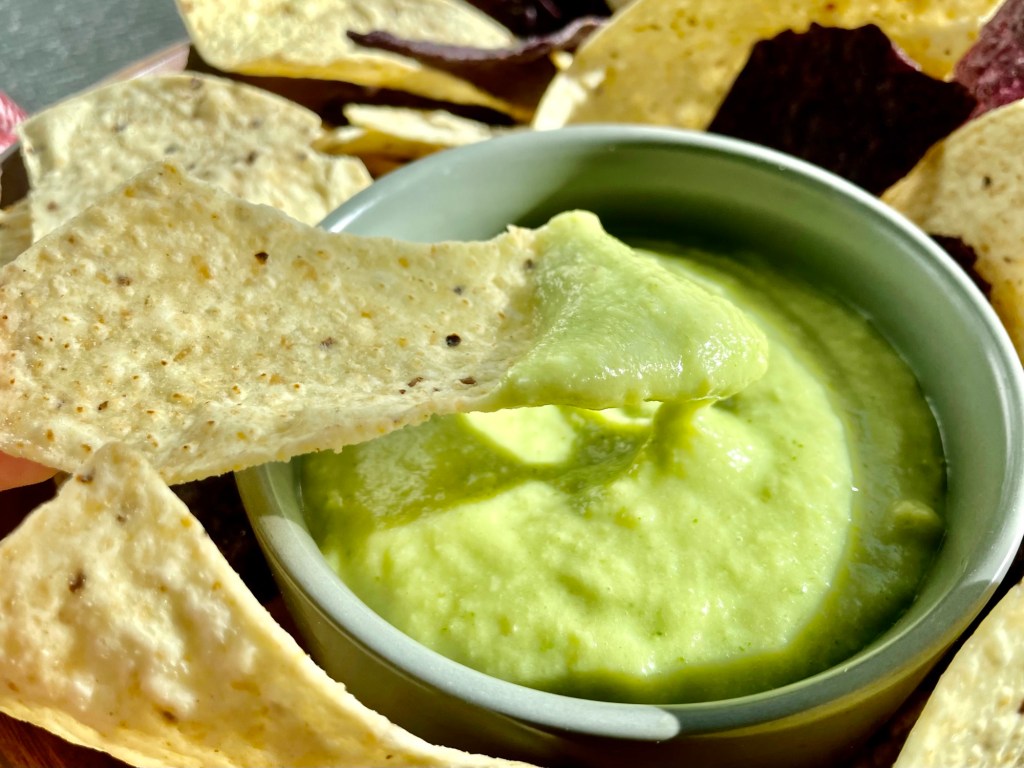
We have had more than our share of amazing burritos, tacos, and empanadas in this neighbourhood and it often comes with a red, green, and sometimes orange sauce. These sauces tend to be a house-made chilli salsa in varying degrees of spiciness and no two sauces are the same between restaurants. I usually gravitate towards the green sauce which is made with a green chilli but on one occasion the green sauce had hints of avocado flavour and took me by surprise. It was so good that I went right back and ordered a large container of it just to keep in the fridge. This avocado salsa verde recipe is a result of that sauce. Although I haven’t been able to recreate it to exactly the same sauce, this end result came out so good that I’ve decided to share it anyway. I hope you enjoy!

What are Tomatillos?

A tomatillo is also known as a Mexican husk tomato. To me it looks exactly like a green tomato, but with a papery shell/husk on the outside. You must remove the shell/husk before using them and the underlying skin can have a slightly sticky residue that comes off with a quick rinse. Tomatillos can be used raw or cooked. The flavour of a tomatillo is a bit unique in that in can have a tartness to it when eaten raw, but it mellows out when cooked.

Avoiding a bitter salsa verde

A common complaint when making salsa verde is that it can turn out a bit bitter. I came across this in my first few batches and it took a bit of research to figure out why – the tomatillos! Before this recipe, tomatillos were foreign to me and I had to learn how to use them. They are the most common cause for a bitter salsa verde due to a number of reasons:

  • Unripe tomatillos – a ripe tomatillo should be:
    • Bright green under the husk
    • Have a tight husk (the fruit fills up the husk rather than a small and shrunken fruit within which can indicate that it was harvested too early)
    • Have some firmness but not too hard (under-ripe) nor mushy (over-ripe)
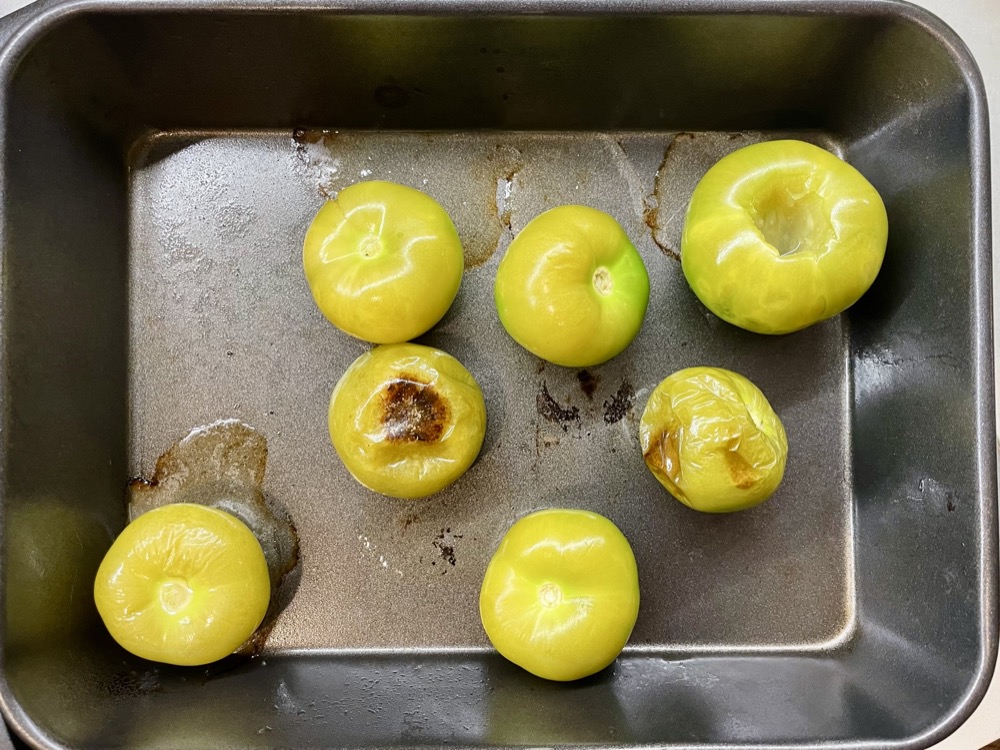
  • Overcooked tomatillos – tomatillos should be cooked until they just turn colour from a bright green to a more pale/army green colour. Overcooking your tomatillo is one of the most common causes for bitterness.
  • Remove the ribs and stem base – The stem base can be a cause of bitterness so I like to remove it before blending it in my salsa. Some people also claim that the seeds and ribs can also cause the bitter flavour and will scoop it out as well.
  • Taste! The best way to avoid a bitter salsa verde is to taste your tomatillos and its components after its cooked before blending it with the rest of your ingredients so you know if you need to make any corrections.

Anyways, without further ado, here’s the recipe! If you have any comments or suggestions, I’d love to hear from you in the comment section! You can follow me on instagram, youtube and facebook to see all the recipes I post!

Happy cooking!

Ingredients you’ll need:

  • 2-3 (200g) tomatillos
  • 1 medium (100g) avocado, deseeded and peeled (weight is after deseeding and peeling)
  • 1 large (90g) red shallot (or a quarter of a red onion)
  • 7g cilantro, leaves and stem
  • 1/2 (10g) fresh jalapeño, deseeded, for mildly spicy. Add more to your liking, you can also use serrano chili
  • 2 large (7g) garlic cloves, peeled
  • 1/2 Tbsp fresh lime juice
  • 1 tsp salt, or more to taste

Directions:

Preheat oven to 400˚F/200˚C.

Remove the outer husks of the tomatillos, rinse off the sticky residue, remove the rib/stem base, then place it on a baking tray. Add a drizzle of oil over the tomatillos and bake in the preheated oven for 10-15 minutes, or until soft with a light golden brown on top (the colour will turn from a bright green to a lighter/army green).

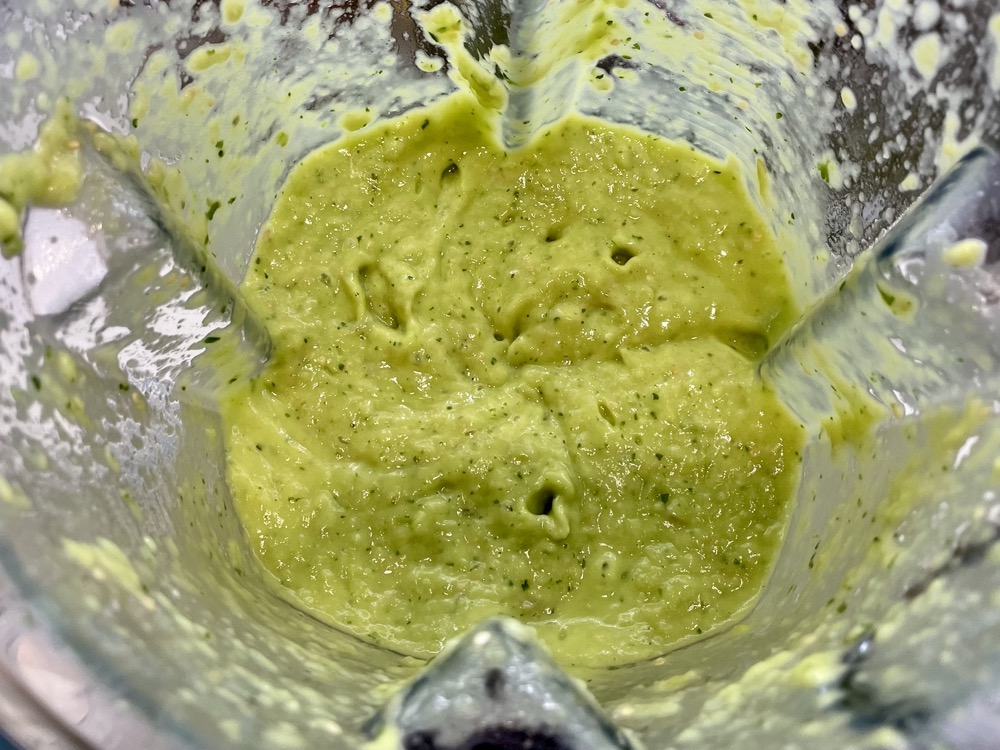
While the tomatillos are roasting, prepare and add the rest of the ingredients to a blender: avocado, red shallots, cilantro, jalapeño, garlic, lime juice, and salt.

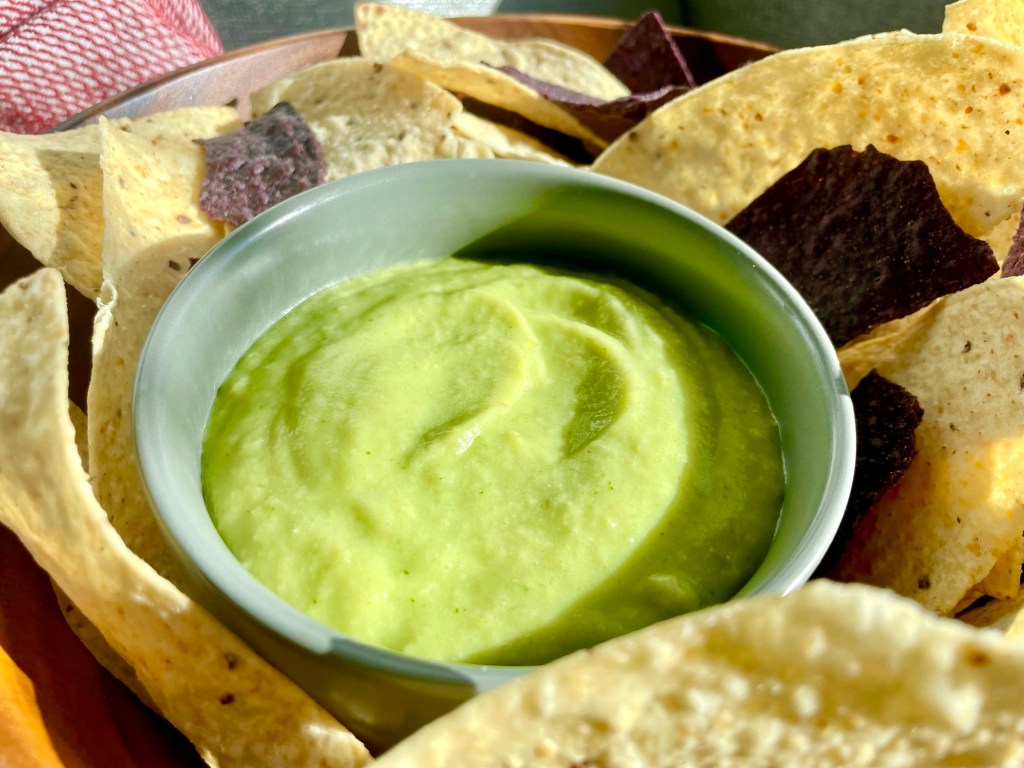
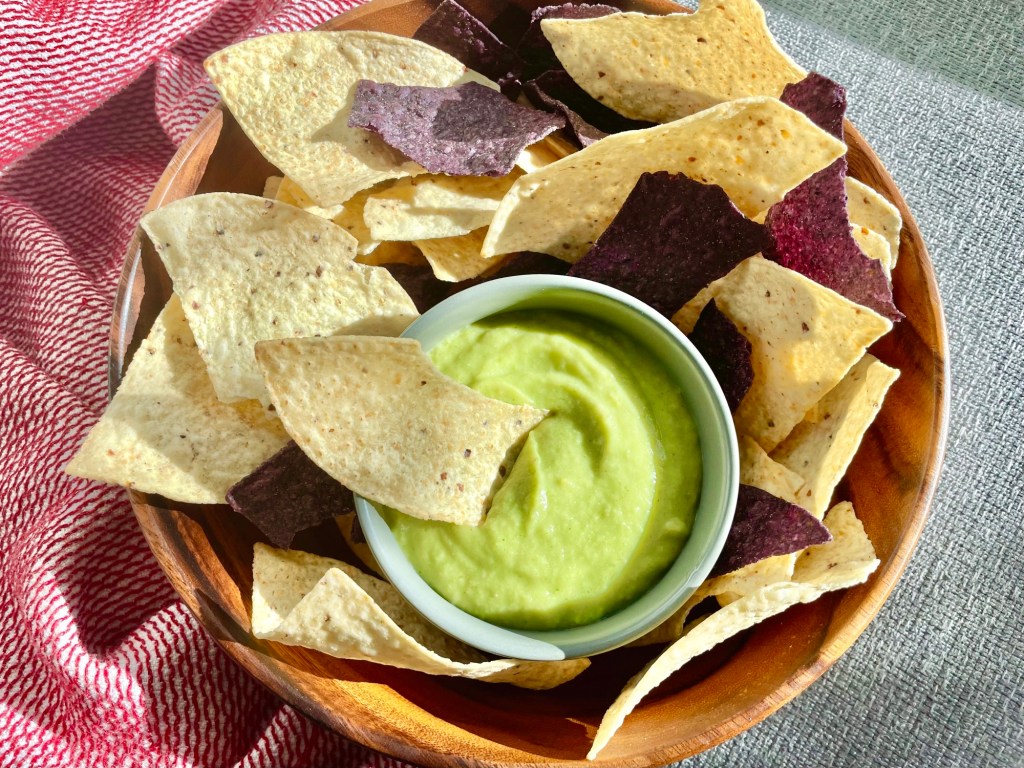
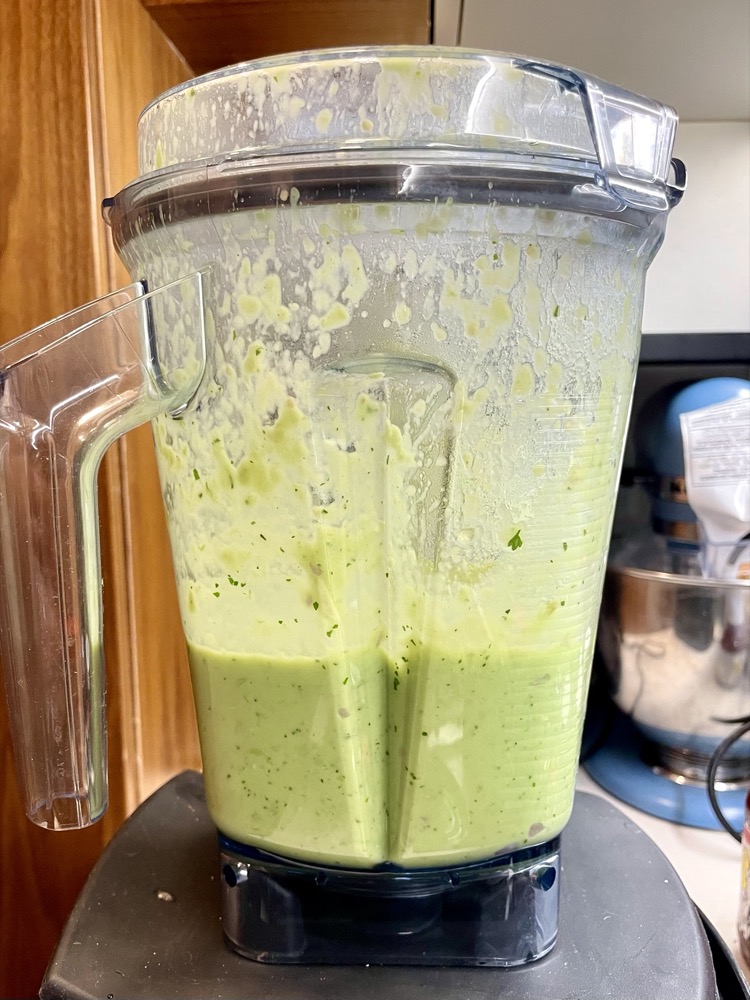
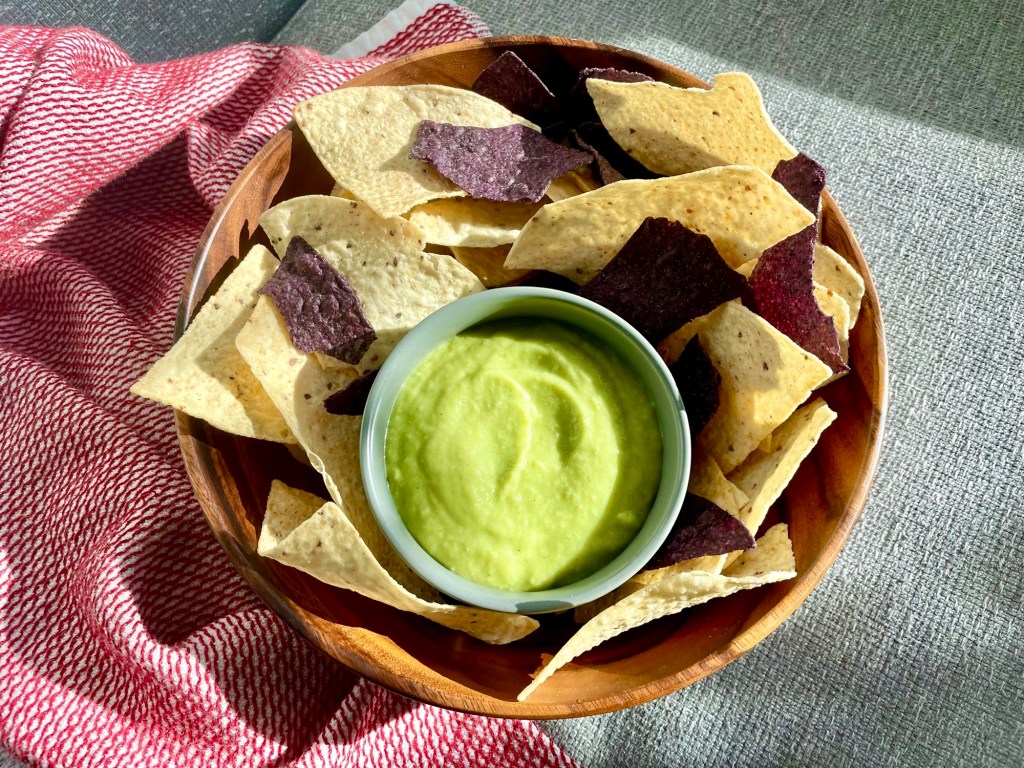
Once the tomatillos are done roasting, add them to the blender with the rest of the ingredients and blend on HIGH until smooth. Taste and adjust salt, lime juice, and jalapeños to your liking. Done!

Tip: If it’s too spicy, add more avocado.

Summarized Recipe:

Avocado Salsa Verde

Date Published: March 2nd, 2025 | Last Updated: March 2nd, 2025
Author: Abby |Category: dips, vegetarian, easy, healthy, snacks
Serves: 3 cups | Prep time: 15 mins | Cook time: 15 mins

Ingredients:

  • 2-3 (200g) tomatillos
  • 1 medium (100g) avocado, deseeded and peeled (weight is after deseeding and peeling)
  • 1 large (90g) red shallot (or a quarter of a red onion)
  • 7g cilantro, leaves and stem
  • 1/2 (10g) fresh jalapeño, deseeded, for mildly spicy. Add more to your liking, you can also use serrano chili
  • 2 large (7g) garlic cloves, peeled
  • 1/2 Tbsp fresh lime juice
  • 1 tsp salt, or more to taste

Directions:

  1. Preheat oven to 400˚F/200˚C.
  2. Remove the outer husks of the tomatillos, give it a rinse, then place it on a baking tray. Add a drizzle of oil over the tomatillos and bake in the preheated oven for 10-15 minutes, or until soft with a light golden brown on top (the colour will turn from a bright green to a lighter/army green).
  3. While the tomatillos are roasting, prepare and add the rest of the ingredients to a blender: avocado, red shallots, cilantro, jalapeño, garlic, lime juice, and salt.
  4. Once the tomatillos are done roasting, add them to the blender with the rest of the ingredients and blend on HIGH until smooth. Taste and adjust salt, lime juice, and jalapeños to your liking. Done!
    • Tip: If it’s too spicy, add more avocado.

Philly Cheesesteak – “Whiz Wit Mushrooms”


Date Published: Feb 15th, 2025 | Last Updated: Feb 15th, 2025
Author: Abby |Category: mains, easy
Serves: 2 | Prep time: 30 mins | Cook time: 45 mins

Jump to recipe |

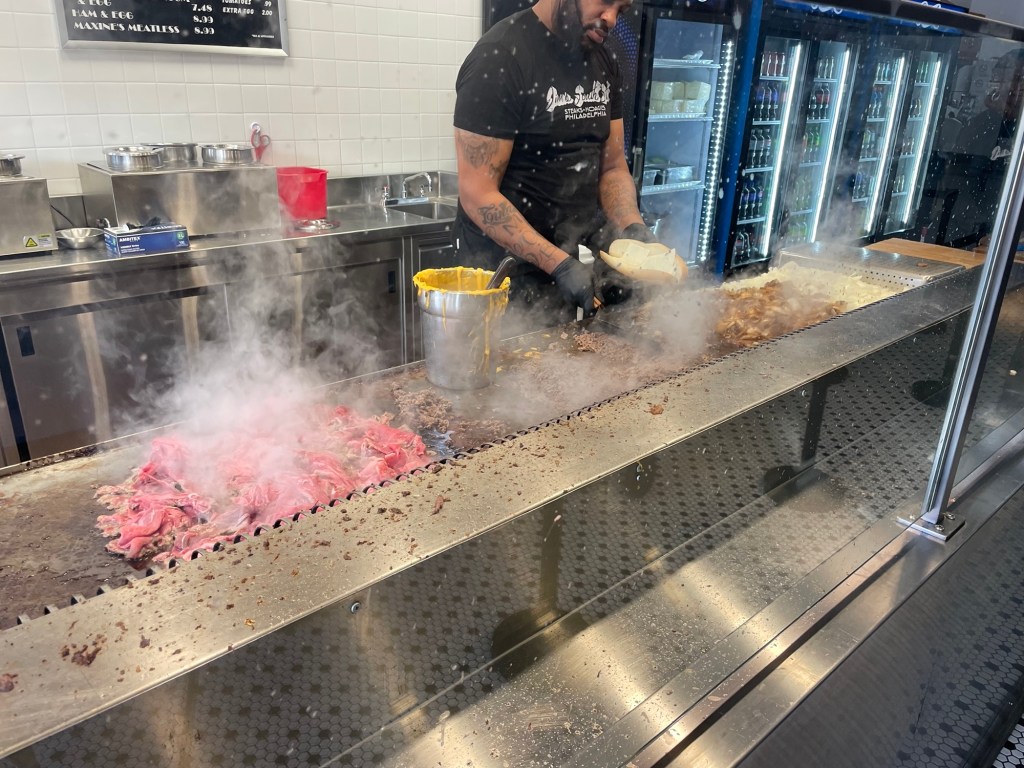
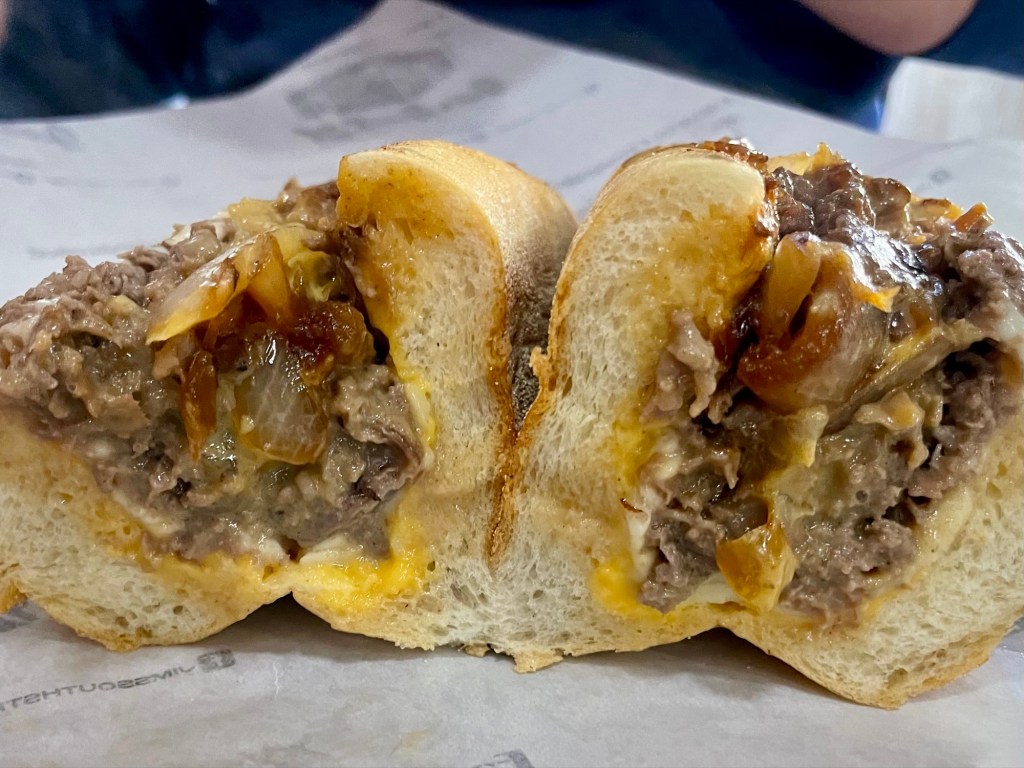
Since moving to New York nearly 2 years ago, we’ve visited Philadelphia a handful of times. This city is full of rich history and endless food options. Of course with this being a food blog, no trip to Philly is complete without a cheesesteak. There are debates over who has the best cheesesteaks, with top 2 mentions from locals being Jim’s South St. and D’alessandro’s and the more tourist-driven places being Pat’s and Geno’s. So far, Jim’s South St. is our favourite.

If you’re looking for the best cheesesteak in Philly, check out my separate post below!

This sandwich is a local favourite and I’m sure every Philadelphian will have their own go-to spot and opinions on how a good cheesesteak should be. In this recipe I’ve written it to how I prefer my cheesesteaks (with mushrooms, onions, cheez whiz and provolone), but it is very customizable to tailor to your liking.

What is a Philly Cheesesteak? What makes it so special?

A Philly Cheesesteak is a sandwich that is essentially bread, cooked steak, and cheese. The combination of these 3 ingredients don’t sound like much, but it’s the quality of the bread, the tenderness and juiciness of the beef, and the cheesy goodness all combined together that makes this sandwich magical. There’s no fancy truffle aioli, or a complex combination of marinades and spices. It’s just simple ingredients made well. Also be prepared – a good cheesesteak tends to be pretty greasy so pack your wet wipes!

Jim’s South Street, Philadelphia

Dissecting the Philly Cheeseteak:

Bread:

You want a sandwich roll that’s got a light crust on the outside (but not hard like a baguette) and soft on the inside. You don’t want the bread too soft like a hotdog bun or else the juices from the sandwich will make the bread soggy and it won’t hold up. I went for a locally available “hero roll” at my bodega.

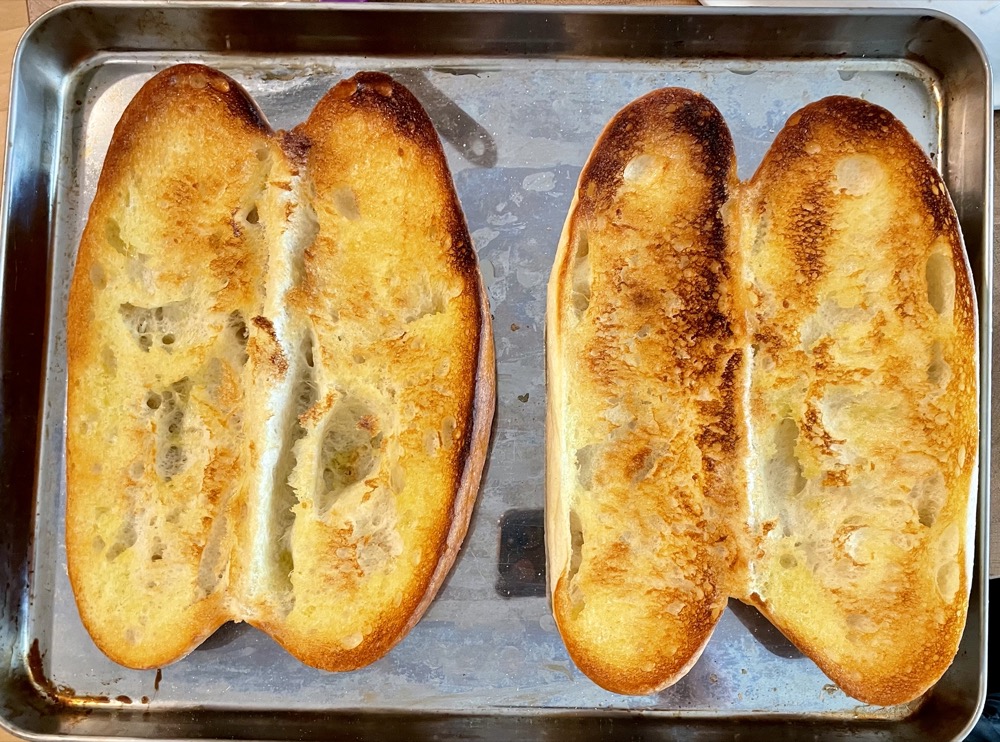
Usually the bread is not toasted in a traditional cheesesteak, but for my recipe I’ve done a quick broil in the oven so the bread gets a little more crunch to hold up to the moisture of the beef a little better.

Steak:

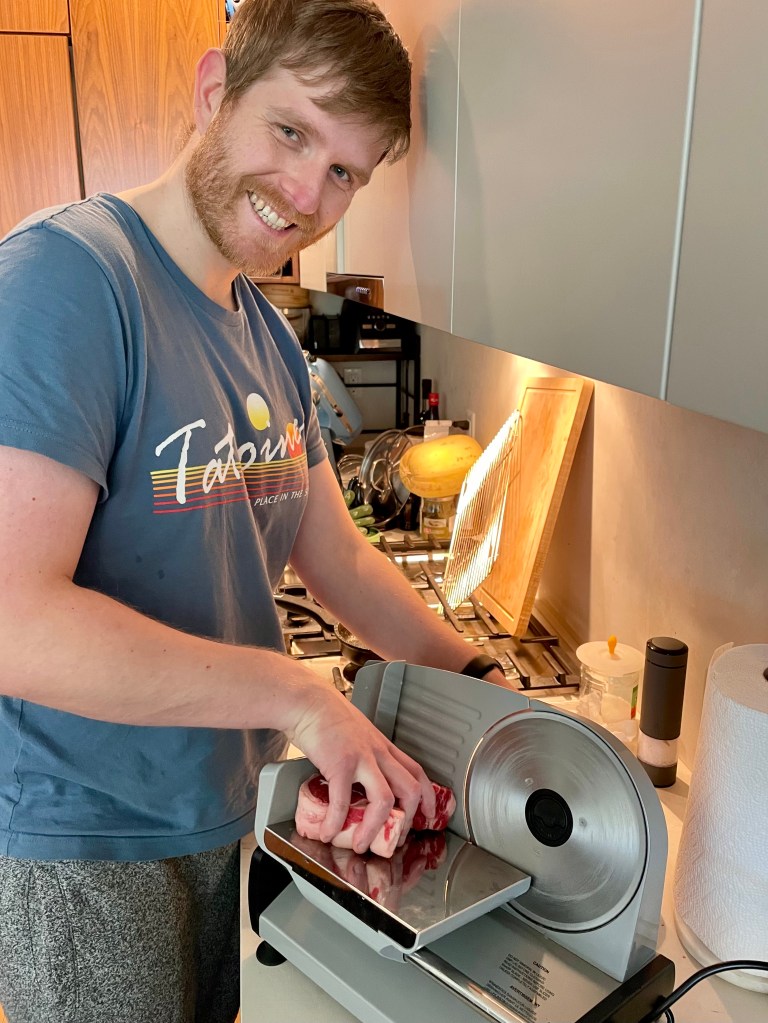
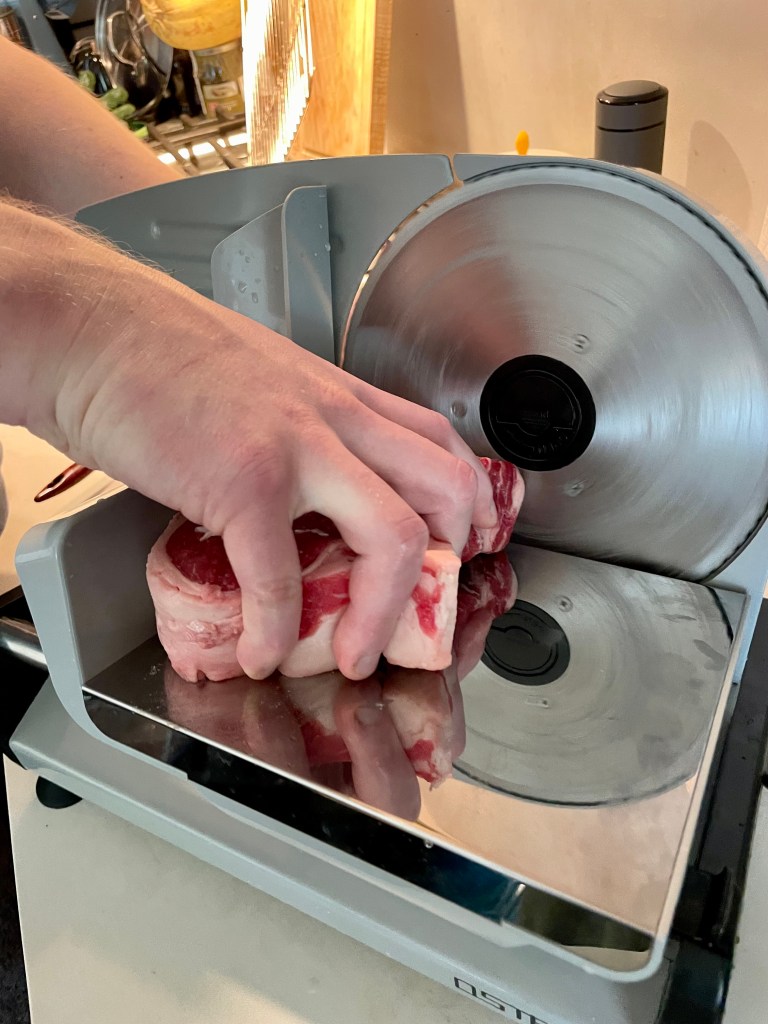
Although more expensive, rib eye steak is the go-to choice for a Philly cheesesteak. It’s a good quality cut with enough marbled fat to give it extra flavour. A cheaper alternative is skirt steak. The steak needs to be very thinly sliced to achieve the right texture, so you can either slice it yourself if you happen to have a deli meat slicer at home (we just got one recently!), freeze the steak for 20 minutes to firm up the beef to make it easier to slice by hand with a knife, or ask your butcher to slice it for you. Another alternative is to buy the pre-sliced frozen beef at Asian grocery stores in the hotpot freezer section.

Cheese: Provolone, Cheez Whiz, or American Cheese?

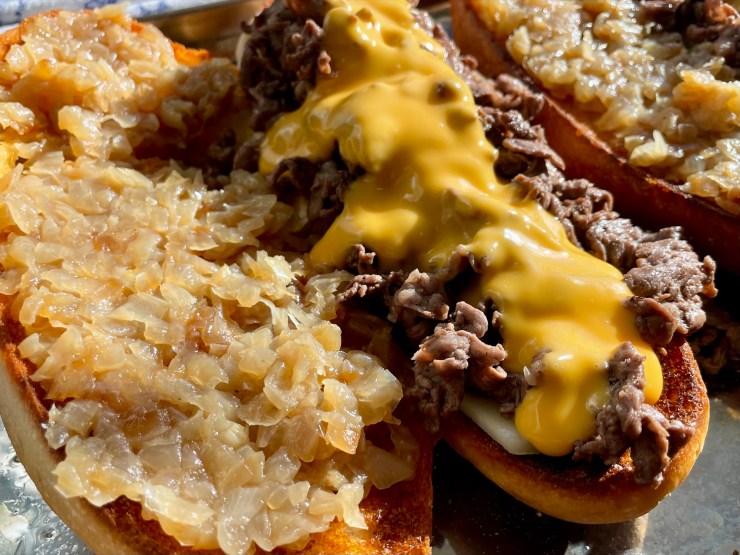
When Toby and I went to order our first ever Philly Cheesesteak, we had no idea that there were cheese options! The guy at Jim’s didn’t specifically ask us what cheese we wanted. He instead asked “Provolone?”. In a moment of panic, we just said “yes”. Surely provolone is the most popular option, otherwise he would’ve led with a different cheese choice, right? When we unwrapped our cheesesteak, it was decent, but I couldn’t really taste the provolone and it didn’t look ooey gooey with cheese as I had imagined it. For a cheesesteak, I was expecting big cheesy flavours so we were a little disappointed. Maybe we chose the wrong cheese? Maybe we should get extra cheese? After polishing off our sandwich, Toby went right back in line and ordered another one, this time with BOTH provolone and Cheez Whiz. After taking the first bite, we were in love! This was it. The Cheez Whiz made all the difference. This gooey fake cheese product penetrated through the layers of the beef and onions and melded the flavours together into a mess of greasy cheesy delicious goodness. I now understand why this sandwich is a classic. For my recipe, I’ve included both provolone and Cheez Whiz below, but feel free to change it up to your liking.
A cheesesteak at Jim’s South St. in Philadelphia

Fun fact: local slang for a cheesesteak with onions and Cheez Wiz is called a “Whiz wit“. If you don’t want onions, it’s called a “Whiz without“!

Onions (optional):

Onions are optional, but essential in my opinion. They’re usually cooked to just browned and softened with a bit of a bite. I prefer the cheesesteak joints that take it a little further and slightly caramelize the onions to add a bit of sweetness to a sandwich that’s full of cheese and salty meat. In my recipe below, the onions are slightly caramelized but feel free to cook it as much or as little as you like.

Mushrooms (optional):

Sautéed mushrooms are also another must for me, but I just love mushrooms in general. I find that it adds a nice texture to the sandwich, but Toby prefers it without.

Other toppings:

Other toppings you’ll often find are sautéed bell peppers, hot banana peppers, relish, ketchup, mayonnaise, and mustard. I prefer my cheesesteak with just onions and mushrooms, but Toby likes to add relish for a bit of sweet vinegary kick.

Anyways, without further ado, here’s the recipe! If you have any comments or suggestions, I’d love to hear from you in the comment section! You can follow me on instagram, youtube and facebook to see all the recipes I post!
Happy cooking!

Ingredients you’ll need:

  • 1 + 1 Tbsp of bacon fat/neutral oil
  • 2 large onions, diced
  • Drizzle of olive oil
  • 300g white mushrooms, sliced
  • 2 sandwich/hoagie rolls
  • 6 slices of provolone cheese
  • 1 pound/500g rib eye steak, sliced as thin as possible
  • Salt & pepper to taste
  • 1/2 cup of Cheez Whiz

Directions:

Cook the onions: In a wide skillet on MED heat, melt 1 Tbsp of bacon fat and add in the diced onions. Cook until the onions slightly caramelize and brown (~20-30 minutes) – you don’t want to fully caramelize it, but with a bit of bite and sweetness. When finished, remove the onions into a bowl and set aside until ready to use.

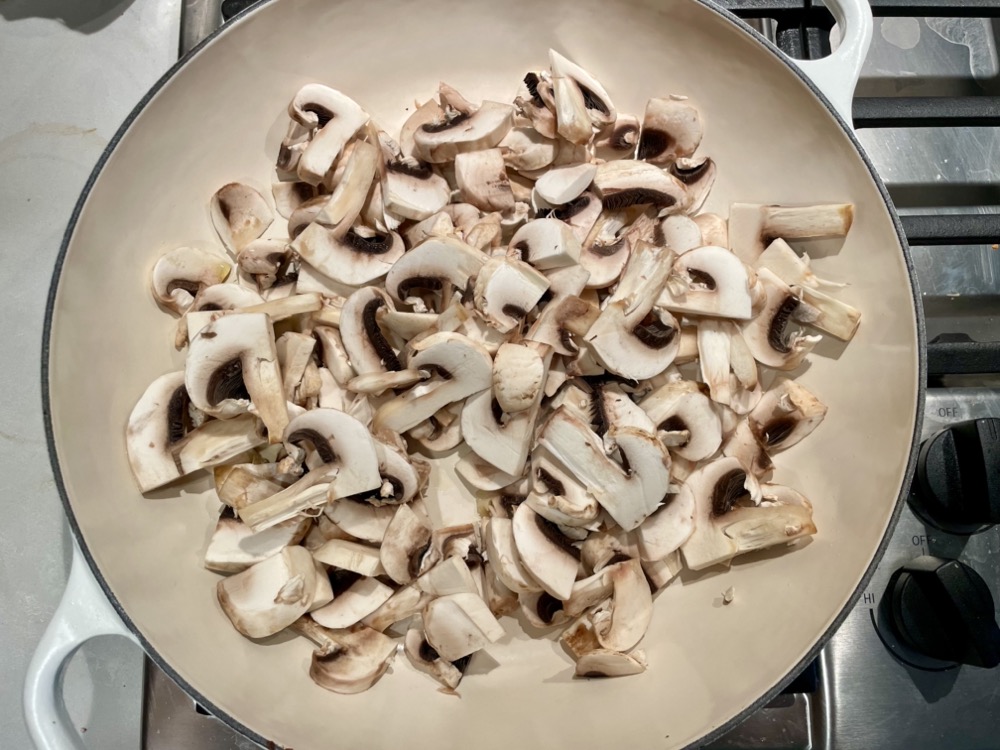
Cook the mushrooms: In the same skillet on MED heat, add a drizzle of olive oil and sauté the sliced mushrooms with a pinch of salt and pepper until cooked (5 minutes). Remove the cooked mushrooms into a bowl and set aside until ready to use.

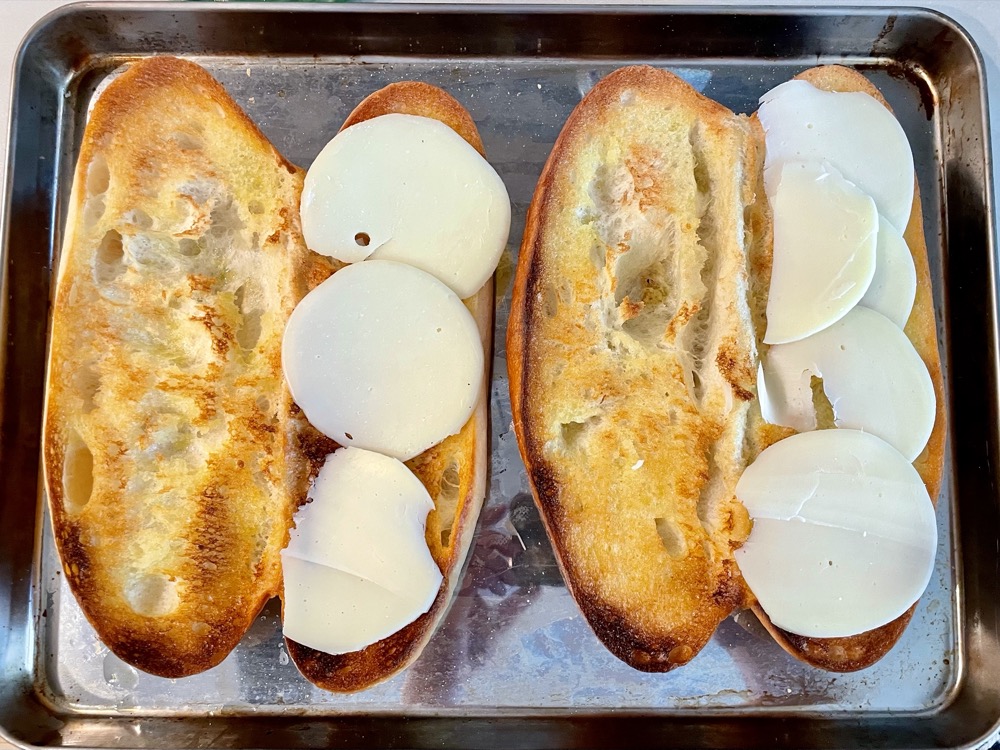
Optional step: Toast the bread: Slice each bread roll lengthways without fully cutting through, and lay open on a baking tray. Brush a small amount of olive oil onto the inside of the bread and toast in the oven on the BROIL setting for 1-2 minutes or until golden brown.

Cook the steak: In the same skillet on MED heat, melt another 1 Tbsp of bacon fat and add in the rib eye steak slices. Add a pinch of salt and fresh ground black pepper and continue to sauté until the steak is fully cooked (~5 minutes). Taste and adjust salt and pepper as needed. Turn the heat off.

Assemble the sandwich:

Add 3 slices of provolone cheese to one side of each sandwich.

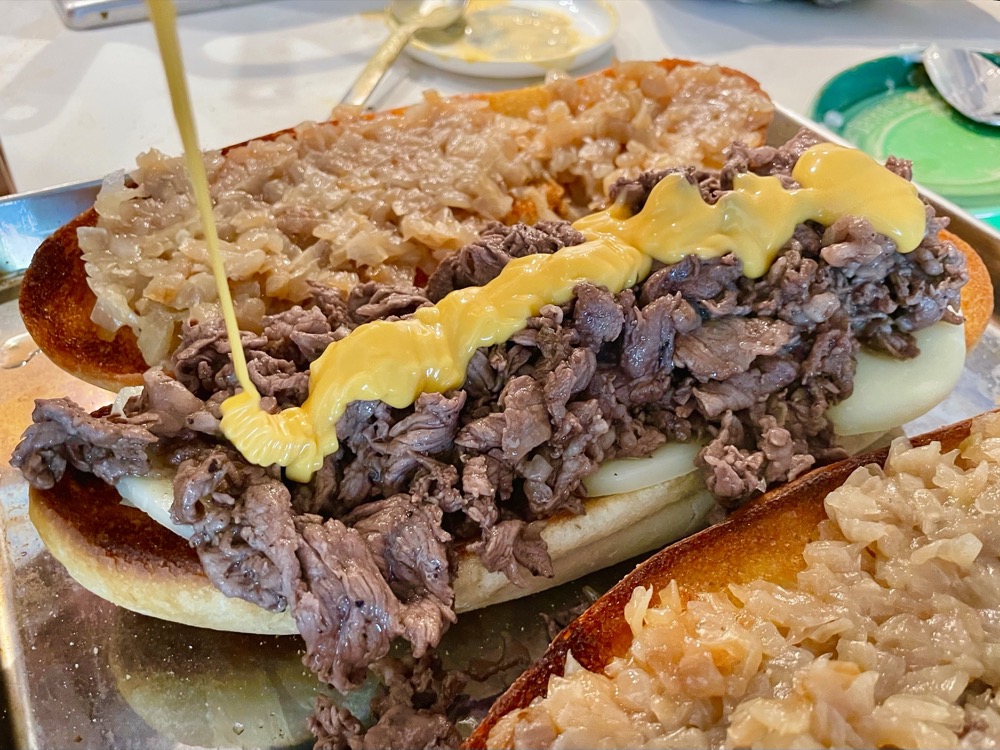
Spoon the cooked onions (from step 1) and cooked mushrooms (from step 2) to the other side of each sandwich.

Add the just-cooked hot steak (from step 4) over the provolone cheese (if it’s not hot, turn on the heat to warm up the steak so it melts the provolone when you add it on top).

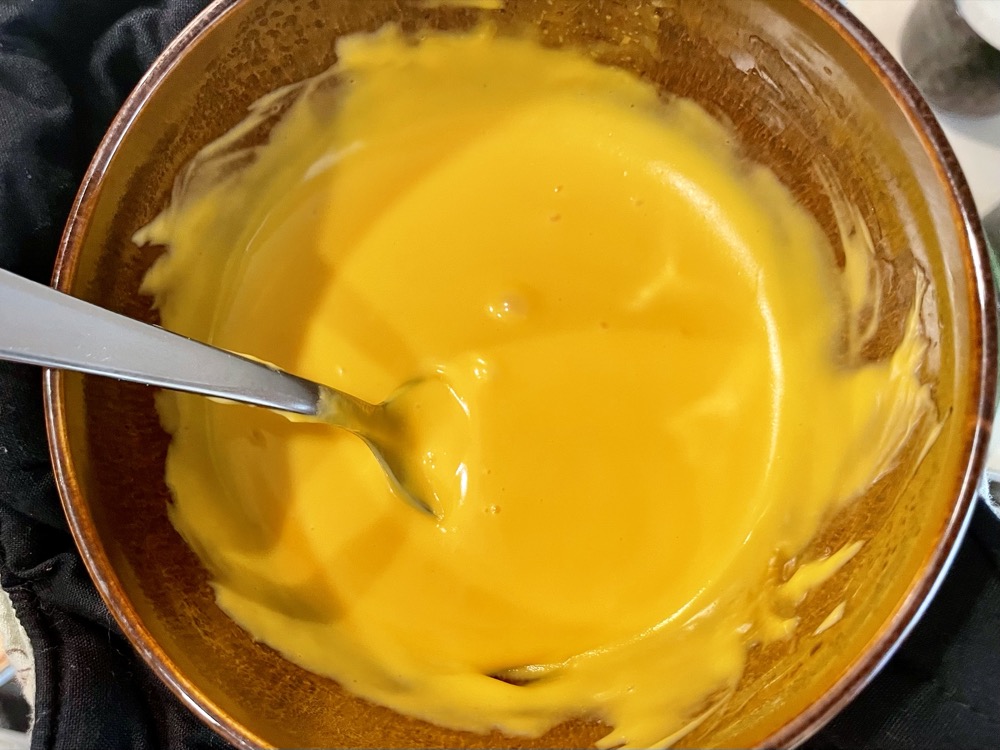
Microwave the Cheeze Whiz for 30 seconds until it’s warmed and gooey, then drizzle on 1/4 cup of the cheese whiz over the steak on each sandwich.

Close the sandwich and serve immediately. Enjoy!

Summarized Recipe:

Philly Cheesesteak – “Whiz Wit Mushrooms”

Date Published: Feb 15th, 2025 | Last Updated: Feb 15th, 2025
Author: Abby |Category: mains, easy
Serves: 2 | Prep time: 30 mins | Cook time: 45 mins

Ingredients:

  • 1 + 1 Tbsp of bacon fat/neutral oil
  • 2 large onions, diced
  • Drizzle of olive oil
  • 300g white mushrooms, sliced
  • 2 sandwich/hoagie rolls
  • 6 slices of provolone cheese
  • 1 pound/500g rib eye steak, sliced as thin as possible
  • Salt & pepper to taste
  • 1/2 cup of Cheez Whiz

Directions:

  1. Cook the onions: In a wide skillet on MED heat, melt 1 Tbsp of bacon fat and add in the diced onions. Cook until the onions slightly caramelize and brown (~20-30 minutes) – you don’t want to fully caramelize it, but with a bit of bite and sweetness. When finished, remove the onions into a bowl and set aside until ready to use.
  2. Cook the mushrooms: In the same skillet on MED heat, add a drizzle of olive oil and sauté the sliced mushrooms with a pinch of salt and pepper until cooked (5 minutes). Remove the cooked mushrooms into a bowl and set aside until ready to use.
  3. Optional step: Toast the bread: Slice each bread roll lengthways without fully cutting through, and lay open on a baking tray. Brush a small amount of olive oil onto the inside of the bread and toast in the oven on the BROIL setting for 1-2 minutes or until golden brown.
  4. Cook the steak: In the same skillet on MED heat, melt another 1 Tbsp of bacon fat and add in the rib eye steak slices. Add a pinch of salt and fresh ground black pepper and continue to sauté until the steak is fully cooked (~5 minutes). Taste and adjust salt and pepper as needed. Turn the heat off.
  5. Assemble the sandwich:
    • Add 3 slices of provolone cheese to one side of each sandwich.
    • Spoon the cooked onions (from step 1) and cooked mushrooms (from step 2) to the other side of each sandwich.
    • Add the just-cooked hot steak (from step 4) over the provolone cheese (if it’s not hot, turn on the heat to warm up the steak so it melts the provolone when you add it on top).
    • Microwave the Cheeze Whiz for 30 seconds until it’s warmed and gooey, then drizzle on 1/4 cup of the cheese whiz over the steak on each sandwich.
    • Close the sandwich and serve immediately. Enjoy!

French Dip with Caraway Focaccia Bread and Horseradish Chives Cream Cheese


Date Published: Feb 10th, 2025 | Last Updated: Feb 10th, 2025
Author: Abby | Category: mains
Serves: 6 | Prep time: 3 hours | Cook time: 3 hours

Jump to recipe |

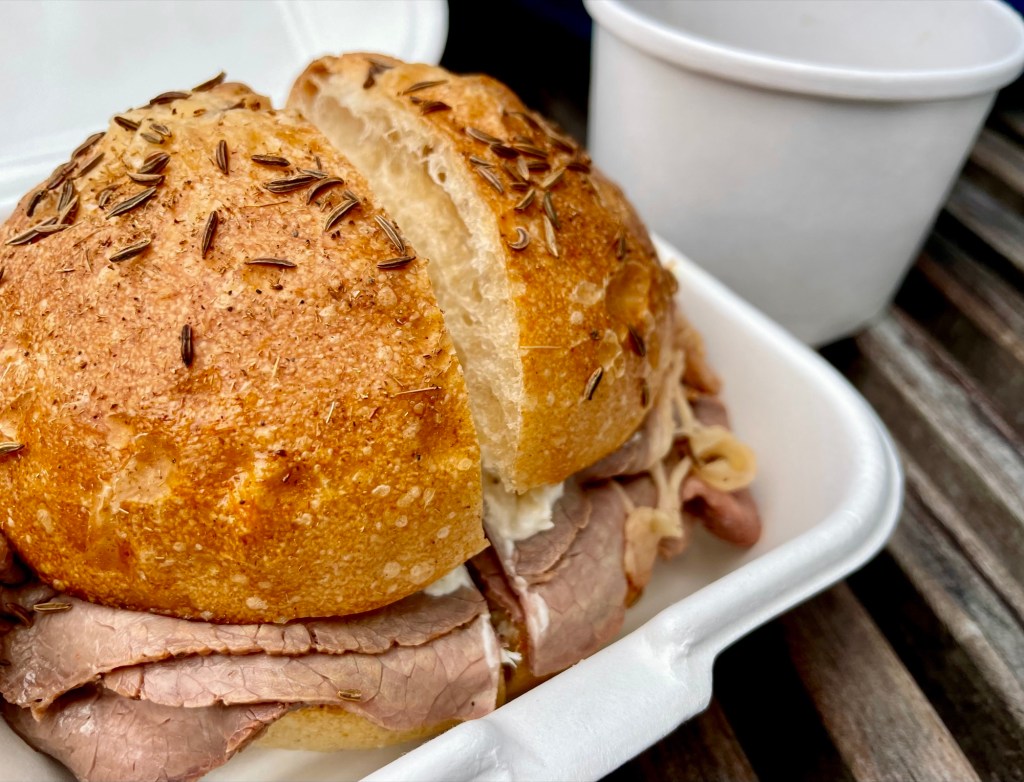
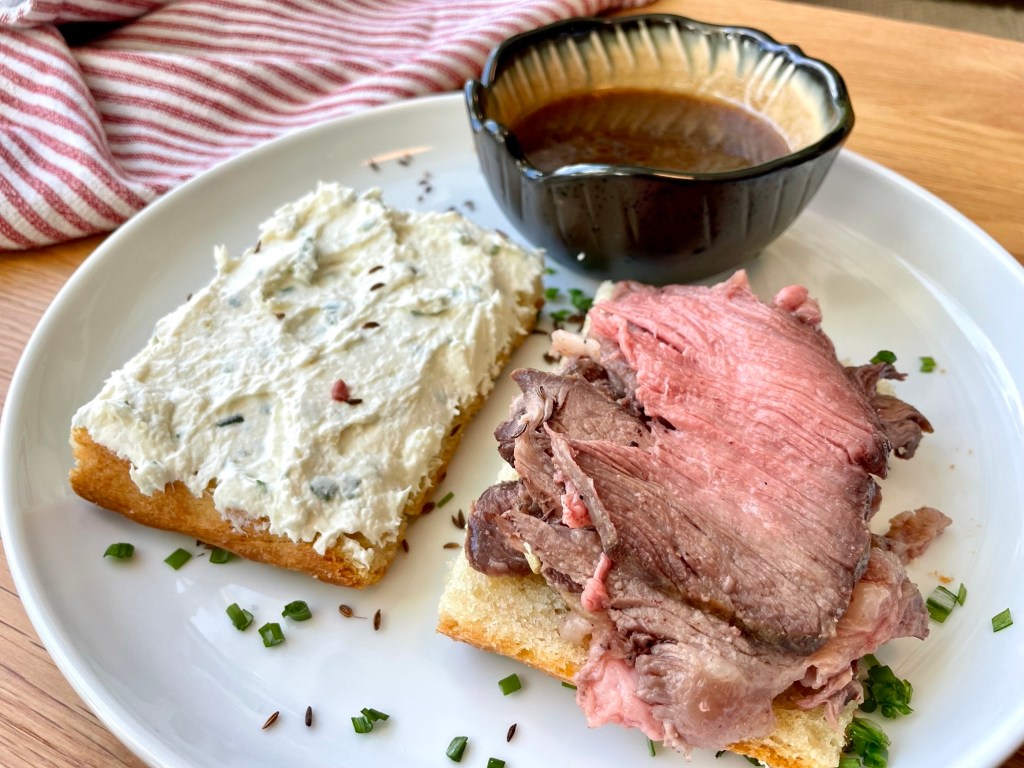
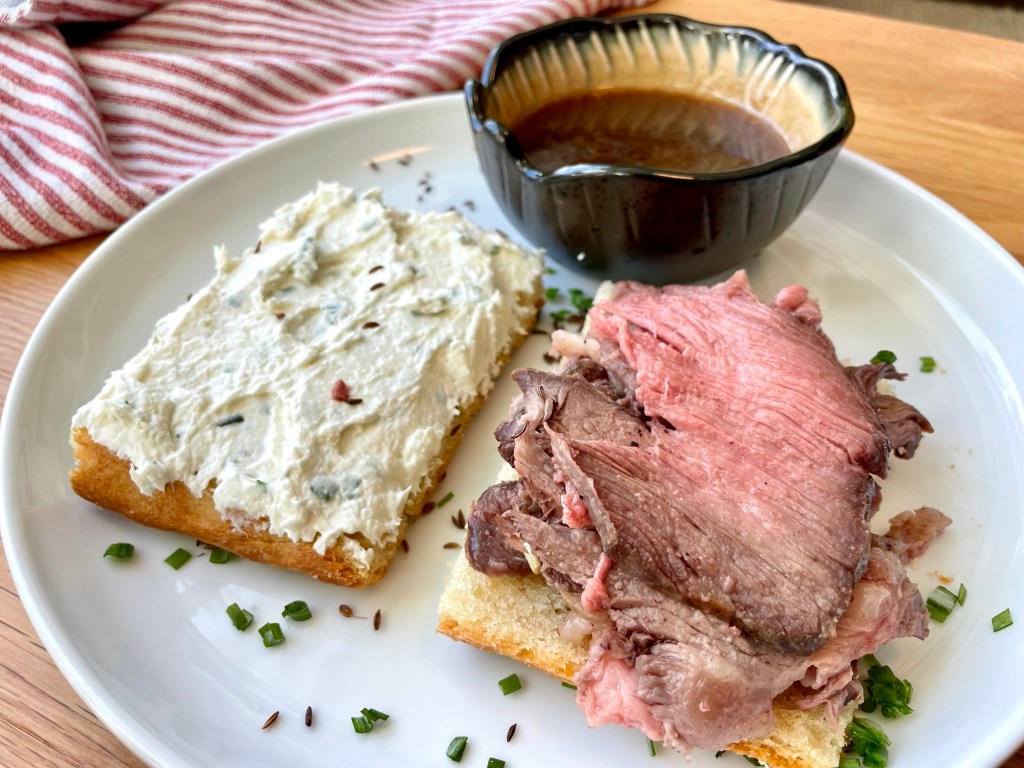
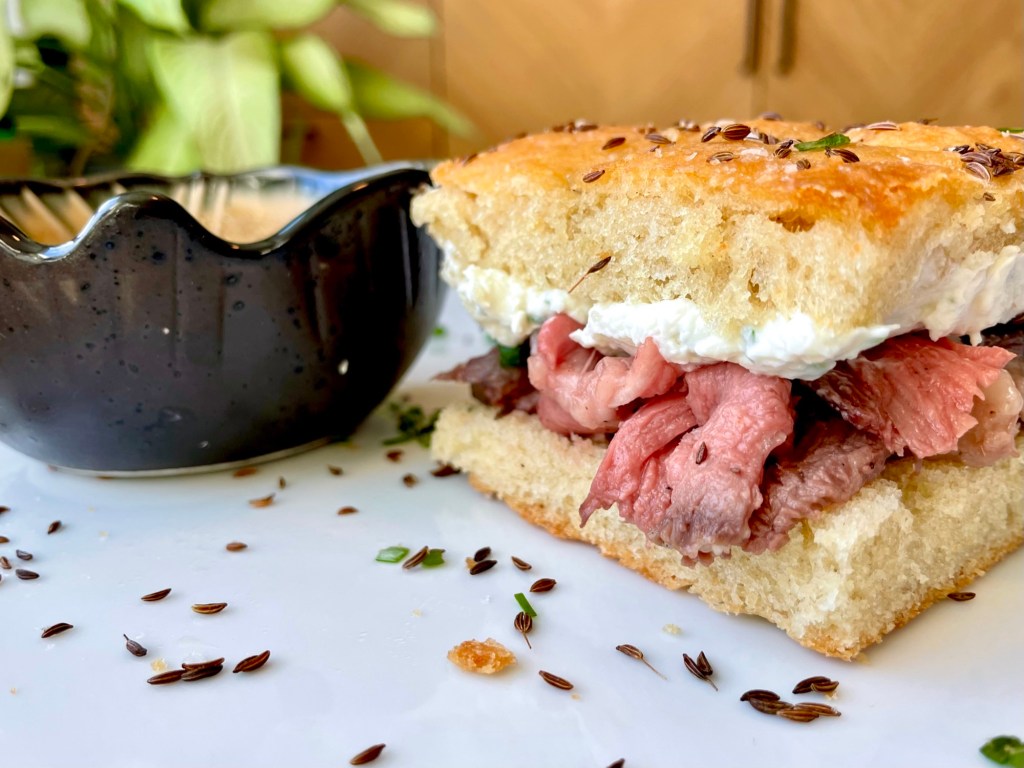
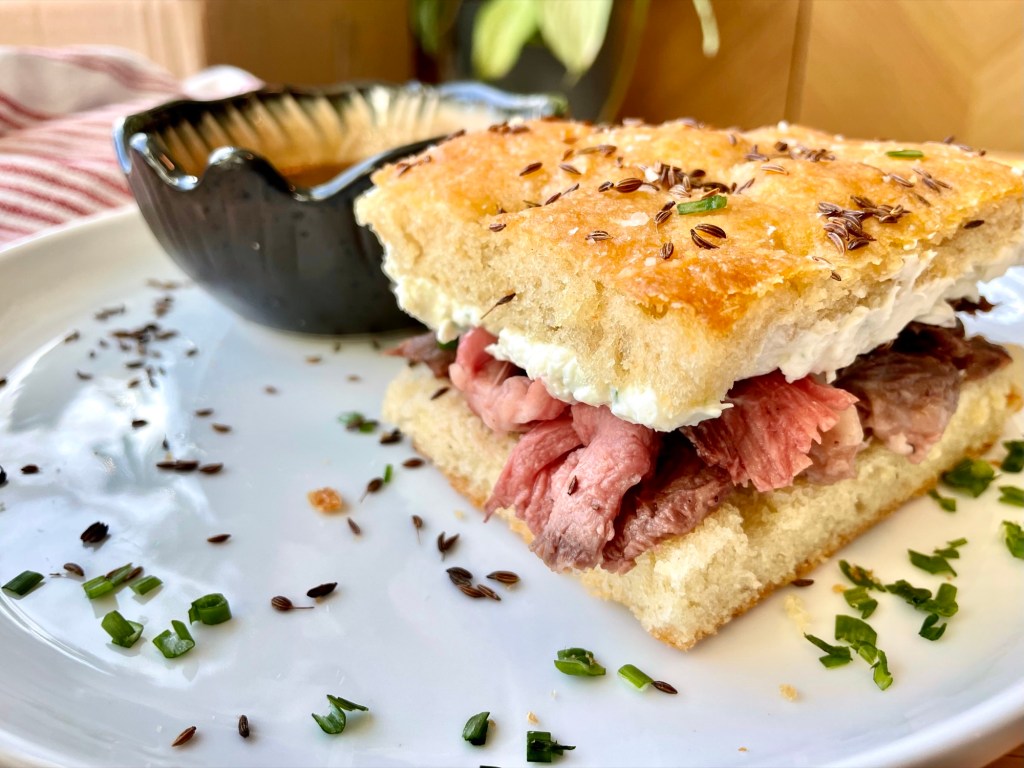
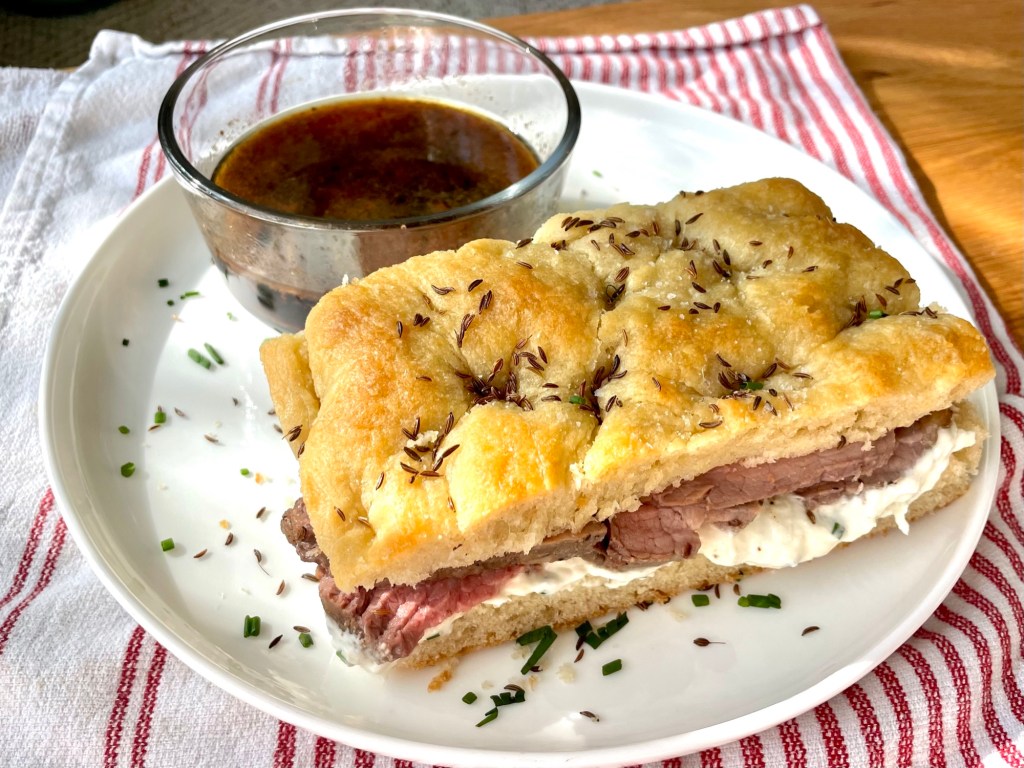
If you haven’t guessed it already, my last three published recipes have been gearing up for this one! This recipe makes the most incredible juicy roast beef sandwich that is balanced with a subtle hint of horseradish masked in the chives cream cheese, and placed between soft fresh focaccia bread topped with caraway seeds. The homemade jus made from the roast beef drippings bring it all together in this amazing sandwich. *chef’s kiss*

I’m going to admit, this combination of flavours is not my original idea. This sandwich is a copycat to a French dip that we had at WINNER Bakery in Brooklyn on 7th Ave a few months ago. If you’ve never been, you should definitely hit them up. There’s usually a queue but their sandwiches and breads are well worth it! I tried this sandwich for the first time a few months ago when I was strolling home from the farmer’s market, and the combination of flavours were so good that I had to bring Toby back to try it. I wanted this sandwich all the time, but at $20 a pop for a small sandwich and the long queue, it wasn’t going to be an everyday sandwich. I thought about this sandwich frequently and knew I just had to give it a go and try to make it myself – and I did! In my humble opinion (and Toby’s), I think my version is even better than the original with a more flavourful jus. I use a focaccia instead of a bun and fresh roast beef. The best part is that I can pack on as much roast beef and cream cheese I want and have it again and again. This recipe make enough for at least 6 sandwiches (if you’re a cream cheese fiend, you may want to double the horseradish chives cream cheese portion).

Everything is made from scratch in this recipe. I mean everything, from the bread to the roast beef to even the prepared horseradish. It is a labour of love so you’ll need to dedicate your morning to this. The good thing is, there’s a lot of waiting (ie. for the beef to come to room temperature, for the dough to proof, for the beef to cook), so you can do multiple steps while you’re waiting to cut down on the overall time to make this sandwich. If you’re in a rush, you can cut corners by using store bought roast beef deli slices, pre-made jus, and any kind of sandwich bread. The only thing you can’t buy is the horseradish chive cream cheese, which is pretty easy to whip up anyway. I’d highly recommend not cutting any corners to get the full experience of this beauty.

Anyways, without further ado, here’s the recipe! If you have any comments or suggestions, I’d love to hear from you in the comment section! You can follow me on instagram, youtube and facebook to see all the recipes I post!

Happy cooking!

Ingredients you’ll need:

  • Roast Beef:
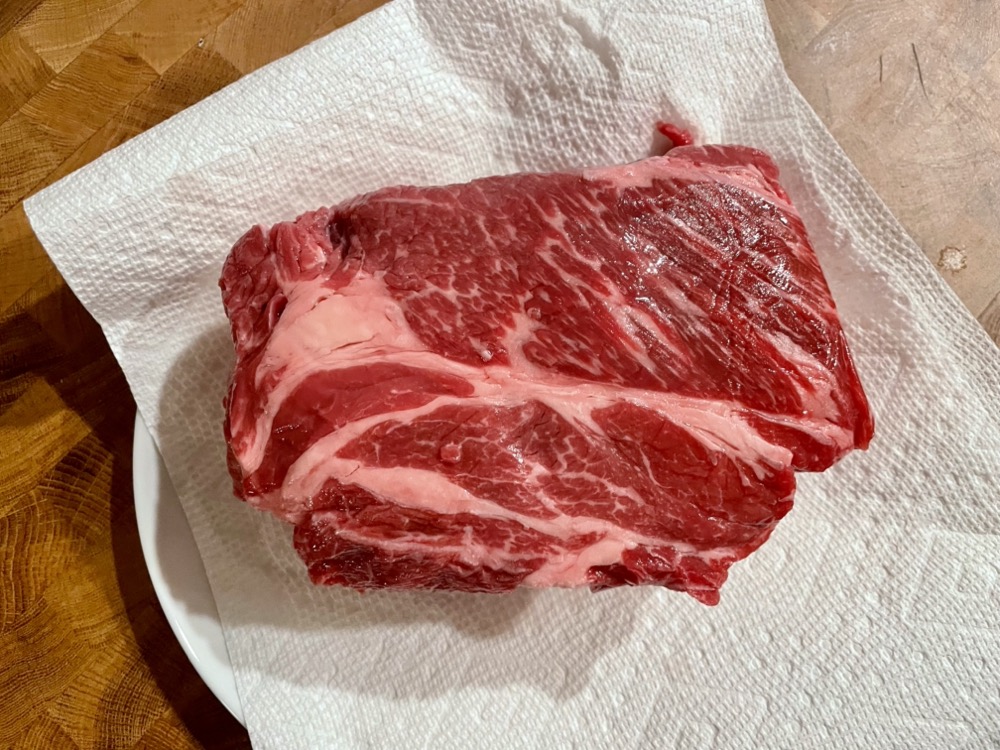
    • 2 lbs chuck roast/whole eye round/rump roast (I like to use chuck roast with some marbling)
    • 2 + 2 Tbsps salt
    • 10 cloves of garlic, peeled
    • Fresh ground black pepper
    • Olive oil
  • Caraway Seed Focaccia:
    • 1 x basic dough ball
    • Olive oil drizzle
    • Salt
    • 1/4 cup Caraway seeds
  • Au Jus:
    • 1 cup beef stock
    • 1 Tbsp Worccestershire sauce
    • 2 Tbsps red wine (ie. pinot noir)
    • +/- butter
    • +/- beef bouillon cube
    • Salt to taste
  • Horseradish & Chives Cream Cheese:
    • 1 package (8oz/226g) of plain cream cheese, softened
    • 3 Tbsps (7g) of fresh chives, chopped
    • 1-2 Tbsps horseradish (or more to taste) – check out how to make your own horseradish from scratch here
    • Salt to taste

Directions:

Roast Beef:

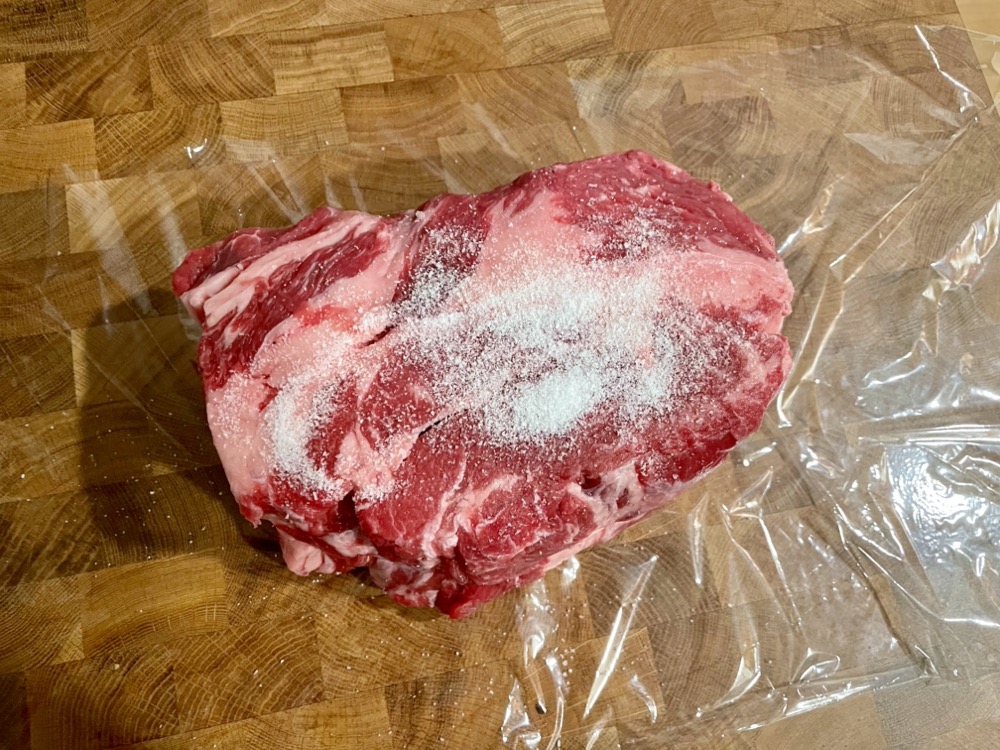
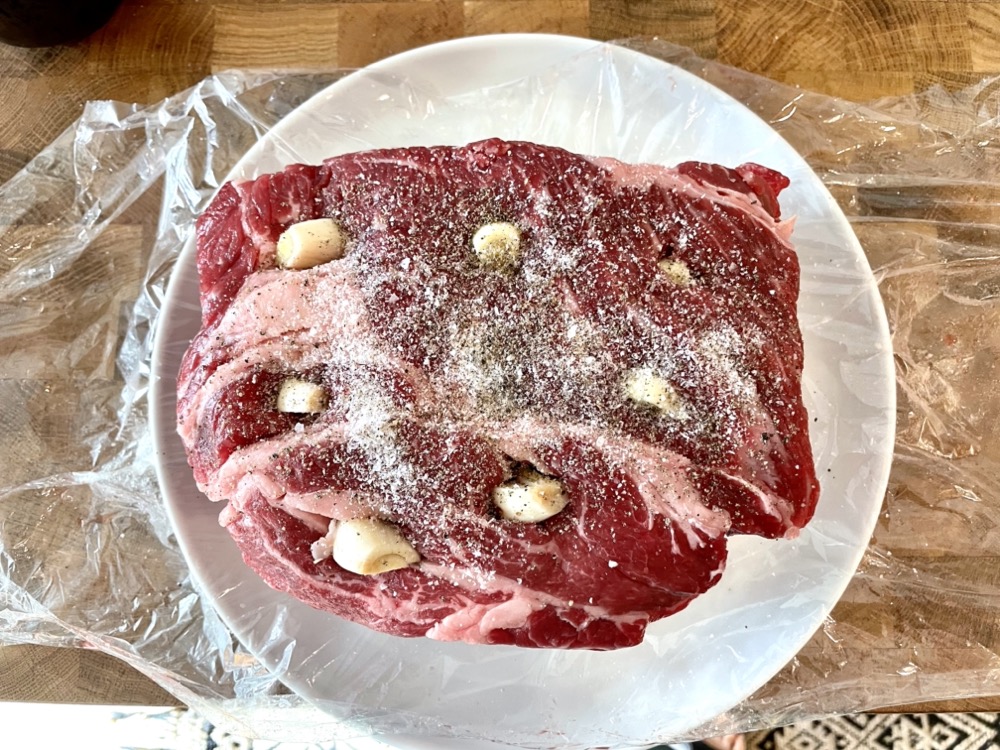
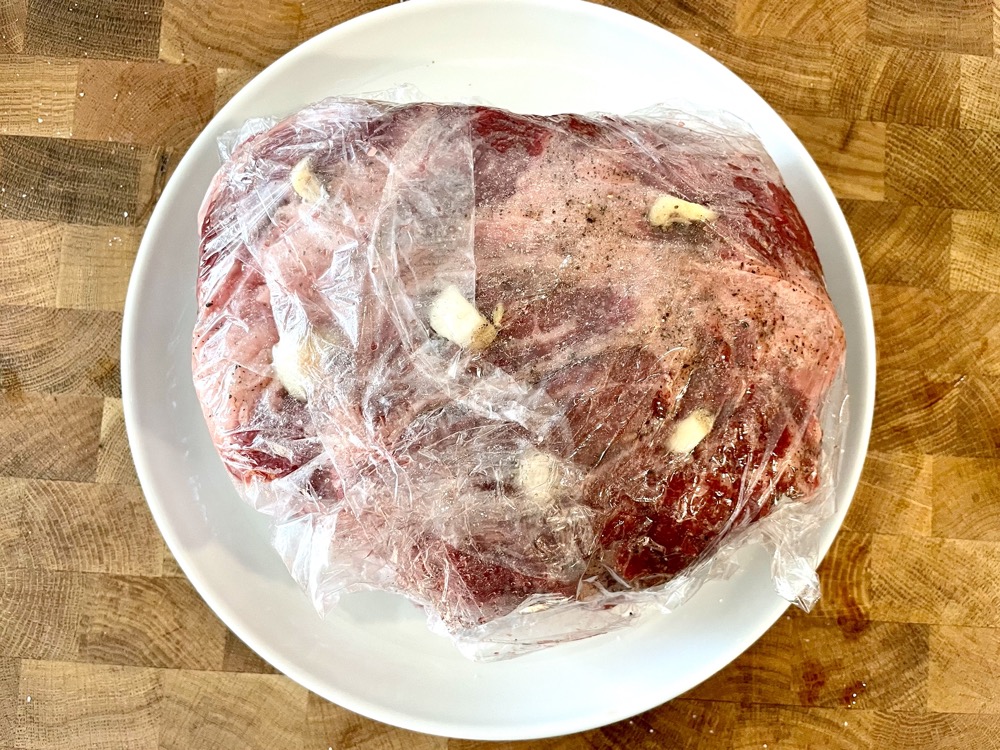
Take the beef out of the fridge 2 hours before. Rinse, pat dry and salt all sides. Wrap it back up in plastic wrap and leave it at room temperature.

You can make the caraway focaccia bread in this time.

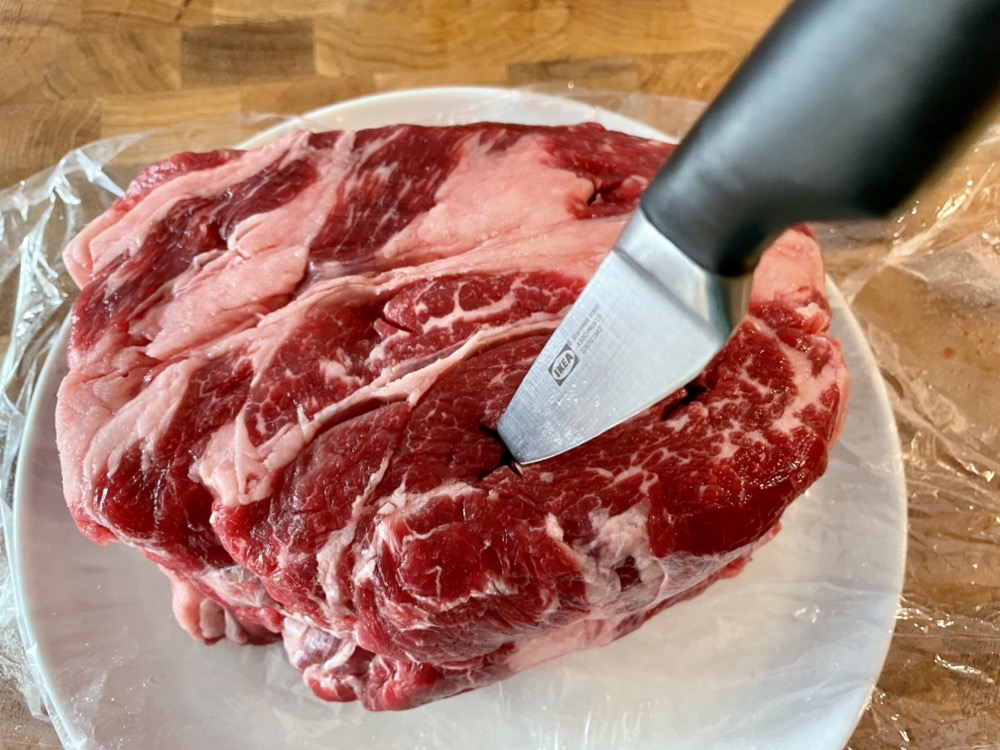
After 2 hours, preheat the oven to 400˚F/200˚C (if it’s not already preheated from baking the focaccia). Unwrap the beef and pat dry with a paper towel. Use a pairing knife and create 5 slits into both sides of the roast and push a clove of garlic into each slit. Rub salt (yes, more salt), fresh ground black pepper, and olive oil on all sides of the beef. Cover again and leave at room temperature for another 20 minutes.

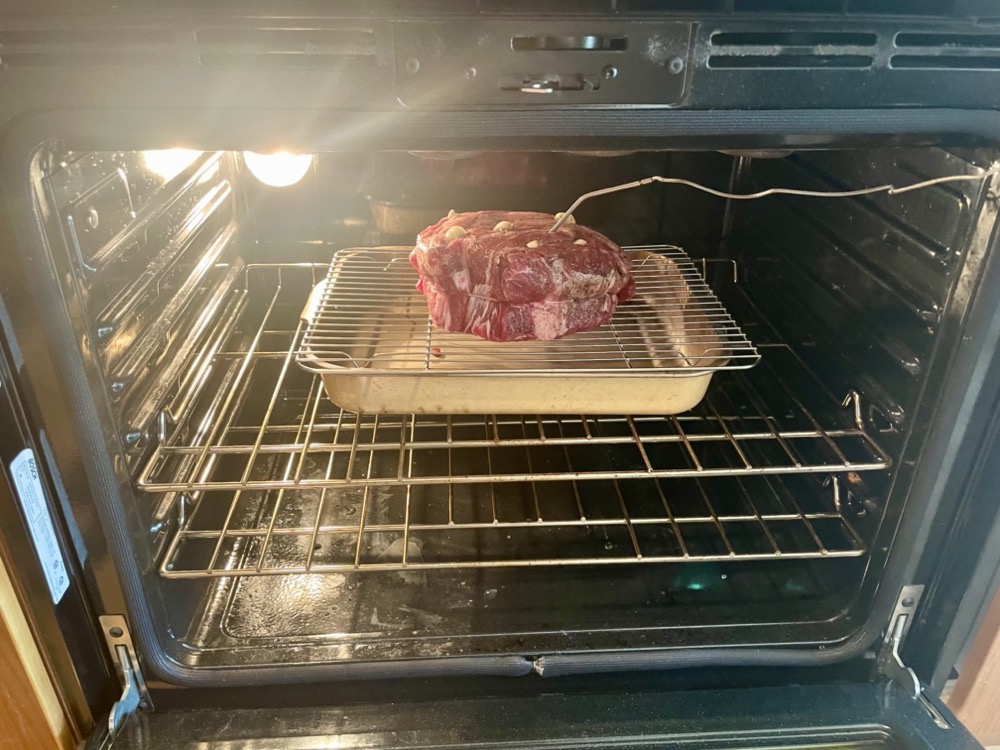
Prepare a baking tray with a metal rack over top and place the beef on the rack. Rub a small amount of olive oil on the outside one more time. If you have a layer on your beef, face the fat layer on top so the fat will drip onto the meat as it cooks. Insert an oven-safe thermometer into the middle of the beef if you’ve got one. Bake in the preheated oven at 400˚F/200˚C for 15 minutes to start the browning process, then turn the heat down to 325˚F/163˚C and continue to cook until the internal temperature reaches 120˚F/49˚C (roughly 1.5-2.5 hours, depending on the size of your beef).

You can make the horseradish chives cream cheese in this time.

Once done cooking, let the roast rest for 20-30 minutes at room temperature before slicing.

You can make the au jus in this time.

When rested, use a sharp knife or deli meat slicer and slice the roast into very thin slices.

Caraway Focaccia Bread:

Follow the recipe for Easy Focaccia Bread. When you get to the toppings part, use 1/4 cup caraway seeds and a sprinkle of salt with the olive oil. Bake according to instructions at 400˚F/200˚C for 20-25mins.

After baking, brush on another 2 Tbsps of olive oil over the top. Let it rest for a few minutes then transfer on a cooling rack and let it cool completely before slicing.

Horseradish & Chives Cream Cheese:

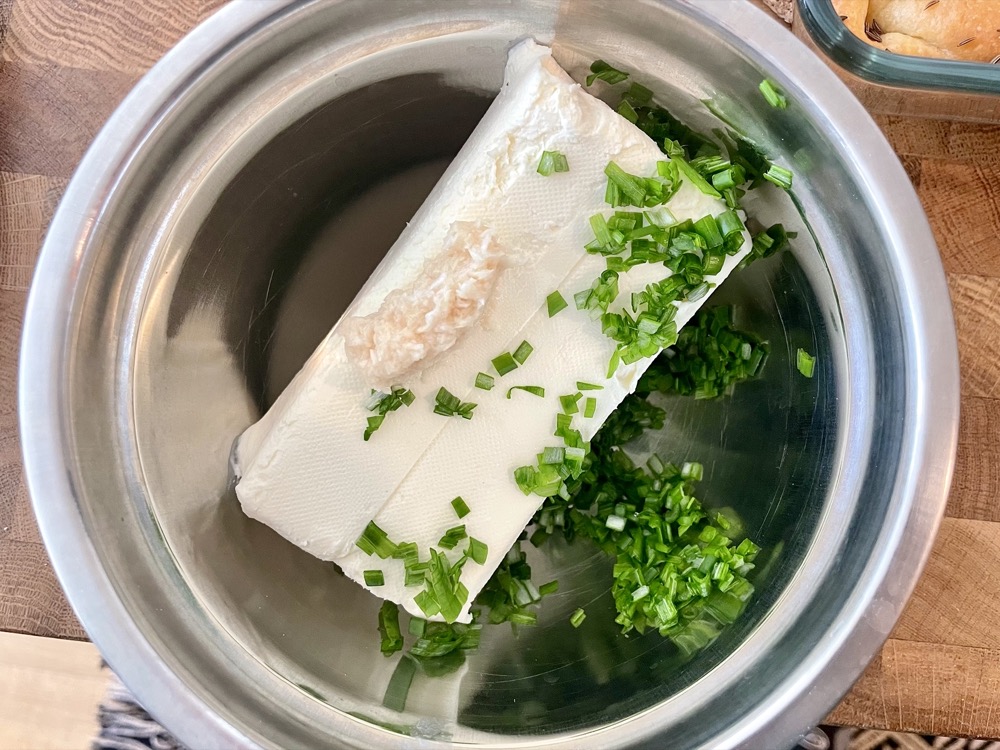
In a mixing bowl, add the softened cream cheese, chopped chives, and the horseradish 1 teaspoon at a time until desired taste (horseradish can be very strong and some brands are hotter than others, so add small amounts until you’re happy).

Au Jus:

Once the roast beef has finished cooking, collect the drippings from the roast tray into a small saucepan. You should have about 1/4 cup (if not, add enough butter to make it 1/4 cup).

Add 1 cup of beef stock, 1 Tbsp of Worcestershire sauce and 2 Tbsps of red wine to the saucepan and heat on MED heat until simmering. Taste and adjust salt as needed. To make it a more robust beefy flavour, add in 1 beef bouillon cube.

Assembly of the sandwich:

Slice the focaccia into desired sandwich size rectangles, then slice it horizontally.

Apply a layer of the horseradish & chives sour cream onto one slice of the bread, then sandwich a few slices of roast beef in between. Serve with the jus. Done! Serve immediately with a hot jus.

Summarized Recipe:

French Dip with Caraway Focaccia Bread and Horseradish Chives Cream Cheese

Date Published: Feb 10th, 2025 | Last Updated: Feb 10th, 2025
Author: Abby | Category: mains
Serves: 6 | Prep time: 3 hours | Cook time: 3 hours

Ingredients:

  • Roast Beef:
    • 2 lbs chuck roast/whole eye round/rump roast (I like to use chuck roast with some marbling)
    • 2 + 2 Tbsps salt
    • 10 cloves of garlic, peeled
    • Fresh ground black pepper
    • Olive oil
  • Caraway Seed Focaccia:
    • 1 x basic dough ball
    • Olive oil drizzle
    • Salt
    • 1/4 cup Caraway seeds
  • Au Jus:
    • 1 cup beef stock
    • 1 Tbsp Worccestershire sauce
    • 2 Tbsps red wine (ie. pinot noir)
    • +/- butter
    • +/- beef bouillon cube
    • Salt to taste
  • Horseradish & Chives Cream Cheese:
    • 1 package (8oz/226g) of plain cream cheese, softened
    • 3 Tbsps (7g) of fresh chives, chopped
    • 1-2 Tbsps horseradish (or more to taste)
    • Salt to taste

Directions:

Roast Beef:

  1. Take the beef out of the fridge 2 hours before and salt all sides. Wrap it back up in plastic wrap and leave it at room temperature.
    • You can make the caraway focaccia bread in this time.
  2. After 2 hours, preheat the oven to 400˚F/200˚C (if it’s not already preheated from baking the focaccia). Unwrap the beef and pat dry with a paper towel. Use a pairing knife and create 5 slits into both sides of the roast and push a clove of garlic into each slit. Rub salt (yes, more salt), fresh ground black pepper, and olive oil on all sides of the beef. Cover again and leave at room temperature for another 20 minutes.
  3. Prepare a baking tray with a metal rack over top and place the beef on the rack. Rub a small amount of olive oil on the outside one more time. If you have a layer on your beef, face the fat layer on top so the fat will drip onto the meat as it cooks. Insert an oven-safe thermometer into the middle of the beef if you’ve got one. Bake in the preheated oven at 400˚F/200˚C for 15 minutes to start the browning process, then turn the heat down to 325˚F/163˚C and continue to cook until the internal temperature reaches 120˚F/49˚C (roughly 1.5-2.5 hours, depending on the size of your beef).
    • You can make the horseradish chives cream cheese in this time.
  4. Once done cooking, let the roast rest for 20-30 minutes at room temperature before slicing.
    • You can make the au jus in this time.
  5. When rested, use a sharp knife or deli meat slicer and slice the roast into very thin slices.

Caraway Focaccia Bread:

  1. Follow the recipe for Easy Focaccia Bread. When you get to the toppings part, use 1/4 cup caraway seeds and a sprinkle of salt with the olive oil. Bake according to instructions at 400˚F/200˚C for 20-25mins.

Horseradish & Chives Cream Cheese:

  1. In a mixing bowl, add the softened cream cheese, chopped chives, and the horseradish 1 teaspoon at a time until desired taste (horseradish can be very strong and some brands are hotter than others, so add small amounts until you’re happy).
    • Making your own horseradish:
      • 1. Add 240g horseradish root (peeled and chopped) to a small blender or food processor and add enough water to blend the horseradish into a smooth purée (I added about 1/4 cup).
      • 2. Once blended, strain out any excess water, then add in 1 Tbsp of white vinegar and a pinch of salt to offset the spiciness. Store in an airtight container in the fridge for up to a month.

Au Jus:

  1. Once the roast beef has finished cooking, collect the drippings from the roast tray into a small saucepan. You should have about 1/4 cup (if not, add enough butter to make it 1/4 cup).
  2. Add 1 cup of beef stock, 1 Tbsp of Worcestershire sauce and 2 Tbsps of red wine to the saucepan and heat on MED heat until simmering. Taste and adjust salt as needed. To make it a more robust beefy flavour, add in 1 beef bouillon cube.

Assembly of the sandwich:

  1. Slice the focaccia into desired sandwich size rectangles, then slice it horizontally.
  2. Apply a layer of the horseradish & chives sour cream onto one slice of the bread, then sandwich a few slices of roast beef in between. Serve with the jus. Done! Serve immediately with a hot jus.

Cajun Chicken, Shrimp, and Andouille Sausage Gumbo


Date Published: Jan 16th, 2025 | Last Updated: Jan 16th, 2025
Author: Abby |Category: mains, soup
Serves: 6 | Prep time: 30 mins | Cook time: 2.5 hours

Jump to recipe |

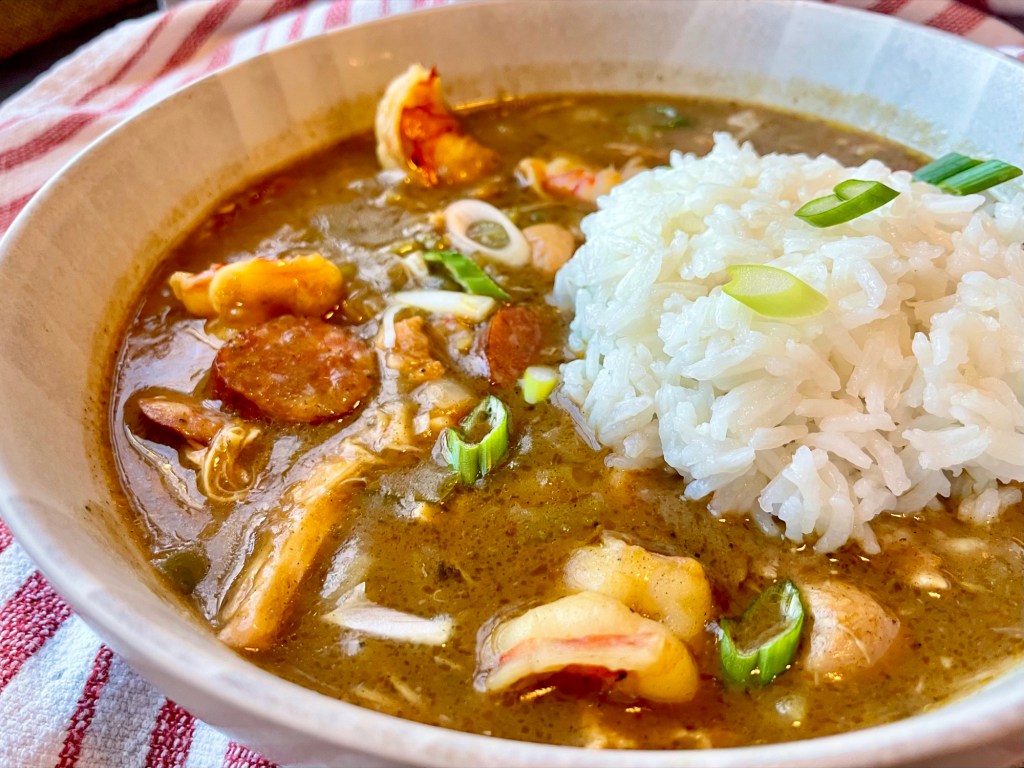
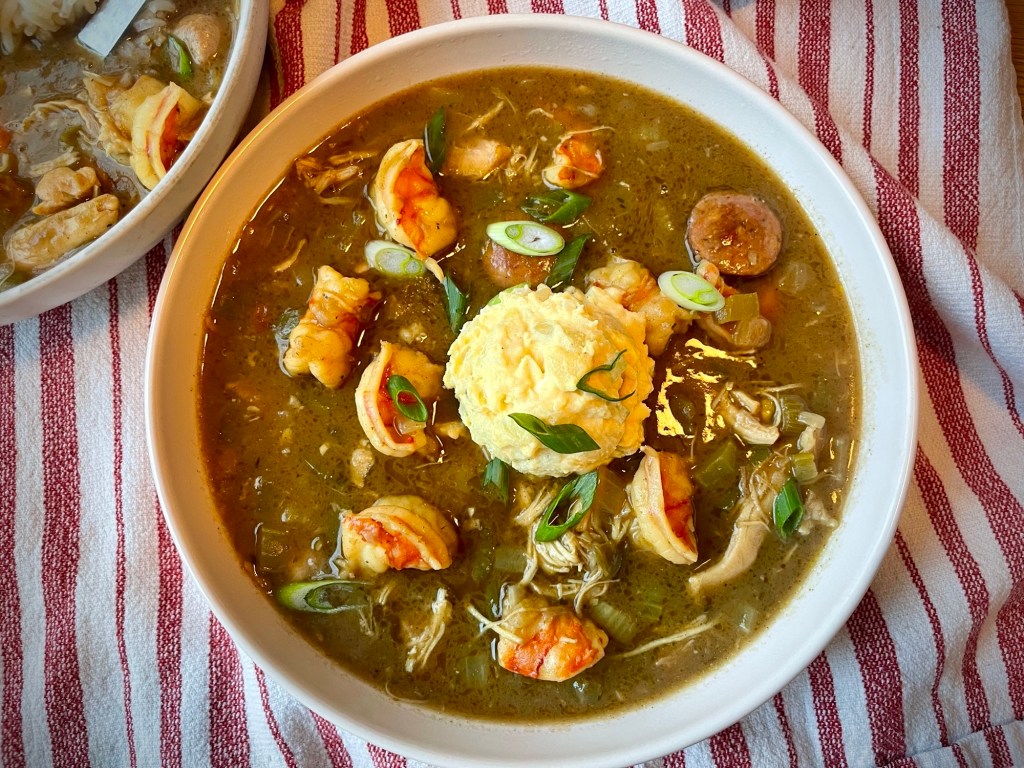
The first time I ever had southern food was years ago and the unique rich earthy flavours drew me in from the very beginning. Making the perfect gumbo has been on my ‘to cook’ list for as long as I can remember and this past weekend I made it my mission to make the best gumbo I could through a lot of research and many hours in the kitchen. No corners were cut in the making of this recipe. Shrimp shells are saved to extract the seafood flavours into the broth, bacon fat is used for extra flavour, time and care is taken to create a beautiful deep caramelized roux, and not 1, not 2, but 3 proteins are used to make this the most flavourful and filling gumbo you can find! Even Toby, who usually doesn’t like gumbo, loved this version!

What is Gumbo?

Gumbo is a a southern style stew commonly made with chicken, Andouille sausage and/or seafood (spoiler: I use all 3 in my recipe). It’s actually the official state cuisine of Louisiana! What makes this stew unique is the deep earthy flavours that comes from a carefully watched browned roux, cajun seasoning, and filé powder (more on that below).

What is a roux?

The secret to a good gumbo starts at the beginning: with a good roux. A roux is a thickening agent made with a mixture of equal parts fat and flour. It is cooked slowly with constant care and whisking to add a richness to a dish. The colour of the roux will vary depending how long you cook it, ranging from white, brown, or dark brown. The longer you cook it, the more intense the flavour, but the less the thickening power. The same works vice versa – the less you cook it, the more thickening power but the blander the flavour. I like to go with a deep caramel colour to get the best of both worlds. You can use any kind of fat, but I chose to use bacon fat for the most flavour. You must constantly stir and watch the roux, as it can easily burn. This is a labour of love and can take up to 30-40 minutes, but it will be well worth it!

Special Gumbo Seasonings:

There are 2 special seasonings in this gumbo that I had to order specifically to make this as authentic as possible.

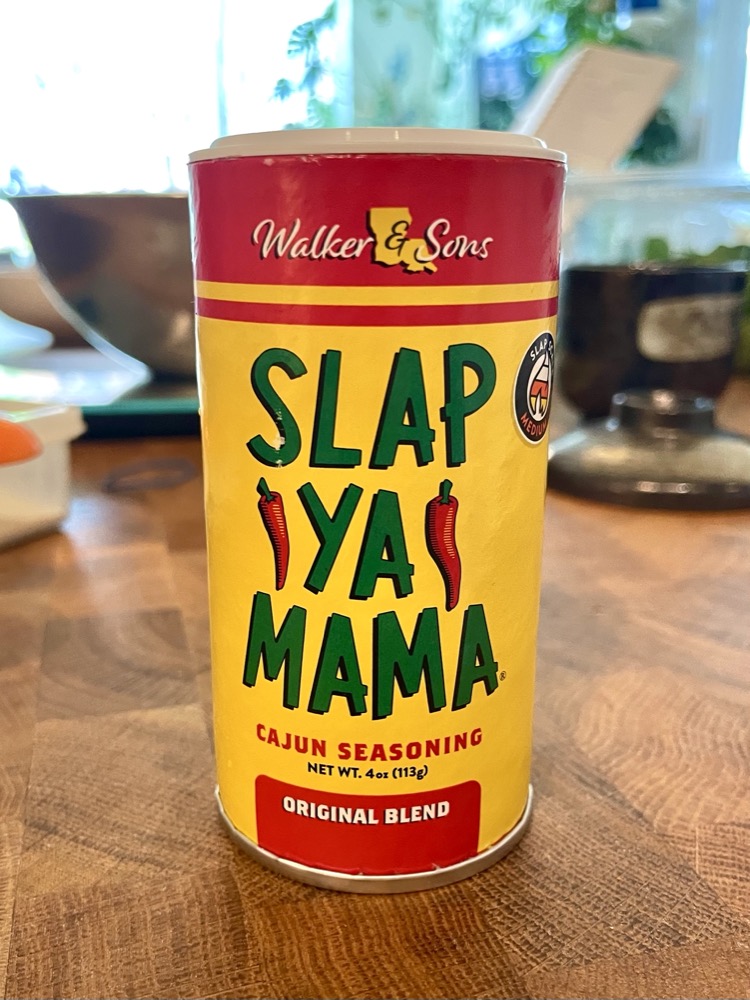
Cajun Seasoning – This is a blend of spices that adds salt, spiciness, and smokiness to the dish. Common go-to brands are “Tony Chachere’s Creole Seasoning” or “Slap Ya Mama Cajun Seasoning“. If you can’t find either around you, a quick Google search will yield many recipes to make a spice blend of your own.

Gumbo Filé / Filé Powder – Filé powder, also known as gumbo filé, is a spice that is made from dried ground leaves of the sassafras tree. This powder has dual purpose in a gumbo: as a thickening agent and also provides earthy flavours. The aroma is similar to that of sage and bay leaf. If you can’t find gumbo filé in a pinch, consider using cornstarch to thicken and some pinches of sage – it won’t be quite the same, but it’ll be similar enough. Some gumbo recipes will use okra as the thickening agent instead.

Creole vs Cajun – adding tomatoes is optional

Both Creole and Cajun food are Louisiana cuisines from different areas. Think of Creole as city-style cooking with more variety of ingredients at their disposal, whereas Cajun food can be considered country-style cooking with ingredients that are more limited to what can be harvested and what is available. Tomatoes is one of those ingredients that is commonly seen in Creole food, but not Cajun. Across my hours of research, I found tomatoes incorporated into many recipes, but also just as equal number of comments omitting the tomatoes to tailor to the authenticity of cajun rustic flavours. I’ve chosen to exclude tomatoes in my recipe to bring out the earthy flavours more, but feel free to add a can of crushed tomatoes if you want it more tangy.

Served with rice vs potato salad?

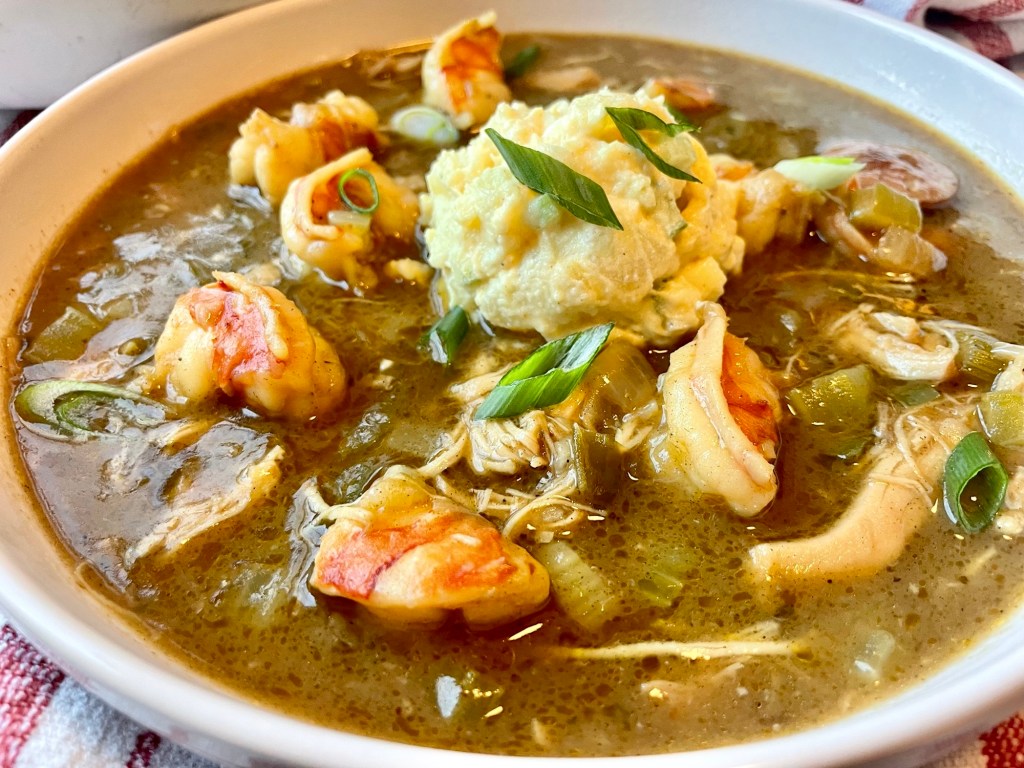
Gumbo is commonly served with white rice, but I’ve seen multiple people get a heaping blob of cold potato salad right in the middle of their hot soup. This mix of hot and cold seemed so bizarre, but I gave it a go and it wasn’t half bad! The cold potato salad cuts into the heavy rich flavours of the gumbo and actually works quite well. Toby wasn’t as much of a fan of the combination as I was. 😅

Anyways, without further ado, here’s the recipe! If you have any comments or suggestions, I’d love to hear from you in the comment section! You can follow me on instagram, youtube and facebook to see all the recipes I post!

Happy cooking!

Ingredients you’ll need:

  • Broth:
    • 4 cups chicken stock
    • 4 cups beef stock
    • 1 kg/2 lbs of raw shrimp with shells, deveined without heads
  • 1 Tbsp + 2/3 cup bacon fat (you can use vegetable oil or lard instead, but the bacon fat adds extra flavour)
  • 340g/12 oz (1 package) Andouille sausage, sliced
  • 1 cup all-purpose flour
  • 3 cloves garlic, minced
  • 1 large yellow onion, diced
  • 1 green bell pepper/capsicum, diced
  • 1 bunch celery, diced
  • 4 large chicken thighs, bone-in (with or without)
  • 1 Tbsp Cajun seasoning (I use ‘Slap Ya Mama’ brand, find it here)
  • 1/2 tsp dried thyme
  • 3 bay leaves
  • 4 tsps gumbo filé/filé powder
  • 2 Tbsps Worcestershire sauce
  • Garnish: sliced spring onions
  • Serve with: white rice or potato salad

Directions:

Prepare the broth:

In a small pot on MED heat, add in 4 cups of chicken stock and 4 cups of beef stock.

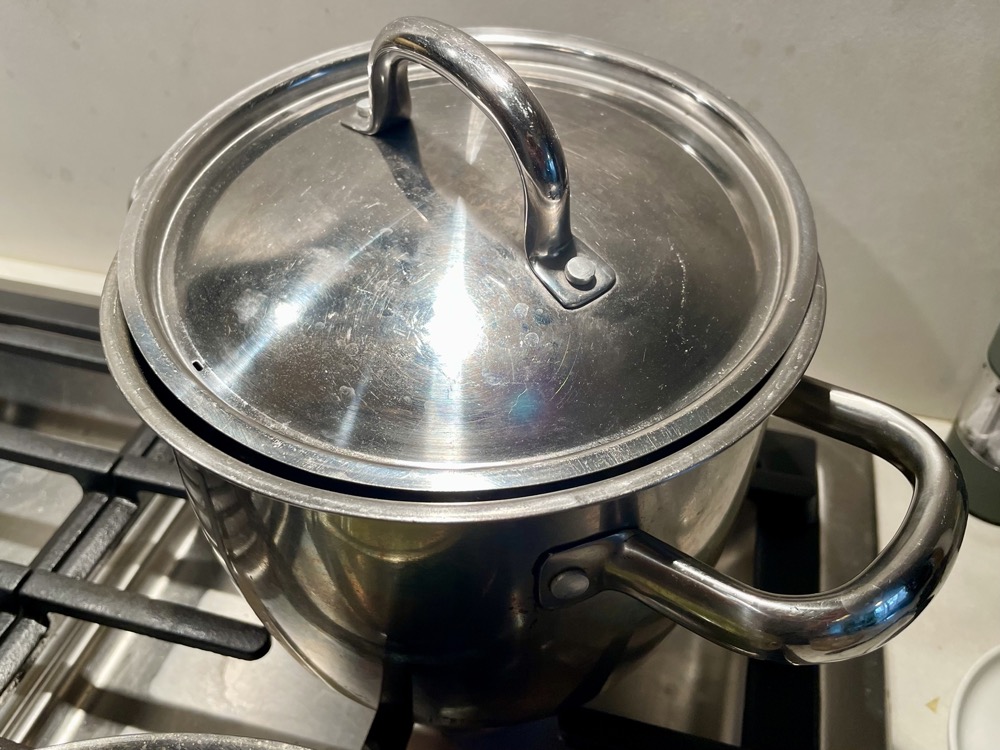
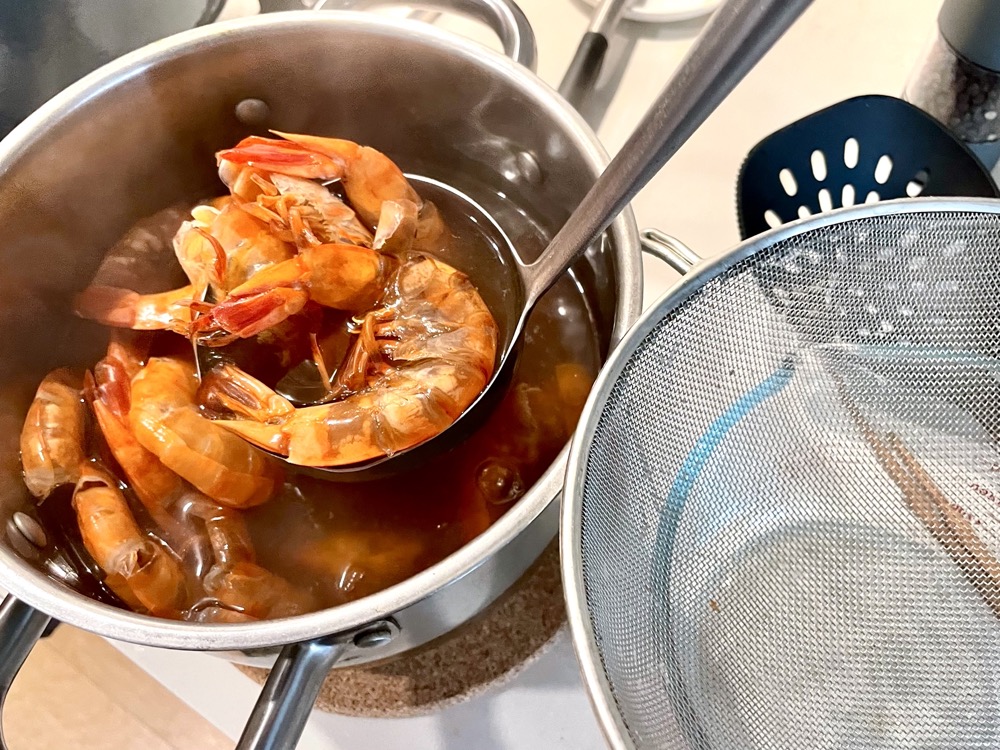
Remove the shells from the shrimp and add the shells into the stock. Let it simmer on the lowest heat for at least 20 minutes (or longer) while you prepare the rest of the ingredients. Keep the lid on with a small crack to avoid evaporation and boiling over.

Brown the sausage:

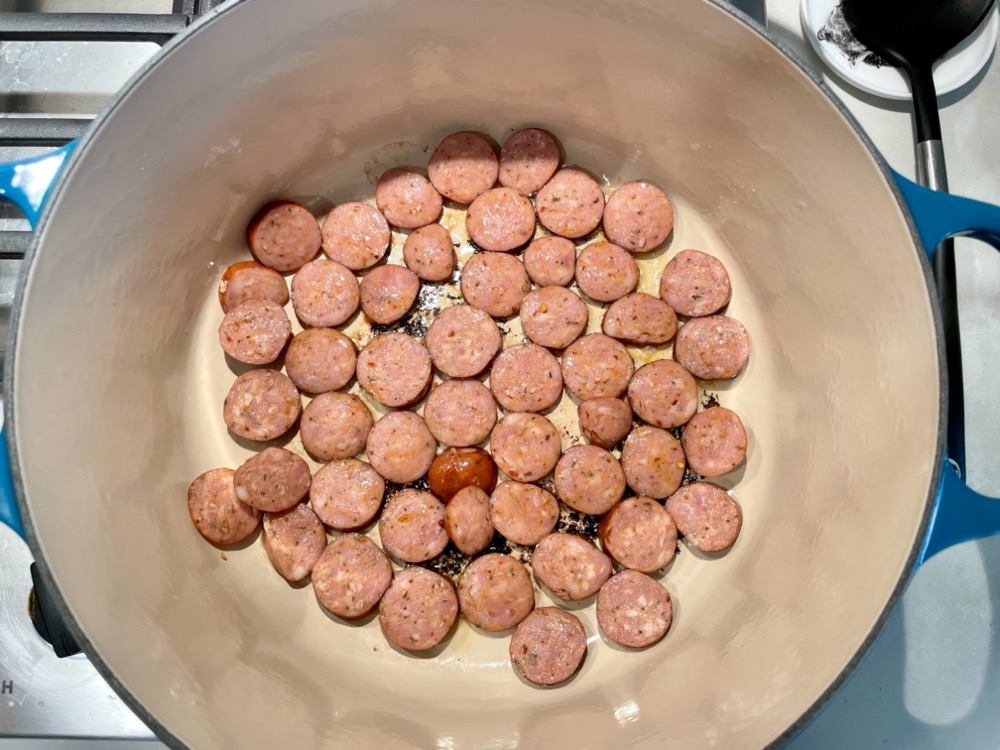
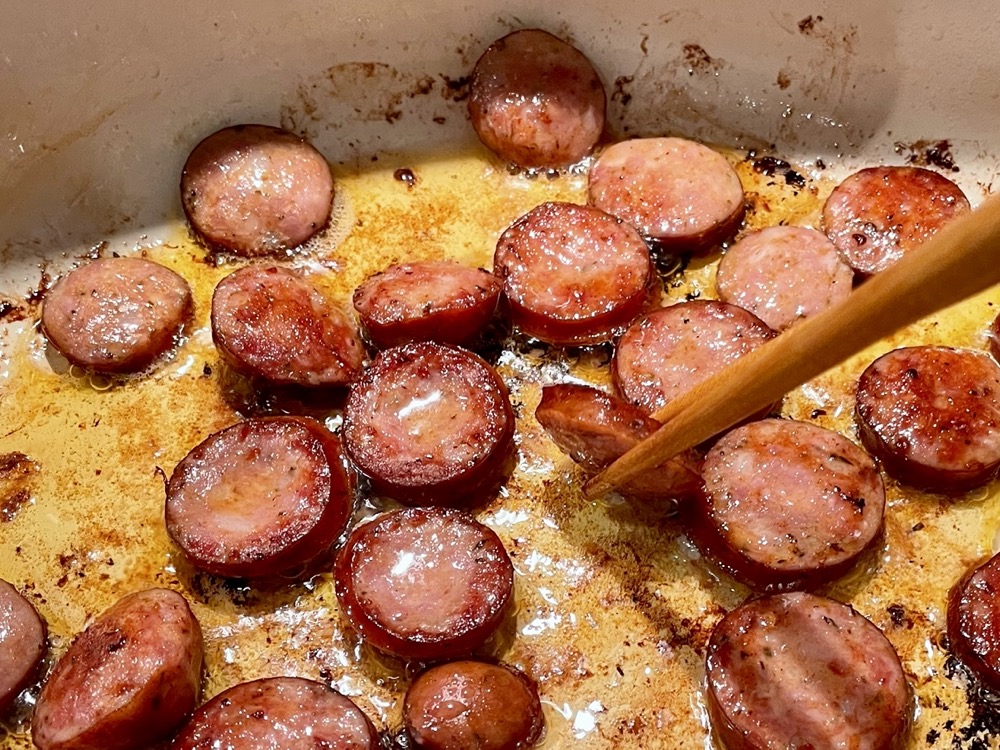
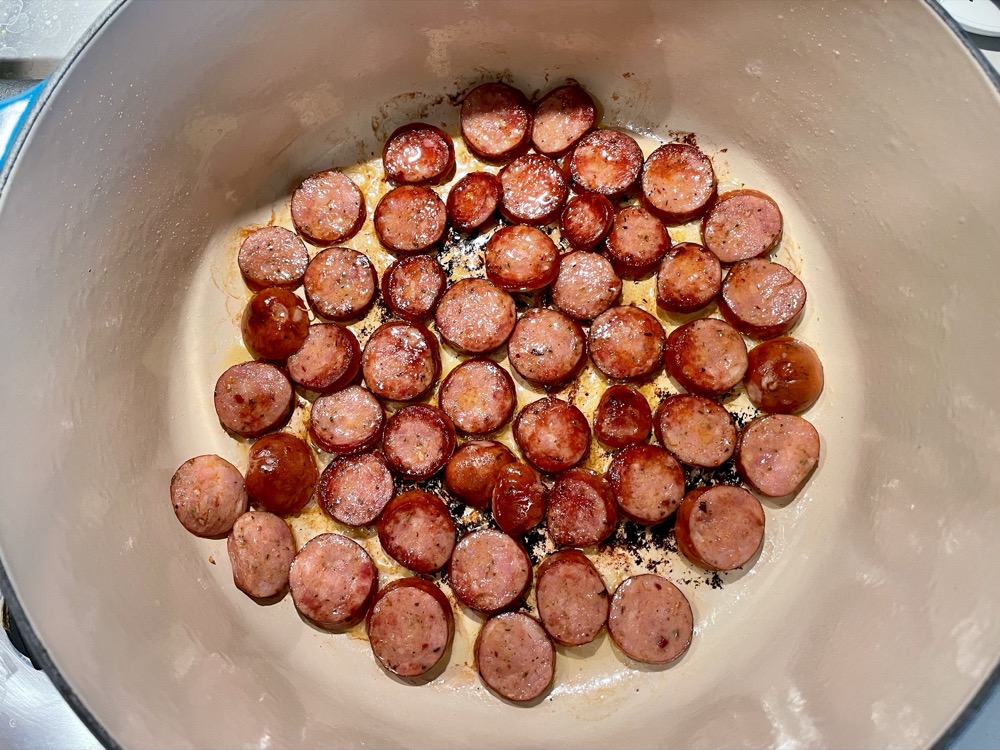
In a large soup pot on MED-HIGH heat, melt 1 Tbsp of bacon fat and sear the sliced Andouille sausages on both sides until browned (you may want to do this in batches if you can’t fit all the sausage in a single layer). Once browned, remove the sausage onto a plate and set aside.

Make the roux:

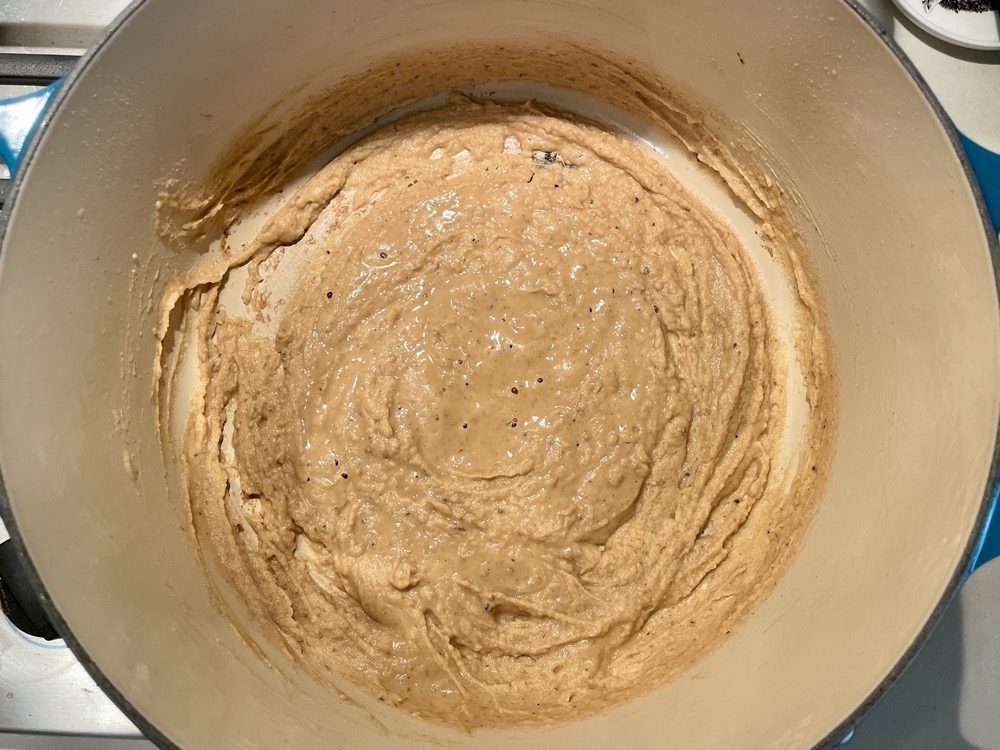
Using the same pot on MED heat with the residual oil from the sausage, melt in the 2/3 cup bacon fat. Sprinkle 1 cup of flour over the melted fat and whisk the flour until combined. Continue to whisk regularly until you get a thick paste that is the colour of milk chocolate (this step is tedious and can take 30-40 minutes, take your time, don’t let the roux burn!).

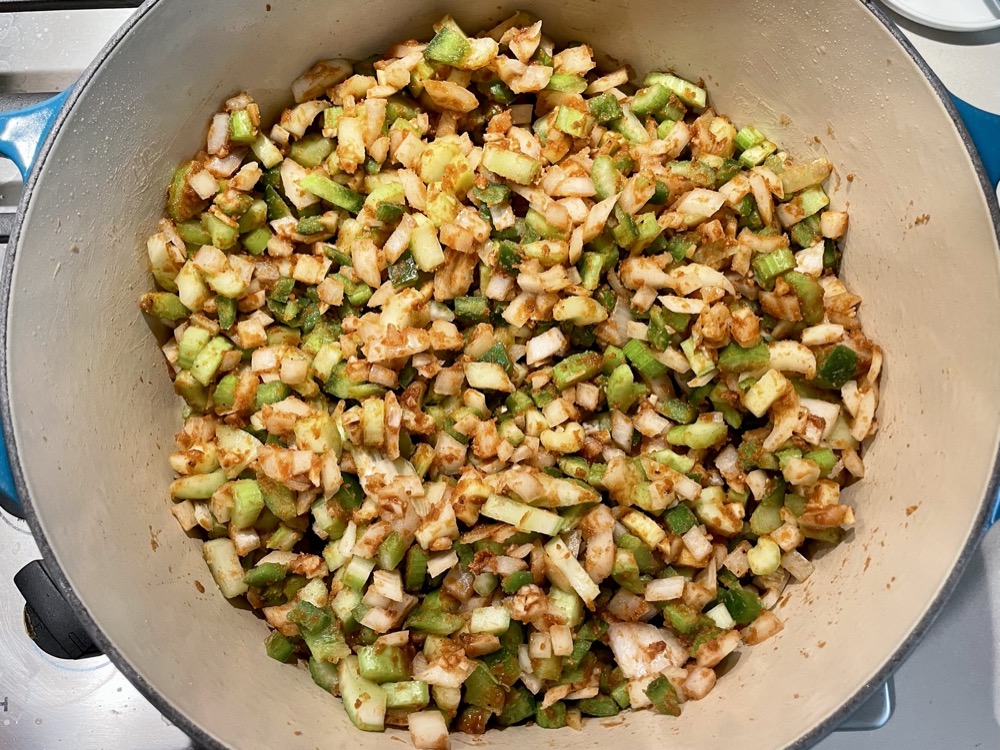
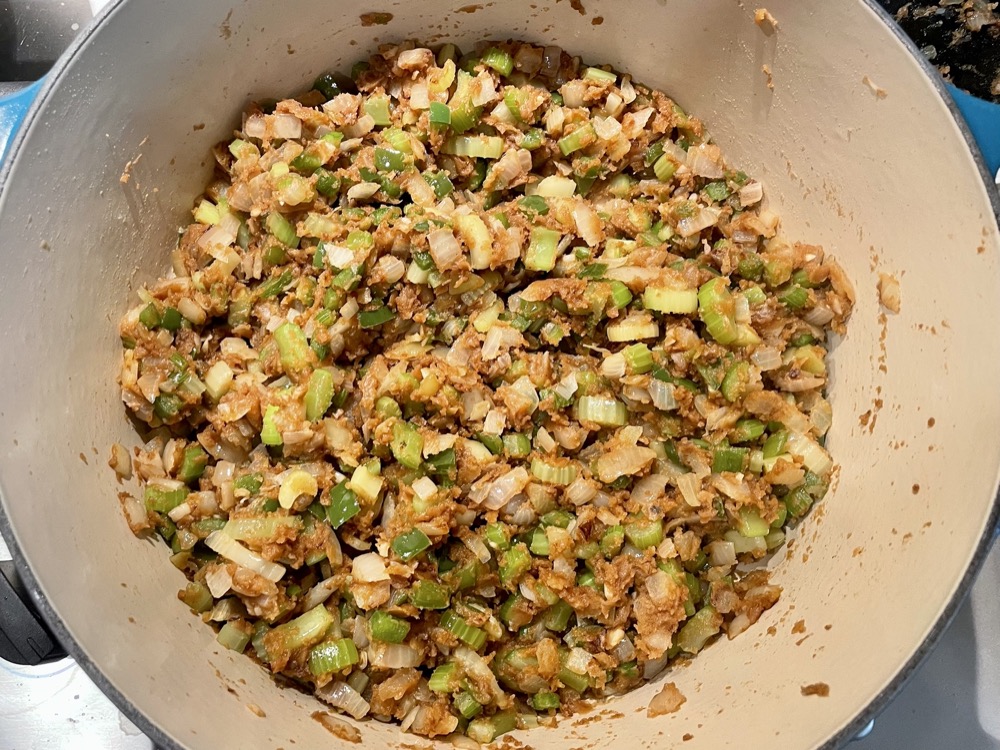
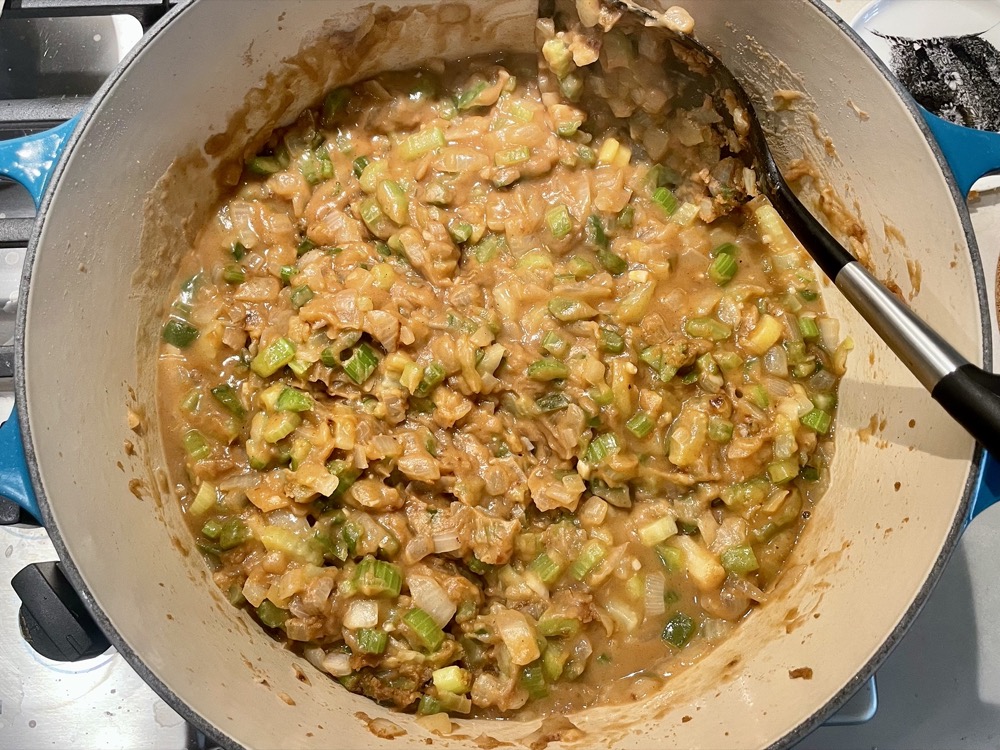
Once your roux reaches the desired colour, add in the vegetables: 3 cloves minced garlic, onion, green pepper, and celery. Sauté until the vegetables are soft (8-10 minutes), making sure you regularly scrape the bottom of the pot so nothing sticks. You can put a lid on the let the vegetables sweat to speed up the softening process.

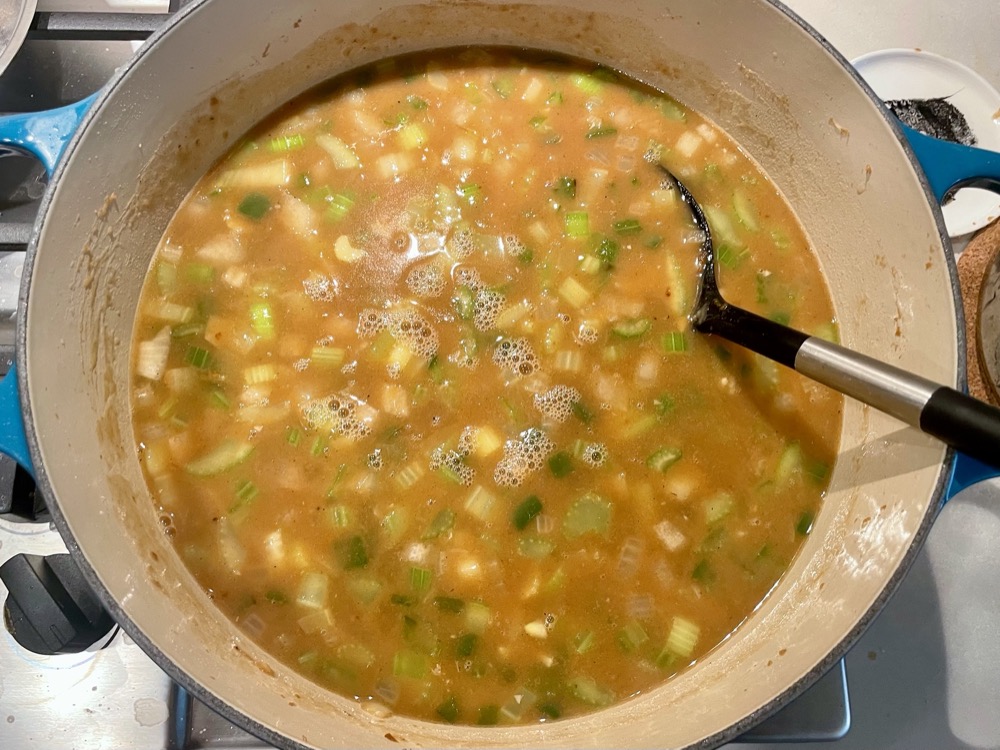
When the vegetables have softened, strain the shrimp shells from the broth (in step 1) and slowly pour the broth into the vegetable/roux mixture while stirring at the same time so no clumps form.

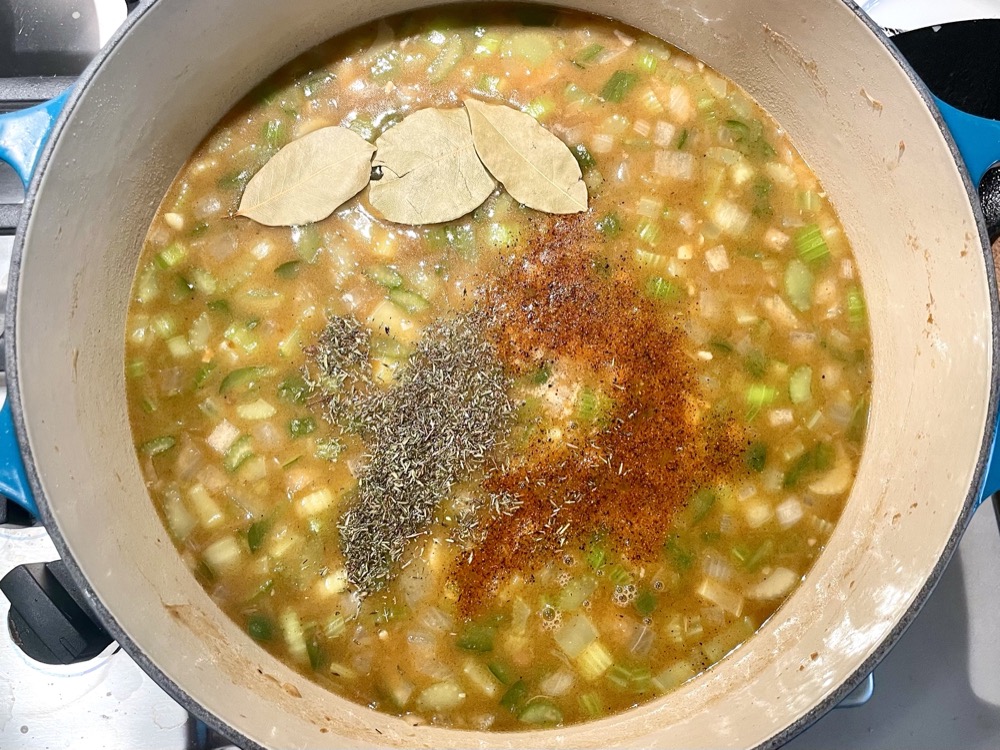
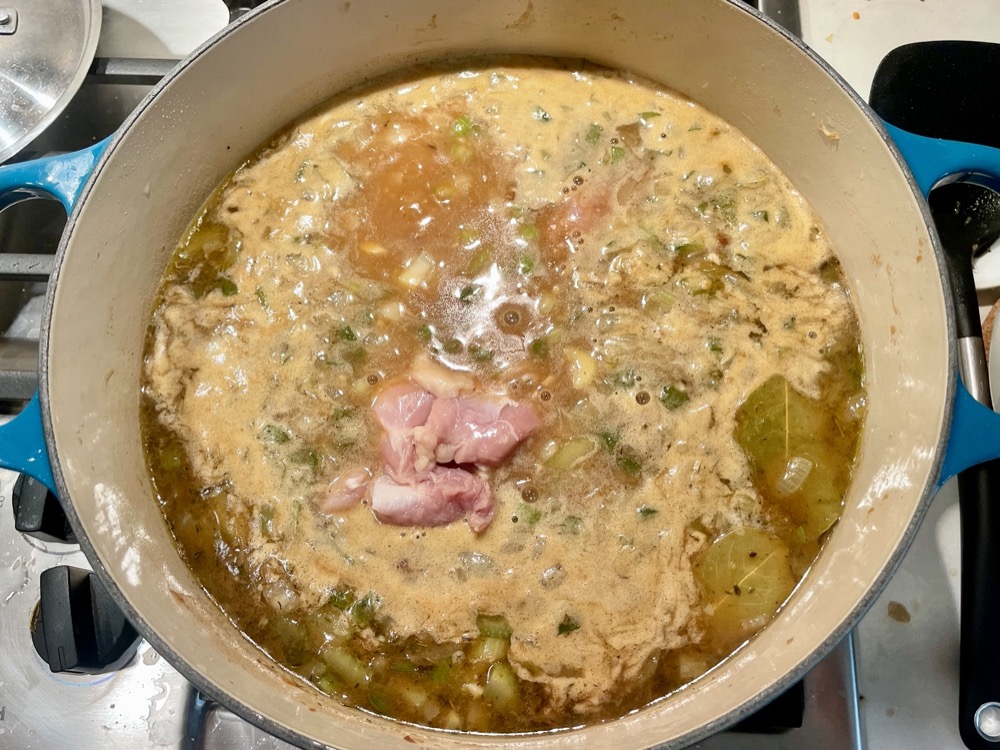
Let the soup come to a simmer then add in 1 Tbsp Cajun seasoning, 1/2 tsp dried thyme, 3 bay leaves, and 4 bone-in chicken thighs. Simmer for 1 hour, partially covered with a lid.

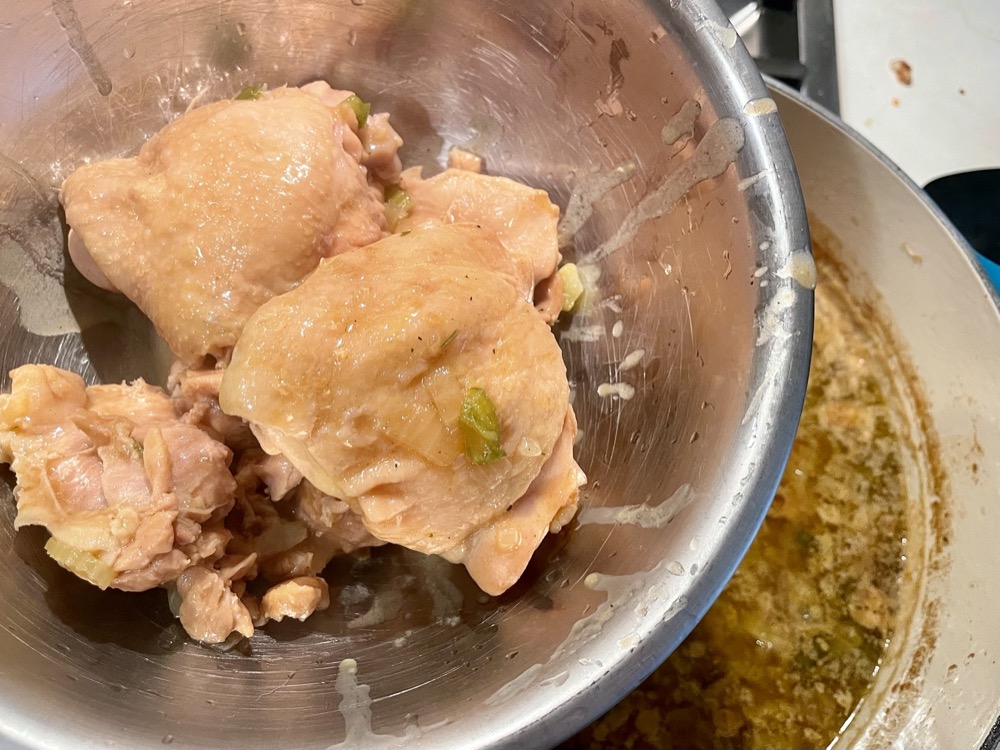
After 1 hour, remove the chicken into a bowl and add in the cooked sausage (from step 2) back into the soup along with 2 tsps of gumbo filé. Simmer for another 15 minutes.

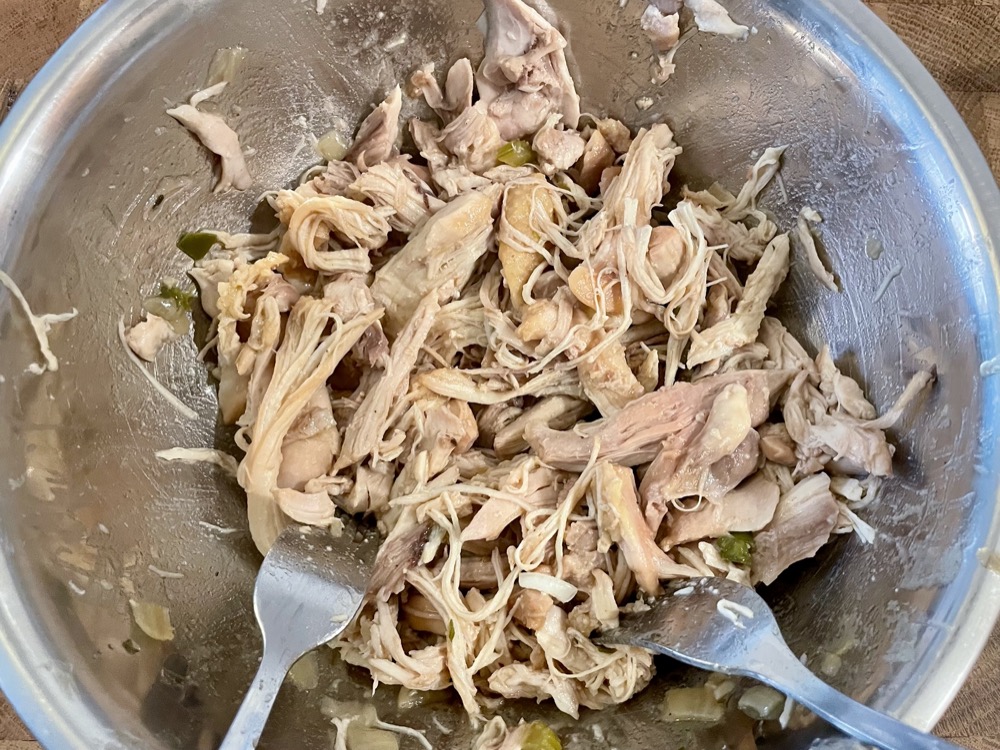
While the soup continues to simmer, use two forks to shred the cooked chicken and remove the bone and skin (if present).

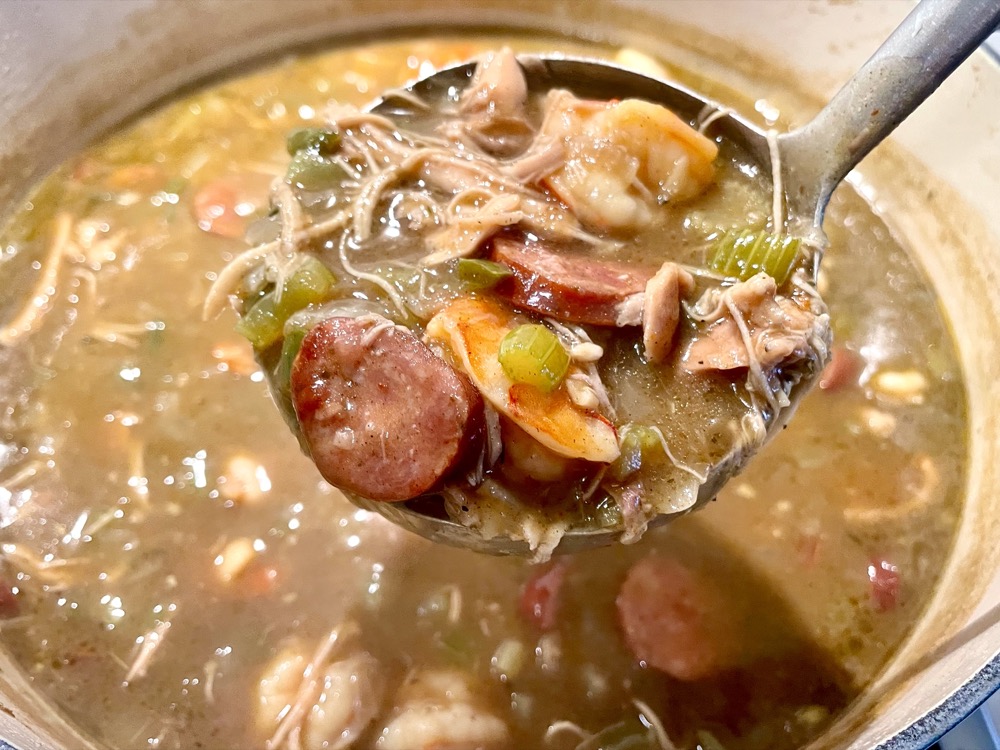
When the timer is up, add the shredded chicken back into the soup with the de-shelled raw shrimp (from step 1), and 2 more tsps of gumbo filé. Let it simmer for another 3-5 minutes until the shrimp is fully cooked, then turn off the heat.

Add in 2 Tbsps Worcestershire sauce, stir, and taste. Adjust salt, pepper, Cajun seasoning or Worcestershire as needed.

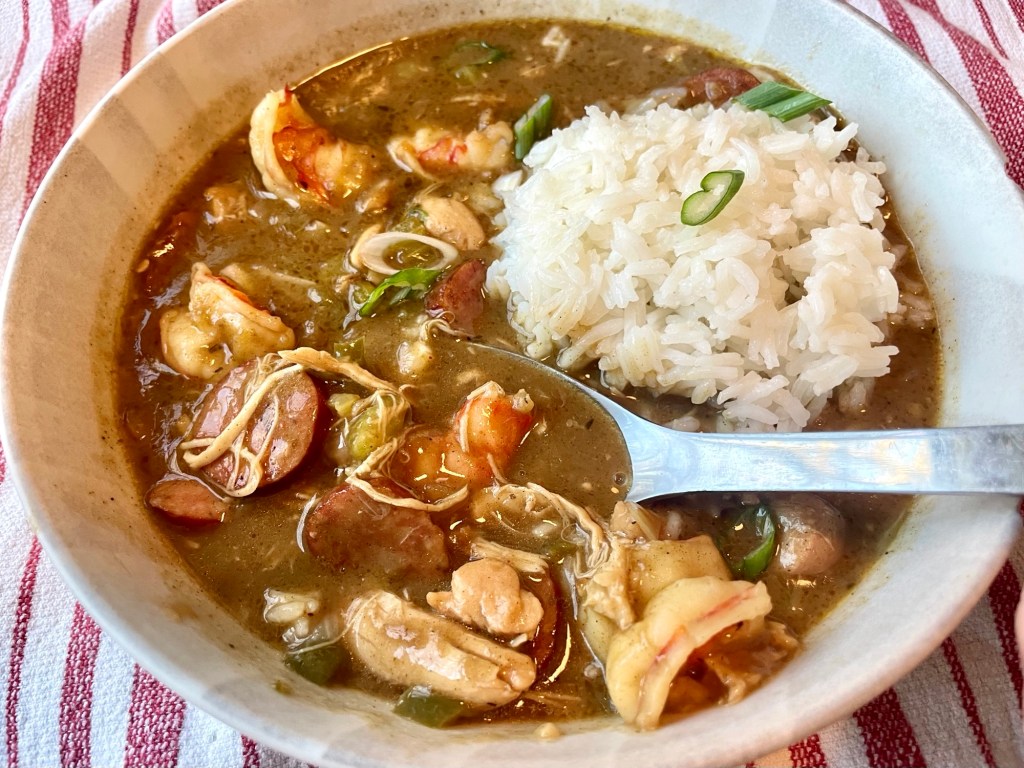
Done! Serve with rice or potato salad. Enjoy!

Summarized Recipe:

Cajun Chicken, Shrimp, and Andouille Sausage Gumbo

Date Published: Jan 16th, 2025 | Last Updated: Jan 16th, 2025
Author: Abby |Category: mains, soup
Serves: 6 | Prep time: 30 mins | Cook time: 2.5 hours

Ingredients:

  • Broth:
    • 4 cups chicken stock
    • 4 cups beef stock
    • 1 kg/2 lbs of raw shrimp with shells, deveined without heads
  • 1 Tbsp + 2/3 cup bacon fat (you can use vegetable oil or lard instead, but the bacon fat adds extra flavour)
  • 340g/12 oz (1 package) Andouille sausage, sliced
  • 1 cup all-purpose flour
  • 3 cloves garlic, minced
  • 1 large yellow onion, diced
  • 1 green bell pepper/capsicum, diced
  • 1 bunch celery, diced
  • 4 large chicken thighs, bone-in (with or without)
  • 1 Tbsp Cajun seasoning (I use ‘Slap Ya Mama’ brand, find it here)
  • 1/2 tsp dried thyme
  • 3 bay leaves
  • 4 tsps gumbo filé/filé powder
  • 2 Tbsps Worcestershire sauce
  • Garnish: sliced spring onions
  • Serve with: white rice or potato salad

Directions:

  1. Prepare the broth:
    • In a small pot on MED heat, add in 4 cups of chicken stock and 4 cups of beef stock.
    • Remove the shells from the shrimp and add the shells into the stock. Let it simmer on the lowest heat for at least 20 minutes (or longer) while you prepare the rest of the ingredients. Keep the lid on with a small crack to avoid evaporation and boiling over.
  2. Brown the sausage:
    • In a large soup pot on MED-HIGH heat, melt 1 Tbsp of bacon fat and sear the sliced Andouille sausages on both sides until browned (you may want to do this in batches if you can’t fit all the sausage in a single layer).
    • Once browned, remove the sausage onto a plate and set aside.
  3. Make the roux:
    • Using the same pot on MED heat with the residual oil from the sausage, melt in the 2/3 cup bacon fat. Sprinkle 1 cup of flour over the melted fat and whisk the flour until combined. Continue to whisk regularly until you get a thick paste that is the colour of milk chocolate (this step is tedious and can take 30-40 minutes, take your time, don’t let the roux burn!).
  4. Once your roux reaches the desired colour, add in the vegetables: 3 cloves minced garlic, onion, green pepper, and celery. Sauté until the vegetables are soft (8-10 minutes), making sure you regularly scrape the bottom of the pot so nothing sticks. You can put a lid on the let the vegetables sweat to speed up the softening process.
  5. When the vegetables have softened, strain the shrimp shells from the broth (in step 1) and slowly pour the broth into the vegetable/roux mixture while stirring at the same time so no clumps form.
  6. Let the soup come to a simmer then add in 1 Tbsp Cajun seasoning, 1/2 tsp dried thyme, 3 bay leaves, and 4 bone-in chicken thighs. Simmer for 1 hour, partially covered with a lid.
  7. After 1 hour, remove the chicken into a bowl and add in the cooked sausage (from step 2) back into the soup along with 2 tsps of gumbo filé. Simmer for another 15 minutes.
  8. While the soup continues to simmer, use two forks to shred the cooked chicken and remove the bone and skin (if present). When the timer is up, add the shredded chicken back into the soup with the de-shelled raw shrimp (from step 1), and 2 more tsps of gumbo filé. Let it simmer for another 3-5 minutes until the shrimp is fully cooked, then turn off the heat.
  9. Add in 2 Tbsps Worcestershire sauce, stir, and taste. Adjust salt, pepper, Cajun seasoning or Worcestershire as needed. Done! Serve with rice or potato salad. Enjoy!

Drunken Chicken (a Chinese cold dish)


Date Published: Jan 6th, 2025 | Last Updated: Jan 6th, 2025
Author: Abby |Category: easy, <30 mins, Asian, appetizers, healthy, low cal, sides, Taiwanese
Serves: 1 plate | Prep time: 5 mins | Cook time: 28 mins (+ 2 hours marinating)

Jump to recipe |

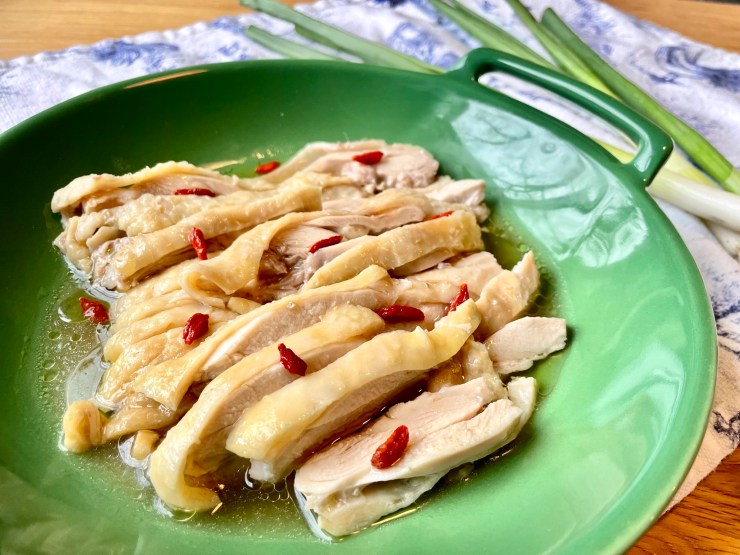
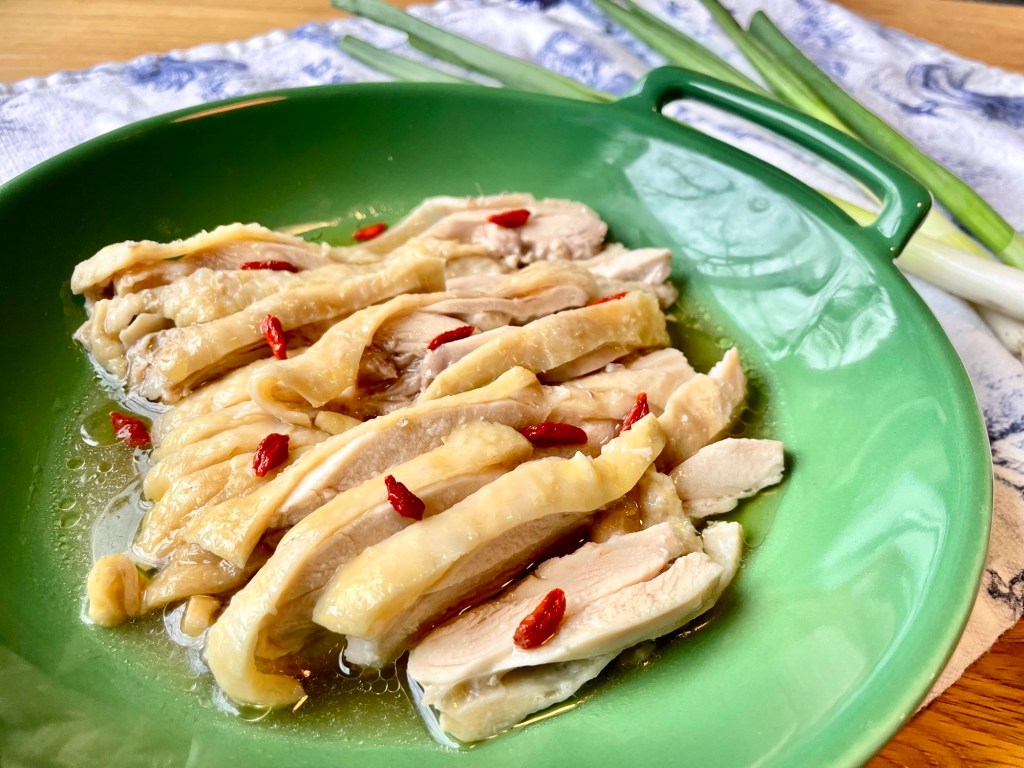
Drunken Chicken is a traditional Chinese savoury appetizer dish served either cold or at room temperature. Fair warning, if you don’t like alcohol, you’re not going to like this dish. I grew up with this dish and I absolutely hated it when I was a kid because of how strong the alcohol flavour was. It was almost always served as part of a 10 course prix-fixe meal at fancy Chinese restaurants during get-togethers with extended families, work dinners, or wedding banquets. Any time there’s any occasion to celebrate, drunken chicken makes an appearance. Now as an adult and being more accustomed to alcohol, I found a new appreciation for this dish. It’s unique and is a nice way to open your palate before the hot stir frys come out, and the salty cool alcohol flavours gives a good break from hot spicy foods.

This recipe is ridiculously easy and cooks up quickly. Make sure you use good quality Shaoxing Wine for this dish since it’s 50% of the marinade – you’ll taste the difference. You’ll need to marinate the chicken for at least 2 hours or better if overnight, so make sure you give yourself enough time before serving.

Anyways, without further ado, here’s the recipe! If you have any comments or suggestions, I’d love to hear from you in the comment section! You can follow me on instagram, youtube and facebook to see all the recipes I post!

Happy cooking!

Ingredients you’ll need:

  • 4 chicken thighs, skin-on, bone in or out
  • 1 Tbsp kosher salt flakes + more to taste
  • 4x 3mm slices of ginger
  • 2 spring onions, trimmed and cut 4cm lengths
  • Ice water bath
  • 1 tsp granulated sugar
  • 1.5 cups (375ml) Shaoxing Wine (Chinese cooking wine)
  • 1 Tbsp goji berries

Directions:

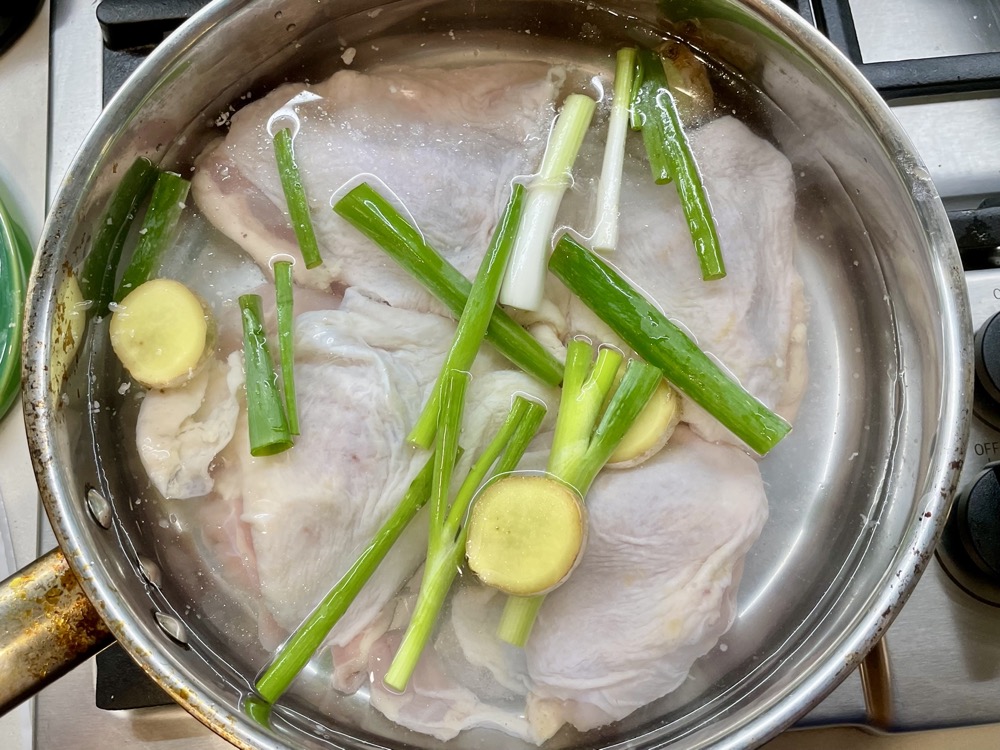
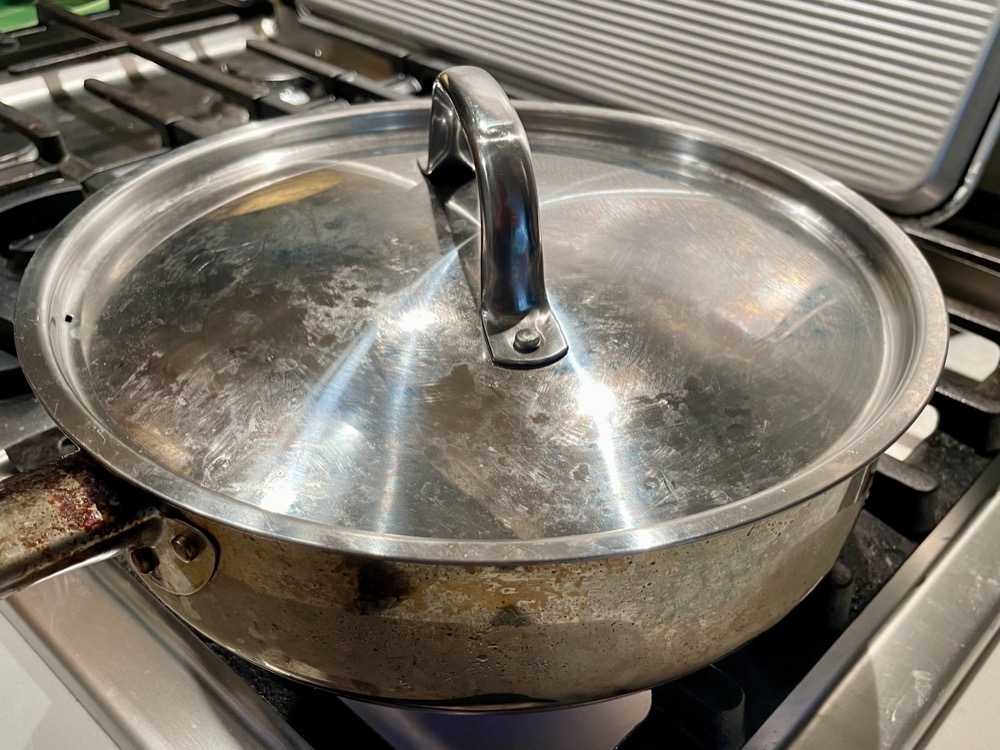
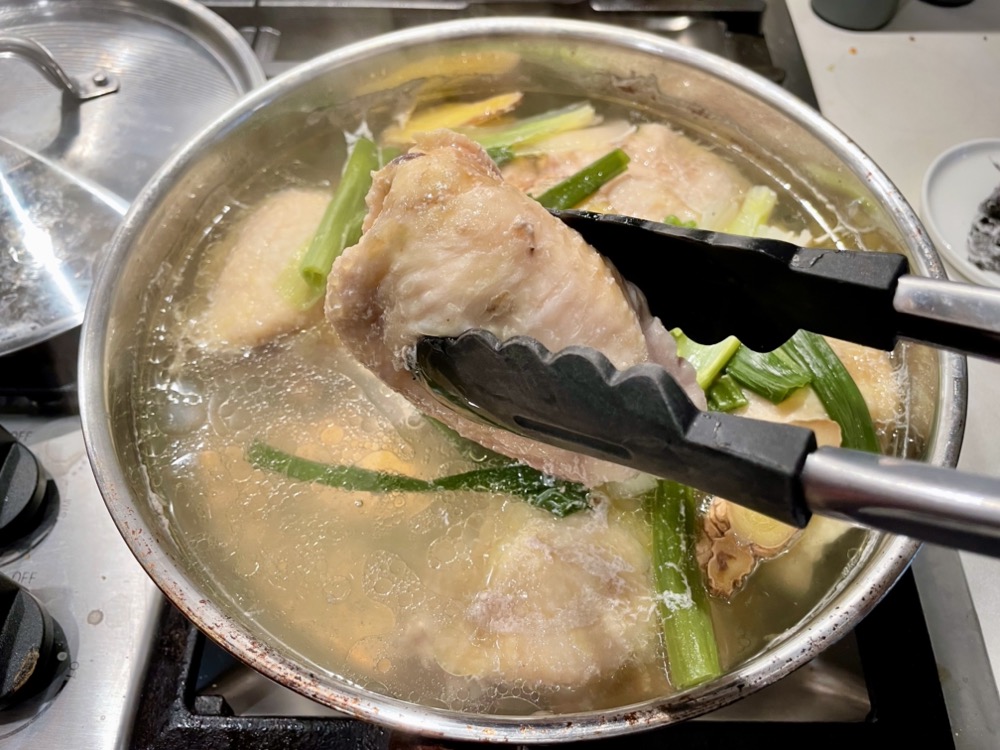
In a pot or a deep pan (with a lid), arrange the chicken thighs in a single layer and add in 1 Tbsp salt, ginger slices, and spring onions. Add enough water to just cover the chicken. Put the lid on and turn the heat up to HIGH to bring the water to a boil, then turn it down to LOW to let the chicken simmer for 8 minutes.

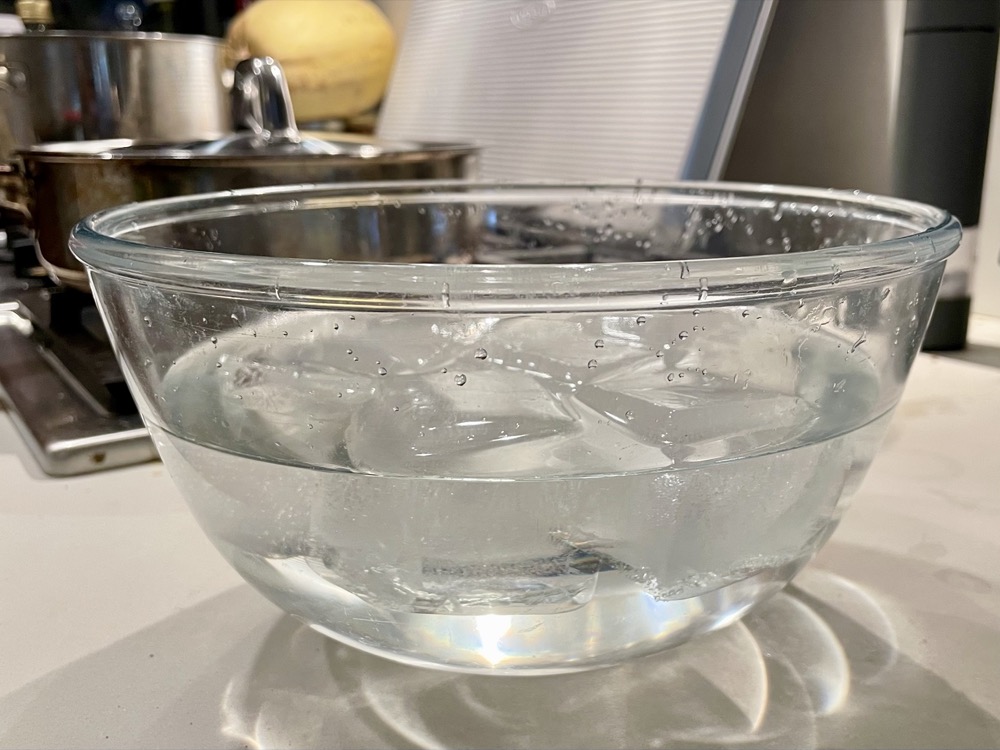
After 8 minutes, turn the heat off and let the chicken sit for another 5 minutes with the lid on (do not open the lid until the timer is up or else you’ll let the heat escape). Prepare an ice water bath for the chicken in this time.

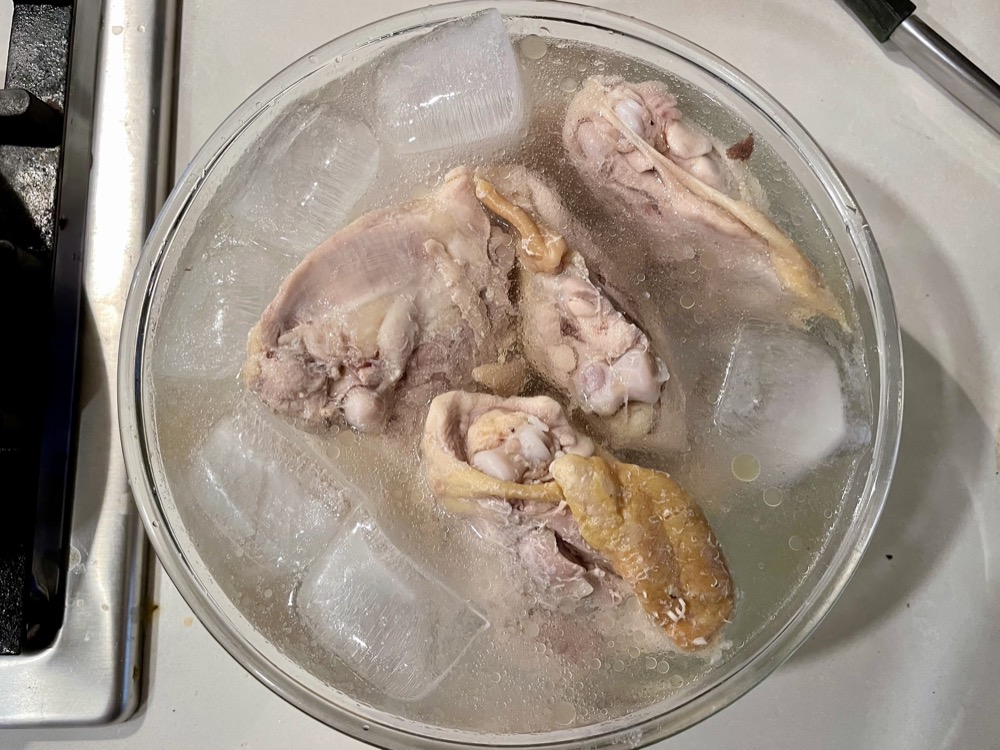
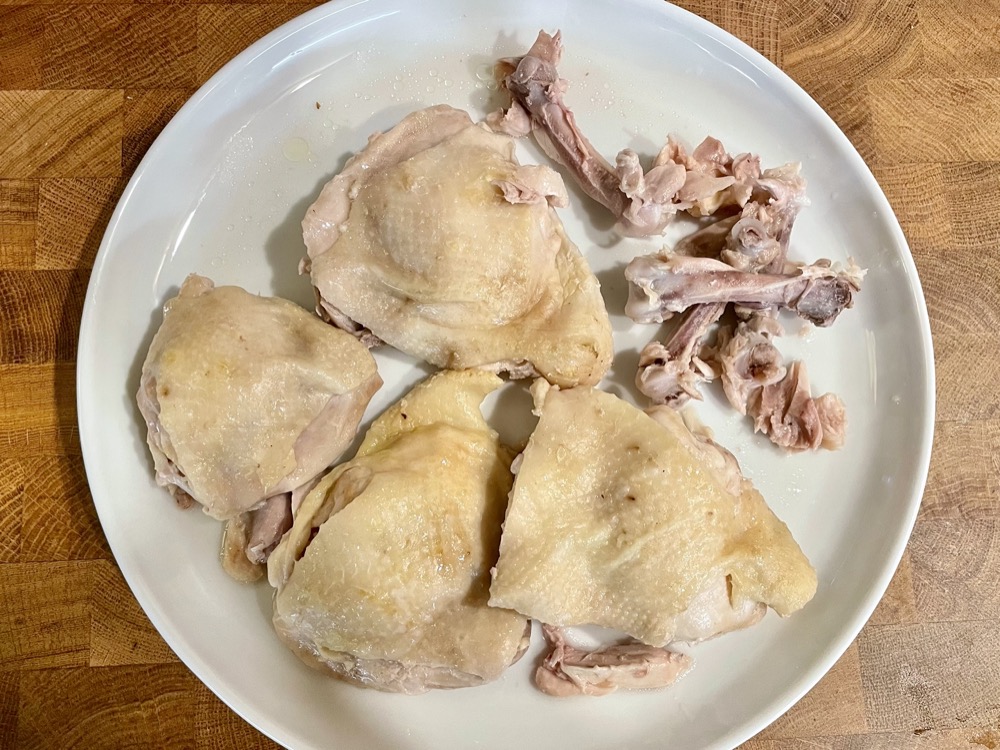
When the timer is up, check that the chicken is cooked (internal temp should be at least 165˚F/74˚C). If it hasn’t cooked, simmer it for a bit longer, otherwise remove the chicken and place it in the prepared ice water bath. This will allow the skin to firm up with a bouncy texture.

With the remaining broth, turn on the heat again to MED-HIGH and let the broth simmer until the liquid has reduced to about 1.5 cups (15-20 mins).

While the broth is reducing, once the chicken has cooled, remove it from the ice bath and remove the bone with your hands (if present). Slice the chicken and place it in a glass or non-reactive bowl with a lid.

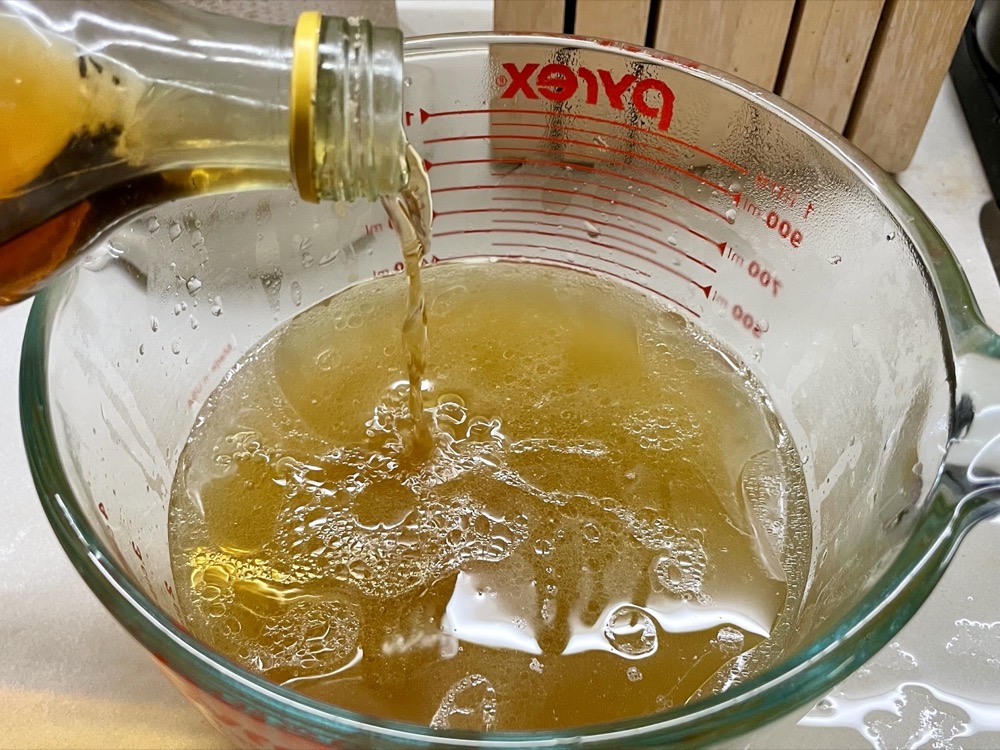
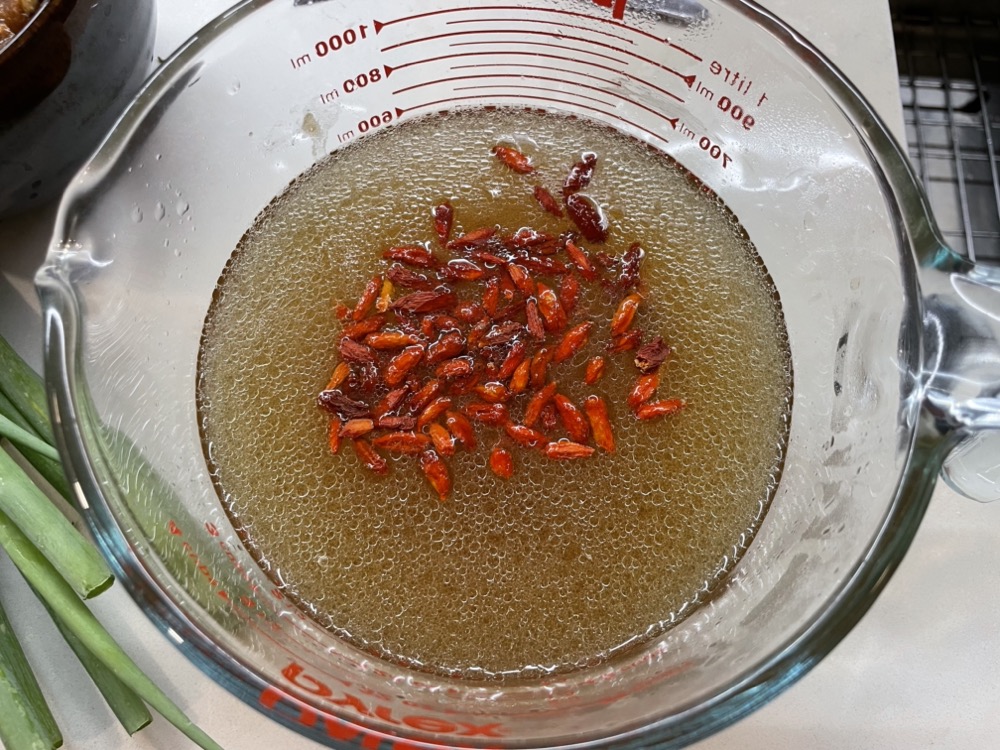
Once the broth has reduced, strain it into a measuring cup and add in the equivalent amount of Shaoxing wine into the measuring cup (ie. if you have 1.5 cups of broth, you will add to it 1.5 cups of the wine), 1 tsp sugar, and the goji berries. Stir until the sugar dissolves and taste. You should have a very savoury alcohol-tasting broth.

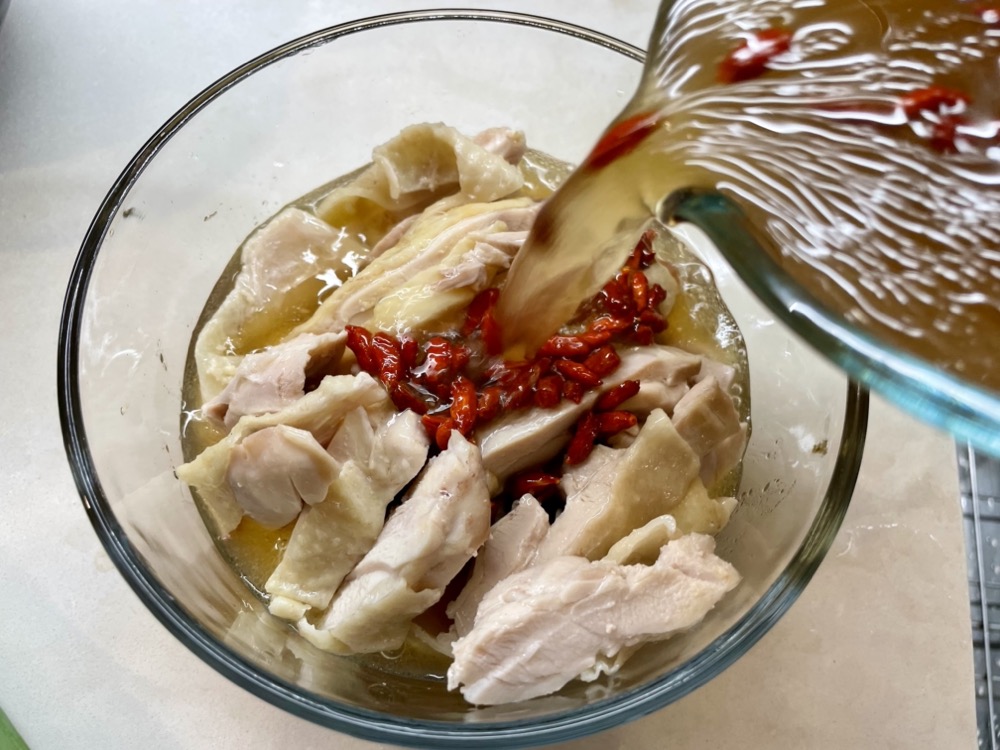
Pour the alcohol/broth mixture into the bowl with the sliced chicken and cover. Refrigerate to marinate for at least 2 hours or overnight.

When serving, strain the liquid from the chicken and serve chilled. Enjoy!

Summarized Recipe:

Drunken Chicken (a Chinese cold dish)

Date Published: Jan 6th, 2025 | Last Updated: Jan 6th, 2025
Author: Abby |Category: easy, <30 mins, Asian, appetizers, healthy, low cal, sides, Taiwanese
Serves: 1 plate | Prep time: 5 mins | Cook time: 28 mins (+ 2 hours marinating)

Ingredients:

  • 4 chicken thighs, skin-on, bone in or out
  • 1 Tbsp kosher salt flakes + more to taste
  • 4x 3mm slices of ginger
  • 2 spring onions, trimmed and cut 4cm lengths
  • Ice water bath
  • 1 tsp granulated sugar
  • 1.5 cups (375ml) Shaoxing Wine (Chinese cooking wine)
  • 1 Tbsp goji berries

Directions:

  1. In a pot or a deep pan (with a lid), arrange the chicken thighs in a single layer and add in 1 Tbsp salt, ginger slices, and spring onions. Add enough water to just cover the chicken. Put the lid on and turn the heat up to HIGH to bring the water to a boil, then turn it down to LOW to let the chicken simmer for 8 minutes.
  2. After 8 minutes, turn the heat off and let the chicken sit for another 5 minutes with the lid on (do not open the lid until the timer is up or else you’ll let the heat escape). Prepare an ice water bath for the chicken in this time.
  3. When the timer is up, check that the chicken is cooked (internal temp should be at least 165˚F/74˚C). If it hasn’t cooked, simmer it for a bit longer, otherwise remove the chicken and place it in the prepared ice water bath. This will allow the skin to firm up with a bouncy texture.
  4. With the remaining broth, turn on the heat again to MED-HIGH and let the broth simmer until the liquid has reduced to about 1.5 cups (15-20 mins).
  5. While the broth is reducing, once the chicken has cooled, remove it from the ice bath and remove the bone with your hands (if present). Slice the chicken and place it in a glass or non-reactive bowl with a lid.
  6. Once the broth has reduced, strain it into a measuring cup and add in the equivalent amount of Shaoxing wine into the measuring cup (ie. if you have 1.5 cups of broth, you will add to it 1.5 cups of the wine), 1 tsp sugar, and the goji berries. Stir until the sugar dissolves and taste. You should have a very savoury alcohol-tasting broth.
  7. Pour the alcohol/broth mixture into the bowl with the sliced chicken and cover. Refrigerate to marinate for at least 2 hours or overnight. When serving, strain the liquid from the chicken and serve chilled. Enjoy!

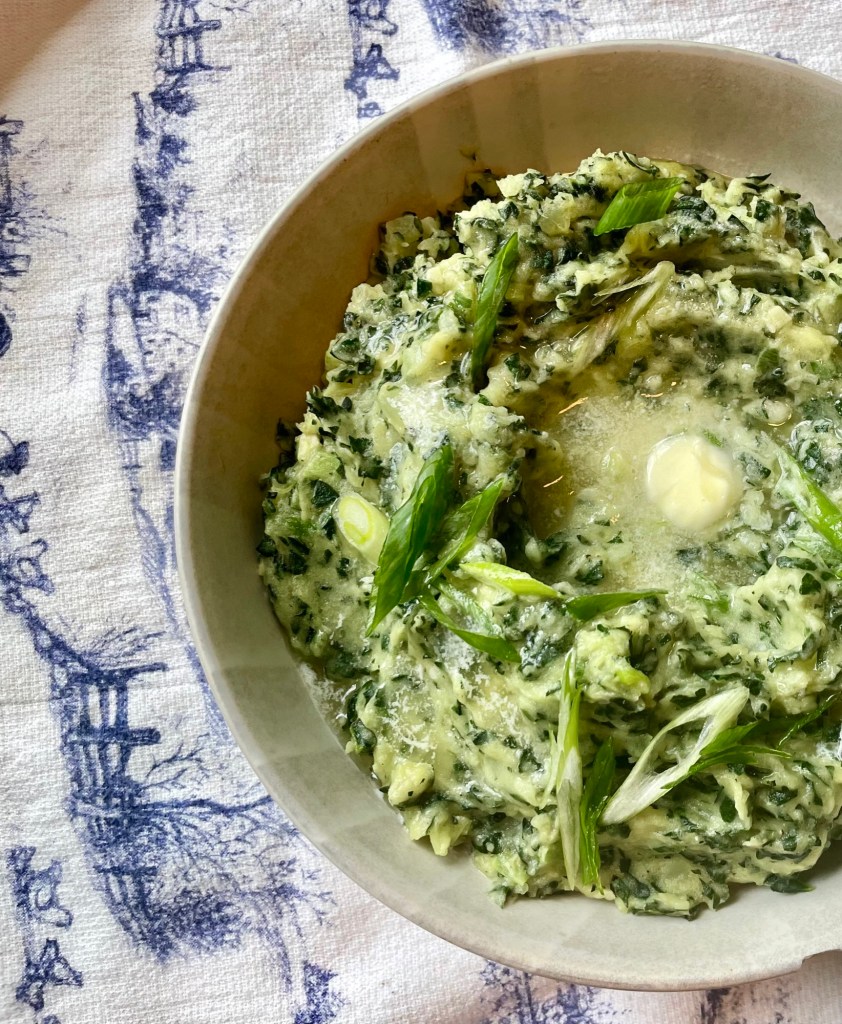
Colcannon (Irish Kale Mashed Potatoes)


Date Published: Jan 1st, 2025 | Last Updated: Jan 1st, 2025
Author: Abby |Category: sides, vegetarian, easy
Serves: 8 (1 large bowl) | Prep time: 15 mins | Cook time: 40 mins

Jump to recipe |

Happy New Year everyone!!!!🥳 I hope everyone had a great 2024, if not, here’s to a better 2025! To kick off the new year, here’s a twist to an old staple.

Colcannon is a traditional Irish mashed potato dish that incorporates kale (or cabbage). It sounds weird, but trust me, it actually works. Think of the kale as an excuse to pile on that butter. 😉

I learned of this dish when I found myself with a large bunch of kale taking up half the space in the vegetable drawer and some potatoes threatening to sprout. A quick search of these ingredients led me to this dish and now this is my go-to mashed potato dish to serve at any occasional to make an interesting twist to a classic.

Anyways, without further ado, here’s the recipe! If you have any comments or suggestions, I’d love to hear from you in the comment section! You can follow me on instagram, youtube and facebook to see all the recipes I post!

Happy cooking!

Ingredients you’ll need:

  • 1kg Yukon gold potatoes, diced (peeled or unpeeled depending on how like it)
  • 6 Tbsps (85g) unsalted butter
  • 1 large bunch (~6-8 cups, semi-packed) of kale (curly or lacinato), stems removed and chopped small
  • 3 cloves garlic, minced
  • 3 spring onions, sliced
  • 1/2 cup milk
  • Salt & pepper to taste

Directions:

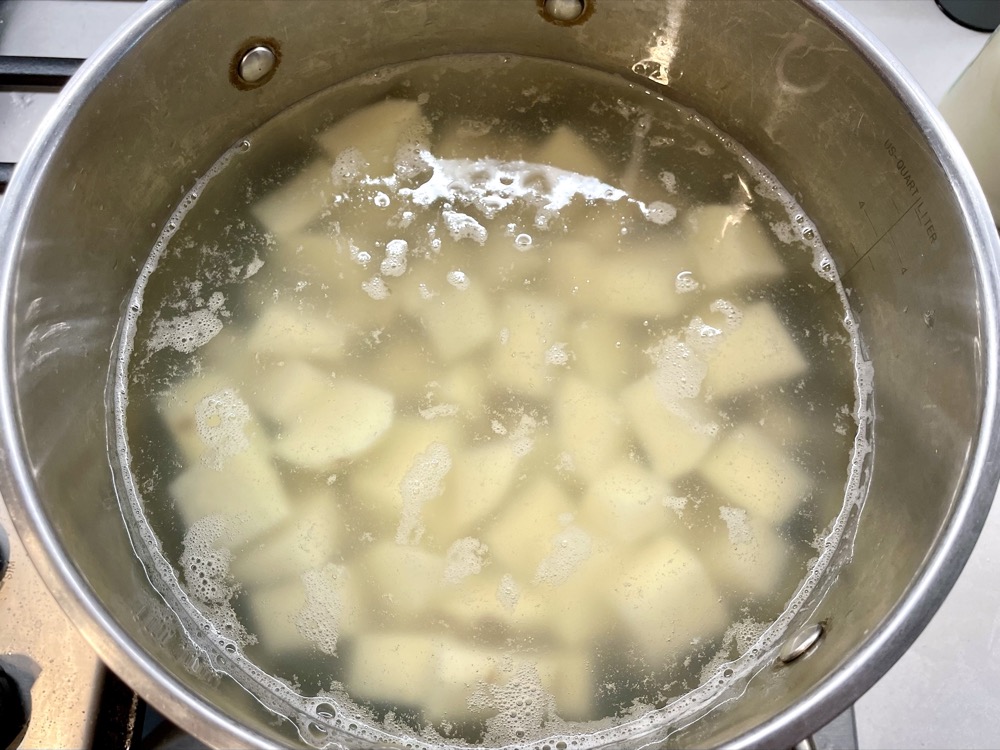
Place the potatoes in a pot and add enough water to cover and a sprinkle of salt. Bring the heat up to HIGH to let the water come to a boil, then turn it down to MED and continue to simmer until the potatoes are fork-tender (~15-20 mins). Drain and set aside.

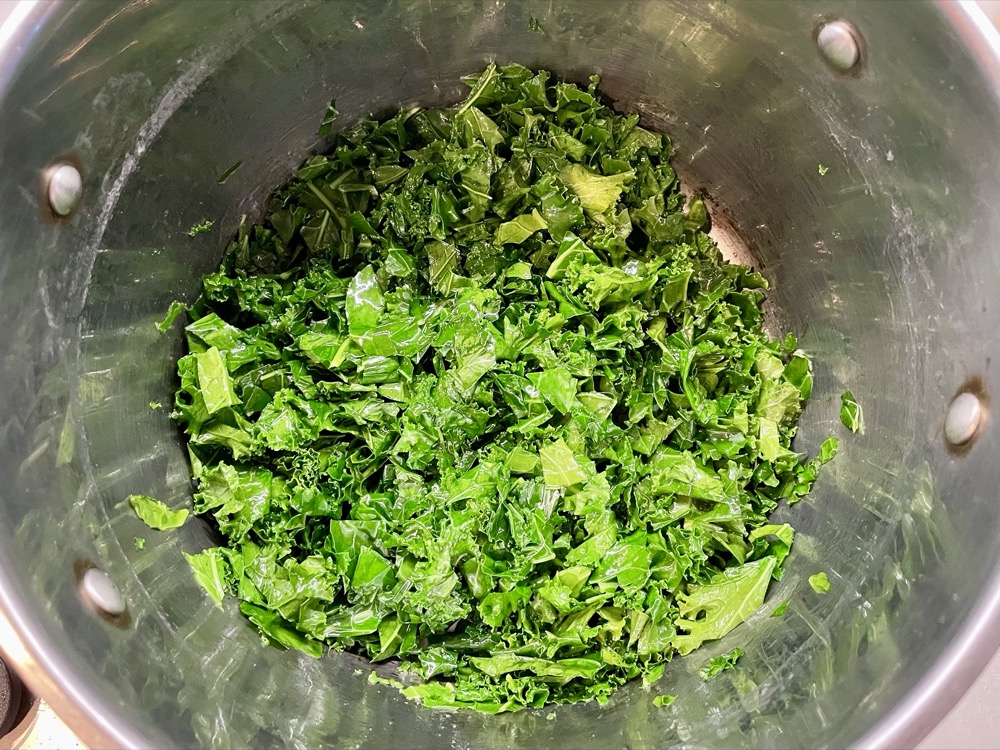
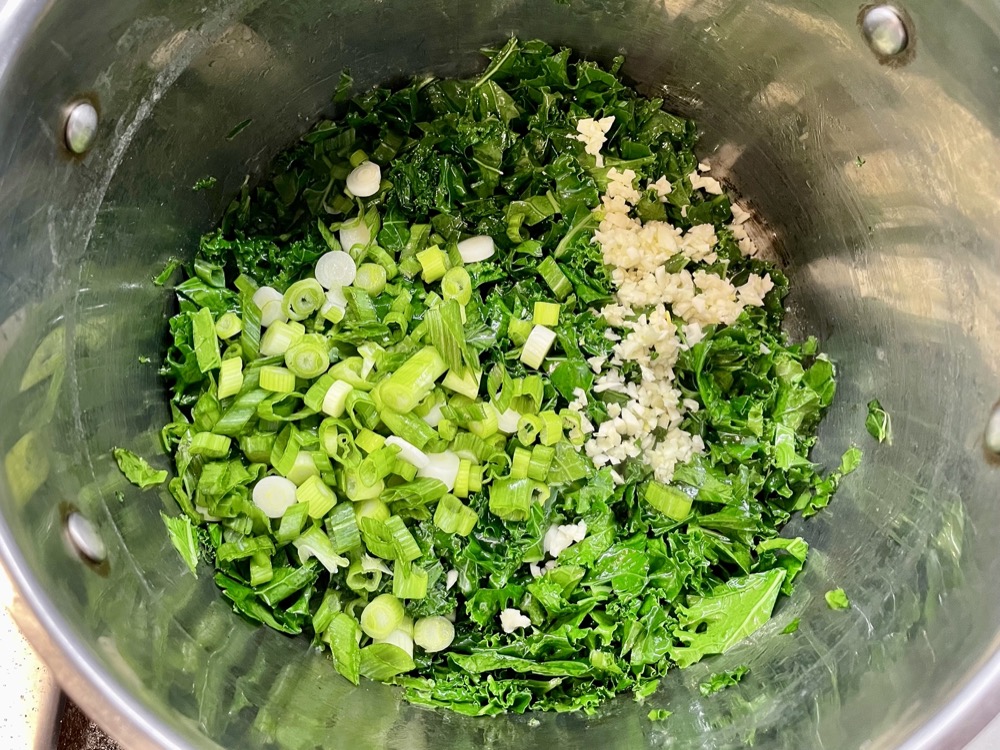
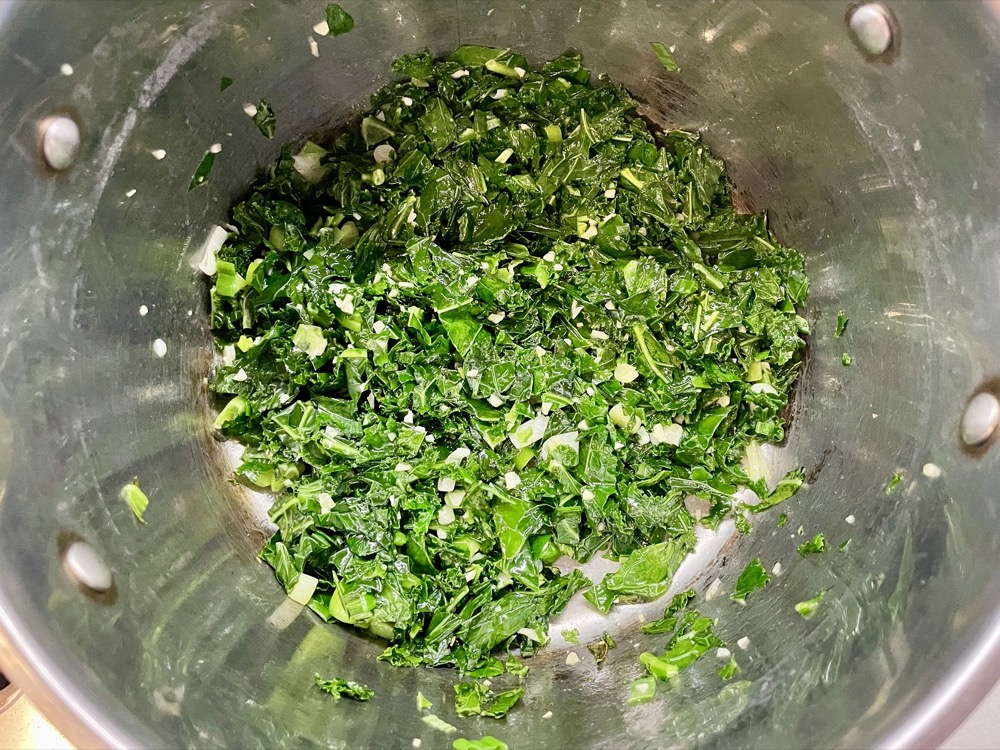
In a medium sized pot or deep pan on MED-HIGH heat, melt the butter and add in the kale. Sauté for a few minutes until the leaves are wilted. Add in the garlic and spring onions and continue to cook for another 2 minutes until fragrant and the spring onions have softened.

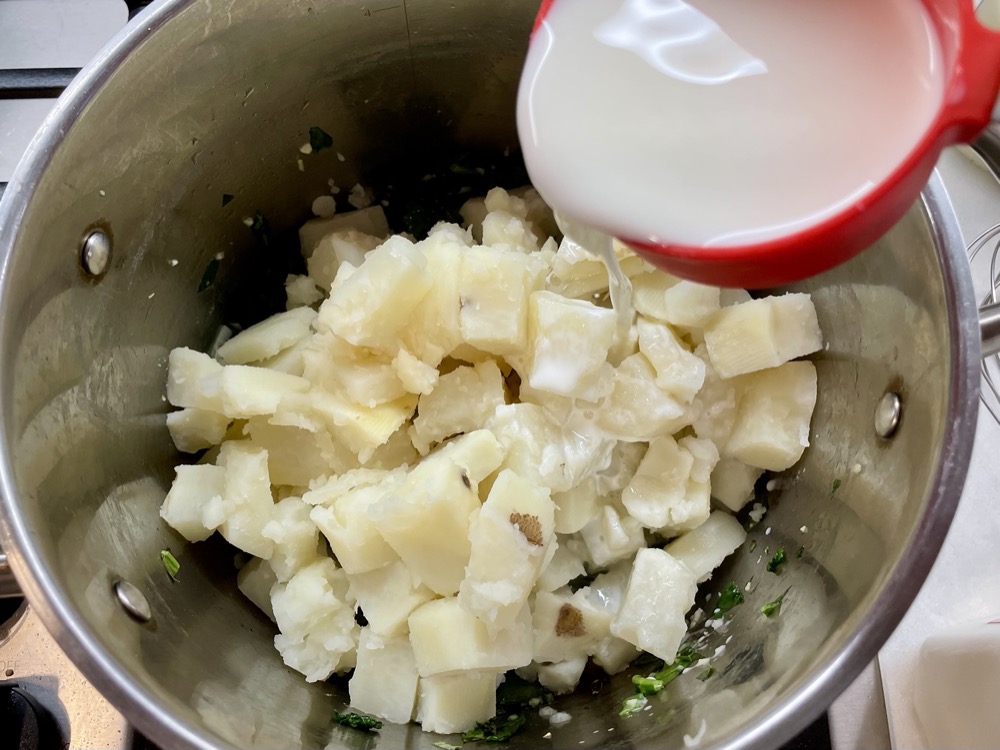
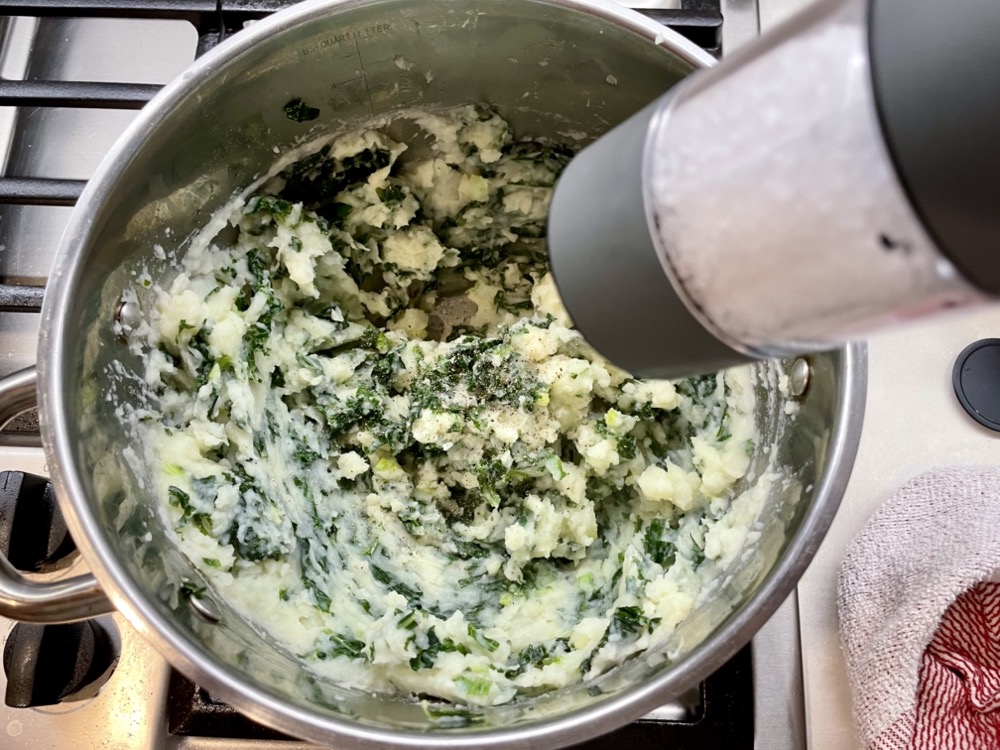
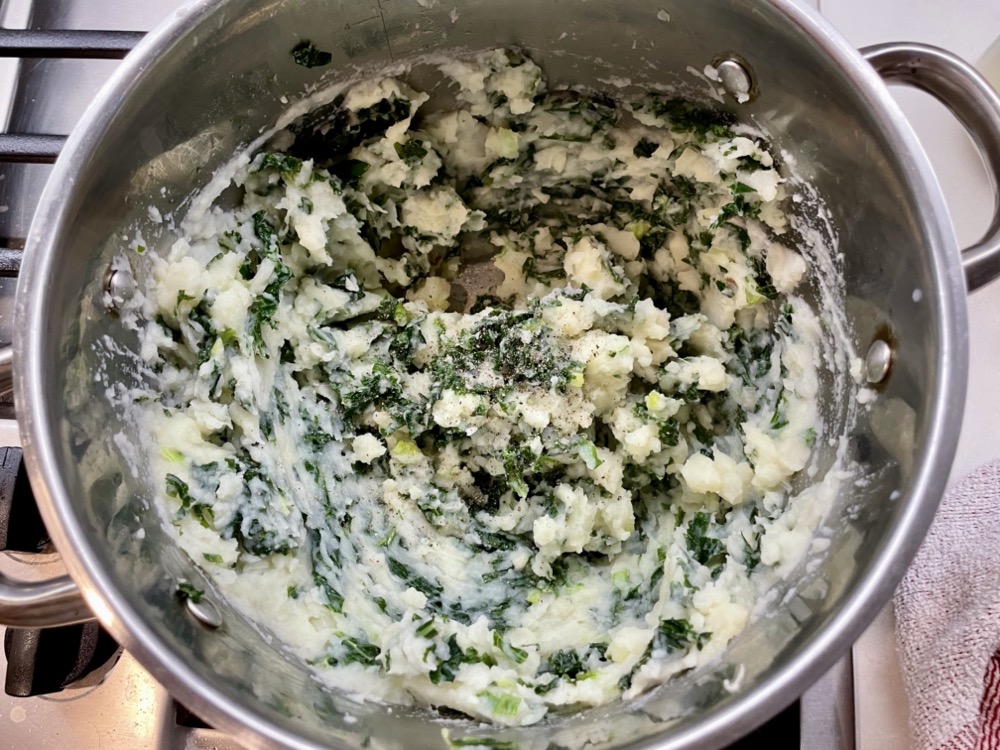
Add in the cooked potatoes (from step 1) and milk into the pan and mix it all together. Once everything is heated through, turn off the heat and mash the potatoes until smooth. Taste and adjust salt and pepper to your preference. Done!

Summarized Recipe:

Colcannon (Irish Kale Mashed Potatoes)

Date Published: Jan 1st, 2025 | Last Updated: Jan 1st, 2025
Author: Abby |Category: sides, vegetarian, easy
Serves: 8 (1 large bowl) | Prep time: 15 mins | Cook time: 40 mins

Ingredients:

  • 1kg Yukon gold potatoes, diced (peeled or unpeeled depending on how like it)
  • 6 Tbsps (85g) unsalted butter
  • 1 large bunch (~6-8 cups, semi-packed) of kale (curly or lacinato), stems removed and chopped small
  • 3 cloves garlic, minced
  • 3 spring onions, sliced
  • 1/2 cup milk
  • Salt & pepper to taste

Directions:

  1. Place the potatoes in a pot and add enough water to cover and a sprinkle of salt. Bring the heat up to HIGH to let the water come to a boil, then turn it down to MED and continue to simmer until the potatoes are fork-tender (~15-20 mins). Drain and set aside.
  2. In a medium sized pot or deep pan on MED-HIGH heat, melt the butter and add in the kale. Sauté for a few minutes until the leaves are wilted. Add in the garlic and spring onions and continue to cook for another 2 minutes until fragrant and the spring onions have softened.
  3. Add in the cooked potatoes (from step 1) and milk into the pan and mix it all together. Once everything is heated through, turn off the heat and mash the potatoes until smooth. Taste and adjust salt and pepper to your preference. Done!
  4. Melt 2 Tbsp of butter and drizzle on top with green onion garnish before serving.

Discover Acadia National Park: Your Guide to Mount Desert Island


Date Published: Dec 2nd, 2024 | Last Updated: Dec 2nd, 2024
Author: Abby | Category: Travel, USA
Date of travel: Oct 13-14th, 2024

START HERE: This post has everything you need to know about visiting Acadia’s Mount Desert Island.

Acadia National Park is the “Crown Jewel” of the North Atlantic Coast providing breathtaking coastal views, mountainous hikes, scenic drives, beaches, and a town with no shortage of restaurants. This national park is a must-do in Maine!

Park Info:

Location: Acadia National Park, Maine (Hulls Cove Visitor Center: 25 Visitor Center Road, Bar Harbor, ME 04609)
Park opening hours: Open 24 hours, year-round. There are road closures in the winter months (check the park website for updated info).
Park website: https://www.nps.gov/acad/index.htm
Park fees: $35 per car (+$6 for Cadillac Mountain vehicle reservation) – https://www.nps.gov/acad/planyourvisit/fees.htm

An Overview

Acadia National Park is made up of 3 areas: Isle au haut, Mount Desert Island, and Schoodic Peninsula. Of these three, Mount Desert Island is the most popular with the most amount of things to do and has the the iconic scenery in this national park. During our trip, we didn’t have time to make it to Schoodic nor Isle au Haut, so I will focus on Mount Desert Island only for this post. We do have plans to visit again next year, so keep a look out for updates!

There is a lot to do here, so if you’re feeling overwhelmed, I’ve done a quick 2-day itinerary to see all the main highlights here.

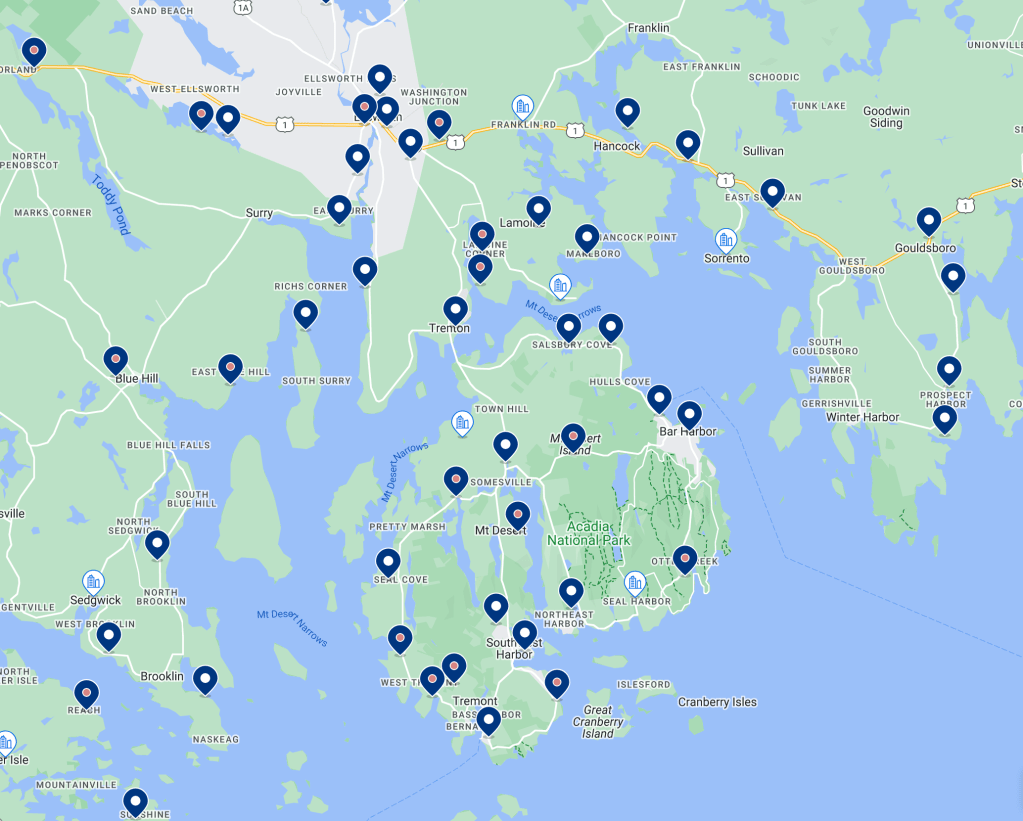
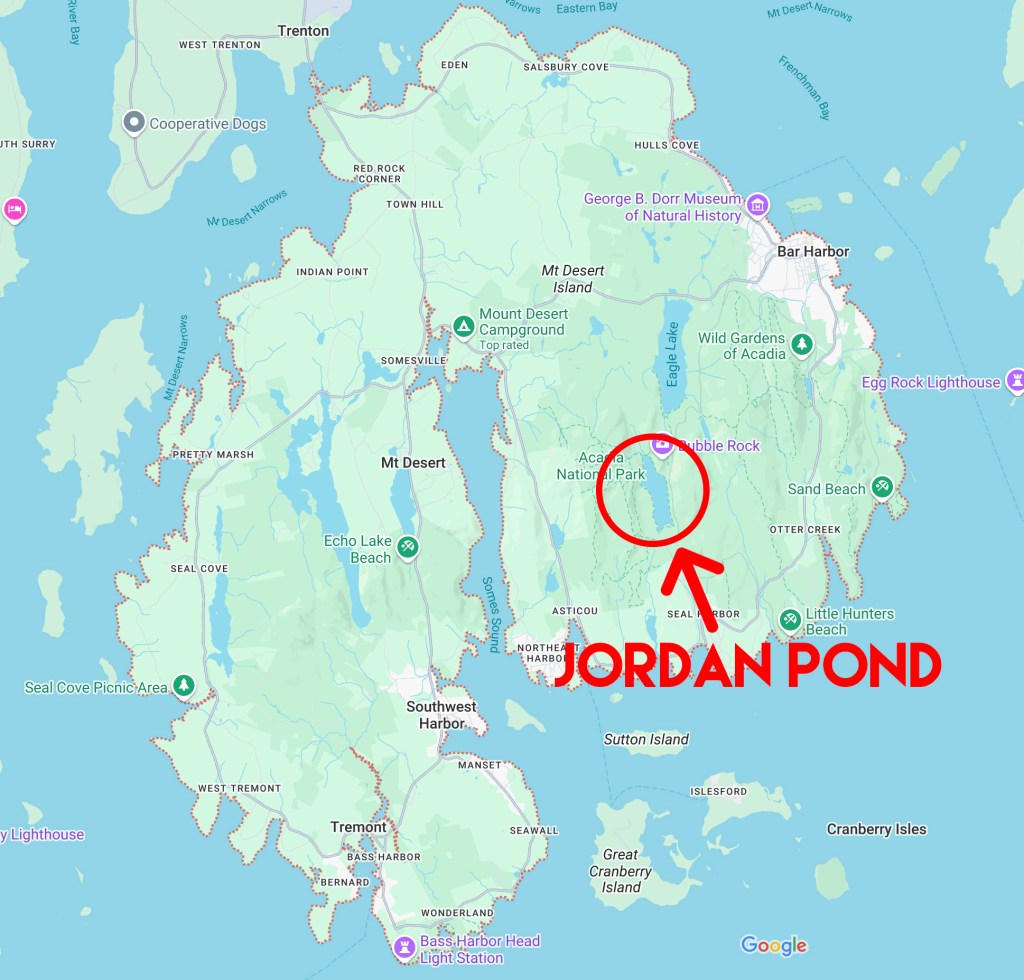
Although an island, Mount Desert Island is accessible by car via Bar Harbor Road. The most popular things to do are on the East side of the island, including exploring Bar Harbor downtown, Sand Beach, hiking the Beehive Trail, Thunder Hole, Ocean Path, Jordan Pond, the ‘Bubbles’, and Cadillac Mountain. I’ve made a quick map of these places below to give you a rough idea of the proximity of the main attractions. I’ll go into each place in more detail further down in this post.

Map of Mount Desert Island in Acadia National Park

When to travel:

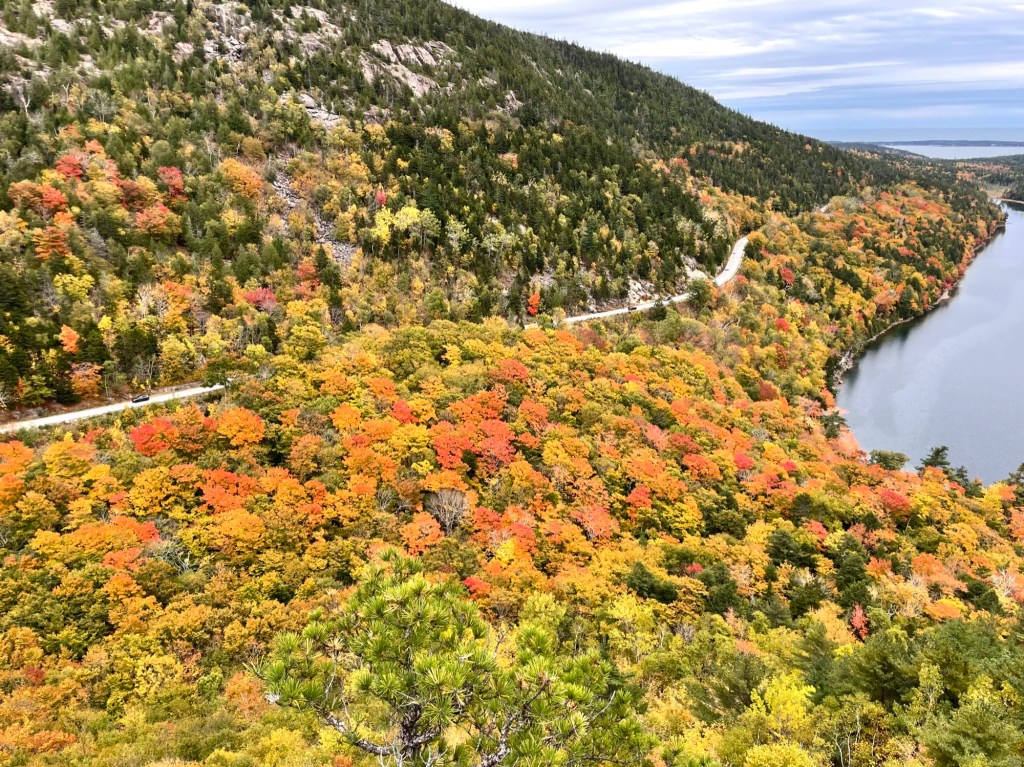
The busy season is between Summer and Autumn. When I say busy, I mean BUSY. Plan wayyyy ahead and book your travel plans at least 3 months in advance if you can. I’d recommend visiting in Autumn for the beautiful orange and red colours of the fall foliage that adds to the already breath-taking landscape.

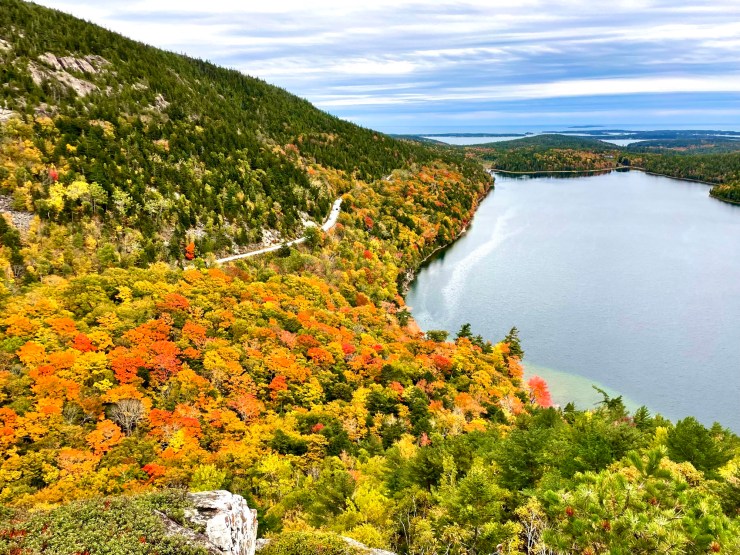
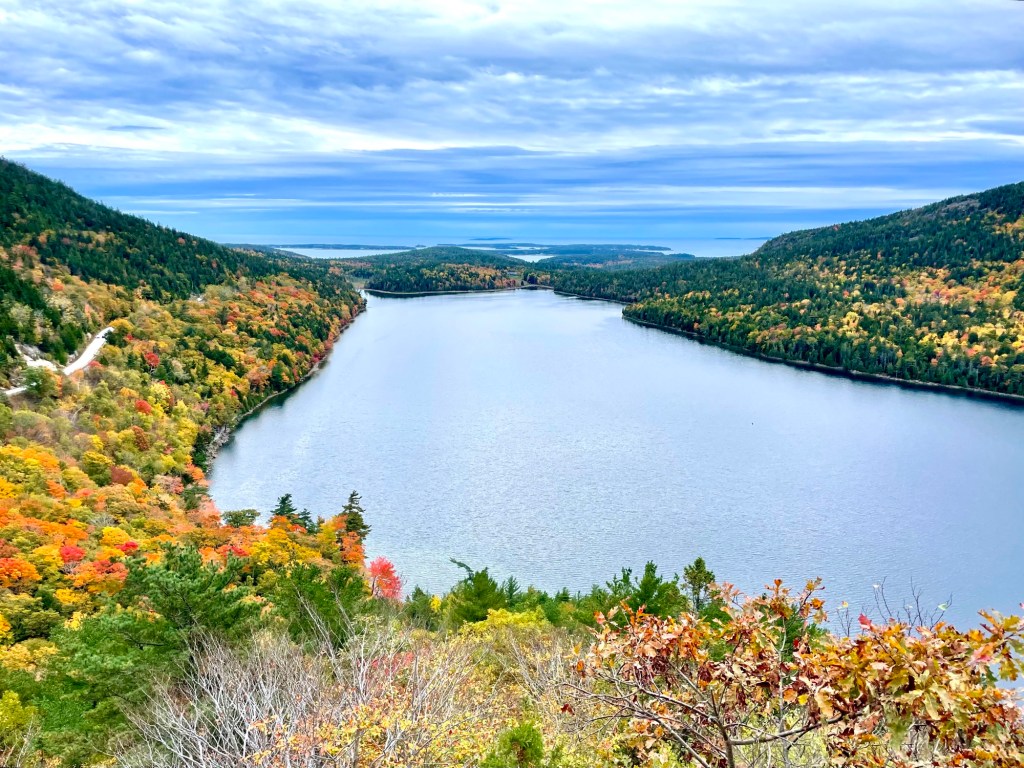
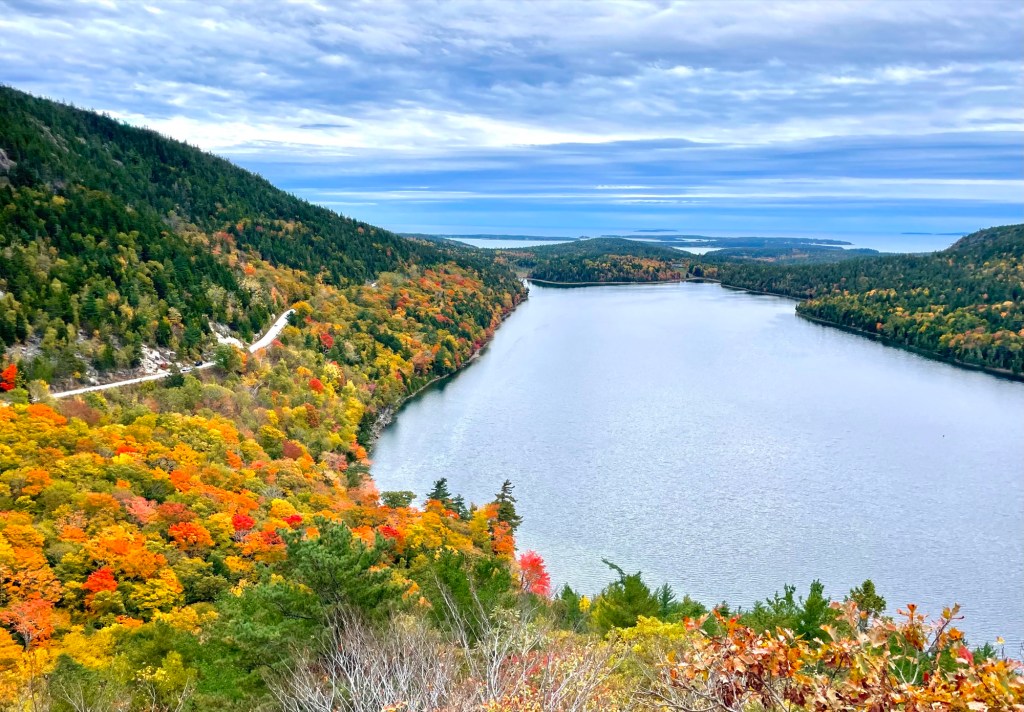
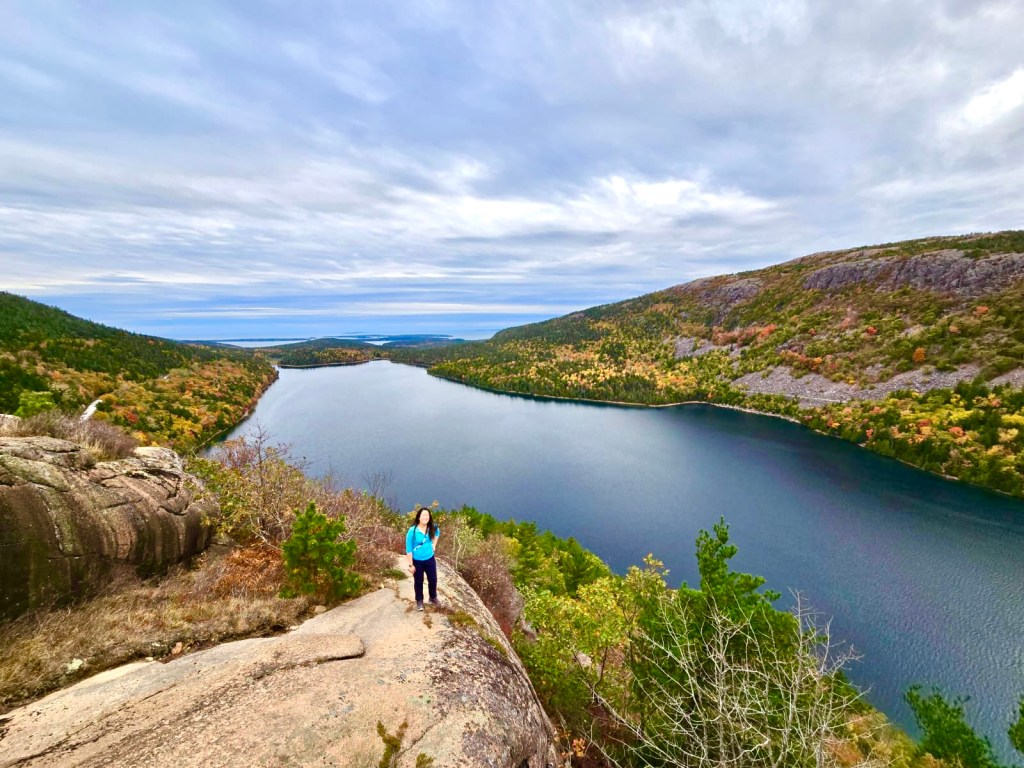
Photo from the South Bubble summit

If you want to time your trip to synchronize with the change in fall colours, here’s a foliage tracker/estimator that can be helpful when planning: https://www.explorefall.com/states/maine. The leaves will usually start changing colours between the end of September to middle of October, depending on the temperature that year. We went in the middle of October this year and while it was perfect for Acadia, it was too early for upstate New York, and just a touch late for New Hampshire 🤷🏻‍♀️.

Check the park website before you go, as some roads are closed during the winter months and some trails are closed during Peregrine Falcon nesting season in the spring to late summer.

How Many Days Do I Need?

To hit the highlights of Acadia in a flash, you’ll need 2-3 days, but if you want to explore more and take it easy, then I’d recommend staying here a week. Toby and I had limited vacation days and wanted to hit up New Hampshire and Vermont during the fall foliage season as well so we did the Acadia highlights in 2 days. We originally planned for 2.5 days, but we hit some bad weather on our last day and and shortened our stay, skipping a couple attractions. 😦

Check the weather ahead of time since many of the popular hiking trails are weather-dependent, so give yourself an extra day or two for wiggle room incase you need to post-pone any activities like us. Check our 2-day itinerary here.

Where to Stay

There are a TON of accommodation options around Acadia National Park. You pass by motel after motel the closer you get to Acadia but with that being said, ALL OF IT WILL GET BOOKED UP EARLY. We’ve never encountered such a busy place in our travels before. A month before planning our trip, every single (affordable) accommodation option was booked up around the national park and we snagged the only affordable one remaining all the way in Surry, a 45 mins drive from the park. Although it meant that we had to wake up earlier than planned to get to where we wanted to go, we were just grateful to get a place at all! We travelled at peak season in middle of October, so if you’re planning to do the same, BOOK EARLY. I’ve included a map of available accommodation options from booking.com for the middle of October next year as reference.

Accommodation options from booking.com

The best place (although more expensive) to stay will be in Bar Harbor town, inside Acadia National Park. Although a small town, it’s got everything you need at your fingertips, including restaurants, shops, grocery stores, bars…etc. It’s also close to the major attractions in the national park as well. I’ve included a screen cap below of available options in Bar Harbor from booking.com for reference. The downtown area is very walkable, so choose to stay closer to Main Street if you want to be in the hustle and bustle. Read more about Bar Harbor below.

Accommodation options in Bar Harbor from booking.com

If you can’t manage to get a place in Bar Harbor (like us), don’t fret. Anything nearby will be fine. You can always drive to Bar Harbour town and spend an afternoon to walk around (it’s not a big town, you can get through it in a couple hours).

Getting Around Acadia – Driving vs the Bus

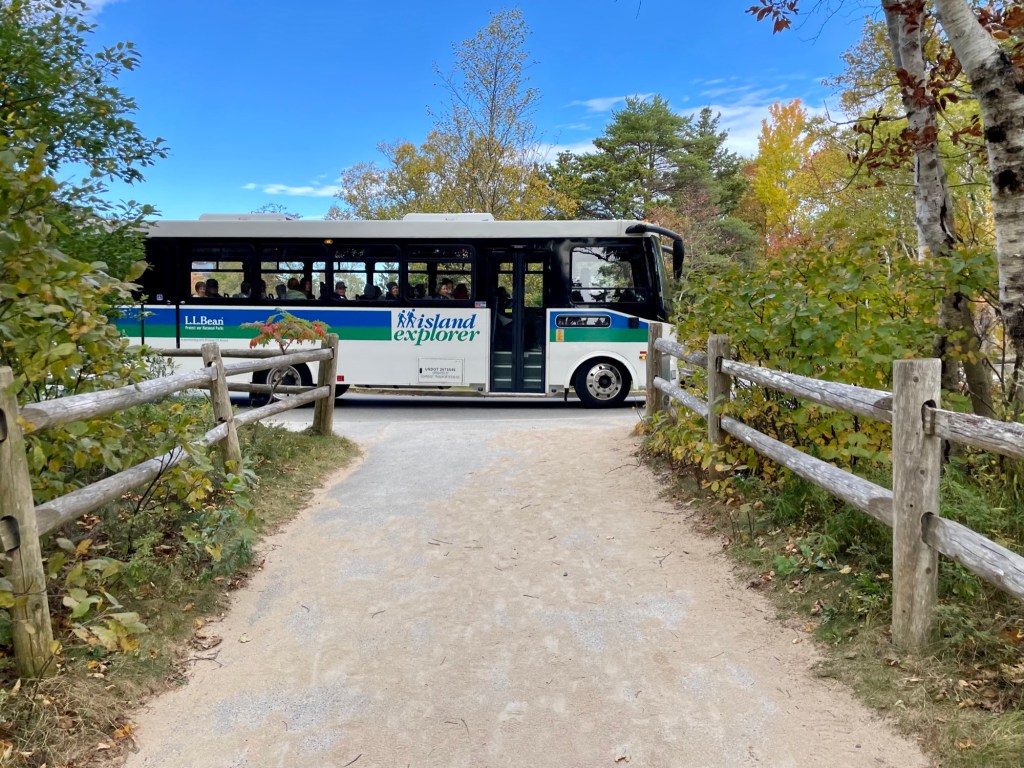
You can get around Mount Desert Island by either driving or taking the free Island Explorer Bus.

Driving:

We prefer the freedom of driving our own car, however there are downfalls. Since Acadia gets extremely busy, parking can be an absolute nightmare. If you are visiting popular hikes and trailheads, make sure you arrive early (ideally before 8am) to get a parking spot, otherwise prepare to circle the lots and the side roads again and again until one frees up. We had to do this when we visited Jordan Pond and when we did eventually find a parking spot it was a 30 minute walk away from the trailhead 😭. It was the worst parking experience we’ve ever encountered. When parking lots are full, the rangers will barricade the entrance so you can’t just go in and circle around until one frees up. Therefore, if you only want to drive, start early and also consider that it will limit the number of places you go in a day and you’ll have to factor in the extra time to find a parking spot – for example, we woke up super early and got a great parking spot at Sand Beach parking, however in the afternoon when we wanted to to the Jordan Pond hikes, it was near impossible to find a spot and driving around took up a chunk of our schedule.

Also keep in mind that there is limited cellphone reception, so if you rely heavily on Google maps, maybe have a paper map with you just in case.

Island Explorer Bus:

This is a free bus service that operates only from Summer to Fall and runs roughly every 30 minutes. It takes you to the most popular places and will stop at most parking lots. Their website here has more information regarding the bus routes: https://www.exploreacadia.com/routefinder.html. The benefit of taking the bus is that it is easy and you don’t have to worry about parking, however the downfall is that you’ll have to take your whole day of hiking essentials with you and make sure you have places where you can fill up your water bottle throughout the day. The bus is also only every 30 minutes, so you’ll have to factor that in as well when you’re planning your day.

Island Explorer bus – a free bus service around Acadia National Park

What I recommend: a combination of both. Get up early and get parking at your desired lot. If you’re doing the Beehive Trail first thing (which I would recommend), park at the Sand Beach parking lot. If you’re doing the Jordan Pond trails first, then park at the lot there. When you’re ready to move on to the next location, just take the Island Explorer Bus instead of moving your car. It will save you the hassle of having to find parking for your next location. The bus will go to all the parking lots, so even if you can’t get a spot at your desired lot, just park at the next closest one and take the bus. There’s no cost for parking, so you can leave your car at the same place all day.

Park Pass

You will need to purchase a park pass to enter Acadia National Park. There’s no gated entry, but there are plenty of rangers around checking people’s cars for the pass. It’s $35 per car and must be displayed on your windshield. This park pass allows you to go anywhere within the park, however if you wish to drive up Cadillac Mountain (more on that below), you will have to purchase an additional timed vehicle reservation pass ($6 per car). The Cadillac Mountain sunrise tickets sell out quick so plan ahead of time!

The park pass and Cadillac Mountain vehicle pass can both be purchased online ahead of time on the government website: https://www.nps.gov/acad/planyourvisit/fees.htm. You can purchase the park pass in person at the visitor’s centre in town, but not the Cadillac Mountain pass. I’d highly recommend buying both online beforehand and have it printed and ready to go, so you have one less thing to worry about. In peak season, it can be incredibly busy and parking can be a huge hassle – don’t waste your trip waiting in line to look for parking just to buy a park pass!

Travel Tips

Start Early!

If there’s one piece of travel advice I can give you for visiting Acadia National Park, it’d be to start early! Ideally at sunrise. If you were looking for a relaxing getaway of sleeping in, I’m sorry to disappoint you. Because this place has so much to offer, it gets INCREDIBLY busy especially in the summer and fall season – I’m talking about having to park a half an hour away from your car busy – and everyone wants to hit up the same areas and the same iconic hikes. It gets so busy that not only will you struggle to find parking, but you’ll even have to wait in line to climb up mountains! It gets insane, trust me. Getting up early is the only way to ensure the best time away from the majority of the crowds and the frustrations of finding parking. You’ll appreciate the calmer and quieter surrounding in the early morning and take in nature without all the noise.

A benefit of starting early is that you get to see some wicked cool sunrises.
Limited Cellphone Service Everywhere

There is very limited cell reception in Acadia. You might get some pockets of good reception on top of mountains, but it’s spotty at best. There’s free wifi at Jordan Pond House and also decent wifi in Bar Harbor town, but apart from that be prepared for your service to jump in and out. I’d recommend picking up a map of the area or screenshot it on your phone before heading out and going on hikes just incase you lose reception and get lost.

Bring good hiking gear

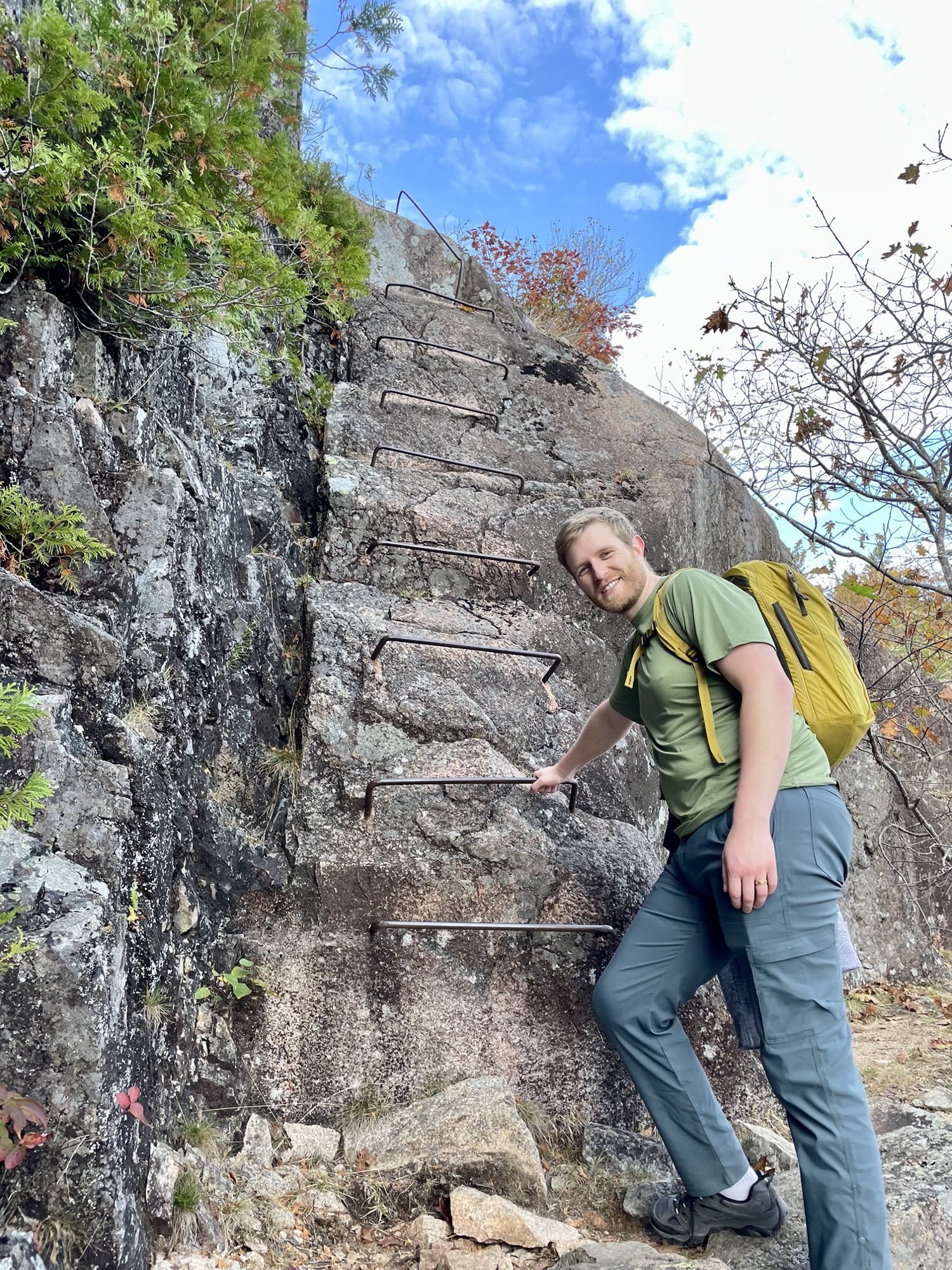
There are plenty of rock-scrambling and cliff-side hikes to embark on in Acadia. If you plan on trekking through these popular hikes, a reliable pair of hiking shoes with good grip is a must! There’s also rock-climbing involved in some of the trails, so I’d also recommend a good pair of hiking pants that will hold up against abrasive surfaces. Hiking sticks can be useful, but depending on your hike, there are some trails that will require your hands to climb up and down rocks and hold on to iron rungs.

You need to display the Acadia park pass in your windshield when you park. Remember to have it printed and ready to go before you travel or hope that your hotel or accommodation will have a printer you can borrow.

Best Things to Do:

A summary of the best things to do:

Sand Beach

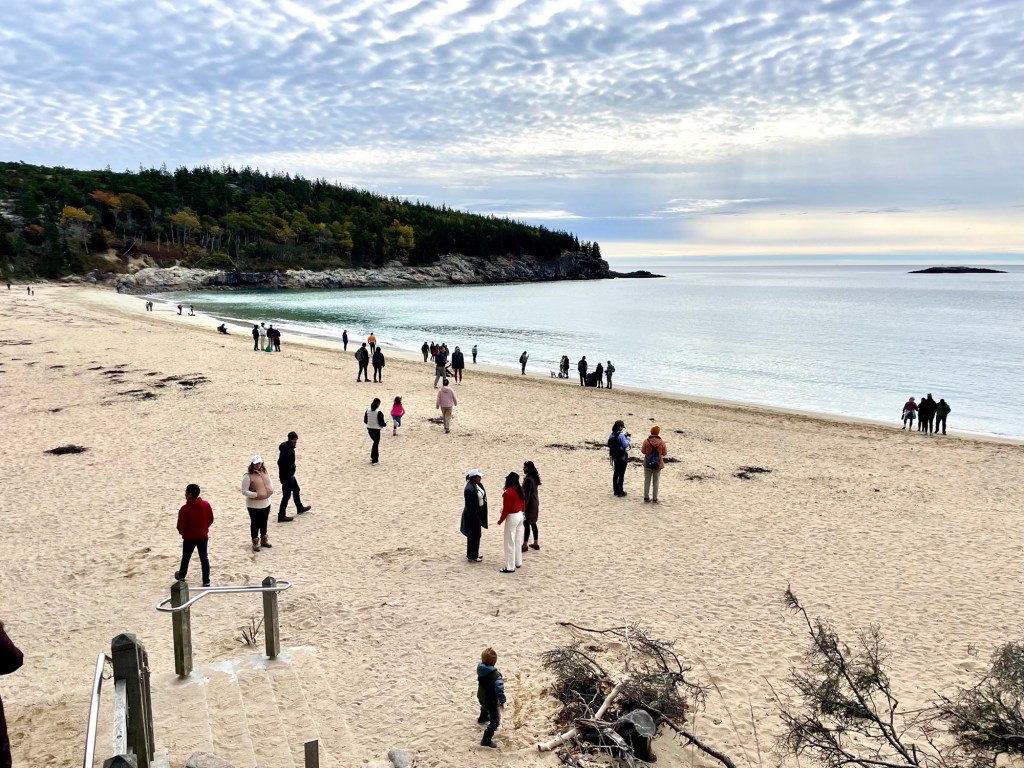
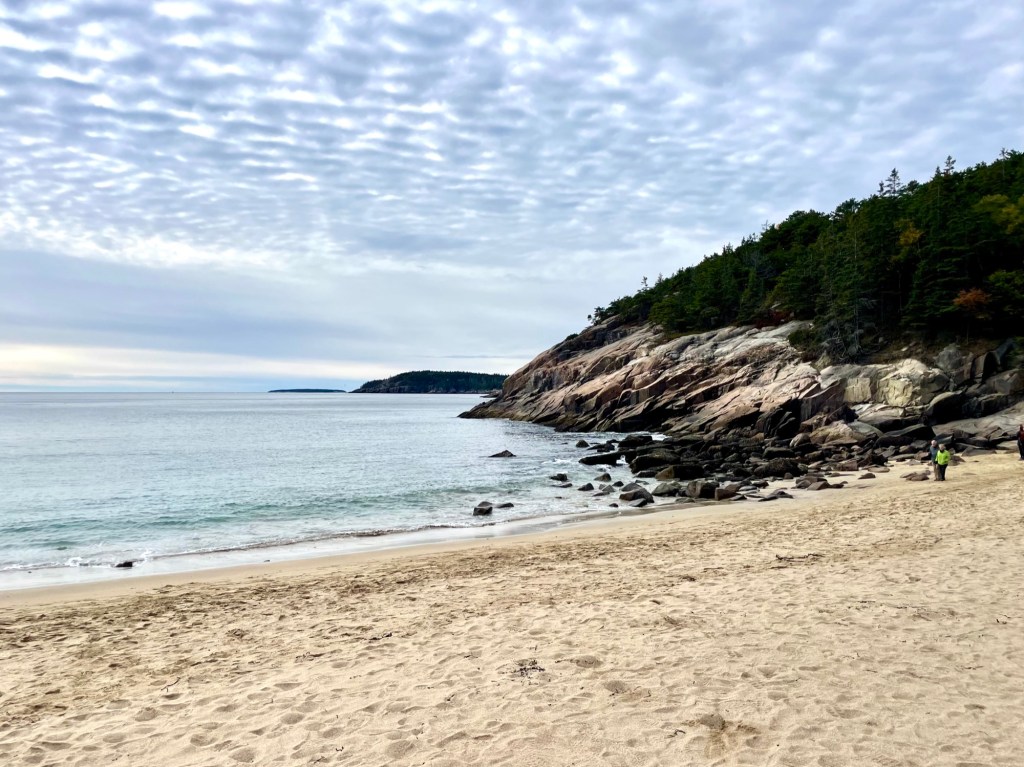
This is the largest sandy beach in Mount Desert Island and unsurprisingly is a very popular spot in the summertime. This open beach is a lovely place to relax and enjoy the views and sounds of crashing waves or to rest your legs after a long hike. We came here during the fall so the weather was a bit chilly for swimming, but there were still plenty of families here with children playing in the sand.

To access Sand Beach, park at the Sand Beach parking lot and it’s only a few steps away.

Ocean Path

Distance: 6.6km (3.3km each way)
Duration: 1.5 hours out and back, not counting time for photos
Trail type: out & back
Start: Sand Beach parking lot

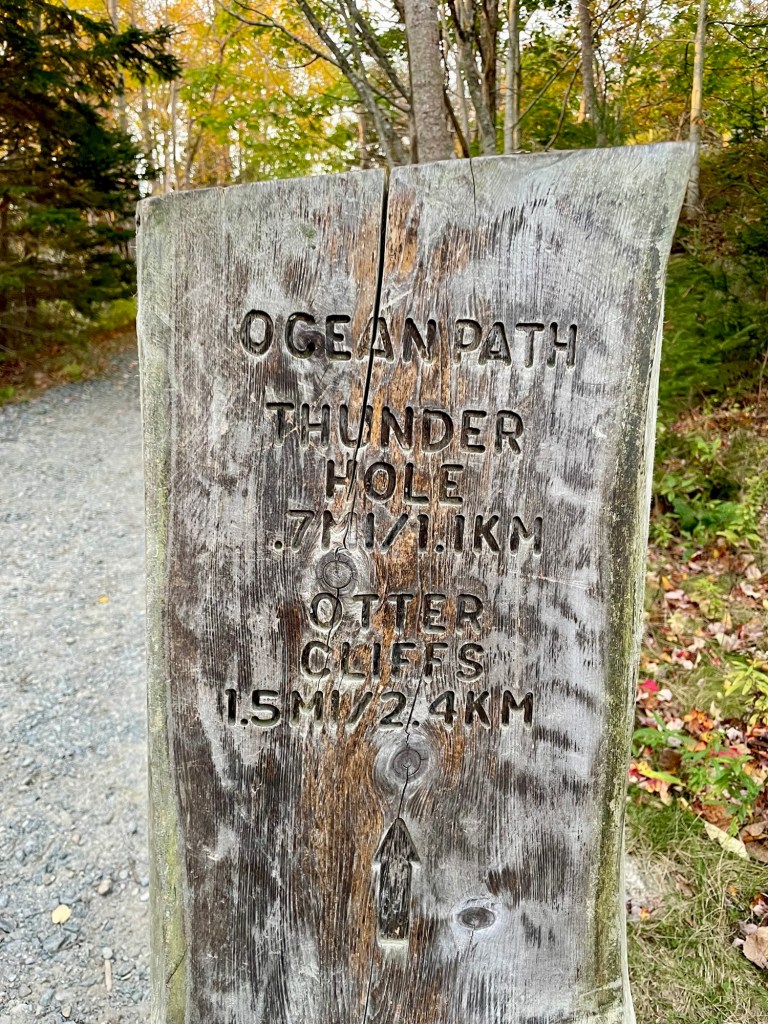
Ocean Path is a lovely walking path along the coast of Maine. The path is narrow and follows along Park Loop Road, but there are multiple small paths to diverge off in the trail to get closer to the views and rocky terrain, best for that perfect Acadia photo. This path is flat and easy to walk on, popular for runners, hikers, photographers, and bird-watchers.

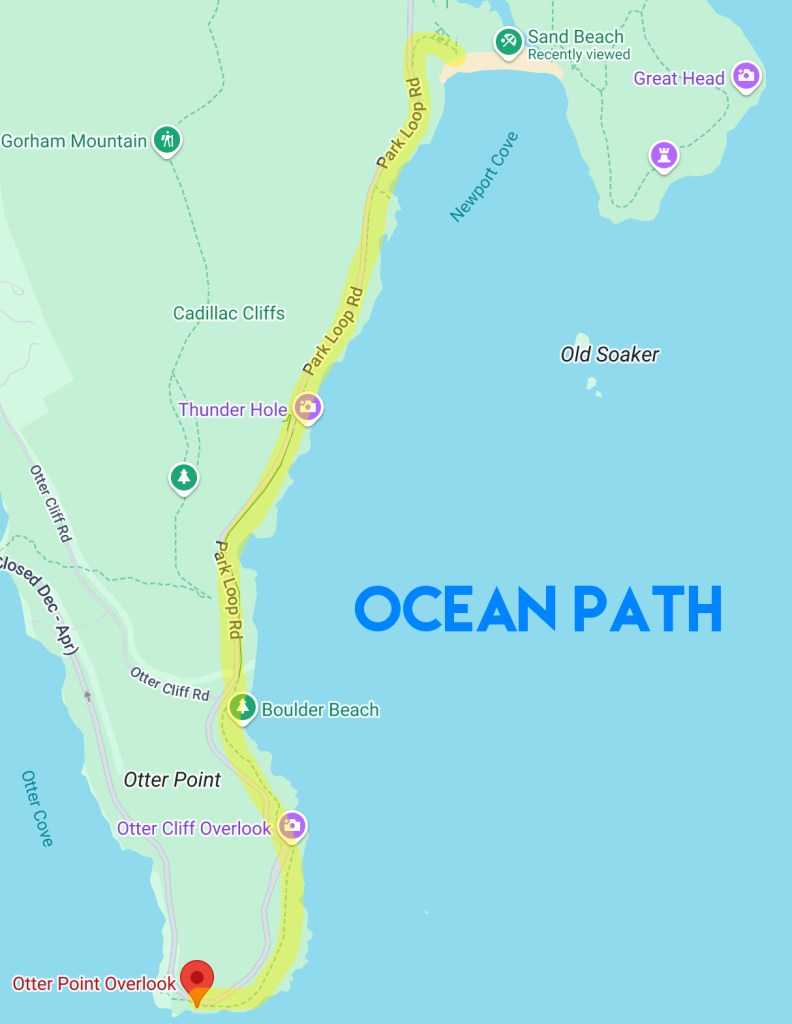
This out and back path starts at Sand Beach parking lot and continues for 3.3km, ending at Otter Point Overlook. Apart from enjoying the views along the way, there are 4 main stopovers on this path: 1) Thunder Hole, 2) Otter Cliff Overlook, 3) Boulder Beach and 4) Otter Point Overlook (marked on the map).

Ocean Path, 6.6km, roughly 1.5 hours to walk to entirety

You can choose to walk as much or as little of this path as you like. If you don’t feel like walking, you can drive down Park Loop Road and you’ll see turn offs for small parking lots at each of the stops (but I’d recommend walking to see the views along the way). Note: Park Loop Road is a one-way road to accommodate for road-side parking, so you can only travel from North to South by car.

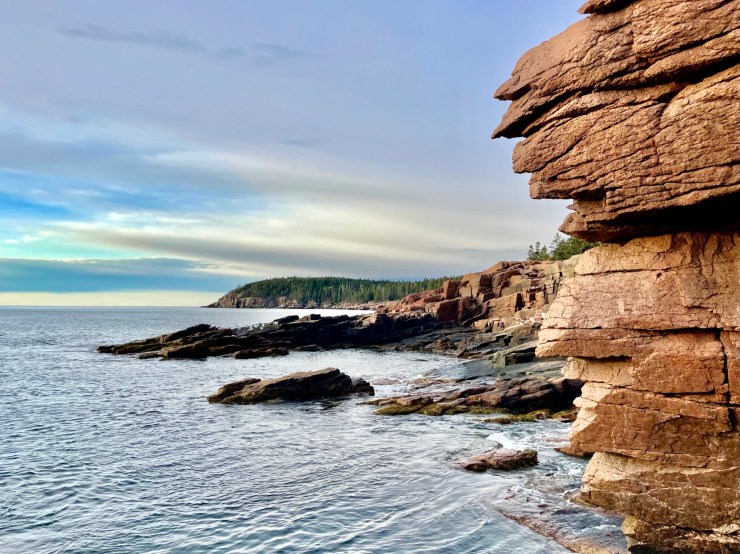
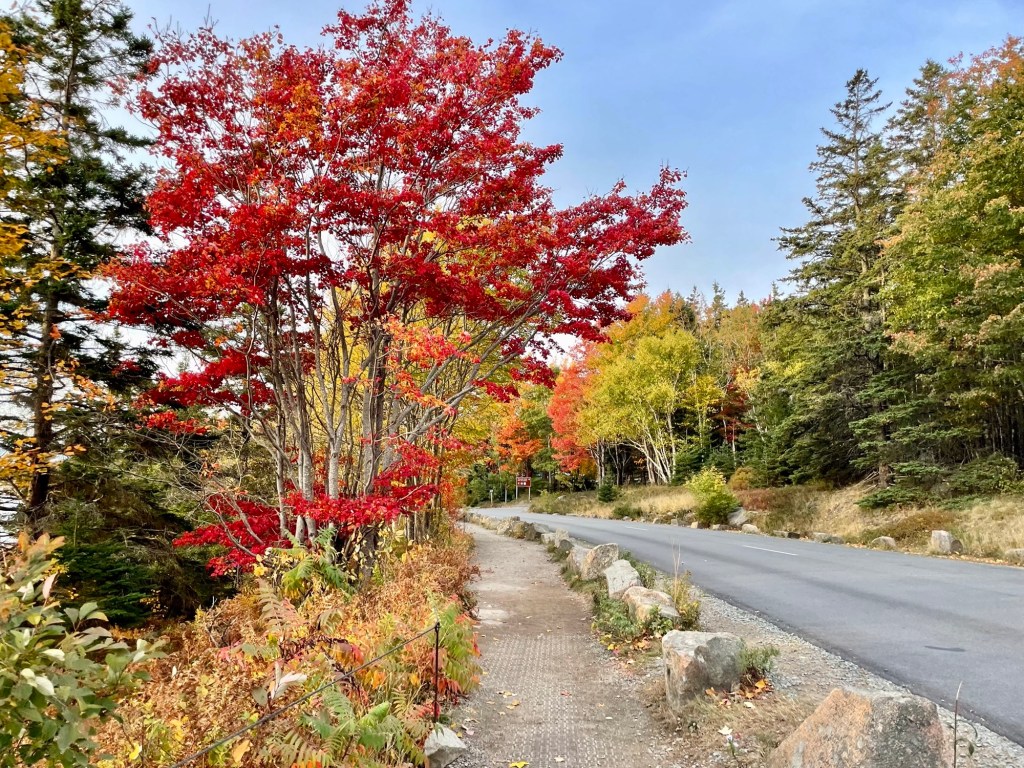
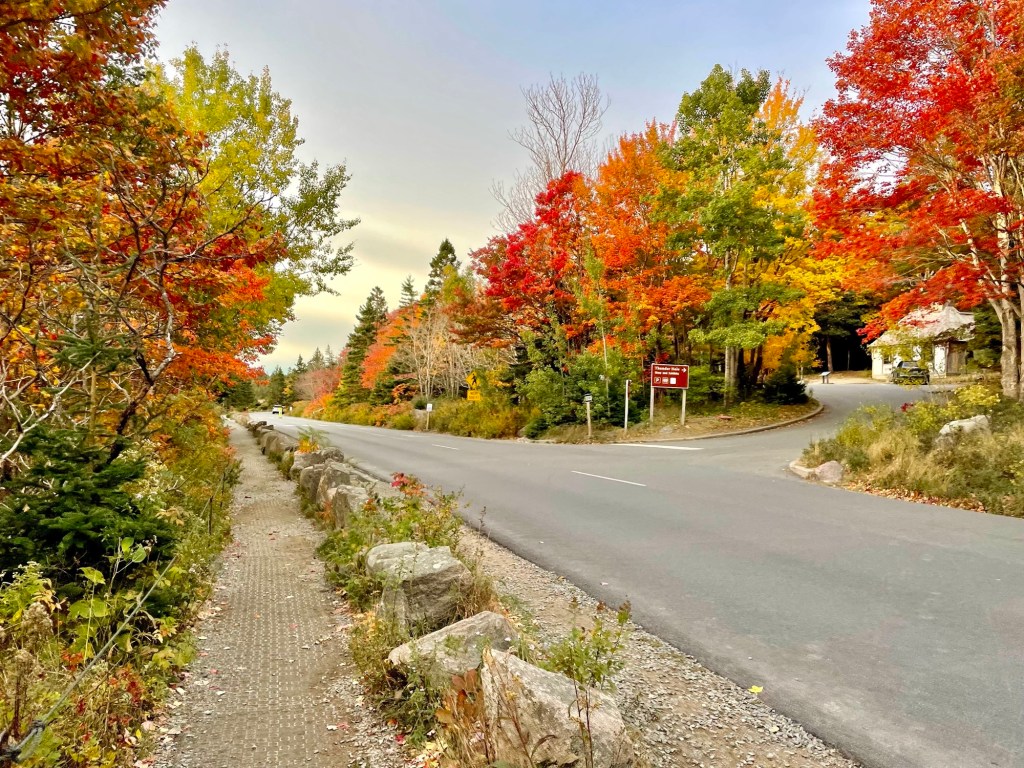
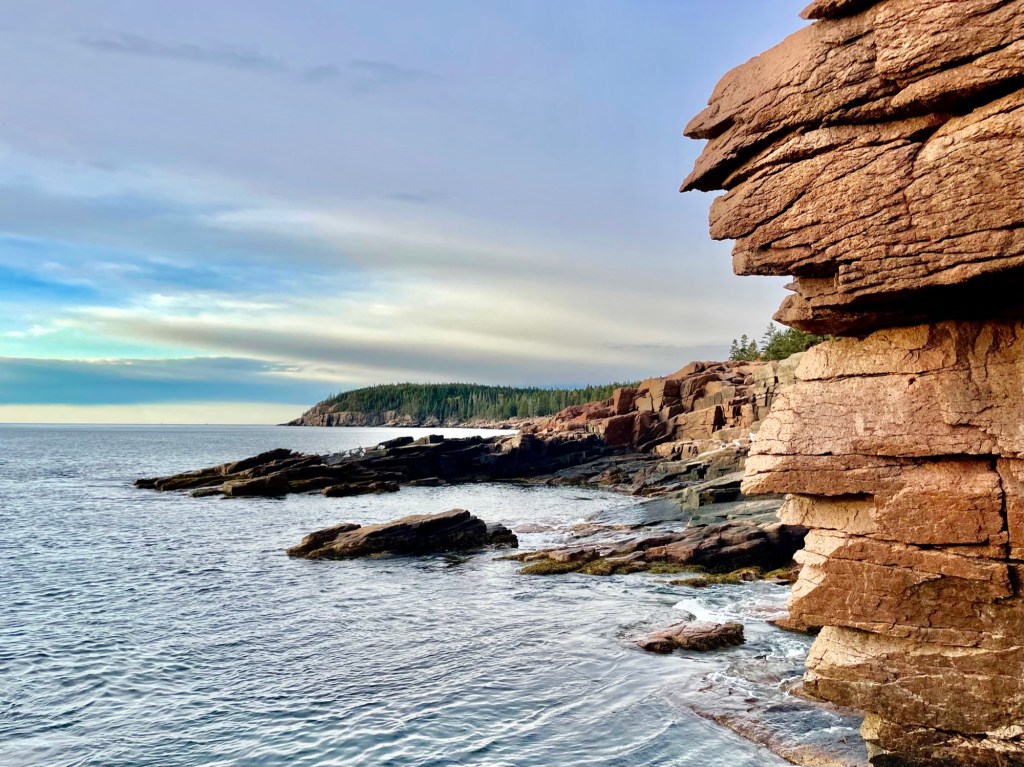
Some photos along Ocean Path on our way to and back from Thunder Hole:

Thunder Hole

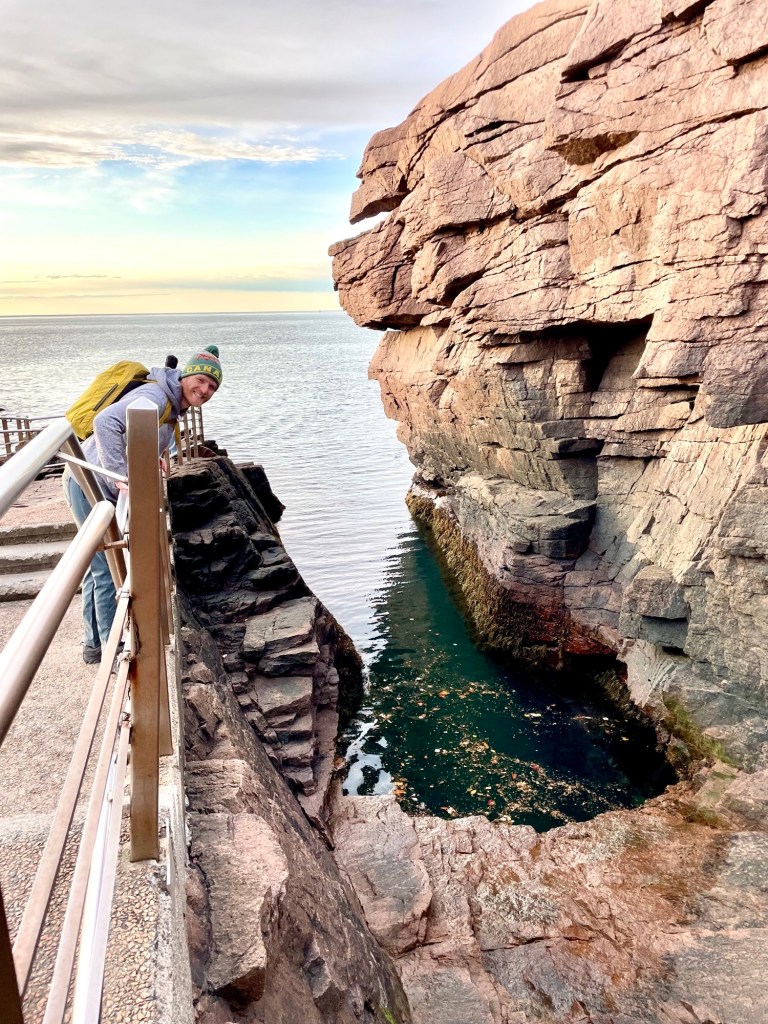
Thunder Hole is the most popular stop-off on Ocean Path where you can watch waves crash into the rocks, creating a burst splash of water high into the air. You have to come 2 hours before high tide to experience this. We didn’t manage to get our timing right, but it’s still neat to stop over here anyway. It’s roughly a 20 minute walk to Thunder Hole from Sand Beach via Ocean Path with beautiful views along the way.

Beehive Trail

The Beehive Trail is one of Acadia National Park’s most popular hikes, offering breath-taking panoramic views. This hike has a reputation for being thrilling and difficult with iron rungs and vertical climbs but we personally didn’t find it bad at all, especially with good pacing. I recommend starting early, wearing good shoes, and dressing in layers. For safety, avoid this hike if it’s raining. Follow this in-depth guide about hiking the Beehive trail here.

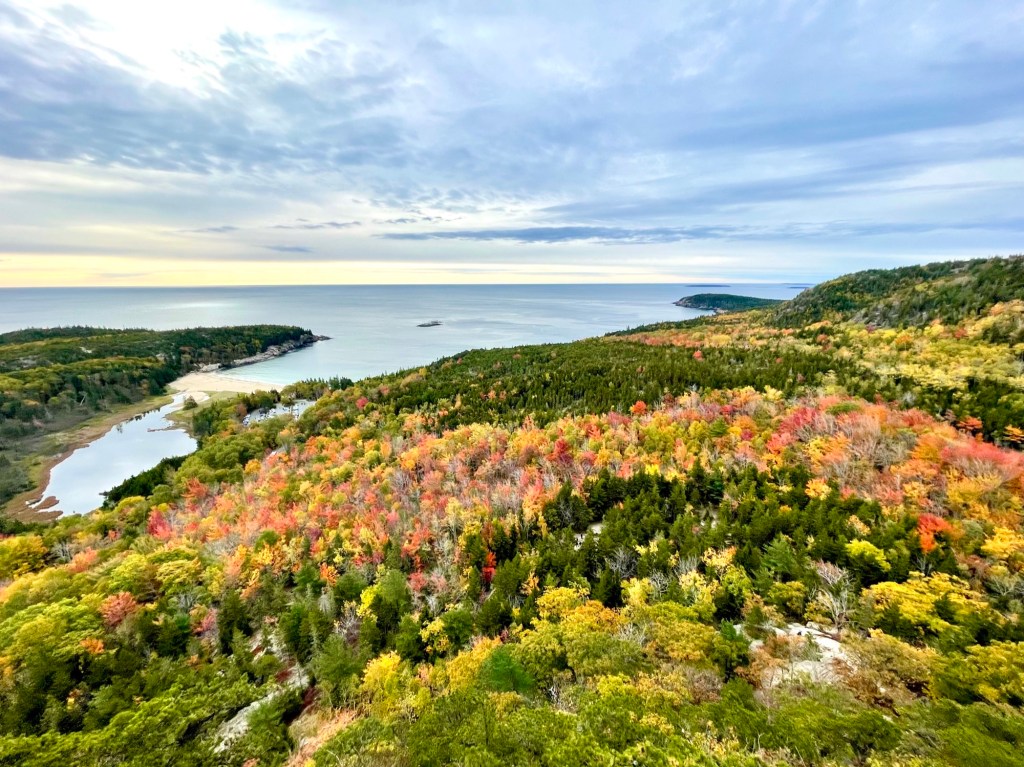
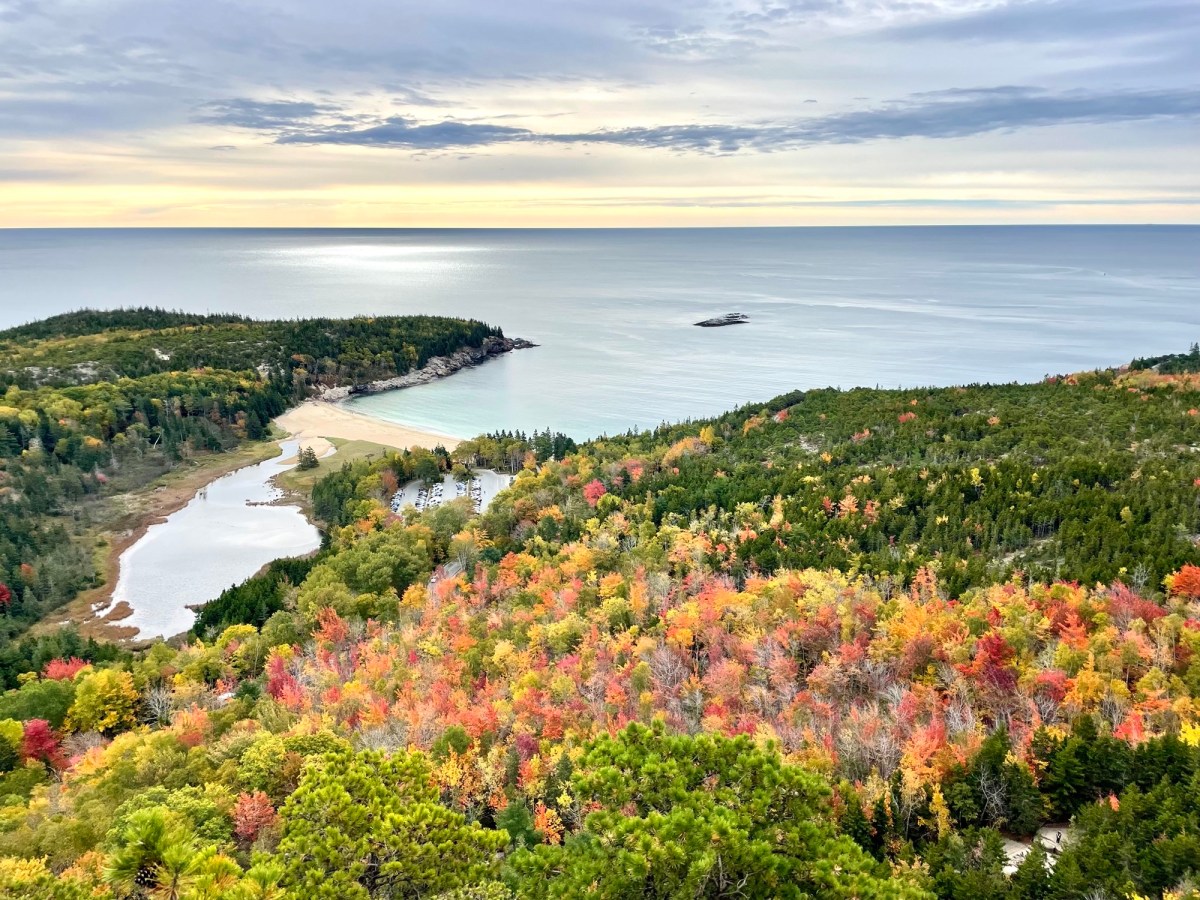
Views on the Beehive Trail

Hiking Acadia’s Beehive Trail: A Complete Overview


The Beehive Trail in Acadia National Park is one of the most popular hiking trails known for its stunning panoramic views and challenging vertical climbs. This guide has all the information you need to tackle this trail.

Jordan Pond Trails

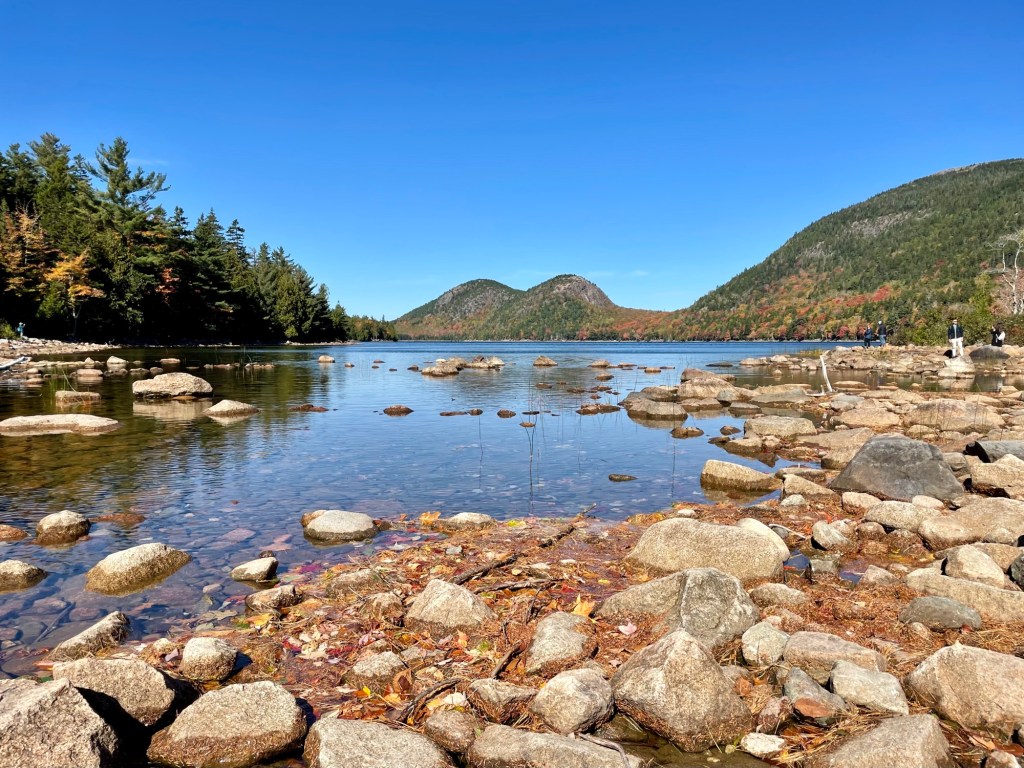
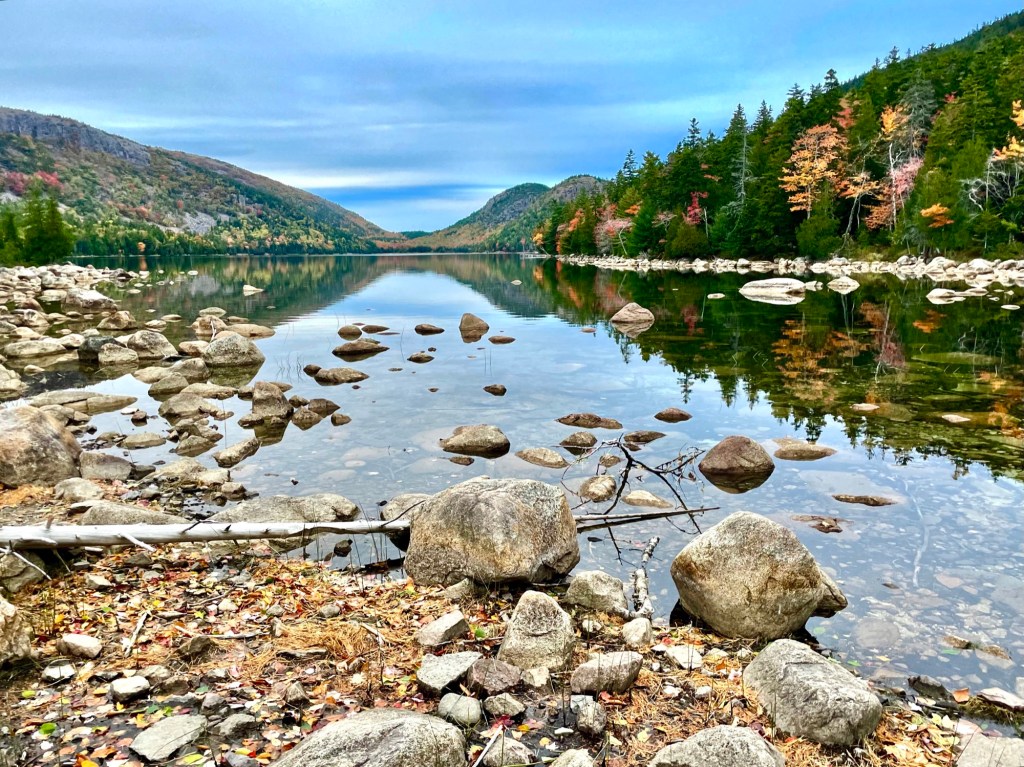
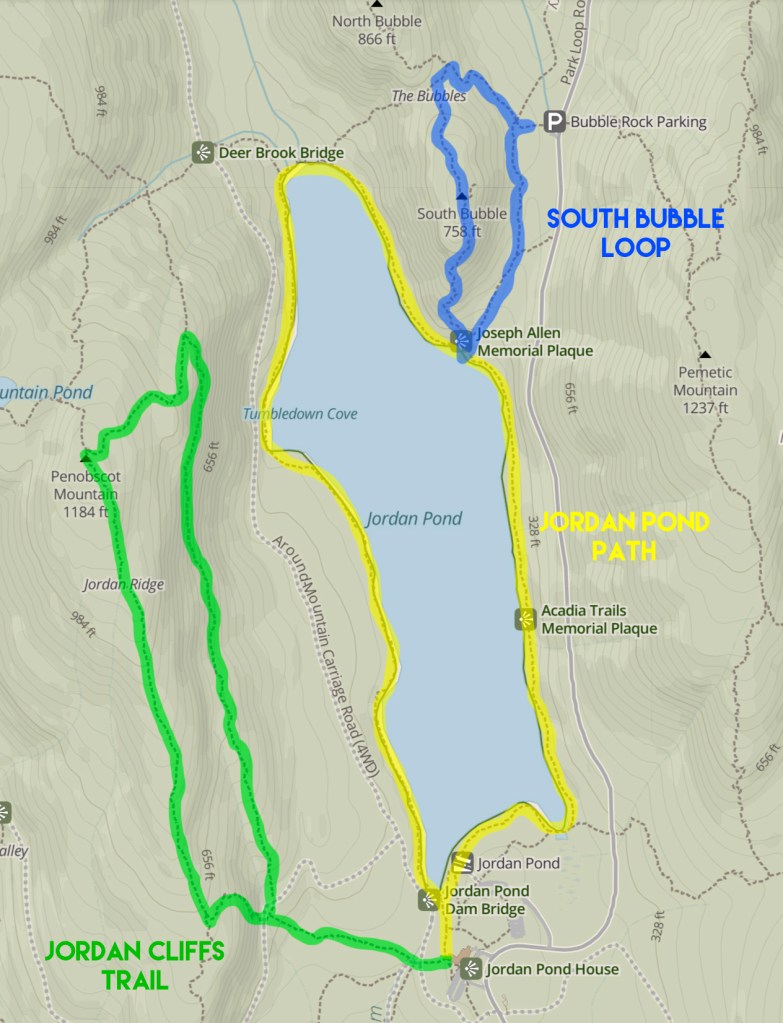
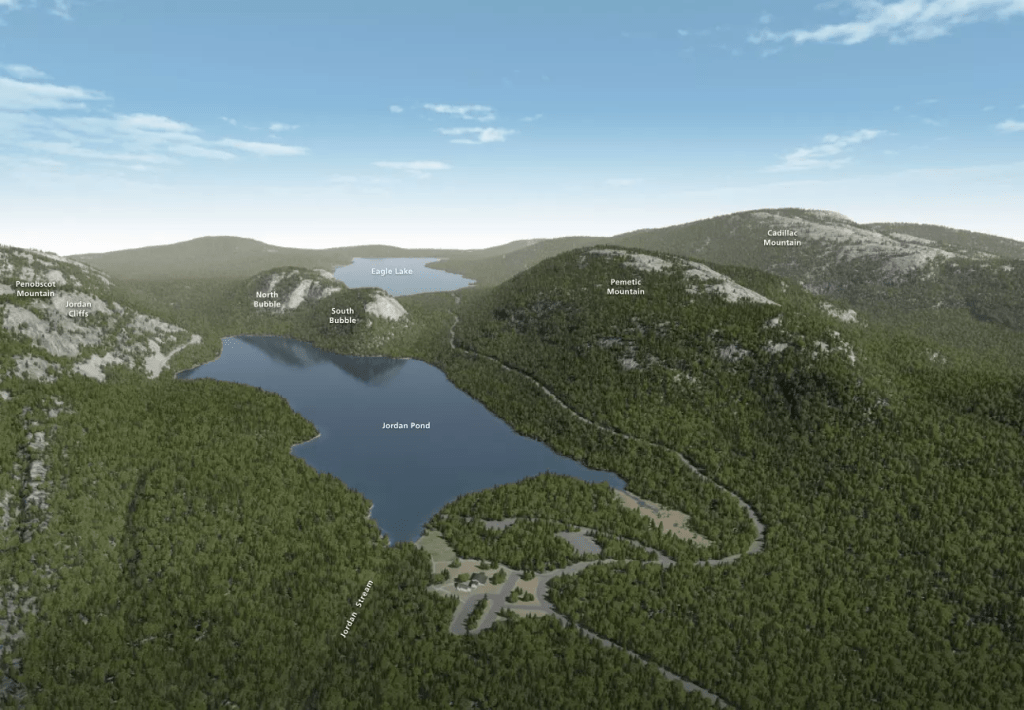
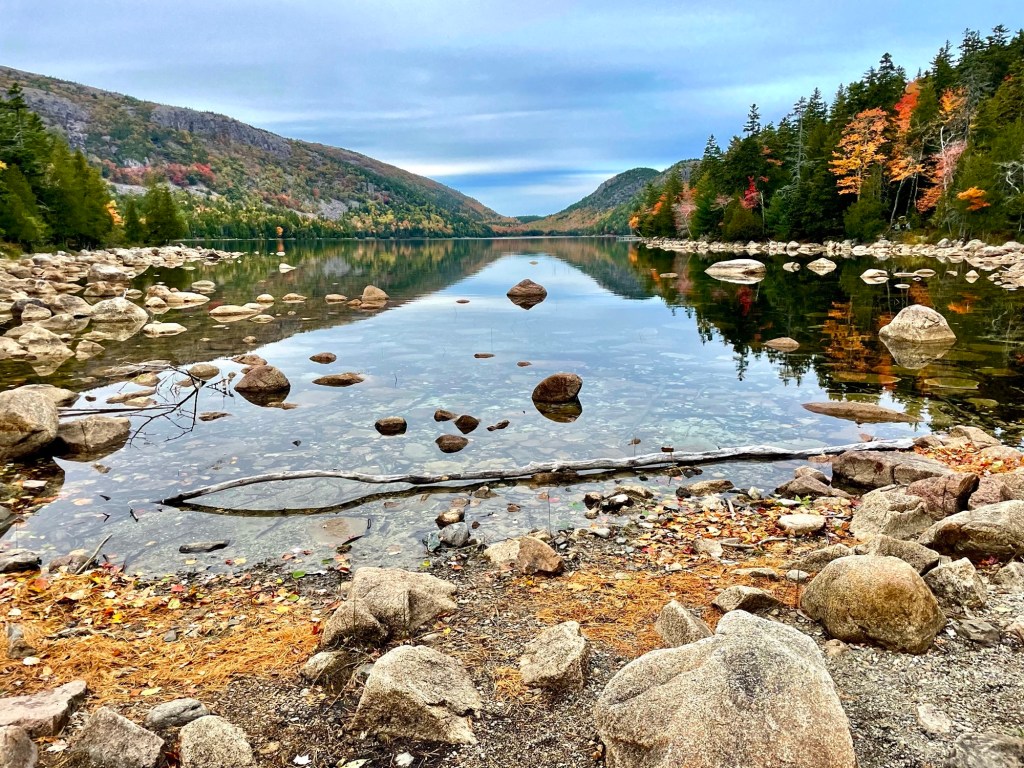
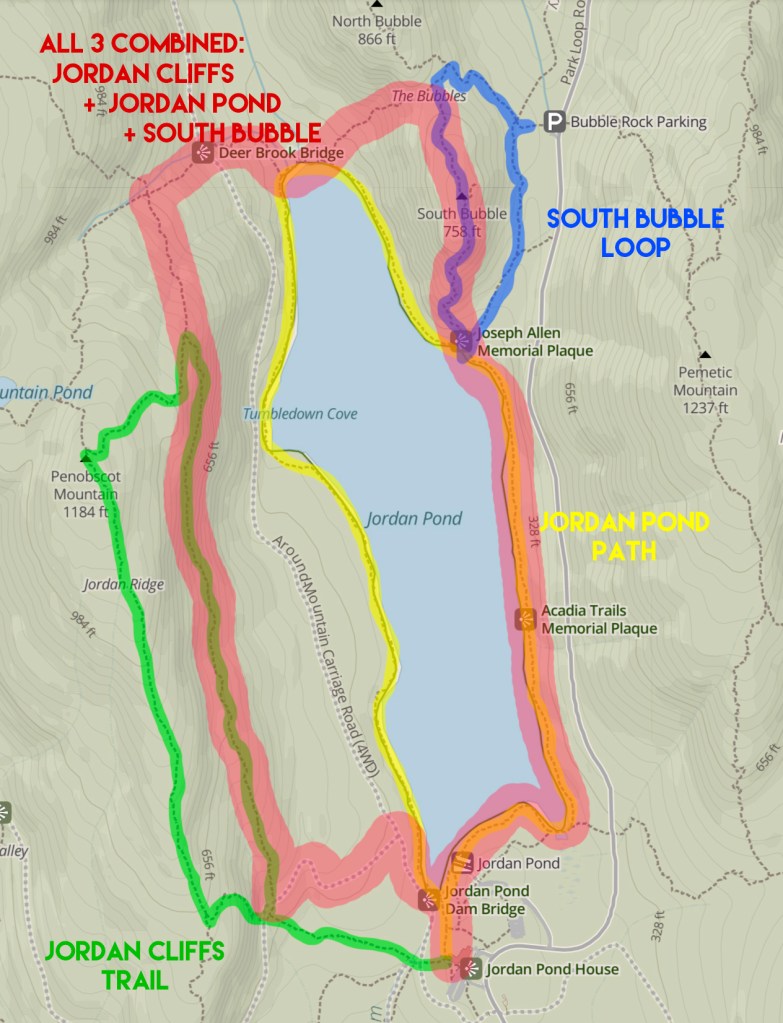
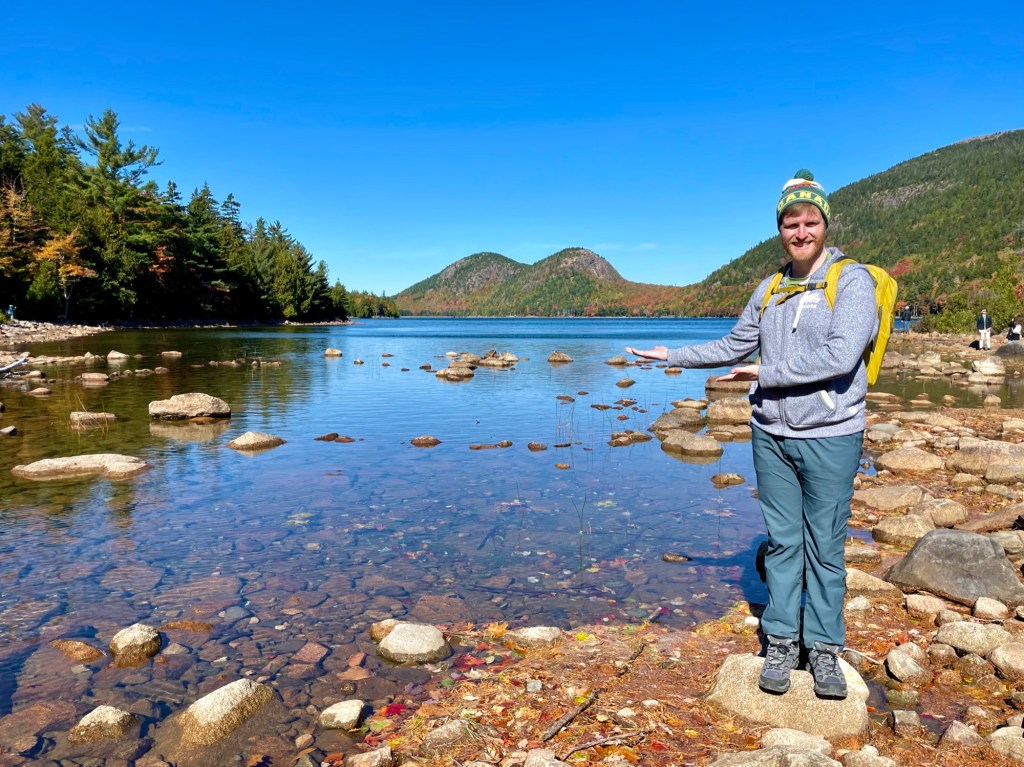
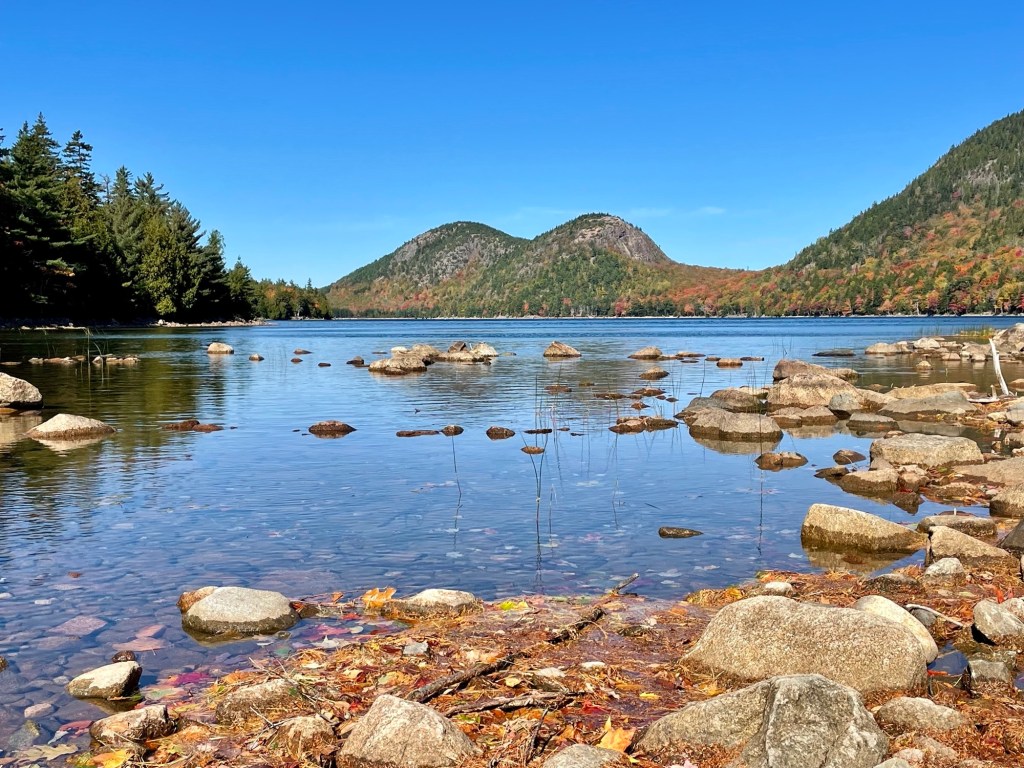
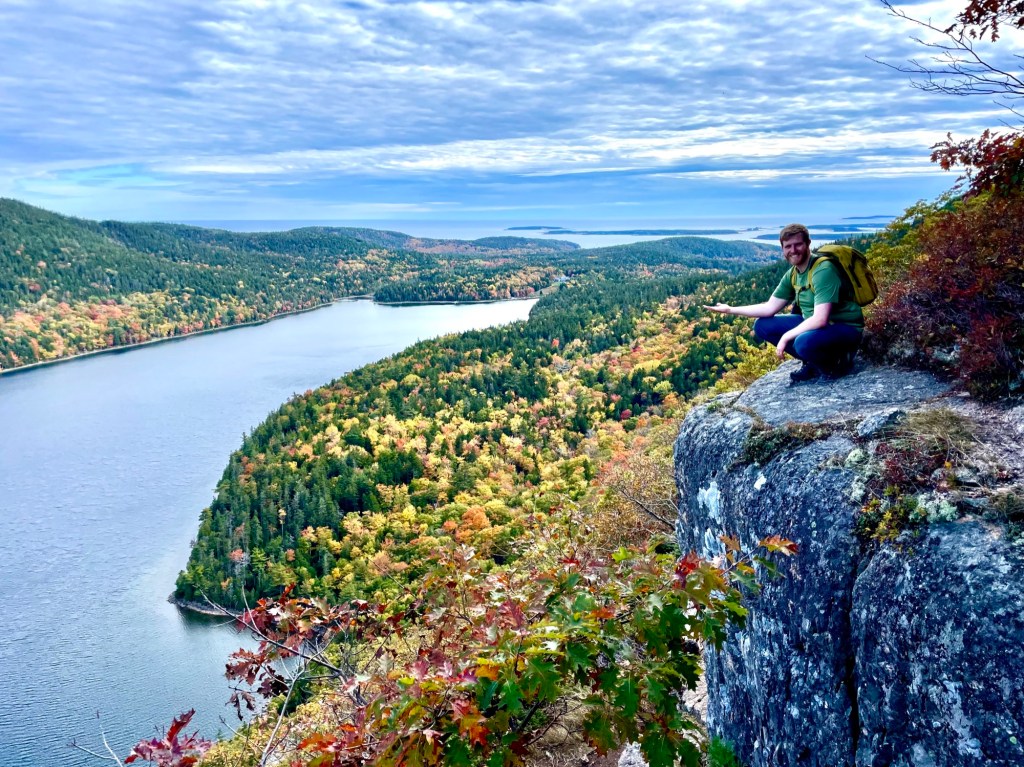
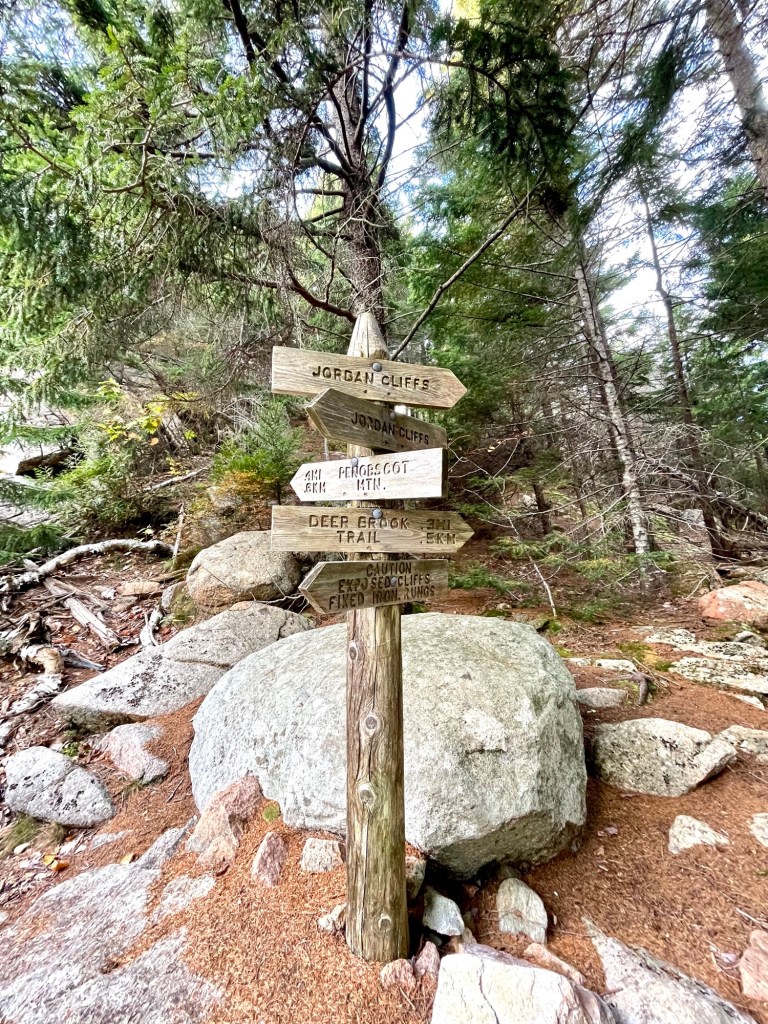
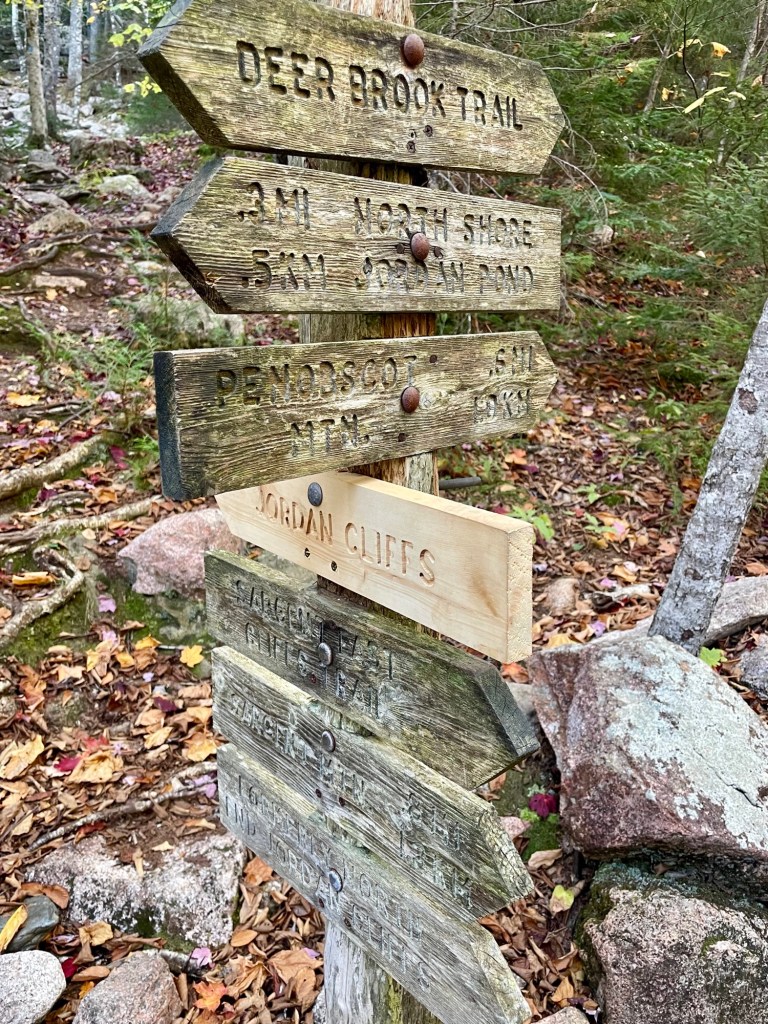
There are numerous trails you can hike around the Jordan Pond, and many of them conveniently start at Jordan Pond House Restaurant. The 3 most popular hikes here are the Jordan Pond Path, Jordan Cliffs Trail, and Bubbles Trail. You can also combine all 3 hikes to get the best of all of them – which is what we did! Follow my complete guide to hiking these trails here.

Jordan Pond House Restaurant

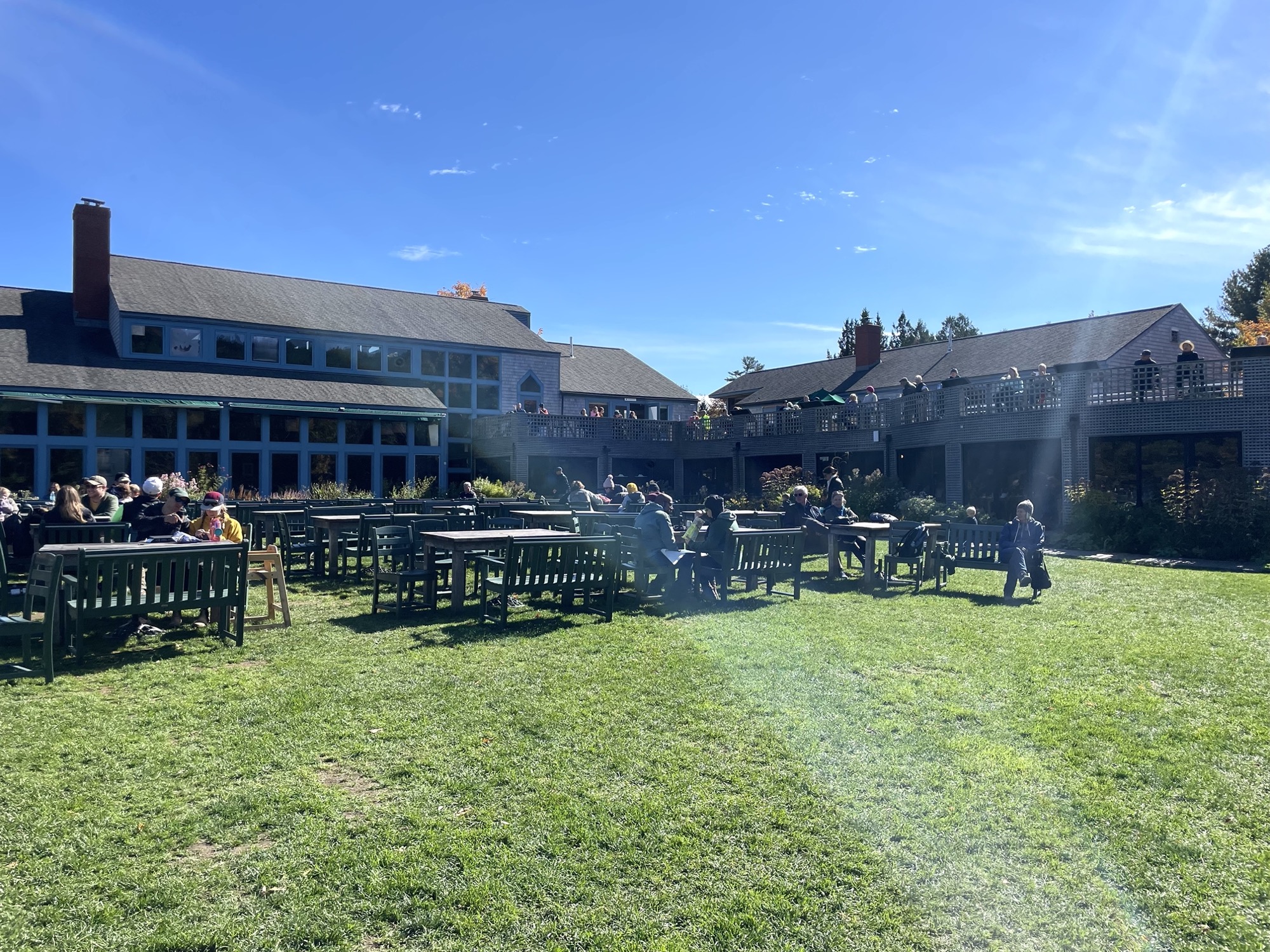
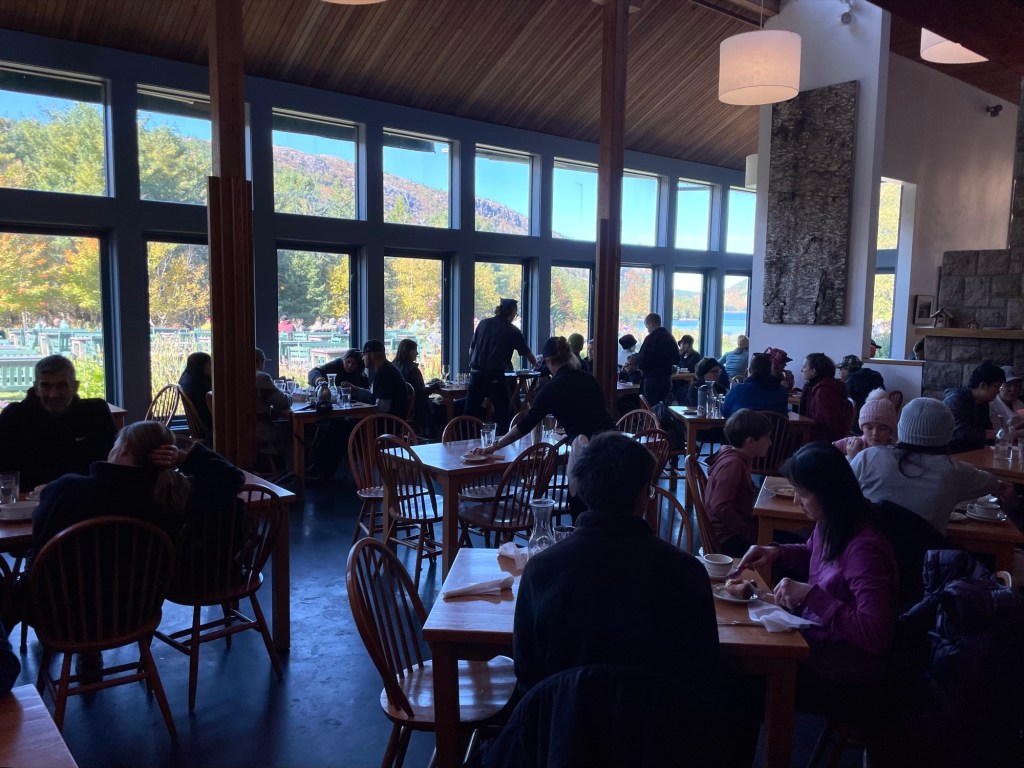
Outside of Bar Harbor, there is a very limited selection of restaurants on Mount Desert Island in Acadia National Park. Jordan Pond House Restaurant is the most popular choice not only because of their good food, but also because of its convenient location where many trailheads are located. The back patio of this restaurant also offers views of Jordan Pond and the North and South “bubbles”.

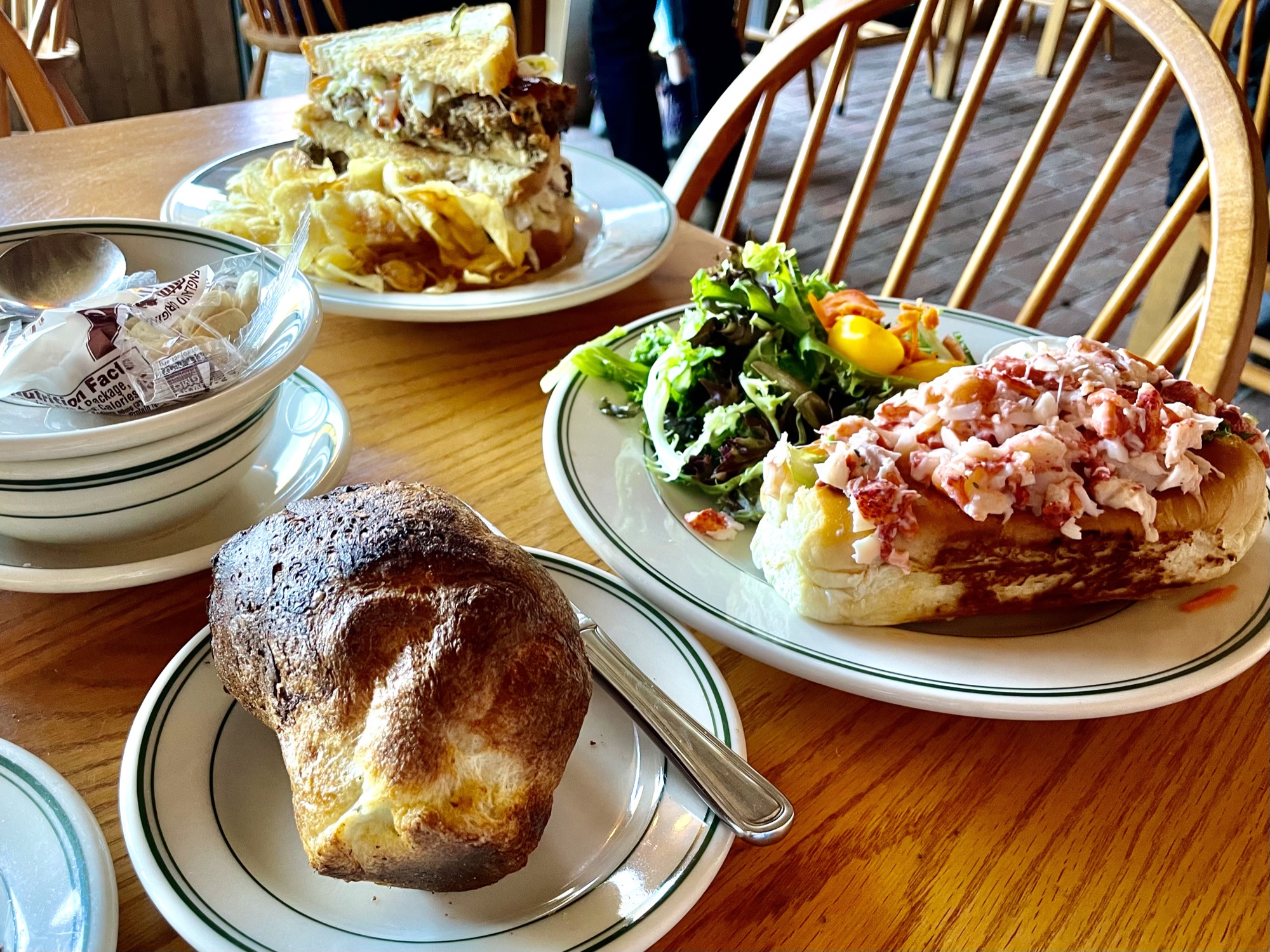
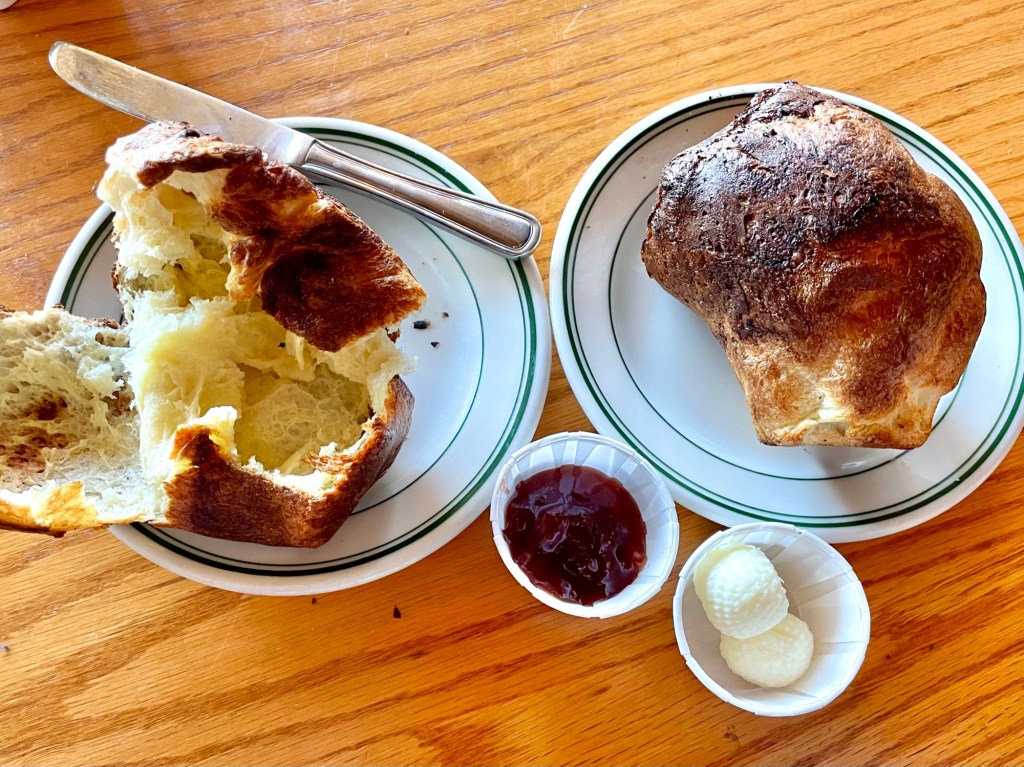
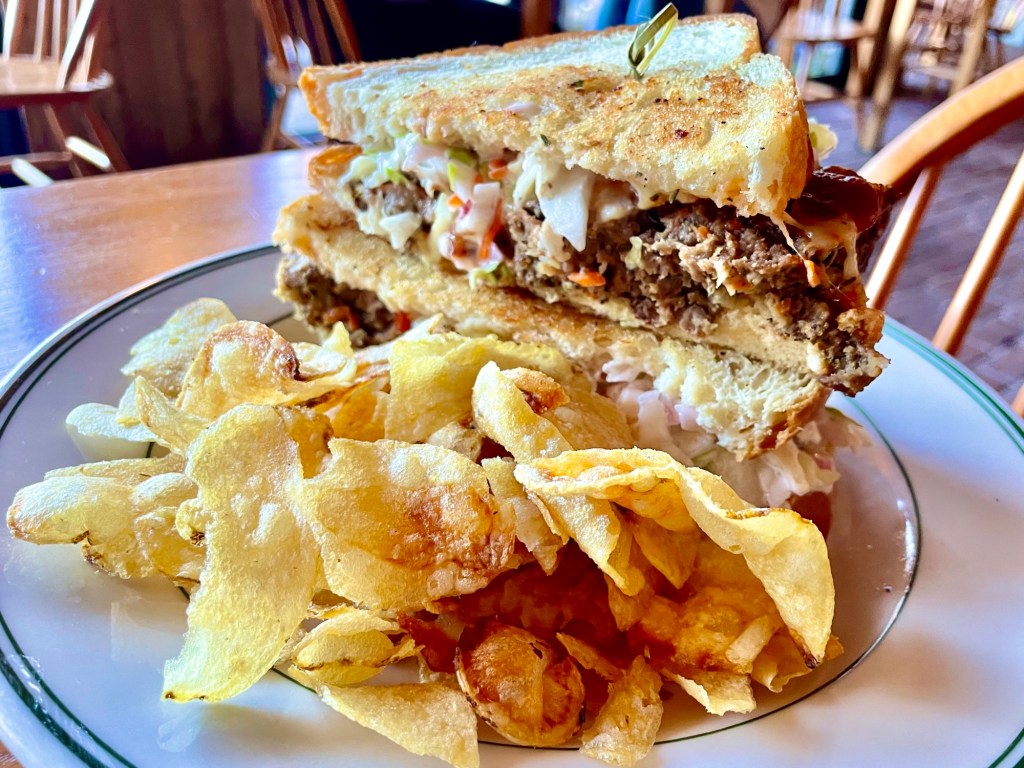
They’re known for their popovers here, which is kind of like a hollow muffin made with a thin batter, served with butter and their local-made jam. It was okay, but for me the star of the meal was their meatloaf sandwich! Find out more about this restaurant here.

Cadillac Mountain at Sunrise

Cadillac Mountain is the highest point on the eastern seaboard and is famously known to be the best (and first) place to watch the sunrise in Acadia. You can get to the summit by either hiking or driving, but generally driving is the preferred option so you’re not hiking in the dark to get up the mountain by sunrise.

Due to its popularity, Cadillac Mountain is the only place in Acadia National Park where you need a vehicle reservation to drive to the top. You must pre-purchase your reservation ahead of time online on the government website: https://www.recreation.gov/timed-entry/400000. This ticket is in addition to the park pass – you must have both to drive up the mountain. You cannot buy these tickets in person unlike the park pass. 30% of the tickets are released 90 days in advance and the remaining 70% are released 2 days prior at 10am EST.

The government reservation website screenshot of the two ticket type reservations.

Tips to securing a ticket: When you get to the government website, there are 2 types of tickets to choose from: sunrise and day tickets. Not surprisingly, the sunrise tickets are the most highly sought after. Set your timer and get multiple people on multiple devices because as soon as it hits 10am (eastern time – make sure you’re in the right time zone), you must click immediately for your best chances. I tried this on two occasions and swore I clicked exactly on time and the tickets were already sold out within a SECOND. It was insane. Once you’re in, the system reserves the ticket for you for 15 minutes until you check out. Pro-tip: If you didn’t secure a ticket at 10am, keep refreshing and wait until 10:15am to see if tickets become available. All the people that didn’t check out their tickets within the 15 mins have their tickets timed out and gets put up for sale again. This was actually how I managed to snag our tickets 🤫. Once you check out, you’ll get sent a QR code that they will scan at the gate on the day.

The sunrise tickets are timed to enter between 5:30am – 7:30am, there’s no time limit on how long you can stay up there. It is recommended to arrive 1 hour prior to sunrise. It takes about 20 minutes to drive to the top and only a few minutes from the car park to walk to the views.

Map of Cadillac Mountain summit – smaller West lot on the left and East lot on the right

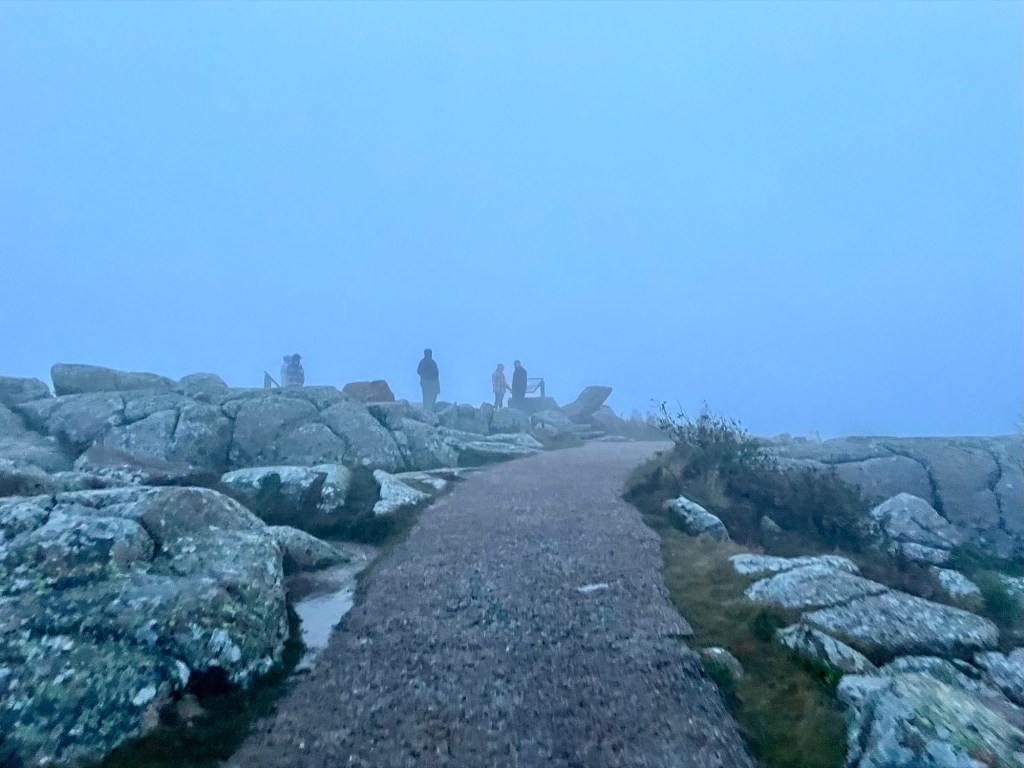
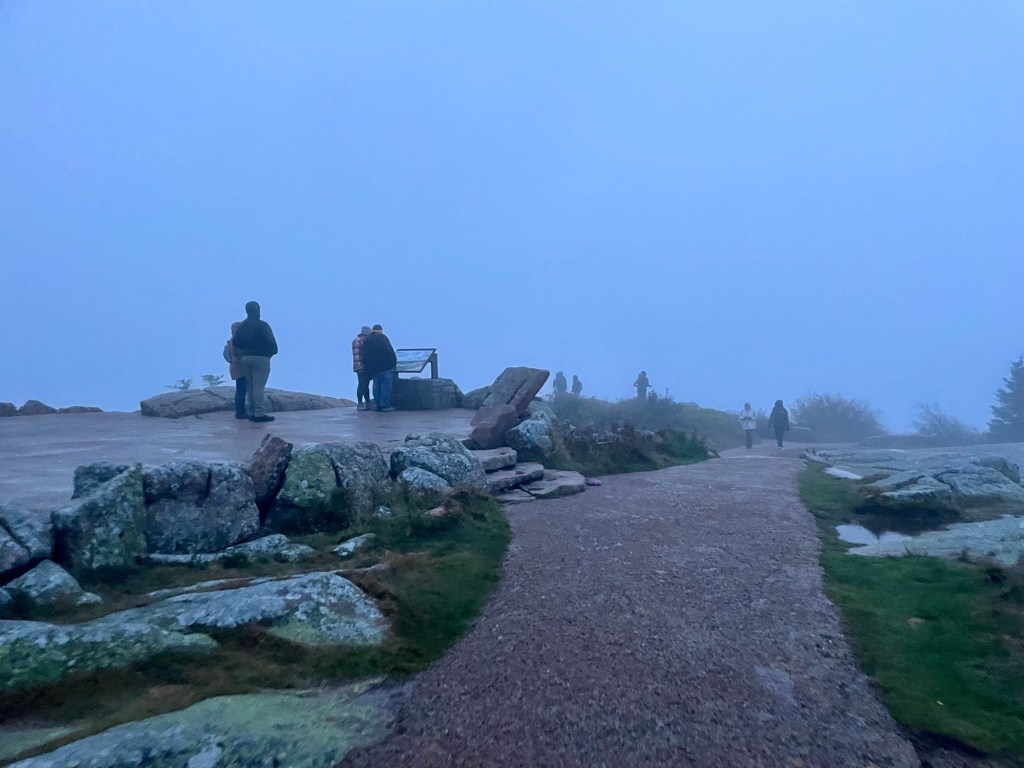
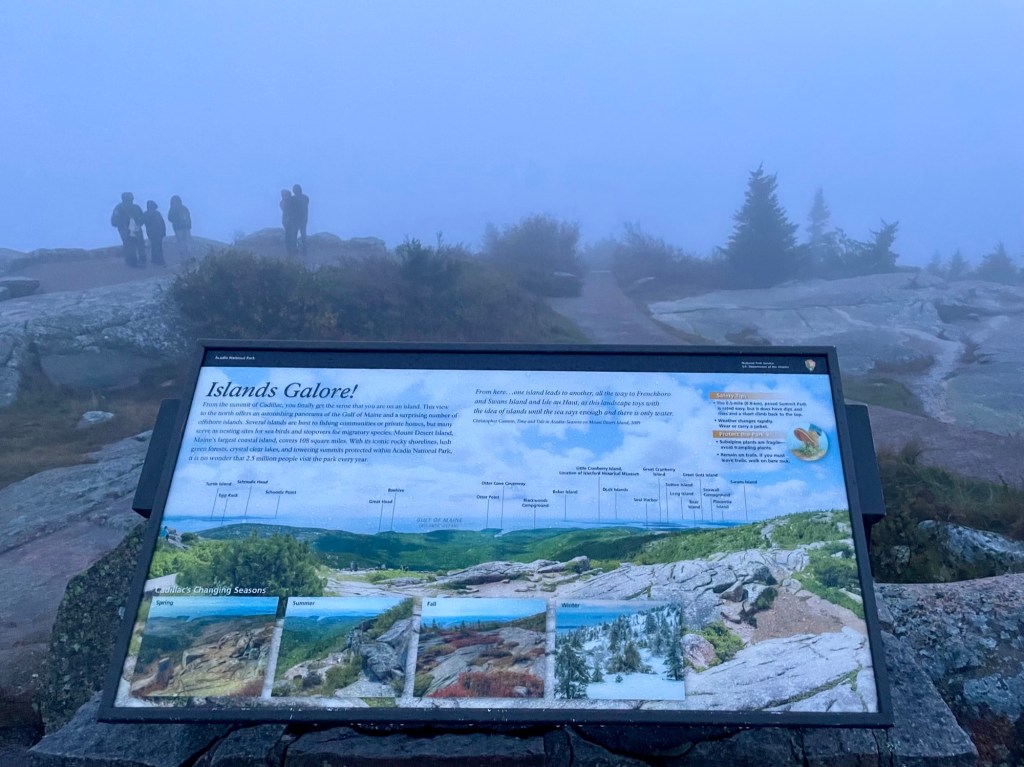
Sadly for us, we did everything right, but the weather was not in our favour. We woke up super early and got to the gate entry at 6:20am, about 20 mins before sunrise (a bit late). We knew visibility was going to be poor, but we had hopes of a small break in the clouds for the views so we drove up anyway – after all, we were already there and the $6 was spent. They scanned our QR code at the gate and it only took us 15 minutes to drive to the top (although I’ve heard it can take up to 30 mins due to slower people unfamiliar with driving up mountain roads and it’s single file all the way up). Once we got to the top, there are 2 parking lots. You’ll pass the smaller West lot first which is farther away (seems like the overflow lot), then you’ll reach the East lot, which is a semi-circle and is directly in front of the trail. You want to park in the East lot. When we visited, the weather was so bad that you could barely see 10 feet in front of you so we just got out to have a quick peak, then got back into our car and headed straight for a warm breakfast in Bar Harbor.

There’s a short and easy 500m trail around the Cadillac Summit that was supposed to be nice to see. I guess we’ll have to try again next time. 🤷🏻‍♀️

Bar Harbor

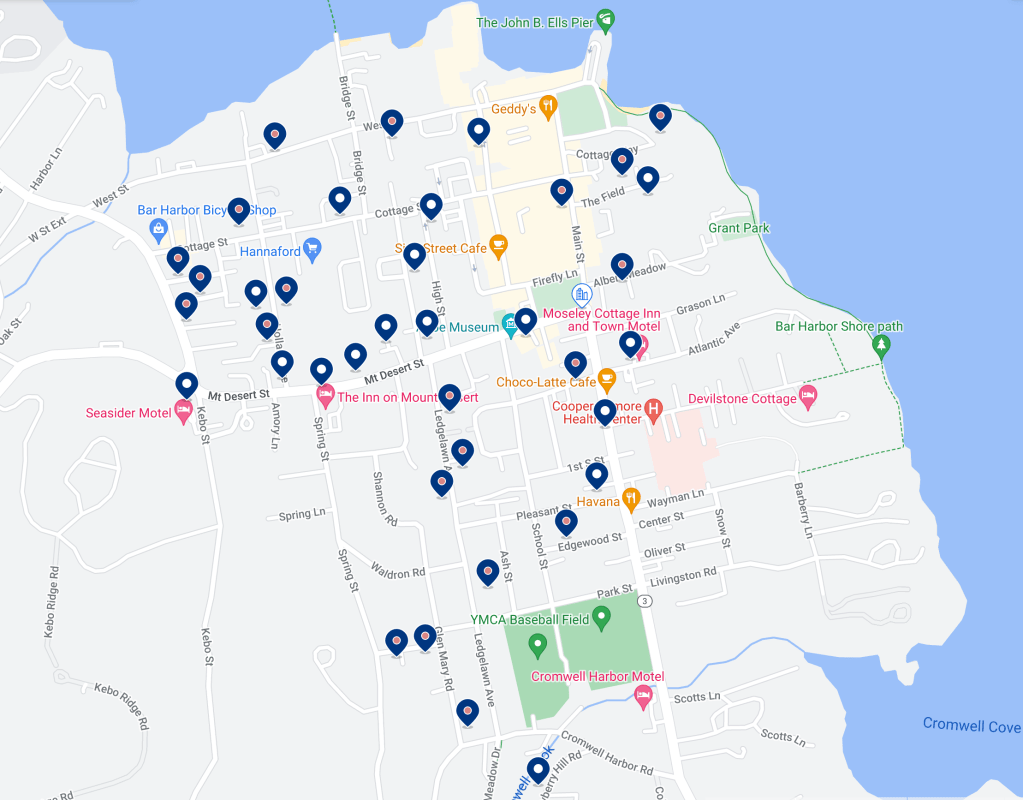
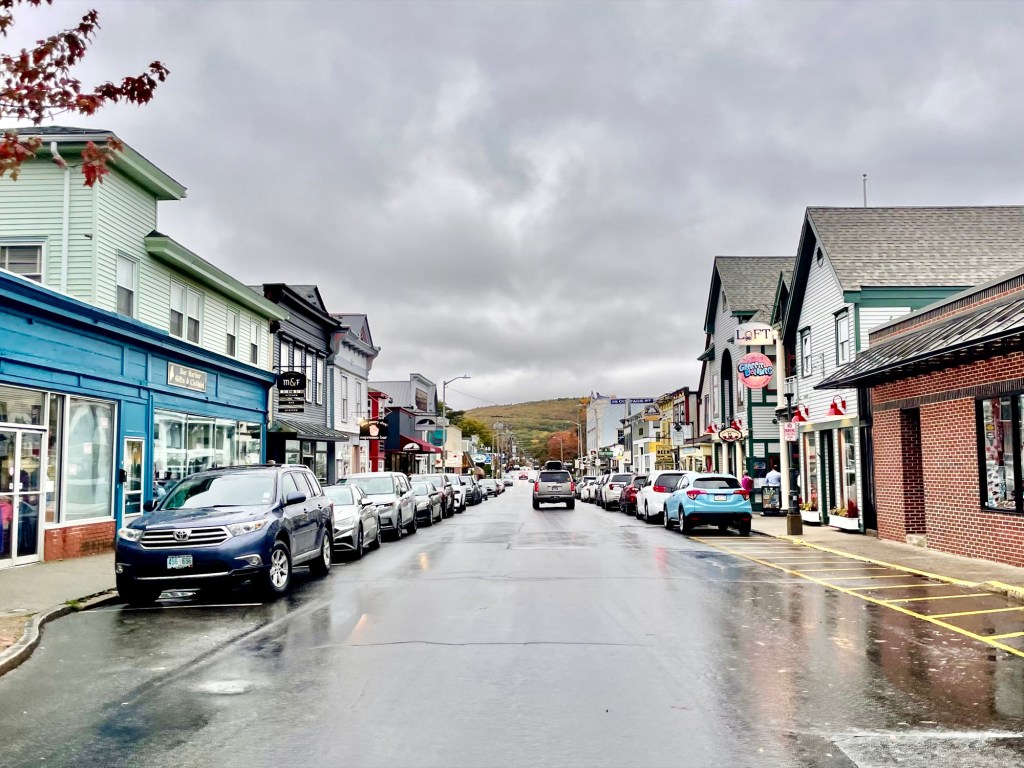
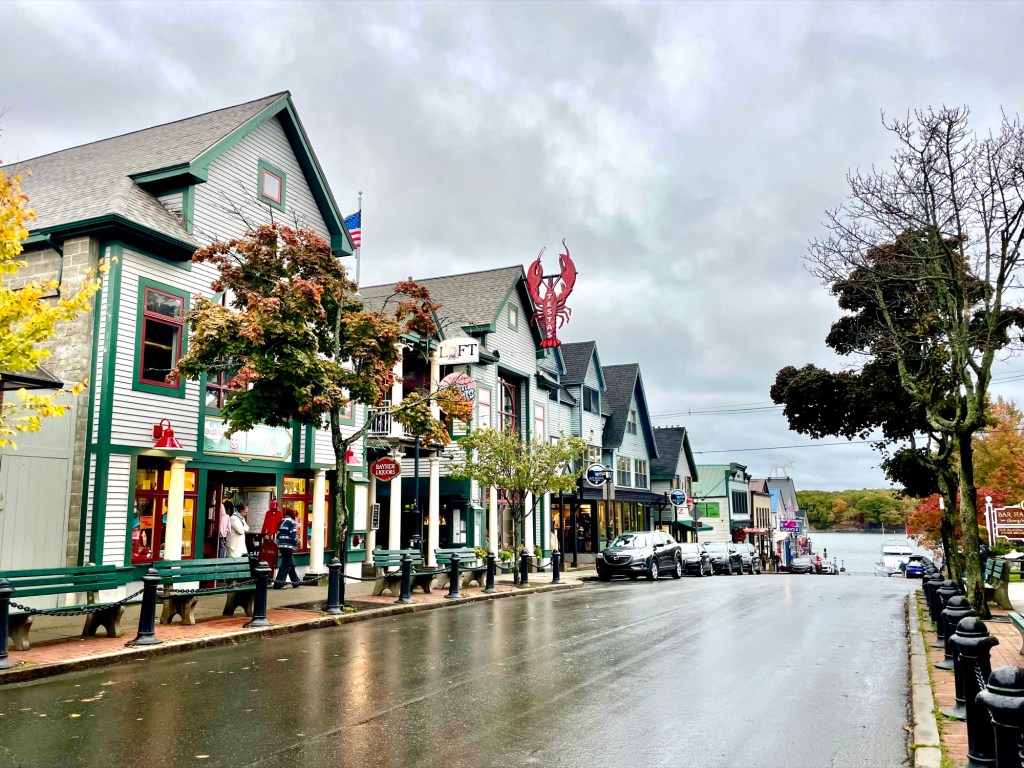
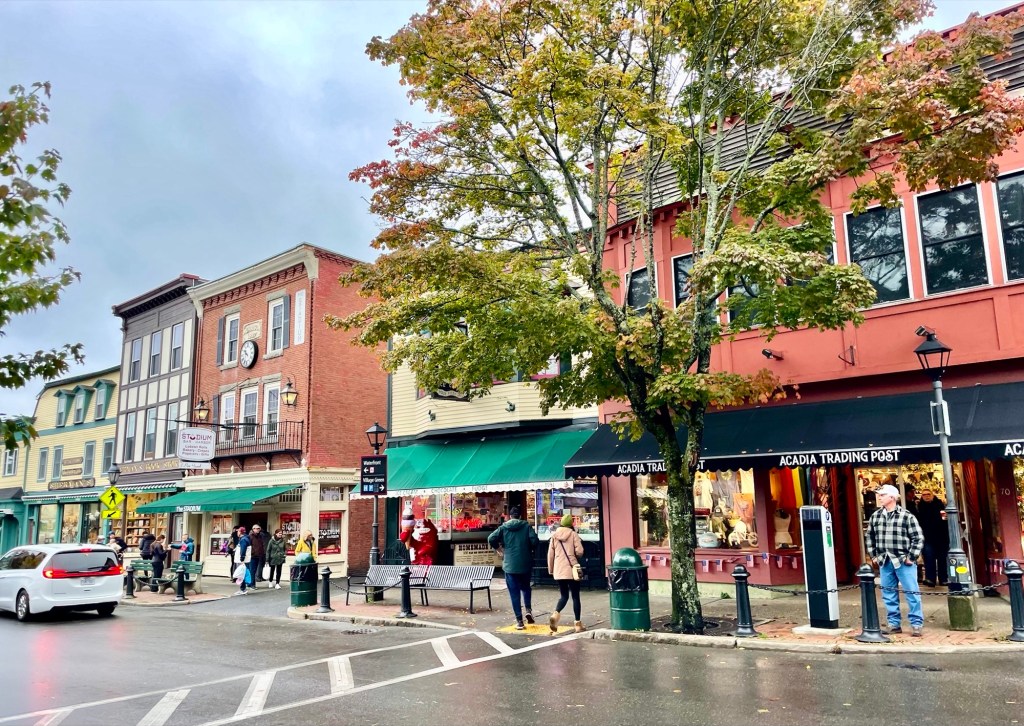
Bar Harbor is the only major town in Acadia National Park. Here you’ll find lots of cute shops, souvenirs, restaurants, hiking gear, and even a big grocery store for all your food needs. There are also tons of accommodation options in this small town that get booked out way in advance during the busy season.

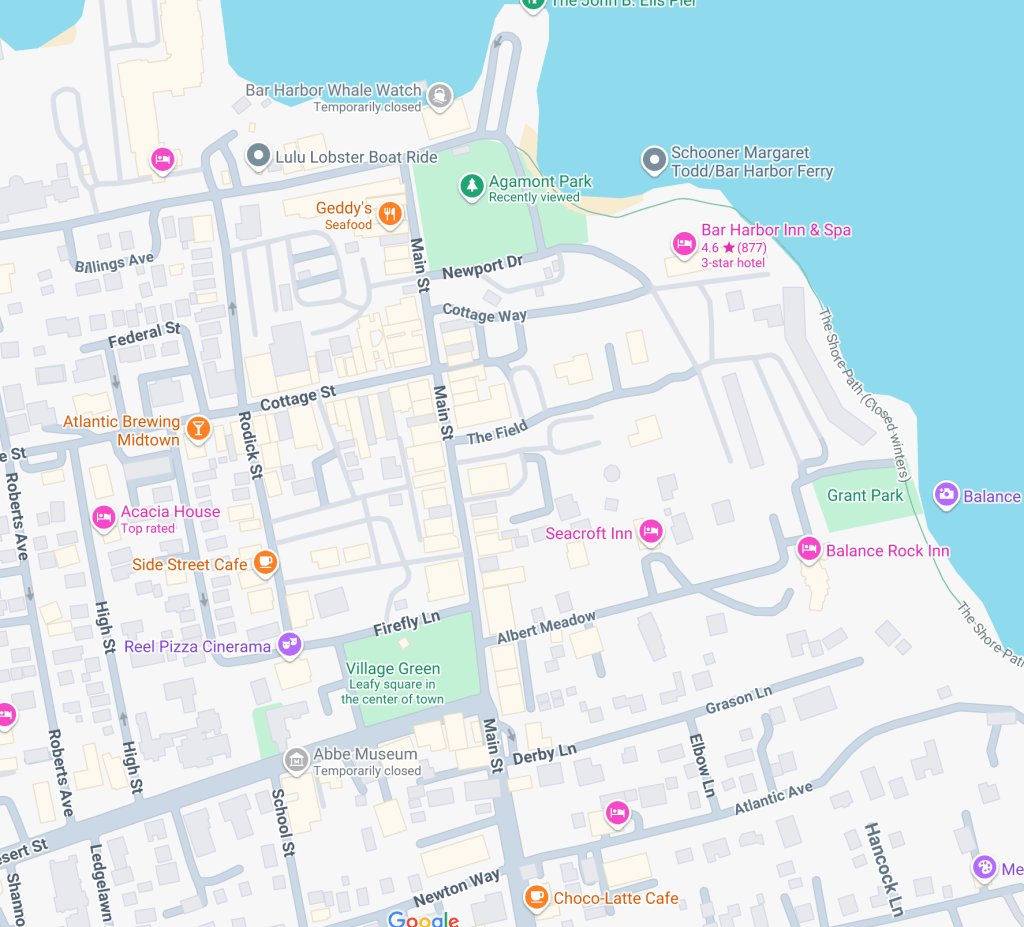
Map of downtown Bar Harbor – Main Street will be the majority of the shops

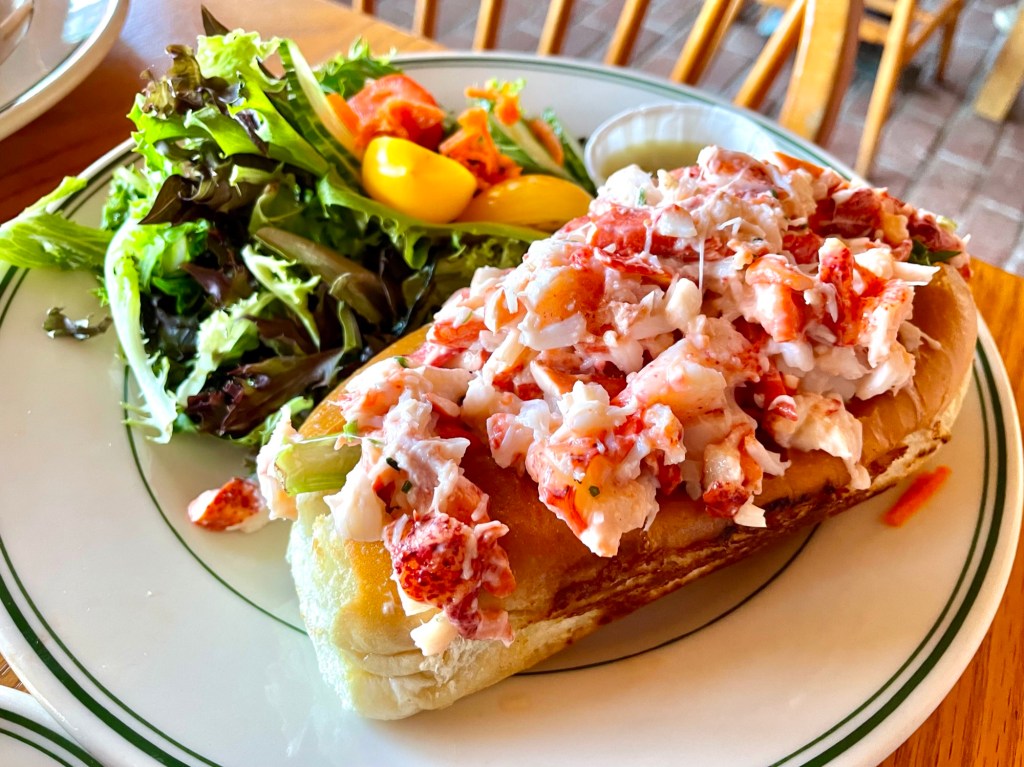
You don’t need to spend a ton of time in Bar Harbor, an afternoon is enough to explore this small town. It only takes about 15 minutes to walk from one end to the other. Main Street is the street with the most shops. There are TONS of seafood restaurants around here and of course, lobster rolls – when in Maine!

Take a stroll down The Shore Path that starts at the North end of town from Agamont Park. From here, you can see a ton of lobster boats anchored in the water (we counted at least 26). Continue walking on the path that wraps around Bar Harbour Inn, a big beautiful inn with spa amenities (looked expensive). The path can go for a while but we stopped wen we reached the small beach at Balance Rock and took a right to head back onto the Main Street, weaving through the beautiful old houses in the quiet neighbourhood.

If you need to stock up on supplies, there is a large corporate grocery store that sits at the edge of town called Hannafords.

We had breakfast at a highly rated local diner called Jordans Restaurant (conveniently located next to Hannfords). They open at 5am, which was perfect for us after our big disappointment with the gloomy weather on Cadillac Mountain. When we arrived at 7am, the diner was already half full. By the time we left an hour later, there was a line up out the door! They have a decent sized menu, boasting their wild blueberry muffin and wild blueberry pancakes – we got both (and Toby added chocolate chips to the pancake). We also got the lobster roll, clam chowder, and lobster cheese omelette – if you haven’t noticed, we often order too much food because I want to try it all 😅. Overall it was an okay meal. I liked the home fries and the lobster roll was great (soft fluffy toasted buttered bun). The pancakes with the wild blueberry sauce was good but the lobster omelette and blueberry muffin was just okay. The staff was real friendly and the place had a great buzz about it.

If you’re looking for great coffee, there’s a cool local shop called Vacationland Coffee Roasters where they roast their own beans onsite and will package it fresh for you. What actually drew me here was the super cool logo with the lobster claw pinching a coffee bean. I bought a bag of beans just for the logo 😅.

Overwhelmed? I got you. Here’s an ideal travel itinerary to hit all the highlights in 2 days:

I’ve put together an ideal sample itinerary to hit the highlights of Acadia National Park from our experience (our real itinerary was a bit more messy):

Before you go:

  • Check the tide times for Thunder Hole and estimate to arrive at Thunder Hole 2 hours before high tide. Depending on when you go, you will have to adjust your itinerary to either do Thunder Hole before or after the other activities to get there at the right time. There is a parking lot at Thunder Hole that gets pretty busy so plan accordingly. You can also walk from Sand Beach parking lot via Ocean Path – takes about 20 minutes. You really only need 10 mins at Thunder Hole to watch the waves crash.
  • Make a lunch reservation at Jordan Pond House, timing will depend on where you are able to fit Thunder Hole in.
  • *Book your Cadillac Mountain vehicle pass 2 days in advance.

Day 1: Beehive Trail, Ocean Path, Thunder Hole, Jordan Pond Trails

  • 7am (or earlier): Get to Sand Beach parking lot by 7am to secure a parking spot.
  • 7am – 9am: Hike the Beehive Trail when the sun rises to avoid the crowds. This hike takes roughly 1.5-2 hours, depending on your pace and crowds.
  • 9am-10:30am: Finish the Beehive Trail and head towards Sand Beach to take in the views of the ocean, then walk the Ocean Path (conveniently also starts from the Sand Beach parking lot). Ocean path does link up to Thunder Hole, so if the timing is right you can head there after hiking the Beehive Trail.
  • 11am – Noon: Arrive at Jordan Pond House for your lunch reservation, or if you didn’t secure a reservation, get there before 11am and line up to get seated. If you were able to make a late booking, you’ll have more freedom in your time.
  • 12-4pm: Hike the Jordan Pond Trails (takes about 3-4 hours, be mindful of the time of sunset that day).
  • 4pm onwards: The loop finishes back at the restaurant. Depending on how tired you are, you can have dinner here or head to Bar Harbor for more restaurant options. Have an early rest and wake up early the next day.
  • Note: you can also flip the hikes around and do Jordan Pond Trails first, then lunch at Jordan Pond House and Beehive Trail last, however the Beehive Trail is one of the busiest trails and it will get PACKED in the afternoon, whereas the Jordan Pond Trails are not as busy.

Day 2:

  • 5:30-7:30am: Arrive at the Cadillac Mountain summit before sunrise (make sure you have a vehicle reservation pass).
  • 7:30a – 9am: Enjoy the sunrise views and walk around the Summit Loop.
  • 9am – 10am: Breakfast in town at Bar Harbor – we went to Jordan’s Restaurant. Quick service, decent food, nice people.
  • 10am onwards: Spend the rest of the day exploring Bar Harbour
    • Browse the shops
    • Walk across the foot bridge to Bar Island at low tide to get some views of Bar Harbor from a distance (make sure you come back before the water level rises again!)
    • Book a lobster boat tour with LuLu Lobster Boat Tour (tour times are usually 9am, 11:30am, 2:30pm) – https://lululobsterboat.com/
    • Have lunch or dinner in one of the many restaurants in town
  • Sunset at Bass Harbor Head Lighthouse
    • This is optional and a VERY busy place at sunset. We did not end up doing this due to timing and weather, but other visitors have recommended coming 3 hours before sunset just to get a parking spot due to the very small lot that’s there. It’s roughly a 30 minute drive from Bar Harbor.

Less popular places that came up in my research for this trip but we didn’t get to go due time constraints, so I’ll make a list here for reference on our next trip to Acadia. You’d need at least another day to fit the rest of this into the itinerary:

  • Beech Cliff Ladder Trail – we didn’t get to go due to weather, but this hike (strenuous, roughly 2 hours) provides beautiful views over Echo Lake. It’s not as exhilarating as the Beehive Trail or Precipice Trail but there are still iron rings, ladders, and cliff-side walks. Park at the Echo Lake Beach Entrance for the trailhead.
  • Precipice Trail – I didn’t put this in my original itinerary because of the multiple warnings and thrilling things about this hike, but after doing the Beehive Trail which was also meant to be scary but wasn’t bad at all, I think we’ll give this hike a go next time. It’s the most dangerous hike in Acadia and will take you anywhere between 1-3 hours. Arrive early for a parking spot (what else is new?).
  • Walk across the foot bridge to Bar Island at low tide from Bar Harbor to get views of Bar Harbor.
  • Drive around to the other little towns (ie. Southwest Harbor and Northeast Harbor)
  • Watch the sunset at Bass Harbor Head Lighthouse
  • Visit Echo Lake
  • Visit the other two Acadia regions: Schoodic Point and a day in Isle au Haut
  • LuLu Lobster Boat Tour (9am, 11:30am, 2:30pm) – https://lululobsterboat.com/

Discover Acadia National Park: Your Guide to Mount Desert Island


Acadia National Park is the “Crown Jewel” of the North Atlantic Coast providing breathtaking coastal views, mountainous hikes, scenic drives, beaches, and a town with no shortage of restaurants. This national park is a must-do in Maine!

Exploring Cape Elizabeth: Iconic Lighthouses and Lobster Rolls


Cape Elizabeth, Maine, is a serene coastal town featuring iconic lighthouses, including the famous Portland Head Light and the nearby smaller Bug Light. Visitors can explore both lighthouses and enjoy renowned lobster rolls at local spots like Bite Into Maine and the Lobster Shack at Two Lights, all in half a day.

Top Things to Do in Portland, Maine: Eat, Shop, Explore


Portland, Maine, is a charming coastal city known for its vibrant shops and seafood, particularly lobster rolls. Visitors can enjoy its historic streets, numerous dining options, and attractions, including the iconic Portland Head Light. A few hours is sufficient for a quick visit, but extending to a few days allows for deeper exploration.

Mount Battie and Megunticook: Your Camden Hiking Guide


Camden Hills State Park sits just outside the small coastal town of Camden, Maine. This park has a number of hiking trails with the most popular ones being Mount Battie and Mount Megunticook. Both of these trails offer panoramic views of the ocean coast and sweeping colourful fall foliage trees below. If you’re driving through the…

Explore Acadia’s Jordan Pond: Most Popular Trails & Jordan Pond House Restaurant


Date Published: Nov 12th, 2024 | Last Updated: Nov 12th, 2024
Author: Abby | Category: Travel, USA
Date of travel: October 13th, 2024

If you haven’t checked it out yet, here’s a post of an overview of Acadia National Park if you need more info about where to stay, where to eat, getting around, and other travel recommendations.

Besides climbing the Beehive Trail, Jordan Pond is one of the most popular places to visit in Acadia National Park due to its numerous trails, beautiful views, and the ever so popular ‘pop overs’ served at the Jordan Pond House Restaurant. Jordan Pond is situated in the centre of Mount Desert Island in Acadia National Park (see map below for reference).

It gets extremely busy here, so I’d recommend coming here super early to get a good parking spot near Jordan Pond House Restaurant, spend your morning hiking (keep scrolling for a list of suggested hikes), then finish your hike at Jordan Pond House Restaurant for some lunch (make sure you have a reservation, or arrive before they open – see more tips below).

Note: The cellphone service here is very spotty and limited. There is free wifi at Jordan Pond House if you need to last minute download maps or send a message before embarking on hikes in this area.

Map of Acadia’s Mount Desert Island and location of Jordan Pond

Where to Start?

Start at Jordan Pond House Restaurant (2928 Park Loop Rd, Seal Harbor, ME 04675). This is one of the very few restaurants in Mount Desert Island (apart from Bar Harbor) and is also the start to many trails. There is very limited parking here and once lots are full, park rangers will block it off so you can’t just sit and circle waiting for a spot to open up. Most people park along side Park Loop Road once the parking lots fill up.

If you don’t get here early enough, try to find parking at a lot farther away and take the free Island Explorer Bus to Jordan Pond House (runs every 30 minutes). We didn’t realize we could’ve taken the free bus and ended up walking an extra 30mins to our car after our 4 hour hike 😭 – learn from our mistake!

Hiking the Jordan Pond Trails

There are numerous trails you can hike around the Jordan Pond, and many of them conveniently start at Jordan Pond House Restaurant. I’ve highlighted the 3 most popular hikes in the map below (Jordan Pond Path, Jordan Cliffs Trail, and Bubbles Trail), but you can also combine all 3 hikes to get the best of all of them (highlighted further down in red) – which is what we did!

(South Bubble Loop doesn’t technically start at Jordan Pond, but many people will start at the restaurant and walk the Jordan Path then join up with the Bubbles Trail to go up the South Bubble).

Here’s a topographical map of the Jordan Pond area for reference:

Map from Acadia National Park: https://www.nps.gov/acad/planyourvisit/maps.htm

Jordan Pond Path (yellow)

Distance: 5.3km
Elevation: 19m
Difficulty: Easy
Estimated time: 1 hour
More info: https://www.alltrails.com/trail/us/maine/jordan-pond-path

This easy around-the-pond path is one of the most popular hikes in the Jordan Pond area. It takes roughly 1 hour to complete and the path is relatively flat and easy to walk on. You start at the Jordan Pond House Restaurant with iconic views of the Bubbles, then follow the trail around the water the entire way.

Jordan Pond Path

Jordan Cliffs Trail (green)

Distance: 4.8km
Elevation: 316m
Difficulty: Hard
More info: https://www.alltrails.com/explore/trail/us/maine/jordan-cliffs-trail-to-penobscot-mountain

This is an exhilarating loop trail that takes you via the exposed cliffs along Jordan Pond for gorgeous views. It starts off at Jordan Pond House then through Amphitheatre Road where it joins the Jordan Cliffs Trail. Continue on the Jordan Cliffs Trail for the views, then turn left onto the Penobscot Trail to the Penobscot Mountain Summit, then back via the Penosbscot Mountain Trail to Jordan Pond House. This is considered a very difficult hike with rock scrambling and iron rungs. You can then loop back via the summit of Penobscot Mountain and the Penobscot Mountain Trail.

Jordan Cliffs Trail

South Bubble Loop/Bubble Trail (blue)

Distance: 2.3km
Elevation: 150m
Difficulty: Moderate, steep
More info: https://www.alltrails.com/trail/us/maine/south-bubble-mountain-and-jordan-pond-loop

The South Bubble Summit is another place for iconic views of Jordan Pond. There’s also “Bubble Rock” here which is a large boulder that sits on the edge of the cliff, brought here by a glacier thousands of years ago. You can either reach the summit via the ‘Bubble Rock Parking Lot’ as pictured in the map above, or you can combine it with the Jordan Pond Path and make it an out-and-back hike to the summit then back down, skipping the rest of the Bubble Loop. The path up to the South Bubble summit is very steep with lots of rock scrambling, so be prepared with a good pair of hiking shoes!

If you’re short on time, this is the hike with the best views around Jordan Pond (in my opinion, anyway).

Bubbles Trail/South Bubble

All 3 hikes combined: Jordan Cliffs Trail + Bubbles Trail + Jordan Pond Path

So many trails around Jordan Pond intersect each other so you can mix and match and make up your own trail as you like. The most popular mix of trails is the Jordan Cliffs + South Bubble + Jordan Path trail. You get the best elevated views of the Jordan Pond from the Jordan Cliffs Trail, with the iconic panoramic scenery of the Bubbles Trail/South Bubble Summit, and the serene easy flat water-side trail of the Jordan Pond Path. This combination of paths is the hike that we chose to do and is what I’ll focus on in detail for this post. 😊

Length: 7.2km
Elevation Gain: 358m
Trail type: Loop
Difficulty/Terrain: Moderate to Hard with exposed cliffs, iron rungs to climb, rock scrambling, and steep ascents
Estimated duration: 2.5 – 4 hours, depending on your level of fitness (we took 4 hours due to a road closure and also multiple stops for photos 🙃)
Starting point: Jordan Pond House Restaurant
Things to bring: water bottle, sunscreen & hat, good hiking shoes, tick/insect repellent depending on season, screenshot of the trail map
More Trail info: https://www.alltrails.com/trail/us/maine/jordan-cliffs-trail-to-bubbles-trail-to-jordan-pond-path

A Detailed Hiking Guide:

You’ll want to start this hike clockwise to make it easiest on yourself. Some of the rock scrambling on the Jordan Cliffs Trail can be a bit dangerous if you do it counter-clockwise.

Red is the combined path of all 3 trails. We had an unexpected road closure and had to do slight detour (outlined in pink dots)

A) Start at Jordan Pond House Restaurant. From the back of the restaurant, walk towards Jordan Pond and start by enjoying the calm of the Jordan Pond waters with views of the North & South Bubbles in the distance (aka the geological boobs – you were thinking it too).

B) Continue briefly left onto Jordan Pond Path and walk over the mini bridge then make a right onto ‘Carriage Road’.

C) Carriage Road will then split – take the left uphill (Amphitheater East Carriage Road) and continue on.

Take a left when Carriage Road splits

D) You will eventually see a small sign that points to the start of Jordan Cliffs Trail on the right side (pay attention, the sign is small and easy to miss).

Follow the Jordan Cliffs Trails through the trees. The path will become more and more rocky until you eventually emerge from the trees and onto the cliff-side views of Jordan Pond.

Continue on the cliff-side trail with iron rungs and rock scrambling while enjoying the views for the next 2km. This was the most difficult part for us and involved getting on our hands in some parts to get down a large step or climb up a big boulder. It’s tiring, but take your breaks and drink plenty of water. We actually ran into a few people doing this trail backwards and while doable, many were struggling to get down the iron rungs. I wouldn’t recommend it. Also, keep your eyes peeled – some hikers reported seeing a porcupine in this section!

E) The path will eventually lead you back into the trees where the cliff-side views stop for now. You’ll see a sign – continue to follow the Jordan Cliffs trail downwards where you’ll meet up with Deer Brook Trail. This part is a sharp descent, so make sure you’re wearing shoes with good grip.

F) Turn right and continue downwards on Deer Brook Trail.

G) You’ll cross over ‘Carriage Road’ again briefly then continue the rocky scramble down where you’ll pass by Deer Brook Bridge, a cool double arch historic bridge built for carriages in 1925. Continue the rocky descent towards the beach at the North end of Jordan Pond.

H) Once you’re at the beach, take a breather and appreciate the flat easy-walking terrain along the beach.

Follow the beach and you’ll reach a sign on the left that points to the Bubbles Divide Trail where you’ll make your way up again. Note: this trail was under construction when we went, so we continued on the Jordan Pond Path along the water until we reached the Bubbles Trail, where we did an out-and-back to the South Bubble summit (our detour is shown in pink dots on the map).

We had an unexpected road closure and had to do slight detour (outlined in pink dots)

I) Turn right onto the Bubbles Trail towards South Bubble.

J) This where ‘Bubble Rock’ sits – the iconic glacial boulder that rests on the edge of the cliff.

K) Due to the road closure, we ascended the Bubbles Trail from this point. The climb up to the South Bubble summit was no easy feat. It’s a steep ascent with lots of rocks to climb and uneven footing, and it gets more difficult the closer you are to the top.

I’ll admit, our legs were getting pretty tired at this point that we almost didn’t want to climb back up a mountain that we just came down on, but I’m glad we pushed ourselves and did it. It was a tiring climb up boulders the whole way, with some tricky areas where long legs were helpful, but after all the climbing over scraggly rocks, the view at the top was 100% worth it. Second to the Beehive Trail, it’s another iconic picturesque view that everyone seeks. It was too bad that the clouds started rolling in so there wasn’t much sun when we got to the top, but it was still so beautiful that we spent some time just sitting and taking it in.

Take a break here and enjoy the panoramic views and be in awe at how far Jordan Pond House is in the distance, where you started this journey.

Scramble back down the steep rocks on Bubbles Trail to Jordan Pond Path. For reference, it took us 1 hour to get up and down the Bubbles Trail from the Jordan Pond Path including resting and photo time at the top. So although it is a difficult climb, it’s not very long!

Scrambling back down the Bubbles Trail the same way we came up due to the detour

Continue following Jordan Pond Path and enjoy the flat even ground all the way back to Jordan Pond House (roughly another 30-40 minutes).

Overall it took us 4 hours to do the whole thing (including the detour from the road closure) at a slow-med pace and stopping for photos and taking intermittent rest breaks.

Jordan Pond House Restaurant – make reservations!

Address2928 Park Loop Rd, Seal Harbor, ME 04675
Website: www.jordanpondhouse.com
This restaurant has seasonal hours – refer to their website for updated information.

Outside of Bar Harbor, there is a very limited selection of restaurants on Mount Desert Island in Acadia National Park. Jordan Pond House Restaurant is the most popular choice not only because of their good food, but also because of its convenient location where many trailheads are located – most notably Jordan Pond Loop, South Bubble Trail, and Jordan Cliffs. The back patio of this restaurant also offers views of Jordan Pond and the North and South “bubbles”.

It gets EXTREMELY busy here and finding parking is no easy feat. Toby dropped me off while he went to look for parking and he had a LOT of trouble finding parking. Every single lot was full but luckily he eventually snagged a spot in a small lot…a 30 minutes walk away! It was INSANE. Next time, I’d recommend coming here super early and do some hikes, then make it back in time for lunch.

Note: there’s very limited cellphone reception in this whole area, but the restaurant does have free guest wifi so keep this in mind if you’re planning on communicating with each other when waiting for seating or coordinating with parking.

I would highly recommend making a reservation at Jordan Pond House as early as possible. Their reservation book is usually booked out a couple of MONTHS in advance. You may have some luck calling in person to check for cancellations, but their online reservations were completely full everyday. If you haven’t planned ahead, then I would recommend showing up a little before they open to try and get a spot. We didn’t have reservations and I arrived 3 mins before opening time and there were already at least 30 people standing in line! When 11am hit and the doors opened, the line started moving as they slowly filled up the large restaurant. I got to the front of the line 20 minutes later and they put me on the waiting list, where I only had to wait 10 minutes before I was seated. If you had a reservation, you could skip right to the front of the line where there was a separate check-in counter for reservations. When we finished eating, it was about 12:30pm and on our way out Toby had overheard that there was going to be a 1.5 hour wait to be seated!

For the only restaurant in the area, the food was actually surprisingly good! A little pricey, but hey, they’re the only place around.

They’re known for their popovers, which is kind of like a hollow muffin made with a thin batter, served with butter and their local-made jam. It was good, but not mind-blowing.

We also had a meatloaf sandwich which was delicious and a $40 lobster roll (when in Maine…) which was average but they were VERY generous with the amount of lobster meat. I also couldn’t help but also order the lobster stew which was also pretty decent and Toby had a flourless chocolate cake for desert (which was average, but he liked it).

If you didn’t have a reservation and don’t have time to wait in line for walk-in seating, there’s an upstairs “grab and go” area for takeaway food. The menu here is a little more limited and I don’t believe you’ll be able to get popovers for takeaway, but there’s outdoor seating upstairs and also plenty of picnic tables on the grass to enjoy the view of Jordan Pond and the Bubbles without having to wait in line.

Some Final Thoughts:

  • Start your day early!
  • Finding parking is a bitch here – start early!
  • Make reservations ahead of time if you can, or show up before they open
  • Try the meatloaf sandwich – you won’t regret it.
  • Bring a pair of good hiking shoes for all the rock scrambling

Hiking Acadia’s Beehive Trail: A Complete Overview


Date Published: Nov 3rd, 2024 | Last Updated: Nov 3rd, 2024
Author: Abby | Category: Travel, USA
Date of travel: Oct 13th, 2024

If you haven’t checked it out yet, here’s a post of an overview of Acadia National Park if you need more info about where to stay, where to eat, getting around, and other travel recommendations.

The Beehive Trail is one of Acadia National Park’s most popular hikes, offering breath-taking panoramic views. This hike has a reputation for being thrilling and difficult with iron rungs and vertical climbs but we personally didn’t find it bad at all, especially with good pacing. I recommend starting early, wearing good shoes, and dressing in layers. For safety, avoid this hike if it’s raining.

I highly recommend coming during peak autumn foliage season for the gorgeous colourful red and orange leaves.

Hike Stats:

Length: 2.4km
Elevation Gain: 155m
Trail type: loop
Difficulty/Terrain: difficult-ish with uphill climbs and rocky terrain
Estimated duration: 1-3 hours, depending on the number of people and waiting times (it took us 2 hours starting at 8:15am – 1 hour to get up and 1 hour down, including waiting in line)
Starting point: park at Sand Beach parking lot, then cross the road to the trailhead
Things to bring: water bottle, sunscreen & hat, good hiking shoes, snacks, dress in layers in case it gets cold as you wait
Driving option?: no
More Trail info: https://www.alltrails.com/trail/us/maine/the-beehive-loop-trail

Is it really that difficult to climb the Beehive Trail?

Not really!

I was a little nervous for the Beehive Trail because I kept reading about how hard it was and there was a lot of climbing. For a person that was not the most fit and with minimal upper body strength, I was anxious to get this hike over and done with. While doing the hike, I kept expecting it to get harder and harder, but it actually wasn’t bad at all. Yes, there are short bursts of vertical climbs and you’re exposed on the side of the cliffs, but there were enough handles to grab on to and good footing to stabilize yourself. It also helps that there was always someone to lend a hand hopping over the trickier bits or climbing up a big rock. At no point did we feel unsafe. We were also moving at a glacial pace near the top where the trickier parts are, so we barely broke a sweat getting to the summit.

If you have a mild fear of heights or if you’re generally a slow hiker, just take it slow and let people pass. The path eventually becomes single-file and the hike may naturally slow down or come to a standstill anyway if it’s busy, due to people taking their time crossing or climbing certain parts. We didn’t mind the slow ascent because the view along the way to the top is AMAZING and gave me ample time to snap (too many) photos. The view gets better the higher you go!

*If you are really terrified of heights, you can try to climb to the first view then decide if you want to turn around. The views at this spot is the same view as you would get at the top, but at a lower viewpoint (see the photos below). I’ve marked this spot on the map here –>

You can also take the Bowl Trail instead where the hike is covered amongst trees until you reach the very top (more on that below). As you can see on the map, it’s not far to backtrack if you decide to take the Bowl Trail instead.

Here’s a comparison of the view from the first view point vs the summit view:

Map of the Trail/Trail Overview

A Brief Overview of the Trail:

A) The Beehive Loop trail starts just off of Park Loop Road (a 5 min walk from the parking lot).

B) The trail starts covered amongst trees and you’ll come to a fork in the road. The right is the Beehive Trail and the left is the Bowl Trail (circled in white and grey in the map above). Although technically a loop, the Beehive Trail is single-file going up the mountain due to the sheer amount of people and it also gets dangerous if you’re coming down the mountain on the side of a cliff. Therefore, if you want to take the easier Bowl Trail, you’ll have to do an out-and-back hike when you reach the summit.

⭐️ Green star on the map marks the point where you’ll see the first ocean views (more pictures below). The path gets more narrow here and will become single-file, so if you want to turn around, do it here.

C) After some vertical climbs and taking way too many photos on the way up, you’ll reach the Beehive Summit. Take a breather and soak in the views, take more photos, then start to make your way down the mountain.

D) You’ll reach another fork in the road. You can either continue on Beehive Trail to reach The Bowl, or take the shortcut and get back to the parking lot via the Bowl Trail.

Ready to hike? Let’s Go! – a more detailed guide to hiking the Beehive Trail with way too many photos

1. Park at Sands Beach – START EARLY!

If there is one crucial piece of advice I can give you to hike the beehive trail, is to start as early as possible to avoid the crowds and get a parking spot. The Beehive Trail is one of THE most popular trails in Acadia National Park due to its amazing views and adrenaline-pumping hike. As a result, it gets INCREDIBLY busy, especially in peak season (which is when we went).

The closest parking lot is at Sands Beach, which is only a short 5 minute walk to the start of the trail. There’s roughly enough spaces for about 100 cars, which sounds like a lot, but by the time we arrived at 7am, the lot was already 70% full. We started the hike at 8:15am (after visiting Thunder Hole) and by the time we finished around 10am, the parking lot was completely full and there was an incredibly long line of cars parked along Park Loop Road and many people were walking 20 mins+ from their car just to get to the start of the trail. There were also park rangers standing at the entrance to stop people from going in, so you can’t even circle the lot to wait for a spot to open up. Therefore, try to get to Sands Beach before 7am if you’re visiting in peak season like us and driving a car.

Sands Beach Parking Lot

If you don’t get here early, be prepared to park far away or consider parking at a different parking lot along Park Loop Road and take the free Island Explorer Bus to Sands Beach parking lot. The bus will drop you off near the public restroom in the parking lot (see map above) and runs every 30 minutes.

Apart from trying to get a parking spot, you want to start the hike as early as possible to avoid the crowds and the line. If you do the trail clockwise via the Beehive Trail (which I recommend for the best views), it becomes single file up the rocks as you scale the mountain. Some people stop to take photos, others who aren’t as confident with climbing or have a fear of heights take it slow, and as a result, you could be looking at a long wait just to get up the mountain when it’s busy. We started the hike at 8:15am and two-thirds up the mountain, we already had to wait in line, taking a few steps at a time until we eventually reached the top (which although was annoying, wasn’t the worst in the world because you’re constantly exposed to the amazing views all the way up and gave me plenty of time to take photos). By the time we finished the hike a couple hours later, the line was much much longer and we were glad we started as early as we did. You can actually see the line from the parking lot. Therefore, I’d recommend starting the hike as soon as the sun comes up or be prepared to wait. Wear layers and pack a snack.

2. Cross the road to the start of the trail

Once you’ve parked at Sands Beach parking lot, make your way across the road to the start of the trail head (there is a public restroom at the parking lot if needed).

The path starts covered amongst trees and gradually increases in elevation with a rocky terrain – make sure you wear good hiking shoes for this hike.

3. Reach a crossroad and turn right to the Beehive Trail to do the trail clockwise

As you make your way to the base of the mountain, you’ll reach an intersection. When it gets busy, there’s a park ranger there that can provide more information. This is the split between the Beehive Trail and the Bowl Trail (see the map above to see the difference). Although more difficult, I would recommend continuing the hike via the Beehive Trail and doing this loop clockwise for the best views. The Beehive Trail is steep and will lead you to vertical climbs (that aren’t bad at all in my opinion) along the side of the mountain, but you’re faced with the beautiful views the entire time, constantly getting better the higher you climb. There are also rock ledges along the way for some great photo spots.

If you choose to do the trail counterclockwise via the Bowl Trail, the trail is not as steep (although there are still large rocks to climb), but the majority of the trail will be covered amongst trees and you will only get the iconic views of Sands Beach and the surrounding views when you reach the top. This may be a better option if you have a fear of heights. Note: You will not be able to go down the Beehive Trail due to the sheer amount of single-file hikers trying to get up the mountain so prepare for an out-and-back hike once you reach the summit.

4. Continue the climb up, cross a metal grate, and climb iron rungs while enjoying the view

As we continued on, it becomes more steep with more boulders to climb over, and we mentally prepared ourselves for vertical climbs and clinging onto the side of the mountain. This was where the line started for us. It was moving along at a decent pace at first, but it got slower closer to the top. Yes this hike is steep and yes there are vertical climbs, however because we had to wait in line and only moving a few steps at a time and taking a few thrusts up big rocks at a time, this hike actually became a breeze. We barely even broke a sweat! There was always something to hold onto and there were flat parts to stand as you wait. You’re constantly exposed to the amazing views beside you and the waiting gives you more than enough time to get some nice photos on rocky ledges. We didn’t mind waiting at all. It was actually a more enjoyable and fun hike compared to constantly walking uphill.

Here are a bunch of photos of our ascent up the mountain (the view gets a bit repetitive, but when you’re there in person, it never gets old):

Our first views of Sand Beach inlet as we emerge from the trees and up the first set of rocks:

*This is the first view of the ocean that you’ll see after emerging from the trees. If you’re scared of heights, there’s still time to turn around at this point before it becomes too difficult to turn back. The views at the top is similar but at a higher vantage point (see the photos below).

As we continue to climb higher, the views open up a little more with fewer trees obstructing the view:

Then the path gets a little more tricky with metal gates and iron rungs. The photos make it seem scarier in photos than it actually was. At no point did I feel like I was going to fall off the side of the mountain or feel like I couldn’t make the climb up. This is where the line started for us as people take they time with the obstacles, but no matter, we’re still loving the views:

Encountered the iron rungs, which were a lot easier than I expected. There’s never more than 3-4 at a time:

This is probably the most common photo I’ve seen that shows how close to the edge you are, however…

…when taken at a different angle you can see that you’ve got the tree beside you with branches so smooth where thousands have people have grabbed onto for support. It didn’t feel scary at all.

Still slowly waiting in line to make our way up, but still enjoying the views every step of the way:

As we got closer to the top it became more steep:

5. Reach the summit and take in the views

The final push to the top was just climbing over rocks but the view at the top was absolutely worth it. I can see how it is one of the most popular hikes in this park!

Take a breather and soak in the view. It’s the same view as what you see on the way up, but higher and more grand with sweeping views of the forest and ocean around you.

But the views don’t stop here. Continue following the blue trail markers to the other side of the mountain. Here you’ll see a sign that marks the actual summit of the mountain and you’ll get more ocean views with the small islands in the distance.

6. Make your way down the mountain

Continue following the blue markers to make your way down the mountain. You’ll get panoramic views of the beautiful trees below before you reach the trail path again.

As you make your way down, you’ll eventually be amongst trees again and climbing down big boulders, but then it gets easier as the ground plateaus and the path is much smoother.

7. Reach another crossroad: Continue on to The Bowl or take the shortcut

You’ll reach another intersection with trail signs that point to The Bowl. Continue on this path to reach views of The Bowl, or take the shortcut and continue the path back to the parking lot. We didn’t have time to make it to The Bowl so we took the shortcut back.

As you make your way back, you’ll eventually meet up with the original trail again and climb down the large rocks back to the parking lot.

By the time we met up with the starting trail, there were SO MANY more people and the line was MUCH longer. The ranger was telling people to do the loop backwards via the Bowl Trail avoid the line going up the Beehive Trail.

8. Get back to the parking lot and be glad you started early

By the time we got back to the parking lot, the lot was completely full with a very long line of cars parked along the road. You can see the top of the Beehive Trail from the parking lot with the many many single-file people slowly making their way up the mountain. Although we had to wait in line ourselves, we were SO happy that our line was no where as long as the one that was forming when we finished!

Some final thoughts

  • Get here early.
  • Get here early.
  • Get here early.
  • The views are amazing and worth the time and effort.
  • Wear good hiking shoes for good traction getting up rocks.
  • Consider skipping this hike if it’s raining.

When you get back to the parking lot, there are a few things you can do:

  • Check out Sand Beach, a short walk to this beautiful inlet beach
  • Walk Ocean Path – a flat easy path along the coast with beautiful views along the way
  • Thunder Hole – a 10-15 min walk along Ocean Path to this narrow inlet where rushing water creates loud thundering sounds and big high splashes of water into the air (come 1-2 hours prior to high tide for the experience)