Taiwanese Oil Rice/Sticky Rice 油飯


Date Published: March 13th, 2025 | Last Updated: March 13th, 2025
Author: Abby |Category: Asian, mains, Taiwanese
Serves: 4-6 | Prep time: soak rice overnight + 30 mins | Cook time: 40 mins for rice + 10 mins for stir-fry

Jump to recipe |

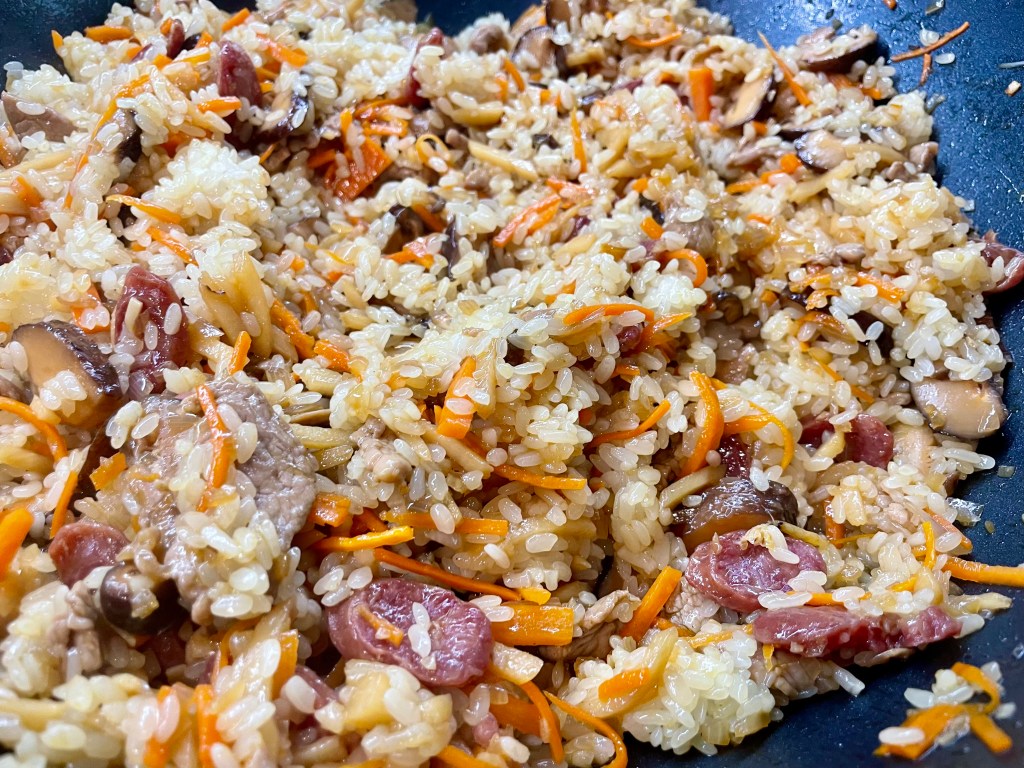
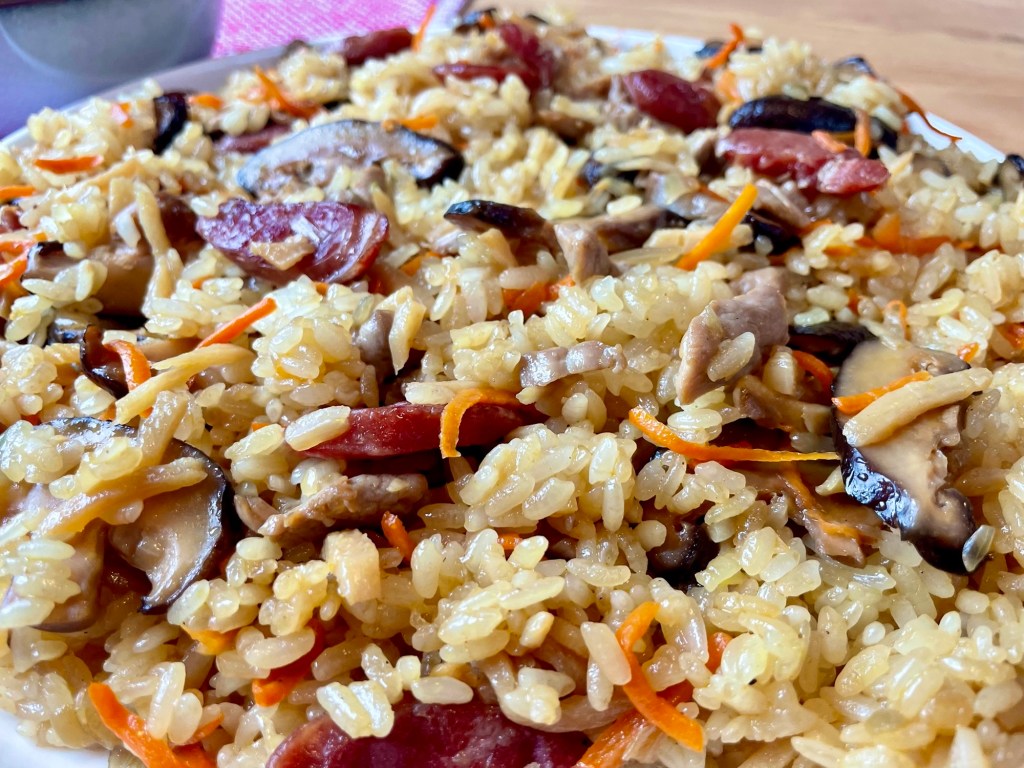
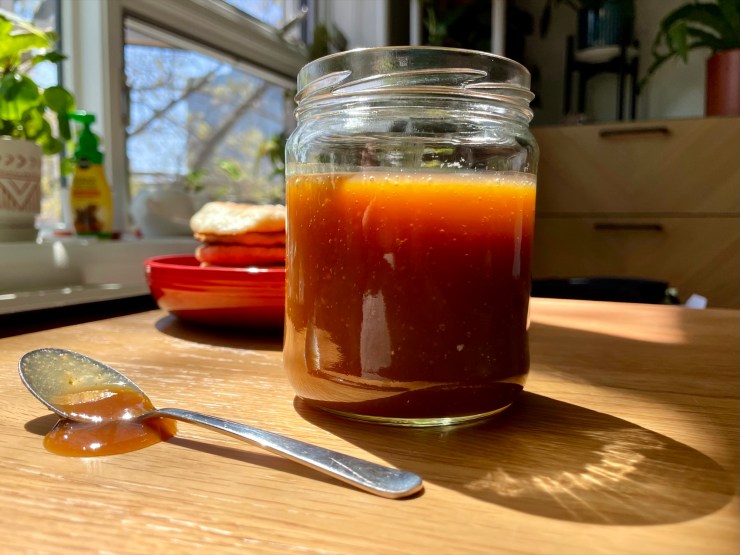
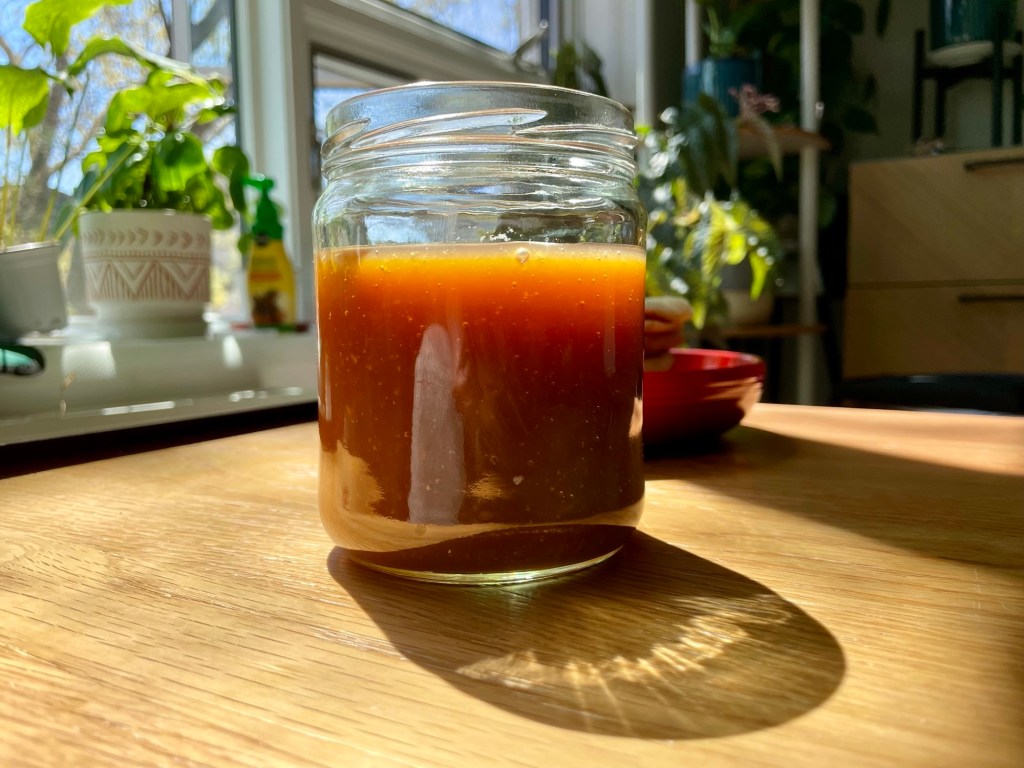
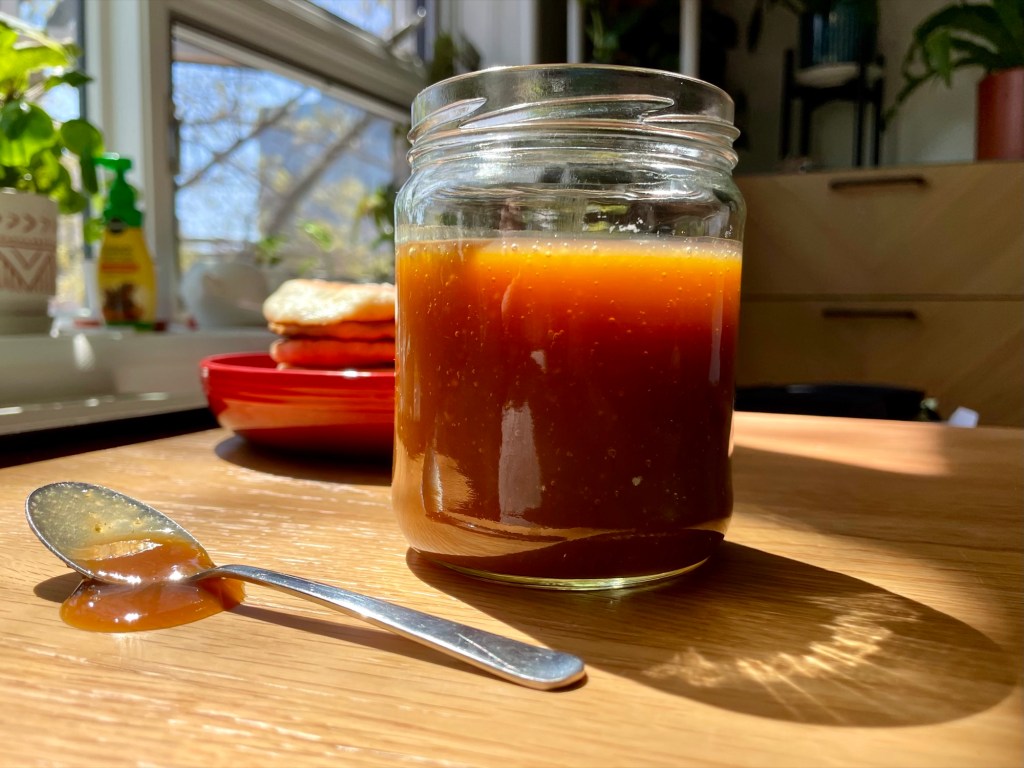
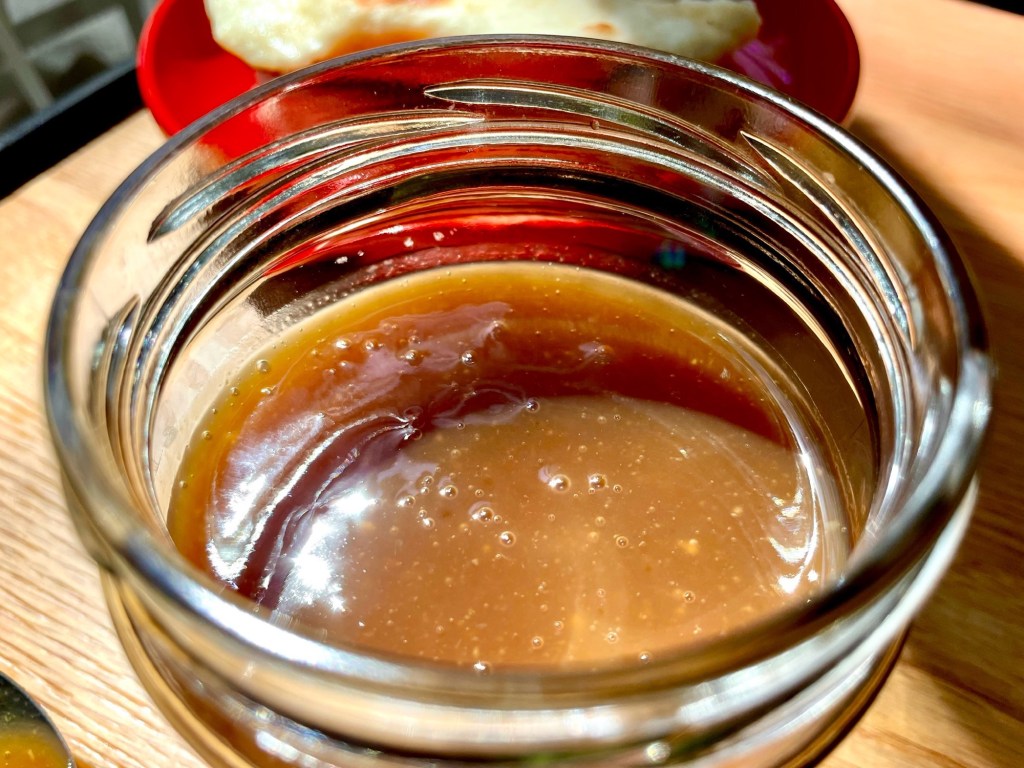
油飯 (Yoú Fàn) is a Taiwanese dish comprised of glutinous rice sautéed in a sauce and various add-ons (most commonly pork, shiitake mushrooms and small shrimp). This is a dish that can be found served at special occasions, restaurants, or made at home for a fancy night in. The name directly translates to “oil rice” because the rice is sautéed in a decent amount of pork fat (1/4 cup, to be exact in this recipe), but don’t worry the end result won’t be overly greasy. The pork fat gives it extra flavour, but you can substitute it with another neutral oil if you wish. You can eat the rice on its own or serve it with a drizzle of sweet Haishan sauce.

The cooking process for this dish is quite quick, so before you turn on the heat, make sure all the ingredients and sauces have been prepped and portioned out, ready to go!

Anyways, without further ado, here’s the recipe! If you have any comments or suggestions, I’d love to hear from you in the comment section! You can follow me on instagram, youtube and facebook to see all the recipes I post!

Happy cooking!

Ingredients you’ll need:

  • 2 cups (400g) glutinous rice (sometimes called ‘sweet rice’)
  • 8 dried shiitake mushrooms
  • 1.5 Tbsps small dried shrimp
  • Pork marinade:
    • 1.5 Tbsps soy sauce
    • 1/8 tsp ground white pepper
    • 1 tsp sesame oil
    • 200g pork tenderloin, cut into thin 2cm strips
  • Sauce:
    • 1/4 cup (60ml) soy sauce
    • 1 Tbsps granulated sugar
    • 2 tsps rice wine vinegar/michu
    • 1 tsp black vinegar
  • 1/4 cup (60ml) lard (or neutral oil)
  • 3 large (~1.5 cups) shallots, finely diced
  • 3 garlic cloves, minced
  • 2-3 sticks (85g) of lap cheong (Chinese sausage)
  • 1 medium (~100g) carrot, peeled and julienned
  • 1 can (280g) sliced bamboo shoots, sliced into sticks
  • Optional: haishan sauce

Directions:

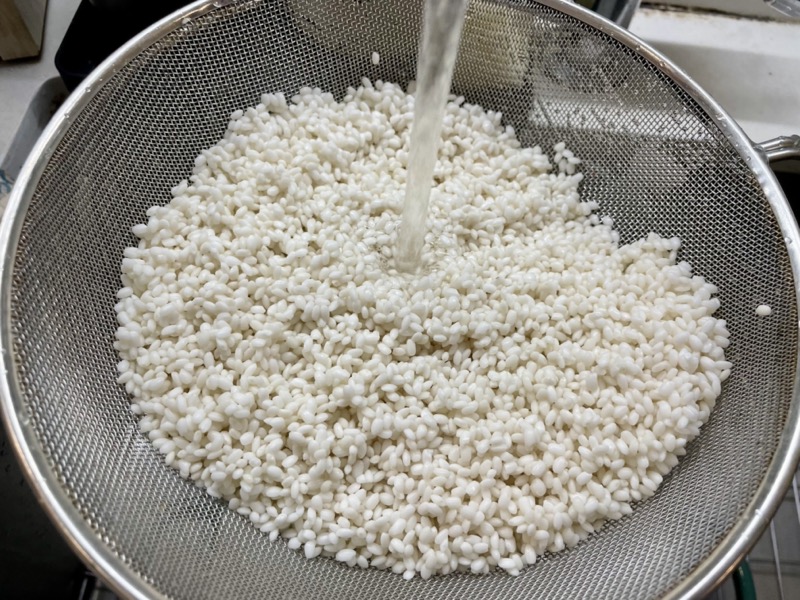
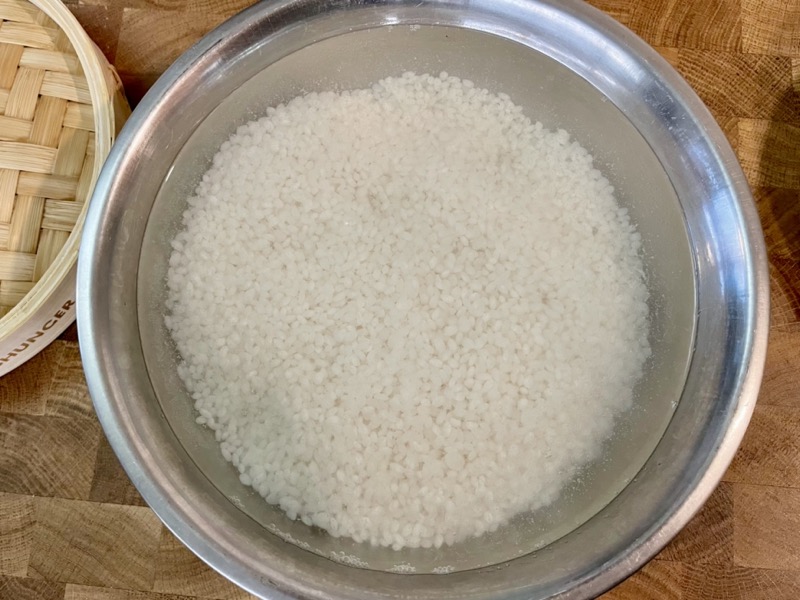
Soak the rice the night before: Wash the glutinous rice in a colander a few times then transfer to a large bowl and add enough water to cover 2-3 inches above the rice. Let it soak overnight.
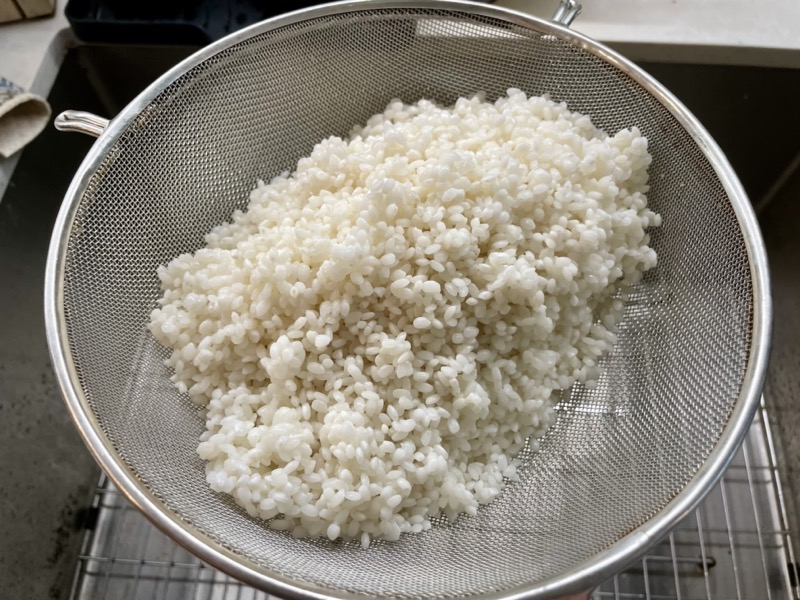
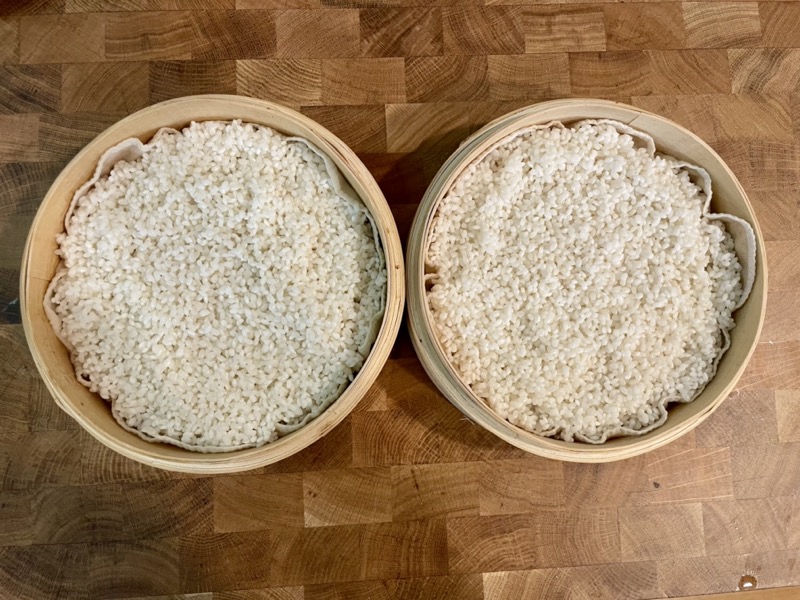
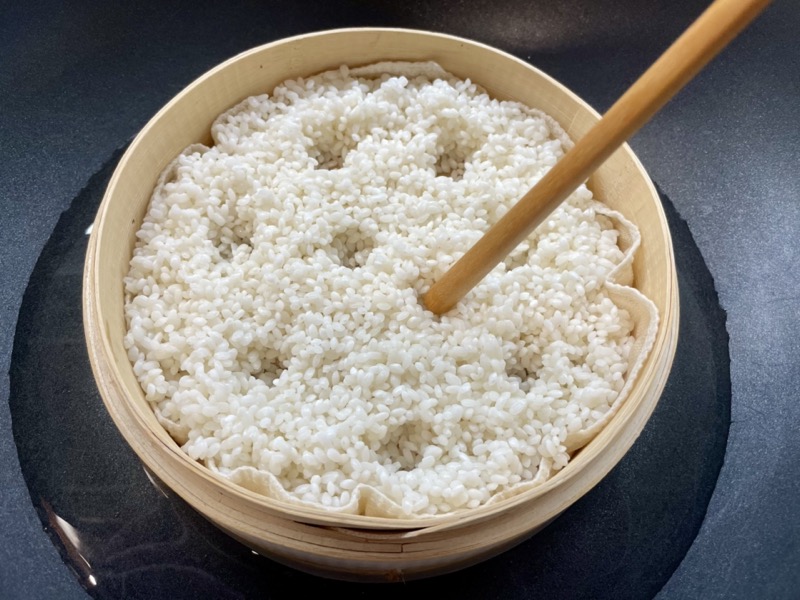
Cook the rice: The next day, strain the rice. Prepare a large steaming basket with a moistened liner. Add the rice into the steaming basket and use the back of a chopstick to create holes in the rice help it cook evenly. Note: I used two smaller bamboo steaming baskets stacked since I didn’t have a large one. Steam for 30-40 minutes until the rice is cooked (a little chewy but not too tough or mush). Once finished, turn off the heat and set the rice aside.

You can steam it however method you wish. I put my steaming baskets with a lid on into a wok with a couple inches of boiling water and let it simmer until the time is up. Add water as needed to the wok when it evaporates.

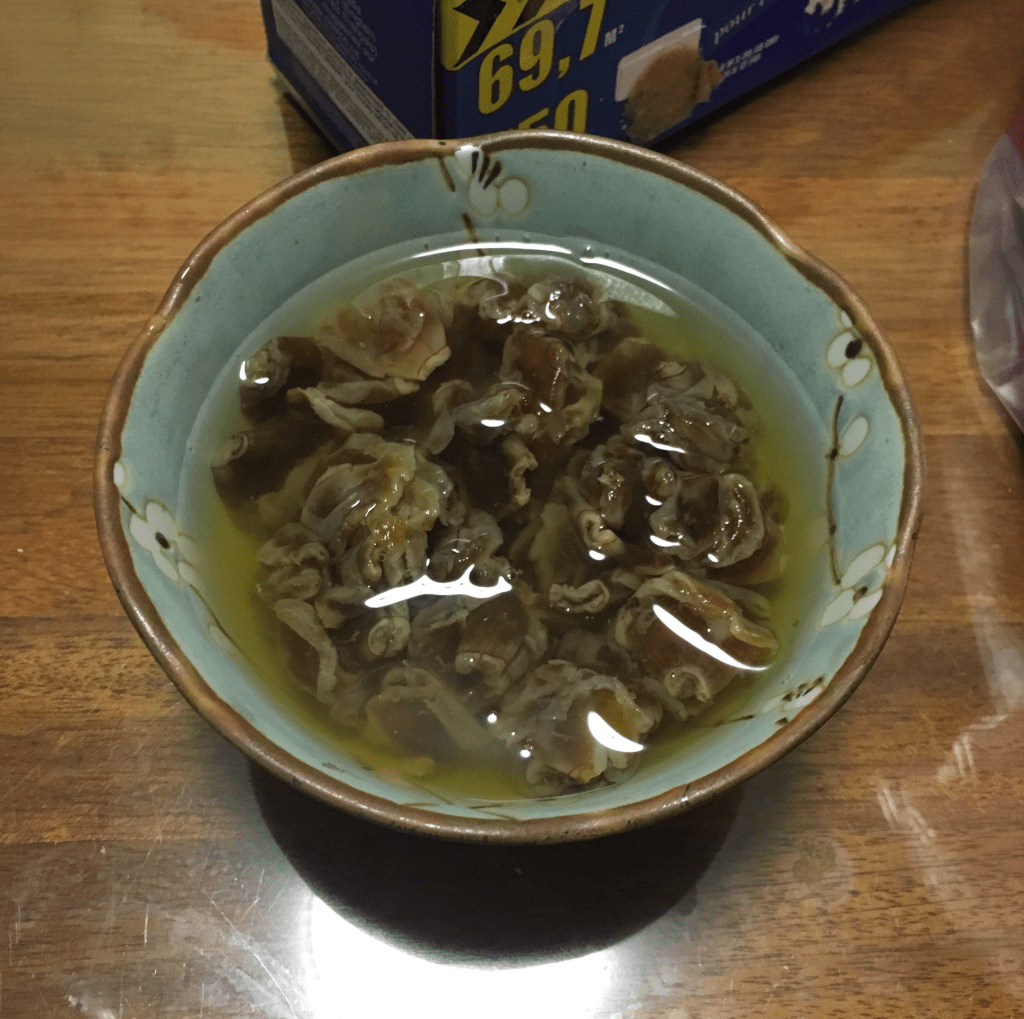
Prepare the mushrooms: In a bowl, add the dried shiitake mushrooms and enough warm water to cover. Let it soak for at least an hour (or overnight) until the mushrooms have softened. Once softened, reserve 1/3 cup of the mushrooms soaking liquid and strain out the rest. Cut off and discard the thick stems and slice the mushrooms thinly. Set aside.

Prepare the shrimp: Add the 1.5 Tbsp dried shrimp into a small bowl and soak in warm water for 10 minutes then strain.

Marinate the pork: Add all of the pork marinade ingredients into a bowl: 1.5 Tbsps soy sauce, 1/8 tsp white pepper, 1 tsp sesame oil, sliced pork. Mix together and set aside to marinate for at least 15 minutes.

Prepare the sauce: Mix together the 1/4 cup soy sauce, 1 Tbsp sugar, 2 tsps rice wine vinegar, 1 tsp black vinegar, and the reserved 1/3 cup of the mushroom soaking liquid. Set aside.

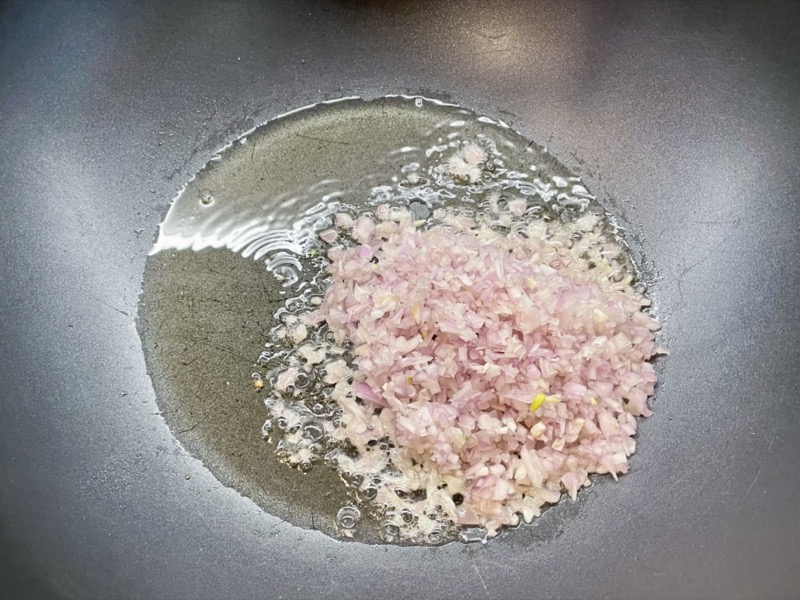
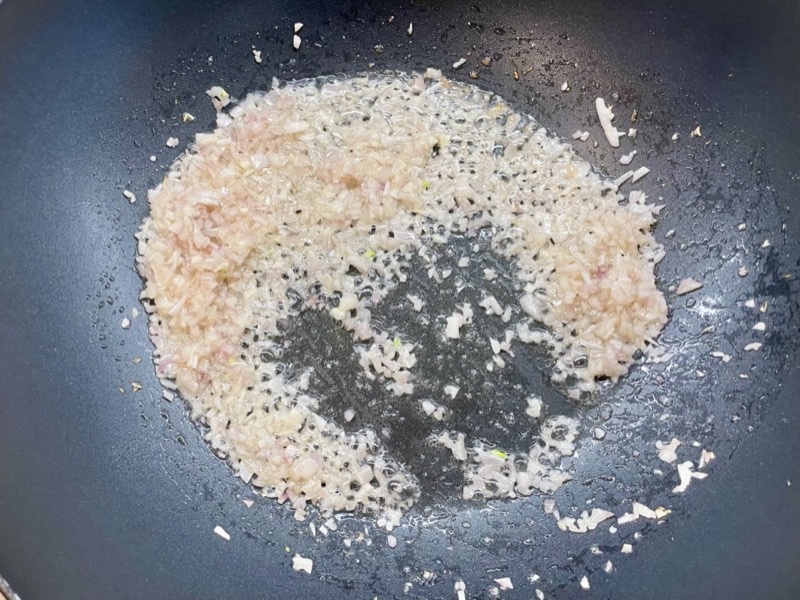
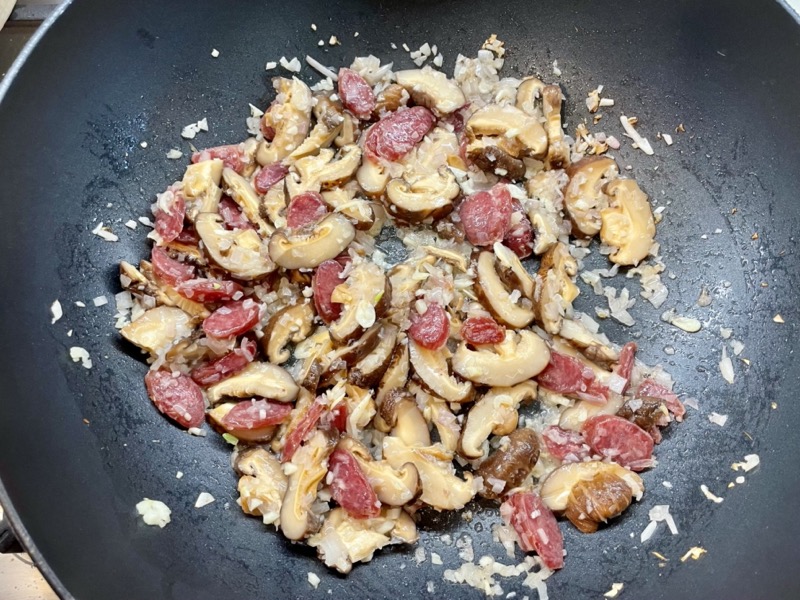
Putting it all together (make sure all of your ingredients are chopped and ready – this will be a quick process): In a wok on MED-HIGH heat, add the 1/4 cup of lard. Once it starts to sizzle, add in the shallots and sautée for 1-2 minutes until softened, then add in the garlic, shrimp, shiitake mushrooms, and lap cheong. Continue to sautée for another 1 minute until fragrant.

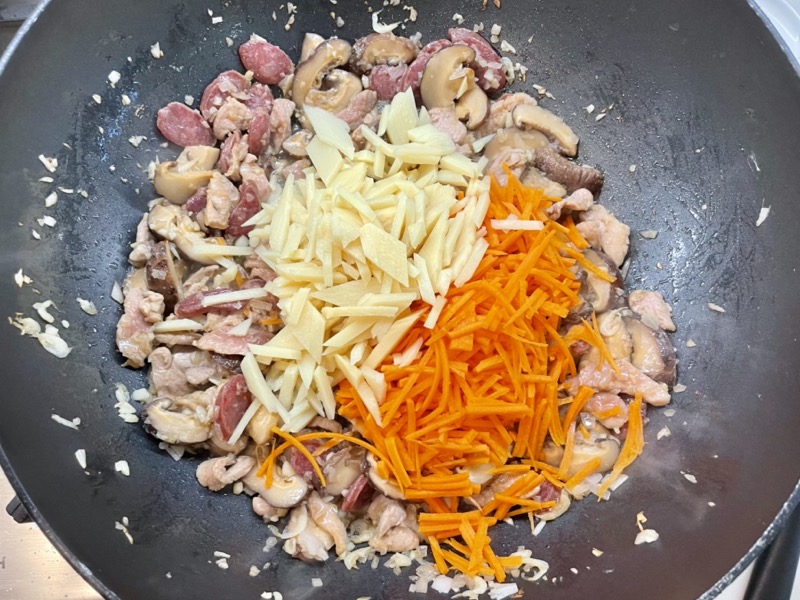
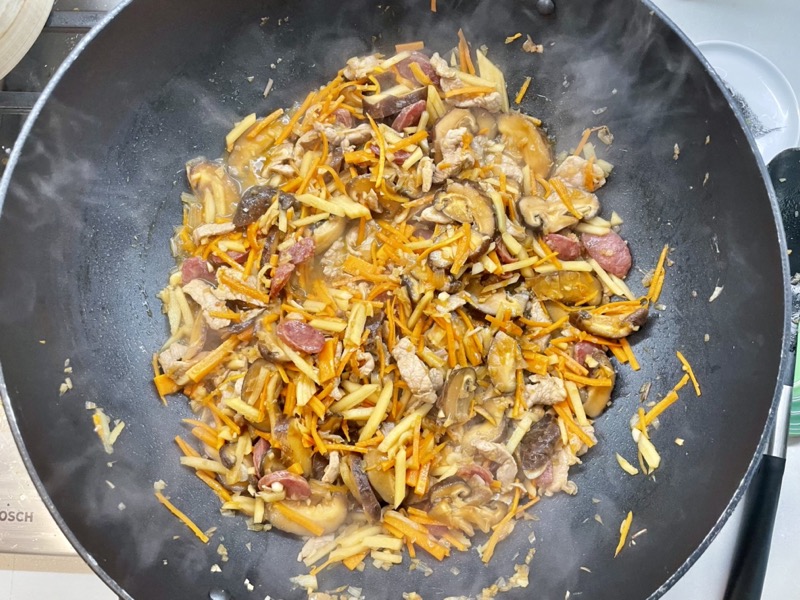
Add in the marinated pork (from step 5). Cook for 1-2 minutes until the edges of the pork turns opaque then add in the carrots and bamboo. Cook for another 2-3 minutes until the carrots have softened and the pork is completely cooked. Add in the sauce (from step 6) and mix everything around for 30 seconds.

Turn off the heat and add in the cooked glutinous rice (from step 2). Gently mix it all together until the rice absorbs all of the liquid. Taste and adjust salt as needed. Serve immediately with an optional side of Haishan sauce.

Summarized Recipe:

Taiwanese Oil Rice/Sticky Rice 油飯

Date Published: March 13th, 2025 | Last Updated: March 13th, 2025
Author: Abby |Category: Asian, mains, Taiwanese
Serves: 4-6 | Prep time: soak rice overnight + 30 mins | Cook time: 40 mins for rice + 10 mins for stir-fry

Ingredients:

  • 2 cups (400g) glutinous rice (sometimes called ‘sweet rice’)
  • 8 dried shiitake mushrooms
  • 1.5 Tbsps small dried shrimp
  • Pork marinade:
    • 1.5 Tbsps soy sauce
    • 1/8 tsp ground white pepper
    • 1 tsp sesame oil
    • 200g pork tenderloin, cut into thin 2cm strips
  • Sauce:
    • 1/4 cup (60ml) soy sauce
    • 1 Tbsps granulated sugar
    • 2 tsps rice wine vinegar/michu
    • 1 tsp black vinegar
  • 1/4 cup (60ml) lard (or neutral oil)
  • 3 large (~1.5 cups) shallots, finely diced
  • 3 garlic cloves, minced
  • 2-3 sticks (85g) of lap cheong (Chinese sausage)
  • 1 medium (~100g) carrot, peeled and julienned
  • 1 can (280g) sliced bamboo shoots, sliced into sticks
  • Optional: haishan sauce

Directions:

  1. Soak the rice the night before: Wash the glutinous rice in a colander a few times then transfer to a large bowl and add enough water to cover 2-3 inches above the rice. Let it soak overnight.
  2. Cook the rice: The next day, strain the rice. Prepare a large steaming basket with a moistened liner. Add the rice into the steaming basket and use the back of a chopstick to create holes in the rice help it cook evenly. Note: I used two smaller bamboo steaming baskets stacked since I didn’t have a large one. Steam for 30-40 minutes until the rice is cooked (a little chewy but not too tough or mush). Once finished, turn off the heat and set the rice aside.
    • You can steam it however method you wish. I put my steaming baskets with a lid on into a wok with a couple inches of boiling water and let it simmer until the time is up. Add water as needed to the wok when it evaporates.
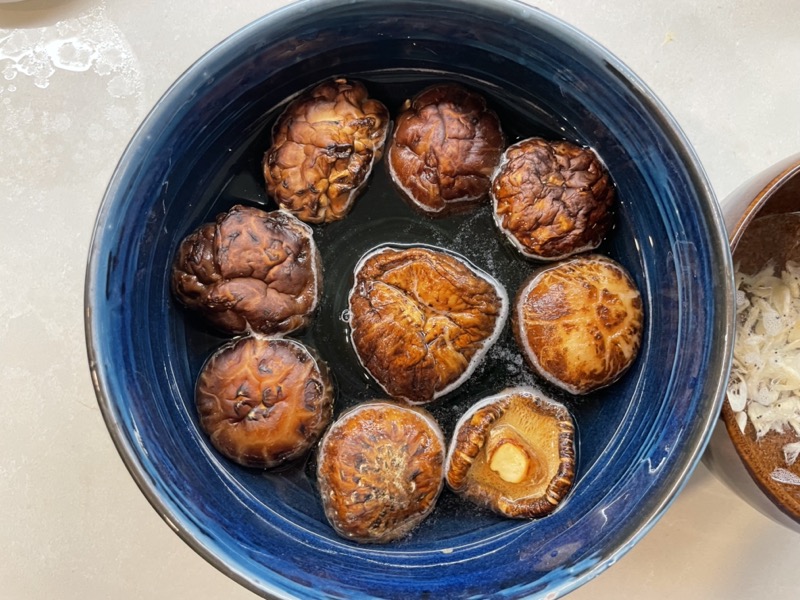
  3. Prepare the mushrooms: In a bowl, add the dried shiitake mushrooms and enough warm water to cover. Let it soak for about an hour (or overnight) until the mushrooms have softened. Once softened, reserve 1/3 cup of the mushrooms soaking liquid and strain out the rest. Cut off and discard the thick stems and slice the mushrooms thinly. Set aside.
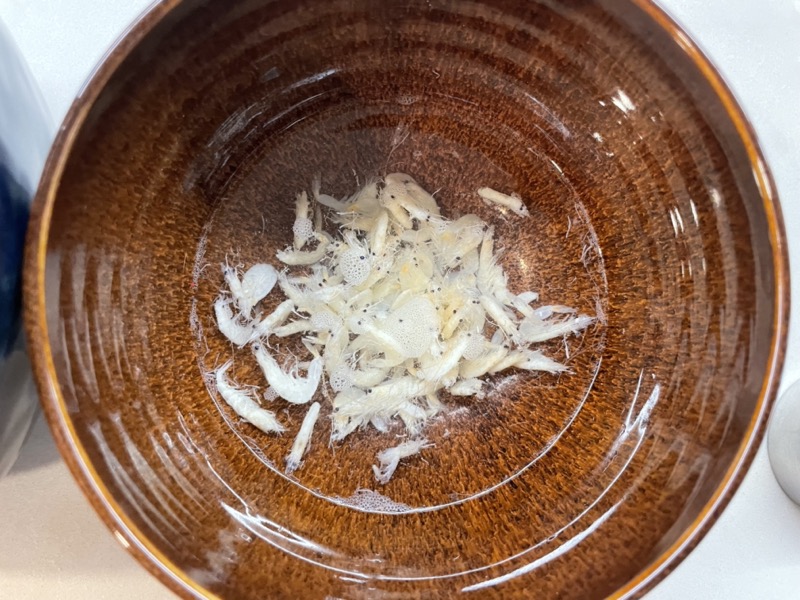
  4. Prepare the shrimp: Add the 1.5 Tbsps dried shrimp into a small bowl and soak in warm water for 10 minutes then strain.
  5. Marinate the pork: Add all of the pork marinade ingredients into a bowl: 1.5 Tbsps soy sauce, 1/8 tsp white pepper, 1 tsp sesame oil, sliced pork. Mix together and set aside to marinate for at least 15 minutes.
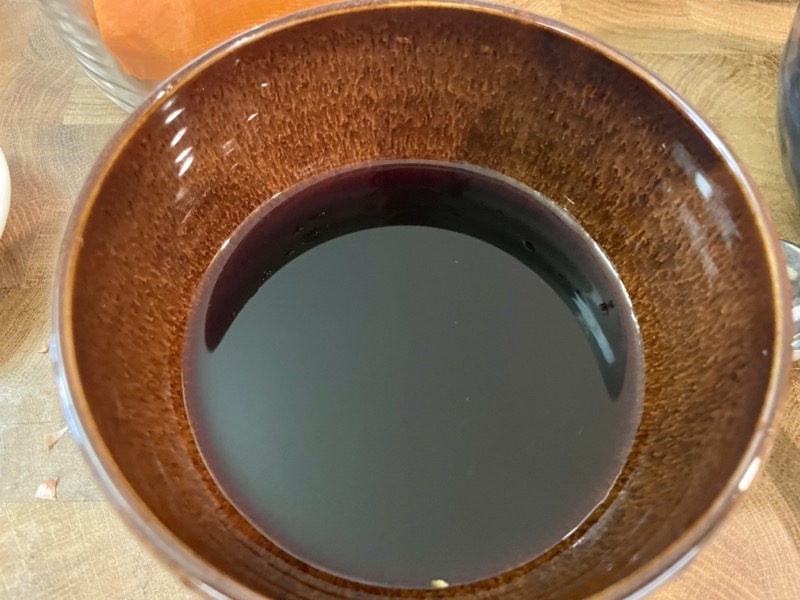
  6. Prepare the sauce: Mix together the 1/4 cup soy sauce, 1 Tbsp sugar, 2 tsps rice wine vinegar, 1 tsp black vinegar, and the reserved 1/3 cup of the mushroom soaking liquid. Set aside.
  7. Putting it all together (make sure all of your ingredients are chopped and ready – this will be a quick process):
    • In a wok on MED-HIGH heat, add the 1/4 cup of lard. Once it starts to sizzle, add in the shallots and sauté for 1-2 minutes until softened.
    • Add in the garlic, shrimp, shiitake mushrooms, and lap cheong. Continue to sautée for another 1 minute until fragrant.
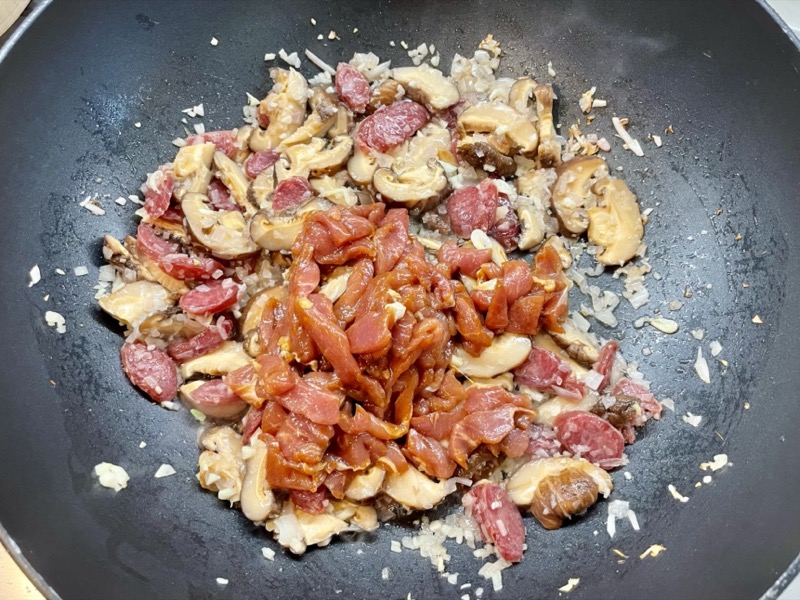
    • Next, add in the marinated pork (from step 5). Cook for 1-2 minutes until the edges of the pork turns opaque.
    • Add in the carrots and bamboo and cook for another 2-3 minutes until the carrots have softened and the pork is completely cooked.
    • Add in the sauce (from step 6) and mix everything around for 30 seconds.
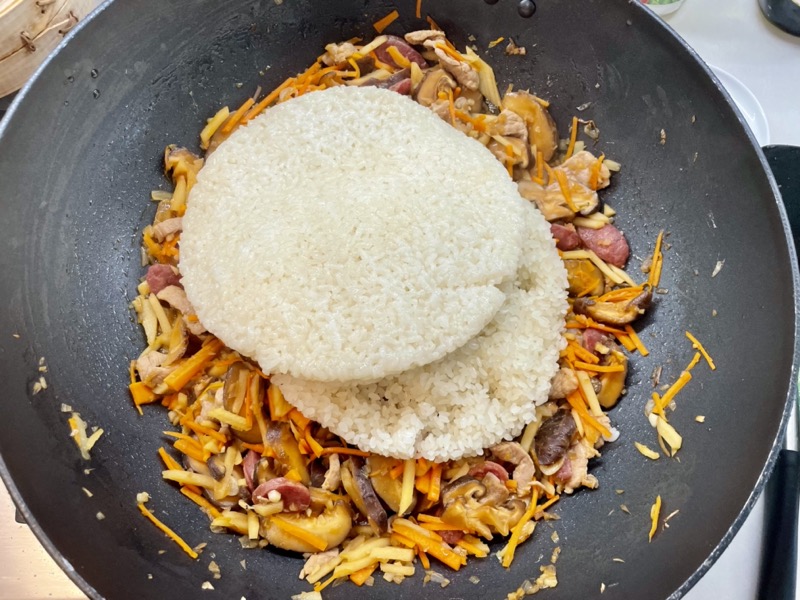
    • Turn off the heat and add in the cooked glutinous rice (from step 2). Gently mix it all together until the rice absorbs all of the liquid.
    • Taste and adjust salt as needed.
  8. Serve immediately with an optional side of Haishan sauce.

Drunken Chicken (a Chinese cold dish)


Date Published: Jan 6th, 2025 | Last Updated: Jan 6th, 2025
Author: Abby |Category: easy, <30 mins, Asian, appetizers, healthy, low cal, sides, Taiwanese
Serves: 1 plate | Prep time: 5 mins | Cook time: 28 mins (+ 2 hours marinating)

Jump to recipe |

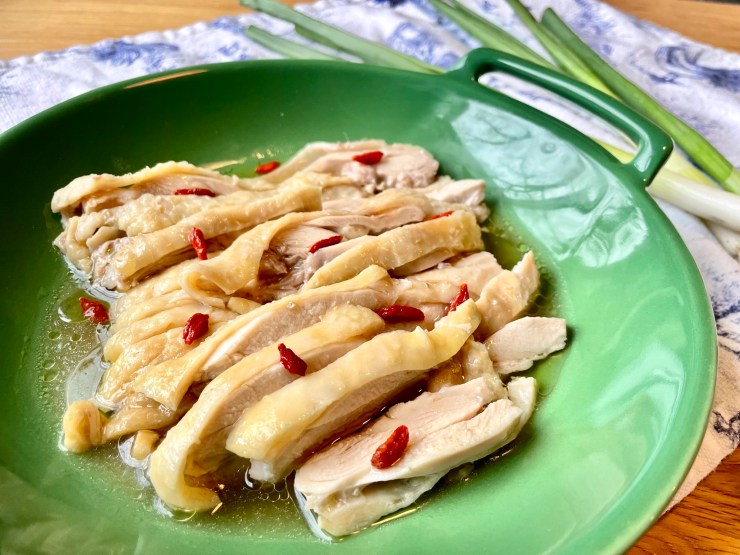
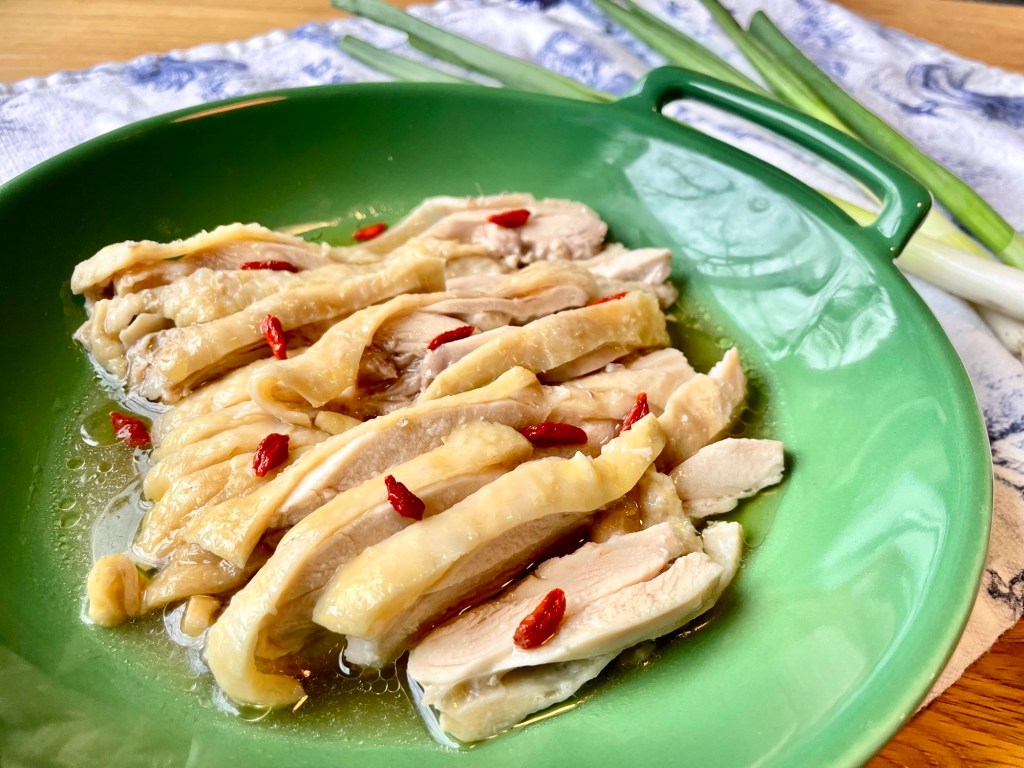
Drunken Chicken is a traditional Chinese savoury appetizer dish served either cold or at room temperature. Fair warning, if you don’t like alcohol, you’re not going to like this dish. I grew up with this dish and I absolutely hated it when I was a kid because of how strong the alcohol flavour was. It was almost always served as part of a 10 course prix-fixe meal at fancy Chinese restaurants during get-togethers with extended families, work dinners, or wedding banquets. Any time there’s any occasion to celebrate, drunken chicken makes an appearance. Now as an adult and being more accustomed to alcohol, I found a new appreciation for this dish. It’s unique and is a nice way to open your palate before the hot stir frys come out, and the salty cool alcohol flavours gives a good break from hot spicy foods.

This recipe is ridiculously easy and cooks up quickly. Make sure you use good quality Shaoxing Wine for this dish since it’s 50% of the marinade – you’ll taste the difference. You’ll need to marinate the chicken for at least 2 hours or better if overnight, so make sure you give yourself enough time before serving.

Anyways, without further ado, here’s the recipe! If you have any comments or suggestions, I’d love to hear from you in the comment section! You can follow me on instagram, youtube and facebook to see all the recipes I post!

Happy cooking!

Ingredients you’ll need:

  • 4 chicken thighs, skin-on, bone in or out
  • 1 Tbsp kosher salt flakes + more to taste
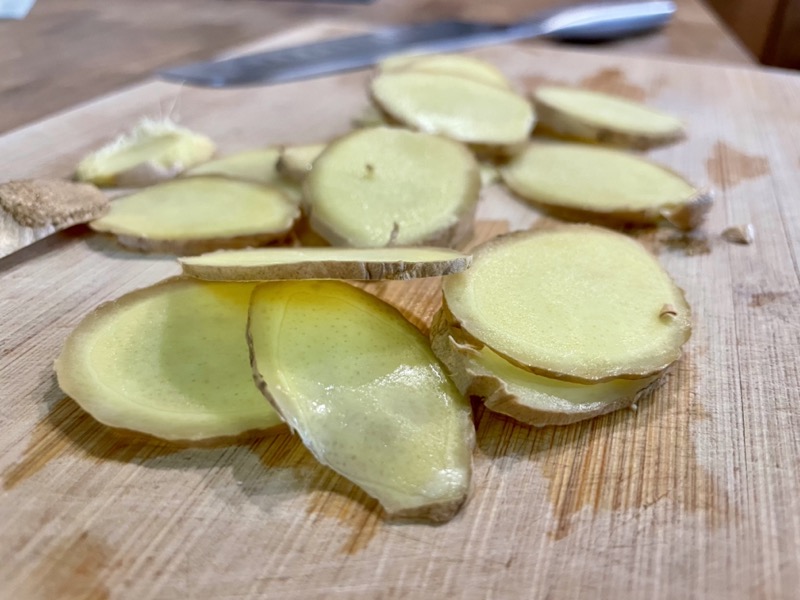
  • 4x 3mm slices of ginger
  • 2 spring onions, trimmed and cut 4cm lengths
  • Ice water bath
  • 1 tsp granulated sugar
  • 1.5 cups (375ml) Shaoxing Wine (Chinese cooking wine)
  • 1 Tbsp goji berries

Directions:

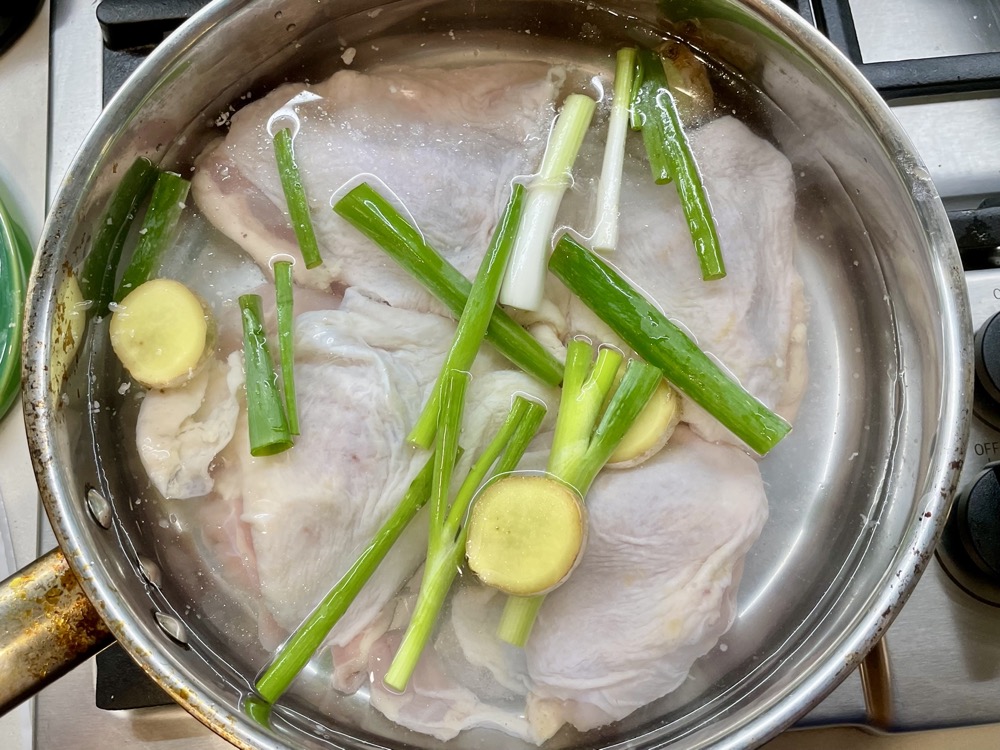
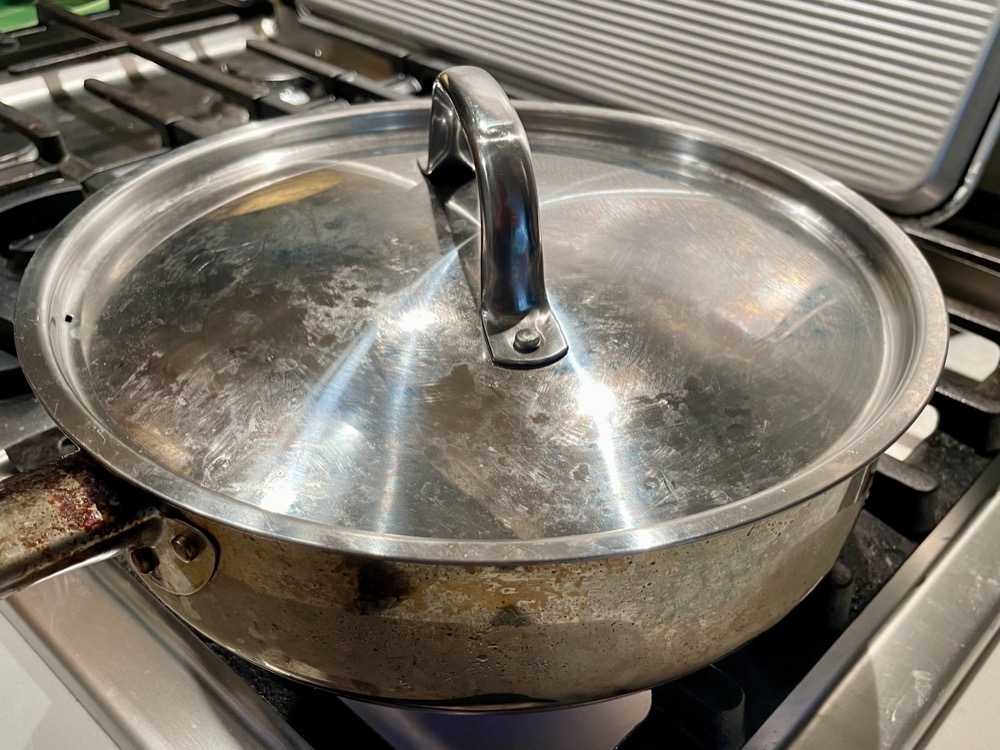
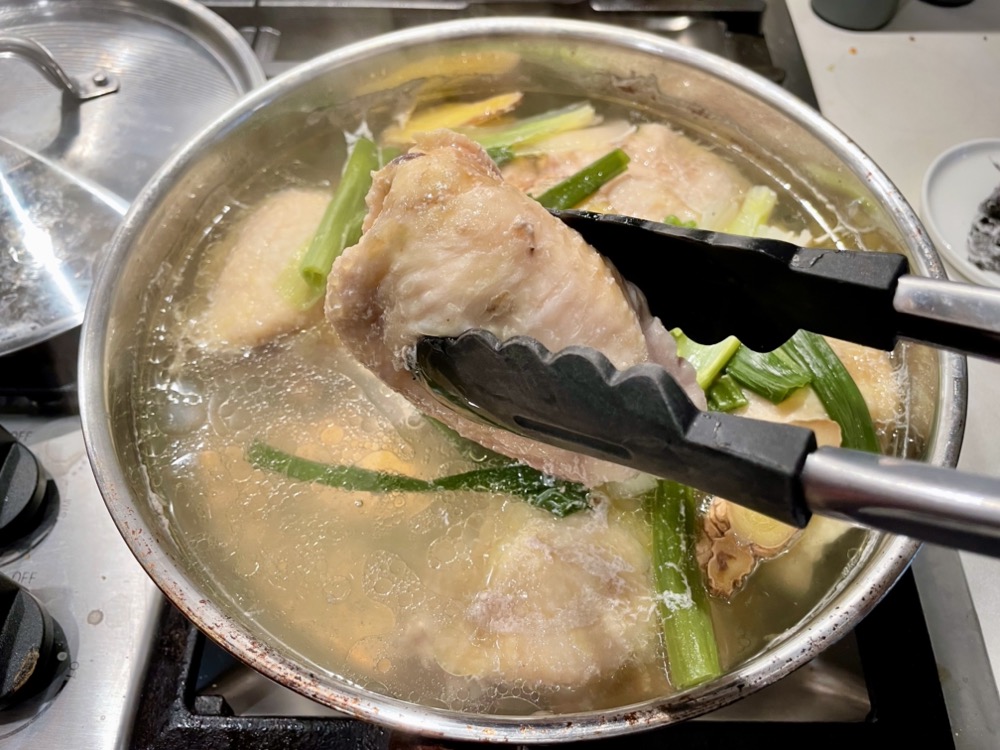
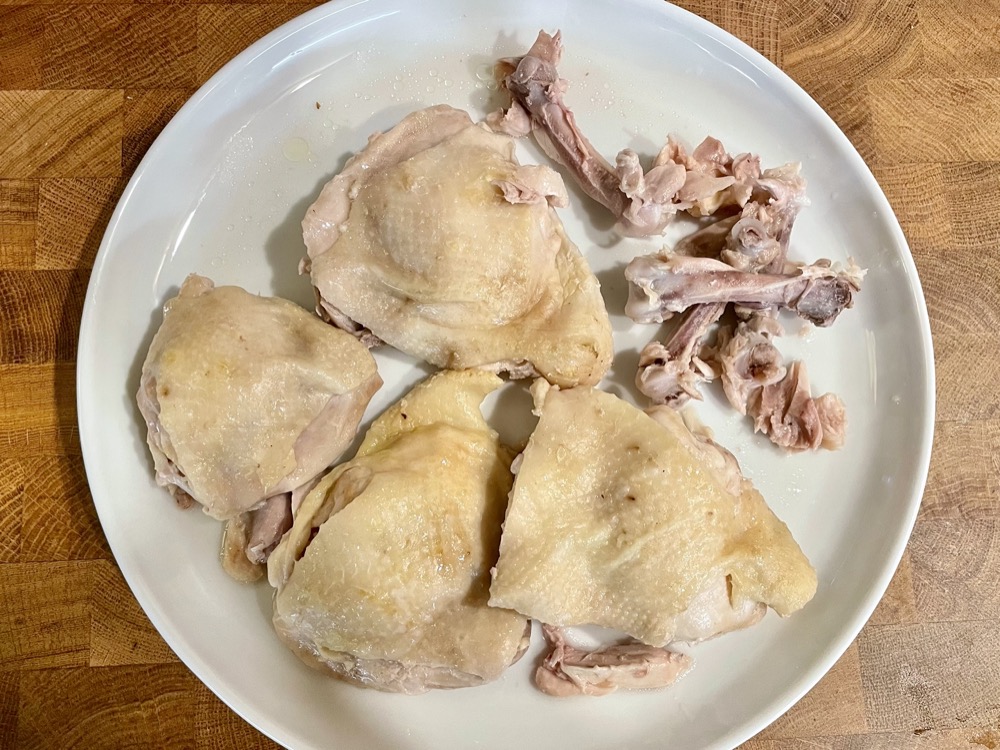
In a pot or a deep pan (with a lid), arrange the chicken thighs in a single layer and add in 1 Tbsp salt, ginger slices, and spring onions. Add enough water to just cover the chicken. Put the lid on and turn the heat up to HIGH to bring the water to a boil, then turn it down to LOW to let the chicken simmer for 8 minutes.

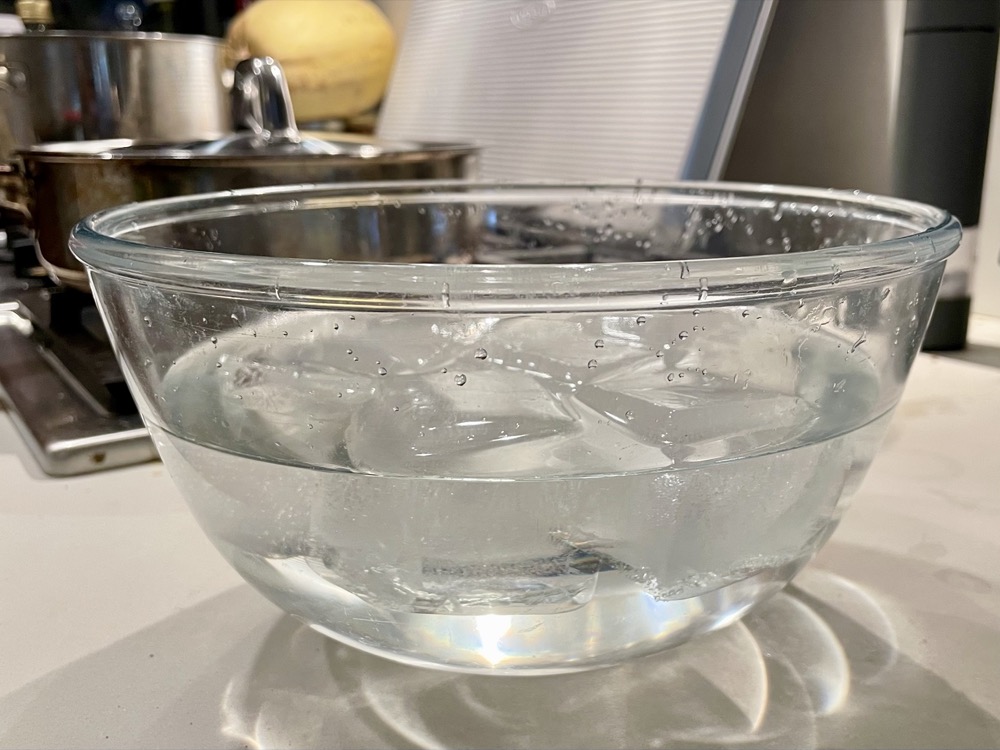
After 8 minutes, turn the heat off and let the chicken sit for another 5 minutes with the lid on (do not open the lid until the timer is up or else you’ll let the heat escape). Prepare an ice water bath for the chicken in this time.

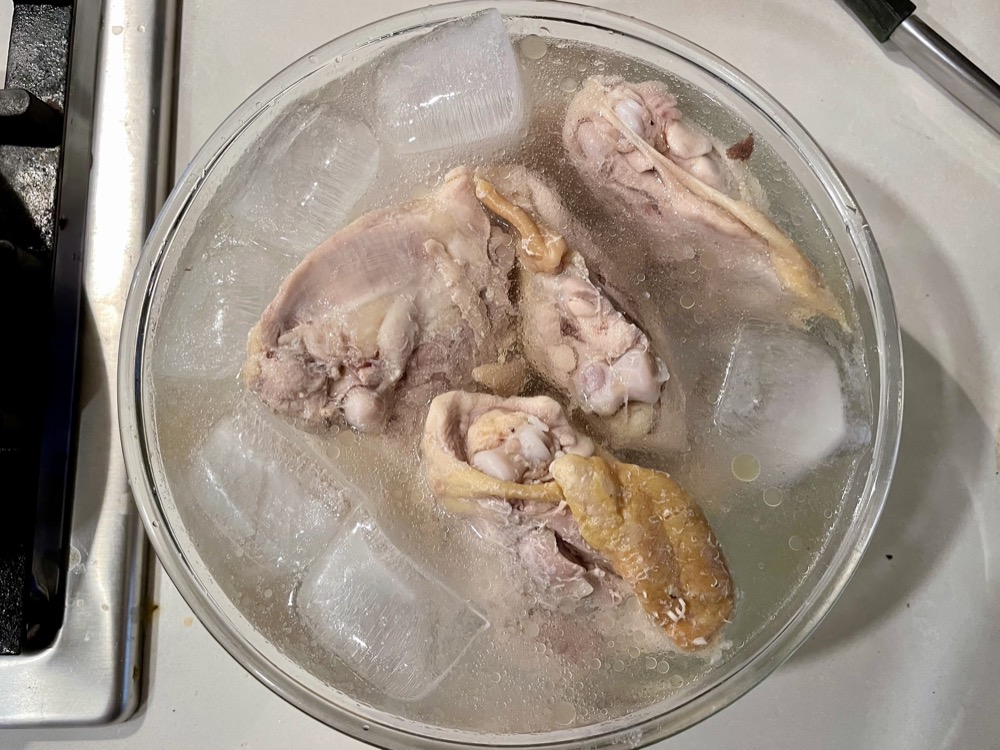
When the timer is up, check that the chicken is cooked (internal temp should be at least 165˚F/74˚C). If it hasn’t cooked, simmer it for a bit longer, otherwise remove the chicken and place it in the prepared ice water bath. This will allow the skin to firm up with a bouncy texture.

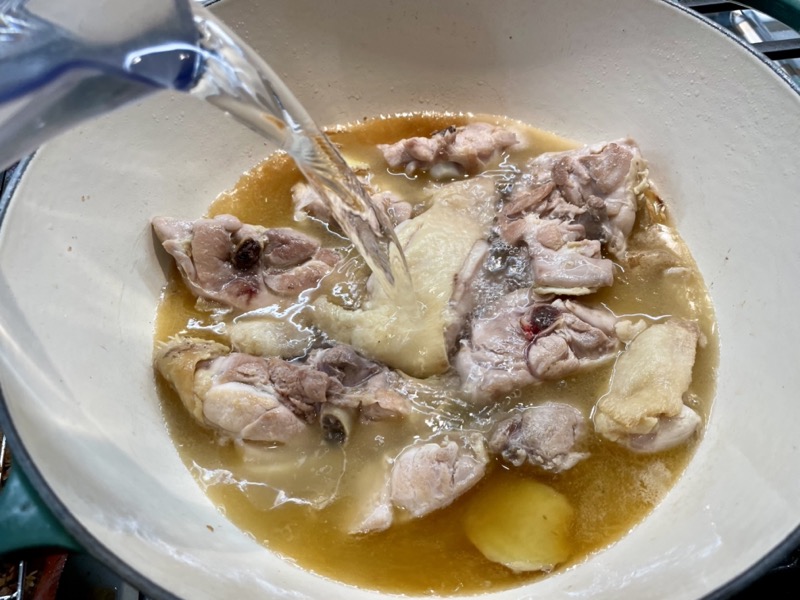
With the remaining broth, turn on the heat again to MED-HIGH and let the broth simmer until the liquid has reduced to about 1.5 cups (15-20 mins).

While the broth is reducing, once the chicken has cooled, remove it from the ice bath and remove the bone with your hands (if present). Slice the chicken and place it in a glass or non-reactive bowl with a lid.

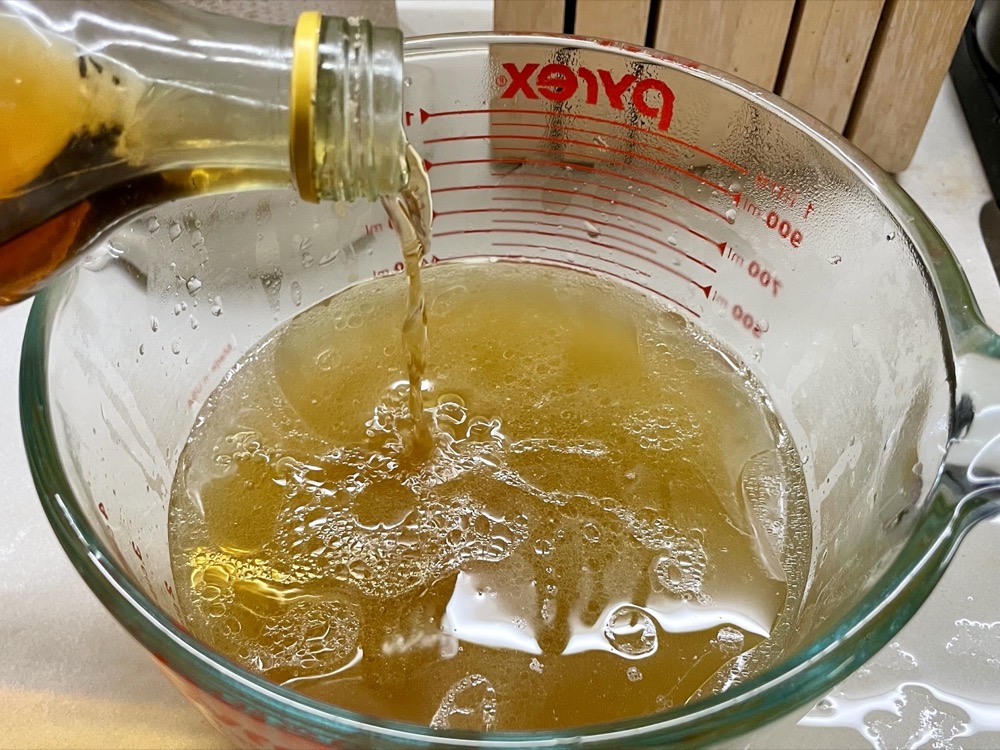
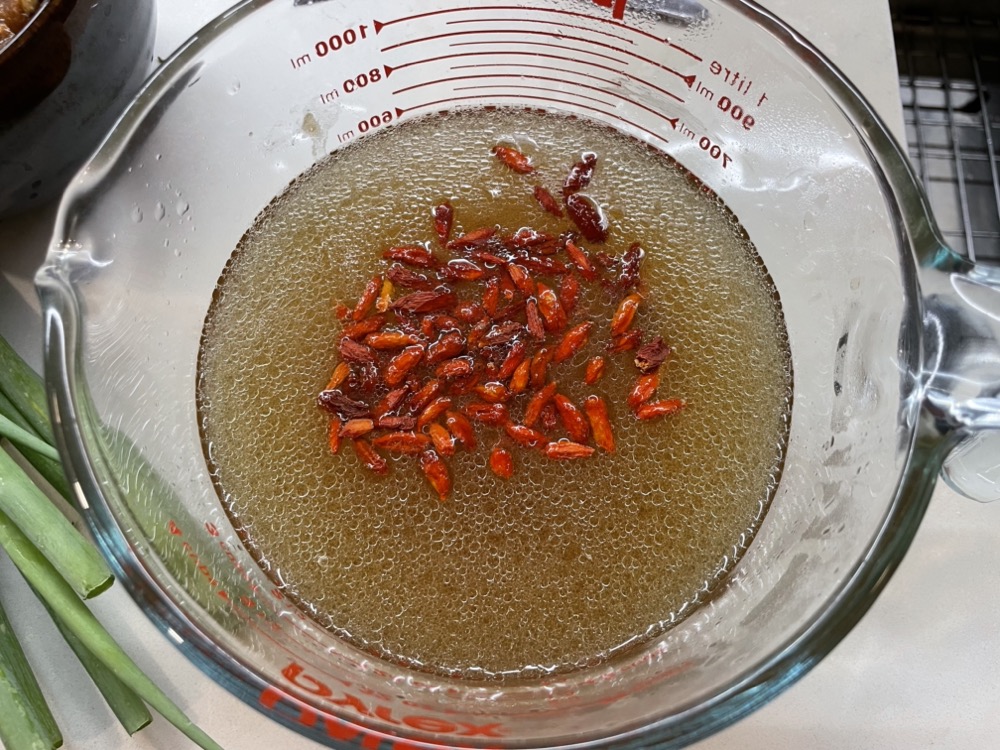
Once the broth has reduced, strain it into a measuring cup and add in the equivalent amount of Shaoxing wine into the measuring cup (ie. if you have 1.5 cups of broth, you will add to it 1.5 cups of the wine), 1 tsp sugar, and the goji berries. Stir until the sugar dissolves and taste. You should have a very savoury alcohol-tasting broth.

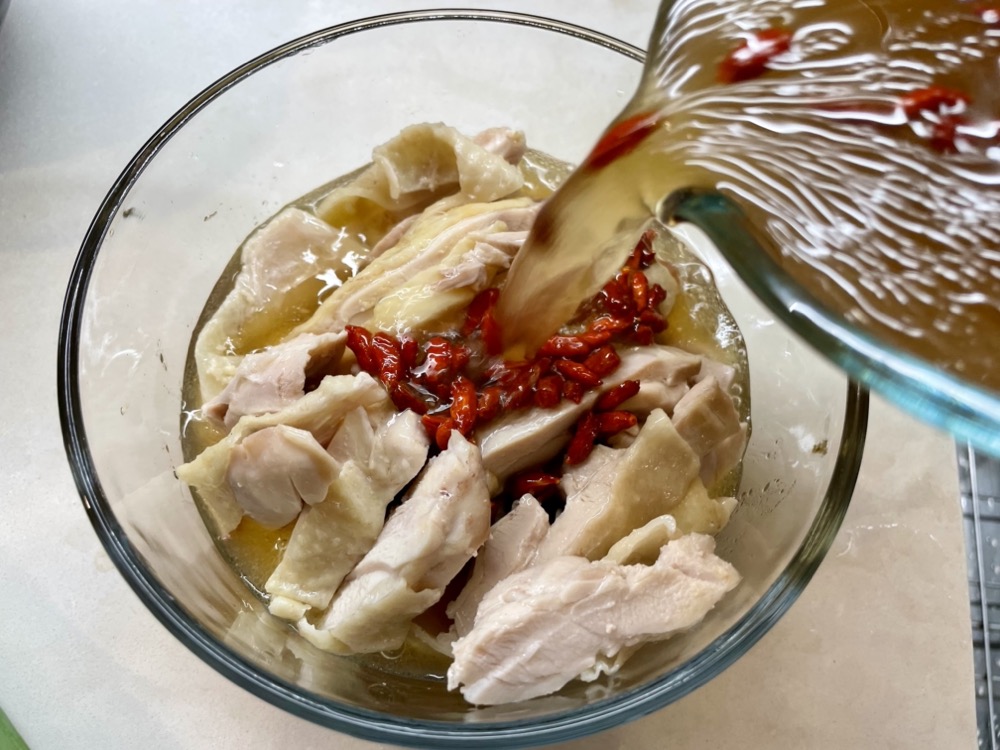
Pour the alcohol/broth mixture into the bowl with the sliced chicken and cover. Refrigerate to marinate for at least 2 hours or overnight.

When serving, strain the liquid from the chicken and serve chilled. Enjoy!

Summarized Recipe:

Drunken Chicken (a Chinese cold dish)

Date Published: Jan 6th, 2025 | Last Updated: Jan 6th, 2025
Author: Abby |Category: easy, <30 mins, Asian, appetizers, healthy, low cal, sides, Taiwanese
Serves: 1 plate | Prep time: 5 mins | Cook time: 28 mins (+ 2 hours marinating)

Ingredients:

  • 4 chicken thighs, skin-on, bone in or out
  • 1 Tbsp kosher salt flakes + more to taste
  • 4x 3mm slices of ginger
  • 2 spring onions, trimmed and cut 4cm lengths
  • Ice water bath
  • 1 tsp granulated sugar
  • 1.5 cups (375ml) Shaoxing Wine (Chinese cooking wine)
  • 1 Tbsp goji berries

Directions:

  1. In a pot or a deep pan (with a lid), arrange the chicken thighs in a single layer and add in 1 Tbsp salt, ginger slices, and spring onions. Add enough water to just cover the chicken. Put the lid on and turn the heat up to HIGH to bring the water to a boil, then turn it down to LOW to let the chicken simmer for 8 minutes.
  2. After 8 minutes, turn the heat off and let the chicken sit for another 5 minutes with the lid on (do not open the lid until the timer is up or else you’ll let the heat escape). Prepare an ice water bath for the chicken in this time.
  3. When the timer is up, check that the chicken is cooked (internal temp should be at least 165˚F/74˚C). If it hasn’t cooked, simmer it for a bit longer, otherwise remove the chicken and place it in the prepared ice water bath. This will allow the skin to firm up with a bouncy texture.
  4. With the remaining broth, turn on the heat again to MED-HIGH and let the broth simmer until the liquid has reduced to about 1.5 cups (15-20 mins).
  5. While the broth is reducing, once the chicken has cooled, remove it from the ice bath and remove the bone with your hands (if present). Slice the chicken and place it in a glass or non-reactive bowl with a lid.
  6. Once the broth has reduced, strain it into a measuring cup and add in the equivalent amount of Shaoxing wine into the measuring cup (ie. if you have 1.5 cups of broth, you will add to it 1.5 cups of the wine), 1 tsp sugar, and the goji berries. Stir until the sugar dissolves and taste. You should have a very savoury alcohol-tasting broth.
  7. Pour the alcohol/broth mixture into the bowl with the sliced chicken and cover. Refrigerate to marinate for at least 2 hours or overnight. When serving, strain the liquid from the chicken and serve chilled. Enjoy!

Taiwanese Sesame Oil Chicken Soup 麻油雞


Date Published: July 23rd, 2024 | Last Updated: July 23rd, 2024
Author: Abby | Category: soups, asian, Taiwanese, mains, easy, healthy
Serves: 4 | Prep time: 20 mins | Cook time: 45 mins

Jump to recipe |

This is a classic Taiwanese dish that my wai po (maternal grandmother) used to make. This was one of her specialties and she’d often make it every time she came to visit because it is one of my mom’s favourite dishes. I must admit, I didn’t like it when I first had it as a child because she would put in a BUTTLOAD of alcohol (no joke, one entire bottle of rice wine), but over the years I’ve come to really crave it and it’s become a very nostalgic dish. It’s often made for postpartum women as a healing soup and is also a good winter soup that is said to improve circulation, warmth and health (just don’t ask me how, probably from all the alcohol, lol). Over the years, this dish has become a comfort food for me and will always remind me of my wai po.

A photo of my late wai po and wai gong in 2016 ❤️

This soup may not be for everyone – it has a strong taste of alcohol and sesame oil (which is why it took me a while to warm up to it), but it’s savoury and full of flavour. You can have it on its own, but my favourite is when it’s served with thin noodles with a side of stir-fry leafy greens.

This recipe is a combination of my dad’s and my grandmother’s recipe, tweaked to have less alcohol.

Anyways, without further ado, here’s the recipe! If you have any comments or suggestions, I’d love to hear from you in the comment section! You can follow me on instagram, youtube and facebook to see all the recipes I post!

Happy cooking!

Ingredients you’ll need:

  • 1/2 cup of dried longyan fruit (optional)
  • 1 Tbsp + 2 Tbsps + 1/4 cup black sesame oil
  • 50g ginger, unpeeled and sliced to 2mm thickness
  • 900g chicken thighs, bone-in and skin on, chopped into 5cm pieces
  • 2 cups cooking rice wine/michu (19.5% alcohol – red label)
  • 2 cups (480ml) of water
  • 1 Tbsp dried goji berries (lycii fructus)
  • Salt to taste
  • Optional: thin noodles, 4 portions (I only had thick noodles on hand for the photos)

Directions:

Optional step if using longyan: soak the longyan in 1/2 cup of rice wine and set aside.

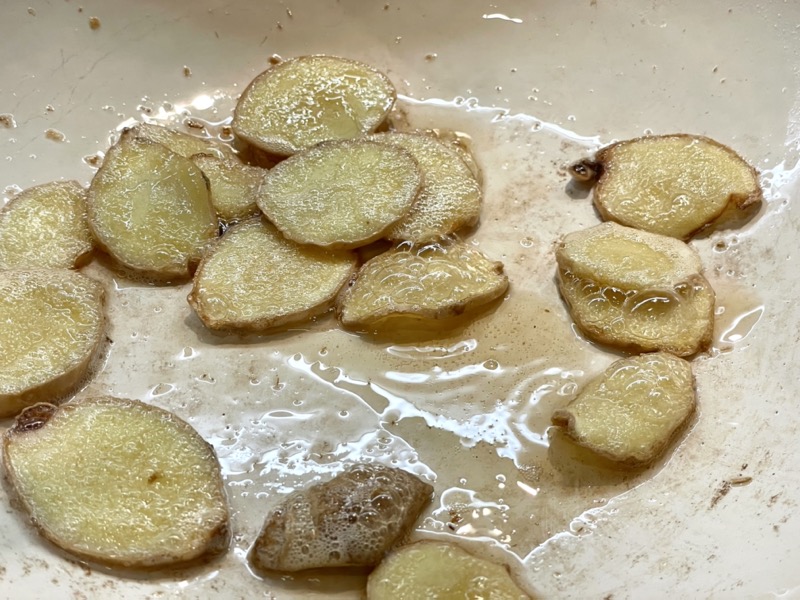
In a medium pot on MED-HIGH heat, add in 1 Tbsp of black sesame oil. When the oil starts to shimmer, add in the sliced ginger and sauté for 2-3 minutes until the edges of the ginger curls and the ginger is lightly browned. Remove the ginger onto a plate and set aside.

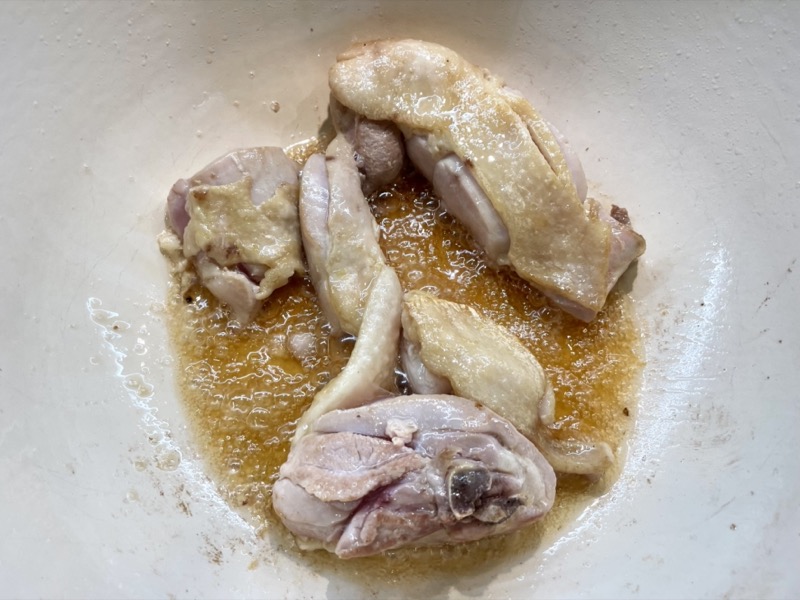
In the same pot, add in 2 Tbsps of black sesame oil and sear the chicken thigh pieces until browned on both sides (3-4 minutes) – you may have to do this in two batches to not overcrowd the pot.

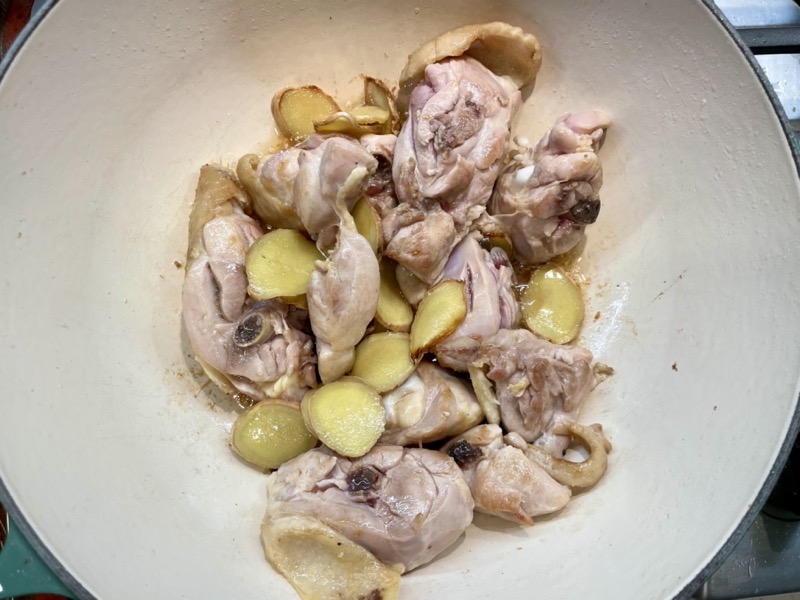
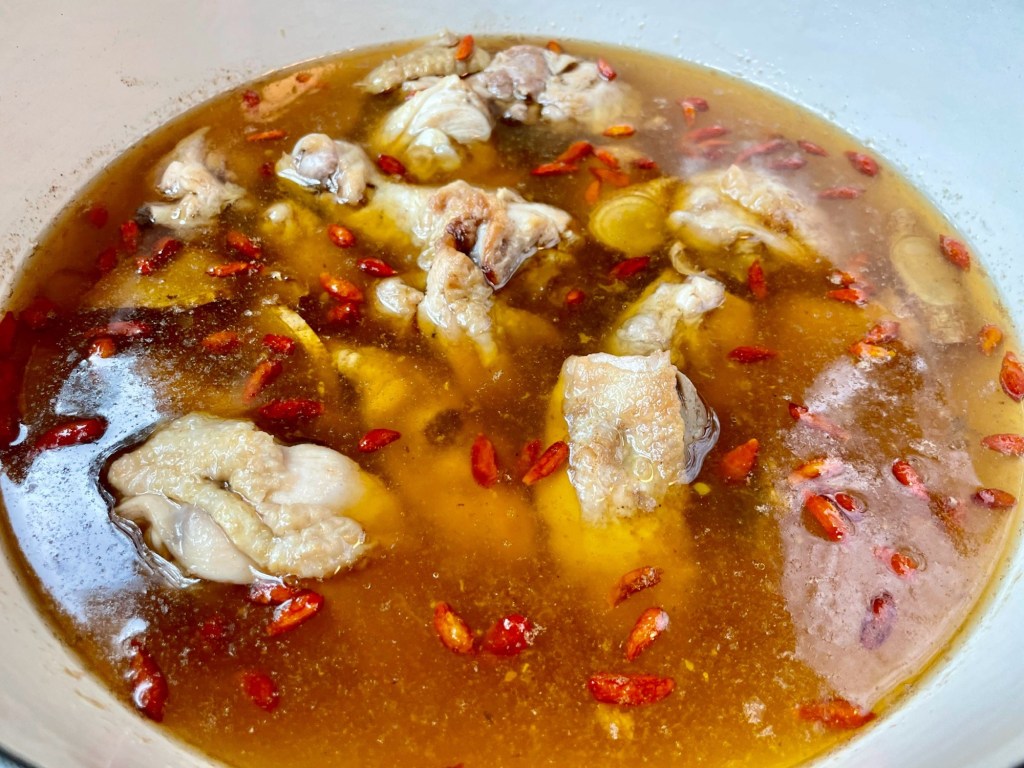
Once the chicken has browned, add back in all the browned chicken and cooked ginger (from step 1), along with the rest of the rice wine, water, (and the soaked longyan with the soaking alcohol (from step 1), if using). Let the soup simmer for 3-4 minutes, then turn the heat down to LOW so it’s at a gentle boil (we don’t want to reduce the soup, but to slowly cook the chicken). Cook with the lid on for 25 minutes.

Optional: cook the noodles according to package instructions while the soup is boiling. Drain and divide evenly into the soup bowls.

Once the timer is up, check that the chicken is cooked (if not, continue to cook for longer). Add in 1/4 cup black sesame oil and goji berries. Taste and adjust salt as needed. Serve immediately or poured over cooked noodles if using. Enjoy!

Summarized Recipe:

Taiwanese Sesame Oil Chicken Soup 麻油雞

Date Published: July 23rd, 2024 | Last Updated: July 23rd, 2024
Author: Abby | Category: soups, asian, Taiwanese, mains, easy, healthy
Serves: 4 | Prep time: 20 mins | Cook time: 45 mins

Ingredients:

  • 1/2 cup dried longyan (optional)
  • 1 Tbsp + 2 Tbsps + 1/4 cup black sesame oil
  • 50g ginger, unpeeled and sliced to 2mm thickness
  • 900g chicken thighs, bone-in and skin on, chopped into 5cm pieces
  • 2 cups cooking rice wine/michu (19.5% alcohol – red label)
  • 2 cups (480ml) of water
  • 1 Tbsp dried goji berries (lycii fructus)
  • Salt to taste
  • Optional: thin noodles, 4 portions

Directions:

  1. Optional step if using longyan: soak the longyan in 1/2 cup of rice wine and set aside.
  2. In a medium pot on MED-HIGH heat, add in 1 Tbsp of black sesame oil. When the oil starts to shimmer, add in the sliced ginger and sauté for 2-3 minutes until the edges of the ginger curls and the ginger is lightly browned. Remove the ginger onto a plate and set aside.
  3. In the same pot, add in 2 Tbsps of black sesame oil and sear the chicken thigh pieces until browned on both sides (3-4 minutes) – you may have to do this in two batches to not overcrowd the pot.
  4. Once the chicken has browned, add back in all the browned chicken and cooked ginger (from step 1), along with the rest of the rice wine, water, (and the soaked longyan with the soaking alcohol (from step 1), if using). Let the soup simmer for 3-4 minutes, then turn the heat down to LOW so it’s at a gentle boil (we don’t want to reduce the soup, but to slowly cook the chicken). Cook with the lid on for 25 minutes.
  5. Optional: cook the noodles according to package instructions while the soup is boiling. Drain and divide evenly into the soup bowls.
  6. Once the timer is up, check that the chicken is cooked (if not, continue to cook for longer). Add in 1/4 cup black sesame oil and goji berries. Taste and adjust salt as needed. Serve immediately or poured over cooked noodles if using. Enjoy!

Taiwanese Pickled Garlic Smashed Cucumber


Date Published: April 16th, 2024 | Last Updated: April 16th, 2024
Author: Abby |Category: asian, quick, easy, Taiwanese, vegetarian, sides, healthy, low cal
Serves: 1 large jar, about 6 portions as sides | Prep time: 1 hour | Cook time: marinate for 4 hours

Jump to recipe

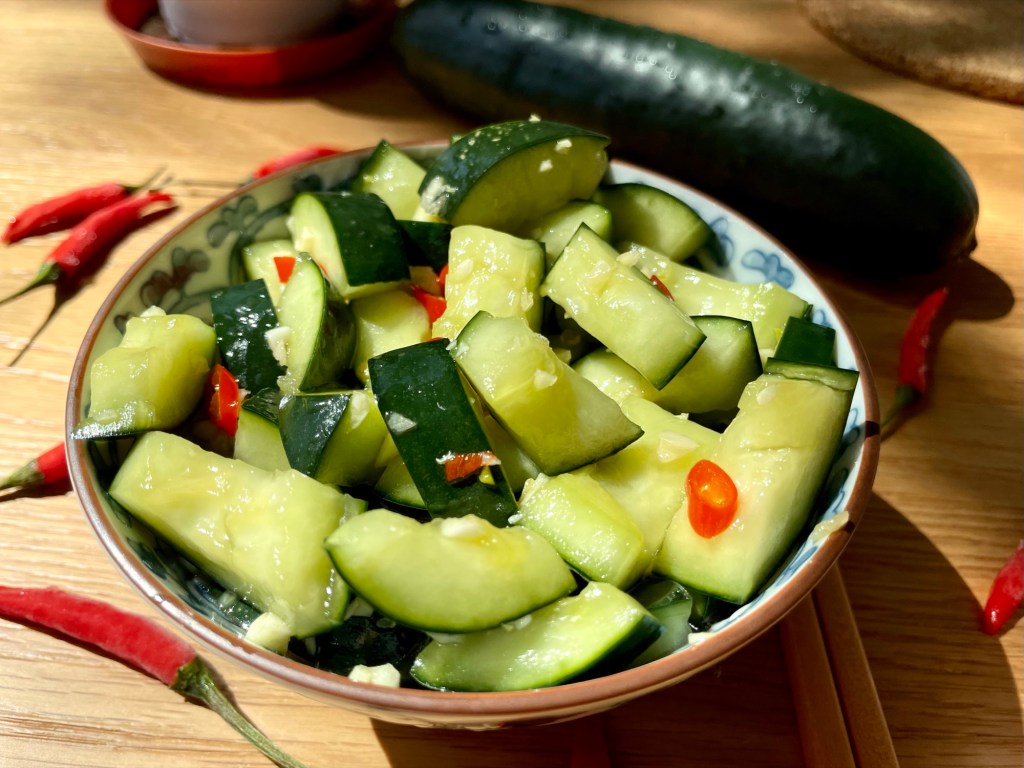
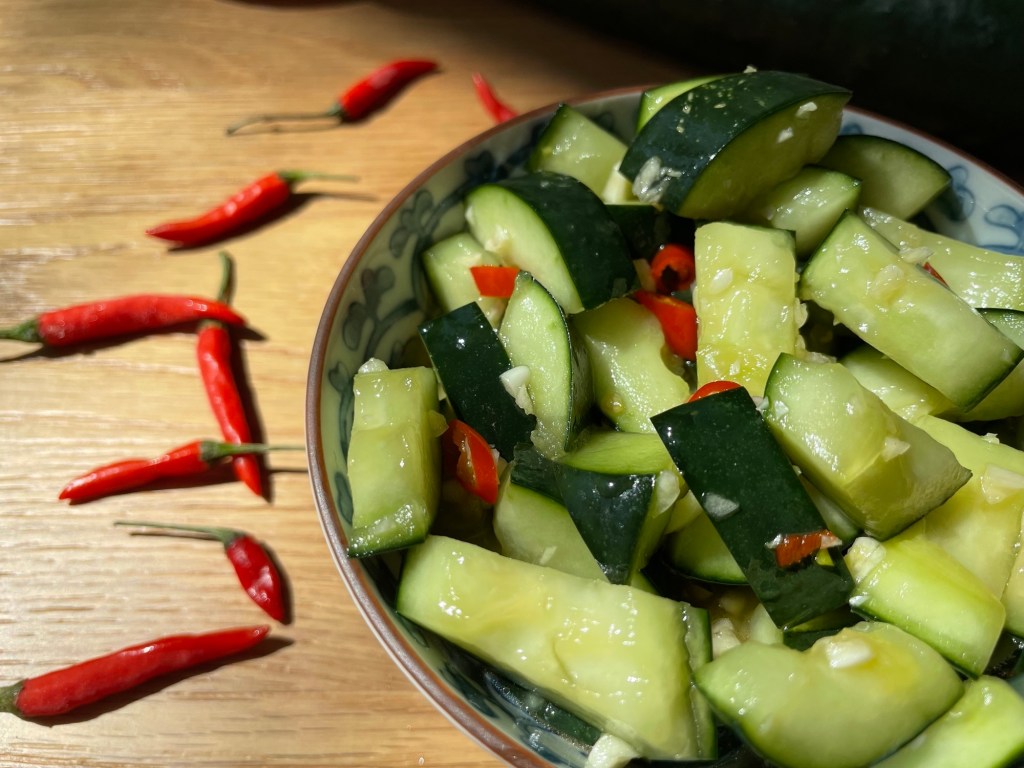
Pickled smashed cucumber is a common side dish in Taiwan that pairs well with almost anything. You can find it in pre-packed lunch boxes or in self-serve portions in small restaurants in the market. It cuts the grease and cleanses your palate. This mildly spicy and very garlicky version is super easy and you can make it in 5 minutes (after soaking the cucumbers in salt for 1 hour 🤫). You can serve it immediately, but it’s best served after marinating for at least 4 hours or overnight.

Anyways, without further ado, here’s the recipe! If you have any comments or suggestions, I’d love to hear from you in the comment section! You can follow me on instagram, youtube and facebook to see all the recipes I post!

Happy cooking!

Ingredients you’ll need:

  • 2 large (450g/1lb) cucumbers
  • 1 tsp kosher salt
  • Pickling liquid:
    • 2 garlic cloves, minced
    • 2 bird’s eye chilli, thinly sliced
    • 1 Tbsp soy sauce
    • 1 tsp sesame oil
    • 1/4 cup white sugar
    • 1/4 cup rice vinegar

Directions:

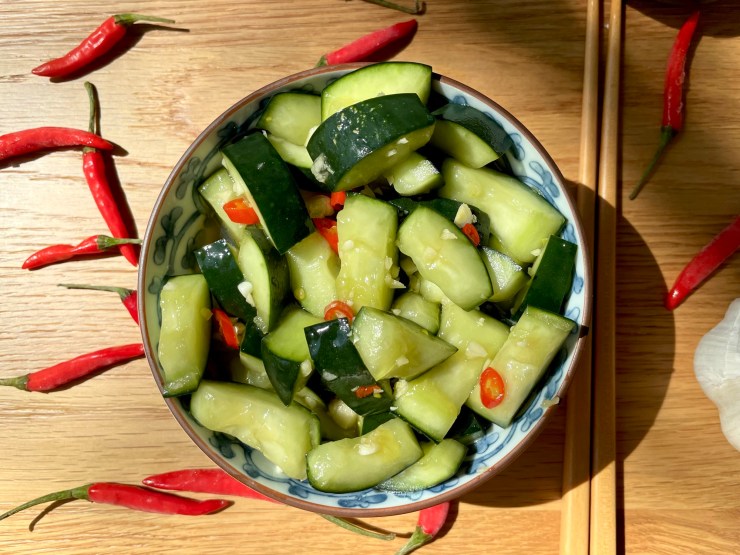
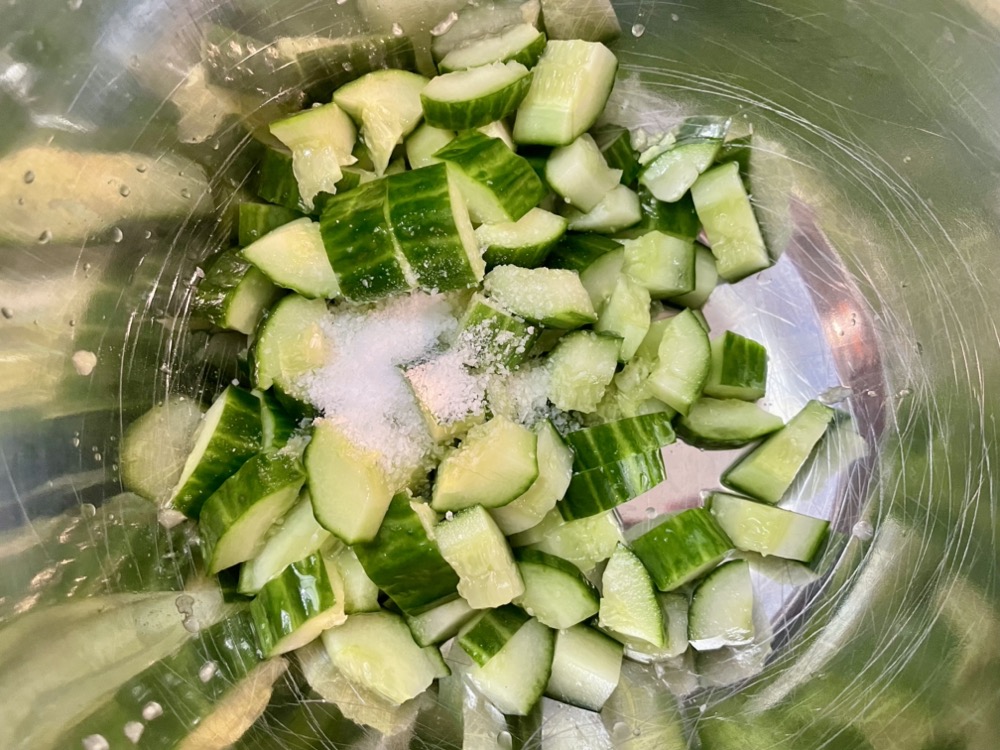
Cut the cucumbers in half lengthwise and again crosswise. Use a large knife on its flat side to smash the cucumber until cracked then slice into bite sized pieces (see photo).

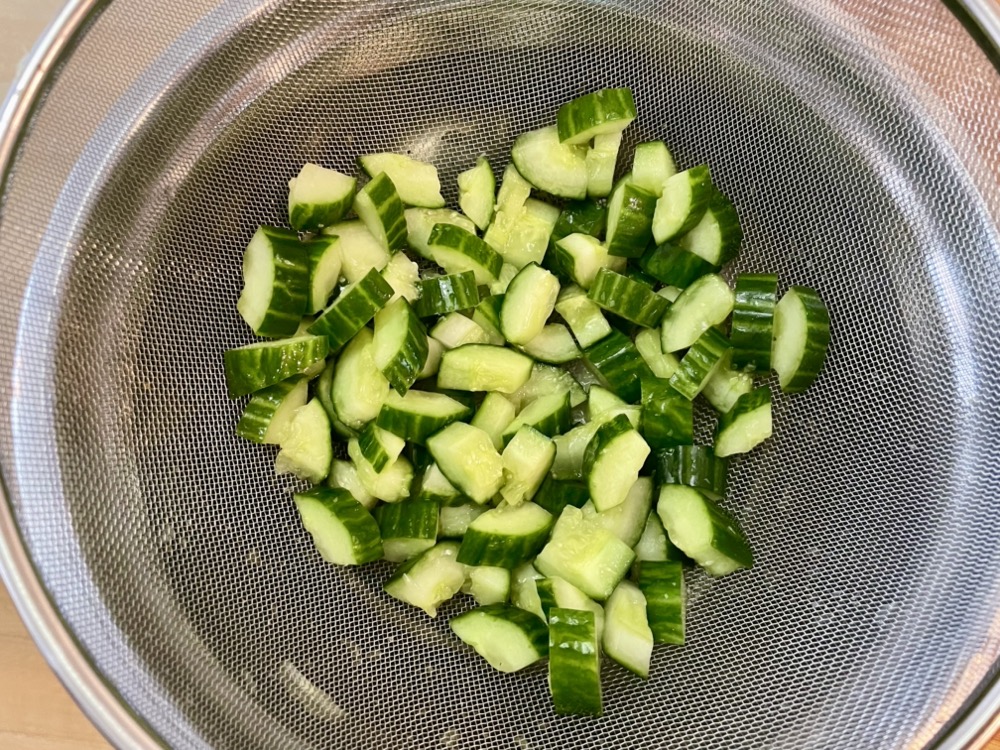
Place the smashed cucumber in a strainer over a bowl and mix in 1 tsp of salt. Let the cucumber sit for 1 hour at room temperature to allow excess water to be released. After 1 hour, discard the released cucumber water and rinse the salt off the cucumber. Set aside in a colander.

In a large glass jar (with a lid), add in the pickling liquid ingredients: garlic, chilli, soy sauce, sesame oil, sugar, and rice vinegar. Put on the lid and shake until the sugar has dissolved. Add in the smashed cucumbers (from step 1), ensuring all the cucumber is submerged in the pickling liquid. Close the lid and let it marinate for at least 4 hours in the fridge or overnight. Done! Keeps in the fridge for up to 1 week, best eaten within 3 days.

Summarized Recipe:

Taiwanese Pickled Garlic Smashed Cucumber

Date Published: April 16th, 2024 | Last Updated: April 16th, 2024
Author: Abby |Category: asian, quick, easy, Taiwanese, vegetarian, sides, healthy, low cal
Serves: 1 large jar, about 6 portions as sides | Prep time: 1 hour | Cook time: marinate for 4 hours

Ingredients:

  • 2 large (450g/1lb) cucumbers
  • 1 tsp kosher salt
  • Pickling liquid:
    • 2 garlic cloves, minced
    • 2 bird’s eye chilli, thinly sliced
    • 1 Tbsp soy sauce
    • 1 tsp sesame oil
    • 1/4 cup white sugar
    • 1/4 cup rice vinegar

Directions:

  1. Cut the cucumbers in half lengthwise and again crosswise. Use a large knife on its flat side to smash the cucumber until cracked then slice into bite sized pieces (see photo). Place the smashed cucumber in a strainer over a bowl and mix in 1 tsp of salt. Let the cucumber sit for 1 hour at room temperature to allow excess water to be released. After 1 hour, discard the released cucumber water and rinse the salt off the cucumber. Set aside in a colander.
  2. In a large glass jar (with a lid), add in the pickling liquid ingredients: garlic, chilli, soy sauce, sesame oil, sugar, and rice vinegar. Put on the lid and shake until the sugar has dissolved. Add in the smashed cucumbers (from step 1), ensuring all the cucumber is submerged in the pickling liquid. Close the lid and let it marinate for at least 4 hours in the fridge or overnight. Done! Keeps in the fridge for at least 2-3 days.

Garlic Soy Sauce Paste/Dressing


Date Published: April 16th, 2024 | Last Updated: April 16th, 2024
Author: Abby |Category: easy, Asian, quick, Taiwanese, <15 mins, sauces
Serves: 1.5 cups of sauce | Prep time: 5 mins | Cook time: 5 mins

Jump to recipe

Soy sauce paste is one of the most popular sauces you’ll find in Taiwanese street food, often drizzled over a wide variety of dishes including fried fish cake tempura, century egg with silken tofu, dan bing, sautéed vegetables…the list goes on! It’s so versatile, yet so difficult to find outside of Taiwan.

Soy sauce paste is more than just thickened soy sauce – it’s lightly sweetened but still maintains the umami profile. It’s a little similar to oyster sauce – in fact, some people use it interchangeably with vegetarian/mushroom oyster sauce if soy sauce paste is not readily available.

This recipe is a garlic version of the classic soy sauce paste which in my opinion makes it even better! It’s quick and easy, and the sauce will keep in the fridge for up to a week – just give it a shake each time you’re about to use it!

Anyways, without further ado, here’s the recipe! If you have any comments or suggestions, I’d love to hear from you in the comment section! You can follow me on instagram, youtube and facebook to see all the recipes I post!

Happy cooking!

Ingredients you’ll need:

  • Garlic puree:
    • 4 cloves (25g) garlic, peeled with fibrous ends cut off
    • 1/2 cup (120ml) water
  • Soy sauce paste:
    • 1/4 cup (60ml) soy sauce (ie. kikkoman)
    • 1/4 cup (60ml water)
    • 2 Tbsps (25g) granulated sugar
    • 1.5 Tbsps cornstarch
    • 2 Tbsps water
  • 2 Tbsps (25g) granulated sugar

Directions:

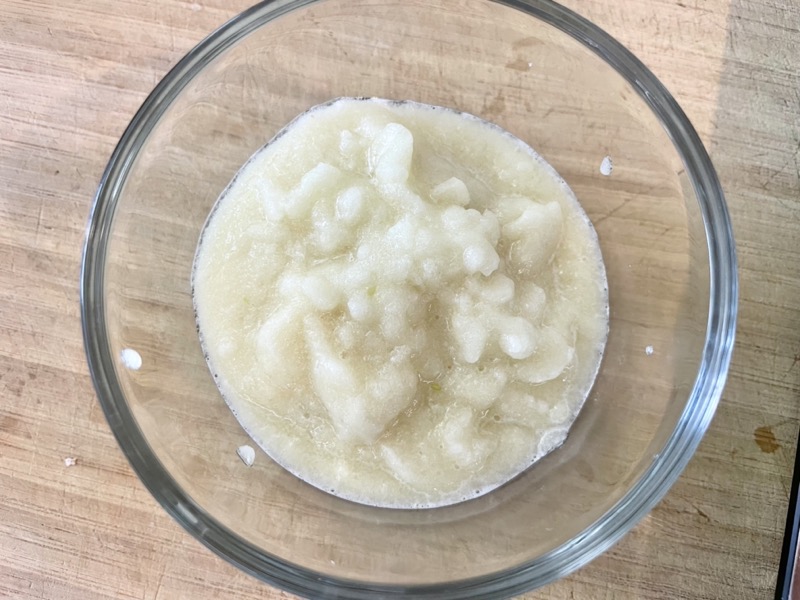
Make the garlic purée: Add the garlic with 1/2 cup of water into a high speed blender. Blend until you get a smooth paste. Set aside.

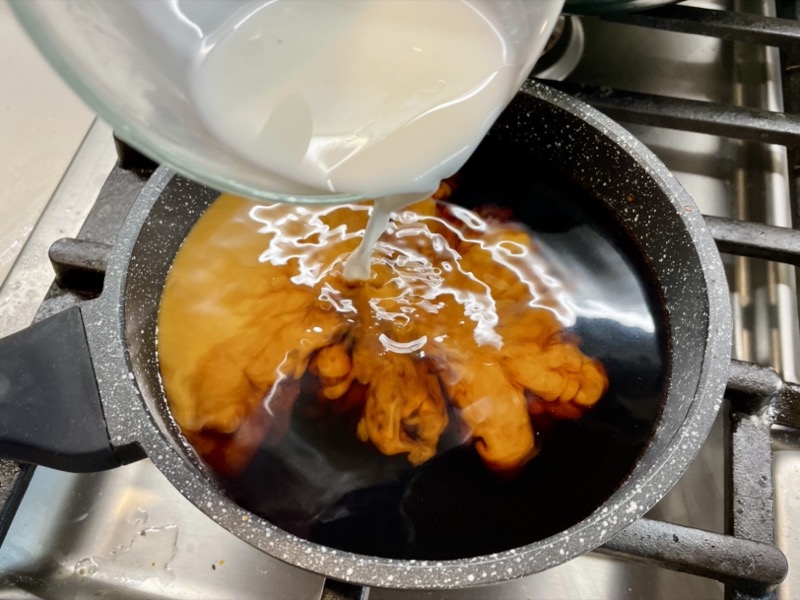
Make the soy sauce paste: In a small saucepan on MED heat, add in the soy sauce, 1/4 cup water, and sugar. Stir until the sugar has dissolved. Let the sauce come to a light simmer. While you’re waiting, in a separate bowl, mix together the cornstarch and 2 Tbsps of water. When the sauce has come to a simmer, add in the cornstarch/water mixture and continuously whisk for about 1 minute or until the mixture comes to a gloopy paste. Turn off the heat and set aside to let cool.

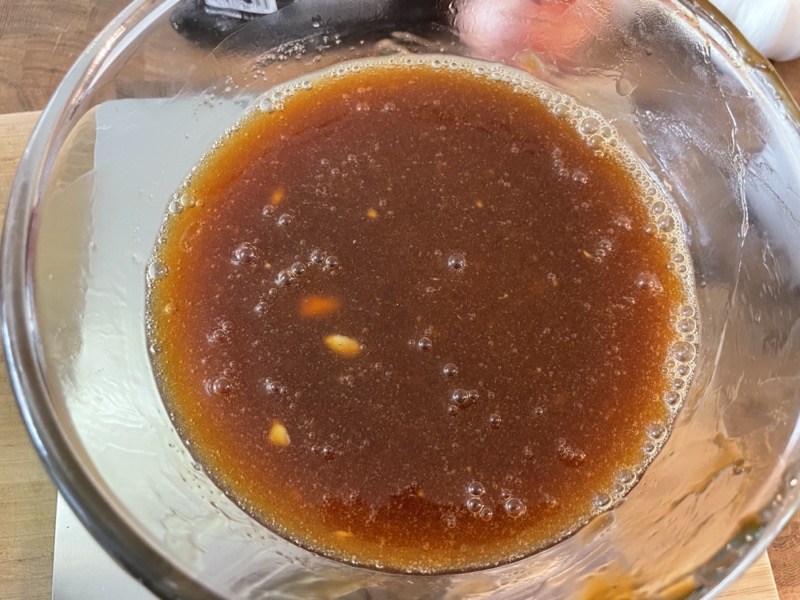
Once the soy sauce paste has slightly cooled, add in the garlic purée (from step 1) and 2 Tbsps of sugar. Mix it all together and taste to adjust salt or sugar. Done! Keeps well in the fridge for up to 1 week.

Summarized Recipe:

Garlic Soy Sauce Paste/Dressing

Date Published: April 16th, 2024 | Last Updated: April 16th, 2024
Author: Abby |Category: easy, Asian, quick, Taiwanese, <15 mins, sauces
Serves: 1.5 cups of sauce | Prep time: 5 mins | Cook time: 5 mins

Ingredients:

  • Garlic puree:
    • 4 cloves (25g) garlic, peeled with fibrous ends cut off
    • 1/2 cup (120ml) water
  • Soy sauce paste:
    • 1/4 cup (60ml) soy sauce (ie. kikkoman)
    • 1/4 cup (60ml water)
    • 2 Tbsps (25g) granulated sugar
    • 1.5 Tbsps cornstarch
    • 2 Tbsps water
  • 2 Tbsps (25g) granulated sugar

Directions:

  1. Make the garlic purée: Add the garlic with 1/2 cup of water into a high speed blender. Blend until you get a smooth paste. Set aside.
  2. Make the soy sauce paste: In a small saucepan on MED heat, add in the soy sauce, 1/4 cup water, and sugar. Stir until the sugar has dissolved. Let the sauce come to a light simmer. While you’re waiting, in a separate bowl, mix together the cornstarch and 2 Tbsps of water. When the sauce has come to a simmer, add in the cornstarch/water mixture and continuously whisk for about 1 minute or until the mixture comes to a gloopy paste. Turn off the heat and set aside to let cool.
  3. Once the soy sauce paste has slightly cooled, add in the garlic purée (from step 1) and 2 Tbsps of sugar. Mix it all together and taste to adjust salt or sugar. Done! Keeps well in the fridge for up to 1 week.

Taiwanese Popcorn Chicken 鹽酥雞


Date Published: April 14th, 2024 | Last Updated: April 14th, 2024
Author: Abby |Category: appetizers, Asian, easy, snacks, Taiwanese
Serves: 4 as a snack (1 large bowl) | Prep time: marinate for 12 hours | Cook time: 20 minutes

Jump to recipe |

Ohhh yesssssss! I’m so excited to share this recipe with you all because Taiwanese popcorn chicken is SUPER addicting and is one of my all time favourite Taiwanese street foods. There used to be quite a few night market food stalls in Taiwan that sell this, but for some reason in recent years it’s been harder and harder to find. My parents’ place in Taiwan is within walking distance to the Shih-lin night market and when we were kids, we used to visit every summer and would occasionally go to the shitty small movie theatre in the night market for a cheap late night flick. Instead of popcorn as the traditional movie theatre food, popcorn chicken was our weakness. We would always go to the same popcorn chicken stall and each order our own large portion for the movie, along with a few fried tempura fish cakes. It was a time of bliss – I’d look forward to the chicken more than the actual movie 🙃. Now every time I see Taiwanese popcorn chicken, I’m transported back to those days of my parents taking us kids to the movies and indulging at the night market. That shitty movie theatre has since closed down and that food vendor is no longer there 😢, but I’m glad I figured out how to recreate the recipe so I can have it on demand any time.

How does Taiwanese popcorn chicken differ from regular popcorn chicken, you ask?

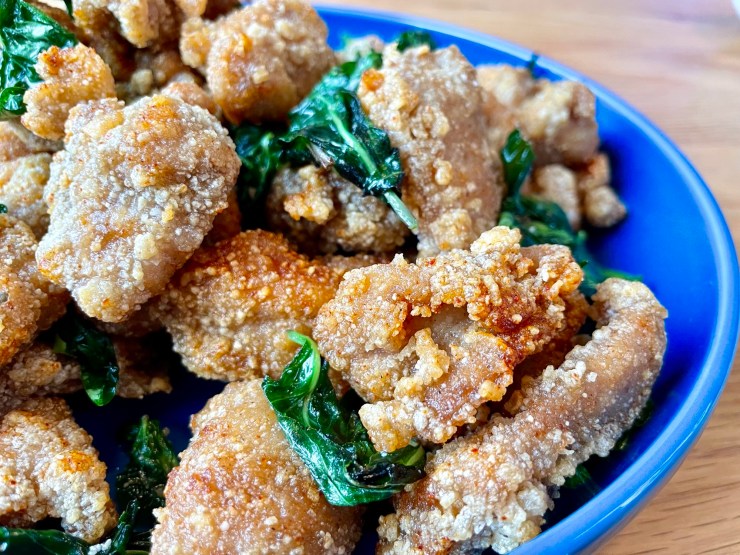
First of all, the batter coating is made with sweet potato starch rather than just regular flour which creates a more delicate crisp. Secondly, the chicken is marinated in a mix of common Taiwanese ingredients such as cooking rice wine, white pepper, and 5-spice powder that gives it a distinct flavour. Thirdly, this is eaten without a sauce, but topped with ground white pepper, salt, and chilli powder (optional). Fourth and finally, it is served with deep fried Thai basil leaves which in my opinion is crucial and adds an extra layer of flavour between bites of chicken. I am a Taiwanese popcorn chicken snob and will only order from food stalls if they serve it with the basil leaves 😅.

Anyways, without further ado, here’s the recipe! If you have any comments or suggestions, I’d love to hear from you in the comment section! You can follow me on instagram, youtube and facebook to see all the recipes I post!

Happy cooking!

Ingredients you’ll need:

  • Chicken Marinade:
    • 3 Tbsps soy sauce
    • 1.5 Tbsps cooking rice wine/michu
    • 3 cloves garlic, minced
    • 3 tsps white sugar
    • 3/4 tsp kosher salt
    • 3/4 tsp ground white pepper
    • 1/2 tsp 5-spice powder
    • 3 large (~650g) chicken thighs, skinless, boneless, cut into 3-4 cm pieces
  • 2 Tbsps all purpose flour
  • 1/4 tsp baking powder
  • 1.5 cups thick sweet potato starch (if you can only find the fine powder, sprtiz some water to make small clumps)
  • 4 cups oil for frying (ie. canola, vegetable)
  • 1 large handful of Thai basil leaves, washed and throughly dried
  • Seasoning:
    • 1/2 tsp chili powder (optional)
    • 1/2 tsp ground white pepper
    • 1/4 tsp fine salt

Directions:

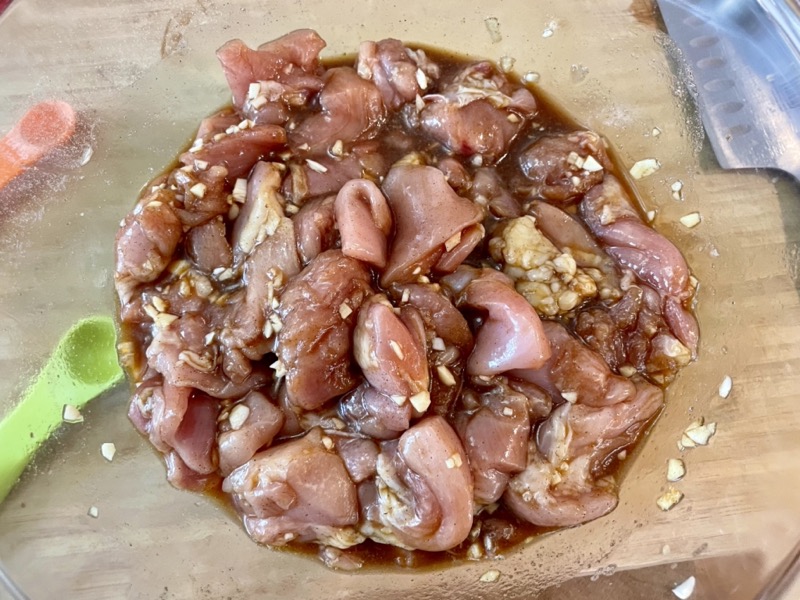
Marinate the chicken overnight: Combine all the chicken marinade ingredients in a mixing bowl: soy sauce, rice wine, garlic, sugar, salt, white pepper, 5-spice powder, and chicken thigh pieces. Cover and marinate in the fridge overnight.

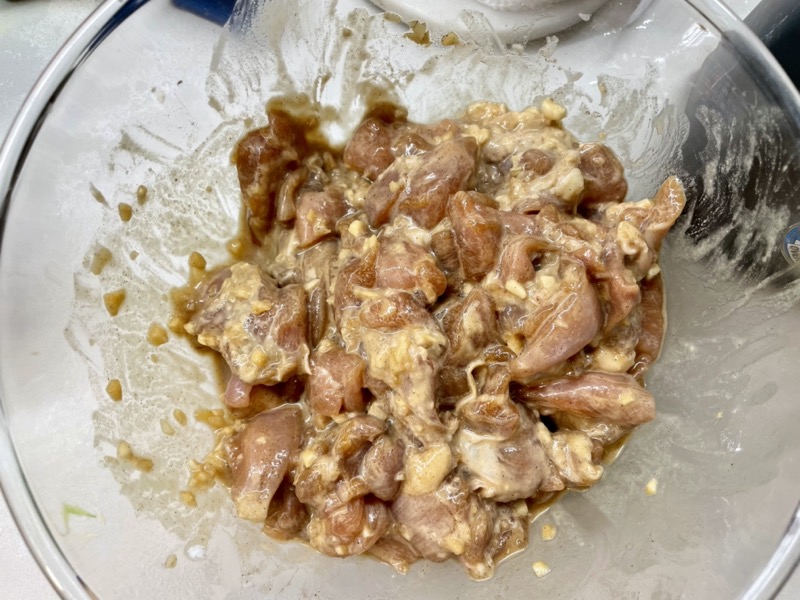
The next day, mix the chicken around in the marinade and add in the flour and baking powder. Mix well until combined.

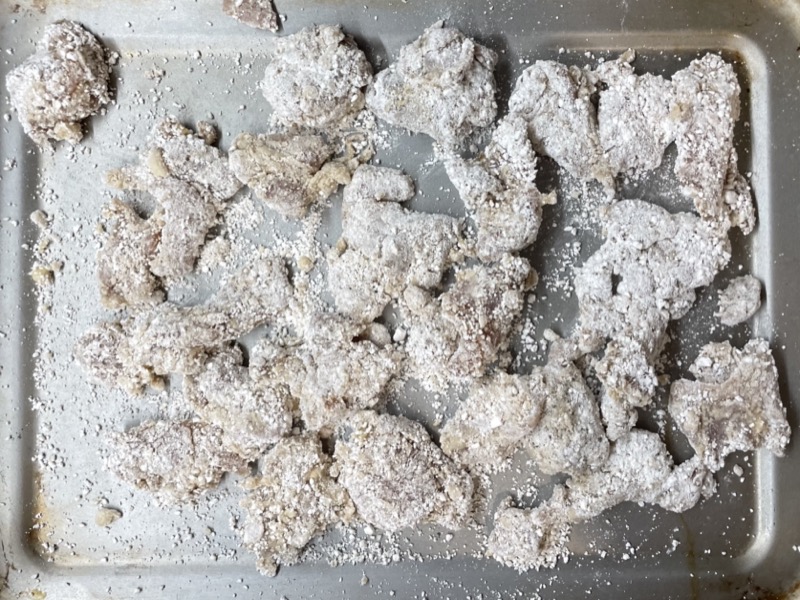
Bread the chicken: Pour the sweet potato starch into a wide base bowl. Place a few pieces of the marinated chicken at a time into the sweet potato starch and coat the chicken in the starch and gently pressing the starch into the chicken so it sticks better. Remove the coated chicken and place onto a plate. Repeat until all of the chicken pieces are coated in starch.

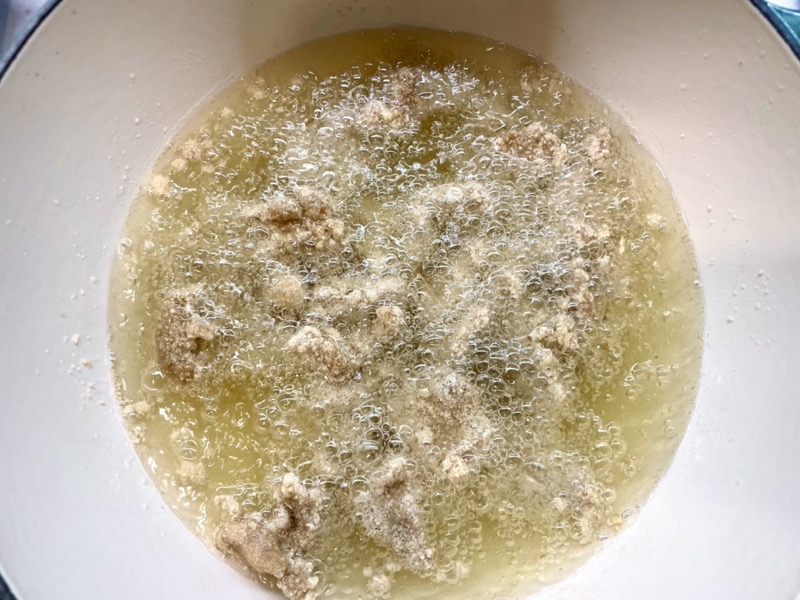
Cook the chicken: Heat the oil in a wide base pot. The oil is ready when it starts to shimmer and immediately sizzle when you add a dust of flour or a drop of batter. Fry the chicken in batches for 3-4 minutes at a time or until golden brown. Remove onto a cooling rack or paper towel-lined plate.

Once you’ve fried all the chicken, fry it all again a second time for 1 minute, starting with the first batch. This double fry method will give you a crispier coating. Once all the chicken has been refried, add in the basil leaves to the oil and fry for another 10-20 seconds and remove onto a cooling rack or a paper towel-lined plate to crisp up.

Add the seasoning: In a small bowl mix together the chili powder, white pepper, and salt. Once the chicken has cooled a little, put them all in a big mixing bowl along with the basil, and sprinkle the seasoning over top. Toss so all the pieces are evenly coated with seasoning. Serve immediately. Enjoy!

Summarized Recipe:

Taiwanese Popcorn Chicken 鹽酥雞

Date Published: April 14th, 2024 | Last Updated: April 14th, 2024
Author: Abby |Category: appetizers, Asian, easy, snacks, Taiwanese
Serves: 4 as a snack (1 large bowl) | Prep time: marinate for 12 hours | Cook time: 20 minutes

Ingredients:

  • Chicken Marinade:
    • 3 Tbsps soy sauce
    • 1.5 Tbsps cooking rice wine/michu
    • 3 cloves garlic, minced
    • 3 tsps white sugar
    • 3/4 tsp kosher salt
    • 3/4 tsp ground white pepper
    • 1/2 tsp 5-spice powder
    • 3 large (~650g) chicken thighs, skinless, boneless, cut into 3-4 cm pieces
  • 2 Tbsps all purpose flour
  • 1/4 tsp baking powder
  • 1.5 cups thick sweet potato starch (if you can only find the fine powder, sprtiz some water to make small clumps)
  • 4 cups oil for frying (ie. canola, vegetable)
  • 1 large handful of Thai basil leaves, washed and throughly dried
  • Seasoning:
    • 1/2 tsp chili powder (optional)
    • 1/2 tsp ground white pepper
    • 1/4 tsp fine salt

Directions:

  1. Marinate the chicken overnight: Combine all the chicken marinade ingredients in a mixing bowl: soy sauce, rice wine, garlic, sugar, salt, white pepper, 5-spice powder, and chicken thigh pieces. Cover and marinate in the fridge overnight.
  2. The next day, mix the chicken around in the marinade and add in the flour and baking powder. Mix well until combined.
  3. Bread the chicken: Pour the sweet potato starch into a wide base bowl. Place a few pieces of the marinated chicken at a time into the sweet potato starch and coat the chicken in the starch and gently pressing the starch into the chicken so it sticks better. Remove the coated chicken and place onto a plate. Repeat until all of the chicken pieces are coated in starch.
  4. Cook the chicken: Heat the oil in a wide base pot. The oil is ready when it starts to shimmer and immediately sizzle when you add a dust of flour or a drop of batter. Fry the chicken in batches for 3-4 minutes at a time or until golden brown. Remove onto a cooling rack or paper towel-lined plate. Once you’ve fried all the chicken, fry it all again a second time for 1 minute, starting with the first batch. This double fry method will give you a crispier coating. Once all the chicken has been refried, add in the basil leaves to the oil and fry for another 10-20 seconds and remove onto a paper towel-lined plate to crisp up.
  5. Add the seasoning: In a small bowl mix together the chili powder, white pepper, and salt. Once the chicken has cooled a little, put them all in a big mixing bowl along with the basil, and sprinkle the seasoning over top. Toss so all the pieces are evenly coated with seasoning. Serve immediately. Enjoy!

Asian Smashed Cucumber Tomato Egg Salad


Date Published: Mar 5th, 2024 | Last Updated: Mar 5th, 2024
Author: Abby |Category: Asian, side dishes, salads, mains, <30 mins, easy, quick, healthy, low-cal, Taiwanese, vegetarian
Serves: 2 as mains, 1 large plate | Prep time: 30 mins | Cook time: 5 mins

Jump to recipe |

This recipe came to me on a search to use up leftover salad ingredients to clear the fridge before our 2 week vacation overseas. It’s quick, easy, flavourful, and kept us on track of our healthy eating goals! This dish is like a cross between a smashed cucumber salad and a tomato egg stir-fry (番茄炒蛋).

In our efforts to be more healthy in this new year, we stocked up on fresh salad ingredients in bulk from Costco just over a week ago and have been slowly getting through it before our trip (it’s amazing how long cos lettuce keeps in the fridge!). It’s the night before our flight and we managed to finish all the leafy greens, but I still had one cucumber and a handful of cherry tomatoes left. Toby has not been a fan of this batch of cherry tomatoes and says they’re too tart for him (I think it’s fine), so instead of making a basic chopped cucumber and tomato salad, I looked for other options that might mask the tomatoes, but to also be quick and easy so I could start packing. I came across this recipe from Bon Appétit. It came out beautifully and so easy the first time. I’ve made some adaptations and added in exact measurements and ended up with this recipe to share!

What is Asian Smashed Cucumber Salad?

Smashed cucumber salad is a very popular Chinese starter/side dish. It’s served cold and in its essence is a mix of cucumber, salt, raw garlic, and some sort of acid (usually black vinegar). It’s supposed to light and refreshing, yet still have a punch of garlicky saltiness to be savoury. There are many variations out there and some people will add in sesame seeds, chilli, ginger, and/or cilantro. You’ll commonly see this dish not only in nice restaurants, but also in small street-side shops in Taiwan. It’s quick, easy, and takes minimal effort and ingredients. An Asian smashed cucumber salad does not traditionally have tomatoes nor eggs in it, so if you want to go the OG route, leave them out, but I prefer this version because it bulks it up and balances the dish out so it’s not so punchy in flavours and you can eat a whole bowl in one sitting as a main meal.

Smashing is important!

A key component to this dish is smashing the cucumbers. If your cucumbers look like they’ve been chopped, then you haven’t smashed them enough. You want the outside skin to crack and the inside to be crushed, but not flattened. Smashing cucumbers allow the marinating sauce to penetrate deeper and infuse the flavours better. It’s also a good way to relieve some stress 😜.

Anyways, without further ado, here’s the recipe! If you have any comments or suggestions, I’d love to hear from you in the comment section! You can follow me on instagram, youtube and facebook to see all the recipes I post!

Happy cooking!

Ingredients you’ll need:

  • 1 cucumber (English hothouse – those long ones)
  • 1/2 Tbsps cooking salt
  • A large handful of cherry tomatoes, halved
  • 2 large cloves garlic, minced
  • 1/4 cup black vinegar
  • 2 Tbsps granulated sugar
  • 6 eggs
  • 3 green onions/scallions, sliced
  • 1/4 tsp white pepper
  • Drizzle of sesame oil 
  • 2 Tbsps of chilli crisp (or more to your liking) – you can substitute with chilli oil instead

Directions:

Cut the cucumber in half lengthwise and again crosswise. Use a large knife on its flat side to smash the cucumber until cracked then slice into bite sized pieces (see photo).

Place the smashed cucumber in a strainer over a bowl and mix in 1/2 Tbsp of salt. Let the cucumber sit for 30 minutes to allow excess water to be released. After 30 mins, discard the released cucumber water and place the cucumber in a mixing bowl.

Add the sliced cherry tomatoes, minced garlic, black vinegar, and sugar to the cucumbers. Mix everything together and let it marinate for another 30 minutes.

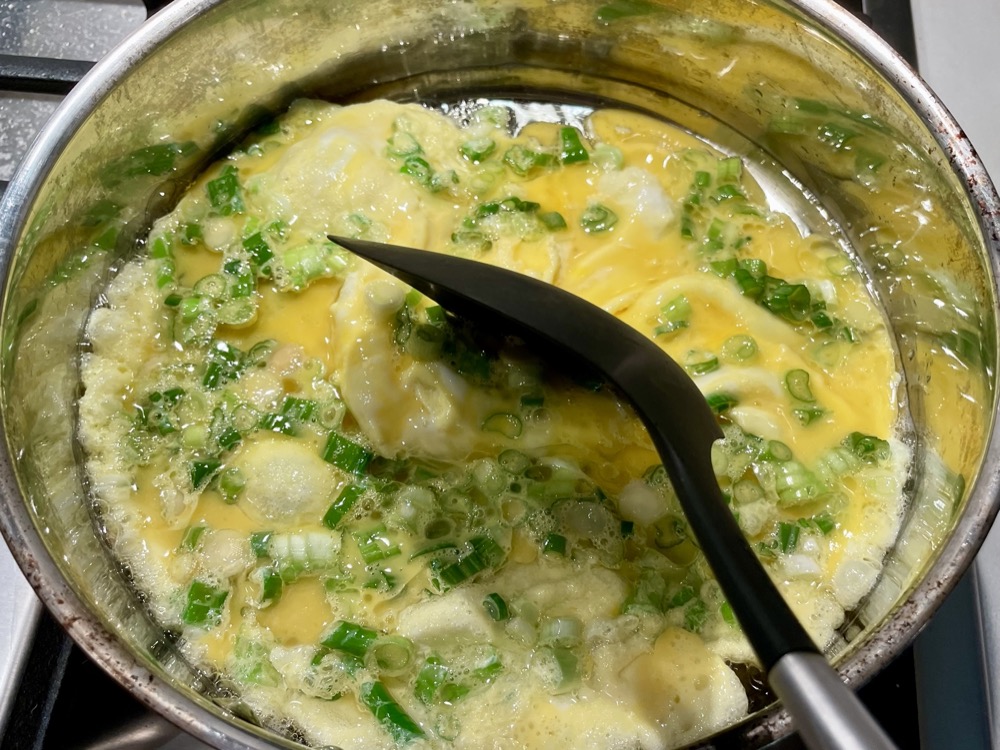
Make the eggs: While the cucumber and tomatoes are marinating, crack the eggs into a bowl and whisk. Mix in green onions and a pinch of salt. Heat a pan on MED HIGH heat and add in enough oil to coat the bottom of the pan. Let the pan get hot (it’ll be ready when the oil is shimmering and just starting to smoke) then add a drop of egg. The oil is hot enough if the egg drop puffs up right away. Add in the rest of the egg mixture carefully and the edges should start to puff within a few seconds. Once the edges are slightly browned, use a spatula to gently move the egg around to cook evenly. You want big chunks of scrambled eggs that’s slightly crispy on the edges but still soft and moist (see photo). This should take less than 2 minutes. Turn off the heat and scoop the egg into the bowl with the marinating cucumber and tomatoes.

Add white pepper, a drizzle of sesame oil, and a few spoonfuls of chilli crisp. Mix everything around, taste and adjust salt or sugar to taste. You should have a tangy, sweet, and salty dish. Serve immediately on a wide bottom dish so the liquid pools outwards.

Summarized Recipe:

Asian Smashed Cucumber Tomato Egg Salad

Date Published: Mar 5th, 2024 | Last Updated: Mar 5th, 2024
Author: Abby |Category: Asian, side dishes, salads, mains, <30 mins, easy, quick, healthy, low-cal, Taiwanese, vegetarian
Serves: 2 as mains, 1 large plate | Prep time: 30 mins | Cook time: 5 mins

Ingredients:

  • 1 cucumber (English hothouse – those long ones)
  • 1/2 Tbsps cooking salt
  • A large handful of cherry tomatoes, halved
  • 2 large cloves garlic, minced
  • 1/4 cup black vinegar
  • 2 Tbsps granulated sugar
  • 6 eggs
  • 3 green onions/scallions, sliced
  • 1/4 tsp white pepper
  • Drizzle of sesame oil 
  • 2 Tbsps of chilli crisp (or more to your liking) – you can substitute with chilli oil instead

Directions:

  1. Cut the cucumber in half lengthwise and again crosswise. Use a large knife on its flat side to smash the cucumber until cracked then slice into bite sized pieces (see photo). Place the smashed cucumber in a strainer over a bowl and mix in 1/2 Tbsp of salt. Let the cucumber sit for 30 minutes to allow excess water to be released. After 30 mins, discard the released cucumber water and place the cucumber in a mixing bowl.
  2. Add the sliced cherry tomatoes, minced garlic, black vinegar, and sugar to the cucumbers. Mix everything together and let it marinate for another 30 minutes.
  3. Make the eggs: While the cucumber and tomatoes are marinating, crack the eggs into a bowl and whisk. Mix in green onions and a pinch of salt. Heat a pan on MED HIGH heat and add in enough oil to coat the bottom of the pan. Let the pan get hot (it’ll be ready when the oil is shimmering and just starting to smoke) then add a drop of egg. The oil is hot enough if the egg drop puffs up right away. Add in the rest of the egg mixture carefully and the edges should start to puff within a few seconds. Once the edges are slightly browned, use a spatula to gently move the egg around to cook evenly. You want big chunks of scrambled eggs that’s slightly crispy on the edges but still soft and moist (see photo). This should take less than 2 minutes. Turn off the heat and scoop the egg into the bowl with the marinating cucumber and tomatoes.
  4. Add white pepper, a drizzle of sesame oil, and a few spoonfuls of chilli crisp. Mix everything around, taste and adjust salt or sugar to taste. You should have a tangy, sweet, and salty dish. Serve immediately on a wide bottom dish so the liquid pools outwards.

Unintentionally Amazing Soft Tea Eggs (茶葉蛋)


Date Published: Aug 8th, 2022 | Last Updated: Aug 8th, 2022
Author: Abby |Category: Asian, sides, snack, appetizers, healthy, low cal
Serves: 8 eggs | Prep time: 30 mins | Cook time: 5-10 mins + resting overnight

Jump to recipe |
The empty bottle of the brand of sweet vinegar I used. Any sweet vinegar should be fine.

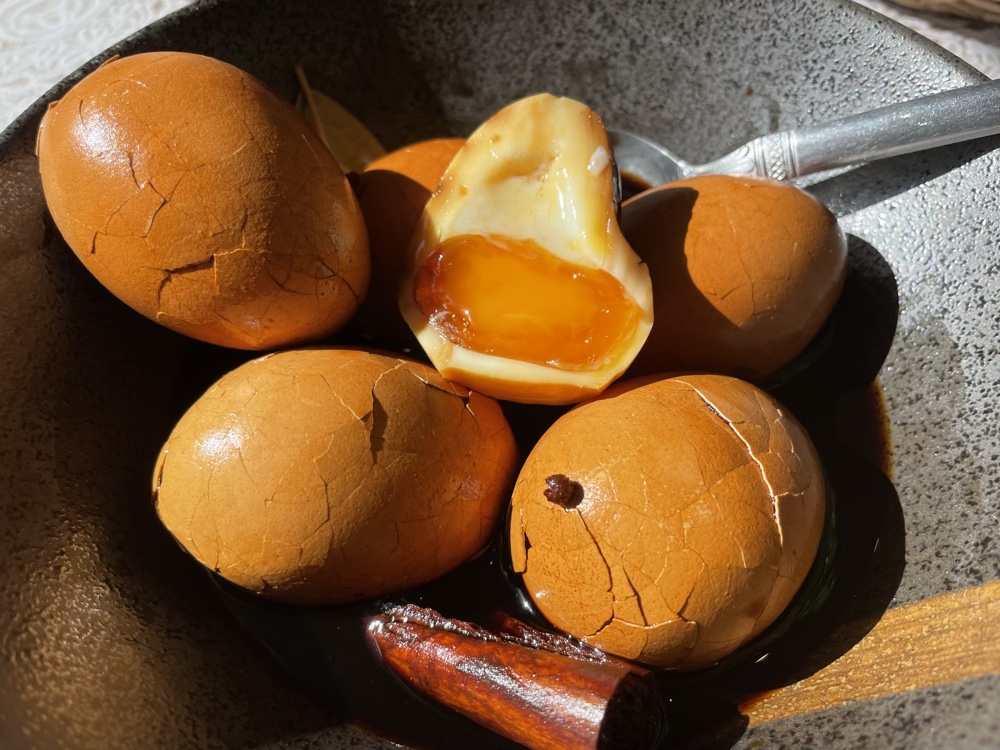
I’ve had a bottle of Chinese sweet black vinegar in the back of my pantry for the past 2 years that has gone untouched and collecting dust. I have no idea what I originally bought it for but whatever it was, I only ever used a small amount. Toby says I bought it originally because I couldn’t find regular black vinegar and tried to use this as a substitute and failed – I have no recollection of this 😅🤷🏻‍♀️. I’ve tried to look for recipes to use up this bottle over the years but I can only ever find it used in a very specific Chinese pork knuckle dish. This bottle has become an eye sore and in a desperate attempt to clean out my pantry before we hit the road again, I decided to try adding it to a marinade for tea eggs. I had very low expectations for this – I just wanted to make something somewhat edible so I’m not wasting it. The end result turned out so much better than I could have ever hoped for! It gave the egg a subtle sweetness along with the saltiness. In fact, it was so good that I ended up buying another bottle of sweet black vinegar just so I can keep making these tea eggs, which is now my favourite way to eat them.

Chinese sweet black vinegar isn’t as tangy as regular vinegar. It’s more subtle and has a light sweetness with a star anise/liquorice flavour. When mixed with the rest of the marinade ingredients, it makes a slightly sweeter tea egg that’s lighter on the palate compared to the classic tea egg that’s usually only soy sauce based. Soft boiled eggs are my favourite style of eggs and perfect for this recipe. The yolk remains soft and jammy which allows some of the marinade to penetrate through giving it more flavour. Make sure you set a timer to cook them perfectly. I’ve included cooking times for medium and hardboiled eggs as well if that’s your thing.

What is a tea egg?

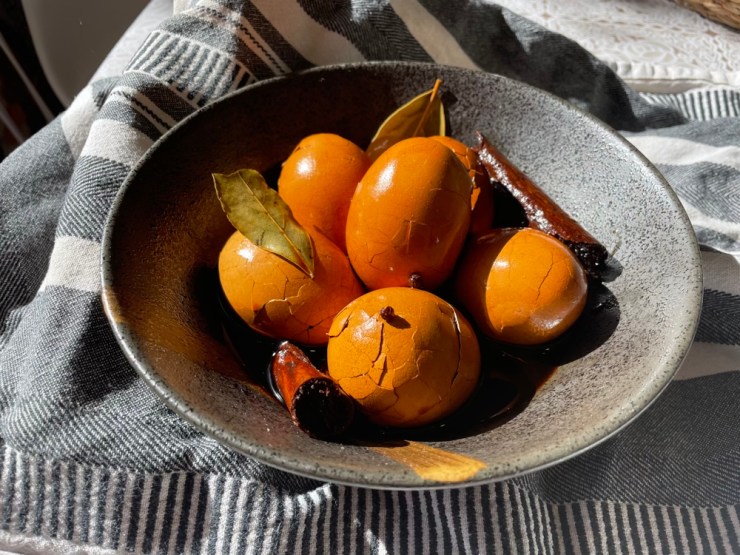
If you’re unfamiliar with tea eggs, it’s a classic Chinese side dish commonly made of hardboiled eggs marinated in a soy-sauce based concoction with black tea leaves. The eggs are cracked before marinating and as a result you get a beautiful marbled appearance on the eggs with a savoury umami flavour with a hint of tea. I remember getting a few of these in a baggie from the local 7-11 in Taiwan before hopping on a train and having these as a snack. I’ve never had them soft-boiled until I started playing around with this recipe. It’s a total game changer and I think this will be the only way I’ll be having my tea eggs from now. 😛

Tips for using up leftover marinade:

  • Sauté with garlic, cabbage, splash of shaoxing wine until the cabbage cooks down, then stir in chilli paste like lao gan ma or leftover red chilli oil wonton sauce.
  • Reuse the marinade again! Make sure you reboil the liquid and let it cool before using it again.

Anyways, without further ado, here’s the recipe! If you have any comments or suggestions, I’d love to hear from you in the comment section! You can follow me on instagram, youtube and facebook to see all the recipes I post!

Happy cooking!

Ingredients you’ll need:

  • Marinade:
    • 1/2 cup Sweet Black Vinegar
    • 1/4 cup light soy sauce
    • 2 Tbsps dark soy sauce
    • 2.5 Tbsps soy sauce
    • 2 bay leaves
    • 1 cinnamon stick
    • 1 tsp Sichuan peppercorns
    • 2 Tbsps (or 2 tea bags) extra strong black tea leaves
    • 1 cup water
  • 8 large eggs

Directions:

Simmer the marinade on low for 10 mins

Make the marinade: Mix all the ingredients of the marinade (vinegar, soy sauces, bay leaves, cinnamon stick, peppercorns, tea leaves, water) in a saucepan and heat on MEDIUM until it boils, then turn the heat down to LOW-MED and simmer for 10 minutes. Remove from heat and let it cool completely.

Make the eggs: While the marinade cools, boil a pot of water (use a pot large enough to allow all the eggs to submerge in the boiling water without crowding). Once the water boils, carefully lower the eggs into the water – be careful not to crack them. Start a timer and boil for 5 minutes and 30 seconds for soft-boiled eggs, 7 minutes for medium eggs, or 10 minutes for hard boiled eggs.

Dunk them in an ice bath or under cold running water until cooled

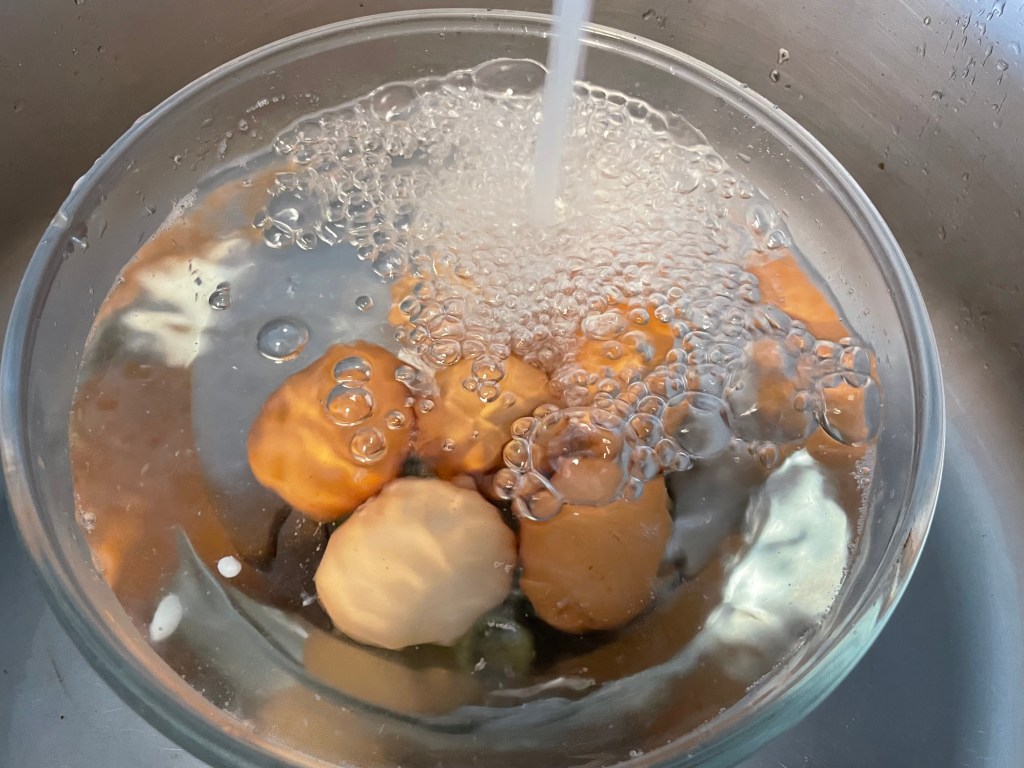
Prepare an ice bath for the eggs while they are boiling. Once the timer goes off, immediate transfer the eggs to the ice bath to cool. If you don’t have any ice, run the eggs under cold water until completely cooled.

More cracks = more marbling

Once the eggs are cooled, use the back of a spoon and gently crack the egg shells around the entirety of the egg. You want the egg shells to be cracked and broken without breaking the actual egg. This allows the marinade to get through the shell and create a marbled effect. Be careful not to hit them too hard, especially for soft-boiled eggs.

Once the marinade has fully cooled, transfer the marinade with the ingredients to a container or a large ziplock bag and add in the cracked eggs. Ensure the eggs are submerged in the marinade. Choose a container or a bag big enough to fit all the marinade and eggs. It’s better to use a deeper container than a wider one so the eggs submerge better.

Let the eggs marinate in the fridge overnight, or best for 24 hours (or longer!).

Serve the eggs either cold, room temperature, or slightly warmed. Enjoy!

Summarized Recipe:

Unintentionally Amazing Soft Tea Eggs (茶葉蛋)

Date Published: Aug 8th, 2022 | Last Updated: Aug 8th, 2022
Author: Abby |Category: Asian, sides, snack, appetizers, healthy, low cal
Serves: 8 eggs | Prep time: 30 mins | Cook time: 5-10 mins + resting overnight

Ingredients:

  • Marinade:
    • 1/2 cup Sweet Black Vinegar
    • 1/4 cup light soy sauce
    • 2 Tbsps dark soy sauce
    • 2.5 Tbsps soy sauce
    • 2 bay leaves
    • 1 cinnamon stick
    • 1 tsp Sichuan peppercorns
    • 2 Tbsps (or 2 tea bags) extra strong black tea leaves
    • 1 cup water
  • 8 large eggs

Directions:

  1. Make the marinade: Mix all the ingredients of the marinade (vinegar, soy sauces, bay leaves, cinnamon stick, peppercorns, tea leaves, water) in a saucepan and heat on MEDIUM until it boils, then turn the heat down to LOW-MED and simmer for 10 minutes. Remove from heat and let it cool completely.
  2. Make the eggs: While the marinade cools, boil a pot of water (use a pot large enough to allow all the eggs to submerge in the boiling water without crowding). Once the water boils, carefully lower the eggs into the water – be careful not to crack them. Start a timer and boil for 5 minutes and 15 seconds for soft-boiled eggs, 7 minutes for medium eggs, or 10 minutes for hard boiled eggs.
  3. Prepare an ice bath for the eggs while they are boiling. Once the timer goes off, immediate transfer the eggs to the ice bath to cool. If you don’t have any ice, run the eggs under cold water until completely cooled.
  4. Once the eggs are cooled, use the back of a spoon and gently crack the egg shells around the entirety of the egg. You want the egg shells to be cracked and broken without breaking the actual egg. This allows the marinade to get through the shell and create a marbled effect. Be careful not to hit them too hard to break the eggs inside, especially for soft-boiled eggs.
  5. Once the marinade has fully cooled, transfer the marinade with the ingredients to a container or a large ziplock bag and add in the cracked eggs. Ensure the eggs are submerged in the marinade. Choose a container or a bag big enough to fit all the marinade and eggs. It’s better to use a deeper container than a wider one so the eggs submerge better.
  6. Let the eggs marinate in the fridge overnight, or best for 24 hours (or longer!).
  7. Serve the eggs either cold, room temperature, or slightly warmed. Enjoy!

Taiwanese Style Beerhouse Clams (台式九層塔炒海瓜子)


Date Published: Feb 16th, 2022 | Last Updated: Feb 16th, 2022
Author: Abby |Category: Taiwanese, Asian, easy, mains, sides
Serves: 2-4 | Prep time: 15 mins | Cook time: 10 mins

Jump to recipe |

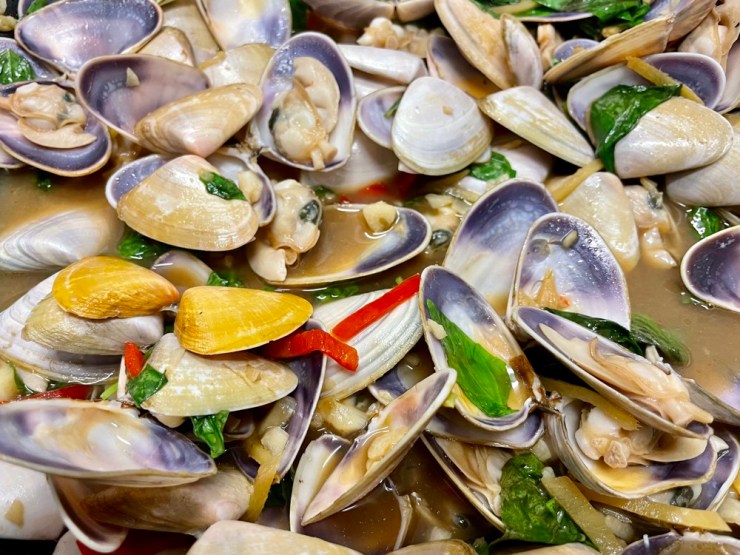
This was one of my all-time favourite dishes growing up in Taiwan. My brother once got mad at me when we were kids when I ate them too fast, lol. The sauce is SO good, you MUST serve it over white rice to soak up all the delicious flavours. This recipe is commonly found in the beerhouses of Taiwan or seafood shops.

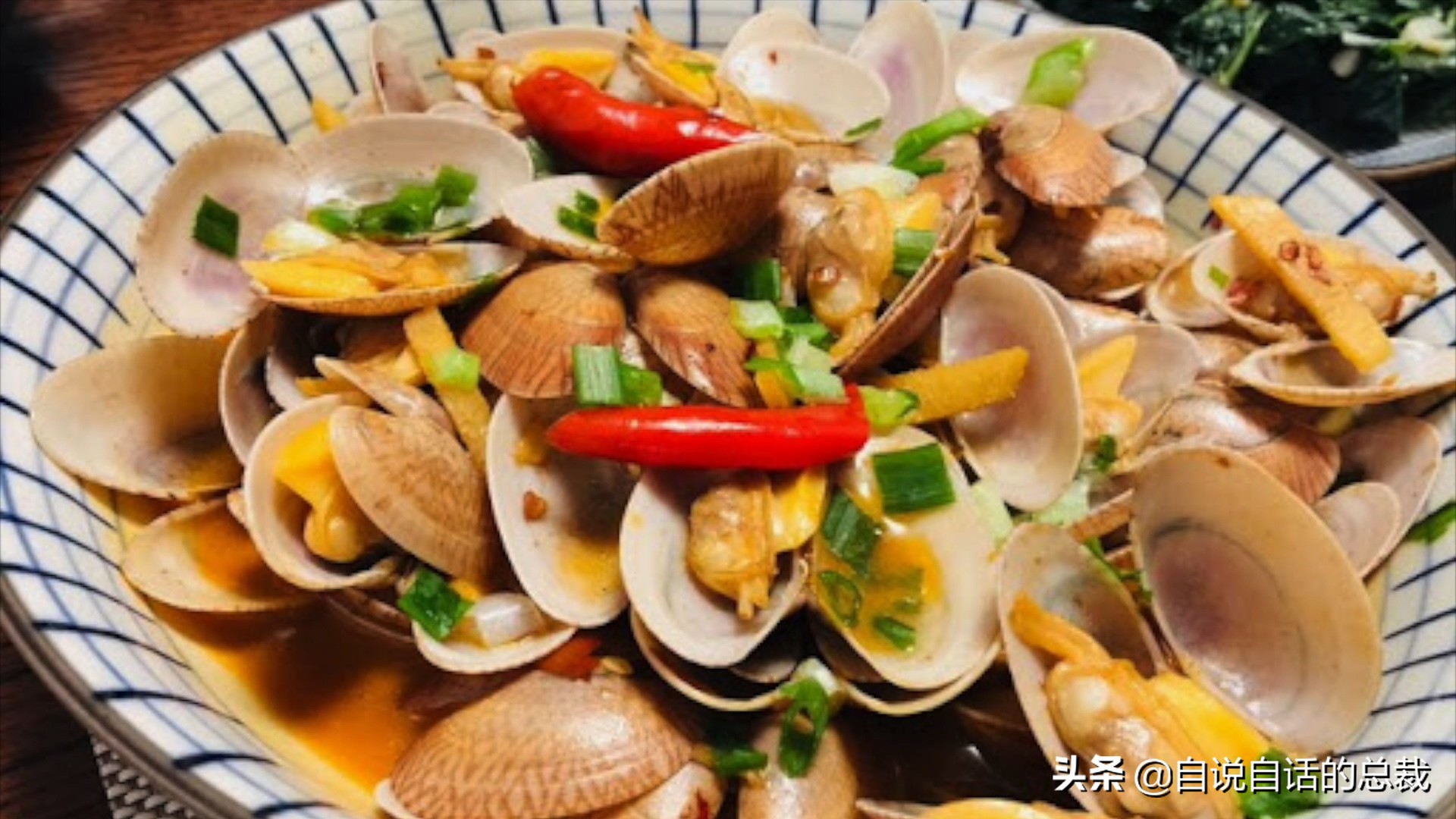
The clams that are traditionally used are called hai gua zi (海瓜子) which roughly translates to ‘ocean melon seeds’ – I think it has to do with the oval shape of them that resembles melon seeds? 🤷🏻‍♀️ They’re small oval clams with a patterned shell that are commonly found in the region. Any small species of clams can be used in this recipe as long as they’re fresh! I actually had a bit of a hard time finding fresh small clams for this recipe in Australia – even the local seafood shops didn’t have them. Surprisingly they were available at the Costco in Adelaide, SA however were a bit pricy at $20/kg for pipis (it was totally worth it though 😜).

Note the patterned shell and the oval shape of the hai gua zi –>

Image source: https://inf.news/en/nature/b6dd63ea2ba851d1cda05f356fb35732.html

What is a Taiwanese Beerhouse (啤酒屋)?

A Taiwanese beerhouse is a place where locals like to go afterwork to unwind, drink beer and eat hot stir-fry dishes. They’re not breweries, they’re just a place to drink and eat. If you’re a foreign visitor to Taiwan, chances are your host wouldn’t bring you to one of these beerhouses. They’re usually noisy, loud with drunk people, and no doubt lots of cigarette smoke. It’s frequented by people of lower socioeconomic classes and call girls as well as the average working man with their coworkers. It’s kind of like taking a guest to a rowdy grungy bar – it’s not for everyone, but the food is usually damn good. These beerhouses are becoming a dying culture and it’s getting harder to find them in Taiwan – possibly due to an attempt to elevate the social status of the area or maybe from the years of economic downturn and less availability of disposable income, or maybe it’s from Westernization 🤷🏻‍♀️. I remember my dad taking us out afterwork when I was a kid and getting out of the cab to see a long street of back to back beerhouses lit up with flashing neon lights (although in hindsight, beerhouses definitely aren’t the best place to bring children 😅). The last time I visited a couple years ago there were only two left on the street – the food was still just as good though!

What is beerhouse-style food?

Taiwanese beerhouses usually serve food that is made quickly over a high heat that packs a ton of flavour. These dishes are commonly very salty and/or spicy which goes great with a bowl of rice and a bottle of cold beer. Common dishes you’ll find are “three-cup” based recipes, which involve the triple threat for a lip-smacking combination: soy sauce, sesame oil, and rice wine. It is often sautéed with ginger, garlic, and Thai basil – the basis of classic Taiwanese beerhouse flavours. This clam recipe doesn’t diverge far from the beerhouse basics.

Thai Basil vs Italian Basil?

There are no substitutions for basil in this recipe. You MUST use Thai basil which is a lot stronger in flavour. Basil is a key component of this dish and without a good strong basil, the flavours just won’t be right. You’d have to probably at least double the amount of Italian basil to get similar results.

Anyways, without further ado, here’s the recipe! If you have any comments or suggestions, I’d love to hear from you in the comment section! You can follow me on instagram, youtube and facebook to see all the recipes I post!

Happy cooking!

Ingredients you’ll need:

  • 1kg fresh small clams (ie. Pipis)
  • 4 cloves garlic, thinly sliced
  • 4cm ginger, peeled and thinly sliced into matchsticks
  • 2-3 long Thai red chilis, sliced (remove the seeds if you want it less spicy)
  • Sauce:
    • 2 Tbsps Chinese cooking wine (ie. Shaoxing)
    • 1 Tbsp of black vinegar
    • 2 Tbsps oyster sauce
    • 3 tsps white granulated sugar
    • 1/4 tsp white pepper
  • 1 LARGE handful (~3 cups) of Thai basil leaves
  • 1 Tbsp sesame oil for drizzling

Directions:

*This recipe cooks QUICKLY on HIGH HEAT! Make sure all your ingredients are chopped, prepped and ready to go before you start cooking.

Rinse the clams thoroughly under running water. Optional: soak in salty water 15mins before.

Prepare the sauce by mixing all the sauce ingredients in a bowl: cooking wine, black vinegar, oyster sauce, sugar, and white pepper. Set aside.

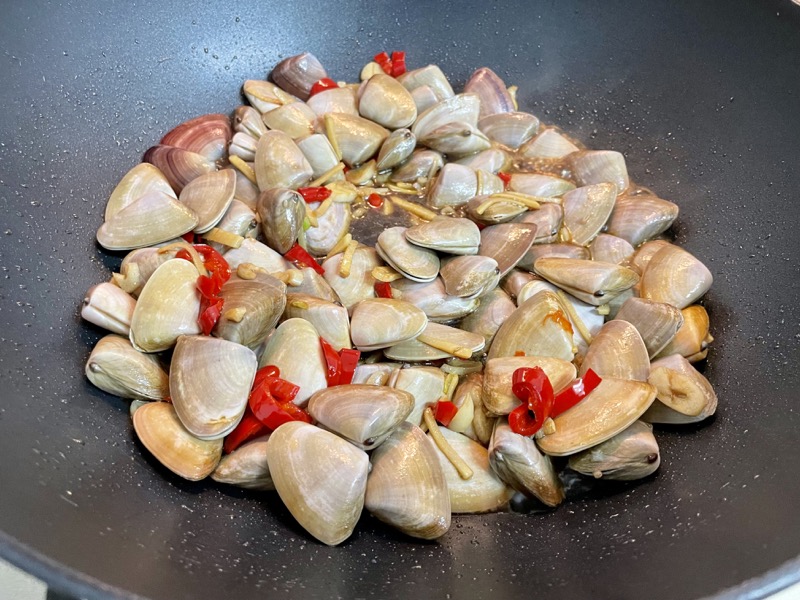
In a wok on HIGH heat, add a drizzle of oil and sauté the garlic, ginger, and chilli for 2-3 mins until fragrant.

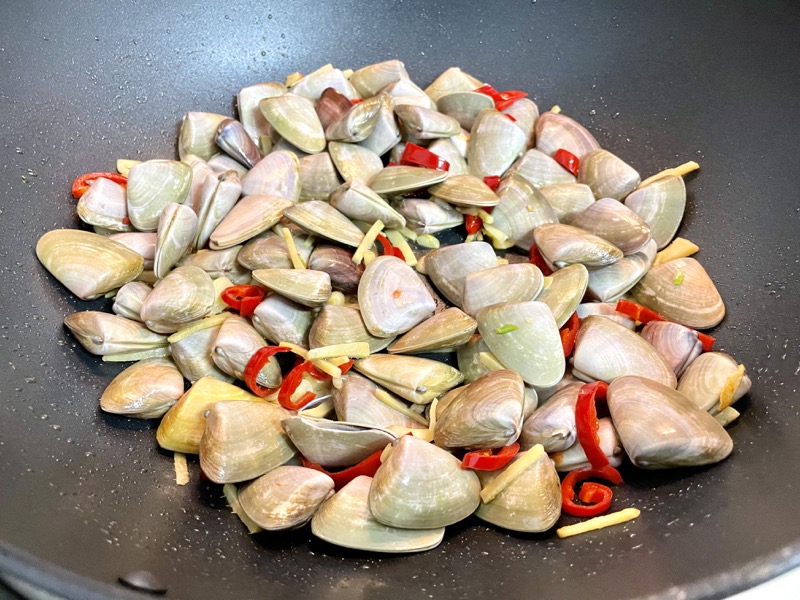
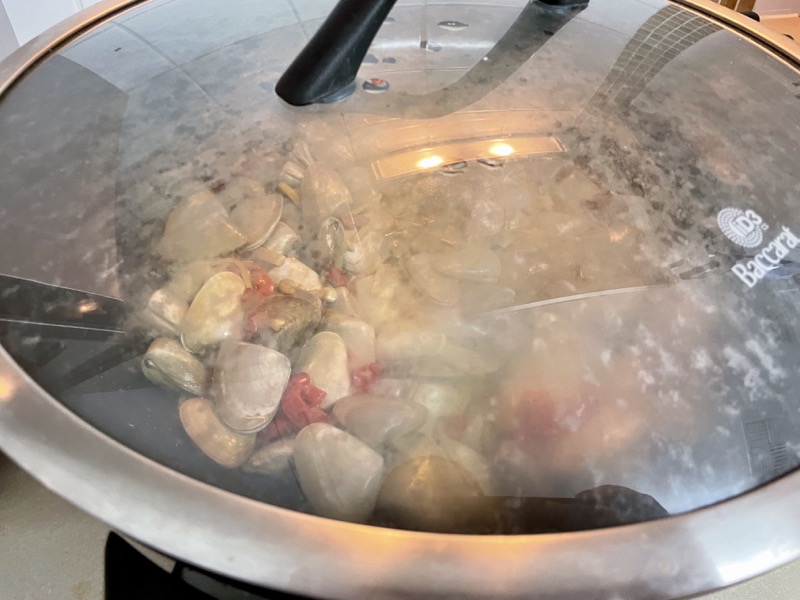
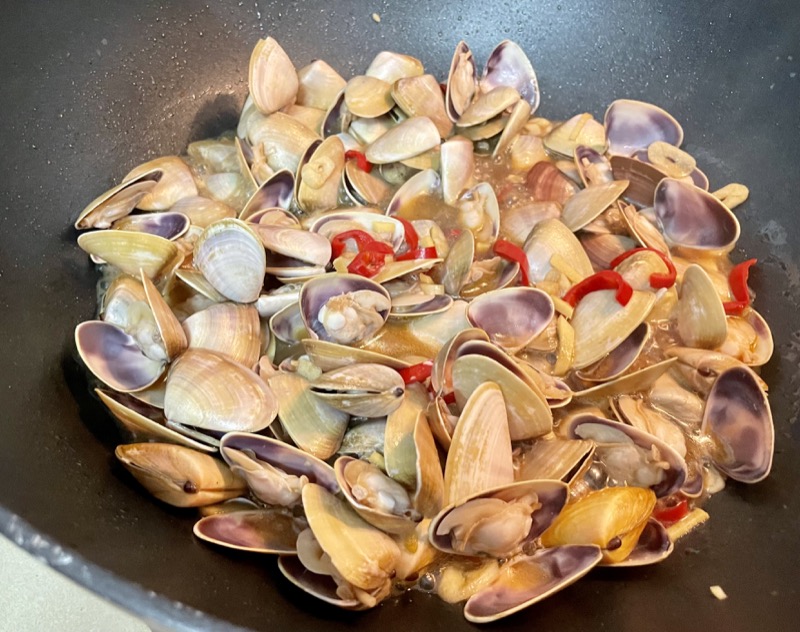
Add the clams to the pot and sauté for 30 seconds then drizzle in the sauce ingredients: cooking wine, black vinegar, oyster sauce, and white pepper. Mix around and let the sauce simmer for 2-3 minutes then put the lid on. Let the clams steam for 3-4 minutes or until they all open up. Careful not to steam them for too long or else the clams will get tough and chewy.

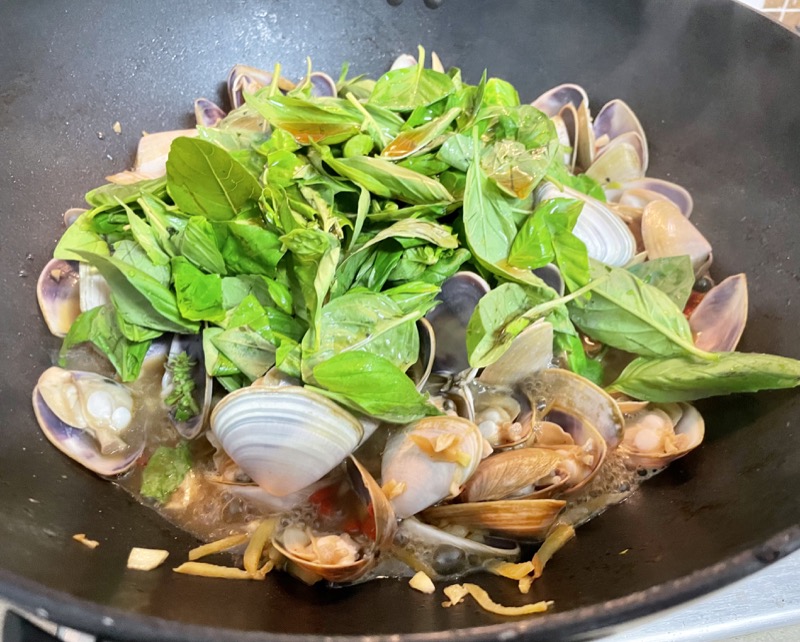
Once the clams have opened up, add in the basil leaves and drizzle the sesame oil over the clams. Sauté for another minute and turn off the heat. Serve! Best served over white rice.

Summarized Recipe:

Taiwanese Style Beerhouse Clams (台式九層塔炒海瓜子)

Date Published: Feb 16th, 2022 | Last Updated: Feb 16th, 2022
Author: Abby |Category: Taiwanese, Asian, easy, mains, sides
Serves: 2-4 | Prep time: 15 mins | Cook time: 10 mins

Ingredients:

  • 1kg fresh small clams (ie. Pipis)
  • 4 cloves garlic, thinly sliced
  • 4cm ginger, peeled and thinly sliced into matchsticks
  • 2-3 long Thai red chilis, sliced (remove the seeds if you want it less spicy)
  • Sauce:
    • 2 Tbsps Chinese cooking wine (ie. Shaoxing)
    • 1 Tbsp of black vinegar
    • 2 Tbsps oyster sauce
    • 3 tsps white granulated sugar
    • 1/4 tsp white pepper
  • 1 LARGE handful (~3 cups) of Thai basil leaves
  • 1 Tbsp sesame oil for drizzling

Directions:

*This recipe cooks QUICKLY on HIGH HEAT! Make sure all your ingredients are chopped, prepped and ready to go before you start cooking.

  1. Rinse the clams thoroughly under running water. Optional: soak in salty water 15mins before.
  2. Prepare the sauce by mixing all the sauce ingredients in a bowl: cooking wine, black vinegar, oyster sauce, sugar, and white pepper. Set aside.
  3. In a wok on HIGH heat, add a drizzle of oil and sauté the garlic, ginger, and chilli for 2-3 mins until fragrant.
  4. Add the clams to the pot and sauté for 30 seconds then drizzle in the sauce ingredients: cooking wine, black vinegar, oyster sauce, and white pepper. Mix around and let the sauce simmer for 2-3 minutes then put the lid on. Let the clams steam for 3-4 minutes or until they all open up. Careful not to steam them for too long or else the clams will get tough and chewy.
  5. Once the clams have opened up, add in the basil leaves and drizzle the sesame oil over the clams. Sauté for another minute and turn off the heat. Serve! Best served over white rice.

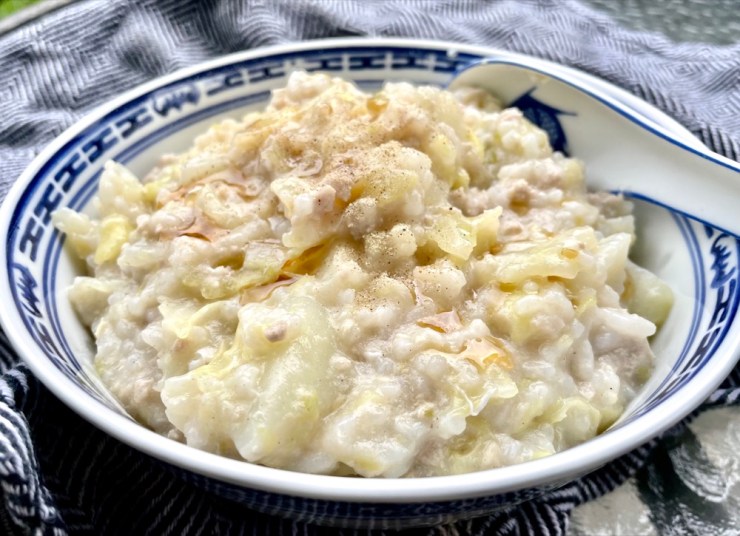
Mom’s Savoury Pork & Cabbage Congee 鹹稀飯


Date Published: Nov 8th, 2021 | Last Updated: Nov 8th, 2021
Author: Abby |Category: mains, Asian, easy, healthy, soups, Taiwanese
Serves: 4-6 (as a main) | Prep time: 15 mins | Cook time: 45 mins

Jump to recipe |

This recipe is easy and cooks up quickly!

This recipe is near and dear to me. My mom used to make it for us when I was a kid and I don’t think I properly appreciated it until I moved out from home. I had to get a dental procedure done a couple months ago and was instructed not to eat any hard foods for a day or two and the first thing I thought about making was mom’s salty congee. I called her up in Canada on the way home from my procedure and she gave me the rough instructions and ratios for me to figure out (she never writes down recipes and just eyes the ratios when she cooks). I picked up the ingredients before heading home and made it that night for dinner. It was surprisingly super easy and it turned out just like mom’s. It was amazing, nostalgic, and brought me right back to my childhood. I ate 3 bowls in one sitting!

Now I crave this every time I’m sick (Toby has amazingly learned how to make this dish for me for when I’m unwell 😊). It’s so warm and comforting, kind of like the effects of a chicken noodle soup. I hope you enjoy this recipe as much as I do.

Anyways, without further ado, here’s the recipe! If you have any comments or suggestions, I’d love to hear from you in the comment section! You can follow me on instagram, youtube and facebook to see all the recipes I post!

Happy cooking!

Ingredients you’ll need:

  • 350g pork mince
  • 3/4 Tbsp cornstarch
  • 1 cup jasmine rice
  • 7 cups (1.75L) water
  • 4 cups of cabbage, chopped to 2cm squares 
  • 1/2 Tbsp salt
  • 1/2 Tbsp chicken stock powder
  • 2 eggs, beaten
  • 3/4 tsp ground white pepper
  • 1/2 Tbsp sesame oil

Directions:

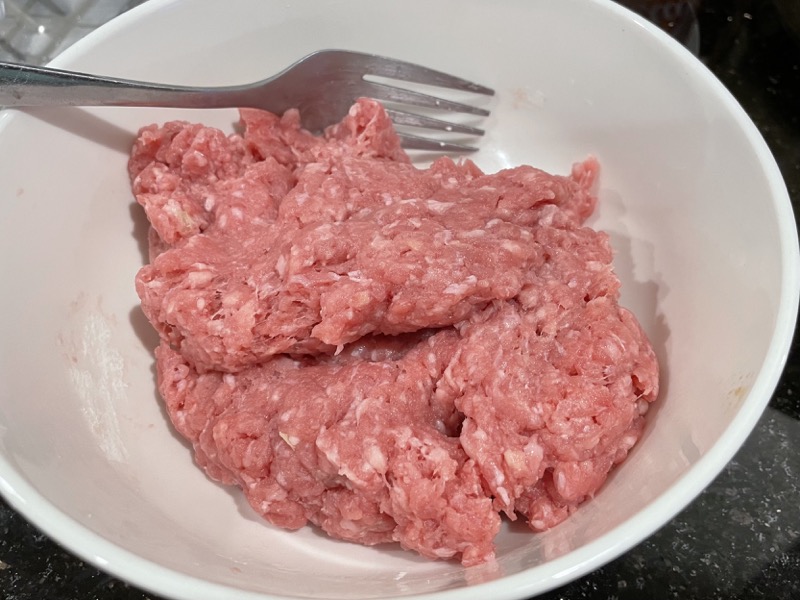
In a bowl, mix the pork mince and cornstarch together (this may be easier to do by hand). Set aside.

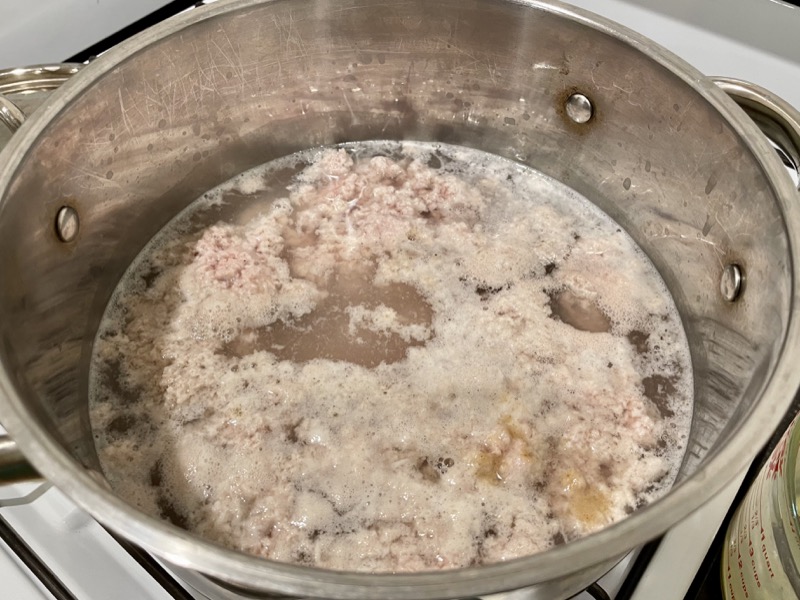
In a large pot, add in the rice, water and pork. Break up the pork into smaller pieces when adding it to the pot and stir. Turn the heat on HIGH and bring it to a boil with the lid on.

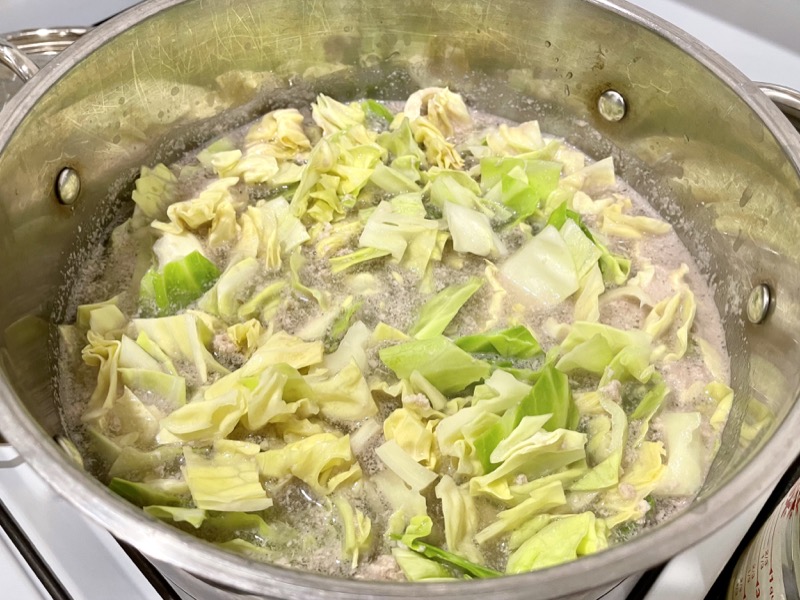
Once the water boils, add in the cabbage, salt and chicken stock powder. When the water boils again, turn the heat down to LOW and let it simmer with the lid on until the congee is to your desired consistency. Stir occasionally to ensure your congee doesn’t stick to the bottom of the pot and burn.

I like my congee thick and porridge-y consistency so I let it simmer a bit longer. If you prefer your congee more watery and soupy, turn off the heat earlier.

When the congee is to your liking, turn off the heat and immediately add in the beaten eggs. Stir the eggs into the congee until they are cooked (a few seconds). Mix in the white pepper and sesame oil. Add more salt and pepper to taste if you like. Serve!

Summarized Recipe:

Mom’s Savoury Pork & Cabbage Congee 鹹稀飯


Date Published:
Nov 8th, 2021 | Last Updated: Nov 8th, 2021
Author: Abby |Category: mains, Asian, easy, healthy, soups, Taiwanese
Serves: 4-6 (as a main) | Prep time: 15 mins | Cook time: 45 mins

Ingredients:

  • 350g pork mince
  • 3/4 Tbsp cornstarch
  • 1 cup jasmine rice
  • 7 cups (1.75L) water
  • 4 cups of cabbage, chopped to 2cm squares 
  • 1/2 Tbsp salt
  • 1/2 Tbsp chicken stock powder
  • 2 eggs, beaten
  • 3/4 tsp ground white pepper
  • 1/2 Tbsp sesame oil

Directions:

  1. In a bowl, mix the pork mince and cornstarch together (this may be easier to do by hand). Set aside.
  2. In a large pot, add in the rice, water and pork. Break up the pork into smaller pieces when adding it to the pot and stir. Turn the heat on HIGH and bring it to a boil with the lid on.
  3. Once the water boils, add in the cabbage, salt and chicken stock powder. When the water boils again, turn the heat down to LOW and let it simmer with the lid on until the congee is to your desired consistency. Stir occasionally to ensure your congee doesn’t stick to the bottom of the pot and burn.
    • I like my congee thick and porridge-y consistency so I let it simmer a bit longer. If you prefer your congee more watery and soupy, turn off the heat earlier.
  4. When the congee is to your liking, turn off the heat and immediately add in the beaten eggs. Stir the eggs into the congee until they are cooked (a few seconds). Mix in the white pepper and sesame oil. Add more salt and pepper to taste if you like. Serve!