Easy Focaccia Bread


Date Published: Jan 31st, 2025 | Last Updated: Jan 31st, 2025
Author: Abby |Category: breads, how-to, easy, <30 mins, appetizers, basics, pastry, snacks, vegetarian
Serves: 1 pan | Prep time: 1.5 hours | Cook time: 25 minutes

Jump to recipe |

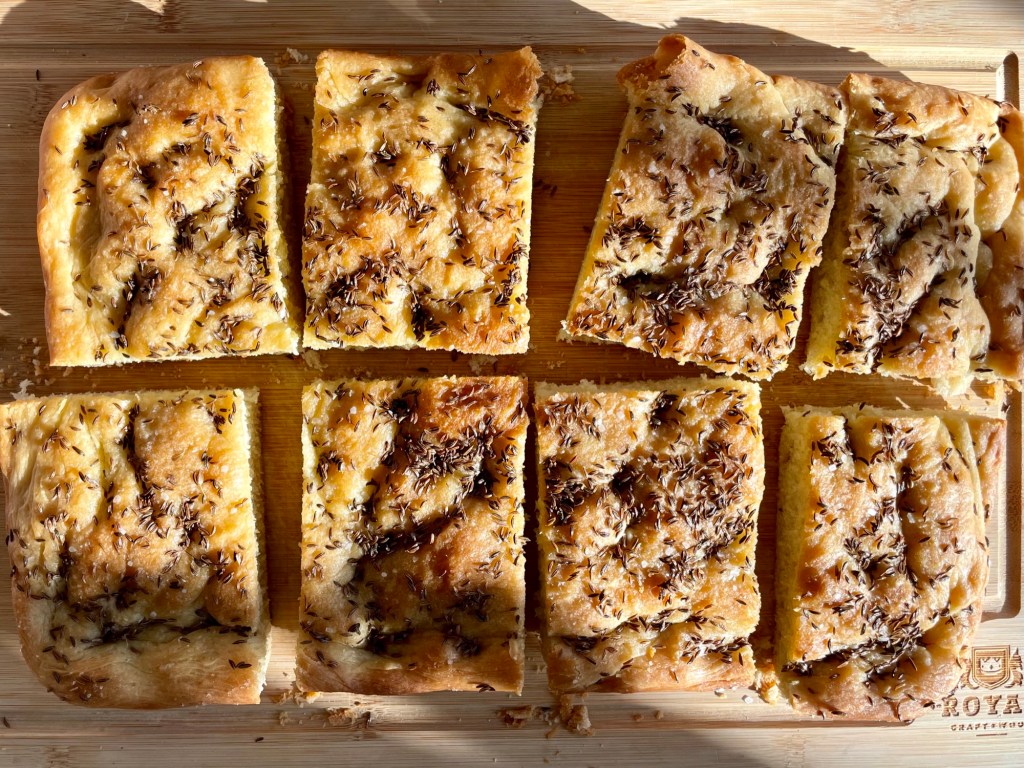
Making your own focaccia bread is incredibly easy and so customizable. With this recipe, you can make any flavour of focaccia you like and you can be as creative and artistic as you like. Go crazy with your focaccia art!

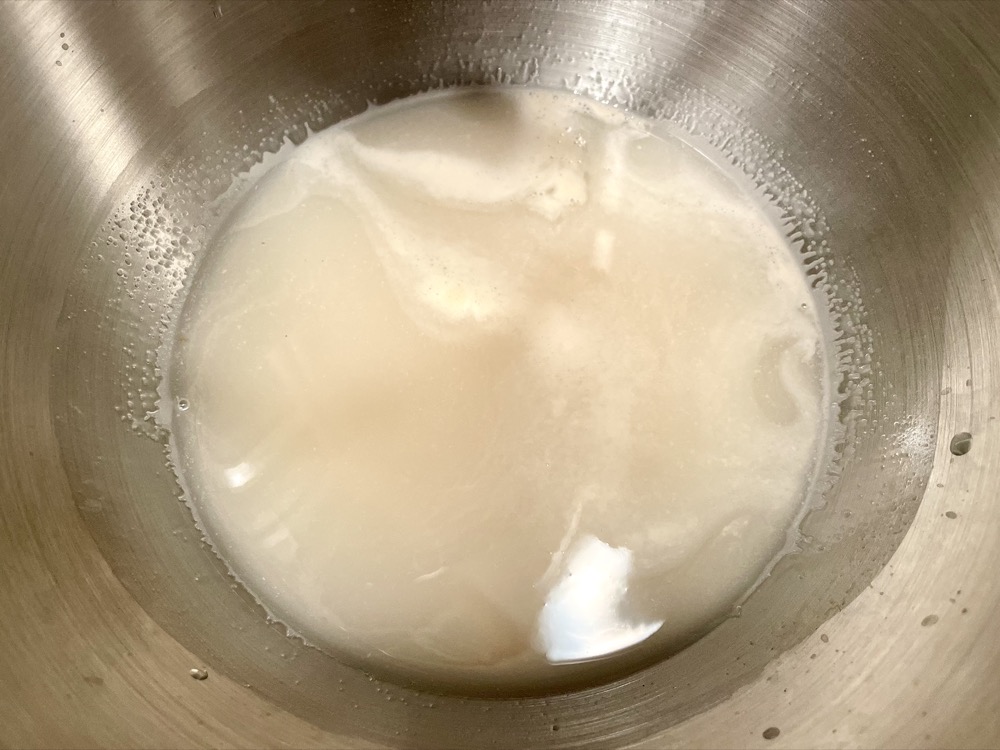
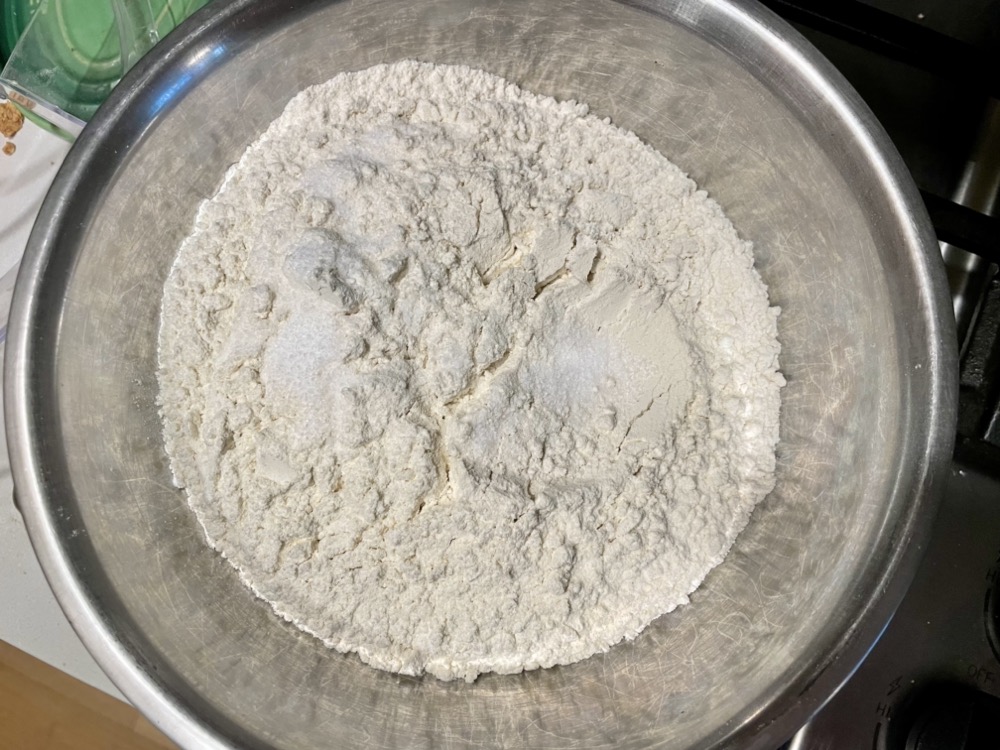
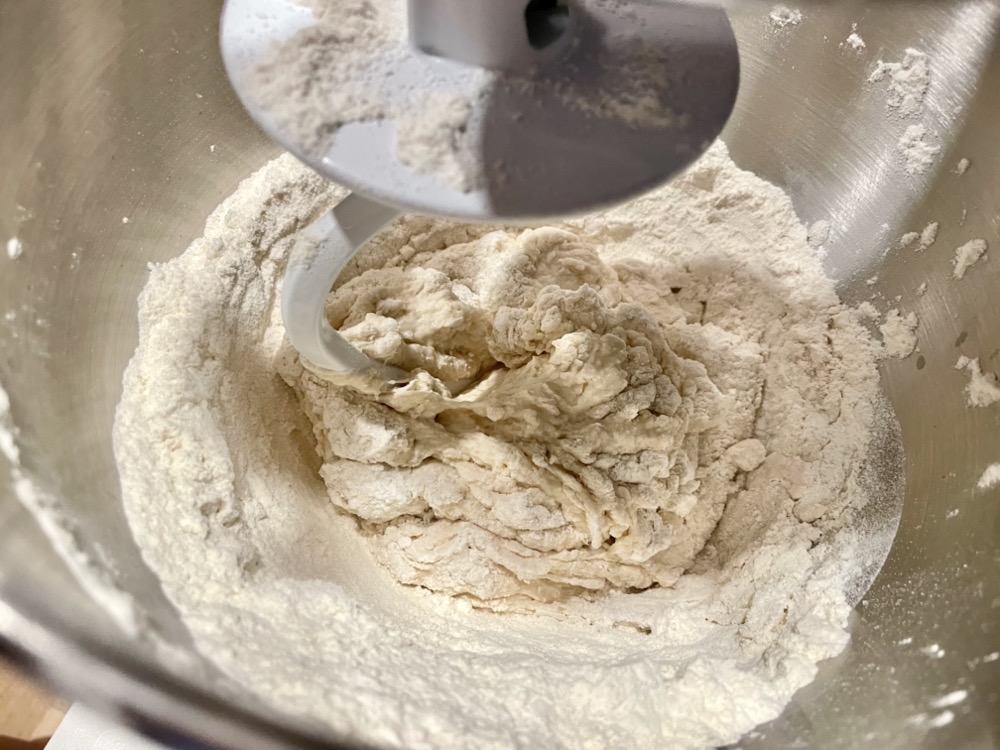
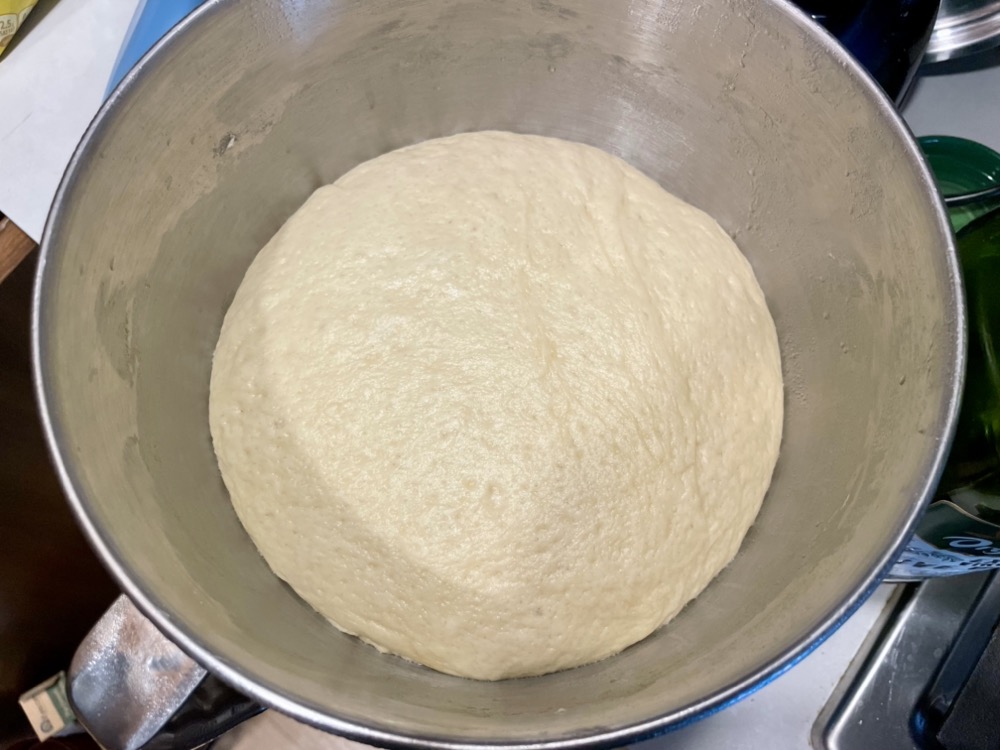
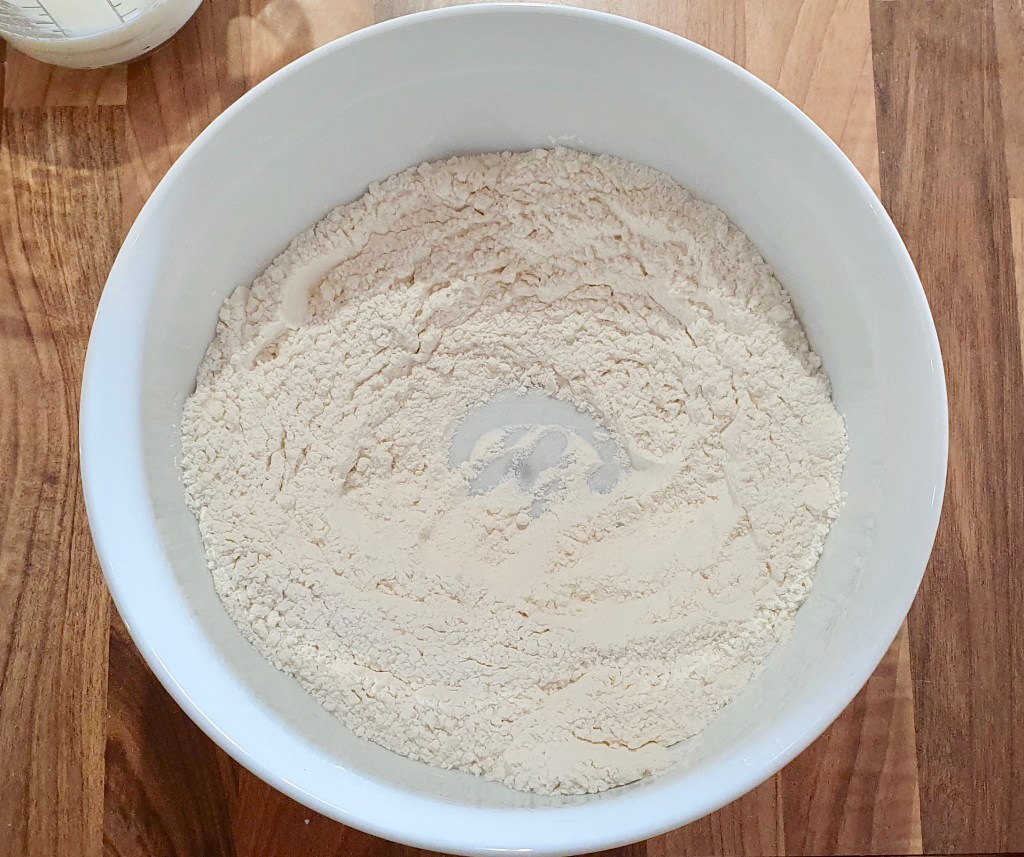
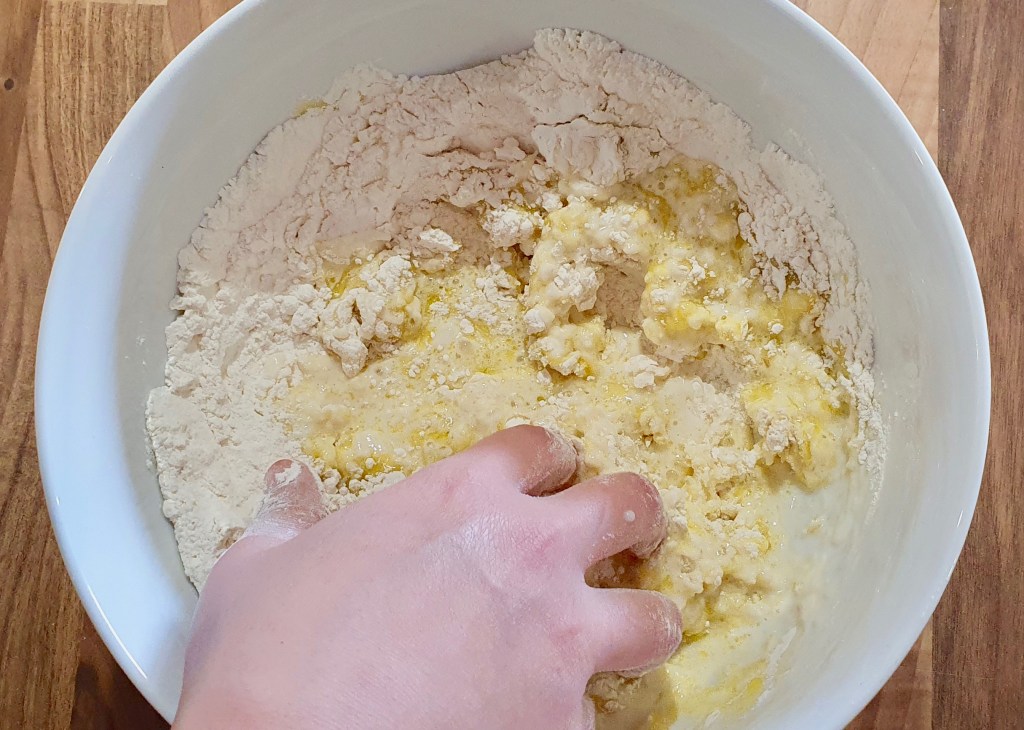
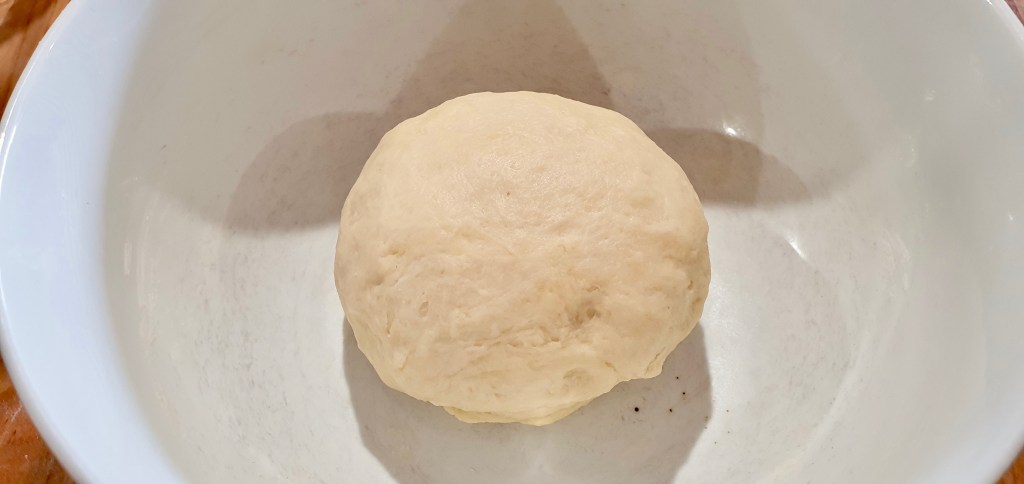
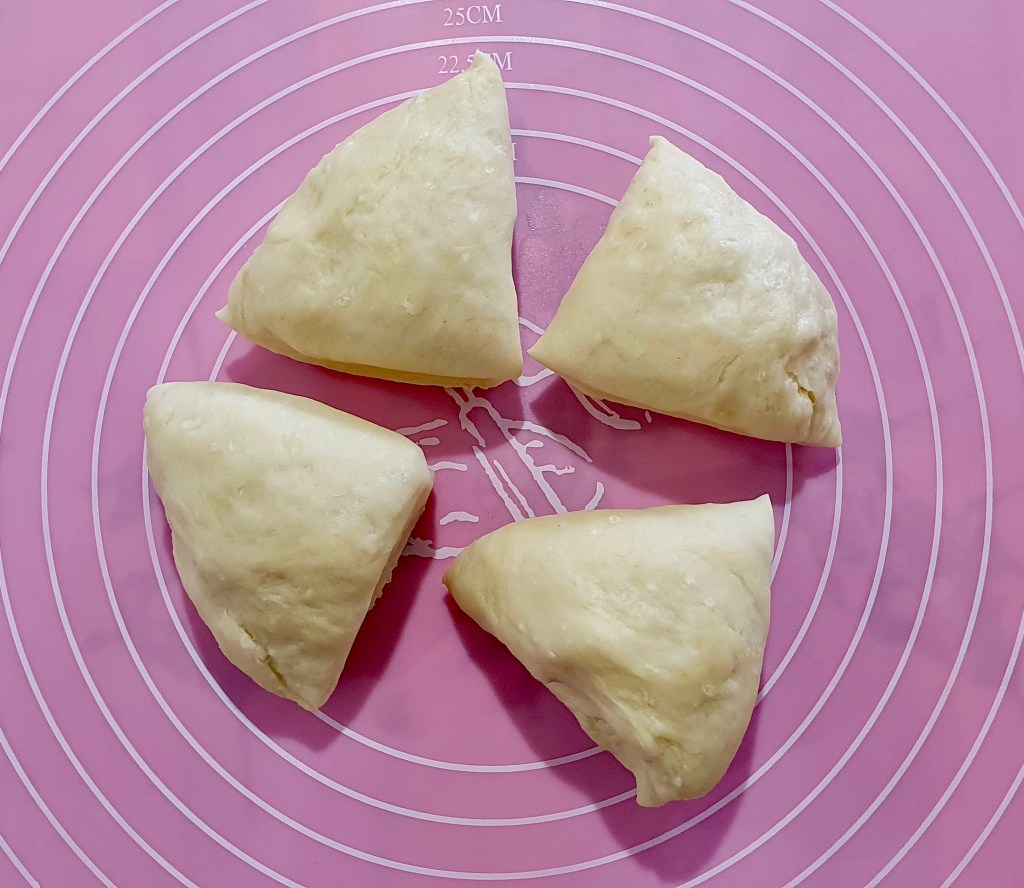
This recipe uses my basic dough recipe, which can be used for so many other things as well – think halloumi cheese pie, za’atar manakish (Lebanese flatbread), pizza dough, flat bread! You can follow the recipe for the basic dough here, but I’ve also outlined the gist of the recipe in a series of photos in this post.
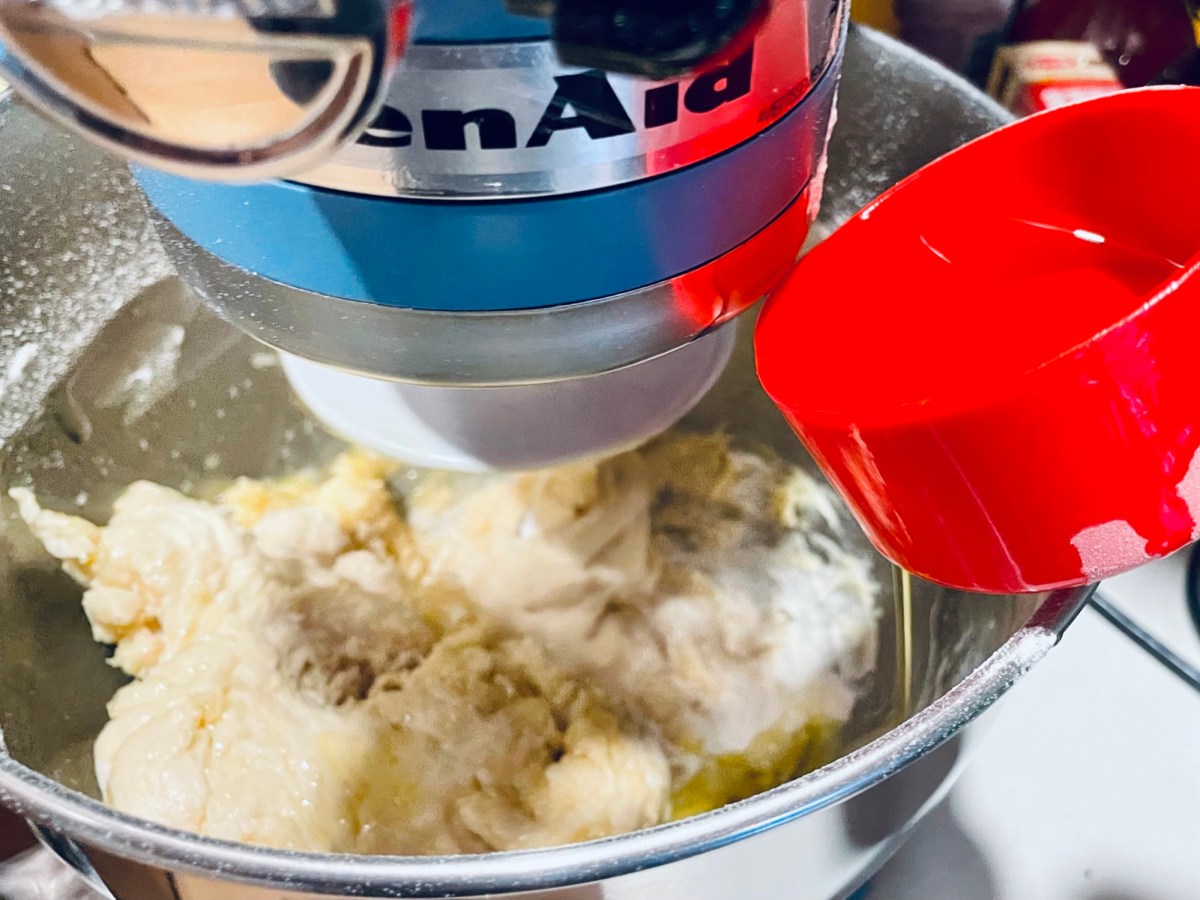
My Go-To Basic Dough


This is my go-to recipe for a basic bread-based dish (ie. flatbread, pizza, manakish, cheese pocket…etc). It only requires 5 ingredients + water and comes together so easily. Make it an hour or two ahead of time and…

Keep reading

Anyways, without further ado, here’s the recipe! If you have any comments or suggestions, I’d love to hear from you in the comment section! You can follow me on instagram, youtube and facebook to see all the recipes I post!

Happy cooking!

Ingredients you’ll need:

  • One ball of basic dough, after proofing: follow the instructions here
    • 1 Tbsp (1 packet) active dry yeast
    • 1 Tbsp granulated sugar
    • 1 cup (250ml) warm water
    • 3 cups (432g) all purpose flour + extra for dusting/kneading
    • 1 tsp salt
    • 1/2 cup (125ml) olive oil
  • 3 + 2 Tbsps extra virgin olive oil
  • + Any toppings you want (tomatoes, black olives, caramelized onions, feta cheese, parmesan, basil, honey…etc.)
    • I like to infuse the olive oil with rosemary, lemon zest and garlic as a topping

Directions:

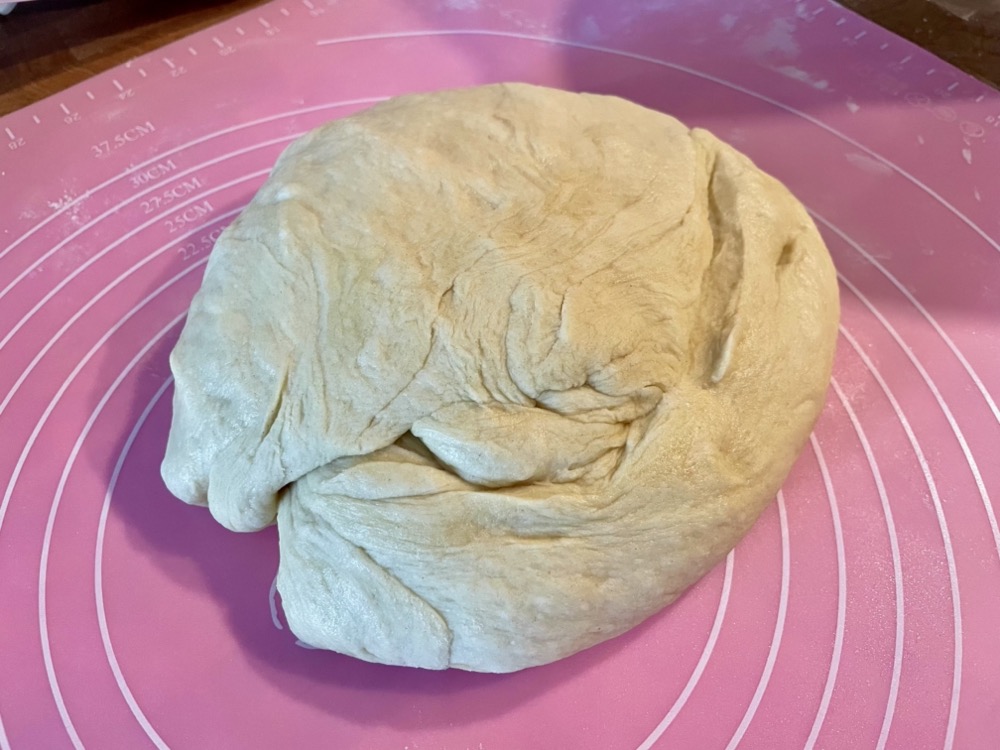
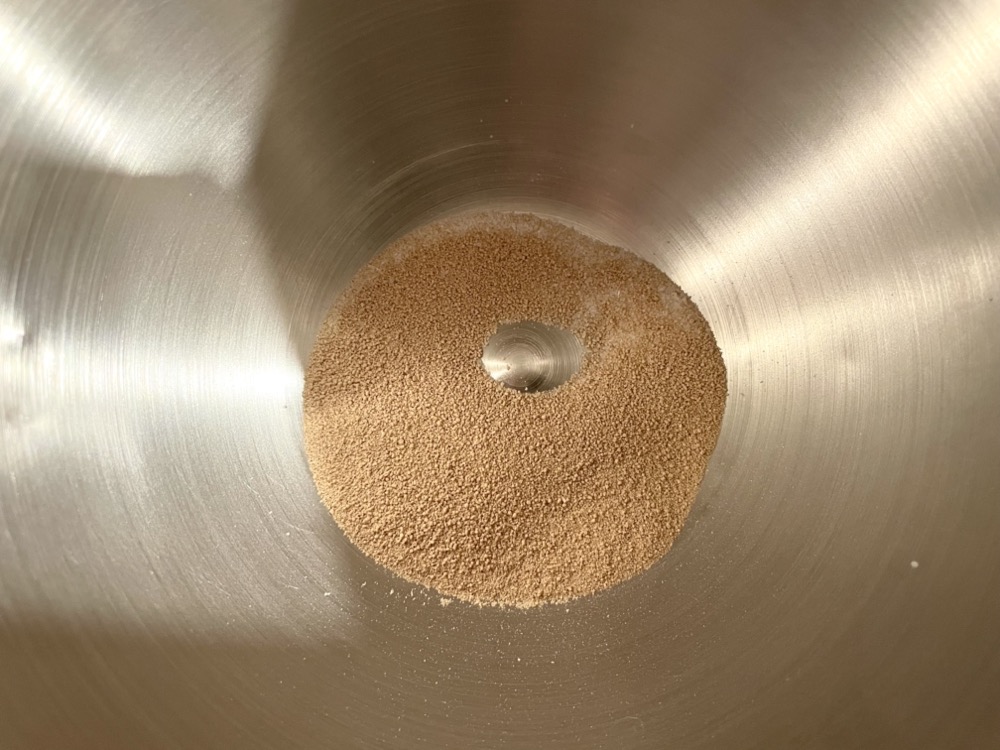
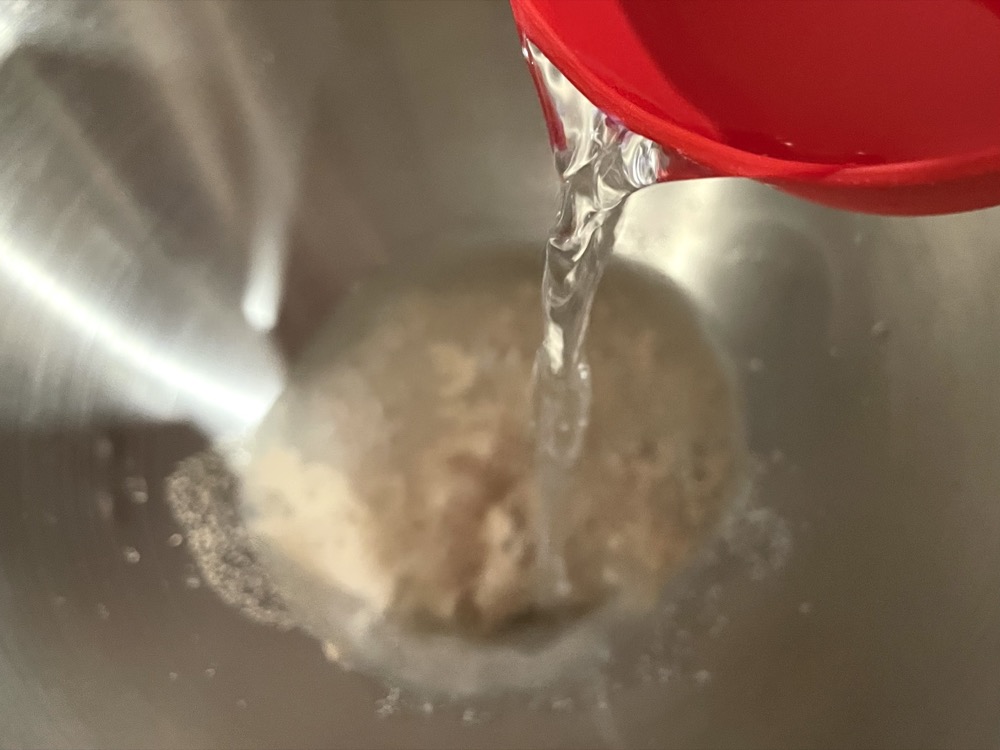
Make one basic dough ball (you can double the recipe for a thicker focaccia): follow the instructions here, I’ve summarized the process in a series of photos below.
Preheat the oven to 400˚F/200˚C.

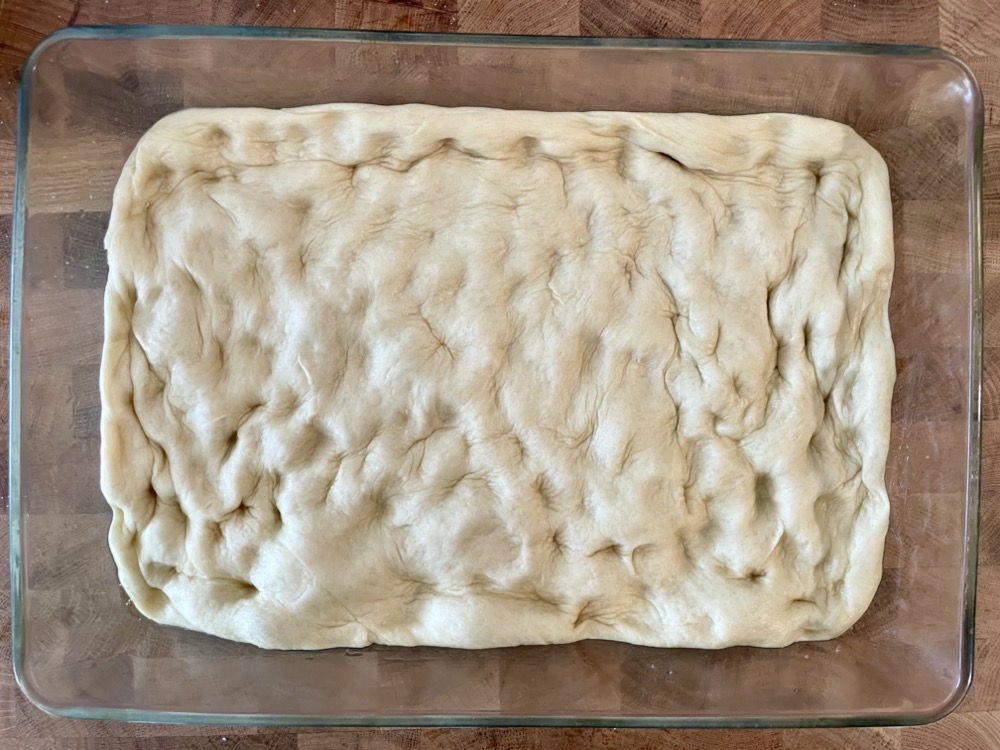
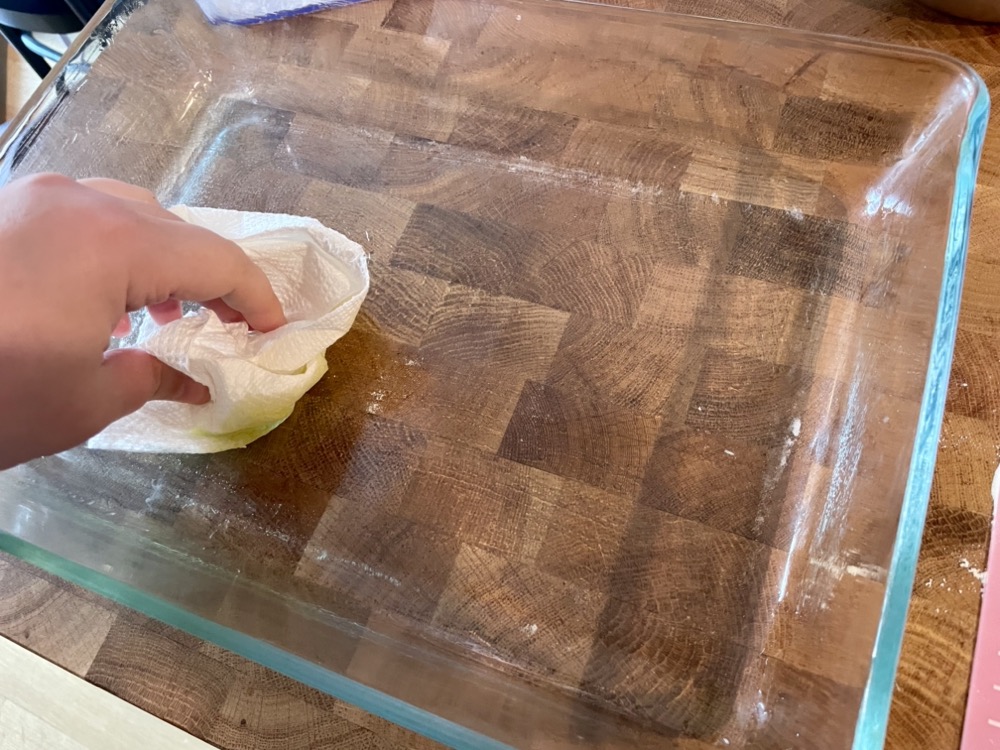
Place a couple tablespoons of olive oil in a 9″x13″ pan and spread it around to coat the entire pan, including the sides and edges. Place your dough ball in the pan and gently spread it out to the edges ensuring even thickness. If your dough is difficult to spread out to the edges and is tearing, wait 5-10 mins and try again (letting the dough rest relaxes the gluten).
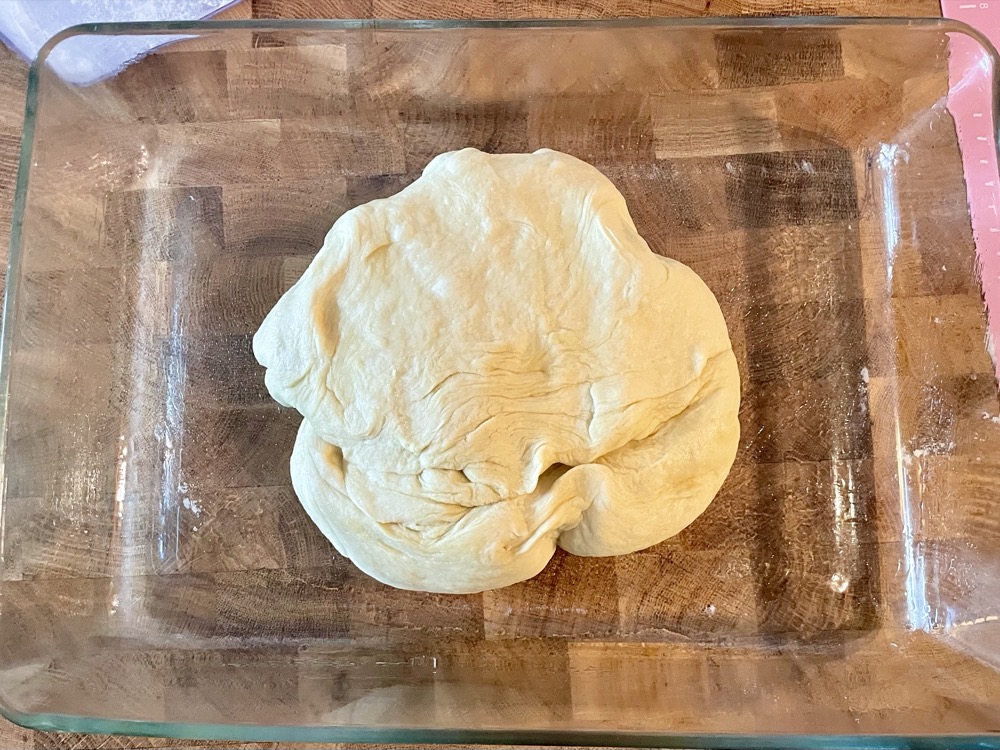
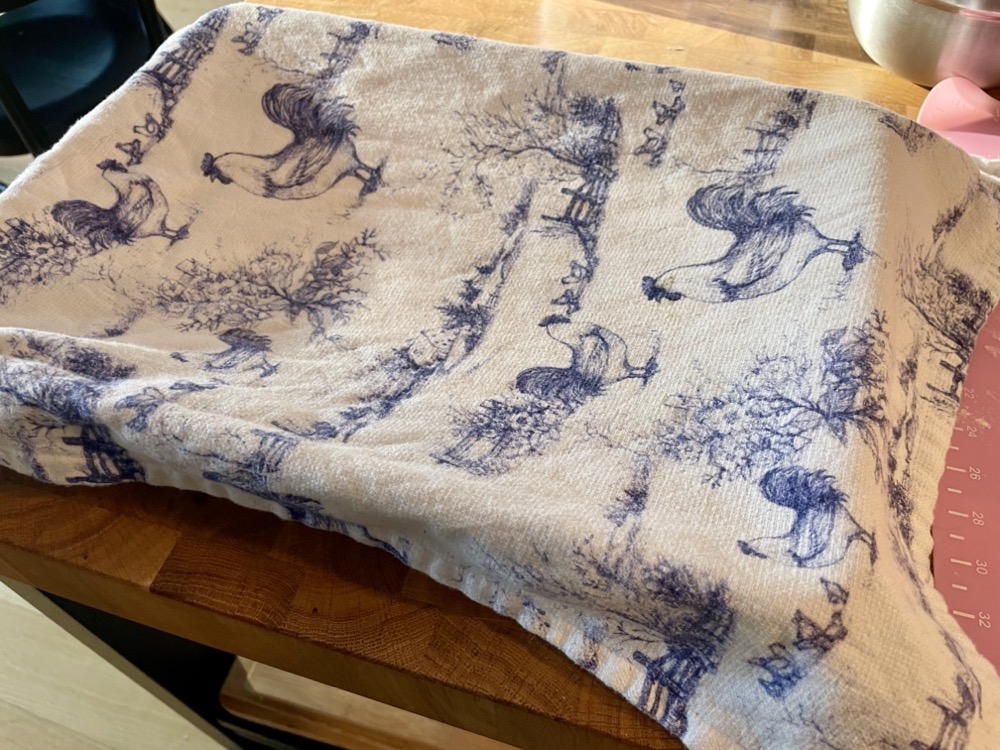
Cover with a clean tea towel and set aside for another 20 minutes to relax the dough.

Use your fingers and make indents all over dough to release any air pockets.

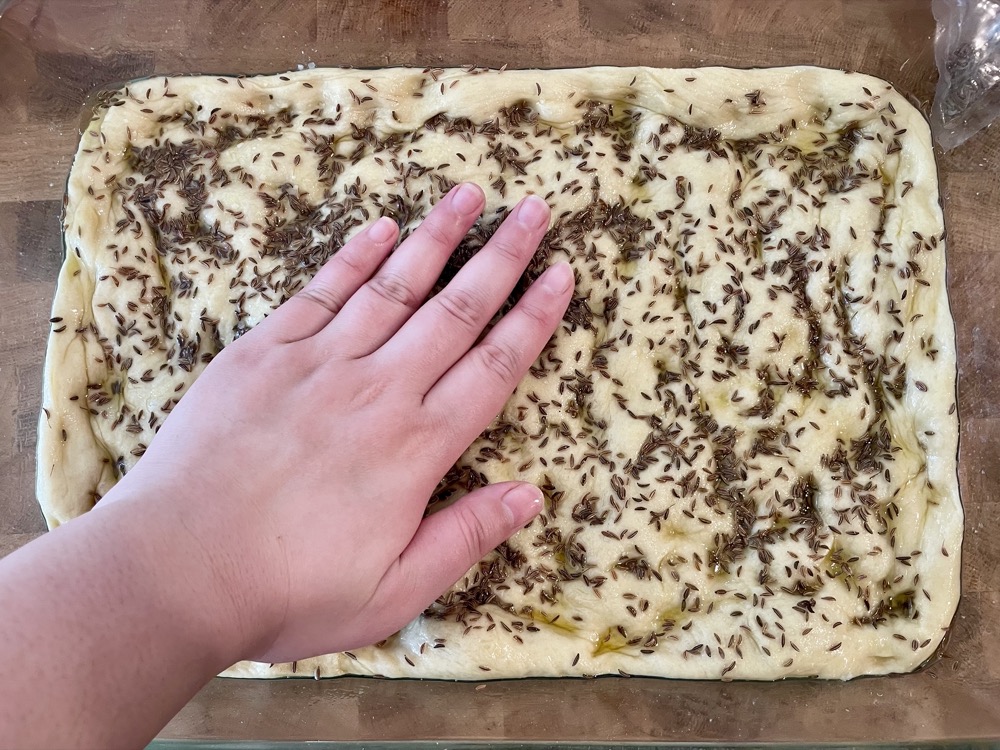
Brush 3 Tbsps of olive oil over the bread then add your choice of toppings (I used caraway seeds and salt in the photos). Gently press down on the toppings into the bread and use your fingers to make indents again.

Bake in the preheated oven on the middle rack for 20-25 mins until the top is golden. Rotate your pan halfway through so the top cooks evenly.

After baking, brush on another 2 Tbsps of olive oil over the top. Let it rest for a few minutes then transfer on a cooling rack and let it cool completely before slicing. Enjoy!

Summarized Recipe:

Easy Focaccia Bread

Date Published: Jan 31st, 2025 | Last Updated: Jan 31st, 2025
Author: Abby |Category: breads, how-to, easy, <30 mins, appetizers, basics, pastry, snacks, vegetarian
Serves: 1 pan | Prep time: 1.5 hours | Cook time: 25 minutes

Ingredients:

  • One ball of basic dough, after proofing:
    • 1 Tbsp (1 packet) active dry yeast
    • 1 Tbsp granulated sugar
    • 1 cup (250ml) warm water
    • 3 cups (432g) all purpose flour + extra for dusting/kneading
    • 1 tsp salt
    • 1/2 cup (125ml) olive oil
  • 3 + 2 Tbsps extra virgin olive oil
  • + Any toppings you want (tomatoes, black olives, caramelized onions, feta cheese, parmesan, basil, honey…etc.)
    • I like to infuse the olive oil with rosemary, lemon zest and garlic as a topping

Directions:

  1. Make one basic dough ball (you can double the recipe for a thicker focaccia)
  2. Preheat the oven to 400˚F/200˚C.
  3. Place a couple tablespoons of olive oil in a 9″x13″ pan and spread it around to coat the entire pan, including the sides and edges.
  4. Place your dough ball in the pan and gently spread it out to the edges ensuring even thickness. Cover with a clean tea towel and set aside for 20 minutes to relax the dough.
    • If your dough is difficult to spread out to the edges and is tearing, wait 5-10 mins and try again (letting the dough rest relaxes the gluten).
  5. After 20 minutes, use your fingers and make indents all over dough to release any air bubbles.
  6. Brush 3 Tbsps of olive oil over the bread then add your choice of toppings (I used caraway seeds and salt in the photos). Gently press down on the toppings into the bread and use your fingers to make indents again.
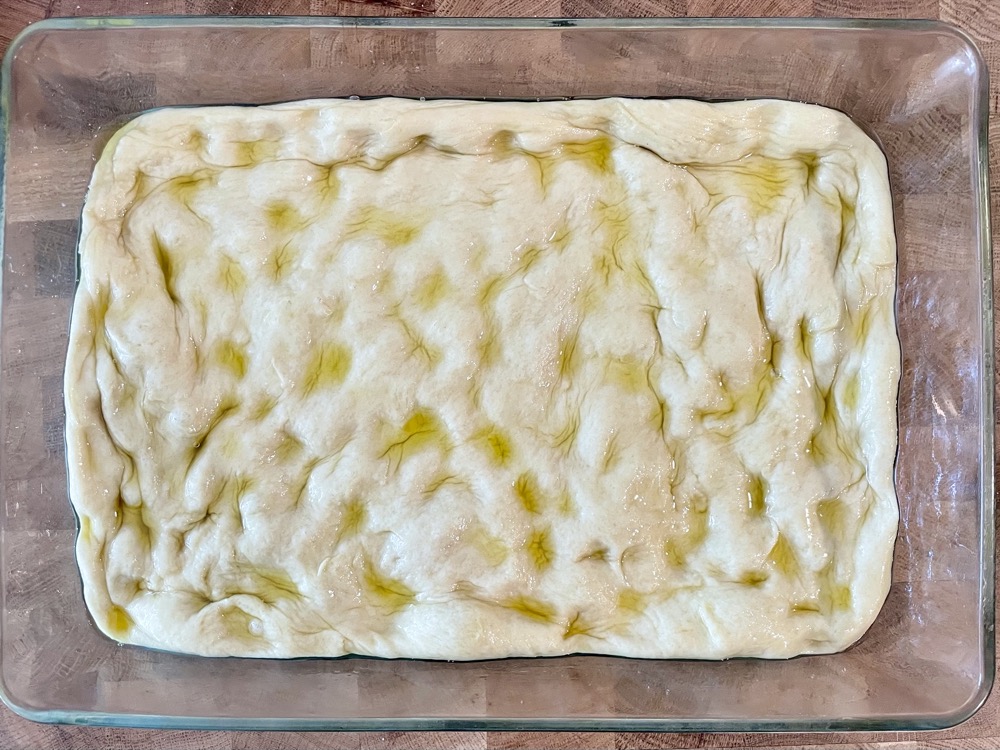
  7. Bake in the preheated oven on the middle rack for 20-25 mins until the top is golden. Rotate your pan halfway through so the top cooks evenly.
  8. After baking, brush on another 2 Tbsps of olive oil over the top. Let it rest for a few minutes then transfer on a cooling rack and let it cool completely before slicing. Enjoy!

How to make horseradish from scratch


Date Published: Jan 26th, 2025 | Last Updated: Jan 26th, 2025
Author: Abby |Category: basics, how-to, <15 mins, easy, sauces, vegetarian
Serves: 1 jar | Prep time: 5 mins | Blend time: 1 minute

Jump to recipe |

I’m not a fan of horseradish, but recently I needed a small amount for a new recipe I was trying out and for whatever reason I couldn’t find any jarred horseradish at the bodegas near me. Surprisingly, I did manage to find fresh horseradish root instead. I’ve never used fresh horseradish before (I thought the shop worker was giving me a parsnip 😅), but a quick google search showed how easy it was to make my own prepared horseradish. So here I am, sharing another recipe with everyone on what I’ve learned and to document it incase I’m ever in the same situation again in the future. Preparing your own horseradish is actually super easy and you can tailor it to how spicy, mild, or salty you like. The best part is that it keeps in the fridge for months, which perfect if you go through a jar of horseradish super slowly like me.

Anyways, without further ado, here’s the recipe! If you have any comments or suggestions, I’d love to hear from you in the comment section! You can follow me on instagram, youtube and facebook to see all the recipes I post!

Happy cooking!

Ingredients you’ll need:

  • 240g horseradish root, peeled and chopped
  • 1/4 cup water
  • 1 Tbsp white vinegar
  • Pinch of salt

Directions:

1. Wash, peel, and chop up the horseradish root.

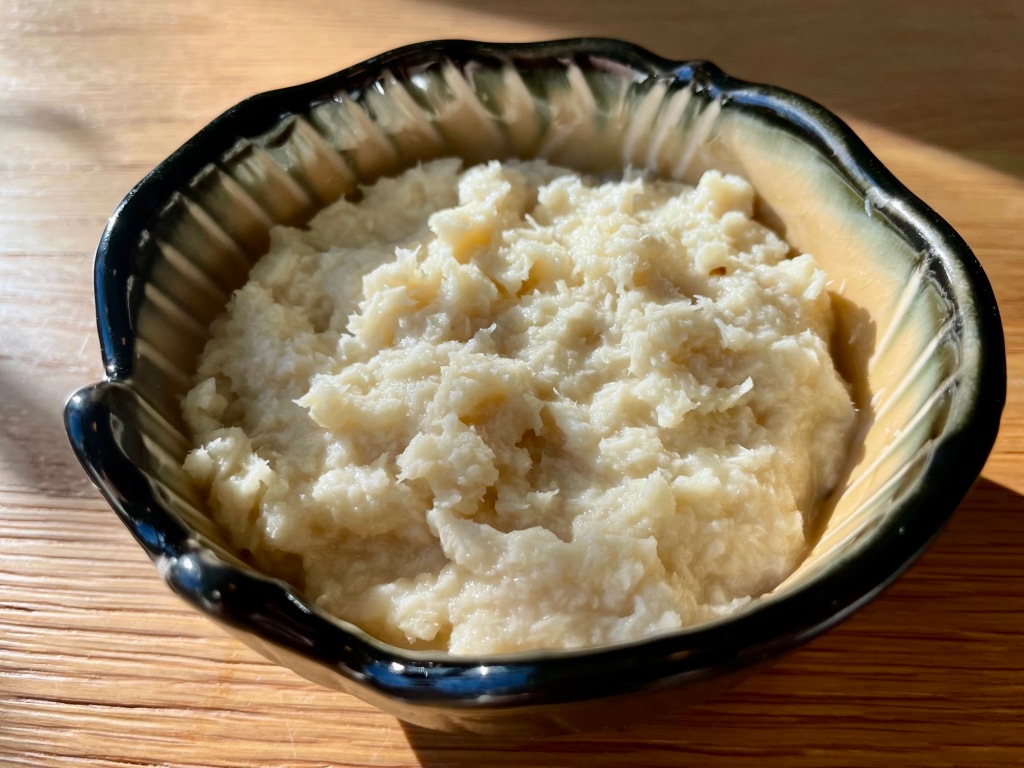
2. Add the horseradish root (peeled and chopped) to a small blender or food processor and add enough water to blend the horseradish into a smooth purée (I added about 1/4 cup). Be careful when opening the blender lid. Horseradish can be pretty pungent and can sting your eyes like an onion if you get a big enough whiff.

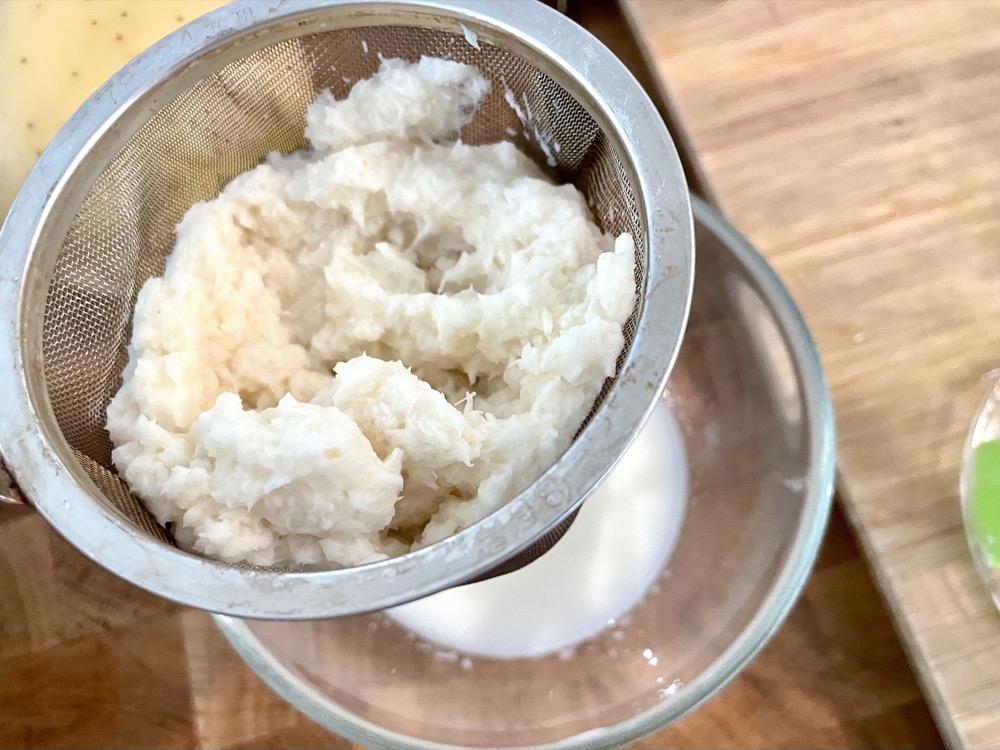
3. Once blended, strain out any excess water, then add in 1 Tbsp of white vinegar and a pinch of salt to offset the spiciness. Done!

Store in an airtight container in the fridge for up to a month.

Summarized Recipe:

How to make horseradish from scratch

Date Published: Jan 26th, 2025 | Last Updated: Jan 26th, 2025
Author: Abby |Category: basics, how-to, <15 mins, easy, sauces, vegetarian
Serves: 1 jar | Prep time: 5 mins | Blend time: 1 minute

Ingredients:

  • 240g horseradish root, peeled and chopped
  • 1/4 cup water
  • 1 Tbsp white vinegar
  • Pinch of salt

Directions:

  1. Wash, peel, and chop the horseradish root.
  2. Add the horseradish root (peeled and chopped) to a small blender or food processor and add enough water to blend the horseradish into a smooth purée (I added about 1/4 cup).
    • Be careful when opening the blender lid. Horseradish can be pretty pungent and can sting your eyes like an onion if you get a big enough whiff.
  3. Once blended, strain out any excess water, then add in 1 Tbsp of white vinegar and a pinch of salt to offset the spiciness. Store in an airtight container in the fridge for up to a month.

Roasted Garlic (a how-to guide)


Date Published: July 20th, 2024 | Last Updated: July 20th, 2024
Author: Abby |Category: how-to, easy
Prep time: 5 mins | Cook time: 40 mins

Jump to recipe |

Roasted garlic is one of those magical ingredients that’s packed with so much flavour and yet so easy to make. It’s so versatile and easy to use – you can put it in so many things to easily add an extra depth of flavour or just spread it over plain toast with a drizzle of olive oil for a quick snack. You’ll be amazed how easy it is to make and the best part is that it keeps well in the fridge for up to a week covered in olive oil so you can make a bit extra and continue to use it throughout the week without putting in the effort. 🙂

If you have any comments or suggestions, I’d love to hear from you in the comment section! You can follow me on instagram, youtube and facebook to see all the recipes I post!

Happy cooking!

Ingredients you’ll need:

  • Garlic bulbs – however many you’d like to roast
  • Drizzle of olive oil
  • Pinch of salt
  • Pinch of black pepper

Directions:

Preheat the oven to 375˚F (190˚C).

Prepare a small square baking tray and pour in a drizzle of olive oil.

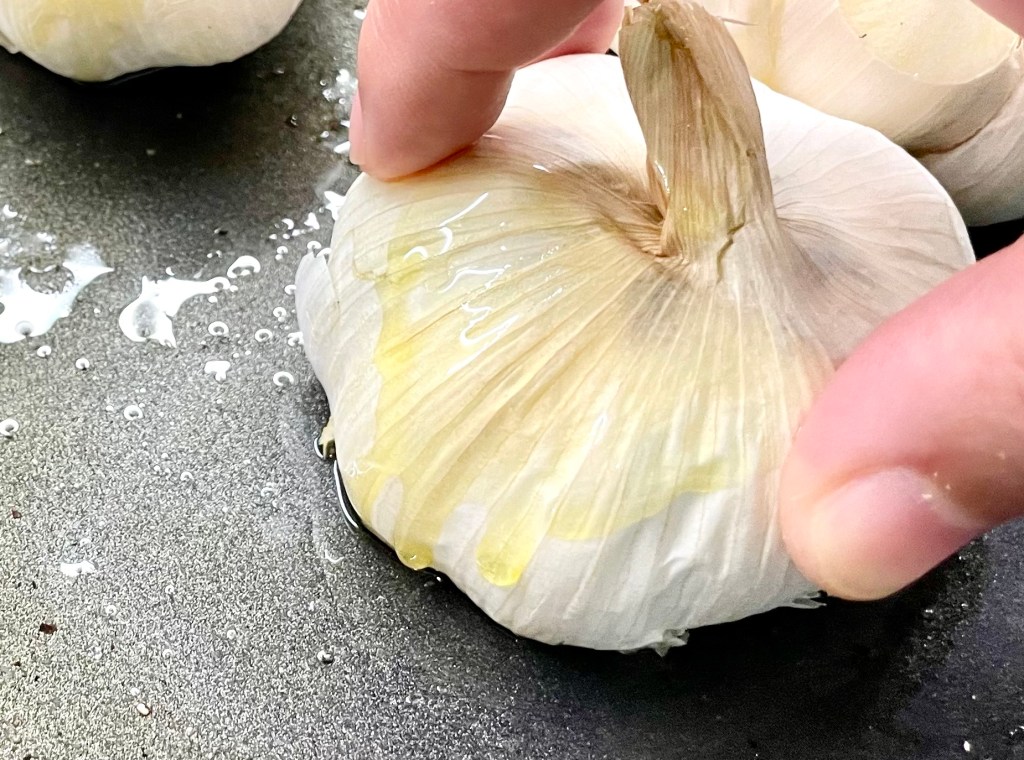
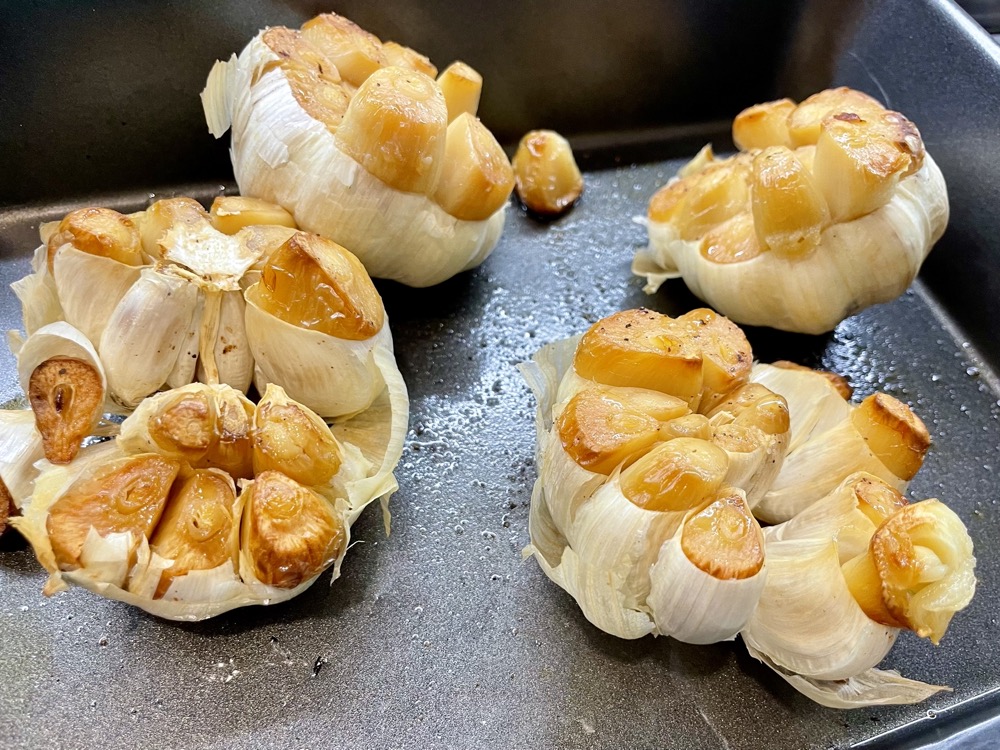
Slice the base off of the garlic bulbs (the flat side – see photo) and dip the exposed side into the olive oil and place the bulbs in the tray, cut side up.

Sprinkle salt and pepper over top. Make sure all the exposed garlic cloves are covered in oil so it doesn’t burn.

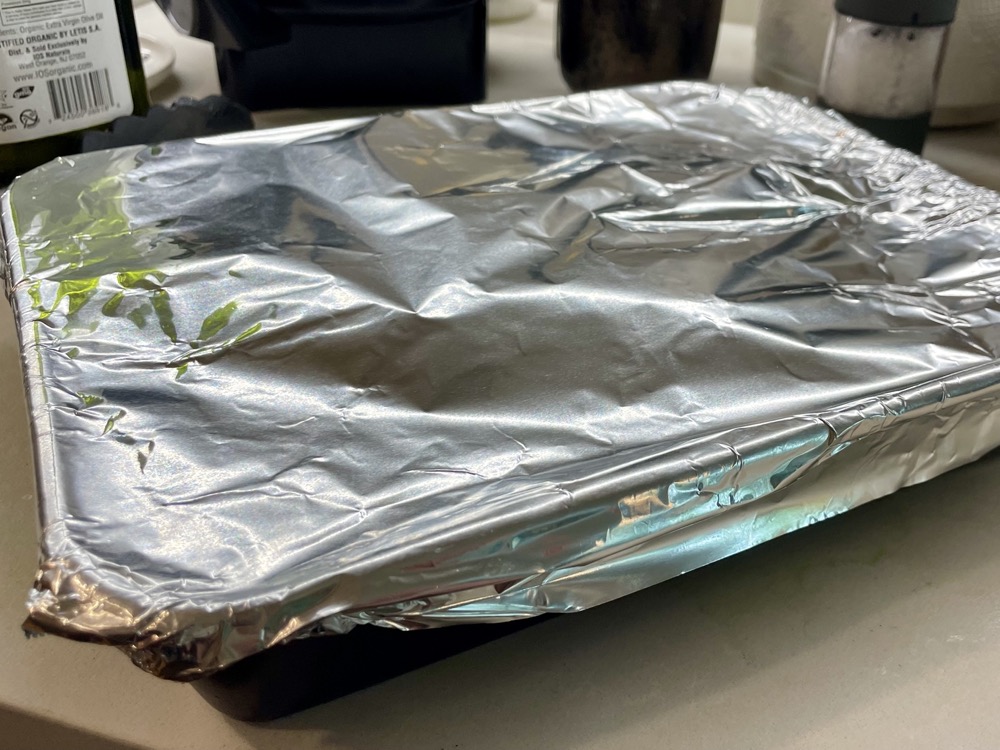
Cover the tray with aluminum foil and bake in the preheated oven for 40 minutes.

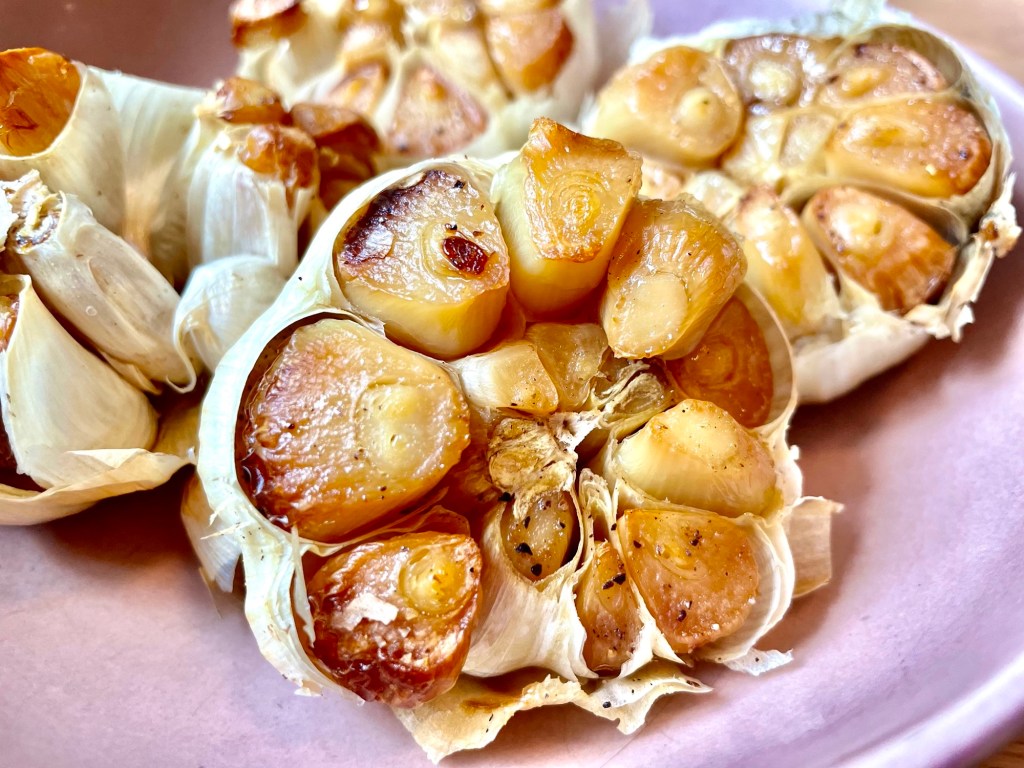
After 40 mins, take it out of the oven, carefully remove the foil and let the roasted garlic cool down. Once cool enough to handle, gently remove the garlic cloves from the outer layer. Done!

Summarized Recipe:

Roasted Garlic (a how-to guide)

Date Published: July 20th, 2024 | Last Updated: July 20th, 2024
Author: Abby |Category: how-to, easy
Prep time: 5 mins | Cook time: 40 mins

Ingredients:

  • Garlic bulbs – however many you’d like to roast
  • Drizzle of olive oil
  • Pinch of salt
  • Pinch of black pepper

Directions:

  1. Preheat the oven to 375˚F (190˚C).
  2. Prepare a small square baking tray and pour in a drizzle of olive oil.
  3. Slice the base off of the garlic bulbs (the flat side – see photo) and dip the exposed side into the olive oil and place the bulbs in the tray, cut side up. Sprinkle salt and pepper over top. Make sure all the exposed garlic cloves are covered in oil so it doesn’t burn.
  4. Cover the tray with aluminum foil and bake in the preheated oven for 40 minutes.
  5. After 40 mins, take it out of the oven and carefully remove the foil and let the roasted garlic cool down. Once cool enough to handle, gently remove the garlic cloves from the outer layer. Done!

Rendering Pork Fat: Making Lard


Date Published: Oct 24th, 2023 | Last Updated: Oct 24th, 2023
Author: Abby |Category: tips, tricks
Prep time: 5 mins | Cook time: 1 hour

Jump to recipe |

Using lard instead of cooking oil adds an extra depth of flavour to any dish – think stir-fry noodles, fried rice, sautéed veggies. You can buy ready to use lard at any grocery store, but I find homemade lard to have an extra smokiness that you just can’t get beat. Although a little time-consuming, it is SO easy to make your own lard at home and also a little satisfying to watch all the fat melt down. Try it yourself! The finished lard will last for up to 6 months in the fridge.

Happy cooking!

Ingredients you’ll need:

  • 1kg of pork belly/fat – with or without skin, chopped 2cm pieces
  • 3/4 cup water

Directions:

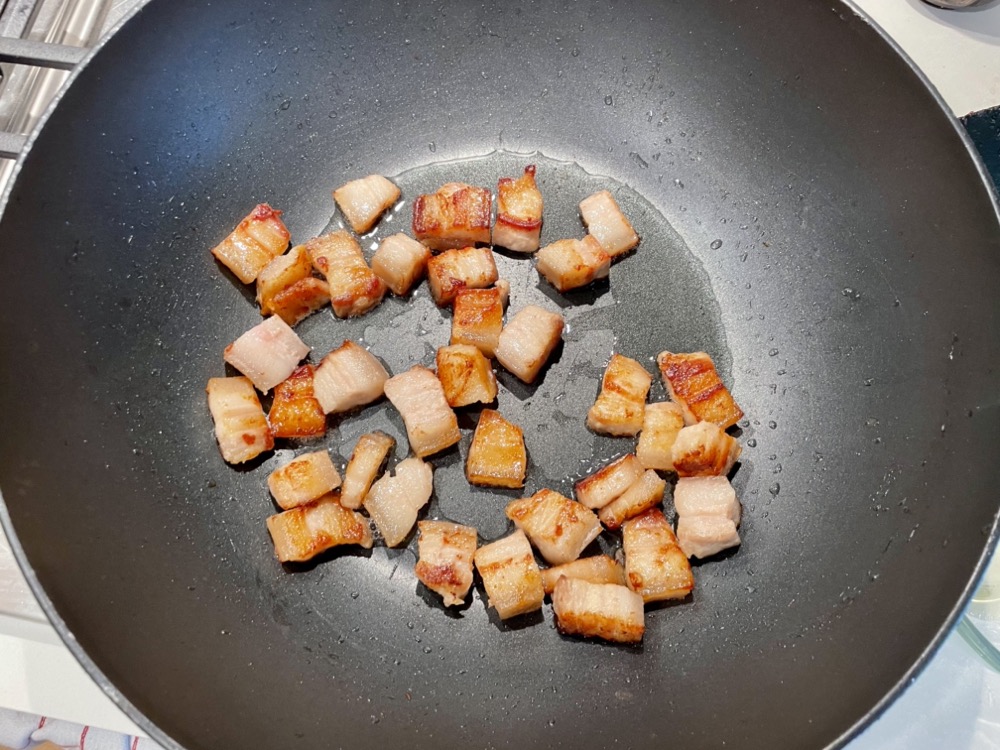
In a wok on MED-HIGH heat, add in the pork belly and water. After a minute or two, the water will start turning murky and start to evaporate.

When the water evaporates, turn the heat down to MED-LOW and let the fat slowly start to melt to a clear oil.

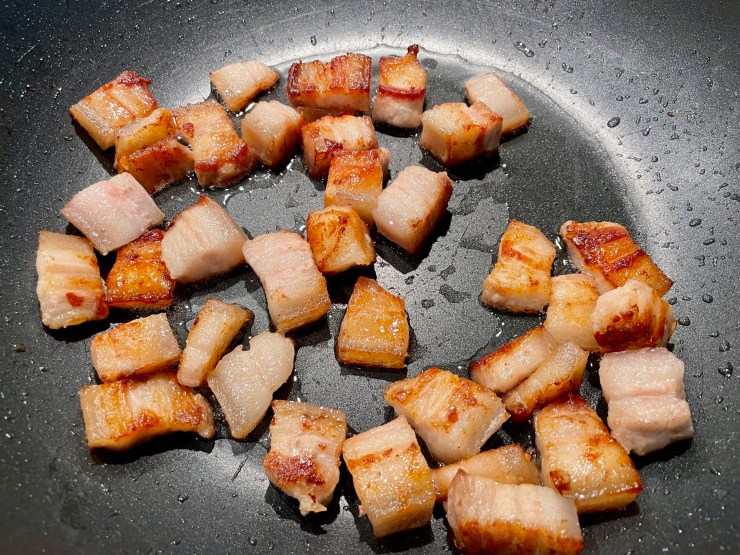
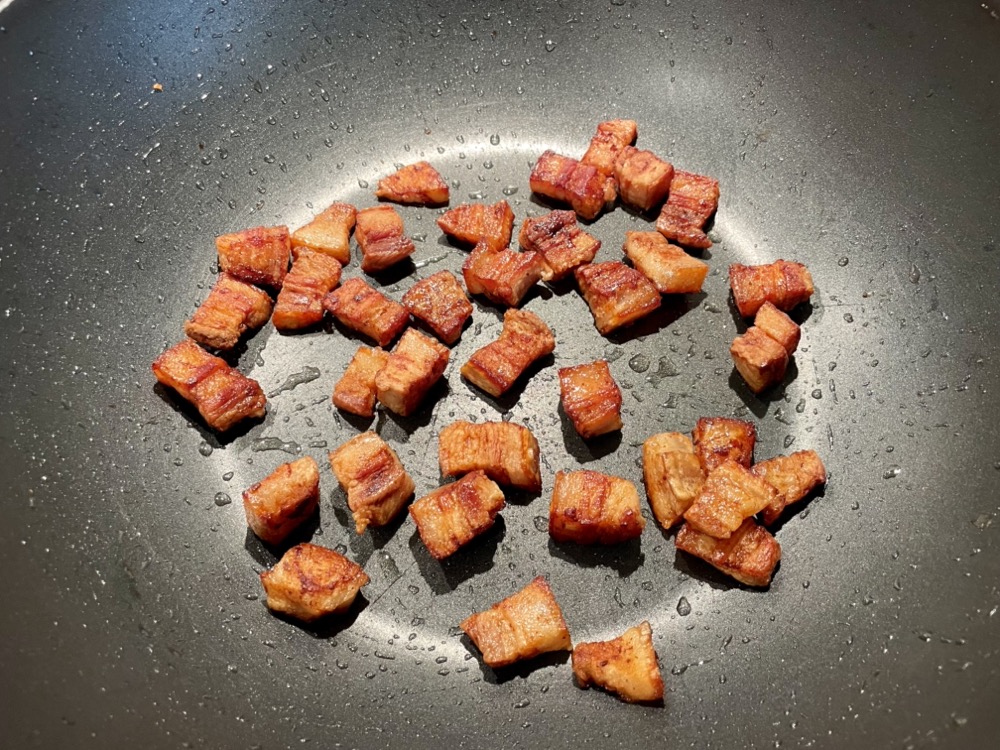
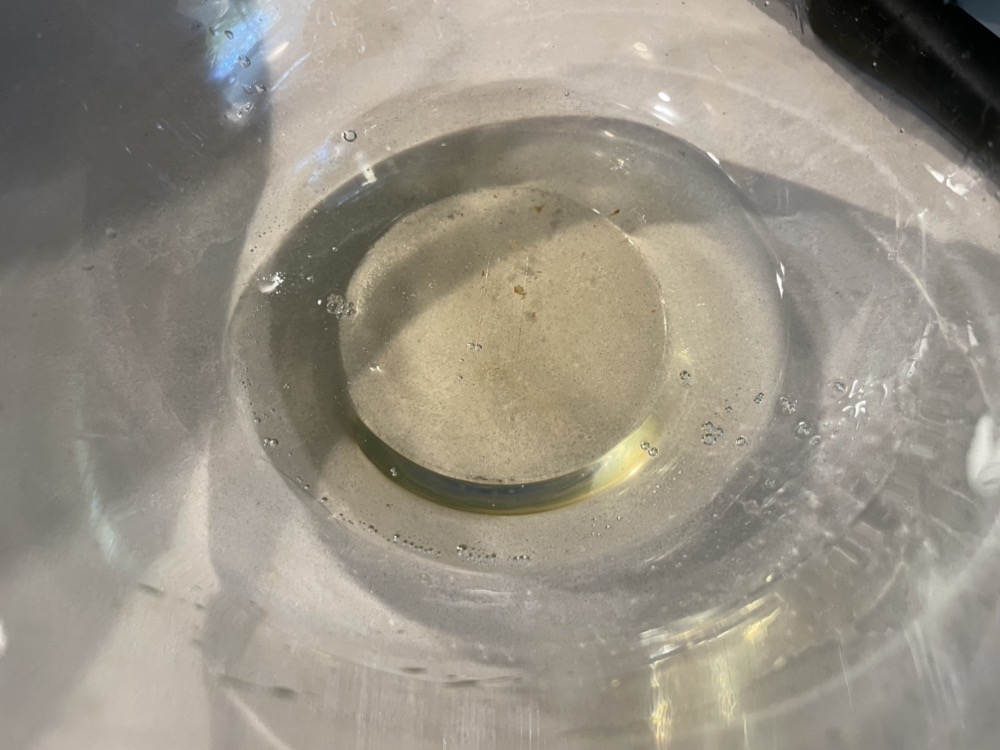
Continuously spoon out the clear oil into a heat-proof bowl as its produced (you don’t want to leave the pork sitting in a pool of oil or else this will start frying the pork). This is a slow process and will take roughly 45mins – 1hr. Be sure to toss the pork pieces occasionally. It’s done when the pork pieces are dried and crispy and no longer rendering fat. Turn off heat.

Once the oil cools, transfer it to an airtight container and refrigerate. If there are any big floaties in your oil from the pork, strain the oil first before storing. It will solidify once cold and you can use it as needed when cooking. This will keep in the fridge for up to 6 months.

Summarized Recipe:

Rendering Pork Fat: Making Lard

Date Published: Oct 24th, 2023 | Last Updated: Oct 24th, 2023
Author: Abby |Category: tips, tricks
Prep time: 5 mins | Cook time: 1 hour

Ingredients:

  • 1kg of pork belly/fat – with or without skin, chopped 2cm pieces
  • 3/4 cup water

Directions:

  1. In a wok on MED-HIGH heat, add in the pork belly and water. After a minute or two, the water will start turning murky and start to evaporate.
  2. When the water evaporates, turn the heat down to MED-LOW and let the fat slowly start to melt to a clear oil. Continuously spoon out the clear oil into a heat-proof bowl as its produced (you don’t want to leave the pork sitting in a pool of oil or else this will start frying the pork). This is a slow process and will take roughly 45mins – 1hr. Be sure to toss the pork pieces occasionally. It’s done when the pork pieces are dried and crispy and no longer rendering fat. Turn off heat.
  3. Once the oil cools, transfer it to an airtight container and refrigerate. If there are any big floaties in your oil from the pork, strain the oil first before storing. It will solidify once cold and you can use it as needed when cooking. This will keep in the fridge for up to 6 months.

Vegan Parmesan


Date Published: Feb 8th, 2022 | Last Updated: Feb 8th, 2022
Author: Abby |Category: basics, easy, healthy, how-to
Serves: 1.5 cups | Prep time: 1 minute | Mix time: 30 seconds

Jump to recipe |

I’m not vegan, nor could I ever go vegan, but I do often try to cut down my intake of dairy for health reasons. The hardest part of cutting down dairy is the cheese. My idea of a perfect picnic is a giant cheese board with crackers and fruit pastes. Mmmmmm. I could eat cheese all day every day. I’m a cheese fiend!

Although I have yet to find a replacement for an ooey gooey cheese, I have found a replacement for Parmesan from Minimalist Baker. This recipe uses nutritional yeast as the source of its cheesy flavour and it’s super easy to whip up. Although it won’t melt, you can still use it anywhere you’d use Parmesan. I sprinkle it over pizza, pasta, and add it to savoury baked goods like tuna cakes.

What is nutritional yeast?

Nutritional yeast is a strain of deactivated yeast (Saccharomyces cerevisiae) that is often used in baking, brewing, and wine-making. The yeast is grown, deactivated, dried, and packaged. It has its own nutritional benefits, but best of all it has a nutty cheesy flavour. It’s a very popular vegan product as a cheese replacement. You’ll usually find nutritional yeast in the health food section. A little goes a long way!

Anyways, without further ado, here’s the recipe! If you have any comments or suggestions, I’d love to hear from you in the comment section! You can follow me on instagram, youtube and facebook to see all the recipes I post!

Happy cooking!

Ingredients you’ll need:

  • 180g (1.5 cups) cashews (raw or roasted/salted)
  • 6 Tbsps nutritional yeast
  • 1/2 tsp garlic powder
  • 1 tsp salt (skip if you’re using salted cashews)

Directions:

  1. Add all the ingredients to a blender or food processor and blend until you get a consistency that looks like parmesan cheese. Taste and adjust salt if needed. Done! Use immediately or store in an air-tight container in the fridge for 3-4 weeks.

Summarized Recipe:

Vegan Parmesan

Date Published: Feb 8th, 2022 | Last Updated: Feb 8th, 2022
Author: Abby |Category: basics, easy, healthy, how-to
Serves: 1.5 cups | Prep time: 1 minute | Mix time: 30 seconds

Ingredients:

  • 180g (1.5 cups) cashews (raw or roasted/salted)
  • 6 Tbsps nutritional yeast
  • 1/2 tsp garlic powder
  • 1 tsp salt (skip if you’re using salted cashews)

Directions:

  1. Add all the ingredients to a blender or food processor and blend until you get a consistency that looks like parmesan cheese. Taste and adjust salt if needed. Done! Use immediately or store in an air-tight container in the fridge for 3-4 weeks.

Czech Bread Dumplings – Houskové Knedlíky


Date Published: March 28th, 2021 | Last Updated: Feb 11th, 2025
Author: Abby |Category: basics, easy, breads, sides
Serves: 4 small loaves (6-8 serves)| Prep time: 1.5 hours | Cook time: 20 mins (per loaf)

Jump to recipe |

What are Czech Dumplings or Knedlíky?

Knedlíky or dumplings are a staple side dish in Czech food. I see it as THE carb in a Czech meal. Similar to noodles in Asian food or pasta in Italian food, if there’s something rich, saucy, or soupy, you bet it’ll be served with a knedlíky in Czech cuisine.

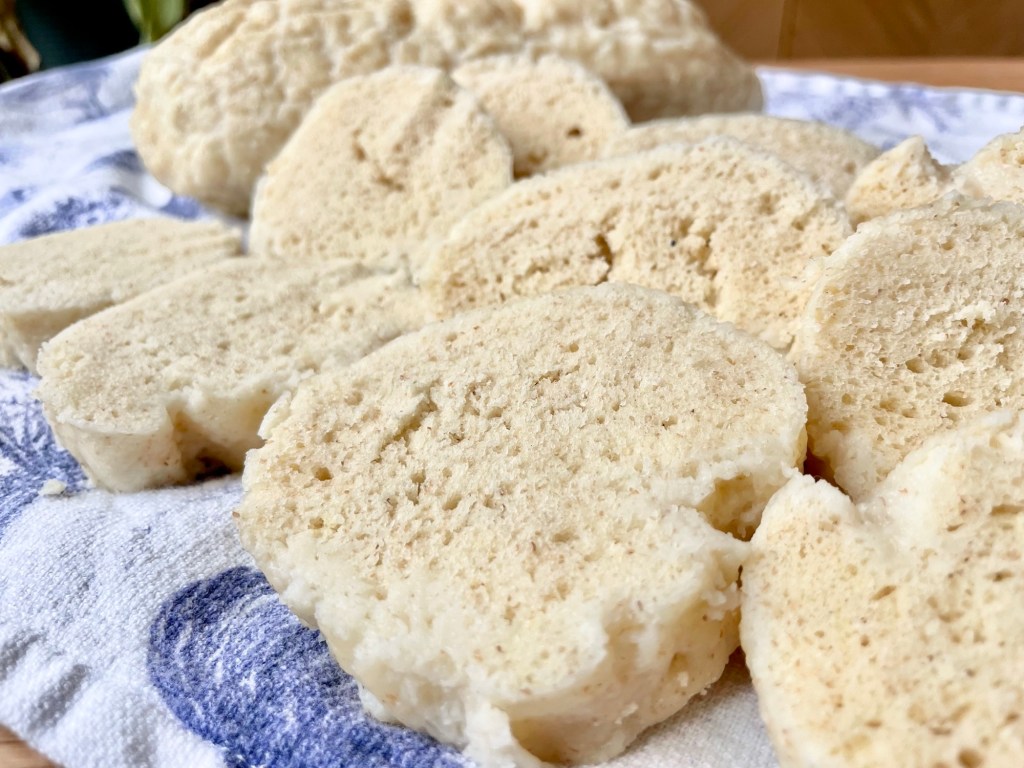
There are a few different kinds of dumplings, but the two most common ones I’ve seen in Czech are the fluffy bread dumplings (houskové knedlíky) and the denser potato dumplings (bramborové knedlíky). The lighter bread dumplings are made with a yeast dough so it’s fluffy but still with a bit of structure and chew and best served with a saucy dish such as svičkova to soak up all the flavours whereas the potato dumplings are much more dense and is more like eating a side dish of potatoes that can balance the richness of a dish such as rajská or sauerkraut. Of the two, the bread dumplings are more commonly seen and you can very easily buy them at the supermarket instead of making them fresh. This recipe is for the bread dumplings. If you want to make the potato dumplings, you can find the recipe here.

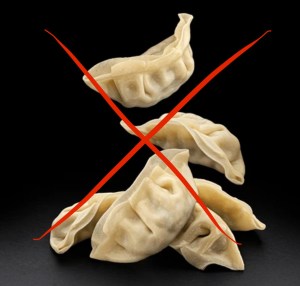
Not the type of dumplings I was expecting

As an Asian person, the term “dumpling” has always been known to me as pockets of meat wrapped in a thin dough so it confused me greatly when I learned the European definition of a “dumpling”. European dumplings can vary greatly in ingredients and textures and can be vastly different between different regions and countries. I was actually low-key disappointed when Toby first told me he was going to make Czech dumplings and it ended up being a bread dough 😂. Nevertheless, these dumplings came out super fluffy and was fantastic at absorbing all the delicious sauce on the plate.

Do I need to use a special type of flour?

These dumplings are traditionally made with ‘sharp flour’ or ‘continental flour’ which is a coarser flour made from hard wheat that is common in Europe, but actually super difficult to find in regular grocery stores. As a result, this recipe uses a 3:1 ratio mix of all-purpose flour and farina/cream of wheat to achieve the same texture.

If you can’t find farina or cream of wheat, just use more all-purpose flour instead. The texture will be much softer and fluffier but still does its job at soaking up sauces in a dish.

How do I freeze leftover knedlíky?

Every recipe for knedlíky I’ve seen always makes WAY more than what you need. My guess is that since you’re going through all the effort of making them, you might as well make a bigger batch and freeze them to have on hand. This recipe is no different. If you follow the instructions, you’ll have enough knedlíky for 8 – 10 people. I had thought about halving the recipe when I was writing it, but then remembered how well they keep in the freezer and how easy it is to have dumplings in a pinch when you’re short on time or too lazy to put in the effort, so I left the proportions alone.

I find it best to freeze leftover dumplings in slices rather than a log so it defrosts quickly. You can either freeze them in single portions or altogether in a bag, but make sure you separate the slices a little so it’ll be easier to separate when you only want to defrost a few slices. I freeze them in a ziploc bag or you can wrap it up in cling wrap individually.

To defrost and reheat: The best way to get the best texture is to steam them, especially if you are reheating from frozen. However, I’m lazy and I take out my desired portion and leave it in the fridge the night before then microwave them with a sprinkle of water before serving.

Although these dumplings are pretty easy to make, allow enough time to cook them all. If you don’t have a big pot, you may have to cook them one or two at a time (which is what I always end up doing) and it takes 20-30 mins each time (allow 1.5 hours to cook all 4). If you’ve got extra pots and the stove space, boil them all at once in separate pots so they’re all ready at the same time! I don’t know why it took me so long to think of this.

Anyways, without further ado, here’s the recipe! If you have any comments or suggestions, I’d love to hear from you in the comment section! You can follow me on instagram, youtube and facebook to see all the recipes I post!

Happy cooking!

Ingredients you’ll need:

  • 1.5 cups (325ml) milk
  • 1 Tbsp granulated sugar
  • 1 Tbsp (1 packet) instant active dry yeast
  • 1 large egg
  • 3.25 cups (425g) all-purpose flour
  • 1.5 cups (210g) cream of wheat/farina
  • 1 tsp salt

Directions:

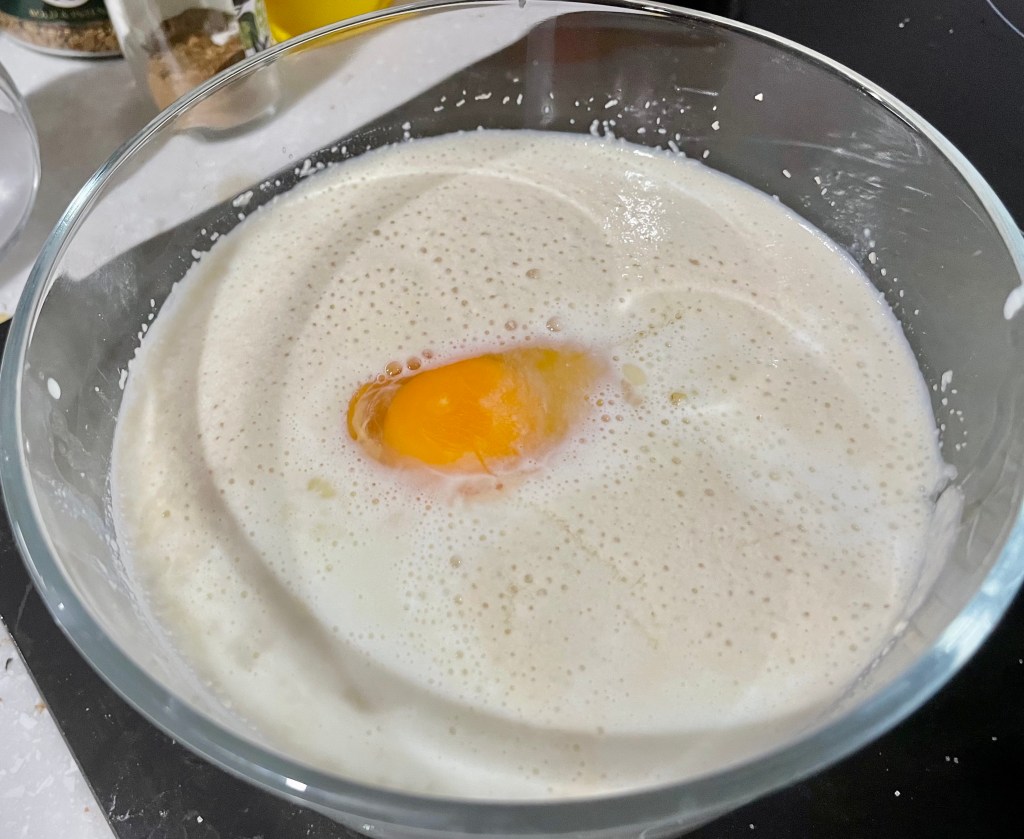
Microwave the 1.5 cups milk until warm to the touch. Mix in the 1 Tbsp sugar and 1 Tbsp yeast and set aside for ~10 mins until frothy. Once the milk/yeast mixture is frothy, beat in one egg to the mixture.

  • Tip: Test the temperature of the milk by dipping your finger into the milk. If it’s too hot, let it cool down or else you’ll end up cooking the yeast. If it’s too cold, then the yeast won’t activate.
  • If your mixture doesn’t froth, then you’ll likely need fresh yeast.

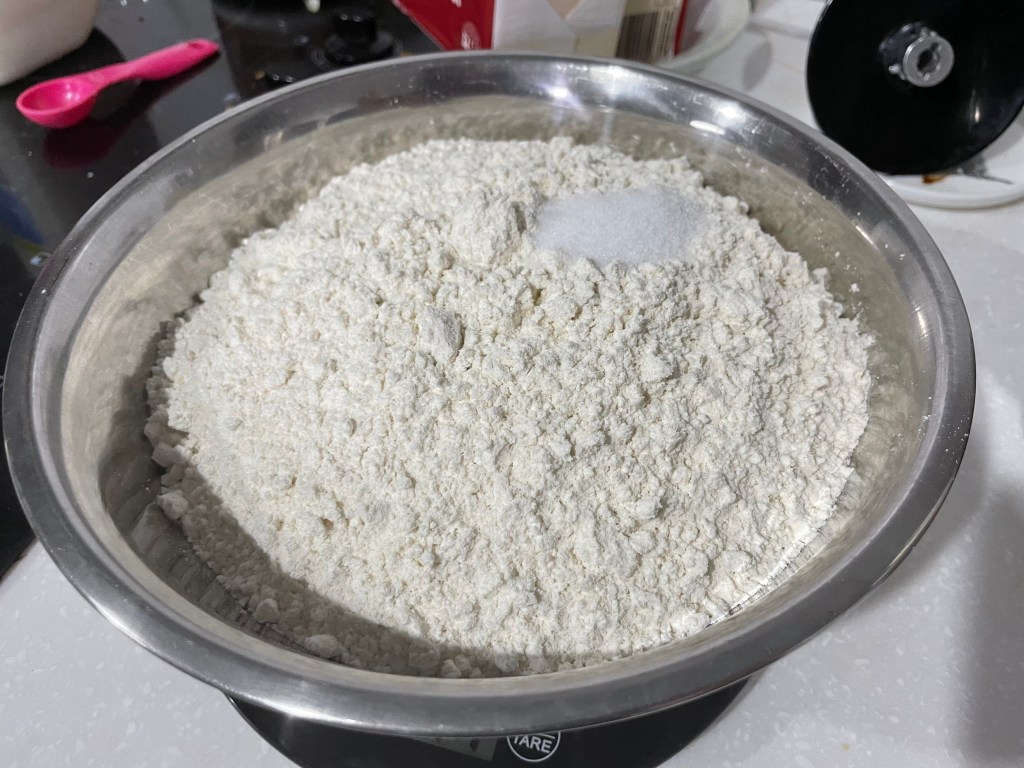
In a large stand mixer bowl, add in the 3.25 cups/425g flour, 1.5 cups/210g farina and 1 tsp salt and mix it around. Turn on the stand mixer on medium speed and gradually pour in the milk/yeast/egg mixture to the flour mixture. Let it knead until you get a smooth elastic dough. If your dough is too sticky, add a little more flour. (You can also knead this dough by hand.)

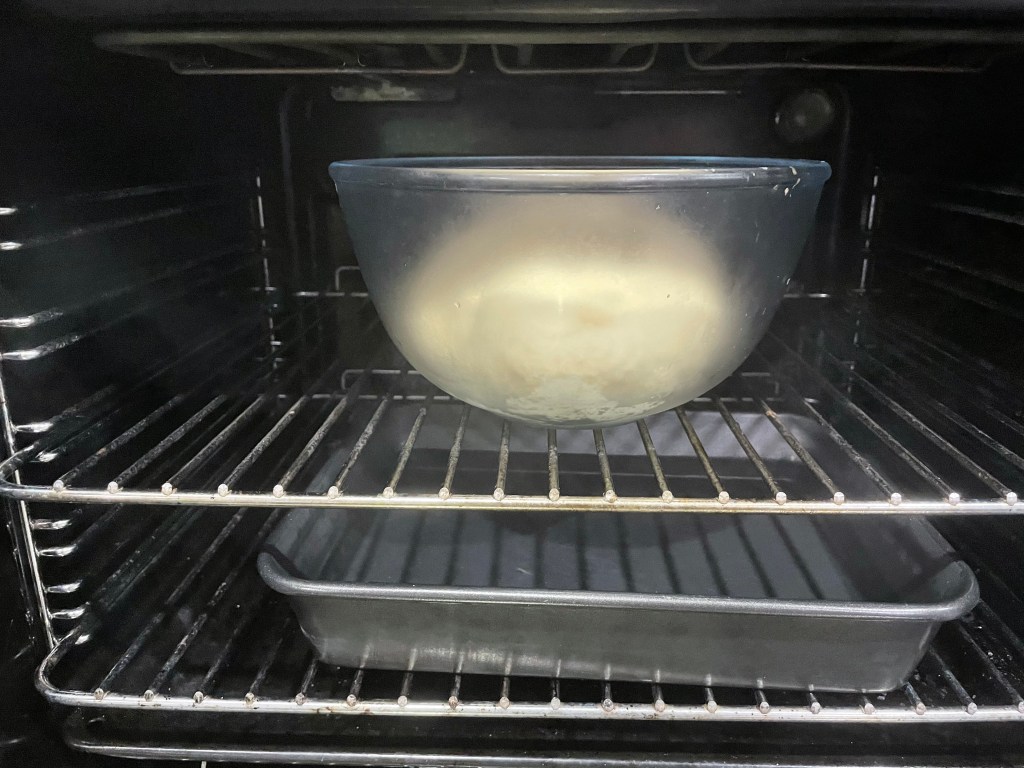
Cover the dough with a damp tea towel and set aside in a warm place to proof until doubled in size (~1 hr).

  • Don’t have a reliable warm place? See my method on how to proof your dough in the oven here.

Once your dough has doubled in size, remove it from the bowl, knead it a couple of times on a lightly floured surface to release any excess air bubbles and divide it into 4 even portions (you can use a kitchen scale for this or just eyeball it). Shape them into skinny logs that are no longer than the diameter of your pot. Set them aside covered with a tea towel and let it rest for another 15 mins.

In a large pot, boil half a pot of water with 1 Tbsp of salt and drop in 1 to 2 dough logs at a time (do not crowd them. If you don’t have a large pot, you may have to cook one at a time). Boil for 10 mins, flip the dough and boil for another 10 mins (20 mins total). Remove the dough log from the water and use a toothpick or chopstick to poke lots of holes into the cooked dumpling to let the steam out. Repeat for the rest of the dough.

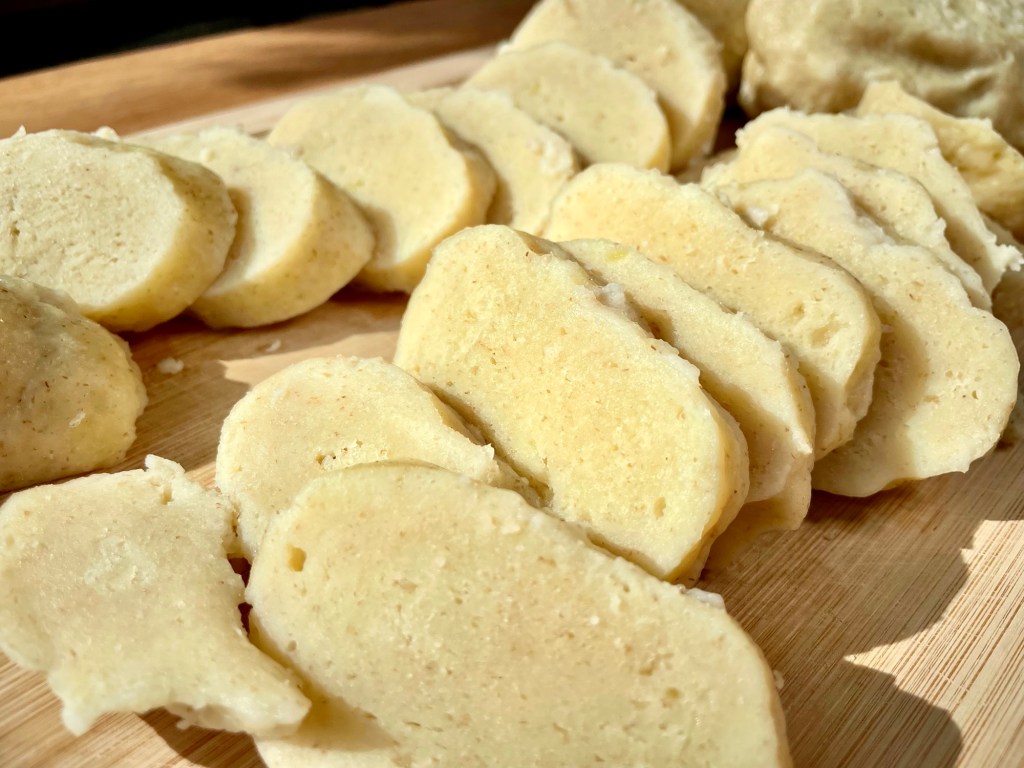
Let the cooked dough cool then slice. Ready to eat!

Tip: If you’re not using it right away, they freeze really well covered with some cling wrap. Steaming would be best when ready to use or microwave.

Summarized Recipe:

Czech Bread Dumplings – Houskové Knedlíky

Date Published: March 28th, 2021 | Last Updated: Feb 11th, 2025
Author: Abby |Category: basics, easy, breads, sides
Serves: 4 small loaves (6-8 serves)| Prep time: 1.5 hours | Cook time: 20 mins (per loaf)

Ingredients:

  • 1.5 cups (325ml) milk
  • 1 Tbsp granulated sugar
  • 1 Tbsp (1 packet) instant active dry yeast
  • 1 large egg
  • 3.25 cups (425g) all-purpose flour
  • 1.5 cups (210g) cream of wheat/farina
  • 1 tsp salt

Directions:

  1. Microwave the 1.5 cups milk until warm to the touch. Mix in the 1 Tbsp sugar and 1 Tbsp yeast and set aside for ~10 mins until frothy. Once the milk/yeast mixture is frothy, beat in one egg to the mixture.
    • Tip: Test the temperature of the milk by dipping your finger into the milk. If it’s too hot, let it cool down or else you’ll end up cooking the yeast. If it’s too cold, then the yeast won’t activate.
    • If your mixture doesn’t froth, then you’ll likely need fresh yeast.
  2. In a large stand mixer bowl, add in the 3.25 cups/425g flour, 1.5 cups/210g farina and 1 tsp salt and mix it around. Turn on the stand mixer on medium speed and gradually pour in the milk/yeast/egg mixture to the flour. Let it knead until you get a smooth elastic dough. If your dough is too sticky, add a little more flour. (You can also knead this dough by hand.)
  3. Cover the dough with a damp tea towel and set aside in a warm place to proof until doubled in size (~1 hr).
    • Don’t have a reliable warm place? See my method on how to proof your dough in the oven here.
  4. Once your dough has doubled in size, remove it from the bowl, knead it a couple of times on a lightly floured surface to release any excess air bubbles and divide it into 4 even portions (you can use a kitchen scale for this or just eyeball it). Shape them into skinny logs that are no longer than the diameter of your pot. Set them aside covered with a tea towel and let it rest for another 15 mins.
  5. In a large pot, boil half a pot of water with 1 Tbsp of salt and drop in 1 to 2 dough logs at a time (do not crowd them. If you don’t have a large pot, you may have to cook one at a time). Boil for 10 mins, flip the dough and boil for another 10 mins (20 mins total). Remove the dough log from the water and use a toothpick or chopstick to poke lots of holes into the cooked dumpling to let the steam out. Repeat for the rest of the dough.
  6. Let the cooked dough cool then slice. Ready to eat!

Tip: If you’re not using it right away, they freeze really well covered with some cling wrap. Steaming would be best when ready to use or microwave.

Nokedli (Hungarian ‘Dumplings’)


Date Published: March 19th, 2021 | Last Updated: March 19th, 2021
Author: Abby |Category: basics, easy, < 30mins, sides
Serves: 2 | Prep time: 15 mins | Cook time: 5 mins

Jump to recipe |

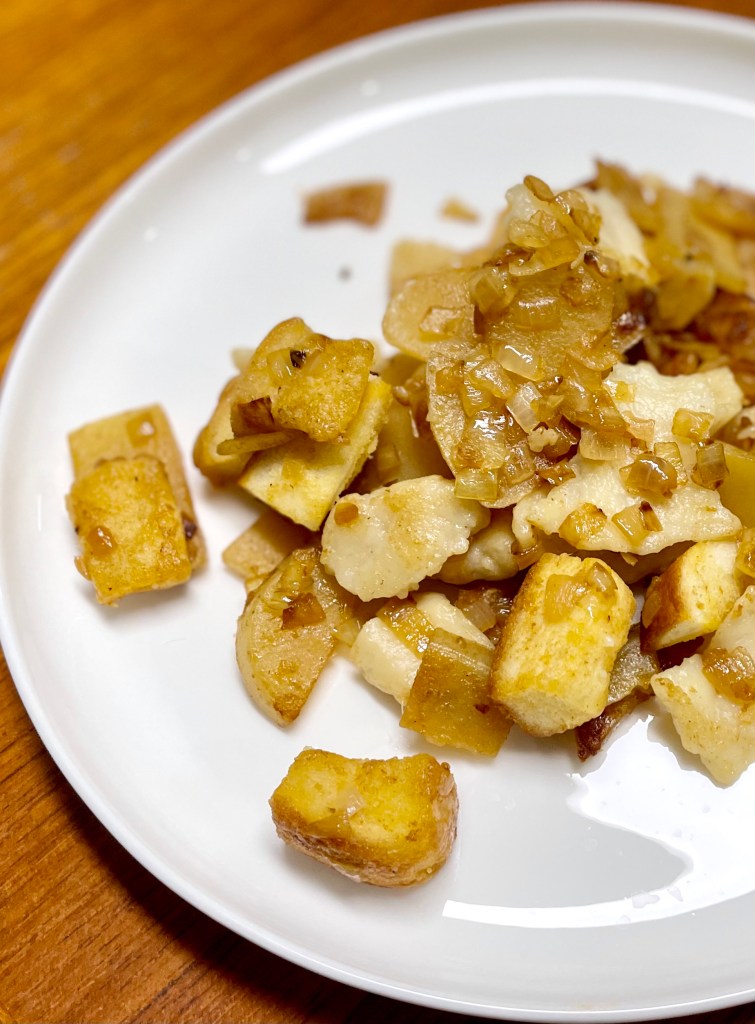
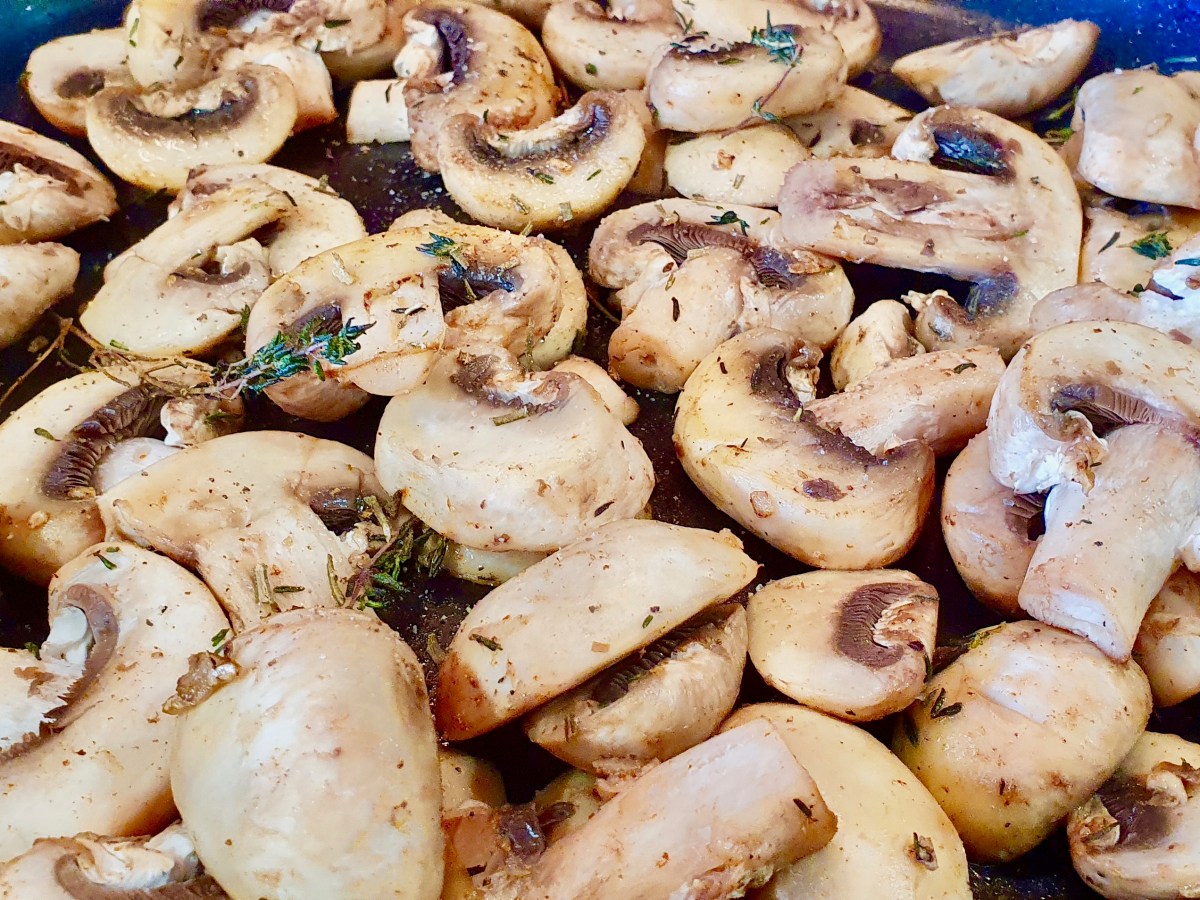
Get ready to make the quickest and easiest “pasta” you’ve ever made. Nokedli is a Hungarian “dumpling” which I can best describe as a gnocchi but slightly squishier and fluffy. It’s made with only 4 ingredients and takes 15 minutes to whip up and a few minutes to cook. It’s so easy and versatile, you may never want to buy pasta again. They may not be the most beautiful, but you just can’t beat the texture of a fresh pasta at such minimal effort. You can make them as big or as small as you like. It’s fantastic sautéed in a dish or tossed in something saucy to soak up the flavour. My new favourite way to have it is mixed in a rich creamy mushroom sauce. This recipe makes 2 servings but if you’re tossing it in a dish with lots of other ingredients such as meat or veggies, it will easily bulk it up to 4 portions.

As an Asian person, the term “dumpling” has always been known to me as pockets of meat wrapped in a thin dough so it confused me greatly when I learned that the European definition of “dumpling” is generally an overarching term for a dough without any filling. European dumplings can vary greatly in ingredients and textures and can be vastly different between different regions and countries. I was actually low-key disappointed when Toby first told me he was going to make Czech dumplings and it ended up being a bread dough 😂. I still find it weird to use the term ‘dumpling’ for anything else but Asian-style dumplings but I’m sure I’ll adjust.

I first came across the idea of making nokedli through my friend’s oma’s recipe for Pumble and Knockle which is a simple hearty Hungarian dish of paprika potatoes cooked in buttery bread. She made hers without any egg which I thought was a bit dense so I went hunting for more traditional nokedli recipes and put this one together (food.com and venturists.net had a couple good ones that I based this one off of).

Anyways, without further ado, here’s the recipe! If you have any comments or suggestions, I’d love to hear from you in the comment section! You can follow me on instagram, youtube and facebook to see all the recipes I post!

Happy cooking!

Ingredients you’ll need:

  • 1 egg
  • 1/4 tsp salt
  • 1/3 cup (80ml) water
  • ~1 cup (~150g) all-purpose flour (you may not need the whole cup)

Directions:

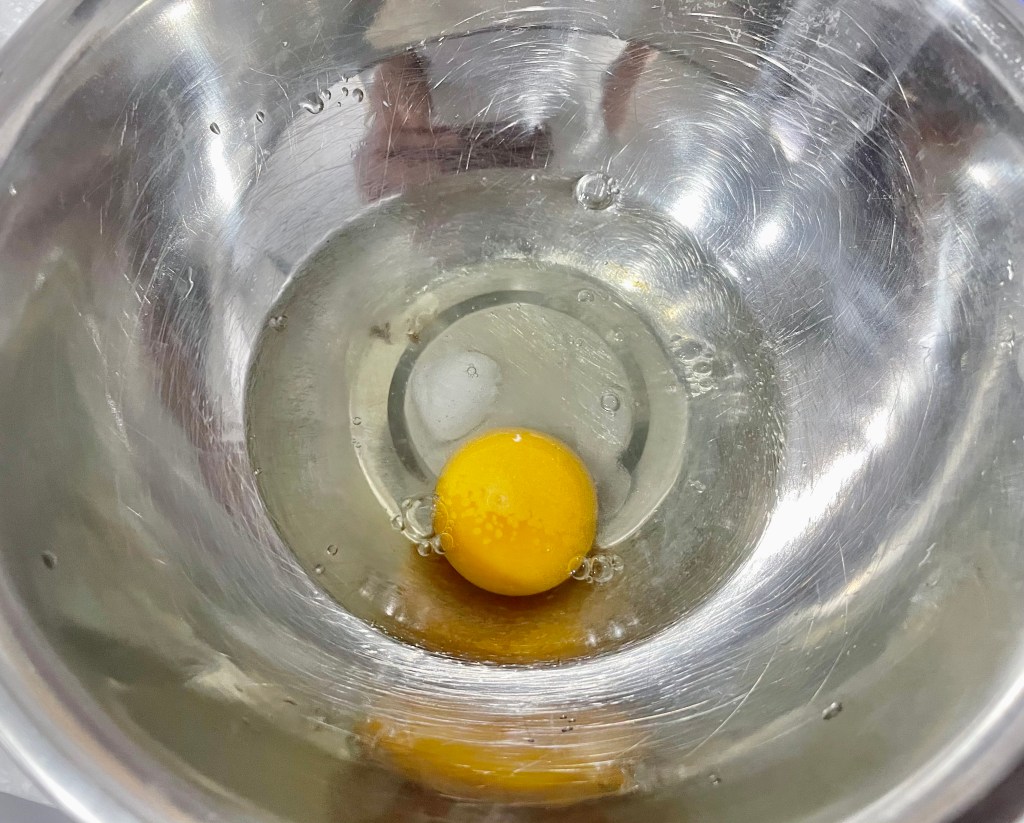
In a mixing bowl beat together the egg, salt and 1/3 cup water.

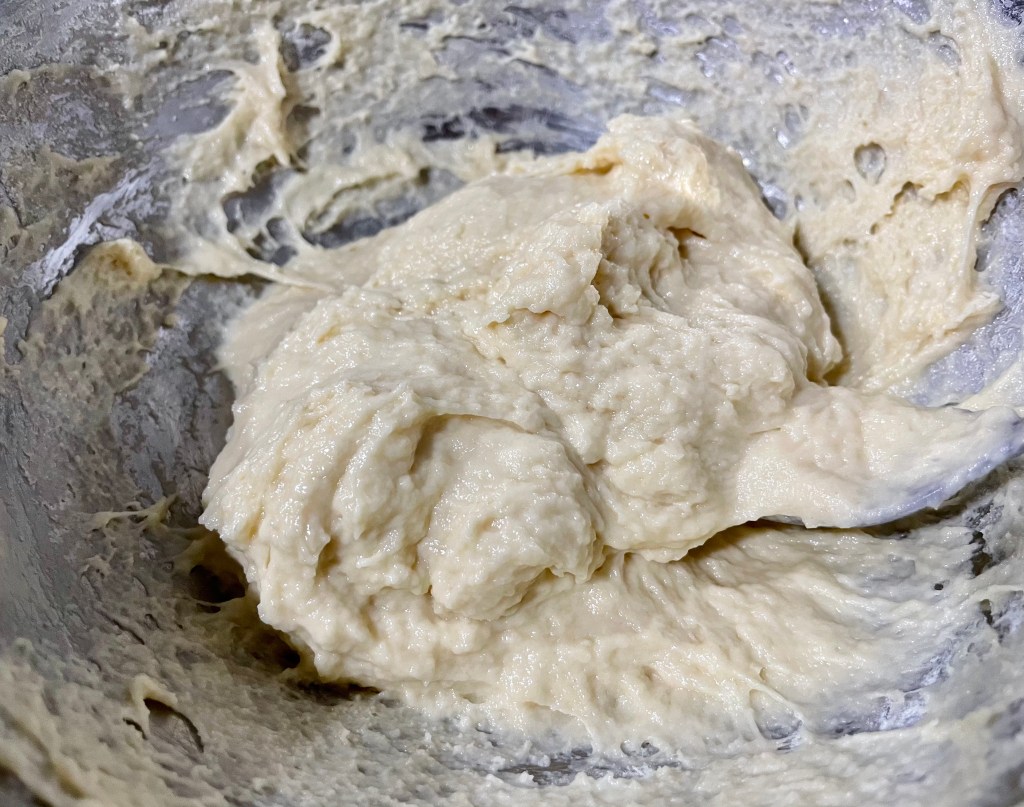
Add in the flour gradually to the bowl, mixing with a fork, until you get a thick sticky dough – it should be roughly thicker than cake batter (you may not need to use the entire cup of flour). Set aside to rest for 10 mins.

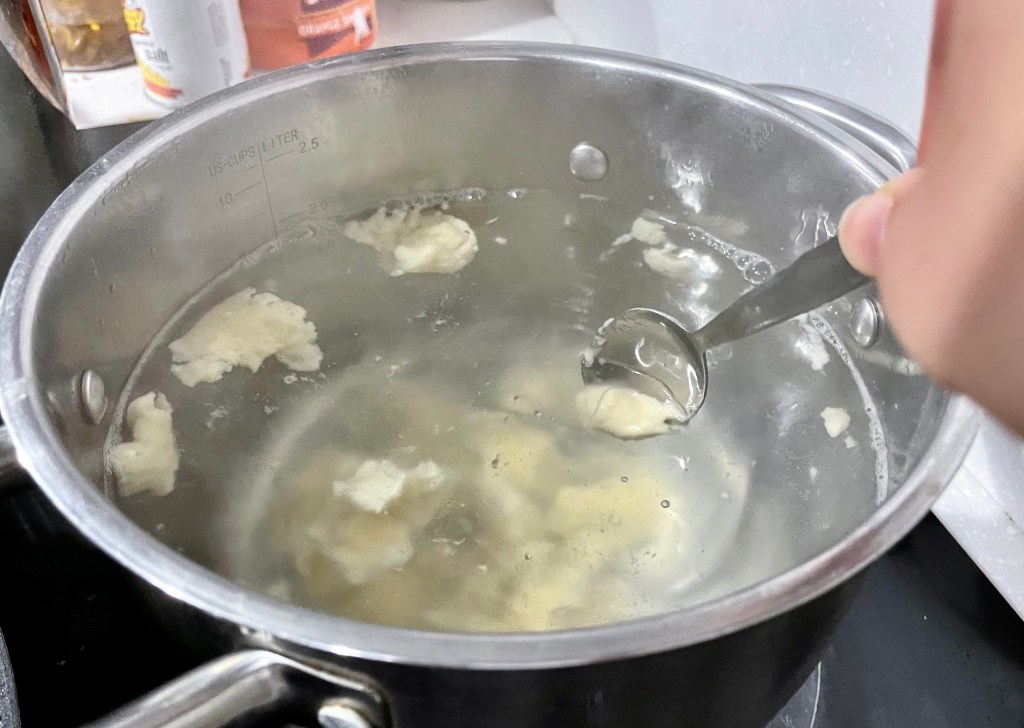
While the dough is resting, boil a medium pot of water with 1-2 teaspoons of salt. When the dough has rested, mix it around one more time and drop half a teaspoon of dough into the boiling water at a time. (Tip: lower the spoon into the boiling water for the dough to release from the spoon). When the dough floats to the top, it’s ready (2-3 minutes). Strain and ready to use!

Note: you may want to cook your nokedli in batches to not overcook them or get someone to help you spoon the dough into the pot so they all go into the pot faster.

If you’re not using them right away, rinse them in cold water to prevent them from sticking together. Otherwise if you’re serving it in a sauce, you can add them directly in the finished sauce and serve.

Nokedli tossed in a creamy mushroom sauce 🙂 mmmm

Summarized Recipe:

Nokedli (Hungarian ‘Dumplings’)

Date Published: March 19th, 2021 | Last Updated: March 19th, 2021
Author: Abby |Category: basics, easy, < 30mins, sides
Serves: 2 | Prep time: 15 mins | Cook time: 5 mins

Ingredients:

  • 1 egg
  • 1/4 tsp salt
  • 1/3 cup (80ml) water
  • ~1 cup (~150g) all-purpose flour (you may not need the whole cup)

Directions:

  1. In a mixing bowl beat together the egg, salt and 1/3 cup water.
  2. Add in the flour gradually to the bowl, mixing with a fork, until you get a thick sticky dough – it should be roughly thicker than cake batter (you may not need to use the entire cup of flour). Set aside to rest for 10 mins.
  3. While the dough is resting, boil a medium pot of water with 1-2 teaspoons of salt. When the dough has rested, mix it around one more time and drop half a teaspoon of dough into the boiling water at a time. (Tip: lower the spoon into the boiling water for the dough to release from the spoon). When the dough floats to the top, it’s ready (2-3 minutes). Strain and ready to use!
    • Note: you may want to cook your nokedli in batches to not overcook them or get someone to help you spoon the dough into the pot so they all go into the pot faster.
    • If you’re not using them right away, rinse them in cold water to prevent them from sticking together. Otherwise if you’re serving it in a sauce, you can add them directly in the finished sauce and serve.

So Easy Flatbread for Wraps


Date Published: August 19th, 2020 | Last Updated: August 19th, 2020
Author: Abby |Category: breads, easy
Serves: 4 medium flatbreads | Prep time: 5mins + 30mins rest | Cook time: 20 mins (5 mins per flatbread)

Jump to recipe |

Flatbread is the overarching term for a flat piece of bread (duh) which encompasses countless variations from all over the world including paratha, roti, naan, pita, bing…etc. This basic recipe was adapted from Julie Goodwin and makes a flatbread that best resembles a paratha x pita with slightly crispy edges and a soft centre that’s perfect for wraps. You can even roll it out thinner and make pita chips for dipping! (If you’re looking for a more sturdy flatbread for pizzas, check out my basic dough recipe.) There are only a few ingredients you’ll need for this recipe and it is so simple and straight forward that you’ll never buy store-bought wraps ever again! You don’t even need to turn on the oven or proof the dough. Just mix the ingredients into a bowl, knead for a couple minutes then rest it for 30 mins and you’re ready to cook it! There’s no baking involved, just cook it on a pan for a few minutes on each side and you’re ready to serve. Easy, huh?

This recipe makes 4 medium pieces of wraps. If you prefer larger full-sized wraps then double the recipe and divide your dough balls into 6 pieces instead of 4. I love making these because I can control how thick, thin, or large I want my wraps and also control how crispy and toasty it is. I can make as many as I need and not worry about leftover wraps that might go mouldy in a few days if I forget to use them and there’s also no waste from food packaging. It’s a win-win!

Anyways, without further ado, here’s the recipe! If you have any comments or suggestions, I’d love to hear from you in the comment section! You can follow me on instagram, youtube and facebook to see all the recipes I post!

Happy cooking!

Ingredients you’ll need:

  • 2 cups (300g) all purpose flour + more for dusting
  • 3/4 tsp salt
  • 3 1/2 Tbsp (50ml) olive oil
  • 3/4 cup (185ml) milk

You can also sub the olive oil in the dough for butter to make it more buttery, but the taste difference is pretty minimal so I omit it for the health reasons.

You can also use whole wheat flour but the result will be a bit more dense and dry. It also won’t puff up on the stove and you may need to add more oil.

Directions:

In a large wide-based bowl, mix the flour and salt together. Make a well in the centre of the flour and add in the olive oil and milk to the centre.

Mix the ingredients together with your hands by bringing in the flour from the sides of the bowl into the centre until you get a rough sticky dough. Knead the dough in the bowl (or onto a flat surface if your bowl is too small) for about 2-3 minutes until you get a smooth elastic dough ball. You can add more flour as you knead if your dough ball is sticky. Cover your dough with a clean tea towel and let it rest for 30mins at room temperature.

Alternatively you can also use a stand mixer for this step but there’s so little kneading required that I couldn’t be bothered getting out my machine and washing extra bowls.

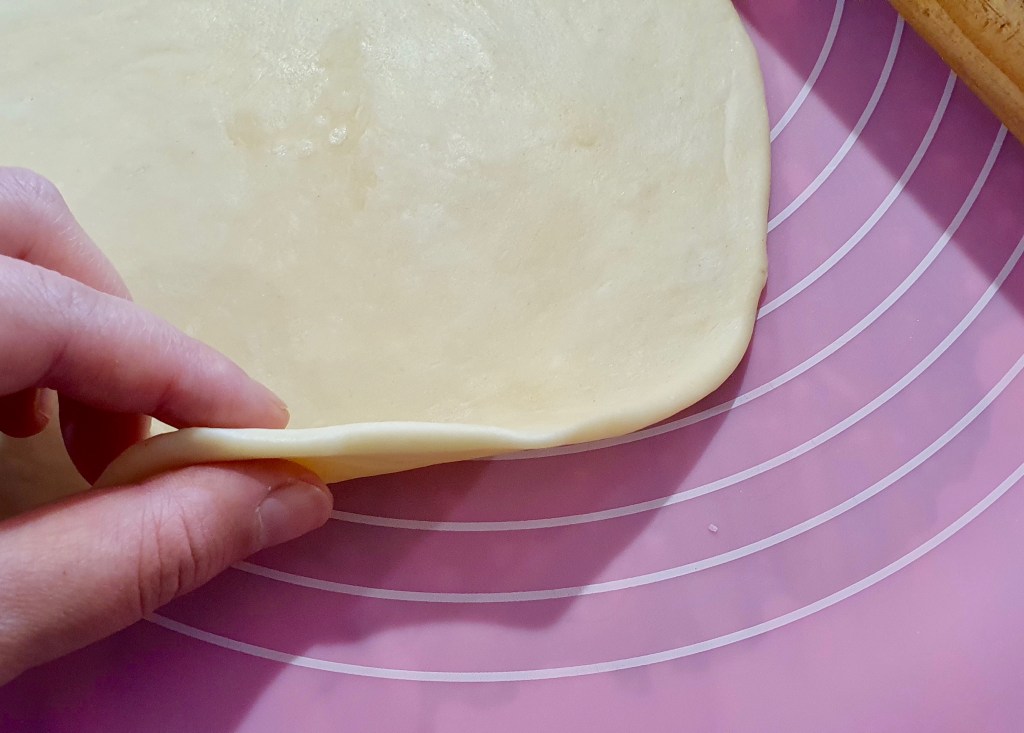
After 30mins, divide the dough into 4 equal pieces and roll each piece out to about 3-5mm thickness.

Rolling it out thinner makes it crispy and difficult to use as a wrap without cracking (but might make some good chips for dipping!). Rolling it too thick will result in a doughy dense flatbread.

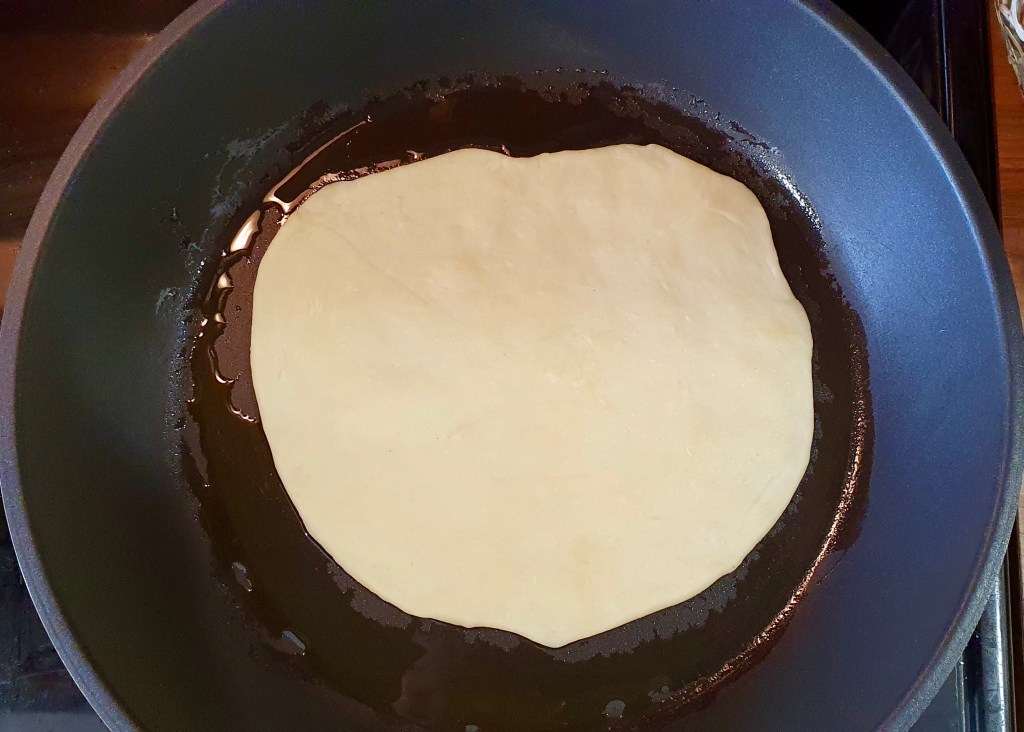
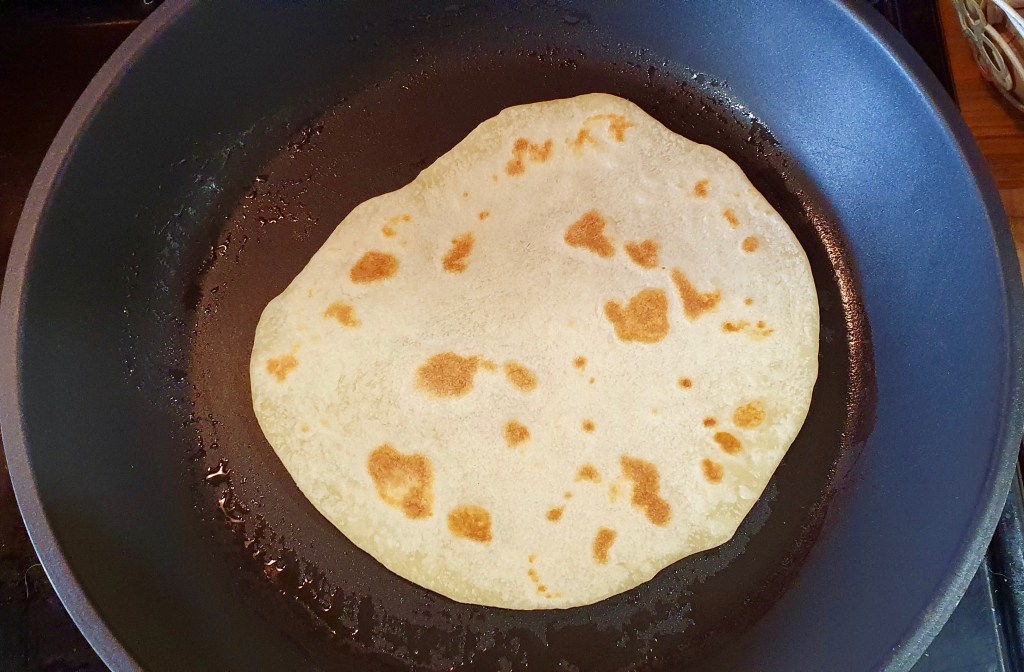
Heat a skillet on MED heat and when the pan is heated, add a small drizzle of olive oil (~1 tsp) and swirl it around so it coats the pan. Put a rolled out dough onto the oiled pan. After a few minutes the flatbread may form puffy pockets of air (some bigger than others) – this is normal but not all flatbreads will puff up so don’t worry if yours doesn’t. Check the bottom of the flatbread and flip it when you see toasted golden brown spots (~3 mins). Cook again on the other side until golden. Repeat this cooking method with the other 3 flatbreads, adding a small amount of oil to the pan each time you start cooking a new dough. Stack the finished flatbreads on top of each other to keep them soft and warm until ready to serve. Done!

Note: You can make these ahead of time and keep it in the fridge covered. Just microwave them when you’re ready to use or toast them in the oven until warm. You can also freeze the cooked bread or keep the dough in the refrigerator for a couple days, wrapped.

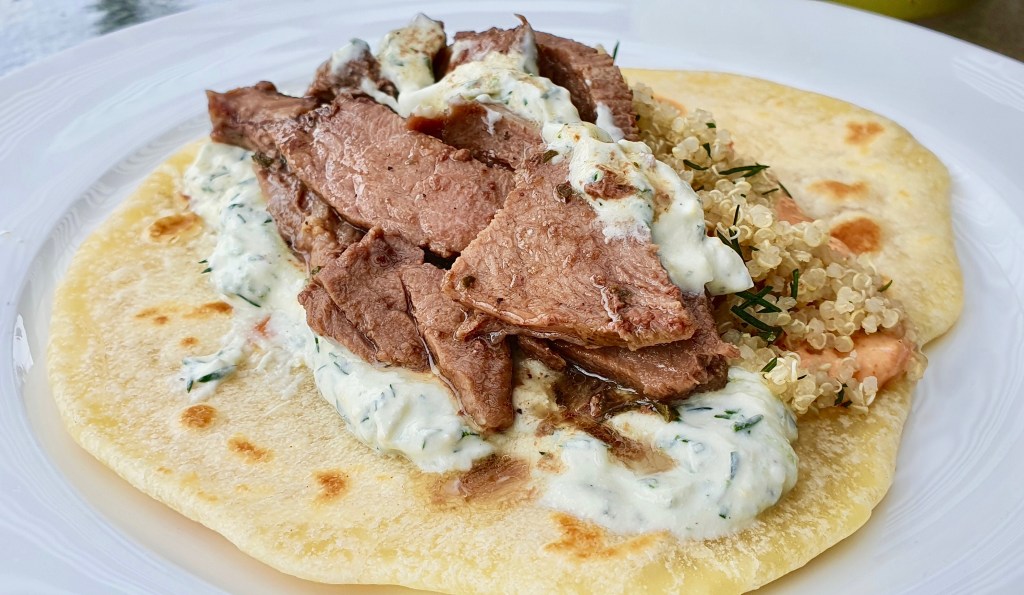
I used this flatbread to make a wrap with leftover garlic rosemary lamb roast, creamy mint yogurt sauce and quinoa with dill. It was SO good!

Summarized Recipe:

So Easy Flatbread for Wraps

Date Published: August 19th, 2020 | Last Updated: August 19th, 2020
Author: Abby |Category: breads, easy
Serves: 4 medium flatbreads | Prep time: 5mins + 30mins rest | Cook time: 20 mins (5 mins per flatbread)

Ingredients:

  • 2 cups (300g) all purpose flour + more for dusting
  • 3/4 tsp salt
  • 3 1/2 Tbsp (50ml) olive oil
  • 3/4 cup (185ml) milk

Directions:

  1. In a large wide-based bowl, mix the flour and salt together.
  2. Make a well in the centre of the flour and add in the olive oil and milk to the centre.
  3. Mix the ingredients together with your hands by bringing in the flour from the sides of the bowl into the centre until you get a rough sticky dough. Knead the dough in the bowl (or onto a flat surface if your bowl is too small) for about 2-3 minutes until you get a smooth elastic dough ball. You can add more flour as you knead if your dough ball is sticky.
  4. Cover your dough with a clean tea towel and let it rest for 30mins at room temperature.
  5. After 30mins, divide the dough into 4 equal pieces and roll each piece out to about 3-5mm thickness.
  6. Heat a skillet on MED heat and when the pan is heated, add a small drizzle of olive oil (~1 tsp) and swirl it around so it coats the pan. Put a rolled out dough into the oiled pan and cook until you see toasted golden brown spots on both sides (~3-5 mins per side) on both sides. Repeat this cooking method with the other 3 flatbreads, adding a small amount of oil to the pan each time you start cooking a new dough. Stack the finished flatbreads on top of each other to keep them soft and warm until ready to serve. Done!

Note: You can make these ahead of time and keep it in the fridge covered. Just microwave them when you’re ready to use or toast them in the oven until warm. You can also freeze the cooked bread or keep the dough in the refrigerator for a couple days, wrapped.

How to Make Brown Butter


Date Published: August 10th, 2020 | Last Updated: August 10th, 2020
Author: Abby |Category: how-to, basics
Serves: — | Prep time: 2 minutes | Cook time: 5-8 minutes

Brown butter is literally butter than has been “browned” by cooking it down. The process is as easy as placing butter on a skillet and waiting until it’s brown. No other ingredients needed other than butter itself. The end result is this beautiful fragrant nutty magical brown liquid that adds amazing flavour and depth to a dish. Although it’s very easy to brown butter, there is room for error so that’s why I’ve written a step-by-step guide with photos on what to look out for to ensure you get a perfectly browned butter every time.

Butter itself is not only fat. It’s composed of 1) fat, 2) water, and 3) milk solids and all 3 of these will separate during the process of browning butter. In a nutshell when you brown butter, you melt it down and the water content will evaporate as the mixture sizzles. Once the water has evaporated, you’re left with fat and milk solids. The milk solids will toast during the process which is what gives us the nutty bold flavour so make sure you scrape as much milk solids out of the pan when transferring! The water content of butter is roughly 13-17% (thanks Google), which means that the amount of brown butter you end up with will be 13-17% less than the amount of better you started with (ie. 100g of butter will result in 83-87g of brown butter) so make sure you calculate properly how much butter you need to start with for your recipe.

Anyways, without further ado, here’s the recipe! If you have any comments or suggestions, I’d love to hear from you in the comment section! You can follow me on instagram, youtube and facebook to see all the recipes I post!

Happy cooking!

Ingredients you’ll need:

  • Butter (either salted or unsalted)
    • I like to use unsalted butter which is what most baking recipes call for and I add my own salt at the end for savoury dishes.

Directions:

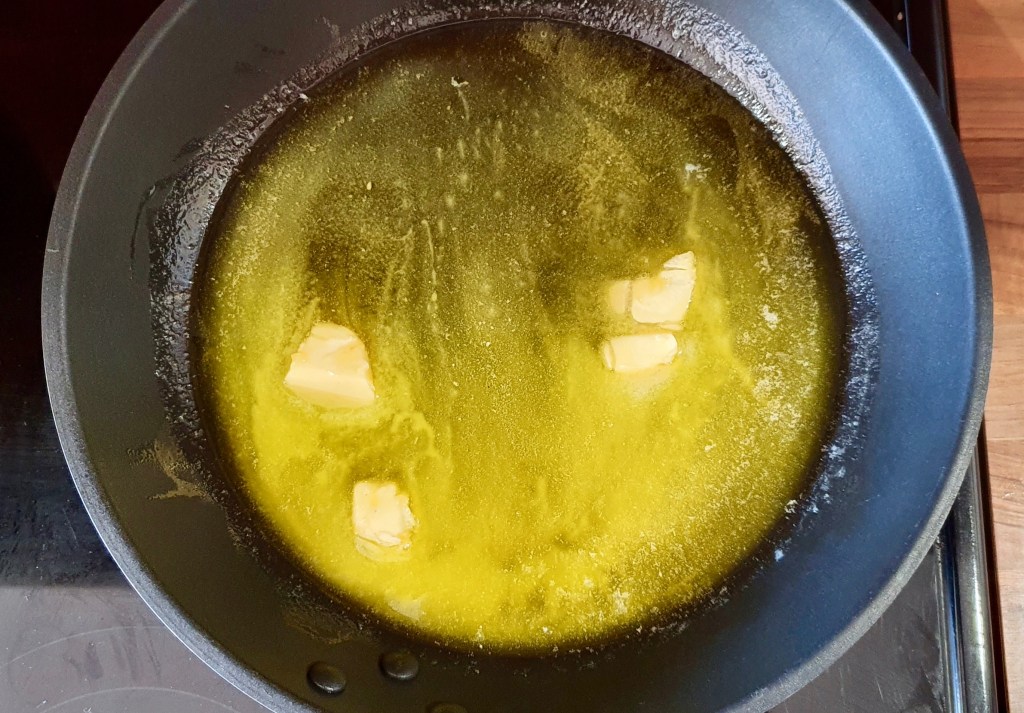
Cut the butter into even sized cubes so they melt evenly.

Heat a skillet (ideally one with a silver and white bottom so you can easily see the colour changes) on MEDIUM heat and add the butter to the skillet.

The butter will go through several stages during this process. Make sure you’re frequently stirring during this whole process to keep everything moving:

  1. Butter blocks will all melt to a liquid state and sizzle.
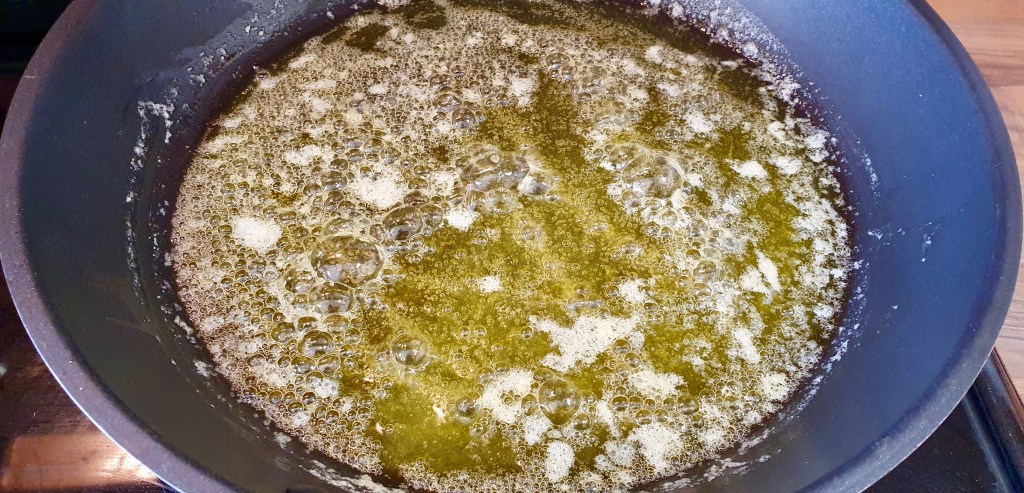
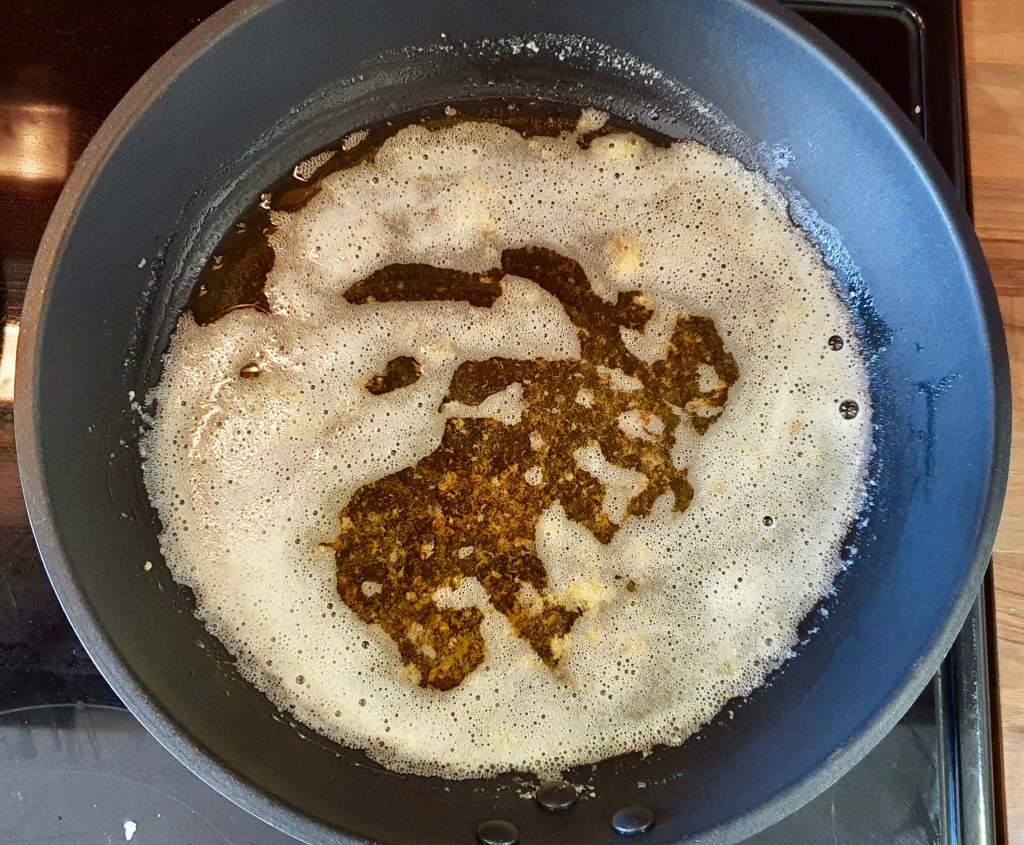
  2. The butter continues to sizzle and you’ll start to notice white foam forming. These are the precious milk solids.
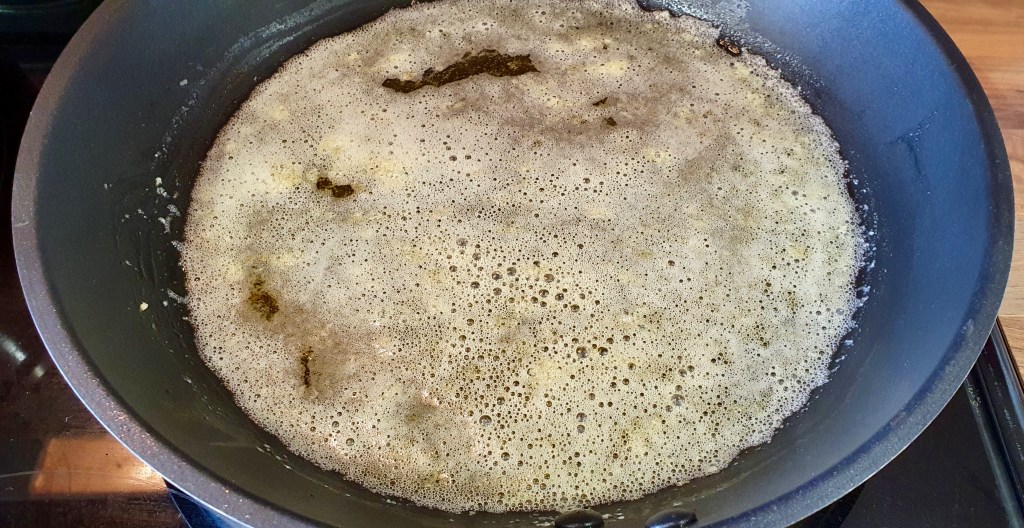
  3. The foam will start to subside a little and the mixture will start to brown (timing will depend on how much butter you put in the pan, but usually 5-8 minutes). You will notice that some of the milk solids will have sunk to the bottom of the pan and start to turn brown. KEEP AN EYE ON THESE MILK SOLIDS AT THE BOTTOM OF THE PAN!
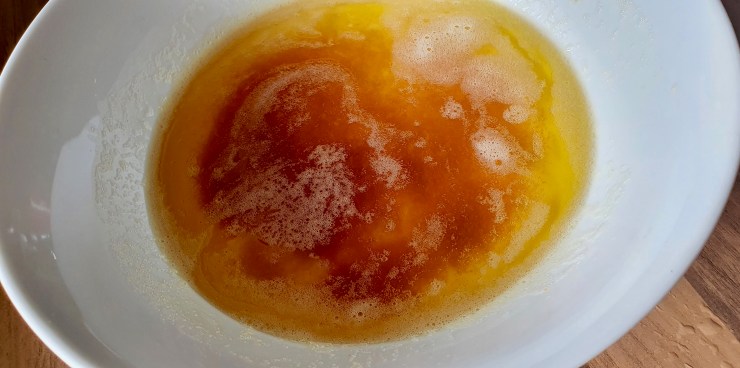
  4. Once the milk solids at the bottom of the pan turns toasty brown, the brown butter is done and quickly transfer the contents to a heat-safe bowl. Done!
    • DO NOT leave it in the pan, otherwise the heat from the pan will continue cooking the butter. There are only a few seconds between brown butter and burnt butter, so once those solids are toasty brown, you’re done! There should be a a delicious nutty aroma that fills the air. Make sure you get all the milk solids out of the skillet when transferring because that’s where most of the flavour is!
Done! Beautifully browned butter

Recipes that use brown butter:

Easy Moist Chicken Breast


Date Published: August 10th, 2020 | Last Updated: August 10th, 2020
Author: Abby |Category: basics, how-to, healthy, easy
Serves: 2 | Prep time: 5 mins | Cook time: 30 mins

Jump to recipe |

Chicken breast is one of the things I always have in my freezer. It goes well with so many things and it’s so easy and quick to make. You can have it as part of a healthy meal seasoned with simple spices and paired with a veg or pack it full of flavour with a kickass sauce and toppings. The most common way I like to use it is in salads. It’s amazing how you can turn pretty much any side salad into a main dish just by adding chicken breast.

Chicken breast often get a bad rep for being dry and bland which is why some people avoid it. There’s not much fat on the meat and thus it’s easy to dry out when cooking. Follow this basic tutorial and I’ll show you how I like to prepare chicken breast so it comes out moist and perfect every time! I use a combination of baking and steaming to ensure the chicken stays moist.

If you have any comments or suggestions, I’d love to hear from you in the comment section! You can follow me on instagram, youtube and facebook to see all the recipes I post!

Happy cooking!

Ingredients you’ll need:

  • Chicken breast – as many as you like, but try not to crowd them too much in a pan so they cook evenly.
  • Olive oil – roughly 1 tsp per breast. You don’t need much oil since you’re steaming.
  • Water – enough to fill 1 cm of the pan
  • Salt & pepper
  • Optional: any seasoning you like – I keep it plain with just salt and pepper if I’m using it as a base with a sauce, but if I’m adding it to a caesar or garden salad, I rub some Italian seasoning or oregano over it.

Directions:

Preheat your oven to 180˚C (~350F) and arrange a rack in the middle of the oven.

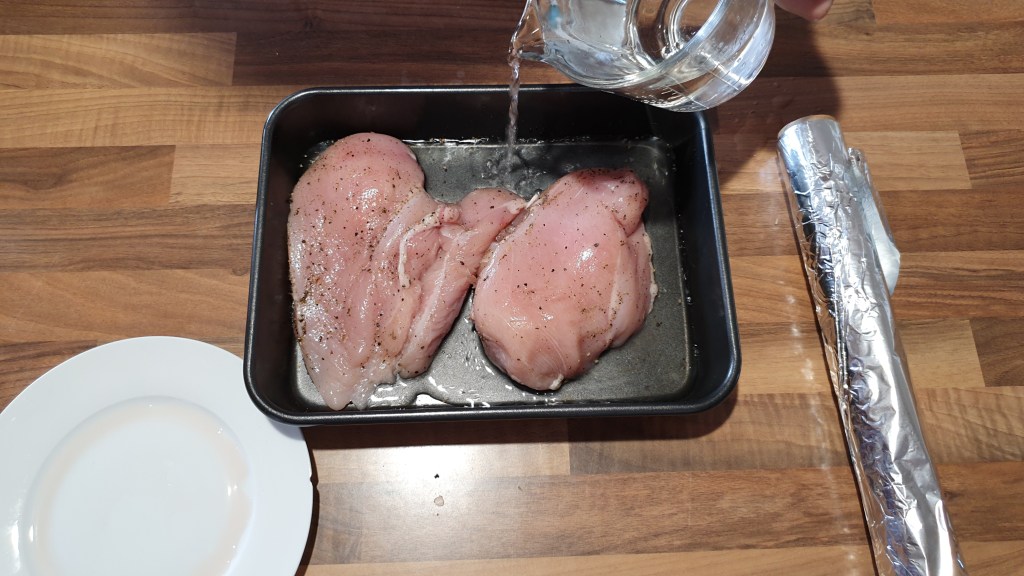
Rinse your chicken breasts and place them in a baking tray. Add a drizzle of olive oil, a sprinkle of salt and pepper, any additional spices you like, then rub it all over the chicken breasts on both sides.

Pour 1 cm of water into the pan (it doesn’t have to be exact).

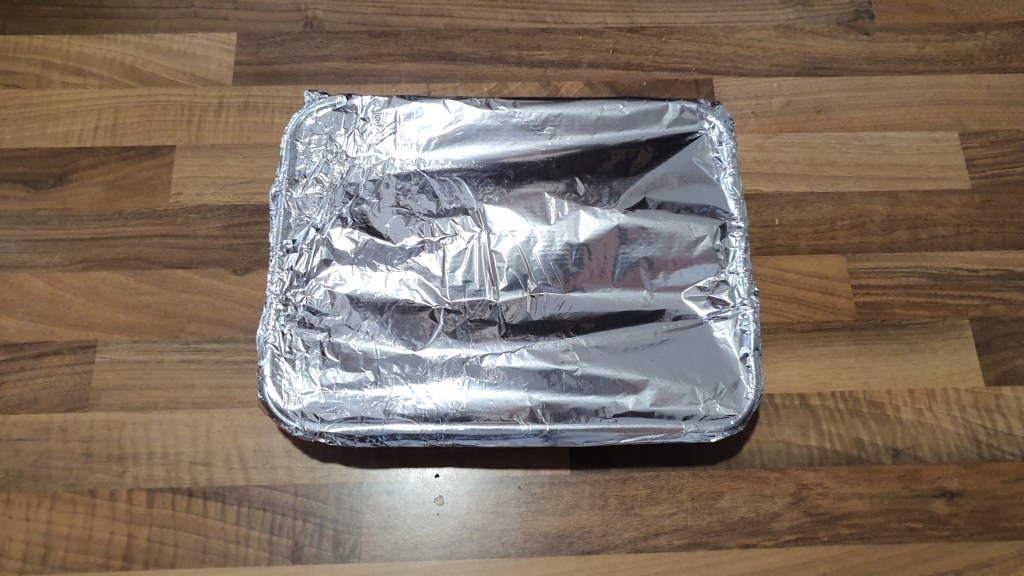
Cover the tray with aluminum foil and make sure the edges are sealed (otherwise steam will escape while baking and could result in a dry chicken). Bake in the oven on the middle rack for 20-30 minutes. You can check the doneness of the chicken by either cutting the thickest part and if the juices run clear, it’s finished. If it’s pink, then put the foil back on and bake for another 5 minutes. Alternatively you can use a thermometer and poke it into the thickest part of the breast until it reads 65˚C.

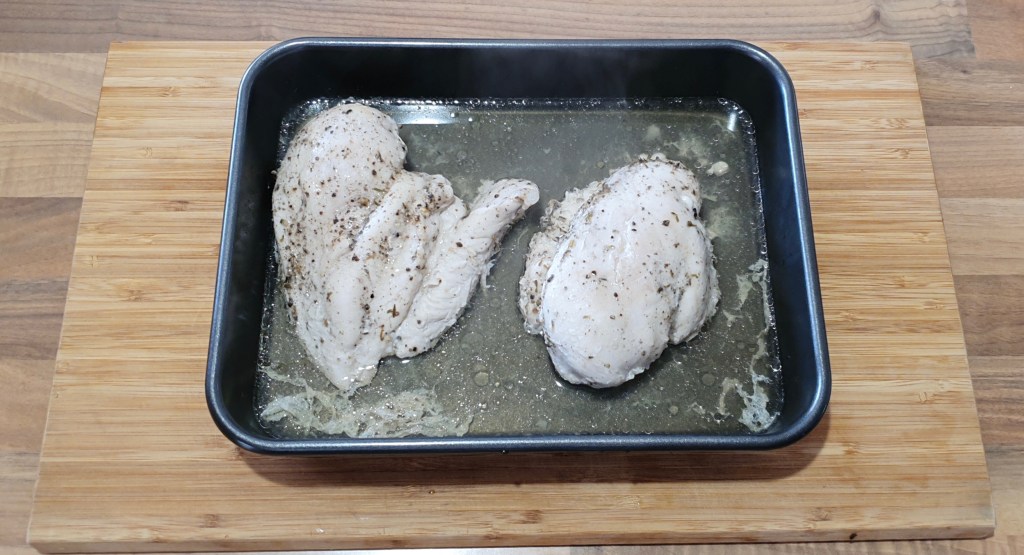
*Caution: HOT steam will escape when you unwrap the foil so please be careful when checking on your chicken!

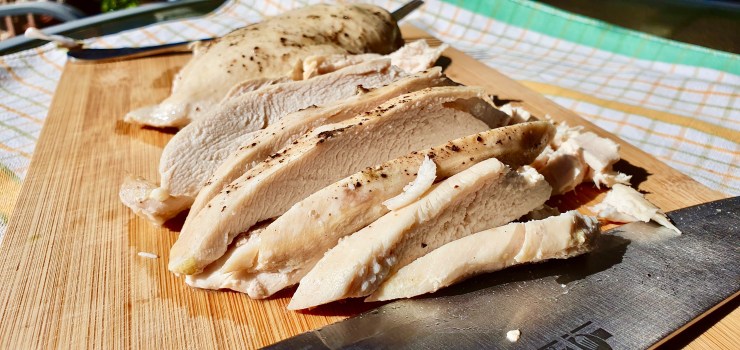
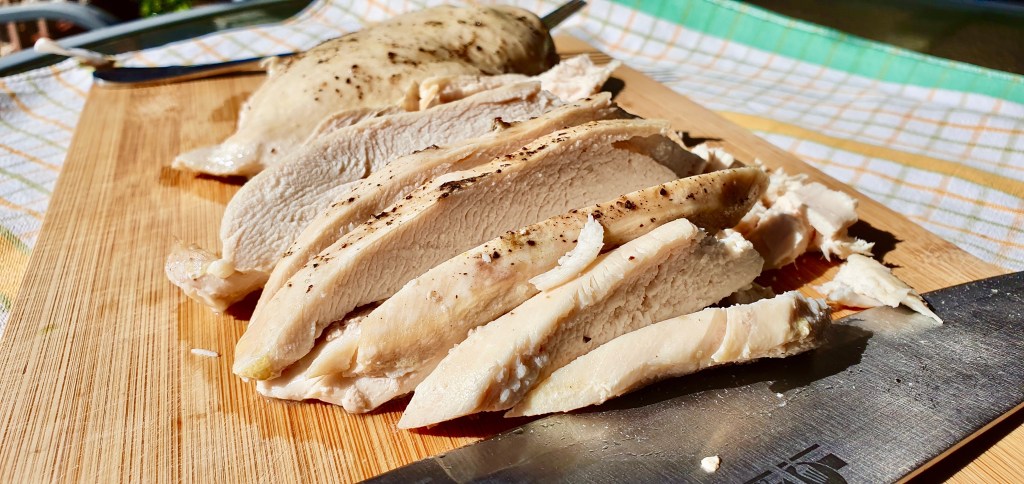
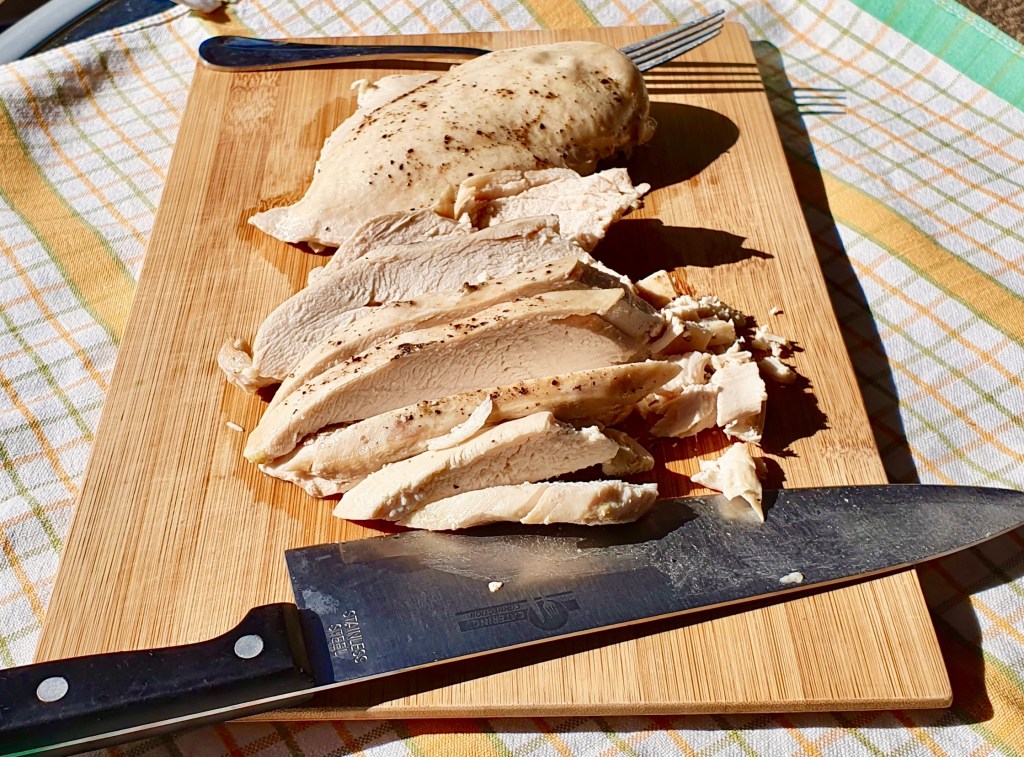
Once your chicken is cooked, serve it on a plate immediately or rest them for 5 minutes before slicing. It’s VERY important not to slice them when they’re steaming hot, otherwise the juices inside the chicken will evaporate and your chicken will be dry. By allowing them to rest, it lets the juices redistribute throughout the meat.

Enjoy!

Tip: if you’re adding this to a leafy salad, wait until the chicken comes to room temperature before adding it in otherwise the heat might wilt your salad leaves.

Summarized Recipe:

Easy Moist Chicken Breast

Date Published: August 10th, 2020 | Last Updated: August 10th, 2020
Author: Abby |Category: basics, how-to, healthy, easy
Serves: 2 | Prep time: 5 mins | Cook time: 30 mins

Ingredients:

  • Chicken breast – as many as you like, but try not to crowd them too much in a pan so they cook evenly
  • Olive oil – roughly 1 tsp per breast. You don’t need much oil since you’re steaming.
  • Water – enough to fill 1 cm of the pan
  • Salt & pepper
  • Optional: any seasoning you like – I keep it plain with just salt and pepper if I’m using it as a base with a sauce, but if I’m adding it to a caesar or garden salad, I sprinkle some Italian seasoning or oregano over it.

Directions:

  1. Preheat your oven to 180˚C (~350F) and arrange a rack in the middle of the oven.
  2. Rinse your chicken breasts and place them in a baking tray. Add a drizzle of olive oil, a sprinkle of salt and pepper, any additional spices you like, then rub it all over the chicken breasts on both sides.
  3. Pour 1 cm of water into the pan (it doesn’t have to be exact) and cover the tray with aluminum foil. Make sure the edges are sealed (otherwise steam will escape while baking and could result in a dry chicken). Bake in the oven on the middle rack for 20-30 minutes. You can check the doneness of the chicken by either cutting the thickest part and if the juices run clear, it’s finished. If it’s pink, then put the foil back on and bake for another 5 minutes. Alternatively you can use a thermometer and poke it into the thickest part of the breast until it reads 65˚C.
    • *Caution: HOT steam will escape when you unwrap the foil so please be careful when checking on your chicken!
  4. Once your chicken is cooked, serve it on a plate immediately or rest them for 5 minutes before slicing. It’s VERY important not to slice them when they’re steaming hot, otherwise the juices inside the chicken will evaporate and your chicken will be dry. By allowing them to rest, it lets the juices redistribute throughout the meat. Enjoy!
Tip: If you’re adding this to a leafy salad, wait until the chicken comes to room temperature before adding it in otherwise the heat might wilt your salad leaves.