Legit Tonkotsu Ramen from scratch (in an Instant Pot)


Date Published: Mar 3rd, 2024 | Last Updated: Mar 3rd, 2024
Author: Abby |Category: Asian, mains, soups
Serves: 4-6 | Prep time: 12 hours before to marinate | Cook time: 4.5 hours total

Jump to recipe |

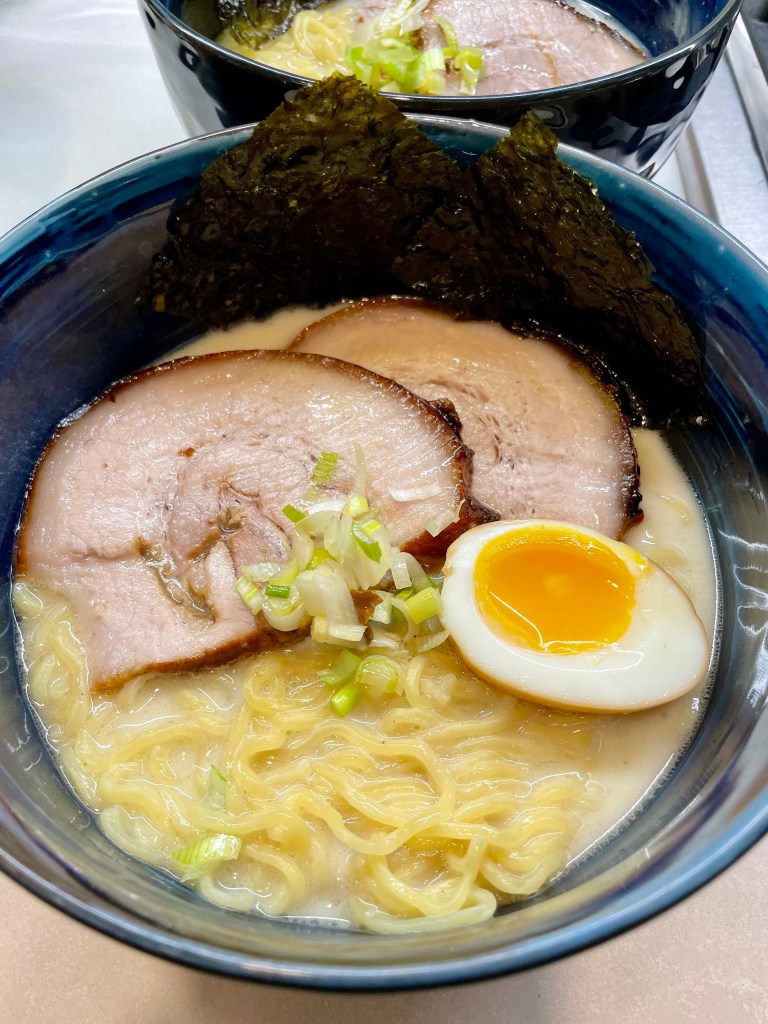
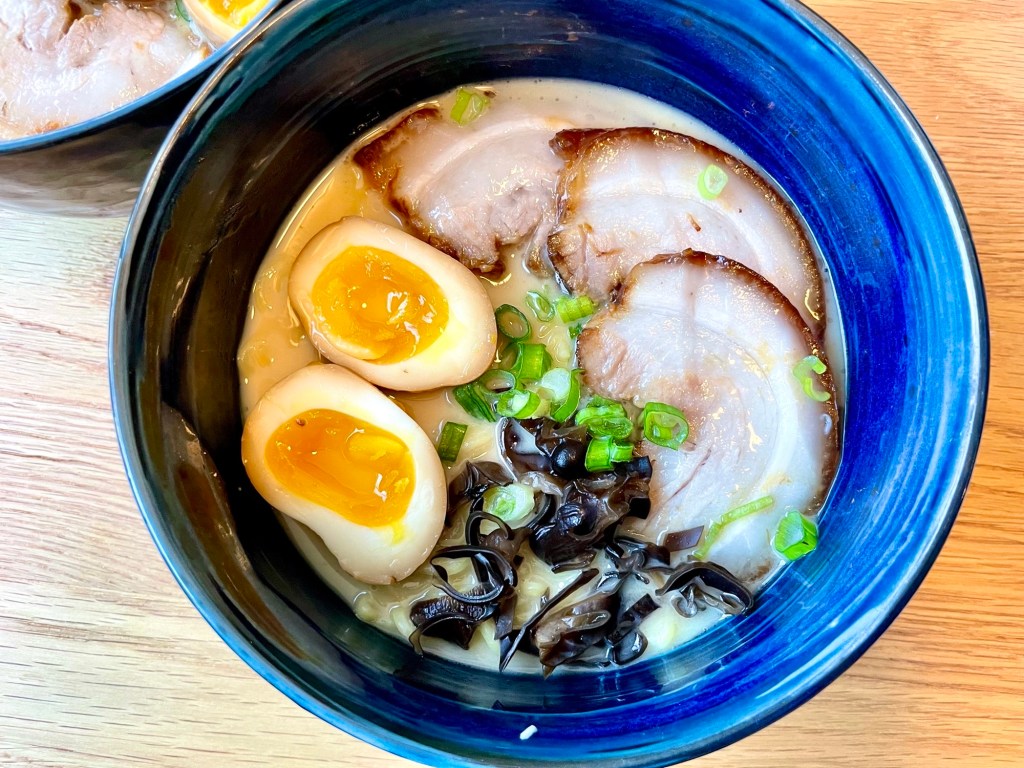
A tonkotsu ramen is my all time favourite thing to eat, so I’m extra excited to be sharing this recipe with everyone! It’s a beautiful bowl of a rich pork bone broth with noodles, chashu, and a ramen egg. No matter what is happening in my life, a tonkotsu ramen will always make it better. When Toby and I travel, I’m always seeking out the local ramen spots – I must’ve had over a hundred bowls of ramen in my life time…so far.

I’ve always wanted to try making a tonkotsu ramen, however due to its long 12 hour cooking time, it’s complexities (ramen shops will use a refractometer to check their broth!), and having to source pork bones on the move, it has constantly been on the back burner. I’ve searched time and time again for a simplified recipe and even went as far as buying instant tonkotsu ramen to satisfy the cravings, but I’ve never succeeded in finding anything that was close to restaurant quality – until now! Recently I stumbled across a ramen subreddit where u/ramen_lord posted his version of a tonkotsu ramen but made in an Instant Pot in 3 hours (find original recipe here)! This made it much less intimidating for me and I decided to try it out. Amazingly, the recipe turned out near perfect the first time and after the second time, Toby said it was the best tonkotsu ramen he’s ever had. It was THAT good! If you’re ever reading this, thank you u/ramen_lord! (If you check out the original link, he also gives a recipe at making your own ramen noodles.)

Although it is a long recipe, each step and component is pretty easy and straightforward, so I’d encourage you to give it a try if you’re a ramen lover like me!

What Makes up a Tonkotsu Ramen?

A traditional tonkotsu ramen is made up of 6 major components, and yes, all of them are included in this very thorough monster recipe!

1. Chashu – pork belly slices
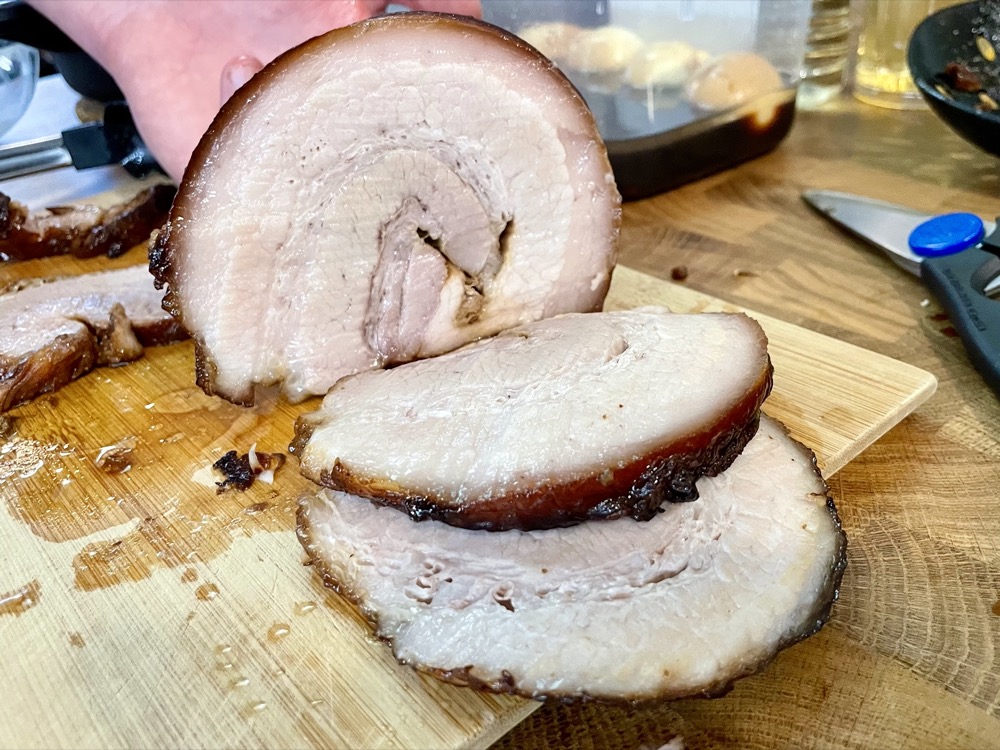
Chashu is a Japanese-style savoury pork belly that is braised the day before and marinated overnight. This is the main protein of the dish. Due to its fatty richness, it is usually served in thin slices and in small portions. This recipe will make about 2-3 slices per bowl. If you’re big on pork belly, then double the chashu portion of the recipe!

Note: Japanese chashu differs from the Chinese-style Charsiu which is barbecue pork rather than braised pork.

2. Ramen egg – a marinated boiled egg with a perfectly soft jammy centre

A ramen egg is a specific style of egg served in a bowl of ramen. It is always soft to medium-boiled to ensure a jammy velvety centre then marinated in a savoury sauce – I marinate mine in the chashu marinade overnight. Make sure you have a timer ready when you cook the eggs to ensure the perfect soft centre.

The ramen egg is always my favourite part of a bowl of ramen (my family would agree with me). For some reason, Toby is not a huge fan of eggs in general, so every time we go out for ramen he always gives me his egg! Lucky me 😊🙃❤️.

3. Tonkotsu broth – a rich and creamy pork bone broth

This is the star of the show. “Tonkotsu” literally translates to “pork bone”, which adequately names this ramen dish. The traditional method of making a tonkotsu broth is to boil the pork bones on high heat for 12 hours then add in aromatics. It is a long and arduous process which is why I’ve avoided making this recipe for so long. This recipe uses the Instant Pot pressure cooker to bring down the cook time to just 3 hours and produces restaurant-quality results!

A classic tonkotsu broth is creamy and rich due to the breakdown of the gelatin in the pork bones. Some recipes will blend pork fat and add it to the broth to make it even more creamy. For the sake of my cholesterol, there is no extra blended fat in this recipe. The broth here is just as good without it.

The colour of a tonkotsu broth should be opaque and milky white. Traditionally the pork bones are cleaned thoroughly by boiling them and removing the scum that is released and then scrubbing them clean before the broth is even started. Many purists out there will insist that you must clean the bones this way or else your broth will never be white. My first time making this recipe I cleaned the bones this way. Although it took extra time, it did produce a white broth. However after further research, I realized that you can also just roast the bones in the oven rather than scrubbing them clean and you still get the same results but with much less work. I tried it both ways and the results were quite similar. The oven roasting method produced a very slightly darker broth, however I’m sure that if I blended more of it in the blender, the results would be the same. Myth busted!

*Note: Tonkotsu is not to be confused with “tonkatsu” which is a breaded and fried pork cutlet

4. Tare – the flavour enhancer/salt of the dish

The tonkotsu broth alone lacks salt and umami flavour but when combined with the tare, it makes the perfect broth. Tare differs greatly between ramen shops and even between chefs. It can range from a simple mix of sauces to an incredibly complex recipe. It’s a chef’s signature to make a dish uniquely theirs. This recipe is a simplified version that’s essentially soy sauce marinated with mushrooms, seaweed, and dried fish.

5. Ramen noodles
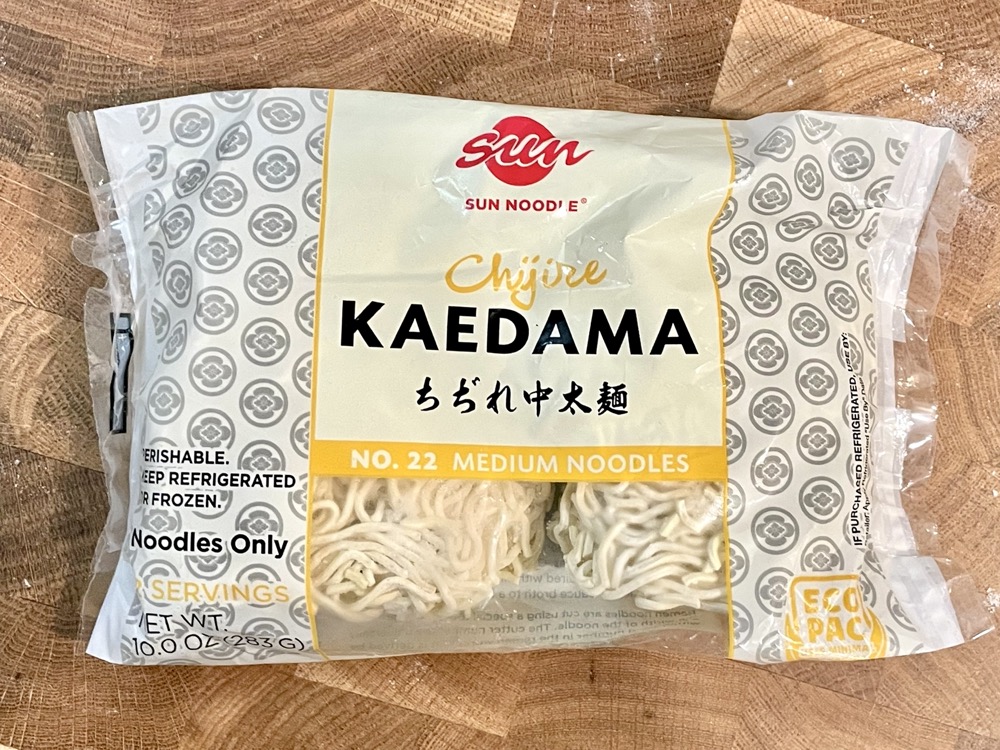
Ramen noodles are different than regular noodles. They are alkaline and has a distinct taste with a slight chewy/bounce texture. To stay true to the authenticity of a tonkotsu ramen, I’d recommend taking the extra effort to find ramen noodles – you’re putting in all this effort to make it all from scratch anyway!

When looking for ramen noodles, try to buy them either freshly made or in the frozen section. Avoid the dehydrated dried noodles that are labeled as ‘ramen noodles’ – I’ve tried a few different kinds in the past and they’re just not the same.

My favourite ramen noodles are made from Sun Noodle and they come in medium or thick noodles (see picture). This one package has 2 servings – it doesn’t seem like much, but it definitely expands when cooking!

Myojo is another brand of ramen noodles I’ve heard good things about, but never tried myself.

6. Toppings

There is a wide variety of toppings you can add to your ramen. I’ve put some examples in the recipe below, but feel free to add in whatever you like. Different restaurants will have different offerings of what you can add – it all depends on personal preference. A few examples of toppings include: bean sprouts, corn, seaweed, sliced wood ear fungus, fresh garlic, chili paste, chopped green onion…etc.

Anyways, without further ado, here’s the recipe! If you have any comments or suggestions, I’d love to hear from you in the comment section! You can follow me on instagram, youtube and facebook to see all the recipes I post!

Happy cooking!

Equipment you’ll need:

  • Pressure cooker (at least 8 quarts in size)
  • Cooking twine
  • Small pot with lid/saucepan

Ingredients you’ll need:

  • Chashu (Pork Belly): MAKE THE DAY BEFORE
    • 500g (1.5lbs) pork belly with the skin on or off – this will be enough for 2-3 slices per portion. Feel free to double the chashu recipe if you want to serve more.
    • 1 cup water
    • 1/2 cup Japanese soy sauce (ie. Kikkoman)
    • 1/4 cup mirin
    • 2 Tbsps brown sugar
    • 2 garlic cloves, smashed
  • Ramen Egg: MAKE THE DAY BEFORE
    • 4-6 eggs (depending on how many people you’re serving)
  • Broth:
    • 1kg (2 lbs) pork neck bones (you want some meat to be attached to the bones for extra flavour)
    • 1kg (2 lbs) pork femur bones (make sure the larger leg bones are split so the bone marrow is exposed) – if you can’t find femur bones, you can use all neck bones
    • 12 cloves of garlic, peeled and smashed
    • 1 small brown onion, peeled and quartered
    • 4cm piece of ginger, sliced (don’t worry about peeling it)
    • 2 green onions, cut into thirds
  • Tare:
    • 1/2 cup (120ml) water
    • 1.5 Tbsps (25ml) mirin
    • 1 Tbsp (15ml) sake
    • 4g kombu (dried kelp)
    • 3g dried porcini mushrooms
    • 3g sababushi/dried mackerel, or katsuobushi/bonito flakes, or niboshi/dried anchovies – I had a difficulty sourcing these in my neighbourhood, so any of these will work to give it an umami fishy flavour
    • 1/2 cup (120ml) Japanese soy sauce (ie. Kikkoman)
    • 2.5 tsps (15g) kosher salt
    • 1.5 tsps (5g) brown sugar
  • 4-6 portions of ramen noodles, premade
  • Additional Toppings (optional):
    • Sliced green onion
    • Wood ear mushrooms
    • Seaweed
    • Bean sprouts

Directions:

THE DAY BEFORE:

A) Make the chashu:

Make sure the pork belly is at room temperature (take it out of the fridge at least 30mins prior).

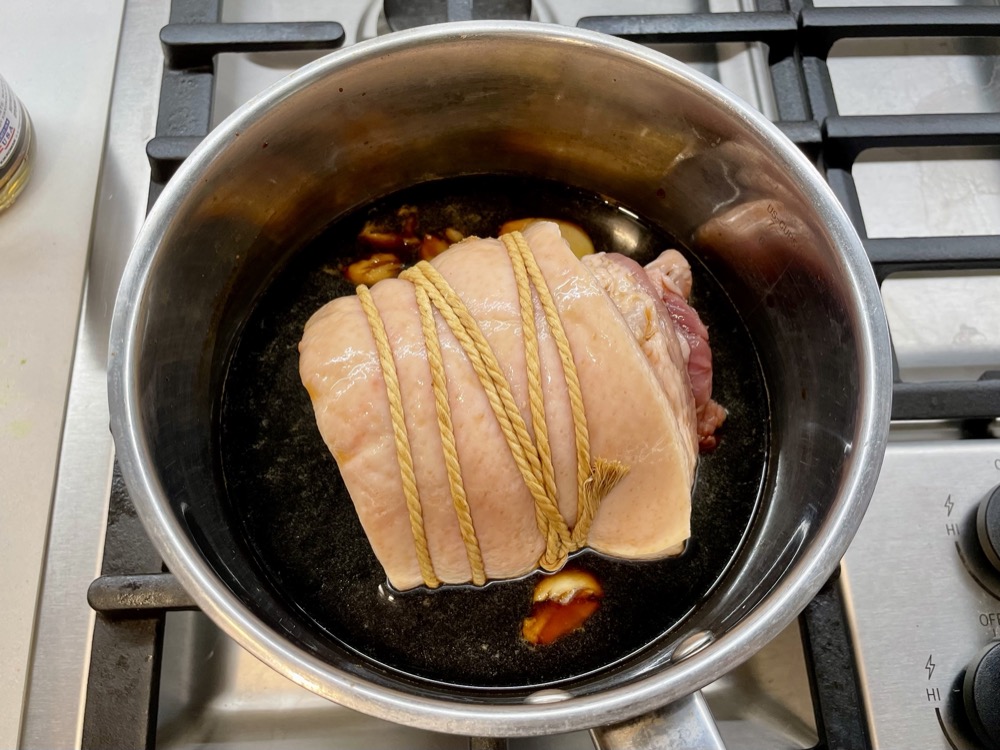
Roll the pork belly into a cylinder with the layers visible on the side (see photo) and tie tightly with cooking twine so it stays in shape.

Take out a saucepan with a lid and add in the rest of the the chashu ingredients: water, soy sauce, mirin, brown sugar, garlic. Place the tied up pork belly in the middle of the saucepan.

Turn the heat on to HIGH and let the sauce come to a boil, then turn the heat down to LOW and let it simmer with the lid on for 90 minutes. Turn the pork belly every 20 minutes so it gets evenly braised in the sauce.

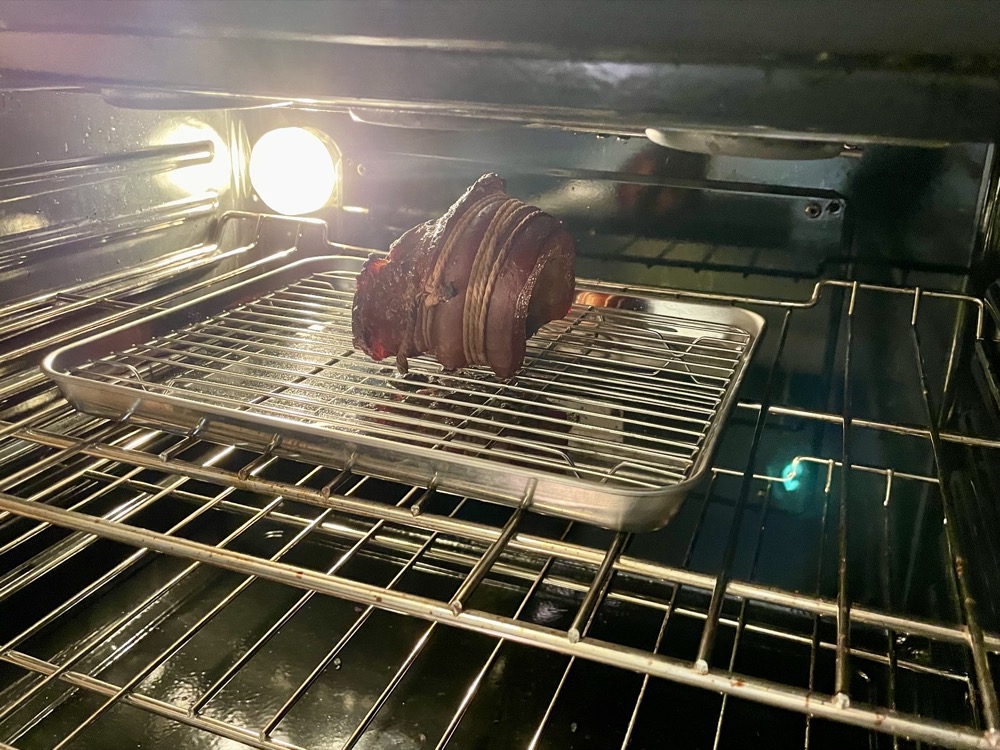
When there’s 20 minutes left to your cook time, preheat your oven to 220˚C (425˚F) and prepare a baking tray with a wire rack.

Once the 90 minutes is up, turn off the heat and take out the pork belly (keeping the remaining sauce aside) and place it on the rack over a baking tray and roast in the preheated oven for 8-10 minutes, or until the outside is a dark caramel colour.

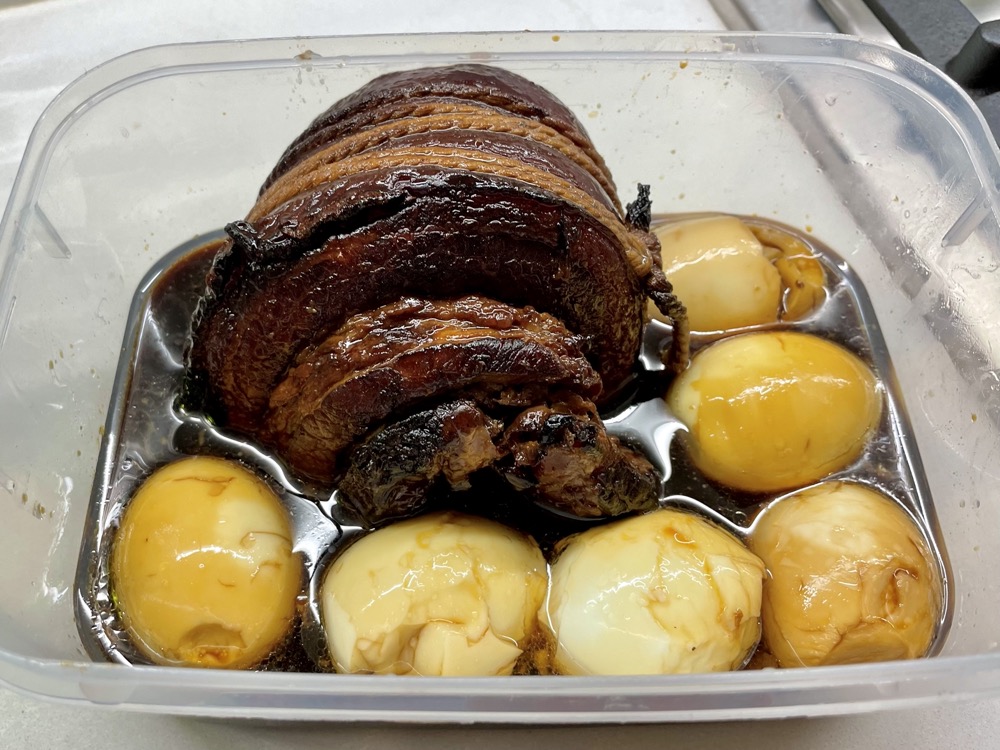
When the pork belly is done, take it out of the oven and place it in a heat-proof container (make sure there’s enough room for the eggs as well). Pour the leftover sauce over and let the pork belly marinate in the sauce overnight. If the marinade doesn’t surround the pork belly, either use a smaller container or turn the pork belly halfway through for even marination. A vacuum-sealed plastic bag works well as well.

Vacuum-seal bags will help marinate it better by allowing the sauce to surround the meat and eggs

B) Make the ramen eggs: (you can do this step while you’re waiting for the pork belly to cook)

Bring a small pot of water to boil. Gently lower all 4 eggs into the boiling water and start a timer for 7 minutes. Adjust the heat if the water is boiling too rapidly to avoid the eggs from knocking around in the pot.

While you’re waiting, prepare an ice bath for the eggs. Once the timer is up, turn off the heat and immediately submerge all the eggs into the ice bath. Once the eggs are cool enough to handle, remove all of the shells.

Place the peeled boiled eggs into the same container as the pork belly and marinate together overnight. If the sauce does not surround the egg, turn the eggs halfway through for even marination. A vacuum-sealed plastic bag works well as well. Do not marinate for longer than 2-3 days or else the egg will become too salty.

THE DAY OF:

C) Make the tonkotsu broth:

Preheat oven to 220˚C (425˚F)

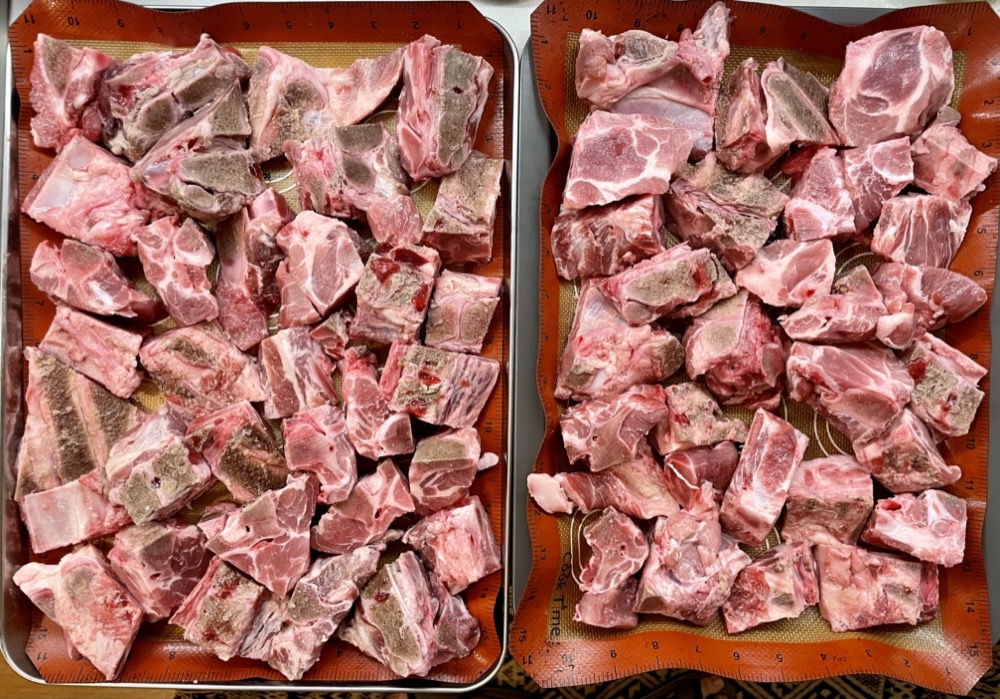
Roast the bones: Prepare a large lined baking tray. Rinse the pork bones and place them all in one layer of the tray (do not overlap the bones). Use a second tray if they don’t all fit into one. Roast in the preheated oven for 40 minutes, turning the bones once halfway through the cook time. After 40 minutes, turn off the oven. You should have a dark brown char on the bones.

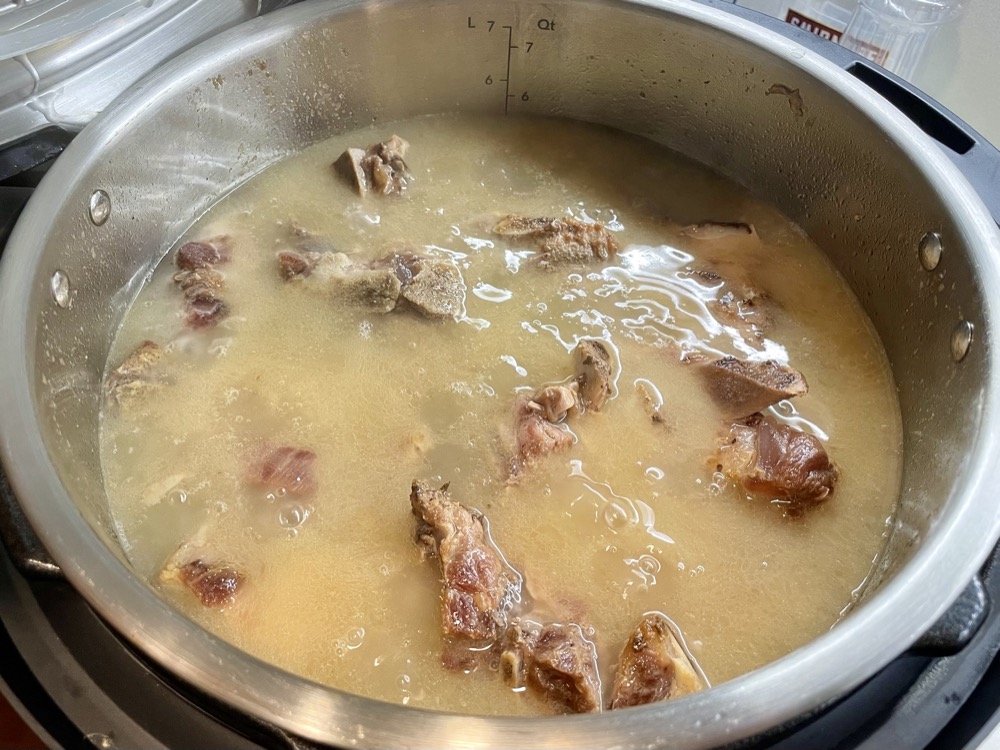
Cook the broth: Place the roasted bones along with any browned bits or liquids from the tray (these will add extra flavour) into your Instant Pot. Add enough water to cover the bones by 2-3cm (roughly 3 litres). Turn the Instant Pot on to a sauté setting and set the heat to HIGH. Once the water comes to a boil, cancel the setting and put the lid on. Turn on the pressure cook setting to HIGH and cook for 2 hours. (You can start making the tare or prepare any additional toppings during this time as you wait.) When the timer finishes, quick release the pressure – be careful of any spurting of liquids from the vent! When it is safe to do so, remove the lid carefully.

Add in aromatics & free the bone marrow: Add in garlic, ginger, green onion and onion into the broth. Use a chopstick and scrape out any bone marrow from the bones and let the marrow boil freely in the soup alongside the bones.

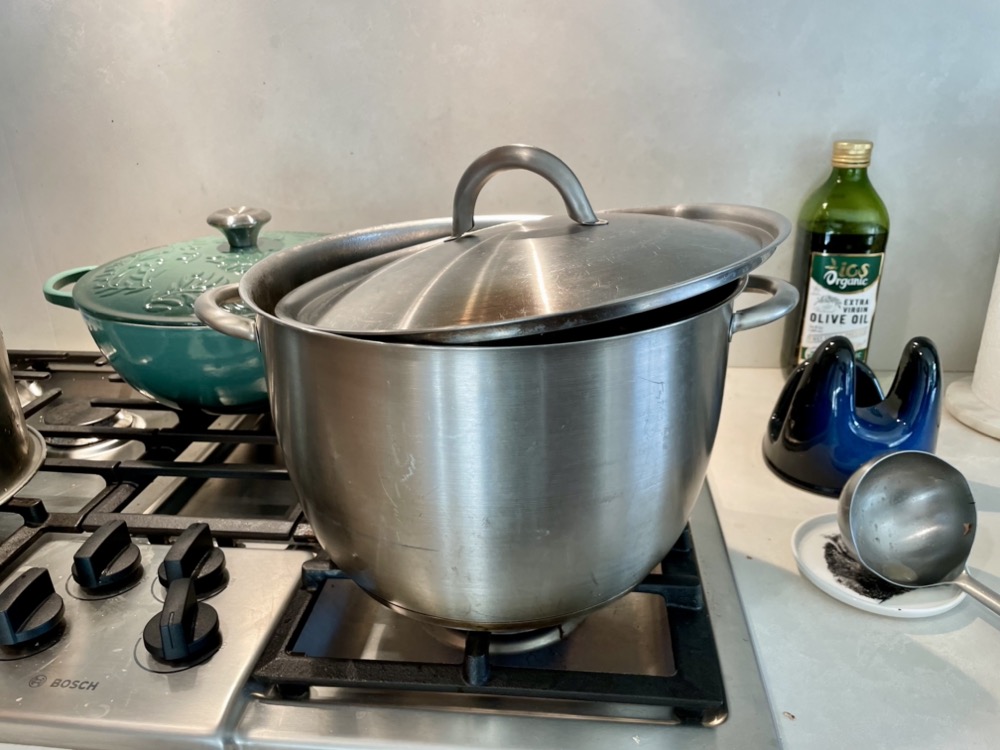
Boiling the broth for the final hour – lid on or lid off will depend on how rich it is after the Instant Pot

Taste for richness and Reduce (if needed): At this point the broth will taste quite bland since there as been no added salt and the aromatics were just introduced. Ignore the need to want to add in salt right now – it will come later. You want to taste for the texture of the broth, not the flavour. How creamy your broth is at this stage will dictate how you cook down your broth (the texture will vary greatly depending on the mix of bones you started with – it varies every time I make it):

If your broth is watery: turn on the sauté setting on the Instant Pot and set to MED heat so the soup boils moderately. Let it boil uncovered for 1 hour to reduce the broth and increase in concentration/richness. Taste at the end of 1 hour – you can let it boil for longer if needed.

If your broth is rich & creamy: add a lid on to the Instant Pot (or transfer to a regular soup pot with a lid) and let the soup boil on MED heat for 1 hour to release the flavour of the aromatics but to still contain all the liquid.

You will need to boil the broth for 1 hour regardless of how rich your broth is. The difference is whether you keep the lid on or off to control how much liquid is evaporated. If you’re unsure, then start boiling without a lid, then taste after 30 minutes, or have the lid half-on so it only reduces slightly. Once your broth is rich enough then put the lid on and finish boiling until the 1 hour timer is up.

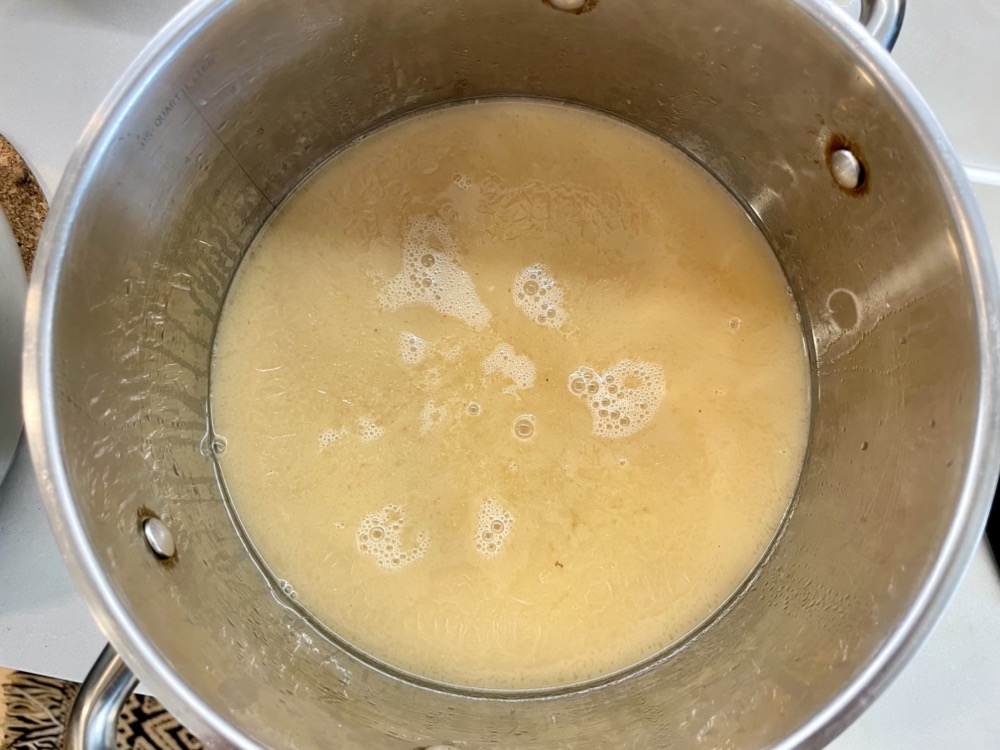
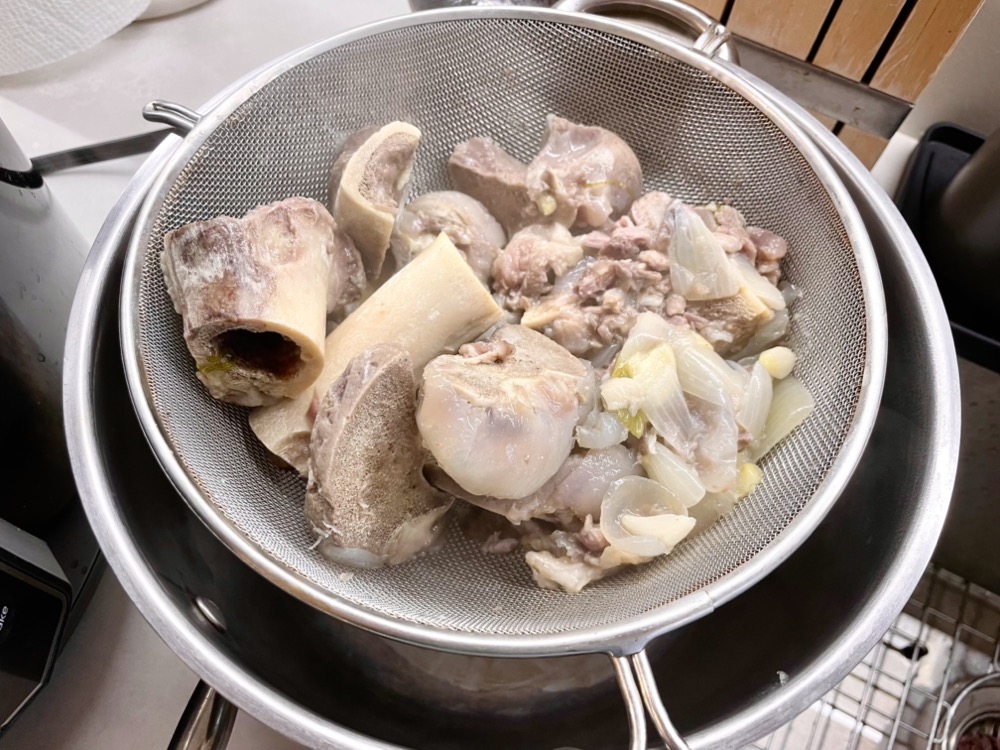
Strain: After an hour, turn off the heat and strain the broth into a clean pot. Discard the bones, aromatics, and any floaters that you have strained out. You should now have a pale brown opaque broth. Do not worry if your broth is not a lighter colour – it will lighten up in the next step.

Blend – the magic step that makes the broth extra creamy and white: Remove roughly a quarter of the amount of broth into a blender and blend it on HIGH until you get a very smooth, white, and creamy texture. Add this back into the rest of the broth and mix well. Taste again for the texture.

If you find that it is too creamy, add hot water a cup at a time until desired consistency.

If you want it creamer and whiter, add more broth into the blender and blend again on HIGH and add it back into the broth until desired consistency.

Resist the urge to add salt – the final taste test will be at the end with the combination of the tare (salty goodness) with with broth together. The tonkotsu broth is now complete! If you still need more time to prepare the rest of the toppings or tare, then keep the soup on low heat to keep it hot until ready to serve.

D) Make the tare: (do this while you’re waiting for the broth to cook)

In a small pan, add the water, mirin, sake, kombu, porcini, and sababushi. Turn the heat on to HIGH. When it starts to boil, turn the heat off and let it steep for 30 minutes.

After 30 minutes, remove the kombu, add in the soy sauce, salt, sugar, and MSG. Whisk until dissolved. Turn the heat back on to HIGH until it starts to boil, then turn it off again and let it steep for at least 30 minutes. Strain before using. You can store this in the fridge for up to 6 months.

E) Cook the noodles, prepare the rest of the toppings: (you can do this in the final 10-15 minutes of your broth cooking)

Chashu and ramen egg: Remove the twine from the chashu and thinly slice it while still chilled (it will be easier to get neater cuts). Cut each egg in half to reveal the jammy egg yolk centre. Set aside.

Noodles: Cook the noodles according to package instructions and strain when finished.

Wood ear mushrooms: Soak the wood ear mushrooms in a bowl of boiling hot water for at least 15 minutes or until softened and expanded. Remove from the water, rinse, and slice. Set aside.

Green onion: Thinly slice one green onion for garnish. Set aside.

Seaweed: Cut your seaweed to desired sizes for serving.

F) Assemble the ramen: (finally!)

Divide the noodles equally into the serving bowls if not done so already.

Add 2 ladles of the tonkotsu broth over the noodles. Top with sliced chashu, ramen egg, wood ear mushrooms, seaweed, and green onion to garnish. Add a 3 tablespoons of tare over top (or more if you prefer it saltier). ENJOY!

Summarized Recipe:

Legit Tonkotsu Ramen from scratch (in an Instant Pot)

Date Published: Mar 3rd, 2024 | Last Updated: Mar 3rd, 2024
Author: Abby |Category: Asian, mains, soups
Serves: 4-6 | Prep time: 12 hours before to marinate | Cook time: 4.5 hours total

Equipment you’ll need:

  • Pressure cooker (at least 8 quarts in size)
  • Cooking twine
  • Small pot with lid/saucepan

Ingredients you’ll need:

  • Chashu (Pork Belly): MAKE THE DAY BEFORE
    • 500g (1.5lbs) pork belly with the skin on or off – this will be enough for 2-3 slices per portion. Feel free to double the chashu recipe if you want to serve more.
    • 1 cup water
    • 1/2 cup Japanese soy sauce (ie. Kikkoman)
    • 1/4 cup mirin
    • 2 Tbsps brown sugar
    • 2 garlic cloves, smashed
  • Ramen Egg: MAKE THE DAY BEFORE
    • 4-6 eggs (depending on how many people you’re serving)
  • Broth:
    • 1kg (2 lbs) pork neck bones (you want some meat to be attached to the bones for extra flavour)
    • 1kg (2 lbs) pork femur bones (make sure the larger leg bones are split so the bone marrow is exposed) – if you can’t find femur bones, you can use all neck bones
    • 12 cloves of garlic, peeled and smashed
    • 1 small brown onion, peeled and quartered
    • 4cm piece of ginger, sliced (don’t worry about peeling it)
    • 2 green onions, cut into thirds
  • Tare:
    • 1/2 cup (120ml) water
    • 1.5 Tbsps (25ml) mirin
    • 1 Tbsp (15ml) sake
    • 4g kombu (dried kelp)
    • 3g dried porcini mushrooms
    • 3g sababushi/dried mackerel, or katsuobushi/bonito flakes, or niboshi/dried anchovies – I had a difficulty sourcing these in my neighbourhood, so any of these will work to give it an umami fishy flavour
    • 1/2 cup (120ml) Japanese soy sauce (ie. Kikkoman)
    • 2.5 tsps (15g) kosher salt
    • 1.5 tsps (5g) brown sugar
  • 4-6 portions of ramen noodles, premade
  • Additional Toppings (optional):
    • Sliced green onion
    • Wood ear mushrooms
    • Seaweed
    • Bean sprouts

Directions:

THE DAY BEFORE:

  • A) Make the chashu:
    1. Make sure the pork belly is at room temperature (take it out of the fridge at least 30mins prior).
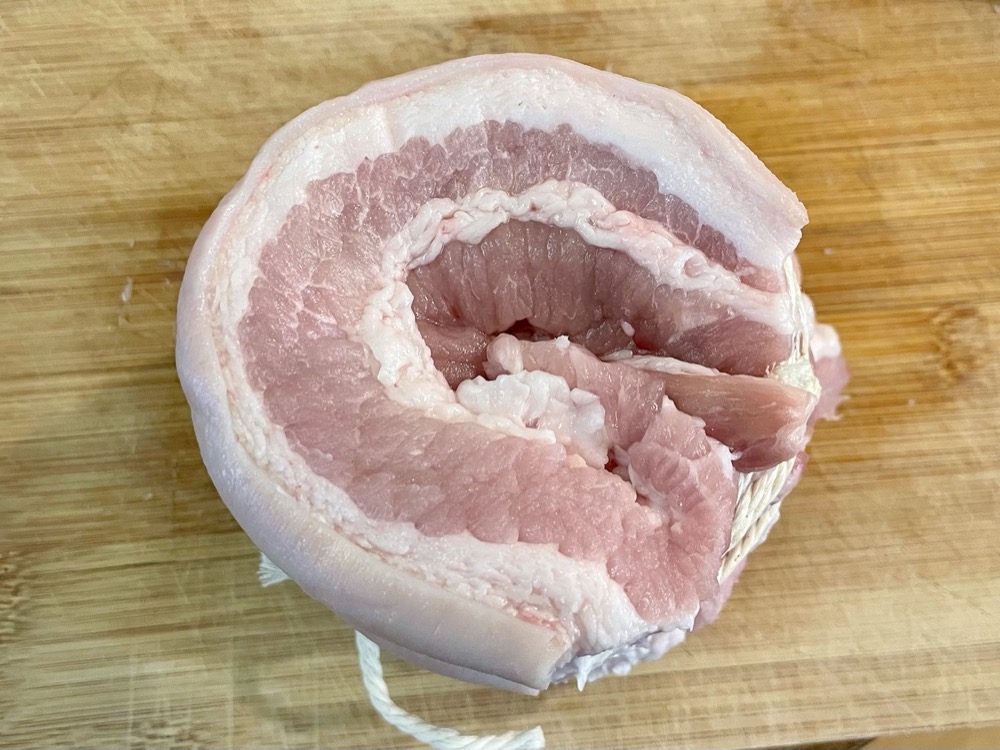
    2. Roll the pork belly into a cylinder with the layers visible on the side (see photo) and tie tightly with cooking twine so it stays in shape.
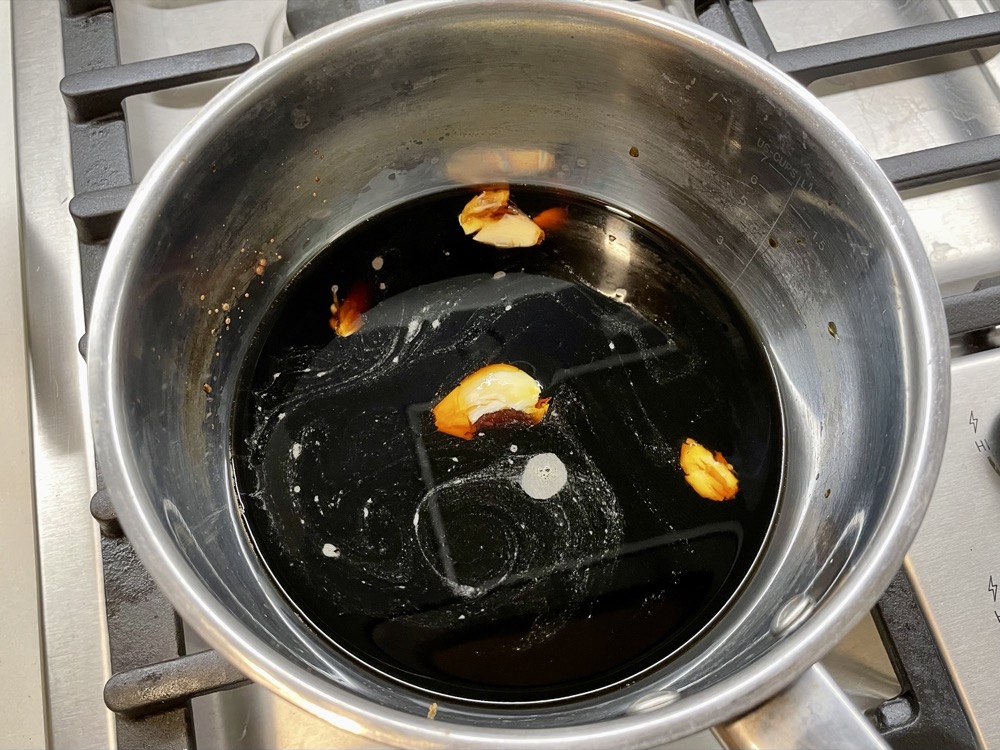
    3. Take out a saucepan with a lid and add in the rest of the the chashu ingredients: water, soy sauce, mirin, brown sugar, garlic. Place the tied up pork belly in the middle of the saucepan.
    4. Turn the heat on to HIGH and let the sauce come to a boil, then turn the heat down to LOW and let it simmer with the lid on for 90 minutes. Turn the pork belly every 20 minutes so it gets evenly braised in the sauce.
    5. When there’s 20 minutes left to your cook time, preheat your oven to 220˚C (425˚F) and prepare a baking tray with a wire rack.
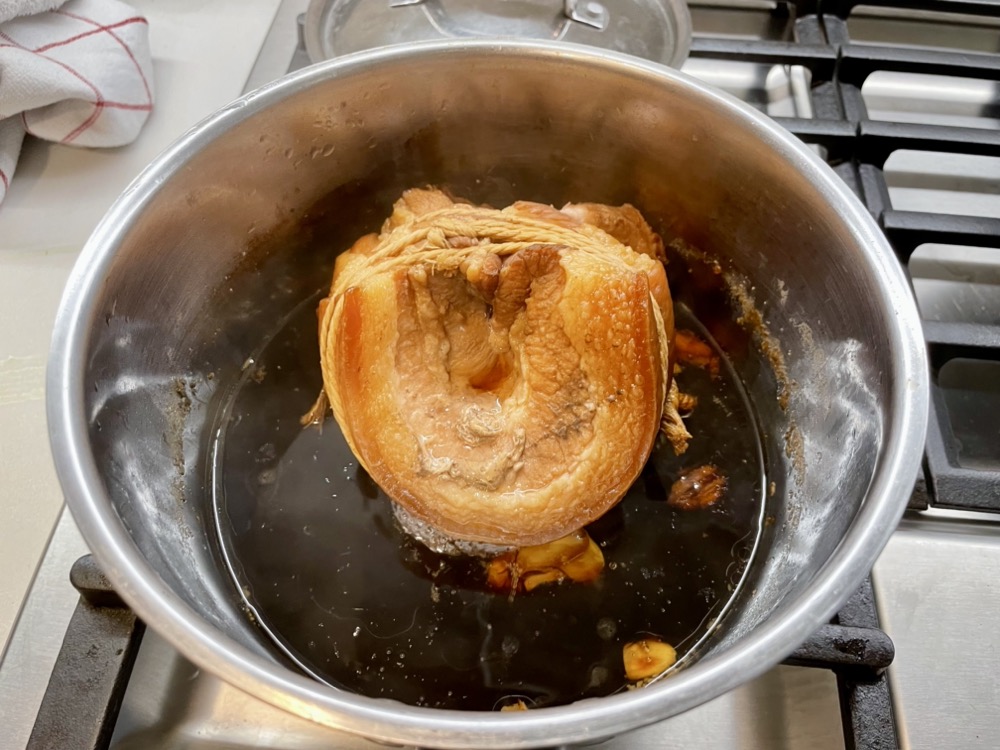
    6. Once the 90 minutes is up, turn off the heat and take out the pork belly (keeping the remaining sauce aside) and place it on the rack over a baking tray and roast in the preheated oven for 8-10 minutes, or until the outside is a dark caramel colour. When the pork belly is done, take it out of the oven and place it in a heat-proof container (make sure there’s enough room for the eggs as well). Pour the leftover sauce over and let the pork belly marinate in the sauce overnight. If the marinade doesn’t surround the pork belly, either use a smaller container or turn the pork belly halfway through for even marination. A vacuum-sealed plastic bag works well as well.
  • B) Make the ramen eggs: (you can do this step while you’re waiting for the pork belly to cook)
    1. Bring a small pot of water to boil. Gently lower all 4 eggs into the boiling water and start a timer for 7 minutes. Adjust the heat if the water is boiling too rapidly to avoid the eggs from knocking around in the pot.
    2. While you’re waiting, prepare an ice bath for the eggs. Once the timer is up, turn off the heat and immediately submerge all the eggs into the ice bath. Once the eggs are cool enough to handle, remove all of the shells.
    3. Place the peeled boiled eggs into the same container as the pork belly and marinate together overnight. If the sauce does not surround the egg, turn the eggs halfway through for even marination. A vacuum-sealed plastic bag works well as well. Do not marinate for longer than 2-3 days or else the egg will become too salty.

THE DAY OF:

  • C) Make the tonkotsu broth:
    1. Preheat oven to 220˚C (425˚F)
    2. Roast the bones: Prepare a large lined baking tray. Rinse the pork bones and place them all in one layer of the tray (do not overlap the bones). Use a second tray if they don’t all fit into one. Roast in the preheated oven for 40 minutes, turning the bones once halfway through the cook time. After 40 minutes, turn off the oven. You should have a dark brown char on the bones.
    3. Cook the broth: Place the roasted bones along with any browned bits or liquids from the tray (these will add extra flavour) into your Instant Pot. Add enough water to cover the bones by 2-3cm (roughly 3 litres). Turn the Instant Pot on to a sauté setting and set the heat to HIGH. Once the water comes to a boil, cancel the setting and put the lid on. Turn on the pressure cook setting to HIGH and cook for 2 hours. (You can start making the tare or prepare any additional toppings during this time as you wait.) When the timer finishes, quick release the pressure – be careful of any spurting of liquids from the vent! When it is safe to do so, remove the lid carefully.
    4. Add in aromatics & free the bone marrow: Add in garlic, ginger, green onion and onion into the broth. Use a chopstick and scrape out any bone marrow from the bones and let the marrow boil freely in the soup alongside the bones.
    5. Taste for richness and Reduce (if needed): At this point the broth will taste quite bland since there as been no added salt and the aromatics were just introduced. Ignore the need to want to add in salt right now – it will come later. You want to taste for the texture of the broth, not the flavour. How creamy your broth is at this stage will dictate how you cook down your broth (the texture will vary greatly depending on the mix of bones you started with – it varies every time I make it):
      • If your broth is watery: turn on the sauté setting on the Instant Pot and set to MED heat so the soup boils moderately. Let it boil uncovered for 1 hour to reduce the broth and increase in concentration/richness. Taste at the end of 1 hour – you can let it boil for longer if needed.
      • If your broth is rich & creamy: add a lid on to the Instant Pot (or transfer to a regular soup pot with a lid) and let the soup boil on MED heat for 1 hour to release the flavour of the aromatics but to still contain all the liquid.
      • You will need to boil the broth for 1 hour regardless of how rich your broth is. The difference is whether you keep the lid on or off to control how much liquid is evaporated. If you’re unsure, then start boiling without a lid, then taste after 30 minutes, or have the lid half-on so it only reduces slightly. Once your broth is rich enough then put the lid on and finish boiling until the 1 hour timer is up.
    6. Strain: After an hour, turn off the heat and strain the broth into a clean pot. Discard the bones, aromatics, and any floaters that you have strained out. You should now have a pale brown opaque broth. Do not worry if your broth is not a lighter colour – it will lighten up in the next step.
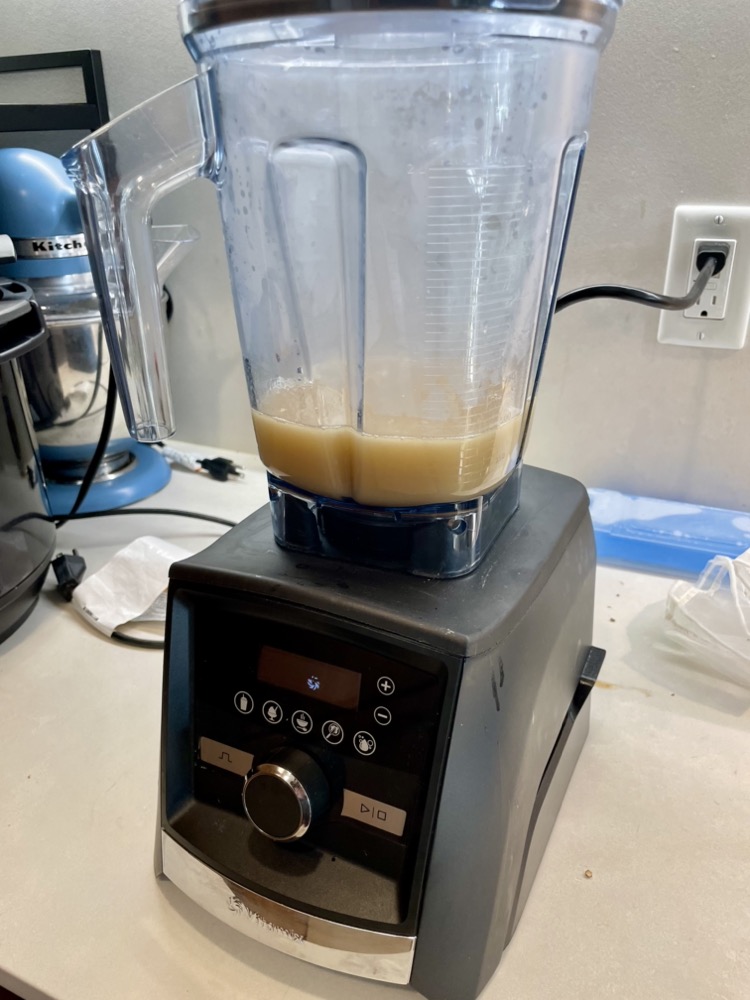
    7. Blend – the magic step that makes the broth extra creamy and white: Remove roughly a quarter of the amount of broth into a blender and blend it on HIGH until you get a very smooth, white, and creamy texture. Add this back into the rest of the broth and mix well. Taste again for the texture.
      • If you find that it is too creamy, add hot water a cup at a time until desired consistency.
      • If you want it creamer and whiter, add more broth into the blender and blend again on HIGH and add it back into the broth until desired consistency.
      • Resist the urge to add salt – the final taste test will be at the end with the combination of the tare (salty goodness) with with broth together. The tonkotsu broth is now complete! If you still need more time to prepare the rest of the toppings or tare, then keep the soup on low heat to keep it hot until ready to serve.
  • D) Make the tare: (do this while you’re waiting for the broth to cook)
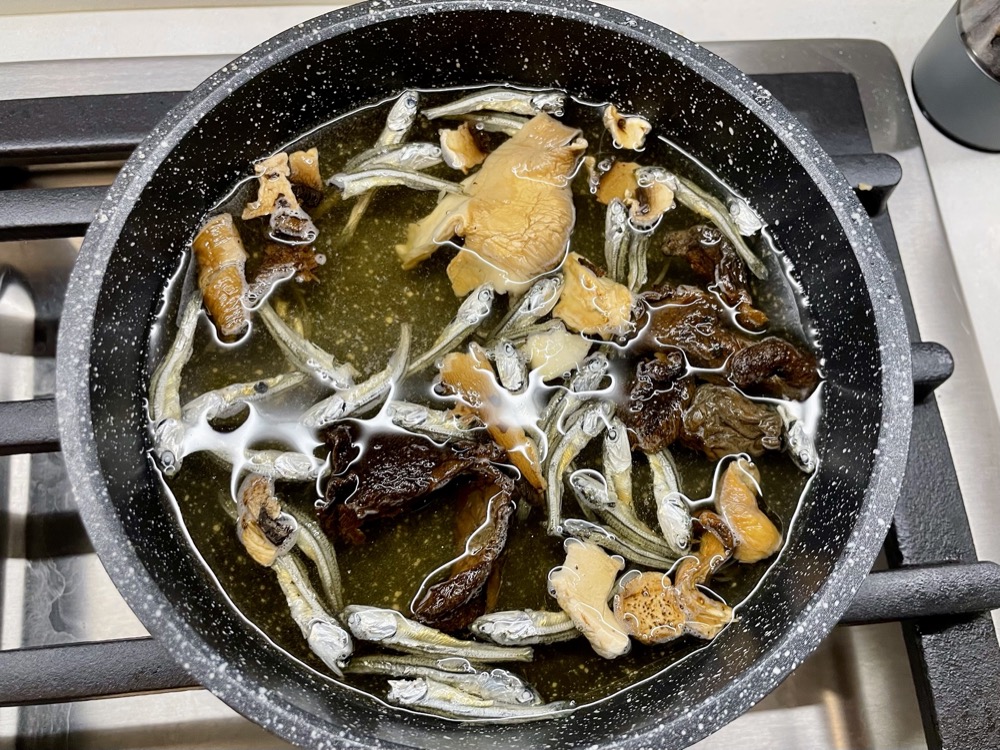
    1. In a small pan, add the water, mirin, sake, kombu, porcini, and sababushi. Turn the heat on to HIGH. When it starts to boil, turn the heat off and let it steep for 30 minutes.
    2. After 30 minutes, remove the kombu, add in the soy sauce, salt, sugar, and MSG. Whisk until dissolved. Turn the heat back on to HIGH until it starts to boil, then turn it off again and let it steep for at least 30 minutes. Strain before using. You can store this in the fridge for up to 6 months.
  • E) Cook the noodles, prepare the rest of the toppings: (you can do this in the final 10-15 minutes of your broth cooking)
    1. Chashu and ramen egg: Remove the twine from the chashu and thinly slice it while still chilled (it will be easier to get neater cuts). Cut each egg in half to reveal the jammy egg yolk centre. Set aside.
    2. Wood ear mushrooms: Soak the wood ear mushrooms in a bowl of boiling hot water for at least 15 minutes or until softened and expanded. Remove from the water, rinse, and slice. Set aside.
    3. Noodles: Cook the noodles according to package instructions, strain, and even divide into serving bowls.
    4. Green onion: Thinly slice one green onion for garnish. Set aside.
    5. Seaweed: Cut your seaweed to desired sizes for serving.
  • F) Assemble the ramen: (finally!)
    1. Divide the noodles equally into the serving bowls if not done so already.
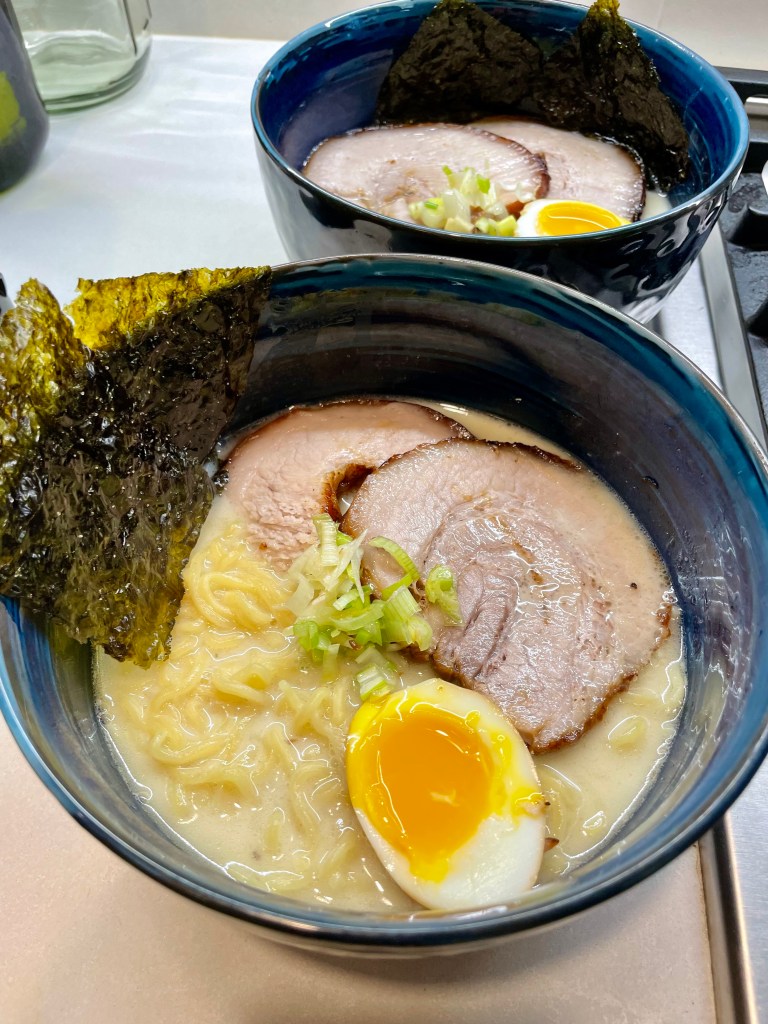
    2. Add 2 ladles of the tonkotsu broth over the noodles.
    3. Top with sliced chashu, ramen egg, wood ear mushrooms, seaweed, and green onion to garnish. Add a 3 tablespoons of tare over top (or more if you prefer it saltier). ENJOY!

So Easy Tan Tan Ramen


Date Published: Oct 24th, 2023 | Last Updated: Mar 2nd, 2024
Author: Abby |Category: easy, quick, Asian, mains, soups, healthy
Serves: 2 | Prep time: 20 mins | Cook time: 20 mins

Jump to recipe |

Ramen is my all time favourite food. No matter where we travel, I always scout out notable ramen shops (we’ve been to a LOT of them). Nothing beats a classic Tonkotsu Ramen, but a Tan Tan Ramen is a close second. For the longest time, I’ve assumed all ramen recipes would be long and arduous like the Tonkotsu ramen, until I came across a random Tan Tan Ramen recipe and realized how simple it was – no boiling down bones for hours required! In fact, the recipe is so simple that you can put it all together within 30 minutes and with minimal prep work! Toby tells me that this is the best Tan Tan Ramen he’s ever had – and I’m inclined to agree! This recipe comes out so flavourful with minimal effort, perfect for a quick lunch or dinner. The serving size is for 2 people because I find that it’s best eaten fresh and not as leftovers in a bulk cook as I often do for work. Multiply the recipe ingredients if you’re cooking for more people.

This recipe was adapted from Woks of Life.

A Healthier Alternative?

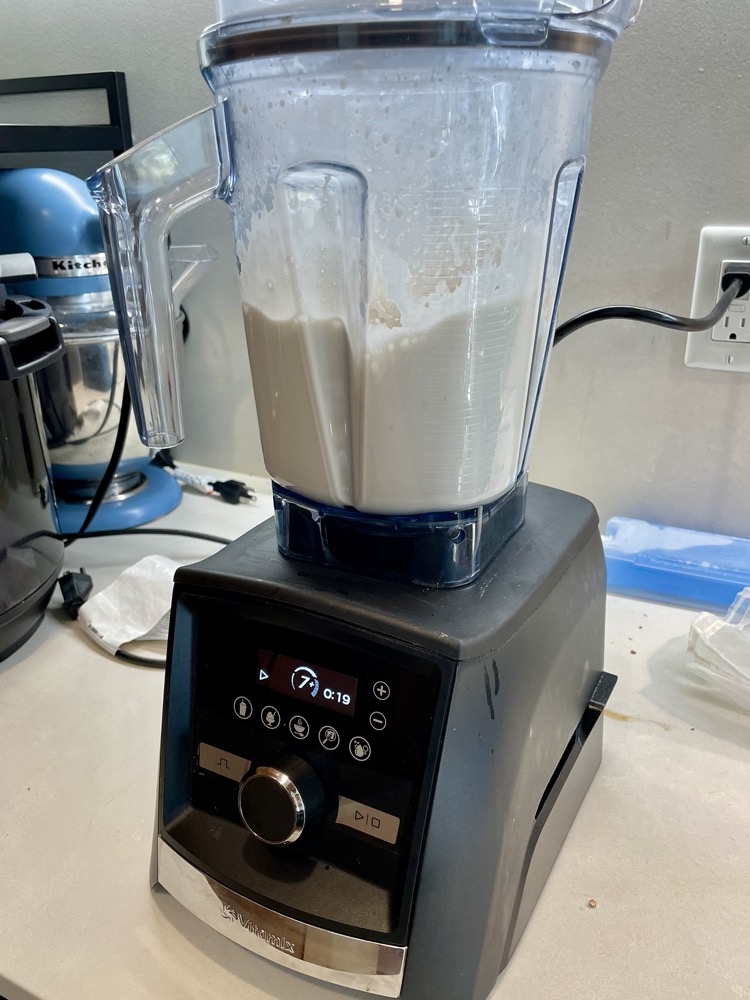
We all know a classic tonkotsu ramen isn’t the most calorie-friendly dish out there. The classic broth is made through boiling down bones with fatty pork belly to achieve that beautiful creamy flavour and texture. It’s delicious in every way, but sadly too rich to have daily. HOWEVER, a Tan Tan Ramen has the same creamy broth but without any cream, milk, or fat. The creamy broth is actually made with….drum roll…oat milk! 🤯🤯🤯 Any unsweetened oat milk will do, BUT I’ve discovered that homemade oat milk will create an even creamier texture. Toby and I recently bought a Vitamix Blender, a kitchen appliance I’ve wanted ever since I was a little girl waiting for the ice cream and hot soup samples during a demo at the CNE. After 18 years, I finally took the plunge and got one last month. Ever since then, I’ve been making my own oat milk. If you’ve ever made oat milk at home, you’ll know that if you over strain it, it can get kind of slimy – this is due to the beta glucan, a soluble fibre found in oats. Therefore when you make oat milk, you don’t want to squeeze the strainer bag too much or else the sliminess comes out. However, in a Tan Tan Ramen recipe, I encourage you to squeeze the bag! The slimier the better! This sliminess results in a thicker soup and creamier texture in the recipe. Beta glucan is actually good for you and has cholesterol-lowering properties, so go ahead, squeeze the bag (don’t worry, your soup won’t be slimy)! You don’t have to feel guilty about eating ramen anymore and the soup is actually good for you!

If you’re already making a big batch of oat milk, use the last 1.5 cups when straining the milk for this recipe. Otherwise, blend 1/2 cup of oats in 2 cups of cold water on HIGH speed for 30 seconds and strain and squeeze through a nut milk/fine mesh sieve/bag. You only need 1.5 cups for this recipe.

What are Ramen Noodles?

Ramen noodles are different than regular noodles. They are alkaline and has a distinct taste with a slight chewy/bounce texture. To stay true to the authenticity of a tonkotsu ramen, I’d recommend taking the extra effort to find ramen noodles – you’re putting in all this effort to make it all from scratch anyway!

When looking for ramen noodles, try to buy them either freshly made or in the frozen section. Avoid the dehydrated dried noodles that are labeled as ‘ramen noodles’ – I’ve tried a few different kinds in the past and they’re just not the same.

My favourite ramen noodles are made from Sun Noodle and they come in medium or thick noodles (see picture). This one package has 2 servings – it doesn’t seem like much, but it definitely expands when cooking!

Myojo is another brand of ramen noodles I’ve heard g

Anyways, without further ado, here’s the recipe! If you have any comments or suggestions, I’d love to hear from you in the comment section! You can follow me on instagram, youtube and facebook to see all the recipes I post!

Happy cooking!

Ingredients you’ll need:

  • 300g ground pork
  • 1 Tbsp mirin
  • 1 Tbsp ginger, finely minced
  • Soup Flavour Base:
    • 2 Tbsps soy sauce
    • 2 Tbsps unsweetened peanut butter
    • 1 tsp rice vinegar
    • 1/2 tsp granulated sugar
    • 1 Tbsp chili oil (any kind is fine, I prefer the Szechuan mala chili oils)
  • 1.5 cups unsweetened oat milk or soy milk
    • Pro-tip: for a creamier soup, use homemade oat milk (blend 1/2 cup oats to 2 cups water on high speed for 30 seconds then strain it through a nut milk bag)
  • 1.5 cups chicken stock
  • 1 Tbsp spicy bean sauce (la dou ban jiang 辣豆瓣酱)
  • 2 cloves garlic, minced
  • 2 bunches of bok choy (or other leafy greens), washed and trimmed
  • 2 servings of ramen noodles (any brand will do, my favourite are from Sun noodle – see photo)
  • 2 green onions/scallions, chopped

Directions:

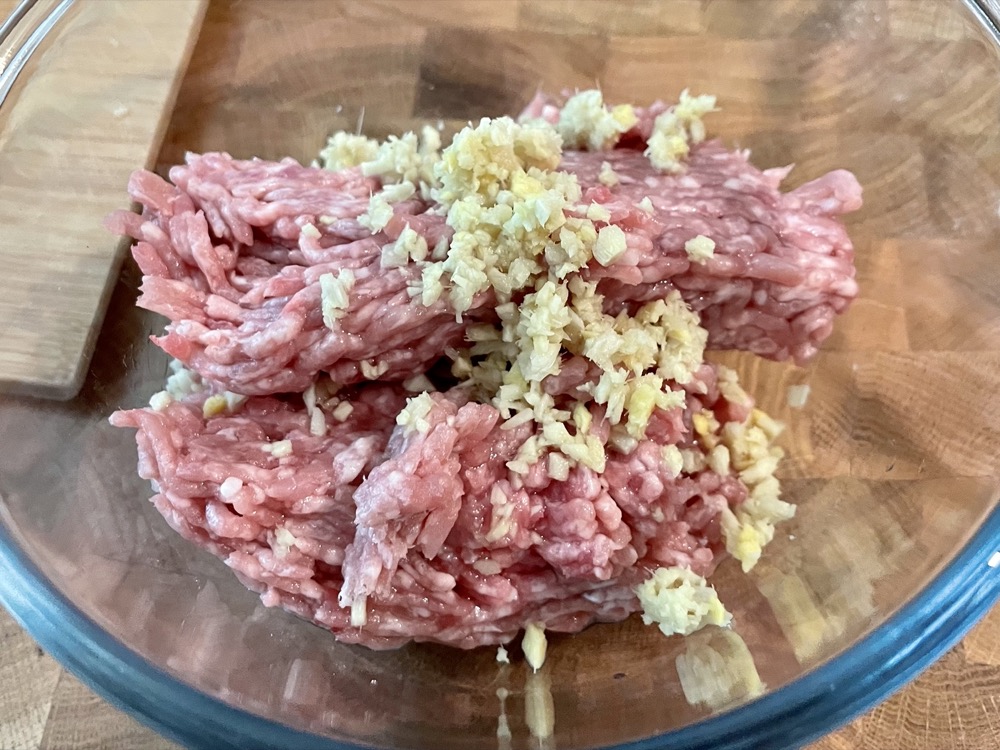
Mix the ground pork, mirin, and ginger together. Set aside to marinate for 15 mins.

Prepare the soup flavour base by combining soy sauce, peanut butter, rice vinegar, sugar, and chili oil. Evenly divide this mixture into 2 soup bowls for serving. Set aside.

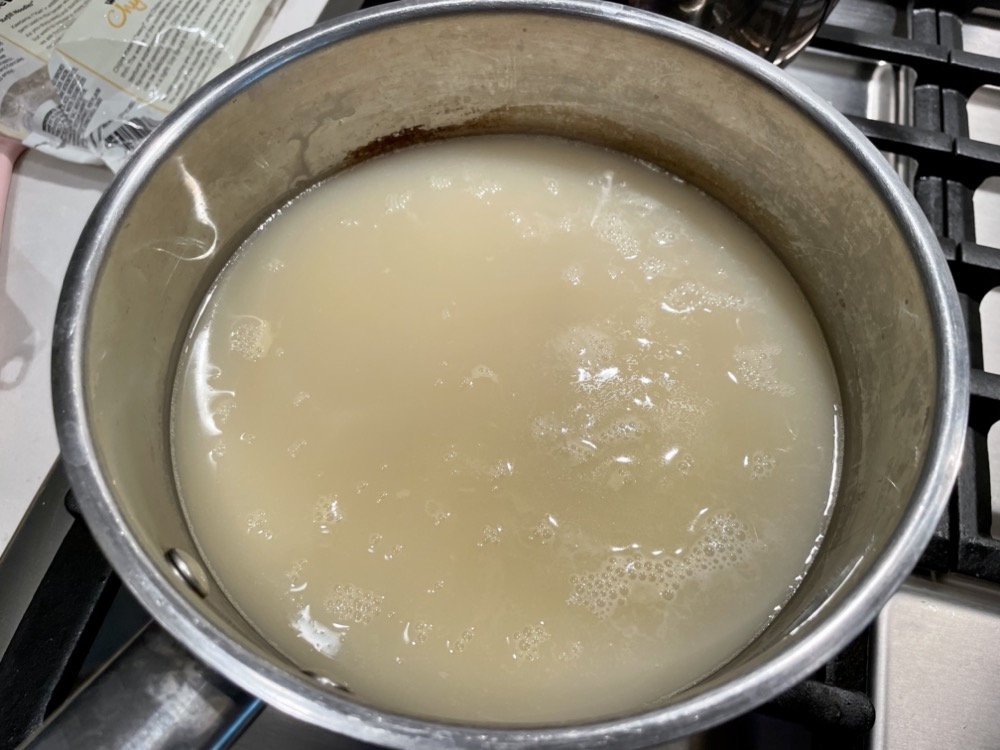
In a saucepan on HIGH heat, add in the oat milk and chicken stock. Heat it up until it just comes to a simmer then turn the heat to LOW to keep warm until ready to be used. Do not let it get any higher than a small simmer otherwise it may curdle!

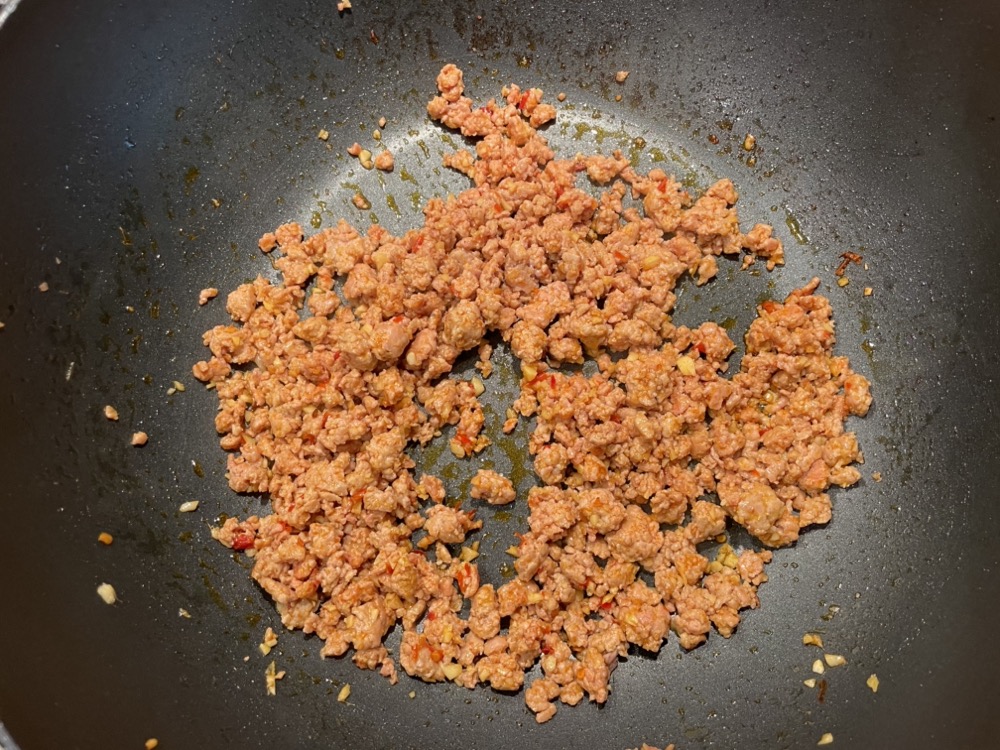
In a wok on HIGH heat, drizzle a small amount of oil and sauté the marinated pork from step 1 until browned. Then add in the spicy bean sauce and garlic. Continue to sauté for another minute then turn off the heat.

Bring a pot of water to a boil and blanch the bok choy for 60 seconds then remove from the pot and set aside.

Bring the same pot of water to a boil again and cook the ramen noodles according to package instructions. Strain the noodles.

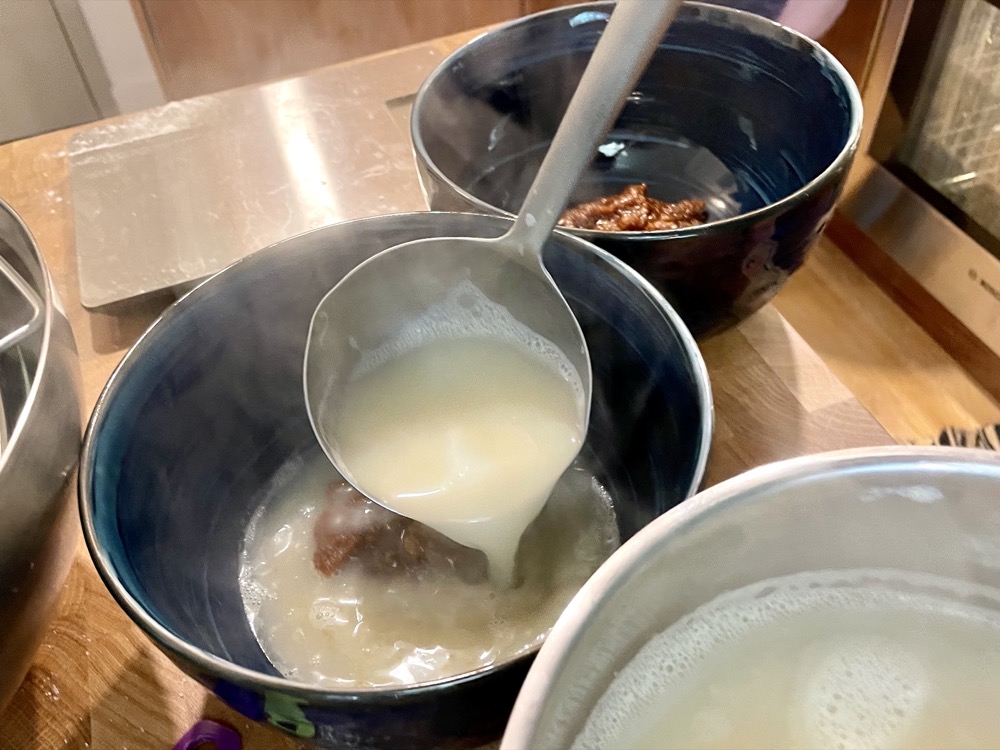
To assemble: Add one ladle of the oat milk/chicken stock mixture into each of the soup bowls over the soup flavour base and mix well until combined. Then evenly divide the rest of the oat milk/chicken stock mixture into each bowl.

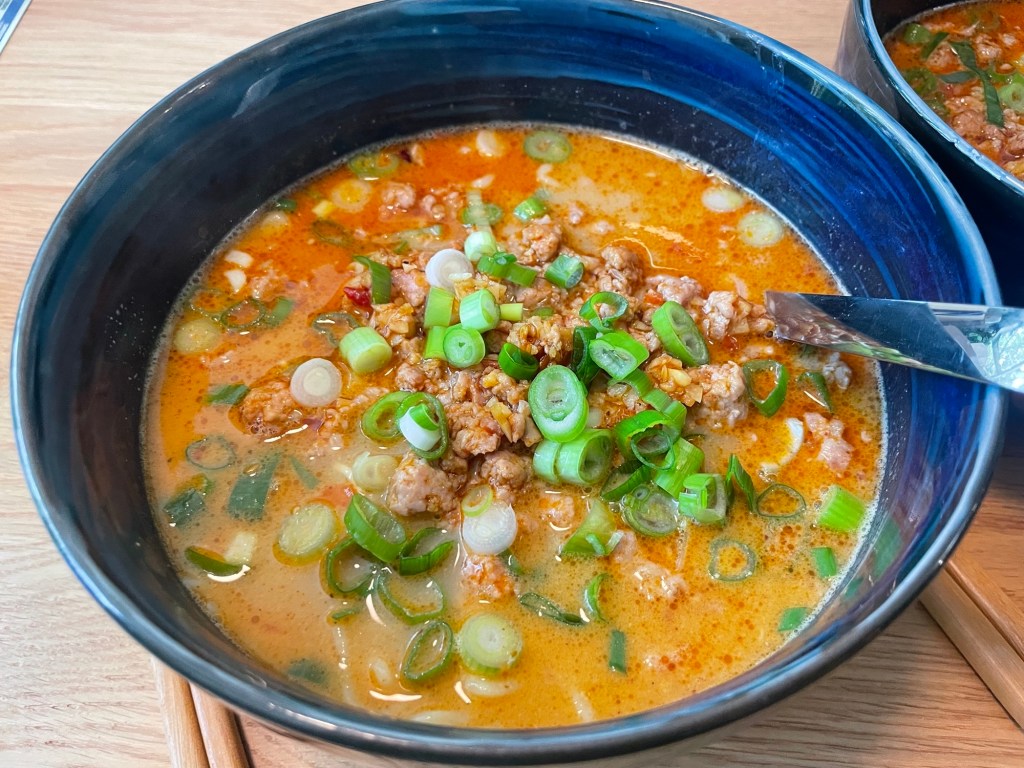
Then top with the cooked ramen noodles, ground pork, and bok choy. Garnish with a sprinkling of chopped scallions over top. Enjoy!

Summarized Recipe:

So Easy Tan Tan Ramen

Date Published: Oct 24th, 2023 | Last Updated: Mar 2nd, 2024
Author: Abby |Category: easy, quick, Asian, mains, soups, healthy
Serves: 2 | Prep time: 20 mins | Cook time: 20 mins

Ingredients:

  • 300g ground pork
  • 1 Tbsp mirin
  • 1 Tbsp ginger, finely minced
  • Soup Flavour Base:
    • 2 Tbsps soy sauce
    • 2 Tbsps unsweetened peanut butter
    • 1 tsp rice vinegar
    • 1/2 tsp granulated sugar
    • 1 Tbsp chili oil (any kind is fine, I prefer the Szechuan mala chili oils)
  • 1.5 cups unsweetened oat milk or soy milk
    • Pro-tip: for a creamier soup, use homemade oat milk (blend 1/2 cup oats to 2 cups water on high speed for 30 seconds then strain it through a nut milk bag)
  • 1.5 cups chicken stock
  • 1 Tbsp spicy bean sauce (la dou ban jiang 辣豆瓣酱)
  • 2 cloves garlic, minced
  • 2 bunches of bok choy (or other leafy greens), washed and trimmed
  • 2 servings of ramen noodles (any brand will do, my favourite are from Sun noodle – see photo)
  • 2 green onions/scallions, chopped

Directions:

  1. Mix the ground pork, mirin, and ginger together. Set aside to marinate for 15 mins.
  2. Prepare the soup flavour base by combining soy sauce, peanut butter, rice vinegar, sugar, and chili oil. Evenly divide this mixture into 2 soup bowls for serving. Set aside.
  3. In a saucepan on HIGH heat, add in the oat milk and chicken stock. Heat it up until it just comes to a simmer then turn the heat to LOW to keep warm until ready to be used. Do not let it get any higher than a small simmer otherwise it may curdle!
  4. In a wok on HIGH heat, drizzle a small amount of oil and sauté the marinated pork from step 1 until browned. Then add in the spicy bean sauce and garlic. Continue to sauté for another minute then turn off the heat.
  5. Bring a pot of water to a boil and blanch the bok choy for 60 seconds then remove from the pot and set aside. Bring the same pot of water to a boil again and cook the ramen noodles according to package instructions. Strain the noodles.
  6. To assemble: Add one ladle of the oat milk/chicken stock mixture into each of the soup bowls over the soup flavour base and mix well until combined. Then evenly divide the rest of the oat milk/chicken stock mixture into each bowl. Then top with the cooked ramen noodles, ground pork, and bok choy. Garnish with a sprinkling of chopped scallions over top. Enjoy!

Chicken and Sweet Corn Dumplings


Date Published: Sept 14th, 2021 | Last Updated: Sept 14th, 2021
Author: Abby |Category: < 30mins, easy, low-cal, healthy, asian, quick, mains, snacks
Serves: ~100 dumplings | Prep time: 15 mins + time to wrap | Cook time: 10 mins

Jump to recipe |

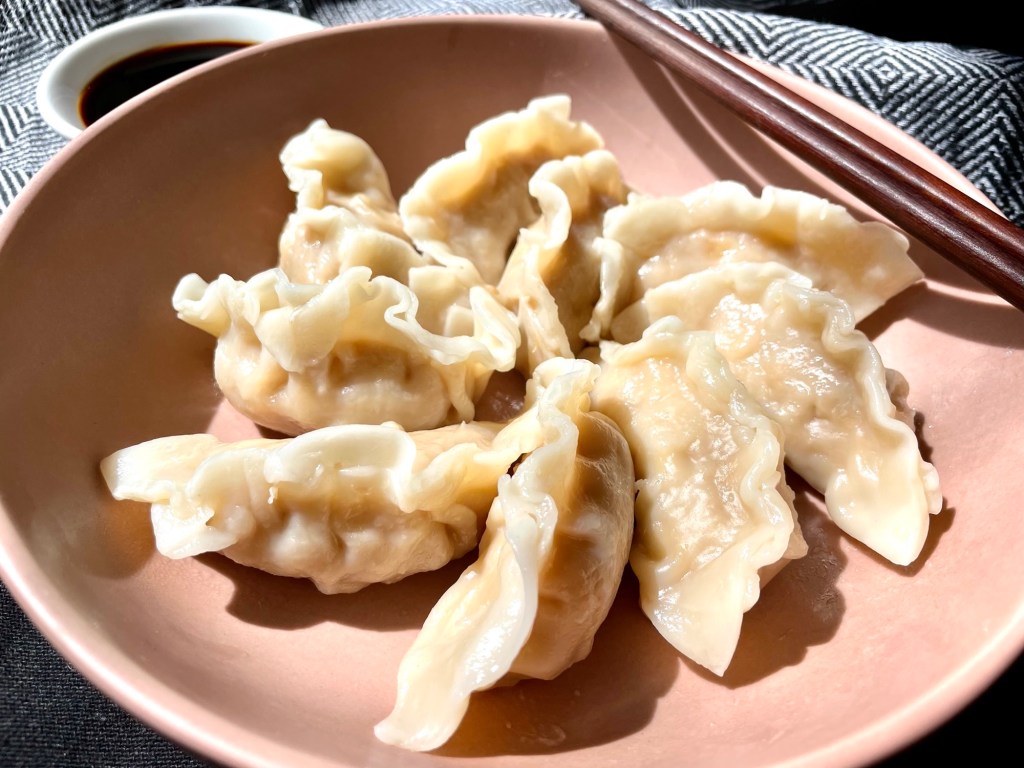
When Toby and I took a trip to Alice Springs early last year, a local dumpling house called Confucius Palace Dumpling Restaurant came up on our radar when looking for places to eat. I’m always skeptical of asian restaurants located in a predominantly non-asian town but we were both pleasantly surprised by how good the dumplings were! Our favourites were the lamb and onion dumplings and the chicken and sweet corn dumplings which is the recipe I’m publishing today! Both dumplings are actually quite simplistic in their ingredients and super quick to make which is fantastic for a quick and easy meal. Dumplings also store very well in the freezer so you can whip up a big batch and save them for a rainy day when you don’t feel like cooking.

Without further ado, here’s the recipe! If you have any comments or suggestions, I’d love to hear from you in the comment section! You can follow me on instagram, youtube and facebook to see all the recipes I post!

Happy cooking!

Ingredients you’ll need:

  • Dumpling Filling:
    • 1kg chicken mince
    • 2 cans of super sweet corn
    • 2 Tbsps soy sauce
    • 3 Tbsps chicken stock powder
    • 3 tsp white pepper
    • 1 Tbsp sugar
  • Two packets of dumpling wrappers

Directions:

Mix all the ingredients of the dumpling filling in a bowl: chicken mince, sweet corn, soy sauce, chicken stock powder, white pepper, and sugar.

Wrap the dumplings.

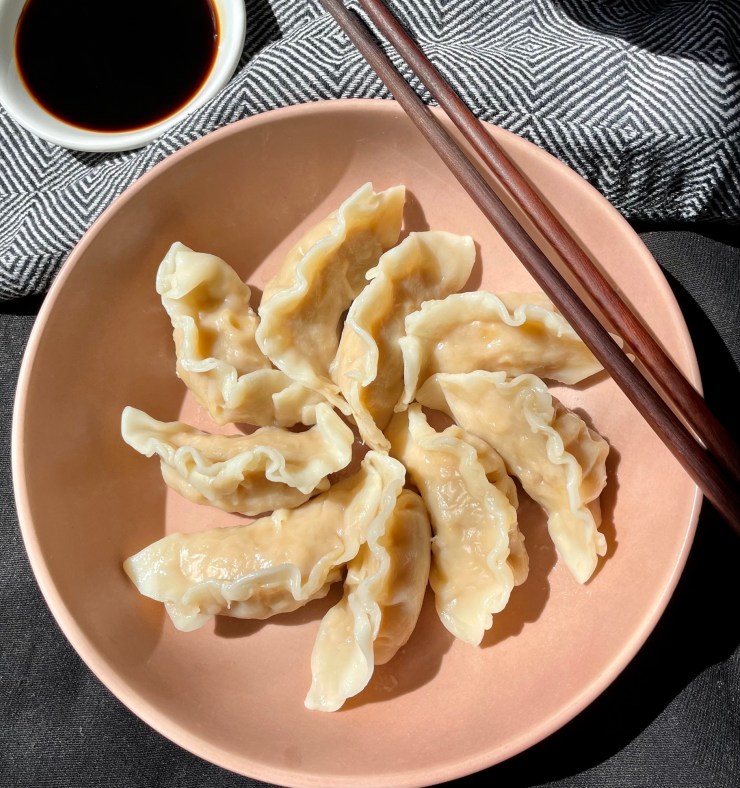
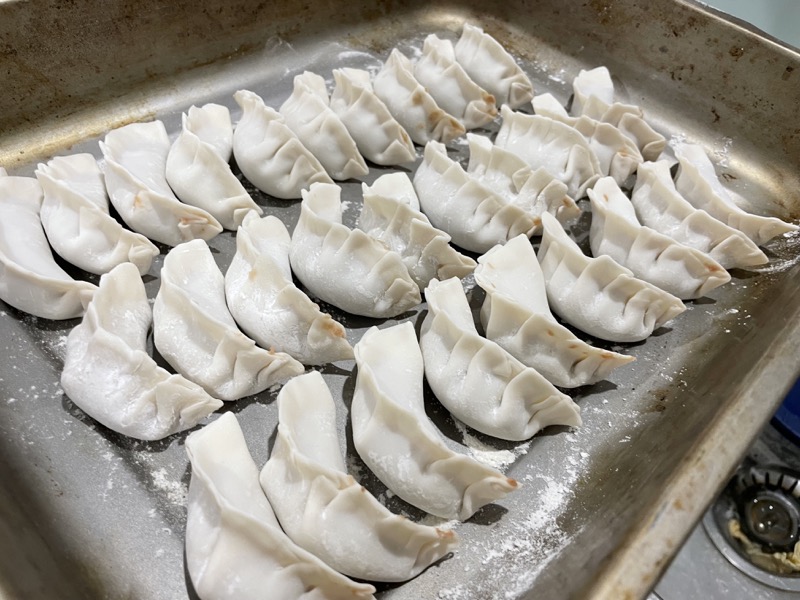
You can either cook the dumplings right away or store them in the freezer. Make sure the dumplings aren’t touching when you freeze them or else they’ll all stick together in a block. Once they’re frozen you can transfer them into a container or plastic freezer bag. Check out this post on how to cook dumplings – 2 ways.

Summarized Recipe:

Chicken and Sweet Corn Dumplings

Date Published: Sept 14th, 2021 | Last Updated: Sept 14th, 2021
Author: Abby |Category: < 30mins, easy, low-cal, healthy, asian, quick, mains, snacks
Serves: ~100 dumplings | Prep time: 15 mins + time to wrap | Cook time: 10 mins

Ingredients:

  • Dumpling Filling:
    • 1kg chicken mince
    • 2 cans of super sweet corn
    • 2 Tbsps soy sauce
    • 3 Tbsps chicken stock powder
    • 3 tsp white pepper
    • 1 Tbsp sugar
  • Two packets of dumpling wrappers

Directions:

  1. Mix all the ingredients of the dumpling filling in a bowl: chicken mince, sweet corn, soy sauce, chicken stock powder, white pepper, and sugar.
  2. Wrap the dumplings.
  3. You can either cook the dumplings right away or store them in the freezer.
    • Check out this post on how to cook dumplings – 2 ways.
    • Make sure the dumplings aren’t touching when you freeze them or else they’ll all stick together in a block. Once they’re frozen you can transfer them into a container or plastic freezer bag.

Grilled King Oyster Mushrooms


Date Published: Sept 5th, 2022 | Last Updated: Sept 5th, 2022
Author: Abby |Category: easy, <15mins, appetizer, asian, sides, healthy, low-cal, snacks
Serves: depends on how much you make | Prep time: 5 mins | Cook time: 5 mins per batch

Jump to recipe |

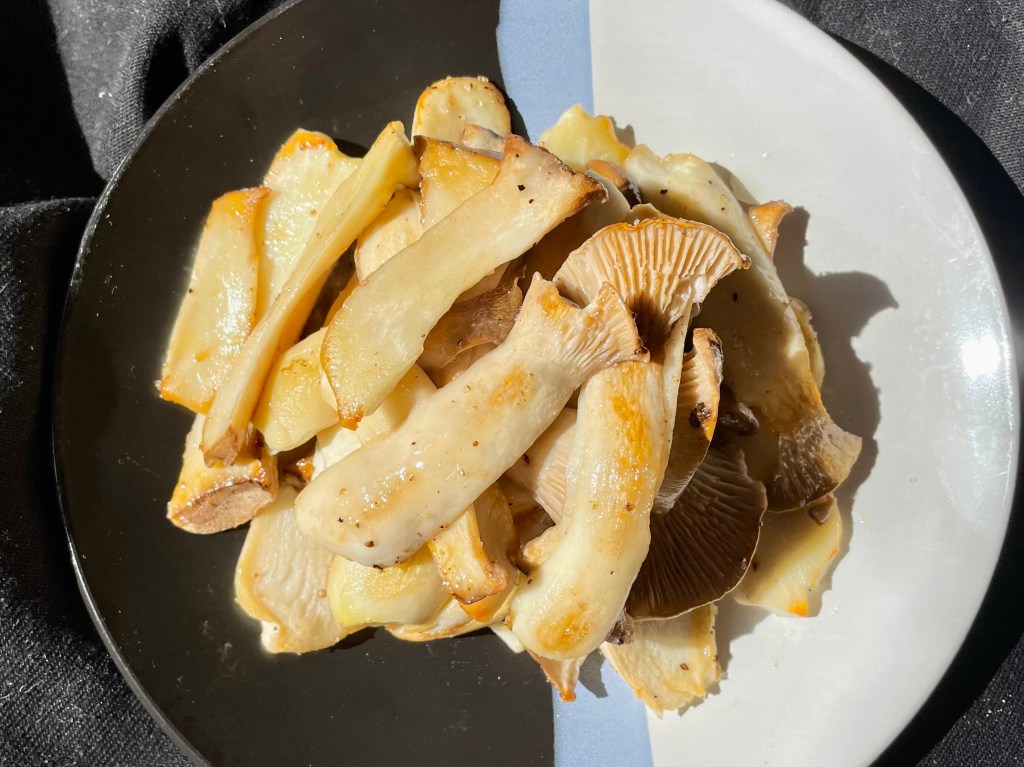
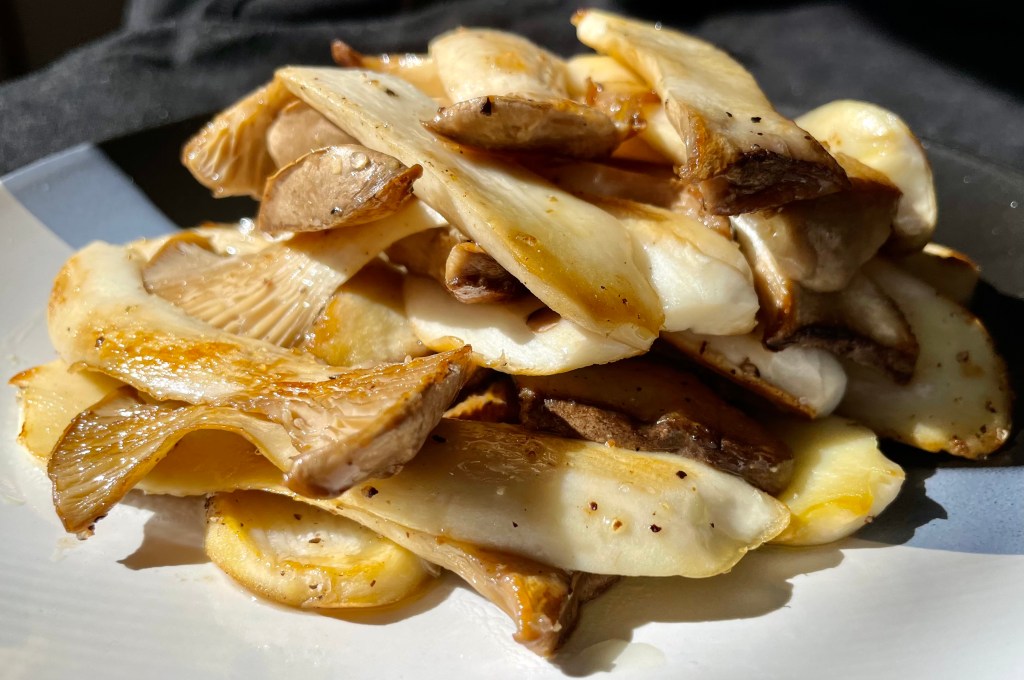
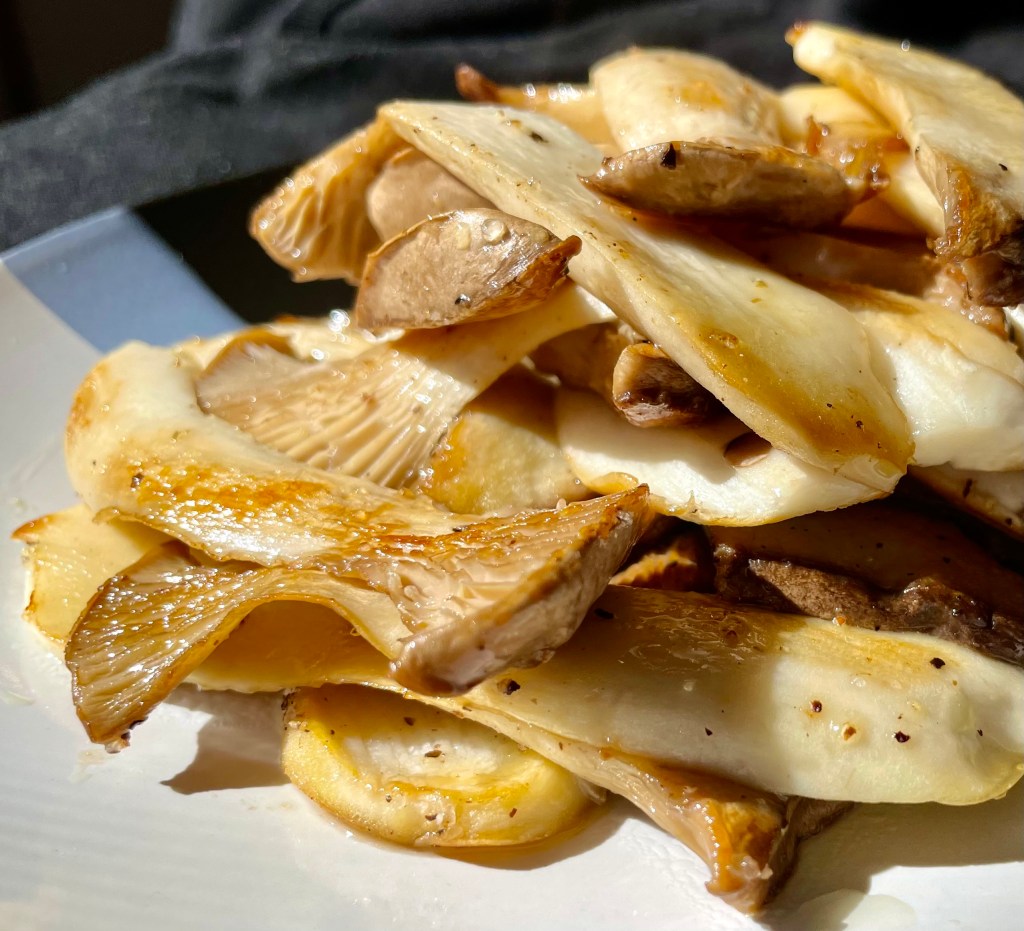
This recipe is simple, so easy, and cooks up quickly! King Oyster mushrooms are perfect for grilling due to its texture and also has a great chew. It makes a super quick appetizer, side dish or a snack. There’s not much to this recipe other than slicing the mushrooms and grilling or pan-frying with some salt and pepper. Done!

You can make as much or as little as your want. The mushrooms shrink a little when you cook them so keep that in mind. I always double the amount I plan to serve because I snack on them as I wait for the next batch to cook because they’re so damn delicious.

Anyways, without further ado, here’s the recipe! If you have any comments or suggestions, I’d love to hear from you in the comment section! You can follow me on instagram, youtube and facebook to see all the recipes I post!

Happy cooking!

Ingredients you’ll need:

  • Olive oil
  • King oyster mushrooms, sliced lengthwise to 1.5cm thickness (in any amount you want)
  • Salt & pepper

Directions:

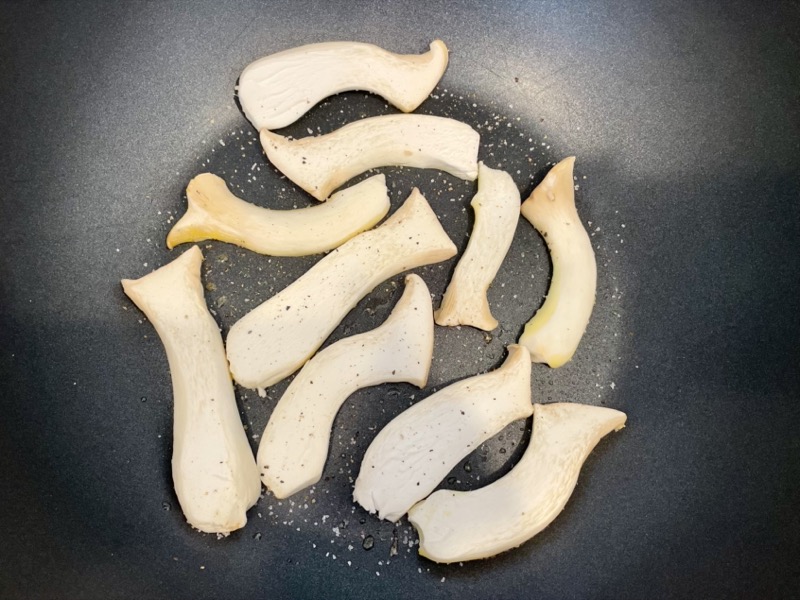
In a large skillet or grill top on MED-HIGH heat, add a small drizzle of olive oil. Make sure the pan is very hot. Add the sliced king oyster mushrooms to the pan in a single layer (you may have to do this in multiple batches if you have a lot of mushrooms). Sprinkle salt and pepper over the top. Cook each side for 1-2 minutes until slightly golden brown. Remove from pan and repeat with the remaining mushrooms, adding in another small drizzle of olive oil each time. Serve immediately.

Summarized Recipe:

Grilled King Oyster Mushrooms

Date Published: Sept 5th, 2022 | Last Updated: Sept 5th, 2022
Author: Abby |Category: easy, <15mins, appetizer, asian, sides, healthy, low-cal, snacks
Serves: depends on how much you make | Prep time: 5 mins | Cook time: 5 mins per batch

Ingredients:

  • Olive oil
  • King oyster mushrooms, sliced lengthwise to 1.5cm thickness (in any amount you want)
  • Salt & pepper

Directions:

  1. In a large skillet or grill top on MED-HIGH heat, add a small drizzle of olive oil. Make sure the pan is very hot. Add the sliced king oyster mushrooms to the pan in a single layer (you may have to do this in multiple batches if you have a lot of mushrooms). Sprinkle salt and pepper over the top. Cook each side for 1-2 minutes until slightly golden brown. Remove from pan and repeat with the remaining mushrooms, adding in another small drizzle of olive oil each time. Serve immediately.

Corn Potage (Creamy Japanese Sweet Corn Soup)


Date Published: Aug 16th, 2022 | Last Updated: Oct 16th, 2023
Author: Abby |Category: asian, soup, easy, healthy, low-cal, mains, soups, vegetarian
Serves: 4 (as an appetizer) | Prep time: 20 mins | Cook time: 45 mins

Jump to recipe |

*Updated Oct 16th, 2023: changed ingredients slightly to make a creamier corn soup.

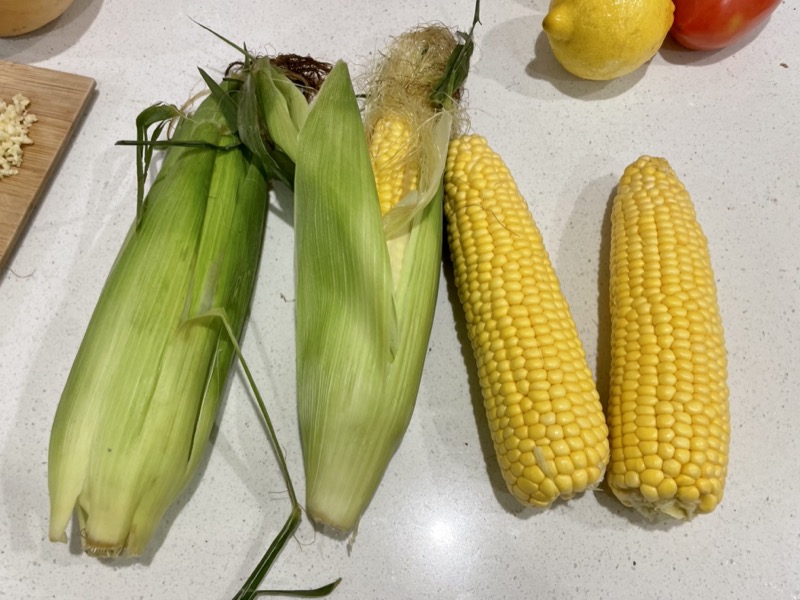
I LOVE corn. I could eat corn on the cob all day everyday, especially when roasted and dipped in butter 🤤. In fact, when we were working in Tasmania there was this wonderful sweet corn stall at the weekly Saturday farmer’s market that had the BEST, juiciest, and sweetest corn. We’d buy at least 4 every week and I’d often just have corn for dinner sprinkled with some chicken salt. Mmmmm. I think it always amazes Toby on how much corn I can eat in one sitting 😅. So it’s no surprise that corn soups and corn chowders are one of my weaknesses.

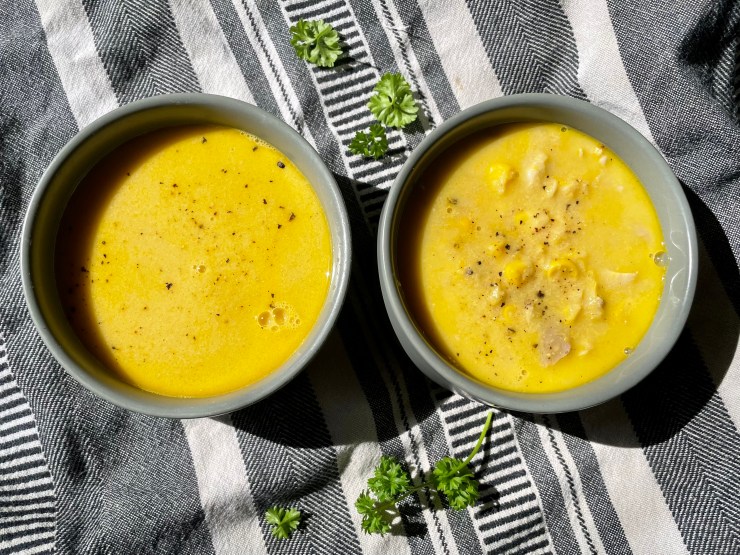
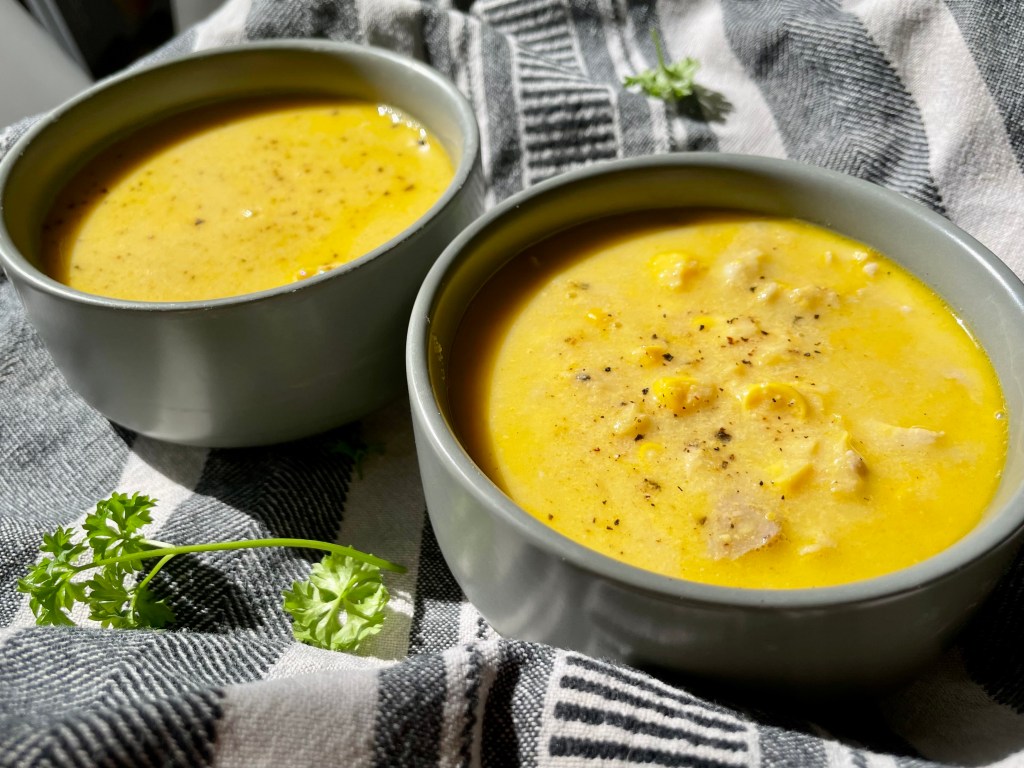
This soup is sweet, creamy, and FULL of corn flavour! It’s delicious and perfectly warming to have on a cold winter’s day.

What is Corn Potage?

Corn Potage is a French-inspired sweet corn soup popular in Japan. It’s so popular that you can find corn potage-flavoured junk food and instant versions in Japanese convenience stores!

This soup is easy and uses simple ingredients to bring out the sweet flavours of the corn. It’s made with onion, garlic, milk/cream, stock/water, and of course sweet corn. There are some purist recipes that only use corn and milk in the recipe to keep the flavours of the corn undiluted. Most versions of this soup is served silky smooth by straining it through a fine sieve, but I prefer a soup with some filling and bite so I leave in all the fibres and reserve some of the corn and onion before blending.

No sugar required!

The secret to this soup sweet without any added sugar is to boil the corn cobs in the chicken stock – yes, the cobs! Don’t be so quick throw them away after cutting off the kernels. The cobs have plenty of flavour and brings out the sweetness when simmered in the stock.

Anyways, without further ado, here’s the recipe! If you have any comments or suggestions, I’d love to hear from you in the comment section! You can follow me on instagram, youtube and facebook to see all the recipes I post!

Happy cooking!

Ingredients you’ll need:

  • 4 ears of sweet corn, de-husked
  • 1 Tbsp olive oil
  • 1/2 tsp sweet paprika
  • 2 Tbsps unsalted butter
  • 1 clove garlic, minced
  • 1 small onion, diced
  • 3 cups chicken stock or water
  • 1/2 cup thickened cream (optional)
  • Salt & pepper to taste
  • Optional add-ins:
    • Shredded cooked chicken

Directions:

Preheat oven to 180˚C.

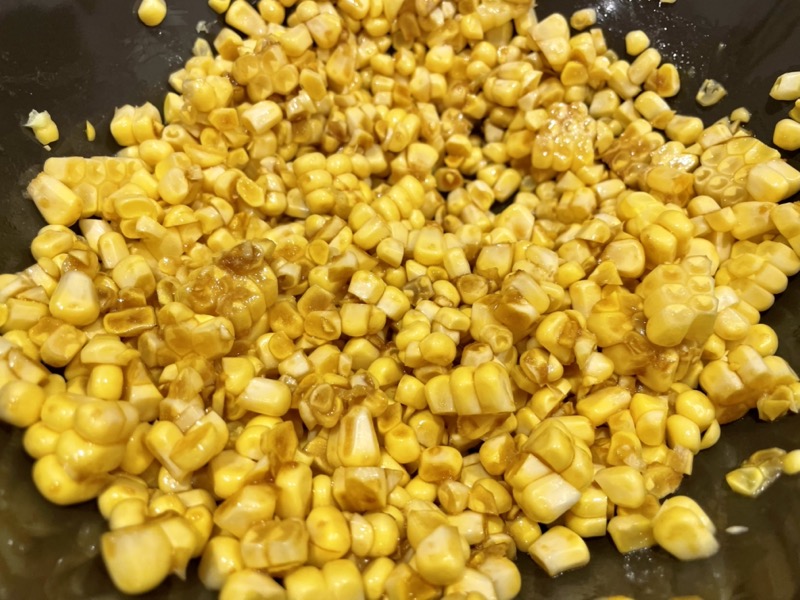
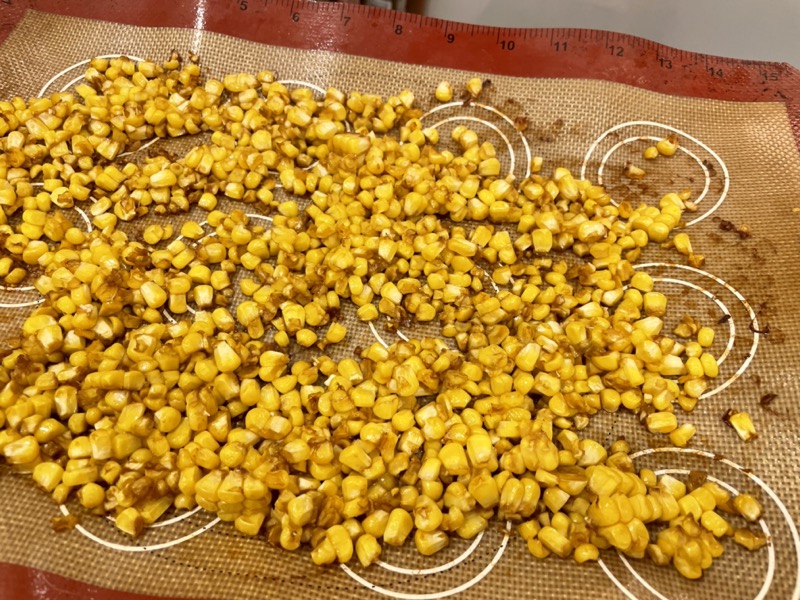
Cut the corn kernels off the cob and put the kernels in a bowl, do not discard the cobs, set aside. Mix the olive oil and paprika into the corn kernels and spread on a lined baking sheet. Bake in the preheated oven for 20mins, turning tossing once halfway through. Once the corn kernels are finished baking, set aside.

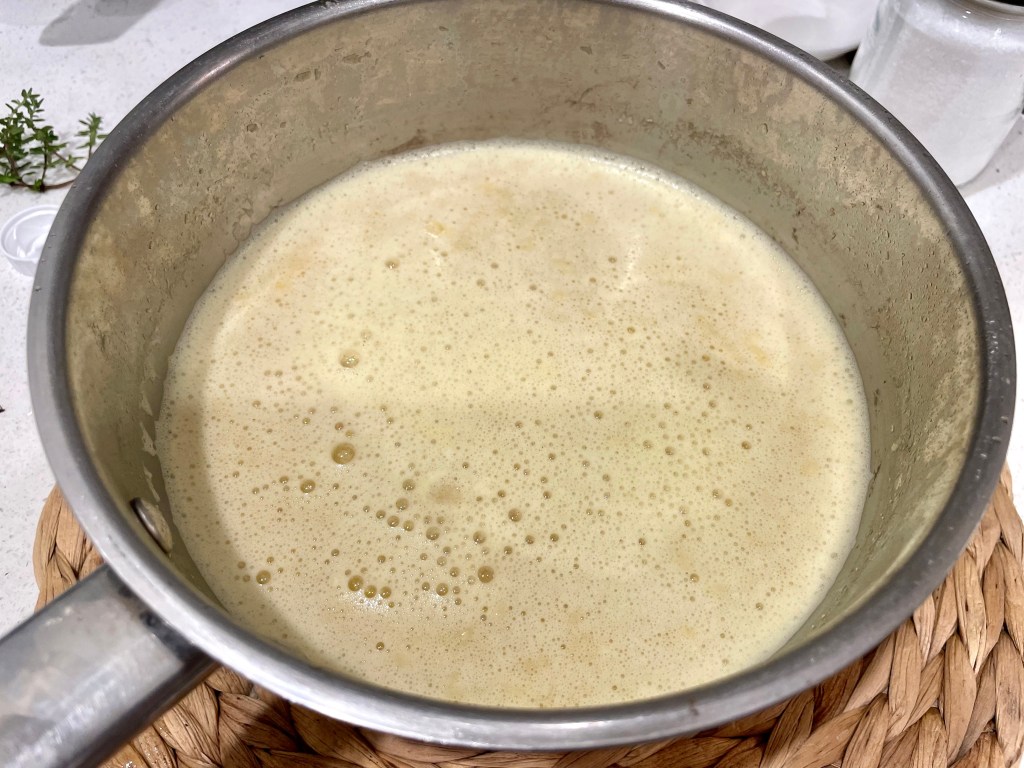
In a medium sized pot on MED-HIGH heat, melt the butter and sauté the garlic and onion for a few minutes until the onion softens and turns translucent. Add in the chicken stock, baked corn kernels, and break up the de-kernelled cobs from step one into 3 pieces and add it into the pot as well. Bring the soup to a boil and let it simmer with the lid on for 20 mins.

After 20 mins, remove the corn cobs from the soup and discard. Scoop out 1 cup of the kernels and onions and set aside. Use a stick blender and blend the soup until smooth. (If you prefer a smoother soup, you can blend the soup whole without taking anything out).

Optional step: If you want a smoother soup, strain the soup through a fine sieve to remove the small fibrous bits of corn and return the soup back to the pot. Discard anything that has filtered out.

Add in the thickened cream and the 1 cup of kernels and onions to the pot that was removed in step 4. Bring the soup back to a boil and simmer until desired consistency. The longer you simmer it, the thicker the soup will be. Salt and pepper to taste. If you’re adding in shredded chicken, add it in now and stir until warmed. Done!

Summarized Recipe:

Corn Potage (Creamy Japanese Sweet Corn Soup)

Date Published: Aug 16th, 2022 | Last Updated: Oct 16th, 2023
Author: Abby |Category: asian, soup, easy, healthy, low-cal, mains, soups, vegetarian
Serves: 4 (as an appetizer) | Prep time: 20 mins | Cook time: 45 mins

Ingredients:

  • 4 ears of sweet corn, de-husked
  • 1 Tbsp olive oil
  • 1/4 tsp paprika
  • 2 Tbsps unsalted butter
  • 1 clove garlic, minced
  • 1 small onion, diced
  • 3 cups chicken stock or water
  • 1/2 cup thickened cream (optional)
  • Salt & pepper to taste
  • Optional add-ins:
    • Shredded cooked chicken

Directions:

  1. Preheat oven to 180˚C.
  2. Cut the corn kernels off the cob and put the kernels in a bowl, do not discard the cobs, set aside. Mix the olive oil and paprika into the corn kernels and spread on a lined baking sheet. Bake in the preheated oven for 20mins, turning tossing once halfway through. Once the corn kernels are finished baking, set aside.
  3. In a medium sized pot on MED-HIGH heat, melt the butter and sauté the garlic and onion for a few minutes until the onion softens and turns translucent. Add in the chicken stock, baked corn kernels, and break up the de-kernelled cobs from step one into 3 pieces and add it into the pot as well. Bring the soup to a boil and let it simmer with the lid on for 20 mins.
  4. After 20 mins, remove the corn cobs from the soup and discard. Scoop out 1 cup of the kernels and onions and set aside. Use a stick blender and blend the soup until smooth. (If you prefer a smoother soup, you can blend the soup whole without taking anything out).
  5. Optional step: If you want a smoother soup, strain the soup through a fine sieve to remove the small fibrous bits of corn and return the soup back to the pot. Discard anything that has filtered out.
  6. Add in the thickened cream and the 1 cup of kernels and onions to the pot that was removed in step 4. Bring the soup back to a boil and simmer until desired consistency. The longer you simmer it, the thicker the soup will be. Salt and pepper to taste. If you’re adding in shredded chicken, add it in now and stir until warmed. Done!

Unintentionally Amazing Soft Tea Eggs (茶葉蛋)


Date Published: Aug 8th, 2022 | Last Updated: Aug 8th, 2022
Author: Abby |Category: Asian, sides, snack, appetizers, healthy, low cal
Serves: 8 eggs | Prep time: 30 mins | Cook time: 5-10 mins + resting overnight

Jump to recipe |
The empty bottle of the brand of sweet vinegar I used. Any sweet vinegar should be fine.

I’ve had a bottle of Chinese sweet black vinegar in the back of my pantry for the past 2 years that has gone untouched and collecting dust. I have no idea what I originally bought it for but whatever it was, I only ever used a small amount. Toby says I bought it originally because I couldn’t find regular black vinegar and tried to use this as a substitute and failed – I have no recollection of this 😅🤷🏻‍♀️. I’ve tried to look for recipes to use up this bottle over the years but I can only ever find it used in a very specific Chinese pork knuckle dish. This bottle has become an eye sore and in a desperate attempt to clean out my pantry before we hit the road again, I decided to try adding it to a marinade for tea eggs. I had very low expectations for this – I just wanted to make something somewhat edible so I’m not wasting it. The end result turned out so much better than I could have ever hoped for! It gave the egg a subtle sweetness along with the saltiness. In fact, it was so good that I ended up buying another bottle of sweet black vinegar just so I can keep making these tea eggs, which is now my favourite way to eat them.

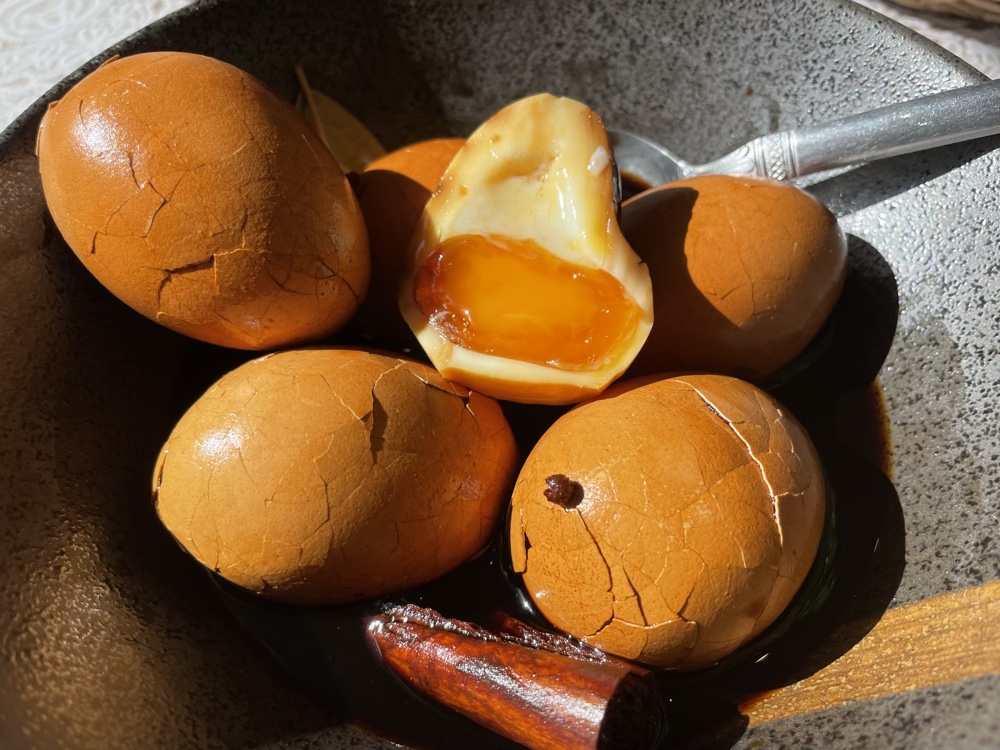
Chinese sweet black vinegar isn’t as tangy as regular vinegar. It’s more subtle and has a light sweetness with a star anise/liquorice flavour. When mixed with the rest of the marinade ingredients, it makes a slightly sweeter tea egg that’s lighter on the palate compared to the classic tea egg that’s usually only soy sauce based. Soft boiled eggs are my favourite style of eggs and perfect for this recipe. The yolk remains soft and jammy which allows some of the marinade to penetrate through giving it more flavour. Make sure you set a timer to cook them perfectly. I’ve included cooking times for medium and hardboiled eggs as well if that’s your thing.

What is a tea egg?

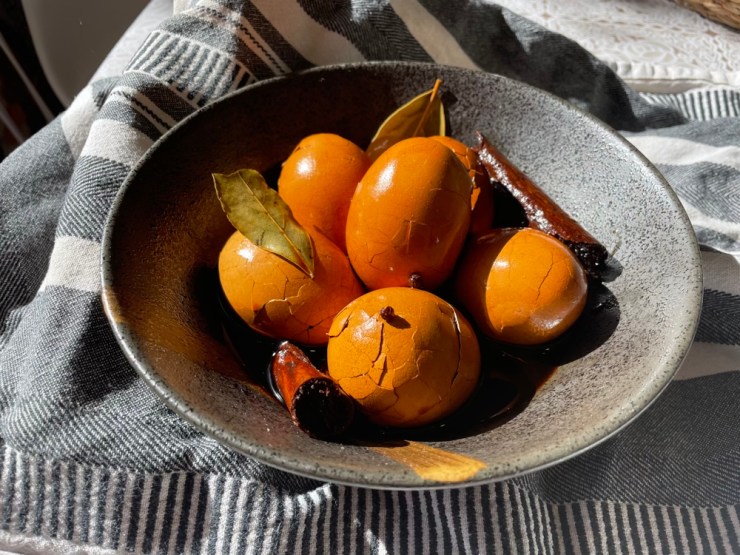
If you’re unfamiliar with tea eggs, it’s a classic Chinese side dish commonly made of hardboiled eggs marinated in a soy-sauce based concoction with black tea leaves. The eggs are cracked before marinating and as a result you get a beautiful marbled appearance on the eggs with a savoury umami flavour with a hint of tea. I remember getting a few of these in a baggie from the local 7-11 in Taiwan before hopping on a train and having these as a snack. I’ve never had them soft-boiled until I started playing around with this recipe. It’s a total game changer and I think this will be the only way I’ll be having my tea eggs from now. 😛

Tips for using up leftover marinade:

  • Sauté with garlic, cabbage, splash of shaoxing wine until the cabbage cooks down, then stir in chilli paste like lao gan ma or leftover red chilli oil wonton sauce.
  • Reuse the marinade again! Make sure you reboil the liquid and let it cool before using it again.

Anyways, without further ado, here’s the recipe! If you have any comments or suggestions, I’d love to hear from you in the comment section! You can follow me on instagram, youtube and facebook to see all the recipes I post!

Happy cooking!

Ingredients you’ll need:

  • Marinade:
    • 1/2 cup Sweet Black Vinegar
    • 1/4 cup light soy sauce
    • 2 Tbsps dark soy sauce
    • 2.5 Tbsps soy sauce
    • 2 bay leaves
    • 1 cinnamon stick
    • 1 tsp Sichuan peppercorns
    • 2 Tbsps (or 2 tea bags) extra strong black tea leaves
    • 1 cup water
  • 8 large eggs

Directions:

Simmer the marinade on low for 10 mins

Make the marinade: Mix all the ingredients of the marinade (vinegar, soy sauces, bay leaves, cinnamon stick, peppercorns, tea leaves, water) in a saucepan and heat on MEDIUM until it boils, then turn the heat down to LOW-MED and simmer for 10 minutes. Remove from heat and let it cool completely.

Make the eggs: While the marinade cools, boil a pot of water (use a pot large enough to allow all the eggs to submerge in the boiling water without crowding). Once the water boils, carefully lower the eggs into the water – be careful not to crack them. Start a timer and boil for 5 minutes and 30 seconds for soft-boiled eggs, 7 minutes for medium eggs, or 10 minutes for hard boiled eggs.

Dunk them in an ice bath or under cold running water until cooled

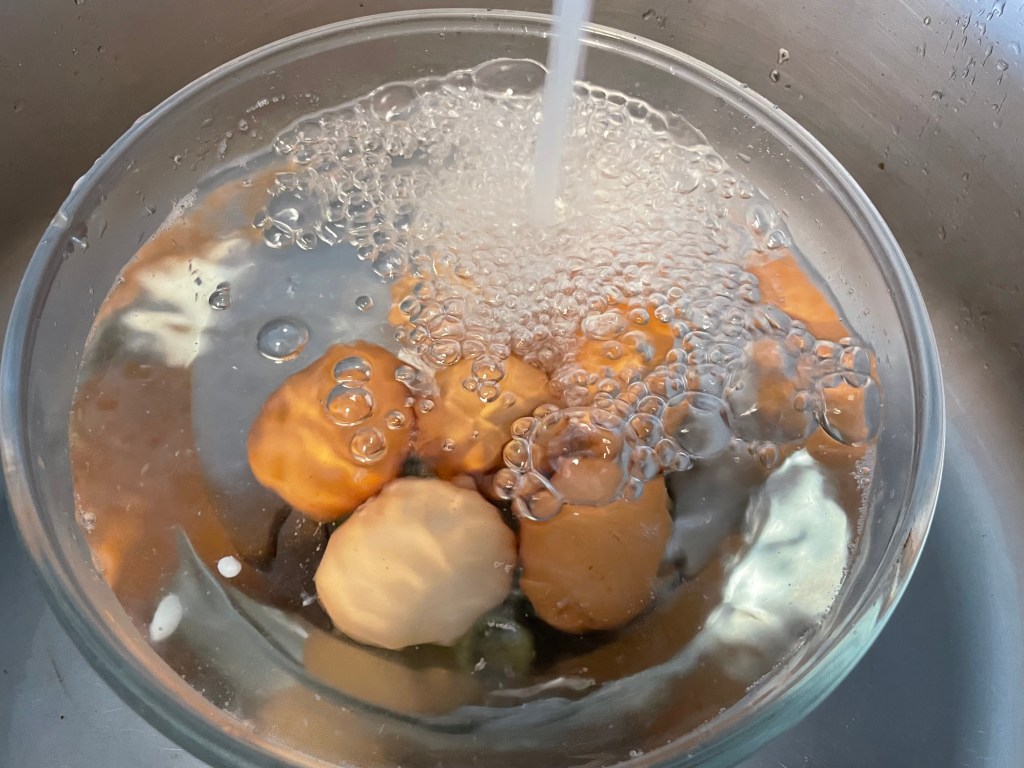
Prepare an ice bath for the eggs while they are boiling. Once the timer goes off, immediate transfer the eggs to the ice bath to cool. If you don’t have any ice, run the eggs under cold water until completely cooled.

More cracks = more marbling

Once the eggs are cooled, use the back of a spoon and gently crack the egg shells around the entirety of the egg. You want the egg shells to be cracked and broken without breaking the actual egg. This allows the marinade to get through the shell and create a marbled effect. Be careful not to hit them too hard, especially for soft-boiled eggs.

Once the marinade has fully cooled, transfer the marinade with the ingredients to a container or a large ziplock bag and add in the cracked eggs. Ensure the eggs are submerged in the marinade. Choose a container or a bag big enough to fit all the marinade and eggs. It’s better to use a deeper container than a wider one so the eggs submerge better.

Let the eggs marinate in the fridge overnight, or best for 24 hours (or longer!).

Serve the eggs either cold, room temperature, or slightly warmed. Enjoy!

Summarized Recipe:

Unintentionally Amazing Soft Tea Eggs (茶葉蛋)

Date Published: Aug 8th, 2022 | Last Updated: Aug 8th, 2022
Author: Abby |Category: Asian, sides, snack, appetizers, healthy, low cal
Serves: 8 eggs | Prep time: 30 mins | Cook time: 5-10 mins + resting overnight

Ingredients:

  • Marinade:
    • 1/2 cup Sweet Black Vinegar
    • 1/4 cup light soy sauce
    • 2 Tbsps dark soy sauce
    • 2.5 Tbsps soy sauce
    • 2 bay leaves
    • 1 cinnamon stick
    • 1 tsp Sichuan peppercorns
    • 2 Tbsps (or 2 tea bags) extra strong black tea leaves
    • 1 cup water
  • 8 large eggs

Directions:

  1. Make the marinade: Mix all the ingredients of the marinade (vinegar, soy sauces, bay leaves, cinnamon stick, peppercorns, tea leaves, water) in a saucepan and heat on MEDIUM until it boils, then turn the heat down to LOW-MED and simmer for 10 minutes. Remove from heat and let it cool completely.
  2. Make the eggs: While the marinade cools, boil a pot of water (use a pot large enough to allow all the eggs to submerge in the boiling water without crowding). Once the water boils, carefully lower the eggs into the water – be careful not to crack them. Start a timer and boil for 5 minutes and 15 seconds for soft-boiled eggs, 7 minutes for medium eggs, or 10 minutes for hard boiled eggs.
  3. Prepare an ice bath for the eggs while they are boiling. Once the timer goes off, immediate transfer the eggs to the ice bath to cool. If you don’t have any ice, run the eggs under cold water until completely cooled.
  4. Once the eggs are cooled, use the back of a spoon and gently crack the egg shells around the entirety of the egg. You want the egg shells to be cracked and broken without breaking the actual egg. This allows the marinade to get through the shell and create a marbled effect. Be careful not to hit them too hard to break the eggs inside, especially for soft-boiled eggs.
  5. Once the marinade has fully cooled, transfer the marinade with the ingredients to a container or a large ziplock bag and add in the cracked eggs. Ensure the eggs are submerged in the marinade. Choose a container or a bag big enough to fit all the marinade and eggs. It’s better to use a deeper container than a wider one so the eggs submerge better.
  6. Let the eggs marinate in the fridge overnight, or best for 24 hours (or longer!).
  7. Serve the eggs either cold, room temperature, or slightly warmed. Enjoy!

Taiwanese Style Beerhouse Clams (台式九層塔炒海瓜子)


Date Published: Feb 16th, 2022 | Last Updated: Feb 16th, 2022
Author: Abby |Category: Taiwanese, Asian, easy, mains, sides
Serves: 2-4 | Prep time: 15 mins | Cook time: 10 mins

Jump to recipe |

This was one of my all-time favourite dishes growing up in Taiwan. My brother once got mad at me when we were kids when I ate them too fast, lol. The sauce is SO good, you MUST serve it over white rice to soak up all the delicious flavours. This recipe is commonly found in the beerhouses of Taiwan or seafood shops.

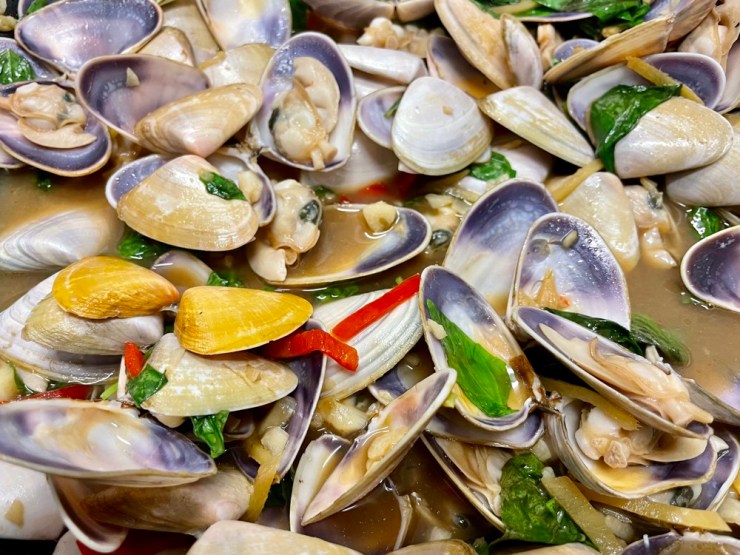
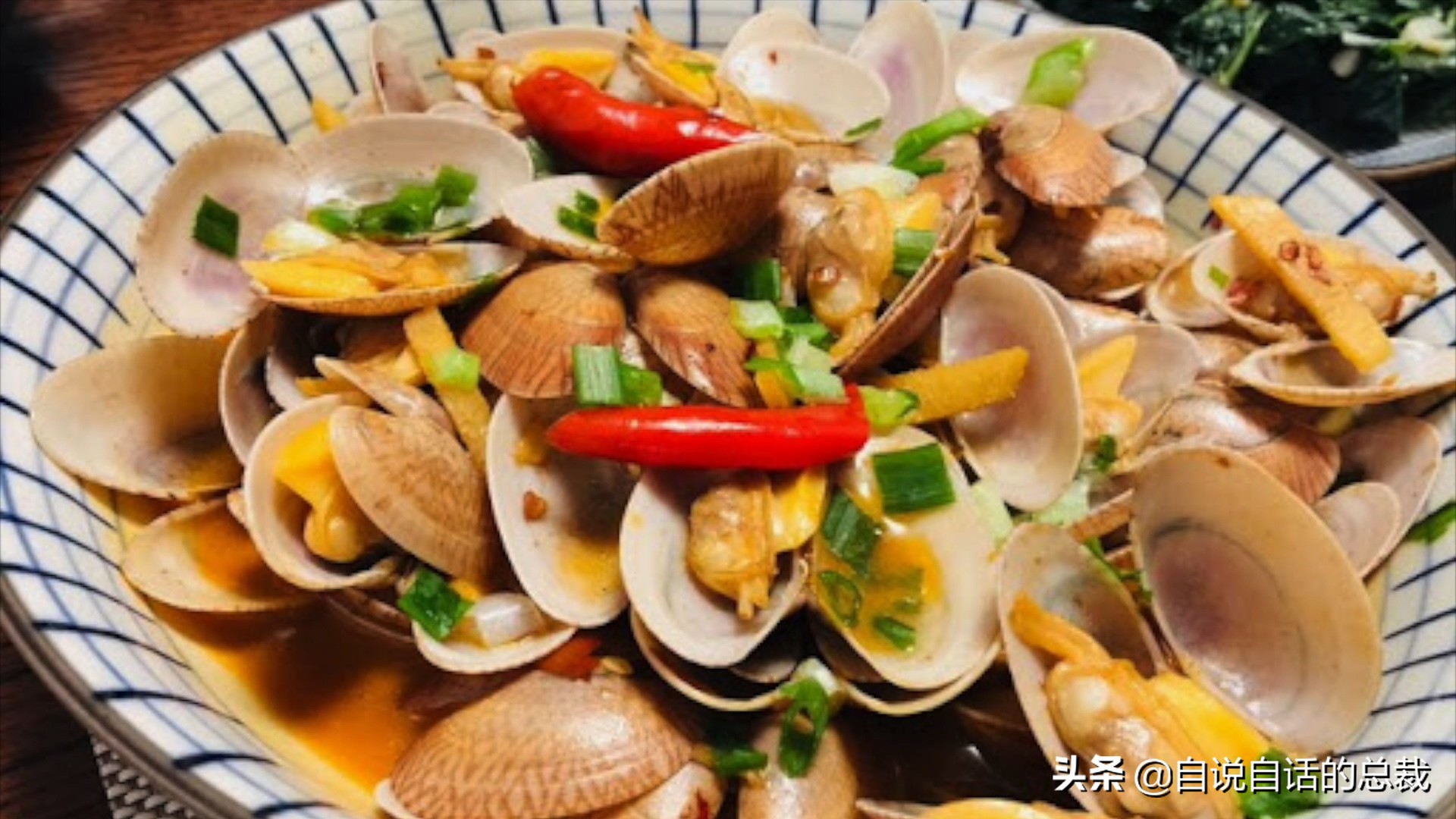
The clams that are traditionally used are called hai gua zi (海瓜子) which roughly translates to ‘ocean melon seeds’ – I think it has to do with the oval shape of them that resembles melon seeds? 🤷🏻‍♀️ They’re small oval clams with a patterned shell that are commonly found in the region. Any small species of clams can be used in this recipe as long as they’re fresh! I actually had a bit of a hard time finding fresh small clams for this recipe in Australia – even the local seafood shops didn’t have them. Surprisingly they were available at the Costco in Adelaide, SA however were a bit pricy at $20/kg for pipis (it was totally worth it though 😜).

Note the patterned shell and the oval shape of the hai gua zi –>

Image source: https://inf.news/en/nature/b6dd63ea2ba851d1cda05f356fb35732.html

What is a Taiwanese Beerhouse (啤酒屋)?

A Taiwanese beerhouse is a place where locals like to go afterwork to unwind, drink beer and eat hot stir-fry dishes. They’re not breweries, they’re just a place to drink and eat. If you’re a foreign visitor to Taiwan, chances are your host wouldn’t bring you to one of these beerhouses. They’re usually noisy, loud with drunk people, and no doubt lots of cigarette smoke. It’s frequented by people of lower socioeconomic classes and call girls as well as the average working man with their coworkers. It’s kind of like taking a guest to a rowdy grungy bar – it’s not for everyone, but the food is usually damn good. These beerhouses are becoming a dying culture and it’s getting harder to find them in Taiwan – possibly due to an attempt to elevate the social status of the area or maybe from the years of economic downturn and less availability of disposable income, or maybe it’s from Westernization 🤷🏻‍♀️. I remember my dad taking us out afterwork when I was a kid and getting out of the cab to see a long street of back to back beerhouses lit up with flashing neon lights (although in hindsight, beerhouses definitely aren’t the best place to bring children 😅). The last time I visited a couple years ago there were only two left on the street – the food was still just as good though!

What is beerhouse-style food?

Taiwanese beerhouses usually serve food that is made quickly over a high heat that packs a ton of flavour. These dishes are commonly very salty and/or spicy which goes great with a bowl of rice and a bottle of cold beer. Common dishes you’ll find are “three-cup” based recipes, which involve the triple threat for a lip-smacking combination: soy sauce, sesame oil, and rice wine. It is often sautéed with ginger, garlic, and Thai basil – the basis of classic Taiwanese beerhouse flavours. This clam recipe doesn’t diverge far from the beerhouse basics.

Thai Basil vs Italian Basil?

There are no substitutions for basil in this recipe. You MUST use Thai basil which is a lot stronger in flavour. Basil is a key component of this dish and without a good strong basil, the flavours just won’t be right. You’d have to probably at least double the amount of Italian basil to get similar results.

Anyways, without further ado, here’s the recipe! If you have any comments or suggestions, I’d love to hear from you in the comment section! You can follow me on instagram, youtube and facebook to see all the recipes I post!

Happy cooking!

Ingredients you’ll need:

  • 1kg fresh small clams (ie. Pipis)
  • 4 cloves garlic, thinly sliced
  • 4cm ginger, peeled and thinly sliced into matchsticks
  • 2-3 long Thai red chilis, sliced (remove the seeds if you want it less spicy)
  • Sauce:
    • 2 Tbsps Chinese cooking wine (ie. Shaoxing)
    • 1 Tbsp of black vinegar
    • 2 Tbsps oyster sauce
    • 3 tsps white granulated sugar
    • 1/4 tsp white pepper
  • 1 LARGE handful (~3 cups) of Thai basil leaves
  • 1 Tbsp sesame oil for drizzling

Directions:

*This recipe cooks QUICKLY on HIGH HEAT! Make sure all your ingredients are chopped, prepped and ready to go before you start cooking.

Rinse the clams thoroughly under running water. Optional: soak in salty water 15mins before.

Prepare the sauce by mixing all the sauce ingredients in a bowl: cooking wine, black vinegar, oyster sauce, sugar, and white pepper. Set aside.

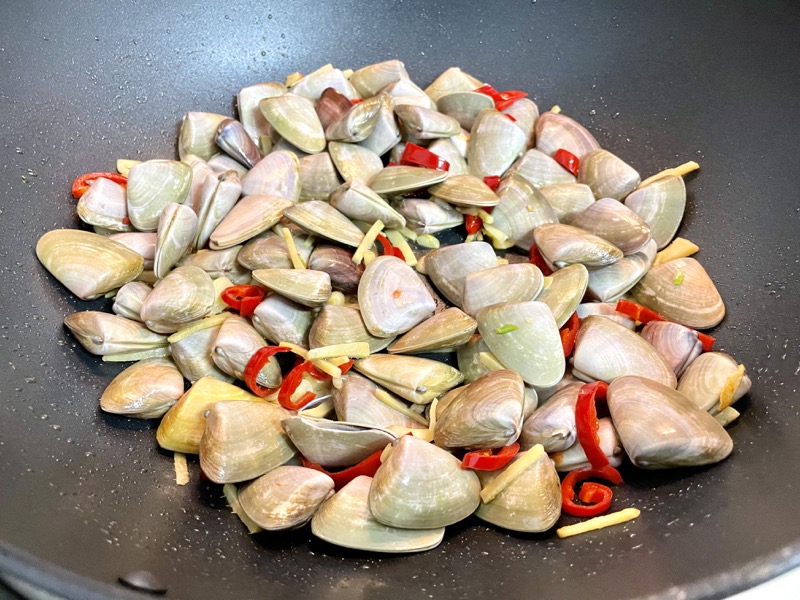
In a wok on HIGH heat, add a drizzle of oil and sauté the garlic, ginger, and chilli for 2-3 mins until fragrant.

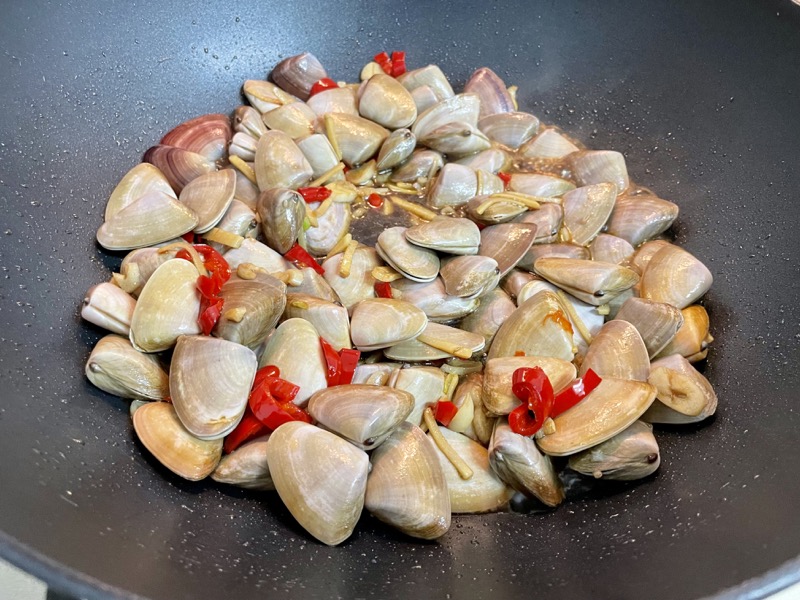
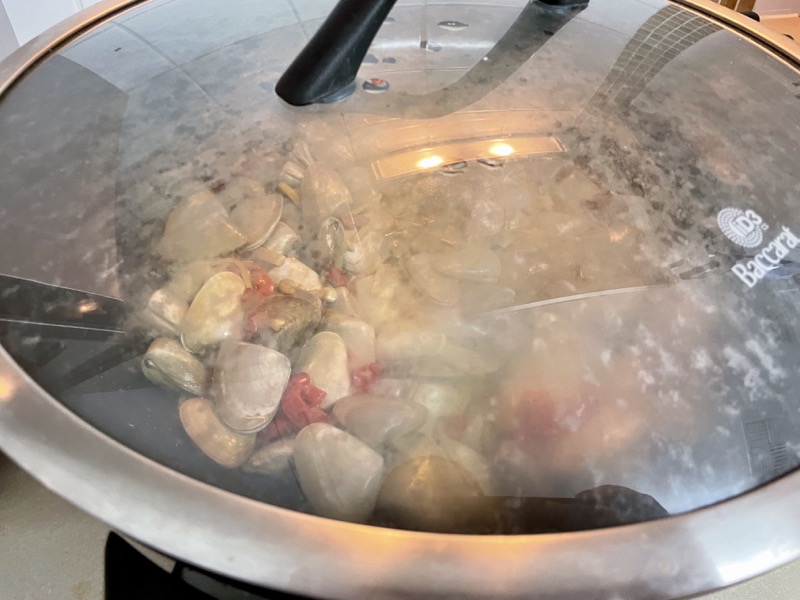
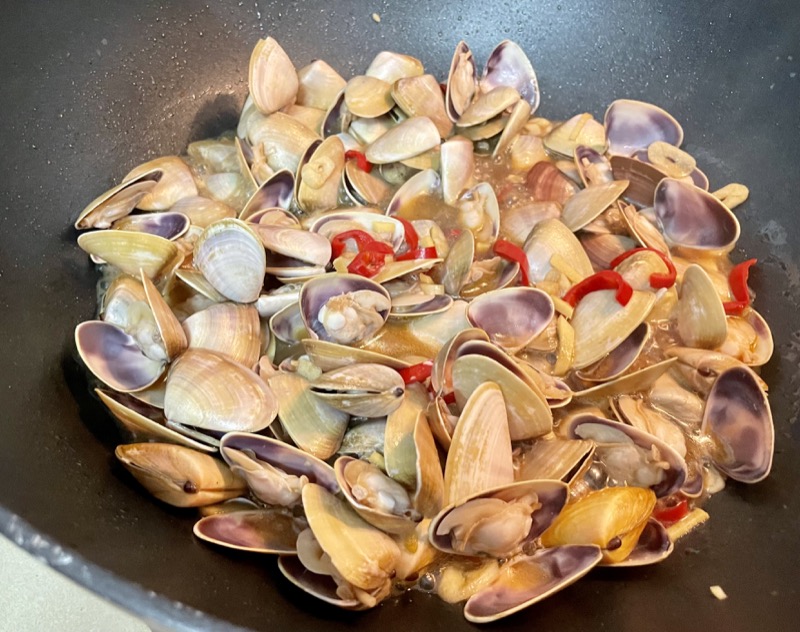
Add the clams to the pot and sauté for 30 seconds then drizzle in the sauce ingredients: cooking wine, black vinegar, oyster sauce, and white pepper. Mix around and let the sauce simmer for 2-3 minutes then put the lid on. Let the clams steam for 3-4 minutes or until they all open up. Careful not to steam them for too long or else the clams will get tough and chewy.

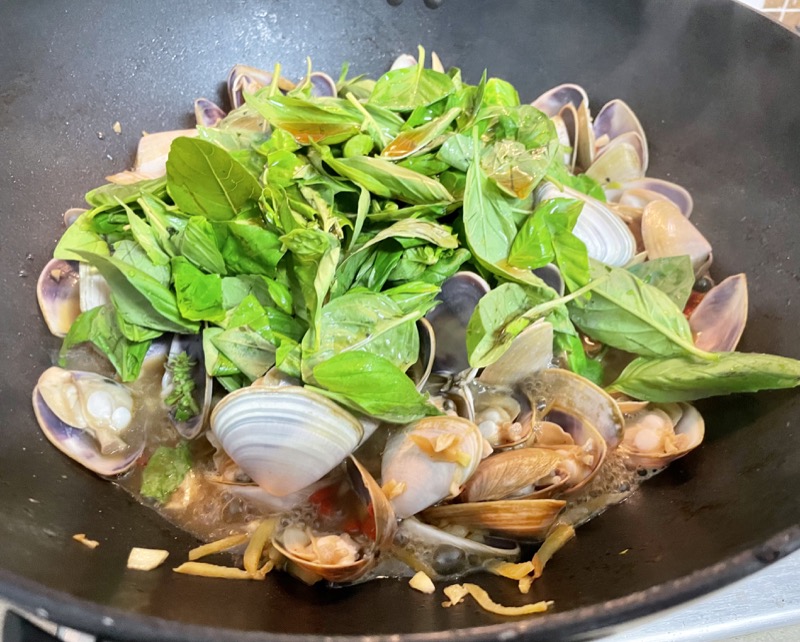
Once the clams have opened up, add in the basil leaves and drizzle the sesame oil over the clams. Sauté for another minute and turn off the heat. Serve! Best served over white rice.

Summarized Recipe:

Taiwanese Style Beerhouse Clams (台式九層塔炒海瓜子)

Date Published: Feb 16th, 2022 | Last Updated: Feb 16th, 2022
Author: Abby |Category: Taiwanese, Asian, easy, mains, sides
Serves: 2-4 | Prep time: 15 mins | Cook time: 10 mins

Ingredients:

  • 1kg fresh small clams (ie. Pipis)
  • 4 cloves garlic, thinly sliced
  • 4cm ginger, peeled and thinly sliced into matchsticks
  • 2-3 long Thai red chilis, sliced (remove the seeds if you want it less spicy)
  • Sauce:
    • 2 Tbsps Chinese cooking wine (ie. Shaoxing)
    • 1 Tbsp of black vinegar
    • 2 Tbsps oyster sauce
    • 3 tsps white granulated sugar
    • 1/4 tsp white pepper
  • 1 LARGE handful (~3 cups) of Thai basil leaves
  • 1 Tbsp sesame oil for drizzling

Directions:

*This recipe cooks QUICKLY on HIGH HEAT! Make sure all your ingredients are chopped, prepped and ready to go before you start cooking.

  1. Rinse the clams thoroughly under running water. Optional: soak in salty water 15mins before.
  2. Prepare the sauce by mixing all the sauce ingredients in a bowl: cooking wine, black vinegar, oyster sauce, sugar, and white pepper. Set aside.
  3. In a wok on HIGH heat, add a drizzle of oil and sauté the garlic, ginger, and chilli for 2-3 mins until fragrant.
  4. Add the clams to the pot and sauté for 30 seconds then drizzle in the sauce ingredients: cooking wine, black vinegar, oyster sauce, and white pepper. Mix around and let the sauce simmer for 2-3 minutes then put the lid on. Let the clams steam for 3-4 minutes or until they all open up. Careful not to steam them for too long or else the clams will get tough and chewy.
  5. Once the clams have opened up, add in the basil leaves and drizzle the sesame oil over the clams. Sauté for another minute and turn off the heat. Serve! Best served over white rice.

Healthy Fudgy Red Bean Brownies


Date Published: Feb 16th, 2022 | Last Updated: Feb 16th, 2022
Author: Abby |Category: dessert, healthy, low-cal, Asian, easy
Serves: 6-8 | Prep time: 1hr | Cook time: 30 mins

Jump to recipe |

These guilt-free brownies are rich, dense, flourless, butter-free, and sugar-free. They’re naturally sweetened with dates and are a healthy alternative to regular brownies. Best of all, they’re so easy to make and there aren’t many ingredients involved. I will admit that I’d still choose a regular buttery brownie over this healthy alternative, however these are still pretty damn good and you can eat them guilt-free without getting a sugar crash. Toby liked them so much that he ate half a batch in one sitting 😅! The original recipe is from Hey Nutrition Lady which has a ton of nutrition information on this recipe – highly recommend checking it out.

What are Red Beans?

The term “red bean” can be synonymous with different types of beans that are red in colour. In Western culture, red bean commonly refers to ‘kidney beans‘ which have an earthy plain taste but absorbs flavours easily so they’re commonly used in stews or sauces. In Eastern Asian culture, red bean is the ‘adzuki bean‘ which is much smaller than the kidney bean and has a sweet flavour. This recipe uses adzuki beans. You’ll commonly see red/adzuki bean paste baked goods at Chinese bakeries. At OG Chinese restaurants they often serve red bean soup as dessert. Beans are starchy by nature which is the perfect substitute for flour in this recipe.

Anyways, without further ado, here’s the recipe! If you have any comments or suggestions, I’d love to hear from you in the comment section! You can follow me on instagram, youtube and facebook to see all the recipes I post!

Happy cooking!

Ingredients you’ll need:

  • 1.5 cups adzuki beans
  • 1.5 cups (200g) Medjool dates
  • 2 tsps vanilla extract
  • 2/3 cup (50g) unsweetened cocoa powder
  • 1/2 cup coconut oil
  • 4 large eggs
  • 180g milk or dark chocolate, chopped

Directions:

Prepare the beans: Soak the adzuki beans overnight (the longer the better to soften the beans). Once soaked, boil the beans in a pot of water for 1 hour, then drain and set aside. (Make sure the water is at least 2-3cm above the beans since they will expand and absorb water as they cook).

Preheat the oven to 180˚C (350˚F). Line a brownie pan (8″x11″ or 20cm x 30cm) with baking paper.

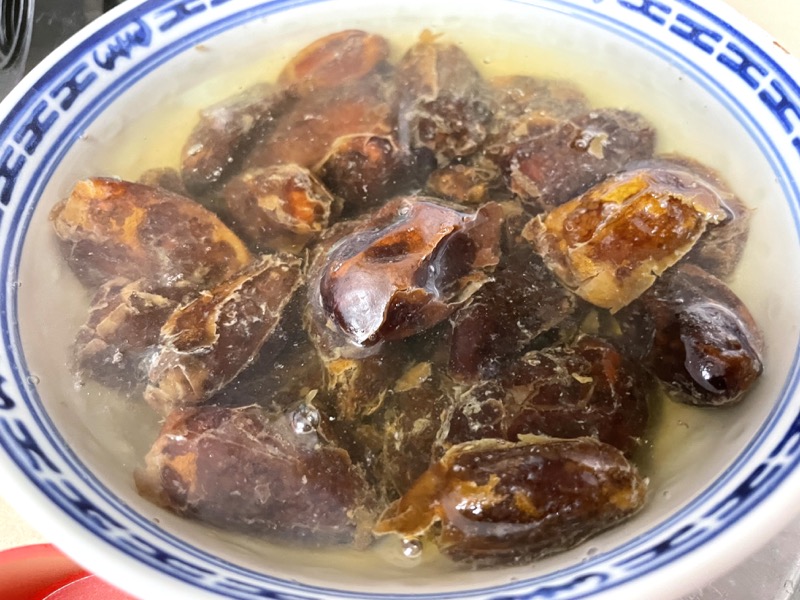
Prepare the dates: soak the dates in boiling hot water for 10mins, then drain and set aside.

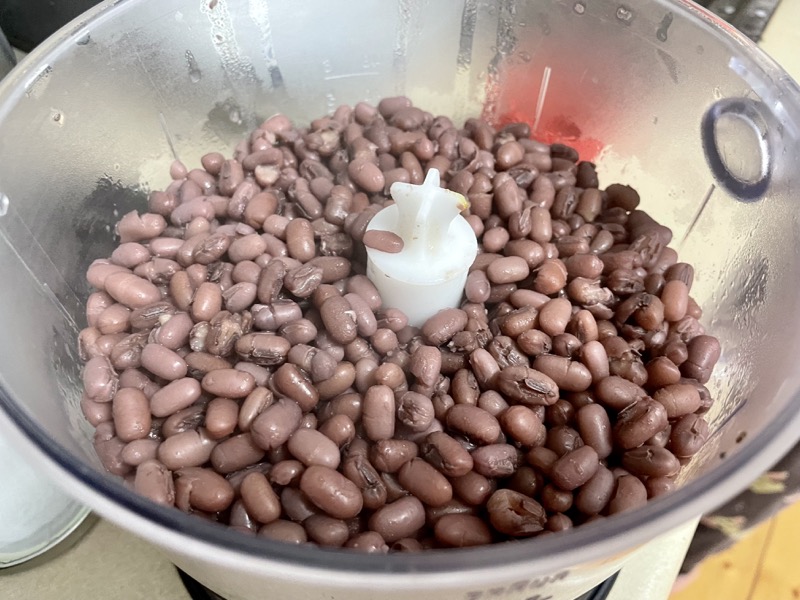
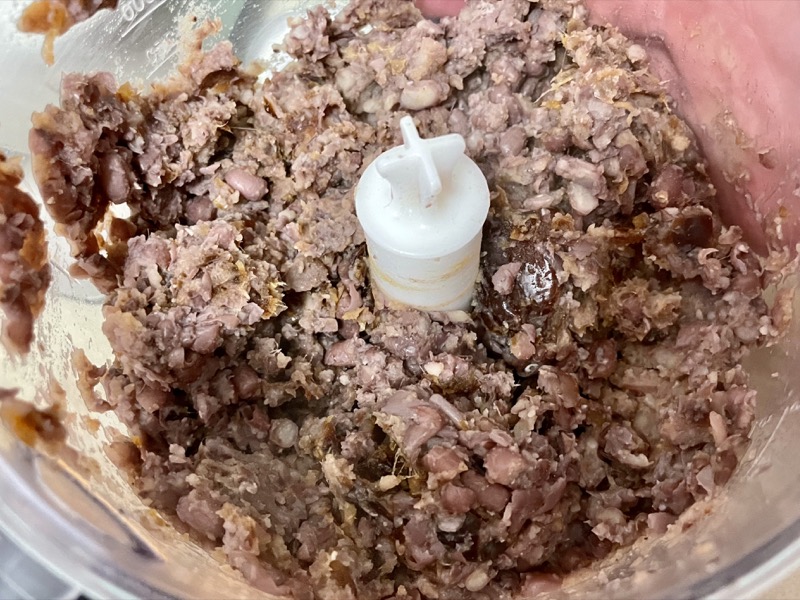
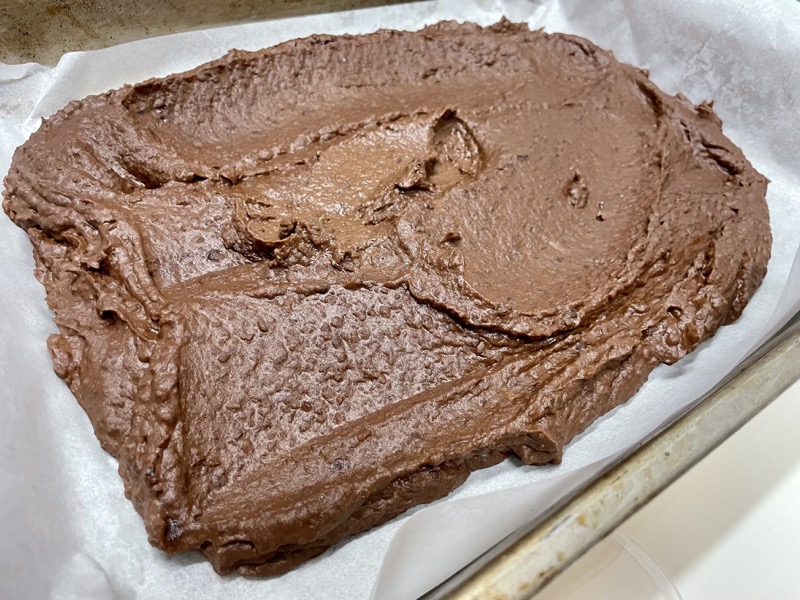
In a food processor, add in the cooked adzuki beans and the dates. Blend until you get a chunky thick paste (see photo). Next, add in the vanilla extract, cocoa powder, coconut oil, and eggs. Continue blending until you get a smooth paste.

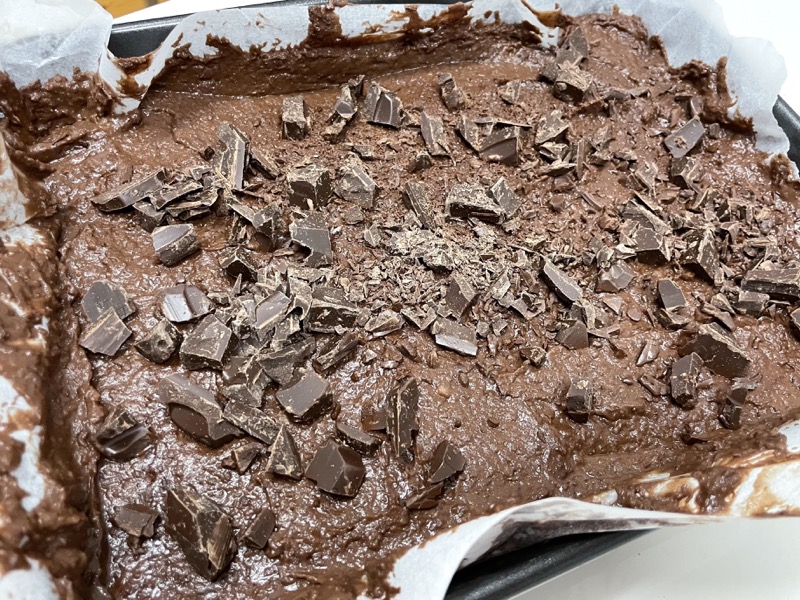
Stir in half of the chocolate into the batter and pour the batter in the prepared brownie pan. Sprinkle the rest of the chocolate over the top. Bake for 25-30mins until the edges are set and a toothpick comes out clean. Let it cool for 10mins before slicing. Enjoy!

Ta-da!

Summarized Recipe:

Healthy Fudgy Red Bean Brownies

Date Published: Feb 16th, 2022 | Last Updated: Feb 16th, 2022
Author: Abby |Category: dessert, healthy, low-cal, Asian, easy
Serves: 6-8 | Prep time: 1hr | Cook time: 30 mins

Ingredients:

  • 1.5 cups adzuki beans
  • 1.5 cups (200g) Medjool dates
  • 2 tsps vanilla extract
  • 2/3 cup (50g) unsweetened cocoa powder
  • 1/2 cup coconut oil
  • 4 large eggs
  • 180g milk or dark chocolate, chopped

Directions:

  1. Prepare the beans: Soak the adzuki beans overnight (the longer the better to soften the beans). Once soaked, boil the beans in a pot of water for 1 hour, then drain and set aside. (Make sure the water is at least 2-3cm above the beans since they will expand and absorb water as they cook).
  2. Preheat the oven to 180˚C (350˚F). Line a brownie pan (8″x11″ or 20cm x 30cm) with baking paper.
  3. Prepare the dates: soak the dates in boiling hot water for 10mins, then drain and set aside.
  4. In a food processor, add in the cooked adzuki beans and the dates. Blend until you get a chunky thick paste (see photo). Next, add in the vanilla extract, cocoa powder, coconut oil, and eggs. Continue blending until you get a smooth paste.
  5. Stir in half of the chocolate into the batter and pour the batter in the prepared brownie pan. Sprinkle the rest of the chocolate over the top. Bake for 25-30mins until the edges are set and a toothpick comes out clean. Let it cool for 10mins before slicing. Enjoy!

Lamb and Onion Dumplings


Date Published: Dec 24th, 2021 | Last Updated: Dec 24th, 2021
Author: Abby |Category: Asian, easy, < 30mins, mains
Serves: 100 dumplings | Prep time: 15 mins | Cook time: 15 mins

Jump to recipe |

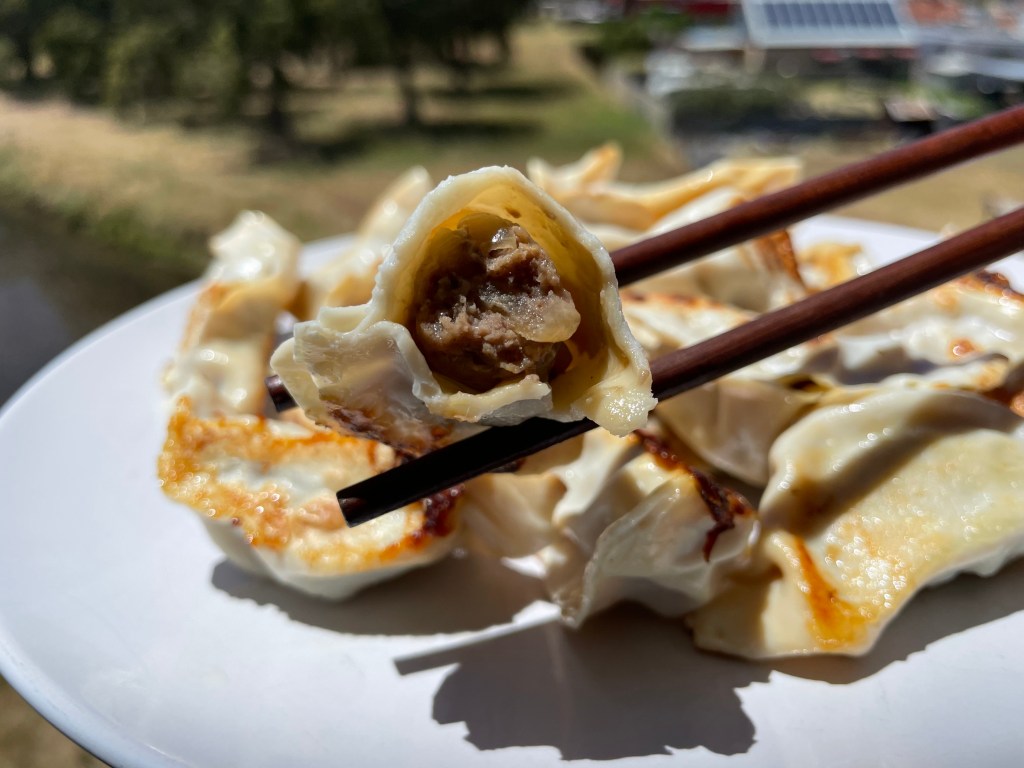
Every time Toby and I travel, we’re always looking for the best local eats with the highest reviews. We might be stingy on hotel rooms, but we never skimp on good food. When we were exploring Alice Springs, a local dumpling house came up on our radar called Confucius Palace Dumpling Restaurant. I always question the authenticity of Chinese restaurants especially when they’re in a rural setting with very few Asian people around and even more skeptical when most of the reviews were posted by non-Asian people. I didn’t hold my breath because I’ve been let down too many times, but we were both pleasantly surprised! We ordered a few different types of dumplings, but our favourite was the lamb and onion (their chicken and corn wasn’t bad either). I had never had lamb in a dumpling until now and it was delicious! It went straight to my list of things to recreate when I got home and here it is! This recipe took a little trial and error, but I think I’ve got it pretty close to what it was in the restaurant. The filling is surprisingly basic and contains minimal ingredients. Most dumpling fillings include a lot of chopping, but not this one! You can whip up the filling in as quick as 15 mins and the rest is just wrapping. If you’re ever in Alice Springs, I’d highly recommend trying out that dumpling place!

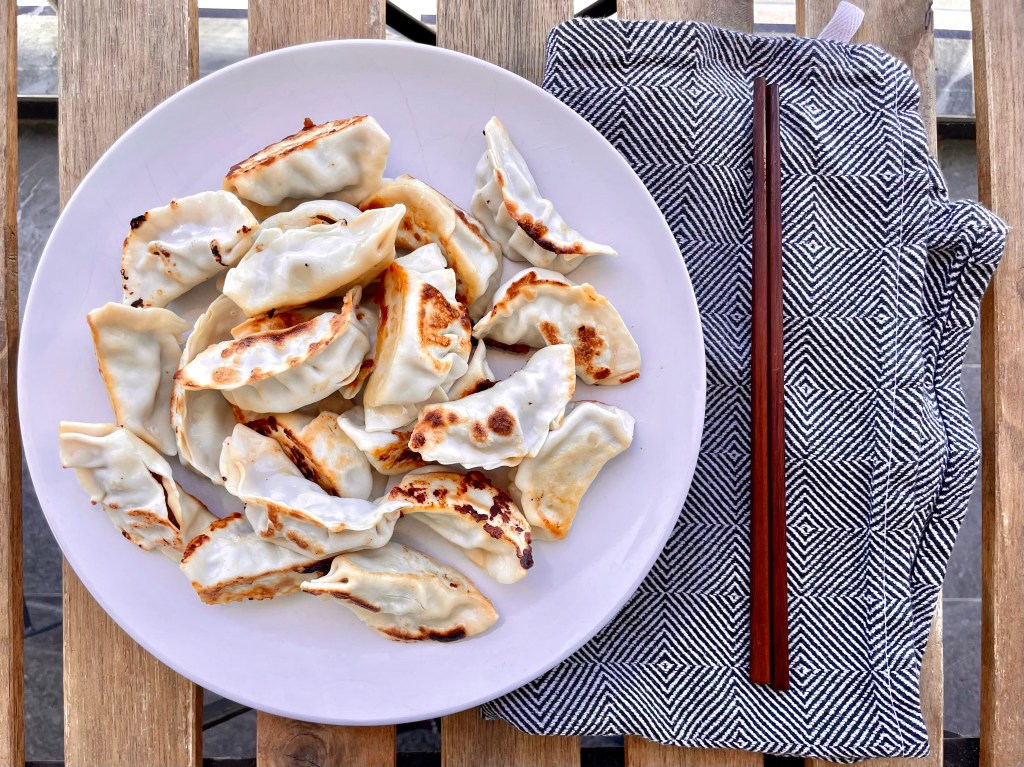
You can pan-fry them or boil them (scroll to the end to see instructions on how to do either). I find boiling is best with this type of filling. They’re best served hot and eaten straight away. They’re not quite as good when microwaved.

Anyways, without further ado, here’s the recipe! If you have any comments or suggestions, I’d love to hear from you in the comment section! You can follow me on instagram, youtube and facebook to see all the recipes I post!

Happy cooking!

Ingredients you’ll need:

  • Filling:
    • 2.5 cups onions diced (1 large or two small)
    • 1kg lamb mince
    • 6 Tbsps soy sauce
    • 3 tsps white pepper
    • 1/2 cup shaoxing wine (Chinese cooking wine)
  • Dumpling wrappers (2 packs = ~100 wrappers)

Directions:

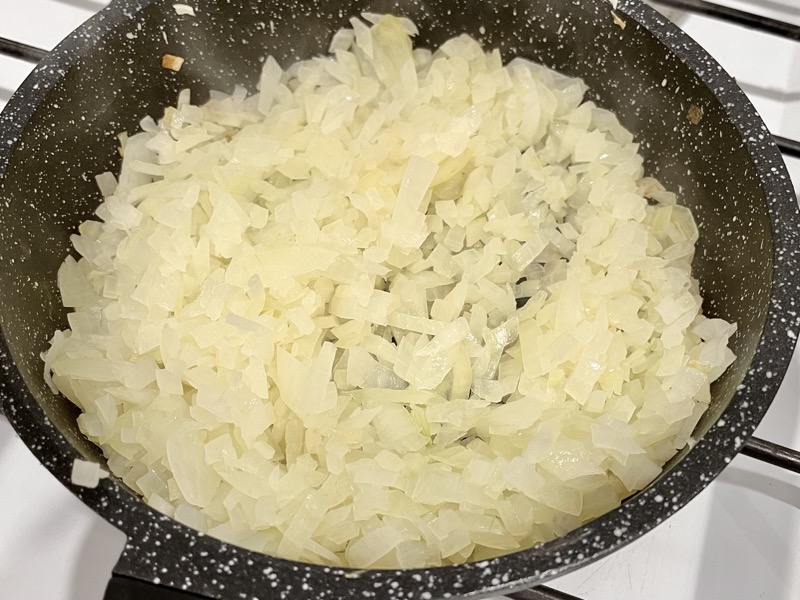
Sauté the onion in a pan with a drizzle of oil until the onion becomes translucent and softened. Then turn off the heat and set aside to cool.

Add the rest of the ingredients to a mixing bowl: lamb, soy sauce, white pepper, shaoxing wine. When the onion has cooled, add it to the bowl and mix everything together. You’re ready to wrap!

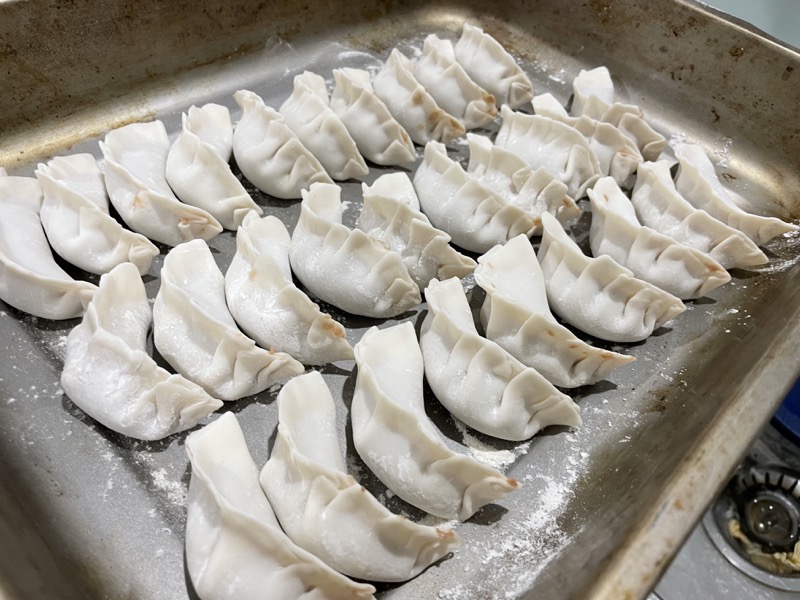
After wrapping them, you can either cook them straight away (see instructions below), or freeze them. When freezing, arrange the dumplings neatly in a tray and try not to let them all touch or else they’ll stick together when frozen. Once the dumplings are frozen, you can place them in an airtight container or bag.

How to Cook Dumplings:

Check out this post on detailed step-by-step instructions.

How to Cook Dumplings – 2 ways!


In this entry, I’m sharing the two ways I cook my dumplings: pan-fried and boiled. I find boiling is best for dumplings that have a filling with a stronger flavour. Pan-frying is better in fillings with a lighter flavour where you can notice the extra fried toastiness.

Summarized Recipe:

Lamb & Onion Dumplings

Date Published: Dec 24th, 2021 | Last Updated: Dec 24th, 2021
Author: Abby |Category: Asian, easy, < 30mins, mains
Serves: 100 dumplings | Prep time: 15 mins | Cook time: 15 mins

Ingredients:

  • Filling:
    • 2.5 cups onions diced (1 large or two small)
    • 1kg lamb mince
    • 6 Tbsps soy sauce
    • 3 tsps white pepper
    • 1/2 cup shaoxing wine (Chinese cooking wine)
  • Dumpling wrappers (2 packs = ~100 wrappers)

Directions:

  1. Sauté the onion in a pan with a drizzle of oil until the onion becomes translucent and softened. Then turn off the heat and set aside to cool.
  2. Add the rest of the ingredients to a mixing bowl: lamb, soy sauce, white pepper, shaoxing wine. When the onion has cooled, add it to the bowl and mix everything together. You’re ready to wrap!

Check out post above on how to cook dumplings

Vegetable Dumplings


Date Published: Dec 16th, 2021 | Last Updated: Dec 16th, 2021
Author: Abby |Category: mains, Asian, vegetarian
Serves: ~100 dumplings | Prep time: 30 mins | Cook time: 15 mins

Jump to recipe |

These veggie dumplings are a mix of carrots, cabbage, shiitake mushrooms, and chives. The slight crunch of the veggies with the umami soft mushrooms make these my go-to dumplings to make! They’re also great to bring at parties when you don’t know everyone’s dietary preferences. I think they’re best pan-fried but you can also steam or boil them too.

Warning: this recipe makes a buttload of dumplings (~100), but don’t worry, they last ages in the freezer and is perfect for those days when you don’t feel like putting in any effort to feeding yourself or if you just want something quick and easy. This is pretty much the rule of most Asian households when it comes to making dumplings. You either make a ton of dumplings for yourself and cram it in the freezer to slowly eat them throughout the next year or gift them to friends and family. When you break it down, on average I’ll eat about 15 dumplings per meals (20 if I’m really hungry), which only results in 6-7 meals.

Fun story: at the start of the COVID pandemic when everyone was raiding all the supermarkets, Toby and I bought a ton of minced pork and made 500 dumplings in one night incase there actually was a food shortage or if the pandemic became too out of control and we couldn’t safely leave the house to buy groceries. From memory the pork wasn’t too expensive, but the napa cabbage we used was like $10 😐.

Anyways, without further ado, here’s the recipe! If you have any comments or suggestions, I’d love to hear from you in the comment section! You can follow me on instagram, youtube and facebook to see all the recipes I post!

Happy cooking!

Recipe adapted from: Woks of Life

Ingredients you’ll need:

  • 2 Tbsps minced ginger
  • 2 large onions, chopped
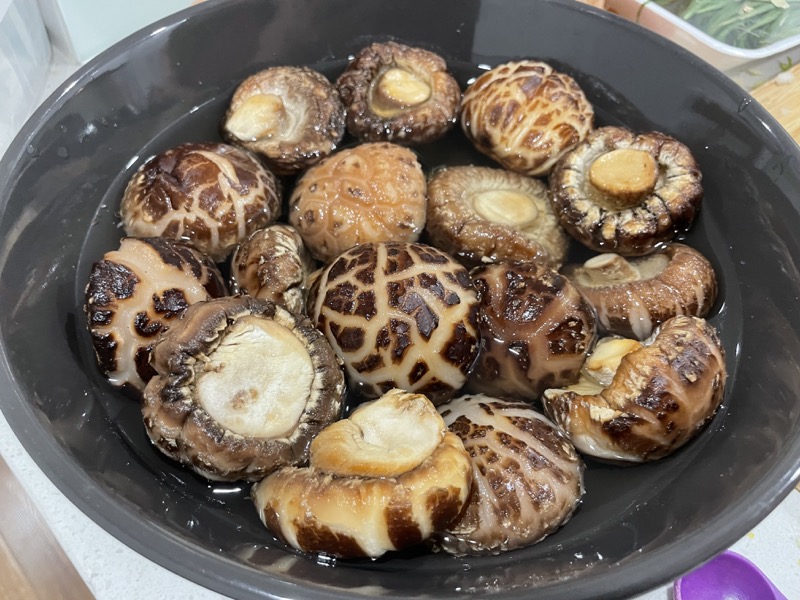
  • 3 cups shiitake mushrooms*, chopped
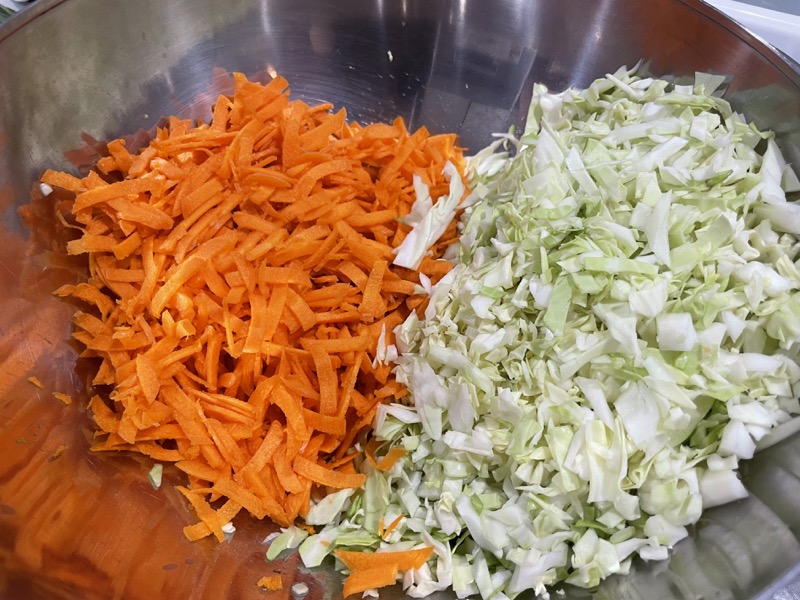
  • 3 cups cabbage, finely chopped
  • 3 cups carrot, finely shredded
  • 2 cups garlic chives, finely chopped
  • 1 tsp white pepper
  • 1.5 Tbsps sesame oil
  • 6 Tbsps Shaoxing cooking wine or dry sherry
  • 4 Tbsps soy sauce
  • 2 tsp sugar
  • ¼ cup oil
  • salt, to taste
  • 2 packages of pre-made dumpling skins (~100 skins) (follow the original recipe if you want to make your own skins instead)

* You can use either fresh shiitake mushrooms or the dehydrated ones and rehydrate them by soaking in hot water for 10 mins. You’ll have to cut off the hard woody stems before chopping. I find the dehydrated mushrooms to have better umami flavour than the fresh ones.

Directions:

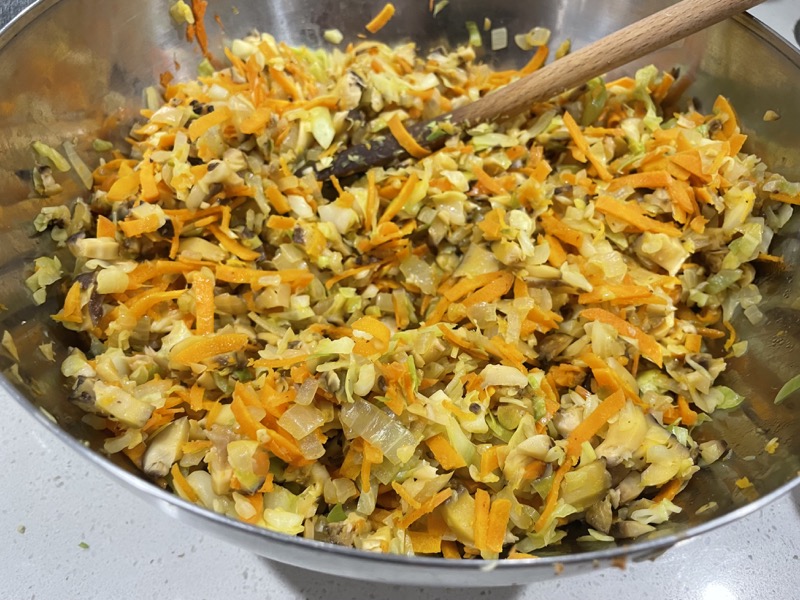
Over MED heat, cook the minced ginger in some oil until fragrant (~30secs). Then add the onions to the pot and stir-fry until translucent.

Add the mushrooms to the pot and cook until tender.

Add the cabbage and carrot to the pot until veggies are tender and the released liquids have been cooked off. Transfer the entire mixture to a large mixing bowl and allow to cool.

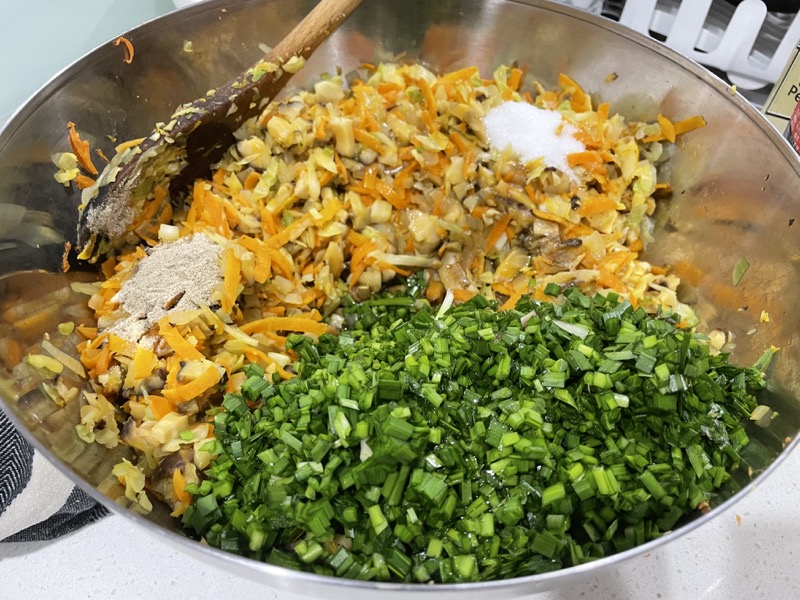
Add the rest of the ingredients to the mixing bowl: chives, white pepper, sesame oil, cooking wine, soy sauce, sugar, oil, and salt to taste (the soy sauce is usually enough).

Mix all the ingredients together. You’re ready to wrap! (If there’s too much liquid, you can add some cornstarch to thicken the liquid, but some liquid pooling at the bottom will be inevitable due to the salt drawing out the fluids from the veggies.)

After wrapping them, you can either cook them straight away (see instructions below), or freeze them. When freezing, arrange the dumplings neatly in a tray and try not to let them all touch or else they’ll stick together when frozen. Once the dumplings are frozen, you can place them in an airtight container or bag.

How to Cook Dumplings:

Check out this post on more detailed step-by-step instructions.

How to Cook Dumplings – 2 ways!


In this entry, I’m sharing the two ways I cook my dumplings: pan-fried and boiled. I find boiling is best for dumplings that have a filling with a stronger flavour. Pan-frying is better in fillings with a lighter flavour where you can notice the extra fried toastiness.

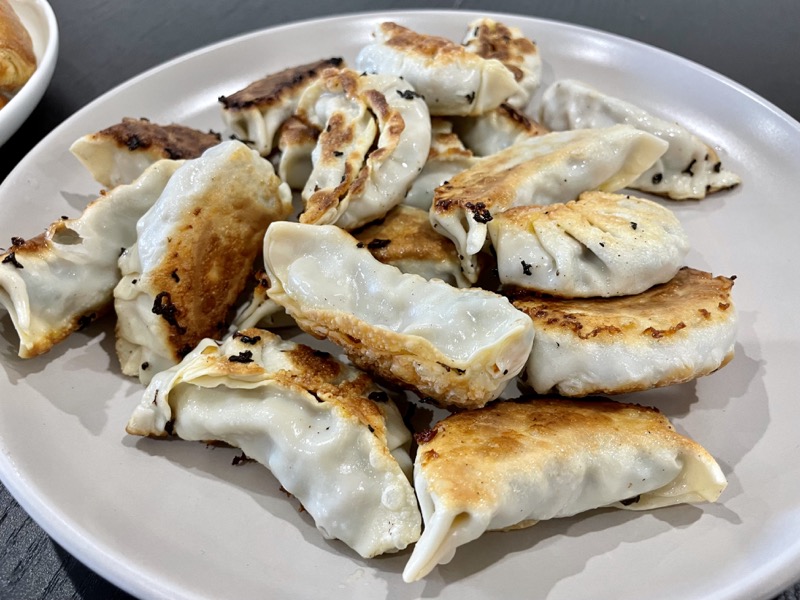
There are a few methods to cook dumplings, but my favourite way is to pan-fry them for that extra crunch. If you prefer to be a little healthier, then boiling them would be the way to go.

A. Pan-frying

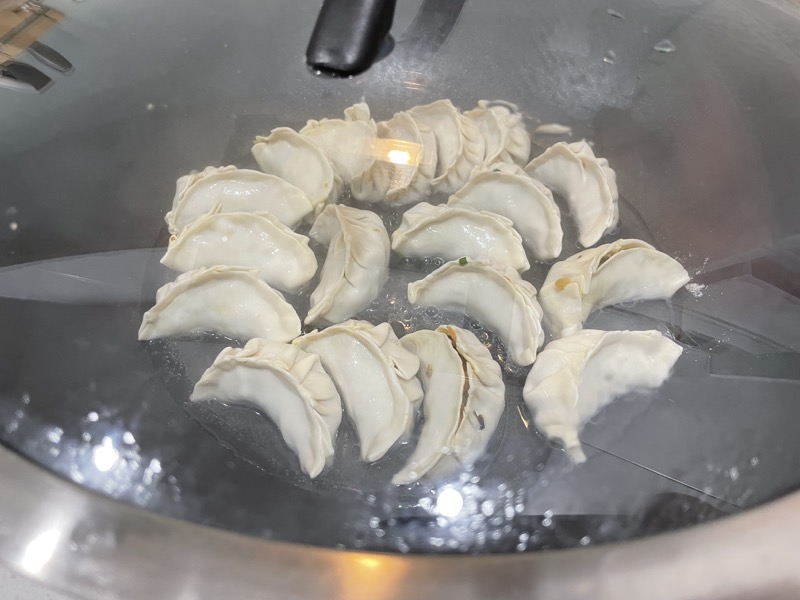
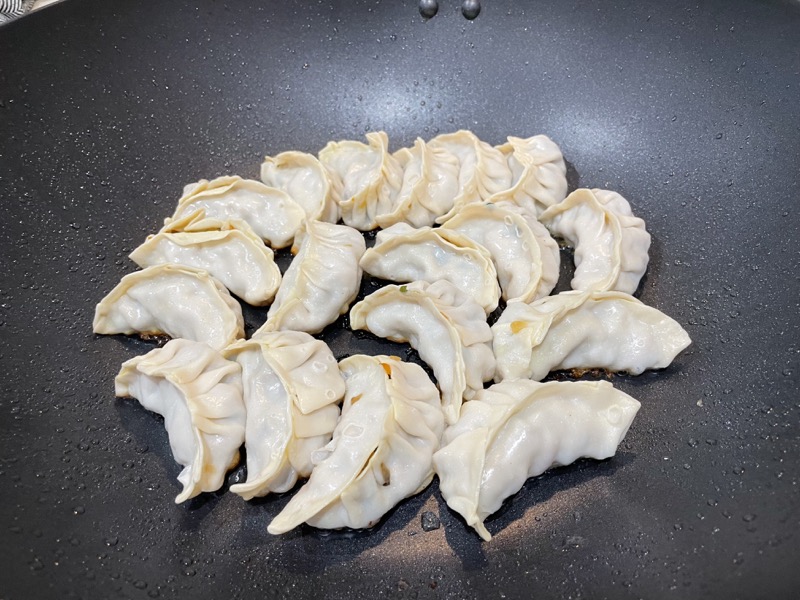
You’ll need a flat wok or pan with a lid for this method. The method is essentially first steaming the dumplings with a bit of water and oil. The steam from the water cooks the filling and the skin of the dumpling, then the remaining oil cooks the bottom of the dumplings for crispiness. 👌

  1. Heat up a flat wok or pan on MED heat. Add a drizzle of neutral oil and place the dumplings fat side down on top of the oil. Try not to crowd the dumplings so they don’t stick together and makes it easier to flip.
  2. Add 1 cm of water to the pan and put the lid on.
  3. Once all of the water evaporates, remove the lid and continue cooking the dumplings until the bottoms are toasty golden brown. Then flip the dumplings over and cook the other side of the dumplings until it’s golden brown. You can add a little extra oil into the pan to help the other side brown. Serve!

B. Boiling

This method is a lot more straight-forward. You’re essentially boiling the dumplings until the insides are cooked. Make sure your dumplings are sealed well, otherwise the filling will fall out in the boiling process. Try not to over boil it, or else the skin will become too soggy and break apart. If your dumplings are stuck together from the freezing process, just throw them in the pot altogether. Do not try to break them apart of else the skin will break. They will naturally separate in the pot.

  1. In a large pot, fill 2/3 of the pot with water and bring it to a boil.
  2. Once the water is boiling (we want a big boil where the water is moving vigorously, not just a simmer), gently add in the dumplings.
  3. When the water starts boiling again, add in a cup of cold water.
  4. When the water starts boiling again, add in ANOTHER cup of cold water.
  5. When the water boils a fourth time, the dumplings should be ready. The dumplings should be floating and you’ll see little pockets of air under the skin to signify the inside is cooked. If not, boil them for a little longer.
  6. When the dumplings are cooked, strain them from the pot to a plate and add a drizzle of sesame oil (or neutral oil) and mix it around to prevent them from sticking together. Serve!

Summarized Recipe:

Vegetable Dumplings

Date Published: Dec 16th, 2021 | Last Updated: Dec 16th, 2021
Author: Abby |Category: mains, Asian, vegetarian
Serves: ~100 dumplings | Prep time: 30 mins | Cook time: 15 mins

Ingredients:

  • 2 Tbsps minced ginger
  • 2 large onions, chopped
  • 3 cups shiitake mushrooms*, chopped
  • 3 cups cabbage, finely chopped
  • 3 cups carrot, finely shredded
  • 2 cups garlic chives, finely chopped
  • 1 tsp white pepper
  • 1.5 Tbsps sesame oil
  • 6 Tbsps Shaoxing cooking wine or dry sherry
  • 4 Tbsps soy sauce
  • 2 tsp sugar
  • ¼ cup oil
  • salt, to taste
  • 2 packages of pre-made dumpling skins (~100 skins) (follow the original recipe if you want to make your own skins instead)

* You can use either fresh shiitake mushrooms or the dehydrated ones and rehydrate them by soaking in boiling water for 10 mins. You’ll have to cut off the hard woody stems before chopping. I find the dehydrated mushrooms have better umami flavour.

Directions:

  1. Over MED heat, cook the minced ginger in some oil until fragrant (~30secs).
  2. Add onions to the pot and stir-fry until translucent.
  3. Add the mushrooms to the pot and cook until tender.
  4. Add the cabbage and carrot to the pot until veggies are tender and the released liquids have been cooked off. Transfer the entire mixture to a large mixing bowl and allow to cool.
  5. Add the rest of the ingredients to the mixing bowl: chives, white pepper, sesame oil, cooking wine, soy sauce, sugar, oil, and salt to taste (the soy sauce is usually enough).
  6. Mix all the ingredients together. You’re ready to wrap! (If there’s too much liquid, you can add some cornstarch to thicken the liquid, but some liquid pooling at the bottom will be inevitable due to the salt drawing out the fluids from the veggies.)

How to Pan-Fry Dumplings:

  1. Heat up a flat wok or pan on MED heat. Add a drizzle of neutral oil and place the dumplings fat side down on top of the oil. Try not to crowd the dumplings so they don’t stick together and makes it easier to flip.
  2. Add 1 cm of water to the pan and put the lid on.
  3. Once all of the water evaporates, remove the lid and continue cooking the dumplings until the bottoms are toasty golden brown. Then flip the dumplings over and cook the other side of the dumplings until it’s golden brown. You can add a little extra oil into the pan to help the other side brown. Serve!