Taiwanese Popcorn Chicken 鹽酥雞


Date Published: April 14th, 2024 | Last Updated: April 14th, 2024
Author: Abby |Category: appetizers, Asian, easy, snacks, Taiwanese
Serves: 4 as a snack (1 large bowl) | Prep time: marinate for 12 hours | Cook time: 20 minutes

Jump to recipe |

Ohhh yesssssss! I’m so excited to share this recipe with you all because Taiwanese popcorn chicken is SUPER addicting and is one of my all time favourite Taiwanese street foods. There used to be quite a few night market food stalls in Taiwan that sell this, but for some reason in recent years it’s been harder and harder to find. My parents’ place in Taiwan is within walking distance to the Shih-lin night market and when we were kids, we used to visit every summer and would occasionally go to the shitty small movie theatre in the night market for a cheap late night flick. Instead of popcorn as the traditional movie theatre food, popcorn chicken was our weakness. We would always go to the same popcorn chicken stall and each order our own large portion for the movie, along with a few fried tempura fish cakes. It was a time of bliss – I’d look forward to the chicken more than the actual movie 🙃. Now every time I see Taiwanese popcorn chicken, I’m transported back to those days of my parents taking us kids to the movies and indulging at the night market. That shitty movie theatre has since closed down and that food vendor is no longer there 😢, but I’m glad I figured out how to recreate the recipe so I can have it on demand any time.

How does Taiwanese popcorn chicken differ from regular popcorn chicken, you ask?

First of all, the batter coating is made with sweet potato starch rather than just regular flour which creates a more delicate crisp. Secondly, the chicken is marinated in a mix of common Taiwanese ingredients such as cooking rice wine, white pepper, and 5-spice powder that gives it a distinct flavour. Thirdly, this is eaten without a sauce, but topped with ground white pepper, salt, and chilli powder (optional). Fourth and finally, it is served with deep fried Thai basil leaves which in my opinion is crucial and adds an extra layer of flavour between bites of chicken. I am a Taiwanese popcorn chicken snob and will only order from food stalls if they serve it with the basil leaves 😅.

Anyways, without further ado, here’s the recipe! If you have any comments or suggestions, I’d love to hear from you in the comment section! You can follow me on instagram, youtube and facebook to see all the recipes I post!

Happy cooking!

Ingredients you’ll need:

  • Chicken Marinade:
    • 3 Tbsps soy sauce
    • 1.5 Tbsps cooking rice wine/michu
    • 3 cloves garlic, minced
    • 3 tsps white sugar
    • 3/4 tsp kosher salt
    • 3/4 tsp ground white pepper
    • 1/2 tsp 5-spice powder
    • 3 large (~650g) chicken thighs, skinless, boneless, cut into 3-4 cm pieces
  • 2 Tbsps all purpose flour
  • 1/4 tsp baking powder
  • 1.5 cups thick sweet potato starch (if you can only find the fine powder, sprtiz some water to make small clumps)
  • 4 cups oil for frying (ie. canola, vegetable)
  • 1 large handful of Thai basil leaves, washed and throughly dried
  • Seasoning:
    • 1/2 tsp chili powder (optional)
    • 1/2 tsp ground white pepper
    • 1/4 tsp fine salt

Directions:

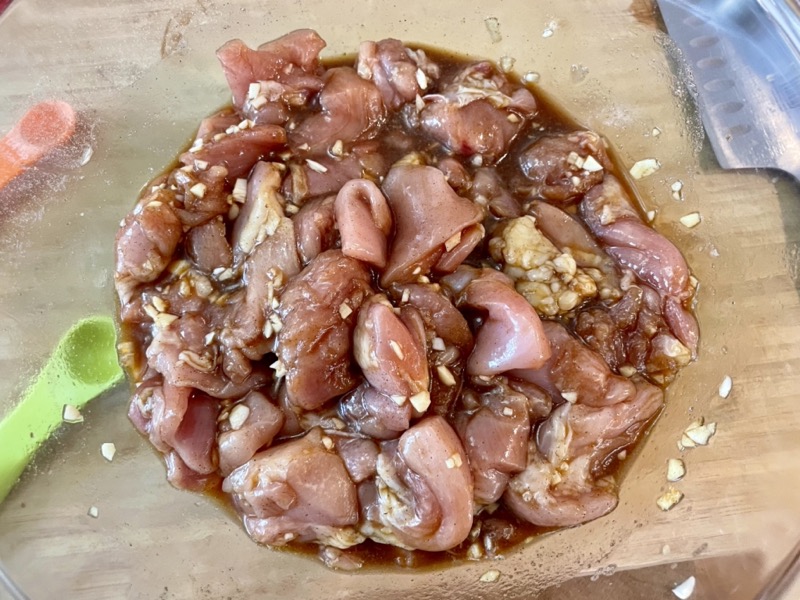
Marinate the chicken overnight: Combine all the chicken marinade ingredients in a mixing bowl: soy sauce, rice wine, garlic, sugar, salt, white pepper, 5-spice powder, and chicken thigh pieces. Cover and marinate in the fridge overnight.
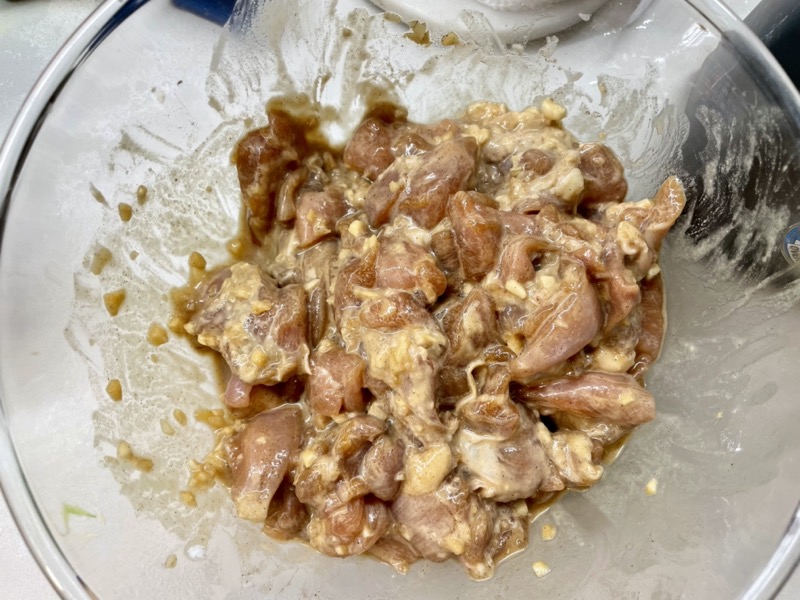
The next day, mix the chicken around in the marinade and add in the flour and baking powder. Mix well until combined.

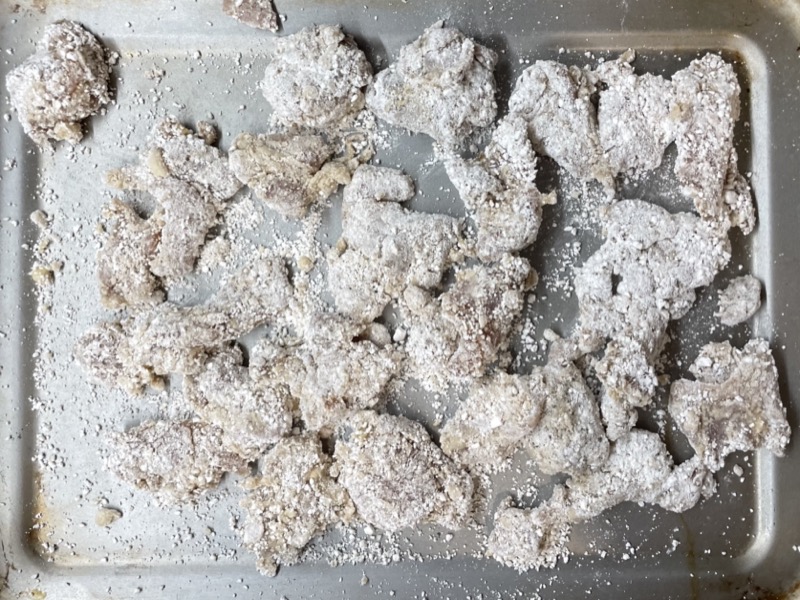
Bread the chicken: Pour the sweet potato starch into a wide base bowl. Place a few pieces of the marinated chicken at a time into the sweet potato starch and coat the chicken in the starch and gently pressing the starch into the chicken so it sticks better. Remove the coated chicken and place onto a plate. Repeat until all of the chicken pieces are coated in starch.
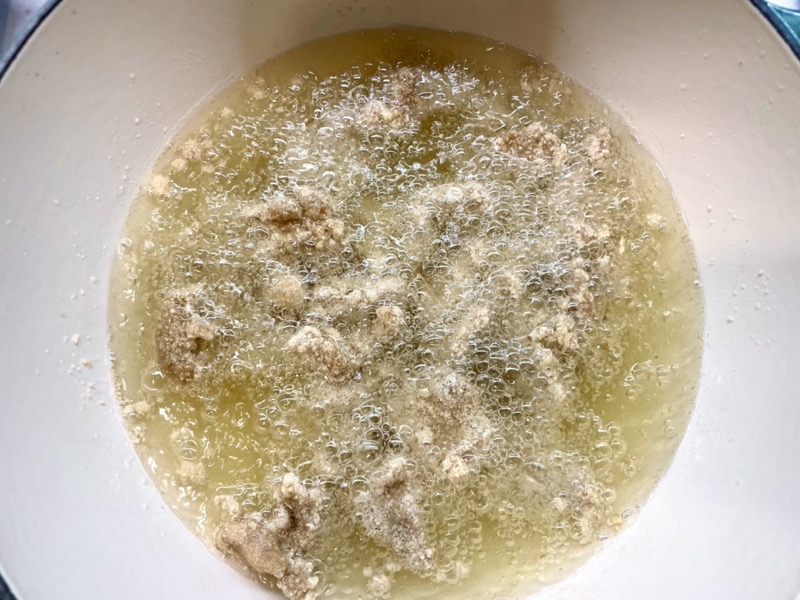
Cook the chicken: Heat the oil in a wide base pot. The oil is ready when it starts to shimmer and immediately sizzle when you add a dust of flour or a drop of batter. Fry the chicken in batches for 3-4 minutes at a time or until golden brown. Remove onto a cooling rack or paper towel-lined plate.

Once you’ve fried all the chicken, fry it all again a second time for 1 minute, starting with the first batch. This double fry method will give you a crispier coating. Once all the chicken has been refried, add in the basil leaves to the oil and fry for another 10-20 seconds and remove onto a cooling rack or a paper towel-lined plate to crisp up.

Add the seasoning: In a small bowl mix together the chili powder, white pepper, and salt. Once the chicken has cooled a little, put them all in a big mixing bowl along with the basil, and sprinkle the seasoning over top. Toss so all the pieces are evenly coated with seasoning. Serve immediately. Enjoy!

Summarized Recipe:

Taiwanese Popcorn Chicken 鹽酥雞

Date Published: April 14th, 2024 | Last Updated: April 14th, 2024
Author: Abby |Category: appetizers, Asian, easy, snacks, Taiwanese
Serves: 4 as a snack (1 large bowl) | Prep time: marinate for 12 hours | Cook time: 20 minutes

Ingredients:

  • Chicken Marinade:
    • 3 Tbsps soy sauce
    • 1.5 Tbsps cooking rice wine/michu
    • 3 cloves garlic, minced
    • 3 tsps white sugar
    • 3/4 tsp kosher salt
    • 3/4 tsp ground white pepper
    • 1/2 tsp 5-spice powder
    • 3 large (~650g) chicken thighs, skinless, boneless, cut into 3-4 cm pieces
  • 2 Tbsps all purpose flour
  • 1/4 tsp baking powder
  • 1.5 cups thick sweet potato starch (if you can only find the fine powder, sprtiz some water to make small clumps)
  • 4 cups oil for frying (ie. canola, vegetable)
  • 1 large handful of Thai basil leaves, washed and throughly dried
  • Seasoning:
    • 1/2 tsp chili powder (optional)
    • 1/2 tsp ground white pepper
    • 1/4 tsp fine salt

Directions:

  1. Marinate the chicken overnight: Combine all the chicken marinade ingredients in a mixing bowl: soy sauce, rice wine, garlic, sugar, salt, white pepper, 5-spice powder, and chicken thigh pieces. Cover and marinate in the fridge overnight.
  2. The next day, mix the chicken around in the marinade and add in the flour and baking powder. Mix well until combined.
  3. Bread the chicken: Pour the sweet potato starch into a wide base bowl. Place a few pieces of the marinated chicken at a time into the sweet potato starch and coat the chicken in the starch and gently pressing the starch into the chicken so it sticks better. Remove the coated chicken and place onto a plate. Repeat until all of the chicken pieces are coated in starch.
  4. Cook the chicken: Heat the oil in a wide base pot. The oil is ready when it starts to shimmer and immediately sizzle when you add a dust of flour or a drop of batter. Fry the chicken in batches for 3-4 minutes at a time or until golden brown. Remove onto a cooling rack or paper towel-lined plate. Once you’ve fried all the chicken, fry it all again a second time for 1 minute, starting with the first batch. This double fry method will give you a crispier coating. Once all the chicken has been refried, add in the basil leaves to the oil and fry for another 10-20 seconds and remove onto a paper towel-lined plate to crisp up.
  5. Add the seasoning: In a small bowl mix together the chili powder, white pepper, and salt. Once the chicken has cooled a little, put them all in a big mixing bowl along with the basil, and sprinkle the seasoning over top. Toss so all the pieces are evenly coated with seasoning. Serve immediately. Enjoy!

Bakkwa – Chinese Pork Jerky (sweet and salty goodness)


Date Published: April 14th, 2024 | Last Updated: April 14th, 2024
Author: Abby |Category: Asian, easy, snacks
Serves: 2 batches (20 pieces) | Prep time: 24 hours to marinate | Cook time: 1 hour

Jump to recipe |

Unlike a Western-style of jerky that’s usually tougher and dehydrated, Bakkwa is a Chinese-style pork jerky that’s much softer, has a very different flavour profile, and in my opinion, WAY more addicting. It’s made by marinating ground pork in sauces and spices then grilled or baked in a very thin layer. It kind of reminds me of lap cheong (Chinese sausage) but with a sweet glaze.

Because they’re made with fatty ground pork and are grilled, Bakkwa is considered an indulgent food item in Asia and is not eaten all the time due to health considerations (and also they can surprisingly get quite expensive). If you’re looking for Bakkwa in Asia, ‘Bee Cheng Hiang’ is the most popular (and common) place to get it. They’ve got multiple locations throughout in Asia and sell them either fresh as street food or in real fancy packages. They are very popular gift items as souvenirs and also during Chinese New Year. Many countries no longer allow foriegn pork products into the country so sadly we couldn’t stock up on it when we were in Singapore or Taiwan 💔😞.

I had always though Bakkwa was super difficult to make due to the high price point and the complex flavours, but I recently came across a homemade Bakkwa recipe that made it look so damn simple, that I had to try it myself. I googled a few different recipes, a after a bit of trial and error and tweaking, I’ve finally put together my own blend of sauces and spices that comes pretty close to what you get in the shops. The best part is that it really is very simple and SO MUCH cheaper than buying it in stores. You’ve definitely got to try out this recipe.

Anyways, without further ado, here’s the recipe! If you have any comments or suggestions, I’d love to hear from you in the comment section! You can follow me on instagram, youtube and facebook to see all the recipes I post!

Happy cooking!

Ingredients you’ll need:

  • 600g ground pork
  • 200g (1 cup) granulated sugar
  • 2 Tbsps water
  • 2 Tbsps dark soy sauce
  • 2 Tbsps fish sauce
  • 1.5 Tbsps oyster sauce
  • 1 Tbsp Shaoxing wine
  • 1 tsp sesame oil
  • 1 tsp ground white pepper
  • 2 tsps 5-spice powder
  • 1 tsp ginger powder
  • Glaze: 2 Tbsps (40g) honey + 1 Tbsp water

Directions:

Mix all the ingredients of the bakkwa (except the glaze) together in a mixing bowl: ground pork, sugar, water, dark soy sauce, fish sauce, oyster sauce, shaoxing wine, sesame oil, white pepper, 5-spice powder, and ginger powder. Place in an airtight container or ziploc bag and let it marinate in the fridge overnight.

The next day, preheat the oven to 300˚F/150˚C.

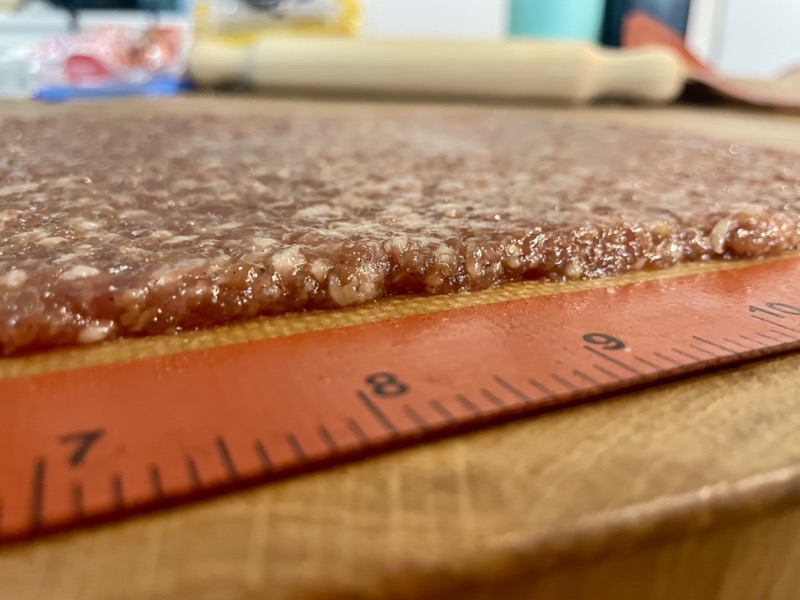
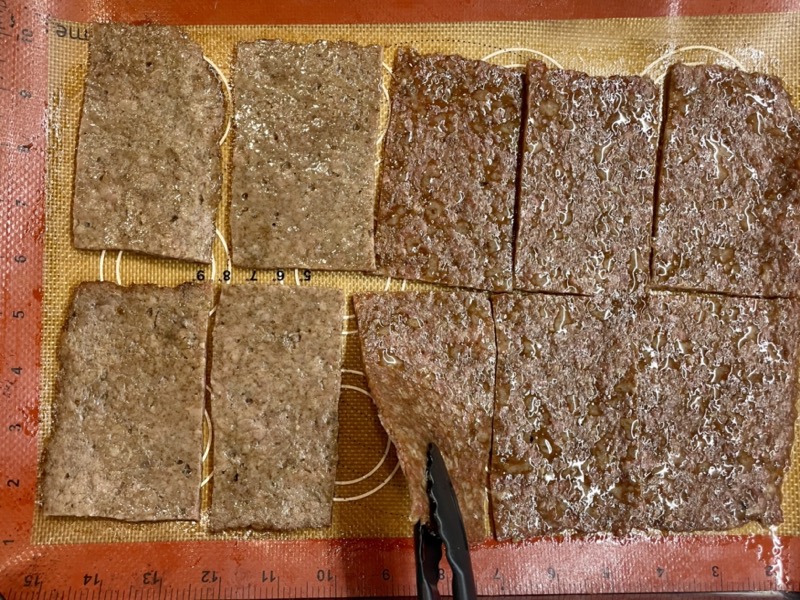
Prepare 2 lined baking trays. Take the liner out from the trays and divide the marinated pork into two equal batches onto each liner. Use the back of a spoon and spread out the pork evenly. Place a sheet of plastic wrap over the top of the pork and use a rolling pin to further flatten the pork to a 2mm in thickness. You can use a butter knife to straighten the edges as best as you can to make it a clean rectangle (see photo).

Bake the pork in the preheated oven for 15-20 minutes or until the edges are slightly brown and the pork is firm enough to lift up in one piece. Pour out any excess liquid that is released when baking. Use kitchen scissors and cut the pork into even pieces then flip them. Bake again for another 15-20 minutes so the other side is slightly browned.

While the pork is baking, make the glaze by mixing 2 Tbsps honey with 1 Tbsp of water.

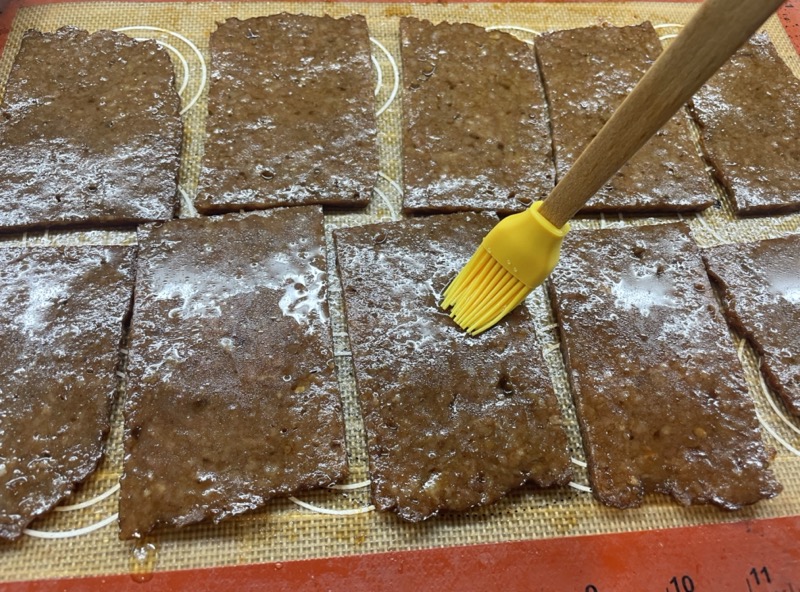
Once both sides have been baked, turn the oven setting to BROIL. While the oven heats up further, brush the glaze over the top of each piece. Continue to bake on a broil setting for 1-2 minutes on the top rack to let the glaze caramelize – watch the bakkwa carefully so it doesn’t burn. Remove from the oven, flip each piece over and brush the glaze on top. Put it back in the oven on broil for another 1-2 minutes until caramelized.

Once finished, turn off the oven and let the pork pieces cool on a cooling rack. Done!

Summarized Recipe:

Bakkwa – Chinese Pork Jerky (sweet and salty goodness)

Date Published: April 14th, 2024 | Last Updated: April 14th, 2024
Author: Abby |Category: Asian, easy, snacks
Serves: 2 batches (20 pieces) | Prep time: 24 hours to marinate | Cook time: 1 hour

Ingredients:

  • 600g ground pork
  • 200g (1 cup) granulated sugar
  • 2 Tbsps water
  • 2 Tbsps dark soy sauce
  • 2 Tbsps fish sauce
  • 1.5 Tbsps oyster sauce
  • 1 Tbsp Shaoxing wine
  • 1 tsp sesame oil
  • 1 tsp ground white pepper
  • 2 tsps 5-spice powder
  • 1 tsp ginger powder
  • Glaze: 2 Tbsps (40g) honey + 1 Tbsp water

Directions:

  1. Mix all the ingredients of the bakkwa (except the glaze) together in a mixing bowl: ground pork, sugar, water, dark soy sauce, fish sauce, oyster sauce, shaoxing wine, sesame oil, white pepper, 5-spice powder, and ginger powder. Place in an airtight container or ziploc bag and let it marinate in the fridge overnight.
  2. The next day, preheat the oven to 300˚F/150˚C.
  3. Prepare 2 lined baking trays. Take the liner out from the trays and divide the marinated pork into two equal batches onto each liner. Use the back of a spoon and spread out the pork evenly. Place a sheet of plastic wrap over the top of the pork and use a rolling pin to further flatten the pork to a 2mm in thickness. You can use a butter knife to straighten the edges as best as you can to make it a clean rectangle (see photo).
  4. Bake the pork in the preheated oven for 15-20 minutes or until the edges are slightly brown and the pork is firm enough to lift up in one piece. Pour out any excess liquid that is released when baking. Use kitchen scissors and cut the pork into even pieces then flip them. Bake again for another 15-20 minutes so the other side is slightly browned.
  5. While the pork is baking, make the glaze by mixing 2 Tbsps honey with 1 Tbsp of water.
  6. Once both sides have been baked, turn the oven setting to BROIL. While the oven heats up further, brush the glaze over the top of each piece. Continue to bake on a broil setting for 1-2 minutes on the top rack to let the glaze caramelize – watch the bakkwa carefully so it doesn’t burn. Remove from the oven, flip each piece over and brush the glaze on top. Put it back in the oven on broil for another 1-2 minutes until caramelized. Once finished, turn off the oven and let the pork pieces cool on a cooling rack. Done!

Cantonese Fried Fish with a Corn Gravy (粟米斑塊)


Date Published: April 14th, 2024 | Last Updated: April 14th, 2024
Author: Abby |Category: Asian, easy, mains
Serves: 4-6 (1 large plate) | Prep time: 20 mins | Cook time: 30 mins

Jump to recipe |

This dish a wrapped in nostalgia for me. It’s fried fish fillet pieces with a cornstarch/egg/corn gravy drizzled over top. It’s a savoury dish with a little sweetness in the sauce. Serve over a bed of jasmine rice and some veggies.

When our family first moved to Canada from Taiwan, there were limited options of Asian restaurants and grocery stores in our neighbourhood at the time. I remembered my mom always went to the same small Asian grocery store and beside it was a little Asian restaurant called ‘New Asia’. It was a small place with no more than 4-5 tables, each with a thick layer of disposable white plastic tablecloths on top. We’d either dine-in or mom would occasionally get takeaway to bring home after a visit to the grocery store next door. On one dine-in occasion, I must’ve been about 8-9 years old at the time, it was a quiet wintery night and there was only one other table apart from ours at the restaurant. My mom was taking care of us 3 kids on her own and suddenly the older white couple at the other table came over to us and gave us their order of corn fish that had just arrived at their table. They said it was really good and we had to try it. I thought it was really random that these strangers were offering us part of their dinner, but my mom didn’t want to be rude so she accepted it. There is a lot of similarity and overlap in Taiwanese/Chinese/Cantonese cuisine, but I had never seen corn fish before. It looked like a weird plate of corn goop over fish and at first we were skeptical, but we all tried it and it was AMAZING! Ever since then, that corn fish dish became one of our favourite items to order. Sadly, that restaurant has since closed down (ages ago, actually) and I had forgotten all about that dish until in recent years I was walking past a Cantonese restaurant in Melbourne and they had their menu with blown up photos pasted all over their windows and surprisingly, corn fish was one of the photos! It brought me right back to those childhood days eating this dish with my mom and siblings.

This recipe has been on my to-cook list for a while and I have no idea why it took me so long to actually attempt it, but it’s actually so much easier than I thought and it cooks up quickly. I’m proud to be adding this to my recipe collection. 😊

Anyways, without further ado, here’s the recipe! If you have any comments or suggestions, I’d love to hear from you in the comment section! You can follow me on instagram, youtube and facebook to see all the recipes I post!

Happy cooking!

Ingredients you’ll need:

  • Fish marinade:
    • 1/4 tsp kosher salt
    • 1/4 tsp ground white pepper
    • 2 Tbsps cornstarch
    • 1 green onion, minced
    • 800g boneless, skinless white fish fillets (ie. cod, haddock, tilapia, sole, pollock)
  • 4 cups of neutral oil for frying (ie. vegetable oil, canola oil)
  • Breading:
    • 2 eggs, beaten
    • 1 cup all-purpose flour
    • 1/3 cup corn starch
  • Creamy Corn Gravy:
    • 3/4 tsp cornstarch
    • 1/3 cup water
    • 1 clove garlic, minced
    • 1 can (418g) creamed corn/cream style corn
    • 1/4 tsp chicken stock powder
    • 1 egg, beaten
  • Salt and black pepper to taste
  • Garnish (optional): sliced green onion

Directions:

Rinse and pat dry the fish and slice it into 2 inch pieces. Set aside.

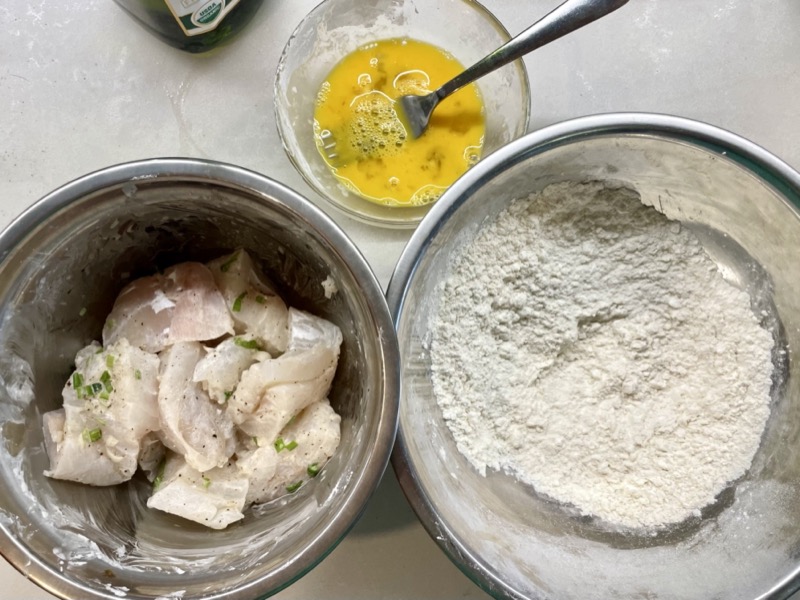
Marinate the fish: In a bowl, mix together the salt, white pepper, cornstarch, and green onion. Add in the sliced fish and mix well, ensuring every piece is coated. Be careful not to break the fish when you mix. Set aside and let it marinate for 15 minutes at room temperature.

Prepare the breading: Beat the eggs into a bowl and set aside. In another bowl, mix together the flour and cornstarch.

Heat the oil in a small pot. Once the oil starts to shimmer or if it sizzles when you add in a bit of flour, it’s ready for frying.

Bread and deep fry the fish: When the oil is nearly hot enough, start breading the fish. First coat the fish in the beaten egg (prepared in step 3), then coat it in the flour and cornstarch mixture.

Gently drop the breaded fish pieces one at a time into the hot oil. Only add enough to not overcrowd the pot, roughly 6-7 pieces per batch. Move the pieces around, making sure they’re not sticking to each other and not sticking to the bottom of the pot. Cook for 5-7 minutes or until the outside is slightly browned. Use a slotted spoon to remove the fish from the oil and let it cool on a rack. Repeat this process until all of the fish is fried. Once all of the fish have been fried, fry them all a second time for 2 minutes per batch, starting from the most cooled batch first. This will make the fish extra crispy. Once finished, turn off the heat and set the fried fish aside on the cooling rack while you prepare the corn gravy.

Make the corn gravy: In a small bowl, mix together the cornstarch and water, ensuring there are no lumps. Set aside.

In a saucepan on MED heat, add a small drizzle of oil and sauté the garlic for 1 minute until fragrant. Add in the creamed corn, chicken stock powder, and the cornstarch/water mixture. Whisk everything well and let the sauce come to a boil. Turn the heat down and drizzle the beaten egg into the sauce. Slowly mix it around until the egg is cooked. You want swirls of cooked egg, so don’t over mix it. Once the egg has cooked, turn off the heat. Taste and adjust salt and black pepper to taste.

Finishing touches: To serve, put the fried fish pieces onto a serving plate and pour the hot corn gravy over top. Garnish with sliced green onion. Serve immediately with a side of rice. Done!

Summarized Recipe:

Cantonese Fried Fish with a Corn Gravy (粟米斑塊)

Date Published: April 14th, 2024 | Last Updated: April 14th, 2024
Author: Abby |Category: Asian, easy, mains
Serves: 4-6 (1 large plate) | Prep time: 20 mins | Cook time: 30 mins

Ingredients:

  • Fish marinade:
    • 1/4 tsp kosher salt
    • 1/4 tsp ground white pepper
    • 2 Tbsps cornstarch
    • 1 green onion, minced
    • 800g boneless, skinless white fish fillets (ie. cod, haddock, tilapia, sole, pollock)
  • 4 cups of neutral oil for frying (ie. vegetable oil, canola oil)
  • Breading:
    • 2 eggs, beaten
    • 1 cup all-purpose flour
    • 1/3 cup corn starch
  • Creamy Corn Gravy:
    • 3/4 tsp cornstarch
    • 1/3 cup water
    • 1 clove garlic, minced
    • 1 can (418g) creamed corn/cream style corn
    • 1/4 tsp chicken stock powder
    • 1 egg, beaten
  • Salt and black pepper to taste
  • Garnish (optional): sliced green onion

Directions:

  1. Rinse and pat dry the fish and slice it into 2 inch pieces. Set aside.
  2. Marinate the fish: In a bowl, mix together the salt, white pepper, cornstarch, and green onion. Add in the sliced fish and mix well, ensuring every piece is coated. Be careful not to break the fish when you mix. Set aside and let it marinate for 15 minutes at room temperature.
  3. Prepare the breading: Beat the eggs into a bowl and set aside. In another bowl, mix together the flour and cornstarch.
  4. Heat the oil in a small pot. Once the oil starts to shimmer or if it sizzles when you add in a bit of flour, it’s ready for frying.
  5. Bread and deep fry the fish: When the oil is nearly hot enough, start breading the fish. First coat the fish in the beaten egg (prepared in step 3), then coat it in the flour and cornstarch mixture. Gently drop the breaded fish pieces one at a time into the hot oil. Only add enough to not overcrowd the pot, roughly 6-7 pieces per batch. Move the pieces around, making sure they’re not sticking to each other and not sticking to the bottom of the pot. Cook for 5-7 minutes or until the outside is slightly browned. Use a slotted spoon to remove the fish from the oil and let it cool on a rack. Repeat this process until all of the fish is fried. Once all of the fish have been fried, fry them all a second time for 2 minutes per batch, starting from the most cooled batch first. This will make the fish extra crispy. Once finished, turn off the heat and set the fried fish aside on the cooling rack while you prepare the corn gravy.
  6. Make the corn gravy: In a small bowl, mix together the cornstarch and water, ensuring there are no lumps. Set aside. In a saucepan on MED heat, add a small drizzle of oil and sauté the garlic for 1 minute until fragrant. Add in the creamed corn, chicken stock powder, and the cornstarch/water mixture. Whisk everything well and let the sauce come to a boil. Turn the heat down and drizzle the beaten egg into the sauce. Slowly mix it around until the egg is cooked. You want swirls of cooked egg, so don’t over mix it. Once the egg has cooked, turn off the heat. Taste and adjust salt and black pepper to taste.
  7. Finishing touches: To serve, put the fried fish pieces onto a serving plate and pour the hot corn gravy over top. Garnish with sliced green onion. Serve immediately with a side of rice. Done!

Roasted Cabbage with Pickled Mustard Seeds and a Parsley Cream Sauce (a Dominique Crenn recipe)


Date Published: Mar 27th, 2024 | Last Updated: Mar 27th, 2024
Author: Abby |Category: mains, vegetarian
Serves: 4 | Prep time: 24 hours before | Cook time: 1 hour

Jump to recipe |
Netflix Bites pop-up restaurant

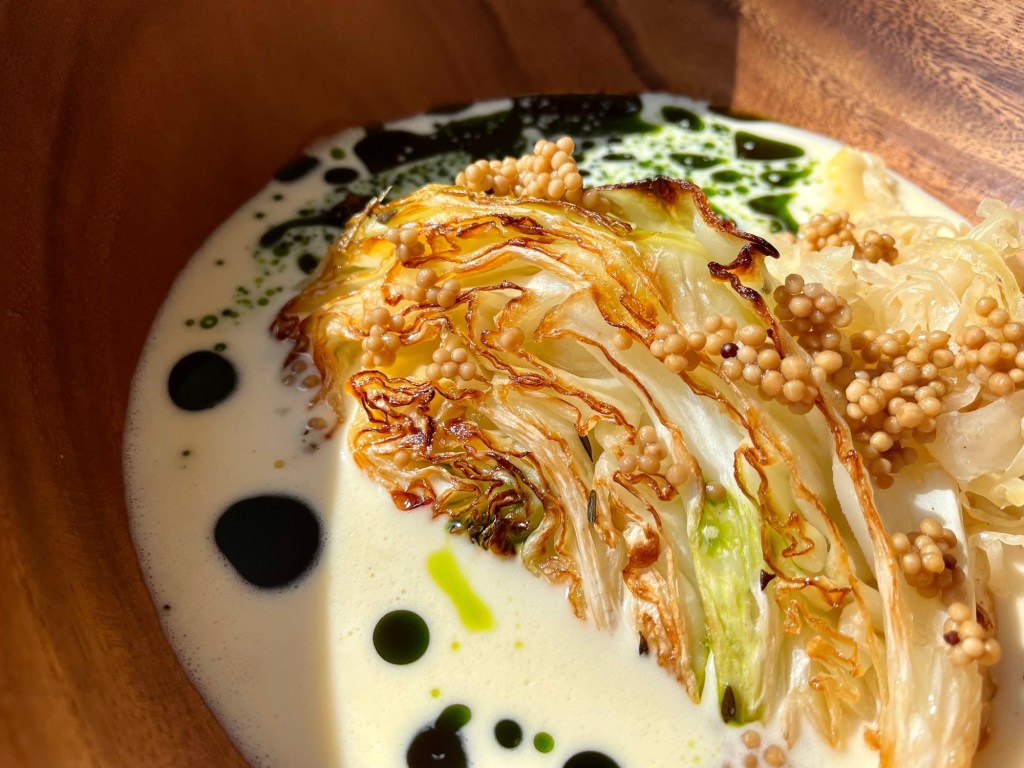
In August of last year Toby and I went to LA for the first time to attend my friend Mehdi’s wedding. We stayed at a nice hotel called Short Stories and they happened to be hosting a pop-up restaurant called Netflix Bites! It was a restaurant that served dishes from celebrity chefs that appeared on a Netflix series. There were quite a few exciting dishes to choose from so naturally we over-ordered and had 3 main dishes between the two of us. My favourite of the night was a roasted cabbage dish by Dominique Crenn. I had never had cabbage like this before and the flavours were so unique! I was instantly obsessed and knew I had to recreate it somehow. Lucky for me, it’s one of the dishes on her Masterclass – yes, I subscribed to Masterclass just to cook this dish. It was worth it. 🙂

Strap in, this is a lengthy recipe. There are 5 components and it takes some time to put them all together but each step on its own is actually quite simple and you can make most of these components ahead of time and keep it in the fridge if you don’t want to jumble 5 different things at once in the kitchen.

Although there are a lot of components, each one has a purpose:

How it all began – the roasted cabbage dish served at the restaurant
  1. Homemade Sauerkraut – this adds extra tartness and a bit of crunch. You have to make this 2 weeks ahead. Dominique Crenn teaches us to appreciate the humble cabbage by making our own sauerkraut. It’s surprisingly easy and you only need 2 ingredients!
  2. Pickled Mustard Seeds – these add a little pop (kind of like caviar or roe on sushi) and sweetness to balance out the texture and flavours of the dish. It takes a minimum of 2 hours to marinate but it tastes better if left overnight so definitely make this ahead of time.
  3. Parsley Oil – this is pretty easy to make and results in a beautiful deep green oil, super concentrated in parsley flavour. You will need a powerful blender like a Vitamix to break down the parsley fine enough. You can either make this the day-of or up to a week early.
  4. Crème Fraîche Sauce – this is the creamy tart sauce that makes the base of the dish. The parsley oil will be mixed through this to complete the flavours. You can either make this the day-of or up to a week early.
  5. Roasted Cabbage – the cabbage is first seared with thyme and garlic to bring out extra flavour, then finished off in the oven to cook through.

Anyways, without further ado, here’s the recipe! If you have any comments or suggestions, I’d love to hear from you in the comment section! You can follow me on instagram, youtube and facebook to see all the recipes I post!

Happy cooking!

Ingredients & Tools you’ll need:

  • Sauerkraut:
    • A small or medium savoy cabbage (depending on how much you want to make)
    • Kosher salt
    • Tools: a kitchen scale and maybe gloves, fermenting container with weights or glass jar with a lid and something heavy in a ziploc bag.
    • A knob of butter (~30g) – used later on for heating up the finished sauerkraut before serving
  • Pickled Mustard Seeds:
    • 1/2 cup (100g) yellow mustard seeds
    • 2 Tbsps (30g) rice vinegar
    • 2 Tbsps (30g) sherry vinegar
    • 1.25 Tbsps (20g) granulated sugar
    • 1/2 tsp (3g) kosher salt
  • Parsley Oil:
    • 50g flat leaf parsley leaves
    • 100g grapeseed oil
    • Tools: a powerful blender
  • Crème Fraîche Sauce:
    • 2 Tbsps sauerkraut liquid
    • 500g crème fraîche
    • 2 Tbsps (30g) Sherry vinegar
    • 1/2 Tbsp fresh lemon juice
    • Salt & pepper to taste
  • Roasted Cabbage:
    • 1 large cabbage, cleaned
    • Grapeseed oil for searing (or any other neutral flavoured oil tolerant to high heat)
    • 2 + 2 cloves of garlic, peeled
    • 4 + 4 sprigs of fresh thyme

Directions:

A. Optional: Homemade Sauerkraut (Make at least 2 weeks ahead, it will keep in the fridge for up to 3 months):

This step is optional. You can use store-bought sauerkraut as well for the recipe, the flavours will be similar.

  • Ingredients & Tools you’ll need:
    • A small or medium savoy cabbage (depending on how much you want to make)
    • Kosher salt
    • Tools: a kitchen scale and maybe gloves, fermenting container with weights or glass jar with a lid and something heavy in a ziploc bag.

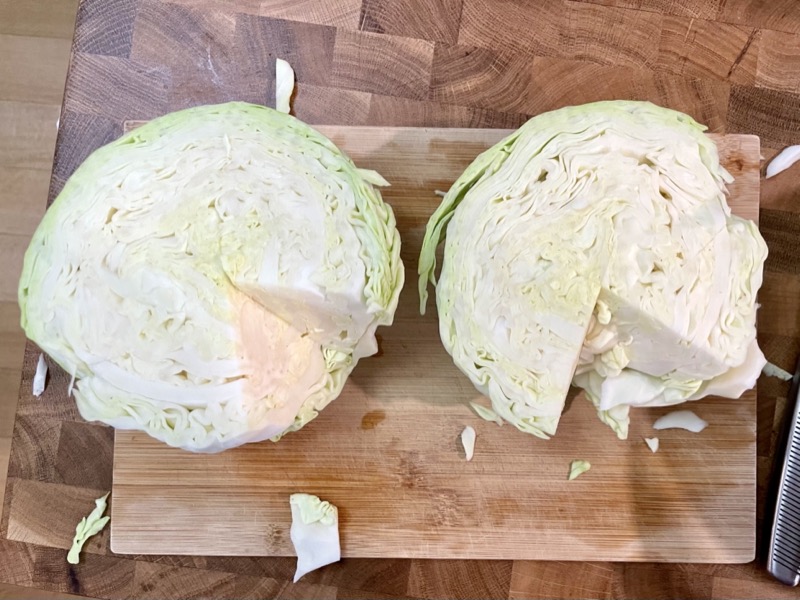
Cut: Peel away any wilted, dirty outer leaves of the cabbage. Cut the cabbage in half and cut out the core. Chop the rest of the cabbage thinly.

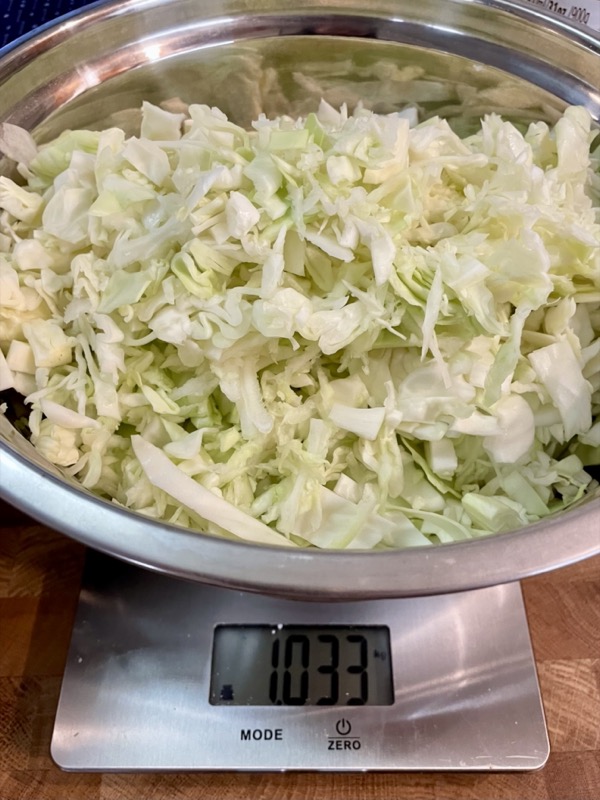
Weigh & Salt: Weigh the amount of sliced cabbage you have on a kitchen scale. Calculate 2.5% of the weight of your cabbage and that will be the amount of salt you will add to the cabbage.

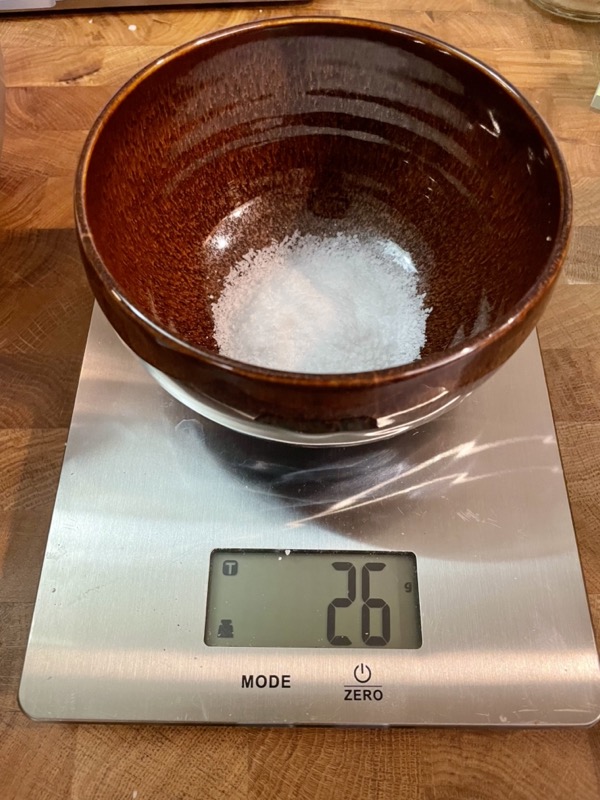
Example: my sliced cabbage weighed 1033g (or 1.033kg) x 0.025 = 25.8g. I rounded up and used 26g of salt.

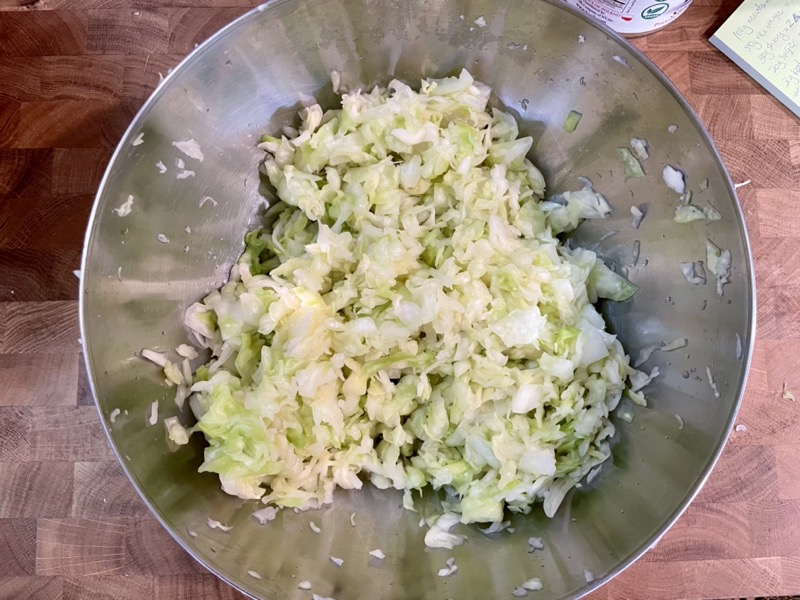
Massage: Make sure your hands are thoroughly washed and cleaned (you can wear disposable kitchen gloves if you’ve got some) – we don’t want to introduce contaminants into our cabbage. Once you’ve added in your salt, massage the cabbage with your hands to mix the salt through, lightly crushing the cabbage as you massage. Do this for about 5-10 minutes until you get a slightly softened and wet cabbage mix.

Pack and Compress: Transfer your sauerkraut to a clean fermenting vessel or glass jar. Use the back of a ladle and compress down the sauerkraut to allow the juices to come up and surround the cabbage. Add a weight* to the top and close the lid. If your container is not light-proof, put your jar in a dark cool place.

*You can get special glass weights for fermenting purposes, but if you don’t have any on hand you can just fill a clean ziploc bag with water, salt, sugar – or anything that will add weight, seal it tight and use it as a weight.

Check on it regularly: If you’re not using a fermenting vessel and if your lid is air-tight, you will need to check on it at least once a day to quickly release any built up gasses. Do not leave the lid off too long to introduce excess air. If you have a special fermenting vessel then you don’t need to do this because the lid will allow the gasses to escape on its own. However, you do need to check on it at least once every 3-4 days to see if any mold has developed or there is any odd discolouration patches. If so, you will need to start over and ensure all your instruments are clean.

2 week final check: After 2 weeks, the sauerkraut should be ready! Do a final inspection for any mold or weird dark patches. The sauerkraut should be a uniform colour and a pale yellow/brown colour (like regular sauerkraut). Give it a taste! This will keep in the fridge for up to 3 months.

B. Pickled Mustard Seeds (Make the day before – this step takes some time and patience and needs to marinate at least 2 hours, so make it early – it will keep in the fridge for 1 month):

  • Ingredients you’ll need:
    • 1/2 cup (100g) yellow mustard seeds
    • 2 Tbsps (30g) rice vinegar
    • 2 Tbsps (30g) sherry vinegar
    • 1.25 Tbsps (20g) granulated sugar
    • 1/2 tsp (3g) kosher salt

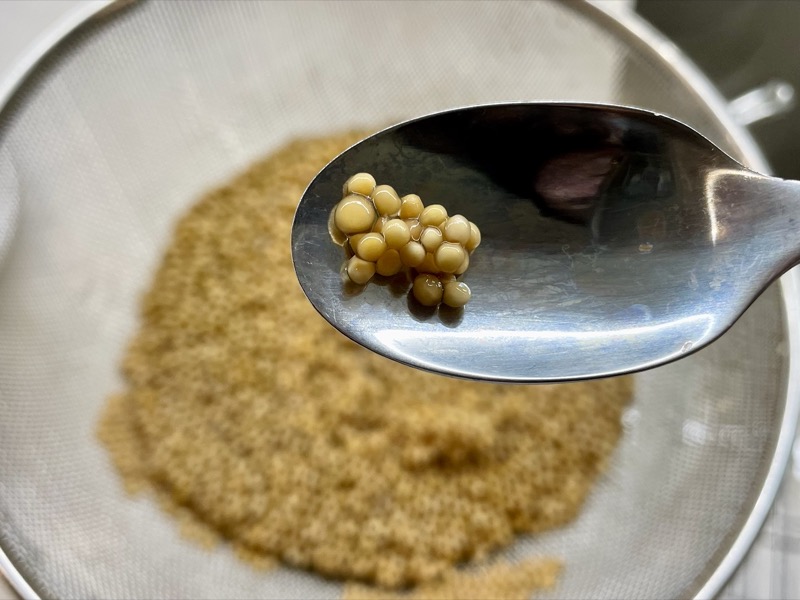
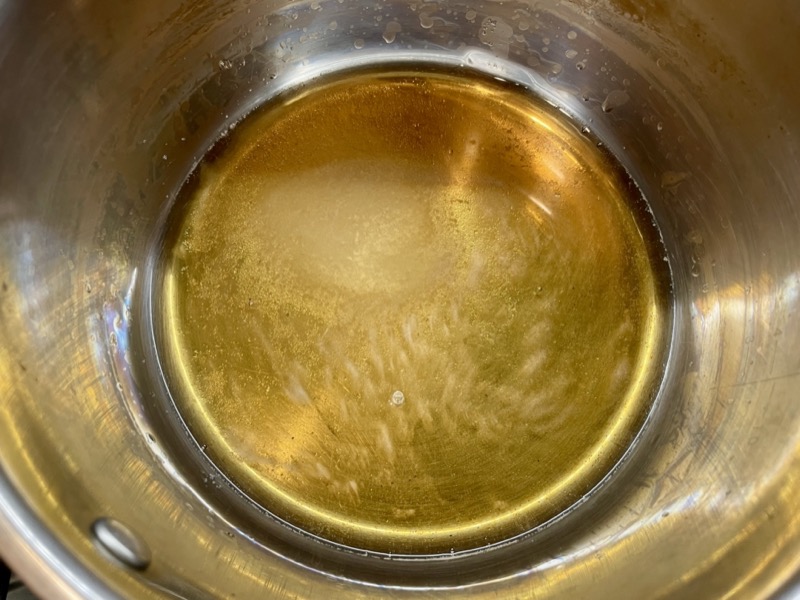
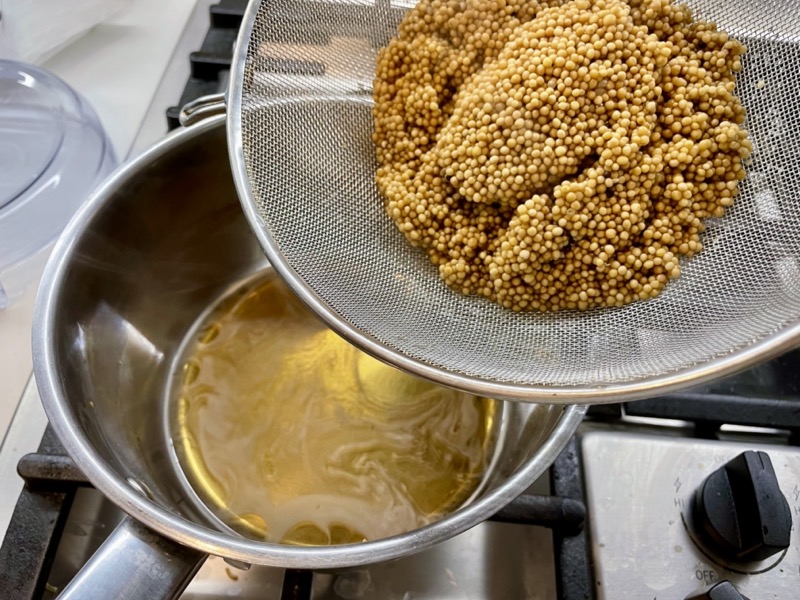
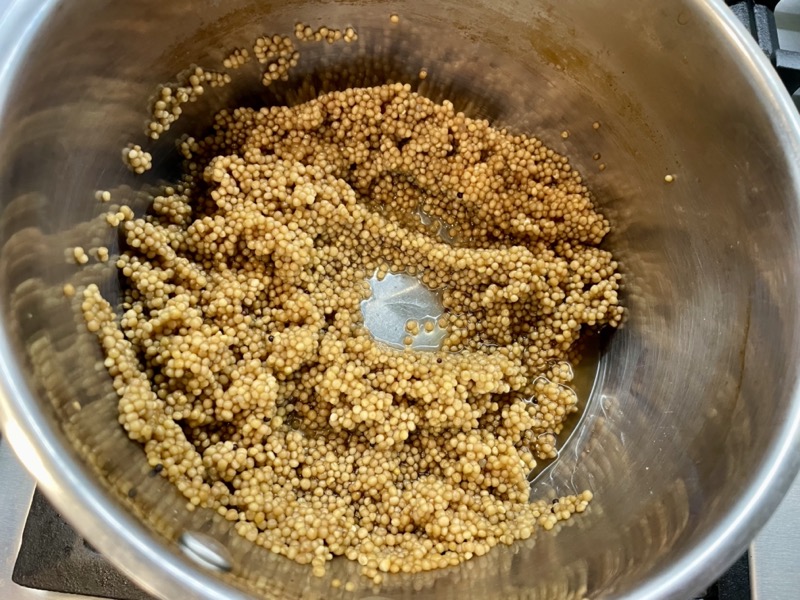
Blanche the mustard seeds: Place your mustard seeds in a saucepan and add enough cold water to submerge the seeds and cover it by about 2-3cm. Turn on the heat to HIGH to bring it to a simmer, then turn the heat down to LOW and continue to simmer for 5 minutes. After 5 minutes, strain and discard the water. Repeat this step 3-8 more times until the seeds are no longer bitter and softened but with a crunchy/pop like caviar. The seeds themselves will not have much of a flavour. Once done, strain the seeds and set aside.

The amount of water doesn’t matter too much but if you use too little, the seeds will absorb it all and you won’t be able to simmer, but if you use too much then it will take much longer for the water to come to a boil and you will be waiting for ages.

Yes, this will take a while depending on how many times you have to do it. I did it 6 times. Dominique Crenn said to do it 10-20 times!! 🤯

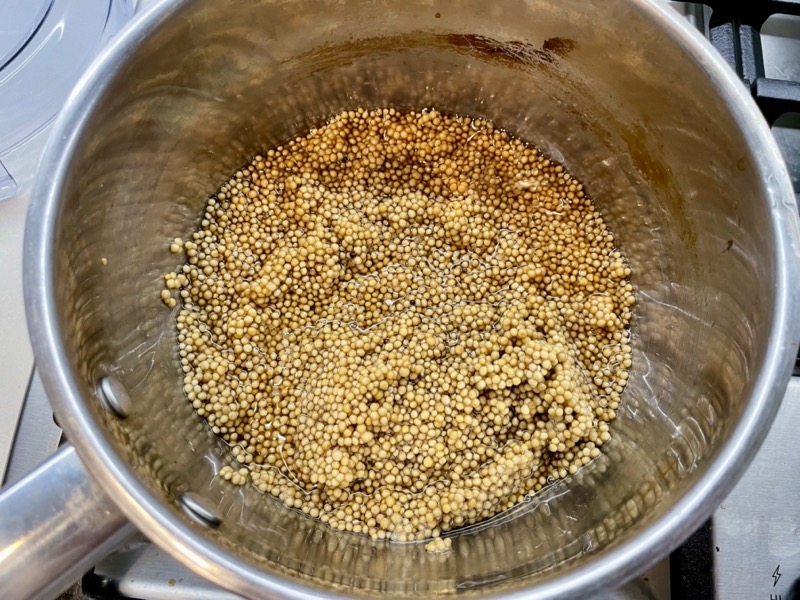
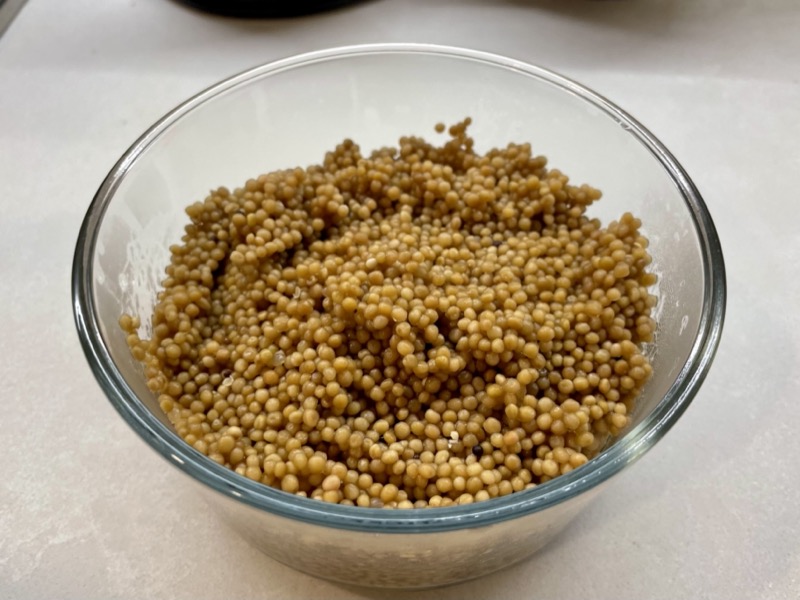
Prepare the vinegar brine: In the same saucepan on LOW heat, add in the rice vinegar, sherry vinegar, sugar, and salt. Stir together until the sugar and salt have dissolved. Add in the blanched mustard seeds and simmer on LOW heat for 15 minutes, until the majority of the vinegar brine has been absorbed by the seeds. Turn off the heat.

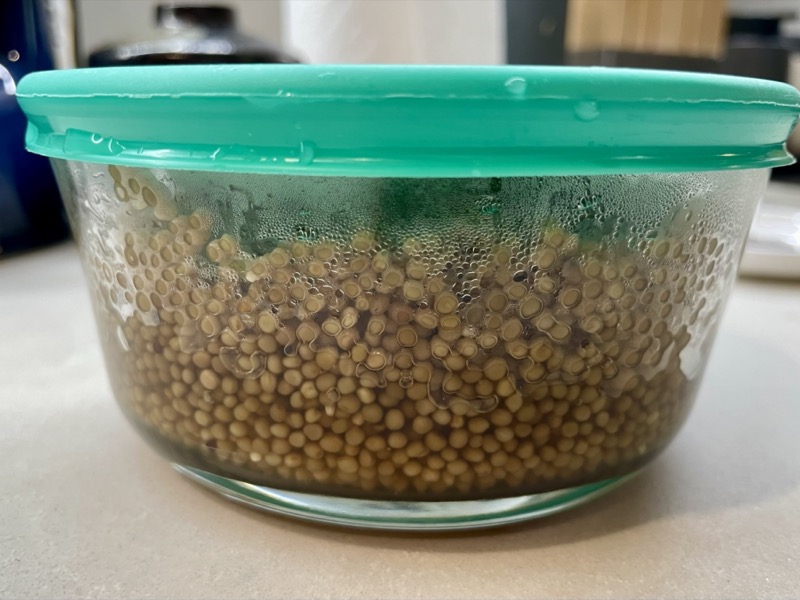
Marinate & Chill: Transfer the mustard seeds and all of the liquid into a heat-proof container and allow it to cool. Put on an airtight lid and let it marinate and chill in the refrigerator for at least 2 hours before using. This will keep in the fridge for up to 1 month.

C. Parsley Oil (Make ahead or the day-of. It will last in the fridge up to a week):

  • Ingredients and Tools you’ll need:
    • 50g flat leaf parsley leaves
    • 100g grapeseed oil
    • Tools: a powerful blender

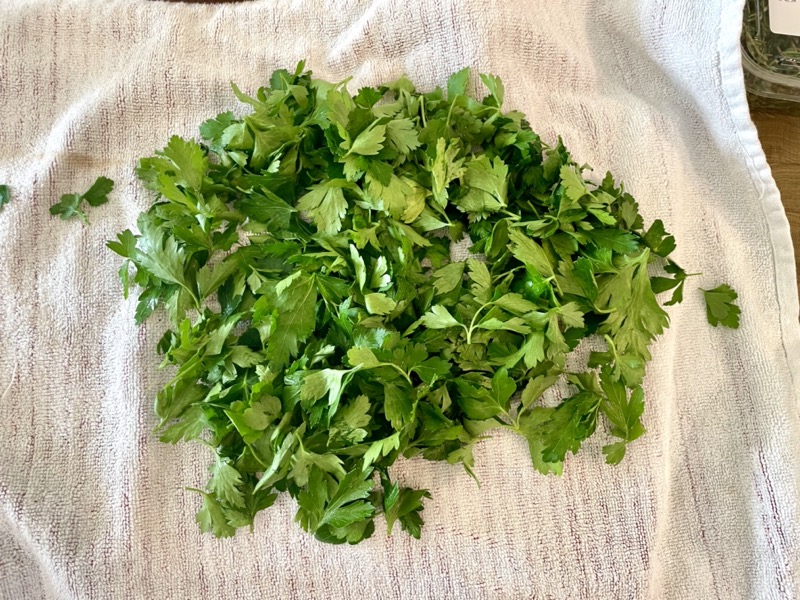
Remove the stems off the parsley so you’re left with just the leaves. Wash and thoroughly dry all the parsley.

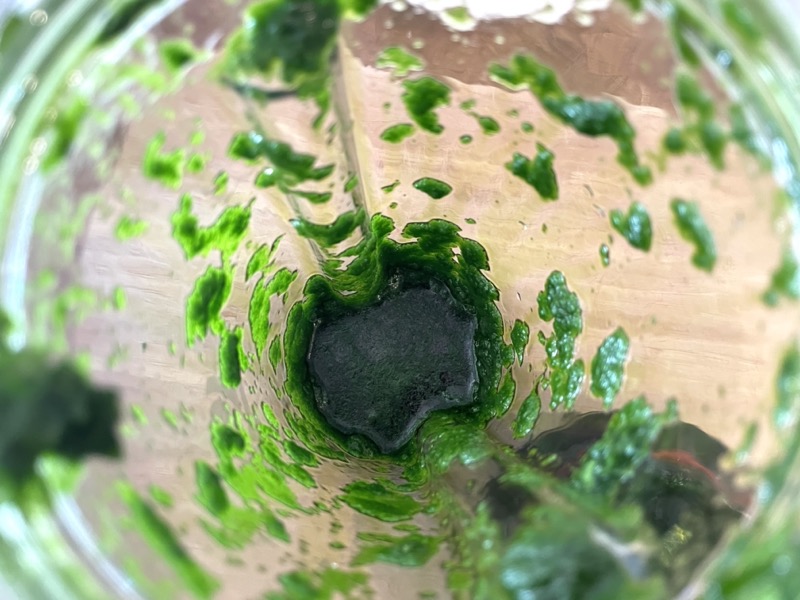
Get out your blender and add a third of the amount of grapeseed oil into the the blender, then the parsley, then drizzle the remaining grapeseed oil over top. Start the blender off slow until everything is broken up, then turn it up to HIGH for 2-3 minutes until you get a smooth paste.

You want a 1:2 ratio between the leaves and the oil. The recipe calls for 50g leaves and 100g oil. If you don’t quite have 50g or have more than 50g, just weigh it and multiply it by two and that will be the amount of grapeseed oil you’ll need.

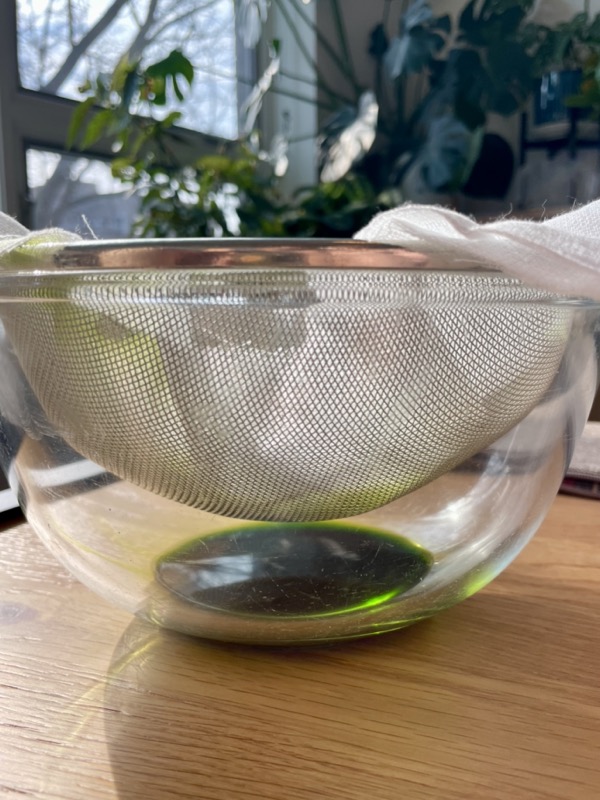
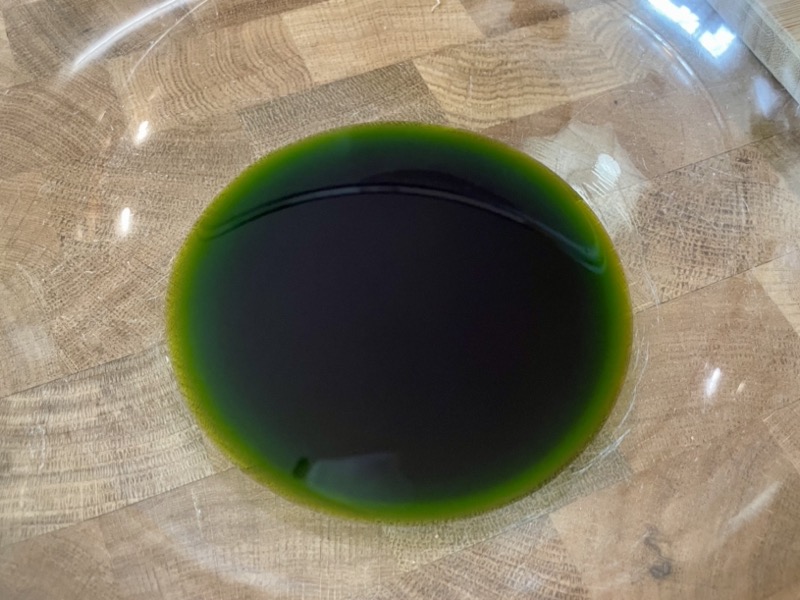
Once blended, line a fine mesh strainer with a cheesecloth/muslin/coffee filter. Strain the blended parsley in oil through this. You can squeeze the bag to release all the oil, but be careful not to squeeze any chunks. You should have a beautiful smooth deep green-coloured oil.

D. Crème Fraîche Sauce (Make ahead or the day-of. It will last in the fridge up to a week):

  • Ingredients you’ll need:
    • 2 Tbsps sauerkraut liquid
    • 500g crème fraîche
    • 2 Tbsps (30g) Sherry vinegar
    • 1/2 Tbsp fresh lemon juice
    • Salt & pepper to taste

In a saucepan on LOW-MED heat, add the sauerkraut liquid and let it come to a simmer. Add in the crème fraîche and whisk until smooth.

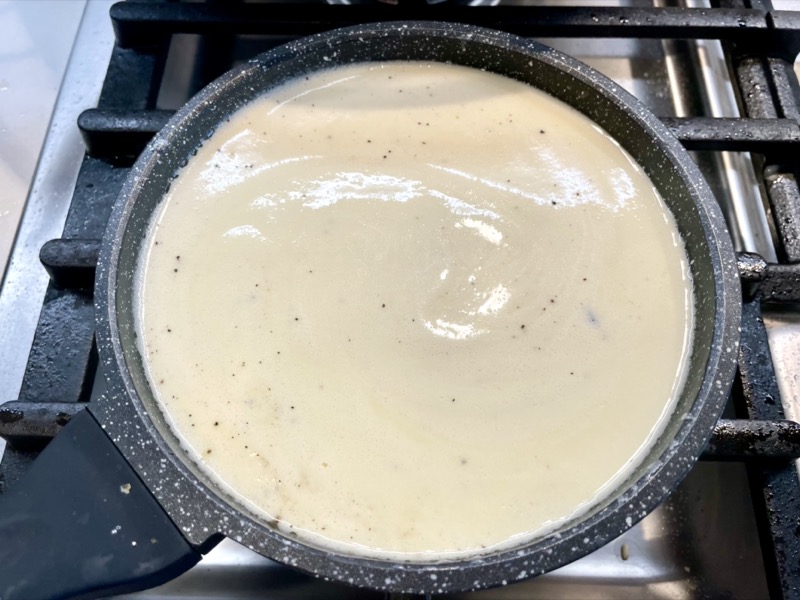
Add in the sherry vinegar, lemon juice, pinch of salt and pepper and mix thoroughly. Taste and add more salt if needed – it should be a creamy tart and slightly salted sauce. Once the sauce is hot, turn off the heat – you do NOT want the sauce to come to a boil, just heated through.

E. Roasted Cabbage (Make the day-of):

  • Ingredients you’ll need:
    • 1 large cabbage, cleaned
    • Grapeseed oil for searing (or any other neutral flavoured oil tolerant to high heat)
    • 2 + 2 cloves of garlic, peeled
    • 4 + 4 sprigs of fresh thyme

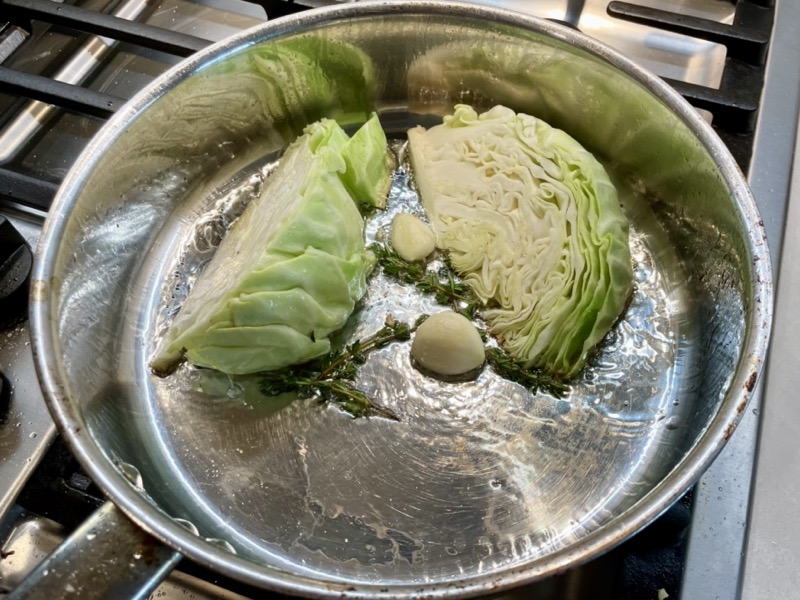
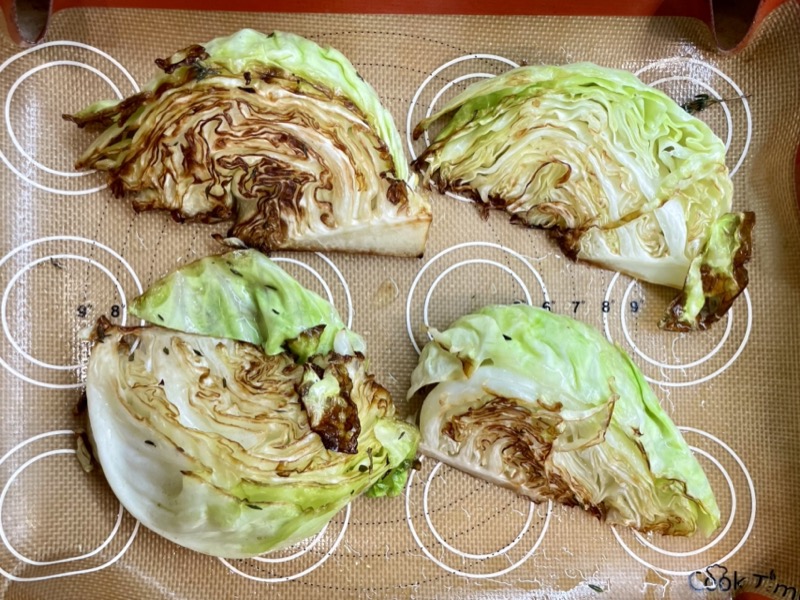
Slice the cabbage into wedges, each wedge will be an eighth of the cabbage – cut it in half, then half of each piece, then half again (see photo). Do NOT remove the core of the cabbage. You want to keep it intact so the leaves all stay together when you’re cooking.

Preheat the oven to 160˚C/325˚F and prepare a lined baking tray.

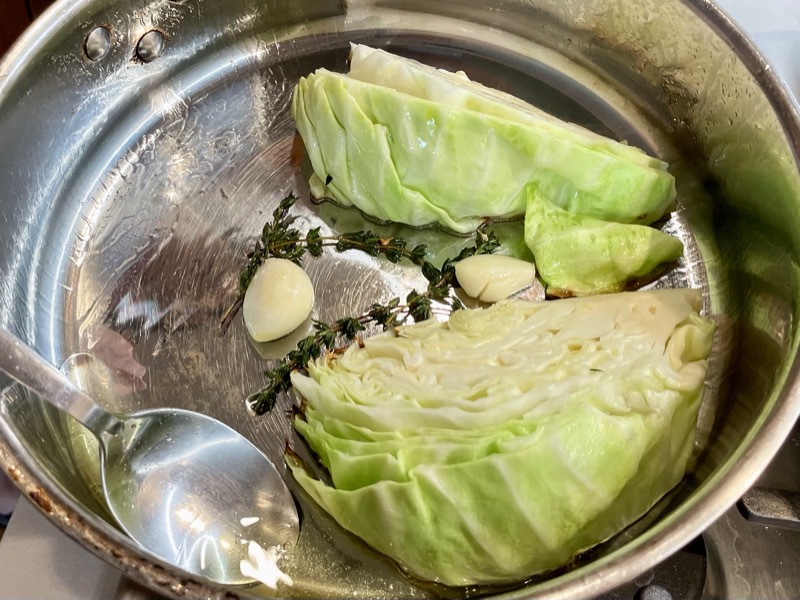
Sear the cabbage: In a wide-based pan on HIGH HEAT, add a drizzle of grapeseed oil to cover the bottom of the pan. Heat the oil until it starts to shimmer then add in 2-3 cabbage wedges depending on the size of your pan (you do not want to crowd the pan or else the moisture released from the cabbage will end up steaming it). Add in 2 peeled garlic cloves and 4 sprigs of fresh thyme to the oil. When fragrant, tilt the pan and baste the hot oil over the cabbages as it sears. As you sear the cabbage on HIGH heat, you will have to move the pan on and off the heat intermittently when the pan gets too hot to control the heat. Watch out for oil splatters and check the underside of the wedges after 2-3 minutes. Once the underside is a nice brown colour, flip it over and sear the other side, continuing to baste with the oil as it cooks. When both sides are seared, transfer the cabbage to a lined baking tray. Repeat with the rest of the cabbage wedges, adding in more grapeseed oil as needed and replacing the garlic cloves and fresh thyme if they get too browned.

Roast the cabbage: Once all the cabbage wedges have been seared, bake them in the preheated oven for 20-25 minutes or until the cabbage is cooked through – use a fork to check the centre for doneness. The fork should go through with a bit of resistance – not too hard that you can’t poke through, but not too soft that it’s mushy. Turn off the oven when done.

While the cabbage is cooking, start heating up the sauerkraut and the crème fraîche sauce to prepare it for plating (see next steps below).

F. ASSEMBLY (finally!):

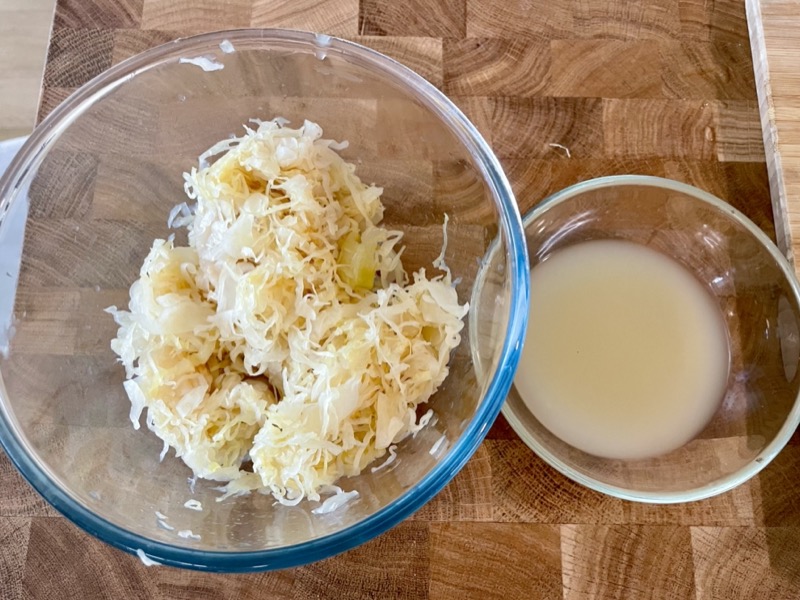
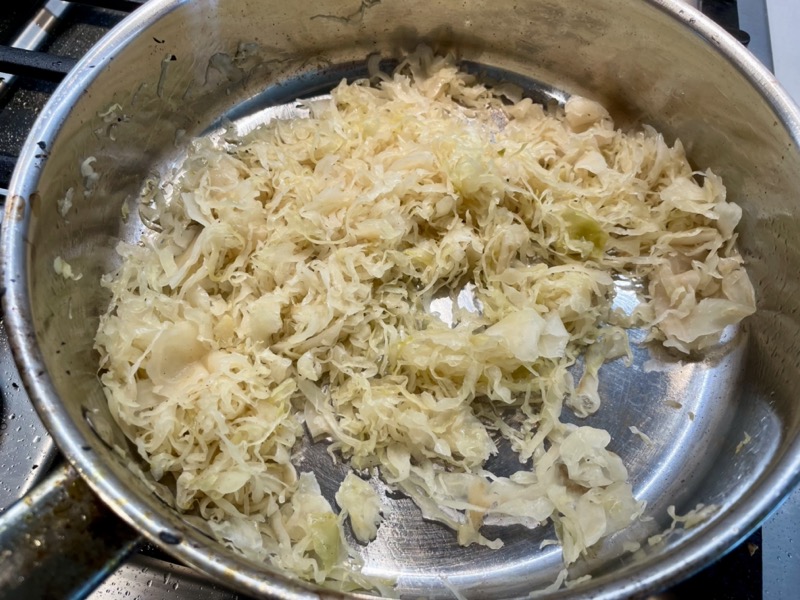
Heat up the sauerkraut: Take out about 2 cups of sauerkraut and squeeze out the liquid a little. Add the sauerkraut to a saucepan on MED heat with 30g of butter and mix until the butter has melted and the sauerkraut has heated through. Turn off the heat.

Warm up the crème fraîche sauce (if it isn’t already): Pour the crème fraîche sauce into a saucepan and heat on LOW-MED heat until hot. Do not let it come to a boil.

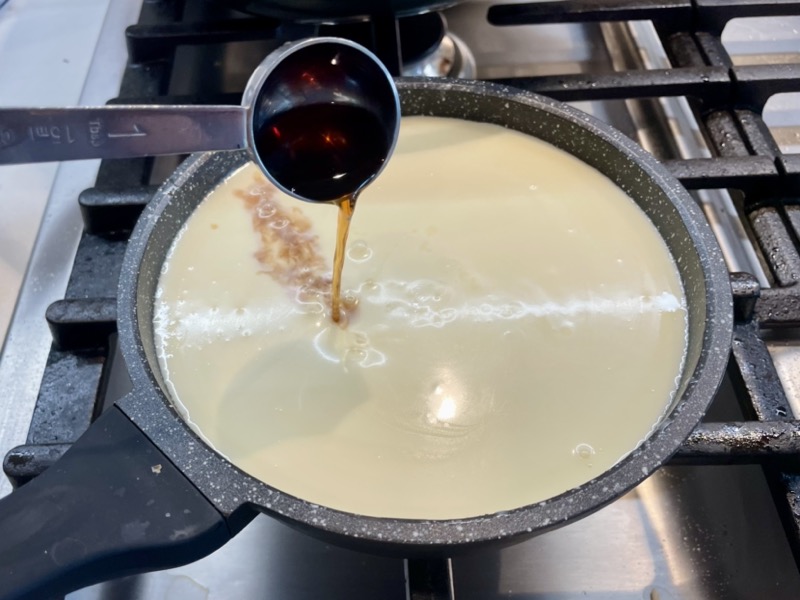
Add 2 Tbsps of parsley oil to the crème fraîche sauce and lightly mix together – don’t mix too thoroughly, you want to see specks and streaks of the green oil contrasting with the white sauce.

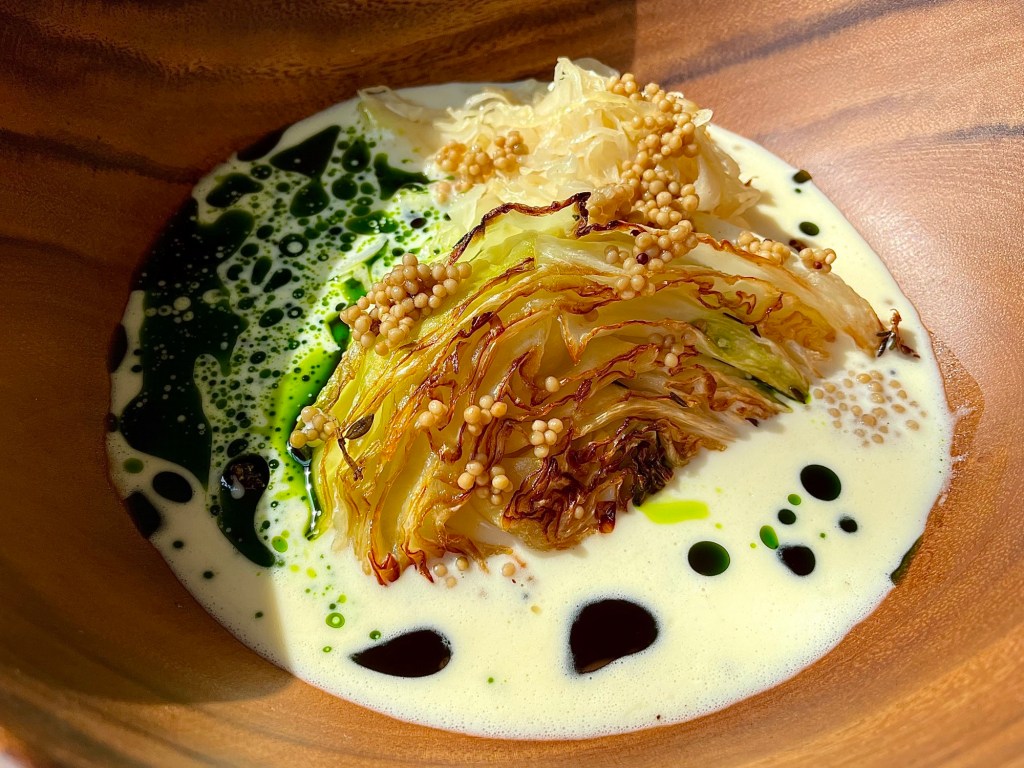
Plating: In a wide base bowl or plate, place 2 roasted cabbage wedges in the centre, followed by a big spoonful of warmed sauerkraut beside it. Add a few spoonfuls of the parsley oil/crème fraîche sauce around the cabbage and finish it off with small spoonfuls of pickled mustard seeds around the plate. Serve immediately. Enjoy!

Summarized Recipe:

Roasted Cabbage with Pickled Mustard Seeds and a Parsley Cream Sauce (a Dominique Crenn recipe)

Date Published: Mar 27th, 2024 | Last Updated: Mar 27th, 2024
Author: Abby |Category: mains, vegetarian
Serves: 4 | Prep time: 24 hours before | Cook time: 1 hour

A. Optional: Homemade Sauerkraut (Make at least 2 weeks ahead, it will keep in the fridge for up to 3 months):

This step is optional. You can use store-bought sauerkraut as well for the recipe, the flavours will be similar.

  • Ingredients & Tools you’ll need:
    • A small or medium savoy cabbage (depending on how much you want to make)
    • Kosher salt
    • Tools: a kitchen scale and maybe gloves, fermenting container with weights or glass jar with a lid and something heavy in a ziploc bag.
  1. Cut: Peel away any wilted, dirty outer leaves of the cabbage. Cut the cabbage in half and cut out the core. Chop the rest of the cabbage thinly.
  2. Weigh & Salt: Weigh the amount of sliced cabbage you have on a kitchen scale. Calculate 2.5% of the weight of your cabbage and that will be the amount of salt you will add to the cabbage.
    • Example: my sliced cabbage weighed 1033g (or 1.033kg) x 0.025 = 25.8g. I rounded up and used 26g of salt.
  3. Massage: Make sure your hands are thoroughly washed and cleaned (you can wear disposable kitchen gloves if you’ve got some) – we don’t want to introduce contaminants into our cabbage. Once you’ve added in your salt, massage the cabbage with your hands to mix the salt through, lightly crushing the cabbage as you massage. Do this for about 5-10 minutes until you get a slightly softened and wet cabbage mix.
  4. Pack and Compress: Transfer your sauerkraut to a clean fermenting vessel or glass jar. Use the back of a ladle and compress down the sauerkraut to allow the juices to come up and surround the cabbage. Add a weight* to the top and close the lid. If your container is not light-proof, put your jar in a dark cool place.
    • *You can get special glass weights for fermenting purposes, but if you don’t have any on hand you can just fill a clean ziploc bag with water, salt, sugar – or anything that will add weight, seal it tight and use it as a weight.
  5. Check on it regularly: If you’re not using a fermenting vessel and if your lid is air-tight, you will need to check on it at least once a day to quickly release any built up gasses. Do not leave the lid off too long to introduce excess air. If you have a special fermenting vessel then you don’t need to do this because the lid will allow the gasses to escape on its own. However, you do need to check on it at least once every 3-4 days to see if any mold has developed or there is any odd discolouration patches. If so, you will need to start over and ensure all your instruments are clean.
  6. 2 week final check: After 2 weeks, the sauerkraut should be ready! Do a final inspection for any mold or weird dark patches. The sauerkraut should be a uniform colour and a pale yellow/brown colour (like regular sauerkraut). Give it a taste! This will keep in the fridge for up to 3 months.

B. Pickled Mustard Seeds (Make the day before – this step takes some time and patience and needs to marinate at least 2 hours, so make it early – it will keep in the fridge for 1 month):

  • Ingredients you’ll need:
    • 1/2 cup (100g) yellow mustard seeds
    • 2 Tbsps (30g) rice vinegar
    • 2 Tbsps (30g) sherry vinegar
    • 1.25 Tbsps (20g) granulated sugar
    • 1/2 tsp (3g) kosher salt
  1. Blanche the mustard seeds: Place your mustard seeds in a saucepan and add enough cold water to submerge the seeds and cover it by about 2-3cm. Turn on the heat to HIGH to bring it to a simmer, then turn the heat down to LOW and continue to simmer for 5 minutes. After 5 minutes, strain and discard the water. Repeat this step 3-8 more times until the seeds are no longer bitter and softened but with a crunchy/pop like caviar. The seeds themselves will not have much of a flavour. Once done, strain the seeds and set aside.
    • The amount of water doesn’t matter too much but if you use too little, the seeds will absorb it all and you won’t be able to simmer, but if you use too much then it will take much longer for the water to come to a boil and you will be waiting for ages.
    • Yes, this will take a while depending on how many times you have to do it. I did it 6 times. Dominique Crenn said to do it 10-20 times!! 🤯
  2. Prepare the vinegar brine: In the same saucepan on LOW heat, add in the rice vinegar, sherry vinegar, sugar, and salt. Stir together until the sugar and salt have dissolved. Add in the blanched mustard seeds and simmer on LOW heat for 15 minutes, until the majority of the vinegar brine has been absorbed by the seeds. Turn off the heat.
  3. Marinate & Chill: Transfer the mustard seeds and all of the liquid into a heat-proof container and allow it to cool. Put on an airtight lid and let it marinate and chill in the refrigerator for at least 2 hours before using. This will keep in the fridge for up to 1 month.

C. Parsley Oil (Make ahead or the day-of. It will last in the fridge up to a week):

  • Ingredients and Tools you’ll need:
    • 50g flat leaf parsley leaves
    • 100g grapeseed oil
    • Tools: a powerful blender
  1. Remove the stems off the parsley so you’re left with just the leaves. Wash and thoroughly dry all the parsley.
  2. Get out your blender and add a third of the amount of grapeseed oil into the the blender, then the parsley, then drizzle the remaining grapeseed oil over top. Start the blender off slow until everything is broken up, then turn it up to HIGH for 2-3 minutes until you get a smooth paste.
    • You want a 1:2 ratio between the leaves and the oil. The recipe calls for 50g leaves and 100g oil. If you don’t quite have 50g or have more than 50g, just weigh it and multiply it by two and that will be the amount of grapeseed oil you’ll need.
  3. Once blended, line a fine mesh strainer with a cheesecloth/muslin/coffee filter. Strain the blended parsley in oil through this. You can squeeze the bag to release all the oil, but be careful not to squeeze any chunks. You should have a beautiful smooth deep green-coloured oil.

D. Crème Fraîche Sauce (Make ahead or the day-of. It will last in the fridge up to a week):

  • Ingredients you’ll need:
    • 2 Tbsps sauerkraut liquid
    • 500g crème fraîche
    • 2 Tbsps (30g) Sherry vinegar
    • 1/2 Tbsp fresh lemon juice
    • Salt & pepper to taste
  1. In a saucepan on LOW-MED heat, add the sauerkraut liquid and let it come to a simmer.
  2. Add in the crème fraîche and whisk until smooth.
  3. Add in the sherry vinegar, lemon juice, pinch of salt and pepper and mix thoroughly. Taste and add more salt if needed – it should be a creamy tart and slightly salted sauce. Once the sauce is hot, turn off the heat – you do NOT want the sauce to come to a boil, just heated through.

E. Roasted Cabbage (Make the day-of):

  • Ingredients you’ll need:
    • 1 large cabbage, cleaned
    • Grapeseed oil for searing (or any other neutral flavoured oil tolerant to high heat)
    • 2 + 2 cloves of garlic, peeled
    • 4 + 4 sprigs of fresh thyme
  1. Slice the cabbage into wedges, each wedge will be an eighth of the cabbage – cut it in half, then half of each piece, then half again (see photo). Do NOT remove the core of the cabbage. You want to keep it intact so the leaves all stay together when you’re cooking.
  2. Preheat the oven to 160˚C/325˚F and prepare a lined baking tray.
  3. Sear the cabbage: In a wide-based pan on HIGH HEAT, add a drizzle of grapeseed oil to cover the bottom of the pan. Heat the oil until it starts to shimmer then add in 2-3 cabbage wedges depending on the size of your pan (you do not want to crowd the pan or else the moisture released from the cabbage will end up steaming it). Add in 2 peeled garlic cloves and 4 sprigs of fresh thyme to the oil. When fragrant, tilt the pan and baste the hot oil over the cabbages as it sears. As you sear the cabbage on HIGH heat, you will have to move the pan on and off the heat intermittently when the pan gets too hot to control the heat. Watch out for oil splatters and check the underside of the wedges after 2-3 minutes. Once the underside is a nice brown colour, flip it over and sear the other side, continuing to baste with the oil as it cooks. When both sides are seared, transfer the cabbage to a lined baking tray. Repeat with the rest of the cabbage wedges, adding in more grapeseed oil as needed and replacing the garlic cloves and fresh thyme if they get too browned.
  4. Roast the cabbage: Once all the cabbage wedges have been seared, bake them in the preheated oven for 20-25 minutes or until the cabbage is cooked through – use a fork to check the centre for doneness. The fork should go through with a bit of resistance – not too hard that you can’t poke through, but not too soft that it’s mushy. Turn off the oven when done.
    • While the cabbage is cooking, start heating up the sauerkraut and the crème fraîche sauce to prepare it for plating (see next steps below).

F. ASSEMBLY (finally!):

  1. Heat up the sauerkraut: Take out about 2 cups of sauerkraut and squeeze out the liquid a little. Add the sauerkraut to a saucepan on MED heat with 30g of butter and mix until the butter has melted and the sauerkraut has heated through. Turn off the heat.
  2. Warm up the crème fraîche sauce (if it isn’t already): Pour the crème fraîche sauce into a saucepan and heat on LOW-MED heat until hot. Do not let it come to a boil.
  3. Add 2 Tbsps of parsley oil to the crème fraîche sauce and lightly mix together – don’t mix too thoroughly, you want to see specks and streaks of the green oil contrasting with the white sauce.
  4. Plating: In a wide base bowl or plate, place 2 roasted cabbage wedges in the centre, followed by a big spoonful of warmed sauerkraut beside it. Add a few spoonfuls of the parsley oil/crème fraîche sauce around the cabbage and finish it off with small spoonfuls of pickled mustard seeds around the plate. Serve immediately. Enjoy!
Asian Smashed Cucumber Tomato Egg Salad


Date Published: Mar 5th, 2024 | Last Updated: Mar 5th, 2024
Author: Abby |Category: Asian, side dishes, salads, mains, <30 mins, easy, quick, healthy, low-cal, Taiwanese, vegetarian
Serves: 2 as mains, 1 large plate | Prep time: 30 mins | Cook time: 5 mins

Jump to recipe |

This recipe came to me on a search to use up leftover salad ingredients to clear the fridge before our 2 week vacation overseas. It’s quick, easy, flavourful, and kept us on track of our healthy eating goals! This dish is like a cross between a smashed cucumber salad and a tomato egg stir-fry (番茄炒蛋).

In our efforts to be more healthy in this new year, we stocked up on fresh salad ingredients in bulk from Costco just over a week ago and have been slowly getting through it before our trip (it’s amazing how long cos lettuce keeps in the fridge!). It’s the night before our flight and we managed to finish all the leafy greens, but I still had one cucumber and a handful of cherry tomatoes left. Toby has not been a fan of this batch of cherry tomatoes and says they’re too tart for him (I think it’s fine), so instead of making a basic chopped cucumber and tomato salad, I looked for other options that might mask the tomatoes, but to also be quick and easy so I could start packing. I came across this recipe from Bon Appétit. It came out beautifully and so easy the first time. I’ve made some adaptations and added in exact measurements and ended up with this recipe to share!

What is Asian Smashed Cucumber Salad?

Smashed cucumber salad is a very popular Chinese starter/side dish. It’s served cold and in its essence is a mix of cucumber, salt, raw garlic, and some sort of acid (usually black vinegar). It’s supposed to light and refreshing, yet still have a punch of garlicky saltiness to be savoury. There are many variations out there and some people will add in sesame seeds, chilli, ginger, and/or cilantro. You’ll commonly see this dish not only in nice restaurants, but also in small street-side shops in Taiwan. It’s quick, easy, and takes minimal effort and ingredients. An Asian smashed cucumber salad does not traditionally have tomatoes nor eggs in it, so if you want to go the OG route, leave them out, but I prefer this version because it bulks it up and balances the dish out so it’s not so punchy in flavours and you can eat a whole bowl in one sitting as a main meal.

Smashing is important!

A key component to this dish is smashing the cucumbers. If your cucumbers look like they’ve been chopped, then you haven’t smashed them enough. You want the outside skin to crack and the inside to be crushed, but not flattened. Smashing cucumbers allow the marinating sauce to penetrate deeper and infuse the flavours better. It’s also a good way to relieve some stress 😜.

Anyways, without further ado, here’s the recipe! If you have any comments or suggestions, I’d love to hear from you in the comment section! You can follow me on instagram, youtube and facebook to see all the recipes I post!

Happy cooking!

Ingredients you’ll need:

  • 1 cucumber (English hothouse – those long ones)
  • 1/2 Tbsps cooking salt
  • A large handful of cherry tomatoes, halved
  • 2 large cloves garlic, minced
  • 1/4 cup black vinegar
  • 2 Tbsps granulated sugar
  • 6 eggs
  • 3 green onions/scallions, sliced
  • 1/4 tsp white pepper
  • Drizzle of sesame oil 
  • 2 Tbsps of chilli crisp (or more to your liking) – you can substitute with chilli oil instead

Directions:

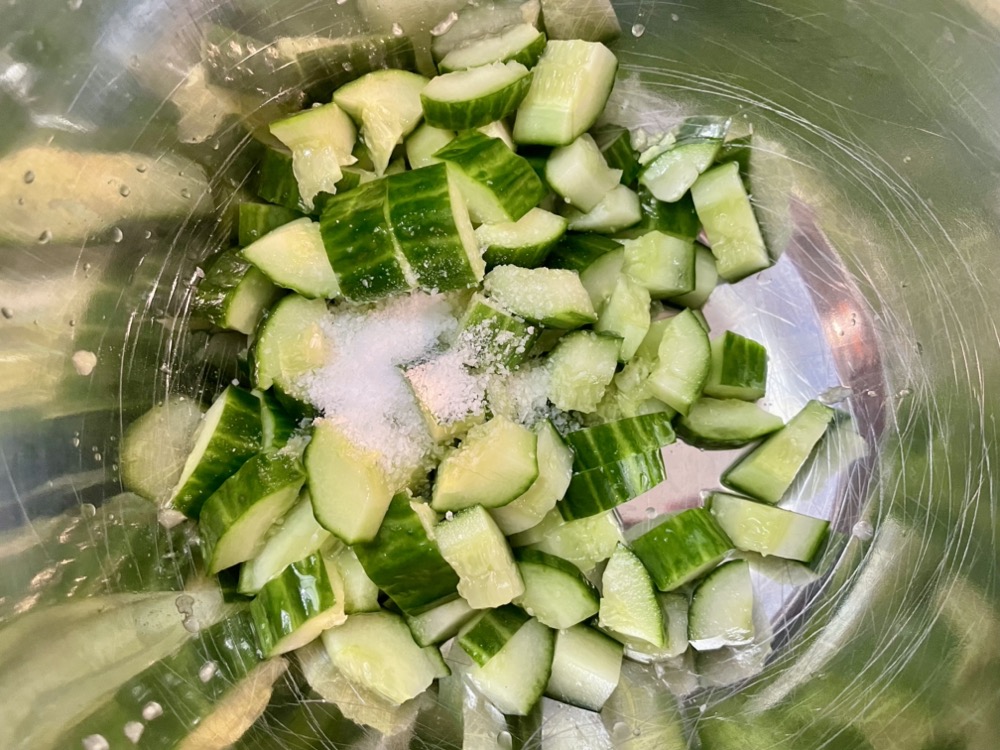
Cut the cucumber in half lengthwise and again crosswise. Use a large knife on its flat side to smash the cucumber until cracked then slice into bite sized pieces (see photo).

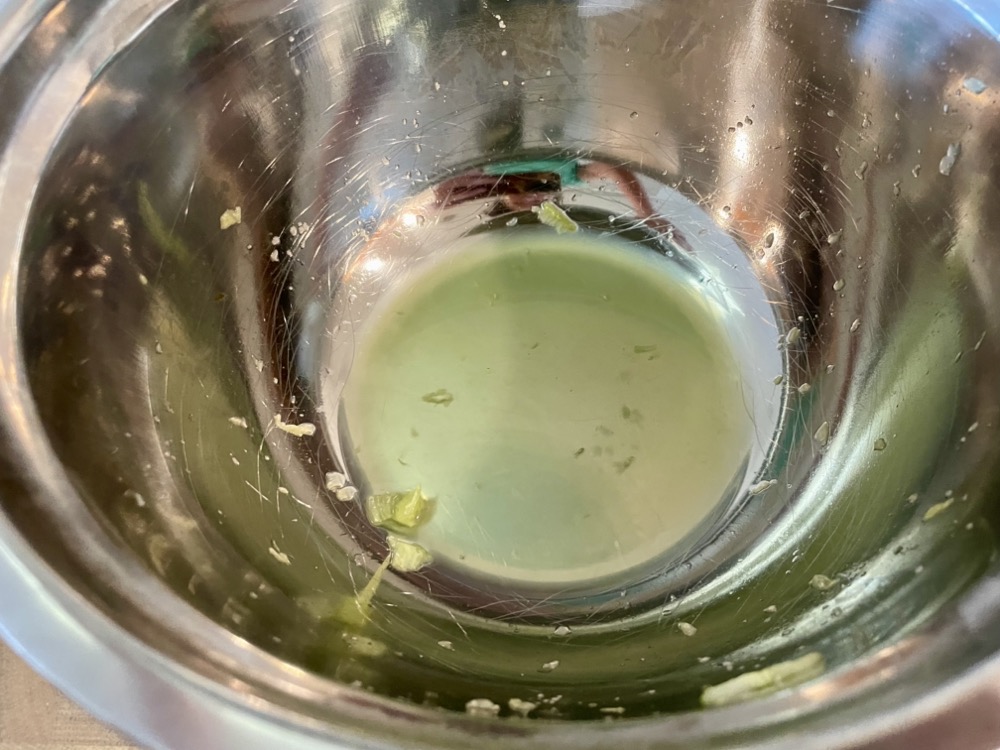
Place the smashed cucumber in a strainer over a bowl and mix in 1/2 Tbsp of salt. Let the cucumber sit for 30 minutes to allow excess water to be released. After 30 mins, discard the released cucumber water and place the cucumber in a mixing bowl.

Add the sliced cherry tomatoes, minced garlic, black vinegar, and sugar to the cucumbers. Mix everything together and let it marinate for another 30 minutes.

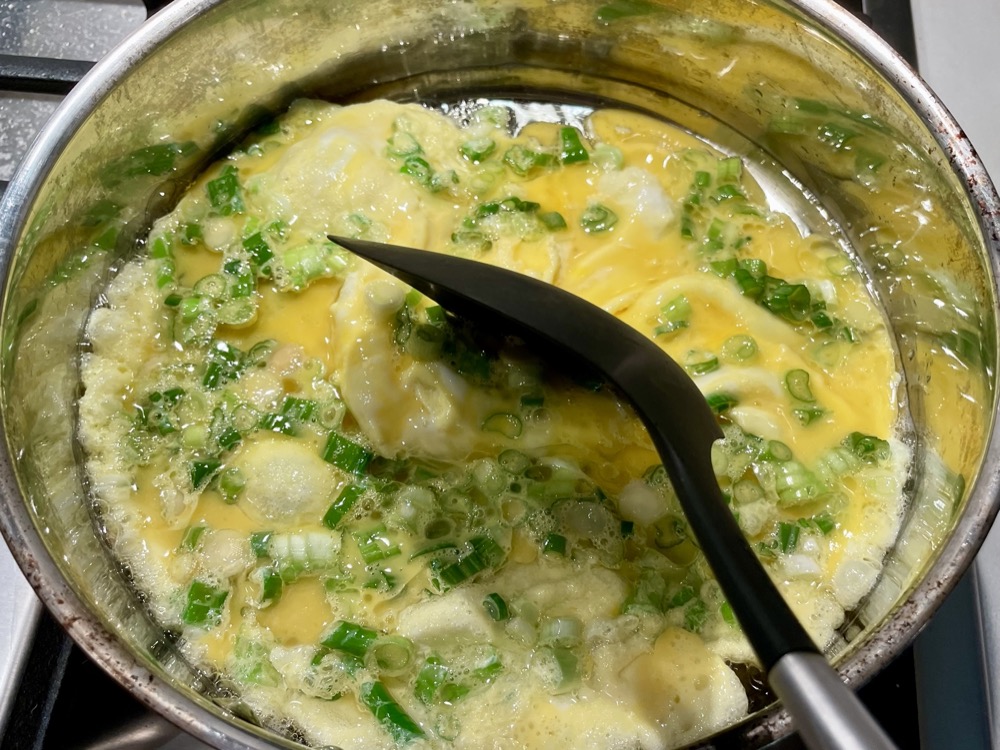
Make the eggs: While the cucumber and tomatoes are marinating, crack the eggs into a bowl and whisk. Mix in green onions and a pinch of salt. Heat a pan on MED HIGH heat and add in enough oil to coat the bottom of the pan. Let the pan get hot (it’ll be ready when the oil is shimmering and just starting to smoke) then add a drop of egg. The oil is hot enough if the egg drop puffs up right away. Add in the rest of the egg mixture carefully and the edges should start to puff within a few seconds. Once the edges are slightly browned, use a spatula to gently move the egg around to cook evenly. You want big chunks of scrambled eggs that’s slightly crispy on the edges but still soft and moist (see photo). This should take less than 2 minutes. Turn off the heat and scoop the egg into the bowl with the marinating cucumber and tomatoes.

Add white pepper, a drizzle of sesame oil, and a few spoonfuls of chilli crisp. Mix everything around, taste and adjust salt or sugar to taste. You should have a tangy, sweet, and salty dish. Serve immediately on a wide bottom dish so the liquid pools outwards.

Summarized Recipe:

Asian Smashed Cucumber Tomato Egg Salad

Date Published: Mar 5th, 2024 | Last Updated: Mar 5th, 2024
Author: Abby |Category: Asian, side dishes, salads, mains, <30 mins, easy, quick, healthy, low-cal, Taiwanese, vegetarian
Serves: 2 as mains, 1 large plate | Prep time: 30 mins | Cook time: 5 mins

Ingredients:

  • 1 cucumber (English hothouse – those long ones)
  • 1/2 Tbsps cooking salt
  • A large handful of cherry tomatoes, halved
  • 2 large cloves garlic, minced
  • 1/4 cup black vinegar
  • 2 Tbsps granulated sugar
  • 6 eggs
  • 3 green onions/scallions, sliced
  • 1/4 tsp white pepper
  • Drizzle of sesame oil 
  • 2 Tbsps of chilli crisp (or more to your liking) – you can substitute with chilli oil instead

Directions:

  1. Cut the cucumber in half lengthwise and again crosswise. Use a large knife on its flat side to smash the cucumber until cracked then slice into bite sized pieces (see photo). Place the smashed cucumber in a strainer over a bowl and mix in 1/2 Tbsp of salt. Let the cucumber sit for 30 minutes to allow excess water to be released. After 30 mins, discard the released cucumber water and place the cucumber in a mixing bowl.
  2. Add the sliced cherry tomatoes, minced garlic, black vinegar, and sugar to the cucumbers. Mix everything together and let it marinate for another 30 minutes.
  3. Make the eggs: While the cucumber and tomatoes are marinating, crack the eggs into a bowl and whisk. Mix in green onions and a pinch of salt. Heat a pan on MED HIGH heat and add in enough oil to coat the bottom of the pan. Let the pan get hot (it’ll be ready when the oil is shimmering and just starting to smoke) then add a drop of egg. The oil is hot enough if the egg drop puffs up right away. Add in the rest of the egg mixture carefully and the edges should start to puff within a few seconds. Once the edges are slightly browned, use a spatula to gently move the egg around to cook evenly. You want big chunks of scrambled eggs that’s slightly crispy on the edges but still soft and moist (see photo). This should take less than 2 minutes. Turn off the heat and scoop the egg into the bowl with the marinating cucumber and tomatoes.
  4. Add white pepper, a drizzle of sesame oil, and a few spoonfuls of chilli crisp. Mix everything around, taste and adjust salt or sugar to taste. You should have a tangy, sweet, and salty dish. Serve immediately on a wide bottom dish so the liquid pools outwards.

Legit Tonkotsu Ramen from scratch (in an Instant Pot)


Date Published: Mar 3rd, 2024 | Last Updated: Mar 3rd, 2024
Author: Abby |Category: Asian, mains, soups
Serves: 4-6 | Prep time: 12 hours before to marinate | Cook time: 4.5 hours total

Jump to recipe |

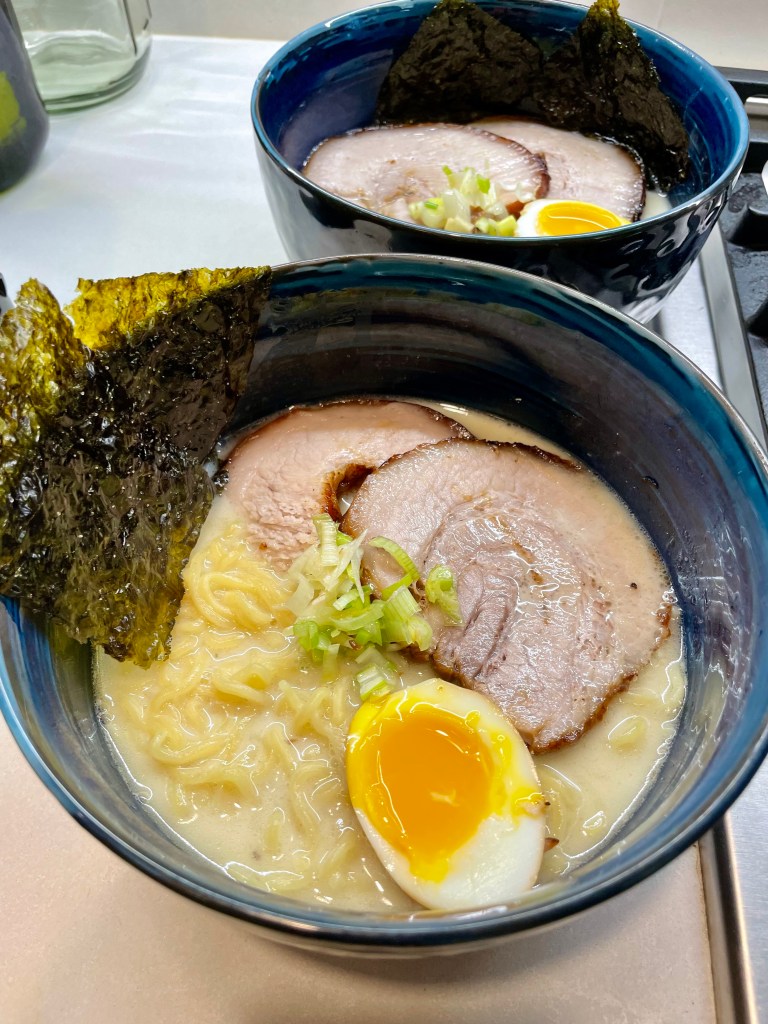
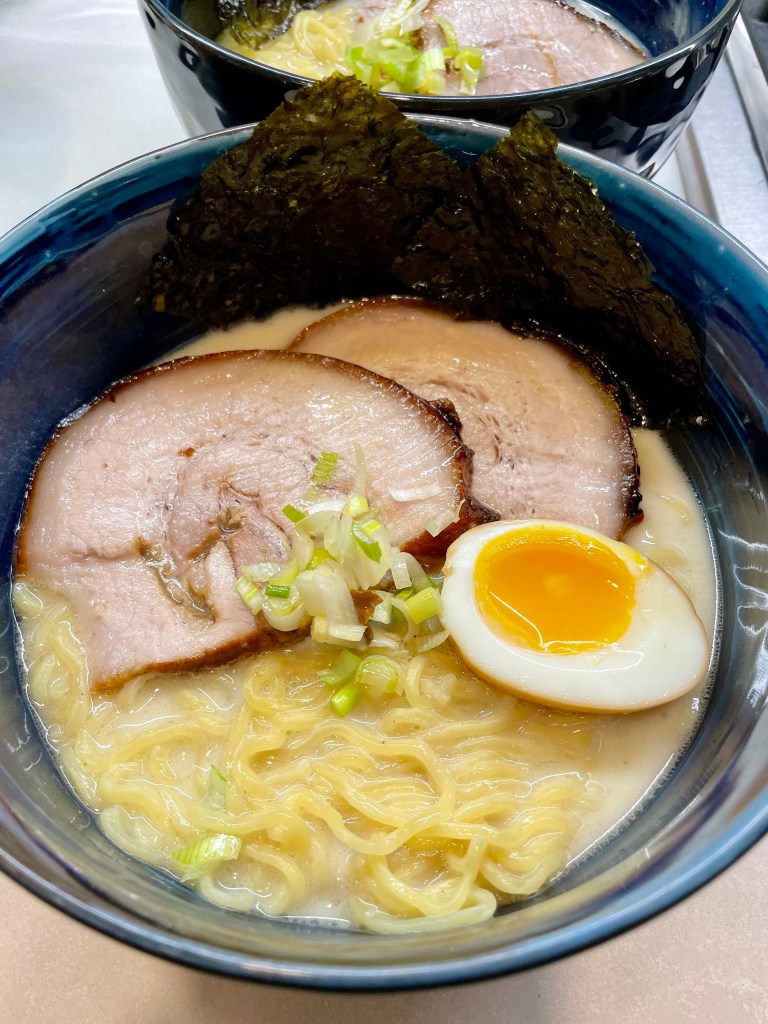
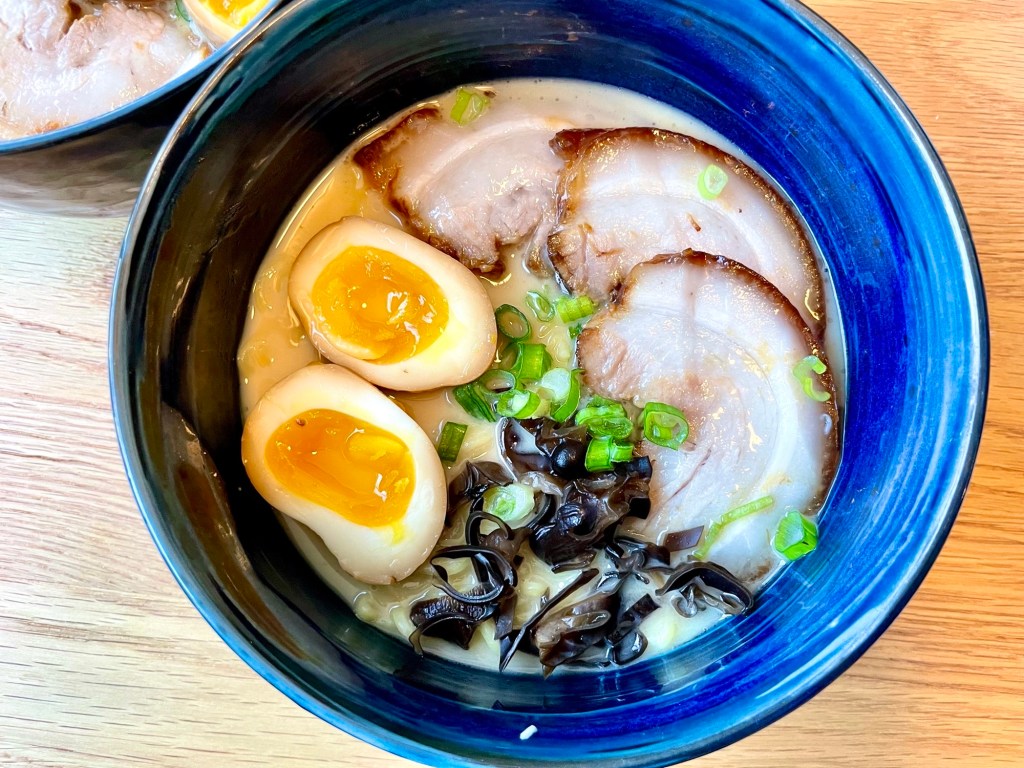
A tonkotsu ramen is my all time favourite thing to eat, so I’m extra excited to be sharing this recipe with everyone! It’s a beautiful bowl of a rich pork bone broth with noodles, chashu, and a ramen egg. No matter what is happening in my life, a tonkotsu ramen will always make it better. When Toby and I travel, I’m always seeking out the local ramen spots – I must’ve had over a hundred bowls of ramen in my life time…so far.

I’ve always wanted to try making a tonkotsu ramen, however due to its long 12 hour cooking time, it’s complexities (ramen shops will use a refractometer to check their broth!), and having to source pork bones on the move, it has constantly been on the back burner. I’ve searched time and time again for a simplified recipe and even went as far as buying instant tonkotsu ramen to satisfy the cravings, but I’ve never succeeded in finding anything that was close to restaurant quality – until now! Recently I stumbled across a ramen subreddit where u/ramen_lord posted his version of a tonkotsu ramen but made in an Instant Pot in 3 hours (find original recipe here)! This made it much less intimidating for me and I decided to try it out. Amazingly, the recipe turned out near perfect the first time and after the second time, Toby said it was the best tonkotsu ramen he’s ever had. It was THAT good! If you’re ever reading this, thank you u/ramen_lord! (If you check out the original link, he also gives a recipe at making your own ramen noodles.)

Although it is a long recipe, each step and component is pretty easy and straightforward, so I’d encourage you to give it a try if you’re a ramen lover like me!

What Makes up a Tonkotsu Ramen?

A traditional tonkotsu ramen is made up of 6 major components, and yes, all of them are included in this very thorough monster recipe!

1. Chashu – pork belly slices

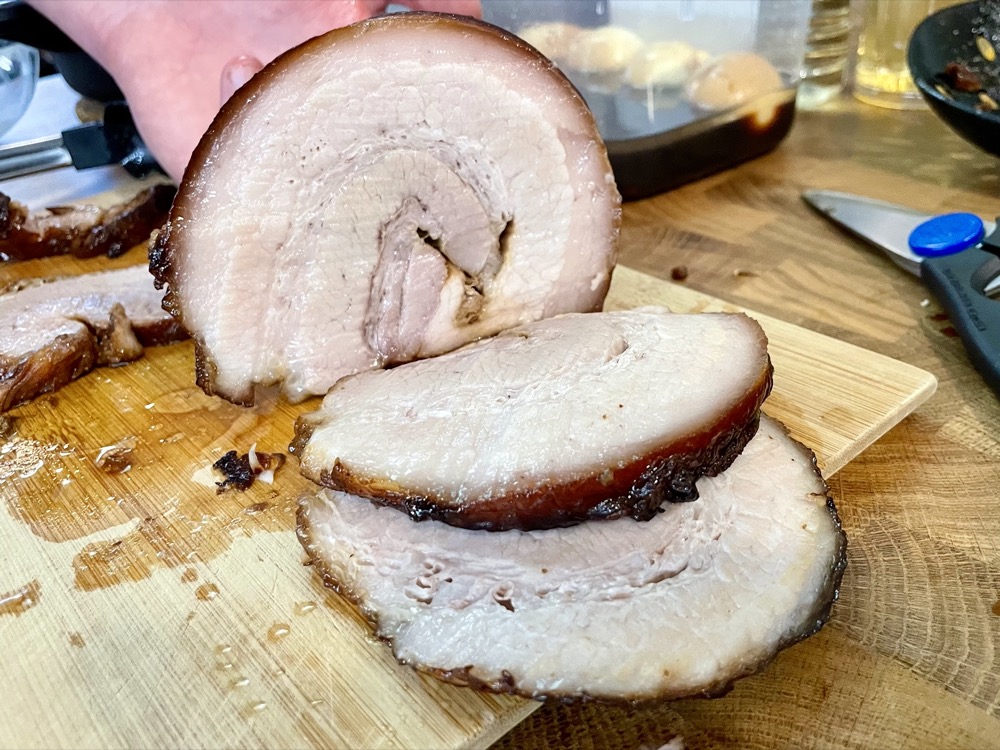
Chashu is a Japanese-style savoury pork belly that is braised the day before and marinated overnight. This is the main protein of the dish. Due to its fatty richness, it is usually served in thin slices and in small portions. This recipe will make about 2-3 slices per bowl. If you’re big on pork belly, then double the chashu portion of the recipe!

Note: Japanese chashu differs from the Chinese-style Charsiu which is barbecue pork rather than braised pork.

2. Ramen egg – a marinated boiled egg with a perfectly soft jammy centre

A ramen egg is a specific style of egg served in a bowl of ramen. It is always soft to medium-boiled to ensure a jammy velvety centre then marinated in a savoury sauce – I marinate mine in the chashu marinade overnight. Make sure you have a timer ready when you cook the eggs to ensure the perfect soft centre.

The ramen egg is always my favourite part of a bowl of ramen (my family would agree with me). For some reason, Toby is not a huge fan of eggs in general, so every time we go out for ramen he always gives me his egg! Lucky me 😊🙃❤️.

3. Tonkotsu broth – a rich and creamy pork bone broth

This is the star of the show. “Tonkotsu” literally translates to “pork bone”, which adequately names this ramen dish. The traditional method of making a tonkotsu broth is to boil the pork bones on high heat for 12 hours then add in aromatics. It is a long and arduous process which is why I’ve avoided making this recipe for so long. This recipe uses the Instant Pot pressure cooker to bring down the cook time to just 3 hours and produces restaurant-quality results!

A classic tonkotsu broth is creamy and rich due to the breakdown of the gelatin in the pork bones. Some recipes will blend pork fat and add it to the broth to make it even more creamy. For the sake of my cholesterol, there is no extra blended fat in this recipe. The broth here is just as good without it.

The colour of a tonkotsu broth should be opaque and milky white. Traditionally the pork bones are cleaned thoroughly by boiling them and removing the scum that is released and then scrubbing them clean before the broth is even started. Many purists out there will insist that you must clean the bones this way or else your broth will never be white. My first time making this recipe I cleaned the bones this way. Although it took extra time, it did produce a white broth. However after further research, I realized that you can also just roast the bones in the oven rather than scrubbing them clean and you still get the same results but with much less work. I tried it both ways and the results were quite similar. The oven roasting method produced a very slightly darker broth, however I’m sure that if I blended more of it in the blender, the results would be the same. Myth busted!

*Note: Tonkotsu is not to be confused with “tonkatsu” which is a breaded and fried pork cutlet

4. Tare – the flavour enhancer/salt of the dish

The tonkotsu broth alone lacks salt and umami flavour but when combined with the tare, it makes the perfect broth. Tare differs greatly between ramen shops and even between chefs. It can range from a simple mix of sauces to an incredibly complex recipe. It’s a chef’s signature to make a dish uniquely theirs. This recipe is a simplified version that’s essentially soy sauce marinated with mushrooms, seaweed, and dried fish.

5. Ramen noodles

Ramen noodles are different than regular noodles. They are alkaline and has a distinct taste with a slight chewy/bounce texture. To stay true to the authenticity of a tonkotsu ramen, I’d recommend taking the extra effort to find ramen noodles – you’re putting in all this effort to make it all from scratch anyway!

When looking for ramen noodles, try to buy them either freshly made or in the frozen section. Avoid the dehydrated dried noodles that are labeled as ‘ramen noodles’ – I’ve tried a few different kinds in the past and they’re just not the same.

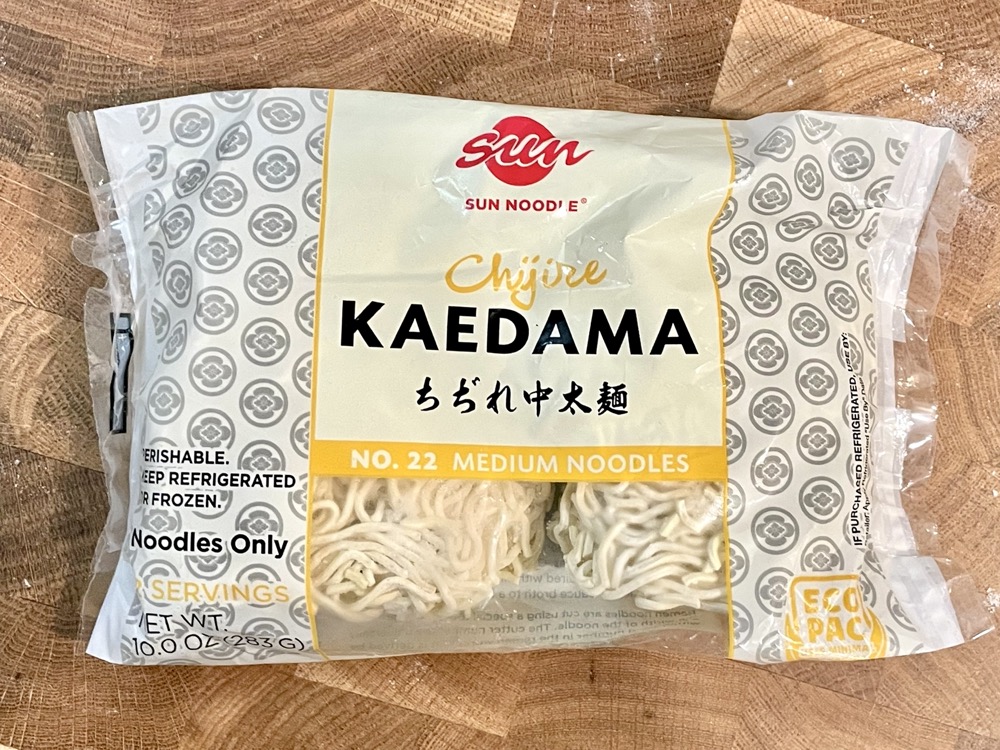
My favourite ramen noodles are made from Sun Noodle and they come in medium or thick noodles (see picture). This one package has 2 servings – it doesn’t seem like much, but it definitely expands when cooking!

Myojo is another brand of ramen noodles I’ve heard good things about, but never tried myself.

6. Toppings

There is a wide variety of toppings you can add to your ramen. I’ve put some examples in the recipe below, but feel free to add in whatever you like. Different restaurants will have different offerings of what you can add – it all depends on personal preference. A few examples of toppings include: bean sprouts, corn, seaweed, sliced wood ear fungus, fresh garlic, chili paste, chopped green onion…etc.

Anyways, without further ado, here’s the recipe! If you have any comments or suggestions, I’d love to hear from you in the comment section! You can follow me on instagram, youtube and facebook to see all the recipes I post!

Happy cooking!

Equipment you’ll need:

  • Pressure cooker (at least 8 quarts in size)
  • Cooking twine
  • Small pot with lid/saucepan

Ingredients you’ll need:

  • Chashu (Pork Belly): MAKE THE DAY BEFORE
    • 500g (1.5lbs) pork belly with the skin on or off – this will be enough for 2-3 slices per portion. Feel free to double the chashu recipe if you want to serve more.
    • 1 cup water
    • 1/2 cup Japanese soy sauce (ie. Kikkoman)
    • 1/4 cup mirin
    • 2 Tbsps brown sugar
    • 2 garlic cloves, smashed
  • Ramen Egg: MAKE THE DAY BEFORE
    • 4-6 eggs (depending on how many people you’re serving)
  • Broth:
    • 1kg (2 lbs) pork neck bones (you want some meat to be attached to the bones for extra flavour)
    • 1kg (2 lbs) pork femur bones (make sure the larger leg bones are split so the bone marrow is exposed) – if you can’t find femur bones, you can use all neck bones
    • 12 cloves of garlic, peeled and smashed
    • 1 small brown onion, peeled and quartered
    • 4cm piece of ginger, sliced (don’t worry about peeling it)
    • 2 green onions, cut into thirds
  • Tare:
    • 1/2 cup (120ml) water
    • 1.5 Tbsps (25ml) mirin
    • 1 Tbsp (15ml) sake
    • 4g kombu (dried kelp)
    • 3g dried porcini mushrooms
    • 3g sababushi/dried mackerel, or katsuobushi/bonito flakes, or niboshi/dried anchovies – I had a difficulty sourcing these in my neighbourhood, so any of these will work to give it an umami fishy flavour
    • 1/2 cup (120ml) Japanese soy sauce (ie. Kikkoman)
    • 2.5 tsps (15g) kosher salt
    • 1.5 tsps (5g) brown sugar
  • 4-6 portions of ramen noodles, premade
  • Additional Toppings (optional):
    • Sliced green onion
    • Wood ear mushrooms
    • Seaweed
    • Bean sprouts

Directions:

THE DAY BEFORE:

A) Make the chashu:

Make sure the pork belly is at room temperature (take it out of the fridge at least 30mins prior).

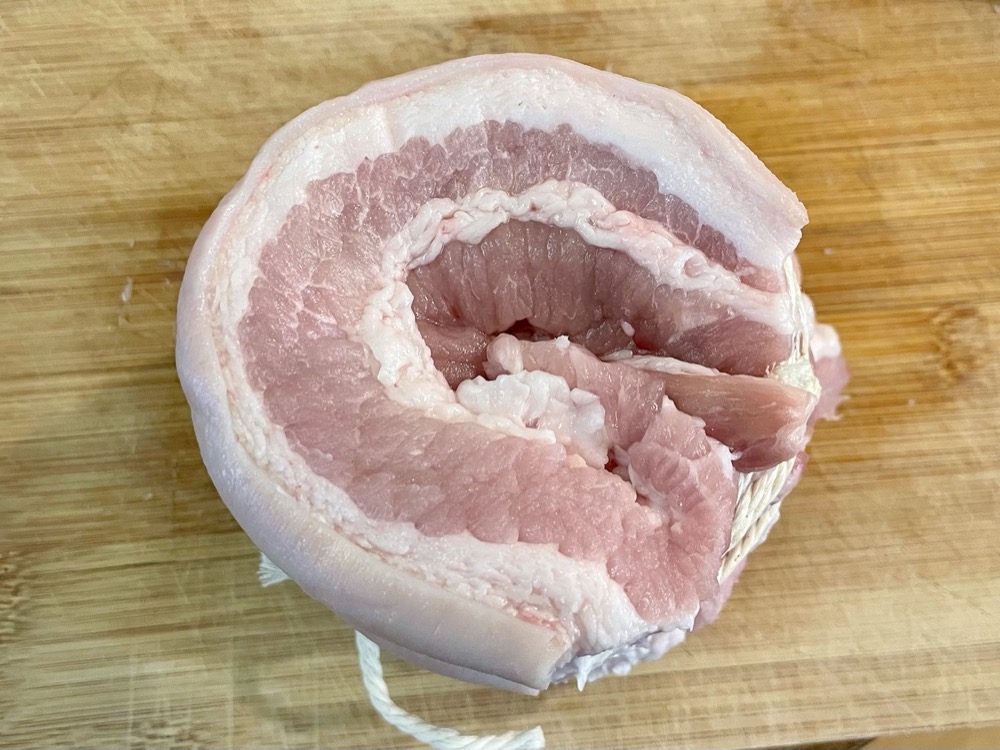
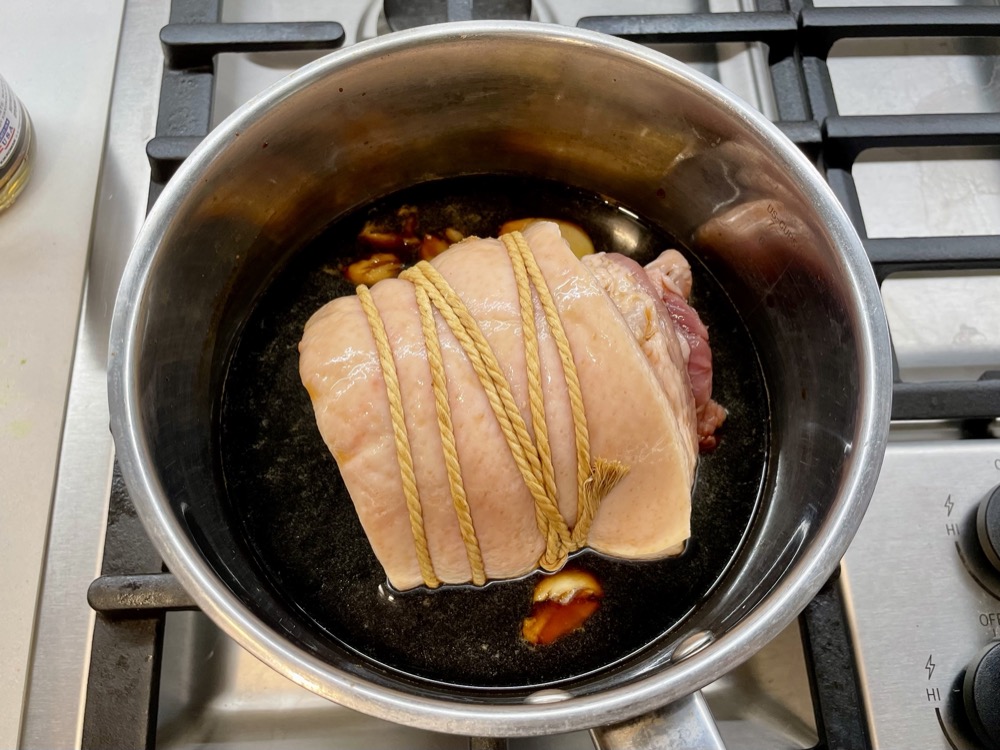
Roll the pork belly into a cylinder with the layers visible on the side (see photo) and tie tightly with cooking twine so it stays in shape.

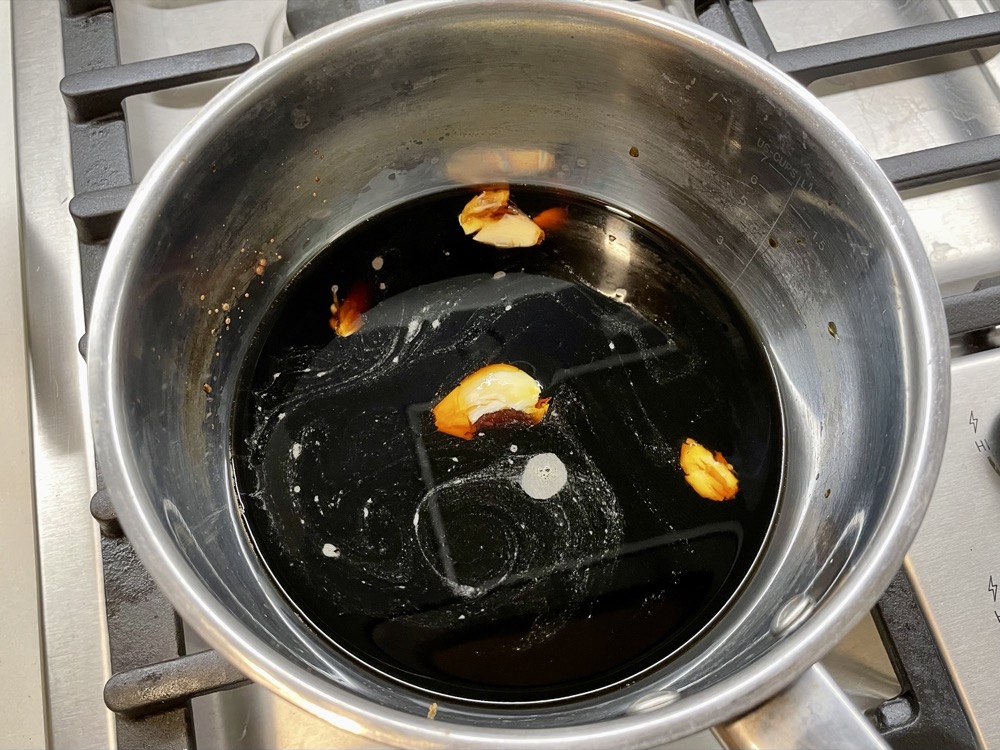
Take out a saucepan with a lid and add in the rest of the the chashu ingredients: water, soy sauce, mirin, brown sugar, garlic. Place the tied up pork belly in the middle of the saucepan.

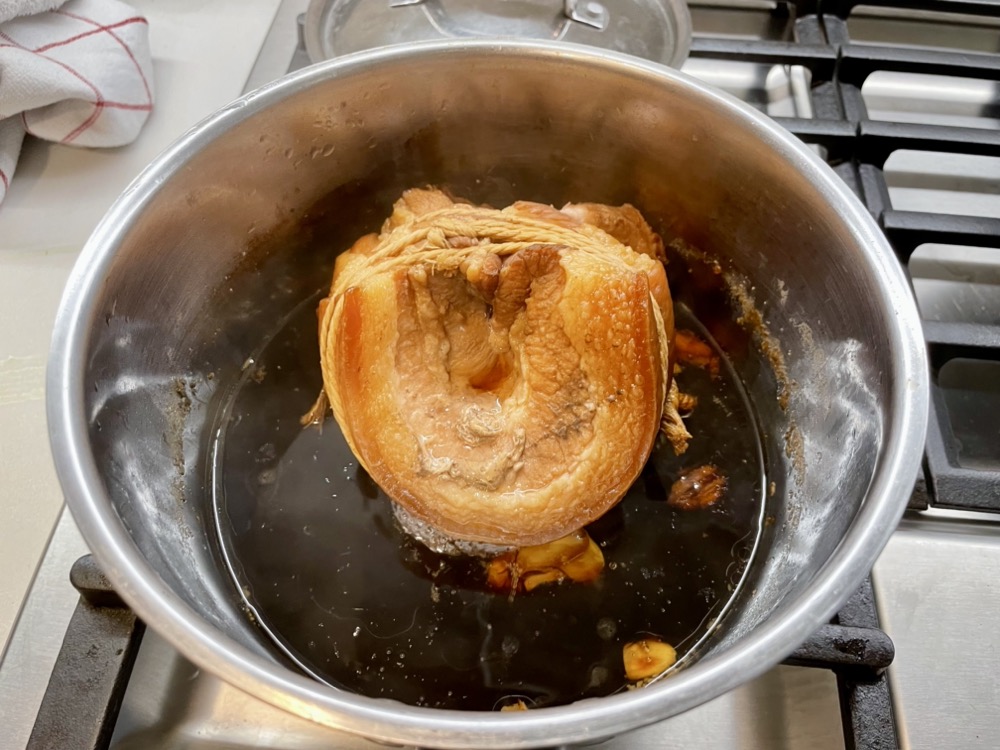
Turn the heat on to HIGH and let the sauce come to a boil, then turn the heat down to LOW and let it simmer with the lid on for 90 minutes. Turn the pork belly every 20 minutes so it gets evenly braised in the sauce.

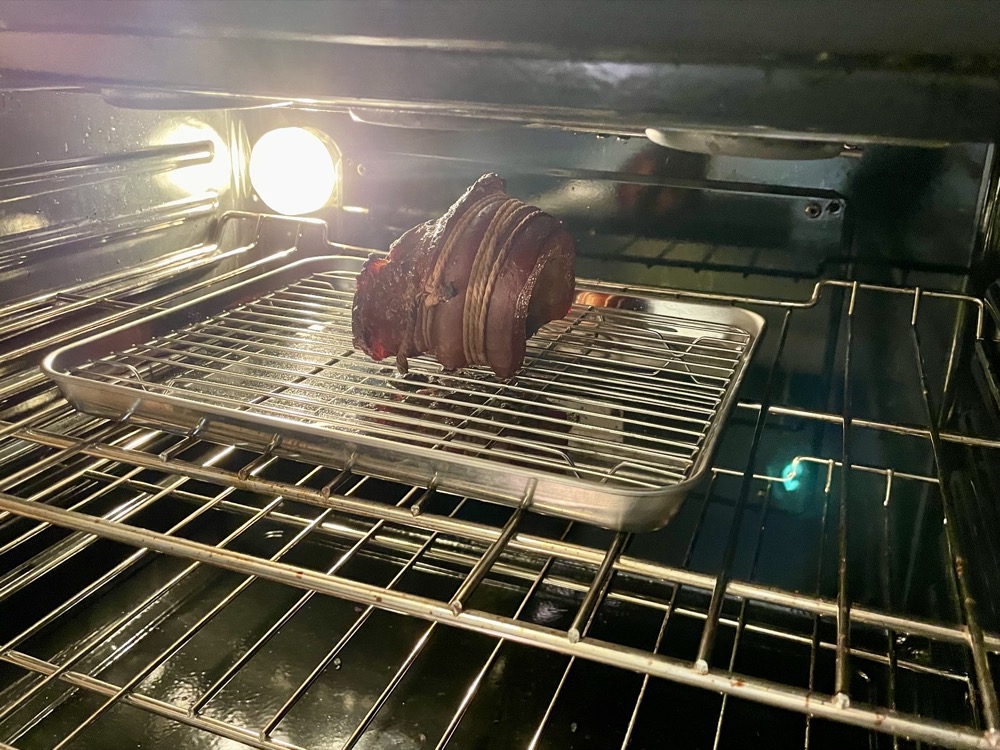
When there’s 20 minutes left to your cook time, preheat your oven to 220˚C (425˚F) and prepare a baking tray with a wire rack.

Once the 90 minutes is up, turn off the heat and take out the pork belly (keeping the remaining sauce aside) and place it on the rack over a baking tray and roast in the preheated oven for 8-10 minutes, or until the outside is a dark caramel colour.

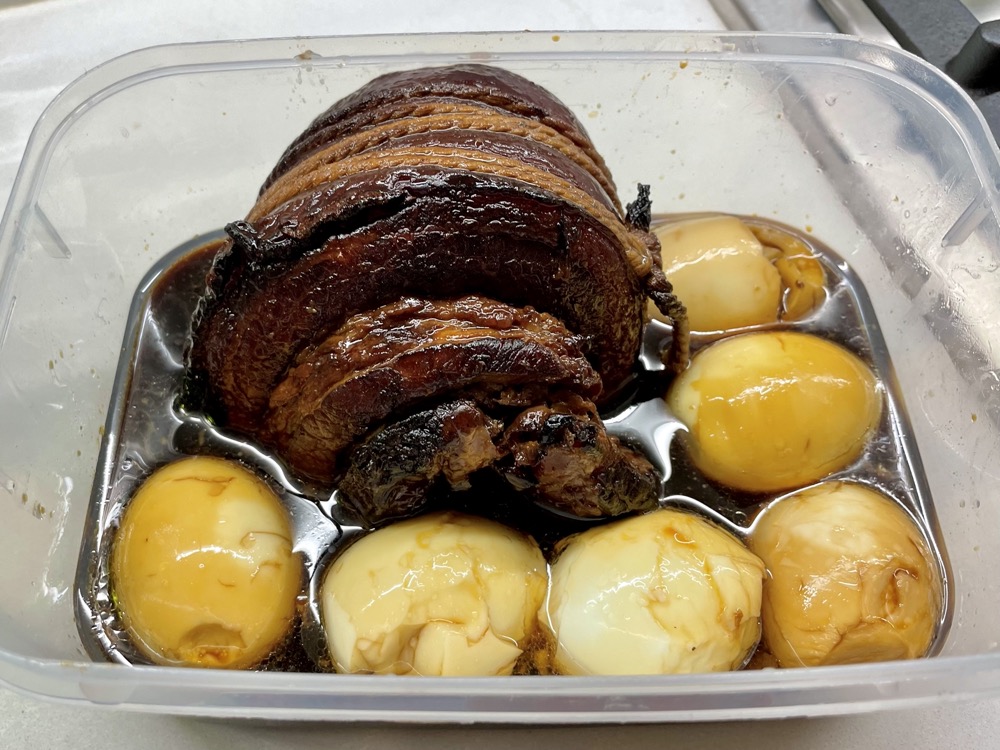
When the pork belly is done, take it out of the oven and place it in a heat-proof container (make sure there’s enough room for the eggs as well). Pour the leftover sauce over and let the pork belly marinate in the sauce overnight. If the marinade doesn’t surround the pork belly, either use a smaller container or turn the pork belly halfway through for even marination. A vacuum-sealed plastic bag works well as well.

Vacuum-seal bags will help marinate it better by allowing the sauce to surround the meat and eggs

B) Make the ramen eggs: (you can do this step while you’re waiting for the pork belly to cook)

Bring a small pot of water to boil. Gently lower all 4 eggs into the boiling water and start a timer for 7 minutes. Adjust the heat if the water is boiling too rapidly to avoid the eggs from knocking around in the pot.

While you’re waiting, prepare an ice bath for the eggs. Once the timer is up, turn off the heat and immediately submerge all the eggs into the ice bath. Once the eggs are cool enough to handle, remove all of the shells.

Place the peeled boiled eggs into the same container as the pork belly and marinate together overnight. If the sauce does not surround the egg, turn the eggs halfway through for even marination. A vacuum-sealed plastic bag works well as well. Do not marinate for longer than 2-3 days or else the egg will become too salty.

THE DAY OF:

C) Make the tonkotsu broth:

Preheat oven to 220˚C (425˚F)

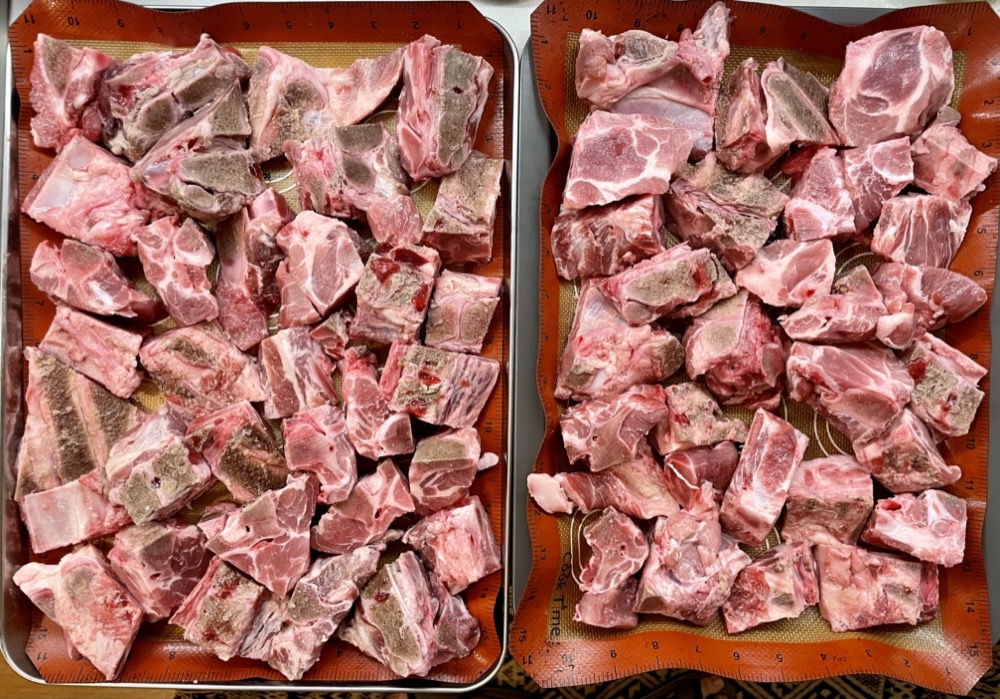
Roast the bones: Prepare a large lined baking tray. Rinse the pork bones and place them all in one layer of the tray (do not overlap the bones). Use a second tray if they don’t all fit into one. Roast in the preheated oven for 40 minutes, turning the bones once halfway through the cook time. After 40 minutes, turn off the oven. You should have a dark brown char on the bones.

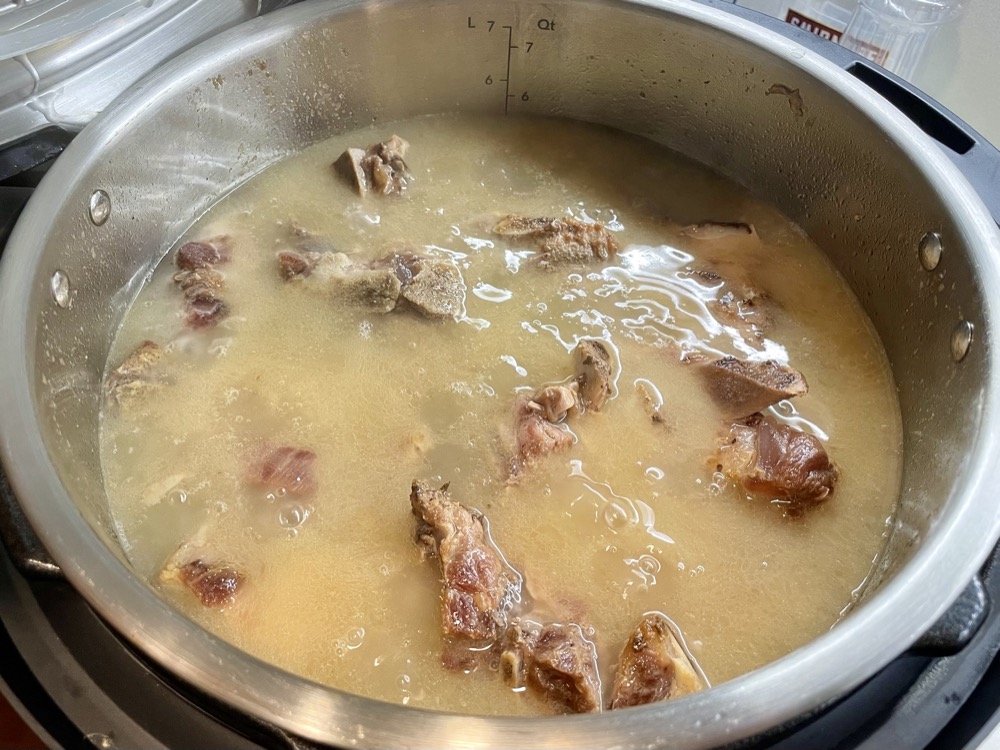
Cook the broth: Place the roasted bones along with any browned bits or liquids from the tray (these will add extra flavour) into your Instant Pot. Add enough water to cover the bones by 2-3cm (roughly 3 litres). Turn the Instant Pot on to a sauté setting and set the heat to HIGH. Once the water comes to a boil, cancel the setting and put the lid on. Turn on the pressure cook setting to HIGH and cook for 2 hours. (You can start making the tare or prepare any additional toppings during this time as you wait.) When the timer finishes, quick release the pressure – be careful of any spurting of liquids from the vent! When it is safe to do so, remove the lid carefully.

Add in aromatics & free the bone marrow: Add in garlic, ginger, green onion and onion into the broth. Use a chopstick and scrape out any bone marrow from the bones and let the marrow boil freely in the soup alongside the bones.

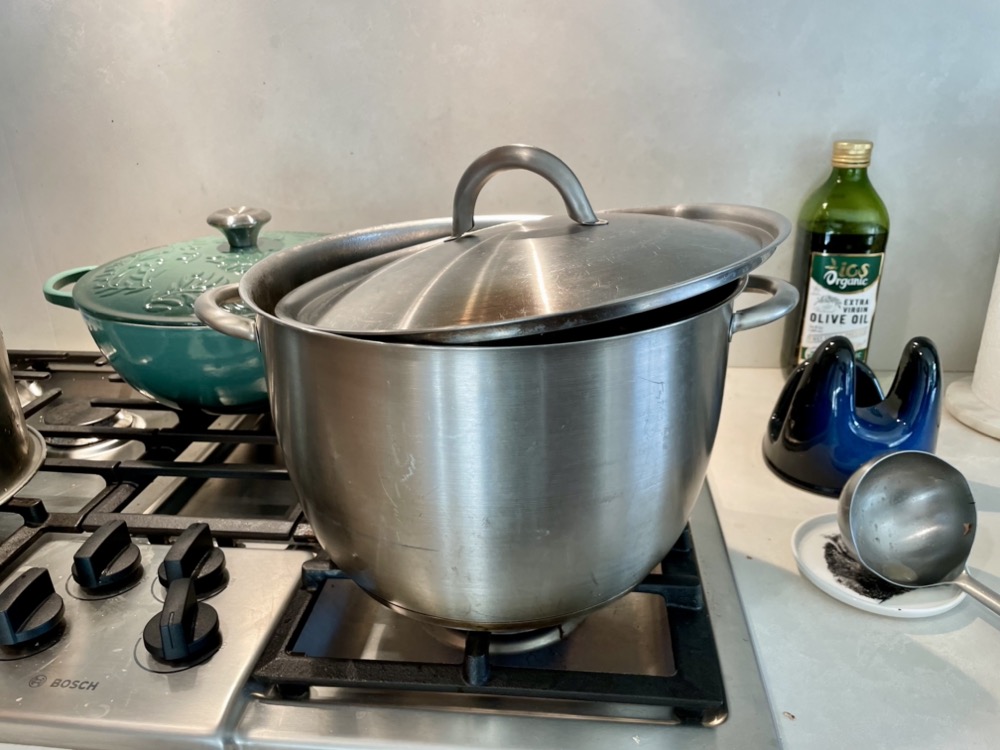
Boiling the broth for the final hour – lid on or lid off will depend on how rich it is after the Instant Pot

Taste for richness and Reduce (if needed): At this point the broth will taste quite bland since there as been no added salt and the aromatics were just introduced. Ignore the need to want to add in salt right now – it will come later. You want to taste for the texture of the broth, not the flavour. How creamy your broth is at this stage will dictate how you cook down your broth (the texture will vary greatly depending on the mix of bones you started with – it varies every time I make it):

If your broth is watery: turn on the sauté setting on the Instant Pot and set to MED heat so the soup boils moderately. Let it boil uncovered for 1 hour to reduce the broth and increase in concentration/richness. Taste at the end of 1 hour – you can let it boil for longer if needed.

If your broth is rich & creamy: add a lid on to the Instant Pot (or transfer to a regular soup pot with a lid) and let the soup boil on MED heat for 1 hour to release the flavour of the aromatics but to still contain all the liquid.

You will need to boil the broth for 1 hour regardless of how rich your broth is. The difference is whether you keep the lid on or off to control how much liquid is evaporated. If you’re unsure, then start boiling without a lid, then taste after 30 minutes, or have the lid half-on so it only reduces slightly. Once your broth is rich enough then put the lid on and finish boiling until the 1 hour timer is up.

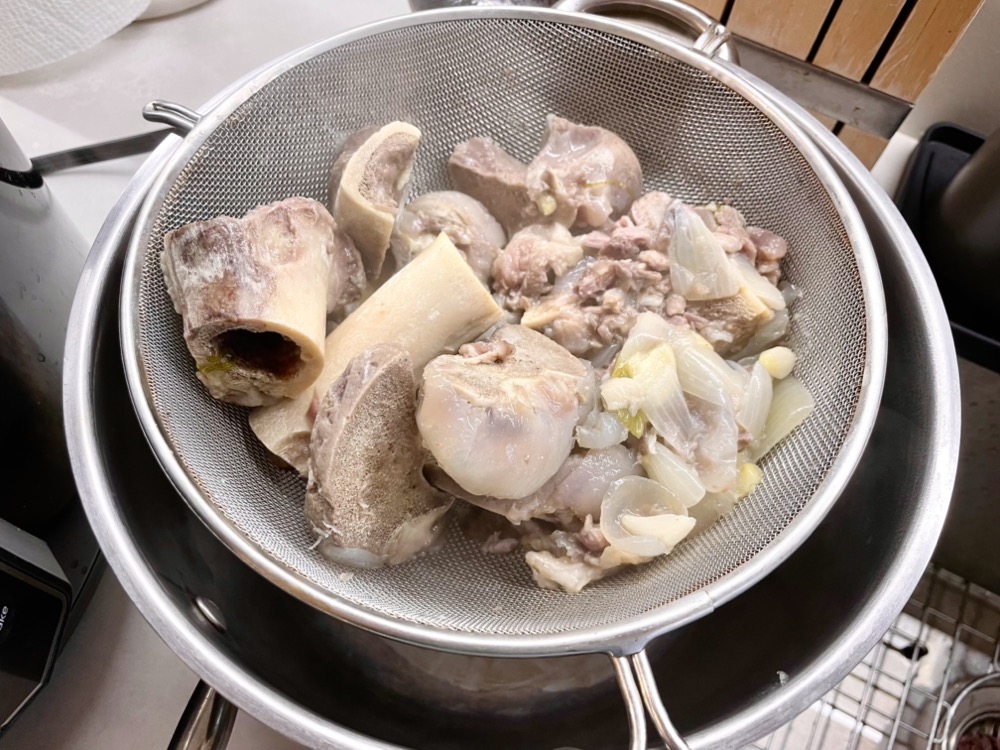
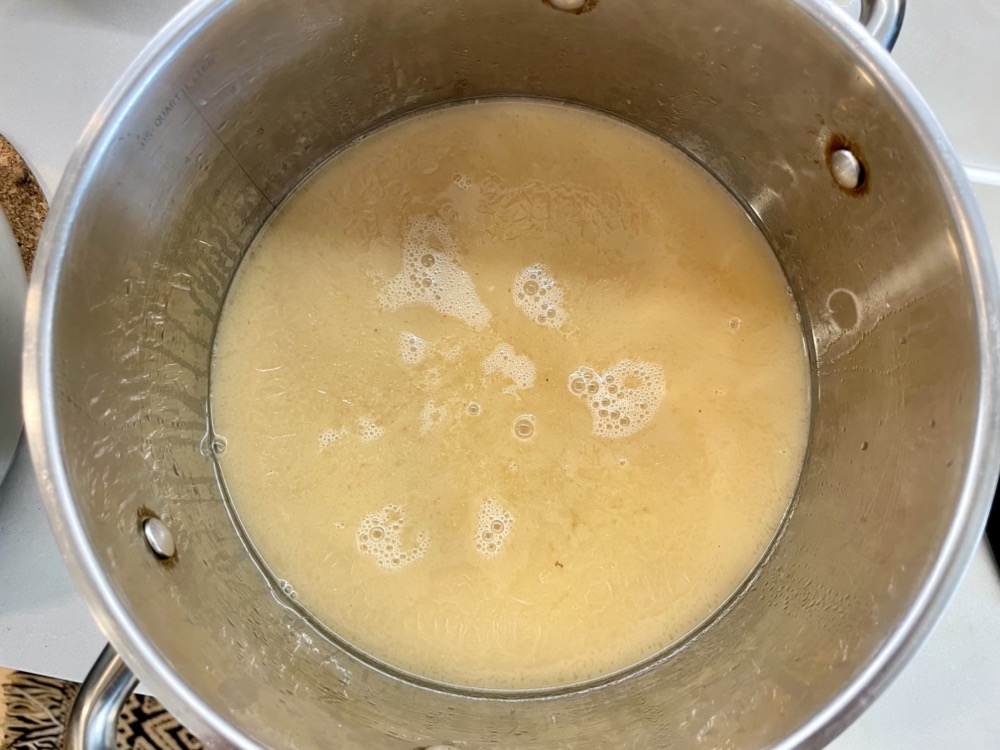
Strain: After an hour, turn off the heat and strain the broth into a clean pot. Discard the bones, aromatics, and any floaters that you have strained out. You should now have a pale brown opaque broth. Do not worry if your broth is not a lighter colour – it will lighten up in the next step.

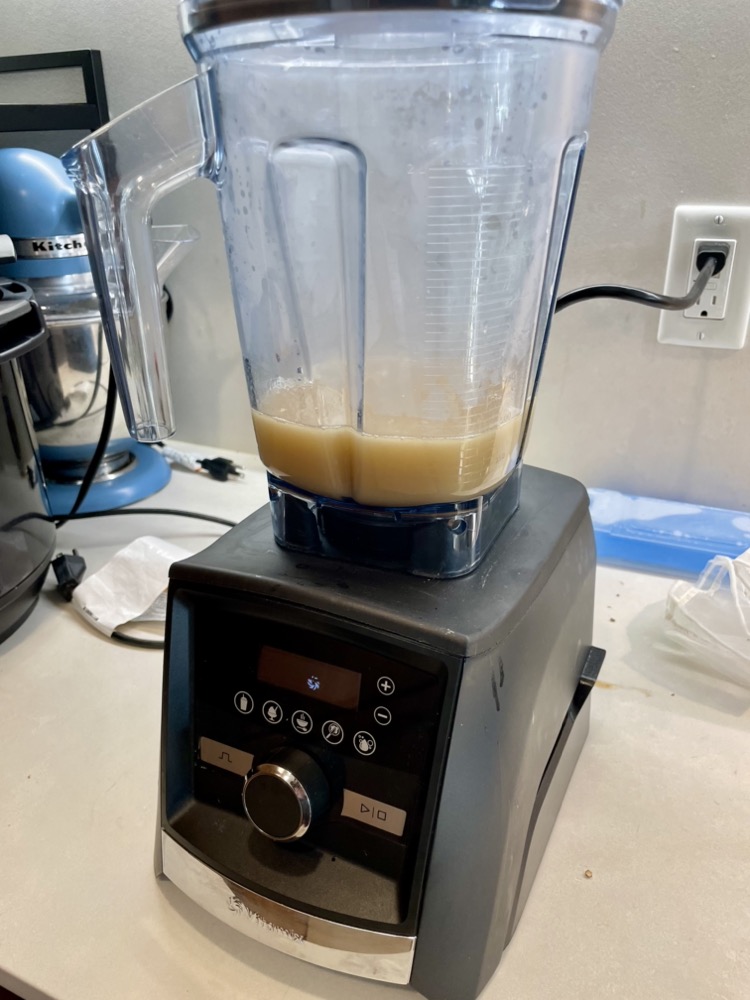
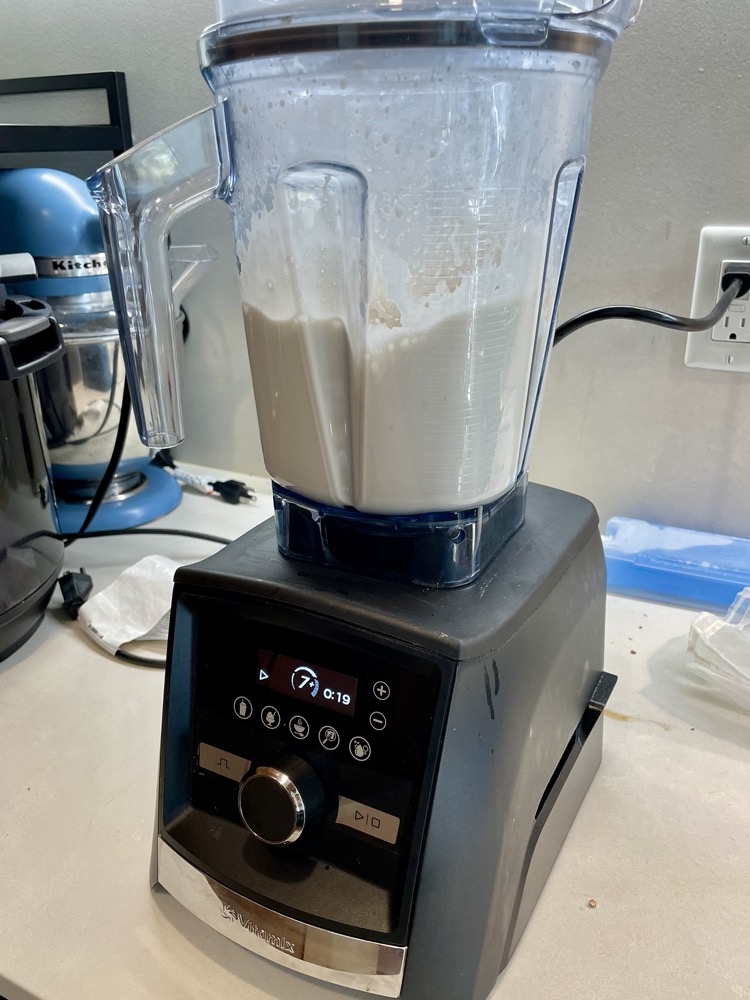
Blend – the magic step that makes the broth extra creamy and white: Remove roughly a quarter of the amount of broth into a blender and blend it on HIGH until you get a very smooth, white, and creamy texture. Add this back into the rest of the broth and mix well. Taste again for the texture.

If you find that it is too creamy, add hot water a cup at a time until desired consistency.

If you want it creamer and whiter, add more broth into the blender and blend again on HIGH and add it back into the broth until desired consistency.

Resist the urge to add salt – the final taste test will be at the end with the combination of the tare (salty goodness) with with broth together. The tonkotsu broth is now complete! If you still need more time to prepare the rest of the toppings or tare, then keep the soup on low heat to keep it hot until ready to serve.

D) Make the tare: (do this while you’re waiting for the broth to cook)

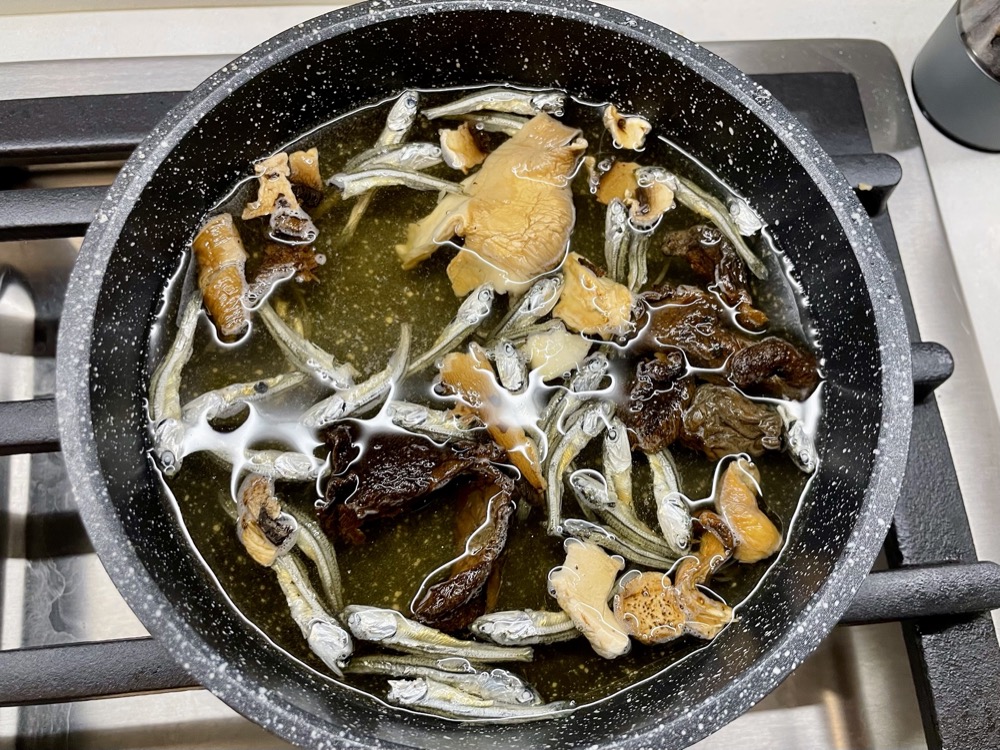
In a small pan, add the water, mirin, sake, kombu, porcini, and sababushi. Turn the heat on to HIGH. When it starts to boil, turn the heat off and let it steep for 30 minutes.

After 30 minutes, remove the kombu, add in the soy sauce, salt, sugar, and MSG. Whisk until dissolved. Turn the heat back on to HIGH until it starts to boil, then turn it off again and let it steep for at least 30 minutes. Strain before using. You can store this in the fridge for up to 6 months.

E) Cook the noodles, prepare the rest of the toppings: (you can do this in the final 10-15 minutes of your broth cooking)

Chashu and ramen egg: Remove the twine from the chashu and thinly slice it while still chilled (it will be easier to get neater cuts). Cut each egg in half to reveal the jammy egg yolk centre. Set aside.

Noodles: Cook the noodles according to package instructions and strain when finished.

Wood ear mushrooms: Soak the wood ear mushrooms in a bowl of boiling hot water for at least 15 minutes or until softened and expanded. Remove from the water, rinse, and slice. Set aside.

Green onion: Thinly slice one green onion for garnish. Set aside.

Seaweed: Cut your seaweed to desired sizes for serving.

F) Assemble the ramen: (finally!)

Divide the noodles equally into the serving bowls if not done so already.

Add 2 ladles of the tonkotsu broth over the noodles. Top with sliced chashu, ramen egg, wood ear mushrooms, seaweed, and green onion to garnish. Add a 3 tablespoons of tare over top (or more if you prefer it saltier). ENJOY!

Summarized Recipe:

Legit Tonkotsu Ramen from scratch (in an Instant Pot)

Date Published: Mar 3rd, 2024 | Last Updated: Mar 3rd, 2024
Author: Abby |Category: Asian, mains, soups
Serves: 4-6 | Prep time: 12 hours before to marinate | Cook time: 4.5 hours total

Equipment you’ll need:

  • Pressure cooker (at least 8 quarts in size)
  • Cooking twine
  • Small pot with lid/saucepan

Ingredients you’ll need:

  • Chashu (Pork Belly): MAKE THE DAY BEFORE
    • 500g (1.5lbs) pork belly with the skin on or off – this will be enough for 2-3 slices per portion. Feel free to double the chashu recipe if you want to serve more.
    • 1 cup water
    • 1/2 cup Japanese soy sauce (ie. Kikkoman)
    • 1/4 cup mirin
    • 2 Tbsps brown sugar
    • 2 garlic cloves, smashed
  • Ramen Egg: MAKE THE DAY BEFORE
    • 4-6 eggs (depending on how many people you’re serving)
  • Broth:
    • 1kg (2 lbs) pork neck bones (you want some meat to be attached to the bones for extra flavour)
    • 1kg (2 lbs) pork femur bones (make sure the larger leg bones are split so the bone marrow is exposed) – if you can’t find femur bones, you can use all neck bones
    • 12 cloves of garlic, peeled and smashed
    • 1 small brown onion, peeled and quartered
    • 4cm piece of ginger, sliced (don’t worry about peeling it)
    • 2 green onions, cut into thirds
  • Tare:
    • 1/2 cup (120ml) water
    • 1.5 Tbsps (25ml) mirin
    • 1 Tbsp (15ml) sake
    • 4g kombu (dried kelp)
    • 3g dried porcini mushrooms
    • 3g sababushi/dried mackerel, or katsuobushi/bonito flakes, or niboshi/dried anchovies – I had a difficulty sourcing these in my neighbourhood, so any of these will work to give it an umami fishy flavour
    • 1/2 cup (120ml) Japanese soy sauce (ie. Kikkoman)
    • 2.5 tsps (15g) kosher salt
    • 1.5 tsps (5g) brown sugar
  • 4-6 portions of ramen noodles, premade
  • Additional Toppings (optional):
    • Sliced green onion
    • Wood ear mushrooms
    • Seaweed
    • Bean sprouts

Directions:

THE DAY BEFORE:

  • A) Make the chashu:
    1. Make sure the pork belly is at room temperature (take it out of the fridge at least 30mins prior).
    2. Roll the pork belly into a cylinder with the layers visible on the side (see photo) and tie tightly with cooking twine so it stays in shape.
    3. Take out a saucepan with a lid and add in the rest of the the chashu ingredients: water, soy sauce, mirin, brown sugar, garlic. Place the tied up pork belly in the middle of the saucepan.
    4. Turn the heat on to HIGH and let the sauce come to a boil, then turn the heat down to LOW and let it simmer with the lid on for 90 minutes. Turn the pork belly every 20 minutes so it gets evenly braised in the sauce.
    5. When there’s 20 minutes left to your cook time, preheat your oven to 220˚C (425˚F) and prepare a baking tray with a wire rack.
    6. Once the 90 minutes is up, turn off the heat and take out the pork belly (keeping the remaining sauce aside) and place it on the rack over a baking tray and roast in the preheated oven for 8-10 minutes, or until the outside is a dark caramel colour. When the pork belly is done, take it out of the oven and place it in a heat-proof container (make sure there’s enough room for the eggs as well). Pour the leftover sauce over and let the pork belly marinate in the sauce overnight. If the marinade doesn’t surround the pork belly, either use a smaller container or turn the pork belly halfway through for even marination. A vacuum-sealed plastic bag works well as well.
  • B) Make the ramen eggs: (you can do this step while you’re waiting for the pork belly to cook)
    1. Bring a small pot of water to boil. Gently lower all 4 eggs into the boiling water and start a timer for 7 minutes. Adjust the heat if the water is boiling too rapidly to avoid the eggs from knocking around in the pot.
    2. While you’re waiting, prepare an ice bath for the eggs. Once the timer is up, turn off the heat and immediately submerge all the eggs into the ice bath. Once the eggs are cool enough to handle, remove all of the shells.
    3. Place the peeled boiled eggs into the same container as the pork belly and marinate together overnight. If the sauce does not surround the egg, turn the eggs halfway through for even marination. A vacuum-sealed plastic bag works well as well. Do not marinate for longer than 2-3 days or else the egg will become too salty.

THE DAY OF:

  • C) Make the tonkotsu broth:
    1. Preheat oven to 220˚C (425˚F)
    2. Roast the bones: Prepare a large lined baking tray. Rinse the pork bones and place them all in one layer of the tray (do not overlap the bones). Use a second tray if they don’t all fit into one. Roast in the preheated oven for 40 minutes, turning the bones once halfway through the cook time. After 40 minutes, turn off the oven. You should have a dark brown char on the bones.
    3. Cook the broth: Place the roasted bones along with any browned bits or liquids from the tray (these will add extra flavour) into your Instant Pot. Add enough water to cover the bones by 2-3cm (roughly 3 litres). Turn the Instant Pot on to a sauté setting and set the heat to HIGH. Once the water comes to a boil, cancel the setting and put the lid on. Turn on the pressure cook setting to HIGH and cook for 2 hours. (You can start making the tare or prepare any additional toppings during this time as you wait.) When the timer finishes, quick release the pressure – be careful of any spurting of liquids from the vent! When it is safe to do so, remove the lid carefully.
    4. Add in aromatics & free the bone marrow: Add in garlic, ginger, green onion and onion into the broth. Use a chopstick and scrape out any bone marrow from the bones and let the marrow boil freely in the soup alongside the bones.
    5. Taste for richness and Reduce (if needed): At this point the broth will taste quite bland since there as been no added salt and the aromatics were just introduced. Ignore the need to want to add in salt right now – it will come later. You want to taste for the texture of the broth, not the flavour. How creamy your broth is at this stage will dictate how you cook down your broth (the texture will vary greatly depending on the mix of bones you started with – it varies every time I make it):
      • If your broth is watery: turn on the sauté setting on the Instant Pot and set to MED heat so the soup boils moderately. Let it boil uncovered for 1 hour to reduce the broth and increase in concentration/richness. Taste at the end of 1 hour – you can let it boil for longer if needed.
      • If your broth is rich & creamy: add a lid on to the Instant Pot (or transfer to a regular soup pot with a lid) and let the soup boil on MED heat for 1 hour to release the flavour of the aromatics but to still contain all the liquid.
      • You will need to boil the broth for 1 hour regardless of how rich your broth is. The difference is whether you keep the lid on or off to control how much liquid is evaporated. If you’re unsure, then start boiling without a lid, then taste after 30 minutes, or have the lid half-on so it only reduces slightly. Once your broth is rich enough then put the lid on and finish boiling until the 1 hour timer is up.
    6. Strain: After an hour, turn off the heat and strain the broth into a clean pot. Discard the bones, aromatics, and any floaters that you have strained out. You should now have a pale brown opaque broth. Do not worry if your broth is not a lighter colour – it will lighten up in the next step.
    7. Blend – the magic step that makes the broth extra creamy and white: Remove roughly a quarter of the amount of broth into a blender and blend it on HIGH until you get a very smooth, white, and creamy texture. Add this back into the rest of the broth and mix well. Taste again for the texture.
      • If you find that it is too creamy, add hot water a cup at a time until desired consistency.
      • If you want it creamer and whiter, add more broth into the blender and blend again on HIGH and add it back into the broth until desired consistency.
      • Resist the urge to add salt – the final taste test will be at the end with the combination of the tare (salty goodness) with with broth together. The tonkotsu broth is now complete! If you still need more time to prepare the rest of the toppings or tare, then keep the soup on low heat to keep it hot until ready to serve.
  • D) Make the tare: (do this while you’re waiting for the broth to cook)
    1. In a small pan, add the water, mirin, sake, kombu, porcini, and sababushi. Turn the heat on to HIGH. When it starts to boil, turn the heat off and let it steep for 30 minutes.
    2. After 30 minutes, remove the kombu, add in the soy sauce, salt, sugar, and MSG. Whisk until dissolved. Turn the heat back on to HIGH until it starts to boil, then turn it off again and let it steep for at least 30 minutes. Strain before using. You can store this in the fridge for up to 6 months.
  • E) Cook the noodles, prepare the rest of the toppings: (you can do this in the final 10-15 minutes of your broth cooking)
    1. Chashu and ramen egg: Remove the twine from the chashu and thinly slice it while still chilled (it will be easier to get neater cuts). Cut each egg in half to reveal the jammy egg yolk centre. Set aside.
    2. Wood ear mushrooms: Soak the wood ear mushrooms in a bowl of boiling hot water for at least 15 minutes or until softened and expanded. Remove from the water, rinse, and slice. Set aside.
    3. Noodles: Cook the noodles according to package instructions, strain, and even divide into serving bowls.
    4. Green onion: Thinly slice one green onion for garnish. Set aside.
    5. Seaweed: Cut your seaweed to desired sizes for serving.
  • F) Assemble the ramen: (finally!)
    1. Divide the noodles equally into the serving bowls if not done so already.
    2. Add 2 ladles of the tonkotsu broth over the noodles.
    3. Top with sliced chashu, ramen egg, wood ear mushrooms, seaweed, and green onion to garnish. Add a 3 tablespoons of tare over top (or more if you prefer it saltier). ENJOY!

Sausage Mushroom Zucchini Tian (kinda like a risotto but easier)


Date Published: Feb 28th, 2024 | Last Updated: Feb 28th, 2024
Author: Abby |Category: easy, healthy, low-cal, mains, vegetarian
Serves: 4-6 | Prep time: 1 hour | Cook time: 40 mins

Jump to recipe |

‘Tian de Courgettes au Riz’ is a recipe from the great Julia Child. I came across this recipe randomly through my search for healthier meals in this new year and found many adaptations of it. From those adaptations, I played around with the recipe, added in mushrooms and sausage (because why not) to make it a more rounded and hearty meal, and out came yet another adaptation of her recipe 😛. According to the internet, a “tian” is a French word used to describe a shallow baking dish but also the name of a baked vegetable dish (Martha Stewart compares the wordplay to a casserole and a casserole dish).

In its essence, this dish is pretty much rice cooked in zucchini liquid mixed with mushroom, meat, and cheese. It’s kind of like a risotto, except much easier to achieve. This recipe seems long, but I promise it’s just wordy and not difficult at all. Once you get into it, you’ll realize that it’s quite easy and not at all intimidating unlike other Julia Child recipes.

This recipe is a fantastic way to use up an overflow of zucchinis in the summer season. For 6 portions, it uses up about 6 large zucchinis. I wish I discovered this recipe sooner when Toby and I were staying on the farm. His dad grew sooooo many zucchinis that we were gifting them to everyone we see (he was seriously harvesting at least 6-8 a day at peak season!).

Anyways, without further ado, here’s the recipe! If you have any comments or suggestions, I’d love to hear from you in the comment section! You can follow me on instagram, youtube and facebook to see all the recipes I post!

Happy cooking!

Ingredients you’ll need:

*You will need an oven-proof pot or dutch oven with a lid – I used a 5 1/4 quart dutch oven.

  • 1.5kg zucchinis (roughly 6 large ones)
  • 500g portobello mushrooms, cleaned and sliced
  • Roughly 1/2 a cup of milk (amount will vary depending on how much liquid is released from your zucchini and mushrooms)
  • 3 cloves garlic, minced
  • 2 medium brown onions, diced
  • 3 Tbsps all purpose flour
  • 1 cup Parmesan cheese, grated + extra for sprinkling
  • Salt & pepper to taste
  • 3/4 cup medium grain rice (I use arborio/risotto rice, but any medium grain will do)
  • 300-400g kielbasa (Polish sausage), diced
    • You can use any protein you like (ie. sausage, ground beef, shredded rotisserie chicken…etc.), but make sure your protein is cooked, dry, and doesn’t add any extra liquid or else it’ll throw off the liquid ratio to cook the rice.

Directions:

Cut the fibrous ends off the zucchinis and grate each one using a large hole grater (this is a whole lot quicker if you have a food processor with a grating function). Place a colander over a bowl and put the grated zucchini into the colander with 3 tsps of salt. Use your hands and massage the salt through the zucchini, making sure its mixed well. Set aside for 1 hour, allowing the liquid from the zucchini to release and collect in the bowl below.

After 1 hour, squeeze out as much zucchini liquid as you can and save this liquid. Rinse the grated zucchini under cold water to remove any excess salt and squeeze until dry and set aside (do not save this liquid).

While you’re waiting for the zucchini to release its liquid, cook the mushrooms: in a large pan on MED-HIGH heat, add a drizzle of oil and sauté the mushrooms until cooked (4-5 minutes). Place the cooked mushrooms in a strainer and reserve any liquid.

Measure out the amount of collected zucchini liquid from step 2 and add in the released liquid from the mushrooms in step 3 until it makes 3.75 cups. If the combined liquid is not enough to make up 3.75 cups, then add enough milk to make up the rest of the amount. Pour the liquid into a saucepan and heat it up on the stove until warmed. Do NOT let it come to a boil, otherwise it may split. Only heat it up until warmed. Keep on LOW heat until ready to use.

Preheat the oven to 220C/425F.

In an oven-safe pot or dutch oven (make sure there’s a lid, I used a 5 1/4 quart size dutch oven) on MED-HIGH heat, add a drizzle of oil and sauté the garlic and onion together for 3-4 minutes until the onion turns translucent. Then add in the grated zucchini and continue to sauté for another 5-6 minutes.

Add in the cooked mushrooms and 3 Tbsps of flour to the pan and continue mixing for 2 more minutes until everything is well combined then turn off the heat.

Mix in the Parmesan cheese, rice, and kielbasa (or your choice of cooked protein).

Pour in the warmed zucchini/mushroom/milk liquid over top. Mix it all together then cover with the lid and bake in the preheated oven for 20 minutes.

After 20 minutes, remove the lid and add a sprinkling of Parmesan cheese over top and continue baking without the lid for another 20-25 minutes, or until the liquid has been absorbed and the top is slightly golden brown. Once it’s done, take it out of the oven and let it rest for 10 minutes for any remaining liquid to absorb before serving. When dishing it out, add another sprinkle of Parmesan cheese before serving. Enjoy!
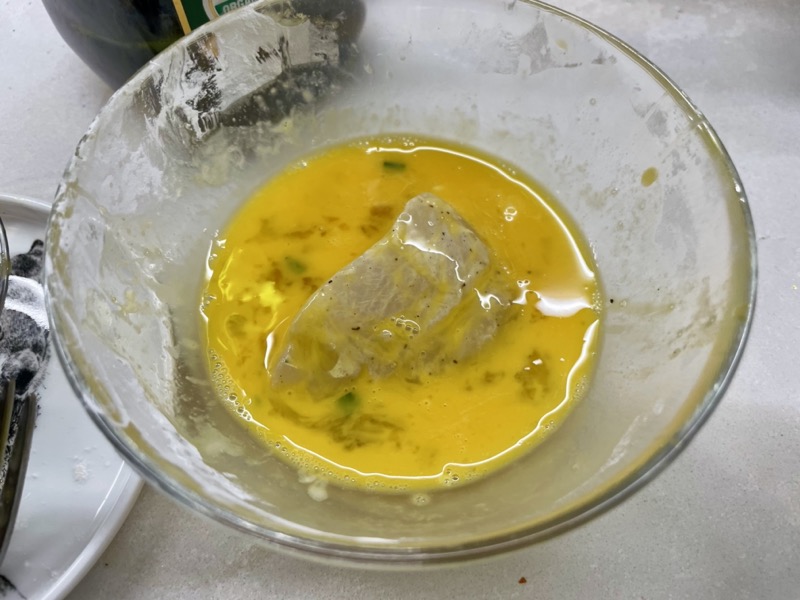
Summarized Recipe:

Sausage Mushroom Zucchini Tian (kinda like a risotto but easier)

Date Published: Feb 28th, 2024 | Last Updated: Feb 28th, 2024
Author: Abby |Category: easy, healthy, low-cal, mains, vegetarian
Serves: 4-6 | Prep time: 1 hour | Cook time: 40 mins

Ingredients:

*You will need an oven-proof pot or dutch oven with a lid – I used a 5 1/4 quart dutch oven.

  • 1.5kg zucchinis (roughly 6 large ones)
  • 500g portobello mushrooms, cleaned and sliced
  • Roughly 1/2 a cup of milk (amount will vary depending on how much liquid is released from your zucchini and mushrooms)
  • 3 cloves garlic, minced
  • 2 medium brown onions, diced
  • 3 Tbsps all purpose flour
  • 1 cup Parmesan cheese, grated + extra for sprinkling
  • Salt & pepper to taste
  • 3/4 cup medium grain rice (I use arborio/risotto rice, but any medium grain will do)
  • 300-400g kielbasa (Polish sausage), diced
    • You can use any protein you like (ie. sausage, ground beef, shredded rotisserie chicken…etc.), but make sure your protein is cooked, dry, and doesn’t add any extra liquid or else it’ll throw off the liquid ratio to cook the rice.

Directions:

  1. Prepare the zucchini: Cut the fibrous ends off the zucchinis and grate each one using a large hole grater (this is a whole lot quicker if you have a food processor with a grating function). Place a colander over a bowl and put the grated zucchini into the colander with 3 tsps of salt. Use your hands and massage the salt through the zucchini, making sure its mixed well. Set aside for 1 hour, allowing the liquid from the zucchini to release and collect in the bowl below. After 1 hour, squeeze out as much zucchini liquid as you can and save this liquid. Rinse the grated zucchini under cold water to remove any excess salt and squeeze until dry and set aside (do not save this liquid).
  2. Cook the mushrooms: While you’re waiting for the zucchini to release its liquid, cook the mushrooms: in a large pan on MED-HIGH heat, add a drizzle of oil and sauté the mushrooms until cooked (4-5 minutes). Place the cooked mushrooms in a strainer and reserve any liquid.
  3. Prepare the liquid: Measure out the amount of collected zucchini liquid from step 2 and add in the released liquid from the mushrooms in step 3 until it makes 3.75 cups. If the combined liquid is not enough to make up 3.75 cups, then add enough milk to make up the rest of the amount. Pour the liquid into a saucepan and heat it up on the stove until warmed. Do NOT let it come to a boil, otherwise it may split. Only heat it up until warmed. Keep on LOW heat until ready to use.
  4. Preheat the oven to 220C/425F.
  5. In an oven-safe pot or dutch oven (make sure there’s a lid) on MED-HIGH heat, add a drizzle of oil and sauté the garlic and onion together for 3-4 minutes until the onion turns translucent. Then add in the grated zucchini and continue to sauté for another 5-6 minutes.
  6. Add in the cooked mushrooms and 3 Tbsps of flour to the pan and continue mixing for 2 more minutes until everything is well combined then turn off the heat.
  7. Mix in the Parmesan cheese, rice, and kielbasa (or your choice of cooked protein).
  8. Pour in the warmed zucchini/mushroom/milk liquid over top. Mix it all together then cover with the lid and bake in the preheated oven for 20 minutes.
  9. After 20 minutes, remove the lid and add a sprinkling of Parmesan cheese over top and continue baking without the lid for another 20-25 minutes, or until the liquid has been absorbed and the top is slightly golden brown. Once it’s done, take it out of the oven and let it rest for 10 minutes for any remaining liquid to absorb before serving. When dishing it out, add another sprinkle of Parmesan cheese before serving. Enjoy!

Damn Good Short Rib Ragu (in an Instant Pot)


Date Published: Feb 27th, 2024 | Last Updated: Feb 27th, 2024
Author: Abby |Category: mains
Serves: 4-6 | Prep time: 20 mins | Cook time: 1 hour 30 mins

Jump to recipe |

After making my first ever short ribs dish through this insanely good recipe, I’ve become hooked! Short ribs was never a cut of meat I’ve worked with before and it often requires extremely long cooking times to break down the connective tissue, but praise the Instant Pot! It cuts down cooking times from 3 hours to just 1 hour and it produced extremely soft fall-off-the-bone results. If you’re unfamiliar with short ribs, you can check out my other short rib recipe for a bit of background information, including the differences between the cuts of short ribs.

This recipe is originally from Giada. I’ve altered it for Instant Pot cooking methods to cut down on cooking times and still produce identical results.

Unlike the classic braised short rib with red wine sauce, this meat is shredded then served in a slightly more subtle tomato-base sauce with a touch of Dijon mustard and a cup of red wine (rather than half the bottle). The rich meaty sauce is tossed through your choice of any style of pasta and served with a sprinkling of Parmesan cheese. The deliciously flavourful sauce with the soft shredded meats is balanced out by the pasta, making this the perfect pasta dish to make to impress. You’ll be amazed by how much flavour you can get from so few ingredients!

Anyways, without further ado, here’s the recipe! If you have any comments or suggestions, I’d love to hear from you in the comment section! You can follow me on instagram, youtube and facebook to see all the recipes I post!

Happy cooking!

Ingredients you’ll need:

  • 1.8kg (4 lbs) beef short ribs, English cut (Cross cut/Korean cut is fine too but it will take longer to sear and it’ll be annoying to remove all the little round bones at the end)
  • Kosher salt and freshly ground black pepper
  • 1/4 cup olive oil
  • 1 large onion, diced
  • 3 cloves garlic, crushed
  • 5 Roma tomatoes, cut into eighths
  • 1 cup red wine – any will do, even the cheap stuff! I use cabernet sauvignon
  • 3 Tbsps Dijon mustard
  • 2 cups beef broth
  • 4-6 portions of pasta – any kind you like
  • Parmesan cheese for sprinkling when serving

Directions:

Sprinkle salt and pepper over the short ribs.

Turn your instant pot on to the SAUTÉ setting on HIGH heat. Add a drizzle of oil and sear the short ribs in batches, making sure you brown every side. Set aside the seared ribs.

Tip: Watch out for the oil splattering! A splatter guard will work wonders here and extra long tongs or extra long chopsticks will be even better to avoid getting hot oil on your hands when you turn the ribs to sear each side.

Turn the heat down to MED and add in the onion and garlic. Sauté for 2 minutes until fragrant, making sure you scrape up any browned bits from the beef on the bottom and sides of the pot (the precious brown bits give us extra flavour and the moisture from the onions will help soften it from the bottom of the pot).

Add in the tomatoes, red wine, Dijon mustard, and beef stock. Mix everything together and simmer for 3 minutes for the alcohol to cook out.

Add back in the seared ribs (from step 2) and submerge them in the liquid. Cancel the instant pot sauté setting and put on the lid. Set the instant pot to PRESSURE COOK and HIGH for 1:00 hour with 10 minutes of natural release.

When the timer has finished, turn off the instant pot and open it. You should have a very tender fall-off-the-bone short rib! Very carefully, remove all of the meat and bones into a separate bowl. Discard all the bones and use two forks to shred the meat. Cover the meat to keep warm and set aside.

Make the sauce: Once all the meat and bones have been removed, you should only have vegetables left in the liquid. Skim off any excess oil that may be floating on top. Use a stick blender to blend the liquid until smooth (you can also pour it into a blender if you don’t have a stick blender) then pour it into a saucepan or wide based pan. Turn the heat to MED and simmer for 15-20 mins to reduce the sauce until you get a thickened syrupy consistency. This will take a while because there will be a decent amount of liquid to cook down since the instant pot does not evaporate any liquid as it cooks. Once the sauce has thickened, add the shredded meat (from step 6) into the sauce and stir through until warmed. Turn off the heat.

Make the pasta: While the sauce is reducing, make the pasta according to instructions. Strain when finished and set aside.

To serve: Divide the pasta into serving bowls and spoon the sauce with meat over top. Add a sprinkling of Parmesan cheese overtop before serving. Done!

Summarized Recipe:

Damn Good Short Rib Ragu (in an Instant Pot)

Date Published: Feb 27th, 2024 | Last Updated: Feb 27th, 2024
Author: Abby |Category: mains
Serves: 4-6 | Prep time: 20 mins | Cook time: 1 hour 30 mins

Ingredients:

  • 1.8kg (4 lbs) beef short ribs, English cut (Cross cut/Korean cut is fine too but it will take longer to sear and it’ll be annoying to remove all the little round bones at the end)
  • Kosher salt and freshly ground black pepper
  • 1/4 cup olive oil
  • 1 large onion, diced
  • 3 cloves garlic, crushed
  • 5 Roma tomatoes, cut into eighths
  • 1 cup red wine – any will do, even the cheap stuff! I use cabernet sauvignon
  • 3 Tbsps Dijon mustard
  • 2 cups beef broth
  • 4-6 portions of pasta – any kind you like
  • Parmesan cheese for sprinkling when serving

Directions:

  1. Sprinkle salt and pepper over the short ribs.
  2. Turn your instant pot on to the SAUTÉ setting on HIGH heat. Add a drizzle of oil and sear the short ribs in batches, making sure you brown every side. Set aside the seared ribs.
    • Tip: Watch out for the oil splattering! A splatter guard will work wonders here and extra long tongs or extra long chopsticks will be even better to avoid getting hot oil on your hands when you turn the ribs to sear each side.
  3. Turn the heat down to MED and add in the onion and garlic. Sauté for 2 minutes until fragrant, making sure you scrape up any browned bits from the beef on the bottom and sides of the pot (the precious brown bits give us extra flavour and the moisture from the onions will help soften it from the bottom of the pot).
  4. Add in the tomatoes, red wine, Dijon mustard, and beef stock. Mix everything together and simmer for 3 minutes for the alcohol to cook out.
  5. Add back in the seared ribs (from step 2) and submerge them in the liquid. Cancel the instant pot sauté setting and put on the lid. Set the instant pot to PRESSURE COOK and HIGH for 1:00 hour with 10 minutes of natural release.
  6. When the timer has finished, turn off the instant pot and open it. You should have a very tender fall-off-the-bone short rib! Very carefully, remove all of the meat and bones into a separate bowl. Discard all the bones and use two forks to shred the meat. Cover the meat to keep warm and set aside.
  7. Make the sauce: Once all the meat and bones have been removed, you should only have vegetables left in the liquid. Skim off any excess oil that may be floating on top. Use a stick blender to blend the liquid until smooth (you can also pour it into a blender if you don’t have a stick blender) then pour it into a saucepan or wide based pan. Turn the heat to MED and simmer for 15-20 mins to reduce the sauce until you get a thickened syrupy consistency. This will take a while because there will be a decent amount of liquid to cook down since the instant pot does not evaporate any liquid as it cooks. Once the sauce has thickened, add the shredded meat (from step 6) into the sauce and stir through until warmed. Turn off the heat.
  8. Make the pasta: While the sauce is reducing, make the pasta according to instructions. Strain when finished and set aside.
  9. To serve: Divide the pasta into serving bowls and spoon the sauce with meat over top. Add a sprinkling of Parmesan cheese overtop before serving. Done!

Luxurious Beef Short Ribs with Red Wine Sauce (in an Instant Pot)


Date Published: Feb 26th, 2024 | Last Updated: Feb 26th, 2024
Author: Abby |Category: mains
Serves: 4-5 | Prep time: 20 mins | Cook time: 2 hours

Jump to recipe |

Bookmark this, it’s time to impress everyone. These beef short ribs are fall-off-the-bone, melt-in-your mouth soft and it’s paired with a luxurious rich syrupy red wine sauce that is to die for. Try it yourself, you won’t regret it!

I came across this recipe through a Reddit cooking thread that asked people what their go-to dish was when they want to impress dinner guests and this one from RecipeTinEats was one of the top responses. I couldn’t wait to make it but due to our busy work schedule and sourcing the ingredients (mainly the short rib), it wasn’t until a week later that I finally got to try out the recipe. This dish was definitely worth it wait – it came out DELICIOUS! I actually had a lot of leftovers due to the giant Costco size package of short ribs I got so I shared it with our coworkers and they all unanimously agreed that it was damn good. This is a dish worth showing off – seriously.

What are beef short ribs?

I had never cooked with beef short rib before and didn’t even really know what it was. Is it different than a regular beef rib? Why is it ‘short’? Did they just trim down a regular rib? Why is it more expensive? What’s so special about it?

Being a veterinarian, I had to look up anatomical images of a cow just to figure out where the short ribs even came from to have it all make sense in my head. According to Wikipedia, the serratus ventralis muscle defines the area from where the short ribs come from. This muscle is thickest between the 2nd to 5th rib and is the preferred area to cut because the muscle here is much thicker. Outside of this area the serratus ventralis becomes too thin to create a true ‘short rib’. So a beef short rib is from specific area of the ribs that is meatier – which probably explains why its more expensive (if there are any butchers reading this, please correct me if I’m wrong!). I highlighted an anatomical diagram and included it in this post in case anyone else was as interested as me – ignore the fact that it’s an equine model 🤫.

English Cut vs. Cross-cut/Korean Cut?

There are two main ways a short rib is cut:

  1. English cut – where the meat is cut along the bone and you end up with long pieces of rib bone and chunks of meat.
  2. Cross cut or Korean-style cut where the ribs are cut across the bone and you end up with small circular bones and thin cuts of meat. This is popular in Korean short rib dishes – in fact, I couldn’t even find any non-Korean style dishes that used short ribs in this style of cut.

(Here is a helpful video from a butcher to help you visualize it better: https://www.youtube.com/watch?v=oA4FwE7QbrE)

Just looking at this photo enrages me 😡

In this recipe, we want the English cut so we can get big chunks of meat when serving. Living in South Brooklyn, we have a severe deficiency of a good butcher around our area and we had to go to THREE bodega grocery stores just to find English cut short ribs. Side story: the first time I made this recipe I found a huge pack of short ribs at Costco for a decent price and was so excited to make it. Nowhere on the package did it list what style it was cut and the way that it was packaged made it impossible to tell, so I just assumed it was the English cut since there is also a severe deficiency in Asian-style grocers in the area – what are the chances that this “Kansas City Steak Company” meat would be a Korean cut? 🤦🏻‍♀️🤦🏻‍♀️🤦🏻‍♀️ I woke up at 7am that morning to start prepping and cooking so everything would be cooked and ready by lunch time (the original recipe has a 3 hour cook time with a dutch oven – more on that below). I opened the big hefty bag of meat that I had been staring at for the past 3 days and I was so disheartened to find that it was the wrong cut of short ribs 😭. I triple checked the packaging in the garbage to see if I was the one that made the mistake, but indeed there was no label at all to identify the cut of meat, other than “sliced”. I had a mini temper tantrum not knowing whether I should abort mission after literally dreaming about short ribs for so many days or to continue on and hope for the best. All this at 7am while Toby happily slept in – he doesn’t know how close I was to waking him up to rage. Not wanting to waste $40 of meat and also definitely not wanting to venture out this early in the morning in the middle of winter to find more short ribs, I continued on. The flavours turned out just fine, but the steps involved were a lot lengthier and it was definitely super annoying to pick out every single cross-cut bone. I have included a photo of the offending meat package so no one else makes the same mistake that I did at Costco. /rant

What if I can’t find English cut and only Cross cut/Korean-style cut?

If you cannot find English cut short ribs and you can only find the Korean-style cut, you can still proceed with this recipe as written and the flavours will still be the same, but there will be some adjustments:

  • If your rib slices are long, you may have to use scissors to cut them in half before you sear them so it fits in the pot better.
  • It will take much longer to sear all the meat because you’ll be dealing with more pieces rather than bigger chunks of meat, so plan accordingly.
  • When you have an English cut, you have the option of serving the dish with or without the bone based on preference of presentation. If you use a Korean cut, you must remove all of the bone prior to serving or else there will be small round bones throughout your dish which is unpleasant. Removing every piece of bone is time-consuming and a bit annoying, so be prepared for this.
  • After you remove all the bone, the beef will look a bit ugly and stringy from the extra connective tissue around each bone so I’d recommend you break it all up and shred the meat before serving. Although the flavour of the dish will be the same, you won’t get big chunks of meat but rather shredded meat – it’s still delicious nonetheless, but the texture is a little different.

Instant Pot (pressure cooker) vs Dutch Oven – not much difference other than time!

The original recipe (and most short rib recipes on the internet) calls for a dutch oven that slowly cooks the short ribs in the oven for 3 HOURS. I did this. I even bought a dutch oven just for this recipe – well, I was eventually going to get one anyway, but this recipe pulled the trigger for me to get it now 😛. When I first made this recipe, I had a large amount of short rib from Costco (albeit in the wrong cut – see rant above) so I decided to double the recipe. However, when it came time to cook it all, I realized that not all of it fit into my 5 1/4qt dutch oven and there was no way I was going to make it in two batches and commit another 3 hours to making this (totalling 6 hours of cooking time), so I decided to put half of it in my Instant Pot and cook it at the same time.

The original recipe from RecipeTinEats raves about the dutch oven method as her preferred way of making this due to the flavour from the extra caramelization of the sauce and beef. Since I was doing half dutch oven and half Instant Pot, I figured that even if the Instant Pot version wasn’t as good at least I wouldn’t be cooking until late into the evening and I’d still have the oven ribs to enjoy. The Instant Pot version only took 1 hour cook time and was the first to finish. Because it was pressure cooked with the lid on, all the liquid had remained and I ended up having to reduce the sauce down a LOT to get the right consistency – it took about 15-20 minutes, whereas it should usually take 5-10mins. The resulting sauce and meat was REALLY GOOD (and even with the wrong cut of meat!). I couldn’t believe how rich the flavours were and how tender the meat was! It was incredible. The timer went off again and this time the dutch oven method was ready – I was excited. There was a lot less liquid so the sauce came together much faster but the texture and colour of the meat was the same (see the comparison photos below).

I did a blind taste test with Toby of the Instant Pot meat and sauce vs the dutch oven meat and sauce. He couldn’t tell the difference (and neither could I) – he actually thought maybe the Instant Pot version was a little better by a hair, which made me really happy because although I love my beautiful new dutch oven, I would much prefer waiting 1 hour for something to cook rather than 3 hours for the same results. Although you have a longer sauce reduction time with the Instant Pot, the overall time commitment is still less. Instant Pot wins!

*Note: when I did this cooking trial, I did it with the wrong cut of meat – Korean style cut rather than the English cut. In this trial, the flavours of the meat turned out exactly the same and the sauces were also similar as well which is why my Instant Pot is my go-to for this dish. I haven’t tried the dutch oven method with the English cut so I can’t speak for any differences in meat that it may have. To me, the sauce is the focus and the small differences in textures of the meat is secondary, so if you’ve done it both ways with the English cut, I’d love to know if you find a big difference!

Anyways, without further ado, here’s the recipe! If you have any comments or suggestions, I’d love to hear from you in the comment section! You can follow me on instagram, youtube and facebook to see all the recipes I post!

Happy cooking!

Ingredients you’ll need:

  • 1.5 – 2kg beef short ribs, English cut (~ roughly 4-5 large pieces, try to get ones with more meat on them)
  • Kosher salt & pepper
  • 1 large yellow onion, diced
  • 3 garlic cloves, crushed
  • 2 medium carrots, diced
  • 4 sticks of celery, diced
  • 2 Tbsps tomato paste
  • 2 cups (500ml) beef stock
  • 2 cups (500ml) red wine – any will do, even the cheap stuff! I use cabernet sauvignon.
  • 2 sprigs of fresh thyme (or 1/4 tsp of dried thyme)
  • 2 bay leaves
  • Your choice of side to serve with the short ribs: ie. mashed potatoes, sautéed green beans, salad…etc.

Directions:

Sprinkle salt and pepper over the short ribs.

Turn your instant pot on to the SAUTÉ setting on HIGH heat. Add a drizzle of oil and sear the short ribs in batches, making sure you brown every side. Set aside the seared ribs.

Tip: Watch out for the oil splattering! A splatter guard will work wonders here and extra long tongs or extra long chopsticks will be even better to avoid getting hot oil on your hands when you turn the ribs to sear each side.

Turn the heat down to MED and add in the onion and garlic. Sauté for 2 minutes until fragrant, making sure you scrape up any browned bits from the beef on the bottom and sides of the pot (the precious brown bits give us extra flavour and the moisture from the onions will help soften it from the bottom of the pot).

Add in the carrots and celery. Continue to cook until the carrots have softened (7-9 minutes).

Add in the tomato paste and stir through, then the beef stock, red wine, thyme, and bay leaves. Mix everything together and simmer for 3 minutes for the alcohol to cook out.

Add back in the seared ribs (from step 2) and submerge them in the liquid. Cancel the instant pot sauté setting and put on the lid. Set the instant pot to PRESSURE COOK and HIGH for 1:00 hour with 10 minutes of natural release.

While the instant pot is cooking, you can prepare any sides to go with the short ribs. I’d recommend a carb like mashed potatoes to pair with the rich short ribs sauce and an easy veg like green beans or a salad.

When the timer has finished, turn off the instant pot and open it. You should have a very tender fall-off-the-bone short rib! Very carefully, remove all of the ribs into a separate bowl, trying to keep the meat and bones intact for serving. Cover the ribs to keep warm and set aside.

Make the sauce: Place a strainer over a bowl and strain out the vegetables from the liquid. Use a spoon or ladle to squeeze out as much liquid as you can from the vegetables. Discard the vegetables. Pour the strained liquid into a saucepan or wide based pan and simmer on MED heat for 15-20 mins until you get a thickened syrupy-consistency. This will take a while because there will be a decent amount of liquid to cook down since the instant pot does not evaporate any liquid as it cooks. Drizzle the sauce over the short rib to serve.

To serve: Place 1-2 pieces of short rib (depending on how large your pieces are) on a plate with or without the bone and add a drizzle of the sauce overtop. Serve with your desired side dishes. Enjoy!

Summarized Recipe:

Luxurious Beef Short Ribs with Red Wine Sauce (in an Instant Pot)

Date Published: Feb 26th, 2024 | Last Updated: Feb 26th, 2024
Author: Abby |Category: mains
Serves: 4-5 | Prep time: 20 mins | Cook time: 2 hours

Ingredients:

  • 1.5 – 2kg beef short ribs, English cut (~ roughly 4-5 large pieces, try to get ones with more meat on them)
  • Kosher salt & pepper
  • 1 large yellow onion, diced
  • 3 garlic cloves, crushed
  • 2 medium carrots, diced
  • 4 sticks of celery, diced
  • 2 Tbsps tomato paste
  • 2 cups (500ml) beef stock
  • 2 cups (500ml) red wine – any will do, even the cheap stuff! I use cabernet sauvignon
  • 2 sprigs of fresh thyme (or 1/4 tsp of dried thyme)
  • 2 bay leaves
  • Your choice of side to serve with the short ribs: ie. mashed potatoes, sautéed green beans, salad…etc.

Directions:

  1. Sprinkle salt and pepper over the short ribs.
  2. Turn your instant pot on to the SAUTÉ setting on HIGH heat. Add a drizzle of oil and sear the short ribs in batches, making sure you brown every side. Set aside the seared ribs.
    • Tip: Watch out for the oil splattering! A splatter guard will work wonders here and extra long tongs or extra long chopsticks will be even better to avoid getting hot oil on your hands when you turn the ribs to sear each side.
  3. Turn the heat down to MED and add in the onion and garlic. Sauté for 2 minutes until fragrant, making sure you scrape up any browned bits from the beef on the bottom and sides of the pot (the precious brown bits give us extra flavour and the moisture from the onions will help soften it from the bottom of the pot).
  4. Add in the carrots and celery. Continue to cook until the carrots have softened (7-9 minutes).
  5. Add in the tomato paste and stir through, then the beef stock, red wine, thyme, and bay leaves. Mix everything together and simmer for 3 minutes for the alcohol to cook out.
  6. Add back in the seared ribs (from step 2) and submerge them in the liquid. Cancel the instant pot sauté setting and put on the lid. Set the instant pot to PRESSURE COOK and HIGH for 1:00 hour with 10 minutes of natural release.
  7. While the instant pot is cooking, you can prepare any sides to go with the short ribs. I’d recommend a carb like mashed potatoes to pair with the rich short ribs sauce and an easy veg like green beans.
  8. When the timer has finished, turn off the instant pot and open it. You should have a very tender fall-off-the-bone short rib! Very carefully, remove all of the ribs into a separate bowl, trying to keep the meat and bones intact for serving. Cover the ribs to keep warm and set aside.
  9. Make the sauce: Place a strainer over a bowl and strain out the vegetables from the liquid. Use a spoon or ladle to squeeze out as much liquid as you can from the vegetables. Discard the vegetables. Pour the strained liquid into a saucepan or wide based pan and simmer on MED heat for 15-20 mins until you get a thickened syrupy-consistency. This will take a while because there will be a decent amount of liquid to cook down since the instant pot does not evaporate any liquid as it cooks. Drizzle the sauce over the short rib to serve.
  10. To serve: Place 1-2 pieces of short rib (depending on how large your pieces are) on a plate with or without the bone and add a drizzle of the sauce overtop. Serve with your desired side dishes. Enjoy!

Tomato Spanakorizo – Greek Spinach Rice


Date Published: Feb 23rd, 2024 | Last Updated: Feb 23rd, 2024
Author: Abby |Category: easy, <30 mins, vegetarian, healthy, snacks, low cal
Serves: 6 as a side | Prep time: 10 mins | Cook time: 30 mins

Jump to recipe |

Spanakorizo is a traditional Greek spinach rice dish. I had never heard of it until I came upon it through my weekly foodie email subscriptions that I use for inspiration in things to cook for the week. The version that I saw was a lemony version with dill, mint, and crumbled feta (check out the recipe here), but upon further research I found a tomato version of it as well that looked just as good. Both dishes are called ‘Spanakorizo’ = spinach rice and when you google recipes for spanakorizo, you’ll get a mix of some with tomato and some without. After lots of recipe comparisons, I went with the saucy tomato version by Mia Kouppa and it was DELICIOUS and so easy! This recipe is a direct adaptation from hers (it’s perfect, I didn’t change much other than added some extra measurements of ingredients and rewrote some directions to suit my brain) – I’d recommend checking out her website with more photos and explanations to the history of the dish.

Both versions of spanakorizo are great, so if you’ve got the time you should definitely try making both. The lemon version is more dry like a regular rice pilaf and pairs nicely as a side dish, but this version is saucy and more flavourful which is great when eaten with toasted bread.

This recipe uses a LOT of spinach, which is perfect if you find yourself in abundance over the growing season. You can use regular mature spinach or baby spinach. It’s currently winter time in NYC and fresh mature spinach is hard to come by, so I bought the big box of baby spinach from Costco for this recipe – it’s actually the perfect amount!

This recipe does make quite a bit, so if you’re only cooking for 2-3 people, I’d recommend halving the recipe.

Anyways, without further ado, here’s the recipe! If you have any comments or suggestions, I’d love to hear from you in the comment section! You can follow me on instagram, youtube and facebook to see all the recipes I post!
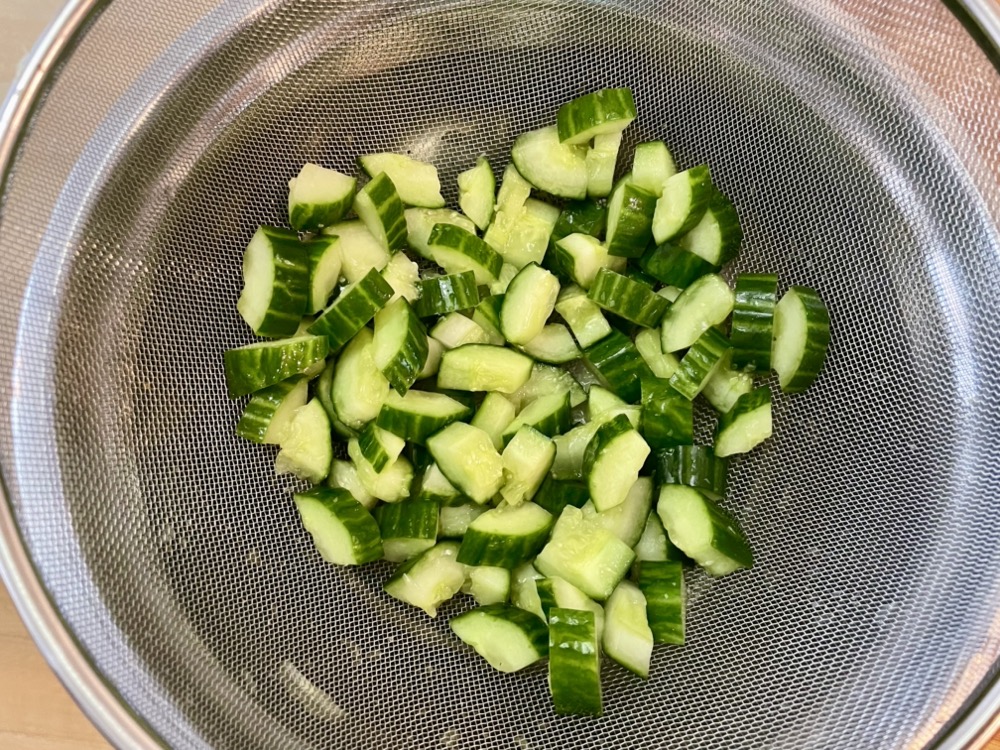
Happy cooking!

Ingredients you’ll need:

  • 1/2 cup olive oil
  • 4 spring onions, chopped
  • 450g (1 lb) of fresh spinach, chopped coarsely – I used the big box of baby spinach leaves from Costco, but if you’re using mature spinach, make sure to chop it into smaller pieces so you don’t get stringy cooked spinach in the end)
  • 1/4 cup fresh parsley, chopped
  • 3/4 cup (180g) medium grain rice, uncooked and rinsed
  • 2 cups (500ml) tomato passata
  • 2 cups (500ml) chicken stock
  • 1/2 tsp kosher/cooking salt + more to taste
  • Optional to serve: crumbled feta cheese, toasted bread

Directions:

In a medium sized pot on MED heat, heat a 1/2 cup olive oil then add in the spring onions. Cook for 1-2 minutes until fragrant.

Next, add in the spinach, parsley, and rice. If the pot is overflowing with the spinach, stir the spinach into the olive oil in small batches and let it wilt before adding more.

Pour in the tomato passata, chicken stock, and salt. Let it come to a boil then turn the heat down to LOW and let it simmer for 20-25 minutes with the lid on until the rice is cooked.

Done! Serve as a side dish or on its own family-style with toasted bread. Optional to sprinkle some crumbled feta cheese over.

Summarized Recipe:

Tomato Spanakorizo – Greek Spinach Rice

Date Published: Feb 23rd, 2024 | Last Updated: Feb 23rd, 2024
Author: Abby |Category: easy, <30 mins, vegetarian, healthy, snacks, low cal
Serves: 6 as a side | Prep time: 10 mins | Cook time: 30 mins

Ingredients:

  • 1/2 cup olive oil
  • 4 spring onions, chopped
  • 450g (1 lb) of fresh spinach, chopped coarsely – I used the big box of baby spinach leaves from Costco, but if you’re using mature spinach, make sure to chop it into smaller pieces so you don’t get stringy cooked spinach in the end)
  • 1/4 cup fresh parsley, chopped
  • 3/4 cup (180g) medium grain rice, uncooked and rinsed
  • 2 cups tomato passata
  • 2 cups (500ml) chicken stock
  • 1/2 tsp kosher/cooking salt + more to taste
  • Optional to serve: crumbled feta cheese, toasted bread

Directions:

  1. In a medium sized pot on MED heat, heat a 1/2 cup olive oil then add in the spring onions. Cook for 1-2 minutes until fragrant.
  2. Next, add in the spinach, parsley, and rice. If the pot is overflowing with the spinach, stir the spinach into the olive oil in small batches and let it wilt before adding more.
  3. Pour in the tomato passata, chicken stock, and salt. Let it come to a boil then turn the heat down to LOW and let it simmer for 20-25 minutes with the lid on until the rice is cooked. Done! Serve as a side dish or on its own family-style with toasted bread. Optional to sprinkle some crumbled feta cheese over.