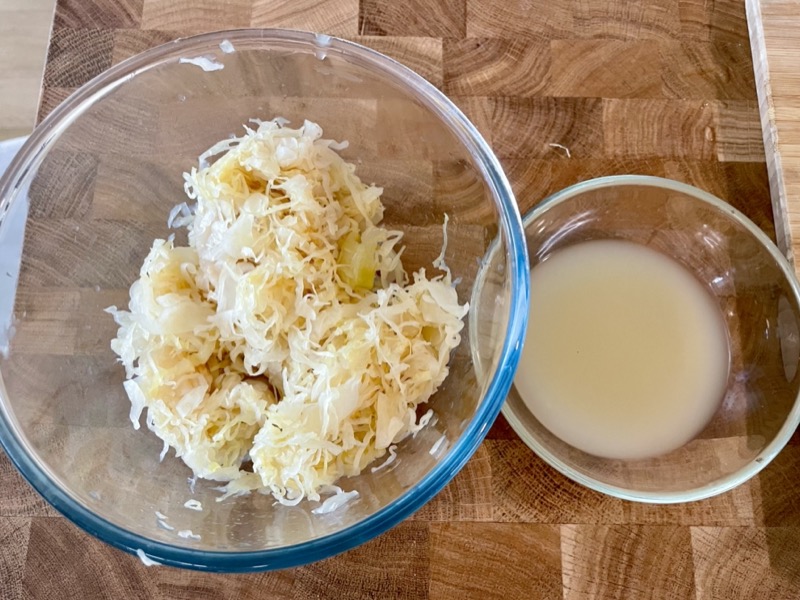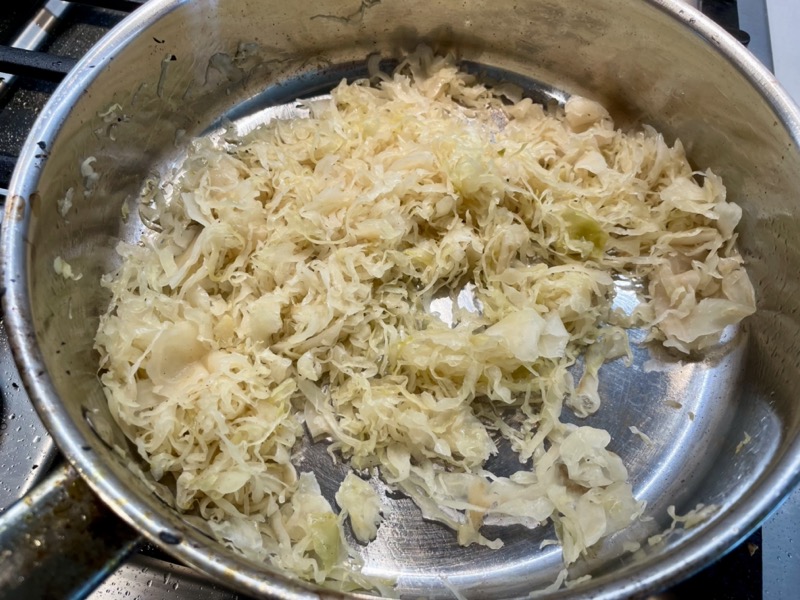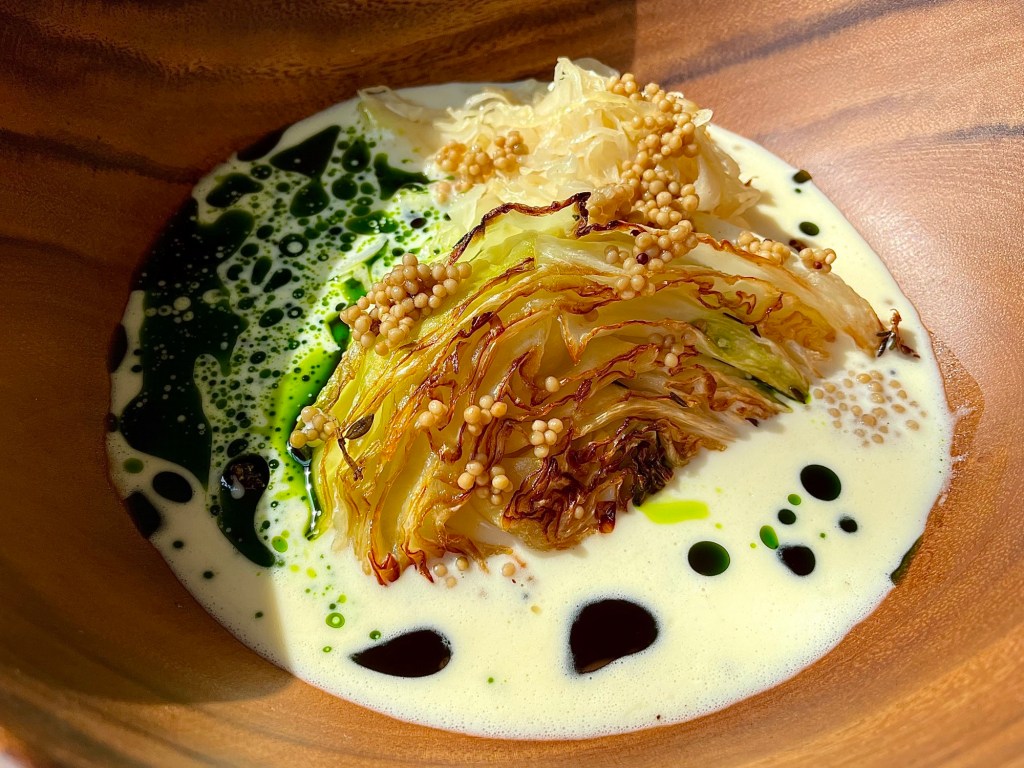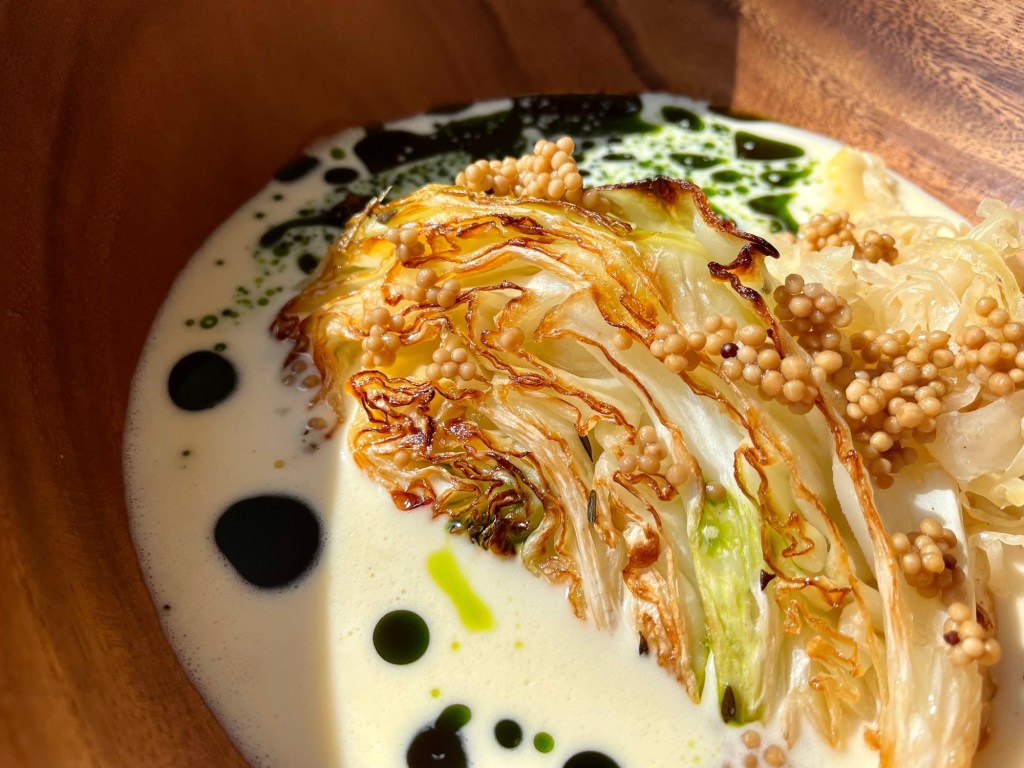
Babička’s Makovec (Czech Poppy Seed Roll)


Date Published: Nov 11th, 2025 | Last Updated: Nov 11th, 2025
Author: Abby | Category: breads, Czech, dessert, pastry, snacks, vegetarian
Makes: 3 loaves (enough for a party or one Toby 😂) | Prep time: 1.5 hours | Cook time: 1 hour

Jump to recipe |

This is Toby’s all time favourite food that his babička (grandmother) makes when he visits her in Czech (next to Svíčková, of course!). We’ve been trying to learn this recipe for years, but true to OG-style grandma cooking, she measures nothing and everything is done by eyeballing it. I can usually get away by guessing the amounts she puts in when it comes to savoury cooking but baking requires precise measurements, so finally during our visit this past summer, we bought her some measuring spoons (which was surprisingly quite difficult to find to Czech) and whipped out the kitchen scale. Thanks to Toby’s translating and our diligent watchful eye on her every step (this lady moves fast in the kitchen!), I’m happy to report that we FINALLY learned her secrets and I’m very excited to add her recipe to my collection and share it with you all! 😊

Toby & a fresh tray of makovec that babi has just made for him ❤️

What is Makovec?

Makovec (pronounced: Mah-ko-vets) is a traditional Czech poppy seed roll pastry. It’s made of a light and fluffy bread-like pastry that’s rolled around a sweet filling made of freshly ground poppy seeds.

(Note: Some people use the term Makovec to describe a square poppy seed cake rather than the roll. According to Toby and babi, they’ve always referred to makovec as the roll.)

What makes this recipe so special from the others?

There are many variations of makovec around. Some people make it with raisins in the mixture, others put a lemon icing overtop. The neighbouring countries of Poland call it makowiec and Slovakia calls it maková štrúdla. This recipe is specifically Toby’s grandmother’s version. Call it nostalgic bias, but Toby and I have travelled quite a bit and he always gets super excited when he sees someone selling poppy seed cake, but no matter how many farmers markets and European bakeries we visit, nothing compares to babi’s version. Her version is made with strawberry jam mixed in the poppy seed filling for that extra strawberry flavour, and she finishes it off with a streusel crumb topping (which I’ve never seen anyone else do!). The ratio of bread to filling is also on point 👌 – too many times we find that there’s too much bread and not enough filling – poppy seed is not a robust flavour on its own so if there’s too much bread it drowns out the filling.
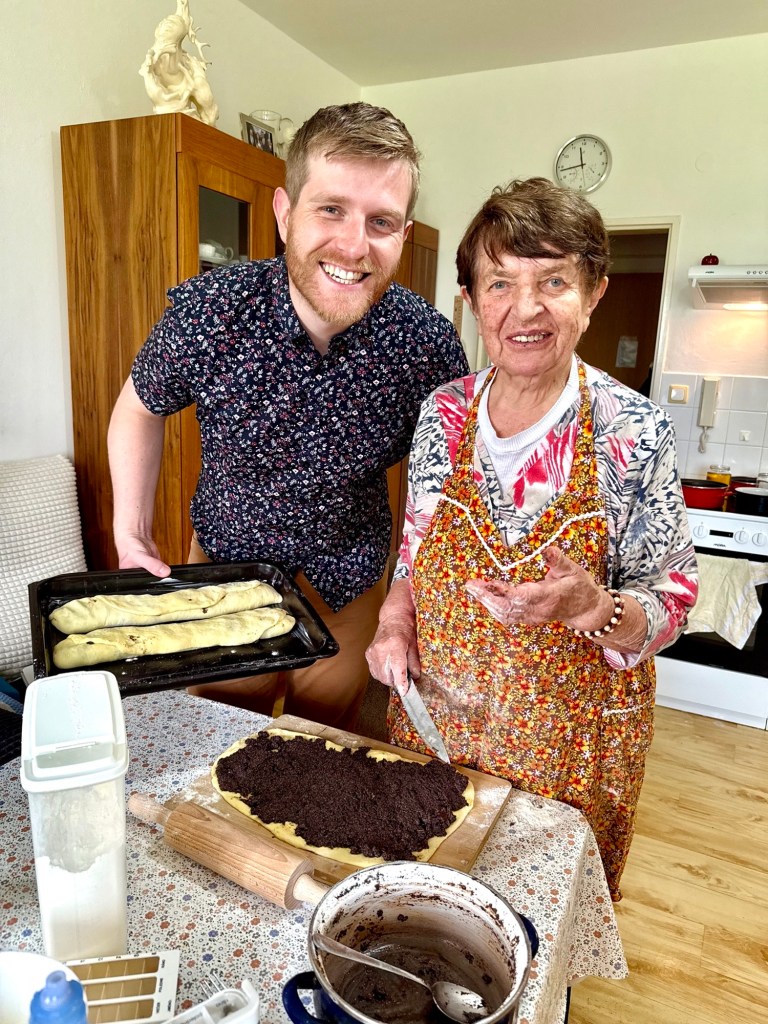
Toby & his babička making makovec (May 2025)

Grinding Poppy Seeds – Is it necessary?

Yes! Poppy seeds are the star of this dessert and it is imperative to grind down the seeds for a few reasons:

  1. Flavour: Grinding the seeds releases their natural rich oils and flavours. Eating unground poppy seed on its own is quite flavourless.
  2. Forming a paste: Ground seeds absorb moisture and is essential to form a paste when we’re cooking down the filling. You won’t get the texture we’re looking for unless the seeds are ground.
  3. Texture: Ground seeds are less gritty and provides a smoother texture when eating.

How to Grind Poppy Seeds

The best way to grind down poppy seeds is to use a dedicated poppy seed grinder. It’s usually about $40-$50 and is worth the investment if you’re into poppy seed desserts. We use this one from Tescoma: https://a.co/d/iUgRhGq. We found it to be reasonably priced with good reliability.

If you don’t have a poppy seed grinder, you can use a clean coffee grinder, spice grinder, mortar and pestle, or a food processor.

If you’re lucky and live near a European grocer, check if they have pre-ground poppy seeds for sale. I see it everywhere sold in Czech grocery stores due to the sheer popularity of poppy seed food items, but rarely outside of central Europe. Pre-ground poppy seeds can spoil quickly so sometimes it’s sold out of the refrigerated section.


Some Myths and Truths About Poppy Seeds

Poppy seeds have the notorious reputation of causing people to test falsely positive for opiates on urine drug tests (remember that episode of Seinfeld where Elaine tested positive after eating a poppy seed bagel?). I always thought that you needed to ingest very large amounts of it to test positive, but on an episode of Mythbusters, Adam tested positive within half an hour of eating a large slice of poppy seed cake and Jamie tested positive 2 hours after eating 3 poppy seed bagels! So if you’re in a situation where they do routine urine testing, you might want to hold off on making this or ask for a blood test instead. 😅

Despite possibly testing false positive for opiates, you won’t actually feel any opiate-related effects or “highs” from eating poppy seeds. Toby has eaten TRAYS of makovec (which is a LOT Of poppy seeds) and seen no ill effects.

How does this happen, you ask? Poppy seeds themselves have no opium content, however the milky white fluid that comes from the seed pod of the poppy called the “latex” is what contains the opium content. There is a possibility of contamination of the latex onto the seeds during the harvesting process, but don’t worry, poppy seeds sold for general use/foods are all washed prior to sale. In fact, there are actually legalities around buying unwashed poppy seeds. In the United States, at least 12 deaths have been reported in association with the use of tea made from unwashed poppy seeds causing lethal opiate overdose! (Here’s a pdf from the DEA if you want to learn more about poppy seeds: https://www.deadiversion.usdoj.gov/drug_chem_info/unwashed_poppy_seed.pdf)

Anyways, if you’re a fan of poppy seed pastries, give this recipe a try! It looks like a long recipe, but it’s not all that difficult, just very wordy to describe.

I’ve had to tweak her recipe a little due to difficulty of obtaining certain ingredients outside of Europe (I’m looking at you, coarse flour 😒), but after multiple taste tests, Toby gave the stamp of approval that it’s just like babi’s! The photos in this post are a mix of photos from when she taught us how to make this dish in Czech and me re-making them in our apartment back in Brooklyn.

Note: To make the most accurate version of this recipe, I would recommend using the grams/mls measurements as this was what I used to measure her recipes, however I’ve also included a cup conversion as well.

I’d love to hear from you in the comment section! You can follow me on instagram, youtube and facebook to see all the recipes I post!

Happy cooking!

Ingredients you’ll need:

*I recommend to use the metric measurements (grams/mls) for accuracy of the ingredients to have it as close to babička’s version as possible.

  • Poppy seed filling:
    • 500ml (2 cups) whole milk
    • 250g (1.75 cups) poppy seeds, ground
    • 120g (1.25 cups) granulated sugar
    • 1/2 tsp kosher salt
    • 175g (1/2 cup) strawberry jam (or more to taste)
    • 4g (1/2 Tbsp) ground cinnamon
    • 28g (2 Tbsps) cocoa powder
    • 1 tsp vanilla extract
  • Dough:
    • Yeast prep:
      • 60ml (1/4 cup) milk
      • 7g (1 packet) of active dry yeast
      • 1 tsp granulated sugar
    • 50g (1/4 cup) granulated sugar
    • 50g (3.5 Tbsps) butter, softened
    • 1 large egg, divided into yolk and egg white
    • 1 tsp kosher salt
    • 350g (2.75 cups) all-purpose flour, sifted (+ more for dusting and rolling)
    • 175ml (3/4 cup) + 1/2 Tbsp whole milk, room temperature
  • Streusel:
    • 50g (1/4 cup) granulated sugar
    • 50g (3.5 Tbsps) butter, softened
    • 70g (1/2 cup) all-purpose flour

Directions:

A) Make the poppy seed filling:

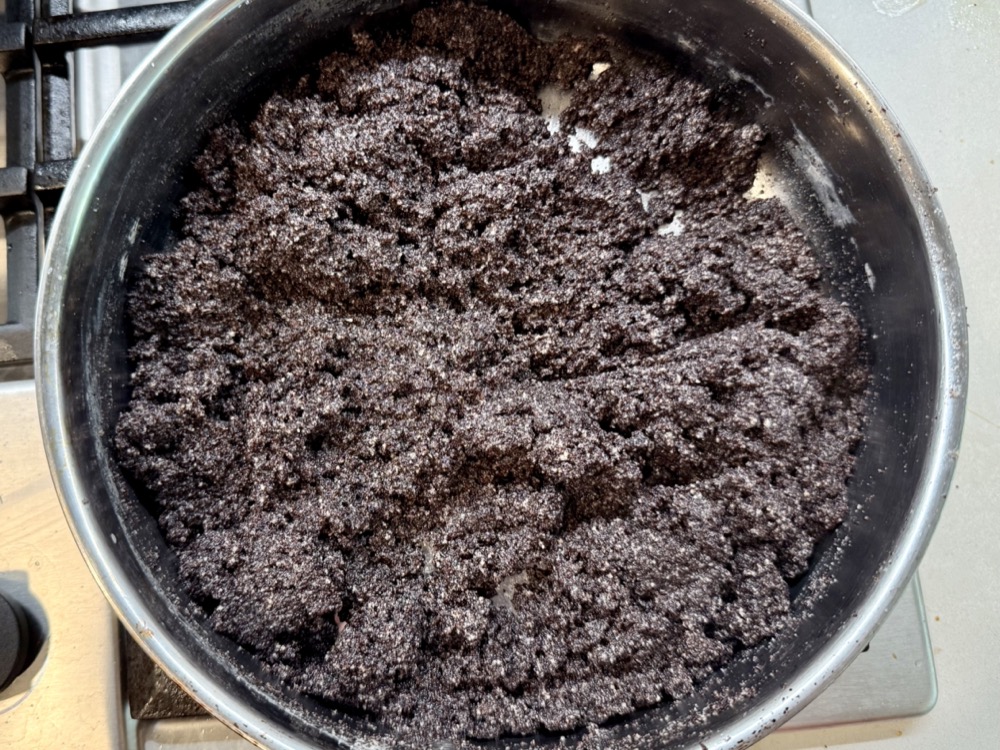
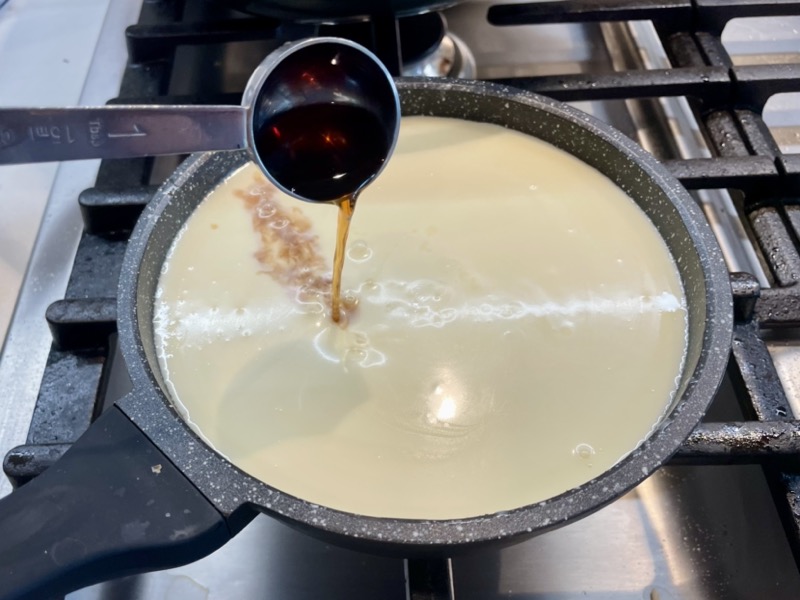
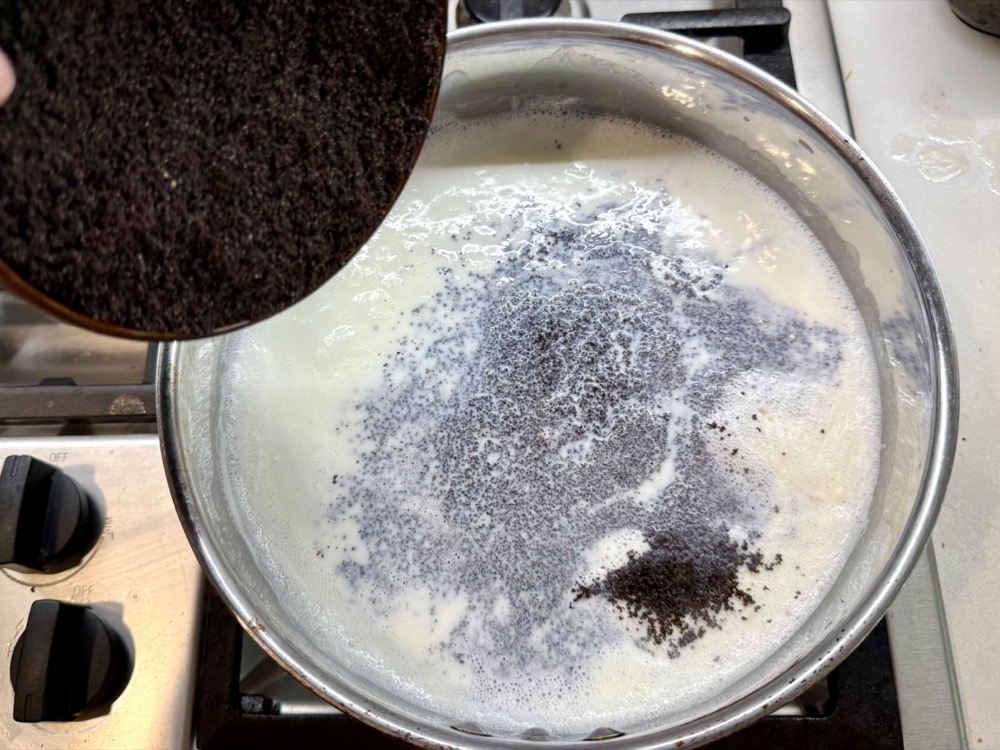
In a wide-based pan on MED heat, add in 500ml of milk. When the milk boils, add in 250g ground poppy seeds and mix together. It will thicken as you mix. Once the mixture boils again, turn down the heat to LOW and continue to stir until you get a dry crumbly mixture without any liquid left (see photo) – this can take up to 20 minutes.

Pro-tips:

  • You can use any type of pan or pot, but a wide-based pan will increase your surface area and quicken the process.
  • Make sure you don’t have any liquid left in your mixture or else your filling will be too wet.

When you get a dry mixture, turn the heat OFF and take the pan off of the heat. Add in 120g of sugar and 1/2 tsp salt and stir until combined. Set aside to cool completely.

While you’re waiting for the filling to cool, you can start making the dough in the next section.

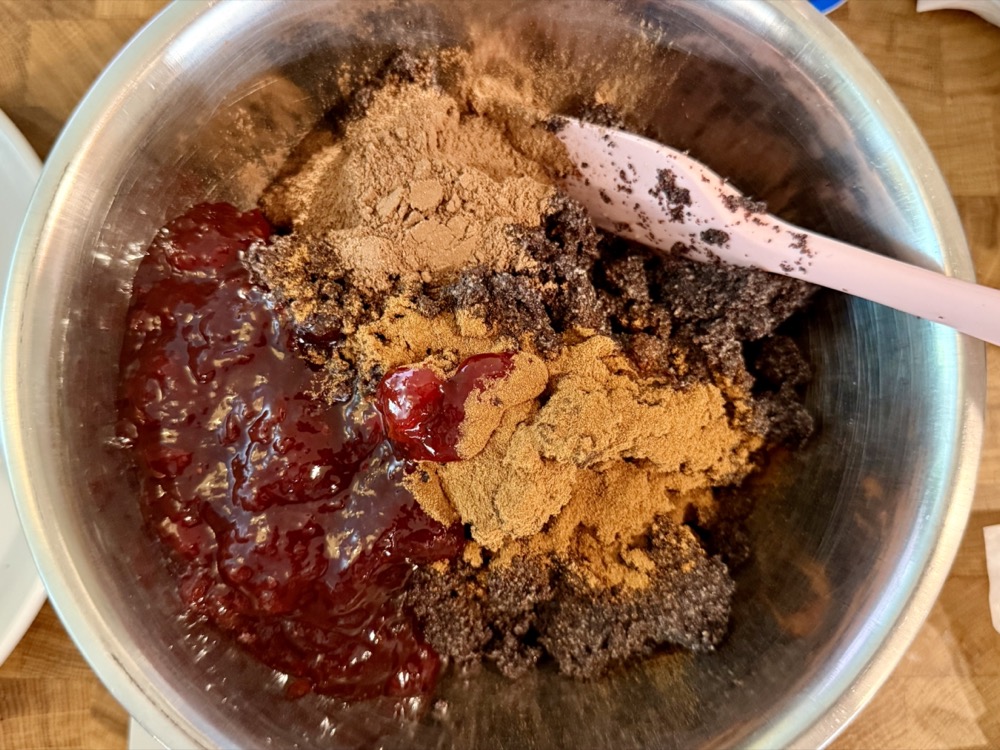
Once the mixture fully cools, add in 175g strawberry jam, 1/2 Tbsp ground cinnamon, 2 Tbsps cocoa powder, and 1 tsp of vanilla extract. Mix well and set aside.

B) Make the dough while the poppy seed filling cools:

Activate the yeast:

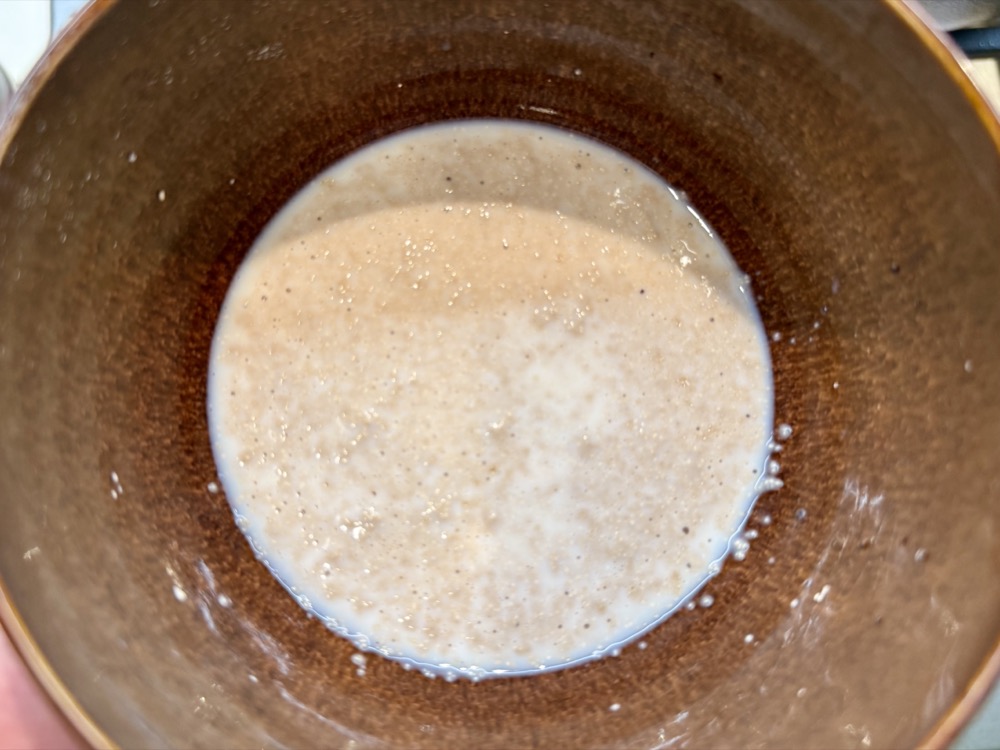
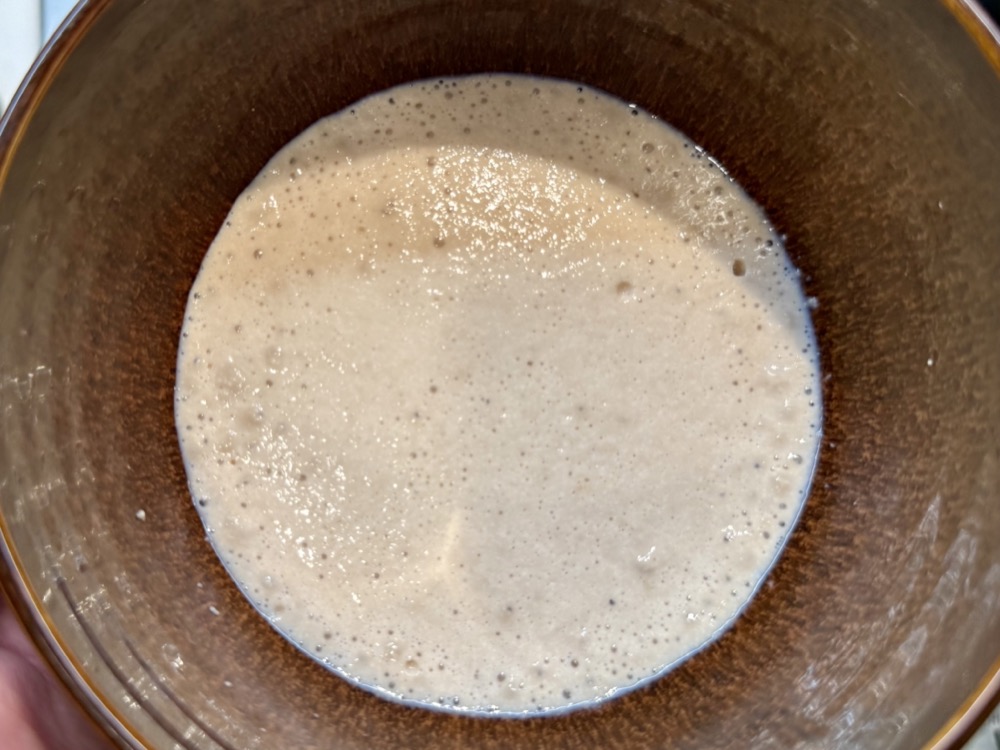
In a small bowl, add in 1/4 cup of milk and microwave for 10 seconds at a time until it’s warmed (make sure it’s not too hot or it will cook the yeast). Add in 7g (1 packet) active dry yeast and 1 tsp sugar. Mix until well-combined, cover and set aside. The yeast is activated once it gets frothy (5-10mins).

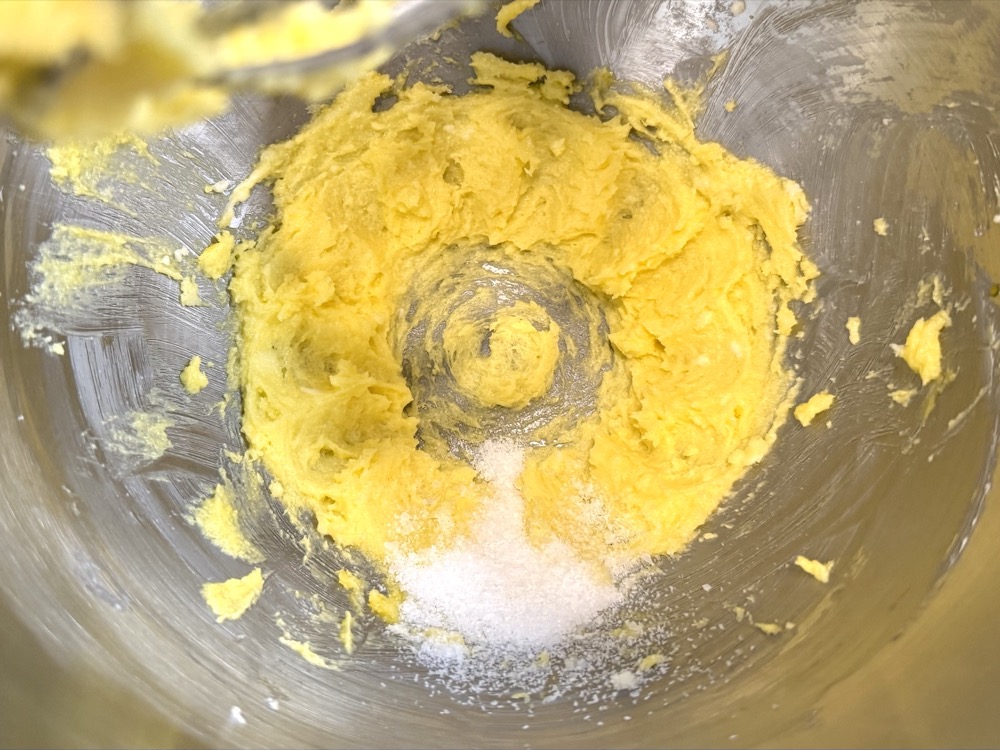
In a separate mixing bowl, add in 50g sugar, 50g softened butter, and 1 large egg yolk. Mix on HIGH speed for 2-3 minutes until the mixture is well-combined and a little fluffy.

To the sugar/butter mixture, add in 1 tsp salt, and the frothed yeast mixture (from step 1).

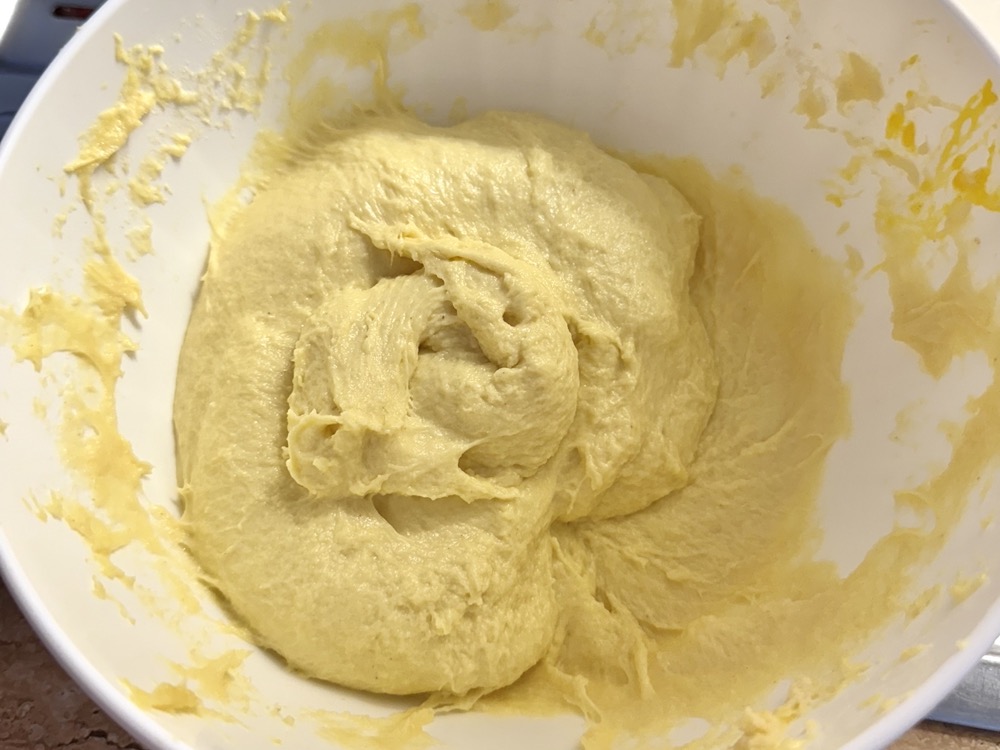
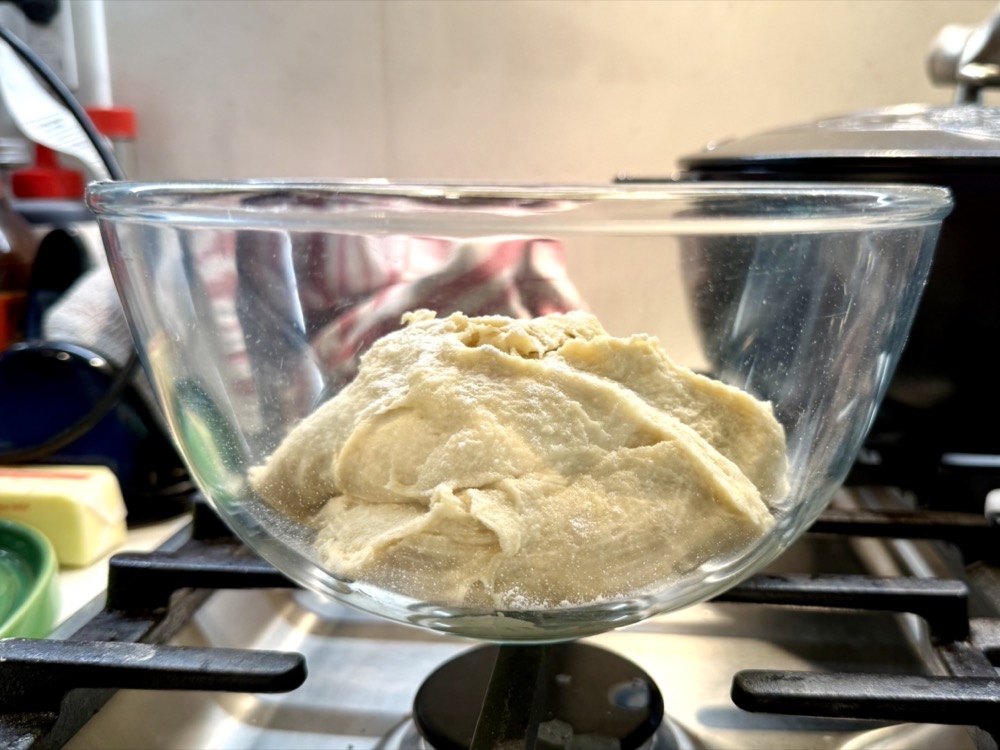
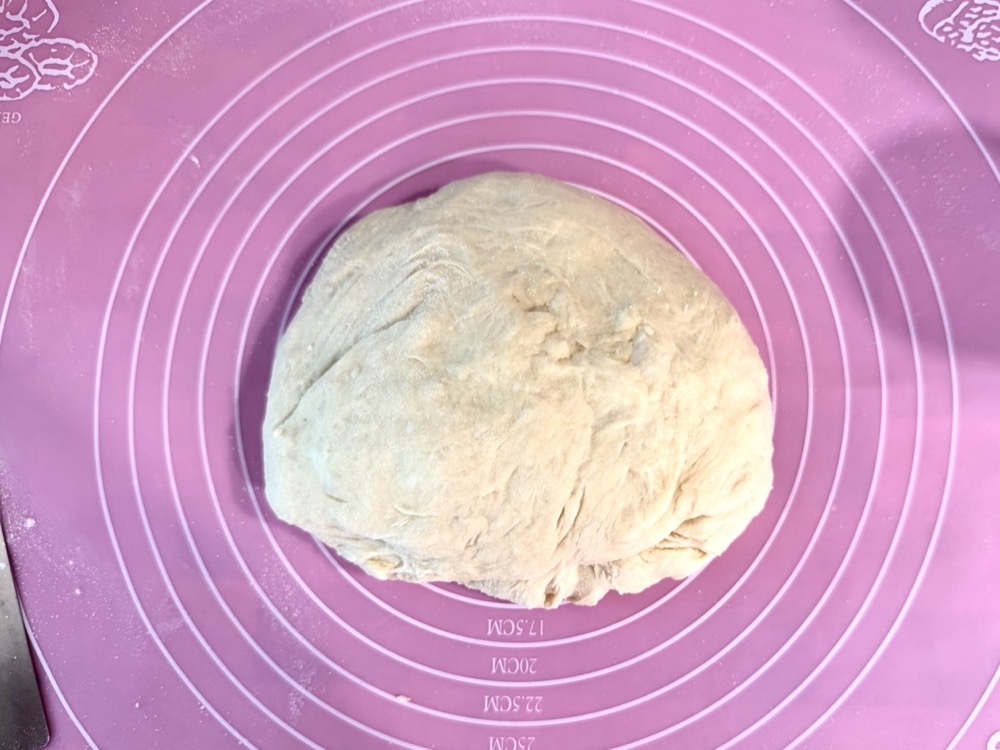
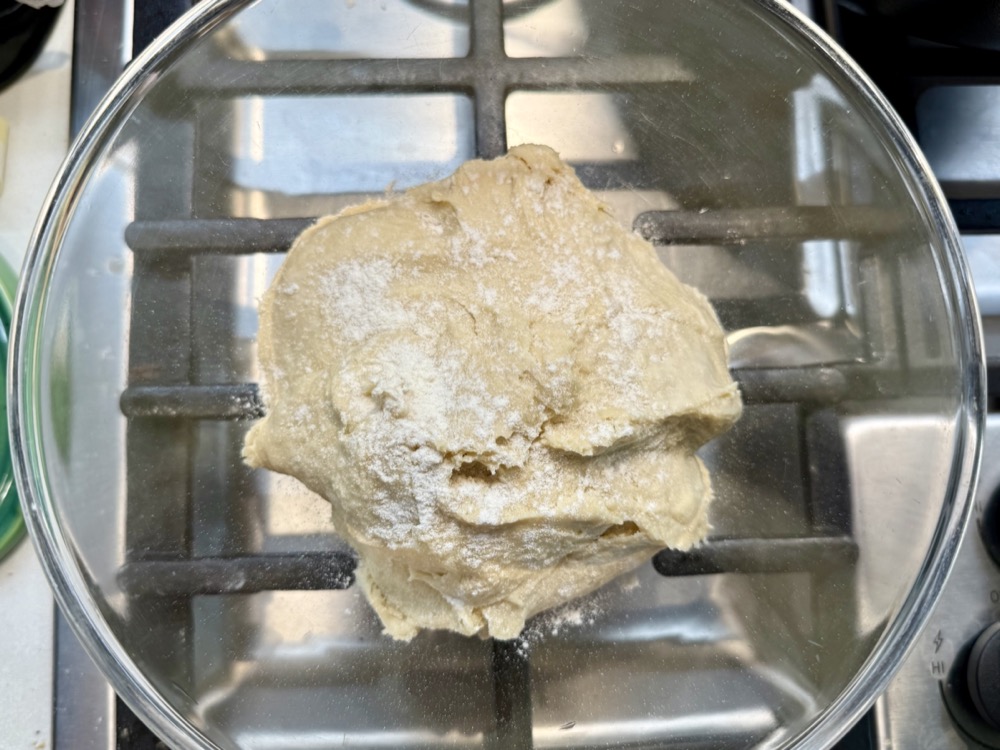
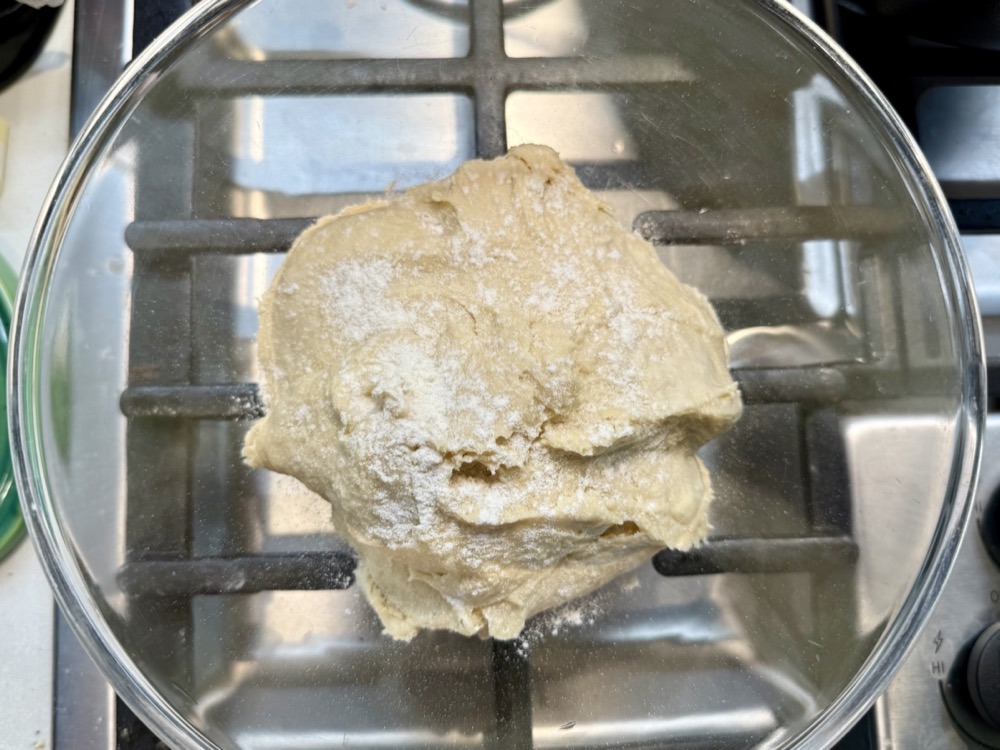
Mix well then alternate adding in 1/3 amount at a time the 350g sifted flour and the 175ml room temperature milk. Once the mixture gets too thick for the mixer, either use a dough hook attachment (if you’re using an electric mixer) or knead by hand. The dough is complete when you get a formed but sticky dough (see photo below) – this took about 5-7 minutes on an electric mixer.

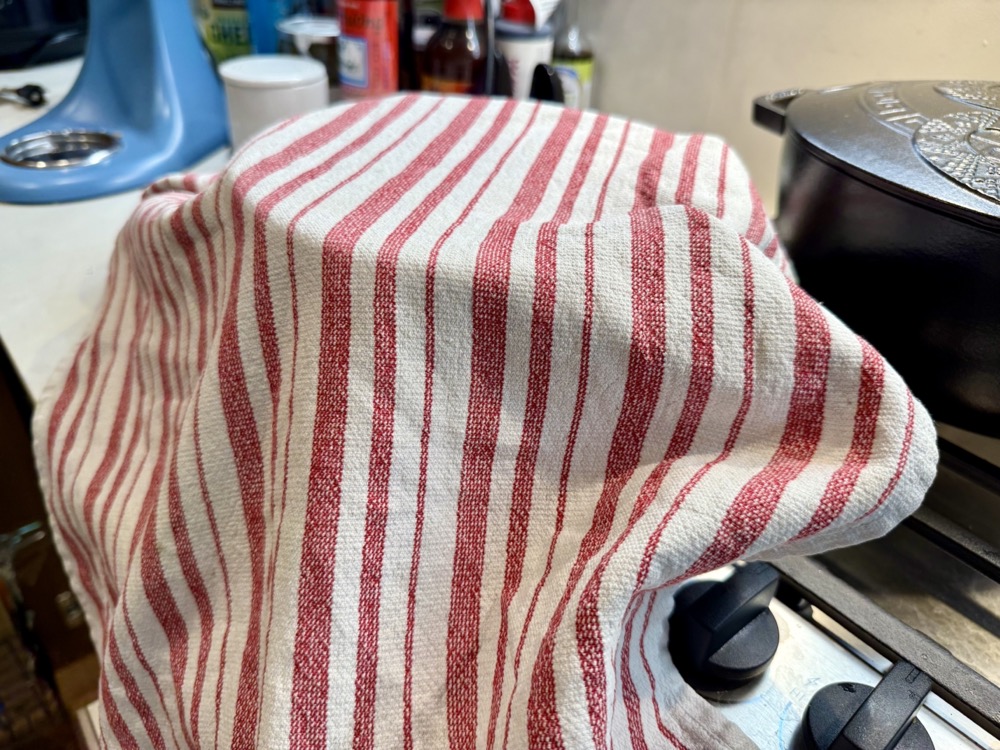
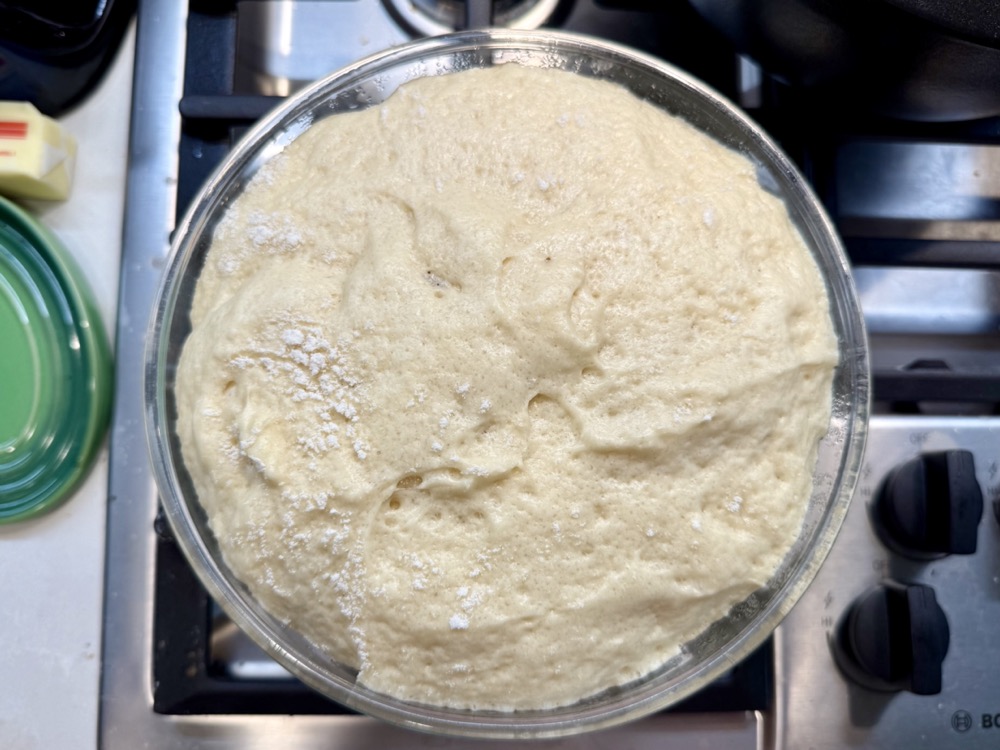
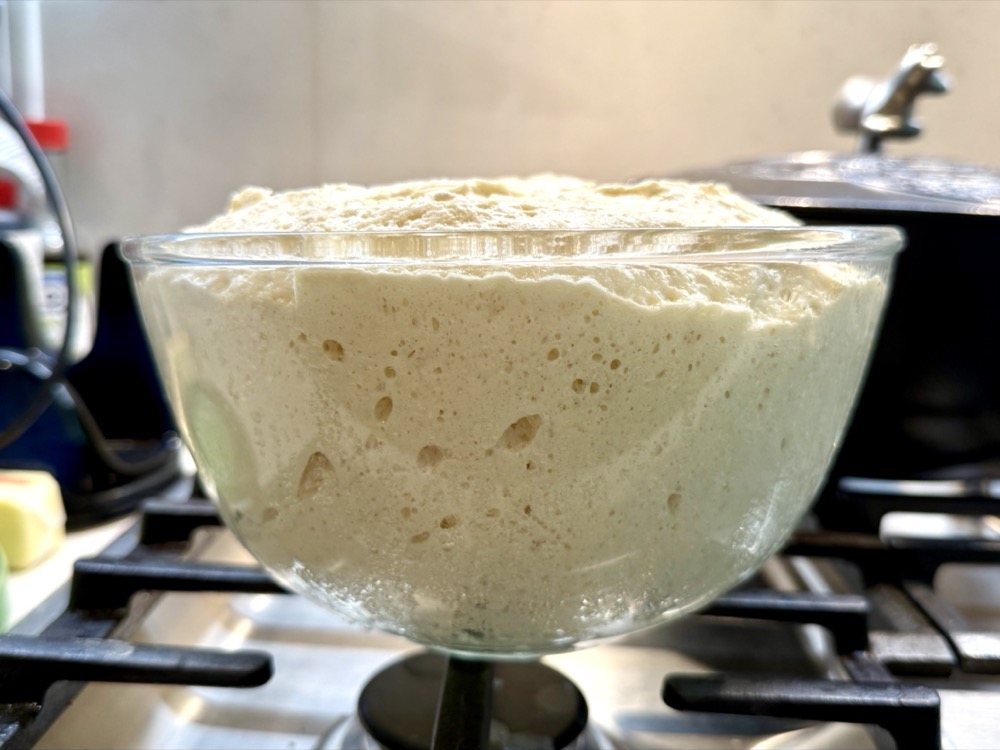
Once the dough forms, scrape it all together, add a dusting of flour on top then cover with a tea towel and let it rest in a warm place until doubled in size (~45 mins – 1 hour).

If you don’t have a warm place, use my fail-proof oven proofing method here.

You can finish off the poppy seed filling (if cooled) while you wait and make the streusel in the next step.

C) Make the streusel:

In a small bowl, add in 50g of sugar, 50g of butter, and 70g of flour.

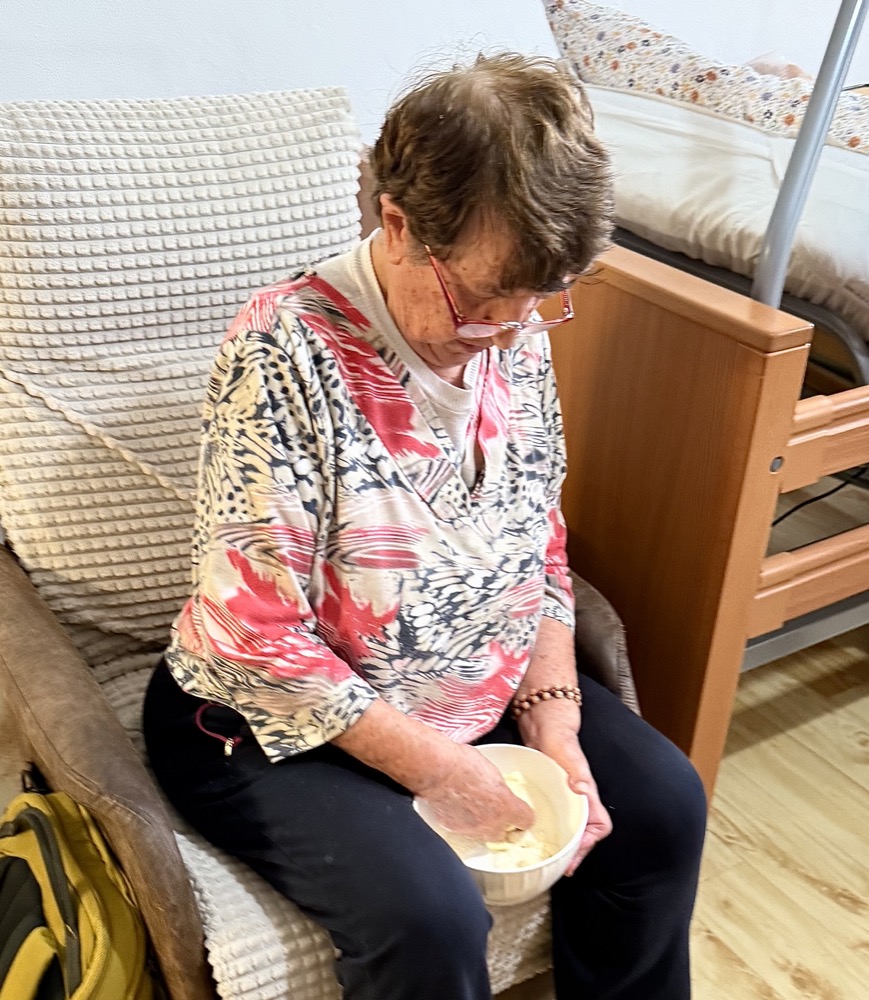
Mix/pinch/squish it by hand for 2-3 minutes until you get a crumbly mixture (see photo). Set aside.

D) Roll out the dough & assemble:

Prepare a greased or lined 9×13” baking tray.

Preheat the oven to 180˚C/350˚F.

Once the dough has risen, scrape out the dough onto a floured surface and knead it a few times to remove the bubbles. Weigh the dough and divide it evenly into 3 portions.

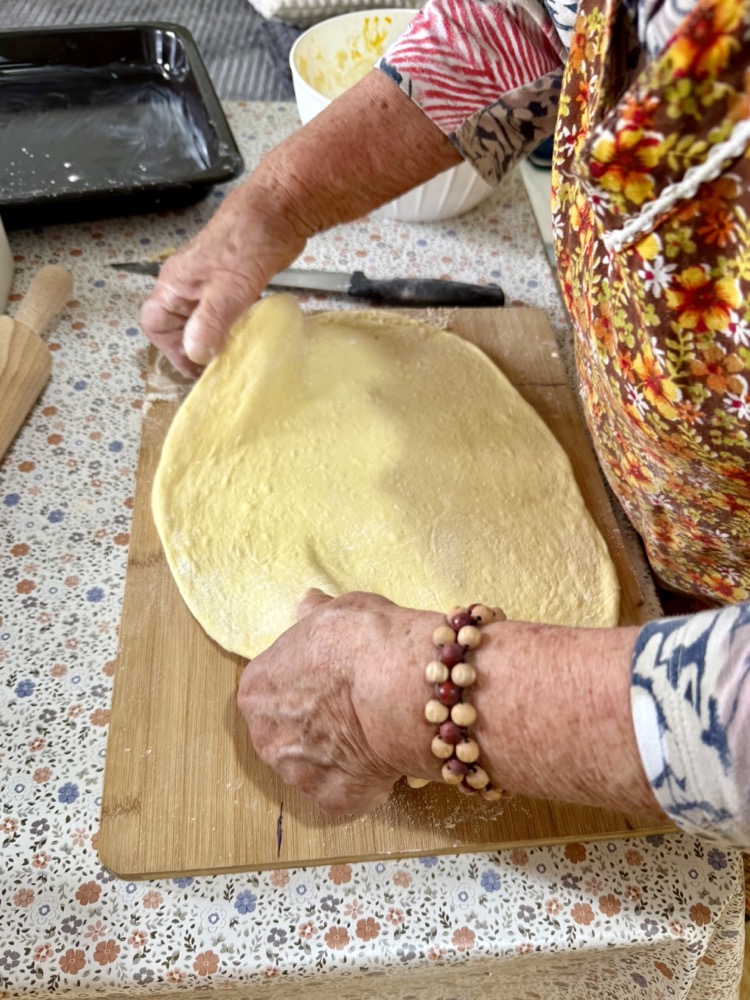
Take one dough ball (keep the other two covered with a tea towel to prevent it from drying out) and roll it out onto a floured surface. Flip the dough and roll it out a couple times on the floured surface until you get a rectangle shape about 0.5cm thick (see photo) and roughly the length of your baking tray. Evenly spread 1/3 of the finished poppy seed/jam mixture onto the rolled dough, leaving 1-2cm from the edge of the dough. 

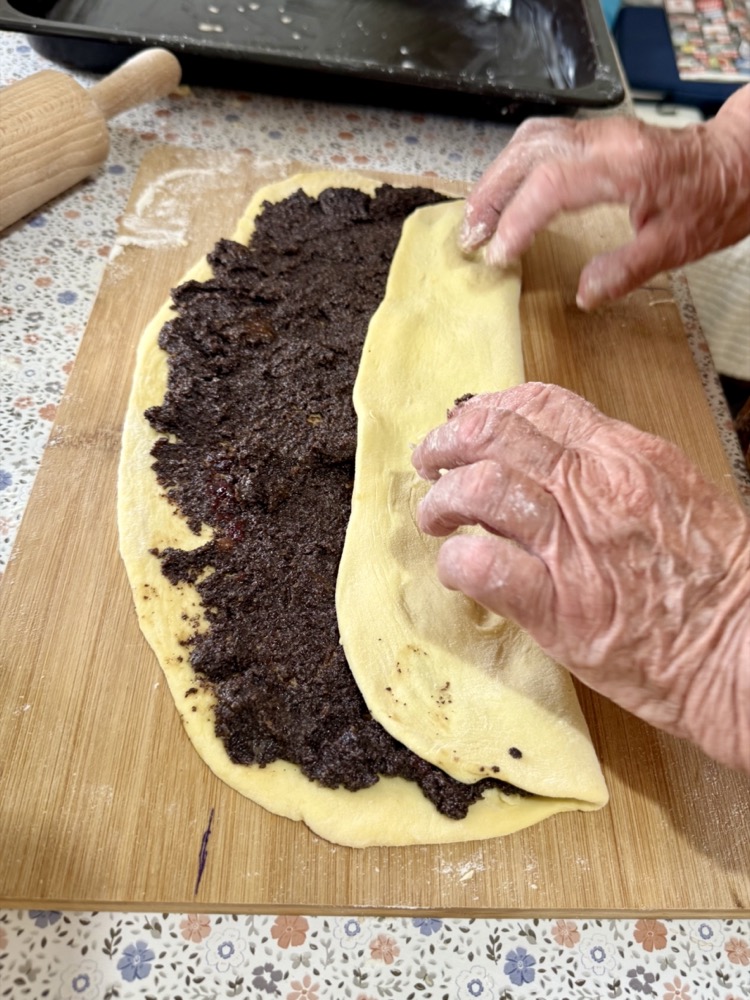
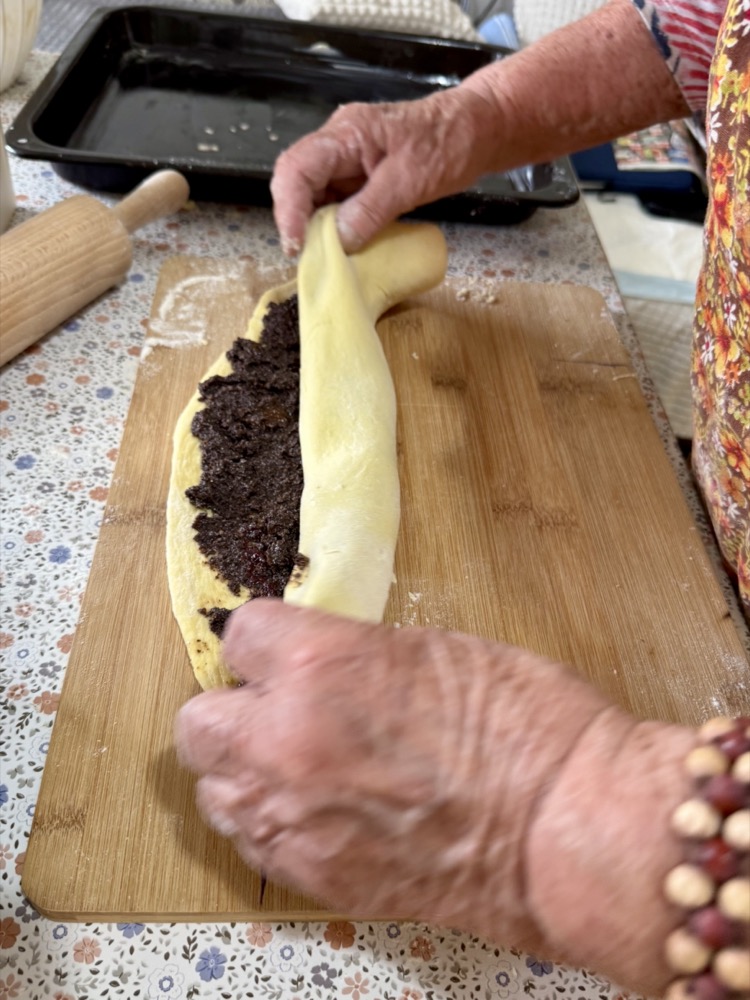
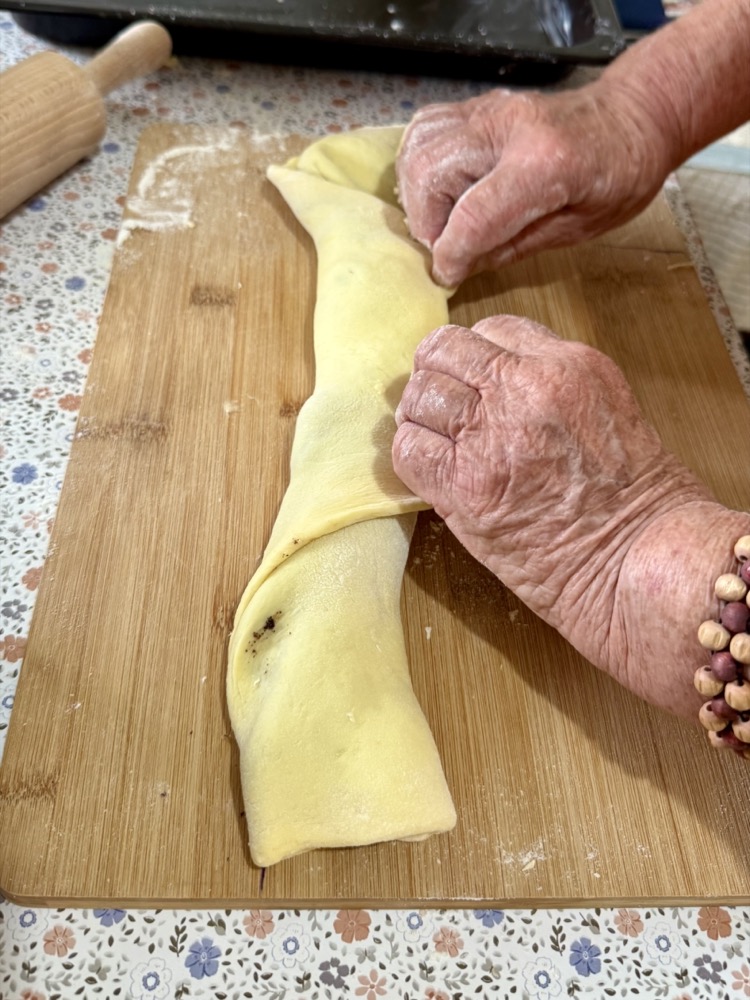
To form the roll: Grab the bottom edge and fold the dough up by 1/4, then roll up by 1/4 again, then fold the upper 1/4 edge down over the roll and pinch the edges to seal in the poppy seed mixture (see photos). Gently pick up the roll and place this onto the prepared baking tray. Don’t worry if you have some areas of thinner dough or where some poppy seed filling sticks out.

Repeat steps 4-6 with the other two dough balls. Leave about a 2cm space between each roll on the baking tray so they don’t stick together when they bake.

E) Make the egg wash and add the streusel:

In a small bowl, beat the remaining egg white with 1/2 Tbsp of milk and brush this mixture over the top and sides of each roll.

This step creates a moist sticky surface for the streusel to stick better. Babicka actually uses rum but to limit the number of ingredients and to use up the egg white, I’ve elected to use the egg wash method. There is no difference in taste if you use rum or an egg/milk mixture.

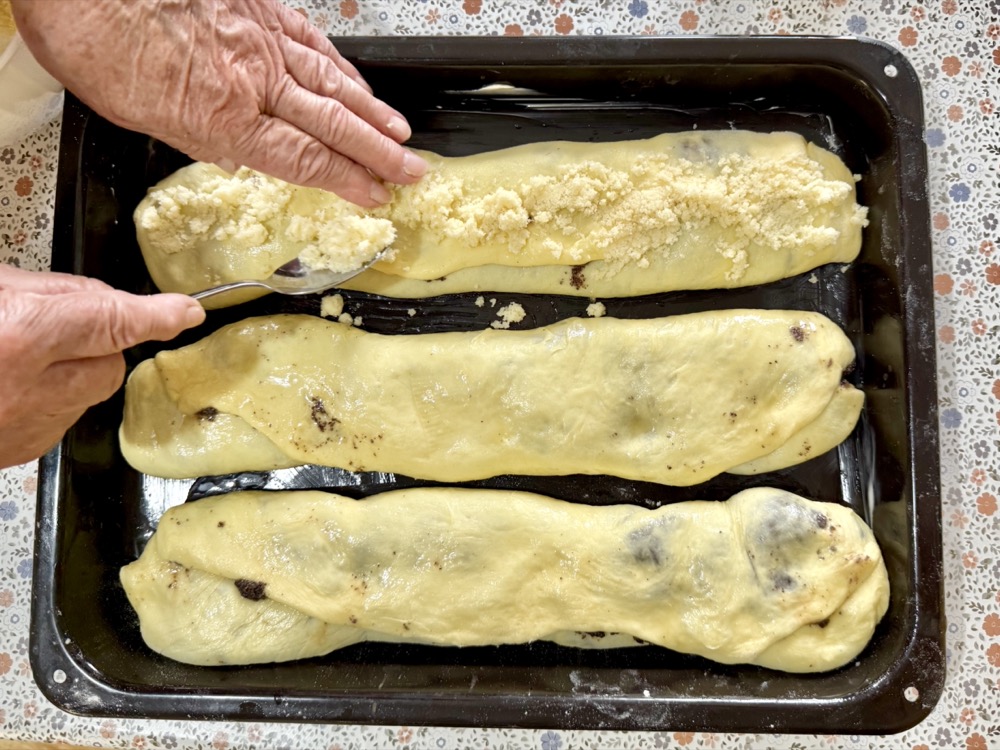
Evenly sprinkle 1/3 of the streusel on top of each roll. Gently push it into the dough if it seems to be rolling off.

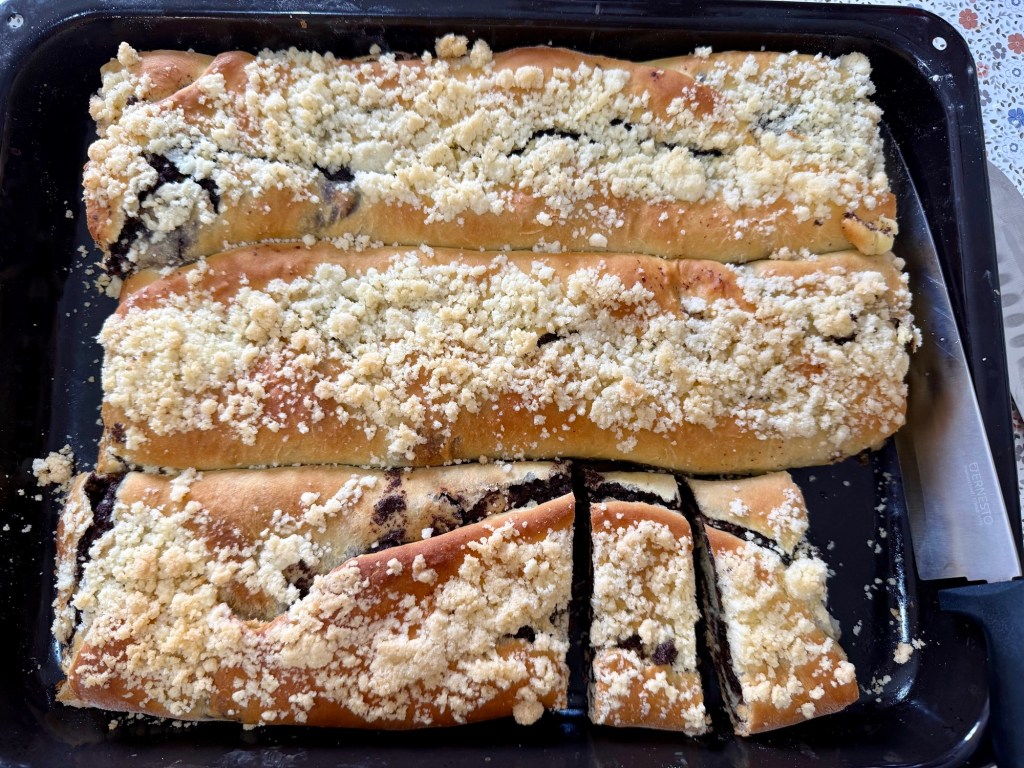
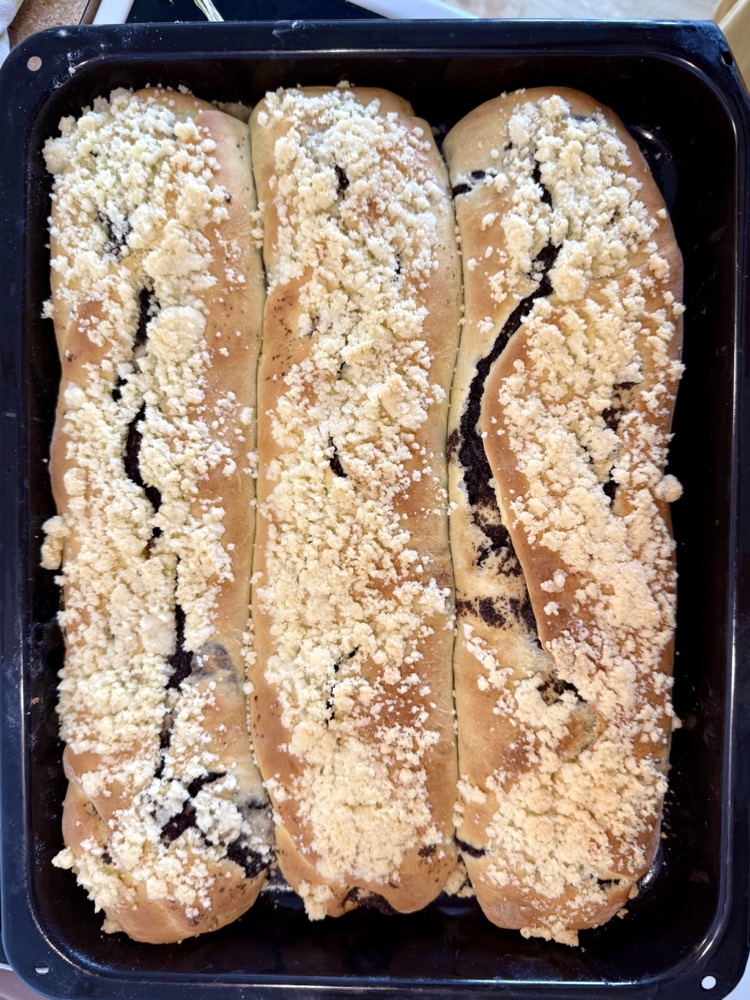
Bake in the preheated oven until golden brown (~25-30 minutes), turning the pan halfway through the cook time to bake evenly. DONE! Let it cool slightly before slicing then serve immediately.

Storage:

  • Store in an air-tight container and eat within 2 days at room temperature or up to 5 days in the refrigerator.
  • To freeze: slice the makovec and freeze in an air-tight container – mine’s still in the freezer from 3 months ago and still going strong! To reheat: microwave from frozen for 30 seconds at a time until warmed.
  • Note: once you refrigerate or freeze it, the bread firms up slightly.

Summarized Recipe:

Babička’s Makovec (Czech Poppy Seed Roll)

Date Published: Nov 11th, 2025 | Last Updated: Nov 11th, 2025
Author: Abby | Category: breads, Czech, dessert, pastry, snacks, vegetarian
Makes: 3 loaves (enough for a party or one Toby 😂) | Prep time: 1.5 hours | Cook time: 1 hour

Ingredients: I recommend to use the metric measurements (grams/mls) for accuracy of the ingredients to have it as close to babička’s version as possible.

  • Poppy seed filling:
    • 500ml (2 cups) whole milk
    • 250g (1.75 cups) poppy seeds, ground
    • 120g (1.25 cups) granulated sugar
    • 1/2 tsp kosher salt
    • 175g (1/2 cup) strawberry jam (or more to taste)
    • 4g (1/2 Tbsp) ground cinnamon
    • 28g (2 Tbsps) cocoa powder
    • 1 tsp vanilla extract
  • Dough:
    • Yeast prep:
      • 60ml (1/4 cup) milk
      • 7g (1 packet) of active dry yeast
      • 1 tsp granulated sugar
    • 50g (1/4 cup) granulated sugar
    • 50g (3.5 Tbsps) butter, softened
    • 1 large egg, divided into yolk and egg white
    • 1 tsp kosher salt
    • 350g (2.75 cups) all-purpose flour, sifted (+ more for dusting and rolling)
    • 175ml (3/4 cup) + 1/2 Tbsp whole milk, room temperature
  • Streusel:
    • 50g (1/4 cup) granulated sugar
    • 50g (3.5 Tbsps) butter, softened
    • 70g (1/2 cup) all-purpose flour

Directions:

  1. Make the poppy seed filling:
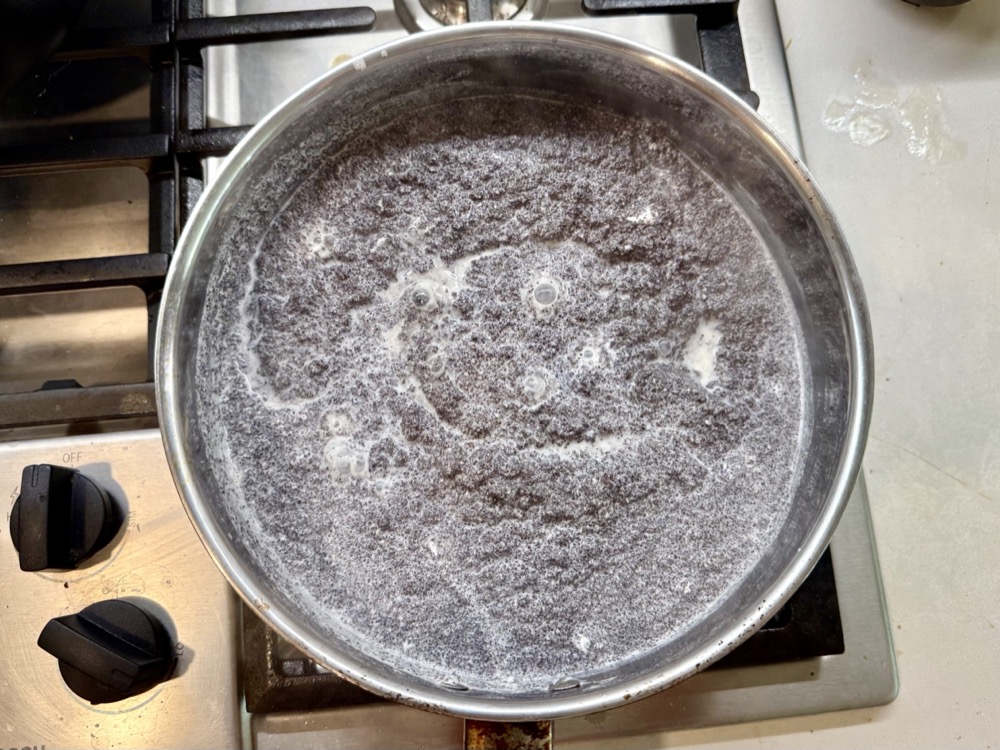
    1. In a wide-based pan on MED heat, add in 500ml of milk. When the milk boils, add in 250g ground poppy seeds and mix together. It will thicken as you mix. Once the mixture boils again, turn down the heat to LOW and continue to stir until you get a dry crumbly mixture without any liquid left (see photo) – this can take up to 20 minutes.
      • Pro-tips:
        • You can use any type of pan or pot, but a wide-based pan will increase your surface area and quicken the process.
        • Make sure you don’t have any liquid left in your mixture or else your filling will be too wet.
    2. When you get a dry mixture, turn the heat OFF and take the pan off of the heat. Add in 120g of sugar and 1/2 tsp salt and stir until combined. Set aside to cool completely.
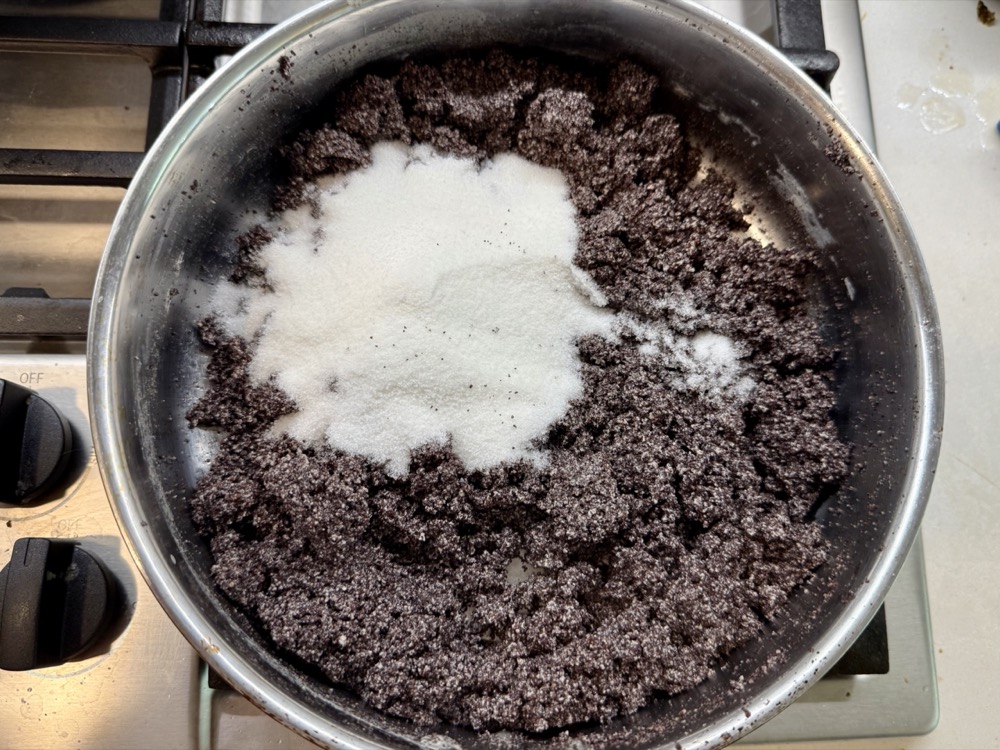
      • You can skip ahead and make the dough in this time while you wait for it to cool.
    3. Once the mixture fully cools, add in 175g strawberry jam, 1/2 Tbsp ground cinnamon, 2 Tbsps cocoa powder, and 1 tsp of vanilla extract. Mix well and set aside.
  2. Make the dough while the poppy seed filling cools:
    1. Activate the yeast:
      • In a small bowl, add in 1/4 cup of milk and microwave for 10 seconds at a time until it’s warmed (make sure it’s not too hot or it will cook the yeast).
      • Add in 7g (1 packet) active dry yeast and 1 tsp sugar. Mix until well-combined, cover and set aside. The yeast is activated once it gets frothy (5-10mins).
    2. In a separate mixing bowl, add in 50g sugar, 50g softened butter, and 1 large egg yolk. Mix on HIGH speed for 2-3 minutes until the mixture is well-combined and a little fluffy.
    3. To the sugar/butter mixture, add in 1 tsp salt, and the frothed yeast mixture (from step 1). Mix well then alternate adding in 1/3 amount at a time the 350g sifted flour and the 175ml room temperature milk. Once the mixture gets too thick for the stand mixer, either use a dough hook attachment (if you’re using an electric mixer) or knead by hand. The dough is complete when you get a formed but sticky dough (see photo above) – this took about 5-7 minutes on an electric mixer.
    4. Once the dough forms, scrape it all together, add a dusting of flour on top then cover and let it rest in a warm place until doubled in size (~45 mins – 1 hour).
      • If you don’t have a warm place, use my fail-proof oven proofing method here.
      • You can finish off the poppy seed filling (if cooled) while you wait and make the streusel in the next step.
  3. Make the streusel:
    1. In a small bowl, add in 50g of sugar, 50g of butter, and 70g of flour.
    2. Mix/pinch/squish it by hand for 2-3 minutes until you get a crumbly mixture (see photo). Set aside.
  4. Roll out the dough & assemble:
    1. Prepare a greased or lined 9×13” baking tray.
    2. Preheat the oven to 180˚C/350˚F.
    3. Once the dough has risen, scrape out the dough onto a floured surface and knead it a few times to remove the bubbles. Weigh the dough and divide it evenly into 3 portions.
    4. Take one dough ball (keep the other two covered with a tea towel to prevent it from drying out) and roll it out onto a floured surface. Flip the dough and roll it out a couple times on the floured surface until you get a rectangle shape about 0.5cm thick (see photo) and roughly the length of your baking tray.
    5. Evenly spread 1/3 of the finished poppy seed/jam mixture onto the rolled dough, leaving 1-2cm from the edge of the dough. 
    6. To form the roll: Grab the bottom edge and fold the dough up by 1/4, then roll up by 1/4 again, then fold the upper 1/4 edge down over the roll and pinch the edges to seal in the poppy seed mixture (see photos). Gently pick up the roll and place this onto the prepared baking tray.
    7. Repeat steps 4-6 with the other two dough balls. Leave about a 2cm space between each roll on the baking tray so they don’t stick together when they bake.
  5. Make the egg wash and add the streusel:
    1. In a small bowl, beat the remaining egg white with 1/2 Tbsp of milk and brush this mixture over the top and sides of each roll.
      • This step creates a moist sticky surface for the streusel to stick better. Babicka actually uses rum but to limit the number of ingredients and to use up the egg white, I’ve elected to use the egg wash method. There is no difference in taste if you use rum or egg/milk mixture.
    2. Evenly sprinkle 1/3 of the streusel on top of each roll. Gently push it into the dough if it seems to be rolling off.
    3. Bake in the preheated oven until golden brown (~25-30 minutes), turning the pan halfway through the cook time to bake evenly. DONE! Let it cool slightly before slicing then serve immediately.

Copycat KFC Coleslaw


Date Published: Sept 14th, 2025 | Last Updated: Sept 14th, 2025
Author: Abby |Category: sides, vegetarian, easy, salads
Serves: 6 | Prep time: 20 minutes | Marinate time: 12 hours (overnight)

Jump to recipe |

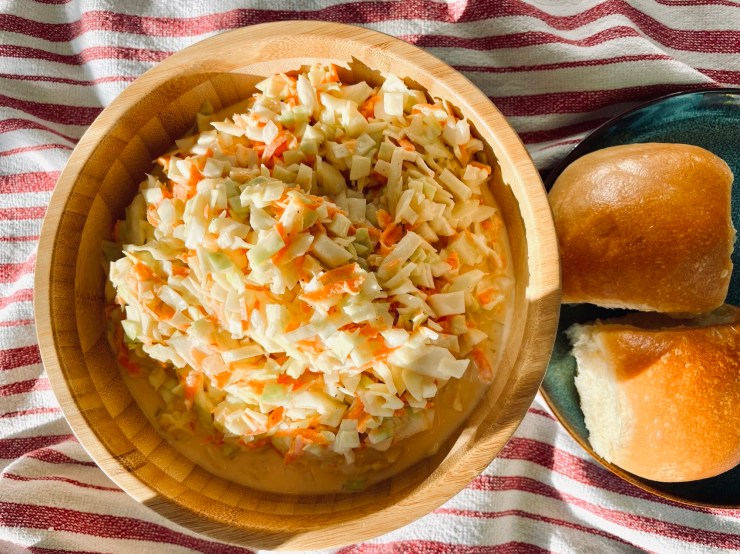
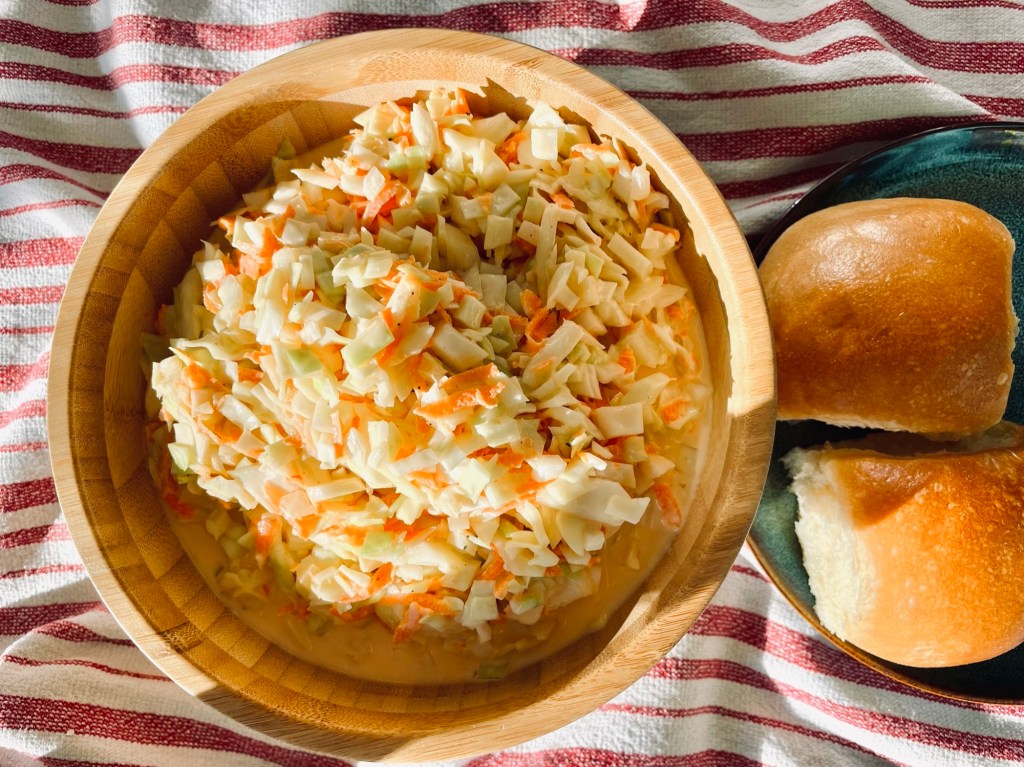
I’ve never been a huge fan of KFC coleslaw, but my mom always loved it. Back home in Canada they used to do “Toonie Tuesdays” where you can get a KFC deal of 2 pieces of chicken with a small fries for $2 (our $2 coins are called Toonies, if you didn’t know) and you bet mom always ordered a side of coleslaw with it, so this one’s for you, mom!

This recipe is an adaptation from this copy cat KFC coleslaw recipe at TopSecretRecipes.com. I’ve changed the proportions a little and doubled up on the sauce to make it extra flavourful. Toby and I actually went out of our way to KFC to buy coleslaw and compare the two and hands down this one was the winner (I don’t know what they’re doing in Brooklyn KFC)!

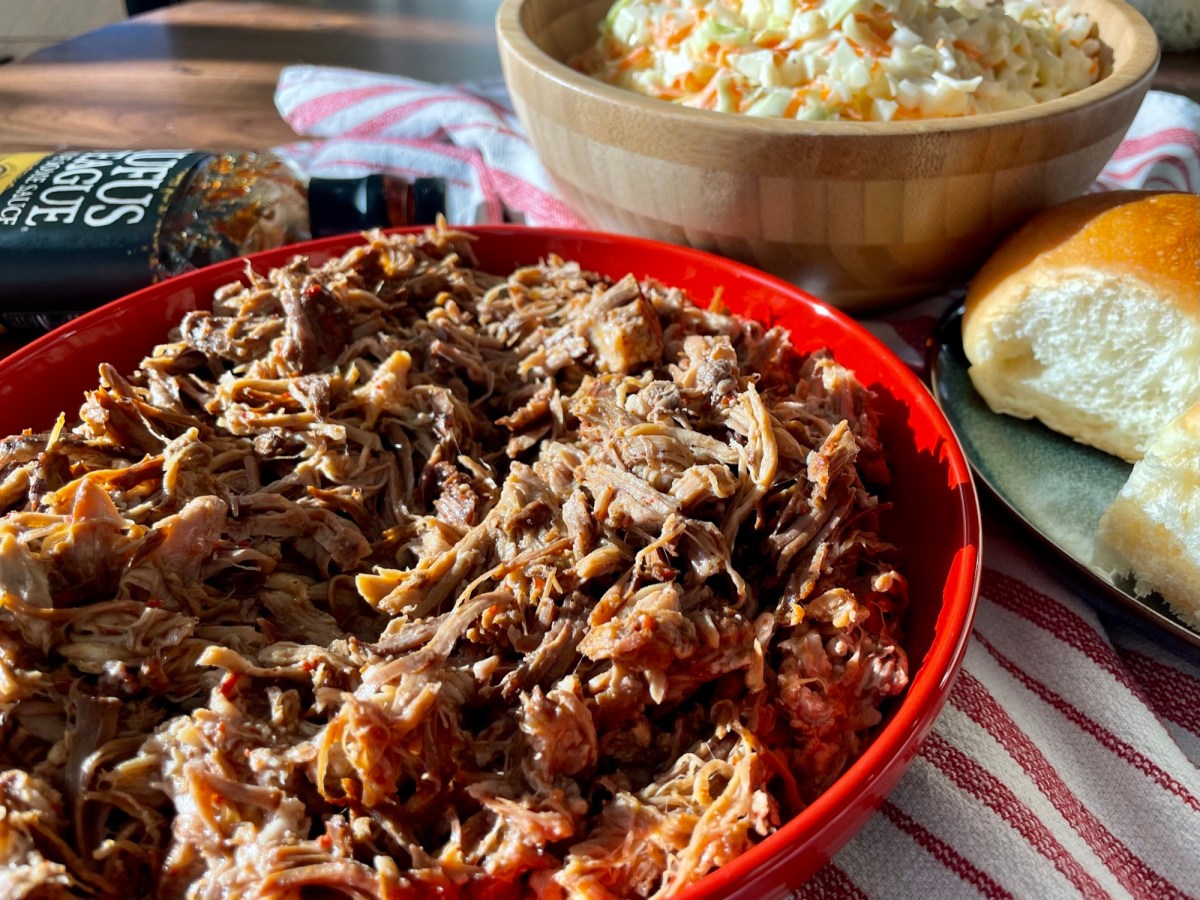
Pair it with this super easy pulled pork recipe.:

Insanely Easy Instant Pot Pulled Pork


Get ready for the most ridiculously easy pulled pork recipe that’s ready in 75 minutes! You will need an Instant Pot or any pressure cooker for this along with your favourite BBQ sauce.

Anyways, without further ado, here’s the recipe! If you have any comments or suggestions, I’d love to hear from you in the comment section! You can follow me on instagram, youtube and facebook to see all the recipes I post!

Happy cooking!

Ingredients you’ll need:

  • Dressing:
    • 1/4 cup buttermilk (or 1/4 cup milk + 1 tsp lemon juice, let it sit for 10 mins until it thickens)
    • 1/4 cup milk
    • 1/2 cup mayonnaise (get the best quality you can)
    • 1/3 cup granulated sugar
    • 2.5 Tbsps lemon juice
    • 1.5 Tbsps white vinegar
    • 1/2 tsp kosher salt + more to taste
    • 1/2 tsp fresh ground black pepper
  • 1/2 a small head (~4 cups) cabbage, finely chopped
  • 1 small carrot (~1/2 cup), shredded
  • 1/4 small onion (~1.5 Tbsps), finely minced

Directions:

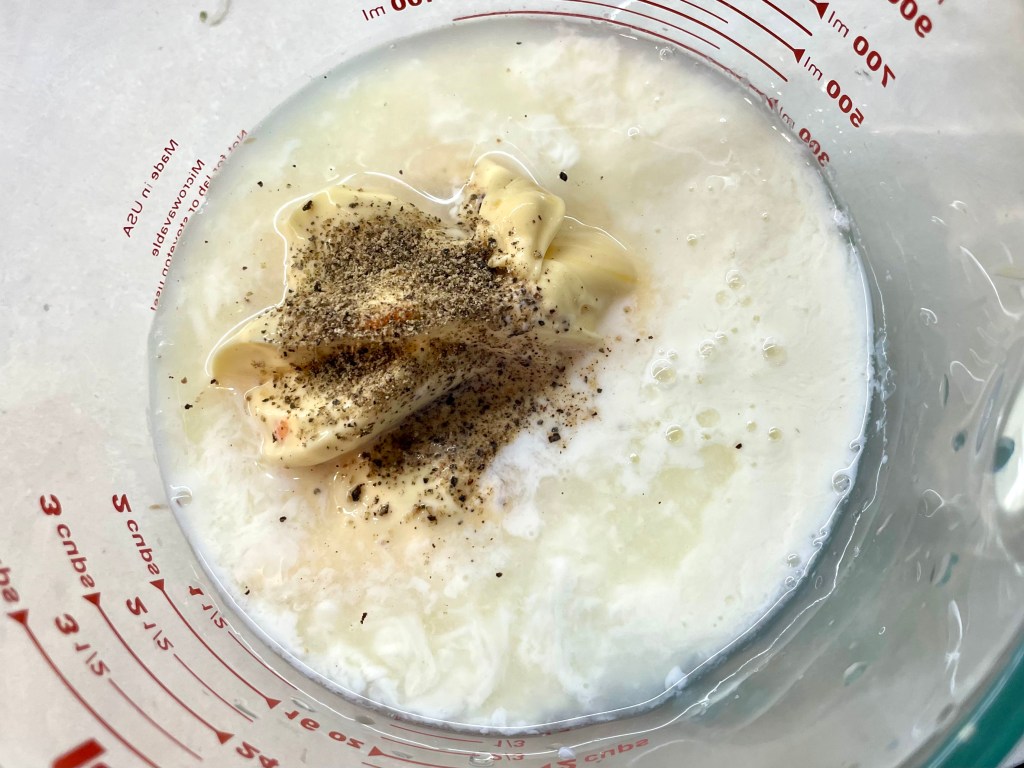
In a mixing bowl, combine all the dressing ingredients: 1/4 cup buttermilk, 1/4 cup milk, 1/2 cup mayonnaise, 1/3 cup sugar, 2.5 Tbsps lemon juice, 1.5 Tbsps white vinegar, 1/2 tsp kosher salt, 1/2 tsp fresh ground black pepper.

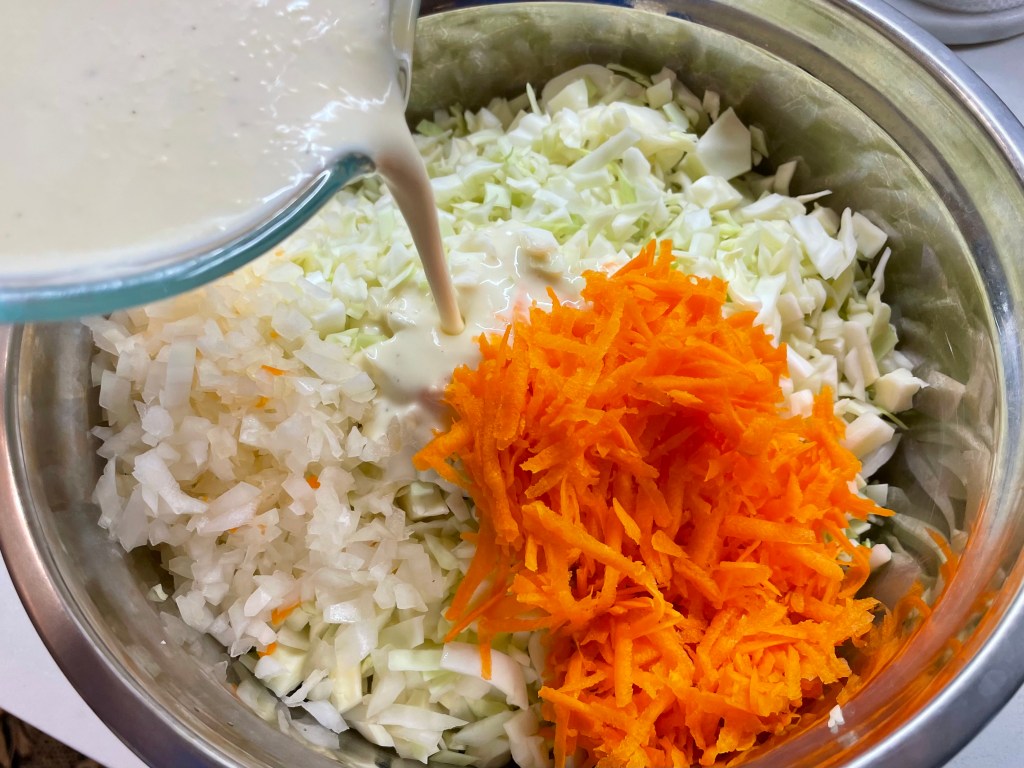
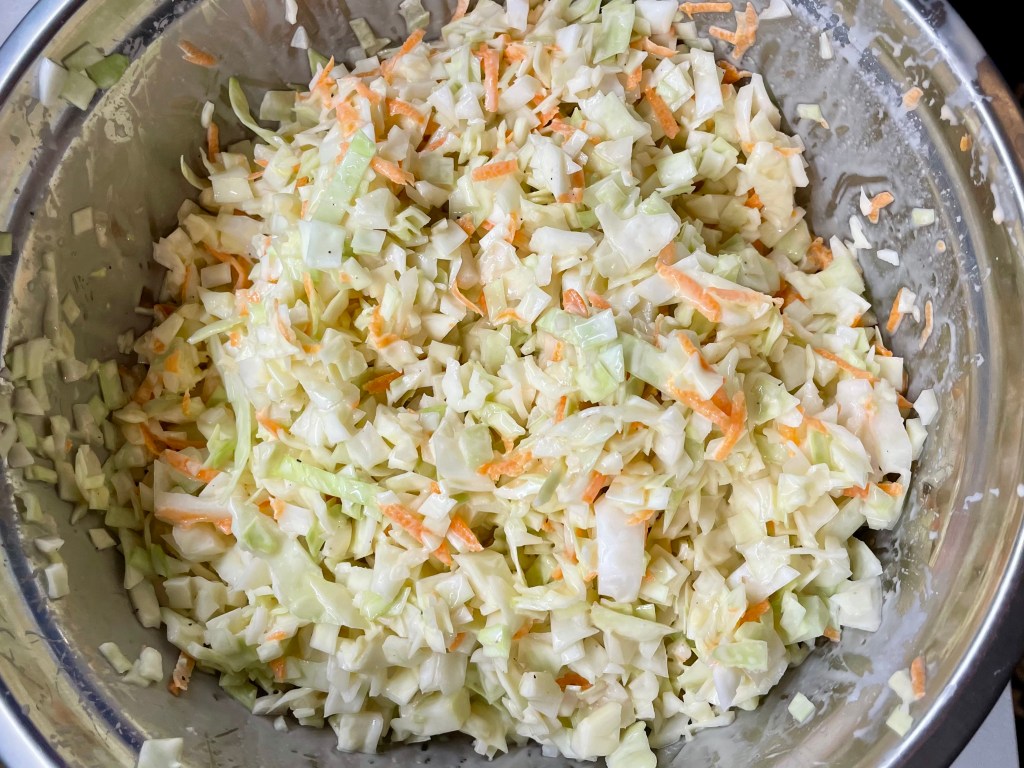
Add the dressing to the chopped cabbage, carrot, and onion and mix well.

Cover and let it sit in the refrigerator overnight before serving. Don’t taste it until it has marinated overnight – the cabbage will release its juices and the flavours will come together better the next day. Done!

Summarized Recipe:

Copycat KFC Coleslaw

Date Published: Sept 14th, 2025 | Last Updated: Sept 14th, 2025
Author: Abby |Category: sides, vegetarian, easy, salads
Serves: 6 | Prep time: 20 minutes | Marinate time: 12 hours (overnight)

Ingredients:

  • Dressing:
    • 1/4 cup buttermilk (or 1/4 cup milk + 1 tsp lemon juice, let it sit for 10 mins until it thickens)
    • 1/4 cup milk
    • 1/2 cup mayonnaise (get the best quality you can)
    • 1/3 cup granulated sugar
    • 2.5 Tbsps lemon juice
    • 1.5 Tbsps white vinegar
    • 1/2 tsp kosher salt + more to taste
    • 1/2 tsp fresh ground black pepper
  • 1/2 a small head (~4 cups) cabbage, finely chopped
  • 1 small carrot (~1/2 cup), shredded
  • 1/4 small onion (~1.5 Tbsps), finely minced

Directions:

  1. In a mixing bowl, combine all the dressing ingredients: 1/4 cup buttermilk, 1/4 cup milk, 1/2 cup mayonnaise, 1/3 cup sugar, 2.5 Tbsps lemon juice, 1.5 Tbsps white vinegar, 1/2 tsp kosher salt, 1/2 tsp fresh ground black pepper.
  2. Add the dressing to the chopped cabbage, carrot, and onion and mix well. Cover and let it sit in the refrigerator overnight before serving. Don’t taste it until it has marinated overnight – the cabbage will release its juices and the flavours will come together better the next day. Done!
Roasted Garlic Dal (Yellow Lentil Curry)


Date Published: July 20th, 2024 | Last Updated: July 20th, 2024
Author: Abby |Category: mains, vegetarian, easy, healthy, low-cal
Serves: 4 as a main | Prep time: 1 hour | Cook time: 2 hours

Jump to recipe |

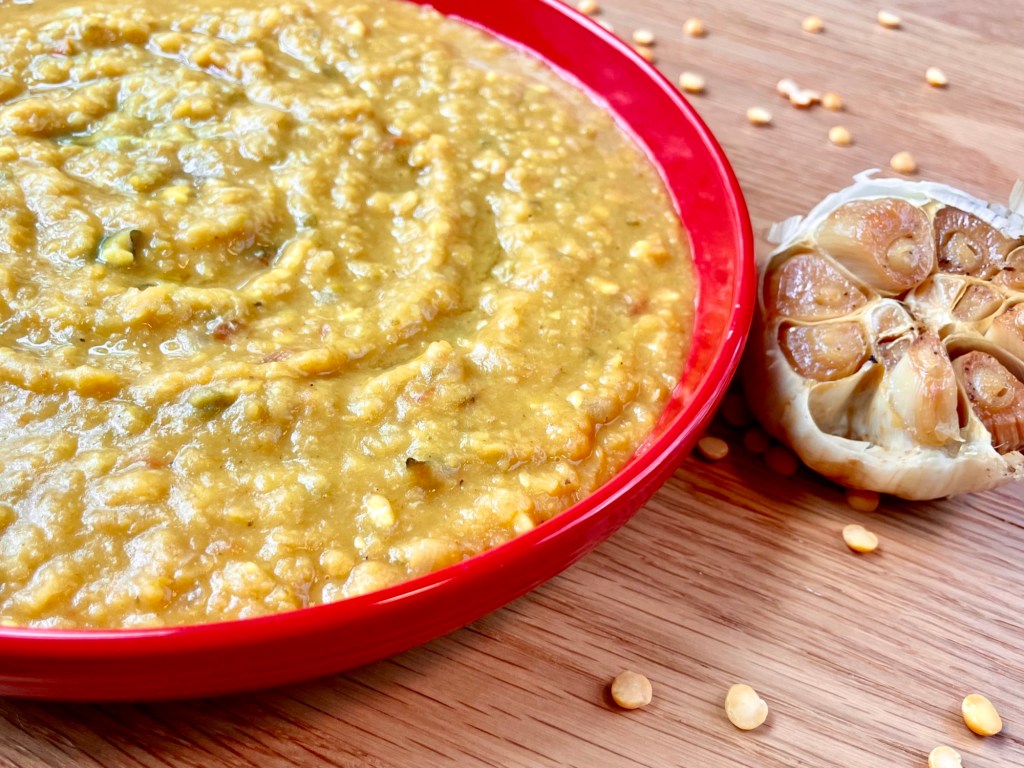
Dal (or dahl, daal, dhal) is a delicious vegetarian Indian curry made of lentils. You’ll find it on the menu at any Indian restaurant and there is a huge variety of ways you can make dal. It’s both flavourful and healthy!
In the past I’ve always found dal to be good, but never comparable to the infamous butter chicken, however that all changed during our recent trip to London. Toby took me to a Michelin-starred Indian restaurant called Trishna for my birthday and holy moly, of the entire tasting menu, the roasted garlic dal blew me away! I was thinking about it for days after and hoped I would be able to recreate it when I got home. After some trial and error testing different dal and roasted garlic recipes, I’m glad to report that I’ve done it! I’ve recreated that magical garlic dal from ‘Trishna’. The main base dal recipe is from RecipeTinEats but with a few little tweaks and with the addition of the roasted garlic.
Although this recipe is not difficult to make, there are a few ingredients required and it takes a little to let everything simmer – I promise it’s well worth the wait!

Anyways, without further ado, here’s the recipe! If you have any comments or suggestions, I’d love to hear from you in the comment section! You can follow me on instagram, youtube and facebook to see all the recipes I post!

Happy cooking!

Ingredients you’ll need:

  • Roasted garlic:
    • 2 garlic bulbs
    • Drizzle olive oil
    • Pinch of salt
    • Pinch of black pepper
  • Dal:
    • 1 cup chana dal/yellow split lentils
    • 2 Tbsps ghee (or 1 Tbsp oil + 1 Tbsp butter)
    • 2 long green chillies, deseeded & diced small
    • 1 small onion (red or yellow), diced small
    • 6 garlic cloves, minced
    • 1.5 Tbsps ginger, minced
    • 8 dried (or 10 fresh) curry leaves
    • 1 tomato, diced small
    • 1/2 tsp ground cumin
    • 4 cups (1L) water
    • 1/2 tsp turmeric powder
    • 1/8 tsp garam masala
    • 1 tsp kosher/cooking salt (or more to taste)
  • To serve: basmati rice or naan

Directions:

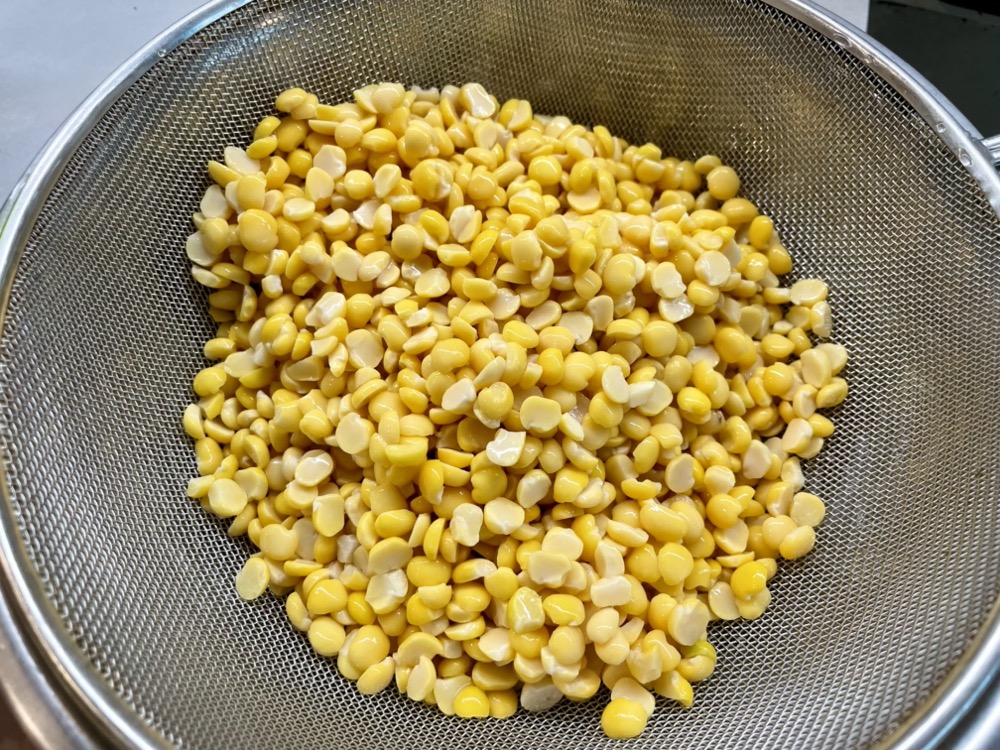
Rinse the chana dal/yellow split lentils and let it soak in water for at least 1 hour, then strain and set aside.

While the lentils are soaking, roast the garlic:

Preheat the oven to 375˚F (190˚C).

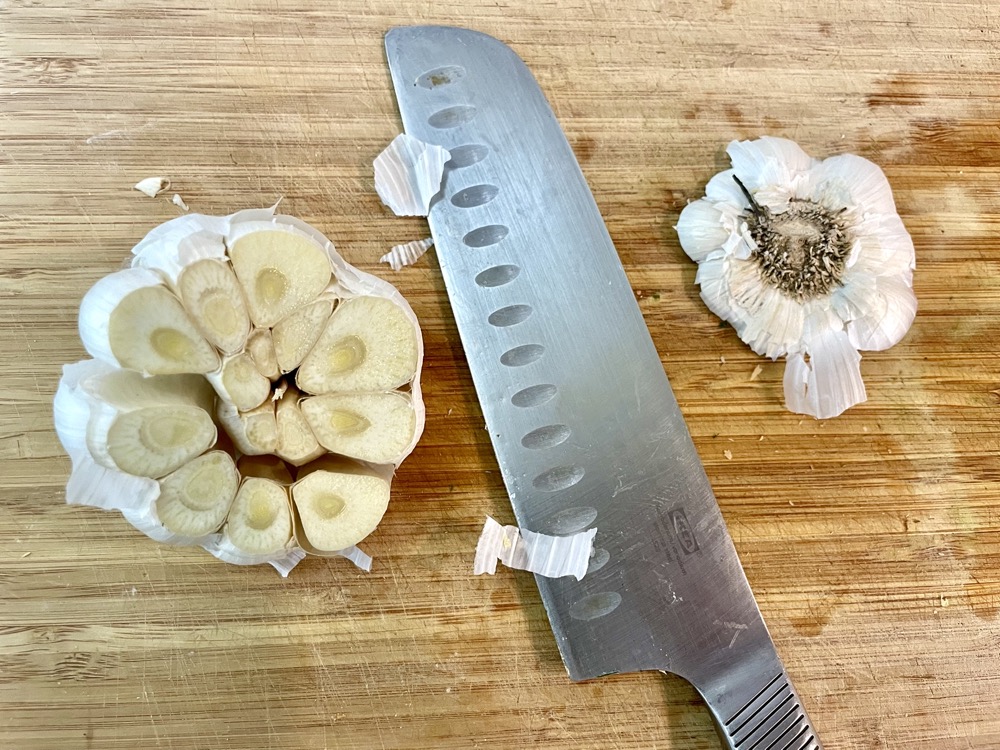
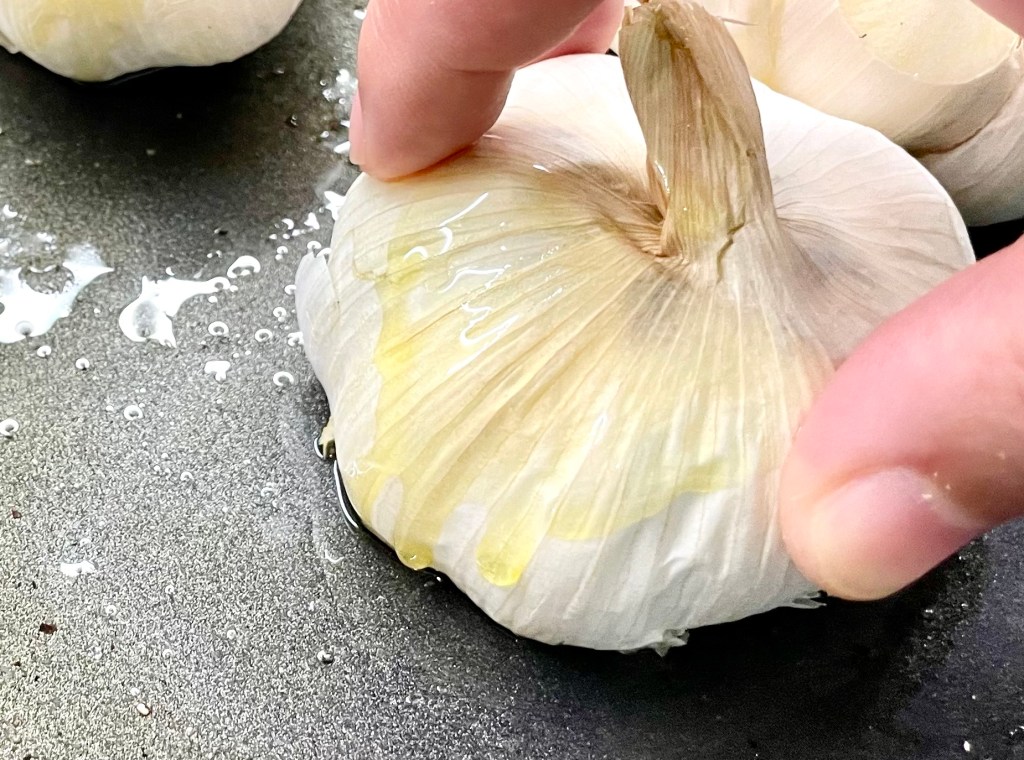
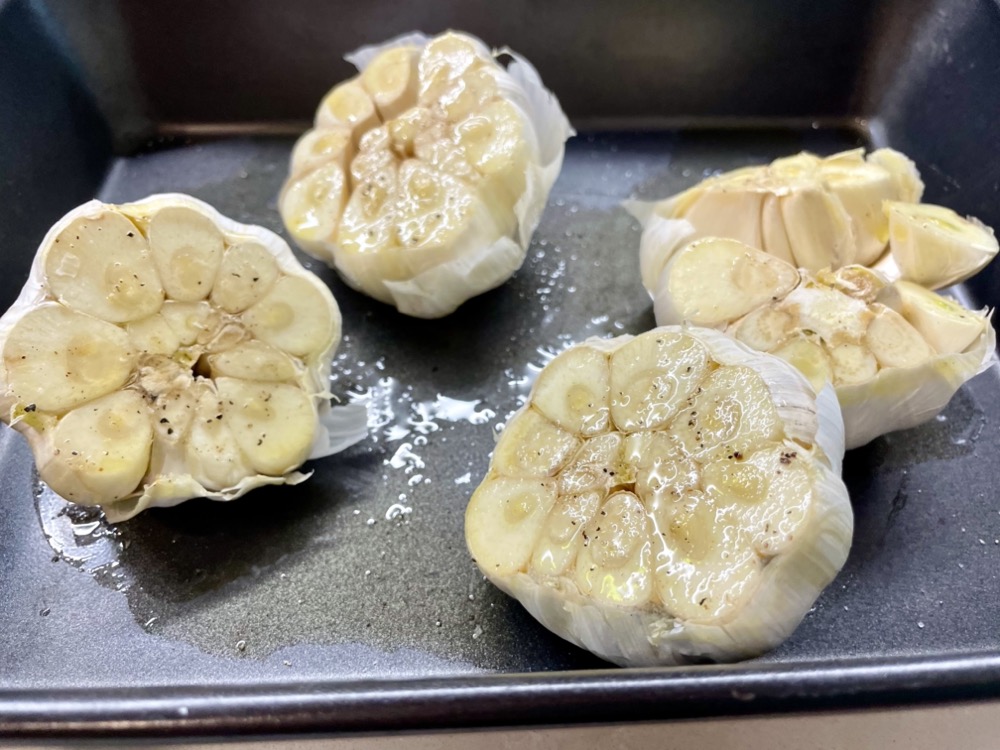
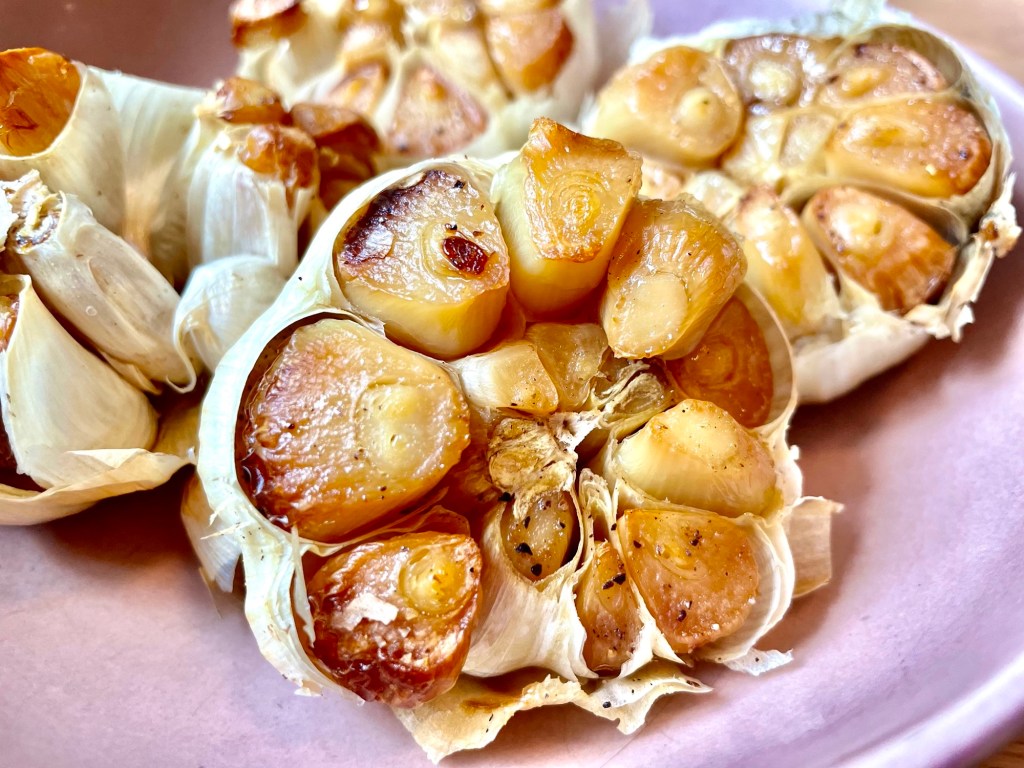
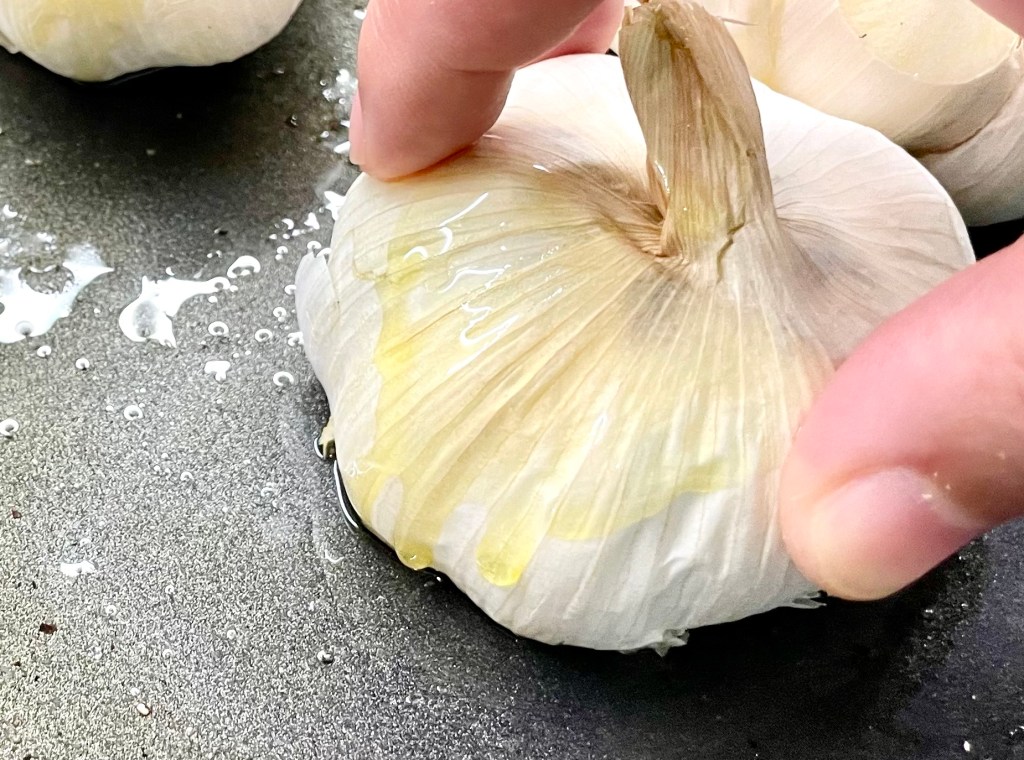
Prepare a small square baking tray and pour in a drizzle of olive oil. Slice the base off of the garlic bulbs (the flat side – see photo) and dip the exposed side into the olive oil and place the bulbs in the tray, cut side up. Sprinkle salt and pepper over top. Make sure all the exposed garlic cloves are covered in oil so it doesn’t burn.

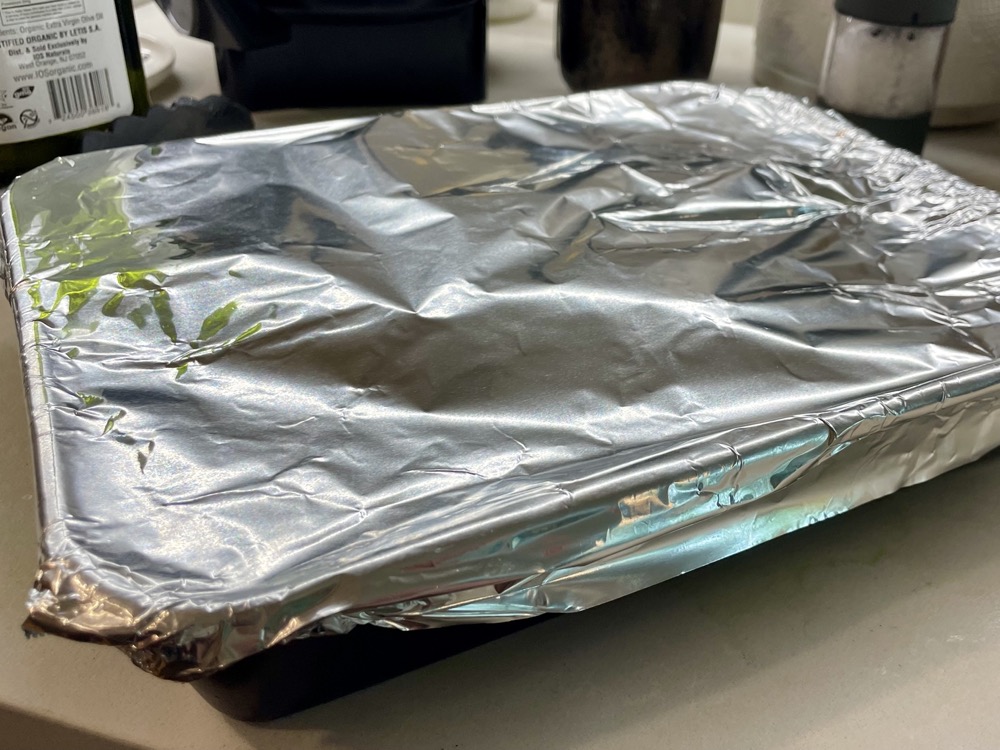
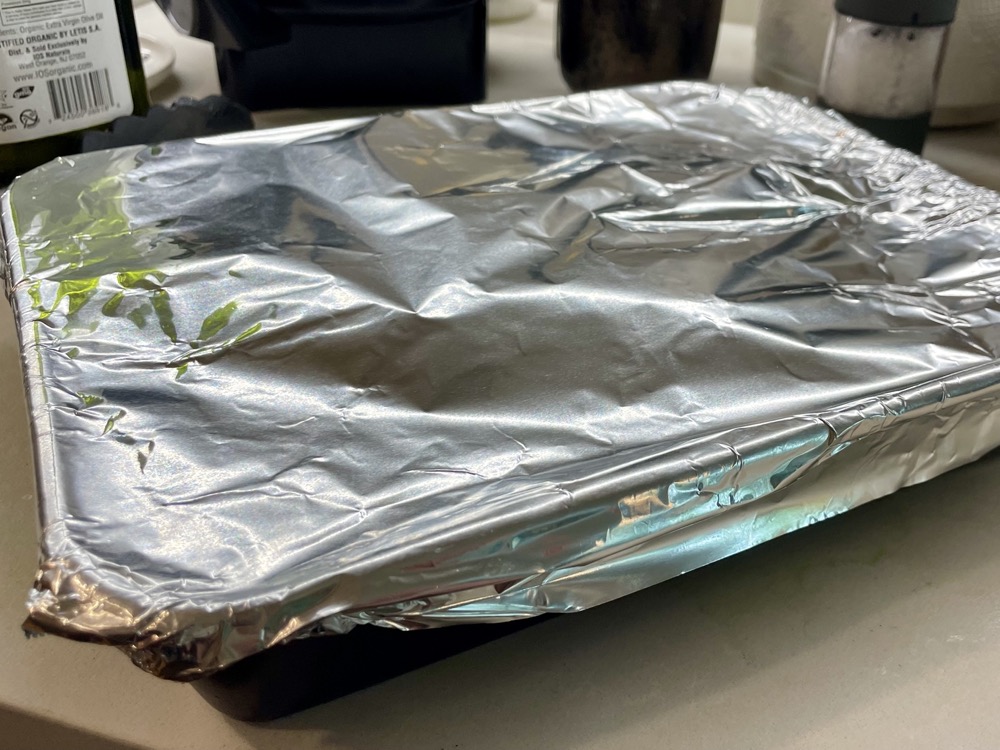
Cover the tray with aluminum foil and bake in the preheated oven for 40 minutes.

After 40 mins, take it out of the oven, remove the foil and let the roasted garlic cool down. Once cool enough to handle, gently remove the garlic cloves from the outer layer and set aside.

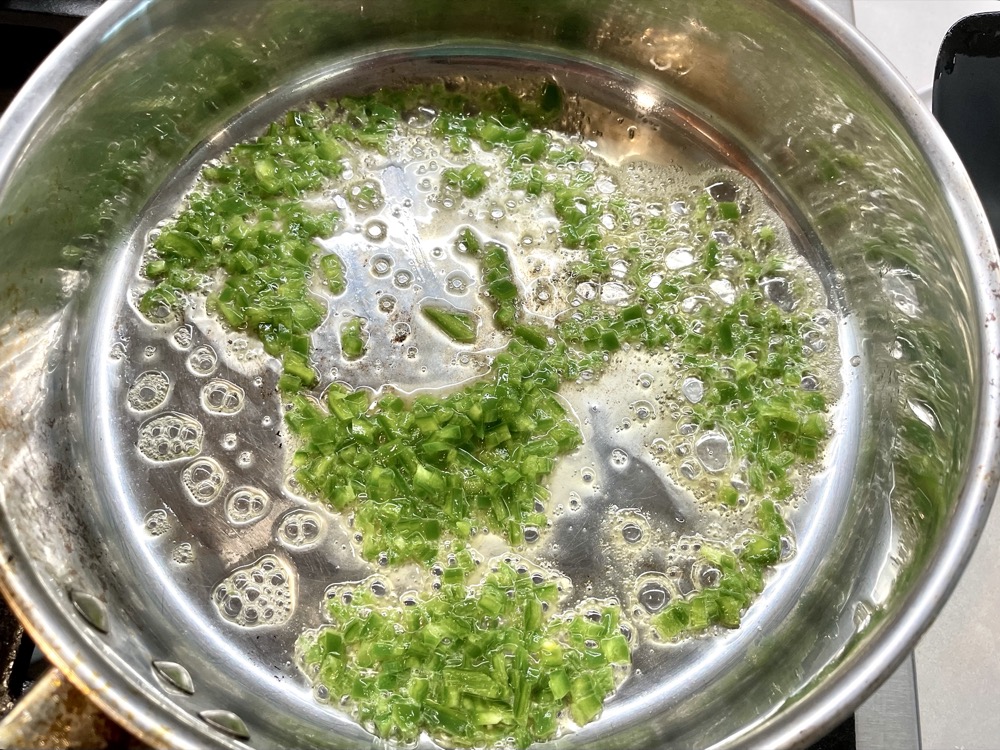
In a skillet on HIGH heat, melt the ghee (or butter/oil). Then add in the green chillies and sauté for 2 minutes until starting to soften. Next add in the onions and continue to sauté for another 3-4 minutes until the onion softens.

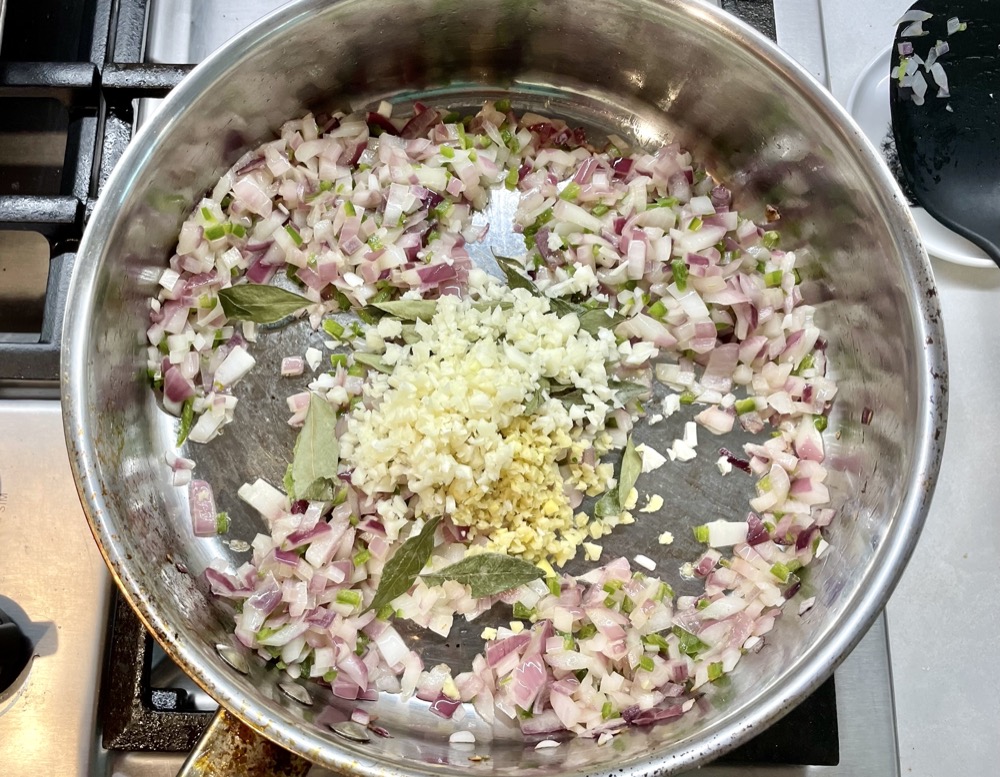
Once the onion has softened, turn the heat down to MEDIUM and add in the minced garlic, ginger, and curry leaves. Cook for 1 minute until the garlic is fragrant.

Add in the diced tomatoes and cumin and continue to sauté for another 2-3 minutes until the tomatoes break down and you’re starting to get a paste.

Add in the water, turmeric powder, garam masala and salt. Mix everything around and bring the heat up to HIGH to let it come to a boil, then turn the heat down to LOW and simmer the dal with the lid on for 1 hour, stirring intermittently.

(You can make the basmati rice or whatever side you like in this time.)

After 1 hour take off the lid and let the dal continue to simmer for 30 minutes to reduce the liquid. The dal has finished cooking when it looks like a porridge-consistency and the liquid has reduced to your liking.

Mash the roasted garlic cloves (from step 1) and add it into the dal. Taste and adjust salt as needed. Done! Serve over a bed of basmati rice or with naan.

Summarized Recipe:

Roasted Garlic Dal (Yellow Lentil Curry)

Date Published: July 20th, 2024 | Last Updated: July 20th, 2024
Author: Abby |Category: mains, vegetarian, easy
Serves: 4 as a main | Prep time: 1 hour | Cook time: 2 hours

Ingredients:

  • Roasted garlic:
    • 2 garlic bulbs
    • Drizzle olive oil
    • Pinch of salt
    • Pinch of black pepper
  • Dal:
    • 1 cup chana dal/yellow split lentils
    • 2 Tbsps ghee (or 1 Tbsp oil + 1 Tbsp butter)
    • 2 long green chillies, deseeded & diced small
    • 1 small onion (red or yellow), diced small
    • 6 garlic cloves, minced
    • 1.5 Tbsps ginger, minced
    • 8 dried (or 10 fresh) curry leaves
    • 1 tomato, diced small
    • 1/2 tsp ground cumin
    • 4 cups (1L) water
    • 1/2 tsp turmeric powder
    • 1/8 tsp garam masala
    • 1 tsp kosher/cooking salt (or more to taste)
  • To serve: basmati rice or naan

Directions:

  1. Rinse the chana dal/yellow split lentils and let it soak in water for at least 1 hour, then strain and set aside.
  2. While the lentils are soaking, roast the garlic:
    • Preheat the oven to 375˚F (190˚C).
    • Prepare a small square baking tray and pour in a drizzle of olive oil. Slice the base off of the garlic bulbs (the flat side – see photo) and dip the exposed side into the olive oil and place the bulbs in the tray, cut side up. Sprinkle salt and pepper over top. Make sure all the exposed garlic cloves are covered in oil so it doesn’t burn.
    • Cover the tray with aluminum foil and bake in the preheated oven for 40 minutes.
    • After 40 mins, take it out of the oven, remove the foil and let the roasted garlic cool down. Once cool enough to handle, gently remove the garlic cloves from the outer layer and set aside.
  3. In a skillet on HIGH heat, melt the ghee (or butter/oil). Then add in the green chillies and sauté for 2 minutes until starting to soften. Next add in the onions and continue to sauté for another 3-4 minutes until the onion softens.
  4. Turn the heat down to MEDIUM and add in the minced garlic, ginger, and curry leaves. Cook for 1 minute until the garlic is fragrant.
  5. Add in the diced tomatoes and cumin and continue to sauté for another 2-3 minutes until the tomatoes break down and you’re starting to get a paste.
  6. Add in the water, turmeric powder, garam masala and salt. Mix everything around and bring the heat up to HIGH to let it come to a boil, then turn the heat down to LOW and simmer the dal with the lid on for 1 hour, stirring intermittently.
  7. (You can make the basmati rice or whatever side you like in this time.)
  8. After 1 hour take off the lid and let the dal continue to simmer for 30 minutes to reduce the liquid. The dal has finished cooking when it looks like a porridge-consistency and the liquid has reduced to your liking.
  9. Mash the roasted garlic cloves (from step 1) and add it into the dal. Taste and adjust salt as needed. Done! Serve over a bed of basmati rice or with naan.

Roasted Garlic (a how-to guide)


Date Published: July 20th, 2024 | Last Updated: July 20th, 2024
Author: Abby |Category: how-to, easy
Prep time: 5 mins | Cook time: 40 mins

Jump to recipe |

Roasted garlic is one of those magical ingredients that’s packed with so much flavour and yet so easy to make. It’s so versatile and easy to use – you can put it in so many things to easily add an extra depth of flavour or just spread it over plain toast with a drizzle of olive oil for a quick snack. You’ll be amazed how easy it is to make and the best part is that it keeps well in the fridge for up to a week covered in olive oil so you can make a bit extra and continue to use it throughout the week without putting in the effort. 🙂

If you have any comments or suggestions, I’d love to hear from you in the comment section! You can follow me on instagram, youtube and facebook to see all the recipes I post!

Happy cooking!

Ingredients you’ll need:

  • Garlic bulbs – however many you’d like to roast
  • Drizzle of olive oil
  • Pinch of salt
  • Pinch of black pepper

Directions:

Preheat the oven to 375˚F (190˚C).

Prepare a small square baking tray and pour in a drizzle of olive oil.

Slice the base off of the garlic bulbs (the flat side – see photo) and dip the exposed side into the olive oil and place the bulbs in the tray, cut side up.

Sprinkle salt and pepper over top. Make sure all the exposed garlic cloves are covered in oil so it doesn’t burn.

Cover the tray with aluminum foil and bake in the preheated oven for 40 minutes.

After 40 mins, take it out of the oven, carefully remove the foil and let the roasted garlic cool down. Once cool enough to handle, gently remove the garlic cloves from the outer layer. Done!

Summarized Recipe:

Roasted Garlic (a how-to guide)

Date Published: July 20th, 2024 | Last Updated: July 20th, 2024
Author: Abby |Category: how-to, easy
Prep time: 5 mins | Cook time: 40 mins

Ingredients:

  • Garlic bulbs – however many you’d like to roast
  • Drizzle of olive oil
  • Pinch of salt
  • Pinch of black pepper

Directions:

  1. Preheat the oven to 375˚F (190˚C).
  2. Prepare a small square baking tray and pour in a drizzle of olive oil.
  3. Slice the base off of the garlic bulbs (the flat side – see photo) and dip the exposed side into the olive oil and place the bulbs in the tray, cut side up. Sprinkle salt and pepper over top. Make sure all the exposed garlic cloves are covered in oil so it doesn’t burn.
  4. Cover the tray with aluminum foil and bake in the preheated oven for 40 minutes.
  5. After 40 mins, take it out of the oven and carefully remove the foil and let the roasted garlic cool down. Once cool enough to handle, gently remove the garlic cloves from the outer layer. Done!

Roasted Cabbage with Pickled Mustard Seeds and a Parsley Cream Sauce (a Dominique Crenn recipe)


Date Published: Mar 27th, 2024 | Last Updated: Mar 27th, 2024
Author: Abby |Category: mains, vegetarian
Serves: 4 | Prep time: 24 hours before | Cook time: 1 hour

Jump to recipe |
Netflix Bites pop-up restaurant

In August of last year Toby and I went to LA for the first time to attend my friend Mehdi’s wedding. We stayed at a nice hotel called Short Stories and they happened to be hosting a pop-up restaurant called Netflix Bites! It was a restaurant that served dishes from celebrity chefs that appeared on a Netflix series. There were quite a few exciting dishes to choose from so naturally we over-ordered and had 3 main dishes between the two of us. My favourite of the night was a roasted cabbage dish by Dominique Crenn. I had never had cabbage like this before and the flavours were so unique! I was instantly obsessed and knew I had to recreate it somehow. Lucky for me, it’s one of the dishes on her Masterclass – yes, I subscribed to Masterclass just to cook this dish. It was worth it. 🙂

Strap in, this is a lengthy recipe. There are 5 components and it takes some time to put them all together but each step on its own is actually quite simple and you can make most of these components ahead of time and keep it in the fridge if you don’t want to jumble 5 different things at once in the kitchen.

Although there are a lot of components, each one has a purpose:

How it all began – the roasted cabbage dish served at the restaurant
  1. Homemade Sauerkraut – this adds extra tartness and a bit of crunch. You have to make this 2 weeks ahead. Dominique Crenn teaches us to appreciate the humble cabbage by making our own sauerkraut. It’s surprisingly easy and you only need 2 ingredients!
  2. Pickled Mustard Seeds – these add a little pop (kind of like caviar or roe on sushi) and sweetness to balance out the texture and flavours of the dish. It takes a minimum of 2 hours to marinate but it tastes better if left overnight so definitely make this ahead of time.
  3. Parsley Oil – this is pretty easy to make and results in a beautiful deep green oil, super concentrated in parsley flavour. You will need a powerful blender like a Vitamix to break down the parsley fine enough. You can either make this the day-of or up to a week early.
  4. Crème Fraîche Sauce – this is the creamy tart sauce that makes the base of the dish. The parsley oil will be mixed through this to complete the flavours. You can either make this the day-of or up to a week early.
  5. Roasted Cabbage – the cabbage is first seared with thyme and garlic to bring out extra flavour, then finished off in the oven to cook through.

Anyways, without further ado, here’s the recipe! If you have any comments or suggestions, I’d love to hear from you in the comment section! You can follow me on instagram, youtube and facebook to see all the recipes I post!

Happy cooking!

Ingredients & Tools you’ll need:

  • Sauerkraut:
    • A small or medium savoy cabbage (depending on how much you want to make)
    • Kosher salt
    • Tools: a kitchen scale and maybe gloves, fermenting container with weights or glass jar with a lid and something heavy in a ziploc bag.
    • A knob of butter (~30g) – used later on for heating up the finished sauerkraut before serving
  • Pickled Mustard Seeds:
    • 1/2 cup (100g) yellow mustard seeds
    • 2 Tbsps (30g) rice vinegar
    • 2 Tbsps (30g) sherry vinegar
    • 1.25 Tbsps (20g) granulated sugar
    • 1/2 tsp (3g) kosher salt
  • Parsley Oil:
    • 50g flat leaf parsley leaves
    • 100g grapeseed oil
    • Tools: a powerful blender
  • Crème Fraîche Sauce:
    • 2 Tbsps sauerkraut liquid
    • 500g crème fraîche
    • 2 Tbsps (30g) Sherry vinegar
    • 1/2 Tbsp fresh lemon juice
    • Salt & pepper to taste
  • Roasted Cabbage:
    • 1 large cabbage, cleaned
    • Grapeseed oil for searing (or any other neutral flavoured oil tolerant to high heat)
    • 2 + 2 cloves of garlic, peeled
    • 4 + 4 sprigs of fresh thyme

Directions:

A. Optional: Homemade Sauerkraut (Make at least 2 weeks ahead, it will keep in the fridge for up to 3 months):

This step is optional. You can use store-bought sauerkraut as well for the recipe, the flavours will be similar.

  • Ingredients & Tools you’ll need:
    • A small or medium savoy cabbage (depending on how much you want to make)
    • Kosher salt
    • Tools: a kitchen scale and maybe gloves, fermenting container with weights or glass jar with a lid and something heavy in a ziploc bag.

Cut: Peel away any wilted, dirty outer leaves of the cabbage. Cut the cabbage in half and cut out the core. Chop the rest of the cabbage thinly.

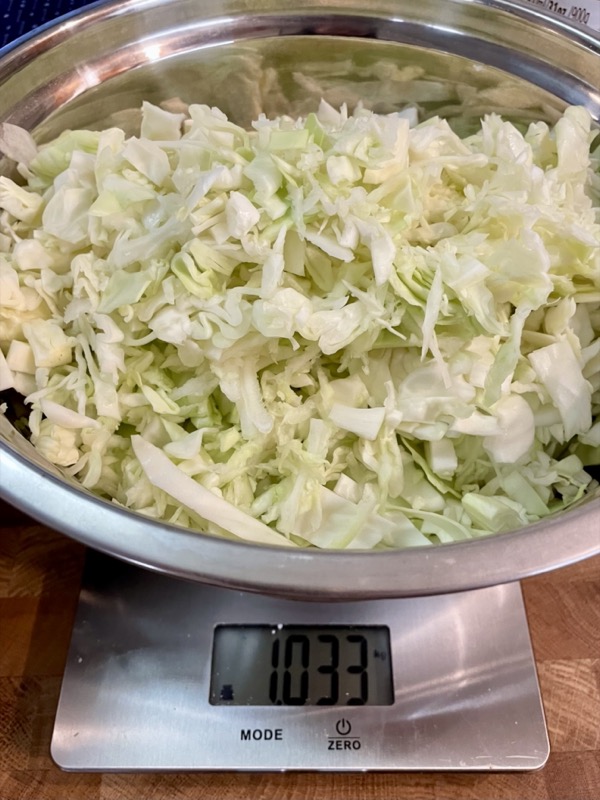
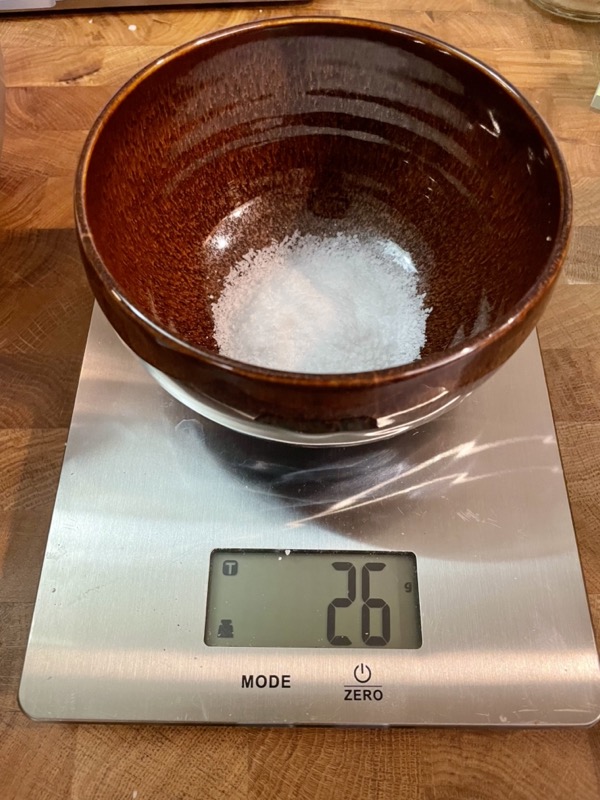
Weigh & Salt: Weigh the amount of sliced cabbage you have on a kitchen scale. Calculate 2.5% of the weight of your cabbage and that will be the amount of salt you will add to the cabbage.

Example: my sliced cabbage weighed 1033g (or 1.033kg) x 0.025 = 25.8g. I rounded up and used 26g of salt.

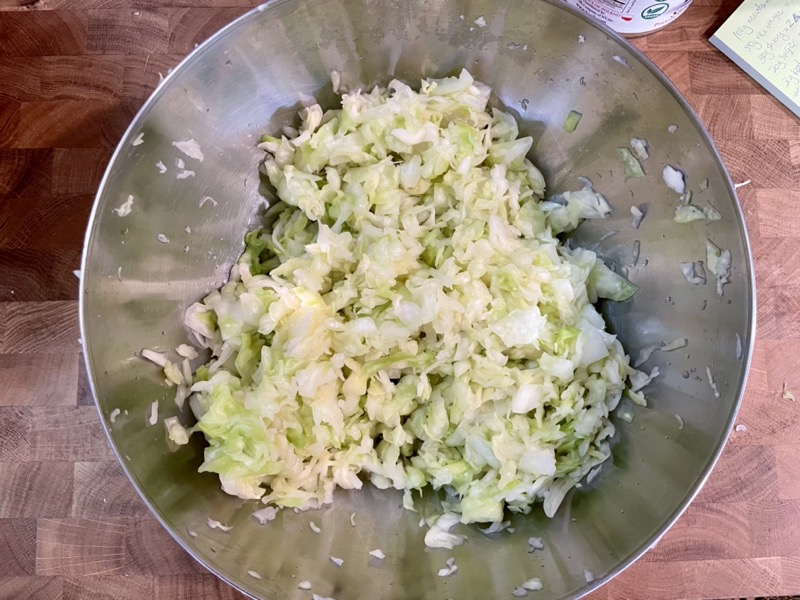
Massage: Make sure your hands are thoroughly washed and cleaned (you can wear disposable kitchen gloves if you’ve got some) – we don’t want to introduce contaminants into our cabbage. Once you’ve added in your salt, massage the cabbage with your hands to mix the salt through, lightly crushing the cabbage as you massage. Do this for about 5-10 minutes until you get a slightly softened and wet cabbage mix.

Pack and Compress: Transfer your sauerkraut to a clean fermenting vessel or glass jar. Use the back of a ladle and compress down the sauerkraut to allow the juices to come up and surround the cabbage. Add a weight* to the top and close the lid. If your container is not light-proof, put your jar in a dark cool place.

*You can get special glass weights for fermenting purposes, but if you don’t have any on hand you can just fill a clean ziploc bag with water, salt, sugar – or anything that will add weight, seal it tight and use it as a weight.

Check on it regularly: If you’re not using a fermenting vessel and if your lid is air-tight, you will need to check on it at least once a day to quickly release any built up gasses. Do not leave the lid off too long to introduce excess air. If you have a special fermenting vessel then you don’t need to do this because the lid will allow the gasses to escape on its own. However, you do need to check on it at least once every 3-4 days to see if any mold has developed or there is any odd discolouration patches. If so, you will need to start over and ensure all your instruments are clean.

2 week final check: After 2 weeks, the sauerkraut should be ready! Do a final inspection for any mold or weird dark patches. The sauerkraut should be a uniform colour and a pale yellow/brown colour (like regular sauerkraut). Give it a taste! This will keep in the fridge for up to 3 months.

B. Pickled Mustard Seeds (Make the day before – this step takes some time and patience and needs to marinate at least 2 hours, so make it early – it will keep in the fridge for 1 month):

  • Ingredients you’ll need:
    • 1/2 cup (100g) yellow mustard seeds
    • 2 Tbsps (30g) rice vinegar
    • 2 Tbsps (30g) sherry vinegar
    • 1.25 Tbsps (20g) granulated sugar
    • 1/2 tsp (3g) kosher salt

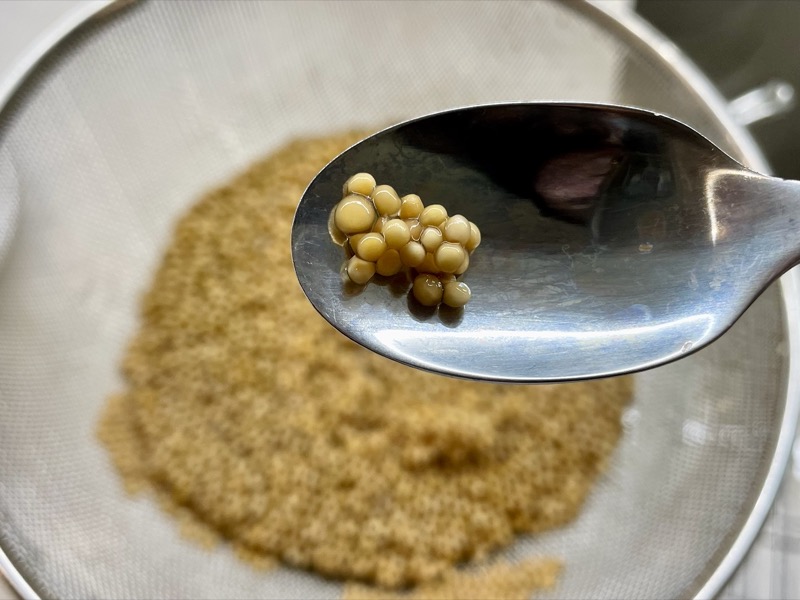
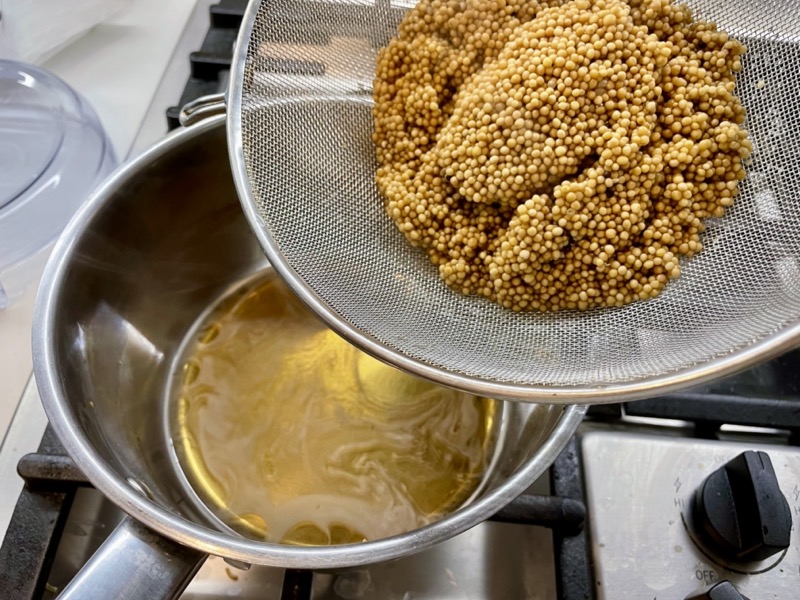
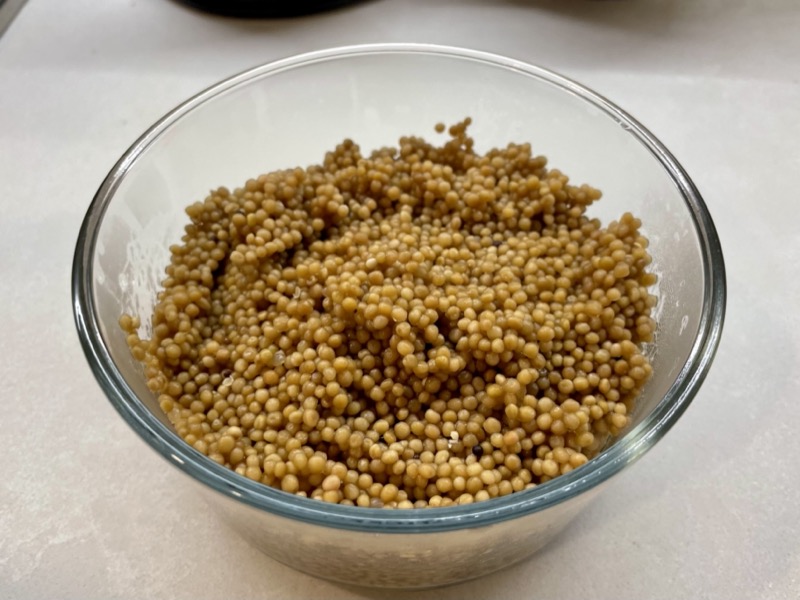
Blanche the mustard seeds: Place your mustard seeds in a saucepan and add enough cold water to submerge the seeds and cover it by about 2-3cm. Turn on the heat to HIGH to bring it to a simmer, then turn the heat down to LOW and continue to simmer for 5 minutes. After 5 minutes, strain and discard the water. Repeat this step 3-8 more times until the seeds are no longer bitter and softened but with a crunchy/pop like caviar. The seeds themselves will not have much of a flavour. Once done, strain the seeds and set aside.

The amount of water doesn’t matter too much but if you use too little, the seeds will absorb it all and you won’t be able to simmer, but if you use too much then it will take much longer for the water to come to a boil and you will be waiting for ages.

Yes, this will take a while depending on how many times you have to do it. I did it 6 times. Dominique Crenn said to do it 10-20 times!! 🤯

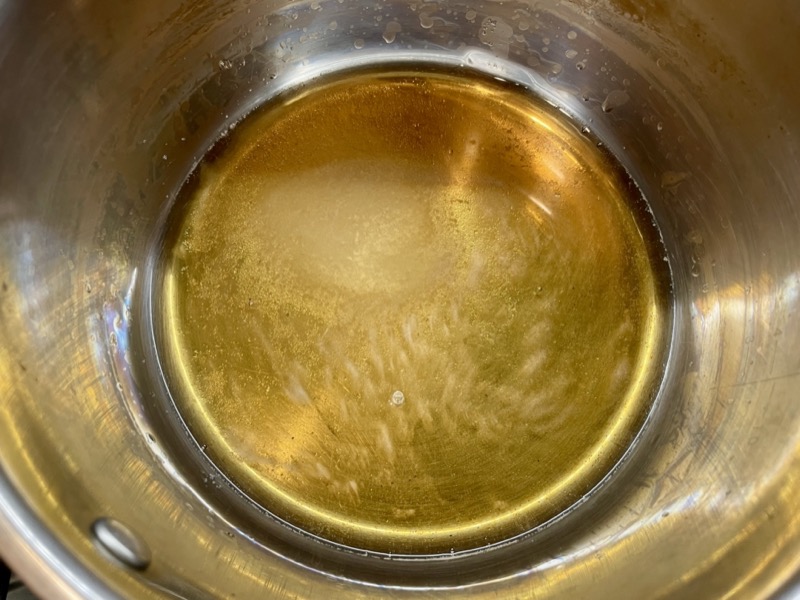
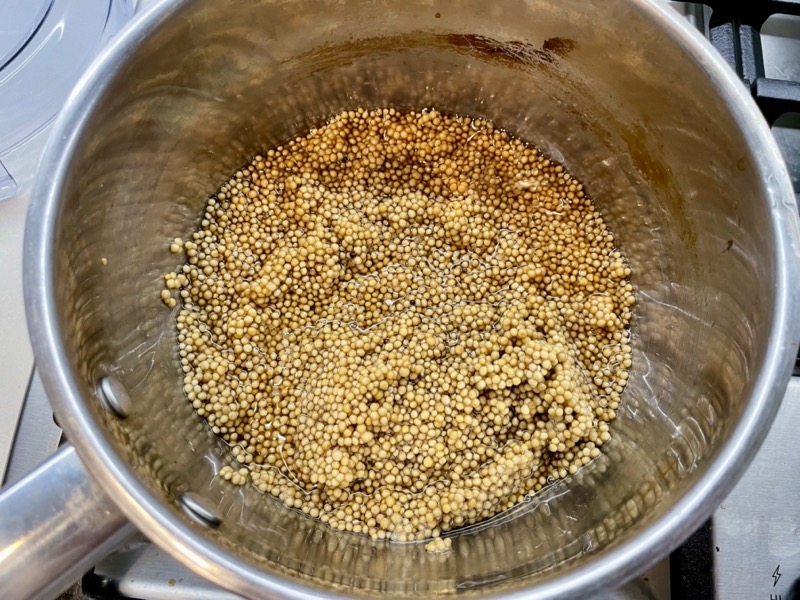
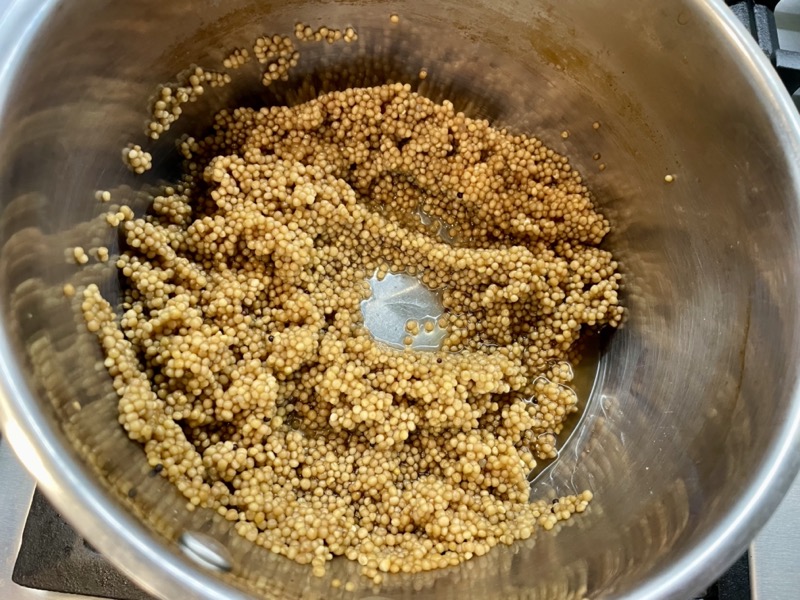
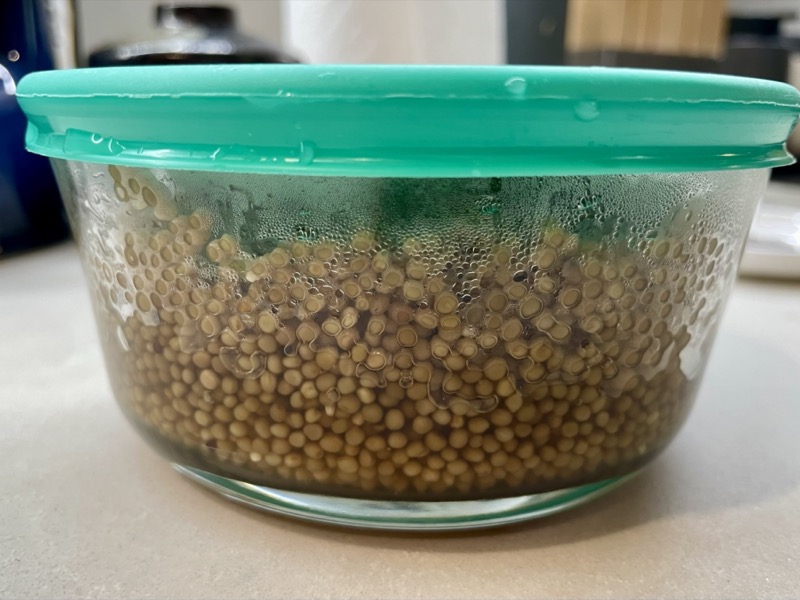
Prepare the vinegar brine: In the same saucepan on LOW heat, add in the rice vinegar, sherry vinegar, sugar, and salt. Stir together until the sugar and salt have dissolved. Add in the blanched mustard seeds and simmer on LOW heat for 15 minutes, until the majority of the vinegar brine has been absorbed by the seeds. Turn off the heat.

Marinate & Chill: Transfer the mustard seeds and all of the liquid into a heat-proof container and allow it to cool. Put on an airtight lid and let it marinate and chill in the refrigerator for at least 2 hours before using. This will keep in the fridge for up to 1 month.

C. Parsley Oil (Make ahead or the day-of. It will last in the fridge up to a week):

  • Ingredients and Tools you’ll need:
    • 50g flat leaf parsley leaves
    • 100g grapeseed oil
    • Tools: a powerful blender

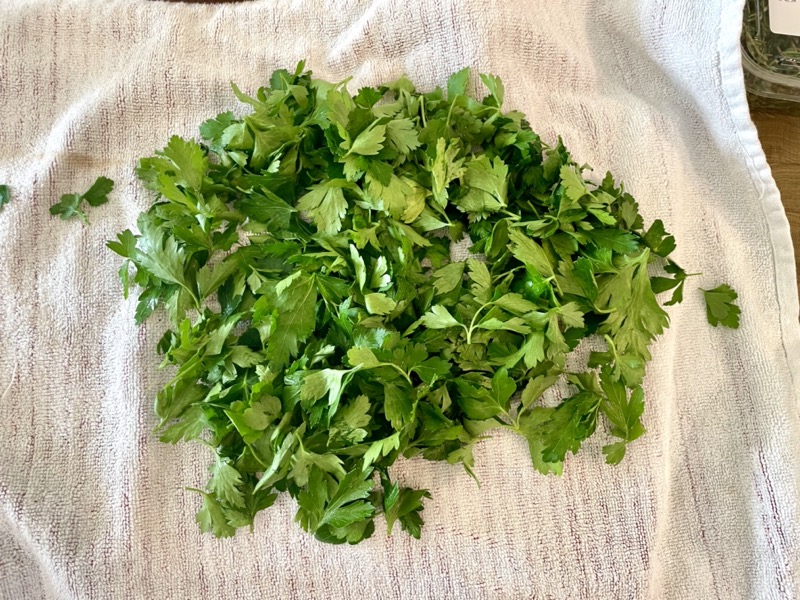
Remove the stems off the parsley so you’re left with just the leaves. Wash and thoroughly dry all the parsley.

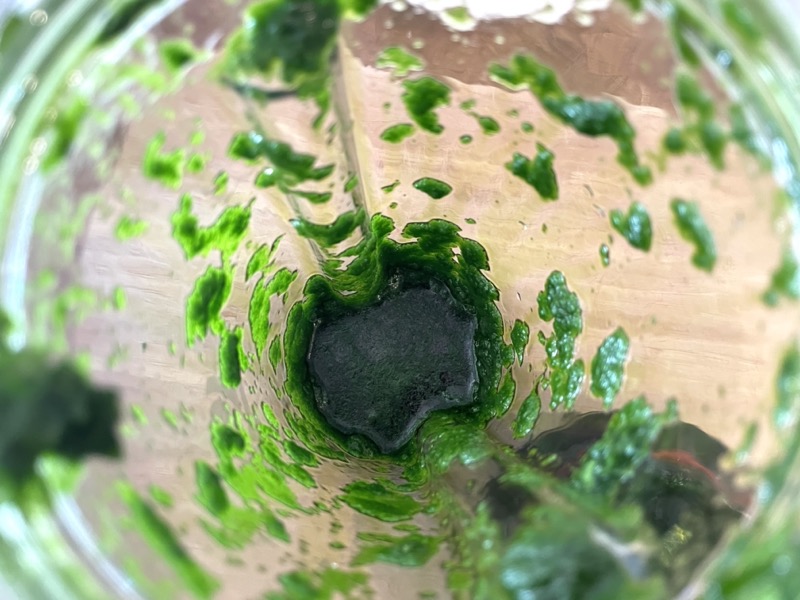
Get out your blender and add a third of the amount of grapeseed oil into the the blender, then the parsley, then drizzle the remaining grapeseed oil over top. Start the blender off slow until everything is broken up, then turn it up to HIGH for 2-3 minutes until you get a smooth paste.

You want a 1:2 ratio between the leaves and the oil. The recipe calls for 50g leaves and 100g oil. If you don’t quite have 50g or have more than 50g, just weigh it and multiply it by two and that will be the amount of grapeseed oil you’ll need.

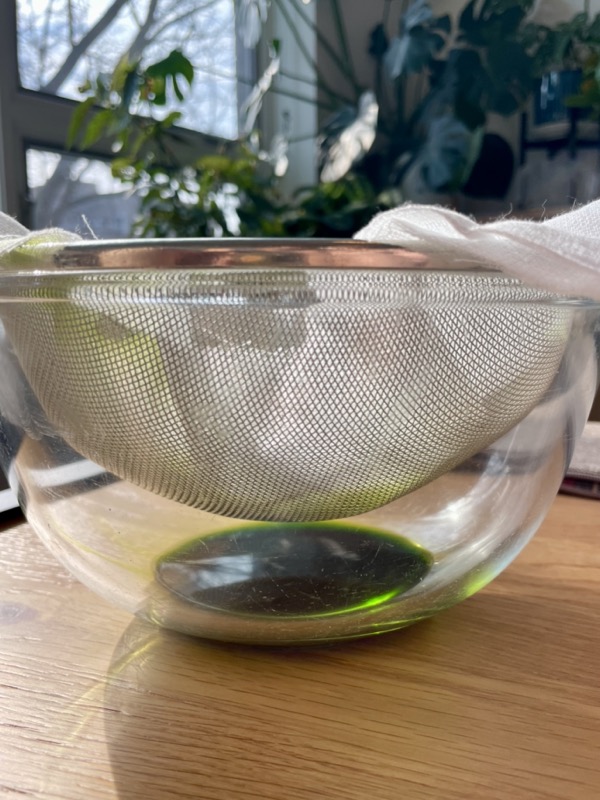
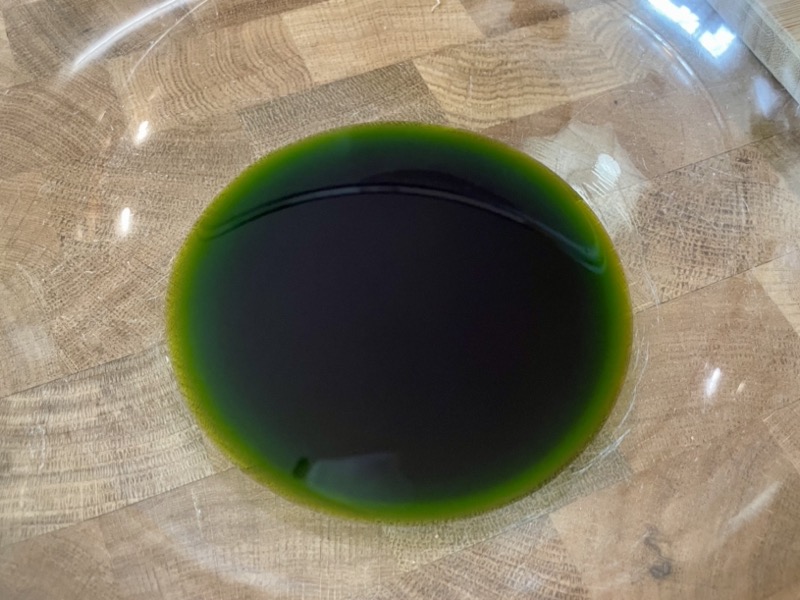
Once blended, line a fine mesh strainer with a cheesecloth/muslin/coffee filter. Strain the blended parsley in oil through this. You can squeeze the bag to release all the oil, but be careful not to squeeze any chunks. You should have a beautiful smooth deep green-coloured oil.

D. Crème Fraîche Sauce (Make ahead or the day-of. It will last in the fridge up to a week):

  • Ingredients you’ll need:
    • 2 Tbsps sauerkraut liquid
    • 500g crème fraîche
    • 2 Tbsps (30g) Sherry vinegar
    • 1/2 Tbsp fresh lemon juice
    • Salt & pepper to taste

In a saucepan on LOW-MED heat, add the sauerkraut liquid and let it come to a simmer. Add in the crème fraîche and whisk until smooth.

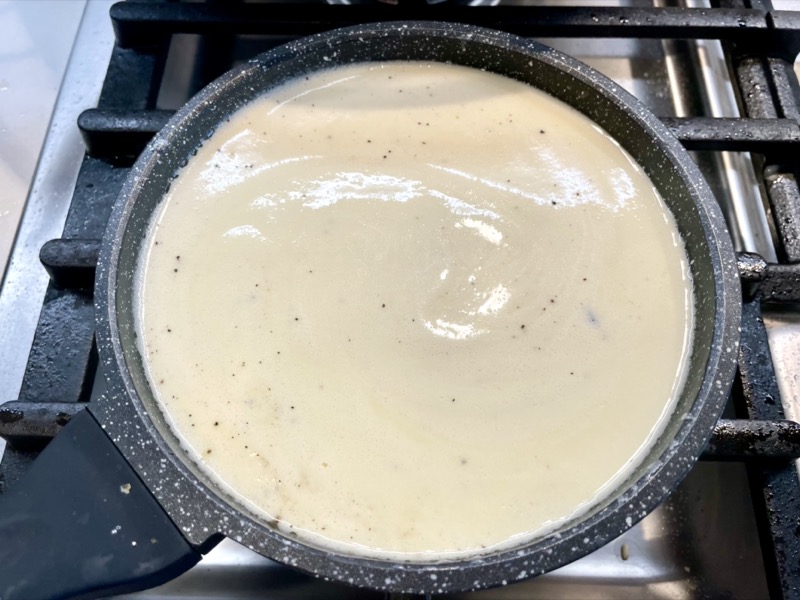
Add in the sherry vinegar, lemon juice, pinch of salt and pepper and mix thoroughly. Taste and add more salt if needed – it should be a creamy tart and slightly salted sauce. Once the sauce is hot, turn off the heat – you do NOT want the sauce to come to a boil, just heated through.

E. Roasted Cabbage (Make the day-of):

  • Ingredients you’ll need:
    • 1 large cabbage, cleaned
    • Grapeseed oil for searing (or any other neutral flavoured oil tolerant to high heat)
    • 2 + 2 cloves of garlic, peeled
    • 4 + 4 sprigs of fresh thyme

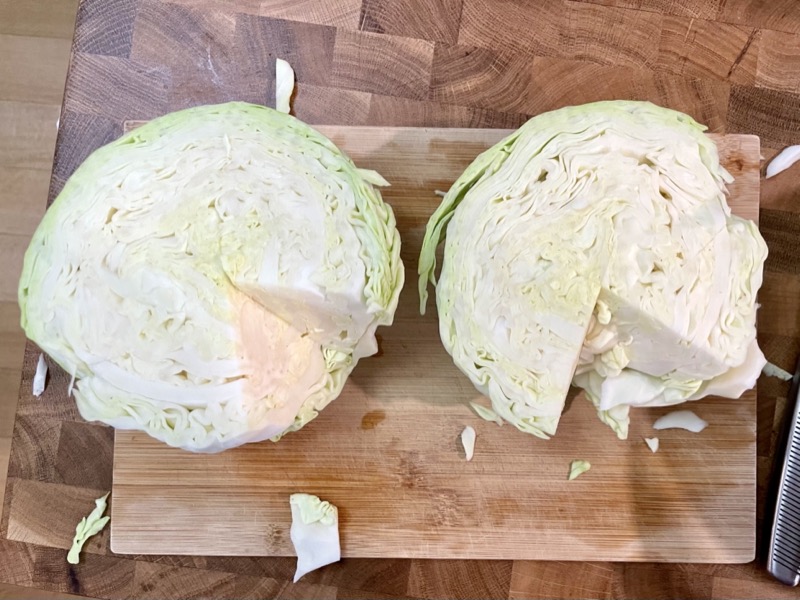
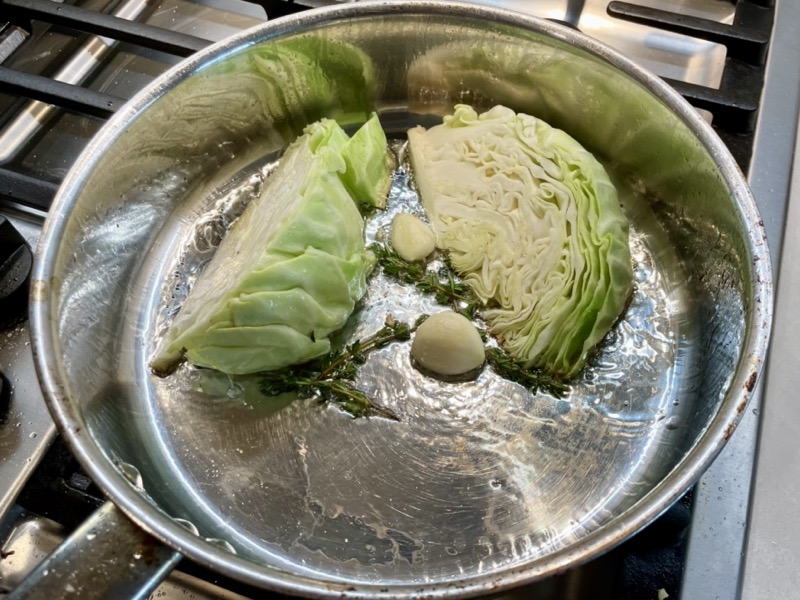
Slice the cabbage into wedges, each wedge will be an eighth of the cabbage – cut it in half, then half of each piece, then half again (see photo). Do NOT remove the core of the cabbage. You want to keep it intact so the leaves all stay together when you’re cooking.

Preheat the oven to 160˚C/325˚F and prepare a lined baking tray.

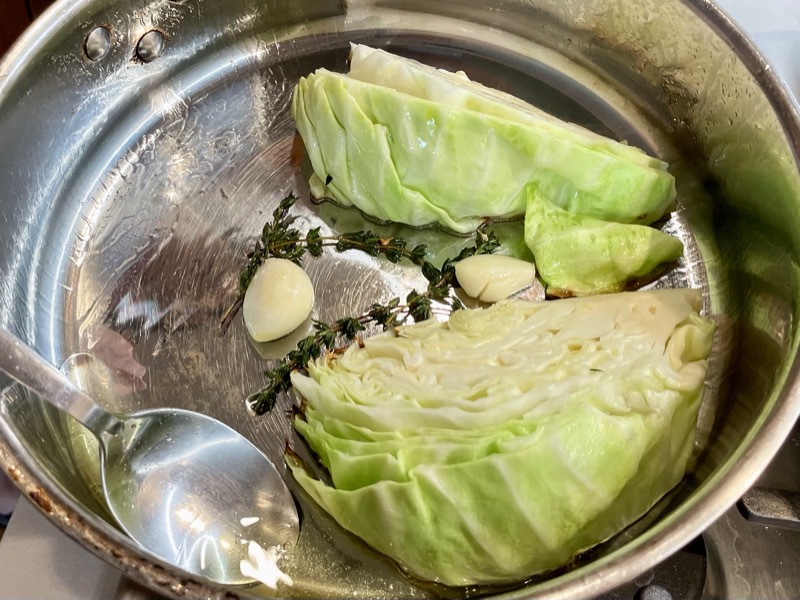
Sear the cabbage: In a wide-based pan on HIGH HEAT, add a drizzle of grapeseed oil to cover the bottom of the pan. Heat the oil until it starts to shimmer then add in 2-3 cabbage wedges depending on the size of your pan (you do not want to crowd the pan or else the moisture released from the cabbage will end up steaming it). Add in 2 peeled garlic cloves and 4 sprigs of fresh thyme to the oil. When fragrant, tilt the pan and baste the hot oil over the cabbages as it sears. As you sear the cabbage on HIGH heat, you will have to move the pan on and off the heat intermittently when the pan gets too hot to control the heat. Watch out for oil splatters and check the underside of the wedges after 2-3 minutes. Once the underside is a nice brown colour, flip it over and sear the other side, continuing to baste with the oil as it cooks. When both sides are seared, transfer the cabbage to a lined baking tray. Repeat with the rest of the cabbage wedges, adding in more grapeseed oil as needed and replacing the garlic cloves and fresh thyme if they get too browned.

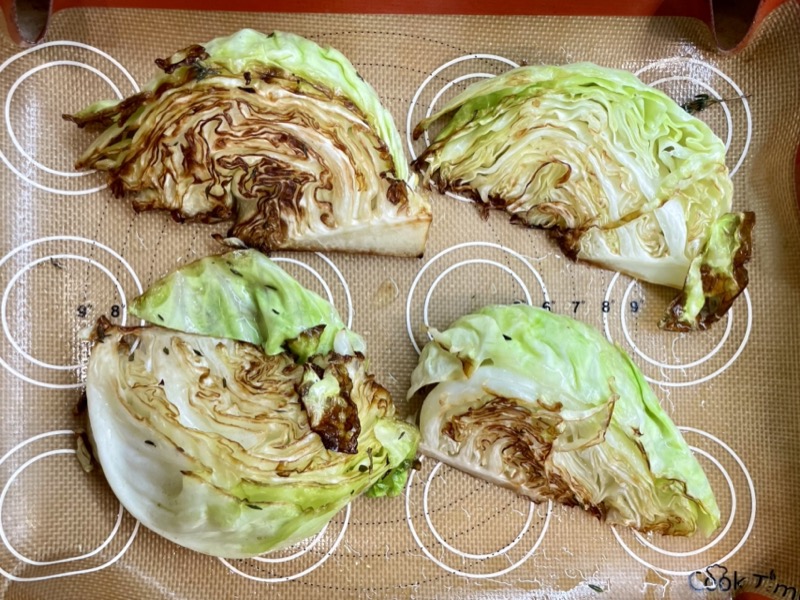
Roast the cabbage: Once all the cabbage wedges have been seared, bake them in the preheated oven for 20-25 minutes or until the cabbage is cooked through – use a fork to check the centre for doneness. The fork should go through with a bit of resistance – not too hard that you can’t poke through, but not too soft that it’s mushy. Turn off the oven when done.

While the cabbage is cooking, start heating up the sauerkraut and the crème fraîche sauce to prepare it for plating (see next steps below).

F. ASSEMBLY (finally!):

Heat up the sauerkraut: Take out about 2 cups of sauerkraut and squeeze out the liquid a little. Add the sauerkraut to a saucepan on MED heat with 30g of butter and mix until the butter has melted and the sauerkraut has heated through. Turn off the heat.

Warm up the crème fraîche sauce (if it isn’t already): Pour the crème fraîche sauce into a saucepan and heat on LOW-MED heat until hot. Do not let it come to a boil.

Add 2 Tbsps of parsley oil to the crème fraîche sauce and lightly mix together – don’t mix too thoroughly, you want to see specks and streaks of the green oil contrasting with the white sauce.

Plating: In a wide base bowl or plate, place 2 roasted cabbage wedges in the centre, followed by a big spoonful of warmed sauerkraut beside it. Add a few spoonfuls of the parsley oil/crème fraîche sauce around the cabbage and finish it off with small spoonfuls of pickled mustard seeds around the plate. Serve immediately. Enjoy!

Summarized Recipe:

Roasted Cabbage with Pickled Mustard Seeds and a Parsley Cream Sauce (a Dominique Crenn recipe)

Date Published: Mar 27th, 2024 | Last Updated: Mar 27th, 2024
Author: Abby |Category: mains, vegetarian
Serves: 4 | Prep time: 24 hours before | Cook time: 1 hour

A. Optional: Homemade Sauerkraut (Make at least 2 weeks ahead, it will keep in the fridge for up to 3 months):

This step is optional. You can use store-bought sauerkraut as well for the recipe, the flavours will be similar.

  • Ingredients & Tools you’ll need:
    • A small or medium savoy cabbage (depending on how much you want to make)
    • Kosher salt
    • Tools: a kitchen scale and maybe gloves, fermenting container with weights or glass jar with a lid and something heavy in a ziploc bag.
  1. Cut: Peel away any wilted, dirty outer leaves of the cabbage. Cut the cabbage in half and cut out the core. Chop the rest of the cabbage thinly.
  2. Weigh & Salt: Weigh the amount of sliced cabbage you have on a kitchen scale. Calculate 2.5% of the weight of your cabbage and that will be the amount of salt you will add to the cabbage.
    • Example: my sliced cabbage weighed 1033g (or 1.033kg) x 0.025 = 25.8g. I rounded up and used 26g of salt.
  3. Massage: Make sure your hands are thoroughly washed and cleaned (you can wear disposable kitchen gloves if you’ve got some) – we don’t want to introduce contaminants into our cabbage. Once you’ve added in your salt, massage the cabbage with your hands to mix the salt through, lightly crushing the cabbage as you massage. Do this for about 5-10 minutes until you get a slightly softened and wet cabbage mix.
  4. Pack and Compress: Transfer your sauerkraut to a clean fermenting vessel or glass jar. Use the back of a ladle and compress down the sauerkraut to allow the juices to come up and surround the cabbage. Add a weight* to the top and close the lid. If your container is not light-proof, put your jar in a dark cool place.
    • *You can get special glass weights for fermenting purposes, but if you don’t have any on hand you can just fill a clean ziploc bag with water, salt, sugar – or anything that will add weight, seal it tight and use it as a weight.
  5. Check on it regularly: If you’re not using a fermenting vessel and if your lid is air-tight, you will need to check on it at least once a day to quickly release any built up gasses. Do not leave the lid off too long to introduce excess air. If you have a special fermenting vessel then you don’t need to do this because the lid will allow the gasses to escape on its own. However, you do need to check on it at least once every 3-4 days to see if any mold has developed or there is any odd discolouration patches. If so, you will need to start over and ensure all your instruments are clean.
  6. 2 week final check: After 2 weeks, the sauerkraut should be ready! Do a final inspection for any mold or weird dark patches. The sauerkraut should be a uniform colour and a pale yellow/brown colour (like regular sauerkraut). Give it a taste! This will keep in the fridge for up to 3 months.

B. Pickled Mustard Seeds (Make the day before – this step takes some time and patience and needs to marinate at least 2 hours, so make it early – it will keep in the fridge for 1 month):

  • Ingredients you’ll need:
    • 1/2 cup (100g) yellow mustard seeds
    • 2 Tbsps (30g) rice vinegar
    • 2 Tbsps (30g) sherry vinegar
    • 1.25 Tbsps (20g) granulated sugar
    • 1/2 tsp (3g) kosher salt
  1. Blanche the mustard seeds: Place your mustard seeds in a saucepan and add enough cold water to submerge the seeds and cover it by about 2-3cm. Turn on the heat to HIGH to bring it to a simmer, then turn the heat down to LOW and continue to simmer for 5 minutes. After 5 minutes, strain and discard the water. Repeat this step 3-8 more times until the seeds are no longer bitter and softened but with a crunchy/pop like caviar. The seeds themselves will not have much of a flavour. Once done, strain the seeds and set aside.
    • The amount of water doesn’t matter too much but if you use too little, the seeds will absorb it all and you won’t be able to simmer, but if you use too much then it will take much longer for the water to come to a boil and you will be waiting for ages.
    • Yes, this will take a while depending on how many times you have to do it. I did it 6 times. Dominique Crenn said to do it 10-20 times!! 🤯
  2. Prepare the vinegar brine: In the same saucepan on LOW heat, add in the rice vinegar, sherry vinegar, sugar, and salt. Stir together until the sugar and salt have dissolved. Add in the blanched mustard seeds and simmer on LOW heat for 15 minutes, until the majority of the vinegar brine has been absorbed by the seeds. Turn off the heat.
  3. Marinate & Chill: Transfer the mustard seeds and all of the liquid into a heat-proof container and allow it to cool. Put on an airtight lid and let it marinate and chill in the refrigerator for at least 2 hours before using. This will keep in the fridge for up to 1 month.

C. Parsley Oil (Make ahead or the day-of. It will last in the fridge up to a week):

  • Ingredients and Tools you’ll need:
    • 50g flat leaf parsley leaves
    • 100g grapeseed oil
    • Tools: a powerful blender
  1. Remove the stems off the parsley so you’re left with just the leaves. Wash and thoroughly dry all the parsley.
  2. Get out your blender and add a third of the amount of grapeseed oil into the the blender, then the parsley, then drizzle the remaining grapeseed oil over top. Start the blender off slow until everything is broken up, then turn it up to HIGH for 2-3 minutes until you get a smooth paste.
    • You want a 1:2 ratio between the leaves and the oil. The recipe calls for 50g leaves and 100g oil. If you don’t quite have 50g or have more than 50g, just weigh it and multiply it by two and that will be the amount of grapeseed oil you’ll need.
  3. Once blended, line a fine mesh strainer with a cheesecloth/muslin/coffee filter. Strain the blended parsley in oil through this. You can squeeze the bag to release all the oil, but be careful not to squeeze any chunks. You should have a beautiful smooth deep green-coloured oil.

D. Crème Fraîche Sauce (Make ahead or the day-of. It will last in the fridge up to a week):

  • Ingredients you’ll need:
    • 2 Tbsps sauerkraut liquid
    • 500g crème fraîche
    • 2 Tbsps (30g) Sherry vinegar
    • 1/2 Tbsp fresh lemon juice
    • Salt & pepper to taste
  1. In a saucepan on LOW-MED heat, add the sauerkraut liquid and let it come to a simmer.
  2. Add in the crème fraîche and whisk until smooth.
  3. Add in the sherry vinegar, lemon juice, pinch of salt and pepper and mix thoroughly. Taste and add more salt if needed – it should be a creamy tart and slightly salted sauce. Once the sauce is hot, turn off the heat – you do NOT want the sauce to come to a boil, just heated through.

E. Roasted Cabbage (Make the day-of):

  • Ingredients you’ll need:
    • 1 large cabbage, cleaned
    • Grapeseed oil for searing (or any other neutral flavoured oil tolerant to high heat)
    • 2 + 2 cloves of garlic, peeled
    • 4 + 4 sprigs of fresh thyme
  1. Slice the cabbage into wedges, each wedge will be an eighth of the cabbage – cut it in half, then half of each piece, then half again (see photo). Do NOT remove the core of the cabbage. You want to keep it intact so the leaves all stay together when you’re cooking.
  2. Preheat the oven to 160˚C/325˚F and prepare a lined baking tray.
  3. Sear the cabbage: In a wide-based pan on HIGH HEAT, add a drizzle of grapeseed oil to cover the bottom of the pan. Heat the oil until it starts to shimmer then add in 2-3 cabbage wedges depending on the size of your pan (you do not want to crowd the pan or else the moisture released from the cabbage will end up steaming it). Add in 2 peeled garlic cloves and 4 sprigs of fresh thyme to the oil. When fragrant, tilt the pan and baste the hot oil over the cabbages as it sears. As you sear the cabbage on HIGH heat, you will have to move the pan on and off the heat intermittently when the pan gets too hot to control the heat. Watch out for oil splatters and check the underside of the wedges after 2-3 minutes. Once the underside is a nice brown colour, flip it over and sear the other side, continuing to baste with the oil as it cooks. When both sides are seared, transfer the cabbage to a lined baking tray. Repeat with the rest of the cabbage wedges, adding in more grapeseed oil as needed and replacing the garlic cloves and fresh thyme if they get too browned.
  4. Roast the cabbage: Once all the cabbage wedges have been seared, bake them in the preheated oven for 20-25 minutes or until the cabbage is cooked through – use a fork to check the centre for doneness. The fork should go through with a bit of resistance – not too hard that you can’t poke through, but not too soft that it’s mushy. Turn off the oven when done.
    • While the cabbage is cooking, start heating up the sauerkraut and the crème fraîche sauce to prepare it for plating (see next steps below).

F. ASSEMBLY (finally!):

  1. Heat up the sauerkraut: Take out about 2 cups of sauerkraut and squeeze out the liquid a little. Add the sauerkraut to a saucepan on MED heat with 30g of butter and mix until the butter has melted and the sauerkraut has heated through. Turn off the heat.
  2. Warm up the crème fraîche sauce (if it isn’t already): Pour the crème fraîche sauce into a saucepan and heat on LOW-MED heat until hot. Do not let it come to a boil.
  3. Add 2 Tbsps of parsley oil to the crème fraîche sauce and lightly mix together – don’t mix too thoroughly, you want to see specks and streaks of the green oil contrasting with the white sauce.
  4. Plating: In a wide base bowl or plate, place 2 roasted cabbage wedges in the centre, followed by a big spoonful of warmed sauerkraut beside it. Add a few spoonfuls of the parsley oil/crème fraîche sauce around the cabbage and finish it off with small spoonfuls of pickled mustard seeds around the plate. Serve immediately. Enjoy!

Tomato Spanakorizo – Greek Spinach Rice


Date Published: Feb 23rd, 2024 | Last Updated: Feb 23rd, 2024
Author: Abby |Category: easy, <30 mins, vegetarian, healthy, snacks, low cal
Serves: 6 as a side | Prep time: 10 mins | Cook time: 30 mins

Jump to recipe |

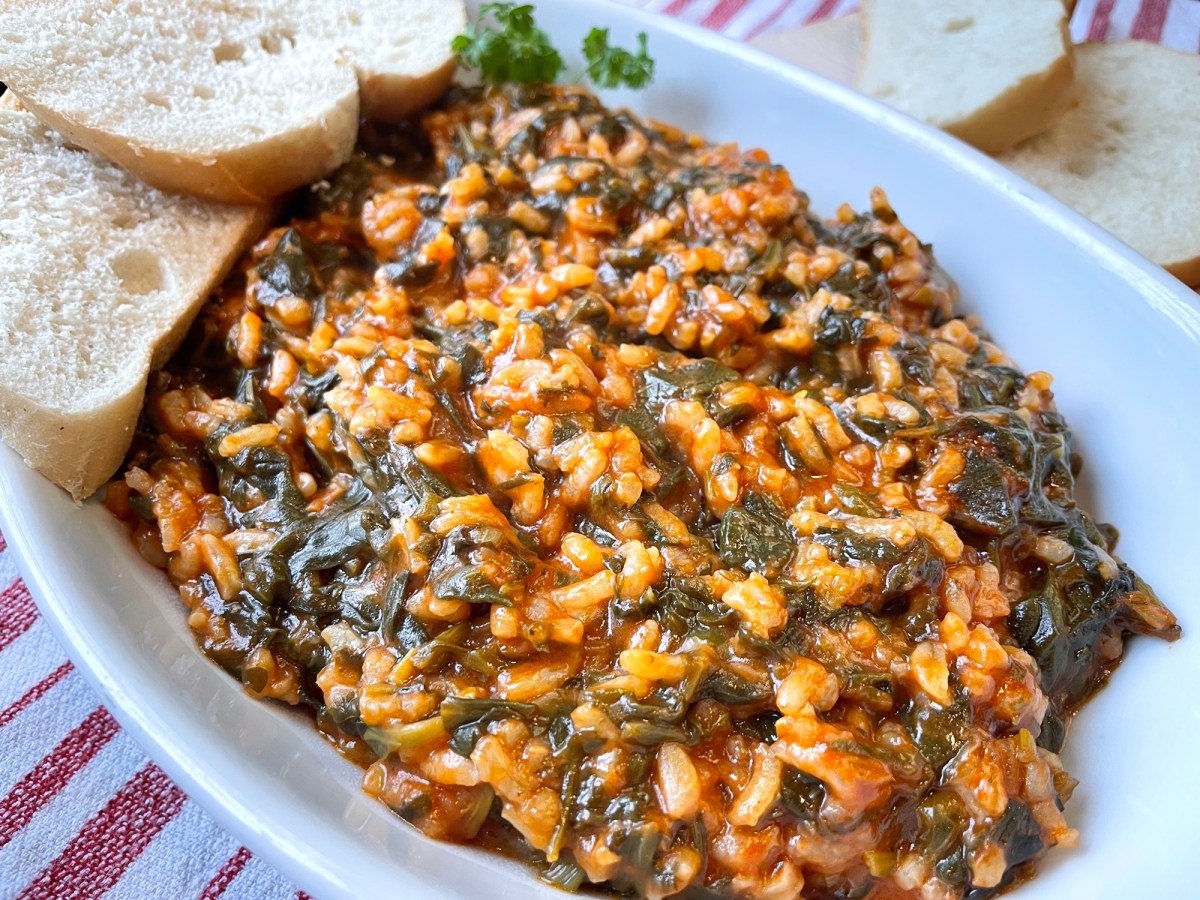
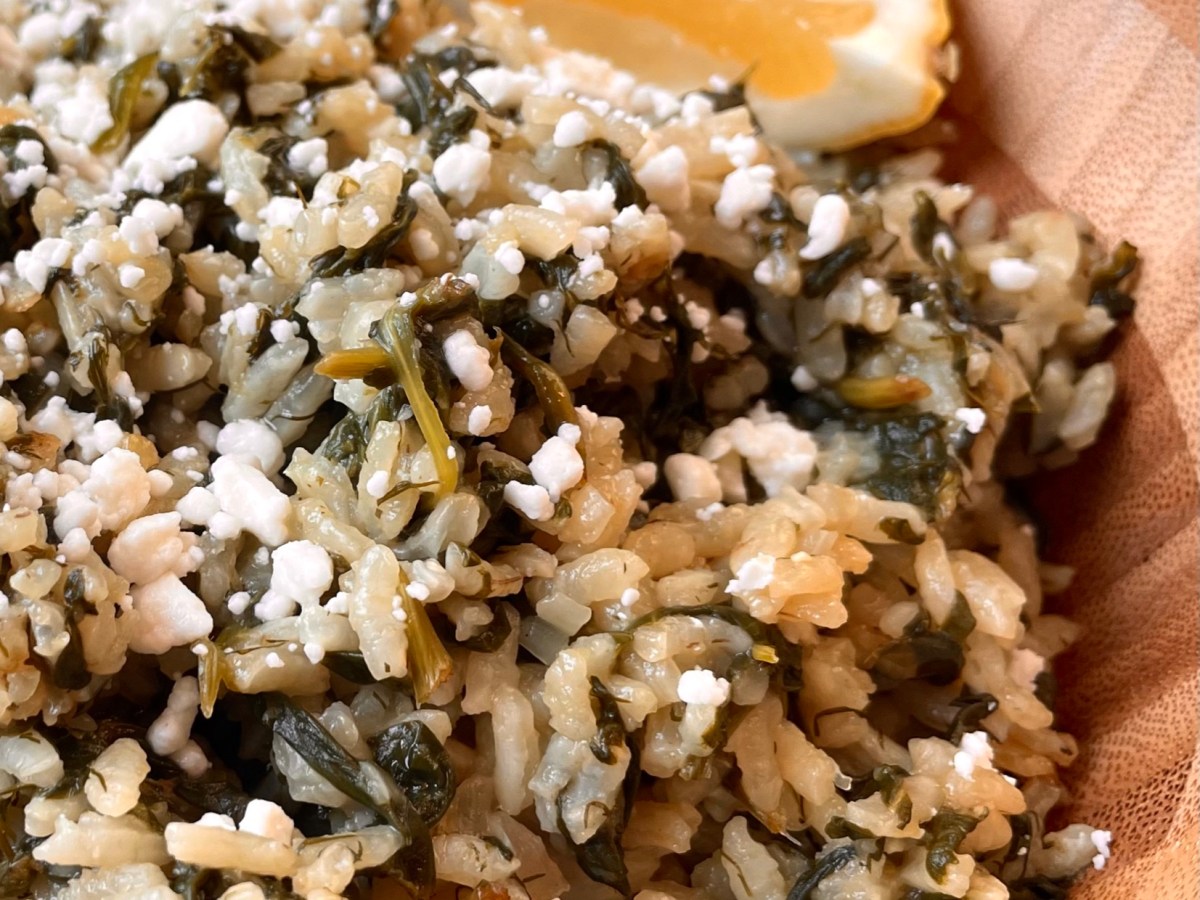
Spanakorizo is a traditional Greek spinach rice dish. I had never heard of it until I came upon it through my weekly foodie email subscriptions that I use for inspiration in things to cook for the week. The version that I saw was a lemony version with dill, mint, and crumbled feta (check out the recipe here), but upon further research I found a tomato version of it as well that looked just as good. Both dishes are called ‘Spanakorizo’ = spinach rice and when you google recipes for spanakorizo, you’ll get a mix of some with tomato and some without. After lots of recipe comparisons, I went with the saucy tomato version by Mia Kouppa and it was DELICIOUS and so easy! This recipe is a direct adaptation from hers (it’s perfect, I didn’t change much other than added some extra measurements of ingredients and rewrote some directions to suit my brain) – I’d recommend checking out her website with more photos and explanations to the history of the dish.

Both versions of spanakorizo are great, so if you’ve got the time you should definitely try making both. The lemon version is more dry like a regular rice pilaf and pairs nicely as a side dish, but this version is saucy and more flavourful which is great when eaten with toasted bread.

This recipe uses a LOT of spinach, which is perfect if you find yourself in abundance over the growing season. You can use regular mature spinach or baby spinach. It’s currently winter time in NYC and fresh mature spinach is hard to come by, so I bought the big box of baby spinach from Costco for this recipe – it’s actually the perfect amount!

This recipe does make quite a bit, so if you’re only cooking for 2-3 people, I’d recommend halving the recipe.

Anyways, without further ado, here’s the recipe! If you have any comments or suggestions, I’d love to hear from you in the comment section! You can follow me on instagram, youtube and facebook to see all the recipes I post!

Happy cooking!

Ingredients you’ll need:

  • 1/2 cup olive oil
  • 4 spring onions, chopped
  • 450g (1 lb) of fresh spinach, chopped coarsely – I used the big box of baby spinach leaves from Costco, but if you’re using mature spinach, make sure to chop it into smaller pieces so you don’t get stringy cooked spinach in the end)
  • 1/4 cup fresh parsley, chopped
  • 3/4 cup (180g) medium grain rice, uncooked and rinsed
  • 2 cups (500ml) tomato passata
  • 2 cups (500ml) chicken stock
  • 1/2 tsp kosher/cooking salt + more to taste
  • Optional to serve: crumbled feta cheese, toasted bread

Directions:

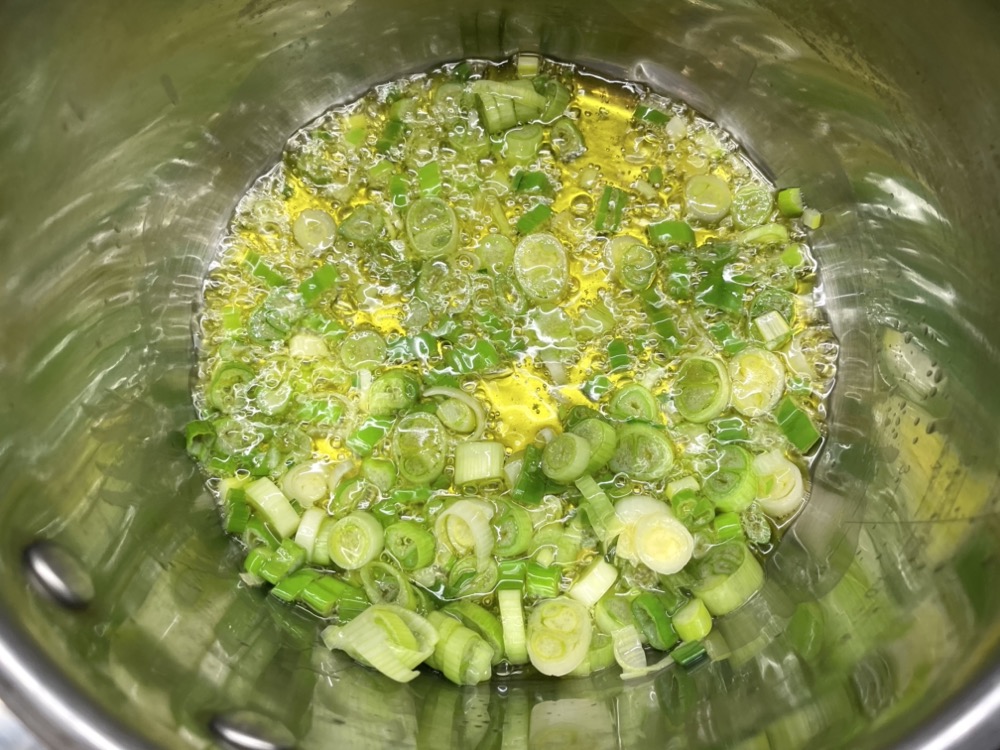
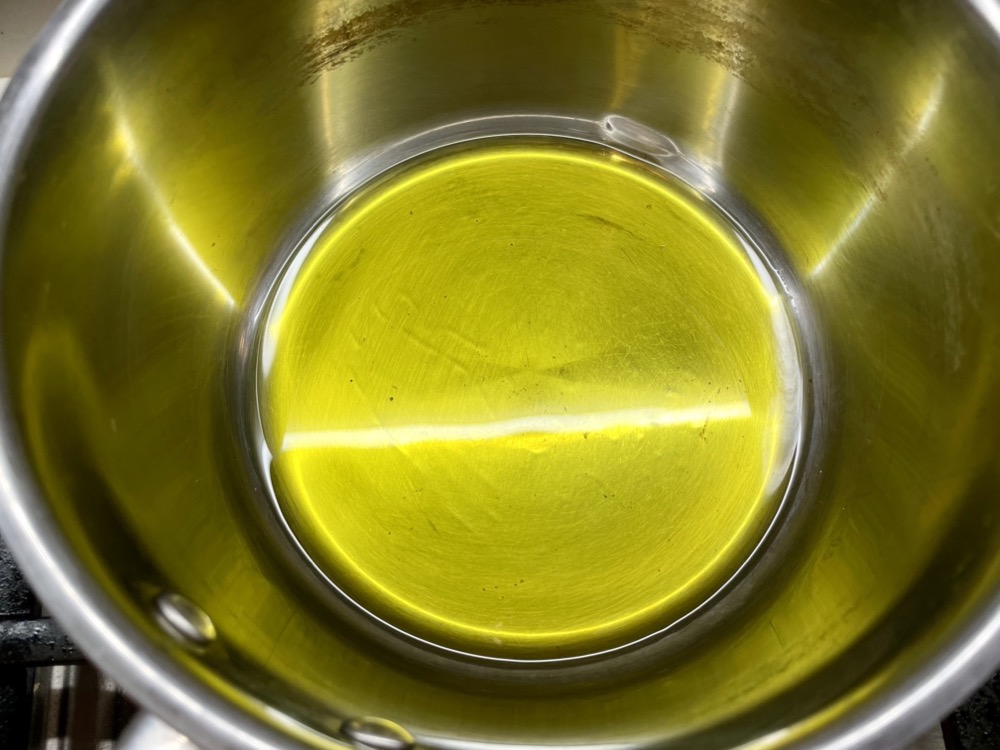
In a medium sized pot on MED heat, heat a 1/2 cup olive oil then add in the spring onions. Cook for 1-2 minutes until fragrant.

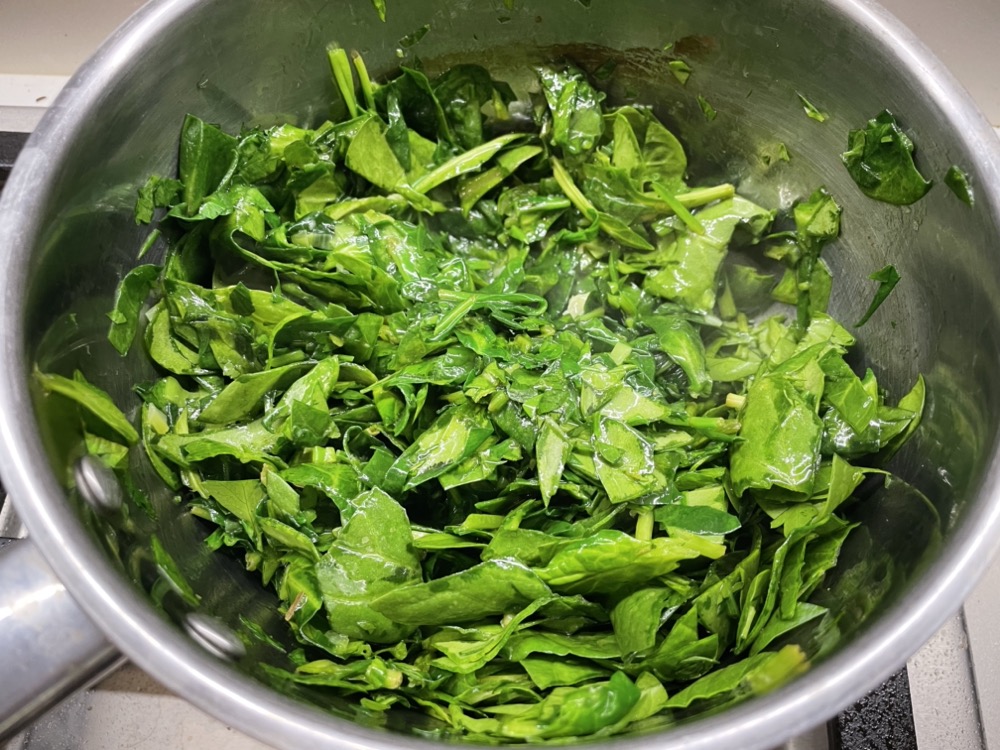
Next, add in the spinach, parsley, and rice. If the pot is overflowing with the spinach, stir the spinach into the olive oil in small batches and let it wilt before adding more.

Pour in the tomato passata, chicken stock, and salt. Let it come to a boil then turn the heat down to LOW and let it simmer for 20-25 minutes with the lid on until the rice is cooked.

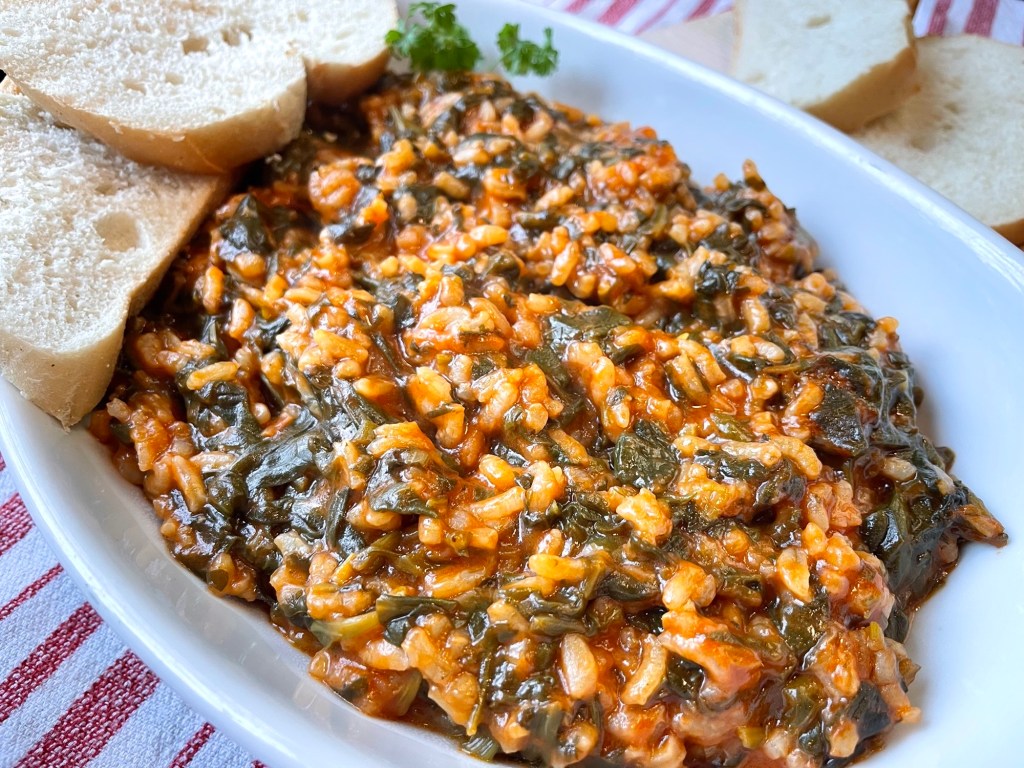
Done! Serve as a side dish or on its own family-style with toasted bread. Optional to sprinkle some crumbled feta cheese over.

Summarized Recipe:

Tomato Spanakorizo – Greek Spinach Rice

Date Published: Feb 23rd, 2024 | Last Updated: Feb 23rd, 2024
Author: Abby |Category: easy, <30 mins, vegetarian, healthy, snacks, low cal
Serves: 6 as a side | Prep time: 10 mins | Cook time: 30 mins

Ingredients:

  • 1/2 cup olive oil
  • 4 spring onions, chopped
  • 450g (1 lb) of fresh spinach, chopped coarsely – I used the big box of baby spinach leaves from Costco, but if you’re using mature spinach, make sure to chop it into smaller pieces so you don’t get stringy cooked spinach in the end)
  • 1/4 cup fresh parsley, chopped
  • 3/4 cup (180g) medium grain rice, uncooked and rinsed
  • 2 cups tomato passata
  • 2 cups (500ml) chicken stock
  • 1/2 tsp kosher/cooking salt + more to taste
  • Optional to serve: crumbled feta cheese, toasted bread

Directions:

  1. In a medium sized pot on MED heat, heat a 1/2 cup olive oil then add in the spring onions. Cook for 1-2 minutes until fragrant.
  2. Next, add in the spinach, parsley, and rice. If the pot is overflowing with the spinach, stir the spinach into the olive oil in small batches and let it wilt before adding more.
  3. Pour in the tomato passata, chicken stock, and salt. Let it come to a boil then turn the heat down to LOW and let it simmer for 20-25 minutes with the lid on until the rice is cooked. Done! Serve as a side dish or on its own family-style with toasted bread. Optional to sprinkle some crumbled feta cheese over.

Healthy “Creamy” Mushroom Broccoli Soup


Date Published: Jan 15th, 2024 | Last Updated: Jan 15th, 2024
Author: Abby |Category: < 30mins, easy, quick, main, vegetarian, soups, appetizers, healthy, low-cal
Serves: 4-6 (as a main) | Prep time: 10 mins | Cook time: 20 mins

Jump to recipe |

Keeping on the new years resolution, here’s another recipe to add to the healthy vault! This creamy soup hits the spot for something hearty on a chilly day yet won’t break the calorie bank. Coming in at only 252 calories per serving, there’s no actual cream in this soup at all – the creaminess of the soup comes from the puréed potatoes and oat milk. This soup is so easy and quick to make and is packed full of broccoli and mushrooms. You can whip it up in under 30 minutes and have lunch for the rest of the week.

Without further ado, here’s the recipe! If you have any comments or suggestions, I’d love to hear from you in the comment section! You can follow me on instagram, youtube and facebook to see all the recipes I post!

Happy cooking!

Ingredients you’ll need:

  • 2 + 1 cloves garlic, minced
  • 300g white or portobello mushrooms, sliced
  • Pinch of dried thyme leaves
  • 1 yellow onion, diced
  • 2 medium sized Yukon gold potatoes, washed and diced into 2cm cubes
  • 2 large heads of broccoli, washed and cut into florets
  • 4 cups (1L) chicken stock
  • 2 cups of oat milk or soy milk
  • Salt to taste
  • Ground black pepper to taste
  • Croutons (optional)

Directions:

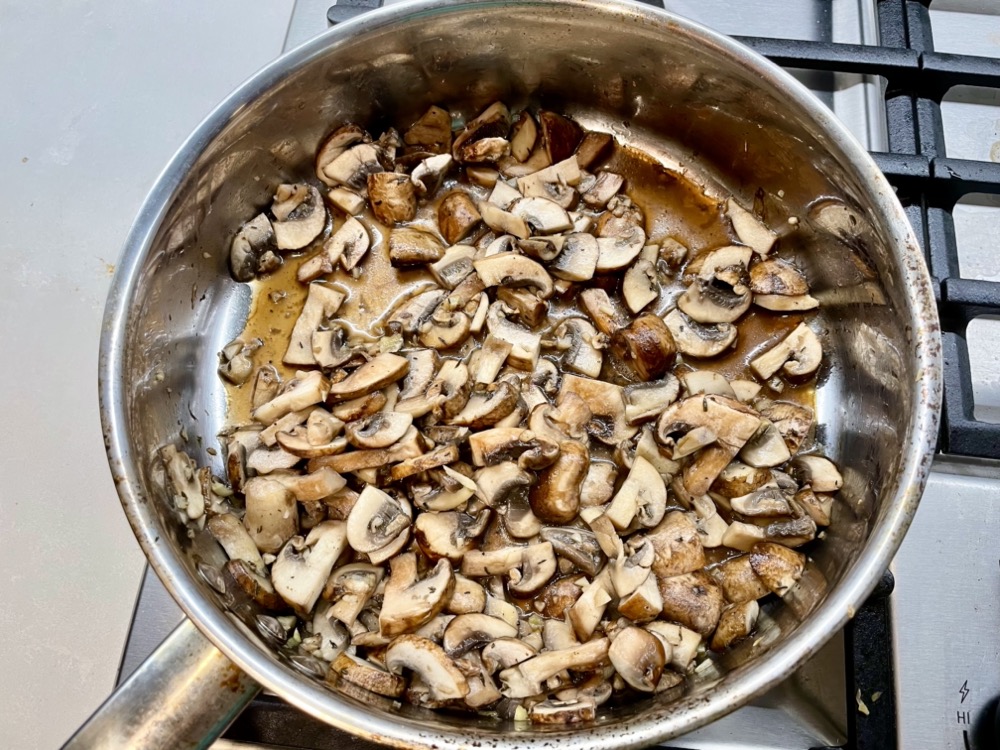
In a medium sized soup pot on MED heat, add a drizzle of olive oil. Add in 1 clove of minced garlic, sliced mushrooms, dried thyme, and a pinch of salt and pepper. Sauté for 3-5 minutes until cooked. Turn off the heat and remove the mushrooms and any liquid. Set aside.

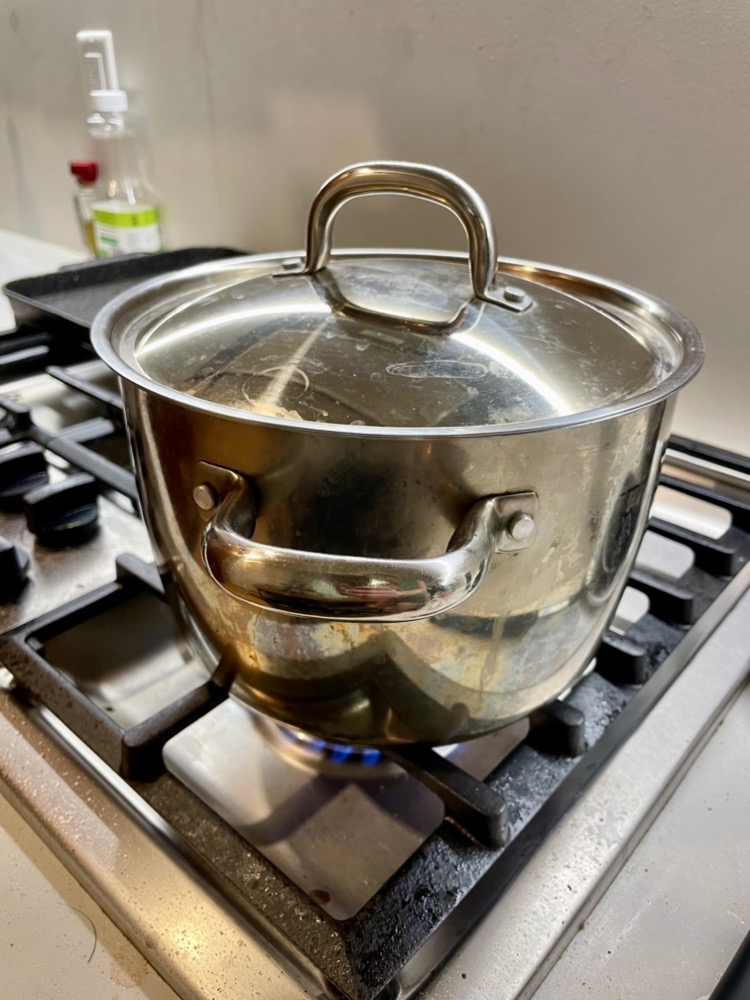
In the same pot on MED heat, add another drizzle of olive oil and sauté the remaining 2 cloves of minced garlic and diced onion. When the onion has softened and turned translucent, add in the potatoes, broccoli, and chicken stock. Stir, then turn the heat up to HIGH to bring the soup to a boil, then turn it down to MED heat. Put on a lid and let it boil for 15 minutes.

After 15 minutes, remove 2 ladles of the ingredients in the pot (without any liquid) into a separate bowl and use a spatula to quickly break up the ingredients into small bite-sized pieces. Set aside.

Add oat milk into the pot and bring the heat back up to HIGH to reach a boil, then turn the heat off.

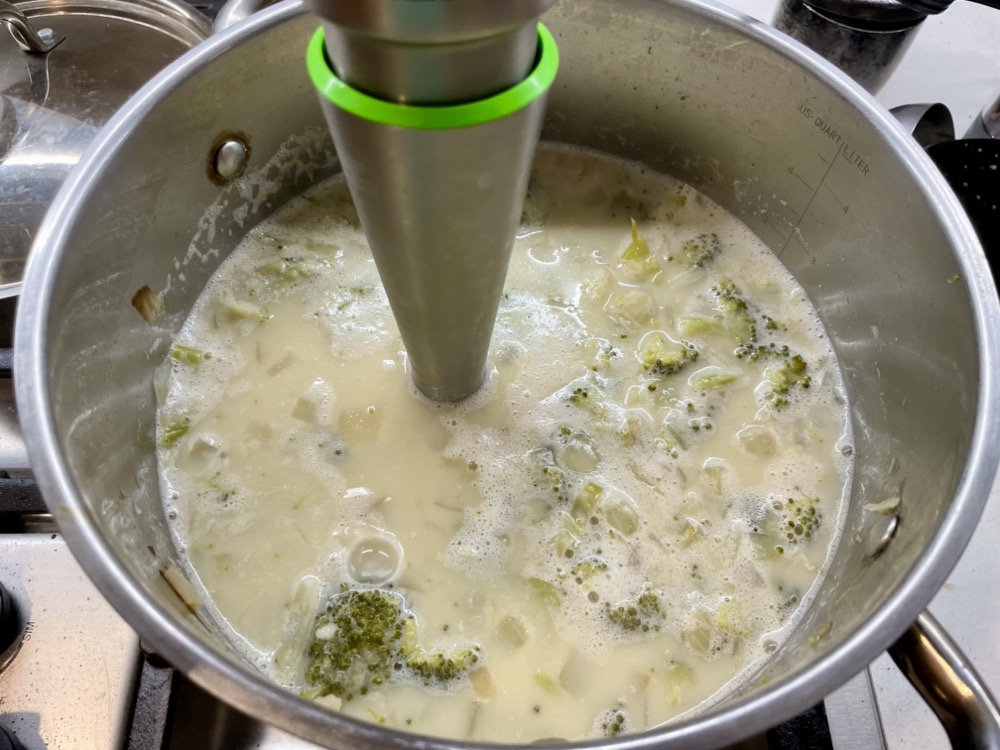
Use a stick blender (or regular blender) to purée everything in the pot. If you want a creamier soup, turn the heat back on and simmer the soup until desired consistency. Add salt and pepper to taste.

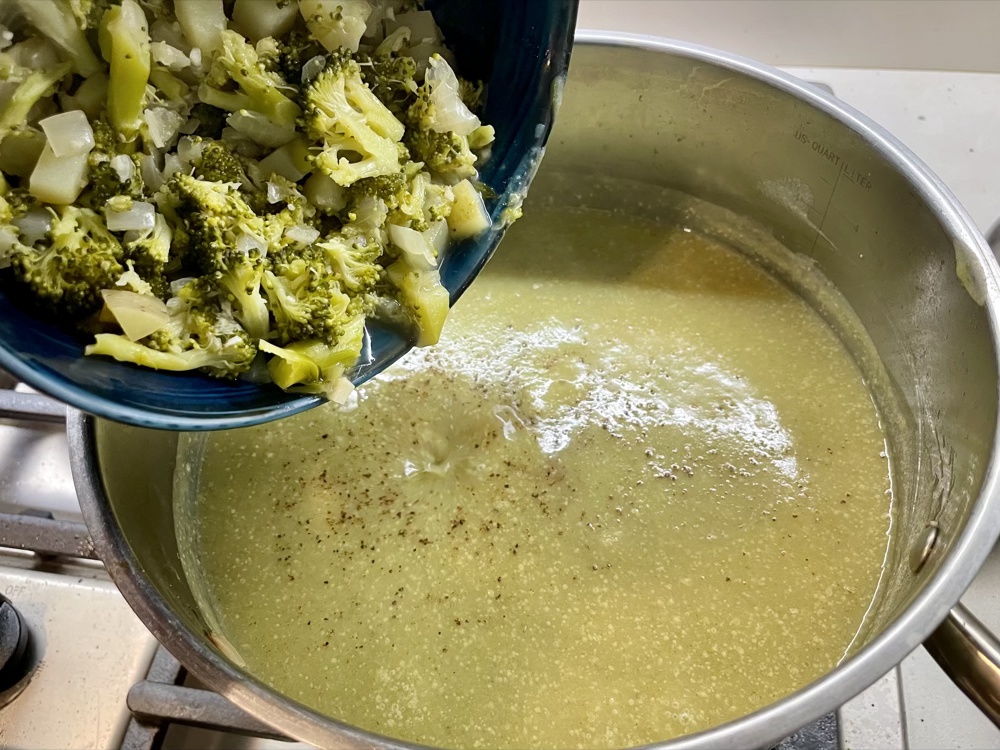
Add back in the removed ingredients from step 3 and also the cooked mushrooms along with any of its liquid. Taste and readjust salt and pepper as needed. Serve hot with croutons. Enjoy!

Summarized Recipe:

Healthy “Creamy” Mushroom Broccoli Soup

Date Published: Jan 15th, 2024 | Last Updated: Jan 15th, 2024
Author: Abby |Category: < 30mins, easy, quick, main, vegetarian, soups, appetizers, healthy, low-cal
Serves: 4-6 (as a main) | Prep time: 10 mins | Cook time: 20 mins

Ingredients:

  • 2 + 1 cloves garlic, minced
  • 300g white or portobello mushrooms, sliced
  • Pinch of dried thyme leaves
  • 1 yellow onion, diced
  • 2 medium sized Yukon gold potatoes, washed and diced into 2cm cubes
  • 2 large heads of broccoli, washed and cut into florets
  • 4 cups (1L) chicken stock
  • 2 cups of oat milk or soy milk
  • Salt to taste
  • Ground black pepper to taste
  • Croutons (optional)

Directions:

  1. In a medium sized soup pot on MED heat, add a drizzle of olive oil. Add in 1 clove of minced garlic, sliced mushrooms, dried thyme, and a pinch of salt and pepper. Sauté for 3-5 minutes until cooked. Turn off the heat and remove the mushrooms and any liquid. Set aside.
  2. In the same pot on MED heat, add another drizzle of olive oil and sauté the remaining 2 cloves of minced garlic and diced onion. When the onion has softened and turned translucent, add in the potatoes, broccoli, and chicken stock. Stir, then turn the heat up to HIGH to bring the soup to a boil, then turn it down to MED heat. Put on a lid and let it boil for 15 minutes.
  3. After 15 minutes, remove 2 ladles of the ingredients in the pot (without any liquid) into a separate bowl and use a spatula to quickly break up the ingredients into small bite-sized pieces. Set aside.
  4. Add oat milk into the pot and bring the heat back up to HIGH to reach a boil, then turn the heat off.
  5. Use a stick blender (or regular blender) to purée everything in the pot. If you want a creamier soup, turn the heat back on and simmer the soup until desired consistency. Add salt and pepper to taste.
  6. Add back in the removed ingredients from step 3 and also the cooked mushrooms along with any of its liquid. Taste, and readjust any salt and pepper if needed. Serve hot with croutons. Enjoy!