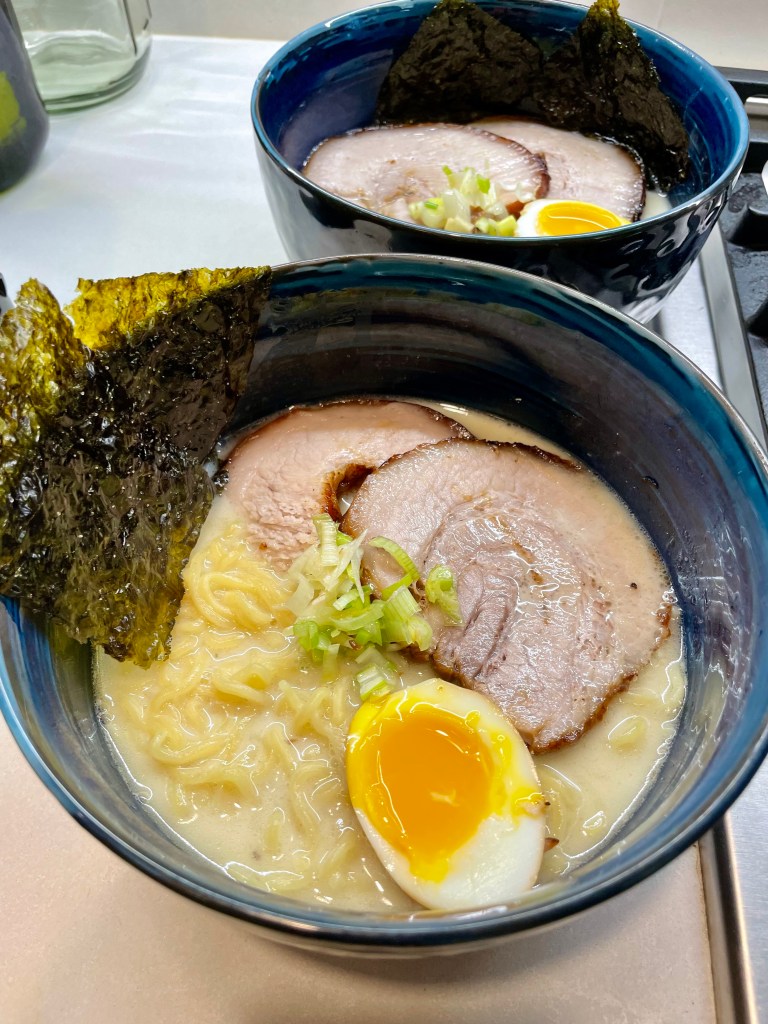
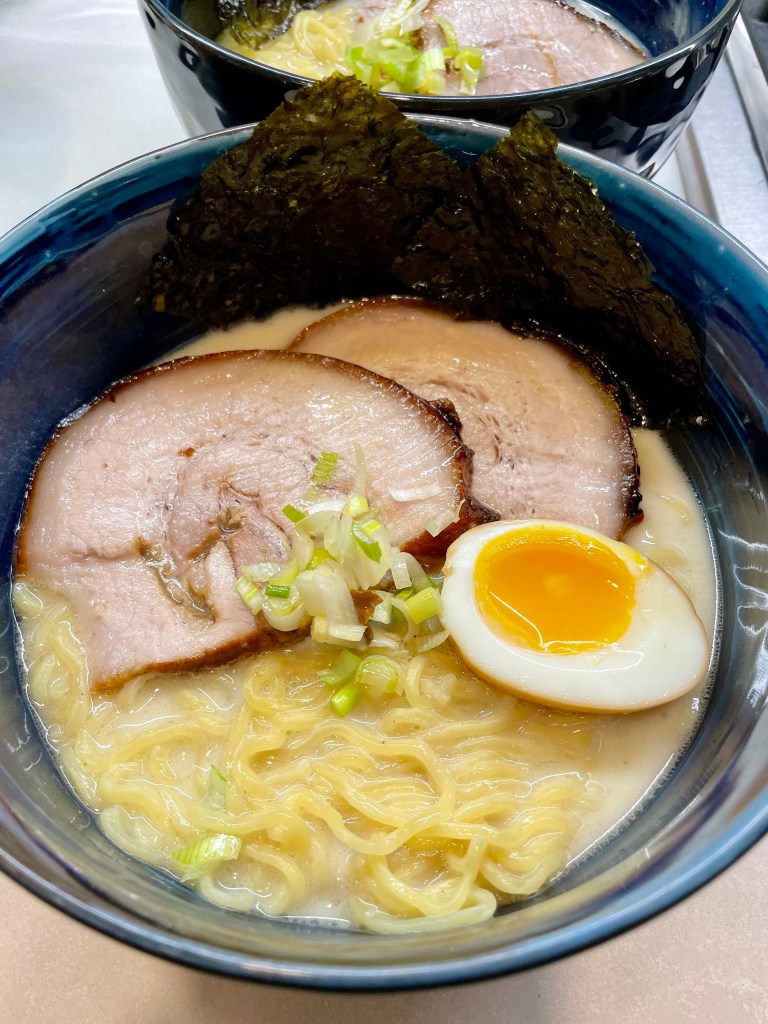
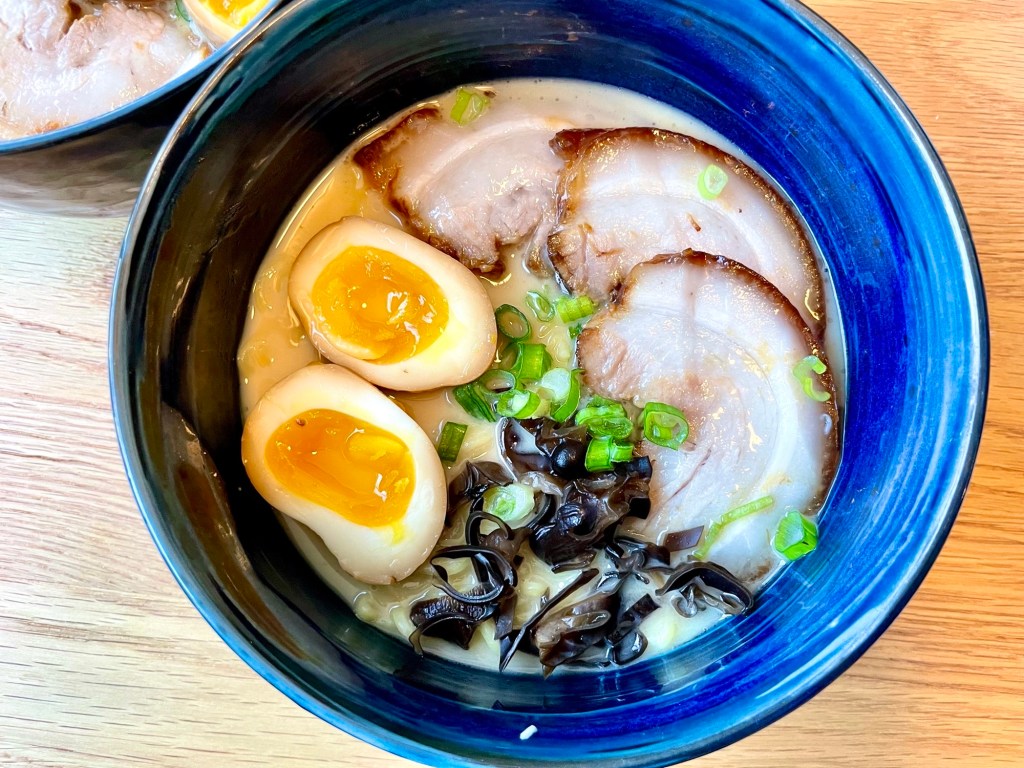
Best Places for Crab Cakes in Maryland: A Complete Guide to Local Favourites


Date Published: Sept 6th, 2025 | Last Updated: Sept 6th, 2025
Author: Abby | Category: Travel, USA

First things first: Why Maryland?

If you were to pick one food ingredient that perfectly encapsulates Maryland cuisine, it would be blue swimmer crabs (with Old Bay Seasoning as a close second). Due to the abundance of these crabs in the Chesapeake Bay that runs right through the Eastern half of the state, the crabbing industry in Maryland has been an important part of the Maryland economy and culture dating back centuries! You can find all sorts of crab dishes in Maryland, including steamed crab, crab soup, crab dip, crab egg rolls, and of course the famous crab cake.

The peak crab season each year is between April to December, with the largest crabs on offer in the fall season between September to mid-November.

What is a Crab Cake?

A crab cake is a delicious savoury type of fishcake that is made up of crab meat and a variety of fillers traditionally bread crumbs, eggs, mayonnaise, mustard, and a variety of seasonings. It’s either baked, fried, or pan-cooked. You can find crab cakes around the world, but a Maryland crab cake hits different. Maryland crab cakes are seasoned with Old Bay Seasoning and the best cakes use jumbo lump crab meat.

What is jumbo lump/colossal crab meat you ask? Jumbo lump crab meat is the most prized and highest grade of crab meat that comes from the swimming fins of the crab – unsurprisingly, it’s also the most expensive. This piece of meat should be unbroken and come in large chunks compared to regular lump crab meat which are in smaller pieces and extracted from smaller swimming muscles of the crab. The best Maryland crab cakes (and the most expensive) are the ones made with jumbo lumb crab meat which results in large chunks of crab in every bite rather than smaller broken and stringy pieces of crab you see in regular crab cakes. It’s certainly an experience, especially for my fellow crab lovers!

For the visual learners like me, I’ve included a photo and diagram of the different types of crab meat:

Comparison of where Jumbo Lump Crab meat is from and how it compares to other parts of the crab.
Image from: https://www.seacoreseafood.com/product/Blue_Crab
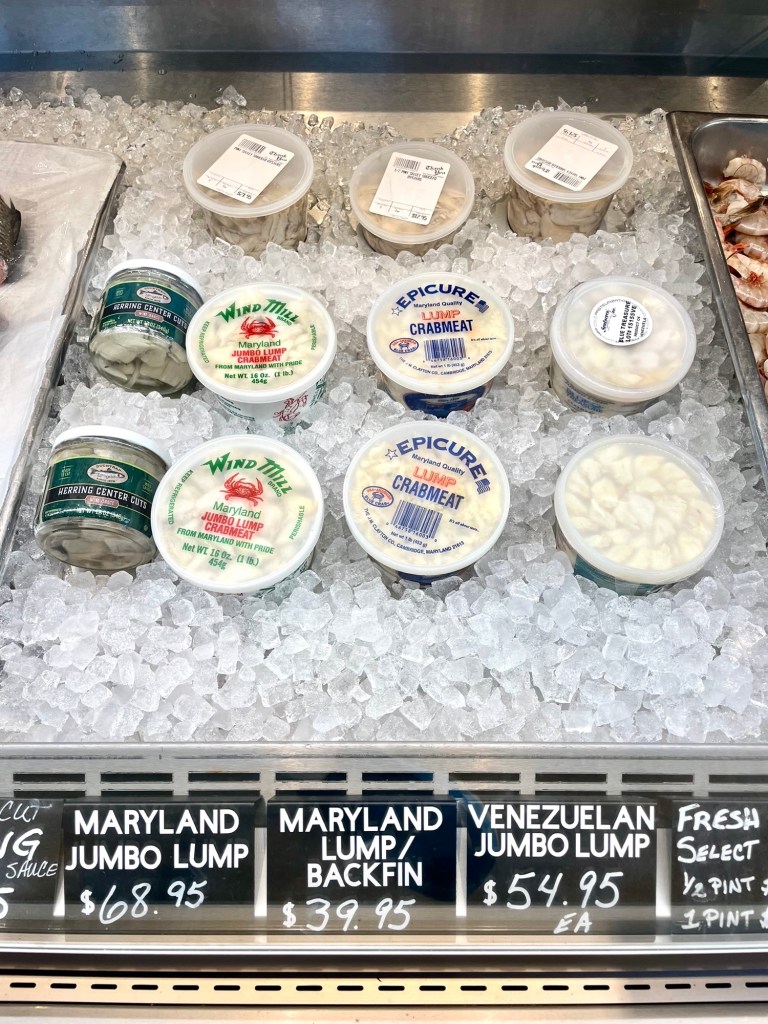
Packed containers of jumbo lump crab meat – one of these containers can run you $60-70!

Accompaniments: Crab cakes are almost always served with a small packet of saltine crackers. This is to add texture to the overall softness of the crab cake. Toby prefers not adding it at all, but I like to crumble mine over the crab cake for a bit of extra crunch with every bite. Many people will also order a side of tartar or cocktail sauce to go with their crab cake for an extra kick.

What Makes a Good Crab Cake?

Fillers: The one and only golden rule of a good crab cake is that is should be maximum crab and minimal filler. I’m talking about 85-90% of the crab cake should be just crab meat and the filler should only really be there as a binder to hold the shape and for seasoning (read: Old Bay). No chopped veggies, no fancy herbs – maybe parsley.

Seasoning: Old Bay is a must for Maryland crab cakes and you’ll often taste celery salt as well. It is because of the simplicity of the Maryland crab cake that you’ll find most of them pretty similar in flavour. Some cakes are more heavily seasoned than others but this will be due to personal preference. I prefer mine on the less-seasoned side to not over power the delicate flavour of the crab and most places in Maryland will have a spice shaker of Old Bay so you can add extra seasoning if you like.

Without further ado… here are some of the top places to grab a crab cake in Maryland!

Much like my unexpectedly popular post on The Ultimate Guide to Philly Cheesesteaks in Philadelphia, this post is my personal take on these popular spots. I know there will be a lot of differing opinions and I’ve seen heated debates on who has the best crab cakes, and at the end of the day the answer will depend on individual preference. There’s no one right answer – it’s like asking a New Yorker who has the best pizza. Everyone will have their own favourite and this post highlights some of my favourites and thoughts on these popular joints. The places that we tried were all due to research from locals but this is in no way a comprehensive list. Let me know in the comments if you think I’ve missed a popular spot!

In this post, I’ve reviewed Pappa’s, Faidley’s, Koco’s, G&M, and Jimmy’s.

* Please note that the cost of crab cakes are often seasonal and can change regularly depending on market price. The prices I’ve listed below are from our trip in July of 2025.

Pappas Seafood Co. (carry out only):
Address: 8801 Belair Rd, Nottingham, MD 21236
Hours: 11am-8pm daily
Cost per crab cake: $27.50+tax (market price) for 11oz large jumbo lump crab cake, $25 for Imperial
Website: http://www.pappascrabcakes.com/

Pappas Restaurant and Sports Bar (sit down dining):
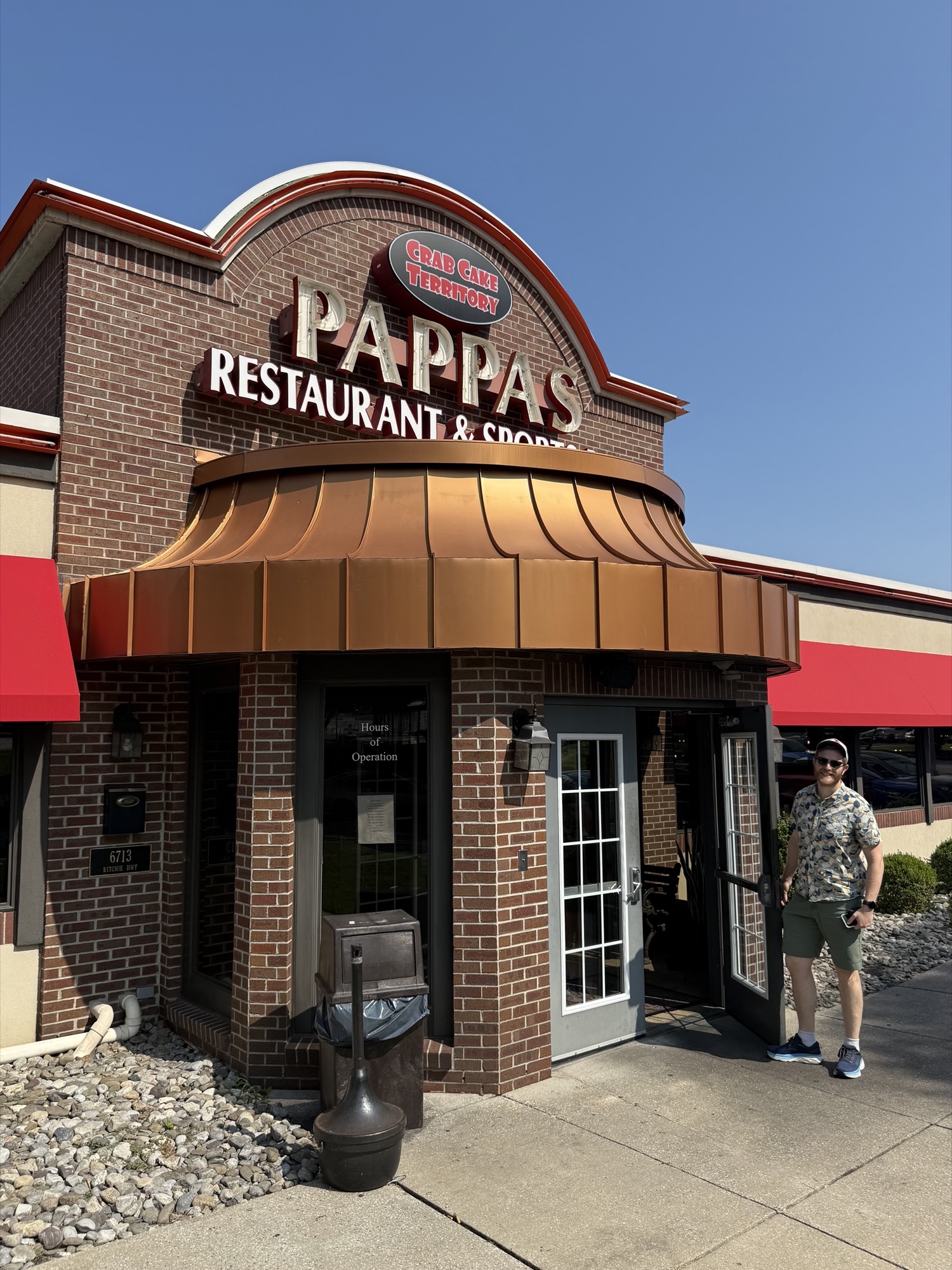
Address: multiple locations around Maryland (we went to 6713 Ritchie Hwy, Glen Burnie, MD 21061)
Hours: hours vary by location, usually 11am-9:30pm daily (check the website for more details)
Cost per crab cake: $28.99 for 8oz jumbo lump crab (extra $2 for a platter with 2 sides)
Website: http://www.pappascrabcakes.com/

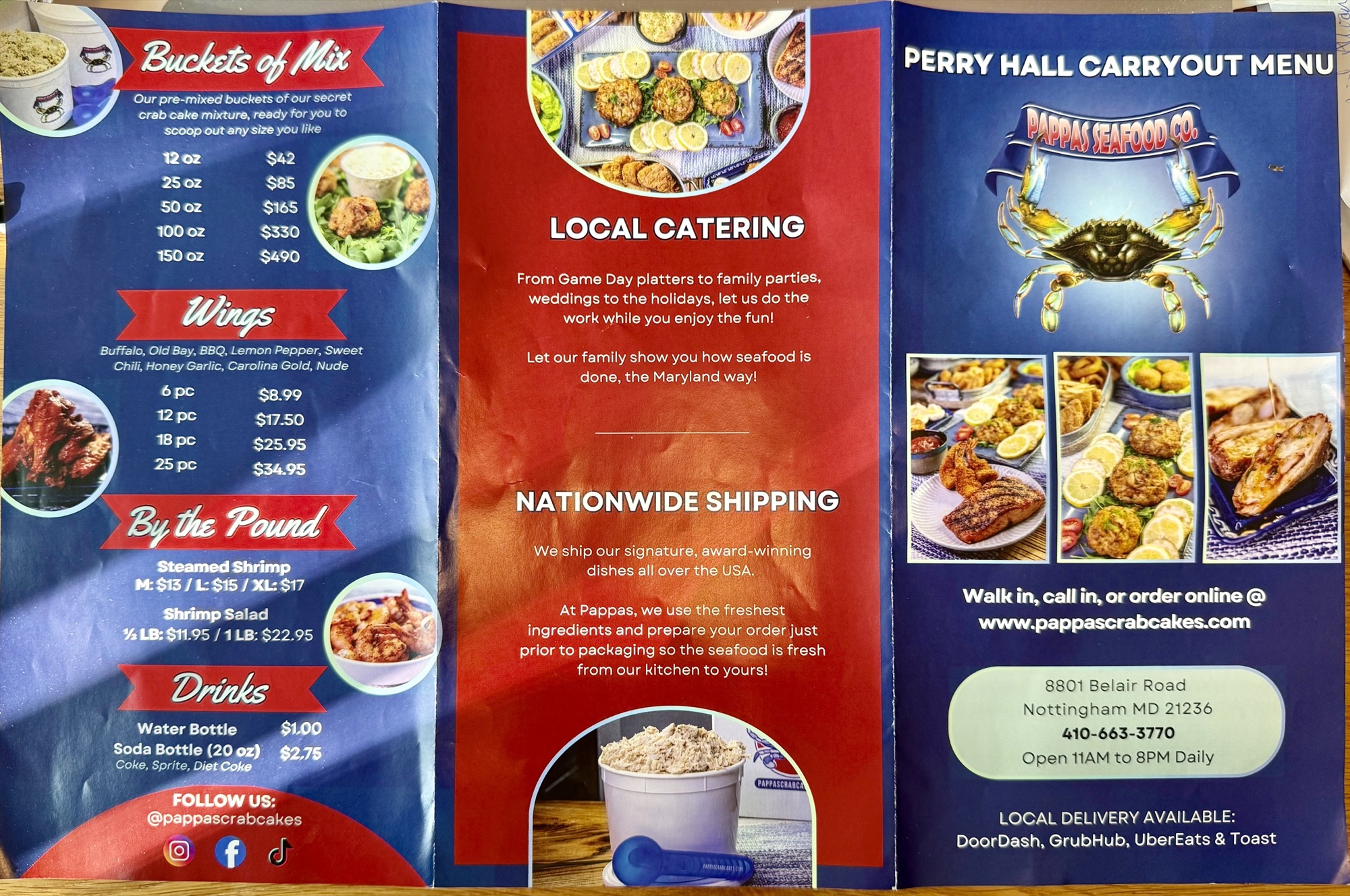
Pappas was recommended time and time again throughout my internet research, but everyone always just called it “Pappas”, rather than the full name, so when we typed in “Pappas” on Google maps, it directed me to “Pappas Seafood Co.”. When we arrived, it was a big warehouse-like building that only had carryout options and nowhere to sit. We thought it was strange that so many people would recommend a carryout place until we spoke to the cashier who told us that they have multiple restaurants that have dine-in options but the location we came to was their distribution center. Ahh. We were super hungry at the time and didn’t want to make the further trek to their restaurant after driving 3 hours from NYC so we just ordered carryout. Luckily they had pretty much a full menu and there was one picnic table out back so we didn’t have to eat in the hot car.

For those of you who are like us and never seen a “carryout” before, it’s a type of food service where you park your car in a designated number spot in the parking lot, go inside to order, and they’ll bring out the food to your car. Neither Toby and I had encountered a ‘carryout’ service before coming in Maryland – we thought it just meant takeaway. When we arrived, we thought the numbered lots were for reserved parking so we chose a spot without a number (which ended up being for employee parking – we thought it was strange why we had to park so far away from the main door 😂). When they asked us what our car spot number was, we just told them which car it was 😅.
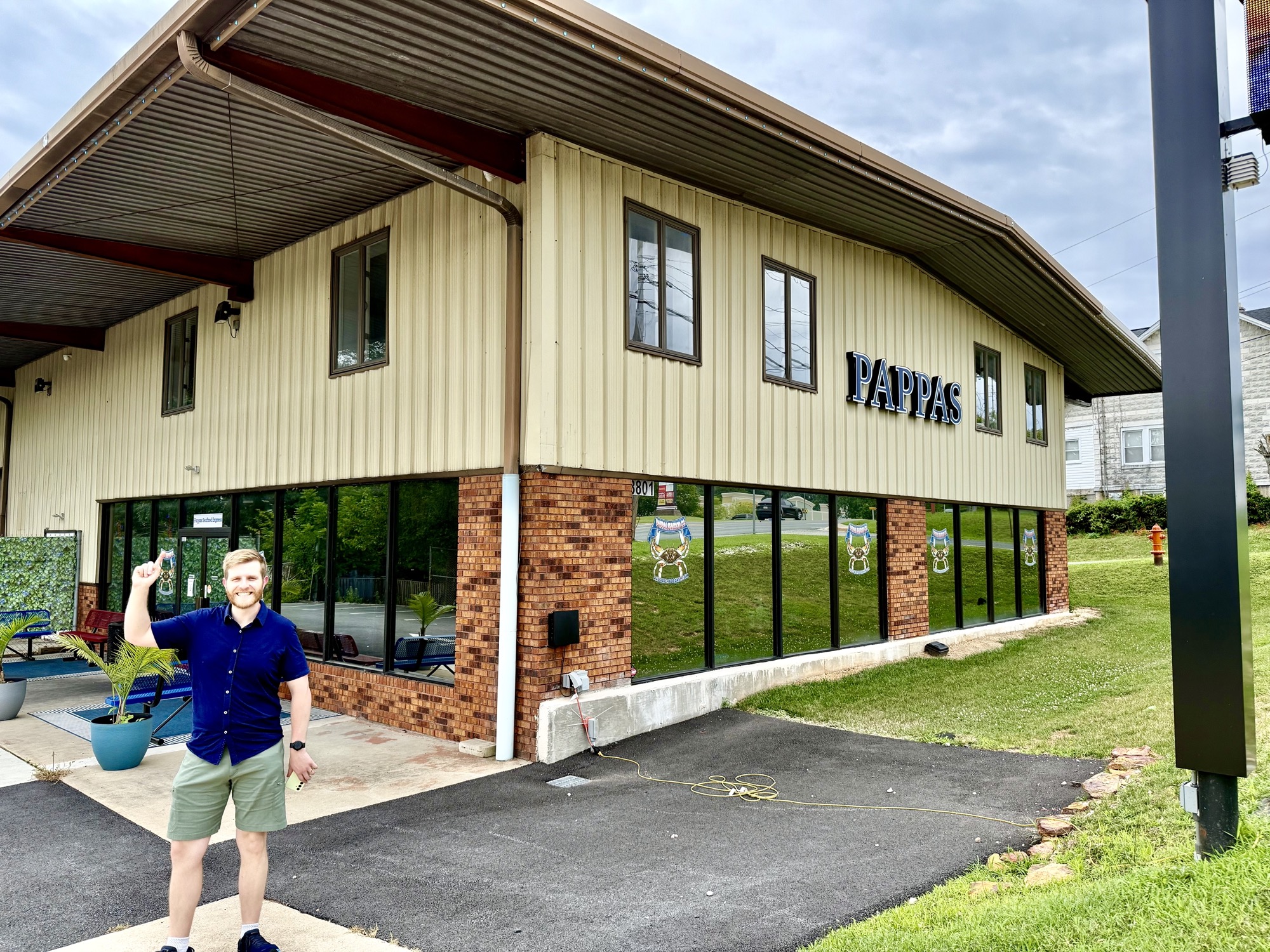
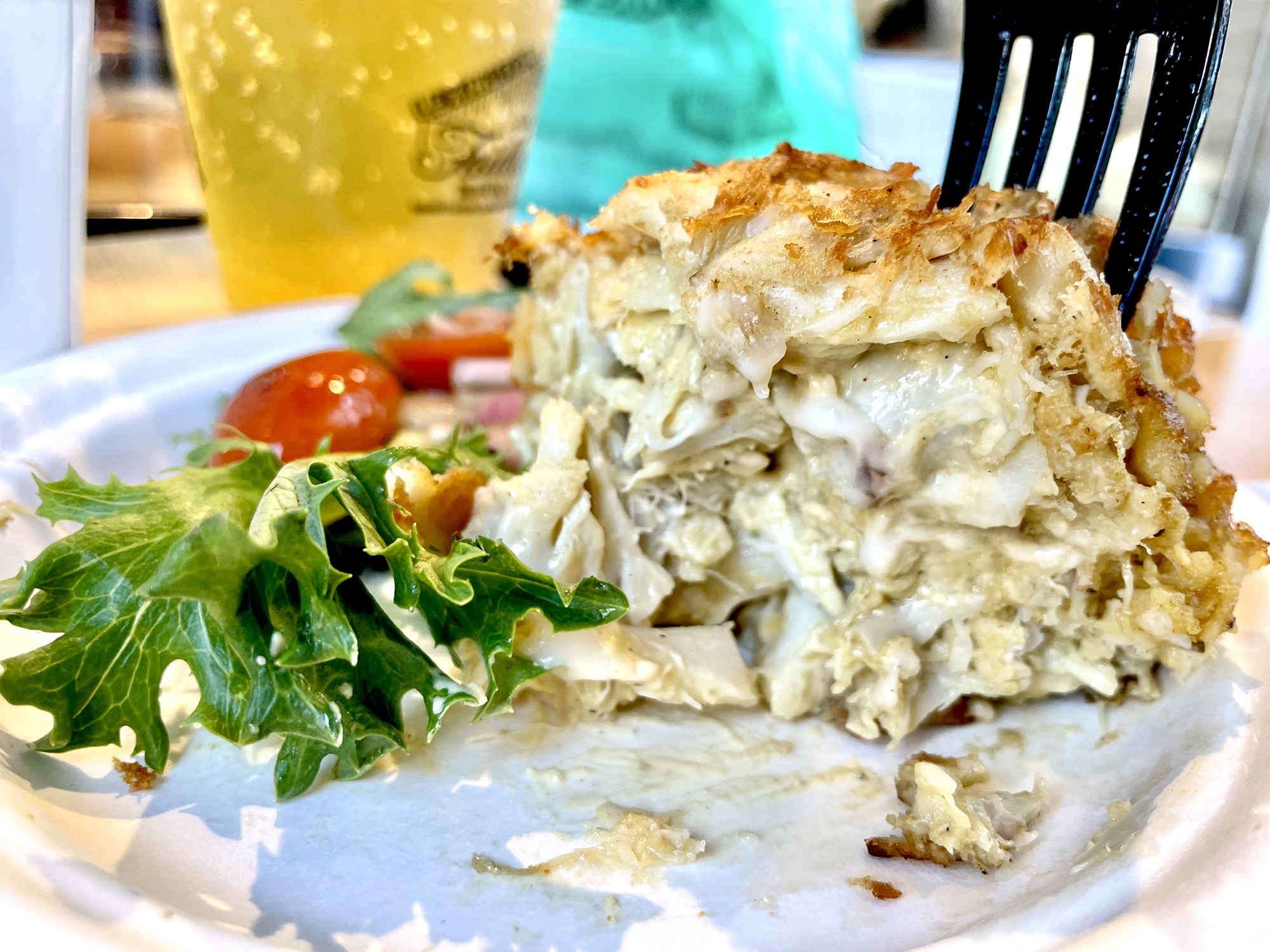
There was an option of the size of crab cake you want: small, medium, or large. We of course got the large because we were so hungry. It was a whole 11oz and very filling. It was delicious from the very first bite! There was no skimping on the crab meat and minimal filler. It was lightly seasoned – just the way I like it and it was even better paired with their tartar sauce.

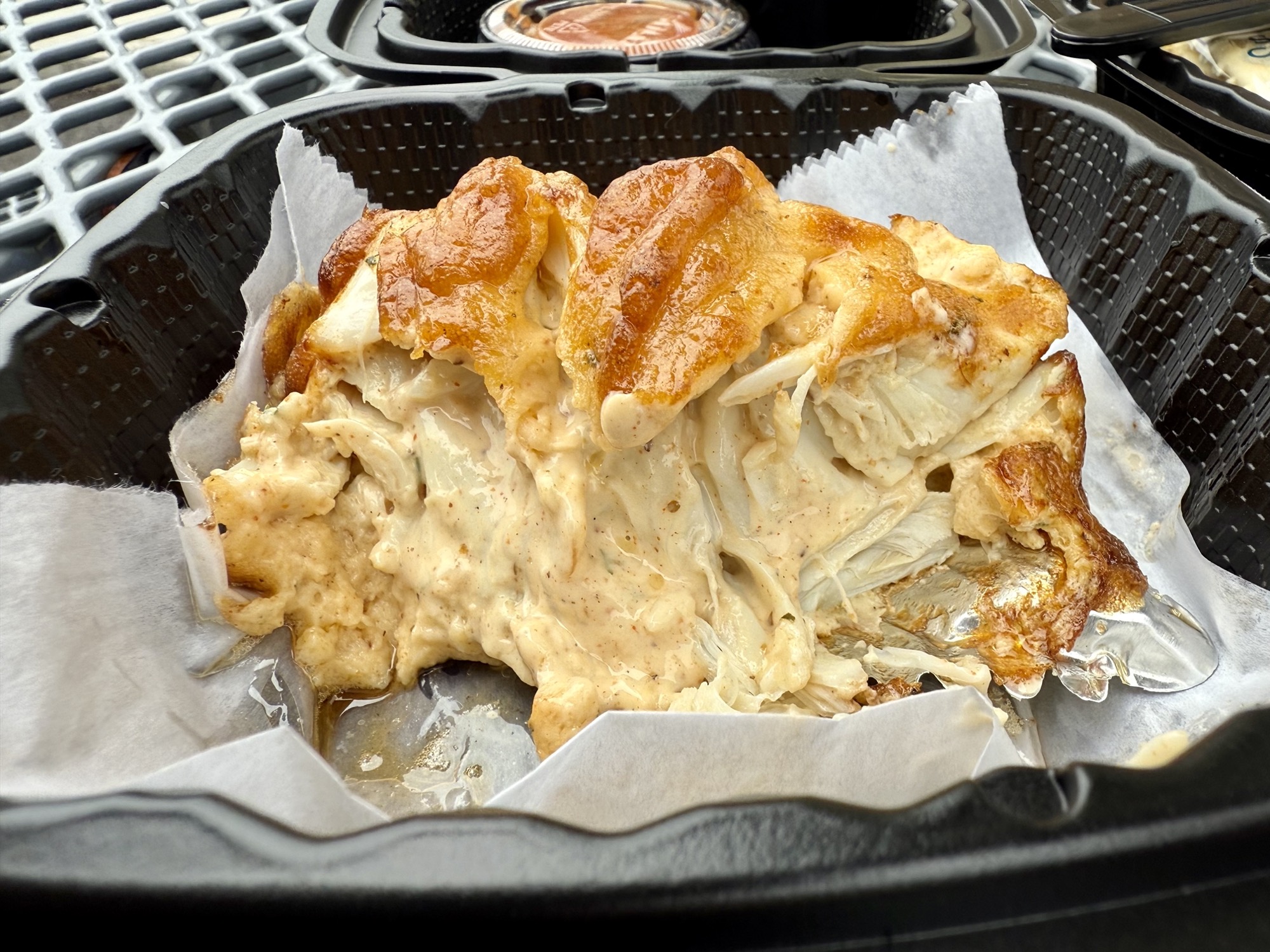
We also ordered the Imperial Crab cake that is made with their imperial sauce. The Imperial was more moist with more seasoning and eggy in flavour. It’s a gluten free option without a binder so it was also more sloppy looking. I thought it was good but not as good as the regular jumbo lump crab cake but Toby LOVED it way more.

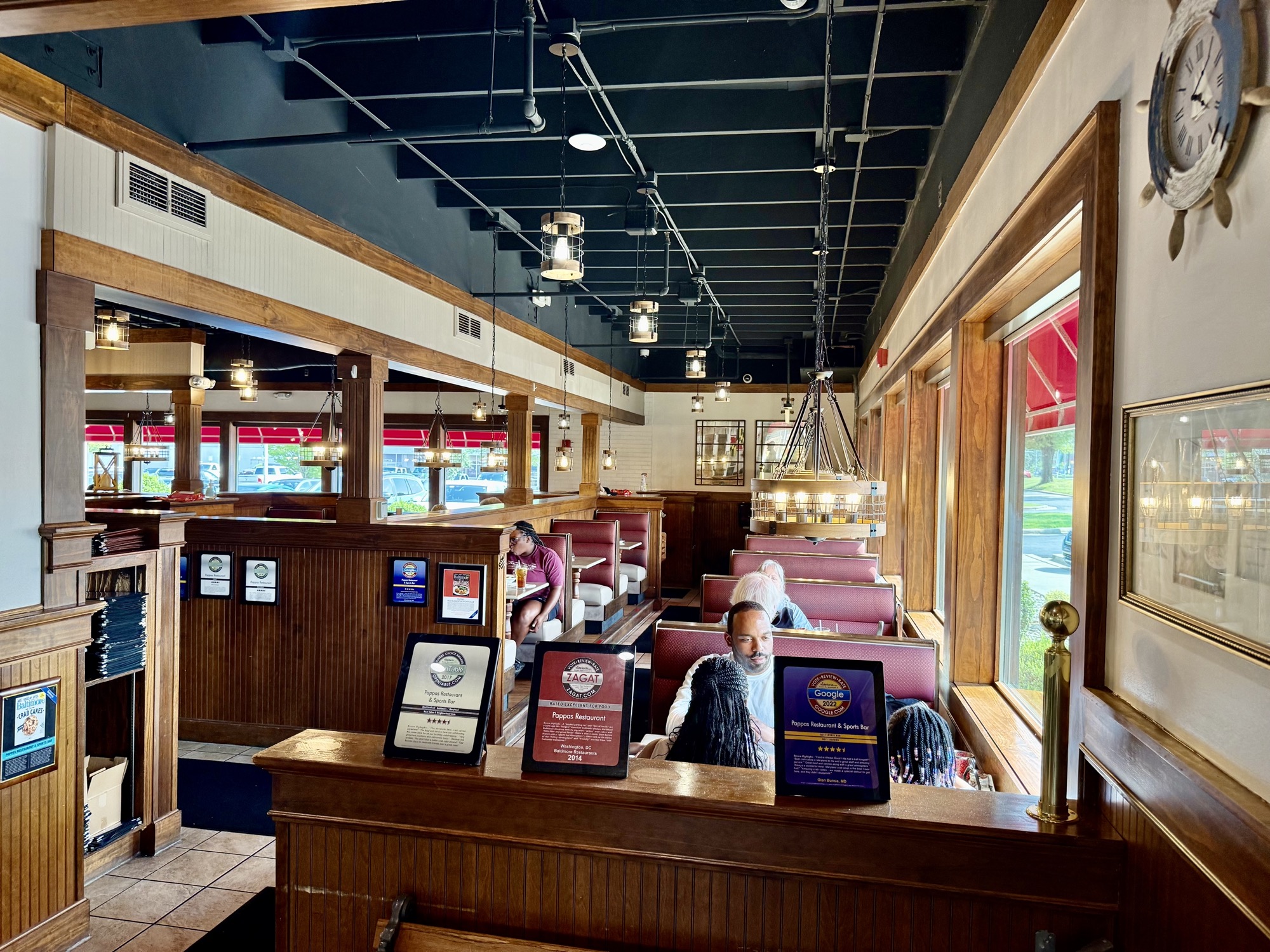
This crab cake was the one to beat but just incase we were biased because we were starving when we tried it, we tried it again at one of their restaurants on our way back home from DC. The restaurant looked like any other sports/family restaurant (we went to the location in Glen Burnie). We sat at the bar and we ordered both the jumbo lump and the imperial crab cake again. I can confirm that this was still our top pick for favourite crab cake after trying 4 other places. (Side note: I also ordered the recommended cream of crab soup and it was super salty – would not recommend. Stick to the crab cakes.)
Address: 119 N Paca St, Baltimore, MD 21201 (inside Lexington Market, level 1)
Hours: 10am-5pm most days, closed Sun
Cost per crab cake: $25 + tax (market price) for 6.5oz jumbo lump crab cake
Website: http://faidleyscrabcakes.com/

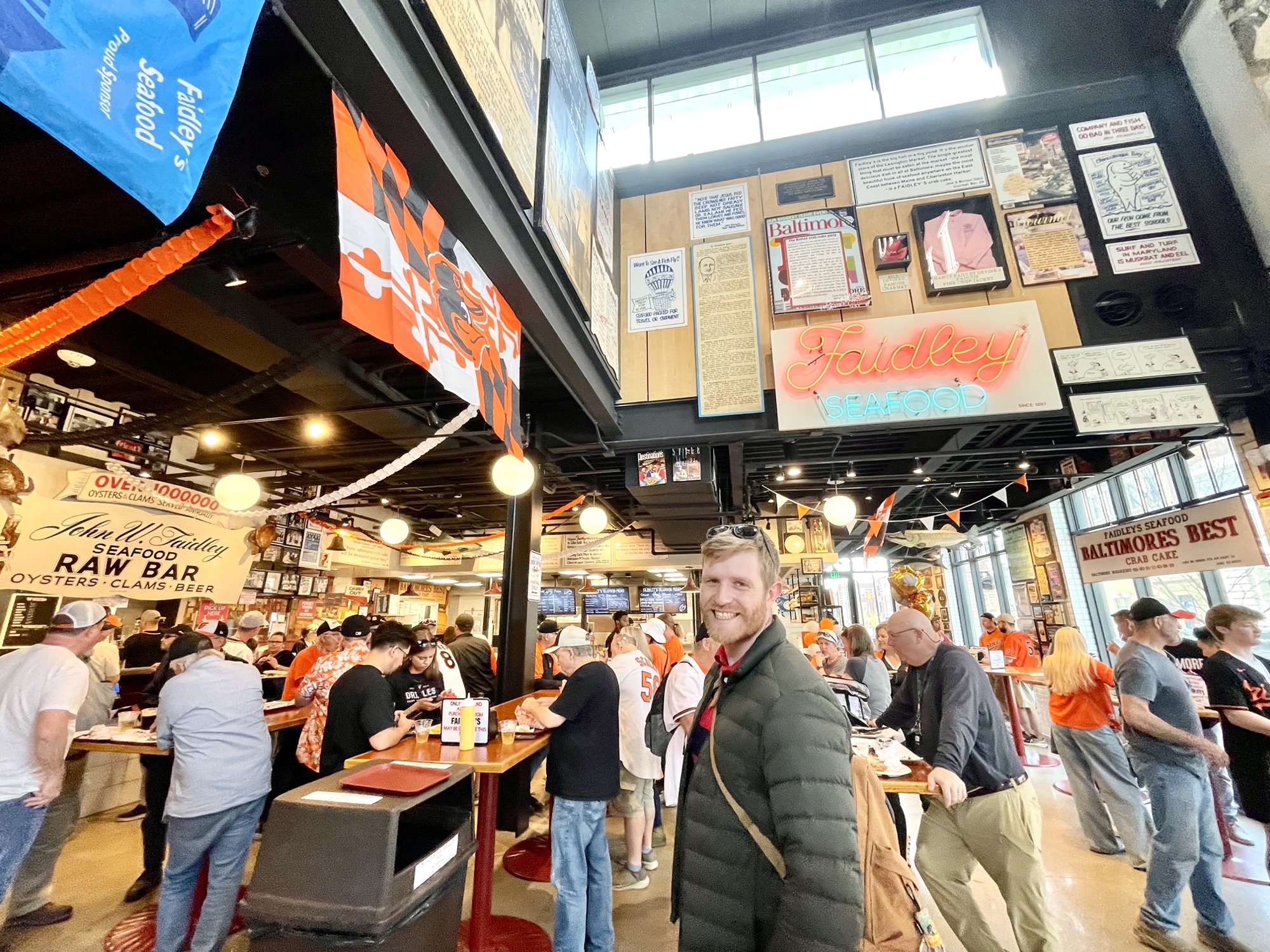
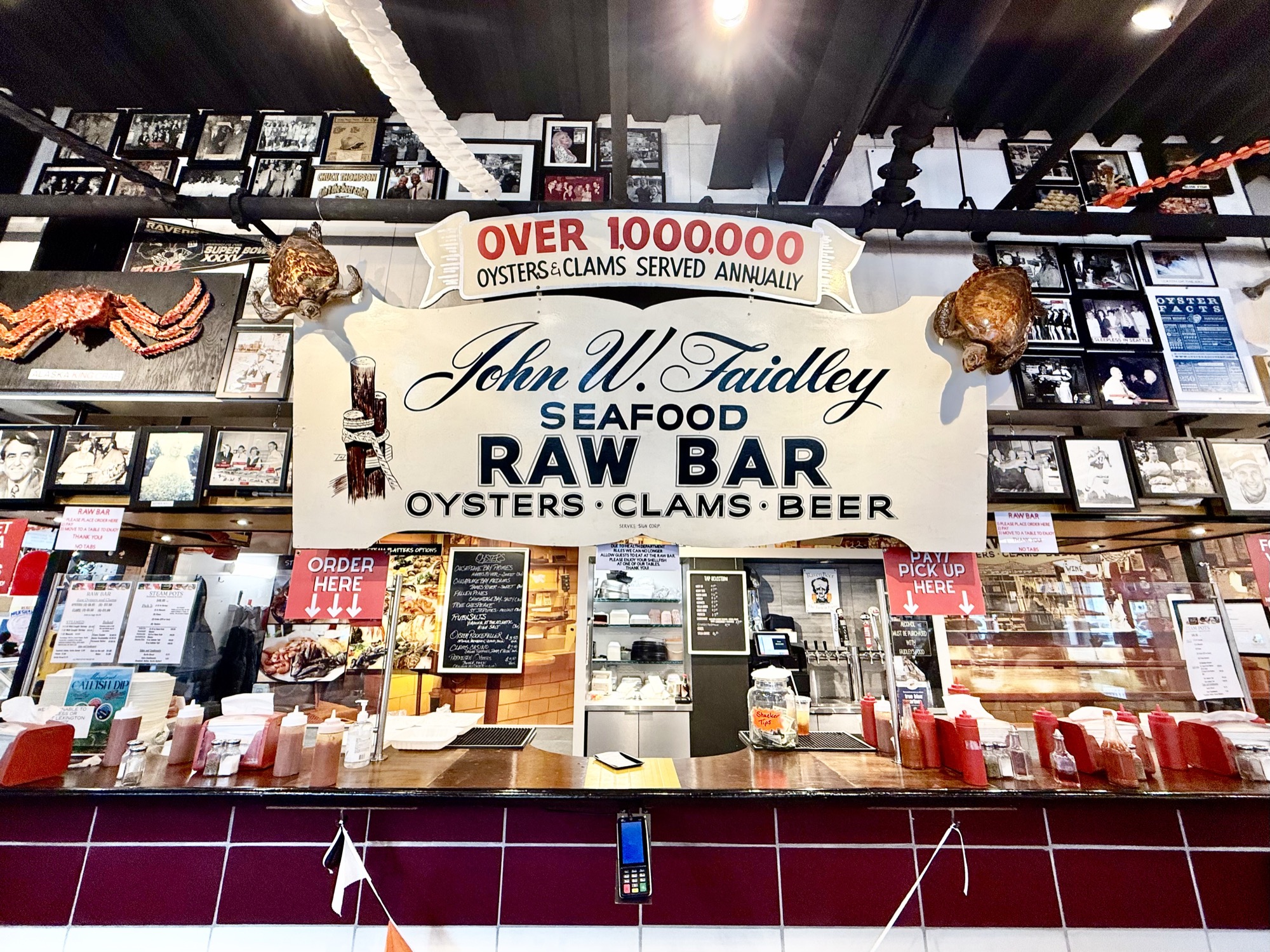
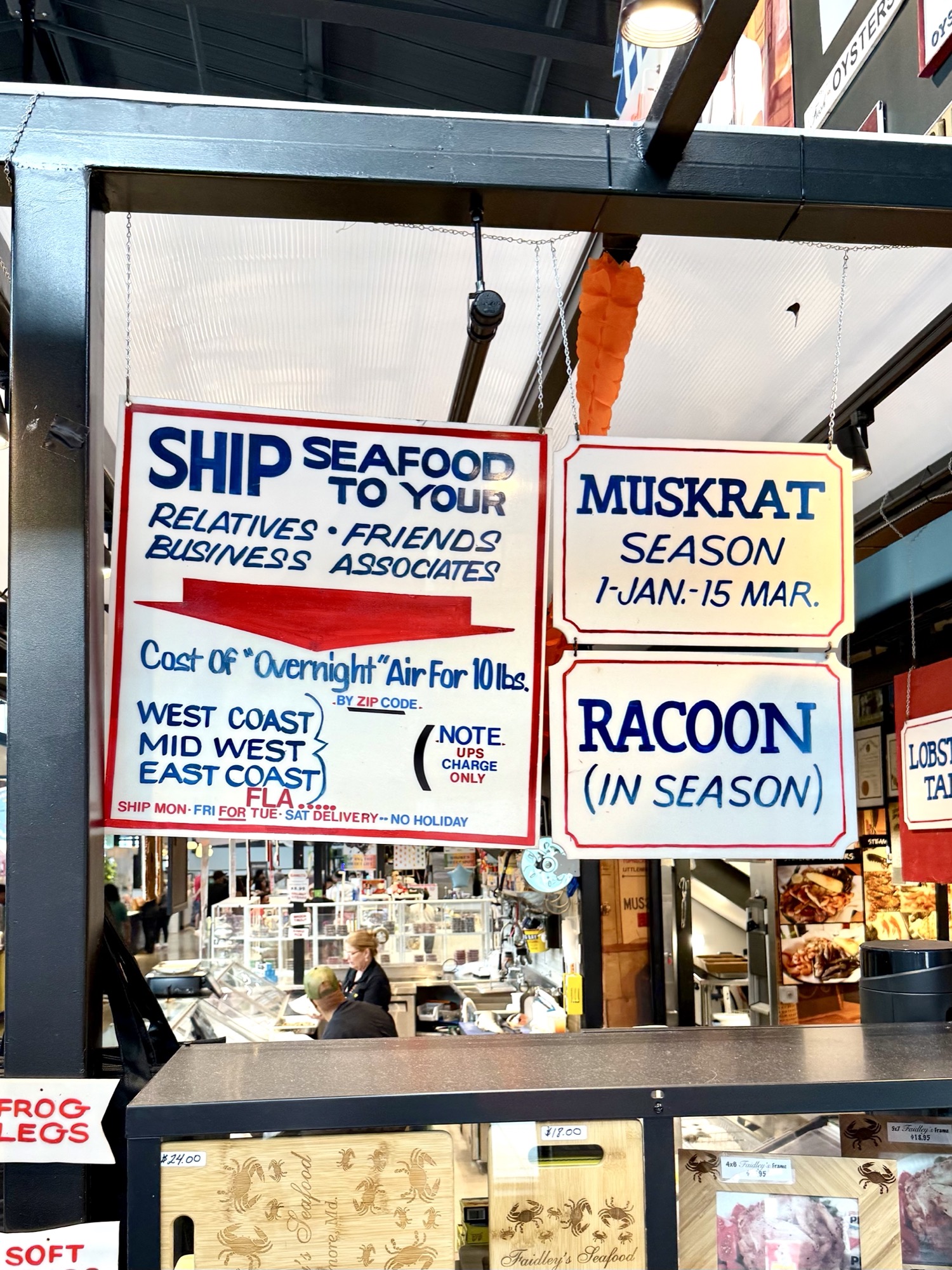
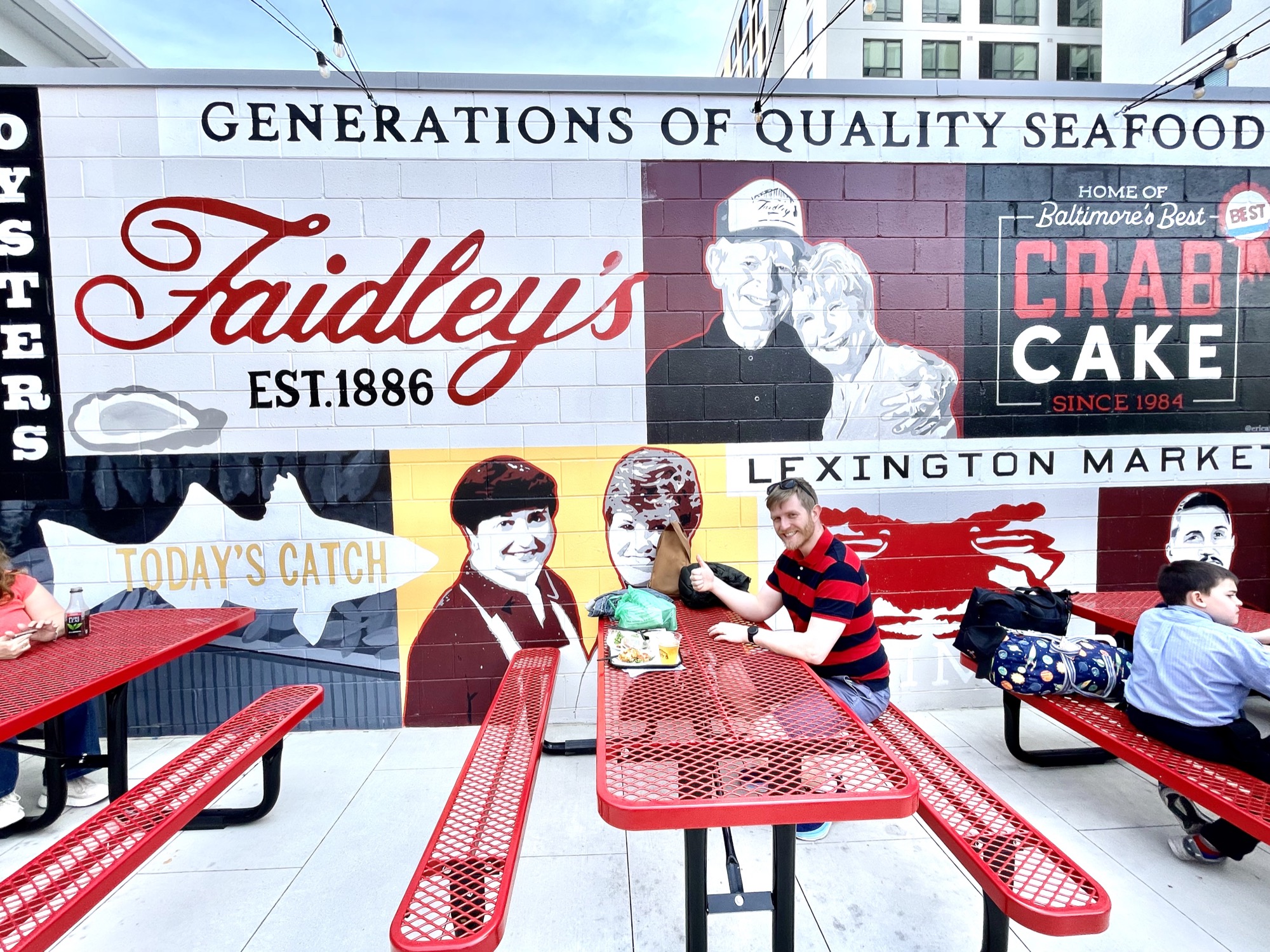
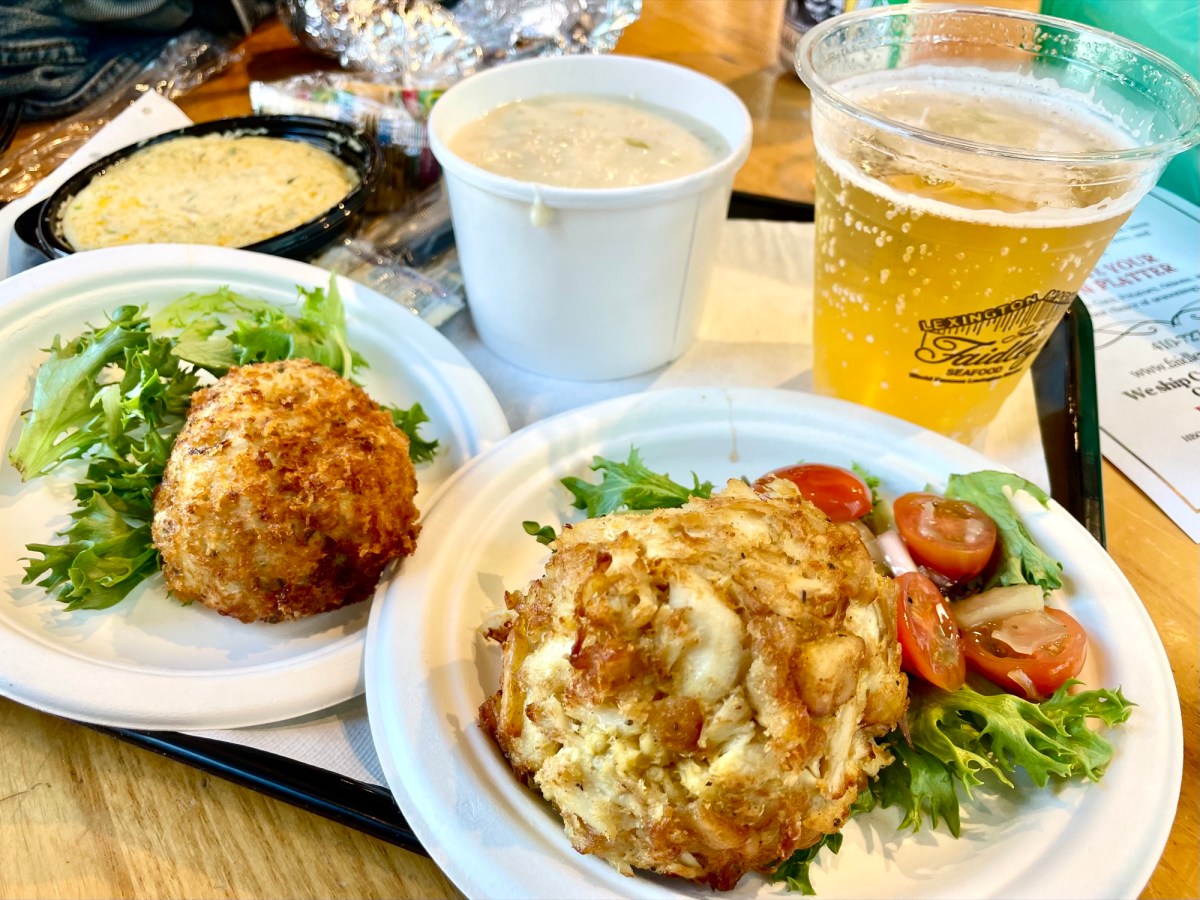
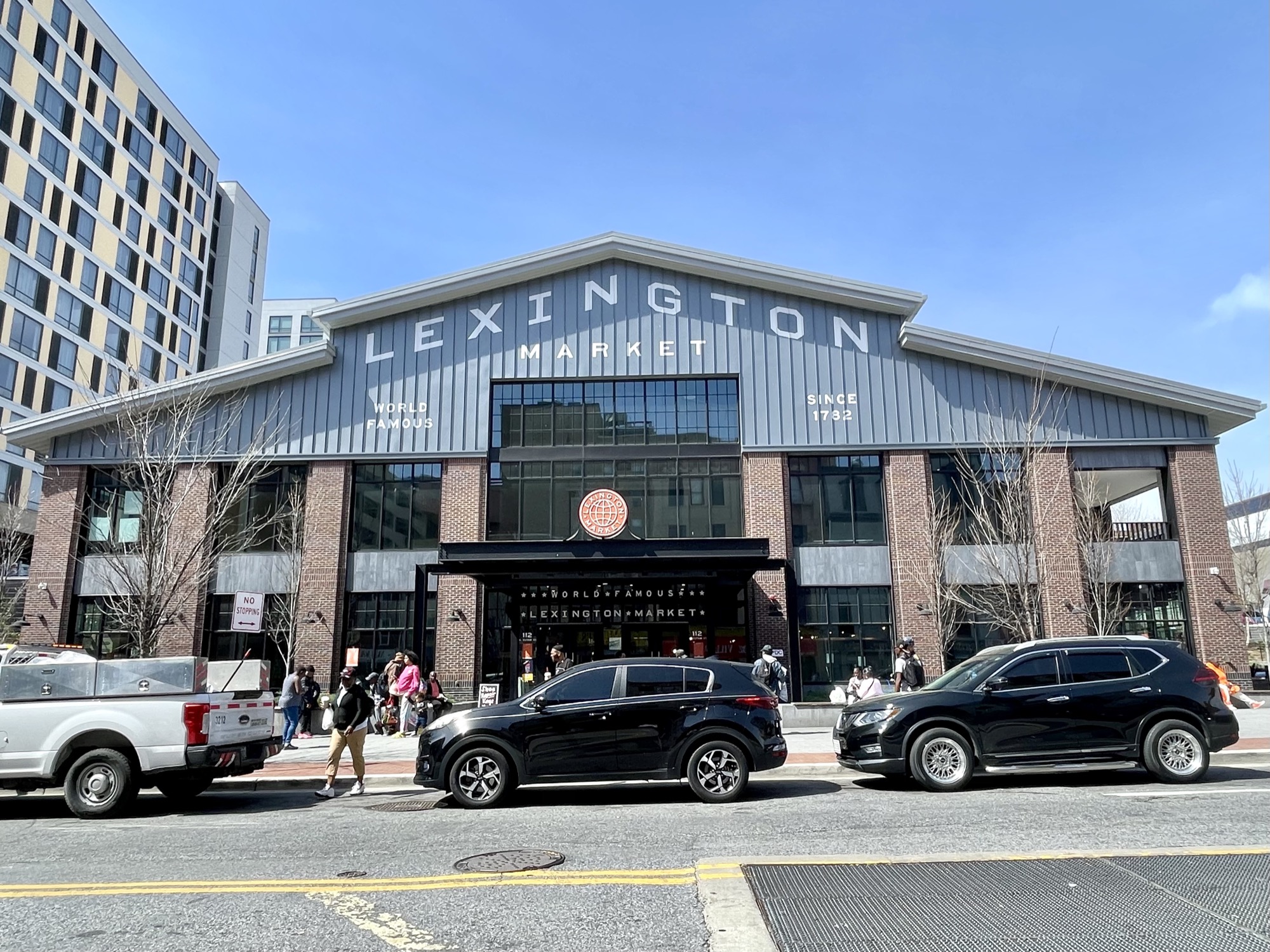
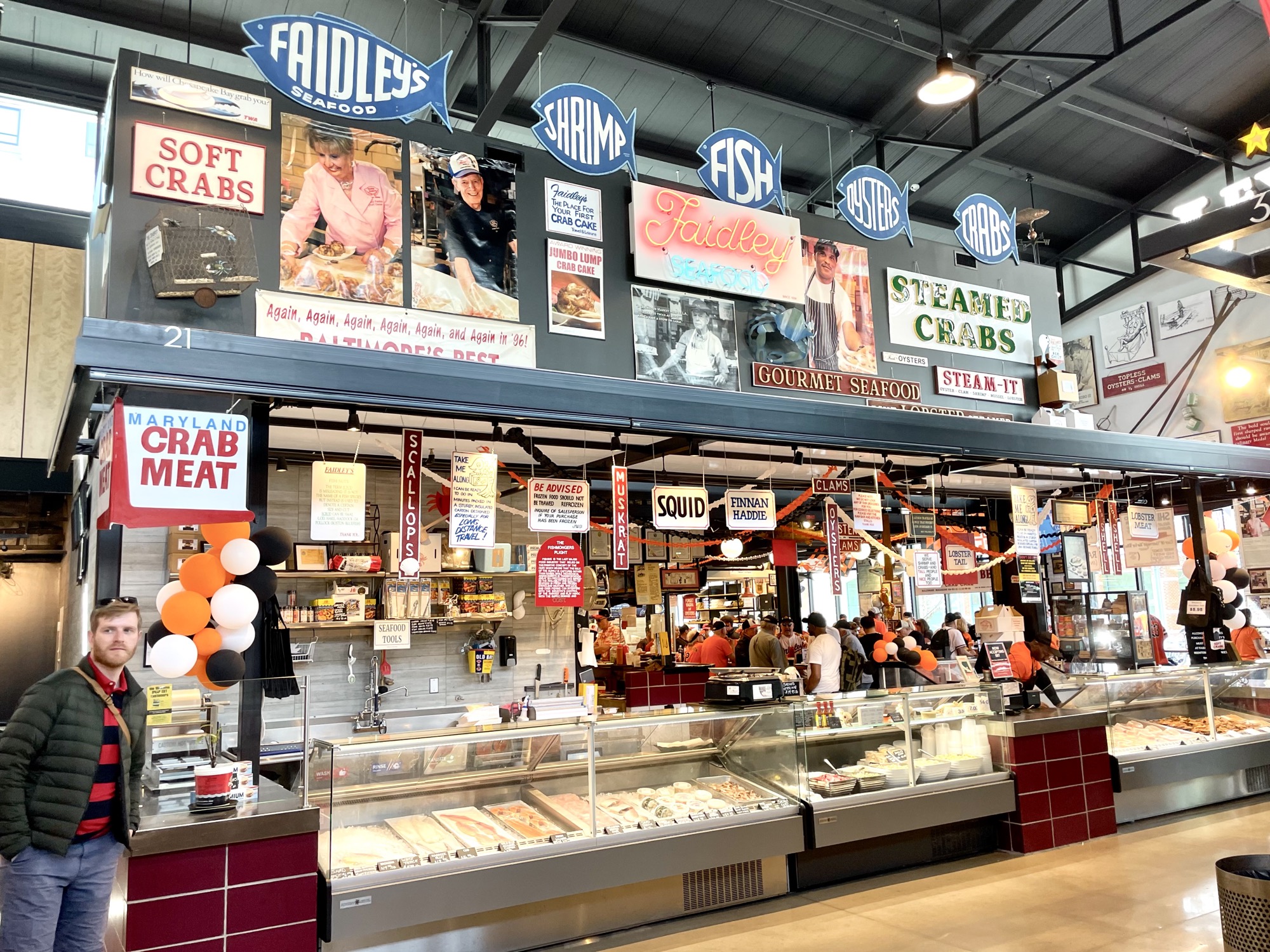
Faidley’s is an institution in the Baltimore area. Open since 1886, they have the reputation as being one of the oldest seafood purveyors in the Chesapeake Bay region. It also has the best location for tourists (right in downtown Baltimore!) compared to all the other places in this post. It’s roughly a 15 minute walk from Oriole Park baseball stadium or a 30 minute walk from the Baltimore waterfront. Located in Lexington Market, Faidley’s has food-court style service where you go up to order and they put your food on a tray. They also have a separate area for a raw bar and takeaway raw seafood/meat (including raccoon and muskrat meat!).

There’s standing room only here at the high tops or there’s a few picnic benches on the patio outside. The first time we went it was on a Monday afternoon in March during game day. It was pretty busy but not crazy. The second time was in July which was a lot less busy but the food was still consistent.

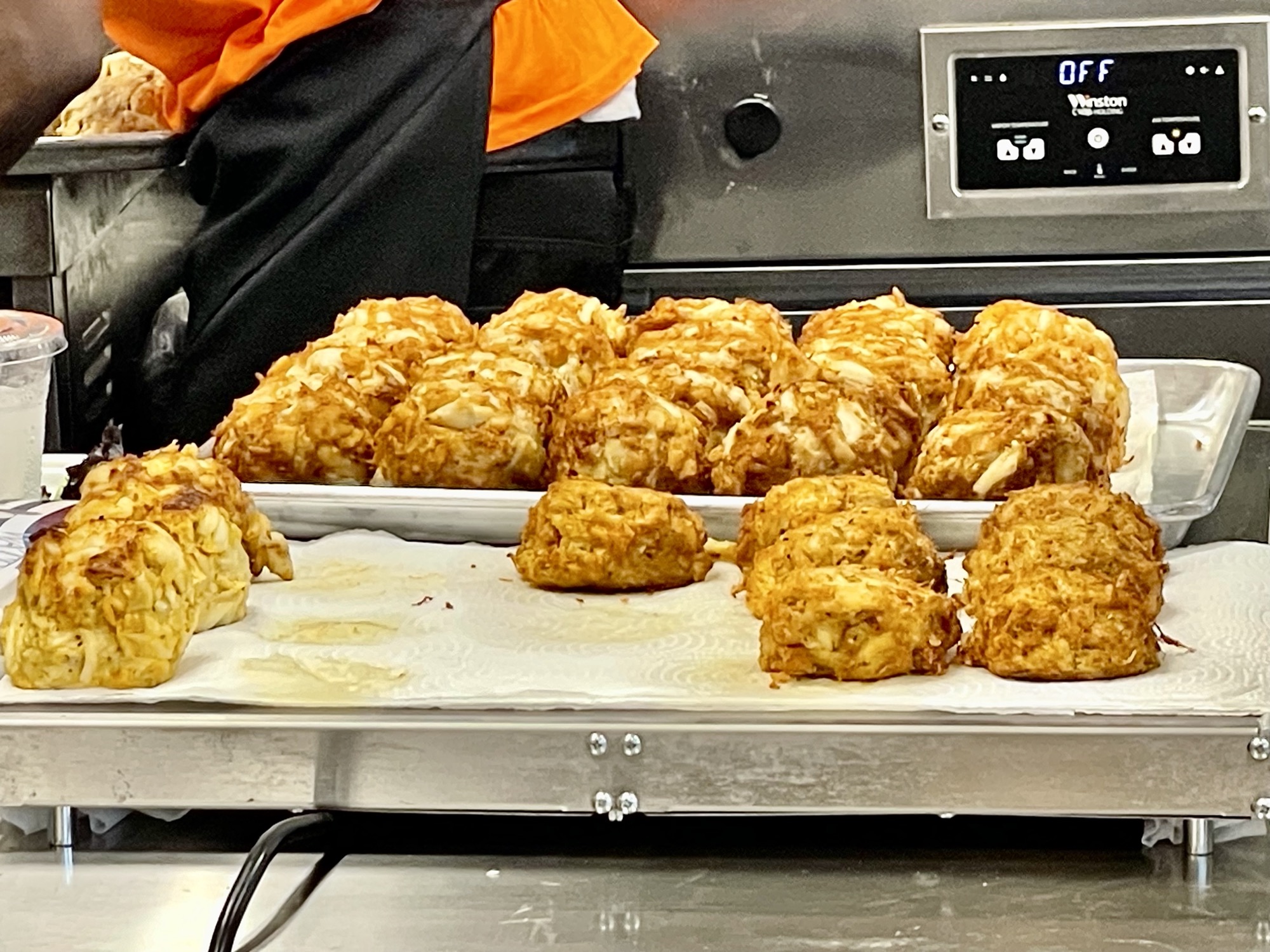
There’s only one size of crab cake here, which is a 6.5 oz for $25 (market price), smaller than the standard 8oz size at other restaurants. The food was served very quickly (almost immediately!) and on first impressions, it had a lot more browning compared to other cakes but also had more filler. Despite this, it was well-season and the roasted browned flavour gave the crab cake more depth that the other cakes didn’t offer. It was like having thanksgiving stuffing out of the oven, crab-cake style! If this crab cake was larger with less filler, it would’ve easily taken the number one spot for best crab cake for me!

We also got a “Coddie” which is a fried cod and potato ball (not bad), the crab dip (amazing!), and the cream of crab soup (I thought it was okay, but Toby liked it).

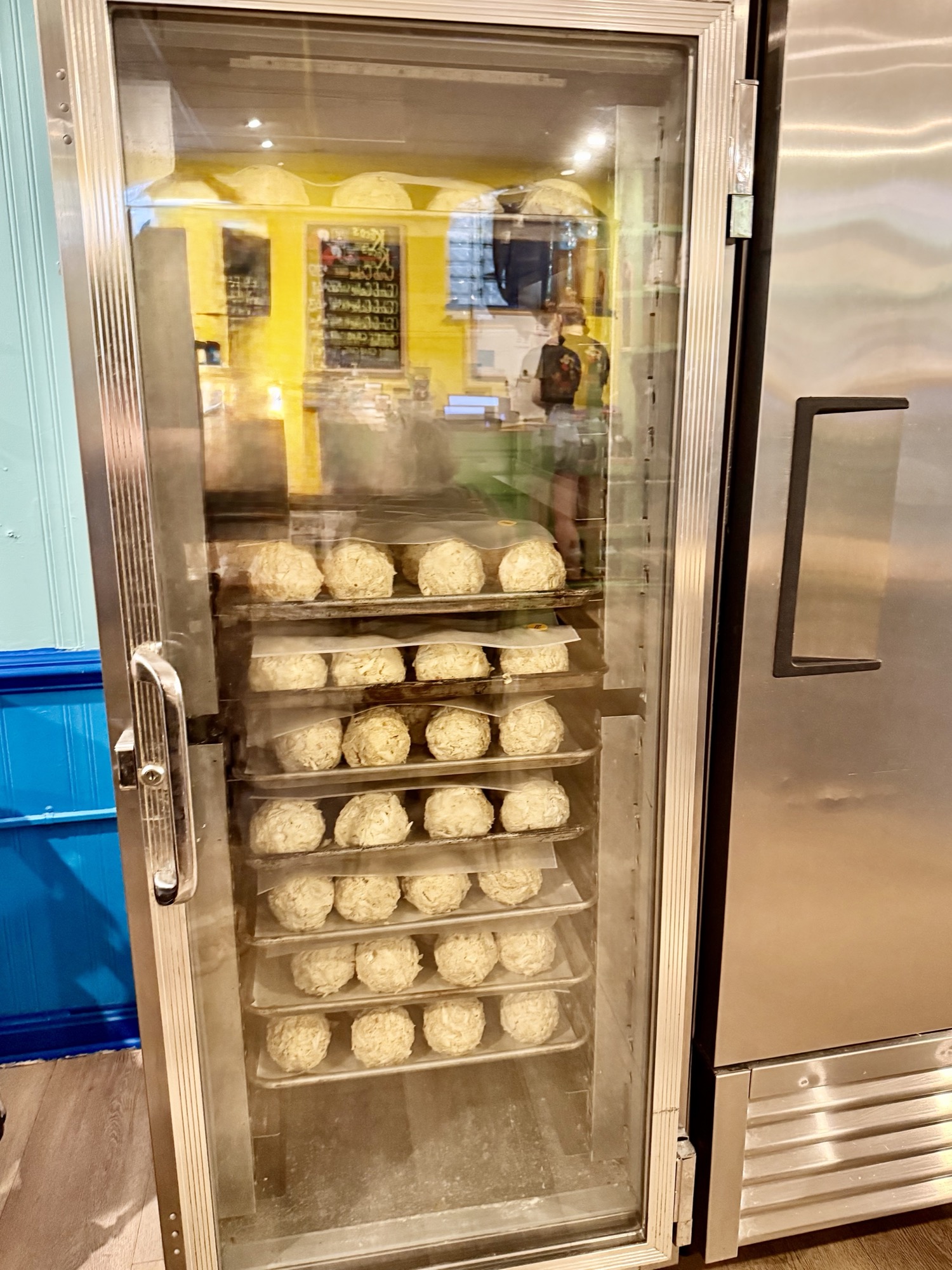
You can actually watch them make the crab cakes while you wait for your food. I saw celery salt, Old Bay, and crushed crackers go into the mix!
Address: 4301 Harford Rd, Baltimore, MD 21214
Hours: 11am-9pm on most days, closed Sun & Mon, evening only Tues (check their website for up to date hours)
Cost per crab cake: $39+ tax (market price) for an 11oz crab cake
Website: http://www.kocospub.com/

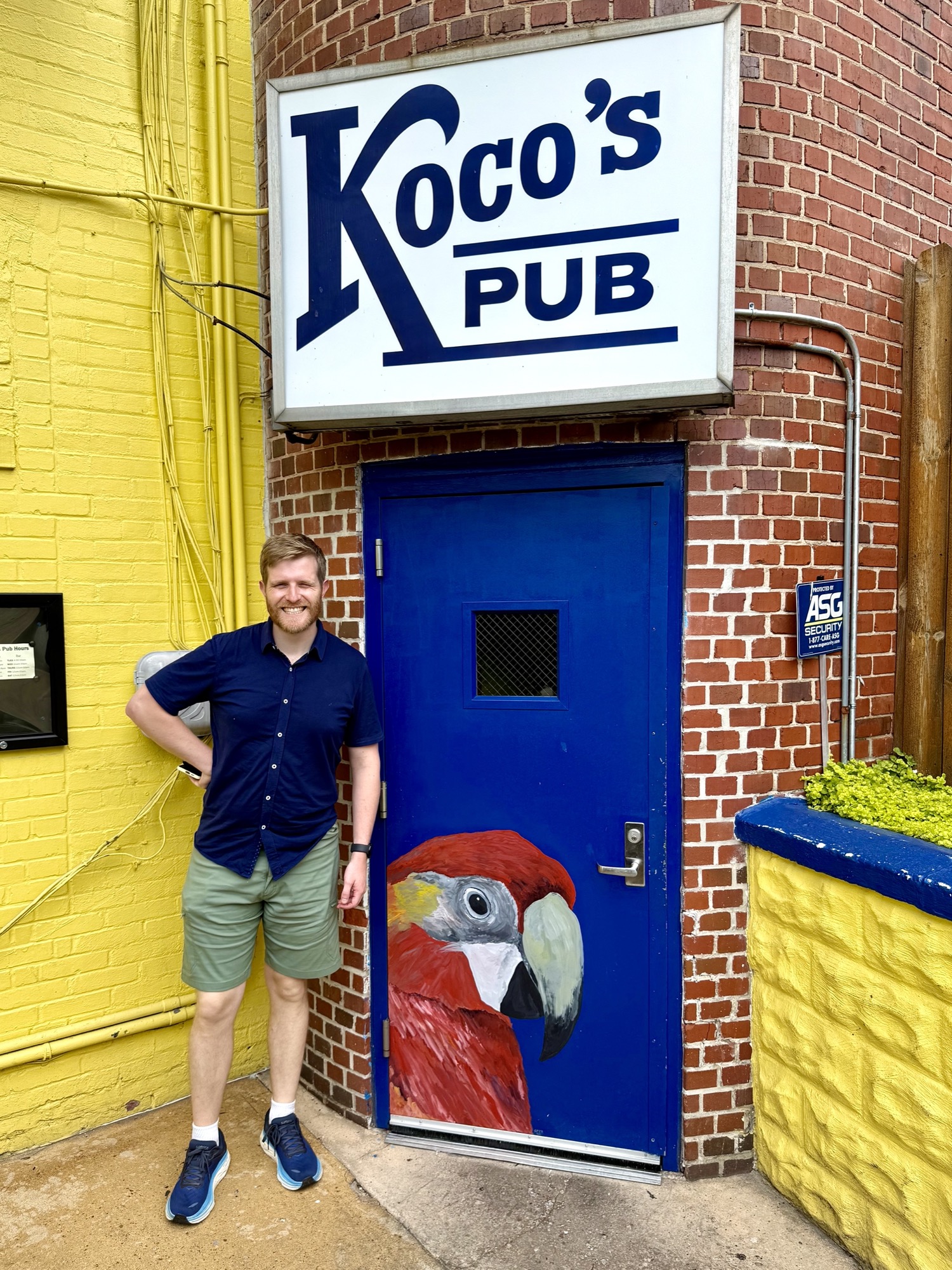
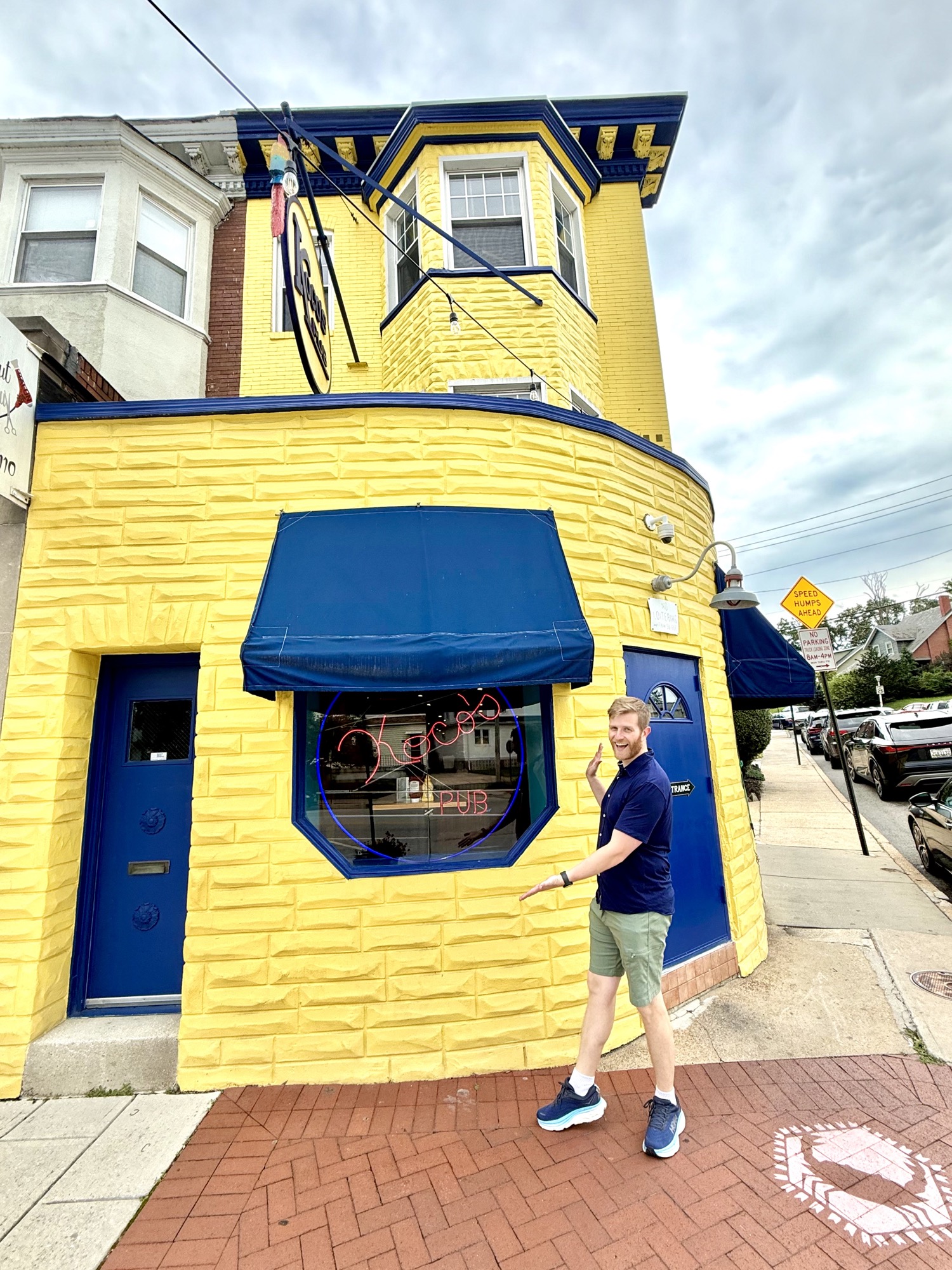
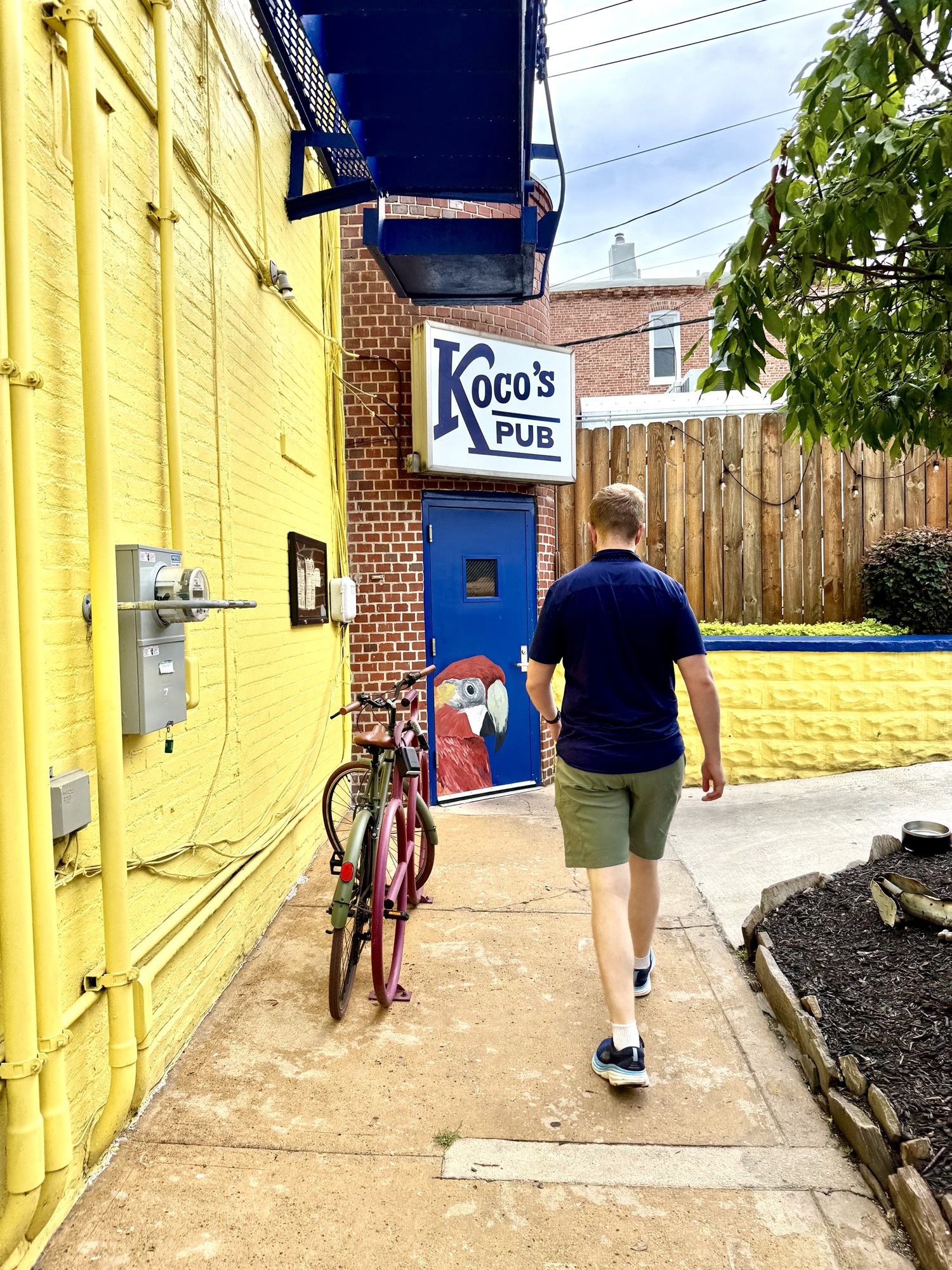
Of all the crab cake joints we’ve visited in Maryland, Koco’s pub had the most character with great vibes. It’s situated at the end of a quiet street – you can’t miss it, it’s the bright yellow house! Although a little farther out from Baltimore (15 minute drive), Koco’s reputation of great crab cakes seem to fill the place again and again. When we arrived without a reservation, there was only seating at the bar available (which was a bit uncomfortable since the table top doesn’t extend out as much as it should and we had to lean in to eat – you can probably notice it in one of the photos below). The interior of the restaurant made you feel like you were in a tropical family restaurant/pub with more brightly coloured walls and decor.

From the reviews, apart from their crab cakes, others have recommended the Koconut shrimp and the cream of crab soup, so we ordered all 3!

  • Crab cake: Although their standard crab cake size is the same 11oz as Pappa’s large, it seemed much smaller when it arrived (there are also larger and smaller options available that’s not on the menu). The crab cake was overall good, however we felt that it was a bit heavy on the Old Bay seasoning and the crab meat was more shredded in the crab cake rather than large chunks of crab meat which made it a softer texture that I didn’t prefer.
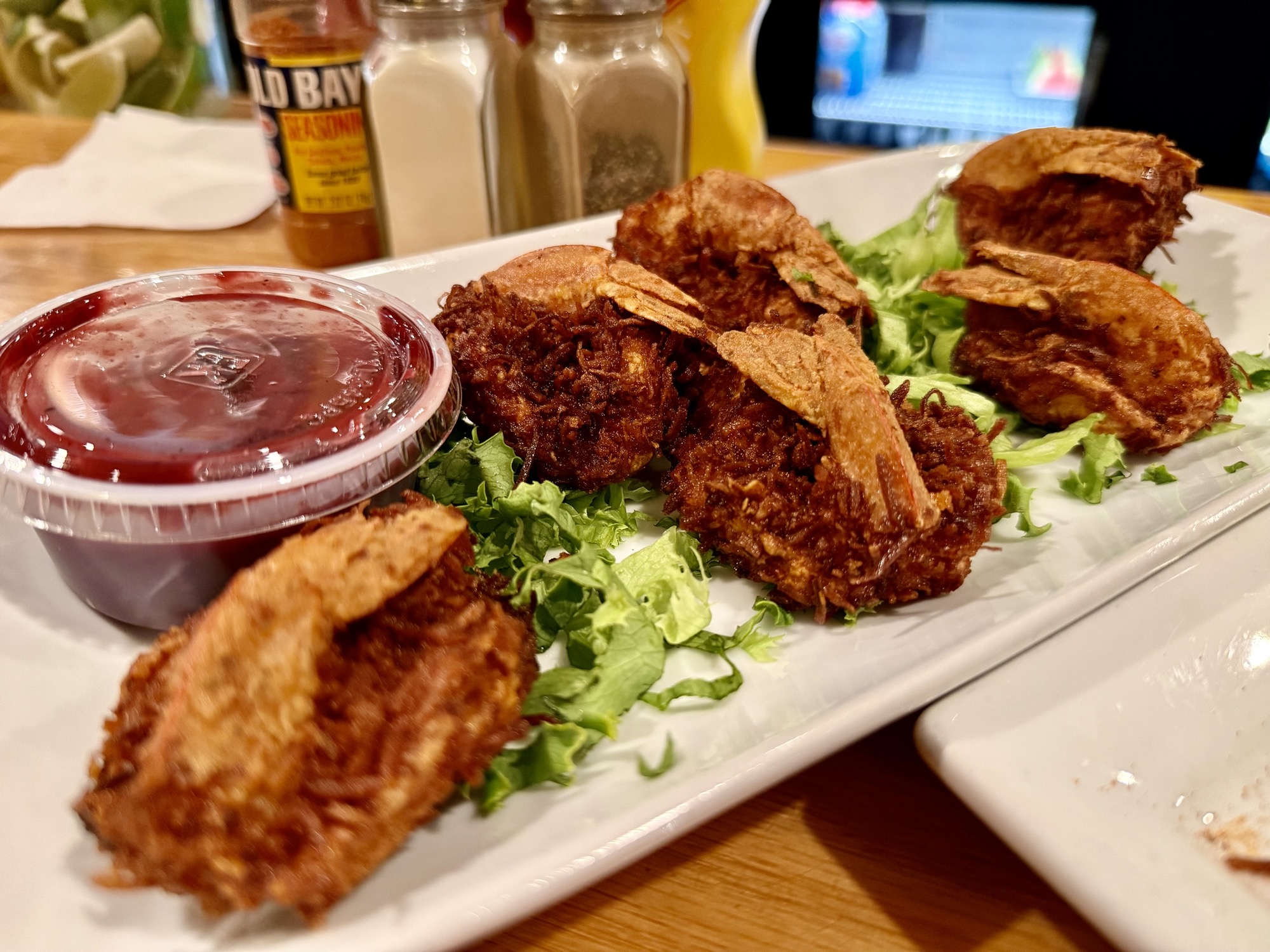
  • Koconut Shrimp: This was our favourite. It’s shrimp covered in koconut shavings and deep fried, served with a jalapeño raspberry sauce. The sauce sounded weird but interesting and it was delicious!
  • Cream of Crab Soup: Unfortunately, I wasn’t a fan of it. It was too thick and floury with minimal to no crab flavour. It if weren’t for the clumps of crab meat in the soup, I wouldn’t have known it was crab soup.

Overall, although the ambience of the place was fantastic and there was lovely service, the food fell a little short for us (except the Koconut shrimp) and we found it expensive compared to the others.
Address: 804 N Hammonds Ferry Rd, Linthicum Heights, MD 21090
Hours: 11am-9pm daily
Cost per crab cake: $29+ tax for an 8oz crab cake + 1 side, or $58+tax for two 8oz crab cakes + 2 sides
Website: https://gandmcrabcakes.com/

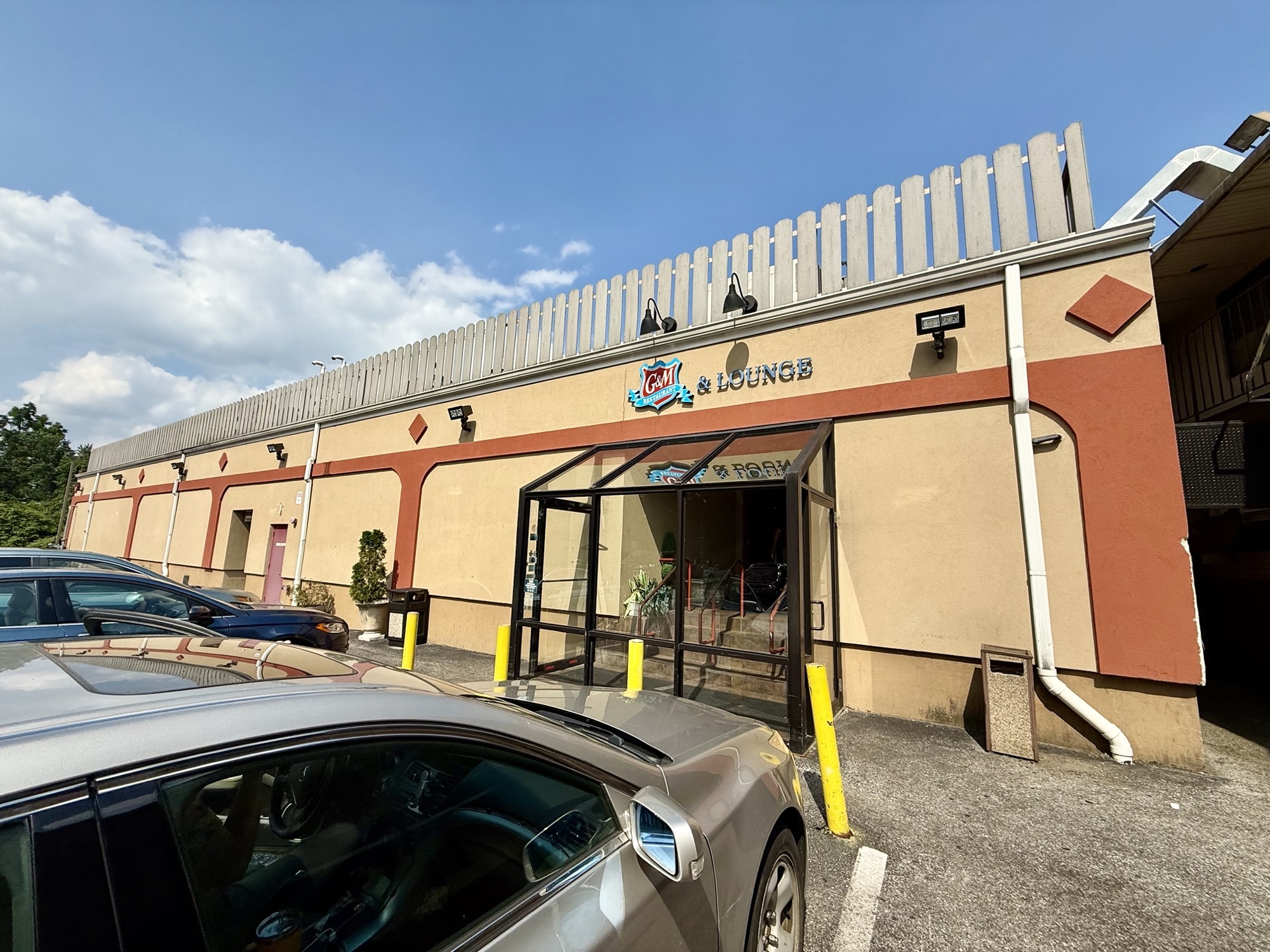
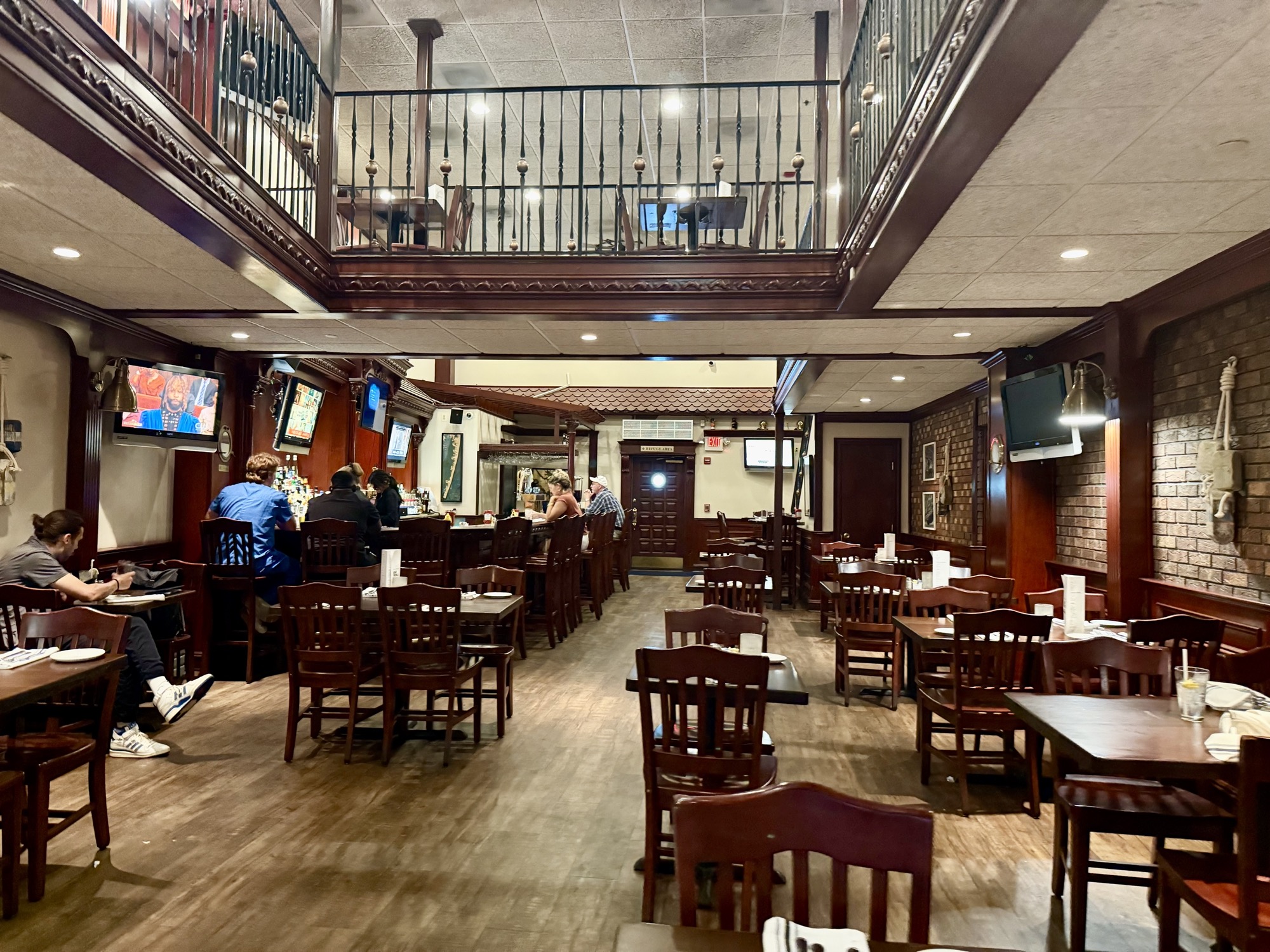
G & M Restaurant is about a 15 minute drive south of Baltimore and is a very large restaurant tucked away in a quiet plaza just off the freeway. The outside of the restaurant feels like you’re about to walk into a warehouse, but the ambience of the place inside I would describe as old school grand – a bit outdated with a dash of fancy. There’s wooden floors, wooden chairs, folded fabric napkins, and tall ceilings. When we arrived on a Tuesday afternoon around 3pm, the restaurant was pretty empty so we sat at the bar.

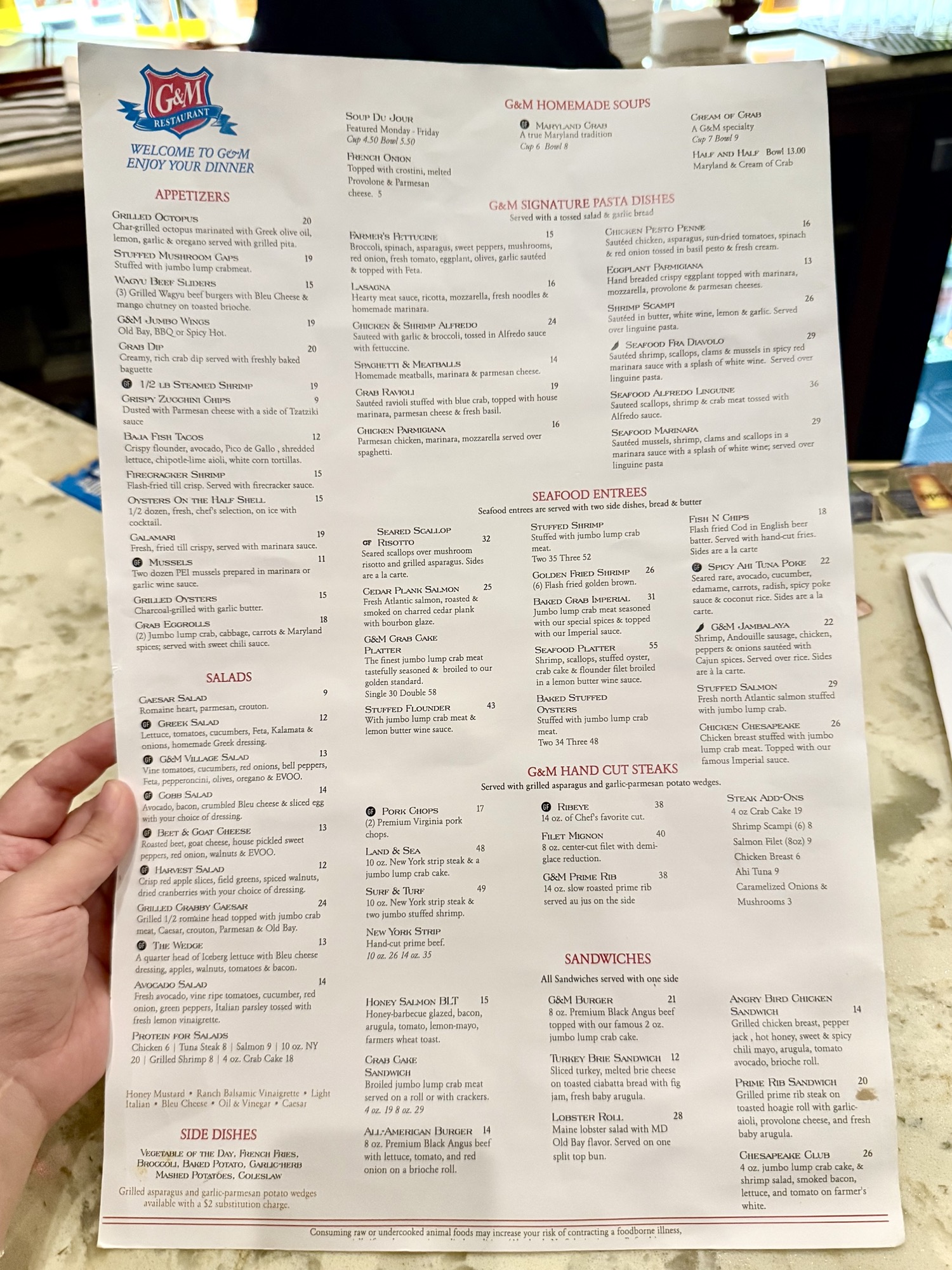
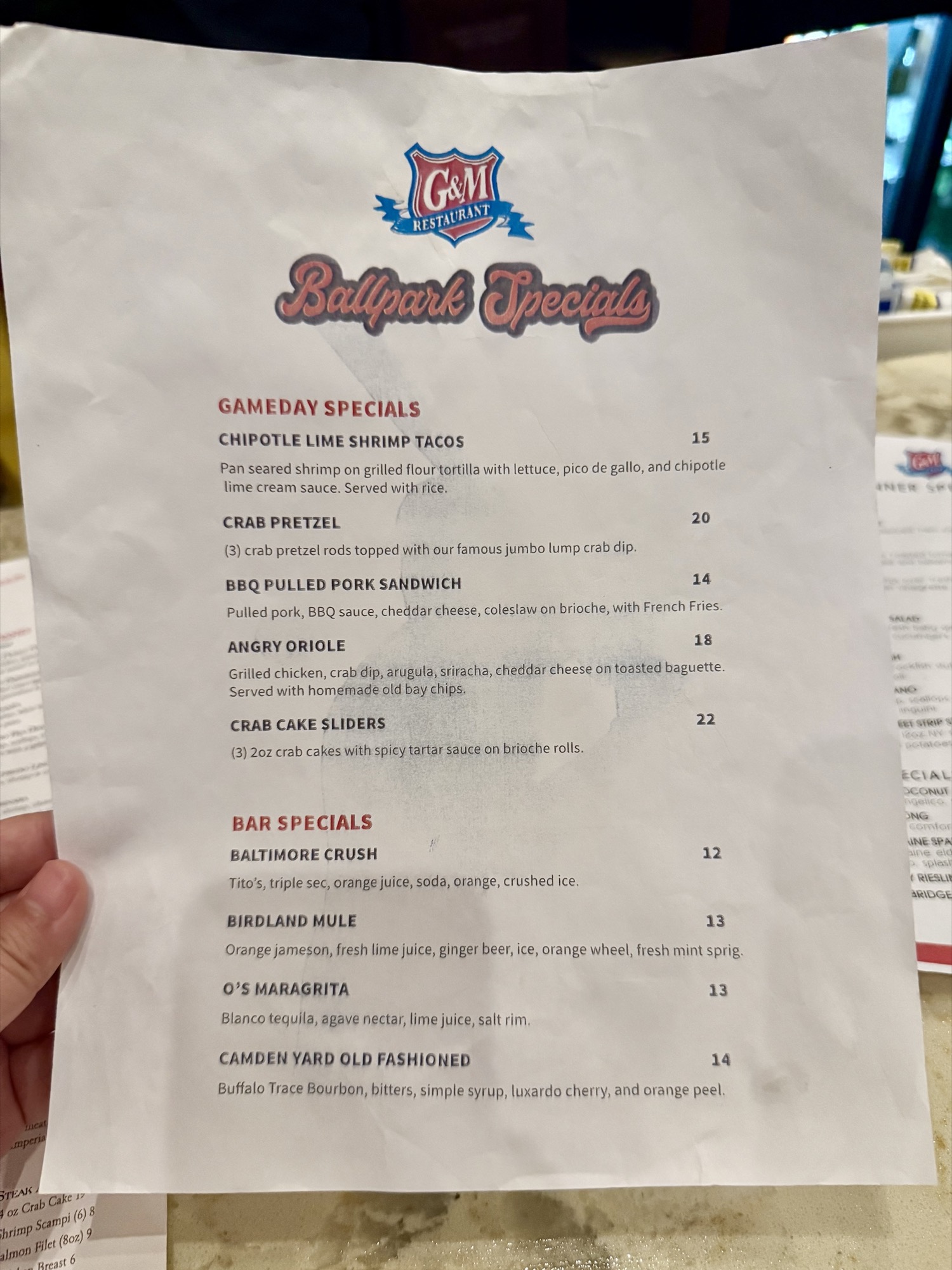
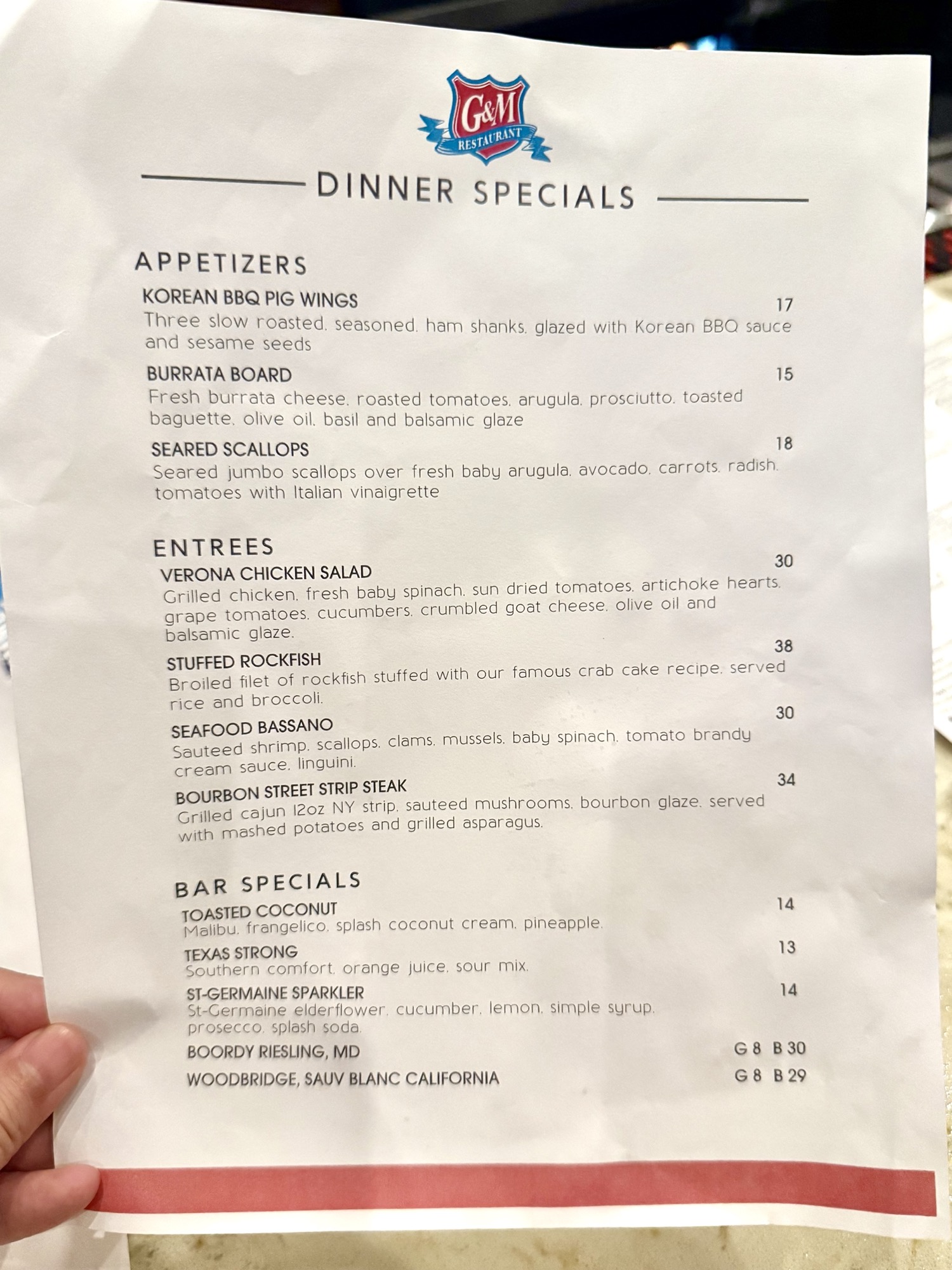
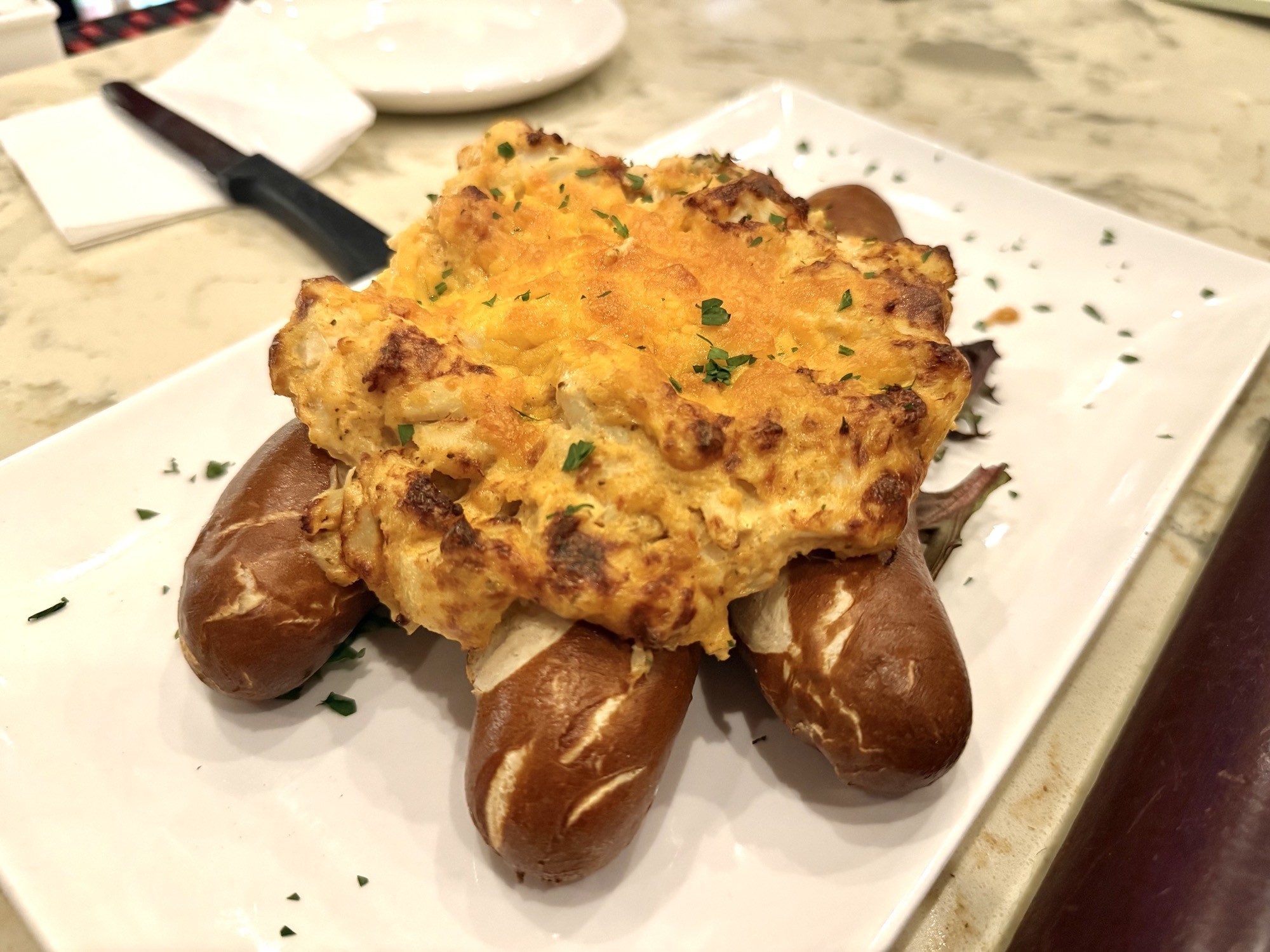
They had a decent sized menu and also a Ballpark Special menu. We ordered the crab cake, cream of crab soup, and the pretzel crab dip.

  • Crab Cake: The standard crab crake size here is only 8oz (for $29 with one side, or two crab cakes for $58 with two sides). There’s also an a la cart 4oz crab cake option for $19. The crab cake was good and lightly seasoned, not too heavy on the Old Bay with good chunks of crab meat in the crab cake without too much filler. However, although it ticks the boxes on a good crab cake for me, the overall taste of the crab didn’t seem as fresh as some of the others.
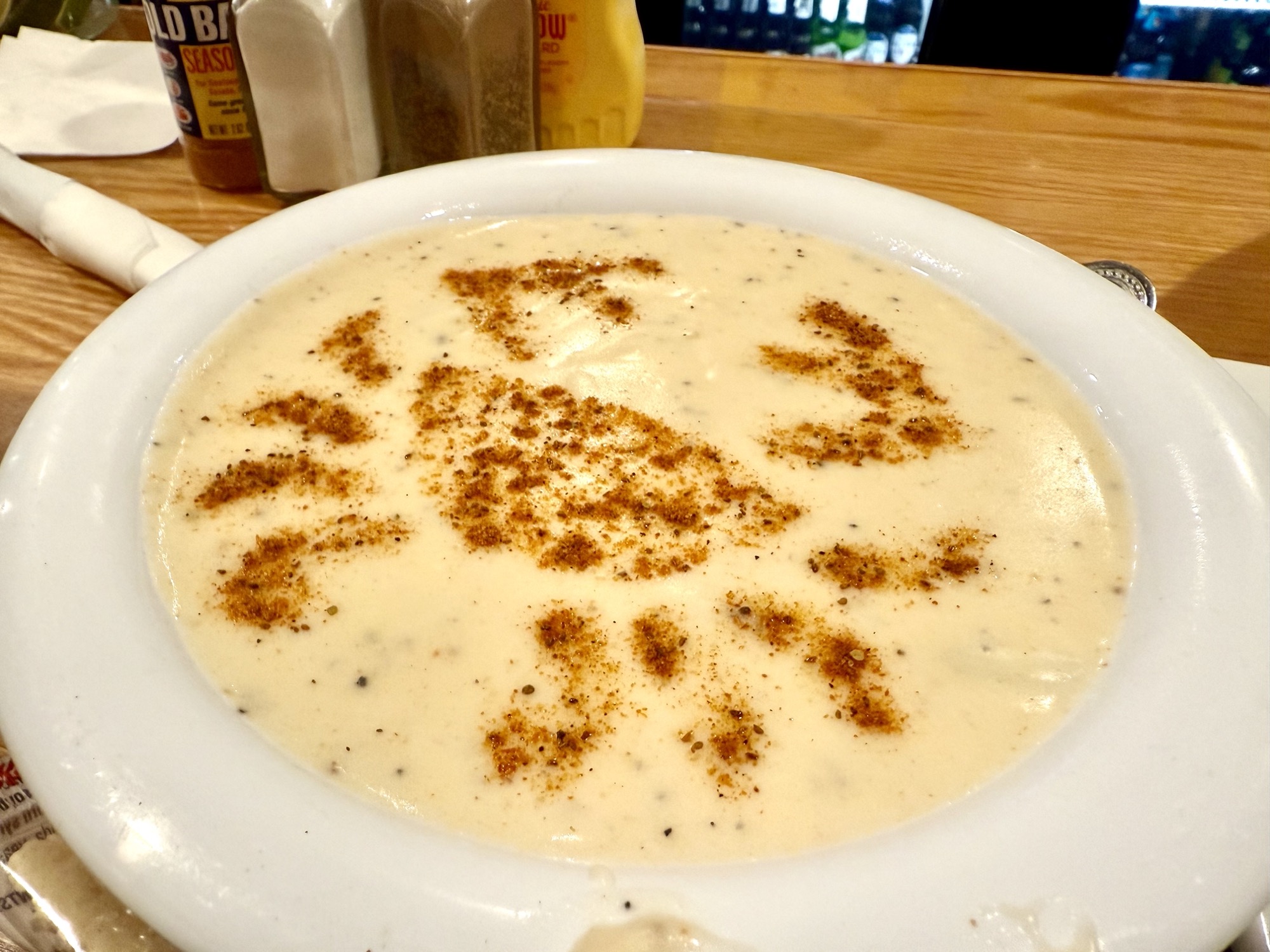
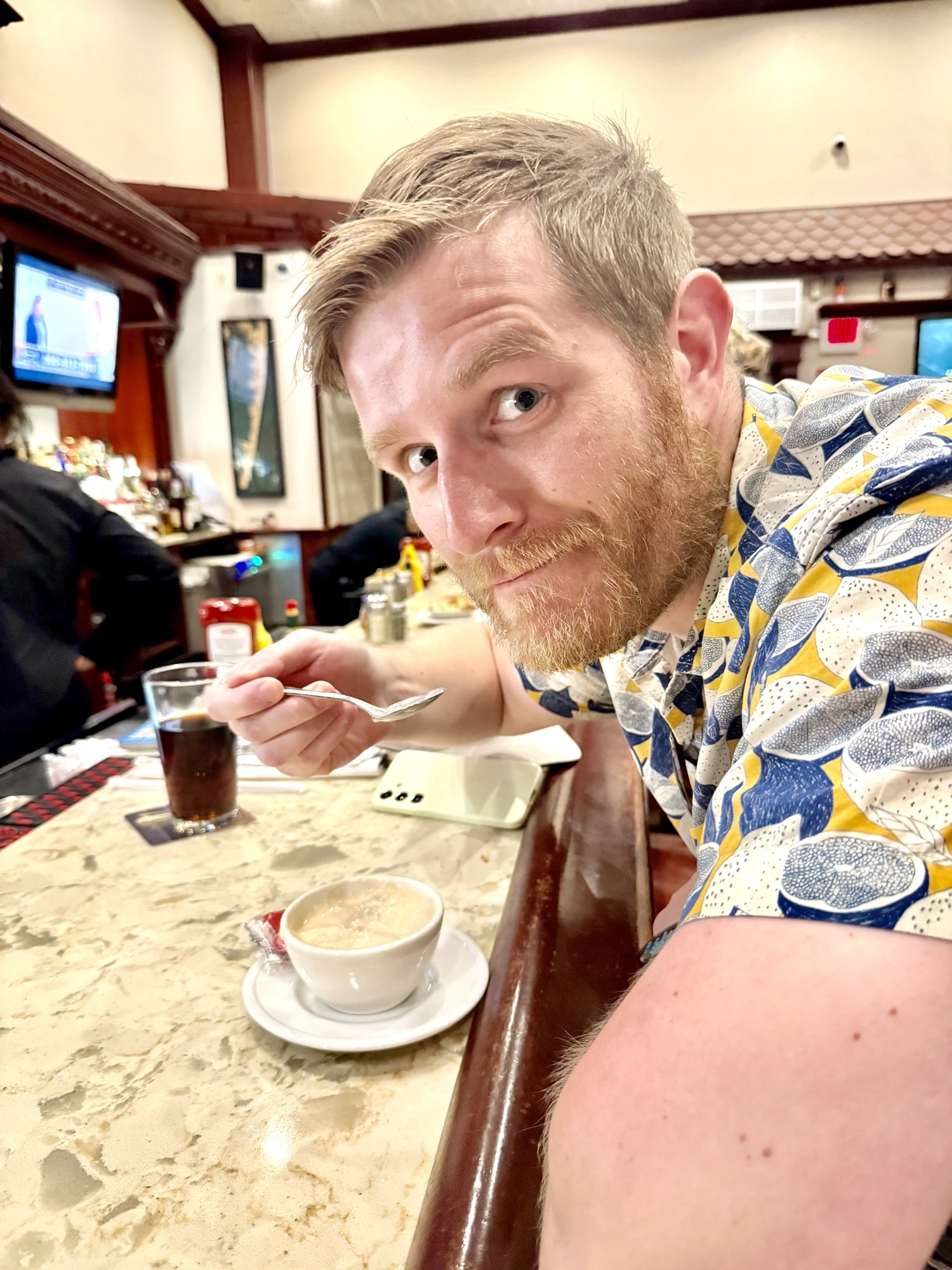
  • Cream of Crab Soup: This was the BEST cream of crab soup we’ve had on our trip – I was starting to lose hope after being disappointed again and again. Unlike most cream of crab soups, the flavour of the crab actually penetrates into the soup with good chunks of crab meat. You can also tell they use wine in the recipe which gives it great flavour. I started off with a cup of soup, but it was so good that I ordered a bowl to go at the end of our meal (it was indeed still delicious the next day)!
  • Pretzel Crab Dip: This was a game day special that I couldn’t resist because I love pretzels. It was a huge portion with lots of crab and the dip was great. Toby especially liked it because it was similar to the Imperial Crab Cakes at Pappa’s.

Overall, the food was great. The crab cake is smaller and a little more expensive than Pappa’s, but it comes with a side, so I guess it evens out. Had the crab cake tasted fresher, it would’ve taken the #3 spot over Koco’s for me. The cream of crab soup is definitely a must-try here and that alone I feel is worth the drive out from Baltimore.
Address: 6526 Holabird Ave, Baltimore, MD 21224
Hours: 11am-2am, daily
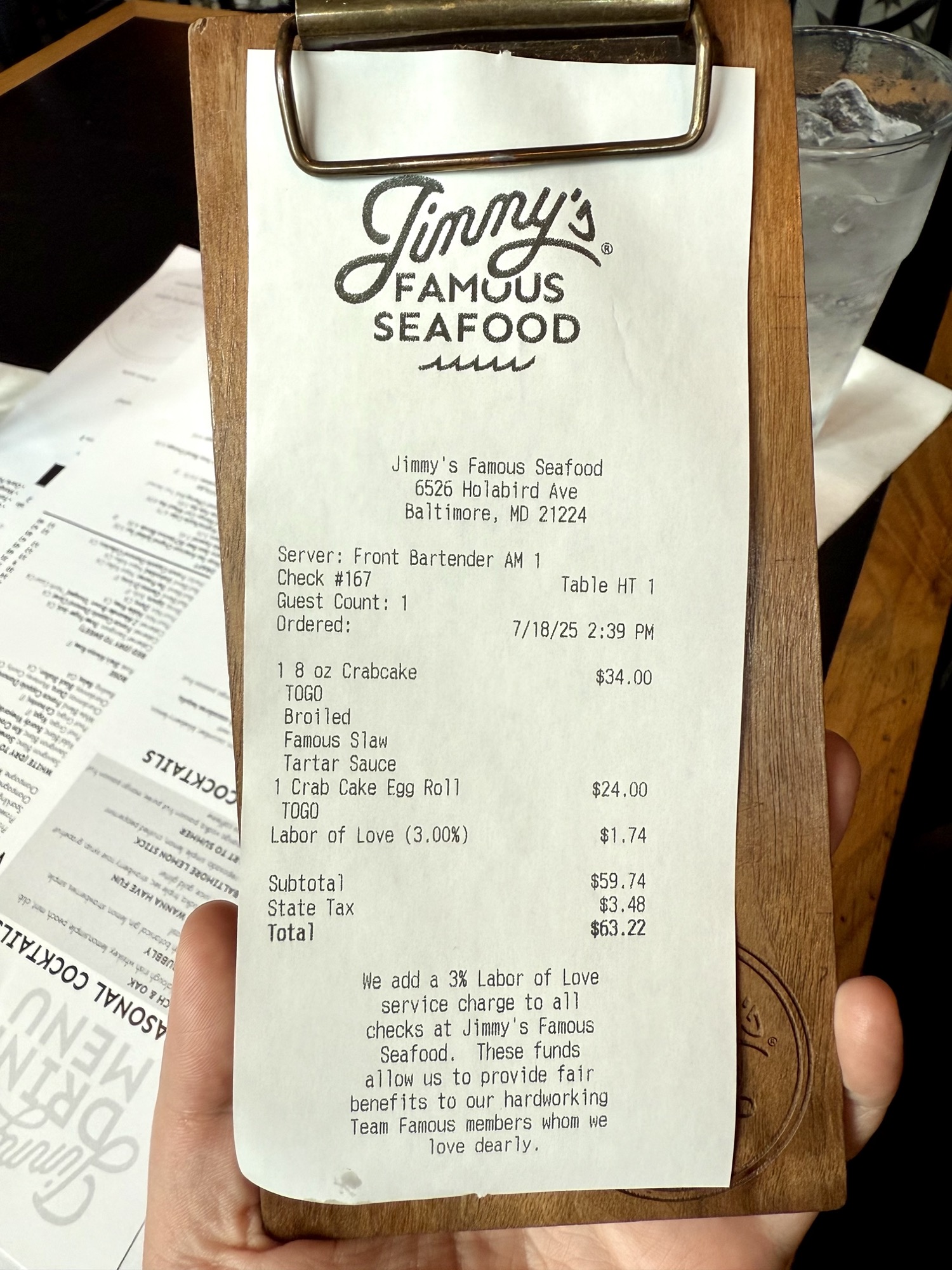
Cost per crab cake: $34+tax for 8oz
Website: http://www.jimmysfamousseafood.com/

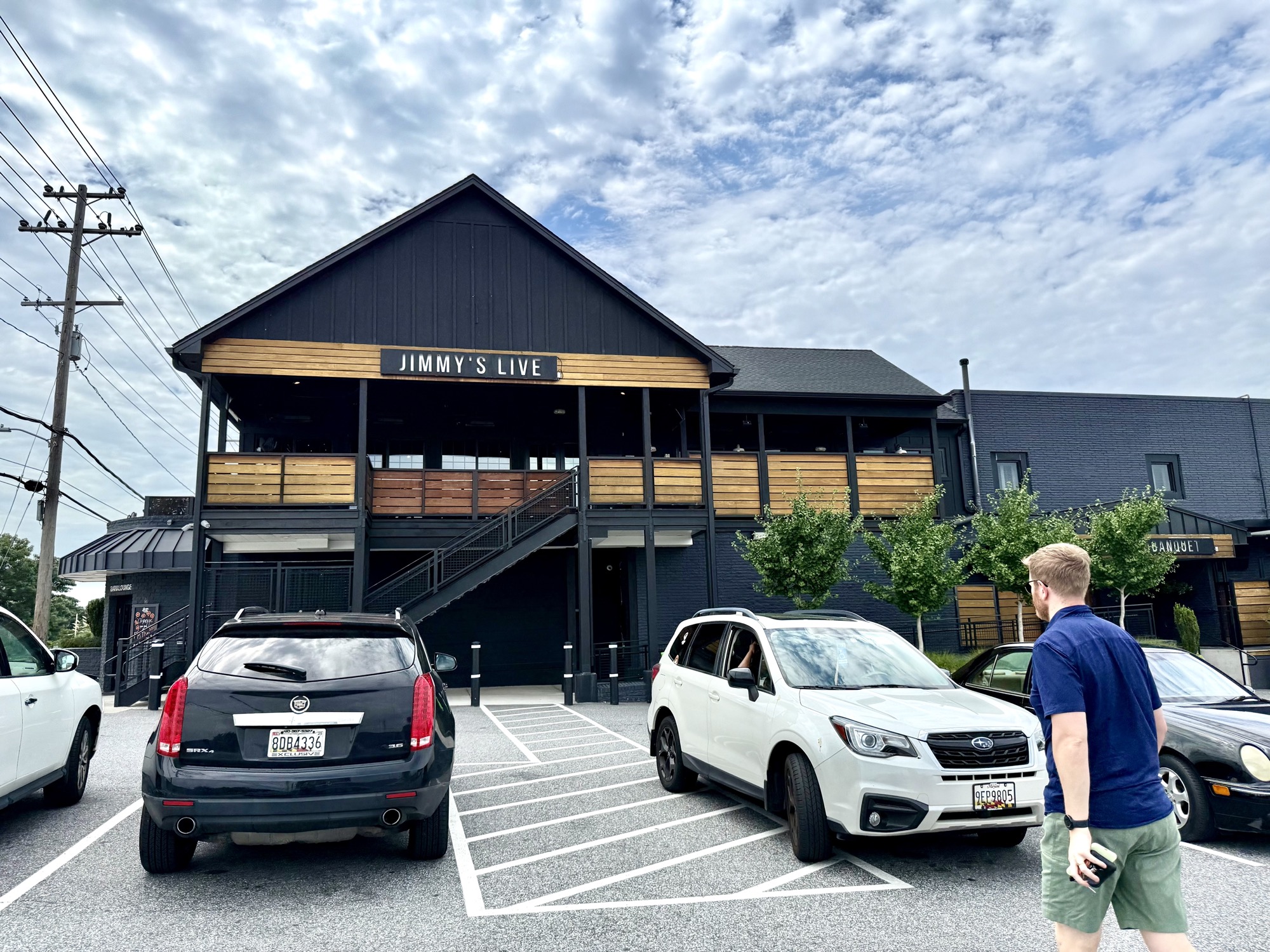
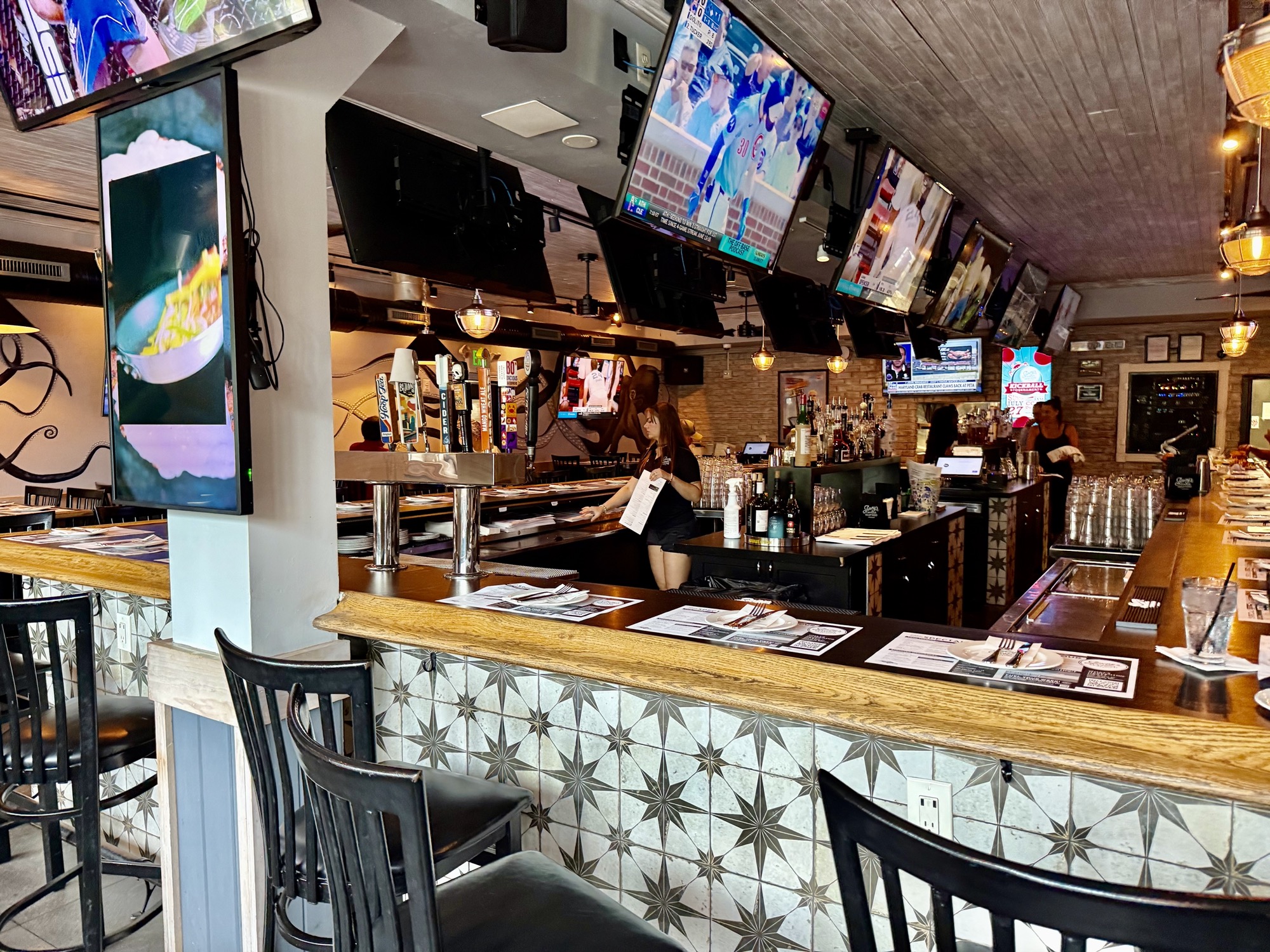
Jimmy’s Famous Seafood is a HUGE restaurant outside of Baltimore that has a restaurant section and a bar/lounge section. We weren’t sure which area to go in, so we went into the first door closest from the parking lot and was in the bar section. It seemed like a pretty modern venue with nightclub vibes (they are after all open until 2am daily). We arrived on a Friday afternoon around 3pm and the were only 2 other tables seated around the bar. Eventhough it wasn’t busy, service was very slow. Someone gave us menus and seated us right away, but no one came back to acknowledge us after 10 minutes of waiting so we went up and ordered at the counter. While we were waiting, I scrolled through some Google reviews of this place and realized that many poor ratings were due to a mandatory 21% gratuity! Low and behold, as I scanned the menu more closely, right at the bottom in small print it states “Jimmy’s reserves the right to add an 18% gratuity because we love our employees”…”We add a 3% labor of love service charge to all checks at Jimmy’s Famous Seafood.” Wuuuuut? Pardon my language, but fuck that. Coming from NYC, we’re used to tipping a lot more, but a restaurant that has mandatory tipping just didn’t sit well with me. It screams cheapskate owners that don’t want to pay the employees a decent wage so they take that expense out on the customers. No way were we being forced to pay 21% gratuity just for sitting down (and at the bar!) without being told about it beforehand, especially with no service and we had to order at the counter. Toby went back to the counter and told them that we’re going to take away our food to avoid that mandatory tip – they still charged us the 3% labor of love fee 😒. Super shady. If you’re going to add on a charge, at least inform your customers beforehand instead of letting them find out on their own.

Tipping frustration aside, they had a huge menu with plenty of choices that sounded delicious, but unfortunately at this point of the day we were getting pretty full so we only ordered a crab cake and also the crab egg roll that was highly rated from the reviews.

It was another 15 minutes before our food was ready, but it seemed much longer. We were seated infront of a TV screen that had a non-stop video loop of the owner/chef doing things in different poses. It was as if he made a commercial of himself, rather than the business. This, on top of the mandatory tipping gave me douchey vibes.

Overall the crab cake was decent and well-made but it didn’t stand out from the other crab cakes. It did come with 3 different sauces though which was nice. I wasn’t a fan of the egg roll but Toby liked it. Overall the food was okay, but the mandatory tipping and the douchey vibes with poor service tainted the whole experience for us.

Even after leaving the restaurant, I was still raging about the shadiness of this place, so I did some googling and I’m gonna leave this here: https://www.reddit.com/r/maryland/comments/1luywvj/in_a_move_that_surprises_no_one_jimmys_seafood_is/
In Summary:

  • Pappa’s takes #1 for us for the best crab cake. It just ticks all the boxes and is also the best-priced!
  • Faidley’s has the best location with more depth of flavour of their crab cakes, however it was also the smallest and most expensive for the size.
  • G&M’s has the best cream of crab soup.
  • Koco’s has the best atmosphere for a restaurant.

I hope you enjoyed reading my take on the best Maryland crab cakes! Leave a message in the comments if you feel that I’ve missed a restaurant that should be on this list!

Looking For More Ultimate Food Guides? Check out these below!

The Ultimate Guide to a Manhattan Chinatown Food Crawl – bring cash!


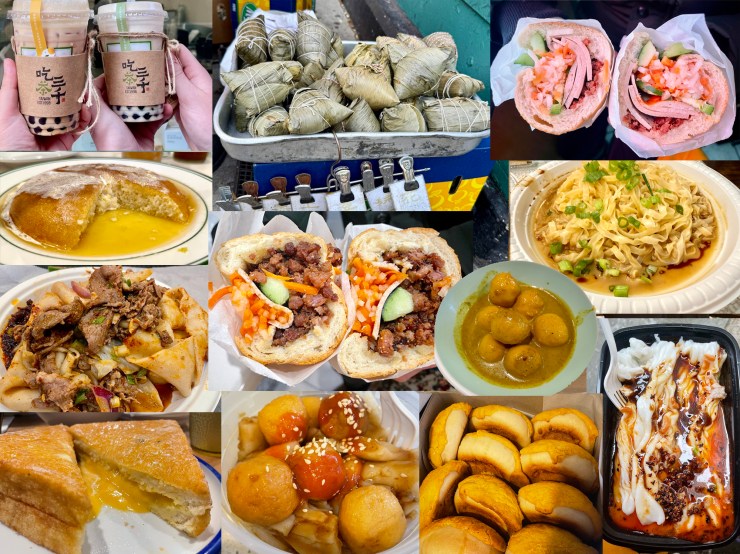
Manhattan Chinatown is full of amazing authentic Asian food but in a neighbourhood full of Chinese signage and shop keepers that barely speak English, it can be daunting to find the best food spots amongst the literal hundreds of restaurants in this neighbourhood. This food guide highlights some of my favourite places to eat in Chinatown…

The Ultimate Guide to Top Philly Cheesesteak Spots


This is my ultimate guide to Philly Cheesesteaks in Philadelphia! I’ve made it my personal mission to try as many popular cheesesteak spots as I can find through online research, word of mouth, and local reviews. This post is my personal take on these popular spots!
The Ultimate Guide to a Manhattan Chinatown Food Crawl – bring cash!


Date Published: Sept 2nd, 2025 | Last Updated: Sept 11th, 2025
Author: Abby | Category: Travel, USA

Manhattan Chinatown is full of amazing authentic Asian food but in a neighbourhood full of Chinese signage and shop keepers that barely speak English, it can be daunting to find the best food spots amongst the literal hundreds of restaurants in this neighbourhood. This food guide highlights some of my favourite places to eat in Chinatown including local must-have items! Many of these places are known for only 1 or 2 items on their menu, so we often like to jump from restaurant to restaurant, ordering only a couple things at each place to sample our way through Chinatown. Come hungry as you journey through this food crawl with me!

Manhattan Chinatown

Before you head to Chinatown, here are a few tips to follow to ensure a good time:

  1. Always bring cash. Many of these hole-in-the-wall joints only take cash and most won’t have ATMs on site. Even if they do take card, often there’ll be a discount if you pay in cash!
  2. Don’t hold up the line. Chinatown operates like many hustle and bustle places in Asia. It’s often about speed and high turnover in many of these OG places. Try and figure out what you want before you get in line (the lines can move very quickly!) or take a photo of the menu and step to the side to take your time deciding what you want to avoid holding up the line.
  3. Don’t expect good service. Time and time again so many fantastic authentic Chinese food joints get poor ratings due to poor service. In Asia, many of these authentic hole-in-the-wall eateries and old school joints are about serving up food quick and cheap and turning over as many tables as they can, street-style. Don’t expect table service, don’t expect niceties, just go in and expect good food and the rest is a bonus. Don’t take it personally, it’s just a way of life that has been ingrained in our cultures. If you prefer a good sit down service, then I’d recommend finding a larger fancy Chinese restaurant – but I have none in the recommendations below, this post is all about quick, cheap, delicious food.
  4. Be prepared to stand or take away. Not exclusive to Chinatown, many food shops in NYC are standing room only or takeaway only, so be prepared to do either. Keep this in mind especially if you’re coming from a day of walking or exploring the city and you’re looking for a place to sit for lunch.
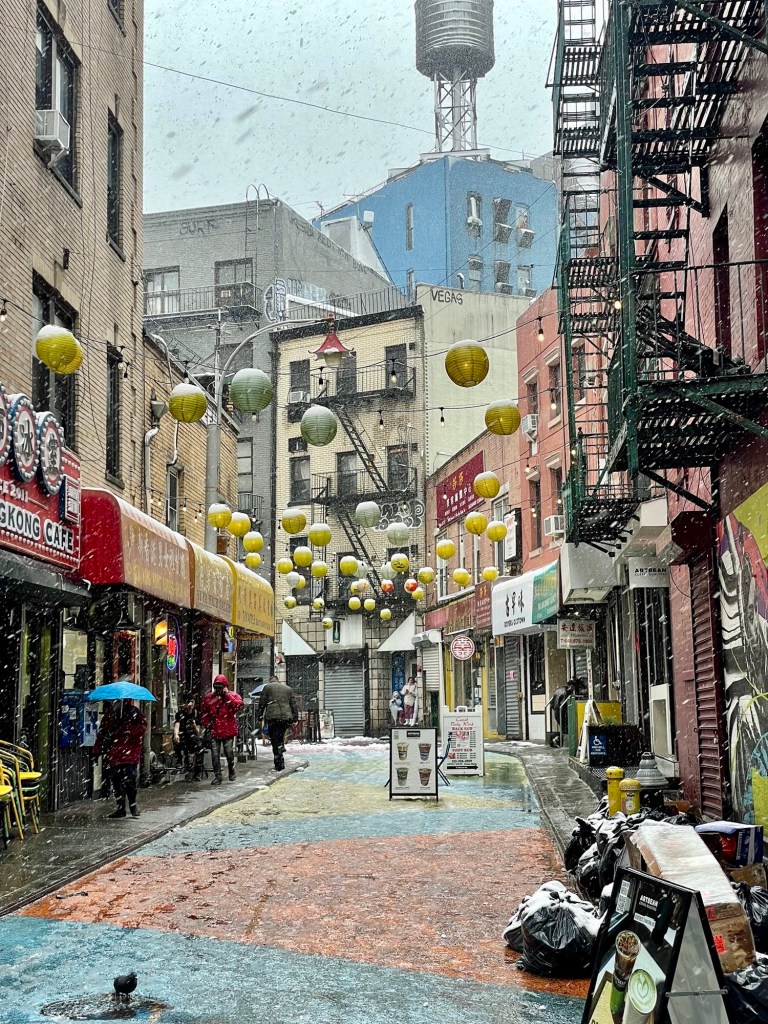
Manhattan Chinatown after a snowstorm

Where is Manhattan Chinatown?

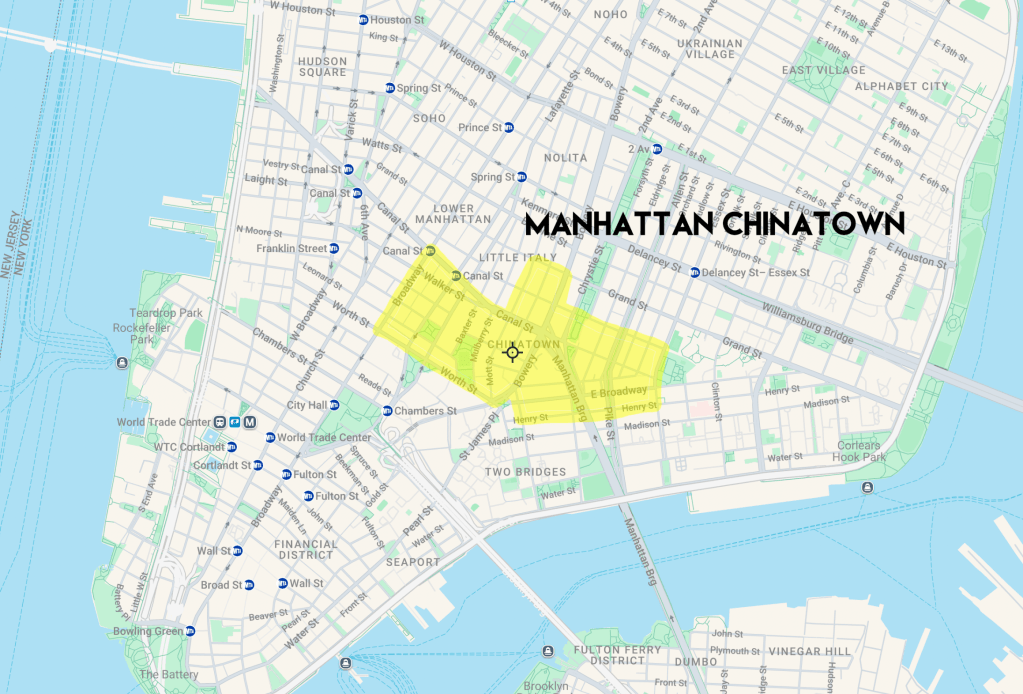
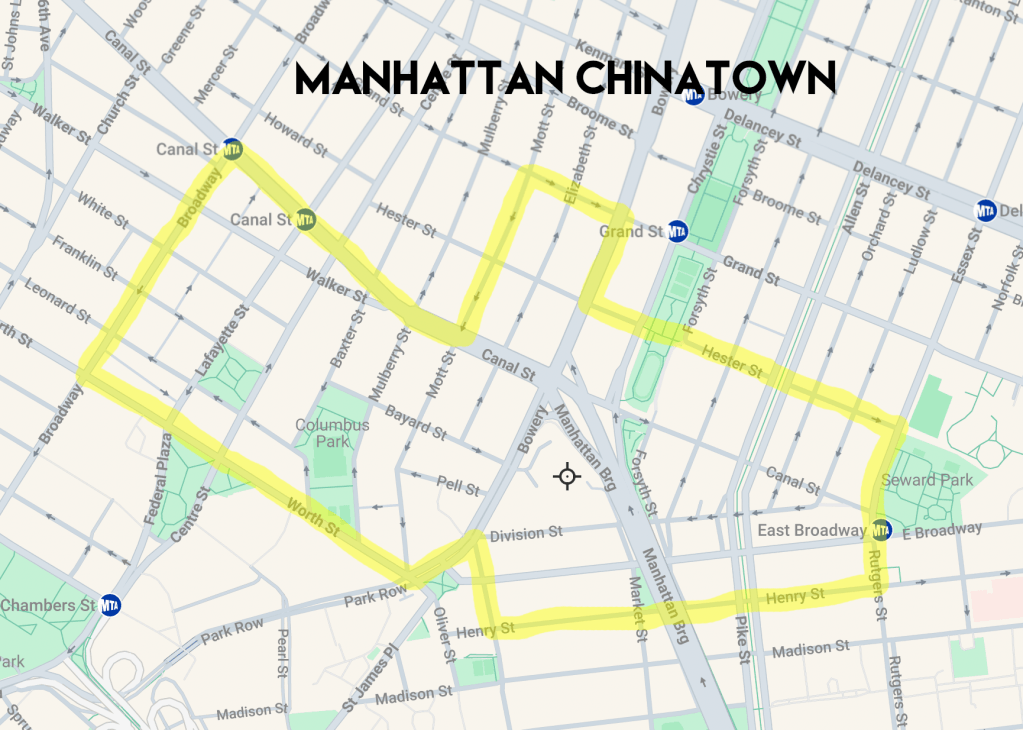
There are a few Chinatowns around NYC (ie Flushing and Bay Ridge), but there’s only one in Manhattan. A quick Google search will show you the outline of this neighbourhood that borders Little Italy. I’ve highlighted the neighbourhood in the maps below.

If you’re feeling like exploring the city and working up an appetite before lunch, my favourite morning route that we take visiting guests is to walk across the Brooklyn Bridge from DUMBO in Brooklyn, walk around the Financial District/Wall Street area, then head up towards Chinatown for lunch. Afterwards you could walk through Little Italy then up to SOHO. You can also consider doing a day of exploring the Statue of Liberty and Ellis Island then have dinner in Chinatown afterwards.

Although Chinatown spans a relatively large area, many of the popular eateries are concentrated around Grand Street, Bayard Street, and Bowery. I’ve mapped out the eateries in this post below to give you an idea of where these places are located (I’m a visual learner – I like maps to orient myself when planning 😊).

My favourite Manhattan Chinatown eateries:

Without further ado, here’s a list of my favourite Chinatown eateries in Manhattan. Let me know in the comments if I’ve missed something you think should be included here!

Address: 132 Bowery, New York, NY 10013 (multiple locations)
Hours: 12pm-10pm, daily
Website: https://www.matchacafe-maiko.com/eng/
Average spend per person: $5-$15
What to order: matcha and hojicha soft serve

When we first moved to New York, we stayed at an AirBnb for a few weeks until we were able to find an apartment. Matcha Cafe Maiko just happened to be right below our AirBnb. They have some of the best matcha and hojicha soft serves we’ve ever had! Matcha Cafe Maiko uses high quality matcha that allows the strong flavours to come through in all of their desserts. Highly recommend! (Although not a “Chinatown eatery”, this place is so good that I just had to include it in this post!)

Address: 90 Bowery, New York, NY 10013
Hours: 9am-2am, daily
Website: https://sanmiwagomeals.com/menu
Average spend per person: $10-$20
What to order: signature pork and chives pan-fried dumplings

We found this place randomly because we were super hungry and it was around the corner from our AirBnb at the time. They advertise themselves as Taiwanese food which was what attracted me to them in the first place, but there are items on the menu that can be from other areas of Asia. It was a small shop and food came out quickly, I honestly can’t even remember everything we ordered, but I remembered that their signature pan-friend pork and chive dumplings were really good!

Address: 45 Bayard St, New York, NY 10013 (multiple locations)
Hours: 11am-9pm, daily
Website: http://xianfoods.com/
Average spend per person: $10-$20
What to order: spicy cumin lamb noodles, cumin lamb burger

Xi’an Famous Foods serves up delicious food with unique flavours from the Xi’an province of China (read: spicy & lots of cumin). They originally started off in a tiny hole in the wall shop and grew such a large following that they now have 16 locations across the city! A large part of their success can be attributed to a visit from Anthony Bourdain in an episode of No Reservations. Xi’an Famous Foods is known for their spicy cumin lamb noodles and the spicy cumin lamb burger. Both dishes are similar in flavour (one has the cumin lamb served over noodles and the other has the lamb stuffed inside a bun). The noodles are fresh and hand-pulled with the perfect texture so I prefer it over the burger. There’s also a side table with self-serve sauces – I would HIGHLY recommend slapping on their chilli oil and then buy a couple jars to take home. It has a great smokey flavour without being too spicy.

I first came here about 10 years ago and I’m happy to report that although their meat portions in the burger have gotten much smaller, the flavour of the food is just as delicious.

Address: 72-74 Bayard St, New York, NY 10013
Hours: 11:30am-9:30pm daily
Website: https://chichasanchenny.com/
Average spend per person: $8-$12
What to order: bubble milk tea, dong ding oolong tea latte

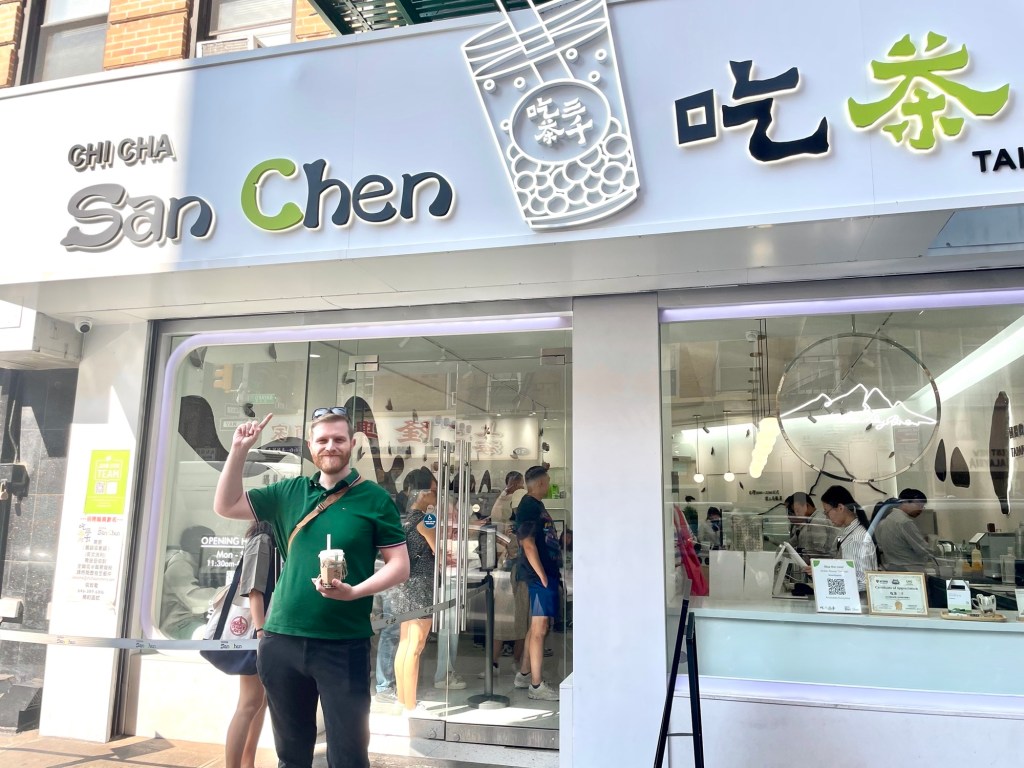
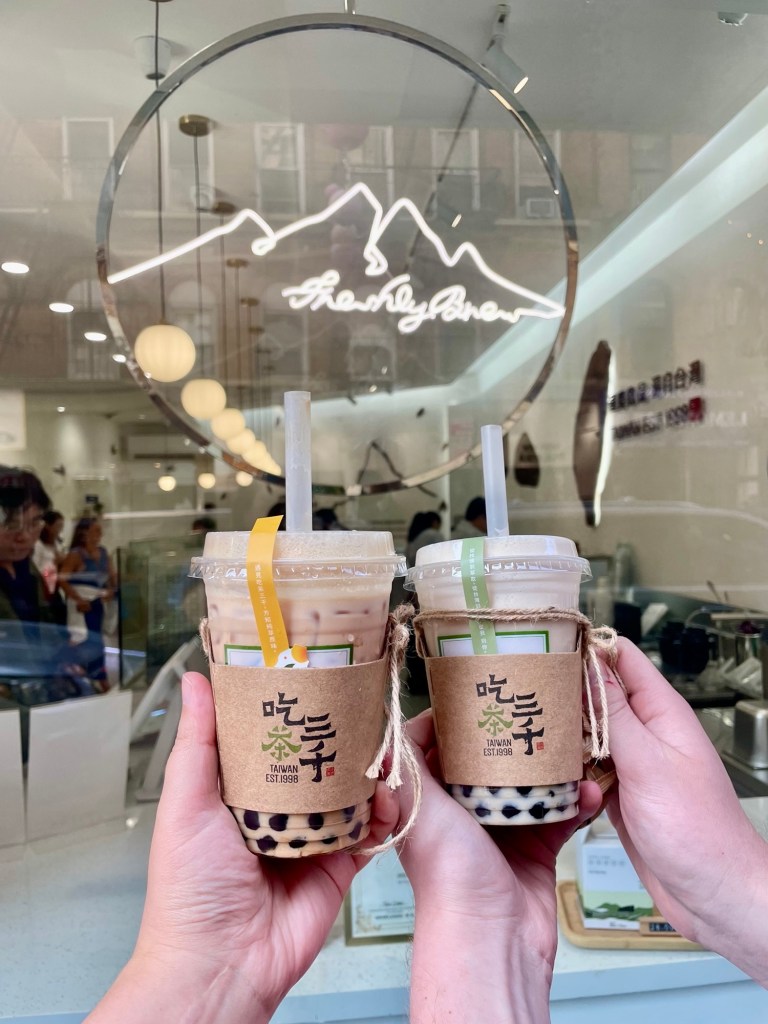
This is a pretty new spot in Chinatown that only opened in May 2024. It’s a Taiwanese bubble tea company known for their high quality teas and strong flavours and they have a pretty strong fan base. As a Taiwanese person from the land of bubble teas, I’ve had more than my fair share of bubble tea so I’ve got some pretty high standards. At first glance, it’s a fancy looking shop decorated with the theme of marketing high quality Taiwanese tea. The menu is small compared to many bubble tea shops but I didn’t mind because it helps to avoid choice paralysis. We ordered the ding dong oolong tea latte and the bubble milk tea. It was pretty expensive, at about $10 per drink and only comes in the medium size. It took a while for us to get our drink but as we sat there waiting, you can appreciate how much care they take into brewing each cup of tea. The end result paid off. It was indeed one of the most tea-heavy flavourful bubble teas we’ve ever had. If you’re into quality tea, I’d highly recommend checking this place out, but be prepared to wait (it was about 15-20 minutes before we got our drink) and spend $10 per drink.

Address: 65 Bayard St, New York, NY 10013
Hours: 8am-9pm Sun-Thurs, 8am-10pm Fri-Sat
Website: https://kongsihktong.com/
Average spend per person: $10-$20
What to order: Golden lava French toast, beef chowfun in brown sauce, baked rice

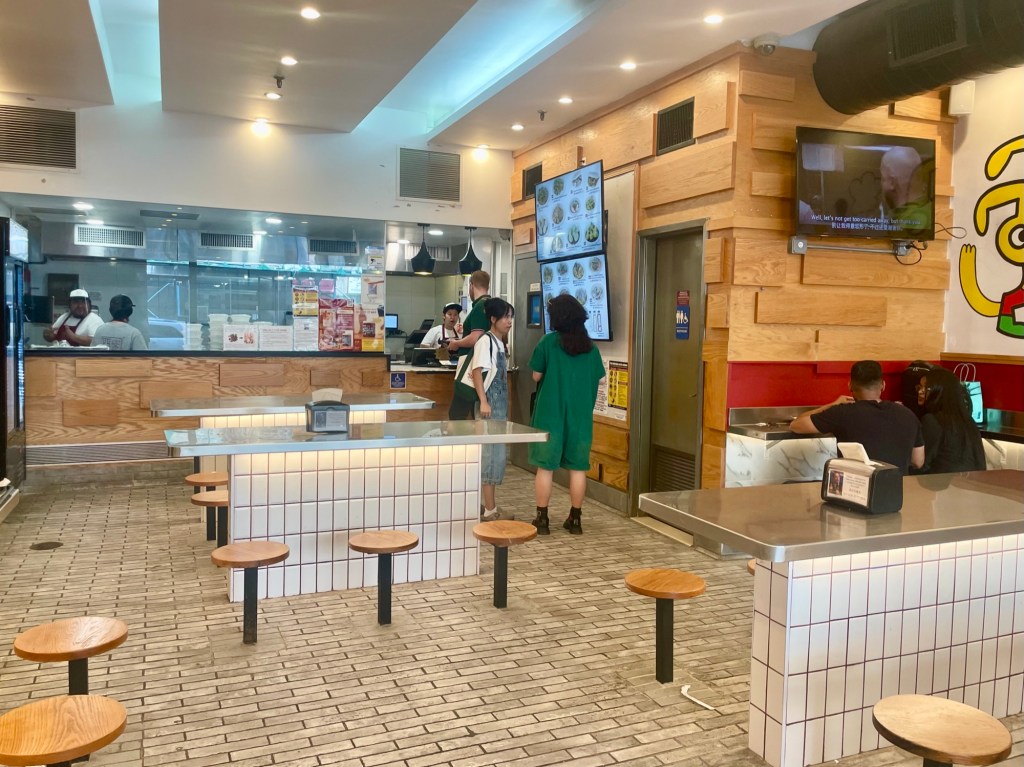
Kong Sihk Tong is a place known for serving up Hong Kong style street/fast food. We came here for the first time based on online recommendations. Food was overall average (some fantastic, some just okay) but the prices were great and the service was fast (as you’d expect from a Chinatown joint). There’s a large menu and they take cash only. We went during winter around 11:30am and we were able to be seated right away. Some reviews say that there are often lines out the door in the summer!

We got a few dishes:

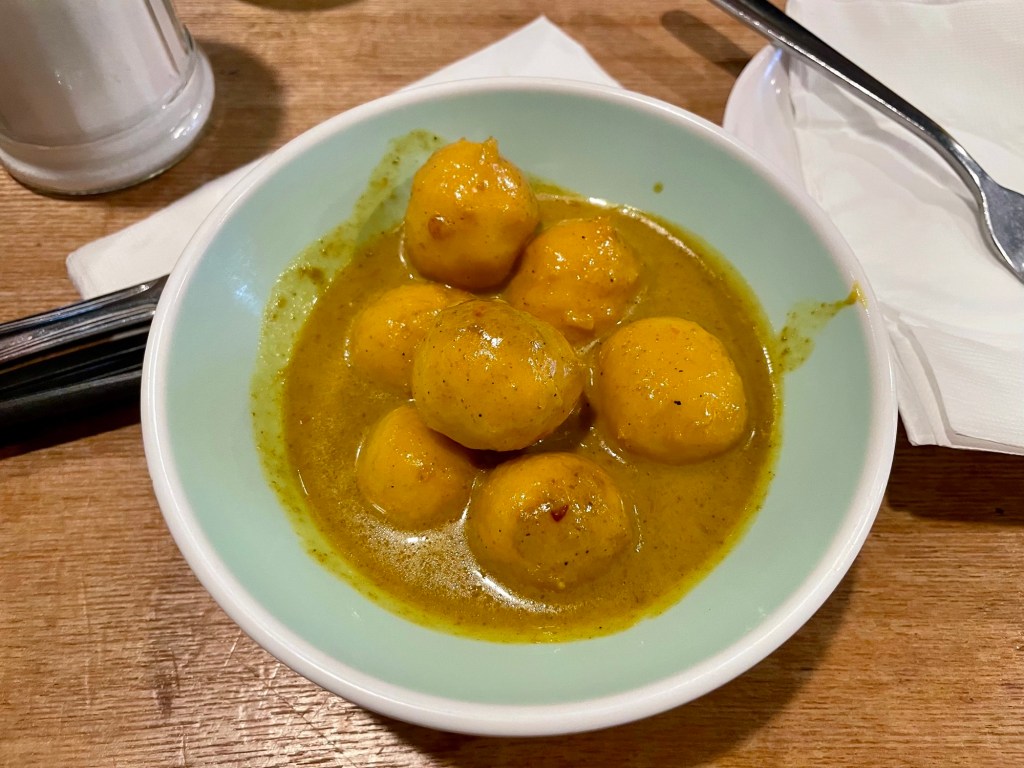
  • Curry fish balls: One of their most highly reviewed dishes. It was decent, but similar to the other curry fish balls you can find in Chinatown so I didn’t feel like it was anything special.
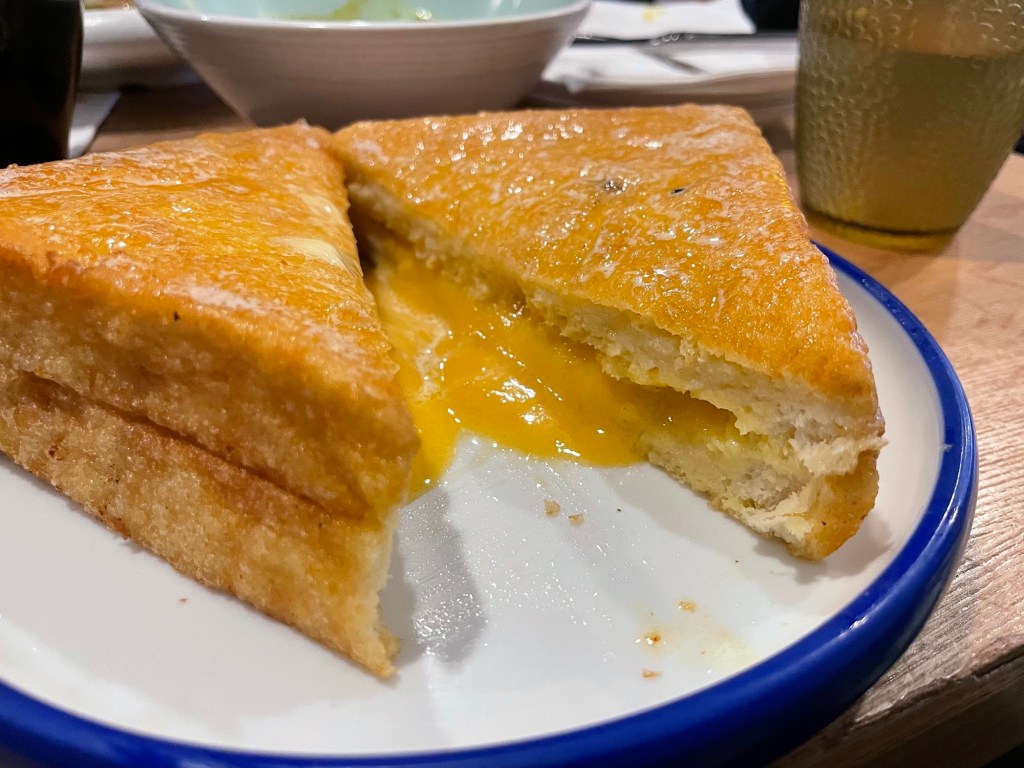
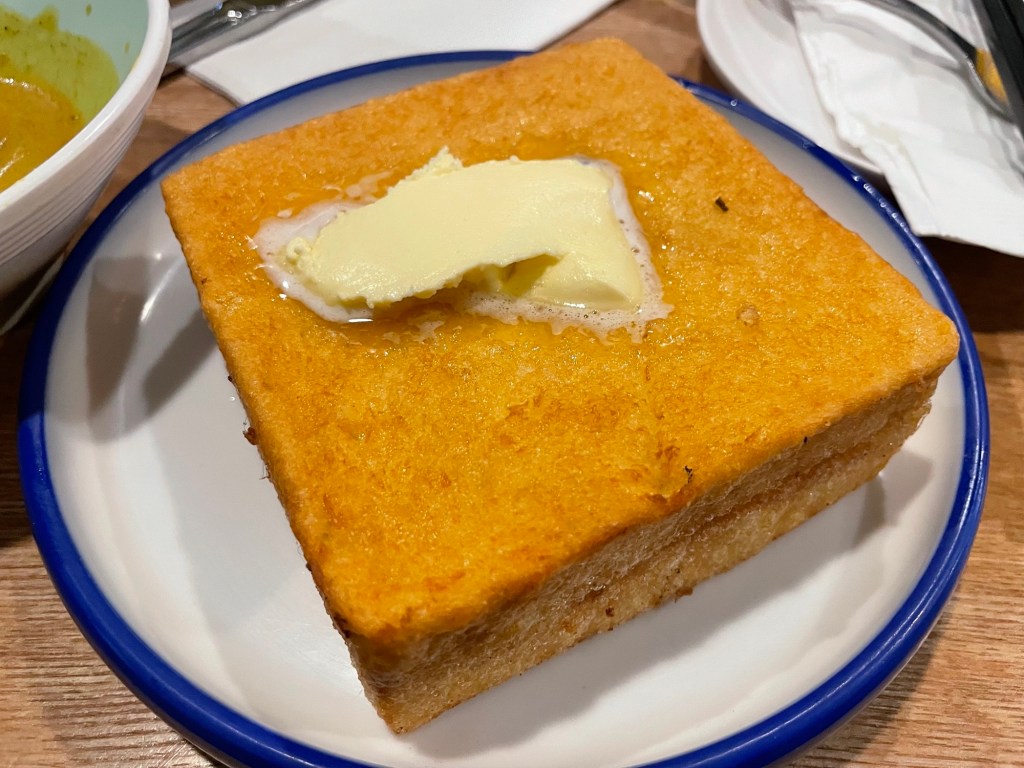
  • Golden lava French toast: Another popular item on the menu. It tasted great, but it was definitely on the sweet side. It’s better eaten as a dessert rather than breakfast.
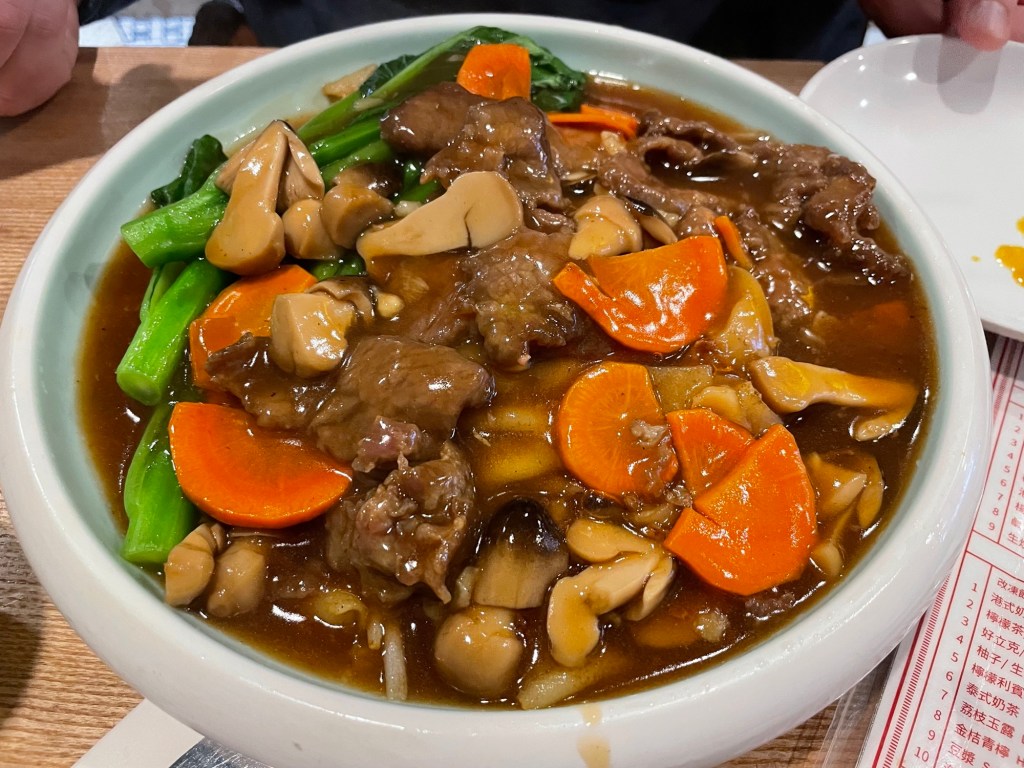
  • Beef chow fun in brown sauce: Fantastic. Great wok hei flavour. It was Toby’s favourite dish of the meal.
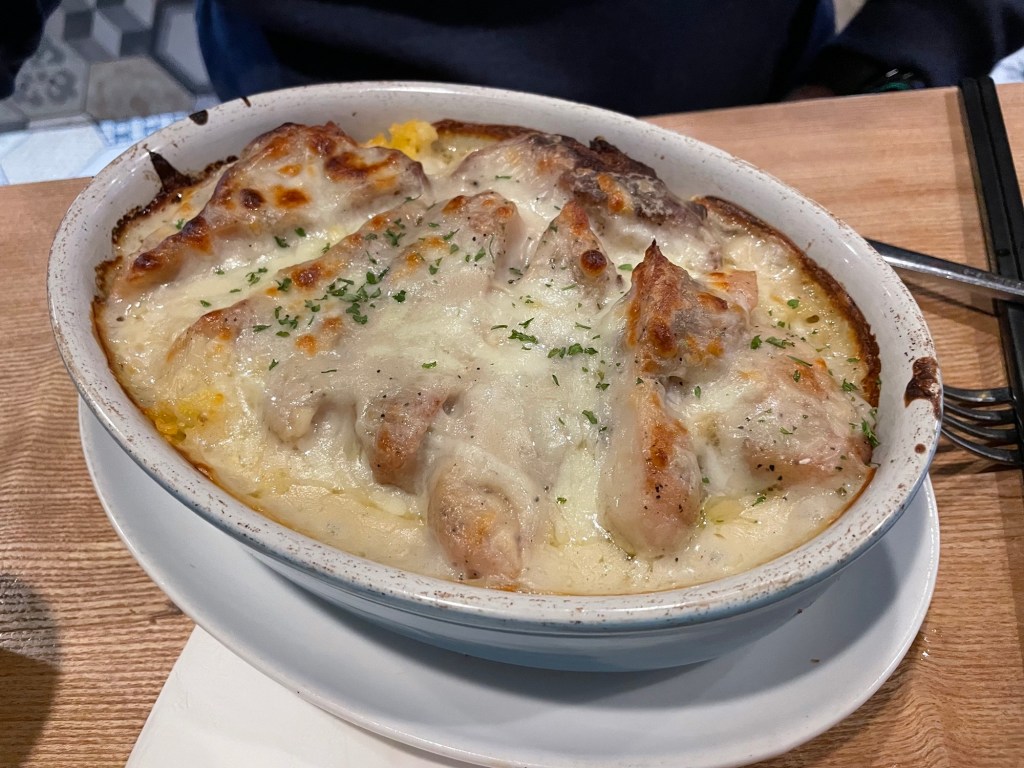
  • Baked rice with pork chop: You have an option of 3 sauces: cream, tomato, or black pepper. I ordered the cream base for nostalgia, but was pretty disappointed. I’ve definitely had way better. The pork chop in it was pretty good though! I saw many people order the baked rice – perhaps I’ll try a different sauce base last time since the waitress said it was one of their more popular dishes.

Overall, some dishes were great, some were just okay, but they’ve got a huge menu and we’re open to coming back and trying some of their other dishes!

Address: 198 Grand St, New York, NY 10013
Hours: 10am -5:30pm, Tues – Sun (closed Mondays)
Website: https://banh-mi-saigon.restaurants-world.com/
Average spend per person: $6 – $10
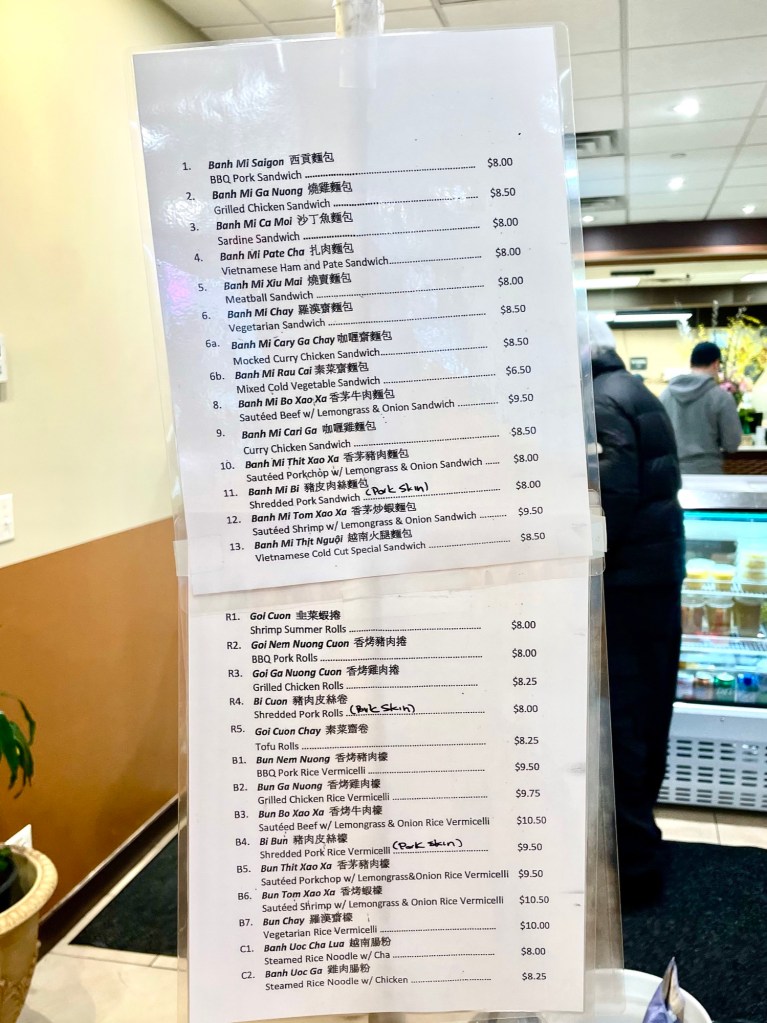
What to order: Banh Mi Saigon (BBQ Pork sandwich)

If you’re looking for Banh Mi in NYC, you’ll be met with countless options. In the search to find the best Banh Mi NYC has to offer, two places kept popping up in my research time and time again: Bánh Mì Saigon and Saigon Vietnamese Sandwich Deli (see below).

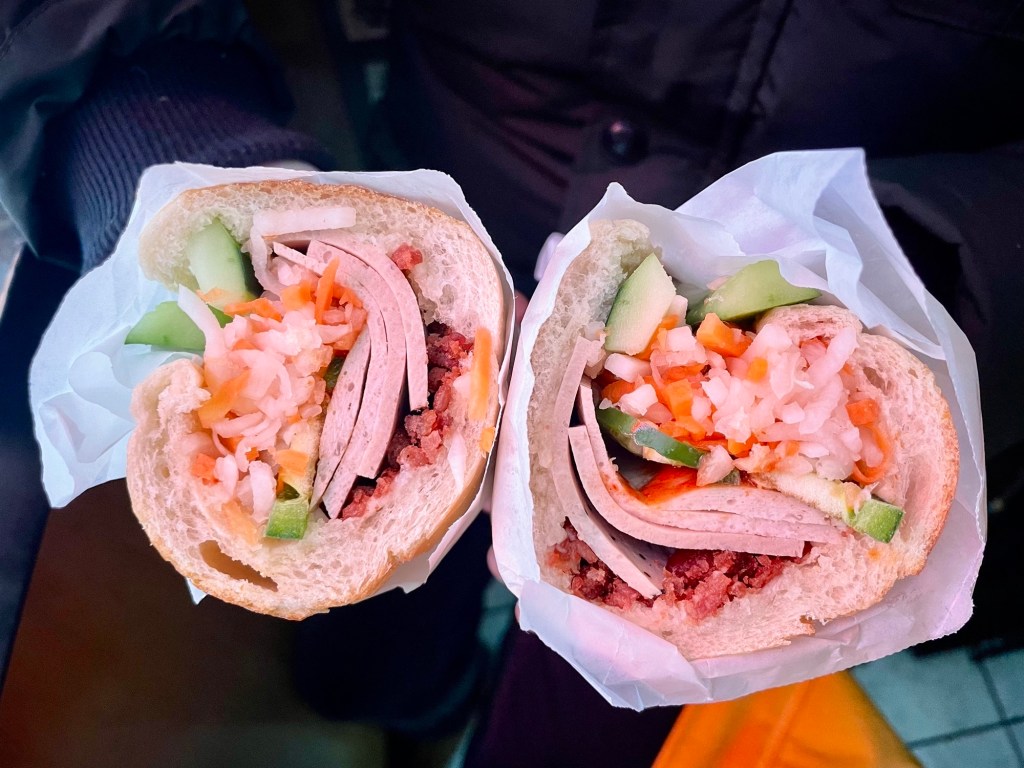
For those that are unfamiliar what a Banh Mi is, it is a Vietnamese sandwich made with a French-style baguette-like crusty bread that is filled with a myriad of ingredients that include pickled vegetables, paté, and an option of different meats (no cilantro on mine please). This flavourful combination make it a staple in many Vietnamese restaurants in NYC.

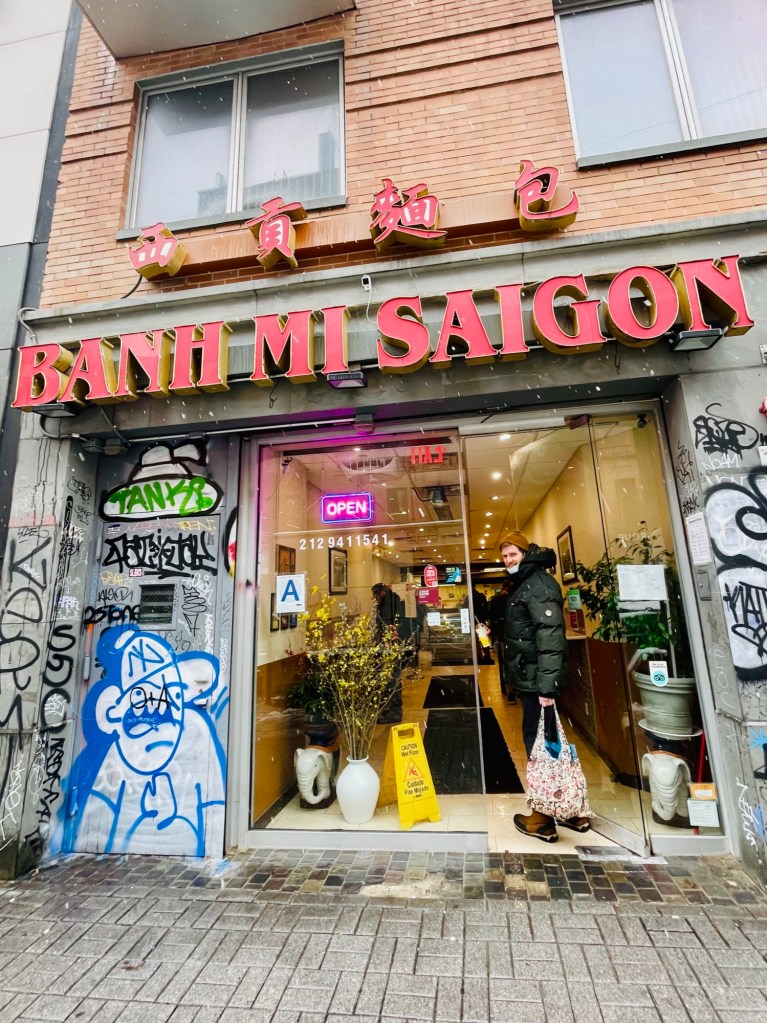
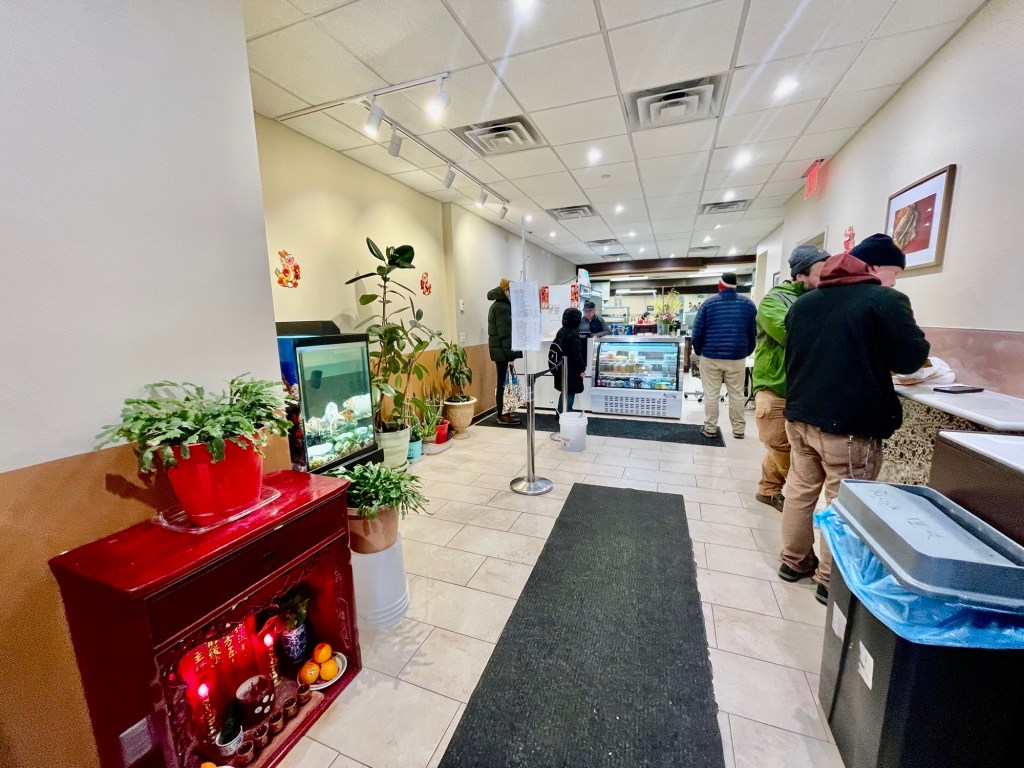
Between the two shops, Bánh Mì Saigon is a larger shop that’s brightly lit with lots of standing room, but no place to sit. Their most popular is the “#1 Banh Mi Saigon” which includes BBQ Pork as the protein. It’s only $8 for a decent sized sandwich. They had by far the best Banh Mi bread I’ve ever had. It has such a perfect crust and texture. and there was a good balance of flavours. Highly recommend!

Address: 369 Broome St, New York, NY 10013
Hours: 7am – 7pm Tues – Sat, 7am – 5pm Sun, closed Mon
Website: https://www.saigonvietnamesesandwichdeli.com/
Average spend per person: $10 – $12
What to order: #1 House Special (Grilled Pork, Vietnamese Salami, Vietnamese Ham)

Saigon Vietnamese Sandwich Deli is a much smaller shop compared to Banh Mi Saigon. This tiny shop has just enough room for their ordering counter and a large fridge with cold drinks and unlike most Chinatown shops, they actually have a small table by the window and 2 chairs for sitting. Their specialty sandwich is the “No. 1 House Special (grilled pork with Vietnamese ham and Vietnamese salami)”. Although the bread is not as perfect as the bread at Banh Mi Saigon, their filling was really flavourful. My favourite part was the Vietnamese ham 😋. Also highly recommend!

Address: 83 Bayard St, New York, NY 10013
Hours: 7:30am – 6:30pm
Website: none
Average spend per person:
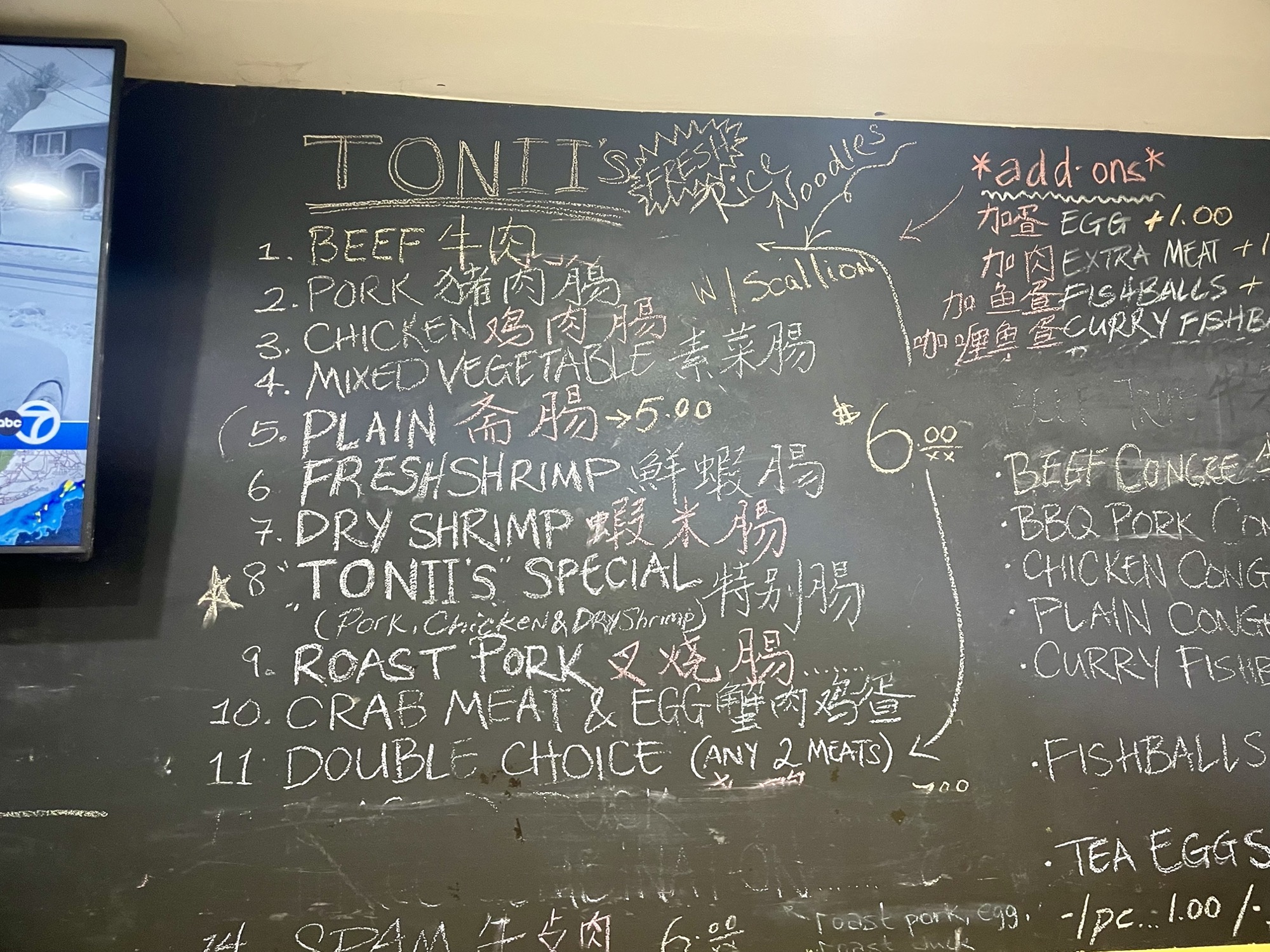
What to order: Tonii’s special rice noodles (pork, chicken, and dry shrimp) with all the sauces

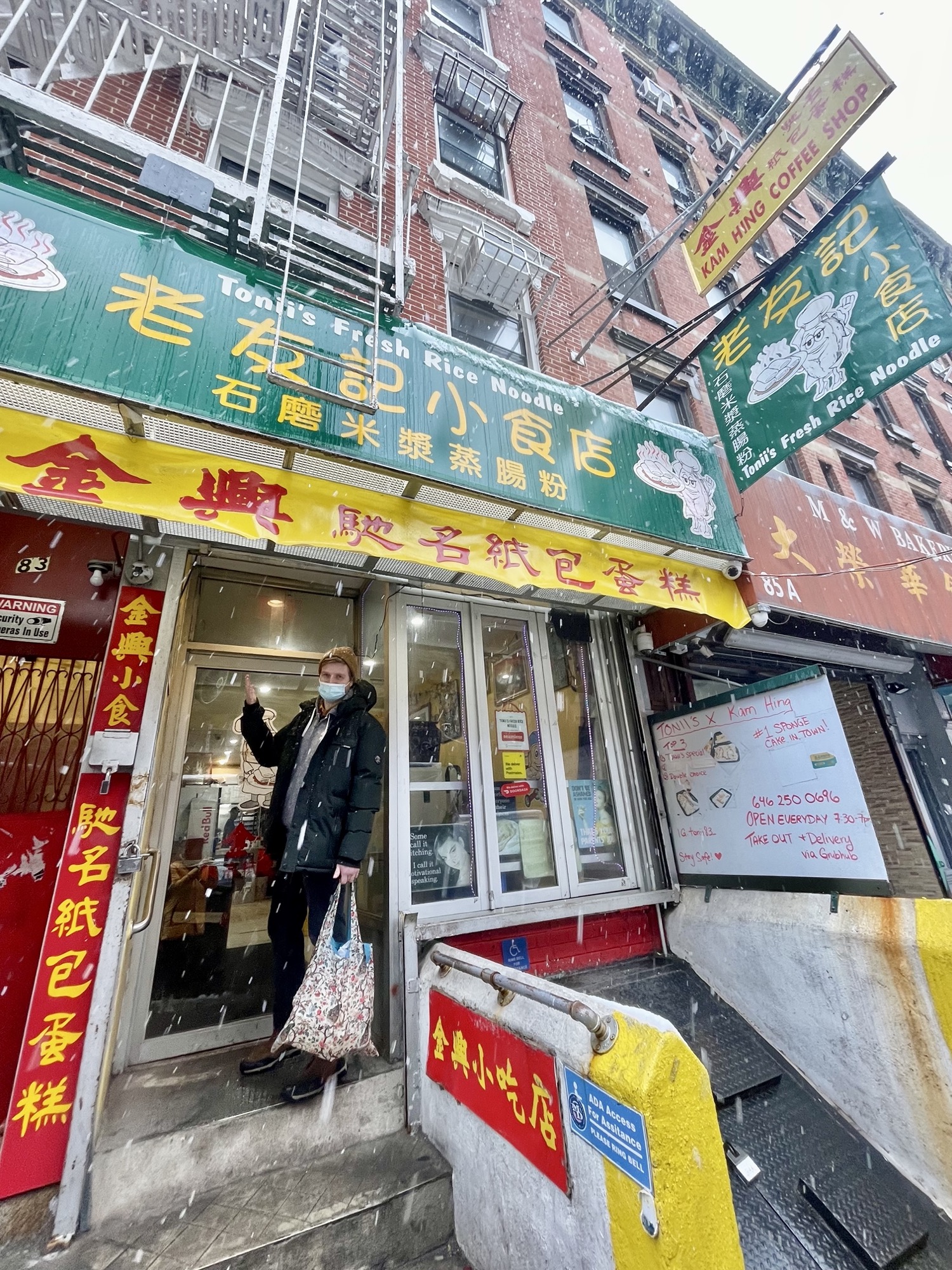
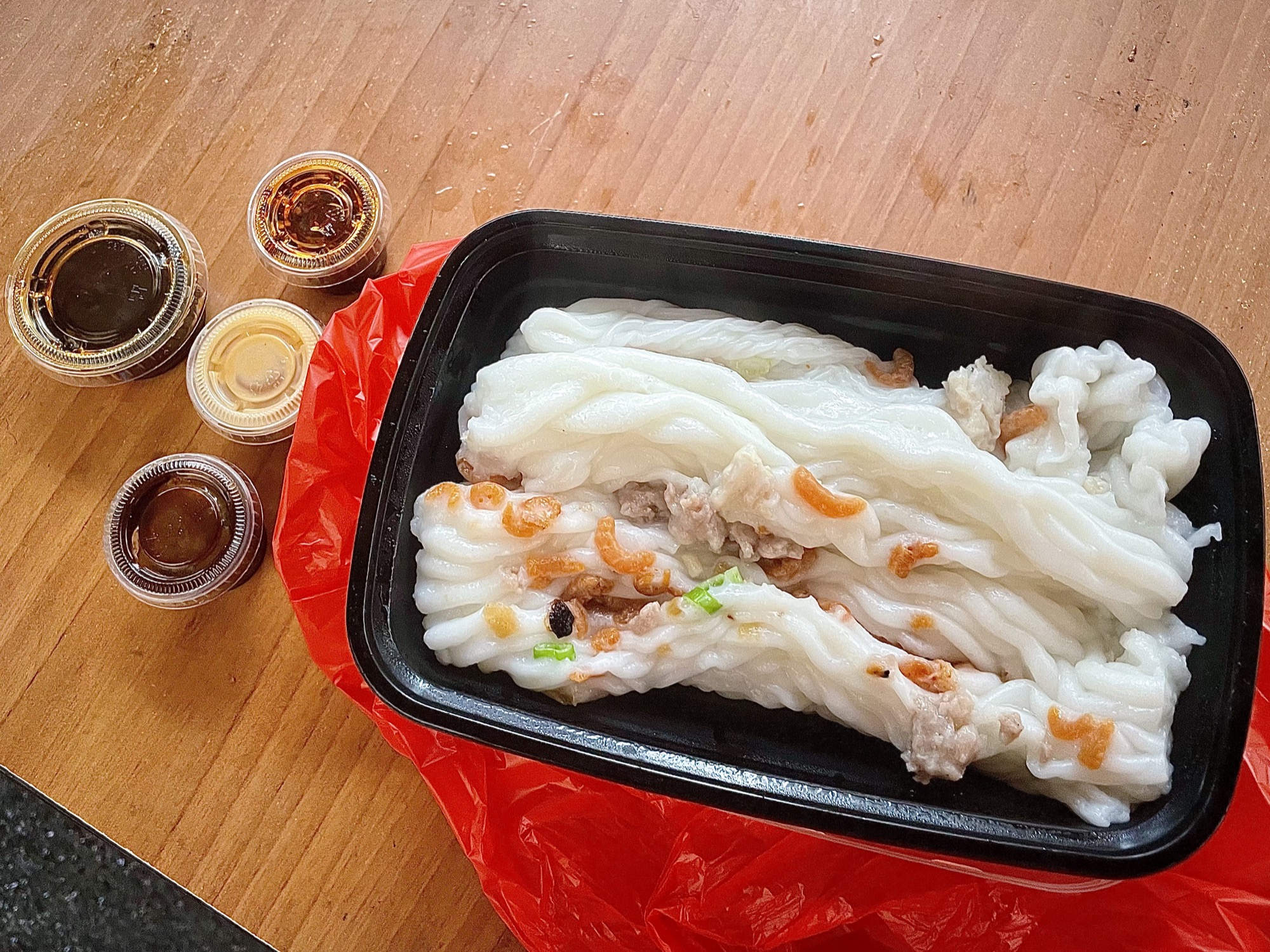
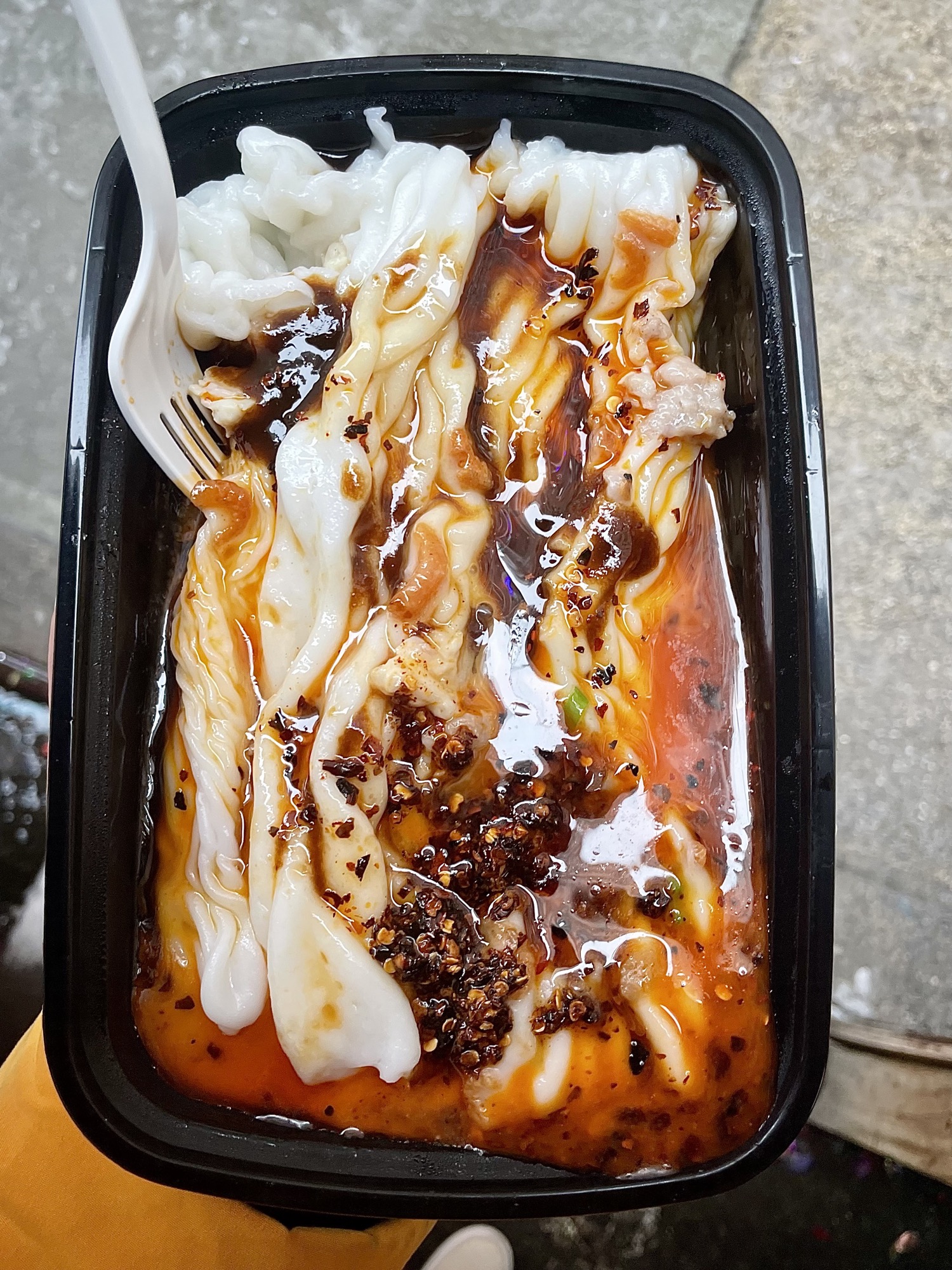
ChangFun or rice noodles are something I’ve only ever had at dim sum places. It’s usually a rolled up long white noodle dish with a protein wrapped inside and soy sauce drizzled overtop. I had never had fresh rice noodles until coming to New York and Tonii’s (yes, with 2 i’s) blew my mind! At first glance, this hole-in-the-wall shop has no seating and the inside looks a bit suss. There’s a crappy half-fallen down outdoor area with a couple of old chairs and tables that you can maybe clean off yourself if you want to sit and eat, but all the food is packaged as takeaway. I was skeptical, but upon first bite, I was in love! The fresh rice noodles here are so much softer than any dim sum place I’ve ever had. They offer a few different protein options, but their most popular (and my favourite) is the ‘Tonii’s special’ which has pork, chicken and dry shrimp. The rice noodles comes with 4 sauces that are packaged separately and you pour it on yourself: chili oil crisp, sweet soy sauce, hoisin sauce, and peanut sauce. I would highly recommend adding all 4 sauces and mix it all up. It’s seriously delicious and one of my favourite chinatown gems!

Address: 41 Mott St, New York, NY 10013
Hours: 8:30am – 7:30pm
Website: http://meilaiwah.com/
Average spend per person: $3 – $10
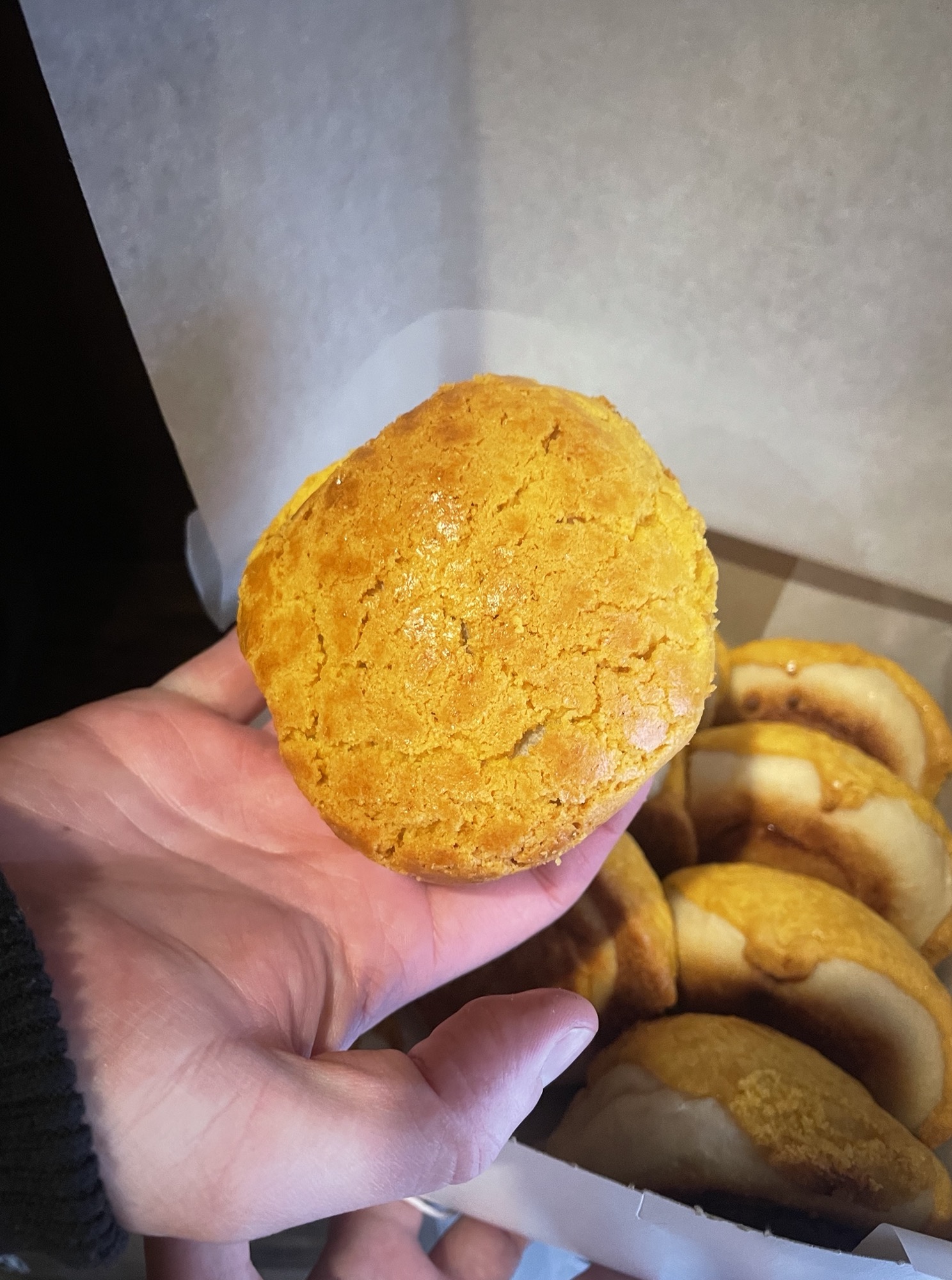
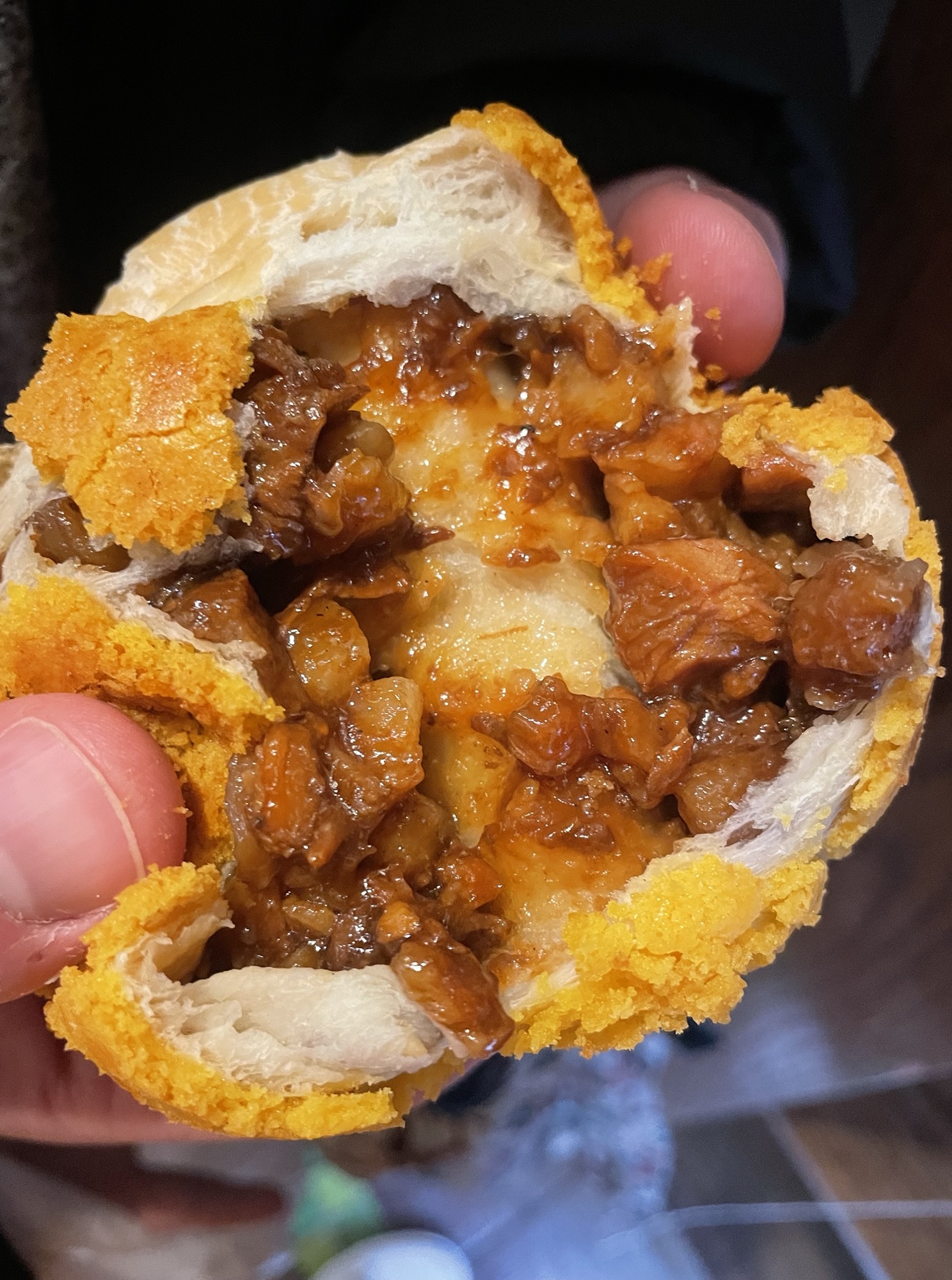
What to order: Pineapple BBQ Pork Bun

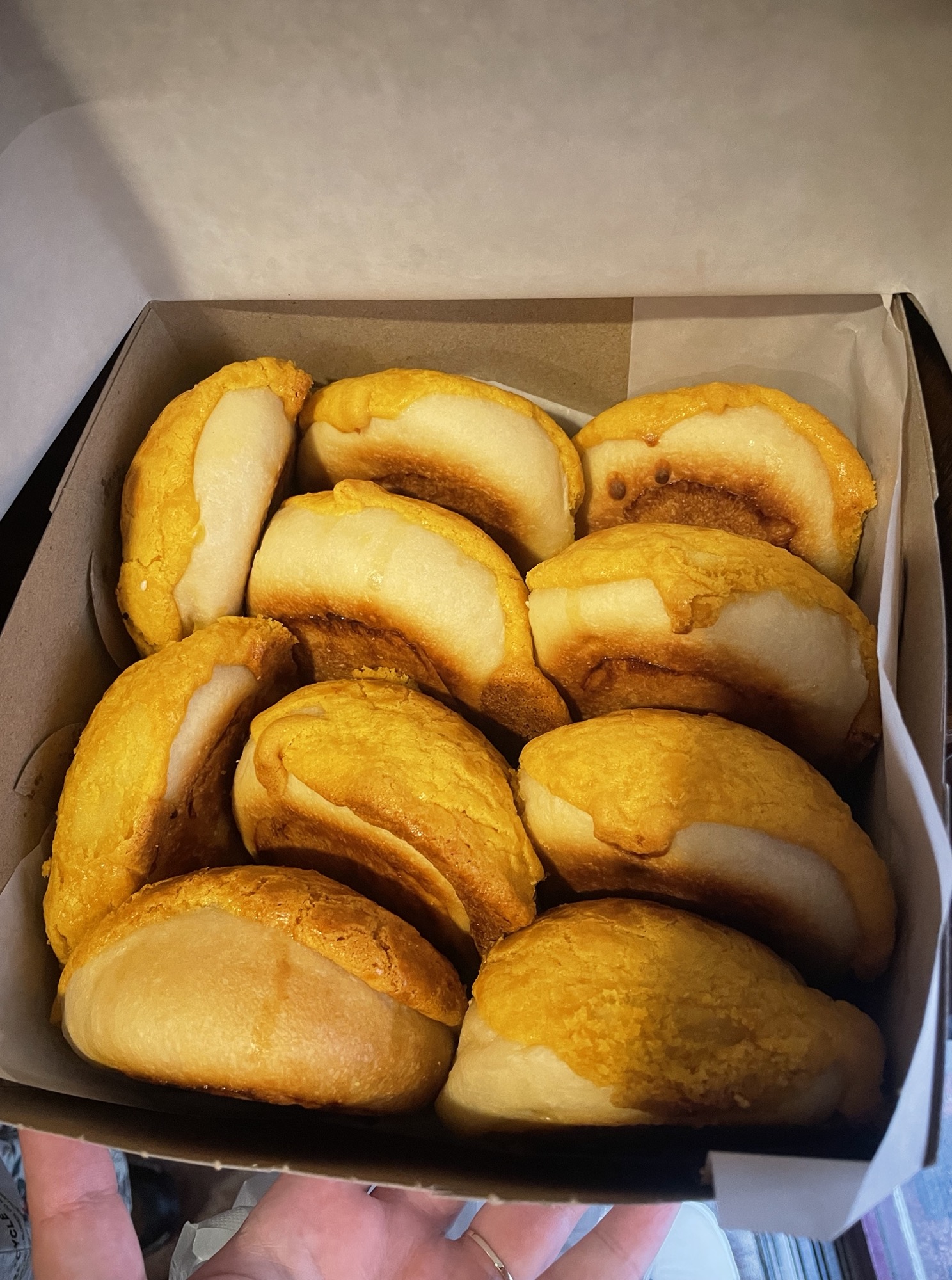
Mei Lai Wah has hands down THE best BBQ pork buns (charsiu bao) in the city. They come in a regular bun or pineapple bun. The pineapple bun is a misnomer and is named due to the buttery crackled crust on top of the bun that resembles the pattern of the side of a pineapple, but has no pineapple flavour at all. I’d highly recommend getting the pineapple BBQ pork bun – it’s their number one seller. The sweet buttery topping paired with the fatty savoury charsiu pork filling is out of this world!

This place if often very busy with a line up out the door, but the line moves quickly. There’s usually 2 lines, one for cash only and the other for card payment. The cash line is usually much shorter and you can often walk right in to the counter. The shop is quite small, with very limited space and can fit about 5 or 6 people in the store at one time and it’s takeaway only. The buns are baked fresh and served right away, piping hot!

Address: 55 Bayard St Store B, New York, NY 10013
Hours: 8am – 5:30pm, daily
Website: https://changlaifishballnoodles.dine.online/locations/6703032?fulfillment=pickup
Average spend per person: $10 – $15
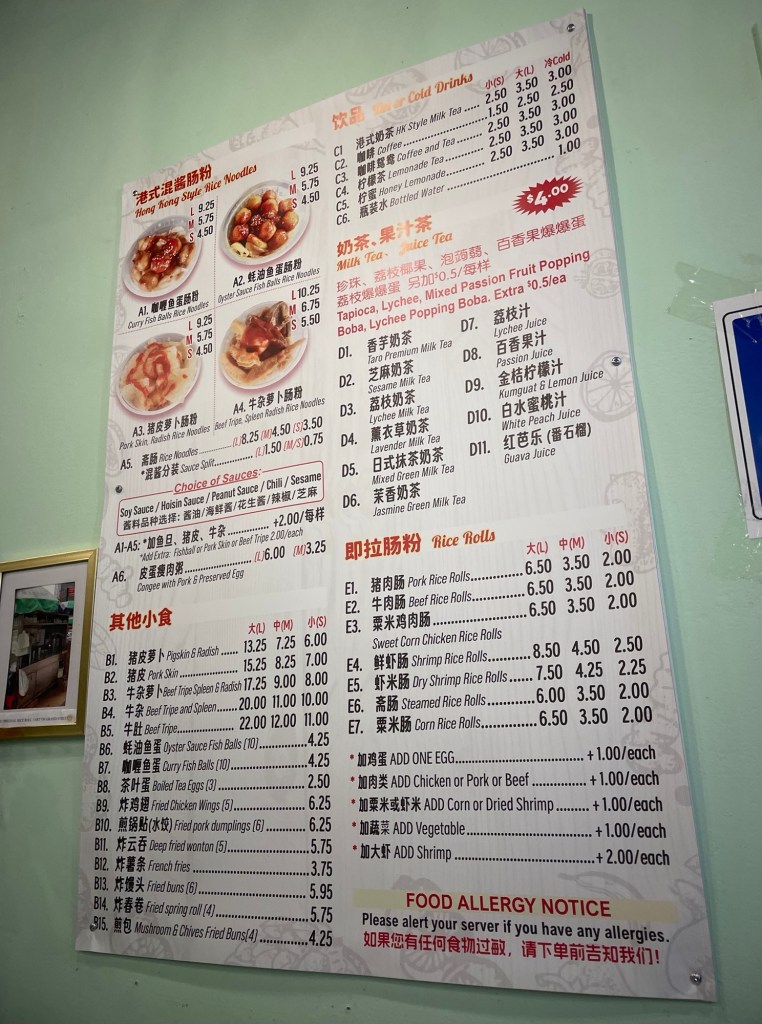
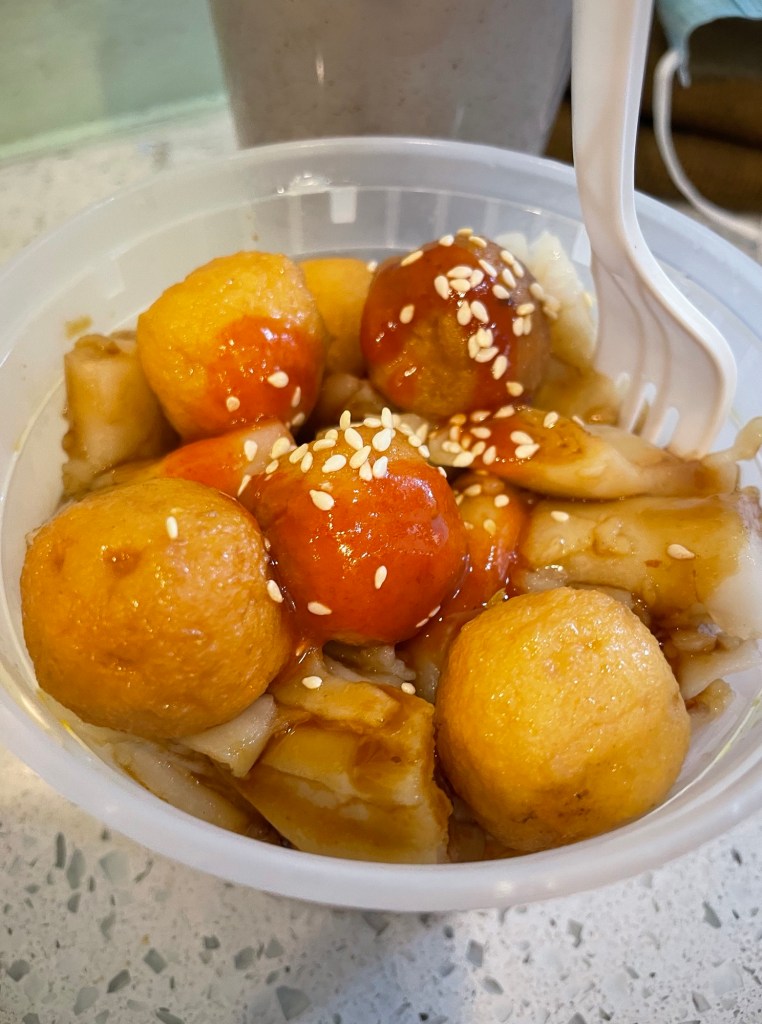
What to order: A1. Curry fishballs with rice noodles

This fishballs and noodles shop started off as a food cart and operated on Grand Street for 30 years and only recently opened up this location in 2023. It’s run by a lovely husband and wife (?) team that are so proud of their food and so friendly. Their most popular item on the menu is the “A1 curry fishballs with rice noodles”. I thought the fishballs were just okay but Toby loved them. The rice noodles were my favourite. They’re rolled up and cut into small pieces and mixed with a combination of 4 or 5 sauces that’s a perfect portion for a snack. This is a small shop with limited seating, enough for about 3-4 people.

Address: 65 Bayard St, New York, NY 10013
Hours: 11am – 10pm daily
Website: http://www.chinatownicecreamfactory.com/
Average spend per person: $8 – 16
What to order: anything! Free samples of their ice cream – popular flavours are pandan and black sesame

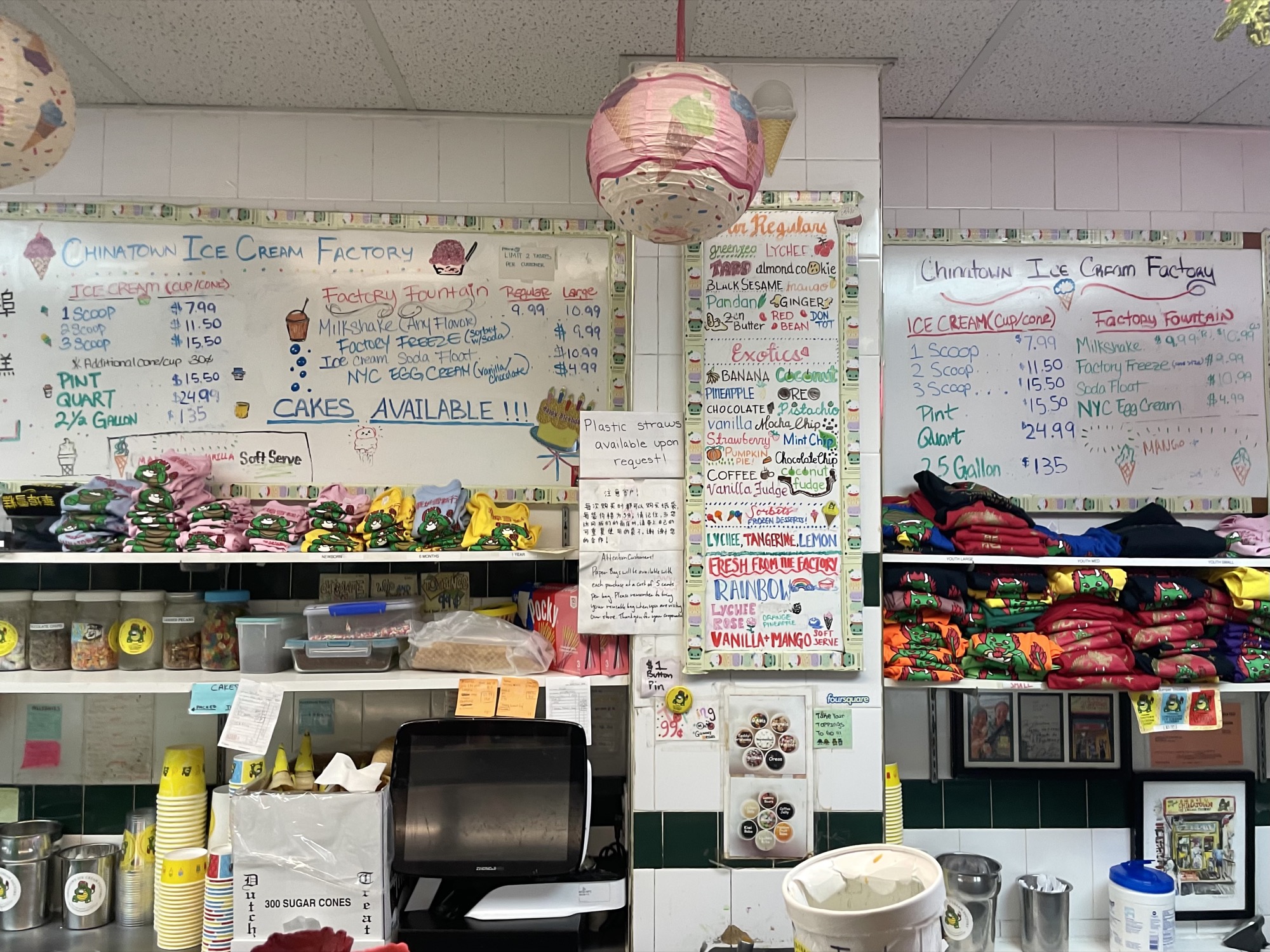
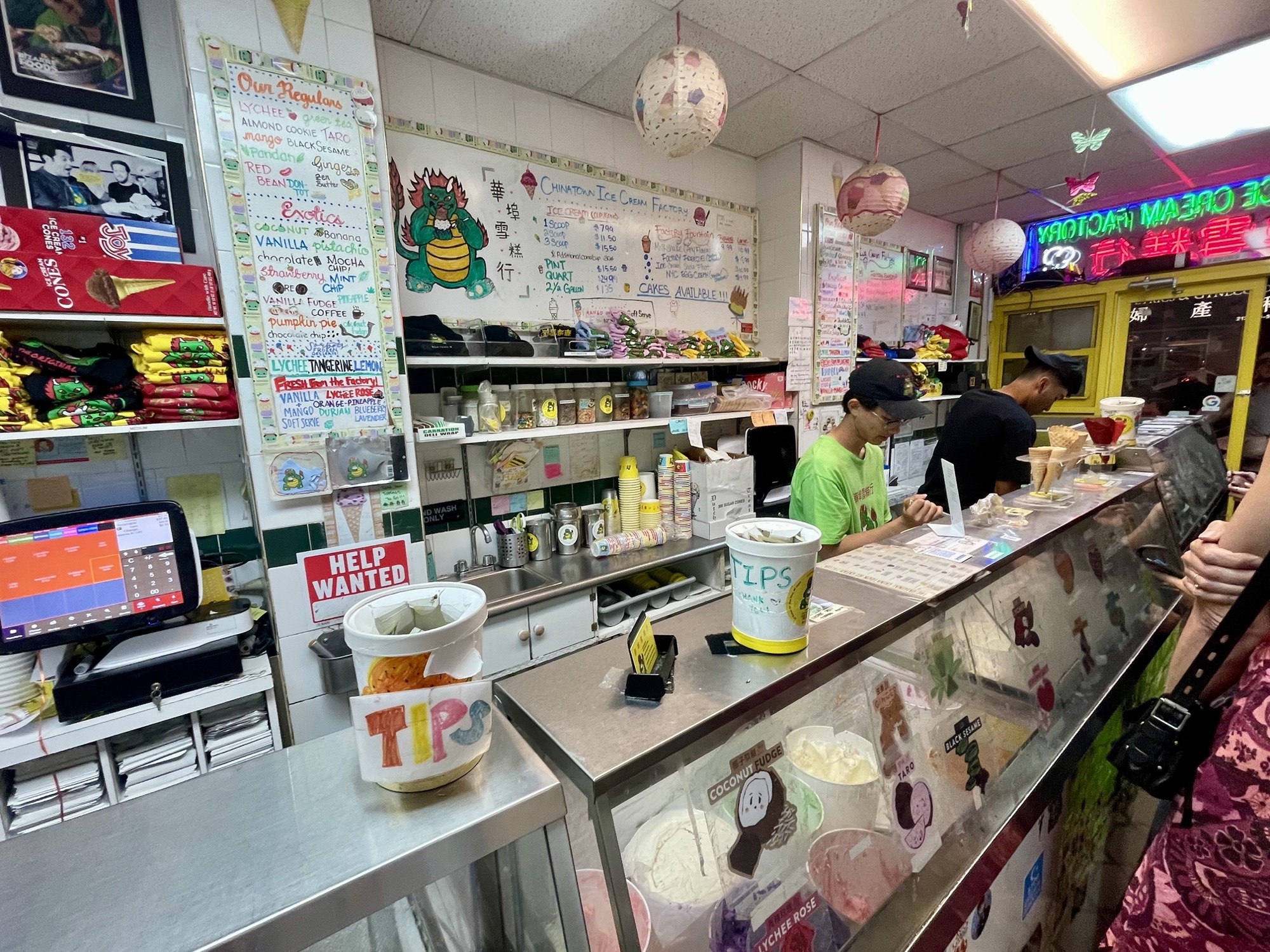
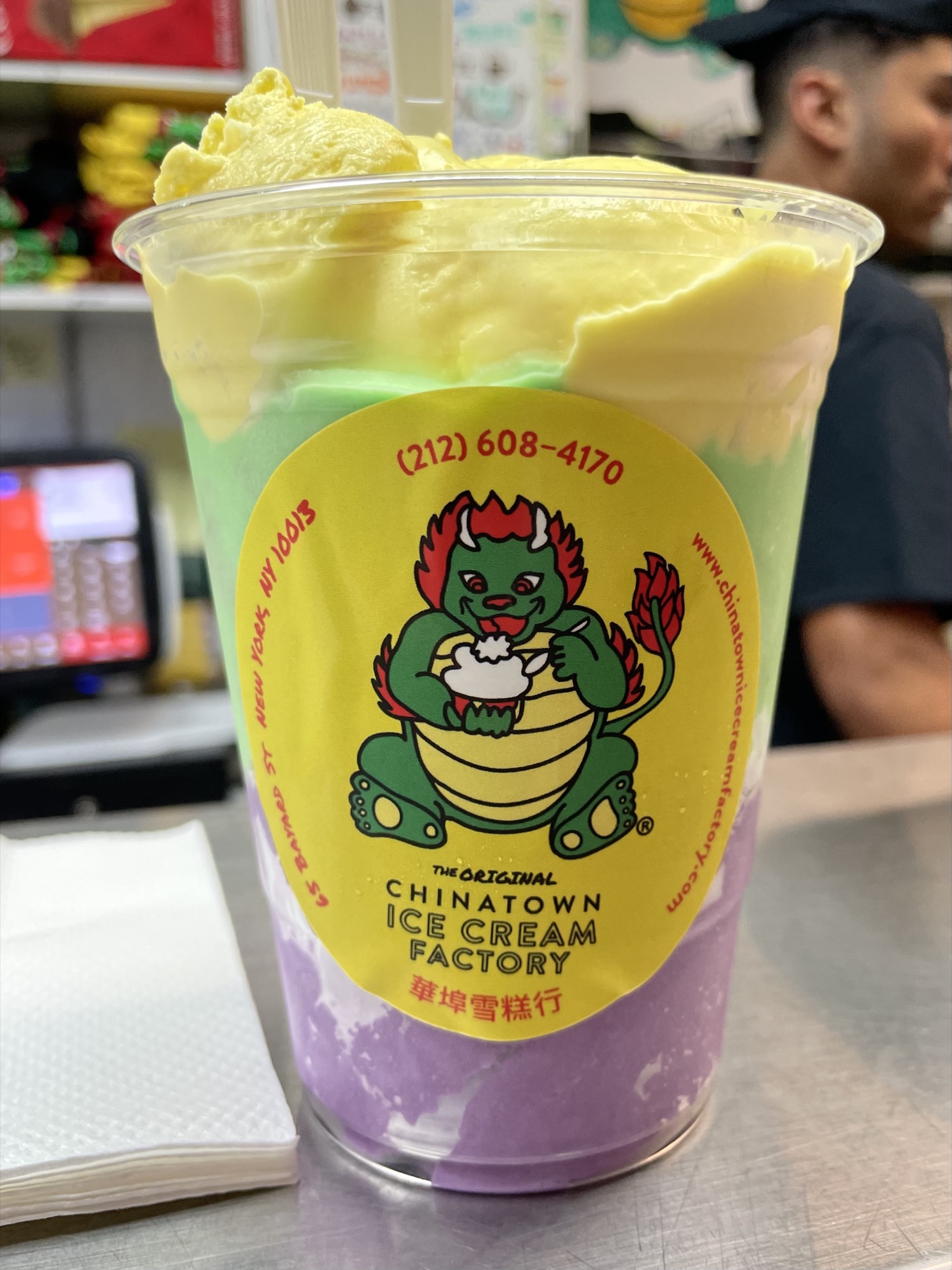
Chinatown Ice Cream Factory is a small shop on Bayard Street that serves, you guessed it, ice cream! There are a TON of ice cream shops throughout NYC but nowhere else will you find unique Asian ice cream flavours such as durian, black sesame, matcha, pandan, lychee, ginger, red bean – that’s just to name a few. There’s usually a small line out the door in the evenings, however it moves quickly. There’s only enough room for about 5-6 people in the shop at one time and there’s no seating available. You can sample as many flavours as you like but note that popular flavours can run out earlier in the evening, so I’d recommend coming earlier if you’ve got your eyes set on something. Although a bit pricey at $8 a scoop and $11.50 for two scoops, their portions are quite generous.

We’ve been here twice now and although there’s no doubt better quality ice cream elsewhere with a creamier texture, the flavours they infuse into their ice cream knocks it out of the park and keeps us coming back.

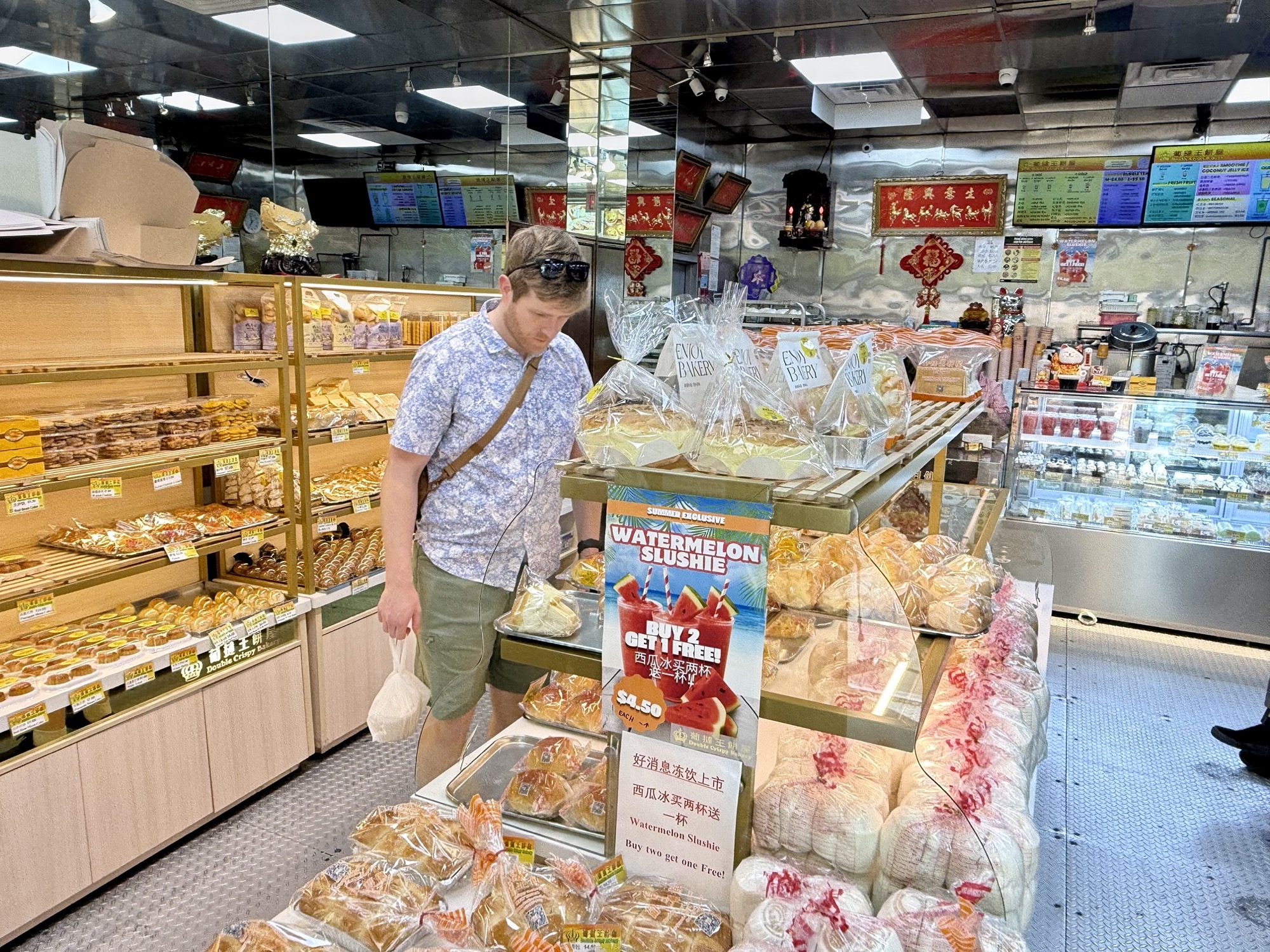
Address: 230 Grand St, New York, NY 10013
Hours: 7am – 7pm, every day
Website: none
Average spend per person: $5 – $10
What to order: egg tarts (2 kinds), pineapple bun, mooncakes

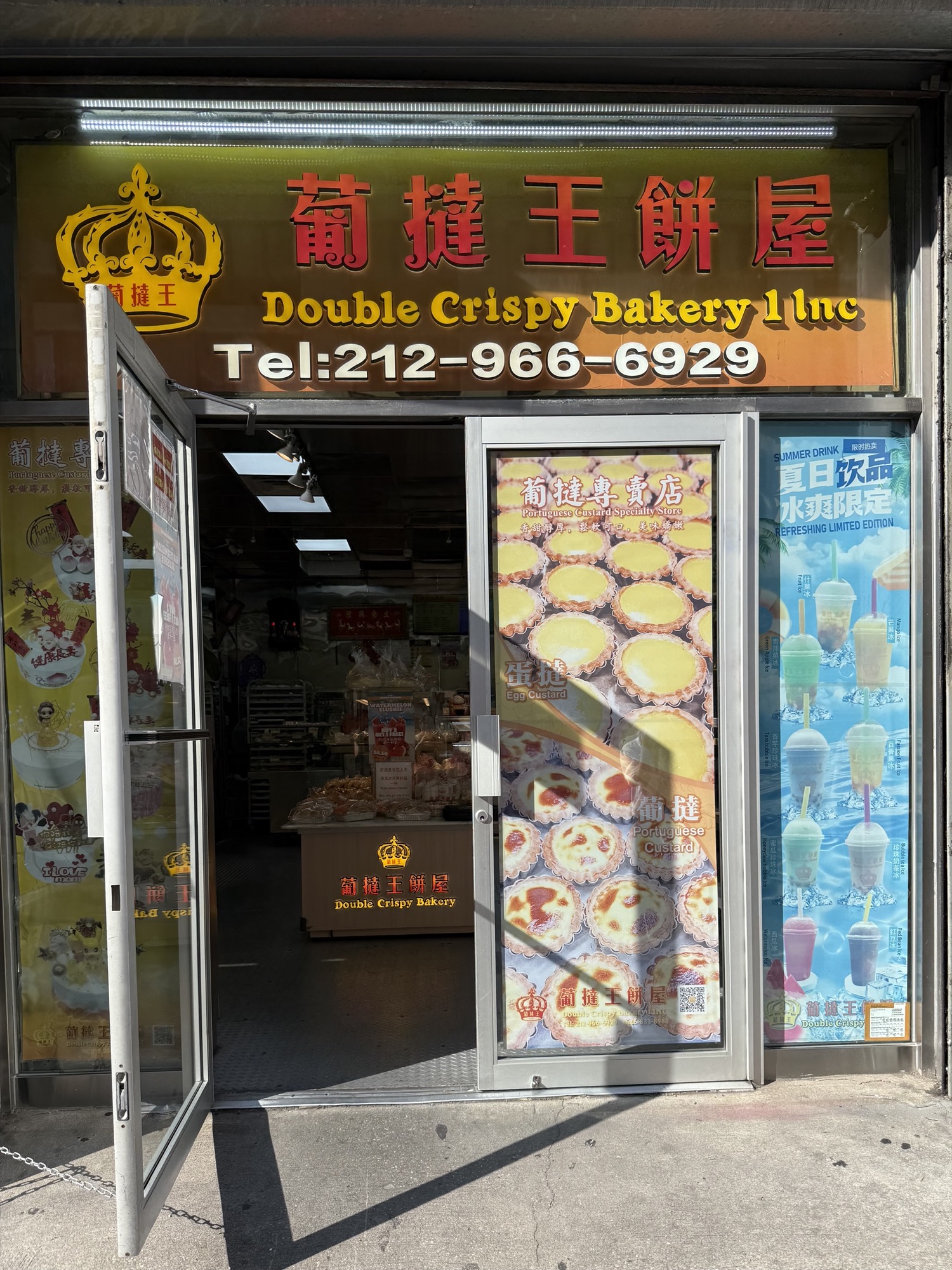
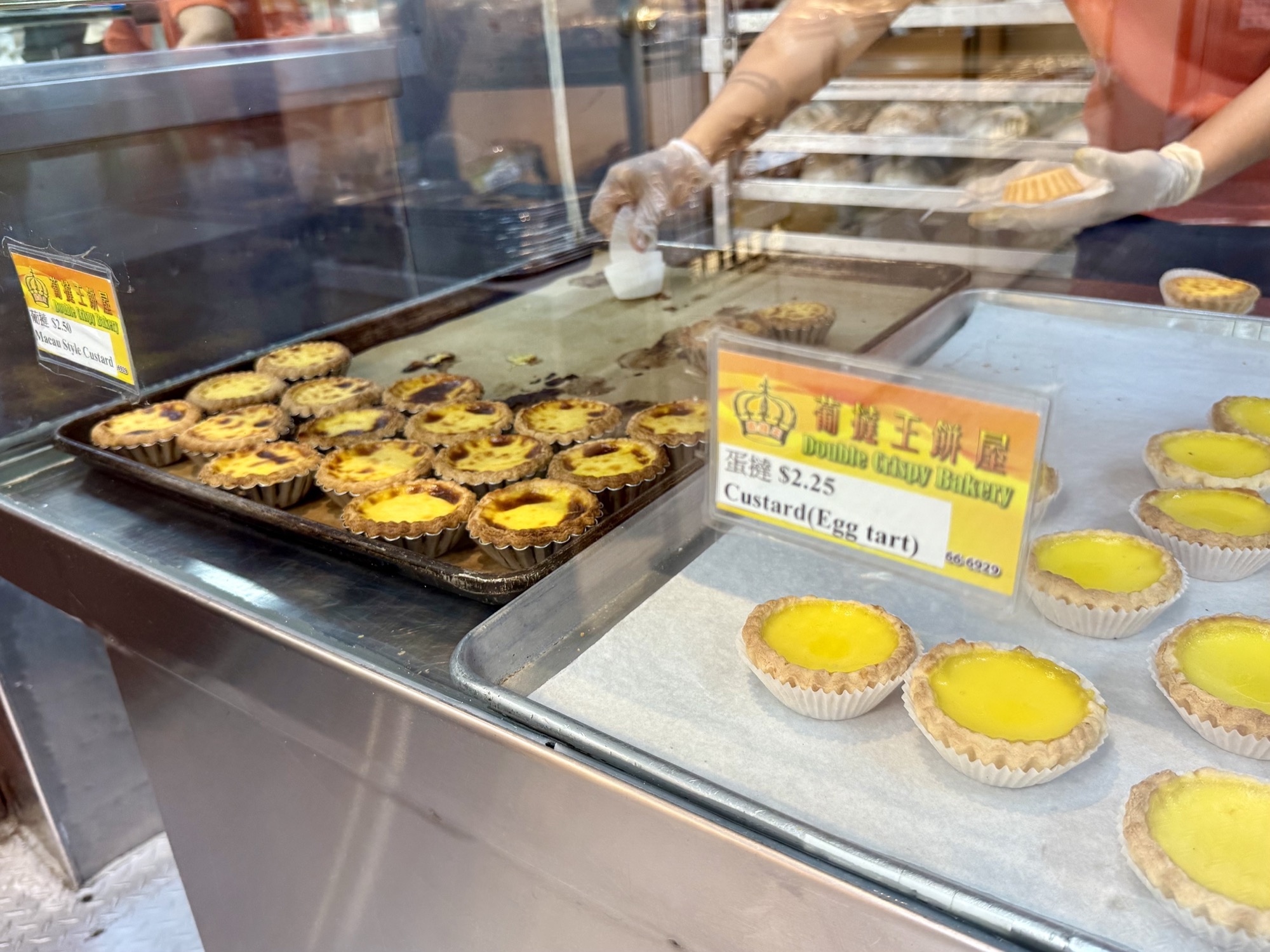
I’m always on the hunt for a great egg tart. Double Crispy Bakery was recommended by a coworker of mine who’s a born and bred local. This bakery offers egg tarts in two different types: a “Custard egg tart” which is more traditionally Chinese with a formed crumbly crust and an intact gelatin-like eggy center, and the other a “Macau style egg tart” which is similar to the Portuguese egg tart, pastel de nata, that has a flaky crispy crust with a softer creamier eggy center. Both were delicious. The custard filling had great flavour with a boost of vanilla, but the flaky crispy crust of the “Macau-style” was preferable for me. Although not my favourite egg tart shop (that’s in Bay Ridge), it’s still pretty good here!

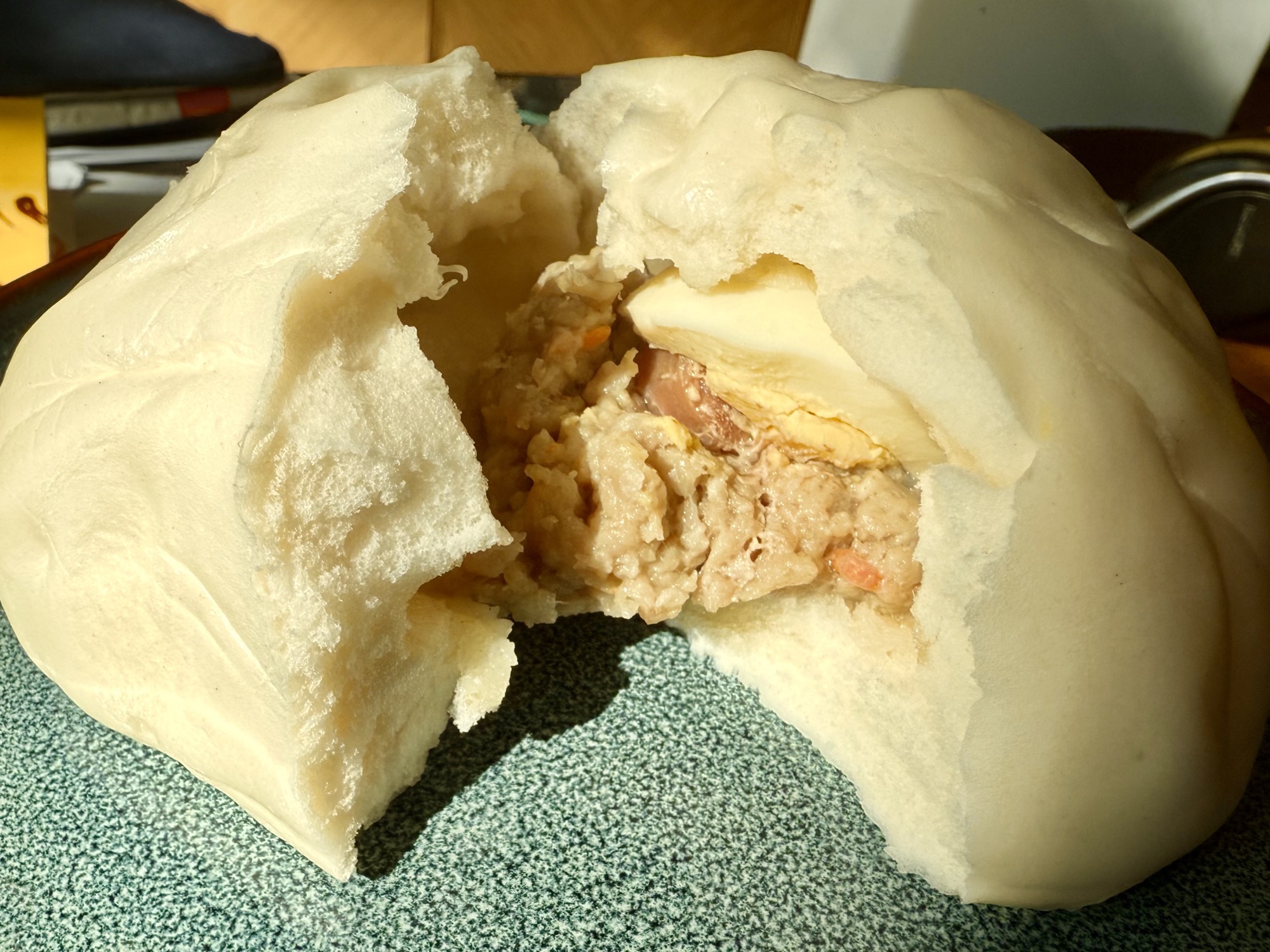
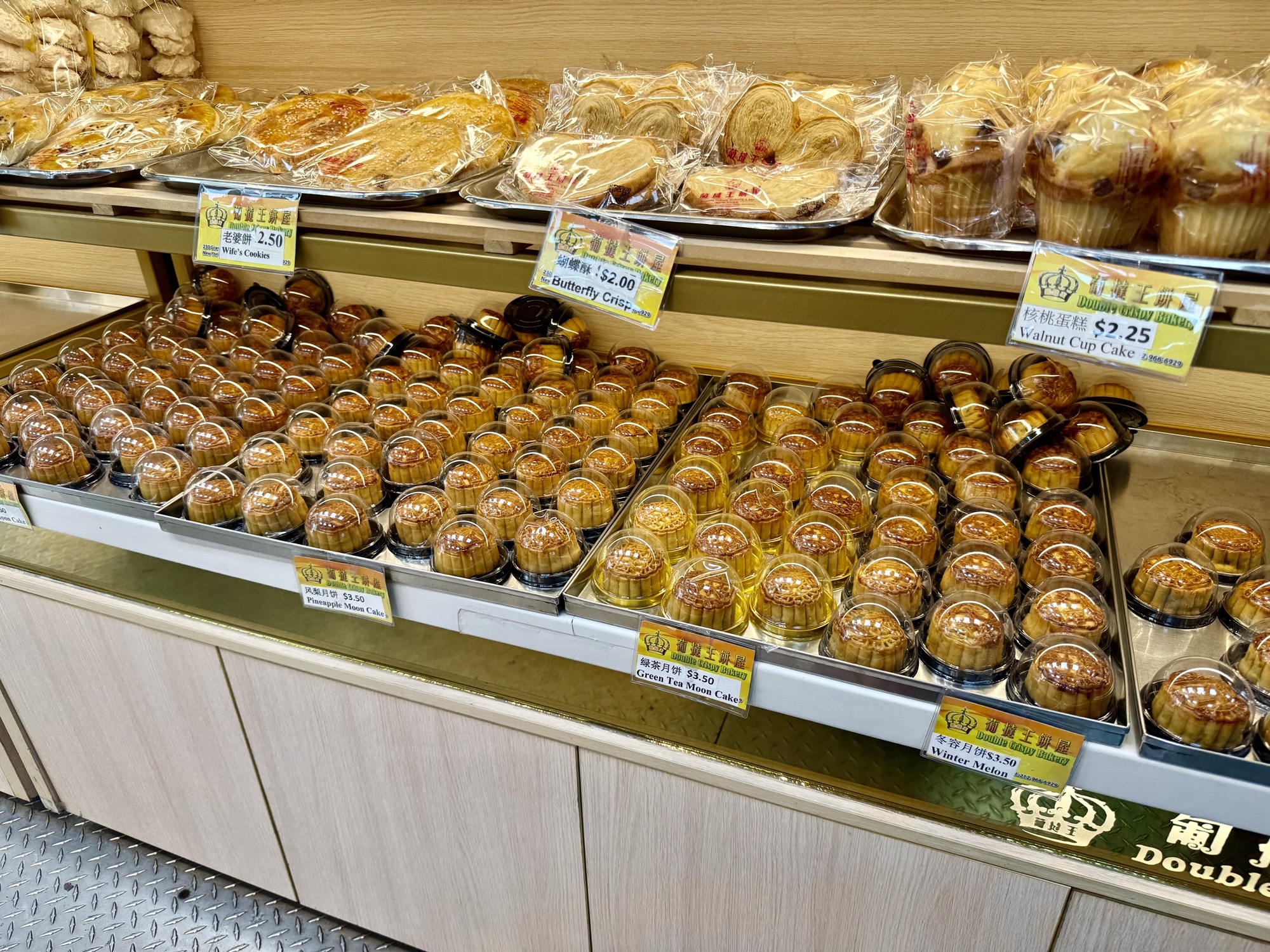
They also have a good pineapple bun (a misnomer that’s named for its flaky sweet crust that resembles a pineapple, but actually has no pineapple flavour at all) and mooncakes year-round in a few flavours (I don’t love mooncakes, so you can be the judge). Their large steam buns behind the counter are also pretty decent and are filled with savoury pork, egg, and Chinese sausage.

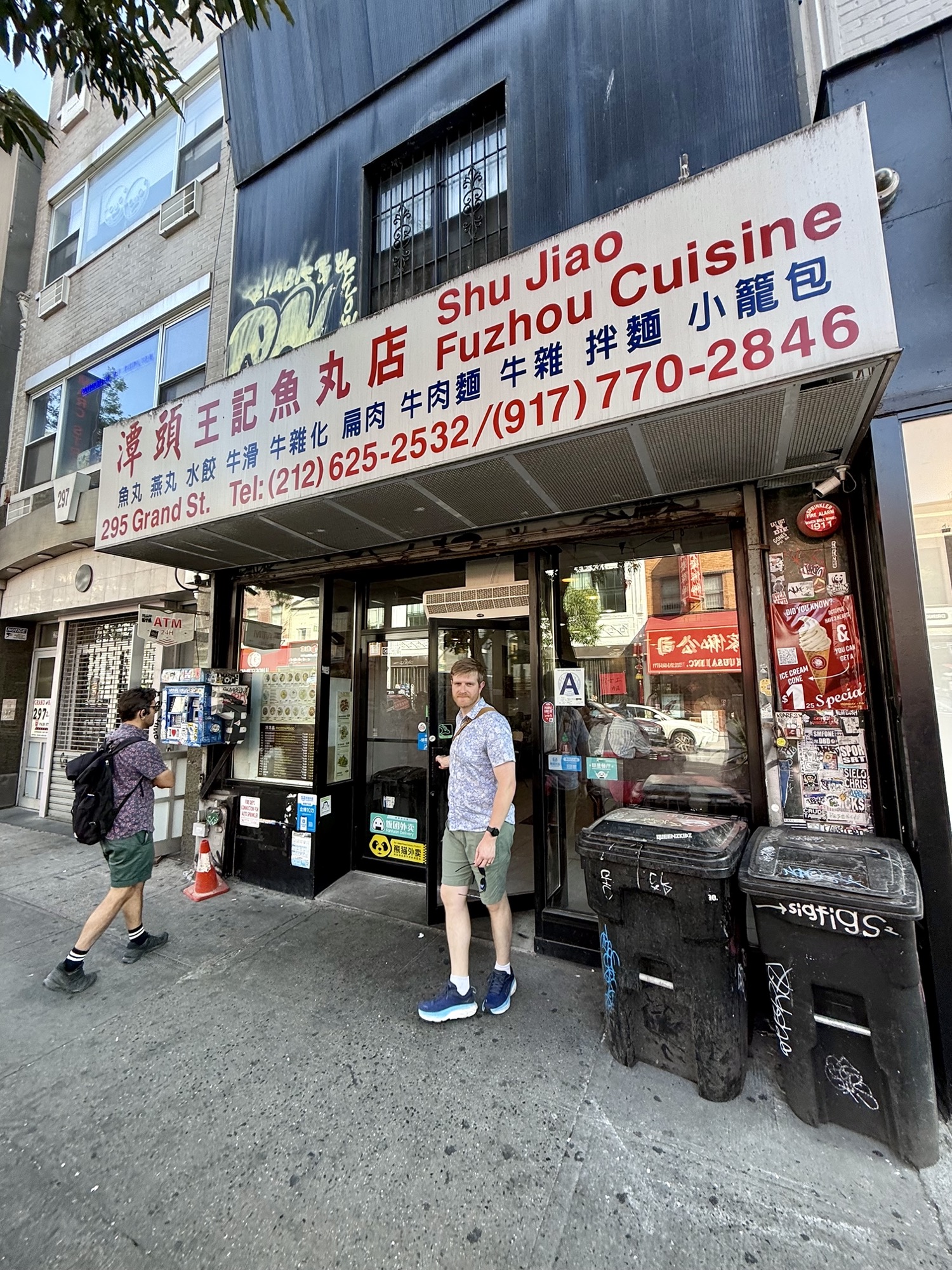
Address: 295 Grand St, New York, NY 10002
Hours: 8am-8pm, 7 days a week
Website: none
Average spend per person: $3-$10
What to order: No. 5 peanut noodles, fried dumplings, fish ball soup

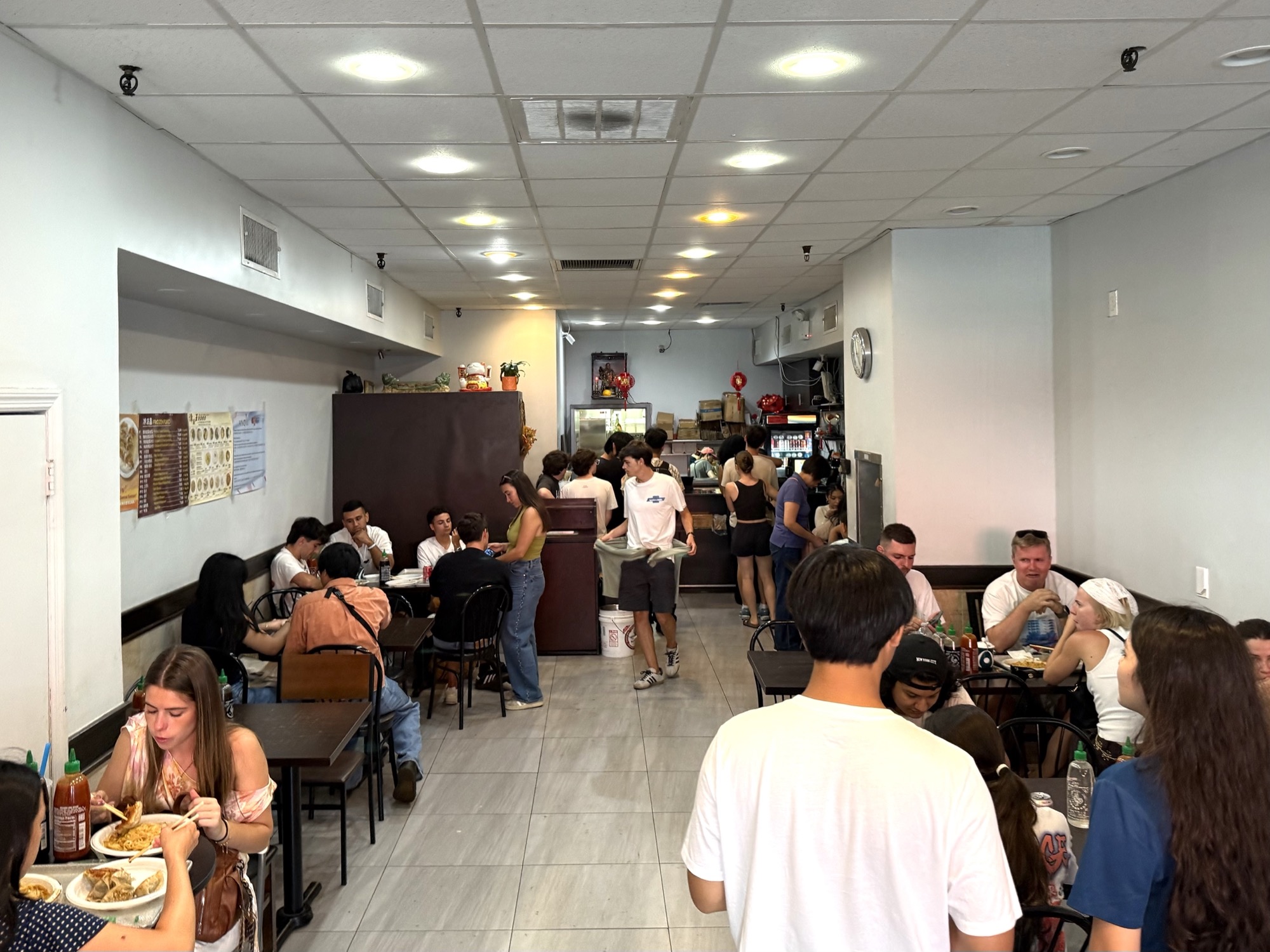
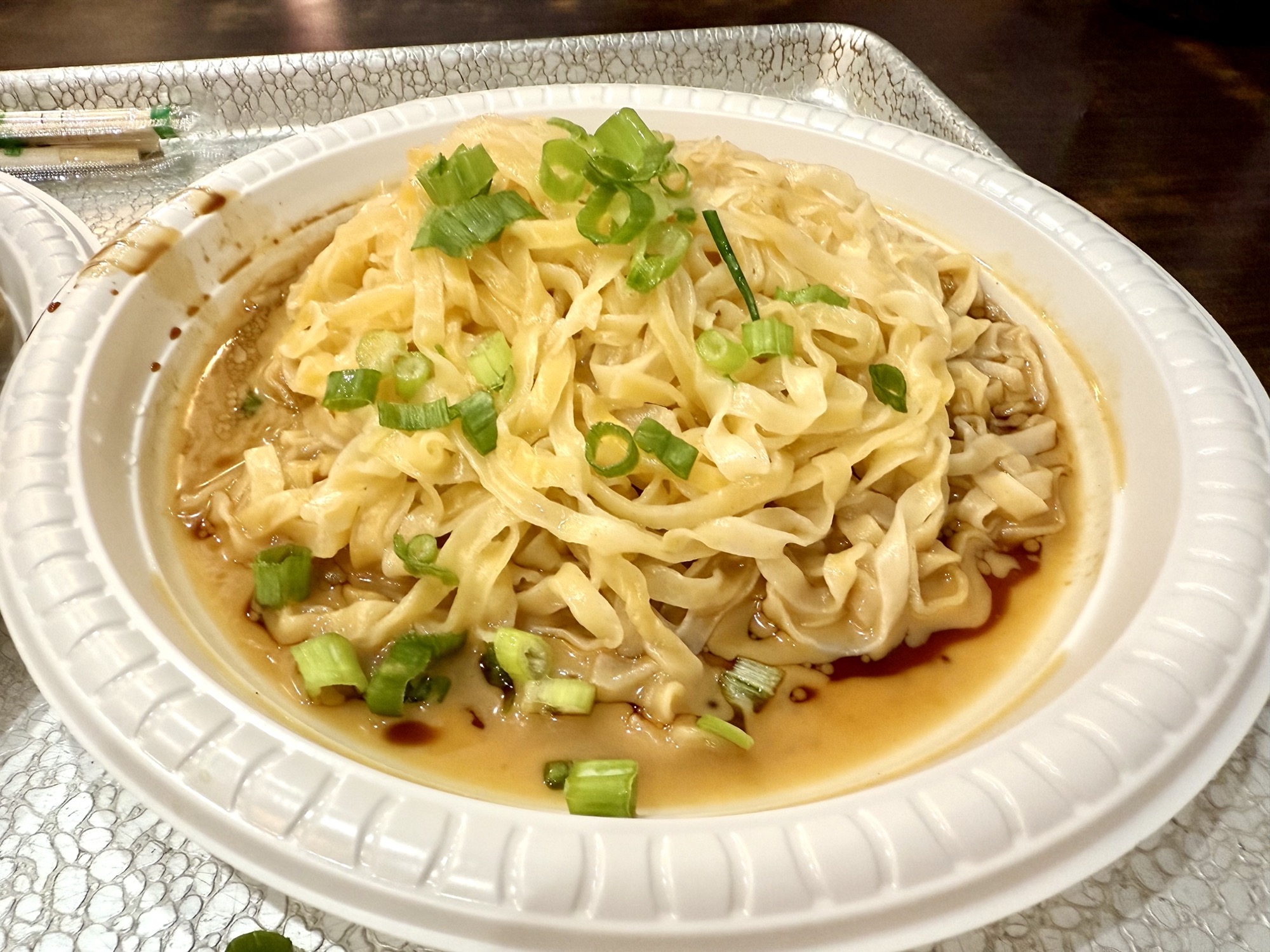
If you’re looking for great cheap Asian food in Chinatown, look no further than Shu Jiao FuZhou Cuisine. This no-flare restaurant offers street food items served at lightning fast speeds (seriously, the food was literally ready within 1 minute of us paying!) and nothing was over $6. Their most popular dish is the “No. 5 peanut noodles 拌面” for $3.25. It’s a generous portion of well-cooked soft wheat noodles over a peanut sauce mixture – no meat, no toppings, just noodles and sauce. I had my reservations when I first walked in and every other person in the restaurant was not Asian, but I love a good peanut noodle dish so I couldn’t resist. The peanut noodles are simple but indeed delicious and worth the visit! The cashier also recommended the fried dumplings (I thought was just okay, but Toby loved it), and the fish ball soup (which I also thought was okay but Toby enjoyed the vinegar addition to this classic soup). If you’re looking for a seriously quick and cheap place for decent food, check this place out!

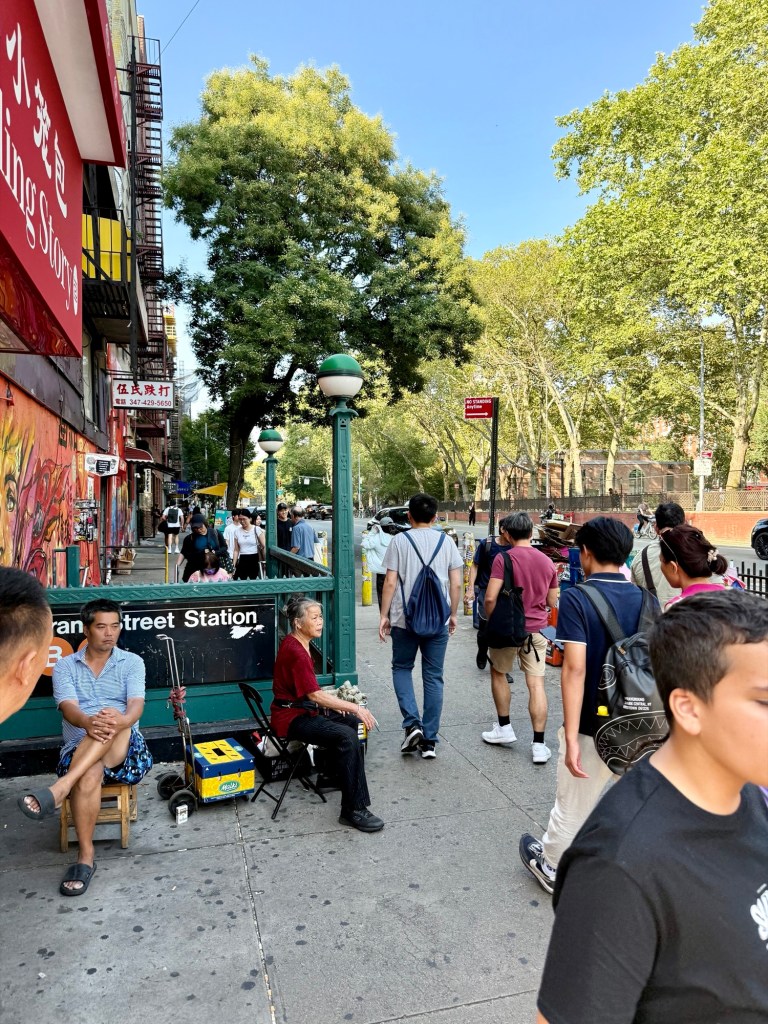
Address: Outside of Grand Street subway station (intersection of Grand Street & Christie Street) – just listen for her call of “Baaaah-chang”!
Hours: Usually 2pm-5pm most days
Website: https://maps.app.goo.gl/pVKw4RUNyq7avchf8
Average spend per person: $2-$3
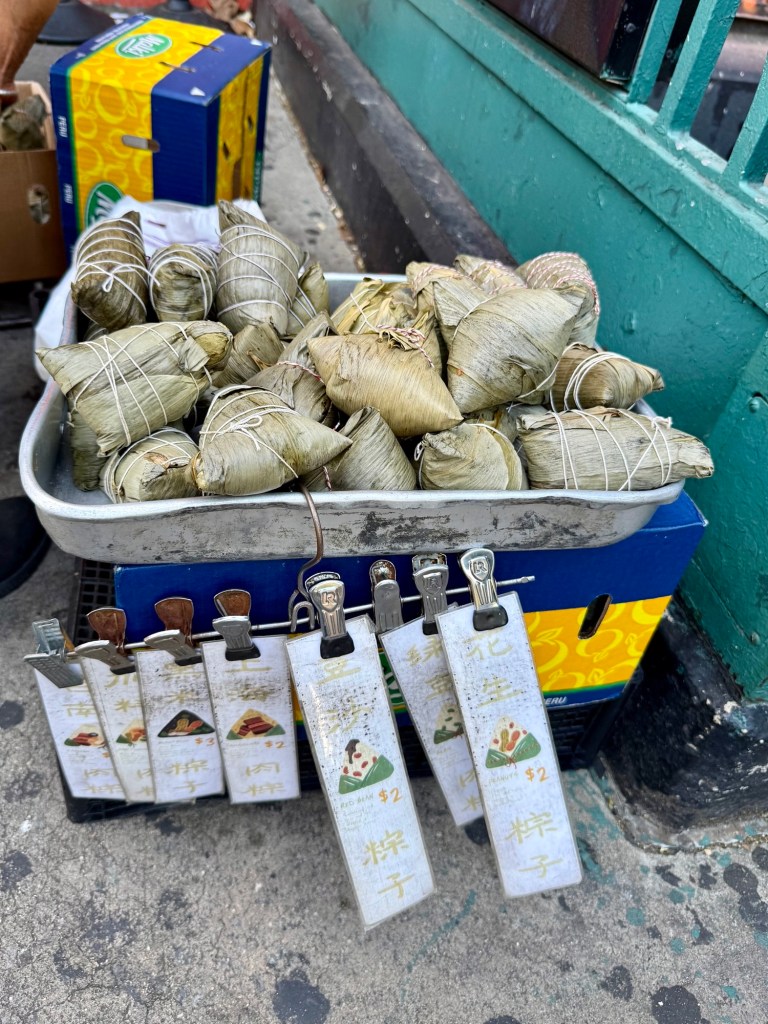
What to order: Taiwan-style zongzi/”rice dumpling”

If you’re unfamiliar with the classic Chinese staple food, Zongzi (or also known as Bah-chang in the hokkien dialect) is glutinous/sticky rice filled with a choice different ingredients all wrapped in bamboo leaves in the shape of a triangle prism. The fillings can be savoury (commonly pork belly, egg yolk, mushroom, peanuts) or sweet (commonly red bean or mung bean). The Zongzi should be warmed prior to eating – most commonly via steaming, but you can also unwrap it and microwave it if you’re feeling lazy to bust out the steamer.

Like a character from a studio Ghibli movie, the beloved elderly Zongzi/Bah-chang lady has been selling zongzi for over 2 decades outside of the Grand Street subway station at the intersection of Grand and Christie. Her husband and daughter in law makes the zongzi and she sells them. You can hear her siren call of “Baaaaah-chang!” rain or shine.

Her most popular savoury zongzi is the Taiwan style (represent!) and the most popular sweet zongzi is the red bean. She sells them at a great price at $3 per meat-filled zongi and $2 for the others. Cash only!

We first heard of this lady when we first moved to New York in early 2023 and stayed in an AirBnB a few blocks away from the Grand Street station and would often hear her “Baaah-Chang” call. Unfortunately our AirBnb wasn’t equipped with a kitchen so we never had a chance to try them until recently! I bought her two most popular types and they were indeed pretty good. There was a decent amount of filling and the texture of the sticky rice was perfect. Although I’ve had better, for the price she charges and the quality of the filling, it’s a pretty good Zongzi.

Here’s a Youtube interview I found if you want to find out more about her story: https://www.youtube.com/watch?v=cJCbypba4kM&t=386s

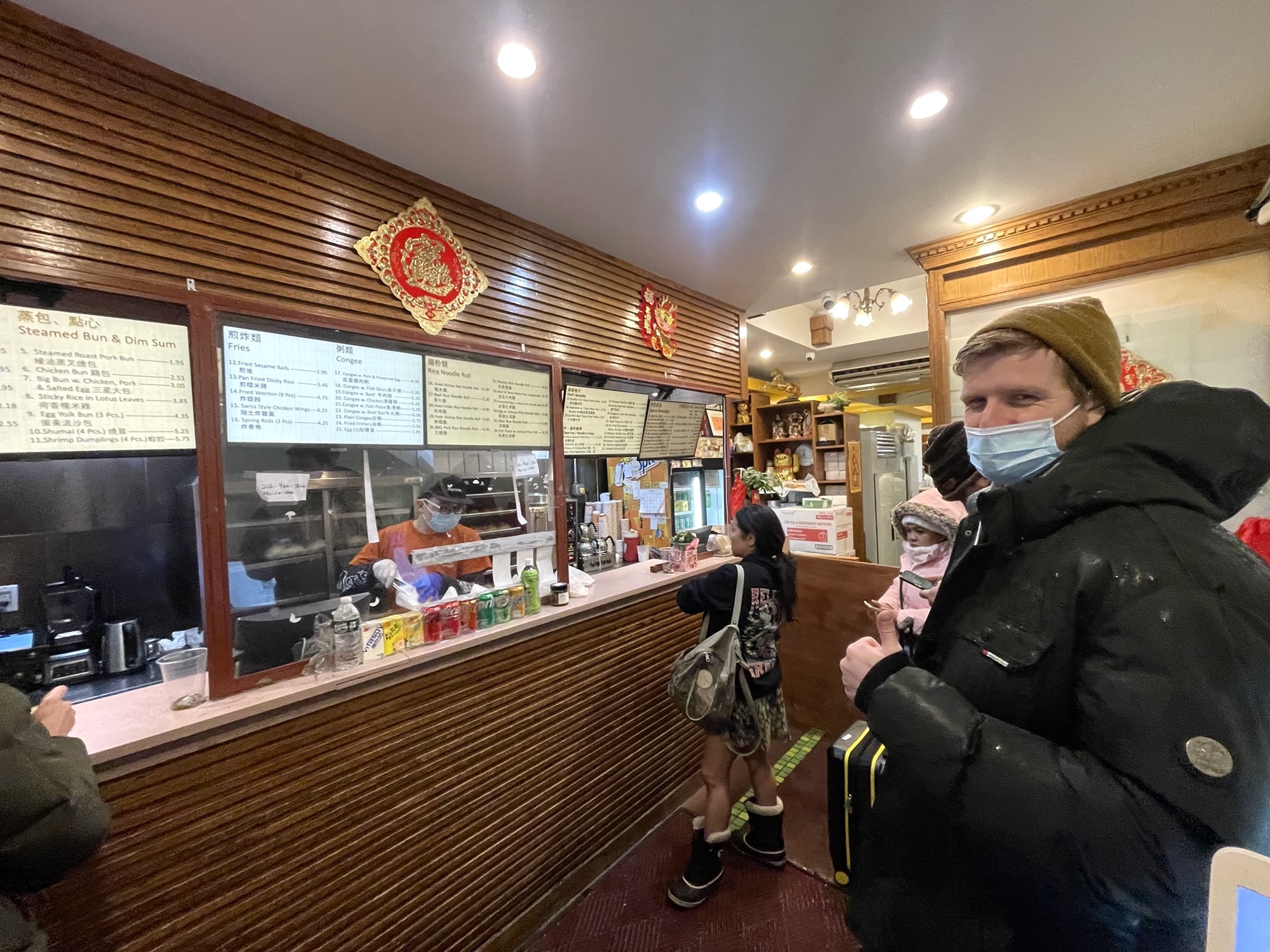
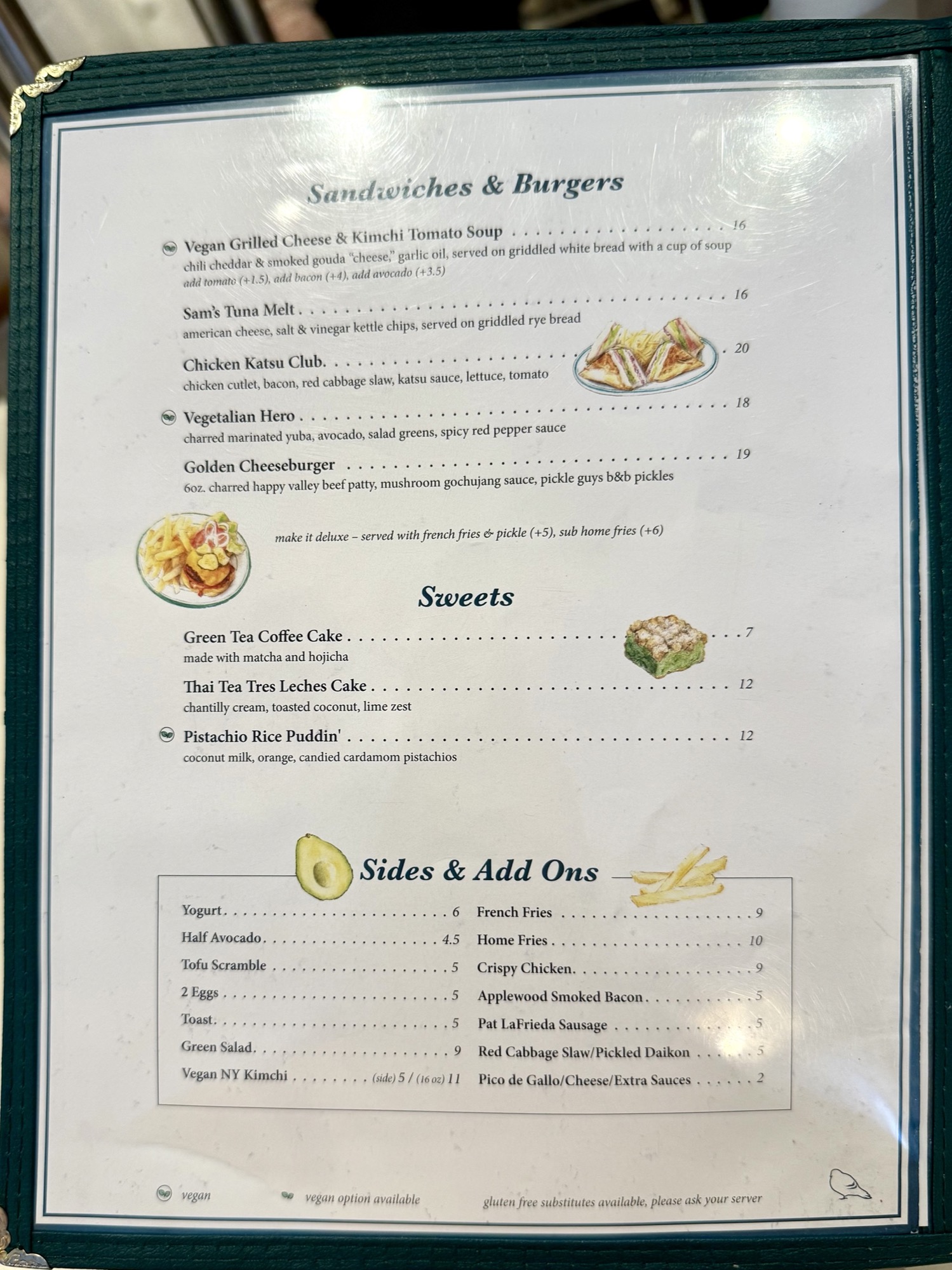
The menu

Address: 26 Pell St, New York, NY 10013
Hours: 5:30am – 5pm, daily
Website: none
Average spend per person: $10-$20 per person
What to order: dim sum, zong zi

Mee Sum Cafe is known as an OG local breakfast spot, open at 5:30am every single day and serves up traditional Chinese dishes including dim sum. If you’re looking for more Zong Zi (glutinous rice dumplings wrapped in leaves) recommendations, Mee Sum Cafe has a reputation for some great ones, offering up 7 different fillings. Unfortunately when we went, they only had 3 of their 7 kinds left, with the most popular ones sold out 😔. We didn’t have time to eat here so I bought a few frozen ones to go and tried it at home – it was just okay. Perhaps the ones that were sold out are much more worthy of their reputation 🤷🏻‍♀️. I debated whether or not to include them in this post since all I had was their Zongzi and wasn’t blown away, but due to their long standing reputation as an old school breakfast spot, I decided to include it so the rest of you can make your own decision on Mee Sum Cafe and also as a place marker to remind me to go back 🙃.

Address: 123 Madison St, New York, NY 10002
Hours: 10am – 10pm most days (10am – 3pm on Thursdays) – make reservations ahead!
Website: http://www.goldendinerny.com/
Average spend per person: $20-$30 per person
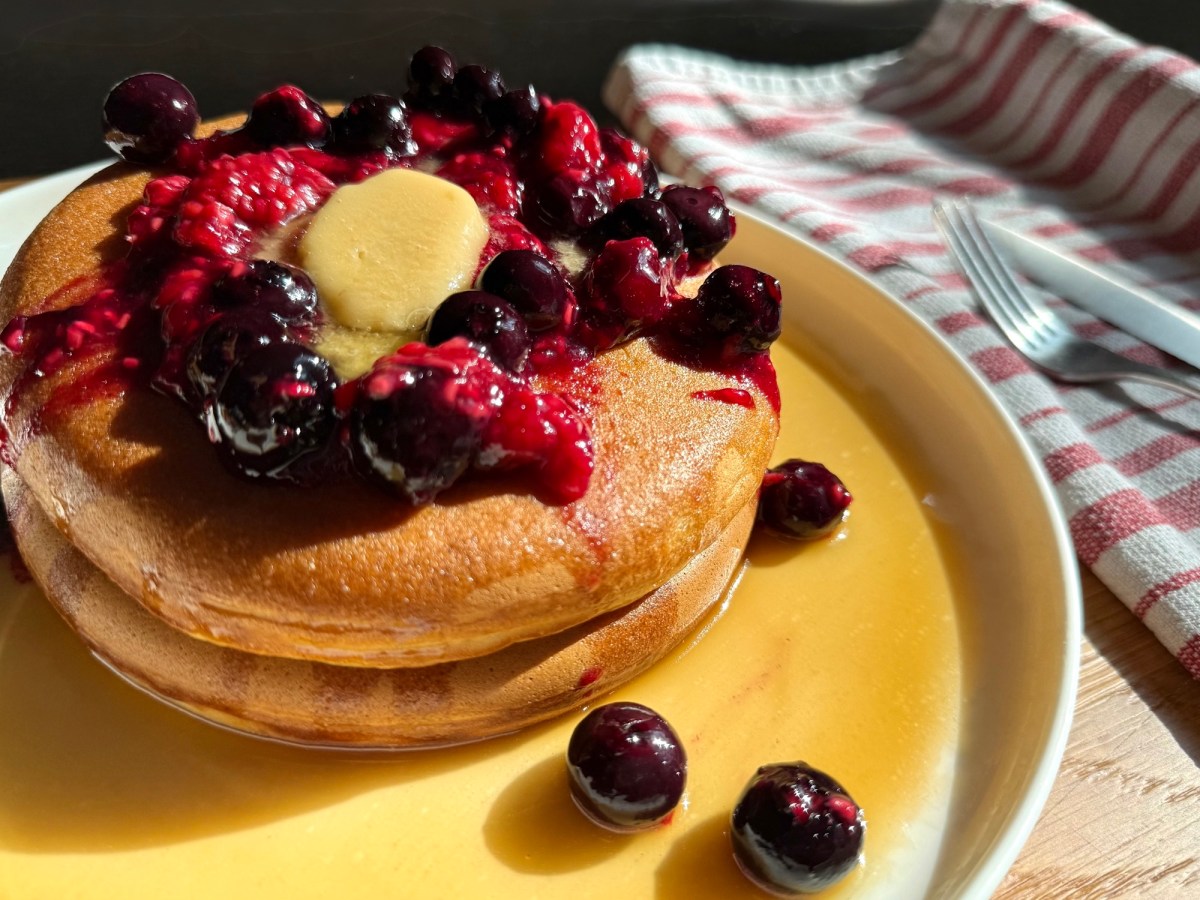
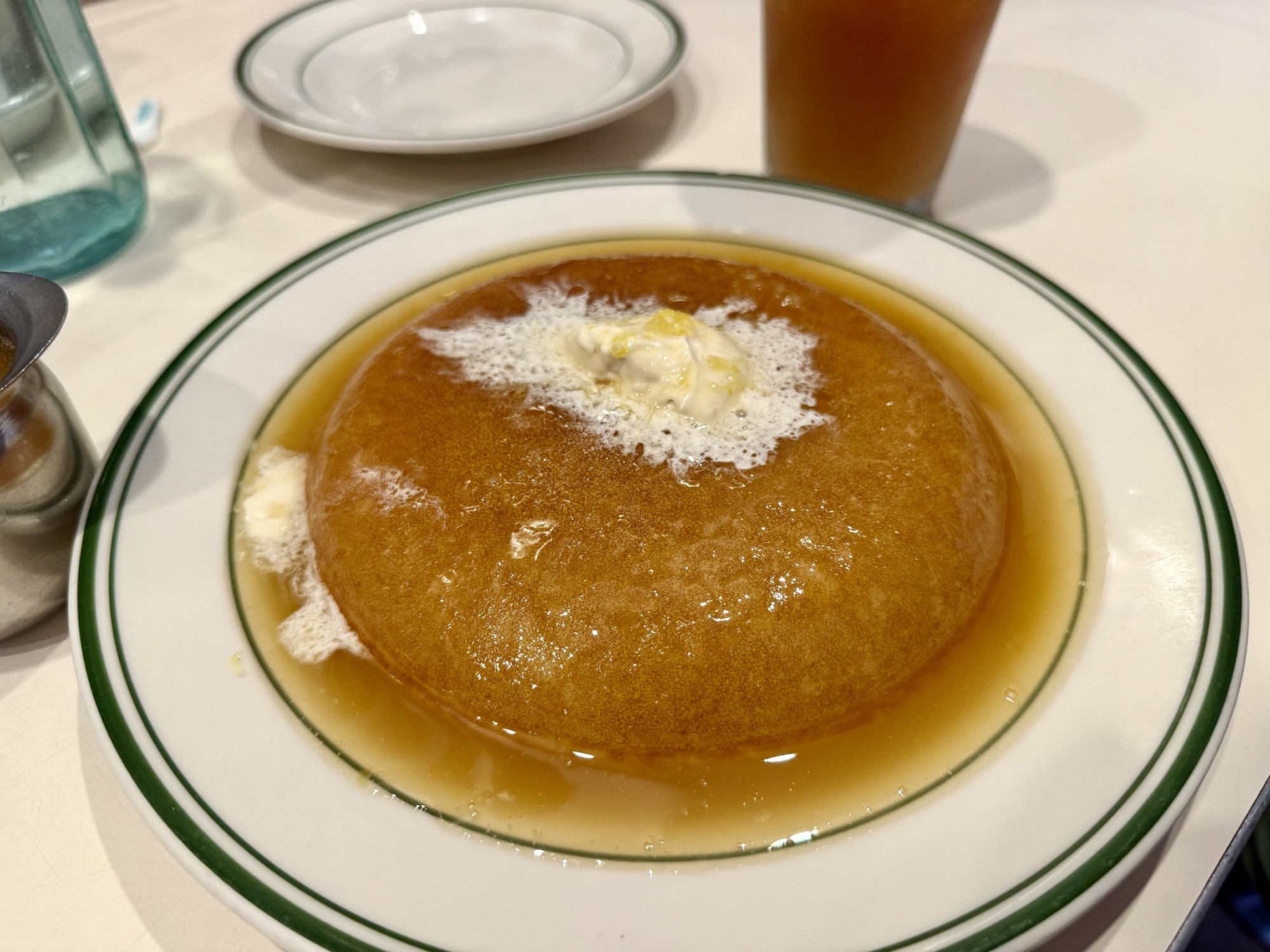
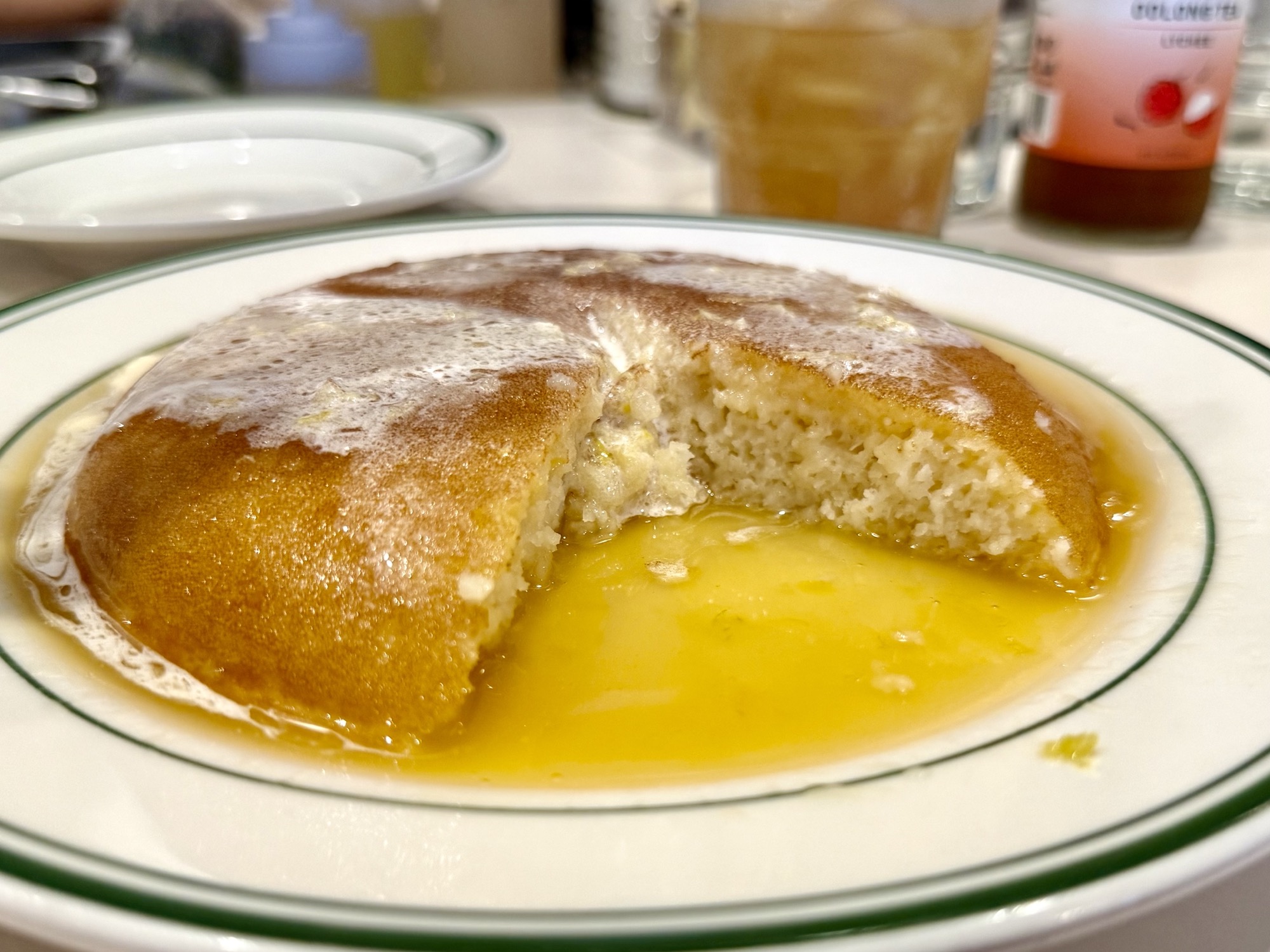
What to order: Honey Butter Pancakes

Tucked away deep into the non-touristy parts of Chinatown where you need to speak some type of Chinese dialect to order food, Golden Diner is an American-Asian fusion diner that adds a twist to classic comfort foods. You may have seen this diner featured on many Tik Tok and Instagram videos lately showcasing their viral Honey Butter Pancakes – a friend of mine from Canada actually sent me a video of this place which is how we came to find it. I’m not overly excited about pancakes in general, but I am OBSESSED with honey butter chips so of course we had to come and try it. It took two trains to get to this prickly part the lower east side and without reservations, it was a 1.5 hour wait for a table at the bar. I’m glad to report that their Honey Butter Pancakes were indeed worth it. The honey butter syrup really does taste just like the chips and the thick and fluffy pancakes was the perfect light texture to carry the heavy syrup. It comes in a single or double serving. I’d recommend the single – it’s quite heavy and after a while it can be a bit much if you don’t have a sweet tooth.

I’ve written up the recipe for these pancakes that you can check out below:

Golden Diner Honey Butter Pancakes


The Honey Butter Pancakes from Golden Diner in Manhattan are the latest viral sensation! This recipe shows you how to recreate these fluffy pancakes with the unique umami honey butter sauce and a berry compote. Be warned – these heavy but luxurious pancakes may send you into a food coma!

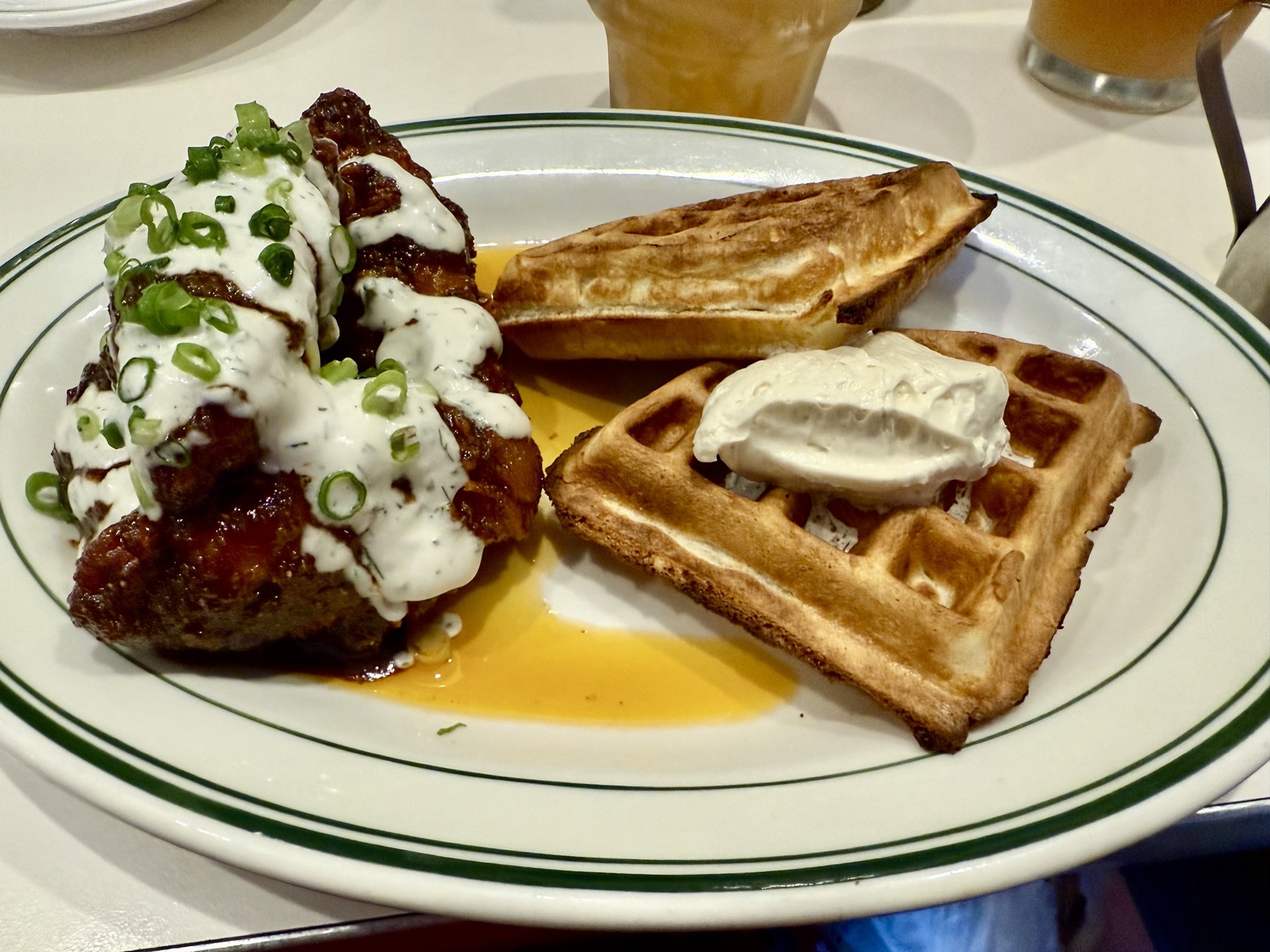
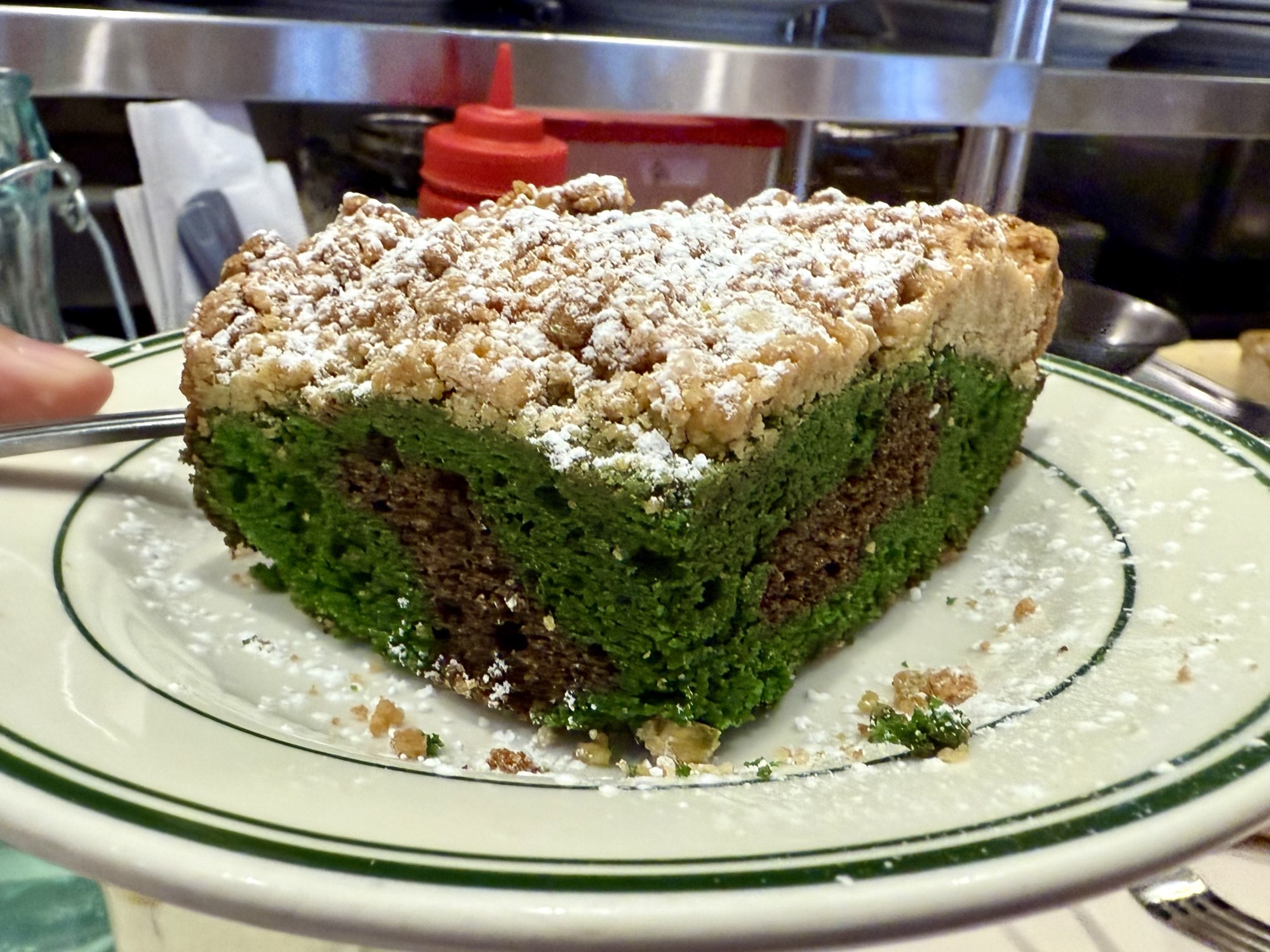
We ordered a few other things here that unfortunately fell short. We had their special of the day which was a asian/cumin fried chicken wings with waffles – way too much cumin and the waffles were dry, and the matcha/hojicha coffee cake which had good flavour, but unfortunately was also very dry.

All-in-all, the pancakes were definitely worth it if you like honey-butter chips, but the rest of the things we ordered fell short. If you plan on visiting, make sure you make a booking, or else it could be over an hour wait for a table!

I hope you enjoyed my list of Chinatown eats! Let me know in the comments if there’s a place you think I should include on this list!

Happy eating!
Abby

Looking For More Ultimate Food Guides? Check out these below!

The Ultimate Guide to Top Philly Cheesesteak Spots


This is my ultimate guide to Philly Cheesesteaks in Philadelphia! I’ve made it my personal mission to try as many popular cheesesteak spots as I can find through online research, word of mouth, and local reviews. This post is my personal take on these popular spots!

Legit Tonkotsu Ramen from scratch (in an Instant Pot)


Date Published: Mar 3rd, 2024 | Last Updated: Mar 3rd, 2024
Author: Abby |Category: Asian, mains, soups
Serves: 4-6 | Prep time: 12 hours before to marinate | Cook time: 4.5 hours total

Jump to recipe |

A tonkotsu ramen is my all time favourite thing to eat, so I’m extra excited to be sharing this recipe with everyone! It’s a beautiful bowl of a rich pork bone broth with noodles, chashu, and a ramen egg. No matter what is happening in my life, a tonkotsu ramen will always make it better. When Toby and I travel, I’m always seeking out the local ramen spots – I must’ve had over a hundred bowls of ramen in my life time…so far.

I’ve always wanted to try making a tonkotsu ramen, however due to its long 12 hour cooking time, it’s complexities (ramen shops will use a refractometer to check their broth!), and having to source pork bones on the move, it has constantly been on the back burner. I’ve searched time and time again for a simplified recipe and even went as far as buying instant tonkotsu ramen to satisfy the cravings, but I’ve never succeeded in finding anything that was close to restaurant quality – until now! Recently I stumbled across a ramen subreddit where u/ramen_lord posted his version of a tonkotsu ramen but made in an Instant Pot in 3 hours (find original recipe here)! This made it much less intimidating for me and I decided to try it out. Amazingly, the recipe turned out near perfect the first time and after the second time, Toby said it was the best tonkotsu ramen he’s ever had. It was THAT good! If you’re ever reading this, thank you u/ramen_lord! (If you check out the original link, he also gives a recipe at making your own ramen noodles.)

Although it is a long recipe, each step and component is pretty easy and straightforward, so I’d encourage you to give it a try if you’re a ramen lover like me!

What Makes up a Tonkotsu Ramen?

A traditional tonkotsu ramen is made up of 6 major components, and yes, all of them are included in this very thorough monster recipe!

1. Chashu – pork belly slices

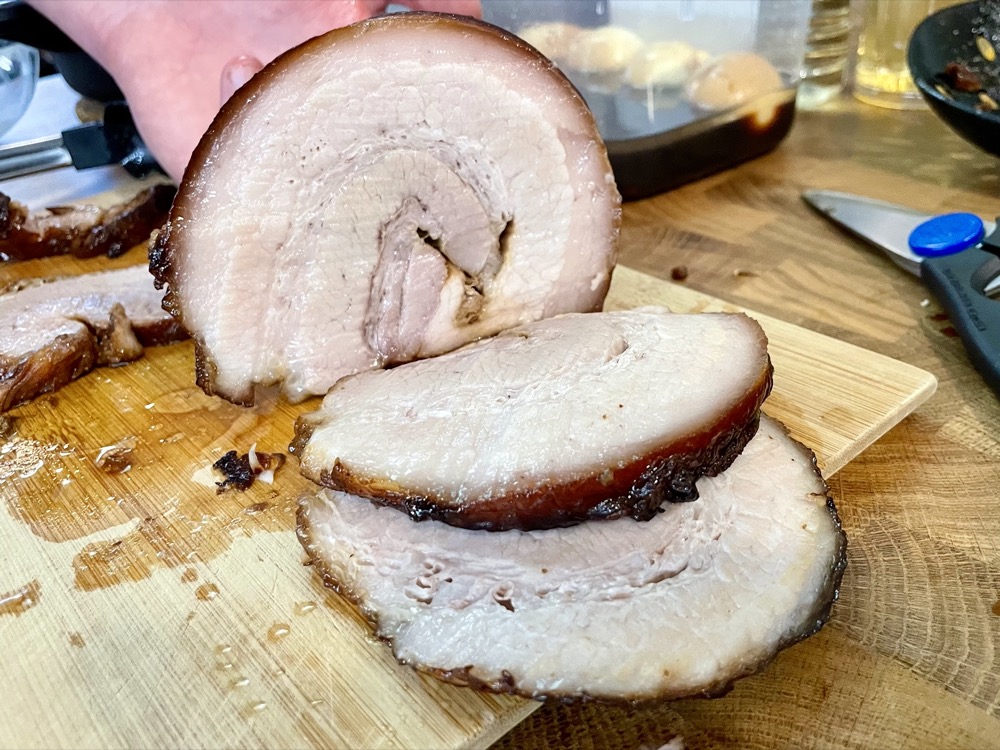
Chashu is a Japanese-style savoury pork belly that is braised the day before and marinated overnight. This is the main protein of the dish. Due to its fatty richness, it is usually served in thin slices and in small portions. This recipe will make about 2-3 slices per bowl. If you’re big on pork belly, then double the chashu portion of the recipe!

Note: Japanese chashu differs from the Chinese-style Charsiu which is barbecue pork rather than braised pork.

2. Ramen egg – a marinated boiled egg with a perfectly soft jammy centre

A ramen egg is a specific style of egg served in a bowl of ramen. It is always soft to medium-boiled to ensure a jammy velvety centre then marinated in a savoury sauce – I marinate mine in the chashu marinade overnight. Make sure you have a timer ready when you cook the eggs to ensure the perfect soft centre.

The ramen egg is always my favourite part of a bowl of ramen (my family would agree with me). For some reason, Toby is not a huge fan of eggs in general, so every time we go out for ramen he always gives me his egg! Lucky me 😊🙃❤️.

3. Tonkotsu broth – a rich and creamy pork bone broth

This is the star of the show. “Tonkotsu” literally translates to “pork bone”, which adequately names this ramen dish. The traditional method of making a tonkotsu broth is to boil the pork bones on high heat for 12 hours then add in aromatics. It is a long and arduous process which is why I’ve avoided making this recipe for so long. This recipe uses the Instant Pot pressure cooker to bring down the cook time to just 3 hours and produces restaurant-quality results!

A classic tonkotsu broth is creamy and rich due to the breakdown of the gelatin in the pork bones. Some recipes will blend pork fat and add it to the broth to make it even more creamy. For the sake of my cholesterol, there is no extra blended fat in this recipe. The broth here is just as good without it.

The colour of a tonkotsu broth should be opaque and milky white. Traditionally the pork bones are cleaned thoroughly by boiling them and removing the scum that is released and then scrubbing them clean before the broth is even started. Many purists out there will insist that you must clean the bones this way or else your broth will never be white. My first time making this recipe I cleaned the bones this way. Although it took extra time, it did produce a white broth. However after further research, I realized that you can also just roast the bones in the oven rather than scrubbing them clean and you still get the same results but with much less work. I tried it both ways and the results were quite similar. The oven roasting method produced a very slightly darker broth, however I’m sure that if I blended more of it in the blender, the results would be the same. Myth busted!
*Note: Tonkotsu is not to be confused with “tonkatsu” which is a breaded and fried pork cutlet

4. Tare – the flavour enhancer/salt of the dish

The tonkotsu broth alone lacks salt and umami flavour but when combined with the tare, it makes the perfect broth. Tare differs greatly between ramen shops and even between chefs. It can range from a simple mix of sauces to an incredibly complex recipe. It’s a chef’s signature to make a dish uniquely theirs. This recipe is a simplified version that’s essentially soy sauce marinated with mushrooms, seaweed, and dried fish.

5. Ramen noodles

Ramen noodles are different than regular noodles. They are alkaline and has a distinct taste with a slight chewy/bounce texture. To stay true to the authenticity of a tonkotsu ramen, I’d recommend taking the extra effort to find ramen noodles – you’re putting in all this effort to make it all from scratch anyway!

When looking for ramen noodles, try to buy them either freshly made or in the frozen section. Avoid the dehydrated dried noodles that are labeled as ‘ramen noodles’ – I’ve tried a few different kinds in the past and they’re just not the same.

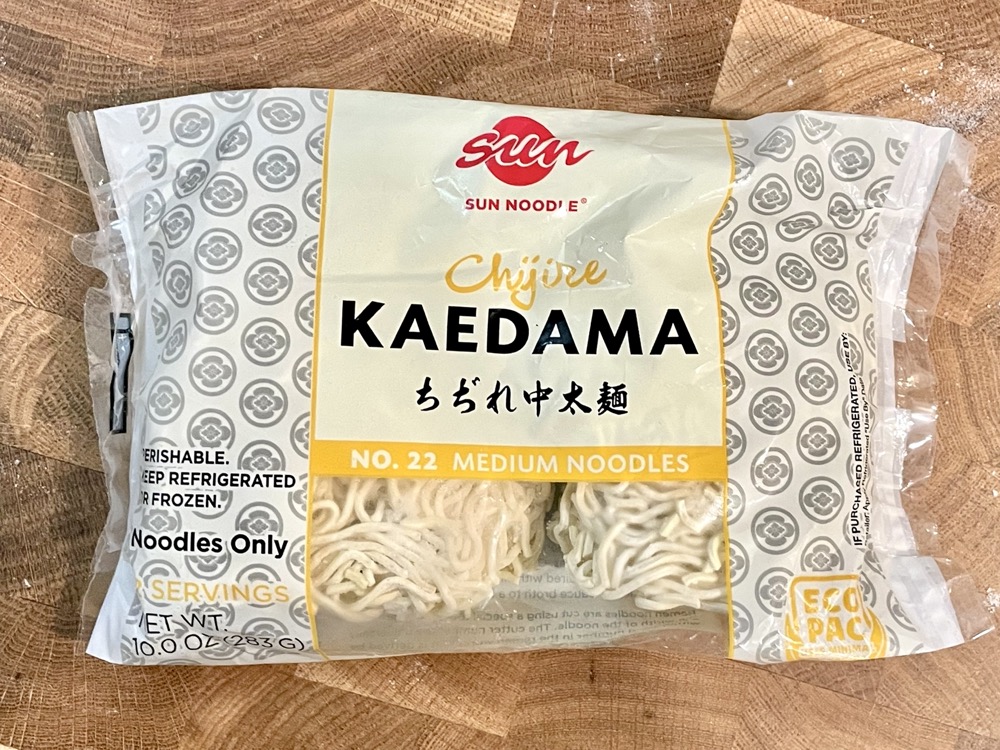
My favourite ramen noodles are made from Sun Noodle and they come in medium or thick noodles (see picture). This one package has 2 servings – it doesn’t seem like much, but it definitely expands when cooking!

Myojo is another brand of ramen noodles I’ve heard good things about, but never tried myself.

6. Toppings

There is a wide variety of toppings you can add to your ramen. I’ve put some examples in the recipe below, but feel free to add in whatever you like. Different restaurants will have different offerings of what you can add – it all depends on personal preference. A few examples of toppings include: bean sprouts, corn, seaweed, sliced wood ear fungus, fresh garlic, chili paste, chopped green onion…etc.

Anyways, without further ado, here’s the recipe! If you have any comments or suggestions, I’d love to hear from you in the comment section! You can follow me on instagram, youtube and facebook to see all the recipes I post!

Happy cooking!

Equipment you’ll need:

  • Pressure cooker (at least 8 quarts in size)
  • Cooking twine
  • Small pot with lid/saucepan

Ingredients you’ll need:

  • Chashu (Pork Belly): MAKE THE DAY BEFORE
    • 500g (1.5lbs) pork belly with the skin on or off – this will be enough for 2-3 slices per portion. Feel free to double the chashu recipe if you want to serve more.
    • 1 cup water
    • 1/2 cup Japanese soy sauce (ie. Kikkoman)
    • 1/4 cup mirin
    • 2 Tbsps brown sugar
    • 2 garlic cloves, smashed
  • Ramen Egg: MAKE THE DAY BEFORE
    • 4-6 eggs (depending on how many people you’re serving)
  • Broth:
    • 1kg (2 lbs) pork neck bones (you want some meat to be attached to the bones for extra flavour)
    • 1kg (2 lbs) pork femur bones (make sure the larger leg bones are split so the bone marrow is exposed) – if you can’t find femur bones, you can use all neck bones
    • 12 cloves of garlic, peeled and smashed
    • 1 small brown onion, peeled and quartered
    • 4cm piece of ginger, sliced (don’t worry about peeling it)
    • 2 green onions, cut into thirds
  • Tare:
    • 1/2 cup (120ml) water
    • 1.5 Tbsps (25ml) mirin
    • 1 Tbsp (15ml) sake
    • 4g kombu (dried kelp)
    • 3g dried porcini mushrooms
    • 3g sababushi/dried mackerel, or katsuobushi/bonito flakes, or niboshi/dried anchovies – I had a difficulty sourcing these in my neighbourhood, so any of these will work to give it an umami fishy flavour
    • 1/2 cup (120ml) Japanese soy sauce (ie. Kikkoman)
    • 2.5 tsps (15g) kosher salt
    • 1.5 tsps (5g) brown sugar
  • 4-6 portions of ramen noodles, premade
  • Additional Toppings (optional):
    • Sliced green onion
    • Wood ear mushrooms
    • Seaweed
    • Bean sprouts

Directions:

THE DAY BEFORE:

A) Make the chashu:

Make sure the pork belly is at room temperature (take it out of the fridge at least 30mins prior).

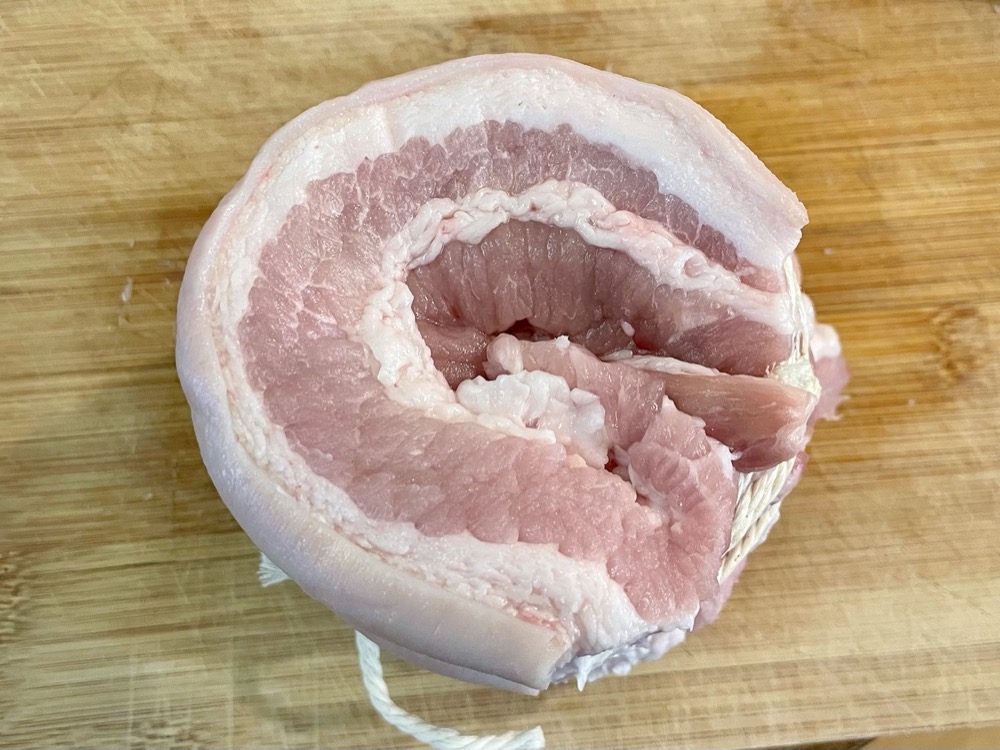
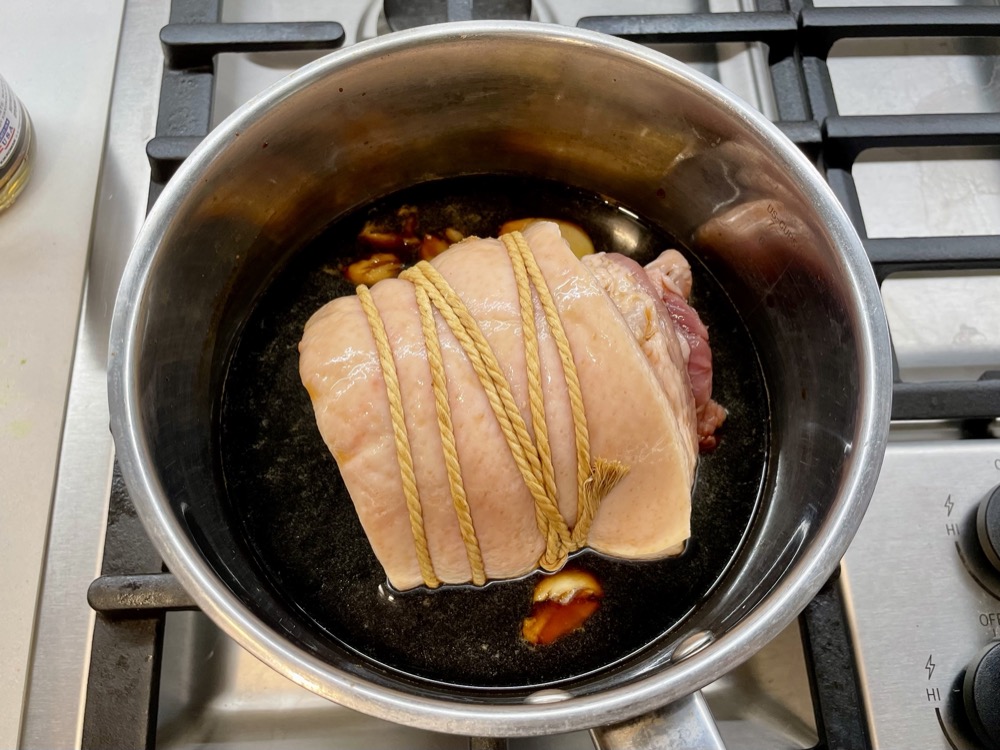
Roll the pork belly into a cylinder with the layers visible on the side (see photo) and tie tightly with cooking twine so it stays in shape.

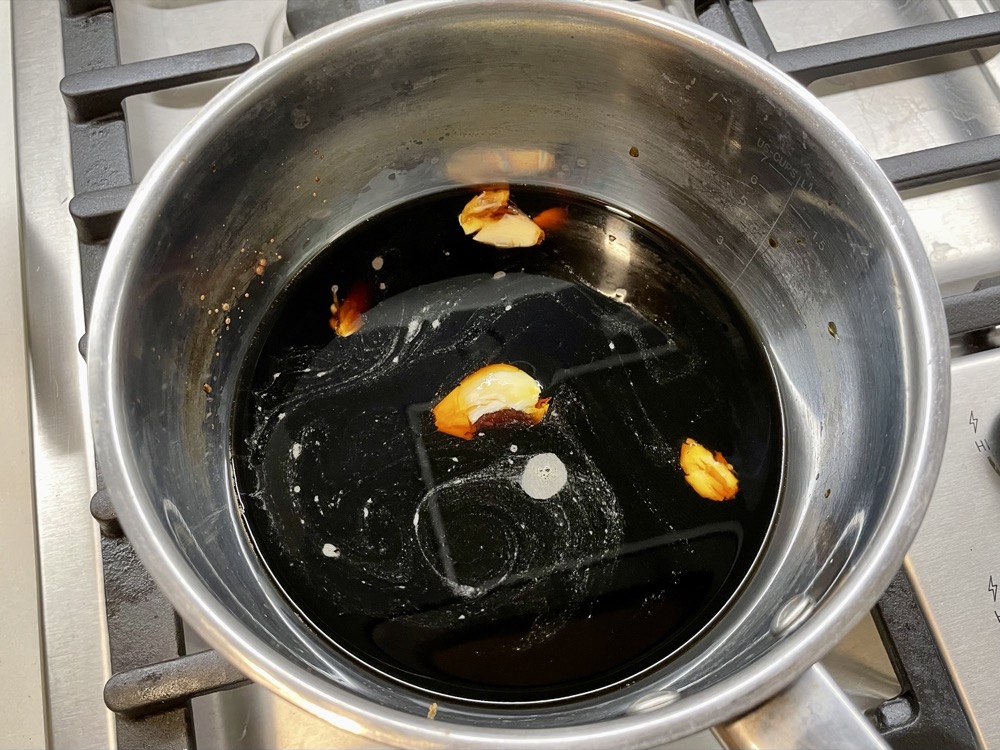
Take out a saucepan with a lid and add in the rest of the the chashu ingredients: water, soy sauce, mirin, brown sugar, garlic. Place the tied up pork belly in the middle of the saucepan.

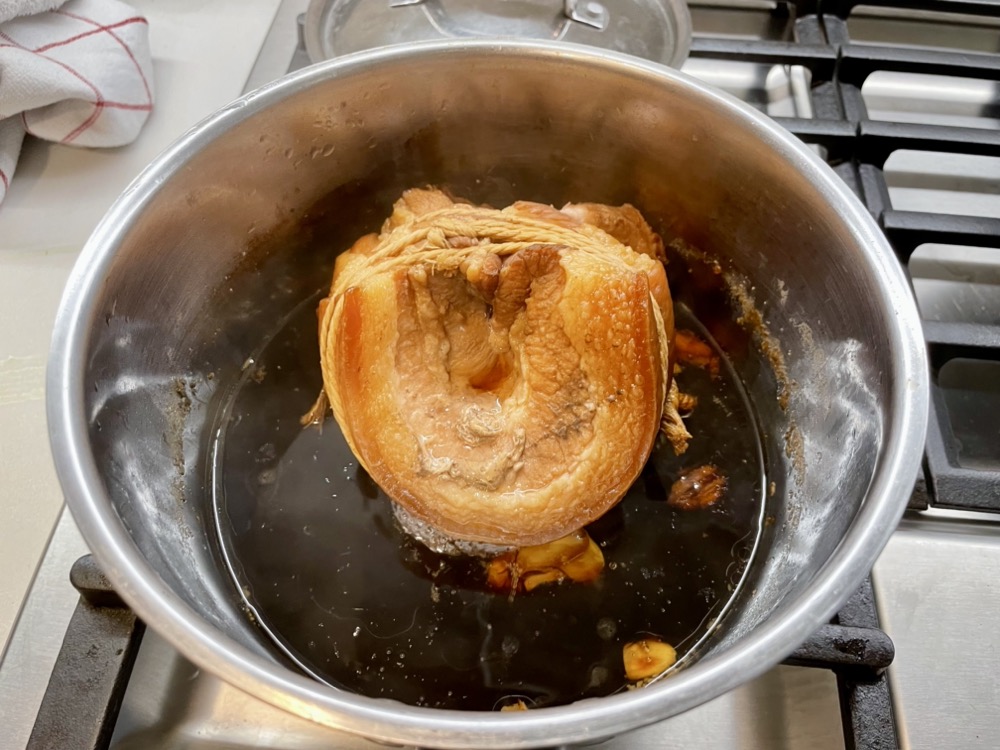
Turn the heat on to HIGH and let the sauce come to a boil, then turn the heat down to LOW and let it simmer with the lid on for 90 minutes. Turn the pork belly every 20 minutes so it gets evenly braised in the sauce.

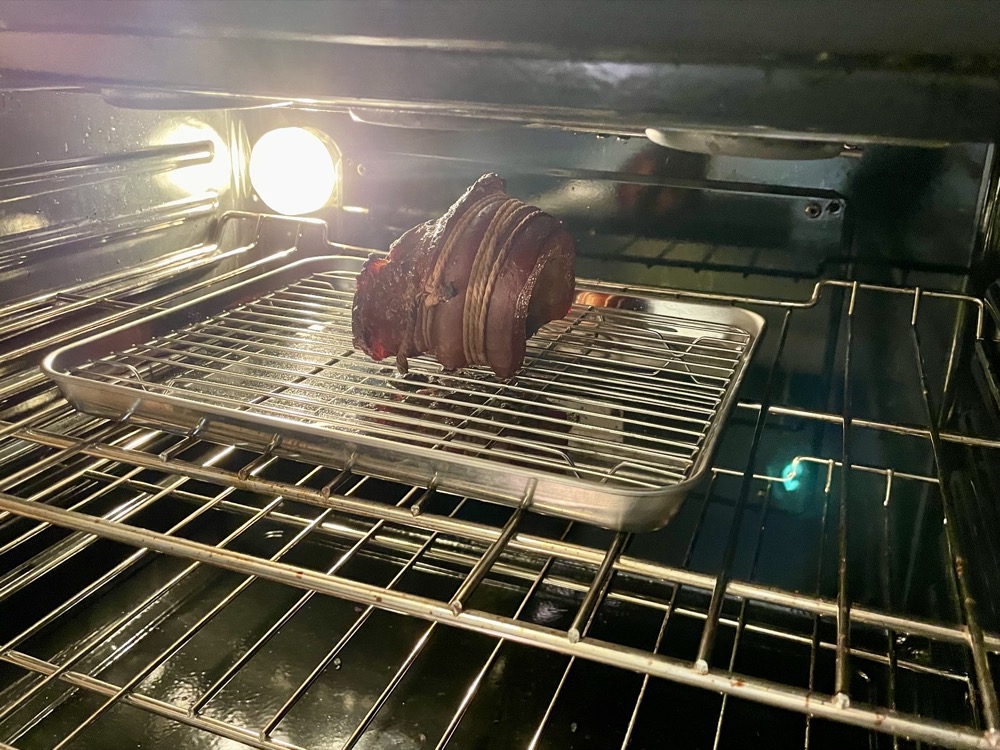
When there’s 20 minutes left to your cook time, preheat your oven to 220˚C (425˚F) and prepare a baking tray with a wire rack.

Once the 90 minutes is up, turn off the heat and take out the pork belly (keeping the remaining sauce aside) and place it on the rack over a baking tray and roast in the preheated oven for 8-10 minutes, or until the outside is a dark caramel colour.

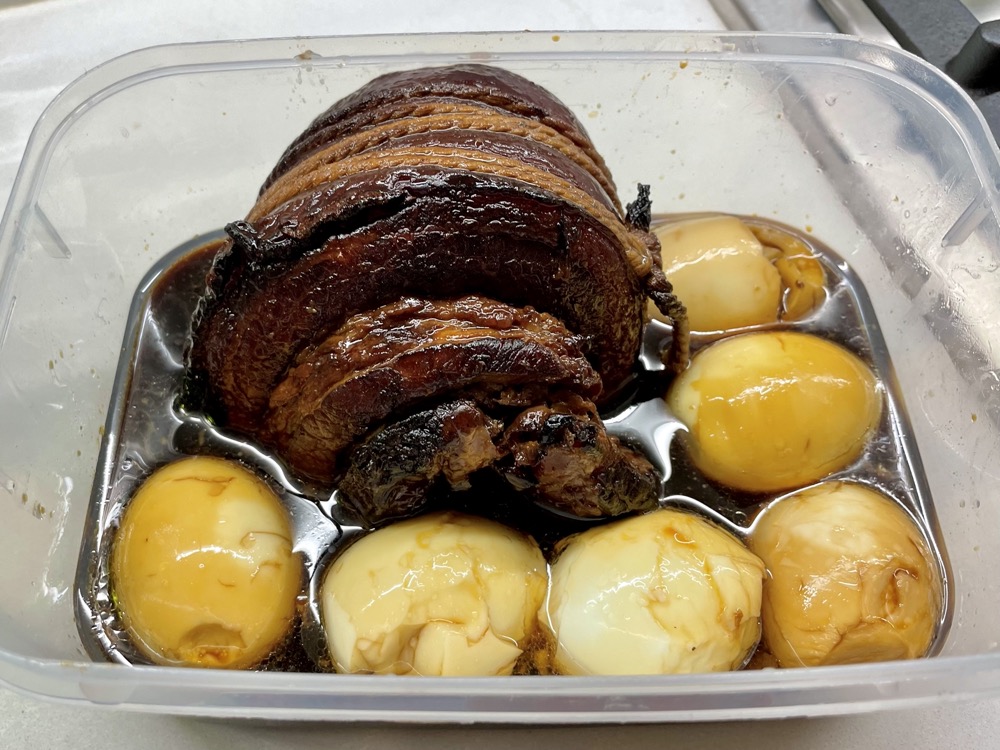
When the pork belly is done, take it out of the oven and place it in a heat-proof container (make sure there’s enough room for the eggs as well). Pour the leftover sauce over and let the pork belly marinate in the sauce overnight. If the marinade doesn’t surround the pork belly, either use a smaller container or turn the pork belly halfway through for even marination. A vacuum-sealed plastic bag works well as well.

Vacuum-seal bags will help marinate it better by allowing the sauce to surround the meat and eggs

B) Make the ramen eggs: (you can do this step while you’re waiting for the pork belly to cook)

Bring a small pot of water to boil. Gently lower all 4 eggs into the boiling water and start a timer for 7 minutes. Adjust the heat if the water is boiling too rapidly to avoid the eggs from knocking around in the pot.

While you’re waiting, prepare an ice bath for the eggs. Once the timer is up, turn off the heat and immediately submerge all the eggs into the ice bath. Once the eggs are cool enough to handle, remove all of the shells.

Place the peeled boiled eggs into the same container as the pork belly and marinate together overnight. If the sauce does not surround the egg, turn the eggs halfway through for even marination. A vacuum-sealed plastic bag works well as well. Do not marinate for longer than 2-3 days or else the egg will become too salty.

THE DAY OF:

C) Make the tonkotsu broth:

Preheat oven to 220˚C (425˚F)

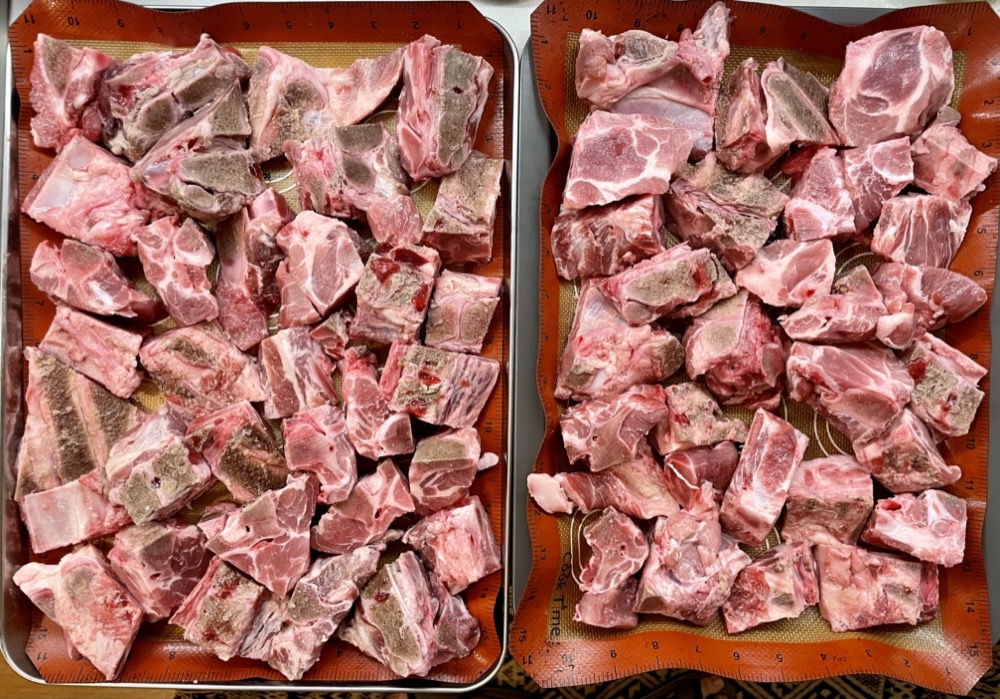
Roast the bones: Prepare a large lined baking tray. Rinse the pork bones and place them all in one layer of the tray (do not overlap the bones). Use a second tray if they don’t all fit into one. Roast in the preheated oven for 40 minutes, turning the bones once halfway through the cook time. After 40 minutes, turn off the oven. You should have a dark brown char on the bones.

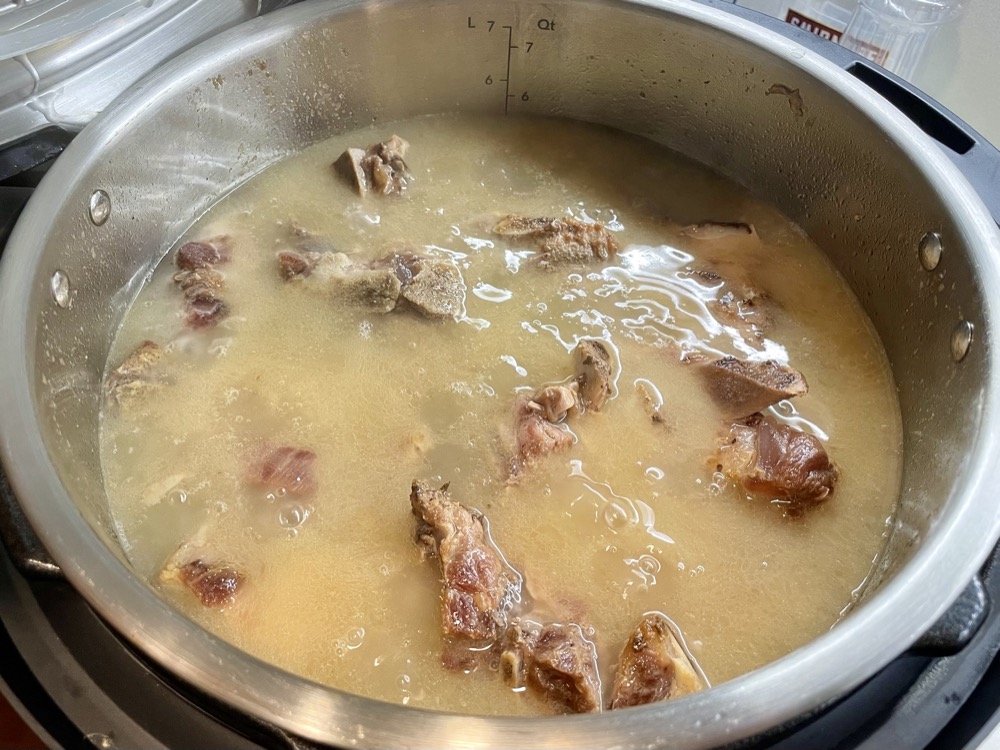
Cook the broth: Place the roasted bones along with any browned bits or liquids from the tray (these will add extra flavour) into your Instant Pot. Add enough water to cover the bones by 2-3cm (roughly 3 litres). Turn the Instant Pot on to a sauté setting and set the heat to HIGH. Once the water comes to a boil, cancel the setting and put the lid on. Turn on the pressure cook setting to HIGH and cook for 2 hours. (You can start making the tare or prepare any additional toppings during this time as you wait.) When the timer finishes, quick release the pressure – be careful of any spurting of liquids from the vent! When it is safe to do so, remove the lid carefully.

Add in aromatics & free the bone marrow: Add in garlic, ginger, green onion and onion into the broth. Use a chopstick and scrape out any bone marrow from the bones and let the marrow boil freely in the soup alongside the bones.

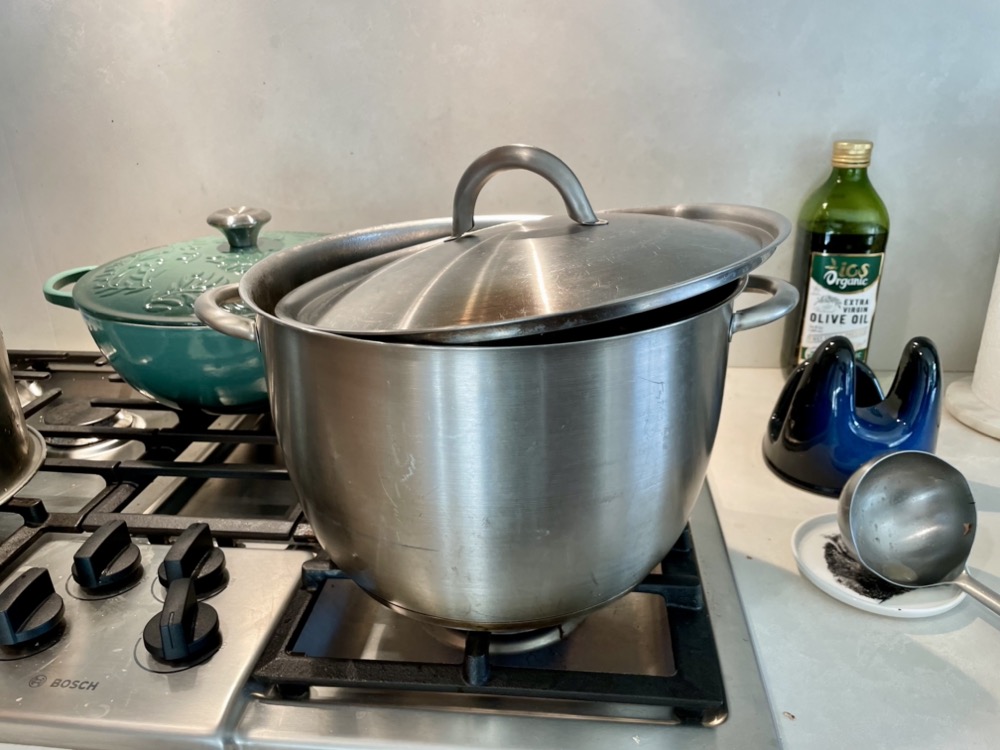
Boiling the broth for the final hour – lid on or lid off will depend on how rich it is after the Instant Pot

Taste for richness and Reduce (if needed): At this point the broth will taste quite bland since there as been no added salt and the aromatics were just introduced. Ignore the need to want to add in salt right now – it will come later. You want to taste for the texture of the broth, not the flavour. How creamy your broth is at this stage will dictate how you cook down your broth (the texture will vary greatly depending on the mix of bones you started with – it varies every time I make it):

If your broth is watery: turn on the sauté setting on the Instant Pot and set to MED heat so the soup boils moderately. Let it boil uncovered for 1 hour to reduce the broth and increase in concentration/richness. Taste at the end of 1 hour – you can let it boil for longer if needed.

If your broth is rich & creamy: add a lid on to the Instant Pot (or transfer to a regular soup pot with a lid) and let the soup boil on MED heat for 1 hour to release the flavour of the aromatics but to still contain all the liquid.

You will need to boil the broth for 1 hour regardless of how rich your broth is. The difference is whether you keep the lid on or off to control how much liquid is evaporated. If you’re unsure, then start boiling without a lid, then taste after 30 minutes, or have the lid half-on so it only reduces slightly. Once your broth is rich enough then put the lid on and finish boiling until the 1 hour timer is up.

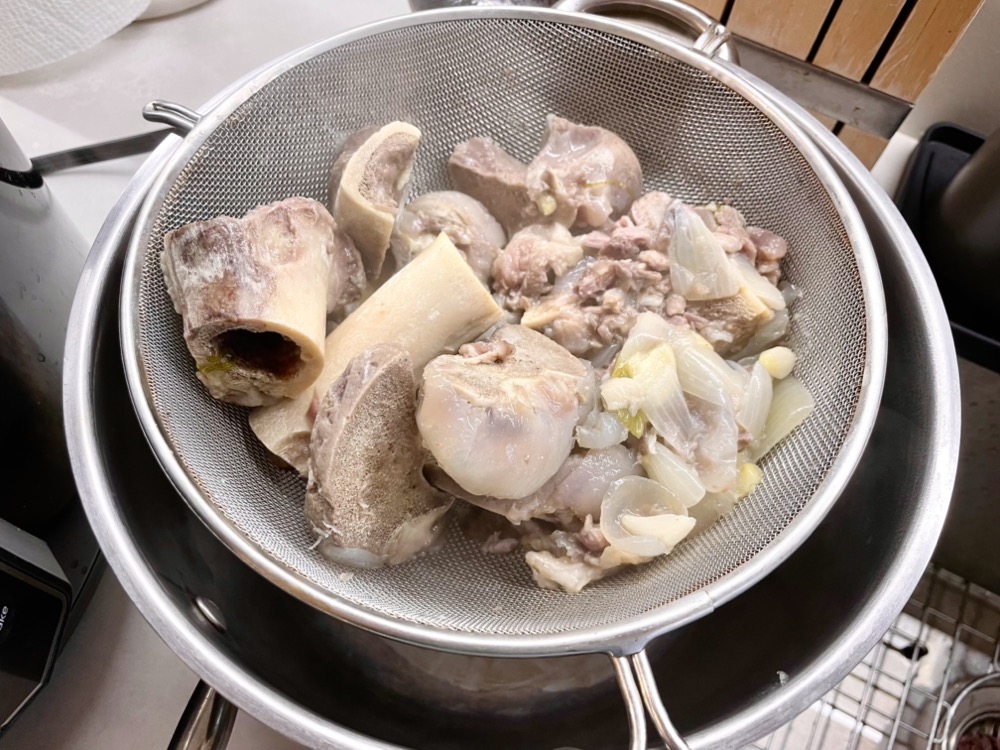
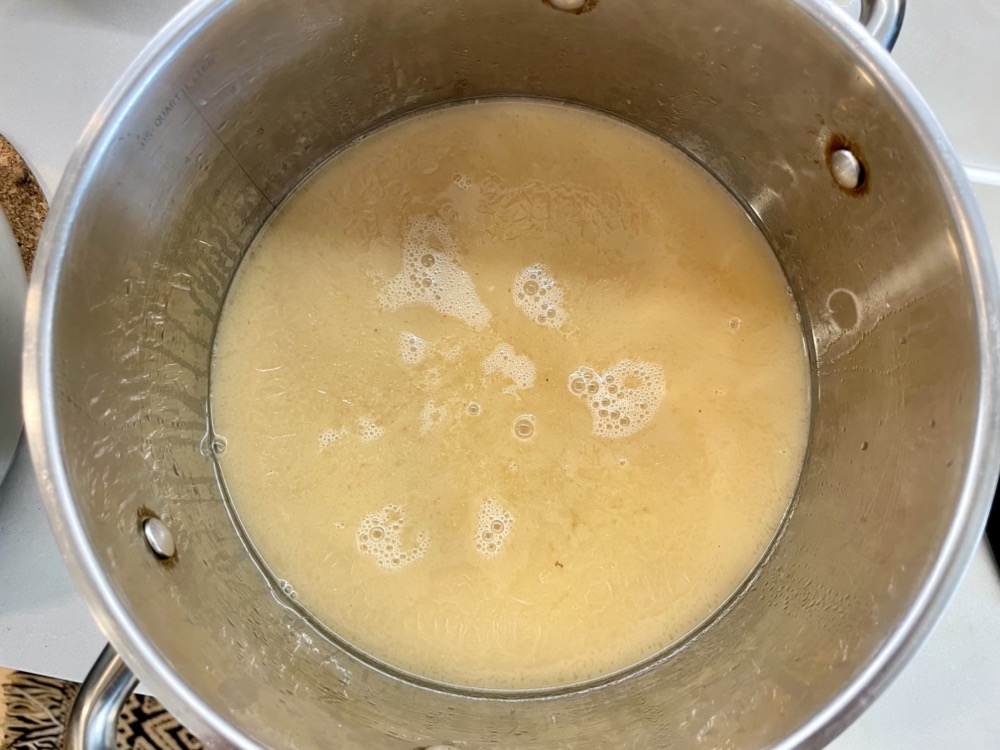
Strain: After an hour, turn off the heat and strain the broth into a clean pot. Discard the bones, aromatics, and any floaters that you have strained out. You should now have a pale brown opaque broth. Do not worry if your broth is not a lighter colour – it will lighten up in the next step.

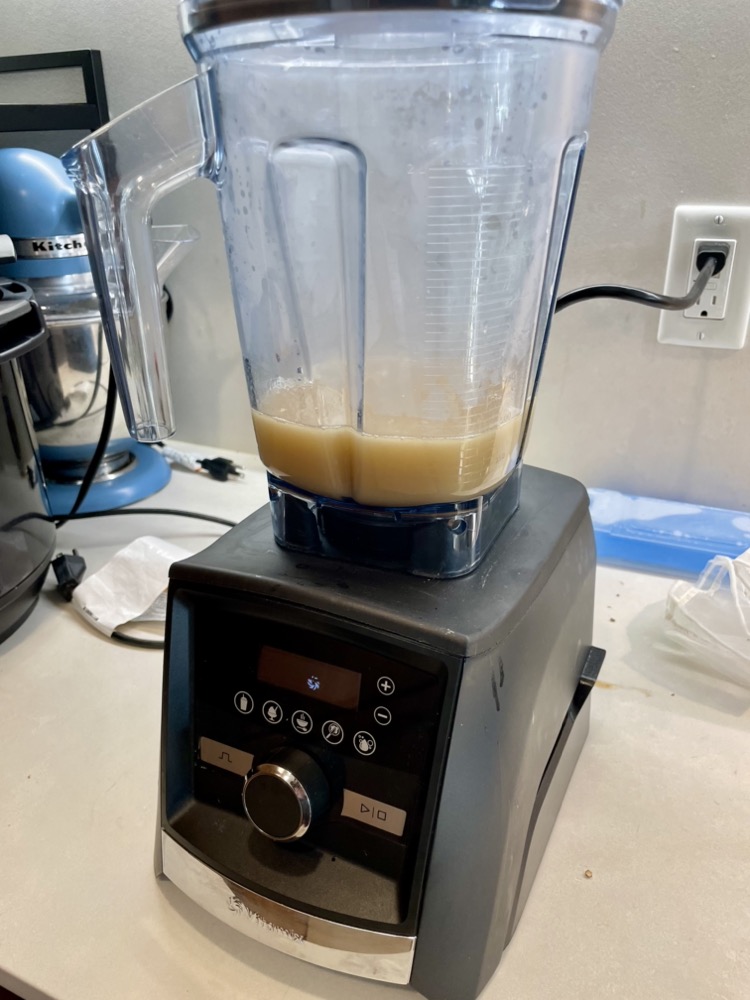
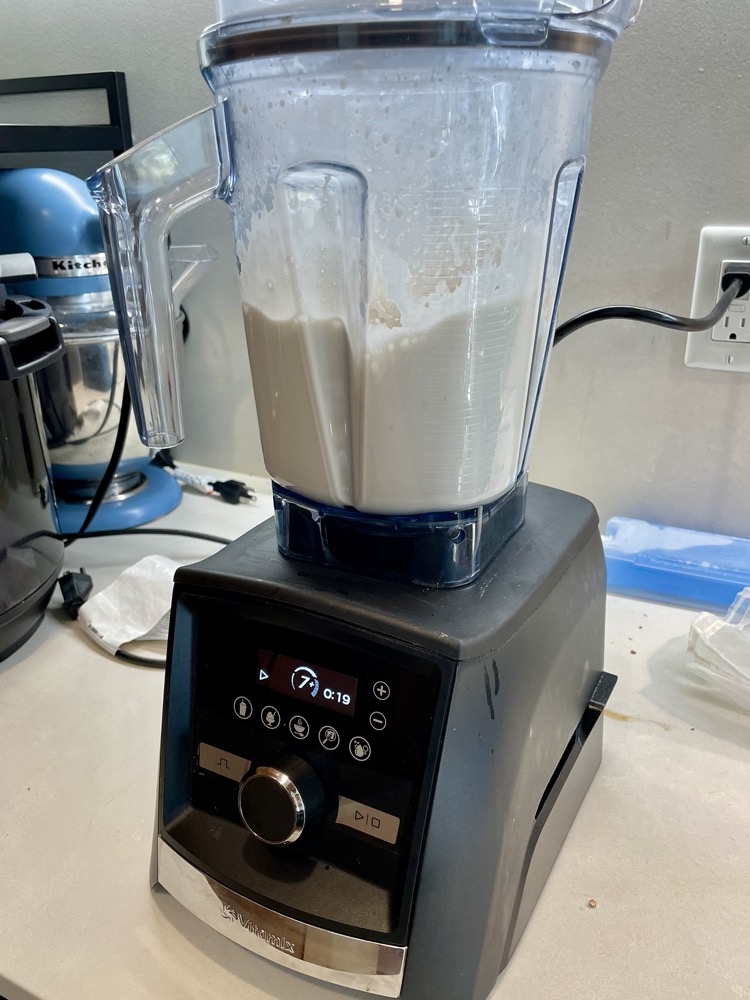
Blend – the magic step that makes the broth extra creamy and white: Remove roughly a quarter of the amount of broth into a blender and blend it on HIGH until you get a very smooth, white, and creamy texture. Add this back into the rest of the broth and mix well. Taste again for the texture.

If you find that it is too creamy, add hot water a cup at a time until desired consistency.

If you want it creamer and whiter, add more broth into the blender and blend again on HIGH and add it back into the broth until desired consistency.

Resist the urge to add salt – the final taste test will be at the end with the combination of the tare (salty goodness) with with broth together. The tonkotsu broth is now complete! If you still need more time to prepare the rest of the toppings or tare, then keep the soup on low heat to keep it hot until ready to serve.

D) Make the tare: (do this while you’re waiting for the broth to cook)

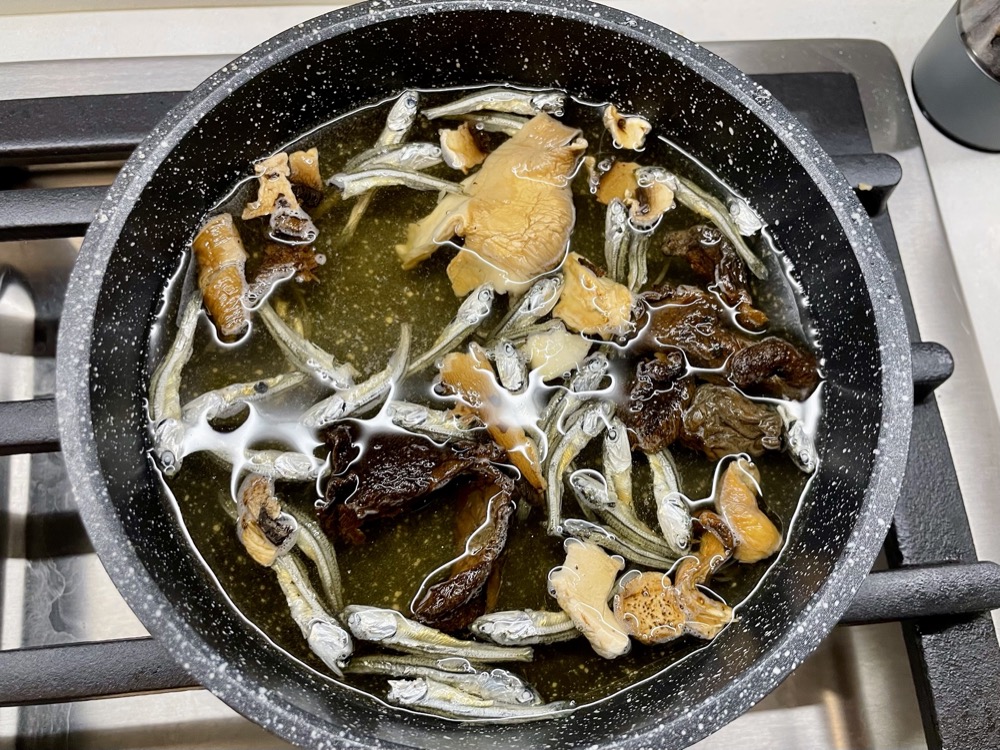
In a small pan, add the water, mirin, sake, kombu, porcini, and sababushi. Turn the heat on to HIGH. When it starts to boil, turn the heat off and let it steep for 30 minutes.

After 30 minutes, remove the kombu, add in the soy sauce, salt, sugar, and MSG. Whisk until dissolved. Turn the heat back on to HIGH until it starts to boil, then turn it off again and let it steep for at least 30 minutes. Strain before using. You can store this in the fridge for up to 6 months.

E) Cook the noodles, prepare the rest of the toppings: (you can do this in the final 10-15 minutes of your broth cooking)

Chashu and ramen egg: Remove the twine from the chashu and thinly slice it while still chilled (it will be easier to get neater cuts). Cut each egg in half to reveal the jammy egg yolk centre. Set aside.

Noodles: Cook the noodles according to package instructions and strain when finished.

Wood ear mushrooms: Soak the wood ear mushrooms in a bowl of boiling hot water for at least 15 minutes or until softened and expanded. Remove from the water, rinse, and slice. Set aside.

Green onion: Thinly slice one green onion for garnish. Set aside.

Seaweed: Cut your seaweed to desired sizes for serving.

F) Assemble the ramen: (finally!)

Divide the noodles equally into the serving bowls if not done so already.

Add 2 ladles of the tonkotsu broth over the noodles. Top with sliced chashu, ramen egg, wood ear mushrooms, seaweed, and green onion to garnish. Add a 3 tablespoons of tare over top (or more if you prefer it saltier). ENJOY!

Summarized Recipe:

Legit Tonkotsu Ramen from scratch (in an Instant Pot)

Date Published: Mar 3rd, 2024 | Last Updated: Mar 3rd, 2024
Author: Abby |Category: Asian, mains, soups
Serves: 4-6 | Prep time: 12 hours before to marinate | Cook time: 4.5 hours total

Equipment you’ll need:

  • Pressure cooker (at least 8 quarts in size)
  • Cooking twine
  • Small pot with lid/saucepan

Ingredients you’ll need:

  • Chashu (Pork Belly): MAKE THE DAY BEFORE
    • 500g (1.5lbs) pork belly with the skin on or off – this will be enough for 2-3 slices per portion. Feel free to double the chashu recipe if you want to serve more.
    • 1 cup water
    • 1/2 cup Japanese soy sauce (ie. Kikkoman)
    • 1/4 cup mirin
    • 2 Tbsps brown sugar
    • 2 garlic cloves, smashed
  • Ramen Egg: MAKE THE DAY BEFORE
    • 4-6 eggs (depending on how many people you’re serving)
  • Broth:
    • 1kg (2 lbs) pork neck bones (you want some meat to be attached to the bones for extra flavour)
    • 1kg (2 lbs) pork femur bones (make sure the larger leg bones are split so the bone marrow is exposed) – if you can’t find femur bones, you can use all neck bones
    • 12 cloves of garlic, peeled and smashed
    • 1 small brown onion, peeled and quartered
    • 4cm piece of ginger, sliced (don’t worry about peeling it)
    • 2 green onions, cut into thirds
  • Tare:
    • 1/2 cup (120ml) water
    • 1.5 Tbsps (25ml) mirin
    • 1 Tbsp (15ml) sake
    • 4g kombu (dried kelp)
    • 3g dried porcini mushrooms
    • 3g sababushi/dried mackerel, or katsuobushi/bonito flakes, or niboshi/dried anchovies – I had a difficulty sourcing these in my neighbourhood, so any of these will work to give it an umami fishy flavour
    • 1/2 cup (120ml) Japanese soy sauce (ie. Kikkoman)
    • 2.5 tsps (15g) kosher salt
    • 1.5 tsps (5g) brown sugar
  • 4-6 portions of ramen noodles, premade
  • Additional Toppings (optional):
    • Sliced green onion
    • Wood ear mushrooms
    • Seaweed
    • Bean sprouts

Directions:

THE DAY BEFORE:

  • A) Make the chashu:
    1. Make sure the pork belly is at room temperature (take it out of the fridge at least 30mins prior).
    2. Roll the pork belly into a cylinder with the layers visible on the side (see photo) and tie tightly with cooking twine so it stays in shape.
    3. Take out a saucepan with a lid and add in the rest of the the chashu ingredients: water, soy sauce, mirin, brown sugar, garlic. Place the tied up pork belly in the middle of the saucepan.
    4. Turn the heat on to HIGH and let the sauce come to a boil, then turn the heat down to LOW and let it simmer with the lid on for 90 minutes. Turn the pork belly every 20 minutes so it gets evenly braised in the sauce.
    5. When there’s 20 minutes left to your cook time, preheat your oven to 220˚C (425˚F) and prepare a baking tray with a wire rack.
    6. Once the 90 minutes is up, turn off the heat and take out the pork belly (keeping the remaining sauce aside) and place it on the rack over a baking tray and roast in the preheated oven for 8-10 minutes, or until the outside is a dark caramel colour. When the pork belly is done, take it out of the oven and place it in a heat-proof container (make sure there’s enough room for the eggs as well). Pour the leftover sauce over and let the pork belly marinate in the sauce overnight. If the marinade doesn’t surround the pork belly, either use a smaller container or turn the pork belly halfway through for even marination. A vacuum-sealed plastic bag works well as well.
  • B) Make the ramen eggs: (you can do this step while you’re waiting for the pork belly to cook)
    1. Bring a small pot of water to boil. Gently lower all 4 eggs into the boiling water and start a timer for 7 minutes. Adjust the heat if the water is boiling too rapidly to avoid the eggs from knocking around in the pot.
    2. While you’re waiting, prepare an ice bath for the eggs. Once the timer is up, turn off the heat and immediately submerge all the eggs into the ice bath. Once the eggs are cool enough to handle, remove all of the shells.
    3. Place the peeled boiled eggs into the same container as the pork belly and marinate together overnight. If the sauce does not surround the egg, turn the eggs halfway through for even marination. A vacuum-sealed plastic bag works well as well. Do not marinate for longer than 2-3 days or else the egg will become too salty.

THE DAY OF:

  • C) Make the tonkotsu broth:
    1. Preheat oven to 220˚C (425˚F)
    2. Roast the bones: Prepare a large lined baking tray. Rinse the pork bones and place them all in one layer of the tray (do not overlap the bones). Use a second tray if they don’t all fit into one. Roast in the preheated oven for 40 minutes, turning the bones once halfway through the cook time. After 40 minutes, turn off the oven. You should have a dark brown char on the bones.
    3. Cook the broth: Place the roasted bones along with any browned bits or liquids from the tray (these will add extra flavour) into your Instant Pot. Add enough water to cover the bones by 2-3cm (roughly 3 litres). Turn the Instant Pot on to a sauté setting and set the heat to HIGH. Once the water comes to a boil, cancel the setting and put the lid on. Turn on the pressure cook setting to HIGH and cook for 2 hours. (You can start making the tare or prepare any additional toppings during this time as you wait.) When the timer finishes, quick release the pressure – be careful of any spurting of liquids from the vent! When it is safe to do so, remove the lid carefully.
    4. Add in aromatics & free the bone marrow: Add in garlic, ginger, green onion and onion into the broth. Use a chopstick and scrape out any bone marrow from the bones and let the marrow boil freely in the soup alongside the bones.
    5. Taste for richness and Reduce (if needed): At this point the broth will taste quite bland since there as been no added salt and the aromatics were just introduced. Ignore the need to want to add in salt right now – it will come later. You want to taste for the texture of the broth, not the flavour. How creamy your broth is at this stage will dictate how you cook down your broth (the texture will vary greatly depending on the mix of bones you started with – it varies every time I make it):
      • If your broth is watery: turn on the sauté setting on the Instant Pot and set to MED heat so the soup boils moderately. Let it boil uncovered for 1 hour to reduce the broth and increase in concentration/richness. Taste at the end of 1 hour – you can let it boil for longer if needed.
      • If your broth is rich & creamy: add a lid on to the Instant Pot (or transfer to a regular soup pot with a lid) and let the soup boil on MED heat for 1 hour to release the flavour of the aromatics but to still contain all the liquid.
      • You will need to boil the broth for 1 hour regardless of how rich your broth is. The difference is whether you keep the lid on or off to control how much liquid is evaporated. If you’re unsure, then start boiling without a lid, then taste after 30 minutes, or have the lid half-on so it only reduces slightly. Once your broth is rich enough then put the lid on and finish boiling until the 1 hour timer is up.
    6. Strain: After an hour, turn off the heat and strain the broth into a clean pot. Discard the bones, aromatics, and any floaters that you have strained out. You should now have a pale brown opaque broth. Do not worry if your broth is not a lighter colour – it will lighten up in the next step.
    7. Blend – the magic step that makes the broth extra creamy and white: Remove roughly a quarter of the amount of broth into a blender and blend it on HIGH until you get a very smooth, white, and creamy texture. Add this back into the rest of the broth and mix well. Taste again for the texture.
      • If you find that it is too creamy, add hot water a cup at a time until desired consistency.
      • If you want it creamer and whiter, add more broth into the blender and blend again on HIGH and add it back into the broth until desired consistency.
      • Resist the urge to add salt – the final taste test will be at the end with the combination of the tare (salty goodness) with with broth together. The tonkotsu broth is now complete! If you still need more time to prepare the rest of the toppings or tare, then keep the soup on low heat to keep it hot until ready to serve.
  • D) Make the tare: (do this while you’re waiting for the broth to cook)
    1. In a small pan, add the water, mirin, sake, kombu, porcini, and sababushi. Turn the heat on to HIGH. When it starts to boil, turn the heat off and let it steep for 30 minutes.
    2. After 30 minutes, remove the kombu, add in the soy sauce, salt, sugar, and MSG. Whisk until dissolved. Turn the heat back on to HIGH until it starts to boil, then turn it off again and let it steep for at least 30 minutes. Strain before using. You can store this in the fridge for up to 6 months.
  • E) Cook the noodles, prepare the rest of the toppings: (you can do this in the final 10-15 minutes of your broth cooking)
    1. Chashu and ramen egg: Remove the twine from the chashu and thinly slice it while still chilled (it will be easier to get neater cuts). Cut each egg in half to reveal the jammy egg yolk centre. Set aside.
    2. Wood ear mushrooms: Soak the wood ear mushrooms in a bowl of boiling hot water for at least 15 minutes or until softened and expanded. Remove from the water, rinse, and slice. Set aside.
    3. Noodles: Cook the noodles according to package instructions, strain, and even divide into serving bowls.
    4. Green onion: Thinly slice one green onion for garnish. Set aside.
    5. Seaweed: Cut your seaweed to desired sizes for serving.
  • F) Assemble the ramen: (finally!)
    1. Divide the noodles equally into the serving bowls if not done so already.
    2. Add 2 ladles of the tonkotsu broth over the noodles.
    3. Top with sliced chashu, ramen egg, wood ear mushrooms, seaweed, and green onion to garnish. Add a 3 tablespoons of tare over top (or more if you prefer it saltier). ENJOY!