Char Siu: An Authentic Chinese BBQ Pork Recipe


Date Published: Sept 27th, 2025 | Last Updated: Sept 27th, 2025
Author: Abby |Category: Asian, easy, mains
Serves: 6-8 | Prep time: overnight | Cook time: 45 minutes

Jump to recipe |

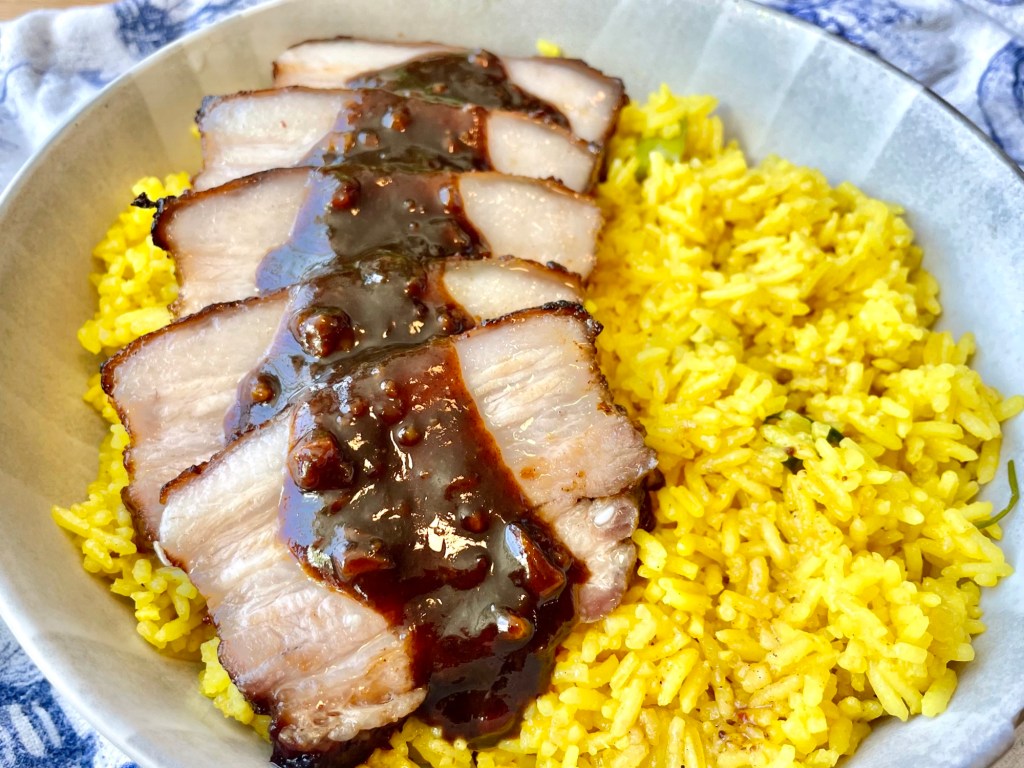
Char Siu is a staple at any Chinese BBQ restaurant and still remains one of our favourite Chinese BBQ dishes when visiting these joints. Although it seems daunting, making Char Siu is actually quite simple: mix up the marinade, marinate the pork overnight, then bake! This is a great dish to serve when catering for a party since pork shoulder/pork butt is a pretty cheap cut of meat and the delicious flavours of the sticky sauce is easy to impress!

What is Char Siu?

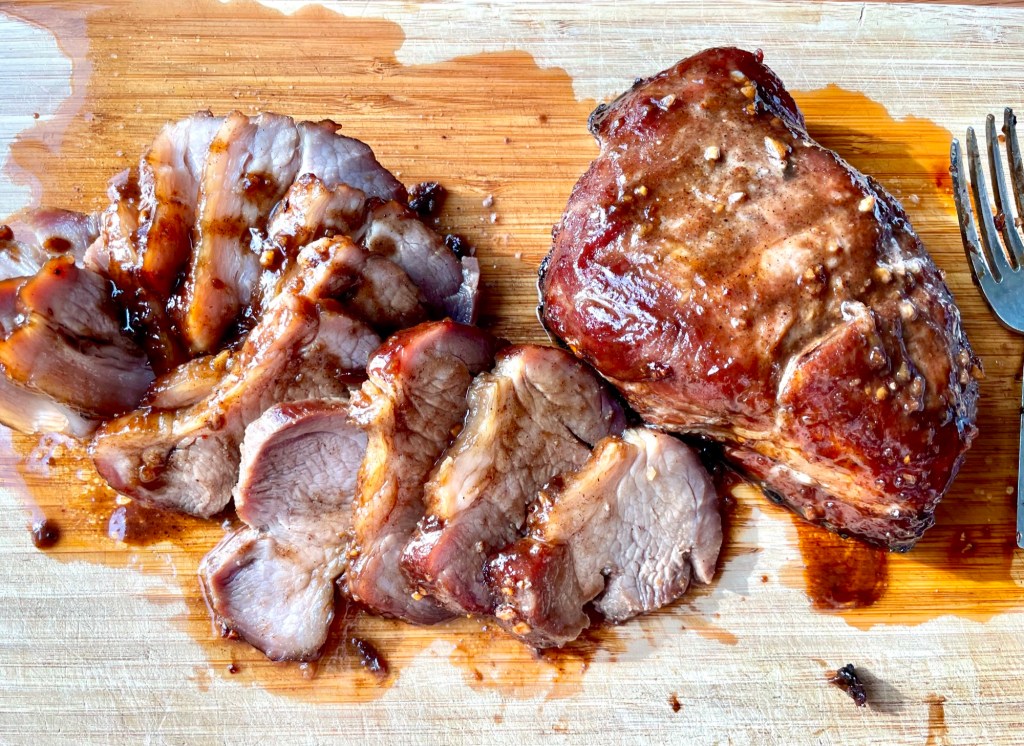
Char Siu is Chinese BBQ pork that’s moist, juicy, and covered in an iconic sweet, savoury, and umami sticky glaze. You’ll find it in any Chinese BBQ restaurant served in slices over rice or chopped up and stuffed inside buns for the classic Char Siu Bao (BBQ Pork Bun). Some restaurants add red food colouring to their sauce to make the meat look a little red – I’ve skipped this step in my recipe because I didn’t have any on hand, but feel free to add it in if you want the classic restaurant look.


Char Siu is not to be confused with Chashu!

Char Siu is the Chinese BBQ pork dish whereas Chashu is the Japanese fatty pork belly slices you often see served in ramen. While both are insanely delicious, they are completely different dishes. This recipe is for the Chinese BBQ pork Char Siu, however if you’re looking for a good Chashu recipe, I’ve got you covered in my Tonkotsu Ramen recipe below!
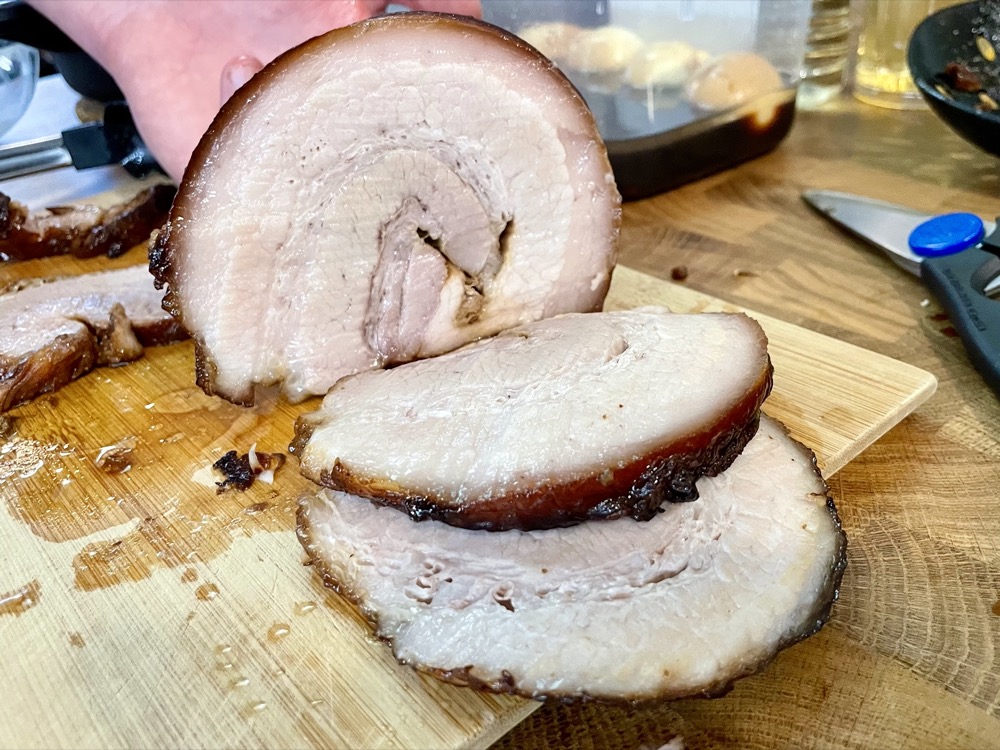
Legit Tonkotsu Ramen from scratch (in an Instant Pot)


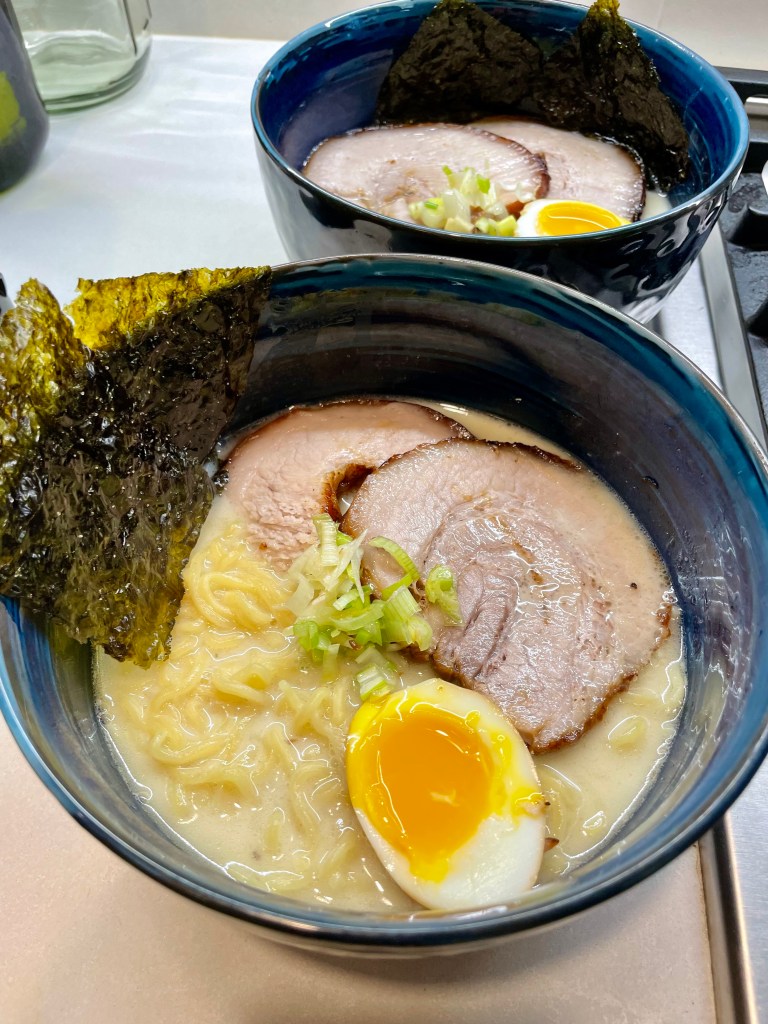
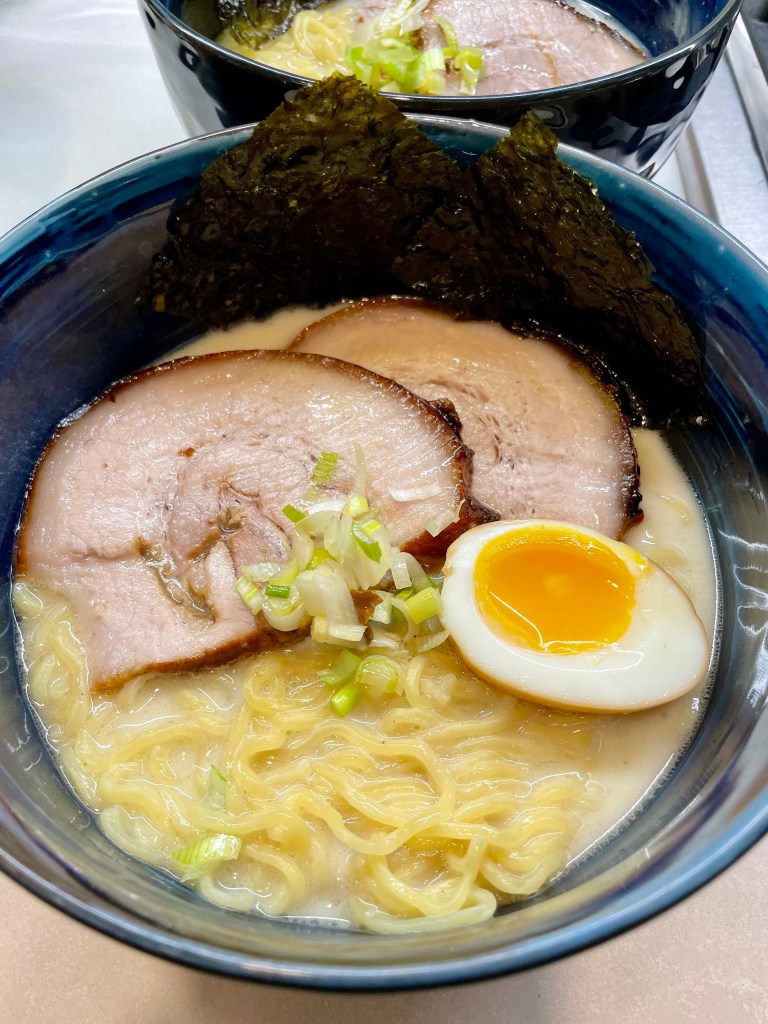
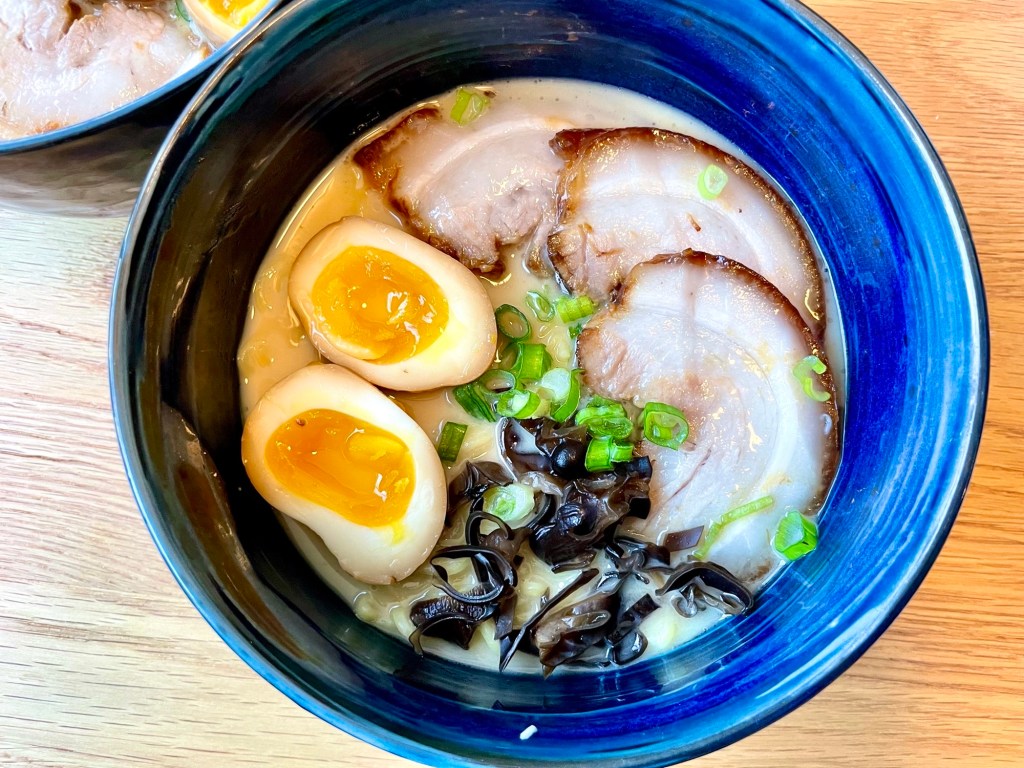
A tonkotsu ramen is a beautiful bowl of a rich pork bone broth with noodles, chashu, a ramen egg, and your choice of toppings. This legit restaurant-quality tonkotsu ramen recipe will blow your mind away!

What is fermented red bean curd?
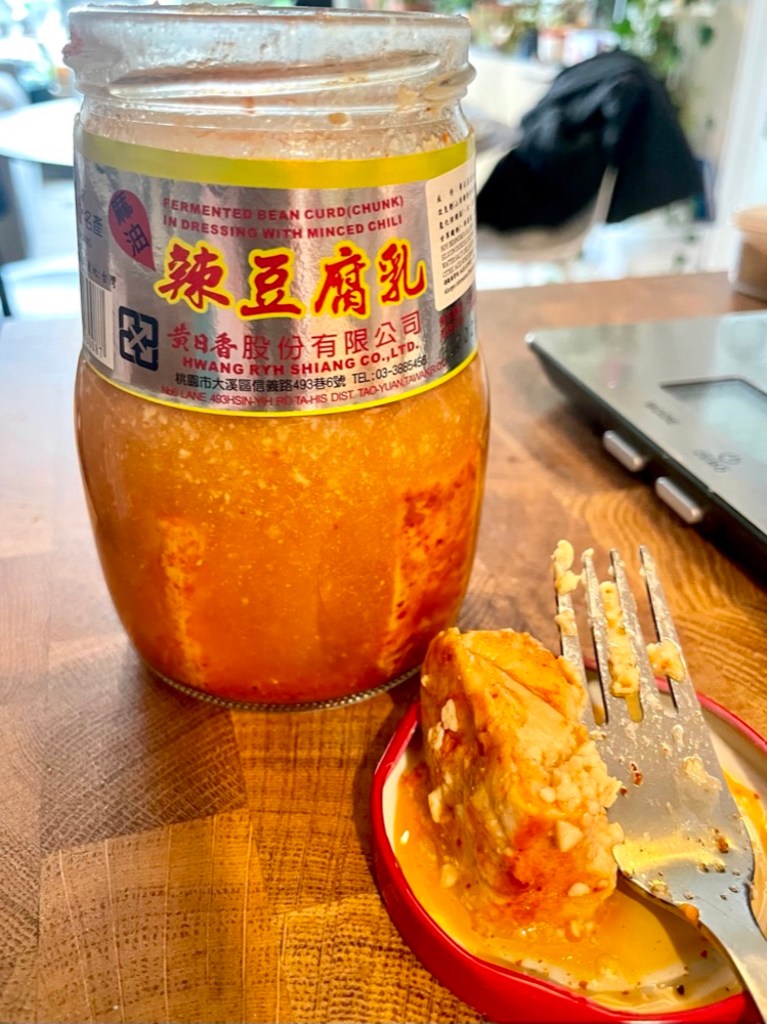
If you are not familiar with this pungent beauty, strap in. Fermented red bean curd (also known as fermented tofu) is a Chinese condiment that is made with cubes of tofu that is fermented in a brine of red yeast rice and rice wine. The end result is an umami flavour bomb that can be a bit overwhelming when eaten on its own. It’s often used in sauces as a flavour enhancer or paired with congee.

At first glance it can definitely look off-putting. If you’ve never had it before, I’d recommend only trying the tiniest amount at first (I’m talking about less than a pea size, maybe just a dab). The flavour profile is very salty but with a creamy/cheesy texture. Even if you’re not a fan of the taste, I’d still recommend using it in this recipe to give it that extra depth of flavour that makes all the difference between this char siu recipe to the next. Be careful when taking it out of the jar – it comes in little cubes and is very soft and easily breaks apart.

When I was younger I hated this stuff and I’d cringe every time my dad took it out of the fridge. The flavour was too overwhelming for me, but as I got older I learned to love it and I can’t think of any better condiment than this to go with my congee (move over, pork floss).

Which cut of pork is best?

Pork shoulder or pork butt is the best and most traditional cut of pork to use to make char siu. You can also use pork belly as well, however I find it too fatty when eaten in slices but works very well when chopped up and used in a BBQ pork bun recipe.

Anyways, without further ado, here’s the recipe! If you have any comments or suggestions, I’d love to hear from you in the comment section! You can follow me on instagram, youtube and facebook to see all the recipes I post!

Happy cooking!

Ingredients you’ll need:

  • Marinade:
    • 3 cloves garlic, minced
    • 2 pieces (44g) spicy fermented red bean curd
    • 1 Tbsp (22g) honey
    • 1 Tbsp (14g) Shaoxing wine
    • 1 Tbsp (20g) soy sauce
    • 1 Tbsp (20g) oyster sauce
    • 1 tsp (6g) dark soy sauce
    • 1 tsp (2g) 5-spice powder
    • 1/4 tsp (1g) white pepper
    • 1/4 cup (50g) brown sugar, packed
  • 500g pork shoulder (try to get a fattier piece) or slab of pork belly, skin removed (I prefer pork shoulder)
The gang’s all here

Directions:

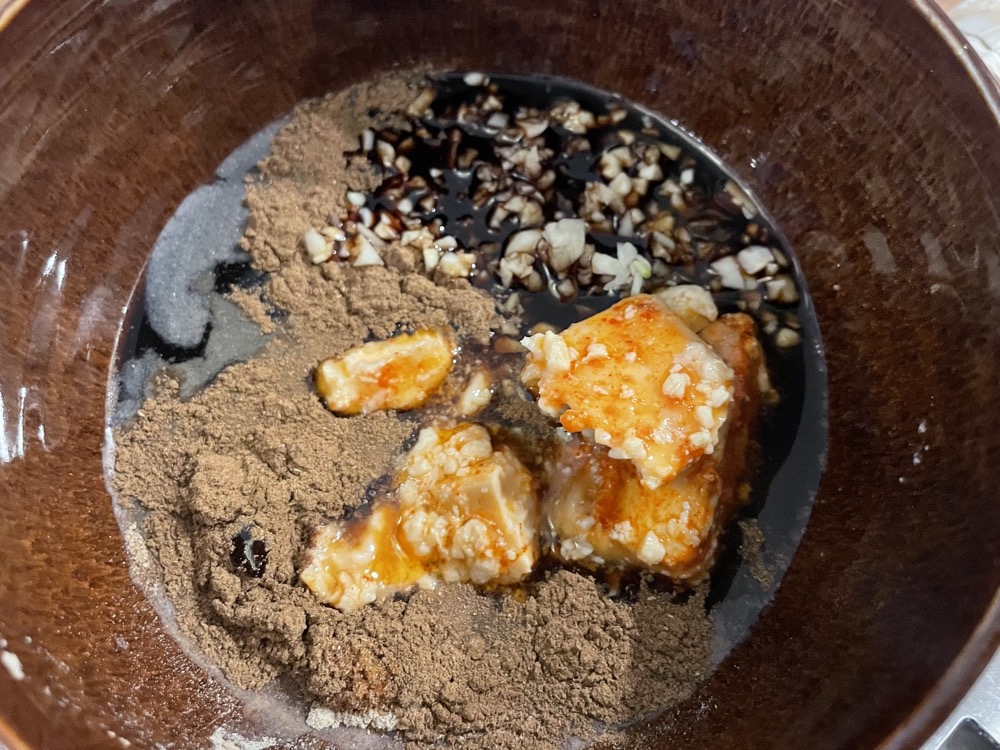
In a mixing bowl, combine all the ingredients of the marinade: 3 cloves minced garlic, 2 pieces fermented red bean curd, 1 Tbsp honey, 1 Tbsp Shaoxing wine, 1 Tbsp soy sauce, 1 Tbsp oyster sauce, 1 tsp dark soy sauce, 1 tsp 5-spice powder, 1/4 tsp white pepper, and 1/4 cup packed brown sugar. Mix well until there are no clumps.
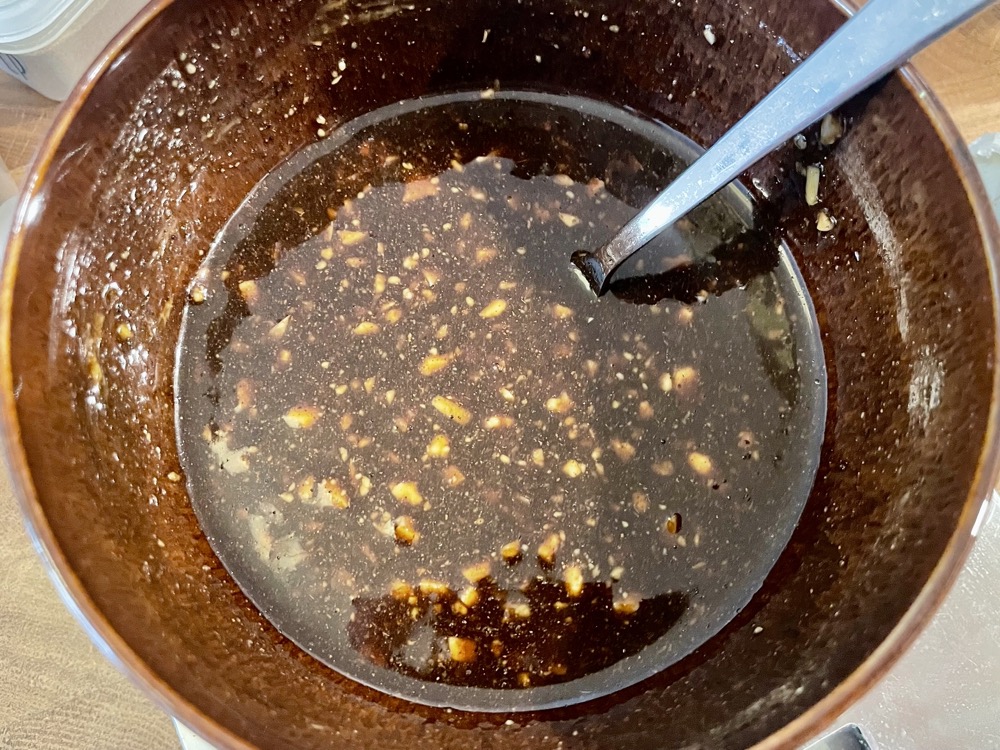
Put the marinade in a resealable plastic bag along with the pork and squeeze out any air. Let it marinate in the fridge overnight.
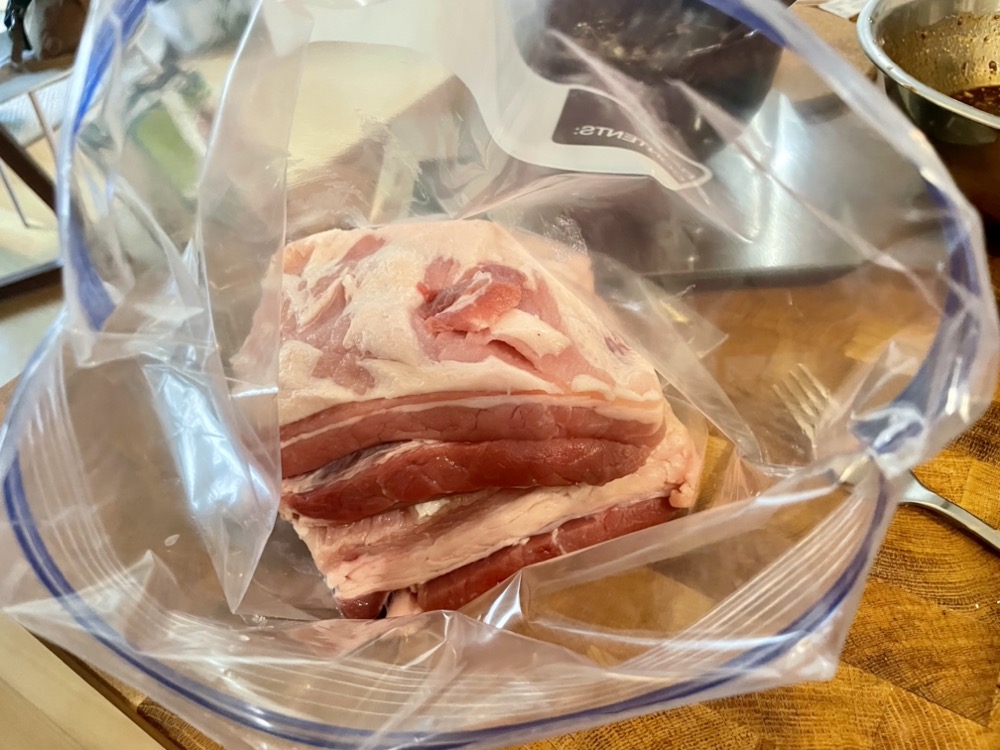
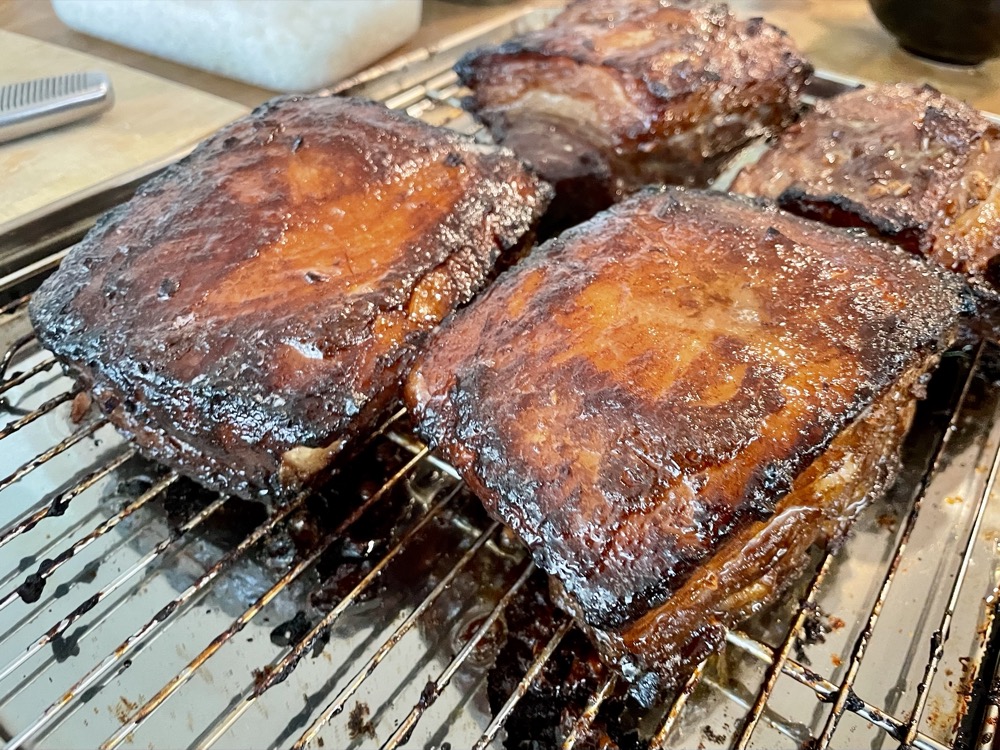
The next day, preheat the oven to 200˚C/400˚F. Shake off excess marinade and place the marinated pork onto a wire rack over a tray. Brush extra marinade over the top and bake in the preheated oven for 15-20 minutes. Flip each pork piece over, brush with more marinade and bake again for 15-20 minutes or until the internal temperature reaches 63˚C/145˚F.

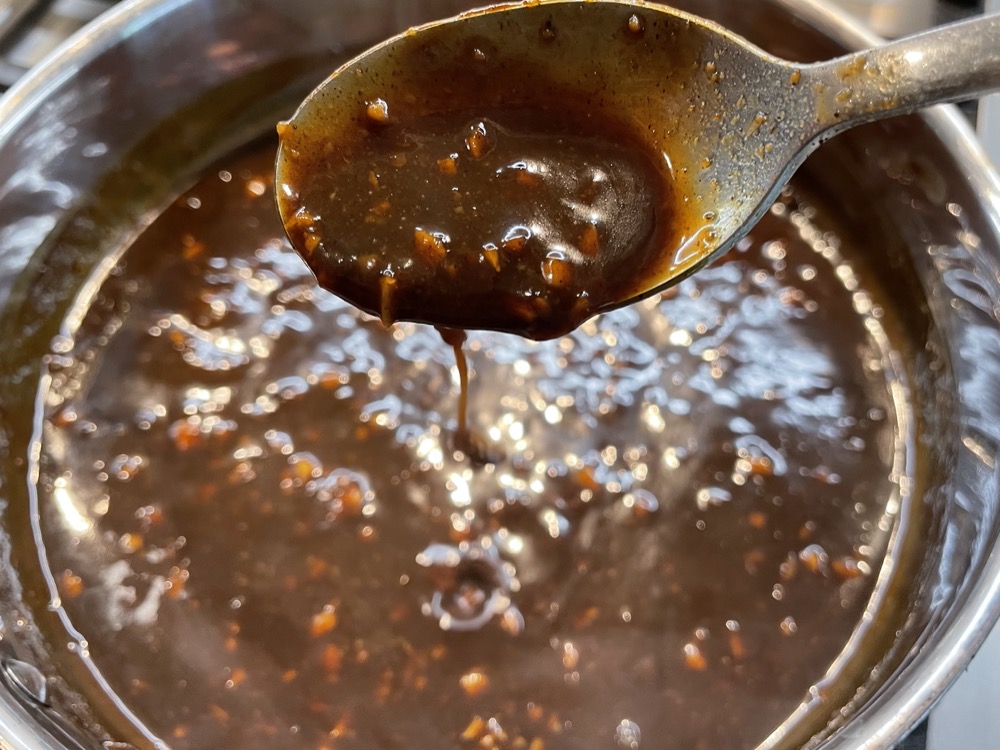
While the pork is cooking, pour the leftover marinade into a saucepan and turn the heat on to MED. Let the sauce bubble and simmer while continuously stirring for 3-4 minutes until it slightly thickens (don’t worry about reducing it too much since the sauce will thicken further as it cools).

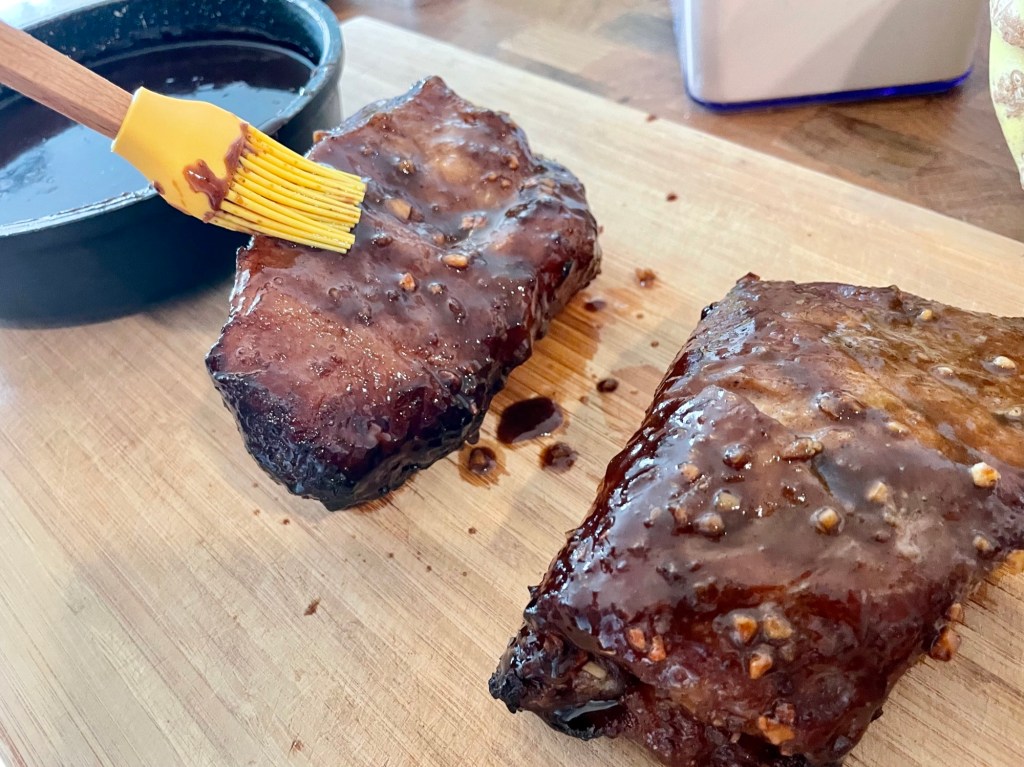
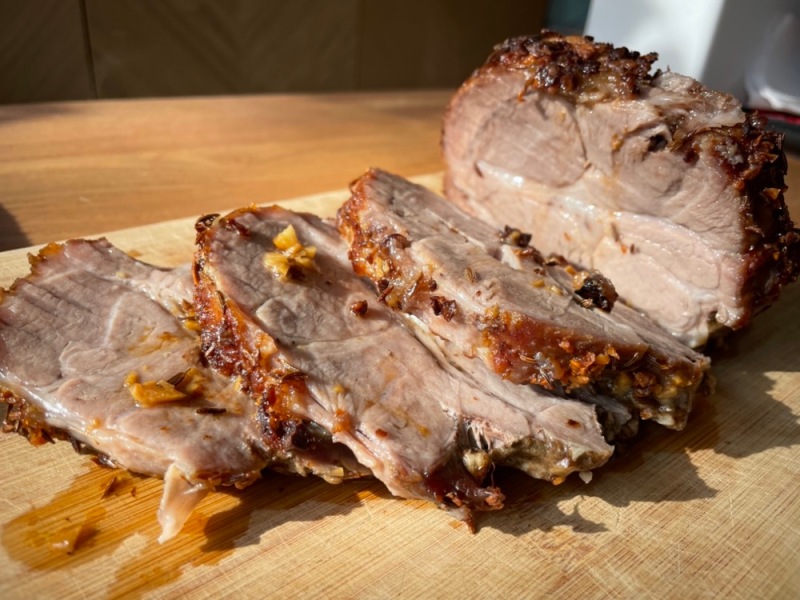
At the end of the cook time, you should have a nice char/dark brown caramelization over the top of the pork. If you don’t, BROIL for 1 minute on each side until you get get the dark brown char. Remove from the oven and brush the reduced marinade (from step 4) over the top and let it rest for 10 minutes before slicing. Serve immediately after slicing. Enjoy!

Summarized Recipe:

Char Siu: An Authentic Chinese BBQ Pork Recipe

Date Published: Sept 27th, 2025 | Last Updated: Sept 27th, 2025
Author: Abby |Category: Asian, easy, mains
Serves: 6-8 | Prep time: overnight | Cook time: 45 minutes

Ingredients:

  • Marinade:
    • 3 cloves garlic, minced
    • 2 pieces (44g) spicy fermented red bean curd
    • 1 Tbsp (22g) honey
    • 1 Tbsp (14g) Shaoxing wine
    • 1 Tbsp (20g) soy sauce
    • 1 Tbsp (20g) oyster sauce
    • 1 tsp (6g) dark soy sauce
    • 1 tsp 5-spice powder
    • 1/4 tsp white pepper
    • 1/4 cup (50g) brown sugar, packed
  • 500g pork shoulder (try to get a fattier piece) or slab of pork belly, skin and excessive fat removed (I prefer pork shoulder)

Directions:

  1. In a mixing bowl, combine all the ingredients of the marinade: 3 cloves minced garlic, 2 pieces fermented red bean curd, 1 Tbsp honey, 1 Tbsp Shaoxing wine, 1 Tbsp soy sauce, 1 Tbsp oyster sauce, 1 tsp dark soy sauce, 1 tsp 5-spice powder, 1/4 tsp white pepper, and 1/4 cup packed brown sugar. Mix well until there are no clumps.
  2. Put the marinade in a resealable plastic bag along with the pork and squeeze out any air. Let it marinate in the fridge overnight.
  3. The next day, preheat the oven to 200˚C/400˚F. Shake off excess marinade and place the marinated pork onto a wire rack over a tray. Brush extra marinade over the top and bake in the preheated oven for 15-20 minutes. Flip each pork piece over, brush with more marinade and bake again for 15-20 minutes or until the internal temperature reaches 63˚C/145˚F.

  4. While the pork is cooking, pour the leftover marinade into a saucepan and turn the heat on to MED. Let the sauce bubble and simmer while continuously stirring for 3-4 minutes until it slightly thickens (don’t worry about reducing it too much since the sauce will thicken further as it cools).
  5. At the end of the cook time, you should have a nice char/dark brown caramelization over the top of the pork. If you don’t, BROIL for 1 minute on each side until you get get the dark brown char. Remove from the oven and brush the reduced marinade (from step 4) over the top and let it rest for 10 minutes before slicing. Serve immediately. Enjoy!

Insanely Easy Instant Pot Pulled Pork


Date Published: Sept 11th, 2025 | Last Updated: Sept 11th, 2025
Author: Abby |Category: easy, mains
Serves: 6 | Prep time: 15 minutes + marinating time | Cook time: 75 minutes

Jump to recipe |

Get ready for the most ridiculously easy pulled pork recipe that’s ready in 75 minutes! You will need an Instant Pot or any pressure cooker for this along with your favourite BBQ sauce.

Why I love this recipe!

  • Quick and easy – I never knew you could make pulled pork in such little time and without a slow cooker or cooking for hours! It takes 5 minutes to prep the pork and rest is just setting the Instant Pot and forgetting it. No need to watch it constantly as it cooks.
  • Easily makes a large batch – a 2kg/4 pound pork shoulder fits well into an Instant Pot and serves up to 6 people at once as a main, or even more if you’re using the pork as a side or inside another dish such as pulled pork tacos or sliders. I use this one recipe as meal prep for lunches for the rest of the week. This pulled pork also keeps well in the fridge or freezer so you can also do multiple batches for a large party the day before.
  • Budget-friendly! Cheap to feed and easy to impress a lot of people – After learning this recipe, I think this will be my new go-to dish for potluck events. Pork shoulder is relatively inexpensive and you should be able to find 2kg/4lbs of it for less than $30 to feed a party small. Just be sure to pick a good BBQ sauce!
  • Versatility – As you will notice, unlike many pulled pork recipes, this one does not cook the pork in the BBQ sauce. The pork comes out perfectly cooked, but a little on the blander side. This is intentional so it doesn’t overpower the flavours of your chosen BBQ sauce and also gives you more versatility in how you want to use the shredded pork. You can easily store this pulled pork in batches in the freezer and use it on so many things (keep scrolling to see the different dishes you could use this in!).

How much pork to feed a party?

As a rough guide, multiply the number of guests by 0.3 to get the amount of raw pork you’ll need to cook in kilos. To calculate it in pounds, multiply it by 0.6. This calculation is the amount of raw pork you need to serve each person as a main dish. Use less if you’re using this as a side dish or within a recipe.

For example: 10 guests x 0.3 = 3kg of raw pork to cook.

What to do with leftover pulled pork?

Pork shoulder is often on sale at our local Costco and as a result I regularly find myself with 7kg of pork shoulder for $30 and scrambling to find recipes – I just can’t pass up a good deal! Here are a list of dishes you can use with pulled pork before adding on BBQ sauce:

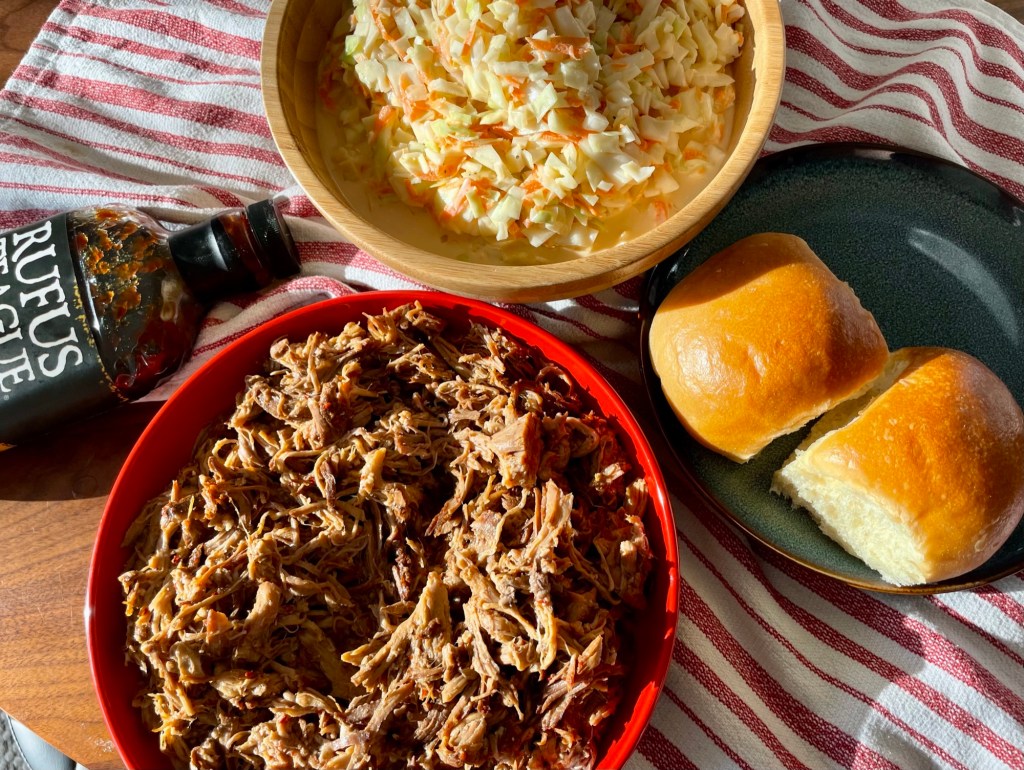
  • Mixed with BBQ sauce and served in sliders with coleslaw
  • Pulled pork tacos
  • Toasted sandwiches
  • Burritos
  • Toppings on okonomiyaki
  • Mixed with any kind of red pasta sauce for a quick pasta dish
  • Quick added protein to any soups
  • Pierogi or dumpling filling
  • Mixed with a fried rice
  • Quesadilla
  • Pulled pork nachos

Pair this recipe with a copycat KFC coleslaw!

Copycat KFC Coleslaw


This is a copycat recipe of the famous KFC Coleslaw. It’s quick, easy, flavourful, and delicious!

How to store leftover pulled pork:

To store: Use the leftover liquid from the Instant Pot and submerge the shredded pulled pork into this liquid and keep refrigerated for a few days or freeze. When ready to eat again, reheat with the liquid and strain the pork out before mixing with BBQ sauce.

You can also freeze it flat in a freezer bag with the pork rolled out in a thin layer, then when you need to use it in a pinch, just break off what you need.

Anyways, without further ado, here’s the recipe! If you have any comments or suggestions, I’d love to hear from you in the comment section! You can follow me on instagram, youtube and facebook to see all the recipes I post!

Happy cooking!

This recipe was adapted from TatestBetterFromScratch.

Ingredients you’ll need:

  • Rub:
    • 1 Tbsp brown sugar, packed
    • 1 Tbsp gochugaru/Korean chilli powder (or substitute for 1/2 Tbsp cayenne) – optional
    • 2 tsps smoked paprika
    • 2 tsps garlic powder
    • 2 tsps onion powder
    • 1 tsp cumin
    • 1.5 tsps kosher salt
    • 1.5 tsp fresh ground black pepper
  • 2kg/4 pounds of pork shoulder/butt, or pork loin roast, cut into 4 large even pieces
    • This will allow more even cooking rather than one large roast which can get tough in the middle.
  • 1 can/355ml/12 fl. oz of regular Coca-cola (not diet, not zero, not flavoured)
  • Your favourite bottle of barbecue sauce

Directions:

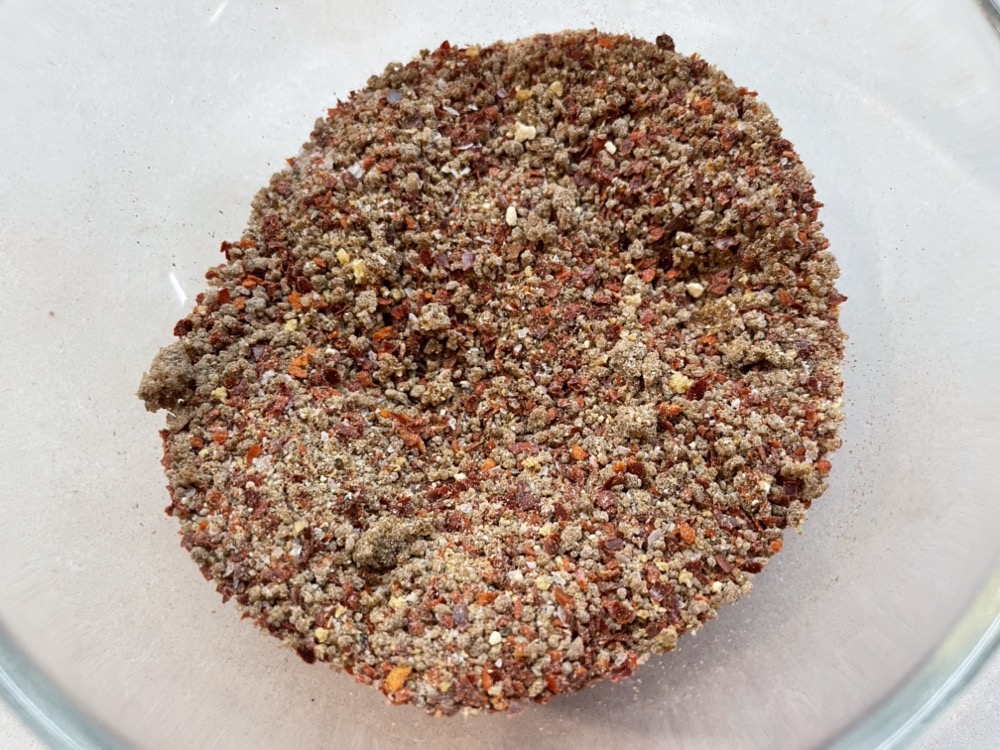
In a small bowl, mix all the ingredients for the rub together: 1 Tbsp brown sugar, 1 Tbsp gochugaru, 2 tsps smoked paprika, 2 tsps garlic powder, 2 tsps onion powder, 1 tsp cumin, 1.5 tsps salt, 1 tsp black pepper.

Massage the rub mixture into the pork pieces and marinate for at least 1 hour or better if overnight.

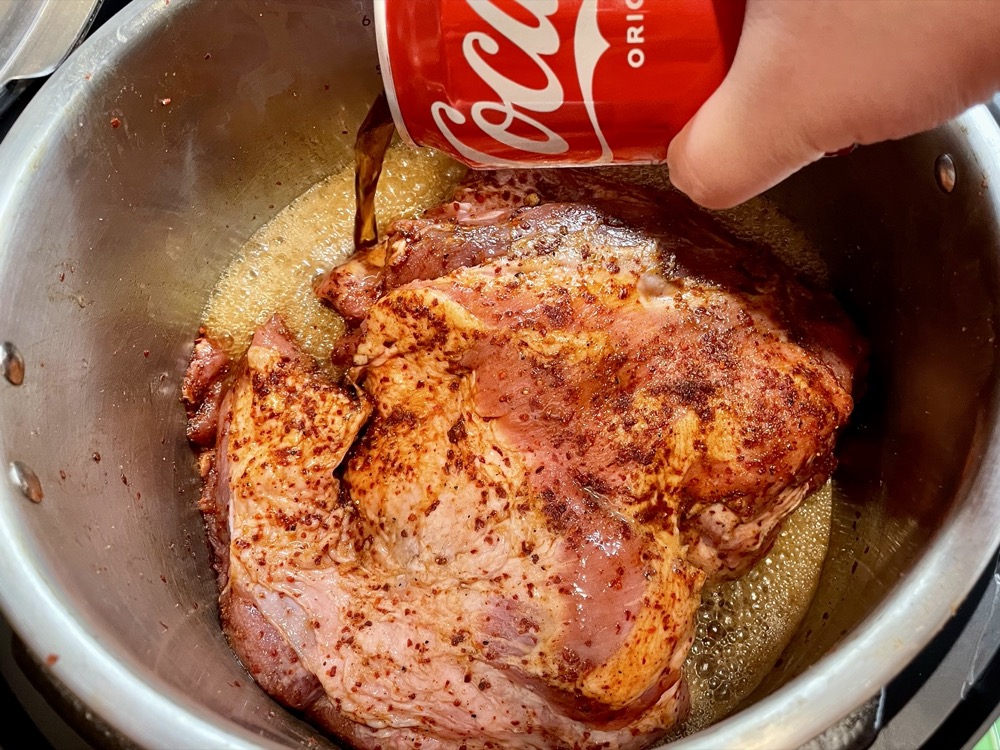
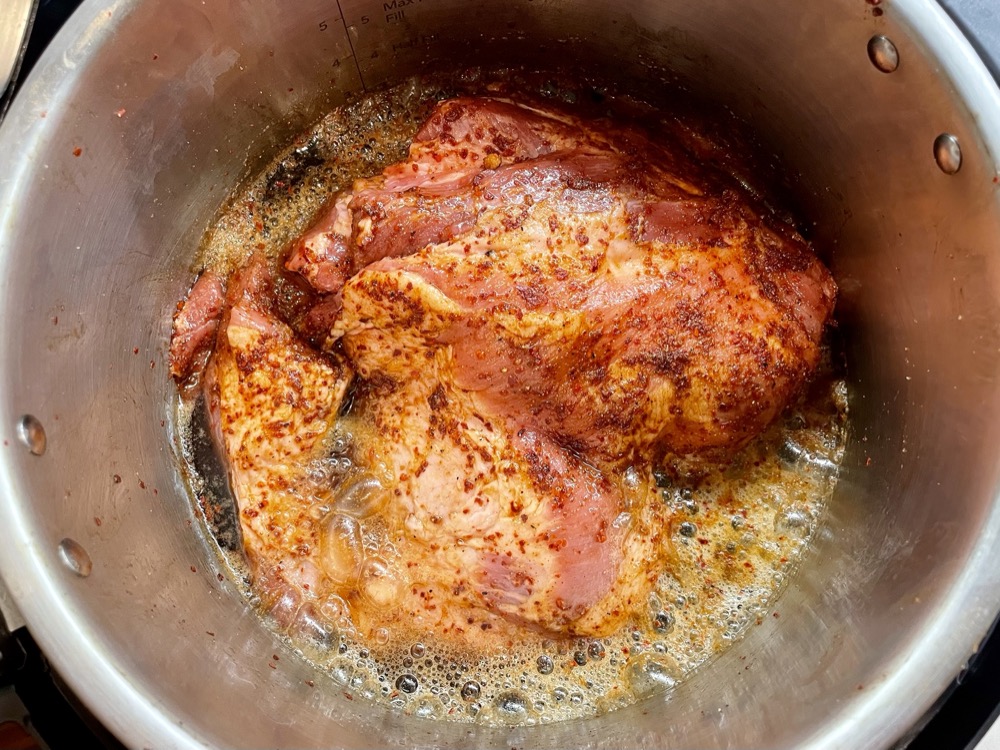
Place the marinated pork into the Instant Pot and pour a can of Coca-cola around the pork.

Close the instant pot lid and cook on HIGH PRESSURE for 75 minutes then let it natural release for 15 minutes before carefully venting it.

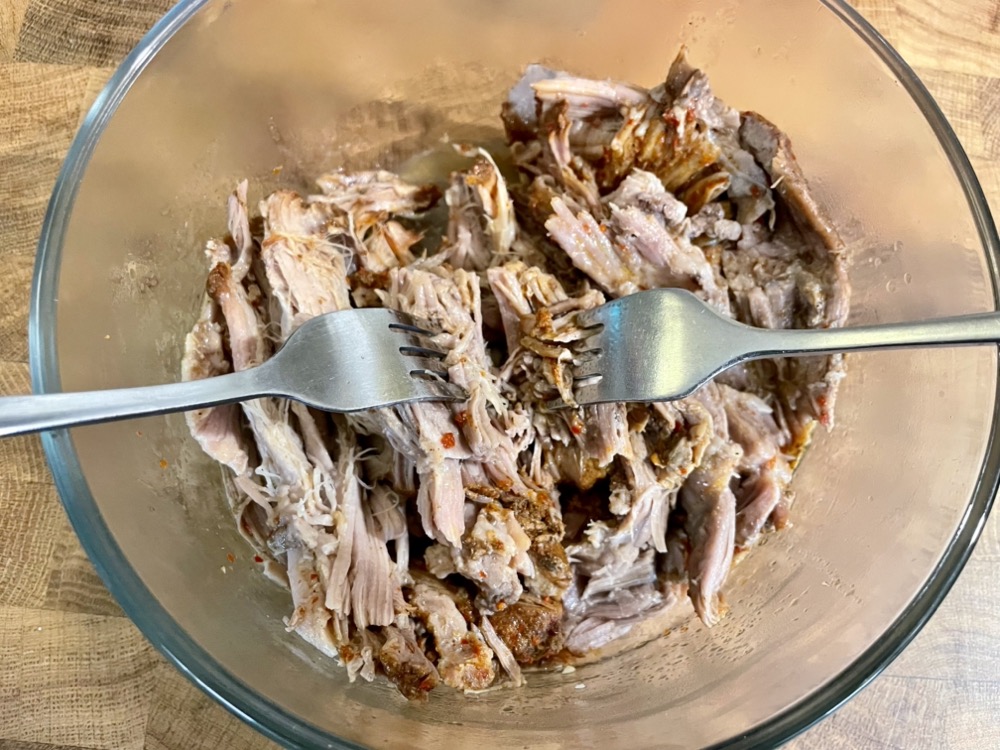
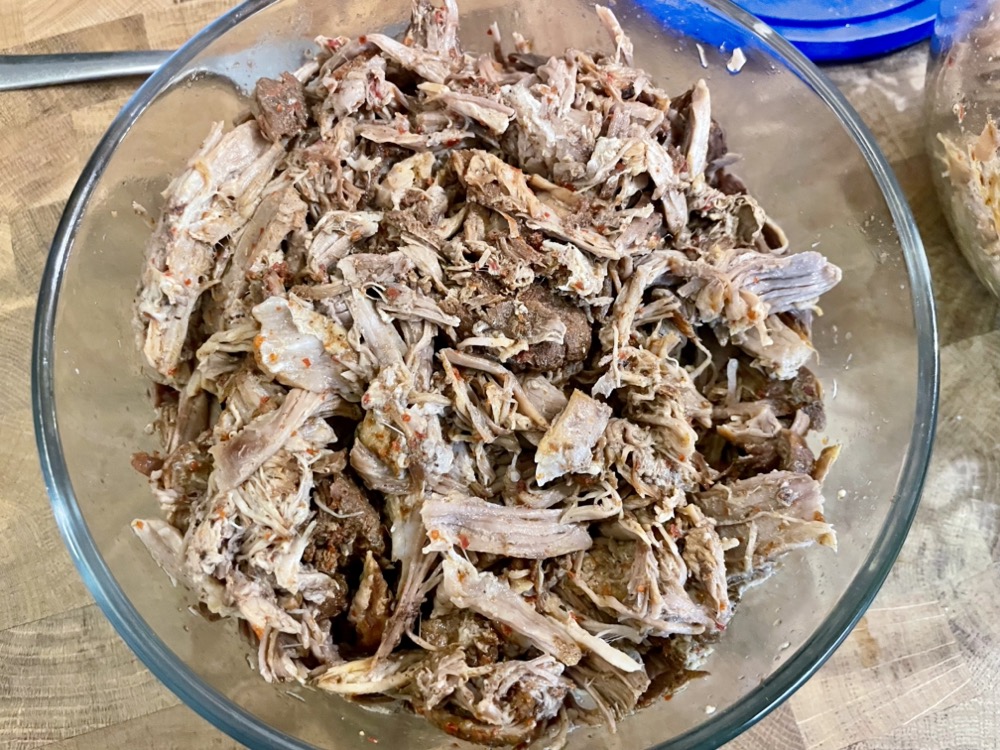
Remove the cooked pork from the juices into a glass bowl or pot and use 2 forks to shred the pork. It should be perfectly cooked and very easy to shred. If you’re finding it tough, then cook for a bit longer. Remember, the flavours are meant to be subtle to not overpower your choice of BBQ sauce. Don’t adjust any seasoning the seasoning until after you’ver added your sauce.

Mix with your favourite BBQ sauce poured over top. Done!

Summarized Recipe:

Insanely Easy Instant Pot Pulled Pork

Date Published: Sept 11th, 2025 | Last Updated: Sept 11th, 2025
Author: Abby |Category: easy, mains
Serves: 6 | Prep time: 15 minutes + marinating time | Cook time: 75 minutes

Ingredients:

  • Rub:
    • 1 Tbsp brown sugar, packed
    • 1 Tbsp gochugaru/Korean chilli powder (or substitute for 1/2 Tbsp cayenne) – optional
    • 2 tsps smoked paprika
    • 2 tsps garlic powder
    • 2 tsps onion powder
    • 1 tsp cumin
    • 1.5 tsps kosher salt
    • 1 tsp fresh ground black pepper
  • 2kg/4 pounds of pork shoulder/butt, or pork loin roast, cut into 4 large even pieces
    • This will allow more even cooking rather than one large roast which can get tough in the middle.
  • 1 can/355ml/12 fl. oz of Coca-cola
  • Your favourite bottle of barbecue sauce

Directions:

  1. In a small bowl, mix all the ingredients for the rub together: 1 Tbsp brown sugar, 1 Tbsp gochugaru, 2 tsps smoked paprika, 2 tsps garlic powder, 2 tsps onion powder, 1 tsp cumin, 1.5 tsps salt, 1 tsp black pepper.
  2. Massage the rub mixture into the pork pieces and marinate for at least 1 hour or better if overnight.
  3. Place the marinated pork into the Instant Pot and pour a can of Coca-cola around the pork. Close the instant pot lid and cook on HIGH PRESSURE for 75 minutes then let it natural release for 15 minutes before carefully venting it.
  4. Remove the cooked pork from the juices into a glass bowl or pot and use 2 forks to shred the pork. It should be perfectly cooked and very easy to shred. If you’re finding it tough, then cook for a bit longer. Remember, the flavours are meant to be subtle to not overpower your choice of BBQ sauce. Don’t adjust any seasoning the seasoning until after you’ver added your sauce.
  5. Once shredded, mix with your favourite BBQ sauce poured over top. Done!

To store: Use the leftover liquid from the Instant Pot and submerge the shredded pulled pork into this liquid and keep refrigerated for a few days or freeze. When ready to eat again, reheat with the liquid and strain the pork out before mixing with BBQ sauce.

Czech Tomato Gravy (over Sliced Beef) – Rajská Omáčka


Date Published: May 28th, 2024 | Last Updated: May 28th, 2024
Author: Abby |Category: mains, Czech, easy
Serves: 4 | Prep time: 15 mins | Cook time: 45 mins

Jump to recipe |

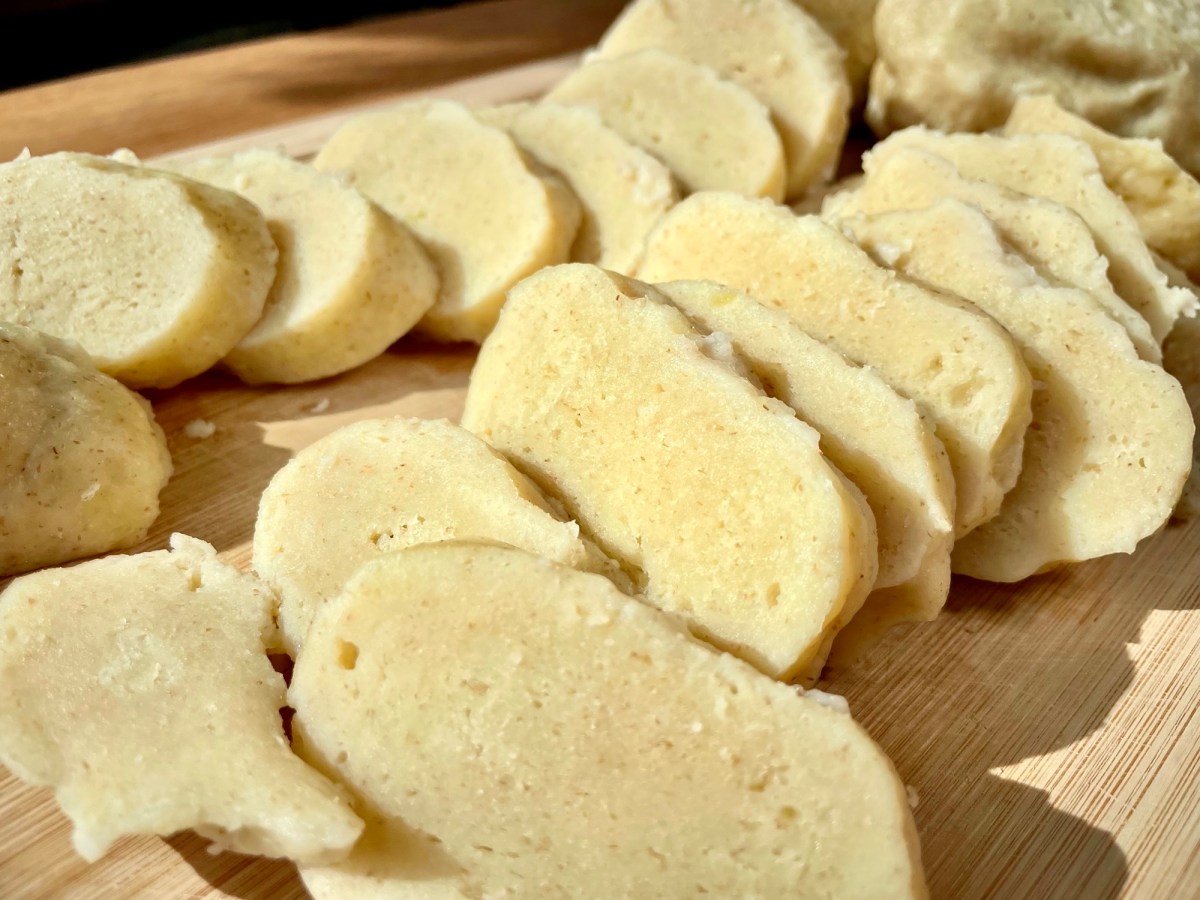
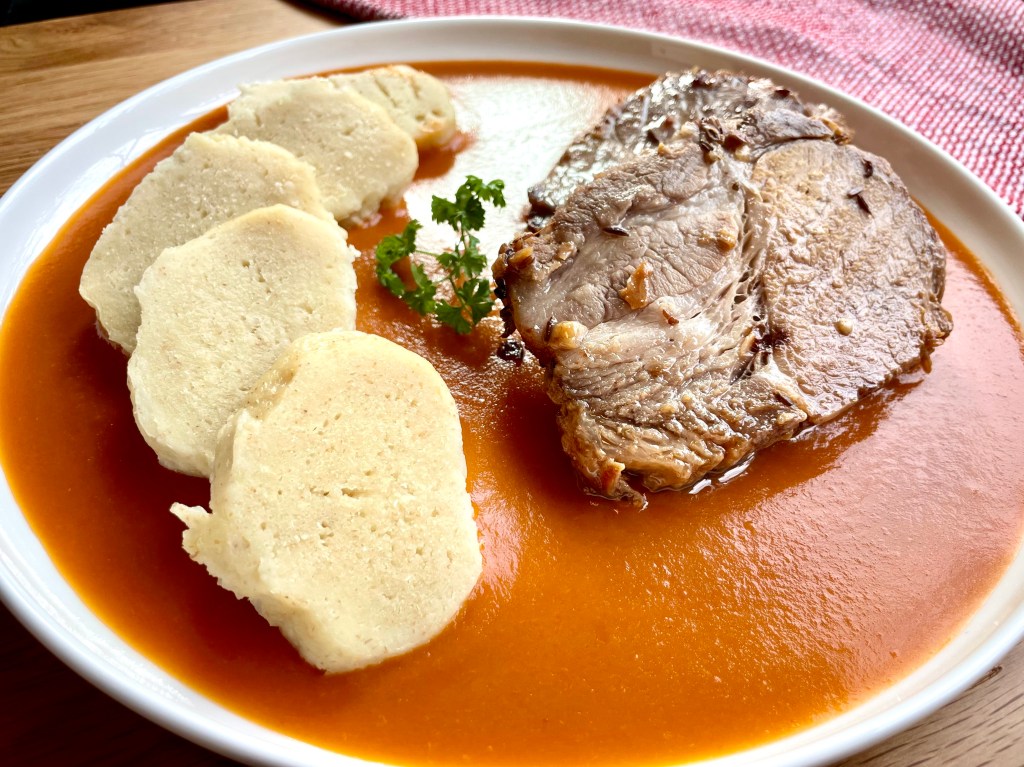
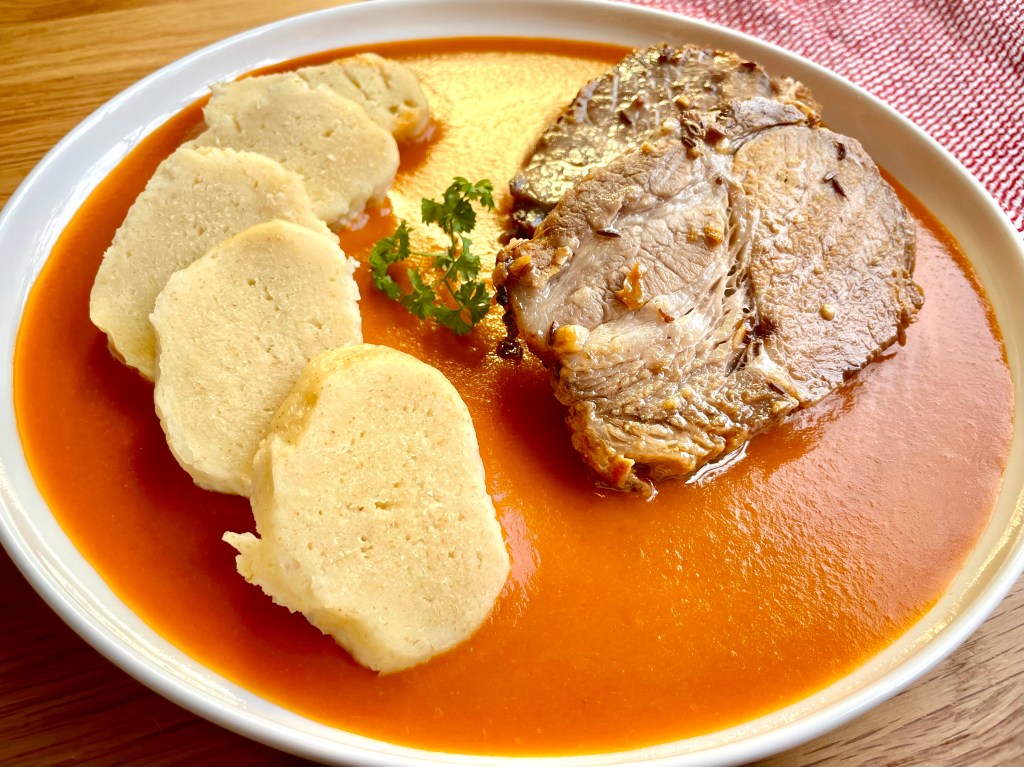
I’m told that “Rajská Omáčka” (pronounced: rays-ka oma-ch-ka) directly translates to “tomato sauce”. This is one of Toby’s childhood dishes that his grandmother used to make him. Every time he says it, all I hear is “racecar” 😅. To me, this sauce pretty much tastes like a tomato soup without the herbs, but it’s served over slices of beef or pork and some knedliky (Czech dumplings – potato or bread). There are other versions of this sauce that vary in tartness and sweetness (like my original attempts), but I’ve written this recipe to be as similar to babička’s as possible.

You have no idea how hard it is to get a picture of babička standing still and smiling 😅

To be honest, this is not my favourite dish, but its got nostalgic value for Toby so I set out to try and make it for him. After a couple of attempts from online and cookbook recipes, he said it “just wasn’t like babička’s” but he couldn’t tell me what was wrong with it 😒. So I put it on the back burner up until our recent trip to Czech a couple weeks ago and we asked babička to show us how she makes it. Her version was a little less tomato-y than the versions I made and although it’s still not my favourite dish, seeing Toby’s happy face slurping down his second helping of the tomato sauce was enough reason for me to add this recipe to the collection.

This recipe is easy and cooks up quickly. You can pair the sauce with whatever meat you wish including a vepro, but for a quick lunch or dinner with minimal effort, I’ve included the instructions to cook a rump roast in a pressure cooker in 30 minutes and it’ll be ready around the same time as the sauce.

Anyways, without further ado, here’s the recipe! If you have any comments or suggestions, I’d love to hear from you in the comment section! You can follow me on instagram, youtube and facebook to see all the recipes I post!

Happy cooking!

Recipes that pair well together with this sauce:

Ingredients you’ll need:

  • Beef:
    • 900g (2 lbs) rump roast/chuck steak
    • 1/2 Tbsp salt
    • Enough water to cover the beef
  • Sauce:
    • 1 Tbsp pork lard
    • 2 medium (~800g) onions, diced
    • 1 large can (793g/28oz) diced tomatoes
    • 1/4 cup all-purpose flour
    • 4 cups (1L) beef broth
    • 1 tsp salt
    • 1.5 Tbsps granulated sugar
    • 5 black peppercorns
    • 3 allspice berries
    • 2 bay leaves
    • 2-4 Tbsps heavy cream (to taste)
  • To serve: with slices of knedliky/Czech dumplings (potato or bread)

Directions:

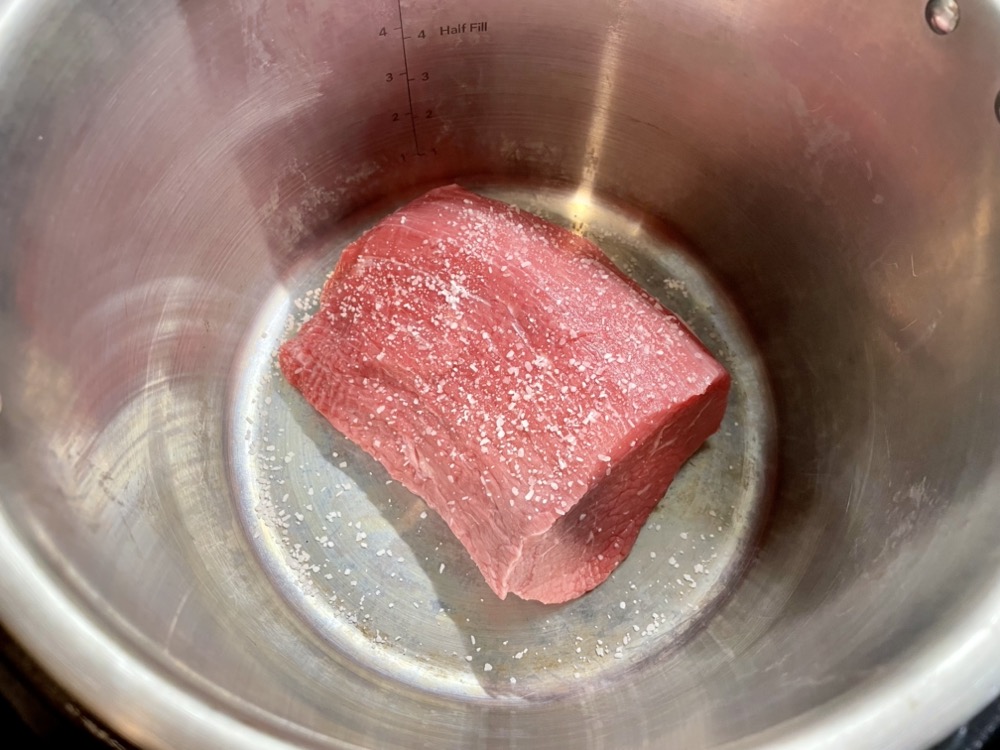
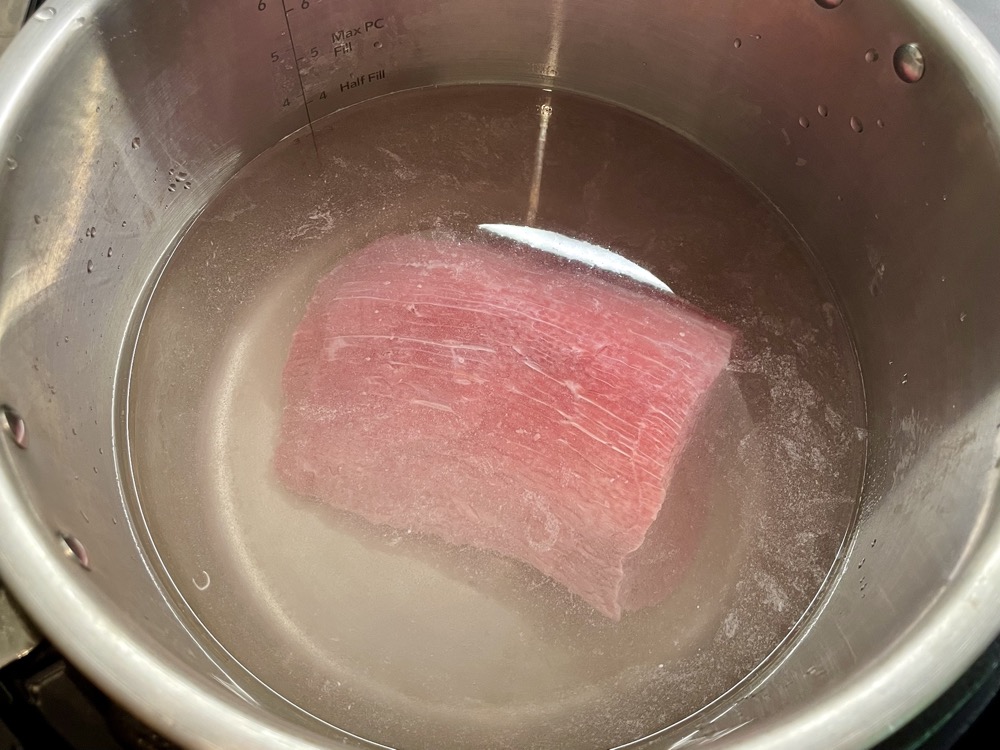
A. Cook the beef: in a pressure cooker/instant pot: *This step is optional. You can serve this tomato sauce with whatever type of meat you like, but if you’re looking for a quick cooked beef, the instant pot will be the fastest.

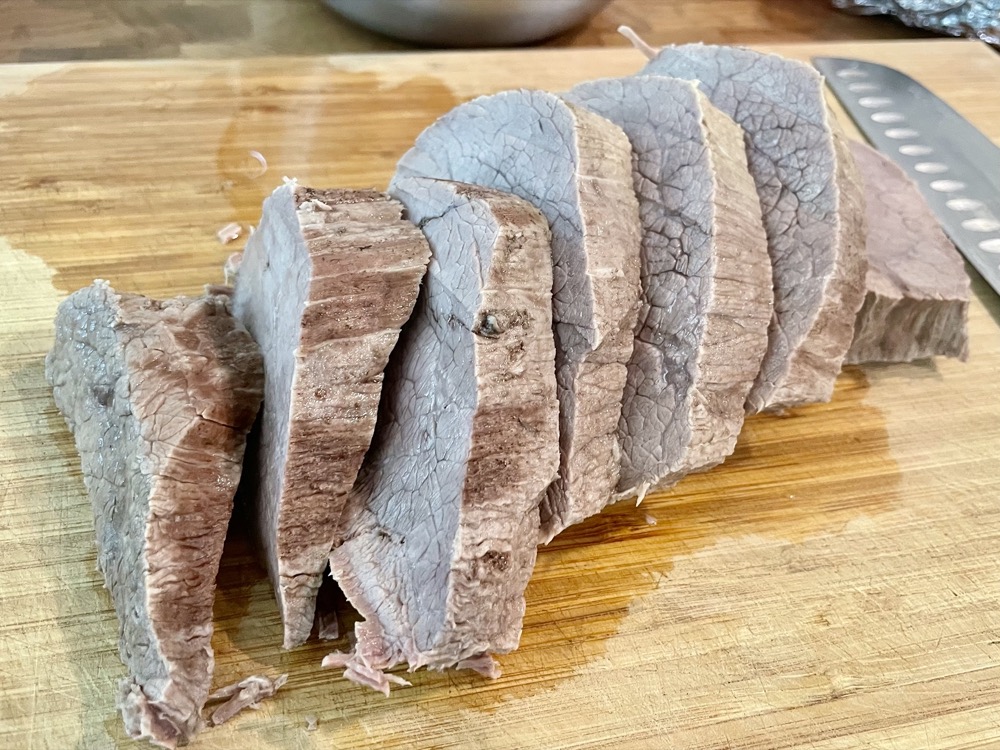
Add the beef, salt and enough water to cover the meat. Put the lid on and cook on HIGH PRESSURE for 30 minutes, then quick release. Remove the beef from the liquid and let it rest for 10 mins before slicing.

  • Alternatively if you don’t have a pressure cooker, you can boil the beef in water over the stove until the beef is tender. This will take about 2 hours.

B. Make the sauce while the beef is cooking:

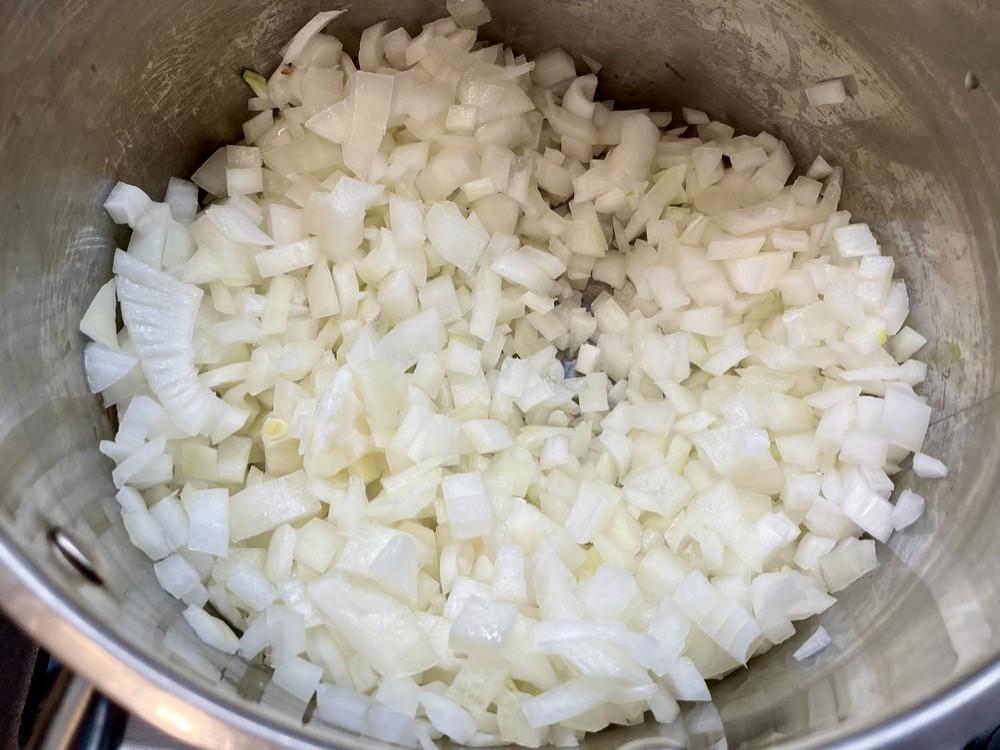
In a small pot on MED-HIGH heat, melt the pork lard and sauté the onions for 5-8 minutes until softened.
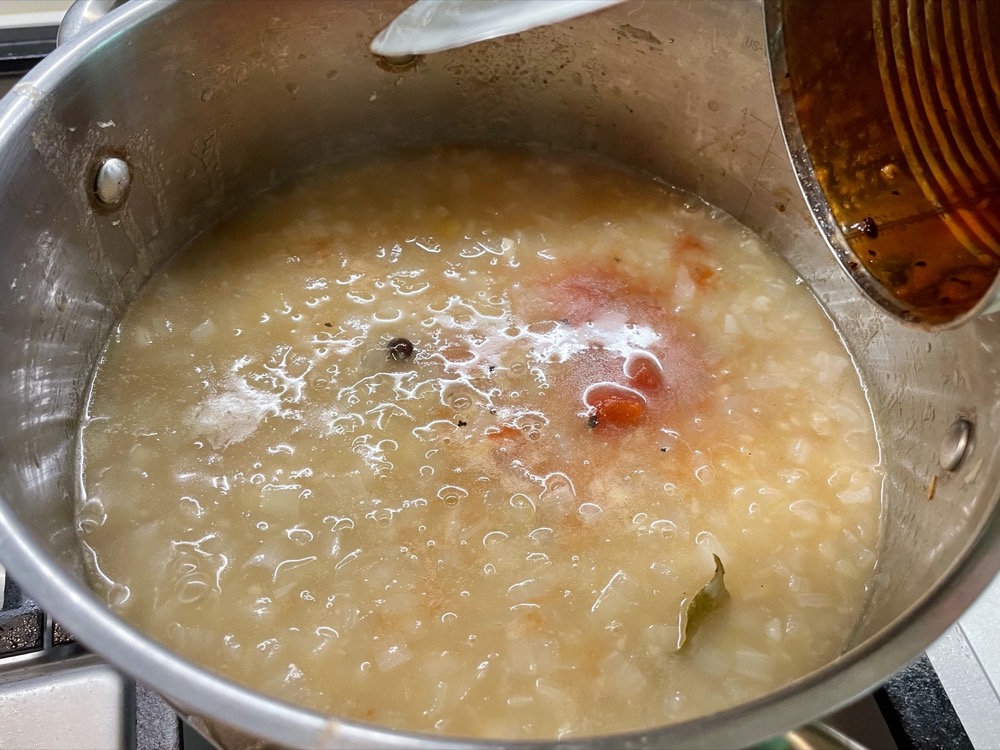
Add the salt, sugar, black peppercorns, allspice berries, and bay leaves. Stir for 2 mins until the sugar has fully dissolved.

Next, add in the flour and stir for 2 minutes until well incorporated and the flour cooks a little. Make sure to scrape the bottom of the pan so nothing sticks.

Pour in the beef broth and stir everything together. Bring the heat up to HIGH to let it come to a boil then back down to MED heat and let it boil for 8-10 minutes until the sauce thickens into a gravy-like consistency.

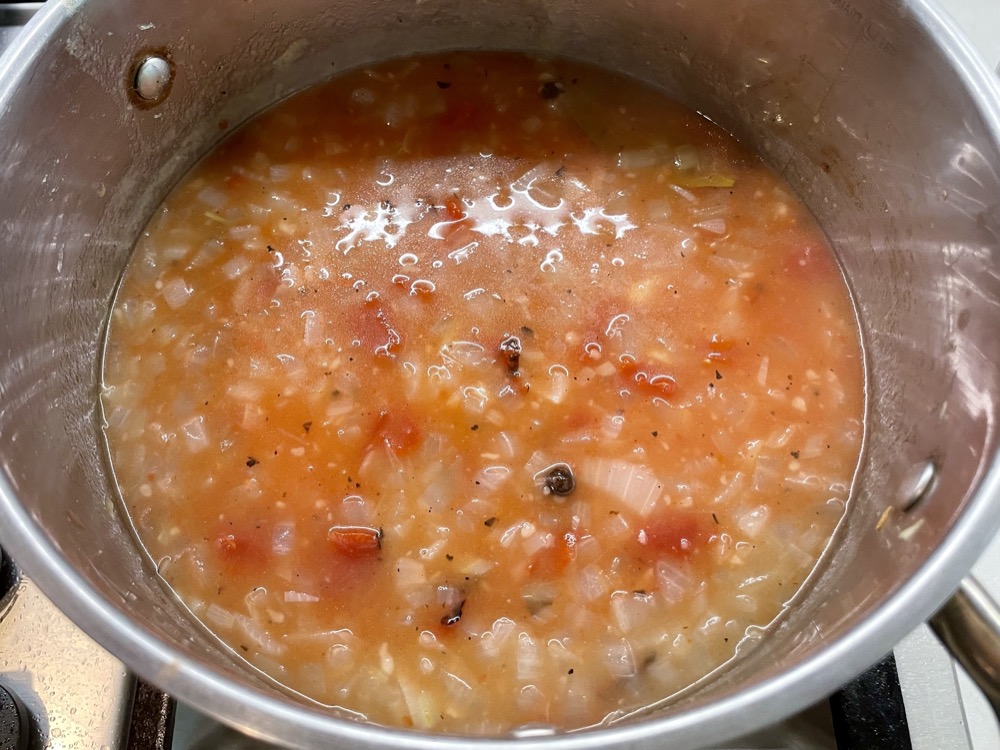
Once it has thickened, pour in the can of diced tomatoes including all of the liquid. Bring the sauce to a boil again, then simmer on MED heat for 20 minutes.

Note: Make sure to stir and scrape the bottom of the pot every few minutes so nothing sticks to the bottom.

After 20 minutes, turn off the heat and discard the bay leaves and all spice berries.

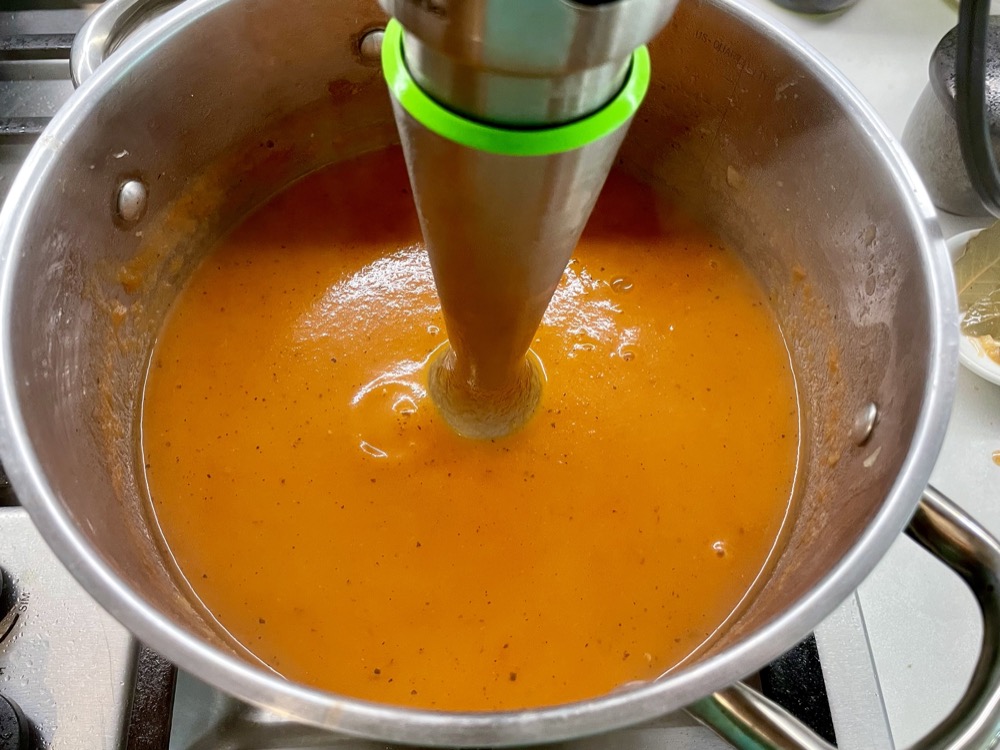
Next, use a stick blender (or transfer the sauce to a blender) and blend the sauce until you get a smooth texture. If you want an extra smooth sauce, strain it through a fine sieve.

Add 2 Tbsps of heavy cream then taste and adjust salt, sugar, or more heavy cream as needed. (Babička will sometimes add in some ketchup if she wants it more tart and tomato-y 🤫.)

Serve the sauce ladled over the cooked sliced beef and a few knedliky. Enjoy!
Summarized Recipe:

Czech Tomato Gravy (over Sliced Beef) – Rajská Omáčka

Date Published: May 28th, 2024 | Last Updated: May 28th, 2024
Author: Abby |Category: mains, Czech, easy
Serves: 4 | Prep time: 15 mins | Cook time: 45 mins

Ingredients:

  • Beef:
    • 900g (2 lbs) rump roast/chuck steak
    • 1/2 Tbsp salt
    • Enough water to cover the beef
  • Sauce:
    • 1 Tbsp pork lard
    • 2 medium (~800g) onions, diced
    • 1 large can (793g/28oz) diced tomatoes
    • 1/4 cup all-purpose flour
    • 4 cups (1L) beef broth
    • 1 tsp salt
    • 1.5 Tbsps granulated sugar
    • 5 black peppercorns
    • 3 allspice berries
    • 2 bay leaves
    • 2-4 Tbsps heavy cream (to taste)
  • To serve: with slices of knedliky/Czech dumplings (potato or bread)

Directions:

A. Cook the beef: in a pressure cooker/instant pot: Add the beef, salt and enough water to cover the meat. Put the lid on and cook on HIGH PRESSURE for 30 minutes, then quick release. Remove the beef from the liquid and let it rest for 10 mins before slicing.

  • Alternatively if you don’t have a pressure cooker, you can boil the beef in water over the stove until the beef is tender. This will take about 2 hours.
  • *This step is optional. You can serve this tomato sauce with whatever type of meat you like, but if you’re looking for a quick cooked beef, the instant pot will be the fastest.

B. Make the sauce while the beef is cooking:

  1. In a small pot on MED-HIGH heat, melt the pork lard and sauté the onions for 5-8 minutes until softened.
  2. Add the salt, sugar, black peppercorns, allspice berries, and bay leaves. Stir for 2 mins until the sugar has fully dissolved.
  3. Next, add in the flour and stir for 2 minutes until well incorporated and the flour cooks a little. Make sure to scrape the bottom of the pan so nothing sticks.
  4. Pour in the beef broth and stir everything together. Bring the heat up to HIGH to let it come to a boil then back down to MED heat and let it boil for 8-10 minutes until the sauce thickens into a gravy-like consistency.
  5. Once it has thickened, pour in the can of diced tomatoes including all of the liquid. Bring the sauce to a boil again, then simmer on MED heat for 20 minutes.
    • Note: Make sure to stir and scrape the bottom of the pot every few minutes so nothing sticks to the bottom.
  6. After 20 minutes, turn off the heat and discard the bay leaves and all spice berries. Next, use a stick blender (or transfer the sauce to a blender) and blend the sauce until you get a smooth texture. If you want an extra smooth sauce, strain it through a fine sieve.
  7. Add 2 Tbsps of heavy cream then taste and adjust salt, sugar, or more heavy cream as needed. (Babička will sometimes add in some ketchup if she wants it more tart and tomato-y 🤫.)
    Serve the sauce ladled over the cooked sliced beef and a few knedliky. Enjoy!
Bakkwa – Chinese Pork Jerky (sweet and salty goodness)


Date Published: April 14th, 2024 | Last Updated: April 14th, 2024
Author: Abby |Category: Asian, easy, snacks
Serves: 2 batches (20 pieces) | Prep time: 24 hours to marinate | Cook time: 1 hour

Jump to recipe |

Unlike a Western-style of jerky that’s usually tougher and dehydrated, Bakkwa is a Chinese-style pork jerky that’s much softer, has a very different flavour profile, and in my opinion, WAY more addicting. It’s made by marinating ground pork in sauces and spices then grilled or baked in a very thin layer. It kind of reminds me of lap cheong (Chinese sausage) but with a sweet glaze.

Because they’re made with fatty ground pork and are grilled, Bakkwa is considered an indulgent food item in Asia and is not eaten all the time due to health considerations (and also they can surprisingly get quite expensive). If you’re looking for Bakkwa in Asia, ‘Bee Cheng Hiang’ is the most popular (and common) place to get it. They’ve got multiple locations throughout in Asia and sell them either fresh as street food or in real fancy packages. They are very popular gift items as souvenirs and also during Chinese New Year. Many countries no longer allow foriegn pork products into the country so sadly we couldn’t stock up on it when we were in Singapore or Taiwan 💔😞.

I had always though Bakkwa was super difficult to make due to the high price point and the complex flavours, but I recently came across a homemade Bakkwa recipe that made it look so damn simple, that I had to try it myself. I googled a few different recipes, a after a bit of trial and error and tweaking, I’ve finally put together my own blend of sauces and spices that comes pretty close to what you get in the shops. The best part is that it really is very simple and SO MUCH cheaper than buying it in stores. You’ve definitely got to try out this recipe.

Anyways, without further ado, here’s the recipe! If you have any comments or suggestions, I’d love to hear from you in the comment section! You can follow me on instagram, youtube and facebook to see all the recipes I post!

Happy cooking!

Ingredients you’ll need:

  • 600g ground pork
  • 200g (1 cup) granulated sugar
  • 2 Tbsps water
  • 2 Tbsps dark soy sauce
  • 2 Tbsps fish sauce
  • 1.5 Tbsps oyster sauce
  • 1 Tbsp Shaoxing wine
  • 1 tsp sesame oil
  • 1 tsp ground white pepper
  • 2 tsps 5-spice powder
  • 1 tsp ginger powder
  • Glaze: 2 Tbsps (40g) honey + 1 Tbsp water

Directions:

Mix all the ingredients of the bakkwa (except the glaze) together in a mixing bowl: ground pork, sugar, water, dark soy sauce, fish sauce, oyster sauce, shaoxing wine, sesame oil, white pepper, 5-spice powder, and ginger powder. Place in an airtight container or ziploc bag and let it marinate in the fridge overnight.

The next day, preheat the oven to 300˚F/150˚C.

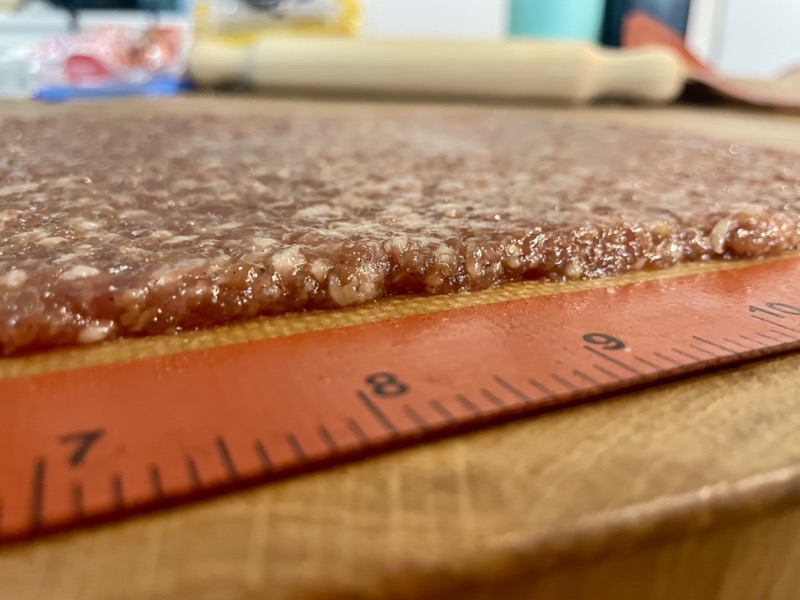
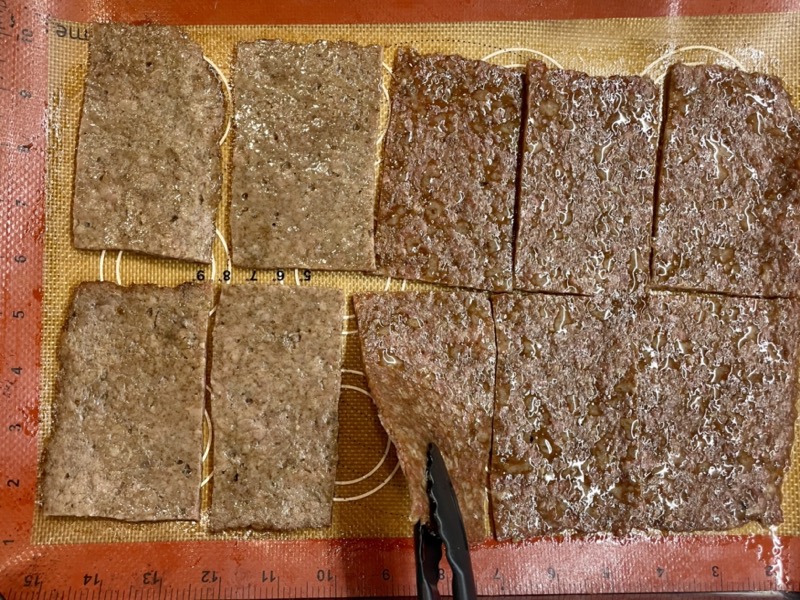
Prepare 2 lined baking trays. Take the liner out from the trays and divide the marinated pork into two equal batches onto each liner. Use the back of a spoon and spread out the pork evenly. Place a sheet of plastic wrap over the top of the pork and use a rolling pin to further flatten the pork to a 2mm in thickness. You can use a butter knife to straighten the edges as best as you can to make it a clean rectangle (see photo).

Bake the pork in the preheated oven for 15-20 minutes or until the edges are slightly brown and the pork is firm enough to lift up in one piece. Pour out any excess liquid that is released when baking. Use kitchen scissors and cut the pork into even pieces then flip them. Bake again for another 15-20 minutes so the other side is slightly browned.

While the pork is baking, make the glaze by mixing 2 Tbsps honey with 1 Tbsp of water.

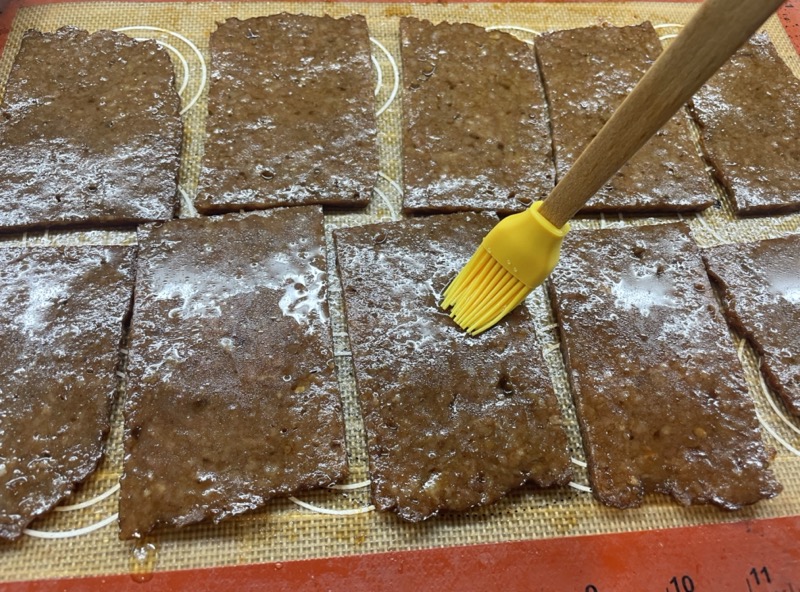
Once both sides have been baked, turn the oven setting to BROIL. While the oven heats up further, brush the glaze over the top of each piece. Continue to bake on a broil setting for 1-2 minutes on the top rack to let the glaze caramelize – watch the bakkwa carefully so it doesn’t burn. Remove from the oven, flip each piece over and brush the glaze on top. Put it back in the oven on broil for another 1-2 minutes until caramelized.

Once finished, turn off the oven and let the pork pieces cool on a cooling rack. Done!

Summarized Recipe:

Bakkwa – Chinese Pork Jerky (sweet and salty goodness)

Date Published: April 14th, 2024 | Last Updated: April 14th, 2024
Author: Abby |Category: Asian, easy, snacks
Serves: 2 batches (20 pieces) | Prep time: 24 hours to marinate | Cook time: 1 hour

Ingredients:

  • 600g ground pork
  • 200g (1 cup) granulated sugar
  • 2 Tbsps water
  • 2 Tbsps dark soy sauce
  • 2 Tbsps fish sauce
  • 1.5 Tbsps oyster sauce
  • 1 Tbsp Shaoxing wine
  • 1 tsp sesame oil
  • 1 tsp ground white pepper
  • 2 tsps 5-spice powder
  • 1 tsp ginger powder
  • Glaze: 2 Tbsps (40g) honey + 1 Tbsp water

Directions:

  1. Mix all the ingredients of the bakkwa (except the glaze) together in a mixing bowl: ground pork, sugar, water, dark soy sauce, fish sauce, oyster sauce, shaoxing wine, sesame oil, white pepper, 5-spice powder, and ginger powder. Place in an airtight container or ziploc bag and let it marinate in the fridge overnight.
  2. The next day, preheat the oven to 300˚F/150˚C.
  3. Prepare 2 lined baking trays. Take the liner out from the trays and divide the marinated pork into two equal batches onto each liner. Use the back of a spoon and spread out the pork evenly. Place a sheet of plastic wrap over the top of the pork and use a rolling pin to further flatten the pork to a 2mm in thickness. You can use a butter knife to straighten the edges as best as you can to make it a clean rectangle (see photo).
  4. Bake the pork in the preheated oven for 15-20 minutes or until the edges are slightly brown and the pork is firm enough to lift up in one piece. Pour out any excess liquid that is released when baking. Use kitchen scissors and cut the pork into even pieces then flip them. Bake again for another 15-20 minutes so the other side is slightly browned.
  5. While the pork is baking, make the glaze by mixing 2 Tbsps honey with 1 Tbsp of water.
  6. Once both sides have been baked, turn the oven setting to BROIL. While the oven heats up further, brush the glaze over the top of each piece. Continue to bake on a broil setting for 1-2 minutes on the top rack to let the glaze caramelize – watch the bakkwa carefully so it doesn’t burn. Remove from the oven, flip each piece over and brush the glaze on top. Put it back in the oven on broil for another 1-2 minutes until caramelized. Once finished, turn off the oven and let the pork pieces cool on a cooling rack. Done!

Legit Tonkotsu Ramen from scratch (in an Instant Pot)


Date Published: Mar 3rd, 2024 | Last Updated: Mar 3rd, 2024
Author: Abby |Category: Asian, mains, soups
Serves: 4-6 | Prep time: 12 hours before to marinate | Cook time: 4.5 hours total

Jump to recipe |

A tonkotsu ramen is my all time favourite thing to eat, so I’m extra excited to be sharing this recipe with everyone! It’s a beautiful bowl of a rich pork bone broth with noodles, chashu, and a ramen egg. No matter what is happening in my life, a tonkotsu ramen will always make it better. When Toby and I travel, I’m always seeking out the local ramen spots – I must’ve had over a hundred bowls of ramen in my life time…so far.

I’ve always wanted to try making a tonkotsu ramen, however due to its long 12 hour cooking time, it’s complexities (ramen shops will use a refractometer to check their broth!), and having to source pork bones on the move, it has constantly been on the back burner. I’ve searched time and time again for a simplified recipe and even went as far as buying instant tonkotsu ramen to satisfy the cravings, but I’ve never succeeded in finding anything that was close to restaurant quality – until now! Recently I stumbled across a ramen subreddit where u/ramen_lord posted his version of a tonkotsu ramen but made in an Instant Pot in 3 hours (find original recipe here)! This made it much less intimidating for me and I decided to try it out. Amazingly, the recipe turned out near perfect the first time and after the second time, Toby said it was the best tonkotsu ramen he’s ever had. It was THAT good! If you’re ever reading this, thank you u/ramen_lord! (If you check out the original link, he also gives a recipe at making your own ramen noodles.)

Although it is a long recipe, each step and component is pretty easy and straightforward, so I’d encourage you to give it a try if you’re a ramen lover like me!

What Makes up a Tonkotsu Ramen?

A traditional tonkotsu ramen is made up of 6 major components, and yes, all of them are included in this very thorough monster recipe!

1. Chashu – pork belly slices

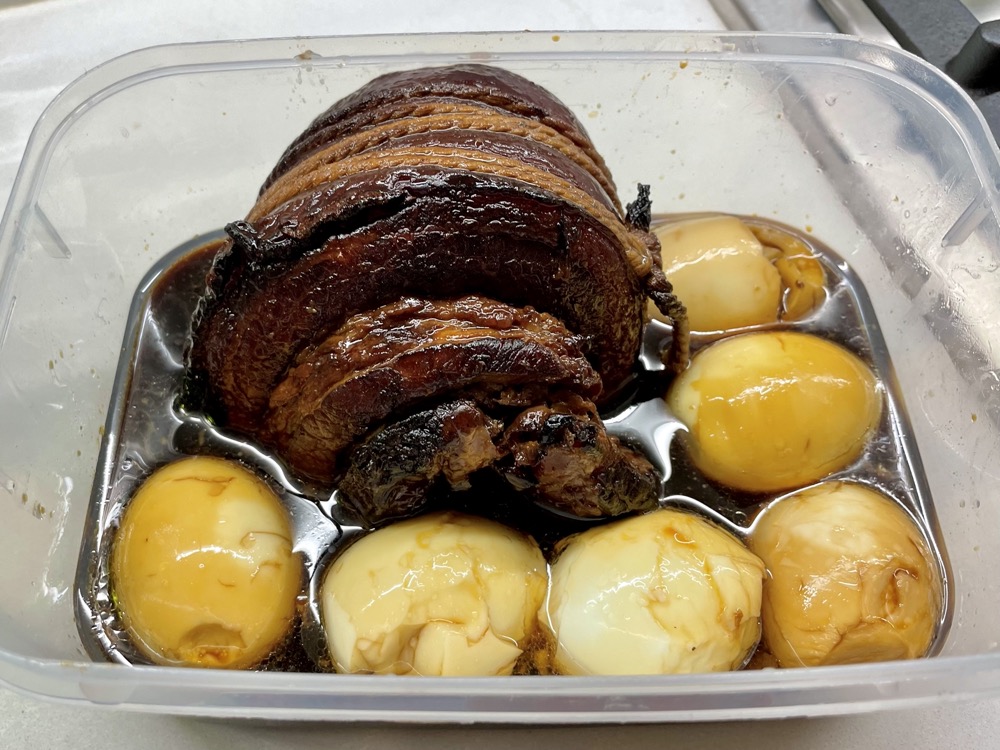
Chashu is a Japanese-style savoury pork belly that is braised the day before and marinated overnight. This is the main protein of the dish. Due to its fatty richness, it is usually served in thin slices and in small portions. This recipe will make about 2-3 slices per bowl. If you’re big on pork belly, then double the chashu portion of the recipe!

Note: Japanese chashu differs from the Chinese-style Charsiu which is barbecue pork rather than braised pork.

2. Ramen egg – a marinated boiled egg with a perfectly soft jammy centre

A ramen egg is a specific style of egg served in a bowl of ramen. It is always soft to medium-boiled to ensure a jammy velvety centre then marinated in a savoury sauce – I marinate mine in the chashu marinade overnight. Make sure you have a timer ready when you cook the eggs to ensure the perfect soft centre.

The ramen egg is always my favourite part of a bowl of ramen (my family would agree with me). For some reason, Toby is not a huge fan of eggs in general, so every time we go out for ramen he always gives me his egg! Lucky me 😊🙃❤️.

3. Tonkotsu broth – a rich and creamy pork bone broth

This is the star of the show. “Tonkotsu” literally translates to “pork bone”, which adequately names this ramen dish. The traditional method of making a tonkotsu broth is to boil the pork bones on high heat for 12 hours then add in aromatics. It is a long and arduous process which is why I’ve avoided making this recipe for so long. This recipe uses the Instant Pot pressure cooker to bring down the cook time to just 3 hours and produces restaurant-quality results!

A classic tonkotsu broth is creamy and rich due to the breakdown of the gelatin in the pork bones. Some recipes will blend pork fat and add it to the broth to make it even more creamy. For the sake of my cholesterol, there is no extra blended fat in this recipe. The broth here is just as good without it.

The colour of a tonkotsu broth should be opaque and milky white. Traditionally the pork bones are cleaned thoroughly by boiling them and removing the scum that is released and then scrubbing them clean before the broth is even started. Many purists out there will insist that you must clean the bones this way or else your broth will never be white. My first time making this recipe I cleaned the bones this way. Although it took extra time, it did produce a white broth. However after further research, I realized that you can also just roast the bones in the oven rather than scrubbing them clean and you still get the same results but with much less work. I tried it both ways and the results were quite similar. The oven roasting method produced a very slightly darker broth, however I’m sure that if I blended more of it in the blender, the results would be the same. Myth busted!

*Note: Tonkotsu is not to be confused with “tonkatsu” which is a breaded and fried pork cutlet

4. Tare – the flavour enhancer/salt of the dish

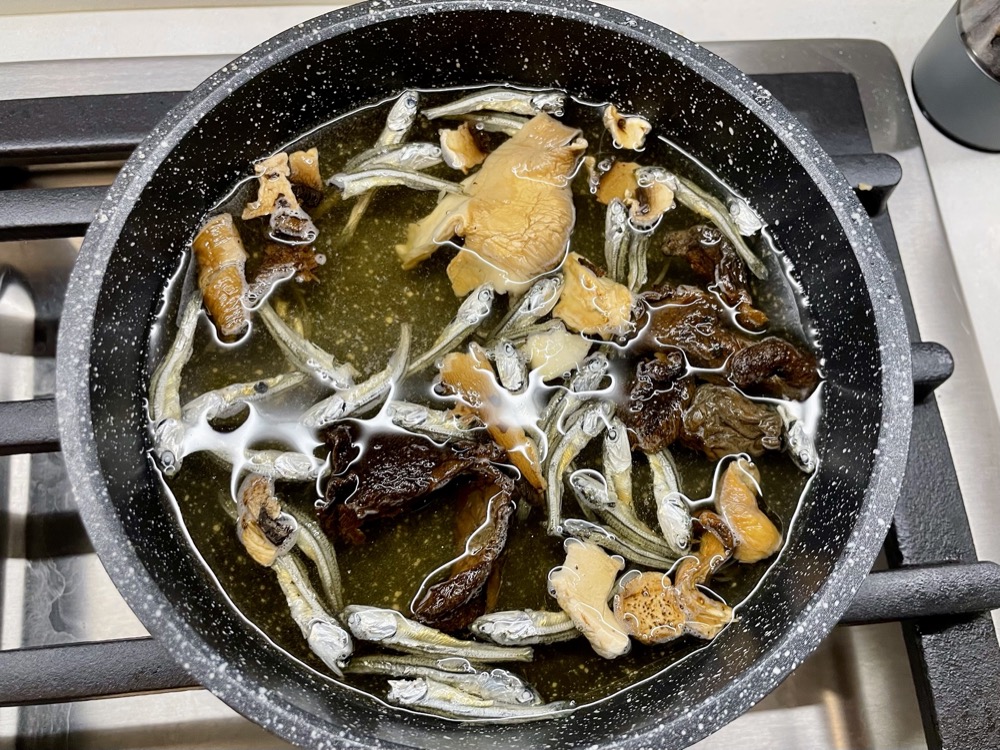
The tonkotsu broth alone lacks salt and umami flavour but when combined with the tare, it makes the perfect broth. Tare differs greatly between ramen shops and even between chefs. It can range from a simple mix of sauces to an incredibly complex recipe. It’s a chef’s signature to make a dish uniquely theirs. This recipe is a simplified version that’s essentially soy sauce marinated with mushrooms, seaweed, and dried fish.

5. Ramen noodles

Ramen noodles are different than regular noodles. They are alkaline and has a distinct taste with a slight chewy/bounce texture. To stay true to the authenticity of a tonkotsu ramen, I’d recommend taking the extra effort to find ramen noodles – you’re putting in all this effort to make it all from scratch anyway!

When looking for ramen noodles, try to buy them either freshly made or in the frozen section. Avoid the dehydrated dried noodles that are labeled as ‘ramen noodles’ – I’ve tried a few different kinds in the past and they’re just not the same.

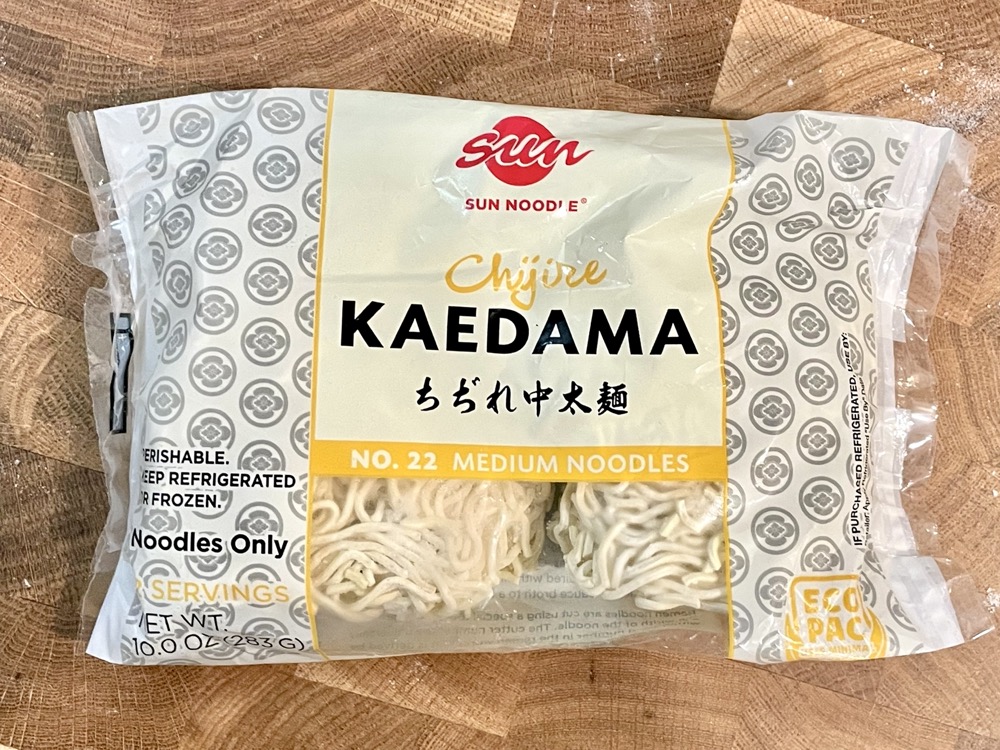
My favourite ramen noodles are made from Sun Noodle and they come in medium or thick noodles (see picture). This one package has 2 servings – it doesn’t seem like much, but it definitely expands when cooking!

Myojo is another brand of ramen noodles I’ve heard good things about, but never tried myself.

6. Toppings

There is a wide variety of toppings you can add to your ramen. I’ve put some examples in the recipe below, but feel free to add in whatever you like. Different restaurants will have different offerings of what you can add – it all depends on personal preference. A few examples of toppings include: bean sprouts, corn, seaweed, sliced wood ear fungus, fresh garlic, chili paste, chopped green onion…etc.

Anyways, without further ado, here’s the recipe! If you have any comments or suggestions, I’d love to hear from you in the comment section! You can follow me on instagram, youtube and facebook to see all the recipes I post!

Happy cooking!

Equipment you’ll need:

  • Pressure cooker (at least 8 quarts in size)
  • Cooking twine
  • Small pot with lid/saucepan

Ingredients you’ll need:

  • Chashu (Pork Belly): MAKE THE DAY BEFORE
    • 500g (1.5lbs) pork belly with the skin on or off – this will be enough for 2-3 slices per portion. Feel free to double the chashu recipe if you want to serve more.
    • 1 cup water
    • 1/2 cup Japanese soy sauce (ie. Kikkoman)
    • 1/4 cup mirin
    • 2 Tbsps brown sugar
    • 2 garlic cloves, smashed
  • Ramen Egg: MAKE THE DAY BEFORE
    • 4-6 eggs (depending on how many people you’re serving)
  • Broth:
    • 1kg (2 lbs) pork neck bones (you want some meat to be attached to the bones for extra flavour)
    • 1kg (2 lbs) pork femur bones (make sure the larger leg bones are split so the bone marrow is exposed) – if you can’t find femur bones, you can use all neck bones
    • 12 cloves of garlic, peeled and smashed
    • 1 small brown onion, peeled and quartered
    • 4cm piece of ginger, sliced (don’t worry about peeling it)
    • 2 green onions, cut into thirds
  • Tare:
    • 1/2 cup (120ml) water
    • 1.5 Tbsps (25ml) mirin
    • 1 Tbsp (15ml) sake
    • 4g kombu (dried kelp)
    • 3g dried porcini mushrooms
    • 3g sababushi/dried mackerel, or katsuobushi/bonito flakes, or niboshi/dried anchovies – I had a difficulty sourcing these in my neighbourhood, so any of these will work to give it an umami fishy flavour
    • 1/2 cup (120ml) Japanese soy sauce (ie. Kikkoman)
    • 2.5 tsps (15g) kosher salt
    • 1.5 tsps (5g) brown sugar
  • 4-6 portions of ramen noodles, premade
  • Additional Toppings (optional):
    • Sliced green onion
    • Wood ear mushrooms
    • Seaweed
    • Bean sprouts

Directions:

THE DAY BEFORE:

A) Make the chashu:

Make sure the pork belly is at room temperature (take it out of the fridge at least 30mins prior).

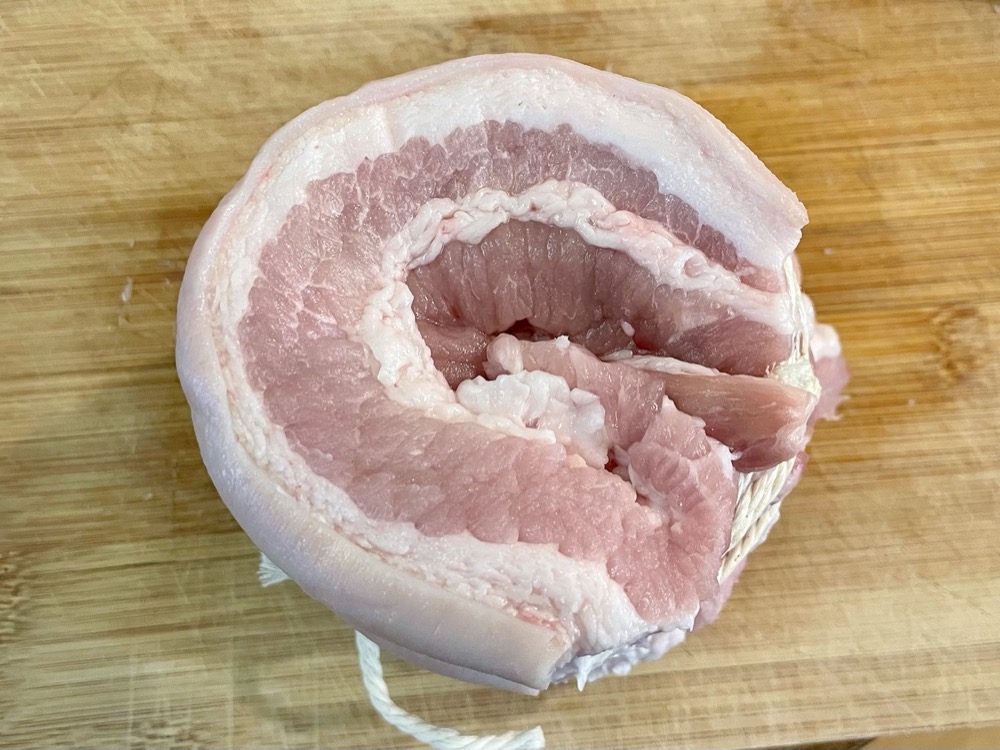
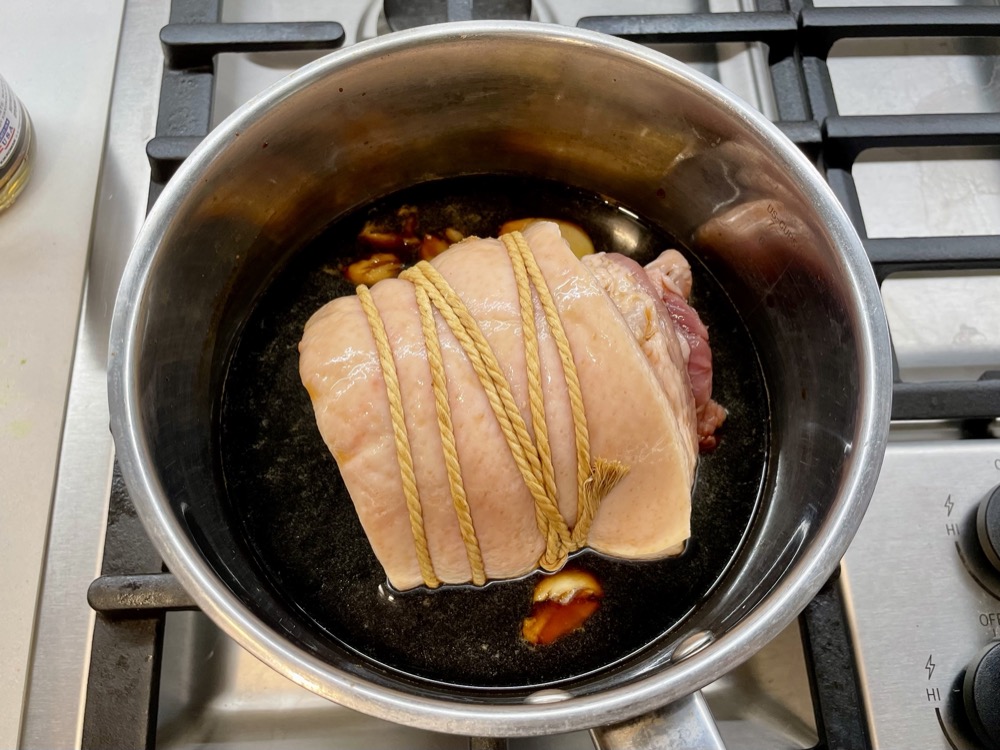
Roll the pork belly into a cylinder with the layers visible on the side (see photo) and tie tightly with cooking twine so it stays in shape.

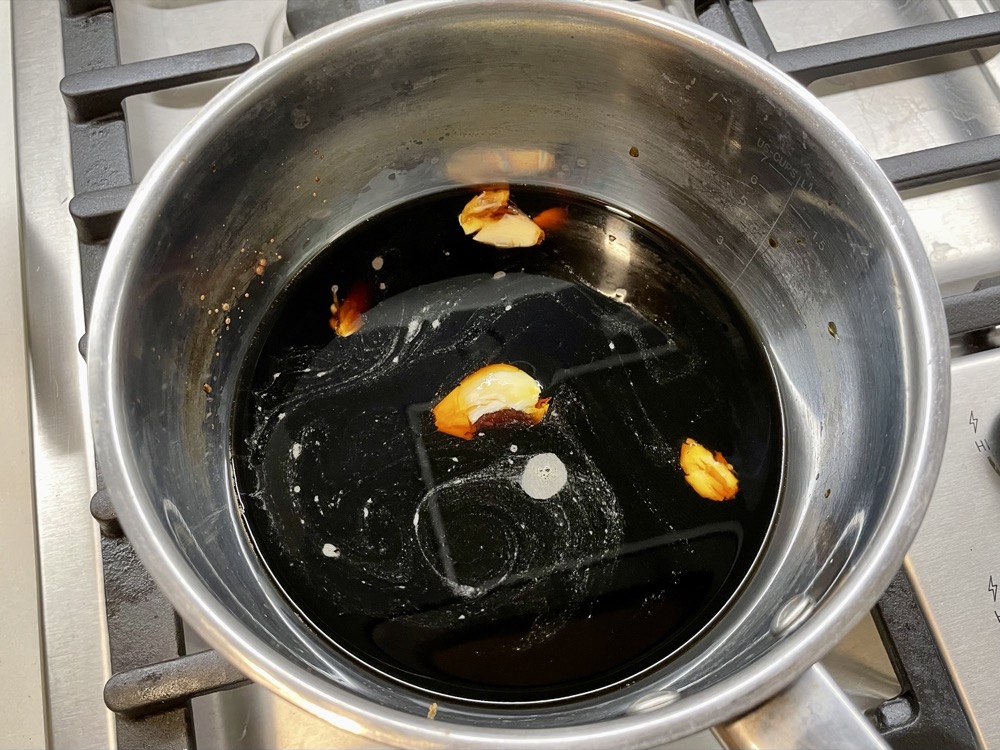
Take out a saucepan with a lid and add in the rest of the the chashu ingredients: water, soy sauce, mirin, brown sugar, garlic. Place the tied up pork belly in the middle of the saucepan.

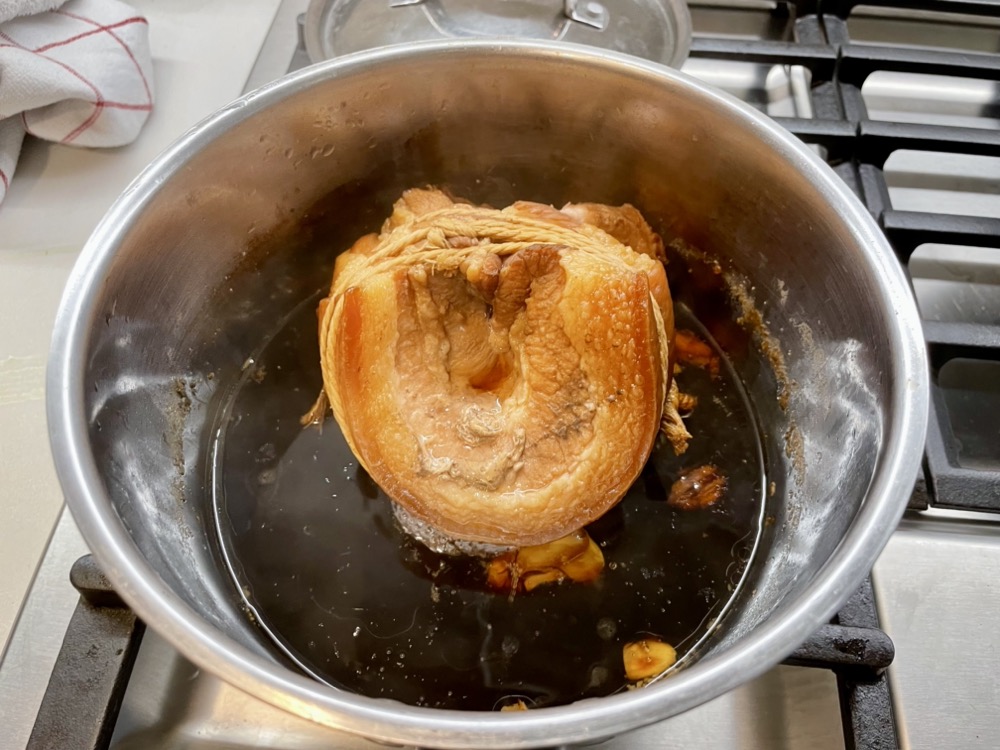
Turn the heat on to HIGH and let the sauce come to a boil, then turn the heat down to LOW and let it simmer with the lid on for 90 minutes. Turn the pork belly every 20 minutes so it gets evenly braised in the sauce.

When there’s 20 minutes left to your cook time, preheat your oven to 220˚C (425˚F) and prepare a baking tray with a wire rack.

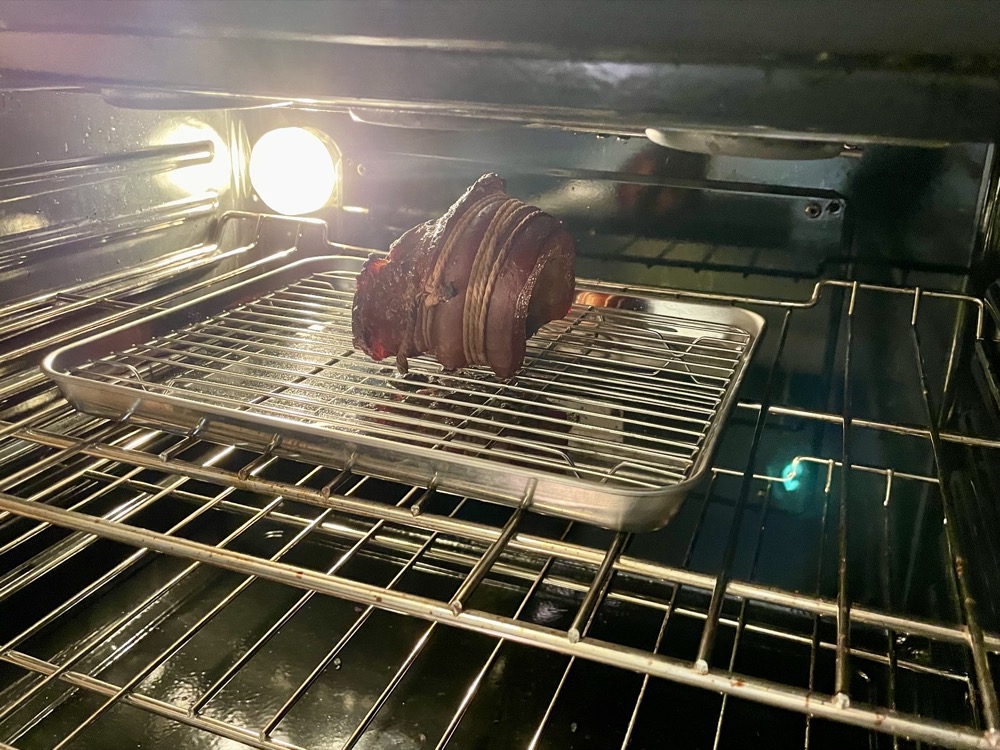
Once the 90 minutes is up, turn off the heat and take out the pork belly (keeping the remaining sauce aside) and place it on the rack over a baking tray and roast in the preheated oven for 8-10 minutes, or until the outside is a dark caramel colour.

When the pork belly is done, take it out of the oven and place it in a heat-proof container (make sure there’s enough room for the eggs as well). Pour the leftover sauce over and let the pork belly marinate in the sauce overnight. If the marinade doesn’t surround the pork belly, either use a smaller container or turn the pork belly halfway through for even marination. A vacuum-sealed plastic bag works well as well.

Vacuum-seal bags will help marinate it better by allowing the sauce to surround the meat and eggs

B) Make the ramen eggs: (you can do this step while you’re waiting for the pork belly to cook)

Bring a small pot of water to boil. Gently lower all 4 eggs into the boiling water and start a timer for 7 minutes. Adjust the heat if the water is boiling too rapidly to avoid the eggs from knocking around in the pot.

While you’re waiting, prepare an ice bath for the eggs. Once the timer is up, turn off the heat and immediately submerge all the eggs into the ice bath. Once the eggs are cool enough to handle, remove all of the shells.

Place the peeled boiled eggs into the same container as the pork belly and marinate together overnight. If the sauce does not surround the egg, turn the eggs halfway through for even marination. A vacuum-sealed plastic bag works well as well. Do not marinate for longer than 2-3 days or else the egg will become too salty.

THE DAY OF:

C) Make the tonkotsu broth:

Preheat oven to 220˚C (425˚F)

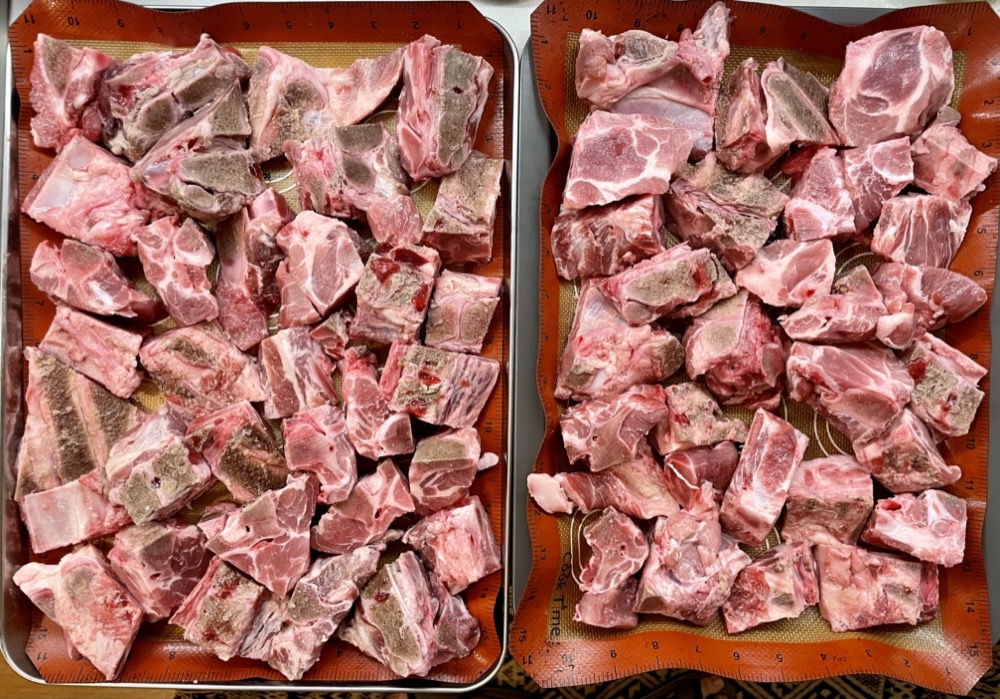
Roast the bones: Prepare a large lined baking tray. Rinse the pork bones and place them all in one layer of the tray (do not overlap the bones). Use a second tray if they don’t all fit into one. Roast in the preheated oven for 40 minutes, turning the bones once halfway through the cook time. After 40 minutes, turn off the oven. You should have a dark brown char on the bones.

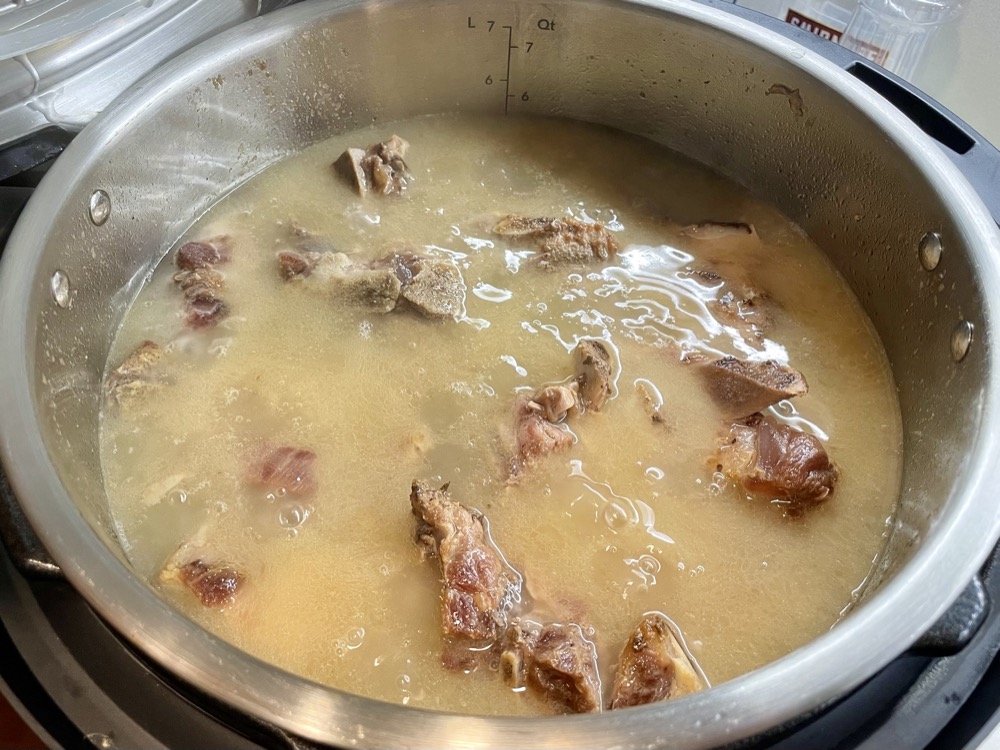
Cook the broth: Place the roasted bones along with any browned bits or liquids from the tray (these will add extra flavour) into your Instant Pot. Add enough water to cover the bones by 2-3cm (roughly 3 litres). Turn the Instant Pot on to a sauté setting and set the heat to HIGH. Once the water comes to a boil, cancel the setting and put the lid on. Turn on the pressure cook setting to HIGH and cook for 2 hours. (You can start making the tare or prepare any additional toppings during this time as you wait.) When the timer finishes, quick release the pressure – be careful of any spurting of liquids from the vent! When it is safe to do so, remove the lid carefully.

Add in aromatics & free the bone marrow: Add in garlic, ginger, green onion and onion into the broth. Use a chopstick and scrape out any bone marrow from the bones and let the marrow boil freely in the soup alongside the bones.

Boiling the broth for the final hour – lid on or lid off will depend on how rich it is after the Instant Pot

Taste for richness and Reduce (if needed): At this point the broth will taste quite bland since there as been no added salt and the aromatics were just introduced. Ignore the need to want to add in salt right now – it will come later. You want to taste for the texture of the broth, not the flavour. How creamy your broth is at this stage will dictate how you cook down your broth (the texture will vary greatly depending on the mix of bones you started with – it varies every time I make it):

If your broth is watery: turn on the sauté setting on the Instant Pot and set to MED heat so the soup boils moderately. Let it boil uncovered for 1 hour to reduce the broth and increase in concentration/richness. Taste at the end of 1 hour – you can let it boil for longer if needed.

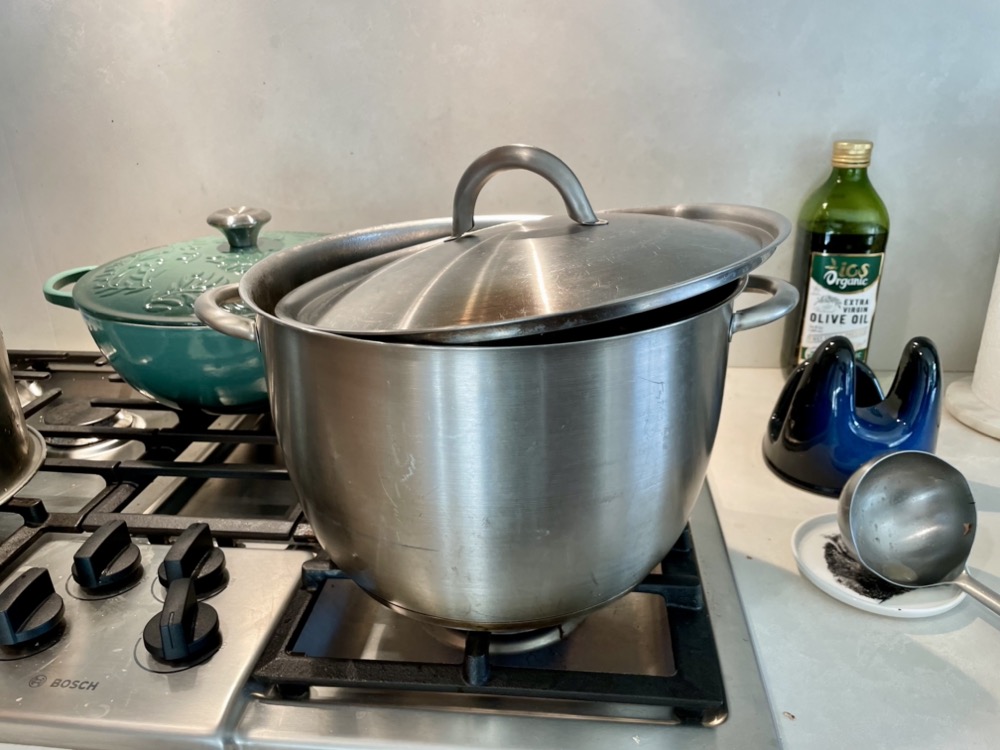
If your broth is rich & creamy: add a lid on to the Instant Pot (or transfer to a regular soup pot with a lid) and let the soup boil on MED heat for 1 hour to release the flavour of the aromatics but to still contain all the liquid.

You will need to boil the broth for 1 hour regardless of how rich your broth is. The difference is whether you keep the lid on or off to control how much liquid is evaporated. If you’re unsure, then start boiling without a lid, then taste after 30 minutes, or have the lid half-on so it only reduces slightly. Once your broth is rich enough then put the lid on and finish boiling until the 1 hour timer is up.

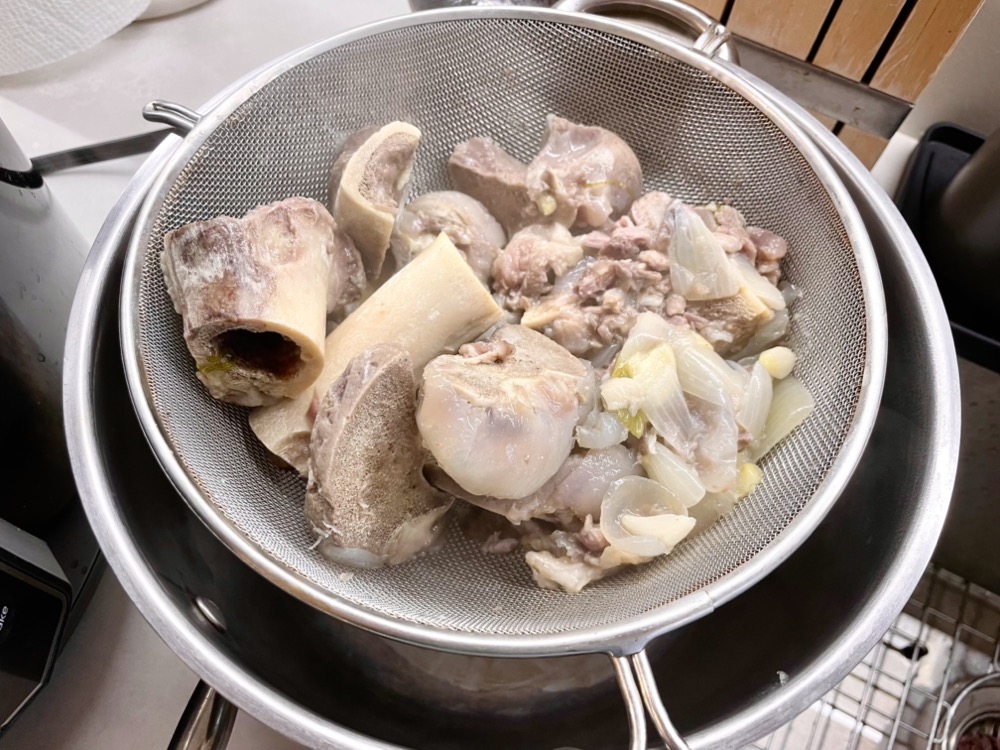
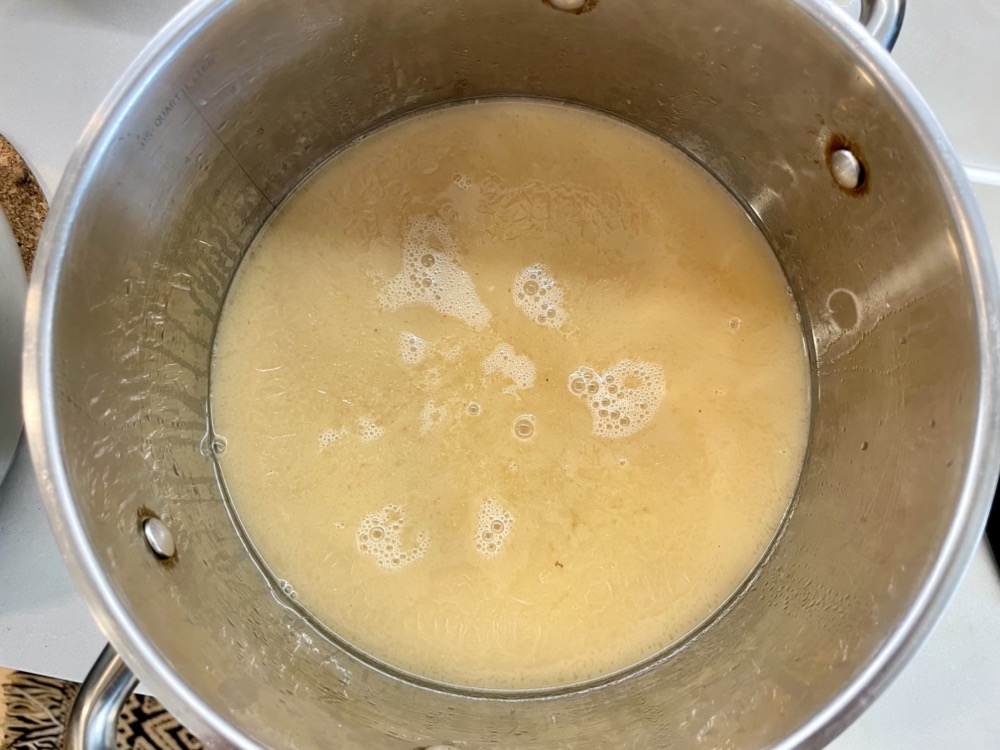
Strain: After an hour, turn off the heat and strain the broth into a clean pot. Discard the bones, aromatics, and any floaters that you have strained out. You should now have a pale brown opaque broth. Do not worry if your broth is not a lighter colour – it will lighten up in the next step.

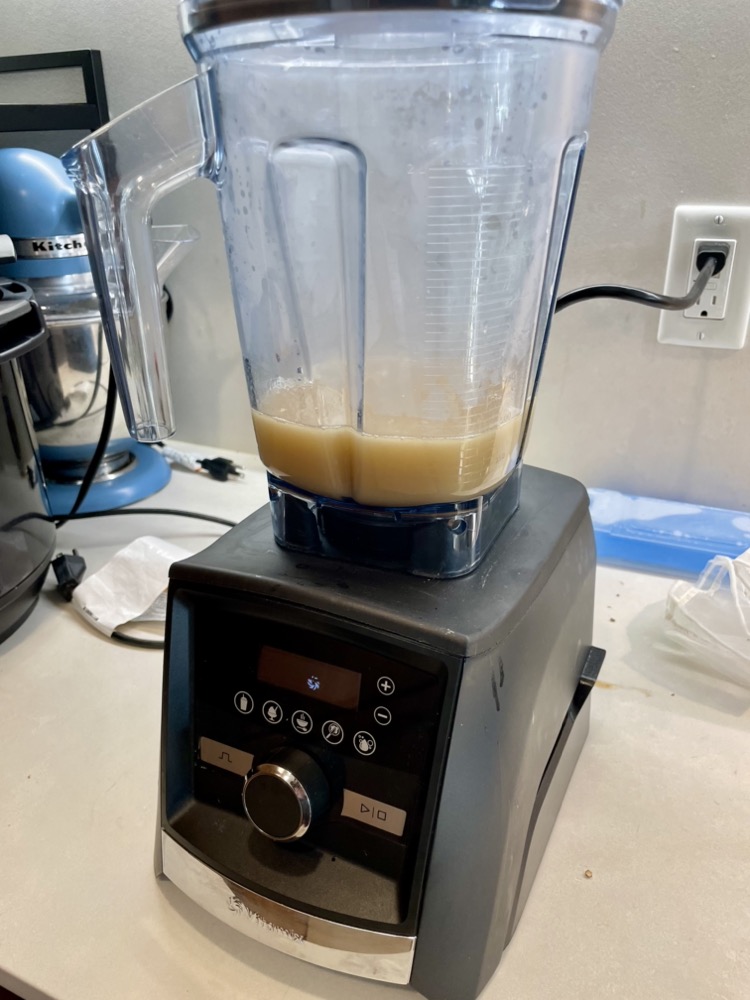
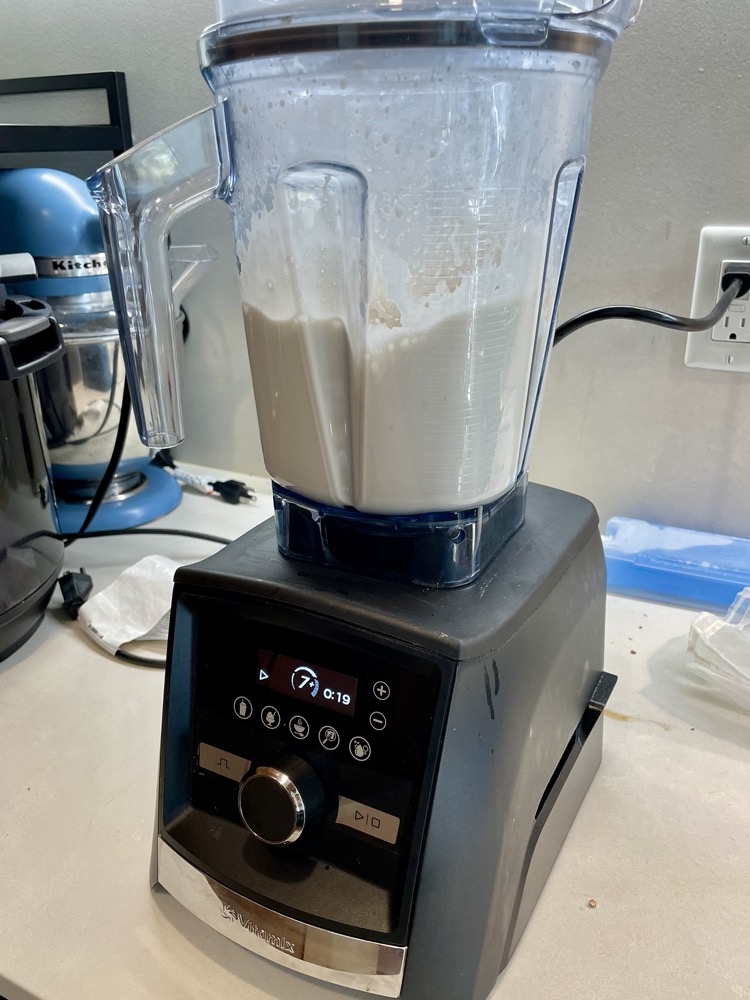
Blend – the magic step that makes the broth extra creamy and white: Remove roughly a quarter of the amount of broth into a blender and blend it on HIGH until you get a very smooth, white, and creamy texture. Add this back into the rest of the broth and mix well. Taste again for the texture.

If you find that it is too creamy, add hot water a cup at a time until desired consistency.

If you want it creamer and whiter, add more broth into the blender and blend again on HIGH and add it back into the broth until desired consistency.

Resist the urge to add salt – the final taste test will be at the end with the combination of the tare (salty goodness) with with broth together. The tonkotsu broth is now complete! If you still need more time to prepare the rest of the toppings or tare, then keep the soup on low heat to keep it hot until ready to serve.

D) Make the tare: (do this while you’re waiting for the broth to cook)

In a small pan, add the water, mirin, sake, kombu, porcini, and sababushi. Turn the heat on to HIGH. When it starts to boil, turn the heat off and let it steep for 30 minutes.

After 30 minutes, remove the kombu, add in the soy sauce, salt, sugar, and MSG. Whisk until dissolved. Turn the heat back on to HIGH until it starts to boil, then turn it off again and let it steep for at least 30 minutes. Strain before using. You can store this in the fridge for up to 6 months.

E) Cook the noodles, prepare the rest of the toppings: (you can do this in the final 10-15 minutes of your broth cooking)

Chashu and ramen egg: Remove the twine from the chashu and thinly slice it while still chilled (it will be easier to get neater cuts). Cut each egg in half to reveal the jammy egg yolk centre. Set aside.

Noodles: Cook the noodles according to package instructions and strain when finished.

Wood ear mushrooms: Soak the wood ear mushrooms in a bowl of boiling hot water for at least 15 minutes or until softened and expanded. Remove from the water, rinse, and slice. Set aside.

Green onion: Thinly slice one green onion for garnish. Set aside.

Seaweed: Cut your seaweed to desired sizes for serving.

F) Assemble the ramen: (finally!)

Divide the noodles equally into the serving bowls if not done so already.

Add 2 ladles of the tonkotsu broth over the noodles. Top with sliced chashu, ramen egg, wood ear mushrooms, seaweed, and green onion to garnish. Add a 3 tablespoons of tare over top (or more if you prefer it saltier). ENJOY!

Summarized Recipe:

Legit Tonkotsu Ramen from scratch (in an Instant Pot)

Date Published: Mar 3rd, 2024 | Last Updated: Mar 3rd, 2024
Author: Abby |Category: Asian, mains, soups
Serves: 4-6 | Prep time: 12 hours before to marinate | Cook time: 4.5 hours total

Equipment you’ll need:

  • Pressure cooker (at least 8 quarts in size)
  • Cooking twine
  • Small pot with lid/saucepan

Ingredients you’ll need:

  • Chashu (Pork Belly): MAKE THE DAY BEFORE
    • 500g (1.5lbs) pork belly with the skin on or off – this will be enough for 2-3 slices per portion. Feel free to double the chashu recipe if you want to serve more.
    • 1 cup water
    • 1/2 cup Japanese soy sauce (ie. Kikkoman)
    • 1/4 cup mirin
    • 2 Tbsps brown sugar
    • 2 garlic cloves, smashed
  • Ramen Egg: MAKE THE DAY BEFORE
    • 4-6 eggs (depending on how many people you’re serving)
  • Broth:
    • 1kg (2 lbs) pork neck bones (you want some meat to be attached to the bones for extra flavour)
    • 1kg (2 lbs) pork femur bones (make sure the larger leg bones are split so the bone marrow is exposed) – if you can’t find femur bones, you can use all neck bones
    • 12 cloves of garlic, peeled and smashed
    • 1 small brown onion, peeled and quartered
    • 4cm piece of ginger, sliced (don’t worry about peeling it)
    • 2 green onions, cut into thirds
  • Tare:
    • 1/2 cup (120ml) water
    • 1.5 Tbsps (25ml) mirin
    • 1 Tbsp (15ml) sake
    • 4g kombu (dried kelp)
    • 3g dried porcini mushrooms
    • 3g sababushi/dried mackerel, or katsuobushi/bonito flakes, or niboshi/dried anchovies – I had a difficulty sourcing these in my neighbourhood, so any of these will work to give it an umami fishy flavour
    • 1/2 cup (120ml) Japanese soy sauce (ie. Kikkoman)
    • 2.5 tsps (15g) kosher salt
    • 1.5 tsps (5g) brown sugar
  • 4-6 portions of ramen noodles, premade
  • Additional Toppings (optional):
    • Sliced green onion
    • Wood ear mushrooms
    • Seaweed
    • Bean sprouts

Directions:

THE DAY BEFORE:

  • A) Make the chashu:
    1. Make sure the pork belly is at room temperature (take it out of the fridge at least 30mins prior).
    2. Roll the pork belly into a cylinder with the layers visible on the side (see photo) and tie tightly with cooking twine so it stays in shape.
    3. Take out a saucepan with a lid and add in the rest of the the chashu ingredients: water, soy sauce, mirin, brown sugar, garlic. Place the tied up pork belly in the middle of the saucepan.
    4. Turn the heat on to HIGH and let the sauce come to a boil, then turn the heat down to LOW and let it simmer with the lid on for 90 minutes. Turn the pork belly every 20 minutes so it gets evenly braised in the sauce.
    5. When there’s 20 minutes left to your cook time, preheat your oven to 220˚C (425˚F) and prepare a baking tray with a wire rack.
    6. Once the 90 minutes is up, turn off the heat and take out the pork belly (keeping the remaining sauce aside) and place it on the rack over a baking tray and roast in the preheated oven for 8-10 minutes, or until the outside is a dark caramel colour. When the pork belly is done, take it out of the oven and place it in a heat-proof container (make sure there’s enough room for the eggs as well). Pour the leftover sauce over and let the pork belly marinate in the sauce overnight. If the marinade doesn’t surround the pork belly, either use a smaller container or turn the pork belly halfway through for even marination. A vacuum-sealed plastic bag works well as well.
  • B) Make the ramen eggs: (you can do this step while you’re waiting for the pork belly to cook)
    1. Bring a small pot of water to boil. Gently lower all 4 eggs into the boiling water and start a timer for 7 minutes. Adjust the heat if the water is boiling too rapidly to avoid the eggs from knocking around in the pot.
    2. While you’re waiting, prepare an ice bath for the eggs. Once the timer is up, turn off the heat and immediately submerge all the eggs into the ice bath. Once the eggs are cool enough to handle, remove all of the shells.
    3. Place the peeled boiled eggs into the same container as the pork belly and marinate together overnight. If the sauce does not surround the egg, turn the eggs halfway through for even marination. A vacuum-sealed plastic bag works well as well. Do not marinate for longer than 2-3 days or else the egg will become too salty.

THE DAY OF:

  • C) Make the tonkotsu broth:
    1. Preheat oven to 220˚C (425˚F)
    2. Roast the bones: Prepare a large lined baking tray. Rinse the pork bones and place them all in one layer of the tray (do not overlap the bones). Use a second tray if they don’t all fit into one. Roast in the preheated oven for 40 minutes, turning the bones once halfway through the cook time. After 40 minutes, turn off the oven. You should have a dark brown char on the bones.
    3. Cook the broth: Place the roasted bones along with any browned bits or liquids from the tray (these will add extra flavour) into your Instant Pot. Add enough water to cover the bones by 2-3cm (roughly 3 litres). Turn the Instant Pot on to a sauté setting and set the heat to HIGH. Once the water comes to a boil, cancel the setting and put the lid on. Turn on the pressure cook setting to HIGH and cook for 2 hours. (You can start making the tare or prepare any additional toppings during this time as you wait.) When the timer finishes, quick release the pressure – be careful of any spurting of liquids from the vent! When it is safe to do so, remove the lid carefully.
    4. Add in aromatics & free the bone marrow: Add in garlic, ginger, green onion and onion into the broth. Use a chopstick and scrape out any bone marrow from the bones and let the marrow boil freely in the soup alongside the bones.
    5. Taste for richness and Reduce (if needed): At this point the broth will taste quite bland since there as been no added salt and the aromatics were just introduced. Ignore the need to want to add in salt right now – it will come later. You want to taste for the texture of the broth, not the flavour. How creamy your broth is at this stage will dictate how you cook down your broth (the texture will vary greatly depending on the mix of bones you started with – it varies every time I make it):
      • If your broth is watery: turn on the sauté setting on the Instant Pot and set to MED heat so the soup boils moderately. Let it boil uncovered for 1 hour to reduce the broth and increase in concentration/richness. Taste at the end of 1 hour – you can let it boil for longer if needed.
      • If your broth is rich & creamy: add a lid on to the Instant Pot (or transfer to a regular soup pot with a lid) and let the soup boil on MED heat for 1 hour to release the flavour of the aromatics but to still contain all the liquid.
      • You will need to boil the broth for 1 hour regardless of how rich your broth is. The difference is whether you keep the lid on or off to control how much liquid is evaporated. If you’re unsure, then start boiling without a lid, then taste after 30 minutes, or have the lid half-on so it only reduces slightly. Once your broth is rich enough then put the lid on and finish boiling until the 1 hour timer is up.
    6. Strain: After an hour, turn off the heat and strain the broth into a clean pot. Discard the bones, aromatics, and any floaters that you have strained out. You should now have a pale brown opaque broth. Do not worry if your broth is not a lighter colour – it will lighten up in the next step.
    7. Blend – the magic step that makes the broth extra creamy and white: Remove roughly a quarter of the amount of broth into a blender and blend it on HIGH until you get a very smooth, white, and creamy texture. Add this back into the rest of the broth and mix well. Taste again for the texture.
      • If you find that it is too creamy, add hot water a cup at a time until desired consistency.
      • If you want it creamer and whiter, add more broth into the blender and blend again on HIGH and add it back into the broth until desired consistency.
      • Resist the urge to add salt – the final taste test will be at the end with the combination of the tare (salty goodness) with with broth together. The tonkotsu broth is now complete! If you still need more time to prepare the rest of the toppings or tare, then keep the soup on low heat to keep it hot until ready to serve.
  • D) Make the tare: (do this while you’re waiting for the broth to cook)
    1. In a small pan, add the water, mirin, sake, kombu, porcini, and sababushi. Turn the heat on to HIGH. When it starts to boil, turn the heat off and let it steep for 30 minutes.
    2. After 30 minutes, remove the kombu, add in the soy sauce, salt, sugar, and MSG. Whisk until dissolved. Turn the heat back on to HIGH until it starts to boil, then turn it off again and let it steep for at least 30 minutes. Strain before using. You can store this in the fridge for up to 6 months.
  • E) Cook the noodles, prepare the rest of the toppings: (you can do this in the final 10-15 minutes of your broth cooking)
    1. Chashu and ramen egg: Remove the twine from the chashu and thinly slice it while still chilled (it will be easier to get neater cuts). Cut each egg in half to reveal the jammy egg yolk centre. Set aside.
    2. Wood ear mushrooms: Soak the wood ear mushrooms in a bowl of boiling hot water for at least 15 minutes or until softened and expanded. Remove from the water, rinse, and slice. Set aside.
    3. Noodles: Cook the noodles according to package instructions, strain, and even divide into serving bowls.
    4. Green onion: Thinly slice one green onion for garnish. Set aside.
    5. Seaweed: Cut your seaweed to desired sizes for serving.
  • F) Assemble the ramen: (finally!)
    1. Divide the noodles equally into the serving bowls if not done so already.
    2. Add 2 ladles of the tonkotsu broth over the noodles.
    3. Top with sliced chashu, ramen egg, wood ear mushrooms, seaweed, and green onion to garnish. Add a 3 tablespoons of tare over top (or more if you prefer it saltier). ENJOY!

Segedínský Guláš – Czech Pork Sauerkraut Goulash


Date Published: Feb 14th, 2024 | Last Updated: Feb 14th, 2024
Author: Abby |Category: Czech, easy, mains, soups
Serves: 4-6 | Prep time: 15 mins | Cook time: 1.5 hours

Jump to recipe |

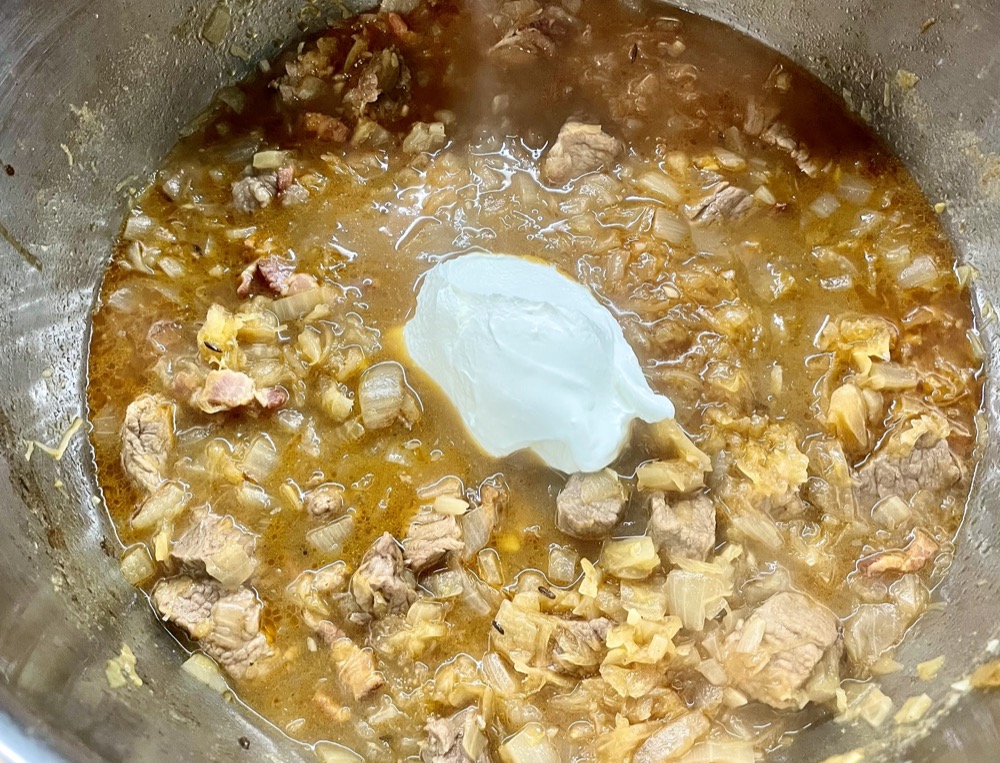
This is one of Toby’s favourite Czech dishes (next to svičkova), so of course I made it a personal challenge to try and make the best segedinsky goulash I could. After 3 tries, I think I did it. Not to toot my own horn, but this is pretty fucking good and Toby would agree. It’s a hearty goulash with pork as its main protein and it’s slowly simmered in bacon, paprika, and sauerkraut, then topped off with a little sour cream. I’m not usually a fan of sauerkraut (unless it’s a sweet braised version), but when it’s cooked into a savoury stew like this, it adds a nice texture and just a hint of tartness that balances it out nicely.

Toby has no idea why it’s called “segedinsky” since it doesn’t translate to anything in Czech. After a little googling, I learned that this dish has a few possible origins but the most popular two explanations are: 1) a Hungarian dish from the city of Szeged in Hungary that is known for their paprika, or 2) from a Hungarian writer Jozsef Székély who came to a restaurant that ran out of food at closing and requested the leftover goulash and sauerkraut to be mixed together to make a meal. Whatever the true origin, there’s no doubt it has Hungarian roots and has been widely popular in surrounding countries including Czech and Germany!

Anyways, without further ado, here’s the recipe! If you have any comments or suggestions, I’d love to hear from you in the comment section! You can follow me on instagram, youtube and facebook to see all the recipes I post!

Happy cooking!

Ingredients you’ll need:

  • 200g (roughly 6 slices) smoked thick-cut bacon, sliced small
  • 900g (2 lbs) pork shoulder, cut into 2.5cm pieces
  • 1 tsp caraway seeds, crushed
  • 3 medium (~1.2kg) onions, diced
  • 1 Tbsp sweet ground paprika
  • 2 cloves garlic, minced
  • 1 Tbsp all-purpose flour
  • 3 cups (720ml) beef broth
  • 300g sauerkraut, without the liquid
  • 1/2 cup (100g) sour cream
  • Salt to taste

Directions:

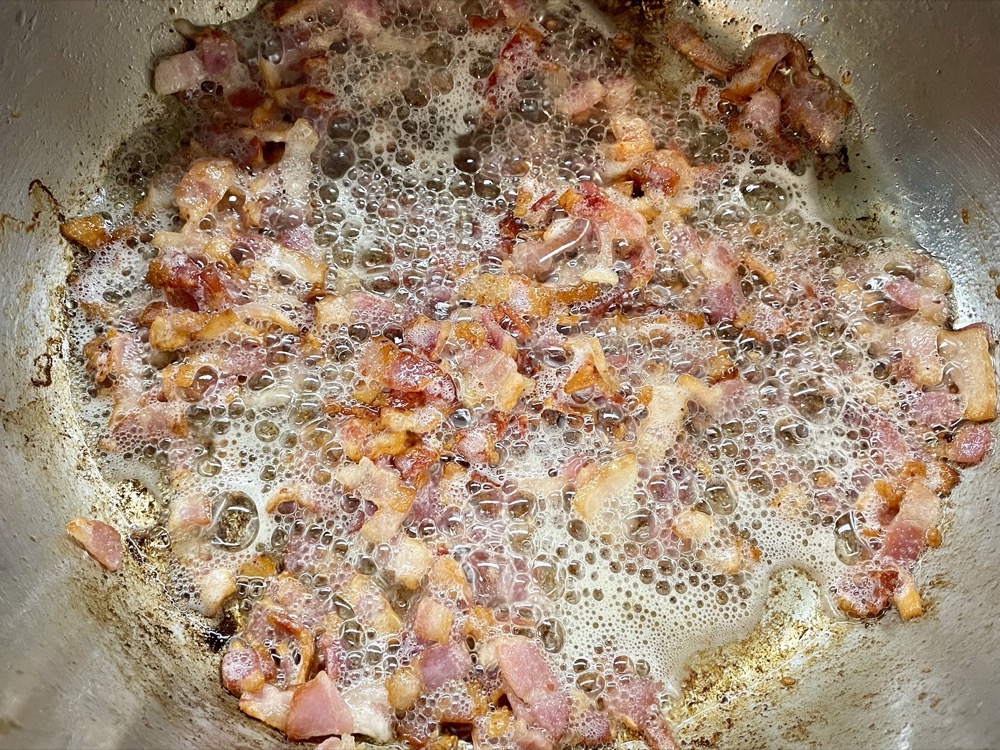
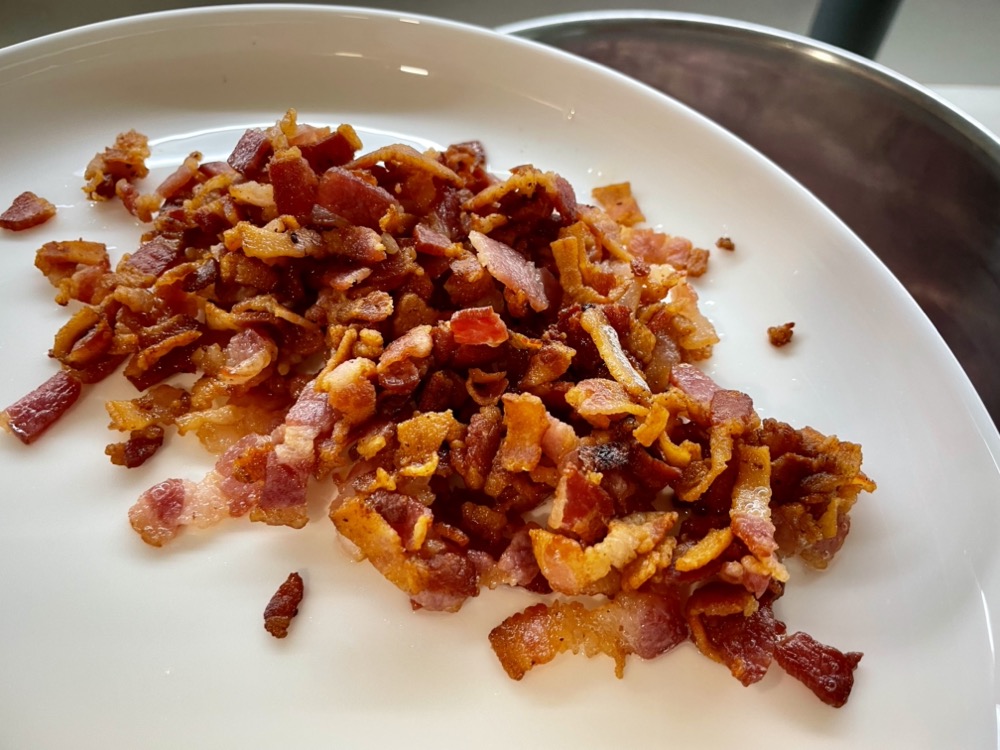
In a large pot on MED heat, add a light drizzle of oil and the bacon. Cook for 5-8 minutes to let the bacon fat render and release its oils. It’ll be done when the bacon is lightly browned and starting to get crispy. Make sure to regularly scrape the bottom of the pot so the brown bits don’t stick. Once done, remove just the bacon from the pot and set aside (leave the oil in the pot – you’re going to use this to cook the rest of the dish).

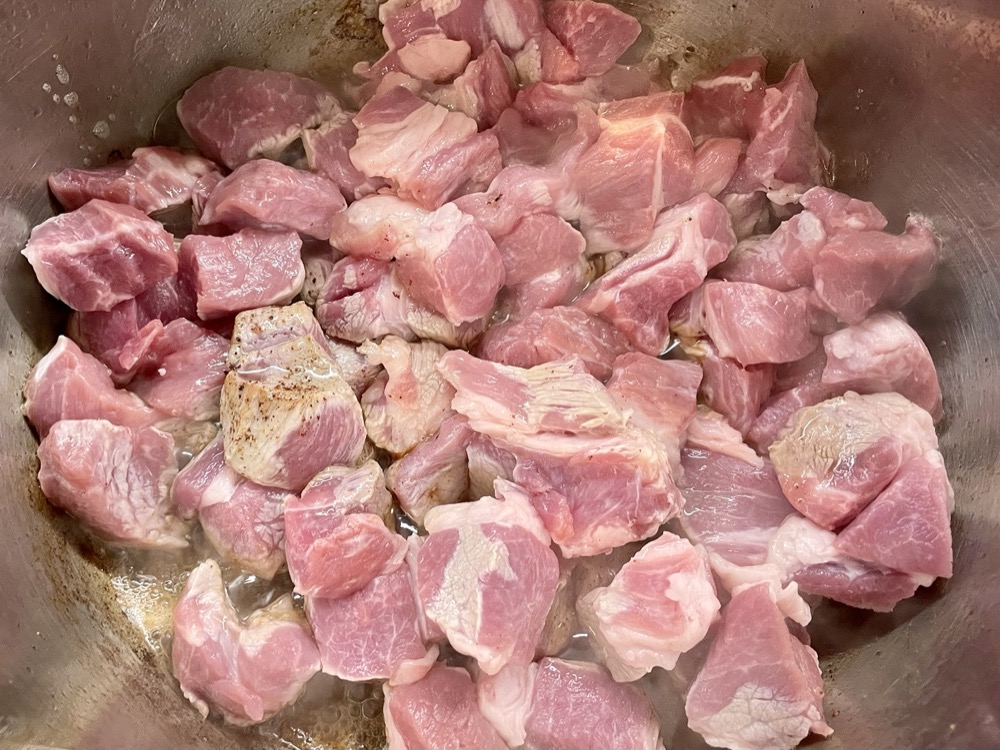
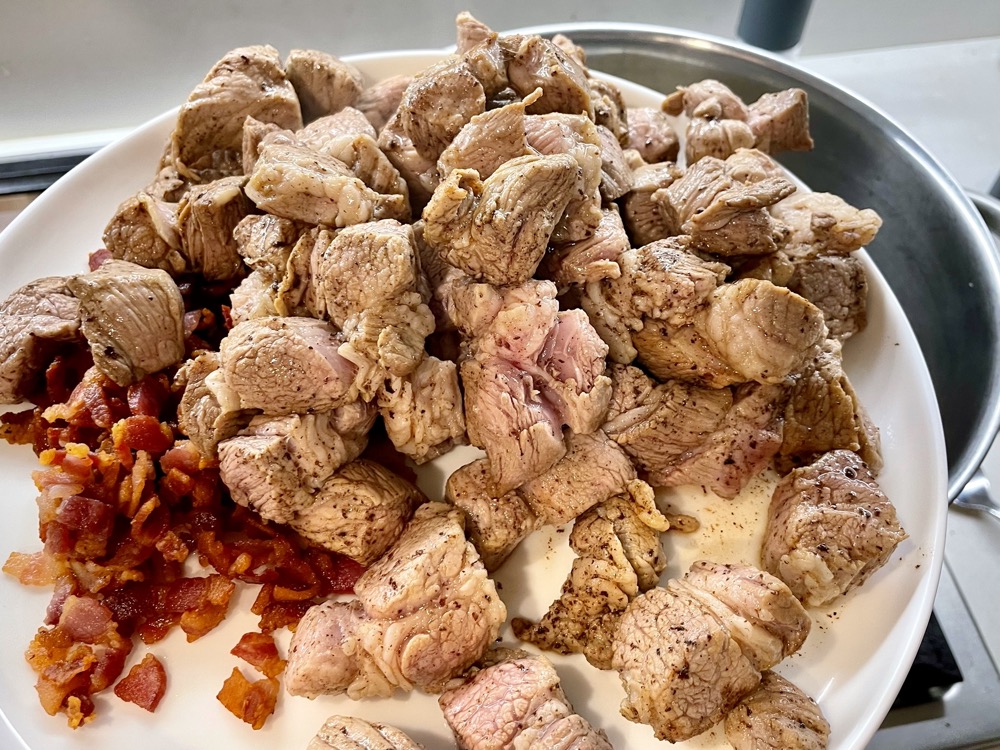
In the same pot, turn the heat up to MED-HIGH and add in the pork shoulder pieces and sear each side for 1-2 minutes until it’s browned on the outside (you do not want to cook the pork through at this stage, just sear the outside). Remove the pork from the pot and set aside (leave the oil in the pot).

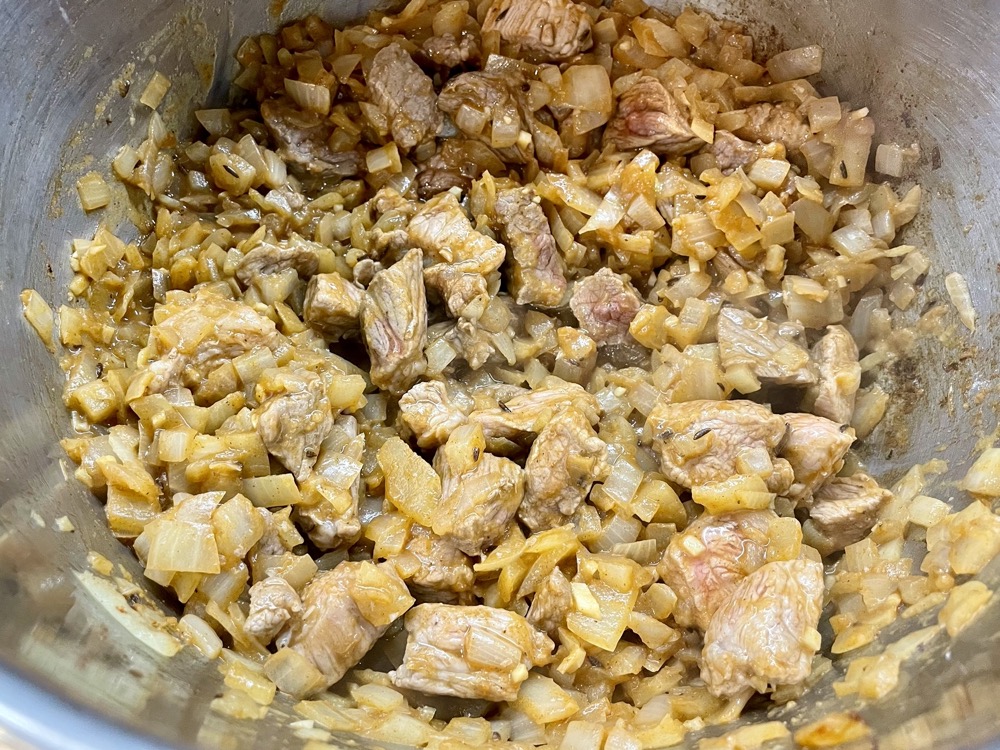
Still in the same pot, turn the heat down to MED and add in the caraway seeds and onions. Sauté for 5-8 minutes until the onions soften and start to brown.

Add back in the bacon (from step 1), seared pork (from step 2), paprika and garlic. Sauté for 30 seconds until the garlic becomes fragrant, then add in the flour. Continue to sauté together for another 30 seconds to 1 minute until all the flour is mixed well. Pour the beef broth into the pot and stir everything around, making sure to scrape up anything that stick to the bottom of the pan. Turn the heat up to HIGH to bring it to a boil, then simmer on LOW covered with a lid for 30 minutes.

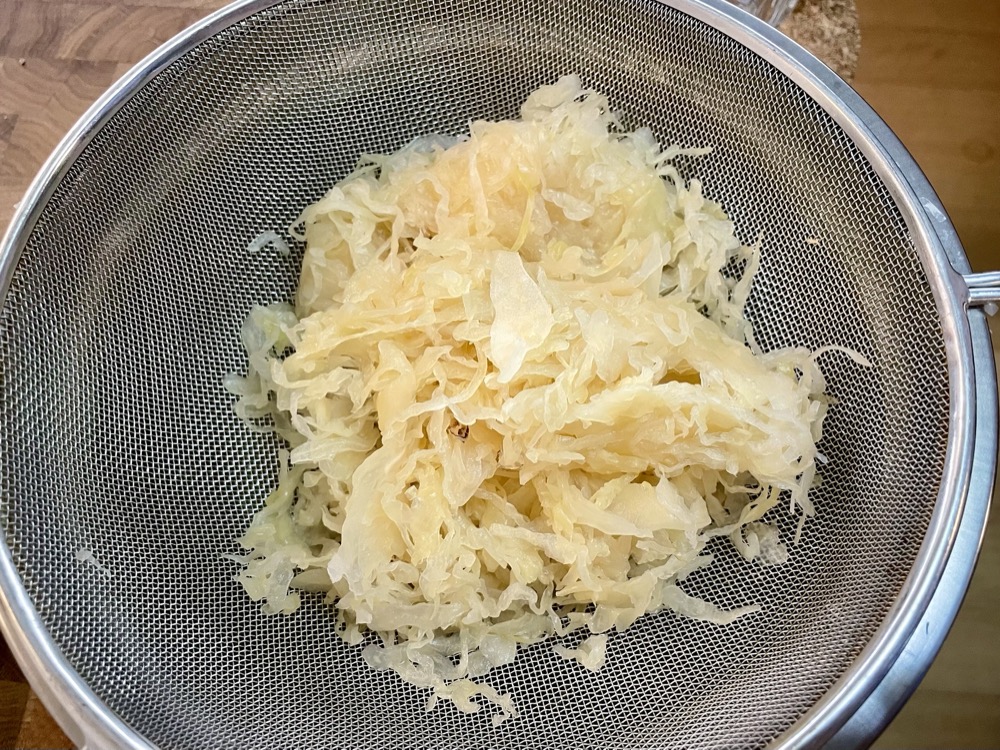
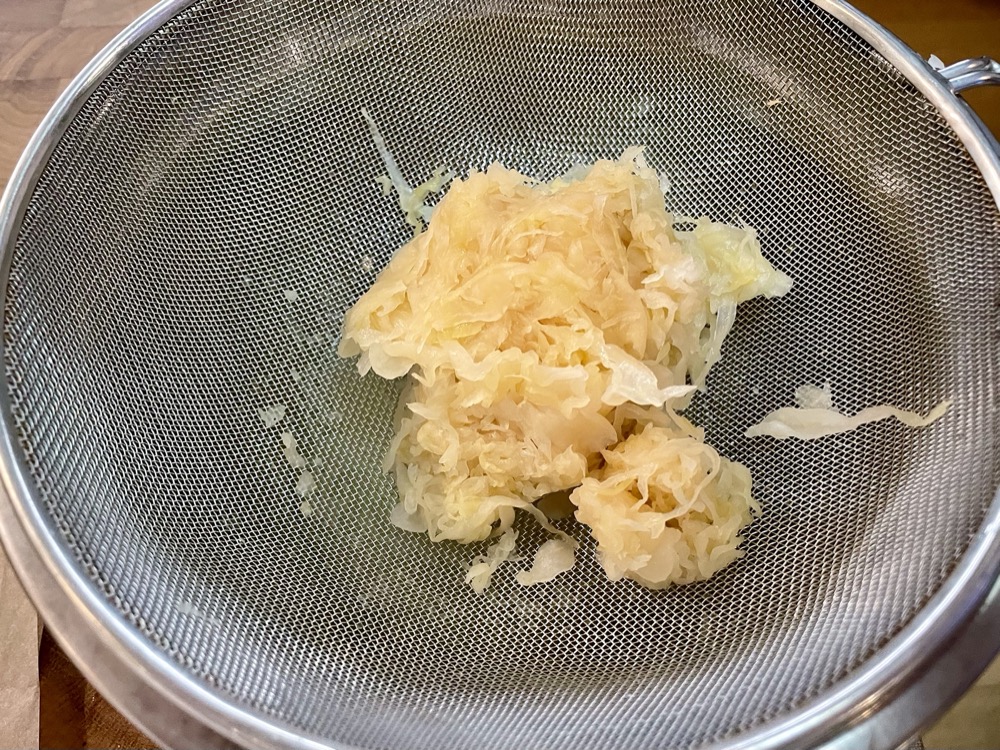
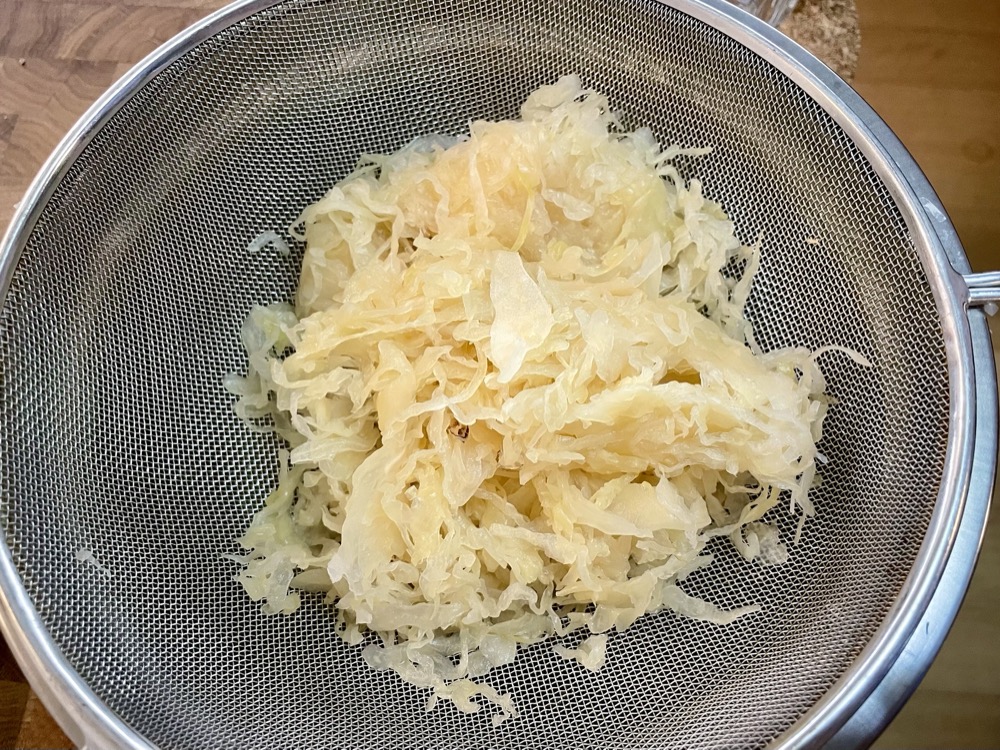
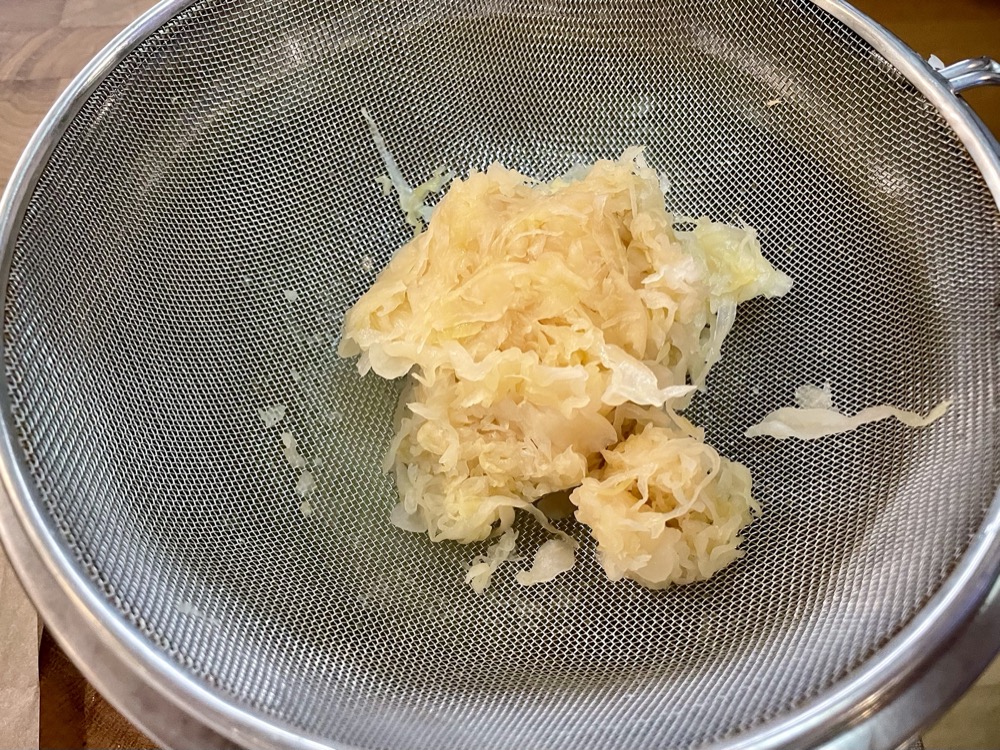
While you’re waiting, put your sauerkraut into a strainer and squeeze out as much liquid as you can. Roughly chop the sauerkraut into smaller pieces and set aside.

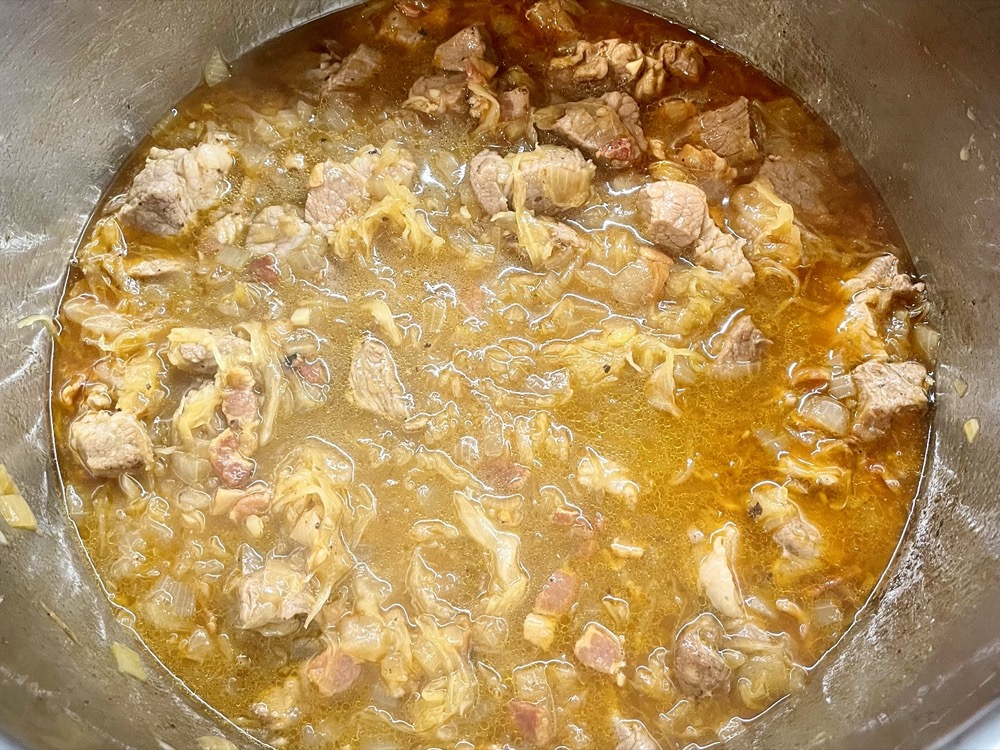
Once the broth has finished boiling, add the chopped sauerkraut into the pot, stir it around, then let it continue to simmer for another 30 minutes or until the pork is cooked, with the lid on. Try not to overcook your goulash or else the sauerkraut starts to lose its texture.

Once the soup has finished, turn the heat off, add in the sour cream and taste to adjust salt to preference. Serve hot with bread or potato dumplings!

*Note: If you’re going to double the recipe for a batch-cook, you’ll have to simmer the soup longer. This is because when you double the ingredients, you’ll end up with more moisture overall so your soup will be more dilute and simmering it longer will reduce the amount of liquid and concentrating the flavours. I’d recommend simmering it longer before you add in the sauerkraut so you don’t overcook the sauerkraut.

Summarized Recipe:

Segedínský Guláš – Czech Pork Sauerkraut Goulash

Date Published: Feb 14th, 2024 | Last Updated: Feb 14th, 2024
Author: Abby |Category: Czech, easy, mains, soups
Serves: 4-6 | Prep time: 15 mins | Cook time: 1.5 hours

Ingredients:

  • 200g (roughly 6 slices) smoked thick-cut bacon, sliced small
  • 900g (2 lbs) pork shoulder, cut into 2.5cm pieces
  • 1 tsp caraway seeds, crushed
  • 3 medium (~1.2kg) onions, diced
  • 300g sauerkraut, without the liquid
  • 1 Tbsp sweet ground paprika
  • 2 cloves garlic, minced
  • 1 Tbsp all-purpose flour
  • 3 cups (720ml) beef broth
  • 1/2 cup (100g) sour cream
  • Salt to taste

Directions:

  1. In a large pot on MED heat, add a light drizzle of oil and the bacon. Cook for 5-8 minutes to let the bacon fat render and release its oils. It’ll be done when the bacon is lightly browned and starting to get crispy. Make sure to regularly scrape the bottom of the pot so the brown bits don’t stick. Once done, remove just the bacon from the pot and set aside (leave the oil in the pot – you’re going to use this to cook the rest of the dish).
  2. In the same pot, turn the heat up to MED-HIGH and add in the pork shoulder pieces and sear each side for 1-2 minutes until it’s browned on the outside (you do not want to cook the pork through at this stage, just sear the outside). Remove the pork from the pot and set aside (leave the oil in the pot).
  3. Still in the same pot, turn the heat down to MED and add in the caraway seeds and onions. Sauté for 5-8 minutes until the onions soften and start to brown.
  4. Add back in the bacon (from step 1), seared pork (from step 2), paprika and garlic. Sauté for 30 seconds until the garlic becomes fragrant, then add in the flour. Continue to sauté together for another 30 seconds to 1 minute until all the flour is mixed well.
  5. Pour the beef broth into the pot and stir everything around, making sure to scrape up anything that stick to the bottom of the pan. Turn the heat up to HIGH to bring it to a boil, then simmer on LOW covered with a lid for 30 minutes.
  6. While you’re waiting, put your sauerkraut into a strainer and squeeze out as much liquid as you can. Roughly chop the sauerkraut into smaller pieces and set aside.
  7. Once the broth has finished boiling, add the chopped sauerkraut into the pot, stir it around, then let it continue to simmer for another 30 minutes or until the pork is cooked, with the lid on. Try not to overcook your goulash or else the sauerkraut starts to lose its texture.
  8. Once the soup has finished, turn the heat off, add in the sour cream and taste to adjust salt to preference. Serve hot with bread or potato dumplings!

*Note: If you’re going to double the recipe for a batch-cook, you’ll have to simmer the soup longer. This is because when you double the ingredients, you’ll end up with more moisture overall so your soup will be more dilute and simmering it longer will reduce the amount of liquid and concentrating the flavours. I’d recommend simmering it longer before you add in the sauerkraut so you don’t overcook the sauerkraut.

Vepřo knedlo zelo (pork, dumpling, sauerkraut) – a Czech national dish


Date Published: Feb 14th, 2024 | Last Updated: Feb 14th, 2024
Author: Abby |Category: czech, mains
Serves: 4-6 | Prep time: 3 hours (mainly to wait until the potatoes cool) | Cook time: 3 hours

Jump to recipe |

Vepřo knedlo zelo is Czech’s national dish (or at least one of them – I couldn’t find an official source to state what the official national Czech dish is, but most sources have pointed to this one (another source claims it to be svičkova)). Regardless of whether or not it’s the true national dish, it’s definitely very popular and found in most Czech restaurants.

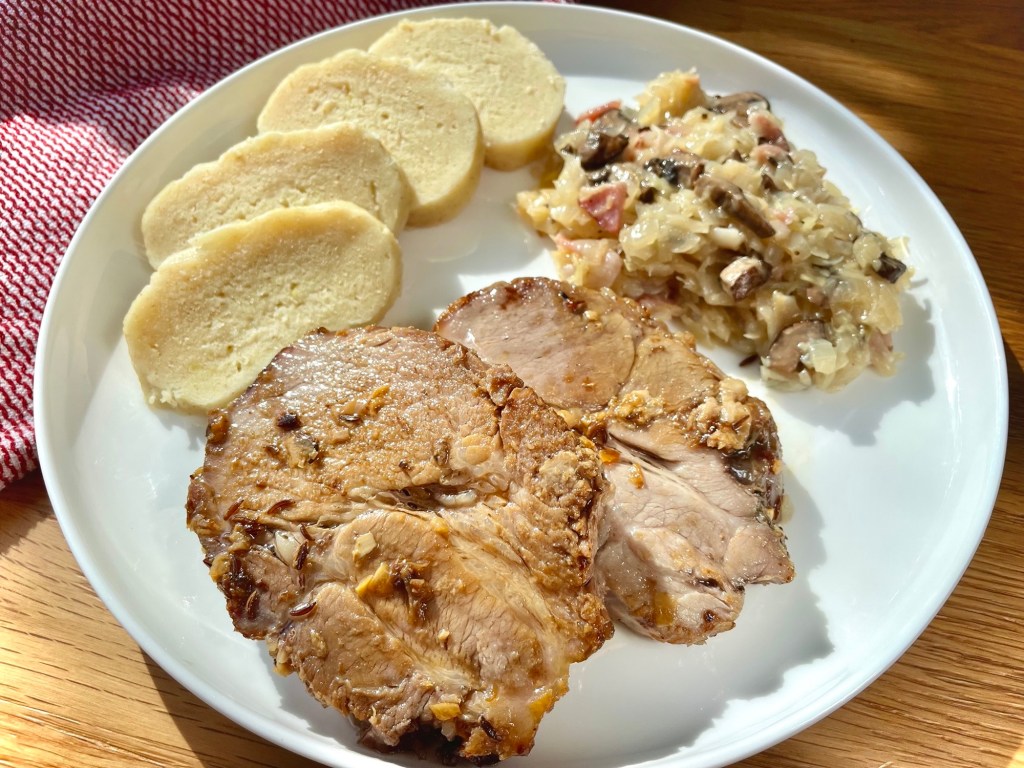
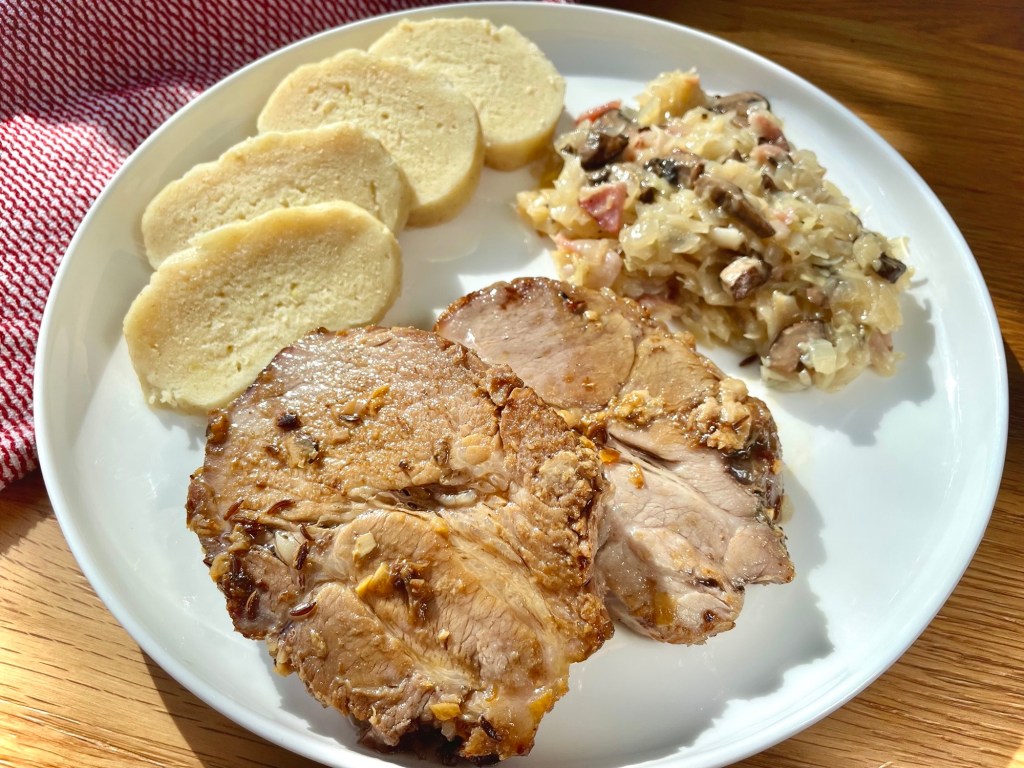
The name of the dish directly translates to the 3 components that make up the dish: vepřo = pork, knedlo = dumpling, zelo = sauerkraut. Disclaimer: this page is not a recipe page of all 3 components, but rather a guide to making all 3 components in order with links to each of their dedicated recipes. I’ve chosen to split it up this way to make it easier for the reader to navigate rather than writing it all in one monstrously long recipe post with a million photos. Each component is also delicious on their own that you can pair it with other dishes instead of just in a vepřo knedlo zelo.

1. Vepřo = pork

The pork portion is usually a pork shoulder, which can be roasted or smoked. The first time I had this dish was at babička’s place and she served it with a smoked pork shoulder. She was cooking away with it for hours that the whole apartment smelled like smoked ham – I’m pretty sure my jacket still has a hint of it 4 weeks later 😅. When I set out to recreate this dish, we visited the lovely little Polish butcher a block away from us and found that they sell beautiful already-cooked smoked pork shoulder! We couldn’t resist and bought a few hundred grams (it was delicious). We still go back there when we’re feeling too lazy to cook and heat it up with sauerkraut and dumplings.

Instead of a smoked pork, a roast pork is the other version of this dish. When I first made it from scratch, I didn’t expect much since the steps were so simple and straightforward. I also don’t usually cook with pork much so my experience with making pork roasts is very limited, but I’ve gotta say, it came out really fucking good – even Toby approves! Although the smoked pork is good and easy, the roasted version is a lot juicier in my opinion. The recipe for the roasted pork shoulder is below.

2. Knedlo = dumpling

Knedlíky are Czech dumplings. There are a few different kinds of Czech dumplings, but in this particular dish, it’s commonly served with either the bread version (houskové knedlíky) or the potato version (bramborové knedlíky) (you can find out more about the difference here). I personally prefer it with a heavier dense potato dumpling, but it can be served with the lighter fluffier bread dumpling version too. In this guide, I will reference the potato dumpling version (which happens to be easier too!). Here are links to both types of dumplings:

3. Zelo = sauerkraut

You can serve this dish with whatever style of sauerkraut you like, but I prefer it with a sweet smokey version like this one here. Since this is my favourite sauerkraut, I will also be writing this guide in accordance to that recipe. Fun fact: I actually liked this version of sauerkraut so much that I needed to find a meat dish to go with it which is how I got onto making a vepřo knedlo zelo in the first place. I never would’ve made this dish if I hadn’t succeeded in making the sauerkraut 🙃.

Anyways, without further ado, here’s the guide! If you have any comments or suggestions, I’d love to hear from you in the comment section! You can follow me on instagram, youtube and facebook to see all the recipes I post!

Happy cooking!

Directions:

1. Make the pork roast first. This is the most time-consuming and will take 2.5-3 hours to cook. Although lengthy, all this time is literally waiting. There’s nothing else that needs to be done with the pork once you pop it in the oven which makes it the perfect time to prepare everything else. When it’s done, measure it with a meat thermometer to ensure that it’s cooked and slice it. Easy. If you’re not ready to serve it yet while you finish the other components, leave it drenched in the drippings/oils from the pan to keep it moist and soaking up flavour.

2. While the pork is roasting in the oven, start making the potato dumplings. It only takes about 15-20 minutes to put the dough together and once the loaves are formed, it takes about half an hour to cook each batch. If you have extra stove space and extra pots, you can get two pots going at the same time so you can cook them all at once to save time rather than waiting for back to back 30 minutes. Make sure you set timers so you don’t forget about them.

3. When the dumplings are boiling, start making the sauerkraut. It takes about 30-40 minutes in total including two 15 minute braising times during the process, so while you’re waiting you can intermittently check on the dumplings.

4. Once everything is done, plate it up and serve. Enjoy!

Recipes used:

Vepřová Pečeně – Czech-style Pork Roast


Date Published: Feb 14th, 2024 | Last Updated: Feb 14th, 2024
Author: Abby |Category: czech, mains, easy
Serves: 4-6 | Prep time: 15 mins | Cook time: 3 hours

Jump to recipe |

Pork is one of the more common proteins seen in Czech cuisine – in fact, it’s part of their national dish: Vepřo knedlo zelo (= pork + dumplings + sauerkraut). This recipe is for a Czech-style roast pork (vepřová pečeně = “pork roast”) and is the star component of the Czech national dish. You can follow the links below if you’d like to make a full vepřo knedlo zelo.

I originally started researching making a Czech roast pork when I discovered a new found love for sweet sauerkraut that Toby’s babička made. When I perfected the recipe for the braised sweet sauerkraut, I needed a protein to go with it so I looked into making the roast pork that commonly accompanies it. I found a simple recipe at first, and after some tweaking, a beautiful caramelized glistening juicy hunk of meat was born. This pork is so good that it is worth making on its own. It’s flavourful enough to have it by itself or you can pair it with sauerkraut, a rajská sauce, mashed potatoes…anything you want! The best part is that this dish is SO easy to make with minimal ingredients. The ONLY downfall is that it takes about 3 hours, HOWEVER, it’s 3 hours of waiting and you literally do not have to do anything other than wait for the timer to go off and double check that it has cooked through with a meat thermometer. To make it even easier, you can marinate the meat in the rub the night before and the next morning, just pop it in the oven a few hours before lunch time and when it’s ready, just slice and serve. 😊

If you want to make the full vepřo knedlo zelo dish, the recipe for the potato dumplings (bramborové knedlíky) can be found here and the sauerkraut can be any sauerkraut, but I prefer to have it with a sweet sauerkraut like this one. You can also find a guide on how to put it all together here.

Vepřo knedlo zelo = roast pork + potato dumplings + sauerkraut

Anyways, without further ado, here’s the recipe! If you have any comments or suggestions, I’d love to hear from you in the comment section! You can follow me on instagram, youtube and facebook to see all the recipes I post!

Happy cooking!

Ingredients you’ll need:

  • 1/4 cup olive oil
  • 6 cloves garlic, minced
  • 3 tsps caraway seeds, crushed
  • 2.5 Tbsps kosher salt
  • 2 x 900g (2 x 2 lbs) pieces of pork shoulder, get ones with marbling

Directions:

Preheat oven to 160˚C (325˚F) on “roast” setting if you’ve got the option, or otherwise ‘bake’ will be fine.

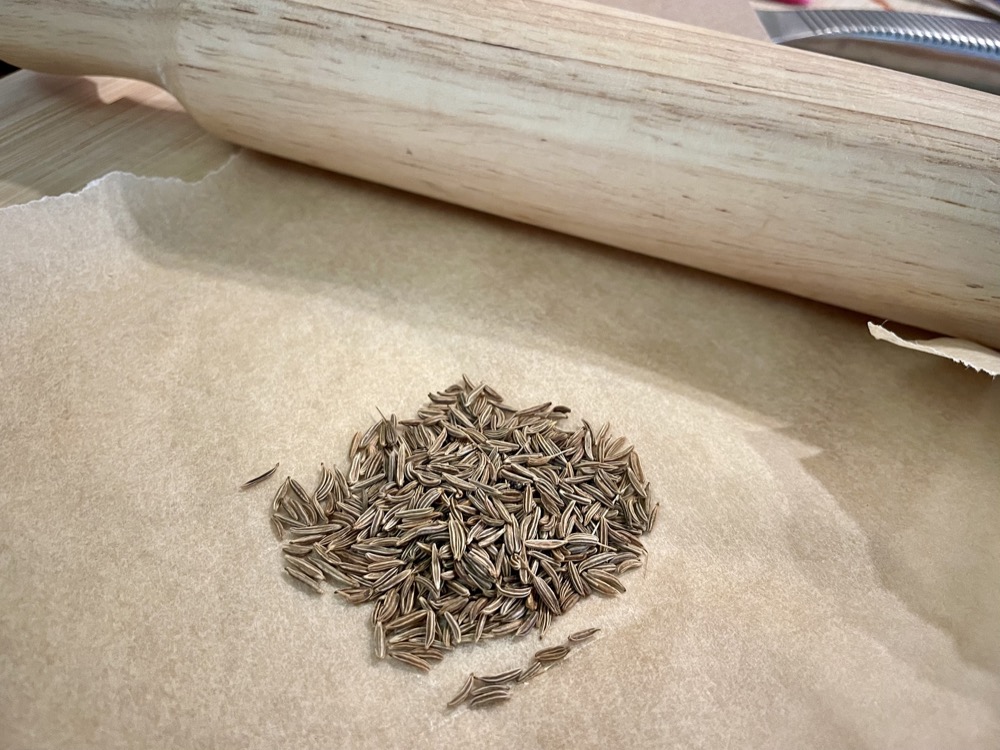
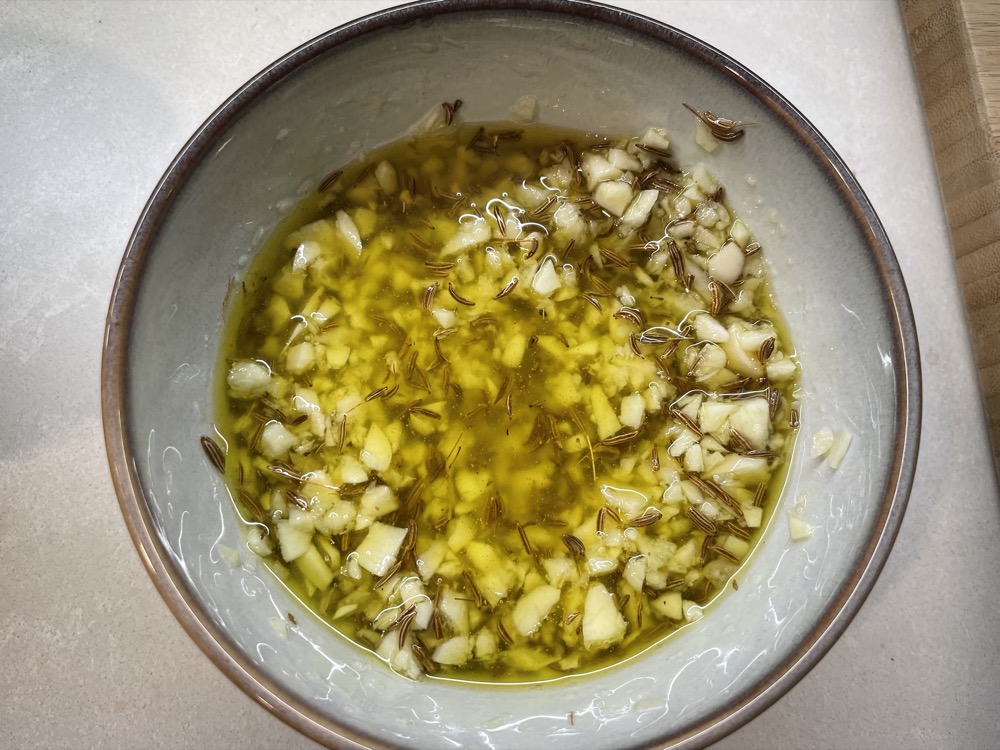
In a small bowl, make the seasoning rub by mixing together: olive oil, garlic, crushed caraway seeds, and salt. Tip: to easily crush caraway seeds without the mess, you can put it in between a sheet of baking paper and use a rolling pin to crush it by rolling over it a few times. Crushing the caraway seeds releases its flavour.

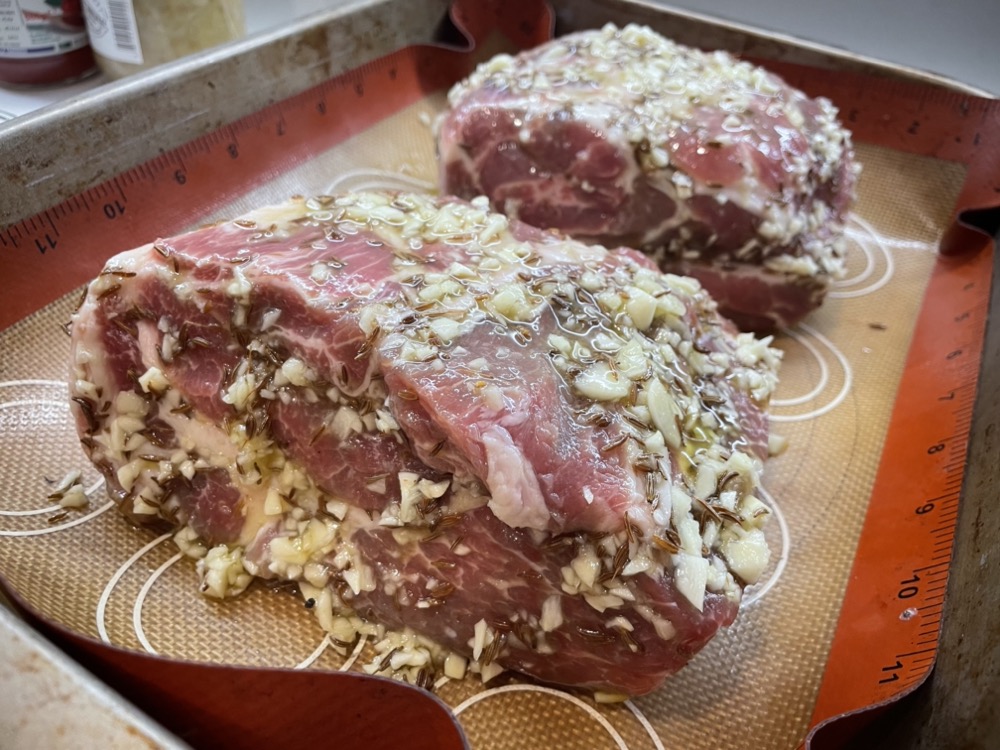
Use the rub and massage it evenly around the entire pork shoulder. Tip: To save time, you can do this the night before and let the pork marinate in the rub in the fridge overnight in a sealed container. When ready to cook, take it out of the fridge half an hour beforehand to let it come to room temp.

Place the pork in the middle of a lined baking tray. Bake in the preheated oven for 2.5 – 3 hours (or until the middle of the pork measures 62˚C and the juices are no longer pink).

Now is a good time to make any sides that you want to serve with the roast pork. The most common is with a sauerkraut and Czech potato dumpling/knedliky like in a vepřo knedlo zelo.

When the pork has finished, take it out of the oven and let it rest on the counter for 5-10 mins before slicing. After slicing, drench each slice in the drippings/ oils from the baking tray before serving. Enjoy!

Summarized Recipe:

Vepřová Pečeně – Czech-style Pork Roast

Date Published: Feb 14th, 2024 | Last Updated: Feb 14th, 2024
Author: Abby |Category: czech, mains, easy
Serves: 4-6 | Prep time: 15 mins | Cook time: 3 hours

Ingredients:

  • 1/4 cup olive oil
  • 6 cloves garlic, minced
  • 3 tsps caraway seeds, crushed
  • 2.5 Tbsps kosher salt
  • 2 x 900g (2 x 2 lbs) pieces of pork shoulder, get ones with marbling

Directions:

  1. Preheat oven to 160˚C (325˚F) on “roast” setting if you’ve got the option, or otherwise ‘bake’ will be fine.
  2. In a small bowl, make the seasoning rub by mixing together: olive oil, garlic, caraway seeds, and salt.
  3. Use the rub and massage it evenly around the entire pork shoulder.
    • Tip: To save time, you can do this the night before and let the pork marinate in the rub in the fridge overnight in a sealed container. When ready to cook, take it out of the fridge half an hour beforehand to let it come to room temp.
  4. Place the pork in the middle of a lined baking tray. Bake in the preheated oven for 2.5 – 3 hours (or until the middle of the pork measures 62˚C and the juices are no longer pink).
  5. When the pork has finished, take it out of the oven and let it rest on the counter for 5-10 mins before slicing. After slicing, drench each slice in the drippings/ oils from the baking tray before serving. Enjoy!
Braised Bacon & Mushroom Sweet Sauerkraut


Date Published: Feb 13th, 2024 | Last Updated: Feb 13th, 2024
Author: Abby |Category: sides, Czech, easy
Serves: 4-6 (large bowl) | Prep time: 10 mins | Cook time: 40 mins

Jump to recipe |

I’m not a fan of sour foods in general (unless it’s sour patch kids 😜) so its no surprise that sauerkraut has never been something I’ve wanted to try and make…until now!

Babička’s sweet sauerkraut

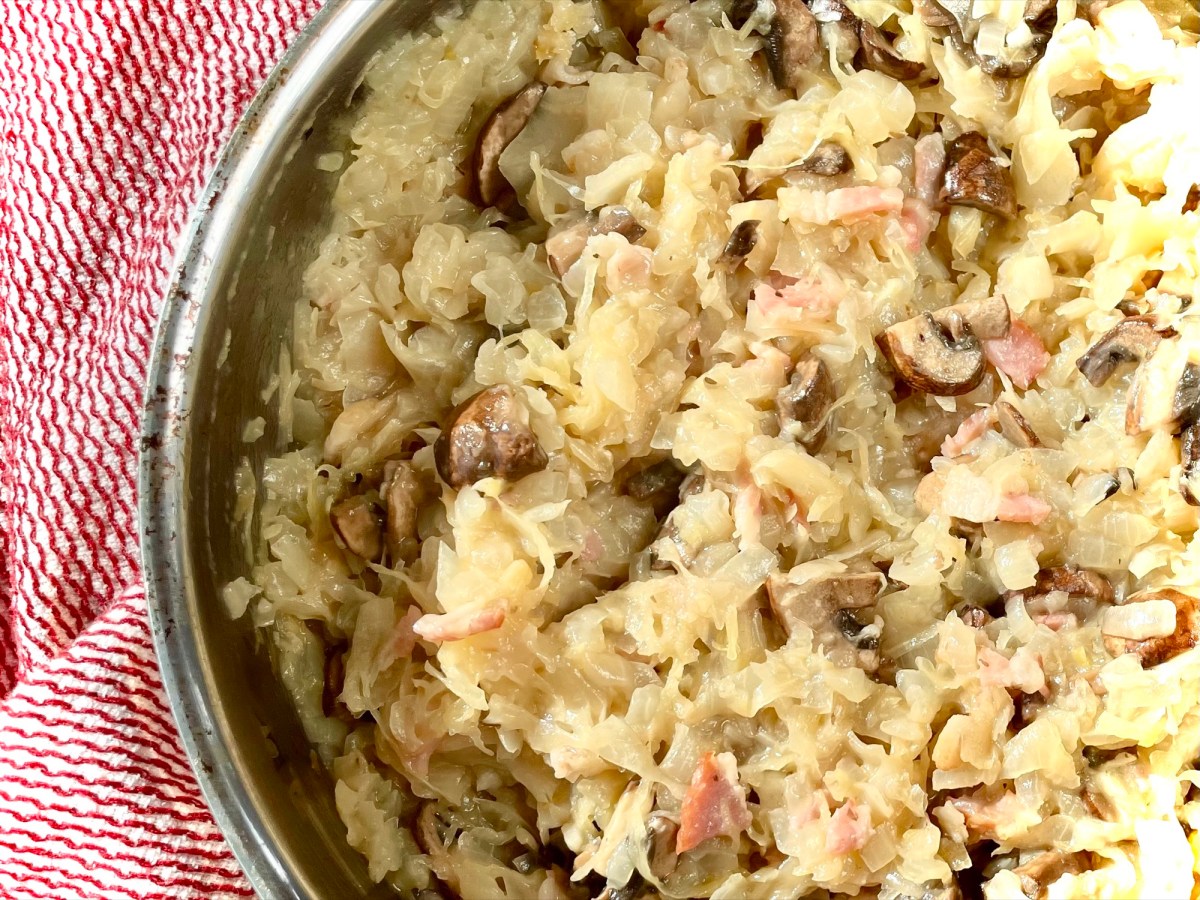
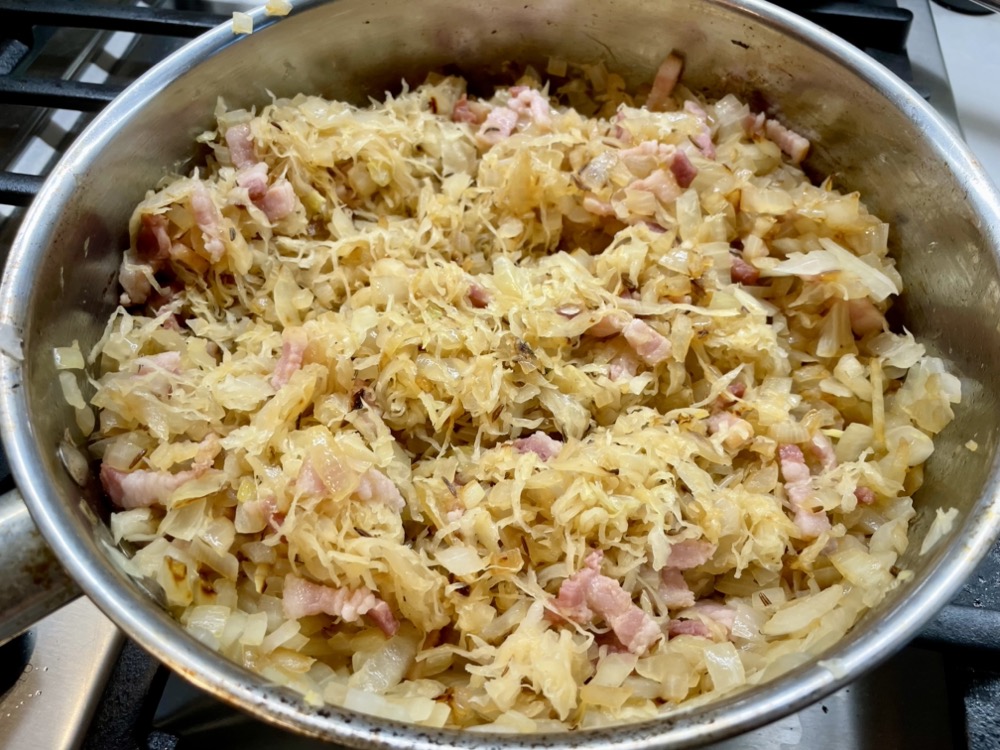
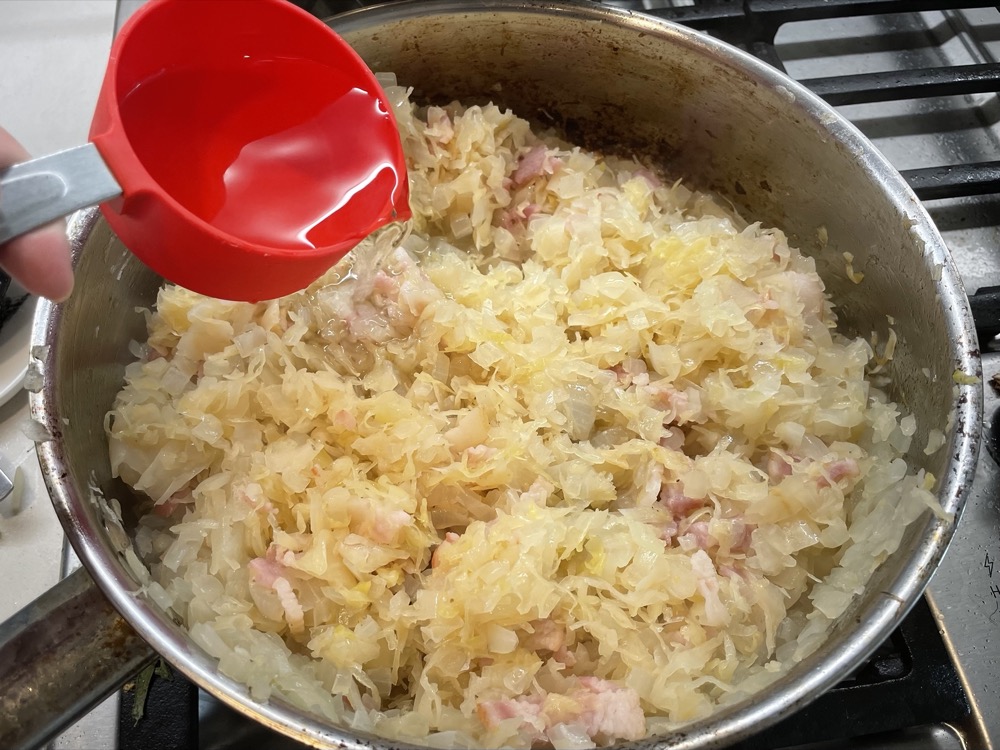
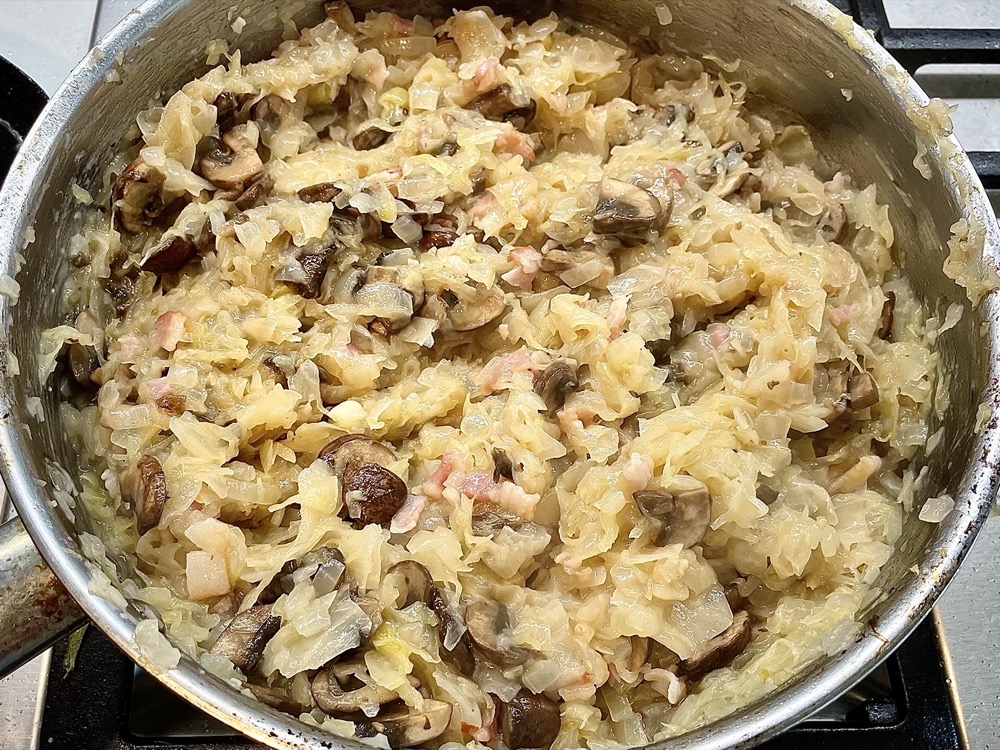
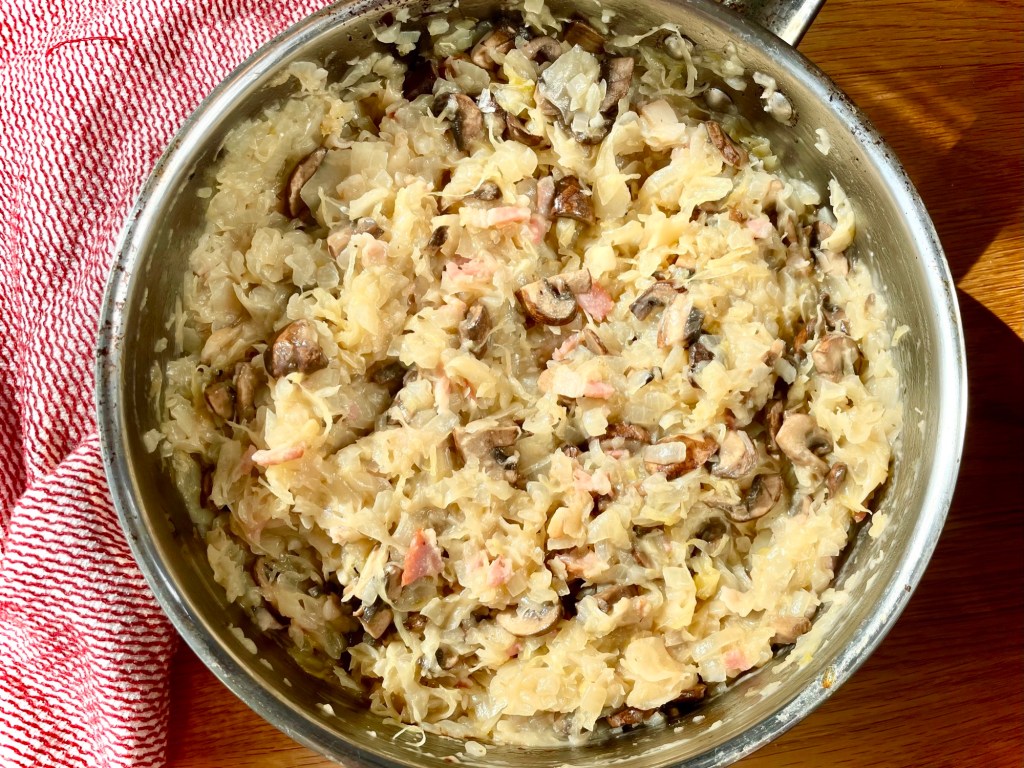
Toby likes his sauerkraut so I usually give him my portion, but during our last trip to Czech to visit his grandparents, babička made a sweet and creamy version with caraway seeds and the sourness of the sauerkraut was minimal. Needless to say, it was DELICIOUS paired with the smoked pork shoulder that she made – we nearly ate the whole pot! Before we left, she gave me verbal recipe instructions with ‘guestimated’ ingredient amounts (you’re not an OG if you measure when you cook) and when we got home to Brooklyn, I was determined to recreate it ASAP while the flavours were still fresh in my mind. Sadly, the guestimated measurements did not yield the same beautiful sweet sauerkraut she made 💔. Mine somehow came out too sour and yet too sweet at the same time lol, no idea how I achieved that. Although disappointed, I was still determined to learn how to make a sweet sauerkraut and in my search of other Czech-style sauerkrauts that might be close to babička’s, I found a sweet braised version from Cook Like Czechs that was intriguing. When I made it for the first time, it was actually – dare I say it – better than babička’s 🤐 ! The sweetness level was exactly the same but this new version had bacon in it! I made it a second time with some minor tweaks and added in some leftover mushrooms I had in the fridge and it was somehow even more AMAZING. This is now my favourite sauerkraut hands down, and I’m going to show it off – to you 😛.

Anyways, without further ado, here’s the recipe! If you have any comments or suggestions, I’d love to hear from you in the comment section! You can follow me on instagram, youtube and facebook to see all the recipes I post!

Happy cooking!

Ingredients you’ll need:

  • 450g sauerkraut, without the liquid
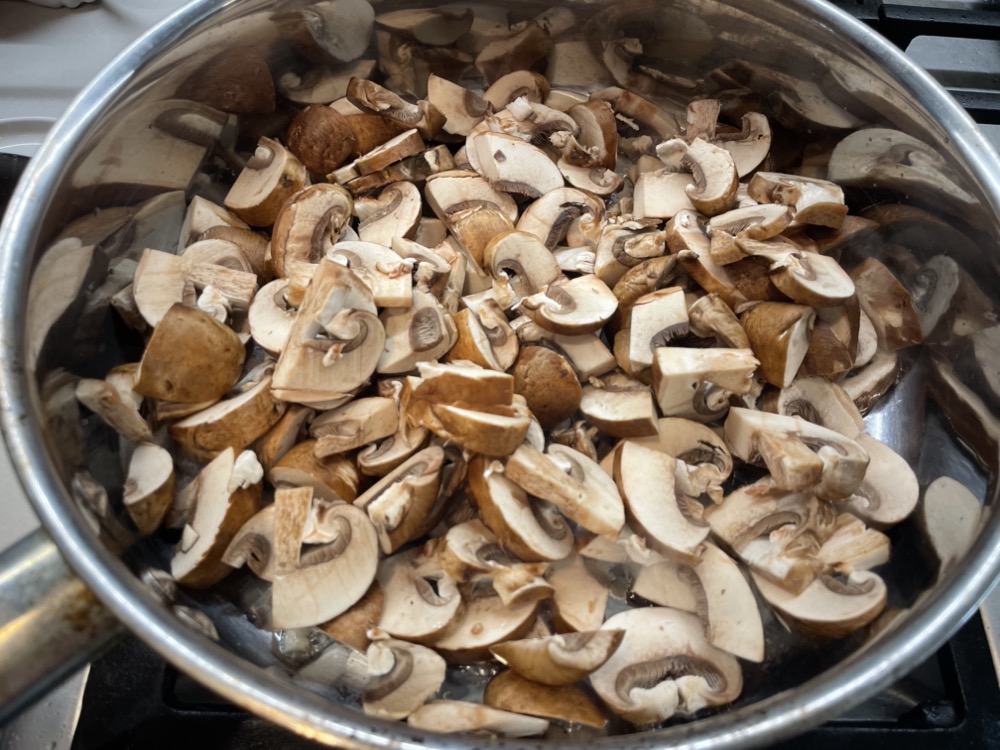
  • 350g portobello mushrooms, cleaned and sliced
  • 1/2 Tbsp of pork lard, or olive oil
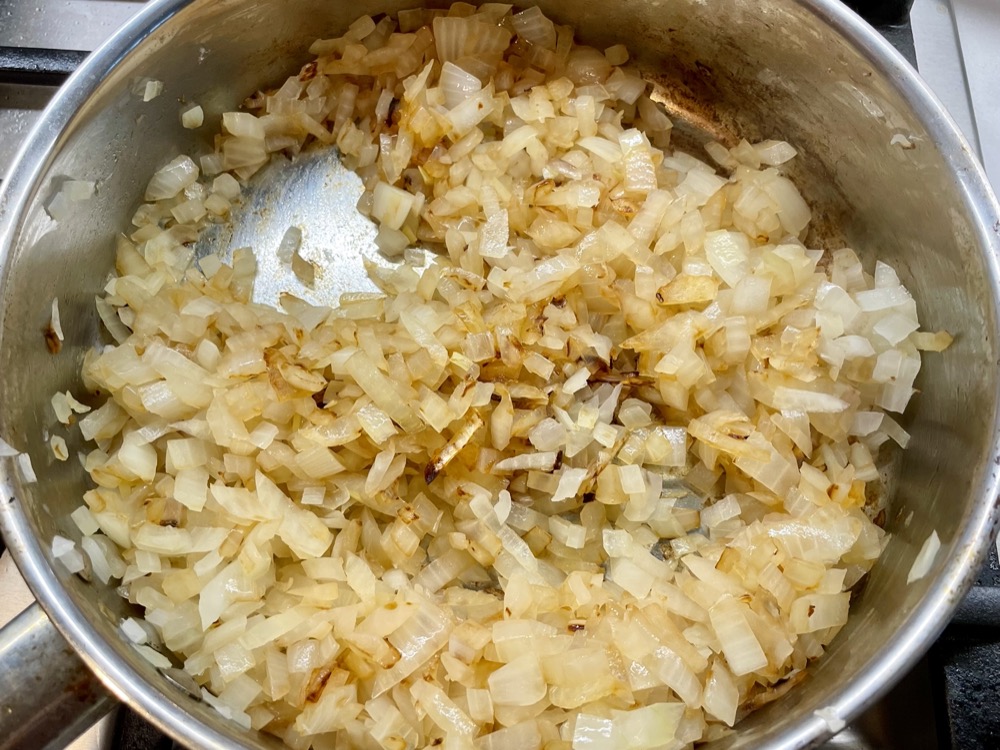
  • 2 large (~1.1kg) onions, diced small
  • 130g smoked thick-cut bacon, sliced into small pieces
  • 1 tsp caraway seeds, crushed
  • 1.75 Tbsps (25g) granulated sugar
  • 2 Tbsps (25g) all-purpose flour
  • Salt to taste

Directions:

Place the sauerkraut in a strainer over a bowl and squeeze out as much liquid as you can. If you prefer your sauerkraut on the more sour side, save this liquid for later (I prefer mine on the sweeter side, so I just discard this liquid). Set aside.

In a pan on MED heat, add a drizzle of olive oil and sauté the mushrooms with a pinch of salt for 3-4 minutes or until cooked. Put the mushrooms into a bowl and set aside until the end.

In the same pan on MED heat, melt the pork lard and add in the onions. Sauté until the onions soften and become lightly browned (5-8 minutes).

Add in the caraway seeds, bacon, and sauerkraut. Continue to sauté for another 5 minutes.

Add in half cup of water (or the sauerkraut liquid from step 1 if using) then turn the heat down to LOW and cover with a lid. Let the sauerkraut braise for 15 minutes.

After 15 minutes, add in the sugar and flour. Mix together thoroughly then let it braise on LOW heat with the lid on for another 15 minutes.

After 15 minutes, add in the cooked mushrooms from step 1 (do NOT add in any mushroom liquid that may have accumulated during this time, just the mushrooms). Stir until heated through then turn off the heat. Taste and adjust salt and sugar to your preference. It’s meant to be a sweet, smokey, and slightly sour sauerkraut with a kind of creamy texture. Serve warm. Enjoy!
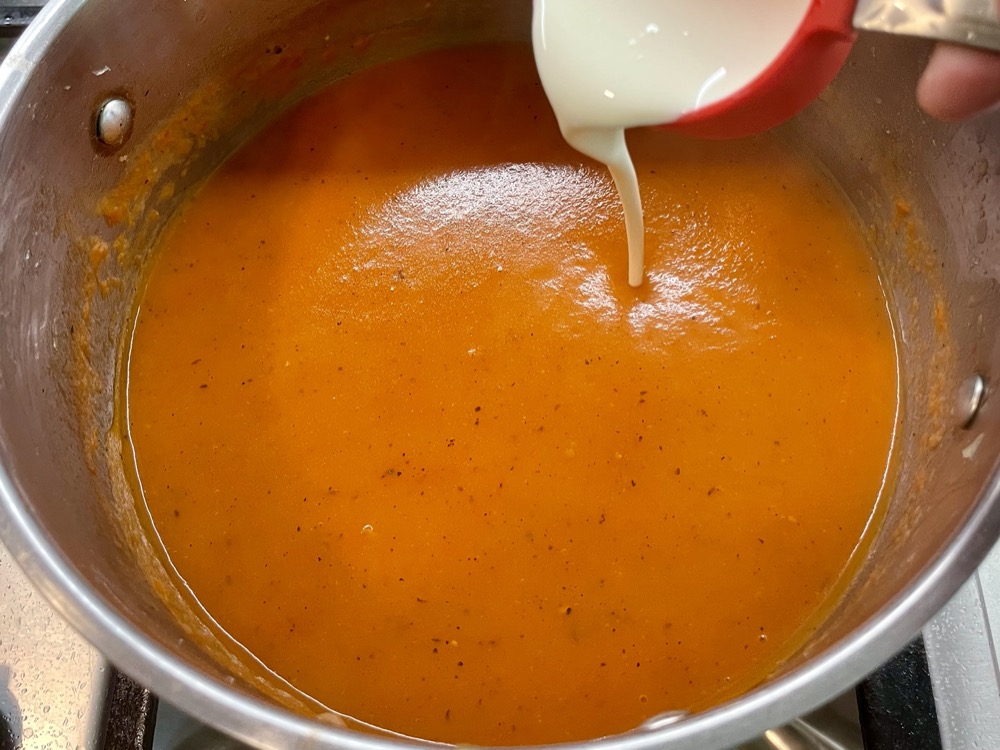
Served in a vepřo knedlo zelo

Summarized Recipe:

Braised Bacon & Mushroom Sweet Sauerkraut

Date Published: Feb 13th, 2024 | Last Updated: Feb 13th, 2024
Author: Abby |Category: sides, Czech, easy
Serves: 4-6 (large bowl) | Prep time: 10 mins | Cook time: 40 mins

Ingredients:

  • 450g sauerkraut, without the liquid
  • 350g portobello mushrooms, cleaned and sliced
  • 1/2 Tbsp of pork lard, or olive oil
  • 2 large (~1.1kg) onions, diced small
  • 130g smoked thick-cut bacon, sliced into small pieces
  • 1 tsp caraway seeds, crushed
  • 1.75 Tbsps (25g) granulated sugar
  • 2 Tbsps (25g) all-purpose flour
  • Salt to taste

Directions:

  1. Place the sauerkraut in a strainer over a bowl and squeeze out as much liquid as you can. If you prefer your sauerkraut on the more sour side, save this liquid for later (I prefer mine on the sweeter side, so I just discard this liquid). Set aside.
  2. In a medium pot or pan (make sure you have a lid) on MED heat, add a drizzle of olive oil and sauté the mushrooms with a pinch of salt for 3-4 minutes or until cooked. Put the mushrooms into a bowl and set aside until the end.
  3. In the same pan on MED heat, melt the pork lard and add in the onions. Sauté until the onions soften and become lightly browned (5-8 minutes).
  4. Add in the caraway seeds, bacon, and sauerkraut. Continue to sauté for another 5 minutes, then add in half cup of water (or the sauerkraut liquid from step 1 if using) then turn the heat down to LOW and cover with a lid. Let the sauerkraut braise for 15 minutes.
  5. After 15 minutes, add in the sugar and flour. Mix together thoroughly then let it braise on LOW heat with the lid on for another 15 minutes.
  6. After 15 minutes, add in the cooked mushrooms from step 1 (do NOT add in any mushroom liquid that may have accumulated during this time, just the mushrooms). Stir until heated through then turn off the heat. Taste and adjust salt and sugar to your preference. It’s meant to be a sweet, smokey, and slightly sour sauerkraut with a kind of creamy texture. Serve warm. Enjoy!