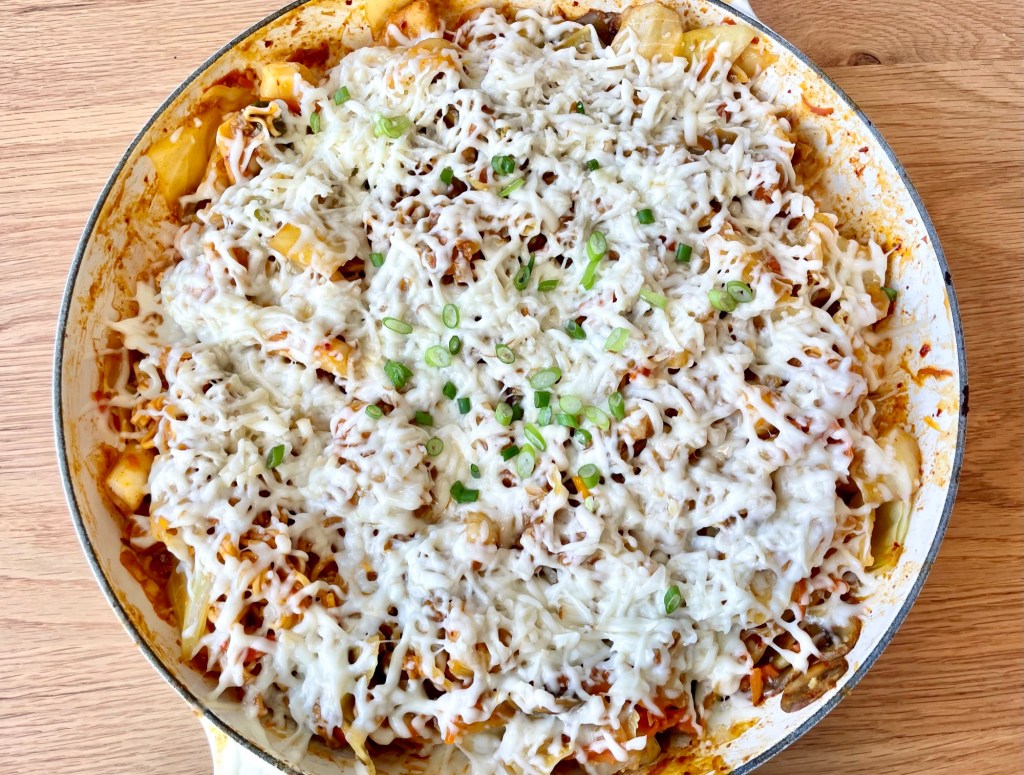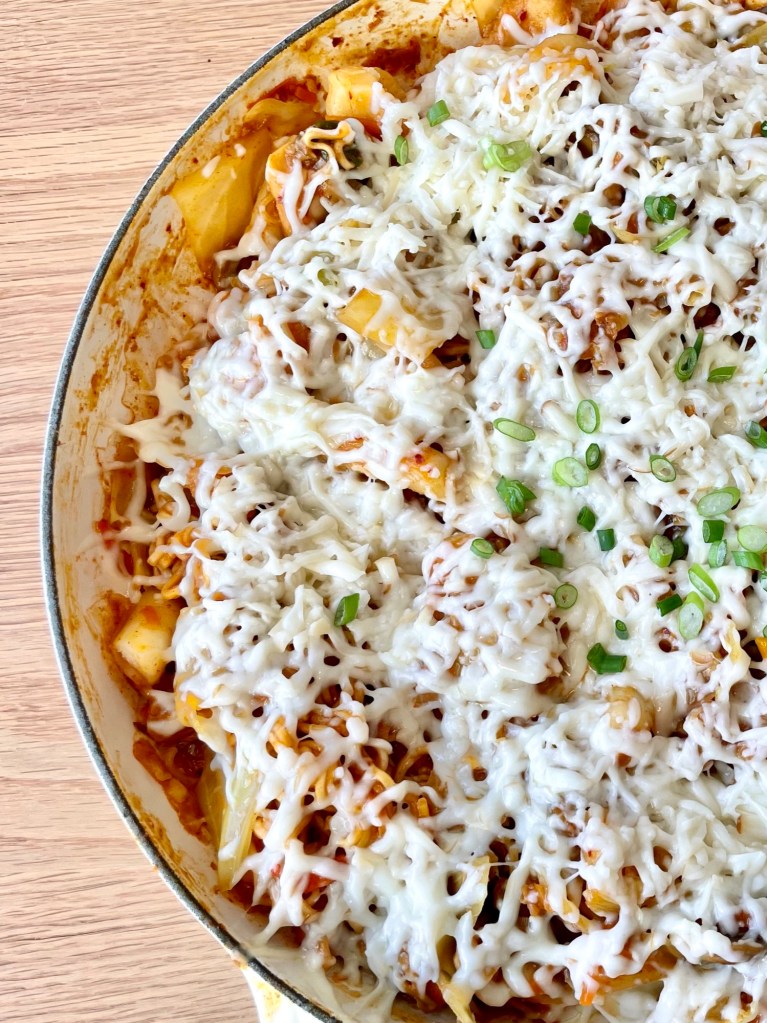
Joons’ Dak Galbi – Korean Spicy Chicken Stir Fry with Cheese & Noodles


Date Published: Mar 7th, 2025 | Last Updated: Mar 7th, 2025
Author: Abby |Category: mains, easy, Asian
Serves: 4 | Prep time: overnight marinating + 20 mins | Cook time: 40 mins

Jump to recipe |

In my high school years when I lived in Canada, my friends and I would often hangout in downtown Toronto on the weekends, either perusing Kensington market, browsing through record shops, shopping on Queen Street, studying for finals at Robarts, or just grabbing a bite to eat at one of the many restaurant options in Toronto. One of my favourite Korean restaurants was Joons on Bloor St. in Koreatown. It was a small dingy restaurant that you had to take a few steps down from street level to get to the front door. The decor wasn’t anything impressive and the table water was served in scratched up refillable rubbermaid bottles. Despite its appearance, it was often relatively busy with nearly every other table ordering their AMAZING dak galbi, including me! I would religiously order this same dish every time – in fact, I don’t think I’ve ever ordered anything else at Joons 🤔. Dak galbi is a stir-fry chicken dish in a spicy sauce that’s seen on most Korean restaurant menus, but Joons did it differently. A portable cook top is brought out to the table and the whole dish is cooked in front of you. It usually took at least 15-20 minutes to cook which is excruciating when you’re starving and this amazing aroma in front of you keeps wafting in your face every time the waitress lifted the lid to give it a stir, but the wait was always worth it. You had options of add-ins to the dish, but most people would get everything in it which is usually cabbage, instant noodles, chicken, and cheese 🤤.

Sadly, Joons has been closed for about 4-5 years now and I mourn that loss every time I pass through the area 💔. This recipe is a tribute to Joons’ dak galbi. I’ve scoured the internet for people’s old photos and videos of the dish to try and recreate it exactly as it was. I had some help from My Korean Kitchen with the chicken marinade portion and included everything else from the instant noodles to the mozzarella cheese on top. Although mine didn’t quite come out as saucy and red as theirs, I’d say the flavours are pretty damn close! But of course, I haven’t had Joons since before vet school which is nearly a decade ago now, so I could also be remembering it a little differently. Either way, this is still a pretty tasty dish. If you’ve had the dak galbi at Joons before, let me know how close I am in the comments!

What is Dak Galbi?

Dak galbi or dakgalbi directly translates to “chicken rib”. No actual ribs are used in this dish – the origin of this word is thought to be due to using chicken as a cheaper source of meat compared to pork 🤷🏻‍♀️. It’s a dish that is essentially chicken and vegetables stir-fried in a gochujang-based sauce. The vegetables are usually cabbage, sweet potato, and green onions. You can serve it along side perilla leaves as a wrap. In my recipe I’ve used carrots instead of sweet potato because it’s already a pretty carb-heavy dish with the noodles and rice cakes, but feel free to substitute! This dish is mildly spicy. If you prefer spicier, you can buy the spicier versions of gochujang or add in more gochugaru (Korean chilli powder).

What is Gochujang?

Gochukang is Korean red chilli paste. It’s savoury, sweet, and spicy all together. It’s a very popular condiment used in Korean cooking and is used as a base to many sauces, including in this dak galbi recipe. There really is no substitute to gochujang. You can usually find this in the Asian section of most grocery stores. They come in a variety of levels of spiciness, so choose carefully! I usually go for the mild one and add in chilli powder if I want more of a kick.

What are Garaetteok/Tteok (Korean rice cakes)?
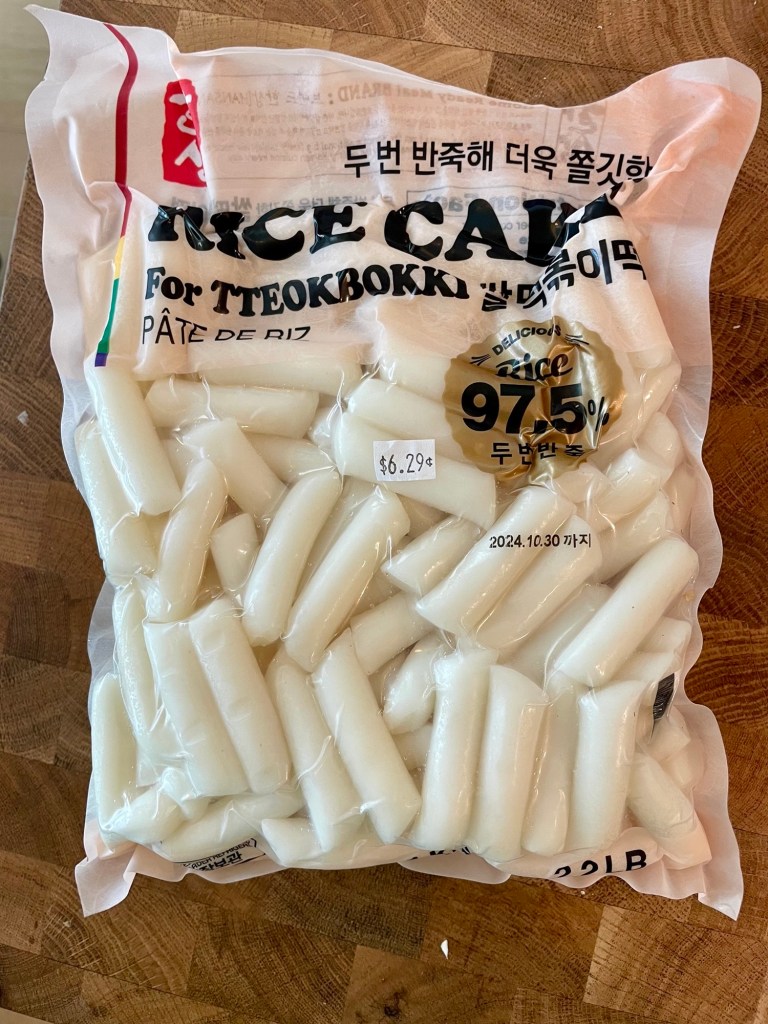
Garaetteok/tteok are Korean rice cakes that are made from non-glutinous rice flour and come in skinny long cylinders. On their own they don’t have much flavour so they’re often added to a flavourful saucy dish (such as this dak galbi recipe) or a soup. They have a soft and chewy texture once cooked and make a great textural addition to many dishes. You’ll most commonly see garaetteok/tteok served in a dish called tteokbokki which is a spicy rice cake dish.

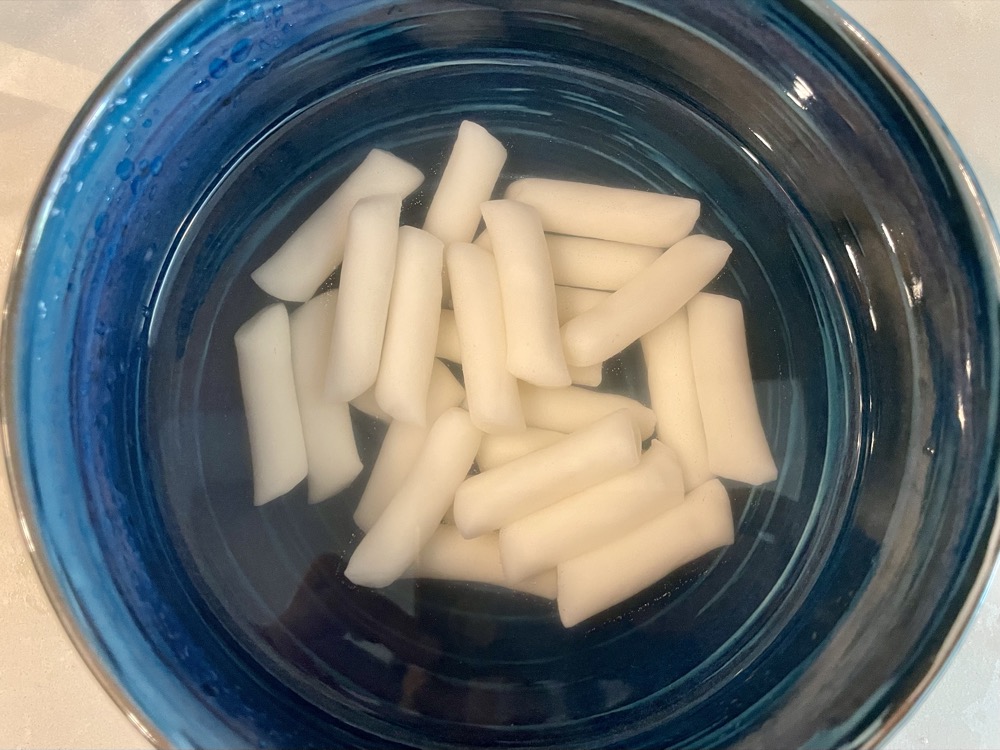
You can find these vacuum-sealed in the refrigerated section of most Asian grocery stores. They will be very hard coming out of the package and need to be soaked for at least 10 minutes in warm water to slightly soften before cooking them. If you’re lucky and your Asian grocer have these fresh, you can put them directly into the dish without soaking.

Don’t worry if you can’t find any garaetteok/tteok. Simply omit them from the recipe altogether. It won’t change the flavour of the dish. It’s mainly to add an extra textural component.

A Quick Note on Gochugaru – Korean Chilli Powder

This recipe uses Gochugaru, a Korean chilli powder, which is not too spicy and it gives the dish a deeper orangey/red colour. It can be easily found in most Asian grocery stores, but if you don’t have any, a good substitute is Kashmiri chilli powder (an Indian variety). Do NOT substitute with cayenne pepper which is a MUCH spicier chilli powder. If you absolutely can’t find Gochugaru or Kashmiri chilli powder, then you can substitute with 1 part cayenne powder: 3 parts paprika, or consider skipping it altogether.

Anyways, without further ado, here’s the recipe! If you have any comments or suggestions, I’d love to hear from you in the comment section! You can follow me on instagram, youtube and facebook to see all the recipes I post!

Happy cooking!

Ingredients you’ll need:

  • Chicken Marinade:
    • 600g chicken thighs, cut into 2.5cm pieces
    • 7 Tbsps (160g) gochujang (Korean chili paste)
    • 1/4 cup rice wine
    • 1 Tbsp gochugaru (Korean chili flakes)
    • 2 Tbsps soy sauce
    • 2 Tbsps granulated sugar
    • 2 tsps curry powder
    • 4 large cloves garlic, minced
    • 2 tsps minced ginger
    • 2 green onions, sliced to 4cm pieces
  • 1 medium carrot, julienned or grated on the large hole (optional)
  • 250g mushrooms, sliced (optional)
  • 1 medium brown onion, sliced
  • 1/4 small (6 cups) cabbage, chopped
  • 25 pieces (180g) Garaetteok/Tteok (Korean rice cakes)
  • 2 cups (230g) mozzarella cheese, shredded
  • 2 packets of instant noodles
  • Garnish: 1 green onion, chopped

Directions:

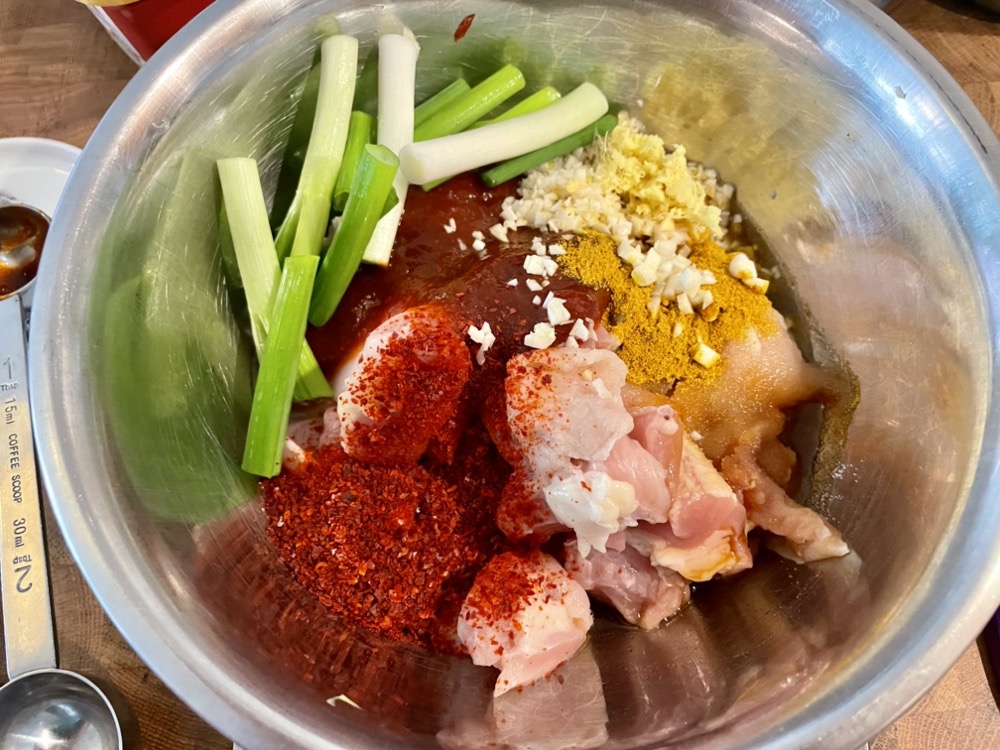
Marinate the chicken: In a mixing bowl, add in all the ingredients of the chicken marinade: diced chicken thighs, 7 Tbsps gochujang, 1/4 cup rice wine, 1 Tbsp gochugaru, 2 Tbsps soy sauce, 2 Tbsps sugar, 2 tsps curry powder, minced garlic, minced ginger, and sliced green onions. Mix thoroughly and transfer to a resealable bag or container and marinate in the fridge for a minimum of 4 hours, or overnight.

Rinse and soak the garaetteok/tteok in warm water for 10 minutes (skip this step if you have freshly made garaetteok/tteok).

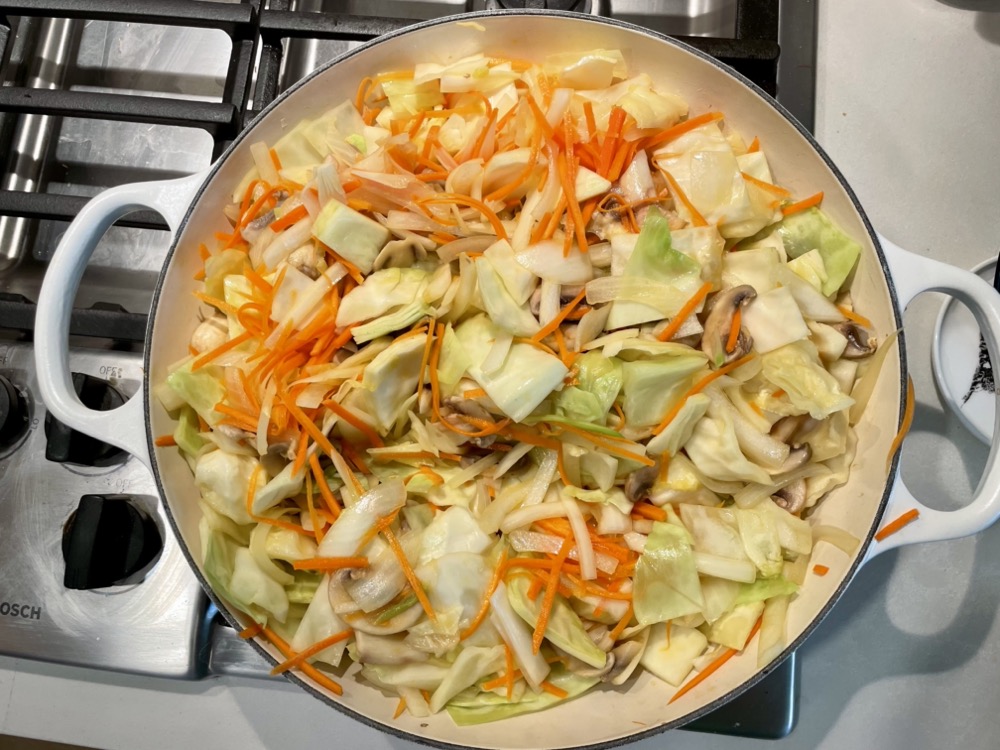
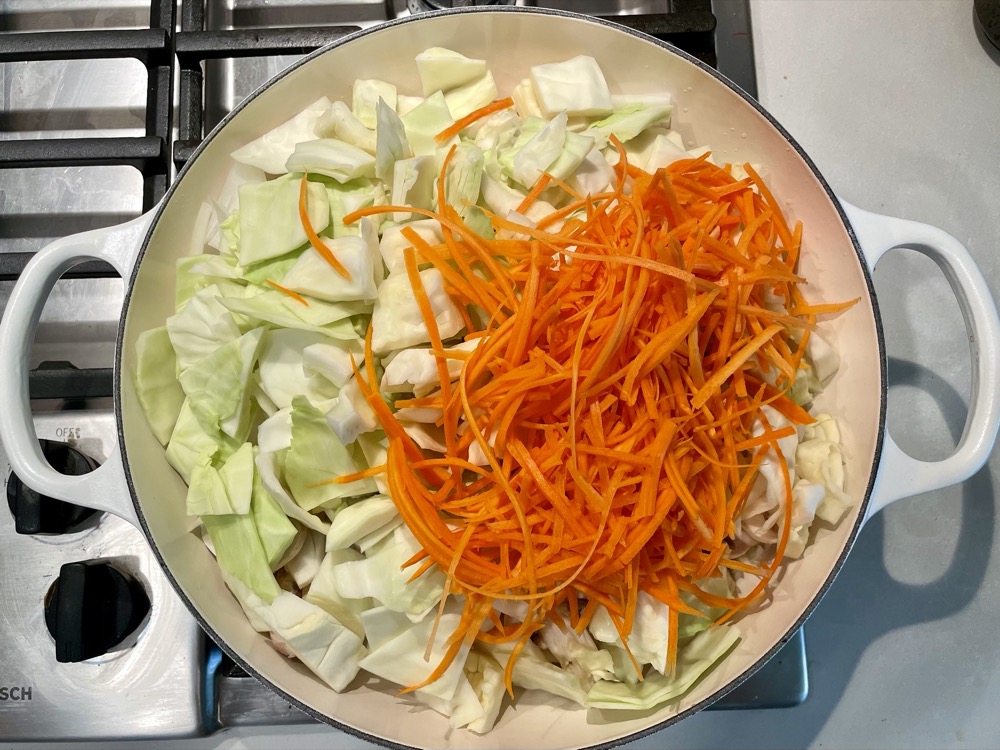
In a non-stick pan on MED-HIGH heat, add a drizzle of oil and add in the carrots, mushrooms, onion, and cabbage. Sauté for 5 minutes until the vegetables start to soften.

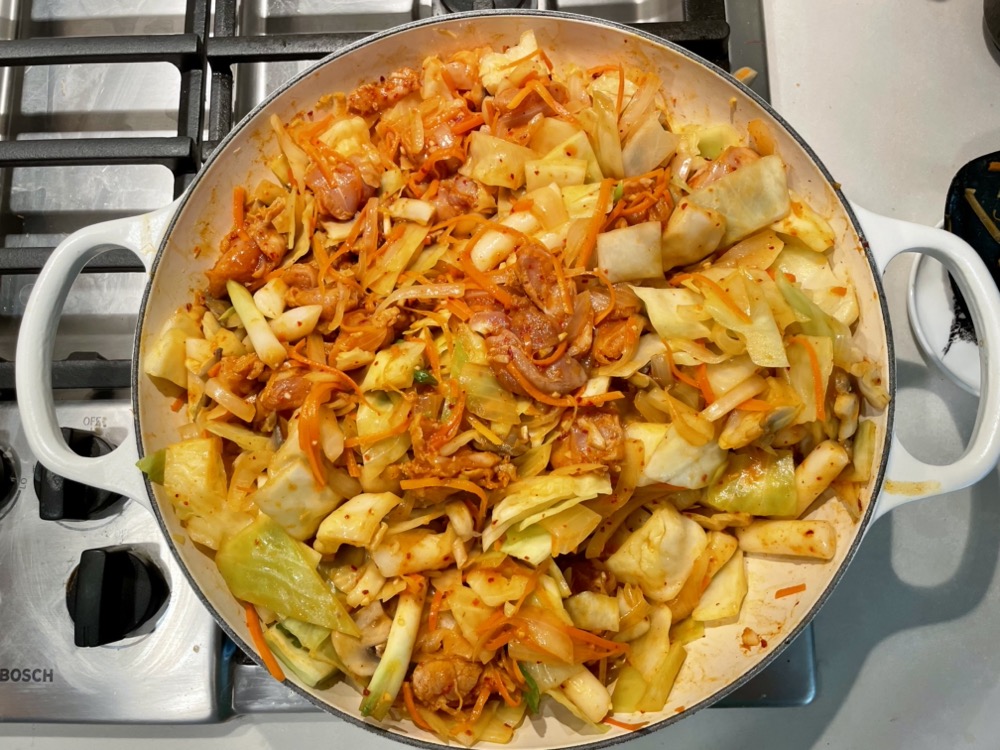
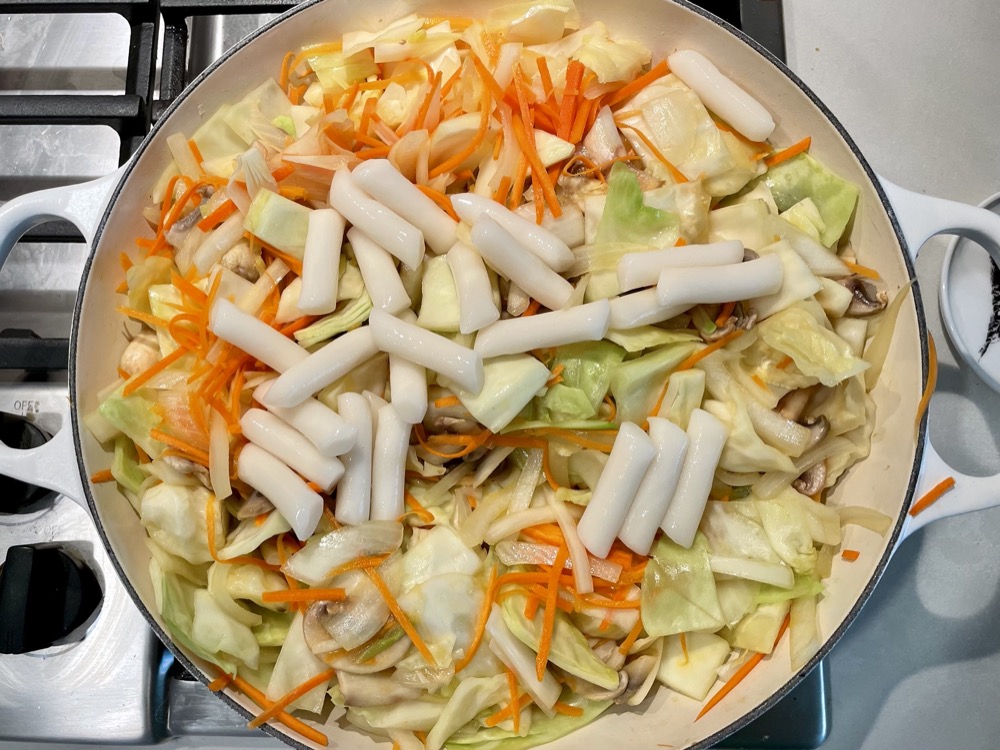
Next add in the garaetteok/tteok and the marinated chicken (from step 1) along with all of the marinade in the bag. Sauté for another 3-4 minutes, then turn the heat down to MED, put a lid on, and continue to cook until the chicken is nearly done (~10 minutes). Stir occasionally to ensure nothing sticks to the pan.

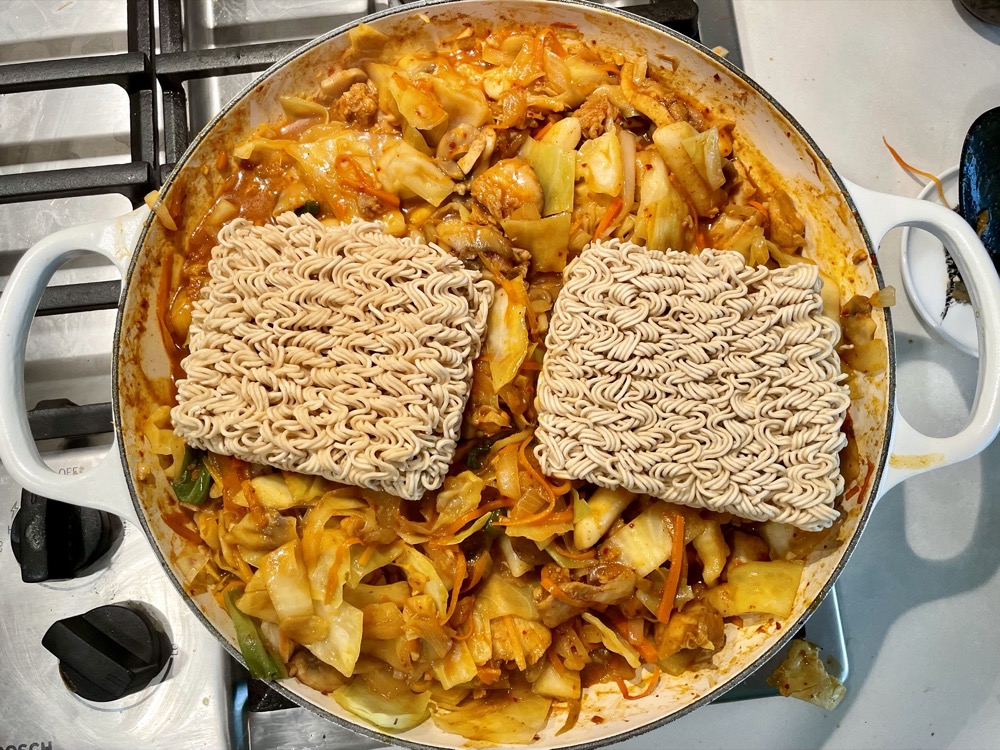
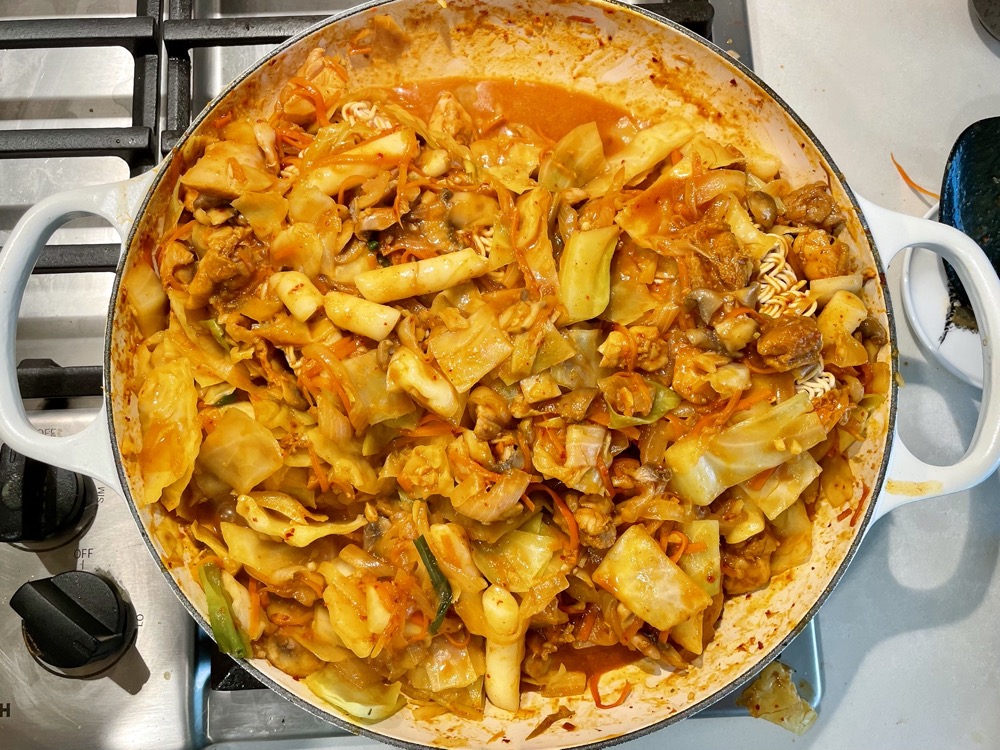
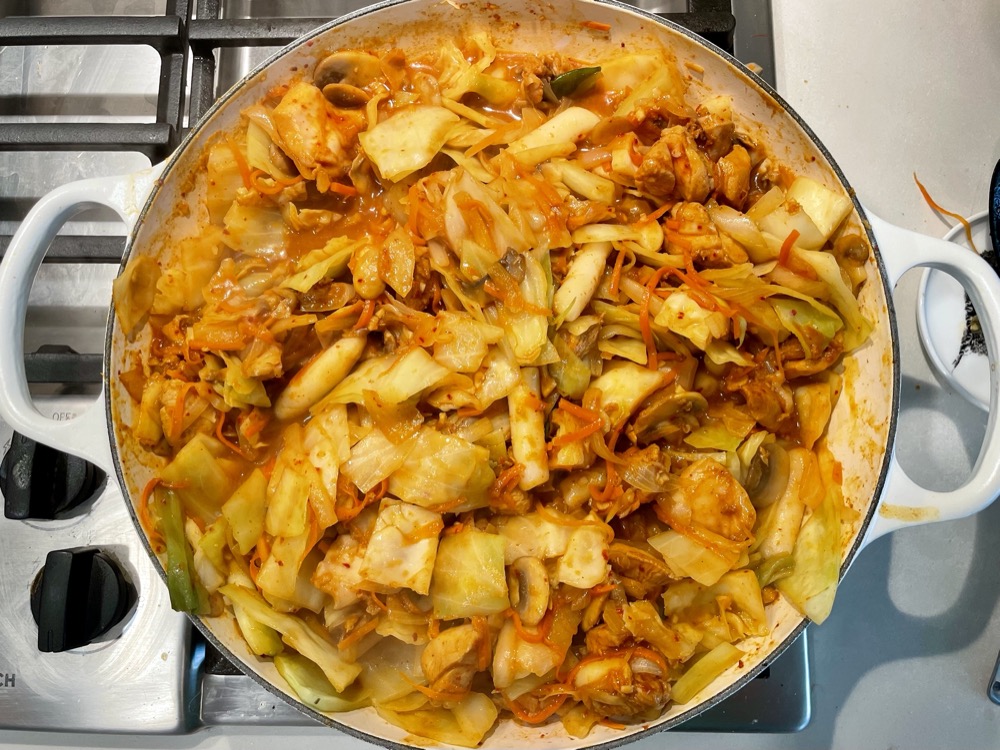
When the chicken is almost ready, add in the instant noodles and submerge it into the ingredients and sauce. Put the lid back on and let it steam for 3-4 minutes until the noodles are soft enough to separate with chopsticks.

Once the noodles, chicken, and garaetteok/tteok are cooked, turn off the heat and sprinkle the shredded mozzarella cheese on top. Garnish with chopped green onion. Serve immediately. Enjoy!

Summarized Recipe:

Joons’ Dak Galbi – Korean Spicy Chicken Stir Fry with Cheese & Noodles

Date Published: Mar 7th, 2025 | Last Updated: Mar 7th, 2025
Author: Abby |Category: mains, easy, Asian
Serves: 4 | Prep time: overnight marinating + 20 mins | Cook time: 40 mins

Ingredients:

  • Chicken Marinade:
    • 600g chicken thighs, cut into 2.5cm pieces
    • 7 Tbsps (160g) gochujang (Korean chili paste)
    • 1/4 cup rice wine
    • 1 Tbsp gochugaru (Korean chili flakes)
    • 2 Tbsps soy sauce
    • 2 Tbsps granulated sugar
    • 2 tsps curry powder
    • 4 large cloves garlic, minced
    • 2 tsps minced ginger
    • 2 green onions, sliced to 4cm pieces
  • 1 medium carrot, julienned or grated on the large hole
  • 250g mushrooms, sliced
  • 1 medium brown onion, sliced
  • 1/4 small (6 cups) cabbage, chopped
  • 25 pieces (180g) garaetteok/tteok (Korean rice cakes)
  • 2 cups (230g) mozzarella cheese, shredded
  • 2 packets of instant noodles
  • Garnish: 1 green onion, chopped

Directions:

  1. Marinate the chicken: In a mixing bowl, add in all the ingredients of the chicken marinade: diced chicken thighs, 7 Tbsps gochujang, 1/4 cup rice wine, 1 Tbsp gochugaru, 2 Tbsps soy sauce, 2 Tbsps sugar, 2 tsps curry powder, minced garlic, minced ginger, and sliced green onions. Mix thoroughly and transfer to a resealable bag or container and marinate in the fridge for a minimum of 4 hours, or overnight.
  2. Rinse and soak the garaetteok/tteok in warm water for 10 minutes (skip this step if you have freshly made garaetteok/tteok).
  3. In a non-stick pan on MED-HIGH heat, add a drizzle of oil and add in the carrots, mushrooms, onion, and cabbage. Sauté for 5 minutes until the vegetables start to soften.
  4. Next add in the garaetteok/tteok and the marinated chicken (from step 1) along with all of the marinade in the bag. Sauté for another 3-4 minutes, then turn the heat down to MED, put a lid on, and continue to cook until the chicken is nearly done (~10 minutes). Stir occasionally to ensure nothing sticks to the pan.
  5. When the chicken is almost ready, add in the instant noodles and submerge it into the ingredients and sauce. Put the lid back on and let it steam for 3-4 minutes until the noodles are soft enough to separate with chopsticks.
  6. Once the noodles, chicken, and garaetteok/tteok are cooked, turn off the heat and sprinkle the shredded mozzarella cheese on top. Garnish with chopped green onion. Serve immediately. Enjoy!

Haluski – a yummy buttery cabbage & noodle dish


Date Published: April 16th, 2024 | Last Updated: April 16th, 2024
Author: Abby |Category: mains, easy, Czech, <30 mins
Serves: 4-6 | Prep time: 20 mins | Cook time: 30 mins

Jump to recipe |

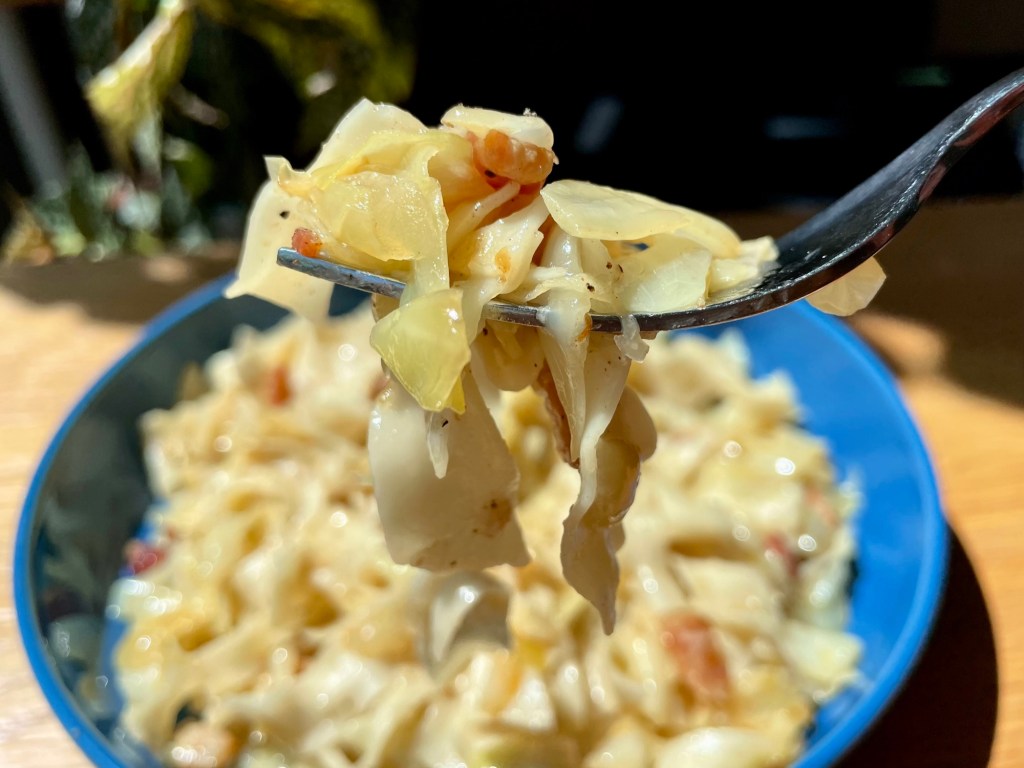
I’ll be honest, I had never heard of Haluski before until one day I was googling recipes for inspiration on how to use up my week old leftover cabbage in the fridge, so there’s no heart felt nostalgia or travel memory associated with this dish to fill up this post. I simply saw it, tested a few recipes, and decided on this version that I’m sharing today because it’s tasty.

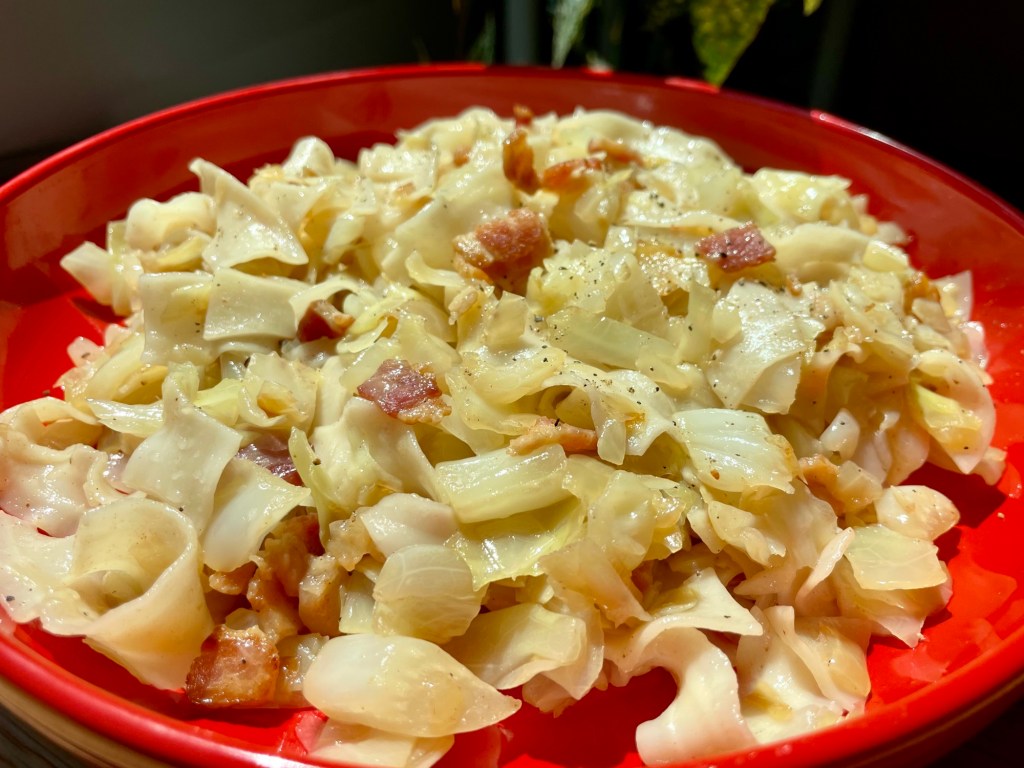
From my Google research, Haluski is a central/eastern European dish with arguable origins of either Poland, Solvakia, Hungary, or Ukraine – Toby thinks there’s even a Czech version too. It’s essentially bacon, onions, and cabbage cooked in butter and bacon fat, then mixed with fresh cooked egg noodles. It’s quick and easy, a little oily (from the butter and bacon fat), and definitely delicious. Give it a try!

Anyways, without further ado, here’s the recipe! If you have any comments or suggestions, I’d love to hear from you in the comment section! You can follow me on instagram, youtube and facebook to see all the recipes I post!

Happy cooking!

Ingredients you’ll need:

  • 3 Tbsps butter
  • 400g (~6 strips) of thick cut bacon, chopped
  • 1 large yellow onion, diced
  • 2 cloves garlic, minced
  • 1 med cabbage (~1kg), cored and diced
  • 4 portions (~10oz) of egg noodles – or alternatively nokedli
  • Fresh ground black pepper to taste
  • Kosher salt to taste

Directions:

In a large skillet on MED-HIGH heat, melt the butter until it starts to lightly brown – you’ll smell the aroma of brown butter.

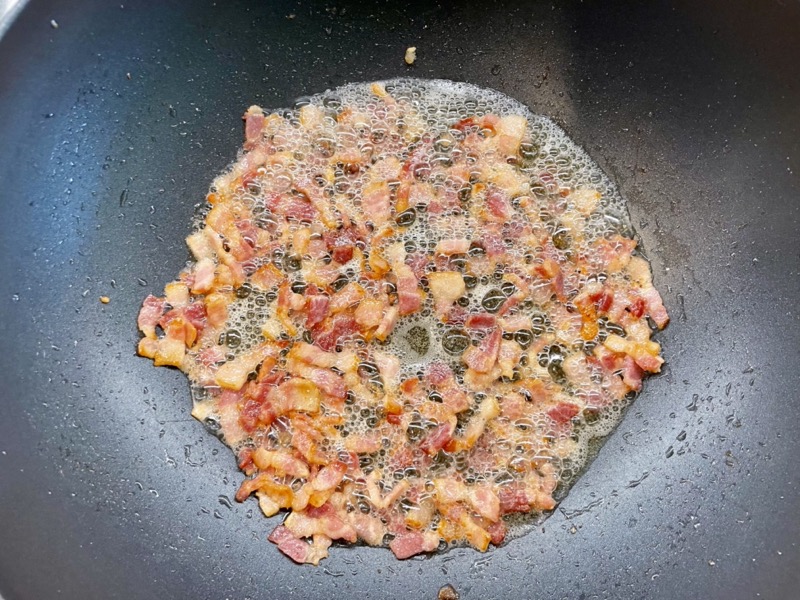
Then add in the bacon and sauté until browned and lightly crispy.

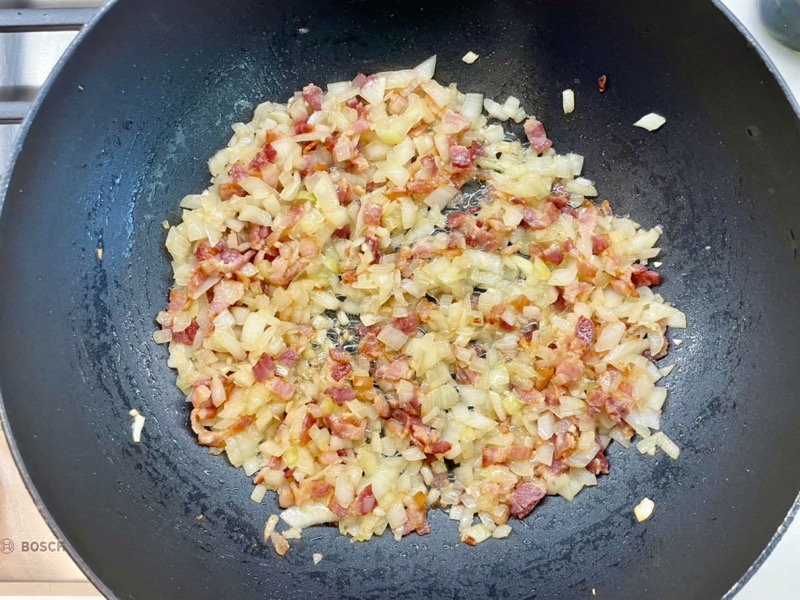
Next, add the garlic and onions. Continue to cook for another 3-4 minutes until the onion is translucent and lightly browned.

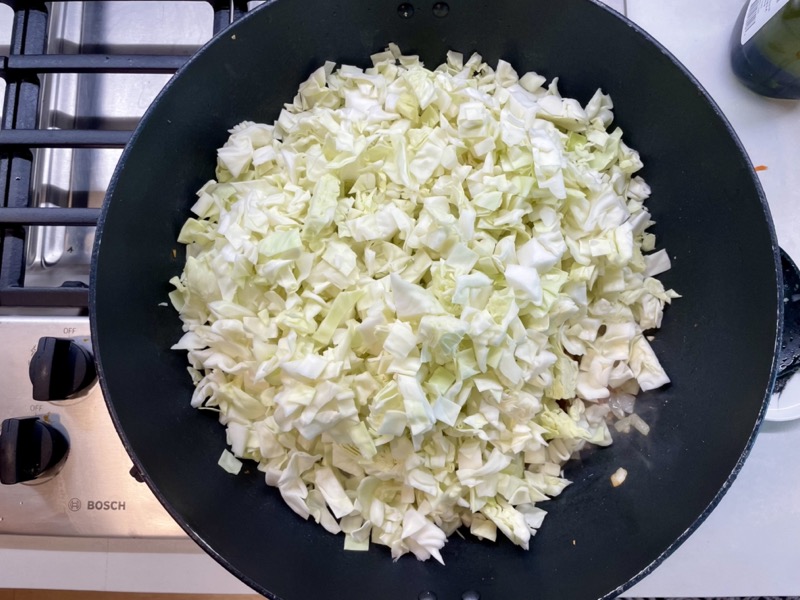
Next, add in the diced cabbage and sauté for 8-10 minutes until the cabbage has softened and lightly browned.

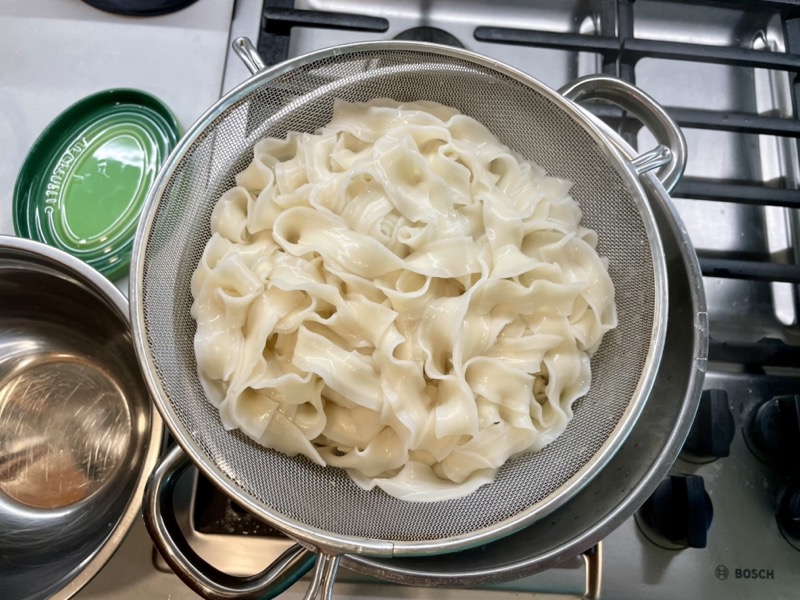
While the cabbage is cooking, cook the egg noodles in salted water according to package instructions. When cooked, drain and set aside.

Once the cabbage has cooked, add in the cooked egg noodles, freshly ground black pepper, and a big pinch of salt. Mix it around and taste to adjust salt as needed. Done!

Summarized Recipe:

Haluski – a yummy buttery cabbage & noodle dish

Date Published: April 16th, 2024 | Last Updated: April 16th, 2024
Author: Abby |Category: mains, easy, Czech, <30 mins
Serves: 4-6 | Prep time: 20 mins | Cook time: 30 mins

Ingredients:

  • 3 Tbsps butter
  • 400g (~6 strips) of thick cut bacon, chopped
  • 1 large yellow onion, diced
  • 2 cloves garlic, minced
  • 1 med cabbage (~1kg), cored and diced
  • 4 portions (~10oz) of egg noodles – or alternatively nokedli
  • Fresh ground black pepper to taste
  • Kosher salt to taste

Directions:

  1. In a large skillet on MED-HIGH heat, melt the butter until it starts to lightly brown – you’ll smell the aroma of brown butter, then add in the bacon. Sauté the bacon until browned and lightly crispy.
  2. Next, add the garlic and onions. Continue to cook for another 3-4 minutes until the onion is translucent and lightly browned.
  3. Next, add in the diced cabbage and sauté for 8-10 minutes until the cabbage has softened and lightly browned.
  4. While the cabbage is cooking, cook the egg noodles in salted water according to package instructions. When cooked, drain and set aside.
  5. Once the cabbage has cooked, add in the cooked egg noodles, freshly ground black pepper, and a big pinch of salt. Mix it around and taste to adjust salt as needed. Done!

Legit Tonkotsu Ramen from scratch (in an Instant Pot)


Date Published: Mar 3rd, 2024 | Last Updated: Mar 3rd, 2024
Author: Abby |Category: Asian, mains, soups
Serves: 4-6 | Prep time: 12 hours before to marinate | Cook time: 4.5 hours total

Jump to recipe |

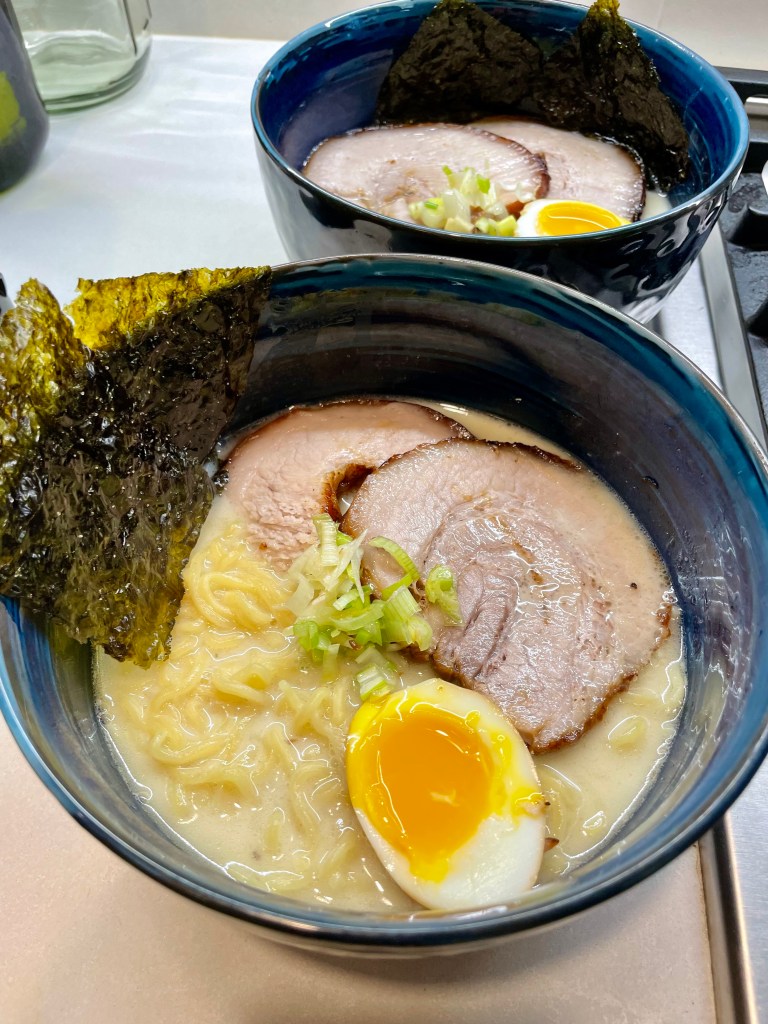
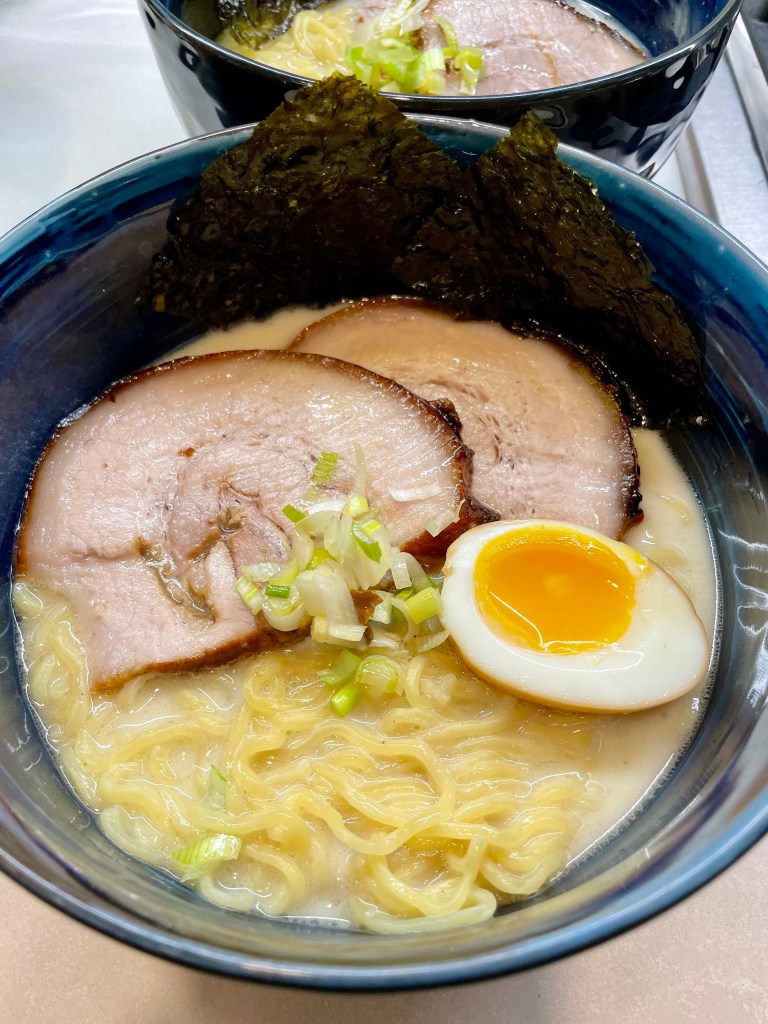
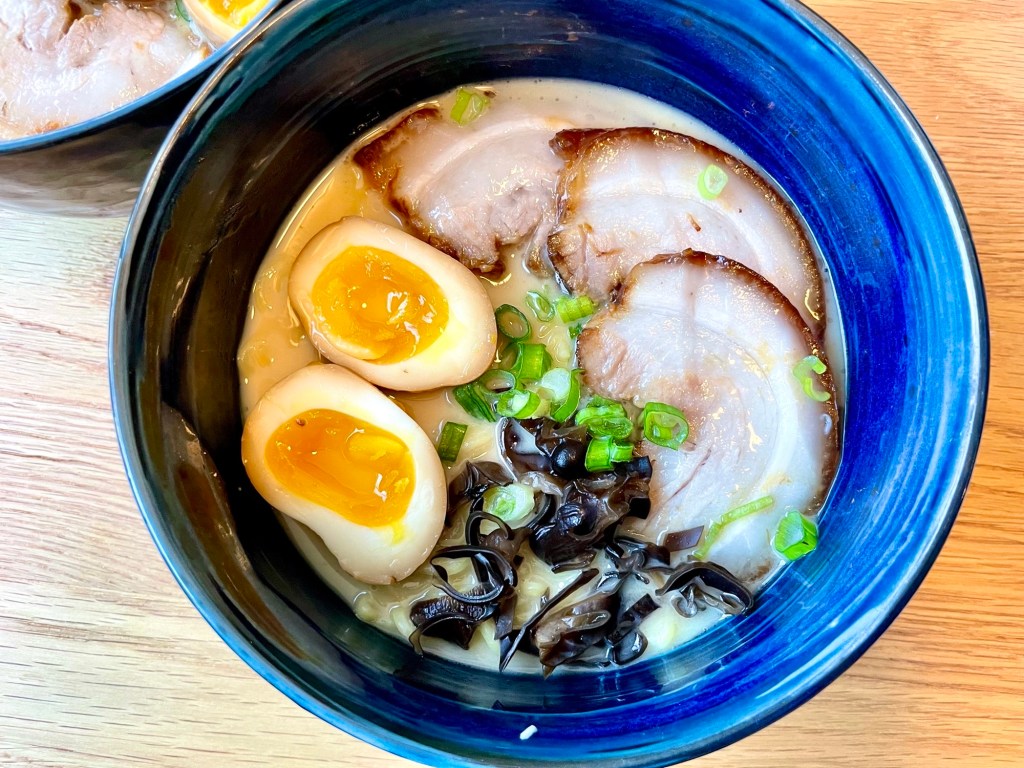
A tonkotsu ramen is my all time favourite thing to eat, so I’m extra excited to be sharing this recipe with everyone! It’s a beautiful bowl of a rich pork bone broth with noodles, chashu, and a ramen egg. No matter what is happening in my life, a tonkotsu ramen will always make it better. When Toby and I travel, I’m always seeking out the local ramen spots – I must’ve had over a hundred bowls of ramen in my life time…so far.

I’ve always wanted to try making a tonkotsu ramen, however due to its long 12 hour cooking time, it’s complexities (ramen shops will use a refractometer to check their broth!), and having to source pork bones on the move, it has constantly been on the back burner. I’ve searched time and time again for a simplified recipe and even went as far as buying instant tonkotsu ramen to satisfy the cravings, but I’ve never succeeded in finding anything that was close to restaurant quality – until now! Recently I stumbled across a ramen subreddit where u/ramen_lord posted his version of a tonkotsu ramen but made in an Instant Pot in 3 hours (find original recipe here)! This made it much less intimidating for me and I decided to try it out. Amazingly, the recipe turned out near perfect the first time and after the second time, Toby said it was the best tonkotsu ramen he’s ever had. It was THAT good! If you’re ever reading this, thank you u/ramen_lord! (If you check out the original link, he also gives a recipe at making your own ramen noodles.)

Although it is a long recipe, each step and component is pretty easy and straightforward, so I’d encourage you to give it a try if you’re a ramen lover like me!

What Makes up a Tonkotsu Ramen?

A traditional tonkotsu ramen is made up of 6 major components, and yes, all of them are included in this very thorough monster recipe!

1. Chashu – pork belly slices

Chashu is a Japanese-style savoury pork belly that is braised the day before and marinated overnight. This is the main protein of the dish. Due to its fatty richness, it is usually served in thin slices and in small portions. This recipe will make about 2-3 slices per bowl. If you’re big on pork belly, then double the chashu portion of the recipe!

Note: Japanese chashu differs from the Chinese-style Charsiu which is barbecue pork rather than braised pork.

2. Ramen egg – a marinated boiled egg with a perfectly soft jammy centre

A ramen egg is a specific style of egg served in a bowl of ramen. It is always soft to medium-boiled to ensure a jammy velvety centre then marinated in a savoury sauce – I marinate mine in the chashu marinade overnight. Make sure you have a timer ready when you cook the eggs to ensure the perfect soft centre.

The ramen egg is always my favourite part of a bowl of ramen (my family would agree with me). For some reason, Toby is not a huge fan of eggs in general, so every time we go out for ramen he always gives me his egg! Lucky me 😊🙃❤️.

3. Tonkotsu broth – a rich and creamy pork bone broth

This is the star of the show. “Tonkotsu” literally translates to “pork bone”, which adequately names this ramen dish. The traditional method of making a tonkotsu broth is to boil the pork bones on high heat for 12 hours then add in aromatics. It is a long and arduous process which is why I’ve avoided making this recipe for so long. This recipe uses the Instant Pot pressure cooker to bring down the cook time to just 3 hours and produces restaurant-quality results!

A classic tonkotsu broth is creamy and rich due to the breakdown of the gelatin in the pork bones. Some recipes will blend pork fat and add it to the broth to make it even more creamy. For the sake of my cholesterol, there is no extra blended fat in this recipe. The broth here is just as good without it.

The colour of a tonkotsu broth should be opaque and milky white. Traditionally the pork bones are cleaned thoroughly by boiling them and removing the scum that is released and then scrubbing them clean before the broth is even started. Many purists out there will insist that you must clean the bones this way or else your broth will never be white. My first time making this recipe I cleaned the bones this way. Although it took extra time, it did produce a white broth. However after further research, I realized that you can also just roast the bones in the oven rather than scrubbing them clean and you still get the same results but with much less work. I tried it both ways and the results were quite similar. The oven roasting method produced a very slightly darker broth, however I’m sure that if I blended more of it in the blender, the results would be the same. Myth busted!

*Note: Tonkotsu is not to be confused with “tonkatsu” which is a breaded and fried pork cutlet

4. Tare – the flavour enhancer/salt of the dish

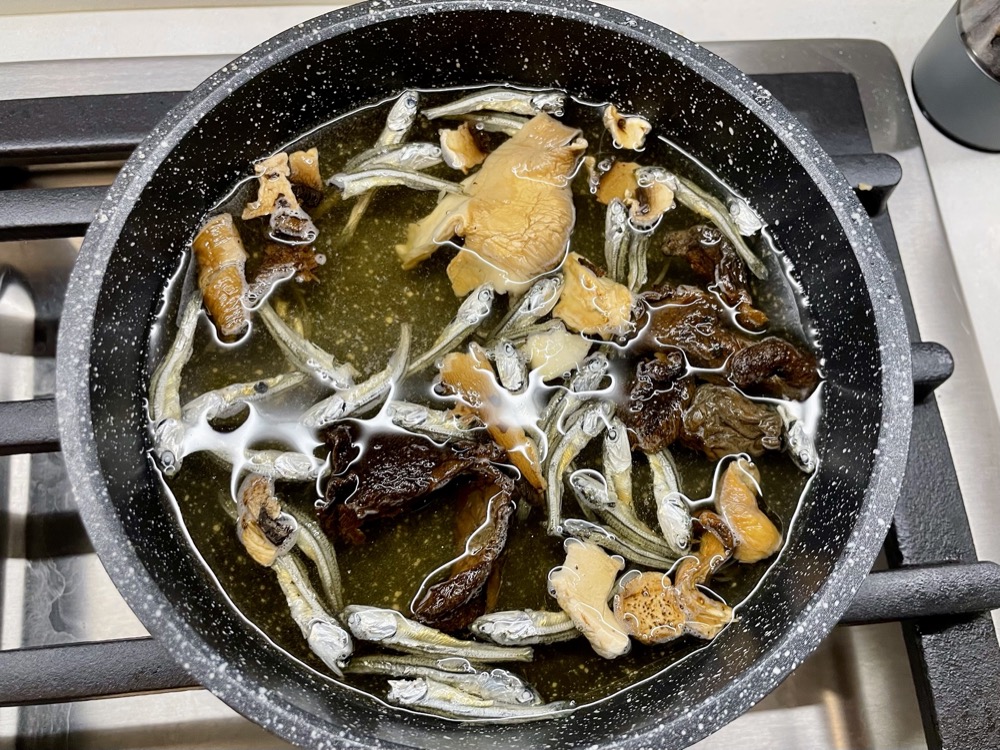
The tonkotsu broth alone lacks salt and umami flavour but when combined with the tare, it makes the perfect broth. Tare differs greatly between ramen shops and even between chefs. It can range from a simple mix of sauces to an incredibly complex recipe. It’s a chef’s signature to make a dish uniquely theirs. This recipe is a simplified version that’s essentially soy sauce marinated with mushrooms, seaweed, and dried fish.

5. Ramen noodles

Ramen noodles are different than regular noodles. They are alkaline and has a distinct taste with a slight chewy/bounce texture. To stay true to the authenticity of a tonkotsu ramen, I’d recommend taking the extra effort to find ramen noodles – you’re putting in all this effort to make it all from scratch anyway!

When looking for ramen noodles, try to buy them either freshly made or in the frozen section. Avoid the dehydrated dried noodles that are labeled as ‘ramen noodles’ – I’ve tried a few different kinds in the past and they’re just not the same.

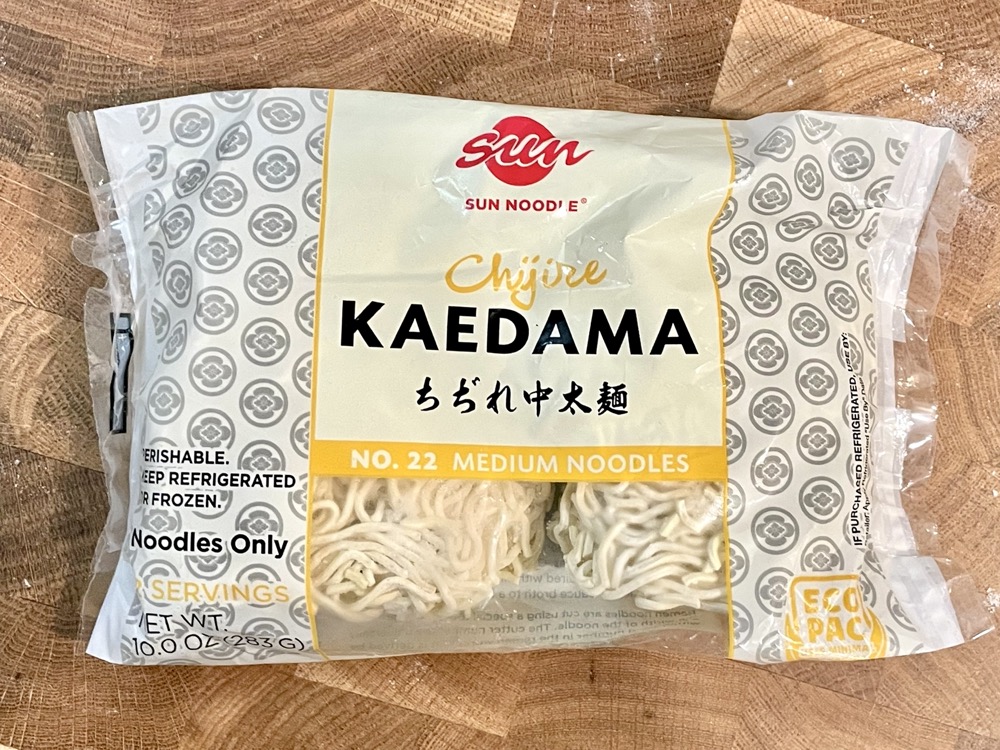
My favourite ramen noodles are made from Sun Noodle and they come in medium or thick noodles (see picture). This one package has 2 servings – it doesn’t seem like much, but it definitely expands when cooking!

Myojo is another brand of ramen noodles I’ve heard good things about, but never tried myself.

6. Toppings

There is a wide variety of toppings you can add to your ramen. I’ve put some examples in the recipe below, but feel free to add in whatever you like. Different restaurants will have different offerings of what you can add – it all depends on personal preference. A few examples of toppings include: bean sprouts, corn, seaweed, sliced wood ear fungus, fresh garlic, chili paste, chopped green onion…etc.

Anyways, without further ado, here’s the recipe! If you have any comments or suggestions, I’d love to hear from you in the comment section! You can follow me on instagram, youtube and facebook to see all the recipes I post!

Happy cooking!

Equipment you’ll need:

  • Pressure cooker (at least 8 quarts in size)
  • Cooking twine
  • Small pot with lid/saucepan

Ingredients you’ll need:

  • Chashu (Pork Belly): MAKE THE DAY BEFORE
    • 500g (1.5lbs) pork belly with the skin on or off – this will be enough for 2-3 slices per portion. Feel free to double the chashu recipe if you want to serve more.
    • 1 cup water
    • 1/2 cup Japanese soy sauce (ie. Kikkoman)
    • 1/4 cup mirin
    • 2 Tbsps brown sugar
    • 2 garlic cloves, smashed
  • Ramen Egg: MAKE THE DAY BEFORE
    • 4-6 eggs (depending on how many people you’re serving)
  • Broth:
    • 1kg (2 lbs) pork neck bones (you want some meat to be attached to the bones for extra flavour)
    • 1kg (2 lbs) pork femur bones (make sure the larger leg bones are split so the bone marrow is exposed) – if you can’t find femur bones, you can use all neck bones
    • 12 cloves of garlic, peeled and smashed
    • 1 small brown onion, peeled and quartered
    • 4cm piece of ginger, sliced (don’t worry about peeling it)
    • 2 green onions, cut into thirds
  • Tare:
    • 1/2 cup (120ml) water
    • 1.5 Tbsps (25ml) mirin
    • 1 Tbsp (15ml) sake
    • 4g kombu (dried kelp)
    • 3g dried porcini mushrooms
    • 3g sababushi/dried mackerel, or katsuobushi/bonito flakes, or niboshi/dried anchovies – I had a difficulty sourcing these in my neighbourhood, so any of these will work to give it an umami fishy flavour
    • 1/2 cup (120ml) Japanese soy sauce (ie. Kikkoman)
    • 2.5 tsps (15g) kosher salt
    • 1.5 tsps (5g) brown sugar
  • 4-6 portions of ramen noodles, premade
  • Additional Toppings (optional):
    • Sliced green onion
    • Wood ear mushrooms
    • Seaweed
    • Bean sprouts

Directions:

THE DAY BEFORE:

A) Make the chashu:

Make sure the pork belly is at room temperature (take it out of the fridge at least 30mins prior).

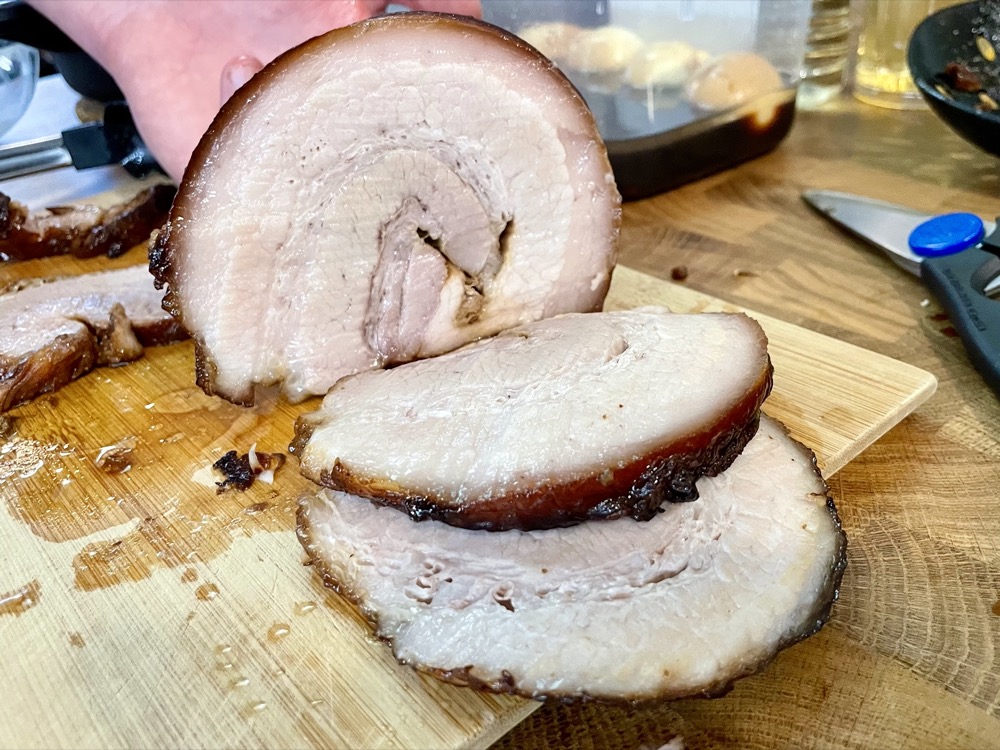
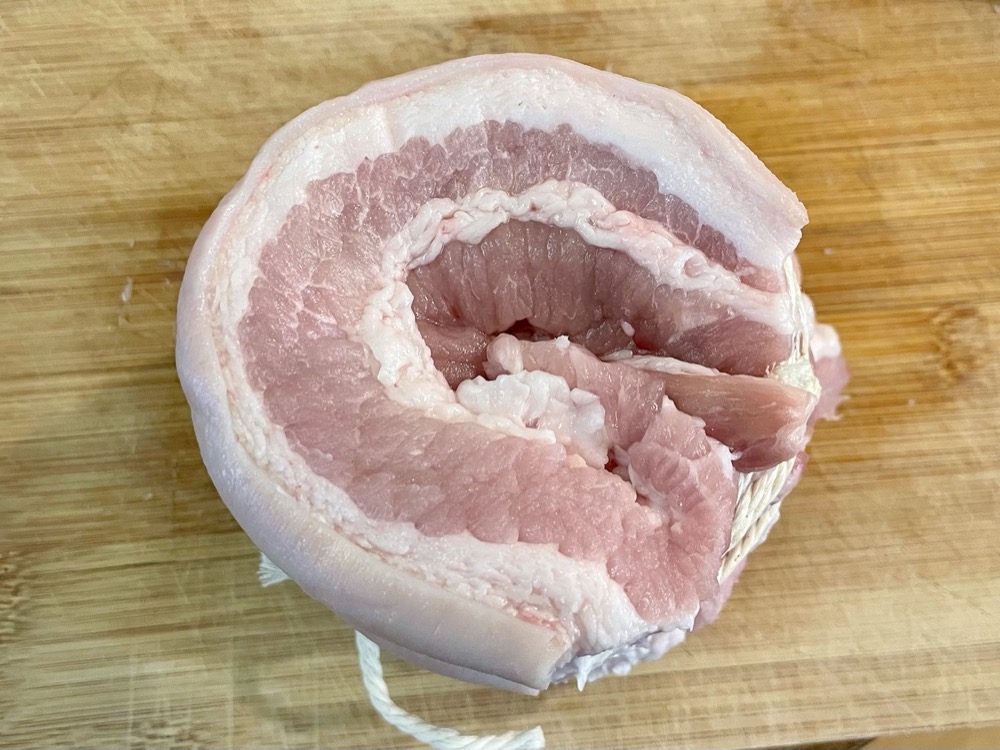
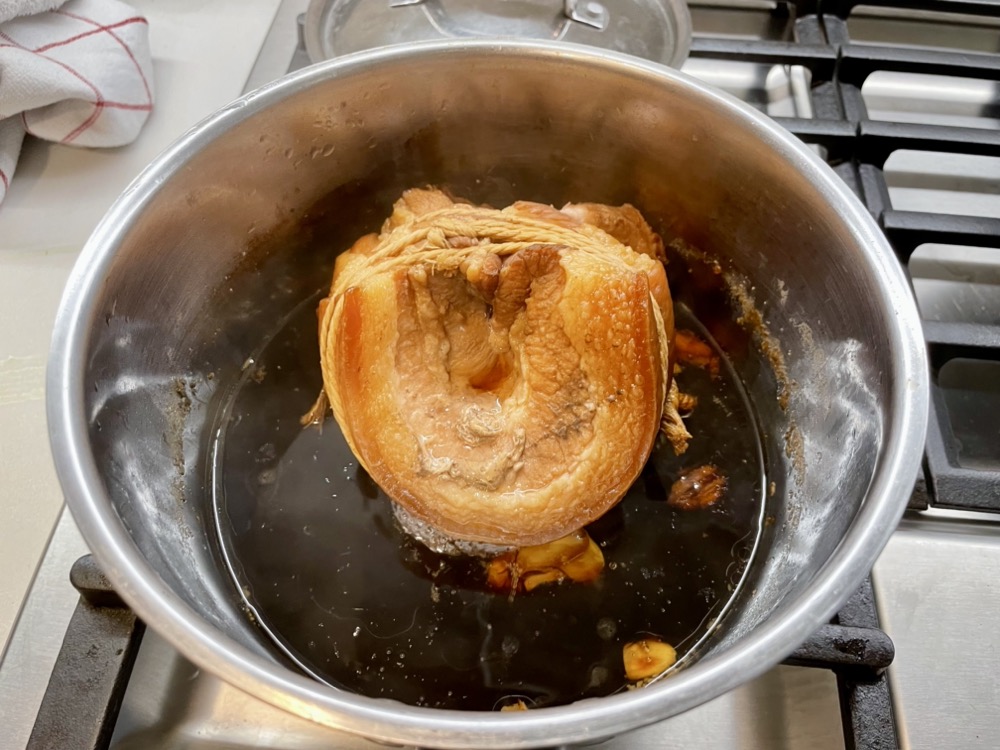
Roll the pork belly into a cylinder with the layers visible on the side (see photo) and tie tightly with cooking twine so it stays in shape.

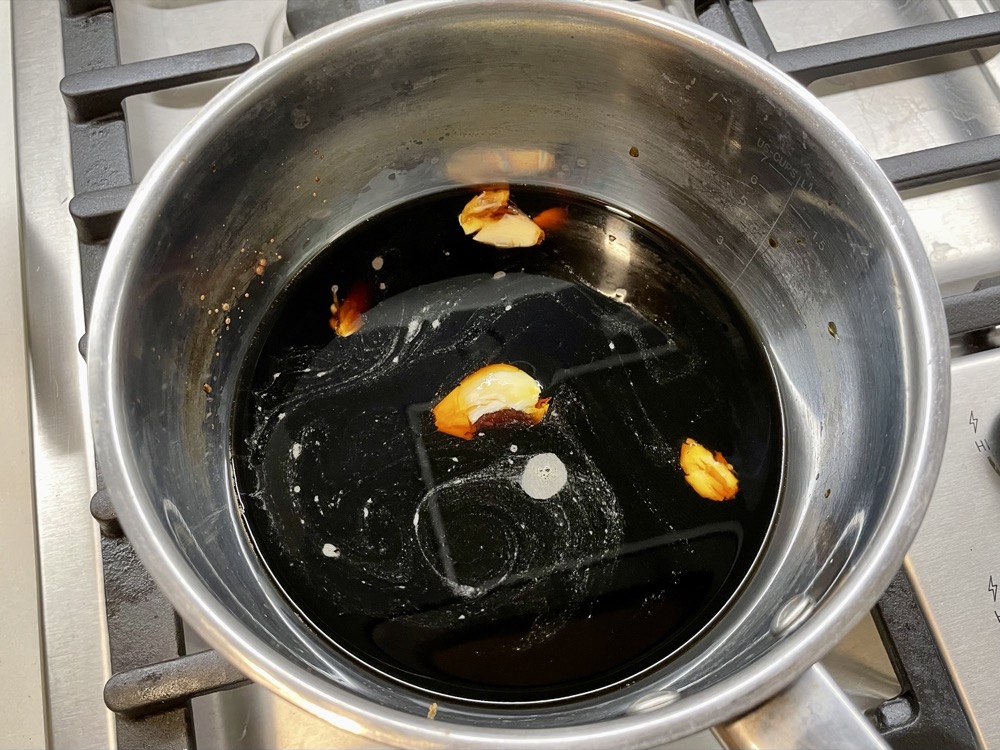
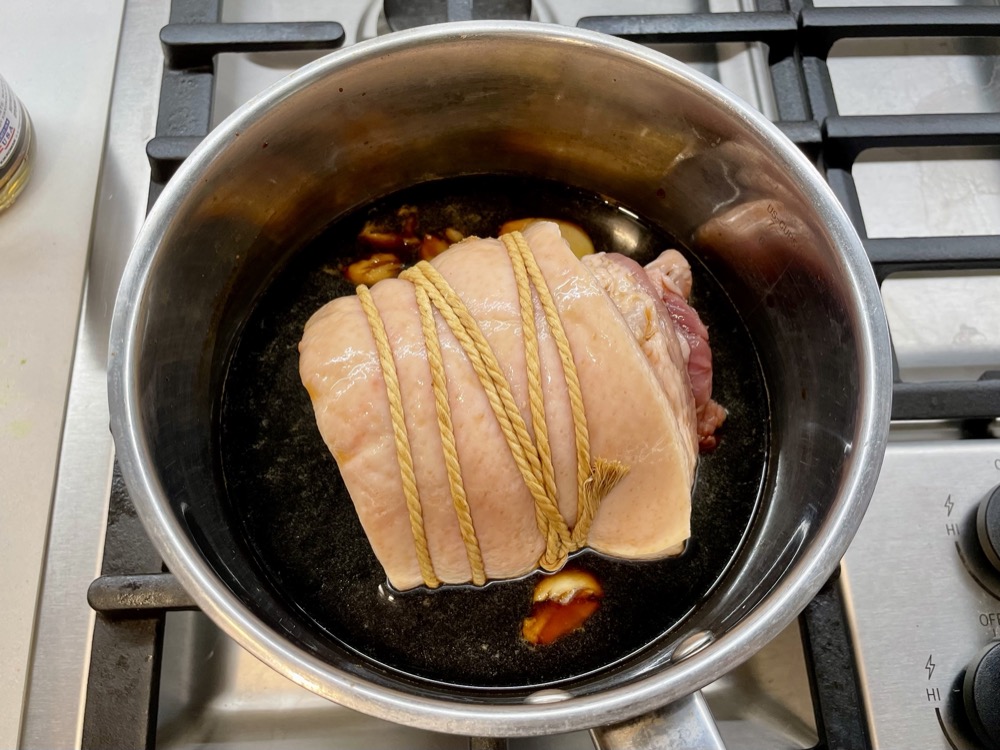
Take out a saucepan with a lid and add in the rest of the the chashu ingredients: water, soy sauce, mirin, brown sugar, garlic. Place the tied up pork belly in the middle of the saucepan.

Turn the heat on to HIGH and let the sauce come to a boil, then turn the heat down to LOW and let it simmer with the lid on for 90 minutes. Turn the pork belly every 20 minutes so it gets evenly braised in the sauce.

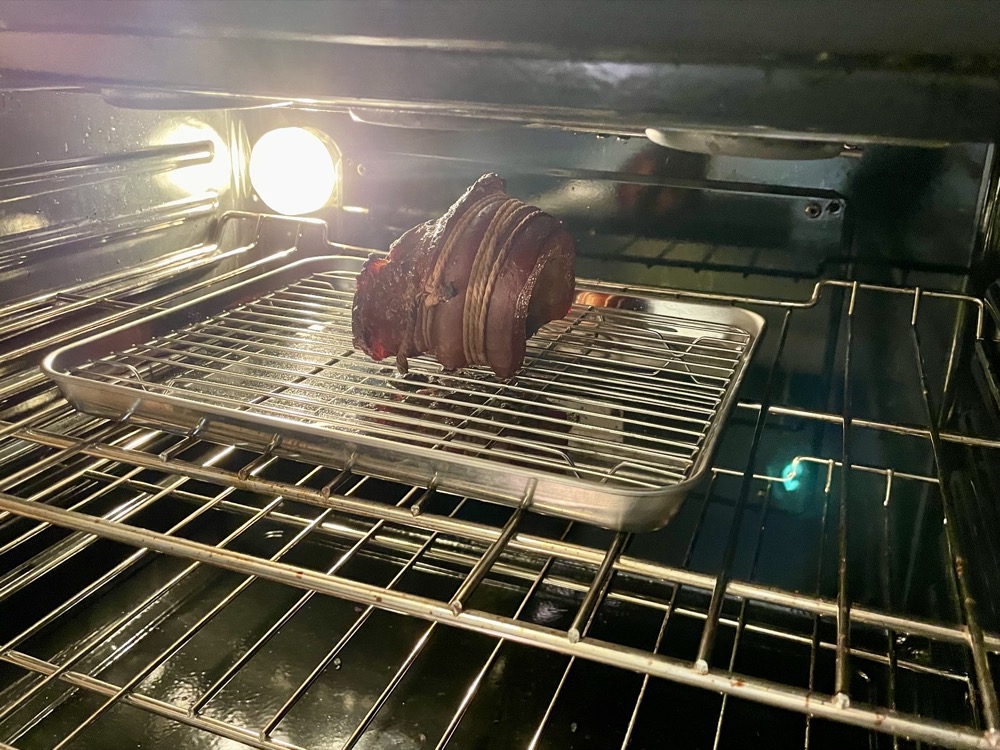
When there’s 20 minutes left to your cook time, preheat your oven to 220˚C (425˚F) and prepare a baking tray with a wire rack.

Once the 90 minutes is up, turn off the heat and take out the pork belly (keeping the remaining sauce aside) and place it on the rack over a baking tray and roast in the preheated oven for 8-10 minutes, or until the outside is a dark caramel colour.

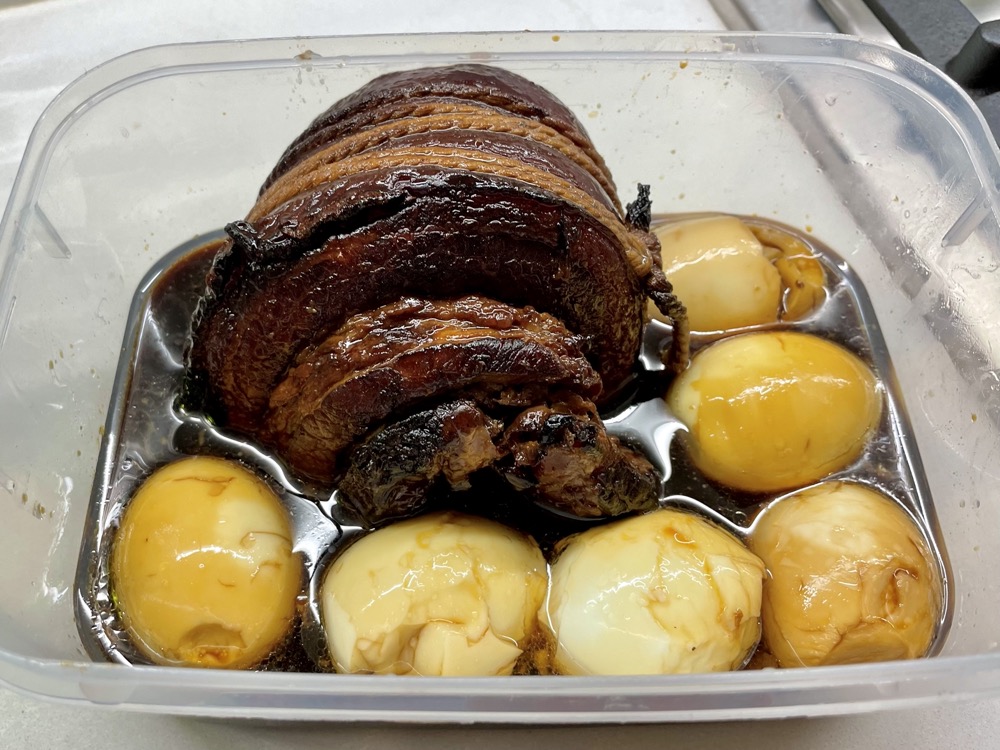
When the pork belly is done, take it out of the oven and place it in a heat-proof container (make sure there’s enough room for the eggs as well). Pour the leftover sauce over and let the pork belly marinate in the sauce overnight. If the marinade doesn’t surround the pork belly, either use a smaller container or turn the pork belly halfway through for even marination. A vacuum-sealed plastic bag works well as well.

Vacuum-seal bags will help marinate it better by allowing the sauce to surround the meat and eggs

B) Make the ramen eggs: (you can do this step while you’re waiting for the pork belly to cook)

Bring a small pot of water to boil. Gently lower all 4 eggs into the boiling water and start a timer for 7 minutes. Adjust the heat if the water is boiling too rapidly to avoid the eggs from knocking around in the pot.

While you’re waiting, prepare an ice bath for the eggs. Once the timer is up, turn off the heat and immediately submerge all the eggs into the ice bath. Once the eggs are cool enough to handle, remove all of the shells.

Place the peeled boiled eggs into the same container as the pork belly and marinate together overnight. If the sauce does not surround the egg, turn the eggs halfway through for even marination. A vacuum-sealed plastic bag works well as well. Do not marinate for longer than 2-3 days or else the egg will become too salty.

THE DAY OF:

C) Make the tonkotsu broth:

Preheat oven to 220˚C (425˚F)

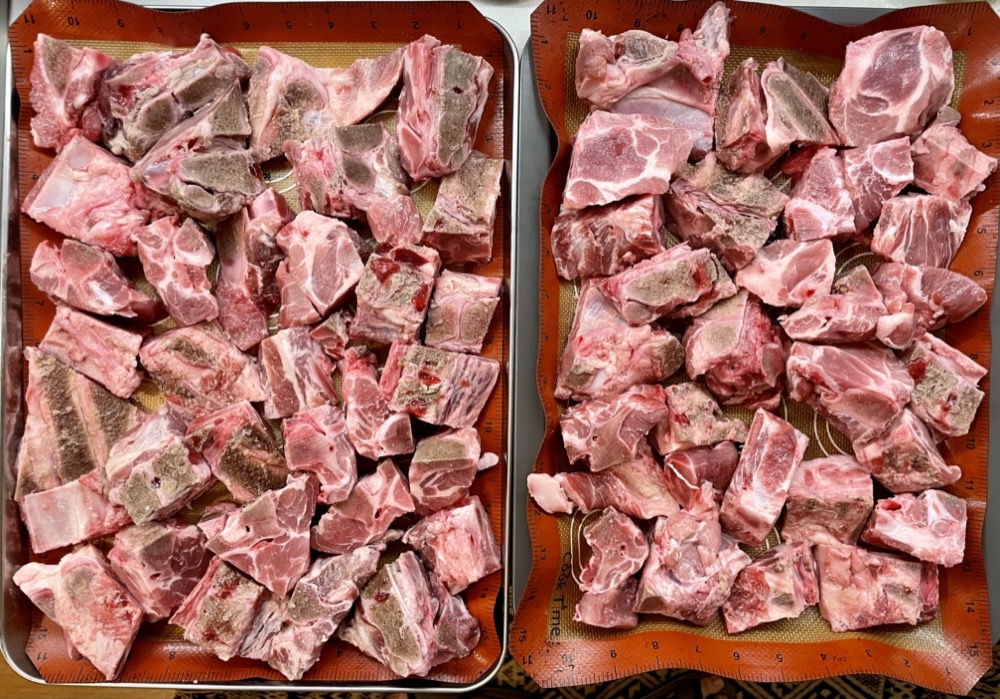
Roast the bones: Prepare a large lined baking tray. Rinse the pork bones and place them all in one layer of the tray (do not overlap the bones). Use a second tray if they don’t all fit into one. Roast in the preheated oven for 40 minutes, turning the bones once halfway through the cook time. After 40 minutes, turn off the oven. You should have a dark brown char on the bones.

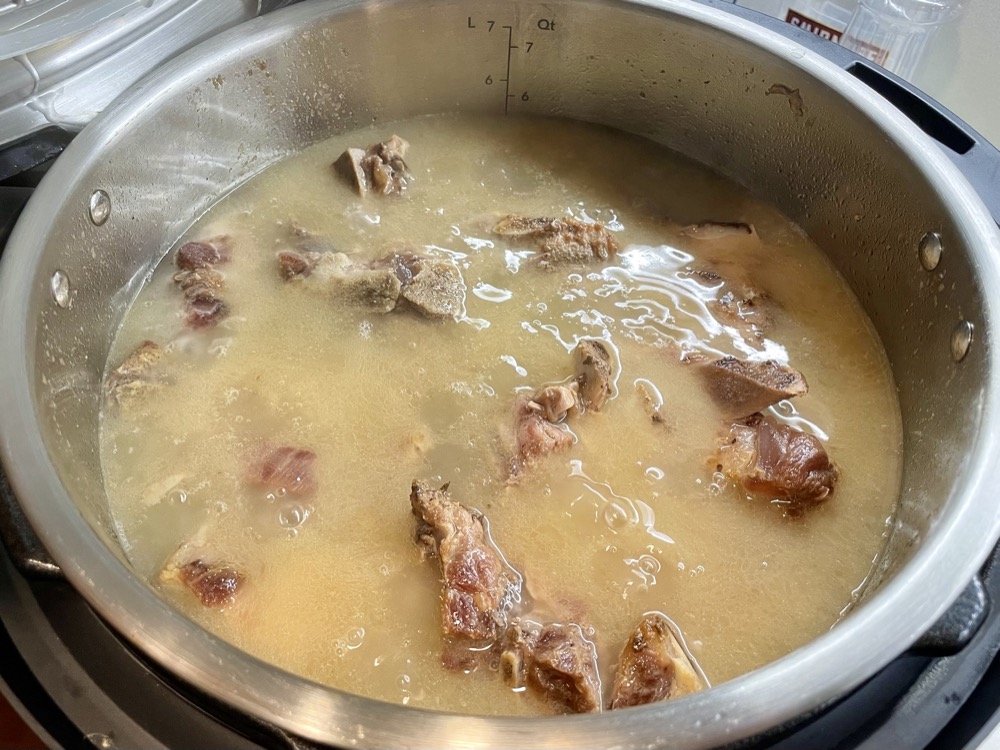
Cook the broth: Place the roasted bones along with any browned bits or liquids from the tray (these will add extra flavour) into your Instant Pot. Add enough water to cover the bones by 2-3cm (roughly 3 litres). Turn the Instant Pot on to a sauté setting and set the heat to HIGH. Once the water comes to a boil, cancel the setting and put the lid on. Turn on the pressure cook setting to HIGH and cook for 2 hours. (You can start making the tare or prepare any additional toppings during this time as you wait.) When the timer finishes, quick release the pressure – be careful of any spurting of liquids from the vent! When it is safe to do so, remove the lid carefully.

Add in aromatics & free the bone marrow: Add in garlic, ginger, green onion and onion into the broth. Use a chopstick and scrape out any bone marrow from the bones and let the marrow boil freely in the soup alongside the bones.

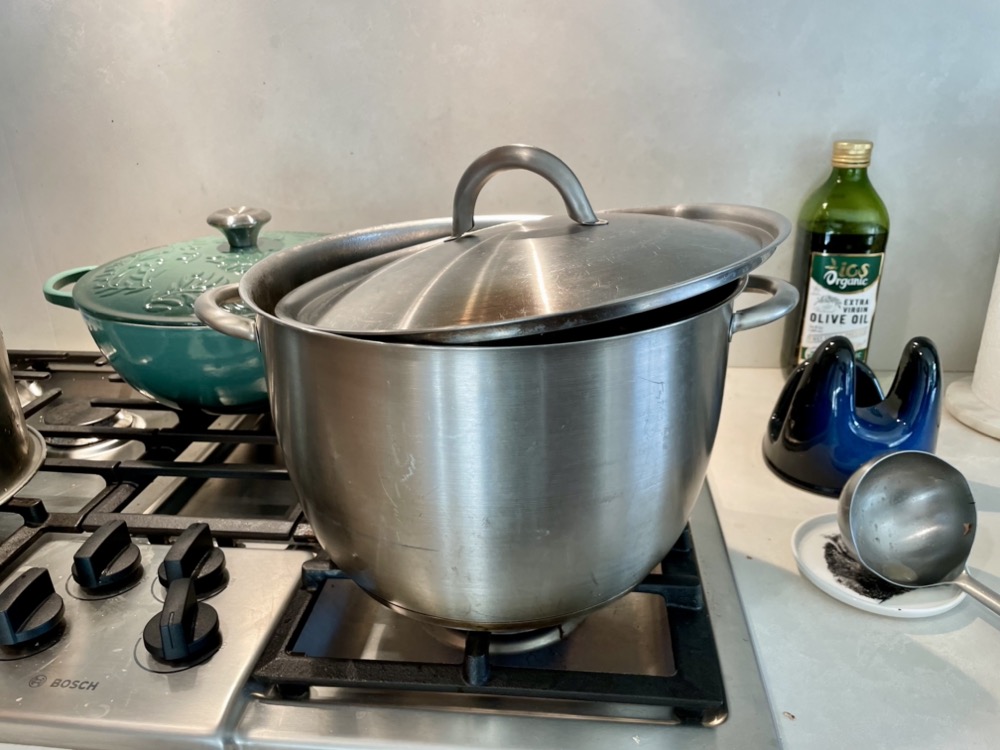
Boiling the broth for the final hour – lid on or lid off will depend on how rich it is after the Instant Pot

Taste for richness and Reduce (if needed): At this point the broth will taste quite bland since there as been no added salt and the aromatics were just introduced. Ignore the need to want to add in salt right now – it will come later. You want to taste for the texture of the broth, not the flavour. How creamy your broth is at this stage will dictate how you cook down your broth (the texture will vary greatly depending on the mix of bones you started with – it varies every time I make it):

If your broth is watery: turn on the sauté setting on the Instant Pot and set to MED heat so the soup boils moderately. Let it boil uncovered for 1 hour to reduce the broth and increase in concentration/richness. Taste at the end of 1 hour – you can let it boil for longer if needed.

If your broth is rich & creamy: add a lid on to the Instant Pot (or transfer to a regular soup pot with a lid) and let the soup boil on MED heat for 1 hour to release the flavour of the aromatics but to still contain all the liquid.

You will need to boil the broth for 1 hour regardless of how rich your broth is. The difference is whether you keep the lid on or off to control how much liquid is evaporated. If you’re unsure, then start boiling without a lid, then taste after 30 minutes, or have the lid half-on so it only reduces slightly. Once your broth is rich enough then put the lid on and finish boiling until the 1 hour timer is up.

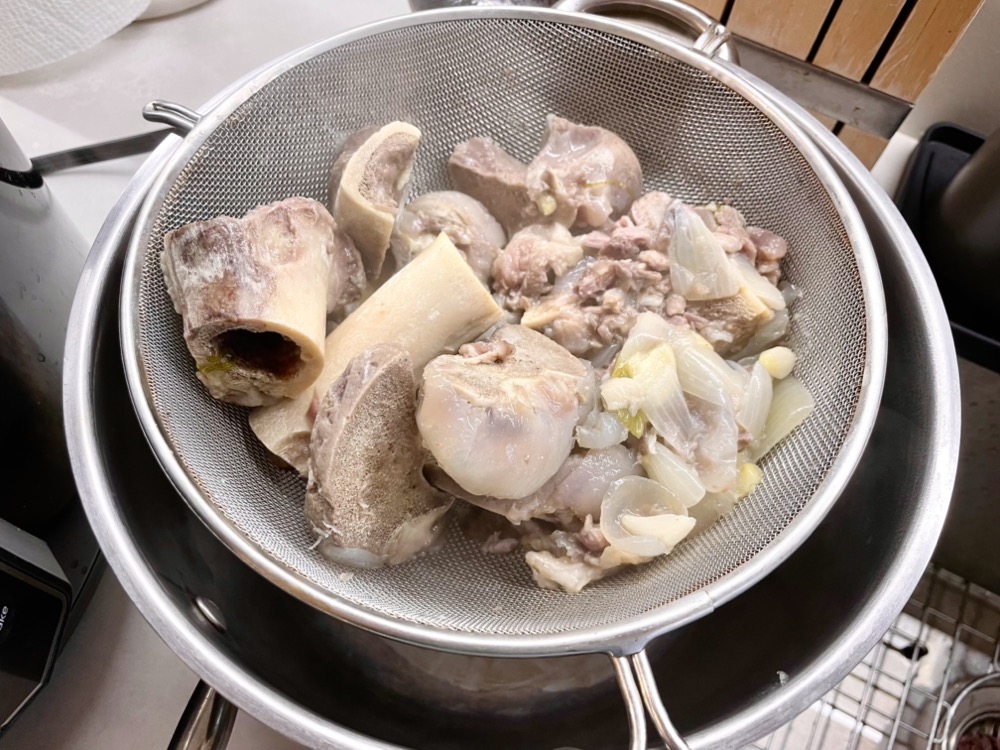
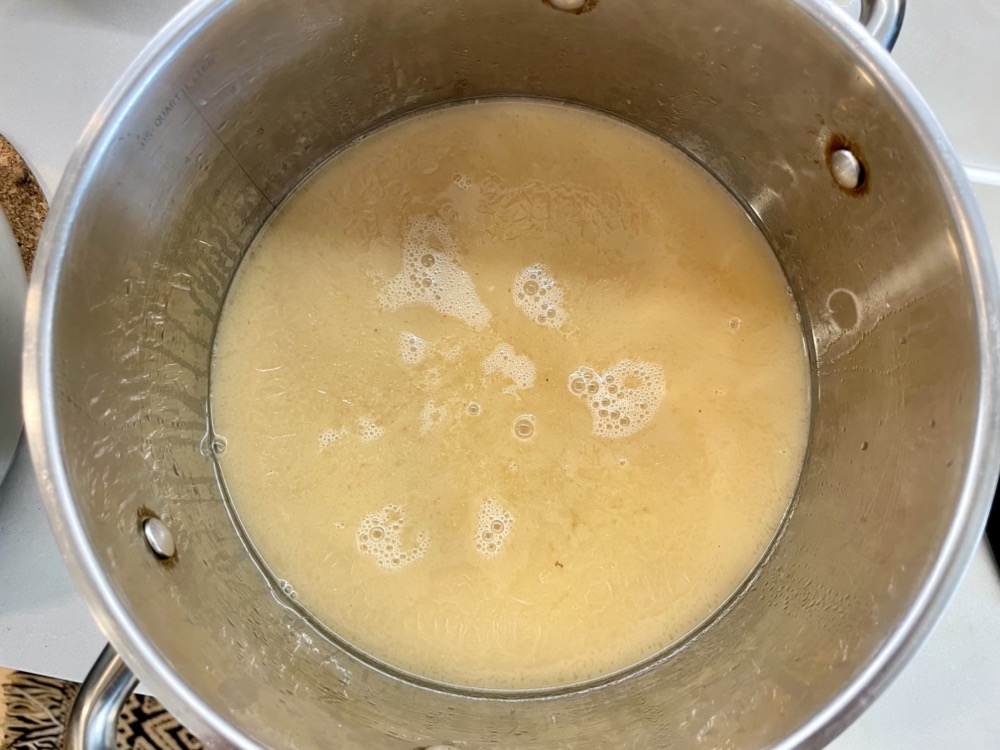
Strain: After an hour, turn off the heat and strain the broth into a clean pot. Discard the bones, aromatics, and any floaters that you have strained out. You should now have a pale brown opaque broth. Do not worry if your broth is not a lighter colour – it will lighten up in the next step.

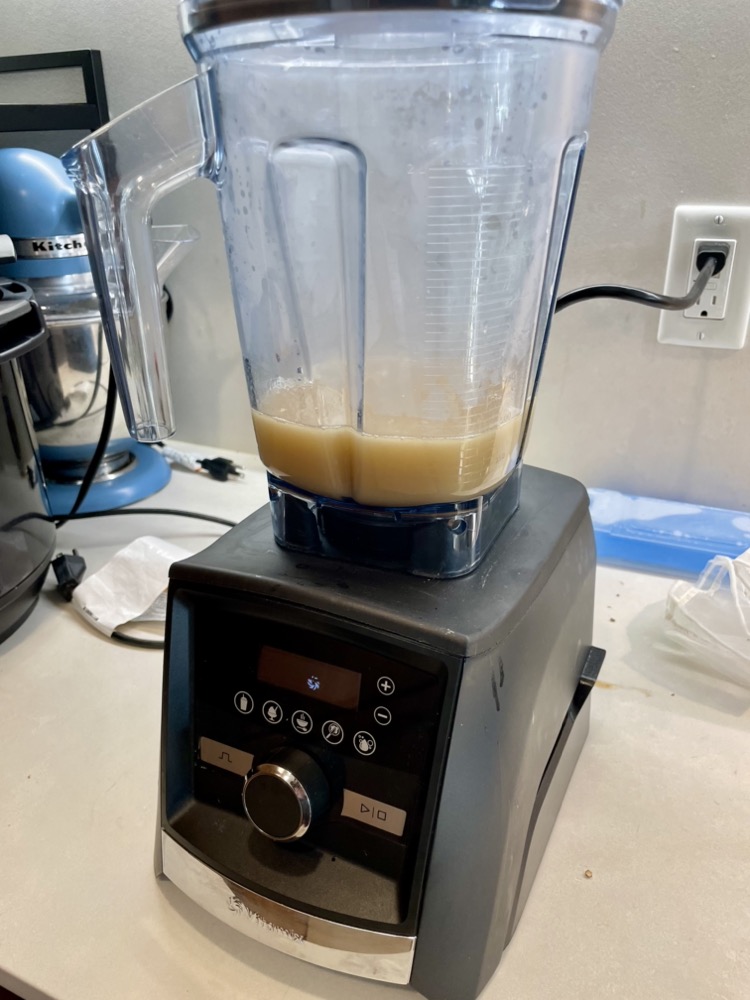
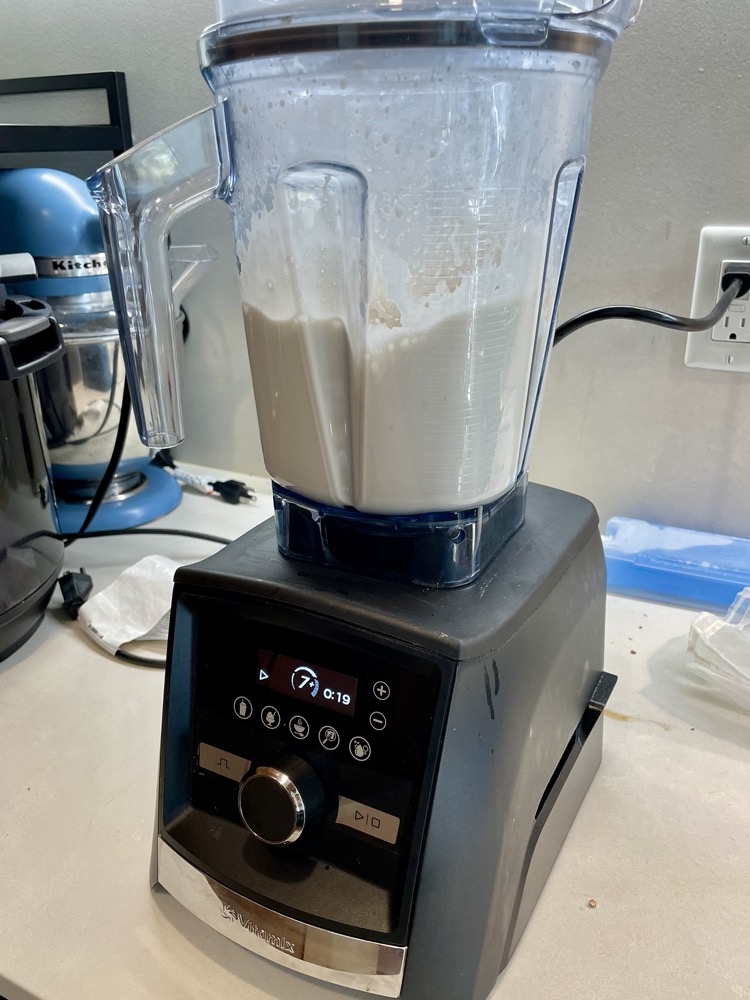
Blend – the magic step that makes the broth extra creamy and white: Remove roughly a quarter of the amount of broth into a blender and blend it on HIGH until you get a very smooth, white, and creamy texture. Add this back into the rest of the broth and mix well. Taste again for the texture.

If you find that it is too creamy, add hot water a cup at a time until desired consistency.

If you want it creamer and whiter, add more broth into the blender and blend again on HIGH and add it back into the broth until desired consistency.

Resist the urge to add salt – the final taste test will be at the end with the combination of the tare (salty goodness) with with broth together. The tonkotsu broth is now complete! If you still need more time to prepare the rest of the toppings or tare, then keep the soup on low heat to keep it hot until ready to serve.

D) Make the tare: (do this while you’re waiting for the broth to cook)

In a small pan, add the water, mirin, sake, kombu, porcini, and sababushi. Turn the heat on to HIGH. When it starts to boil, turn the heat off and let it steep for 30 minutes.

After 30 minutes, remove the kombu, add in the soy sauce, salt, sugar, and MSG. Whisk until dissolved. Turn the heat back on to HIGH until it starts to boil, then turn it off again and let it steep for at least 30 minutes. Strain before using. You can store this in the fridge for up to 6 months.

E) Cook the noodles, prepare the rest of the toppings: (you can do this in the final 10-15 minutes of your broth cooking)

Chashu and ramen egg: Remove the twine from the chashu and thinly slice it while still chilled (it will be easier to get neater cuts). Cut each egg in half to reveal the jammy egg yolk centre. Set aside.

Noodles: Cook the noodles according to package instructions and strain when finished.

Wood ear mushrooms: Soak the wood ear mushrooms in a bowl of boiling hot water for at least 15 minutes or until softened and expanded. Remove from the water, rinse, and slice. Set aside.

Green onion: Thinly slice one green onion for garnish. Set aside.

Seaweed: Cut your seaweed to desired sizes for serving.

F) Assemble the ramen: (finally!)

Divide the noodles equally into the serving bowls if not done so already.

Add 2 ladles of the tonkotsu broth over the noodles. Top with sliced chashu, ramen egg, wood ear mushrooms, seaweed, and green onion to garnish. Add a 3 tablespoons of tare over top (or more if you prefer it saltier). ENJOY!

Summarized Recipe:

Legit Tonkotsu Ramen from scratch (in an Instant Pot)

Date Published: Mar 3rd, 2024 | Last Updated: Mar 3rd, 2024
Author: Abby |Category: Asian, mains, soups
Serves: 4-6 | Prep time: 12 hours before to marinate | Cook time: 4.5 hours total

Equipment you’ll need:

  • Pressure cooker (at least 8 quarts in size)
  • Cooking twine
  • Small pot with lid/saucepan

Ingredients you’ll need:

  • Chashu (Pork Belly): MAKE THE DAY BEFORE
    • 500g (1.5lbs) pork belly with the skin on or off – this will be enough for 2-3 slices per portion. Feel free to double the chashu recipe if you want to serve more.
    • 1 cup water
    • 1/2 cup Japanese soy sauce (ie. Kikkoman)
    • 1/4 cup mirin
    • 2 Tbsps brown sugar
    • 2 garlic cloves, smashed
  • Ramen Egg: MAKE THE DAY BEFORE
    • 4-6 eggs (depending on how many people you’re serving)
  • Broth:
    • 1kg (2 lbs) pork neck bones (you want some meat to be attached to the bones for extra flavour)
    • 1kg (2 lbs) pork femur bones (make sure the larger leg bones are split so the bone marrow is exposed) – if you can’t find femur bones, you can use all neck bones
    • 12 cloves of garlic, peeled and smashed
    • 1 small brown onion, peeled and quartered
    • 4cm piece of ginger, sliced (don’t worry about peeling it)
    • 2 green onions, cut into thirds
  • Tare:
    • 1/2 cup (120ml) water
    • 1.5 Tbsps (25ml) mirin
    • 1 Tbsp (15ml) sake
    • 4g kombu (dried kelp)
    • 3g dried porcini mushrooms
    • 3g sababushi/dried mackerel, or katsuobushi/bonito flakes, or niboshi/dried anchovies – I had a difficulty sourcing these in my neighbourhood, so any of these will work to give it an umami fishy flavour
    • 1/2 cup (120ml) Japanese soy sauce (ie. Kikkoman)
    • 2.5 tsps (15g) kosher salt
    • 1.5 tsps (5g) brown sugar
  • 4-6 portions of ramen noodles, premade
  • Additional Toppings (optional):
    • Sliced green onion
    • Wood ear mushrooms
    • Seaweed
    • Bean sprouts

Directions:

THE DAY BEFORE:

  • A) Make the chashu:
    1. Make sure the pork belly is at room temperature (take it out of the fridge at least 30mins prior).
    2. Roll the pork belly into a cylinder with the layers visible on the side (see photo) and tie tightly with cooking twine so it stays in shape.
    3. Take out a saucepan with a lid and add in the rest of the the chashu ingredients: water, soy sauce, mirin, brown sugar, garlic. Place the tied up pork belly in the middle of the saucepan.
    4. Turn the heat on to HIGH and let the sauce come to a boil, then turn the heat down to LOW and let it simmer with the lid on for 90 minutes. Turn the pork belly every 20 minutes so it gets evenly braised in the sauce.
    5. When there’s 20 minutes left to your cook time, preheat your oven to 220˚C (425˚F) and prepare a baking tray with a wire rack.
    6. Once the 90 minutes is up, turn off the heat and take out the pork belly (keeping the remaining sauce aside) and place it on the rack over a baking tray and roast in the preheated oven for 8-10 minutes, or until the outside is a dark caramel colour. When the pork belly is done, take it out of the oven and place it in a heat-proof container (make sure there’s enough room for the eggs as well). Pour the leftover sauce over and let the pork belly marinate in the sauce overnight. If the marinade doesn’t surround the pork belly, either use a smaller container or turn the pork belly halfway through for even marination. A vacuum-sealed plastic bag works well as well.
  • B) Make the ramen eggs: (you can do this step while you’re waiting for the pork belly to cook)
    1. Bring a small pot of water to boil. Gently lower all 4 eggs into the boiling water and start a timer for 7 minutes. Adjust the heat if the water is boiling too rapidly to avoid the eggs from knocking around in the pot.
    2. While you’re waiting, prepare an ice bath for the eggs. Once the timer is up, turn off the heat and immediately submerge all the eggs into the ice bath. Once the eggs are cool enough to handle, remove all of the shells.
    3. Place the peeled boiled eggs into the same container as the pork belly and marinate together overnight. If the sauce does not surround the egg, turn the eggs halfway through for even marination. A vacuum-sealed plastic bag works well as well. Do not marinate for longer than 2-3 days or else the egg will become too salty.

THE DAY OF:

  • C) Make the tonkotsu broth:
    1. Preheat oven to 220˚C (425˚F)
    2. Roast the bones: Prepare a large lined baking tray. Rinse the pork bones and place them all in one layer of the tray (do not overlap the bones). Use a second tray if they don’t all fit into one. Roast in the preheated oven for 40 minutes, turning the bones once halfway through the cook time. After 40 minutes, turn off the oven. You should have a dark brown char on the bones.
    3. Cook the broth: Place the roasted bones along with any browned bits or liquids from the tray (these will add extra flavour) into your Instant Pot. Add enough water to cover the bones by 2-3cm (roughly 3 litres). Turn the Instant Pot on to a sauté setting and set the heat to HIGH. Once the water comes to a boil, cancel the setting and put the lid on. Turn on the pressure cook setting to HIGH and cook for 2 hours. (You can start making the tare or prepare any additional toppings during this time as you wait.) When the timer finishes, quick release the pressure – be careful of any spurting of liquids from the vent! When it is safe to do so, remove the lid carefully.
    4. Add in aromatics & free the bone marrow: Add in garlic, ginger, green onion and onion into the broth. Use a chopstick and scrape out any bone marrow from the bones and let the marrow boil freely in the soup alongside the bones.
    5. Taste for richness and Reduce (if needed): At this point the broth will taste quite bland since there as been no added salt and the aromatics were just introduced. Ignore the need to want to add in salt right now – it will come later. You want to taste for the texture of the broth, not the flavour. How creamy your broth is at this stage will dictate how you cook down your broth (the texture will vary greatly depending on the mix of bones you started with – it varies every time I make it):
      • If your broth is watery: turn on the sauté setting on the Instant Pot and set to MED heat so the soup boils moderately. Let it boil uncovered for 1 hour to reduce the broth and increase in concentration/richness. Taste at the end of 1 hour – you can let it boil for longer if needed.
      • If your broth is rich & creamy: add a lid on to the Instant Pot (or transfer to a regular soup pot with a lid) and let the soup boil on MED heat for 1 hour to release the flavour of the aromatics but to still contain all the liquid.
      • You will need to boil the broth for 1 hour regardless of how rich your broth is. The difference is whether you keep the lid on or off to control how much liquid is evaporated. If you’re unsure, then start boiling without a lid, then taste after 30 minutes, or have the lid half-on so it only reduces slightly. Once your broth is rich enough then put the lid on and finish boiling until the 1 hour timer is up.
    6. Strain: After an hour, turn off the heat and strain the broth into a clean pot. Discard the bones, aromatics, and any floaters that you have strained out. You should now have a pale brown opaque broth. Do not worry if your broth is not a lighter colour – it will lighten up in the next step.
    7. Blend – the magic step that makes the broth extra creamy and white: Remove roughly a quarter of the amount of broth into a blender and blend it on HIGH until you get a very smooth, white, and creamy texture. Add this back into the rest of the broth and mix well. Taste again for the texture.
      • If you find that it is too creamy, add hot water a cup at a time until desired consistency.
      • If you want it creamer and whiter, add more broth into the blender and blend again on HIGH and add it back into the broth until desired consistency.
      • Resist the urge to add salt – the final taste test will be at the end with the combination of the tare (salty goodness) with with broth together. The tonkotsu broth is now complete! If you still need more time to prepare the rest of the toppings or tare, then keep the soup on low heat to keep it hot until ready to serve.
  • D) Make the tare: (do this while you’re waiting for the broth to cook)
    1. In a small pan, add the water, mirin, sake, kombu, porcini, and sababushi. Turn the heat on to HIGH. When it starts to boil, turn the heat off and let it steep for 30 minutes.
    2. After 30 minutes, remove the kombu, add in the soy sauce, salt, sugar, and MSG. Whisk until dissolved. Turn the heat back on to HIGH until it starts to boil, then turn it off again and let it steep for at least 30 minutes. Strain before using. You can store this in the fridge for up to 6 months.
  • E) Cook the noodles, prepare the rest of the toppings: (you can do this in the final 10-15 minutes of your broth cooking)
    1. Chashu and ramen egg: Remove the twine from the chashu and thinly slice it while still chilled (it will be easier to get neater cuts). Cut each egg in half to reveal the jammy egg yolk centre. Set aside.
    2. Wood ear mushrooms: Soak the wood ear mushrooms in a bowl of boiling hot water for at least 15 minutes or until softened and expanded. Remove from the water, rinse, and slice. Set aside.
    3. Noodles: Cook the noodles according to package instructions, strain, and even divide into serving bowls.
    4. Green onion: Thinly slice one green onion for garnish. Set aside.
    5. Seaweed: Cut your seaweed to desired sizes for serving.
  • F) Assemble the ramen: (finally!)
    1. Divide the noodles equally into the serving bowls if not done so already.
    2. Add 2 ladles of the tonkotsu broth over the noodles.
    3. Top with sliced chashu, ramen egg, wood ear mushrooms, seaweed, and green onion to garnish. Add a 3 tablespoons of tare over top (or more if you prefer it saltier). ENJOY!

Char Kway Teow (Stir-fried flat noodles)


Date Published: July 1st, 2020 | Last Updated: July 1st, 2020
Author: Abby |Category: mains, Asian
Serves: 4-5 | Prep time: 15mins | Cook time: 10mins

Jump to recipe | Watch the video

WOOHOO!! The inaugural post of Polyphagic Abby! Welcome welcome. I’m so excited to share my favourite recipes with you!

I won’t muddle this recipe post by going into the hows and whys of starting up this food blog project in this post but if you’re interested, you can read about it here.

I’m new to the video blogging and food photography game, so don’t mind the occasional questionable camera work. We’re still working out the kinks. We’ve ordered a tripod that’s coming in the mail but I was too excited to start this blog to wait! I also got too excited taking videos of recipes that I forgot to take photos of the process as well, so don’t mind the video screenshots as part of the post for the first few recipes. heh heh.

My partner Toby rigging up the camera for my first recipe video hahaha. This is why the start of the video is a little shaky. Only 1 more week until our tripod arrives!

Toby and I have been religiously watching Masterchef 2020 lately. We’ve never watched a show so intently together before. Our favourite contestant Sarah Tiong was recently eliminated. I’ve always loved watching her put together amazing flavourful Asian dishes on the show and to my luck, she has just released a cookbook! I’ve been wanting to cook closer to my Asian roots lately and her cookbook was the perfect gateway. It’s full of amazing recipes. I absolutely recommend getting her cookbook “Sweet, Savoury, Spicy“. This char kway teow recipe was actually adapted from one of hers.

Char kway teow is a popular Malaysian/Singaporean dish. It’s a dish made from flat rice noodles (banh pho) and sautéed in Chinese sausage (lap cheong) and prawns. You can substitute the protein with anything you like and add in any extra veggies you like. This recipe is easy and cooks up quickly! You can watch the video below to guide you through the recipe.

Anyways, without further ado, here’s the recipe! If you have any comments or suggestions, I’d love to hear from you in the comment section! You can follow me on instagram, youtube and facebook to see all the recipes I post!

Happy cooking!

Ingredients you’ll need:

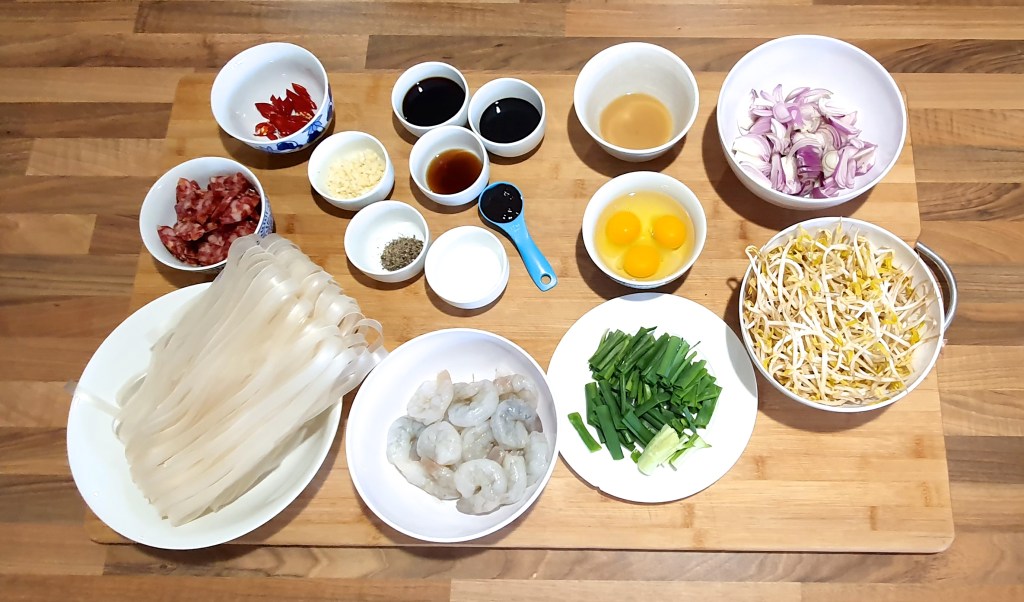
  • 1 packet (1kg) of cooked flat rice noodles (banh pho) – (375g uncooked packet = ~1kg cooked)
  • 1/3 cup (90ml) of any neutral tasting oil (you can substitute with pork lard for extra flavour)
  • 4 cloves garlic, minced
  • 2 large red shallots, finely chopped (can substitute with 1 red onion instead)
  • 2 medium red chilis, thinly sliced (optional)
  • 130g (~4 medium) lap cheong sausages, thinly sliced
  • 15 large fresh shrimp/prawns, shelled and deveined
  • 4 Tbsps (60ml) light soy sauce
  • 2 Tbsps (30ml) dark soy sauce
  • 1 Tbsp (16ml) oyster sauce
  • 1 Tbsp (16ml) fish sauce
  • 2 tsp sugar
  • 1 tsp ground black pepper
  • 2 large eggs
  • 2 cups (200g) fresh bean sprouts
  • 2 large spring onions, cut into 2.5cm lengths

Directions:

I’d recommend having all of your ingredients prepped and ready within arm’s reach before starting this recipe. This recipe is quick and you’ll need everything one after another to ensure things don’t become overcooked since you’ll be cooking on high heat for the majority of the cook!

Cook the rice noodles according to package instructions. Different brands may differ. I bought the XL banh pho/rice stick with the three-headed elephant brand which instructed to cook the noodles in boiling water for 6-8 minutes then drain. Whatever the instructions may be, it should be fairly similar. Always taste the noodles before straining incase you need to keep them in a little longer. There’s nothing worse than tough noodles! Drain the noodles and set aside. You can add a little oil to the noodles to keep them from clumping together and easier to work with later or run them under cold water to stop them from cooking. Be gentle with the noodles so they don’t break apart.

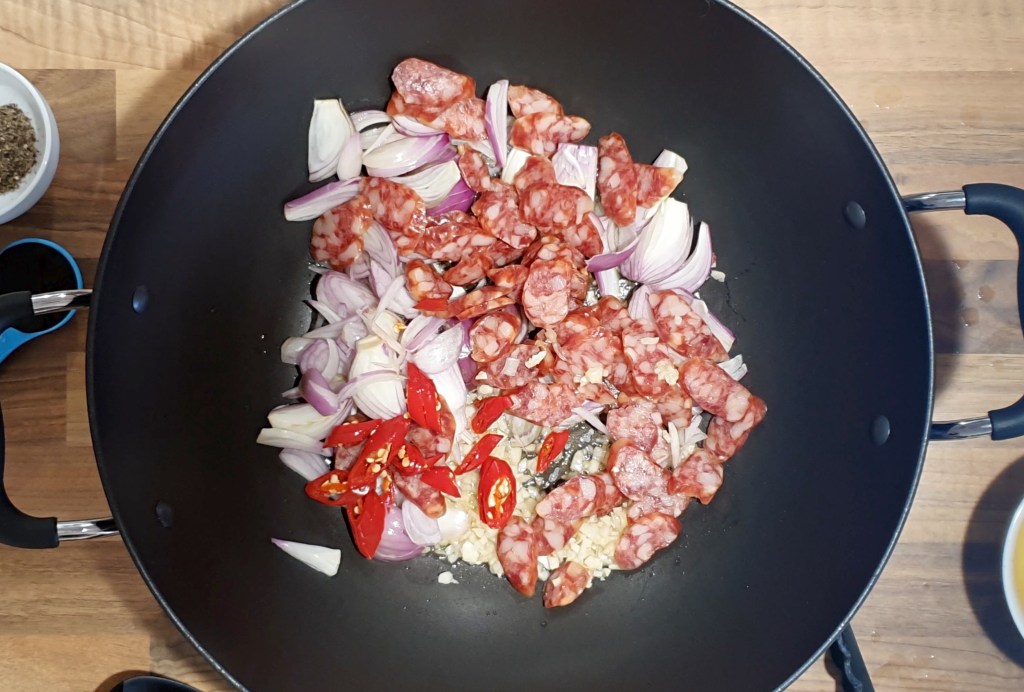
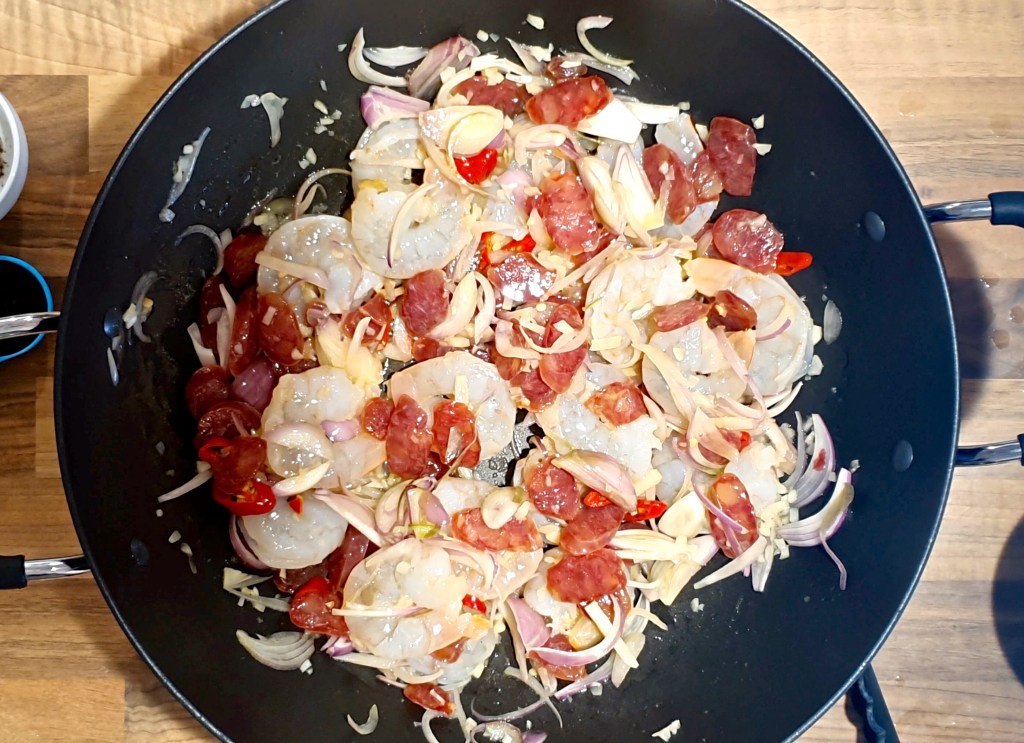
In a large wok or skillet over high heat, add the oil (or lard) until the oil starts to smoke. Then add the garlic, shallots, chili and sausage. Stir-fry for about 30 seconds.

Add the prawns/shrimp to the pan and stir-fry for 1 minute. Shrimp cook very quickly. Don’t worry about cooking your shrimp all the way through at this stage. We just want to mix all the ingredients together. The shrimp will finish cooking once you reach the end of the recipe.

Add in the rice noodles to the pan and mix with the other ingredients while gently breaking up the noodles. Take your time making sure the noodles are mixed thoroughly and clump free without breaking them.

Once mixed, add in: light soy sauce, dark soy sauce, oyster sauce, fish sauce, sugar and black pepper (you can combine these ingredients into a bowl first and then toss it all into the wok at once for ease). Stir-fry until combined.

Make a well in the centre of the pan and add the egg. Scramble it quickly until the egg is a little lumpy (~20 seconds), then mix it together with everything in the pan to continue cooking the egg.

Notice the little clumps of cooked egg in the centre? If you like to have more visually obvious eggs in your char kway teow, you can scramble the eggs further by leaving it in the well longer before mixing it in with the rest of the ingredients.

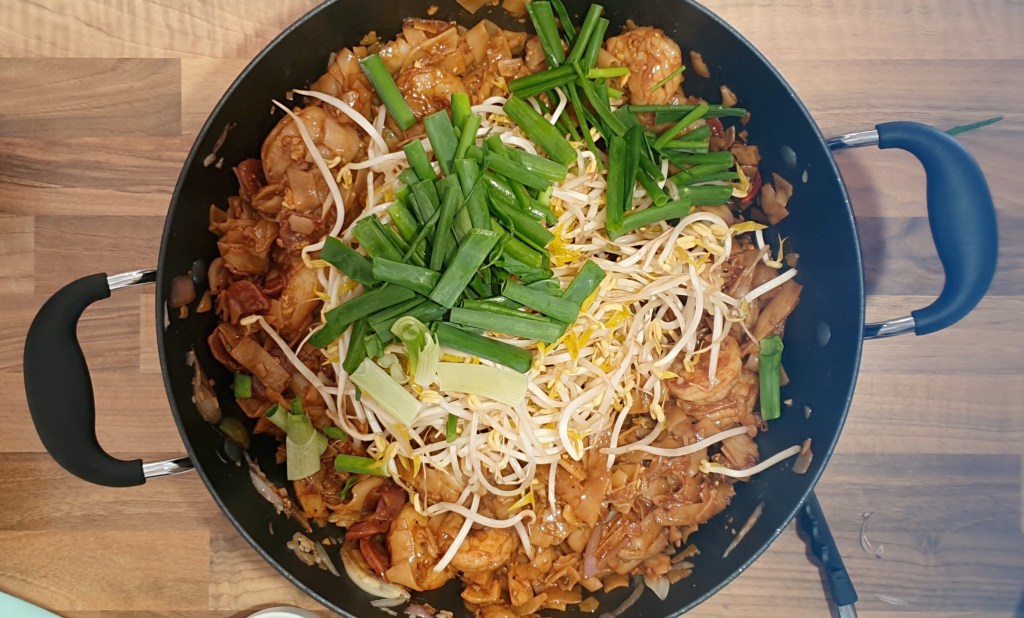
Add bean sprouts and green onion and mix for another 2mins. Turn off the heat and serve immediately. Enjoy!
Yum!!!

Watch the Char Kway Teow Video Tutorial

Summarized Recipe:

Char Kway Teow (Stir fried flat noodles)

Date Published: June 27th, 2020 | Last Updated: June 27th, 2020
Author: Abby |Category: mains, asian
Serves: 4 – 5 | Prep time: 15mins | Cook time: 10mins

Ingredients:

  • 1 packet of cooked flat rice noodles (banh pho) – (375g uncooked packet = ~1kg cooked)
  • 1/3 cup (90ml) of any neutral tasting oil (can substitute with pork lard for extra flavour)
  • 4 cloves garlic, minced
  • 2 large red shallots, finely chopped (can substitute with 1 red onion instead)
  • 2 medium red serrano chilis, thinly sliced (optional)
  • 130g (~4 medium) lap cheong sausages, thinly sliced
  • 15 large fresh shrimp/prawns, shelled and deveined
  • 4 Tbsps (60ml) light soy sauce
  • 2 Tbsps (30ml) dark soy sauce
  • 1 Tbsp (16ml) oyster sauce
  • 1 Tbsp (16ml) fish sauce
  • 2 tsp sugar
  • 1 tsp ground black pepper
  • 2 large eggs
  • 2 cups (200g) fresh bean sprouts
  • 2 large spring onions, cut into 2.5cm lengths

Directions:

  1. Cook the rice noodles according to package instructions. Drain and set aside. You can add a little oil to the noodles to keep them from clumping together.
  2. In a large wok or skillet over high heat, add the oil (or lard) until the oil starts to smoke. Then add the garlic, shallots, chili and sausage. Stir-fry for about 30 seconds.
  3. Add the prawns/shrimp to the pan and stir-fry for 1 minute.
  4. Add in the rice noodles to the pan and mix with the other ingredients while gently breaking up the noodles.
  5. Once mixed, add in: light soy sauce, dark soy sauce, oyster sauce, fish sauce, sugar and black pepper. Stir-fry until combined.
  6. Make a well in the centre of the pan and add the egg. Scramble it quickly until the egg is a little lumpy (~20 seconds), then mix it together with everything in the pan to continue cooking the egg.
  7. Add bean sprouts and green onion and mix for another 2mins. Turn off the heat and serve immediately. Enjoy!