Everything You Need to Know to Witness the Incredible Horseshoe Crab Migration


Date Published: Nov. 12th, 2025 | Last Updated: Nov. 12th, 2025
Author: Abby | Category: Travel, USA
Date of travel: June 9-10, 2025

Being veterinarians, Toby and I get super excited about nature and different species of wildlife so of course when I found out about the horseshoe migration in Delaware, we just had to go! Toby had actually never seen a horseshoe crab in person before until last year at the New Jersey Science Centre and it blew his mind (they don’t have them in Australia)! The chance to see thousands of them in their natural habitat was something we just couldn’t pass up.

Horseshoe crabs are an amazing ancient species with fossils dating as far back as 445 million years – predating the dinosaurs! Despite the name, these incredible “living fossils” aren’t actually related to crabs at all! They’re related to the extinct trilobites and more closer related to spiders. They have fascinating anatomy and look unlike anything else on this planet – they kind of remind me of a Pokémon 😅.

When we were planning for our Delaware trip, there was surprisingly very limited information available on seeing the horseshoe crab migration. I thought this would’ve been a big tourist attraction for this amazing once a year event, but apparently not! After scouring the internet, I managed to piece together enough information for our trip and I’m sharing it here with you all!

If you want to learn more about horseshoe crabs, I found this website very helpful and informative in our research and education on the horseshoe crab, I highly recommend checking it out: https://horseshoecrab.org/

What is the Horseshoe Crab Migration?

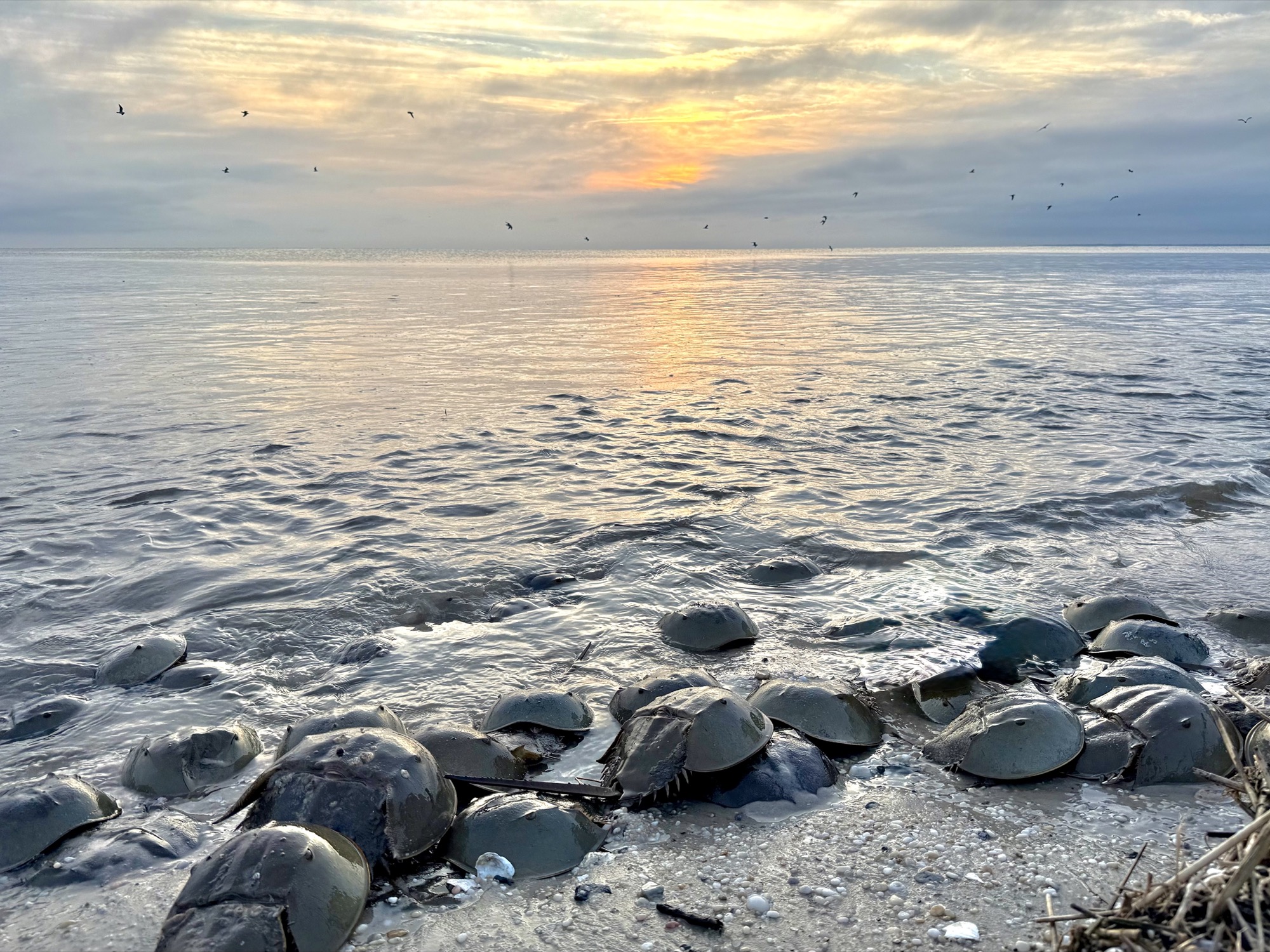
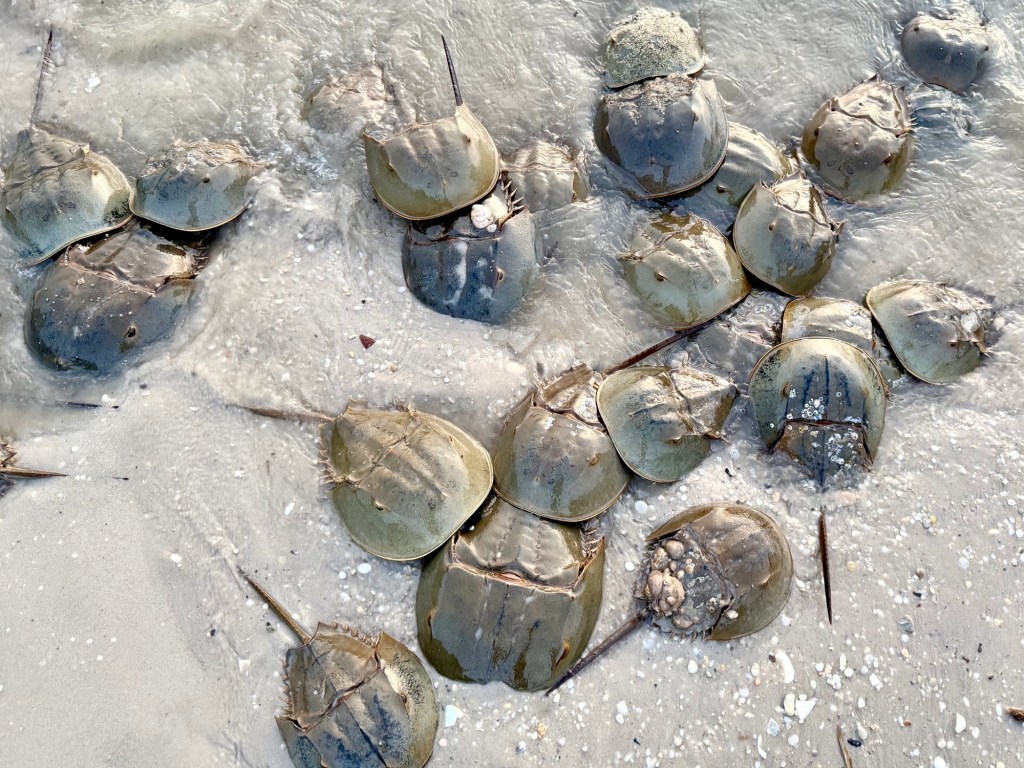
Once a year, millions of horseshoe crabs make the journey from their natural habitat in the deeper ocean to the shallow coastal areas to spawn. This is one of the world’s oldest and largest wildlife migrations – it’s like witnessing a Planet Earth special in real life!

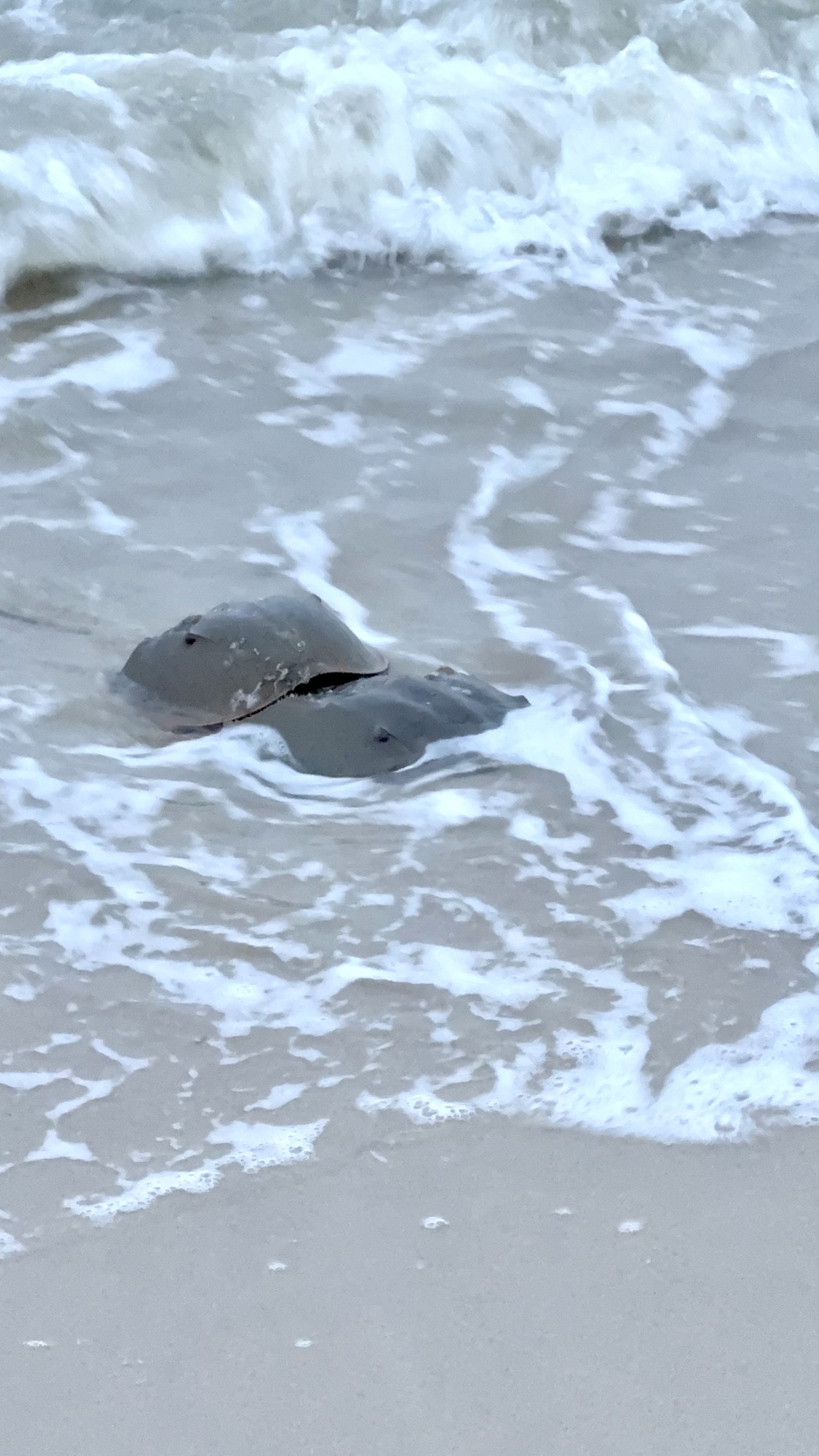
During spawning, the egg-laden females emit pheromones to attract the males and a single male will attach to the back of the female with special clasps. Once attached the pair will make the journey to the shore (pretty much a free piggy-back ride for the male who is usually much smaller in size than the female) where the female will deposit her eggs in the sand and the male will externally fertilize the eggs at the same time she deposits them. Although there can only be one male that attaches, often there are “satellite males” that huddle around one female in hopes of also fertilizing the eggs.

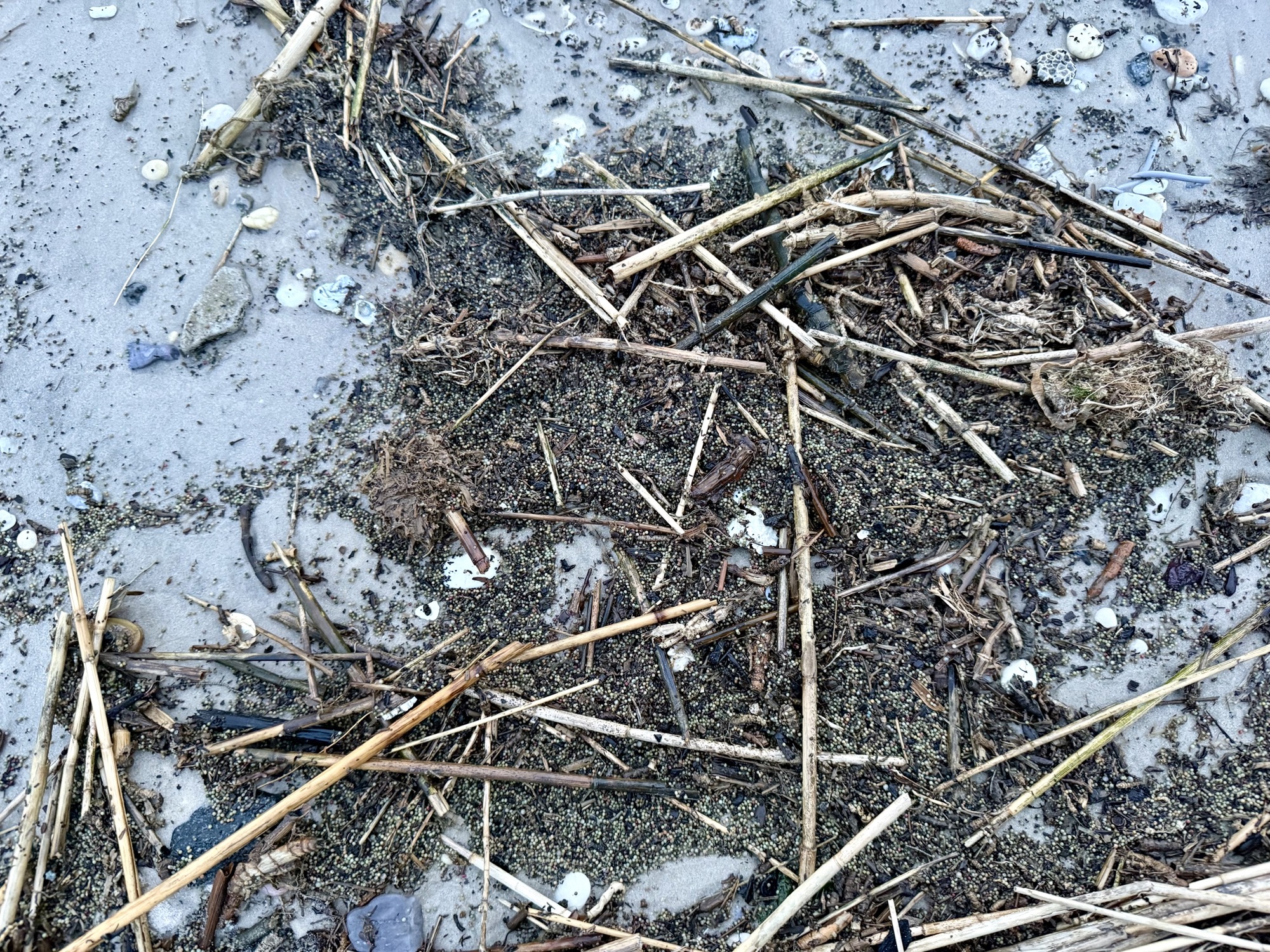
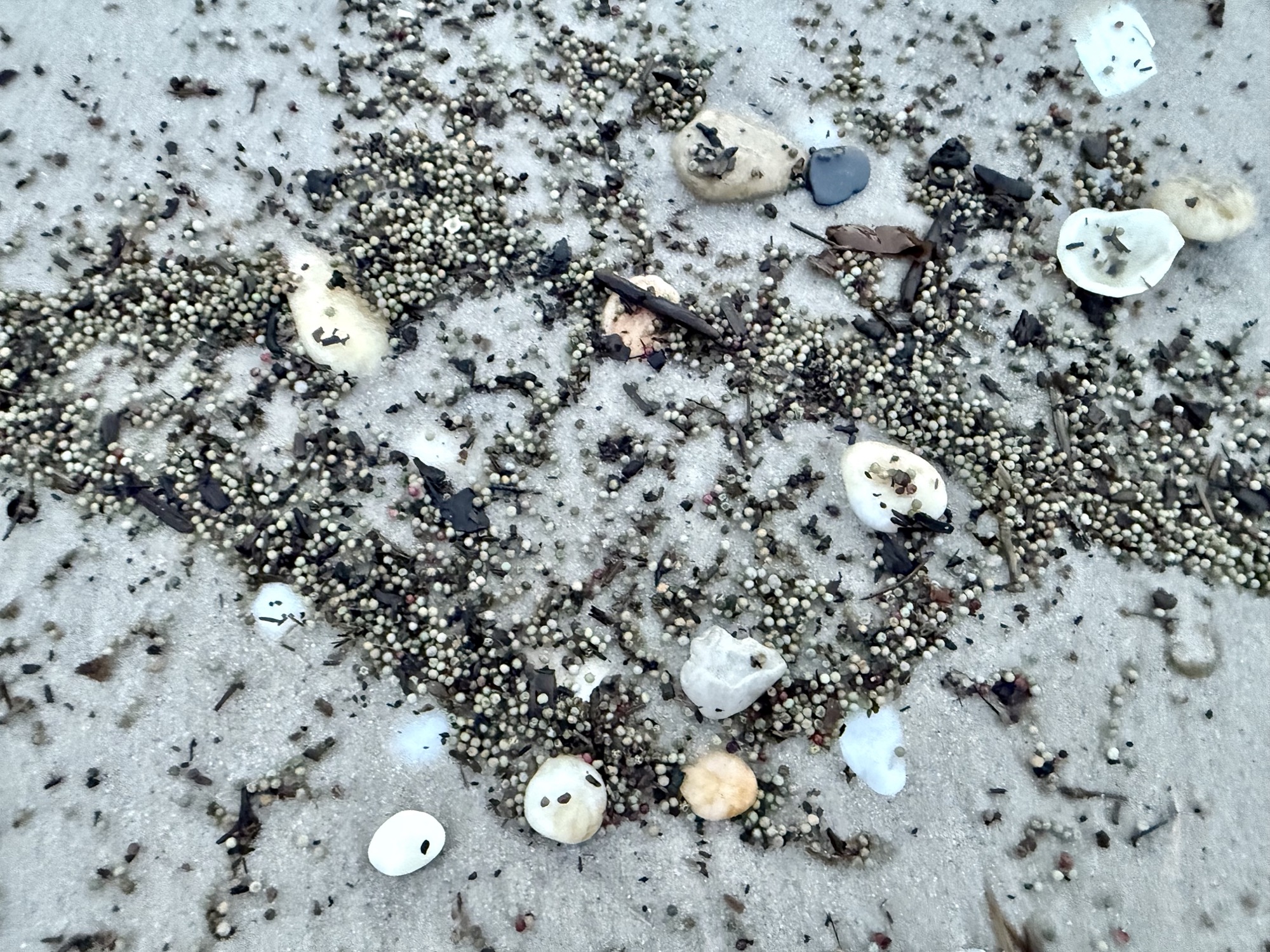
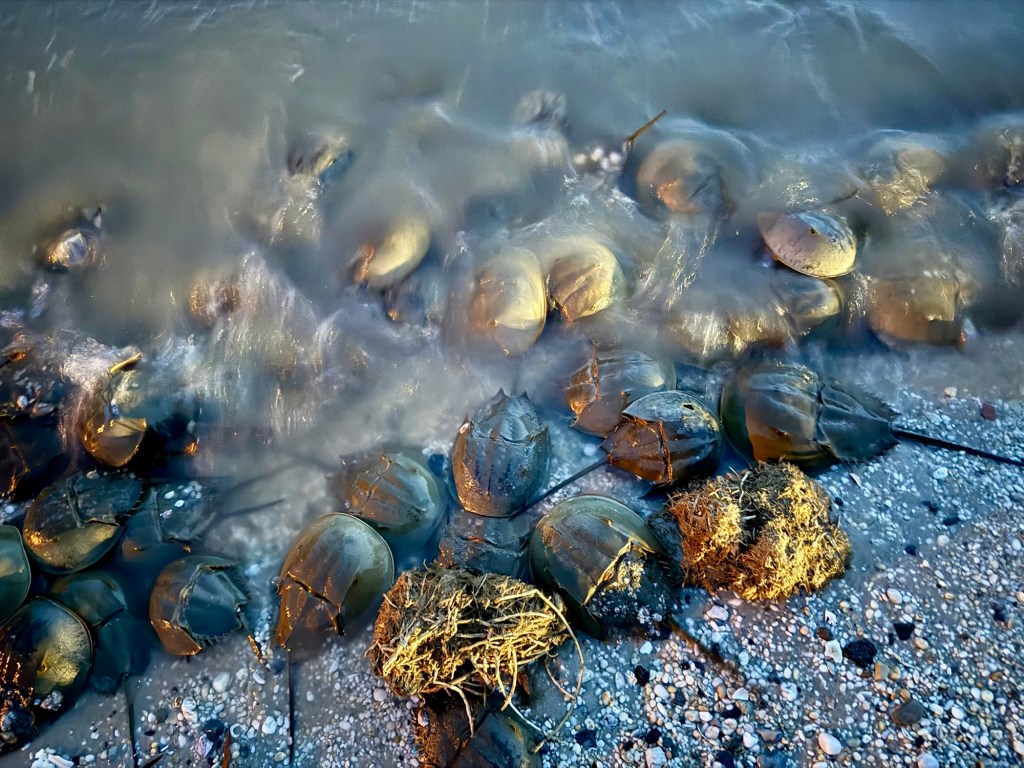
Incredibly, one female can lay 80,000 eggs in one season!!! 🤯🤯🤯 You’ll see millions of little tiny dark green eggs on the shore during the migration. These eggs provide a nutritious source for migratory birds, so you’ll also see tons of signs for migrating birds in the area at the same time.
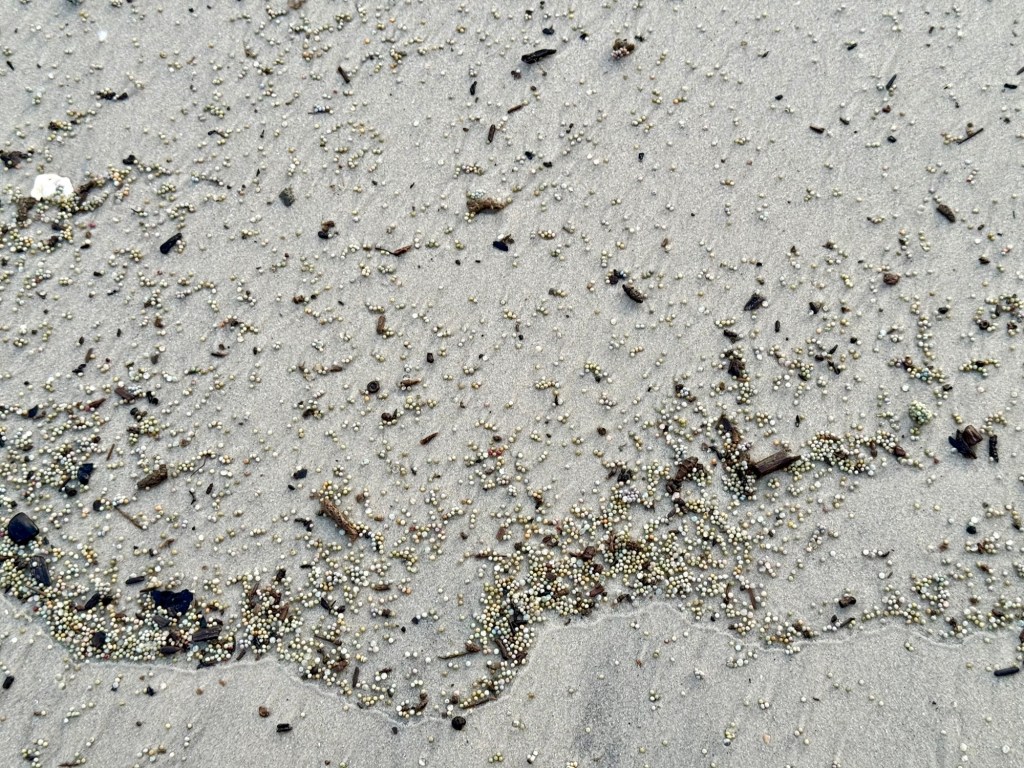
Look at all the eggs getting washed around the shore! 🤯

Where to see the Horseshoe Crab Migration?
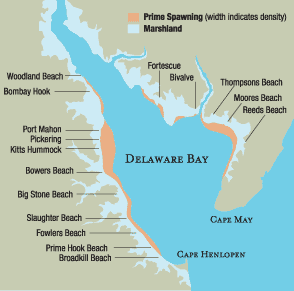
Map of spawning habitats of the Horseshoe Crabs (https://www.horseshoecrab.org/nh/habitat.html)

The Delaware Bay is the most popular place to see the horseshoe crab migration due to its location and protection from large ocean waves as well as sandy beaches. The states of Delaware and New Jersey surrounds the Delaware Bay so you should be be able to see them on either the Delaware side or the New Jersey side. Luckily there is a ferry that connects Lewes/Cape Henlopen and Cape May so you can check out both sides if you have the time (trip takes 1.5 hours one-way)! We had better luck on the New Jersey side this year but we were also two days away from the full moon on the Delaware side and only one day away from the full moon on the Jersey.

Selection of the perfect spawning site can depend on a number of factors including how coarse or fine the sand is, how quickly the sand drains, sediment of the beach…etc. The most preferred sites are usually next to large intertidal sand flat areas. Thankfully horseshoecrab.org provides a map of the popular spawning sites with the highest densities on their website seen above.

You can try your luck at any of these beaches, but since there’s only so much time between evening high tide and last light, you won’t be able to visit all of them to see the crabs before the sunset. Here are a few recommended beaches that I came across in my research:
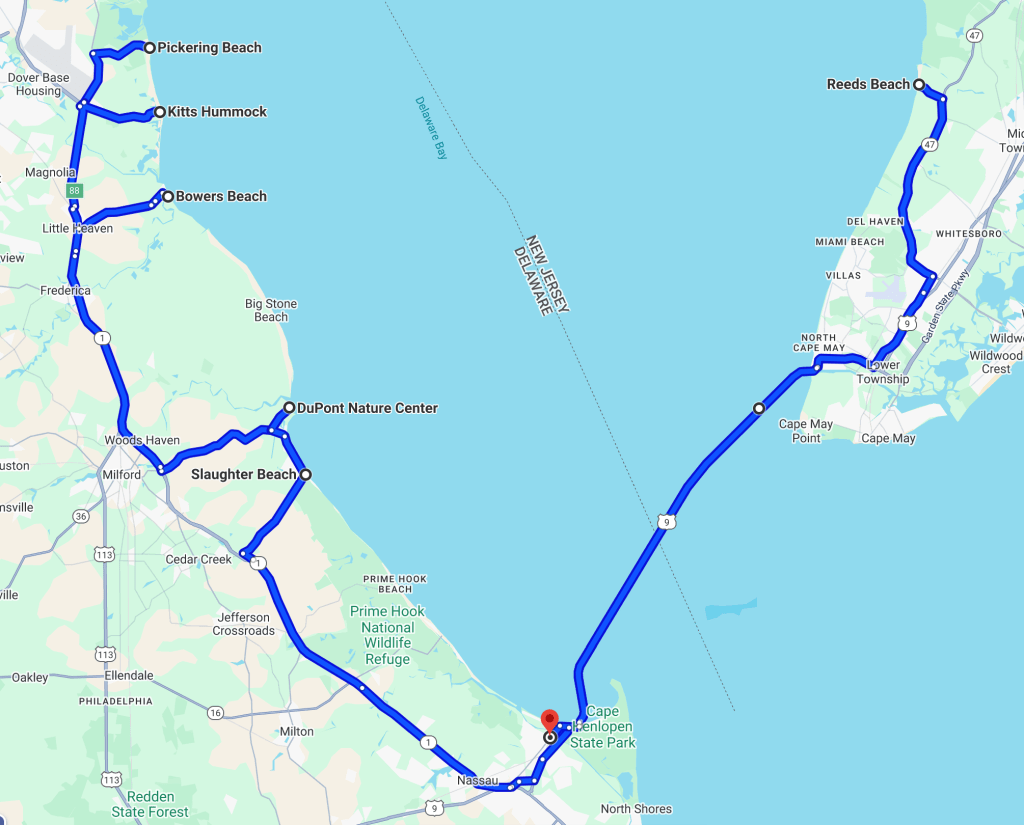
A map of the popular beaches to see the horseshoe crab migration

Pickering Beach, DE: An official horseshoe crab sanctuary with limited public parking spaces along the road near the public access to the beach. Roughly 15 minutes south of Dover.

Kitts Hummock, DE: Another official horseshoe crab sanctuary, also with limited public parking spaces along the road near the public access to the beach.

Bowers Beach, DE: A public beach within a small bay community. There’s plenty of beach parking in a public lot on South Flack Avenue a block away (type in “Bowers Beach Parking Lot” on Google Maps or 102 South Flack Avenue, Frederica).

DuPont Nature Center, DE (2992 Lighthouse Road, Milford): This is NOT a place to see horseshoe crabs in their nature, but instead it is an education centre with interactive exhibits if you want to learn more about the horseshoe crabs!

Slaughter Beach (354 State Road 15, Milford): One of the most popular hotspots, has plenty of parking.

Reeds Beach, Middle Township, NJ: One of the more popular spots on the New Jersey Side to see the migration due to its closer vicinity to Cape May.

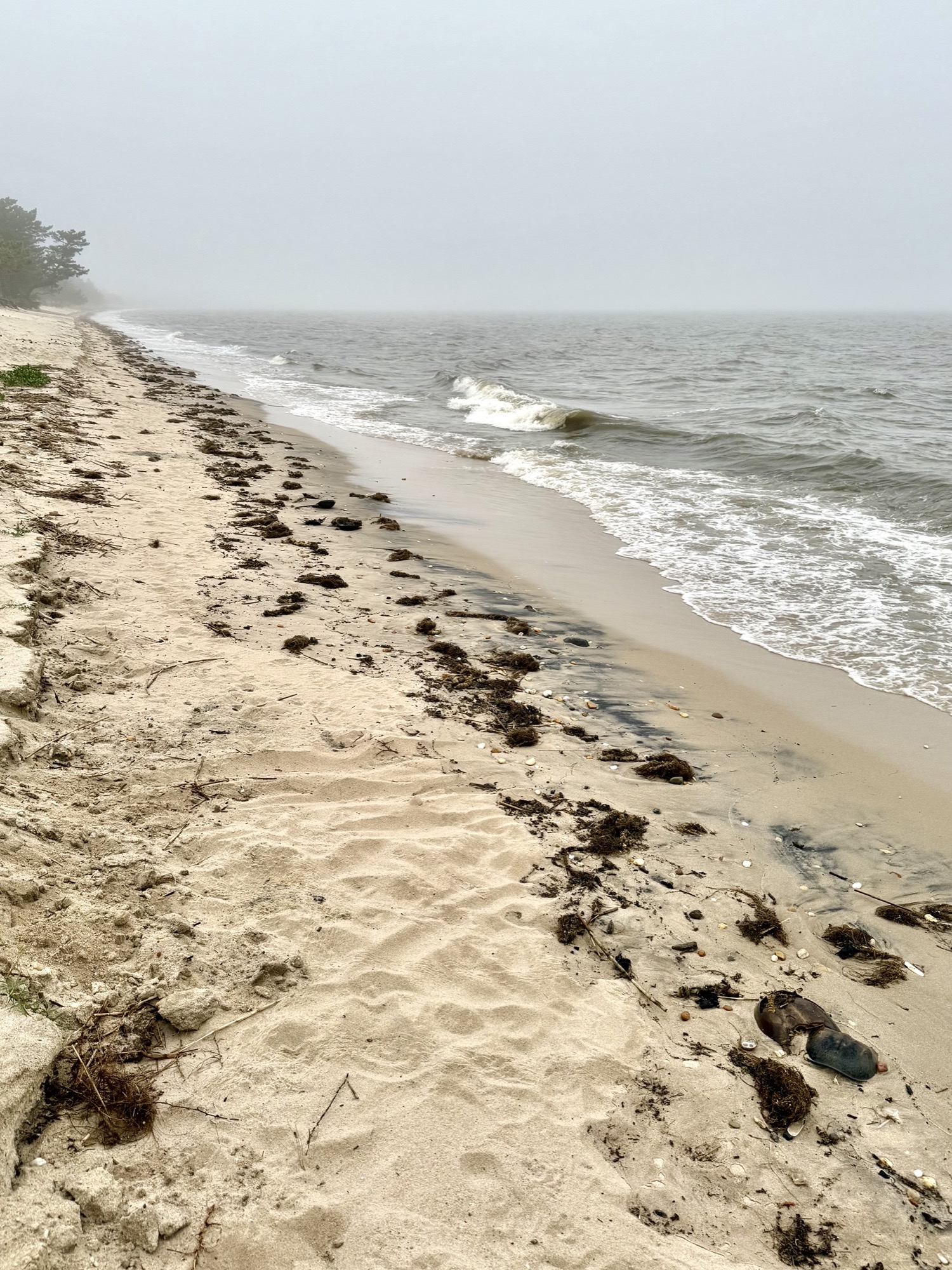
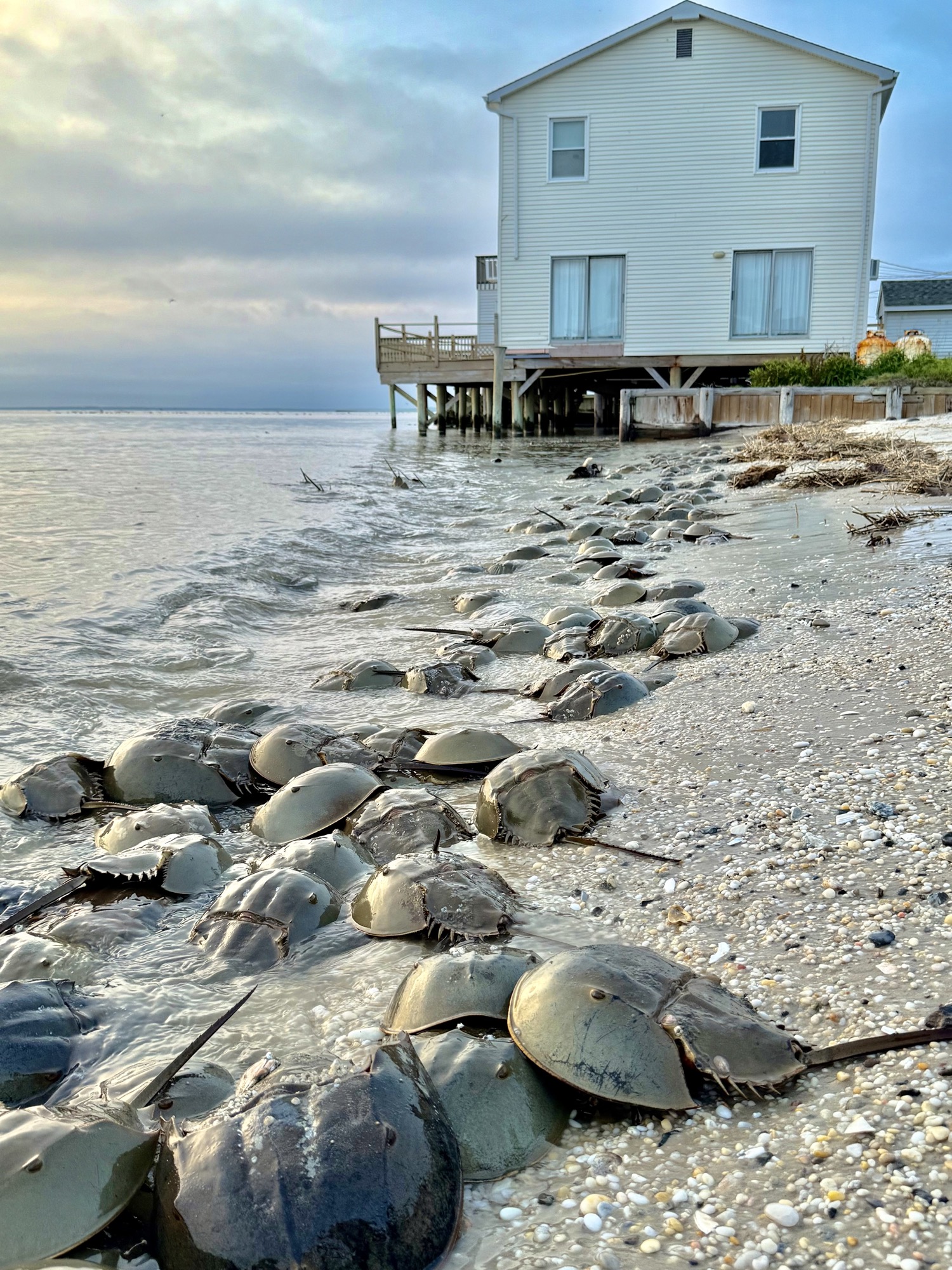
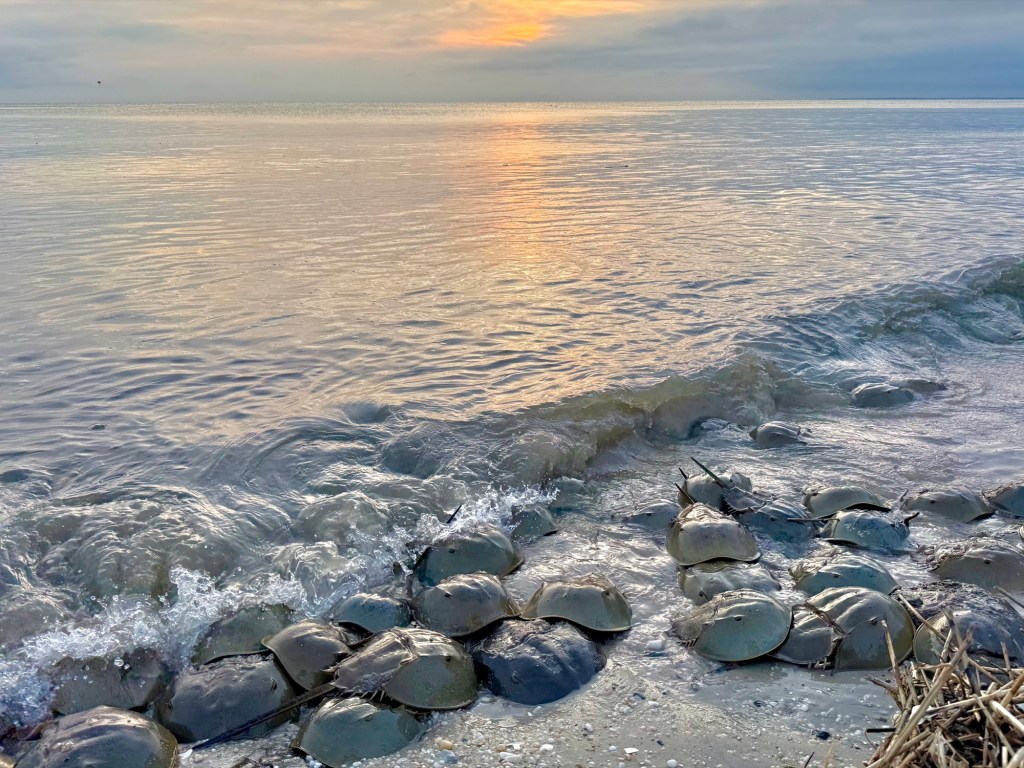
Our actual experience: Due to timing and our travel itinerary, we chose Slaughter Beach as our beach of choice to see the migration. Even though we went at the perfect time of day, unfortunately being that it was the end of the season and we were still 2 days out from the full moon, we only saw one mating pair. I was really disappointed after all of the effort we took to plan our trip around the migration. Luckily we had already planned to take the ferry to Cape May the next day to continue our road trip, and decided last minute to try our luck on the New Jersey side at Reeds Beach. On our way to Reeds Beach, there was a small tiny beach between a few houses on the side of the road that had TONS of horseshoe crabs!! I was ecstatic! After spending a good half an hour or so here, we headed up to Reeds Beach which surprisingly, although was a MUCH bigger beach, the number of horseshoe crabs here were a lot less (but definitely more migratory birds), so we went back to the original tiny beach 2 minutes away. My take on this experience is that if you don’t see many crabs, try driving around the area along the waters to see if there’s a pocket of beach with more crabs! (But also more importantly, try to go on a full moon or new moon unlike us to increase your chances at seeing them.)

Here are some photos of our experience at Slaughter Beach (Toby found a HUGE female that was unfortunately dead but super cool to see the anatomy up close):

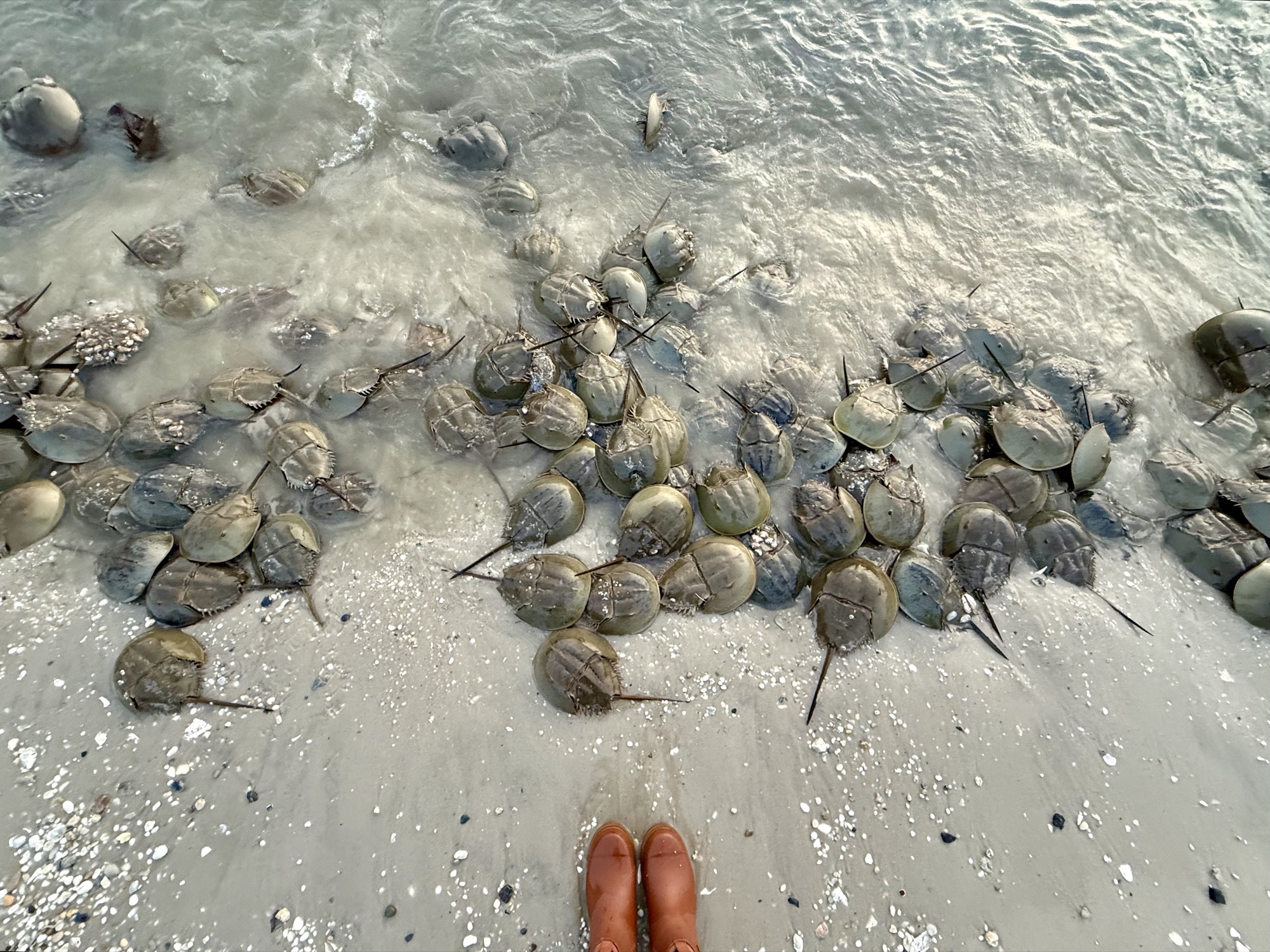
Here are some photos of the little beach we found between some houses on our way to Reeds Beach in New Jersey:
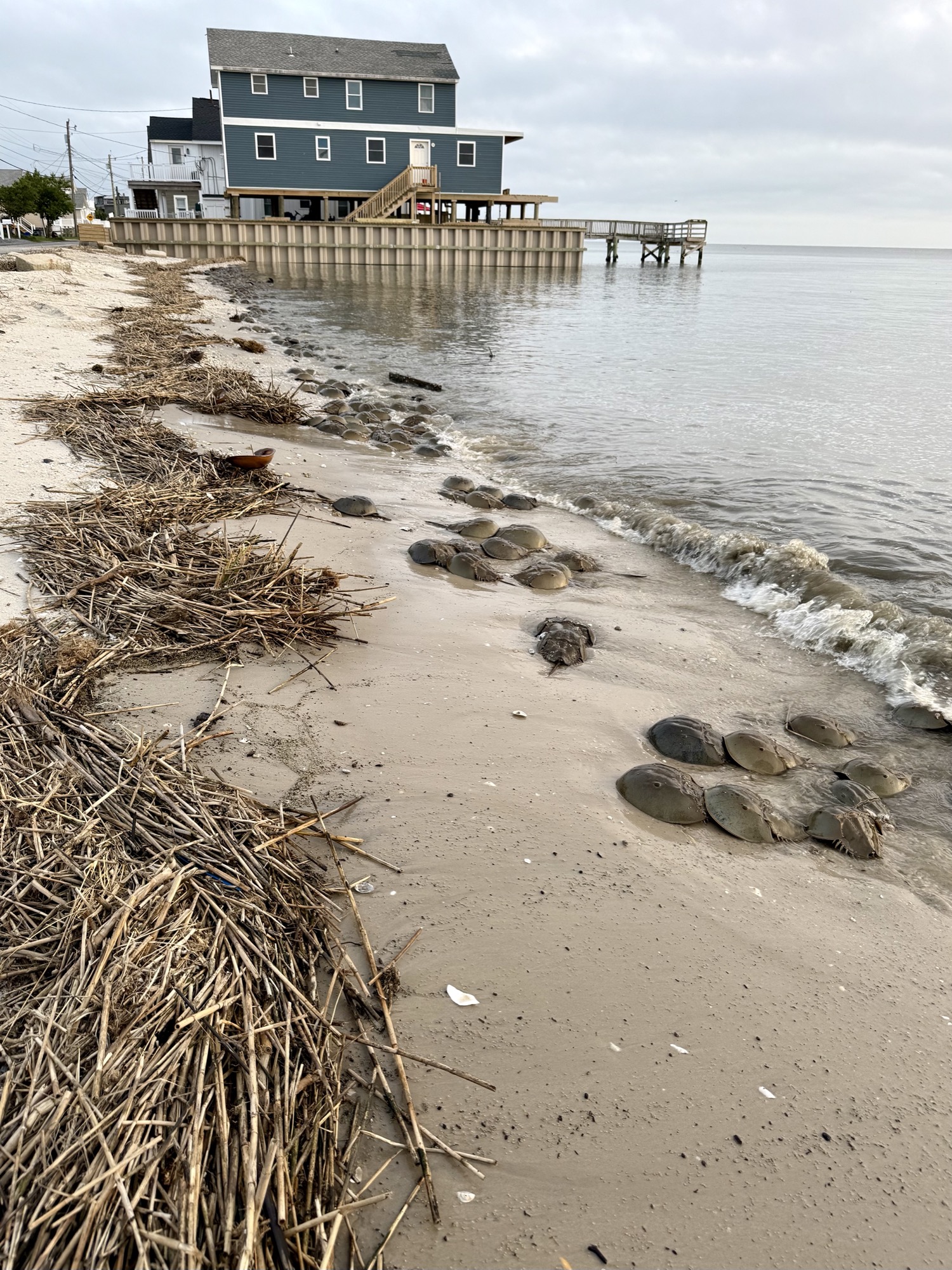
Here are some photos of Reeds Beach, NJ – not as many horseshoe crabs but TONS of eggs on the shore and migratory birds in the distance:

Timing is Crucial to Witness the Migration!

The horseshoe crab migration happens every year in the spring between the end of April to the start of June, with the peak season in mid May-June. We were late to the migration when we went on June 9th-10th 2025 and although we didn’t see as many on the Delaware side, we saw plenty on the New Jersey side (more on this later).

Peak spawning occurs on a full moon or new moon and in the evening at high tide. You want to arrive at least 30 mins before high tide (it actually lines up nicely with sunset to make it all the more magical!).

The monthly tide charts on the US Harbors website is useful when picking a date and time since it has both the moon phase and the tide times in their charts. Check it out here (I have it set to Bowers Beach, but you can always google more specific tide times depending on which beach you choose to go): https://www.usharbors.com/harbor/delaware/bowers-beach-de/tides/#monthly-tide-chart

Here is a sample of the May 2026 tide chart from the US Harbors website. In case you’re unfamiliar with reading their tide chart, I’ve circled the important areas in blue and red:

To read the chart to pick the best day:

1) First look at the Moon column on the right and determine which dates are full moon and new moon. From the chart, the full moon is on Sat May 2nd and the new moon is on Sun May 17th.

2) From those dates, find the PM high tide time of the day. From the chart, it’s 10:49pm on May 2nd and 10:38pm on May 17th (circled in red).

3) Since you want to arrive 30 minutes ahead of the high tide, your ideal time to witness the migration in May 2026 would be on either May 2nd 10:19pm or May 17th at 10:08pm. (I’m writing this post in November 2025, so double check the charts before you go to ensure this forecasted information is still accurate if you’re going in May.)

Don’t worry if you can’t make it exactly on a full moon or a new moon, we were 2 days early before a full moon and still saw tons of them on the New Jersey side, but we did have to drive up and down the coast a little to find a good spot to see them.

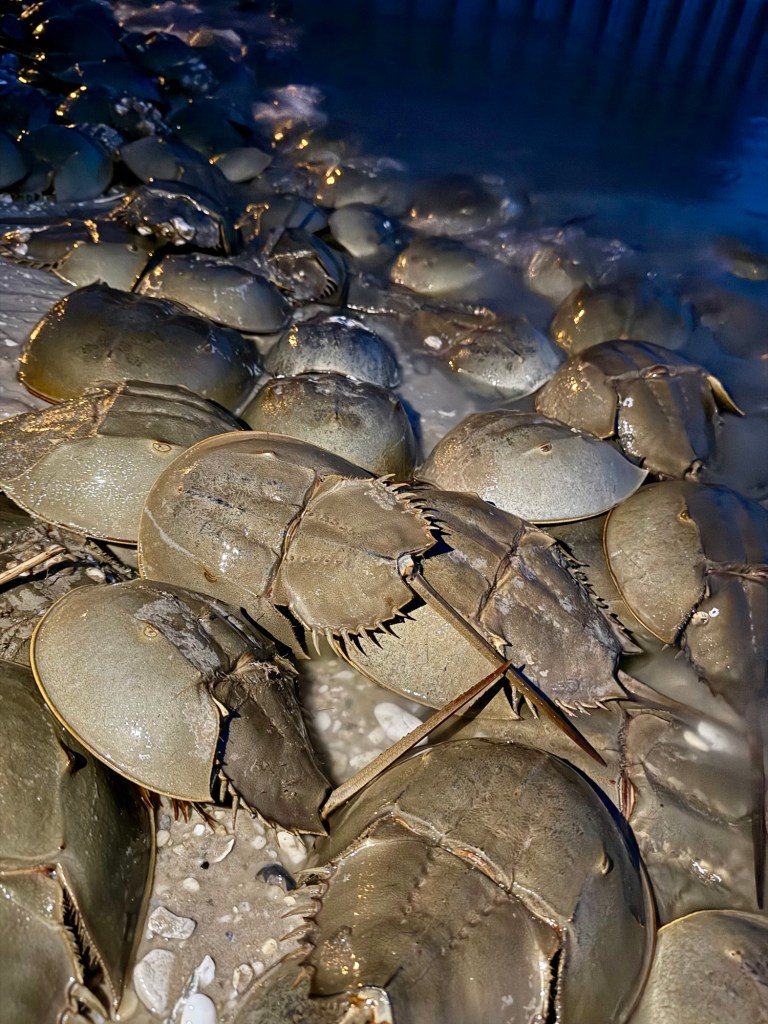
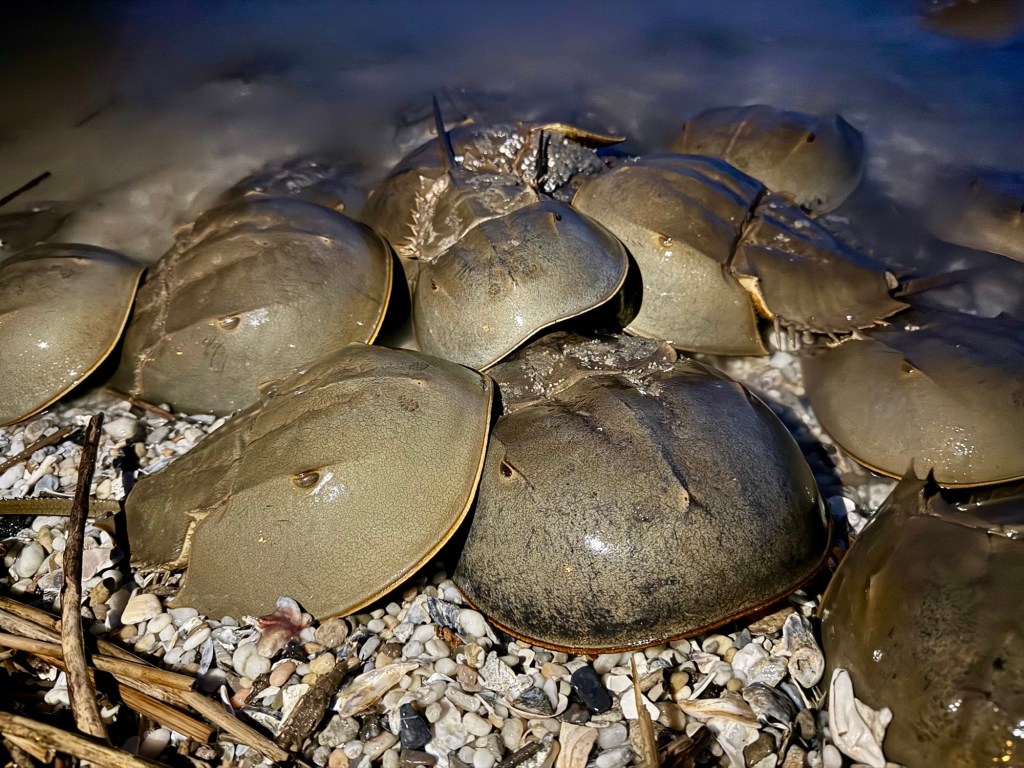
As beautiful and amazing as this event is to witness, know that once the sun goes down, the horseshoe crabs will continue to come to shore and can get to horror movie-level numbers. I still found it really cool, but realize that it may not be for everyone – one of my coworkers was not a fan of my night time migration photos at all 😂.

Here are some night time photos of the migration so you know what to expect:
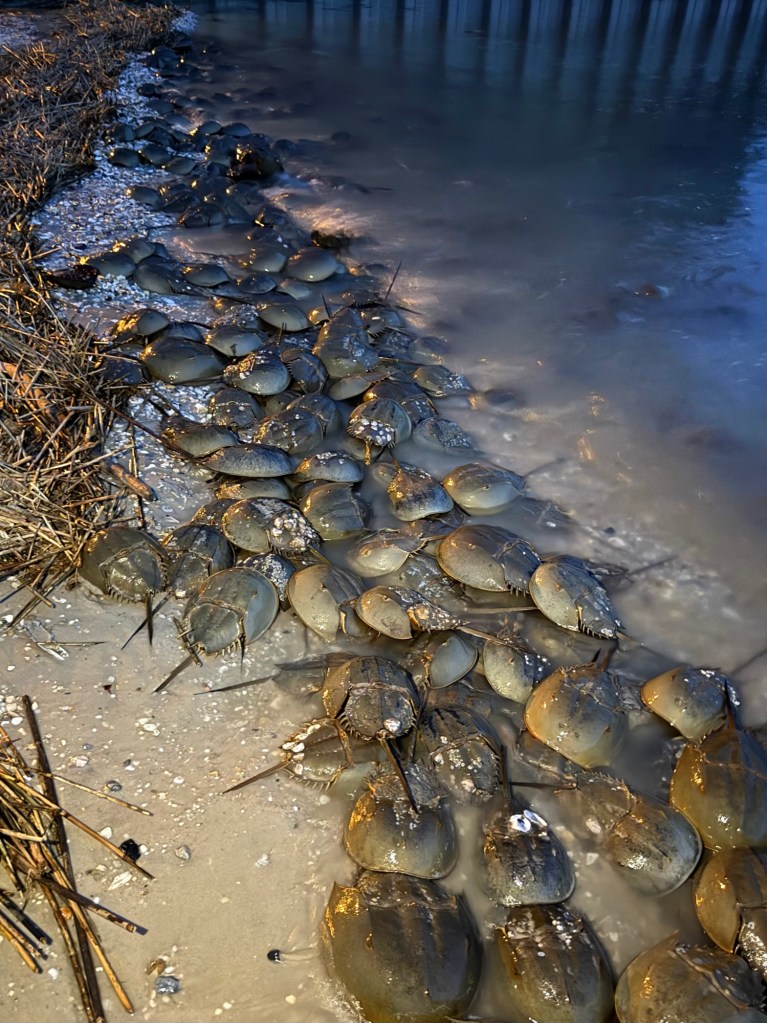
If you get all 3 things correct in terms of timing (1. season, 2. full moon or new moon, 3. evening high tide), you should be able to see hundreds if not thousands of horseshoe crabs!

If you come back to the beach early next day, you may be able to see the migratory birds feeding on the eggs!

What to Bring to See the Horseshoe Crab Migration?

  • Sturdy waterproof shoes (ie. rain boots or waterproof hiking shoes)
    • The horseshoe crabs will hang out just on the shoreline where the water and the beach meet, so if you want to get up close, waterproof shoes are recommended to avoid your shoes from getting wet.
    • Depending on the beach, there can be a lot of debris, sticks, and dead horseshoe crabs that didn’t quite make it, so a sturdy pair of shoes will be best to walk through it.
    • I’d recommend rain boots as the shoe of choice because it can smell a little fishy on the beach (after all, they are spawning), so you want to wear shoes that are easy to rinse off afterwards.
  • Bug spray or covered clothing
    • We learned this the hard way. There were so many teeny tiny flies and although I wore leggings (albeit thin), they managed to bite through and around my uncovered ankles. Although not painful, I was hella itchy for a few weeks. I counted 14 bites on both legs when we got back to our hotel. 😫
  • Headlamp or flashlight
    • Depending on the day, if the evening high tide occurs after sunset, you’ll want a light source to see these guys best. The most abundant numbers occur at night and a headlamp will keep your hands free if you’re walking through debris or taking photos.

Now you’re ready!

Now that you know the season (spring, May-June), the day (full moon or new moon), the time (30 minutes prior to the evening high tide), and the location (beaches within the Delaware Bay), you’re now ready to see the amazing horseshoe crab migration! I’d love to hear about your trip in the comments!

One more thing, if you see any overturned horseshoe crabs…Just flip ’em!

Due to their wide anatomy and the rushing waves, unfortunately you’ll more than likely see a few overturned horseshoe crabs. Sometimes they’ll be able to correct their own position with the right tide or passerby, but more often than not many of them will die stranded. So if you see an overturned horseshoe crab, just flip them over! Although they can look a little scary and pointy up close, horseshoe crabs are very gentle creatures and they do not sting nor bite. The best and gentlest way to flip them over is to grab them by the edge of the shell and flip them over. Do not grab them by the tail! Although it doesn’t look like it, they actually have very delicate tails and can damage easily.

Spread the word! Save the stranded overturned horseshoe crabs!

The ERDG (Ecological Research & Development Group), a non-profit wildlife conservation that focuses on the conservation of the world’s four horseshoe crab species, has a “Just flip ’em program” that promotes flipping stranded horseshoe crabs (https://www.horseshoecrab.org/act/flipem.html) and has made a fantastically catchy song that can be found on the website or directly linked here: https://www.horseshoecrab.org/poem/img/makinmusic/justflipem.mp3. The lyrics are amazing and I’ve literally already listened to it 3 times back to back while writing this post 😂. I wish it was on Spotify.
PS: Horseshoe crab numbers are declining due to habitat destruction and you can volunteer to be a part of the horseshoe crab survey to keep an eye on the numbers: https://www.delawarebayhscsurvey.org/.

Their website has posted volunteer survey dates every year which is a good guide to when you should go see the horseshoe crabs. I’ve attached a copy of their 2025 dates top the left.

Some Final Thoughts

  • Horseshoe crabs are super cool.
  • The annual mass migration will blow your mind 🤯 and is 100% worth it.
  • There are only 2 “perfect” days every month (new moon and full moon), so make sure you plan ahead!
  • Wear good shoes you can wash – yes, it will smell fishy.
  • Flip over any stranded overturned horseshoe crabs!
A Day in Princeton & Beyond – University, Grounds for Sculpture, & Trenton


Date Published: April 21st, 2025 | Last Updated: April 21st, 2025
Author: Abby | Category: Travel, USA
Date of travel: March 1st, 2025

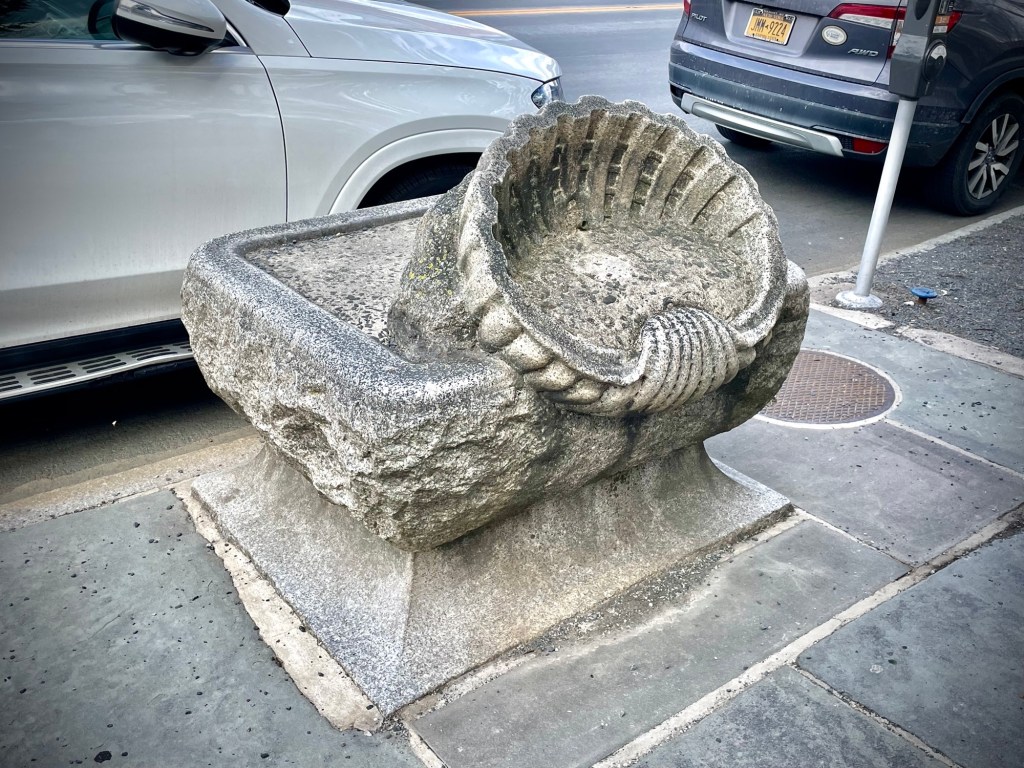
Princeton, New Jersey is roughly a 1.5 hour drive from NYC which makes it a great day trip away from the big city. In fact, it is exactly halfway between Philadelphia and New York, which were the two wealthiest cities back in the days and as a result, Princeton was a popular stop for stage coaches to let their horses rest. You can still find old stone horse troughs still around town!

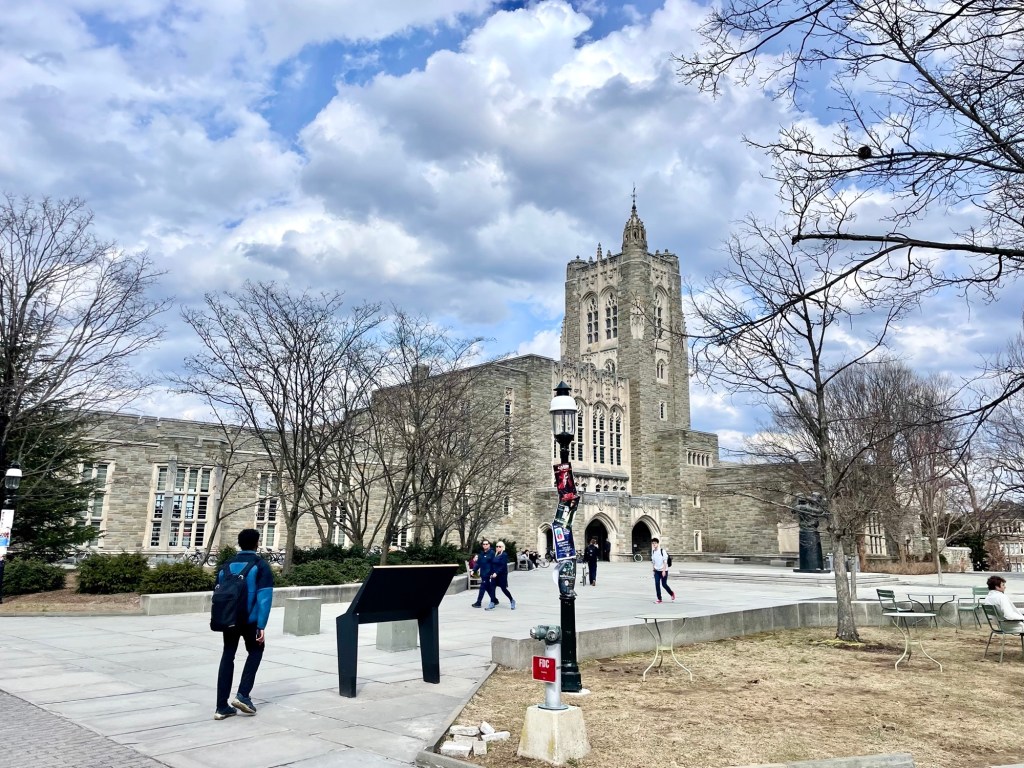
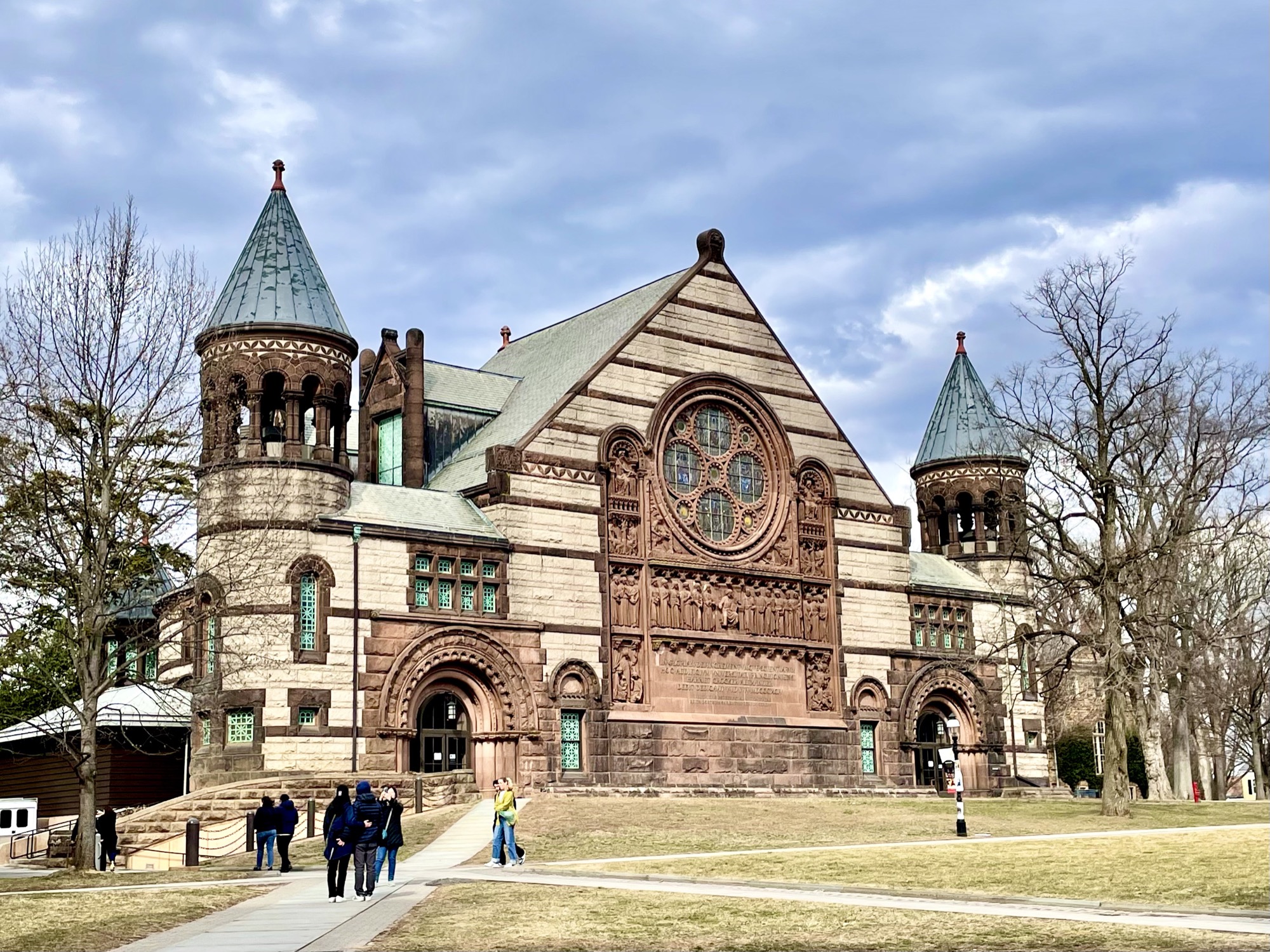
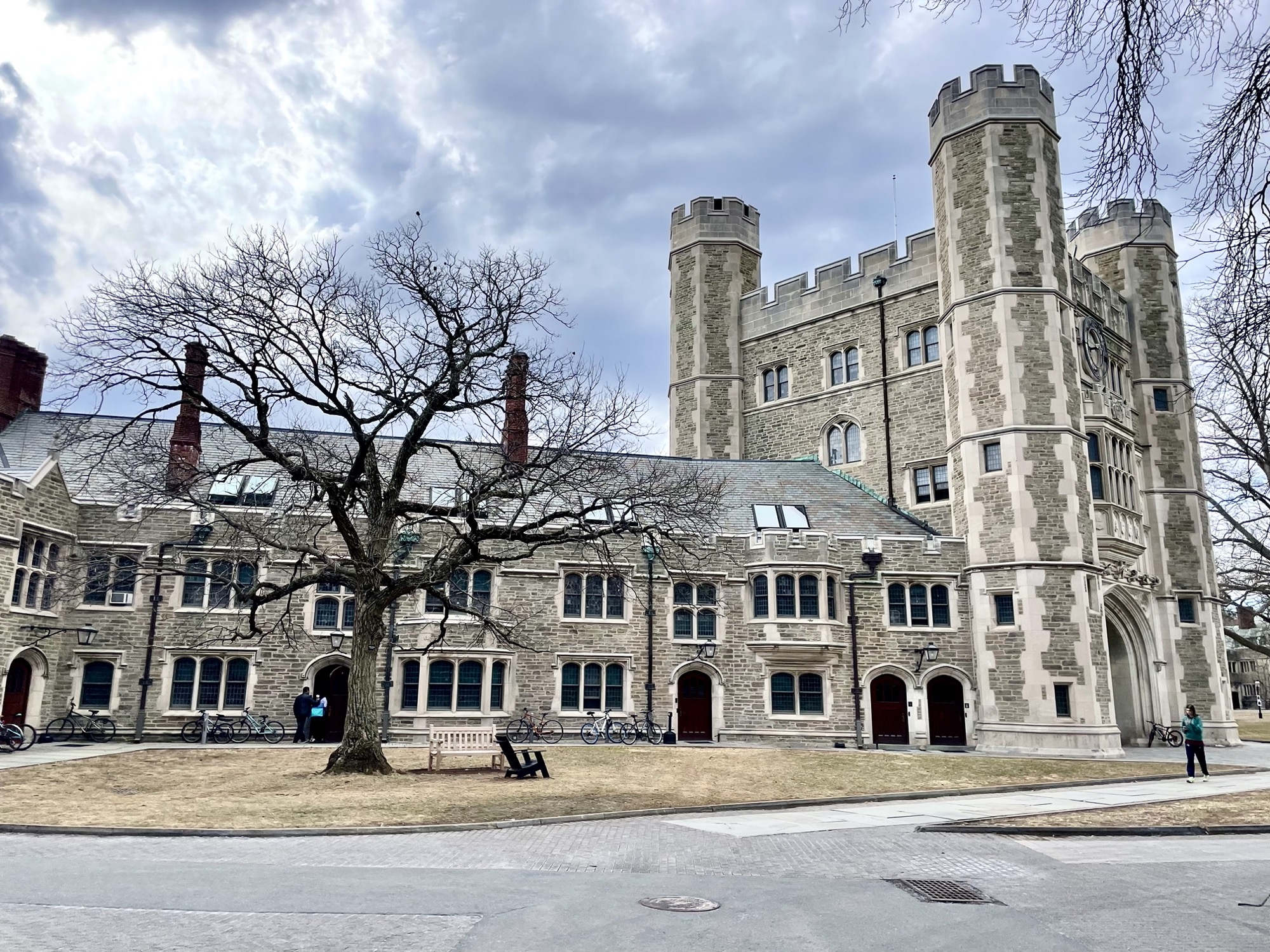
Princeton is of course home to the famous Princeton University. The main highlight of this town is to tour the campus but there are some cool shops around this town as well to check out. This post will highlight a tour around the college campus, some famous houses, and the nearby Grounds for Sculpture and Trenton, the capital of New Jersey.

How many days do I need?

There’s not all that much “to do” in Princeton, so a half a day will be enough to see the highlights and check out the campus. Make it a full day if you want to visit Grounds for Sculpture.

Parking:

The best parking will be at Spring Street Garage (24 Spring St, Princeton, NJ 08542) which has very reasonable rates and is conveniently located in the middle of town.

Book a walking tour

Booking a walking tour is the best way to explore both the town of Princeton and Princeton University. There are so many notable buildings with a unique history that it’s easy to miss if you walk around yourself. The university campus is also quite large and can be easy to get lost. In this blog post I’ve highlighted some notable places, but they were all covered on our walking tour.

We booked our walking tour with this company. It was reasonably priced and informative. The guy that did our tour seemed to be new 😅 but we still hit all the spots.

Nassau Street is the main street of Princeton with shops and restaurants. Although we didn’t have time to grab a bite, our tour guide recommended Winberie’s Restaurant & Bar and Triumph Restaurant & Brewery off of Palmer Square.

Apparently most of the nightlife here is targeted to the undergrads.

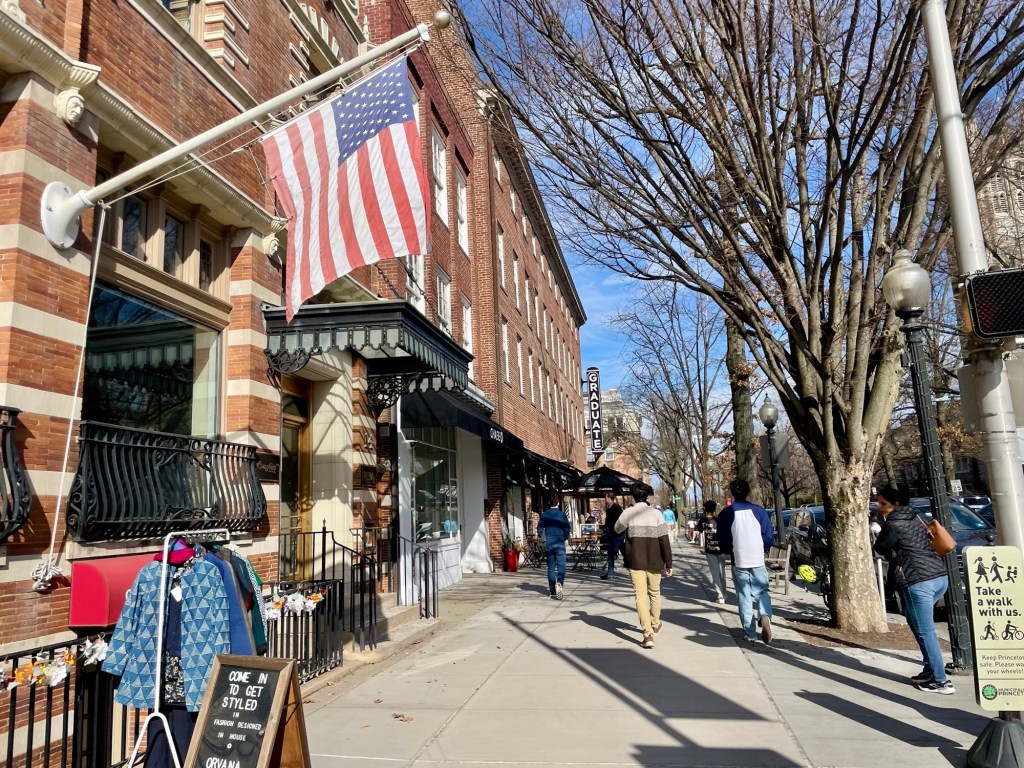
Nassau Street
An old stone water trough for stage coach horses back in the day (now filled in with concrete)

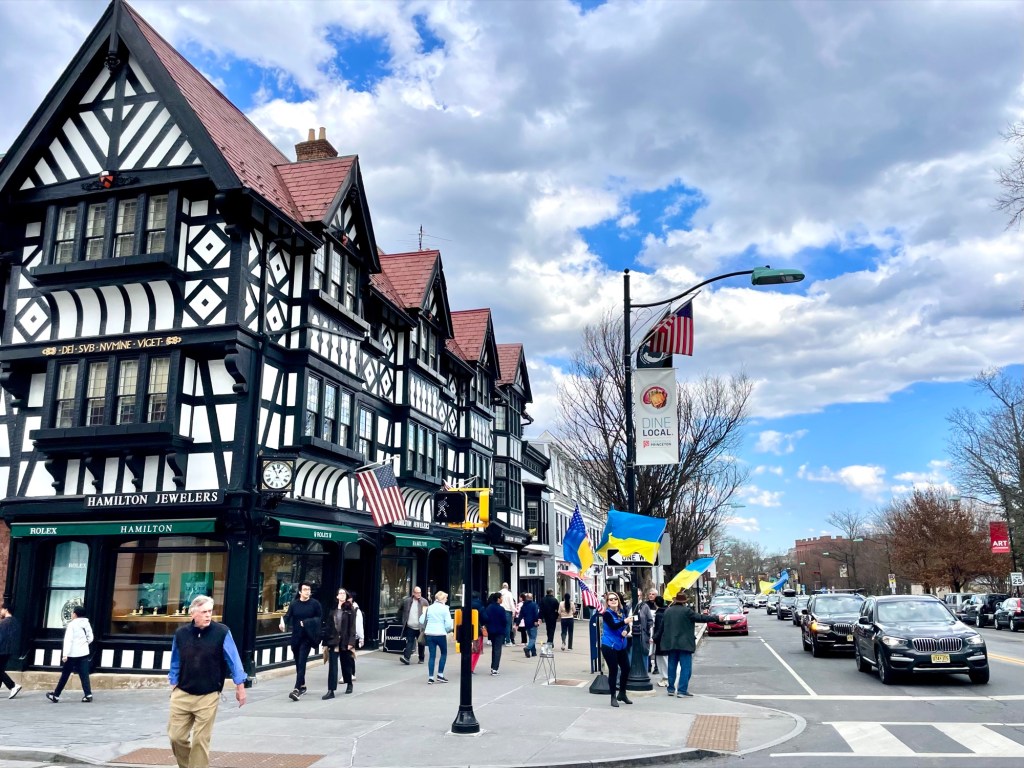
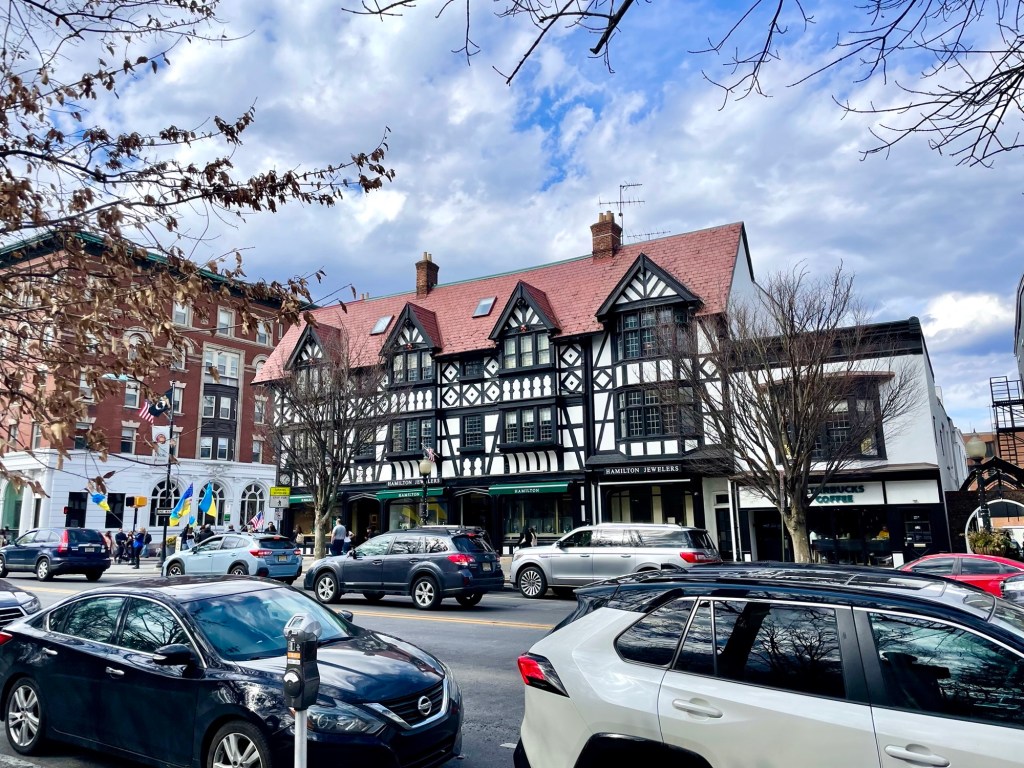
Across from Princeton University at the corner of Nassau Street and Witherspoon Street is a tudor style building called Lower Pyne (now home to Hamilton Jewelers). This beautiful building was built in 1896 and was used for commercial shops on the ground level and student dormitories above. In 1950 the dormitories were converted to office spaces. You’ll see this iconic building on many post cards of Princeton.

The campus grounds of Princeton University is open to all and you can freely walk around and explore, but access into the buildings is restricted.

For prospective students, you can book a free university tour with admissions information.

For tourists that just want to learn the history of this famous campus, the university runs historical tours with limited dates in the fall or you can book a third party tour company like we did that will not only explore the campus but around the actual town as well.

I’ve highlighted some interesting spots around campus below:

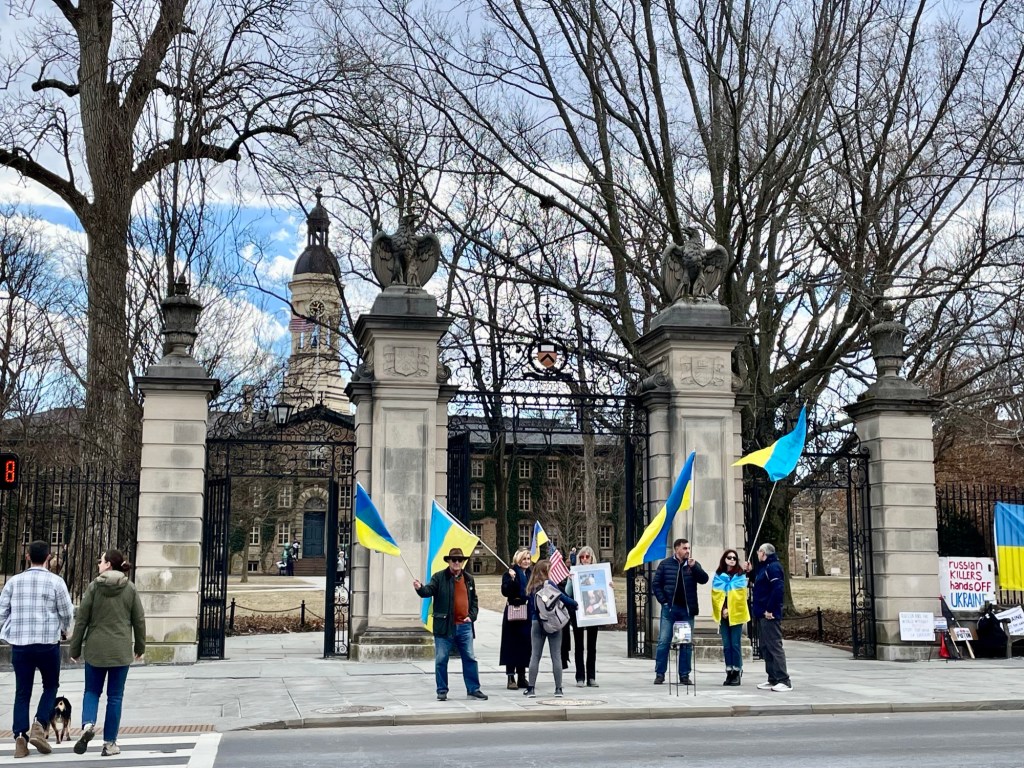
FitzRandolph Gate is located just off of Nassau Street, across the street from the Lower Pyne building and infront of Nassau Hall. It is the official entrance to the Princeton University campus. It was erected in 1905 and named after Nathaniel FitzRandolph, who was instrumental in raising the money and land needed to build the college.

The gate was originally always kept closed and locked except for special occasions such as graduation, but the class of 1970 ensured that the gate would always remain open “in a symbol of the University’s openness to the local and worldwide community”.

There is a local superstition that if you exit from FitzRandolph Gate before graduation, you will never graduate from Princeton. You can enter the campus through the gates, but not leave unless you’ve graduated. This includes babies and children that may wish to attend Princeton in the future 😂. Our tour guide was a graduate of Princeton and says that this superstition is still very much alive to this day.

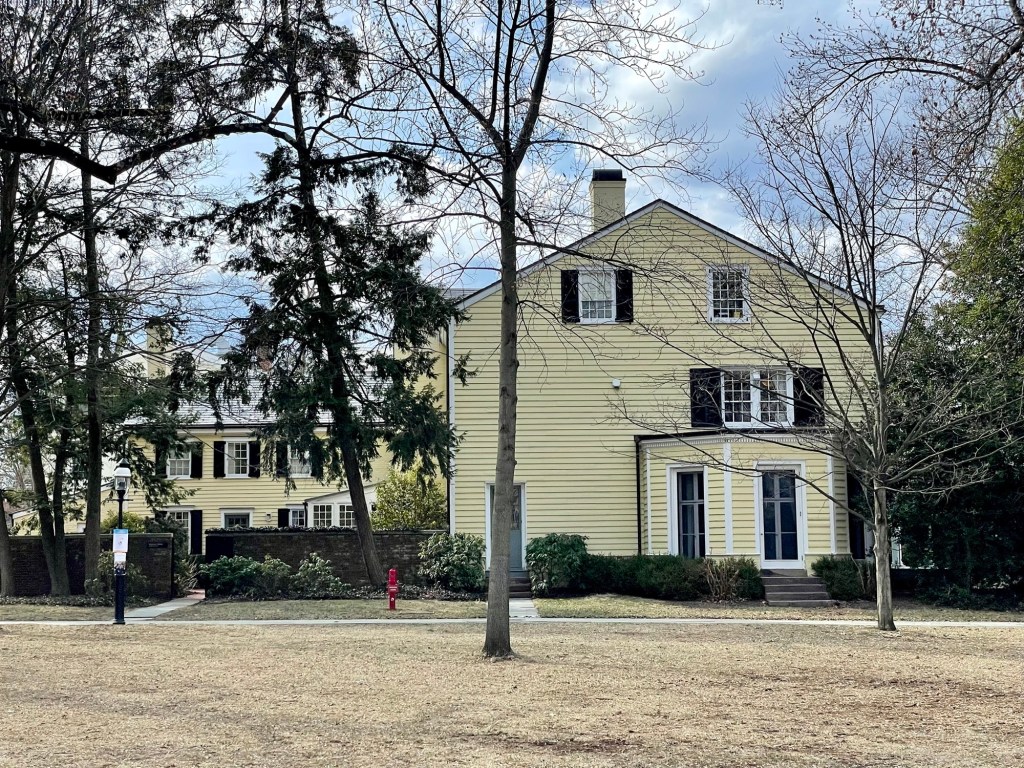
Princeton University had a couple of different locations (including Newark, NJ) before settling into its current location. At the time, Aaron Burr Senior (father of Aaron Burr Jr. – the guy who shot Alexander Hamilton, for you Hamilton fans) was the president of the college. The small yellow building below is where Aaron Burr Sr. lived at the time as he oversaw the building of this new campus.

Where Aaron Burr Sr lived

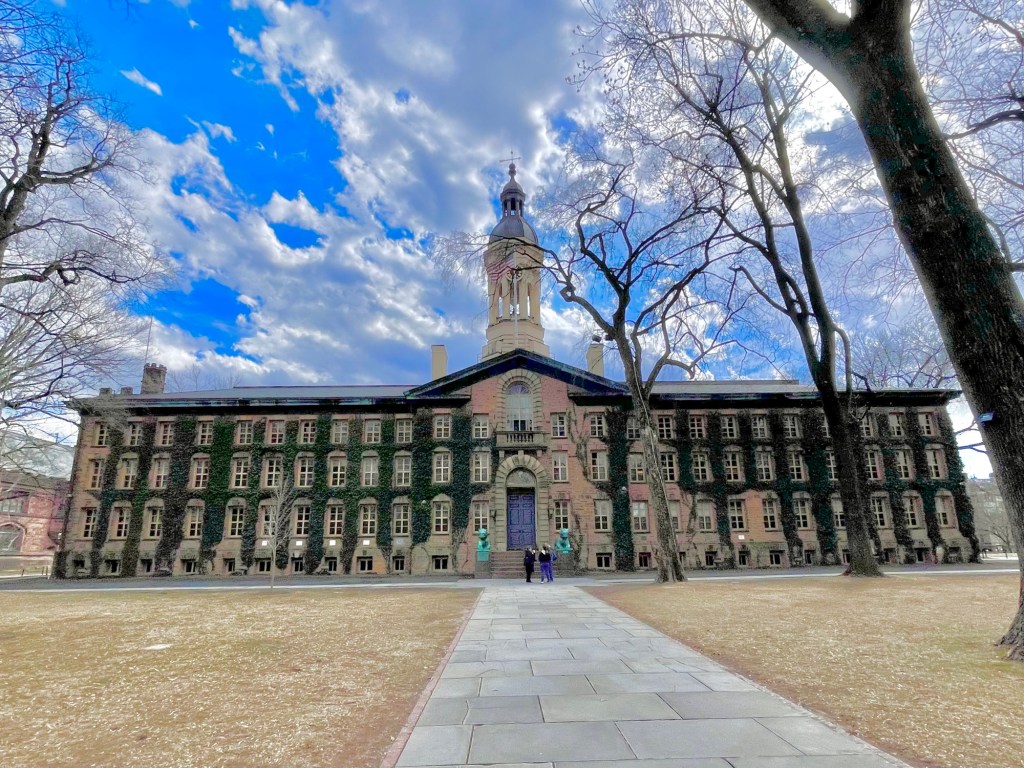
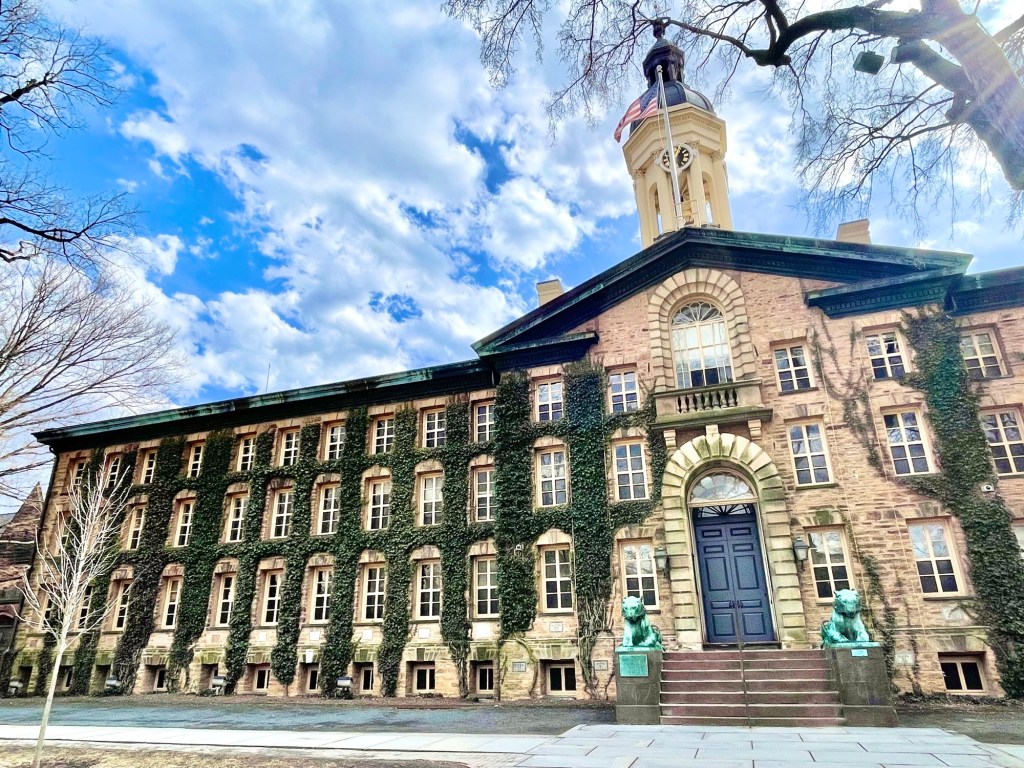
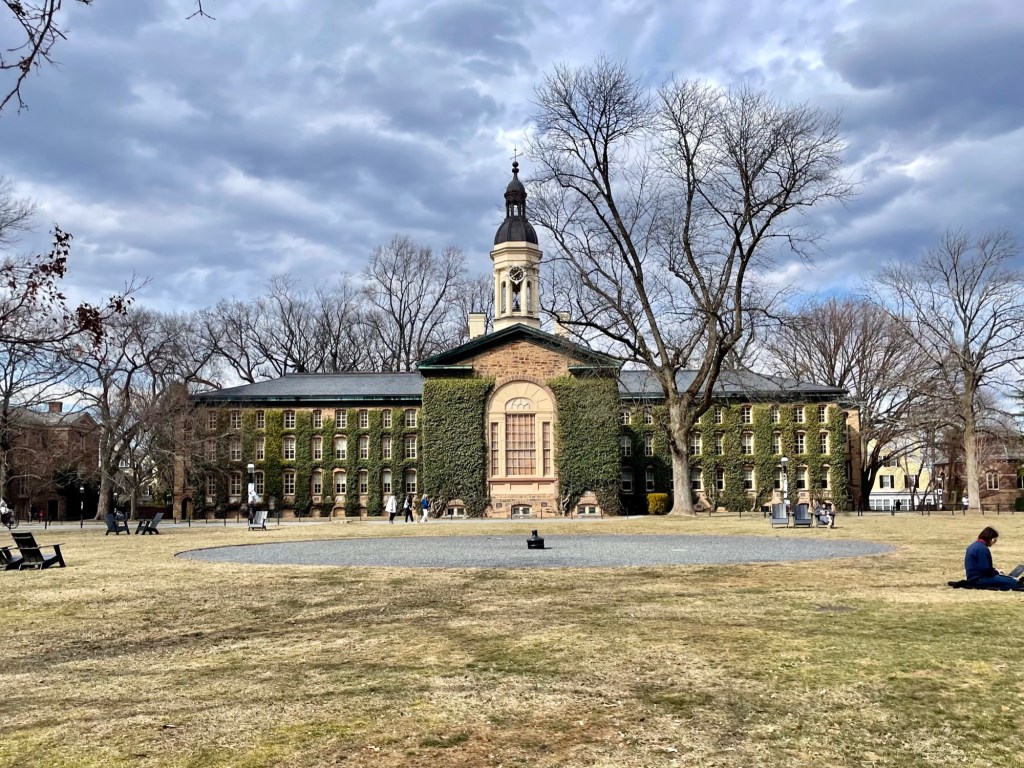
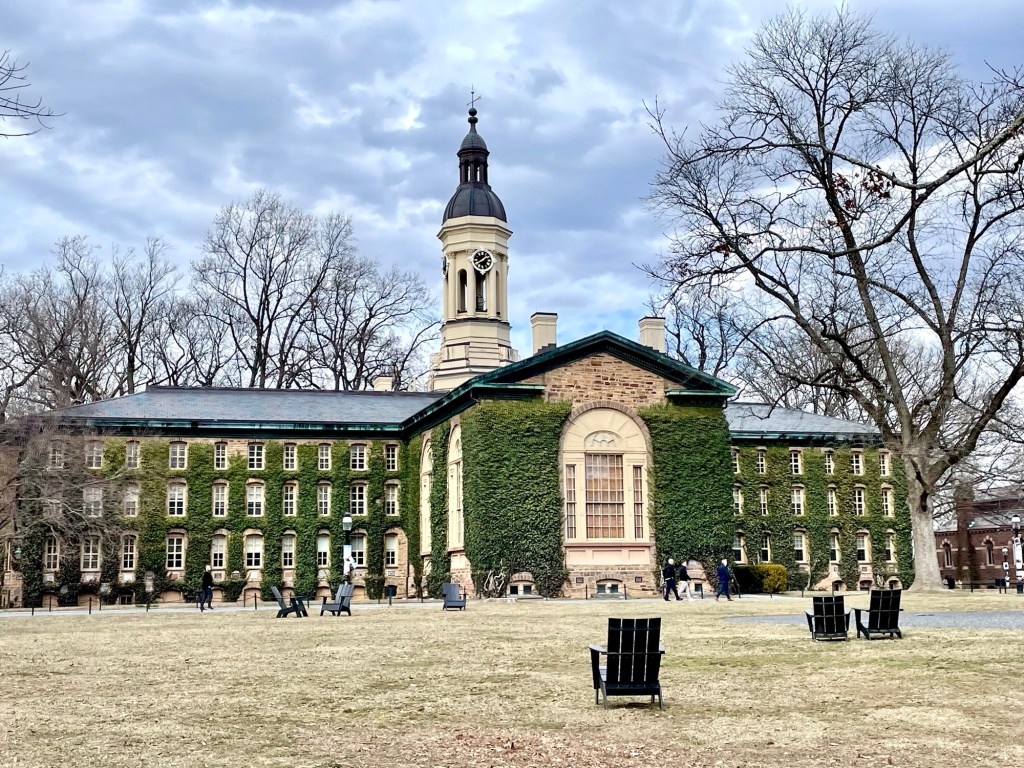
Nassau Hall is the first building of the college and also the oldest building on campus. It’s the first building you’ll see through FitzRandolph Gate and its covered with ivy around the majority of the building.

Throughout the years they’ve had many university presidents that kept dying from random things. The university was in a poor state with debt and poor instruction. John Witherspoon came on as the university’s 6th president and was monumental in saving the school from closing down. He travelled to New England and the South and recruited the wealthy to join the school. He updated the curriculum and turned Princeton from a place that predominantly trained clergymen into a place equipped to produce the future leaders of tomorrow.

Although Witherspoon is credited for the expansion and progression of the university, his racist roots in slave ownership has been a topic of heavy controversy. There have been petitions to remove his statue outside of East Pyne Hall, pictured below.

Statue of John Witherspoon in front of East Pyne Hall

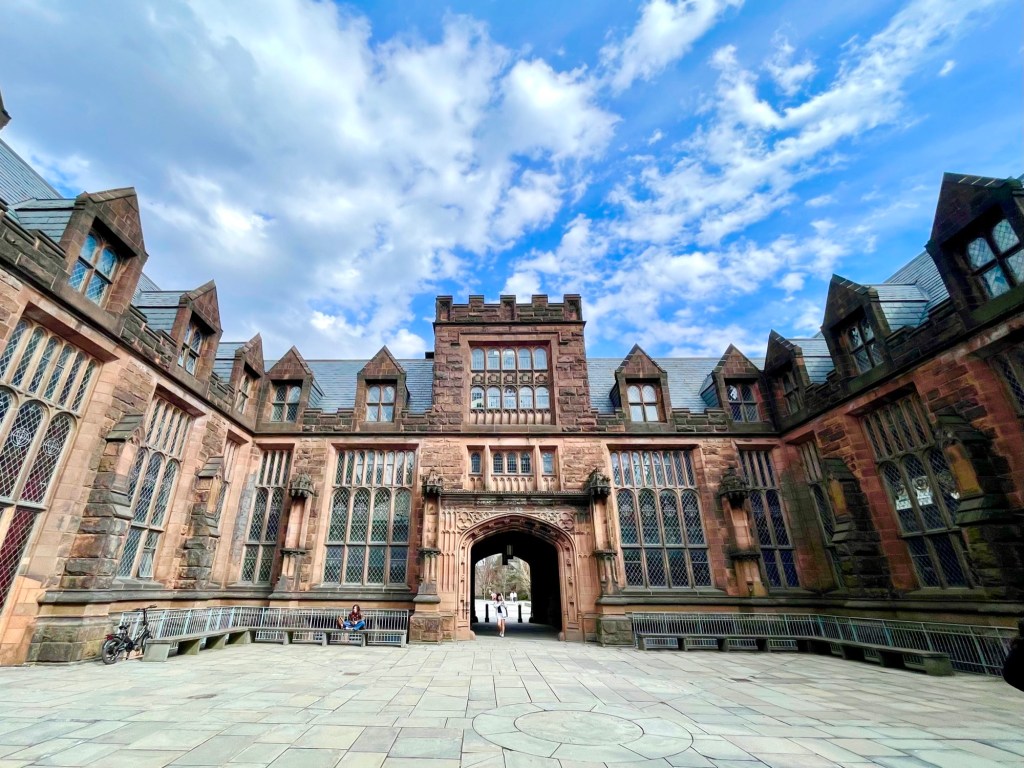
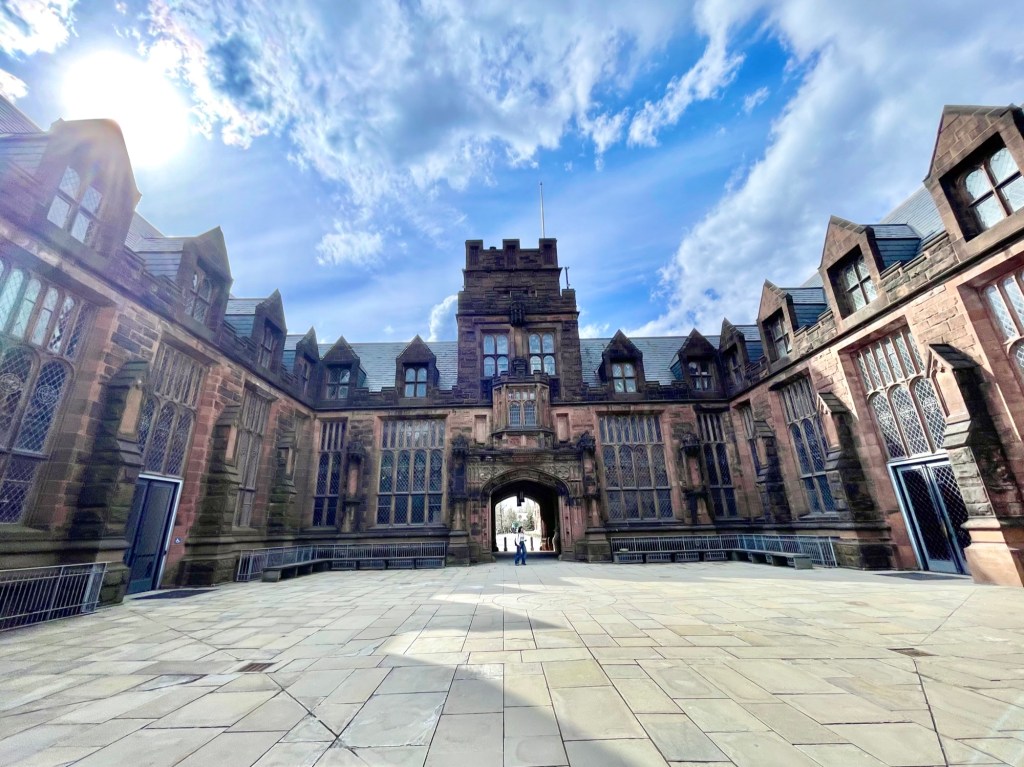
East Pyne was built in the late 1800s as an extension to the Chancellor Green Library next door. When entering the middle gates, you’re inside an enclosed square with beautiful architecture surrounding you. This site has been a popular choice for filming movies including the latest movie Oppenheimer.

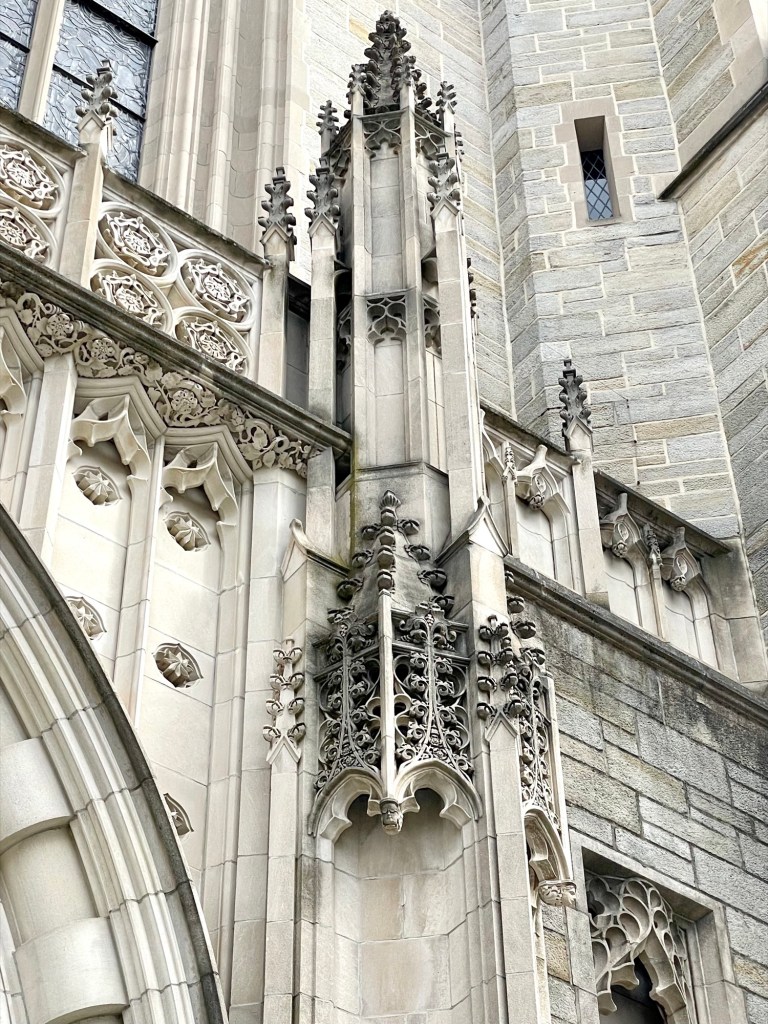
The Princeton University Chapel sits in the middle of the campus and was built in the 1920s to replace the previous chapel that had burned down. Its gothic architecture has a hidden surprise – the 5 stone makers hid their faces into the outside of this building (see if you can spot one in the photos!). Inside this beautiful building are impressive stain glass that lines the walls and is said to be the most valuable stain glass in the Western Hemisphere! The pews are carved from wood that was intended for Civil War gun carriages.

It’s a highly sought after place to get married. Our tour guide told us there’s about a 5 year waiting list to get married here! 😮

Across the chapel is the Princeton University Library. This enormous library holds over 7 million books including many rare books. It is one of the largest libraries in the world by number of volumes. There’s no public access to the library.

Across the chapel is Prospect House, built in 1851 and housed the university’s presidents for about 100 years, until they were relocated to the Walter Lowrie House (which was originally used as a guest house). I can’t quite find the exact reason why they relocated from this beautiful mansion, but online sources say it coincided with renovations to the building and turning it into a faculty club. Our tour guide says that in the 60s there were protests that a president shouldn’t live so lavishly in the centre of the campus. Whatever the reason, it’s currently the staff and faculty dining area. It’s a pretty nice building. People who get married at the chapel will usually also have their wedding reception here. There’s also a nice garden in the summer.

Witherspoon Hall was the most modern and elegant dormitory when it was first built in 1877. It was the first to have electricity and indoor plumbing. This is the first building you come upon when entering the campus by stage coach and has been purposefully made to attract a more “affluent” student population (aka them rich kids to bring their money to the school). There are even dumbwaiters and special corridors and rooms for servants!
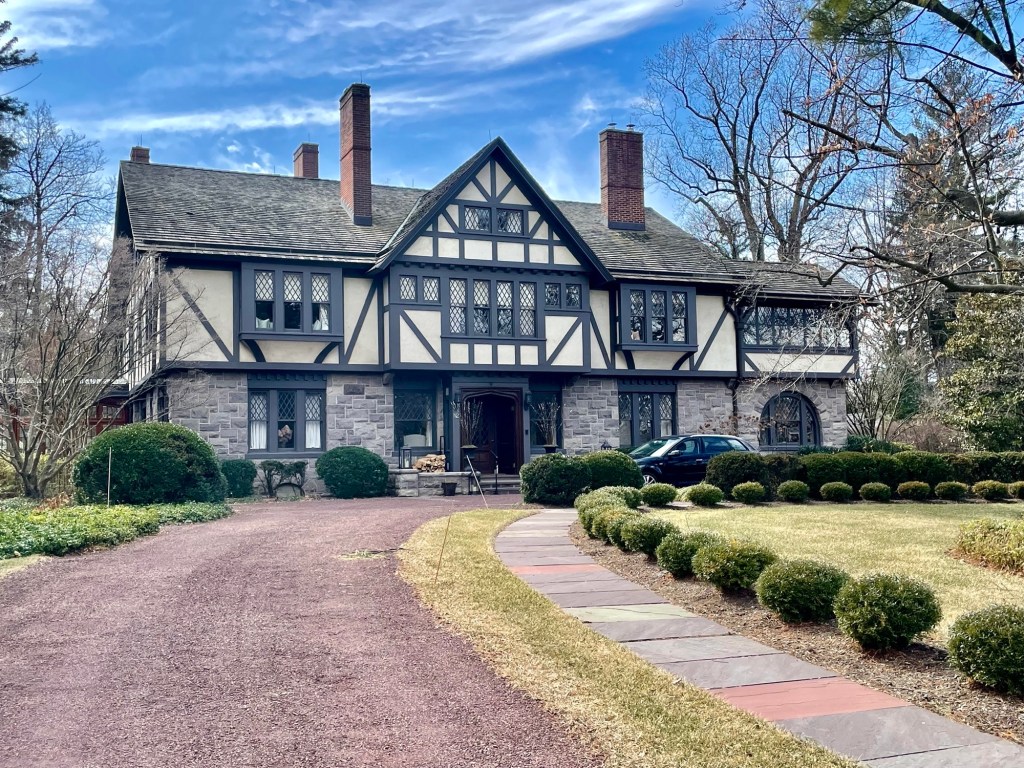
Witherspoon Hall

The Princeton University Art Museum has an impressive collection that has been mentioned time and time again as a “must do” when visiting Princeton. Unfortunately they are currently in the works of opening up a new building that’s not set to open until October 2025. It’s located near Prospect House.

Princeton University Art Museum

Address: 112 Mercer Street, Princeton, New Jersey

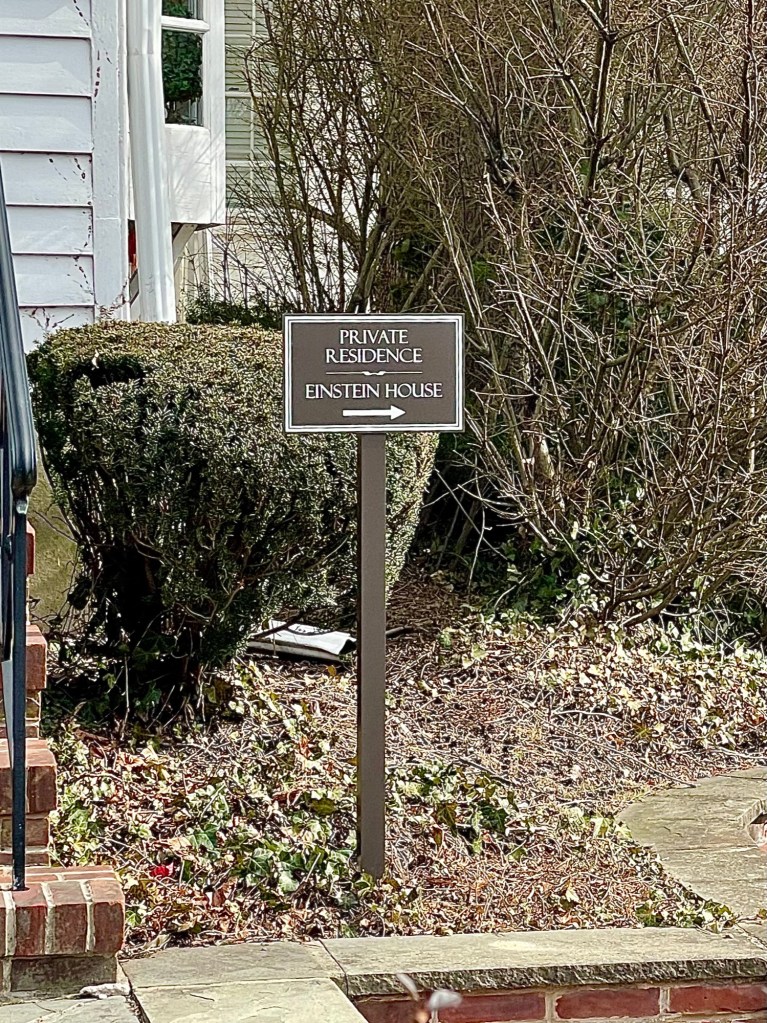
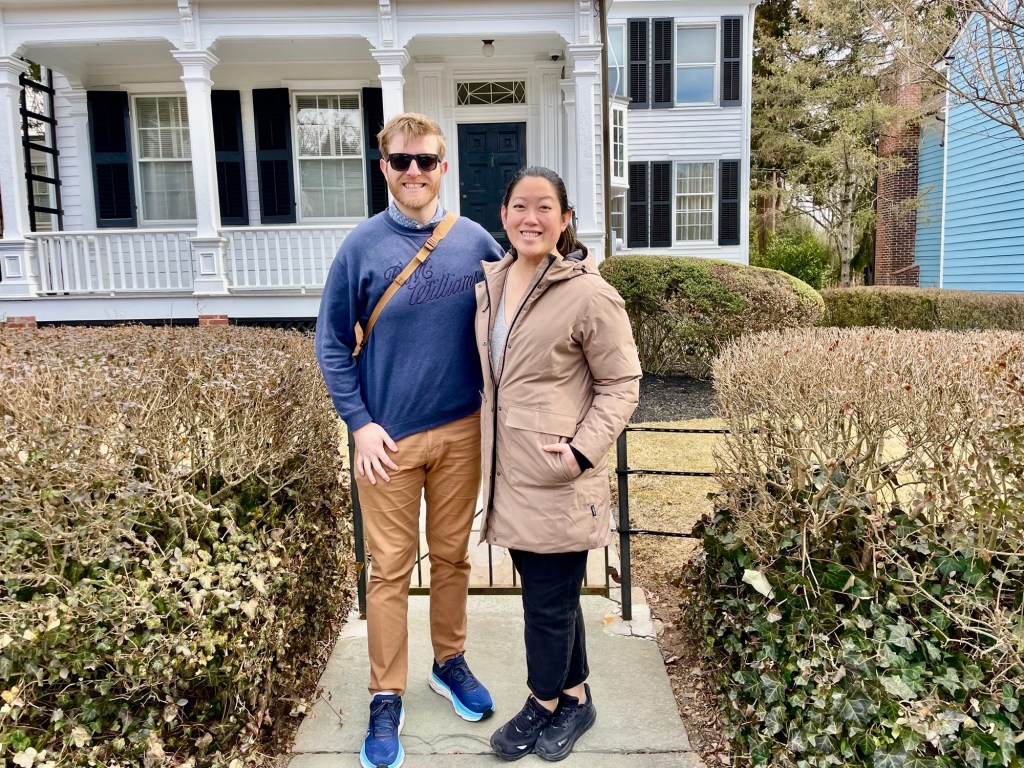
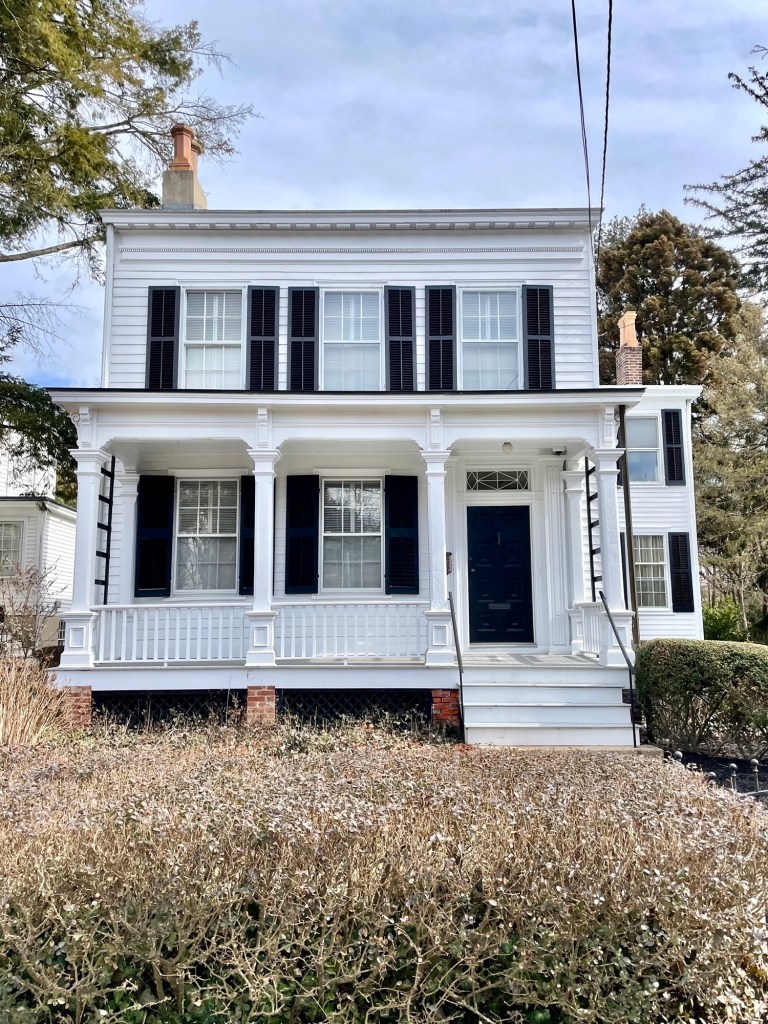
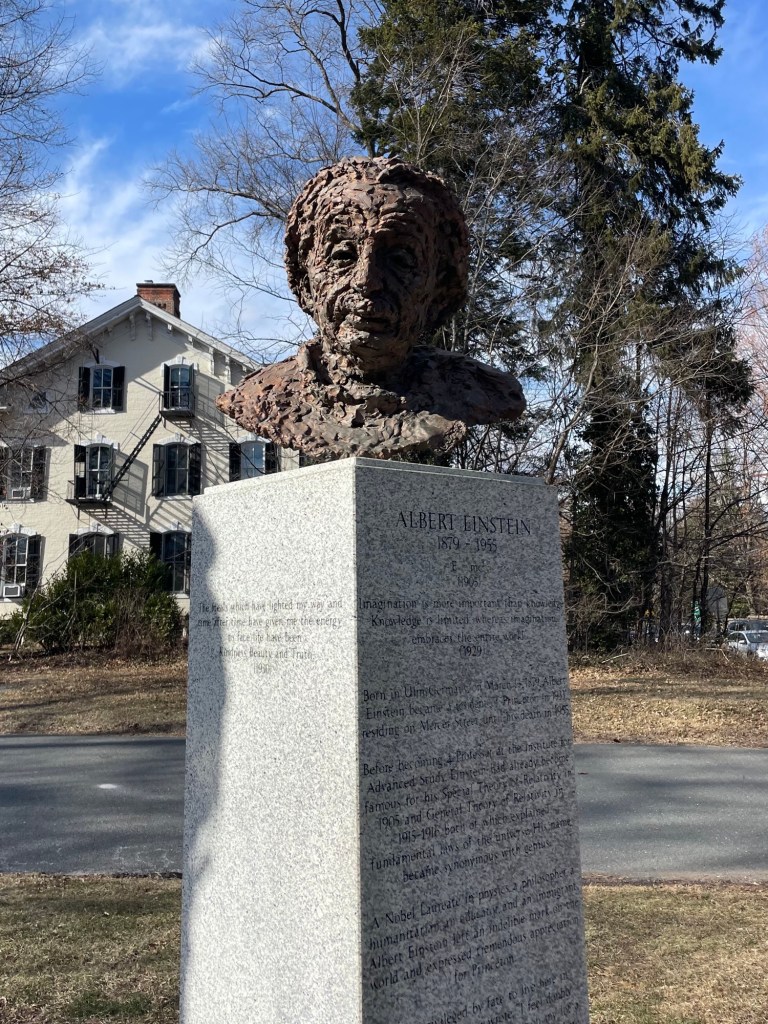
Albert Einstein lived here in the final 22 yrs of his life. He was invited to Princeton to be the first to join a think tank – the Institute for Advanced Study (IAS, the one they featured in Oppenheimer). He was never employed by the university while he lived in Princeton. The house is now a private residence even though it is owned by the IAS. There’s no place markers for this house, but the home next door has a sign 😉.

Library Place is a street where all the fancy houses are with many of them belonging to celebrities or have had a famous person live there. It’s a lovely quiet street to walk down and gawk at all the beautiful houses. 82 Library Place was the former home of President Woodrow Wilson. This man was super racist even for his time, but his house was damn beautiful. There were a few other famous houses on this street, but this was the only one I could remember 😂.

Woodrow Wilson’s house

On Boudinot Street sits Peter Benchley’s former home, the author of Jaws. It sold for 2.5 million in 2012.

Benchley Home

Morven Museum & Garden on Stockton Street was the home Richard Stockton, a signer of the Declaration of Independence. This home is now a museum and garden.

Morven

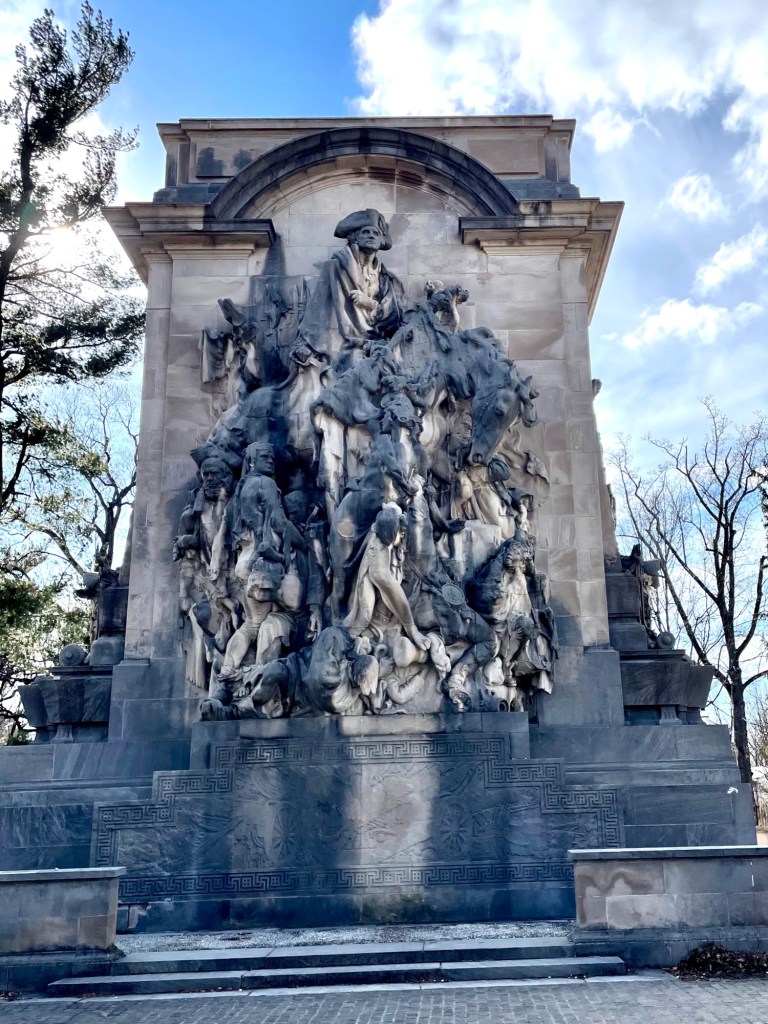
This park is just outside of town. It’s a big field with a monument and is the site where the Battle of Princeton was fought. Unfortunately we didn’t have time to stop here.

Address: 80 Sculptors Way, Hamilton Township, NJ 08619
Cost: $25 per adult

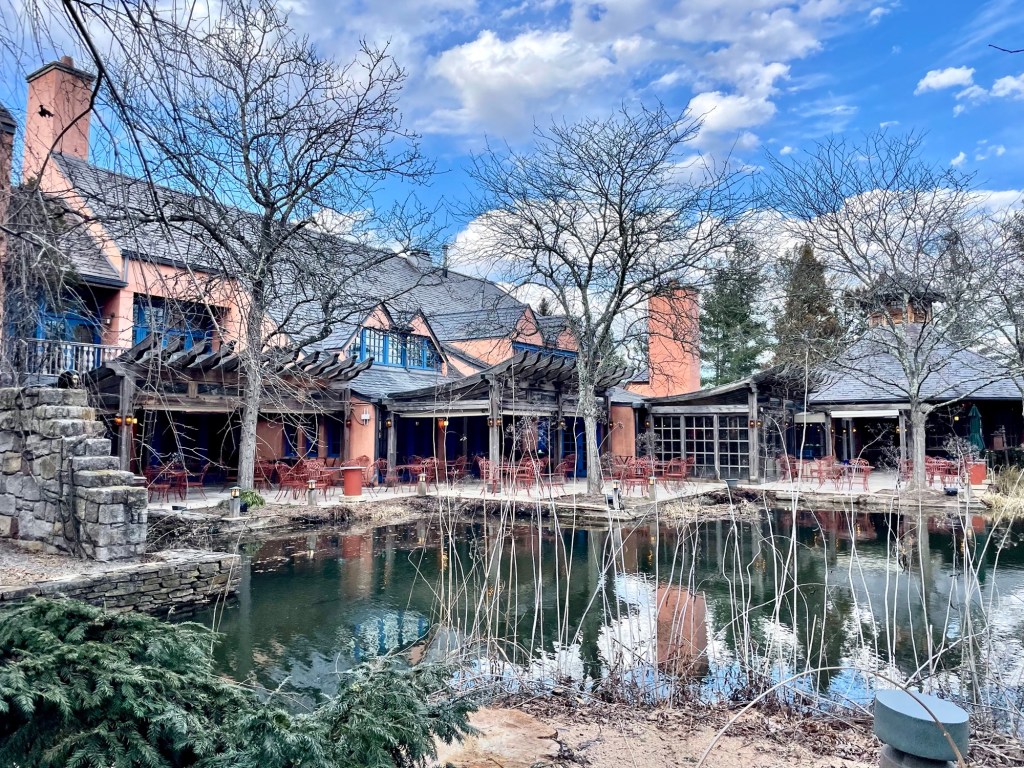
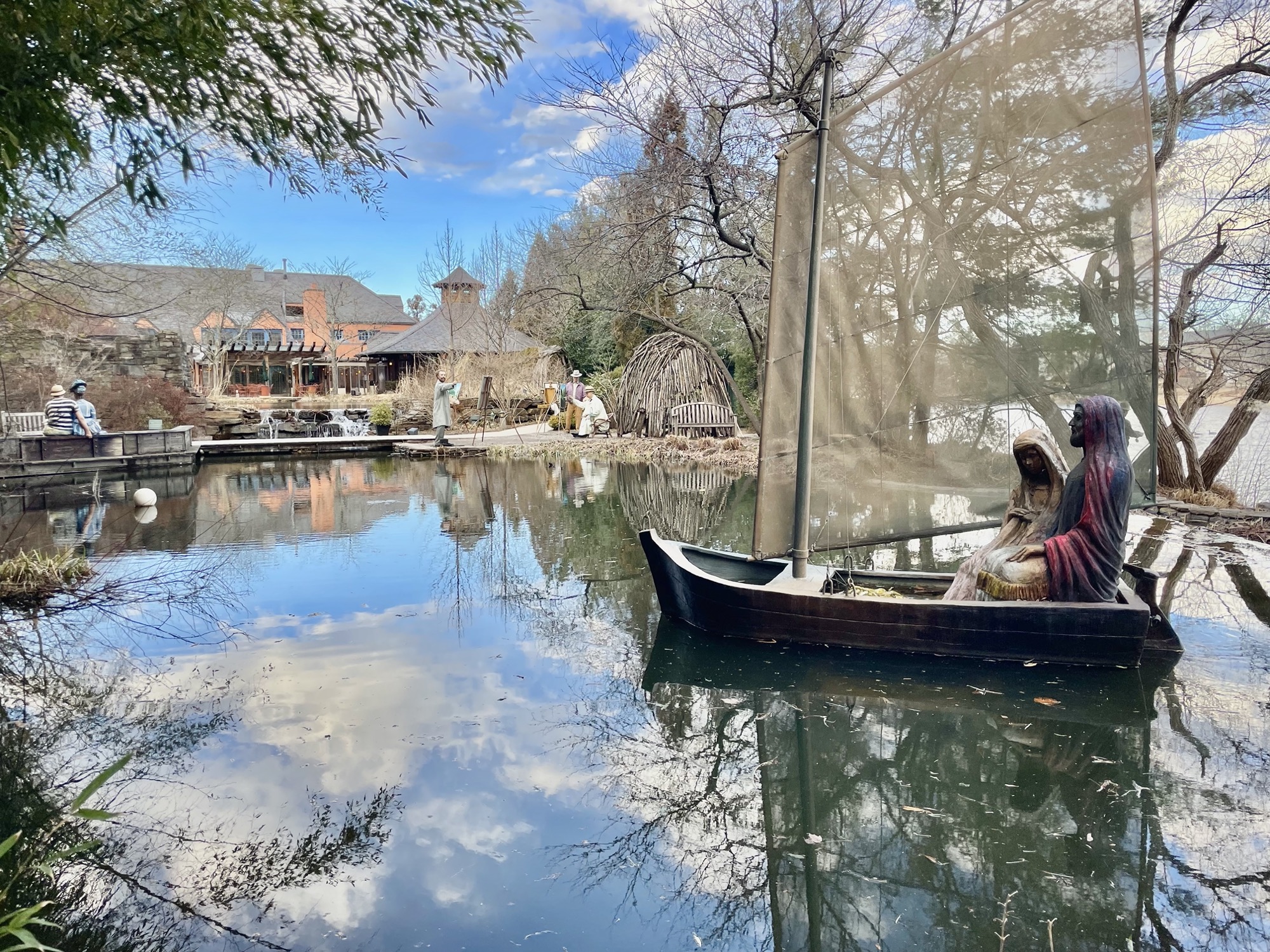
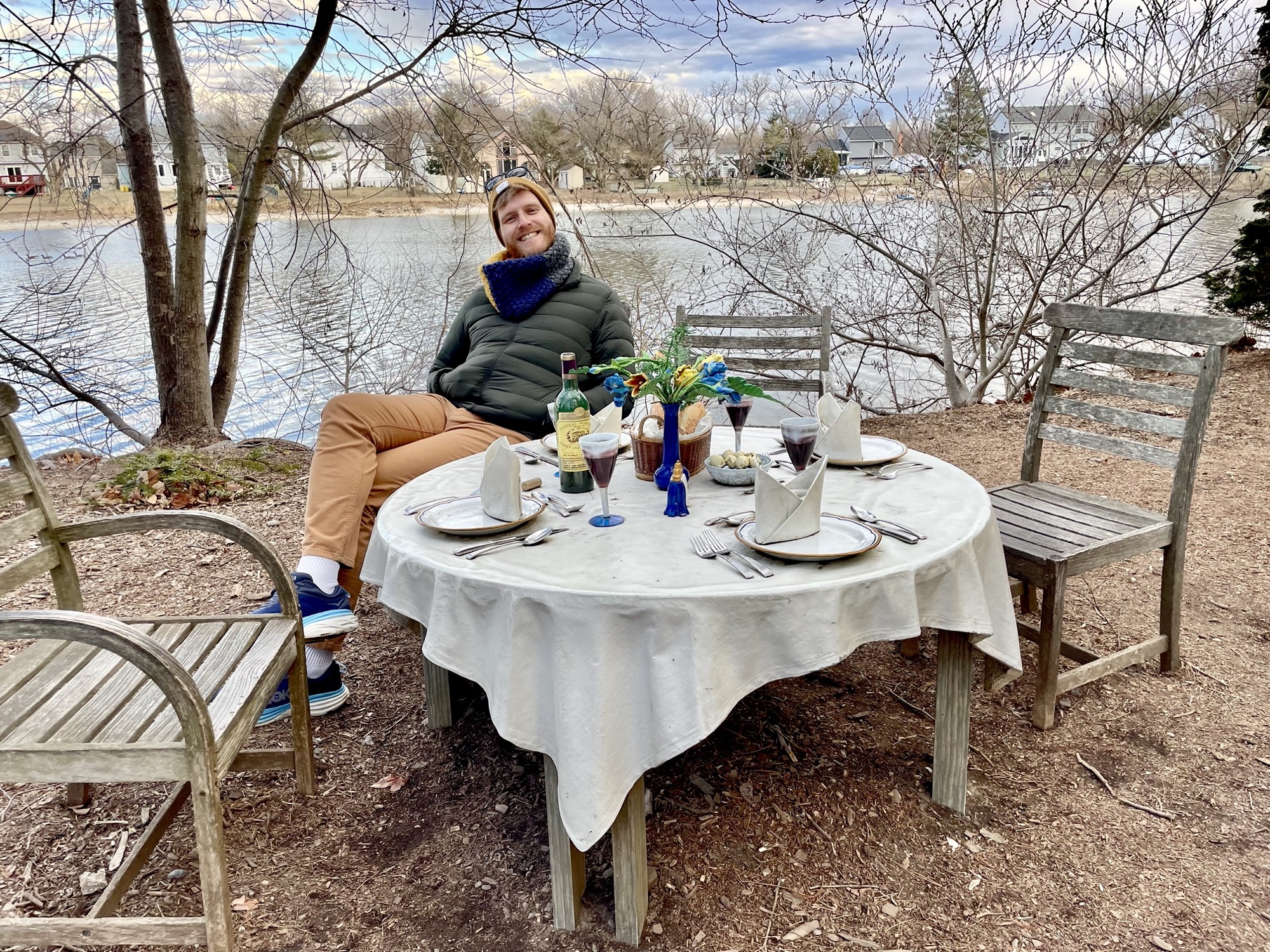
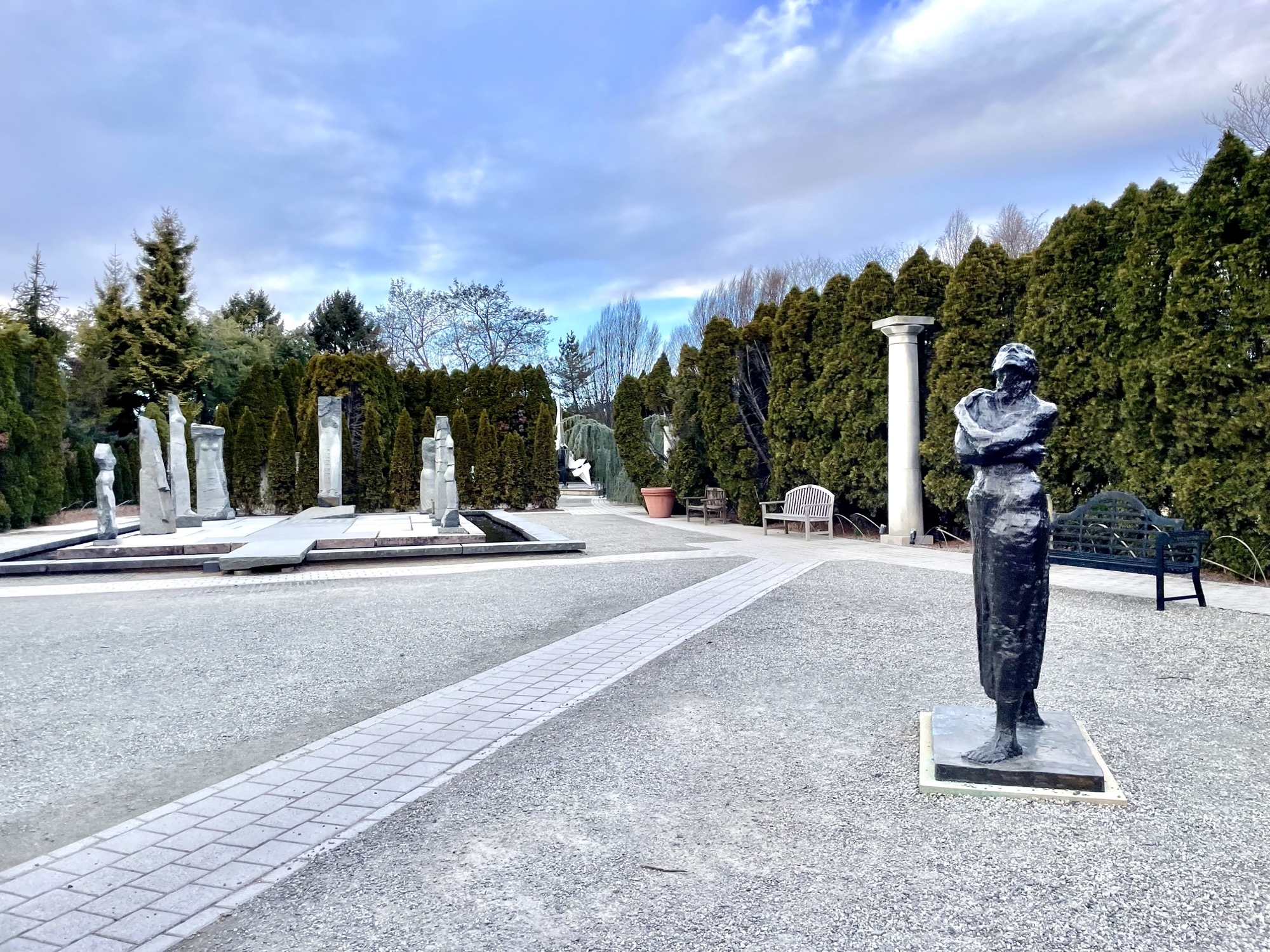
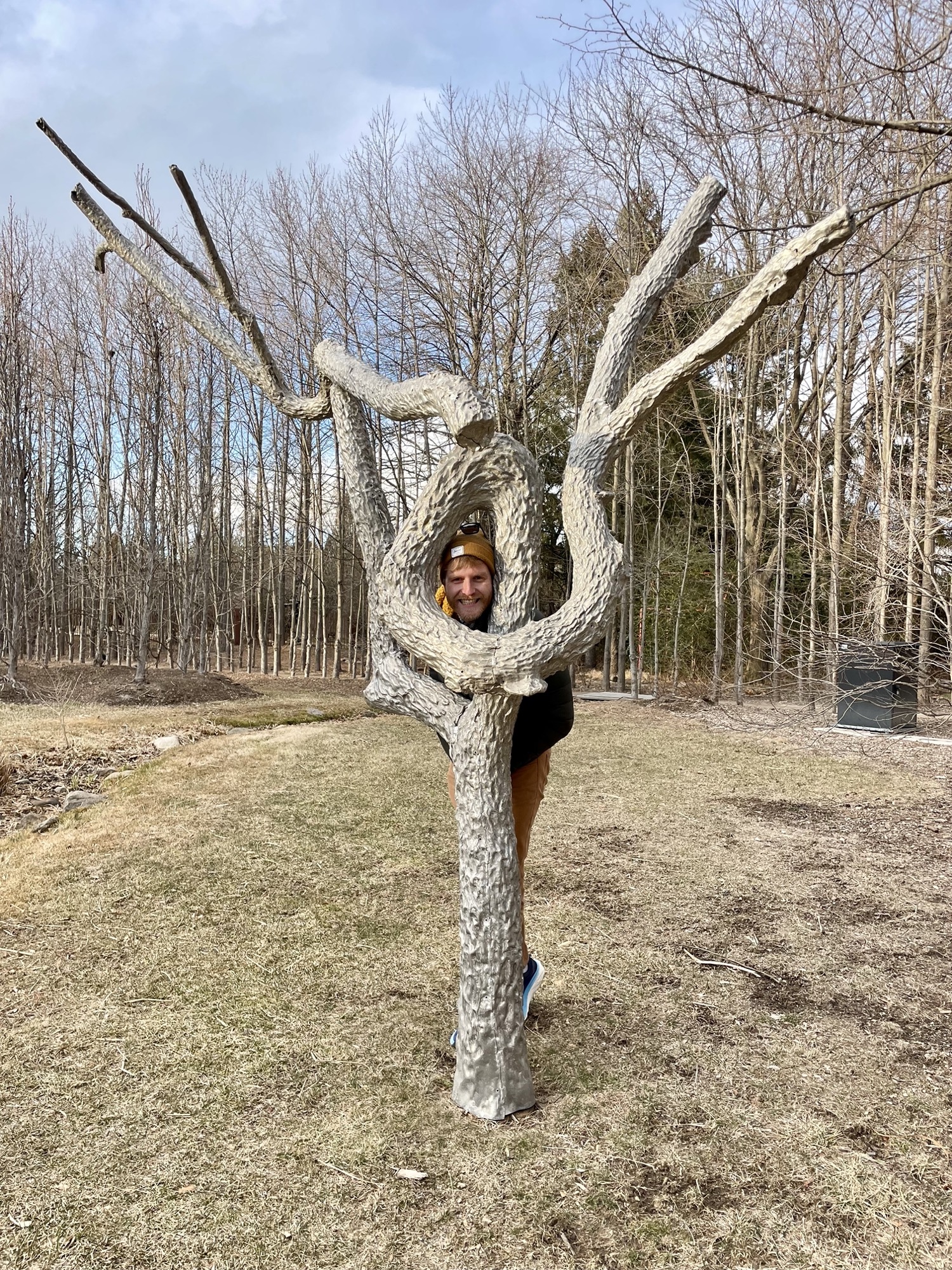
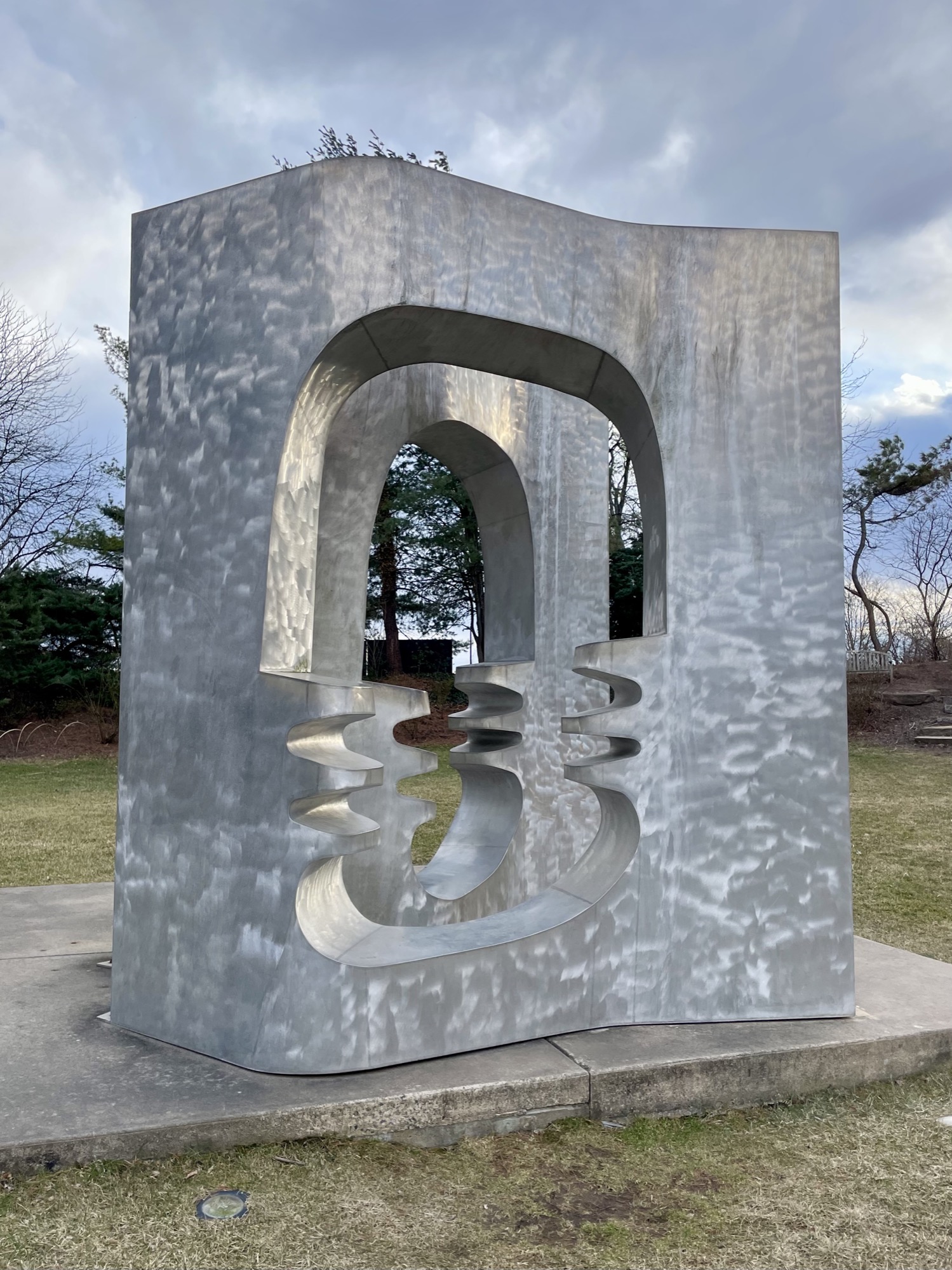
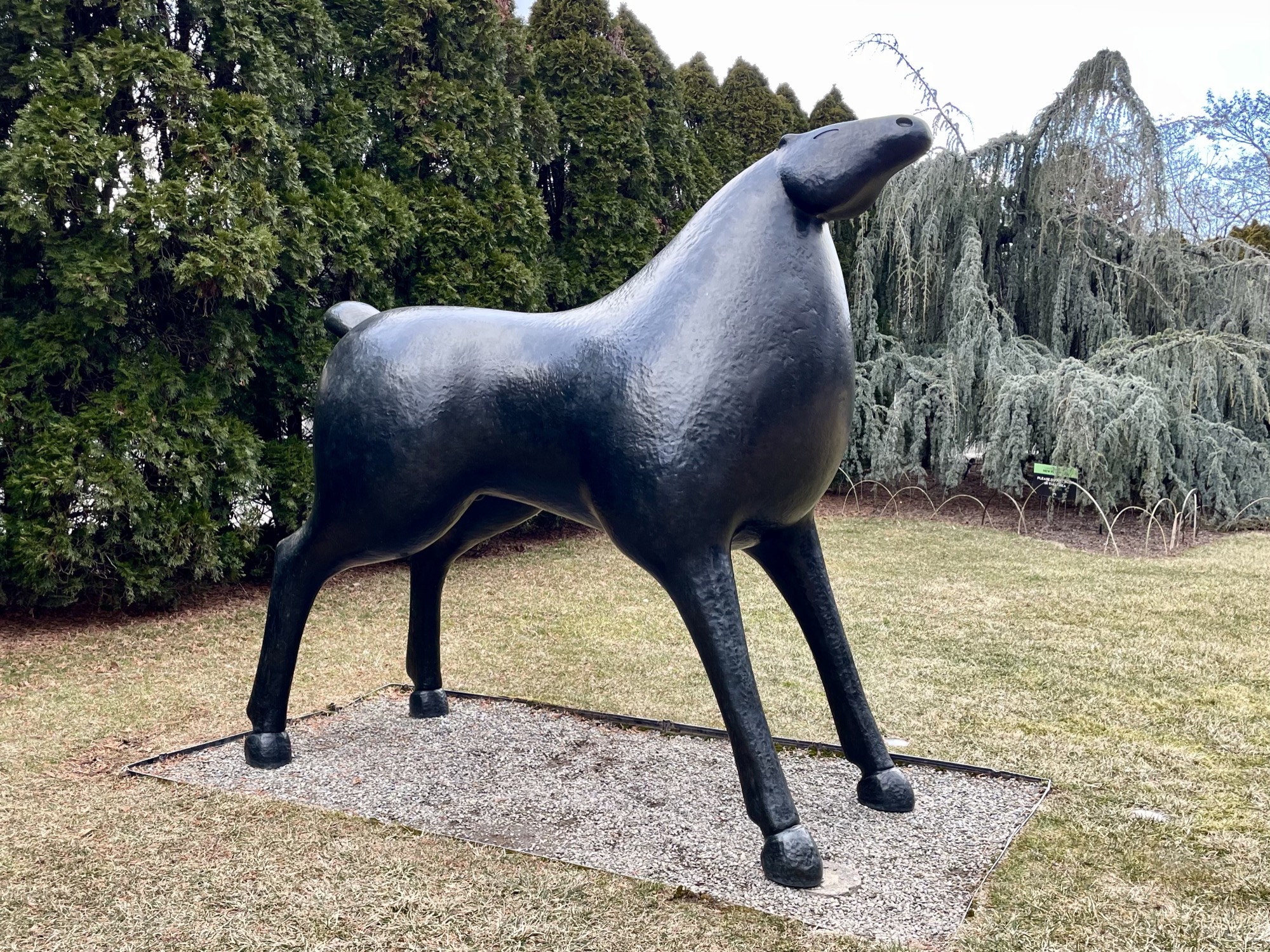
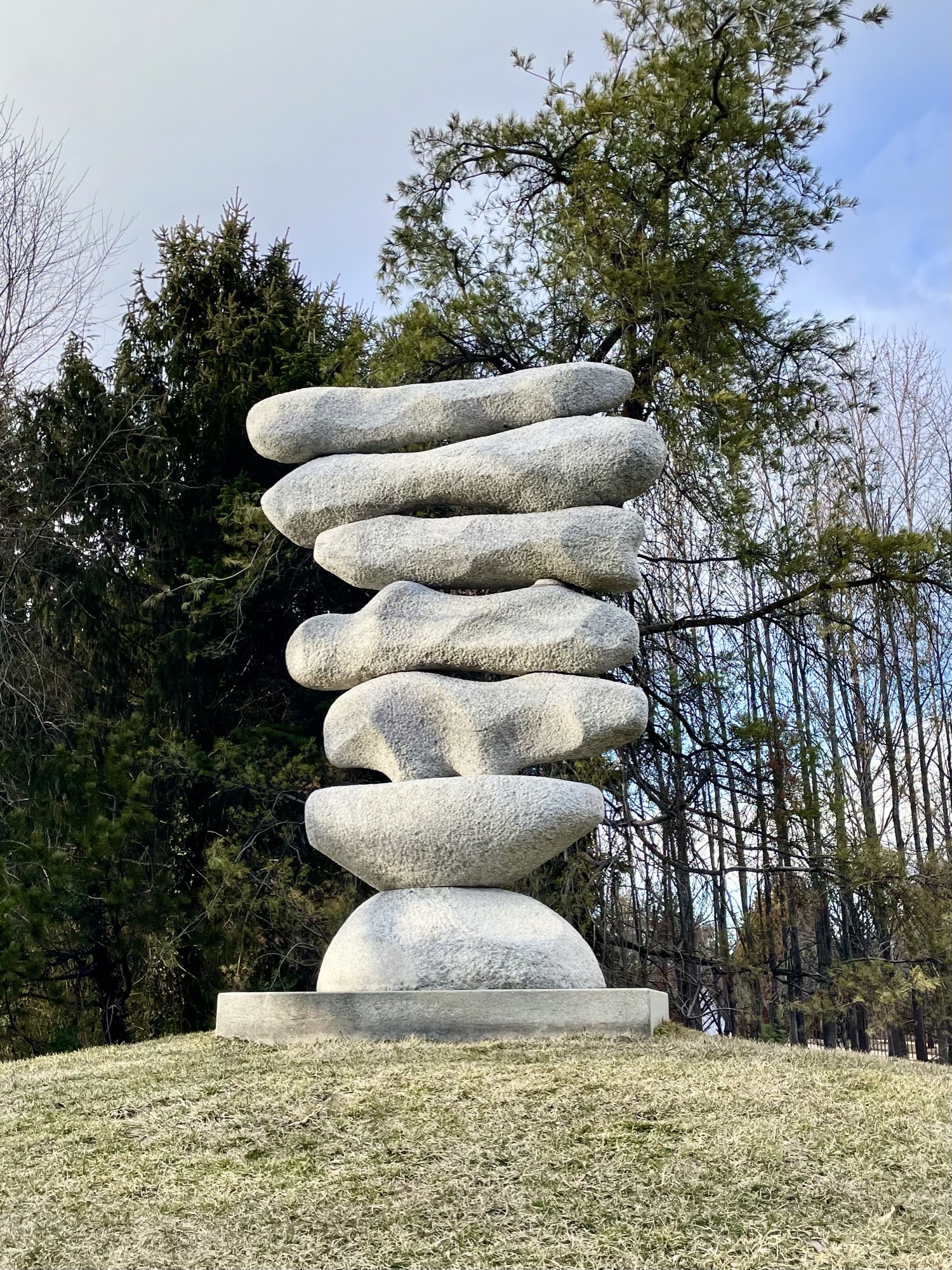
A 15 minute drive from Princeton is Grounds for Sculpture. It is a massive outdoor area with multiple small trails that lead to random sculptures. It’s a pretty cool place with some nice scenery along the water and amongst the tress. Toby and I aren’t big sculpture people but we found some that were pretty neat. There’s a restaurant here called Rat’s Restaurant that has good reviews – we didn’t have time to go, but it looked like a cool place to hang out by the water. It took us about 1 hour to walk through it all, but some people recommend spending at least 2-3 hours, especially if you plan to go to the cafe (reservations recommended).

Trenton is New Jersey’s capital city. We’ve made it our goal to try and hit as many capital cities as we can, even if they’re not that popular. Trenton is only a short 20 minute drive away from Princeton so we figured we’d check it out. The downtown area looked decent with tree-lined streets and nice shop front buildings, but on closer look many of them looked suspicious or run down and none of them were any I’ve ever heard of and many were vacant. There were also many questionable characters around town. I’ve read that there are some nice museums and restaurants in the area, but the few streets we drove down didn’t make us want to get out of the car.

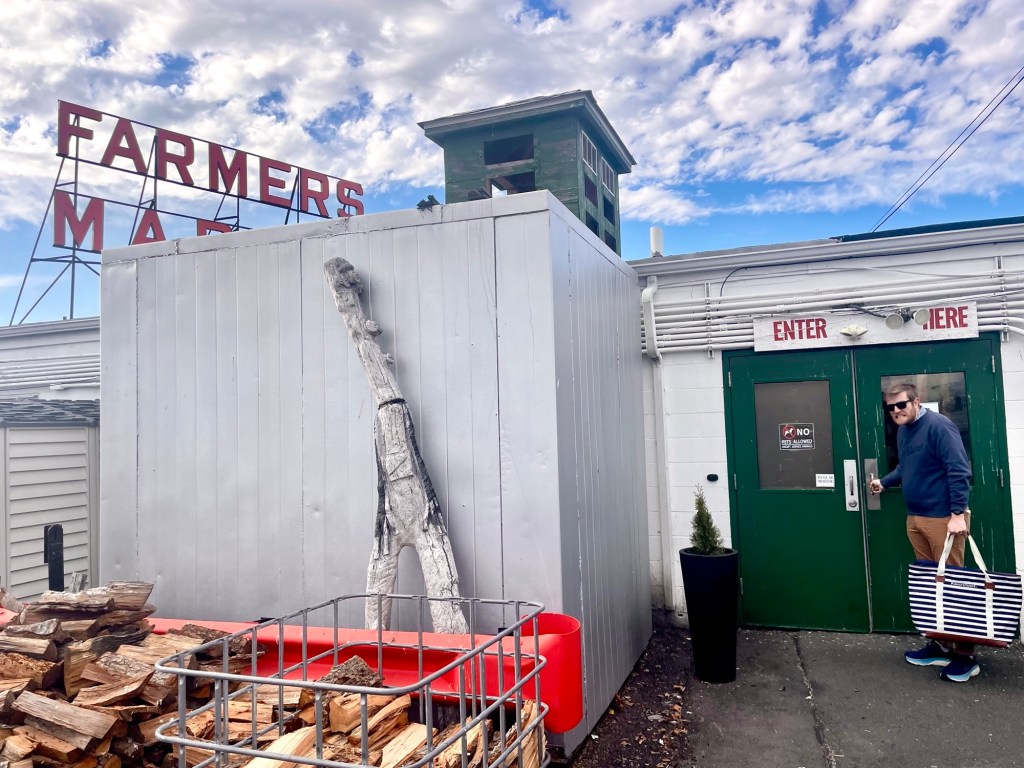
Trenton Farmer’s Market: I love a good farmer’s market, so we headed to the Trenton Farmer’s Market that was only a few minutes away. The outside did not look nice at all. Unfortunately the inside wasn’t much of an improvement either. The market barely had any produce (perhaps we were in the wrong season) and the produce they did have did not look great and some were more expensive than prices in Manhattan! The shops were kinda junky, with old “antiques”, some handmade items, and a few homemade jam stalls. It took us 10 mins to walk through it all. Although I will say, there were a couple of decent looking meat, sausage and cheese shops, but that was it.

BAPS Swaminarayan Akshardham – The Largest Hindu Temple Outside of Asia


Date Published: April 20th, 2025 | Last Updated: April 20th, 2025
Author: Abby | Category: Travel, USA
Date of travel: March 1st, 2025

Location: 112 N Main Street, Robbinsville, NJ 08561 USA
Opening hours: Wednesday to Monday 9am – 7:30pm (closed Tuesdays), gets busy – come early!
Website: https://usa.akshardham.org/
Entry fees: FREE, but you need to reserve a timed ticket on the weekends and on holidays
Time needed: at least 2 hours to walk through everything, more if you want to check out the cafe

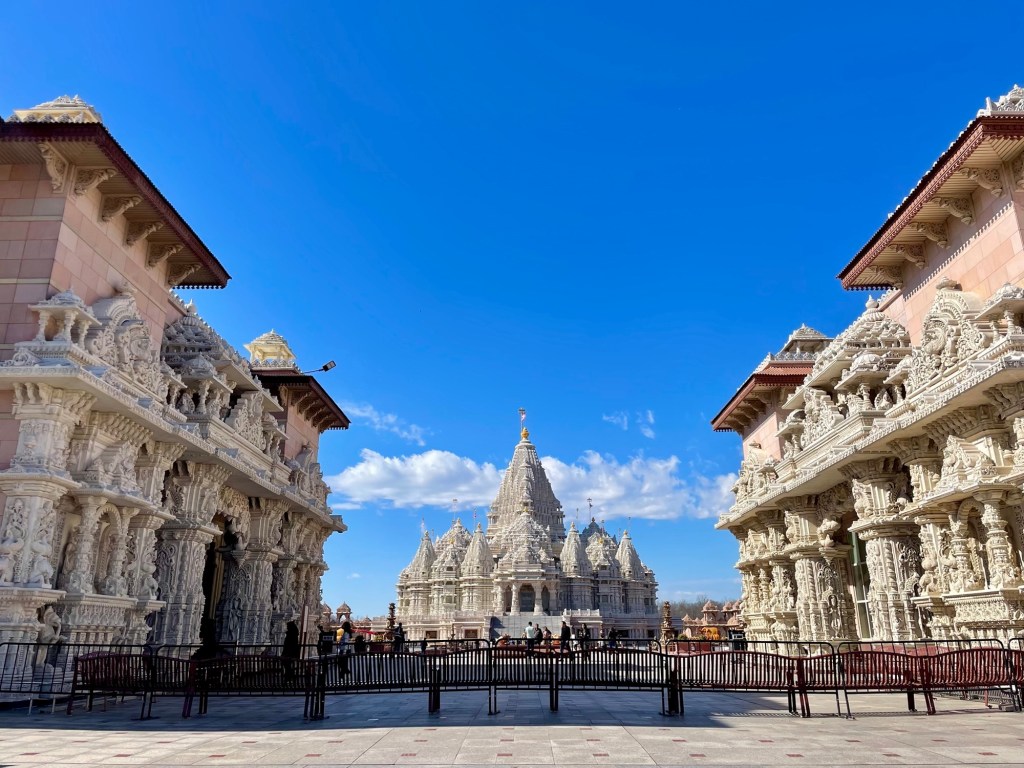
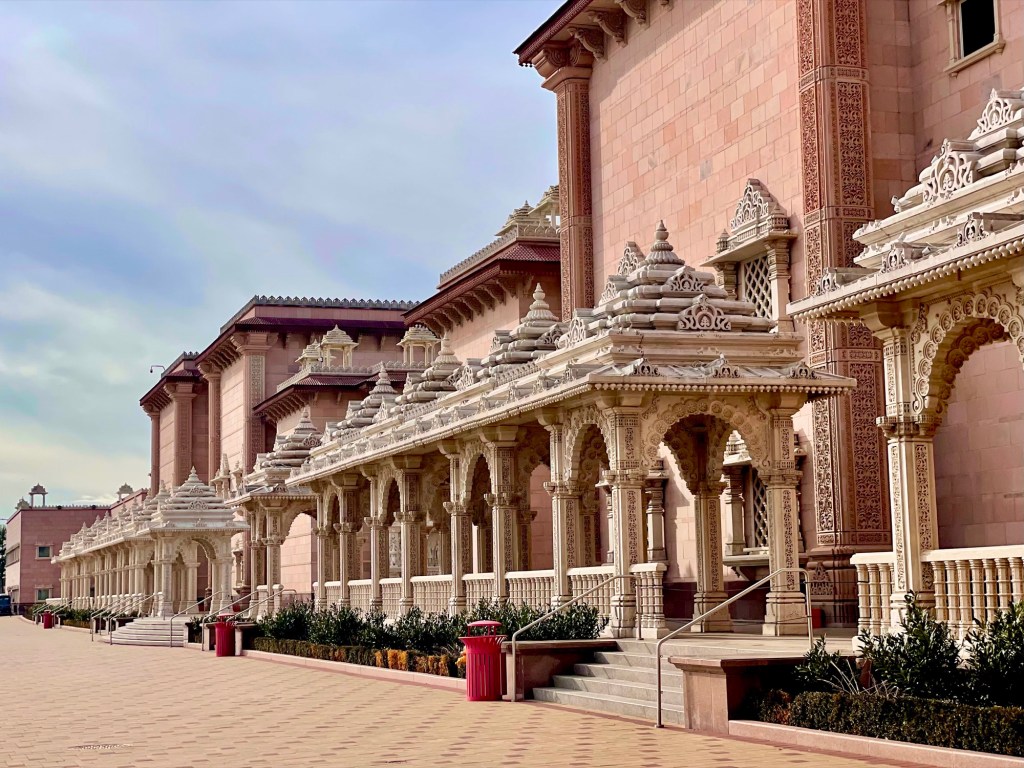
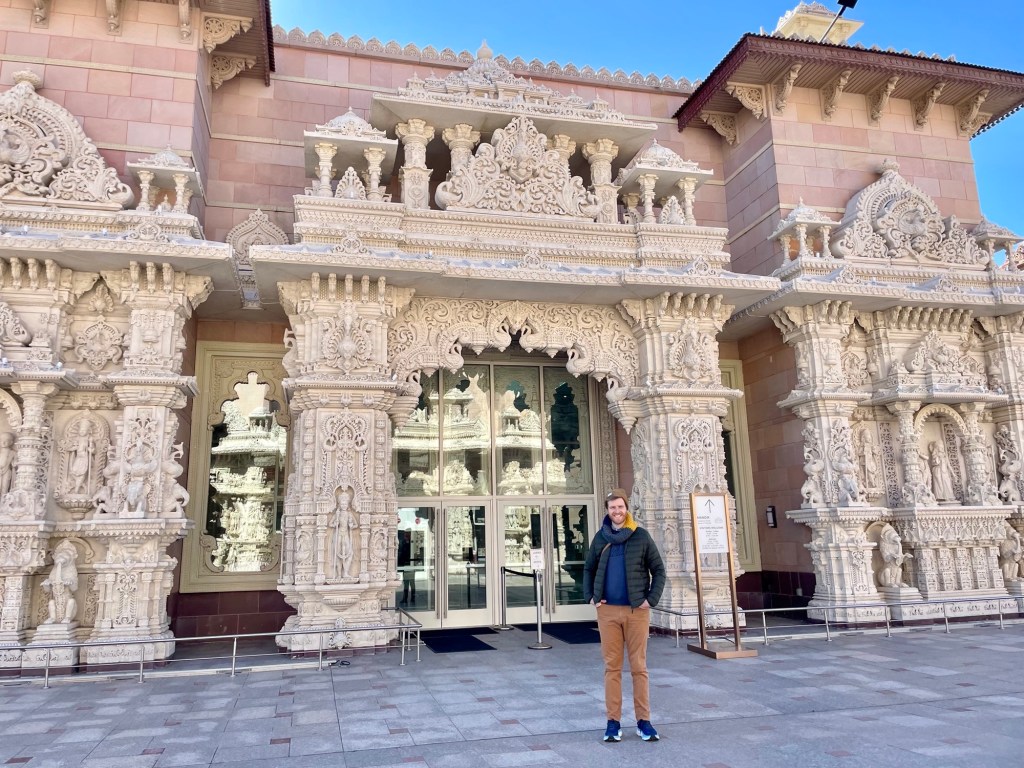
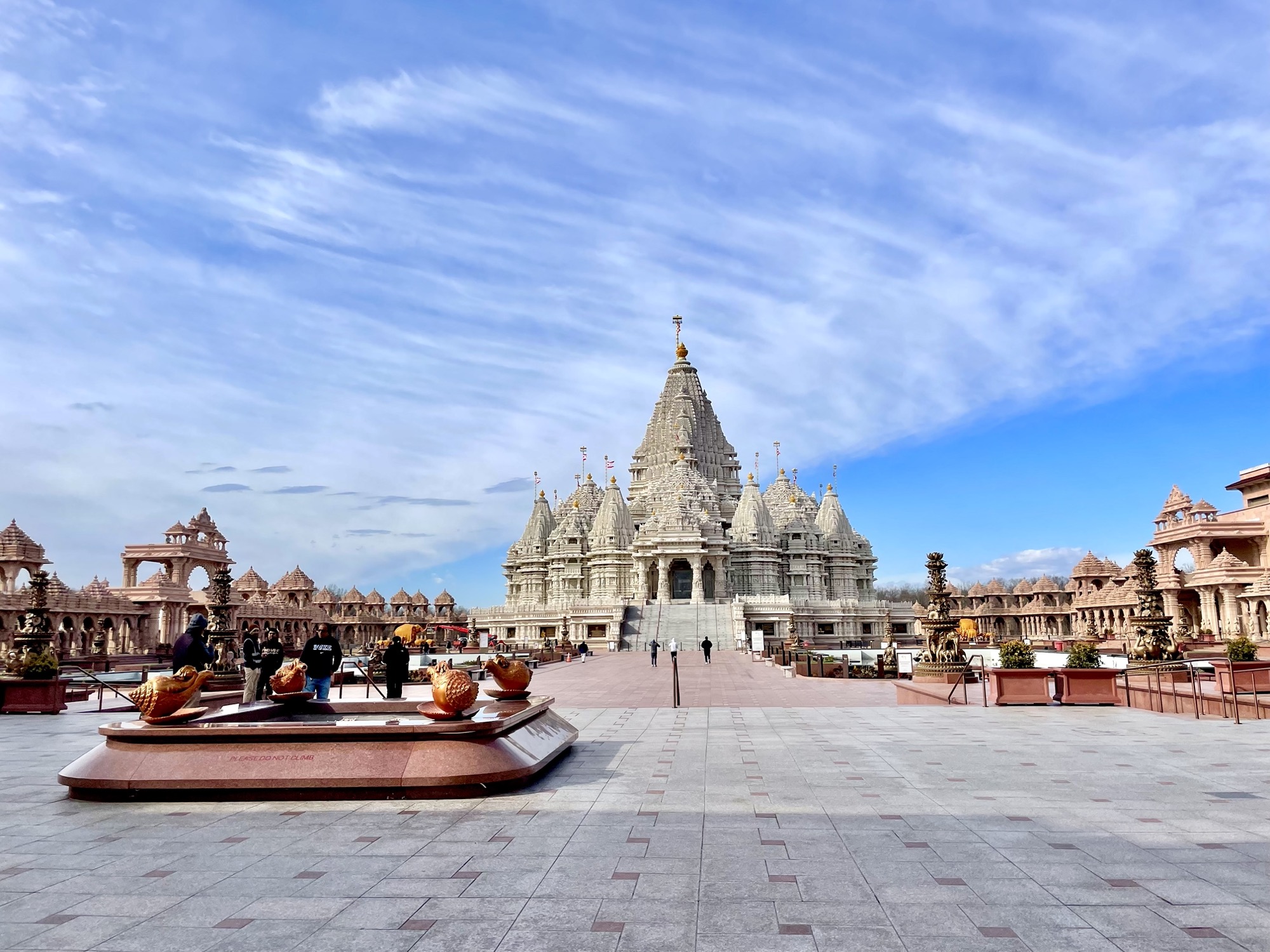
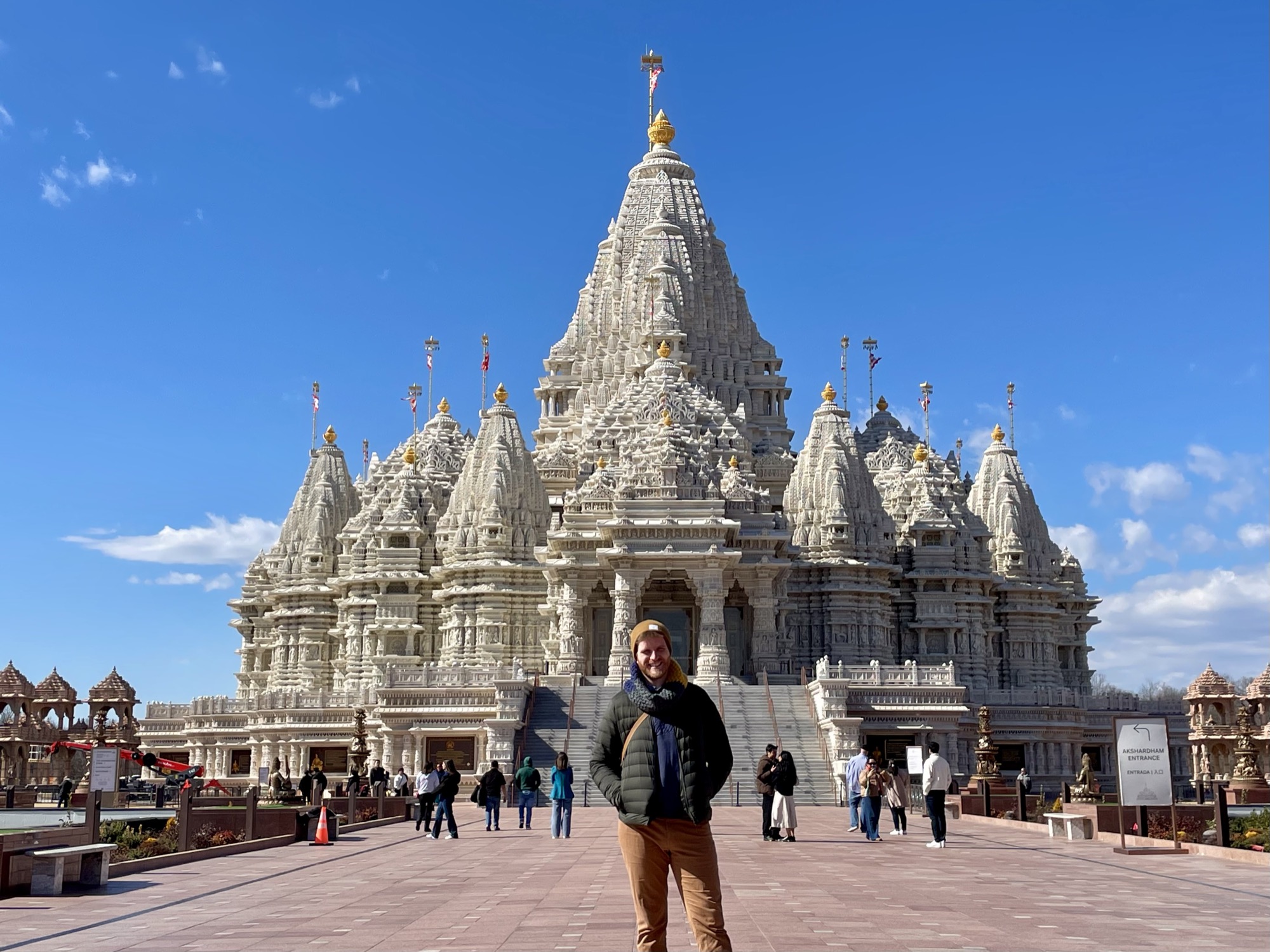
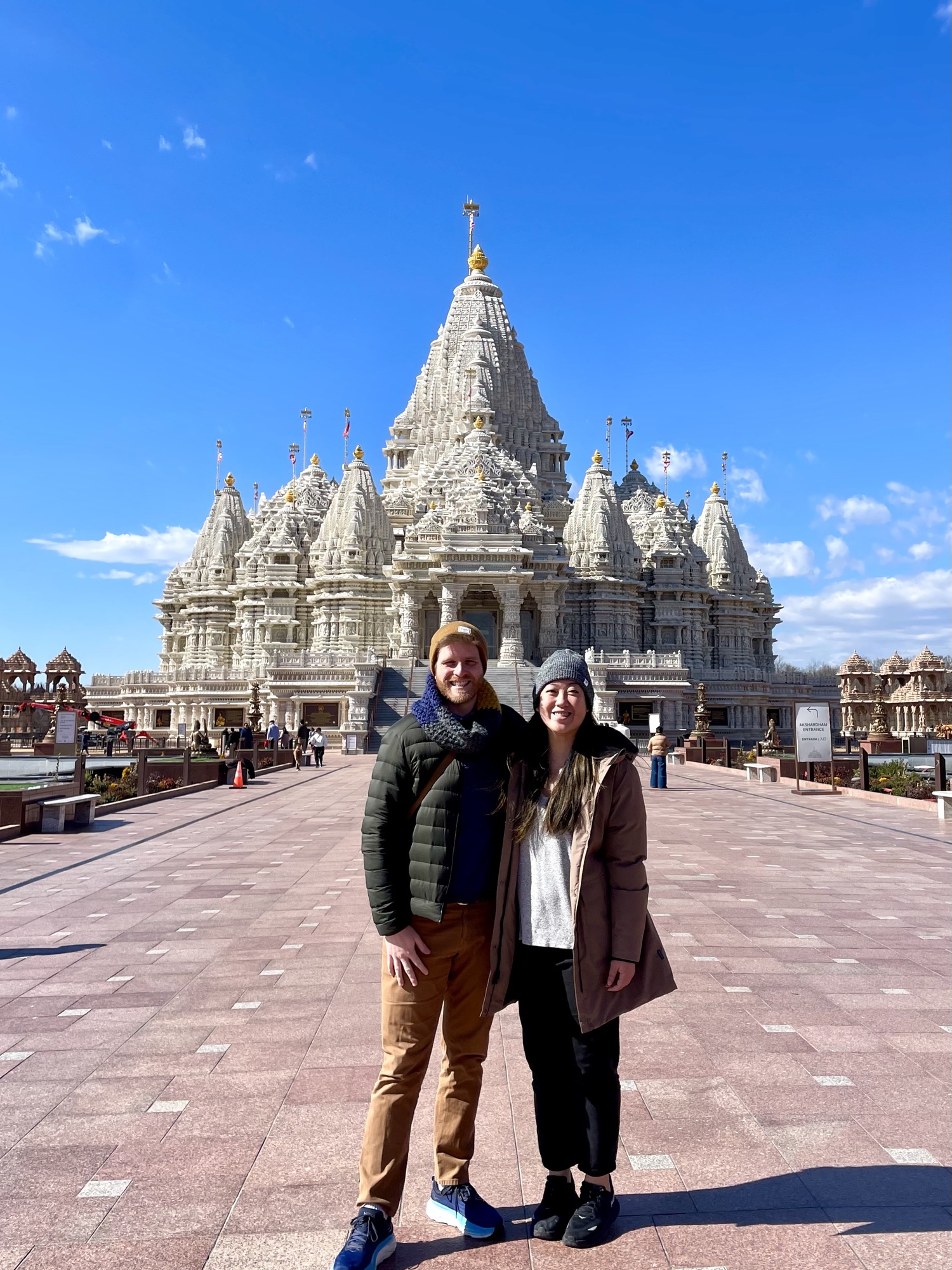
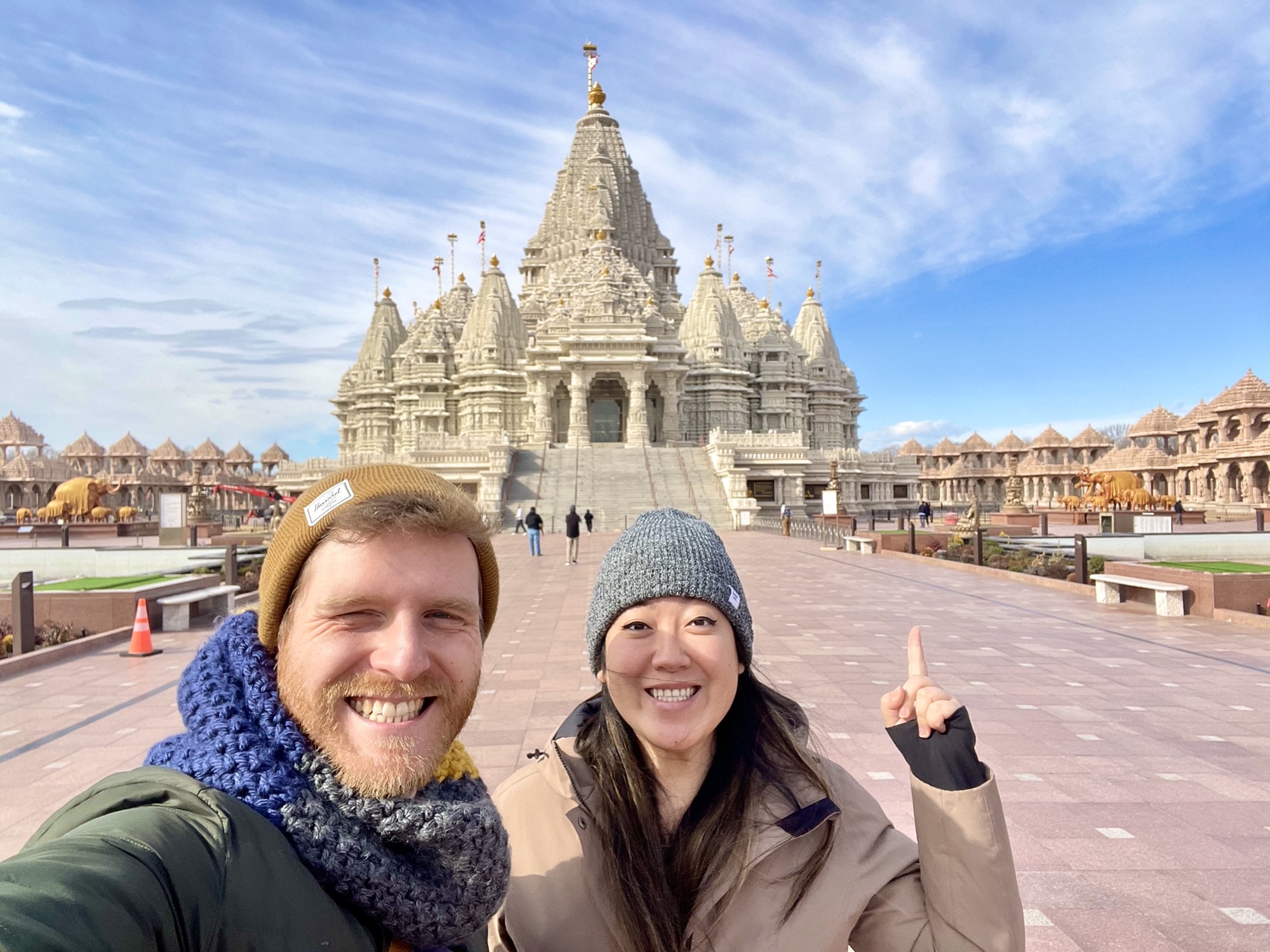
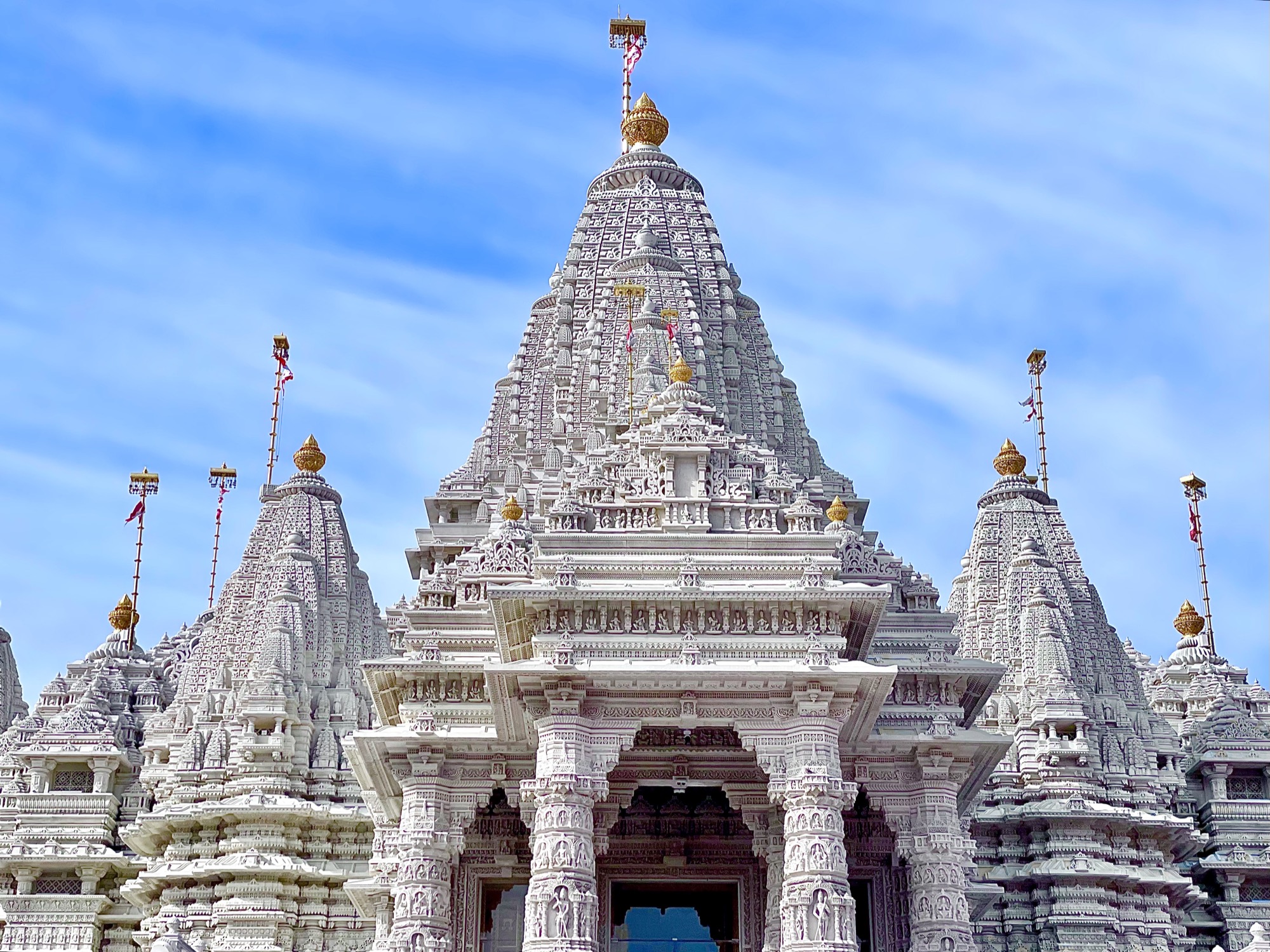
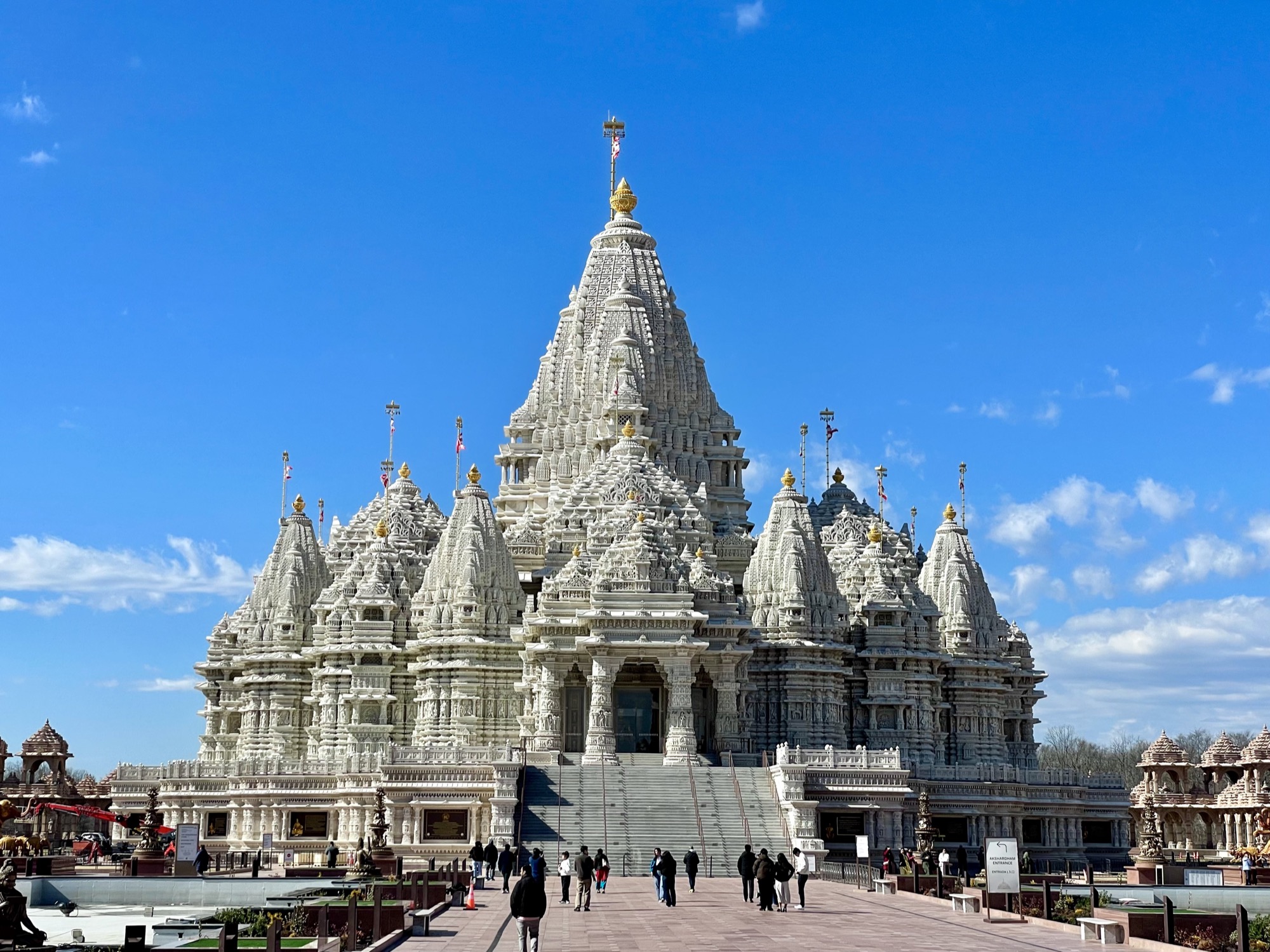
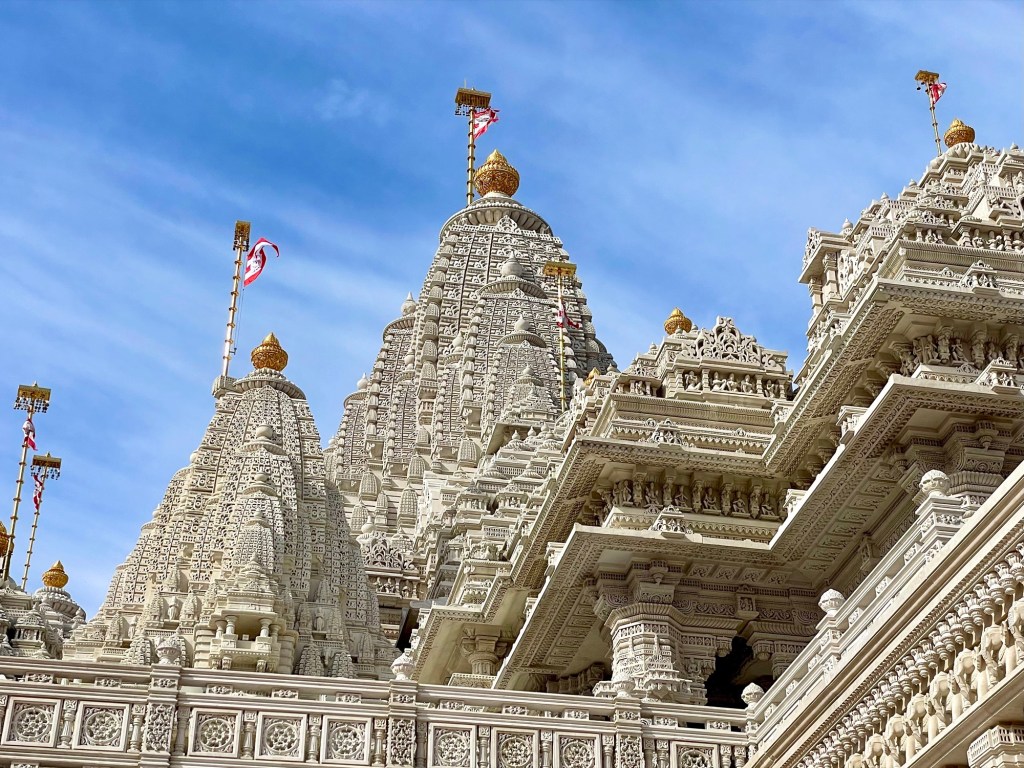
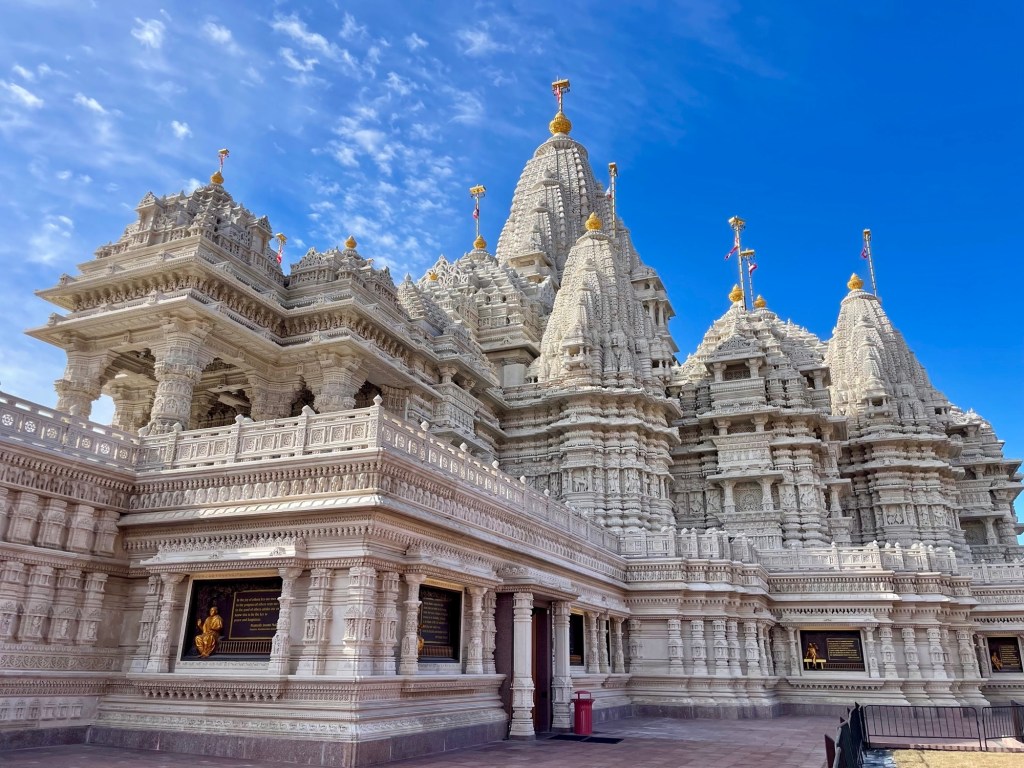
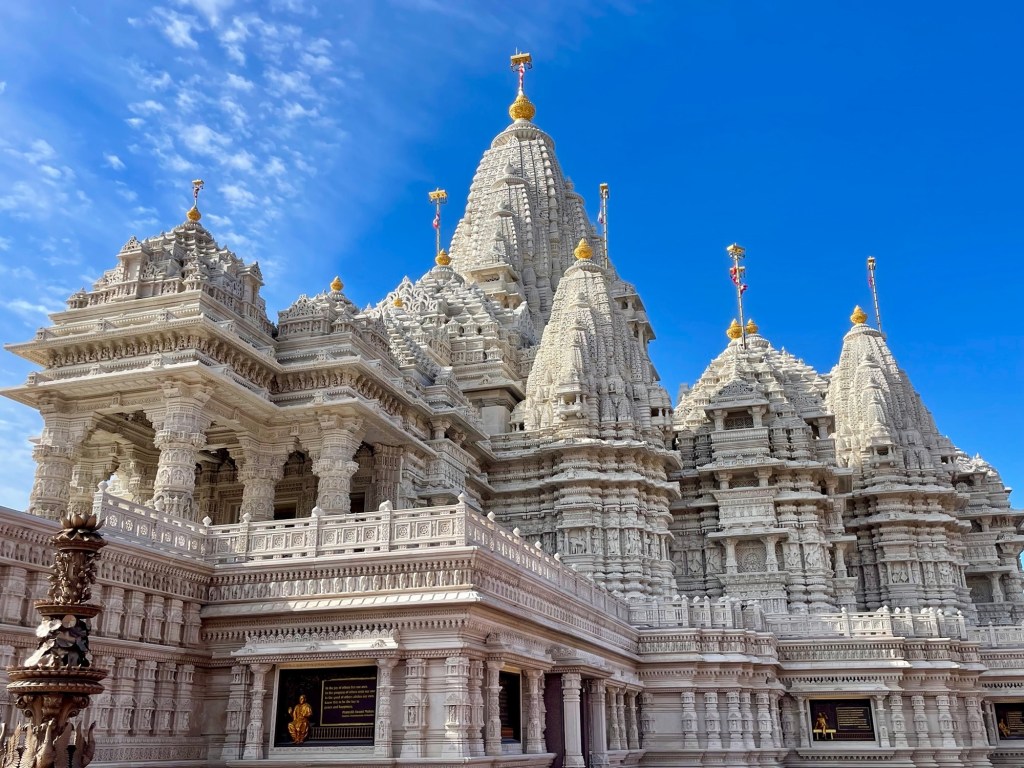
BAPS Swaminarayan Akshardham is the largest Hindu temple outside of Asia and it is SERIOUSLY impressive and a MUST visit in New Jersey. It opened only in October 2023 and took 7 years to build with 12000+ volunteers. Some parts are still under construction.

BAPS stands for Bochasanwasi Shri Akshar Purushottam Swaminarayan Sanstha and it is a socio-spiritual Hindu faith that was revealed by Bhagwan Swaminarayan (1781-1830) in the late 18th century and established in 1907 by Shastriji Maharaj (1865-1951). Founded on the pillars of practical spirituality, the BAPS reaches out far and wide to address the spiritual, moral and social challenges and issues we face in our world. Its strength lies in the purity of its nature and purpose.https://www.baps.org/About-BAPS/WhoWeAre.aspx

There are multiple BAPS temples globally and more than one location in New Jersey, so make sure you’re inputting the right one when travelling here!

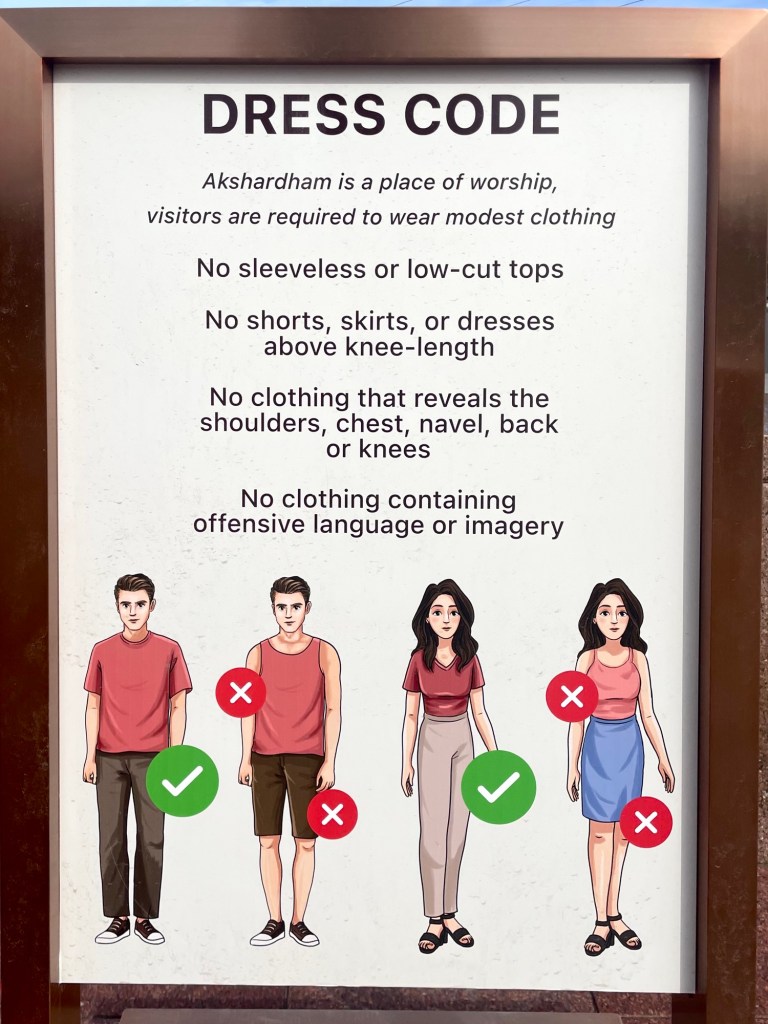
Visitor Etiquette & Dress Code

This beautiful temple is a place of quiet worship and there are a few rules when visiting. The most important is the dress code. Your shoulders and knees need to be covered – if you forget, there may be some shawls or coverings available on the day but you’ll need to ask the information desk.

They will ask you to remove your shoes when entering the temple so be prepared to walk either barefoot or in socks for the majority of your visit. There are shoe shelves at the entrance of each temple.

Respect the silence. People worship here. You can spend as long as you like inside the temples, but be mindful of the volume of your voice.

How much time do I need?

You need at least 2 hours to walk through it all, more if you want to go to the cafe or shop at their grocery store.

Get here early!

Although this temple only opened less than 2 years ago and it’s not quite a tourist hot spot (yet), it still gets busy as the day goes on. I’d recommend coming early in the morning when it’s quieter and feels more serene and there’s also the added bonus of fewer people in your photos and better parking.

When you arrive:

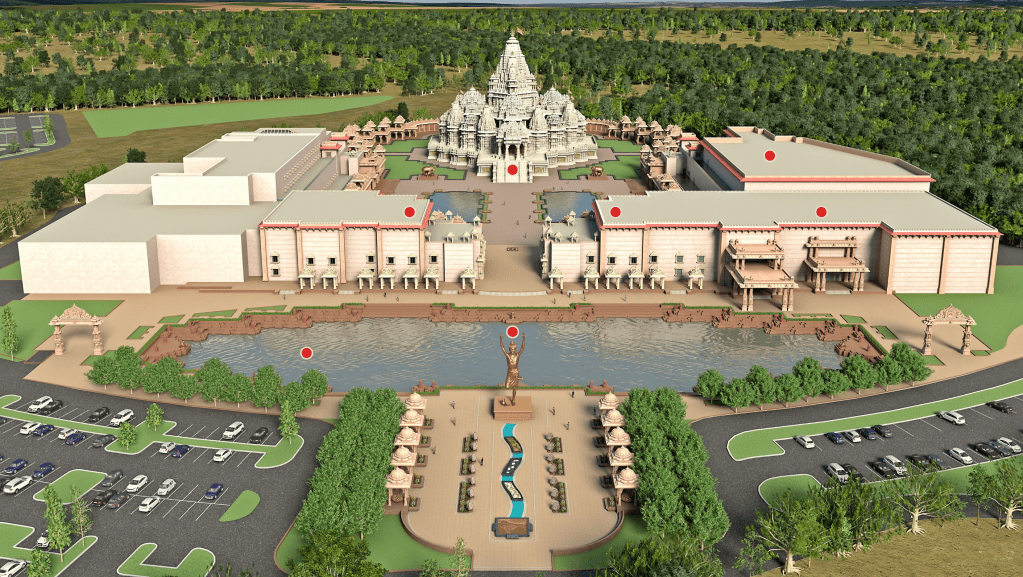
Here’s an overview of the grounds from their website: https://usa.akshardham.org/explore

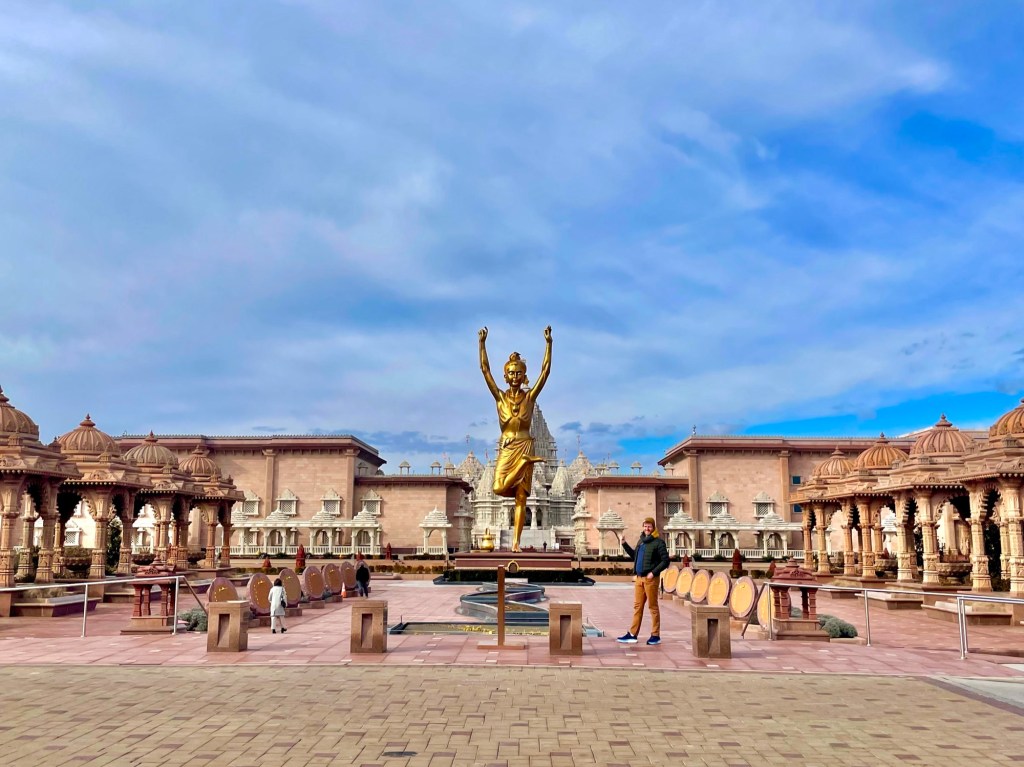
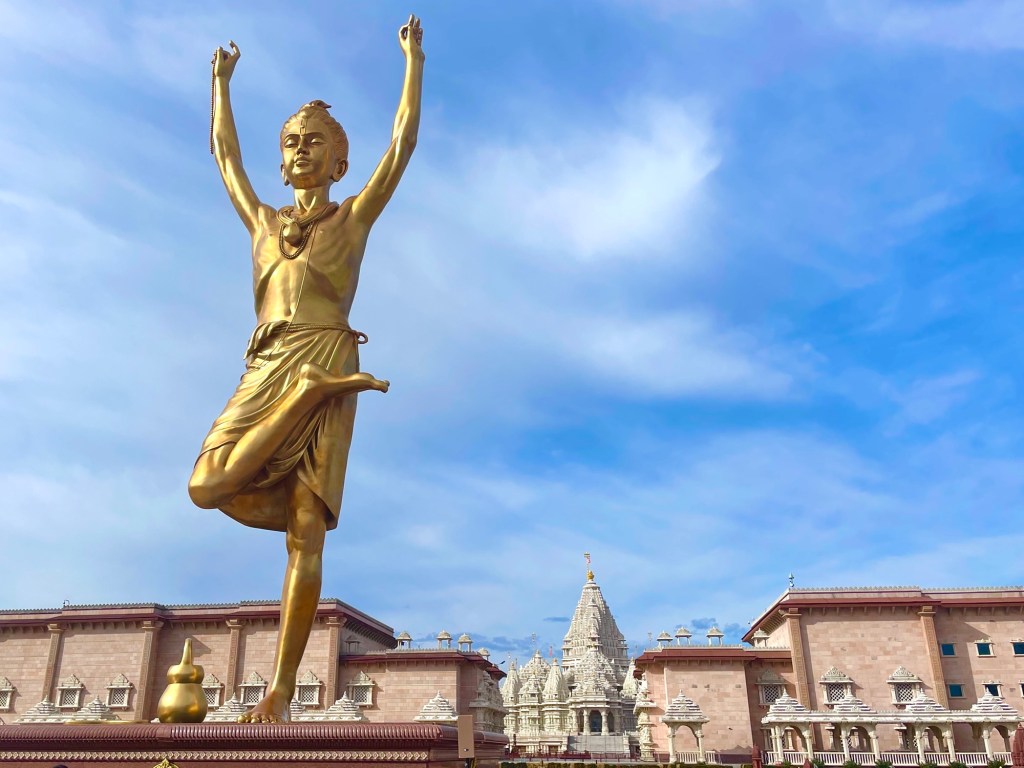
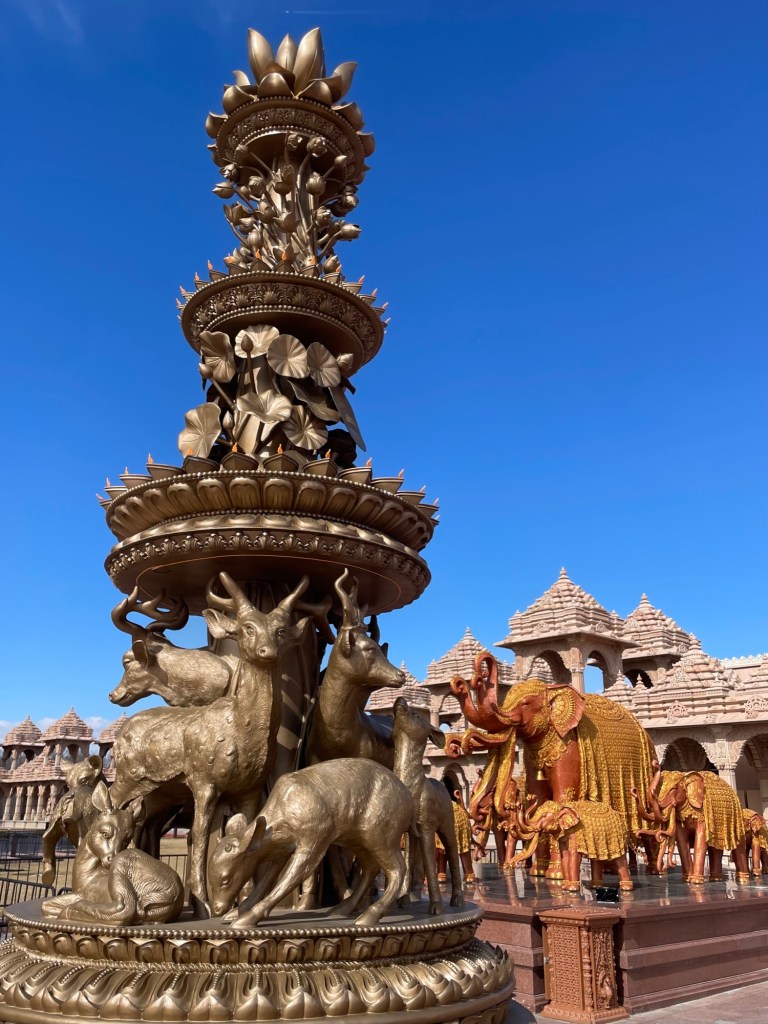
When you arrive, you’ll see the building from the parking lot. You’ll first walk through the garden area with large golden statue of the child yogi Nilkanth Varni, later known as Bhagwan Swaminarayan and see his 7 year path across the Indian subcontinent during his youth. Bhagwan Swaminarayan is seen as the reincarnation of God and was a spiritual leader and credited for being the founder of the BAPS religion. This statue stands 49 feet tall, to represent his 49 years on earth.

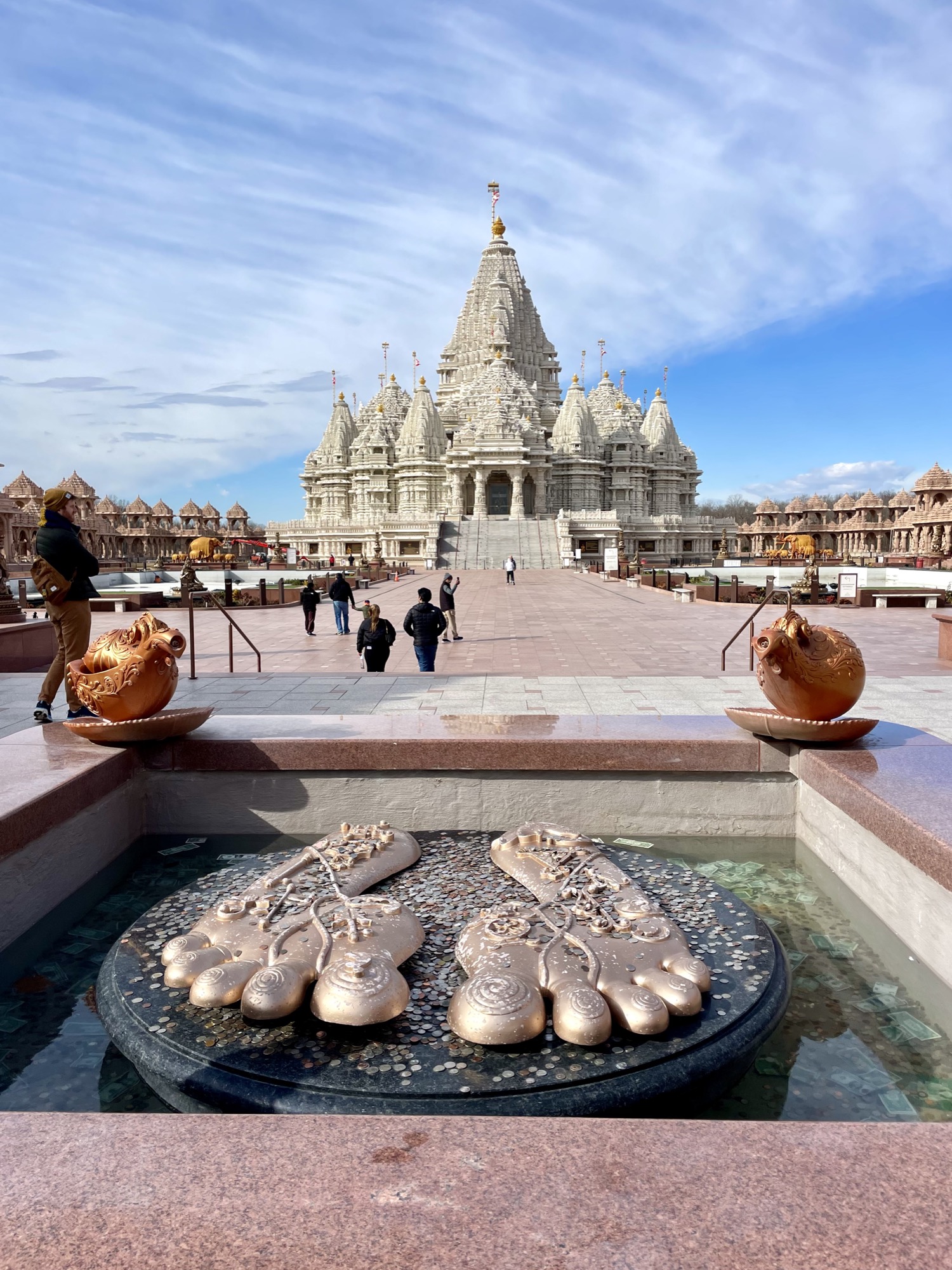
As you walk through the area, you’ll get a great view of the temple with a pool of water in front known as the Brahma Kund. Water represents life and in this pool there’s a mix of water brought from 108 holy rivers and lakes around India and also water from all 50 states in the USA!

Welcome Center

When you reach the Welcome Center on the right side of the temple, this is where they’ll scan your reserved ticket (on weekends or holidays). You’ll go through security then meet some lovely greeters that will give you a map of the grounds and explain the lay of the land.

Guided tours are offered every hour and subject to availability. Check with the information desk if you’re interested. There are also wheelchairs available if needed.

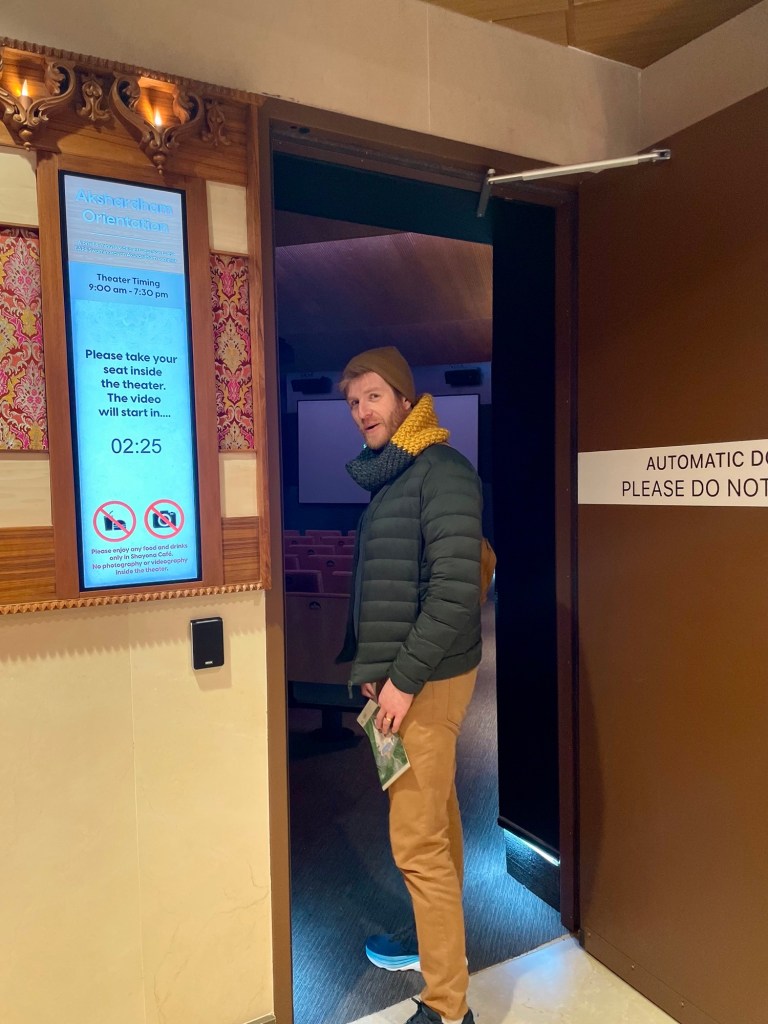
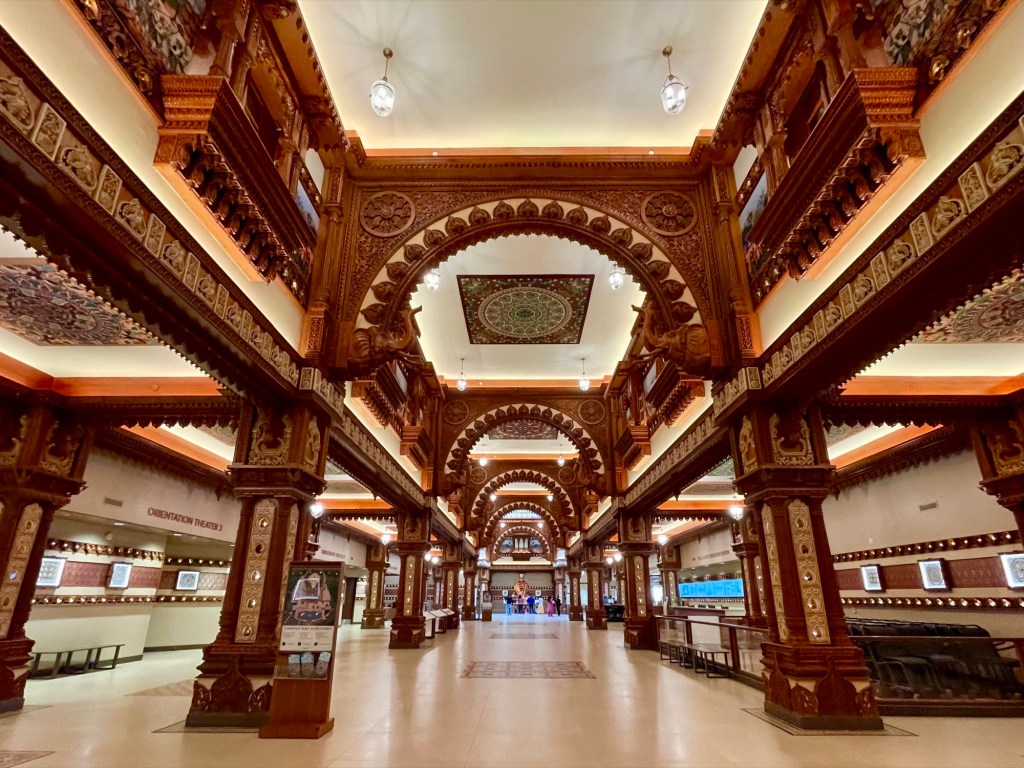
You’ll start your visit at the orientation theatre where they’ll play a 7 minute long video that gives you an overview of this place and areas to visit. There are multiple theatres here so you’re never waiting long for the next video to start. After the video, appreciate the architecture and artwork within this beautiful building.

Mandir

From the Welcome Center you’ll next come across the Mandir. The Mandir is considered the house of the god to whom it is dedicated and is a space for individual worship and personal prayers. There are no photos allowed in here, but there are beautiful marble paintings and carved marble columns similar to the inside of the Akshardham (the main temple). Their website will have photos of the inside if you’re interested in taking a peak, but I highly recommend experiencing the space yourself.

The Mandir is closed at certain times of the day, so keep an eye on the time when you visit. You can always explore the rest of the grounds and come back. It’s a smaller space, takes about 15 minutes to walk through, but there are colourful marble walls here that make it unique compared to the Akshardham.

Akshardham – the main temple

From the Mandir, walk through the centre of the campus and head straight towards the Akshardham – the main temple. You can take plenty of photos on the outside, but no photos are allowed inside.

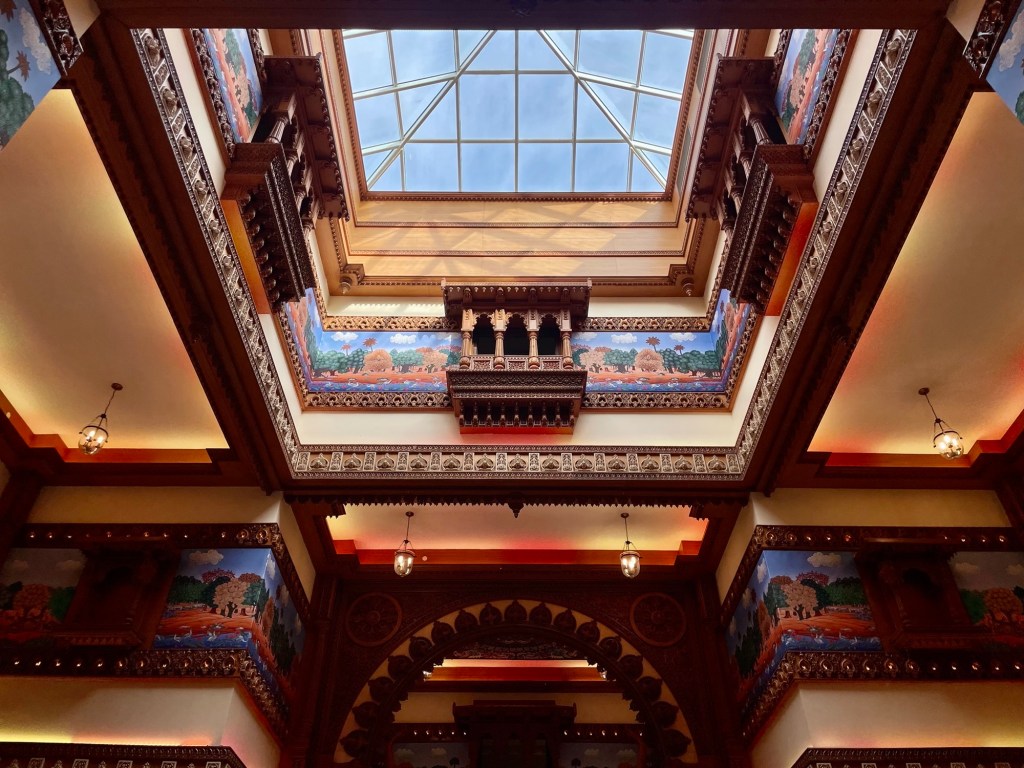
You will need to take off yours shoes in the Akshardham at the designated shoe shelves. It takes about 30 minutes to walk through it all. The inside is full of amazing intricately carved marble everywhere you turn, including the beautiful ceilings. You get a sense of serenity in this place. The carvings are done by master carvers in India and is then shipped to the USA piece by piece and assembled like a puzzle.

Parikrama – Red corridor walkway

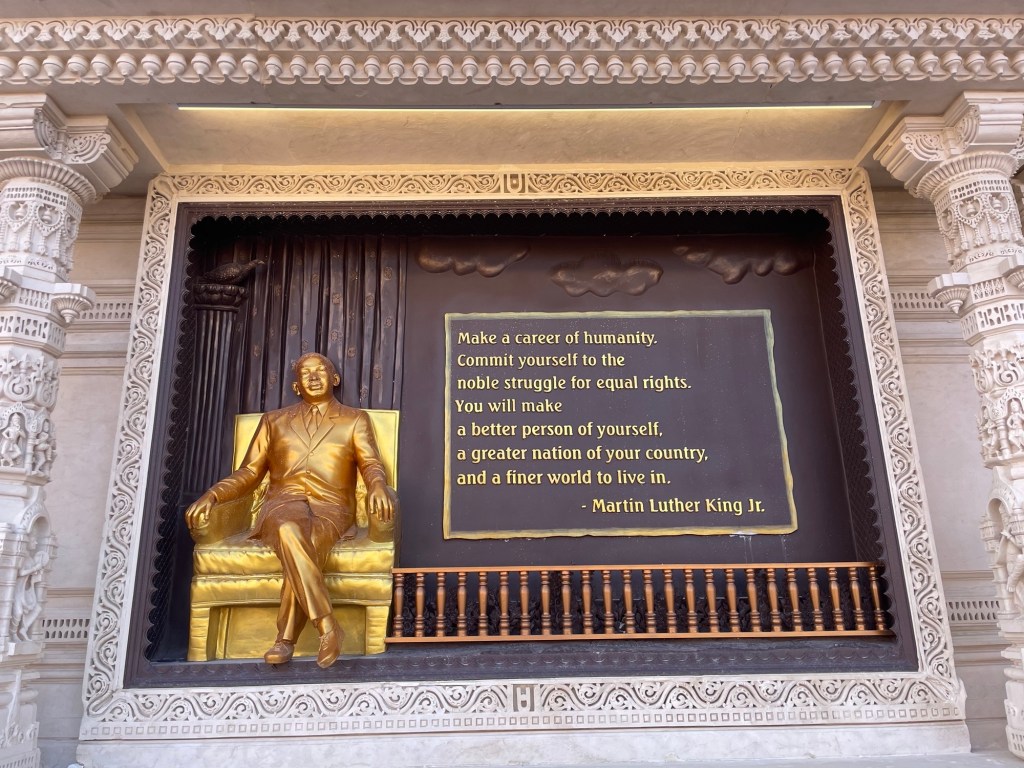
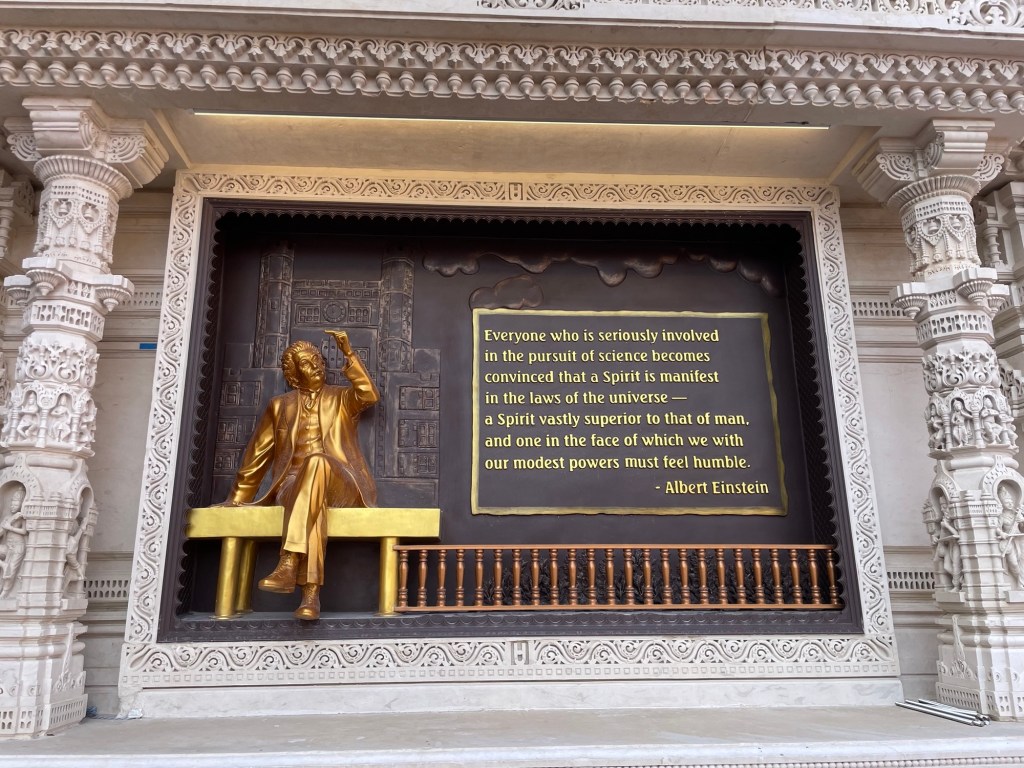
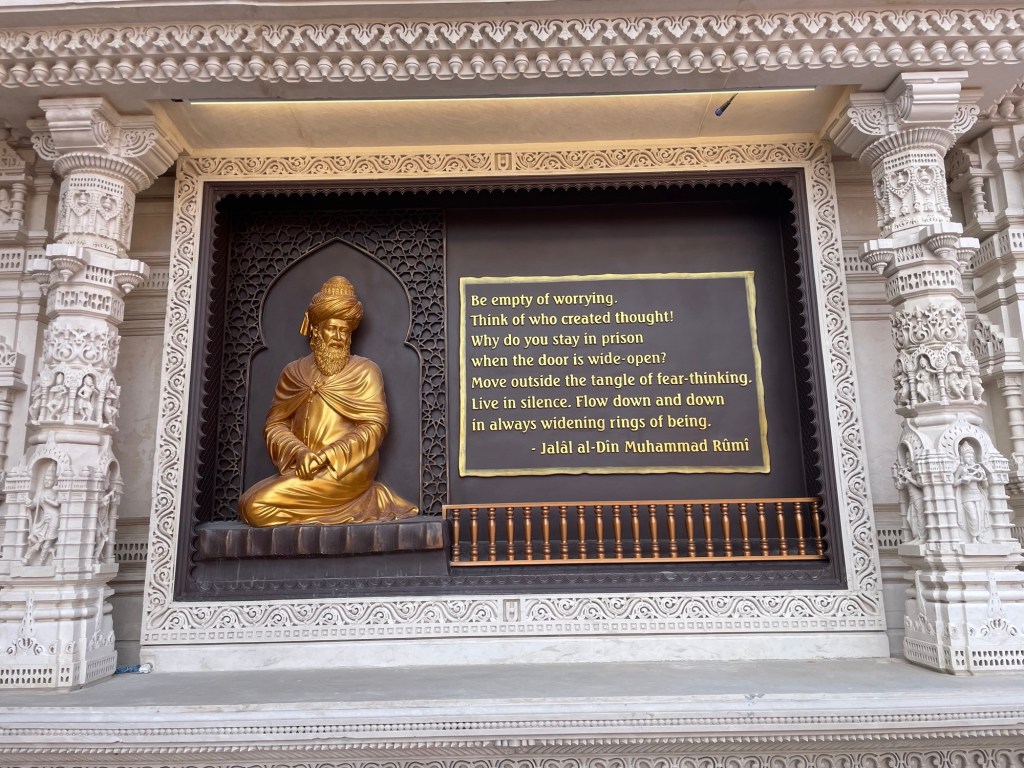
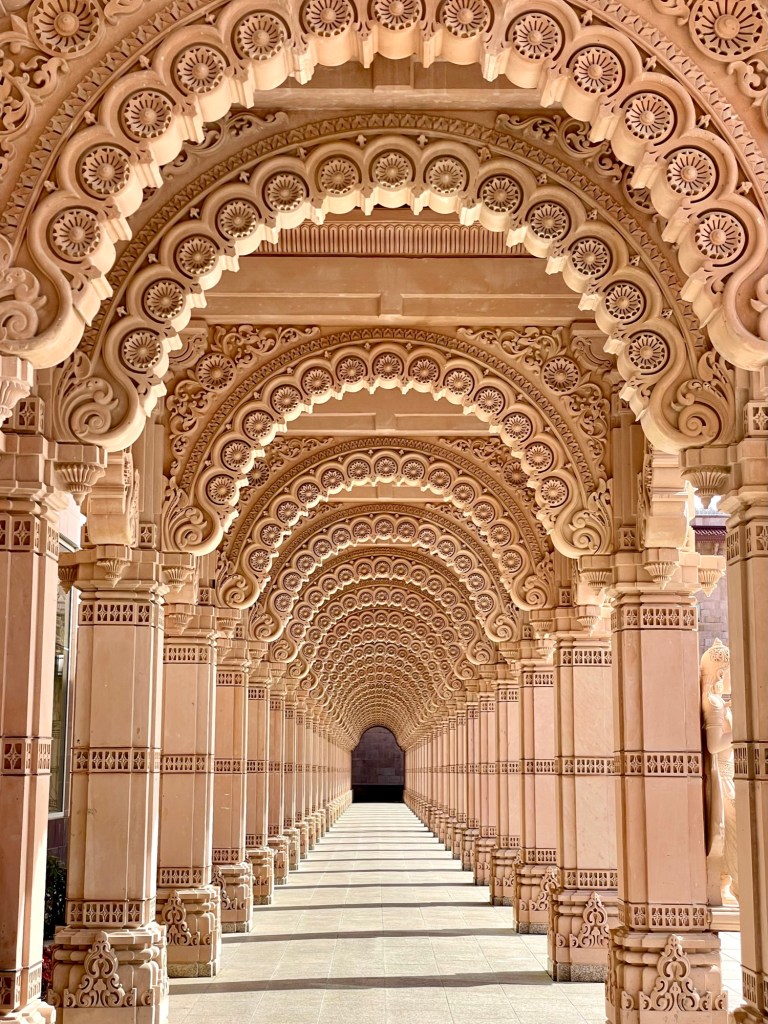
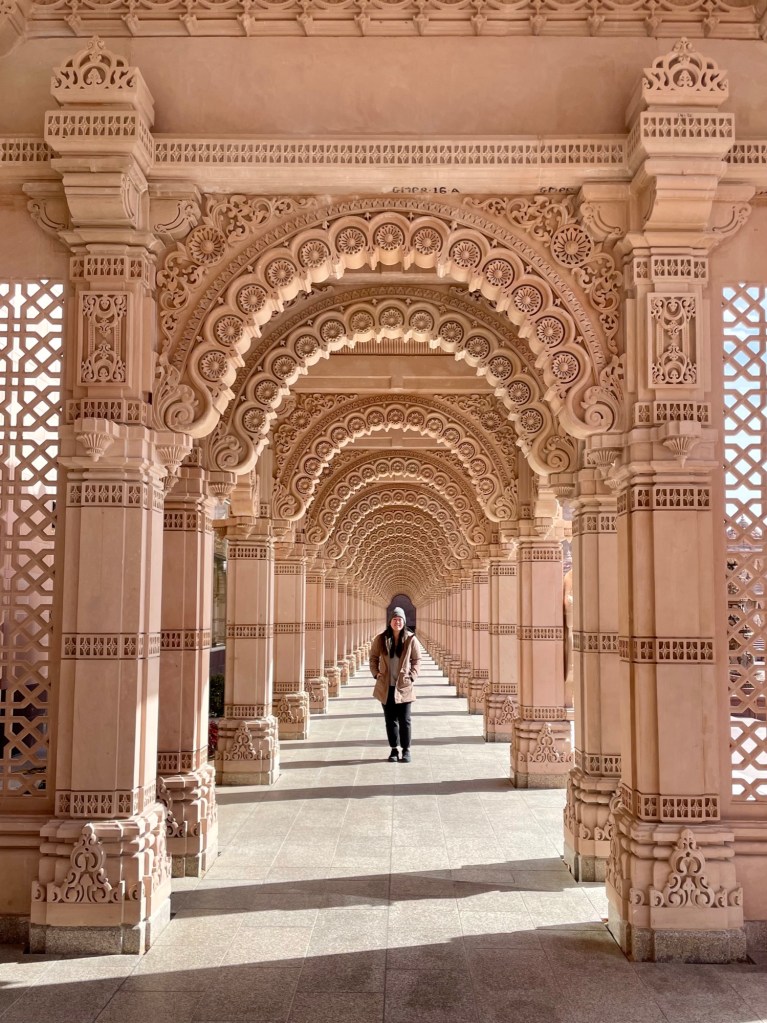
Surrounding the Akshardham are carved red corridor walkways called the Parikrama. These beautiful carved gates creates a trippy effect when you look through. You’ll come across these right at the start of the visit and you could have walked through them clockwise to reach the Akshardham instead of through the middle, but you’ll also come across it when you exit the Akshardham back towards the Welcome Center.

Shayona Cafe, Gift Shop, Back to the Welcome Center

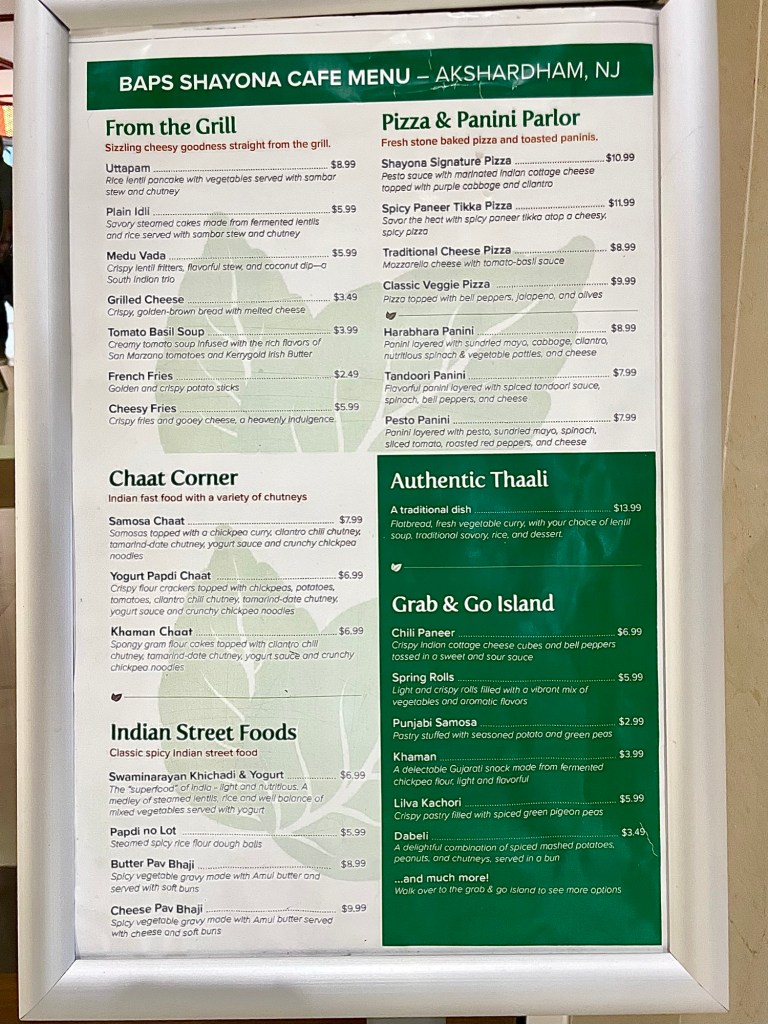
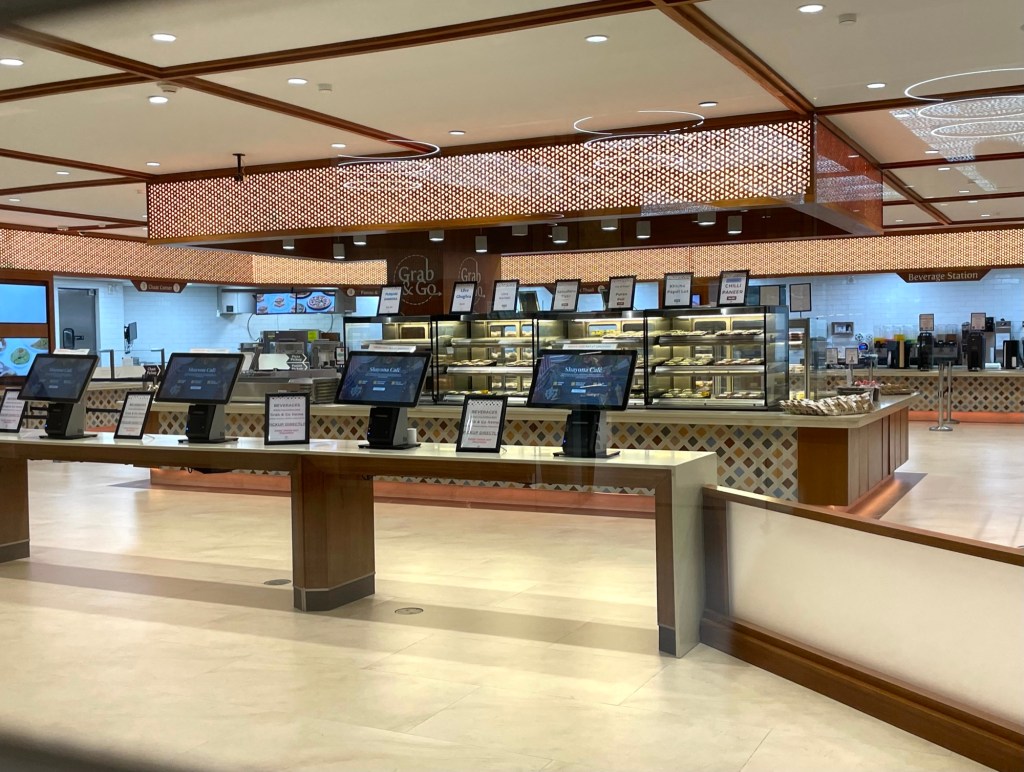
Lastly you’ll enter a building next to the Akshardham that contains the gift shop, cafe, then back to the Welcome Center. There’s an express cafe that’s not always open but the main cafe is the Shayona Cafe which doesn’t open until 11am. They serve both Indian and American food (see photo below of their menu). It looks pretty nice but unfortunately we had lunch plans already so didn’t stay for a bite. Across from the cafe is also a food shop where you can pick up some groceries.

I hope you enjoyed scrolling through our trip to this amazing temple! I highly recommend anyone to visit – it’s such a unique gem in New Jersey!