Colcannon (Irish Kale Mashed Potatoes)


Date Published: Jan 1st, 2025 | Last Updated: Jan 1st, 2025
Author: Abby |Category: sides, vegetarian, easy
Serves: 8 (1 large bowl) | Prep time: 15 mins | Cook time: 40 mins

Jump to recipe |

Happy New Year everyone!!!!🥳 I hope everyone had a great 2024, if not, here’s to a better 2025! To kick off the new year, here’s a twist to an old staple.

Colcannon is a traditional Irish mashed potato dish that incorporates kale (or cabbage). It sounds weird, but trust me, it actually works. Think of the kale as an excuse to pile on that butter. 😉

I learned of this dish when I found myself with a large bunch of kale taking up half the space in the vegetable drawer and some potatoes threatening to sprout. A quick search of these ingredients led me to this dish and now this is my go-to mashed potato dish to serve at any occasional to make an interesting twist to a classic.

Anyways, without further ado, here’s the recipe! If you have any comments or suggestions, I’d love to hear from you in the comment section! You can follow me on instagram, youtube and facebook to see all the recipes I post!

Happy cooking!

Ingredients you’ll need:

  • 1kg Yukon gold potatoes, diced (peeled or unpeeled depending on how like it)
  • 6 Tbsps (85g) unsalted butter
  • 1 large bunch (~6-8 cups, semi-packed) of kale (curly or lacinato), stems removed and chopped small
  • 3 cloves garlic, minced
  • 3 spring onions, sliced
  • 1/2 cup milk
  • Salt & pepper to taste

Directions:

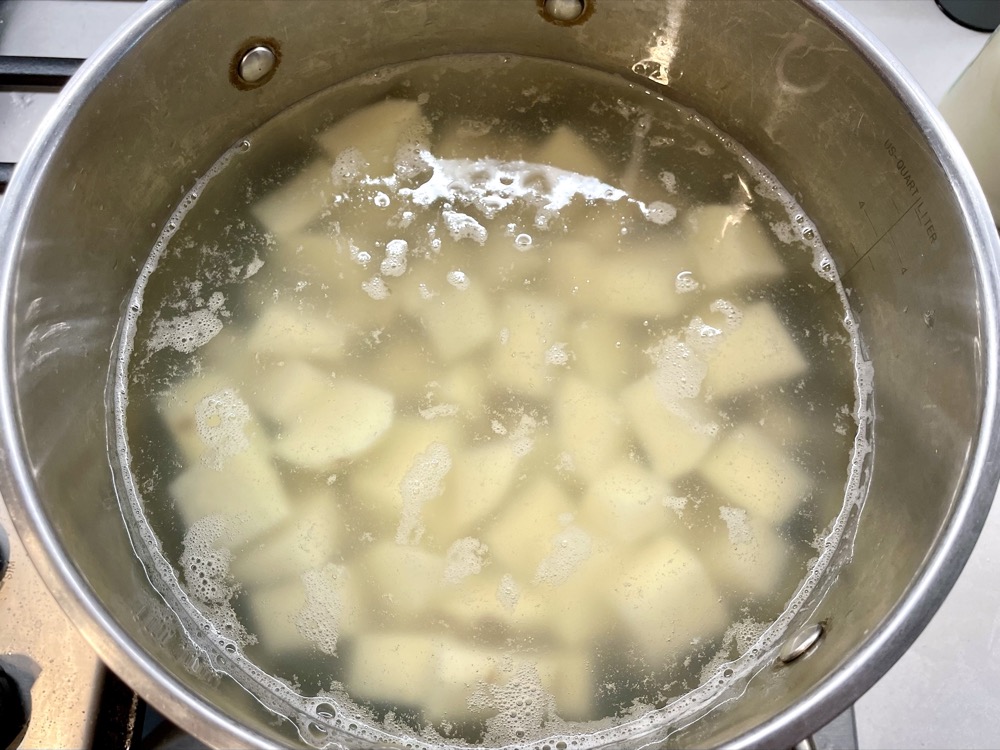
Place the potatoes in a pot and add enough water to cover and a sprinkle of salt. Bring the heat up to HIGH to let the water come to a boil, then turn it down to MED and continue to simmer until the potatoes are fork-tender (~15-20 mins). Drain and set aside.

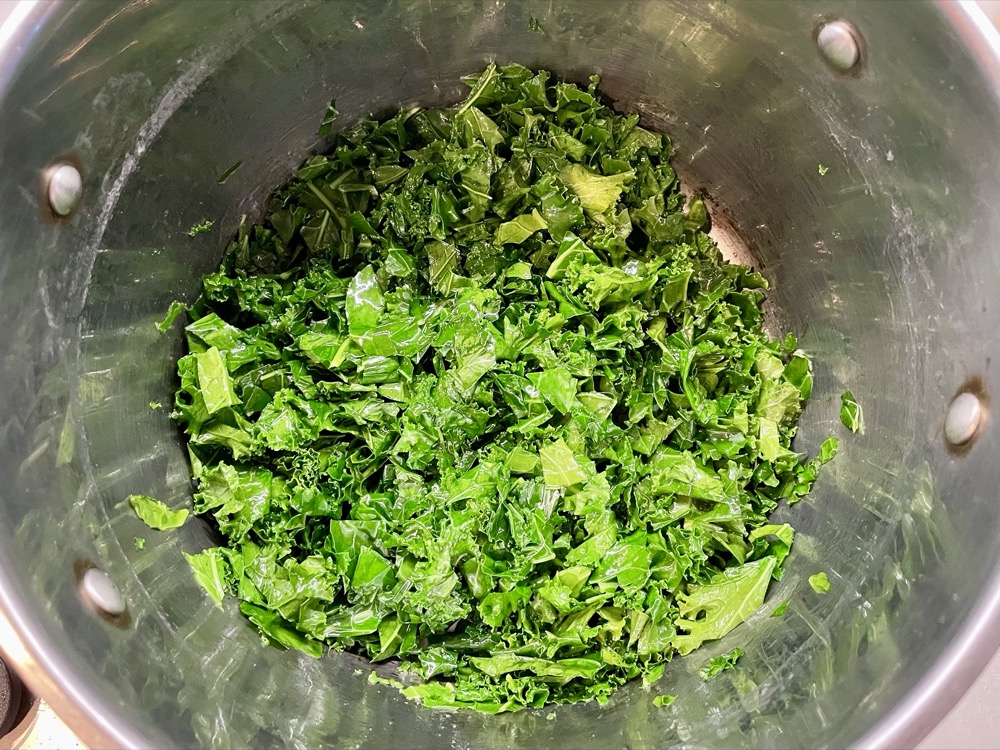
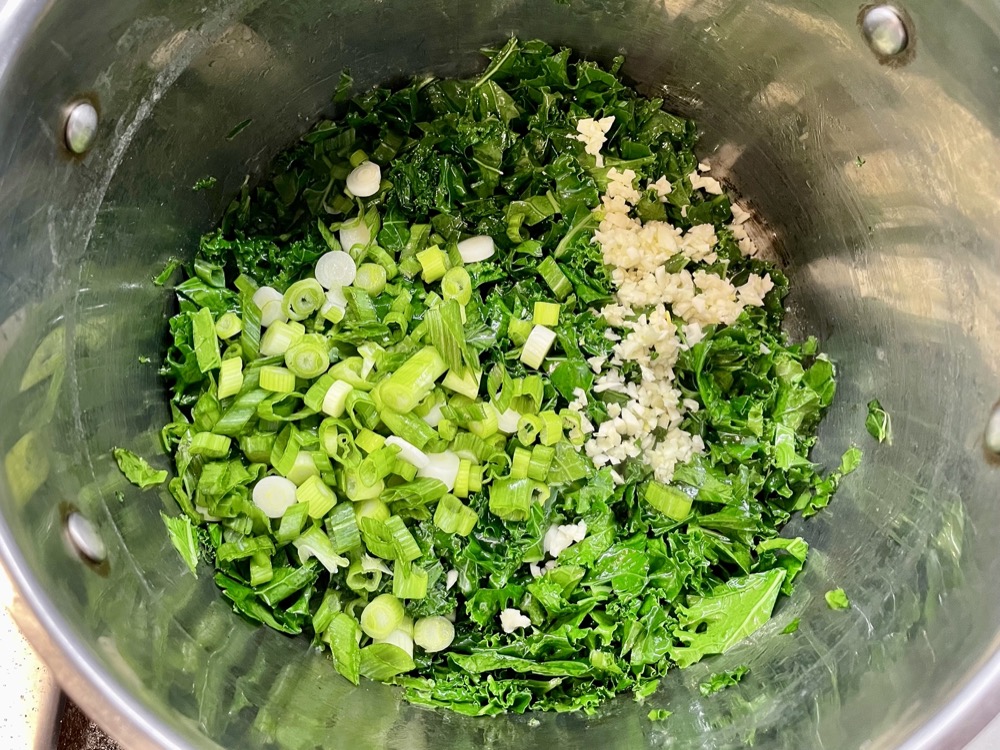
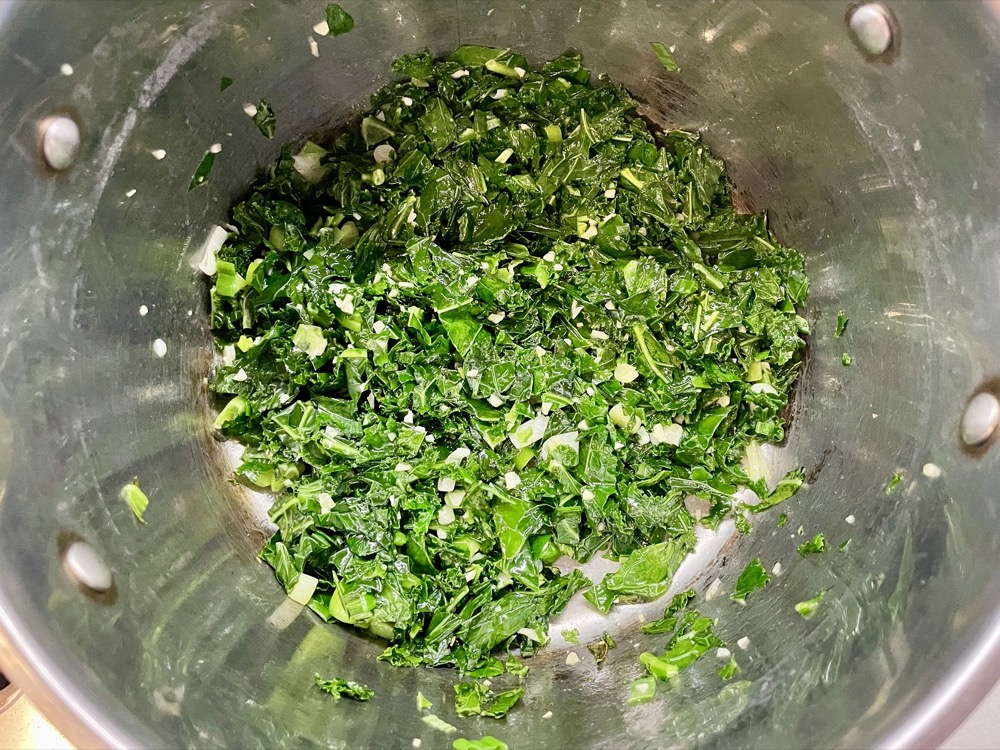
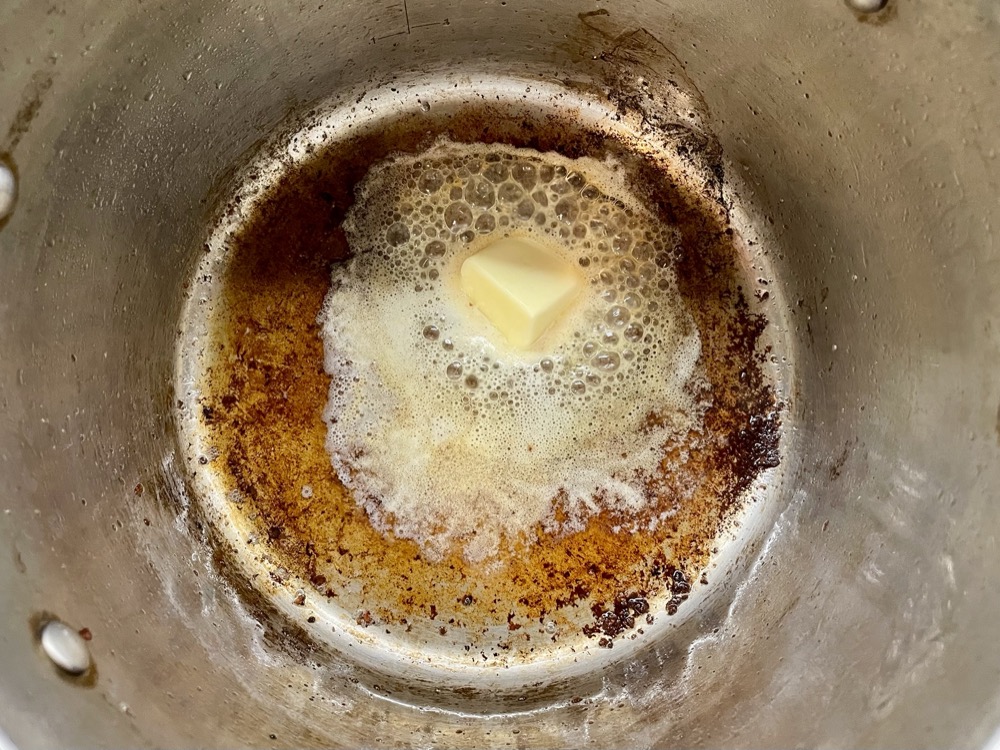
In a medium sized pot or deep pan on MED-HIGH heat, melt the butter and add in the kale. Sauté for a few minutes until the leaves are wilted. Add in the garlic and spring onions and continue to cook for another 2 minutes until fragrant and the spring onions have softened.

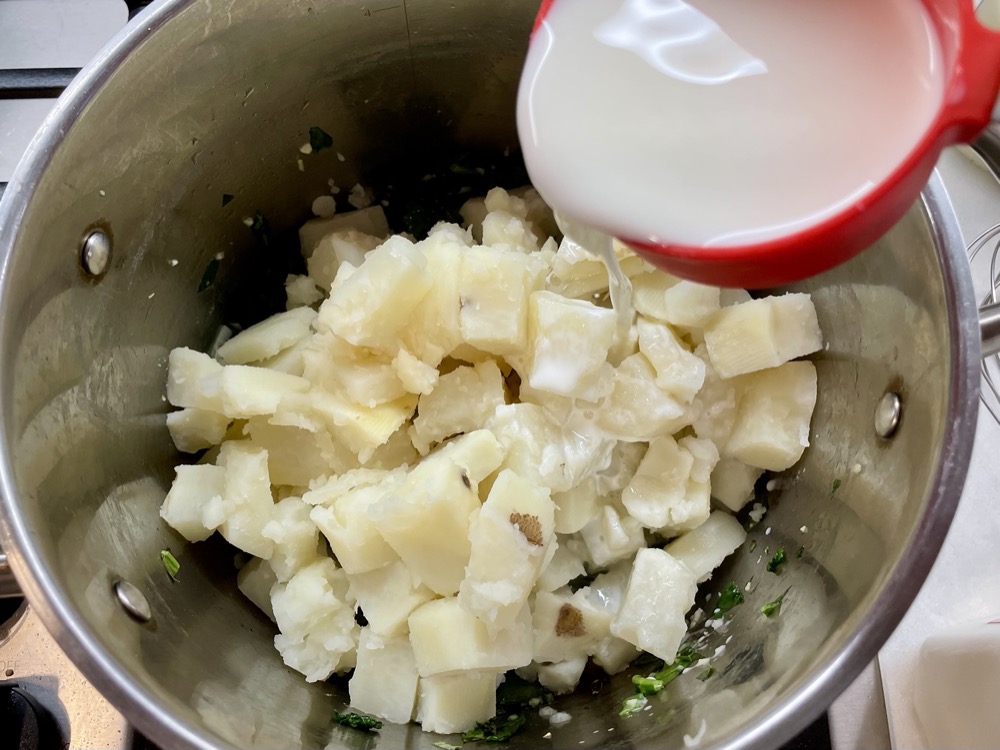
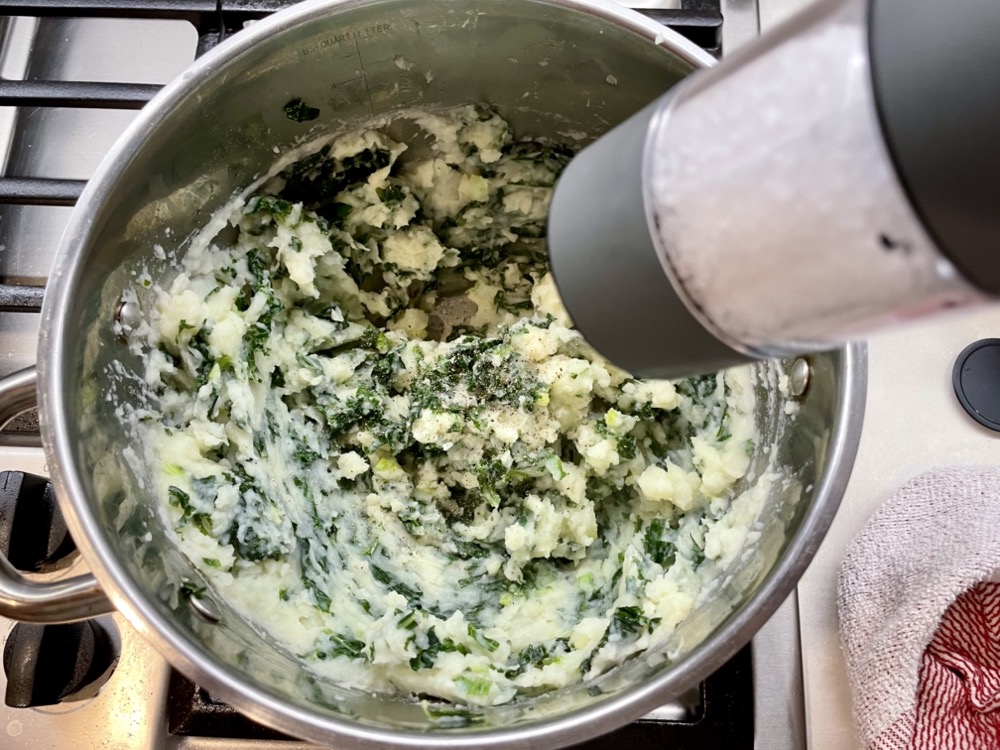
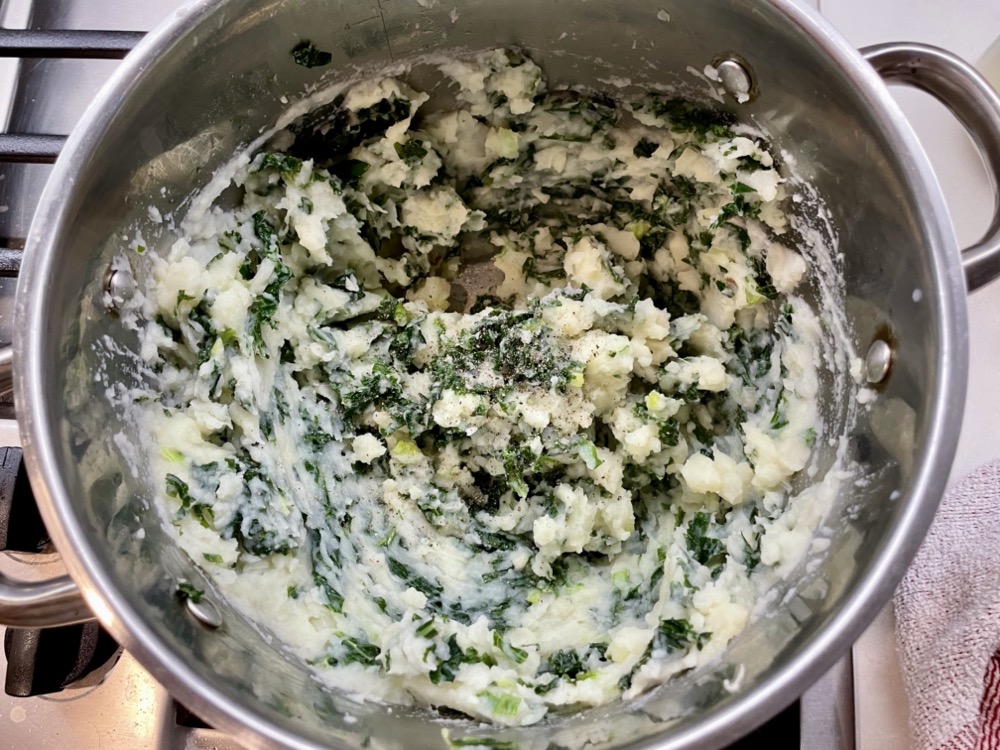
Add in the cooked potatoes (from step 1) and milk into the pan and mix it all together. Once everything is heated through, turn off the heat and mash the potatoes until smooth. Taste and adjust salt and pepper to your preference. Done!

Summarized Recipe:

Colcannon (Irish Kale Mashed Potatoes)

Date Published: Jan 1st, 2025 | Last Updated: Jan 1st, 2025
Author: Abby |Category: sides, vegetarian, easy
Serves: 8 (1 large bowl) | Prep time: 15 mins | Cook time: 40 mins

Ingredients:

  • 1kg Yukon gold potatoes, diced (peeled or unpeeled depending on how like it)
  • 6 Tbsps (85g) unsalted butter
  • 1 large bunch (~6-8 cups, semi-packed) of kale (curly or lacinato), stems removed and chopped small
  • 3 cloves garlic, minced
  • 3 spring onions, sliced
  • 1/2 cup milk
  • Salt & pepper to taste

Directions:

  1. Place the potatoes in a pot and add enough water to cover and a sprinkle of salt. Bring the heat up to HIGH to let the water come to a boil, then turn it down to MED and continue to simmer until the potatoes are fork-tender (~15-20 mins). Drain and set aside.
  2. In a medium sized pot or deep pan on MED-HIGH heat, melt the butter and add in the kale. Sauté for a few minutes until the leaves are wilted. Add in the garlic and spring onions and continue to cook for another 2 minutes until fragrant and the spring onions have softened.
  3. Add in the cooked potatoes (from step 1) and milk into the pan and mix it all together. Once everything is heated through, turn off the heat and mash the potatoes until smooth. Taste and adjust salt and pepper to your preference. Done!
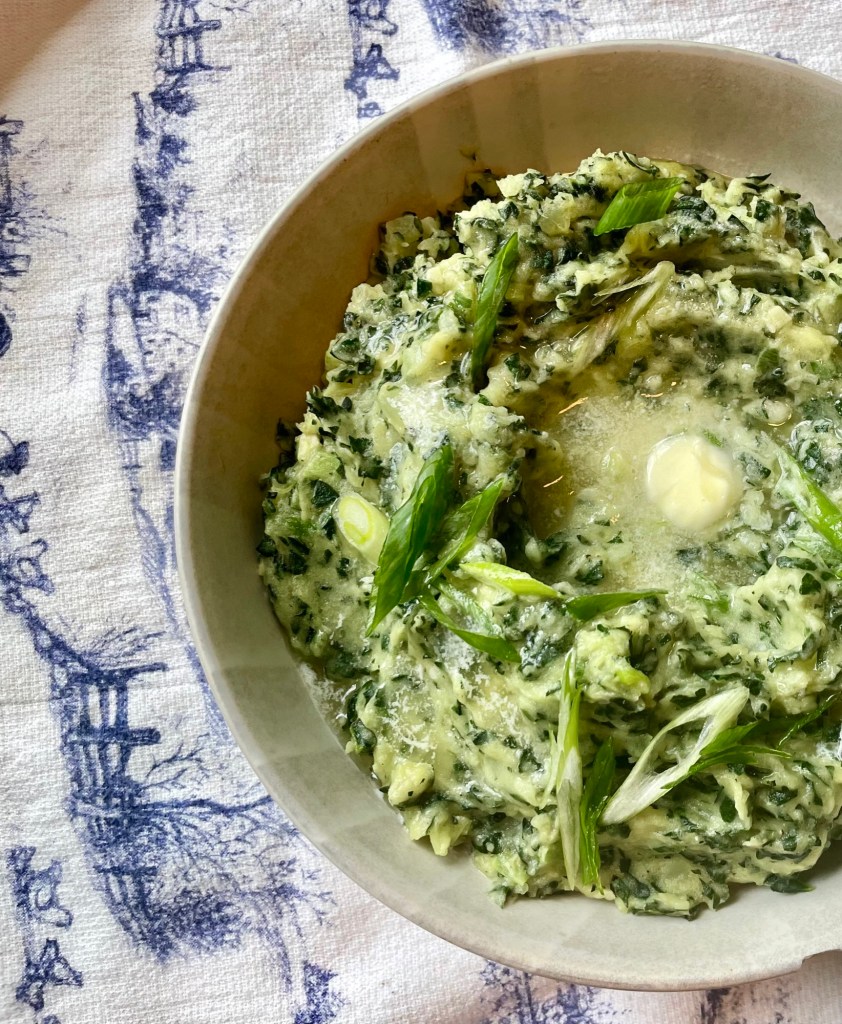
  4. Melt 2 Tbsp of butter and drizzle on top with green onion garnish before serving.

Hearty Chicken Corn Chowder – the ultimate comfort food


Date Published: Dec 27th, 2024 | Last Updated: Dec 27th, 2024
Author: Abby |Category: soups
Serves: 6 (as mains) | Prep time: 20 mins | Cook time: 45 mins

Jump to recipe |

Chicken corn chowder is the ultimate comfort food for me. No matter what’s going on in this world, a big bowl of this soup seems to always hit the right spot. It’s especially fitting for this cold weather we’ve been having lately!

My version of a chicken corn chowder packs a ton of vegetables and protein because I like my soups hearty and filling. It also makes a large pot of soup, enough for at least 6 large portions. The jalapeño is optional if you prefer a bit of a kick.

Anyways, without further ado, here’s the recipe! If you have any comments or suggestions, I’d love to hear from you in the comment section! You can follow me on instagram, youtube and facebook to see all the recipes I post!

Happy cooking!

Ingredients you’ll need:

  • 200g (~6 slices) bacon, chopped
  • 2 Tbsp unsalted butter
  • 1 large yellow onion, diced
  • 1 medium carrot, diced
  • 2 stalks celery, diced
  • 1 red bell pepper/capsicum, diced
  • 1 raw jalapeño pepper, seeds removed and diced (optional, for a mild kick, keep the seeds in if you like it spicier)
  • 2 cloves garlic, minced
  • 1/2 cup all purpose flour
  • 1 tsp fresh ground black pepper + more to taste
  • 1 tsp kosher salt + more to taste
  • 1 tsp paprika (ideally sweet smoked, but any will do)
  • 4 cups chicken broth
  • 1 cup whole milk
  • 1 cup heavy cream
  • 3 chicken breasts (or 2 large ones), skinless, boneless
  • 1kg (4 med-large) potatoes, peeled and diced to 2cm cubes
  • 2 cans of corn, drained or cut the kernels off 3 ears of sweet corn
  • 3 dashes of Worcestershire sauce

Directions:

In a large soup pot on MED heat, add in the chopped bacon and cook until browned and crispy then remove onto a paper towel and set aside.

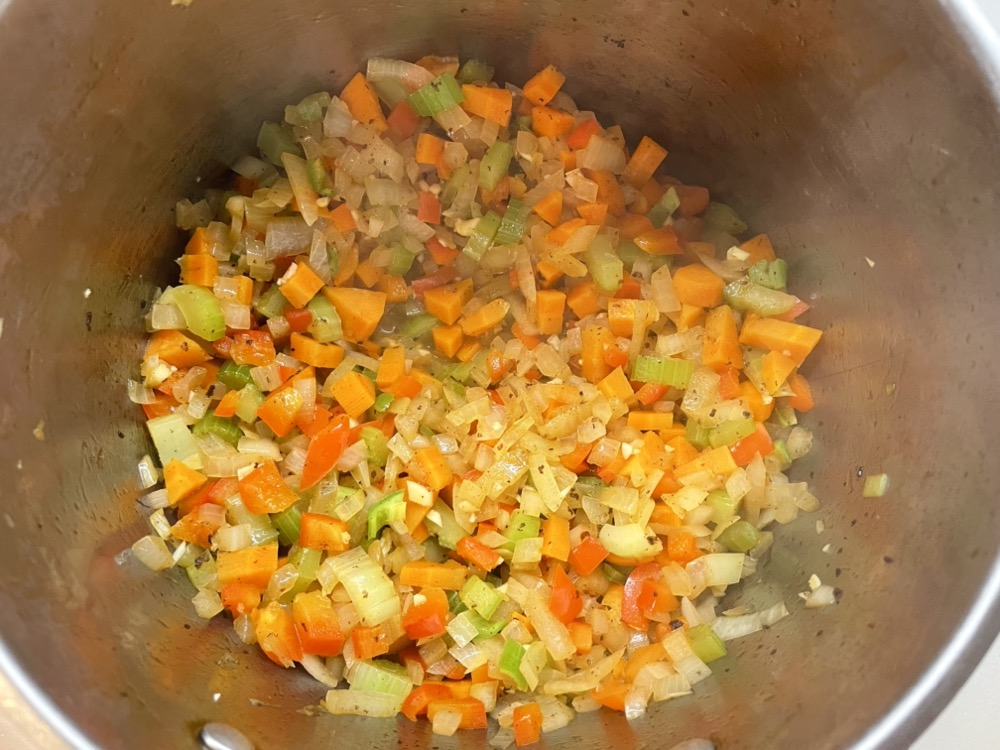
Discard all but 2 tablespoons of bacon grease from the pot and add in the 2 Tbsps butter. Once the butter has melted, add in the diced onion, carrots, celery, red bell pepper, jalapeño (if using) and minced garlic. Mix everything together and cook until the vegetables are soft enough to break with the spatula (5-8 minutes).

Sprinkle in the 1/2 cup flour and stir until well combined for 1-2 minutes so the flour cooks a little.

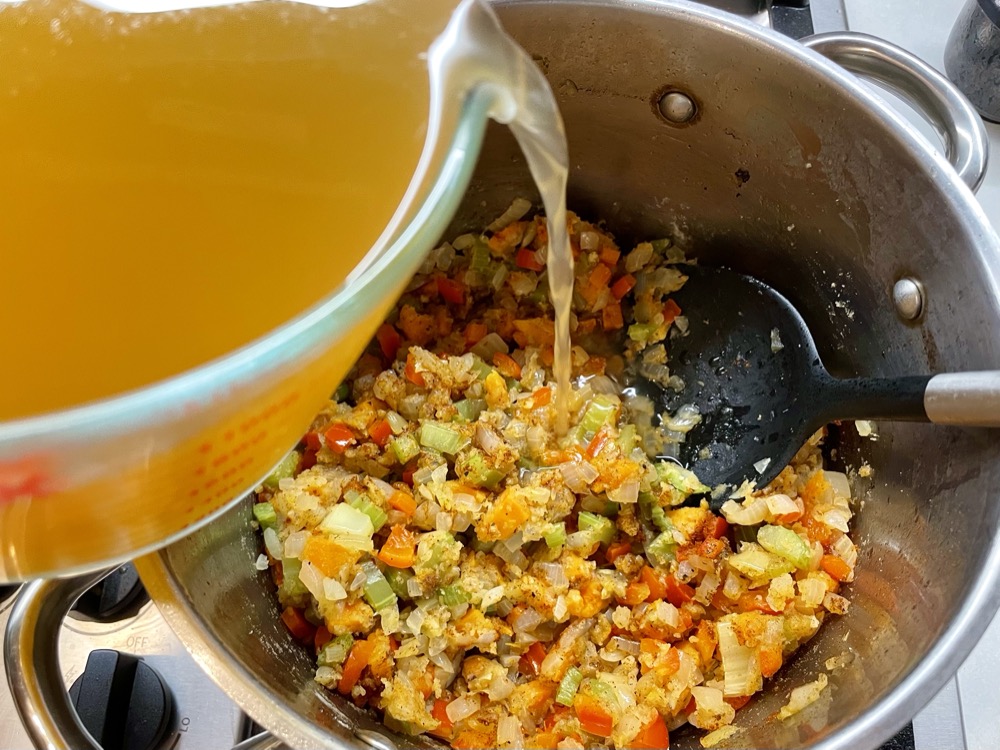
Add in the 1 tsp black pepper and 1 tsp paprika. Mix together then slowly add in the chicken broth 1 cup at a time while mixing to ensure there are no clumps and make sure you scrape the bottom of the pot.

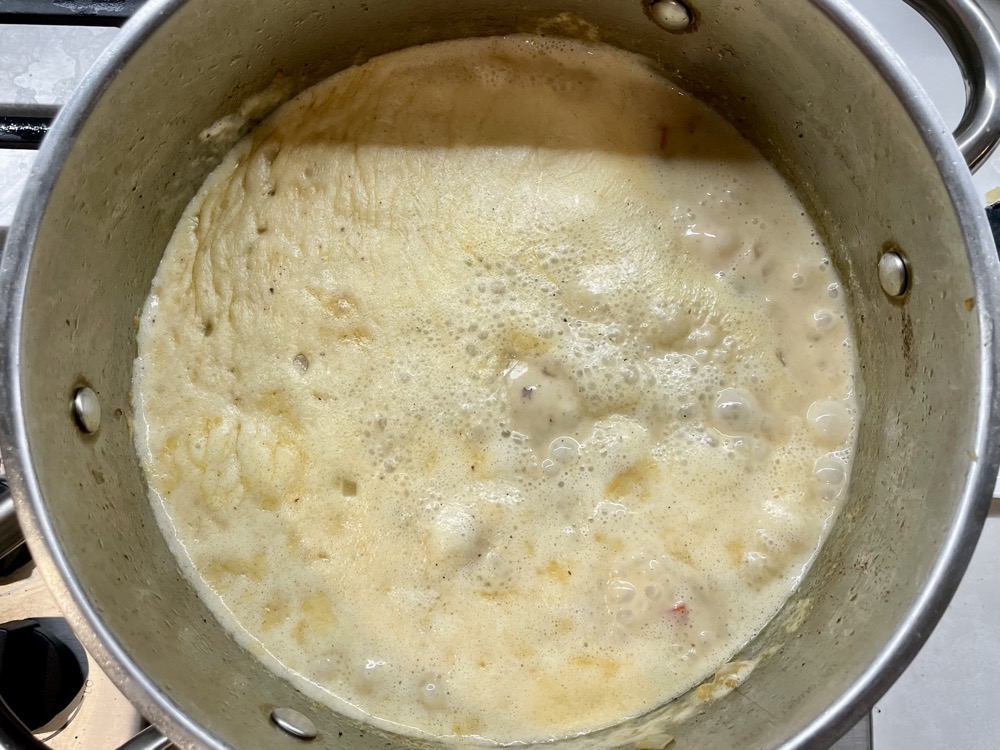
Once all the chicken broth has been added, add in the 1 cup of milk and 1 cup of heavy cream. Stir everything together and let the soup come to a boil.

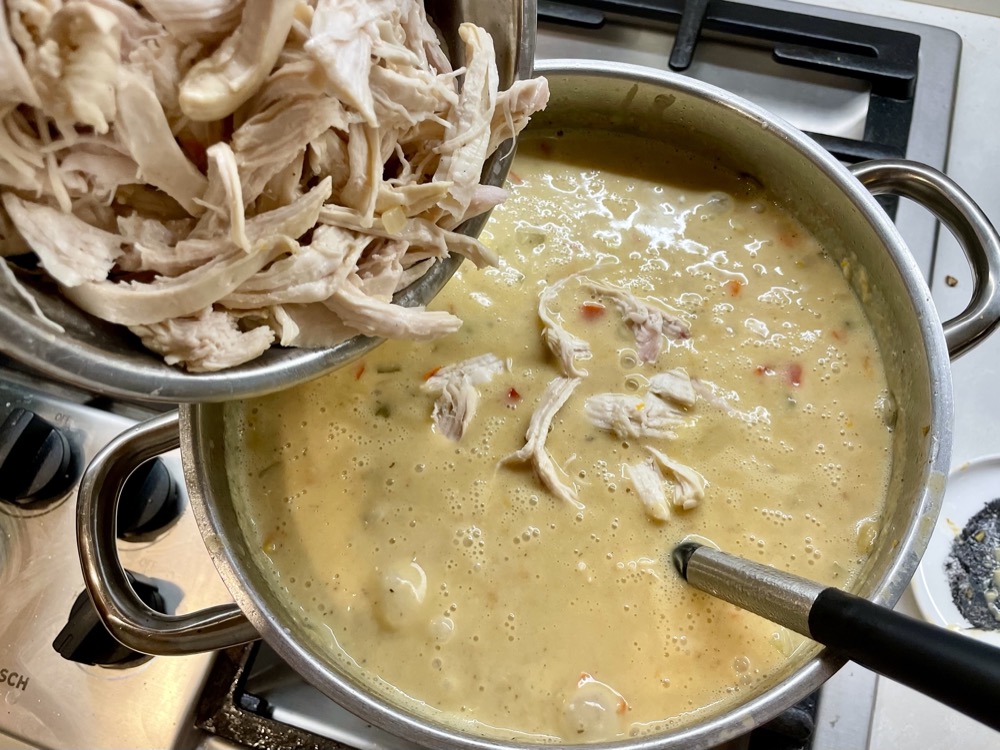
Add in the 3 whole chicken breasts. Continue to simmer for 15 minutes until the chicken is cooked. Once the chicken has cooked, remove the breasts and set aside on a plate.

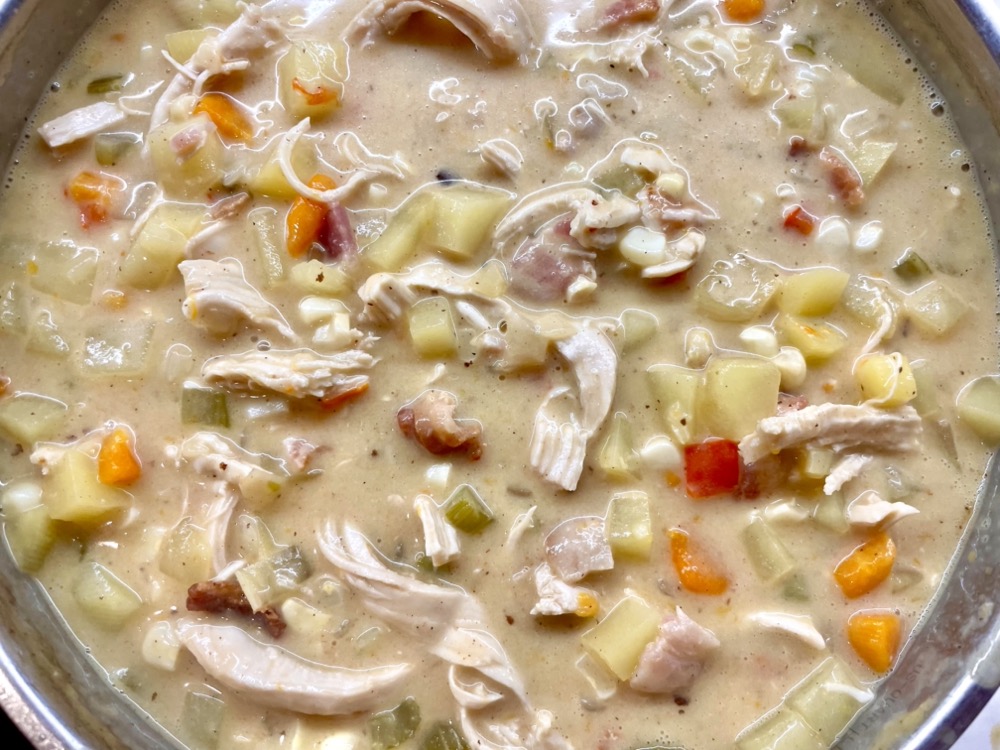
Add the diced potatoes and corn to the soup and continue to simmer until the potatoes are cooked (~10 minutes).

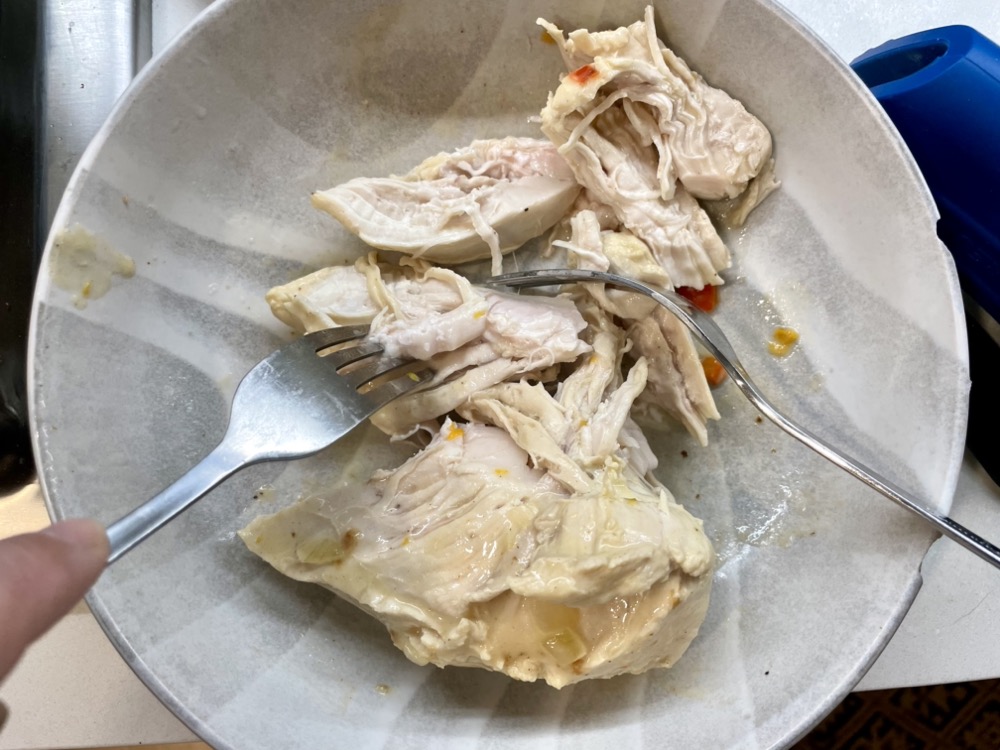
While the potatoes are cooking, use two forks to shred the chicken (don’t worry if it’s a little undercooked in some parts).

Add it back into the pot along with half the amount of cooked bacon (from step 1).

When the potatoes are soft enough the break with a spatula, add 3 dashes of Worcestershire sauce and mix. Taste and adjust salt and pepper to taste.

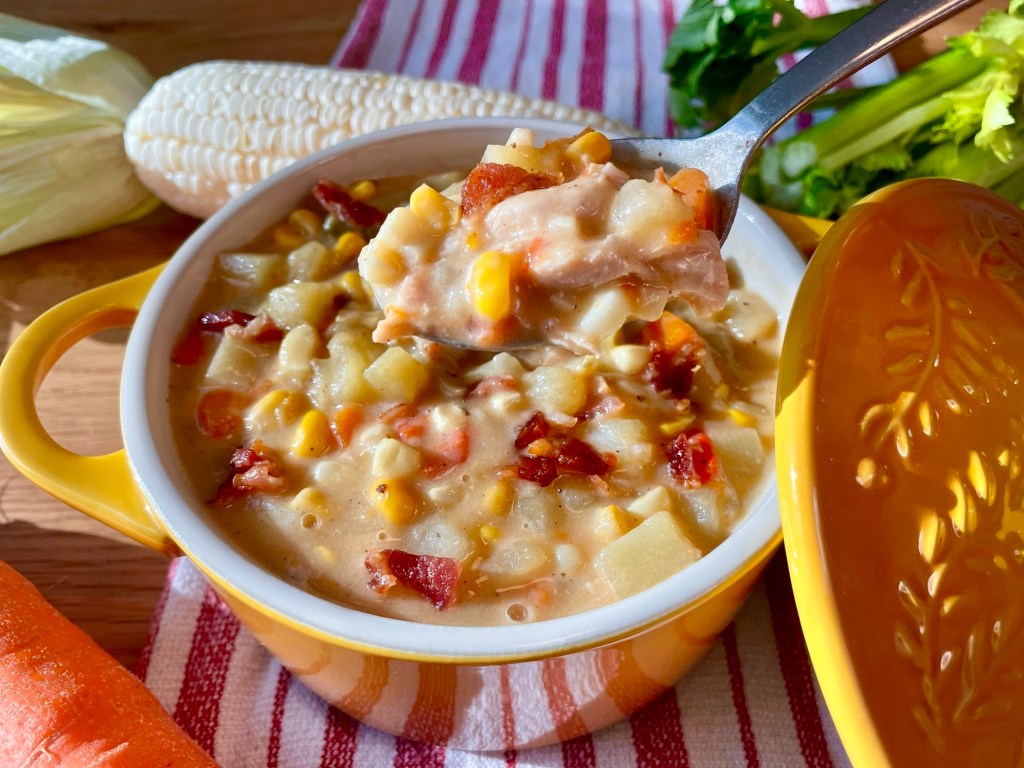
Done! Serve hot with a sprinkle of the rest of the cooked bacon (from step 1) sprinkled on top.

Summarized Recipe:

Hearty Chicken Corn Chowder – the ultimate comfort food

Date Published: Dec 27th, 2024 | Last Updated: Dec 27th, 2024
Author: Abby |Category: soups
Serves: 6 (as mains) | Prep time: 20 mins | Cook time: 45 mins

Ingredients:

  • 200g (~6 slices) bacon, chopped
  • 2 Tbsp unsalted butter
  • 1 large yellow onion, diced
  • 1 medium carrot, diced
  • 2 stalks celery, diced
  • 1 red bell pepper/capsicum, diced
  • 1 raw jalapeño pepper, seeds removed and diced (optional for a mild kick, keep the seeds in if you like it spicier)
  • 2 cloves garlic, minced
  • 1/2 cup all purpose flour
  • 1 tsp fresh ground black pepper + more to taste
  • 1 tsp kosher salt + more to taste
  • 1 tsp paprika (ideally sweet smoked, but any will do)
  • 4 cups chicken broth
  • 1 cup whole milk
  • 1 cup heavy cream
  • 3 chicken breasts (or 2 large ones), skinless, boneless
  • 1kg (4 med-large) potatoes, peeled and diced to 2cm cubes
  • 2 cans of corn, drained or cut the kernels off 3 ears of sweet corn
  • 3 dashes of Worcestershire sauce

Directions:

  1. In a large soup pot on MED heat, add in the chopped bacon and cook until browned and crispy then remove onto a paper towel and set aside.
  2. Discard all but 2 tablespoons of bacon grease from the pot and add in the 2 Tbsps butter. Once the butter has melted, add in the diced onion, carrots, celery, red bell pepper, jalapeño (if using) and minced garlic. Mix everything together and cook until the vegetables are soft enough to break with the spatula (5-8 minutes).
  3. Sprinkle in the 1/2 cup flour and stir until well combined for 1-2 minutes so the flour cooks a little.
  4. Add in the 1 tsp black pepper and 1 tsp paprika. Mix together then slowly add in the chicken broth 1 cup at a time while mixing to ensure there are no clumps and make sure you scrape the bottom of the pot.
  5. Once all the chicken broth has been added, add in the 1 cup of milk and 1 cup of heavy cream. Stir everything together and let the soup come to a boil, then add in the 3 whole chicken breasts. Continue to simmer for 15 minutes until the chicken is cooked.
  6. Once the chicken has cooked, remove the breasts and set aside on a plate. Add the diced potatoes and corn to the soup and continue to simmer until the potatoes are cooked (~10 minutes).
  7. While the potatoes are cooking, use two forks to shred the chicken (don’t worry if it’s a little undercooked in some parts) then add it back into the pot along with half the amount of cooked bacon (from step 1).
  8. When the potatoes are soft enough the break with a spatula, add 3 dashes of Worcestershire sauce and mix. Taste and adjust salt and pepper to taste. Done! Serve hot with a sprinkle of the rest of the cooked bacon (from step 1) sprinkled on top.

Instant Pot Svíčková – a Shortcut to Babička’s Classic Beef with Vegetable Cream Sauce


Date Published: Dec 23rd, 2024 | Last Updated: Dec 23rd, 2024
Author: Abby |Category: mains, Czech
Serves: 4 | Prep time: 40 mins | Cook time: 1 hour

Jump to recipe |

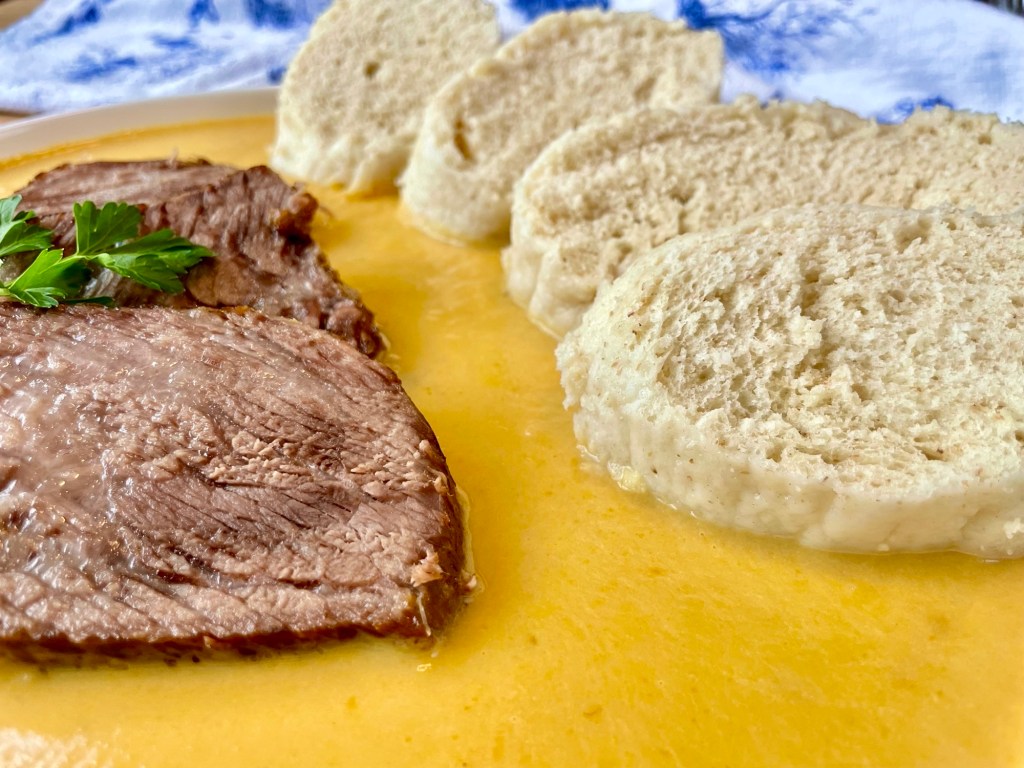
This recipe is a shortcut version from the OG svíčková recipe that cuts down the cooking time from 3.5 hours cook time to 1 hour. You’ll need an Instant Pot or other pressure cooker for this recipe. If you don’t have a pressure cooker, you can still find the original svíčková recipe below as Toby’s grandmother (babička) makes it:

Babička’s Svíčková (Beef with Vegetable Cream Sauce)


This is Toby’s babička’s (grandmother’s) version of a svíčkova. It’s his all time favourite Czech dish – and I can see why! In its simplest terms, svíčkova is a steak dish served with knedlíky (Czech bread dumplings) and…

What is Svíčkova?

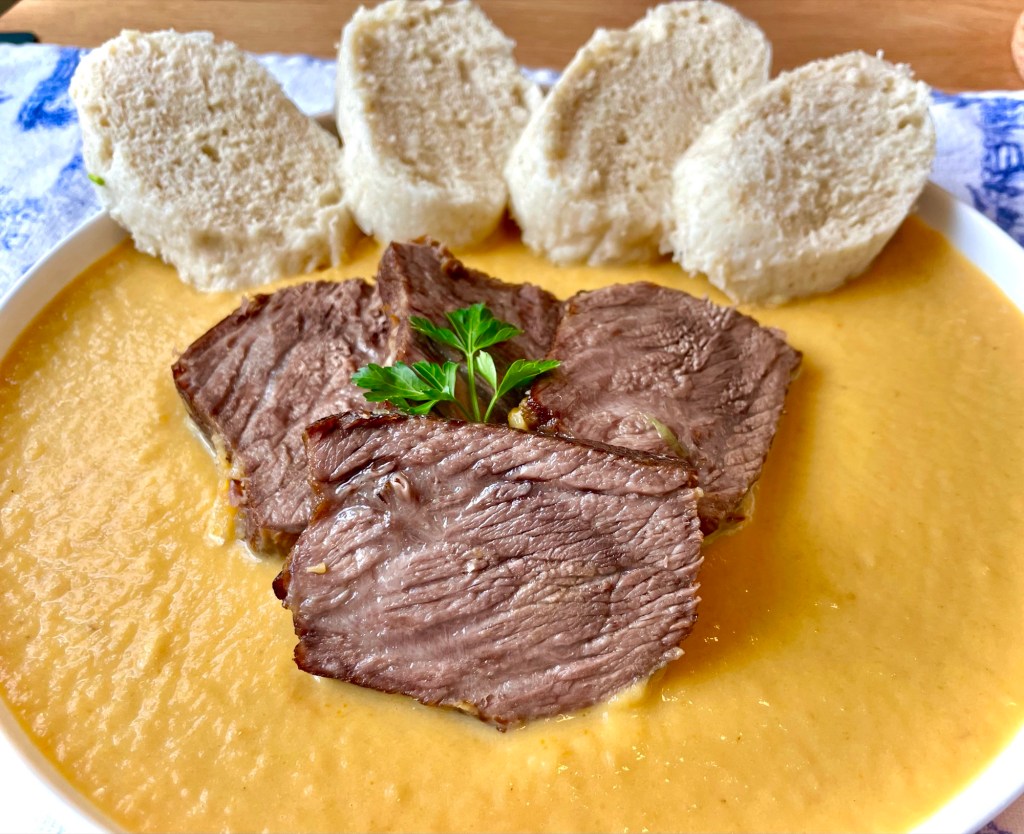
Svíčkova is one of Czech’s most popular dishes. In its simplest terms, svíčkova is a steak dish served with knedlíky (Czech bread dumplings) and smothered in the most addicting creamy vegetable sauce made of parsnip, celeriac, carrots and onion. There’s a slight lemon-y tang to the sauce that balances out the heaviness of the cream.

The sauce is the star of the show and is meant to be on the runny side, rather than a thick gravy. I’m always so tempted to serve this as a soup in itself if it wasn’t so rich 😅.

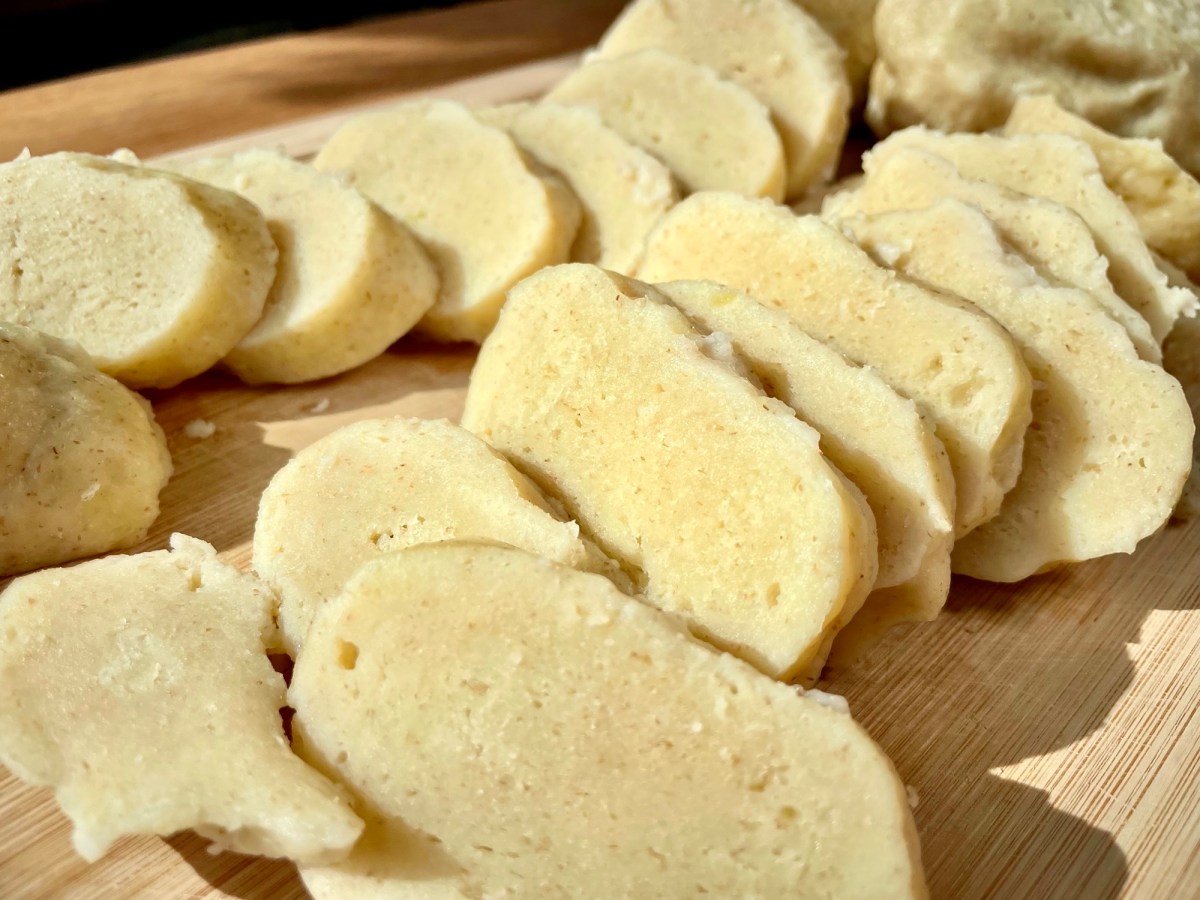
Here are two recipes for knedliky – one is a flour/bread base (houskové knedlíky) and the other is a denser potato base (bramborové knedlíky). Svíčkova is usually served with the flour based dumplings.

Anyways, without further ado, here’s the recipe! If you have any comments or suggestions, I’d love to hear from you in the comment section! You can follow me on instagram, youtube and facebook to see all the recipes I post!

Happy cooking!

Ingredients you’ll need:

  • 600g good quality beef/steak (ie scotch fillet, eye fillet, rump steak, chuck steak – pick one with less tendon and more fat)
  • 2 Tbsps (50g) + 1 Tbsp (25g) + 25g lard
  • 2 medium onions (~3 cups), diced
  • 1 whole celeriac (~3 cups), peeled and grated
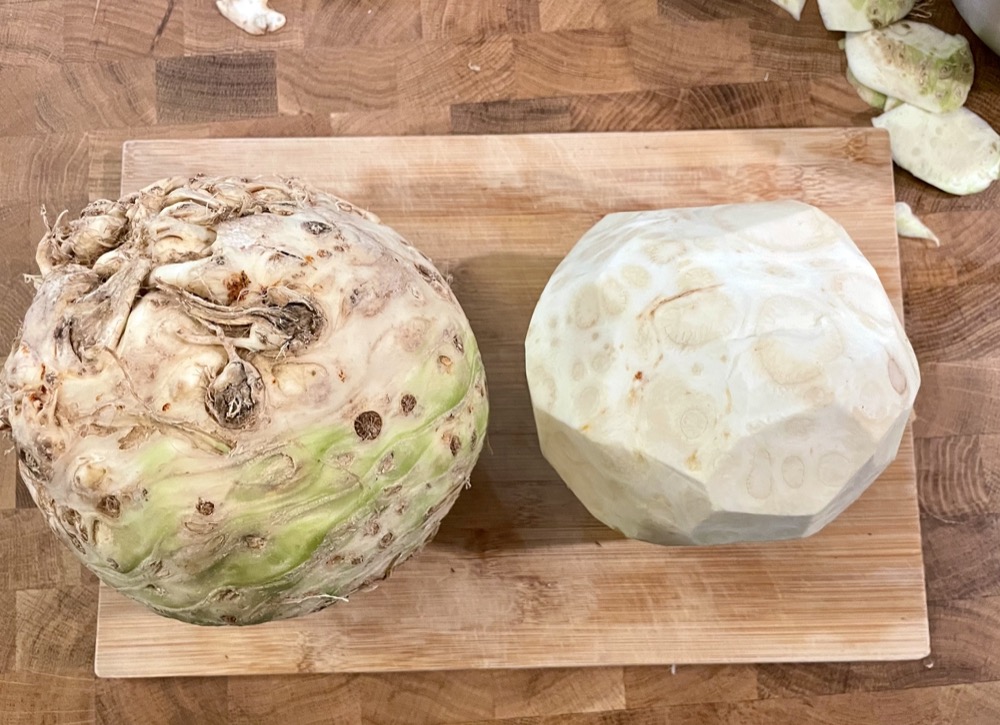
    • Celeriac can come in a wide variety of sizes. The one we got was roughly bigger than a baseball: 370g before peeling and 300g after peeling which came up to about 3 cups once grated. When grating, shave away at the skin until the celeriac is completely white.
  • 2 medium sized parsnips (~3 cups), peeled and grated
  • 3 large carrots (~3 cups), peeled and grated
  • 4 cups (1 litre) beef stock
  • 10 whole black peppercorns
  • 10 whole dried allspice berries
  • 4 dried bay leaves
  • 1 tsp salt
  • 1 tsp ground black pepper
  • 200ml thickened/heavy cream
  • 2 Tbsps lemon juice (or more to taste)
  • Serve with:
    • Knedlíky (Czech bread dumplings)
    • Wedges of lemon
    • Cranberry sauce
    • Whipped cream

Directions:

A quick note about preparing the vegetables:

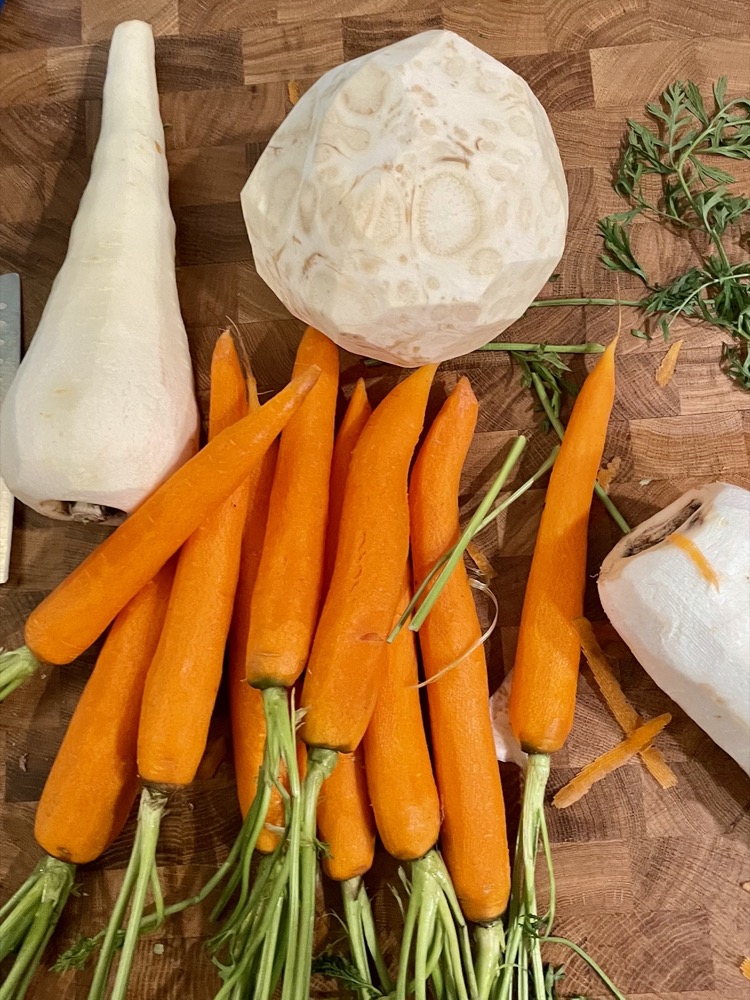
  • The exact amount and size of vegetables aren’t important, as long as you roughly have equal amounts of the celeriac, parsnip, and carrots.
  • Celeriac is a root vegetable and comes in a variety of sizes and is essentially a starchy celery. It’s got a green and white rough and wrinkly exterior that you want to remove by trimming it off with a knife until you get to the softer inside and the entire celeriac is white.
  • After you’ve peeled the vegetables, you can either dice them into small cubes, or the quickest way is to grate them in a food processor.

Rinse and pat dry the beef and rub salt and pepper on all sides and let it sit at room temperature for 20 mins.

(If you haven’t already, you can make the knedlíky dough in this time and while it proofs for an hour you can continue making the svíčková.)

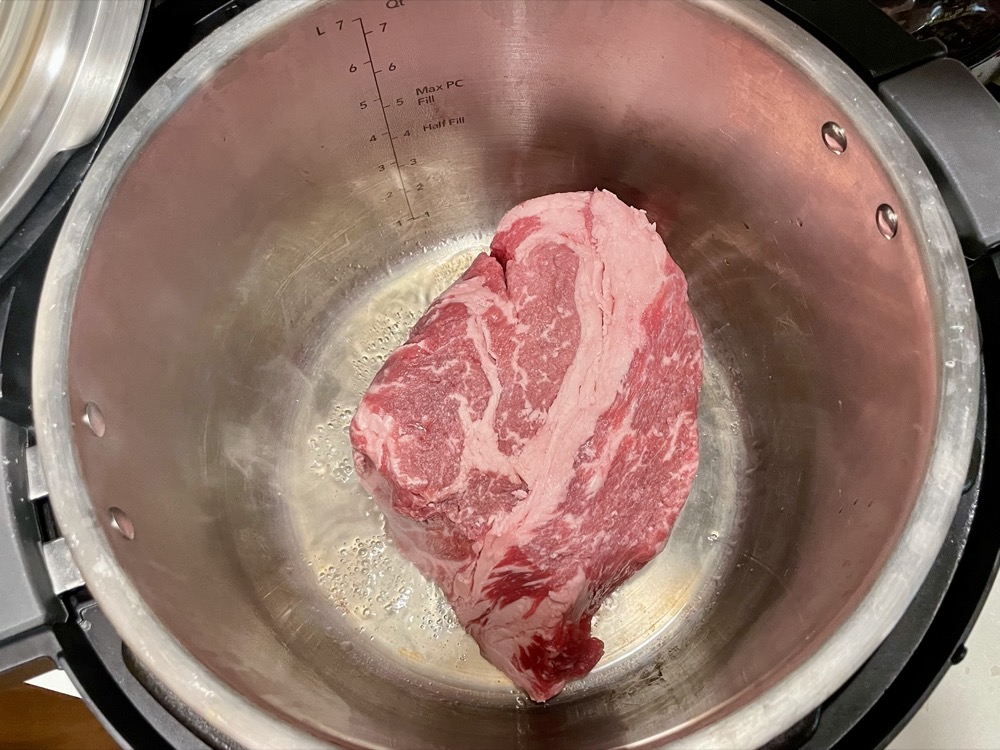
In your instant pot on the SAUTÉ setting, set the heat to HIGH and melt 2 Tbsps of lard. When the pot is hot, add in the beef and sear on all 4 sides until browned (roughly 90 seconds on each side). Remove the beef and set it aside on a plate.

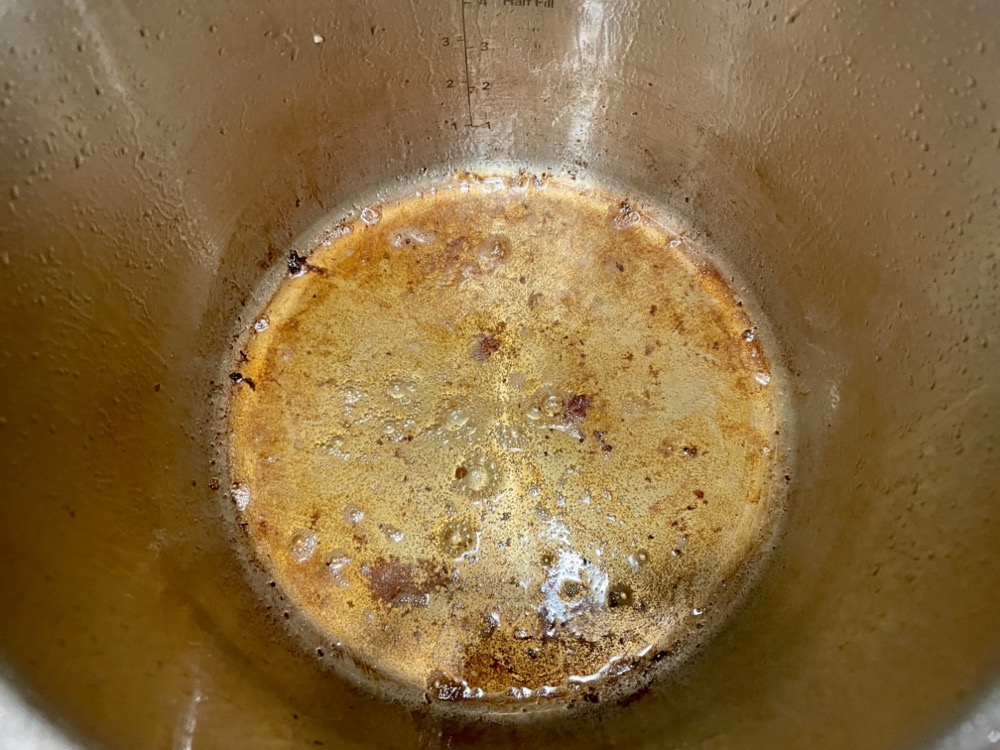
Turn the heat down to MED-HIGH and add in the diced onions. Sauté the onions until lightly browned and translucent (3-4 mins), making sure to scrape any brown bits that may be stuck on the bottom of the pot from the beef.

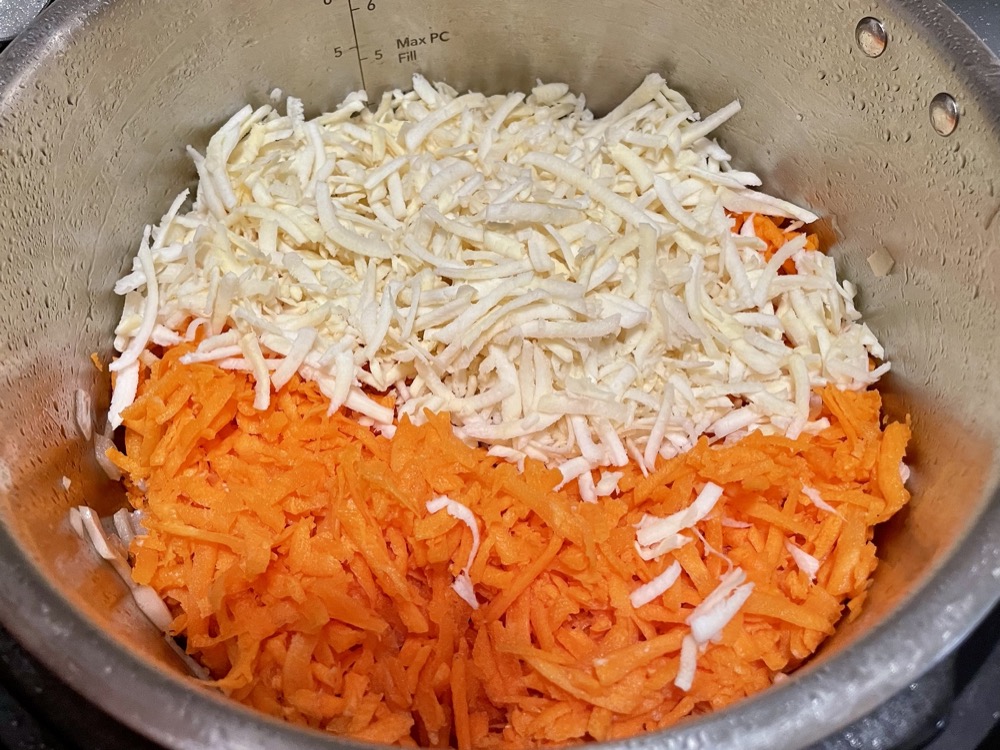
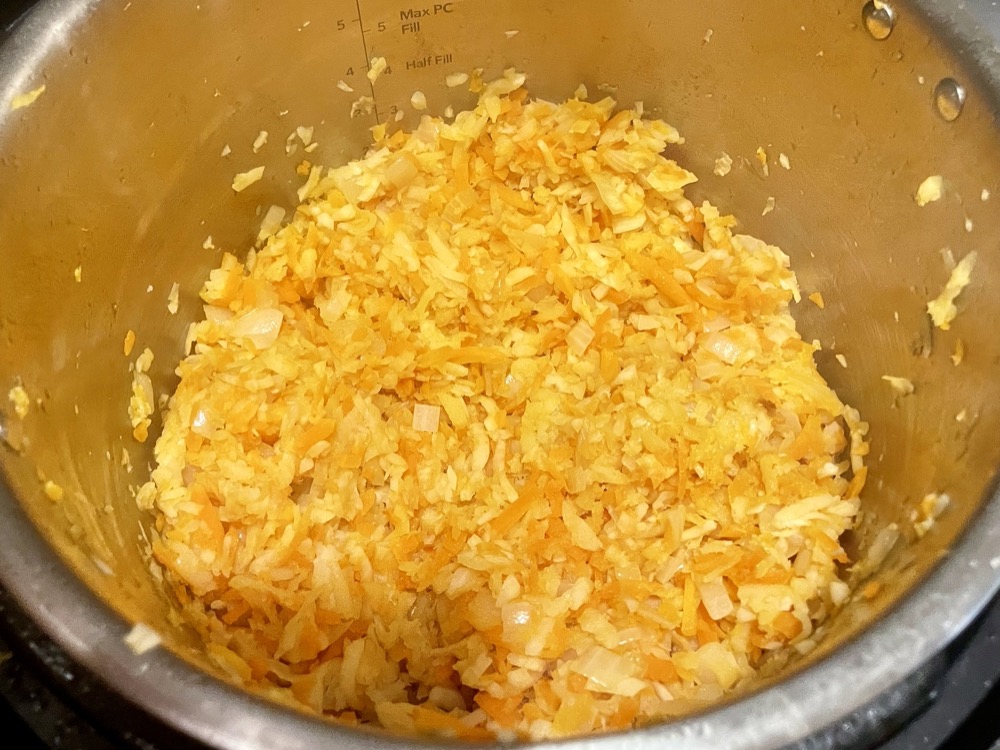
Next, add in the grated celeriac, parsnip, carrots, and another 1 Tbsp of lard into the vegetables and mix it around (the extra lard prevents them from burning). Sauté until the vegetables begin to soften (4-5 mins).

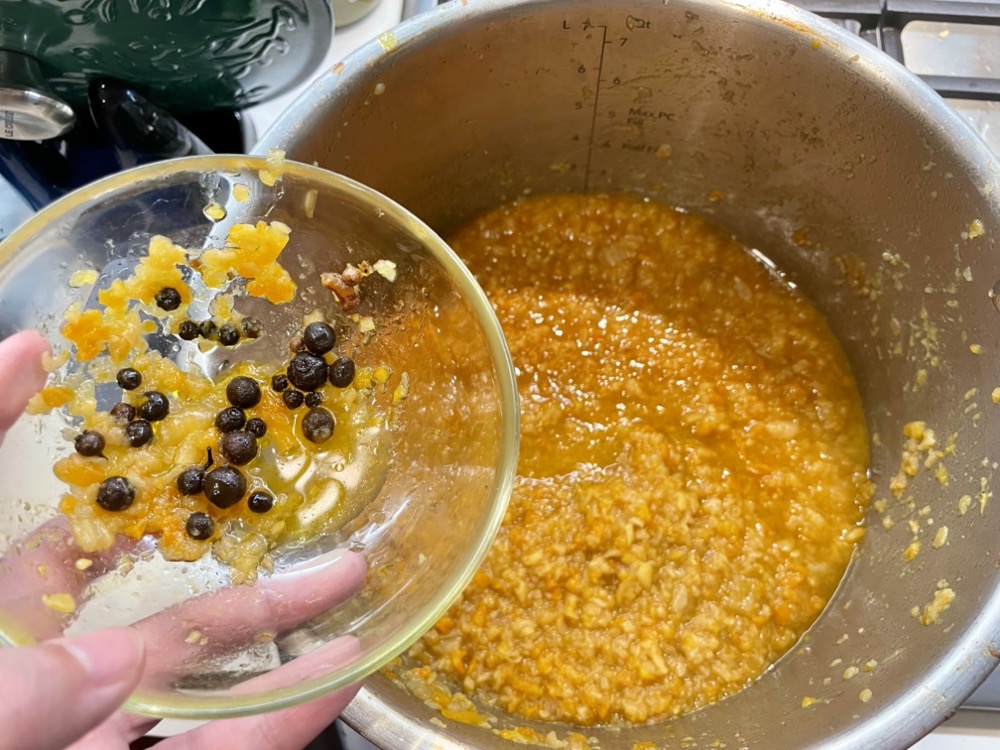
Once the vegetables begin to soften, add in the 4 cups of beef stock, 10 black peppercorns, 10 allspice berries, 4 bay leaves, 1 tsp salt and 1 tsp pepper. Make sure you COUNT the number of peppercorns and allspice berries you add in because you’ll have to take them out later. Let the mixture come to a simmer then cancel the SAUTÉ setting and put the Instant Pot lid on. Set the Instant Pot to pressure cook on HIGH for 5 minutes.

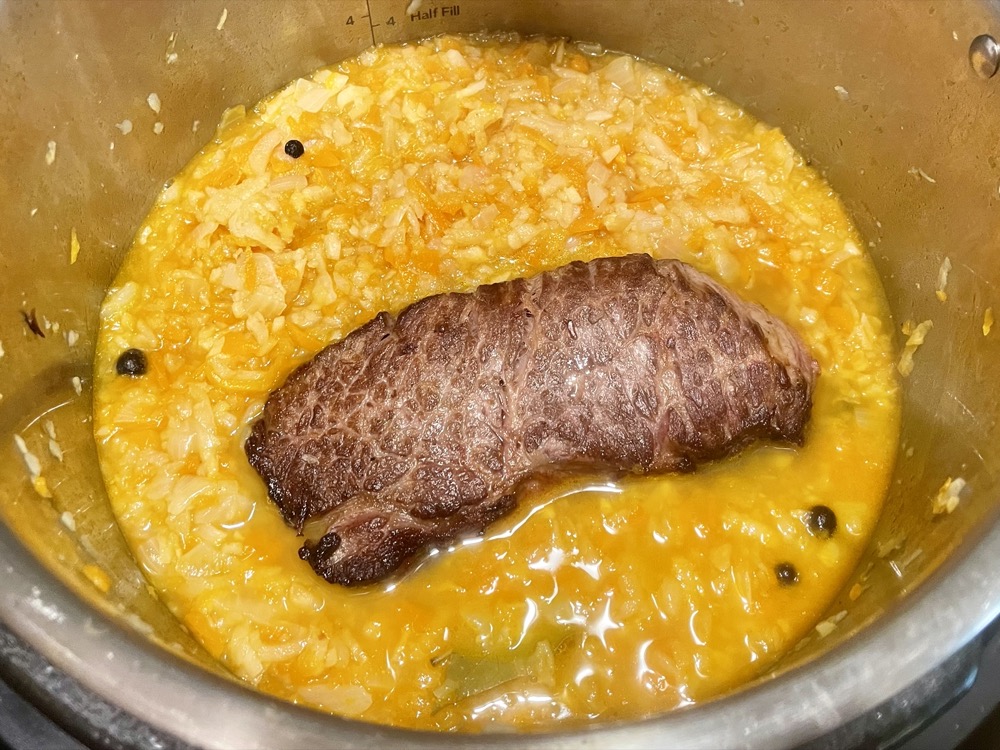
Once the timer is up, carefully release the pressure valve and when safe, remove the lid, stir the vegetables around, then add in the seared beef (from step 2) into the middle of the pot, submerging it in the liquid. Set the Instant Pot to pressure cook on HIGH for 35 minutes.

(You can take this time to cook the knedlíky if you haven’t already.)

Once the timer is up, carefully release the pressure valve and when safe, remove the lid. Take out the beef and put it into a bowl and cover to keep warm until ready to slice.

Remove and discard all the bay leaves, allspice berries and black peppercorns (this part is tedious). Once all the spices are removed, use an immersion/stick blender and blend the remaining vegetables in the broth until you get a smooth creamy texture. You can also blend this in a blender for an even smoother sauce.

Add the thickened cream and lemon juice and mix. Adjust salt and pepper to taste. When ready to serve, slice the beef. If your beef has gone a little cold, place it back into the sauce to warm it up and then slice.

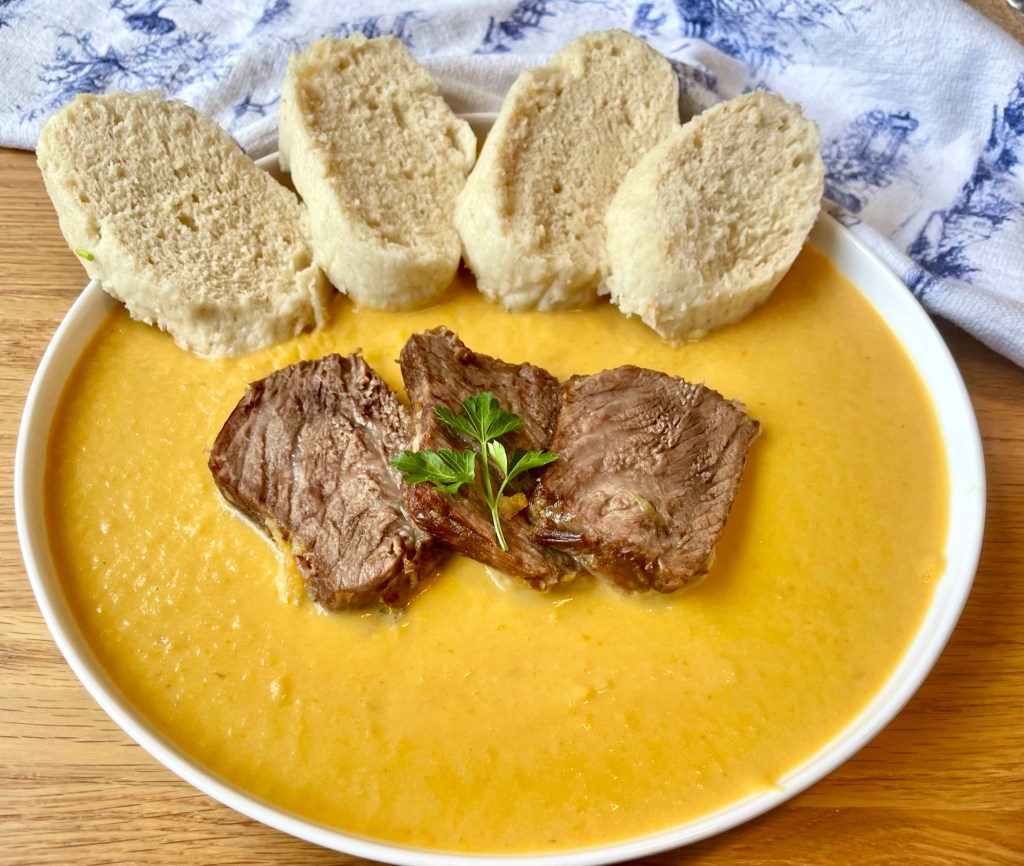
To plate traditionally when serving: Place a ladle of the sauce on a dinner plate, ensuring the sauce covers the entirety of the bottom of the plate, then top with a few slices of the beef in the centre and fan out a few slices of knedlíky (Czech bread dumplings) on one side. You can top it with a spoonful of cranberry sauce, a dollop of whipped cream, and a wedge of lemon. Enjoy!

Summarized Recipe:

Instant Pot Svíčková – a Shortcut to Babička’s Classic Beef with Vegetable Cream Sauce

Date Published: Dec 23rd, 2024 | Last Updated: Dec 23rd, 2024
Author: Abby |Category: mains, Czech
Serves: 4 | Prep time: 40 mins | Cook time: 1 hour

Ingredients:

  • 600g good quality beef/steak (ie scotch fillet, eye fillet, rump steak, chuck steak – pick one with less tendon and more fat)
  • 2 Tbsps (50g) + 1 Tbsp (25g) + 25g lard
  • 2 medium onions (~3 cups), diced
  • 1 whole celeriac (~3 cups), peeled and grated
    • Celeriac can come in a wide variety of sizes. The one we got was roughly bigger than a baseball: 370g before peeling and 300g after peeling which came up to about 3 cups once grated. When grating, shave away at the skin until the celeriac is completely white.
  • 2 medium sized parsnips (~3 cups), peeled and grated
  • 3 large carrots (~3 cups), peeled and grated
  • 4 cups (1 litre) beef stock
  • 10 whole black peppercorns
  • 10 whole dried allspice berries
  • 4 dried bay leaves
  • 1 tsp salt
  • 1 tsp ground black pepper
  • 200ml thickened/heavy cream
  • 2 Tbsps lemon juice (or more to taste)
  • Serve with:
    • Knedlíky (Czech bread dumplings)
    • Wedges of lemon
    • Cranberry sauce
    • Whipped cream

Directions:

  1. Rinse and pat dry the beef and rub salt and pepper on all sides and let it sit at room temperature for 20 mins.
    • (If you haven’t already, you can make the knedlíky dough in this time and while it proofs for an hour you can continue making the svíčková.)
  2. In your instant pot on the SAUTÉ setting, set the heat to HIGH and melt 2 Tbsps of lard. When the pot is hot, add in the beef and sear on all 4 sides until browned (roughly 90 seconds on each side). Remove the beef and set it aside on a plate.
  3. Turn the heat down to MED-HIGH and add in the diced onions. Sauté the onions until lightly browned and translucent (3-4 mins), making sure to scrape any brown bits that may be stuck on the bottom of the pot from the beef.
  4. Next, add in the grated celeriac, parsnip, carrots, and another 1 Tbsp of lard into the vegetables and mix it around (the extra lard prevents them from burning). Sauté until the vegetables begin to soften (4-5 mins).
  5. Once the vegetables begin to soften, add in the 4 cups of beef stock, 10 black peppercorns, 10 allspice berries, 4 bay leaves, 1 tsp salt and 1 tsp pepper. Make sure you COUNT the number of peppercorns and allspice berries you add in because you’ll have to take them out later. Let the mixture come to a simmer then cancel the SAUTÉ setting and put the Instant Pot lid on. Set the Instant Pot to pressure cook on HIGH for 5 minutes.
  6. Once the timer is up, carefully release the pressure valve and when safe, remove the lid, stir the vegetables around, then add in the seared beef (from step 2) into the middle of the pot, submerging it in the liquid. Set the Instant Pot to pressure cook on HIGH for 35 minutes.
    • (You can take this time to cook the knedlíky if you haven’t already.)
  7. Once the timer is up, carefully release the pressure valve and when safe, remove the lid. Take out the beef and put it into a bowl and cover to keep warm until ready to slice.
  8. Remove and discard all the bay leaves, allspice berries and black peppercorns (this part is tedious). Once all the spices are removed, use an immersion/stick blender and blend the remaining vegetables in the broth until you get a smooth creamy texture. You can also blend this in a blender for an even smoother sauce.
  9. Add the thickened cream and lemon juice and mix. Adjust salt and pepper to taste. When ready to serve, slice the beef. If your beef has gone a little cold, place it back into the sauce to warm it up and then slice.
  10. To plate traditionally when serving: Place a ladle of the sauce on a dinner plate, ensuring the sauce covers the entirety of the bottom of the plate, then top with a few slices of the beef in the centre and fan out a few slices of knedlíky (Czech bread dumplings) on one side. You can top it with a spoonful of cranberry sauce, a dollop of whipped cream, and a wedge of lemon. Enjoy!
Herb-Crusted White Fish with a Lemon Cream Sauce


Date Published: Dec 17th, 2024 | Last Updated: Dec 17th, 2024
Author: Abby |Category: mains, vegetarian, easy, <30 mins, healthy
Serves: 4 | Prep time: 20 mins | Cook time: 20 mins

Jump to recipe |

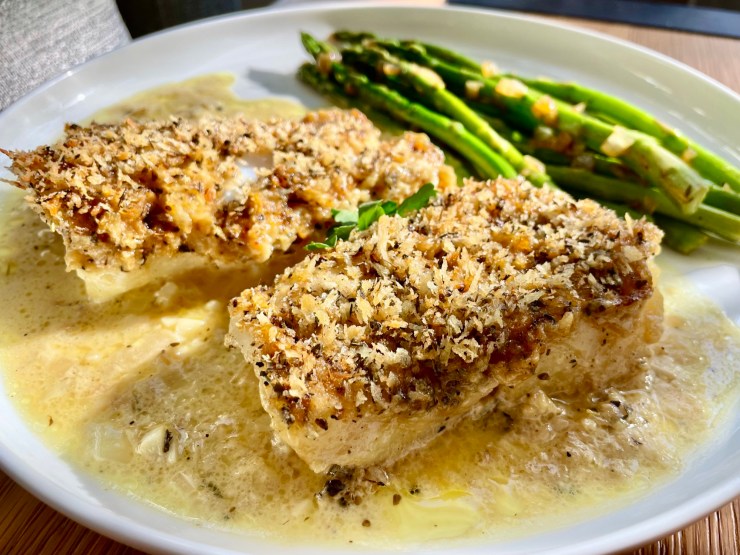
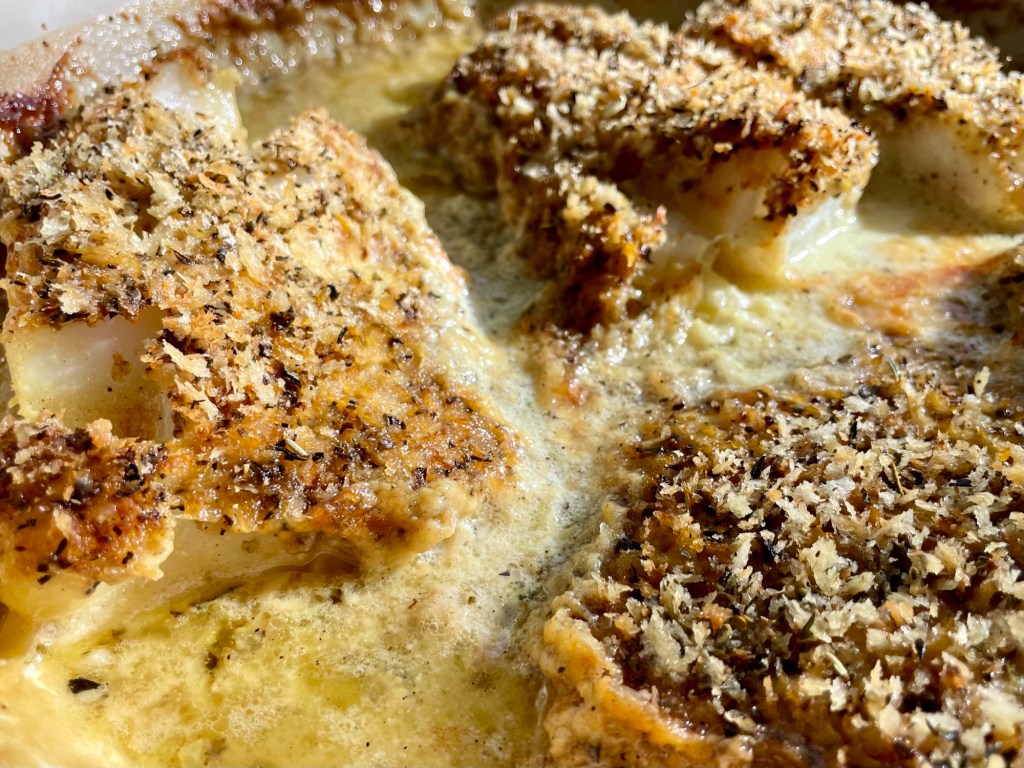
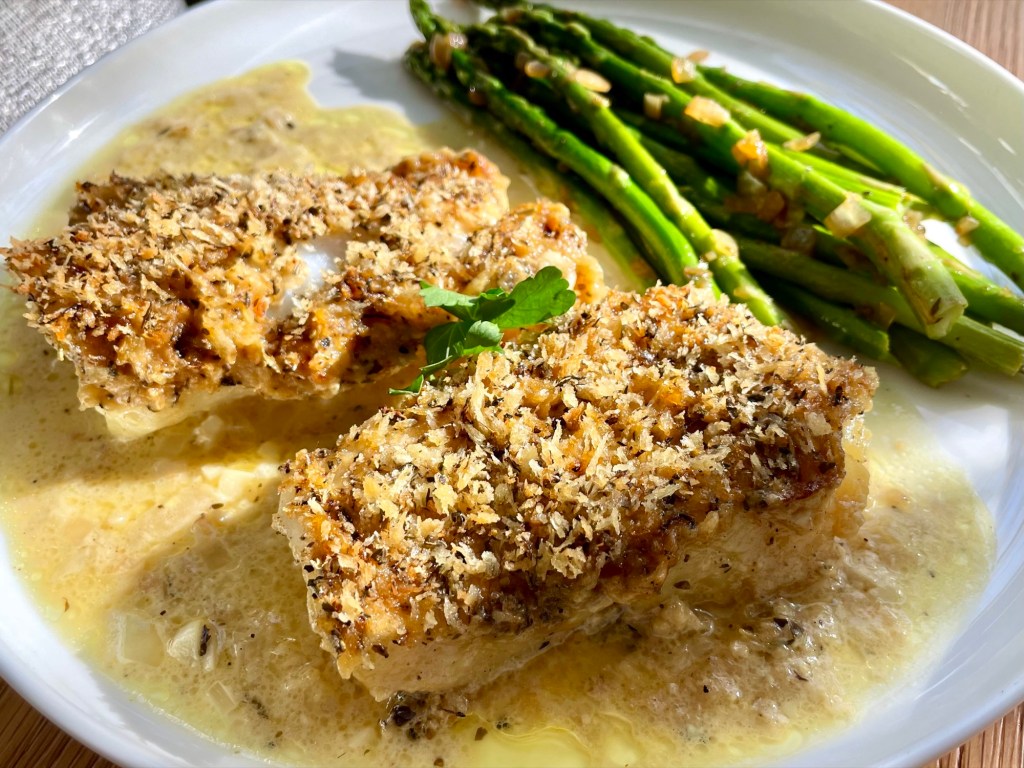
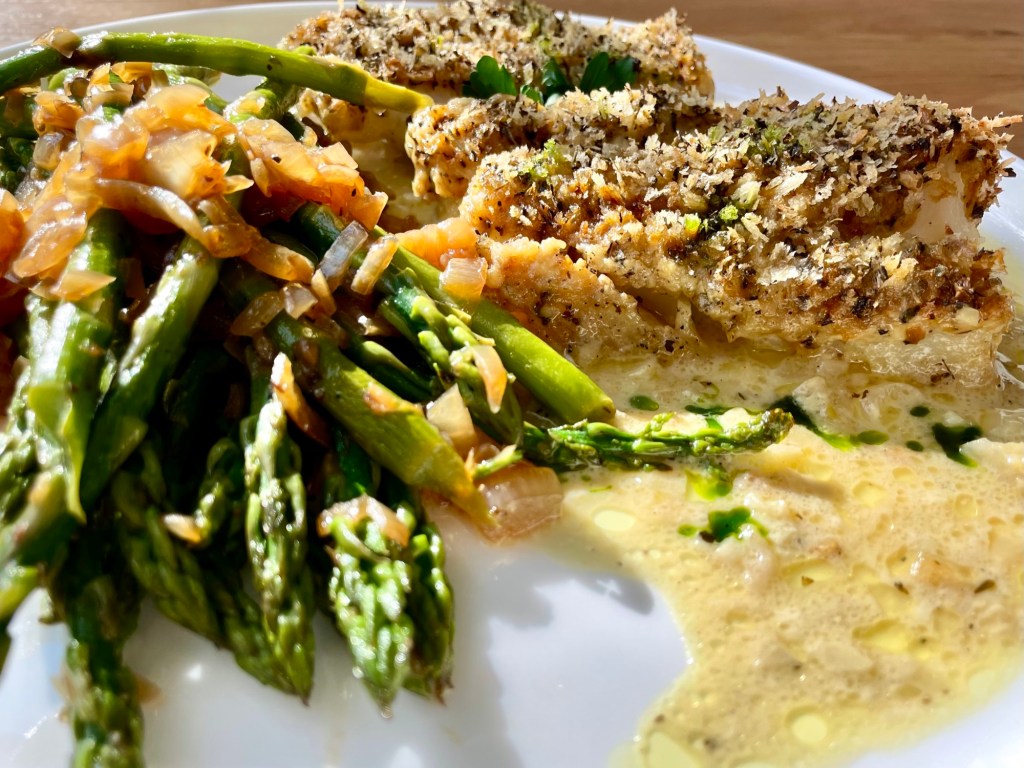
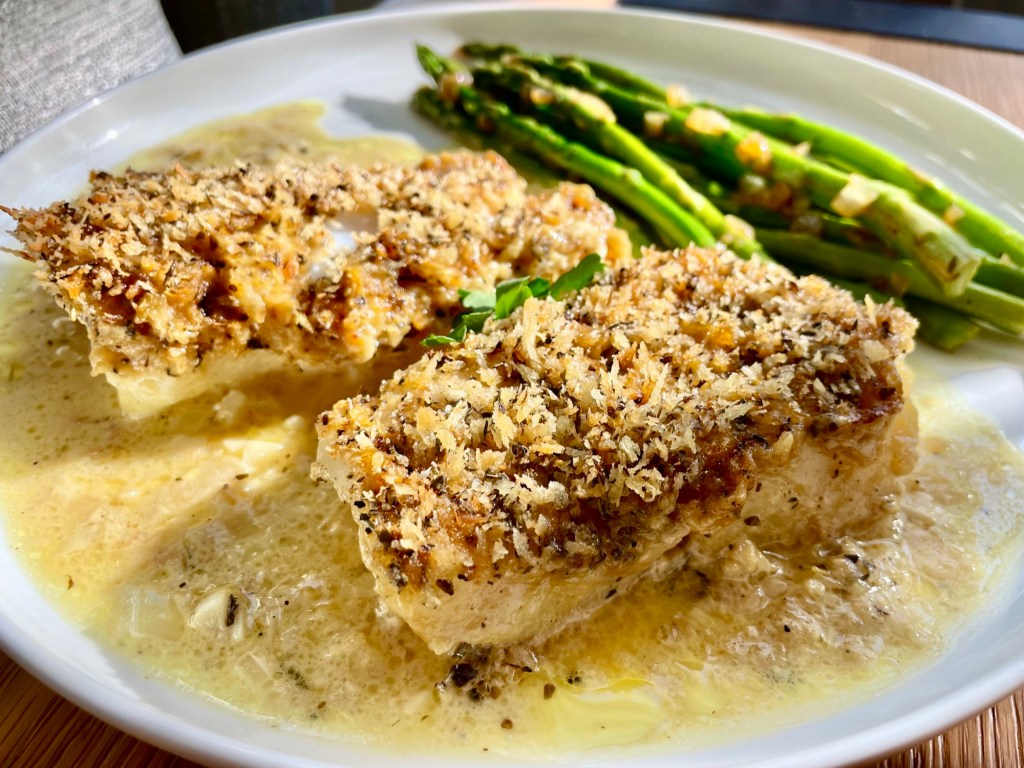
Get ready to save this to your repertoire, because this easy one pan herb-crusted baked fish recipe is so simple and quick to put together that you’ll end up with a 5 star dish with loads of flavour in very little time! There’s also minimal clean up, perfect for a busy weeknight dinner (or just those days you just don’t feel like putting in much effort).

The fish is cooked in a rich lemony creamy sauce that melds perfectly with the juices released from the fish while baking and the crust provides the aroma of herbs while giving a crunchy texture that contrasts the soft fish. Feel free to pair it with whatever side you like – I’d recommend something with a crunch such as asparagus or broccolini.

Anyways, without further ado, here’s the recipe! If you have any comments or suggestions, I’d love to hear from you in the comment section! You can follow me on instagram, youtube and facebook to see all the recipes I post!

Happy cooking!

Ingredients you’ll need:

  • 4 portions (roughly 750g/1.6lbs) of fillets of any mild white fish, cut to the same size, skinless & boneless (ie. cod, tilapia, halibut, barramundi, sole…etc.) – I use cod but any white fish will do
  • Salt & pepper
  • Herb Crust:
    • 1/2 cup Panko breadcrumbs
  • Sauce:
    • 113g (1 stick) unsalted butter
    • 1/4 cup yellow onion, finely minced
    • 3 garlic cloves, minced
    • 1/2 cup heavy cream
    • 3 Tbsp Dijon mustard
    • 2 Tbsps lemon juice
    • 1/4 tsp salt
    • 1/4 tsp fresh ground black pepper
  • 1/2 – 1 tsp mayonnaise over each fillet
  • To garnish: fresh parsley, chopped
  • Serve with: any crunchy vegetable side dish (ie. green beans, cabbage, roasted fennel…etc.)

Directions:

Preheat oven to 400˚F/200˚C.

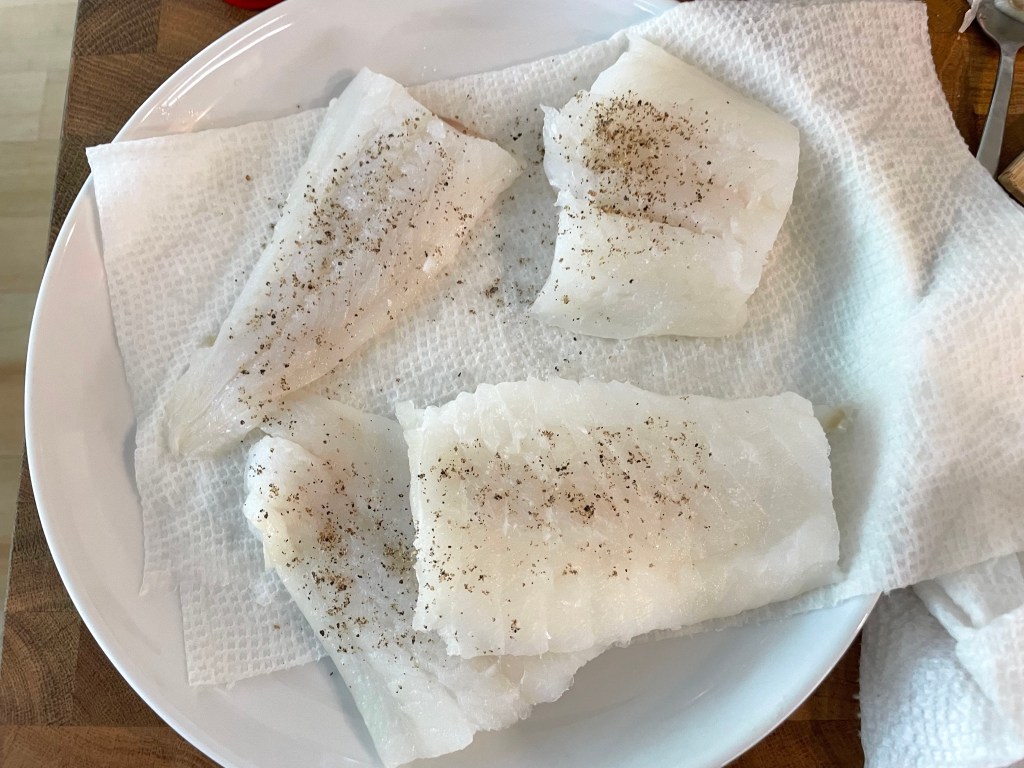
Rinse and pat dry your fish fillets then salt and pepper both sides and set aside.

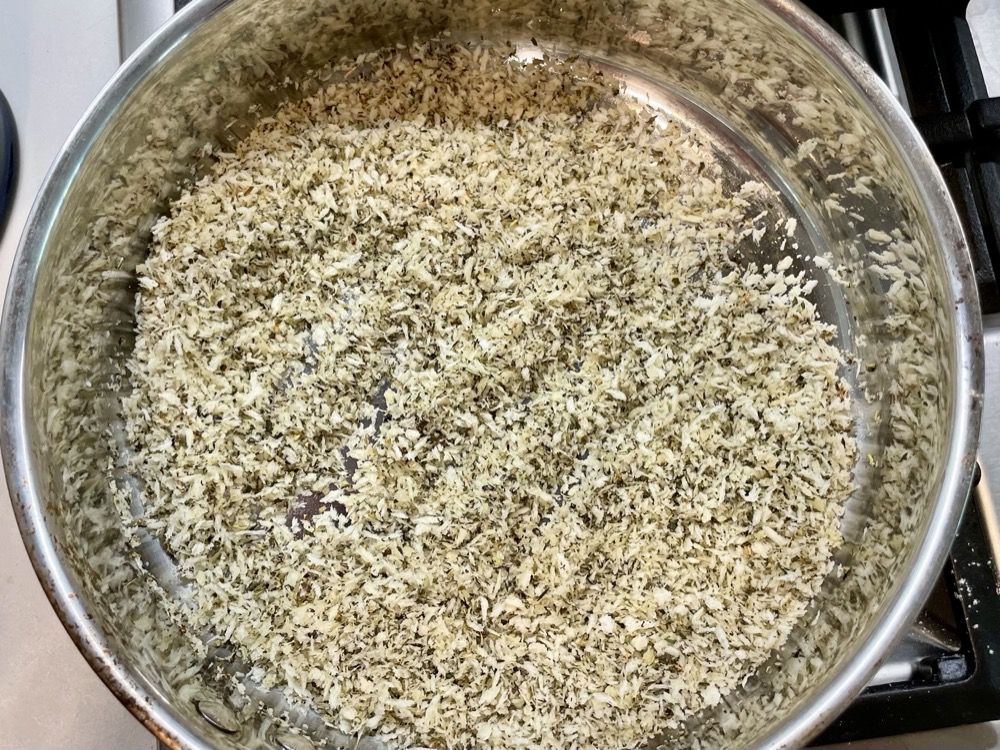
Make the crumb mixture: In an oven-proof wide base pan*, mix the crumb mixture together: 1/2 cup panko, 1 Tbsp Italian seasoning, 1/4 tsp garlic powder, 1 Tbsp olive oil, pinch of salt. Toast the mixture in the pan on LOW-MED heat for 3-5 minutes until golden brown then transfer it to a shallow bowl or plate and set aside to let it cool.

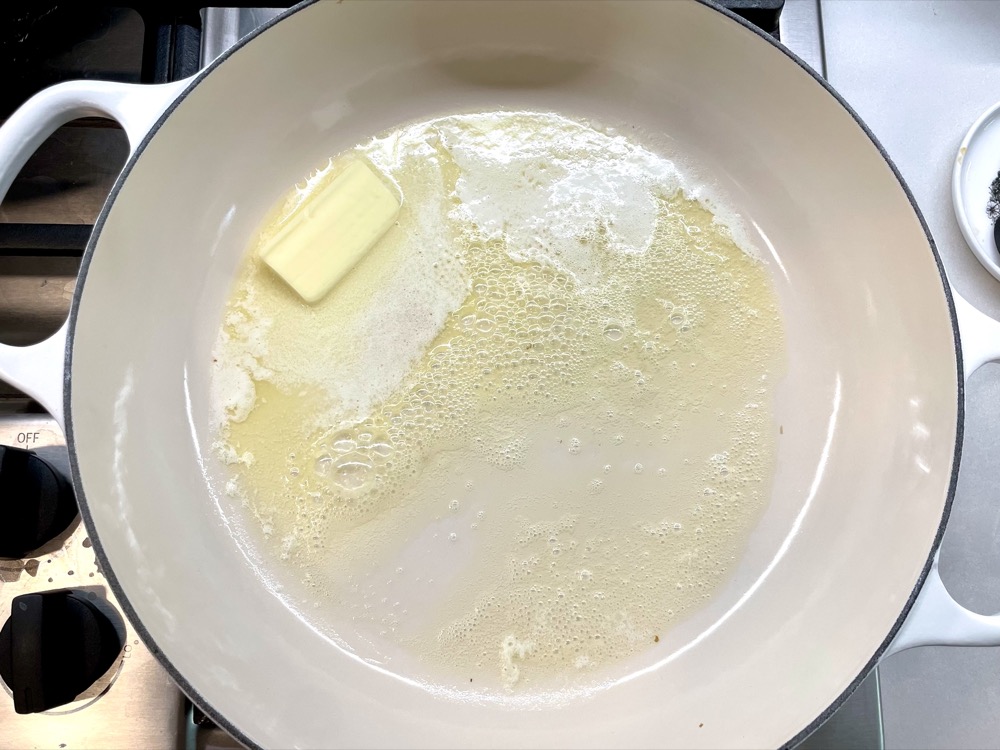
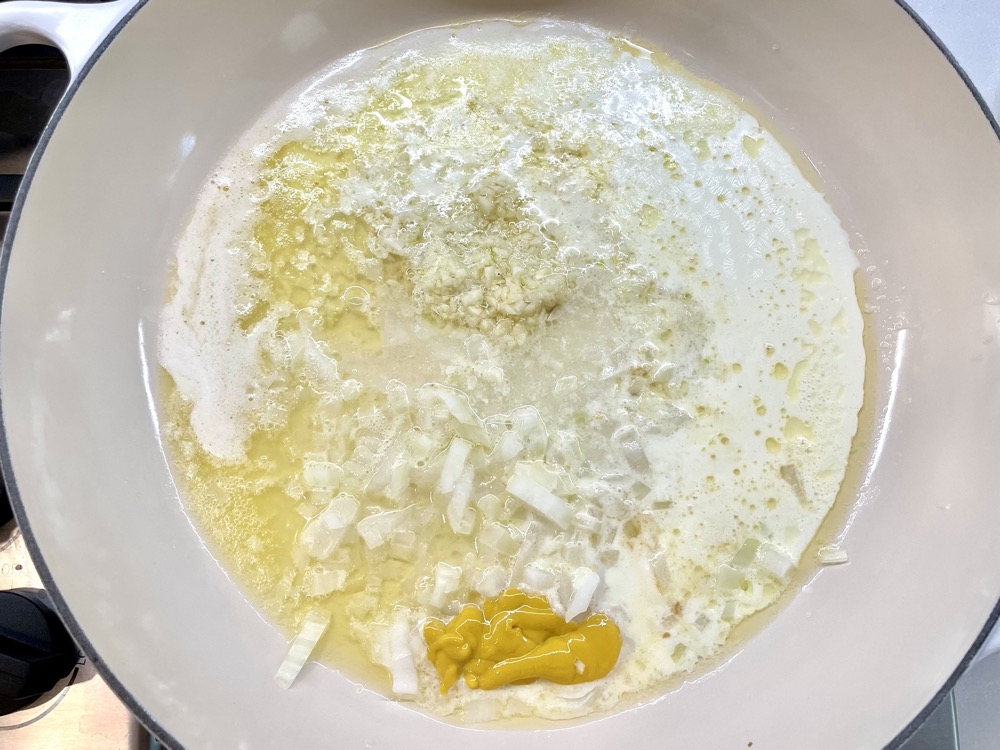
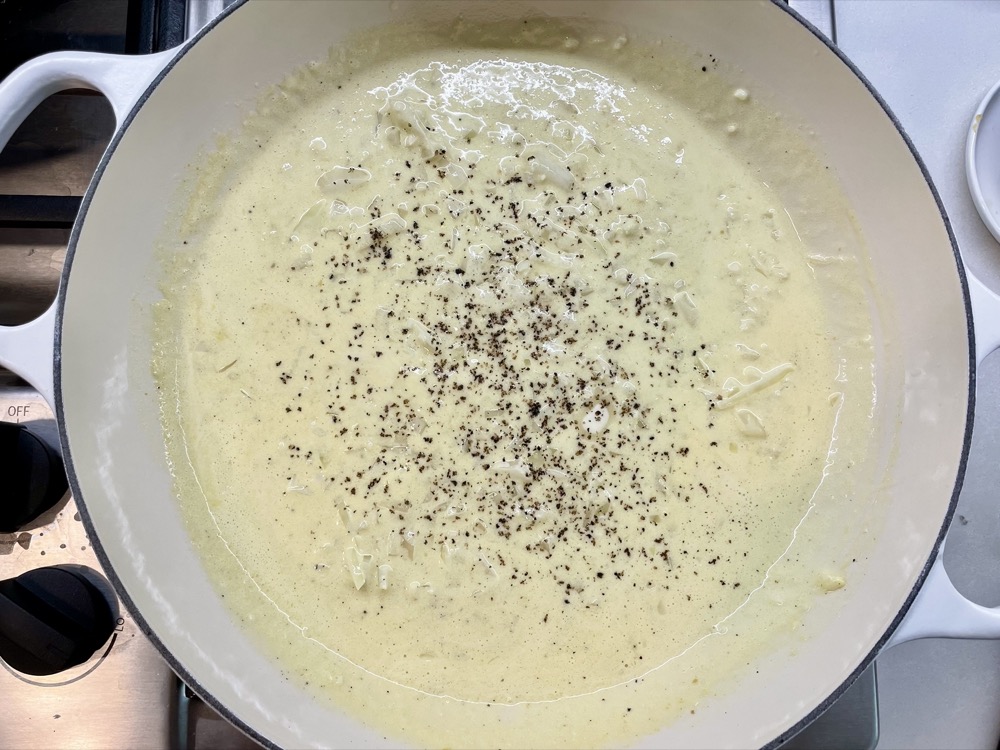
Make the sauce: In the same pan you used to toast the breadcrumbs, melt the 1 stick of butter on LOW-MED heat. Then add in the minced onion, and garlic and sauté for 30 seconds until fragrant. Next add the 1/2 cup heavy cream, 3 Tbsps Dijon mustard, 2 Tbsps lemon juice, 1/4 tsp ground black pepper, and 1/4 tsp salt. Mix everything around and taste to adjust salt, pepper, and lemon as needed. Turn off the heat. Don’t worry if your sauce tastes a bit too strong at this point, it will mellow out once you bake it with the fish.

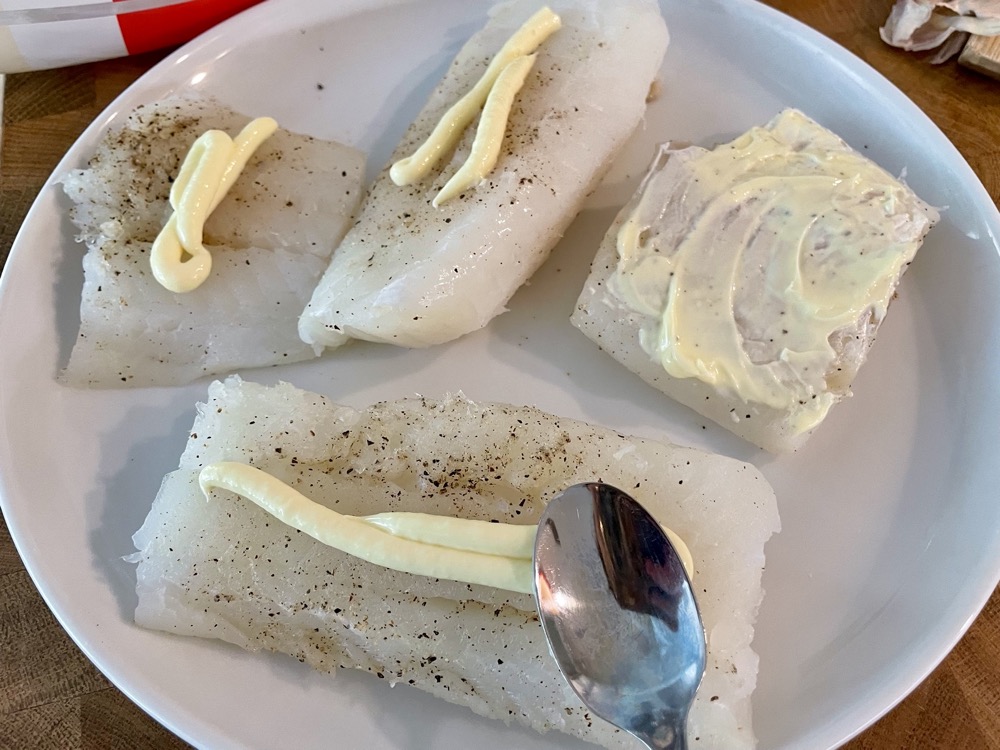
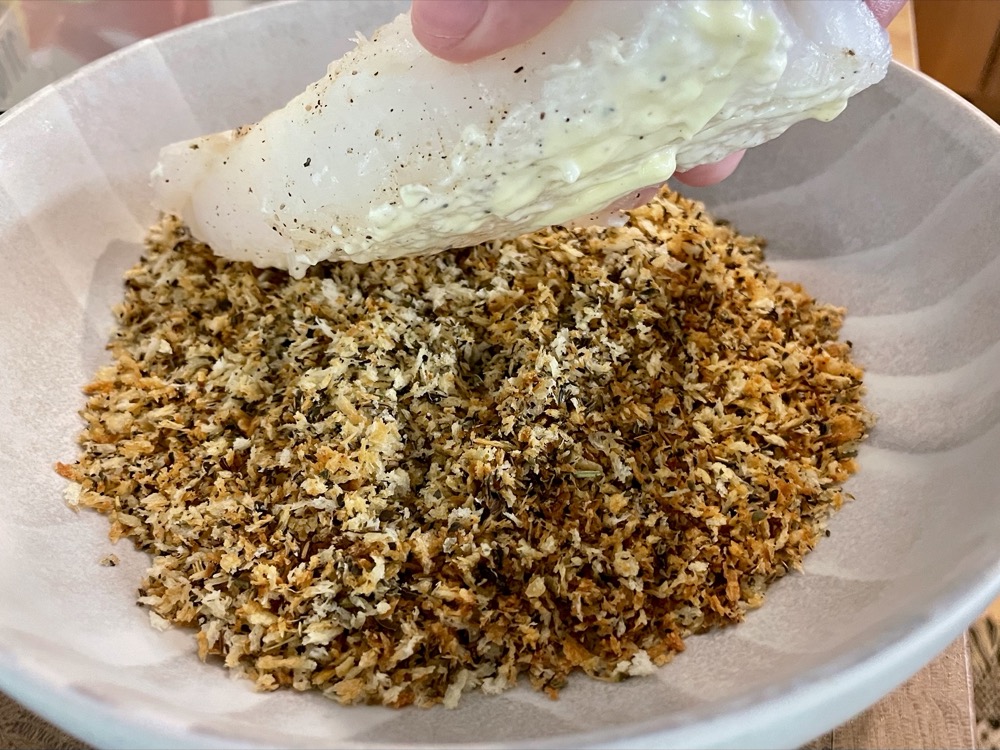
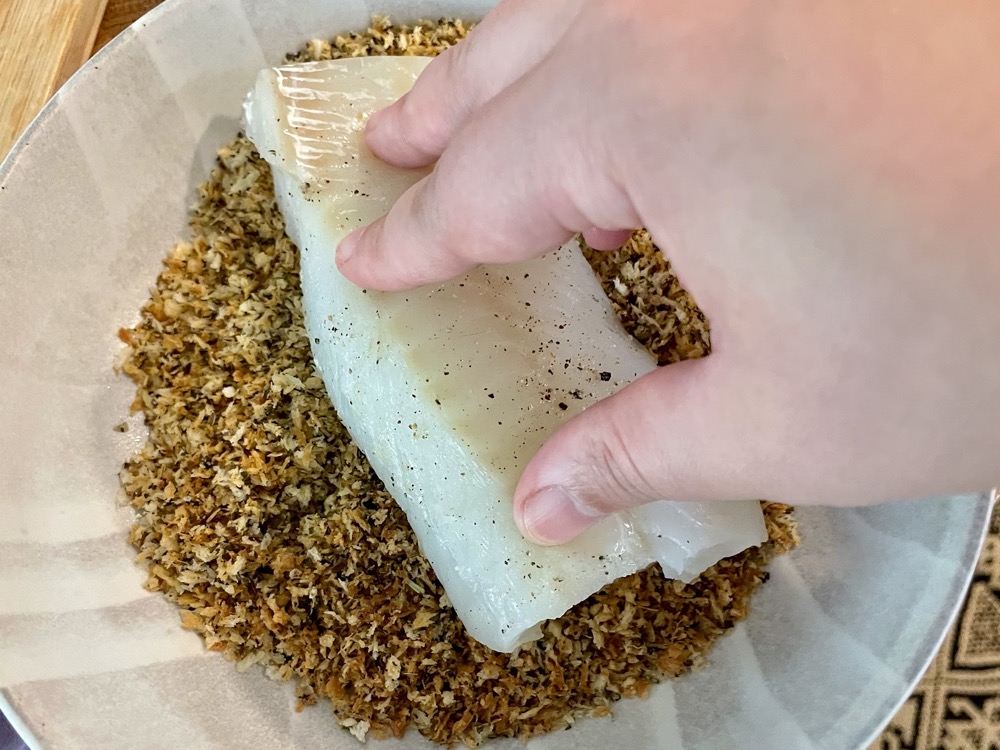
Crumb the fish: Apply a thin layer of mayonnaise onto one side of each fish fillet (~1/2 – 1 tsp of mayonnaise depending on the size of your fillet), then place the fillet mayonnaise-side down into the toasted crumb mixture (from step 3) and gently press down to get the crumb mixture to stick to the fish. Place the fillet crumb side up into the sauce in the pan (from step 4). Repeat with the rest of the fillets until they are all crumbed.

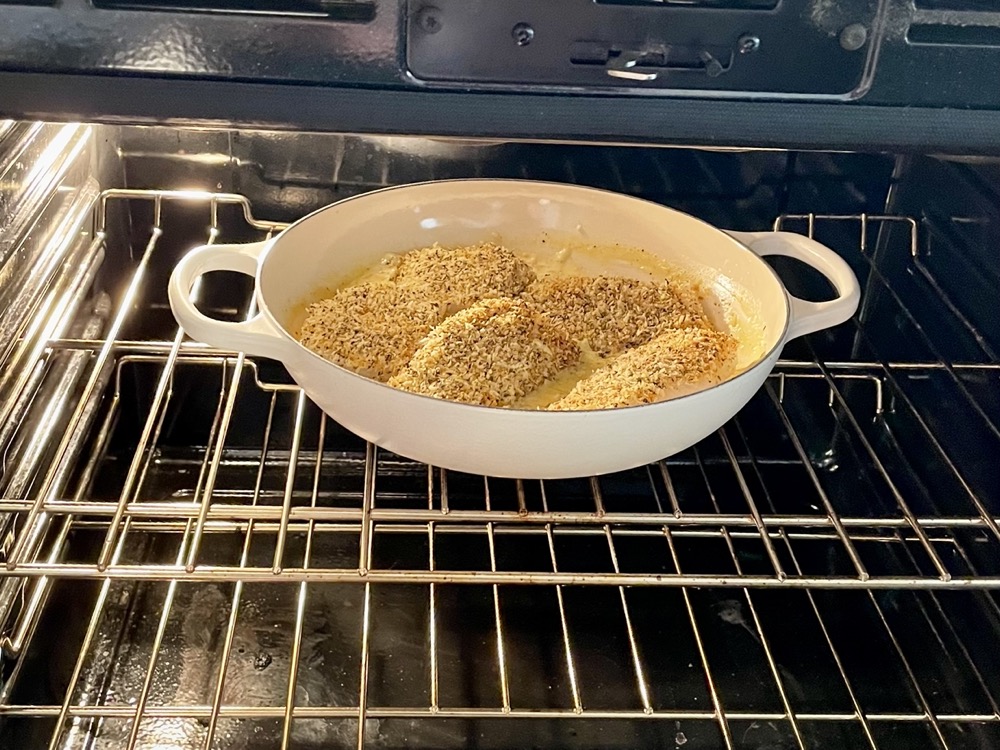
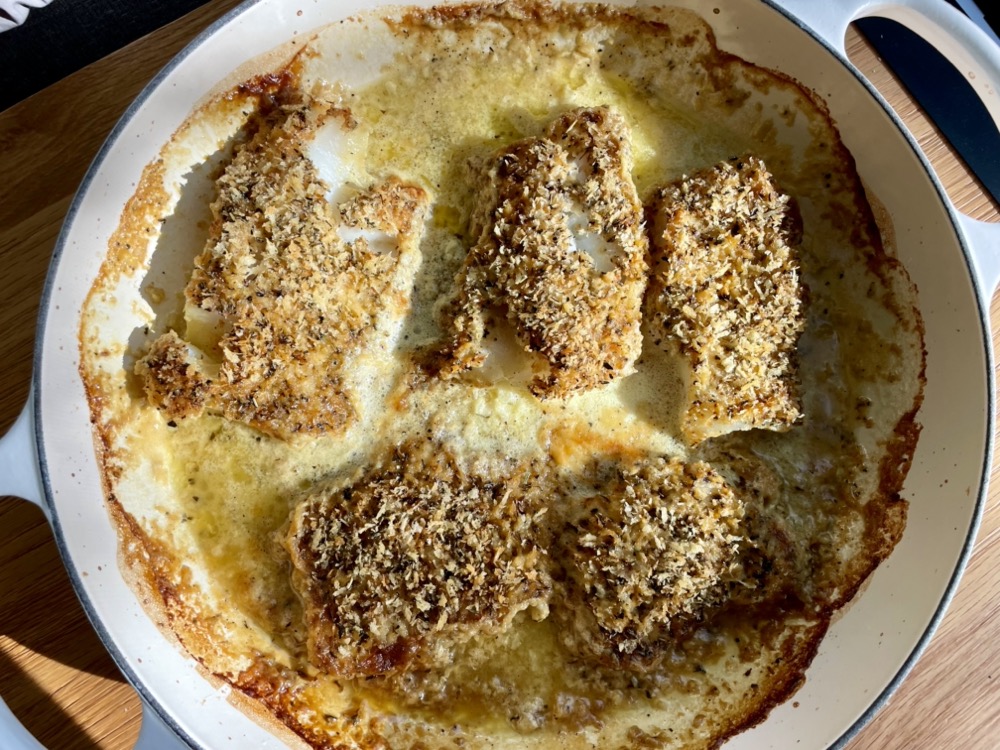
Bake in the preheated oven until the fish is fully cooked (~10-15 minutes for a 2cm thick fillet). The fish is done when it is no longer translucent and flakey, or the internal temperature reaches a minimum of 145°F/63°C.

While the fish is baking, you can prepare a quick side dish such as blanched green beans or steamed broccoli. I recommend something crunchy to contrast the soft texture of the fish.

Sprinkle fresh chopped parsley overtop the fish before serving and pair with the vegetable side dish of choice. Enjoy!

*Note: if you don’t have an oven-proof pan, make everything in a regular pan and pour the sauce into a 9×13″ baking dish and lay the fish overtop.

Summarized Recipe:

Herb-Crusted White Fish with a Lemon Cream Sauce

Date Published: Dec 17th, 2024 | Last Updated: Dec 17th, 2024
Author: Abby |Category: mains, vegetarian, easy, <30 mins, healthy
Serves: 4 | Prep time: 20 mins | Cook time: 20 mins

Ingredients:

  • 4 portions (roughly 750g/1.6lbs) of fillets of any mild white fish, cut to the same size, skinless & boneless (ie. cod, tilapia, halibut, barramundi, sole…etc.) – I use cod but any white fish will do
  • Salt & pepper
  • Herb Crust:
    • 1/2 cup Panko breadcrumbs
  • Sauce:
    • 113g (1 stick) unsalted butter
    • 1/4 cup yellow onion, finely minced
    • 3 garlic cloves, minced
    • 1/2 cup heavy cream
    • 3 Tbsp Dijon mustard
    • 2 Tbsps lemon juice
    • 1/4 tsp salt
    • 1/4 tsp fresh ground black pepper
  • 1/2 – 1 tsp mayonnaise over each fillet
  • To garnish: fresh parsley, chopped
  • Serve with: any crunchy vegetable side dish (ie. green beans, cabbage, roasted fennel…etc.)

Directions:

  1. Preheat oven to 400˚F/200˚C.
  2. Rinse and pat dry your fish fillets then salt and pepper both sides and set aside.
  3. Make the crumb mixture:
    • In an oven-proof wide base pan*, mix the crumb mixture together: 1/2 cup panko, 1 Tbsp Italian seasoning, 1/4 tsp garlic powder, 1 Tbsp olive oil, pinch of salt.
    • Toast the mixture in the pan on LOW-MED heat for 3-5 minutes until golden brown then transfer it to a shallow bowl or plate and set aside to let it cool.
  4. Make the sauce:
    • In the same pan you used to toast the breadcrumbs, melt the 1 stick of butter on LOW-MED heat.
    • Then add in the minced onion, and garlic and sauté for 30 seconds until fragrant.
    • Next add the 1/2 cup heavy cream, 3 Tbsps Dijon mustard, 2 Tbsps lemon juice, 1/4 tsp ground black pepper, and 1/4 tsp salt. Mix everything around and taste to adjust salt, pepper, and lemon as needed. Turn off the heat.
    • Don’t worry if your sauce tastes a bit too strong at this point, it will mellow out once you bake it with the fish.
  5. Crumb the fish:
    • Apply a thin layer of mayonnaise onto one side of each fish fillet (~1/2 – 1 tsp of mayonnaise depending on the size of your fillet), then place the fillet mayonnaise-side down into the toasted crumb mixture (from step 3) and gently press down to get the crumb mixture to stick to the fish.
    • Place the fillet crumb side up into the sauce in the pan (from step 4). Repeat with the rest of the fillets until they are all crumbed.
  6. Bake in the preheated oven until the fish is fully cooked (~10-15 minutes for a 2cm thick fillet). The fish is done when it is no longer translucent and flakey, or the internal temperature reaches a minimum of 145°F/63°C.
    • While the fish is baking, you can prepare a quick side dish such as blanched green beans or steamed broccoli. I recommend something crunchy to contrast the soft texture of the fish.
  7. Sprinkle fresh chopped parsley overtop the fish before serving and pair with the vegetable side dish of choice. Enjoy!
*Note: if you don’t have an oven-proof pan, make everything in a regular pan and pour the sauce into a 9×13″ baking dish and lay the fish overtop.

Exploring Cape Elizabeth: Iconic Lighthouses and Lobster Rolls


Date Published: Oct 29th, 2024 | Last Updated: Oct 29th, 2024
Author: Abby | Category: Travel, USA
Date of travel: Oct 12th, 2024

Cape Elizabeth is a quiet coastal town located just south of Portland, Maine. It’s home to a few lighthouses, including the most iconic and famous lighthouse in Maine: Portland Head Light. Between Portland and Cape Elizabeth sits Bug Light, a uniquely small lighthouse that’s also worthwhile a visit. But apart from lighthouses, there are a couple of popular places to get lobster rolls along the coast. I’d recommend spending half a day exploring both of these lighthouses and snacking on some lobster!

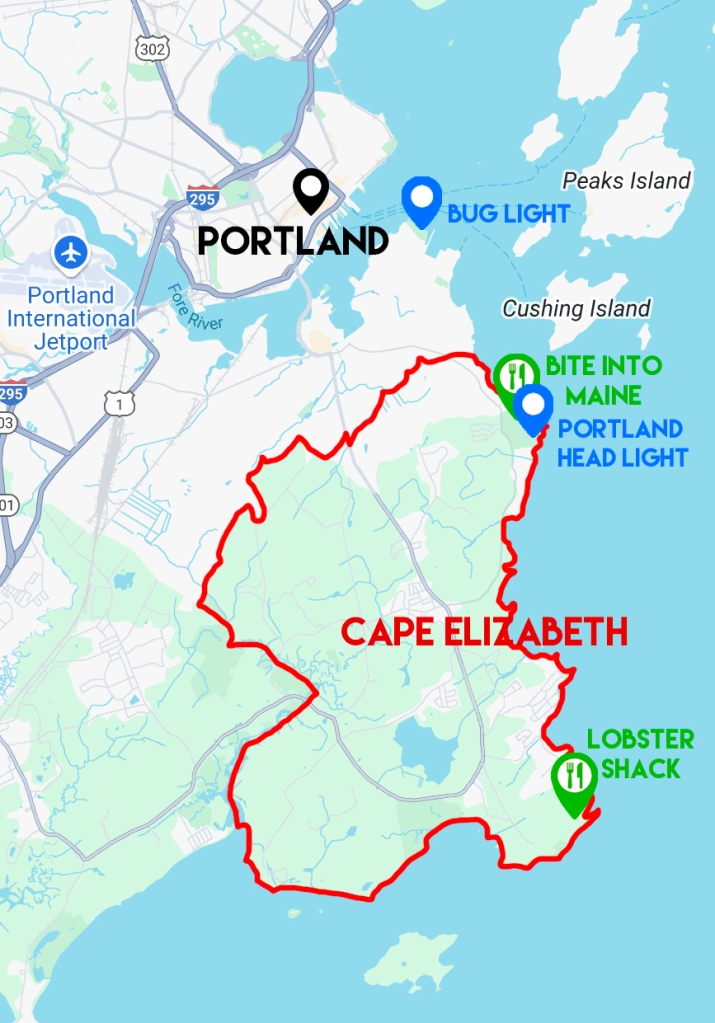
I’ve made a map below to outline the main places to see in this area to get your bearings:

An overview of the most popular places in Cape Elizabeth

How much time will I need?

You can visit both lighthouses and lobster roll places in half a day. The lobster roll places don’t open until 10:30/11am, so if you’re coming from Portland, I’d recommend starting at Bug Light first then work your way down the coast. You only need 5-10 minutes at Bug Light since there’s not much else to do here other than snapping some photos of the lighthouse. From there, it’s a 15 minute drive to Fort Williams Park where the Bite Into Maine food truck is and Portland Head Light. Try to get to Bite Into Maine right as they open at 10:30am, before the lines start, then afterwards head over to Portland Head Light and check out the museum and do the Cliff Walk. Lastly, drive another 15 minutes south to Lobster Shack at Two Lights Park and enjoy a second lunch (or dinner, depending on how long you’ve taken at Fort Williams) to finish off the trip.

Portland Breakwater Light aka “Bug Light”

Located in South Portland, outside of Cape Elizabeth, “Bug Light” is a small lighthouse that sits within Bug Light Park. There’s not much else here other than the lighthouse but this uniquely small tower was worth a stopover. Parking here is free and is only a few minutes walk to the lighthouse. Like Portland Head Light, the lighthouse tower is only open once a year on Maine Open Lighthouse Day. You can see views of the Portland in the distance and there’s a Liberty Ship Memorial here as well, commemorating the 274 Liberty Ships that were built in South Portland during WWII that carried important supplies across the Atlantic. You can read more about its history here.

Portland Head Light – the iconic lighthouse

Located in Fort Williams Park, Cape Elizabeth, Portland Head Light is the oldest, most popular and iconic lighthouse of Maine. It’s the lighthouse you see in all the ads of Maine. This lighthouse was commissioned by George Washington in the 1770s to warn citizens of incoming British attacks.

Portland Head Light attracts a lot of visitors daily, but thankfully the Fort Williams grounds are large with multiple parking lots available (see map). Parking is $5 for 2 hours, paid through a machine. From the parking lot, it’s a short 2-3 minute walk to the lighthouse. You can also book a trolley tour from Portland to get here instead of driving yourself.

Here’s an overview map that shows where the parking lots are, the cliff walk (highlighted in orange), the view points, Portland Head Light, and the popular Bite Into Maine food truck.

Map edited from: https://www.mainetrailfinder.com/trails/trail/fort-williams-park-cliff-walk

When you reach the lighthouse, you’ll see that it’s made up of the lighthouse tower itself, the keeper’s house beside the tower, and another small building beside it that’s the gift shop. The lighthouse tower is only open one day a year, on Maine Open Lighthouse Day where lighthouse towers across the state are open to the public. More information here: https://lighthousefoundation.org/maine-open-lighthouse-day/. The keeper’s house is a museum with more information of this historic landmark. Entry into the museum is $2.

Just before you reach the lighthouse, you’ll see some signs that point towards a Cliff Walk where you can follow the coast and enjoy views of the lighthouse and the rocky coast from different view points (see map).

We only had time to do the start of the Cliff Walk to snap some photos of the lighthouse from the side.

As you can see from the map below, there are multiple walks you can around Fort Williams Park, but the most popular is the Cliff Walk.

The walking paths at Fort Williams Park – the Cliff Walk is the most popular. Flip this map 90˚ to match the satellite map above.

Bite Into Maine 🍴 (food truck within Fort Williams)

Address: 1000 Shore Rd, Cape Elizabeth, ME 04107

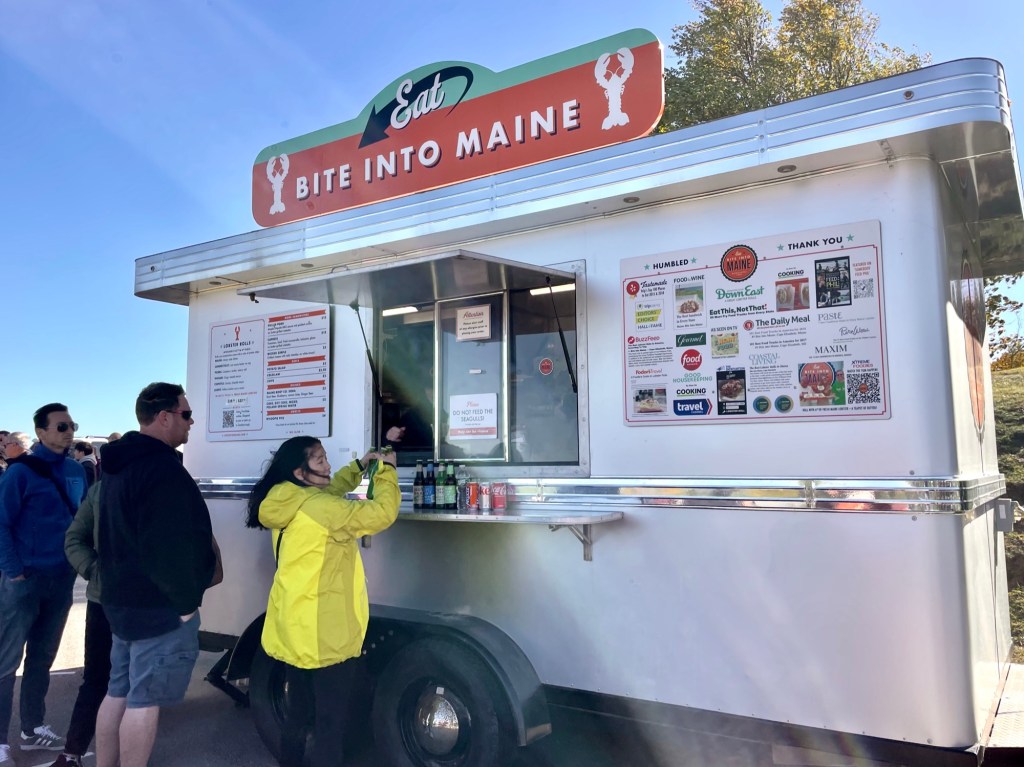
Bite Into Maine is a VERY popular food truck that is parked near Portland Head Light, beside one of the parking lots (I’ve circled it on the map above). This place was featured on an episode of ‘Somebody Feed Phil’ where he highlighted the curry lobster roll and the picnic style lobster roll (drenched in butter 🤤). When we drove past it looking for parking, there was a HUGE line of people around the truck. Unfortunately due to our tight schedule and the fact that I had no idea the line would be so long, we didn’t have time to wait.🙁 The menu looked pretty good. 💔

Lobster Shack at Two Lights 🍴

Address: 225 Two Lights Rd, Cape Elizabeth, ME 04107

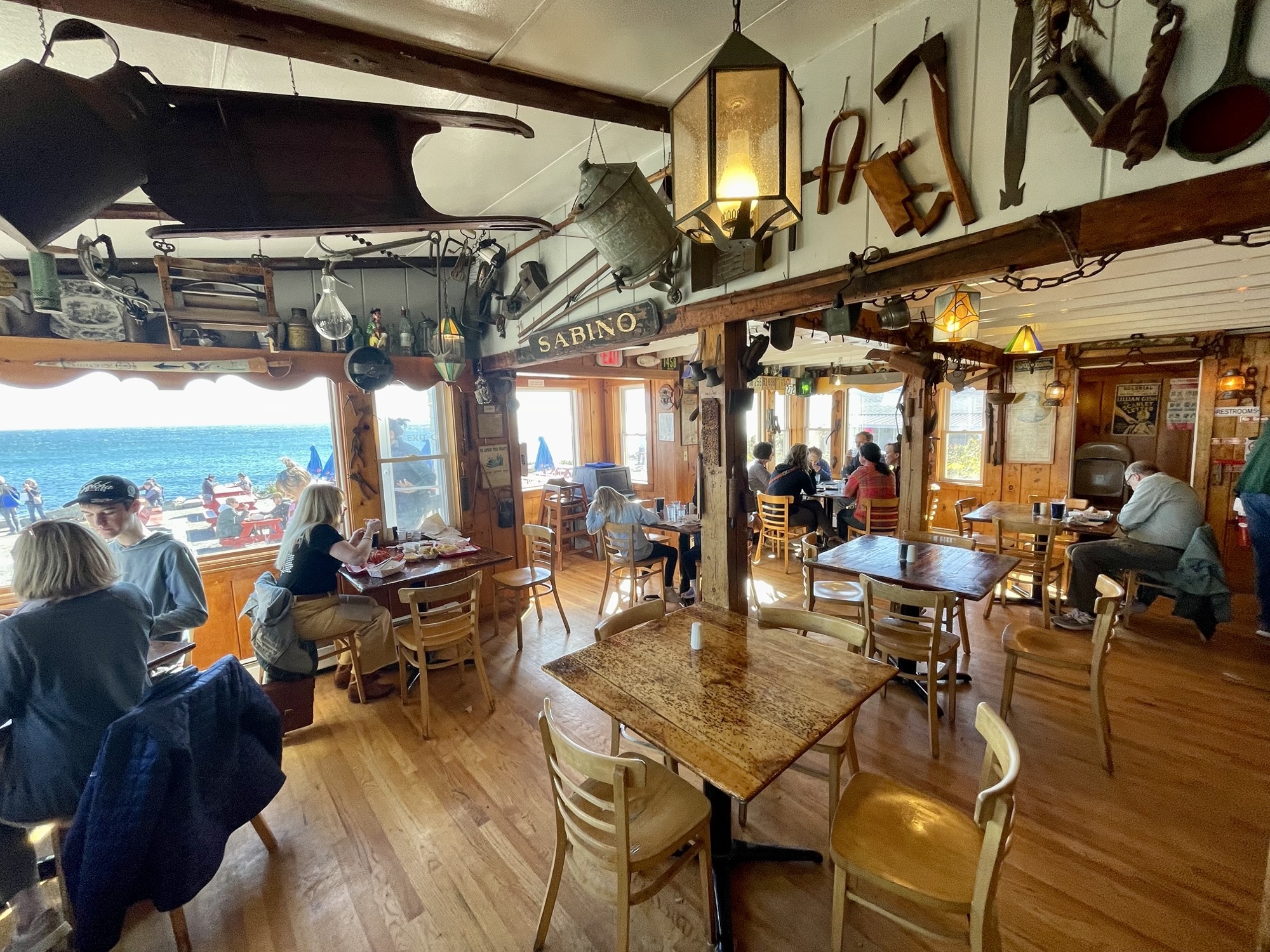
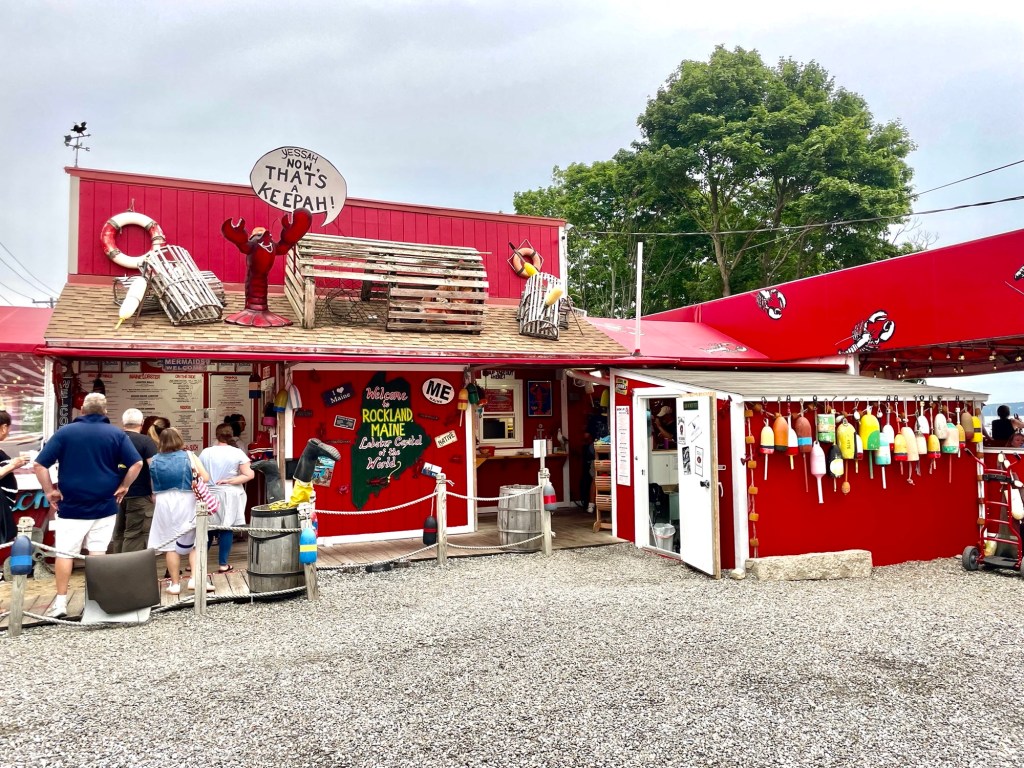
At the Southern end of Cape Elizabeth lies Two Lights State Park. This coastal park offers views of the ocean with a rocky waterfront terrain. The most popular part of the park is the Lobster Shack, which is a seafood restaurant located right beside the waters with views of the rocky beach from their abundant red picnic tables.

There’s free parking available here and plenty of seating, but it definitely gets busy. We arrived around 12:40pm and luckily we caught a gap in the lunch rush and only had 1 person in line ahead of us. By the time we finished ordering, there were at least 15 people lining up out the door.

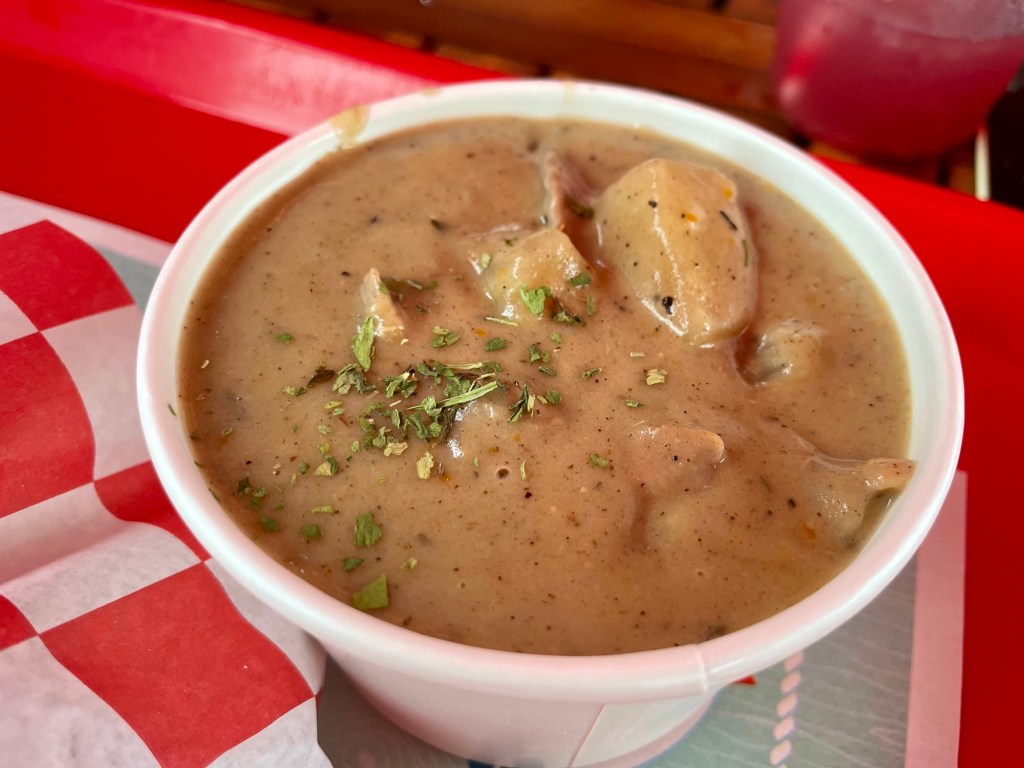
The Lobster Shack is known for their lobster roll, fried clams, and clam chowder – of course we ordered all 3. The lobster roll was fresh and generous with the lobster meat, but at the end of the day it was still just lobster and mayonnaise – good, but nothing too special from other lobster rolls. The clam chowder was average, but the fried clams were great (get the medium size, they really pack it on). It was our first time trying fried clams and we surprisingly liked it way more than we expected!

Apart from the food, the main attraction of this place is the location with a view of the beautiful calm coast right beside you. The seafood is just a bonus!

Some Final Thoughts:

  • Prepare to wait in line if you want to dine at Bite Into Maine food truck.
  • Start your day hungry so you have space to try out both lobster places.
  • Bug light is super cute.

Discover Acadia National Park: Your Guide to Mount Desert Island


Acadia National Park is the “Crown Jewel” of the North Atlantic Coast providing breathtaking coastal views, mountainous hikes, scenic drives, beaches, and a town with no shortage of restaurants. This national park is a must-do in Maine!

Hiking Acadia’s Beehive Trail: A Complete Overview


The Beehive Trail in Acadia National Park is one of the most popular hiking trails known for its stunning panoramic views and challenging vertical climbs. This guide has all the information you need to tackle this trail.

Exploring Cape Elizabeth: Iconic Lighthouses and Lobster Rolls


Cape Elizabeth, Maine, is a serene coastal town featuring iconic lighthouses, including the famous Portland Head Light and the nearby smaller Bug Light. Visitors can explore both lighthouses and enjoy renowned lobster rolls at local spots like Bite Into Maine and the Lobster Shack at Two Lights, all in half a day.

Top Things to Do in Portland, Maine: Eat, Shop, Explore


Portland, Maine, is a charming coastal city known for its vibrant shops and seafood, particularly lobster rolls. Visitors can enjoy its historic streets, numerous dining options, and attractions, including the iconic Portland Head Light. A few hours is sufficient for a quick visit, but extending to a few days allows for deeper exploration.

Mount Battie and Megunticook: Your Camden Hiking Guide


Camden Hills State Park sits just outside the small coastal town of Camden, Maine. This park has a number of hiking trails with the most popular ones being Mount Battie and Mount Megunticook. Both of these trails offer panoramic views of the ocean coast and sweeping colourful fall foliage trees below. If you’re driving through the…

Maine Lobster Festival & Rockland, ME


Lobster Festival

Date Published: Oct 7th, 2024 | Last Updated: April 22nd, 2025
Author: Abby | Category: Travel, USA
Date of travel: Aug 3rd – 5th, 2024

How many days do I need?

One. The lobster festival was a lot smaller than we had expected. It only took us about half an hour to walk through everything + an extra half hour to eat. The town of Rockland is also quite small with a few cute boutique shops. It takes about 15 minutes to walk from one end of the main street to the other. You could do both the festival and walk through the town all in one morning.

If you’re planning a weekend getaway, I’d recommend spending a day in Portland, the largest city in Maine and it’s only 1.5 hours away.

Lobster Festival info: https://mainelobsterfestival.com/

Cost: Free admission

I’m a BIG seafood lover and of course 99% of the time you hear about American lobsters, they’re from Maine. So of course when I found out that there is a lobster festival held in Maine once a year, we just had to go! This will also be our first time in the state of Maine.

Side note: Since moving to NYC, we’ve noticed that the most popular way to eat lobster meat (and most easily available) is in a lobster roll. Served either warm doused in butter or cold mixed with mayonnaise, you can’t go wrong with either option. During our travels around the Australian coast, we’ve had our fair share of lobsters (they have the ‘rock lobster’ species there) but lobster rolls are not a common food item you’d find anywhere in seafood restaurants. They’re usually served either steamed with a side of butter or ‘lobster mornay’, covered in a cream sauce and baked with a layer of cheese on top. My best guess of why lobster rolls aren’t common in Australia is because rock lobsters in Australia don’t have the big claws that American lobsters do and the claw meat is most often used in a lobster roll. 🤷🏻‍♀️ Whatever the reason, we’re so happy to have lobster rolls so accessible in this part of the country and one of our hopes for this trip to eat delicious, fresh, (and hopefully cheaper lobster meals) – what better place than Maine, the lobster capital!

The lobster festival is held annually in Rockland, Maine, a small town 1.5 hours North of Portland (the largest city in Maine). I was actually surprised it wasn’t held in Portland, considering Maine is the lobster capital of the country.

We left Brooklyn on a Saturday morning and drove 7.5 hours to reach Rockland. As we drove up the coast towards Maine, we passed by plenty of restaurants advertising their lobster rolls, some with huge lines out the door – there is definitely no shortage of lobster in this part of the country!
We drove past this place that claims to have the record for the longest lobster roll!

We arrived in Rockland around 4pm and after checking in to our hotel, we headed straight to the festival for some long-awaited seafood.

Where to stay:

Rockland is a small town so hotel options can be limited, so I’d recommend booking early. I had originally booked a room 6 months early at a hotel right in front of the lobster festival, but a few weeks before the festival they messaged us to say that they were still undergoing renovations and had to cancel our booking. It was annoying, but luckily managed to get a room at Glen Cove Inn & Suites Rockport, 7 minutes drive away from Rockland. It wasn’t anything fancy and it was a bit weird that our room was right beside the swimming pool, but apart from that our stay was fine.

Where to park:

The lobster festival offered free parking at a school parking lot with shuttle busses every 20mins, but since it was later in the day, we tried our luck and found a spot on the street for free right across from the festival. We did this again the next morning when it was much busier and again got lucky with free street parking. Therefore, if you’ve got the time, I’d recommend driving around before heading straight to the school lot.

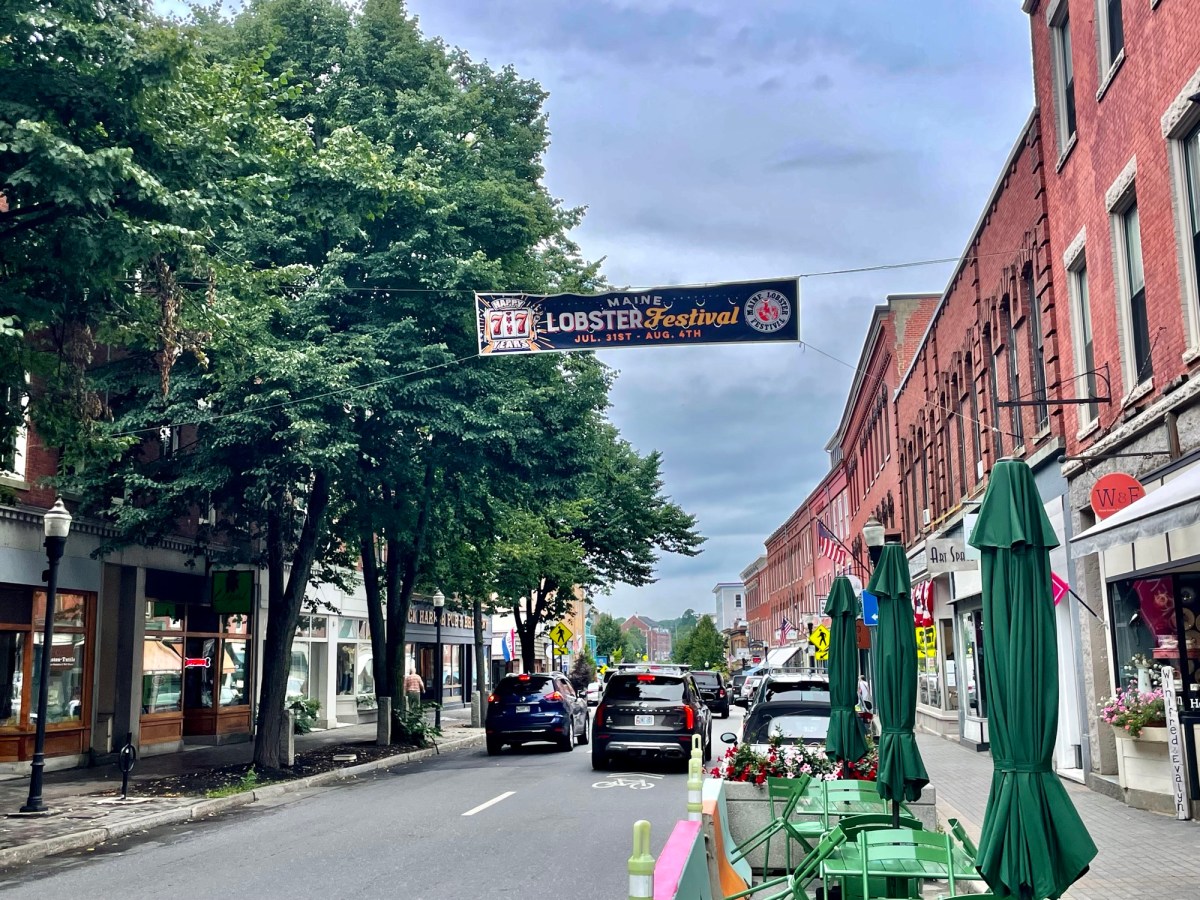
Rockland is a very small but cute town with lovely boutique shops and cafes on their Main Street that were unfortunately all closed when we arrived on a Saturday night, but no matter, our eyes were targeted for the Lobster Festival that was held at the waterfront!

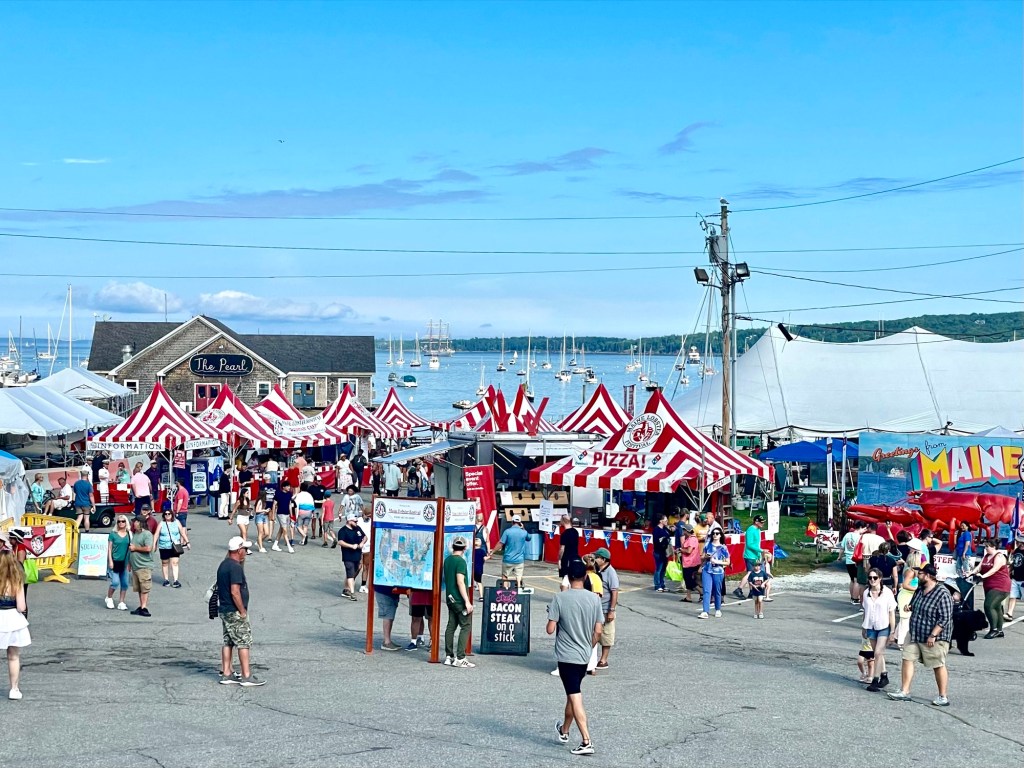
I expected a HUGE festival with tons of lobster area in a bustling town, but it wasn’t quite that. The size of the Maine Lobster Festival was a lot smaller than expected, with maybe about 30-40 vendors.

There are various events throughout the day including lobster trap racing, live music, and tours of a real Navy destroyer – see the schedule of events on their website for more info.

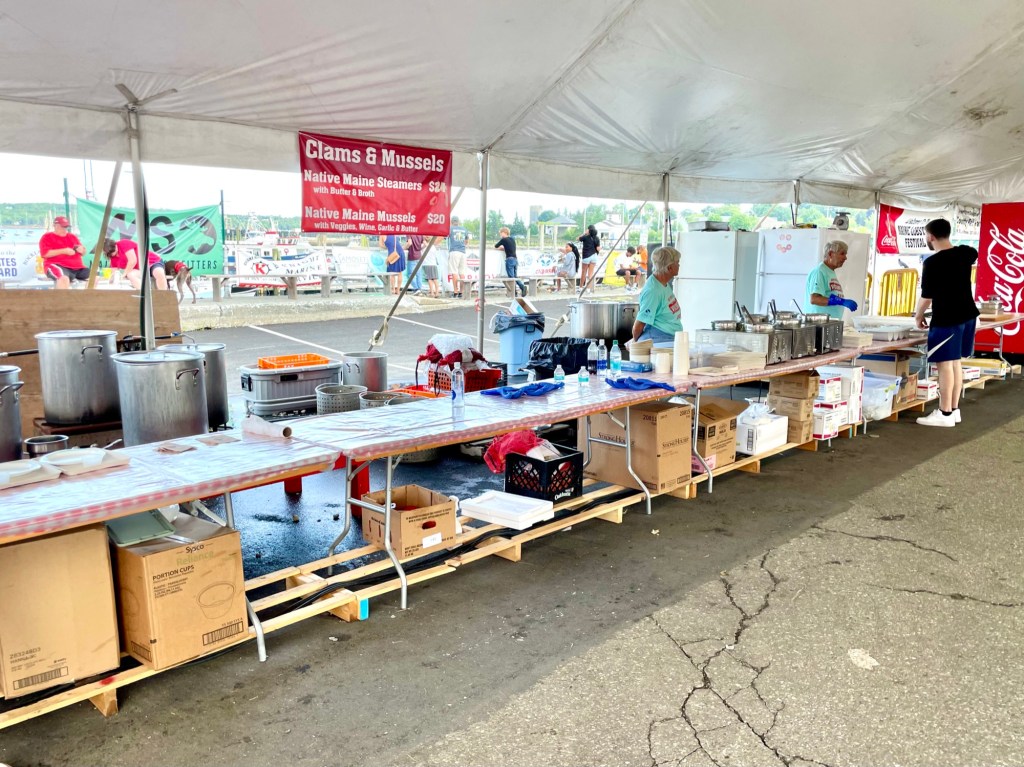
Our main goal for this trip was to eat some good lobster, but sadly there wasn’t nearly as much lobster as I was hoping for. I was expecting food vendors everywhere with all kinds of different ways to showcase lobster, but I was disappointed to find that the only place to get fresh lobster at the festival was at the main food tent run by the festival. It was a cafeteria/Ikea-style set up where you go to different stations and pick up what you want onto your tray then check out at the cashier. It wasn’t anything fancy, but I’ll admit it was a pretty efficient system and the people serving were so lovely.

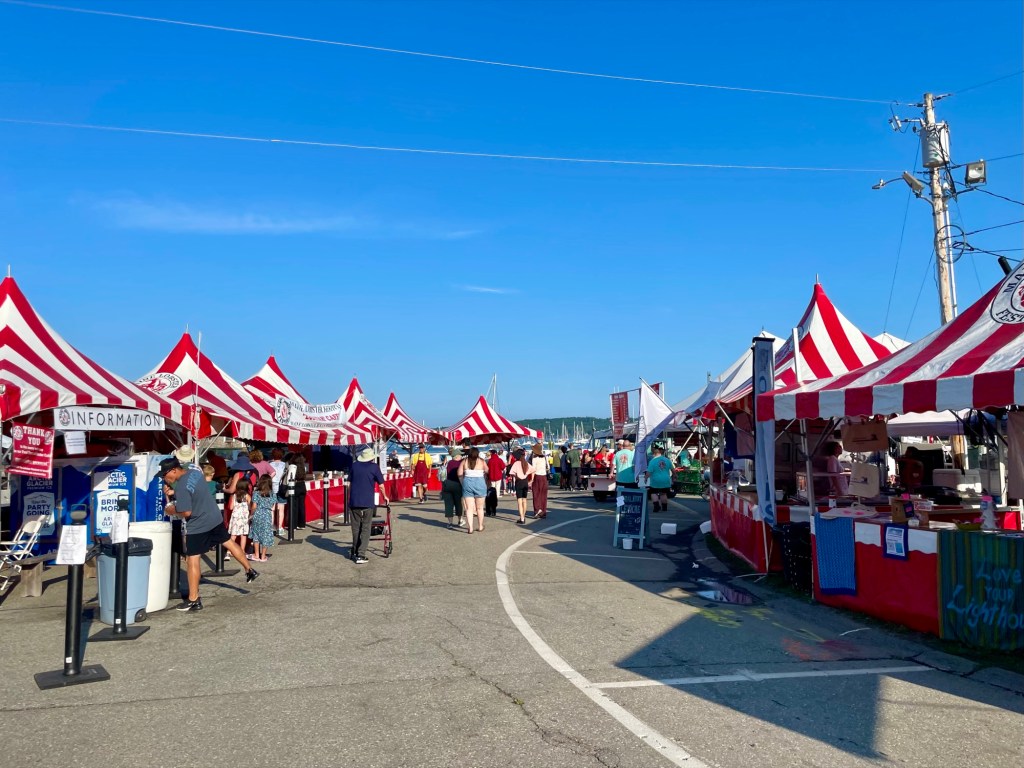
The path leading up to the food tent
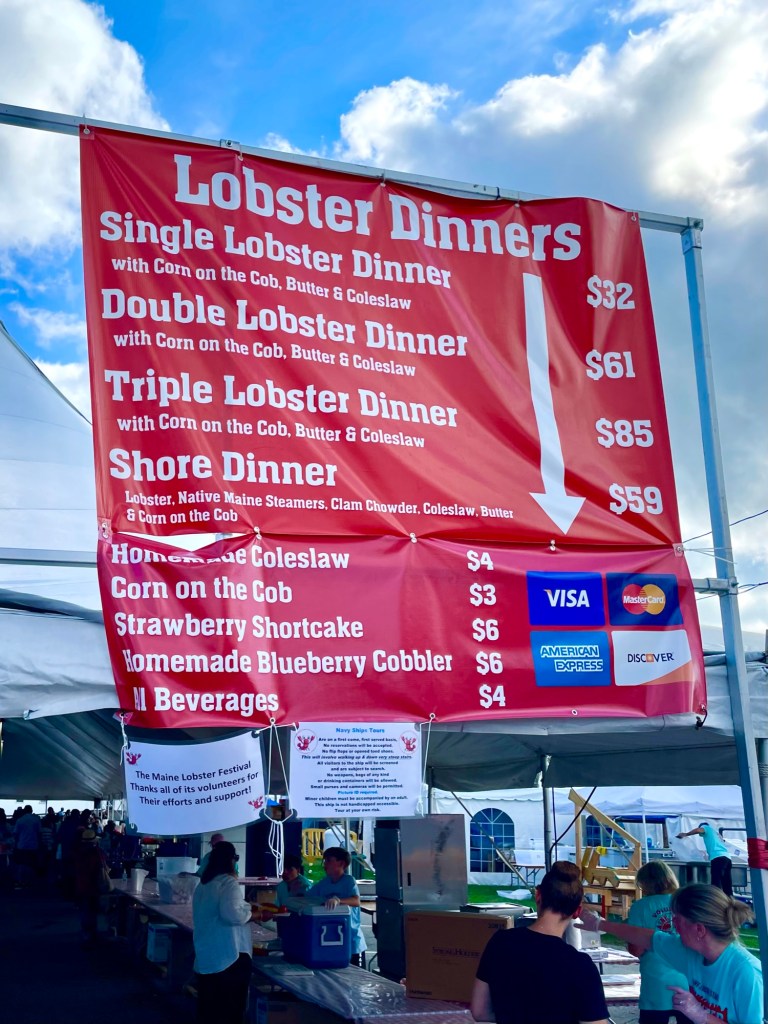
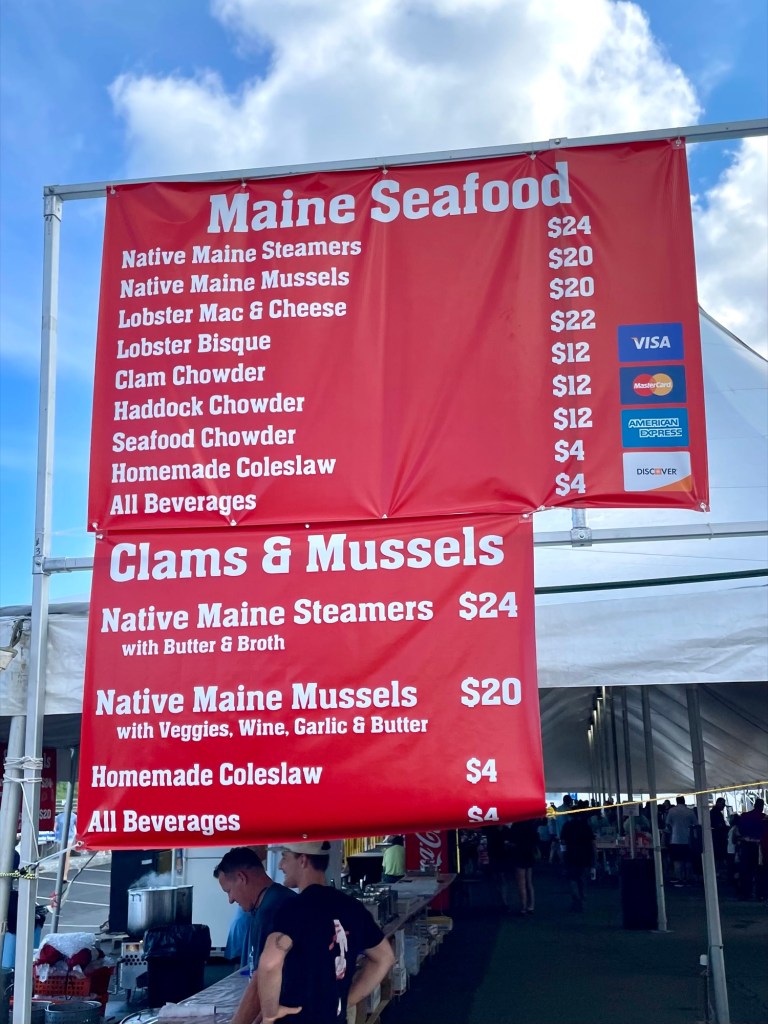
The menu available
The food tent

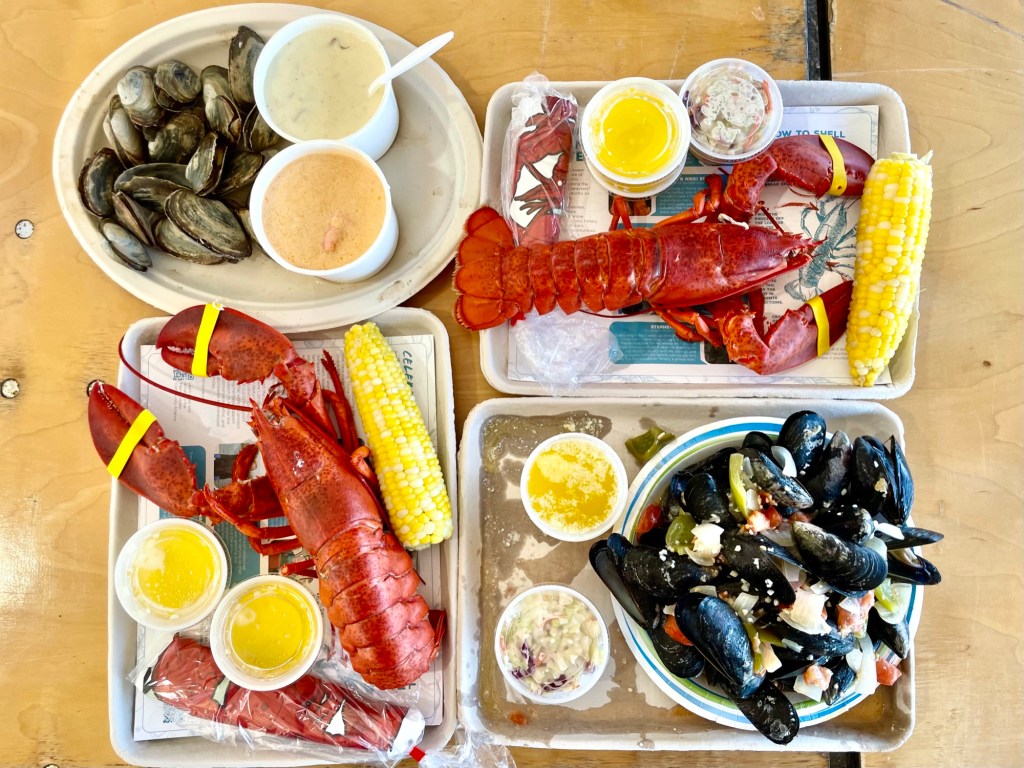
The main seafood items on offer in the food tent were a full steamed lobster, mussels, native clams/steamers, chowders, lobster bisque, lobster mac & cheese, and some desserts.

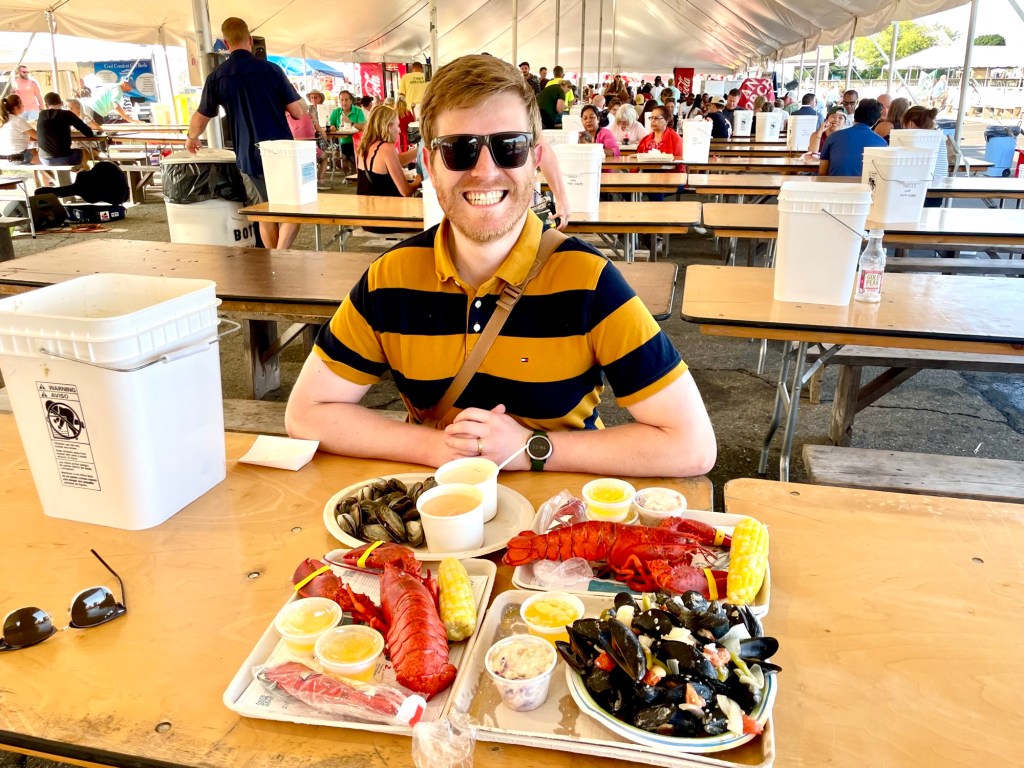
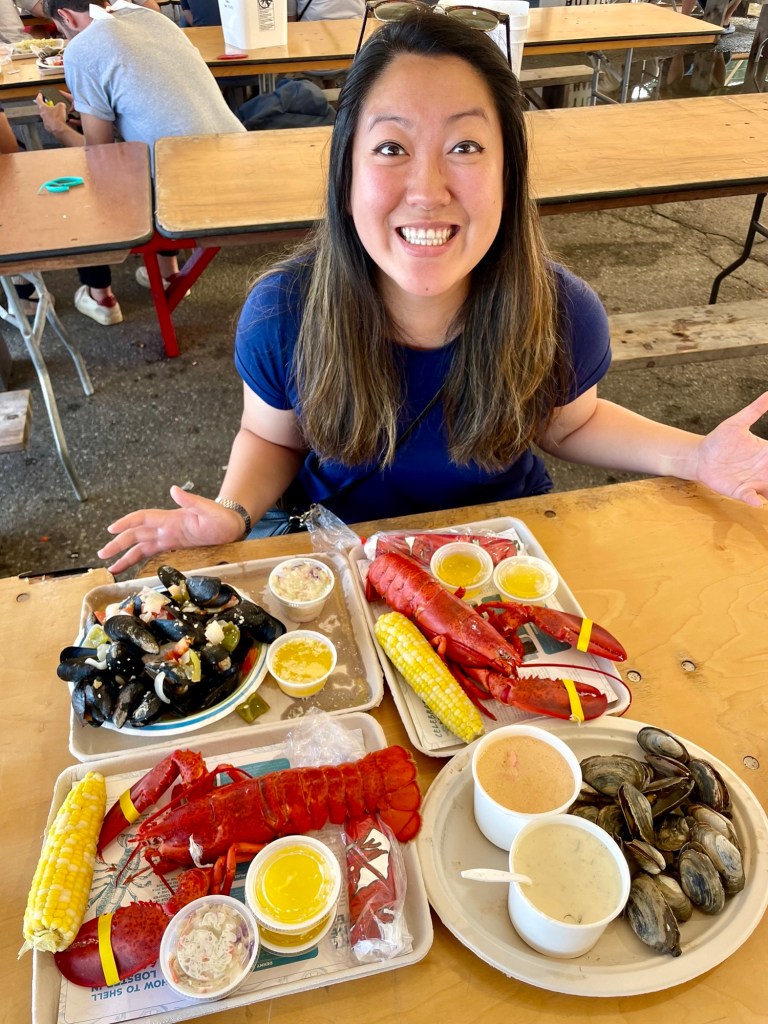
We got a bit of everything! Native clams/steamers, clam chowder, lobster bisque, mussels, and lobsters x 2!

Seeing as how this was the only place to get food in the festival, we ordered a bit of everything: 2 steamed whole lobsters, native clams, mussels, lobster bisque, and clam chowder ($111, tax included). I’m going to be super honest here: apart from the steamed lobster and the sweet corn on the cob that came with it, everything else was a let down. The flavour of the mussels weren’t bad (white wine broth with some veg), but the mussels itself were sandy as hell and the actual mussels were quite small. Neither of us have had native clams before and unfortunately we couldn’t even get past 2 of them, and I hate wasting food. The lobster bisque tasted like it came from a can but the clam chowder was actually good – however, as we walked past the stand, we saw them open up multiple plastic bags of the soup into the warming pot so it also wasn’t made fresh. 😦

Toby also got a $30 lobster roll and it was the tiniest thing. It lacked seasoning and he finished in 3 bites. It was sad to say that we came all this way for our first lobster roll at the Maine Lobster Festival but the ones in NYC are cheaper, larger, and tastier 💔.

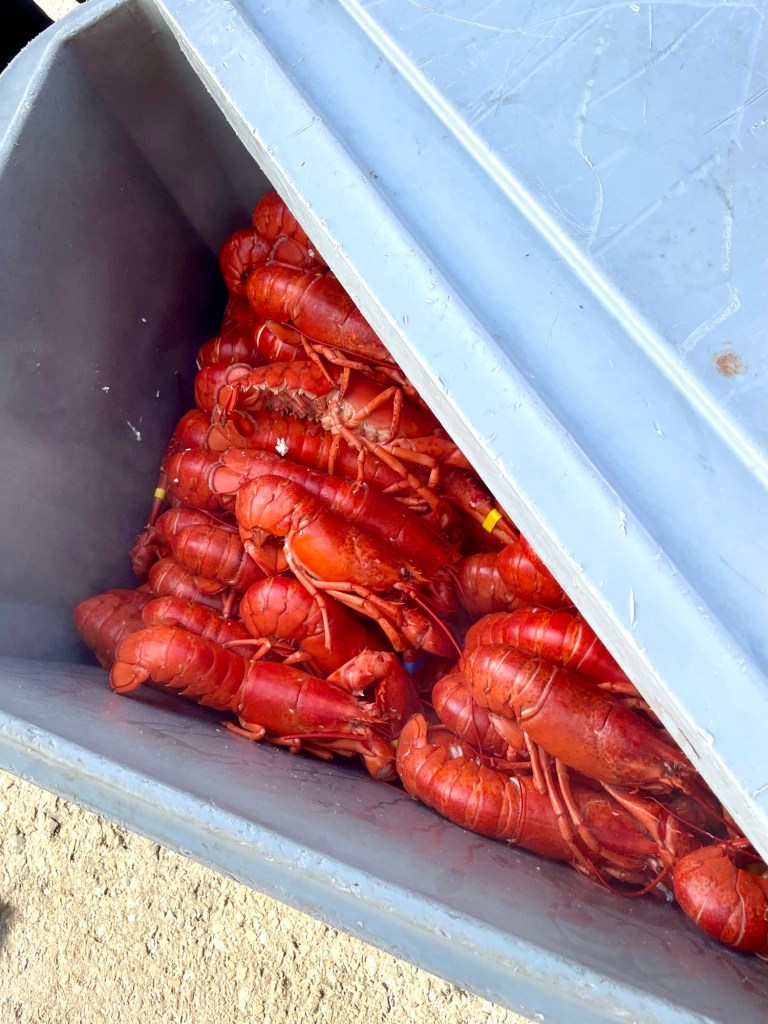
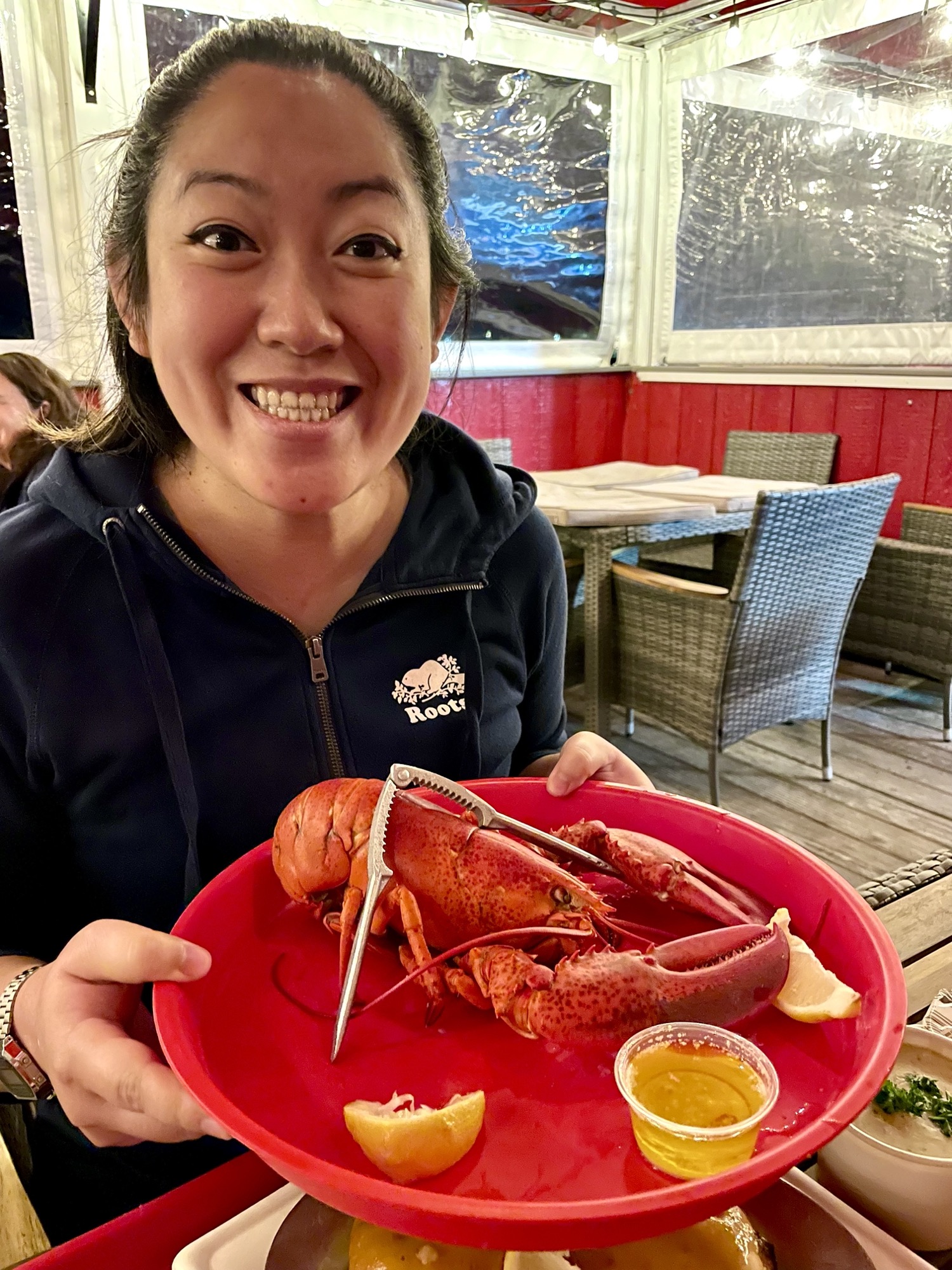
However, the highlight for me was the steamed lobster. It was so fresh and sweet but also on the salty side – perhaps they over salted the water when cooking or didn’t replace the water in between batches so the salty sea water made it salty? Not sure. Either way, despite the salt, I thought it was still good and there was tons of butter available for dipping. The placemat had instructions how to break down a lobster and by the end of the weekend, Toby was a pro 😎. The corn on the cob that came with it was also great – but then again, I really like corn. 😬

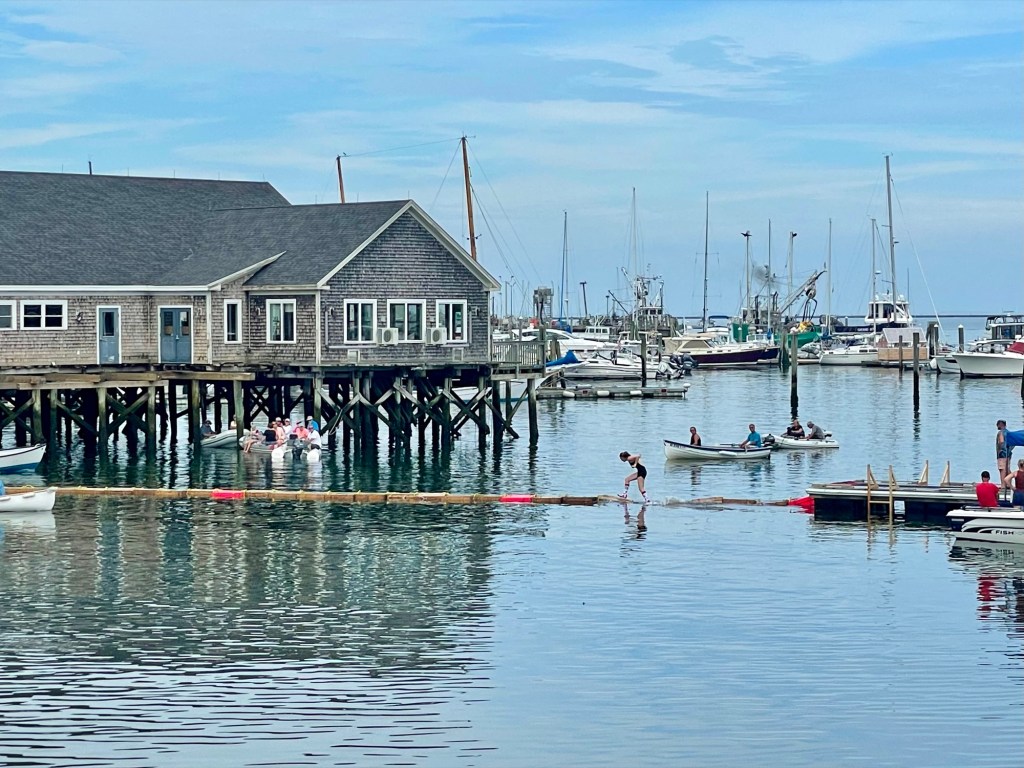
The food tent was right next to the water for some beautiful views while you eat.

After eating, we walked through the rest of the festival grounds which was mainly tents of local-made goods and a handful of food trucks that sadly didn’t really serve lobster-related things.

Although it was a small festival, there was no shortage of fantastic live music – there were performers in the food tent, beer tent and also on the main stage. Julia Gagnon (an American idol contestant) performed on the main stage the next morning and blew everyone away – what a voice!

The entire festival took us about half an hour to walk through everything + an extra half hour of eating time, then we then sat and listened to the live music while enjoying our giant lemonade and delicious fried dough from a food truck for dessert.

Overall it was a cute little festival with good lobster, however I’m not sure it was worth the 7.5 hour drive just for this festival. If we lived closer to the area, I’d come by again just to check out the live music scene and a walk-around.

Rockland

When we arrived in the evening the day before, everything in the little town was closed so there wasn’t much to see. The next morning we took another stroll through town and sadly about 1/3 of the stores were still closed, including some really cute cafes and bakeries that I was eyeing the day before – perhaps because it was a Sunday, but I had hoped that they’d have adjusted hours due to the increased tourism from the festival 🤷🏻‍♀️. It took us about 15 minutes to walk from one end of the main street to the other, with some extra added time for stopping in cute little boutique shops.

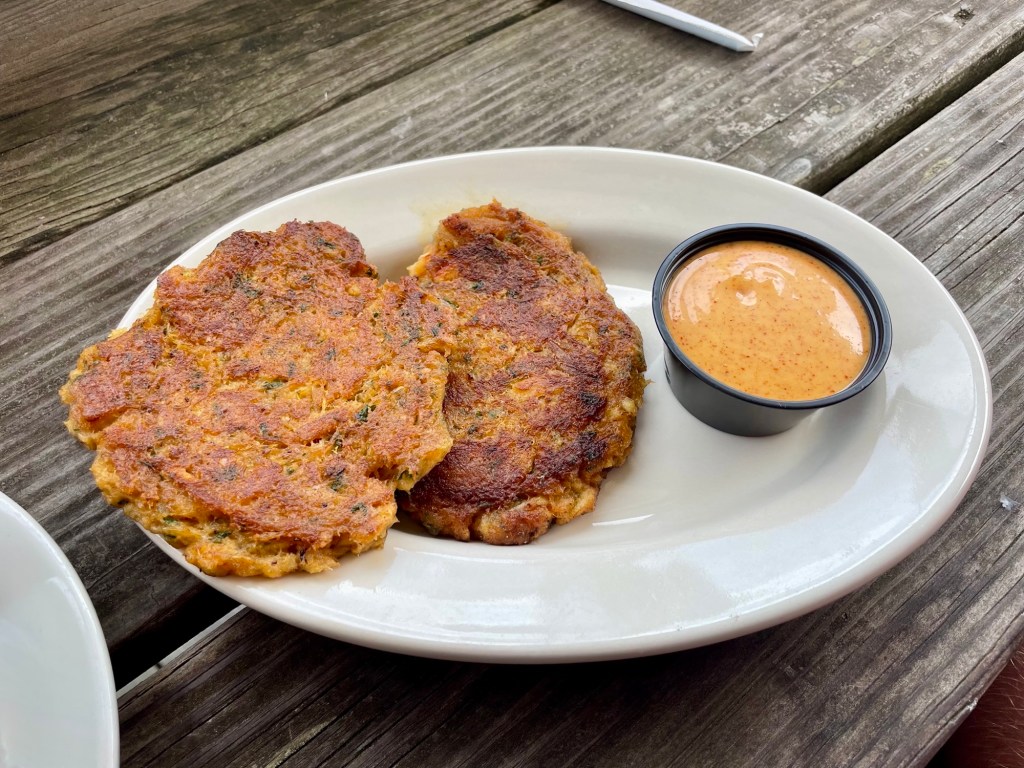
Due to the disappointment of the seafood at the festival the day before, we decided to find a nice restaurant for lunch in hopes of a better seafood meal in Maine. After a little Googling and reading through online reviews, we decided on Hillside Seafood Company. This restaurant was right in front of the Lobster Festival with views of the waters and the reviews were good. It was decently busy when we arrived so I was excited for a good meal. Sadly when we sat down outside to enjoy the views, a big ass tour bus parked right in front of the restaurant and blocked the entire waterfront view for everyone. This was a prelude to what was to come. We ordered a mix of items people raved about in the reviews as well as what the waitress had recommended: lobster stew, lobster pie, crab cakes, and broiled haddock with crab topping. I wish I could tell you that this was a redemption meal for Rockland seafood, but it was really bad, y’all. The $30 lobster “stew” was essentially warmed milk with lobster meat (although they were quite generous with the lobster meat portion), the $42 lobster “pie” was lobster meat and breadcrumbs with old bay seasoning on top (again, very generous with the lobster portion), the flavour of the crab cake wasn’t bad but it wasn’t crispy like a traditional crab cake – the texture was more like a dense pancake with old bay seasoning, and finally the most disappointing and the most recommended by reviews and the waitress was the $24 broiled haddock with crab topping. The crab topping was an extra $3 and it tasted just like the breadcrumbs in the lobster pie (but somehow worse) and the haddock was super dry. Overall it was about $130 for the meal and it was pure disappointment. I wish we had just went back to the festival for the steamed lobster instead. 💔💔💔 /rant

Claws – so good that it deserves its own heading!

Claws is a Rockland restaurant that we drove past multiple times between the Lobster Festival and our hotel. Each time we drove past there was a huge line. We decided to give it a go for our final meal in this town, and I’m so glad we did! This was the redemption meal.

We came at 4pm and luckily there was barely anyone in line!

Claws was exactly what we were looking for and wish we had all of our meals here from day one. They get all their seafood fresh from the boats daily and they’re served with unique flavours, tons of options, and also very reasonably priced!

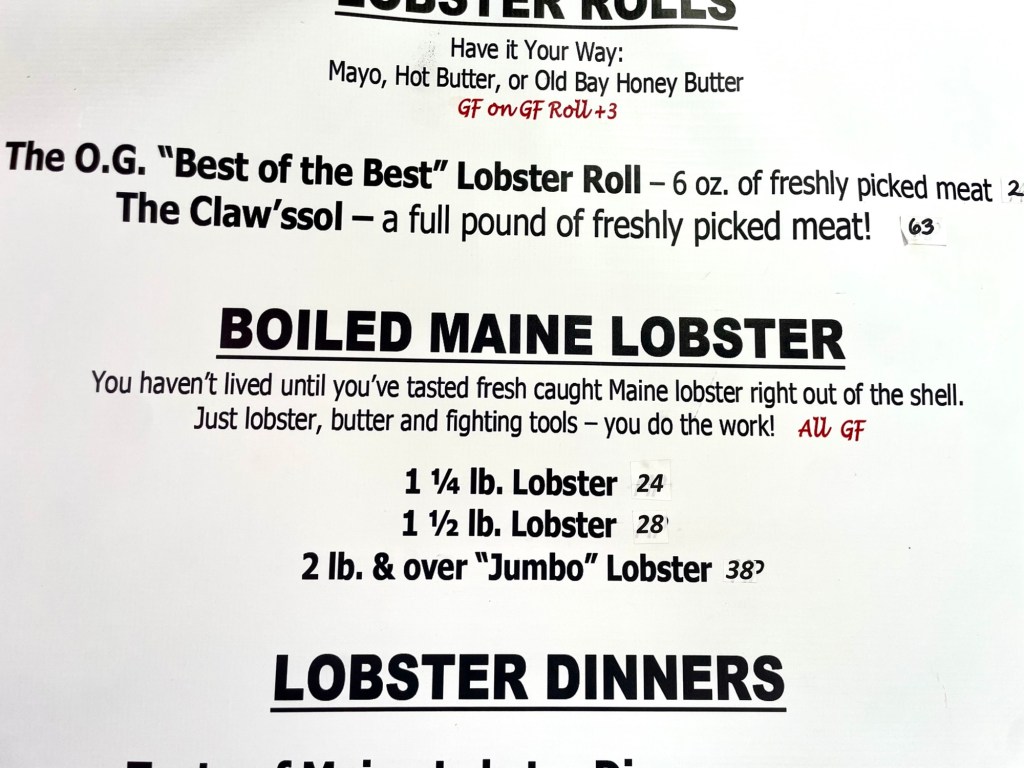
For reference, a 1 1/4 lb lobster at the festival was $32 and $41 in Portland, but only $28 here. For 2+ lbs, it’s only $38 and some of these big boys that came out of the kitchen were HUGE!

We got there around 4pm and luckily there was only 1 person in line (by the time we left, the line was super long again). We ordered at the counter then took a seat on their beautiful patio that opens up to the waters. If it weren’t for how busy they get, it’d actually be quite a peaceful place to be with views of the open still waters.

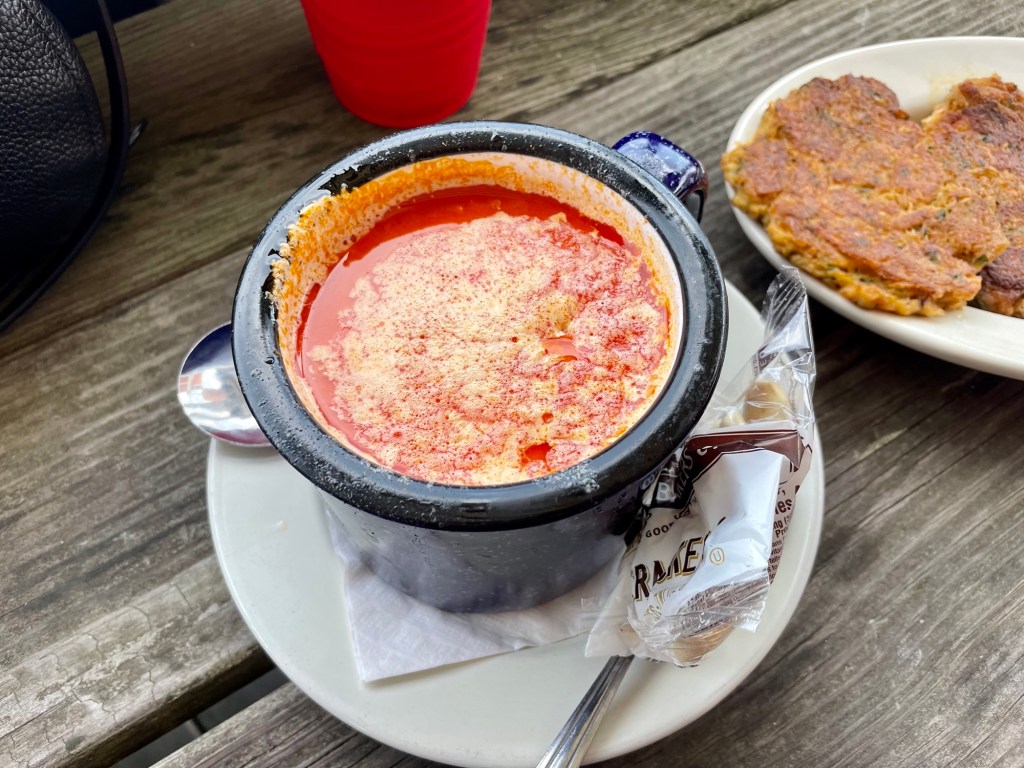
We ordered the lobster donut (essentially lobster with a cheese sauce inside a sweet bun and topped with syrup – a savoury sweet combination – it was SO GOOD), the famous award-winning clam chowder (can confirm, probably the best we’ve ever had!), and a lobster roll with old bay honey butter sauce (I thought the sauce was amazing, but Toby thought it was overpowering and preferred a plain lobster roll instead). I wish we were hungrier so we could’ve ordered more, but we were sadly still so full from the disappointing lunch at Hillside because I hate wasting food 🙁.

We had a great time here and moved from our table to the water-side seats when they were free and just drank our blueberry lemonade and chatted the evening away. As it got closer to dinner time, it got REALLY busy with tons of people standing around waiting for a seat to open up. I’d recommend going early or grabbing a table first before ordering because it gets packed – and for good reason!

You can’t tell, but there are about 20 people lining up by the time we left

Edit: We came back here again Oct 2024 and it was still as amazing as ever. This time we saved room to get the lobster. *chef kiss*. It was a lot more chilly this time. There were some heaters going, but it was still pretty cold, so rug up if you’re coming here later in the season!

Final Thoughts on the Maine Lobster Festival & Rockland:

1) The Lobster Festival was smaller than expected but had great live music. The food was subpar and for the size of the festival, we didn’t feel like it was worth the 7.5 hour drive to come here, but if you live nearby, it’s definitely a neat and lively festival to check out.

2) I have no idea why Hillside Seafood Company restaurant is so popular.

3) You MUST go to Claws. I’d come back to Rockland just for Claws. I’d make a detour just for Claws. I’d come here everyday if I lived in the area.

4) You can do everything in 1 day. Even half a day. We originally planned to stay 3 nights here, but checked out early because there wasn’t much else to do, so we headed to Portland.

* One thing we didn’t get to try was ‘Wasses Hotdog’ because we didn’t have the stomach space and this weekend was focused on seafood, however this palce had great reviews and there were often many people lining out the door for it. Maybe next time!

Roasted Garlic Dal (Yellow Lentil Curry)


Date Published: July 20th, 2024 | Last Updated: July 20th, 2024
Author: Abby |Category: mains, vegetarian, easy, healthy, low-cal
Serves: 4 as a main | Prep time: 1 hour | Cook time: 2 hours

Jump to recipe |

Dal (or dahl, daal, dhal) is a delicious vegetarian Indian curry made of lentils. You’ll find it on the menu at any Indian restaurant and there is a huge variety of ways you can make dal. It’s both flavourful and healthy!
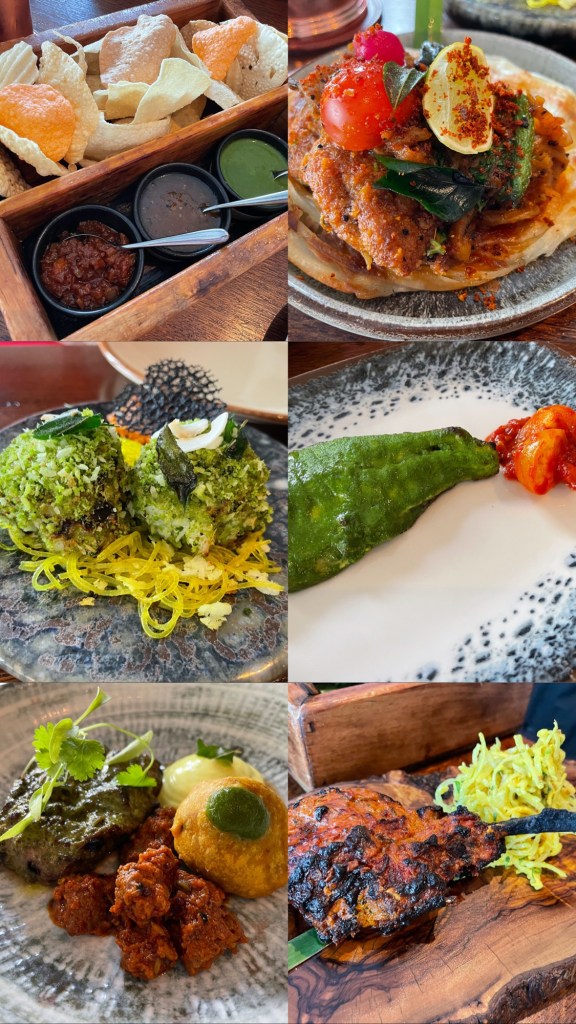
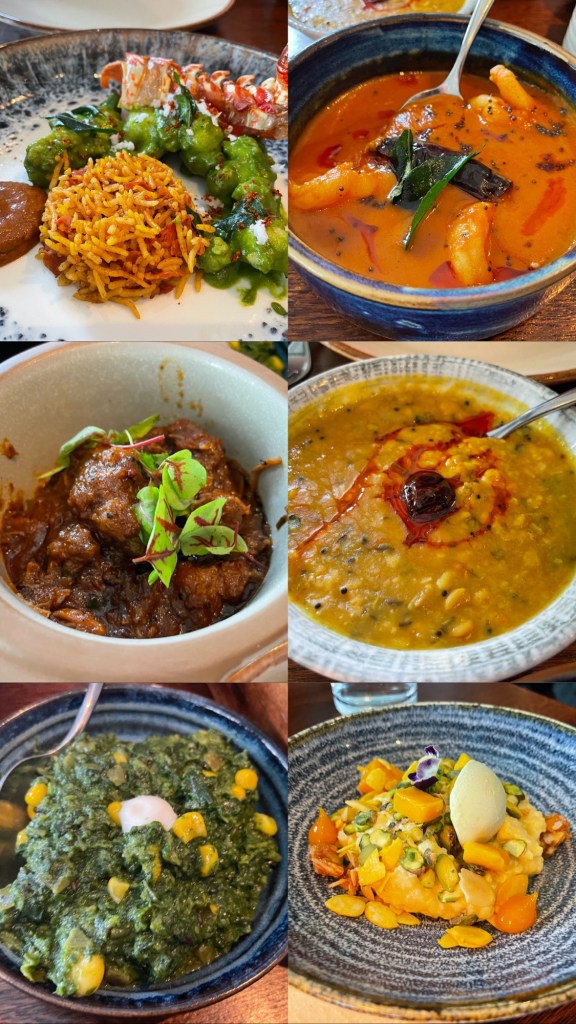
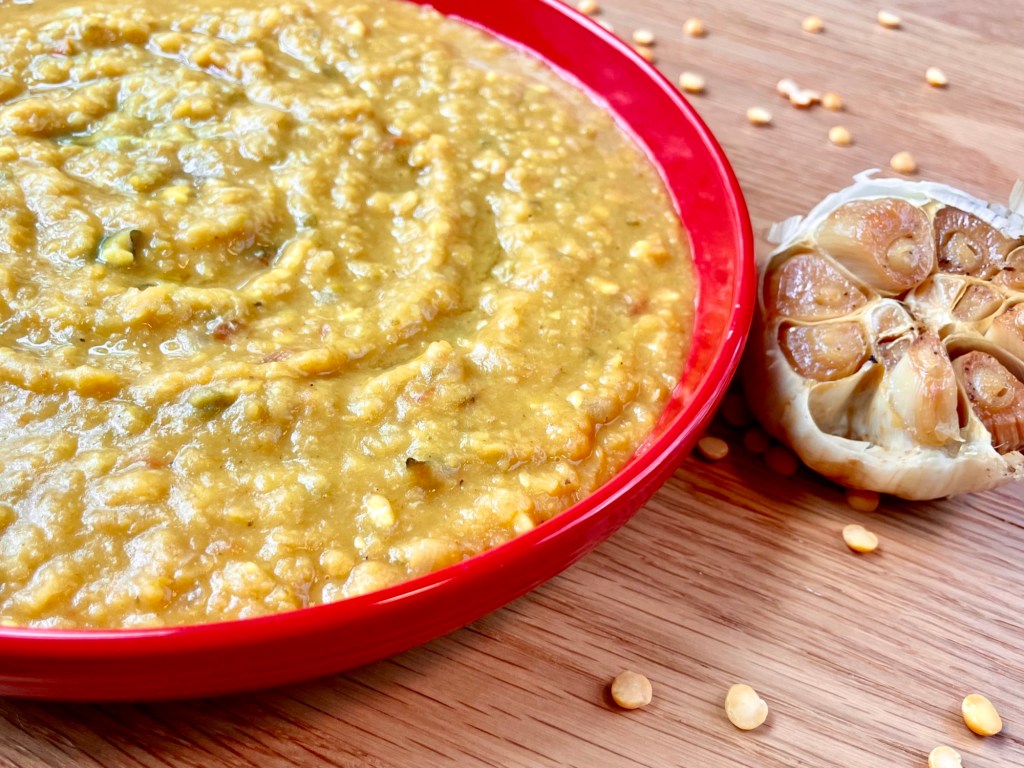
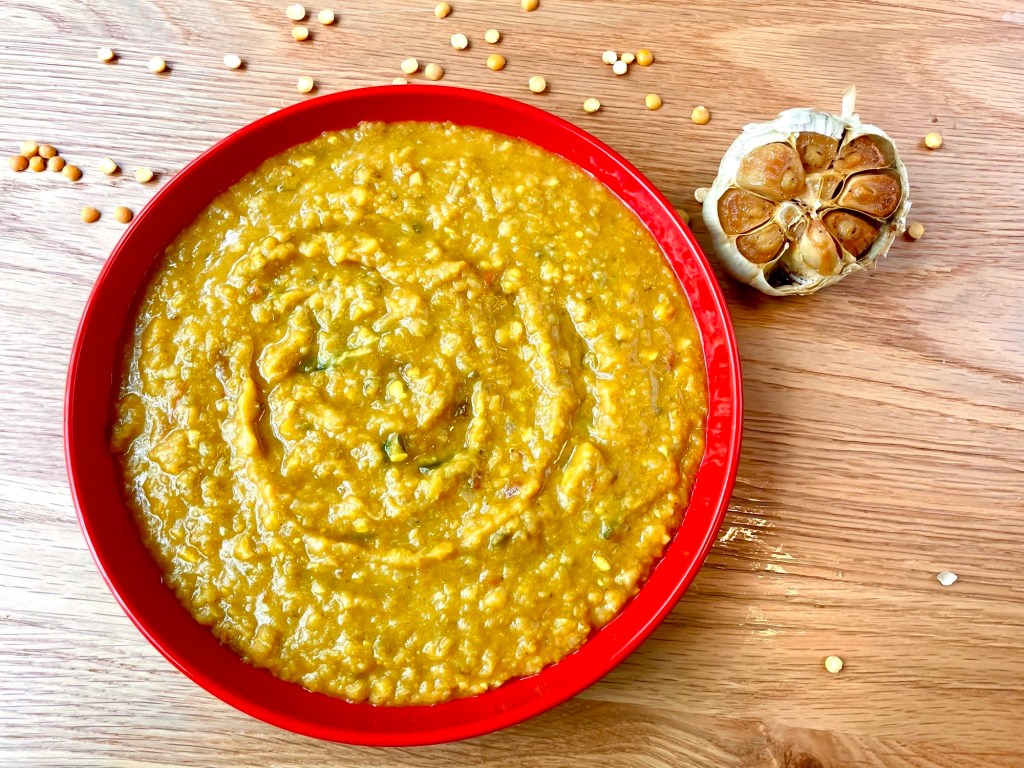
In the past I’ve always found dal to be good, but never comparable to the infamous butter chicken, however that all changed during our recent trip to London. Toby took me to a Michelin-starred Indian restaurant called Trishna for my birthday and holy moly, of the entire tasting menu, the roasted garlic dal blew me away! I was thinking about it for days after and hoped I would be able to recreate it when I got home. After some trial and error testing different dal and roasted garlic recipes, I’m glad to report that I’ve done it! I’ve recreated that magical garlic dal from ‘Trishna’. The main base dal recipe is from RecipeTinEats but with a few little tweaks and with the addition of the roasted garlic.
Although this recipe is not difficult to make, there are a few ingredients required and it takes a little to let everything simmer – I promise it’s well worth the wait!

Anyways, without further ado, here’s the recipe! If you have any comments or suggestions, I’d love to hear from you in the comment section! You can follow me on instagram, youtube and facebook to see all the recipes I post!

Happy cooking!

Ingredients you’ll need:

  • Roasted garlic:
    • 2 garlic bulbs
    • Drizzle olive oil
    • Pinch of salt
    • Pinch of black pepper
  • Dal:
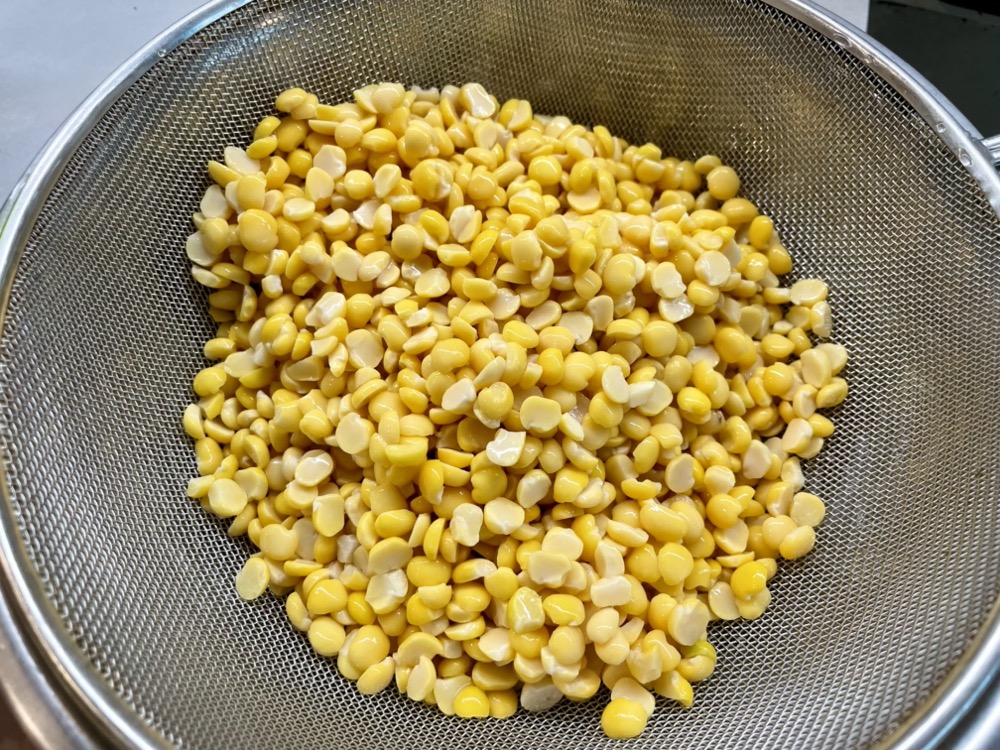
    • 1 cup chana dal/yellow split lentils
    • 2 Tbsps ghee (or 1 Tbsp oil + 1 Tbsp butter)
    • 2 long green chillies, deseeded & diced small
    • 1 small onion (red or yellow), diced small
    • 6 garlic cloves, minced
    • 1.5 Tbsps ginger, minced
    • 8 dried (or 10 fresh) curry leaves
    • 1 tomato, diced small
    • 1/2 tsp ground cumin
    • 4 cups (1L) water
    • 1/2 tsp turmeric powder
    • 1/8 tsp garam masala
    • 1 tsp kosher/cooking salt (or more to taste)
  • To serve: basmati rice or naan

Directions:

Rinse the chana dal/yellow split lentils and let it soak in water for at least 1 hour, then strain and set aside.

While the lentils are soaking, roast the garlic:

Preheat the oven to 375˚F (190˚C).

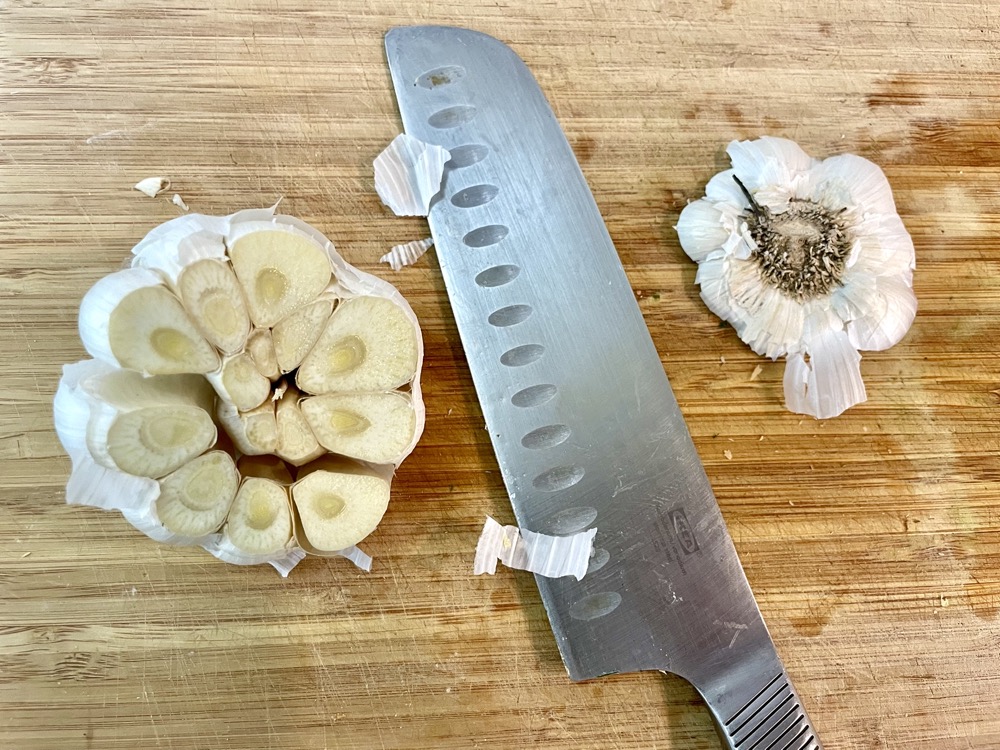
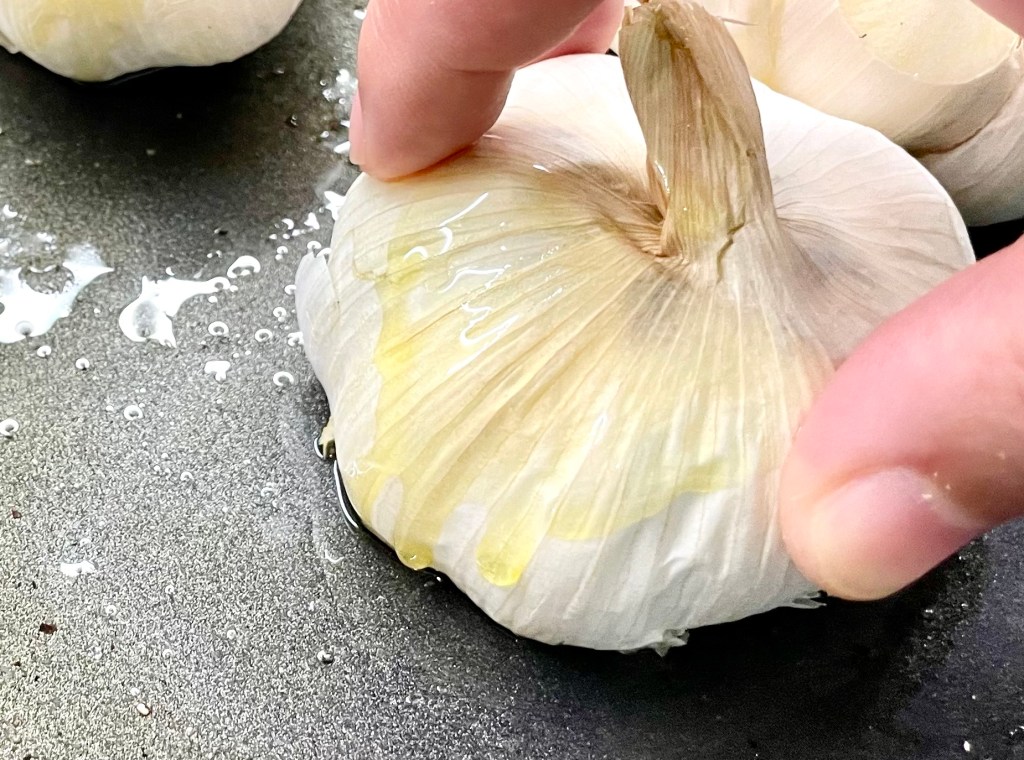
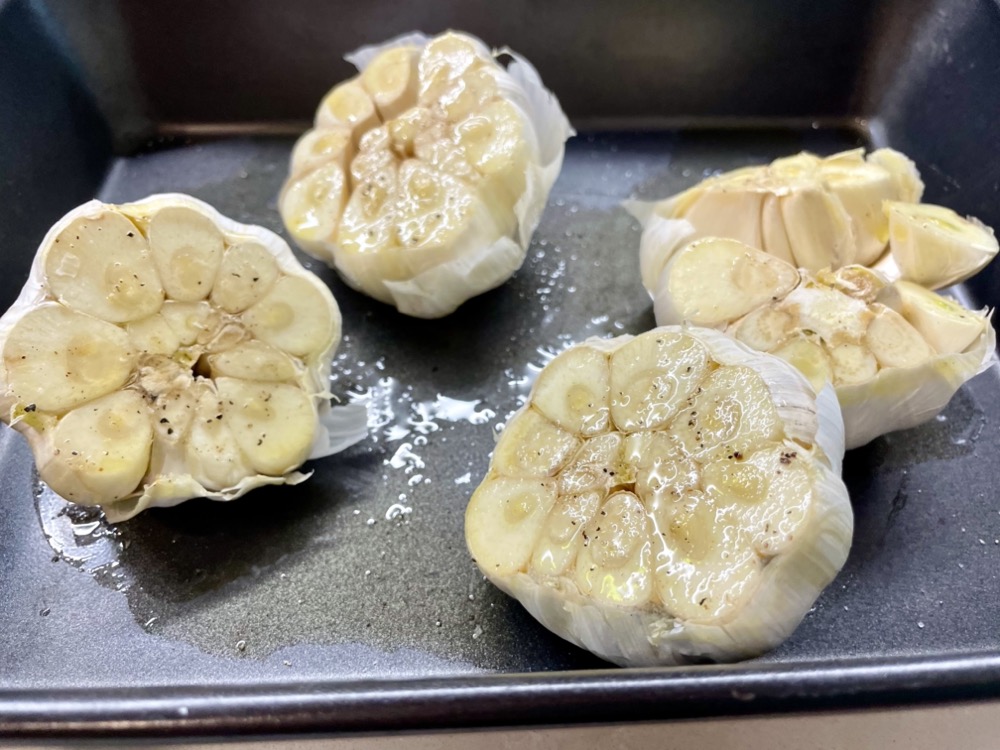
Prepare a small square baking tray and pour in a drizzle of olive oil. Slice the base off of the garlic bulbs (the flat side – see photo) and dip the exposed side into the olive oil and place the bulbs in the tray, cut side up. Sprinkle salt and pepper over top. Make sure all the exposed garlic cloves are covered in oil so it doesn’t burn.

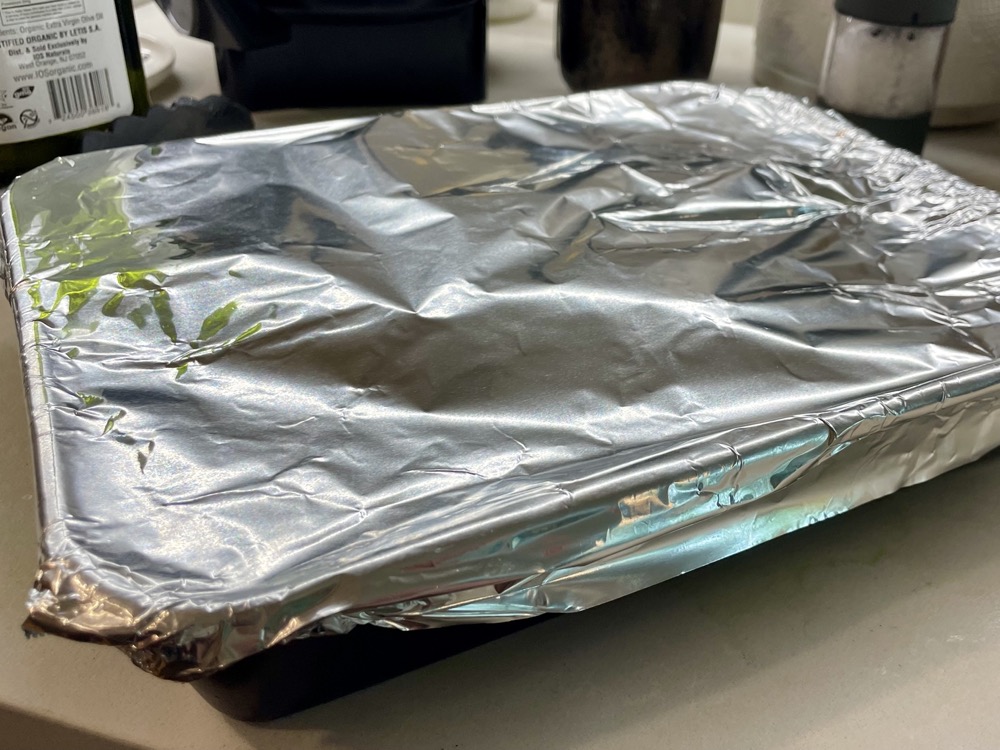
Cover the tray with aluminum foil and bake in the preheated oven for 40 minutes.

After 40 mins, take it out of the oven, remove the foil and let the roasted garlic cool down. Once cool enough to handle, gently remove the garlic cloves from the outer layer and set aside.

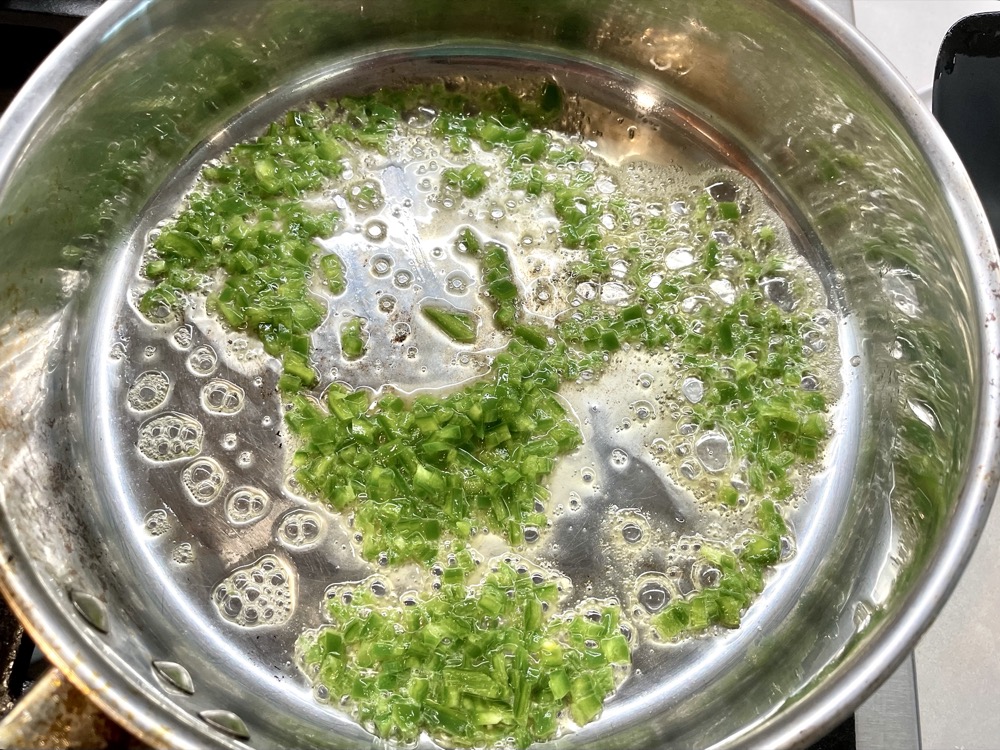
In a skillet on HIGH heat, melt the ghee (or butter/oil). Then add in the green chillies and sauté for 2 minutes until starting to soften. Next add in the onions and continue to sauté for another 3-4 minutes until the onion softens.

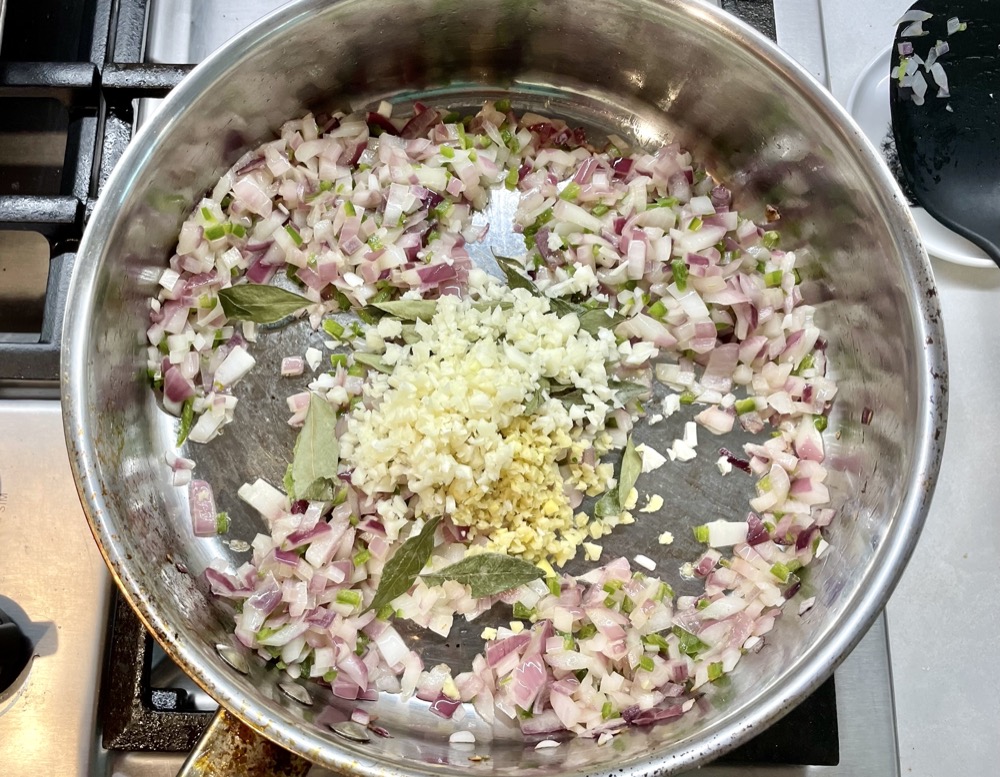
Once the onion has softened, turn the heat down to MEDIUM and add in the minced garlic, ginger, and curry leaves. Cook for 1 minute until the garlic is fragrant.

Add in the diced tomatoes and cumin and continue to sauté for another 2-3 minutes until the tomatoes break down and you’re starting to get a paste.

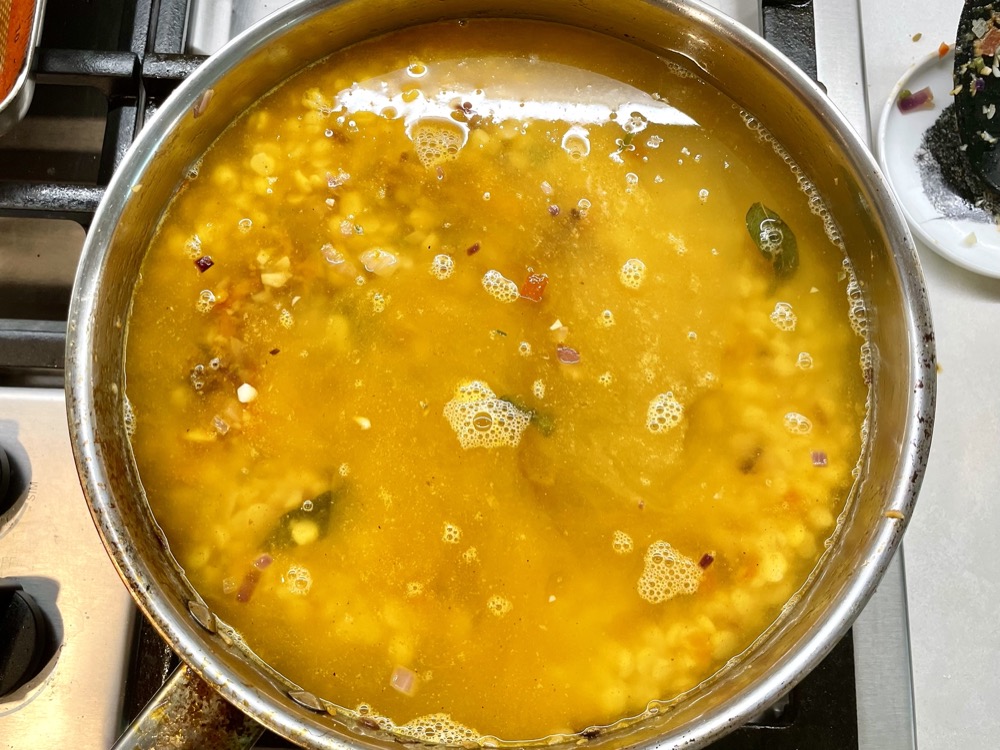
Add in the water, turmeric powder, garam masala and salt. Mix everything around and bring the heat up to HIGH to let it come to a boil, then turn the heat down to LOW and simmer the dal with the lid on for 1 hour, stirring intermittently.

(You can make the basmati rice or whatever side you like in this time.)

After 1 hour take off the lid and let the dal continue to simmer for 30 minutes to reduce the liquid. The dal has finished cooking when it looks like a porridge-consistency and the liquid has reduced to your liking.

Mash the roasted garlic cloves (from step 1) and add it into the dal. Taste and adjust salt as needed. Done! Serve over a bed of basmati rice or with naan.

Summarized Recipe:

Roasted Garlic Dal (Yellow Lentil Curry)

Date Published: July 20th, 2024 | Last Updated: July 20th, 2024
Author: Abby |Category: mains, vegetarian, easy
Serves: 4 as a main | Prep time: 1 hour | Cook time: 2 hours

Ingredients:

  • Roasted garlic:
    • 2 garlic bulbs
    • Drizzle olive oil
    • Pinch of salt
    • Pinch of black pepper
  • Dal:
    • 1 cup chana dal/yellow split lentils
    • 2 Tbsps ghee (or 1 Tbsp oil + 1 Tbsp butter)
    • 2 long green chillies, deseeded & diced small
    • 1 small onion (red or yellow), diced small
    • 6 garlic cloves, minced
    • 1.5 Tbsps ginger, minced
    • 8 dried (or 10 fresh) curry leaves
    • 1 tomato, diced small
    • 1/2 tsp ground cumin
    • 4 cups (1L) water
    • 1/2 tsp turmeric powder
    • 1/8 tsp garam masala
    • 1 tsp kosher/cooking salt (or more to taste)
  • To serve: basmati rice or naan

Directions:

  1. Rinse the chana dal/yellow split lentils and let it soak in water for at least 1 hour, then strain and set aside.
  2. While the lentils are soaking, roast the garlic:
    • Preheat the oven to 375˚F (190˚C).
    • Prepare a small square baking tray and pour in a drizzle of olive oil. Slice the base off of the garlic bulbs (the flat side – see photo) and dip the exposed side into the olive oil and place the bulbs in the tray, cut side up. Sprinkle salt and pepper over top. Make sure all the exposed garlic cloves are covered in oil so it doesn’t burn.
    • Cover the tray with aluminum foil and bake in the preheated oven for 40 minutes.
    • After 40 mins, take it out of the oven, remove the foil and let the roasted garlic cool down. Once cool enough to handle, gently remove the garlic cloves from the outer layer and set aside.
  3. In a skillet on HIGH heat, melt the ghee (or butter/oil). Then add in the green chillies and sauté for 2 minutes until starting to soften. Next add in the onions and continue to sauté for another 3-4 minutes until the onion softens.
  4. Turn the heat down to MEDIUM and add in the minced garlic, ginger, and curry leaves. Cook for 1 minute until the garlic is fragrant.
  5. Add in the diced tomatoes and cumin and continue to sauté for another 2-3 minutes until the tomatoes break down and you’re starting to get a paste.
  6. Add in the water, turmeric powder, garam masala and salt. Mix everything around and bring the heat up to HIGH to let it come to a boil, then turn the heat down to LOW and simmer the dal with the lid on for 1 hour, stirring intermittently.
  7. (You can make the basmati rice or whatever side you like in this time.)
  8. After 1 hour take off the lid and let the dal continue to simmer for 30 minutes to reduce the liquid. The dal has finished cooking when it looks like a porridge-consistency and the liquid has reduced to your liking.
  9. Mash the roasted garlic cloves (from step 1) and add it into the dal. Taste and adjust salt as needed. Done! Serve over a bed of basmati rice or with naan.

Legit Tonkotsu Ramen from scratch (in an Instant Pot)


Date Published: Mar 3rd, 2024 | Last Updated: Mar 3rd, 2024
Author: Abby |Category: Asian, mains, soups
Serves: 4-6 | Prep time: 12 hours before to marinate | Cook time: 4.5 hours total

Jump to recipe |

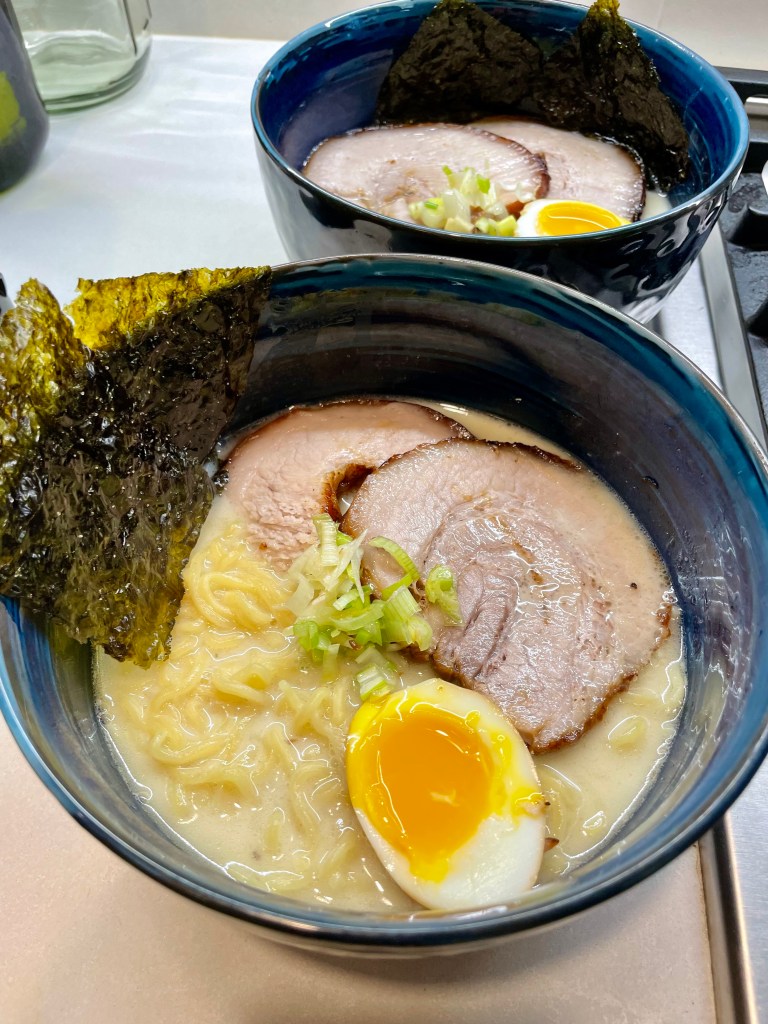
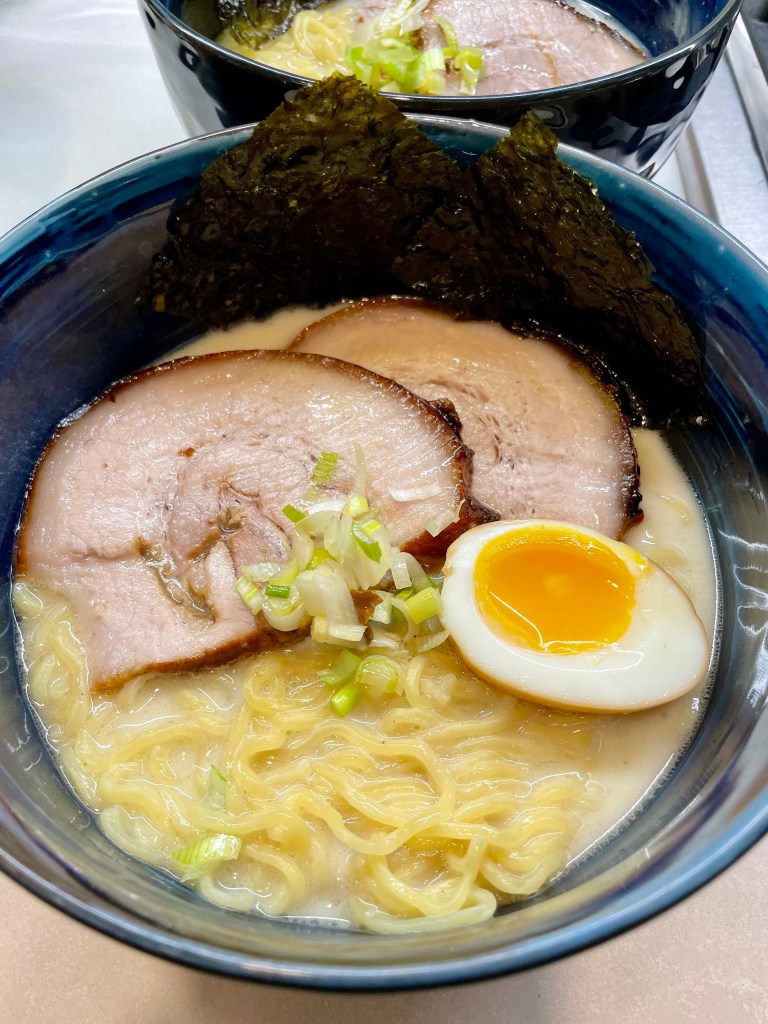
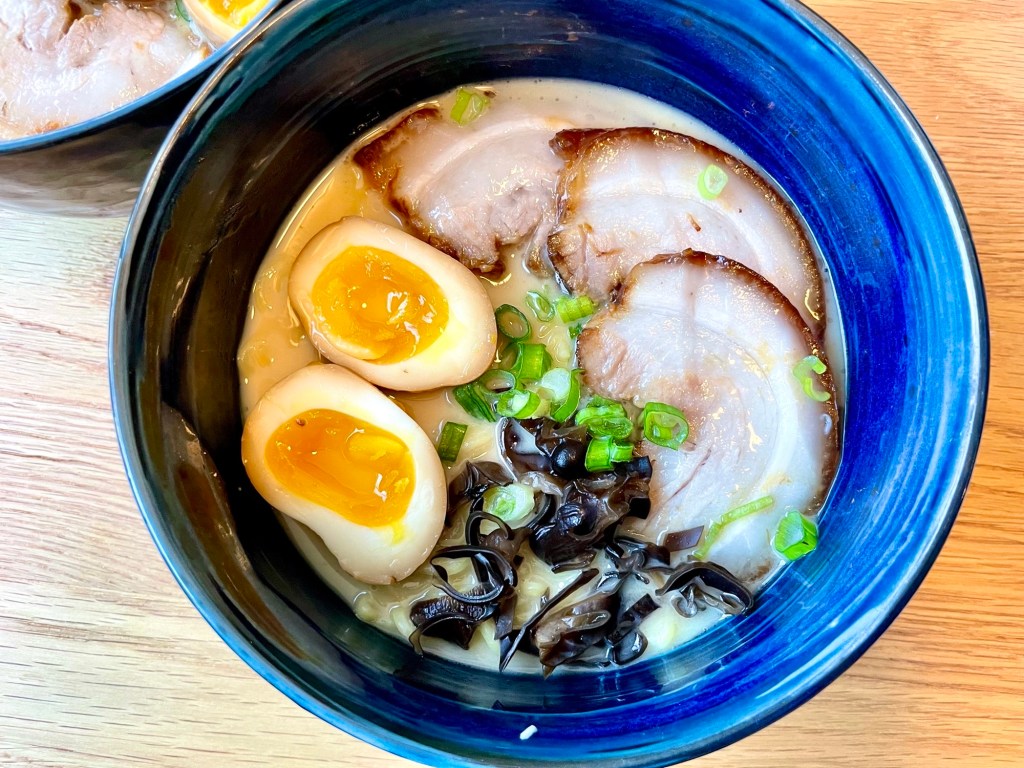
A tonkotsu ramen is my all time favourite thing to eat, so I’m extra excited to be sharing this recipe with everyone! It’s a beautiful bowl of a rich pork bone broth with noodles, chashu, and a ramen egg. No matter what is happening in my life, a tonkotsu ramen will always make it better. When Toby and I travel, I’m always seeking out the local ramen spots – I must’ve had over a hundred bowls of ramen in my life time…so far.

I’ve always wanted to try making a tonkotsu ramen, however due to its long 12 hour cooking time, it’s complexities (ramen shops will use a refractometer to check their broth!), and having to source pork bones on the move, it has constantly been on the back burner. I’ve searched time and time again for a simplified recipe and even went as far as buying instant tonkotsu ramen to satisfy the cravings, but I’ve never succeeded in finding anything that was close to restaurant quality – until now! Recently I stumbled across a ramen subreddit where u/ramen_lord posted his version of a tonkotsu ramen but made in an Instant Pot in 3 hours (find original recipe here)! This made it much less intimidating for me and I decided to try it out. Amazingly, the recipe turned out near perfect the first time and after the second time, Toby said it was the best tonkotsu ramen he’s ever had. It was THAT good! If you’re ever reading this, thank you u/ramen_lord! (If you check out the original link, he also gives a recipe at making your own ramen noodles.)

Although it is a long recipe, each step and component is pretty easy and straightforward, so I’d encourage you to give it a try if you’re a ramen lover like me!

What Makes up a Tonkotsu Ramen?

A traditional tonkotsu ramen is made up of 6 major components, and yes, all of them are included in this very thorough monster recipe!

1. Chashu – pork belly slices

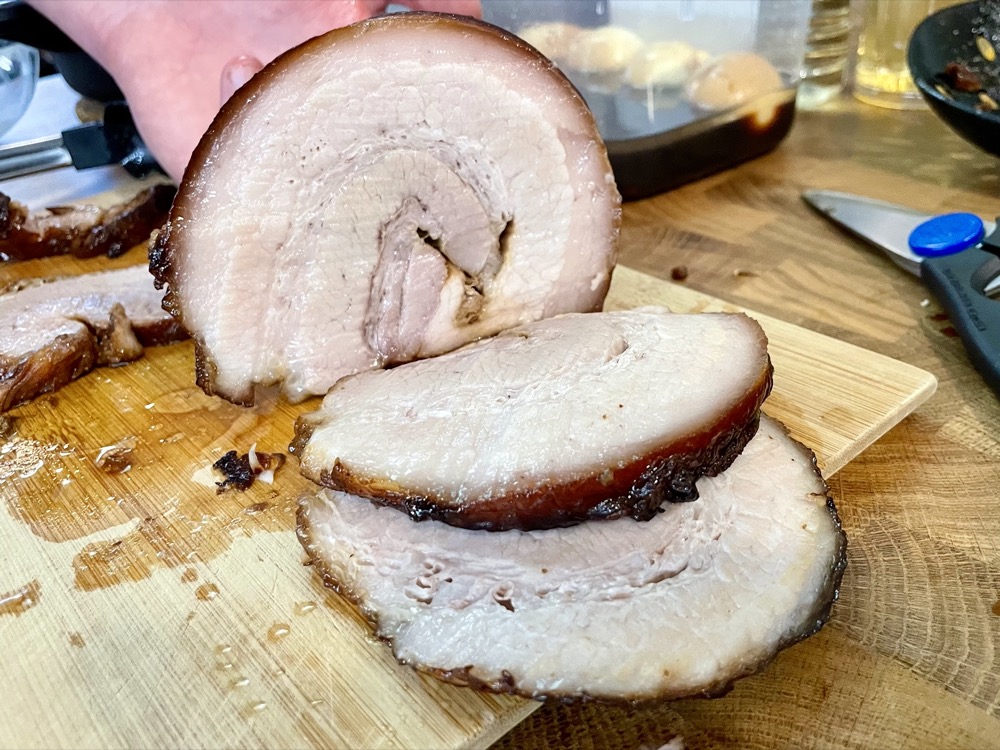
Chashu is a Japanese-style savoury pork belly that is braised the day before and marinated overnight. This is the main protein of the dish. Due to its fatty richness, it is usually served in thin slices and in small portions. This recipe will make about 2-3 slices per bowl. If you’re big on pork belly, then double the chashu portion of the recipe!

Note: Japanese chashu differs from the Chinese-style Charsiu which is barbecue pork rather than braised pork.

2. Ramen egg – a marinated boiled egg with a perfectly soft jammy centre

A ramen egg is a specific style of egg served in a bowl of ramen. It is always soft to medium-boiled to ensure a jammy velvety centre then marinated in a savoury sauce – I marinate mine in the chashu marinade overnight. Make sure you have a timer ready when you cook the eggs to ensure the perfect soft centre.

The ramen egg is always my favourite part of a bowl of ramen (my family would agree with me). For some reason, Toby is not a huge fan of eggs in general, so every time we go out for ramen he always gives me his egg! Lucky me 😊🙃❤️.

3. Tonkotsu broth – a rich and creamy pork bone broth

This is the star of the show. “Tonkotsu” literally translates to “pork bone”, which adequately names this ramen dish. The traditional method of making a tonkotsu broth is to boil the pork bones on high heat for 12 hours then add in aromatics. It is a long and arduous process which is why I’ve avoided making this recipe for so long. This recipe uses the Instant Pot pressure cooker to bring down the cook time to just 3 hours and produces restaurant-quality results!

A classic tonkotsu broth is creamy and rich due to the breakdown of the gelatin in the pork bones. Some recipes will blend pork fat and add it to the broth to make it even more creamy. For the sake of my cholesterol, there is no extra blended fat in this recipe. The broth here is just as good without it.

The colour of a tonkotsu broth should be opaque and milky white. Traditionally the pork bones are cleaned thoroughly by boiling them and removing the scum that is released and then scrubbing them clean before the broth is even started. Many purists out there will insist that you must clean the bones this way or else your broth will never be white. My first time making this recipe I cleaned the bones this way. Although it took extra time, it did produce a white broth. However after further research, I realized that you can also just roast the bones in the oven rather than scrubbing them clean and you still get the same results but with much less work. I tried it both ways and the results were quite similar. The oven roasting method produced a very slightly darker broth, however I’m sure that if I blended more of it in the blender, the results would be the same. Myth busted!

*Note: Tonkotsu is not to be confused with “tonkatsu” which is a breaded and fried pork cutlet

4. Tare – the flavour enhancer/salt of the dish

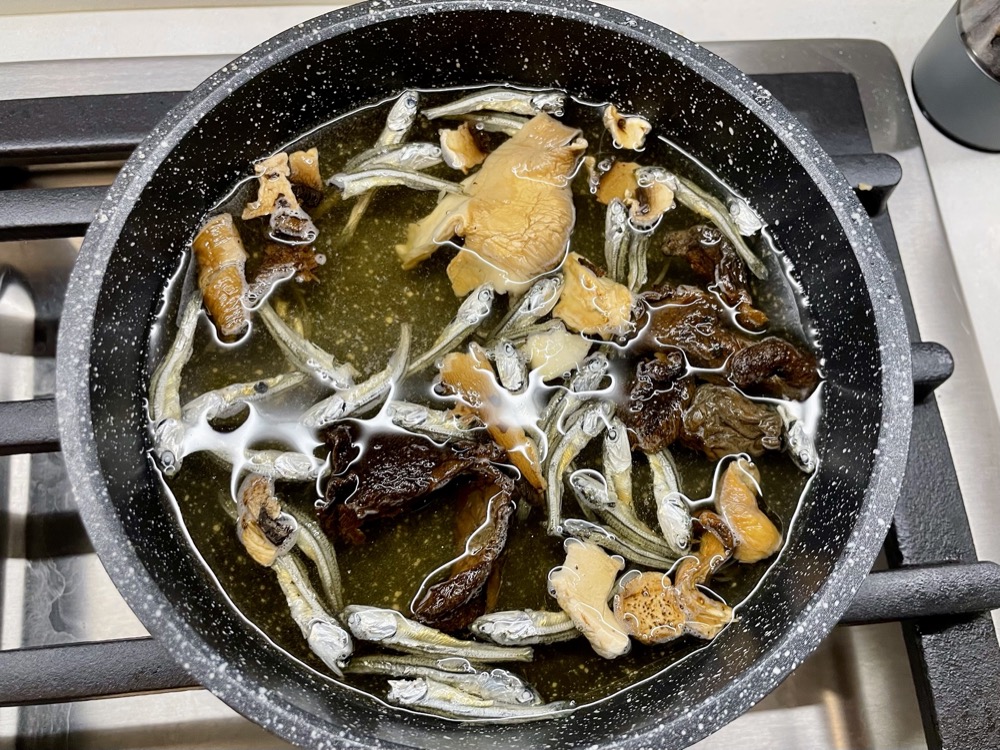
The tonkotsu broth alone lacks salt and umami flavour but when combined with the tare, it makes the perfect broth. Tare differs greatly between ramen shops and even between chefs. It can range from a simple mix of sauces to an incredibly complex recipe. It’s a chef’s signature to make a dish uniquely theirs. This recipe is a simplified version that’s essentially soy sauce marinated with mushrooms, seaweed, and dried fish.

5. Ramen noodles

Ramen noodles are different than regular noodles. They are alkaline and has a distinct taste with a slight chewy/bounce texture. To stay true to the authenticity of a tonkotsu ramen, I’d recommend taking the extra effort to find ramen noodles – you’re putting in all this effort to make it all from scratch anyway!

When looking for ramen noodles, try to buy them either freshly made or in the frozen section. Avoid the dehydrated dried noodles that are labeled as ‘ramen noodles’ – I’ve tried a few different kinds in the past and they’re just not the same.

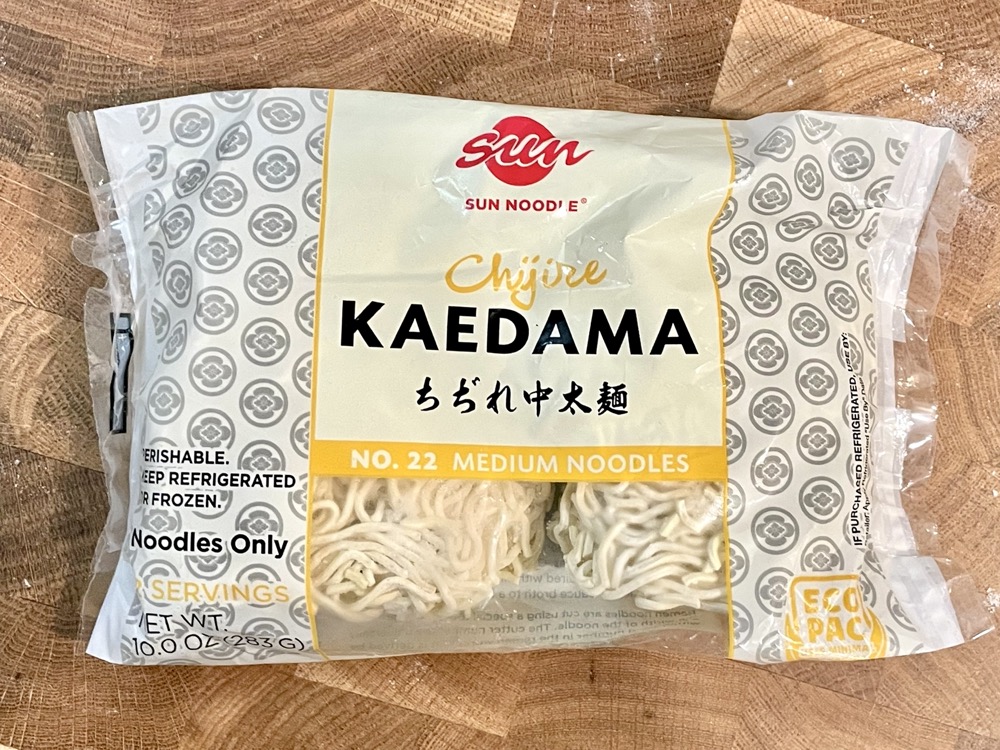
My favourite ramen noodles are made from Sun Noodle and they come in medium or thick noodles (see picture). This one package has 2 servings – it doesn’t seem like much, but it definitely expands when cooking!

Myojo is another brand of ramen noodles I’ve heard good things about, but never tried myself.

6. Toppings

There is a wide variety of toppings you can add to your ramen. I’ve put some examples in the recipe below, but feel free to add in whatever you like. Different restaurants will have different offerings of what you can add – it all depends on personal preference. A few examples of toppings include: bean sprouts, corn, seaweed, sliced wood ear fungus, fresh garlic, chili paste, chopped green onion…etc.

Anyways, without further ado, here’s the recipe! If you have any comments or suggestions, I’d love to hear from you in the comment section! You can follow me on instagram, youtube and facebook to see all the recipes I post!

Happy cooking!

Equipment you’ll need:

  • Pressure cooker (at least 8 quarts in size)
  • Cooking twine
  • Small pot with lid/saucepan

Ingredients you’ll need:

  • Chashu (Pork Belly): MAKE THE DAY BEFORE
    • 500g (1.5lbs) pork belly with the skin on or off – this will be enough for 2-3 slices per portion. Feel free to double the chashu recipe if you want to serve more.
    • 1 cup water
    • 1/2 cup Japanese soy sauce (ie. Kikkoman)
    • 1/4 cup mirin
    • 2 Tbsps brown sugar
    • 2 garlic cloves, smashed
  • Ramen Egg: MAKE THE DAY BEFORE
    • 4-6 eggs (depending on how many people you’re serving)
  • Broth:
    • 1kg (2 lbs) pork neck bones (you want some meat to be attached to the bones for extra flavour)
    • 1kg (2 lbs) pork femur bones (make sure the larger leg bones are split so the bone marrow is exposed) – if you can’t find femur bones, you can use all neck bones
    • 12 cloves of garlic, peeled and smashed
    • 1 small brown onion, peeled and quartered
    • 4cm piece of ginger, sliced (don’t worry about peeling it)
    • 2 green onions, cut into thirds
  • Tare:
    • 1/2 cup (120ml) water
    • 1.5 Tbsps (25ml) mirin
    • 1 Tbsp (15ml) sake
    • 4g kombu (dried kelp)
    • 3g dried porcini mushrooms
    • 3g sababushi/dried mackerel, or katsuobushi/bonito flakes, or niboshi/dried anchovies – I had a difficulty sourcing these in my neighbourhood, so any of these will work to give it an umami fishy flavour
    • 1/2 cup (120ml) Japanese soy sauce (ie. Kikkoman)
    • 2.5 tsps (15g) kosher salt
    • 1.5 tsps (5g) brown sugar
  • 4-6 portions of ramen noodles, premade
  • Additional Toppings (optional):
    • Sliced green onion
    • Wood ear mushrooms
    • Seaweed
    • Bean sprouts

Directions:

THE DAY BEFORE:

A) Make the chashu:

Make sure the pork belly is at room temperature (take it out of the fridge at least 30mins prior).

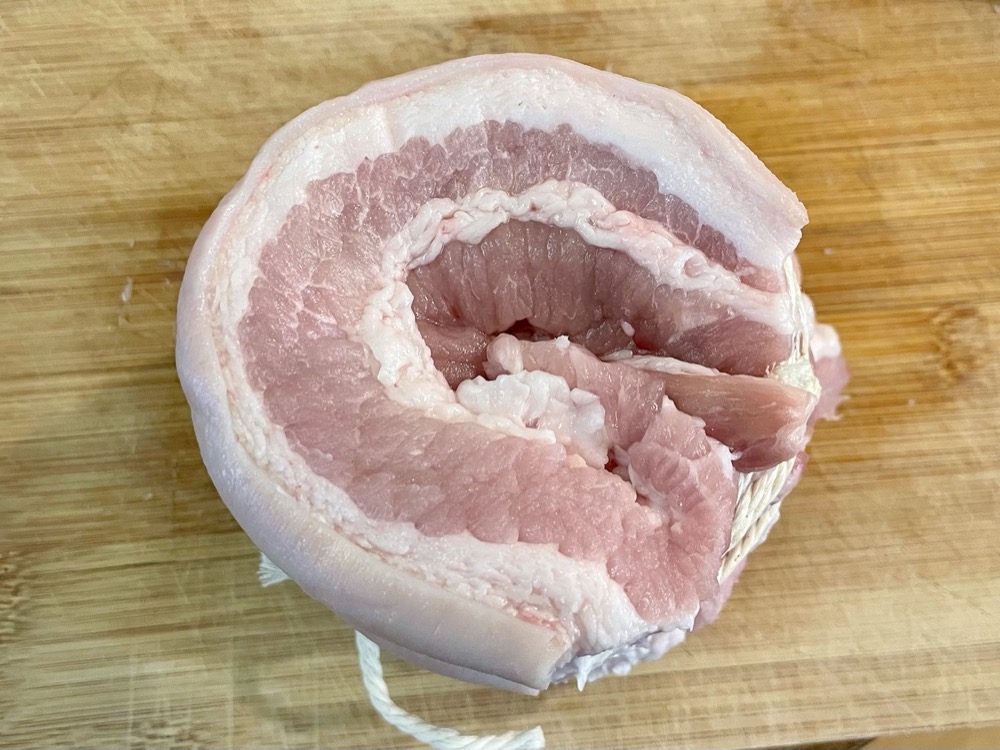
Roll the pork belly into a cylinder with the layers visible on the side (see photo) and tie tightly with cooking twine so it stays in shape.

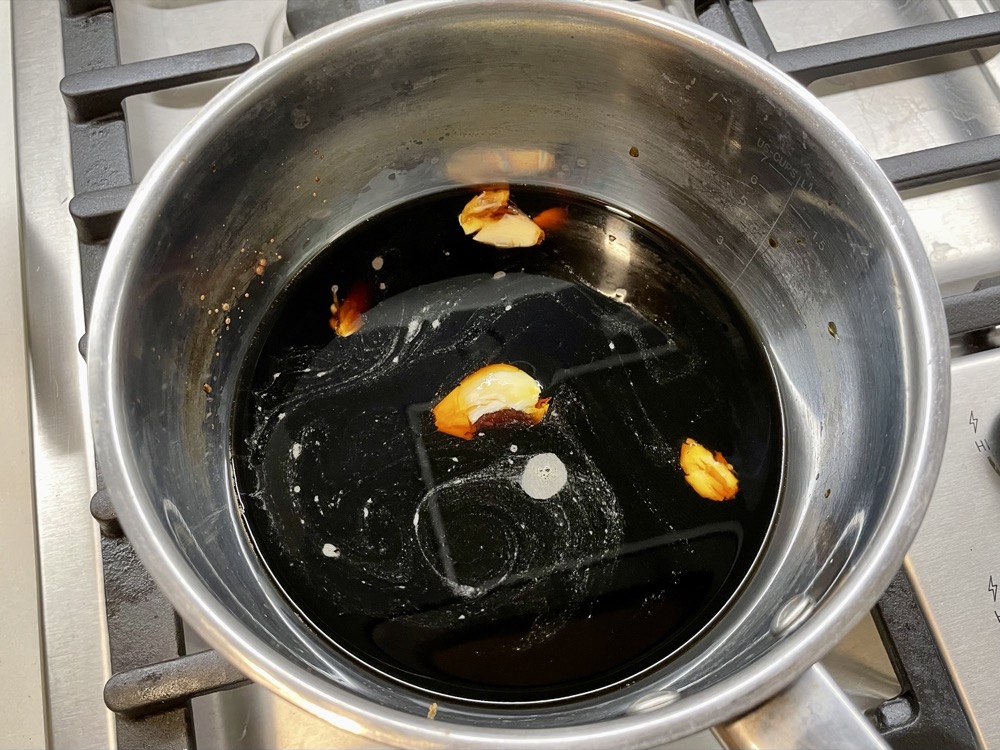
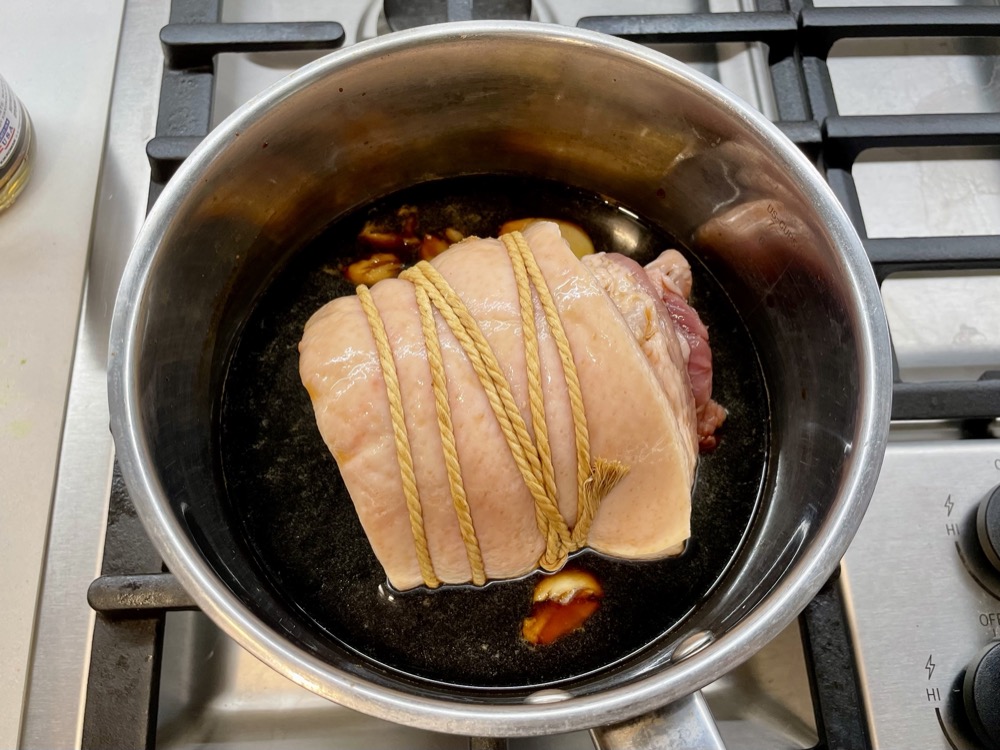
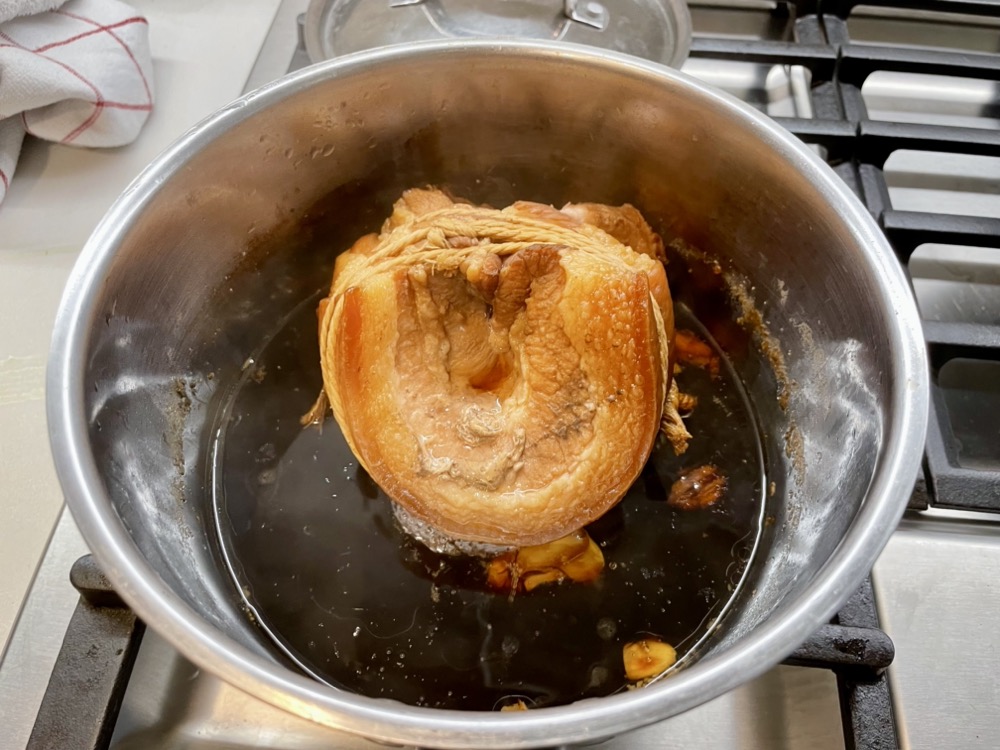
Take out a saucepan with a lid and add in the rest of the the chashu ingredients: water, soy sauce, mirin, brown sugar, garlic. Place the tied up pork belly in the middle of the saucepan.

Turn the heat on to HIGH and let the sauce come to a boil, then turn the heat down to LOW and let it simmer with the lid on for 90 minutes. Turn the pork belly every 20 minutes so it gets evenly braised in the sauce.

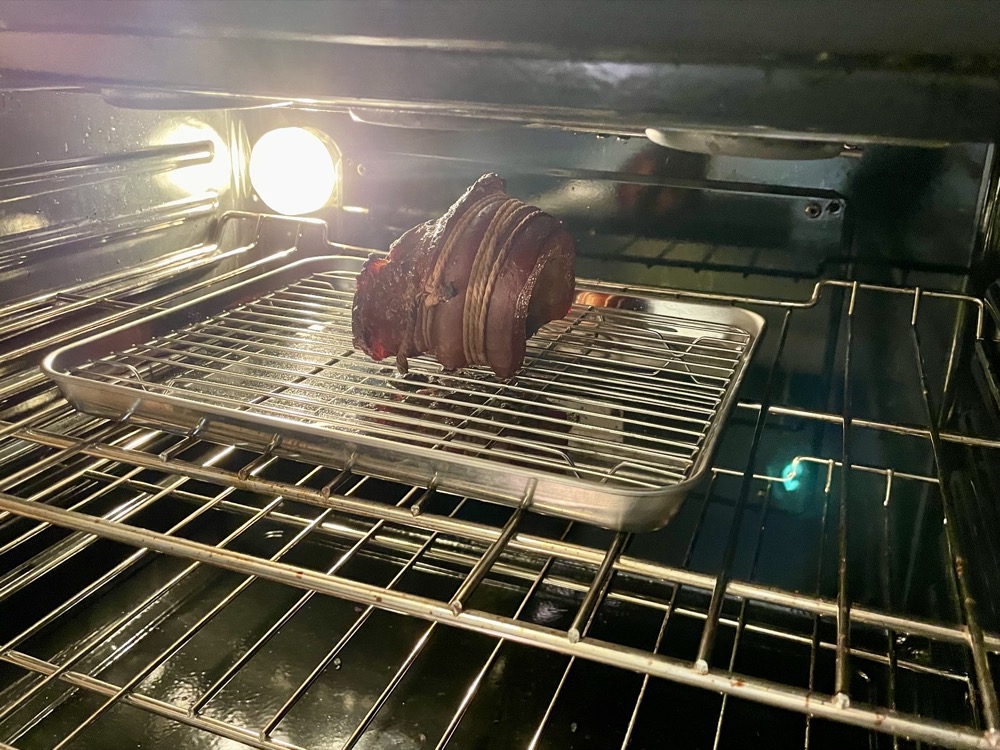
When there’s 20 minutes left to your cook time, preheat your oven to 220˚C (425˚F) and prepare a baking tray with a wire rack.

Once the 90 minutes is up, turn off the heat and take out the pork belly (keeping the remaining sauce aside) and place it on the rack over a baking tray and roast in the preheated oven for 8-10 minutes, or until the outside is a dark caramel colour.

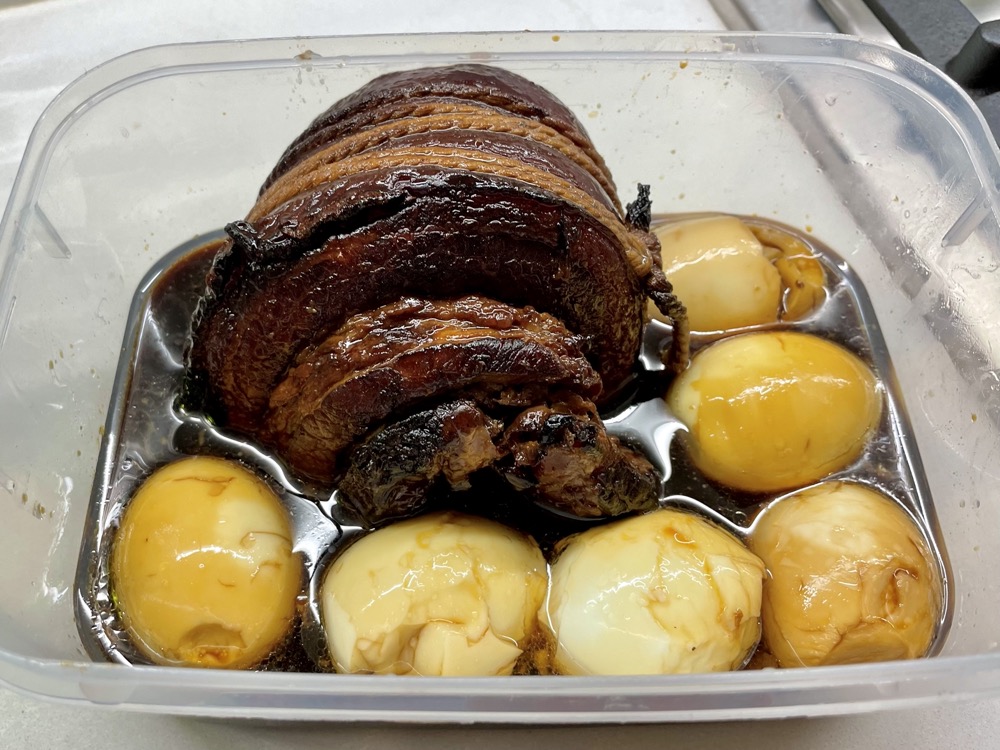
When the pork belly is done, take it out of the oven and place it in a heat-proof container (make sure there’s enough room for the eggs as well). Pour the leftover sauce over and let the pork belly marinate in the sauce overnight. If the marinade doesn’t surround the pork belly, either use a smaller container or turn the pork belly halfway through for even marination. A vacuum-sealed plastic bag works well as well.

Vacuum-seal bags will help marinate it better by allowing the sauce to surround the meat and eggs

B) Make the ramen eggs: (you can do this step while you’re waiting for the pork belly to cook)

Bring a small pot of water to boil. Gently lower all 4 eggs into the boiling water and start a timer for 7 minutes. Adjust the heat if the water is boiling too rapidly to avoid the eggs from knocking around in the pot.

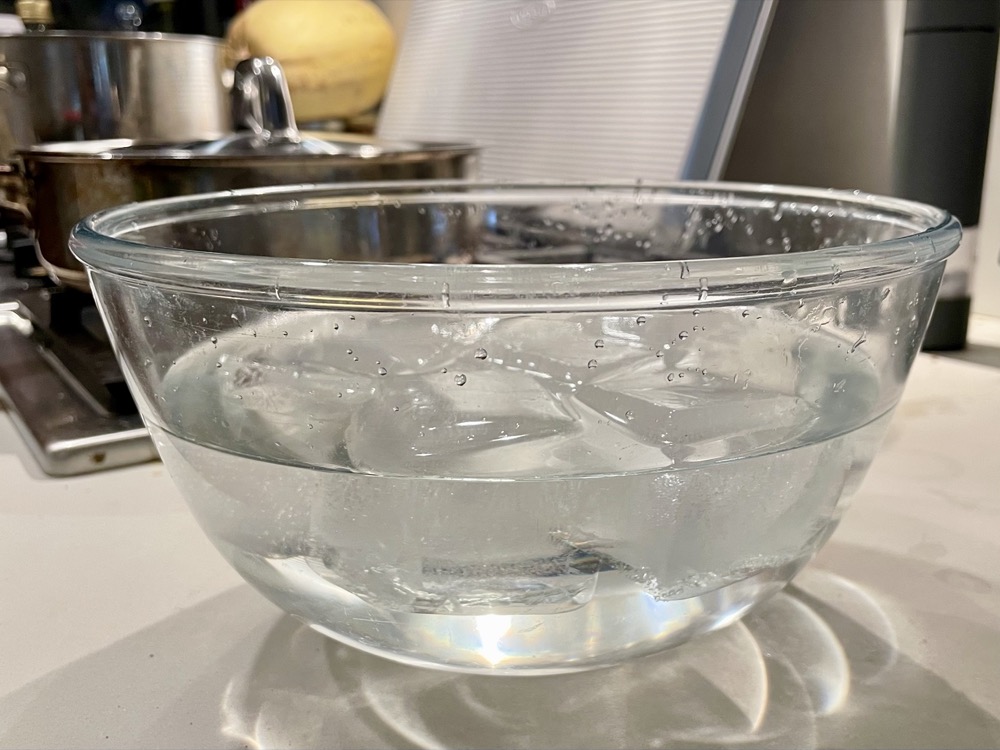
While you’re waiting, prepare an ice bath for the eggs. Once the timer is up, turn off the heat and immediately submerge all the eggs into the ice bath. Once the eggs are cool enough to handle, remove all of the shells.

Place the peeled boiled eggs into the same container as the pork belly and marinate together overnight. If the sauce does not surround the egg, turn the eggs halfway through for even marination. A vacuum-sealed plastic bag works well as well. Do not marinate for longer than 2-3 days or else the egg will become too salty.

THE DAY OF:

C) Make the tonkotsu broth:

Preheat oven to 220˚C (425˚F)

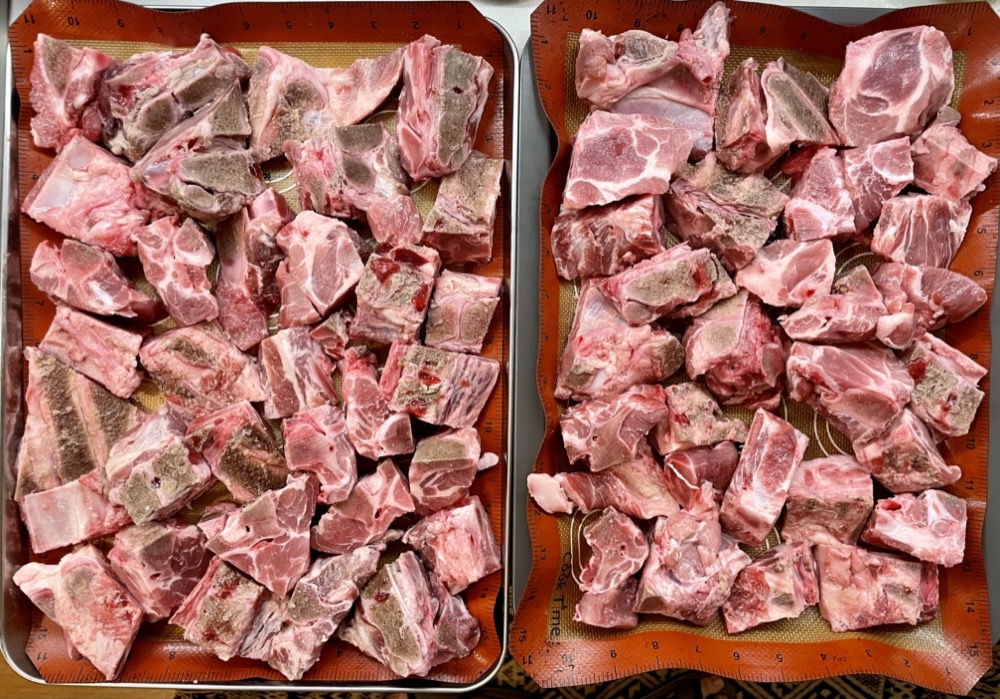
Roast the bones: Prepare a large lined baking tray. Rinse the pork bones and place them all in one layer of the tray (do not overlap the bones). Use a second tray if they don’t all fit into one. Roast in the preheated oven for 40 minutes, turning the bones once halfway through the cook time. After 40 minutes, turn off the oven. You should have a dark brown char on the bones.

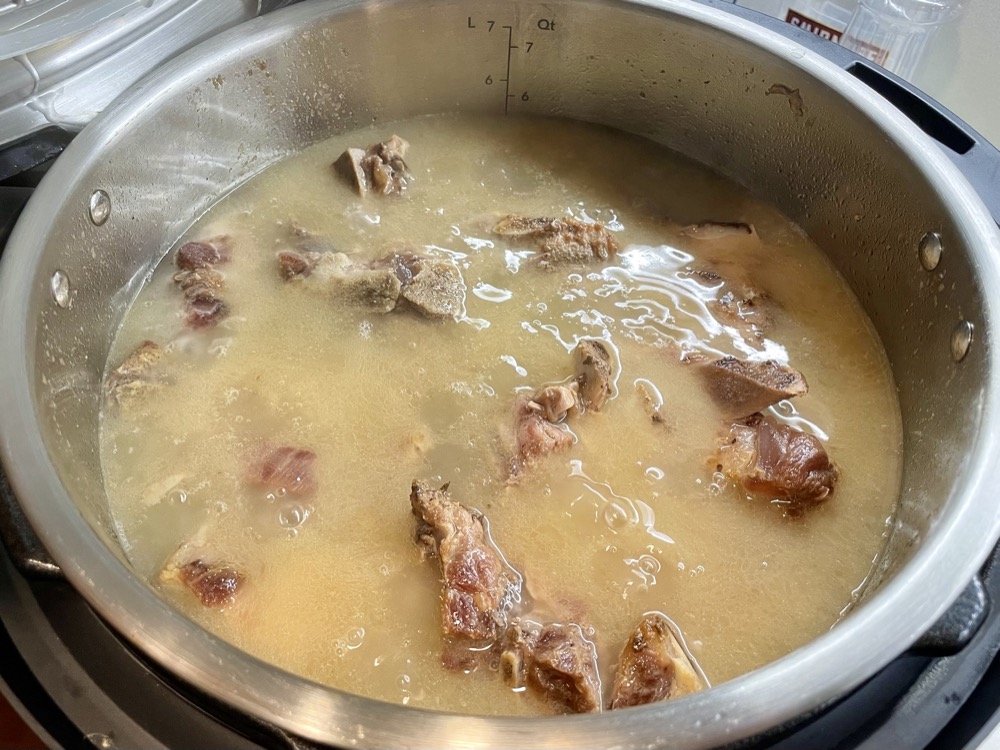
Cook the broth: Place the roasted bones along with any browned bits or liquids from the tray (these will add extra flavour) into your Instant Pot. Add enough water to cover the bones by 2-3cm (roughly 3 litres). Turn the Instant Pot on to a sauté setting and set the heat to HIGH. Once the water comes to a boil, cancel the setting and put the lid on. Turn on the pressure cook setting to HIGH and cook for 2 hours. (You can start making the tare or prepare any additional toppings during this time as you wait.) When the timer finishes, quick release the pressure – be careful of any spurting of liquids from the vent! When it is safe to do so, remove the lid carefully.

Add in aromatics & free the bone marrow: Add in garlic, ginger, green onion and onion into the broth. Use a chopstick and scrape out any bone marrow from the bones and let the marrow boil freely in the soup alongside the bones.

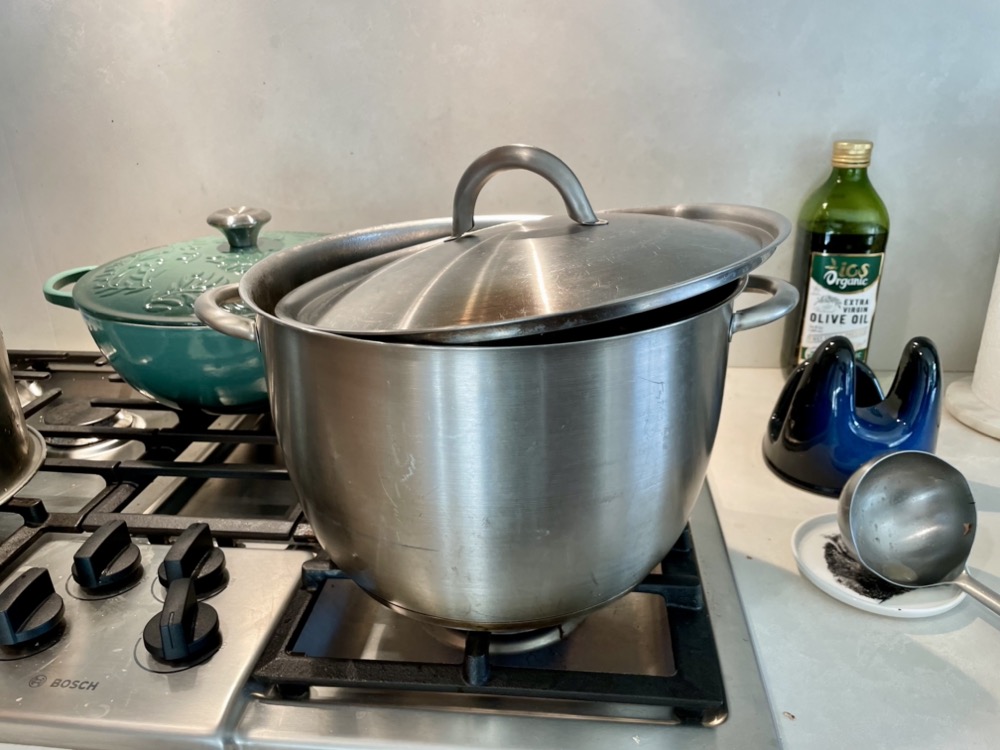
Boiling the broth for the final hour – lid on or lid off will depend on how rich it is after the Instant Pot

Taste for richness and Reduce (if needed): At this point the broth will taste quite bland since there as been no added salt and the aromatics were just introduced. Ignore the need to want to add in salt right now – it will come later. You want to taste for the texture of the broth, not the flavour. How creamy your broth is at this stage will dictate how you cook down your broth (the texture will vary greatly depending on the mix of bones you started with – it varies every time I make it):

If your broth is watery: turn on the sauté setting on the Instant Pot and set to MED heat so the soup boils moderately. Let it boil uncovered for 1 hour to reduce the broth and increase in concentration/richness. Taste at the end of 1 hour – you can let it boil for longer if needed.

If your broth is rich & creamy: add a lid on to the Instant Pot (or transfer to a regular soup pot with a lid) and let the soup boil on MED heat for 1 hour to release the flavour of the aromatics but to still contain all the liquid.

You will need to boil the broth for 1 hour regardless of how rich your broth is. The difference is whether you keep the lid on or off to control how much liquid is evaporated. If you’re unsure, then start boiling without a lid, then taste after 30 minutes, or have the lid half-on so it only reduces slightly. Once your broth is rich enough then put the lid on and finish boiling until the 1 hour timer is up.

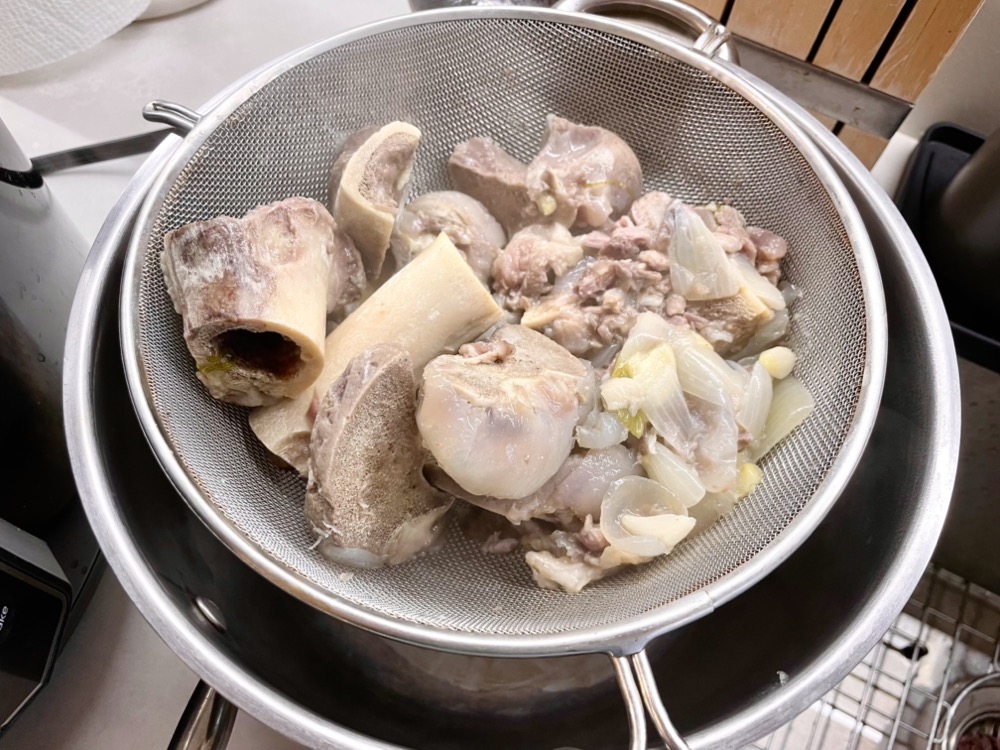
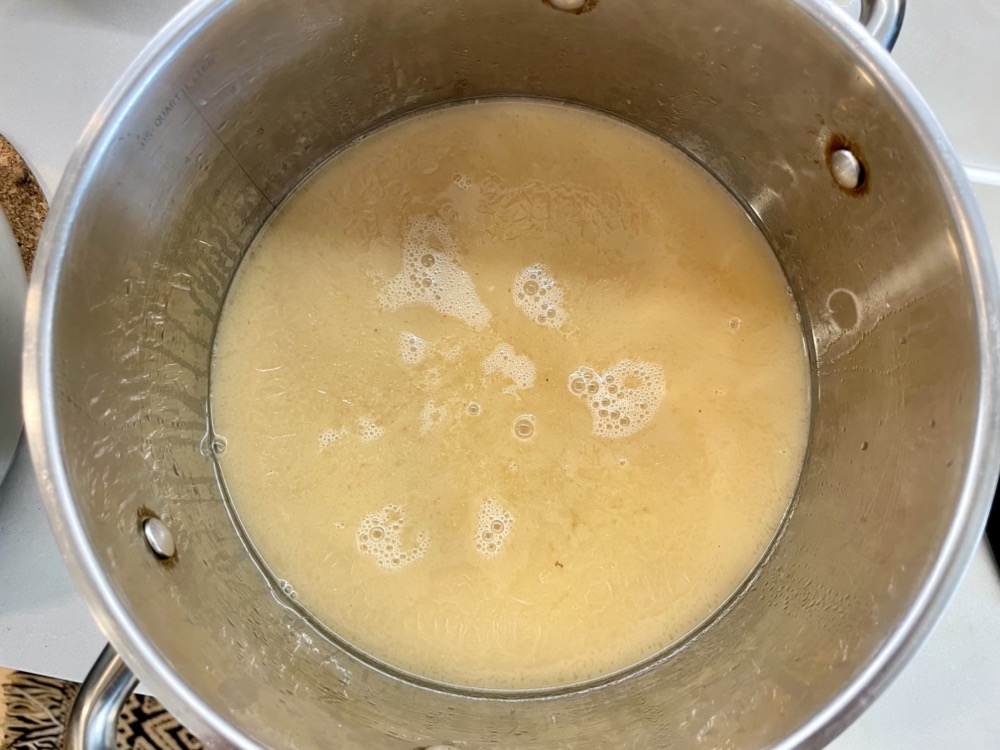
Strain: After an hour, turn off the heat and strain the broth into a clean pot. Discard the bones, aromatics, and any floaters that you have strained out. You should now have a pale brown opaque broth. Do not worry if your broth is not a lighter colour – it will lighten up in the next step.

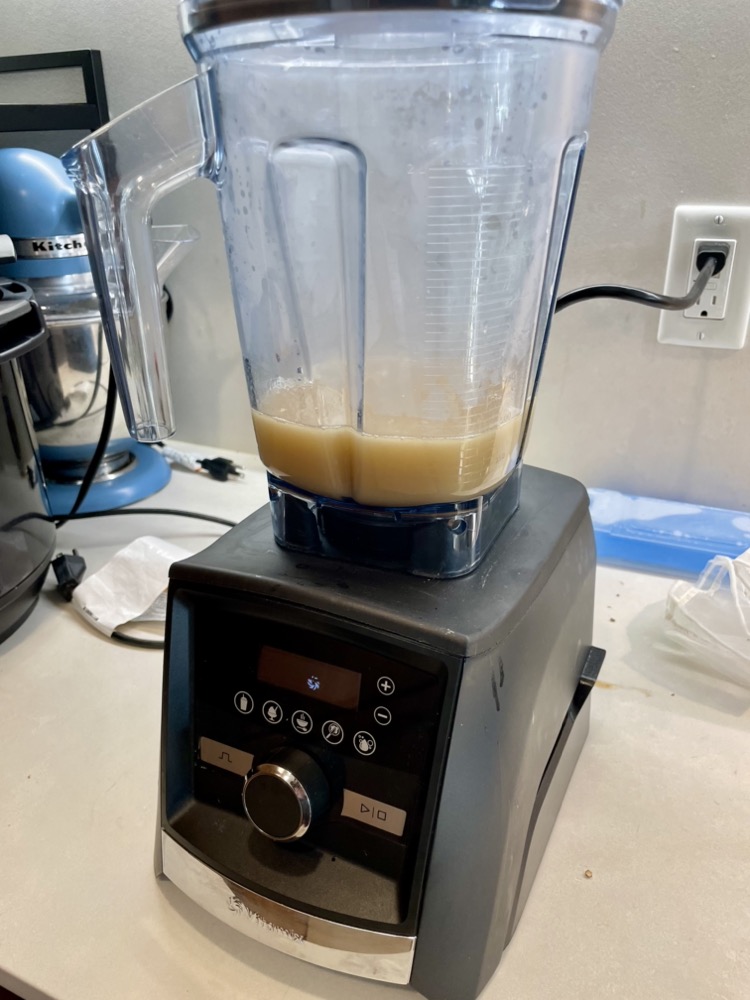
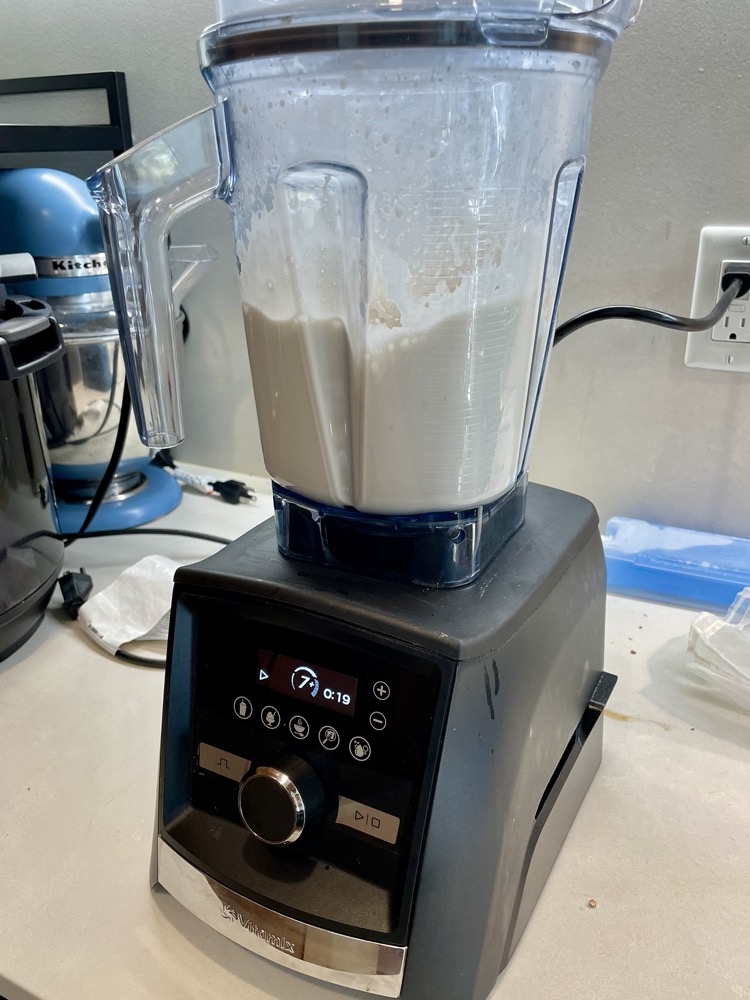
Blend – the magic step that makes the broth extra creamy and white: Remove roughly a quarter of the amount of broth into a blender and blend it on HIGH until you get a very smooth, white, and creamy texture. Add this back into the rest of the broth and mix well. Taste again for the texture.

If you find that it is too creamy, add hot water a cup at a time until desired consistency.

If you want it creamer and whiter, add more broth into the blender and blend again on HIGH and add it back into the broth until desired consistency.

Resist the urge to add salt – the final taste test will be at the end with the combination of the tare (salty goodness) with with broth together. The tonkotsu broth is now complete! If you still need more time to prepare the rest of the toppings or tare, then keep the soup on low heat to keep it hot until ready to serve.

D) Make the tare: (do this while you’re waiting for the broth to cook)

In a small pan, add the water, mirin, sake, kombu, porcini, and sababushi. Turn the heat on to HIGH. When it starts to boil, turn the heat off and let it steep for 30 minutes.

After 30 minutes, remove the kombu, add in the soy sauce, salt, sugar, and MSG. Whisk until dissolved. Turn the heat back on to HIGH until it starts to boil, then turn it off again and let it steep for at least 30 minutes. Strain before using. You can store this in the fridge for up to 6 months.

E) Cook the noodles, prepare the rest of the toppings: (you can do this in the final 10-15 minutes of your broth cooking)

Chashu and ramen egg: Remove the twine from the chashu and thinly slice it while still chilled (it will be easier to get neater cuts). Cut each egg in half to reveal the jammy egg yolk centre. Set aside.

Noodles: Cook the noodles according to package instructions and strain when finished.

Wood ear mushrooms: Soak the wood ear mushrooms in a bowl of boiling hot water for at least 15 minutes or until softened and expanded. Remove from the water, rinse, and slice. Set aside.

Green onion: Thinly slice one green onion for garnish. Set aside.

Seaweed: Cut your seaweed to desired sizes for serving.

F) Assemble the ramen: (finally!)

Divide the noodles equally into the serving bowls if not done so already.

Add 2 ladles of the tonkotsu broth over the noodles. Top with sliced chashu, ramen egg, wood ear mushrooms, seaweed, and green onion to garnish. Add a 3 tablespoons of tare over top (or more if you prefer it saltier). ENJOY!

Summarized Recipe:

Legit Tonkotsu Ramen from scratch (in an Instant Pot)

Date Published: Mar 3rd, 2024 | Last Updated: Mar 3rd, 2024
Author: Abby |Category: Asian, mains, soups
Serves: 4-6 | Prep time: 12 hours before to marinate | Cook time: 4.5 hours total

Equipment you’ll need:

  • Pressure cooker (at least 8 quarts in size)
  • Cooking twine
  • Small pot with lid/saucepan

Ingredients you’ll need:

  • Chashu (Pork Belly): MAKE THE DAY BEFORE
    • 500g (1.5lbs) pork belly with the skin on or off – this will be enough for 2-3 slices per portion. Feel free to double the chashu recipe if you want to serve more.
    • 1 cup water
    • 1/2 cup Japanese soy sauce (ie. Kikkoman)
    • 1/4 cup mirin
    • 2 Tbsps brown sugar
    • 2 garlic cloves, smashed
  • Ramen Egg: MAKE THE DAY BEFORE
    • 4-6 eggs (depending on how many people you’re serving)
  • Broth:
    • 1kg (2 lbs) pork neck bones (you want some meat to be attached to the bones for extra flavour)
    • 1kg (2 lbs) pork femur bones (make sure the larger leg bones are split so the bone marrow is exposed) – if you can’t find femur bones, you can use all neck bones
    • 12 cloves of garlic, peeled and smashed
    • 1 small brown onion, peeled and quartered
    • 4cm piece of ginger, sliced (don’t worry about peeling it)
    • 2 green onions, cut into thirds
  • Tare:
    • 1/2 cup (120ml) water
    • 1.5 Tbsps (25ml) mirin
    • 1 Tbsp (15ml) sake
    • 4g kombu (dried kelp)
    • 3g dried porcini mushrooms
    • 3g sababushi/dried mackerel, or katsuobushi/bonito flakes, or niboshi/dried anchovies – I had a difficulty sourcing these in my neighbourhood, so any of these will work to give it an umami fishy flavour
    • 1/2 cup (120ml) Japanese soy sauce (ie. Kikkoman)
    • 2.5 tsps (15g) kosher salt
    • 1.5 tsps (5g) brown sugar
  • 4-6 portions of ramen noodles, premade
  • Additional Toppings (optional):
    • Sliced green onion
    • Wood ear mushrooms
    • Seaweed
    • Bean sprouts

Directions:

THE DAY BEFORE:

  • A) Make the chashu:
    1. Make sure the pork belly is at room temperature (take it out of the fridge at least 30mins prior).
    2. Roll the pork belly into a cylinder with the layers visible on the side (see photo) and tie tightly with cooking twine so it stays in shape.
    3. Take out a saucepan with a lid and add in the rest of the the chashu ingredients: water, soy sauce, mirin, brown sugar, garlic. Place the tied up pork belly in the middle of the saucepan.
    4. Turn the heat on to HIGH and let the sauce come to a boil, then turn the heat down to LOW and let it simmer with the lid on for 90 minutes. Turn the pork belly every 20 minutes so it gets evenly braised in the sauce.
    5. When there’s 20 minutes left to your cook time, preheat your oven to 220˚C (425˚F) and prepare a baking tray with a wire rack.
    6. Once the 90 minutes is up, turn off the heat and take out the pork belly (keeping the remaining sauce aside) and place it on the rack over a baking tray and roast in the preheated oven for 8-10 minutes, or until the outside is a dark caramel colour. When the pork belly is done, take it out of the oven and place it in a heat-proof container (make sure there’s enough room for the eggs as well). Pour the leftover sauce over and let the pork belly marinate in the sauce overnight. If the marinade doesn’t surround the pork belly, either use a smaller container or turn the pork belly halfway through for even marination. A vacuum-sealed plastic bag works well as well.
  • B) Make the ramen eggs: (you can do this step while you’re waiting for the pork belly to cook)
    1. Bring a small pot of water to boil. Gently lower all 4 eggs into the boiling water and start a timer for 7 minutes. Adjust the heat if the water is boiling too rapidly to avoid the eggs from knocking around in the pot.
    2. While you’re waiting, prepare an ice bath for the eggs. Once the timer is up, turn off the heat and immediately submerge all the eggs into the ice bath. Once the eggs are cool enough to handle, remove all of the shells.
    3. Place the peeled boiled eggs into the same container as the pork belly and marinate together overnight. If the sauce does not surround the egg, turn the eggs halfway through for even marination. A vacuum-sealed plastic bag works well as well. Do not marinate for longer than 2-3 days or else the egg will become too salty.

THE DAY OF:

  • C) Make the tonkotsu broth:
    1. Preheat oven to 220˚C (425˚F)
    2. Roast the bones: Prepare a large lined baking tray. Rinse the pork bones and place them all in one layer of the tray (do not overlap the bones). Use a second tray if they don’t all fit into one. Roast in the preheated oven for 40 minutes, turning the bones once halfway through the cook time. After 40 minutes, turn off the oven. You should have a dark brown char on the bones.
    3. Cook the broth: Place the roasted bones along with any browned bits or liquids from the tray (these will add extra flavour) into your Instant Pot. Add enough water to cover the bones by 2-3cm (roughly 3 litres). Turn the Instant Pot on to a sauté setting and set the heat to HIGH. Once the water comes to a boil, cancel the setting and put the lid on. Turn on the pressure cook setting to HIGH and cook for 2 hours. (You can start making the tare or prepare any additional toppings during this time as you wait.) When the timer finishes, quick release the pressure – be careful of any spurting of liquids from the vent! When it is safe to do so, remove the lid carefully.
    4. Add in aromatics & free the bone marrow: Add in garlic, ginger, green onion and onion into the broth. Use a chopstick and scrape out any bone marrow from the bones and let the marrow boil freely in the soup alongside the bones.
    5. Taste for richness and Reduce (if needed): At this point the broth will taste quite bland since there as been no added salt and the aromatics were just introduced. Ignore the need to want to add in salt right now – it will come later. You want to taste for the texture of the broth, not the flavour. How creamy your broth is at this stage will dictate how you cook down your broth (the texture will vary greatly depending on the mix of bones you started with – it varies every time I make it):
      • If your broth is watery: turn on the sauté setting on the Instant Pot and set to MED heat so the soup boils moderately. Let it boil uncovered for 1 hour to reduce the broth and increase in concentration/richness. Taste at the end of 1 hour – you can let it boil for longer if needed.
      • If your broth is rich & creamy: add a lid on to the Instant Pot (or transfer to a regular soup pot with a lid) and let the soup boil on MED heat for 1 hour to release the flavour of the aromatics but to still contain all the liquid.
      • You will need to boil the broth for 1 hour regardless of how rich your broth is. The difference is whether you keep the lid on or off to control how much liquid is evaporated. If you’re unsure, then start boiling without a lid, then taste after 30 minutes, or have the lid half-on so it only reduces slightly. Once your broth is rich enough then put the lid on and finish boiling until the 1 hour timer is up.
    6. Strain: After an hour, turn off the heat and strain the broth into a clean pot. Discard the bones, aromatics, and any floaters that you have strained out. You should now have a pale brown opaque broth. Do not worry if your broth is not a lighter colour – it will lighten up in the next step.
    7. Blend – the magic step that makes the broth extra creamy and white: Remove roughly a quarter of the amount of broth into a blender and blend it on HIGH until you get a very smooth, white, and creamy texture. Add this back into the rest of the broth and mix well. Taste again for the texture.
      • If you find that it is too creamy, add hot water a cup at a time until desired consistency.
      • If you want it creamer and whiter, add more broth into the blender and blend again on HIGH and add it back into the broth until desired consistency.
      • Resist the urge to add salt – the final taste test will be at the end with the combination of the tare (salty goodness) with with broth together. The tonkotsu broth is now complete! If you still need more time to prepare the rest of the toppings or tare, then keep the soup on low heat to keep it hot until ready to serve.
  • D) Make the tare: (do this while you’re waiting for the broth to cook)
    1. In a small pan, add the water, mirin, sake, kombu, porcini, and sababushi. Turn the heat on to HIGH. When it starts to boil, turn the heat off and let it steep for 30 minutes.
    2. After 30 minutes, remove the kombu, add in the soy sauce, salt, sugar, and MSG. Whisk until dissolved. Turn the heat back on to HIGH until it starts to boil, then turn it off again and let it steep for at least 30 minutes. Strain before using. You can store this in the fridge for up to 6 months.
  • E) Cook the noodles, prepare the rest of the toppings: (you can do this in the final 10-15 minutes of your broth cooking)
    1. Chashu and ramen egg: Remove the twine from the chashu and thinly slice it while still chilled (it will be easier to get neater cuts). Cut each egg in half to reveal the jammy egg yolk centre. Set aside.
    2. Wood ear mushrooms: Soak the wood ear mushrooms in a bowl of boiling hot water for at least 15 minutes or until softened and expanded. Remove from the water, rinse, and slice. Set aside.
    3. Noodles: Cook the noodles according to package instructions, strain, and even divide into serving bowls.
    4. Green onion: Thinly slice one green onion for garnish. Set aside.
    5. Seaweed: Cut your seaweed to desired sizes for serving.
  • F) Assemble the ramen: (finally!)
    1. Divide the noodles equally into the serving bowls if not done so already.
    2. Add 2 ladles of the tonkotsu broth over the noodles.
    3. Top with sliced chashu, ramen egg, wood ear mushrooms, seaweed, and green onion to garnish. Add a 3 tablespoons of tare over top (or more if you prefer it saltier). ENJOY!