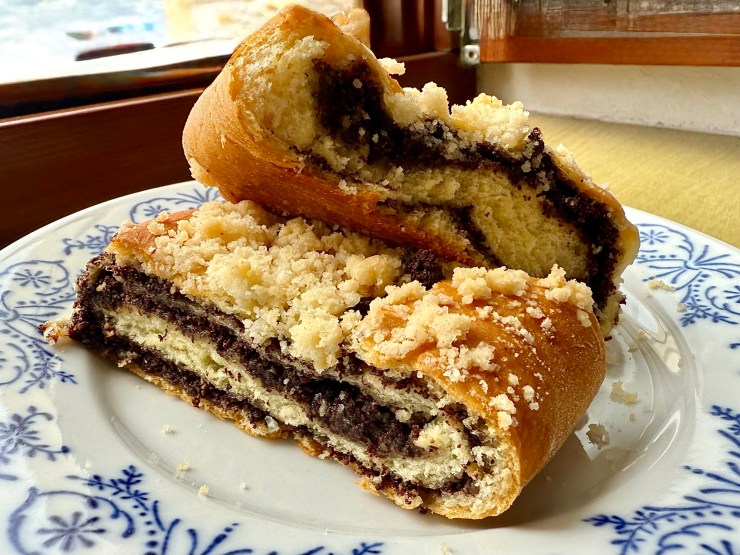
Babička’s Makovec (Czech Poppy Seed Roll)


Date Published: Nov 11th, 2025 | Last Updated: Nov 11th, 2025
Author: Abby | Category: breads, Czech, dessert, pastry, snacks, vegetarian
Makes: 3 loaves (enough for a party or one Toby 😂) | Prep time: 1.5 hours | Cook time: 1 hour

Jump to recipe |

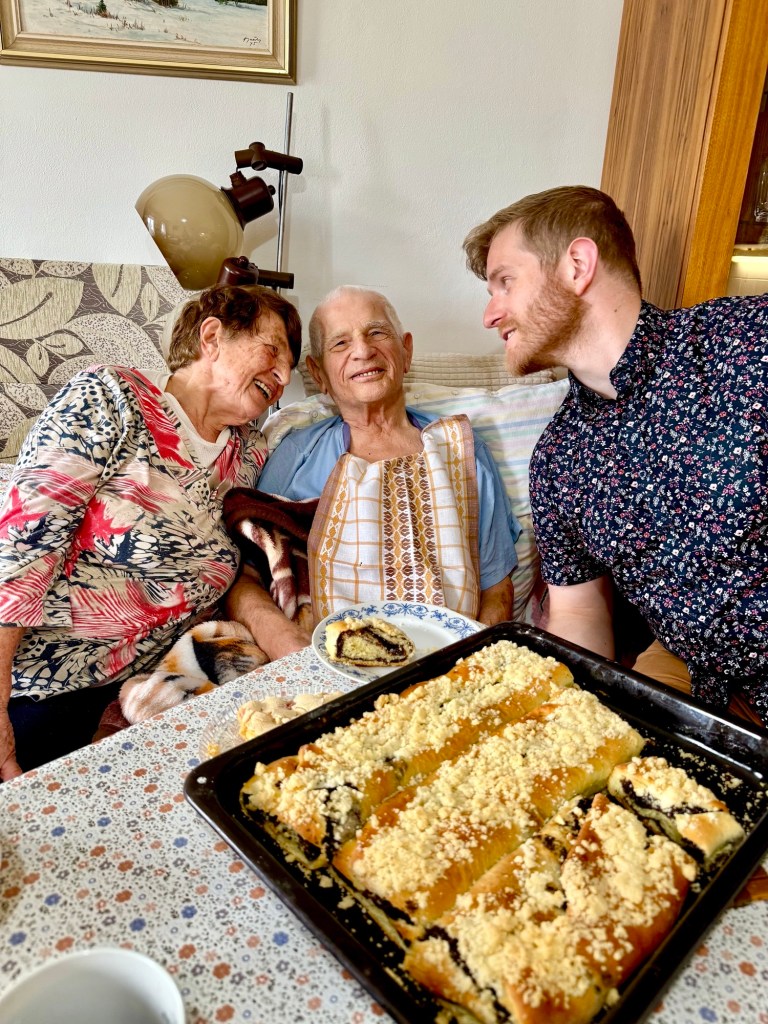
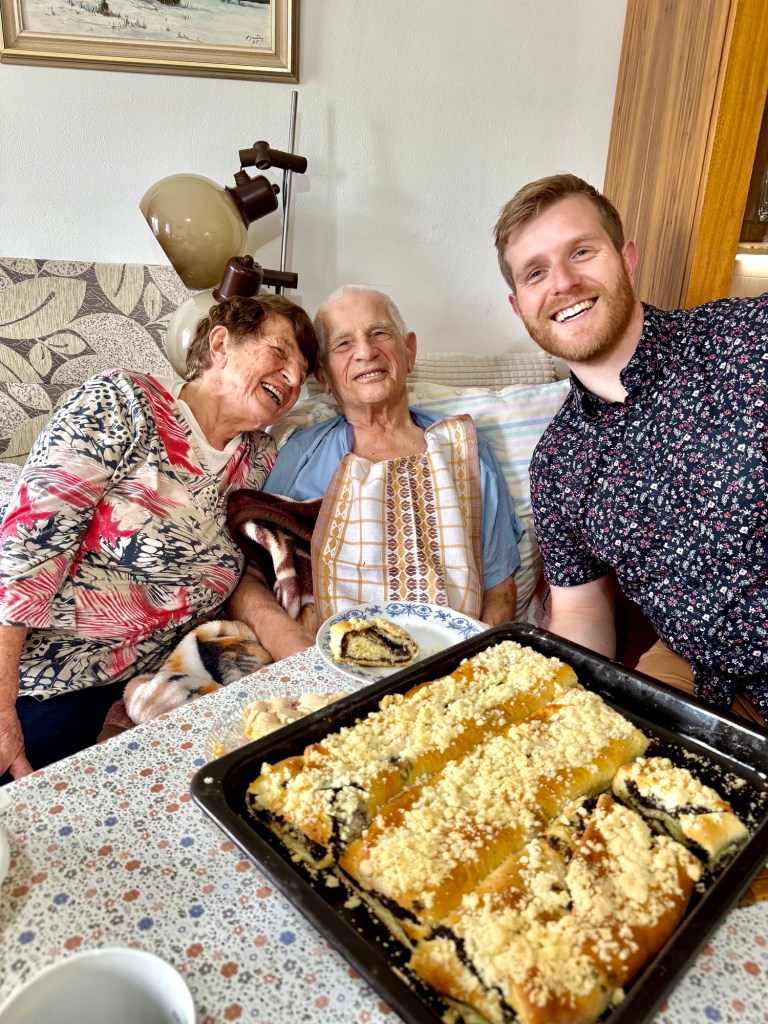
This is Toby’s all time favourite food that his babička (grandmother) makes when he visits her in Czech (next to Svíčková, of course!). We’ve been trying to learn this recipe for years, but true to OG-style grandma cooking, she measures nothing and everything is done by eyeballing it. I can usually get away by guessing the amounts she puts in when it comes to savoury cooking but baking requires precise measurements, so finally during our visit this past summer, we bought her some measuring spoons (which was surprisingly quite difficult to find to Czech) and whipped out the kitchen scale. Thanks to Toby’s translating and our diligent watchful eye on her every step (this lady moves fast in the kitchen!), I’m happy to report that we FINALLY learned her secrets and I’m very excited to add her recipe to my collection and share it with you all! 😊

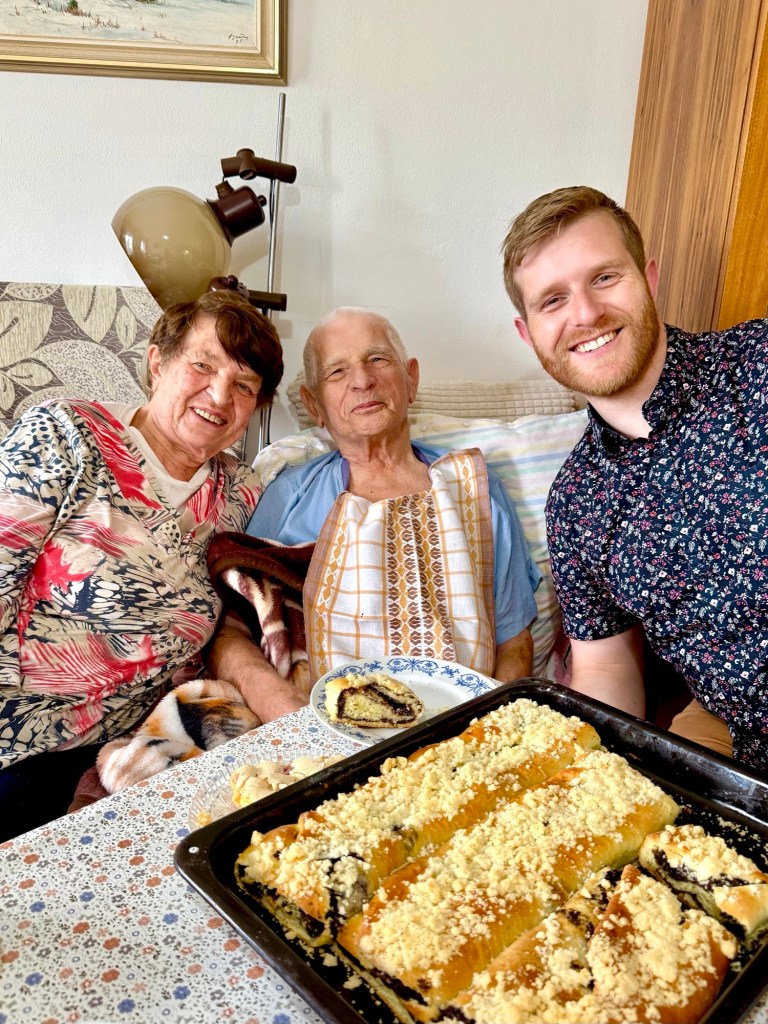
Toby & a fresh tray of makovec that babi has just made for him ❤️

What is Makovec?

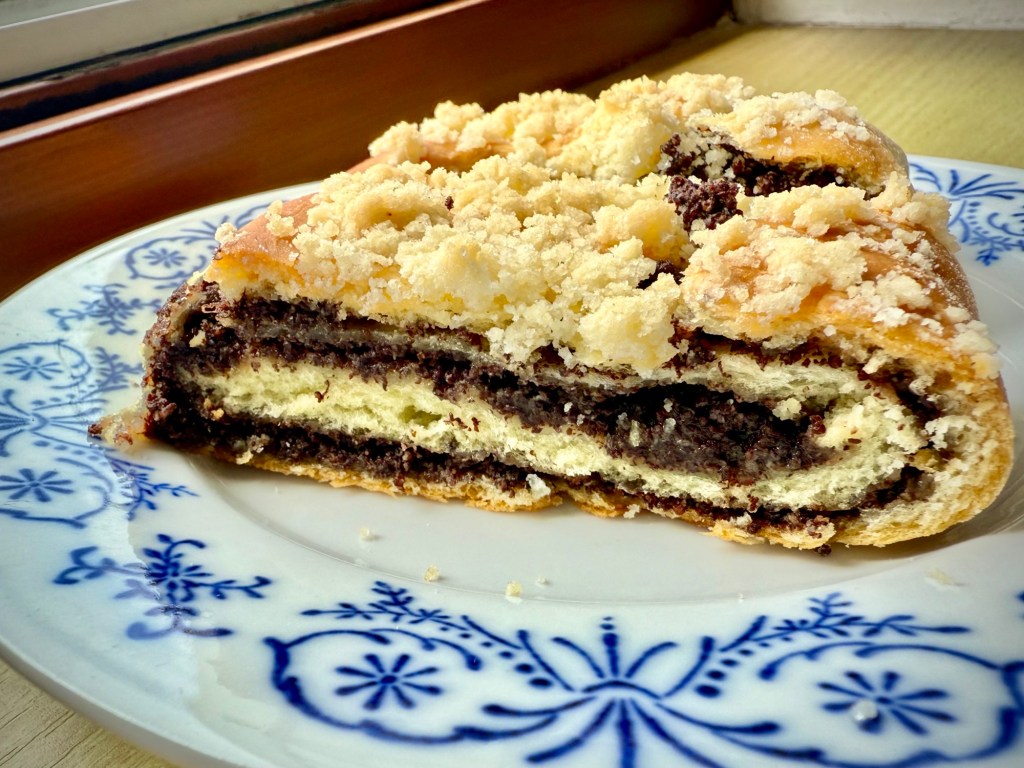
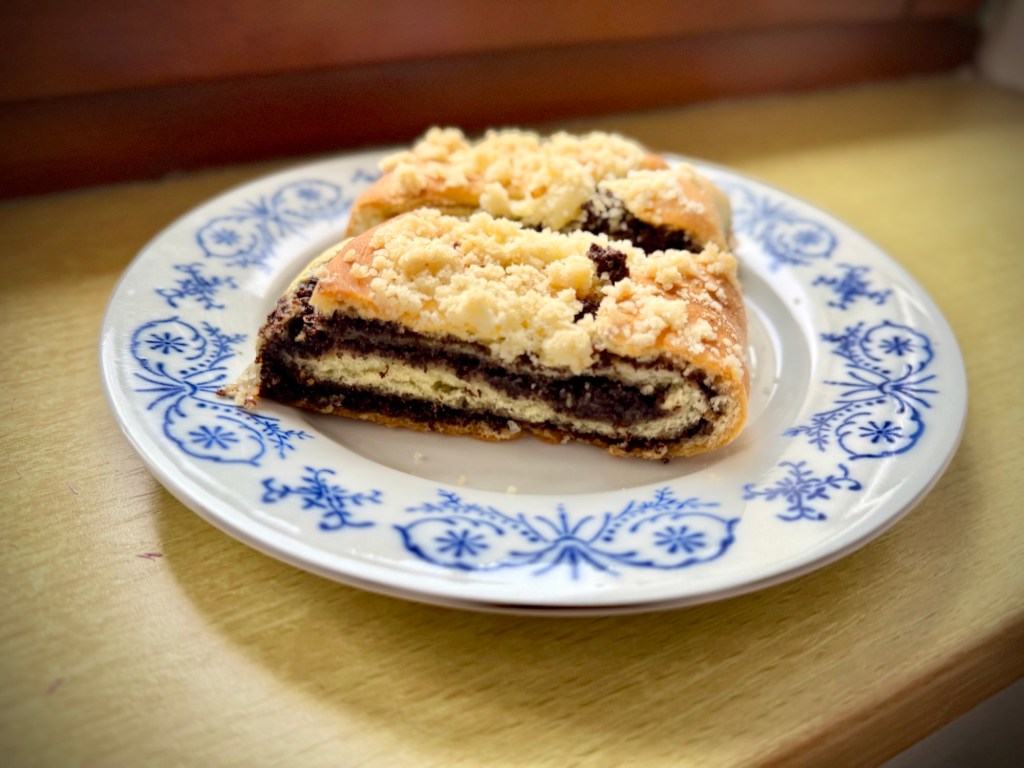
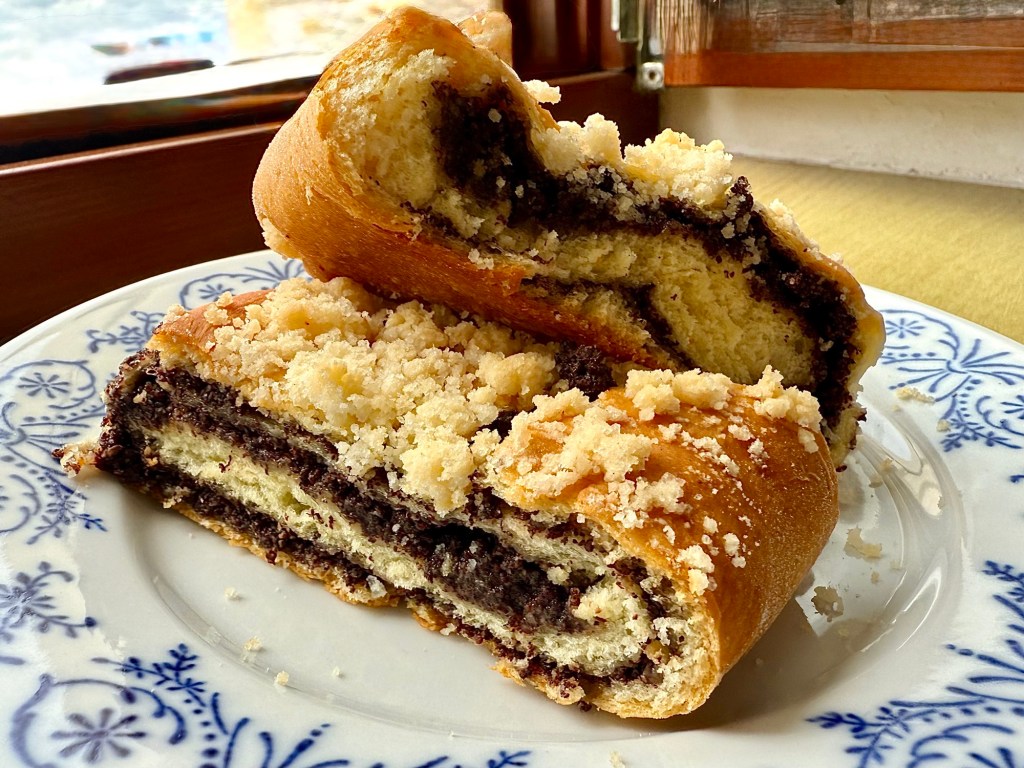
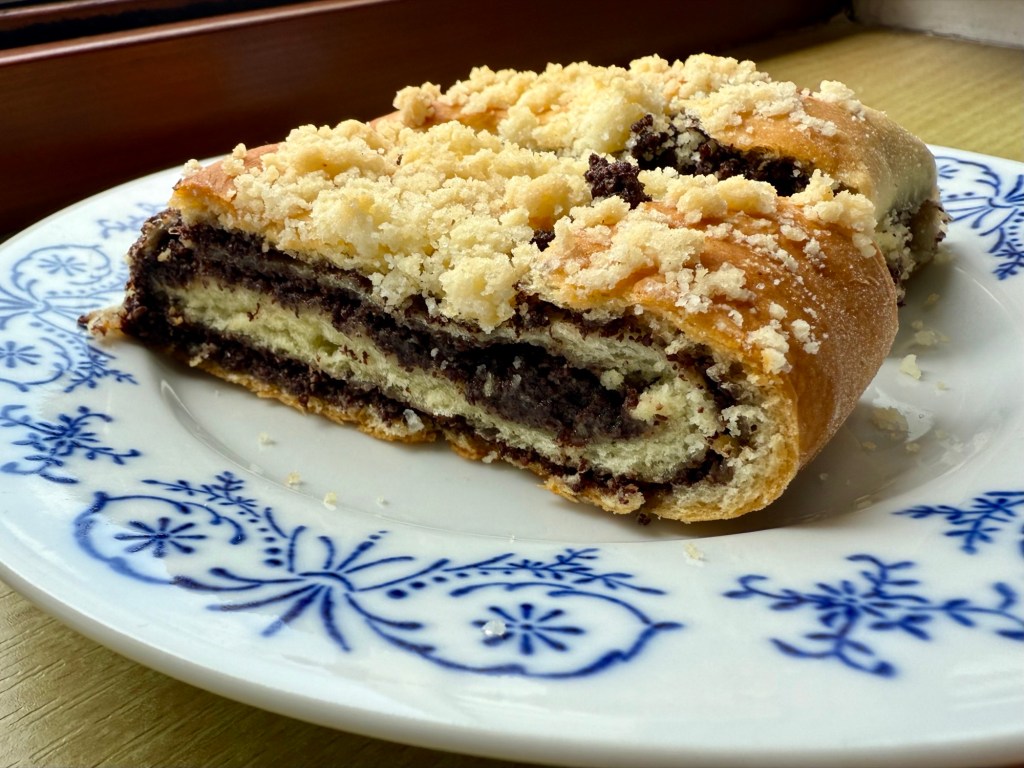
Makovec (pronounced: Mah-ko-vets) is a traditional Czech poppy seed roll pastry. It’s made of a light and fluffy bread-like pastry that’s rolled around a sweet filling made of freshly ground poppy seeds.

(Note: Some people use the term Makovec to describe a square poppy seed cake rather than the roll. According to Toby and babi, they’ve always referred to makovec as the roll.)

What makes this recipe so special from the others?

There are many variations of makovec around. Some people make it with raisins in the mixture, others put a lemon icing overtop. The neighbouring countries of Poland call it makowiec and Slovakia calls it maková štrúdla. This recipe is specifically Toby’s grandmother’s version. Call it nostalgic bias, but Toby and I have travelled quite a bit and he always gets super excited when he sees someone selling poppy seed cake, but no matter how many farmers markets and European bakeries we visit, nothing compares to babi’s version. Her version is made with strawberry jam mixed in the poppy seed filling for that extra strawberry flavour, and she finishes it off with a streusel crumb topping (which I’ve never seen anyone else do!). The ratio of bread to filling is also on point 👌 – too many times we find that there’s too much bread and not enough filling – poppy seed is not a robust flavour on its own so if there’s too much bread it drowns out the filling.
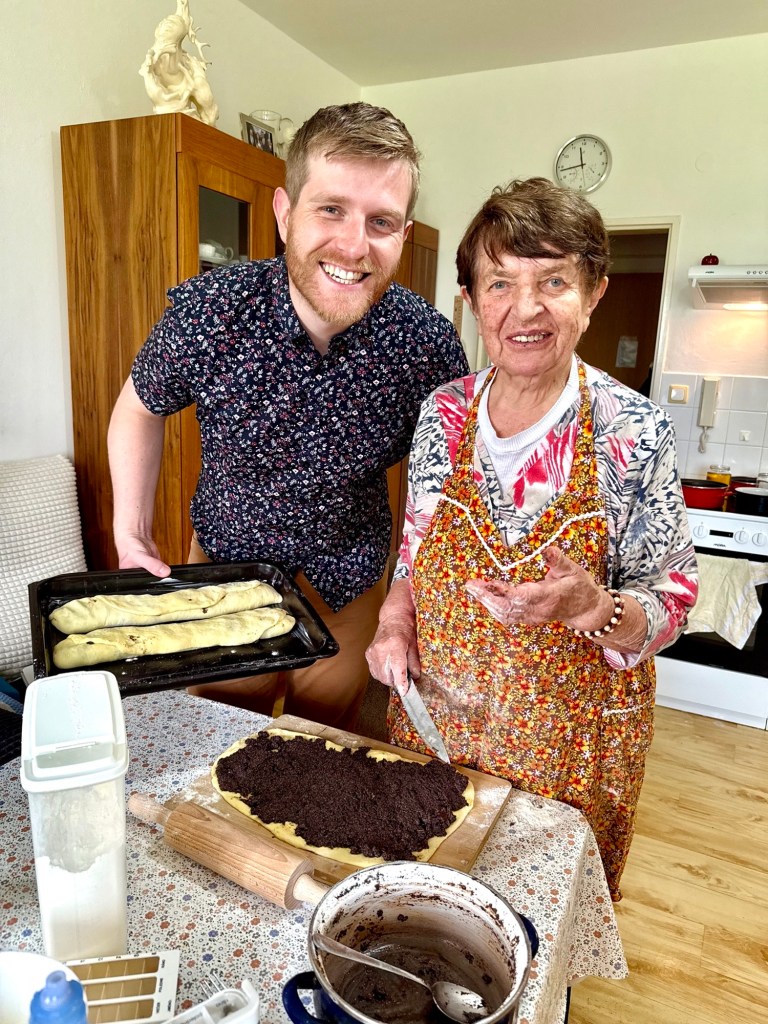
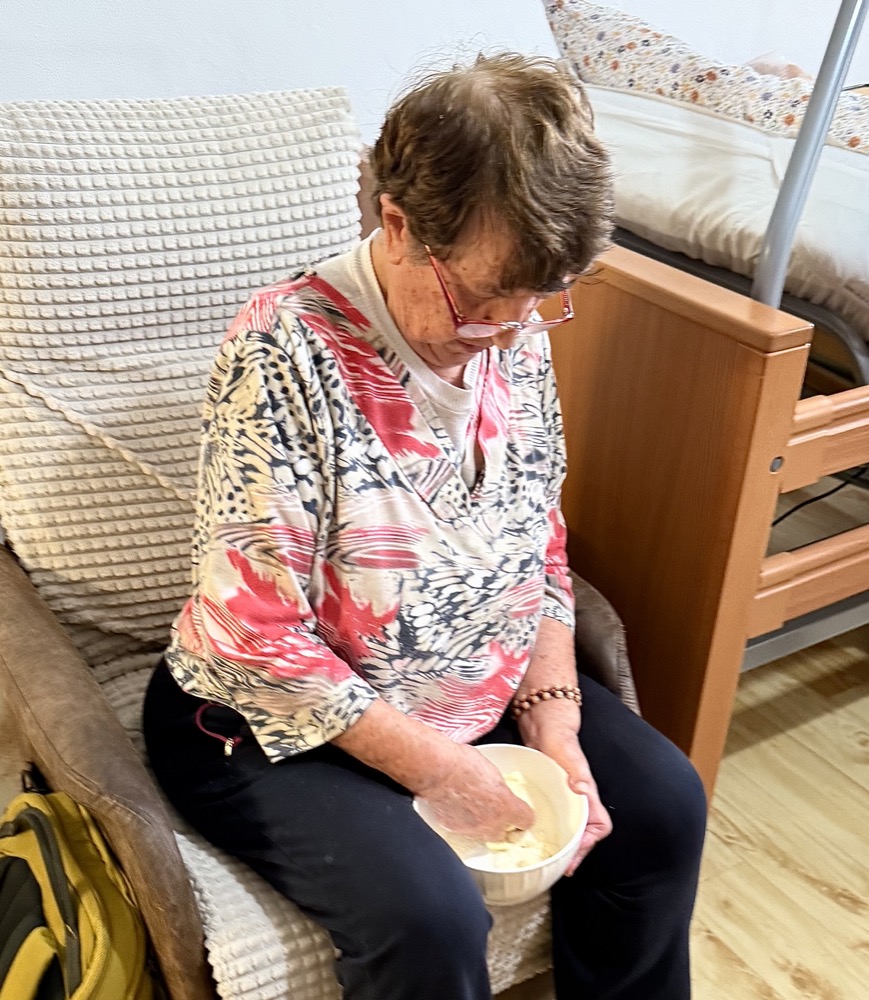
Toby & his babička making makovec (May 2025)

Grinding Poppy Seeds – Is it necessary?

Yes! Poppy seeds are the star of this dessert and it is imperative to grind down the seeds for a few reasons:

  1. Flavour: Grinding the seeds releases their natural rich oils and flavours. Eating unground poppy seed on its own is quite flavourless.
  2. Forming a paste: Ground seeds absorb moisture and is essential to form a paste when we’re cooking down the filling. You won’t get the texture we’re looking for unless the seeds are ground.
  3. Texture: Ground seeds are less gritty and provides a smoother texture when eating.

How to Grind Poppy Seeds

The best way to grind down poppy seeds is to use a dedicated poppy seed grinder. It’s usually about $40-$50 and is worth the investment if you’re into poppy seed desserts. We use this one from Tescoma: https://a.co/d/iUgRhGq. We found it to be reasonably priced with good reliability.

If you don’t have a poppy seed grinder, you can use a clean coffee grinder, spice grinder, mortar and pestle, or a food processor.

If you’re lucky and live near a European grocer, check if they have pre-ground poppy seeds for sale. I see it everywhere sold in Czech grocery stores due to the sheer popularity of poppy seed food items, but rarely outside of central Europe. Pre-ground poppy seeds can spoil quickly so sometimes it’s sold out of the refrigerated section.


Some Myths and Truths About Poppy Seeds

Poppy seeds have the notorious reputation of causing people to test falsely positive for opiates on urine drug tests (remember that episode of Seinfeld where Elaine tested positive after eating a poppy seed bagel?). I always thought that you needed to ingest very large amounts of it to test positive, but on an episode of Mythbusters, Adam tested positive within half an hour of eating a large slice of poppy seed cake and Jamie tested positive 2 hours after eating 3 poppy seed bagels! So if you’re in a situation where they do routine urine testing, you might want to hold off on making this or ask for a blood test instead. 😅

Despite possibly testing false positive for opiates, you won’t actually feel any opiate-related effects or “highs” from eating poppy seeds. Toby has eaten TRAYS of makovec (which is a LOT Of poppy seeds) and seen no ill effects.

How does this happen, you ask? Poppy seeds themselves have no opium content, however the milky white fluid that comes from the seed pod of the poppy called the “latex” is what contains the opium content. There is a possibility of contamination of the latex onto the seeds during the harvesting process, but don’t worry, poppy seeds sold for general use/foods are all washed prior to sale. In fact, there are actually legalities around buying unwashed poppy seeds. In the United States, at least 12 deaths have been reported in association with the use of tea made from unwashed poppy seeds causing lethal opiate overdose! (Here’s a pdf from the DEA if you want to learn more about poppy seeds: https://www.deadiversion.usdoj.gov/drug_chem_info/unwashed_poppy_seed.pdf)

Anyways, if you’re a fan of poppy seed pastries, give this recipe a try! It looks like a long recipe, but it’s not all that difficult, just very wordy to describe.

I’ve had to tweak her recipe a little due to difficulty of obtaining certain ingredients outside of Europe (I’m looking at you, coarse flour 😒), but after multiple taste tests, Toby gave the stamp of approval that it’s just like babi’s! The photos in this post are a mix of photos from when she taught us how to make this dish in Czech and me re-making them in our apartment back in Brooklyn.

Note: To make the most accurate version of this recipe, I would recommend using the grams/mls measurements as this was what I used to measure her recipes, however I’ve also included a cup conversion as well.

I’d love to hear from you in the comment section! You can follow me on instagram, youtube and facebook to see all the recipes I post!

Happy cooking!

Ingredients you’ll need:

*I recommend to use the metric measurements (grams/mls) for accuracy of the ingredients to have it as close to babička’s version as possible.

  • Poppy seed filling:
    • 500ml (2 cups) whole milk
    • 250g (1.75 cups) poppy seeds, ground
    • 120g (1.25 cups) granulated sugar
    • 1/2 tsp kosher salt
    • 175g (1/2 cup) strawberry jam (or more to taste)
    • 4g (1/2 Tbsp) ground cinnamon
    • 28g (2 Tbsps) cocoa powder
    • 1 tsp vanilla extract
  • Dough:
    • Yeast prep:
      • 60ml (1/4 cup) milk
      • 7g (1 packet) of active dry yeast
      • 1 tsp granulated sugar
    • 50g (1/4 cup) granulated sugar
    • 50g (3.5 Tbsps) butter, softened
    • 1 large egg, divided into yolk and egg white
    • 1 tsp kosher salt
    • 350g (2.75 cups) all-purpose flour, sifted (+ more for dusting and rolling)
    • 175ml (3/4 cup) + 1/2 Tbsp whole milk, room temperature
  • Streusel:
    • 50g (1/4 cup) granulated sugar
    • 50g (3.5 Tbsps) butter, softened
    • 70g (1/2 cup) all-purpose flour

Directions:

A) Make the poppy seed filling:

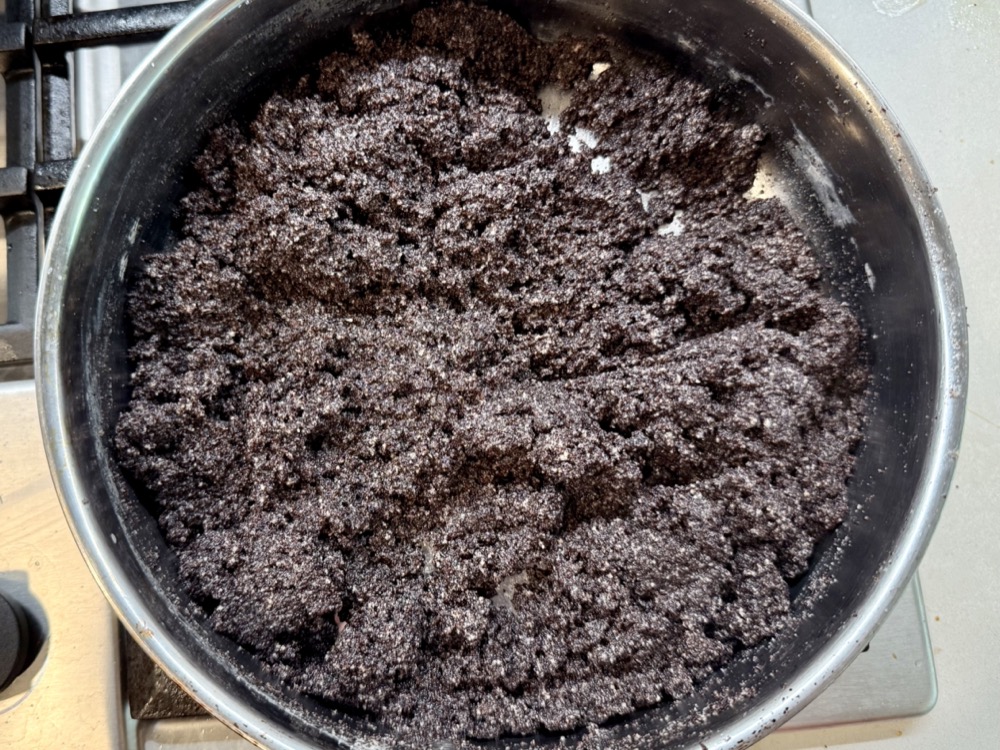
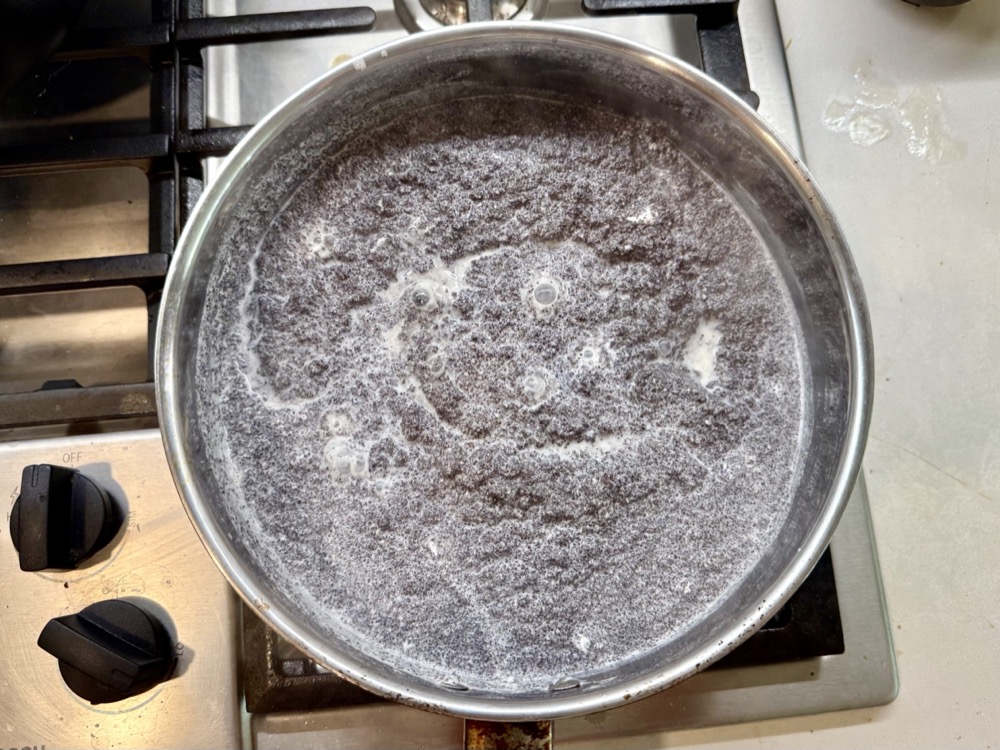
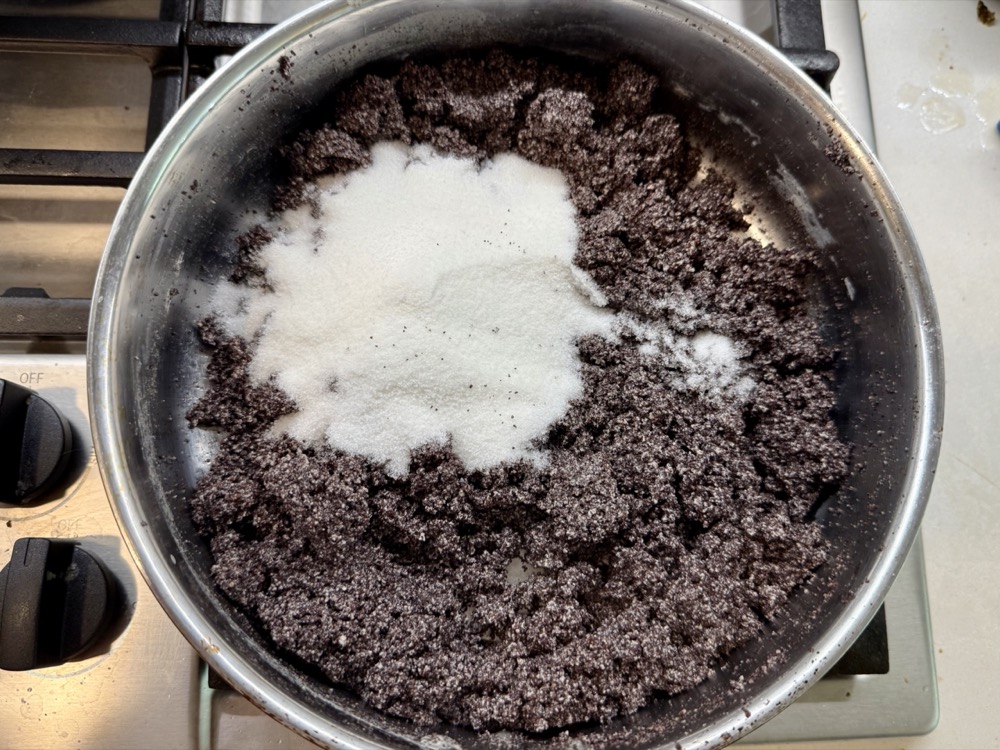
In a wide-based pan on MED heat, add in 500ml of milk. When the milk boils, add in 250g ground poppy seeds and mix together. It will thicken as you mix. Once the mixture boils again, turn down the heat to LOW and continue to stir until you get a dry crumbly mixture without any liquid left (see photo) – this can take up to 20 minutes.

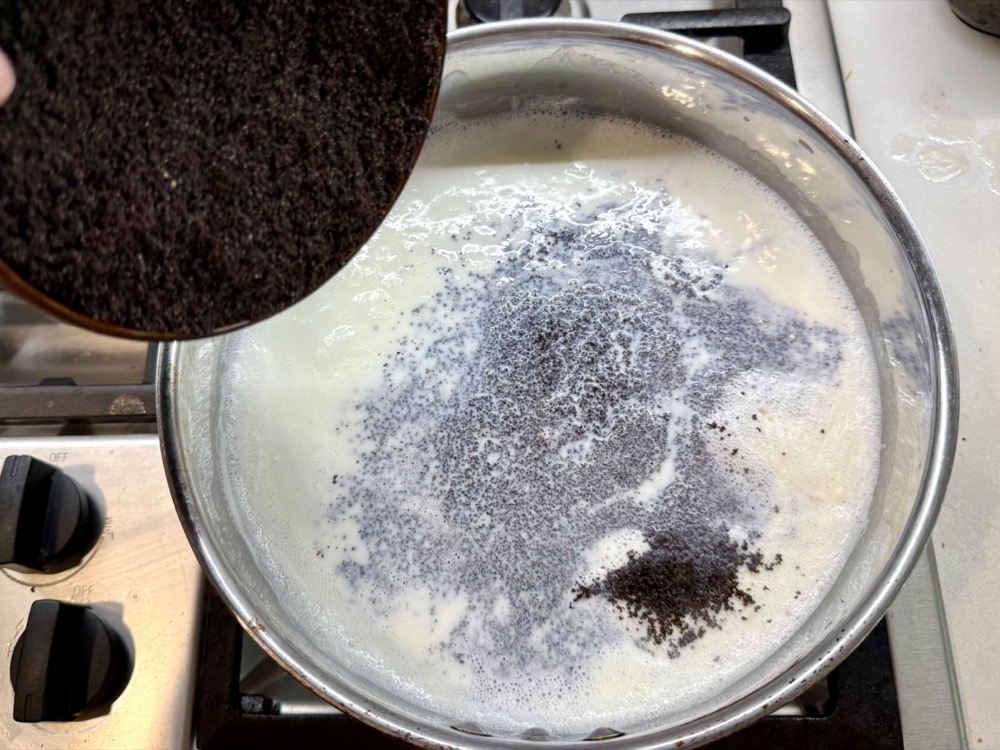
Pro-tips:

  • You can use any type of pan or pot, but a wide-based pan will increase your surface area and quicken the process.
  • Make sure you don’t have any liquid left in your mixture or else your filling will be too wet.

When you get a dry mixture, turn the heat OFF and take the pan off of the heat. Add in 120g of sugar and 1/2 tsp salt and stir until combined. Set aside to cool completely.

While you’re waiting for the filling to cool, you can start making the dough in the next section.

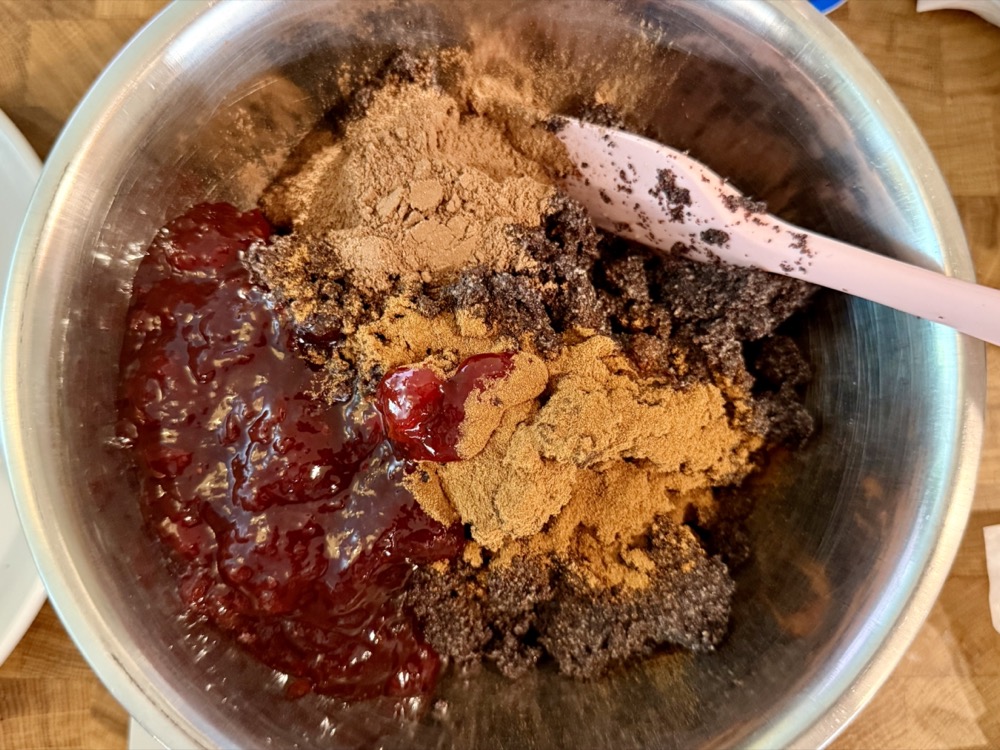
Once the mixture fully cools, add in 175g strawberry jam, 1/2 Tbsp ground cinnamon, 2 Tbsps cocoa powder, and 1 tsp of vanilla extract. Mix well and set aside.

B) Make the dough while the poppy seed filling cools:

Activate the yeast:

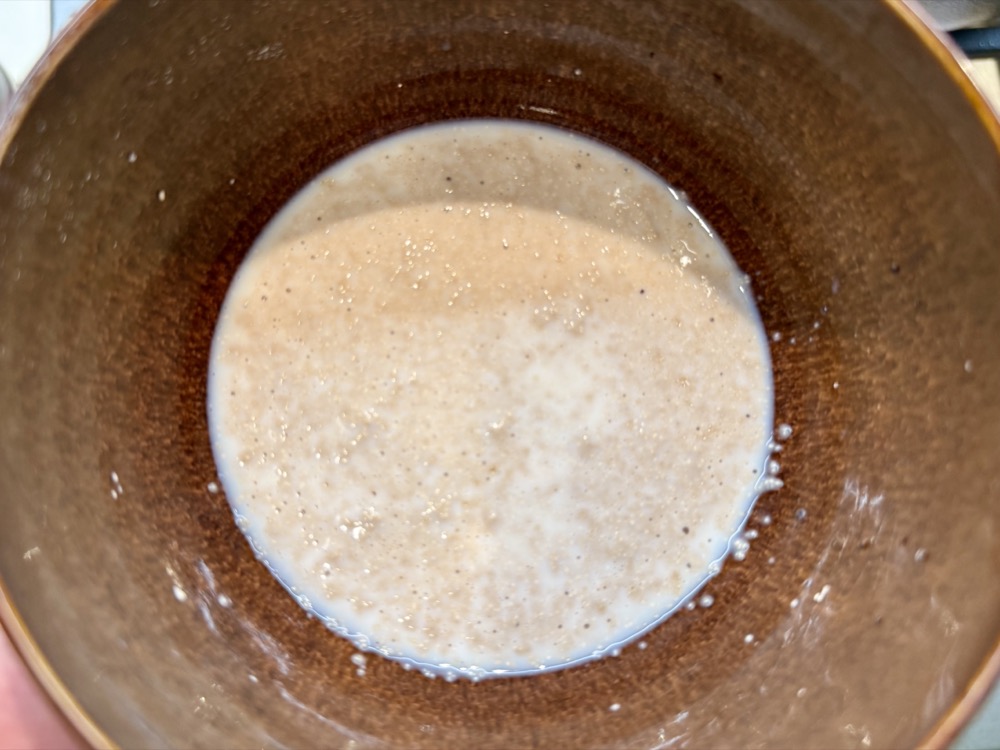
In a small bowl, add in 1/4 cup of milk and microwave for 10 seconds at a time until it’s warmed (make sure it’s not too hot or it will cook the yeast). Add in 7g (1 packet) active dry yeast and 1 tsp sugar. Mix until well-combined, cover and set aside. The yeast is activated once it gets frothy (5-10mins).

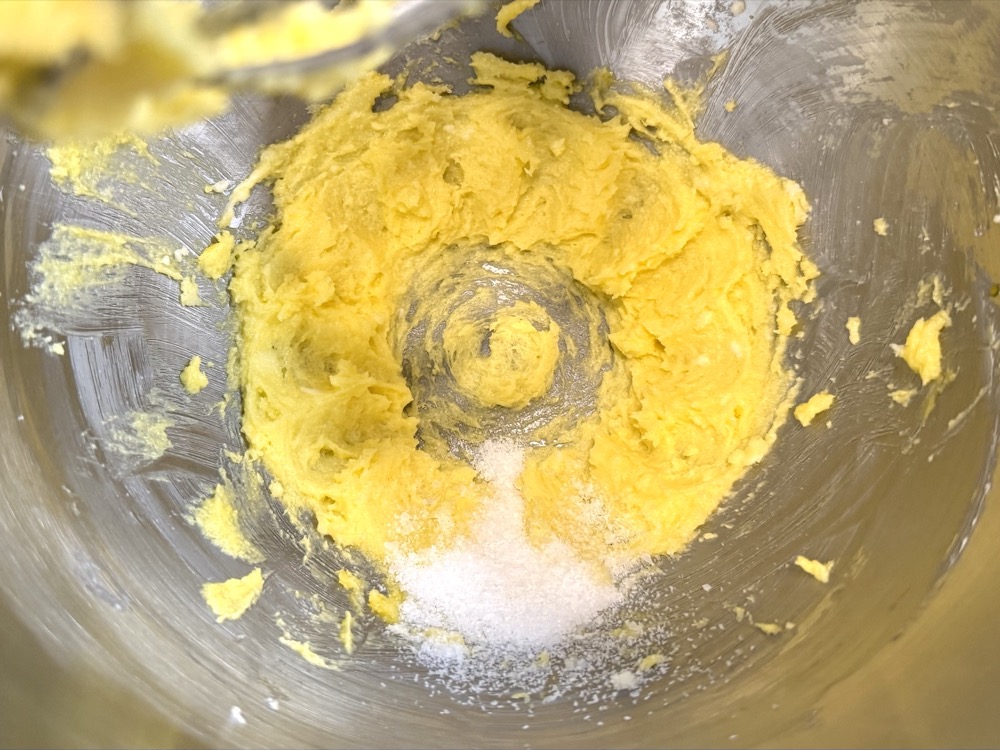
In a separate mixing bowl, add in 50g sugar, 50g softened butter, and 1 large egg yolk. Mix on HIGH speed for 2-3 minutes until the mixture is well-combined and a little fluffy.

To the sugar/butter mixture, add in 1 tsp salt, and the frothed yeast mixture (from step 1).

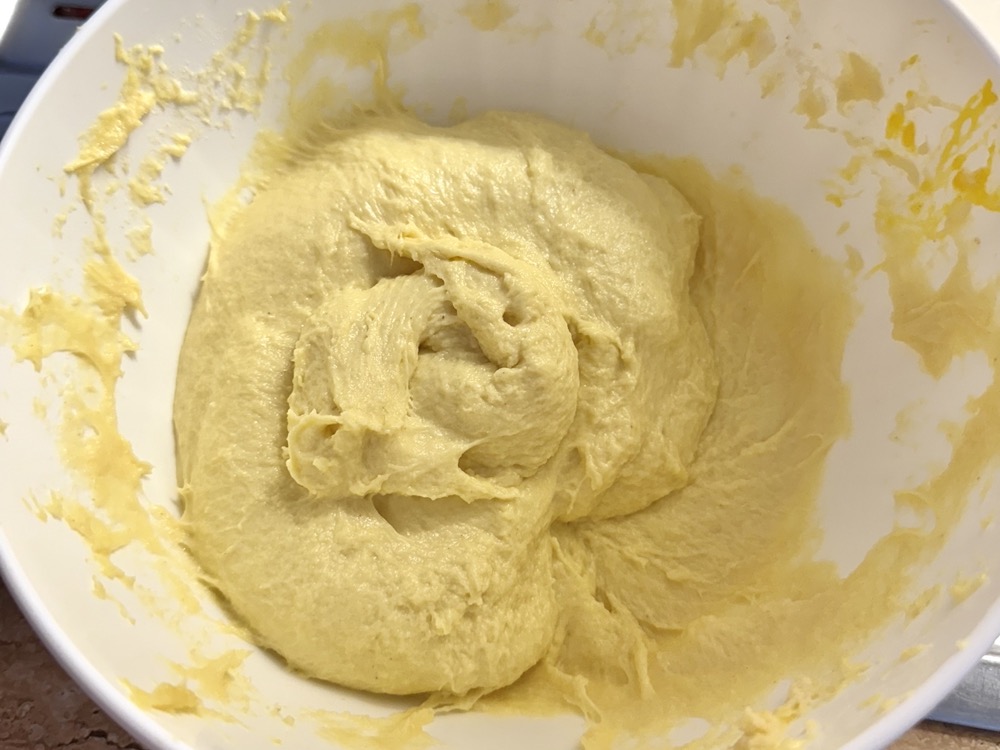
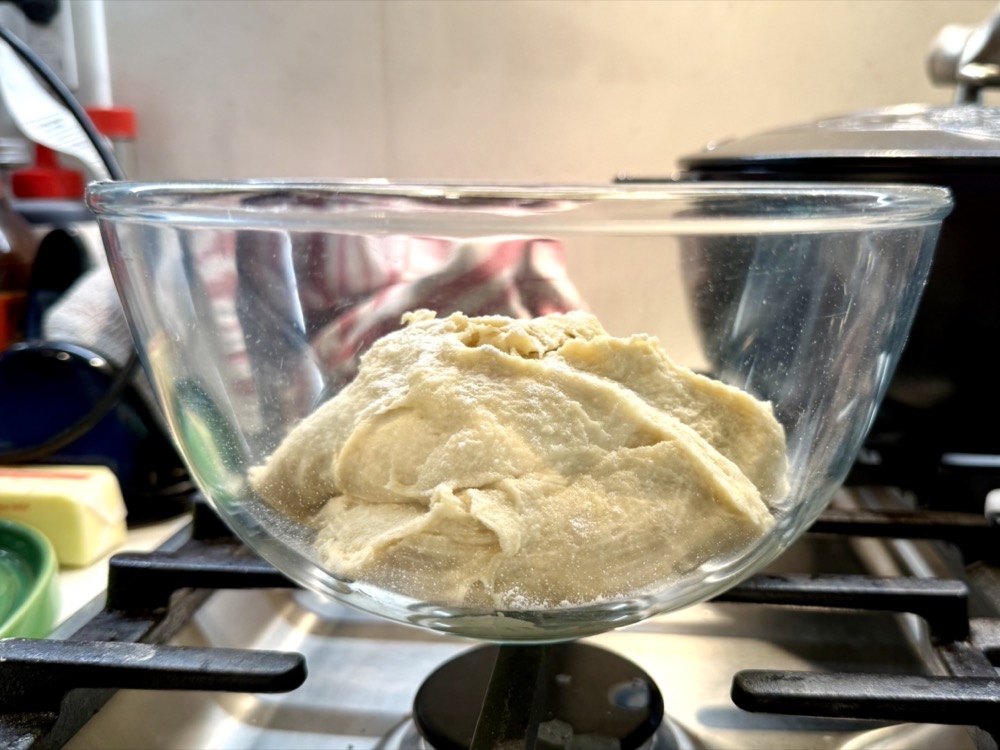
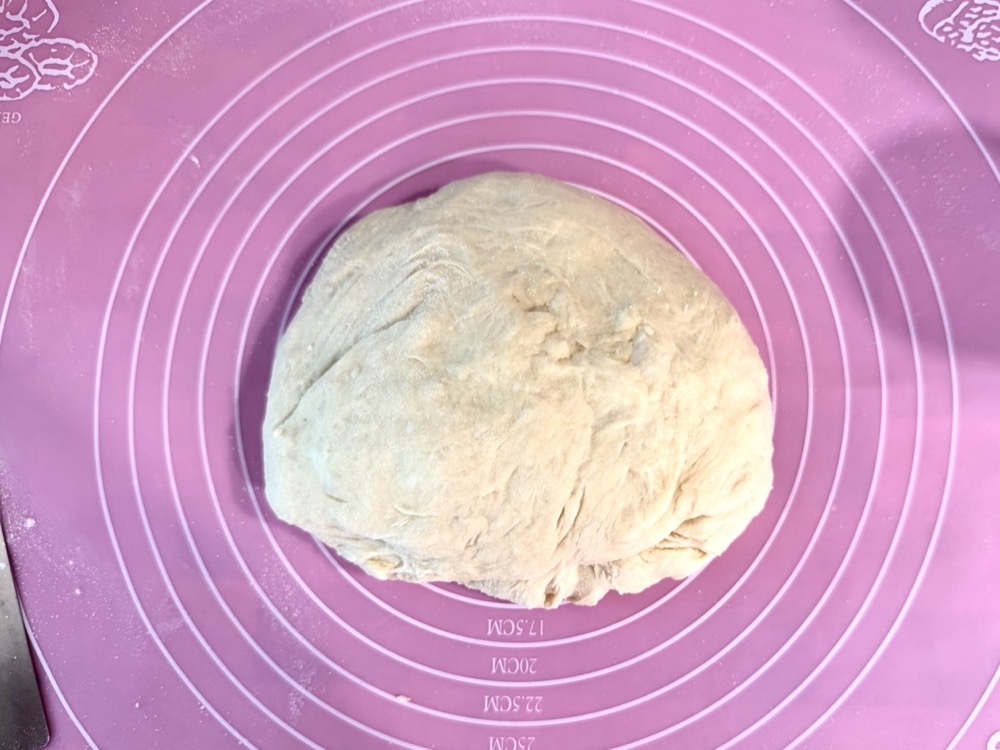
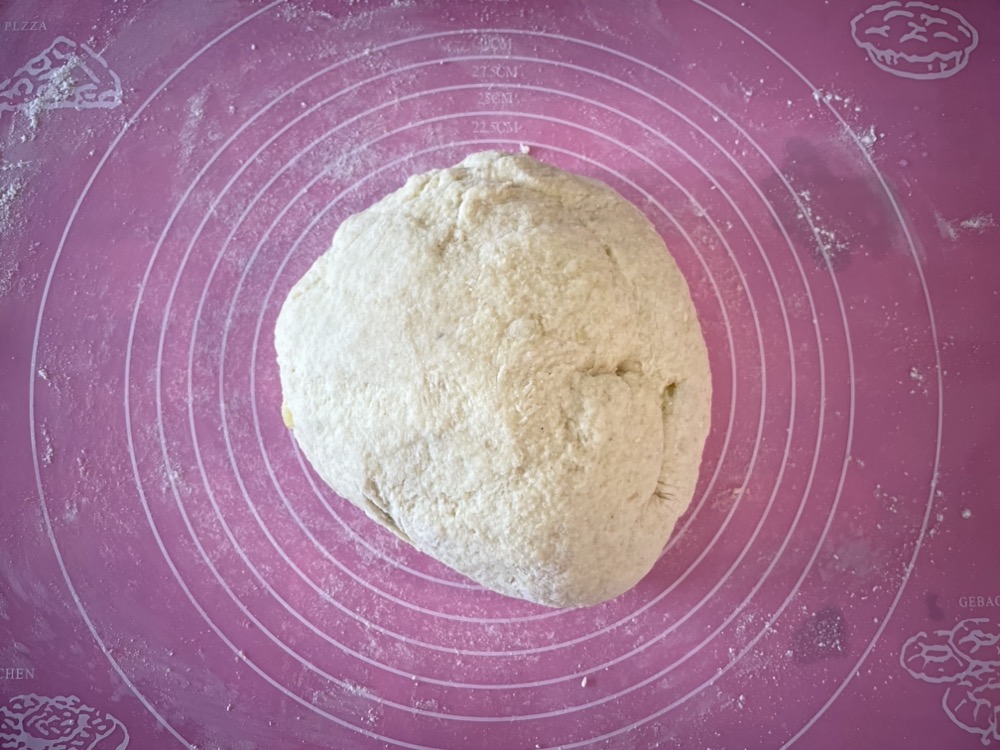
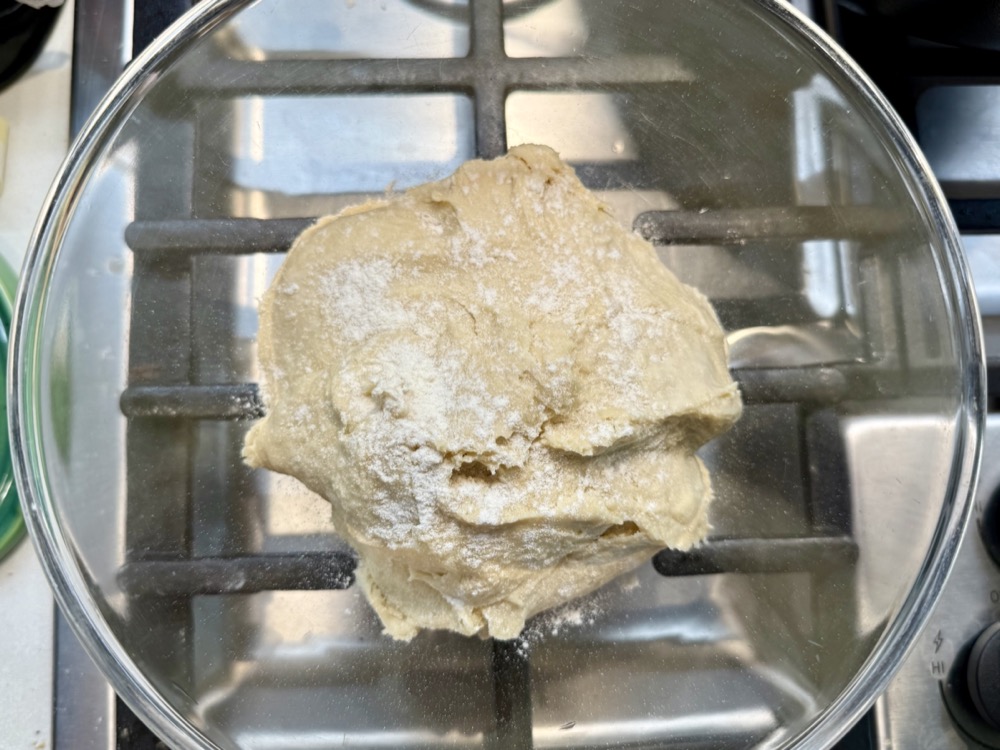
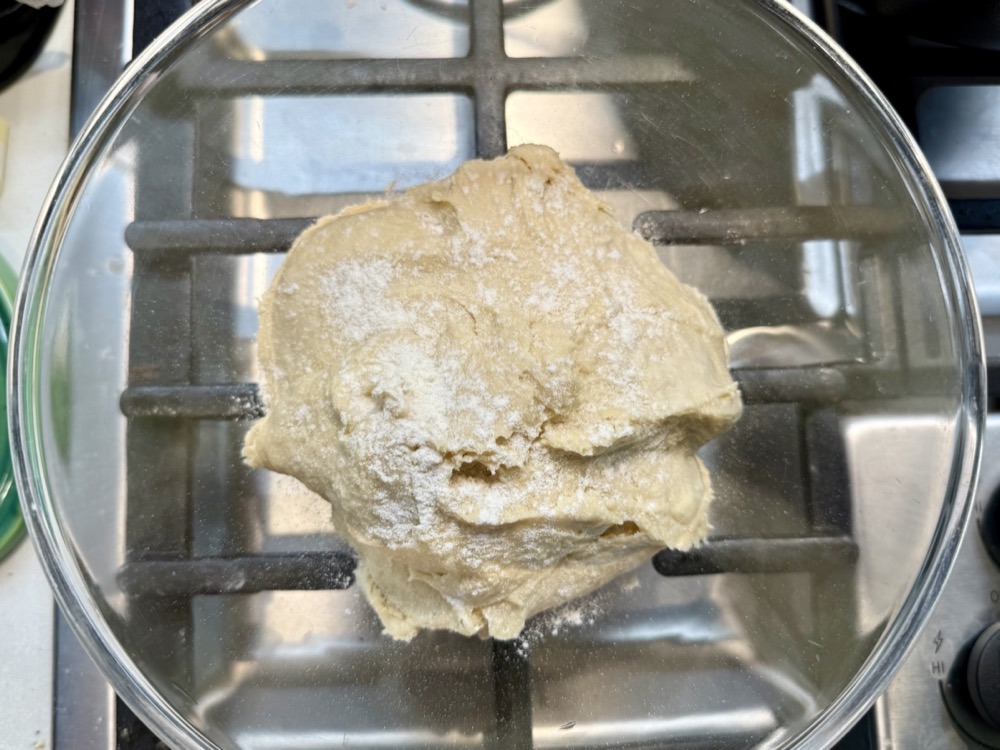
Mix well then alternate adding in 1/3 amount at a time the 350g sifted flour and the 175ml room temperature milk. Once the mixture gets too thick for the mixer, either use a dough hook attachment (if you’re using an electric mixer) or knead by hand. The dough is complete when you get a formed but sticky dough (see photo below) – this took about 5-7 minutes on an electric mixer.

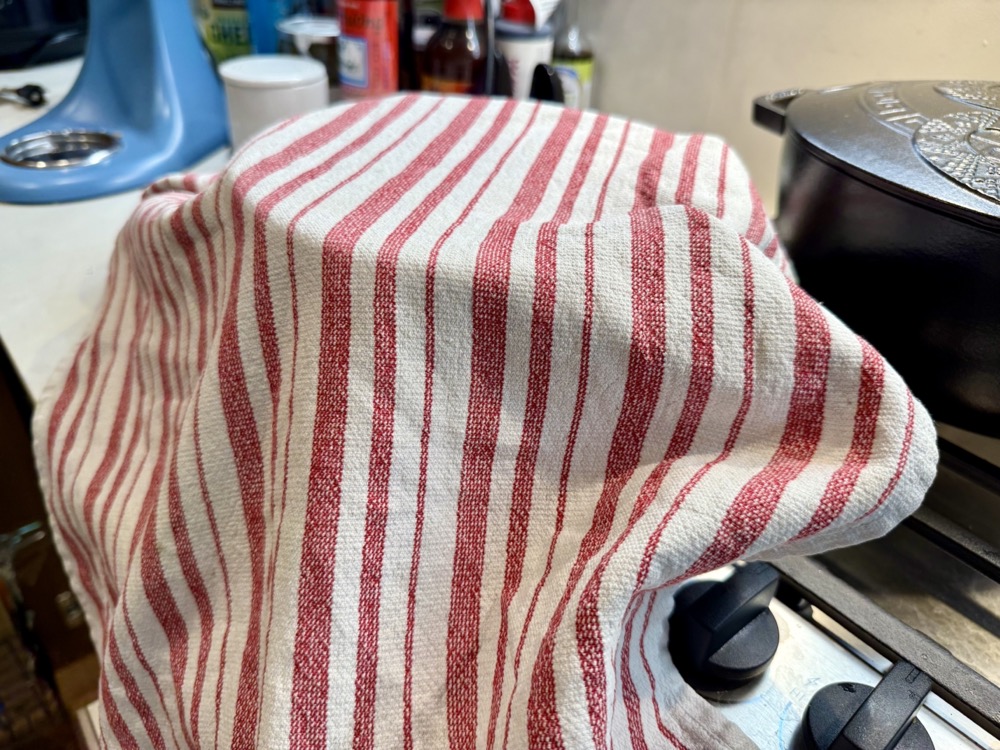
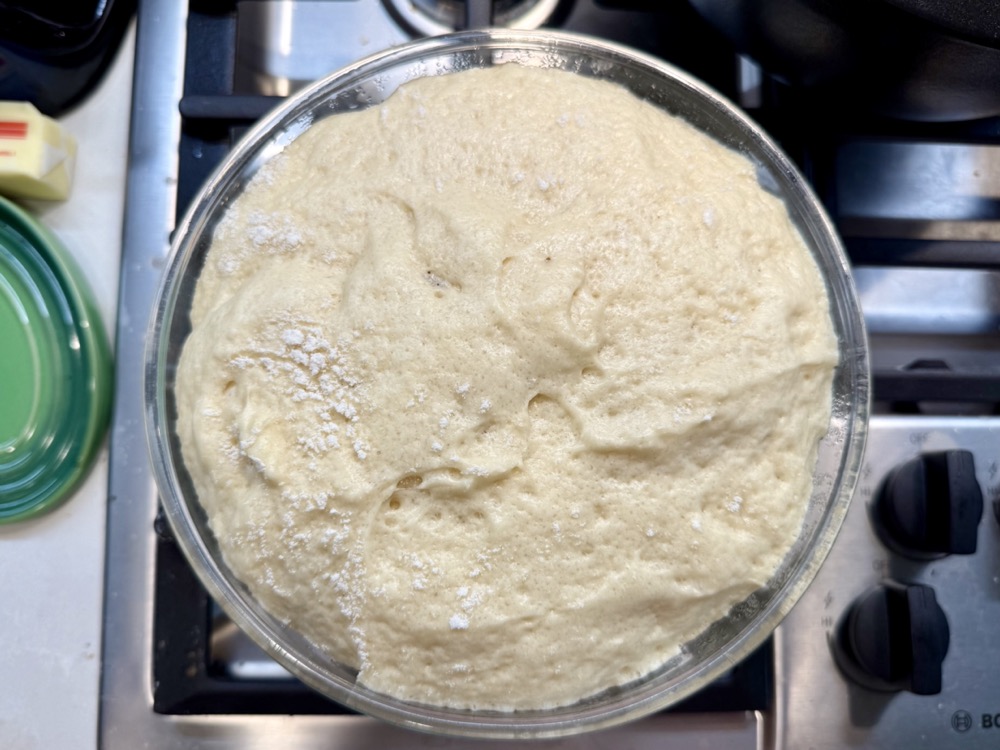
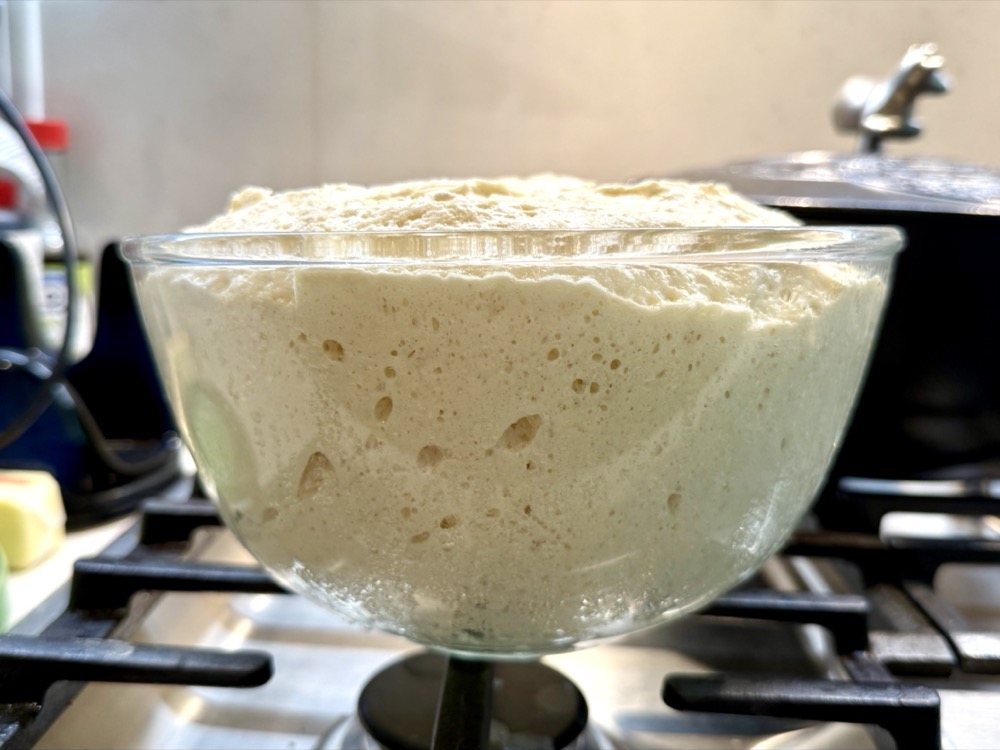
Once the dough forms, scrape it all together, add a dusting of flour on top then cover with a tea towel and let it rest in a warm place until doubled in size (~45 mins – 1 hour).

If you don’t have a warm place, use my fail-proof oven proofing method here.

You can finish off the poppy seed filling (if cooled) while you wait and make the streusel in the next step.

C) Make the streusel:

In a small bowl, add in 50g of sugar, 50g of butter, and 70g of flour.

Mix/pinch/squish it by hand for 2-3 minutes until you get a crumbly mixture (see photo). Set aside.

D) Roll out the dough & assemble:

Prepare a greased or lined 9×13” baking tray.

Preheat the oven to 180˚C/350˚F.

Once the dough has risen, scrape out the dough onto a floured surface and knead it a few times to remove the bubbles. Weigh the dough and divide it evenly into 3 portions.

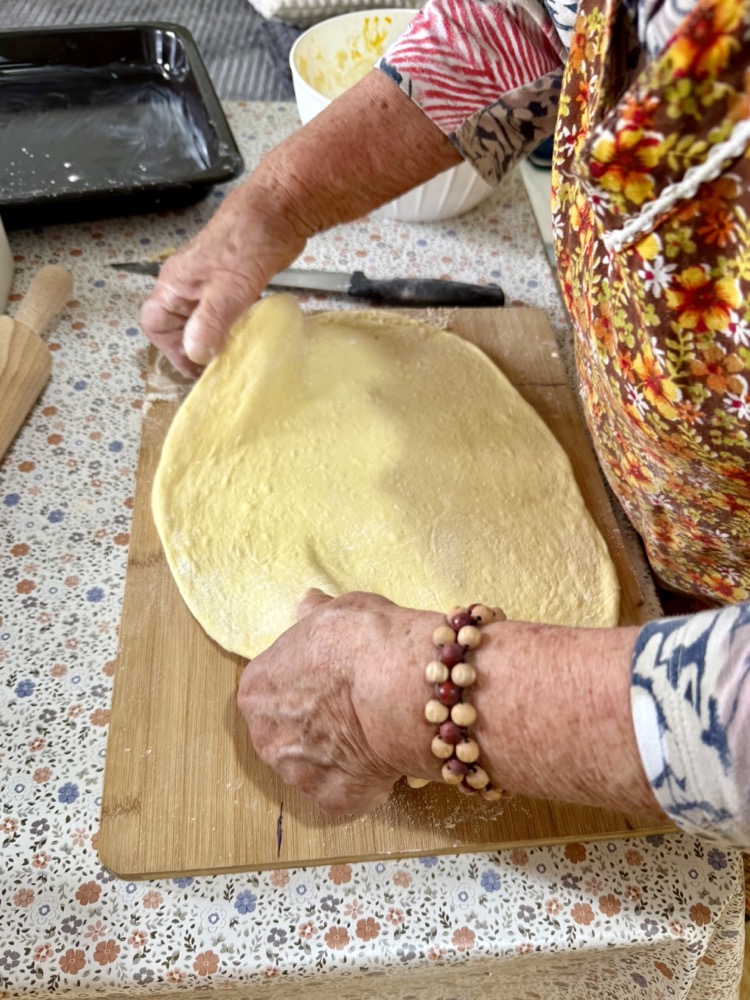
Take one dough ball (keep the other two covered with a tea towel to prevent it from drying out) and roll it out onto a floured surface. Flip the dough and roll it out a couple times on the floured surface until you get a rectangle shape about 0.5cm thick (see photo) and roughly the length of your baking tray. Evenly spread 1/3 of the finished poppy seed/jam mixture onto the rolled dough, leaving 1-2cm from the edge of the dough. 

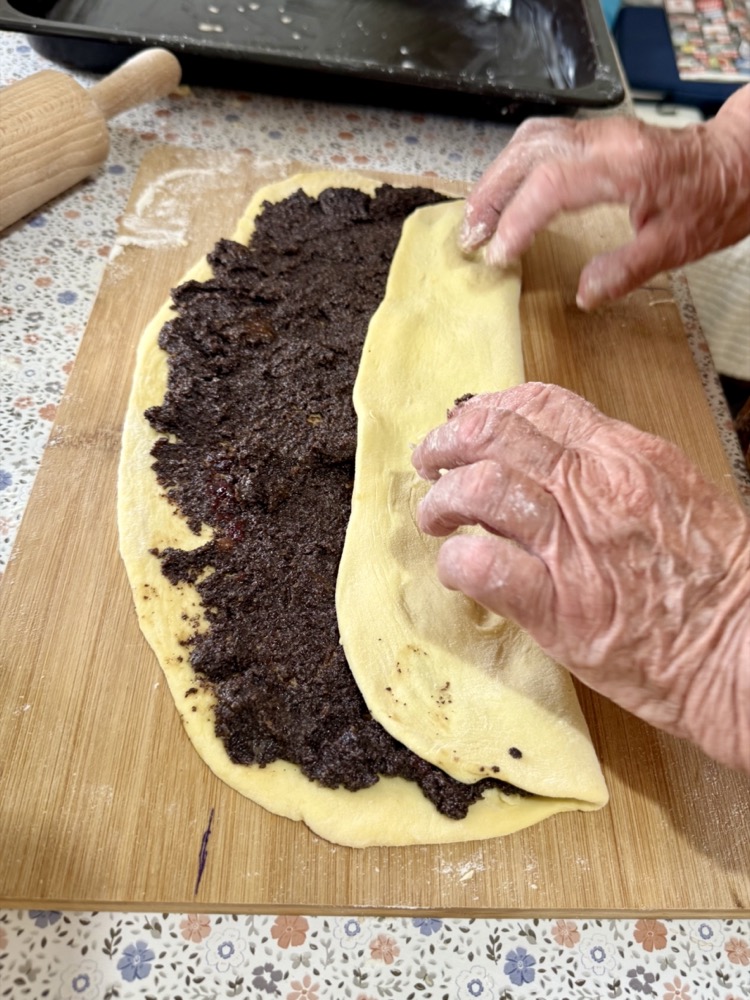
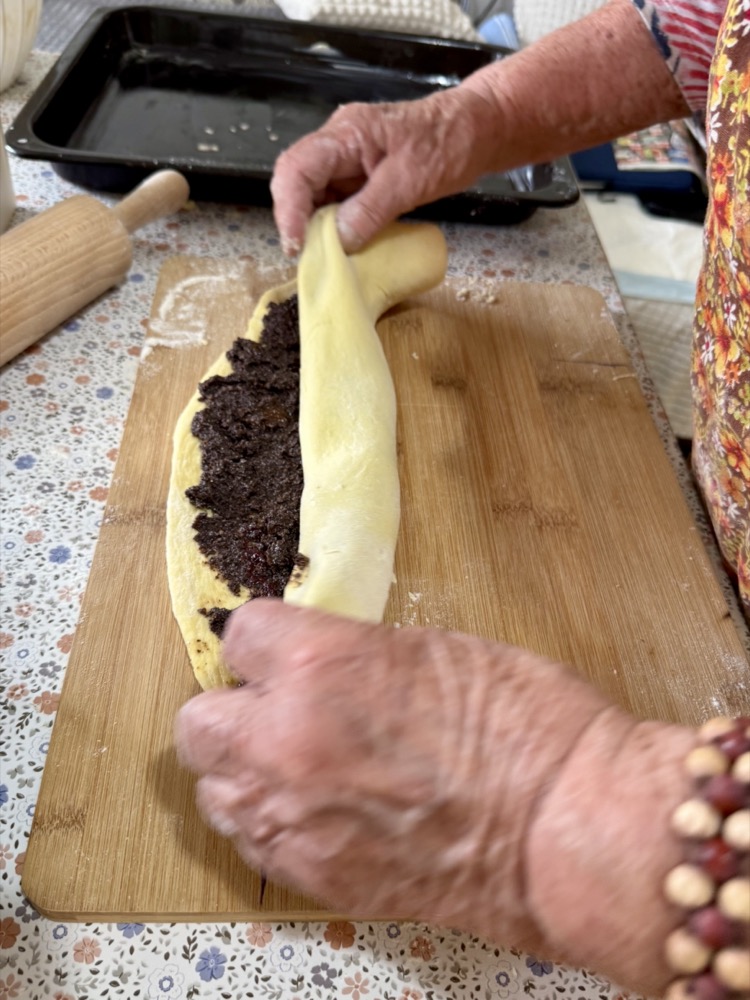
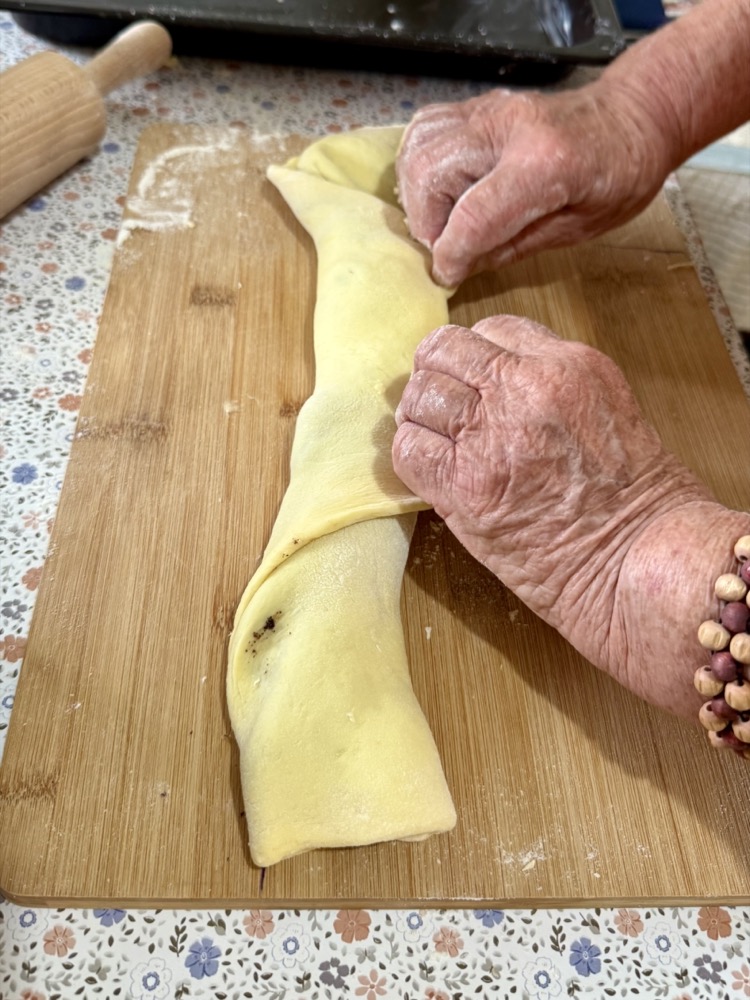
To form the roll: Grab the bottom edge and fold the dough up by 1/4, then roll up by 1/4 again, then fold the upper 1/4 edge down over the roll and pinch the edges to seal in the poppy seed mixture (see photos). Gently pick up the roll and place this onto the prepared baking tray. Don’t worry if you have some areas of thinner dough or where some poppy seed filling sticks out.

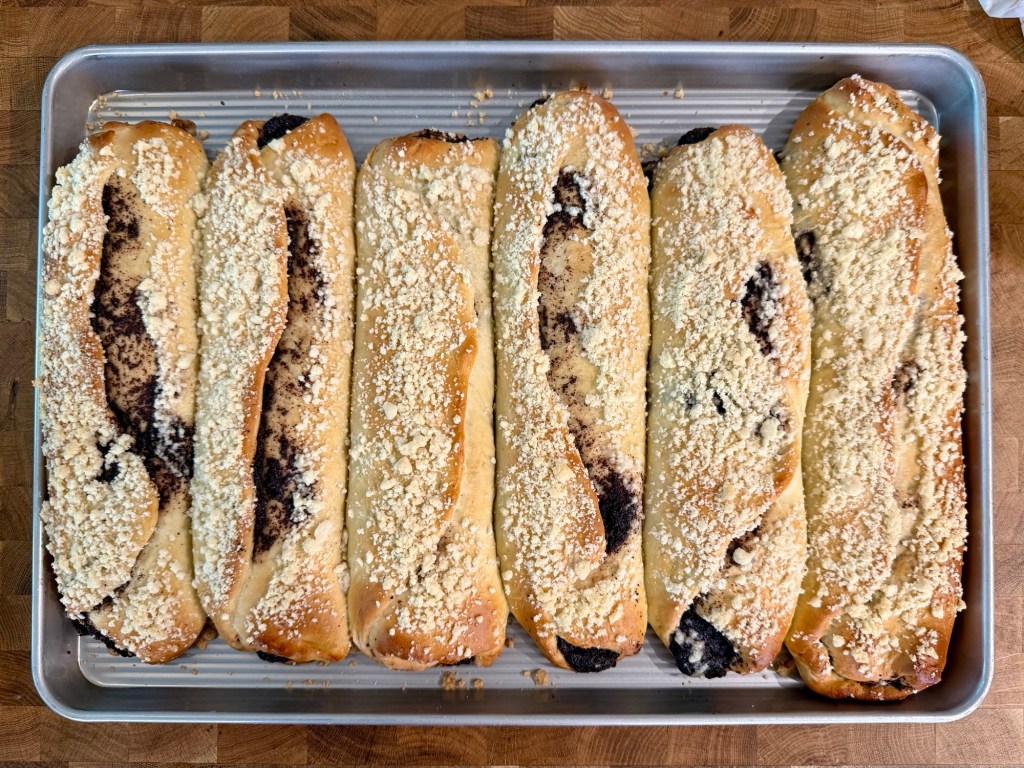
Repeat steps 4-6 with the other two dough balls. Leave about a 2cm space between each roll on the baking tray so they don’t stick together when they bake.

E) Make the egg wash and add the streusel:

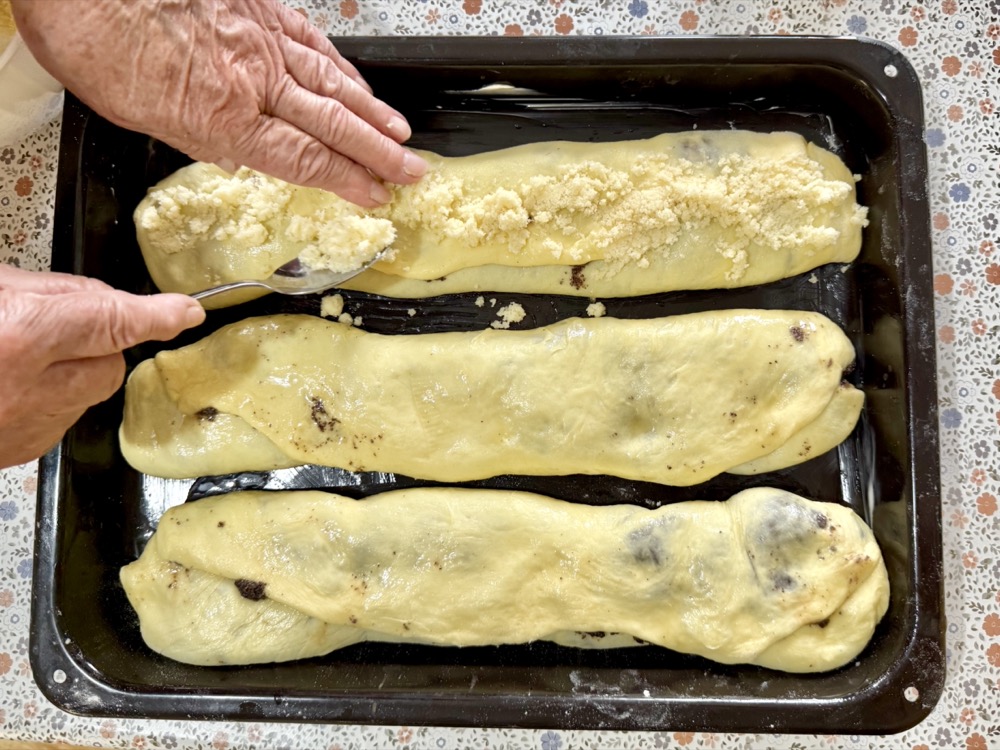
In a small bowl, beat the remaining egg white with 1/2 Tbsp of milk and brush this mixture over the top and sides of each roll.

This step creates a moist sticky surface for the streusel to stick better. Babicka actually uses rum but to limit the number of ingredients and to use up the egg white, I’ve elected to use the egg wash method. There is no difference in taste if you use rum or an egg/milk mixture.

Evenly sprinkle 1/3 of the streusel on top of each roll. Gently push it into the dough if it seems to be rolling off.

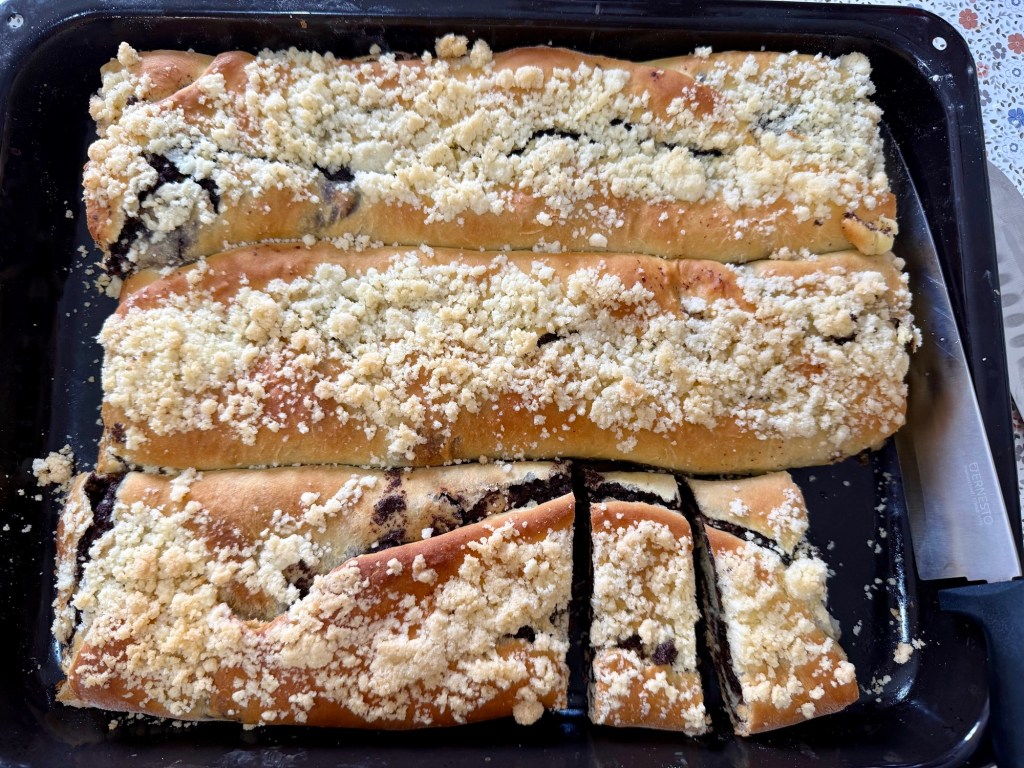
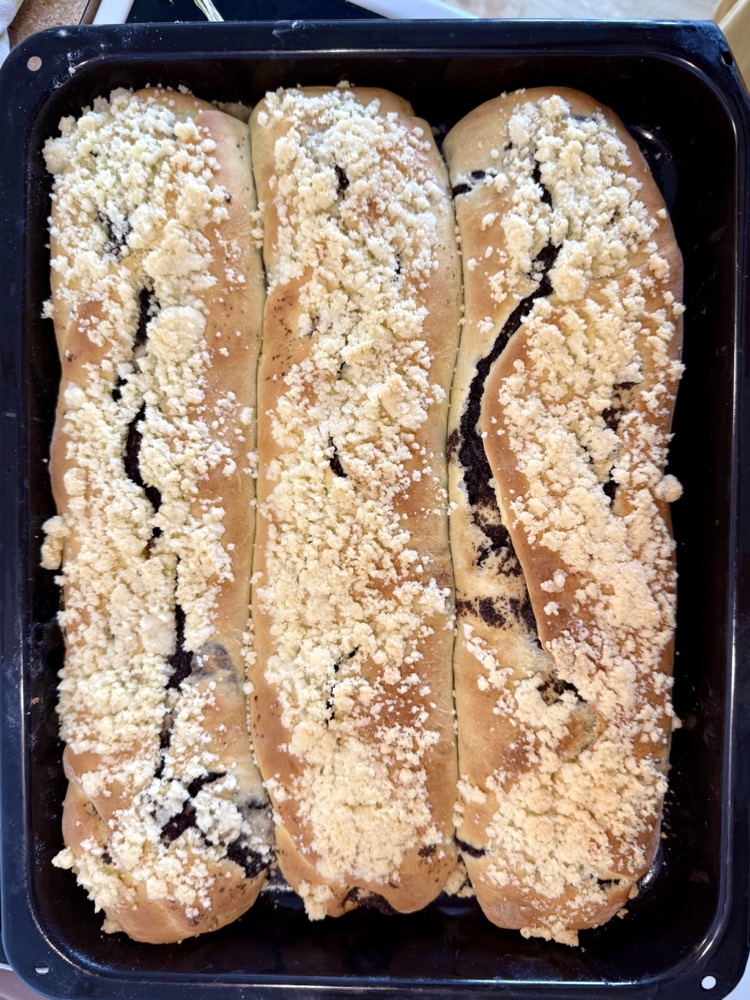
Bake in the preheated oven until golden brown (~25-30 minutes), turning the pan halfway through the cook time to bake evenly. DONE! Let it cool slightly before slicing then serve immediately.

Storage:

  • Store in an air-tight container and eat within 2 days at room temperature or up to 5 days in the refrigerator.
  • To freeze: slice the makovec and freeze in an air-tight container – mine’s still in the freezer from 3 months ago and still going strong! To reheat: microwave from frozen for 30 seconds at a time until warmed.
  • Note: once you refrigerate or freeze it, the bread firms up slightly.

Summarized Recipe:

Babička’s Makovec (Czech Poppy Seed Roll)

Date Published: Nov 11th, 2025 | Last Updated: Nov 11th, 2025
Author: Abby | Category: breads, Czech, dessert, pastry, snacks, vegetarian
Makes: 3 loaves (enough for a party or one Toby 😂) | Prep time: 1.5 hours | Cook time: 1 hour

Ingredients: I recommend to use the metric measurements (grams/mls) for accuracy of the ingredients to have it as close to babička’s version as possible.

  • Poppy seed filling:
    • 500ml (2 cups) whole milk
    • 250g (1.75 cups) poppy seeds, ground
    • 120g (1.25 cups) granulated sugar
    • 1/2 tsp kosher salt
    • 175g (1/2 cup) strawberry jam (or more to taste)
    • 4g (1/2 Tbsp) ground cinnamon
    • 28g (2 Tbsps) cocoa powder
    • 1 tsp vanilla extract
  • Dough:
    • Yeast prep:
      • 60ml (1/4 cup) milk
      • 7g (1 packet) of active dry yeast
      • 1 tsp granulated sugar
    • 50g (1/4 cup) granulated sugar
    • 50g (3.5 Tbsps) butter, softened
    • 1 large egg, divided into yolk and egg white
    • 1 tsp kosher salt
    • 350g (2.75 cups) all-purpose flour, sifted (+ more for dusting and rolling)
    • 175ml (3/4 cup) + 1/2 Tbsp whole milk, room temperature
  • Streusel:
    • 50g (1/4 cup) granulated sugar
    • 50g (3.5 Tbsps) butter, softened
    • 70g (1/2 cup) all-purpose flour

Directions:

  1. Make the poppy seed filling:
    1. In a wide-based pan on MED heat, add in 500ml of milk. When the milk boils, add in 250g ground poppy seeds and mix together. It will thicken as you mix. Once the mixture boils again, turn down the heat to LOW and continue to stir until you get a dry crumbly mixture without any liquid left (see photo) – this can take up to 20 minutes.
      • Pro-tips:
        • You can use any type of pan or pot, but a wide-based pan will increase your surface area and quicken the process.
        • Make sure you don’t have any liquid left in your mixture or else your filling will be too wet.
    2. When you get a dry mixture, turn the heat OFF and take the pan off of the heat. Add in 120g of sugar and 1/2 tsp salt and stir until combined. Set aside to cool completely.
      • You can skip ahead and make the dough in this time while you wait for it to cool.
    3. Once the mixture fully cools, add in 175g strawberry jam, 1/2 Tbsp ground cinnamon, 2 Tbsps cocoa powder, and 1 tsp of vanilla extract. Mix well and set aside.
  2. Make the dough while the poppy seed filling cools:
    1. Activate the yeast:
      • In a small bowl, add in 1/4 cup of milk and microwave for 10 seconds at a time until it’s warmed (make sure it’s not too hot or it will cook the yeast).
      • Add in 7g (1 packet) active dry yeast and 1 tsp sugar. Mix until well-combined, cover and set aside. The yeast is activated once it gets frothy (5-10mins).
    2. In a separate mixing bowl, add in 50g sugar, 50g softened butter, and 1 large egg yolk. Mix on HIGH speed for 2-3 minutes until the mixture is well-combined and a little fluffy.
    3. To the sugar/butter mixture, add in 1 tsp salt, and the frothed yeast mixture (from step 1). Mix well then alternate adding in 1/3 amount at a time the 350g sifted flour and the 175ml room temperature milk. Once the mixture gets too thick for the stand mixer, either use a dough hook attachment (if you’re using an electric mixer) or knead by hand. The dough is complete when you get a formed but sticky dough (see photo above) – this took about 5-7 minutes on an electric mixer.
    4. Once the dough forms, scrape it all together, add a dusting of flour on top then cover and let it rest in a warm place until doubled in size (~45 mins – 1 hour).
      • If you don’t have a warm place, use my fail-proof oven proofing method here.
      • You can finish off the poppy seed filling (if cooled) while you wait and make the streusel in the next step.
  3. Make the streusel:
    1. In a small bowl, add in 50g of sugar, 50g of butter, and 70g of flour.
    2. Mix/pinch/squish it by hand for 2-3 minutes until you get a crumbly mixture (see photo). Set aside.
  4. Roll out the dough & assemble:
    1. Prepare a greased or lined 9×13” baking tray.
    2. Preheat the oven to 180˚C/350˚F.
    3. Once the dough has risen, scrape out the dough onto a floured surface and knead it a few times to remove the bubbles. Weigh the dough and divide it evenly into 3 portions.
    4. Take one dough ball (keep the other two covered with a tea towel to prevent it from drying out) and roll it out onto a floured surface. Flip the dough and roll it out a couple times on the floured surface until you get a rectangle shape about 0.5cm thick (see photo) and roughly the length of your baking tray.
    5. Evenly spread 1/3 of the finished poppy seed/jam mixture onto the rolled dough, leaving 1-2cm from the edge of the dough. 
    6. To form the roll: Grab the bottom edge and fold the dough up by 1/4, then roll up by 1/4 again, then fold the upper 1/4 edge down over the roll and pinch the edges to seal in the poppy seed mixture (see photos). Gently pick up the roll and place this onto the prepared baking tray.
    7. Repeat steps 4-6 with the other two dough balls. Leave about a 2cm space between each roll on the baking tray so they don’t stick together when they bake.
  5. Make the egg wash and add the streusel:
    1. In a small bowl, beat the remaining egg white with 1/2 Tbsp of milk and brush this mixture over the top and sides of each roll.
      • This step creates a moist sticky surface for the streusel to stick better. Babicka actually uses rum but to limit the number of ingredients and to use up the egg white, I’ve elected to use the egg wash method. There is no difference in taste if you use rum or egg/milk mixture.
    2. Evenly sprinkle 1/3 of the streusel on top of each roll. Gently push it into the dough if it seems to be rolling off.
    3. Bake in the preheated oven until golden brown (~25-30 minutes), turning the pan halfway through the cook time to bake evenly. DONE! Let it cool slightly before slicing then serve immediately.

Instant Pot Svíčková – a Shortcut to Babička’s Classic Beef with Vegetable Cream Sauce


Date Published: Dec 23rd, 2024 | Last Updated: Dec 23rd, 2024
Author: Abby |Category: mains, Czech
Serves: 4 | Prep time: 40 mins | Cook time: 1 hour

Jump to recipe |

This recipe is a shortcut version from the OG svíčková recipe that cuts down the cooking time from 3.5 hours cook time to 1 hour. You’ll need an Instant Pot or other pressure cooker for this recipe. If you don’t have a pressure cooker, you can still find the original svíčková recipe below as Toby’s grandmother (babička) makes it:

Babička’s Svíčková (Beef with Vegetable Cream Sauce)


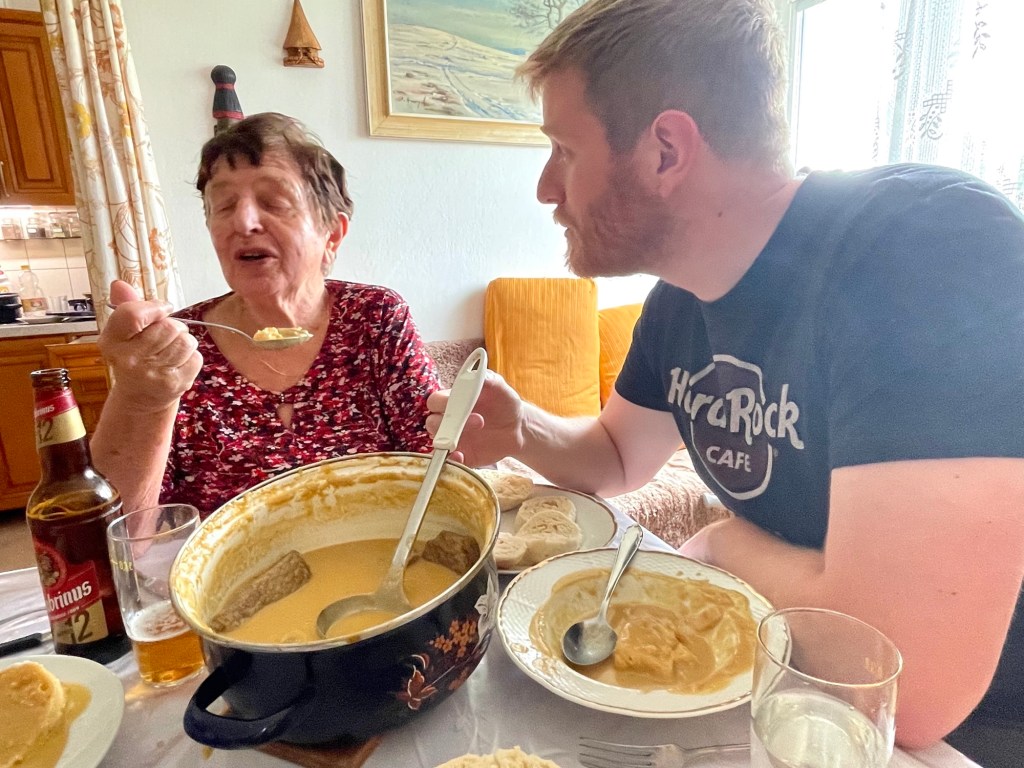
This is Toby’s babička’s (grandmother’s) version of a svíčkova. It’s his all time favourite Czech dish – and I can see why! In its simplest terms, svíčkova is a steak dish served with knedlíky (Czech bread dumplings) and…

What is Svíčkova?

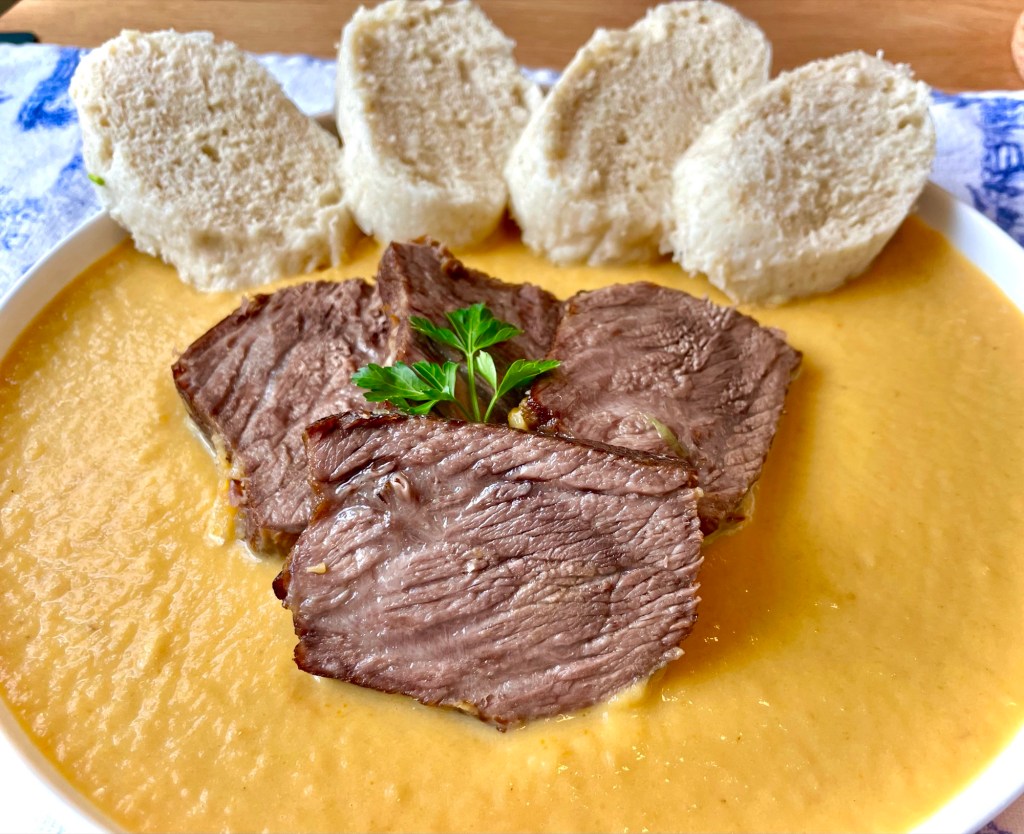
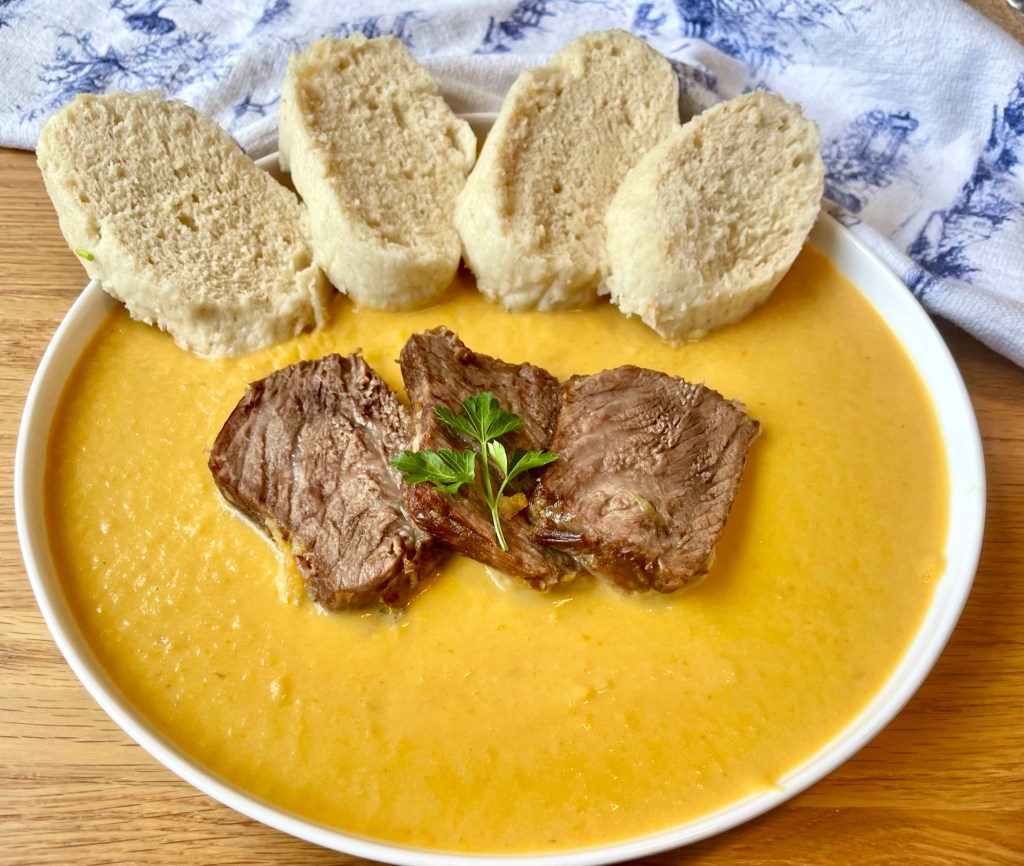
Svíčkova is one of Czech’s most popular dishes. In its simplest terms, svíčkova is a steak dish served with knedlíky (Czech bread dumplings) and smothered in the most addicting creamy vegetable sauce made of parsnip, celeriac, carrots and onion. There’s a slight lemon-y tang to the sauce that balances out the heaviness of the cream.

The sauce is the star of the show and is meant to be on the runny side, rather than a thick gravy. I’m always so tempted to serve this as a soup in itself if it wasn’t so rich 😅.

Here are two recipes for knedliky – one is a flour/bread base (houskové knedlíky) and the other is a denser potato base (bramborové knedlíky). Svíčkova is usually served with the flour based dumplings.

Anyways, without further ado, here’s the recipe! If you have any comments or suggestions, I’d love to hear from you in the comment section! You can follow me on instagram, youtube and facebook to see all the recipes I post!

Happy cooking!

Ingredients you’ll need:

  • 600g good quality beef/steak (ie scotch fillet, eye fillet, rump steak, chuck steak – pick one with less tendon and more fat)
  • 2 Tbsps (50g) + 1 Tbsp (25g) + 25g lard
  • 2 medium onions (~3 cups), diced
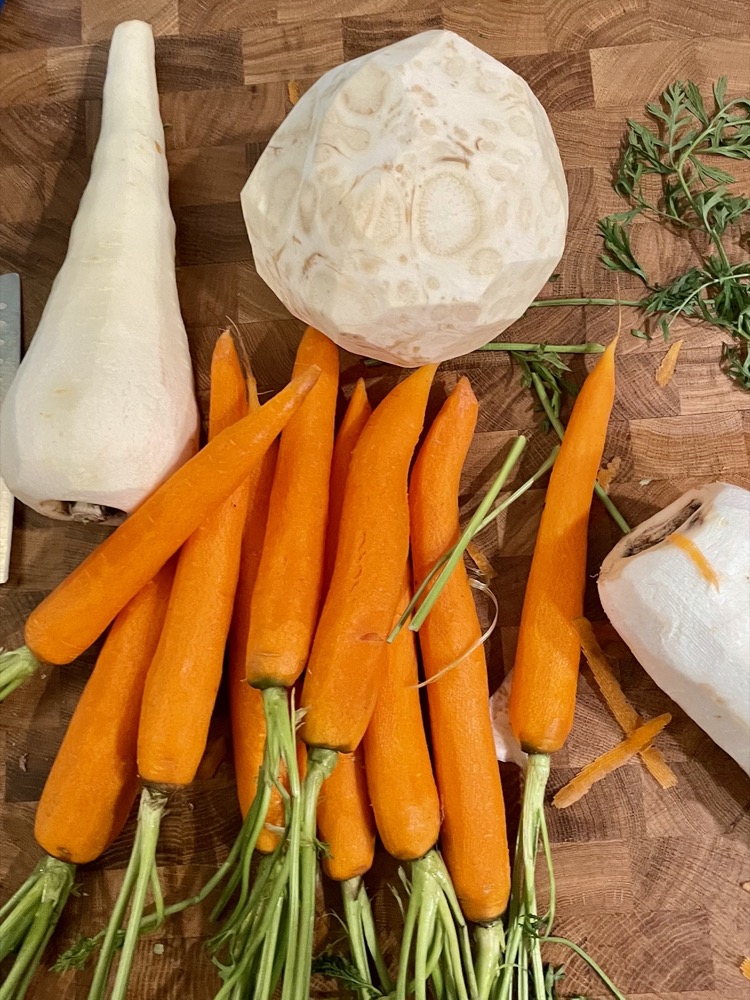
  • 1 whole celeriac (~3 cups), peeled and grated
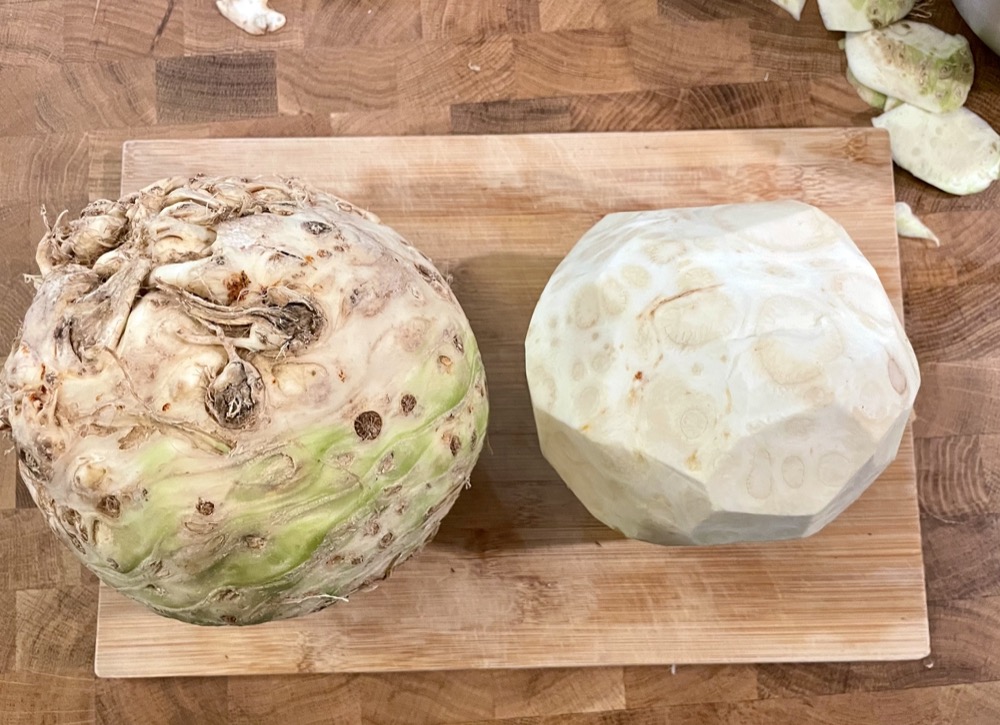
    • Celeriac can come in a wide variety of sizes. The one we got was roughly bigger than a baseball: 370g before peeling and 300g after peeling which came up to about 3 cups once grated. When grating, shave away at the skin until the celeriac is completely white.
  • 2 medium sized parsnips (~3 cups), peeled and grated
  • 3 large carrots (~3 cups), peeled and grated
  • 4 cups (1 litre) beef stock
  • 10 whole black peppercorns
  • 10 whole dried allspice berries
  • 4 dried bay leaves
  • 1 tsp salt
  • 1 tsp ground black pepper
  • 200ml thickened/heavy cream
  • 2 Tbsps lemon juice (or more to taste)
  • Serve with:
    • Knedlíky (Czech bread dumplings)
    • Wedges of lemon
    • Cranberry sauce
    • Whipped cream

Directions:

A quick note about preparing the vegetables:

  • The exact amount and size of vegetables aren’t important, as long as you roughly have equal amounts of the celeriac, parsnip, and carrots.
  • Celeriac is a root vegetable and comes in a variety of sizes and is essentially a starchy celery. It’s got a green and white rough and wrinkly exterior that you want to remove by trimming it off with a knife until you get to the softer inside and the entire celeriac is white.
  • After you’ve peeled the vegetables, you can either dice them into small cubes, or the quickest way is to grate them in a food processor.

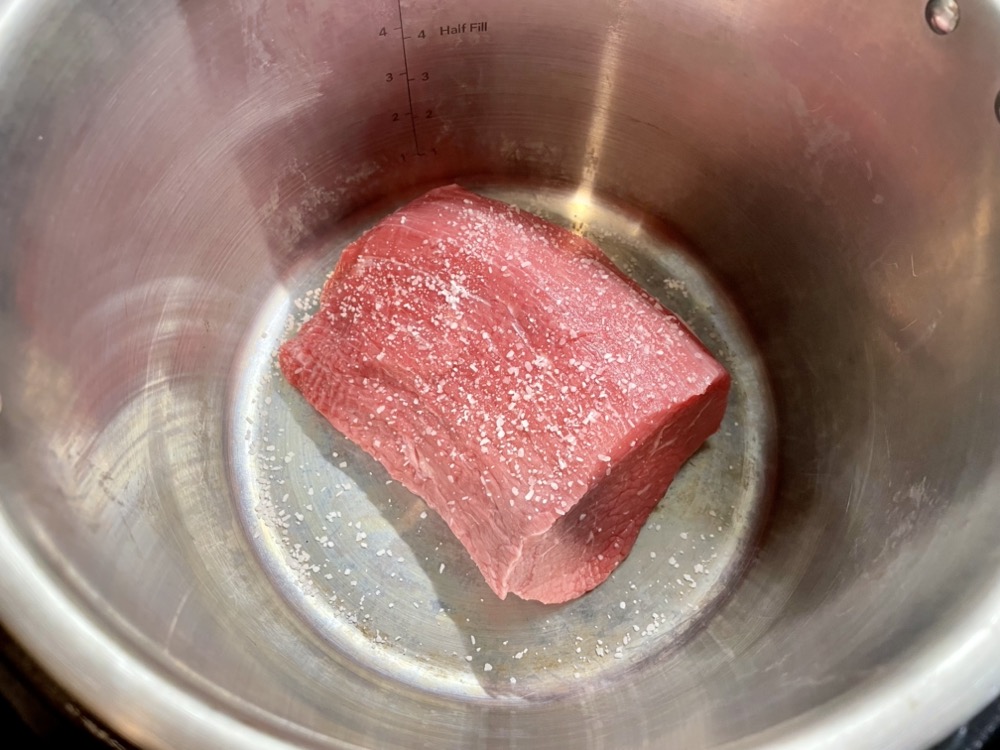
Rinse and pat dry the beef and rub salt and pepper on all sides and let it sit at room temperature for 20 mins.

(If you haven’t already, you can make the knedlíky dough in this time and while it proofs for an hour you can continue making the svíčková.)

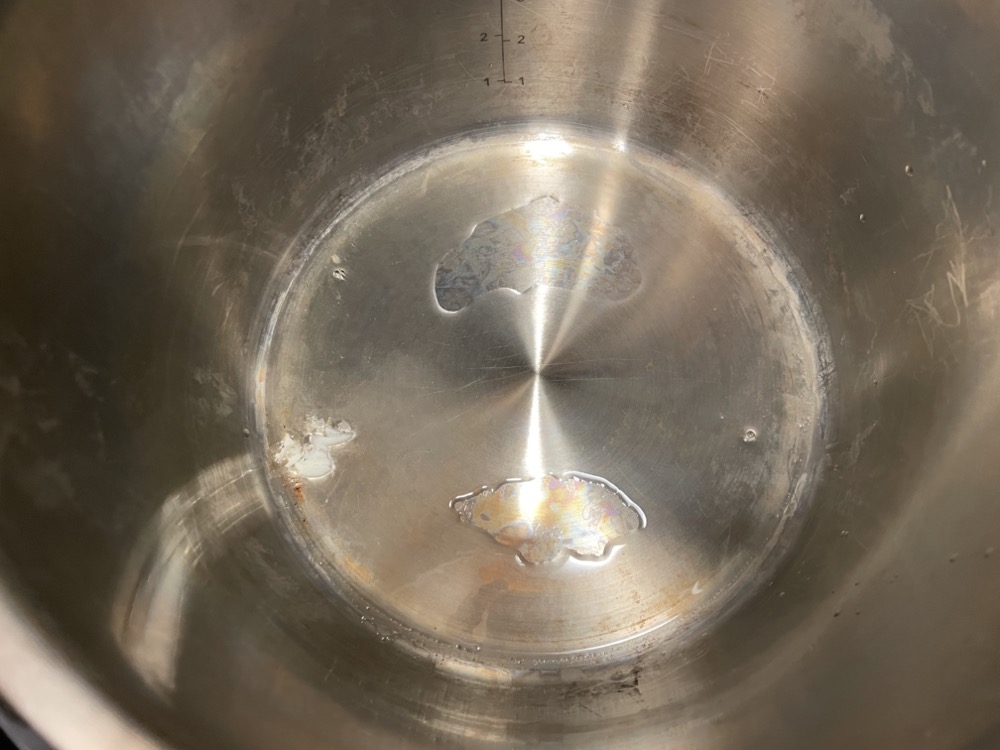
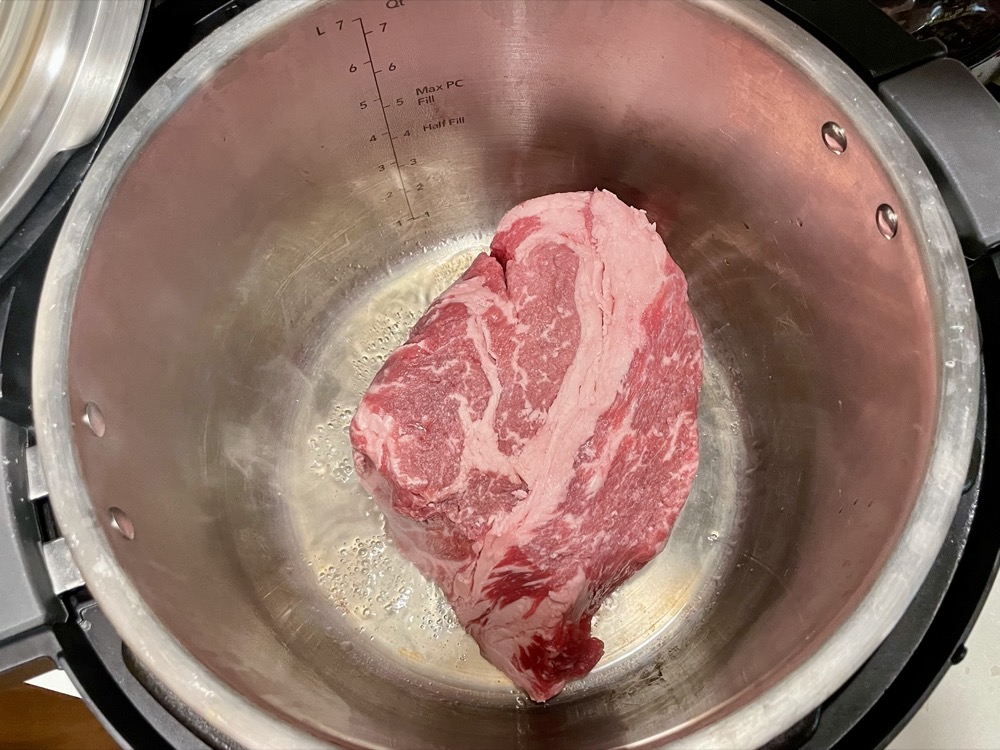
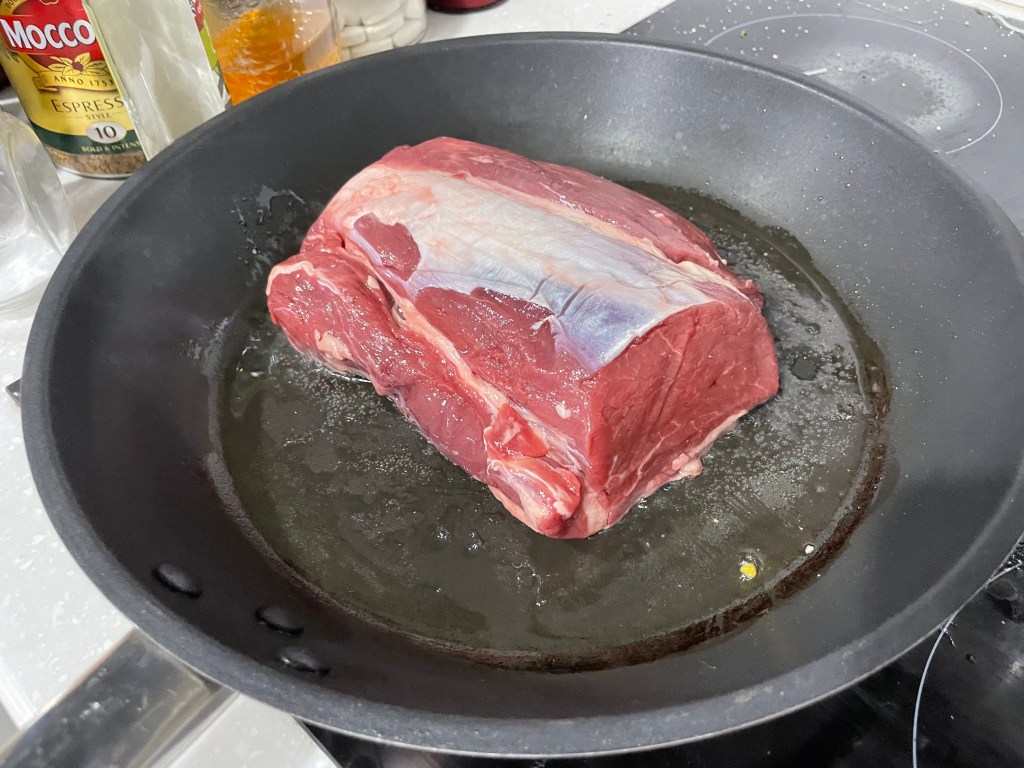
In your instant pot on the SAUTÉ setting, set the heat to HIGH and melt 2 Tbsps of lard. When the pot is hot, add in the beef and sear on all 4 sides until browned (roughly 90 seconds on each side). Remove the beef and set it aside on a plate.

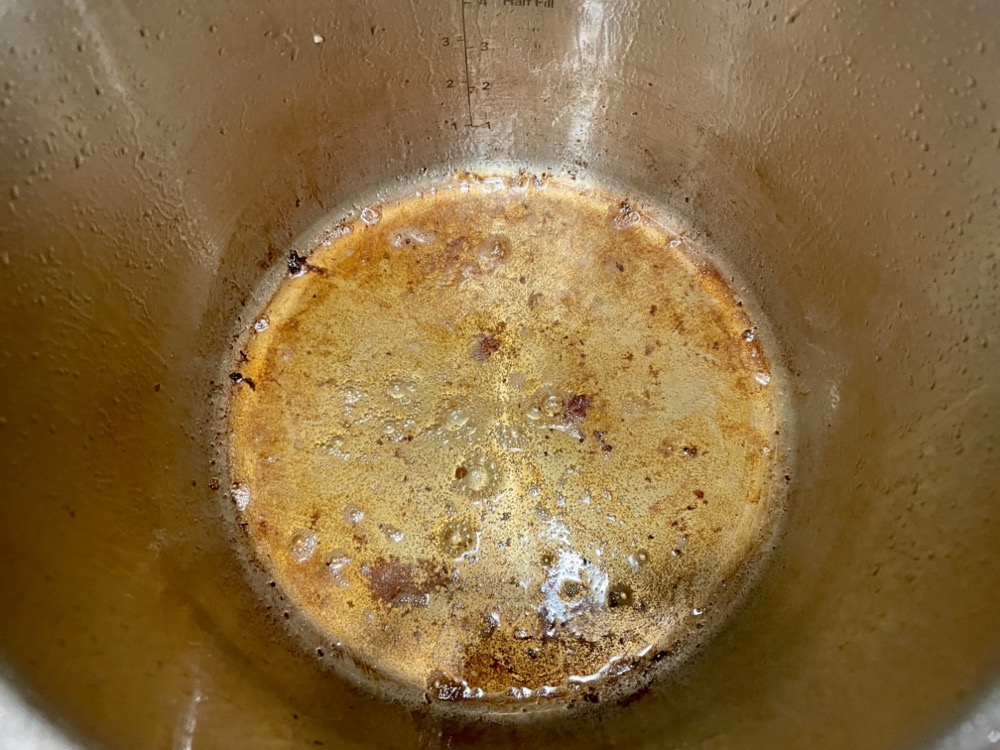
Turn the heat down to MED-HIGH and add in the diced onions. Sauté the onions until lightly browned and translucent (3-4 mins), making sure to scrape any brown bits that may be stuck on the bottom of the pot from the beef.

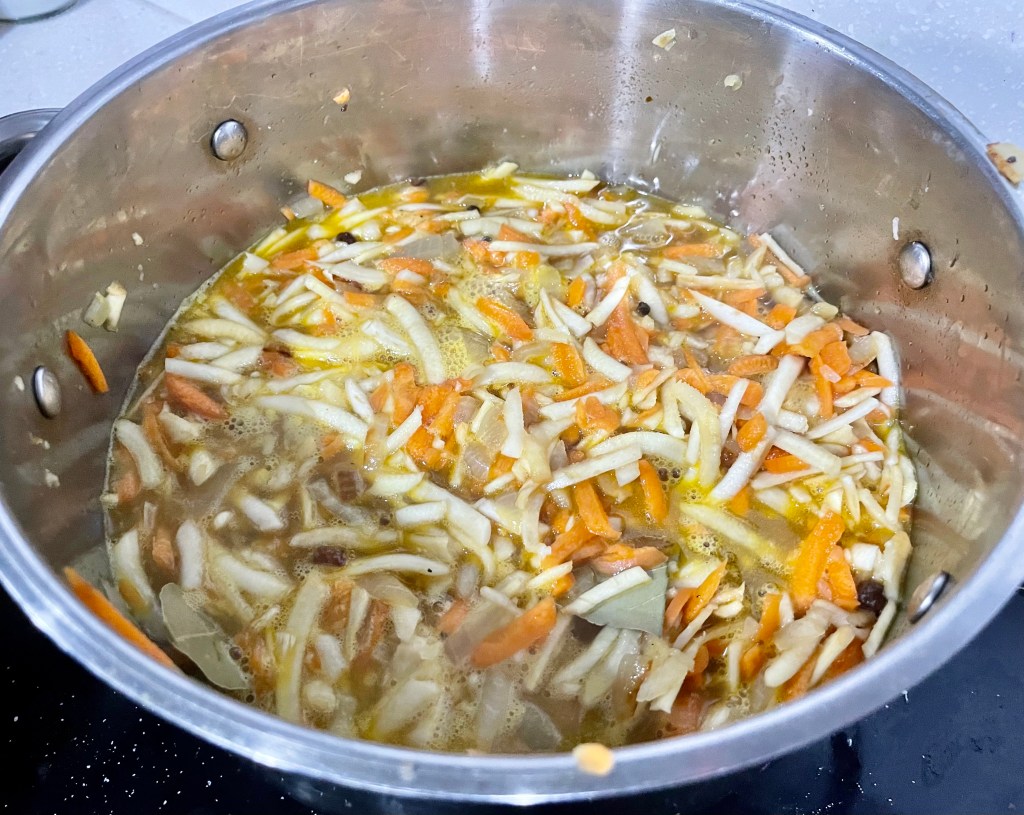
Next, add in the grated celeriac, parsnip, carrots, and another 1 Tbsp of lard into the vegetables and mix it around (the extra lard prevents them from burning). Sauté until the vegetables begin to soften (4-5 mins).

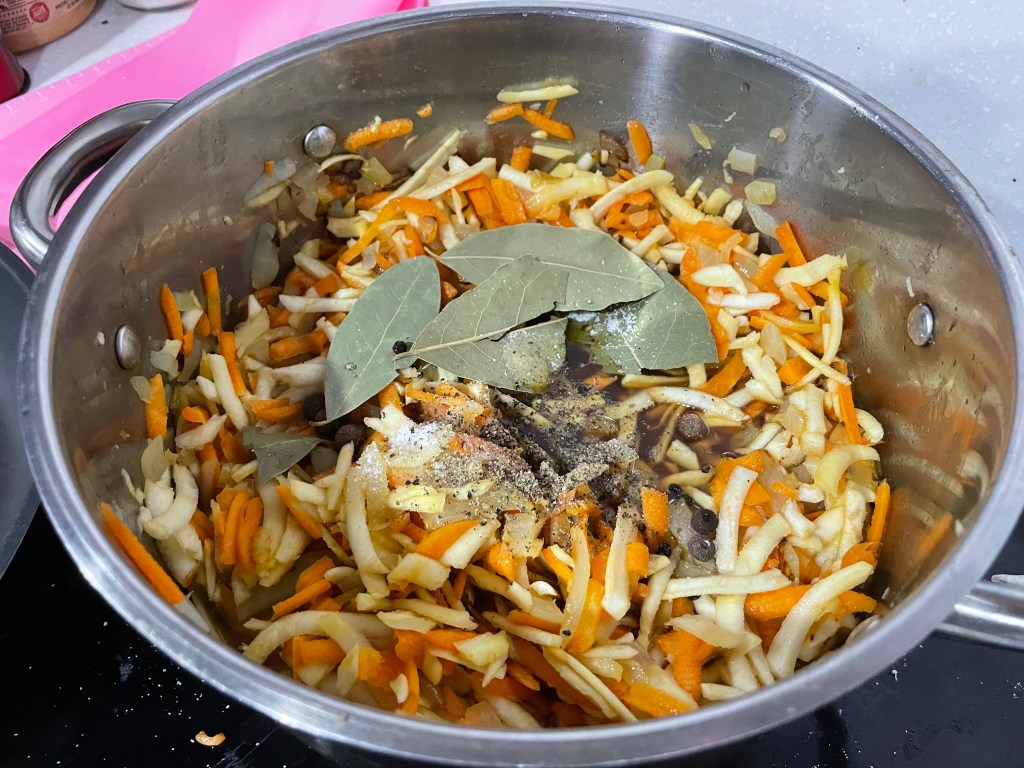
Once the vegetables begin to soften, add in the 4 cups of beef stock, 10 black peppercorns, 10 allspice berries, 4 bay leaves, 1 tsp salt and 1 tsp pepper. Make sure you COUNT the number of peppercorns and allspice berries you add in because you’ll have to take them out later. Let the mixture come to a simmer then cancel the SAUTÉ setting and put the Instant Pot lid on. Set the Instant Pot to pressure cook on HIGH for 5 minutes.

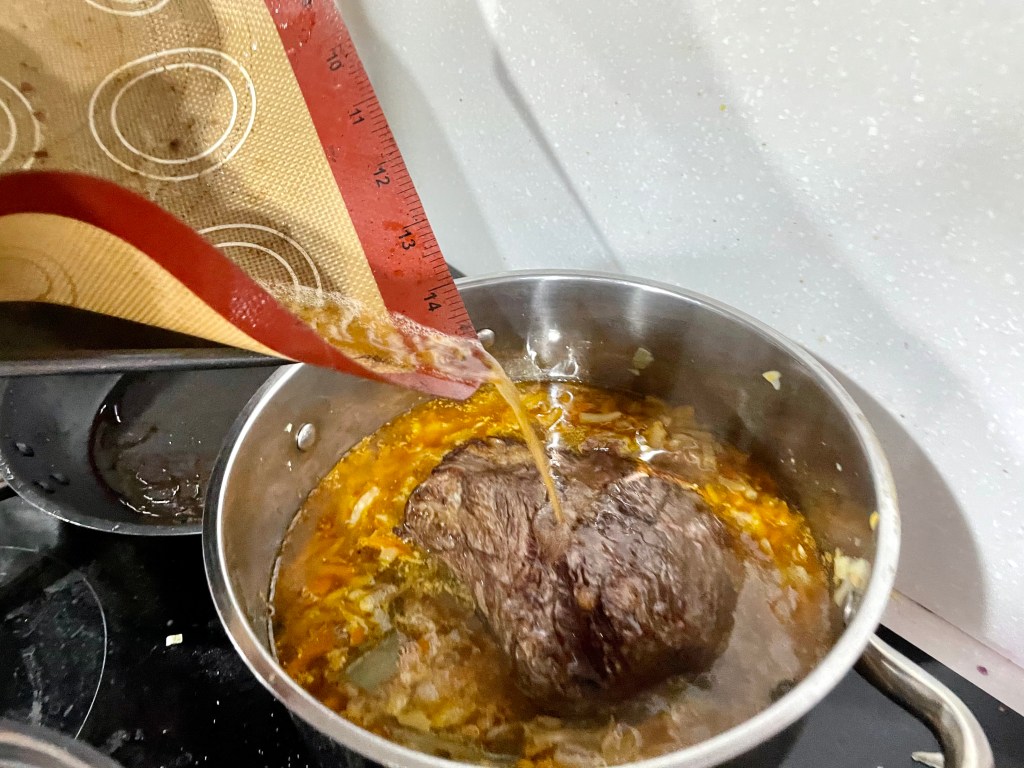
Once the timer is up, carefully release the pressure valve and when safe, remove the lid, stir the vegetables around, then add in the seared beef (from step 2) into the middle of the pot, submerging it in the liquid. Set the Instant Pot to pressure cook on HIGH for 35 minutes.

(You can take this time to cook the knedlíky if you haven’t already.)

Once the timer is up, carefully release the pressure valve and when safe, remove the lid. Take out the beef and put it into a bowl and cover to keep warm until ready to slice.

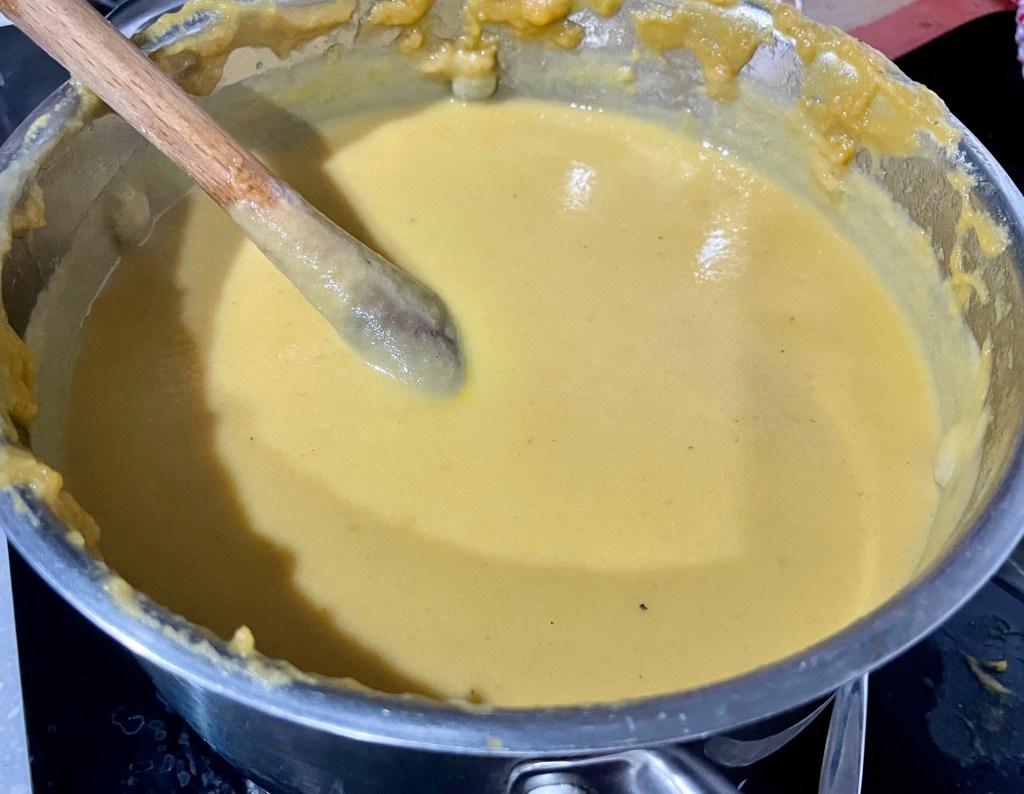
Remove and discard all the bay leaves, allspice berries and black peppercorns (this part is tedious). Once all the spices are removed, use an immersion/stick blender and blend the remaining vegetables in the broth until you get a smooth creamy texture. You can also blend this in a blender for an even smoother sauce.

Add the thickened cream and lemon juice and mix. Adjust salt and pepper to taste. When ready to serve, slice the beef. If your beef has gone a little cold, place it back into the sauce to warm it up and then slice.

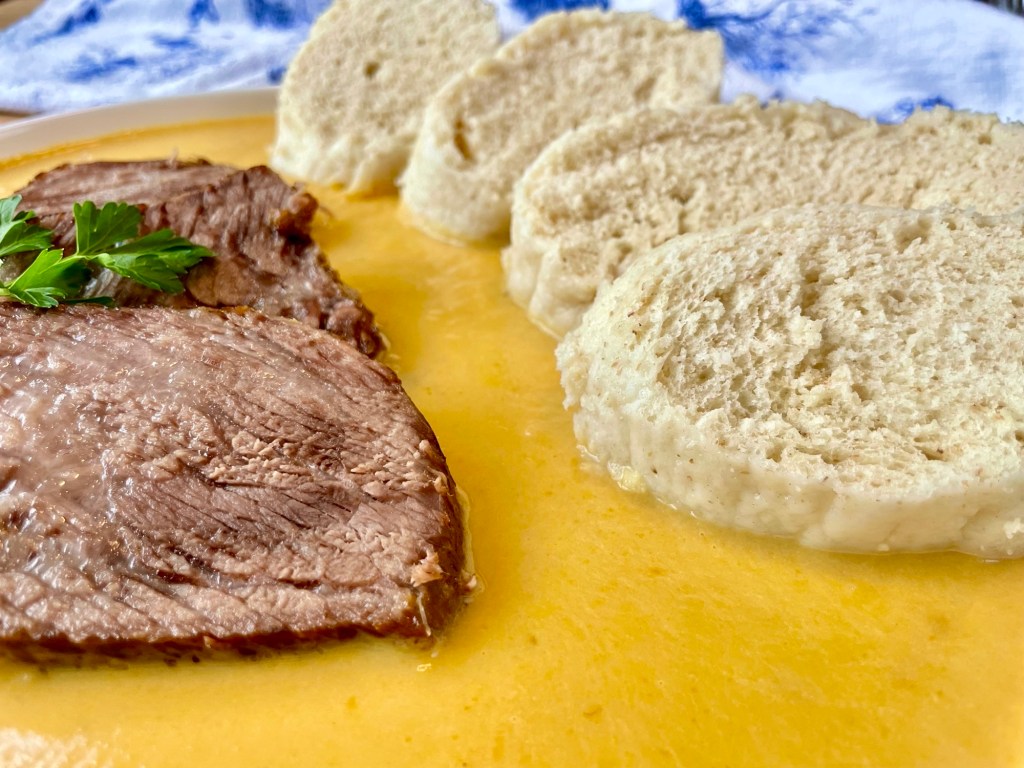
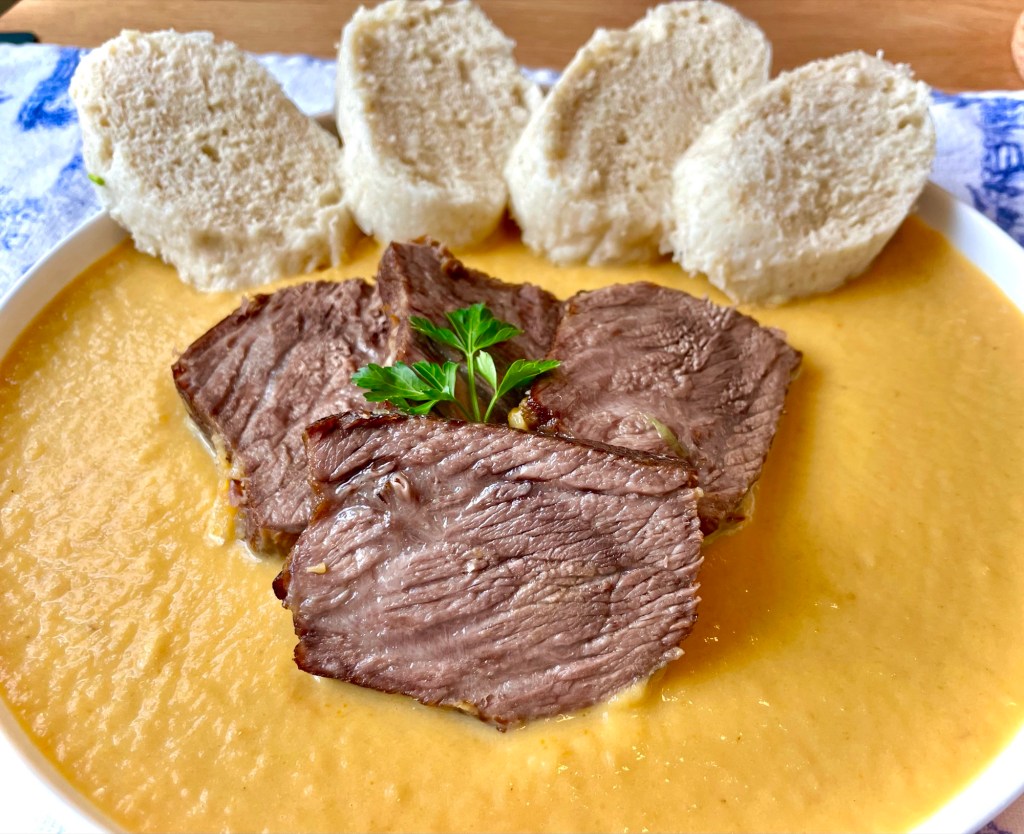
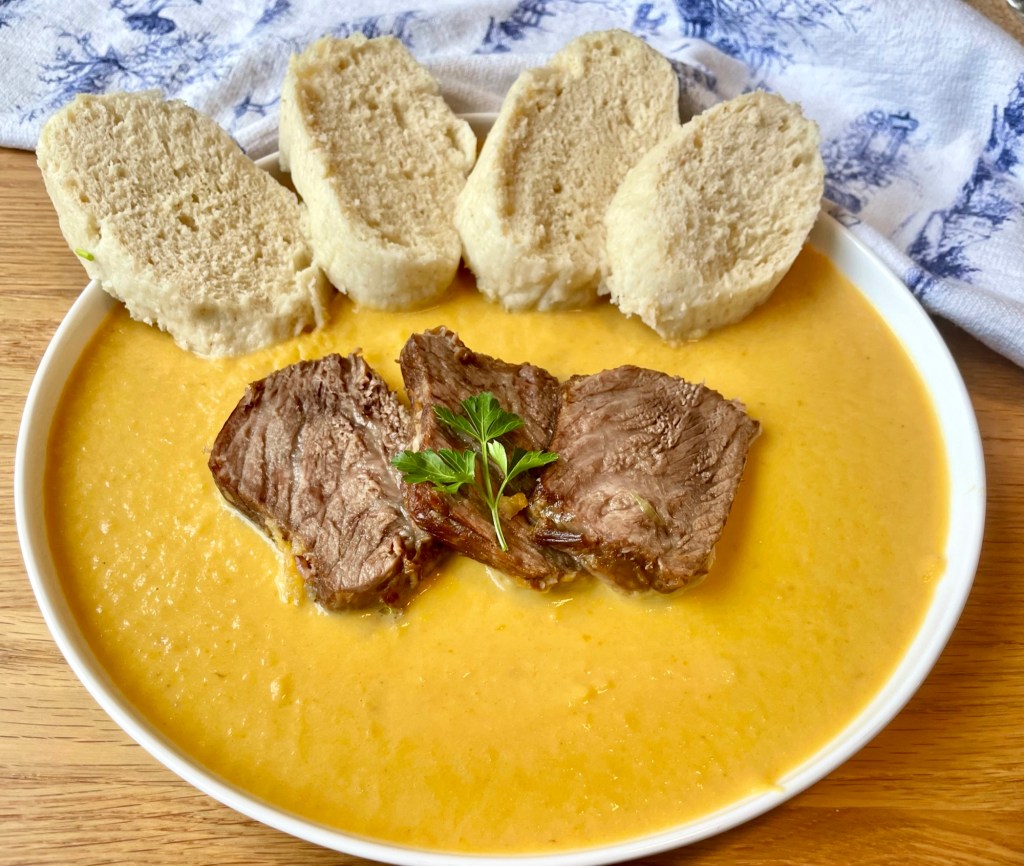
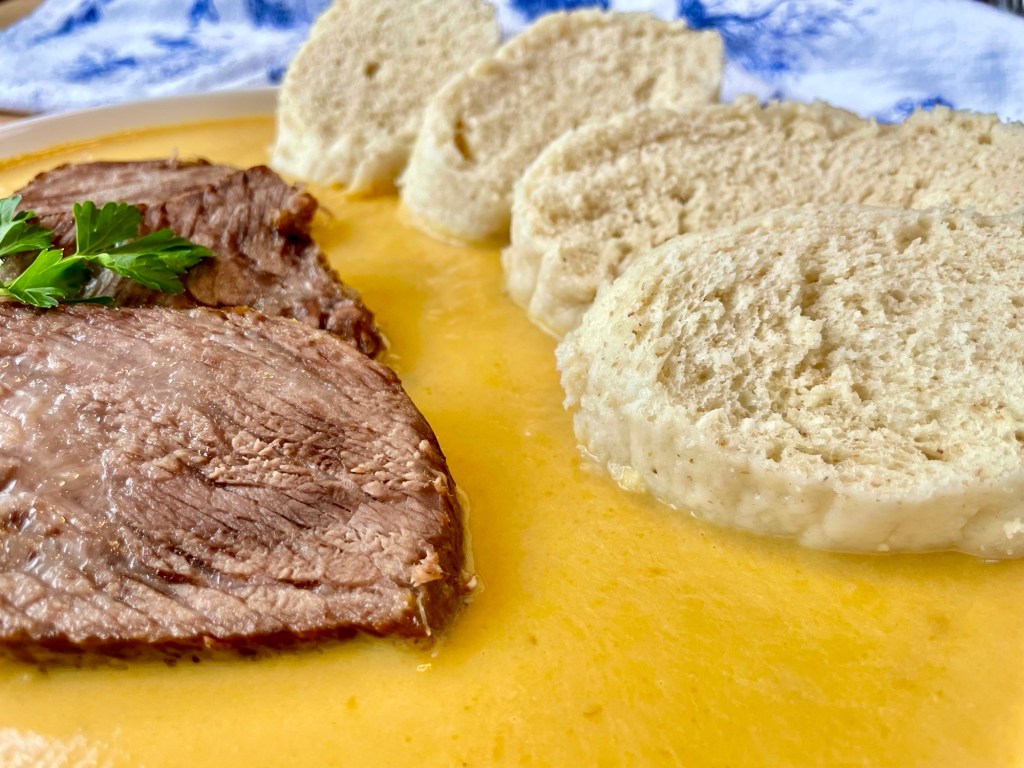
To plate traditionally when serving: Place a ladle of the sauce on a dinner plate, ensuring the sauce covers the entirety of the bottom of the plate, then top with a few slices of the beef in the centre and fan out a few slices of knedlíky (Czech bread dumplings) on one side. You can top it with a spoonful of cranberry sauce, a dollop of whipped cream, and a wedge of lemon. Enjoy!

Summarized Recipe:

Instant Pot Svíčková – a Shortcut to Babička’s Classic Beef with Vegetable Cream Sauce

Date Published: Dec 23rd, 2024 | Last Updated: Dec 23rd, 2024
Author: Abby |Category: mains, Czech
Serves: 4 | Prep time: 40 mins | Cook time: 1 hour

Ingredients:

  • 600g good quality beef/steak (ie scotch fillet, eye fillet, rump steak, chuck steak – pick one with less tendon and more fat)
  • 2 Tbsps (50g) + 1 Tbsp (25g) + 25g lard
  • 2 medium onions (~3 cups), diced
  • 1 whole celeriac (~3 cups), peeled and grated
    • Celeriac can come in a wide variety of sizes. The one we got was roughly bigger than a baseball: 370g before peeling and 300g after peeling which came up to about 3 cups once grated. When grating, shave away at the skin until the celeriac is completely white.
  • 2 medium sized parsnips (~3 cups), peeled and grated
  • 3 large carrots (~3 cups), peeled and grated
  • 4 cups (1 litre) beef stock
  • 10 whole black peppercorns
  • 10 whole dried allspice berries
  • 4 dried bay leaves
  • 1 tsp salt
  • 1 tsp ground black pepper
  • 200ml thickened/heavy cream
  • 2 Tbsps lemon juice (or more to taste)
  • Serve with:
    • Knedlíky (Czech bread dumplings)
    • Wedges of lemon
    • Cranberry sauce
    • Whipped cream

Directions:

  1. Rinse and pat dry the beef and rub salt and pepper on all sides and let it sit at room temperature for 20 mins.
    • (If you haven’t already, you can make the knedlíky dough in this time and while it proofs for an hour you can continue making the svíčková.)
  2. In your instant pot on the SAUTÉ setting, set the heat to HIGH and melt 2 Tbsps of lard. When the pot is hot, add in the beef and sear on all 4 sides until browned (roughly 90 seconds on each side). Remove the beef and set it aside on a plate.
  3. Turn the heat down to MED-HIGH and add in the diced onions. Sauté the onions until lightly browned and translucent (3-4 mins), making sure to scrape any brown bits that may be stuck on the bottom of the pot from the beef.
  4. Next, add in the grated celeriac, parsnip, carrots, and another 1 Tbsp of lard into the vegetables and mix it around (the extra lard prevents them from burning). Sauté until the vegetables begin to soften (4-5 mins).
  5. Once the vegetables begin to soften, add in the 4 cups of beef stock, 10 black peppercorns, 10 allspice berries, 4 bay leaves, 1 tsp salt and 1 tsp pepper. Make sure you COUNT the number of peppercorns and allspice berries you add in because you’ll have to take them out later. Let the mixture come to a simmer then cancel the SAUTÉ setting and put the Instant Pot lid on. Set the Instant Pot to pressure cook on HIGH for 5 minutes.
  6. Once the timer is up, carefully release the pressure valve and when safe, remove the lid, stir the vegetables around, then add in the seared beef (from step 2) into the middle of the pot, submerging it in the liquid. Set the Instant Pot to pressure cook on HIGH for 35 minutes.
    • (You can take this time to cook the knedlíky if you haven’t already.)
  7. Once the timer is up, carefully release the pressure valve and when safe, remove the lid. Take out the beef and put it into a bowl and cover to keep warm until ready to slice.
  8. Remove and discard all the bay leaves, allspice berries and black peppercorns (this part is tedious). Once all the spices are removed, use an immersion/stick blender and blend the remaining vegetables in the broth until you get a smooth creamy texture. You can also blend this in a blender for an even smoother sauce.
  9. Add the thickened cream and lemon juice and mix. Adjust salt and pepper to taste. When ready to serve, slice the beef. If your beef has gone a little cold, place it back into the sauce to warm it up and then slice.
  10. To plate traditionally when serving: Place a ladle of the sauce on a dinner plate, ensuring the sauce covers the entirety of the bottom of the plate, then top with a few slices of the beef in the centre and fan out a few slices of knedlíky (Czech bread dumplings) on one side. You can top it with a spoonful of cranberry sauce, a dollop of whipped cream, and a wedge of lemon. Enjoy!

Czech Tomato Gravy (over Sliced Beef) – Rajská Omáčka


Date Published: May 28th, 2024 | Last Updated: May 28th, 2024
Author: Abby |Category: mains, Czech, easy
Serves: 4 | Prep time: 15 mins | Cook time: 45 mins

Jump to recipe |

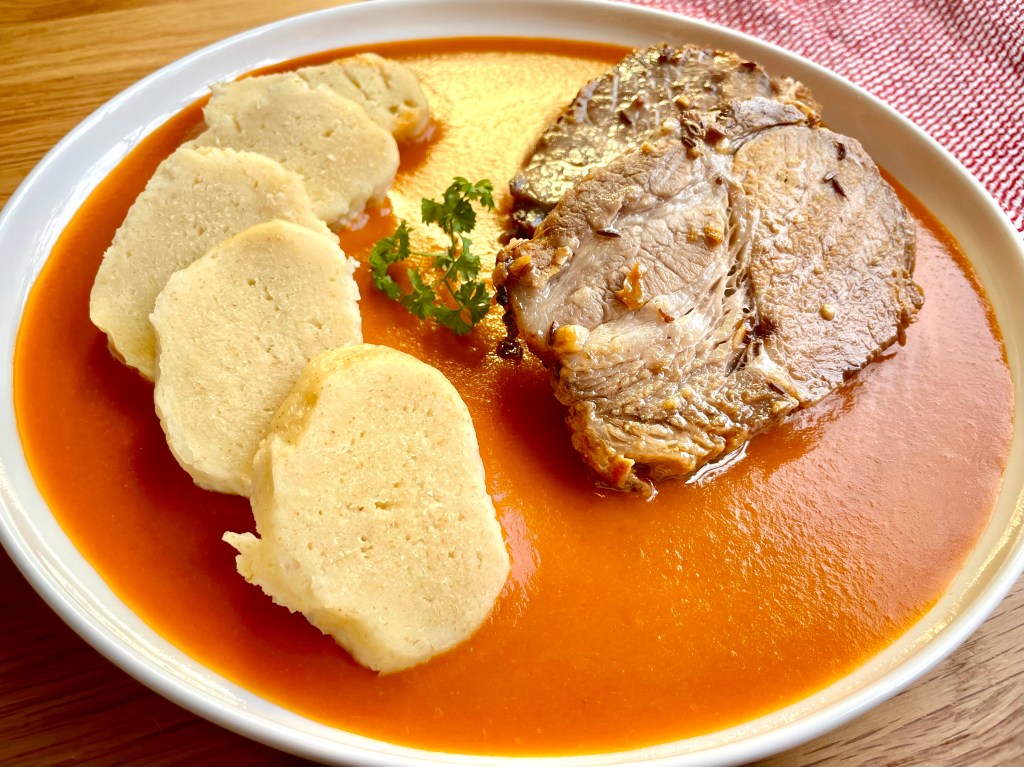
I’m told that “Rajská Omáčka” (pronounced: rays-ka oma-ch-ka) directly translates to “tomato sauce”. This is one of Toby’s childhood dishes that his grandmother used to make him. Every time he says it, all I hear is “racecar” 😅. To me, this sauce pretty much tastes like a tomato soup without the herbs, but it’s served over slices of beef or pork and some knedliky (Czech dumplings – potato or bread). There are other versions of this sauce that vary in tartness and sweetness (like my original attempts), but I’ve written this recipe to be as similar to babička’s as possible.

You have no idea how hard it is to get a picture of babička standing still and smiling 😅

To be honest, this is not my favourite dish, but its got nostalgic value for Toby so I set out to try and make it for him. After a couple of attempts from online and cookbook recipes, he said it “just wasn’t like babička’s” but he couldn’t tell me what was wrong with it 😒. So I put it on the back burner up until our recent trip to Czech a couple weeks ago and we asked babička to show us how she makes it. Her version was a little less tomato-y than the versions I made and although it’s still not my favourite dish, seeing Toby’s happy face slurping down his second helping of the tomato sauce was enough reason for me to add this recipe to the collection.

This recipe is easy and cooks up quickly. You can pair the sauce with whatever meat you wish including a vepro, but for a quick lunch or dinner with minimal effort, I’ve included the instructions to cook a rump roast in a pressure cooker in 30 minutes and it’ll be ready around the same time as the sauce.

Anyways, without further ado, here’s the recipe! If you have any comments or suggestions, I’d love to hear from you in the comment section! You can follow me on instagram, youtube and facebook to see all the recipes I post!

Happy cooking!

Recipes that pair well together with this sauce:

Ingredients you’ll need:

  • Beef:
    • 900g (2 lbs) rump roast/chuck steak
    • 1/2 Tbsp salt
    • Enough water to cover the beef
  • Sauce:
    • 1 Tbsp pork lard
    • 2 medium (~800g) onions, diced
    • 1 large can (793g/28oz) diced tomatoes
    • 1/4 cup all-purpose flour
    • 4 cups (1L) beef broth
    • 1 tsp salt
    • 1.5 Tbsps granulated sugar
    • 5 black peppercorns
    • 3 allspice berries
    • 2 bay leaves
    • 2-4 Tbsps heavy cream (to taste)
  • To serve: with slices of knedliky/Czech dumplings (potato or bread)

Directions:

A. Cook the beef: in a pressure cooker/instant pot: *This step is optional. You can serve this tomato sauce with whatever type of meat you like, but if you’re looking for a quick cooked beef, the instant pot will be the fastest.

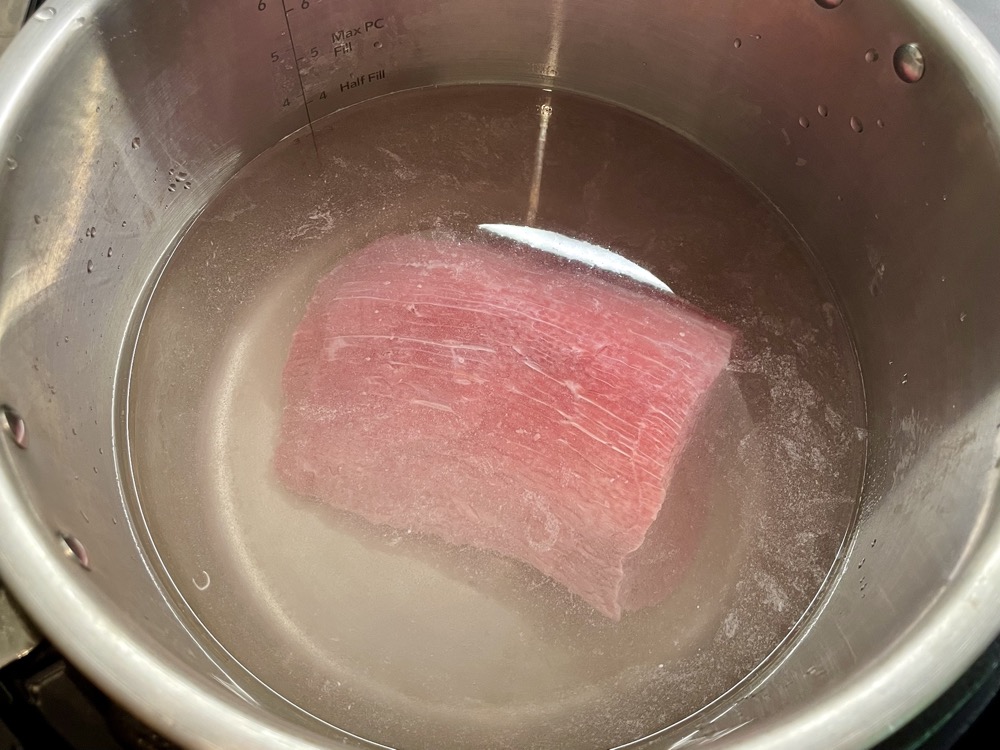
Add the beef, salt and enough water to cover the meat. Put the lid on and cook on HIGH PRESSURE for 30 minutes, then quick release. Remove the beef from the liquid and let it rest for 10 mins before slicing.

  • Alternatively if you don’t have a pressure cooker, you can boil the beef in water over the stove until the beef is tender. This will take about 2 hours.

B. Make the sauce while the beef is cooking:

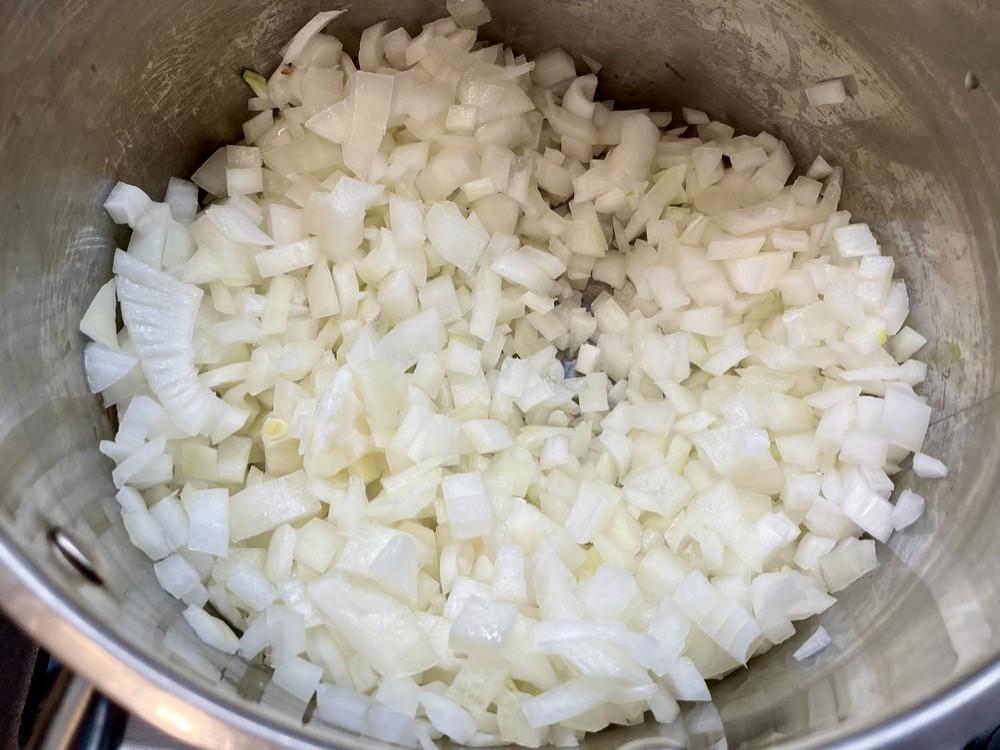
In a small pot on MED-HIGH heat, melt the pork lard and sauté the onions for 5-8 minutes until softened.
Add the salt, sugar, black peppercorns, allspice berries, and bay leaves. Stir for 2 mins until the sugar has fully dissolved.

Next, add in the flour and stir for 2 minutes until well incorporated and the flour cooks a little. Make sure to scrape the bottom of the pan so nothing sticks.

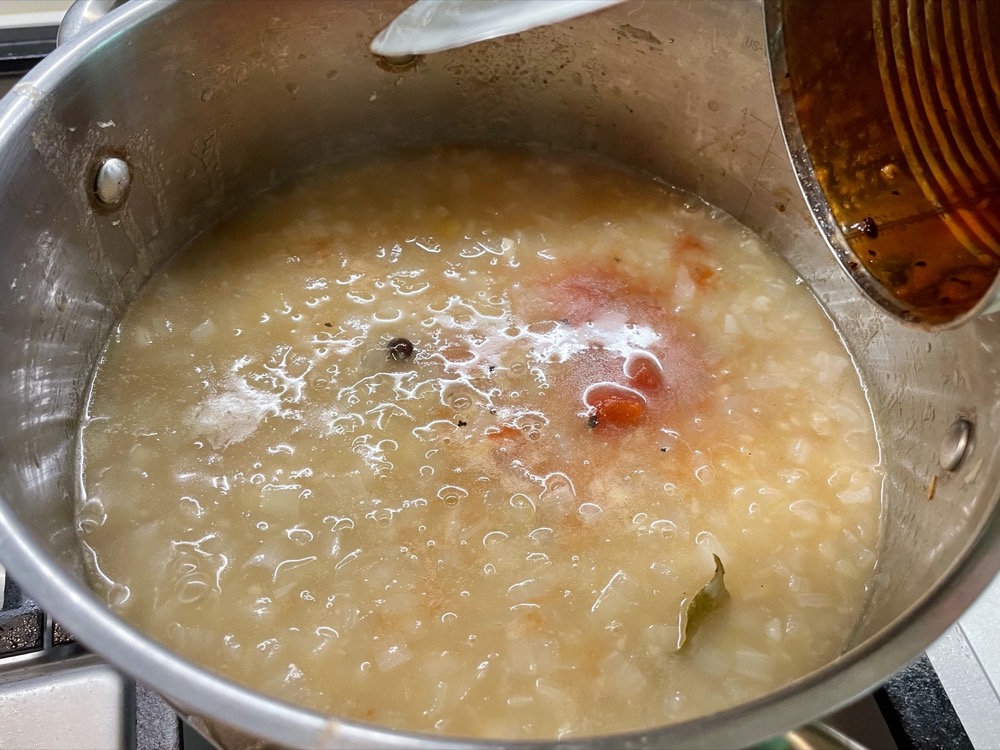
Pour in the beef broth and stir everything together. Bring the heat up to HIGH to let it come to a boil then back down to MED heat and let it boil for 8-10 minutes until the sauce thickens into a gravy-like consistency.

Once it has thickened, pour in the can of diced tomatoes including all of the liquid. Bring the sauce to a boil again, then simmer on MED heat for 20 minutes.

Note: Make sure to stir and scrape the bottom of the pot every few minutes so nothing sticks to the bottom.

After 20 minutes, turn off the heat and discard the bay leaves and all spice berries.

Next, use a stick blender (or transfer the sauce to a blender) and blend the sauce until you get a smooth texture. If you want an extra smooth sauce, strain it through a fine sieve.

Add 2 Tbsps of heavy cream then taste and adjust salt, sugar, or more heavy cream as needed. (Babička will sometimes add in some ketchup if she wants it more tart and tomato-y 🤫.)

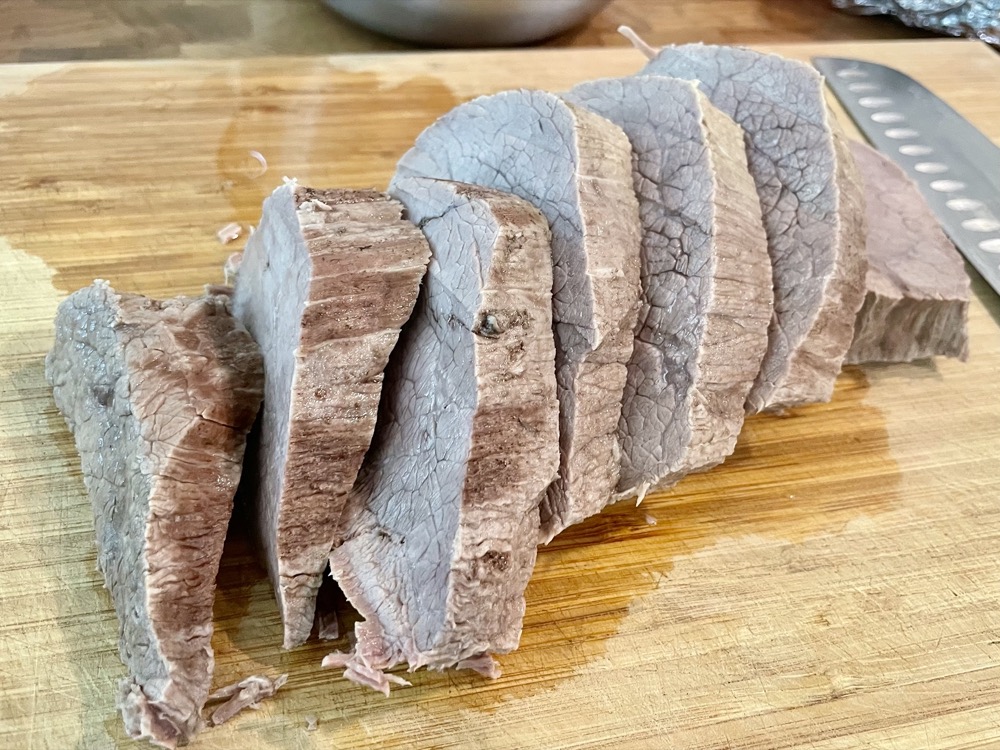
Serve the sauce ladled over the cooked sliced beef and a few knedliky. Enjoy!

Summarized Recipe:

Czech Tomato Gravy (over Sliced Beef) – Rajská Omáčka

Date Published: May 28th, 2024 | Last Updated: May 28th, 2024
Author: Abby |Category: mains, Czech, easy
Serves: 4 | Prep time: 15 mins | Cook time: 45 mins

Ingredients:

  • Beef:
    • 900g (2 lbs) rump roast/chuck steak
    • 1/2 Tbsp salt
    • Enough water to cover the beef
  • Sauce:
    • 1 Tbsp pork lard
    • 2 medium (~800g) onions, diced
    • 1 large can (793g/28oz) diced tomatoes
    • 1/4 cup all-purpose flour
    • 4 cups (1L) beef broth
    • 1 tsp salt
    • 1.5 Tbsps granulated sugar
    • 5 black peppercorns
    • 3 allspice berries
    • 2 bay leaves
    • 2-4 Tbsps heavy cream (to taste)
  • To serve: with slices of knedliky/Czech dumplings (potato or bread)

Directions:

A. Cook the beef: in a pressure cooker/instant pot: Add the beef, salt and enough water to cover the meat. Put the lid on and cook on HIGH PRESSURE for 30 minutes, then quick release. Remove the beef from the liquid and let it rest for 10 mins before slicing.

  • Alternatively if you don’t have a pressure cooker, you can boil the beef in water over the stove until the beef is tender. This will take about 2 hours.
  • *This step is optional. You can serve this tomato sauce with whatever type of meat you like, but if you’re looking for a quick cooked beef, the instant pot will be the fastest.

B. Make the sauce while the beef is cooking:

  1. In a small pot on MED-HIGH heat, melt the pork lard and sauté the onions for 5-8 minutes until softened.
  2. Add the salt, sugar, black peppercorns, allspice berries, and bay leaves. Stir for 2 mins until the sugar has fully dissolved.
  3. Next, add in the flour and stir for 2 minutes until well incorporated and the flour cooks a little. Make sure to scrape the bottom of the pan so nothing sticks.
  4. Pour in the beef broth and stir everything together. Bring the heat up to HIGH to let it come to a boil then back down to MED heat and let it boil for 8-10 minutes until the sauce thickens into a gravy-like consistency.
  5. Once it has thickened, pour in the can of diced tomatoes including all of the liquid. Bring the sauce to a boil again, then simmer on MED heat for 20 minutes.
    • Note: Make sure to stir and scrape the bottom of the pot every few minutes so nothing sticks to the bottom.
  6. After 20 minutes, turn off the heat and discard the bay leaves and all spice berries. Next, use a stick blender (or transfer the sauce to a blender) and blend the sauce until you get a smooth texture. If you want an extra smooth sauce, strain it through a fine sieve.
  7. Add 2 Tbsps of heavy cream then taste and adjust salt, sugar, or more heavy cream as needed. (Babička will sometimes add in some ketchup if she wants it more tart and tomato-y 🤫.)
    Serve the sauce ladled over the cooked sliced beef and a few knedliky. Enjoy!

Haluski – a yummy buttery cabbage & noodle dish


Date Published: April 16th, 2024 | Last Updated: April 16th, 2024
Author: Abby |Category: mains, easy, Czech, <30 mins
Serves: 4-6 | Prep time: 20 mins | Cook time: 30 mins

Jump to recipe |

I’ll be honest, I had never heard of Haluski before until one day I was googling recipes for inspiration on how to use up my week old leftover cabbage in the fridge, so there’s no heart felt nostalgia or travel memory associated with this dish to fill up this post. I simply saw it, tested a few recipes, and decided on this version that I’m sharing today because it’s tasty.

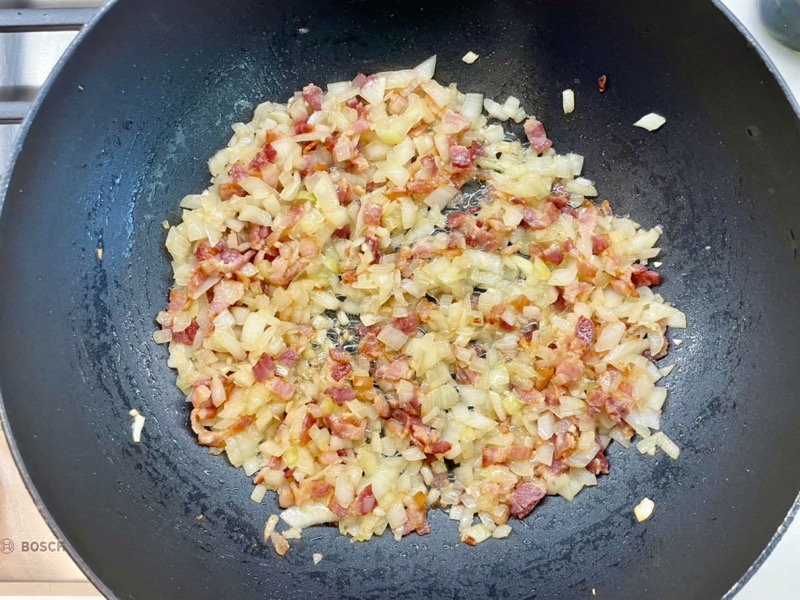
From my Google research, Haluski is a central/eastern European dish with arguable origins of either Poland, Solvakia, Hungary, or Ukraine – Toby thinks there’s even a Czech version too. It’s essentially bacon, onions, and cabbage cooked in butter and bacon fat, then mixed with fresh cooked egg noodles. It’s quick and easy, a little oily (from the butter and bacon fat), and definitely delicious. Give it a try!

Anyways, without further ado, here’s the recipe! If you have any comments or suggestions, I’d love to hear from you in the comment section! You can follow me on instagram, youtube and facebook to see all the recipes I post!

Happy cooking!

Ingredients you’ll need:

  • 3 Tbsps butter
  • 400g (~6 strips) of thick cut bacon, chopped
  • 1 large yellow onion, diced
  • 2 cloves garlic, minced
  • 1 med cabbage (~1kg), cored and diced
  • 4 portions (~10oz) of egg noodles – or alternatively nokedli
  • Fresh ground black pepper to taste
  • Kosher salt to taste

Directions:

In a large skillet on MED-HIGH heat, melt the butter until it starts to lightly brown – you’ll smell the aroma of brown butter.

Then add in the bacon and sauté until browned and lightly crispy.

Next, add the garlic and onions. Continue to cook for another 3-4 minutes until the onion is translucent and lightly browned.

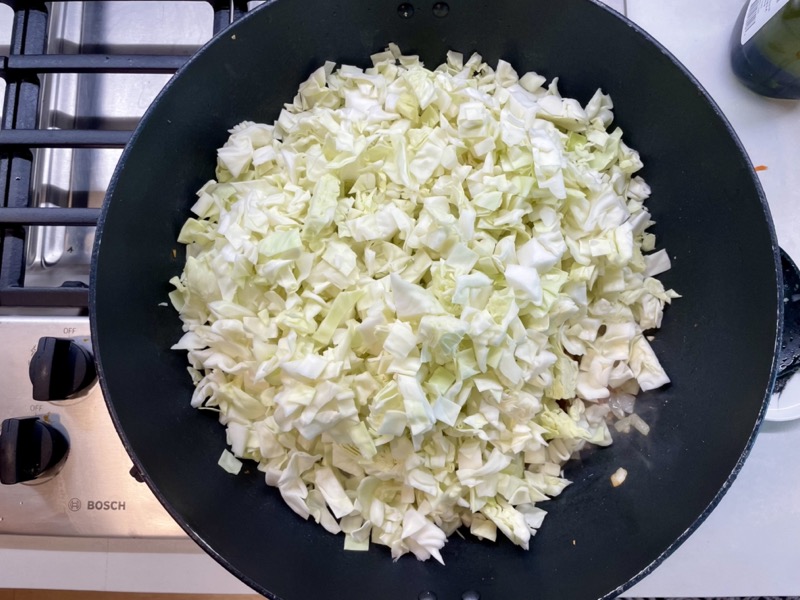
Next, add in the diced cabbage and sauté for 8-10 minutes until the cabbage has softened and lightly browned.

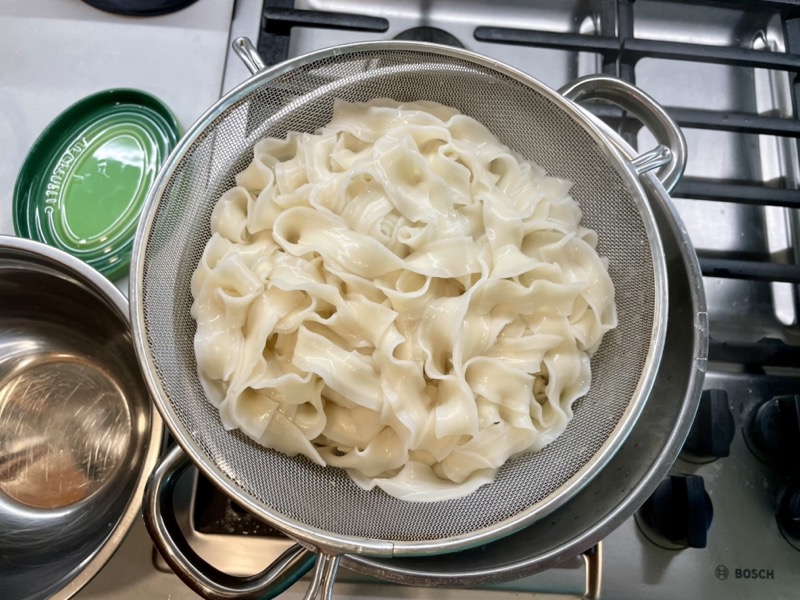
While the cabbage is cooking, cook the egg noodles in salted water according to package instructions. When cooked, drain and set aside.

Once the cabbage has cooked, add in the cooked egg noodles, freshly ground black pepper, and a big pinch of salt. Mix it around and taste to adjust salt as needed. Done!

Summarized Recipe:

Haluski – a yummy buttery cabbage & noodle dish

Date Published: April 16th, 2024 | Last Updated: April 16th, 2024
Author: Abby |Category: mains, easy, Czech, <30 mins
Serves: 4-6 | Prep time: 20 mins | Cook time: 30 mins

Ingredients:

  • 3 Tbsps butter
  • 400g (~6 strips) of thick cut bacon, chopped
  • 1 large yellow onion, diced
  • 2 cloves garlic, minced
  • 1 med cabbage (~1kg), cored and diced
  • 4 portions (~10oz) of egg noodles – or alternatively nokedli
  • Fresh ground black pepper to taste
  • Kosher salt to taste

Directions:

  1. In a large skillet on MED-HIGH heat, melt the butter until it starts to lightly brown – you’ll smell the aroma of brown butter, then add in the bacon. Sauté the bacon until browned and lightly crispy.
  2. Next, add the garlic and onions. Continue to cook for another 3-4 minutes until the onion is translucent and lightly browned.
  3. Next, add in the diced cabbage and sauté for 8-10 minutes until the cabbage has softened and lightly browned.
  4. While the cabbage is cooking, cook the egg noodles in salted water according to package instructions. When cooked, drain and set aside.
  5. Once the cabbage has cooked, add in the cooked egg noodles, freshly ground black pepper, and a big pinch of salt. Mix it around and taste to adjust salt as needed. Done!

Segedínský Guláš – Czech Pork Sauerkraut Goulash


Date Published: Feb 14th, 2024 | Last Updated: Feb 14th, 2024
Author: Abby |Category: Czech, easy, mains, soups
Serves: 4-6 | Prep time: 15 mins | Cook time: 1.5 hours

Jump to recipe |

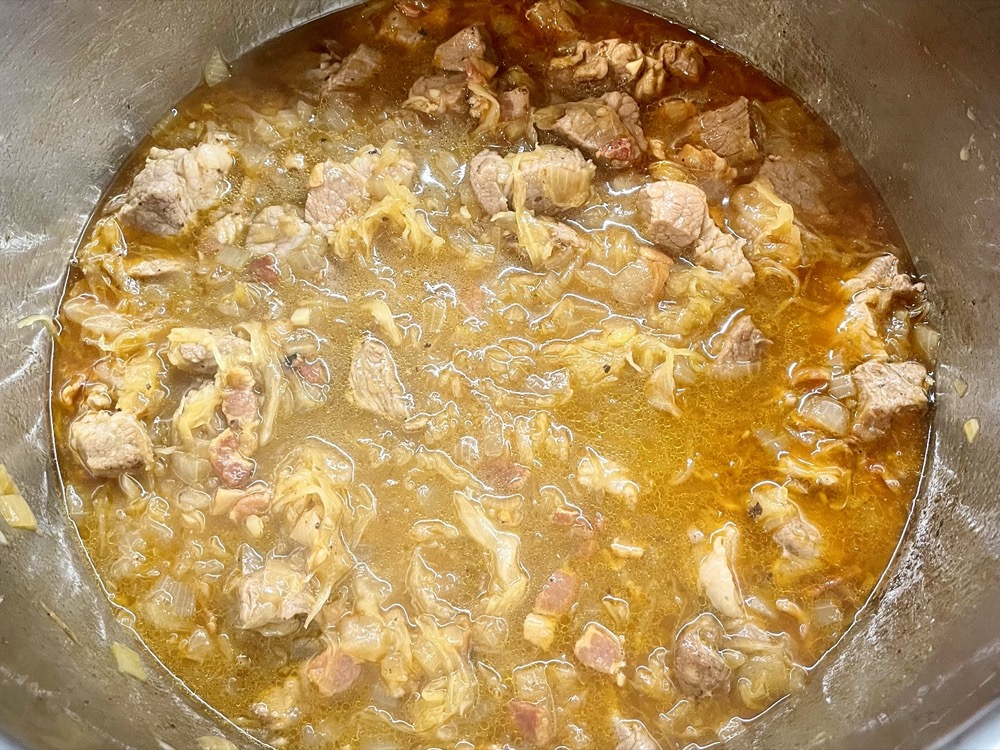
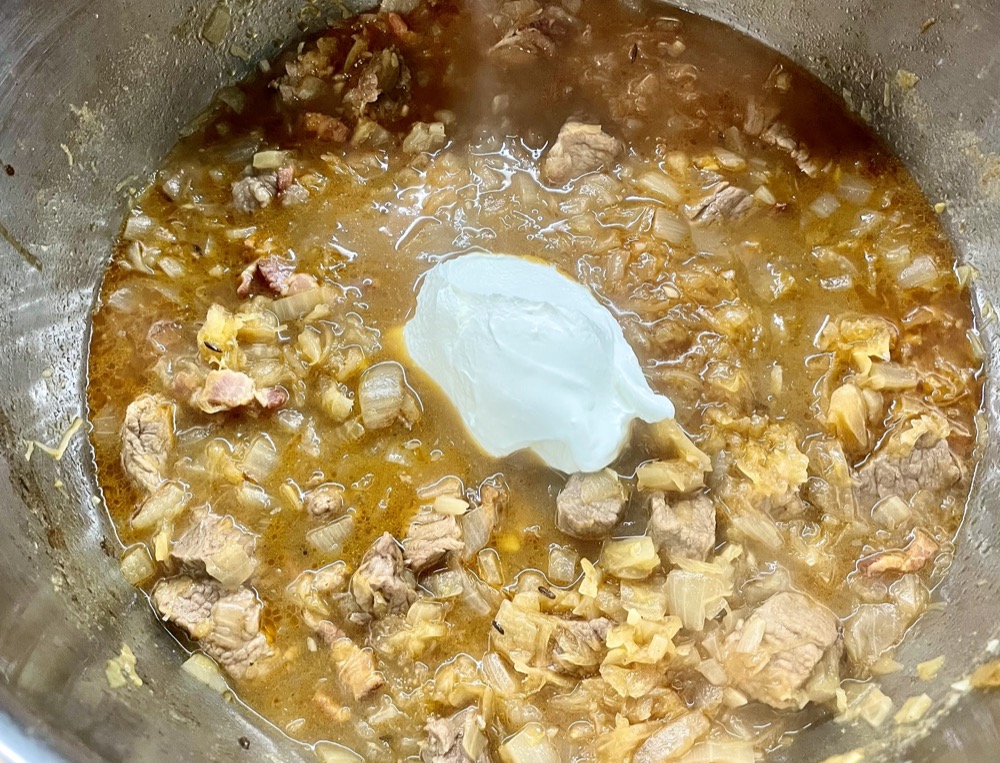
This is one of Toby’s favourite Czech dishes (next to svičkova), so of course I made it a personal challenge to try and make the best segedinsky goulash I could. After 3 tries, I think I did it. Not to toot my own horn, but this is pretty fucking good and Toby would agree. It’s a hearty goulash with pork as its main protein and it’s slowly simmered in bacon, paprika, and sauerkraut, then topped off with a little sour cream. I’m not usually a fan of sauerkraut (unless it’s a sweet braised version), but when it’s cooked into a savoury stew like this, it adds a nice texture and just a hint of tartness that balances it out nicely.

Toby has no idea why it’s called “segedinsky” since it doesn’t translate to anything in Czech. After a little googling, I learned that this dish has a few possible origins but the most popular two explanations are: 1) a Hungarian dish from the city of Szeged in Hungary that is known for their paprika, or 2) from a Hungarian writer Jozsef Székély who came to a restaurant that ran out of food at closing and requested the leftover goulash and sauerkraut to be mixed together to make a meal. Whatever the true origin, there’s no doubt it has Hungarian roots and has been widely popular in surrounding countries including Czech and Germany!

Anyways, without further ado, here’s the recipe! If you have any comments or suggestions, I’d love to hear from you in the comment section! You can follow me on instagram, youtube and facebook to see all the recipes I post!

Happy cooking!

Ingredients you’ll need:

  • 200g (roughly 6 slices) smoked thick-cut bacon, sliced small
  • 900g (2 lbs) pork shoulder, cut into 2.5cm pieces
  • 1 tsp caraway seeds, crushed
  • 3 medium (~1.2kg) onions, diced
  • 1 Tbsp sweet ground paprika
  • 2 cloves garlic, minced
  • 1 Tbsp all-purpose flour
  • 3 cups (720ml) beef broth
  • 300g sauerkraut, without the liquid
  • 1/2 cup (100g) sour cream
  • Salt to taste

Directions:

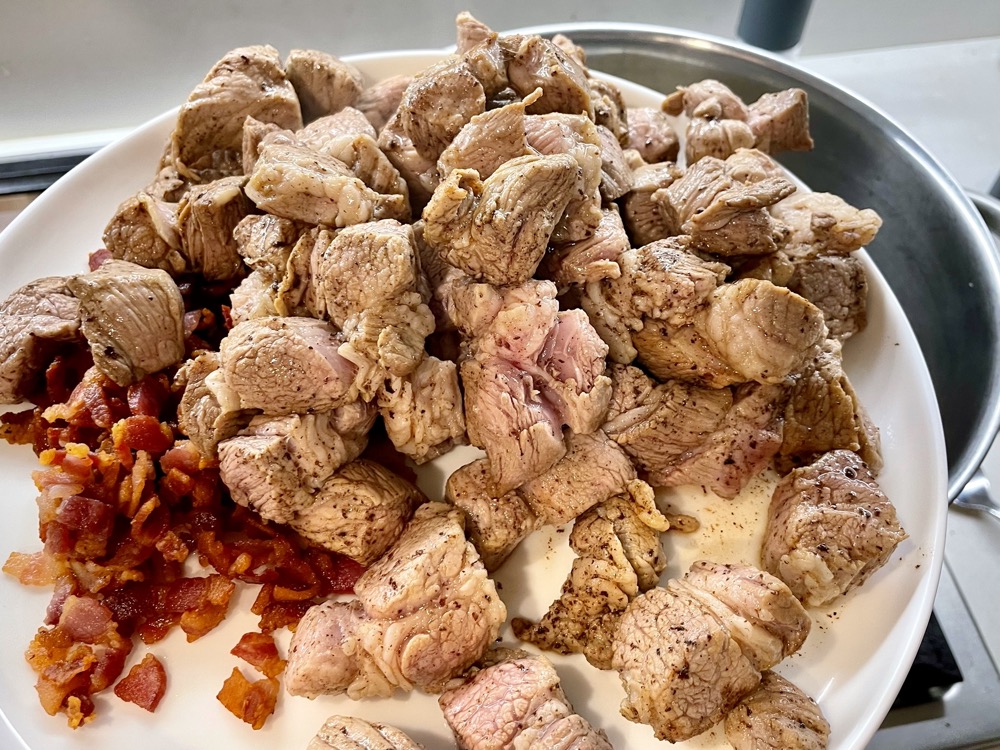
In a large pot on MED heat, add a light drizzle of oil and the bacon. Cook for 5-8 minutes to let the bacon fat render and release its oils. It’ll be done when the bacon is lightly browned and starting to get crispy. Make sure to regularly scrape the bottom of the pot so the brown bits don’t stick. Once done, remove just the bacon from the pot and set aside (leave the oil in the pot – you’re going to use this to cook the rest of the dish).

In the same pot, turn the heat up to MED-HIGH and add in the pork shoulder pieces and sear each side for 1-2 minutes until it’s browned on the outside (you do not want to cook the pork through at this stage, just sear the outside). Remove the pork from the pot and set aside (leave the oil in the pot).

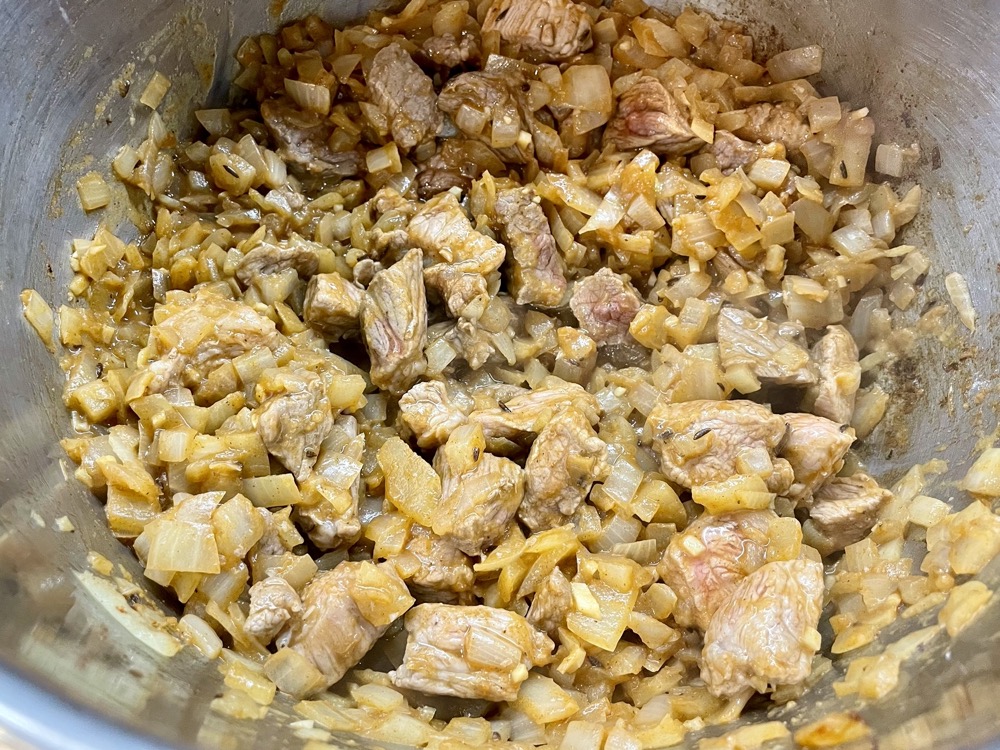
Still in the same pot, turn the heat down to MED and add in the caraway seeds and onions. Sauté for 5-8 minutes until the onions soften and start to brown.

Add back in the bacon (from step 1), seared pork (from step 2), paprika and garlic. Sauté for 30 seconds until the garlic becomes fragrant, then add in the flour. Continue to sauté together for another 30 seconds to 1 minute until all the flour is mixed well. Pour the beef broth into the pot and stir everything around, making sure to scrape up anything that stick to the bottom of the pan. Turn the heat up to HIGH to bring it to a boil, then simmer on LOW covered with a lid for 30 minutes.

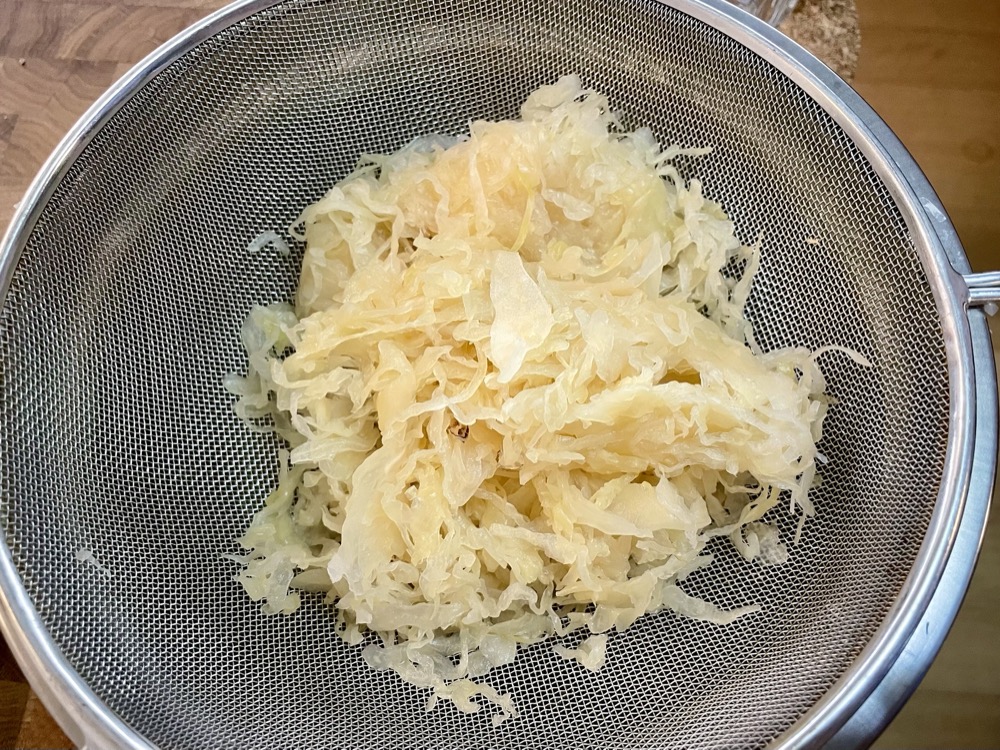
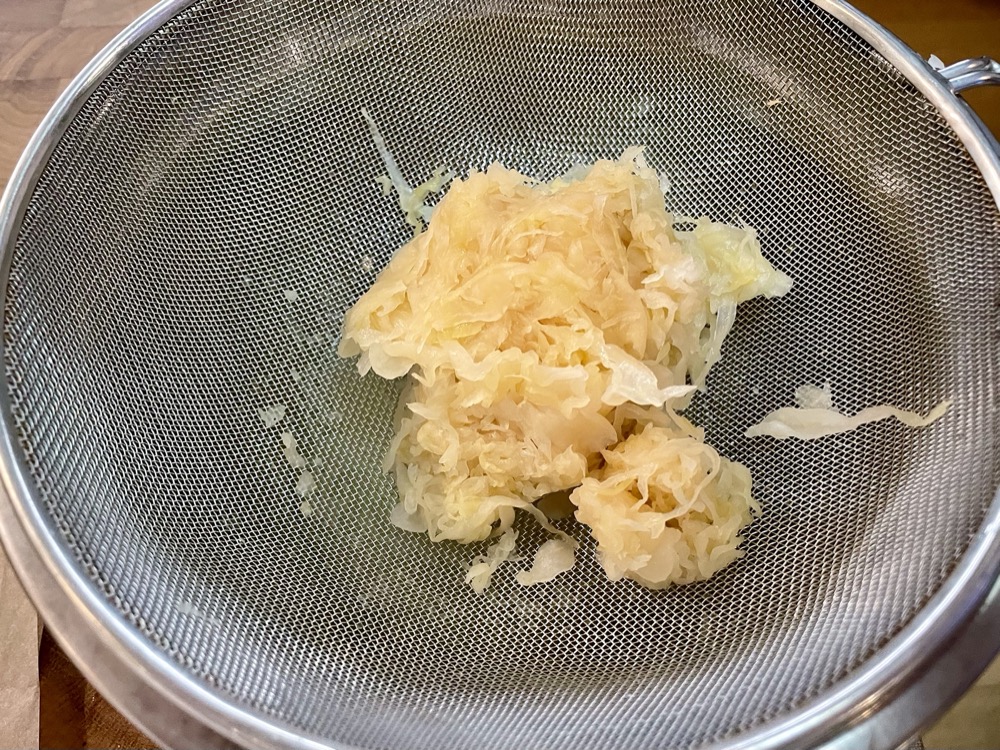
While you’re waiting, put your sauerkraut into a strainer and squeeze out as much liquid as you can. Roughly chop the sauerkraut into smaller pieces and set aside.

Once the broth has finished boiling, add the chopped sauerkraut into the pot, stir it around, then let it continue to simmer for another 30 minutes or until the pork is cooked, with the lid on. Try not to overcook your goulash or else the sauerkraut starts to lose its texture.

Once the soup has finished, turn the heat off, add in the sour cream and taste to adjust salt to preference. Serve hot with bread or potato dumplings!

*Note: If you’re going to double the recipe for a batch-cook, you’ll have to simmer the soup longer. This is because when you double the ingredients, you’ll end up with more moisture overall so your soup will be more dilute and simmering it longer will reduce the amount of liquid and concentrating the flavours. I’d recommend simmering it longer before you add in the sauerkraut so you don’t overcook the sauerkraut.

Summarized Recipe:

Segedínský Guláš – Czech Pork Sauerkraut Goulash

Date Published: Feb 14th, 2024 | Last Updated: Feb 14th, 2024
Author: Abby |Category: Czech, easy, mains, soups
Serves: 4-6 | Prep time: 15 mins | Cook time: 1.5 hours

Ingredients:

  • 200g (roughly 6 slices) smoked thick-cut bacon, sliced small
  • 900g (2 lbs) pork shoulder, cut into 2.5cm pieces
  • 1 tsp caraway seeds, crushed
  • 3 medium (~1.2kg) onions, diced
  • 300g sauerkraut, without the liquid
  • 1 Tbsp sweet ground paprika
  • 2 cloves garlic, minced
  • 1 Tbsp all-purpose flour
  • 3 cups (720ml) beef broth
  • 1/2 cup (100g) sour cream
  • Salt to taste

Directions:

  1. In a large pot on MED heat, add a light drizzle of oil and the bacon. Cook for 5-8 minutes to let the bacon fat render and release its oils. It’ll be done when the bacon is lightly browned and starting to get crispy. Make sure to regularly scrape the bottom of the pot so the brown bits don’t stick. Once done, remove just the bacon from the pot and set aside (leave the oil in the pot – you’re going to use this to cook the rest of the dish).
  2. In the same pot, turn the heat up to MED-HIGH and add in the pork shoulder pieces and sear each side for 1-2 minutes until it’s browned on the outside (you do not want to cook the pork through at this stage, just sear the outside). Remove the pork from the pot and set aside (leave the oil in the pot).
  3. Still in the same pot, turn the heat down to MED and add in the caraway seeds and onions. Sauté for 5-8 minutes until the onions soften and start to brown.
  4. Add back in the bacon (from step 1), seared pork (from step 2), paprika and garlic. Sauté for 30 seconds until the garlic becomes fragrant, then add in the flour. Continue to sauté together for another 30 seconds to 1 minute until all the flour is mixed well.
  5. Pour the beef broth into the pot and stir everything around, making sure to scrape up anything that stick to the bottom of the pan. Turn the heat up to HIGH to bring it to a boil, then simmer on LOW covered with a lid for 30 minutes.
  6. While you’re waiting, put your sauerkraut into a strainer and squeeze out as much liquid as you can. Roughly chop the sauerkraut into smaller pieces and set aside.
  7. Once the broth has finished boiling, add the chopped sauerkraut into the pot, stir it around, then let it continue to simmer for another 30 minutes or until the pork is cooked, with the lid on. Try not to overcook your goulash or else the sauerkraut starts to lose its texture.
  8. Once the soup has finished, turn the heat off, add in the sour cream and taste to adjust salt to preference. Serve hot with bread or potato dumplings!

*Note: If you’re going to double the recipe for a batch-cook, you’ll have to simmer the soup longer. This is because when you double the ingredients, you’ll end up with more moisture overall so your soup will be more dilute and simmering it longer will reduce the amount of liquid and concentrating the flavours. I’d recommend simmering it longer before you add in the sauerkraut so you don’t overcook the sauerkraut.

Vepřo knedlo zelo (pork, dumpling, sauerkraut) – a Czech national dish


Date Published: Feb 14th, 2024 | Last Updated: Feb 14th, 2024
Author: Abby |Category: czech, mains
Serves: 4-6 | Prep time: 3 hours (mainly to wait until the potatoes cool) | Cook time: 3 hours

Jump to recipe |

Vepřo knedlo zelo is Czech’s national dish (or at least one of them – I couldn’t find an official source to state what the official national Czech dish is, but most sources have pointed to this one (another source claims it to be svičkova)). Regardless of whether or not it’s the true national dish, it’s definitely very popular and found in most Czech restaurants.

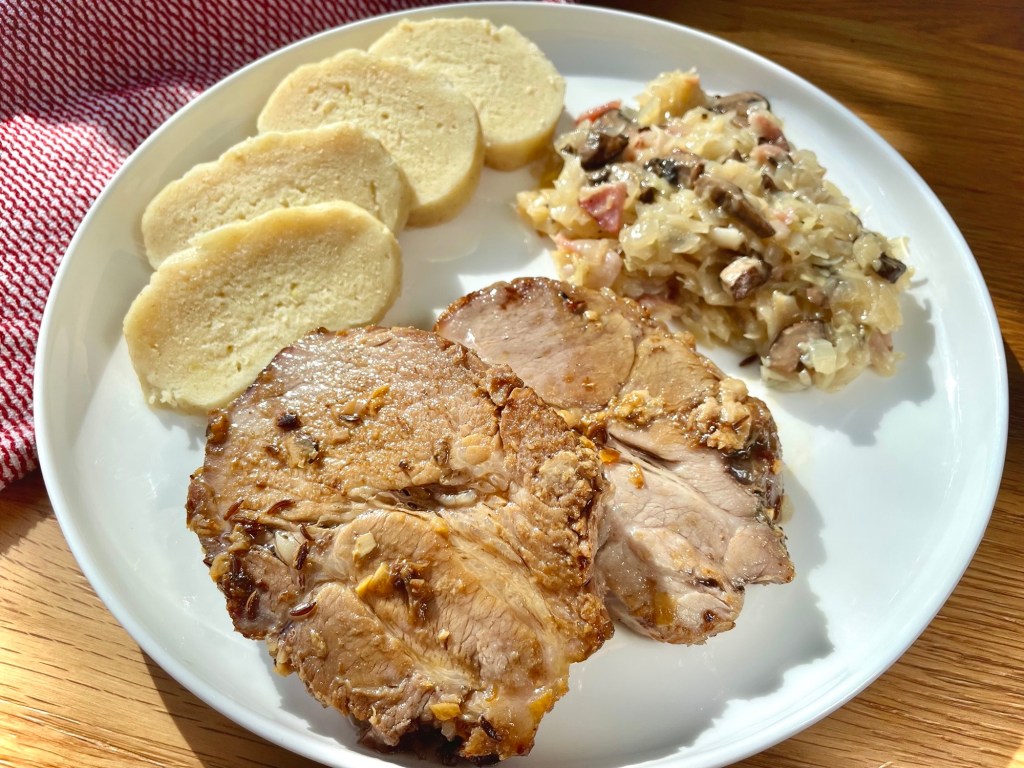
The name of the dish directly translates to the 3 components that make up the dish: vepřo = pork, knedlo = dumpling, zelo = sauerkraut. Disclaimer: this page is not a recipe page of all 3 components, but rather a guide to making all 3 components in order with links to each of their dedicated recipes. I’ve chosen to split it up this way to make it easier for the reader to navigate rather than writing it all in one monstrously long recipe post with a million photos. Each component is also delicious on their own that you can pair it with other dishes instead of just in a vepřo knedlo zelo.

1. Vepřo = pork

The pork portion is usually a pork shoulder, which can be roasted or smoked. The first time I had this dish was at babička’s place and she served it with a smoked pork shoulder. She was cooking away with it for hours that the whole apartment smelled like smoked ham – I’m pretty sure my jacket still has a hint of it 4 weeks later 😅. When I set out to recreate this dish, we visited the lovely little Polish butcher a block away from us and found that they sell beautiful already-cooked smoked pork shoulder! We couldn’t resist and bought a few hundred grams (it was delicious). We still go back there when we’re feeling too lazy to cook and heat it up with sauerkraut and dumplings.

Instead of a smoked pork, a roast pork is the other version of this dish. When I first made it from scratch, I didn’t expect much since the steps were so simple and straightforward. I also don’t usually cook with pork much so my experience with making pork roasts is very limited, but I’ve gotta say, it came out really fucking good – even Toby approves! Although the smoked pork is good and easy, the roasted version is a lot juicier in my opinion. The recipe for the roasted pork shoulder is below.

2. Knedlo = dumpling

Knedlíky are Czech dumplings. There are a few different kinds of Czech dumplings, but in this particular dish, it’s commonly served with either the bread version (houskové knedlíky) or the potato version (bramborové knedlíky) (you can find out more about the difference here). I personally prefer it with a heavier dense potato dumpling, but it can be served with the lighter fluffier bread dumpling version too. In this guide, I will reference the potato dumpling version (which happens to be easier too!). Here are links to both types of dumplings:

3. Zelo = sauerkraut

You can serve this dish with whatever style of sauerkraut you like, but I prefer it with a sweet smokey version like this one here. Since this is my favourite sauerkraut, I will also be writing this guide in accordance to that recipe. Fun fact: I actually liked this version of sauerkraut so much that I needed to find a meat dish to go with it which is how I got onto making a vepřo knedlo zelo in the first place. I never would’ve made this dish if I hadn’t succeeded in making the sauerkraut 🙃.

Anyways, without further ado, here’s the guide! If you have any comments or suggestions, I’d love to hear from you in the comment section! You can follow me on instagram, youtube and facebook to see all the recipes I post!

Happy cooking!

Directions:

1. Make the pork roast first. This is the most time-consuming and will take 2.5-3 hours to cook. Although lengthy, all this time is literally waiting. There’s nothing else that needs to be done with the pork once you pop it in the oven which makes it the perfect time to prepare everything else. When it’s done, measure it with a meat thermometer to ensure that it’s cooked and slice it. Easy. If you’re not ready to serve it yet while you finish the other components, leave it drenched in the drippings/oils from the pan to keep it moist and soaking up flavour.

2. While the pork is roasting in the oven, start making the potato dumplings. It only takes about 15-20 minutes to put the dough together and once the loaves are formed, it takes about half an hour to cook each batch. If you have extra stove space and extra pots, you can get two pots going at the same time so you can cook them all at once to save time rather than waiting for back to back 30 minutes. Make sure you set timers so you don’t forget about them.

3. When the dumplings are boiling, start making the sauerkraut. It takes about 30-40 minutes in total including two 15 minute braising times during the process, so while you’re waiting you can intermittently check on the dumplings.

4. Once everything is done, plate it up and serve. Enjoy!

Recipes used:

Vepřová Pečeně – Czech-style Pork Roast


Date Published: Feb 14th, 2024 | Last Updated: Feb 14th, 2024
Author: Abby |Category: czech, mains, easy
Serves: 4-6 | Prep time: 15 mins | Cook time: 3 hours

Jump to recipe |

Pork is one of the more common proteins seen in Czech cuisine – in fact, it’s part of their national dish: Vepřo knedlo zelo (= pork + dumplings + sauerkraut). This recipe is for a Czech-style roast pork (vepřová pečeně = “pork roast”) and is the star component of the Czech national dish. You can follow the links below if you’d like to make a full vepřo knedlo zelo.

I originally started researching making a Czech roast pork when I discovered a new found love for sweet sauerkraut that Toby’s babička made. When I perfected the recipe for the braised sweet sauerkraut, I needed a protein to go with it so I looked into making the roast pork that commonly accompanies it. I found a simple recipe at first, and after some tweaking, a beautiful caramelized glistening juicy hunk of meat was born. This pork is so good that it is worth making on its own. It’s flavourful enough to have it by itself or you can pair it with sauerkraut, a rajská sauce, mashed potatoes…anything you want! The best part is that this dish is SO easy to make with minimal ingredients. The ONLY downfall is that it takes about 3 hours, HOWEVER, it’s 3 hours of waiting and you literally do not have to do anything other than wait for the timer to go off and double check that it has cooked through with a meat thermometer. To make it even easier, you can marinate the meat in the rub the night before and the next morning, just pop it in the oven a few hours before lunch time and when it’s ready, just slice and serve. 😊

If you want to make the full vepřo knedlo zelo dish, the recipe for the potato dumplings (bramborové knedlíky) can be found here and the sauerkraut can be any sauerkraut, but I prefer to have it with a sweet sauerkraut like this one. You can also find a guide on how to put it all together here.

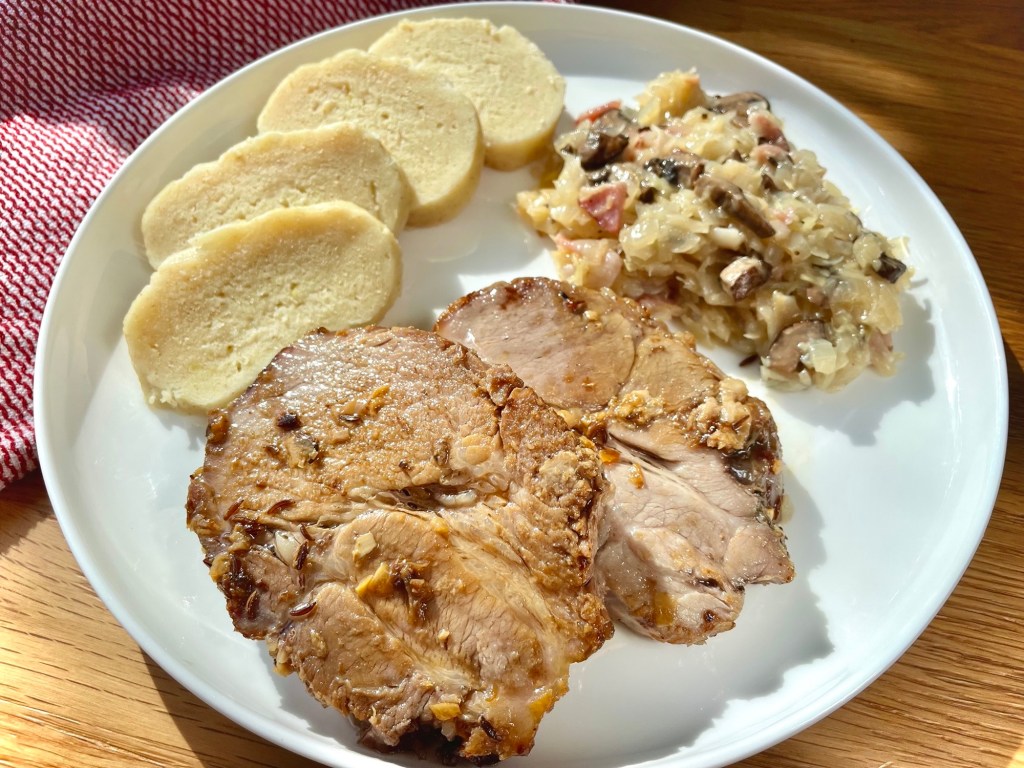
Vepřo knedlo zelo = roast pork + potato dumplings + sauerkraut

Anyways, without further ado, here’s the recipe! If you have any comments or suggestions, I’d love to hear from you in the comment section! You can follow me on instagram, youtube and facebook to see all the recipes I post!

Happy cooking!

Ingredients you’ll need:

  • 1/4 cup olive oil
  • 6 cloves garlic, minced
  • 3 tsps caraway seeds, crushed
  • 2.5 Tbsps kosher salt
  • 2 x 900g (2 x 2 lbs) pieces of pork shoulder, get ones with marbling

Directions:

Preheat oven to 160˚C (325˚F) on “roast” setting if you’ve got the option, or otherwise ‘bake’ will be fine.

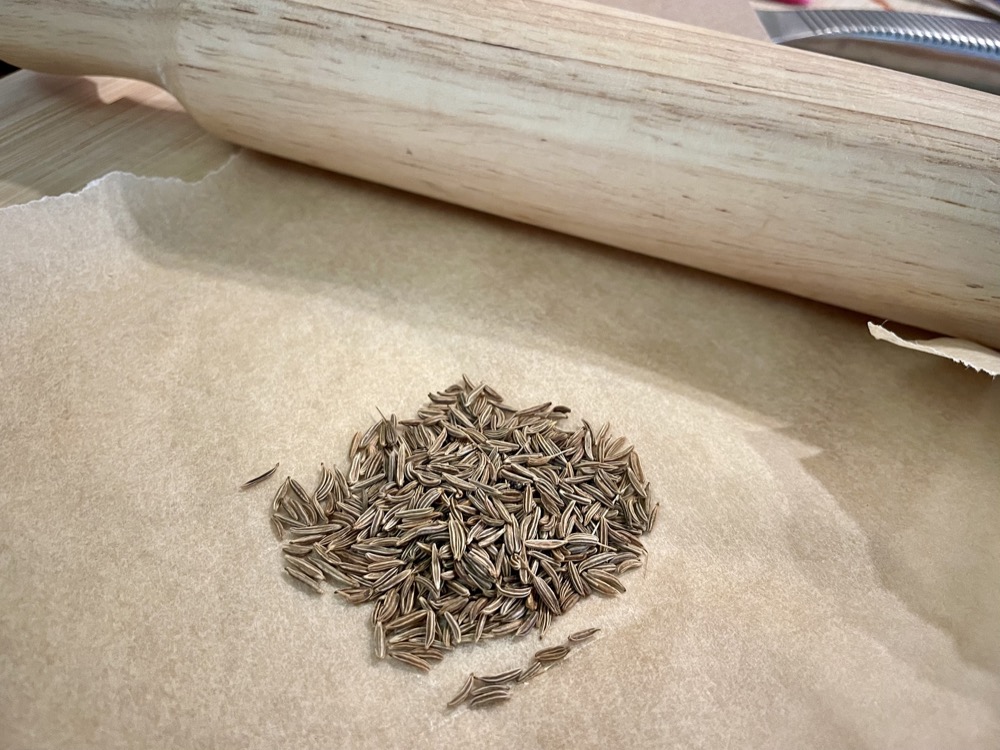
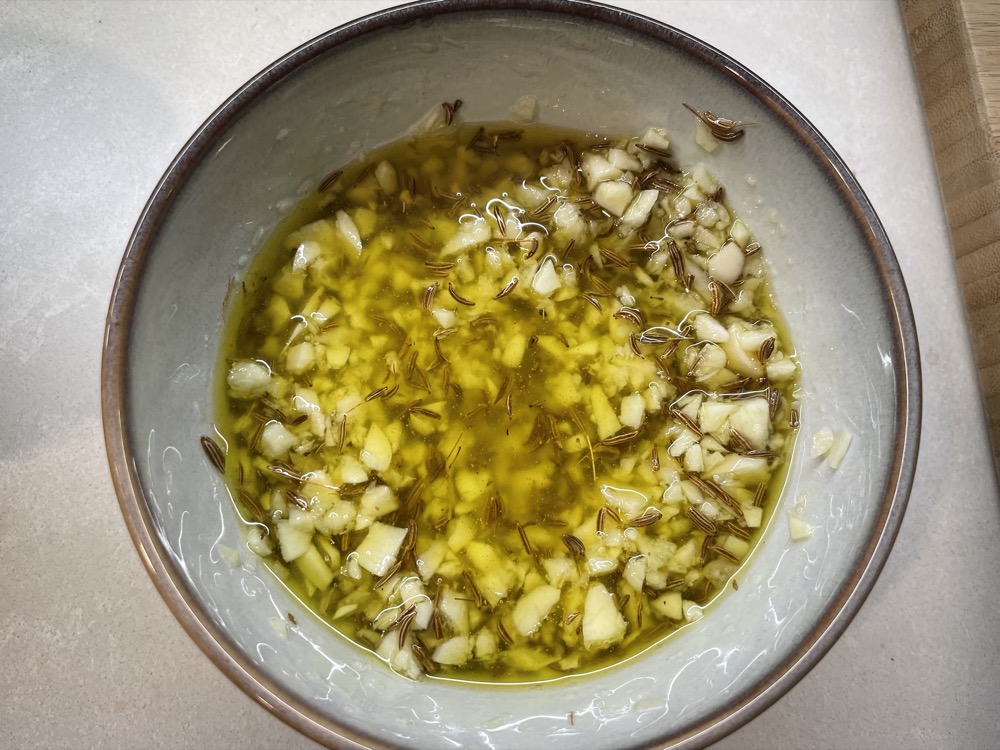
In a small bowl, make the seasoning rub by mixing together: olive oil, garlic, crushed caraway seeds, and salt. Tip: to easily crush caraway seeds without the mess, you can put it in between a sheet of baking paper and use a rolling pin to crush it by rolling over it a few times. Crushing the caraway seeds releases its flavour.

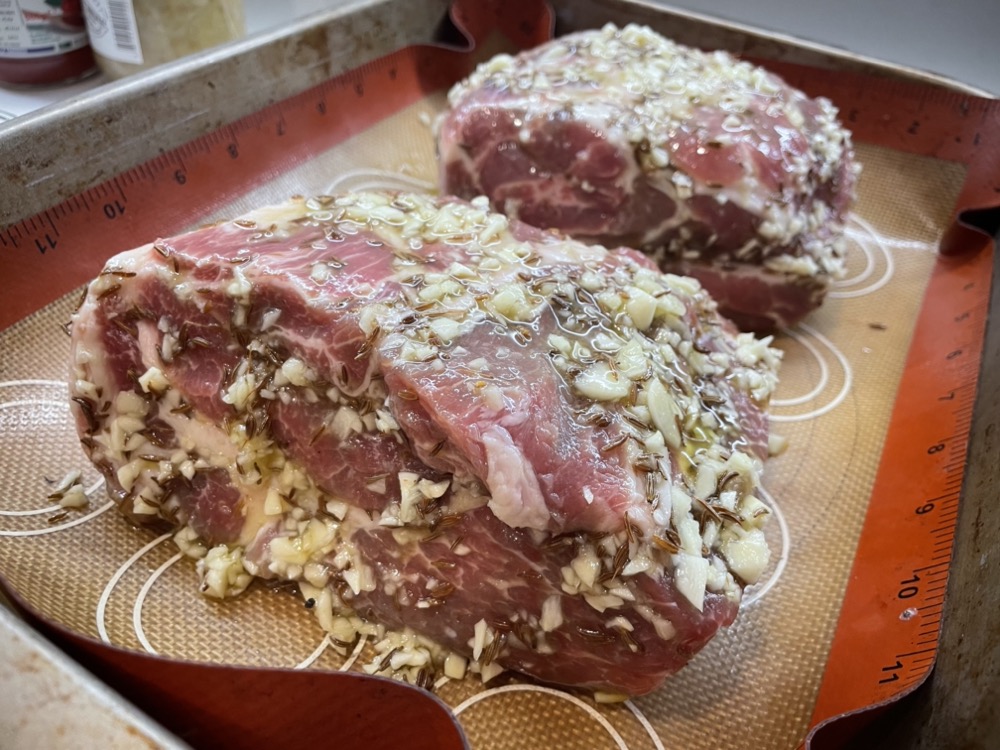
Use the rub and massage it evenly around the entire pork shoulder. Tip: To save time, you can do this the night before and let the pork marinate in the rub in the fridge overnight in a sealed container. When ready to cook, take it out of the fridge half an hour beforehand to let it come to room temp.

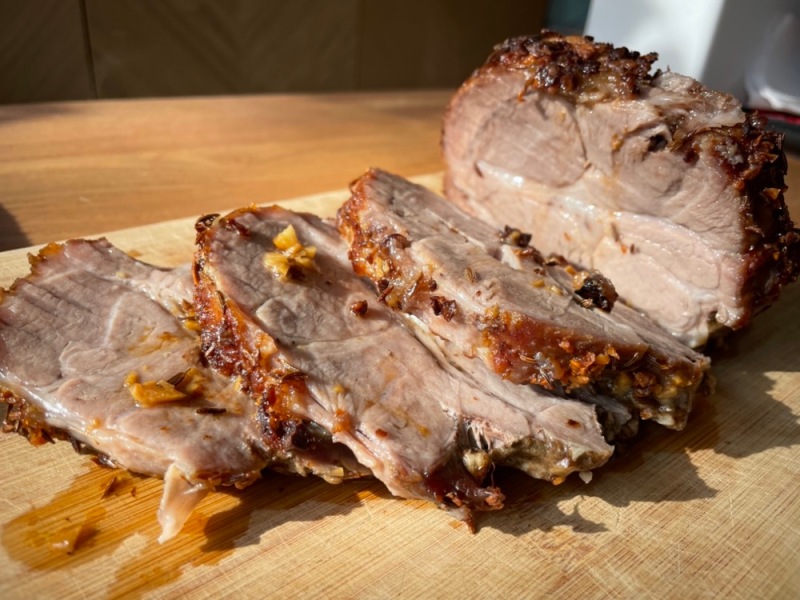
Place the pork in the middle of a lined baking tray. Bake in the preheated oven for 2.5 – 3 hours (or until the middle of the pork measures 62˚C and the juices are no longer pink).

Now is a good time to make any sides that you want to serve with the roast pork. The most common is with a sauerkraut and Czech potato dumpling/knedliky like in a vepřo knedlo zelo.

When the pork has finished, take it out of the oven and let it rest on the counter for 5-10 mins before slicing. After slicing, drench each slice in the drippings/ oils from the baking tray before serving. Enjoy!

Summarized Recipe:

Vepřová Pečeně – Czech-style Pork Roast

Date Published: Feb 14th, 2024 | Last Updated: Feb 14th, 2024
Author: Abby |Category: czech, mains, easy
Serves: 4-6 | Prep time: 15 mins | Cook time: 3 hours

Ingredients:

  • 1/4 cup olive oil
  • 6 cloves garlic, minced
  • 3 tsps caraway seeds, crushed
  • 2.5 Tbsps kosher salt
  • 2 x 900g (2 x 2 lbs) pieces of pork shoulder, get ones with marbling

Directions:

  1. Preheat oven to 160˚C (325˚F) on “roast” setting if you’ve got the option, or otherwise ‘bake’ will be fine.
  2. In a small bowl, make the seasoning rub by mixing together: olive oil, garlic, caraway seeds, and salt.
  3. Use the rub and massage it evenly around the entire pork shoulder.
    • Tip: To save time, you can do this the night before and let the pork marinate in the rub in the fridge overnight in a sealed container. When ready to cook, take it out of the fridge half an hour beforehand to let it come to room temp.
  4. Place the pork in the middle of a lined baking tray. Bake in the preheated oven for 2.5 – 3 hours (or until the middle of the pork measures 62˚C and the juices are no longer pink).
  5. When the pork has finished, take it out of the oven and let it rest on the counter for 5-10 mins before slicing. After slicing, drench each slice in the drippings/ oils from the baking tray before serving. Enjoy!

Braised Bacon & Mushroom Sweet Sauerkraut


Date Published: Feb 13th, 2024 | Last Updated: Feb 13th, 2024
Author: Abby |Category: sides, Czech, easy
Serves: 4-6 (large bowl) | Prep time: 10 mins | Cook time: 40 mins

Jump to recipe |

I’m not a fan of sour foods in general (unless it’s sour patch kids 😜) so its no surprise that sauerkraut has never been something I’ve wanted to try and make…until now!

Babička’s sweet sauerkraut

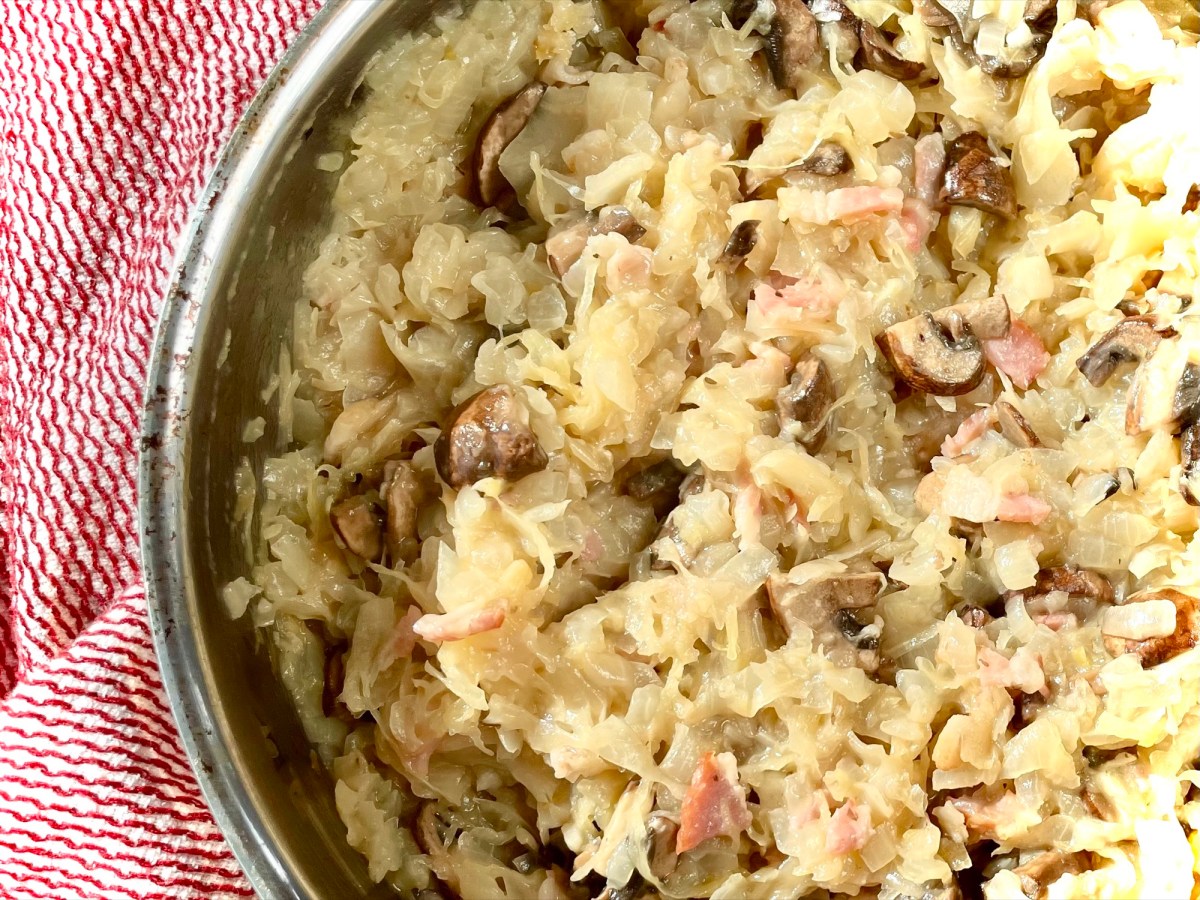
Toby likes his sauerkraut so I usually give him my portion, but during our last trip to Czech to visit his grandparents, babička made a sweet and creamy version with caraway seeds and the sourness of the sauerkraut was minimal. Needless to say, it was DELICIOUS paired with the smoked pork shoulder that she made – we nearly ate the whole pot! Before we left, she gave me verbal recipe instructions with ‘guestimated’ ingredient amounts (you’re not an OG if you measure when you cook) and when we got home to Brooklyn, I was determined to recreate it ASAP while the flavours were still fresh in my mind. Sadly, the guestimated measurements did not yield the same beautiful sweet sauerkraut she made 💔. Mine somehow came out too sour and yet too sweet at the same time lol, no idea how I achieved that. Although disappointed, I was still determined to learn how to make a sweet sauerkraut and in my search of other Czech-style sauerkrauts that might be close to babička’s, I found a sweet braised version from Cook Like Czechs that was intriguing. When I made it for the first time, it was actually – dare I say it – better than babička’s 🤐 ! The sweetness level was exactly the same but this new version had bacon in it! I made it a second time with some minor tweaks and added in some leftover mushrooms I had in the fridge and it was somehow even more AMAZING. This is now my favourite sauerkraut hands down, and I’m going to show it off – to you 😛.

Anyways, without further ado, here’s the recipe! If you have any comments or suggestions, I’d love to hear from you in the comment section! You can follow me on instagram, youtube and facebook to see all the recipes I post!

Happy cooking!

Ingredients you’ll need:

  • 450g sauerkraut, without the liquid
  • 350g portobello mushrooms, cleaned and sliced
  • 1/2 Tbsp of pork lard, or olive oil
  • 2 large (~1.1kg) onions, diced small
  • 130g smoked thick-cut bacon, sliced into small pieces
  • 1 tsp caraway seeds, crushed
  • 1.75 Tbsps (25g) granulated sugar
  • 2 Tbsps (25g) all-purpose flour
  • Salt to taste

Directions:

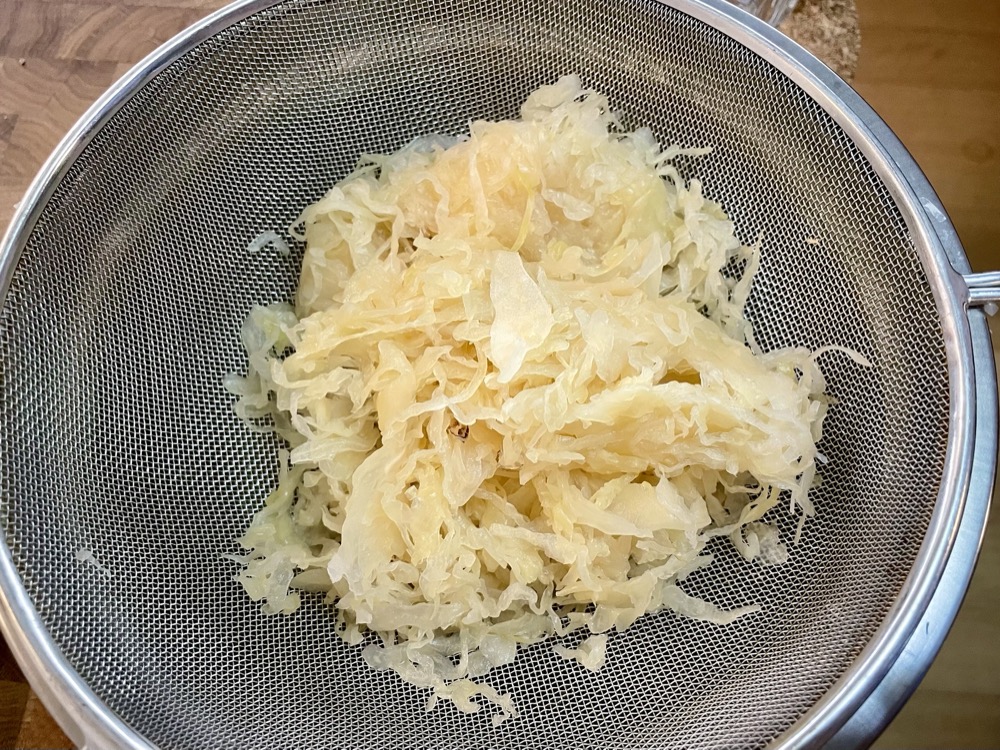
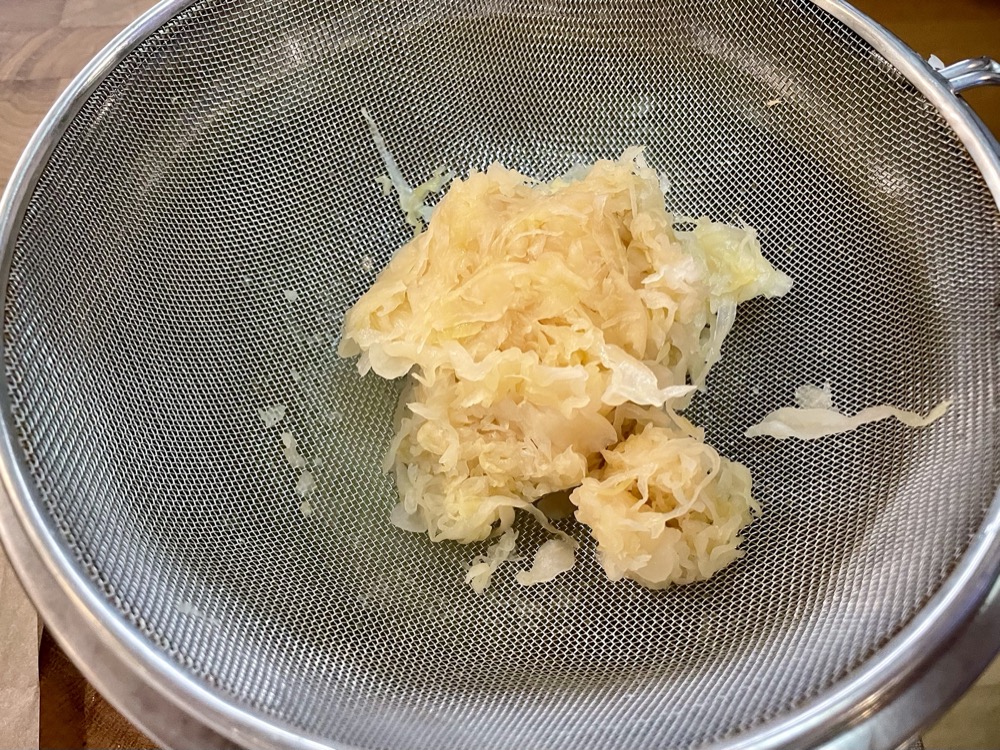
Place the sauerkraut in a strainer over a bowl and squeeze out as much liquid as you can. If you prefer your sauerkraut on the more sour side, save this liquid for later (I prefer mine on the sweeter side, so I just discard this liquid). Set aside.

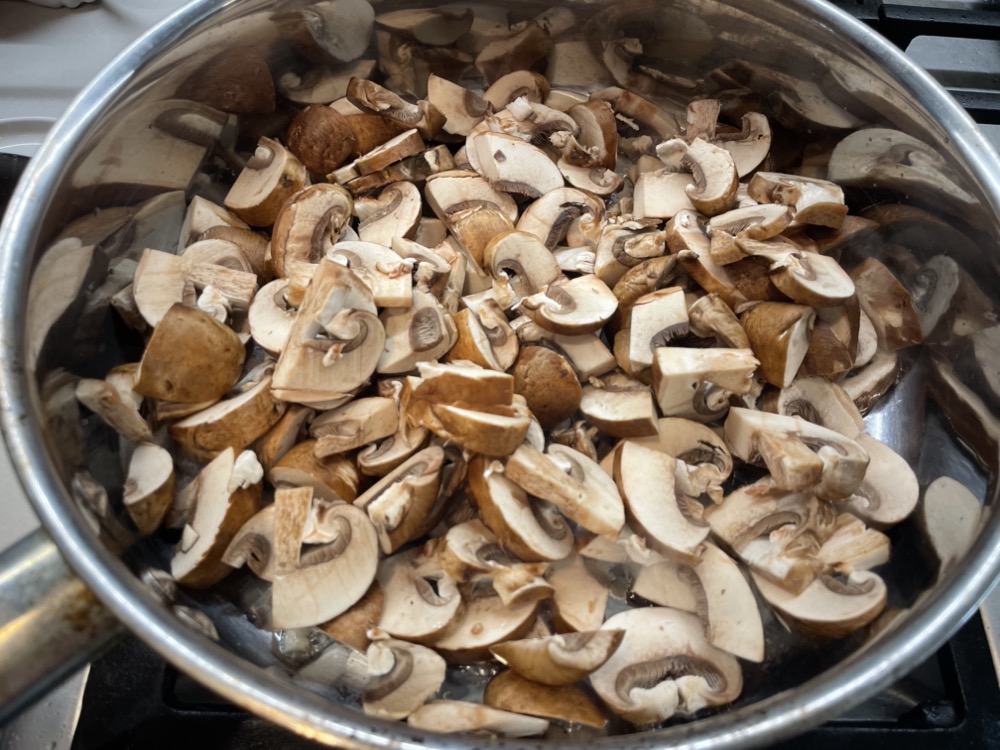
In a pan on MED heat, add a drizzle of olive oil and sauté the mushrooms with a pinch of salt for 3-4 minutes or until cooked. Put the mushrooms into a bowl and set aside until the end.

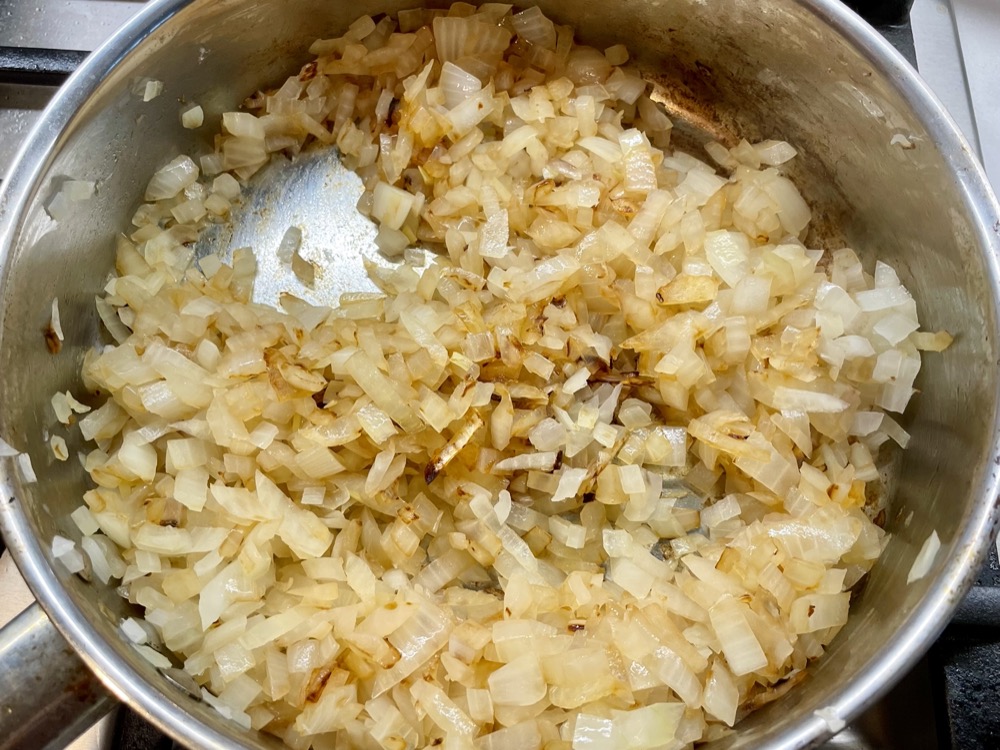
In the same pan on MED heat, melt the pork lard and add in the onions. Sauté until the onions soften and become lightly browned (5-8 minutes).

Add in the caraway seeds, bacon, and sauerkraut. Continue to sauté for another 5 minutes.

Add in half cup of water (or the sauerkraut liquid from step 1 if using) then turn the heat down to LOW and cover with a lid. Let the sauerkraut braise for 15 minutes.

After 15 minutes, add in the sugar and flour. Mix together thoroughly then let it braise on LOW heat with the lid on for another 15 minutes.

After 15 minutes, add in the cooked mushrooms from step 1 (do NOT add in any mushroom liquid that may have accumulated during this time, just the mushrooms). Stir until heated through then turn off the heat. Taste and adjust salt and sugar to your preference. It’s meant to be a sweet, smokey, and slightly sour sauerkraut with a kind of creamy texture. Serve warm. Enjoy!

Served in a vepřo knedlo zelo

Summarized Recipe:

Braised Bacon & Mushroom Sweet Sauerkraut

Date Published: Feb 13th, 2024 | Last Updated: Feb 13th, 2024
Author: Abby |Category: sides, Czech, easy
Serves: 4-6 (large bowl) | Prep time: 10 mins | Cook time: 40 mins

Ingredients:

  • 450g sauerkraut, without the liquid
  • 350g portobello mushrooms, cleaned and sliced
  • 1/2 Tbsp of pork lard, or olive oil
  • 2 large (~1.1kg) onions, diced small
  • 130g smoked thick-cut bacon, sliced into small pieces
  • 1 tsp caraway seeds, crushed
  • 1.75 Tbsps (25g) granulated sugar
  • 2 Tbsps (25g) all-purpose flour
  • Salt to taste

Directions:

  1. Place the sauerkraut in a strainer over a bowl and squeeze out as much liquid as you can. If you prefer your sauerkraut on the more sour side, save this liquid for later (I prefer mine on the sweeter side, so I just discard this liquid). Set aside.
  2. In a medium pot or pan (make sure you have a lid) on MED heat, add a drizzle of olive oil and sauté the mushrooms with a pinch of salt for 3-4 minutes or until cooked. Put the mushrooms into a bowl and set aside until the end.
  3. In the same pan on MED heat, melt the pork lard and add in the onions. Sauté until the onions soften and become lightly browned (5-8 minutes).
  4. Add in the caraway seeds, bacon, and sauerkraut. Continue to sauté for another 5 minutes, then add in half cup of water (or the sauerkraut liquid from step 1 if using) then turn the heat down to LOW and cover with a lid. Let the sauerkraut braise for 15 minutes.
  5. After 15 minutes, add in the sugar and flour. Mix together thoroughly then let it braise on LOW heat with the lid on for another 15 minutes.
  6. After 15 minutes, add in the cooked mushrooms from step 1 (do NOT add in any mushroom liquid that may have accumulated during this time, just the mushrooms). Stir until heated through then turn off the heat. Taste and adjust salt and sugar to your preference. It’s meant to be a sweet, smokey, and slightly sour sauerkraut with a kind of creamy texture. Serve warm. Enjoy!

Czech Potato Dumplings – Bramborové Knedlíky


Date Published: Feb 13th, 2024 | Last Updated: Feb 13th, 2024
Author: Abby |Category: Czech, sides, breads, vegetarian
Serves: 8-10 | Prep time: 1 hour | Cook time: 1.5 hours total (20-30mins per dumpling)

Jump to recipe |

What are Czech Dumplings or Knedlíky?

Knedlíky or dumplings are a staple side dish in Czech food. I see it as THE carb in a Czech meal. Similar to noodles in Asian food or pasta in Italian food, if there’s something rich, saucy, or soupy, you bet it’ll be served with a knedlíky.

There are a few different kinds of dumplings, but the two most common ones I’ve seen in Czech are the fluffy bread dumplings (houskové knedlíky) and the denser potato dumplings (bramborové knedlíky). The lighter bread dumplings are made with a yeast dough so it’s fluffy but still with a bit of structure and chew and best served with a saucy dish such as svičkova to soak up all the flavours whereas the potato dumplings are much more dense and is like eating a side dish of potatoes that can balance the richness of a dish such as something served with sauerkraut like a vepřo knedlo zelo. Of the two, the bread dumplings are more commonly seen and you can very easily buy them at the supermarket in Czech instead of making them fresh, but I don’t think anyone will be angry if you use them interchangeably. This recipe is for the potato dumplings (bramborové knedlíky). If you want to make the bread dumplings, you can find the recipe here.

Do I need to use a special type of flour?

These dumplings are traditionally made with ‘sharp flour’ or ‘continental flour’ which is a coarser flour made from hard wheat that is common in Europe, but actually super difficult to find in regular grocery stores. As a result, this recipe uses a 3:2 ratio mix of all-purpose flour and farina/cream of wheat to achieve the same texture.

Although these dumplings are pretty easy to make, please allow enough time to cook them all. If you don’t have a big pot, you may have to cook them one or two at a time (which is what I always end up doing) and it takes 20-30 mins each time (allow 1.5 hours to cook all 4). If you’ve got extra pots and the stove space, boil them all at once in separate pots so they’re all ready at the same time! I don’t know why it took me so long to think of this.

How do I freeze leftover knedlíky?

Every recipe for knedlíky I’ve seen always makes WAY more than what you need. My guess is that since you’re going through all the effort of making them, you might as well make a bigger batch and freeze them to have on hand. This recipe is no different. If you follow the instructions, you’ll have enough knedlíky for 8 – 10 people. I had thought about halving the recipe when I was writing it, but then remembered how well they keep in the freezer and how easy it is to have dumplings in a pinch when you’re short on time or too lazy to put in the effort, so I left the proportions alone.

I find it best to freeze leftover dumplings in slices rather than a log so it defrosts quickly. You can either freeze them in single portions or altogether in a bag, but make sure you separate the slices a little so it’ll be easier to separate when you only want to defrost a few slices. I freeze them in a ziploc bag or you can wrap it up in cling wrap individually.

To defrost and reheat: The best way to get the best texture is to steam them, especially if you are reheating from frozen. However, I’m lazy and I take out my desired portion and leave it in the fridge the night before then microwave them with a sprinkle of water before serving.

*Note: This recipe and its instructions have been adapted from Cook Like Czechs (who’s got way more beautiful-looking dumplings than I could ever achieve – check it out).

Anyways, without further ado, here’s the recipe! If you have any comments or suggestions, I’d love to hear from you in the comment section! You can follow me on instagram, youtube and facebook to see all the recipes I post!

Happy cooking!

Ingredients you’ll need:

  • 900g yellow/Yukon gold potatoes
  • 260g (1.5 cups) all-purpose flour
  • 160g (just under 1 cup) cream of wheat/farina
  • 1/2 Tbsp cornstarch or potato starch
  • 1 tsp kosher/cooking salt
  • 1 egg, whisked

Directions:

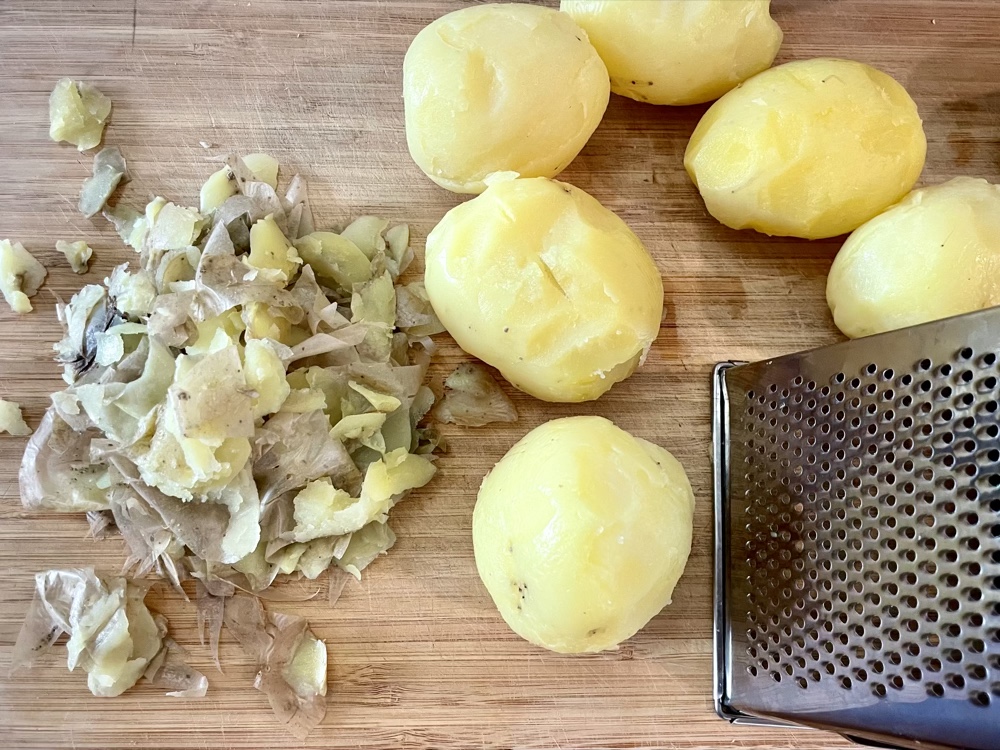
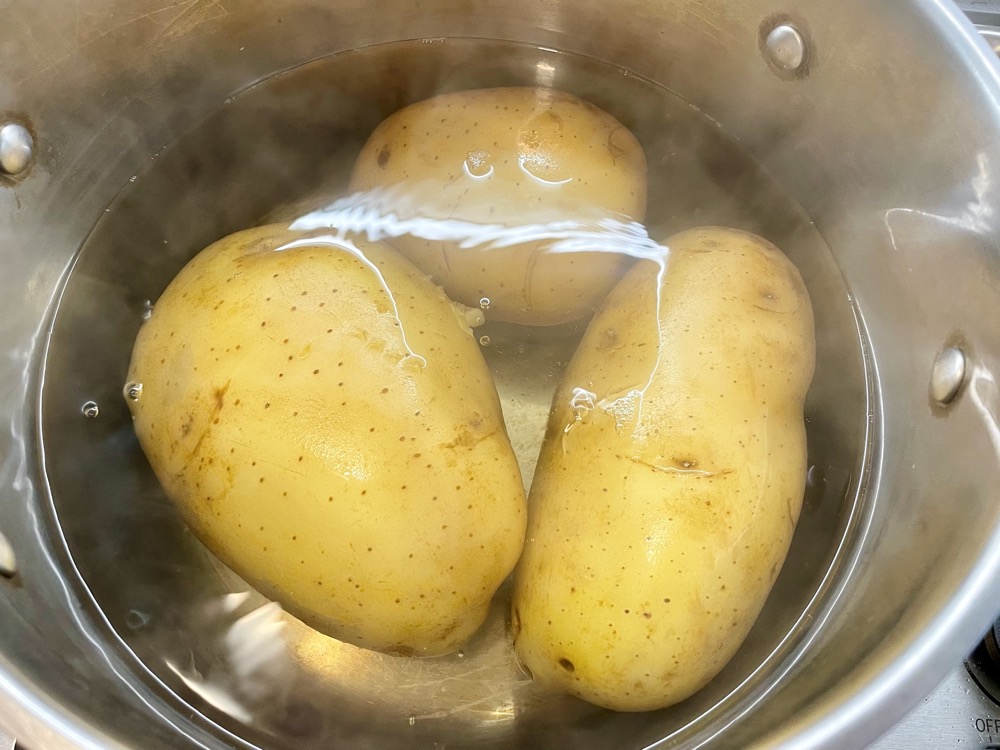
Prepare the potatoes (make ahead of time): Boil the potatoes with the skin on until soft and easily pierced with a fork (20-30mins). Drain the potatoes and let it cool down completely (1-2 hours, or overnight). Once cooled, peel and discard the potato skin and use a hand grater to finely grate (use the small grating hole) the peeled potatoes into a bowl and set aside.

To save time, boil the potatoes the day before and let it cool overnight then peel and grate it the next day. Don’t peel or grate it too early or else the potato will start drying out.

In a large mixing bowl, mix together the flour, cream of wheat, corn starch, and salt. Add in 1 whisked egg and the grated cooked potatoes. Use your hands or a stand mixer and work the dough until you get a smooth, soft, homogenous dough ball. Add a little extra flour if the dough is too sticky.

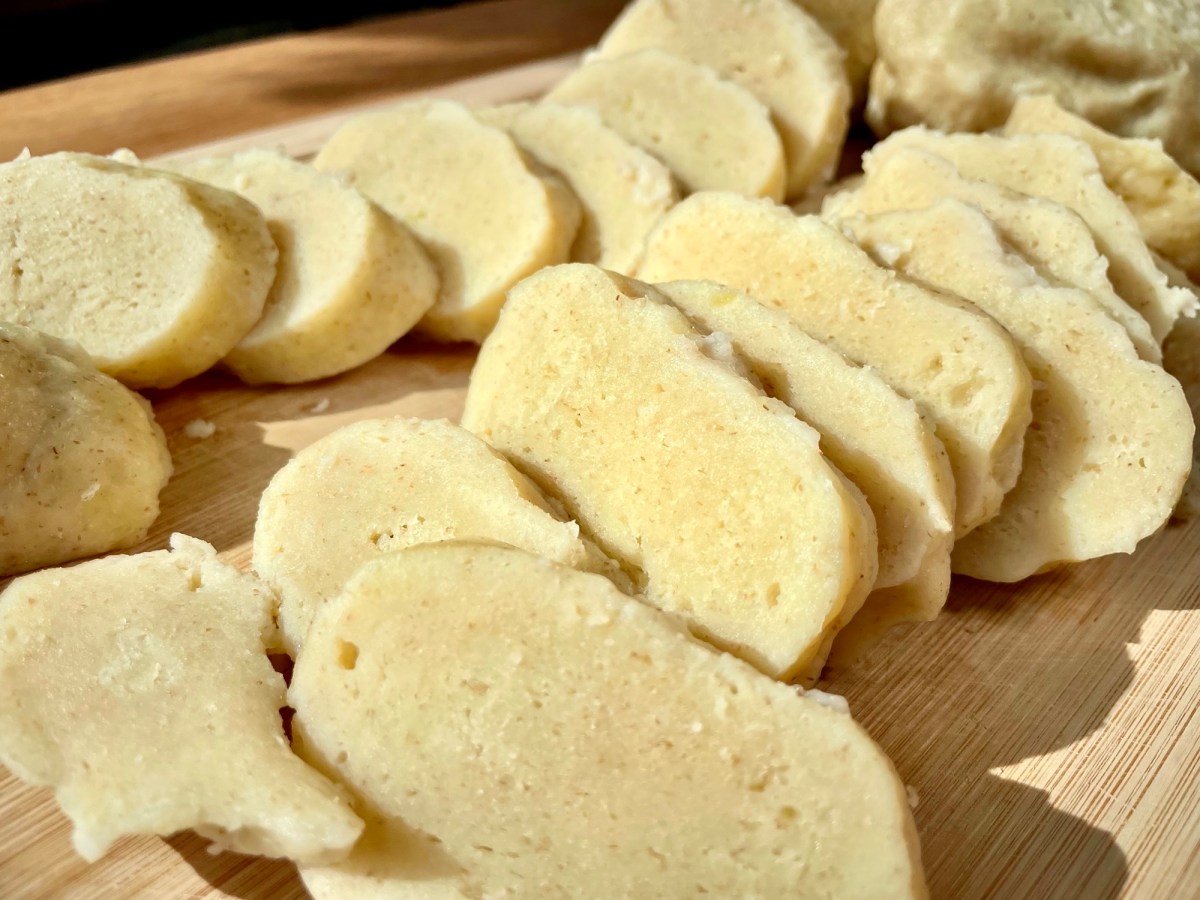
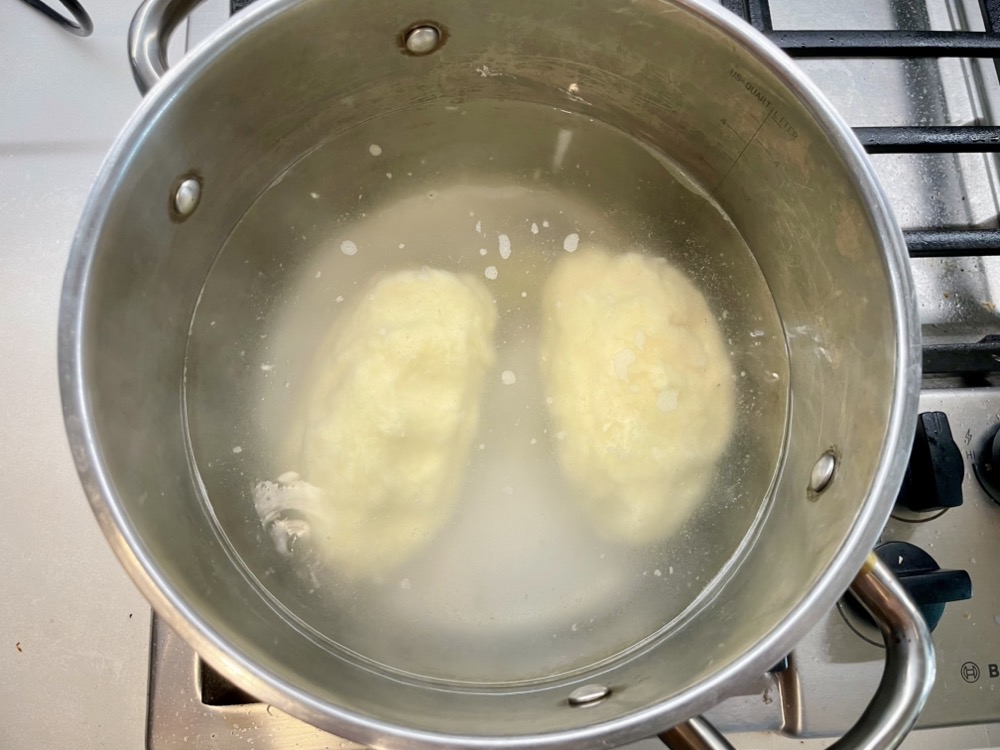
Divide the dough into 4 equal pieces (roughly 330g each), each formed into fat logs (see photo). Make sure the length of your log does not exceed the diameter of your pot. Don’t worry if they’re not perfect logs. You’ll hardly notice when you serve them as slices.

Lightly boil a pot of water. Gently lower 2 logs into the water (if you have a small pot, you may want to cook just one at a time to not overcrowd them). Let them boil for 25 – 30 minutes. Occasionally move them around in the water to ensure they are not stuck to the bottom of the pot. They will start to float when they’re roughly halfway cooked. To check if they’re cooked, you can slice off a piece and try it – you should get a dense bread-y texture with a little bounce.

Tip: To save time and if you’ve got extra pots and the stove space, boil them all at once in separate pots so they’re all ready at the same time!

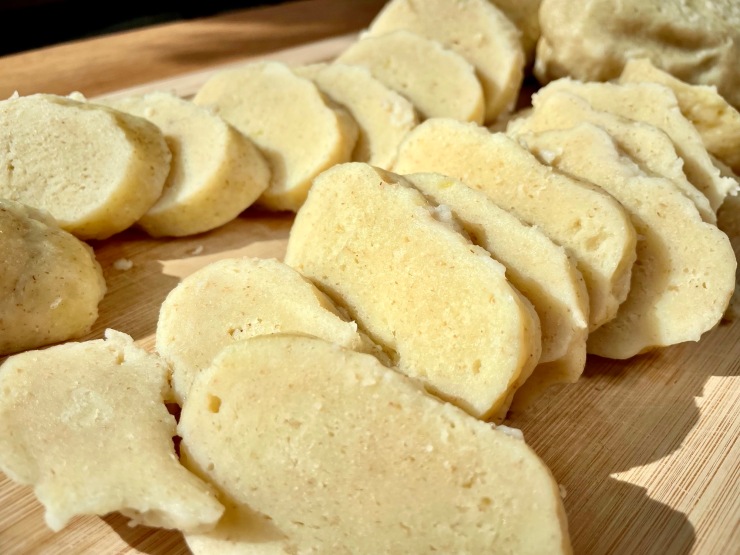
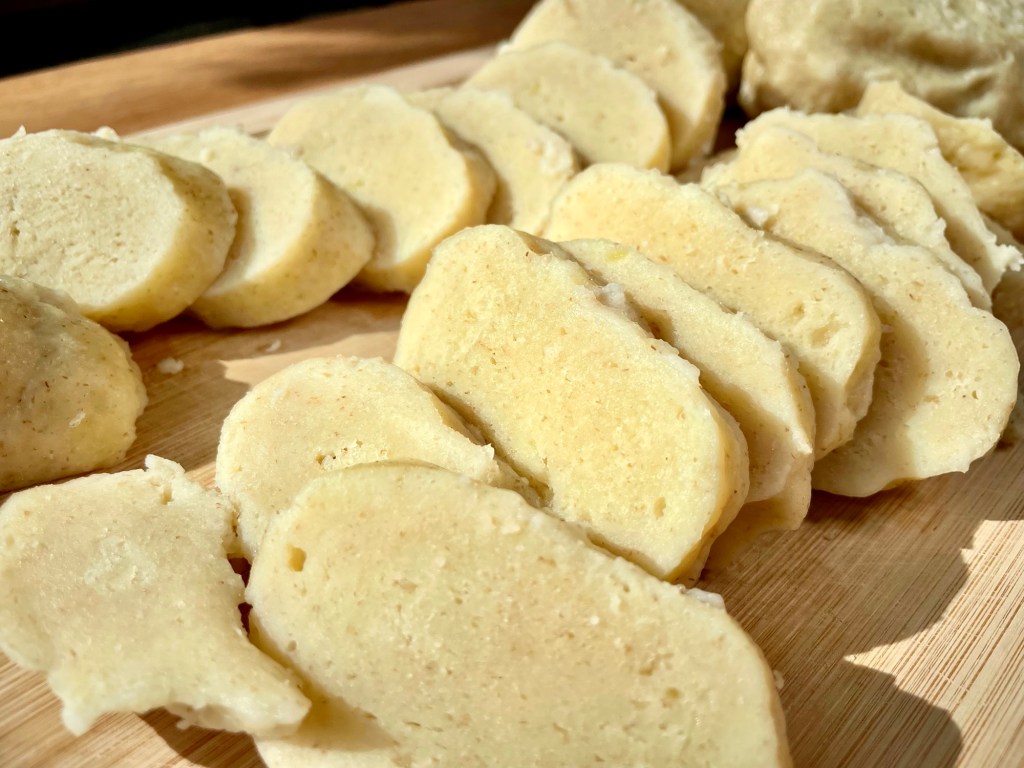
Once cooked, remove each log from the water onto a cutting board or drying rack and stab it a couple times with a chopstick or a fork to release the steam. Let it sit for a few minutes to slightly cool down, then slice into 1.5cm slices and serve!

Some examples of knedliky served in traditional Czech dishes:

Vepřo knedlo zelo.
Segedinsky goulash
Rajska

Summarized Recipe:

Czech Potato Dumplings – Bramborové Knedlíky

Date Published: Feb 13th, 2024 | Last Updated: Feb 13th, 2024
Author: Abby |Category: Czech, sides, breads, vegetarian
Serves: 8-10 | Prep time: 1 hour | Cook time: 1.5 hours total (20-30mins per dumpling)

Ingredients:

  • 900g yellow/Yukon gold potatoes
  • 260g (1.5 cups) all-purpose flour
  • 160g (just under 1 cup) cream of wheat/farina
  • 1/2 Tbsp cornstarch or potato starch
  • 1 tsp kosher/cooking salt
  • 1 egg, whisked

Directions:

  1. Prepare the potatoes (make ahead of time): Boil the potatoes with the skin on until soft and easily pierced with a fork (20-30mins). Drain the potatoes and let it cool down completely (1-2 hours, or overnight). Once cooled, peel and discard the potato skin and use a hand grater to finely grate the peeled potatoes into a bowl and set aside.
    • To save time, boil the potatoes the day before and let it cool overnight then peel and grate it the next day. Don’t peel or grate it too early or else the potato will start drying out.
  2. In a large mixing bowl, mix together the flour, cream of wheat, corn starch, and salt. Add in 1 whisked egg and the grated cooked potatoes. Use your hands or a stand mixer and work the dough until you get a smooth, soft, homogenous dough ball. Add a little extra flour if the dough is too sticky. Divide the dough into 4 equal pieces (roughly 330g each), each formed into fat logs (see photo). Make sure the length of your log does not exceed the diameter of your pot.
    • Don’t worry if they’re not perfect logs. You’ll hardly notice when you serve them as slices.
  3. Lightly boil a pot of water. Gently lower 2 logs into the water (if you have a small pot, you may want to cook just one at a time to not overcrowd them). Let them boil for 25 – 30 minutes. Occasionally move them around in the water to ensure they are not stuck to the bottom of the pot. They will start to float when they’re roughly halfway cooked. To check if they’re cooked, you can slice off a piece and try it – you should get a dense bread-y texture with a little bounce.
    • Tip: To save time and if you’ve got extra pots and the stove space, boil them all at once in separate pots so they’re all ready at the same time!
  4. Once cooked, remove each log from the water onto a cutting board or drying rack and stab it a couple times with a chopstick or a fork to release the steam. Let it sit for a few minutes to slightly cool down, then slice into 1.5cm slices and serve!

Babička’s Svíčková (Beef with Vegetable Cream Sauce)


Date Published: March 29th, 2021 | Last Updated: Dec 10th, 2024
Author: Abby |Category: mains
Serves: 4 | Prep time: 20 mins | Cook time: 3 hours

*Updated Dec 2024: Updated with new and improved photos and a link to the shortcut Instant Pot version of this recipe.

Jump to recipe |

This is Toby’s babička’s (grandmother’s) version of a svíčkova. It’s Toby’s all time favourite Czech dish that he learned from his babička when we first started cooking together so he could show me what authentic Czech cuisine is. There are many different ways to make this dish but this is the version Toby has grown up knowing and will forever be his favourite version. He has made this for me a handful of times over the years and its so damn delicious every time that we just had to add it to this website collection of recipes.

Toby always requests svickova every time we visit ❤️ – you have no idea how hard it is to a get a photo of babi smiling 😅

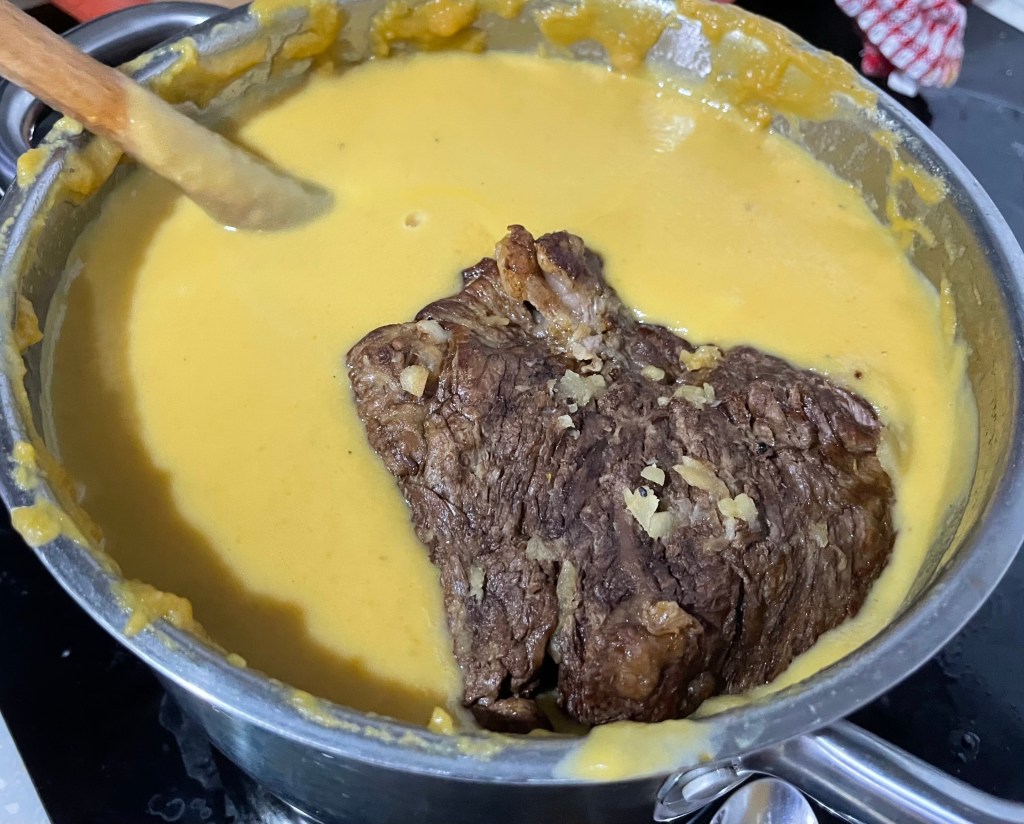
Svíčkova is one of Czech’s most popular dishes – I can see why! In its simplest terms, svíčkova is a steak dish served with knedlíky (Czech bread dumplings) and smothered in the most addicting creamy vegetable sauce made of parsnip, celeriac, carrots and onion. There’s a slight lemon-y tang to the sauce that balances out the heaviness of the cream. The knedlíky is my favourite part of this dish because the fluffy bread just soaks up all the delicious sauce. The sauce is meant to be on the runny side, rather than a thick gravy – I’m always super tempted to just drink the sauce as a soup every time. The sauce is the star of the show.

An old photo of when I first made this dish and had no idea how to plate it properly 😅

Although this dish is pretty straight forward, there are a few steps to it and it takes time for the flavours to slowly simmer out – allow about 3.5 hours total.

Updated Dec 10th, 2024: If you have an Instant Pot pressure cooker, I’ve just recently published a short cut version of this recipe, cutting down the cook time from 2.5 hours to 1 hour in total. Check it out here.

Here are two recipes for knedliky – one is a flour/bread base (houskové knedlíky) and the other is a denser potato base (bramborové knedlíky). Svíčkova is usually served with the flour based dumplings.

Anyways, without further ado, here’s the recipe! If you have any comments or suggestions, I’d love to hear from you in the comment section! You can follow me on instagram, youtube and facebook to see all the recipes I post!

Happy cooking!

Ingredients you’ll need:

  • 2 Tbsps (50g) + 1 Tbsp (25g) + 25g lard
  • 2 medium onions (~3 cups), diced
  • 1 whole celeriac (~3 cups), peeled and grated
    • Celeriac can come in a wide variety of sizes. The one we got was roughly bigger than a baseball: 370g before peeling and 300g after peeling which came up to about 3 cups once grated.
  • 2 medium sized parsnips (~3 cups), peeled and grated
  • 3 large carrots (~3 cups), peeled and grated
  • 4 cups (1 litre) beef stock
  • 10 whole black peppercorns
  • 10 whole dried allspice berries (or 1/2 tsp ground allspice)
  • 4 dried bay leaves
  • 1 tsp salt
  • 1 tsp ground black pepper
  • 600-700g good quality steak (ie scotch fillet, eye fillet, rump steak – the less tendon, the better)
  • 200ml thickened/heavy cream
  • 2 Tbsps lemon juice (or more to taste)
  • Serve with knedlíky (Czech bread dumplings) and wedges of lemon

Directions:

A quick note about preparing the vegetables:

  • The exact amount and size of vegetables aren’t important, as long as you roughly have equal amounts of the celeriac, parsnip, and carrots.
  • Celeriac is a root vegetable and comes in a variety of sizes and is essentially a starchy celery. It’s got a green and white rough and wrinkly exterior that you want to remove by trimming it off with a knife until you get to the softer inside and the entire celeriac is white.
  • After you’ve peeled the vegetables, you can either dice them into small cubes, or the quickest way is to grate them in a food processor.

(If you haven’t already, you can make the knedlíky dough first and while it proofs for an hour you can start making the svíčková.)

In a large pot on MED-HIGH heat, melt 50g of lard and add in the diced onions. Sauté the onions until lightly browned and translucent.

Turn the heat down to MEDIUM and add in the grated celeriac, parsnip and carrots. Add in another 25g of lard into the vegetables and mix it around (the extra lard prevents them from burning). Sauté until the vegetables begin to soften.

Preheat the oven to 200˚C (392˚F).

Once the vegetables begin to soften, add in the beef stock, black peppercorns, allspice berries, bay leaves, salt and pepper. Make sure you COUNT the number of peppercorns and allspice berries you add in because you’ll have to take them out later. Bring the heat up to HIGH until it boils, then turn the heat down to LOW and let it simmer for 2.5 hours with the lid on.

While the veg is simmering: In a pan or skillet on HIGH heat, melt another 25g of lard and sear the beef on all sides. Put the seared beef in the preheated oven for 20 minutes then remove it and add it to the pot of vegetables along with any juices and continue to let it simmer for the rest of the 2.5 hours with the lid on.

(You can take this time to cook the knedlíky if you haven’t already.)

Once the veg and meat have simmered for 2.5 hours, remove the meat, peppercorns, allspice berries and bay leaves. Set aside the meat and discard the spices. Use a stick blender and blend the veg/stock mixture until smooth. Strain the mixture into a bowl and discard any fibrous material.

Place the strained mixture back into the pot, add the thickened cream and lemon juice and mix. Salt and pepper to taste. Then add the beef back into the pot and heat until warmed. Remove the beef and slice.

Serve by placing a couple slices of beef with a few slices of knedlíky (Czech bread dumplings) on a plate and a generous portion of the sauce overtop. Enjoy!

Summarized Recipe:

Babíčka’s Svíčková (Beef with Vegetable Cream Sauce)

Date Published: March 29th, 2021 | Last Updated: Oct 16th, 2023
Author: Abby |Category: mains
Serves: 4 | Prep time: 20 mins | Cook time: 3 hours

Ingredients:

  • 2 Tbsps (50g) + 1 Tbsp (25g) + 25g lard
  • 2 medium onions (~3 cups), diced
  • 1 whole celeriac (~3 cups), peeled and grated
    • Celeriac can come in a wide variety of sizes. The one we got was roughly bigger than a baseball: 370g before peeling and 300g after peeling which came up to about 3 cups once grated.
  • 2 medium sized parsnips (~3 cups), peeled and grated
  • 3 large carrots (~3 cups), peeled and grated
  • 4 cups (1 litre) beef stock
  • 10 whole black peppercorns
  • 10 whole dried allspice berries (or 1/2 tsp ground allspice)
  • 4 dried bay leaves
  • 1 tsp salt
  • 1 tsp fresh ground pepper
  • 500-600g good quality steak (ie scotch fillet, eye fillet, rump steak – the less tendon, the better)
  • 200ml thickened/heavy cream
  • 2 Tbsps lemon juice (or more to taste)
  • Serve with knedlíky (Czech bread dumplings) and wedges of lemon

Directions:

  1. (If you haven’t already, you can make the knedlíky dough first and while it proofs for an hour you can start making the svíčková.)
  2. In a large pot on MED-HIGH heat, melt 50g of lard (~3 Tbsps) and add in the diced onions. Sauté the onions until lightly browned and translucent.
  3. Turn the heat down to MEDIUM and add in the grated celeriac, parsnip and carrots. Add in another 25g of lard into the vegetables and mix it around (the extra lard prevents them from burning). Sauté until the vegetables begin to soften.
  4. Preheat the oven to 200˚C (392˚F).
  5. Once the vegetables begin to soften, add in the beef stock, black peppercorns, allspice berries, bay leaves, salt and pepper. Make sure you COUNT the number of peppercorns and allspice berries you add in because you’ll have to take them out later. Bring the heat up to HIGH until it boils, then turn the heat down to LOW and let it simmer for 2.5 hours with the lid on.
  6. While the veg is simmering, in a pan or skillet on HIGH heat, melt another 25g of lard and sear the beef on all sides. Put the seared beef in the preheated oven for 20 minutes then remove it and add it to the pot of vegetables along with any juices and continue to let it simmer for the rest of the 2.5 hours with the lid on.
  7. (You can take this time to cook the knedlíky if you haven’t already.)
  8. Once the veg and meat have simmered for 2.5 hours, remove the meat, peppercorns, allspice berries and bay leaves. Set aside the meat and discard the spices. Use a stick blender and blend the veg/stock mixture until smooth. Strain the mixture into a bowl and discard any fibrous material.
  9. Place the strained mixture back into the pot, add the thickened cream and lemon juice and mix. Salt and pepper to taste. Then add the beef back into the pot and heat until warmed. Remove the beef and slice.
  10. Serve by placing a couple slices of beef with a few slices of knedlíky (Czech bread dumplings) on a plate and a generous portion of the sauce overtop. Enjoy!