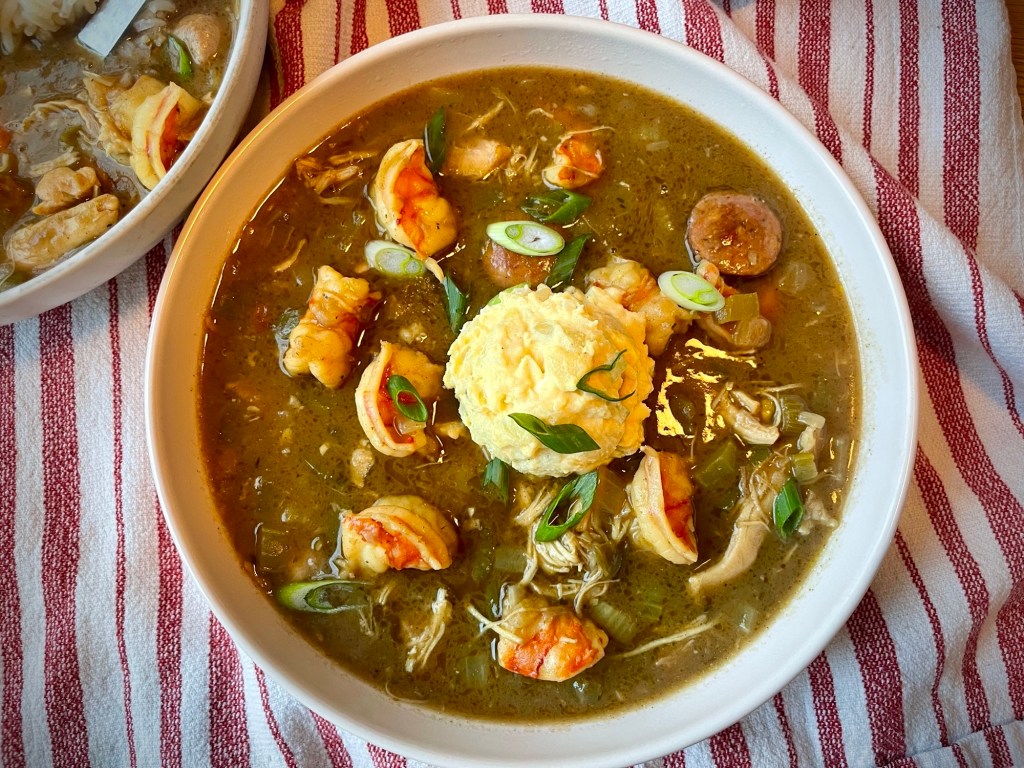
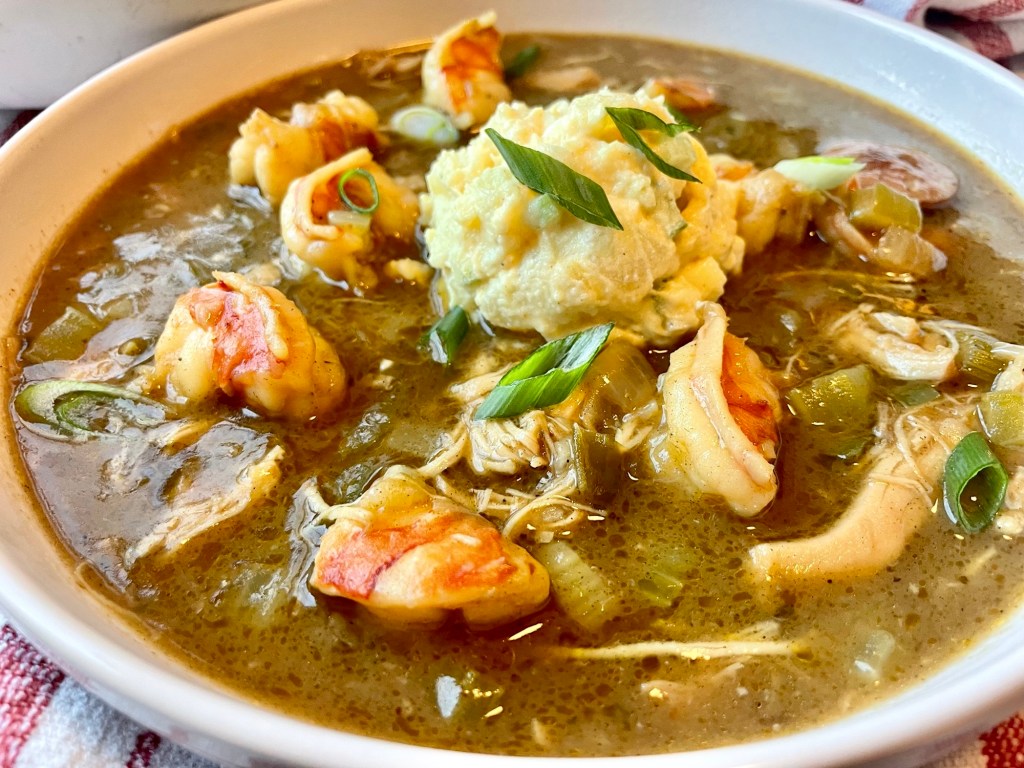
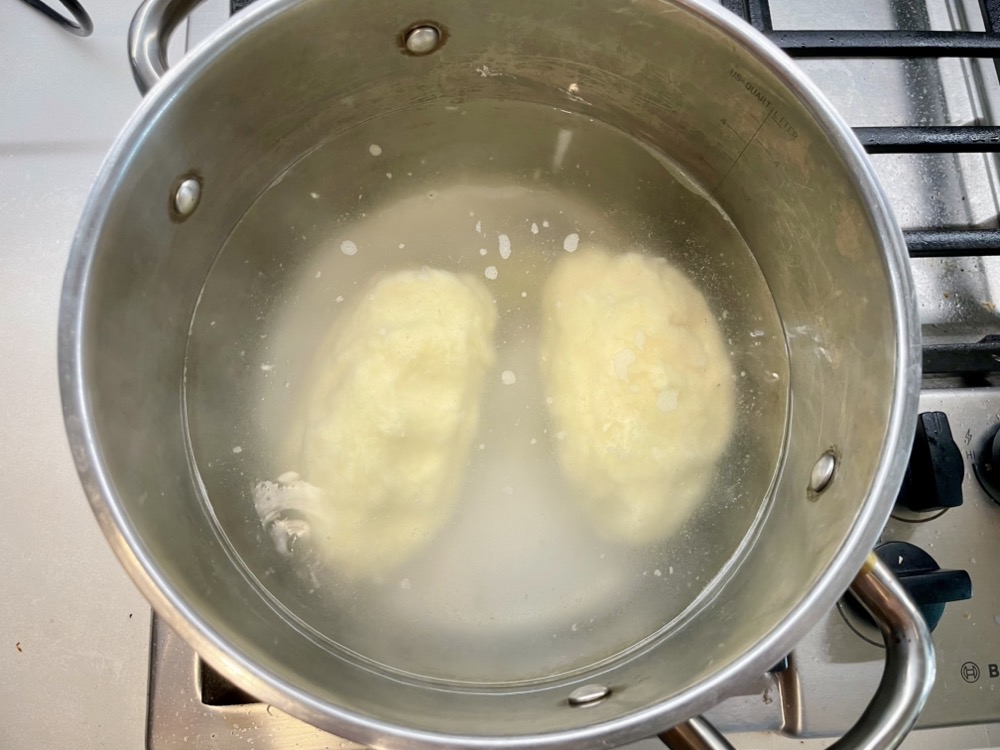
Cajun Chicken, Shrimp, and Andouille Sausage Gumbo


Date Published: Jan 16th, 2025 | Last Updated: Jan 16th, 2025
Author: Abby |Category: mains, soup
Serves: 6 | Prep time: 30 mins | Cook time: 2.5 hours

Jump to recipe |

The first time I ever had southern food was years ago and the unique rich earthy flavours drew me in from the very beginning. Making the perfect gumbo has been on my ‘to cook’ list for as long as I can remember and this past weekend I made it my mission to make the best gumbo I could through a lot of research and many hours in the kitchen. No corners were cut in the making of this recipe. Shrimp shells are saved to extract the seafood flavours into the broth, bacon fat is used for extra flavour, time and care is taken to create a beautiful deep caramelized roux, and not 1, not 2, but 3 proteins are used to make this the most flavourful and filling gumbo you can find! Even Toby, who usually doesn’t like gumbo, loved this version!

What is Gumbo?

Gumbo is a a southern style stew commonly made with chicken, Andouille sausage and/or seafood (spoiler: I use all 3 in my recipe). It’s actually the official state cuisine of Louisiana! What makes this stew unique is the deep earthy flavours that comes from a carefully watched browned roux, cajun seasoning, and filé powder (more on that below).

What is a roux?

The secret to a good gumbo starts at the beginning: with a good roux. A roux is a thickening agent made with a mixture of equal parts fat and flour. It is cooked slowly with constant care and whisking to add a richness to a dish. The colour of the roux will vary depending how long you cook it, ranging from white, brown, or dark brown. The longer you cook it, the more intense the flavour, but the less the thickening power. The same works vice versa – the less you cook it, the more thickening power but the blander the flavour. I like to go with a deep caramel colour to get the best of both worlds. You can use any kind of fat, but I chose to use bacon fat for the most flavour. You must constantly stir and watch the roux, as it can easily burn. This is a labour of love and can take up to 30-40 minutes, but it will be well worth it!

Special Gumbo Seasonings:

There are 2 special seasonings in this gumbo that I had to order specifically to make this as authentic as possible.

Cajun Seasoning – This is a blend of spices that adds salt, spiciness, and smokiness to the dish. Common go-to brands are “Tony Chachere’s Creole Seasoning” or “Slap Ya Mama Cajun Seasoning“. If you can’t find either around you, a quick Google search will yield many recipes to make a spice blend of your own.

Gumbo Filé / Filé Powder – Filé powder, also known as gumbo filé, is a spice that is made from dried ground leaves of the sassafras tree. This powder has dual purpose in a gumbo: as a thickening agent and also provides earthy flavours. The aroma is similar to that of sage and bay leaf. If you can’t find gumbo filé in a pinch, consider using cornstarch to thicken and some pinches of sage – it won’t be quite the same, but it’ll be similar enough. Some gumbo recipes will use okra as the thickening agent instead.

Creole vs Cajun – adding tomatoes is optional

Both Creole and Cajun food are Louisiana cuisines from different areas. Think of Creole as city-style cooking with more variety of ingredients at their disposal, whereas Cajun food can be considered country-style cooking with ingredients that are more limited to what can be harvested and what is available. Tomatoes is one of those ingredients that is commonly seen in Creole food, but not Cajun. Across my hours of research, I found tomatoes incorporated into many recipes, but also just as equal number of comments omitting the tomatoes to tailor to the authenticity of cajun rustic flavours. I’ve chosen to exclude tomatoes in my recipe to bring out the earthy flavours more, but feel free to add a can of crushed tomatoes if you want it more tangy.

Served with rice vs potato salad?

Gumbo is commonly served with white rice, but I’ve seen multiple people get a heaping blob of cold potato salad right in the middle of their hot soup. This mix of hot and cold seemed so bizarre, but I gave it a go and it wasn’t half bad! The cold potato salad cuts into the heavy rich flavours of the gumbo and actually works quite well. Toby wasn’t as much of a fan of the combination as I was. 😅

Anyways, without further ado, here’s the recipe! If you have any comments or suggestions, I’d love to hear from you in the comment section! You can follow me on instagram, youtube and facebook to see all the recipes I post!

Happy cooking!

Ingredients you’ll need:

  • Broth:
    • 4 cups chicken stock
    • 4 cups beef stock
    • 1 kg/2 lbs of raw shrimp with shells, deveined without heads
  • 1 Tbsp + 2/3 cup bacon fat (you can use vegetable oil or lard instead, but the bacon fat adds extra flavour)
  • 340g/12 oz (1 package) Andouille sausage, sliced
  • 1 cup all-purpose flour
  • 3 cloves garlic, minced
  • 1 large yellow onion, diced
  • 1 green bell pepper/capsicum, diced
  • 1 bunch celery, diced
  • 4 large chicken thighs, bone-in (with or without)
  • 1 Tbsp Cajun seasoning (I use ‘Slap Ya Mama’ brand, find it here)
  • 1/2 tsp dried thyme
  • 3 bay leaves
  • 4 tsps gumbo filé/filé powder
  • 2 Tbsps Worcestershire sauce
  • Garnish: sliced spring onions
  • Serve with: white rice or potato salad

Directions:

Prepare the broth:

In a small pot on MED heat, add in 4 cups of chicken stock and 4 cups of beef stock.

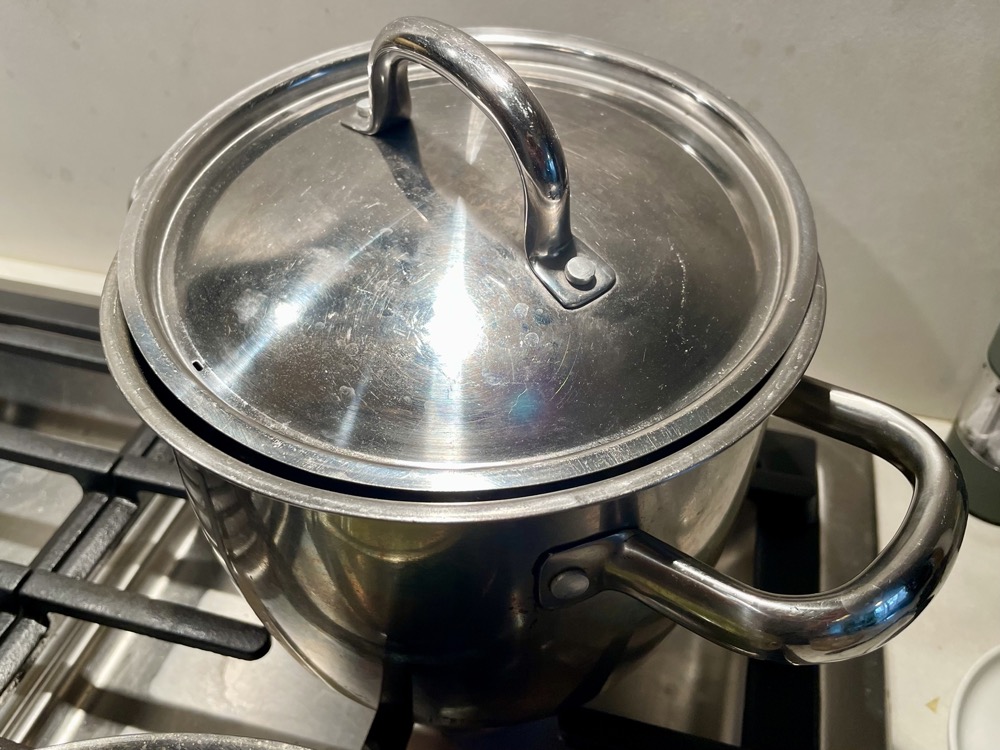
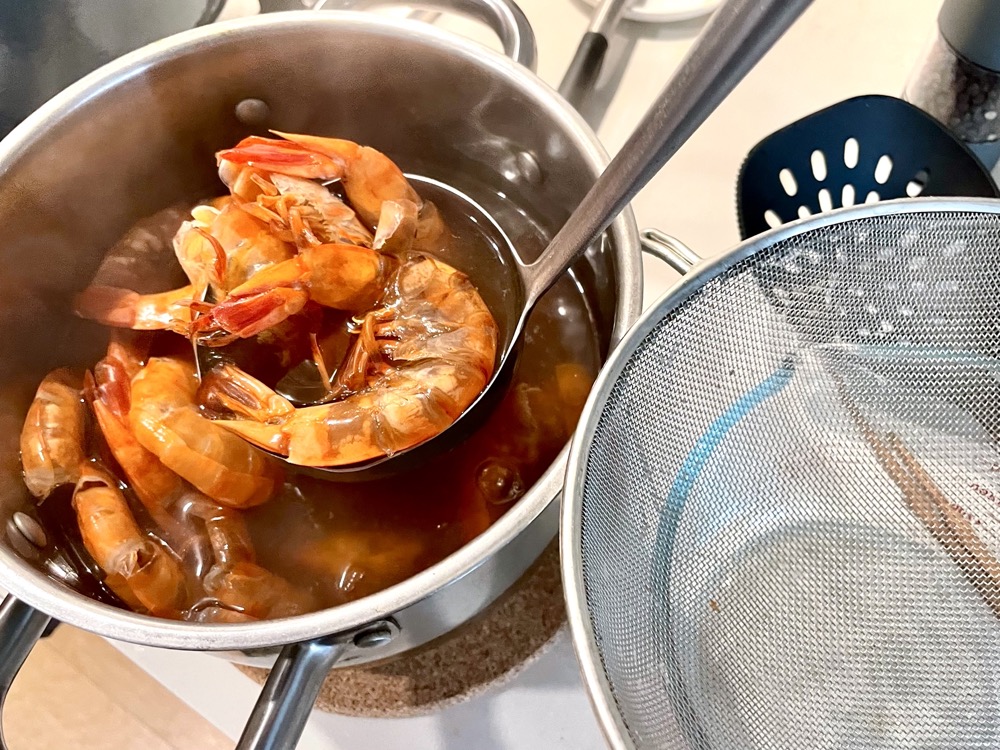
Remove the shells from the shrimp and add the shells into the stock. Let it simmer on the lowest heat for at least 20 minutes (or longer) while you prepare the rest of the ingredients. Keep the lid on with a small crack to avoid evaporation and boiling over.

Brown the sausage:

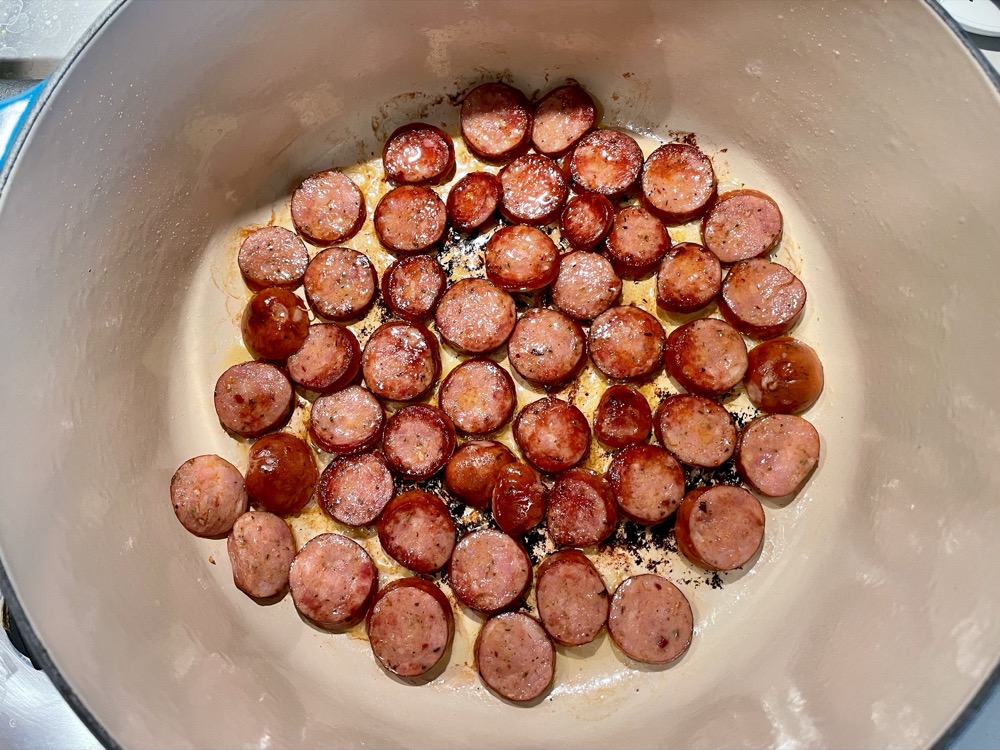
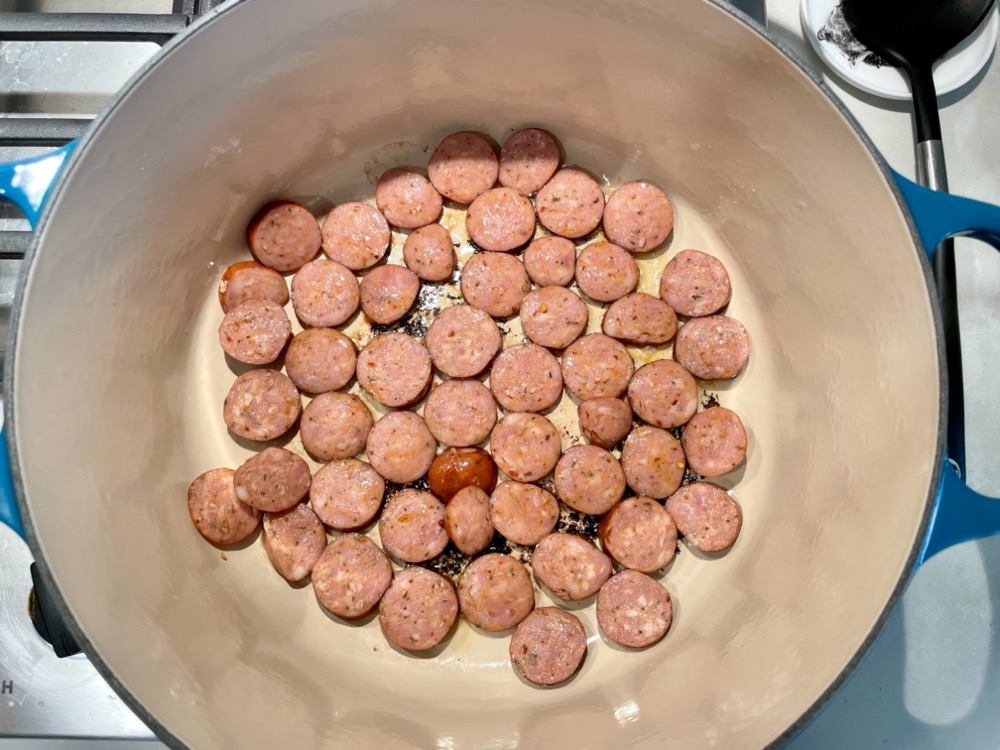
In a large soup pot on MED-HIGH heat, melt 1 Tbsp of bacon fat and sear the sliced Andouille sausages on both sides until browned (you may want to do this in batches if you can’t fit all the sausage in a single layer). Once browned, remove the sausage onto a plate and set aside.

Make the roux:

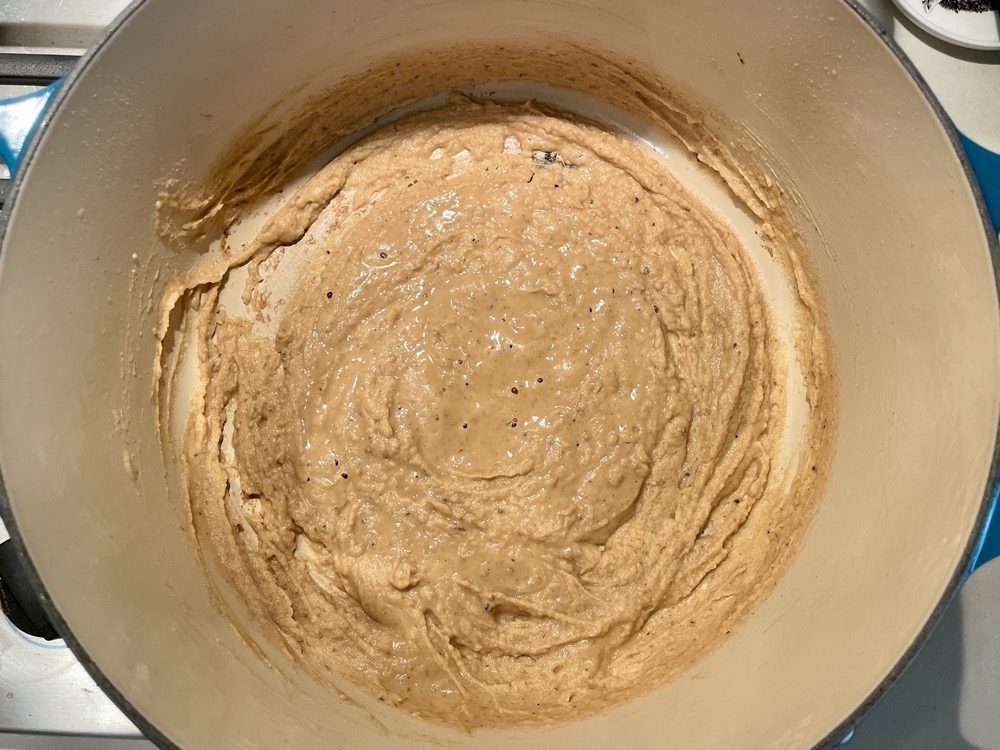
Using the same pot on MED heat with the residual oil from the sausage, melt in the 2/3 cup bacon fat. Sprinkle 1 cup of flour over the melted fat and whisk the flour until combined. Continue to whisk regularly until you get a thick paste that is the colour of milk chocolate (this step is tedious and can take 30-40 minutes, take your time, don’t let the roux burn!).

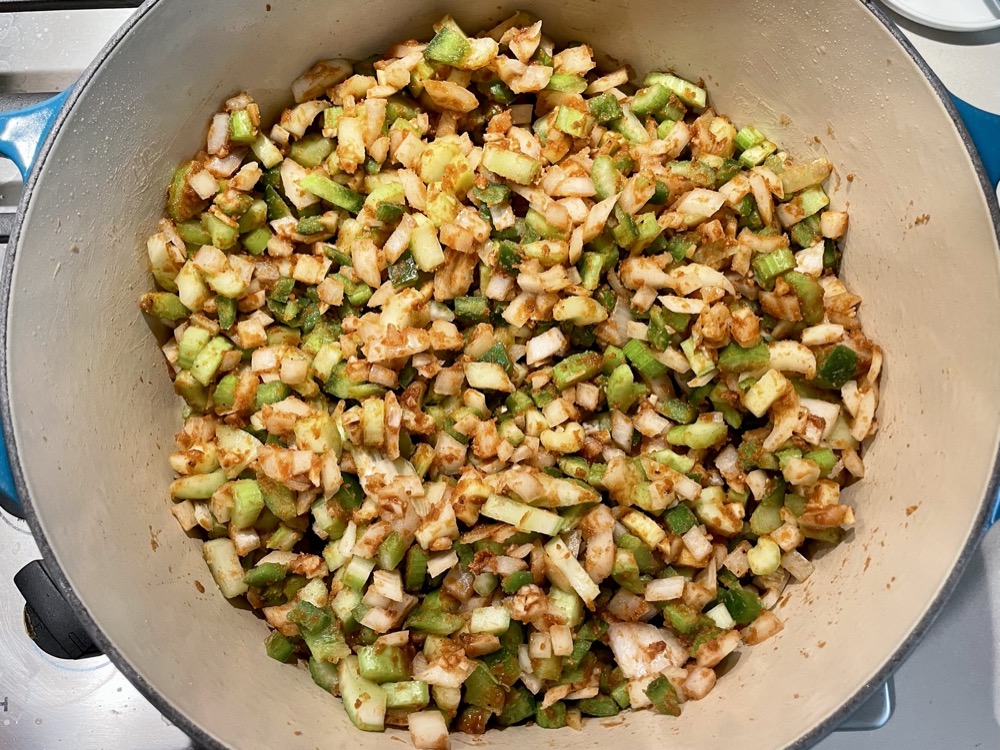
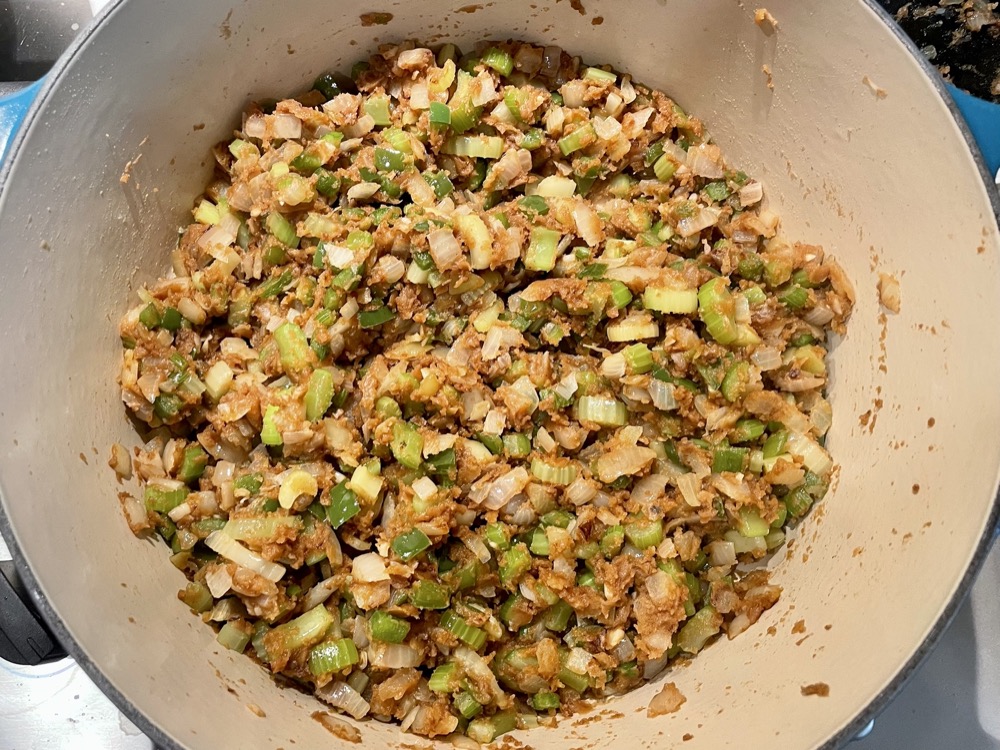
Once your roux reaches the desired colour, add in the vegetables: 3 cloves minced garlic, onion, green pepper, and celery. Sauté until the vegetables are soft (8-10 minutes), making sure you regularly scrape the bottom of the pot so nothing sticks. You can put a lid on the let the vegetables sweat to speed up the softening process.

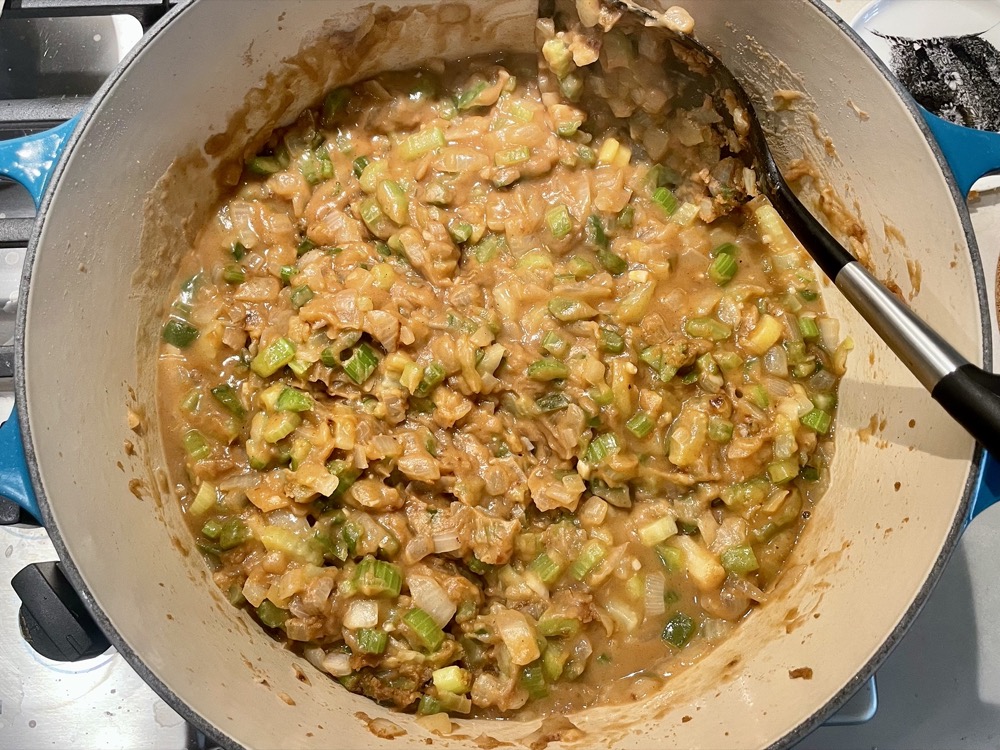
When the vegetables have softened, strain the shrimp shells from the broth (in step 1) and slowly pour the broth into the vegetable/roux mixture while stirring at the same time so no clumps form.

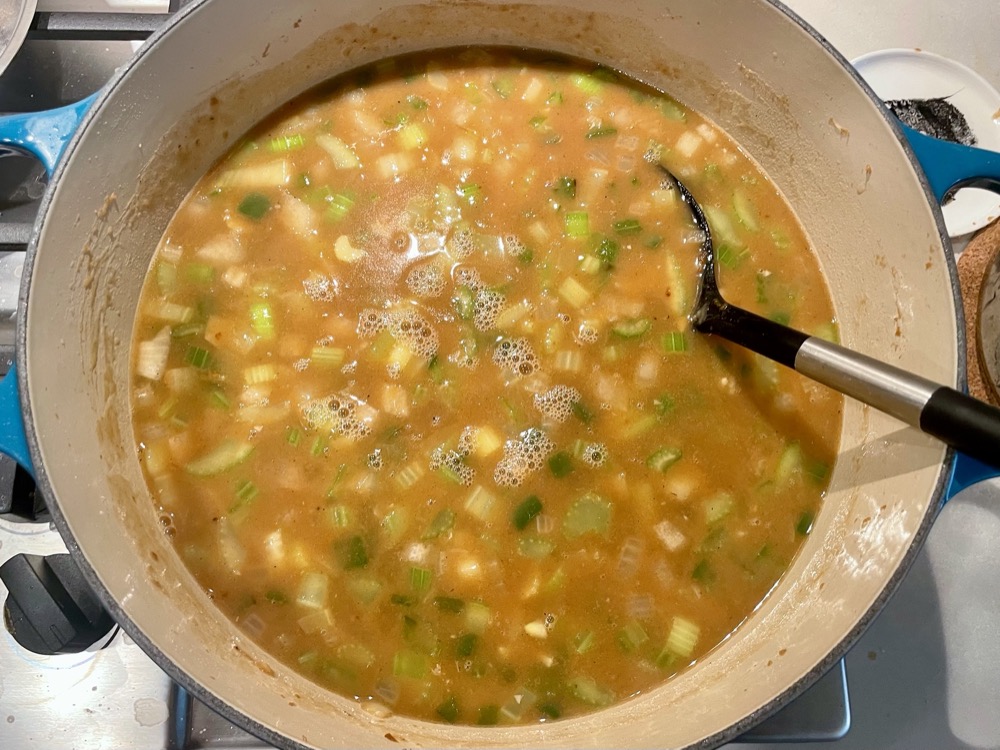
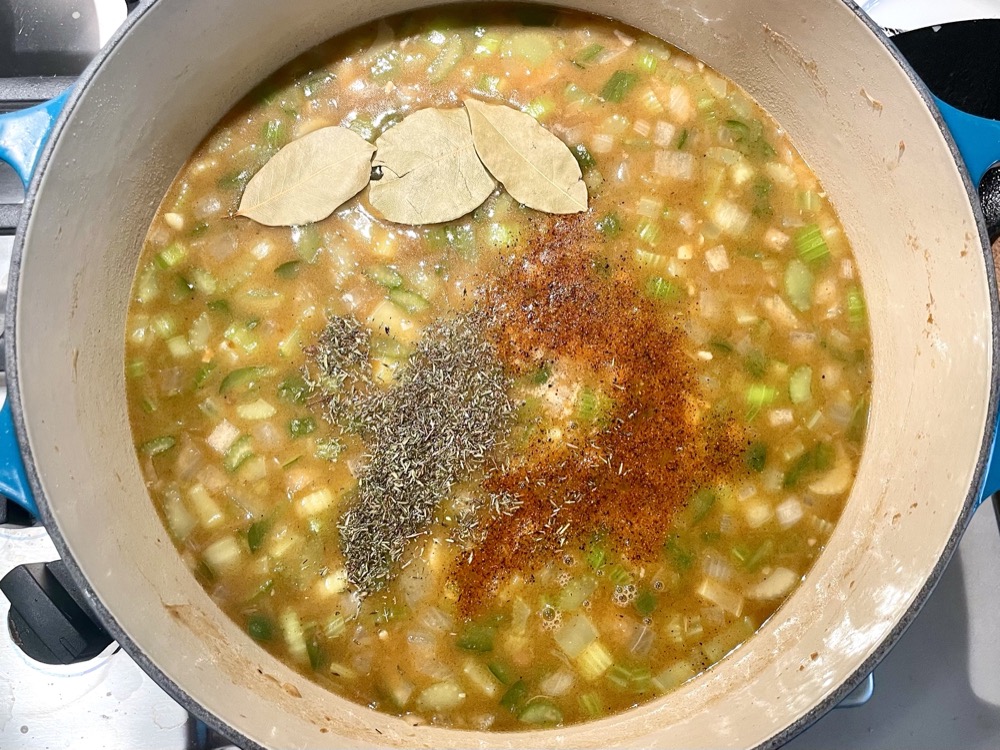
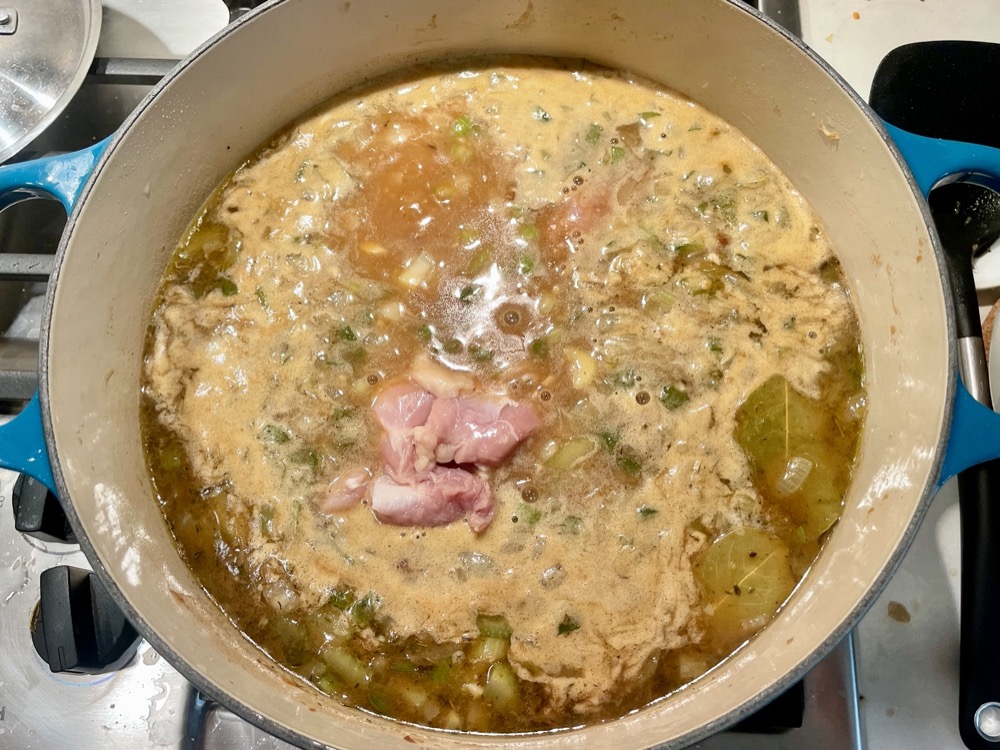
Let the soup come to a simmer then add in 1 Tbsp Cajun seasoning, 1/2 tsp dried thyme, 3 bay leaves, and 4 bone-in chicken thighs. Simmer for 1 hour, partially covered with a lid.

After 1 hour, remove the chicken into a bowl and add in the cooked sausage (from step 2) back into the soup along with 2 tsps of gumbo filé. Simmer for another 15 minutes.

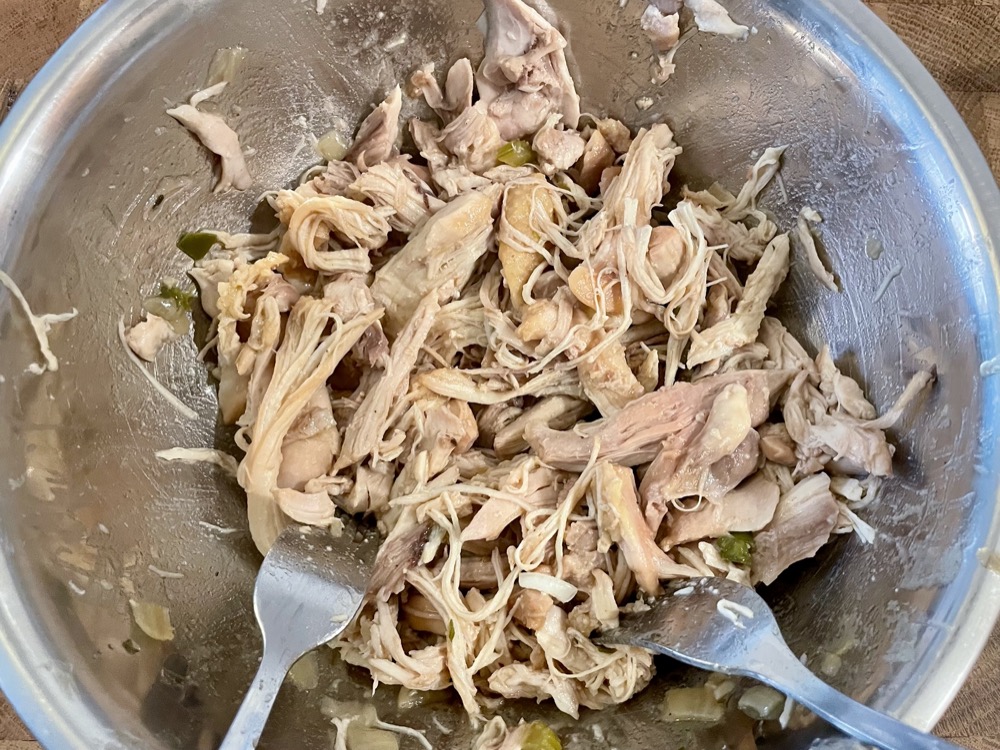
While the soup continues to simmer, use two forks to shred the cooked chicken and remove the bone and skin (if present).

When the timer is up, add the shredded chicken back into the soup with the de-shelled raw shrimp (from step 1), and 2 more tsps of gumbo filé. Let it simmer for another 3-5 minutes until the shrimp is fully cooked, then turn off the heat.

Add in 2 Tbsps Worcestershire sauce, stir, and taste. Adjust salt, pepper, Cajun seasoning or Worcestershire as needed.

Done! Serve with rice or potato salad. Enjoy!

Summarized Recipe:

Cajun Chicken, Shrimp, and Andouille Sausage Gumbo

Date Published: Jan 16th, 2025 | Last Updated: Jan 16th, 2025
Author: Abby |Category: mains, soup
Serves: 6 | Prep time: 30 mins | Cook time: 2.5 hours

Ingredients:

  • Broth:
    • 4 cups chicken stock
    • 4 cups beef stock
    • 1 kg/2 lbs of raw shrimp with shells, deveined without heads
  • 1 Tbsp + 2/3 cup bacon fat (you can use vegetable oil or lard instead, but the bacon fat adds extra flavour)
  • 340g/12 oz (1 package) Andouille sausage, sliced
  • 1 cup all-purpose flour
  • 3 cloves garlic, minced
  • 1 large yellow onion, diced
  • 1 green bell pepper/capsicum, diced
  • 1 bunch celery, diced
  • 4 large chicken thighs, bone-in (with or without)
  • 1 Tbsp Cajun seasoning (I use ‘Slap Ya Mama’ brand, find it here)
  • 1/2 tsp dried thyme
  • 3 bay leaves
  • 4 tsps gumbo filé/filé powder
  • 2 Tbsps Worcestershire sauce
  • Garnish: sliced spring onions
  • Serve with: white rice or potato salad

Directions:

  1. Prepare the broth:
    • In a small pot on MED heat, add in 4 cups of chicken stock and 4 cups of beef stock.
    • Remove the shells from the shrimp and add the shells into the stock. Let it simmer on the lowest heat for at least 20 minutes (or longer) while you prepare the rest of the ingredients. Keep the lid on with a small crack to avoid evaporation and boiling over.
  2. Brown the sausage:
    • In a large soup pot on MED-HIGH heat, melt 1 Tbsp of bacon fat and sear the sliced Andouille sausages on both sides until browned (you may want to do this in batches if you can’t fit all the sausage in a single layer).
    • Once browned, remove the sausage onto a plate and set aside.
  3. Make the roux:
    • Using the same pot on MED heat with the residual oil from the sausage, melt in the 2/3 cup bacon fat. Sprinkle 1 cup of flour over the melted fat and whisk the flour until combined. Continue to whisk regularly until you get a thick paste that is the colour of milk chocolate (this step is tedious and can take 30-40 minutes, take your time, don’t let the roux burn!).
  4. Once your roux reaches the desired colour, add in the vegetables: 3 cloves minced garlic, onion, green pepper, and celery. Sauté until the vegetables are soft (8-10 minutes), making sure you regularly scrape the bottom of the pot so nothing sticks. You can put a lid on the let the vegetables sweat to speed up the softening process.
  5. When the vegetables have softened, strain the shrimp shells from the broth (in step 1) and slowly pour the broth into the vegetable/roux mixture while stirring at the same time so no clumps form.
  6. Let the soup come to a simmer then add in 1 Tbsp Cajun seasoning, 1/2 tsp dried thyme, 3 bay leaves, and 4 bone-in chicken thighs. Simmer for 1 hour, partially covered with a lid.
  7. After 1 hour, remove the chicken into a bowl and add in the cooked sausage (from step 2) back into the soup along with 2 tsps of gumbo filé. Simmer for another 15 minutes.
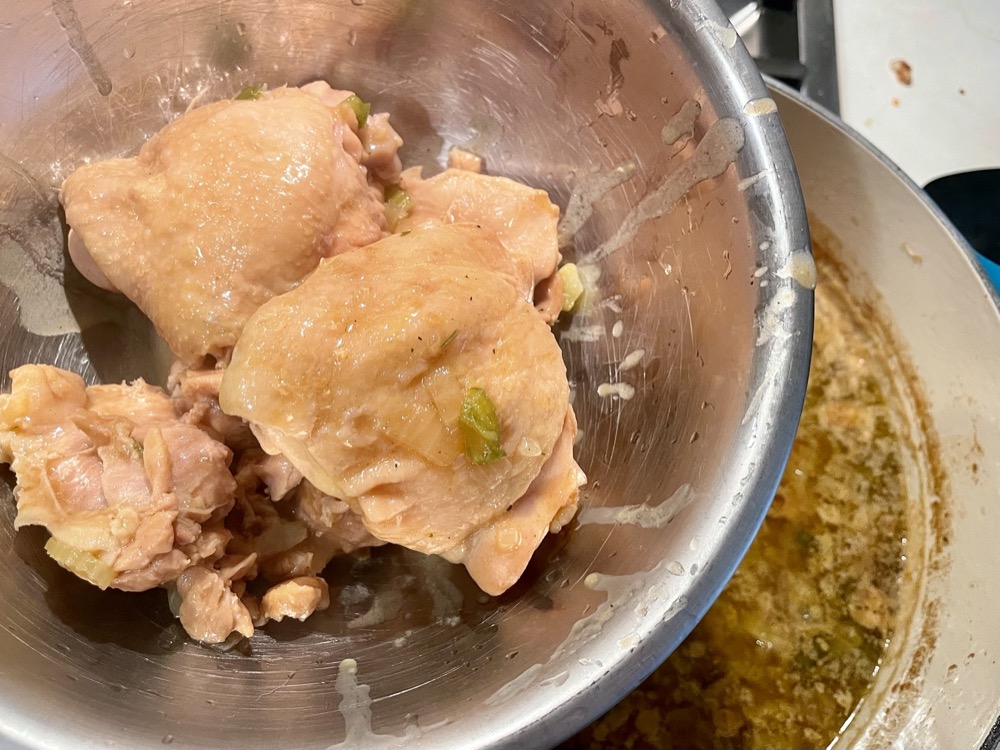
  8. While the soup continues to simmer, use two forks to shred the cooked chicken and remove the bone and skin (if present). When the timer is up, add the shredded chicken back into the soup with the de-shelled raw shrimp (from step 1), and 2 more tsps of gumbo filé. Let it simmer for another 3-5 minutes until the shrimp is fully cooked, then turn off the heat.
  9. Add in 2 Tbsps Worcestershire sauce, stir, and taste. Adjust salt, pepper, Cajun seasoning or Worcestershire as needed. Done! Serve with rice or potato salad. Enjoy!

Czech Tomato Gravy (over Sliced Beef) – Rajská Omáčka


Date Published: May 28th, 2024 | Last Updated: May 28th, 2024
Author: Abby |Category: mains, Czech, easy
Serves: 4 | Prep time: 15 mins | Cook time: 45 mins

Jump to recipe |

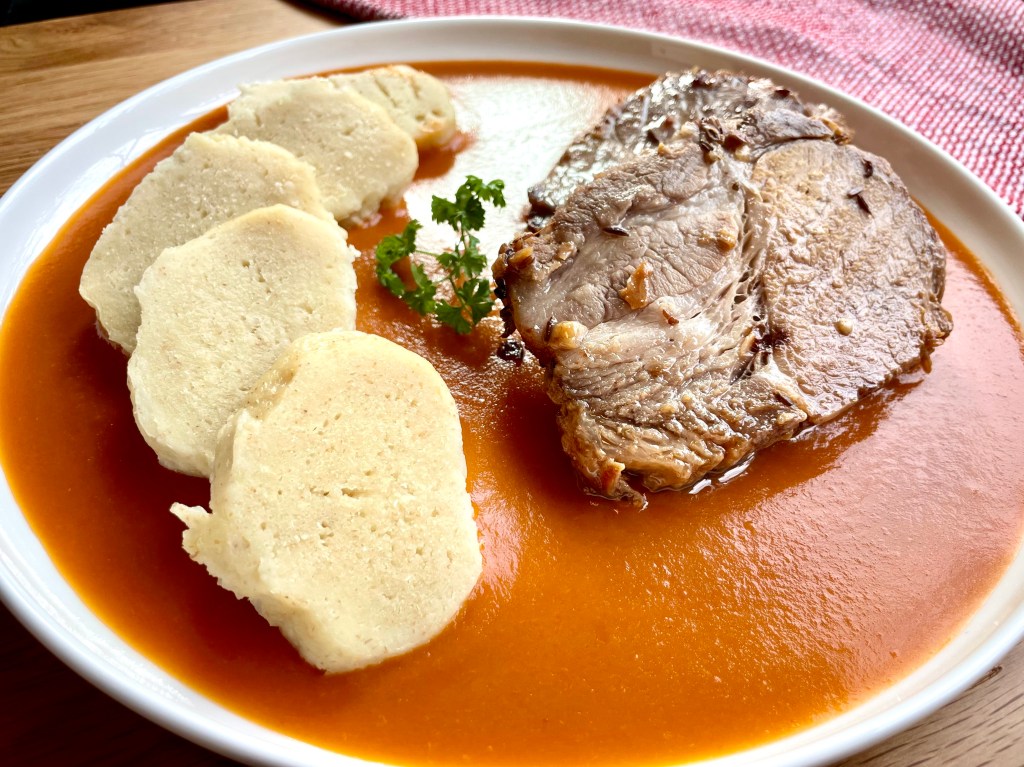
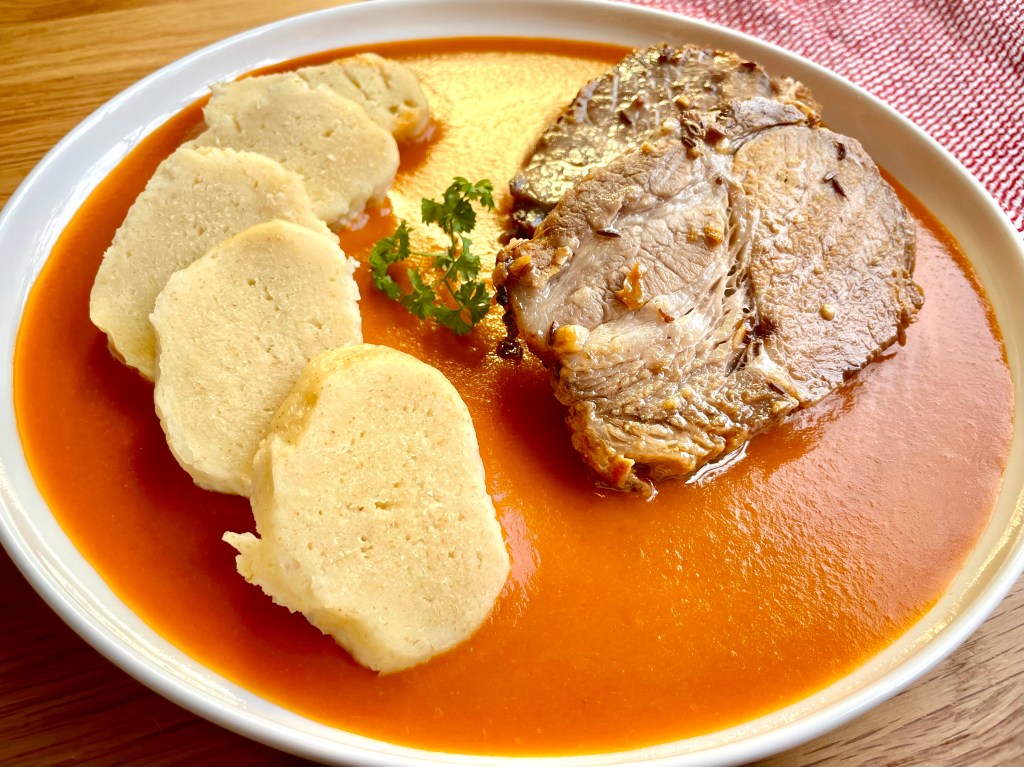
I’m told that “Rajská Omáčka” (pronounced: rays-ka oma-ch-ka) directly translates to “tomato sauce”. This is one of Toby’s childhood dishes that his grandmother used to make him. Every time he says it, all I hear is “racecar” 😅. To me, this sauce pretty much tastes like a tomato soup without the herbs, but it’s served over slices of beef or pork and some knedliky (Czech dumplings – potato or bread). There are other versions of this sauce that vary in tartness and sweetness (like my original attempts), but I’ve written this recipe to be as similar to babička’s as possible.

You have no idea how hard it is to get a picture of babička standing still and smiling 😅

To be honest, this is not my favourite dish, but its got nostalgic value for Toby so I set out to try and make it for him. After a couple of attempts from online and cookbook recipes, he said it “just wasn’t like babička’s” but he couldn’t tell me what was wrong with it 😒. So I put it on the back burner up until our recent trip to Czech a couple weeks ago and we asked babička to show us how she makes it. Her version was a little less tomato-y than the versions I made and although it’s still not my favourite dish, seeing Toby’s happy face slurping down his second helping of the tomato sauce was enough reason for me to add this recipe to the collection.

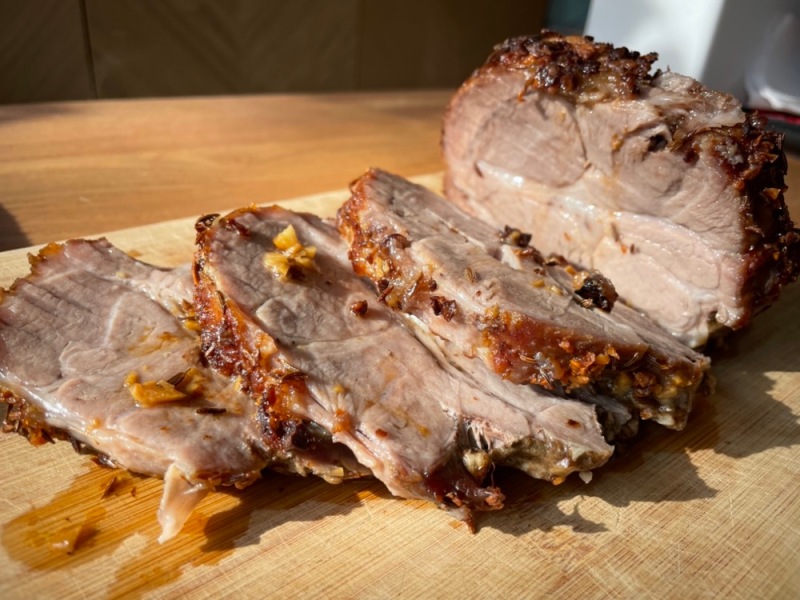
This recipe is easy and cooks up quickly. You can pair the sauce with whatever meat you wish including a vepro, but for a quick lunch or dinner with minimal effort, I’ve included the instructions to cook a rump roast in a pressure cooker in 30 minutes and it’ll be ready around the same time as the sauce.

Anyways, without further ado, here’s the recipe! If you have any comments or suggestions, I’d love to hear from you in the comment section! You can follow me on instagram, youtube and facebook to see all the recipes I post!

Happy cooking!

Recipes that pair well together with this sauce:

Ingredients you’ll need:

  • Beef:
    • 900g (2 lbs) rump roast/chuck steak
    • 1/2 Tbsp salt
    • Enough water to cover the beef
  • Sauce:
    • 1 Tbsp pork lard
    • 2 medium (~800g) onions, diced
    • 1 large can (793g/28oz) diced tomatoes
    • 1/4 cup all-purpose flour
    • 4 cups (1L) beef broth
    • 1 tsp salt
    • 1.5 Tbsps granulated sugar
    • 5 black peppercorns
    • 3 allspice berries
    • 2 bay leaves
    • 2-4 Tbsps heavy cream (to taste)
  • To serve: with slices of knedliky/Czech dumplings (potato or bread)

Directions:

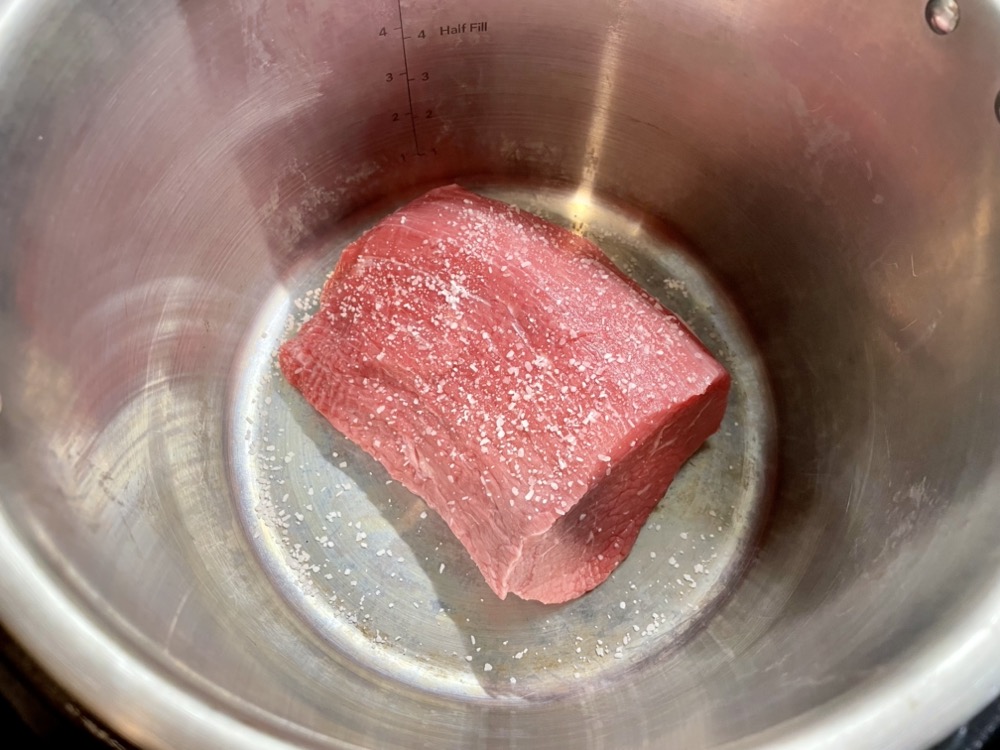
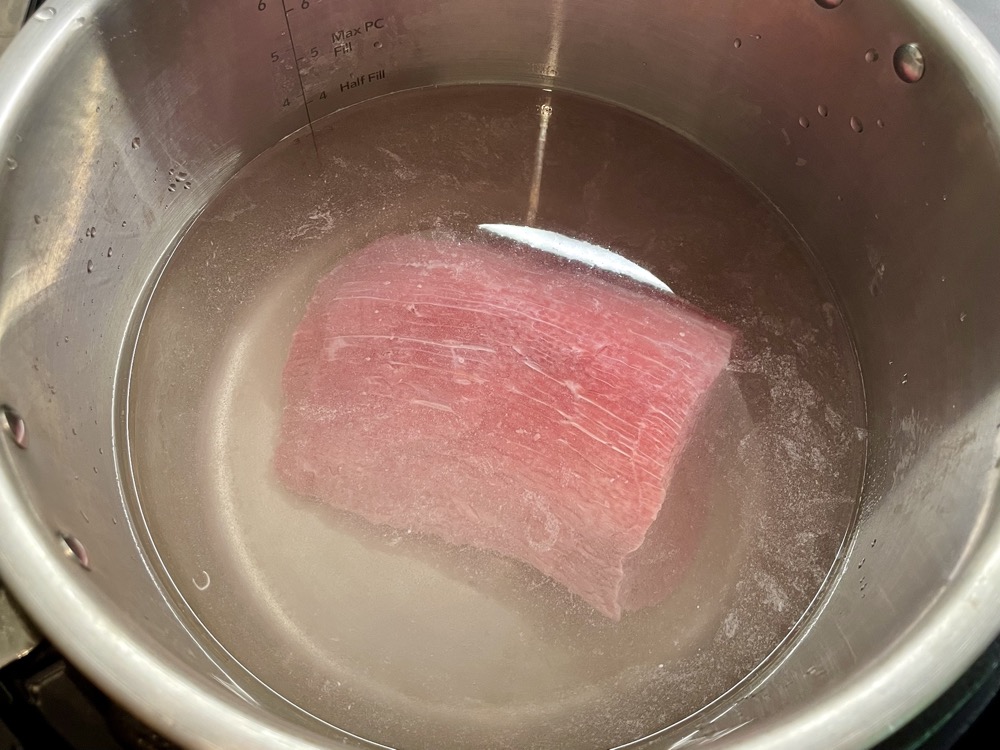
A. Cook the beef: in a pressure cooker/instant pot: *This step is optional. You can serve this tomato sauce with whatever type of meat you like, but if you’re looking for a quick cooked beef, the instant pot will be the fastest.

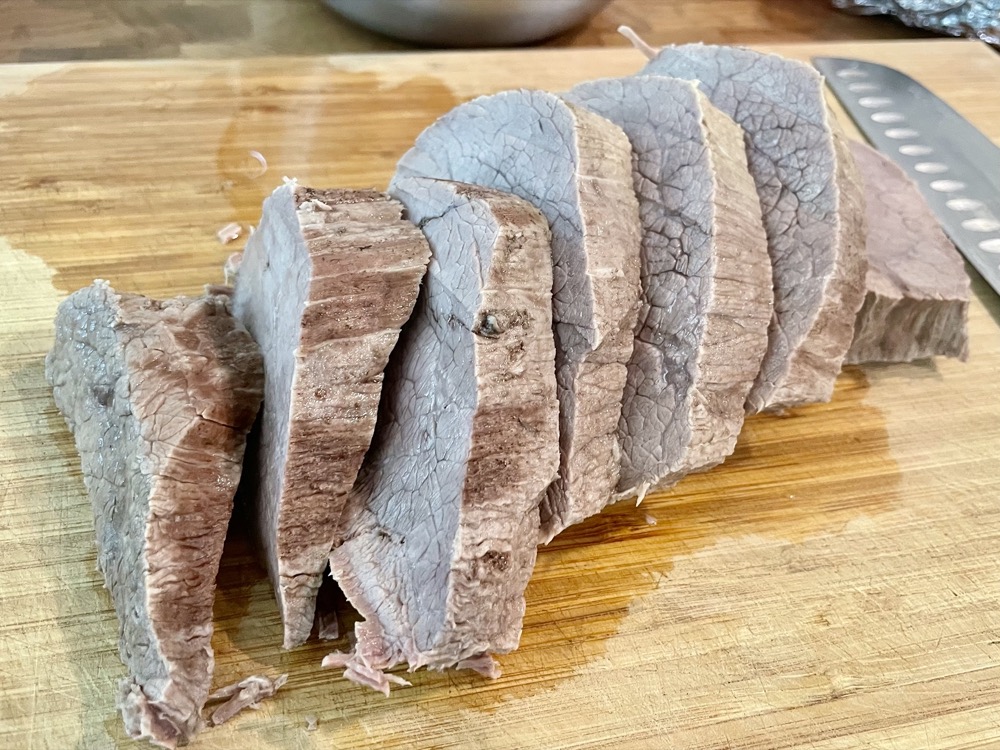
Add the beef, salt and enough water to cover the meat. Put the lid on and cook on HIGH PRESSURE for 30 minutes, then quick release. Remove the beef from the liquid and let it rest for 10 mins before slicing.

  • Alternatively if you don’t have a pressure cooker, you can boil the beef in water over the stove until the beef is tender. This will take about 2 hours.

B. Make the sauce while the beef is cooking:

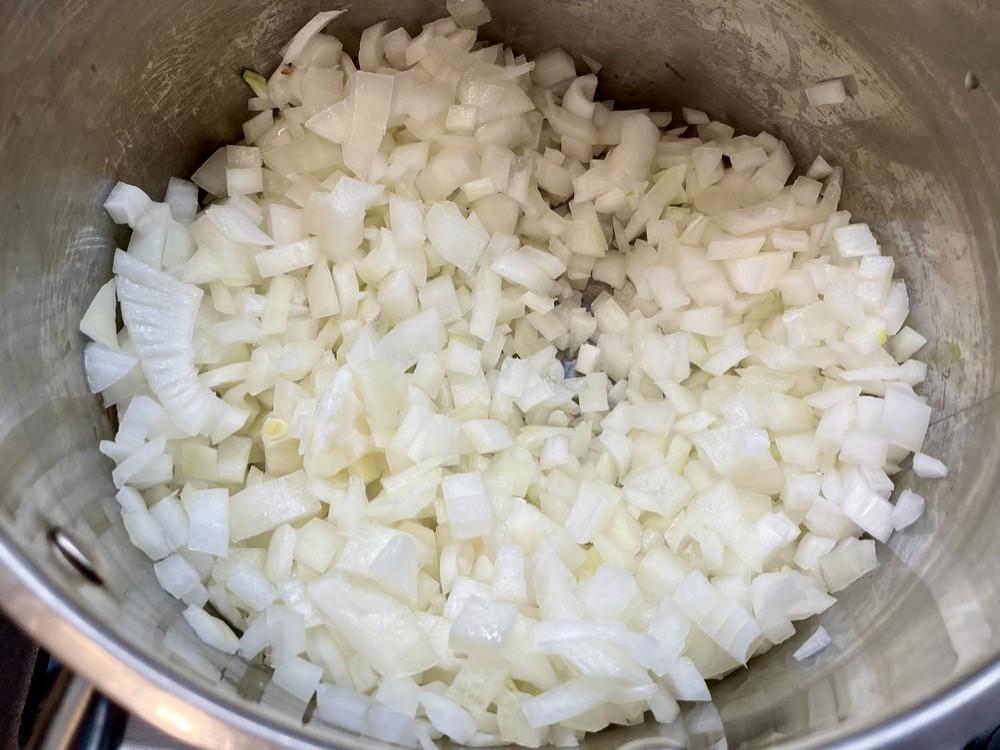
In a small pot on MED-HIGH heat, melt the pork lard and sauté the onions for 5-8 minutes until softened.
Add the salt, sugar, black peppercorns, allspice berries, and bay leaves. Stir for 2 mins until the sugar has fully dissolved.

Next, add in the flour and stir for 2 minutes until well incorporated and the flour cooks a little. Make sure to scrape the bottom of the pan so nothing sticks.

Pour in the beef broth and stir everything together. Bring the heat up to HIGH to let it come to a boil then back down to MED heat and let it boil for 8-10 minutes until the sauce thickens into a gravy-like consistency.

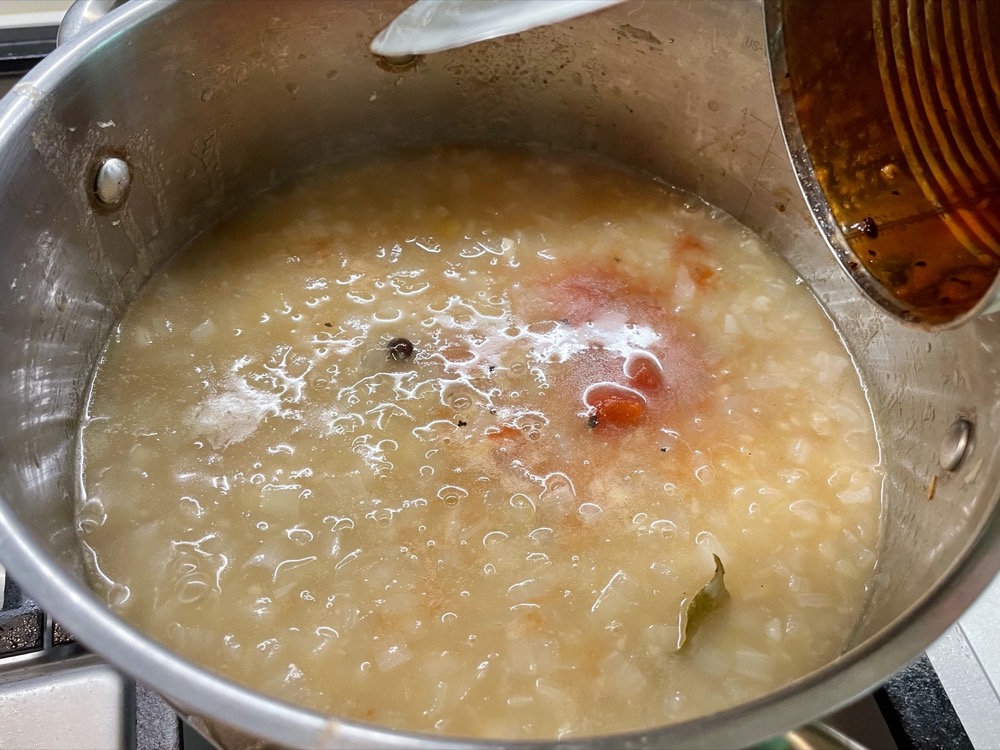
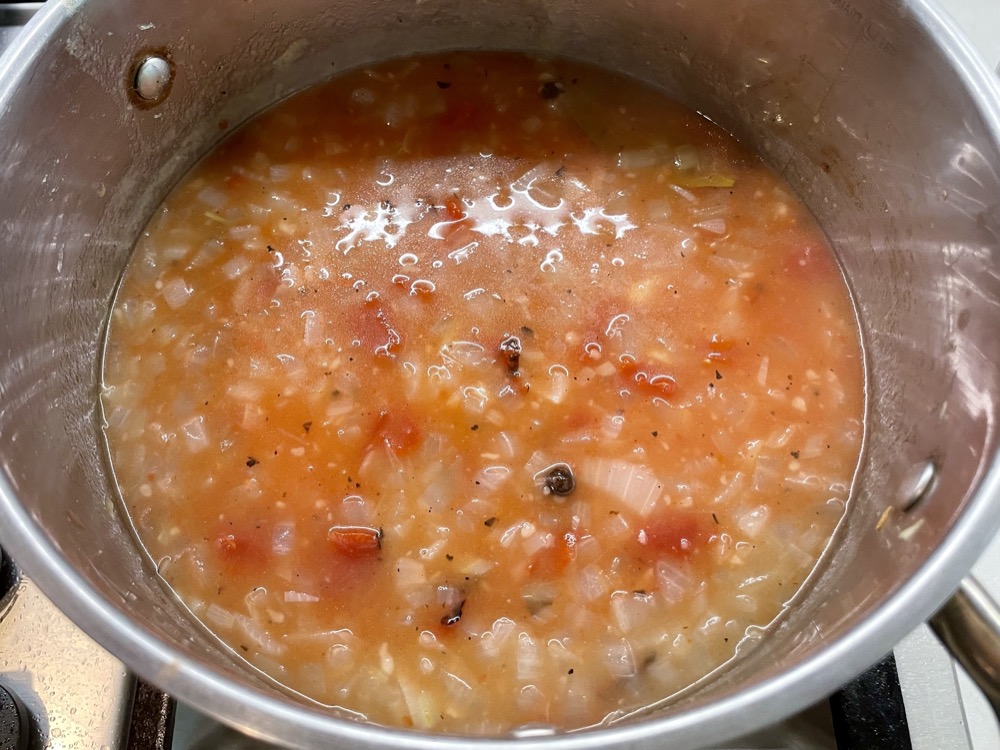
Once it has thickened, pour in the can of diced tomatoes including all of the liquid. Bring the sauce to a boil again, then simmer on MED heat for 20 minutes.

Note: Make sure to stir and scrape the bottom of the pot every few minutes so nothing sticks to the bottom.

After 20 minutes, turn off the heat and discard the bay leaves and all spice berries.

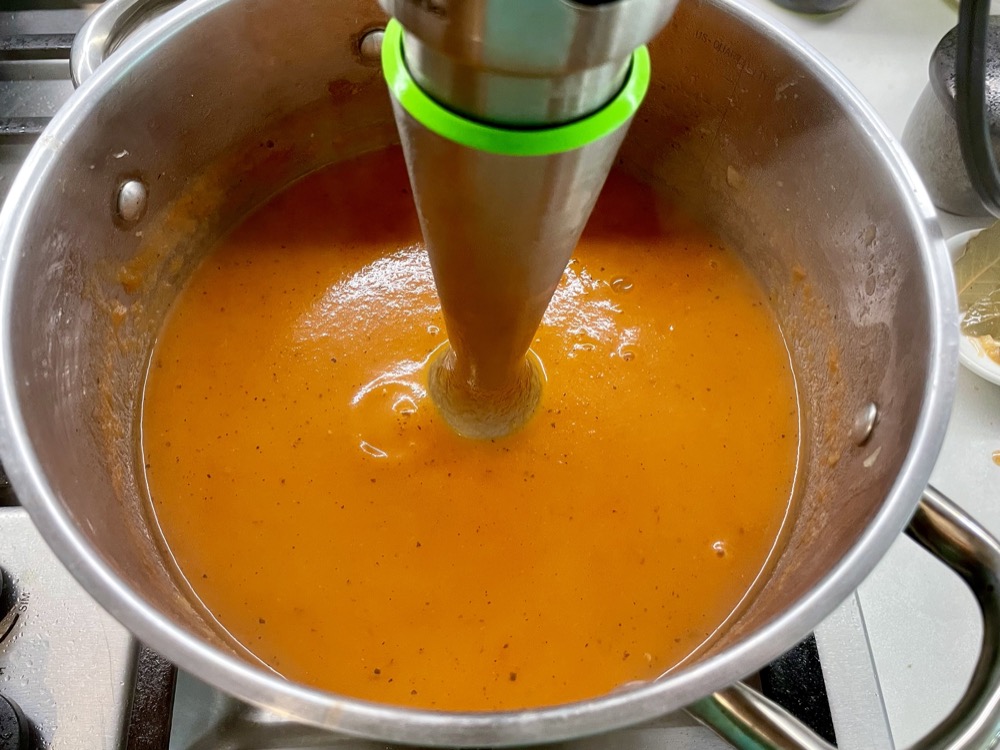
Next, use a stick blender (or transfer the sauce to a blender) and blend the sauce until you get a smooth texture. If you want an extra smooth sauce, strain it through a fine sieve.

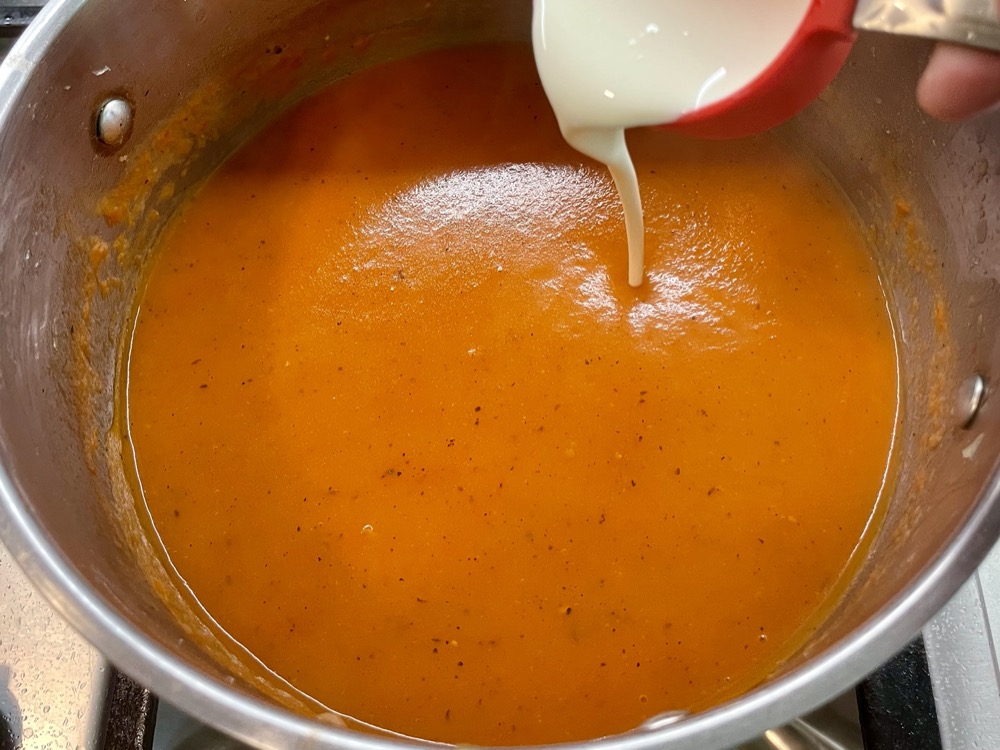
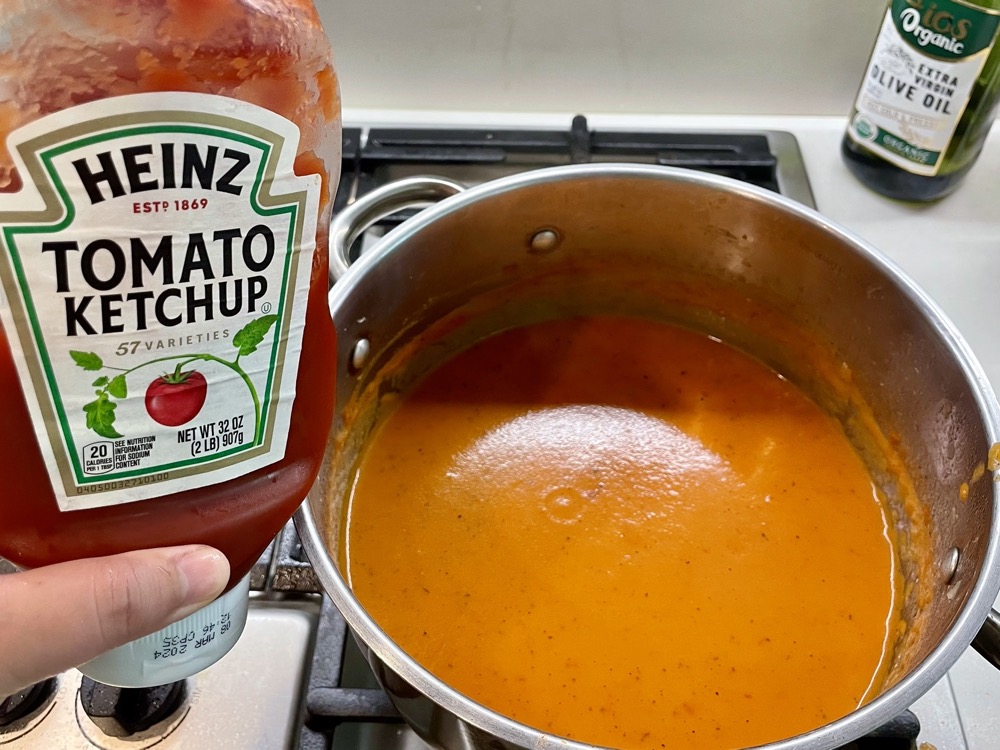
Add 2 Tbsps of heavy cream then taste and adjust salt, sugar, or more heavy cream as needed. (Babička will sometimes add in some ketchup if she wants it more tart and tomato-y 🤫.)

Serve the sauce ladled over the cooked sliced beef and a few knedliky. Enjoy!

Summarized Recipe:

Czech Tomato Gravy (over Sliced Beef) – Rajská Omáčka

Date Published: May 28th, 2024 | Last Updated: May 28th, 2024
Author: Abby |Category: mains, Czech, easy
Serves: 4 | Prep time: 15 mins | Cook time: 45 mins

Ingredients:

  • Beef:
    • 900g (2 lbs) rump roast/chuck steak
    • 1/2 Tbsp salt
    • Enough water to cover the beef
  • Sauce:
    • 1 Tbsp pork lard
    • 2 medium (~800g) onions, diced
    • 1 large can (793g/28oz) diced tomatoes
    • 1/4 cup all-purpose flour
    • 4 cups (1L) beef broth
    • 1 tsp salt
    • 1.5 Tbsps granulated sugar
    • 5 black peppercorns
    • 3 allspice berries
    • 2 bay leaves
    • 2-4 Tbsps heavy cream (to taste)
  • To serve: with slices of knedliky/Czech dumplings (potato or bread)

Directions:

A. Cook the beef: in a pressure cooker/instant pot: Add the beef, salt and enough water to cover the meat. Put the lid on and cook on HIGH PRESSURE for 30 minutes, then quick release. Remove the beef from the liquid and let it rest for 10 mins before slicing.

  • Alternatively if you don’t have a pressure cooker, you can boil the beef in water over the stove until the beef is tender. This will take about 2 hours.
  • *This step is optional. You can serve this tomato sauce with whatever type of meat you like, but if you’re looking for a quick cooked beef, the instant pot will be the fastest.

B. Make the sauce while the beef is cooking:

  1. In a small pot on MED-HIGH heat, melt the pork lard and sauté the onions for 5-8 minutes until softened.
  2. Add the salt, sugar, black peppercorns, allspice berries, and bay leaves. Stir for 2 mins until the sugar has fully dissolved.
  3. Next, add in the flour and stir for 2 minutes until well incorporated and the flour cooks a little. Make sure to scrape the bottom of the pan so nothing sticks.
  4. Pour in the beef broth and stir everything together. Bring the heat up to HIGH to let it come to a boil then back down to MED heat and let it boil for 8-10 minutes until the sauce thickens into a gravy-like consistency.
  5. Once it has thickened, pour in the can of diced tomatoes including all of the liquid. Bring the sauce to a boil again, then simmer on MED heat for 20 minutes.
    • Note: Make sure to stir and scrape the bottom of the pot every few minutes so nothing sticks to the bottom.
  6. After 20 minutes, turn off the heat and discard the bay leaves and all spice berries. Next, use a stick blender (or transfer the sauce to a blender) and blend the sauce until you get a smooth texture. If you want an extra smooth sauce, strain it through a fine sieve.
  7. Add 2 Tbsps of heavy cream then taste and adjust salt, sugar, or more heavy cream as needed. (Babička will sometimes add in some ketchup if she wants it more tart and tomato-y 🤫.)
    Serve the sauce ladled over the cooked sliced beef and a few knedliky. Enjoy!
Korean Sweet Pickled Radish (“Chicken-mu”)


Date Published: April 16th, 2024 | Last Updated: April 16th, 2024
Author: Abby |Category: Asian, easy, sides, vegetarian, quick, healthy, low cal, vegetarian
Serves: 6 | Prep time: 10 mins | Cook time: marinate for 2 days

Jump to recipe |

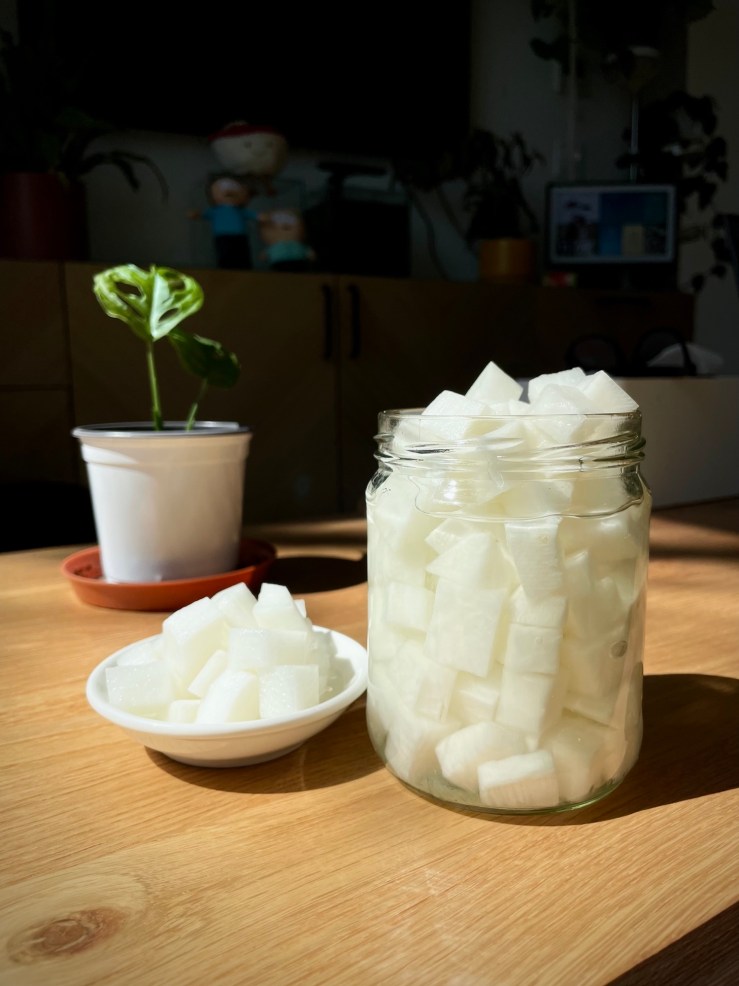
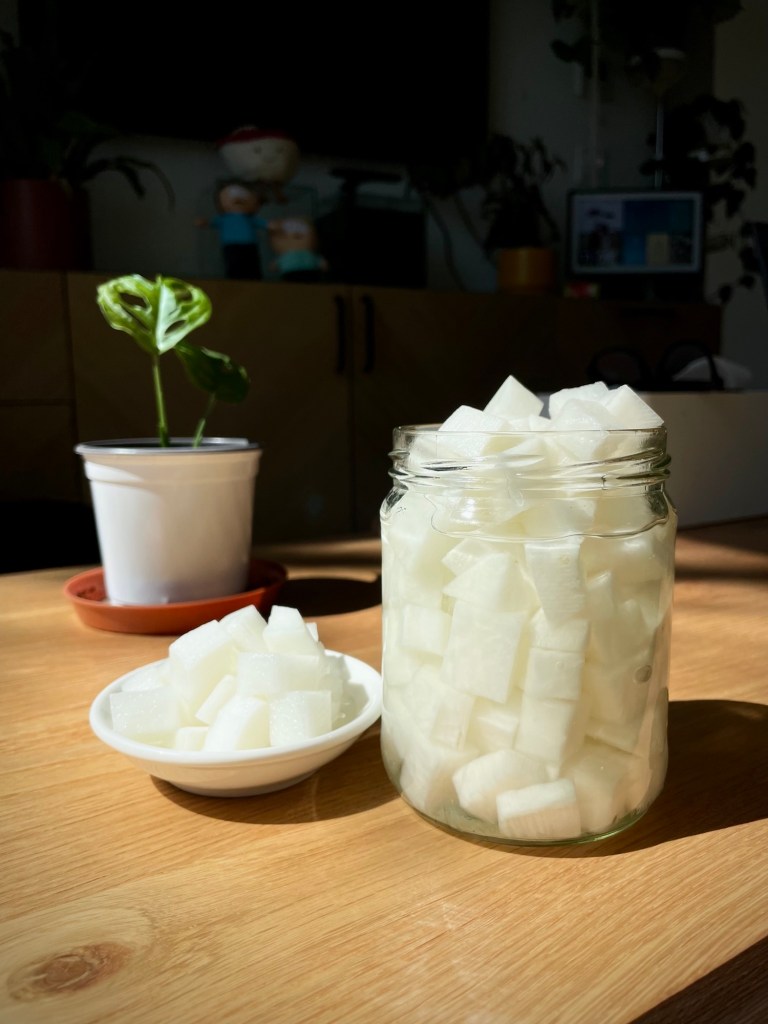
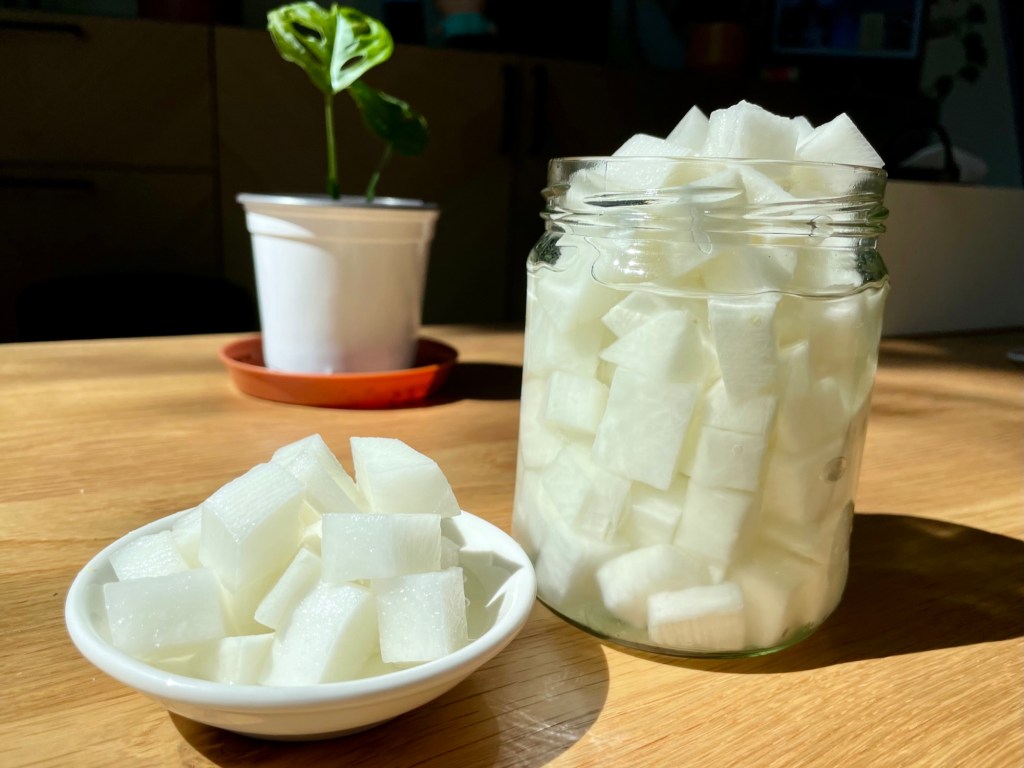
Toby and I are obsessed with Korean Fried Chicken. Whenever we move to a new town, we are always on the lookout for a good Korean fried chicken spot (and also a good ramen spot). Throughout our travels around Australia, our favourite Korean chicken spot still remains to this day, 7 Grams Chicken in Perth, Western Australia. It’s just so damn good and the chicken is always cooked perfectly – there’s no comparison. With every serving of Korean fried chicken, a little bowl of sweet cold pickled radishes always accompanies it. This little bowl of radishes is the perfect accompaniment to cut the grease – it’s not too sour and not too sweet, and the refreshing crunch of the perfect little white cubes makes you forget that you’re gorging on oily fried chicken and that somehow you’re still being healthy by eating your vegetables. We love our pickled radishes so much that we always get extra orders, but now that I’ve learned how to make this, I can stop paying extra for the pickled radishes and make it myself ahead of time!

We’ve never been to Korea, but when I was researching this recipe I found that it is also often called “Chicken-mu”. ‘Mu’ means radish in Korean and this specific pickled radish dish is pretty much only served with fried chicken, which is why they call it ‘Chicken-mu’!

What type of radish?

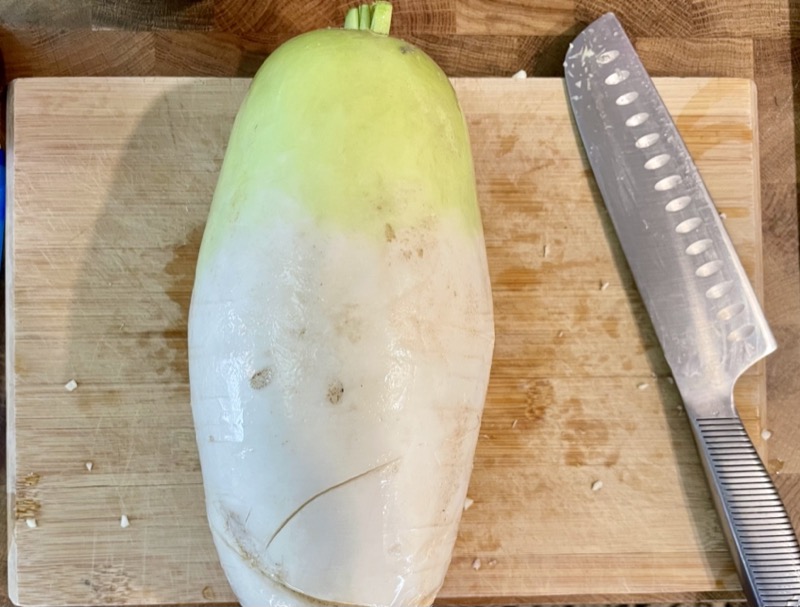
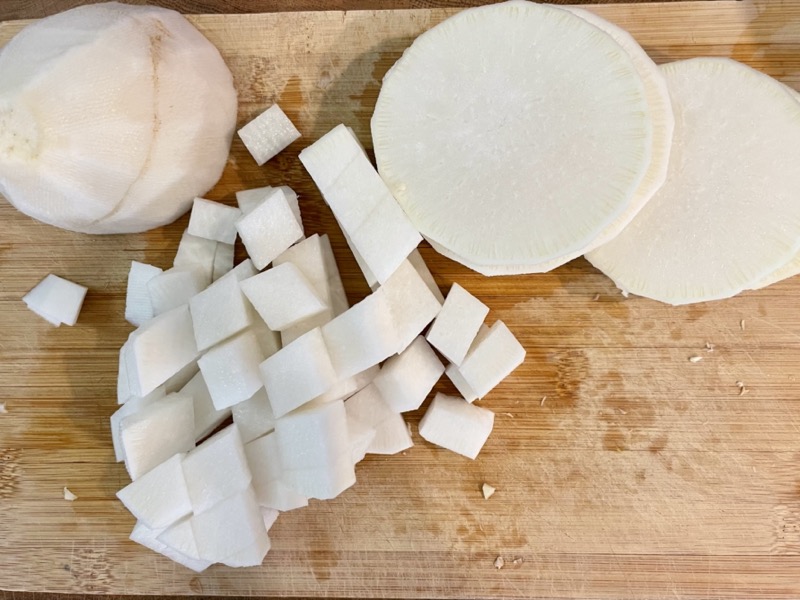
It is no surprise that a Korean radish is used to make this recipe. It is generally smaller and rounder than the common Chinese style daikon radish and has a green colour on the top half. A Korean radish has a little less water content which results in a crunchier texture and holds up well in the pickling liquid. If you can’t find a Korean radish, substitute with daikon instead, but results may differ a little.

Anyways, without further ado, here’s the recipe! If you have any comments or suggestions, I’d love to hear from you in the comment section! You can follow me on instagram, youtube and facebook to see all the recipes I post!

Happy cooking!

Ingredients you’ll need:

  • Pickling liquid:
    • 2/3 cup granulated sugar
    • 2/3 cup white vinegar
    • 2/3 cup water
    • 2 tsps kosher salt
  • 450g (1lb = 1 small) Korean radish, peeled and cut into 1.5 cm cubes

Directions:

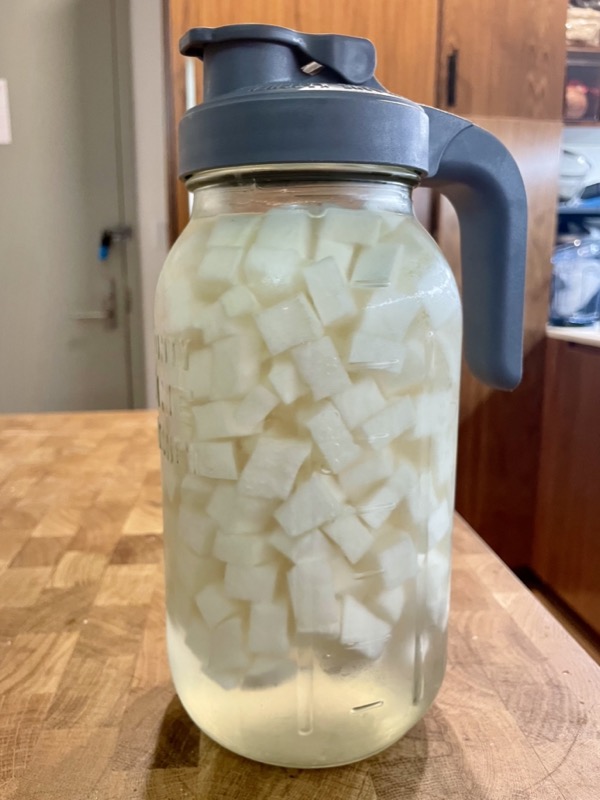
In a large glass container (with a lid), add in the sugar, vinegar, water and salt. Shake the container until the sugar and salt have dissolved.

Rinse the radish and peel it, then chop it into 1.5cm cubes.

Add in the cubed radishes. Ensure all of the radish is submerged into the pickling liquid – if not, double the amount of pickling liquid. Close the lid and let it marinate for at least 24 hours (flavours will be better after 48 hours). Store up to 10 days, flavours will be best if eaten within 4 days.

Summarized Recipe:

Korean Sweet Pickled Radish (“Chicken-mu”)

Date Published: April 16th, 2024 | Last Updated: April 16th, 2024
Author: Abby |Category: Asian, easy, sides, vegetarian, quick, healthy, low cal, vegetarian
Serves: 6 | Prep time: 10 mins | Cook time: marinate for 2 days

Ingredients:

  • Pickling liquid:
    • 2/3 cup granulated sugar
    • 2/3 cup white vinegar
    • 2/3 cup water
    • 2 tsps kosher salt
  • 450g (1lb = 1 small) Korean radish, peeled and cut into 1.5 cm cubes

Directions:

  1. In a large glass container (with a lid), add in the sugar, vinegar, water, and salt. Shake the container until the sugar and salt have dissolved.
  2. Add in the cubed radishes. Ensure all of the radish is submerged into the pickling liquid – if not, double the amount of pickling liquid. Close the lid and let it marinate for at least 24 hours (flavours will be better after 48 hours). Store up to 10 days, flavours will be best if eaten within 4 days.

Sausage Mushroom Zucchini Tian (kinda like a risotto but easier)


Date Published: Feb 28th, 2024 | Last Updated: Feb 28th, 2024
Author: Abby |Category: easy, healthy, low-cal, mains, vegetarian
Serves: 4-6 | Prep time: 1 hour | Cook time: 40 mins

Jump to recipe |

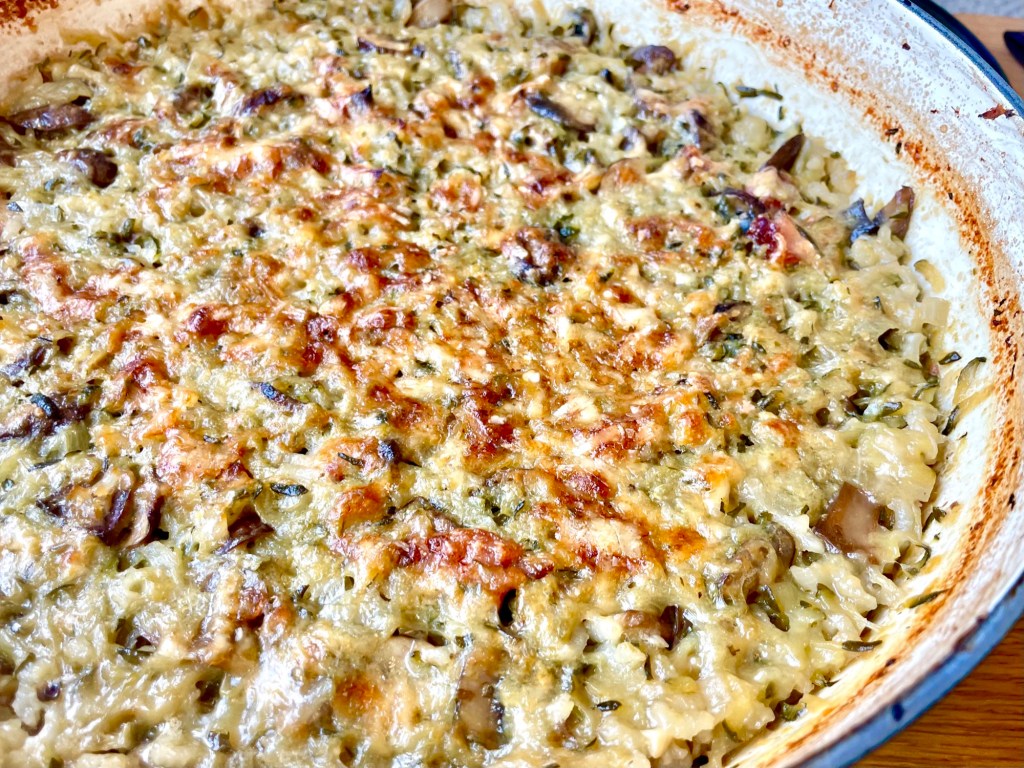
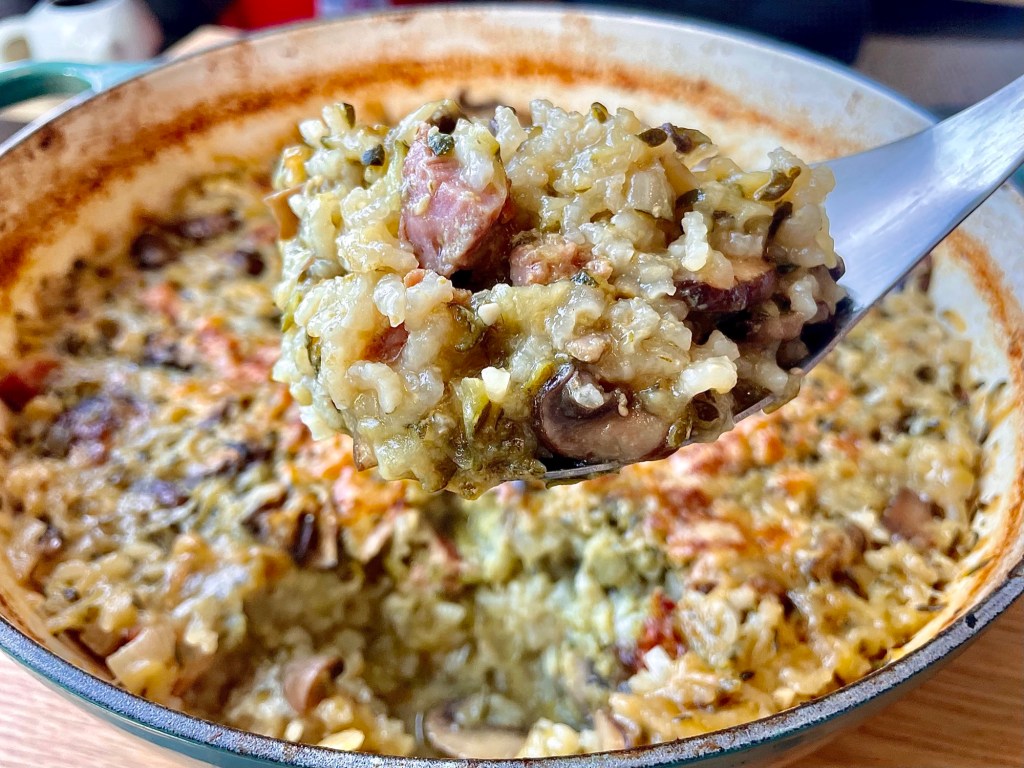
‘Tian de Courgettes au Riz’ is a recipe from the great Julia Child. I came across this recipe randomly through my search for healthier meals in this new year and found many adaptations of it. From those adaptations, I played around with the recipe, added in mushrooms and sausage (because why not) to make it a more rounded and hearty meal, and out came yet another adaptation of her recipe 😛. According to the internet, a “tian” is a French word used to describe a shallow baking dish but also the name of a baked vegetable dish (Martha Stewart compares the wordplay to a casserole and a casserole dish).

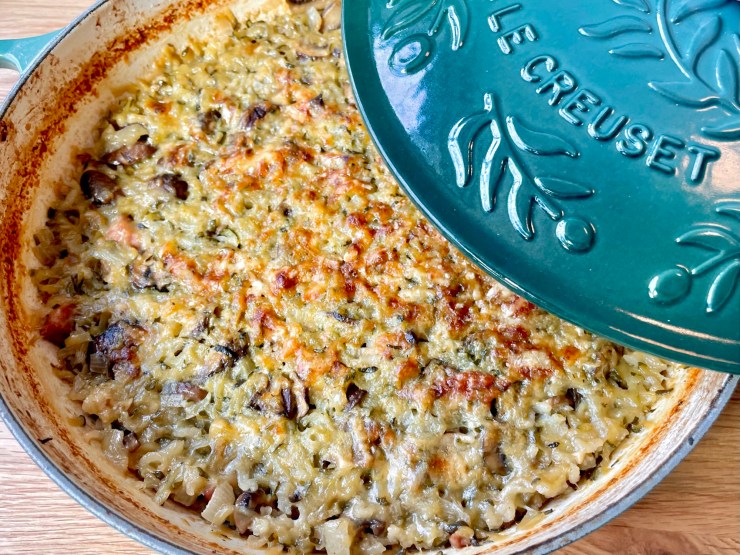
In its essence, this dish is pretty much rice cooked in zucchini liquid mixed with mushroom, meat, and cheese. It’s kind of like a risotto, except much easier to achieve. This recipe seems long, but I promise it’s just wordy and not difficult at all. Once you get into it, you’ll realize that it’s quite easy and not at all intimidating unlike other Julia Child recipes.

This recipe is a fantastic way to use up an overflow of zucchinis in the summer season. For 6 portions, it uses up about 6 large zucchinis. I wish I discovered this recipe sooner when Toby and I were staying on the farm. His dad grew sooooo many zucchinis that we were gifting them to everyone we see (he was seriously harvesting at least 6-8 a day at peak season!).

Anyways, without further ado, here’s the recipe! If you have any comments or suggestions, I’d love to hear from you in the comment section! You can follow me on instagram, youtube and facebook to see all the recipes I post!

Happy cooking!

Ingredients you’ll need:

*You will need an oven-proof pot or dutch oven with a lid – I used a 5 1/4 quart dutch oven.

  • 1.5kg zucchinis (roughly 6 large ones)
  • 500g portobello mushrooms, cleaned and sliced
  • Roughly 1/2 a cup of milk (amount will vary depending on how much liquid is released from your zucchini and mushrooms)
  • 3 cloves garlic, minced
  • 2 medium brown onions, diced
  • 3 Tbsps all purpose flour
  • 1 cup Parmesan cheese, grated + extra for sprinkling
  • Salt & pepper to taste
  • 3/4 cup medium grain rice (I use arborio/risotto rice, but any medium grain will do)
  • 300-400g kielbasa (Polish sausage), diced
    • You can use any protein you like (ie. sausage, ground beef, shredded rotisserie chicken…etc.), but make sure your protein is cooked, dry, and doesn’t add any extra liquid or else it’ll throw off the liquid ratio to cook the rice.

Directions:

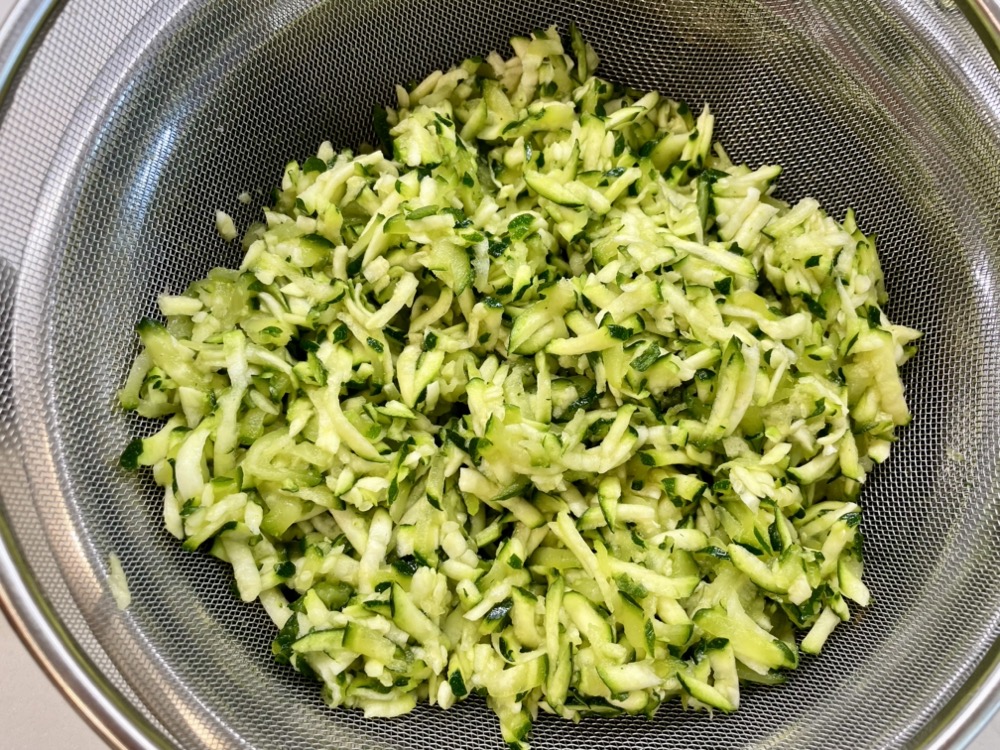
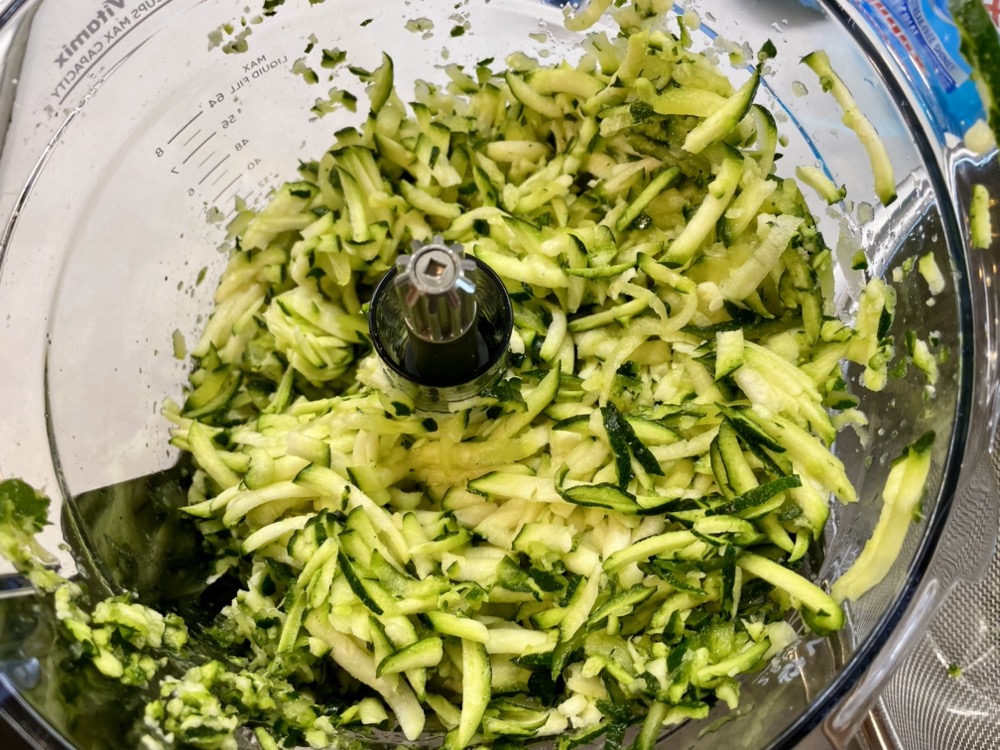
Cut the fibrous ends off the zucchinis and grate each one using a large hole grater (this is a whole lot quicker if you have a food processor with a grating function). Place a colander over a bowl and put the grated zucchini into the colander with 3 tsps of salt. Use your hands and massage the salt through the zucchini, making sure its mixed well. Set aside for 1 hour, allowing the liquid from the zucchini to release and collect in the bowl below.

After 1 hour, squeeze out as much zucchini liquid as you can and save this liquid. Rinse the grated zucchini under cold water to remove any excess salt and squeeze until dry and set aside (do not save this liquid).

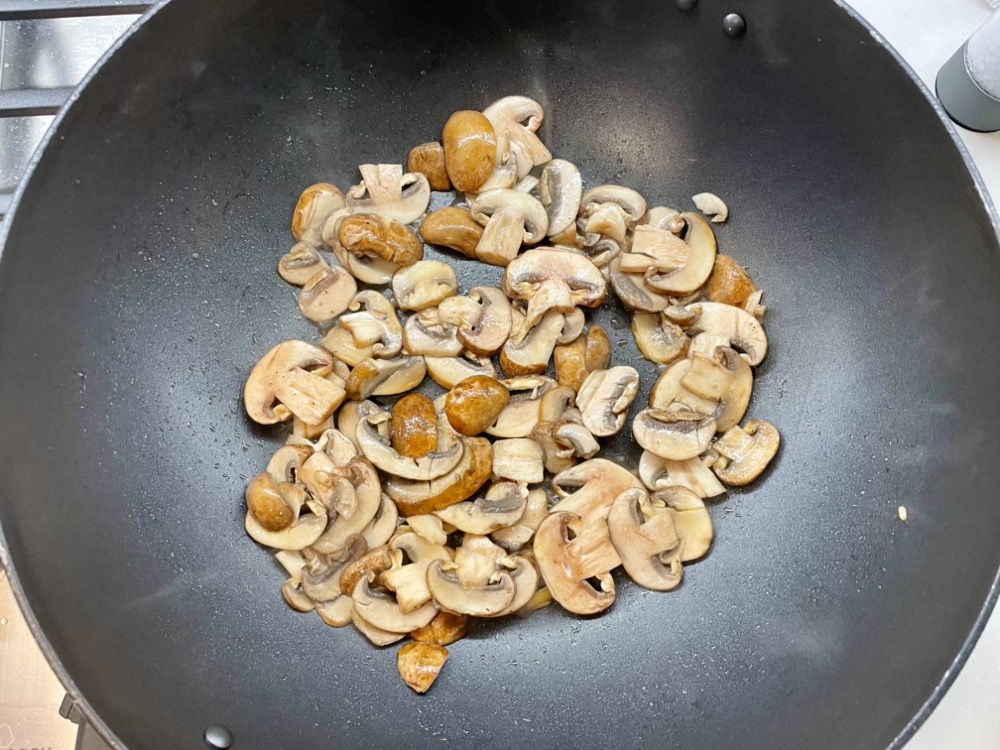
While you’re waiting for the zucchini to release its liquid, cook the mushrooms: in a large pan on MED-HIGH heat, add a drizzle of oil and sauté the mushrooms until cooked (4-5 minutes). Place the cooked mushrooms in a strainer and reserve any liquid.

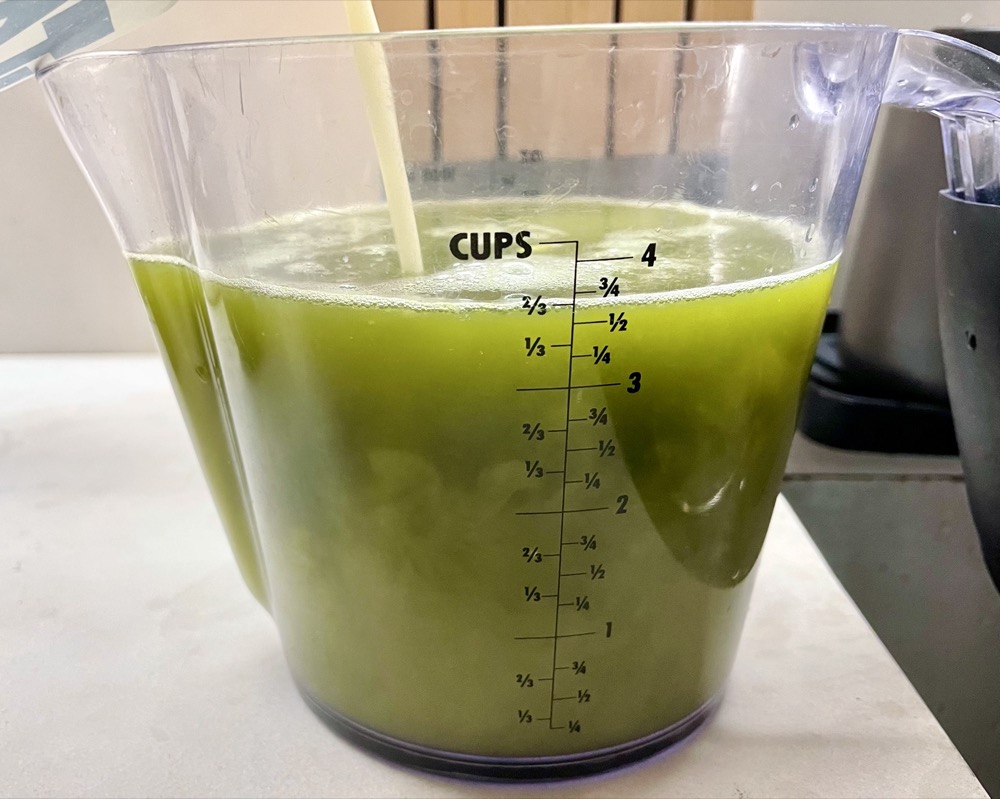
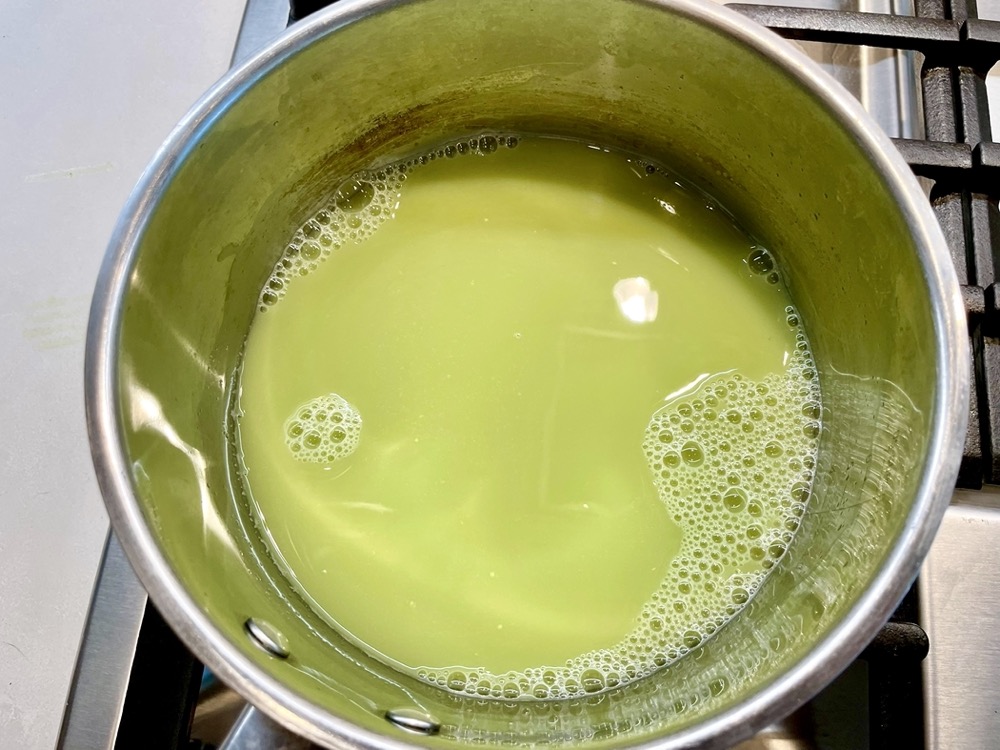
Measure out the amount of collected zucchini liquid from step 2 and add in the released liquid from the mushrooms in step 3 until it makes 3.75 cups. If the combined liquid is not enough to make up 3.75 cups, then add enough milk to make up the rest of the amount. Pour the liquid into a saucepan and heat it up on the stove until warmed. Do NOT let it come to a boil, otherwise it may split. Only heat it up until warmed. Keep on LOW heat until ready to use.

Preheat the oven to 220C/425F.

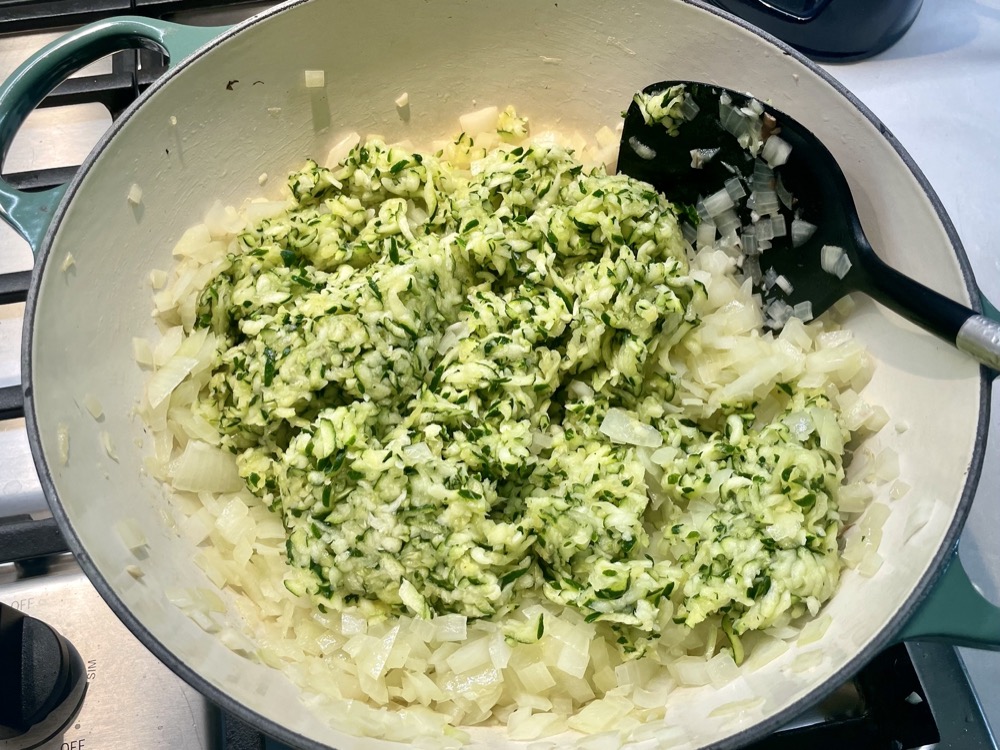
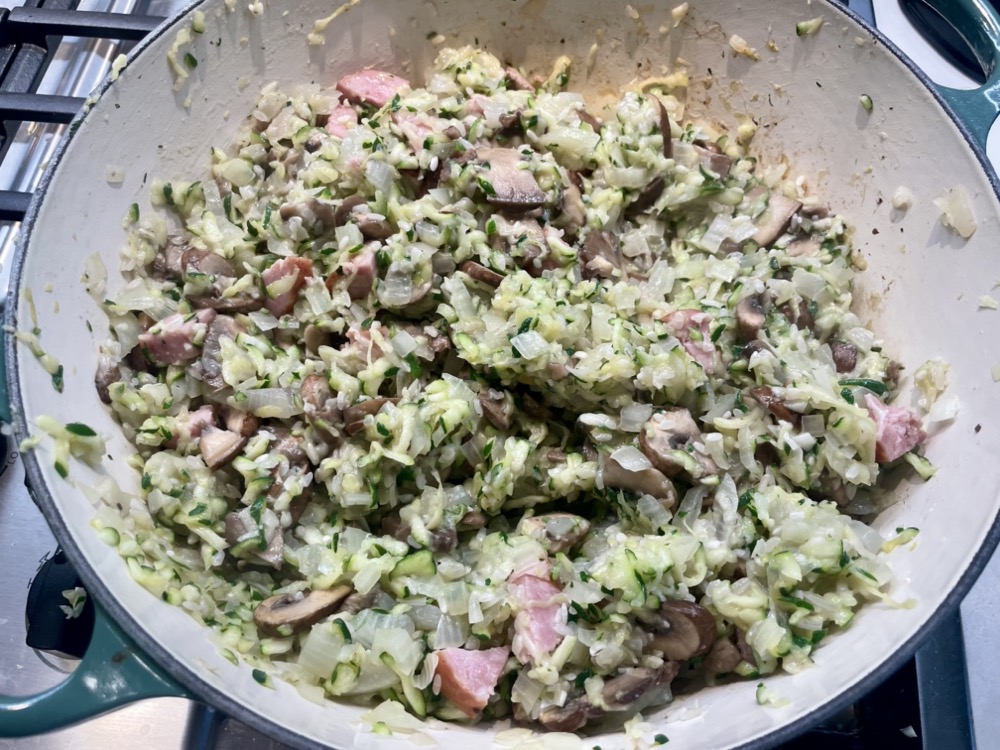
In an oven-safe pot or dutch oven (make sure there’s a lid, I used a 5 1/4 quart size dutch oven) on MED-HIGH heat, add a drizzle of oil and sauté the garlic and onion together for 3-4 minutes until the onion turns translucent. Then add in the grated zucchini and continue to sauté for another 5-6 minutes.

Add in the cooked mushrooms and 3 Tbsps of flour to the pan and continue mixing for 2 more minutes until everything is well combined then turn off the heat.

Mix in the Parmesan cheese, rice, and kielbasa (or your choice of cooked protein).

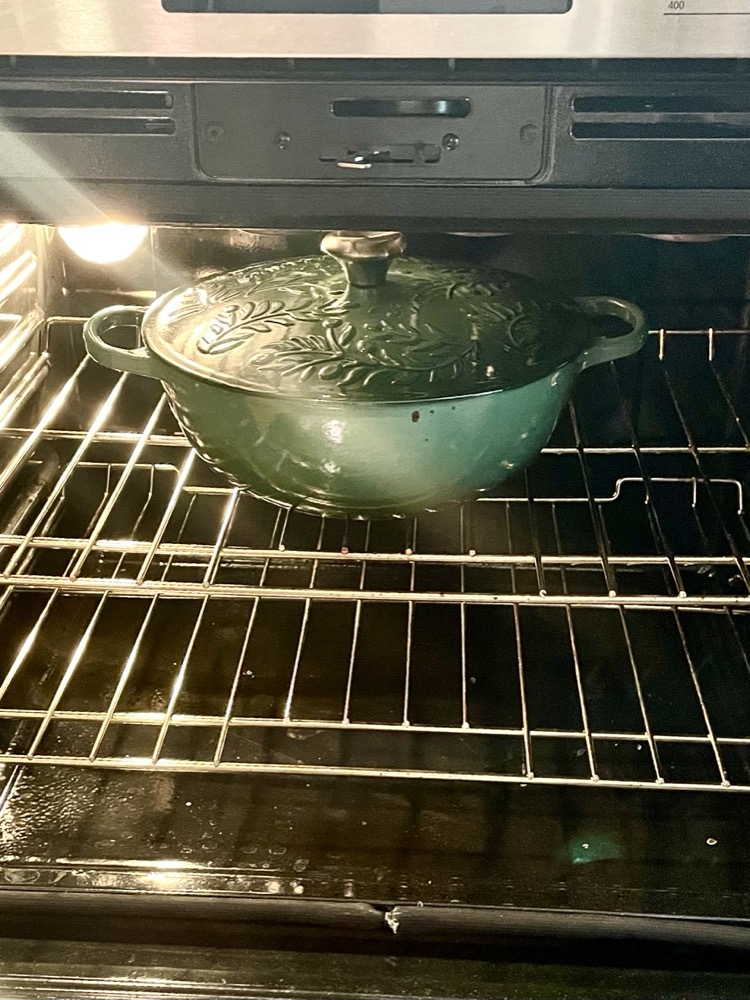
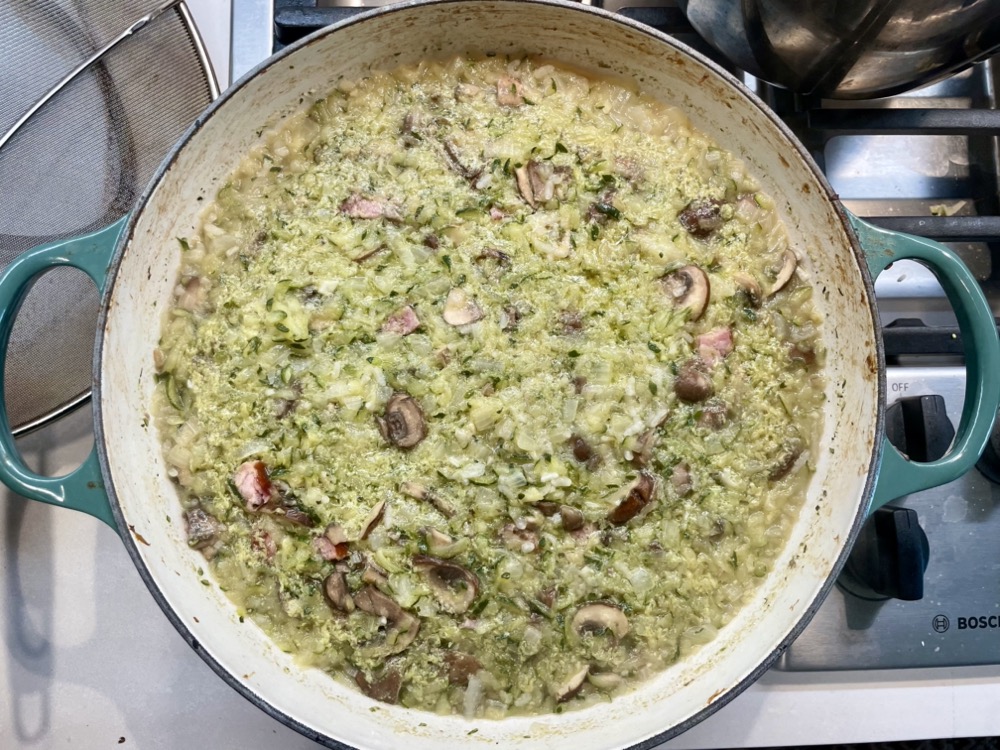
Pour in the warmed zucchini/mushroom/milk liquid over top. Mix it all together then cover with the lid and bake in the preheated oven for 20 minutes.

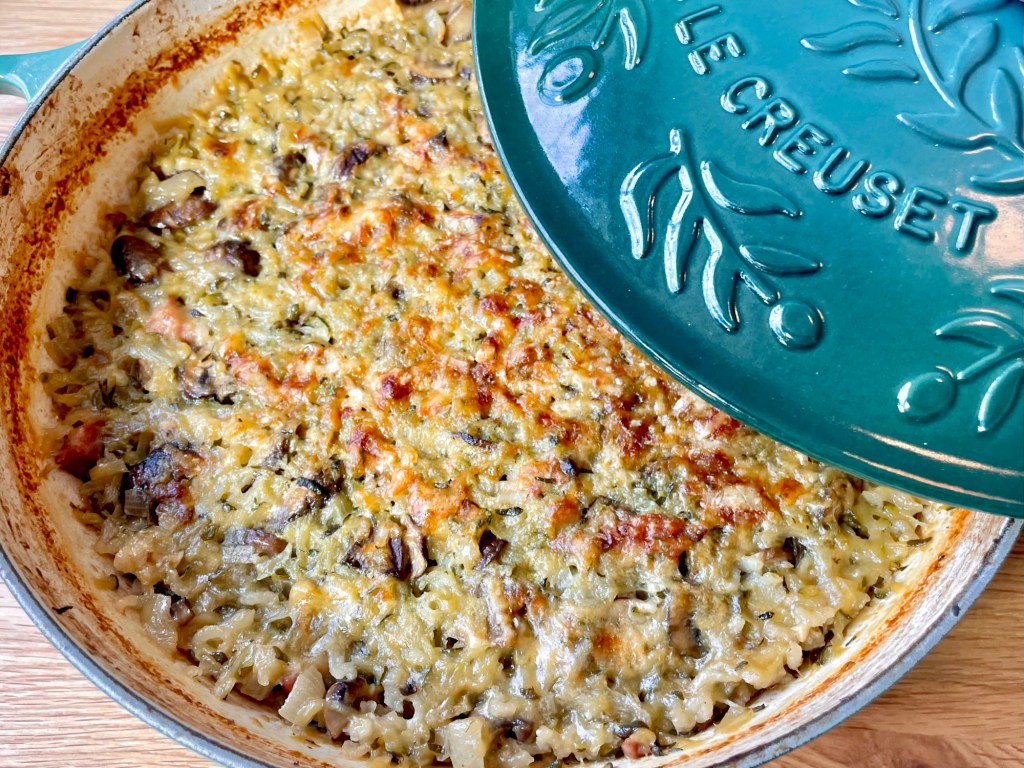
After 20 minutes, remove the lid and add a sprinkling of Parmesan cheese over top and continue baking without the lid for another 20-25 minutes, or until the liquid has been absorbed and the top is slightly golden brown. Once it’s done, take it out of the oven and let it rest for 10 minutes for any remaining liquid to absorb before serving. When dishing it out, add another sprinkle of Parmesan cheese before serving. Enjoy!
Summarized Recipe:

Sausage Mushroom Zucchini Tian (kinda like a risotto but easier)

Date Published: Feb 28th, 2024 | Last Updated: Feb 28th, 2024
Author: Abby |Category: easy, healthy, low-cal, mains, vegetarian
Serves: 4-6 | Prep time: 1 hour | Cook time: 40 mins

Ingredients:

*You will need an oven-proof pot or dutch oven with a lid – I used a 5 1/4 quart dutch oven.

  • 1.5kg zucchinis (roughly 6 large ones)
  • 500g portobello mushrooms, cleaned and sliced
  • Roughly 1/2 a cup of milk (amount will vary depending on how much liquid is released from your zucchini and mushrooms)
  • 3 cloves garlic, minced
  • 2 medium brown onions, diced
  • 3 Tbsps all purpose flour
  • 1 cup Parmesan cheese, grated + extra for sprinkling
  • Salt & pepper to taste
  • 3/4 cup medium grain rice (I use arborio/risotto rice, but any medium grain will do)
  • 300-400g kielbasa (Polish sausage), diced
    • You can use any protein you like (ie. sausage, ground beef, shredded rotisserie chicken…etc.), but make sure your protein is cooked, dry, and doesn’t add any extra liquid or else it’ll throw off the liquid ratio to cook the rice.

Directions:

  1. Prepare the zucchini: Cut the fibrous ends off the zucchinis and grate each one using a large hole grater (this is a whole lot quicker if you have a food processor with a grating function). Place a colander over a bowl and put the grated zucchini into the colander with 3 tsps of salt. Use your hands and massage the salt through the zucchini, making sure its mixed well. Set aside for 1 hour, allowing the liquid from the zucchini to release and collect in the bowl below. After 1 hour, squeeze out as much zucchini liquid as you can and save this liquid. Rinse the grated zucchini under cold water to remove any excess salt and squeeze until dry and set aside (do not save this liquid).
  2. Cook the mushrooms: While you’re waiting for the zucchini to release its liquid, cook the mushrooms: in a large pan on MED-HIGH heat, add a drizzle of oil and sauté the mushrooms until cooked (4-5 minutes). Place the cooked mushrooms in a strainer and reserve any liquid.
  3. Prepare the liquid: Measure out the amount of collected zucchini liquid from step 2 and add in the released liquid from the mushrooms in step 3 until it makes 3.75 cups. If the combined liquid is not enough to make up 3.75 cups, then add enough milk to make up the rest of the amount. Pour the liquid into a saucepan and heat it up on the stove until warmed. Do NOT let it come to a boil, otherwise it may split. Only heat it up until warmed. Keep on LOW heat until ready to use.
  4. Preheat the oven to 220C/425F.
  5. In an oven-safe pot or dutch oven (make sure there’s a lid) on MED-HIGH heat, add a drizzle of oil and sauté the garlic and onion together for 3-4 minutes until the onion turns translucent. Then add in the grated zucchini and continue to sauté for another 5-6 minutes.
  6. Add in the cooked mushrooms and 3 Tbsps of flour to the pan and continue mixing for 2 more minutes until everything is well combined then turn off the heat.
  7. Mix in the Parmesan cheese, rice, and kielbasa (or your choice of cooked protein).
  8. Pour in the warmed zucchini/mushroom/milk liquid over top. Mix it all together then cover with the lid and bake in the preheated oven for 20 minutes.
  9. After 20 minutes, remove the lid and add a sprinkling of Parmesan cheese over top and continue baking without the lid for another 20-25 minutes, or until the liquid has been absorbed and the top is slightly golden brown. Once it’s done, take it out of the oven and let it rest for 10 minutes for any remaining liquid to absorb before serving. When dishing it out, add another sprinkle of Parmesan cheese before serving. Enjoy!
Czech Potato Dumplings – Bramborové Knedlíky


Date Published: Feb 13th, 2024 | Last Updated: Feb 13th, 2024
Author: Abby |Category: Czech, sides, breads, vegetarian
Serves: 8-10 | Prep time: 1 hour | Cook time: 1.5 hours total (20-30mins per dumpling)

Jump to recipe |

What are Czech Dumplings or Knedlíky?

Knedlíky or dumplings are a staple side dish in Czech food. I see it as THE carb in a Czech meal. Similar to noodles in Asian food or pasta in Italian food, if there’s something rich, saucy, or soupy, you bet it’ll be served with a knedlíky.

There are a few different kinds of dumplings, but the two most common ones I’ve seen in Czech are the fluffy bread dumplings (houskové knedlíky) and the denser potato dumplings (bramborové knedlíky). The lighter bread dumplings are made with a yeast dough so it’s fluffy but still with a bit of structure and chew and best served with a saucy dish such as svičkova to soak up all the flavours whereas the potato dumplings are much more dense and is like eating a side dish of potatoes that can balance the richness of a dish such as something served with sauerkraut like a vepřo knedlo zelo. Of the two, the bread dumplings are more commonly seen and you can very easily buy them at the supermarket in Czech instead of making them fresh, but I don’t think anyone will be angry if you use them interchangeably. This recipe is for the potato dumplings (bramborové knedlíky). If you want to make the bread dumplings, you can find the recipe here.

Do I need to use a special type of flour?

These dumplings are traditionally made with ‘sharp flour’ or ‘continental flour’ which is a coarser flour made from hard wheat that is common in Europe, but actually super difficult to find in regular grocery stores. As a result, this recipe uses a 3:2 ratio mix of all-purpose flour and farina/cream of wheat to achieve the same texture.

Although these dumplings are pretty easy to make, please allow enough time to cook them all. If you don’t have a big pot, you may have to cook them one or two at a time (which is what I always end up doing) and it takes 20-30 mins each time (allow 1.5 hours to cook all 4). If you’ve got extra pots and the stove space, boil them all at once in separate pots so they’re all ready at the same time! I don’t know why it took me so long to think of this.
How do I freeze leftover knedlíky?

Every recipe for knedlíky I’ve seen always makes WAY more than what you need. My guess is that since you’re going through all the effort of making them, you might as well make a bigger batch and freeze them to have on hand. This recipe is no different. If you follow the instructions, you’ll have enough knedlíky for 8 – 10 people. I had thought about halving the recipe when I was writing it, but then remembered how well they keep in the freezer and how easy it is to have dumplings in a pinch when you’re short on time or too lazy to put in the effort, so I left the proportions alone.

I find it best to freeze leftover dumplings in slices rather than a log so it defrosts quickly. You can either freeze them in single portions or altogether in a bag, but make sure you separate the slices a little so it’ll be easier to separate when you only want to defrost a few slices. I freeze them in a ziploc bag or you can wrap it up in cling wrap individually.

To defrost and reheat: The best way to get the best texture is to steam them, especially if you are reheating from frozen. However, I’m lazy and I take out my desired portion and leave it in the fridge the night before then microwave them with a sprinkle of water before serving.

*Note: This recipe and its instructions have been adapted from Cook Like Czechs (who’s got way more beautiful-looking dumplings than I could ever achieve – check it out).

Anyways, without further ado, here’s the recipe! If you have any comments or suggestions, I’d love to hear from you in the comment section! You can follow me on instagram, youtube and facebook to see all the recipes I post!

Happy cooking!

Ingredients you’ll need:

  • 900g yellow/Yukon gold potatoes
  • 260g (1.5 cups) all-purpose flour
  • 160g (just under 1 cup) cream of wheat/farina
  • 1/2 Tbsp cornstarch or potato starch
  • 1 tsp kosher/cooking salt
  • 1 egg, whisked

Directions:

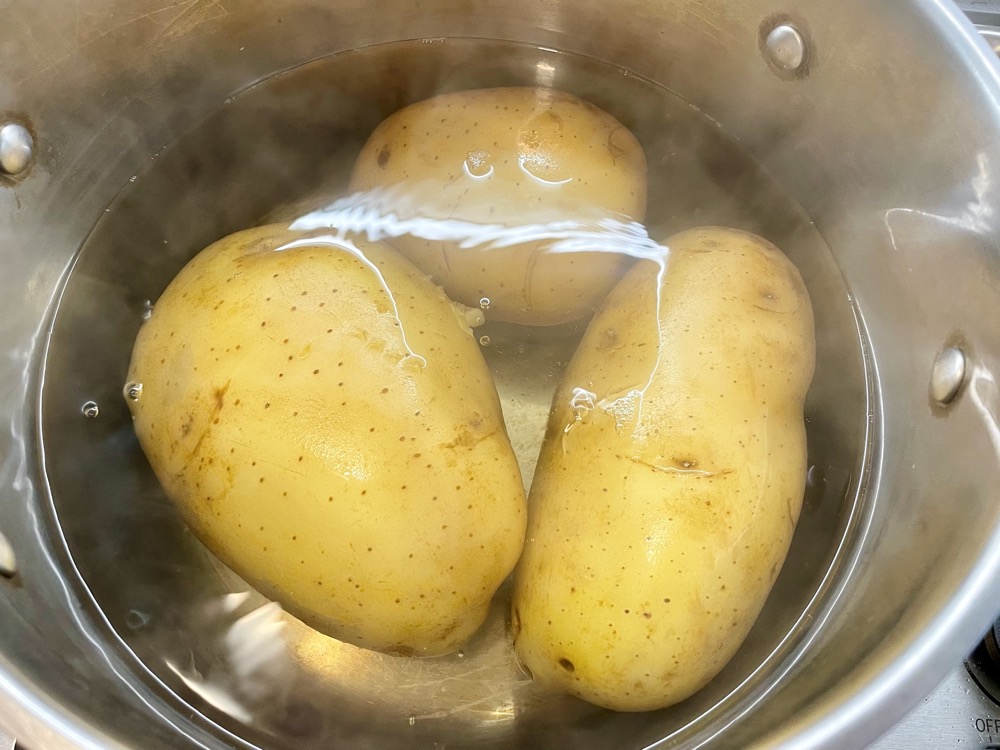
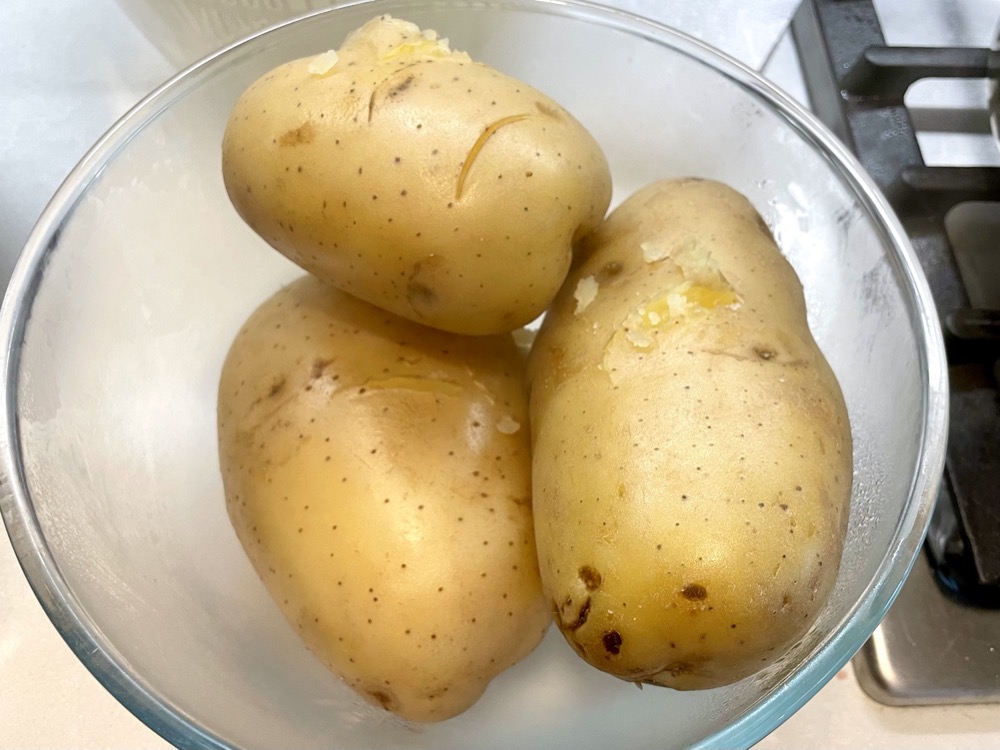
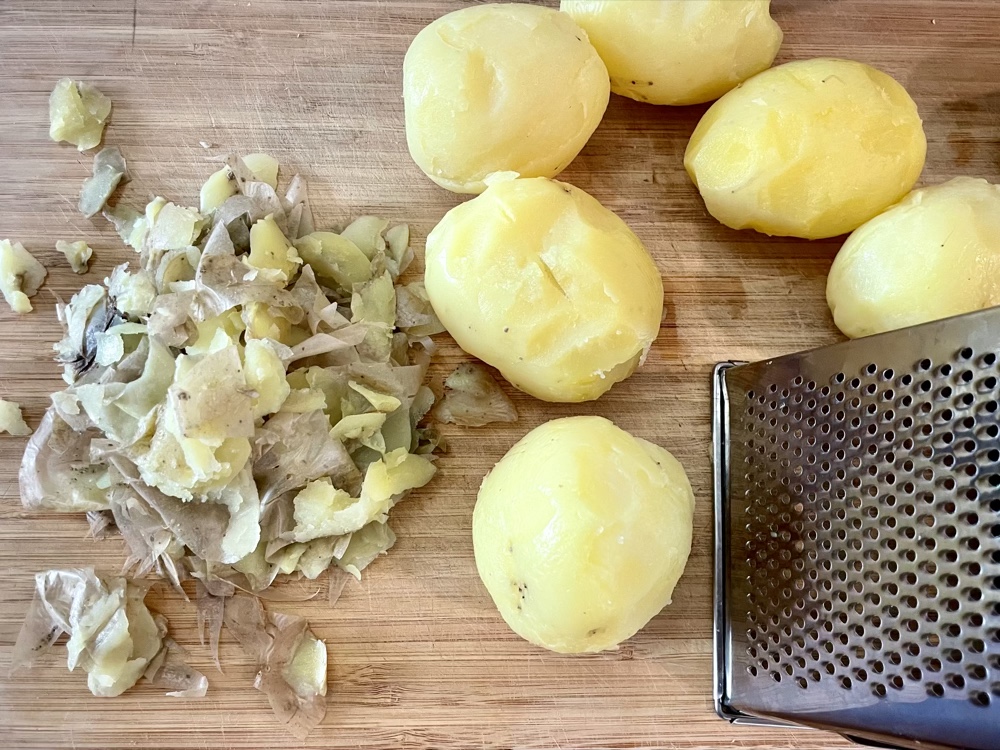
Prepare the potatoes (make ahead of time): Boil the potatoes with the skin on until soft and easily pierced with a fork (20-30mins). Drain the potatoes and let it cool down completely (1-2 hours, or overnight). Once cooled, peel and discard the potato skin and use a hand grater to finely grate (use the small grating hole) the peeled potatoes into a bowl and set aside.

To save time, boil the potatoes the day before and let it cool overnight then peel and grate it the next day. Don’t peel or grate it too early or else the potato will start drying out.

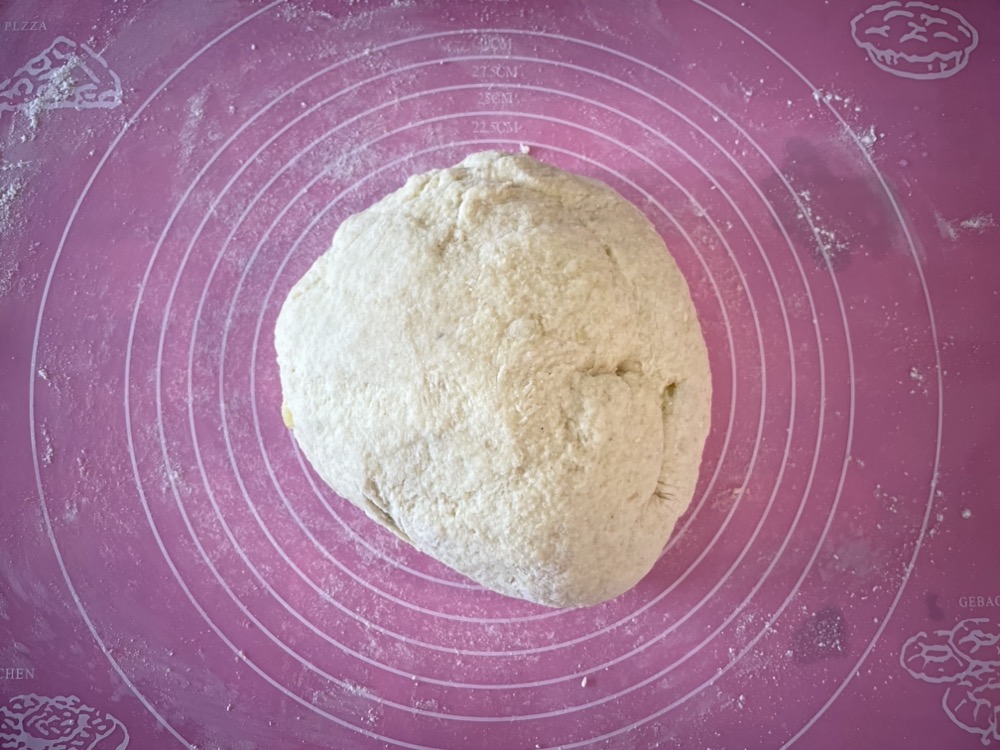
In a large mixing bowl, mix together the flour, cream of wheat, corn starch, and salt. Add in 1 whisked egg and the grated cooked potatoes. Use your hands or a stand mixer and work the dough until you get a smooth, soft, homogenous dough ball. Add a little extra flour if the dough is too sticky.

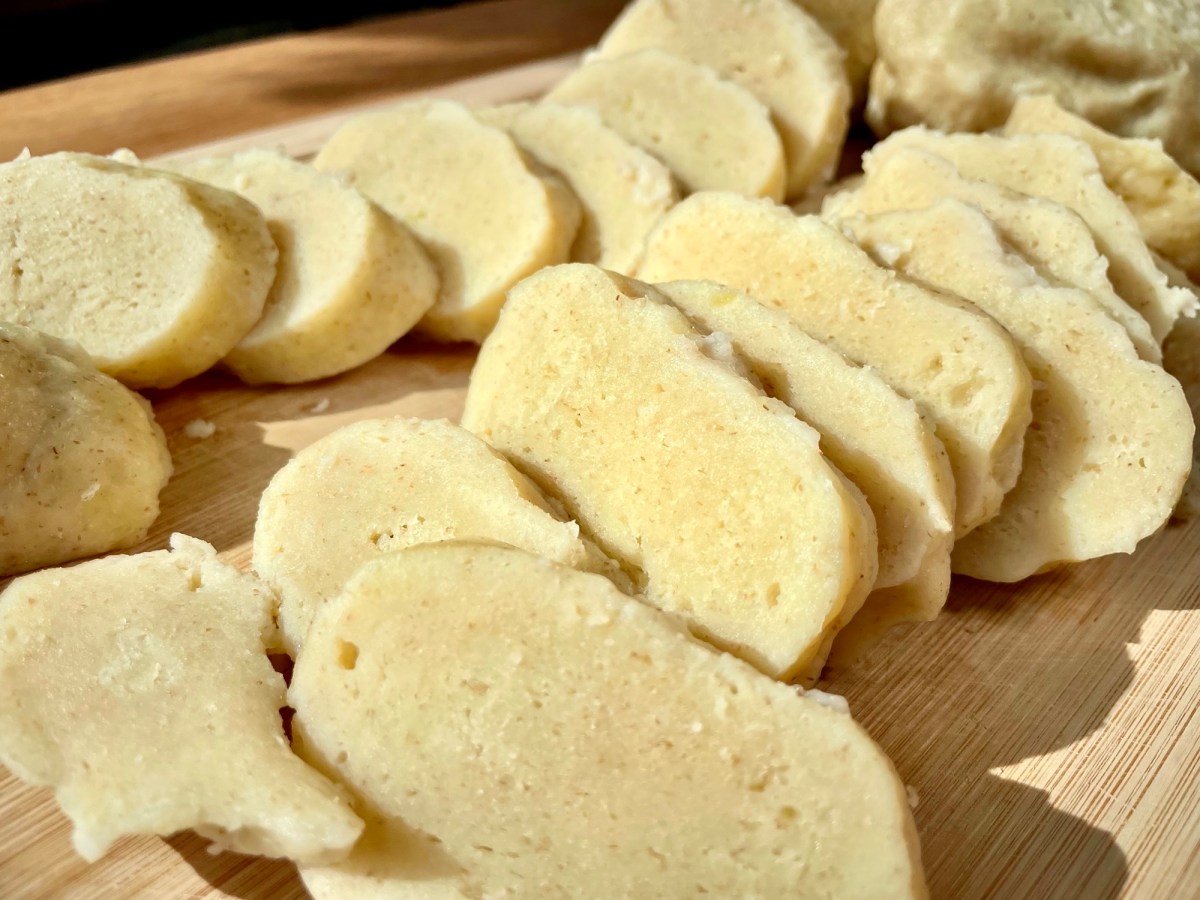
Divide the dough into 4 equal pieces (roughly 330g each), each formed into fat logs (see photo). Make sure the length of your log does not exceed the diameter of your pot. Don’t worry if they’re not perfect logs. You’ll hardly notice when you serve them as slices.

Lightly boil a pot of water. Gently lower 2 logs into the water (if you have a small pot, you may want to cook just one at a time to not overcrowd them). Let them boil for 25 – 30 minutes. Occasionally move them around in the water to ensure they are not stuck to the bottom of the pot. They will start to float when they’re roughly halfway cooked. To check if they’re cooked, you can slice off a piece and try it – you should get a dense bread-y texture with a little bounce.

Tip: To save time and if you’ve got extra pots and the stove space, boil them all at once in separate pots so they’re all ready at the same time!

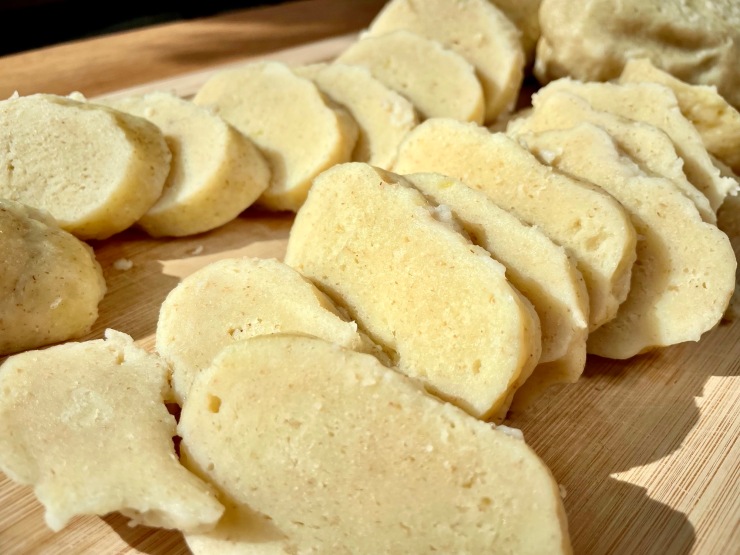
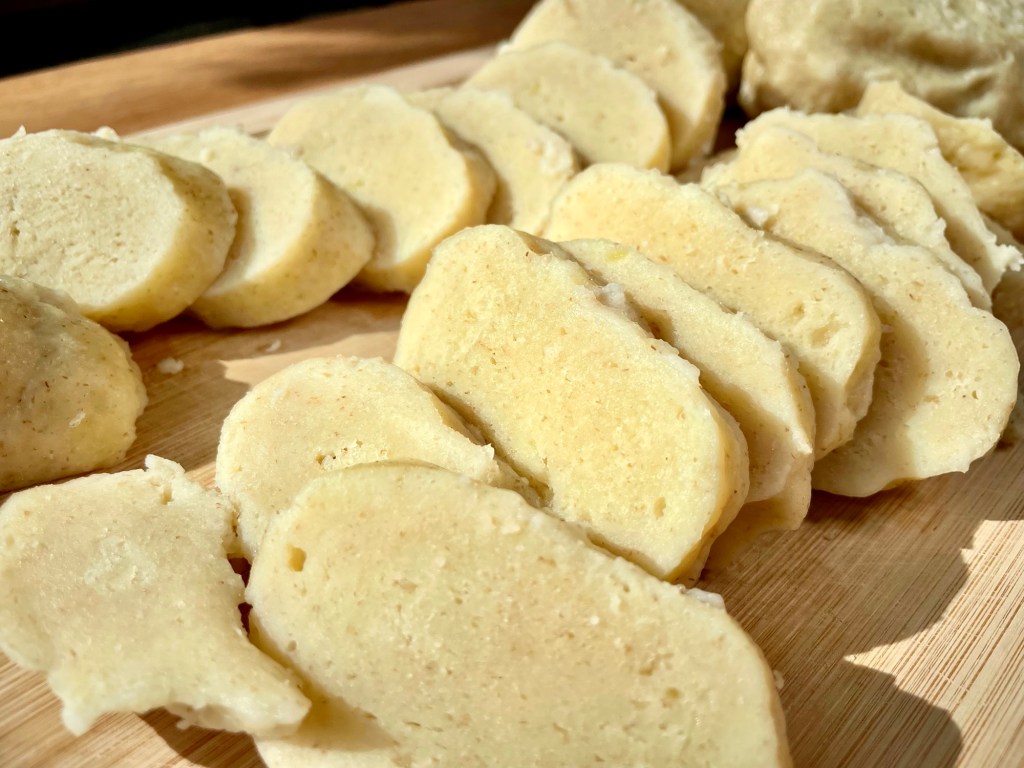
Once cooked, remove each log from the water onto a cutting board or drying rack and stab it a couple times with a chopstick or a fork to release the steam. Let it sit for a few minutes to slightly cool down, then slice into 1.5cm slices and serve!

Some examples of knedliky served in traditional Czech dishes:

Vepřo knedlo zelo.
Segedinsky goulash
Rajska

Summarized Recipe:

Czech Potato Dumplings – Bramborové Knedlíky

Date Published: Feb 13th, 2024 | Last Updated: Feb 13th, 2024
Author: Abby |Category: Czech, sides, breads, vegetarian
Serves: 8-10 | Prep time: 1 hour | Cook time: 1.5 hours total (20-30mins per dumpling)

Ingredients:

  • 900g yellow/Yukon gold potatoes
  • 260g (1.5 cups) all-purpose flour
  • 160g (just under 1 cup) cream of wheat/farina
  • 1/2 Tbsp cornstarch or potato starch
  • 1 tsp kosher/cooking salt
  • 1 egg, whisked

Directions:

  1. Prepare the potatoes (make ahead of time): Boil the potatoes with the skin on until soft and easily pierced with a fork (20-30mins). Drain the potatoes and let it cool down completely (1-2 hours, or overnight). Once cooled, peel and discard the potato skin and use a hand grater to finely grate the peeled potatoes into a bowl and set aside.
    • To save time, boil the potatoes the day before and let it cool overnight then peel and grate it the next day. Don’t peel or grate it too early or else the potato will start drying out.
  2. In a large mixing bowl, mix together the flour, cream of wheat, corn starch, and salt. Add in 1 whisked egg and the grated cooked potatoes. Use your hands or a stand mixer and work the dough until you get a smooth, soft, homogenous dough ball. Add a little extra flour if the dough is too sticky. Divide the dough into 4 equal pieces (roughly 330g each), each formed into fat logs (see photo). Make sure the length of your log does not exceed the diameter of your pot.
    • Don’t worry if they’re not perfect logs. You’ll hardly notice when you serve them as slices.
  3. Lightly boil a pot of water. Gently lower 2 logs into the water (if you have a small pot, you may want to cook just one at a time to not overcrowd them). Let them boil for 25 – 30 minutes. Occasionally move them around in the water to ensure they are not stuck to the bottom of the pot. They will start to float when they’re roughly halfway cooked. To check if they’re cooked, you can slice off a piece and try it – you should get a dense bread-y texture with a little bounce.
    • Tip: To save time and if you’ve got extra pots and the stove space, boil them all at once in separate pots so they’re all ready at the same time!
  4. Once cooked, remove each log from the water onto a cutting board or drying rack and stab it a couple times with a chopstick or a fork to release the steam. Let it sit for a few minutes to slightly cool down, then slice into 1.5cm slices and serve!