Explore Sun Studio: Rock and Roll’s Birthplace


Date Published: April 29th, 2025 | Last Updated: April 29th, 2025
Author: Abby | Category: Travel, USA
Date of travel: April 13th, 2025

Address: 706 Union Avenue, Memphis, TN 38103
Website: https://www.sunstudio.com/
Cost: $20 per adult
Hours: 10am – 5:15pm, daily

Started by Sam Phillips, Sun Studio is a historic recording studio where it all began for many great musicians including Elvis Presley, Johnny Cash, Jerry Lee Lewis, Carl Perkins, and B.B. King. It is also credited for recording the very first rock and roll single, Rocket ’88 and the site of recording the Million Dollar Quartet. No musical tour of Memphis is complete without checking out Sun Studios!

How to get here:

Travelling here by car is the easiest way. There’s a small parking lot behind the building. You can also get here by public transport or bundled as part as a few Memphis local music tours.

How much time do I need?

Although mammoth in reputation, Sun Studio is actually quite small. You can only visit with a guided tour that lasts about 45 minutes to 1 hour with a gift shop in the lobby. They give you a bit of extra time at the end of the tour to take in the studio surroundings and to ask any questions you may have.
Tickets & Cost?

Annoyingly, you cannot reserve tickets ahead of time. Ticket purchases are only made in-person on a first come first serve basis. From their website they mention that it’s not uncommon for people to stop by earlier in the day to purchase a ticket for later in the day. Tickets for the day open up at 10am and you can buy a ticket for any time that day.

You can only see the studio as part of a guided tour and the tours are run every hour. From their website, these are the current tour times: Monday – Sunday 10:30, 11:30, 12:30, 1:30, 2:30, 3:30 and 4:30. Double check their website for the most up to date times before you travel.

We came in the middle of April which wasn’t quite peak tourist season yet and we were also arriving in Memphis in the evening so we were able to walk in a purchase a ticket for the 4:30pm tour without having to wait. I can see this being a problem in peak tourist season – the space isn’t very big so there’ll be a limit on the number of people they can fit in a tour group, and considering this is the #2 tourist attraction (second to Graceland) in Memphis, I can imagine it would get quite busy and sell out early!

One way to avoid the hassle of coming in early in hopes to get a ticket is to book a Memphis Tour that has the Sun Studio tour included in the ticket. We went on Backbeat Tours and there was an option for the tour to drop you off at Sun Studio and get picked up later.

The Guided Tour

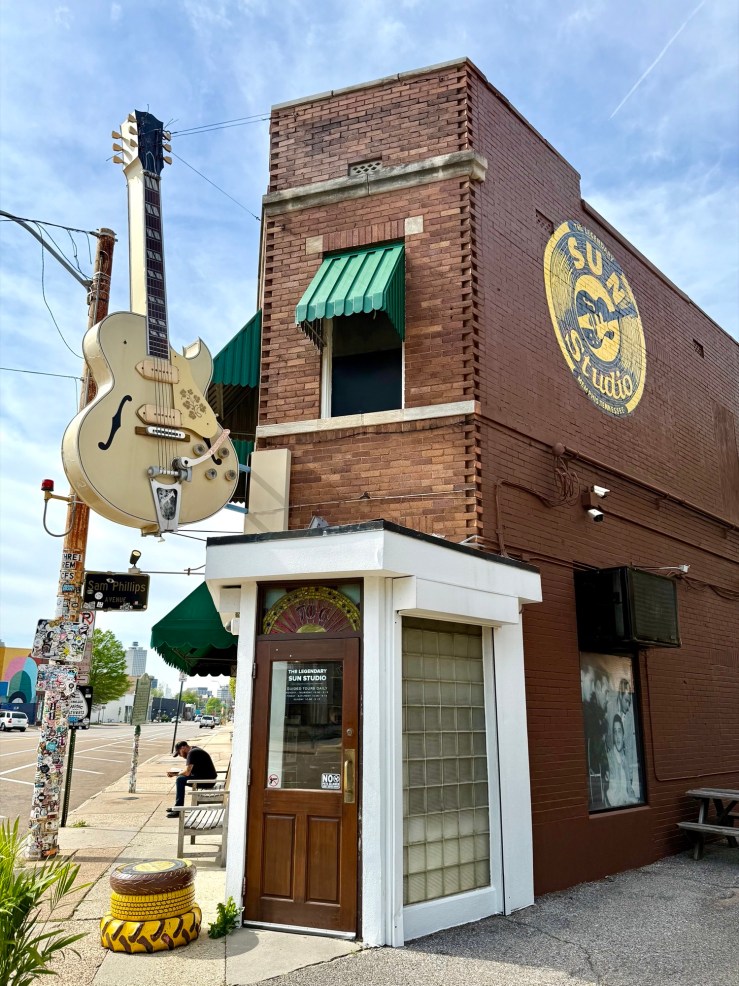
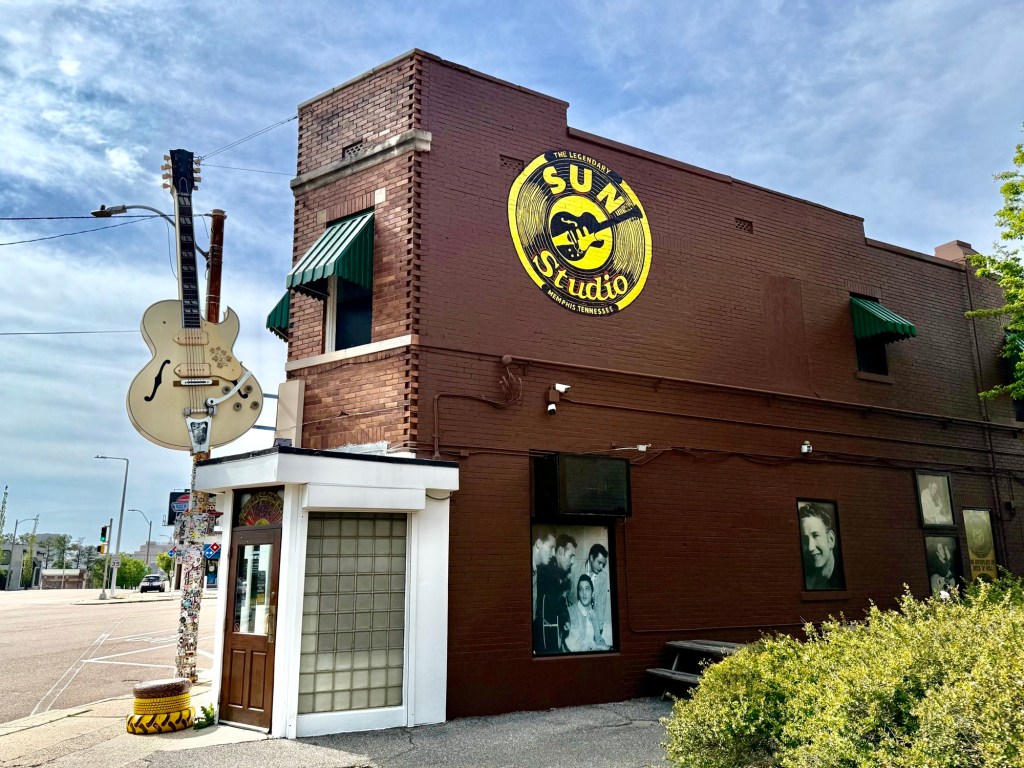
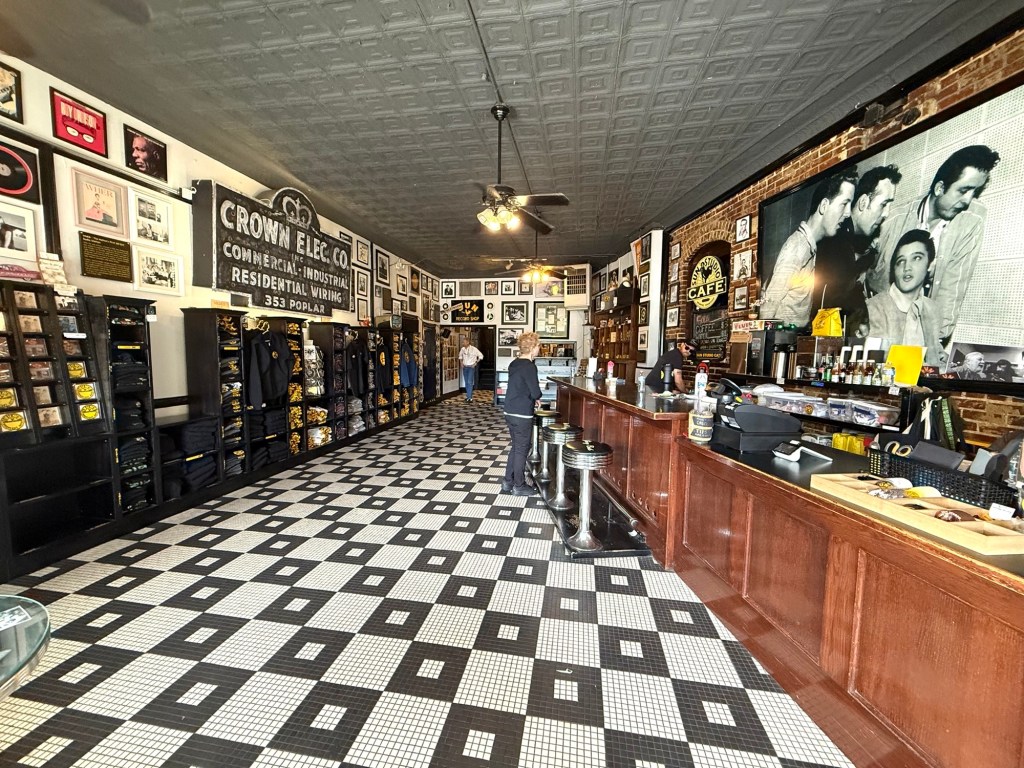
Upon arrival of this small brown brick building, snap a few photos outside then head inside to the retro vintage style lobby. Here is where you’ll buy tickets and there’s also a small counter where you can purchase a cup of pour-over coffee while waiting for the tour to start.

Take a gander around the various items displayed and check out the small record shop in the back. There’s also many photos and memorabilia on the walls as well – even in the bathroom!
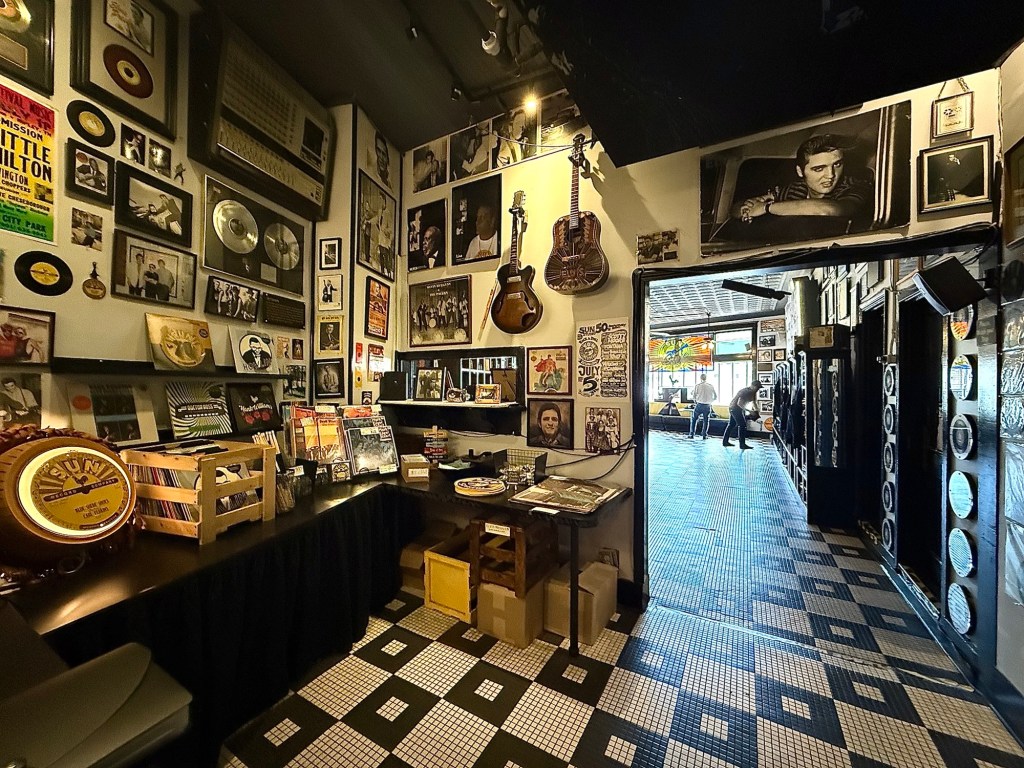
The tour will start at the back where you’re led up a narrow set of stairs to a room full of memorabilia. Our guide was a musician and knew plenty about the history of Sun Studio and also played some original tunes recorded right there! He started off with how Sun Studio started and went along the wall and pointed out important items throughout history.

Sam Phillips disliked pop music and wanted to start a recording company that recorded the less popular non-pop music, mainly the blues. He started off as the Memphis Recording Service. To generate revenue, he’d record anything for anyone with a portable device in a suitcase and would travel to church events, weddings…etc. His slogan was “We Record Anything, Anywhere, Anytime”. He had an open door policy where anyone could come in and record what they wanted for a small fee.

Memphis Recording Service is credited for recording “Rocket ’88”, what music historians would deem as the very first rock and roll song due to the distortion in the guitar. The distortion is due to an amplifier that broke while the band was on their way to the recording studio and an attempted repair was made by stuffing wadded newspapers to make it work. The result produced a distorted sound that Sam Phillips loved and kept the recording as-is. The band then brought this record to Chess Records for release. It became the third-biggest R&B single in jukebox plays of 1951.
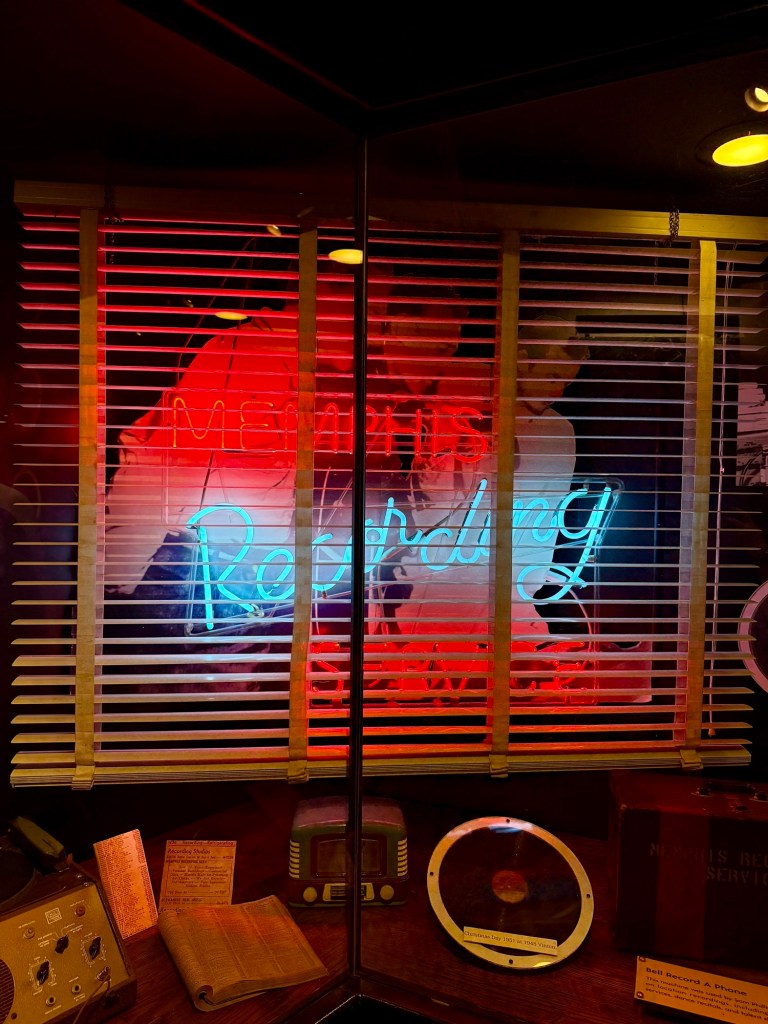
Memphis Recording Service was only a recording service where people would come to lay down their track then leave with a record where they would bring to record labels. Sam Phillips wanted a bigger piece of the picture and thus started Sun Studio, his own record label.

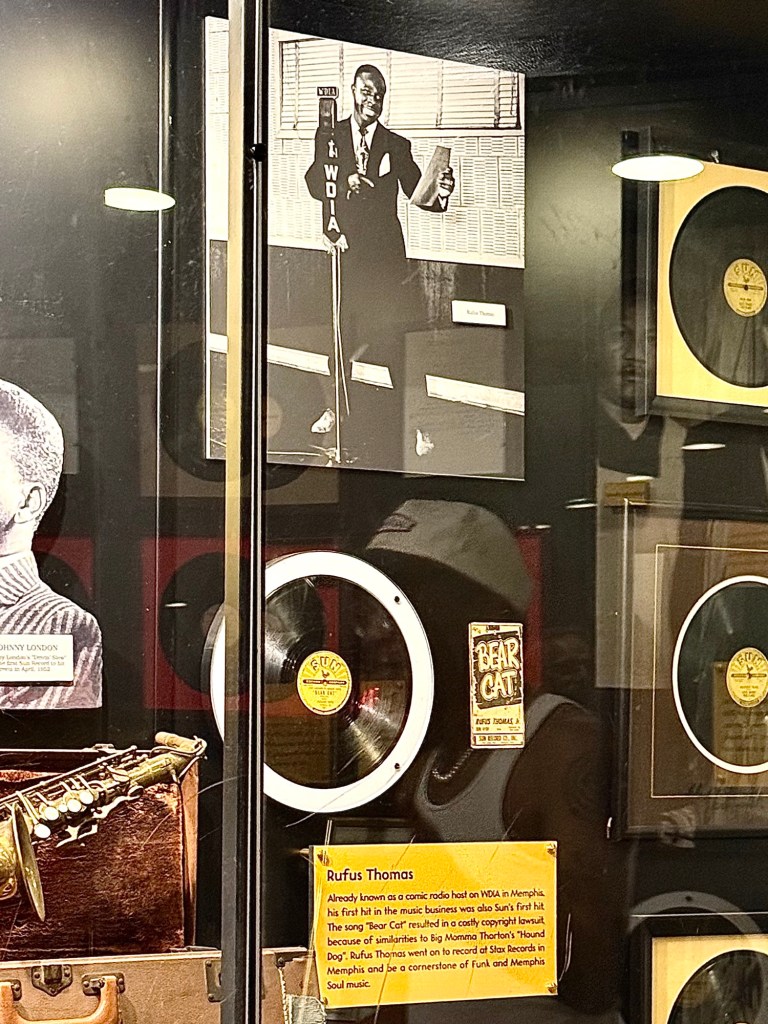
He signed many artists that would go on to have successful careers including B.B. King, Rufus Thomas, and Howlin’ Wolf. Despite his success, he was struggling to keep the business afloat and the copyright infringement lawsuit for the release of Rufus Thomas’ “Bear Cat”, a response song to Big Mama Thornton “Hound Dog” (later re-recorded by Elvis) nearly bankrupted the business. Phillips continued on and had more hits from artists such as The Prisonaires, a group of 4 incarcerated men that were so popular that they were given special permission to temporarily leave prison to record a single.

Sun Studio gained a reputation and would draw in artists from all over. One of those artists was Elvis Presley. Elvis came to impress Sam Phillips, but on the day he arrived to record “My Happiness”, Sam Phillips was out of town and he met Sam’s assistant Marion Keisker instead who recorded his songs for him. After his performance, Marion was so impressed that she made an extra copy of the recording to give to Sam upon his return. Sam did not like the recording at all – he wasn’t into pop music, but he brought in Elvis along with two local musicians to record a ballad demo he had acquired to test it out. The session was unfruitful and Sam was unimpressed with Elvis as a ballad singer. As the musicians were packing up, Elvis was losing his big chance with Sam and just started playing and singing. As guitarist Winfield “Scotty” Moore recalled: “All of a sudden, Elvis just started singing this song, jumping around and acting the fool, and then Bill picked up his bass, and he started acting the fool, too, and I started playing with them. Sam, I think, had the door to the control booth open … he stuck his head out and said, ‘What are you doing?’ And we said, ‘We don’t know.’ ‘Well, back up,’ he said, ‘try to find a place to start, and do it again.'” Although Sam wasn’t impressed with Elvis as a ballad singer, he loved Elvis as a blues/rockabilly singer.

3 days later the record was played on Memphis DJ Dewey Phillips’ radio show, Red, Hot, and Blue where he famously smashes records of songs he did not like. Listeners kept phoning in to find out about Elvis and his record was played again and again on the radio. The success of Elvis tied into the ongoing success of Sun Studio. Phillips realized that his label wasn’t big enough for the rapid popularity of Elvis and wouldn’t be able to break him out across USA, so for the betterment of Elvis, Phillips sold his contract for an unprecedented amount to RCA. The money he got for selling Elvis’ contract helped settle his debts and provided the financial roads to launch other famous artists including Roy Orbison, Johnny Cash, Carl Perkins, and Jerry Lee Lewis.

Dewey Phillips’ DJ desk with smashed records on the ground

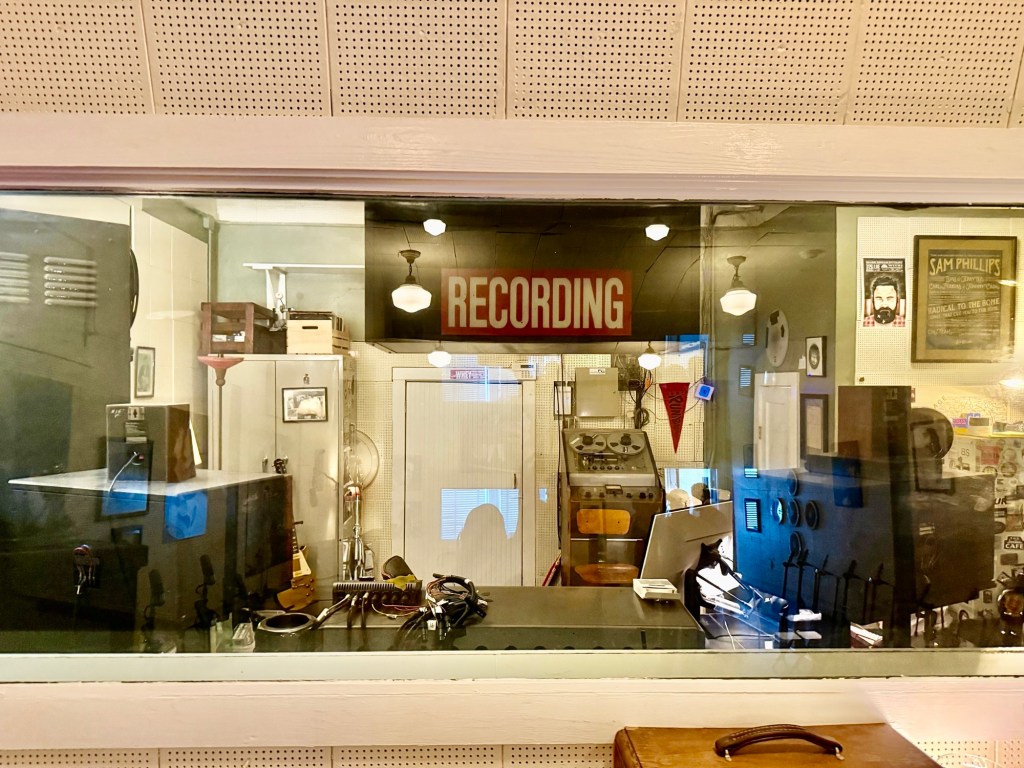
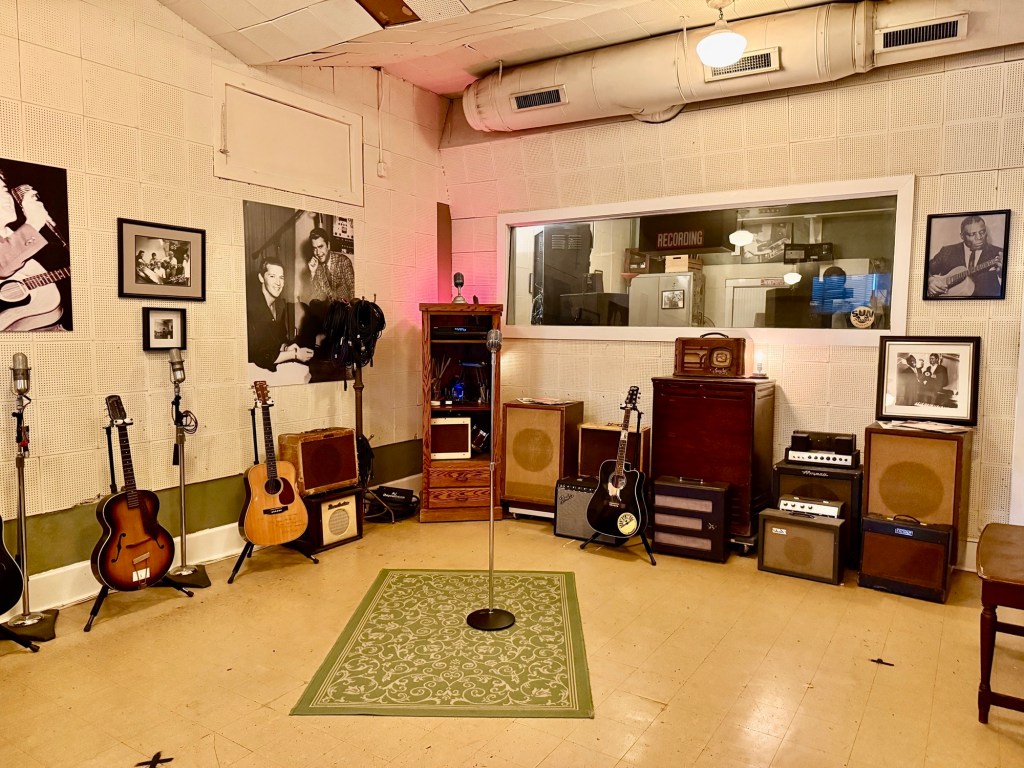
After some time in the memorabilia room, we were then led downstairs to THE famous studio room where so many stars have stood and played before. This was the exact room where Elvis took a chance a sang out the blues to impress Sam Phillips.

The original reception/waiting area of Sun Studio

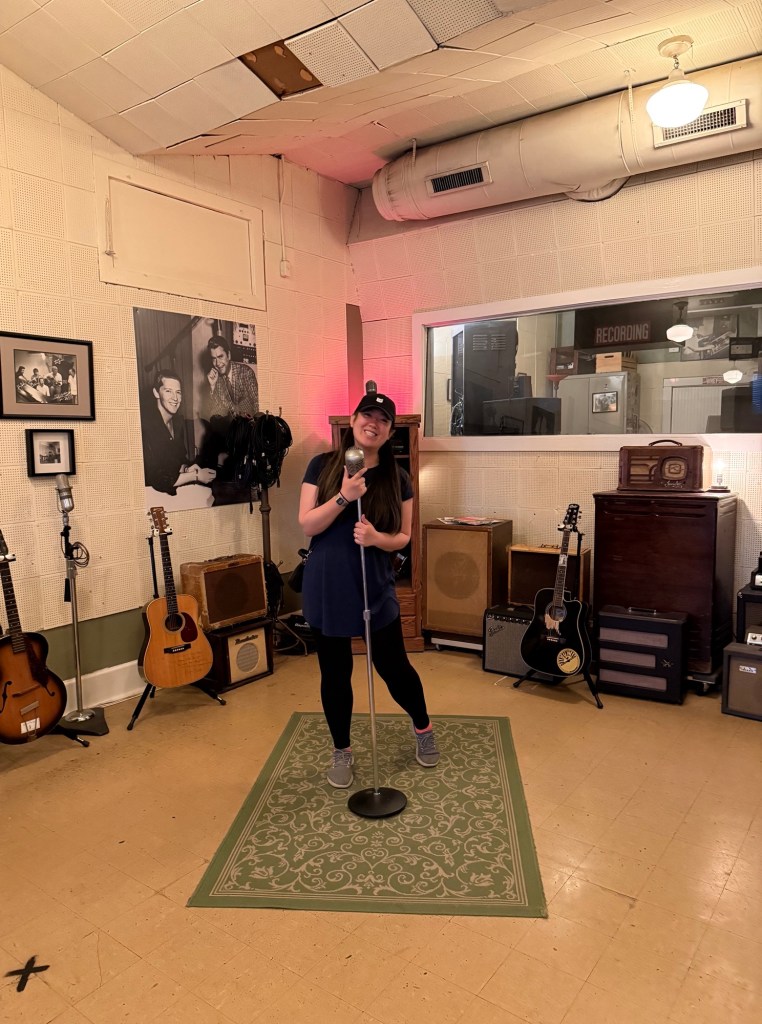
Sam donated most of the original recording equipment so you can see what it was like back in the days. The ‘X’ marker tape is still on the ground where the artists would have stood during their recording session. They even left the original microphone in the room so you can touch a piece of history and take a few photos. 🙂
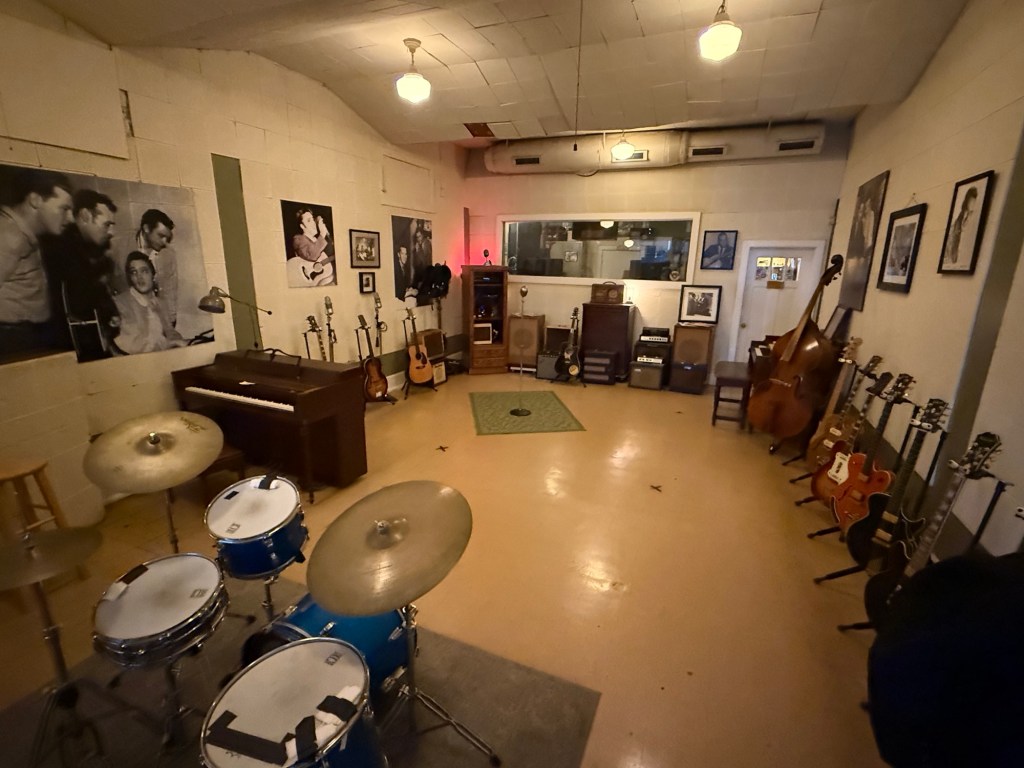
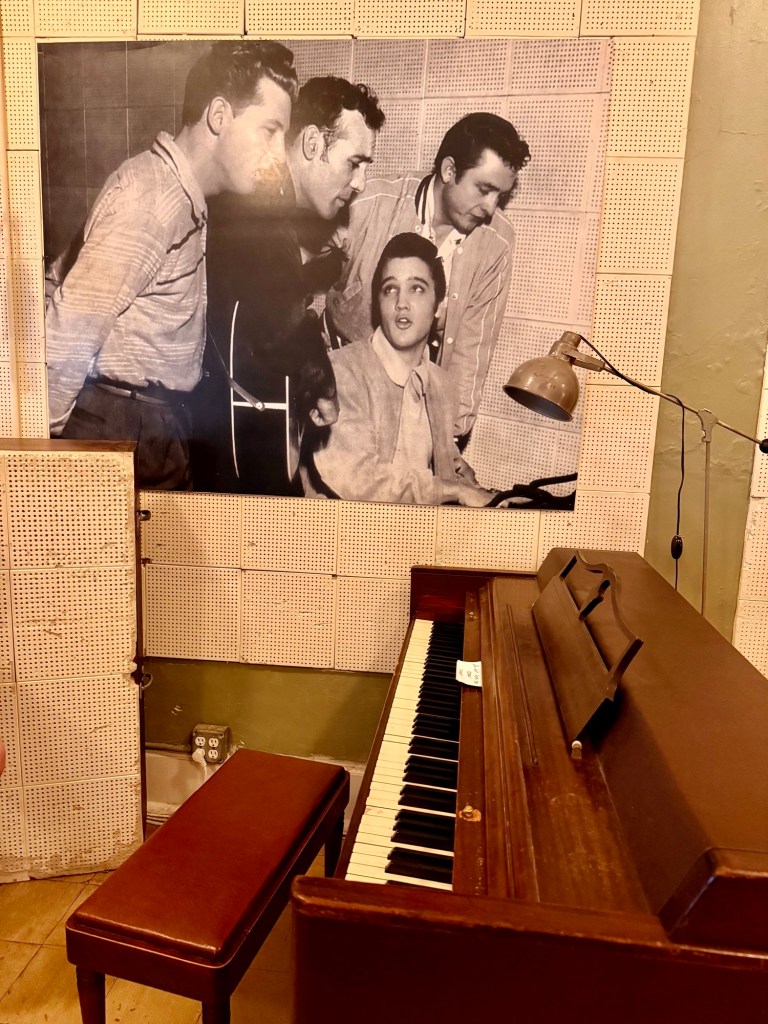
The Million Dollar Quartet happened right here in this studio as an impromptu jam session between Carl Perkins, Jerry Lee Lewis, Elvis Presley, and Johnny Cash. It started off with Jerry Lee Lewis playing piano for a recording session with Carl Perkins, then Elvis walks in for an unexpected visit (he was already signed to RCA at this point and no longer with Sun Studios). Sam Phillips called in Johnny Cash to join the session (although Cash’s version of the story said he was already there to listen in on the Perkins session) and all 4 of them were jamming together. The engineer behind the booth that day decided to record the session without any of them knowing. Phillips saw this as a chance for good publicity and called in a journalist that snapped the infamous photo and the next day coined the term “Million Dollar Quartet” in the papers.

The piano in the studio is not the original piano they played on that day, however it is a piano where Jerry Lee Lewis played and you can see a cigar burn on the keys. The original piano is on display at Graceland.
The tour ends after the studio. They gave us a bit of extra time at the end to look through everything and take some extra photos or ask questions. Overall it was a great tour and super cool to be in the presence of rock history and be able to see and touch where so many famous artists have been before!

A Day in Princeton & Beyond – University, Grounds for Sculpture, & Trenton


Date Published: April 21st, 2025 | Last Updated: April 21st, 2025
Author: Abby | Category: Travel, USA
Date of travel: March 1st, 2025

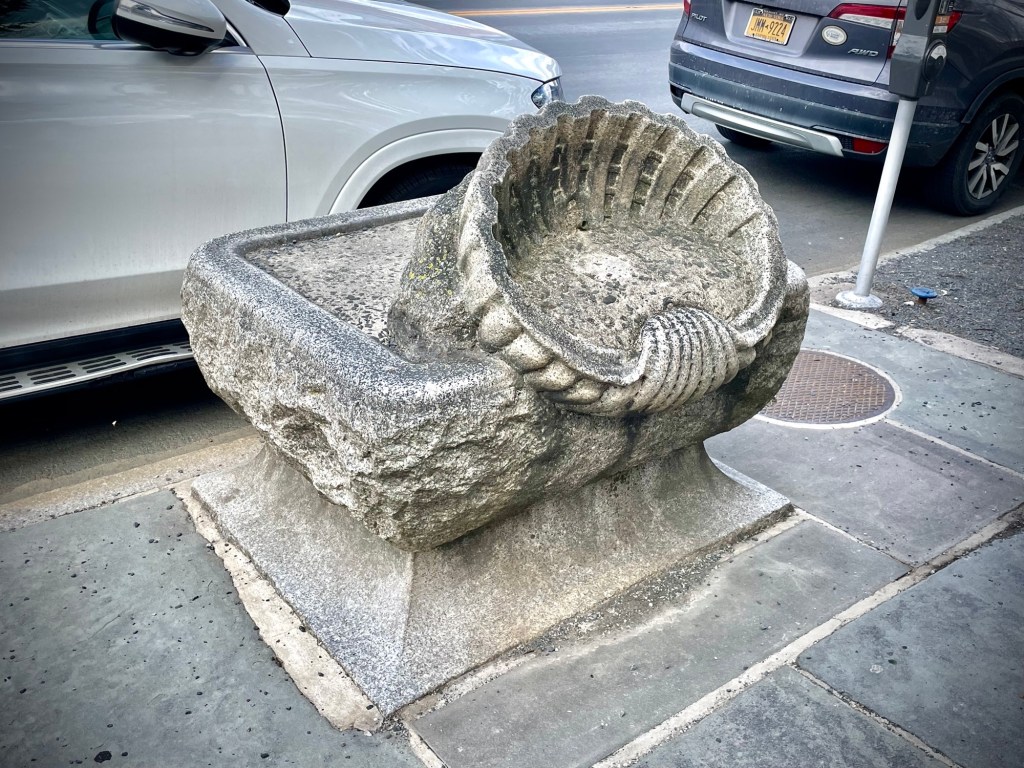
Princeton, New Jersey is roughly a 1.5 hour drive from NYC which makes it a great day trip away from the big city. In fact, it is exactly halfway between Philadelphia and New York, which were the two wealthiest cities back in the days and as a result, Princeton was a popular stop for stage coaches to let their horses rest. You can still find old stone horse troughs still around town!

Princeton is of course home to the famous Princeton University. The main highlight of this town is to tour the campus but there are some cool shops around this town as well to check out. This post will highlight a tour around the college campus, some famous houses, and the nearby Grounds for Sculpture and Trenton, the capital of New Jersey.

How many days do I need?

There’s not all that much “to do” in Princeton, so a half a day will be enough to see the highlights and check out the campus. Make it a full day if you want to visit Grounds for Sculpture.

Parking:

The best parking will be at Spring Street Garage (24 Spring St, Princeton, NJ 08542) which has very reasonable rates and is conveniently located in the middle of town.

Book a walking tour

Booking a walking tour is the best way to explore both the town of Princeton and Princeton University. There are so many notable buildings with a unique history that it’s easy to miss if you walk around yourself. The university campus is also quite large and can be easy to get lost. In this blog post I’ve highlighted some notable places, but they were all covered on our walking tour.

We booked our walking tour with this company. It was reasonably priced and informative. The guy that did our tour seemed to be new 😅 but we still hit all the spots.

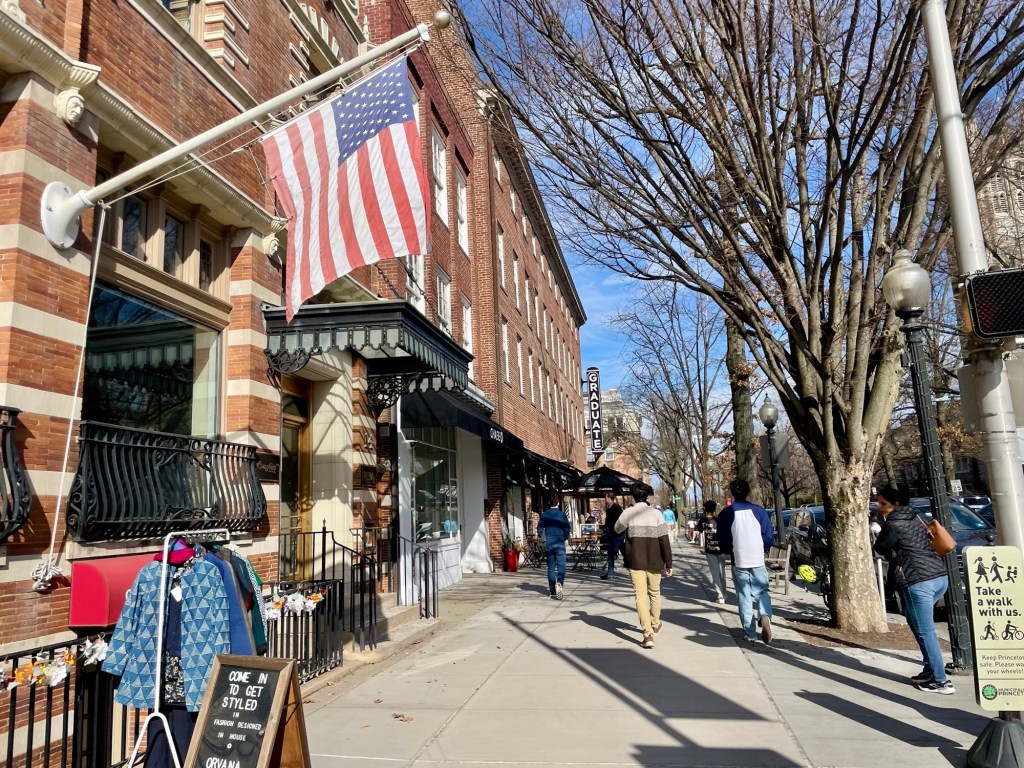
Nassau Street is the main street of Princeton with shops and restaurants. Although we didn’t have time to grab a bite, our tour guide recommended Winberie’s Restaurant & Bar and Triumph Restaurant & Brewery off of Palmer Square.

Apparently most of the nightlife here is targeted to the undergrads.

Nassau Street
An old stone water trough for stage coach horses back in the day (now filled in with concrete)

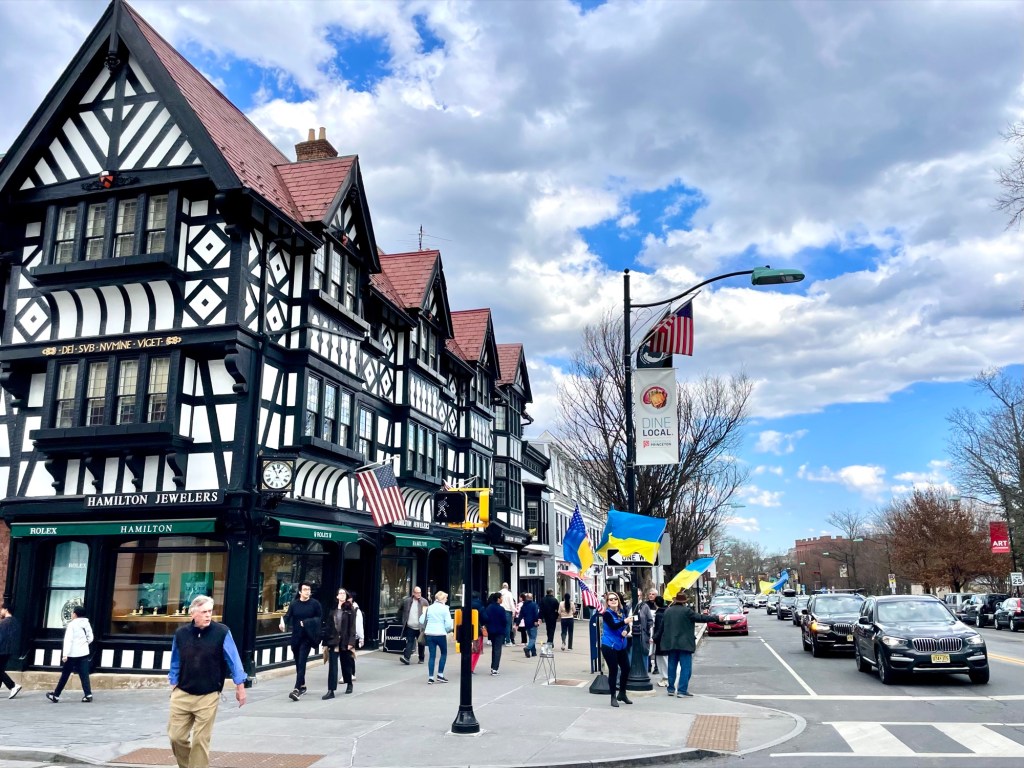
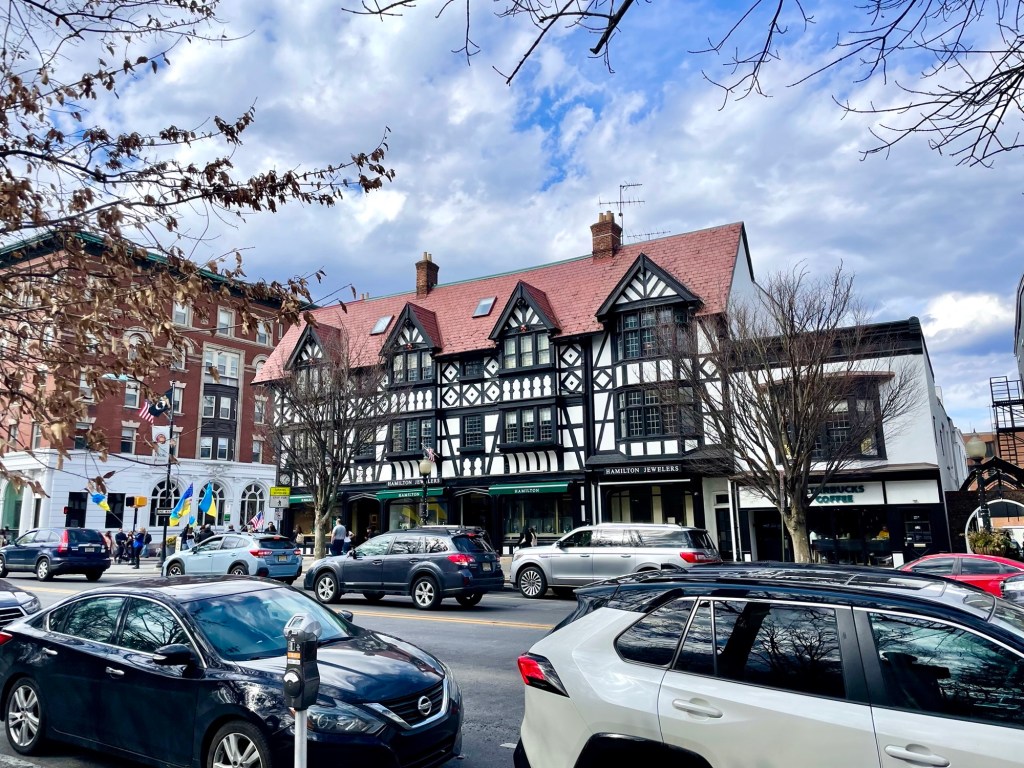
Across from Princeton University at the corner of Nassau Street and Witherspoon Street is a tudor style building called Lower Pyne (now home to Hamilton Jewelers). This beautiful building was built in 1896 and was used for commercial shops on the ground level and student dormitories above. In 1950 the dormitories were converted to office spaces. You’ll see this iconic building on many post cards of Princeton.

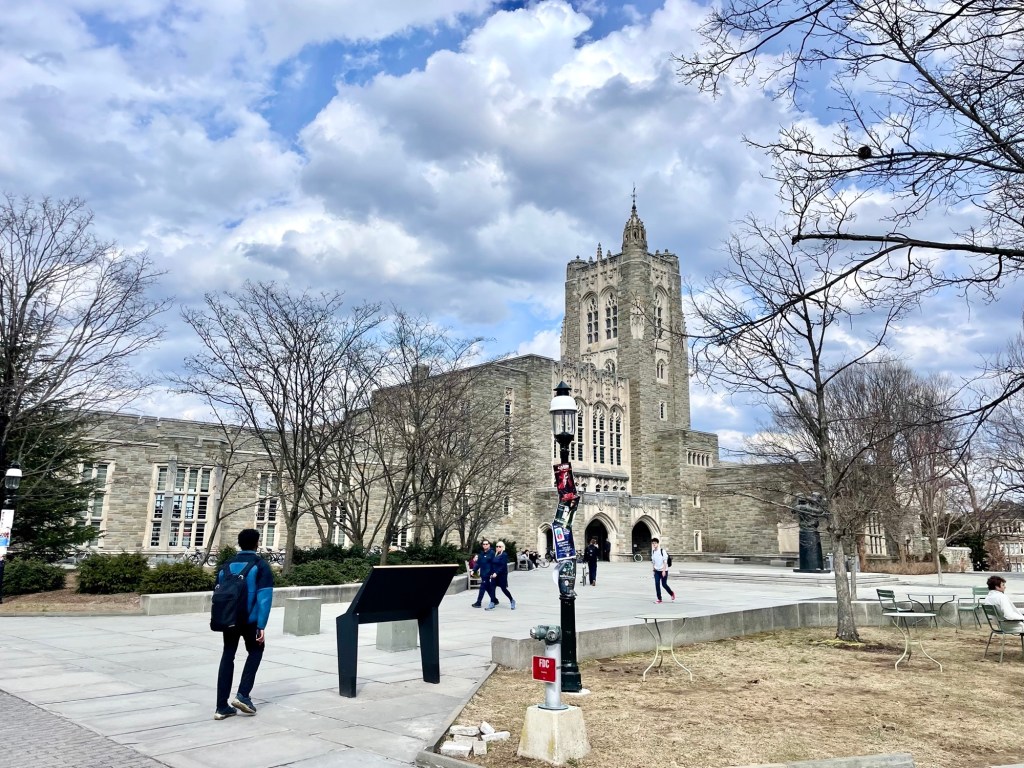
The campus grounds of Princeton University is open to all and you can freely walk around and explore, but access into the buildings is restricted.

For prospective students, you can book a free university tour with admissions information.

For tourists that just want to learn the history of this famous campus, the university runs historical tours with limited dates in the fall or you can book a third party tour company like we did that will not only explore the campus but around the actual town as well.

I’ve highlighted some interesting spots around campus below:

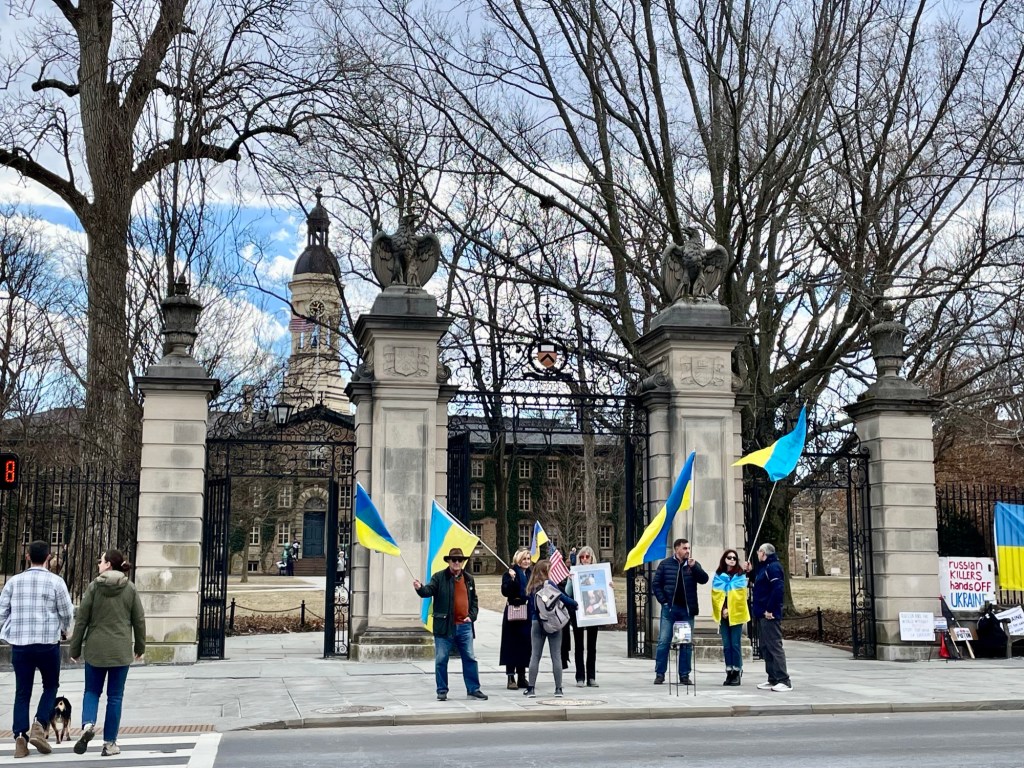
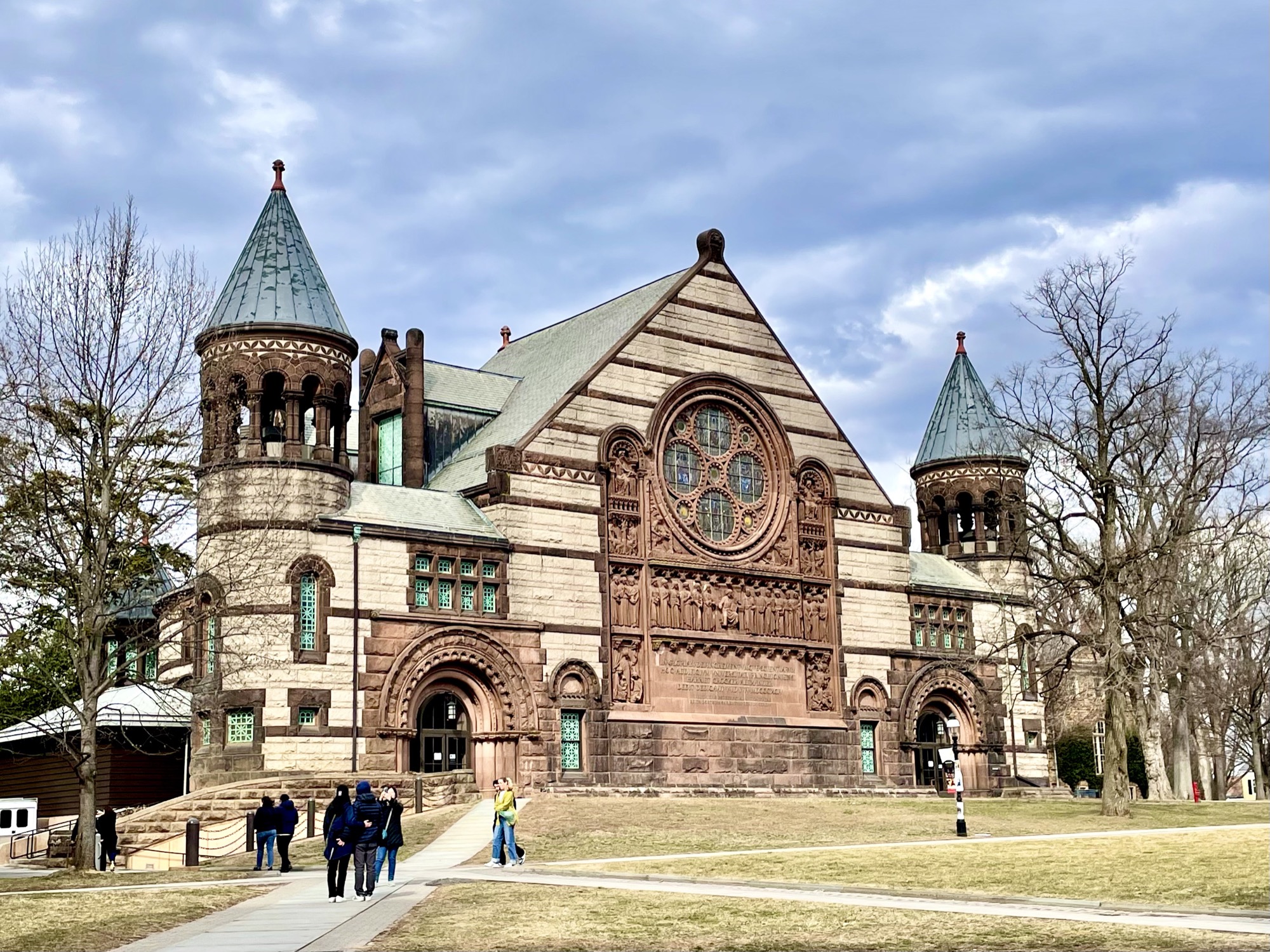
FitzRandolph Gate is located just off of Nassau Street, across the street from the Lower Pyne building and infront of Nassau Hall. It is the official entrance to the Princeton University campus. It was erected in 1905 and named after Nathaniel FitzRandolph, who was instrumental in raising the money and land needed to build the college.

The gate was originally always kept closed and locked except for special occasions such as graduation, but the class of 1970 ensured that the gate would always remain open “in a symbol of the University’s openness to the local and worldwide community”.

There is a local superstition that if you exit from FitzRandolph Gate before graduation, you will never graduate from Princeton. You can enter the campus through the gates, but not leave unless you’ve graduated. This includes babies and children that may wish to attend Princeton in the future 😂. Our tour guide was a graduate of Princeton and says that this superstition is still very much alive to this day.

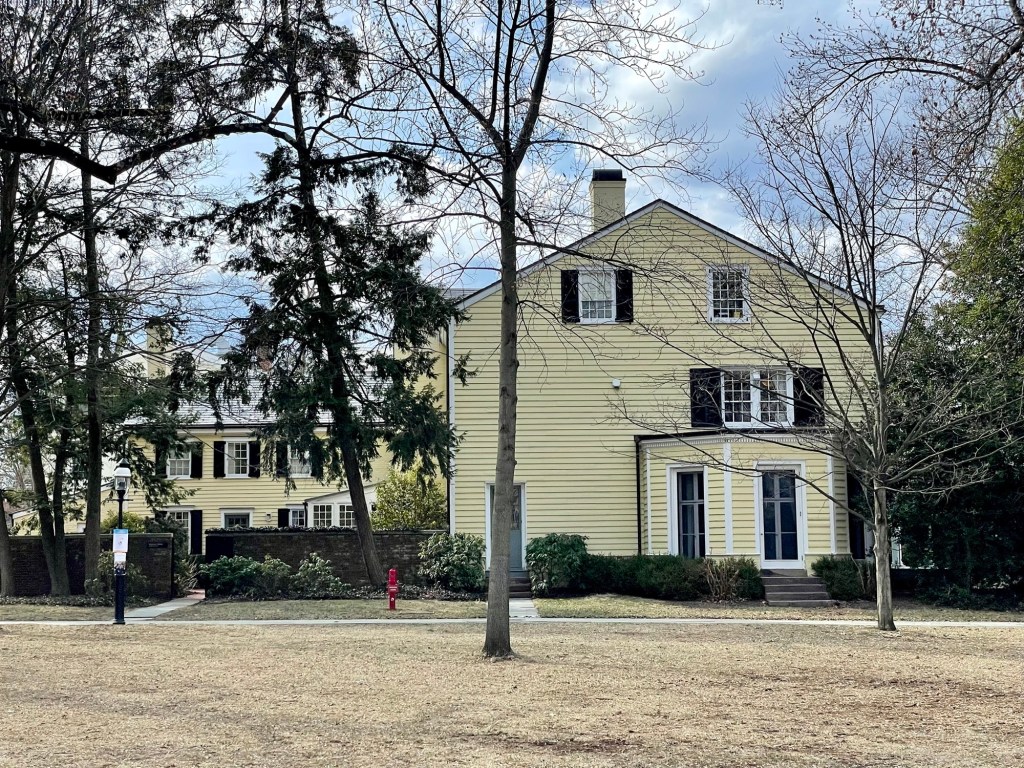
Princeton University had a couple of different locations (including Newark, NJ) before settling into its current location. At the time, Aaron Burr Senior (father of Aaron Burr Jr. – the guy who shot Alexander Hamilton, for you Hamilton fans) was the president of the college. The small yellow building below is where Aaron Burr Sr. lived at the time as he oversaw the building of this new campus.

Where Aaron Burr Sr lived

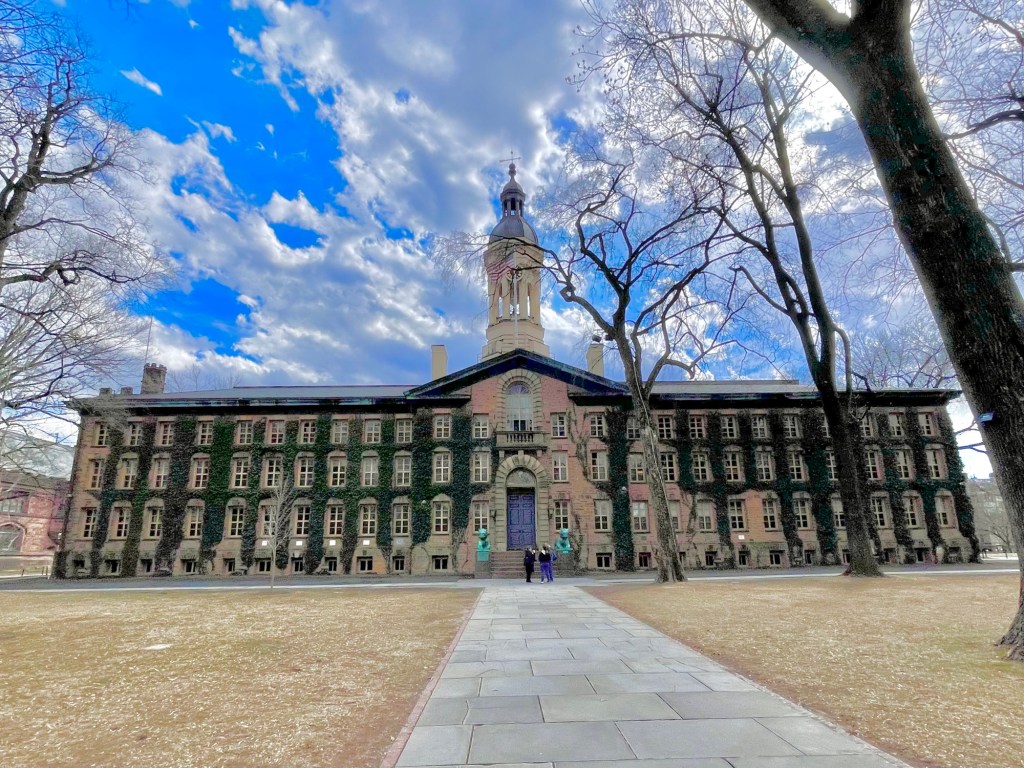
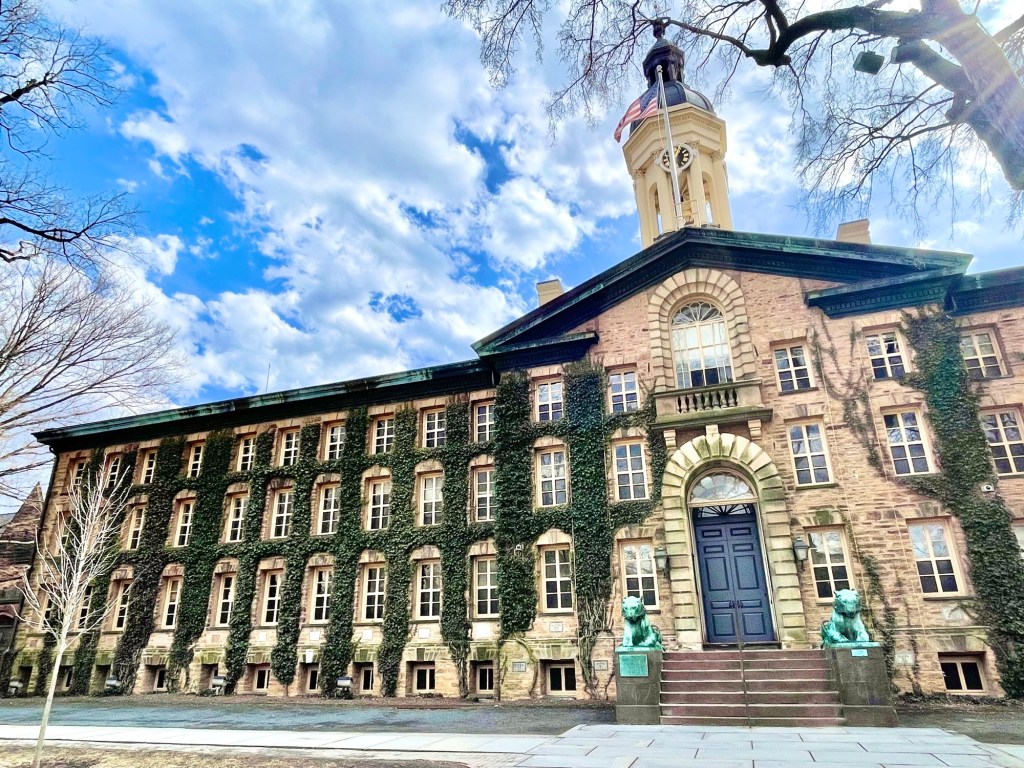
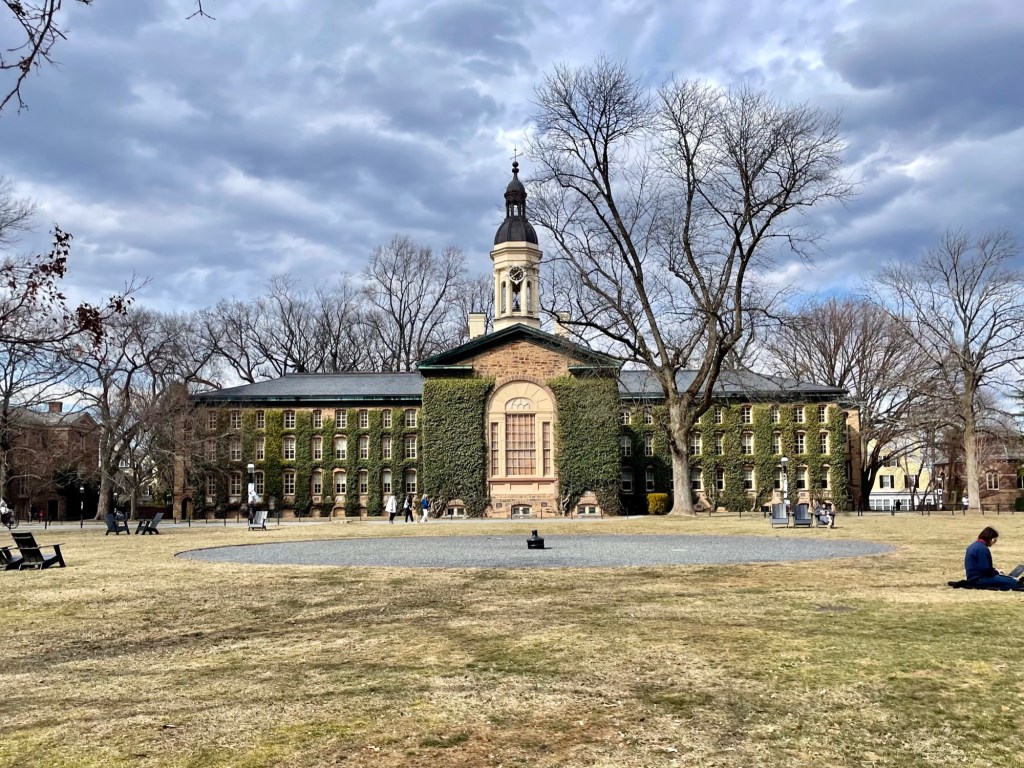
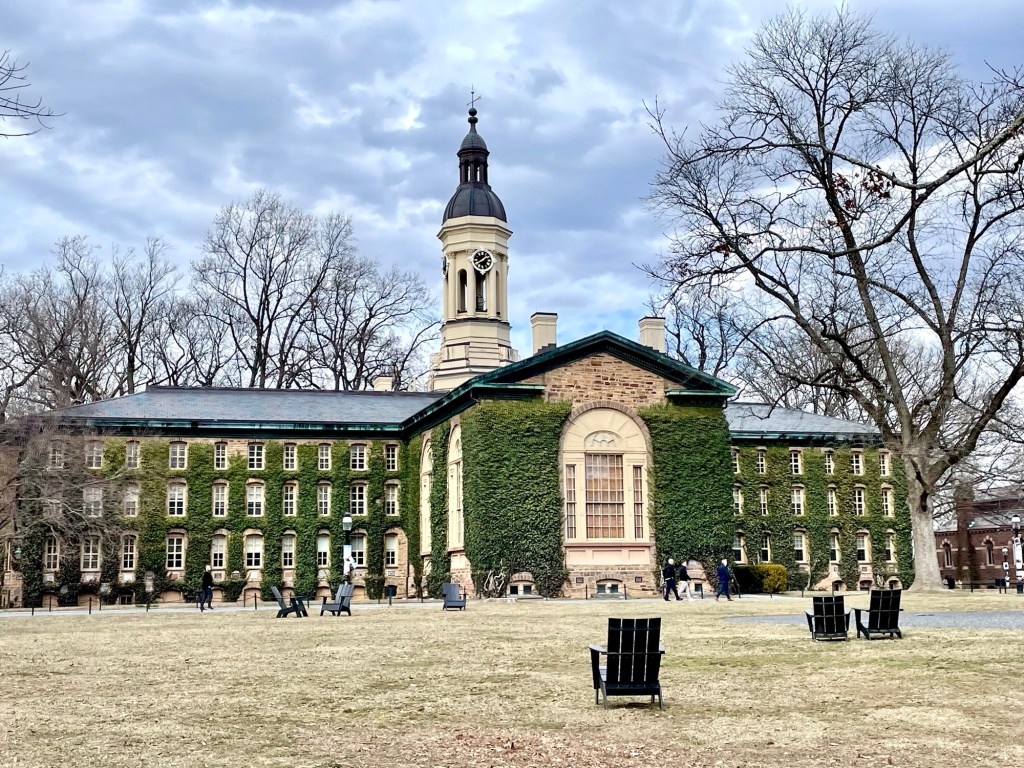
Nassau Hall is the first building of the college and also the oldest building on campus. It’s the first building you’ll see through FitzRandolph Gate and its covered with ivy around the majority of the building.

Throughout the years they’ve had many university presidents that kept dying from random things. The university was in a poor state with debt and poor instruction. John Witherspoon came on as the university’s 6th president and was monumental in saving the school from closing down. He travelled to New England and the South and recruited the wealthy to join the school. He updated the curriculum and turned Princeton from a place that predominantly trained clergymen into a place equipped to produce the future leaders of tomorrow.

Although Witherspoon is credited for the expansion and progression of the university, his racist roots in slave ownership has been a topic of heavy controversy. There have been petitions to remove his statue outside of East Pyne Hall, pictured below.

Statue of John Witherspoon in front of East Pyne Hall

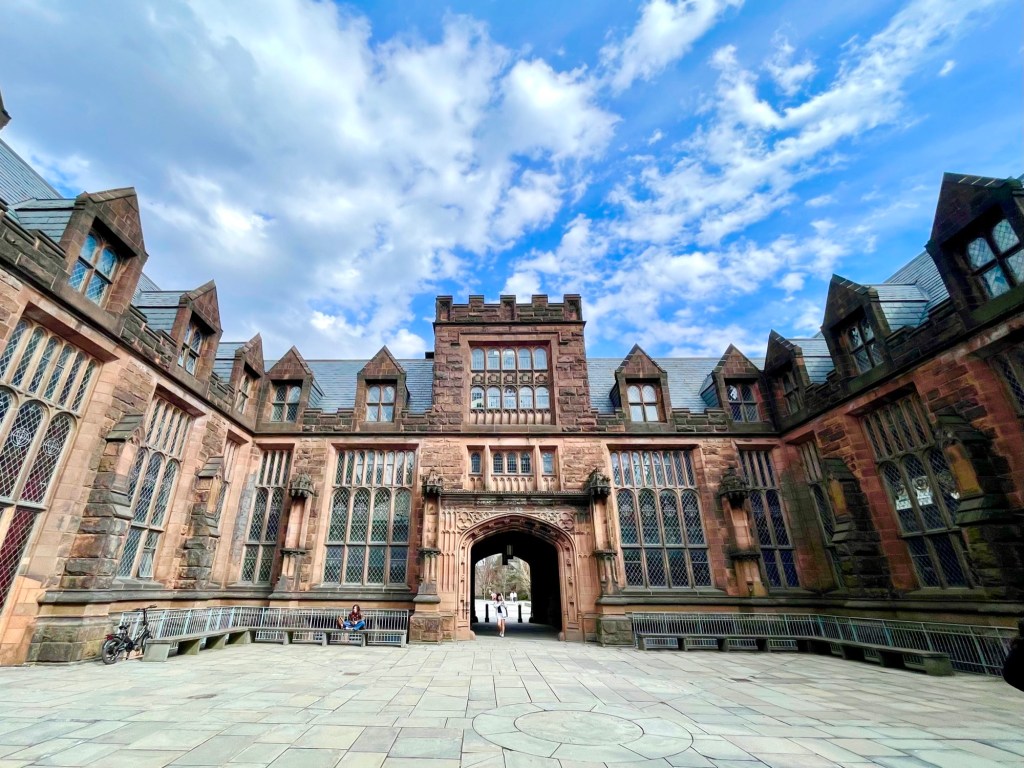
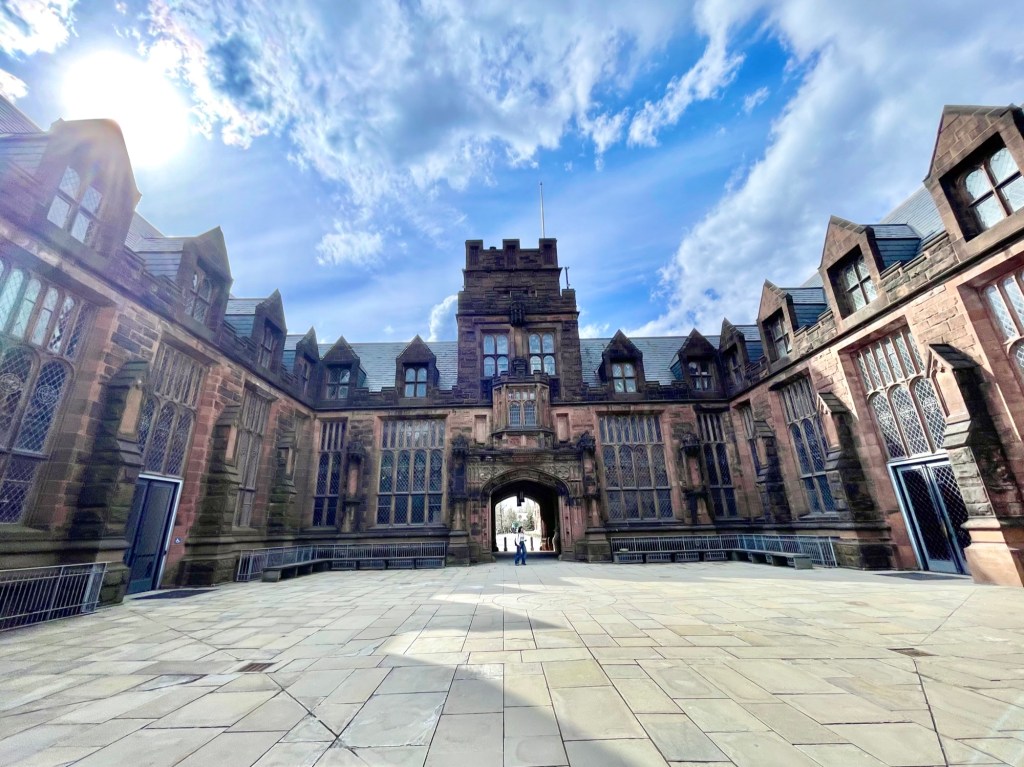
East Pyne was built in the late 1800s as an extension to the Chancellor Green Library next door. When entering the middle gates, you’re inside an enclosed square with beautiful architecture surrounding you. This site has been a popular choice for filming movies including the latest movie Oppenheimer.

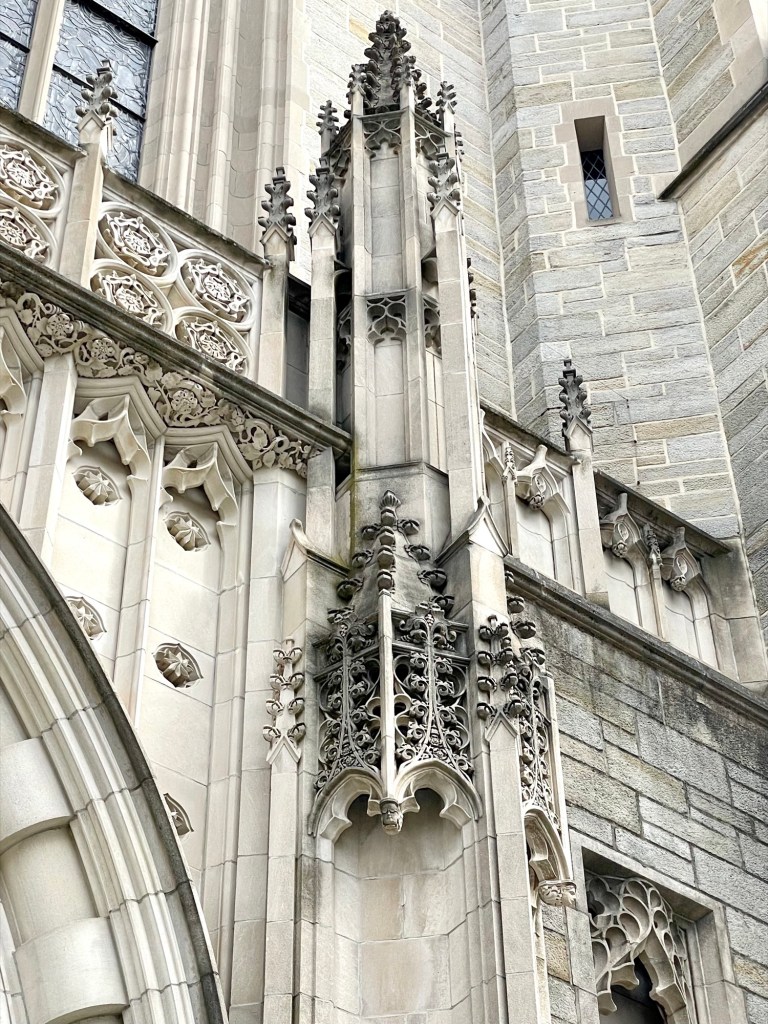
The Princeton University Chapel sits in the middle of the campus and was built in the 1920s to replace the previous chapel that had burned down. Its gothic architecture has a hidden surprise – the 5 stone makers hid their faces into the outside of this building (see if you can spot one in the photos!). Inside this beautiful building are impressive stain glass that lines the walls and is said to be the most valuable stain glass in the Western Hemisphere! The pews are carved from wood that was intended for Civil War gun carriages.
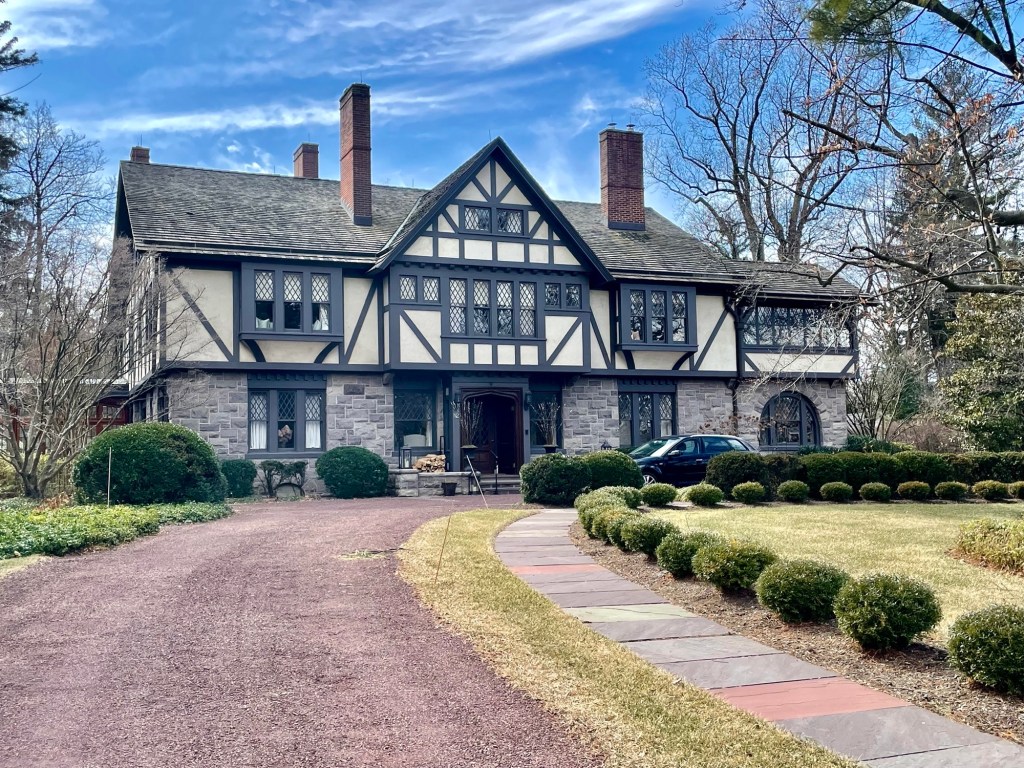
It’s a highly sought after place to get married. Our tour guide told us there’s about a 5 year waiting list to get married here! 😮

Across the chapel is the Princeton University Library. This enormous library holds over 7 million books including many rare books. It is one of the largest libraries in the world by number of volumes. There’s no public access to the library.

Across the chapel is Prospect House, built in 1851 and housed the university’s presidents for about 100 years, until they were relocated to the Walter Lowrie House (which was originally used as a guest house). I can’t quite find the exact reason why they relocated from this beautiful mansion, but online sources say it coincided with renovations to the building and turning it into a faculty club. Our tour guide says that in the 60s there were protests that a president shouldn’t live so lavishly in the centre of the campus. Whatever the reason, it’s currently the staff and faculty dining area. It’s a pretty nice building. People who get married at the chapel will usually also have their wedding reception here. There’s also a nice garden in the summer.

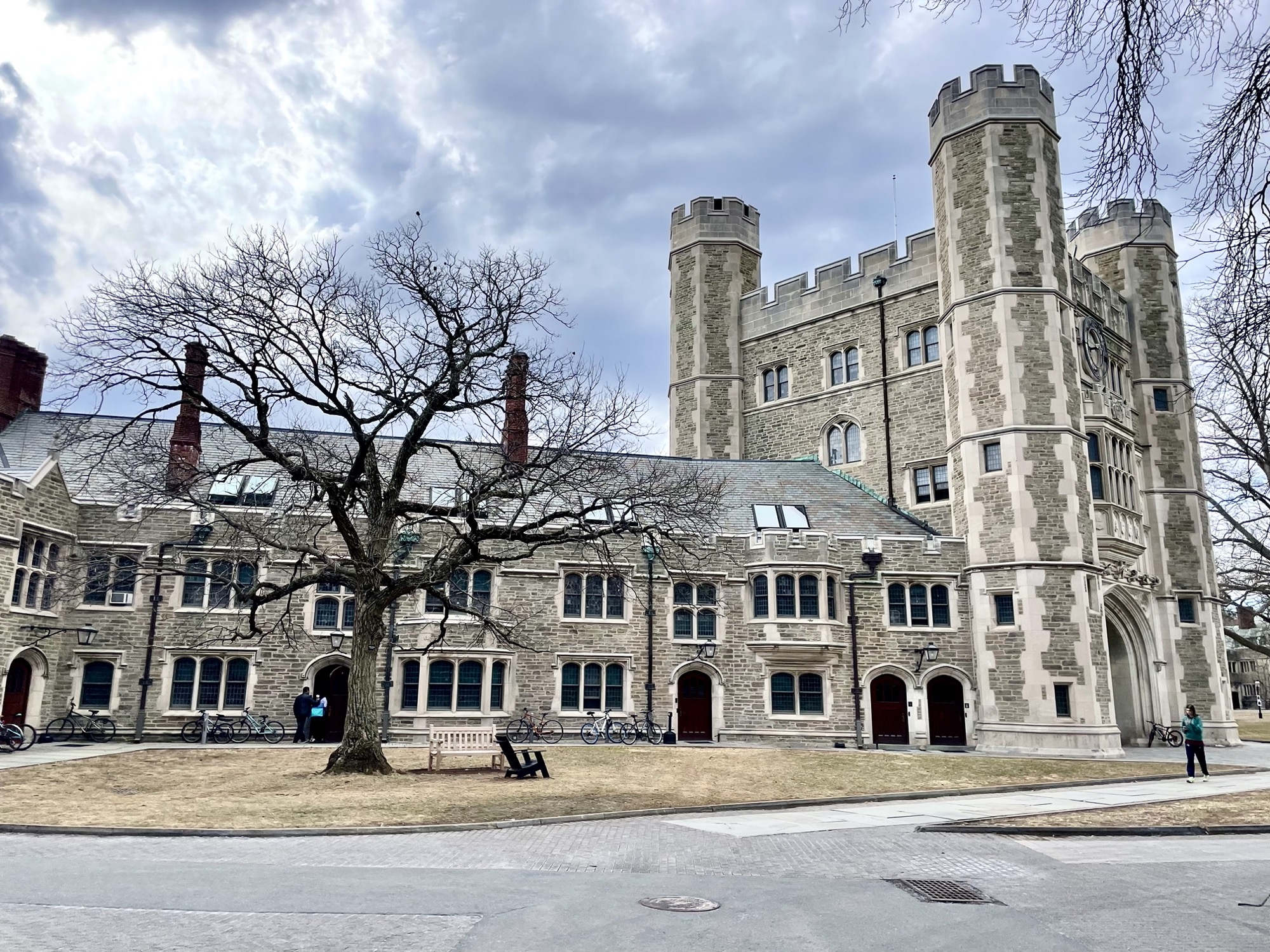
Witherspoon Hall was the most modern and elegant dormitory when it was first built in 1877. It was the first to have electricity and indoor plumbing. This is the first building you come upon when entering the campus by stage coach and has been purposefully made to attract a more “affluent” student population (aka them rich kids to bring their money to the school). There are even dumbwaiters and special corridors and rooms for servants!

Witherspoon Hall

The Princeton University Art Museum has an impressive collection that has been mentioned time and time again as a “must do” when visiting Princeton. Unfortunately they are currently in the works of opening up a new building that’s not set to open until October 2025. It’s located near Prospect House.

Princeton University Art Museum

Address: 112 Mercer Street, Princeton, New Jersey

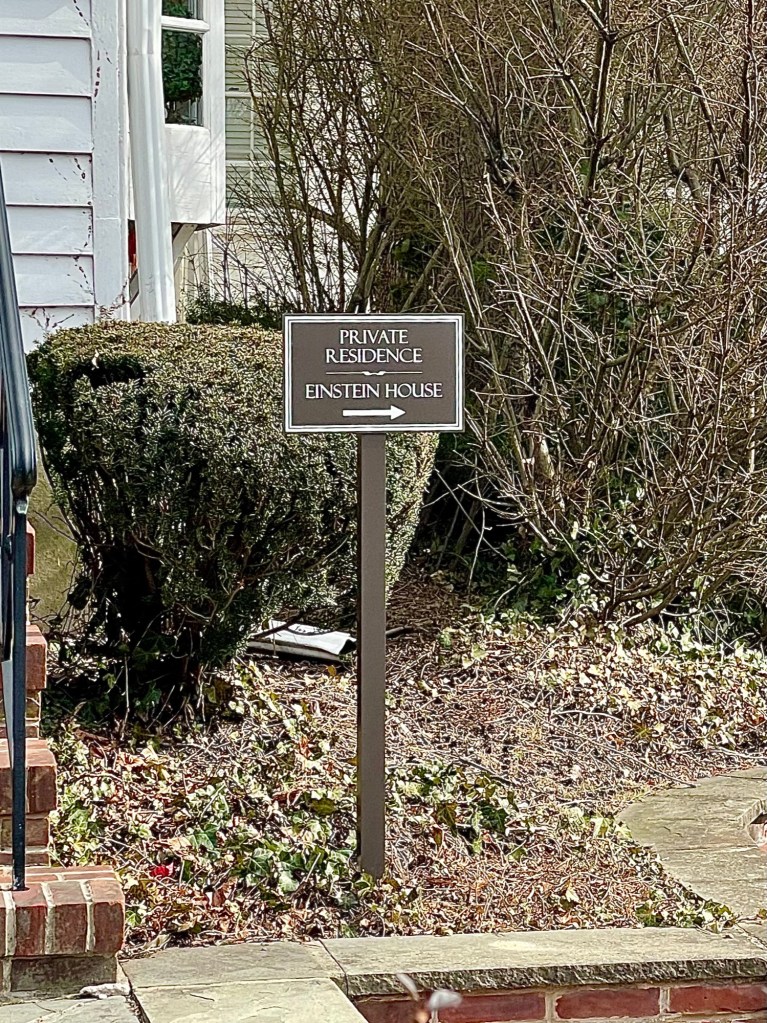
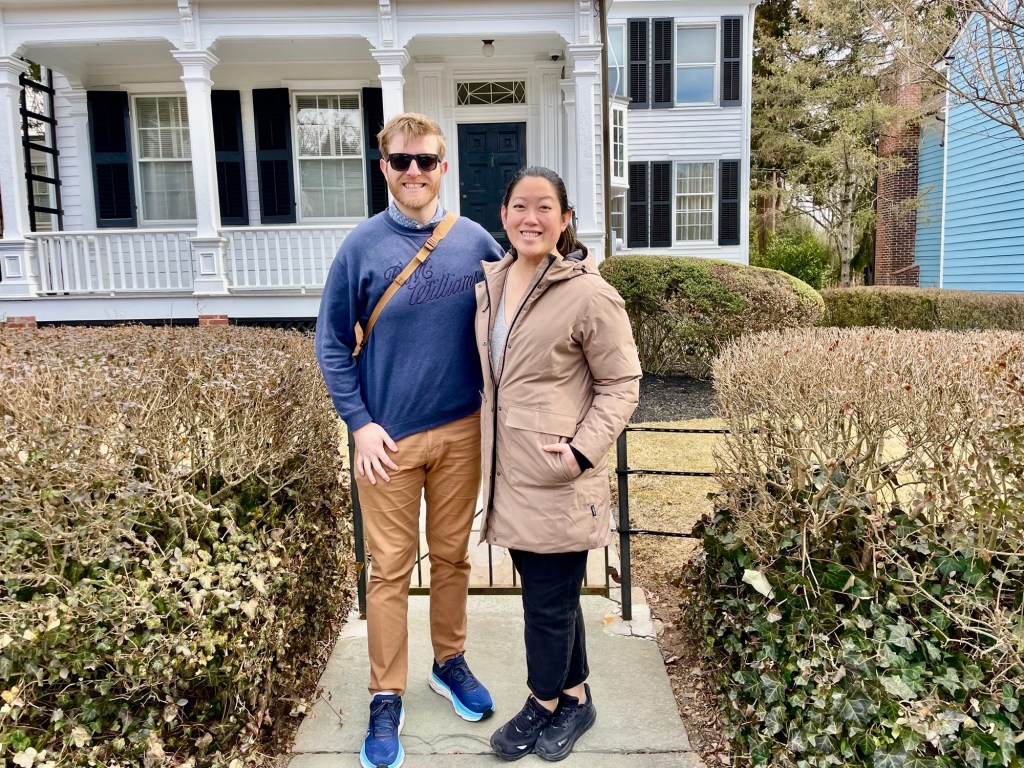
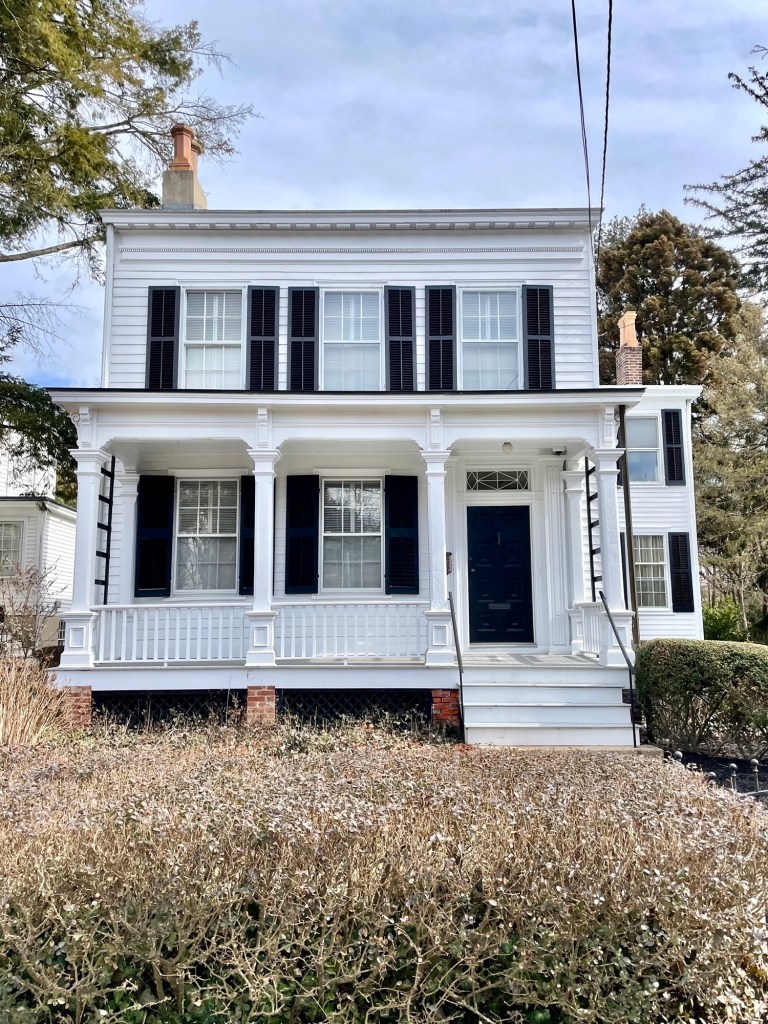
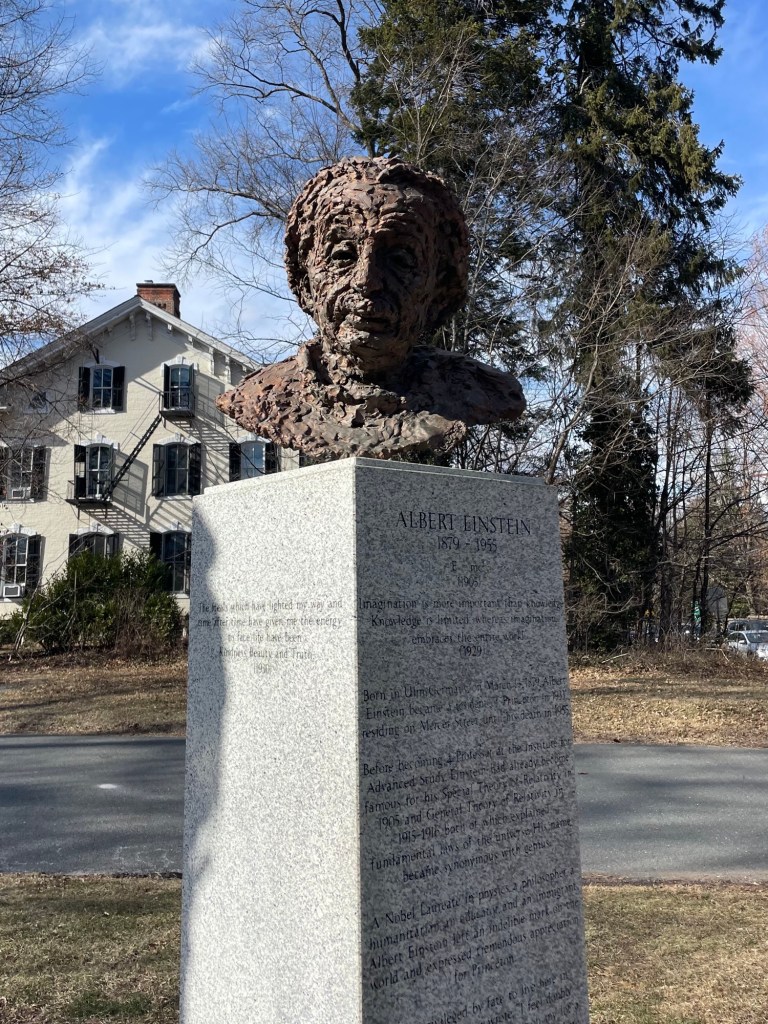
Albert Einstein lived here in the final 22 yrs of his life. He was invited to Princeton to be the first to join a think tank – the Institute for Advanced Study (IAS, the one they featured in Oppenheimer). He was never employed by the university while he lived in Princeton. The house is now a private residence even though it is owned by the IAS. There’s no place markers for this house, but the home next door has a sign 😉.

Library Place is a street where all the fancy houses are with many of them belonging to celebrities or have had a famous person live there. It’s a lovely quiet street to walk down and gawk at all the beautiful houses. 82 Library Place was the former home of President Woodrow Wilson. This man was super racist even for his time, but his house was damn beautiful. There were a few other famous houses on this street, but this was the only one I could remember 😂.

Woodrow Wilson’s house

On Boudinot Street sits Peter Benchley’s former home, the author of Jaws. It sold for 2.5 million in 2012.

Benchley Home

Morven Museum & Garden on Stockton Street was the home Richard Stockton, a signer of the Declaration of Independence. This home is now a museum and garden.

Morven

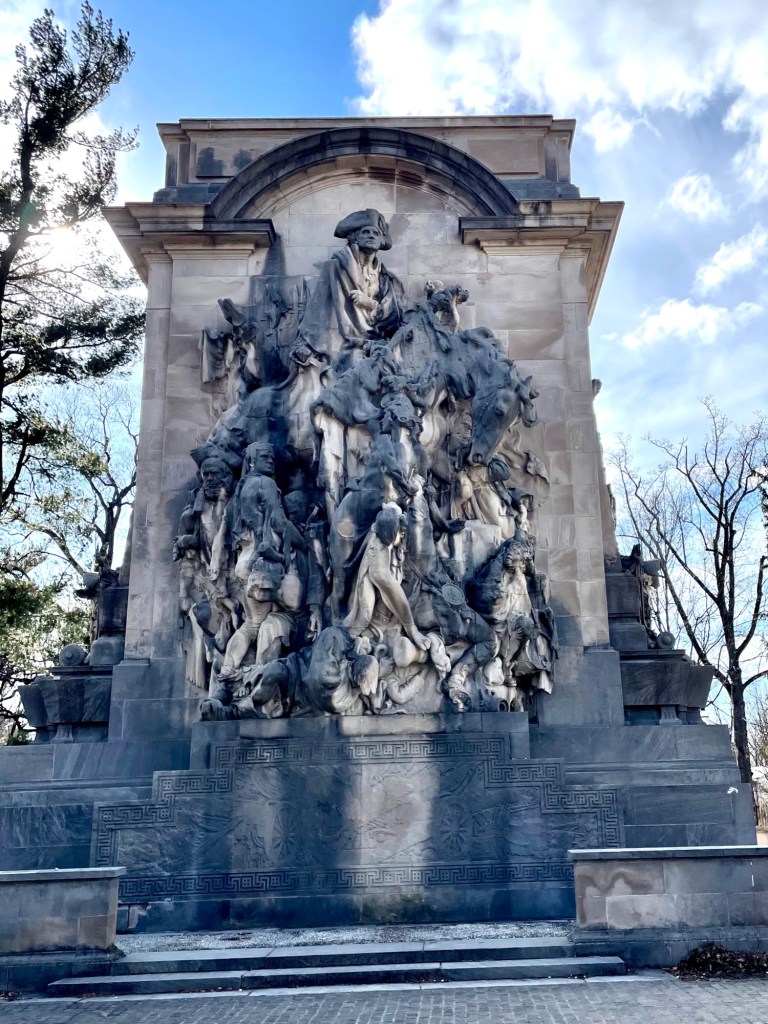
This park is just outside of town. It’s a big field with a monument and is the site where the Battle of Princeton was fought. Unfortunately we didn’t have time to stop here.

Address: 80 Sculptors Way, Hamilton Township, NJ 08619
Cost: $25 per adult

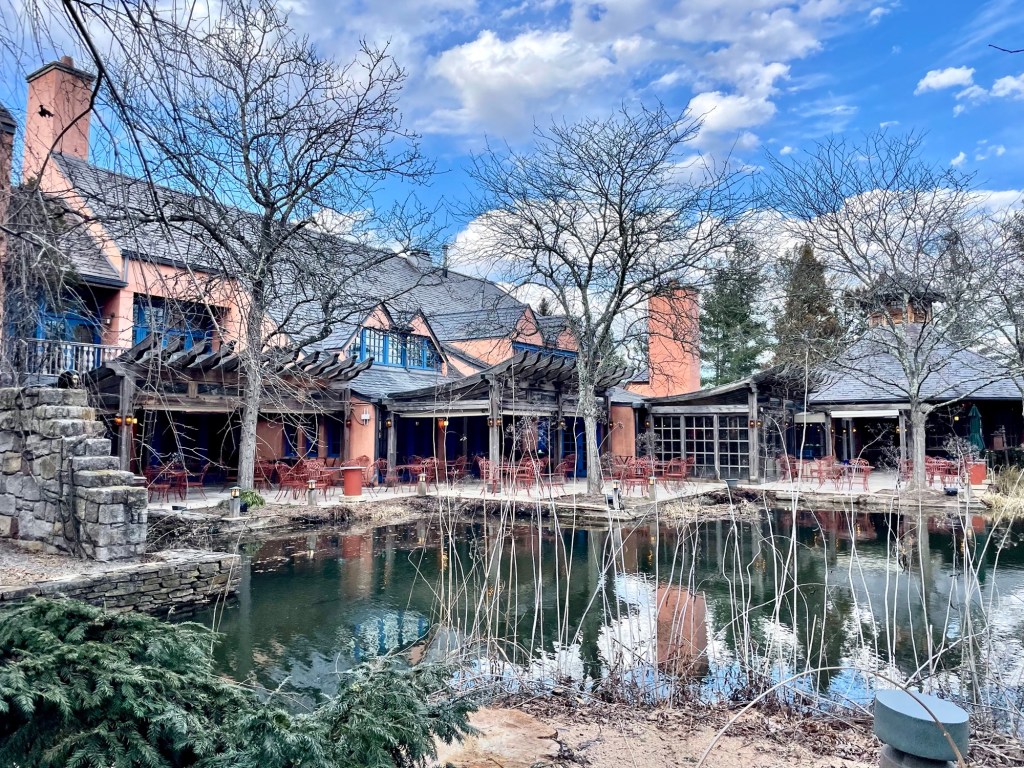
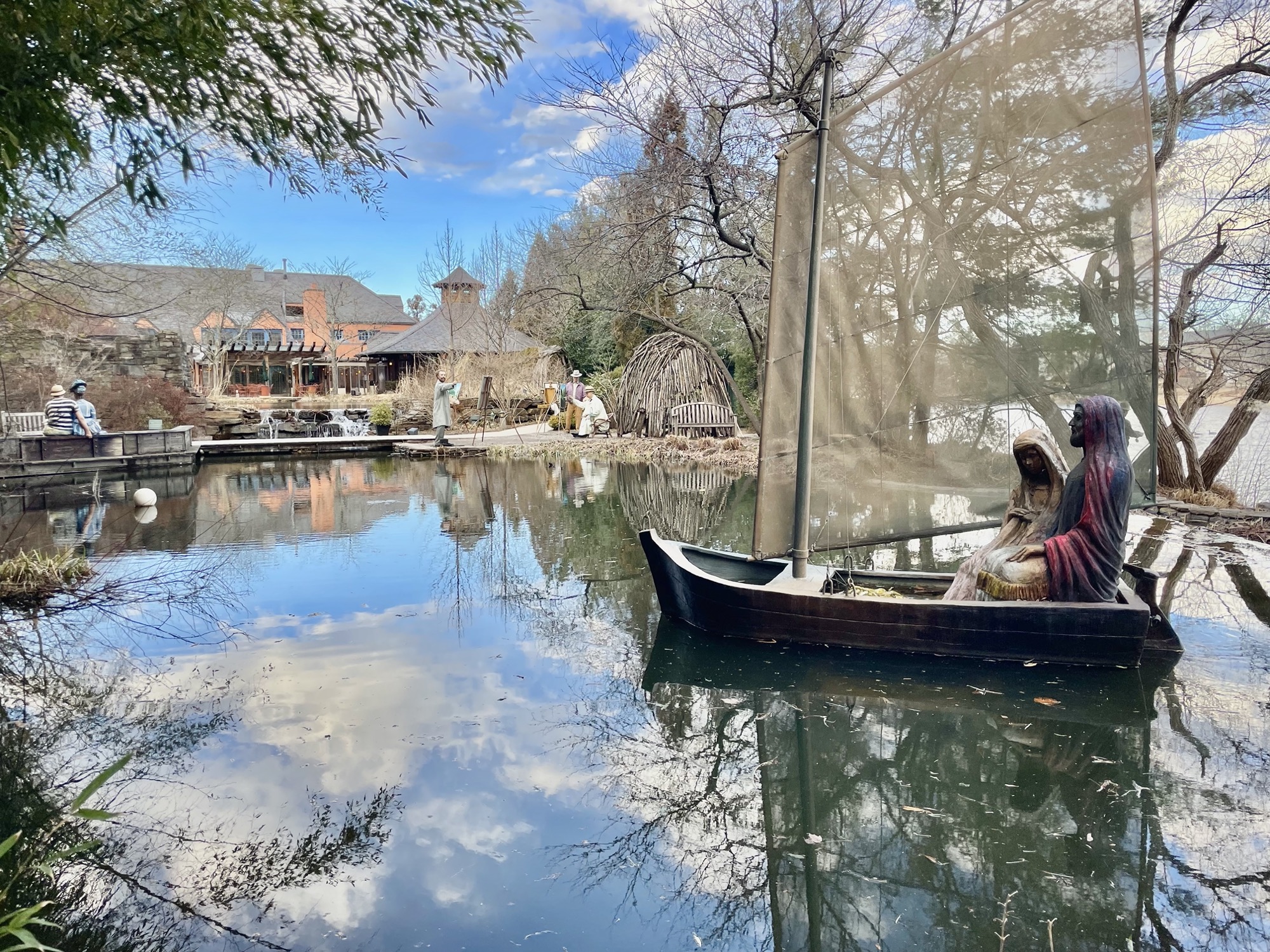
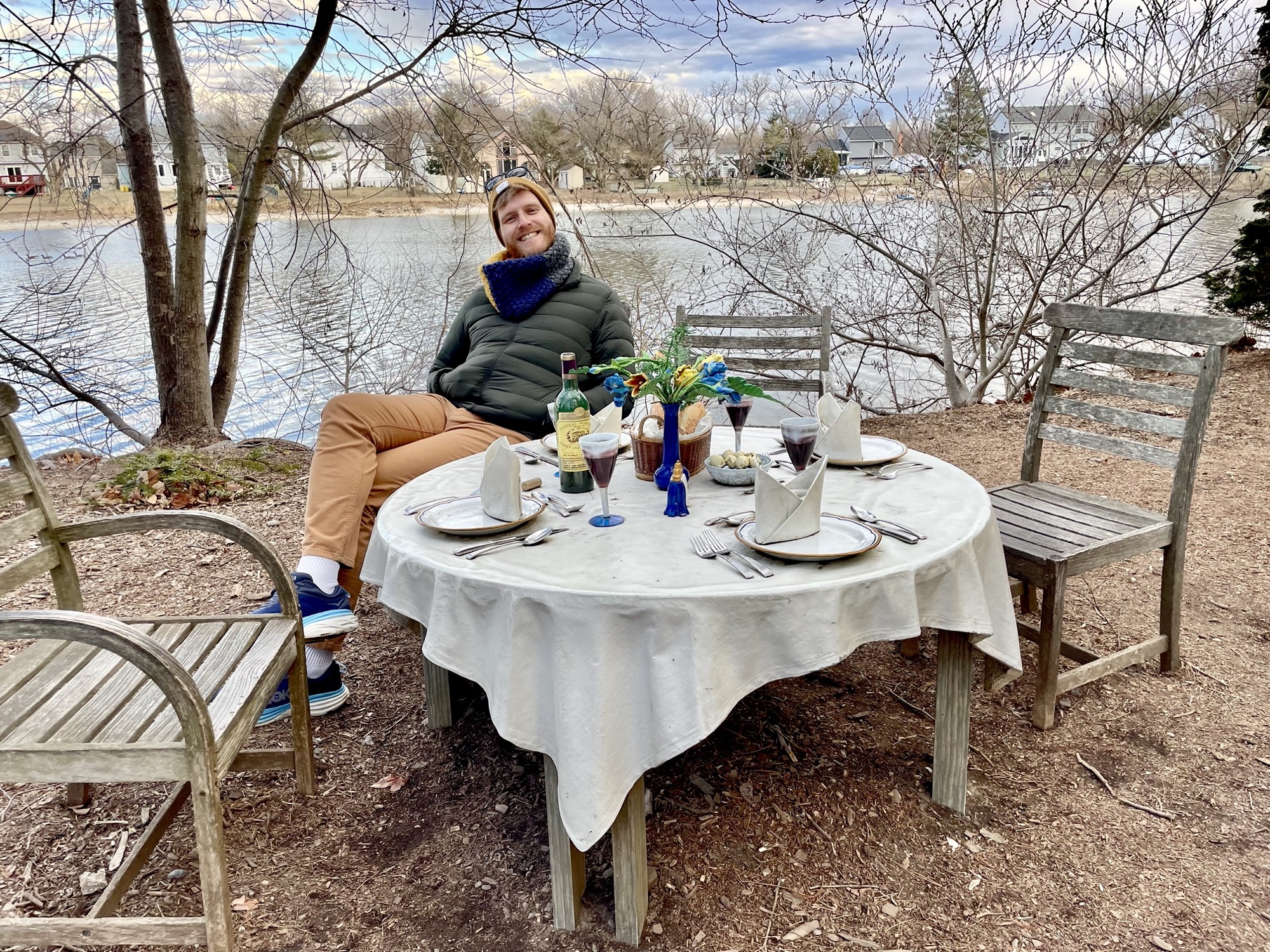
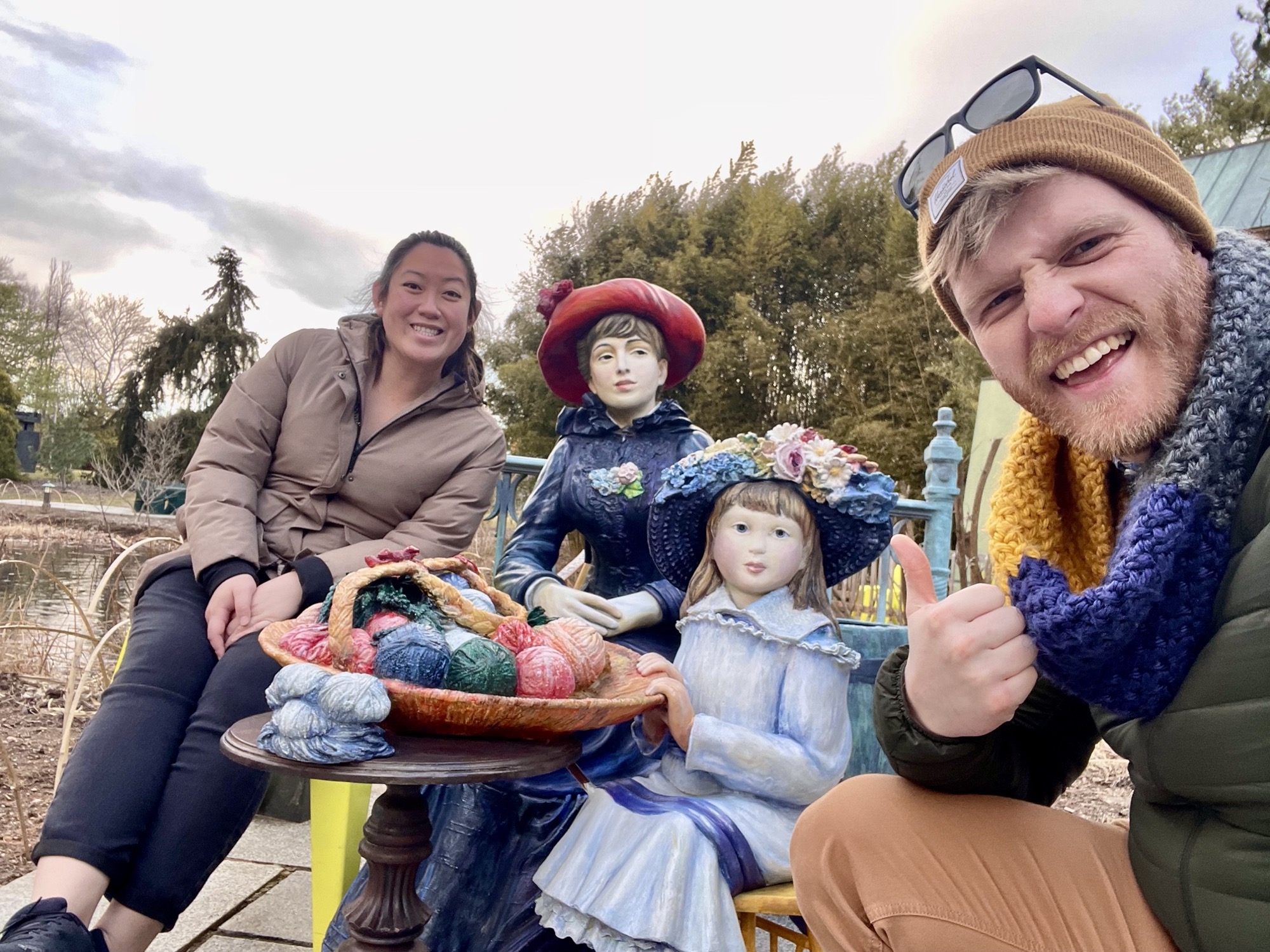
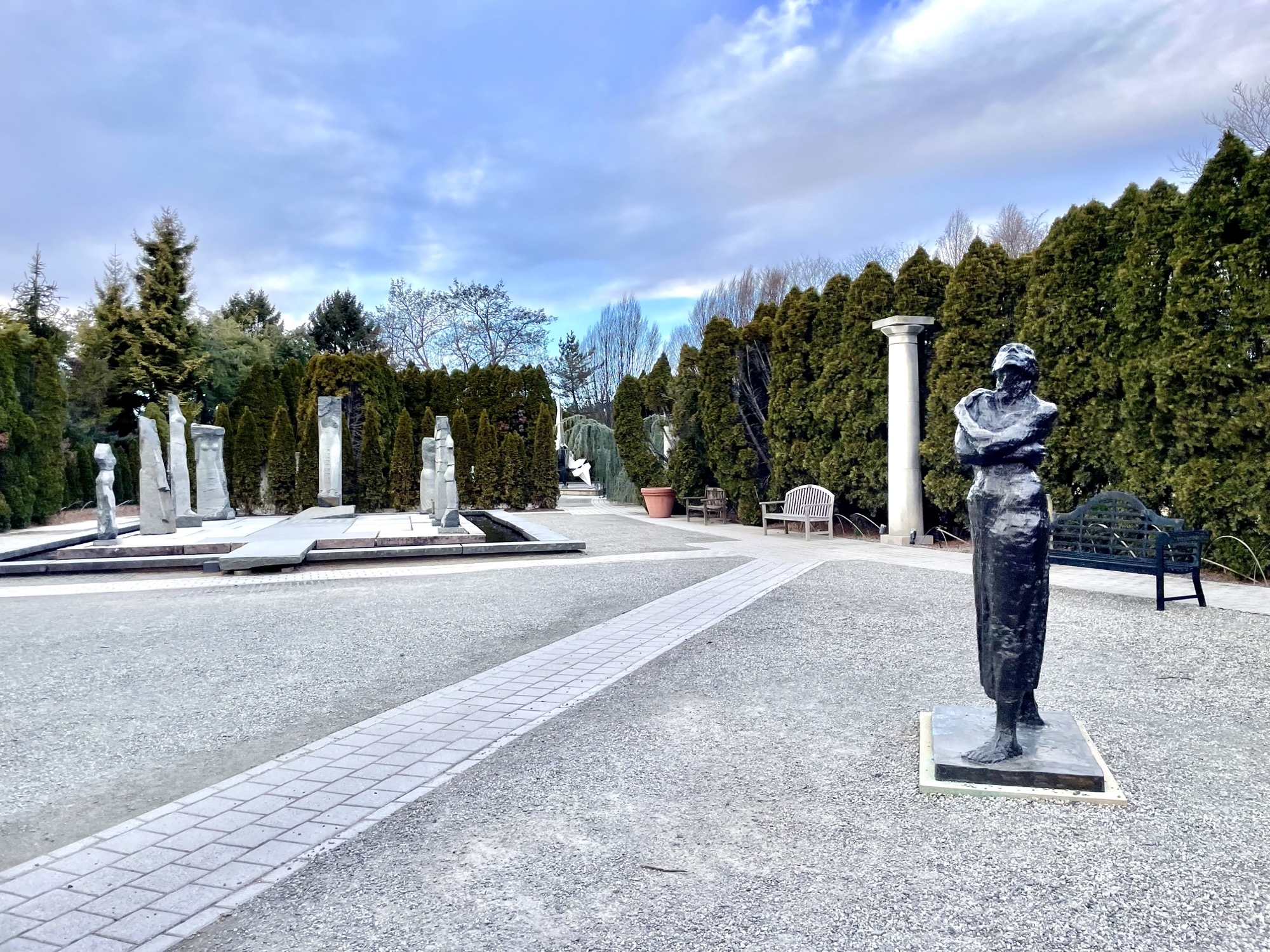
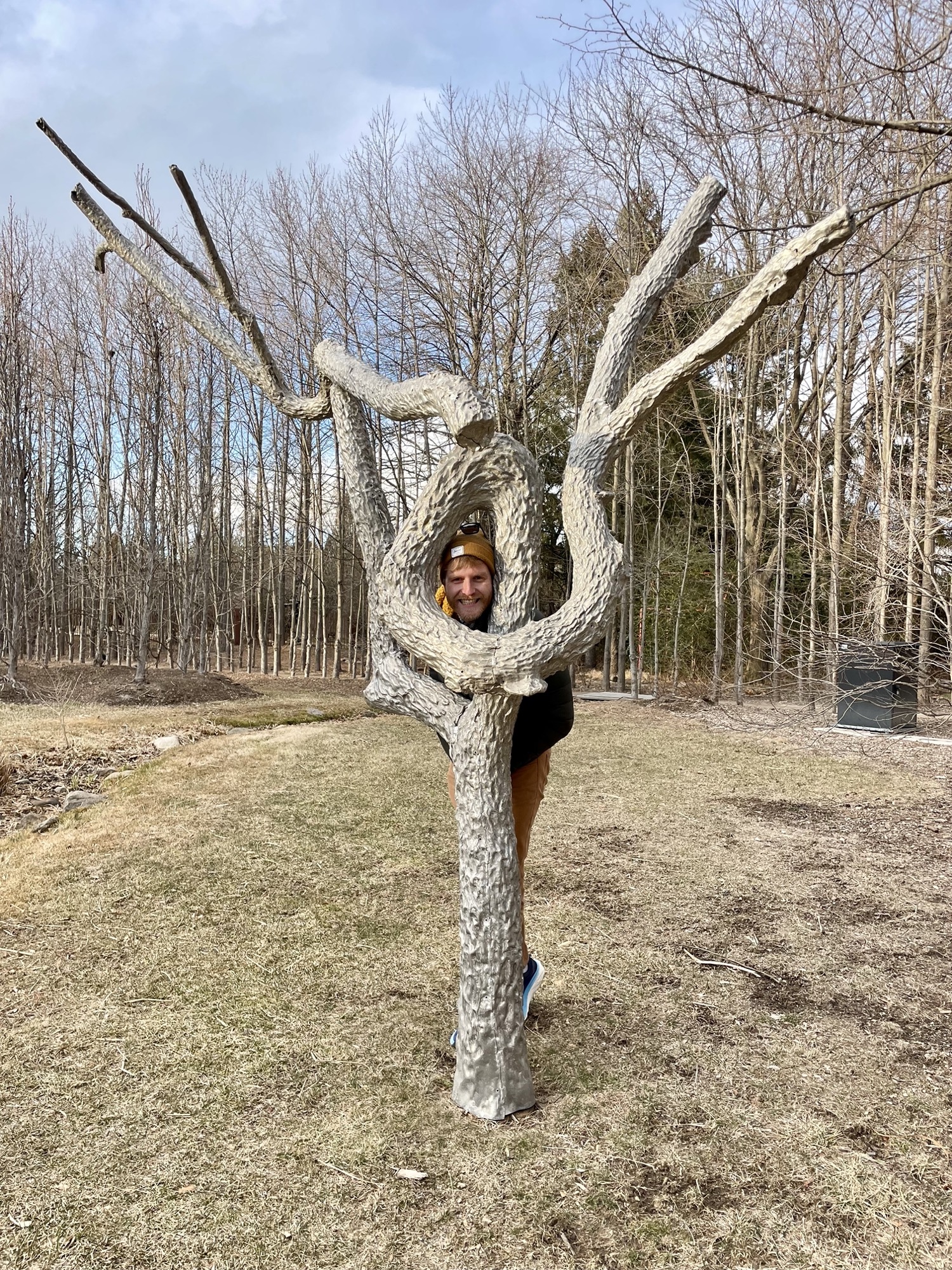
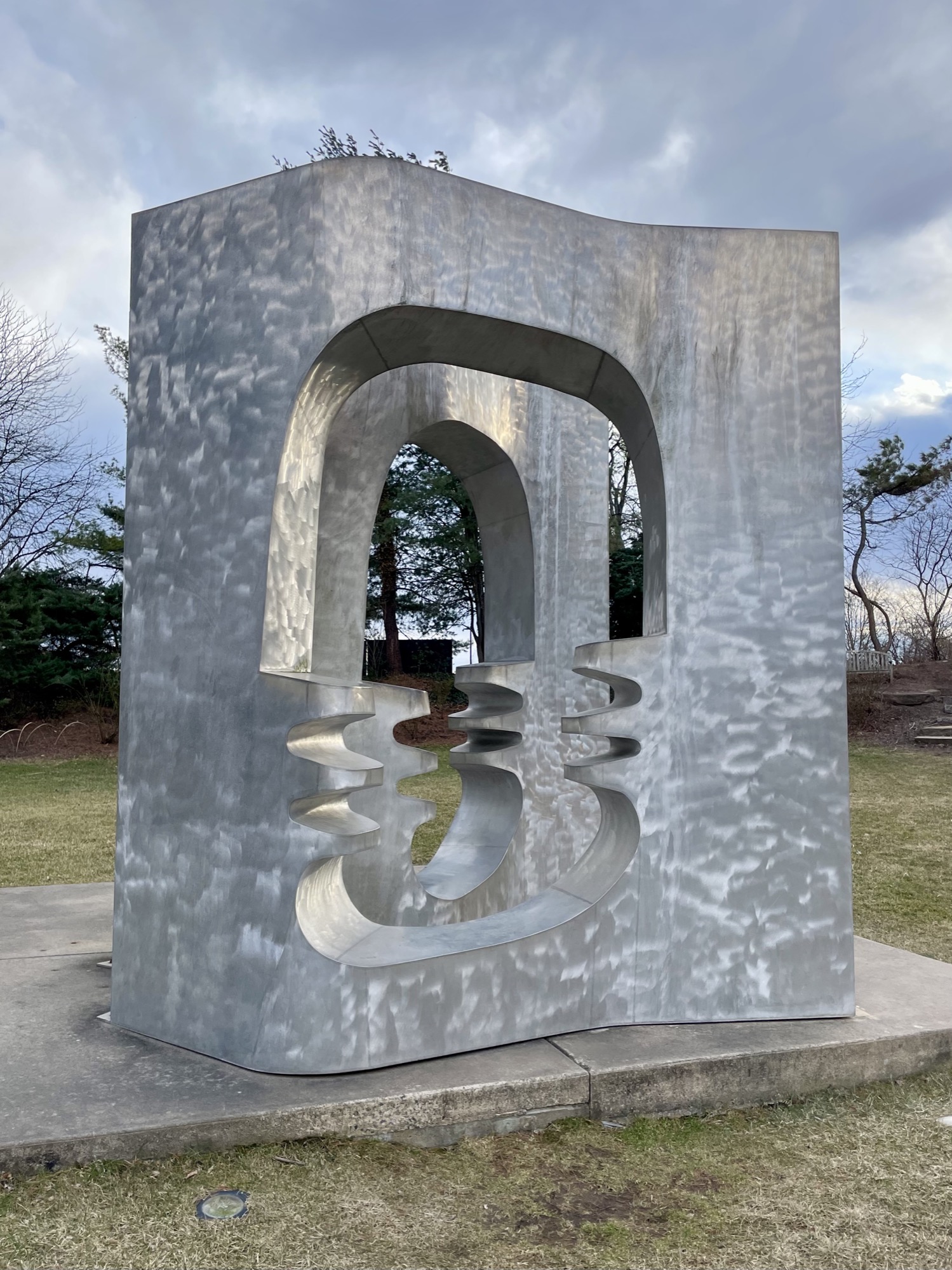
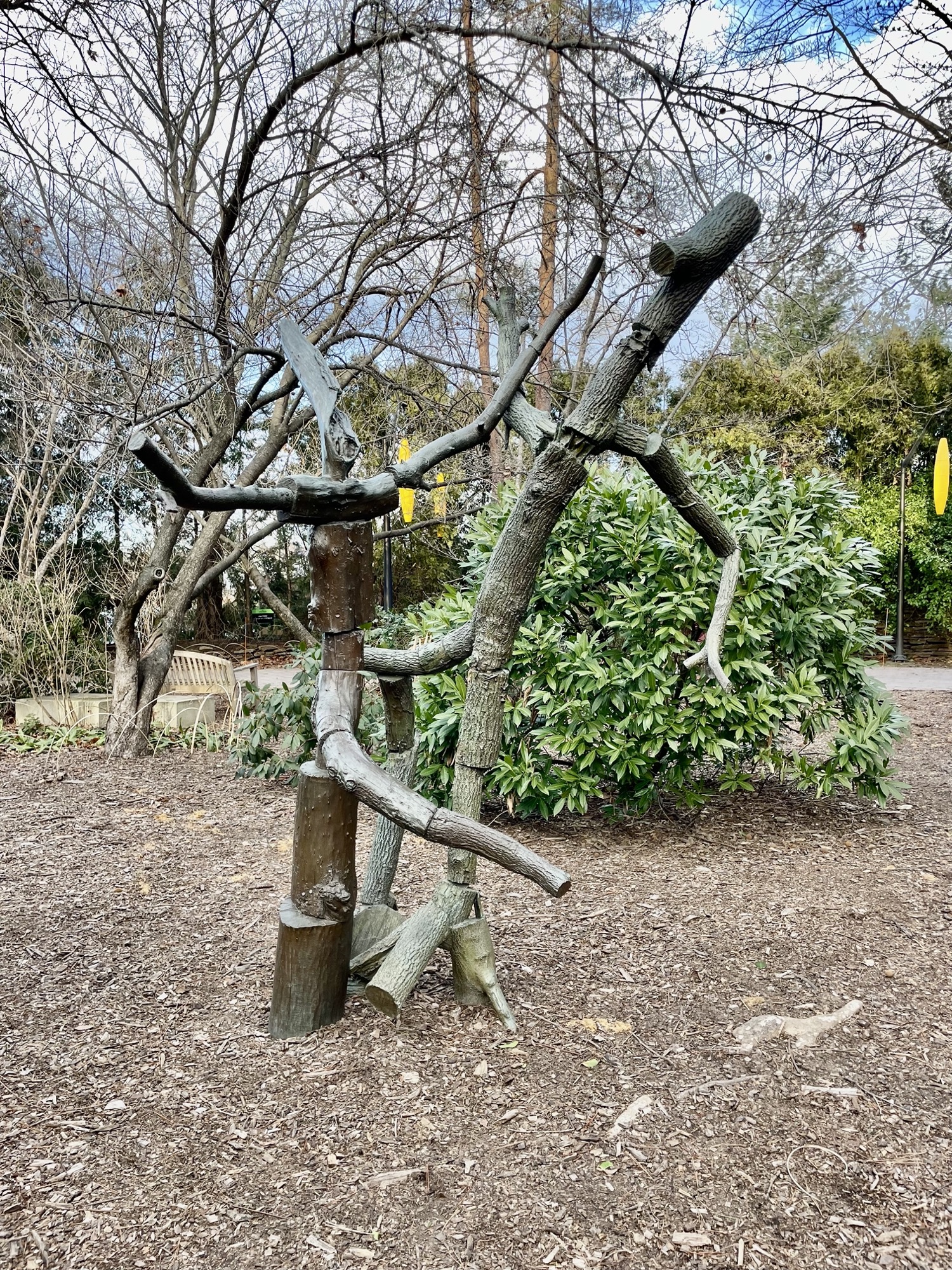
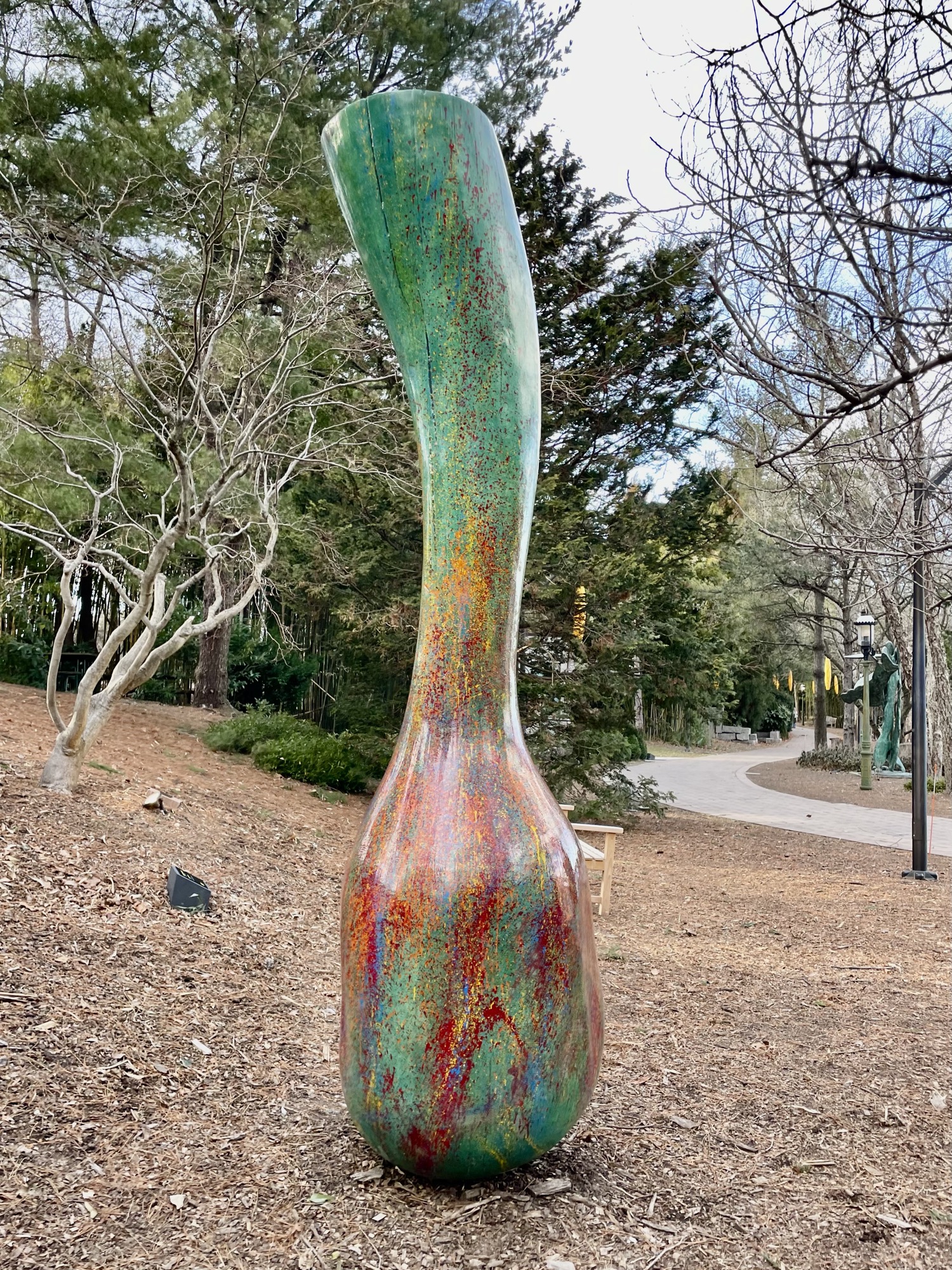
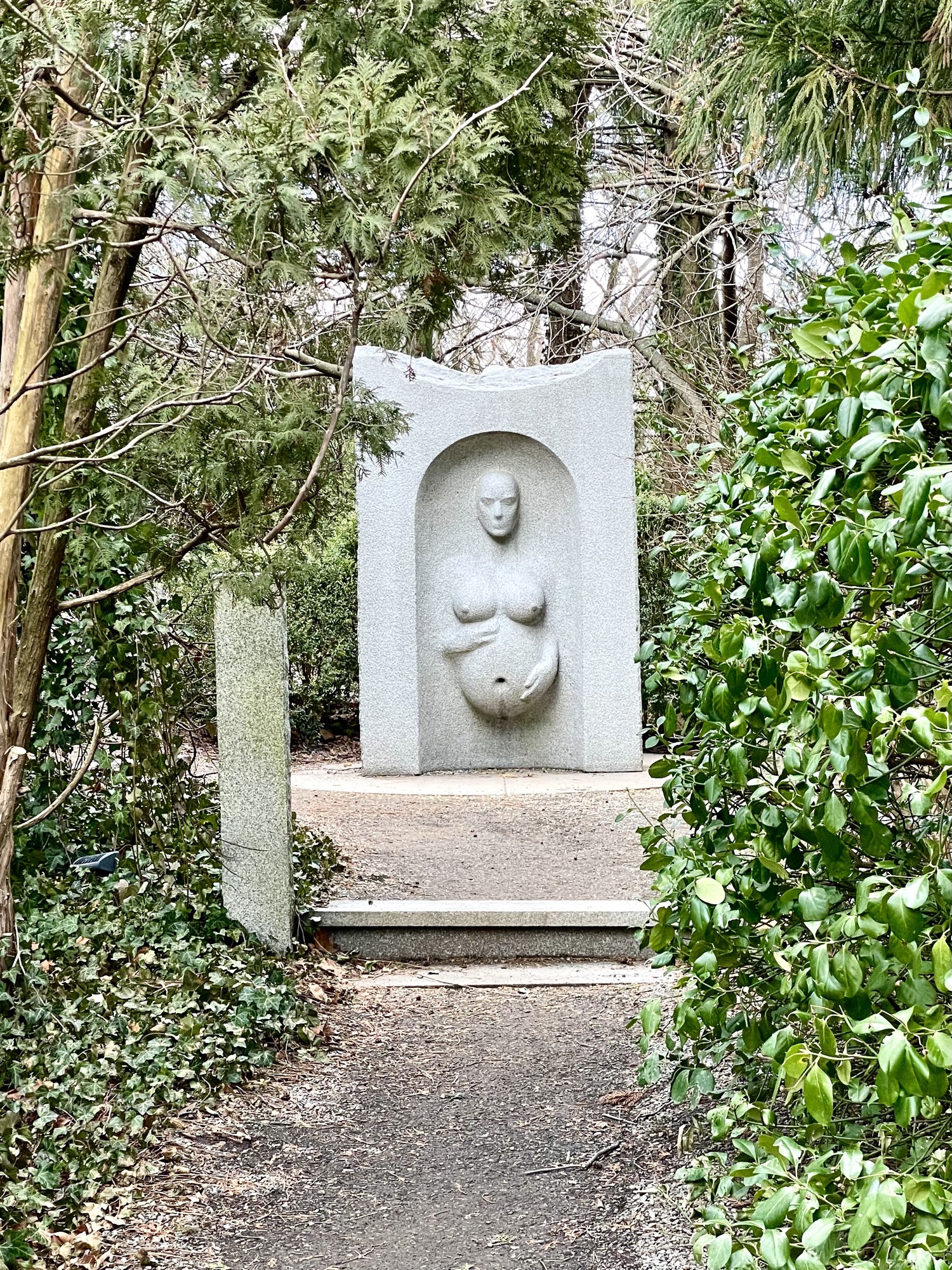
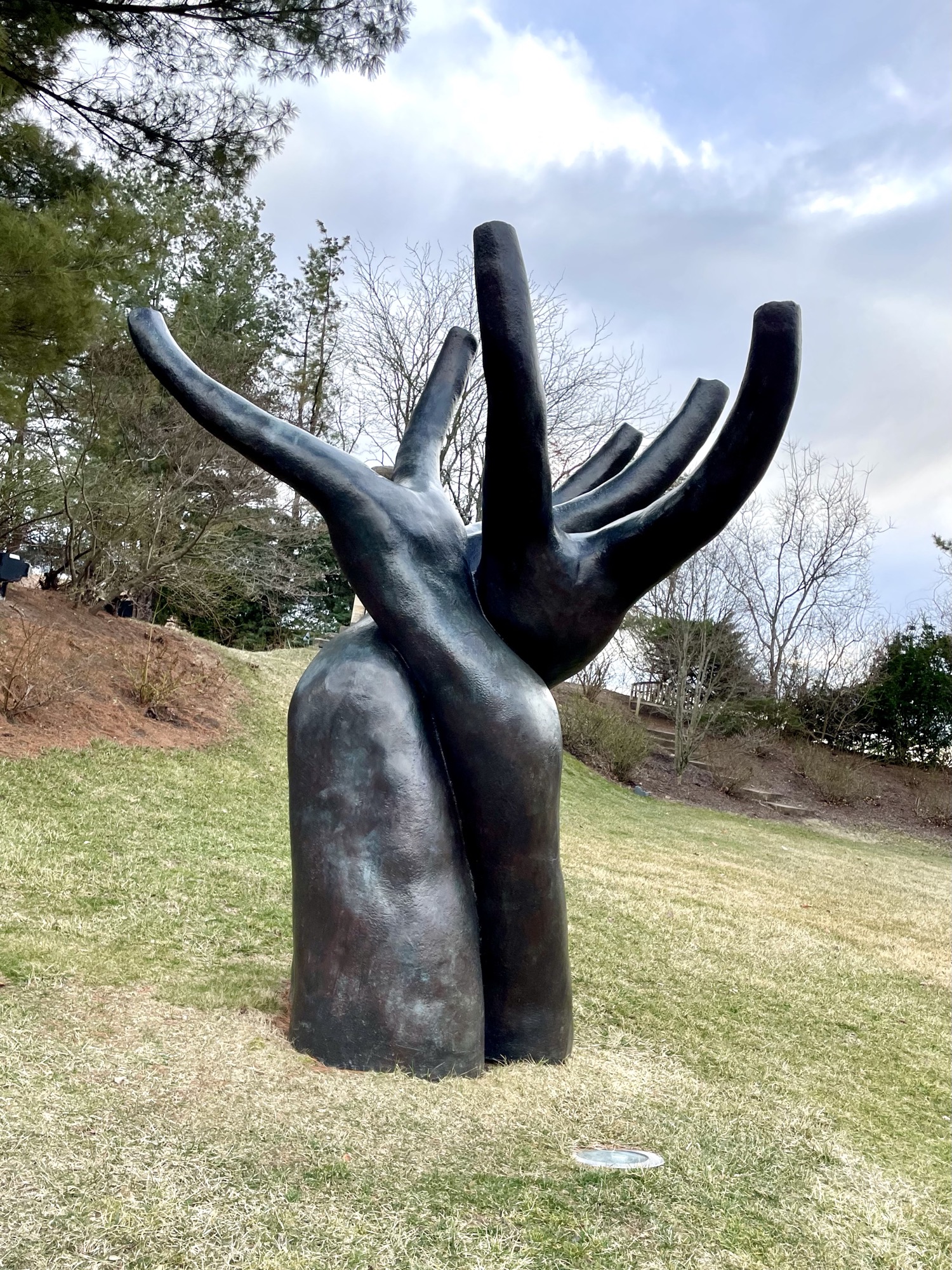
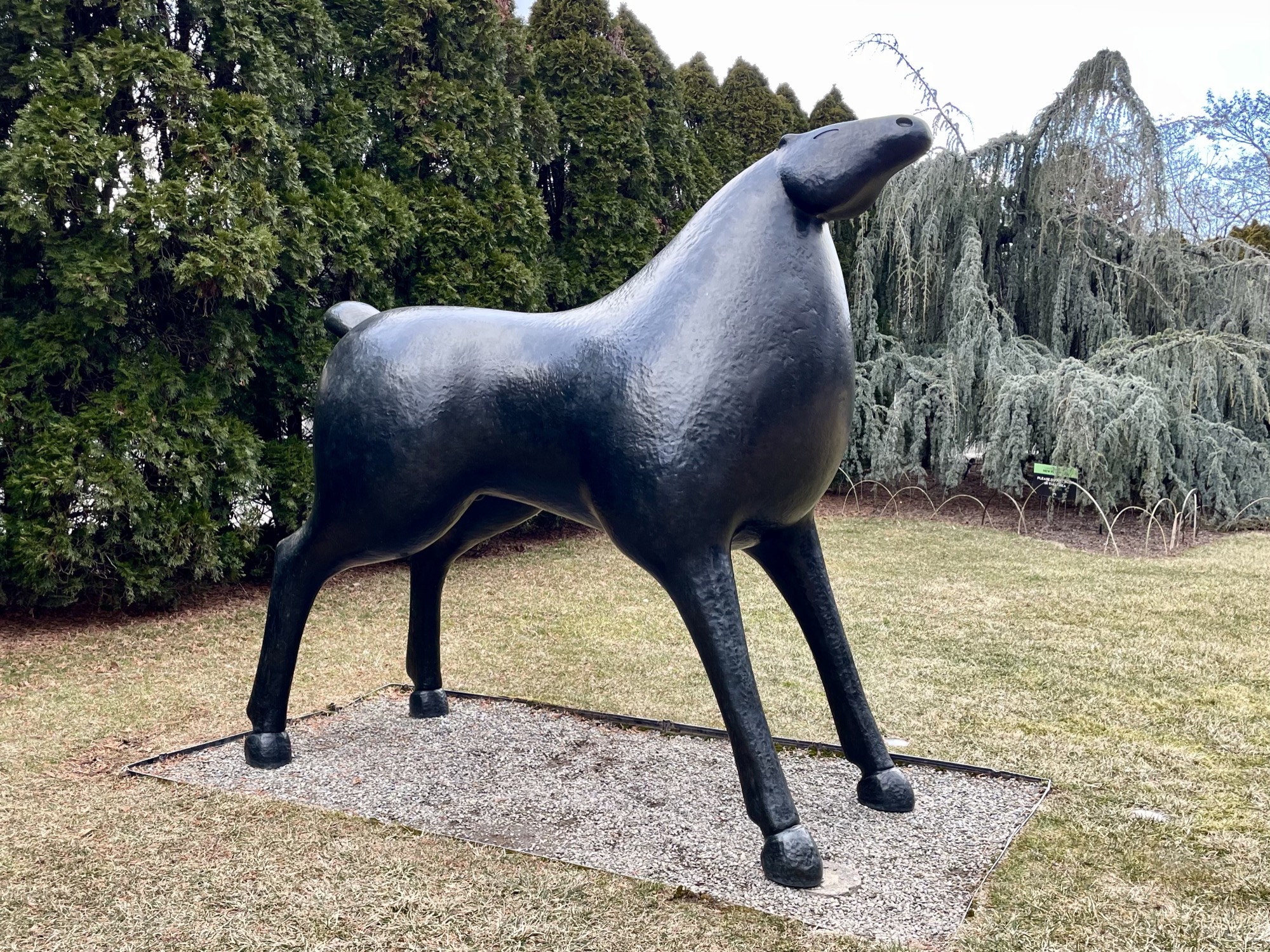
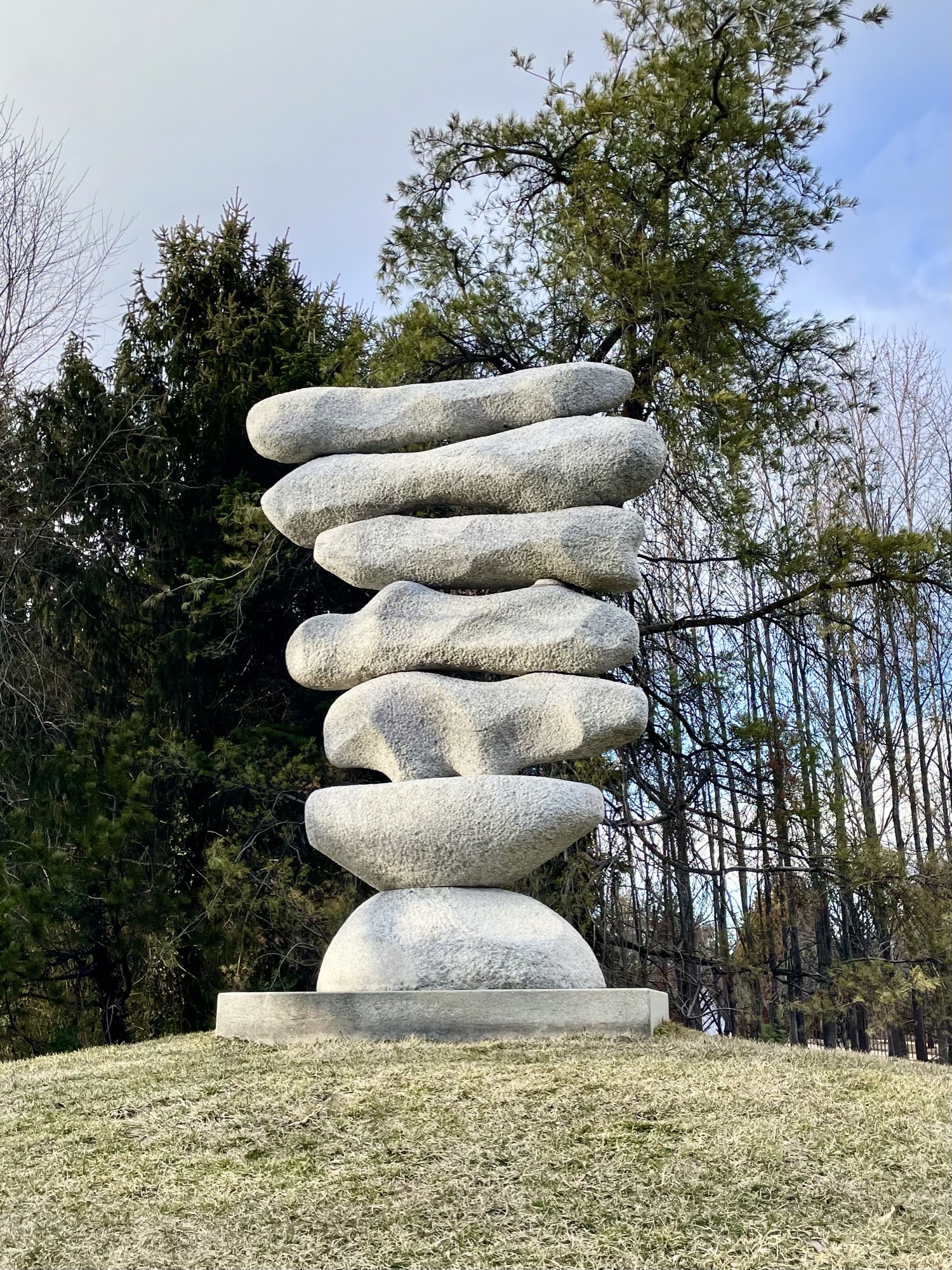
A 15 minute drive from Princeton is Grounds for Sculpture. It is a massive outdoor area with multiple small trails that lead to random sculptures. It’s a pretty cool place with some nice scenery along the water and amongst the tress. Toby and I aren’t big sculpture people but we found some that were pretty neat. There’s a restaurant here called Rat’s Restaurant that has good reviews – we didn’t have time to go, but it looked like a cool place to hang out by the water. It took us about 1 hour to walk through it all, but some people recommend spending at least 2-3 hours, especially if you plan to go to the cafe (reservations recommended).

Trenton is New Jersey’s capital city. We’ve made it our goal to try and hit as many capital cities as we can, even if they’re not that popular. Trenton is only a short 20 minute drive away from Princeton so we figured we’d check it out. The downtown area looked decent with tree-lined streets and nice shop front buildings, but on closer look many of them looked suspicious or run down and none of them were any I’ve ever heard of and many were vacant. There were also many questionable characters around town. I’ve read that there are some nice museums and restaurants in the area, but the few streets we drove down didn’t make us want to get out of the car.

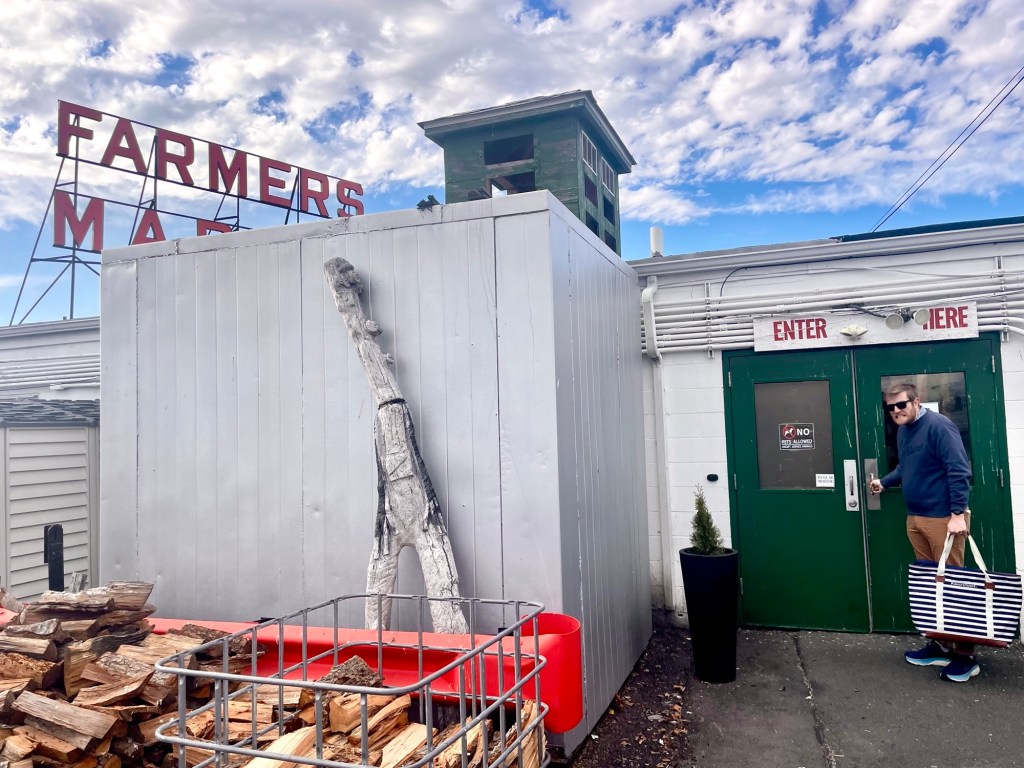
Trenton Farmer’s Market: I love a good farmer’s market, so we headed to the Trenton Farmer’s Market that was only a few minutes away. The outside did not look nice at all. Unfortunately the inside wasn’t much of an improvement either. The market barely had any produce (perhaps we were in the wrong season) and the produce they did have did not look great and some were more expensive than prices in Manhattan! The shops were kinda junky, with old “antiques”, some handmade items, and a few homemade jam stalls. It took us 10 mins to walk through it all. Although I will say, there were a couple of decent looking meat, sausage and cheese shops, but that was it.

Easy Focaccia Bread


Date Published: Jan 31st, 2025 | Last Updated: Jan 31st, 2025
Author: Abby |Category: breads, how-to, easy, <30 mins, appetizers, basics, pastry, snacks, vegetarian
Serves: 1 pan | Prep time: 1.5 hours | Cook time: 25 minutes

Jump to recipe |

Making your own focaccia bread is incredibly easy and so customizable. With this recipe, you can make any flavour of focaccia you like and you can be as creative and artistic as you like. Go crazy with your focaccia art!

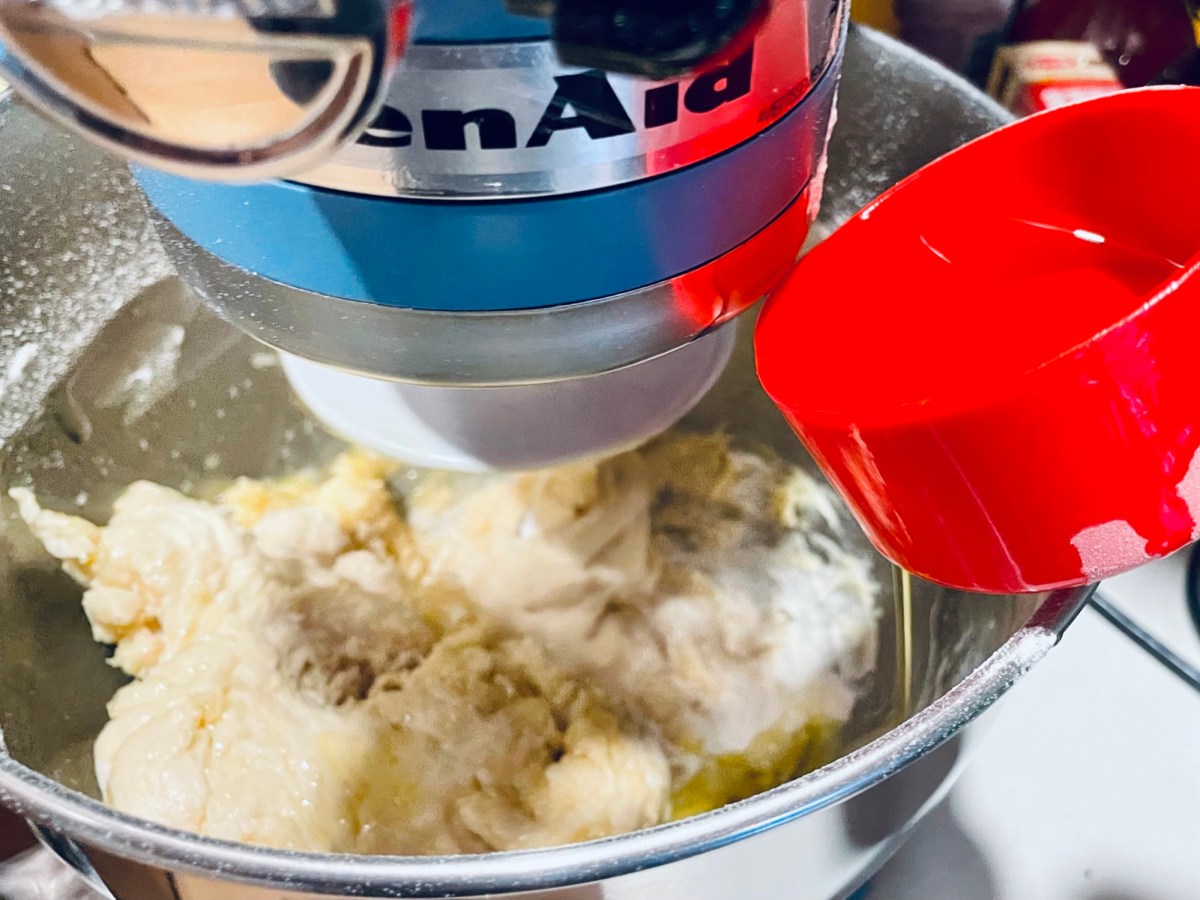
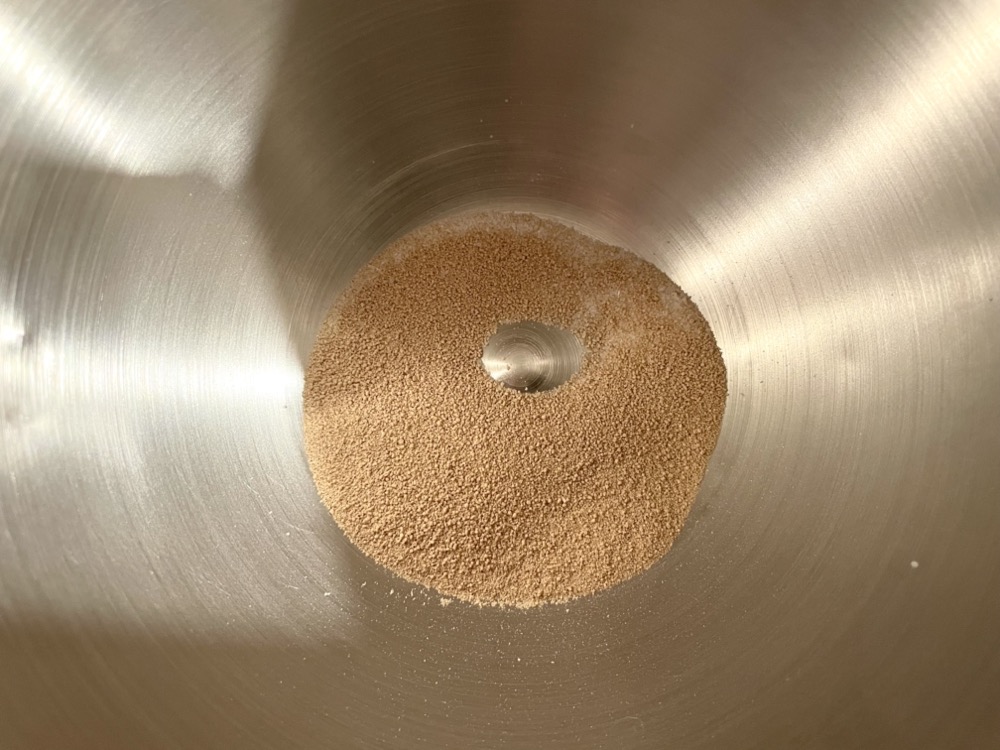
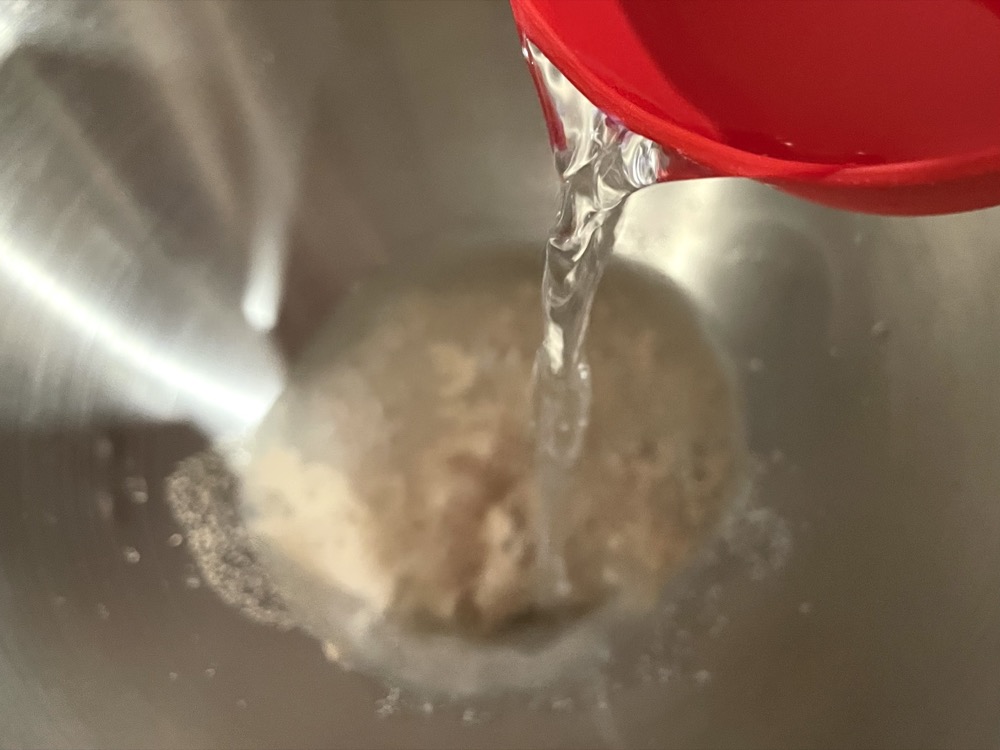
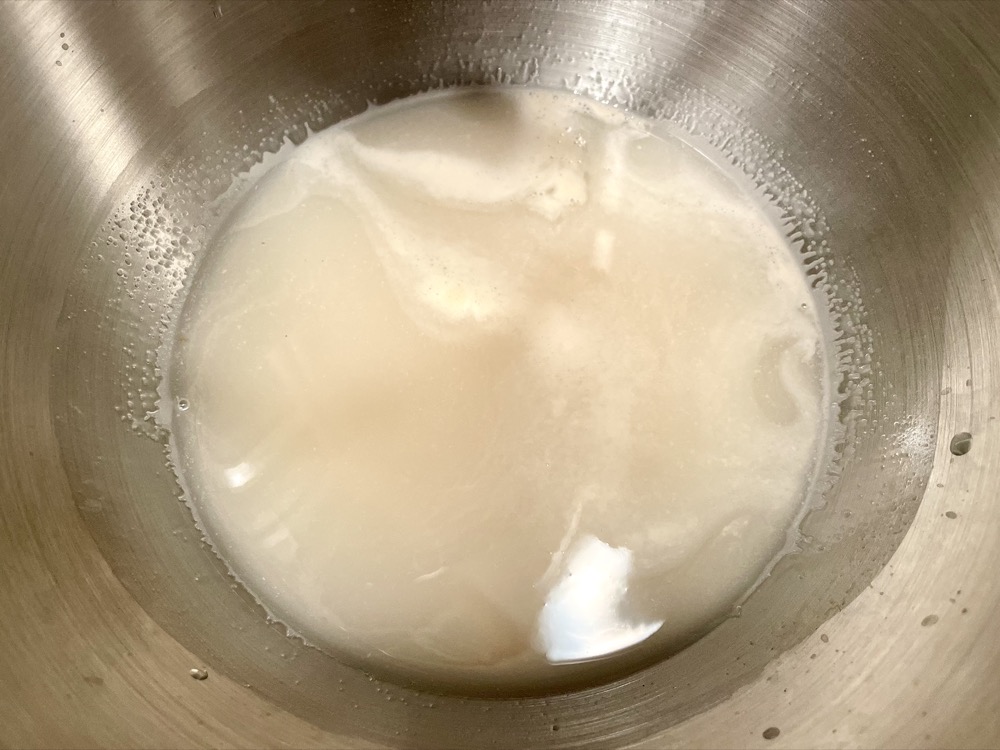
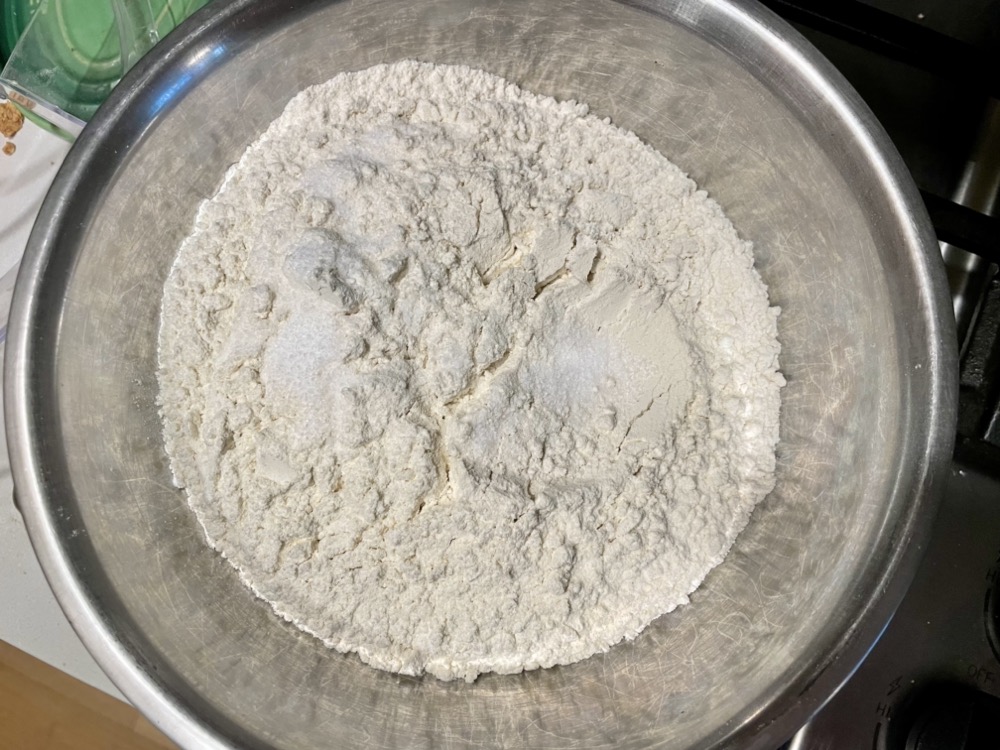
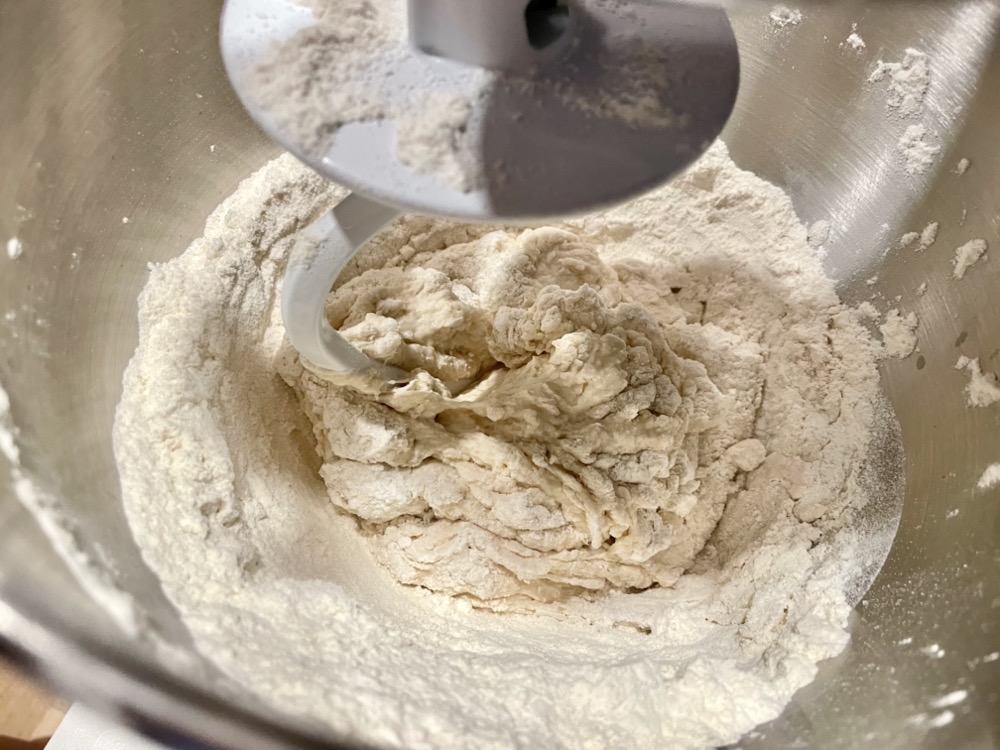
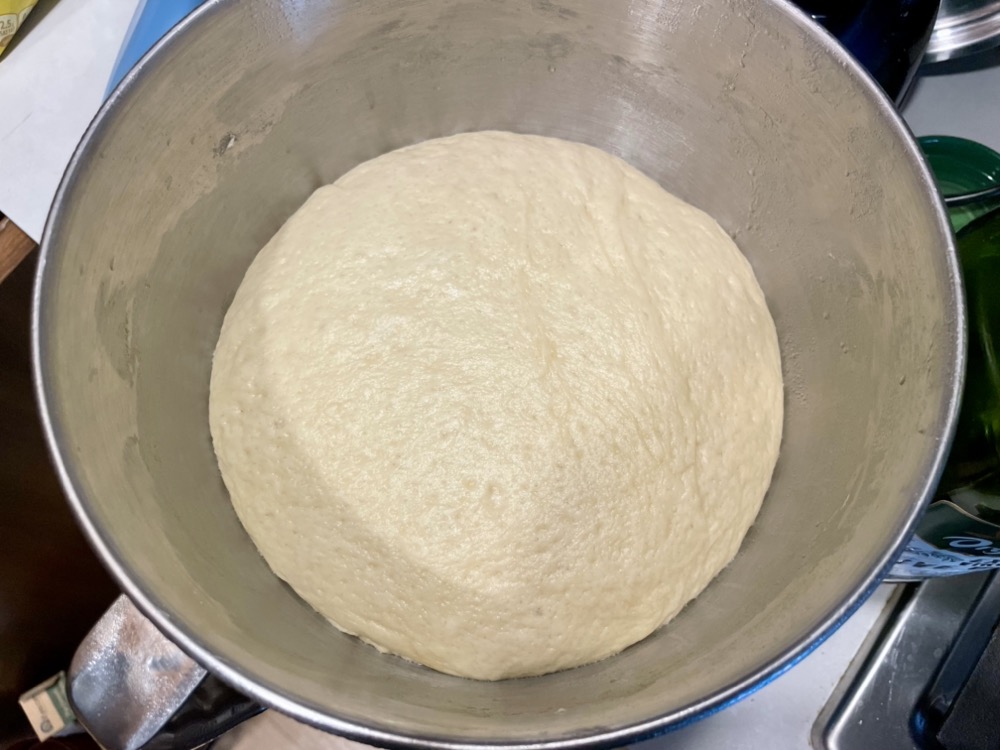
This recipe uses my basic dough recipe, which can be used for so many other things as well – think halloumi cheese pie, za’atar manakish (Lebanese flatbread), pizza dough, flat bread! You can follow the recipe for the basic dough here, but I’ve also outlined the gist of the recipe in a series of photos in this post.

My Go-To Basic Dough


This is my go-to recipe for a basic bread-based dish (ie. flatbread, pizza, manakish, cheese pocket…etc). It only requires 5 ingredients + water and comes together so easily. Make it an hour or two ahead of time and…

Keep reading

Anyways, without further ado, here’s the recipe! If you have any comments or suggestions, I’d love to hear from you in the comment section! You can follow me on instagram, youtube and facebook to see all the recipes I post!
Happy cooking!

Ingredients you’ll need:

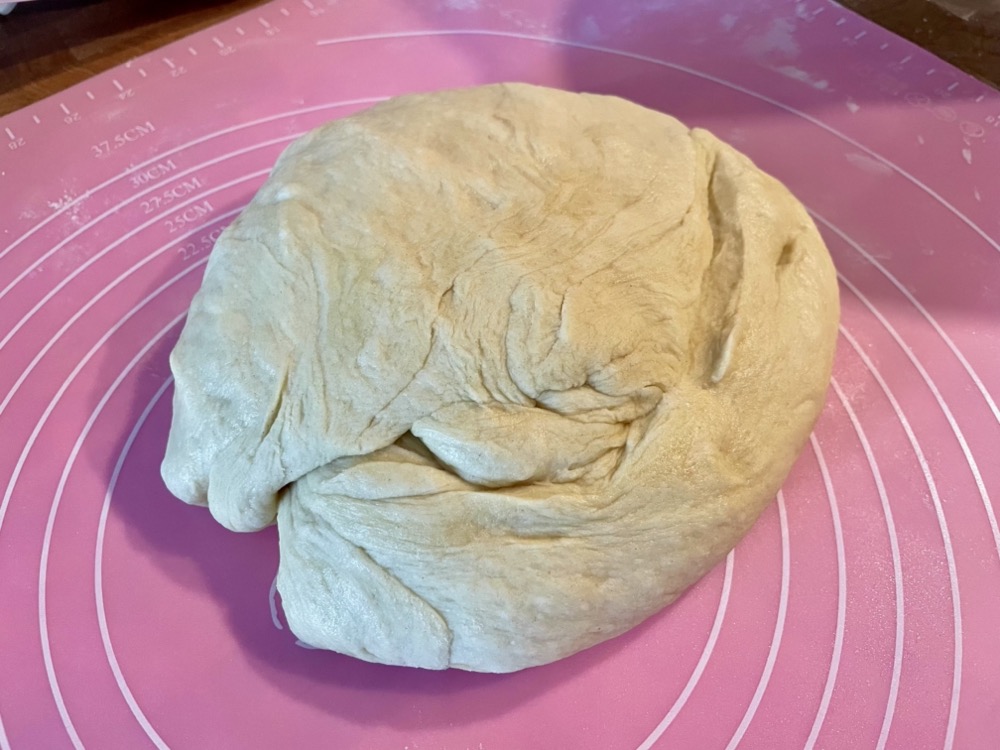
  • One ball of basic dough, after proofing: follow the instructions here
    • 1 Tbsp (1 packet) active dry yeast
    • 1 Tbsp granulated sugar
    • 1 cup (250ml) warm water
    • 3 cups (432g) all purpose flour + extra for dusting/kneading
    • 1 tsp salt
    • 1/2 cup (125ml) olive oil
  • 3 + 2 Tbsps extra virgin olive oil
  • + Any toppings you want (tomatoes, black olives, caramelized onions, feta cheese, parmesan, basil, honey…etc.)
    • I like to infuse the olive oil with rosemary, lemon zest and garlic as a topping

Directions:

Make one basic dough ball (you can double the recipe for a thicker focaccia): follow the instructions here, I’ve summarized the process in a series of photos below.

Preheat the oven to 400˚F/200˚C.

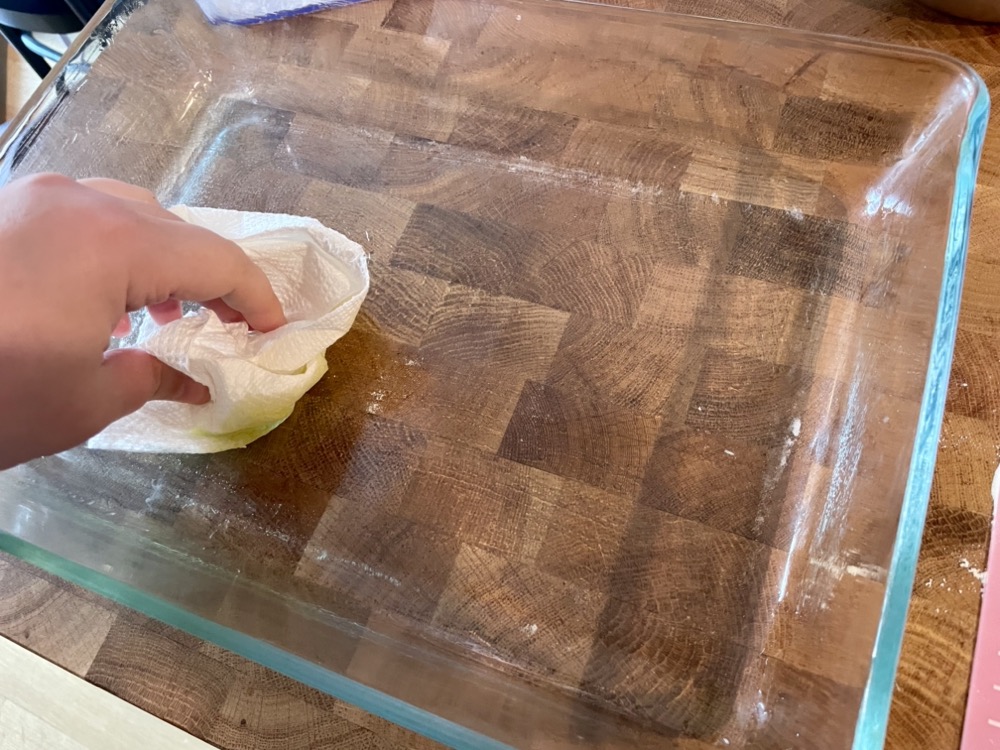
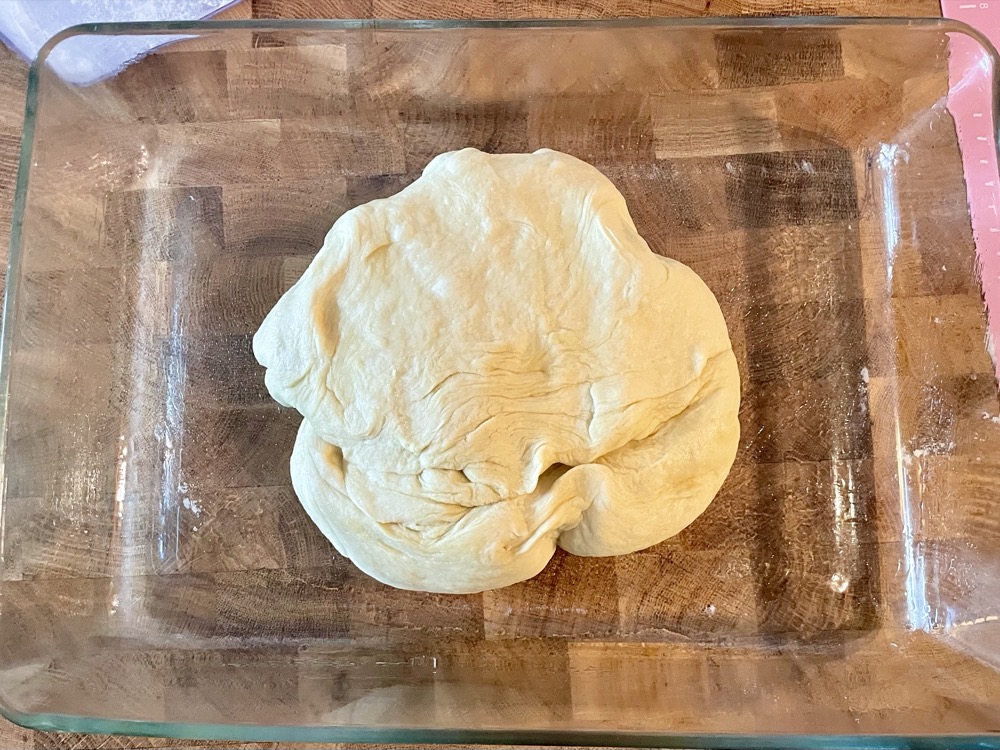
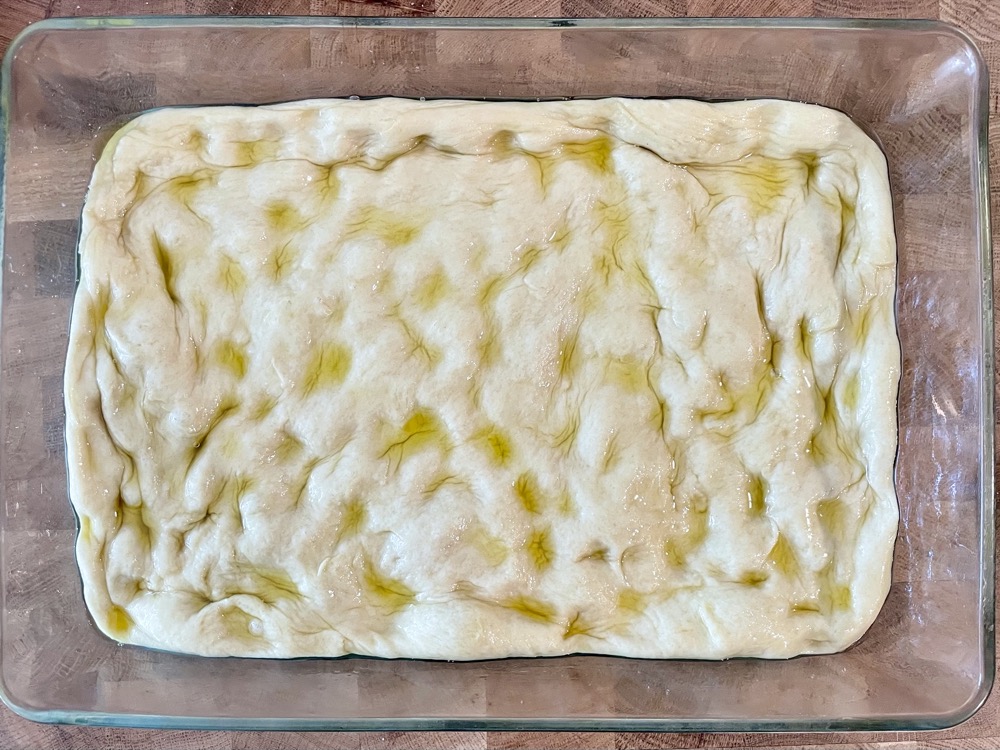
Place a couple tablespoons of olive oil in a 9″x13″ pan and spread it around to coat the entire pan, including the sides and edges. Place your dough ball in the pan and gently spread it out to the edges ensuring even thickness. If your dough is difficult to spread out to the edges and is tearing, wait 5-10 mins and try again (letting the dough rest relaxes the gluten).

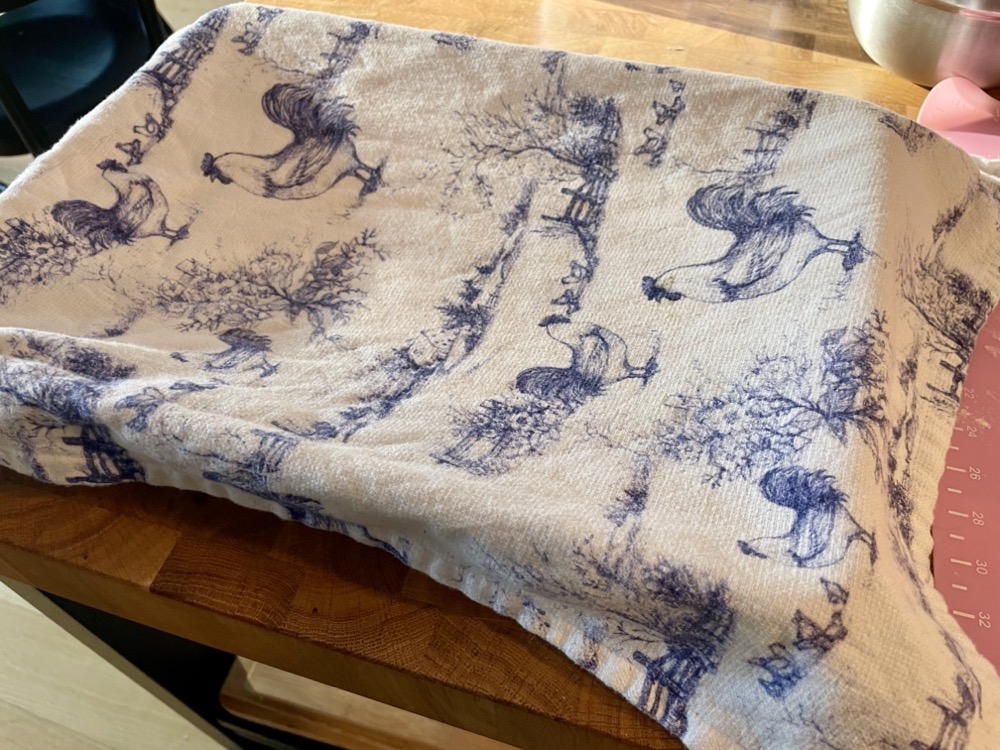
Cover with a clean tea towel and set aside for another 20 minutes to relax the dough.

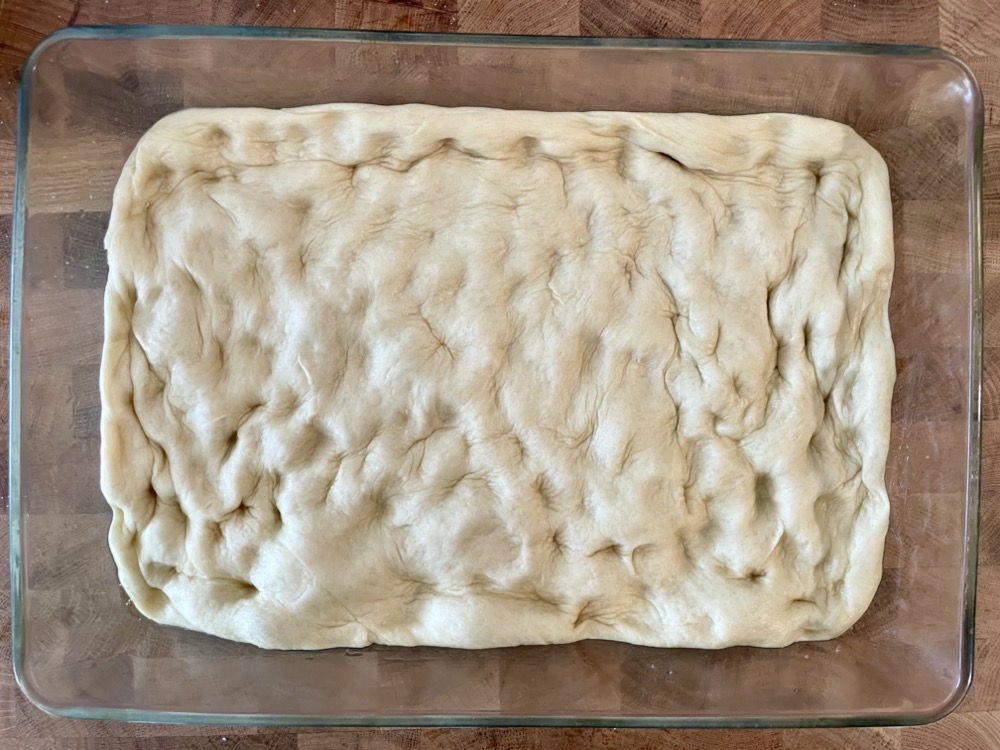
Use your fingers and make indents all over dough to release any air pockets.

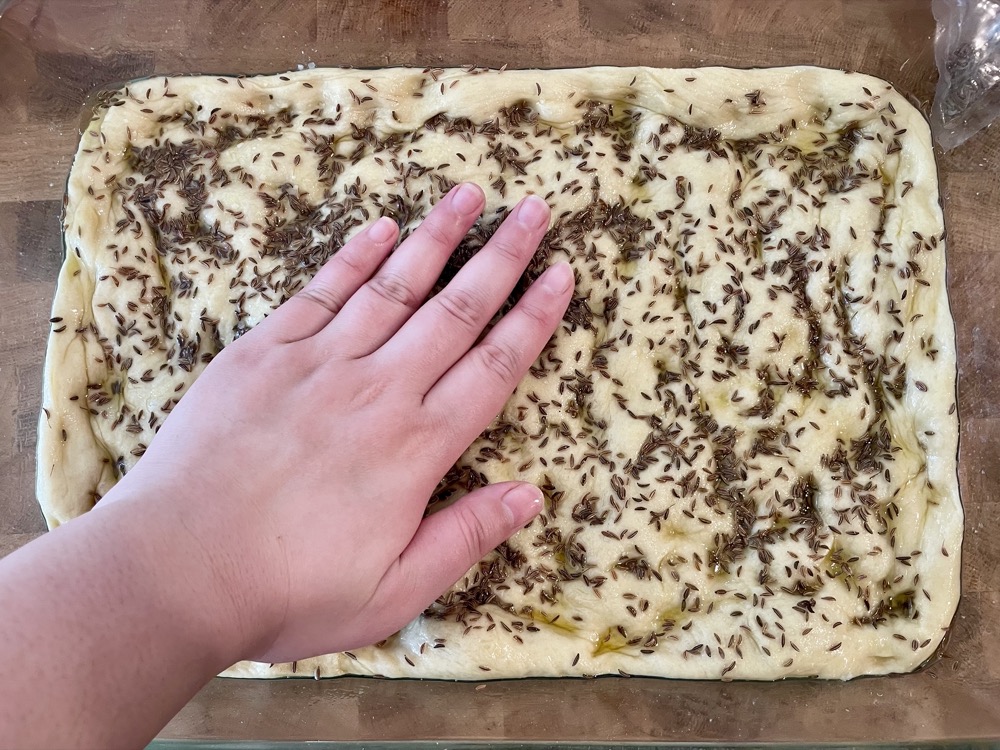
Brush 3 Tbsps of olive oil over the bread then add your choice of toppings (I used caraway seeds and salt in the photos). Gently press down on the toppings into the bread and use your fingers to make indents again.

Bake in the preheated oven on the middle rack for 20-25 mins until the top is golden. Rotate your pan halfway through so the top cooks evenly.

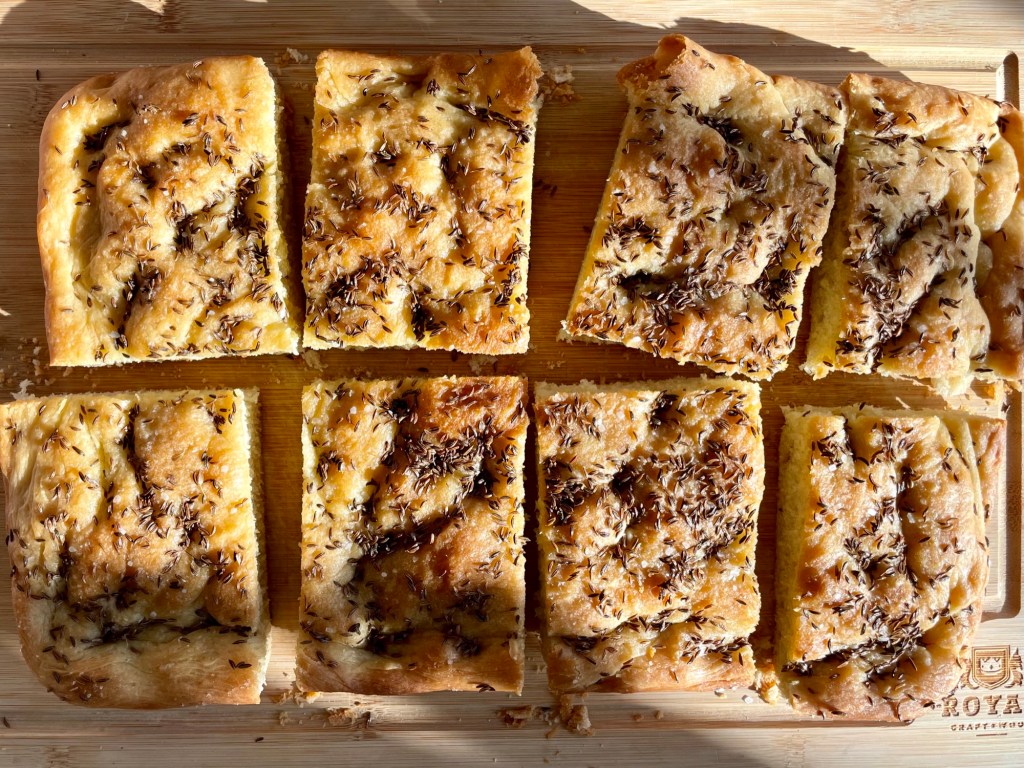
After baking, brush on another 2 Tbsps of olive oil over the top. Let it rest for a few minutes then transfer on a cooling rack and let it cool completely before slicing. Enjoy!

Summarized Recipe:

Easy Focaccia Bread

Date Published: Jan 31st, 2025 | Last Updated: Jan 31st, 2025
Author: Abby |Category: breads, how-to, easy, <30 mins, appetizers, basics, pastry, snacks, vegetarian
Serves: 1 pan | Prep time: 1.5 hours | Cook time: 25 minutes

Ingredients:

  • One ball of basic dough, after proofing:
    • 1 Tbsp (1 packet) active dry yeast
    • 1 Tbsp granulated sugar
    • 1 cup (250ml) warm water
    • 3 cups (432g) all purpose flour + extra for dusting/kneading
    • 1 tsp salt
    • 1/2 cup (125ml) olive oil
  • 3 + 2 Tbsps extra virgin olive oil
  • + Any toppings you want (tomatoes, black olives, caramelized onions, feta cheese, parmesan, basil, honey…etc.)
    • I like to infuse the olive oil with rosemary, lemon zest and garlic as a topping

Directions:

  1. Make one basic dough ball (you can double the recipe for a thicker focaccia)
  2. Preheat the oven to 400˚F/200˚C.
  3. Place a couple tablespoons of olive oil in a 9″x13″ pan and spread it around to coat the entire pan, including the sides and edges.
  4. Place your dough ball in the pan and gently spread it out to the edges ensuring even thickness. Cover with a clean tea towel and set aside for 20 minutes to relax the dough.
    • If your dough is difficult to spread out to the edges and is tearing, wait 5-10 mins and try again (letting the dough rest relaxes the gluten).
  5. After 20 minutes, use your fingers and make indents all over dough to release any air bubbles.
  6. Brush 3 Tbsps of olive oil over the bread then add your choice of toppings (I used caraway seeds and salt in the photos). Gently press down on the toppings into the bread and use your fingers to make indents again.
  7. Bake in the preheated oven on the middle rack for 20-25 mins until the top is golden. Rotate your pan halfway through so the top cooks evenly.
  8. After baking, brush on another 2 Tbsps of olive oil over the top. Let it rest for a few minutes then transfer on a cooling rack and let it cool completely before slicing. Enjoy!